15 Mid Length vs Long Haircut Comparisons
Fifteen side by side comparisons of the same hair at collarbone and at mid-back, and the thing that actually decides it. Not which is prettier — which one your density, your texture and your mornings can carry.
In this article · 23
- What Counts as Mid Length
- Hair Type Comparison
- By Face Shape
- Daily Styling Time
- Layers and What to Ask For
- Growing Out Timeline
- The 15 Comparisons
- 1. Fine Hair at Collarbone Versus Waist
- 2. Thick Coarse Hair Compared
- 3. Round Face Compared
- 4. Square Jaw Compared
- 5. Curly Shrinkage Compared
- 6. Wavy Triangle Compared
- 7. Day Three Hair
- 8. Morning Routine Time
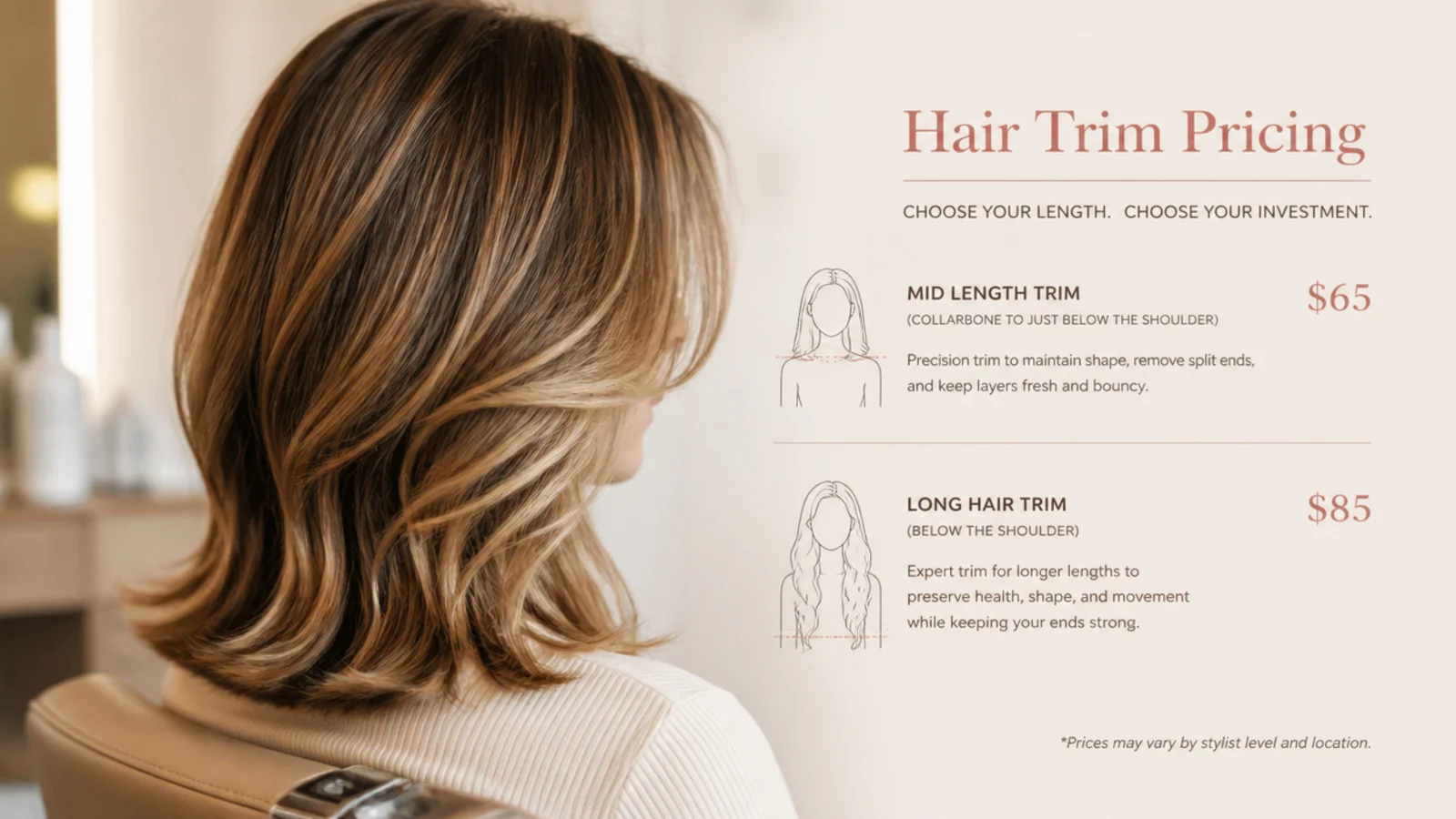
- 9. Salon Cost Compared
- 10. Updo Compared
- 11. Curtain Bangs Compared
- 12. Thinning Hair Compared
- 13. Humidity Compared
- 14. Color Damage Compared
- 15. Grow Back Timeline
- Final Thoughts
Most people choosing between mid length and long are comparing two photographs of two different women, which settles nothing about their own hair.
Length is a weight decision before it is a style decision. Every inch you keep adds mass, and mass pulls texture down, flattens a crown and loads a hair tie. Every inch you remove hands that volume back.
The ends of long hair are years older than the ends of mid length hair. At half an inch a month, mid-back hair carries ends that were grown three or four years ago, through every colour service since.
What Counts as Mid Length
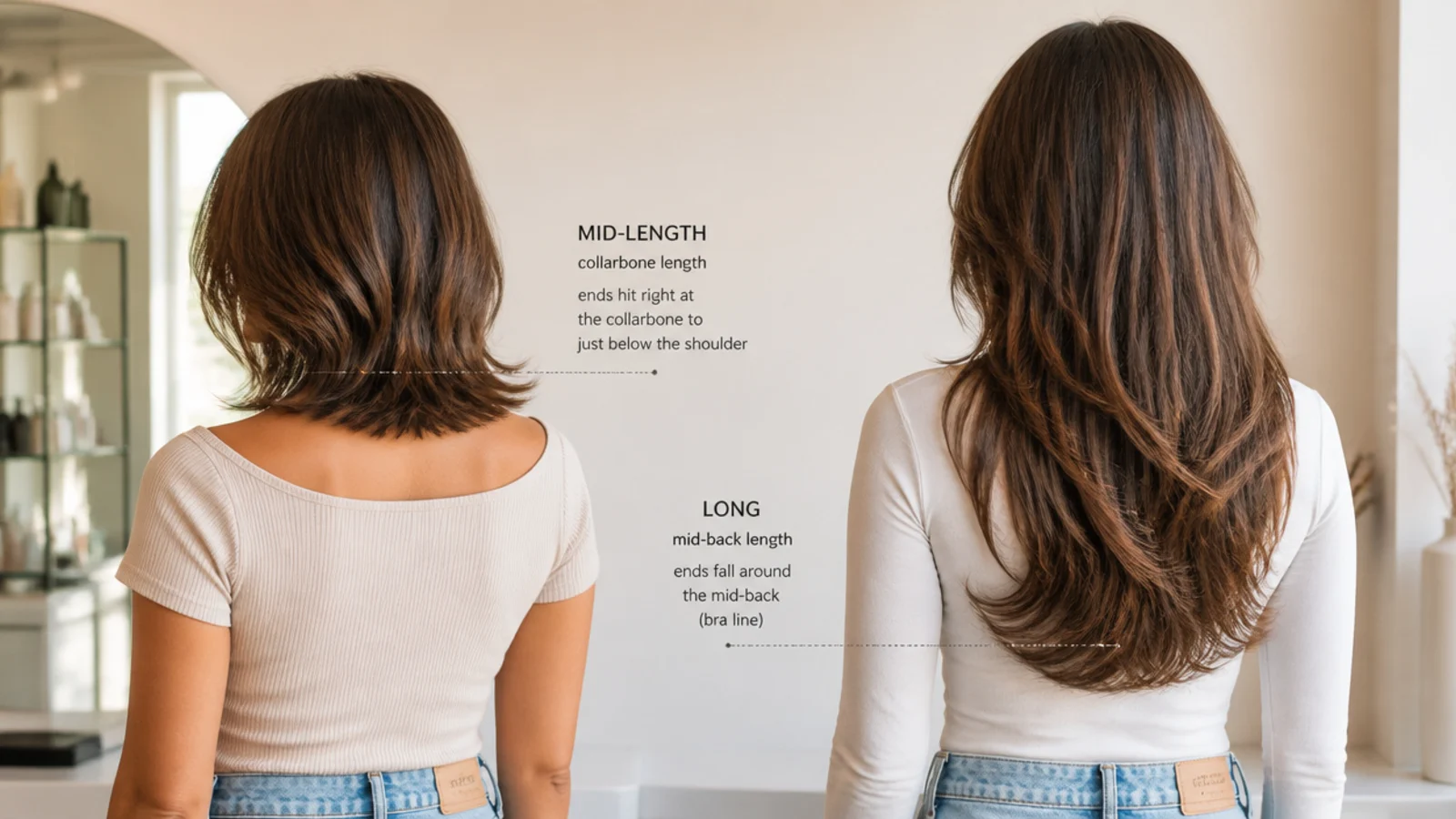
Mid length ends between the collarbone and the shoulder blade. That is the whole range, and a lob sits at its top edge.
Long starts at the mid-back. Around the bra line and below. Anything above that is still being read as mid length by everyone but you.
The gap is roughly six inches. A year of growth separates the two categories, which is why this decision is worth thinking about rather than making in a chair.
Shoulder length is the awkward middle. Hair that stops exactly at the shoulder gets pushed up by the shoulder itself and flicks outward, so most stylists move it an inch either way.
Hair Type Comparison
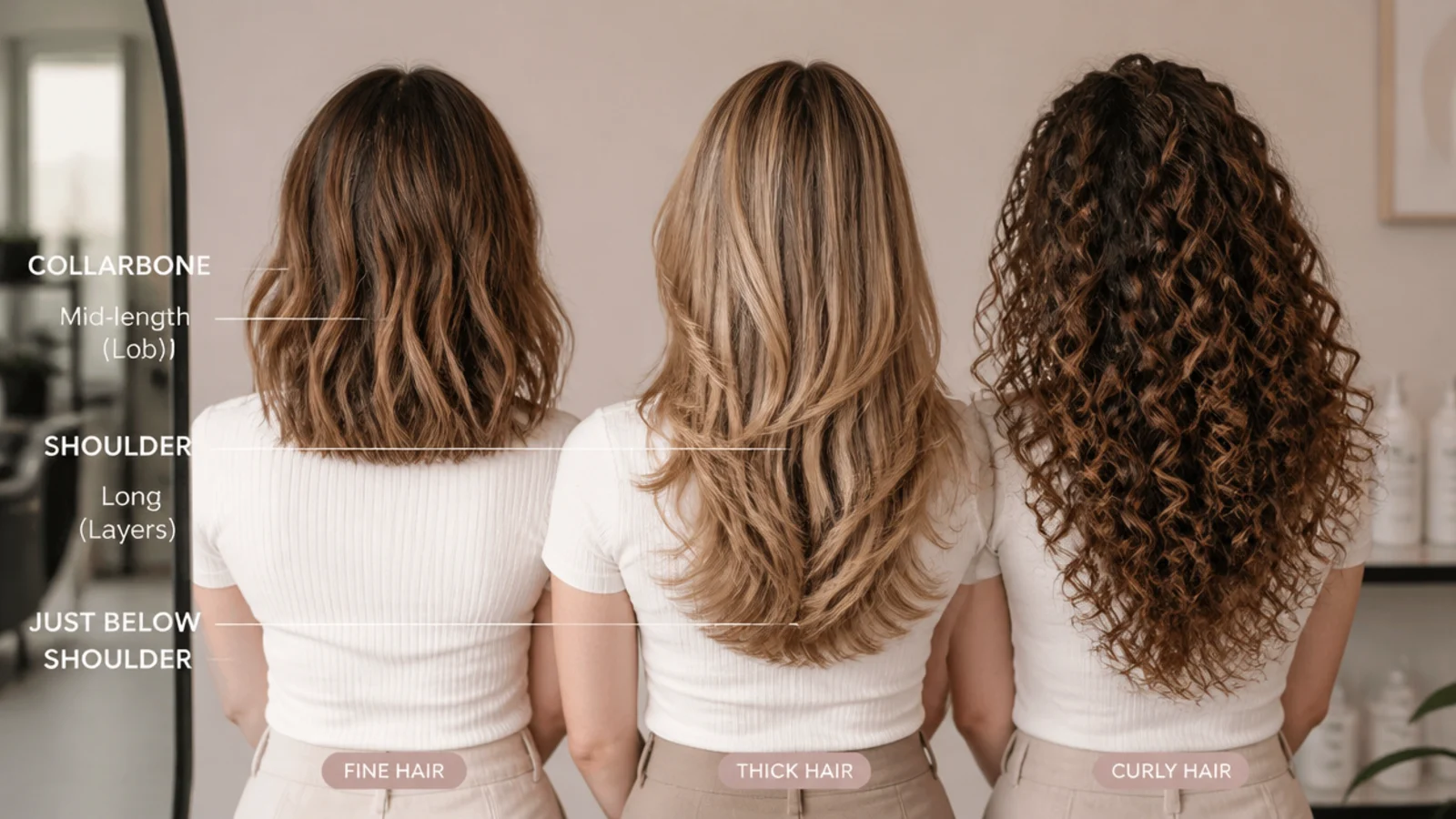
Fine hair keeps more of its perimeter short. Strands thin as they age, so the last four inches of long fine hair are the narrowest hair on the head.
Thick coarse hair uses length as ballast. Weight is what stops bulk expanding sideways, and removing it lets the whole shape widen.
Curly hair is longer than it measures. Between a quarter and a half of the stretched length disappears into the coil once it dries.
Wavy hair carries its width at the middle. Where that widest point lands on your body is the difference between a flattering shape and a triangle.
By Face Shape
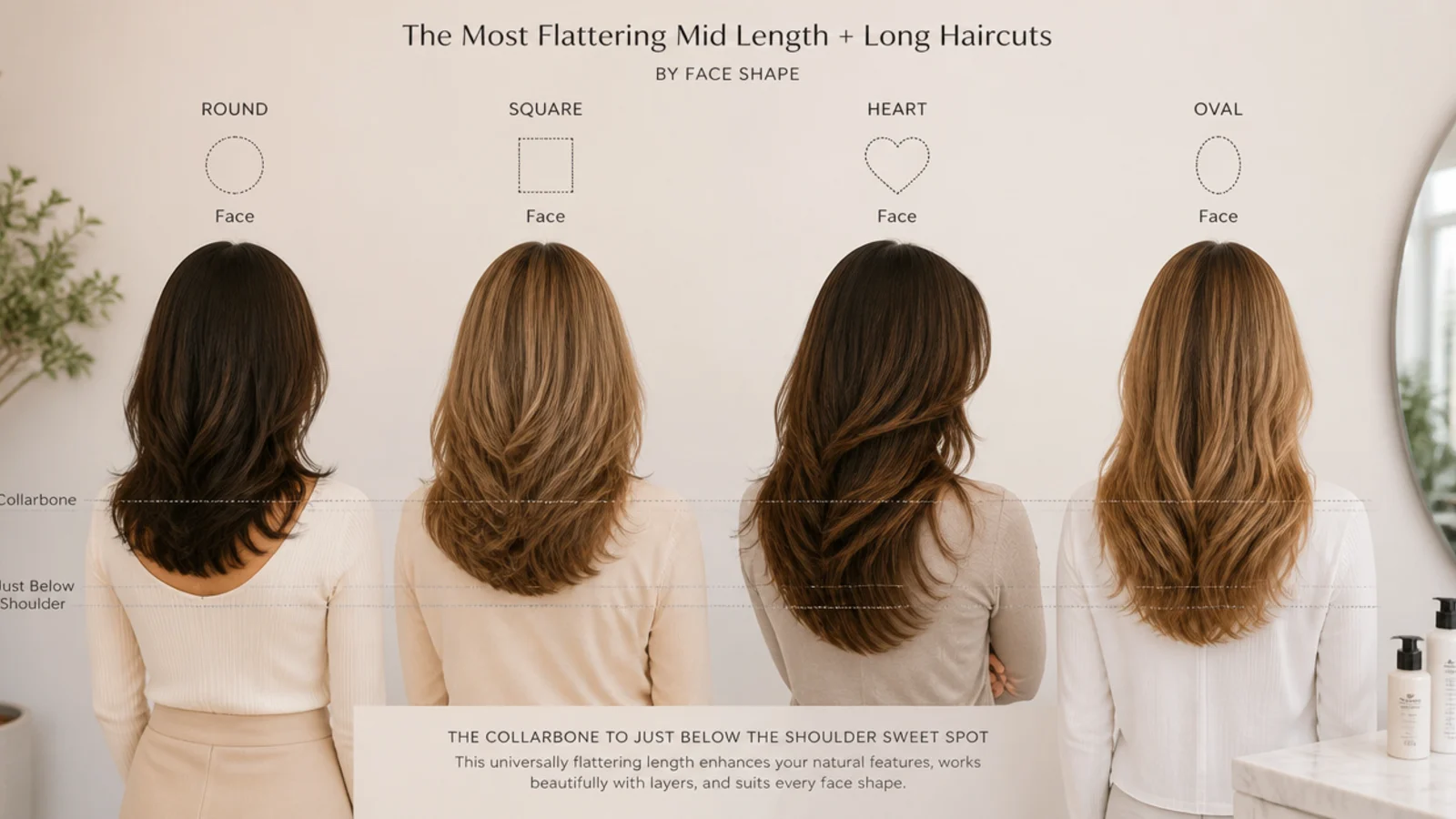
A round face wants an unbroken vertical. Length below the collarbone gives the eye a long line to travel, which is why the longer option usually wins here.
A square jaw dislikes a horizontal that matches it. Keep the perimeter an inch above the jaw or two inches below, never level with it.
A long face is shortened by width at the cheek. Mid length puts mass beside the cheekbone, which is exactly where a long face wants it.
Heart shapes want weight at the bottom. Both lengths work, but the ends need to stay full rather than tapering to a point under the chin.
Daily Styling Time
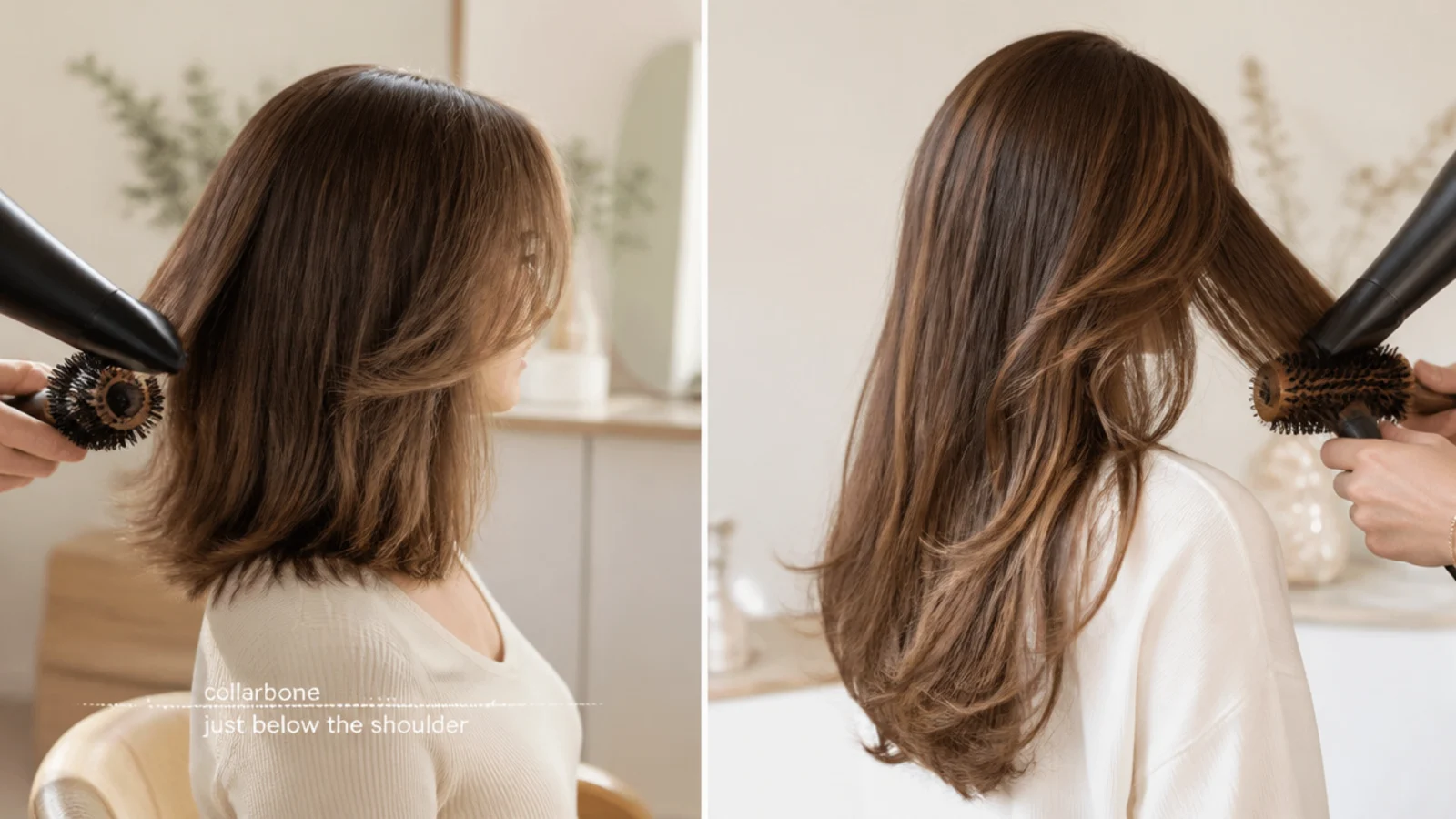
Drying time scales with the water the hair holds. Twice the length holds roughly twice the water, so a full blow dry roughly doubles.
Curling time scales with the number of sections. Long hair needs more passes for the same finish because each section is longer than the barrel.
Mid length is the only one you can air dry on a schedule. Collarbone hair is dry inside an hour indoors, where mid-back hair is still damp at the nape.
Long hair is faster on a lazy day. It goes into a bun in three seconds. Mid length has no such escape hatch, which is its real cost.
Layers and What to Ask For
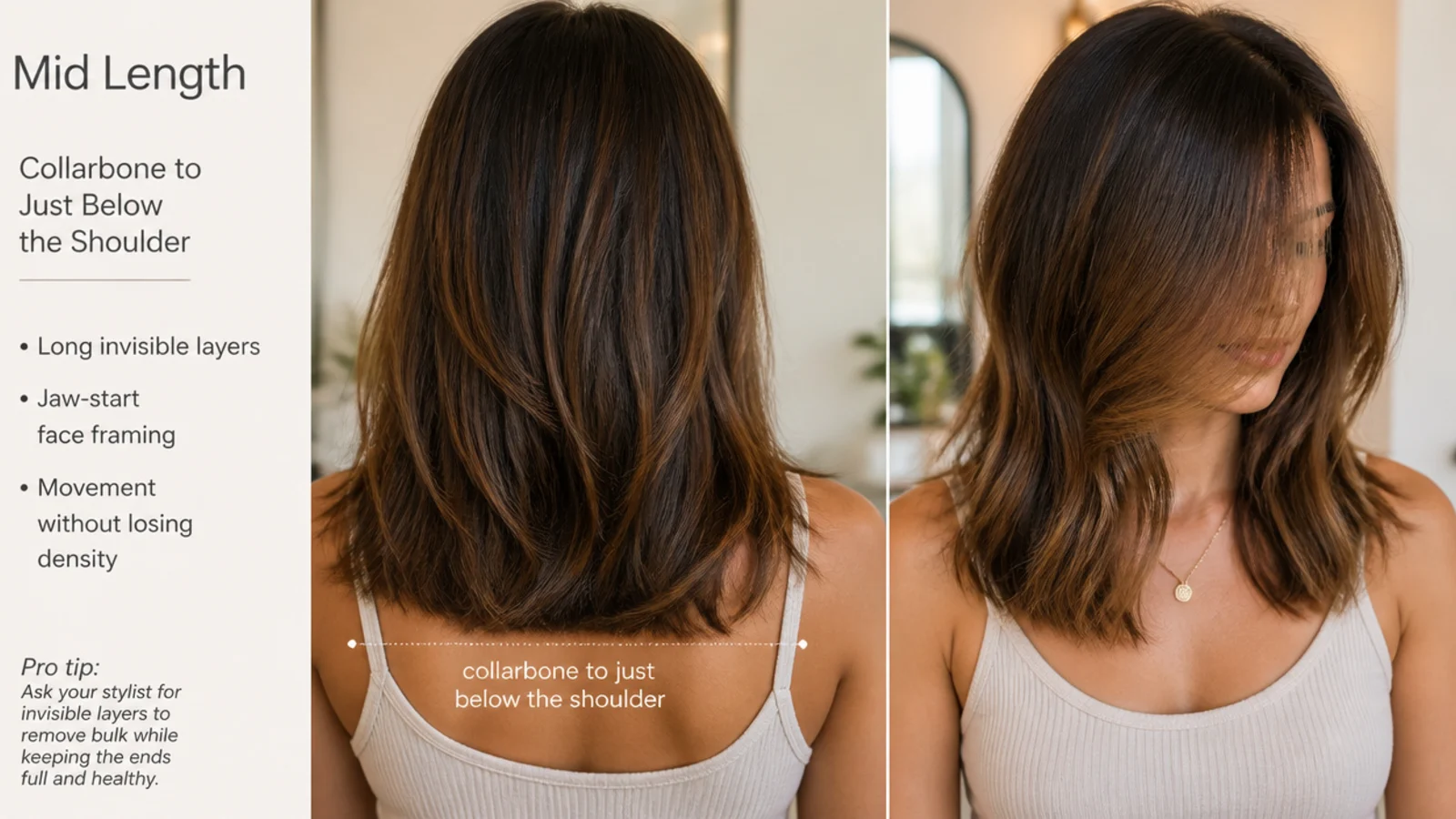
Name the length against your body, not in inches. Say collarbone, shoulder blade or bra line. Inches land differently on every torso.
Ask where the shortest layer starts. That single measurement changes the cut more than the perimeter does, and it is the one most people forget to specify.
Say whether you want the perimeter blunt or soft. A blunt line reads as density and a point-cut line reads as movement. They are opposite requests.
Bring the grow-out plan into the consultation. If you are heading back to long, the cut should be shaped so it passes through the shoulder stage without flicking.
Growing Out Timeline
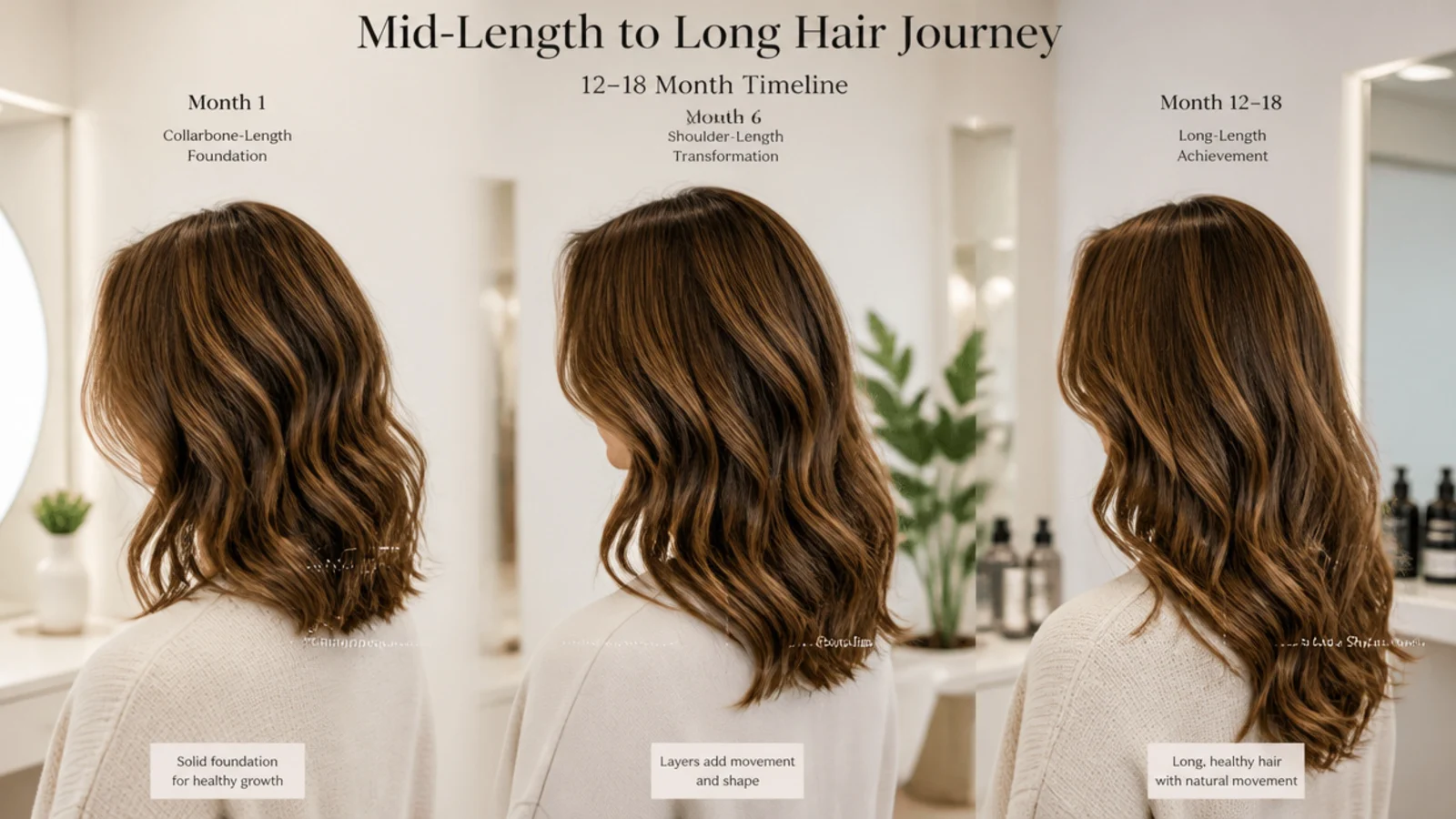
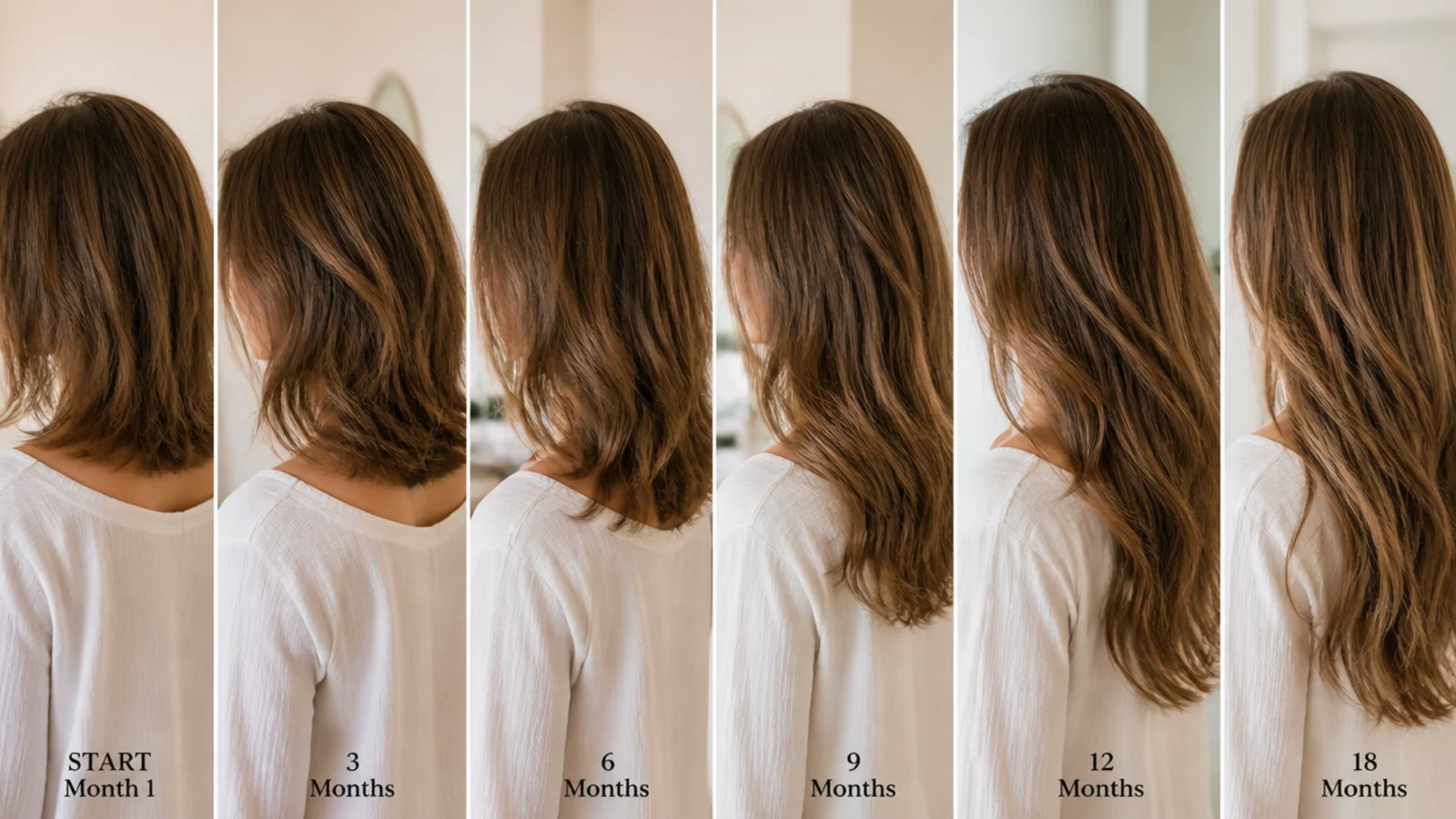
Six inches is about a year. Half an inch a month is the honest average, and it does not speed up because you want it to.
Trims subtract from that. Half an inch removed every twelve weeks costs you two inches a year, so tidying the perimeter turns a year into roughly fifteen months.
Month four is the difficult one. That is when the ends sit on the shoulder and flick, and it is the point most people cut back out of frustration.
Layers grow faster than the perimeter appears to. The shortest pieces reach the next tier in months rather than a year, so the shape recovers long before the length does.
The 15 Comparisons
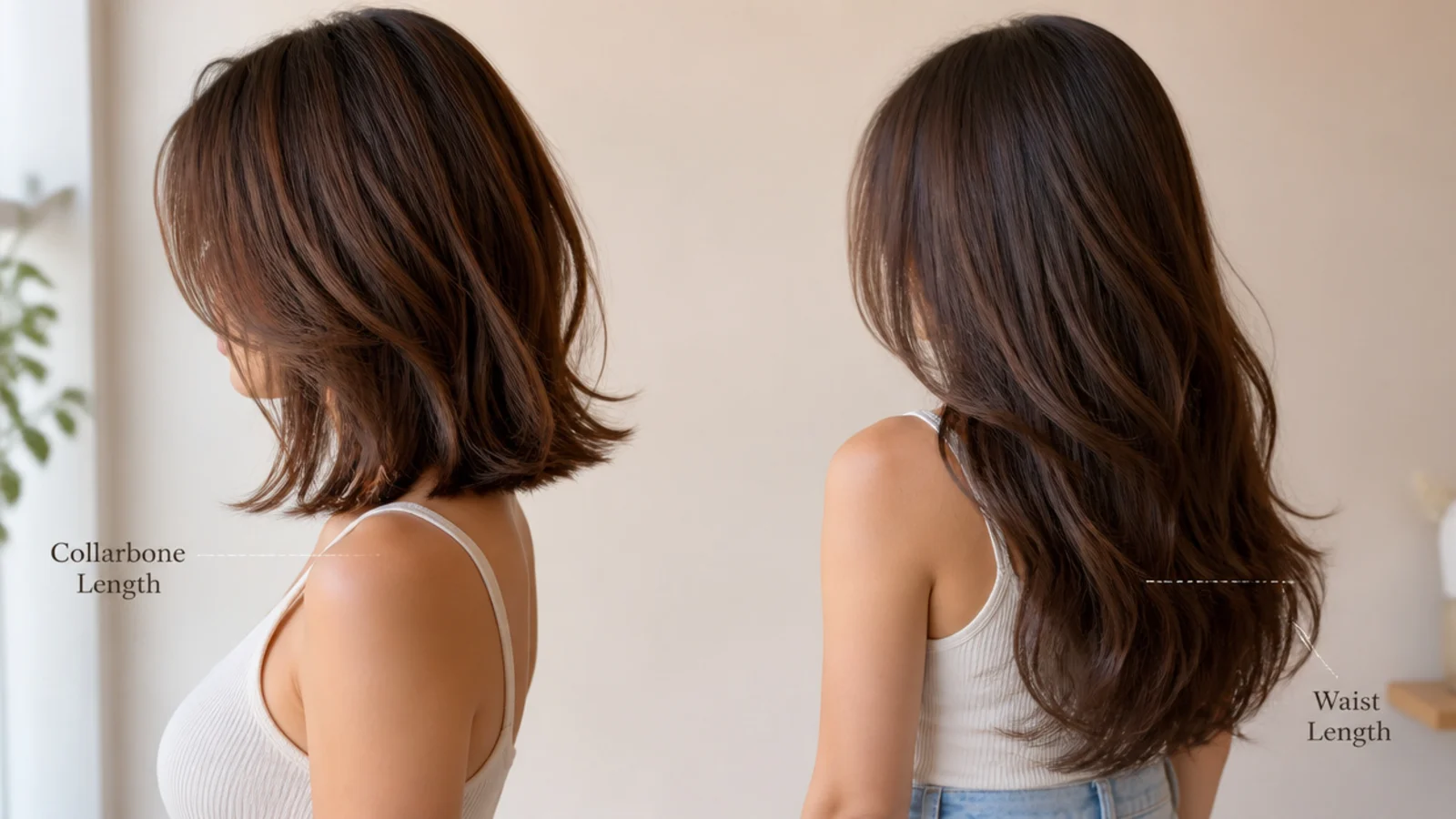
1. Fine Hair at Collarbone Versus Waist
Strand diameter narrows as hair ages, so the last few inches of waist length fine hair are the thinnest on the head and the perimeter reads see-through. Cutting to the collarbone concentrates the identical strand count into a shorter, denser edge, which is why the shorter side of this plate looks like more hair rather than less.
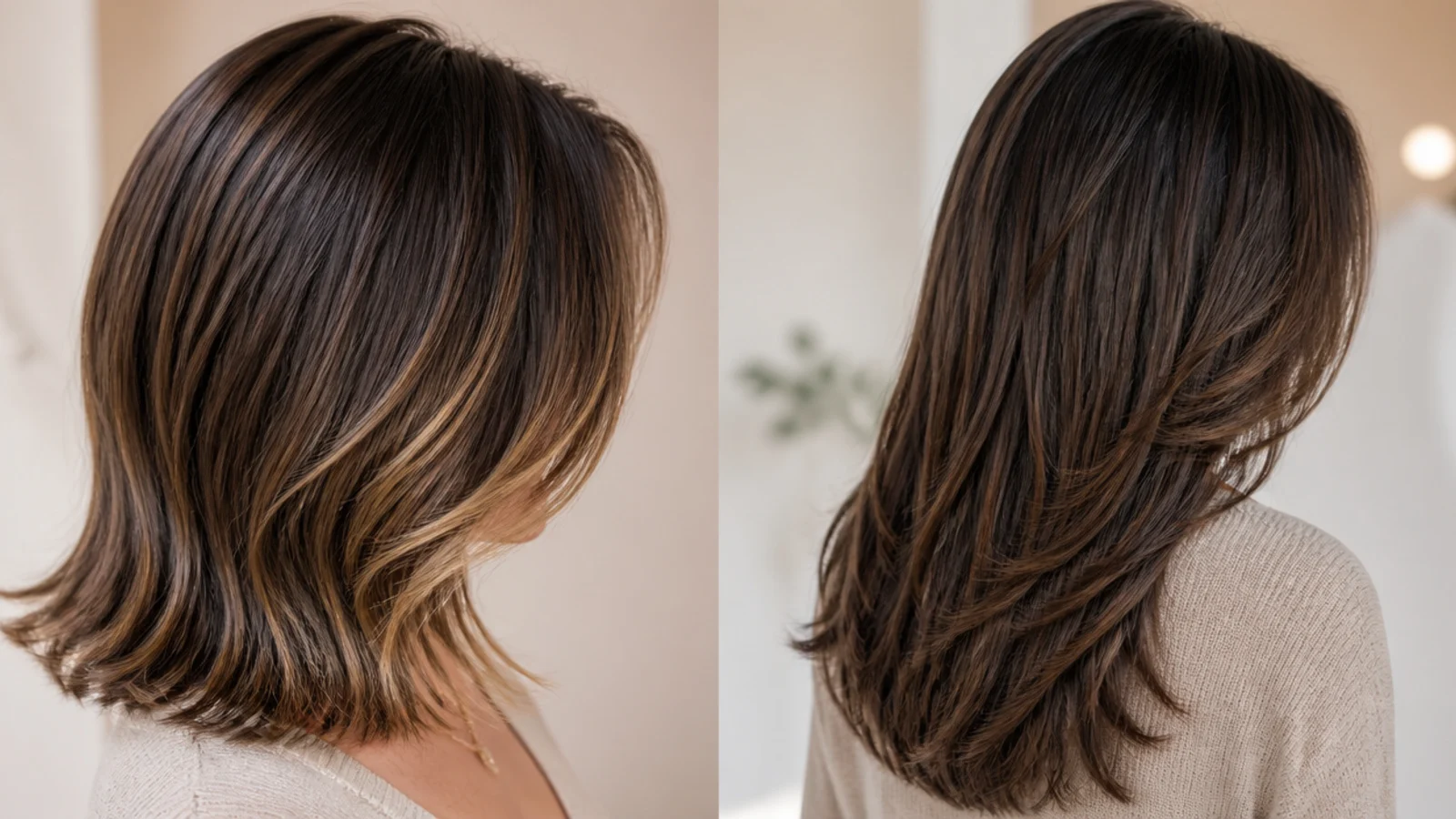
2. Thick Coarse Hair Compared
On coarse hair, length is ballast. The weight of the last six inches is what holds the mid-lengths against the head, and taking it off releases bulk sideways into a shape that is wider than the one you asked for. If you want thick hair mid length, budget for internal weight removal at the same appointment.
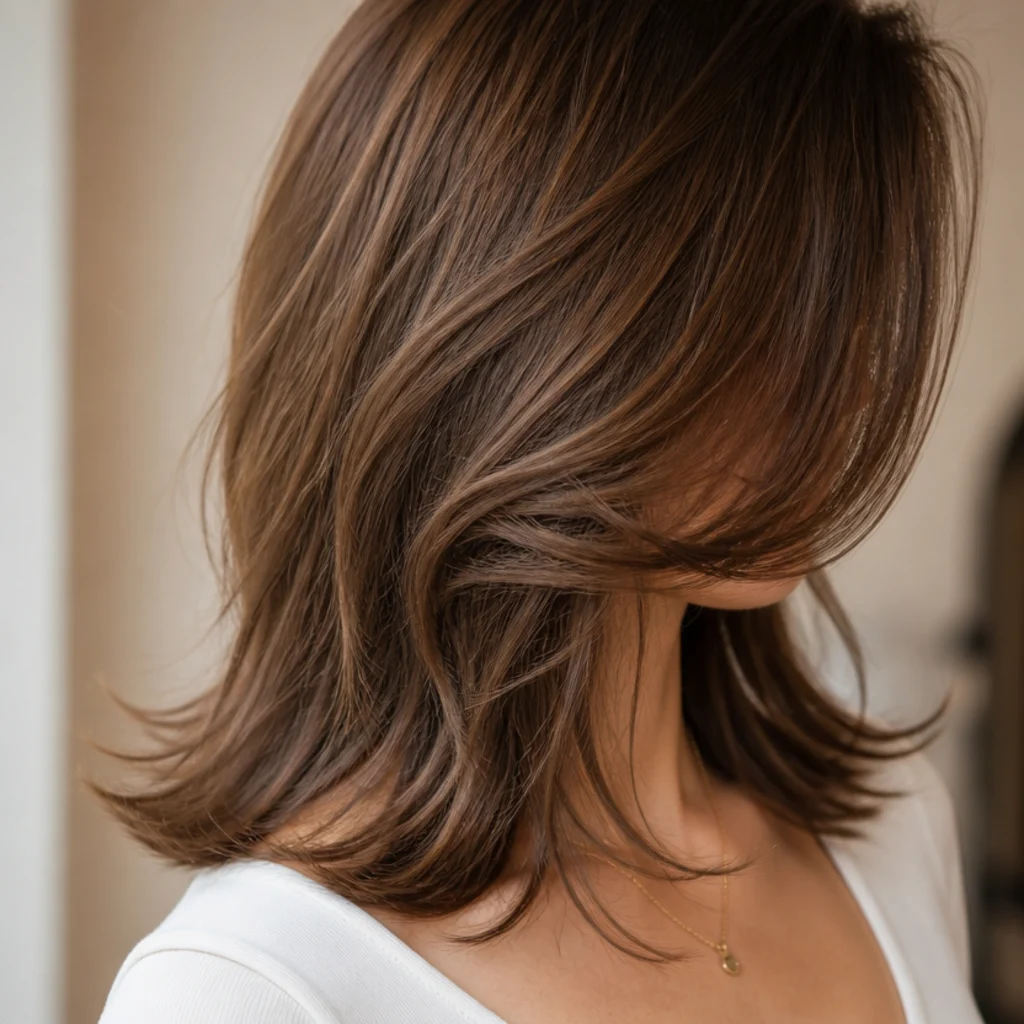
3. Round Face Compared
The eye reads the longest unbroken vertical in a picture and calls that the shape of the face. Long hair supplies that line for free, which is why the longer side flatters a round face with no styling at all. Mid length can do the same job, but only with a centre part and face framing that runs past the chin.

4. Square Jaw Compared
A blunt perimeter landing level with the jaw draws a second horizontal directly under the first, and the two reinforce each other. Move that line an inch above the jaw or two inches below and the echo disappears. Long hair avoids the problem by default, which is why this comparison so often favours the longer option.
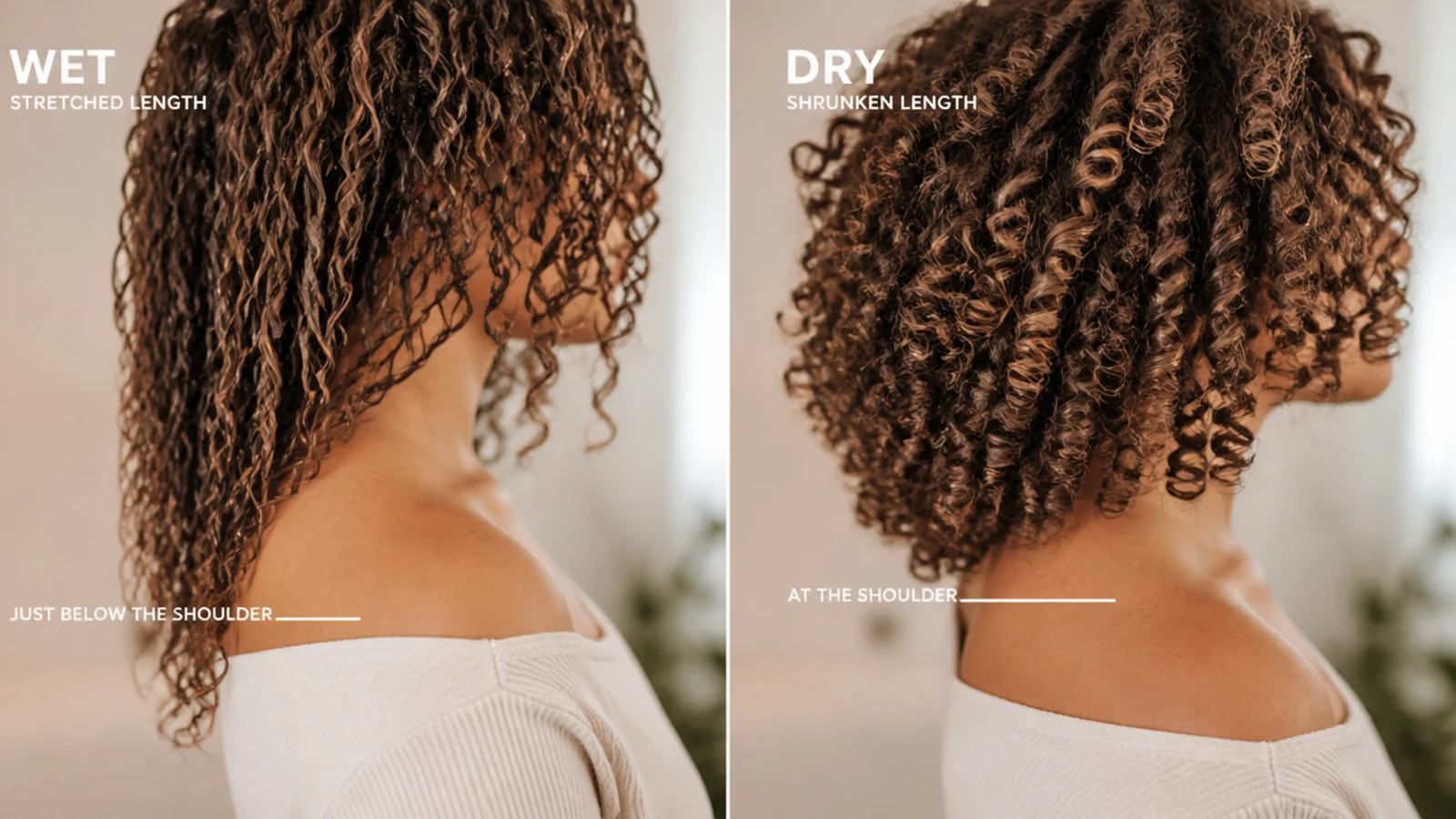
5. Curly Shrinkage Compared
A curl pattern between 3A and 3C commonly gives back a quarter to a half of its stretched length once it dries, so hair cut to the collarbone wet finishes somewhere near the chin. That is the single biggest reason curly clients leave a salon with a cut they did not ask for. Cut dry, or state the finished dry length and let the stylist do the arithmetic.
6. Wavy Triangle Compared
Wavy hair is narrow at the root and widest through the mid-lengths, so a one-length perimeter parks that widest point wherever the hair ends. At mid length it lands beside the jaw and reads as a triangle; at mid-back it lands at the ribs where nobody registers it. Length is a legitimate fix for triangle shape, and so is internal layering.
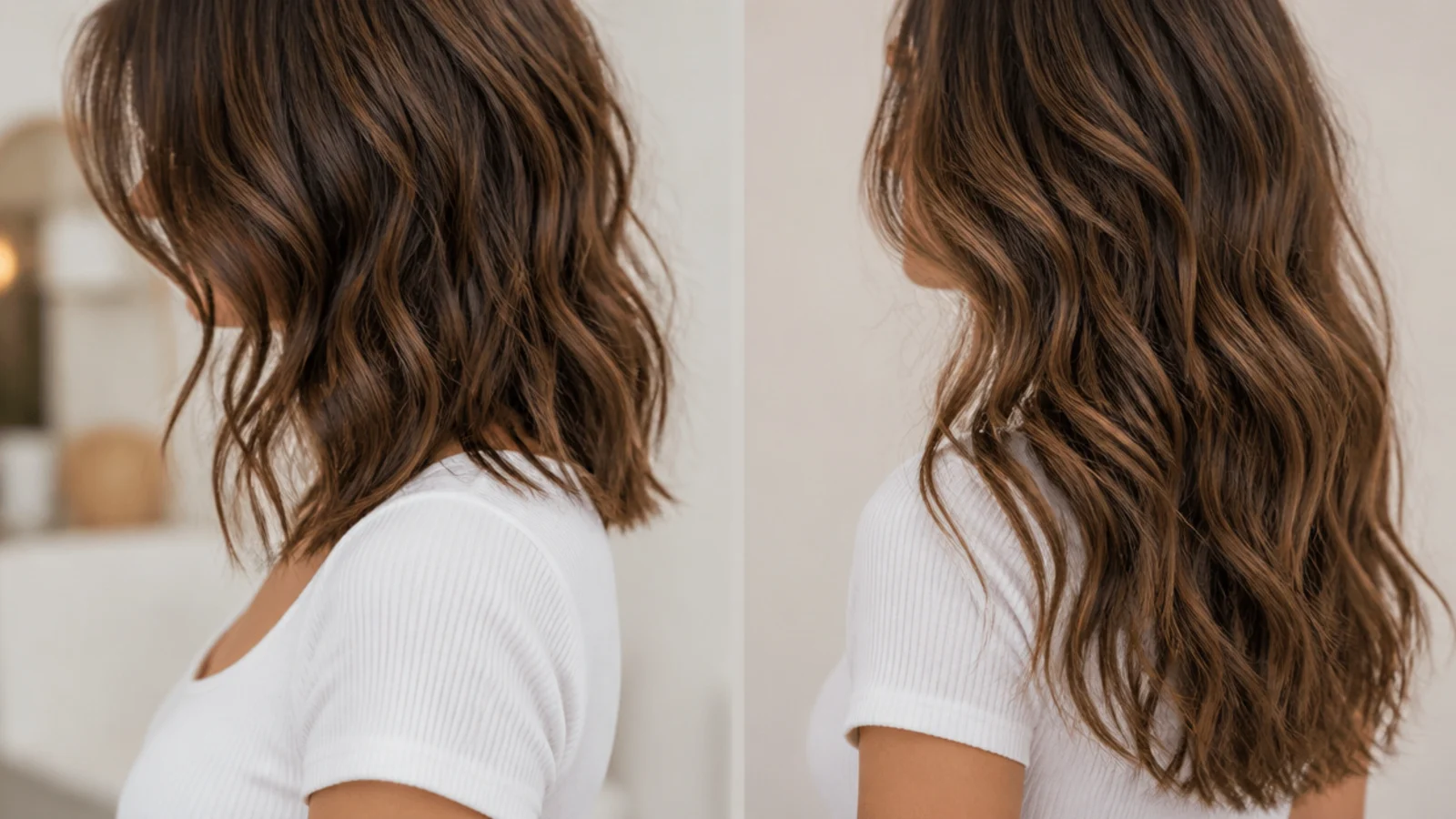
7. Day Three Hair
Sebum travels down the shaft from the scalp, so on collarbone hair it reaches the ends within about three days and the whole head goes limp together. On mid-back hair it never gets that far, which leaves an oily root above a dry end — one head with two opposite problems needing two different products.
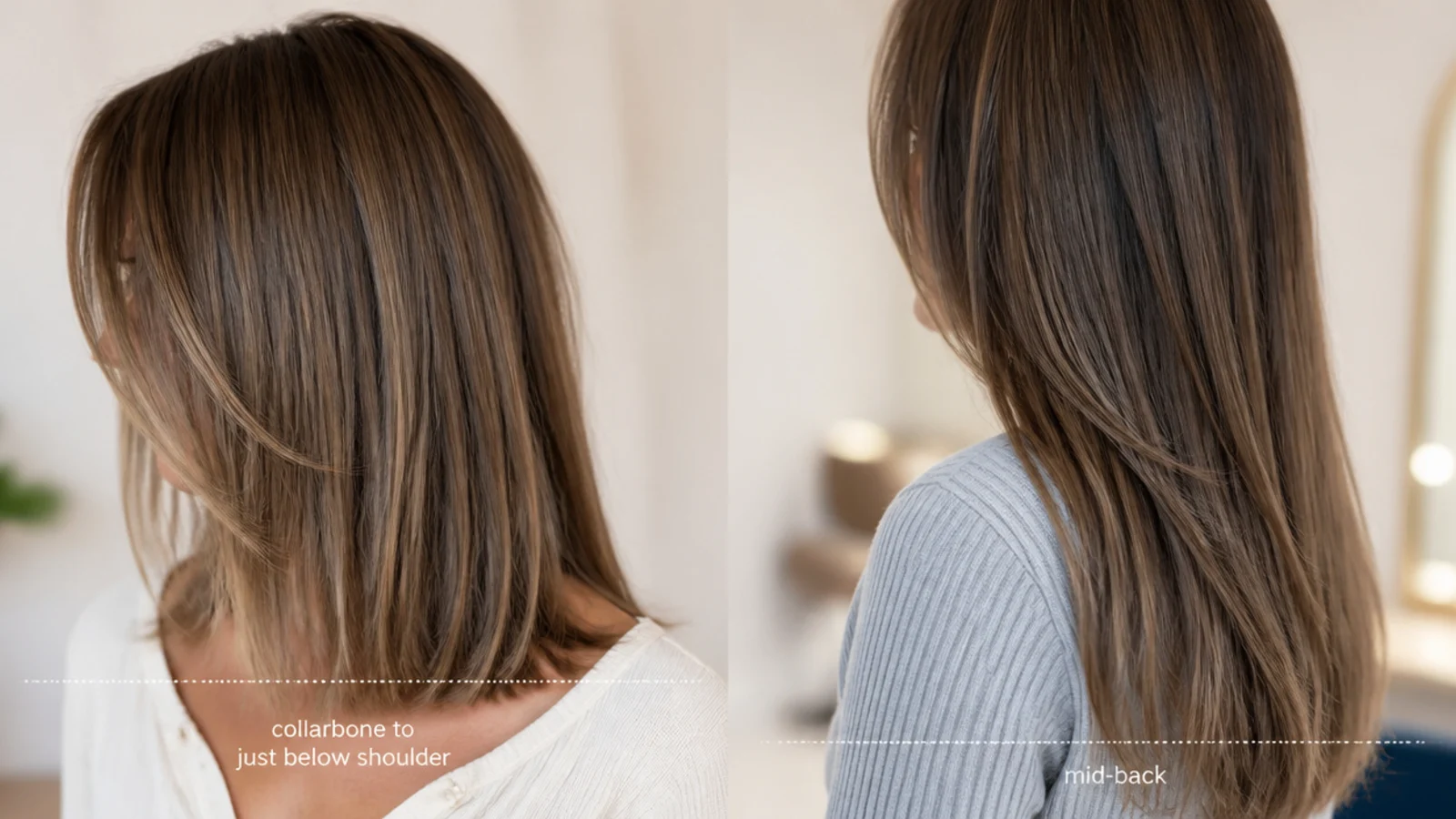
8. Morning Routine Time
Blow drying time tracks the mass of water sitting in the hair, and mass tracks length, so doubling the length roughly doubles the dryer time. Curling is worse, because each section that exceeds the barrel length needs a second pass. Mid length is not tidier, it is simply less hair to move.

9. Salon Cost Compared
Colour is charged by product and foil count, both of which climb with length, so a long head costs more every visit even when the service is identical. Mid length reverses that on the cutting side, because a shaped perimeter and defined layers close up faster and want a trim every eight to ten weeks rather than every four months.
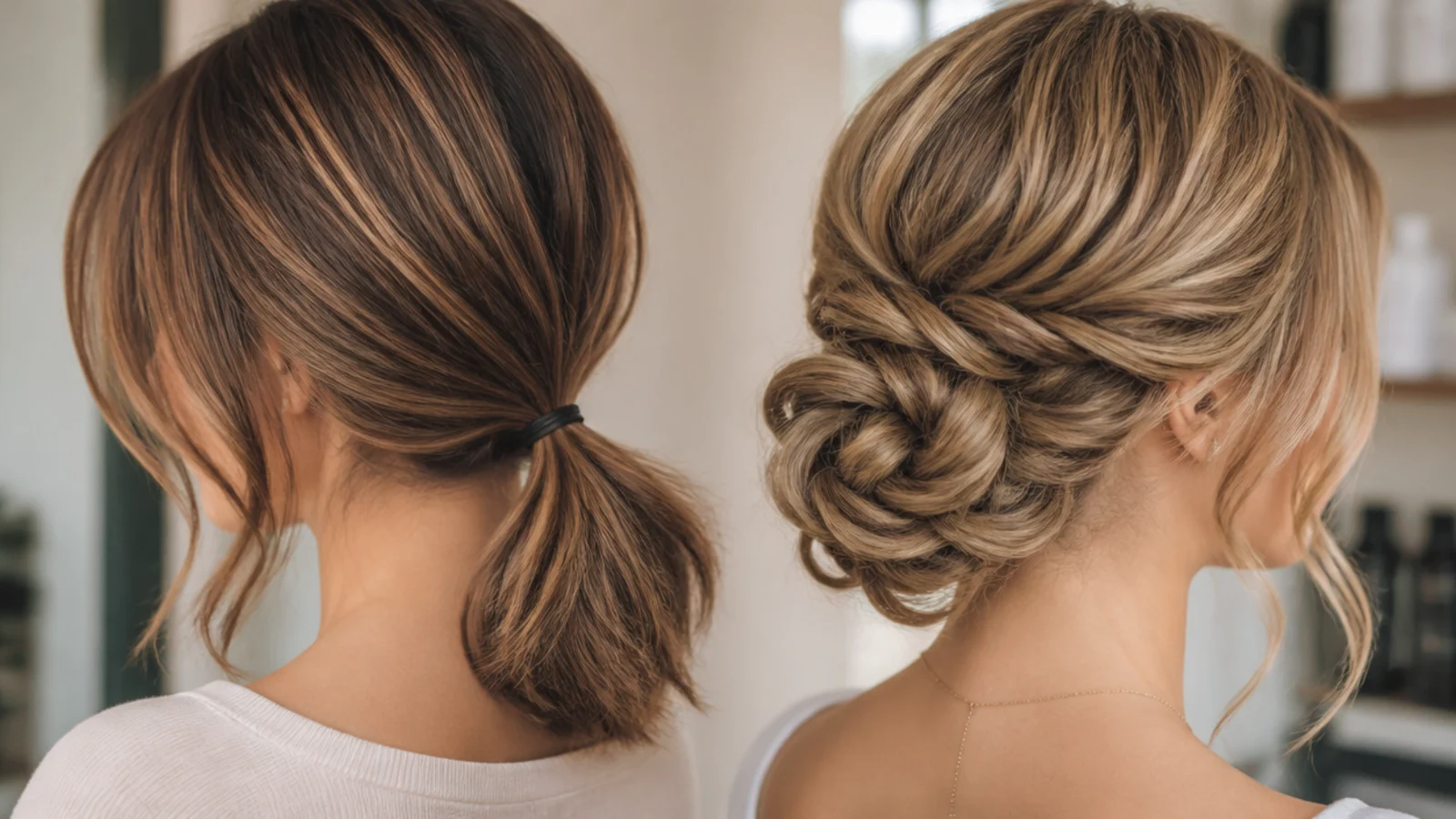
10. Updo Compared
A proper wrapped bun needs enough length to circle the base twice, which is roughly six inches past the tie point, so collarbone hair makes a small knot with short pieces escaping at the nape. Long hair makes any updo you like, then loads every pin with weight that slowly drags the shape down over an evening.
11. Curtain Bangs Compared
On mid length hair the shortest bang piece is only a few inches above the perimeter, so it blends into the body of the cut and needs almost no separate styling. Against long hair the same fringe sits well above everything else and reads as its own layer, which means drying it forward every single wash or watching it separate.
12. Thinning Hair Compared
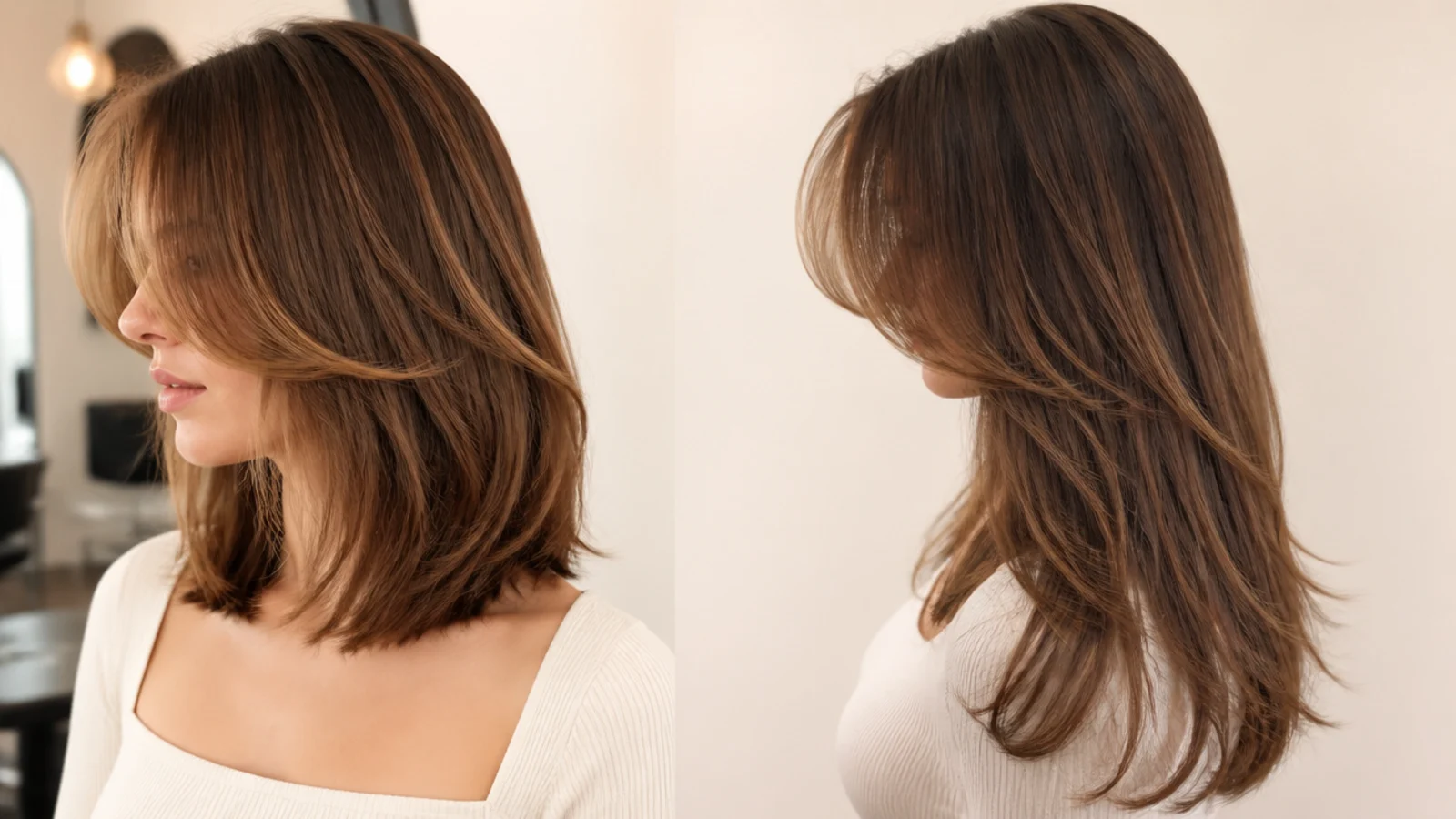
Density is a strand count and cutting does not change it, but it does change the area those strands cover. Spread over mid-back length the same hair thins visibly toward the ends, while at collarbone length the perimeter closes up and reads solid. This is the one comparison where the shorter answer is nearly always correct.

13. Humidity Compared
Water entering the shaft breaks the hydrogen bonds that a blow dry set, and the style reverts. Weight is the only thing pushing back, so long hair holds a smooth finish slightly longer under its own mass while mid length lifts and expands outward. On a humid day the shorter cut needs a product with hold rather than a product with shine.
14. Color Damage Compared
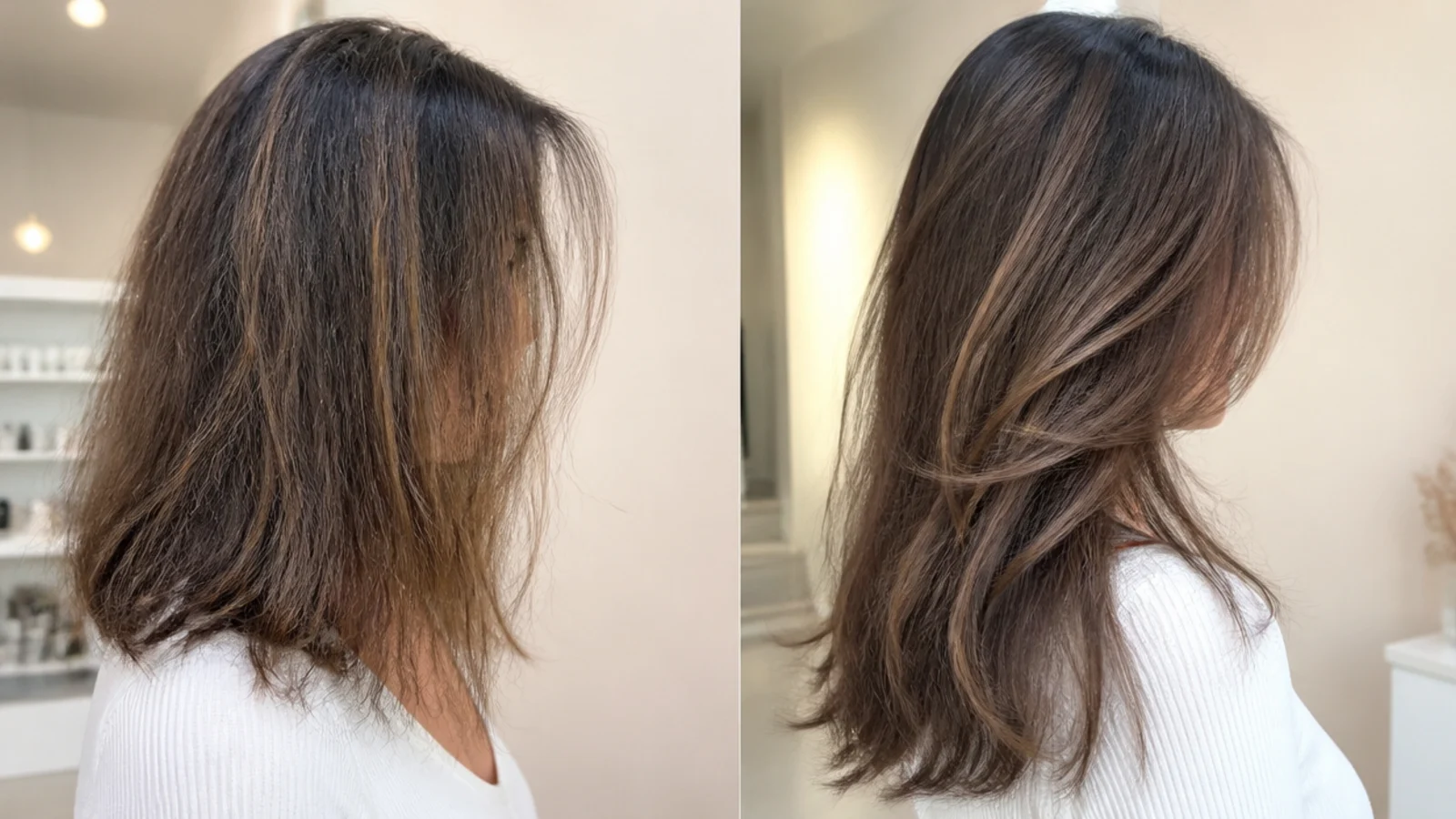
Hair grows about half an inch a month, so mid-back ends are three to four years old and have sat through every colour, every gloss and every hot tool since. Collarbone ends are around two years old at most. The shorter side of this comparison is not better cared for, it is simply younger hair.
15. Grow Back Timeline
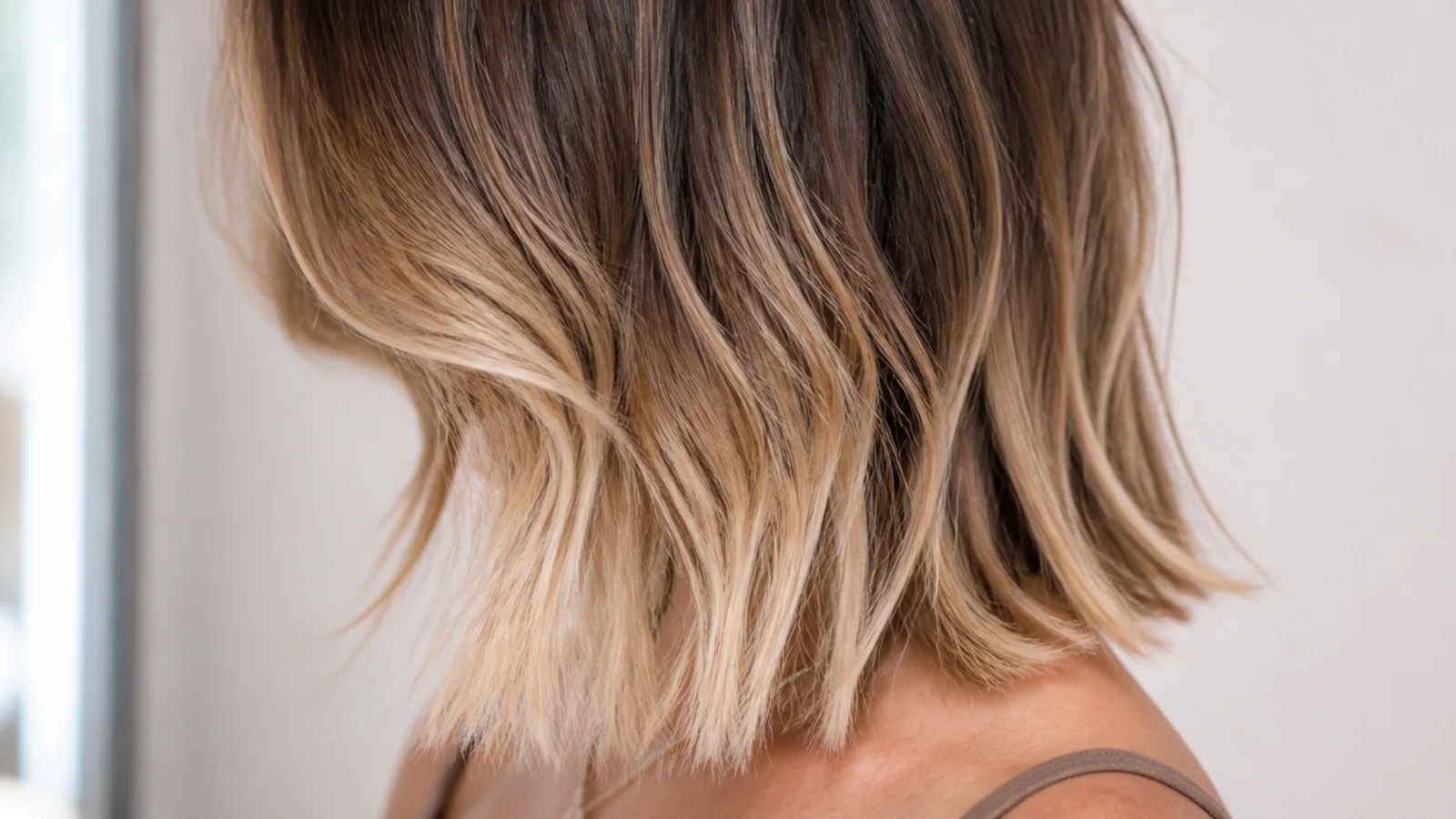
Getting from the collarbone to the mid-back is about six inches, so a year of growth before you account for maintenance. Half an inch removed every twelve weeks costs two inches a year, which turns that year into roughly fifteen months. Knowing that number in advance is what stops the month four haircut.
Final Thoughts
Decide by density and texture first, because those two set the ceiling. Fine hair almost always looks like more hair at the collarbone, coarse hair almost always behaves better with the weight of length on it, and curly hair needs the shrinkage counted before any number is agreed. Face shape is a tiebreaker, not the deciding vote.
Then be honest about mornings. Long hair costs you dryer time and gives you a bun on the days you have none; mid length costs you the bun and gives you an air dry that finishes before you leave. Nothing in either column changes at half an inch a month, so pick the one whose trade you would rather live with. If long is where you are heading, see 20 long korean haircut ideas to save and 15 long old money haircut ideas. More in Womens Hairstyles.