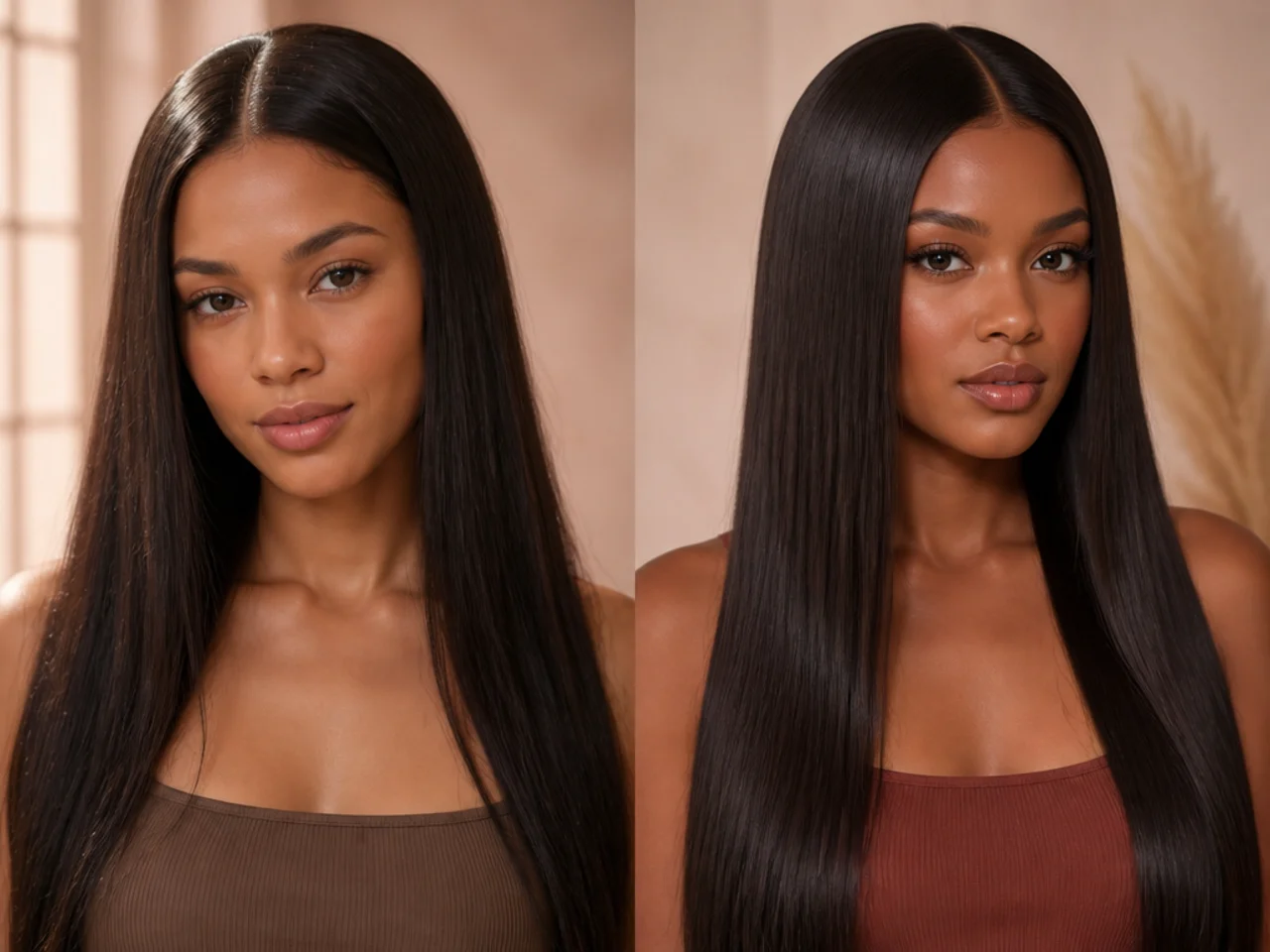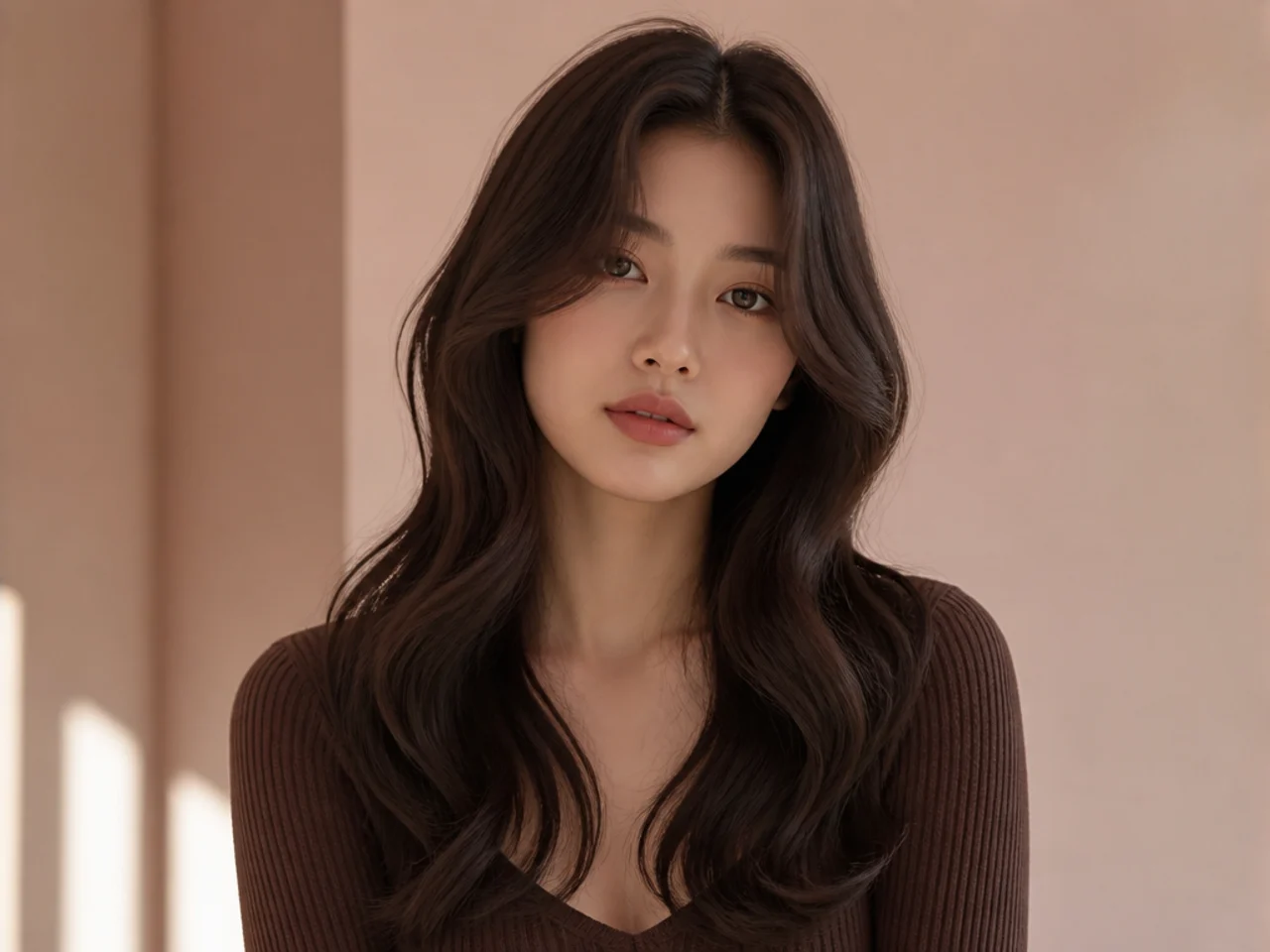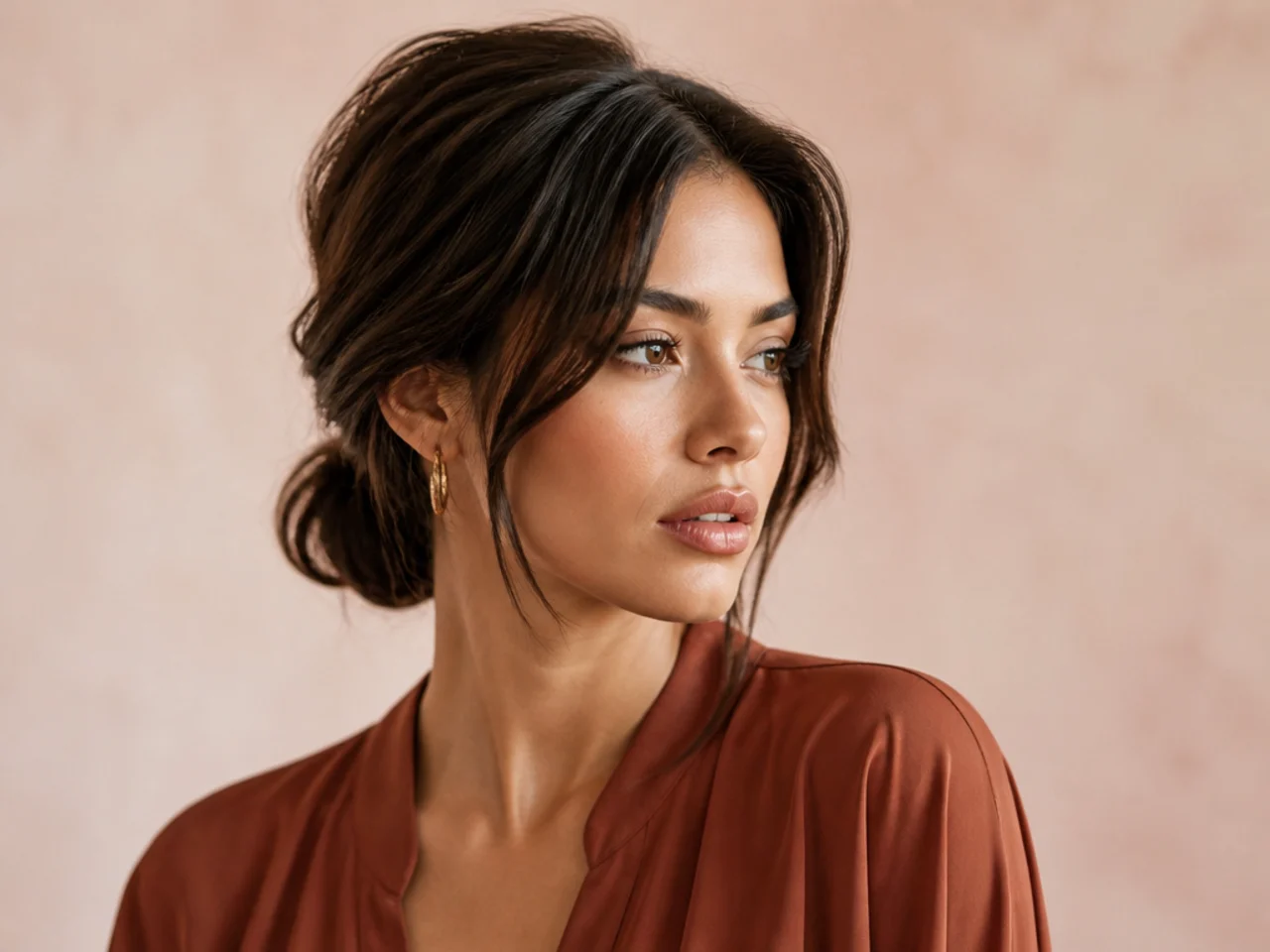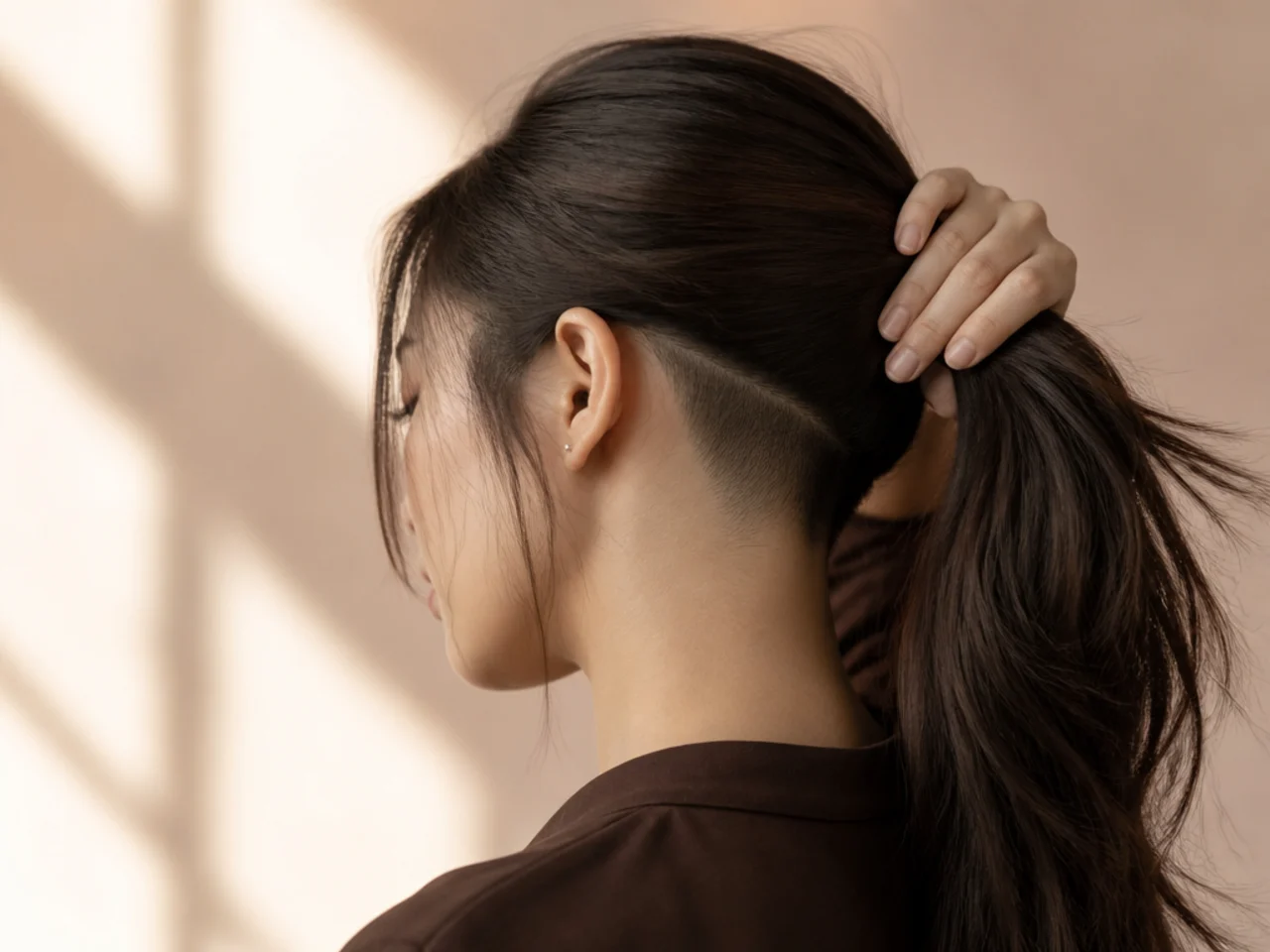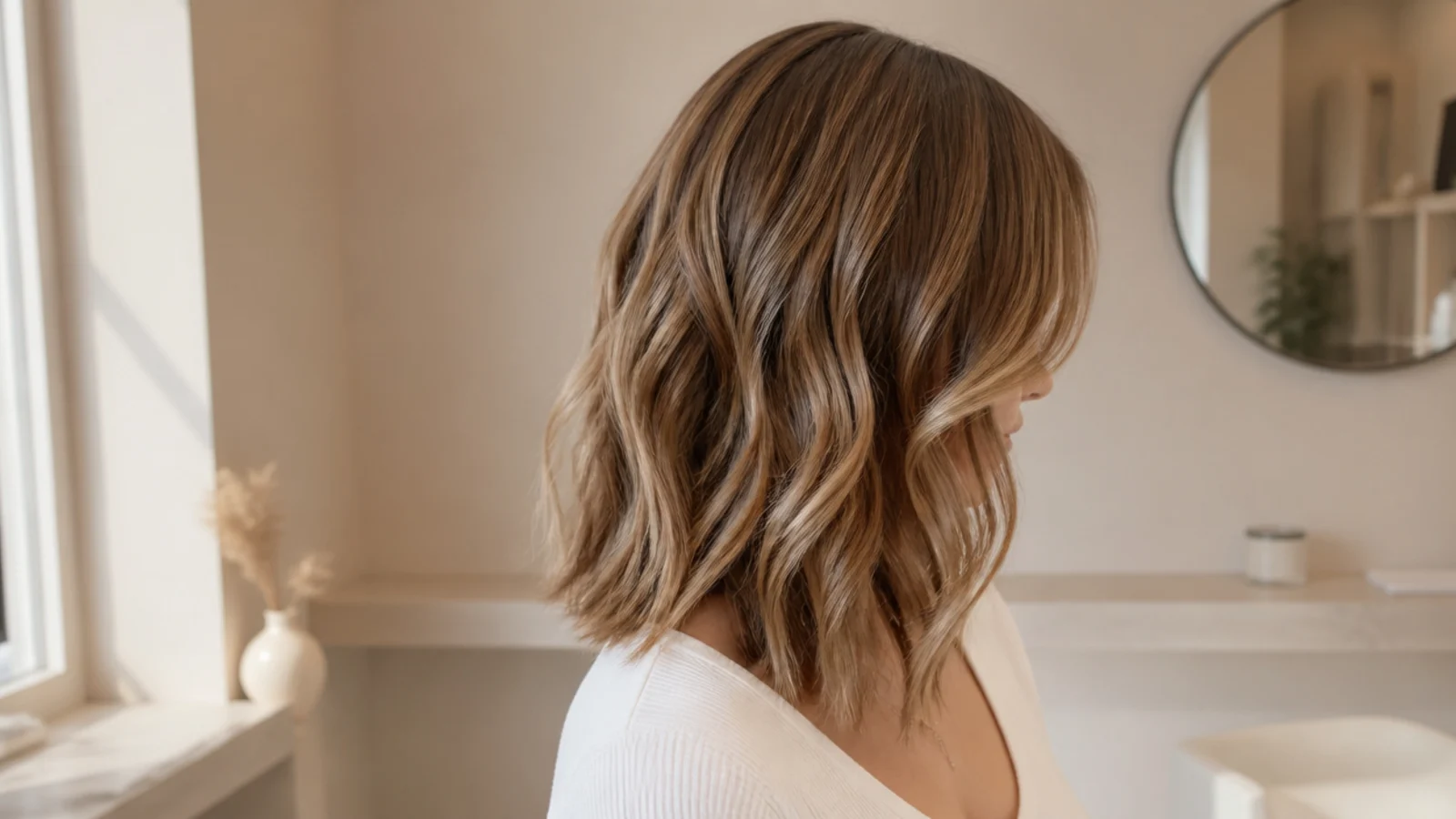
15 Wavy Mid Length Haircut Ideas
Fifteen mid length cuts for wavy hair, and the one thing that fixes most of the complaints about it. A wave is not missing — it is being held flat by the weight hanging below it, and weight is a cutting problem.
In this article · 23
- What Counts as Mid Length
- Wave Types Compared
- Face Shape Framing
- How to Ask Your Stylist
- Daily Styling
- Growing Out
- The 15 Wavy Mid Length Cuts
- 1. Invisible Layers on 2A Waves
- 2. Collarbone Lob on 2B Waves
- 3. Dry Cut on 2C Waves
- 4. Wavy Shag
- 5. Curtain Bangs
- 6. Angled Lob
- 7. Butterfly Cut
- 8. Blunt Line With Hidden Layers
- 9. Waves on Fine Hair
- 10. Waves on Thick Hair
- 11. Wolf Cut
- 12. Deep Side Part
- 13. U Shape Perimeter
- 14. Money Piece
- 15. Beachy Point Cut
- Final Thoughts
Almost every complaint about wavy hair at this length is the same complaint, and it is not about the wave.
A wave is a bend, and a bend carries whatever hangs below it. Past a certain mass the bend straightens out under the load, which is why the pattern is strong at the crown and gone by the ends.
Weight is a cutting problem, not a product problem. No cream lifts hair that is being pulled straight by six inches hanging underneath it.
What Counts as Mid Length
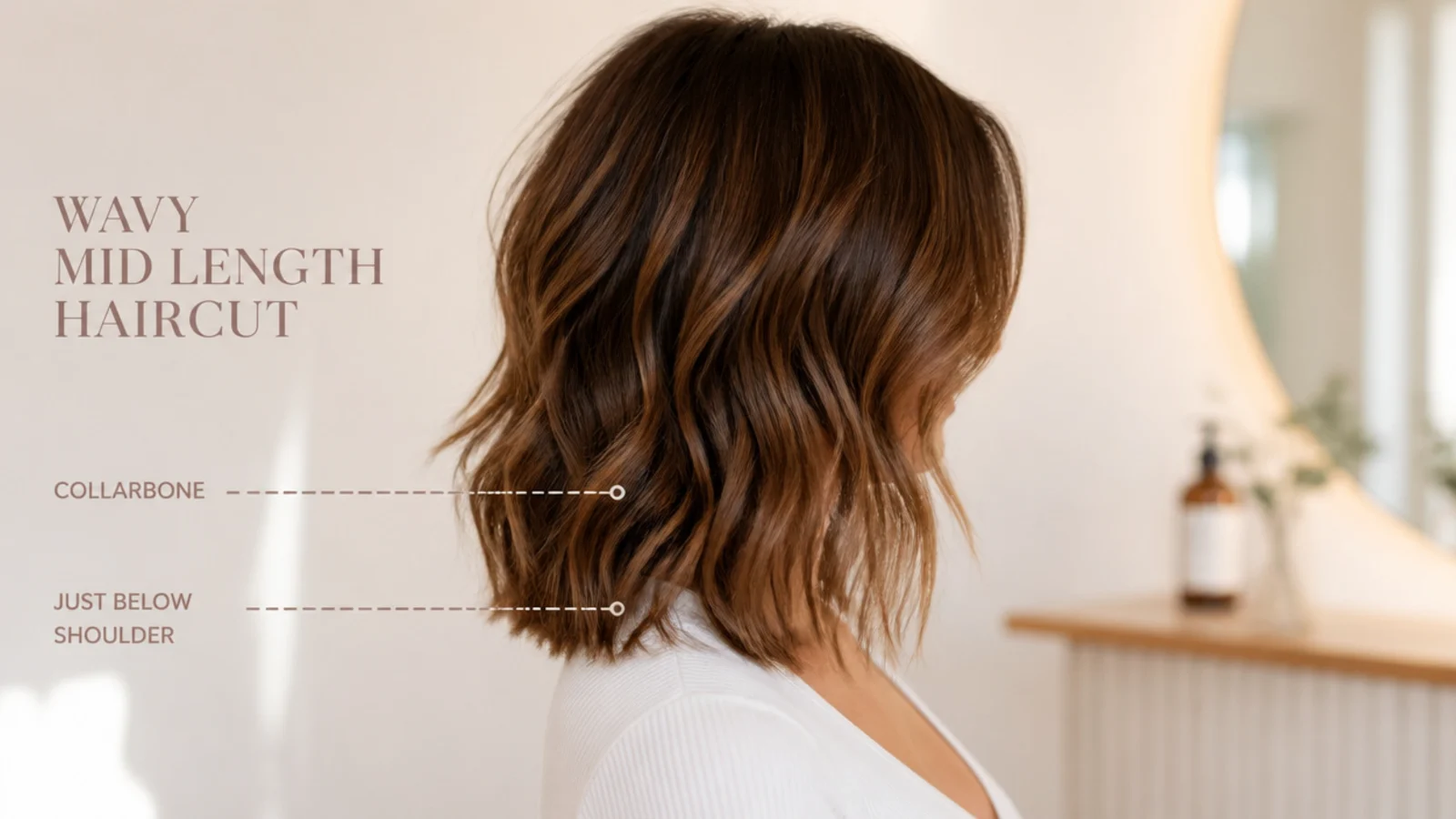
Collarbone to just below the shoulder blade. On wavy hair, measure that dry, because the pattern shortens as it dries.
Wet length is not finished length. A 2C wave can give back a noticeable amount of its stretched measurement, so the number agreed at the basin is not the number you leave with.
Shoulder length exactly is the difficult one. The shoulder pushes wavy ends outward and the widest point of the cut ends up beside the jaw.
Below the shoulder blade is long. At that length the weight below the bend usually wins, and the wave flattens whatever you do to it.
Wave Types Compared
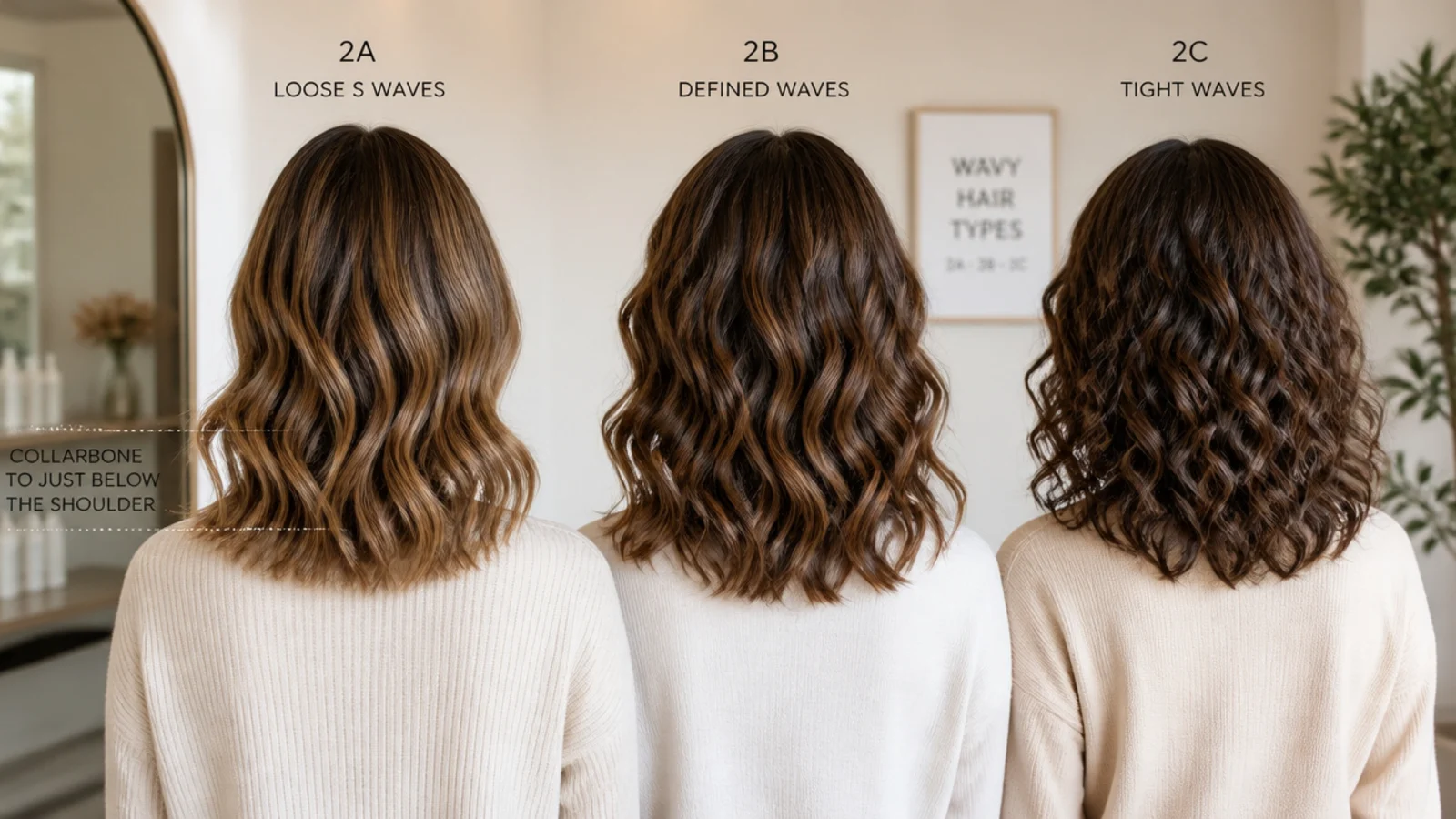
2A is a shallow S that starts low. It straightens under almost any weight, so it needs interior layers rather than a shorter perimeter.
2B is a defined S from the mid-lengths. The most cooperative of the three, and the type most flattered by a plain collarbone lob.
2C is coarse and starts near the root. More pattern, more width, and the type most likely to build a triangle if the perimeter is left heavy.
All three are cut differently. The same cut on 2A and 2C produces two shapes that share nothing but a length.
Face Shape Framing
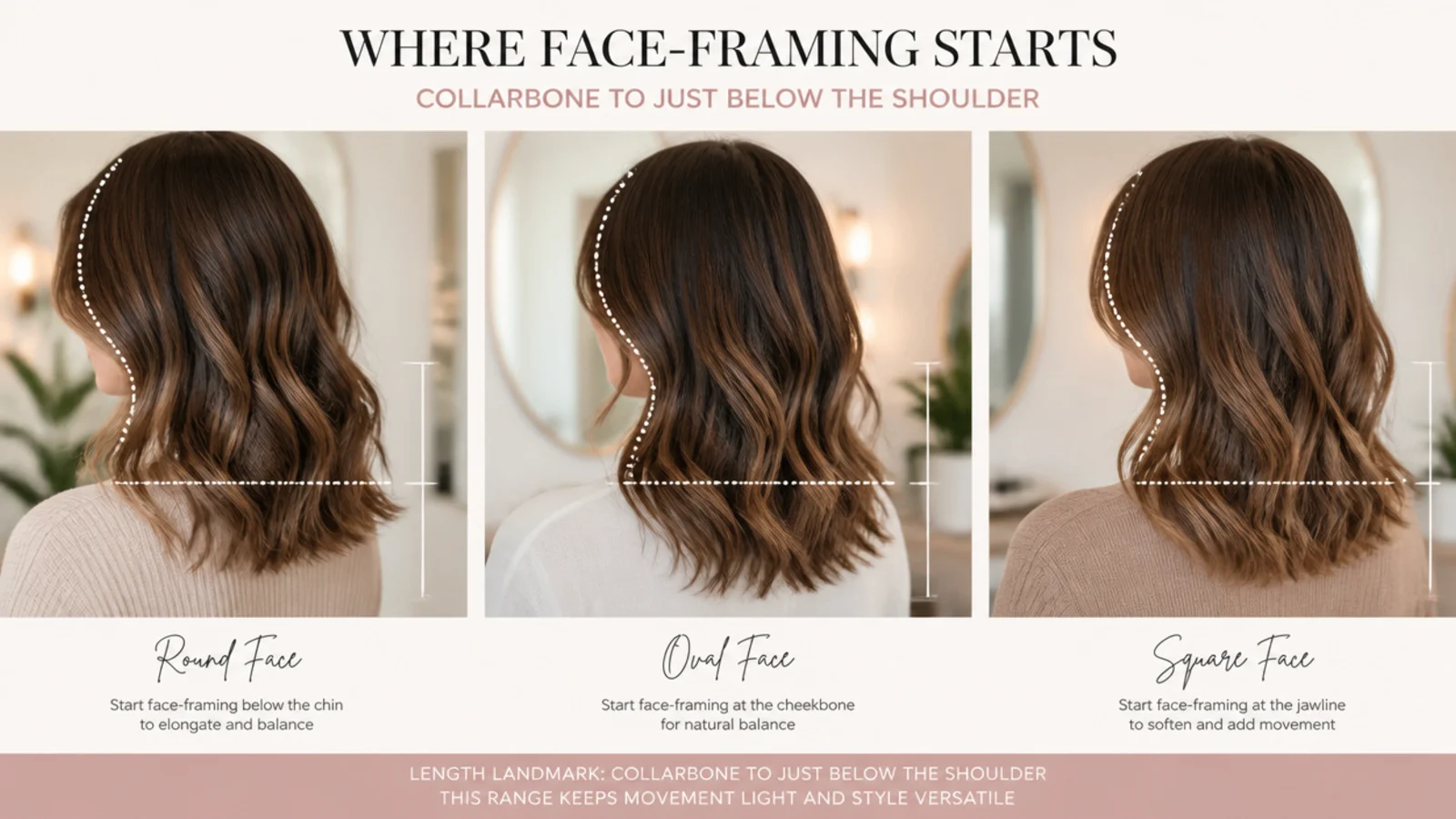
Round faces want the shortest piece below the chin. Wavy hair adds width wherever it is layered, so keep that width under the widest part of the face.
Square jaws want a diagonal. A wave crossing the jawline breaks it. A wave stopping level with it doubles it.
Long faces want the width at the cheekbone. This is the one face shape where wavy hair does the job for free.
Heart shapes want the ends full. Avoid a deep taper at the perimeter, because it narrows the bottom of a face that is already narrow there.
How to Ask Your Stylist
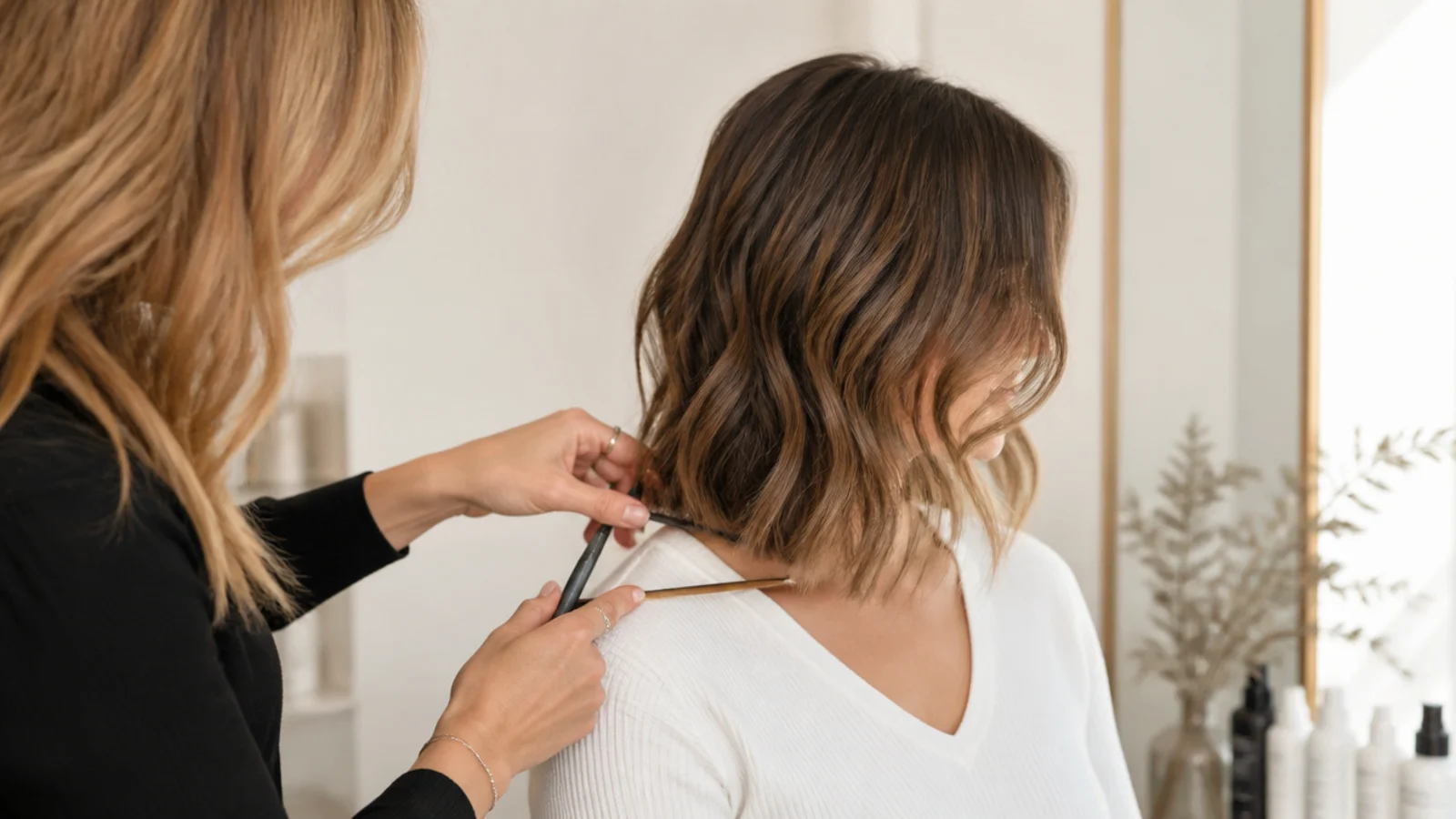
Ask for a dry cut, or ask why not. From 2B upward it is the difference between the layer you agreed and the layer you get.
Say the finished dry length. Not the wet length, and not a number of inches off.
Ask for weight out of the interior. Surface layers on wavy hair separate into visible pieces; interior weight removal releases the bend without showing where it came from.
Say whether the perimeter stays blunt. A blunt line on 2C hair builds width at the ends unless the interior is thinned to compensate.
Daily Styling
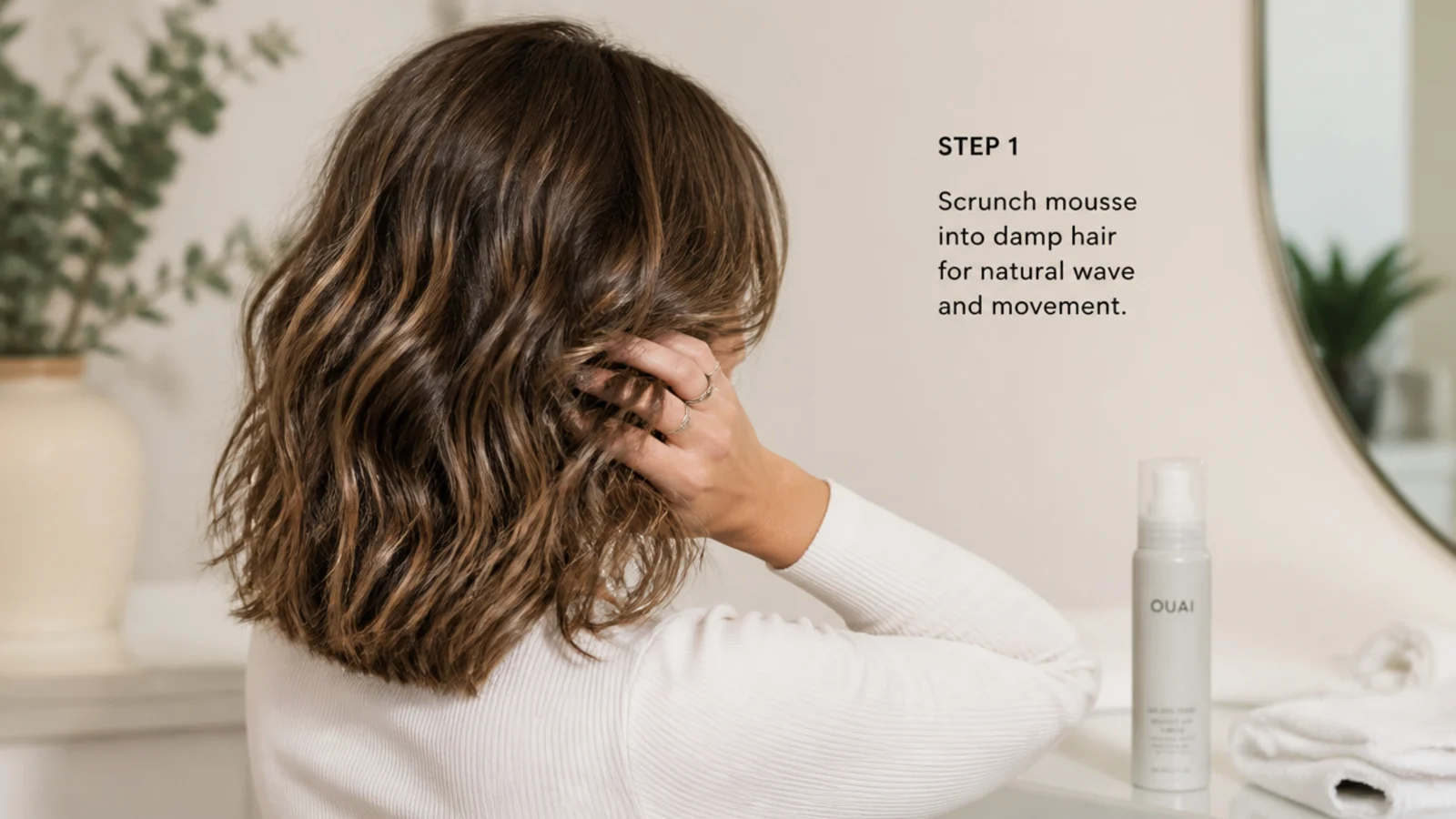
Product on soaking wet hair. Water is what carries it evenly along the shaft, and damp hair takes it in patches.
Scrunch upward, never comb down. Combing pulls the S out of the bend and it does not come back without rewetting.
Hands off while it dries. The bonds that hold the pattern reform as water leaves, so every touch during drying resets the shape.
A diffuser supports the bend, a nozzle destroys it. Directed air pulls the wave straight while it is at its most fragile.
Growing Out
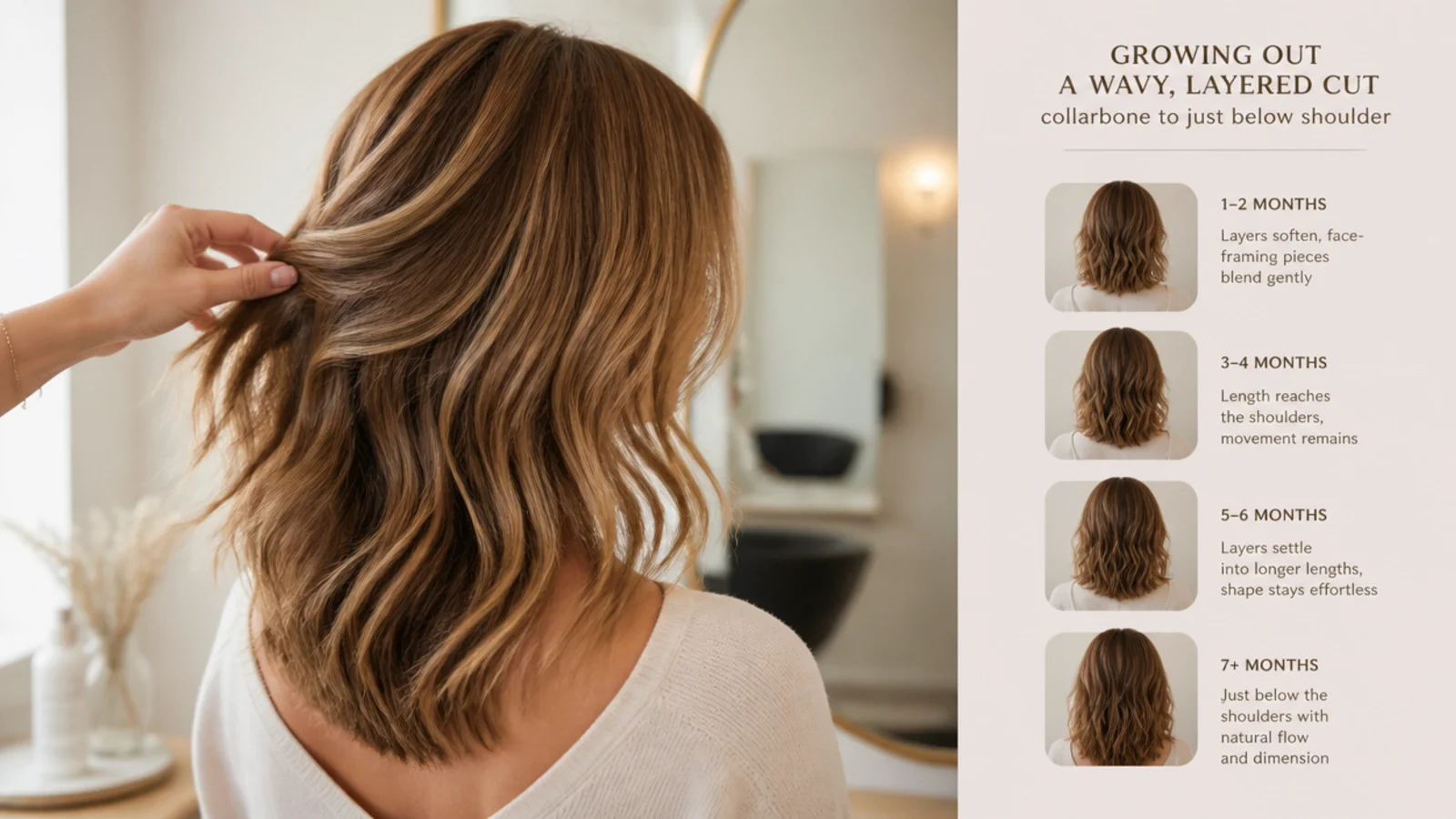
The pattern loosens as it lengthens. More weight below the bend, less bend. Expect the wave to weaken as it passes the shoulder blade.
Layers grow faster than the perimeter reads. The shortest tier gains its inch and a half in three months and the shape softens well before the length changes.
Dust the perimeter without touching the interior. That keeps the ends tidy without adding weight back into the middle.
Book at ten to twelve weeks. Wavy hair hides a growing-out cut better than any straight texture, which is the one saving in the whole schedule.
The 15 Wavy Mid Length Cuts
1. Invisible Layers on 2A Waves
A 2A bend is shallow and the easiest of the three to pull straight, so almost any weight below it flattens the pattern. Over-directed interior layers lift that weight off from inside without leaving a step, which a loose wave has too little movement to disguise.
2. Collarbone Lob on 2B Waves
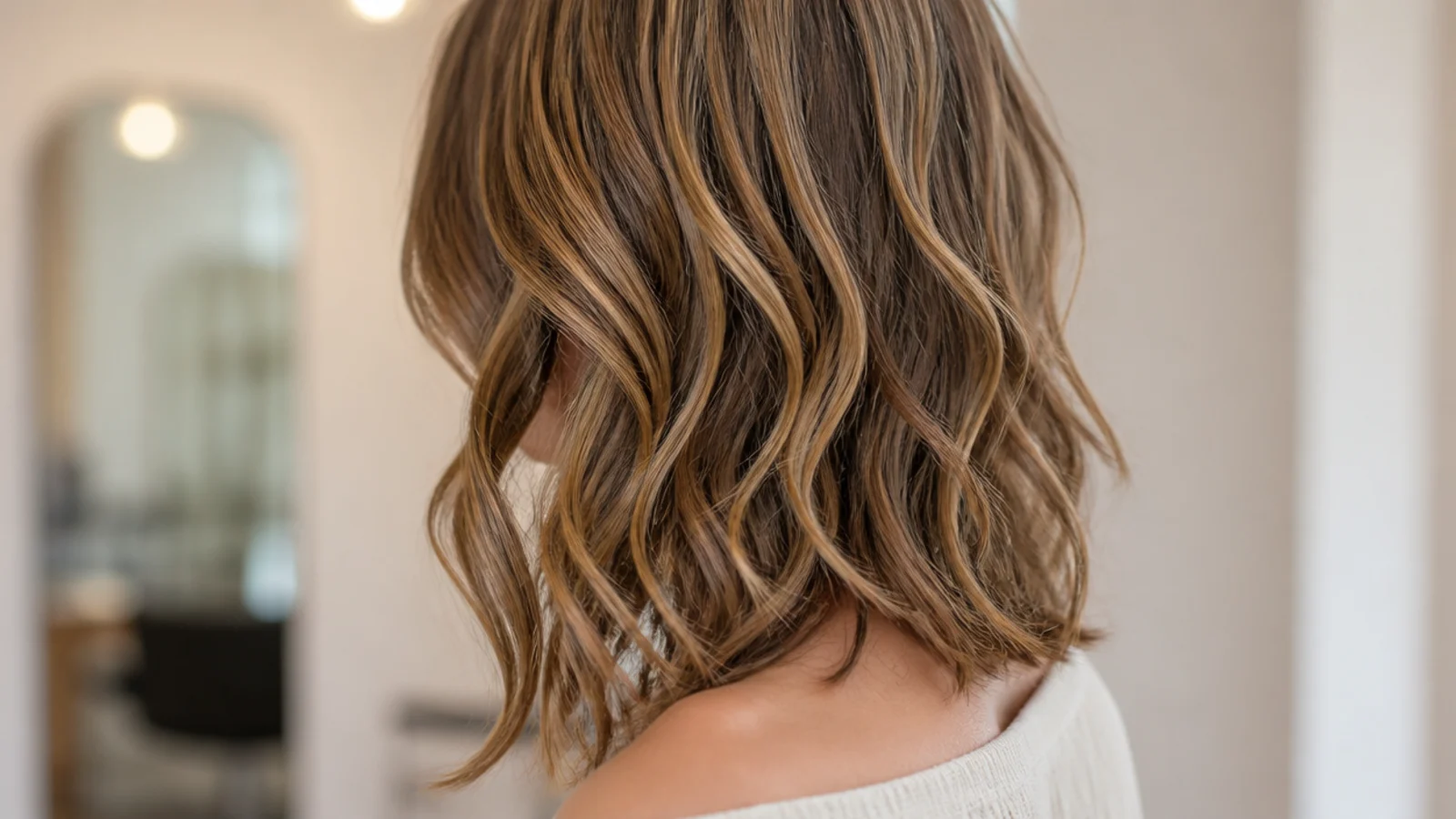
The collarbone lands roughly where a 2B wave finishes its first full S, so a perimeter cut there ends on a bend rather than halfway through one. That is why this length looks deliberate on 2B hair and shapeless an inch either side of it.
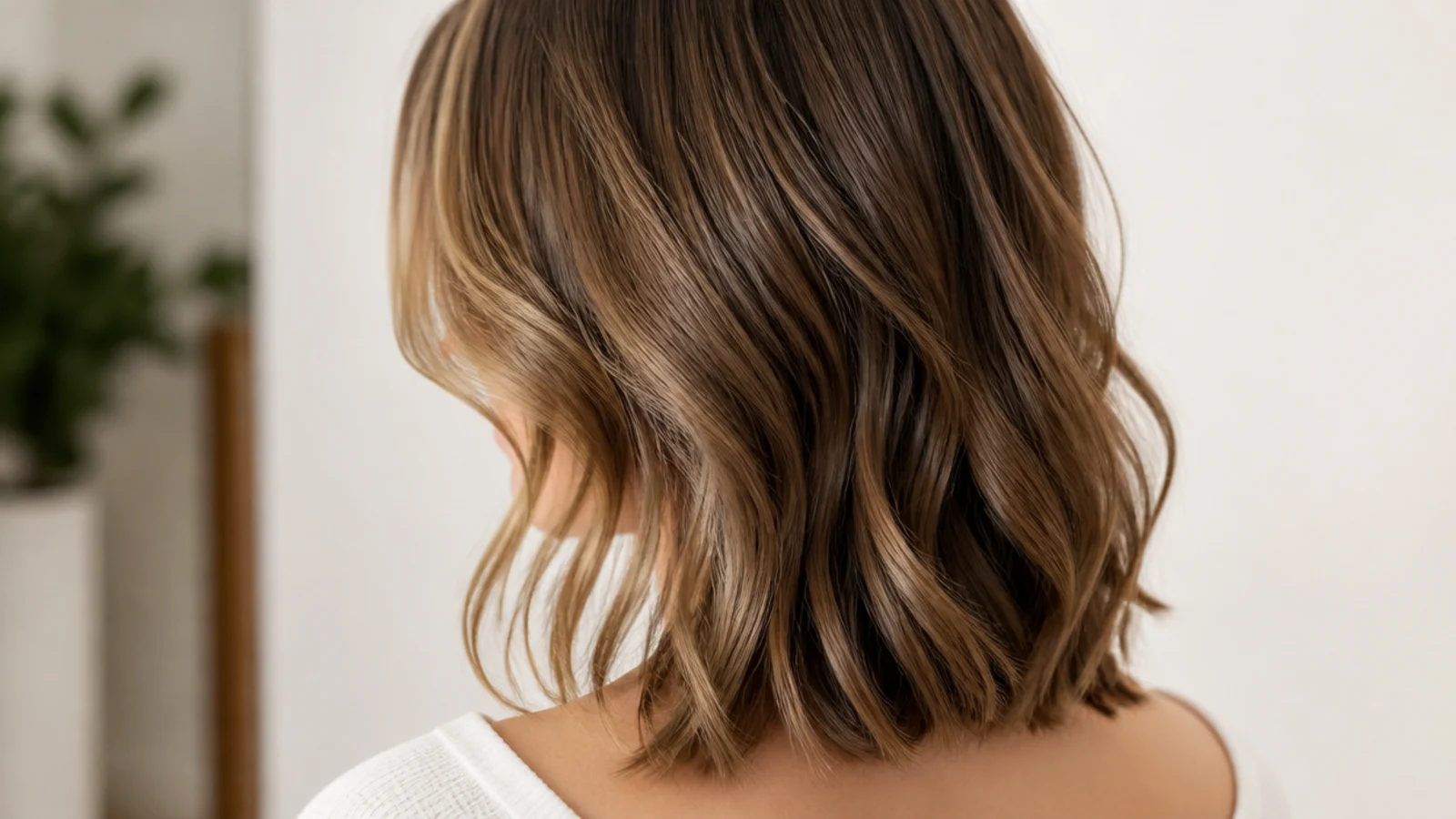
3. Dry Cut on 2C Waves
2C waves shorten visibly as they dry and spring differently on each side of the head, so a wet cut places every section somewhere other than where it will end up. Cutting dry means each piece is judged where it actually falls, which is the only honest way to layer this pattern.
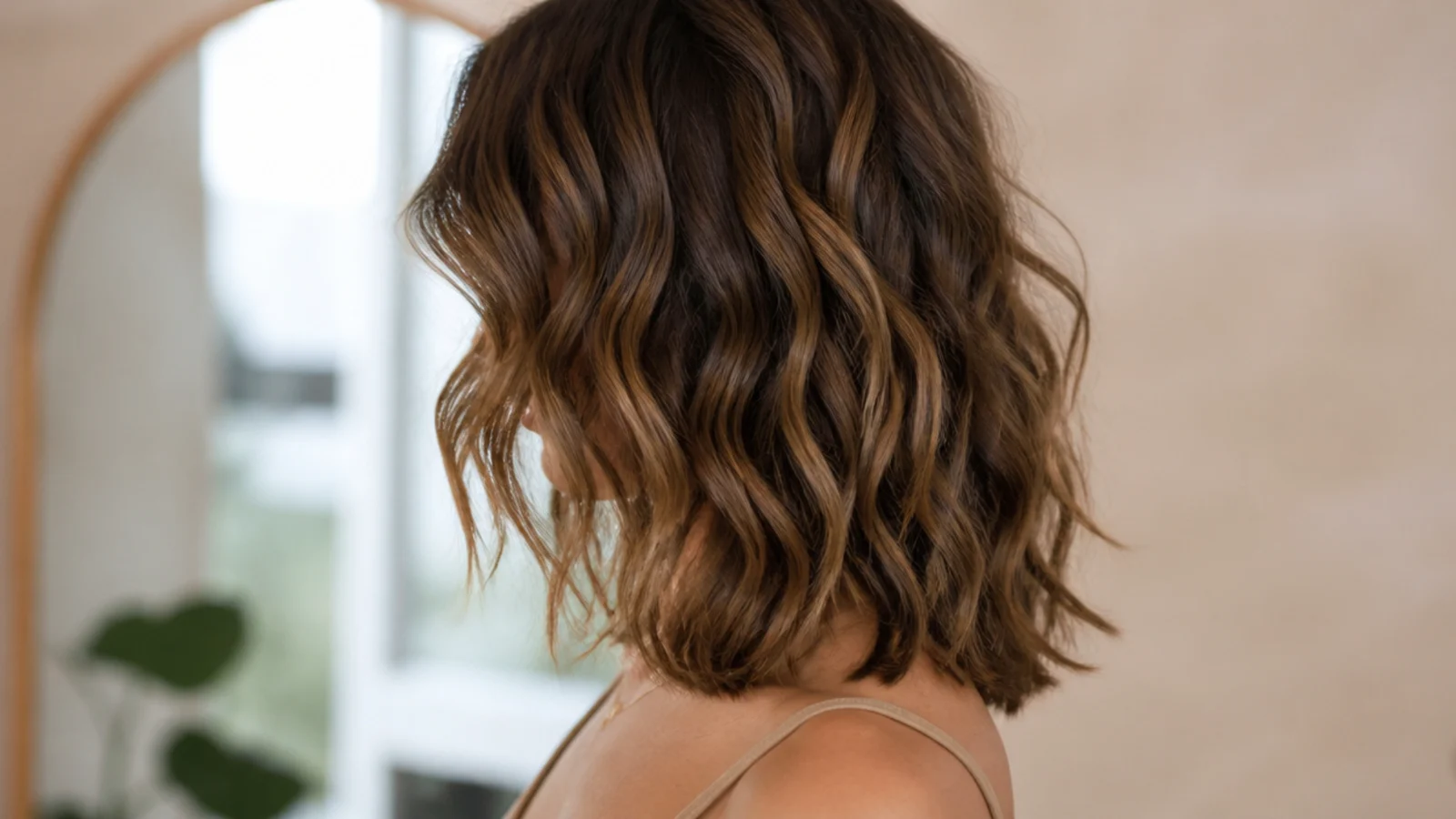
4. Wavy Shag
Graduation from the crown down is the shape a wave is already trying to make on its own. Tiered layers let each wave clear the one beneath it, so the pattern stacks up the head instead of compressing into a solid wedge at the bottom.
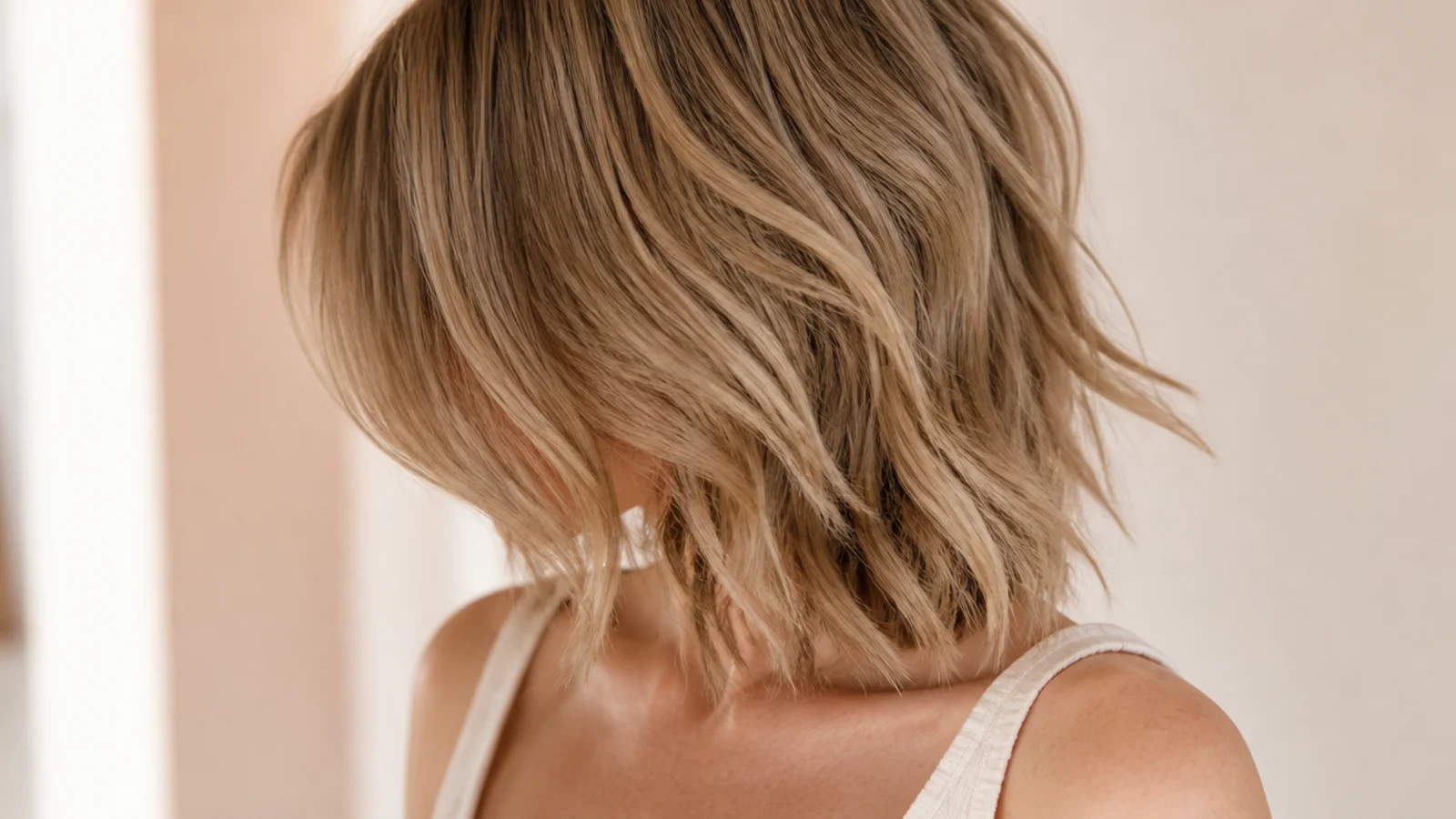
5. Curtain Bangs
On wavy hair a fringe has to be cut longer than the length you want, because it lifts as it dries and takes an inch back. A curtain cut to the cheekbone while wet routinely finishes somewhere near the eyebrow, and there is no fixing that until it grows.
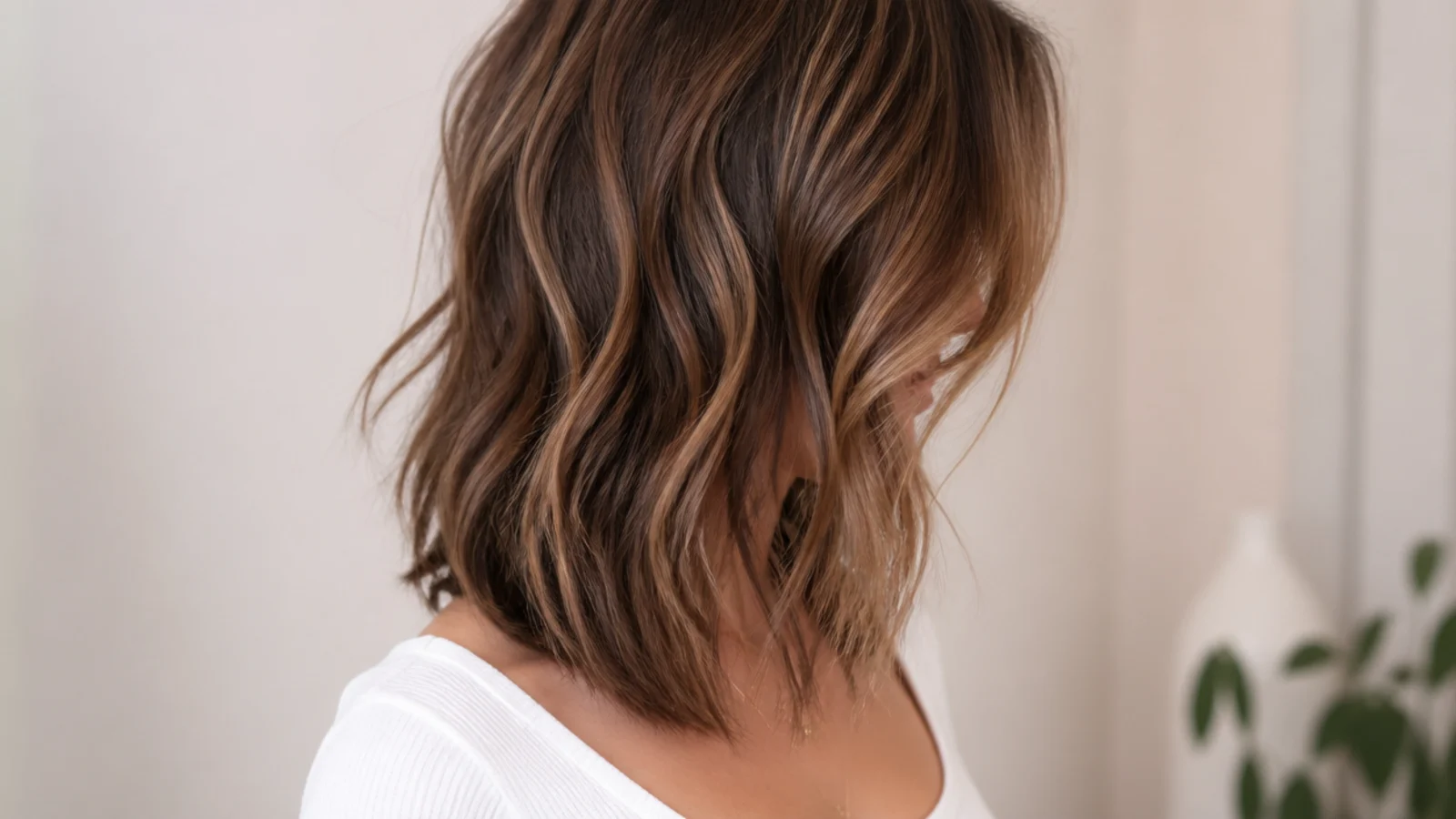
6. Angled Lob
Longer at the front than the back, so the shorter back stacks slightly and pushes the waves forward toward the face. It also puts the shortest length at the nape, which is where the wave pattern is usually loosest and least worth keeping.
7. Butterfly Cut
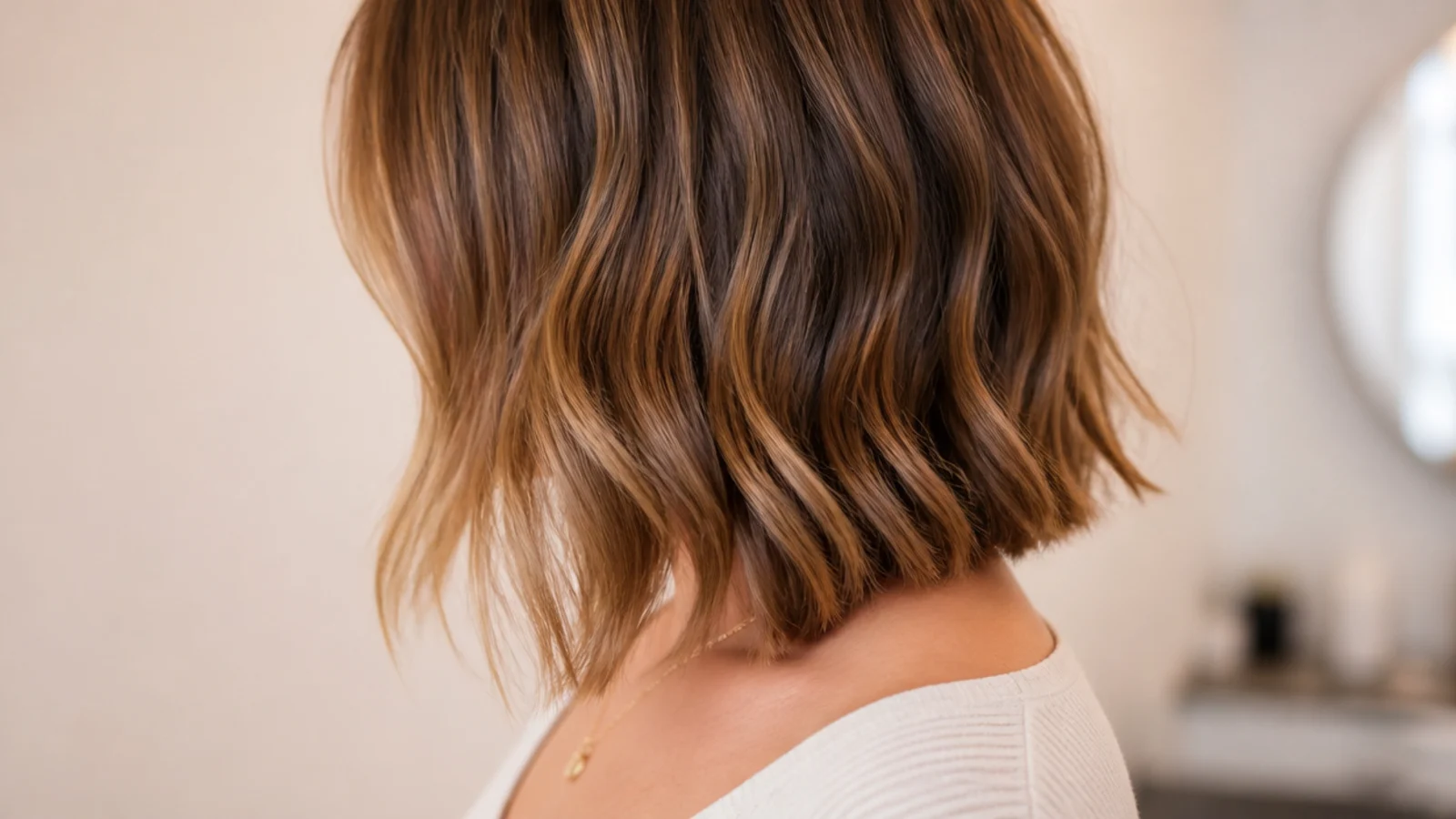
A short tier around the chin sitting above long layers gives the crown a lift that a wave cannot produce for itself, because the bend usually starts too far down the shaft. Worn down it still reads as long hair, which is the trade this cut exists to make.
8. Blunt Line With Hidden Layers
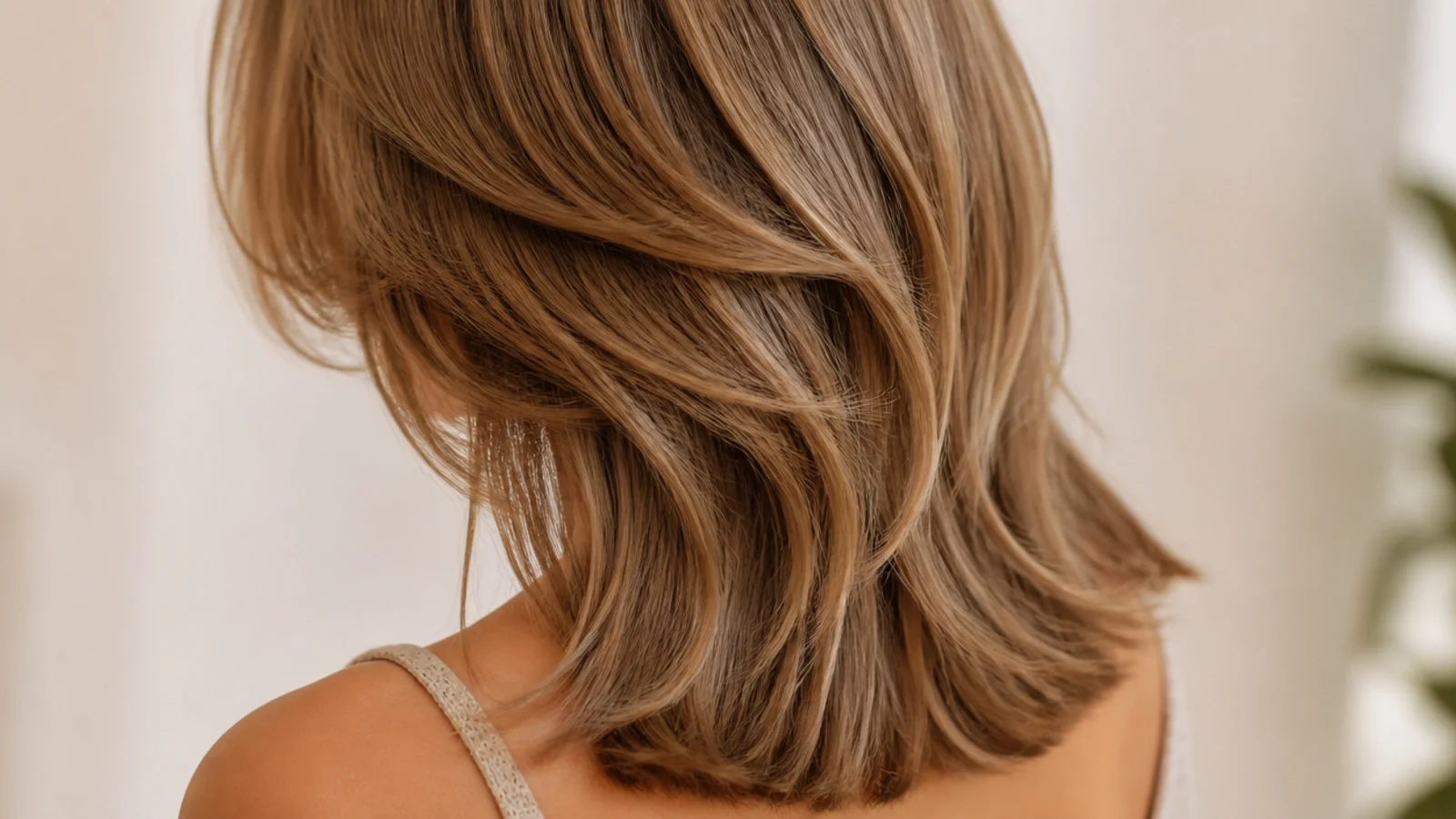
A blunt perimeter on wavy hair normally builds width at the ends and turns the silhouette into a triangle. Hiding the layers underneath removes the interior weight that causes it while the surface keeps the density that a solid line gives you.
9. Waves on Fine Hair
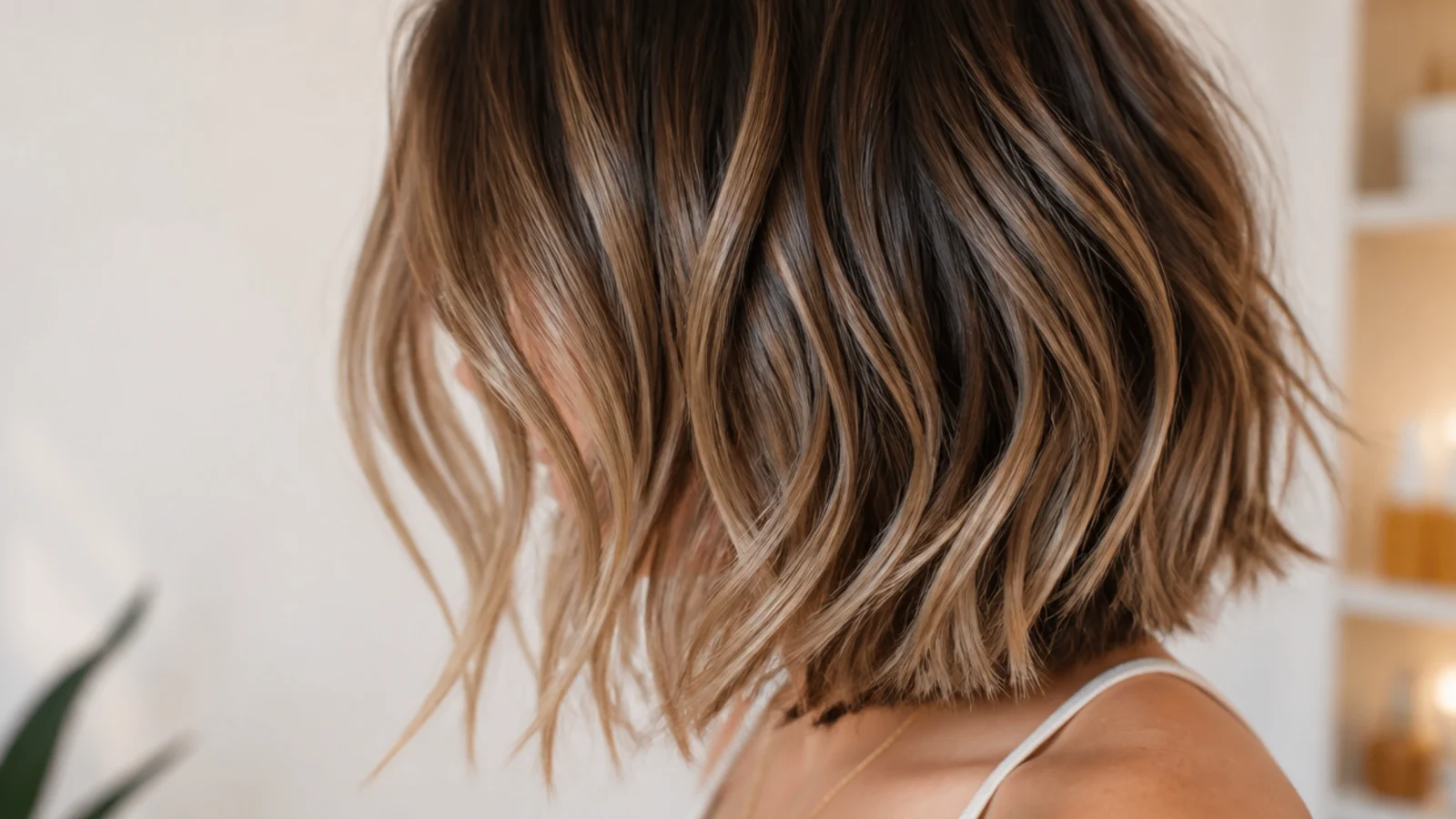
Fine wavy hair loses its pattern to weight faster than any other type, because a shallow bend in a narrow strand cannot hold much mass up. Keep the perimeter at the collarbone and the layers few, and the wave returns without a single product being involved.
10. Waves on Thick Hair
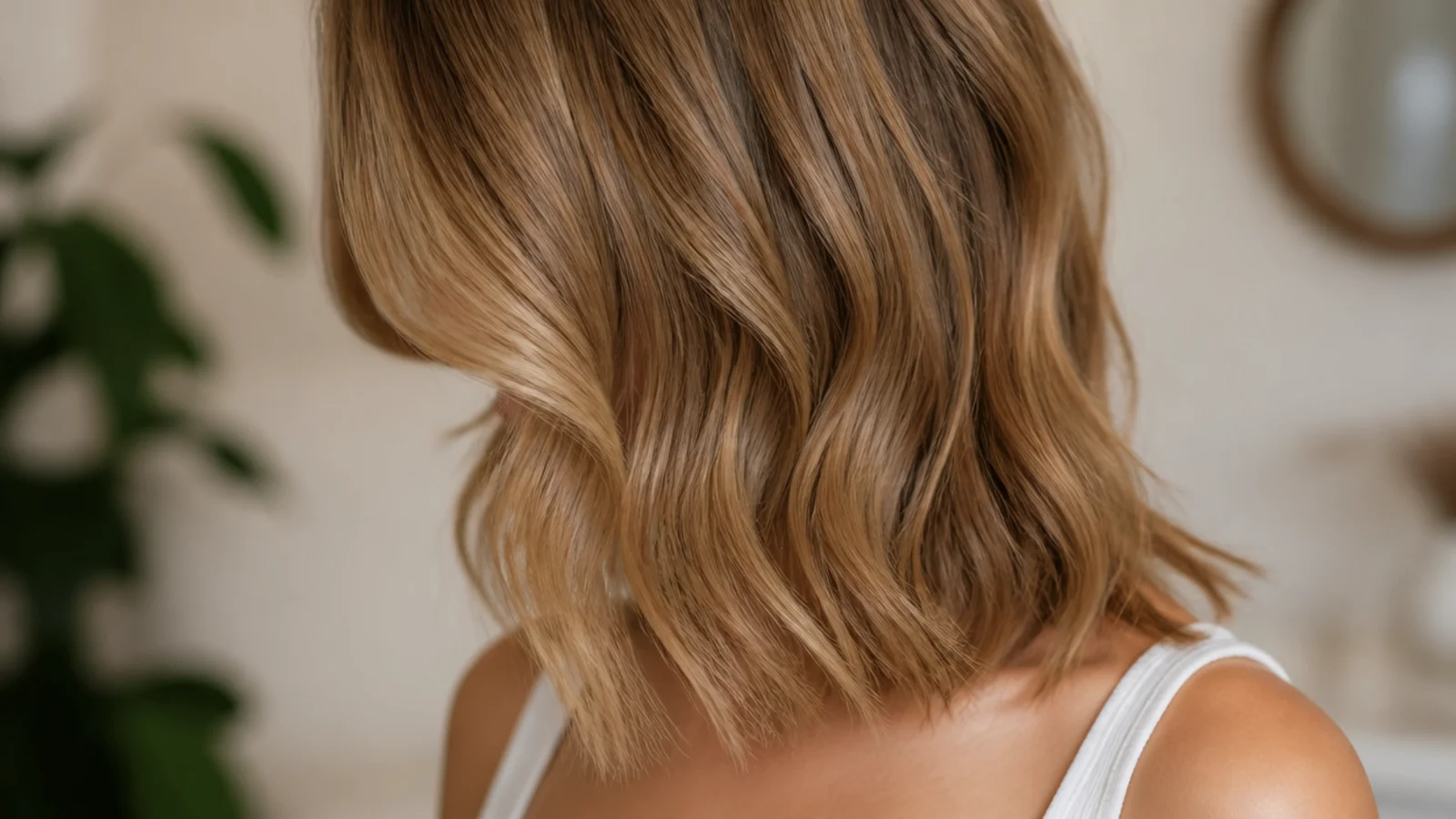
Here the issue is width rather than pattern. Weight removed from the interior in vertical sections narrows the bottom third of the shape, while the same amount taken off the surface only produces frizzy ends that make the width worse.
11. Wolf Cut
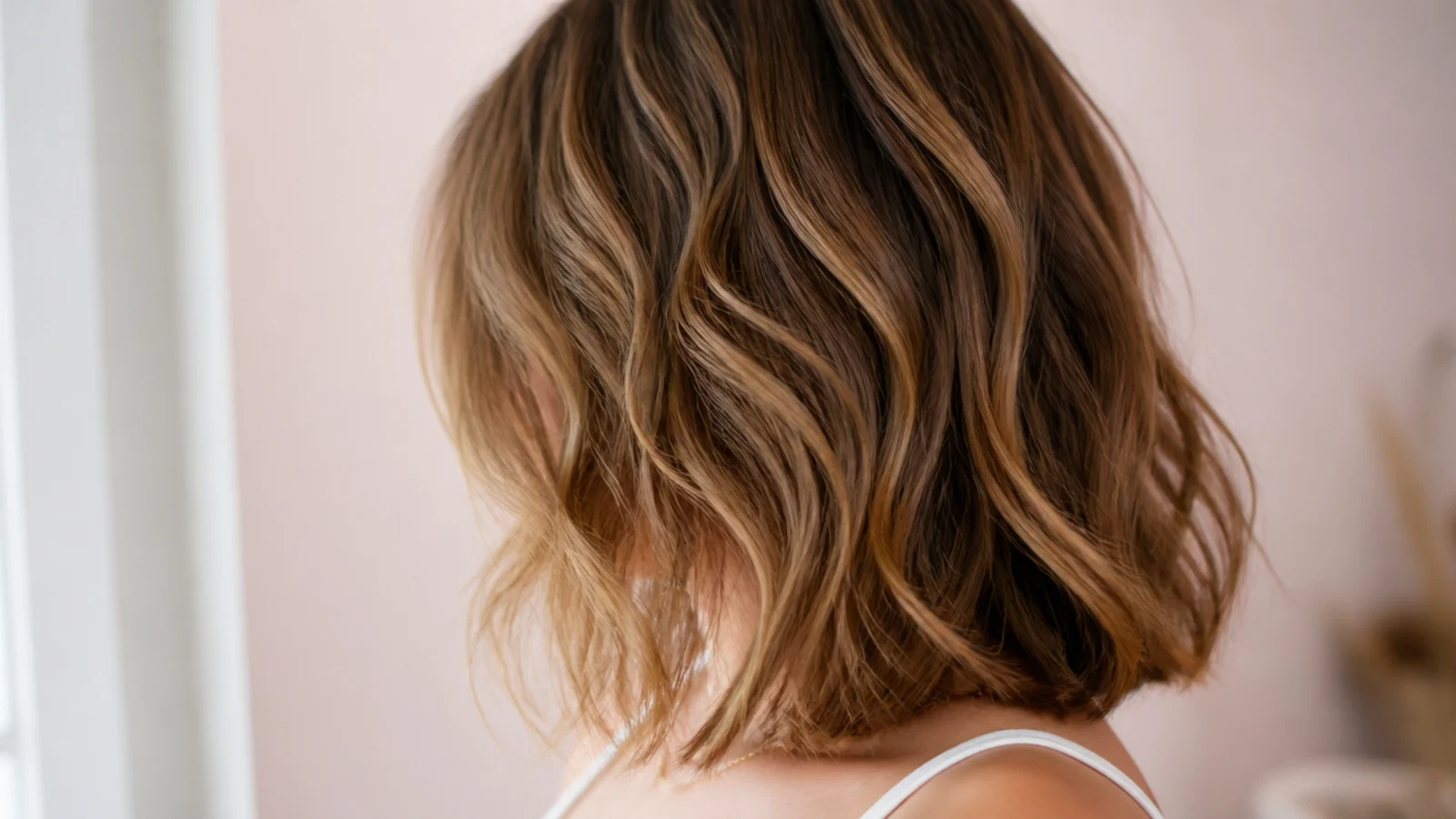
Short disconnected crown layers put height exactly where a wave has none, since the pattern normally begins well below the root and leaves the top flat. That single fact is the reason this shape suits wavy hair better than it suits most textures.
12. Deep Side Part
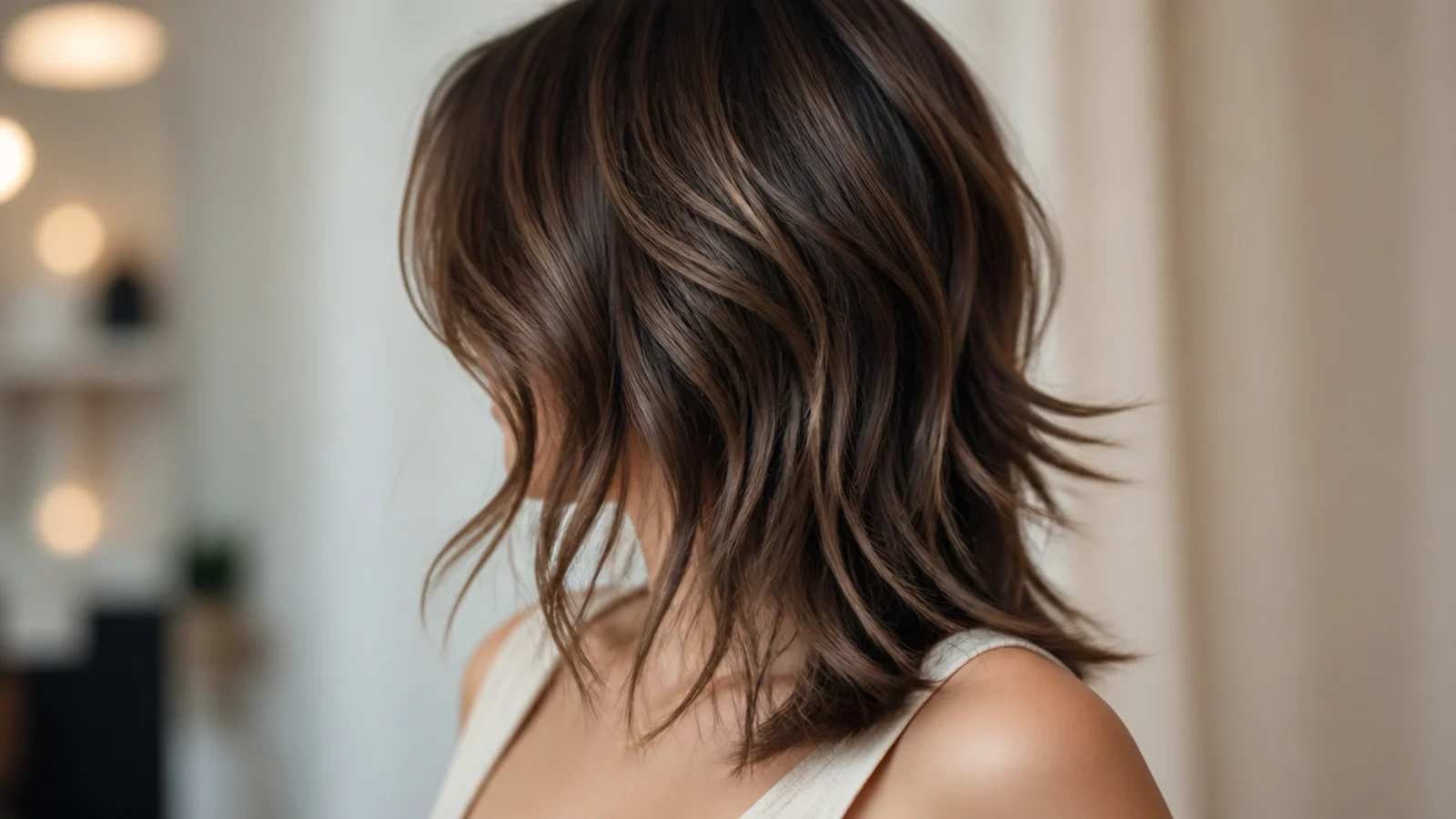
Pushing hair against its natural fall direction lifts the root as it resists, and on wavy hair the root is the flattest part of the whole head because the bend starts lower down the shaft. It is free volume in the one place a wave never supplies any.
13. U Shape Perimeter
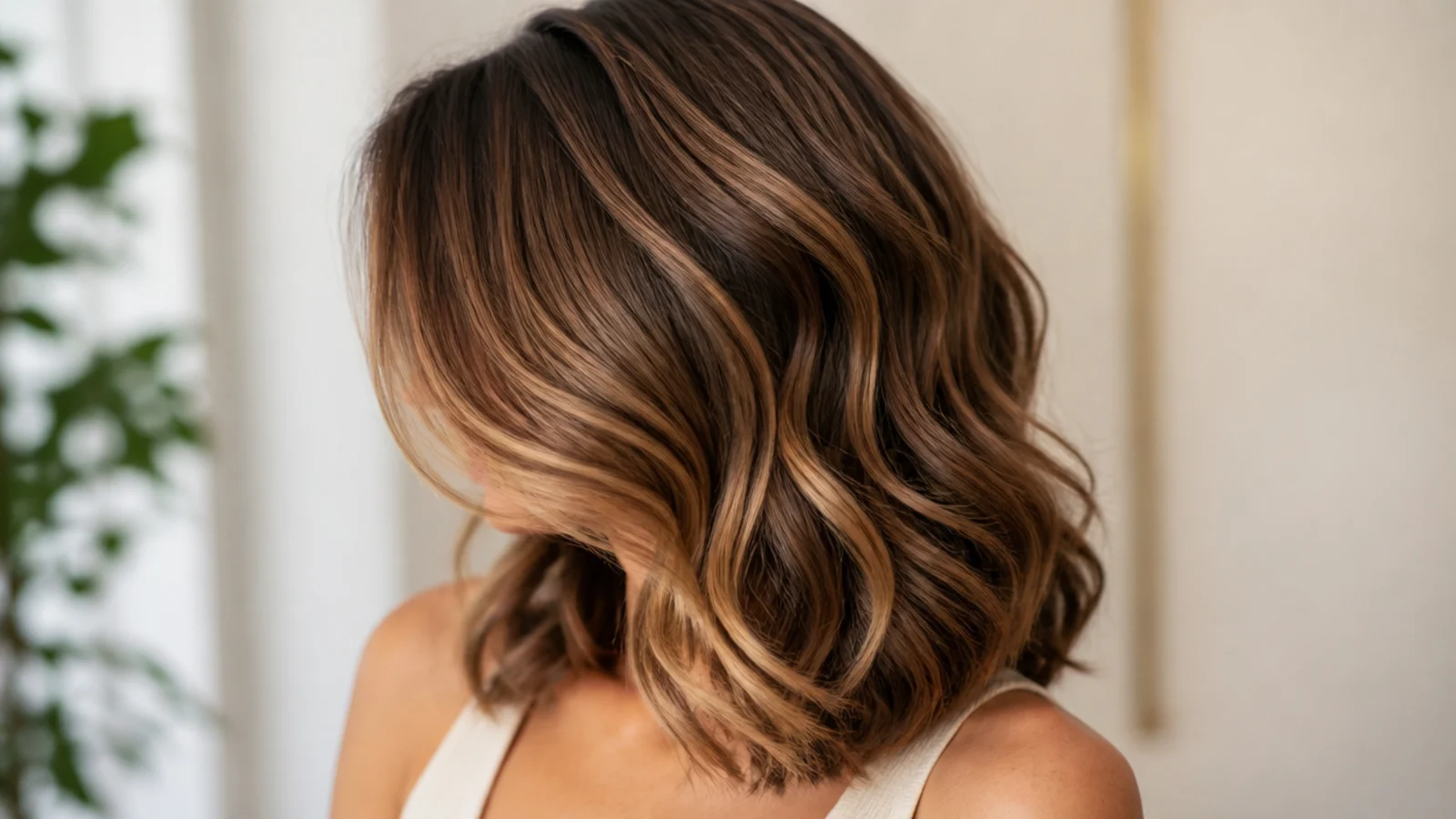
A shallow U keeps the perimeter unbroken while curving gently inward toward the face at the front. On wavy hair that curve stops the ends reading as a straight-across shelf, which is what a flat perimeter looks like once the waves compress against it.
14. Money Piece
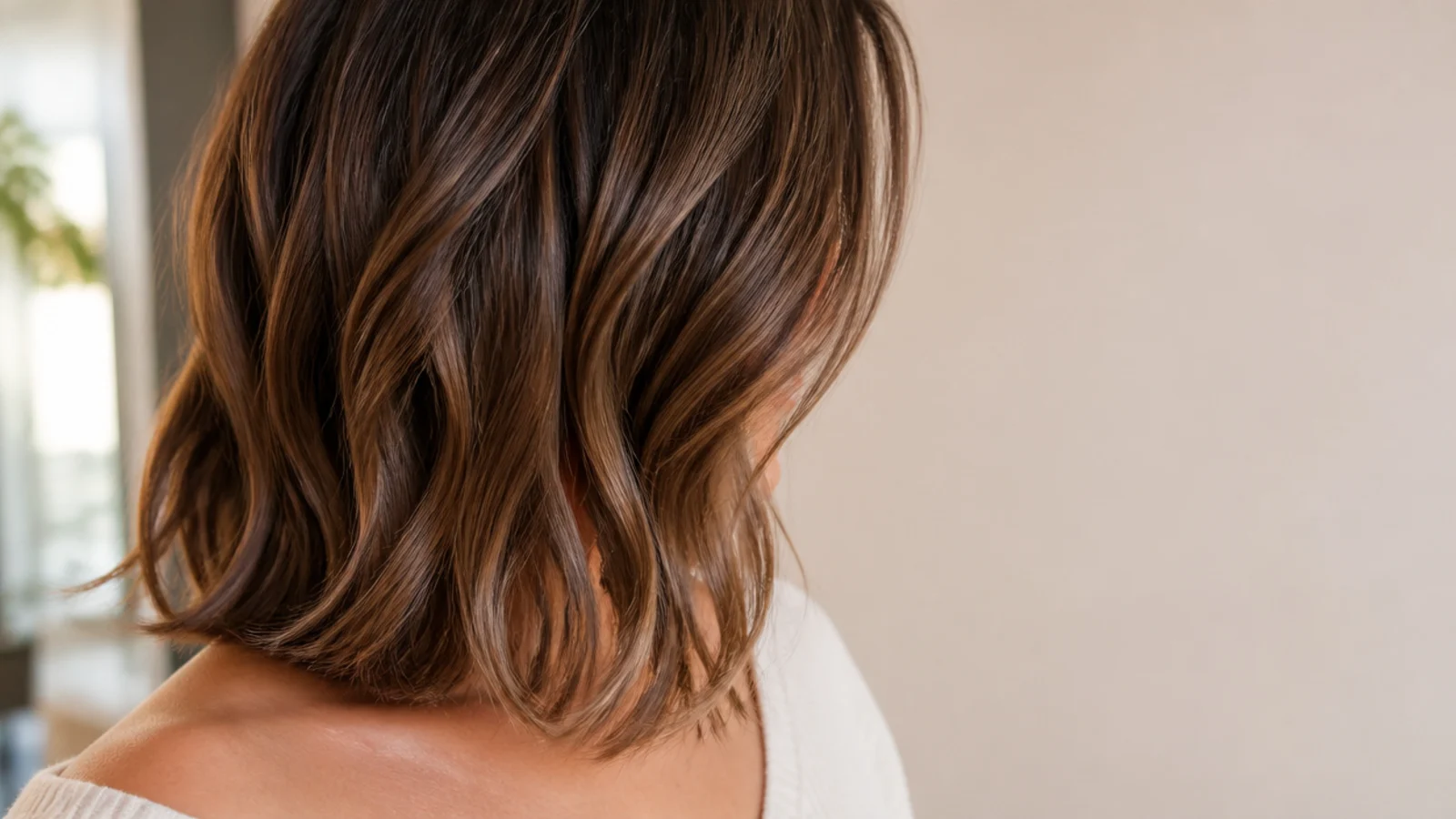
Lightened sections at the front sit on top of a surface that is already broken into light and shadow by the bends themselves. That is why the effect reads softer on wavy hair than on straight, and why it needs less contrast to be visible at all.
15. Beachy Point Cut
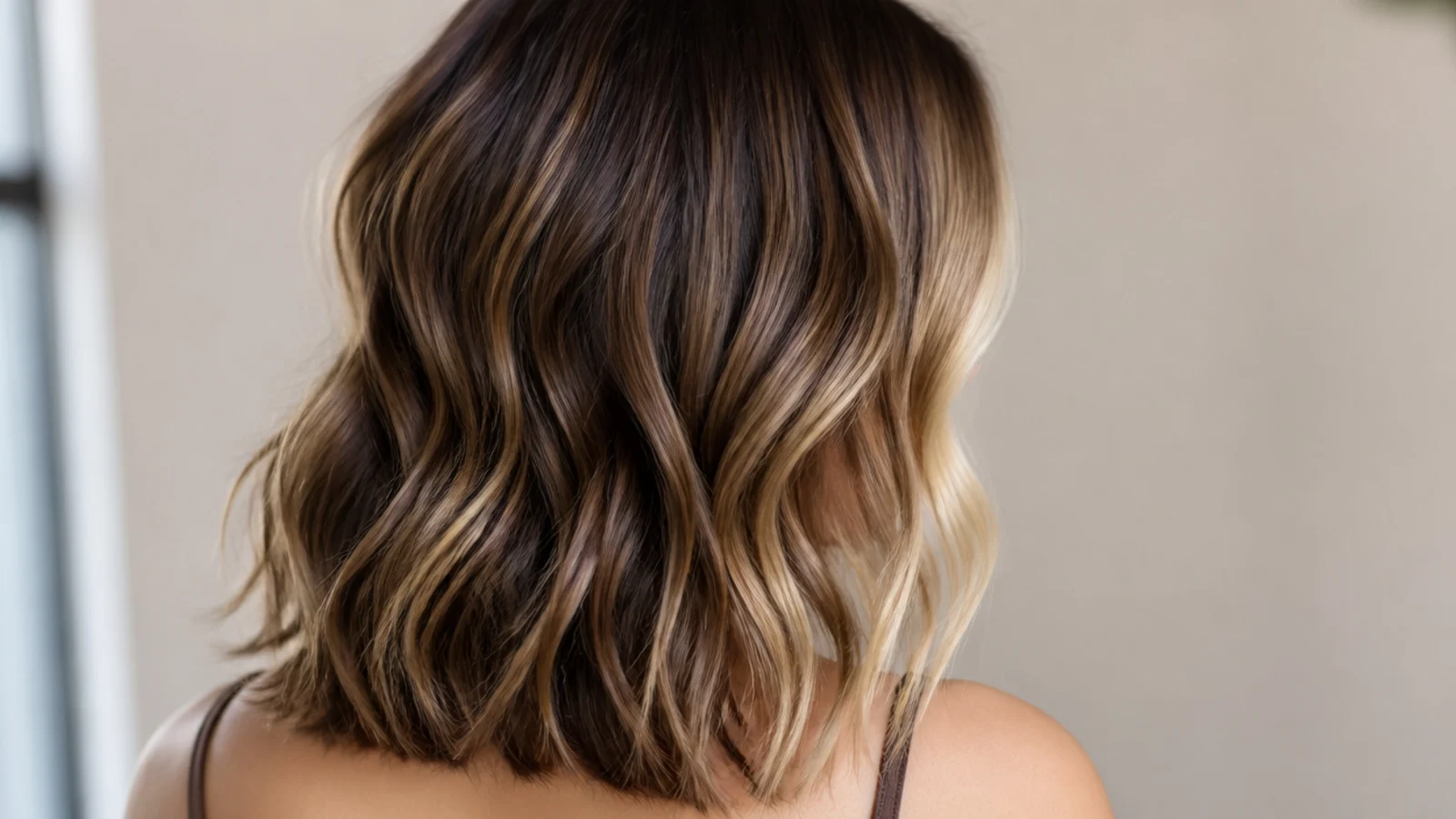
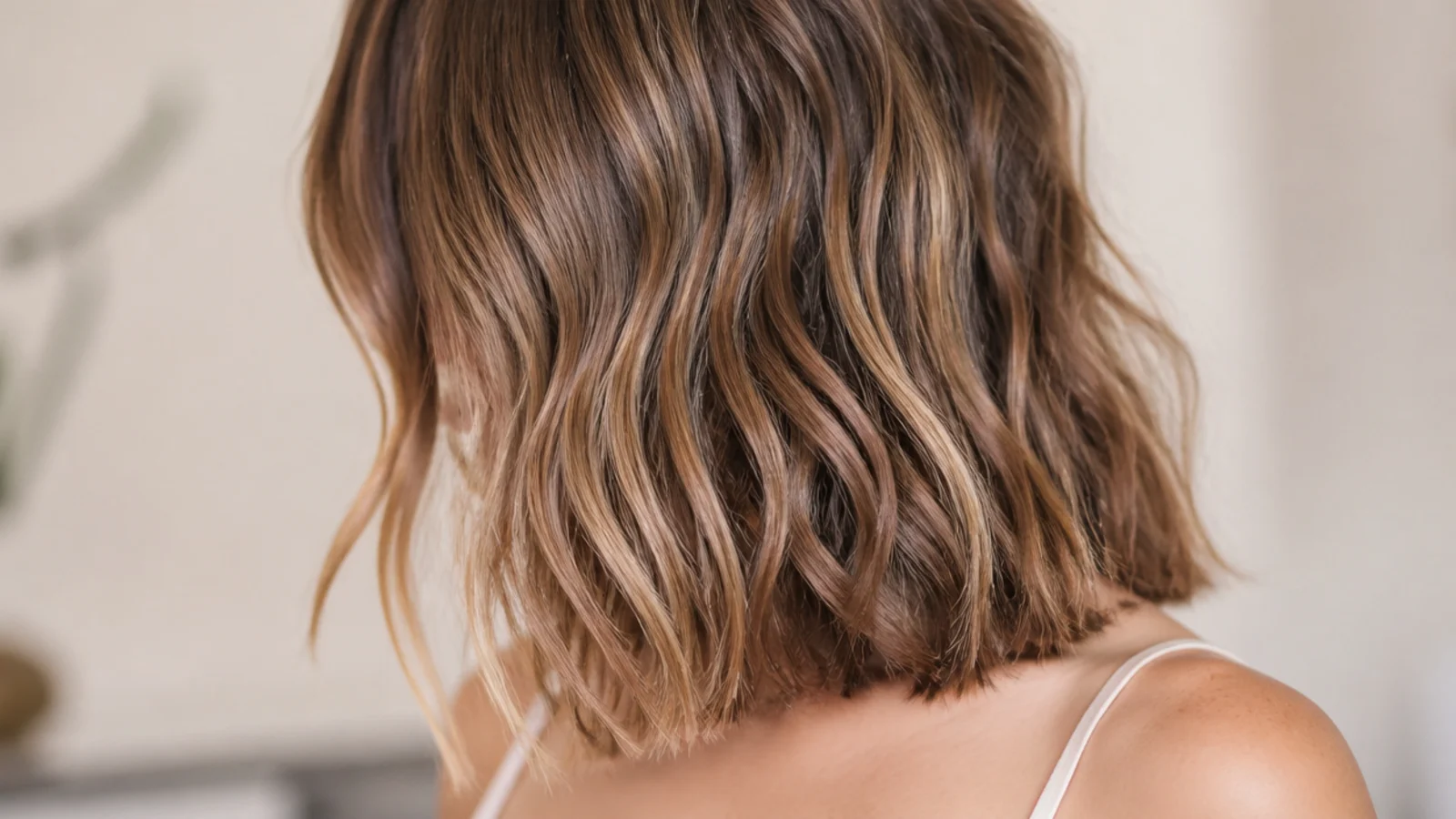
Vertical scissor work into the ends so that no two strands finish at the same point. On wavy hair that stops the perimeter looking wet-set and heavy, and it lets the last bend of each wave open out instead of being cut off flat.
Final Thoughts
Start with weight, not with product. If the wave is strong at the crown and gone by the ends, the hair is being pulled straight by the mass hanging underneath, and interior layering is the fix. Ask for a dry cut from 2B upward, give the stylist a finished dry length rather than a wet one, and be specific about whether the perimeter stays blunt.
Then leave it alone. Cream on soaking wet hair, scrunched upward, diffused or air dried without touching, and no comb after the shower. For a permed take on the same shape see 15 wavy korean haircut ideas, and for the same length worn by men see 20 medium length styles for wavy hair. More in Womens Hairstyles.