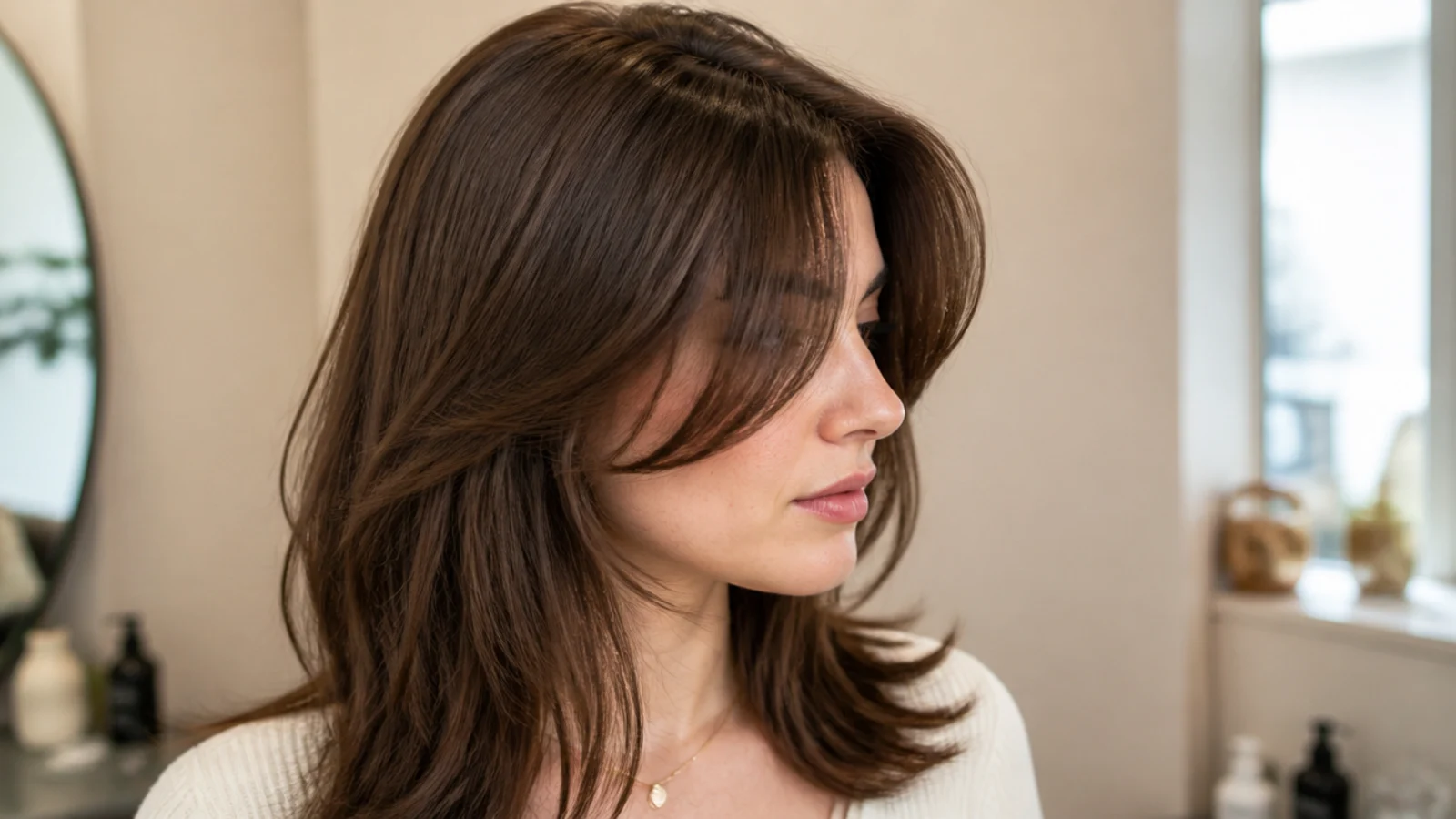
25 Curtain Bangs Ideas For Short Wavy Hair
Twenty five curtain bang ideas for short wavy hair, and the one number that decides them all. A wave lifts about an inch and a half as it dries, and on short hair there is no length below the bang to hide the difference if it was measured wet.
In this article · 32
- Why Short Wavy Hair Changes the Cut
- Choosing Your Length and Split
- The 25 Curtain Bangs Ideas
- 1. Cheekbone Curtain Bangs on a Wavy Bob
- 2. Jaw Length Curtain Bangs
- 3. Curtain Bangs With a Soft Middle Split
- 4. Curtain Bangs With an Off Centre Split
- 5. Curtain Bangs on a Wavy Lob
- 6. Curtain Bangs on a Chin Length Bob
- 7. Curtain Bangs With a Shaggy Crown
- 8. Curtain Bangs With Face Framing Layers
- 9. Curtain Bangs on a Grown Out Pixie
- 10. Curtain Bangs on a Short Wolf Cut
- 11. Wispy Curtain Bangs
- 12. Heavy Curtain Bangs
- 13. Curtain Bangs Cut Above the Brow
- 14. Curtain Bangs That Blend Into the Sides
- 15. Curtain Bangs With a Deep Side Part
- 16. Curtain Bangs on Coarse Waves
- 17. Curtain Bangs on Fine Waves
- 18. Curtain Bangs Over a Cowlick
- 19. Air Dried Curtain Bangs
- 20. Round Brushed Curtain Bangs
- 21. Curtain Bangs Pinned Back
- 22. Curtain Bangs for a Round Face
- 23. Curtain Bangs for a Long Face
- 24. Curtain Bangs for a Square Jaw
- 25. Curtain Bangs Grown Out to the Chin
- Styling and Upkeep
- Mistakes to Avoid
- FAQ
- Final Thoughts
Curtain bangs cut wet on wavy hair finish at the eyebrow, and nobody asked for eyebrow bangs.
A wave lifts about an inch and a half as it dries. That is not shrinkage from styling, it is the bend using up length, and it happens every wash.
Short hair has nowhere to hide the error. On long hair a bang that is too short disappears into the mass around it. On a bob there is nothing beside it to blend into.
Why Short Wavy Hair Changes the Cut
The bang and the sides are almost the same length. On a bob the fringe has two or three inches of blend before it hits the perimeter, where long hair has a foot.
The bend eats length twice. Once when the wave forms and again when it lifts at the root, which is why the roots of a wavy fringe sit higher than a straight one.
The split will not stay where you put it. Waves fall into their own pattern, so the parting has to be dried in rather than combed in.
Density matters more here than length. Take too thick a section on short hair and the fringe reads as a solid block rather than two curtains.

Choosing Your Length and Split
Pick the shortest point first. It is the only measurement that matters, and the cheekbone is where it sits on most short wavy heads.
Choose a centre split for symmetry. Both sides sweep at the same angle, and on a bob that symmetry is the difference between a fringe and two bits of hair.
Choose an off centre split for volume. More hair falls to one side, which gives lift at the root on the heavier side.
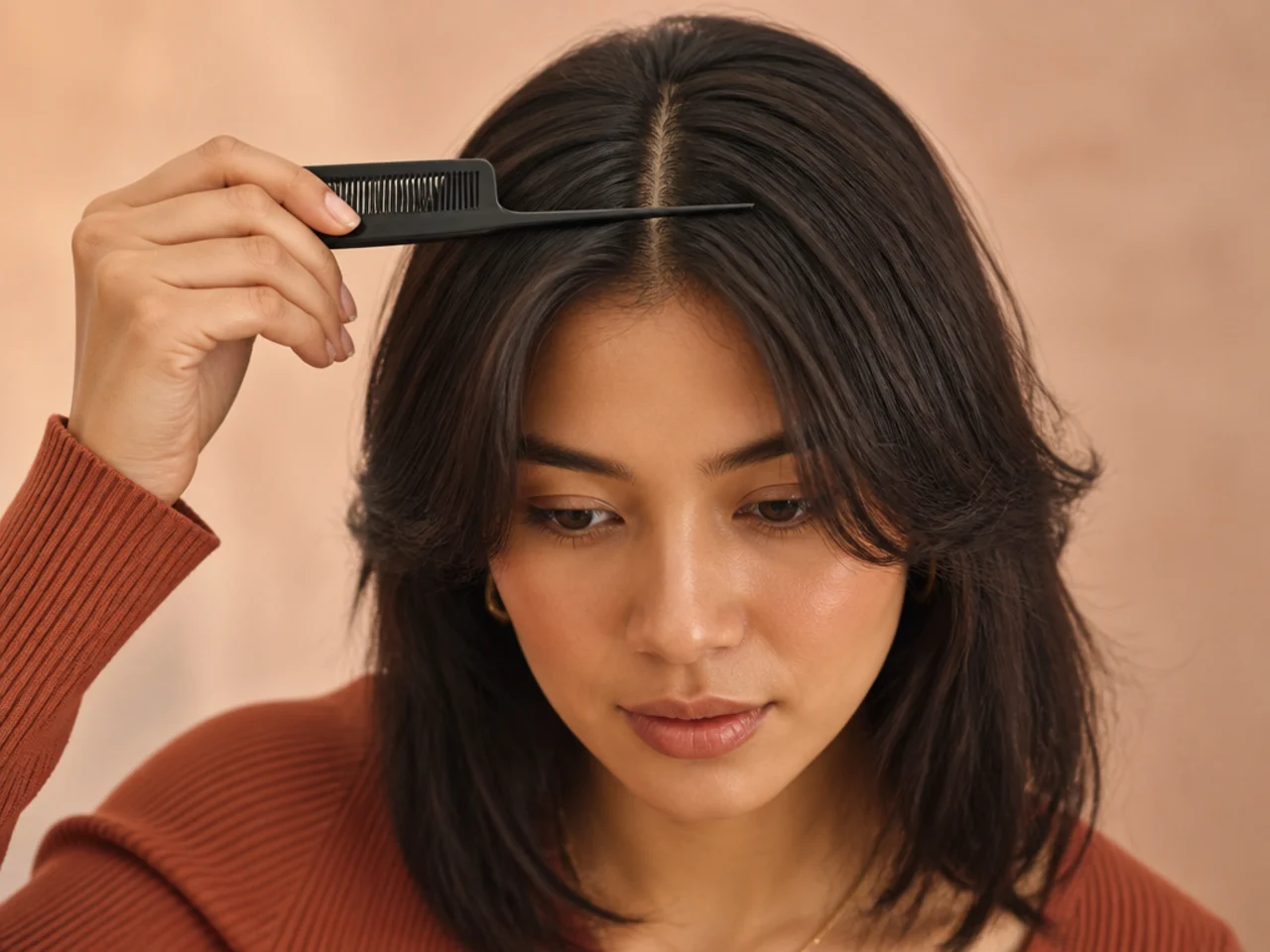
Match the split to your existing part. A bang split against a settled parting fights the root direction every morning and loses by lunchtime.
The 25 Curtain Bangs Ideas
1. Cheekbone Curtain Bangs on a Wavy Bob
The shortest point lands on the cheekbone and the ends sweep past the jaw. It is the standard placement because the cheekbone is high enough for the fringe to read as a fringe and low enough that a wave lifting an inch still leaves it below the brow.
2. Jaw Length Curtain Bangs
Cut so the shortest point sits level with the jaw, which is barely a fringe at all. It suits anyone testing the idea, because at this length the bang can be tucked behind an ear and disappears completely.

3. Curtain Bangs With a Soft Middle Split
The two halves open evenly from the centre of the forehead. Because both sides carry the same weight they dry at the same speed, which is why a centre split holds its shape more reliably than an offset one.

4. Curtain Bangs With an Off Centre Split
The split sits a couple of centimetres to one side, sending more hair over the heavier half. The extra weight on that side pushes the root up rather than down, which is where the lift at the forehead comes from.

5. Curtain Bangs on a Wavy Lob
At collarbone length there is enough hair beside the fringe for a long blend, so the bang can be cut shorter without disconnecting. This is the closest short hair gets to the placement used for curtain bangs on long hair.

6. Curtain Bangs on a Chin Length Bob
The shortest bang length short hair can carry. With only a couple of inches between the fringe and the perimeter, the blend has to be point cut deeply or the fringe sits on top of the bob like a separate piece.

7. Curtain Bangs With a Shaggy Crown
Short layers through the crown lift the roots above the fringe, which pushes the bang forward off the forehead. Without that lift a wavy fringe lies flat against the skin and loses the arch that makes it a curtain.

8. Curtain Bangs With Face Framing Layers
The fringe continues down into shorter pieces along the cheek, so the face frame is one line rather than two. Cut as separate pieces they fall at different angles and the side of the head reads as a stack of ledges.

9. Curtain Bangs on a Grown Out Pixie
At this stage the top is long enough to split but the sides are still short, so the fringe carries the whole front of the cut. Keep it long enough to reach the cheekbone or it reads as a heavy side sweep instead.

10. Curtain Bangs on a Short Wolf Cut
The stacked crown layers of a wolf cut give the fringe height at the root, and the fringe gives the layers a front edge to finish against. The two shapes need cutting in the same appointment or the fringe ends up shorter than the layer above it.

11. Wispy Curtain Bangs
Cut from a shallow section so light shows through the fringe. On fine wavy hair this is the safer version, because a thick section taken from a fine head leaves a visible gap in the hair behind it.

12. Heavy Curtain Bangs
A deep section taken back towards the crown, giving a fringe with real density. Thick wavy hair needs this, because a shallow section leaves the hair behind it pushing the fringe forward into a bump.

13. Curtain Bangs Cut Above the Brow
The shortest point sits above the eyebrow, which is closer to the territory of short french bangs than to a true curtain. On waves it needs cutting dry without exception, because an inch of lift from a brow length start puts the fringe into the hairline.

14. Curtain Bangs That Blend Into the Sides
No visible end point. The fringe is point cut into the side sections so there is no line where one stops and the other starts, which is what stops short hair looking like it has a fringe stuck on the front.
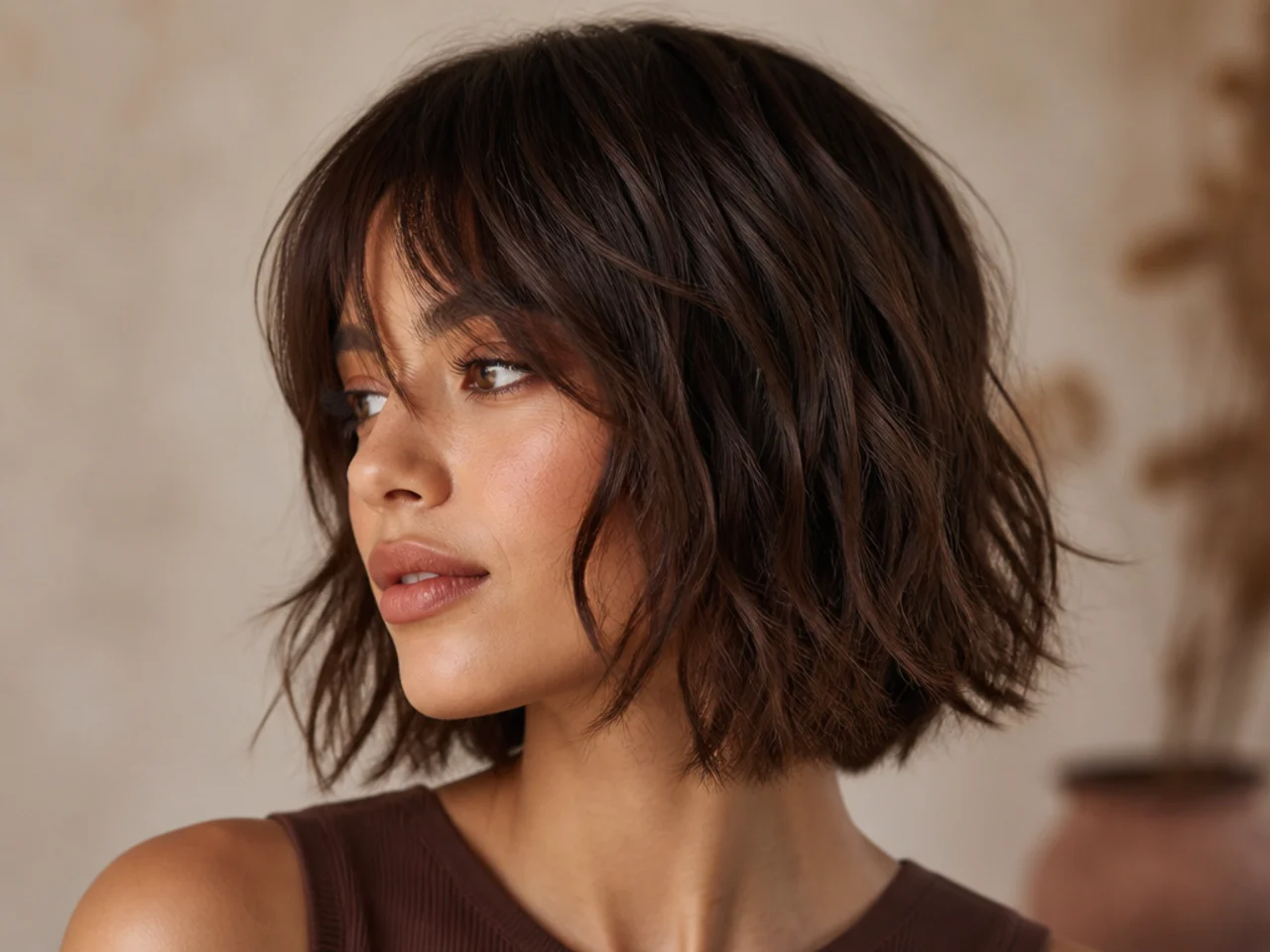
15. Curtain Bangs With a Deep Side Part
Most of the fringe is swept to one side and the split sits well off centre. It gives the strongest root lift of any version, but the short side has to be tucked or it falls straight across the eye.

16. Curtain Bangs on Coarse Waves
Coarse hair holds a wave hard and springs up more than fine hair does, so the fringe has to be cut a good inch longer than the target. It also needs the ends softened, because a coarse blunt end sticks out rather than falling.

17. Curtain Bangs on Fine Waves
Fine waves collapse under their own weight by the afternoon, so the section has to be shallow and the roots need lifting at the dryer. A deep section on fine hair simply lies flat on the forehead.

18. Curtain Bangs Over a Cowlick
The section is taken wider than usual so the cowlick has neighbouring hair to hold it down. Cut narrow, the swirl has nothing beside it to weigh it flat and it lifts the fringe off the forehead in one spot.

19. Air Dried Curtain Bangs
Left to dry, the wave in the fringe forms fully and the bang clumps into separated pieces. It reads as deliberately undone on a shaggy cut and as unfinished on a sharp bob, so it depends entirely on the shape behind it.

20. Round Brushed Curtain Bangs
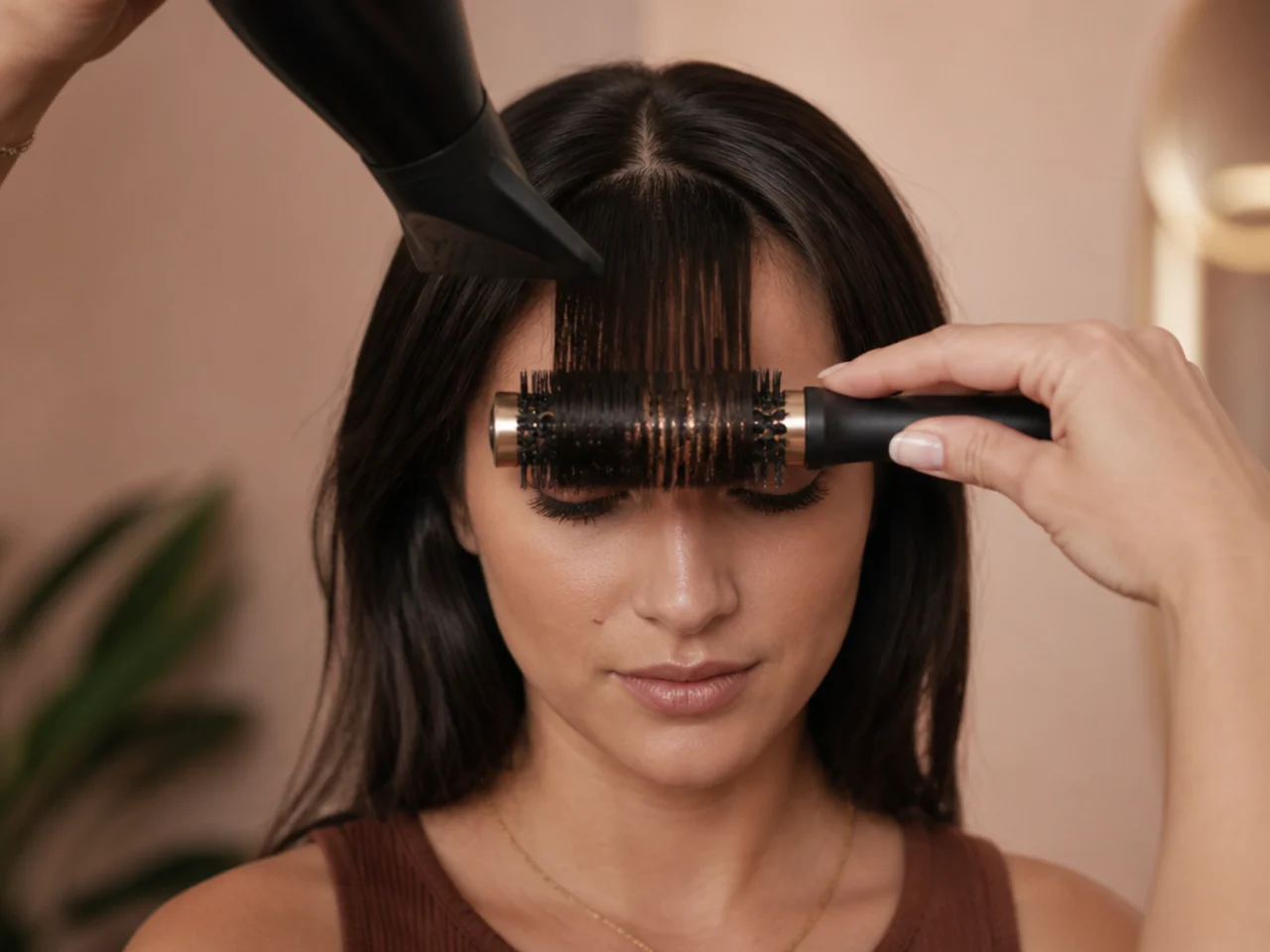
A wide barrel pulls the wave out of the fringe and sets a single smooth bend away from the face. The bend holds because the section cools in the shape it was wrapped in, not because of the heat itself.

21. Curtain Bangs Pinned Back
Both halves twisted back and clipped behind the ear on growing out days. It works better on a curtain shape than on a blunt fringe, because the ends are already tapered and lie flat under a pin instead of bulking up.
22. Curtain Bangs for a Round Face
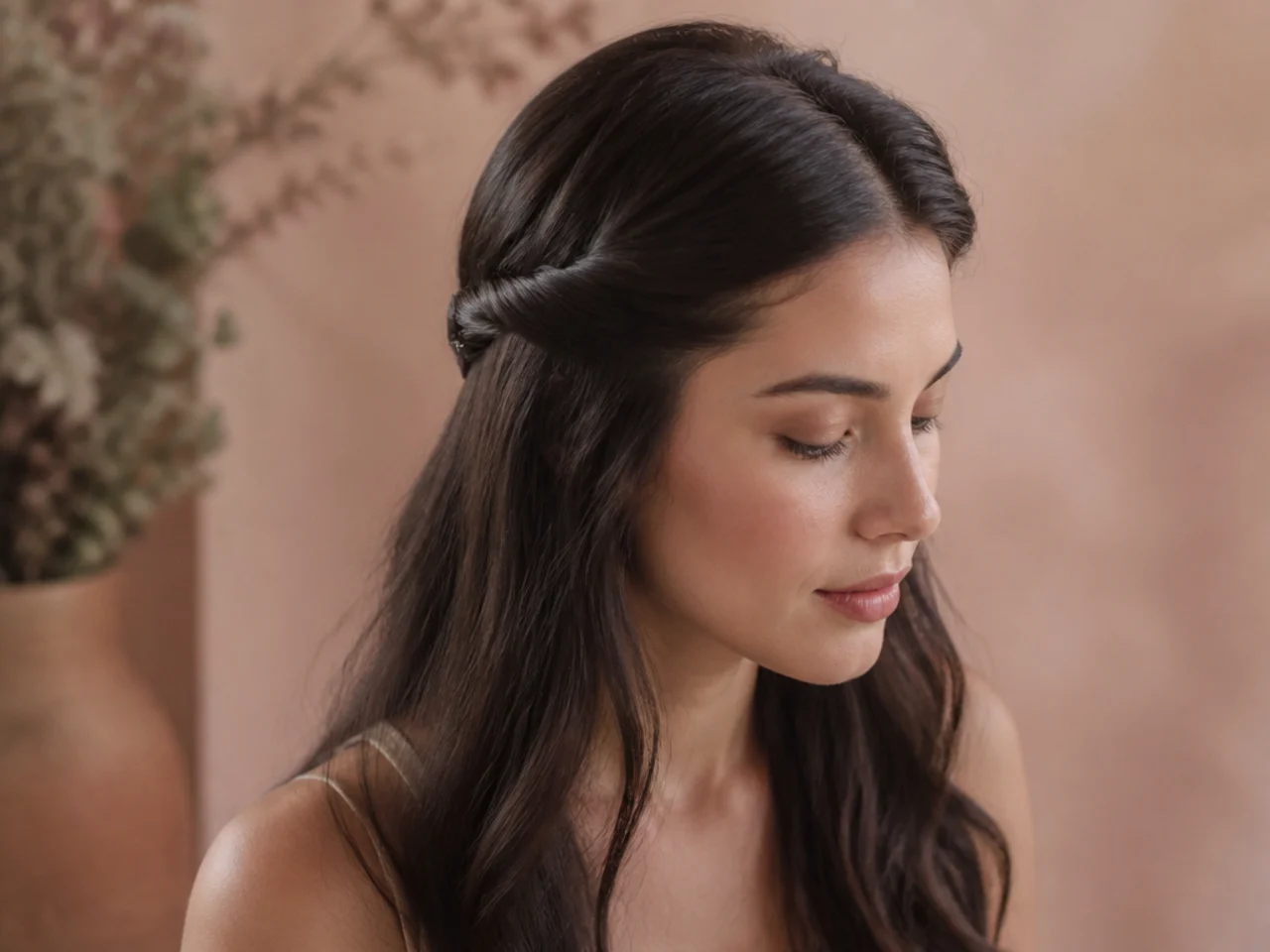
The shortest point drops to the jaw rather than the cheekbone, so the vertical line of the fringe runs past the widest part of the face. A cheek length split stops exactly at the widest point and emphasises it.

23. Curtain Bangs for a Long Face
Cut shorter and wider so the fringe covers more forehead. Horizontal weight across the top of the face shortens the visible distance from hairline to chin, which is what a long face is usually trying to break up.

24. Curtain Bangs for a Square Jaw
Soft tapered ends that curve past the jaw rather than stopping at it. Ends that finish level with the jaw draw a second horizontal beside the existing one, which doubles the angle instead of softening it.

25. Curtain Bangs Grown Out to the Chin
At around twelve weeks the shortest point has dropped to the chin and the fringe is now face framing. This is the natural landing point of the cut and the reason curtain bangs are the easiest fringe to abandon.

Styling and Upkeep
Dry the fringe first, before anything else. A wave that has already set is a wave you have to rewet to move.
Dry it straight down, then sweep it. Setting the root direction flat first stops the bang splitting into gaps at the hairline.
Use the smallest round brush you own here only. The fringe is the one section short enough to need a narrow barrel to get a bend into.
Trim every five to six weeks. Hair grows half an inch a month and the shortest point is the whole design, so two months of growth changes the cut.
Keep conditioner off the fringe. It is the finest hair on the head and the first section to go flat under weight.
Mistakes to Avoid
Cutting wet. On waves the fringe comes up an inch and a half, and on short hair there is nothing beside it to disguise that.
Taking too deep a section. A fringe should be a triangle from the front of the crown, not half the top of the head.
Splitting against your natural part. The roots go back where they grow within an hour, taking the split with them.
Blunt cutting the ends. A blunt end on a wave sticks straight out. Point cut so the ends taper.
Waiting three months to trim. By then the shortest point has dropped two inches and it is face framing, not a fringe.

FAQ
How much does a wave shrink? About an inch and a half as it dries.
Where should the split sit? Wherever your hair already parts.
How often is a trim? Five to six weeks, before the shortest point drops.

Final Thoughts
There is one instruction that saves a wavy fringe: cut it dry. Everything else on this page is a variation on where the shortest point lands, and on short hair that point is usually the cheekbone. Ask for it in landmarks rather than inches, and ask the stylist to cut it after the hair is dry rather than before.
For a fringe with a heavier, blunter front edge see french bangs with curtain layers. More in Bangs and Fringe.