
15 Curtain Bangs Lessons I Learned After Cutting
Fifteen things that only become obvious after cutting curtain bangs more than once. Most of them come down to the same two variables — the shape of the section you take and whether the hair was dry when you cut it.
In this article · 22
- What Makes a Curtain Bang a Curtain Bang
- Deciding If They Suit You
- The 15 Lessons
- 1. Cut Them Dry or Cut Them Twice
- 2. The Section Shape Decides Everything
- 3. A Rectangle Section Makes a Fringe Not a Curtain
- 4. Start at the Chin and Work Up
- 5. Point Cut Vertically Never Horizontally
- 6. The Shortest Point Belongs at the Cheekbone
- 7. Curtain Bangs Follow the Part They Were Cut Under
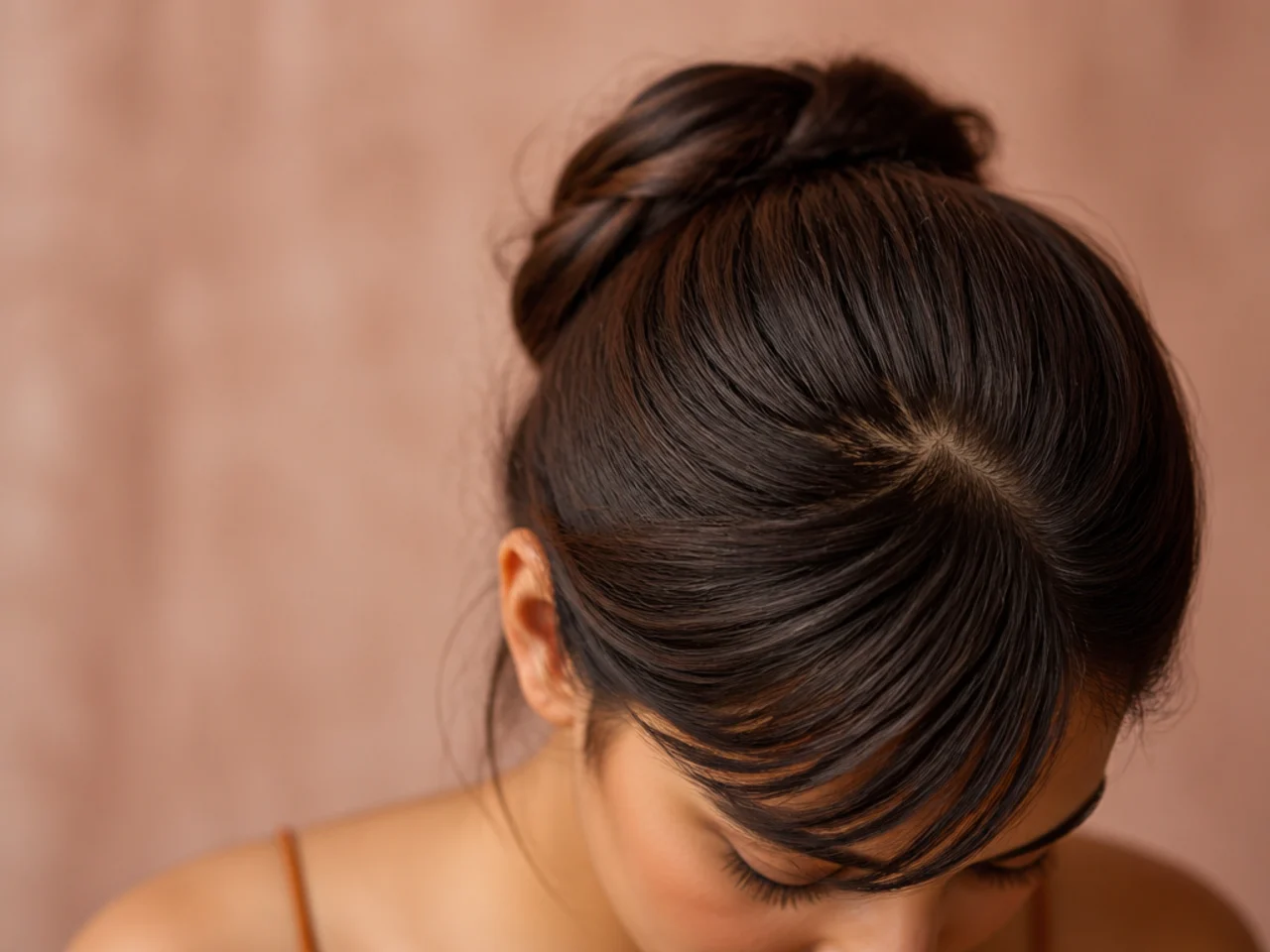
- 8. A Cowlick Wins Unless You Widen the Section
- 9. Waves Spring Up an Inch and a Half
- 10. Fine Hair Needs a Shallower Section
- 11. Thick Hair Needs the Section Cut in Two Passes
- 12. The Blend Into the Sides Is the Whole Cut
- 13. Dry Them First and Dry Them Down
- 14. Brush Size Changes the Bend More Than Technique
- 15. Six Weeks Is the Trim Interval Not Twelve
- Styling and Upkeep
- Mistakes to Avoid
- FAQ
- Final Thoughts
Most curtain bangs that go wrong go wrong before a single hair is cut, in the shape of the section that gets taken.
Two variables decide almost everything. The section shape and whether the hair was dry. Length is the third, and it is a long way behind the first two.
A curtain is a taper, not a length. The hair gets progressively longer as it travels down the face, and that gradient is what separates it from a fringe.
What Makes a Curtain Bang a Curtain Bang
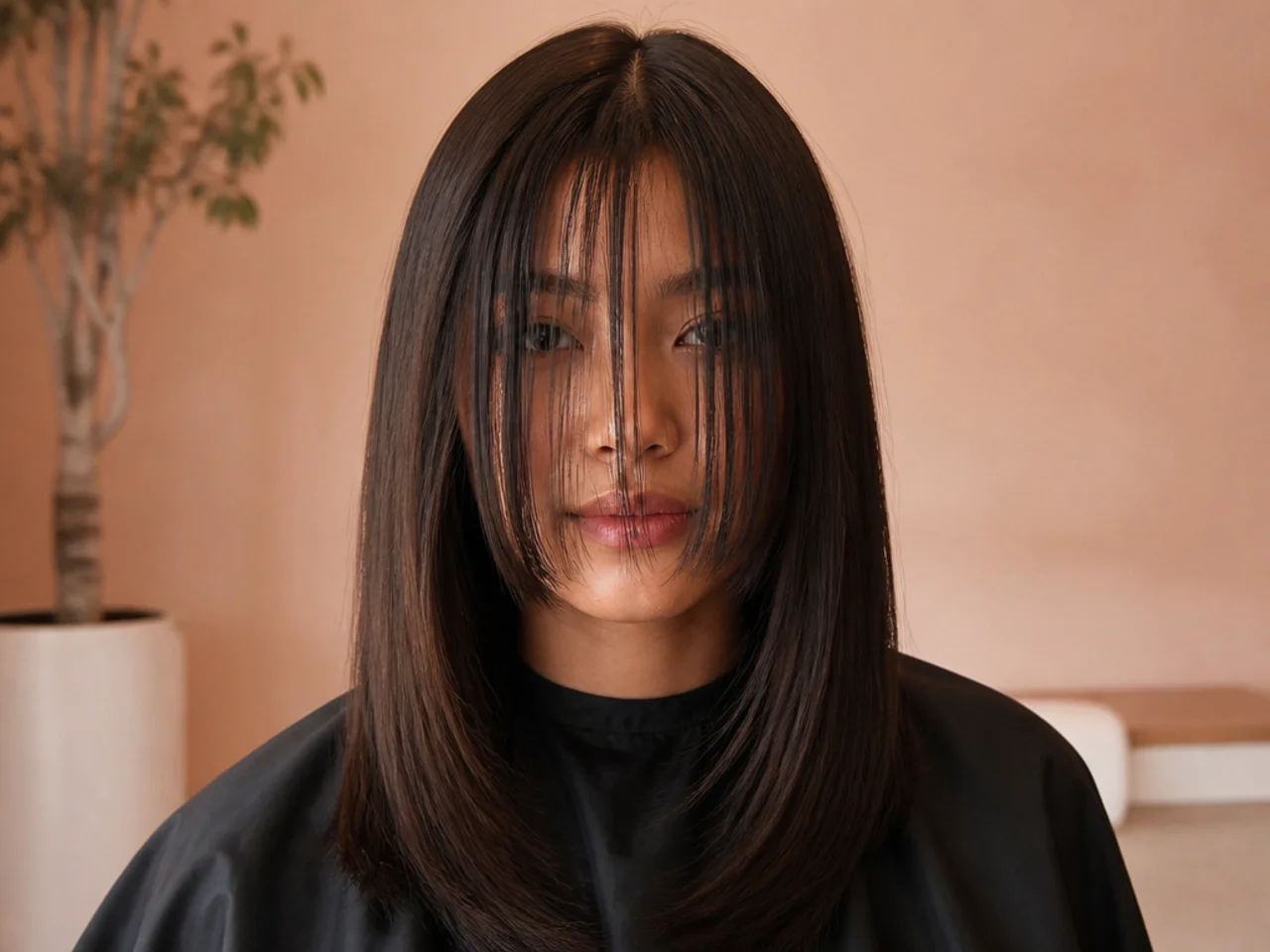
The taper down the face. Shortest at the split, longest where it meets the sides. Cut without that gradient it is two blocks of hair either side of a parting.
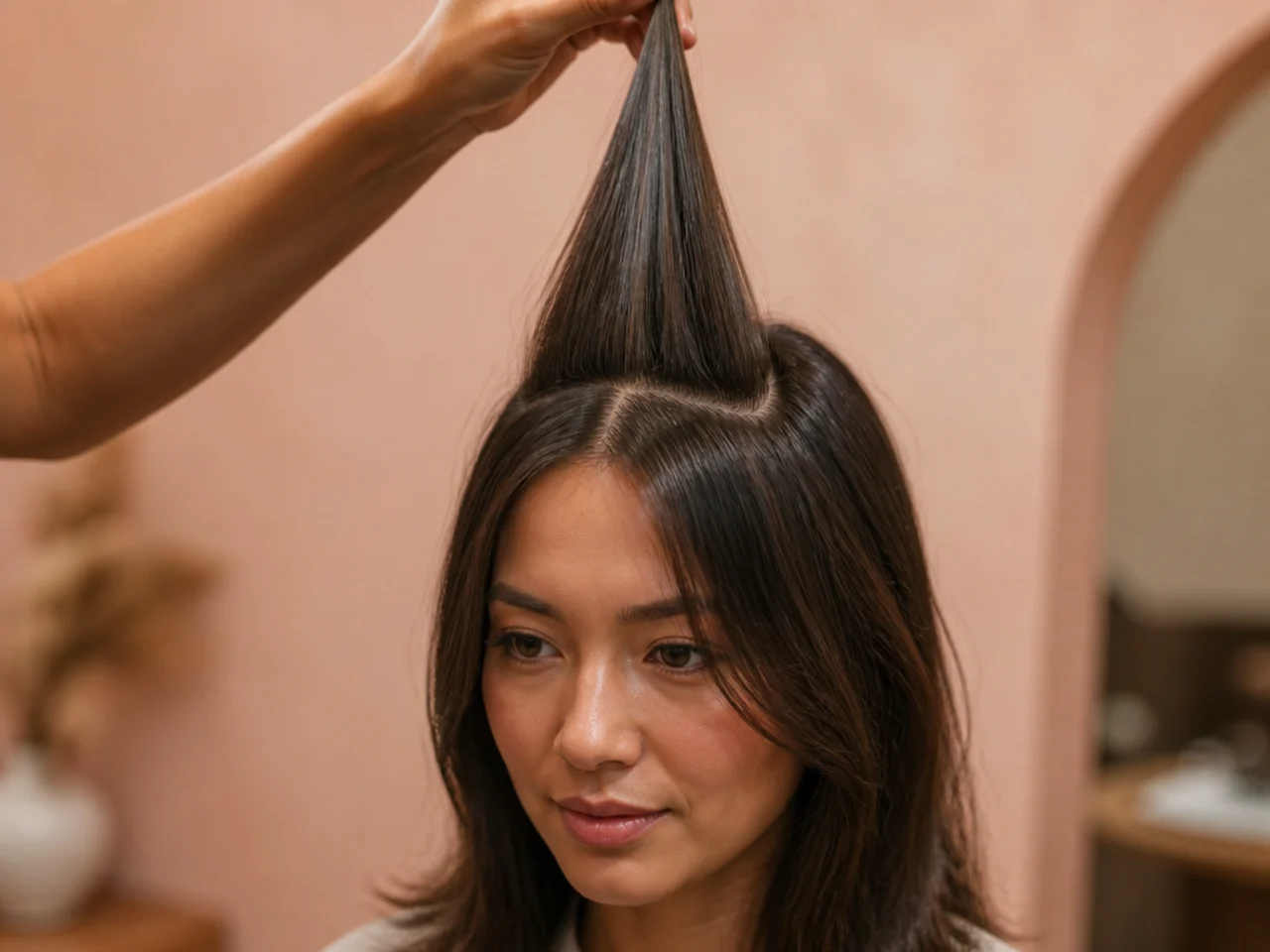
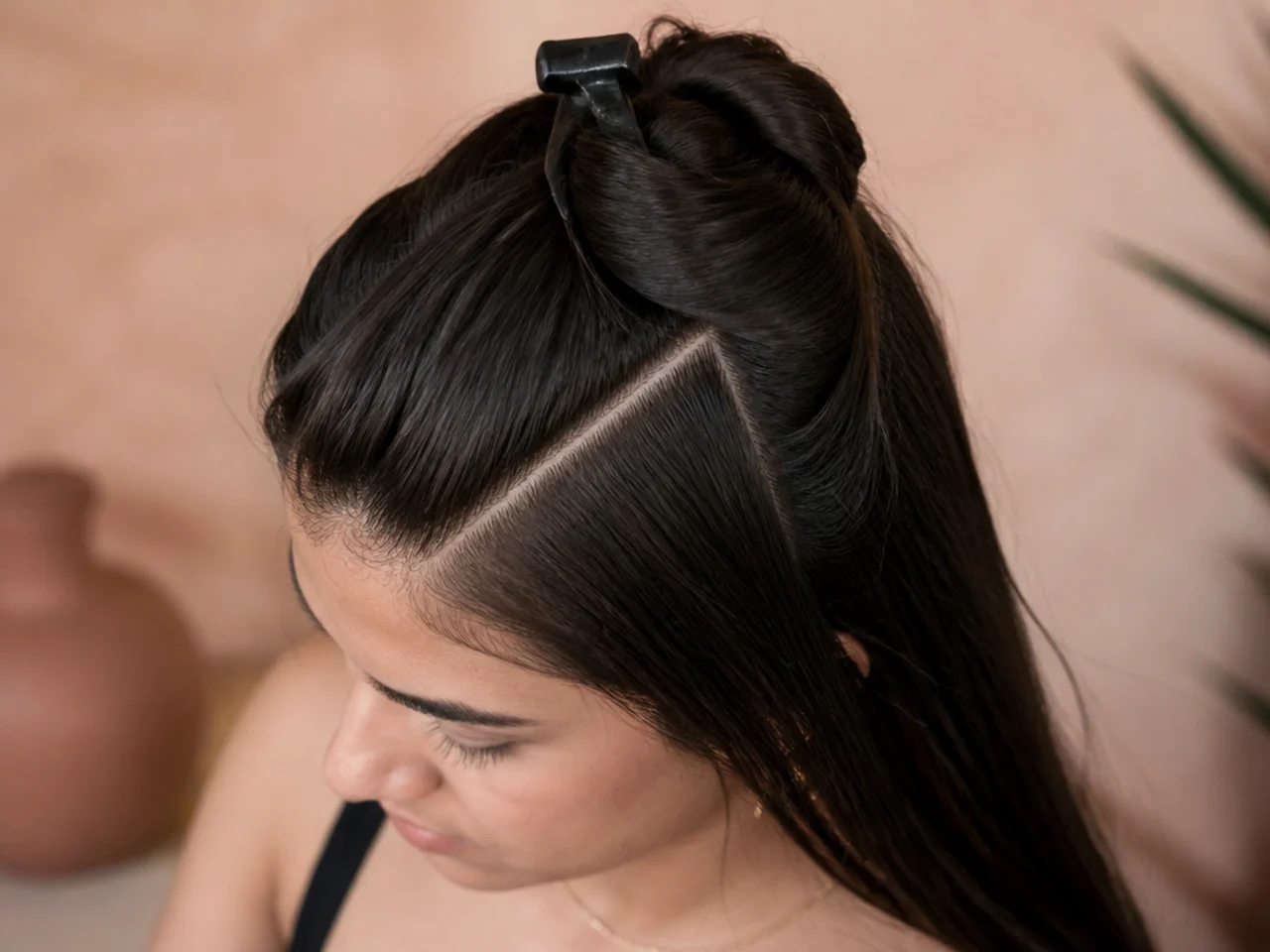
The section is a triangle. Point at the crown, base at the hairline. A rectangle gives an even wall with no gradient built in.
The blend at the outer edge. Where the fringe meets the side hair there should be no visible end, only hair getting gradually longer.
The split, not the parting. The split is where the two halves separate at the forehead. It is set by drying, not by combing.
Deciding If They Suit You
Check for a cowlick at the front hairline first. A swirl at the front pushes one half of the fringe up and it will do that every day.
Look at your natural growth direction. Hair that already falls forward will hold a fringe. Hair that grows backwards has to be dried against itself daily.
Fine hair can carry them, thick hair needs planning. Fine hair needs a shallow section, thick hair needs the section reduced from inside or the fringe stands away from the forehead.
Count the weeks between appointments honestly. The shortest point is the design, and it drops half an inch a month with or without a trim booked.

The 15 Lessons
1. Cut Them Dry or Cut Them Twice
Water weighs hair down and pulls it straight, so a fringe measured wet lifts as it dries. Straight hair rises about half an inch, waves closer to an inch and a half, and there is no way to give the difference back.
2. The Section Shape Decides Everything
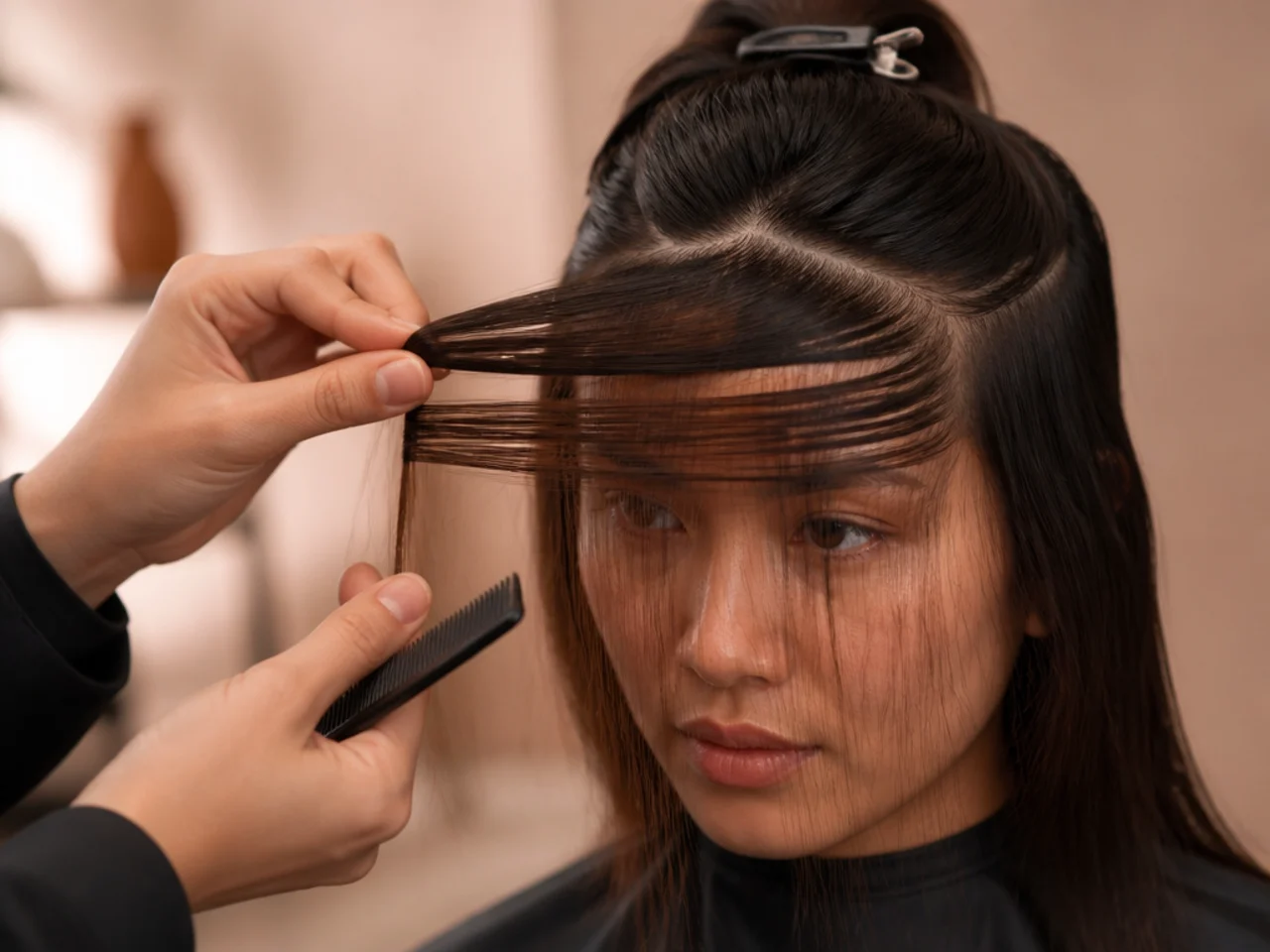
Take the section as a triangle with its point back at the crown and its base along the front hairline. The angled sides mean the outer hair is naturally longer than the centre, so the taper is built in before the shears touch anything.
3. A Rectangle Section Makes a Fringe Not a Curtain
Sectioned straight across, every hair in the section is roughly the same distance from the shears, so it all lands at the same length. That is the difference between the two shapes, laid out properly in french bangs compared with curtain bangs.

4. Start at the Chin and Work Up
Cut the first pass far longer than the target and take it up in stages, checking with the hair released each time. The first pass is the only one where a mistake is unrecoverable, so it should never be the one at the final length.
5. Point Cut Vertically Never Horizontally
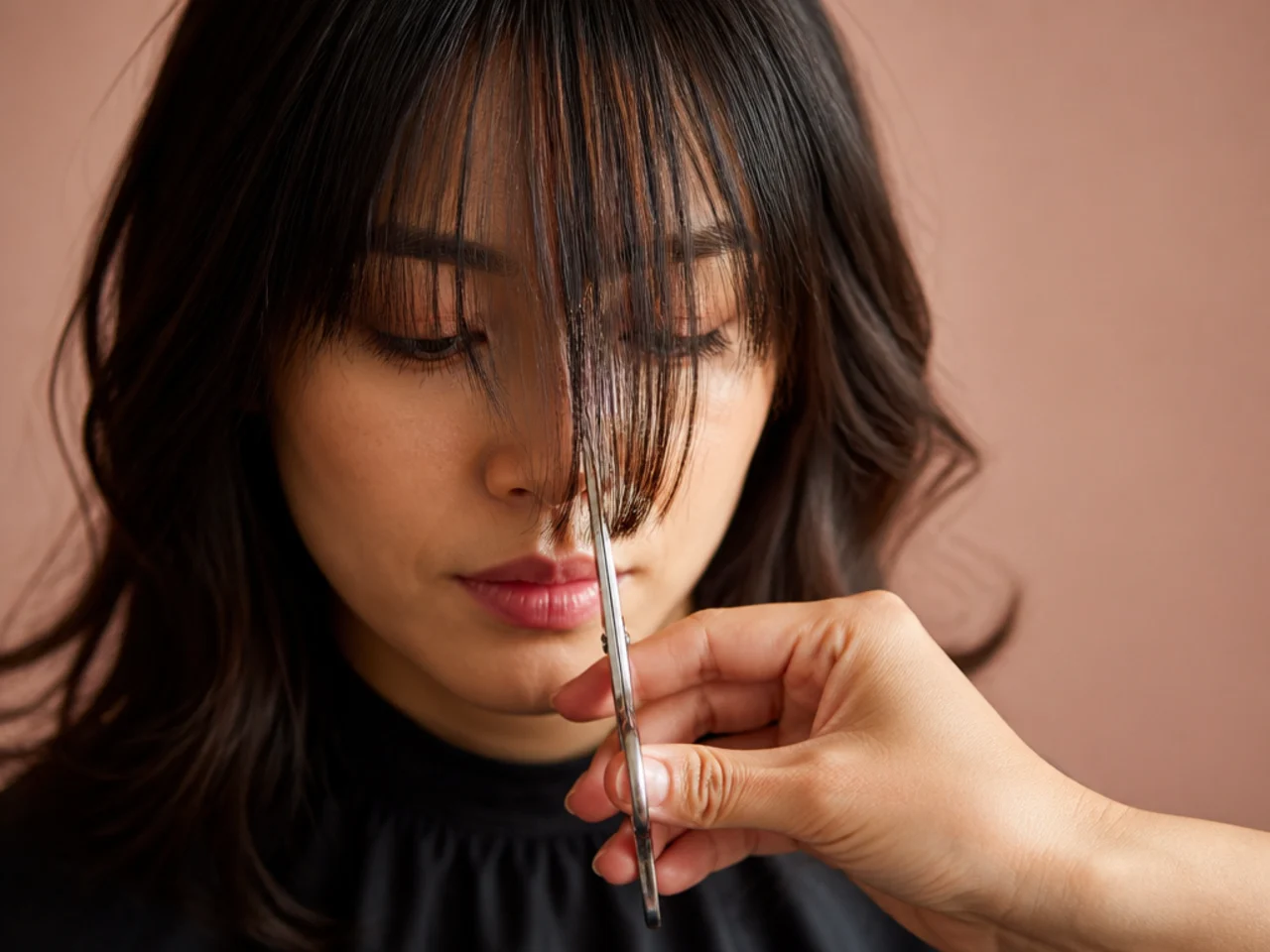
Turn the shears so they point up into the ends rather than across them. A horizontal cut leaves every hair ending at the same height, and that flat edge is what makes a soft fringe look like it was cut with a ruler.
6. The Shortest Point Belongs at the Cheekbone
Cut at the brow the fringe has to be styled every day to look intentional, because there is not enough weight to hold a sweep. At the cheekbone the same hair falls into a curtain on its own.

7. Curtain Bangs Follow the Part They Were Cut Under
Whatever parting the hair was sectioned and dried under is the one the roots remember. Cut under a centre part and worn on a side part, the fringe sits at the wrong angle and the split reopens where you do not want it.

8. A Cowlick Wins Unless You Widen the Section
A swirl at the front hairline lifts whatever sits directly on it. Widening the section gives the swirl neighbouring hair to be weighed down by, and cutting narrow around it leaves it standing alone with nothing to hold it.
9. Waves Spring Up an Inch and a Half
The bend itself uses length, so the same strand measures shorter once the wave forms. Cutting a wavy fringe against a straight hair reference is the reason so many of them end up sitting on the eyebrows.

10. Fine Hair Needs a Shallower Section
Take a deep section from a fine head and the hair behind the fringe visibly thins out. Keeping the section to a couple of centimetres deep gives a fringe with movement and leaves the rest of the top intact.

11. Thick Hair Needs the Section Cut in Two Passes
Cut in one go, the underside of a thick section stays longer than the top and pushes the fringe outward into a bump. Splitting it horizontally and cutting the two halves separately keeps the whole section on one line.
12. The Blend Into the Sides Is the Whole Cut
If there is a point where the fringe stops and the side hair starts, the cut is not finished. The outer edge should be point cut down into the lengths so the two run together, which is what makes curtain bangs on long hair read as one continuous frame.

13. Dry Them First and Dry Them Down
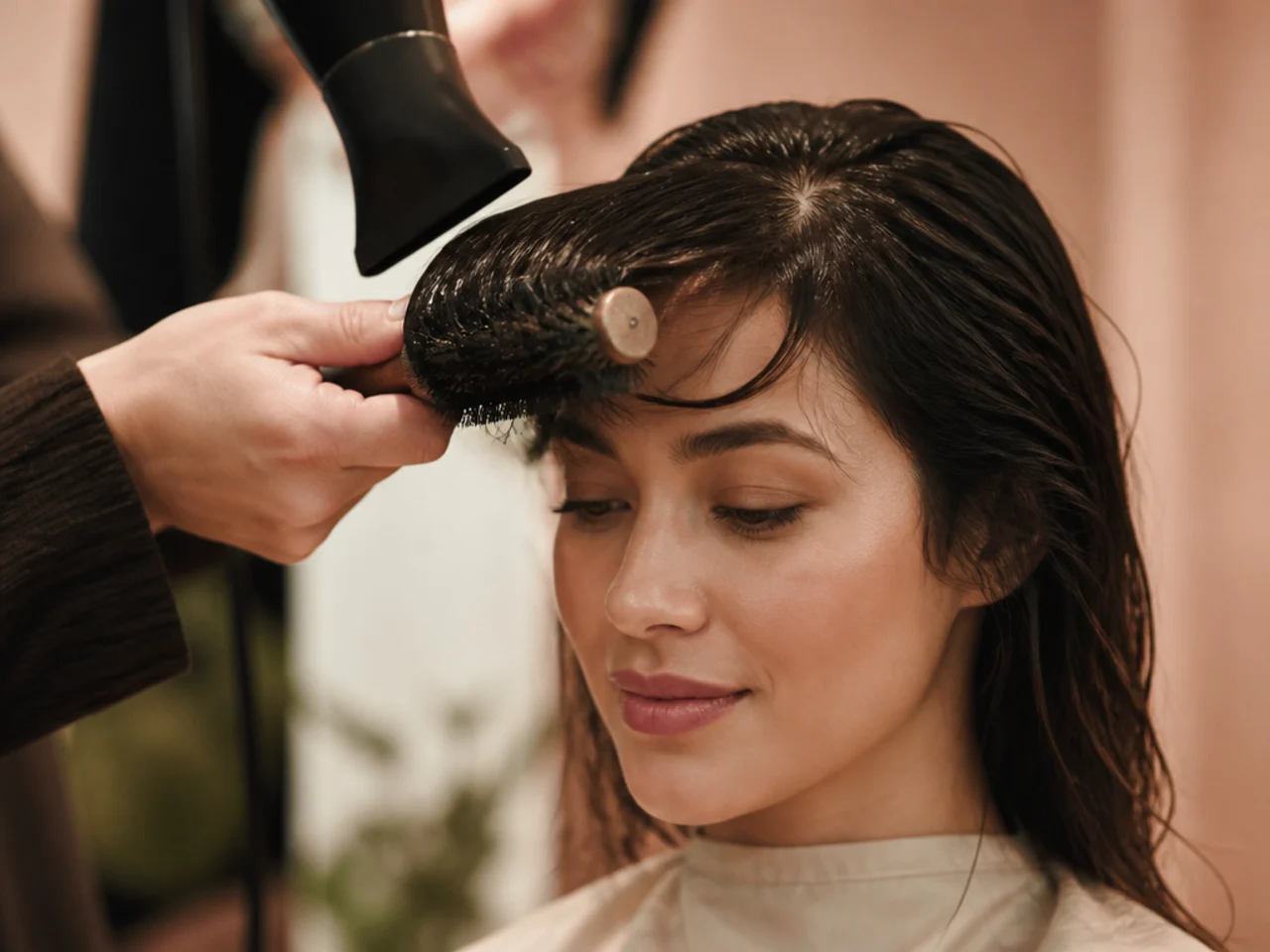
The fringe is the first section to air dry, and whatever shape it takes in those minutes is the shape it keeps. Drying it flat down over the forehead first, then sweeping it back, sets the root direction before the wave can decide for itself.

14. Brush Size Changes the Bend More Than Technique
A narrow barrel puts a curl into a short fringe and a wide one puts a sweep into it, using exactly the same movement. Most fringes that come out looking like a curl were not styled badly, they were styled on the wrong barrel.

15. Six Weeks Is the Trim Interval Not Twelve
Hair grows about half an inch a month, and the shortest point is the entire design. At twelve weeks that point has dropped an inch and a half, which puts a cheekbone fringe below the jaw and turns it into face framing layers.

Styling and Upkeep
Dry the fringe before you dry anything else. It sets in minutes, and once set it needs rewetting to move.
Use a round brush wider than you think. Narrow barrels make curls, and a curl in a fringe is very hard to unmake.
Cool the section before releasing it. Hair holds the shape it was in when it cooled, whatever tool made the shape.
Keep conditioner off the front section. It is the finest hair on your head and the first to flatten under weight.
Trim at six weeks even if it still looks fine. The shortest point drifts down slowly enough that you stop noticing it.
Mistakes to Avoid
Cutting wet. The single most common cause of a fringe that ended up above the brows.
Sectioning a rectangle. It produces an even wall of hair with no taper, which is a different haircut.
Cutting under a parting you do not wear. The roots remember the direction they dried in, not the one you comb in.
Blunt cutting the ends. A flat edge cannot fall into a sweep, so it has to be styled into one every morning.
Trying to fix asymmetry by trimming. Heads are not symmetrical. Chasing it takes an inch off both sides and fixes nothing.

FAQ
Wet or dry? Dry, every time. Waves lift an inch and a half.
What section shape? A triangle from the crown, never a rectangle.
How short? Cheekbone at the shortest point for most people.

Final Thoughts
If there is one thing worth taking from all of this, it is that a curtain bang is a gradient rather than a length. Get the triangle section right and the taper happens on its own. Get it wrong and no amount of careful cutting at the ends will produce the shape.
For where the same fringe sits on longer lengths see curtain bangs for long hair, and for a version cut heavier at the front edge see french bangs for a round face. More in Bangs and Fringe.