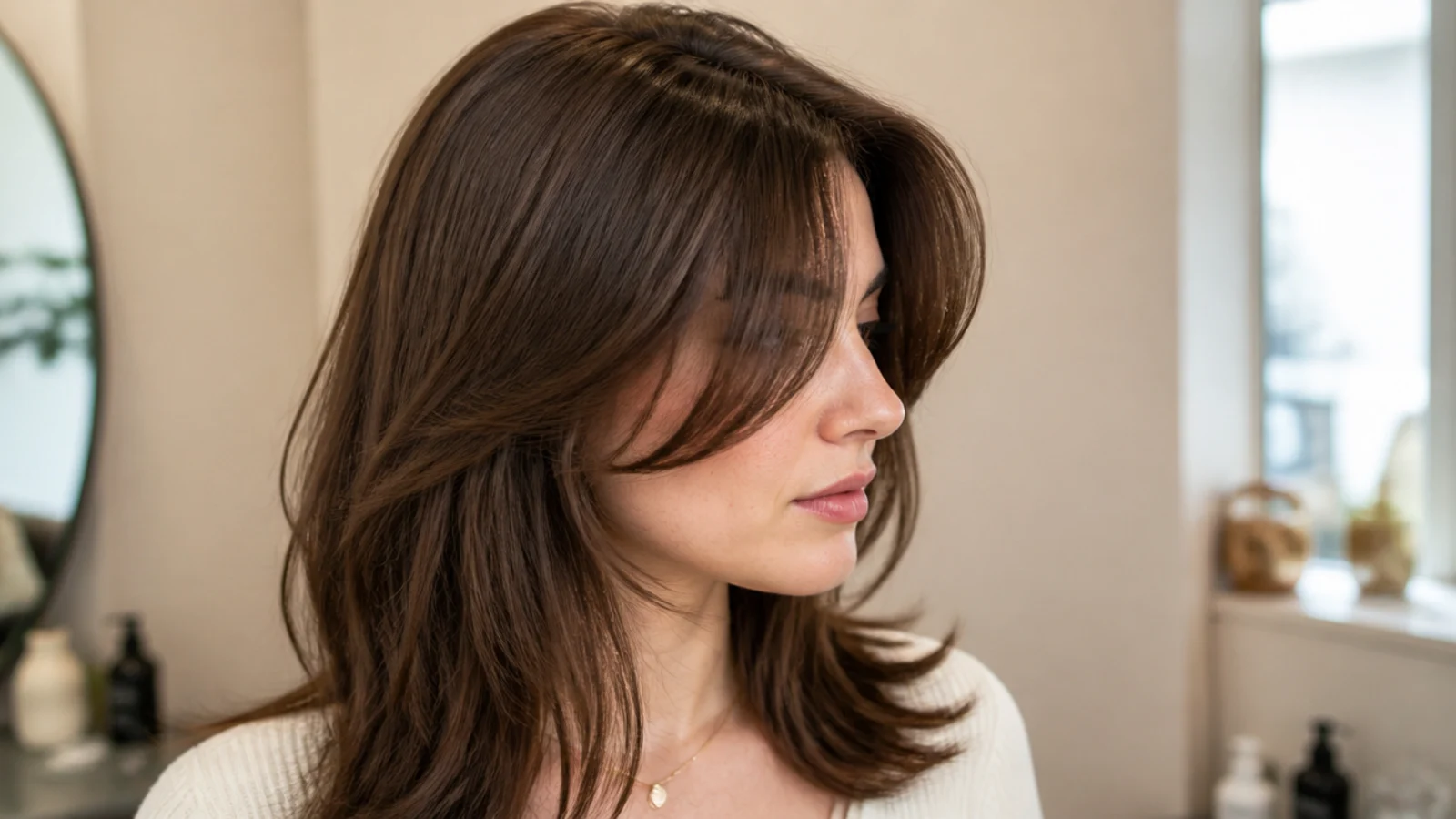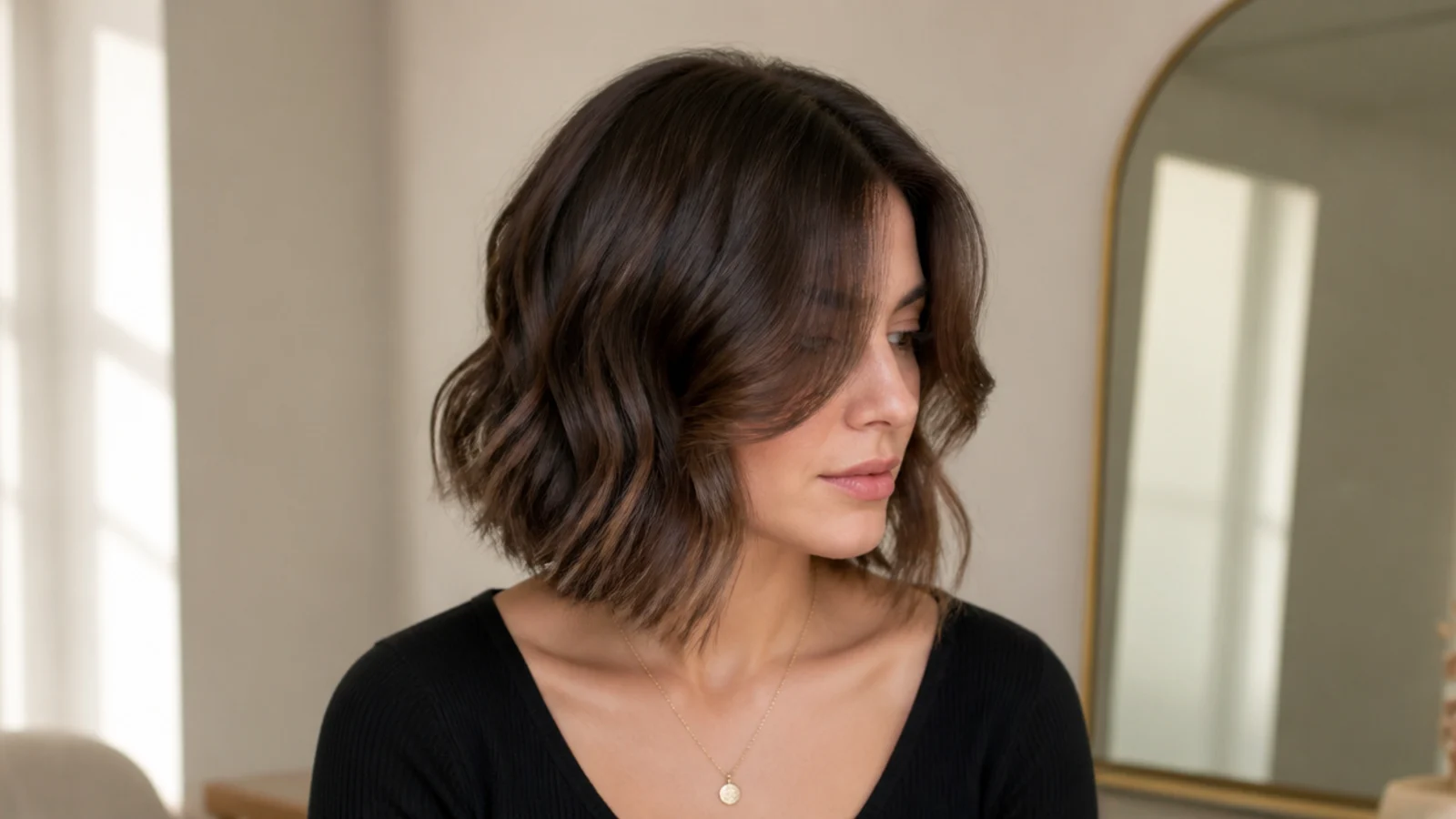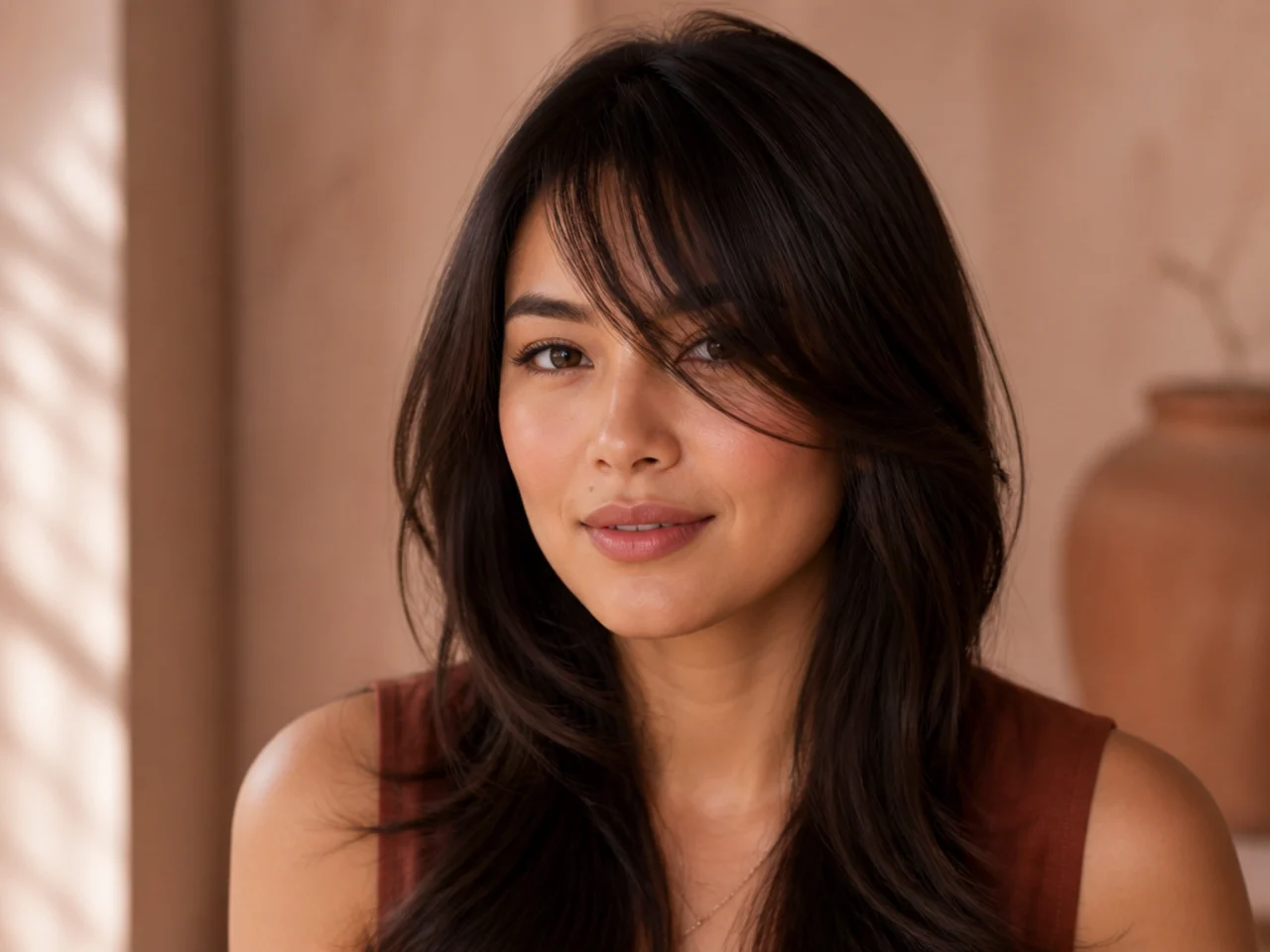
25 Long Bob Ideas With Soft Curtain Bangs
Twenty-five long bobs cut with curtain bangs, and the one measurement that decides whether the pairing works. The outer edge of the fringe has to reach the perimeter of the bob, or the two read as separate haircuts.
In this article · 32
- What Makes a Fringe a Curtain Fringe
- How to Set the Length and the Split
- The 25 Long Bob and Curtain Bang Combinations
- 1. Blunt Lob With Curtain Bangs
- 2. Collarbone Lob With Curtain Bangs
- 3. Chin Grazing Lob With Curtain Bangs
- 4. Layered Lob With Curtain Bangs
- 5. A Line Lob With Curtain Bangs
- 6. Stacked Lob With Curtain Bangs
- 7. Textured Lob With Curtain Bangs
- 8. Wavy Lob With Curtain Bangs
- 9. Curly Lob With Curtain Bangs
- 10. Sleek Straight Lob With Curtain Bangs
- 11. Lob With Cheekbone Length Bangs
- 12. Lob With Jaw Length Bangs
- 13. Lob With a Deep Centre Split
- 14. Lob With an Off Centre Split
- 15. Lob With Bardot Bangs
- 16. Lob With French Leaning Curtain Bangs
- 17. Lob With Side Swept Curtain Bangs
- 18. Lob With a Wispy Curtain Fringe
- 19. Lob With a Heavy Curtain Fringe
- 20. Lob With a Money Piece
- 21. Lob With Balayage and Curtain Bangs
- 22. Lob With a Root Shadow
- 23. Lob With Curtain Bangs on Fine Hair
- 24. Lob With Curtain Bangs on Thick Hair
- 25. Curtain Bangs at Week Ten
- Styling and Upkeep
- Mistakes to Avoid
- FAQ
- Final Thoughts
Most long bobs with curtain bangs fail on one measurement: the fringe stops above the jaw, never reaches the length beside it, and the two sections read as separate haircuts sharing a head.
A curtain fringe is a slope, not a line. It is shortest at the centre split and lengthens outward, which is what lets it open around the face instead of sitting across it.
The slope has to land on the perimeter. Where the outer end of the fringe meets the bob is the only join in the cut, and if it falls short there is a visible gap the styling cannot close.
What Makes a Fringe a Curtain Fringe
It is cut on a graduated line. Shortest in the middle, longest at the outer edges. That angle is the definition, and changing it changes the fringe into something else entirely.
It is split, not swept. The parting at the centre is structural. A curtain fringe worn to one side is a side fringe wearing the wrong name and it will not sit the same way.
It blends outward into the length. Unlike a blunt fringe, which stops at a hard edge, a curtain fringe hands over to the face framing layers and disappears into them.
It grows out along its own line. Because the shape is a slope, a month of growth moves the whole slope down rather than breaking the edge, which is why it stays wearable far longer than a blunt fringe.

How to Set the Length and the Split
Set the shortest point against a feature. Cheekbone height widens the face because the eye reads the widest visible point as the width. Jaw height lengthens it for the same reason.
Split the fringe where the hair already parts. A fringe forced across its own growth direction returns to that direction within about an hour, and no product holds a root against itself all day.
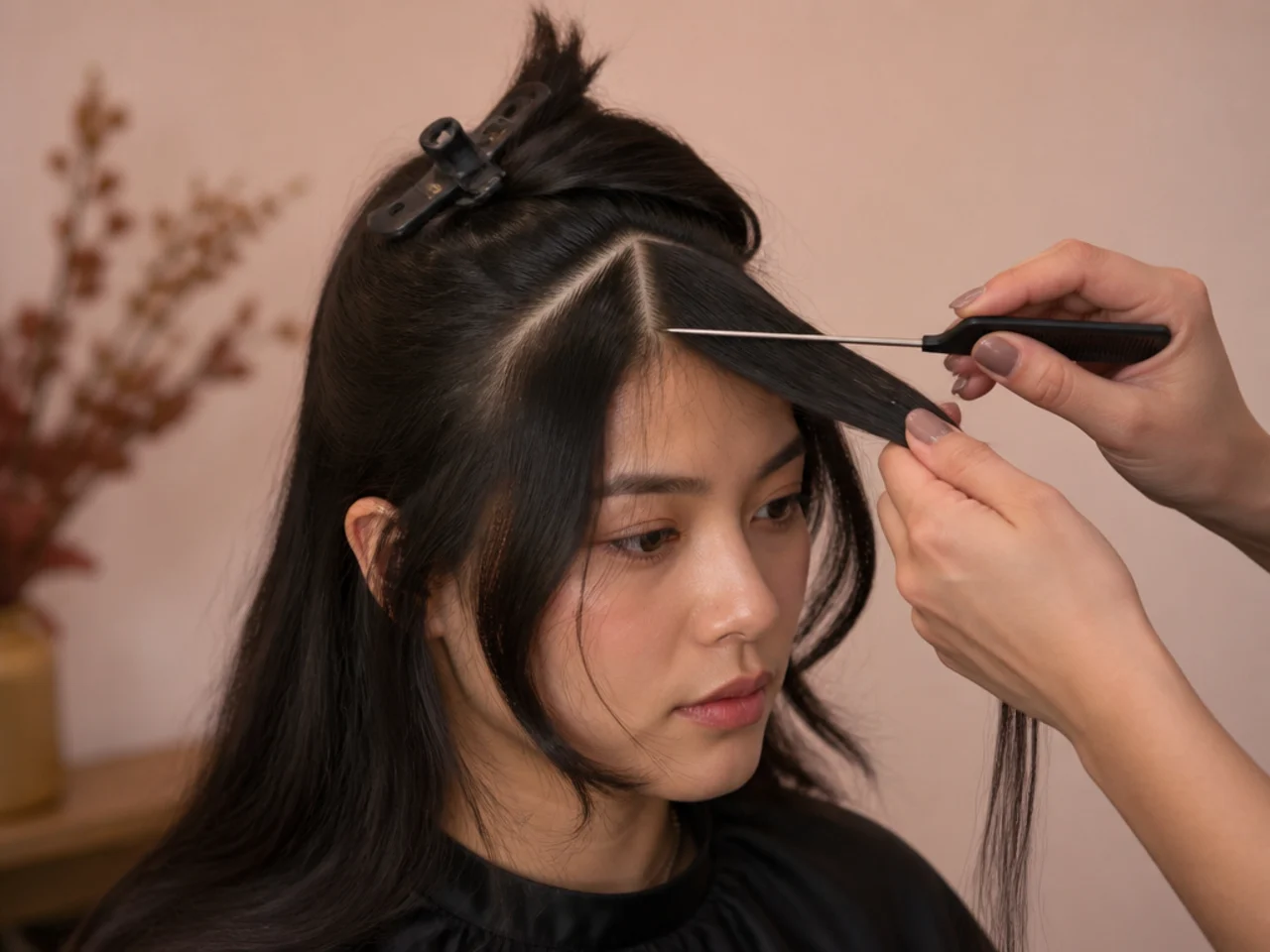
Take the section from a triangle, and choose its width. A wide triangle reaching back toward the crown gives a heavy fringe. A narrow one gives a wispy fringe that shows the forehead through it.
Check for a cowlick at the hairline before any length is decided. A strong cowlick lifts the fringe by half an inch or more once dry, so the hair has to be cut longer to allow for it.
The 25 Long Bob and Curtain Bang Combinations
1. Blunt Lob With Curtain Bangs
One solid perimeter with a soft sloped fringe above it. The contrast is the appeal: a hard horizontal at the bottom of the cut and a soft diagonal at the top, so neither the length nor the fringe has to work hard to be noticed.
2. Collarbone Lob With Curtain Bangs
The longest version that still reads as a bob. At collarbone length the fringe has plenty of hair to blend into, so the outer ends can be cut long without ever outrunning the perimeter beside them.

3. Chin Grazing Lob With Curtain Bangs
The shortest length that still takes a curtain fringe. Because the perimeter arrives so quickly, the fringe has to be cut shorter to keep the slope in proportion, otherwise the outer ends finish below the hair they are meant to join.

4. Layered Lob With Curtain Bangs
Internal layers through the mid lengths give the fringe somewhere to hand over to. The join between the fringe and the length is the weak point in this pairing, and a layer cut at the same angle as the fringe hides it completely.

5. A Line Lob With Curtain Bangs
Shorter at the back and longer at the front. The forward angle of the perimeter runs in the same direction as the fringe slope, so the two lines agree and the whole cut pulls the eye toward the face.

6. Stacked Lob With Curtain Bangs
Graduated layers at the back build height above the nape and push the shape upward. That lift at the back balances the weight the fringe adds at the front, which stops the whole cut leaning forward.

7. Textured Lob With Curtain Bangs
The perimeter point cut so the ends finish at slightly different lengths. It removes the hard bottom line, which matters here because a soft fringe over a very hard perimeter can look like two decisions made on different days.

8. Wavy Lob With Curtain Bangs
Waves lift the fringe as they dry, sometimes by an inch, so the fringe must be cut longer than the finished target. Cut it to the intended length wet and it will sit above the brow by the time it is dry.

9. Curly Lob With Curtain Bangs
The fringe has to be cut curl by curl and dry, because a curl stretched under water returns to a much shorter position. On tight curls the same fringe can finish three inches higher than it was cut.

10. Sleek Straight Lob With Curtain Bangs
Straight hair holds the slope exactly as it was cut, which is the cleanest version of this pairing and the least forgiving. Every millimetre of unevenness across the fringe stays visible, since there is no bend in the strand to break up the line.

11. Lob With Cheekbone Length Bangs
The shortest point of the fringe set at the cheekbone. The eye reads the widest visible point of a hairstyle as its width, so a fringe opening at the cheekbones makes the face read broader and rounder.

12. Lob With Jaw Length Bangs
The same slope carried lower, so the opening happens at the jaw instead. Moving the widest point down stretches the visible shape of the face vertically, which is the opposite result from the same cut a few inches higher.

13. Lob With a Deep Centre Split
The fringe parted exactly down the middle. It gives the most symmetrical result and it demands a hairline that cooperates, since a centre split forced over a cowlick separates unevenly within the hour.

14. Lob With an Off Centre Split
Moving the split an inch to one side sends slightly more hair across the forehead, and hair crossing a parting is held off the scalp by the change of direction. That is where the root lift at the front comes from.

15. Lob With Bardot Bangs
A very wide, very long curtain fringe with a deep arc through the middle. Because the section is taken far back toward the crown, it carries real weight, and that weight is what holds the arc open instead of letting it collapse flat.

16. Lob With French Leaning Curtain Bangs
Shorter, blunter and cut from a narrower section than a true curtain fringe, sitting closer to the brow. The heavier edge means it holds a shape without styling but grows out faster into an awkward length. The distinction is set out in french vs curtain bangs.

17. Lob With Side Swept Curtain Bangs
The split kept but weighted heavily to one side, so most of the fringe crosses the forehead. It only holds if the natural part already runs that way, since the root will otherwise return to its own direction. Compared directly in side swept vs curtain bangs.
18. Lob With a Wispy Curtain Fringe
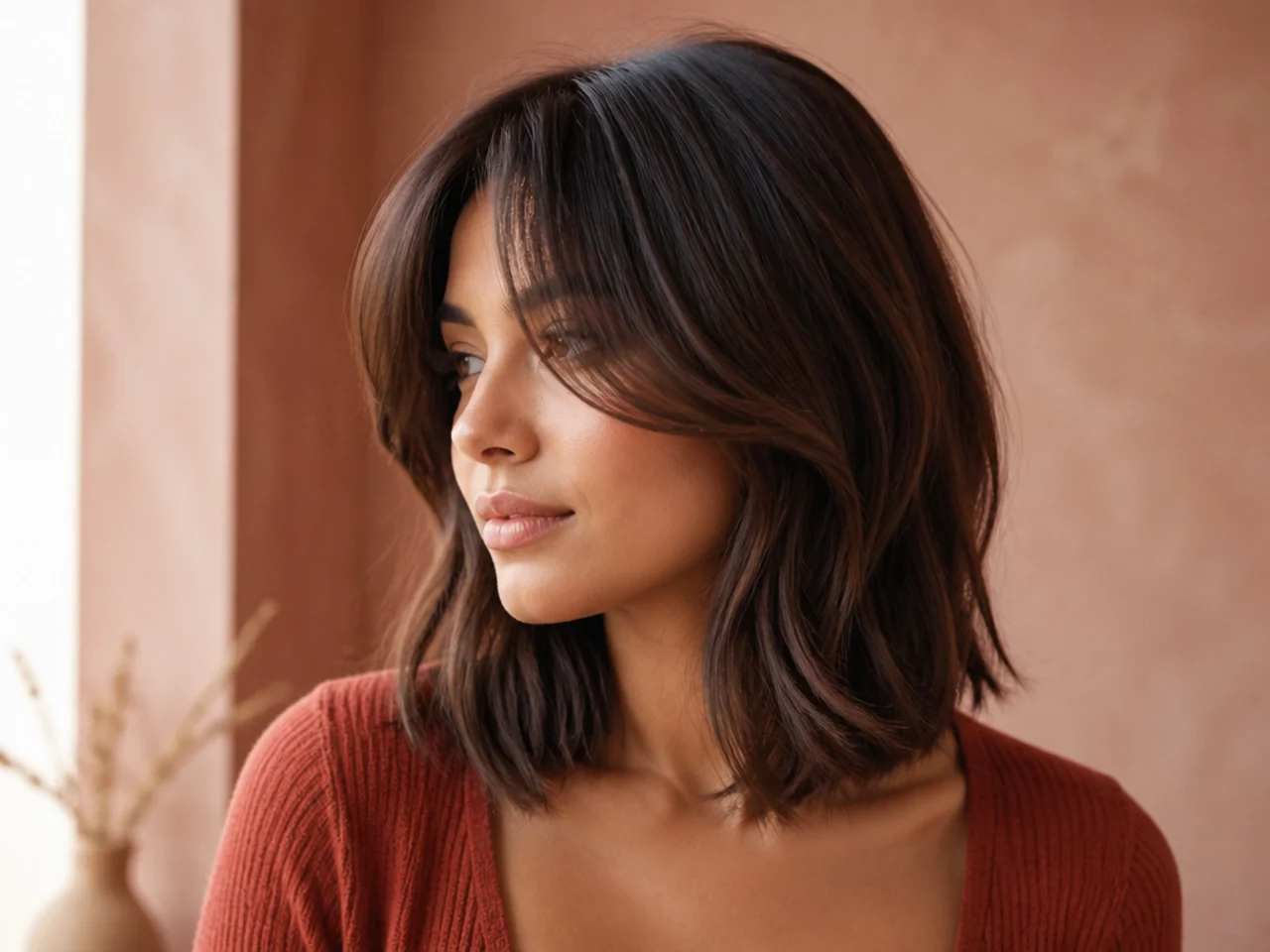
Taken from a narrow triangle so the forehead shows through it. Less hair in the section means less weight, and less weight means the fringe moves with the face rather than sitting as a fixed block above it.

19. Lob With a Heavy Curtain Fringe
The opposite section: a wide triangle reaching back toward the crown. It gives a dense fringe that holds its arc all day, at the cost of taking noticeable volume out of the top of the head behind it.

20. Lob With a Money Piece
Two lightened panels sitting in the fringe itself. Because brighter tones advance and darker ones recede, the lit pieces come forward and the rest of the bob falls back, which makes the fringe read as the front layer it actually is.
21. Lob With Balayage and Curtain Bangs
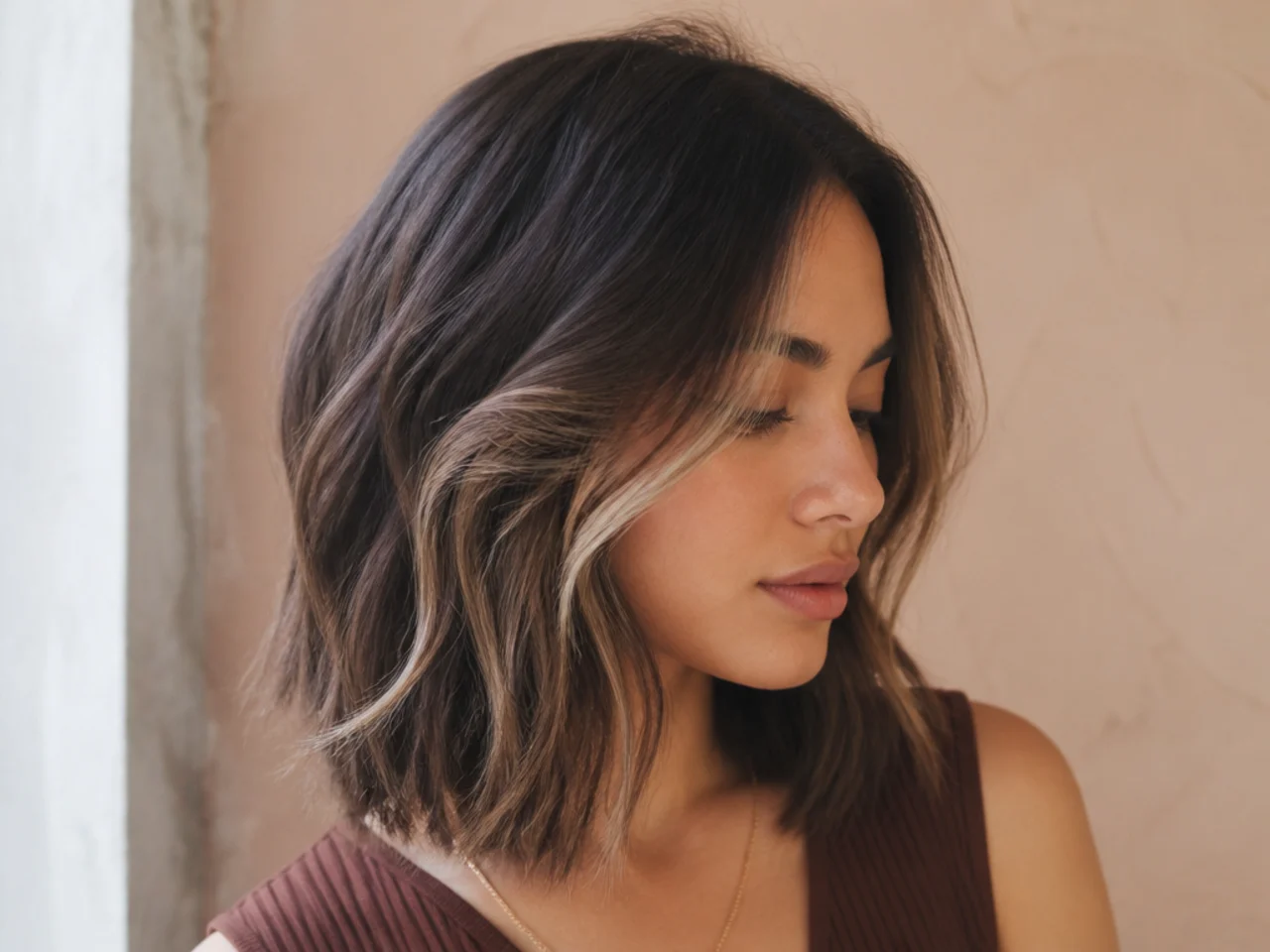
Painted colour placed where the fringe hands over to the length. Putting the lightest pieces on that join gives the eye a reason to travel across it rather than stop at it, which disguises the one seam in the cut.
22. Lob With a Root Shadow
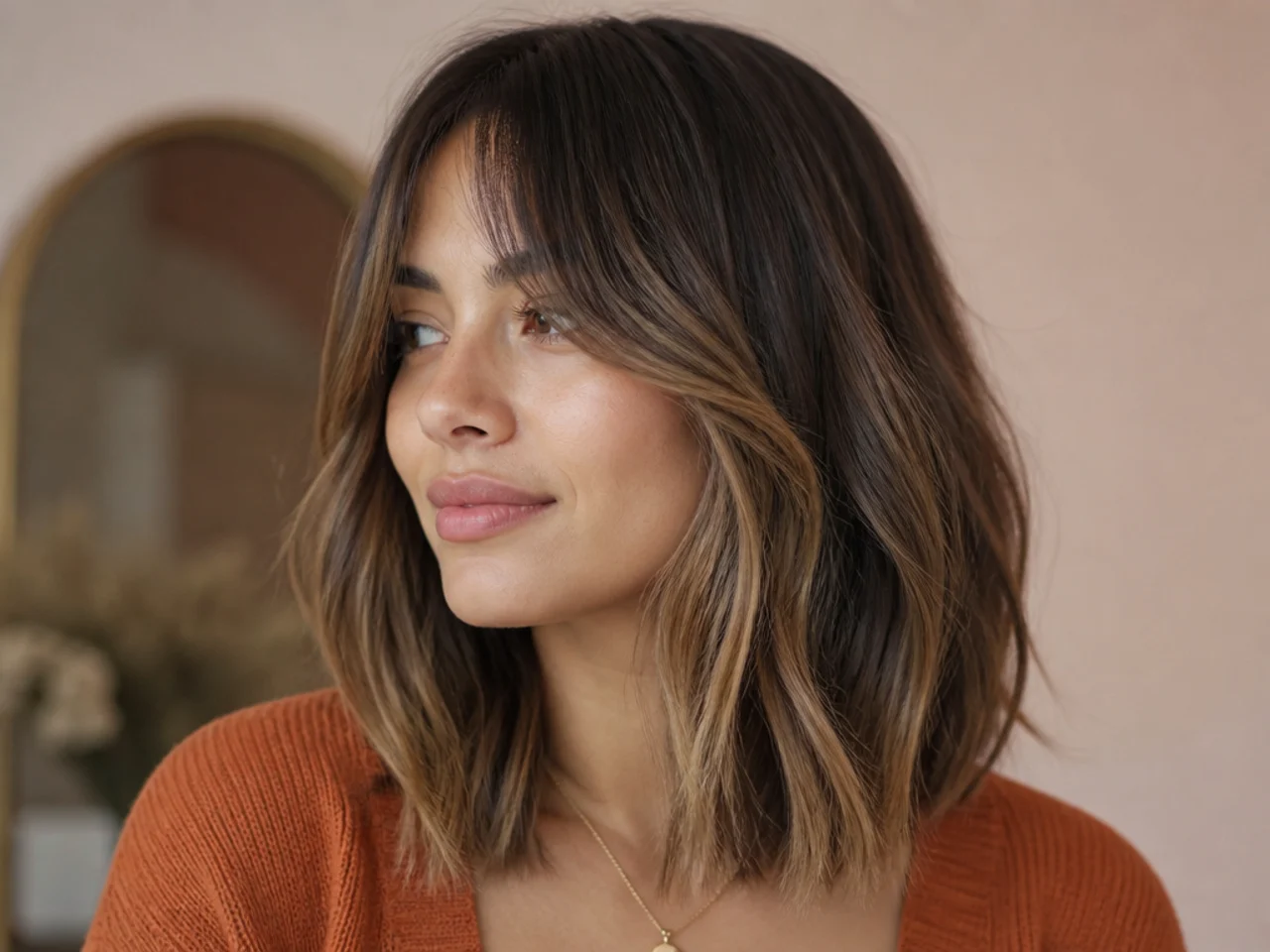
A darker band left through the first inch of growth. A curtain fringe exposes more scalp at the split than any other fringe shape, so shadowing the root is the difference between a visible parting and a soft one.

23. Lob With Curtain Bangs on Fine Hair
Take the fringe from a narrow section. A wide triangle on fine hair borrows so much density from the top of the head that the crown behind the fringe visibly thins, and the fringe itself still reads sparse.

24. Lob With Curtain Bangs on Thick Hair
The opposite adjustment: a thick fringe needs weight removed from underneath rather than a narrower section, so the top surface stays smooth while the bulk beneath it comes down enough to let the arc sit.

25. Curtain Bangs at Week Ten
Around half an inch of growth a month puts the fringe roughly an inch and a quarter lower by week ten. The slope is intact, so the fringe has simply become a face framing layer, which is the point at which most people either trim or keep growing.

Styling and Upkeep
Dry the fringe first, and dry it before it air dries. The root sets in whatever direction it dries in, and a fringe left to dry on its own sets flat against the forehead.
Dry each side away from the split, then let it fall back. Overshooting the direction and allowing it to return is what creates the arc. Drying it straight down produces a flat fringe with a parting in it.
Let the section cool in position. Heat softens the bond that holds a strand in shape and cooling reforms it, so the shape is set on the way down, not on the way up.
Wash the fringe more often than the rest. It sits against the forehead and picks up oil faster, and a curtain fringe with weight in it separates into strands sooner than a blunt one.
Book a fringe trim every six to eight weeks and a full cut less often. The slope grows out gracefully but the shortest point drifts below the brow, which changes the whole balance of the cut.

Mistakes to Avoid
Cutting the fringe wet to its finished length. Wavy hair lifts by up to an inch as it dries and curly hair by far more, so the target has to be set against dry length.
Ignoring a cowlick at the hairline. A cowlick raises the fringe half an inch or more once it dries, and the only fix after the fact is waiting a month for the growth.
Splitting the fringe against the natural part. The root returns to its own direction within about an hour, and the fringe spends the day drifting back and looking unstyled.
Cutting the outer ends too short to reach the length. That gap between fringe and perimeter is the single most common failure in this pairing, and there is no styling solution for it.
Taking too wide a section on fine hair. The fringe borrows its density from the crown behind it, and on a fine head that trade leaves both areas looking thinner than before.

FAQ
How long should the fringe be? Long enough at the outer ends to reach the perimeter of the bob.
Where should it split? Wherever the hair already parts, because the root returns there anyway.
How often to trim? Six to eight weeks for the exact shape, much longer before it stops working.

Final Thoughts
The pairing lives or dies on one join. Set the shortest point of the fringe against a feature you want emphasised, then make sure the outer ends are long enough to meet the bob beside them. Everything else on this list is a variation on those two measurements.
For the same fringe carried on longer hair see curtain bangs on long hair, and for the blunter alternative see long french bangs. More in Bangs & Fringe.