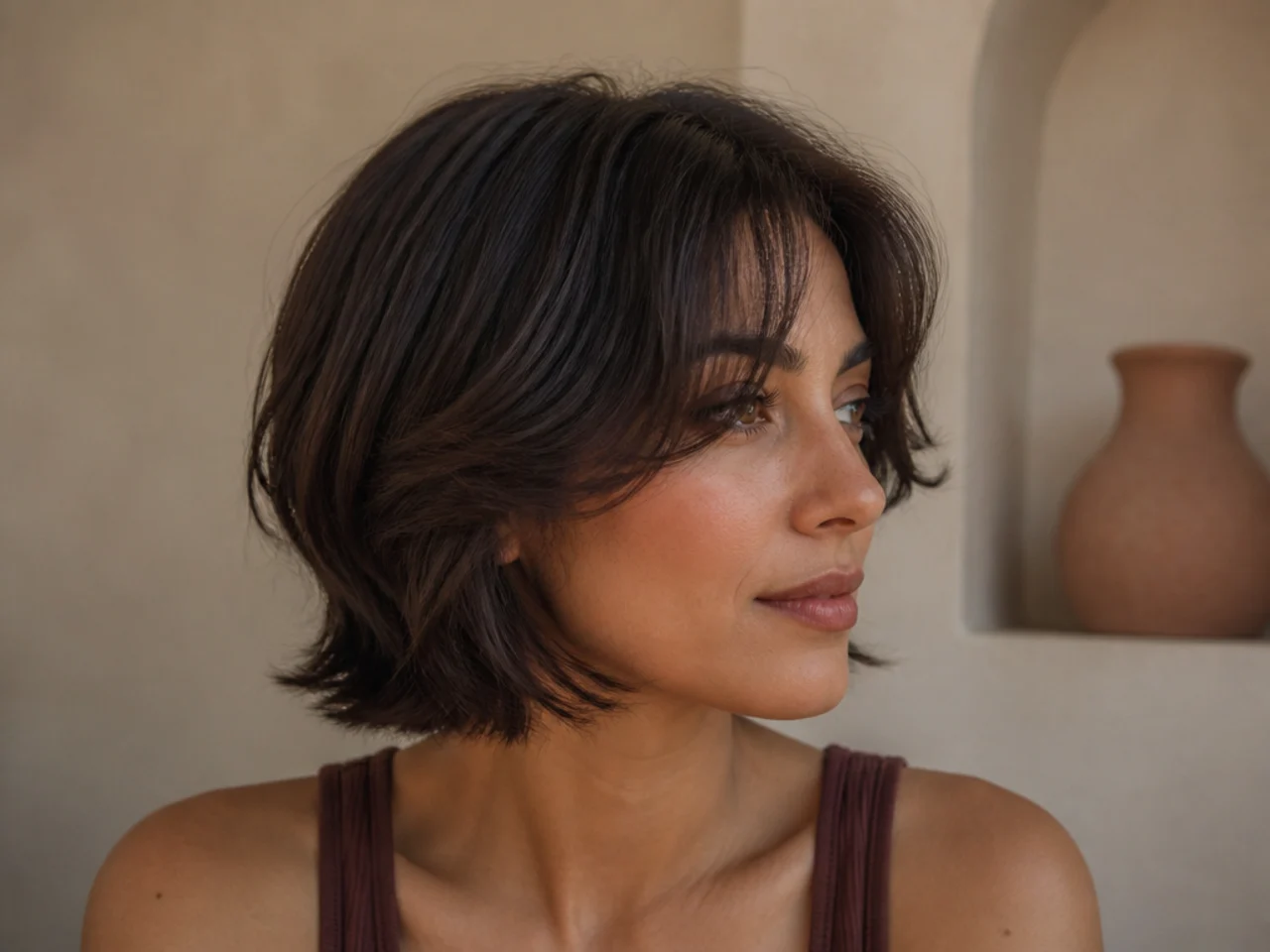
25 Butterfly Cuts With Curtain Bangs For Short Hair
Twenty five butterfly cuts with curtain bangs on short hair, and the measurement that decides whether yours reads as two tiers or one blunt shape — the gap between the shortest interior layer and the perimeter.
In this article · 32
- How the Butterfly Shape Works on Short Hair
- Choosing Your Split and Length
- The 25 Butterfly Cuts With Curtain Bangs
- 1. Chin Length Butterfly Cut
- 2. Collarbone Butterfly Cut
- 3. Butterfly Bob
- 4. Soft Curtain Bangs
- 5. Wispy Curtain Bangs
- 6. Long Curtain Bangs
- 7. Butterfly Lob
- 8. Butterfly Cut for Fine Hair
- 9. Butterfly Cut for Thick Hair
- 10. Wavy Butterfly Cut
- 11. Curly Butterfly Cut
- 12. Straight Butterfly Cut
- 13. Butterfly Cut With a Middle Part
- 14. Butterfly Cut With a Deep Side Part
- 15. Butterfly Shag
- 16. Butterfly Cut With Flicked Ends
- 17. Blown Out Butterfly Cut
- 18. Air Dried Butterfly Cut
- 19. Butterfly Cut With a Money Piece
- 20. Butterfly Cut With Balayage
- 21. Butterfly Cut on a Round Face
- 22. Butterfly Cut on a Long Face
- 23. Butterfly Cut With Crown Volume
- 24. Butterfly Cut Pinned Half Up
- 25. Butterfly Cut at Week Ten
- Styling and Upkeep
- Mistakes to Avoid
- FAQ
- Final Thoughts
Most short butterfly cuts fail because the two tiers end up too close together, and at that point it is just a layered bob with a fringe.
The gap between the tiers is the cut. A short interior layer sits on a longer perimeter and props it up. Less than an inch of separation and the eye reads one shape.
Curtain bangs are the front of that short layer, not a separate fringe. Cut them as their own section and you get a step where the two lengths meet.
How the Butterfly Shape Works on Short Hair
Two tiers, one visible gap. The shortest interior layer near the jaw, the perimeter at or below the collarbone, and daylight between them.
The short tier carries the volume. It rests on the longer section underneath and lifts it away from the head, which is where the wing shape comes from.
Short hair gives you less room to work with. On a bob the whole cut has to happen inside four inches, so the layer placement has to be exact.
Curtain bangs finish the front of the top tier. They are the shortest point of the same layer, angled back toward the cheekbone so they sweep rather than hang.
Choosing Your Split and Length
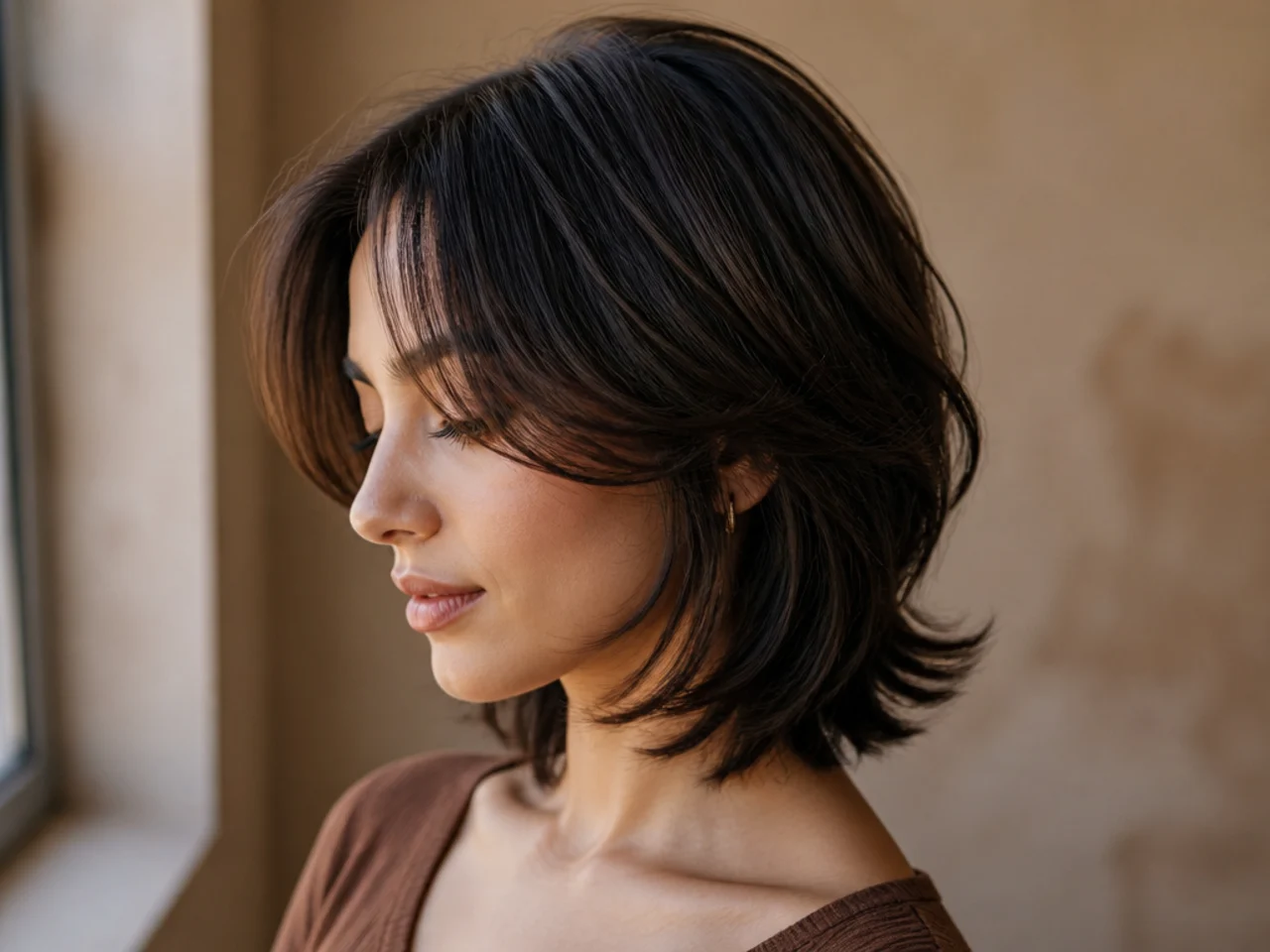
Set the split point at your cheekbone. The place the curtain opens is where the eye lands, so a higher split shortens the face and a lower one lengthens it.
Pick the perimeter length before the layers. Everything above it is measured from that line, so changing it later means recutting the whole interior.
Let density decide the layer depth. Thick hair can carry a short top tier. Fine hair needs the shortest layer kept within two inches of the perimeter.
Choose by how you dry it. The wing only appears when the top tier is dried away from the face, so if you air dry, ask for a softer, longer top layer.
The 25 Butterfly Cuts With Curtain Bangs
1. Chin Length Butterfly Cut
The shortest interior layer lands at the chin with the perimeter just past the jaw. It is the tightest version that still shows two tiers, because below an inch of separation the layers close up and the cut reads as a plain graduated bob.
2. Collarbone Butterfly Cut
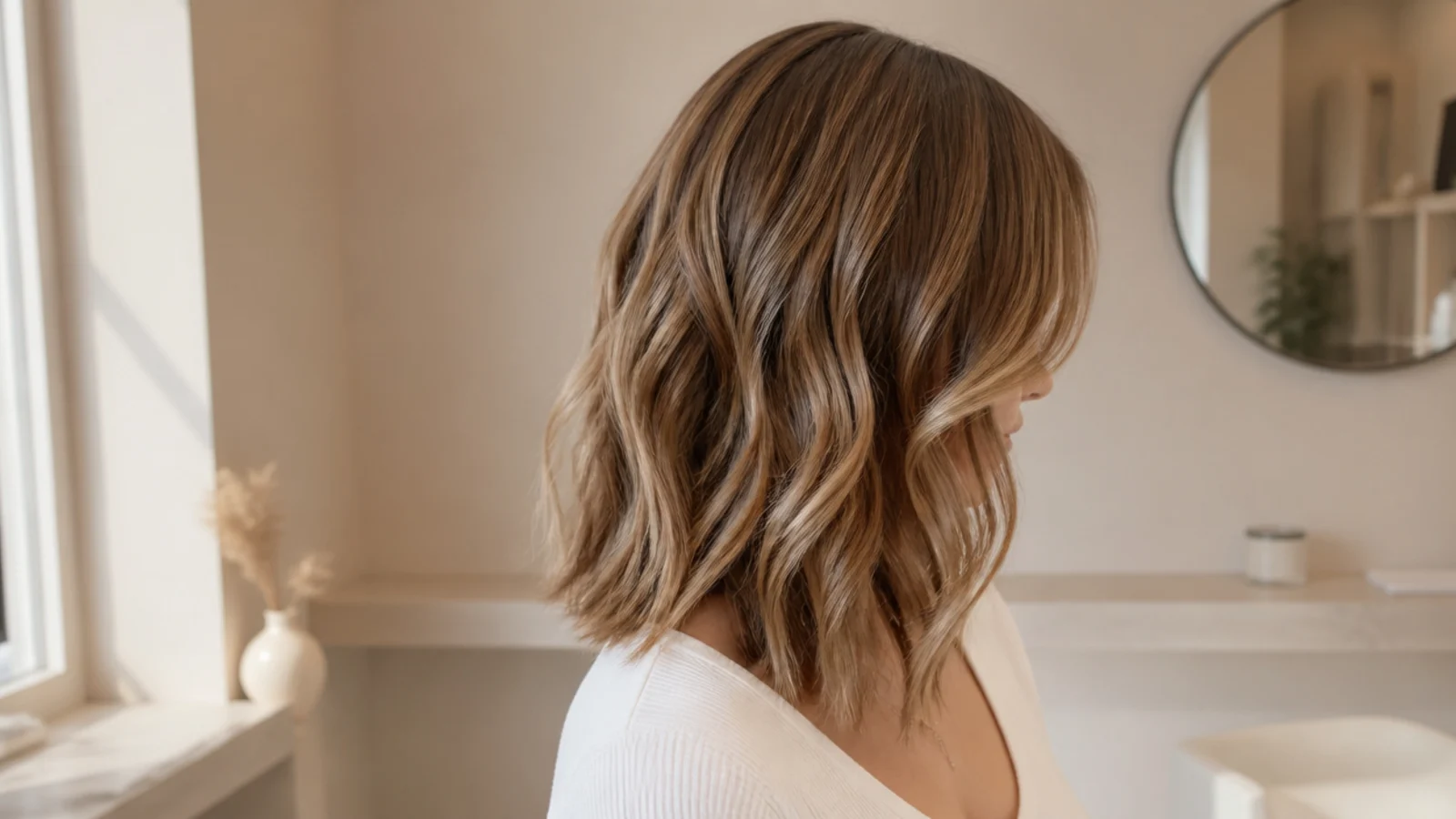
The perimeter sits at the collarbone with the top tier finishing near the jaw. That three inch gap is the most forgiving proportion on short hair, since it is wide enough to read clearly and short enough that the top layer never drags the bottom flat.
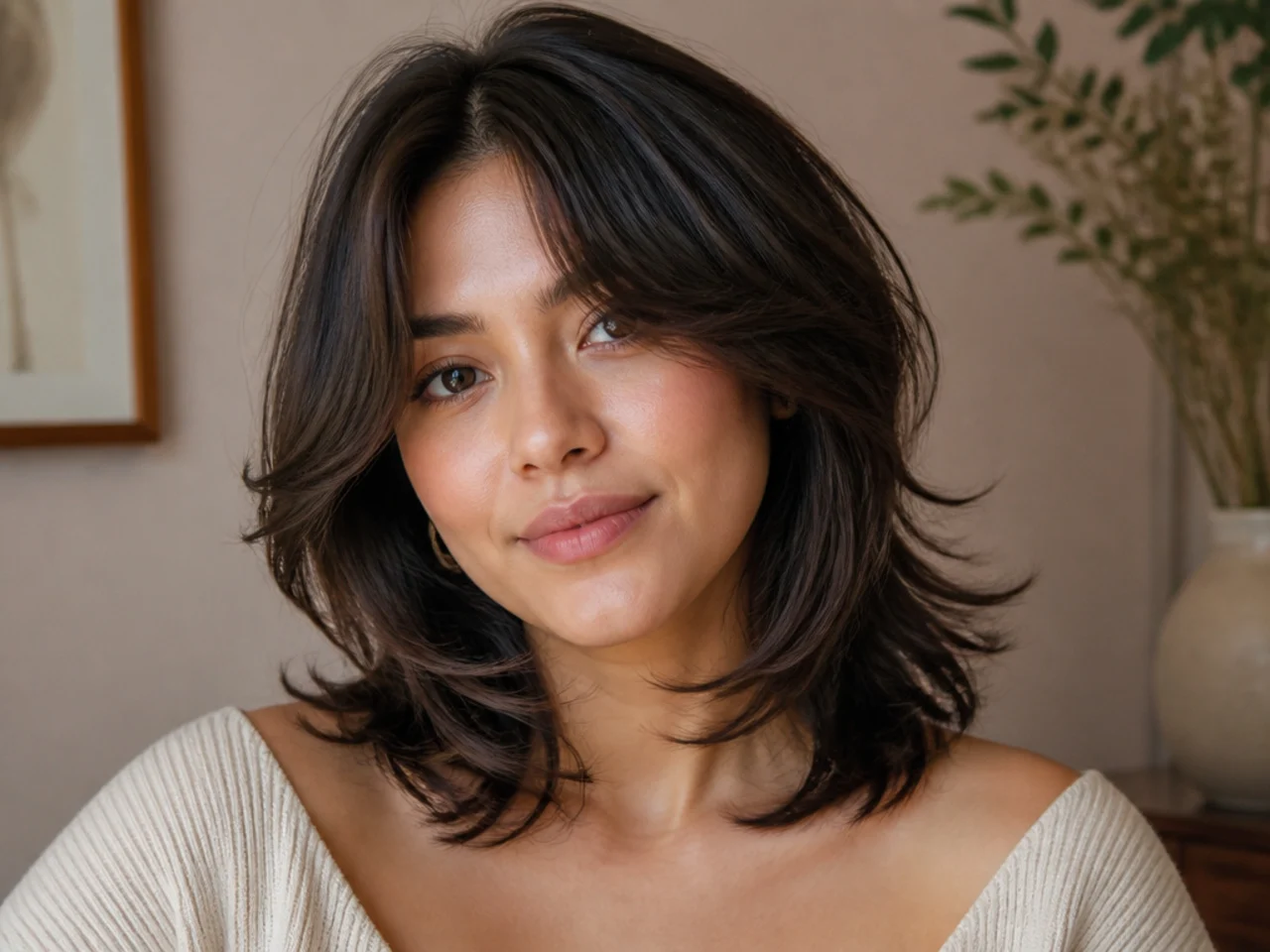
3. Butterfly Bob
The whole cut compressed into bob length, with the interior layers finishing above the ear. It works because the perimeter is blunt enough to hold a visible line for the short layers to sit against, and it fails the moment the perimeter is over textured.

4. Soft Curtain Bangs
The bangs are cut with the scissor angled along the strand rather than across it, so each end tapers instead of stopping flat. That taper is why they blend into the layer behind them rather than sitting on the face as a separate piece.

5. Wispy Curtain Bangs
Cut from a thinner front section so light passes through them. Taking less hair into the bang means the forehead stays partly visible, which keeps the face open on a round or short face where a full fringe would close it in.

6. Long Curtain Bangs
The shortest point sits at the cheekbone and the ends reach the jaw. The longer the curtain, the more vertical line it draws down the sides of the face, which narrows the widest point without taking any length off the cut itself.
7. Butterfly Lob
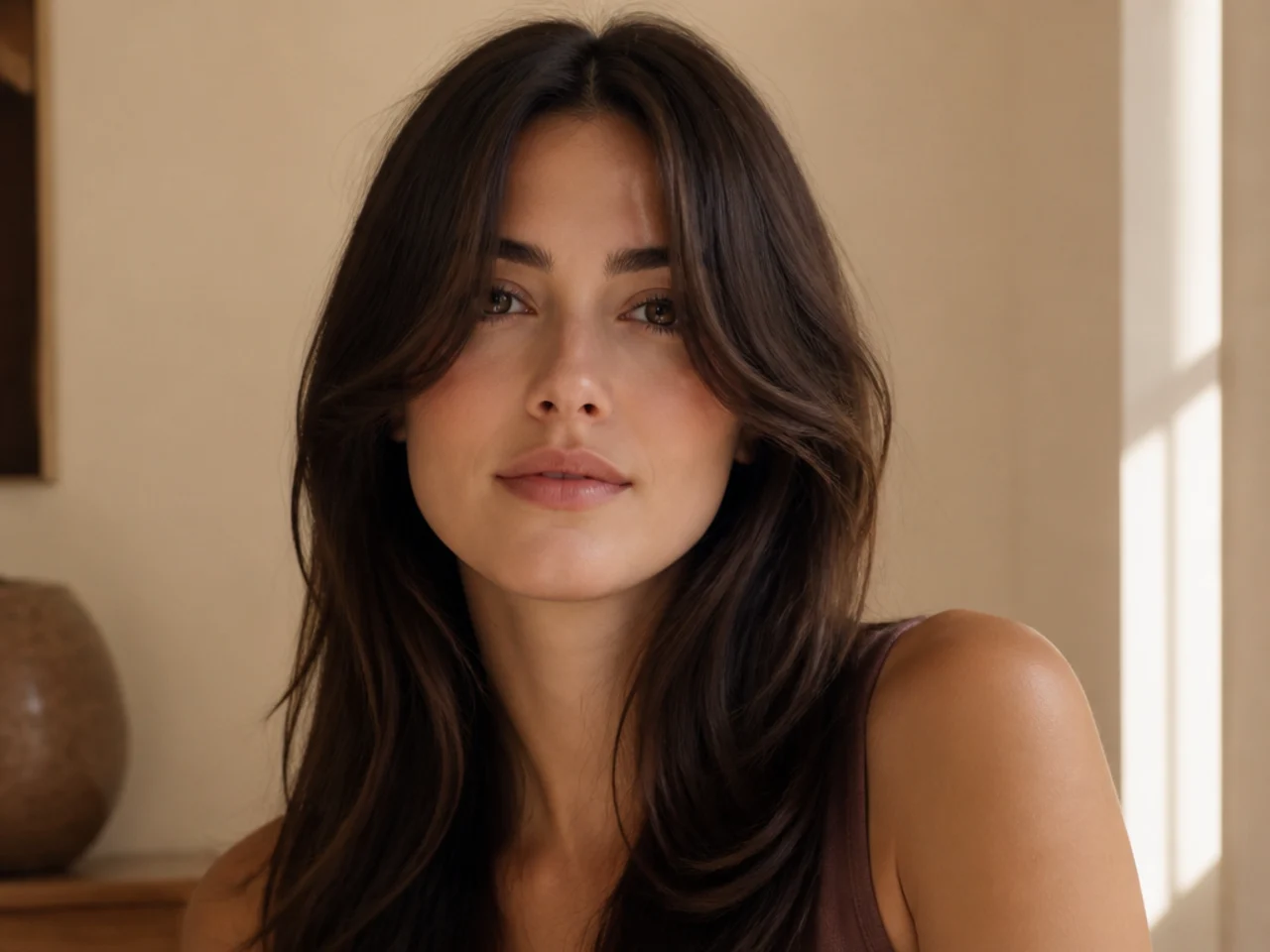
The perimeter grown to just below the collarbone with the short tier held at the jaw. The extra length adds weight below, so the interior has to be cut correspondingly shorter or the bottom tier pulls the wing down within an hour of styling.

8. Butterfly Cut for Fine Hair
Fine hair carries its apparent thickness in the perimeter, so every layer cut below the mid lengths removes strands from that outline. Keep the top tier within two inches of the perimeter and the cut still moves without the ends turning see through.
9. Butterfly Cut for Thick Hair
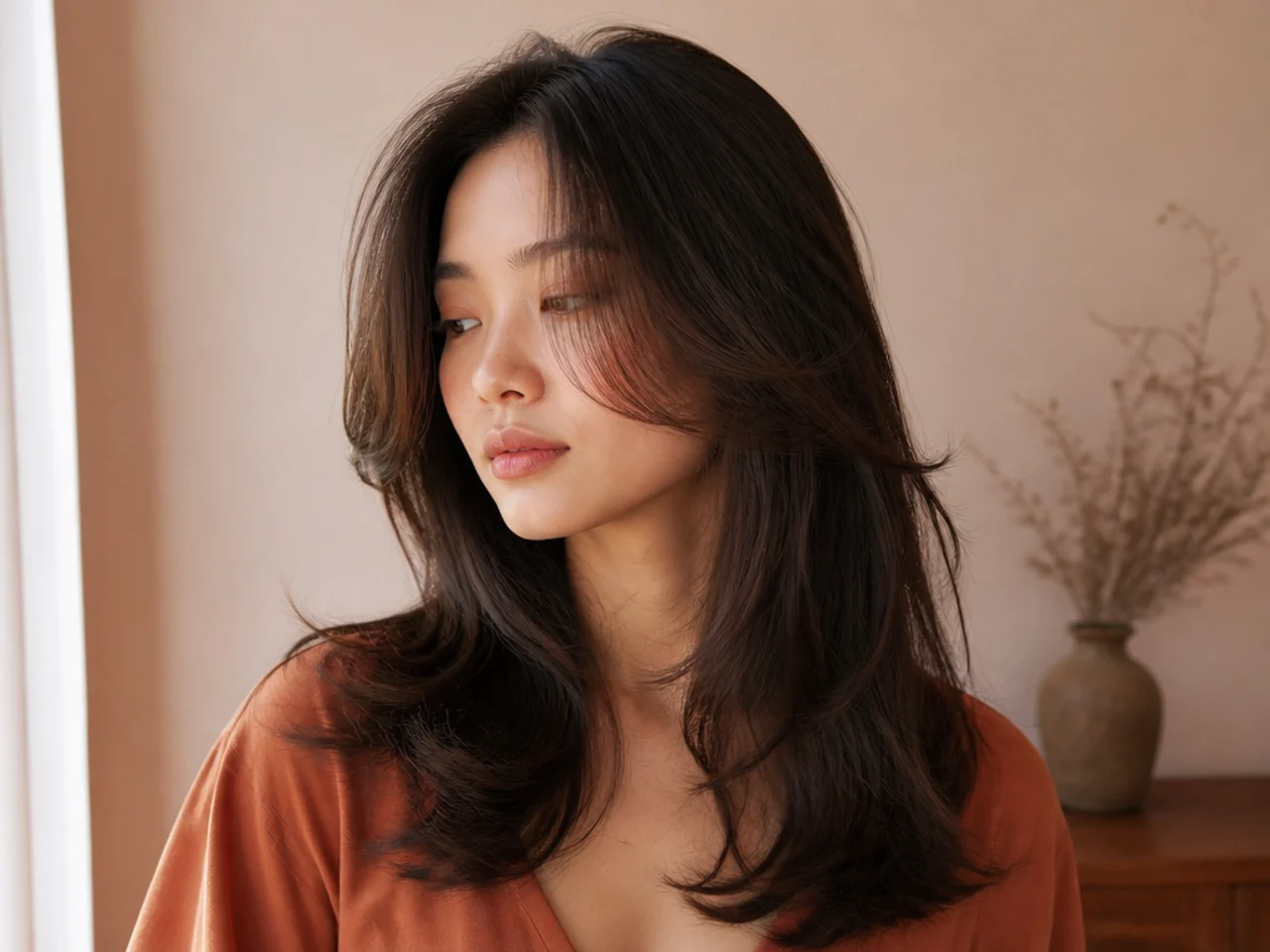
Dense hair expands sideways rather than upward, so the weight has to come out from underneath the top tier instead of off its surface. Thinning the interior lets the outer layer lie down while the wing keeps its lift.
10. Wavy Butterfly Cut
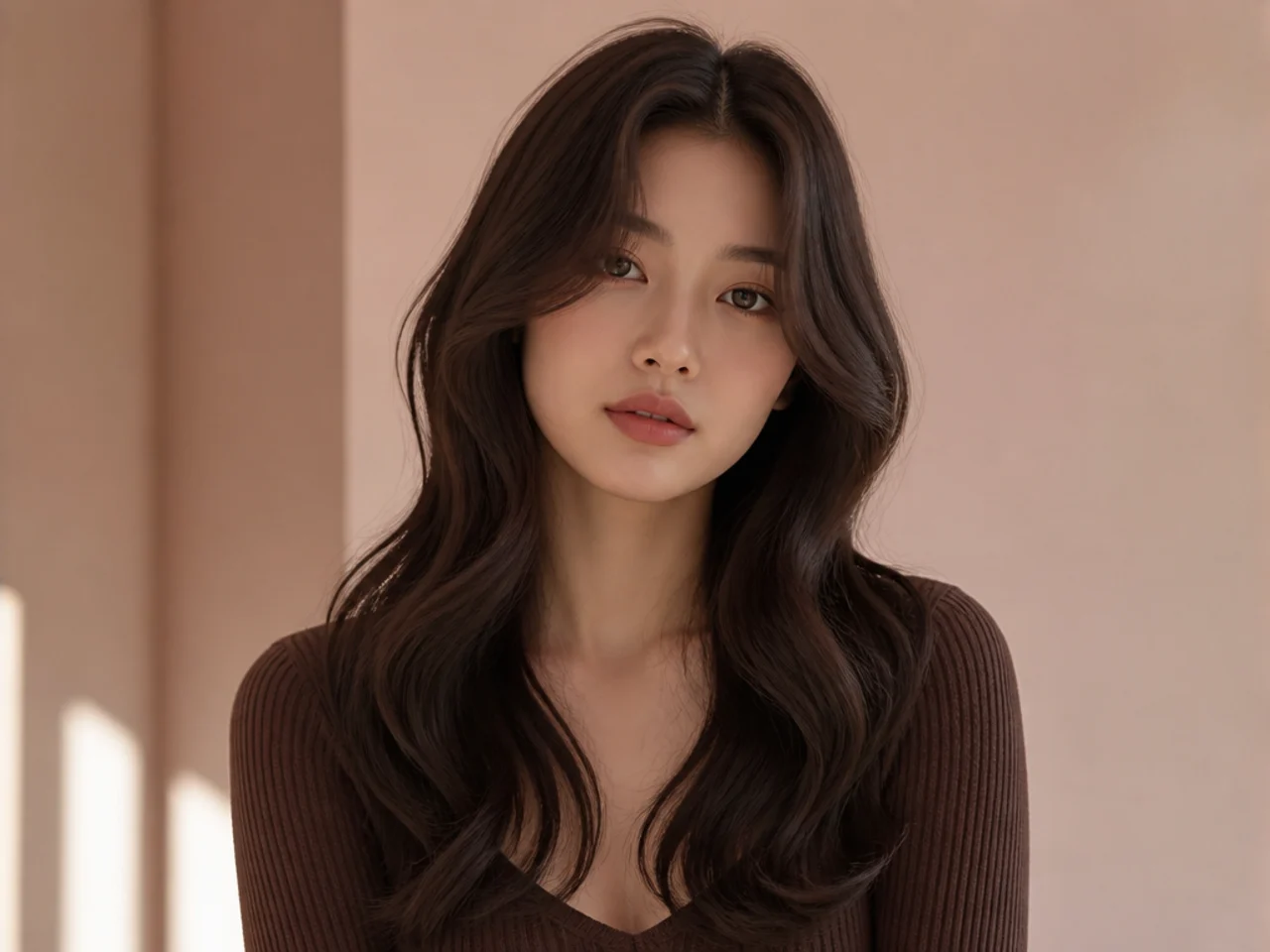
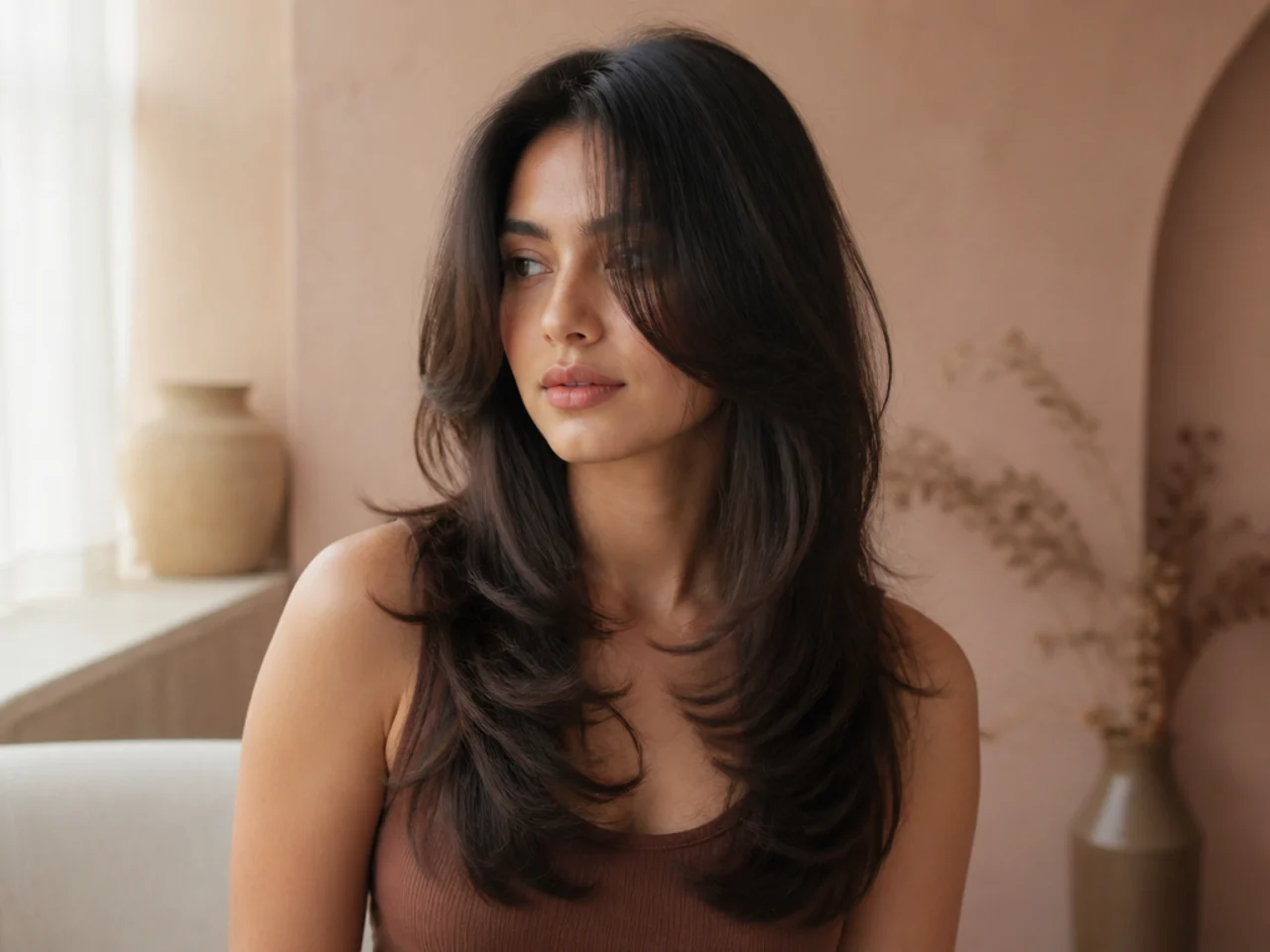
Waves do most of the work, because each bend catches on the strands around it and holds the tiers apart with no product. The cut can be softer as a result, with less separation built in, since the texture supplies the rest.

11. Curly Butterfly Cut
Curls lose up to a third of their length as they dry, so this has to be cut dry or the top tier ends up above the ear. Cutting curl by curl also places each layer where it will actually sit rather than where it hangs wet.
12. Straight Butterfly Cut
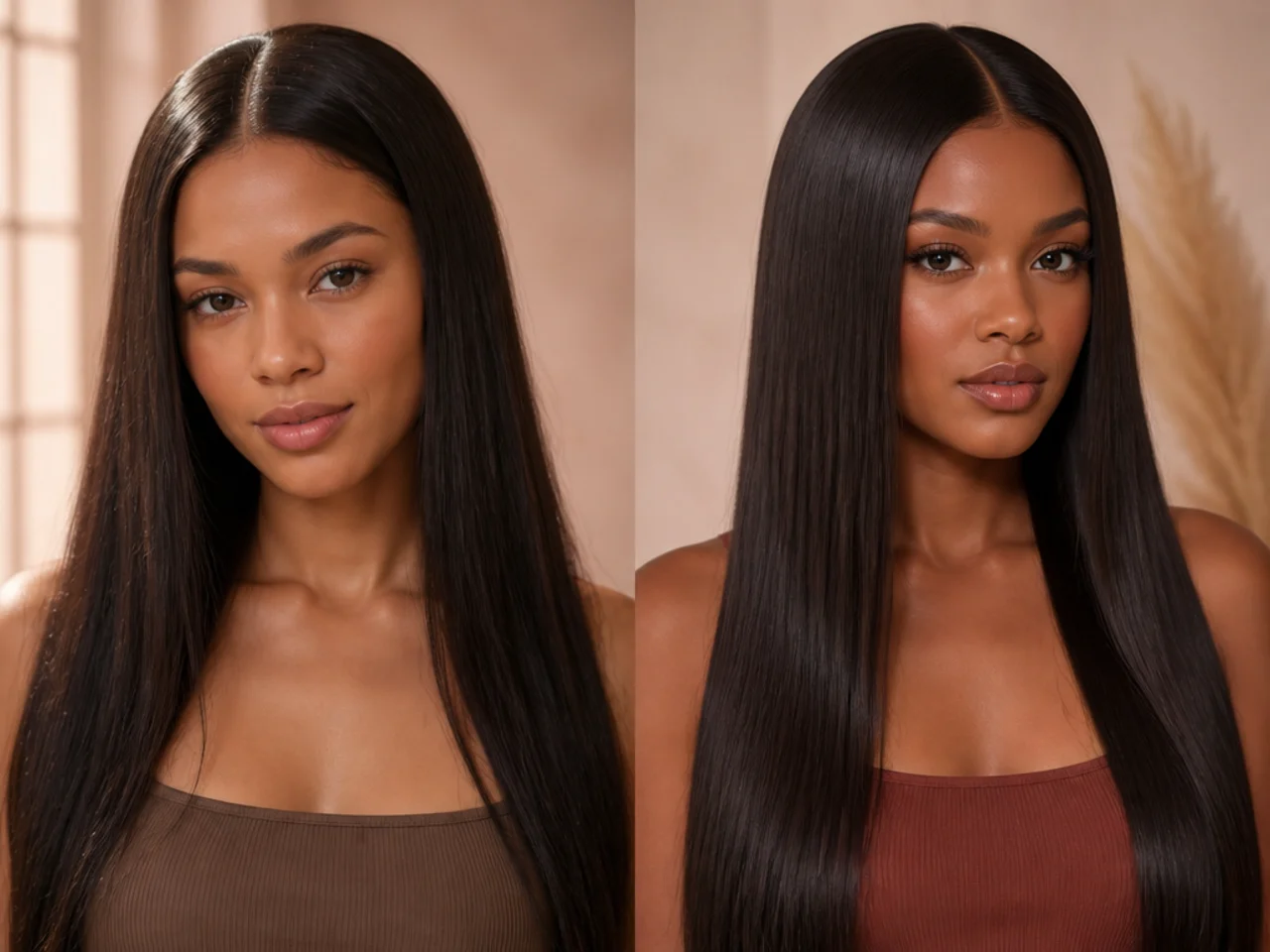
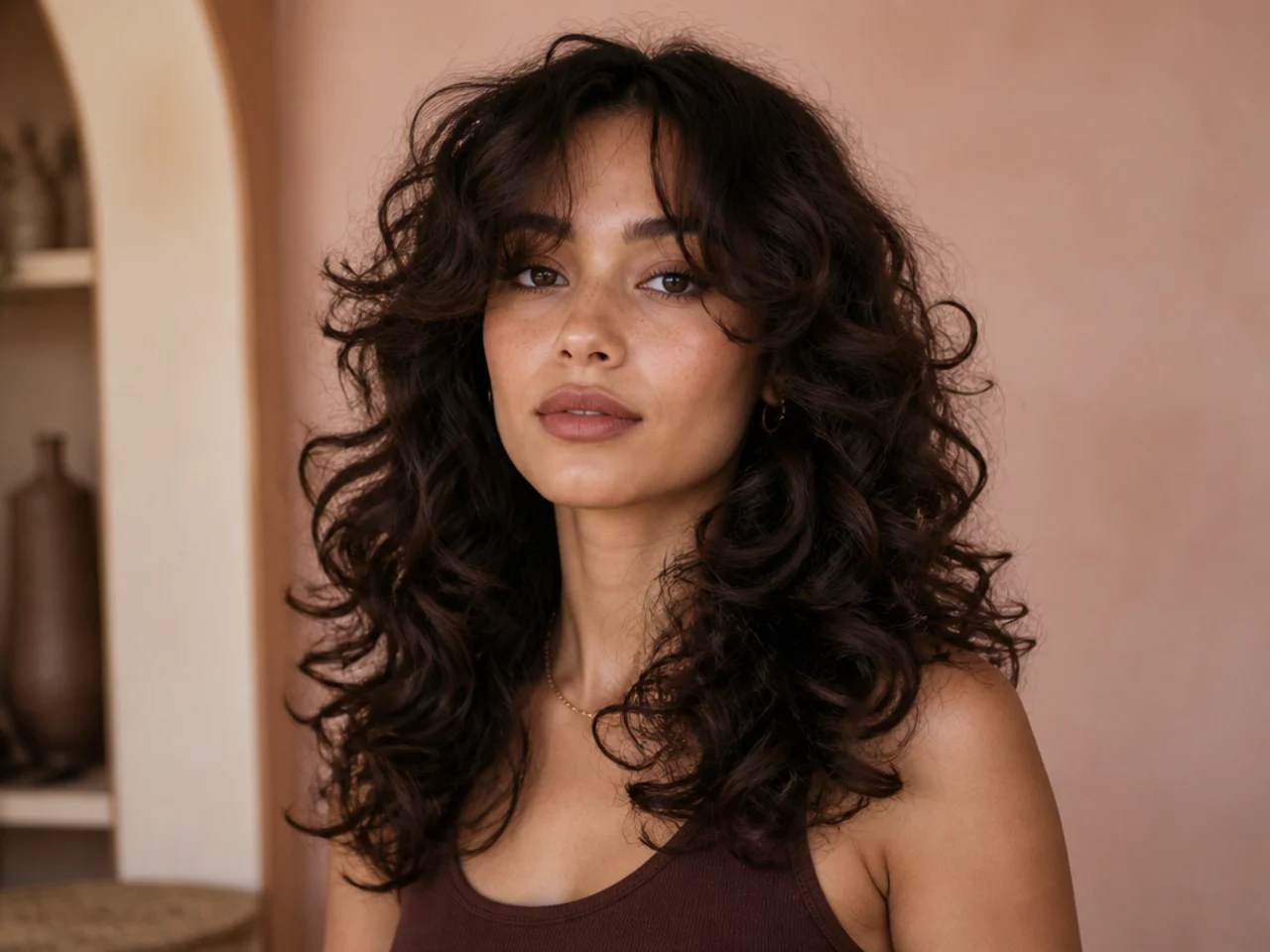
The most exposed version, because a straight strand shows every line the scissor made and gravity closes the tiers up quickly. It needs a genuinely blunt perimeter to hold the bottom line and a root lift at the crown to keep the top one visible.

13. Butterfly Cut With a Middle Part
The centre part pulls the curtain evenly in both directions and draws a vertical line down the middle of the face. That vertical is why it flatters a wide or round face and works against a long narrow one.
14. Butterfly Cut With a Deep Side Part
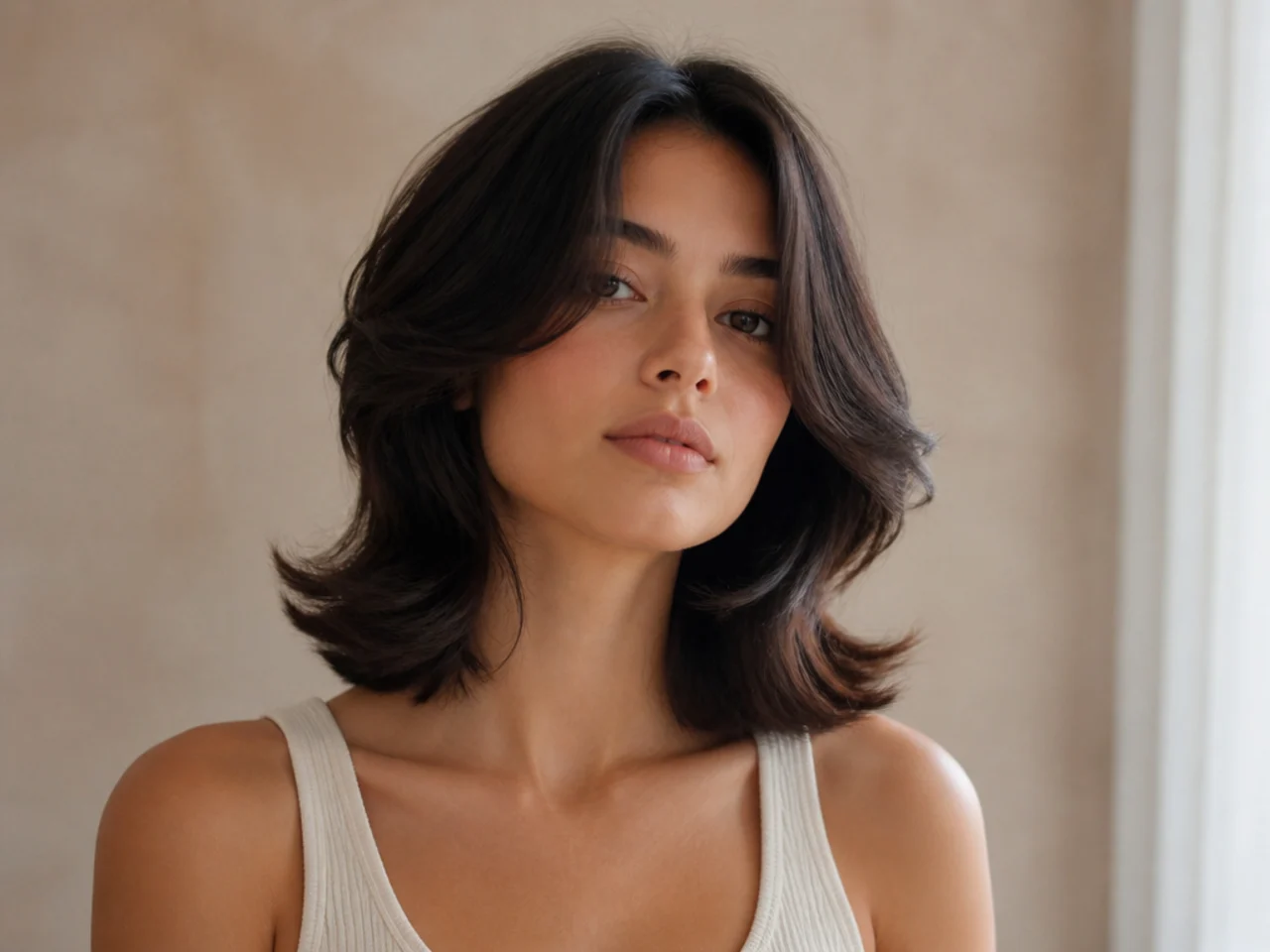
Moving the part off centre sends most of the front weight across the forehead in one direction, which lifts the roots on the heavy side as they cross the parting line. The deeper the part, the more hair is lifted and the more volume you get.

15. Butterfly Shag
More weight removed through the ends so they splinter into pieces rather than sitting as one edge. It buys movement at the cost of durability, because once the perimeter is that textured it has no line left to hold as it grows.

16. Butterfly Cut With Flicked Ends
The perimeter dried outward on a round brush so the bottom line turns away from the neck. Hair holds the shape it cools in, not the shape the heat put it in, so hold each flick in the brush until it is cool.

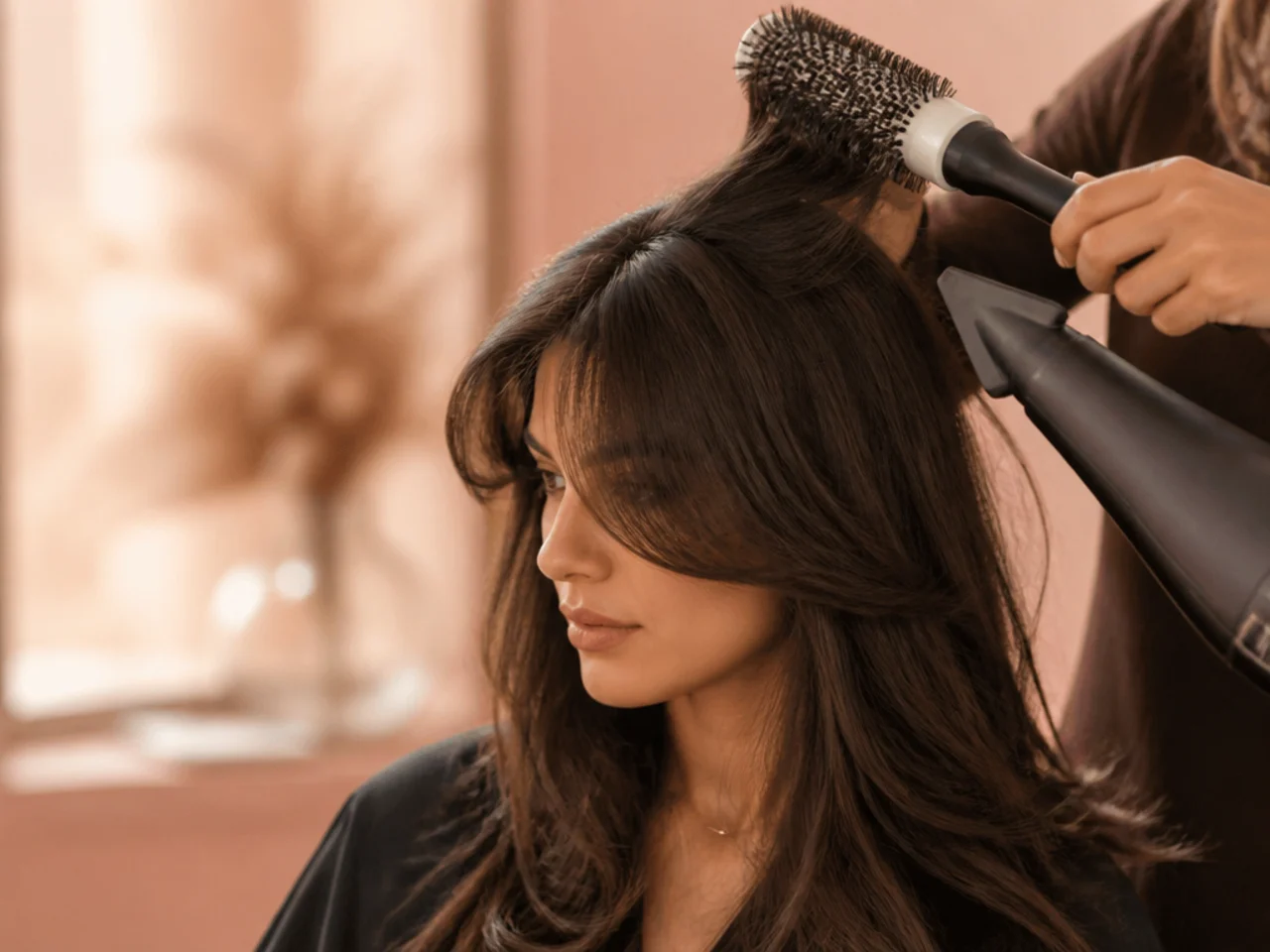
17. Blown Out Butterfly Cut
The top tier dried away from the face on a large barrel, which is what forms the wing. The barrel diameter sets the bend size, so a smaller brush gives a tighter curve that reads as curl rather than as the soft sweep this cut wants.

18. Air Dried Butterfly Cut
Left alone, the tiers fall wherever the natural growth direction takes them. It works on waves because the bend forms as the strand dries and locks the separation in, and it flattens on straight hair for the same reason.
19. Butterfly Cut With a Money Piece
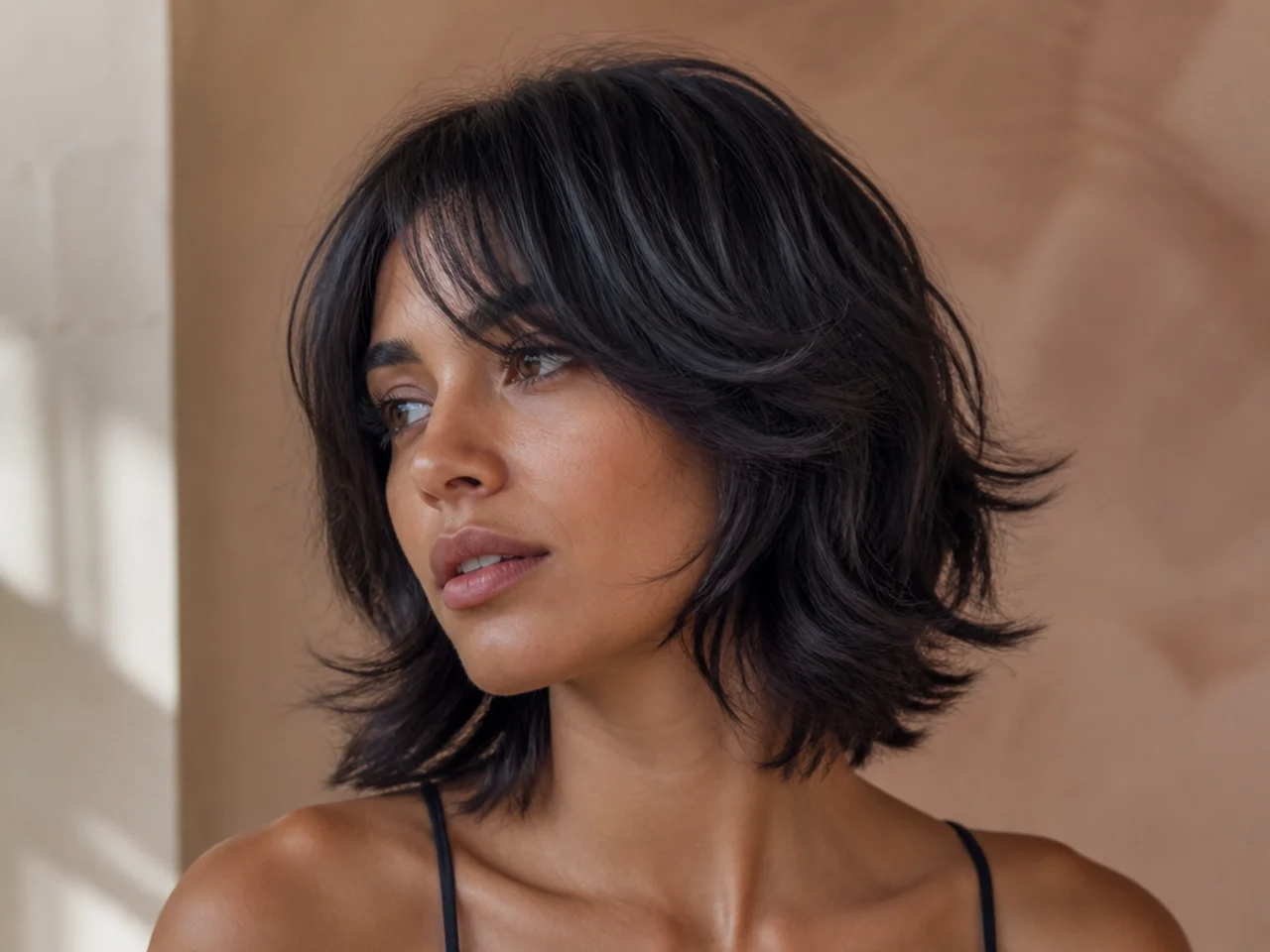
The two front sections lightened several shades brighter than the rest. Lighter hair reflects more light back at the viewer, so the brightened pieces come forward visually and pull attention to the face rather than the perimeter.
20. Butterfly Cut With Balayage
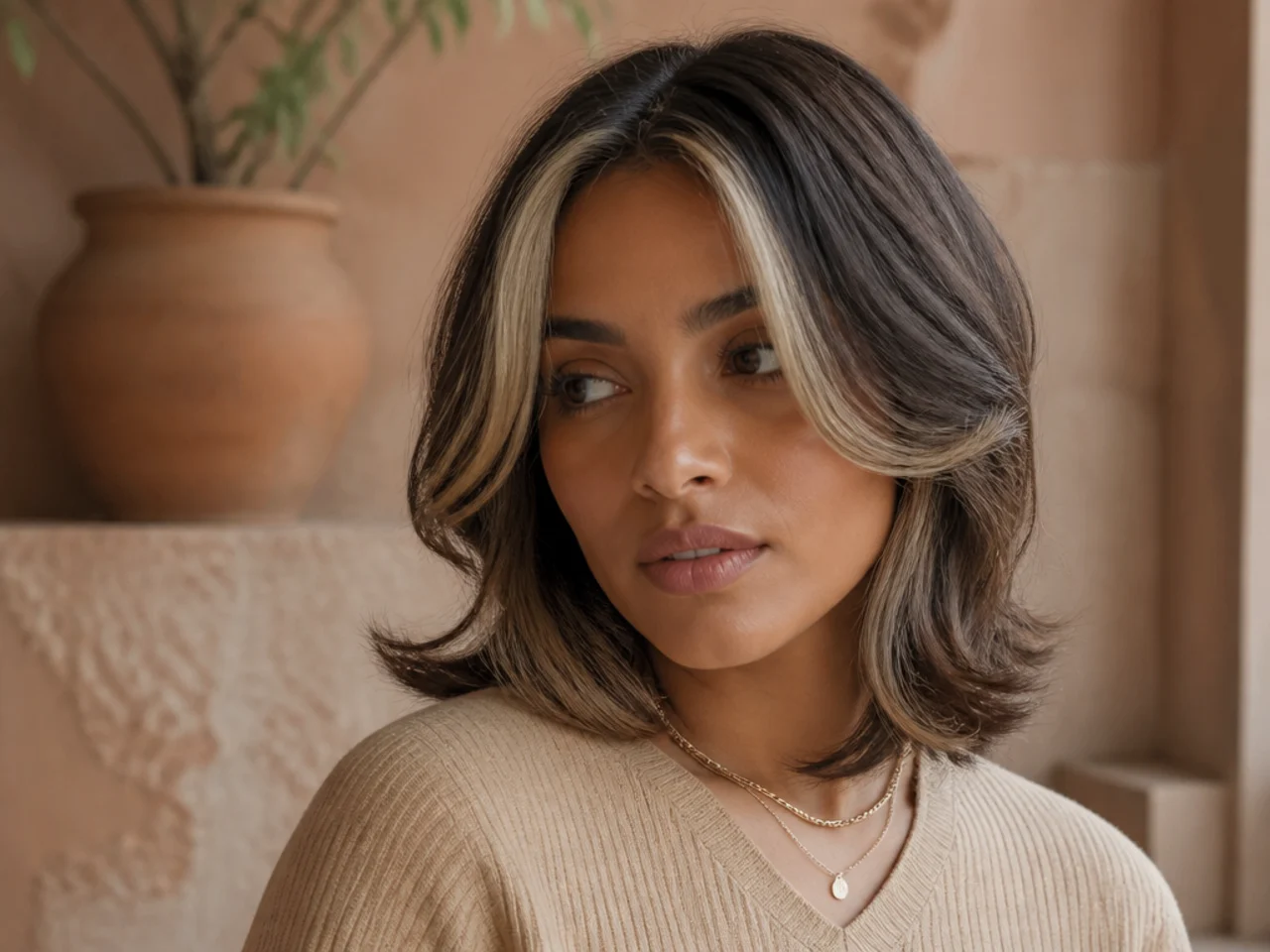
Colour painted from the mid lengths down so the ends read lighter than the roots. On a two tier cut this is useful structurally, because the lighter perimeter separates visually from the darker top layer and makes the gap between tiers easier to see.
21. Butterfly Cut on a Round Face
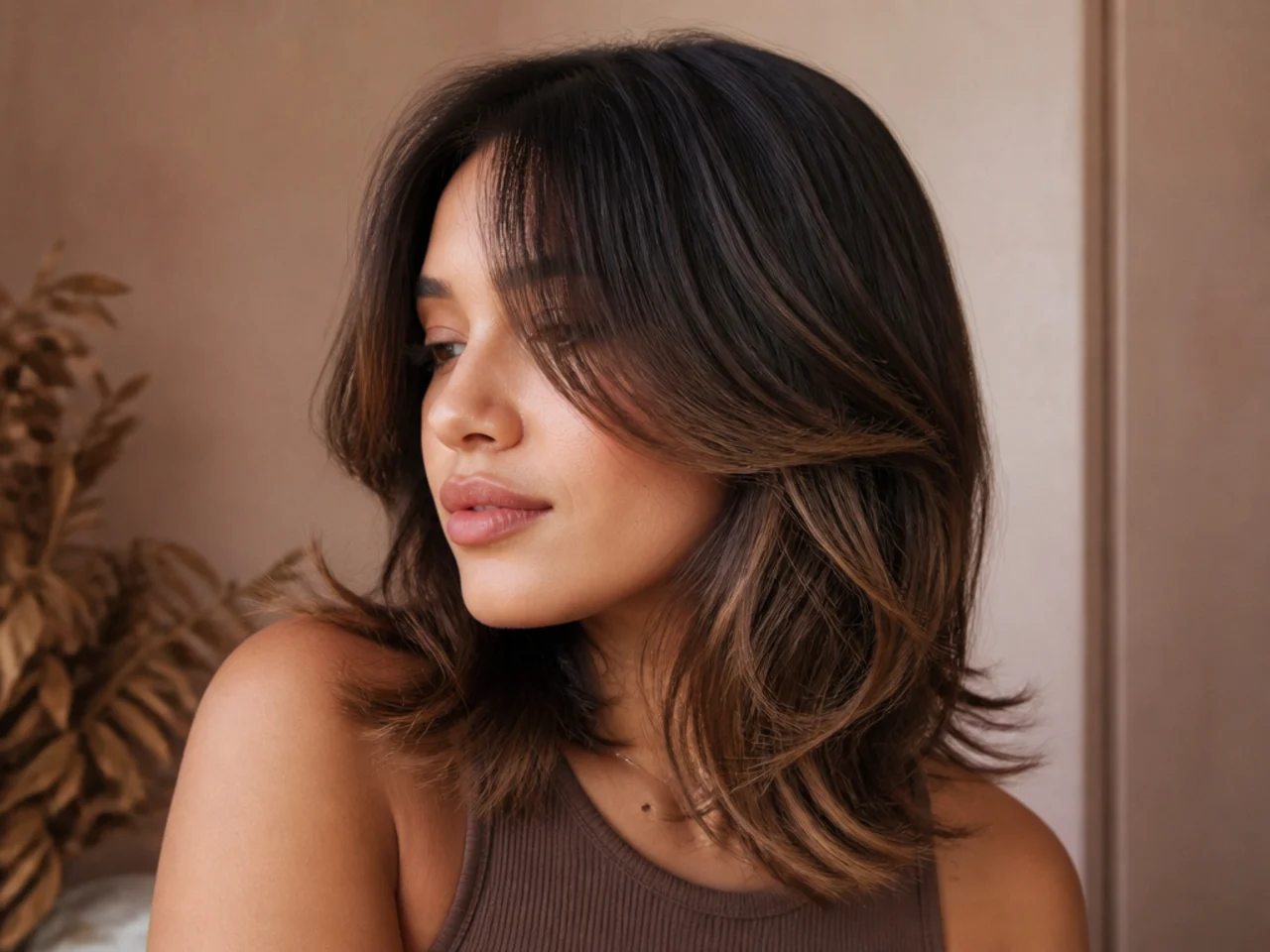
Keep the curtain long enough to pass the cheekbone. Hair falling across the outer cheek covers the widest part of the face, and the vertical line it draws is what offsets the horizontal width.

22. Butterfly Cut on a Long Face
Split the curtain higher, around the brow, so the fringe adds a horizontal across the forehead. That horizontal shortens the visible length of the face, which is the opposite of what a cheekbone split does.

23. Butterfly Cut With Crown Volume
The crown section dried against its growth direction before being set back into place. Lifting the root away from the scalp raises the whole top tier, which widens the gap between the tiers without cutting anything shorter.
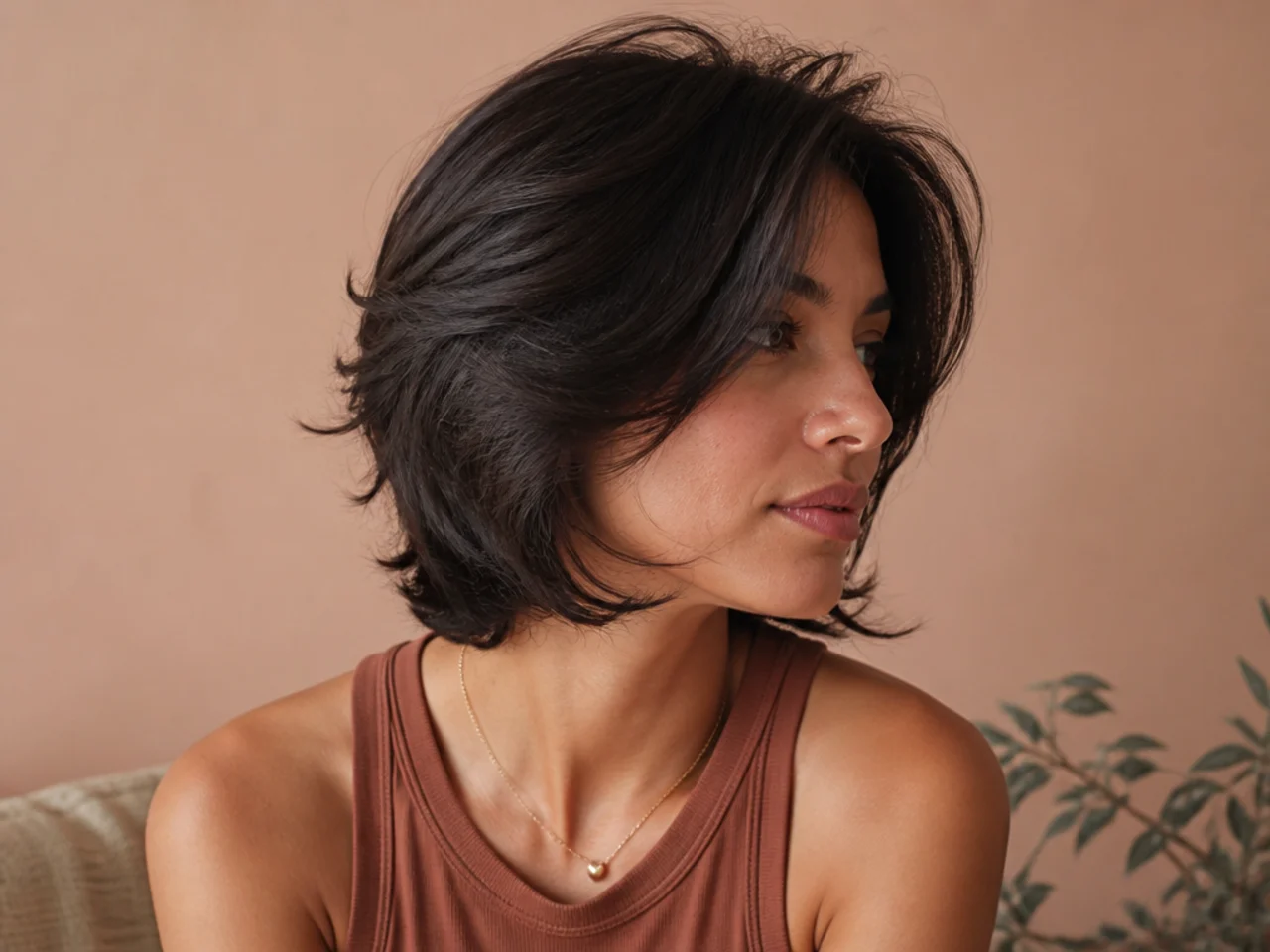
24. Butterfly Cut Pinned Half Up
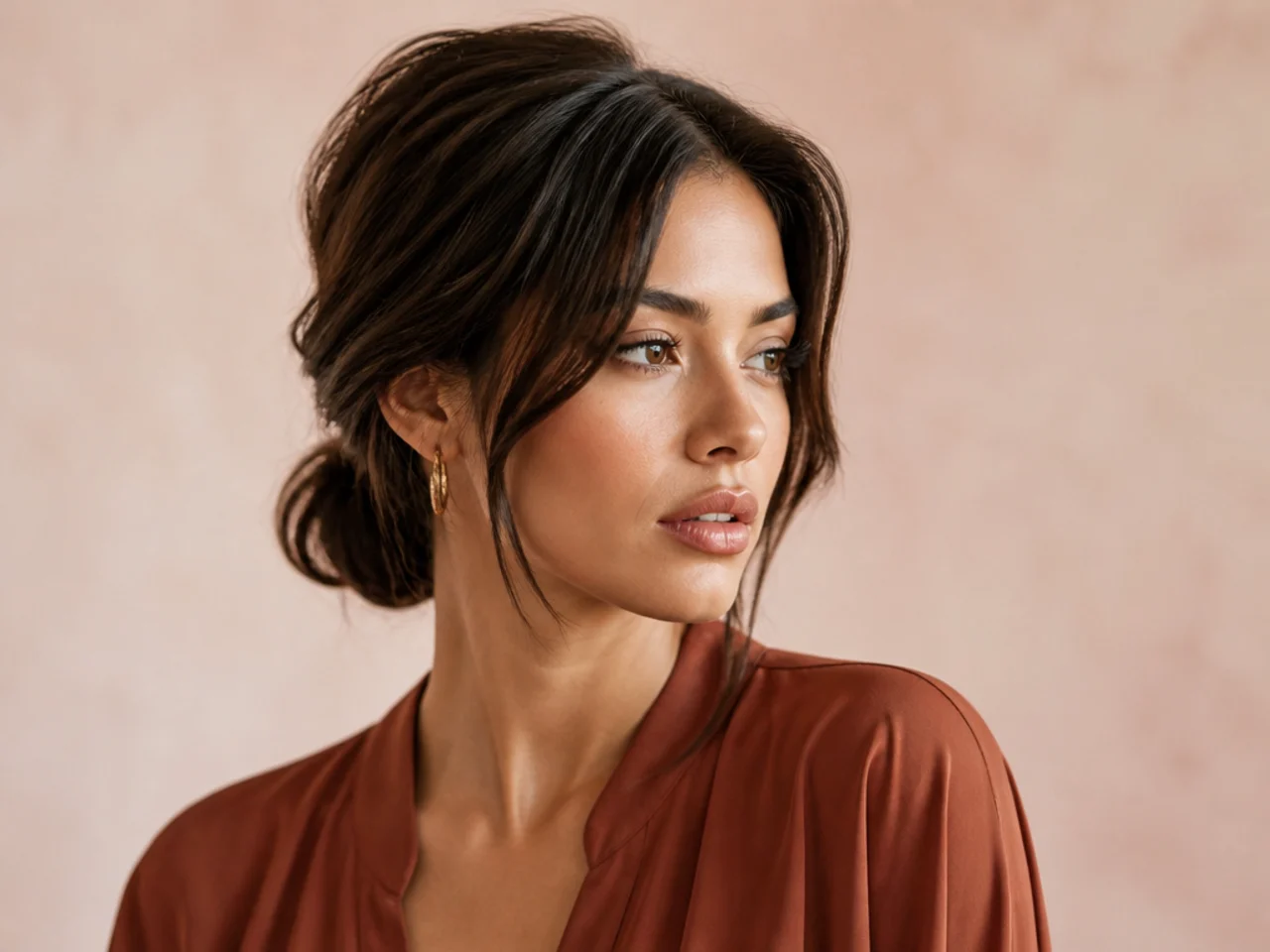
Taking the top tier back exposes the perimeter as its own line and turns the wing into height at the back. It only works if the two tiers were cut at genuinely different lengths, because a half up style puts that difference on full display.
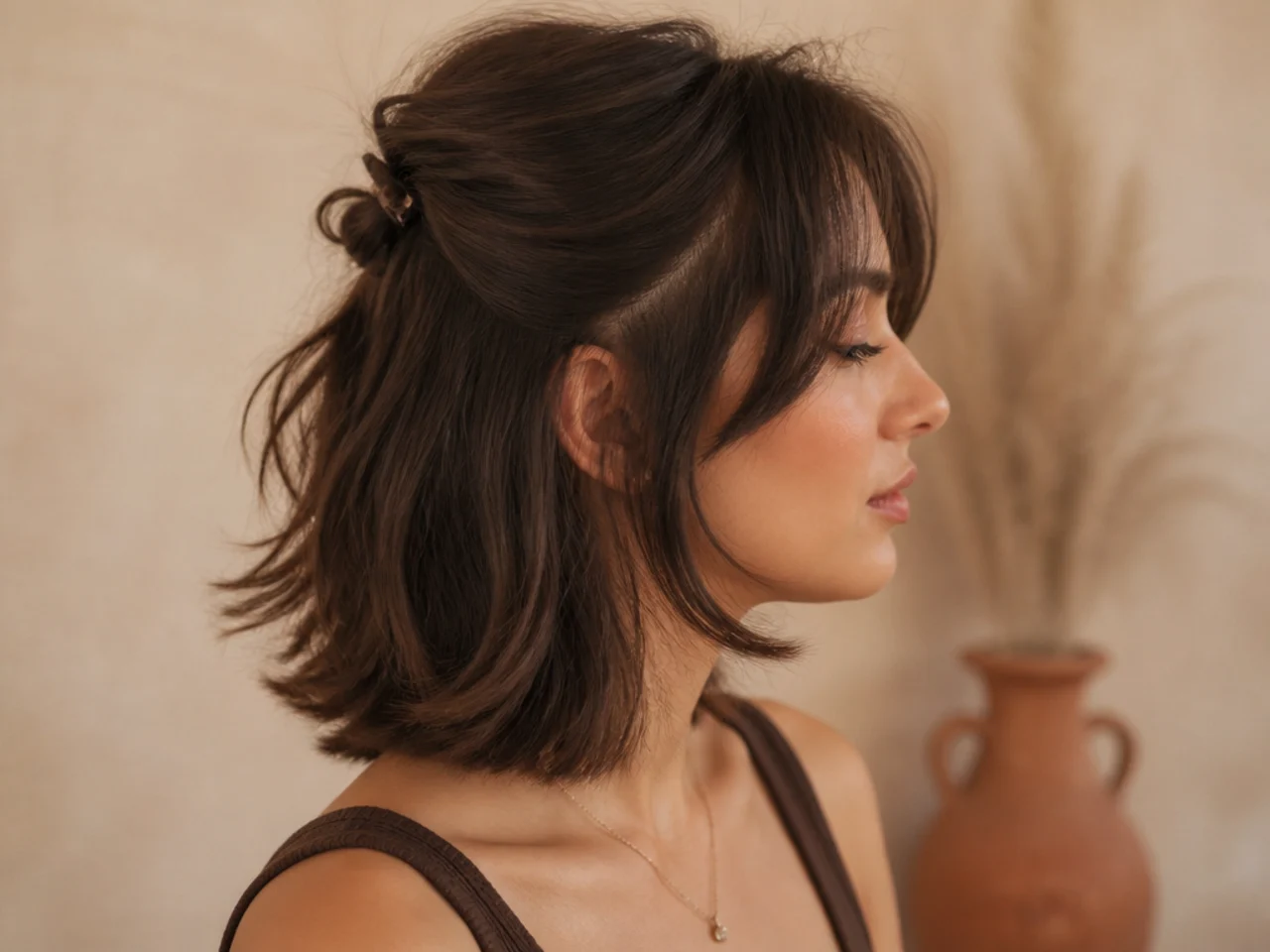
25. Butterfly Cut at Week Ten
The curtain has reached the jaw and the top tier has closed toward the perimeter. The bangs still work at this stage because they were cut on an angle, but the two tiers have merged, and that is the trim signal rather than the length.
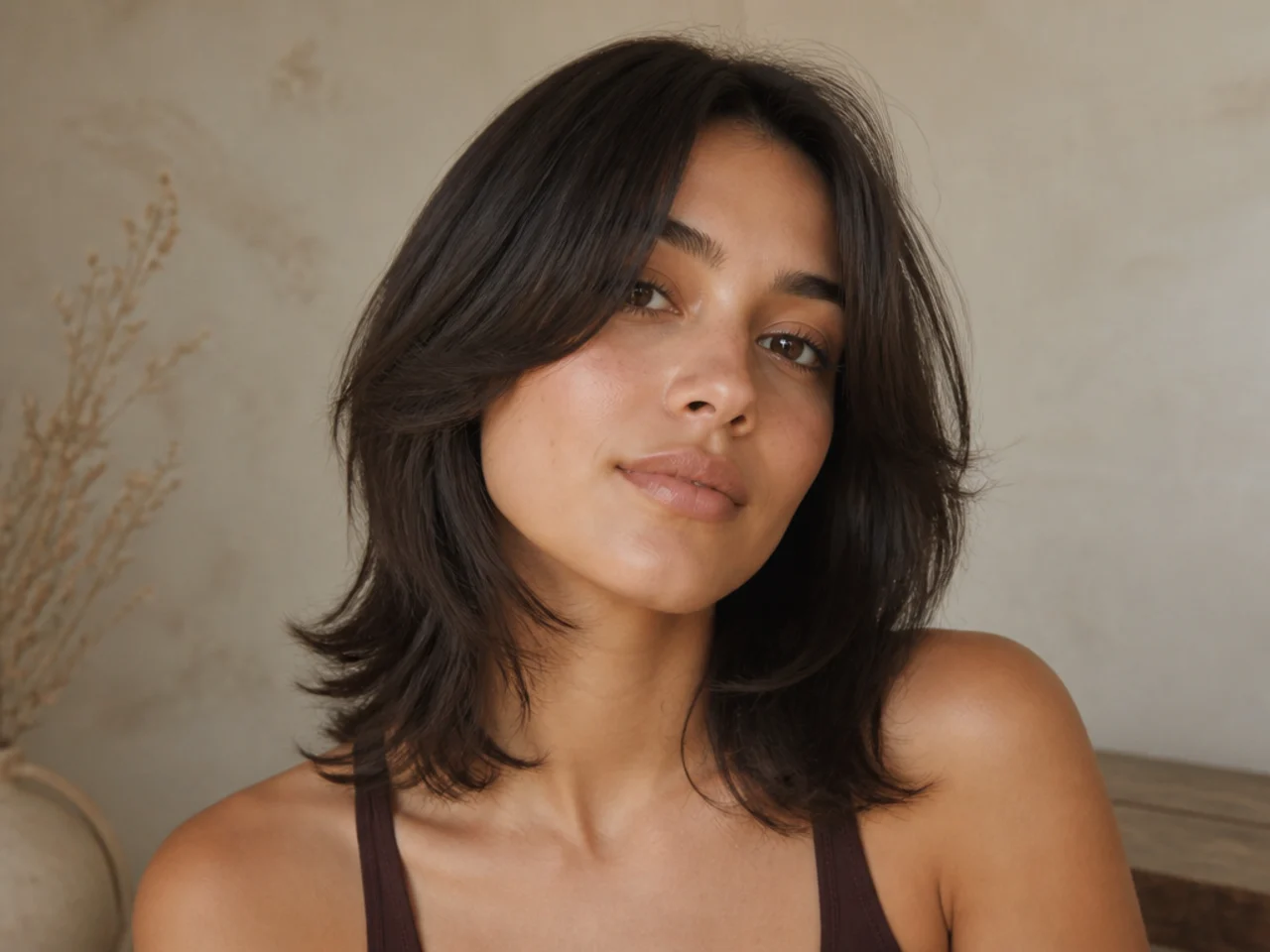
Styling and Upkeep
Dry the top tier away from the face. The wing is a drying direction, not a cut feature.
Let each section cool in the brush. Hair sets as it cools, so releasing it hot drops the shape immediately.
Trim the curtain every six to eight weeks. It was cut on an angle, so it grows through several usable lengths before it needs correcting.
Keep the perimeter blunt on fine hair. That line is where the density reads from, and texturing it removes the illusion.
Use a light mousse at the roots only. It stiffens the strand where the lift has to happen and leaves the ends free to move.
Mistakes to Avoid
Cutting the tiers too close together. Under an inch of separation and there is no butterfly, just a layered bob.
Cutting the bangs as a separate section. They belong to the face framing layer, and detaching them leaves a visible step.
Cutting curly hair wet. Curls shrink by up to a third drying, so the top tier lands far shorter than agreed.
Layering fine hair below the mid lengths. The perimeter is where fine hair looks thick, and deep layers take strands out of it.
Splitting the curtain at the wrong height. The split point is where the eye lands, so a brow split on a long face and a cheekbone split on a round one.

FAQ
Does it work on a bob? Yes, with the shortest layer at the jaw and a blunt perimeter.
Where should the curtain split? The cheekbone for a round face, the brow for a long one.
How often trimmed? Six to eight weeks for the bangs, twelve for the shape.

Final Thoughts
Ask for the gap, not the name. "Shortest layer at the jaw, perimeter at the collarbone, curtain splitting at the cheekbone and connected to the face framing layer" is four decisions a stylist can act on.
For the shape in its full length version see the butterfly haircut, and for how the fringe behaves as it grows see curtain bangs long hair. More in Womens Hairstyles.