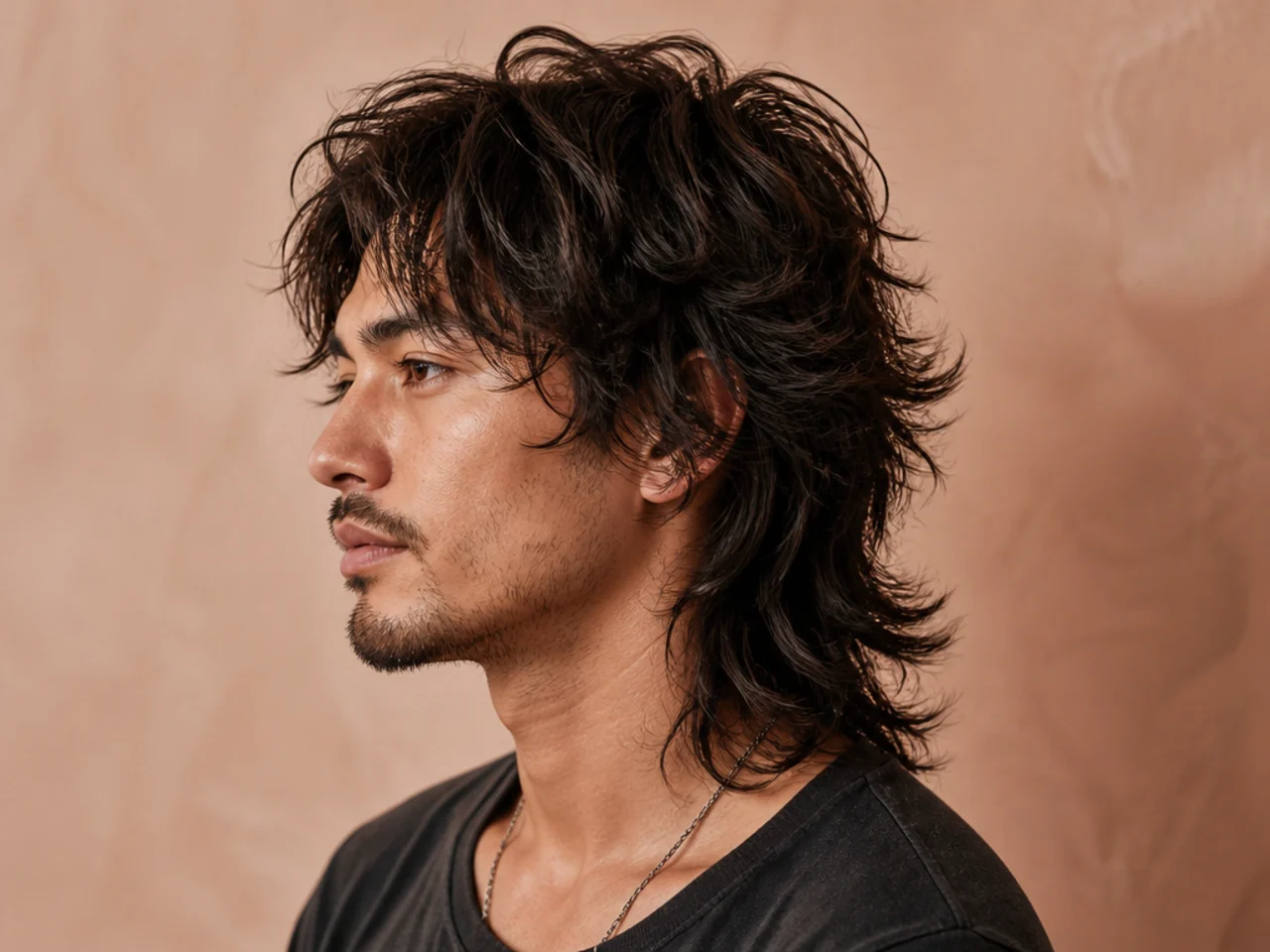
20 Curtain Bangs vs Wispy Bangs On A Curly Shag
Twenty points of difference between a curtain fringe and a wispy one on a curly shag, each with a verdict. The deciding factor is density against curl tightness — a dense fringe on a tight coil expands forward instead of lying down.
In this article · 27
- What Separates the Two Fringes
- Choosing Between Them
- The 20 Comparisons
- 1. Density
- 2. Length at the Centre
- 3. Grow Out
- 4. Behaviour on Tight Curls
- 5. Behaviour on Loose Waves
- 6. Shrinkage
- 7. Trim Frequency
- 8. Forehead Coverage
- 9. Face Shape
- 10. Volume at the Crown
- 11. Frizz
- 12. Humidity
- 13. Styling Time
- 14. Product Load
- 15. Heat Needed
- 16. Hiding It on a Bad Day
- 17. Cost to Fix
- 18. Blending Into the Shag
- 19. Sweat and Scalp Oil
- 20. Which One to Ask For First
- Styling and Upkeep
- Mistakes to Avoid
- FAQ
- Final Thoughts
Both fringes get asked for by the same photograph, and on a curly shag they behave nothing alike.
A curtain fringe is defined by its parting. It splits at the centre and sweeps out to meet the face-framing layers, and it keeps enough weight to hold that sweep.
A wispy fringe is defined by what has been removed. It is thinned so the ends separate into visible individual pieces, which is what makes it read as soft rather than as a block.
What Separates the Two Fringes
One is a shape, the other is a density. A curtain is described by where it parts. A wispy fringe is described by how much hair was taken out of it.
Curl tightness decides which is possible. A tight coil has no way to lie flat, so a dense fringe on top of it expands forward off the forehead instead of down over it.
Weight is what holds a sweep. A curtain needs enough hair left in it to fall to the sides. Thin it too far and it lifts and floats instead of parting.
Both are cut dry on curly hair. A wet curl reads at its stretched length, and a fringe is the shortest hair on the head, so it loses the most to shrinkage.

Choosing Between Them
Start from your curl pattern, not the photograph. Most reference images of dense curtain fringes are on loose waves. On a tight coil the same cut behaves differently.
Decide how often you will be in a chair. A wispy fringe is short by definition and reaches your eyeline sooner, so it needs trimming more often to stay wispy.
Ask which one you can undo. A curtain can be thinned into a wispy fringe in minutes. A wispy fringe has to be grown back.
Consider your forehead honestly. A curtain leaves the centre of it visible. If covering it is the point, the wispy version is the one that does that job.

The 20 Comparisons
1. Density
Curtain: a solid section from the centre parting out to the temples. Wispy: deliberately thinned so the ends separate into pieces.
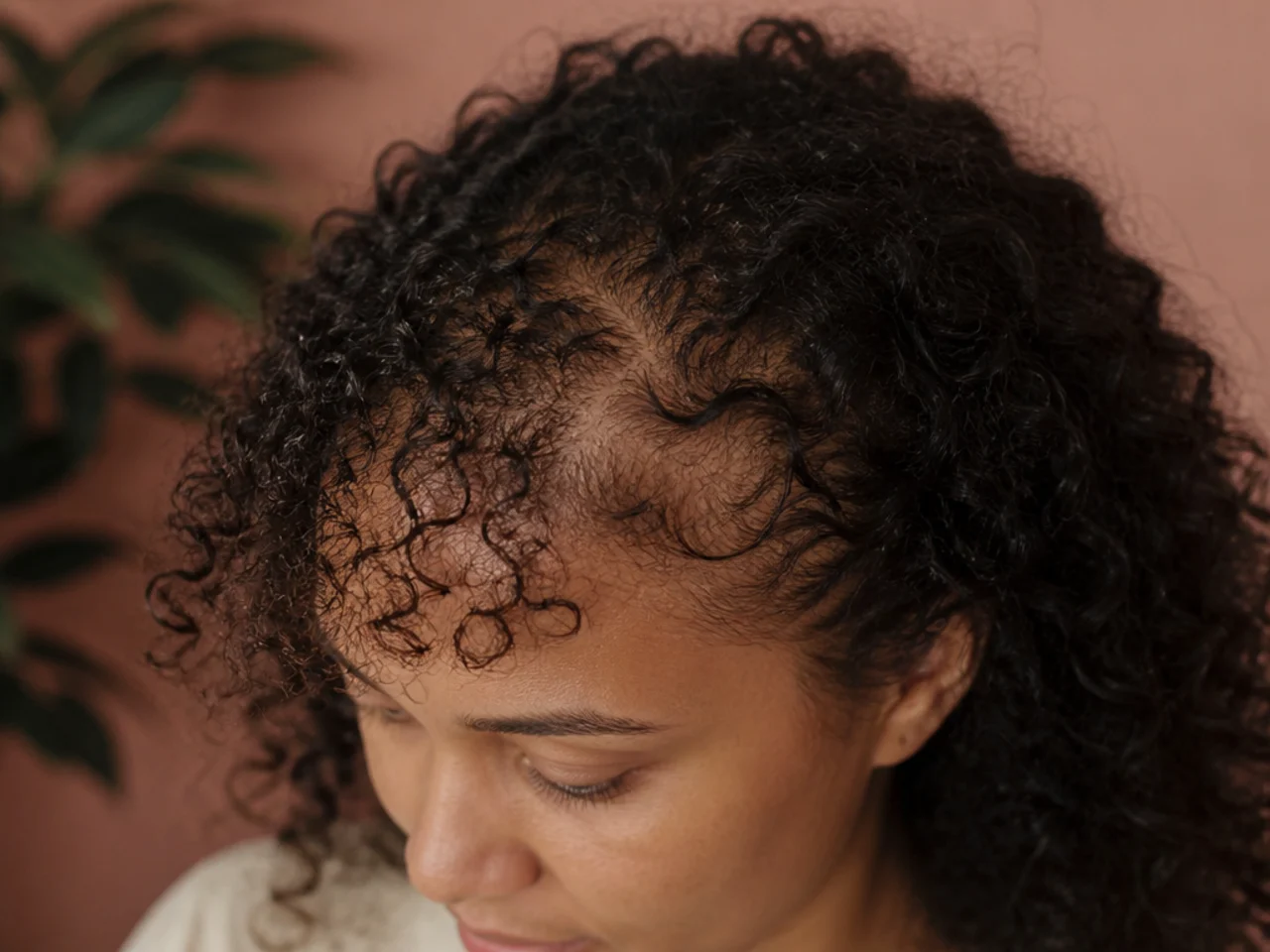
Wispy wins on a tight curl. A dense curly fringe has nowhere for its bulk to go and pushes forward off the forehead, while a thinned one lets the coils sit apart instead of pressing against each other.
2. Length at the Centre
Curtain: longest at the centre parting, often at the cheekbone. Wispy: shortest at the centre, usually around the brow.
Curtain wins on margin for error. Starting longer means shrinkage has somewhere to happen — see curtain bangs on long hair for how far that centre length can be pushed.

3. Grow Out
Curtain: lengthens straight into the face-framing layers. Wispy: loses its separation as it gets heavier and longer.
Curtain wins outright. It is already the destination shape a fringe grows into, so there is no awkward stage, while a wispy fringe stops being wispy the moment it gains weight.

4. Behaviour on Tight Curls
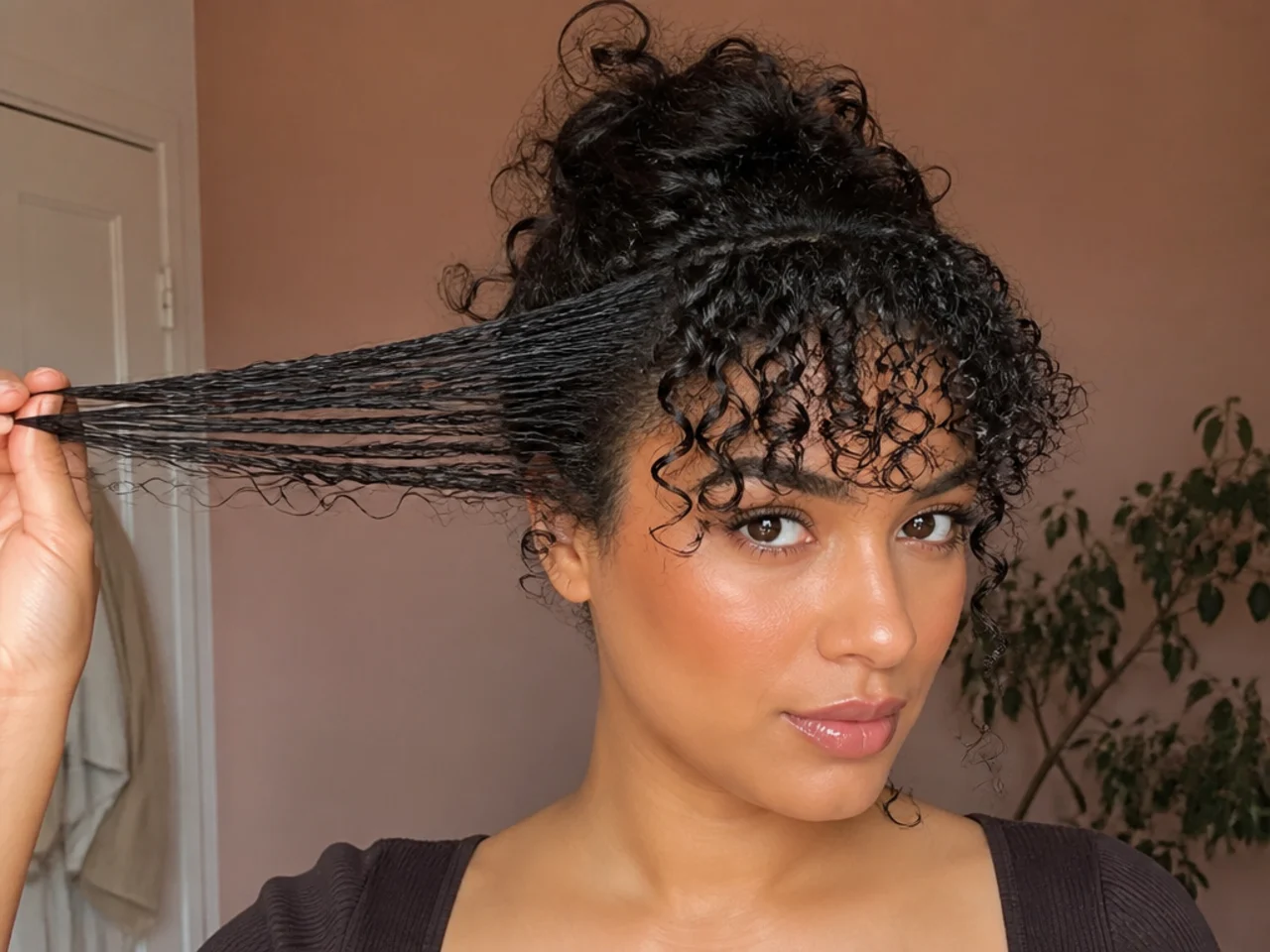
Curtain: struggles to hold a parting, springs back to the centre. Wispy: sits in separated coils that do not fight each other.
Wispy wins. A tight coil has a memory of its own shape and will not stay swept sideways, so removing density is the only way to stop the fringe stacking up on itself.

5. Behaviour on Loose Waves
Curtain: falls into the sweep with almost no help. Wispy: can look sparse, because there is no coil to fill the gaps.
Curtain wins. A loose wave has just enough bend to hold a side sweep and enough weight to stay there, which is the exact condition the curtain shape was designed around.

6. Shrinkage
Curtain: starts long, so an inch lost is absorbed. Wispy: starts short, so the same inch is the whole fringe.
Curtain wins on safety. Shrinkage is proportional but the consequence is not — losing an inch from cheekbone length is a trim, losing it from brow length puts the fringe above the hairline of the eyebrow.
7. Trim Frequency
Curtain: six to eight weeks, because extra length just makes it more face-framing. Wispy: four weeks, because it stops being short.
Curtain wins on upkeep. The shape tolerates growth in a way a fringe defined by shortness cannot, so you are booking half as many appointments for the same finished look.

8. Forehead Coverage
Curtain: leaves the centre of the forehead visible by design. Wispy: covers it with a see-through layer.
Wispy wins if coverage is the point. It hides a high forehead without the solid block a full fringe would create, because the eye reads the gaps between the pieces as lightness rather than as a curtain of hair.

9. Face Shape
Curtain: opens a vertical line down the centre of the face. Wispy: draws a soft horizontal across the brow.
It splits. A round face gains length from the curtain's vertical opening, and a long face is shortened by the wispy fringe's horizontal line, so this comparison is decided entirely by which direction you need.

10. Volume at the Crown
Curtain: cut from a deep triangular section reaching back towards the crown. Wispy: cut from a shallow section at the hairline only.
Wispy wins for crown height. A deep fringe section borrows hair from the top of the head and pulls it forward, and on a shag that hair was doing the work of propping up the layers beneath it.

11. Frizz
Curtain: individual strays are held inside a heavier clump. Wispy: every loose strand is visible against the forehead.
Curtain wins. Frizz is a strand that has escaped its clump, and a denser fringe simply has more clump to keep strands inside, while a thinned one has nothing to hold them.

12. Humidity
Curtain: weight resists lift, so it holds its shape longer. Wispy: rises off the forehead within an hour.
Curtain wins. Humidity swells the strand and tightens the curl, and light hair with no weight above it has nothing keeping it down when that happens.

13. Styling Time
Curtain: has to be dried into its sweep or it splits down the middle. Wispy: a shallow section that air dries in minutes.
Wispy wins on time. There is simply less hair to direct, and nothing about the shape depends on a parting staying where you put it.

14. Product Load
Curtain: can carry gel or cream without looking coated. Wispy: turns to strings under the smallest amount.
Curtain wins for anyone with a routine. Product weight is only visible relative to how much hair is carrying it, so the same pea-sized amount disappears into a curtain and coats a wispy fringe completely.

15. Heat Needed
Curtain: usually wants a round brush or a diffuser to set the sweep. Wispy: finished by scrunching and left alone.
Wispy wins on damage. Less heat over the most fragile hair on the head matters, because fringe hair is short, sits at the front and takes the most sun and styling of any section.

16. Hiding It on a Bad Day
Curtain: long enough to tuck behind the ears or pin flat. Wispy: too short to go anywhere.
Curtain wins decisively. Reversibility on the day is worth more than most people expect, and a fringe you can make disappear before a photograph is a fringe you will keep.

17. Cost to Fix
Curtain: most problems are solved by removing more hair. Wispy: most problems need hair back.
Curtain wins. Any correction that involves cutting is available immediately, whereas restoring density to an over-thinned fringe means several months of growth with nothing to do in the meantime.
18. Blending Into the Shag
Curtain: connects directly to the shortest face-framing layer. Wispy: sits as a separate short layer with a visible step below it.
Curtain wins on a shag specifically. The whole cut is built on graduated layers, and a fringe that continues that graduation reads as part of the shape rather than as something added to it.

19. Sweat and Scalp Oil
Curtain: oil spreads through the bulk without showing. Wispy: the fine pieces stick together into strings.
Curtain wins. Oil travels from the scalp along the strand, and a fringe with few strands has no way to distribute it, so the same amount that vanishes in a dense fringe is obvious in a thin one.

20. Which One to Ask For First
Curtain: the safe opening position, with hair still in reserve. Wispy: the committed version, reached by removing more.
Curtain wins as a starting point. You can be sitting in the same chair ten minutes later having it thinned into a wispy fringe, and there is no equivalent move in the other direction.
Styling and Upkeep
Cut and trim it dry. The fringe is the shortest hair on the head, so it loses the most visible length to shrinkage. There is no safe wet measurement.
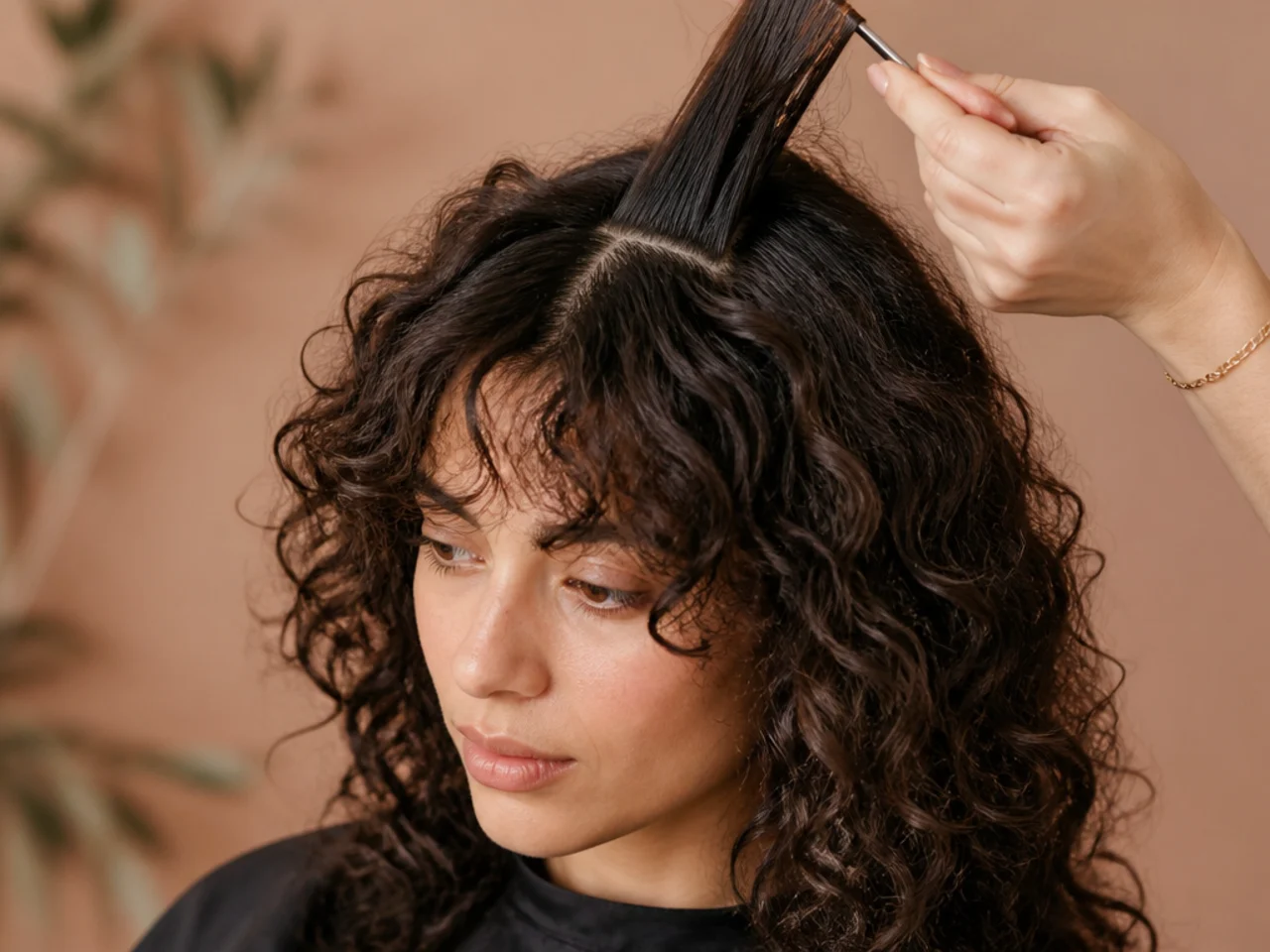
Set the parting while it is wet, not after. Curly hair takes its direction as it dries. Once it is dry, the parting is already decided.
Keep product off the roots of the fringe. Weight at the root is what makes a fringe hang flat against the forehead instead of lifting into shape.
Wash the fringe more often than the rest. It sits against the skin and picks up oil faster, which is why it goes stringy days before the lengths do.
Book the fringe trim separately. Most salons will do it between appointments, and that is what keeps either version in the shape you asked for.

Mistakes to Avoid
Cutting either one wet. A stretched curl measures its full length and dries back shorter, and a fringe has the least length to lose.
Thinning a fringe on the first appointment. Density can be removed at any time. Judge how the fringe falls with its full weight before taking any out.
Taking the fringe section too deep. A deep section borrows hair from the crown, and on a shag that hair was propping up the layers below it.
Copying a curtain fringe from a loose-wave photograph. The same cut on a tight coil expands forwards rather than sweeping sideways.
Waiting until it reaches your eyes. By then a wispy fringe has already stopped being wispy and a curtain has lost its parting.

FAQ
Which is safer to try first? The curtain — it can be thinned into a wispy fringe later.
Which suits a tight coil? Wispy, because density has nowhere to go on a tight curl.
Which needs fewer trims? The curtain, at six to eight weeks against four.

Final Thoughts
The choice is really about density, not about shape. Ask how much hair your curl pattern can carry across the forehead before it starts pushing forward, and the answer picks the fringe for you.
If you are unsure, take the curtain and thin it later. For a closer look at how fringe types differ from each other see French bangs vs curtain bangs, and for the layered version of the same idea see French bangs with curtain layers. More in Mullet and Wolf Cut.