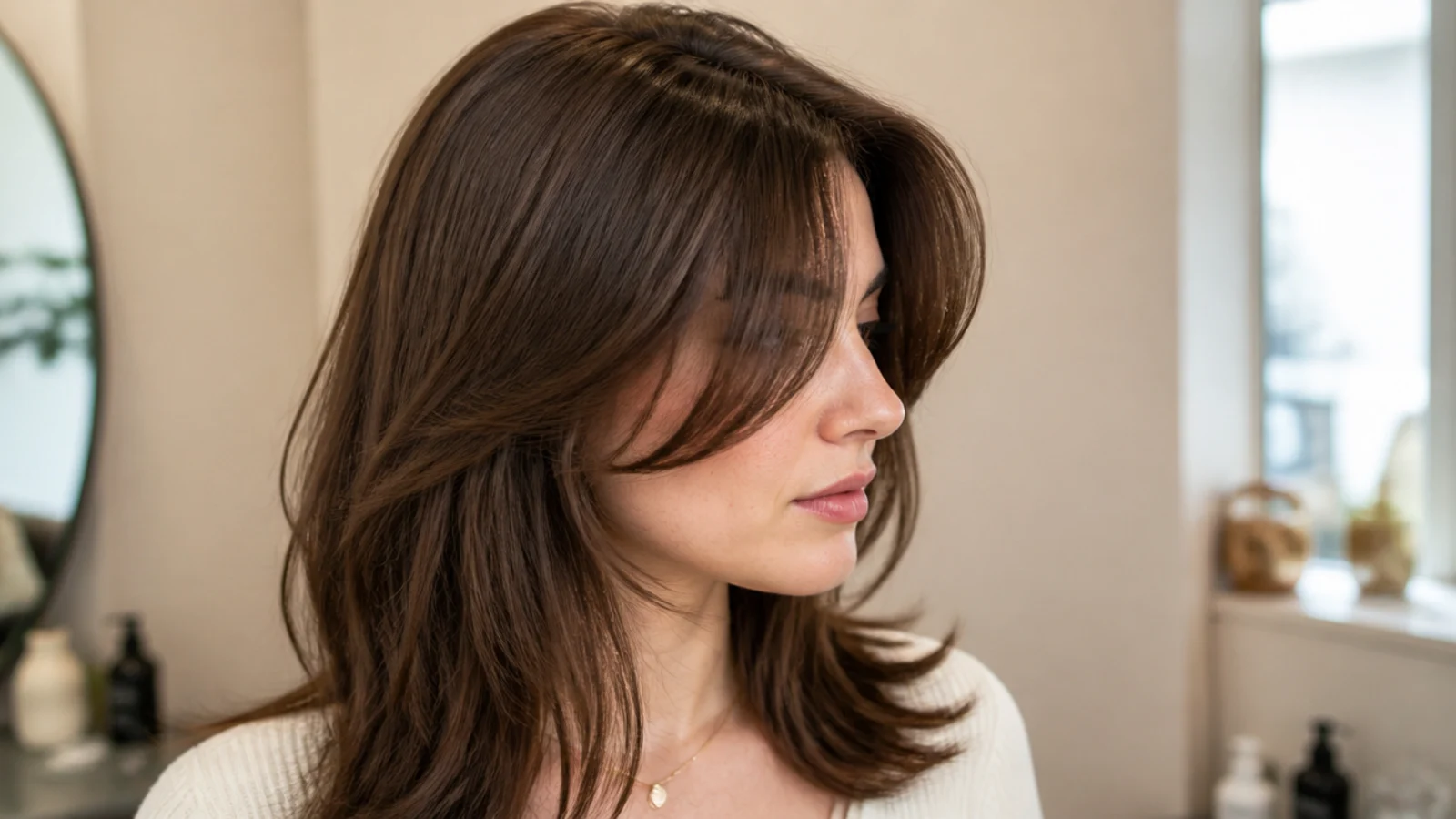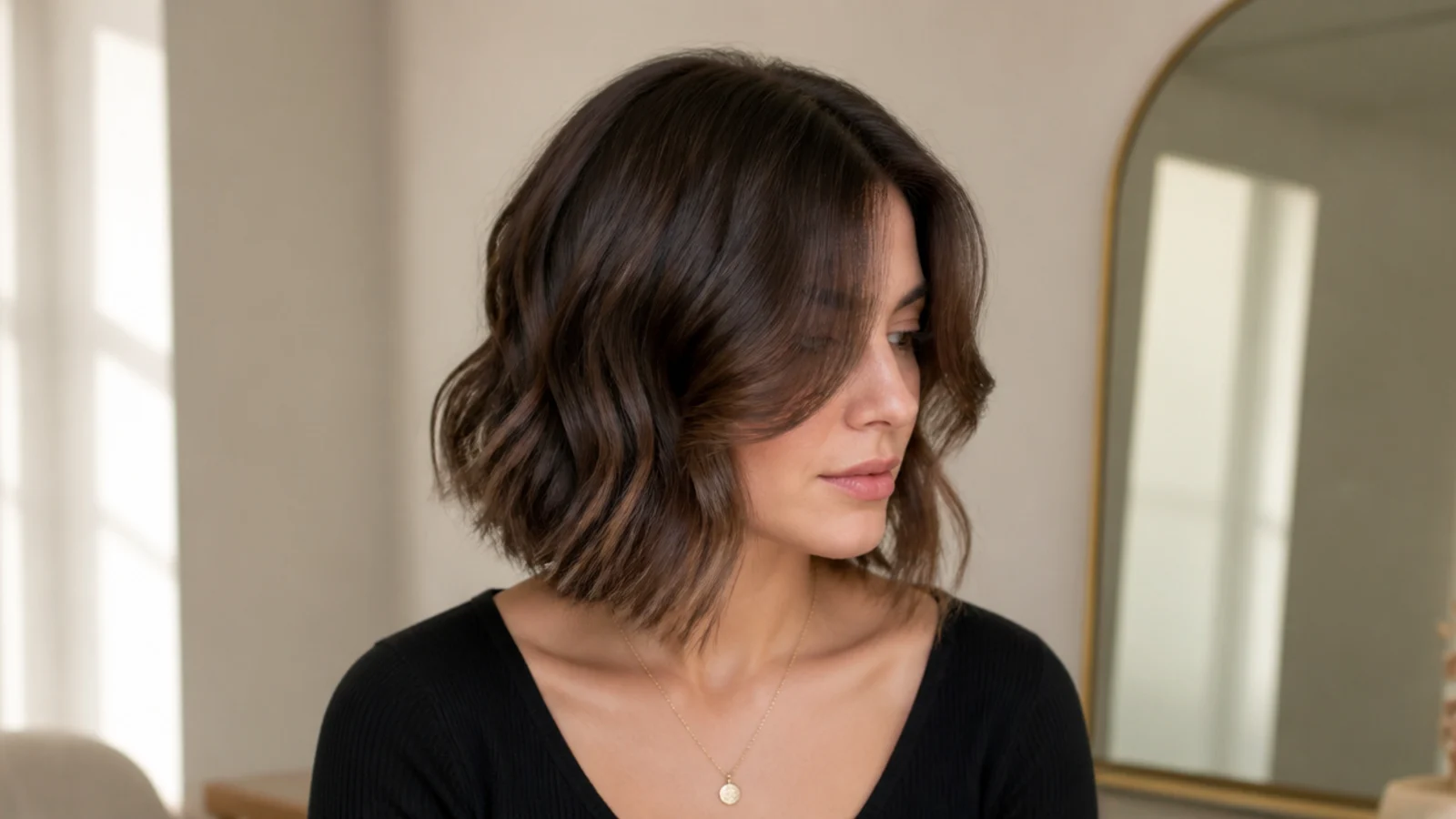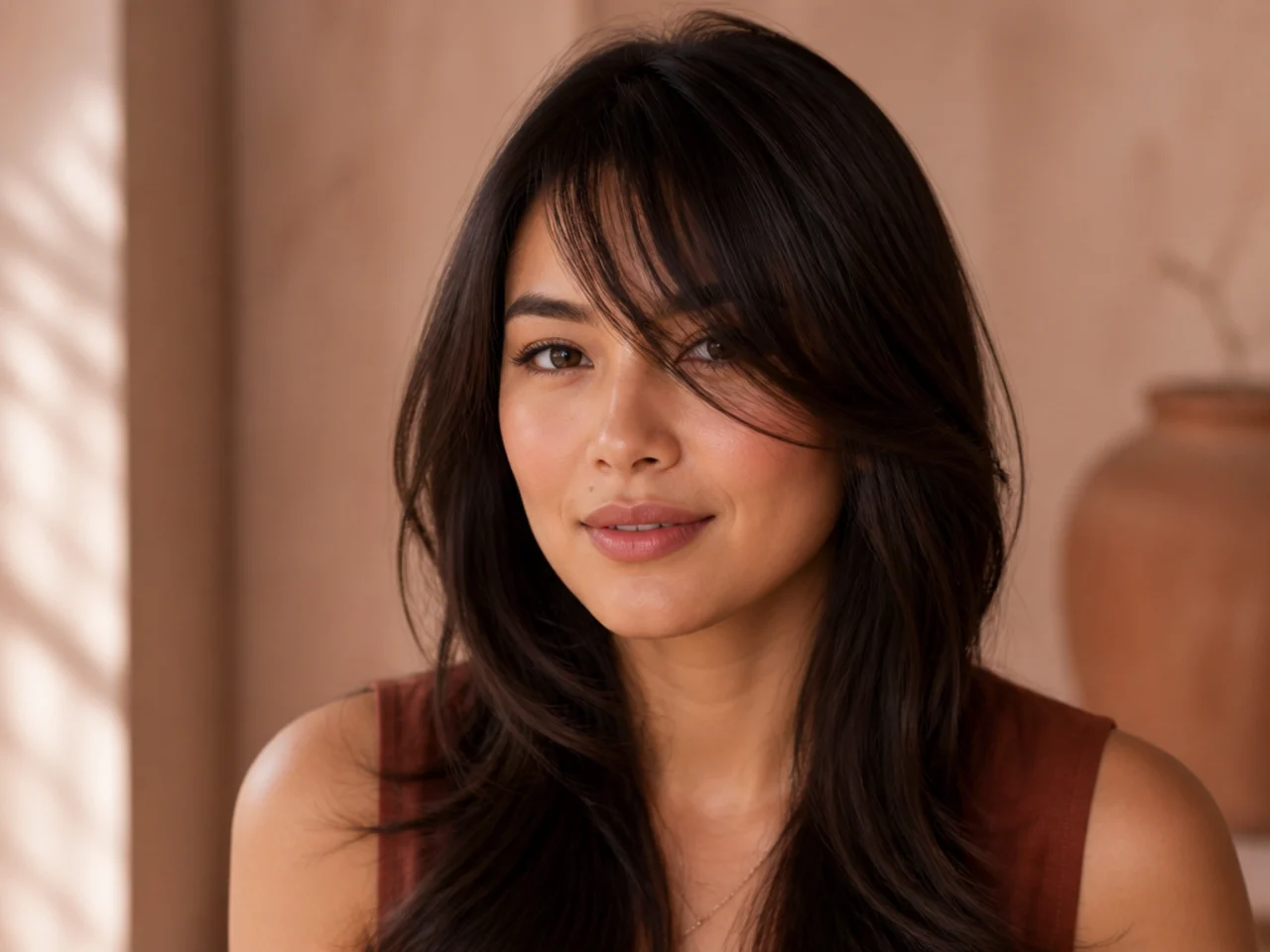
15 Short Curtain Bangs Ideas Worth Trying and How Short Each One Goes
Fifteen short curtain fringe ideas sorted by the only variable that actually changes them — where the shortest point lands. Half an inch decides whether a fringe frames the eyes, sits in your lashes or stops being a fringe at all.
In this article · 23
- What Short Curtain Bangs Are
- How Short Is Too Short
- Face Shapes and Short Curtain Bangs
- Styling Short Curtain Bangs
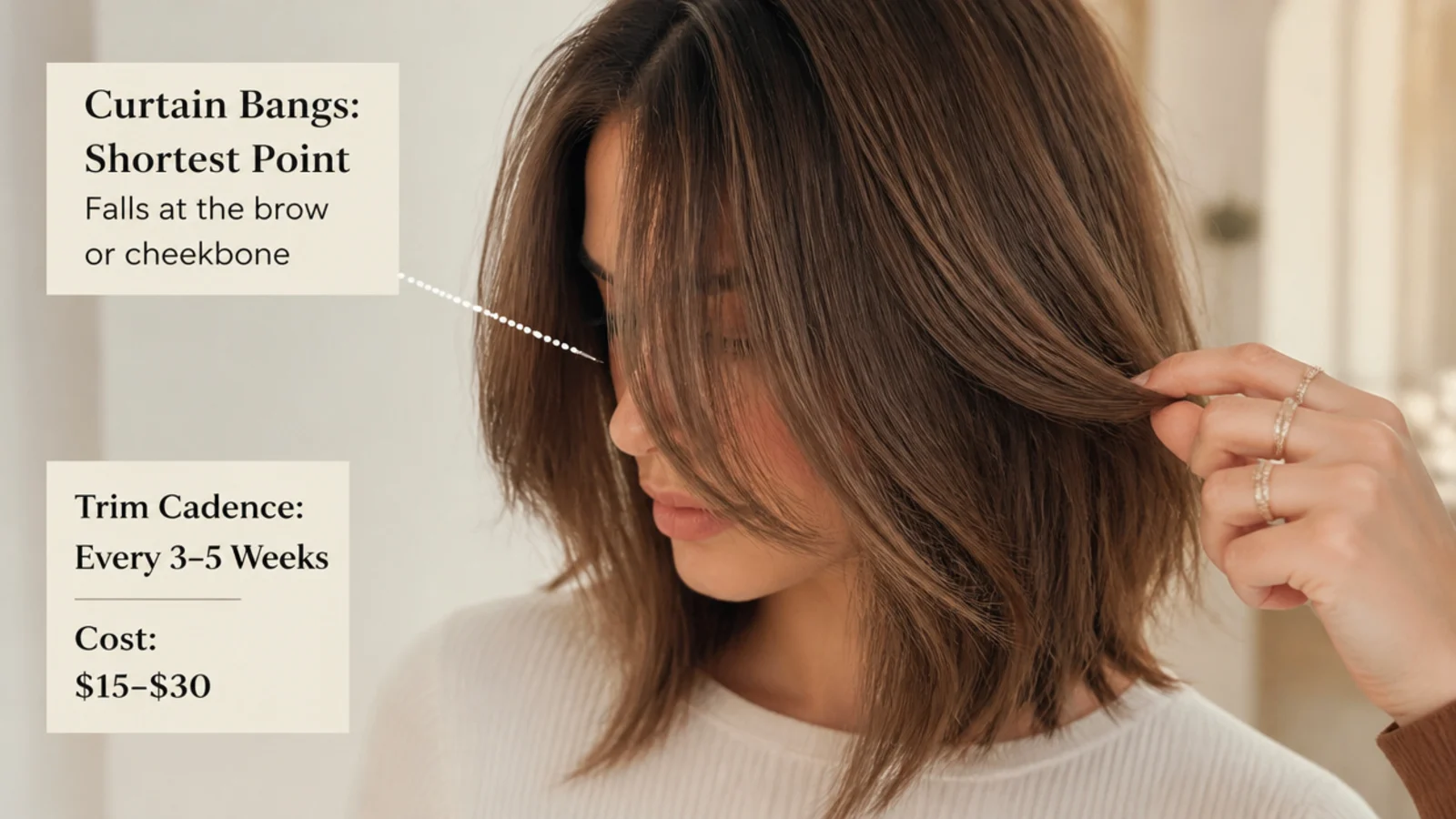
- Trim Cadence and Cost
- Growing Out Short Curtain Bangs
- The 15 Short Curtain Bangs Worth Trying
- 1. Eyebrow Length
- 2. Lash Skimming
- 3. Cheekbone as the Shortest Point
- 4. Wispy See Through
- 5. Blunt Cut
- 6. French Bob
- 7. Wavy 2B Hair
- 8. Curly 3A Hair
- 9. Cowlick
- 10. Side Swept
- 11. Baby Bangs Above the Brow
- 12. The Grown Out Stage
- 13. Home Cut
- 14. Heatless Rollers
- 15. With a Shag
- Final Thoughts
Most short curtain fringes are described by adjective when the only thing that changes them is a measurement.
The shortest point is the whole decision. Brow, above brow or lash line moves the same cut between three completely different registers, and the distance between them is under an inch.
Half an inch a month is the running cost. That is roughly how fast hair grows, so every version below has a trim schedule attached to it whether you planned one or not.
What Short Curtain Bangs Are
A centre split that opens outward. Shortest in the middle, longest at the outer edges, with both halves falling away from the face.
Short describes the centre point. A standard curtain fringe has its shortest point at the cheekbone. A short one has it at or above the brow.
The graduation is the shape. An inch and a half between the centre and the outer ends is what makes it read as curtains rather than as a band across the forehead.
It comes out of a triangle at the hairline. Depth back from the hairline sets the density, and everything inside that triangle is borrowed from the top of the head.

How Short Is Too Short
Above the brow still works. Exposing the lower forehead is a legitimate look, and it adds visible length to the face rather than taking it away.
Above the hairline peak does not. Once the centre is cut shorter than the natural rise of the hairline, the fringe cannot lie down and will stand away from the head permanently.
The outer ends are the real limit. Bring them above the eye and the graduation disappears, leaving one horizontal line instead of two diagonals.
Cowlicks set a floor. Hair growing against the fringe direction springs up roughly half an inch, so a cowlick fringe has to be cut that much longer to land where it was measured.

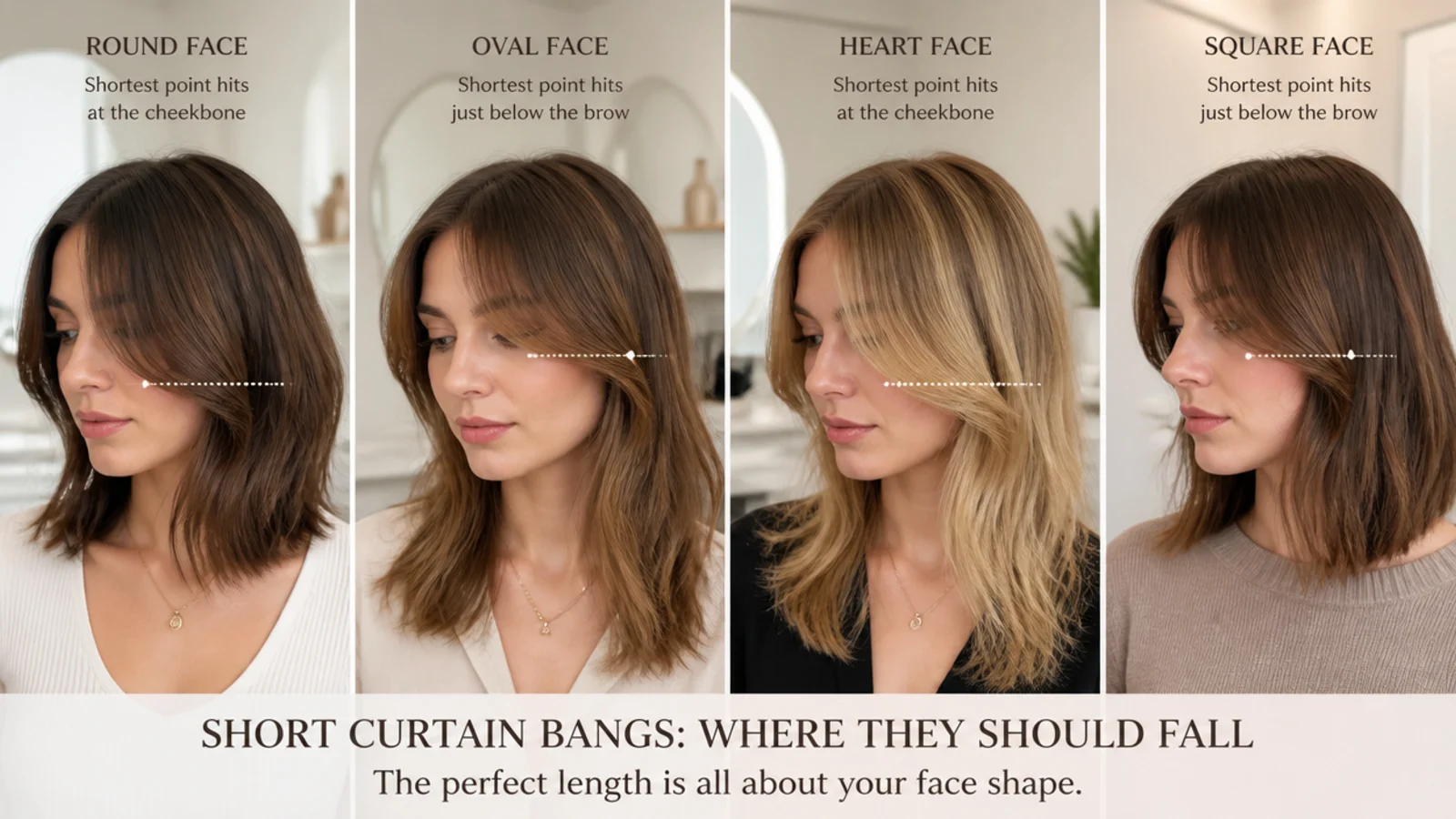
Face Shapes and Short Curtain Bangs
Round faces want the widest opening. The diagonal from the centre split down to the cheek crosses the face at its widest point and takes width out.
Long faces want a shallower graduation. Length kept across the forehead shortens the visible face where a steep opening lengthens it further.
Square jaws want the ends below the cheekbone. Softness next to the corner does more for a strong jaw than anything happening at the brow.
Heart shapes want width over depth. A wide fringe balances a broad forehead without taking additional hair out of the crown to do it.
Styling Short Curtain Bangs
Dry it first, and from damp. Hydrogen bonds reform as water leaves the strand, so the shape it dries in is the shape it holds until the next wash.
Over direct the root sideways. Push each half across the head while drying, then let it fall back. The root ends up standing rather than lying flat.
Finish on cold air. Hair sets while it cools, not while it is hot, so releasing a section hot loses most of the bend the brush just made.
Turn the ends away from the face. An inward flick puts hair back onto the cheek and closes the opening the cut was built around.

Trim Cadence and Cost
Three to four weeks at brow length. Two if the fringe sits above the brow, because there is less distance to lose before it reaches the eye.
The rest of the cut runs separately. A bob holds eight weeks and long layers twelve, so tying the fringe to either means paying for a full cut you do not need.
Most salons trim a fringe between appointments. Ask when you book rather than turning up, because even five minutes needs a slot in the column.
The outer ends are the safe part to do yourself. The shortest centre point is the measurement the whole shape depends on, and it is the one worth paying someone else to hold.
Growing Out Short Curtain Bangs
Cheekbone in about three months. An inch and a half of growth from the brow, and cheekbone is where the fringe starts joining the length.
Chin in about six. Three inches, at which point the front pieces are simply face framing layers and the fringe no longer exists.
Trim only the outer ends on the way. Cutting the centre back resets the timeline by a month every time it happens.
Sweep it sideways rather than pinning it back. A side sweep keeps the fringe part of the haircut. Pinning it back leaves a hairline that reads as a grow out for the entire six months.
The 15 Short Curtain Bangs Worth Trying
1. Eyebrow Length
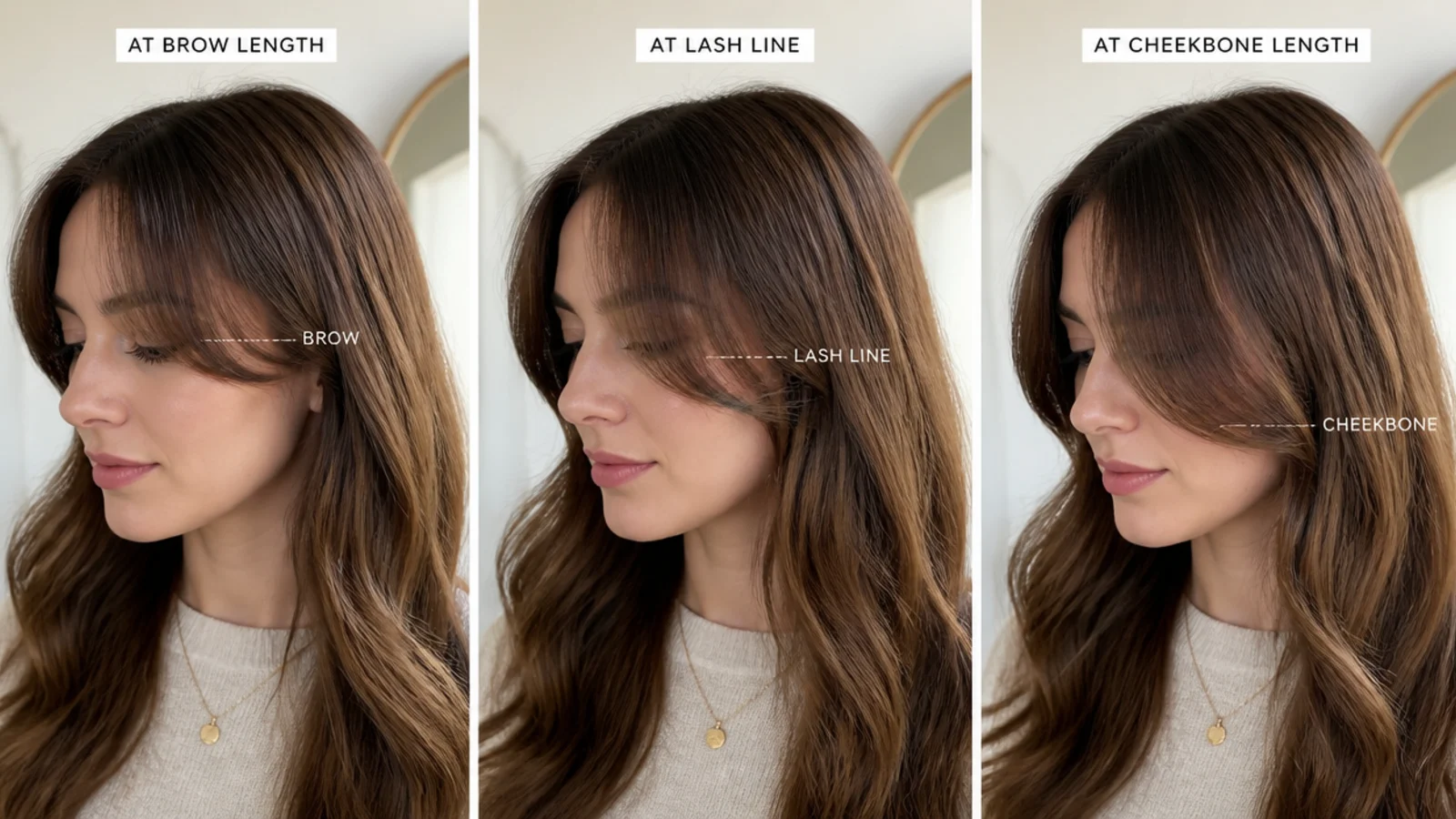
The reference version, with the shortest point landing on the brow line. It frames the eyes without touching the lashes, and it holds that relationship for about three weeks before half an inch of growth moves it into the eye.
2. Lash Skimming
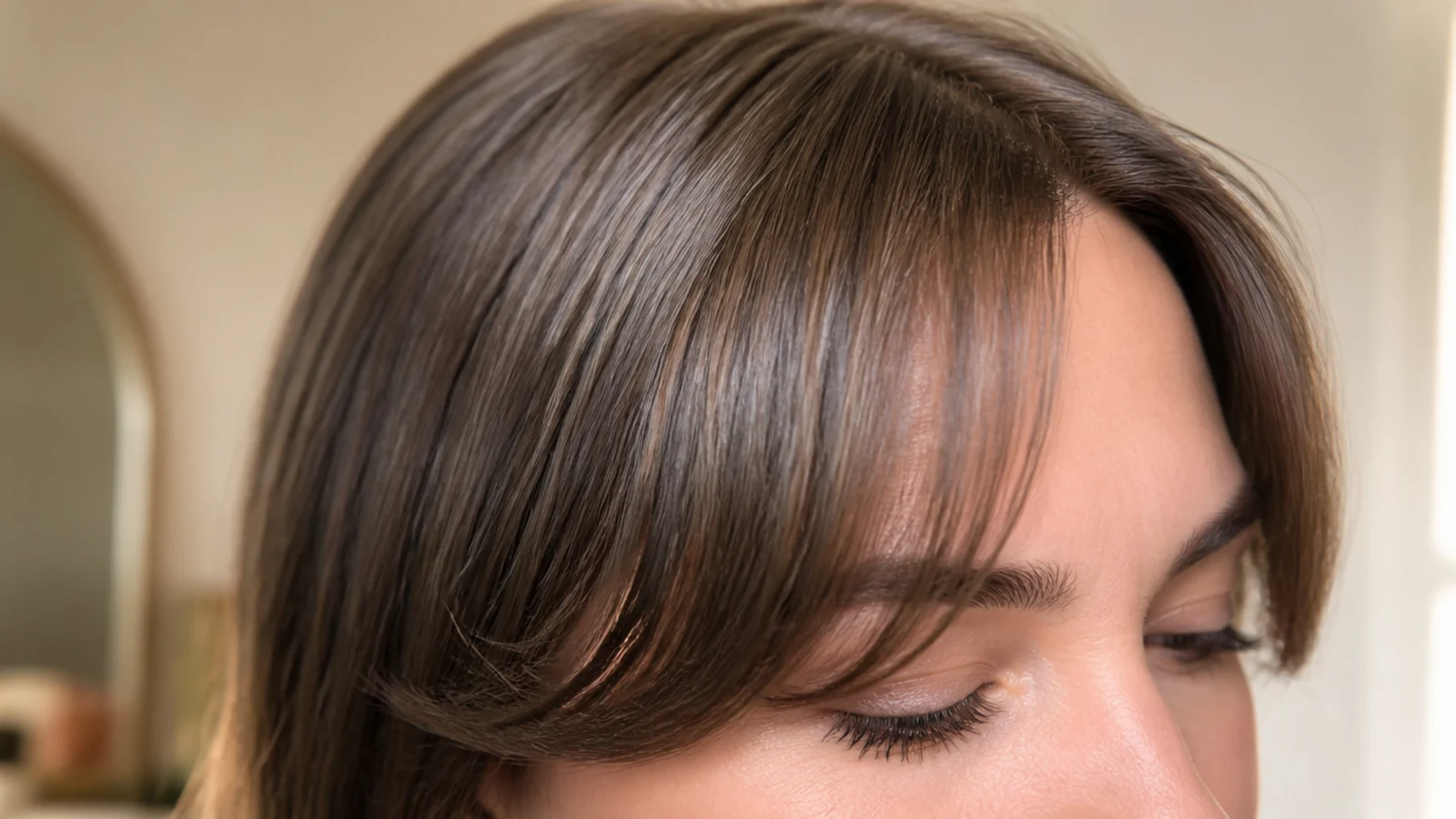
Half an inch longer, and the longest thing still called short. The ends sit in the path of the blink, which makes this the most irritating length to live with and the one most people cut back within a fortnight.
3. Cheekbone as the Shortest Point
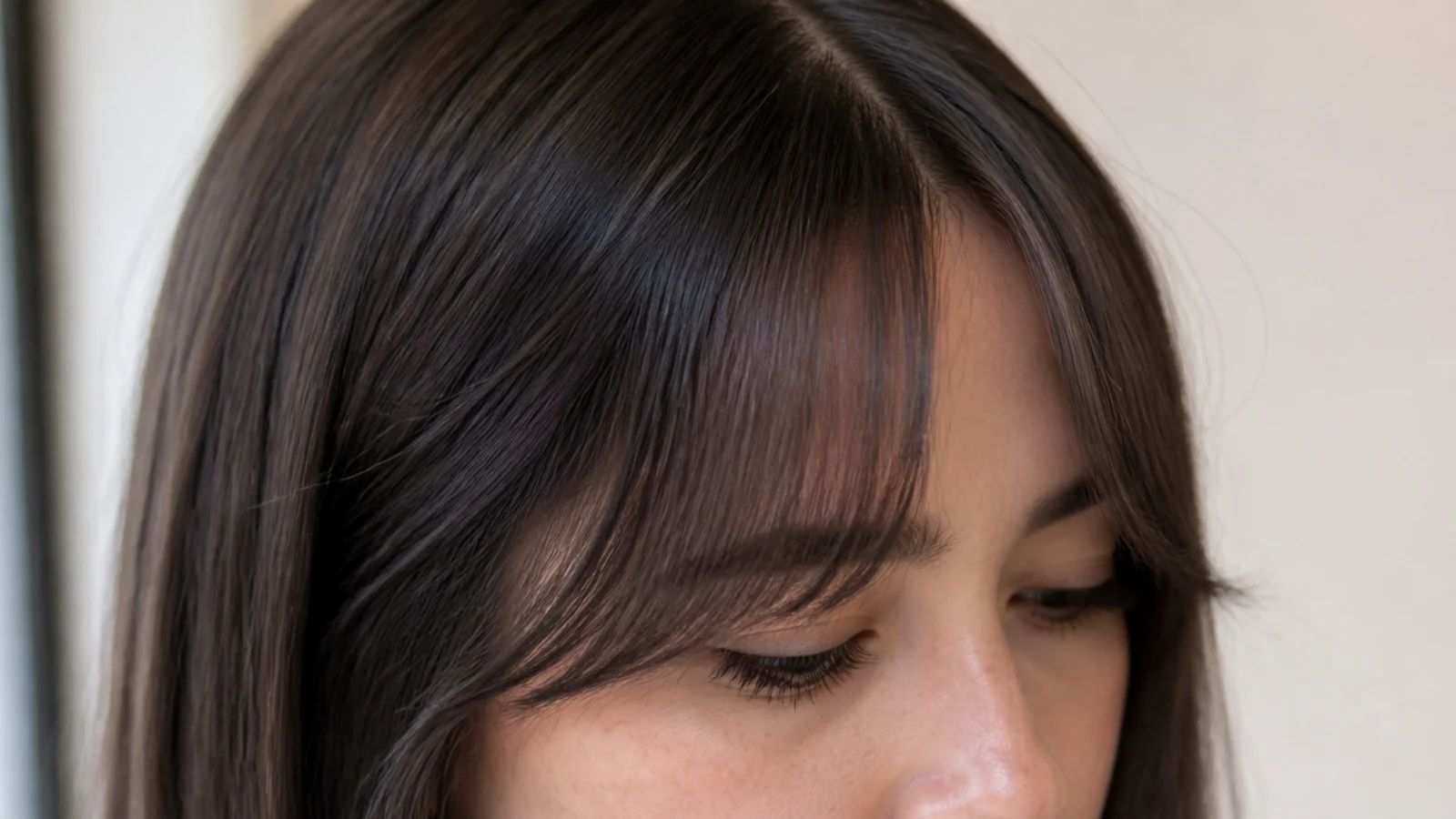
The boundary case, where the centre point has dropped to where the outer ends usually sit. Past this the two halves no longer graduate against each other, so the fringe stops reading as a fringe and becomes face framing length.
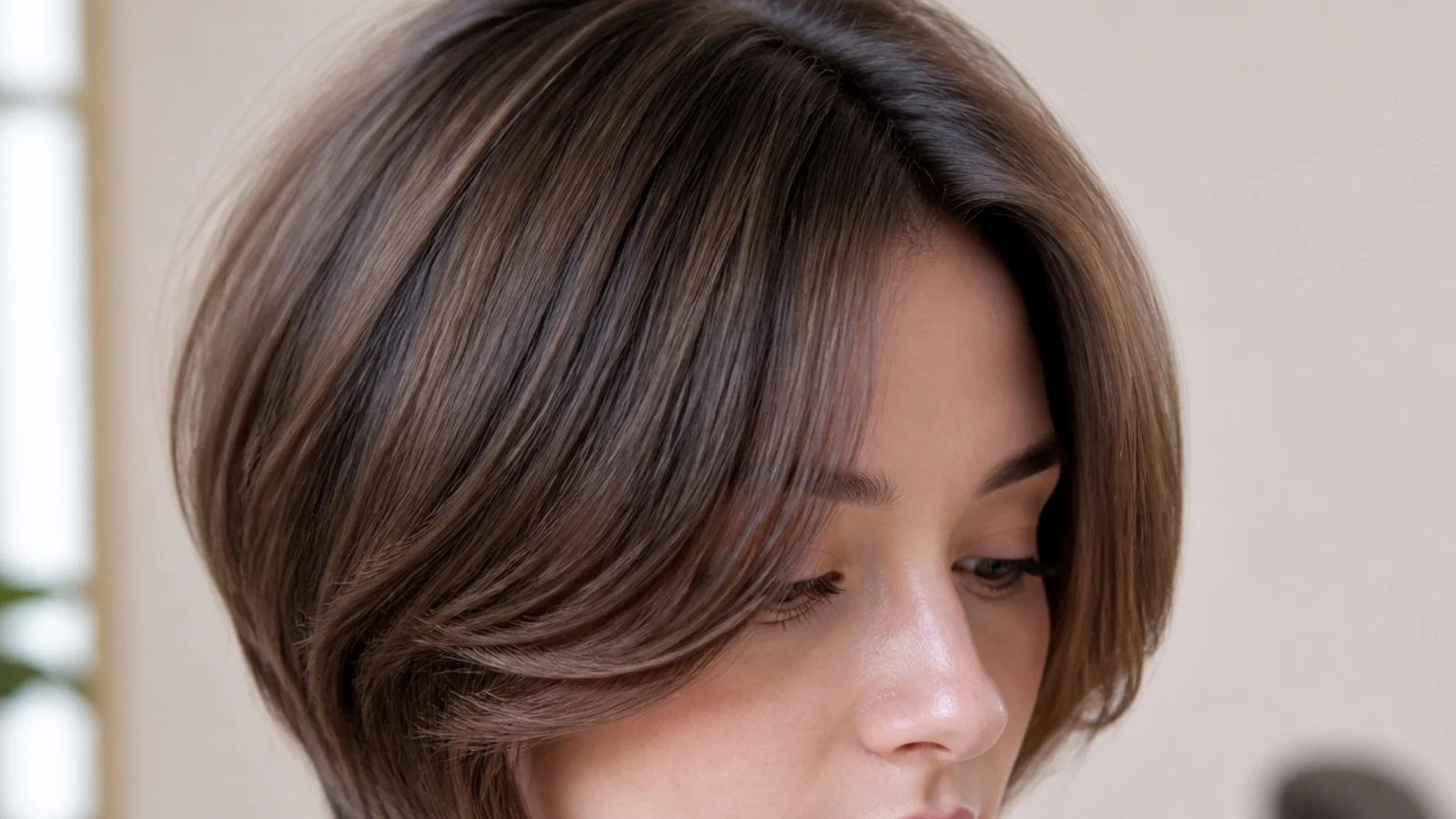
4. Wispy See Through
A change in density rather than in length, made by taking a shallower triangle at the hairline. Less hair in the section means skin shows through, which suits a small face and takes less coverage away from the top of the head.
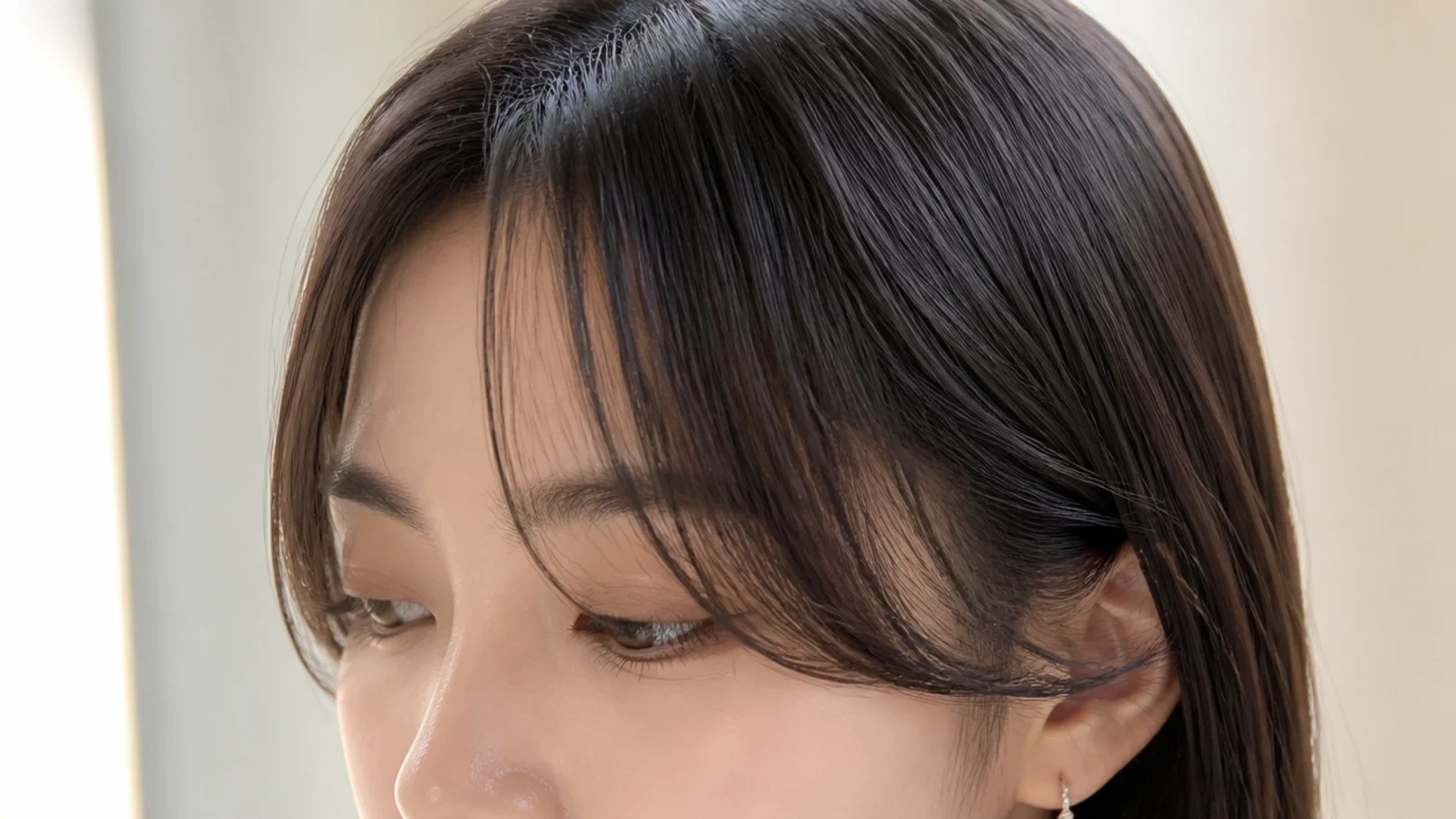
5. Blunt Cut
Every strand finishing on the same line, which is the strongest edge a fringe can have. It also shows growth soonest, because a continuous line dropping evenly is far easier for the eye to measure than a broken one.
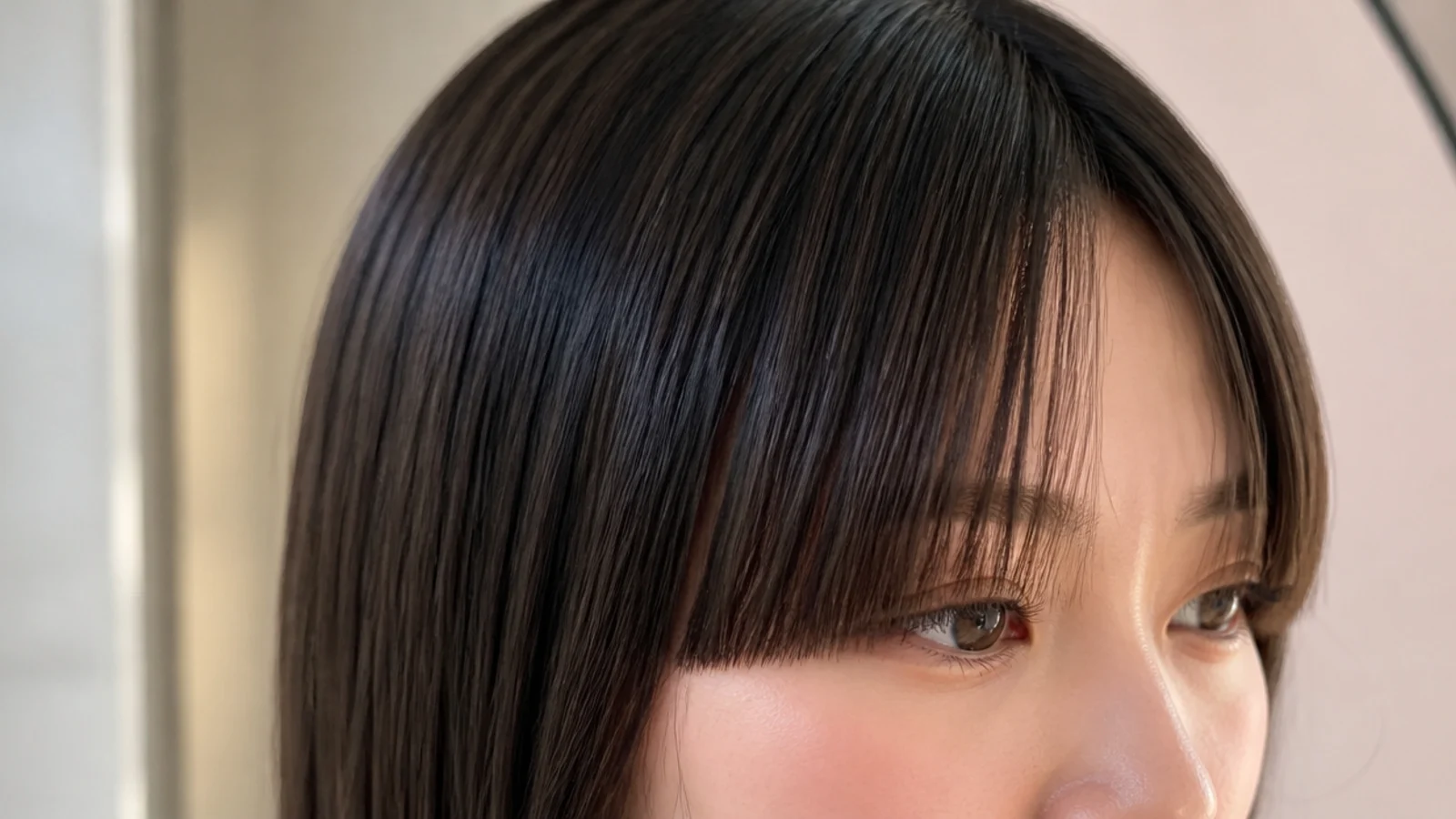
6. French Bob
Chin to jaw length with the fringe stopping at the brow, and the two lengths belong to one cut rather than two. Lengthen the fringe by half an inch and the shape stops reading as French, which is how tight that relationship is.
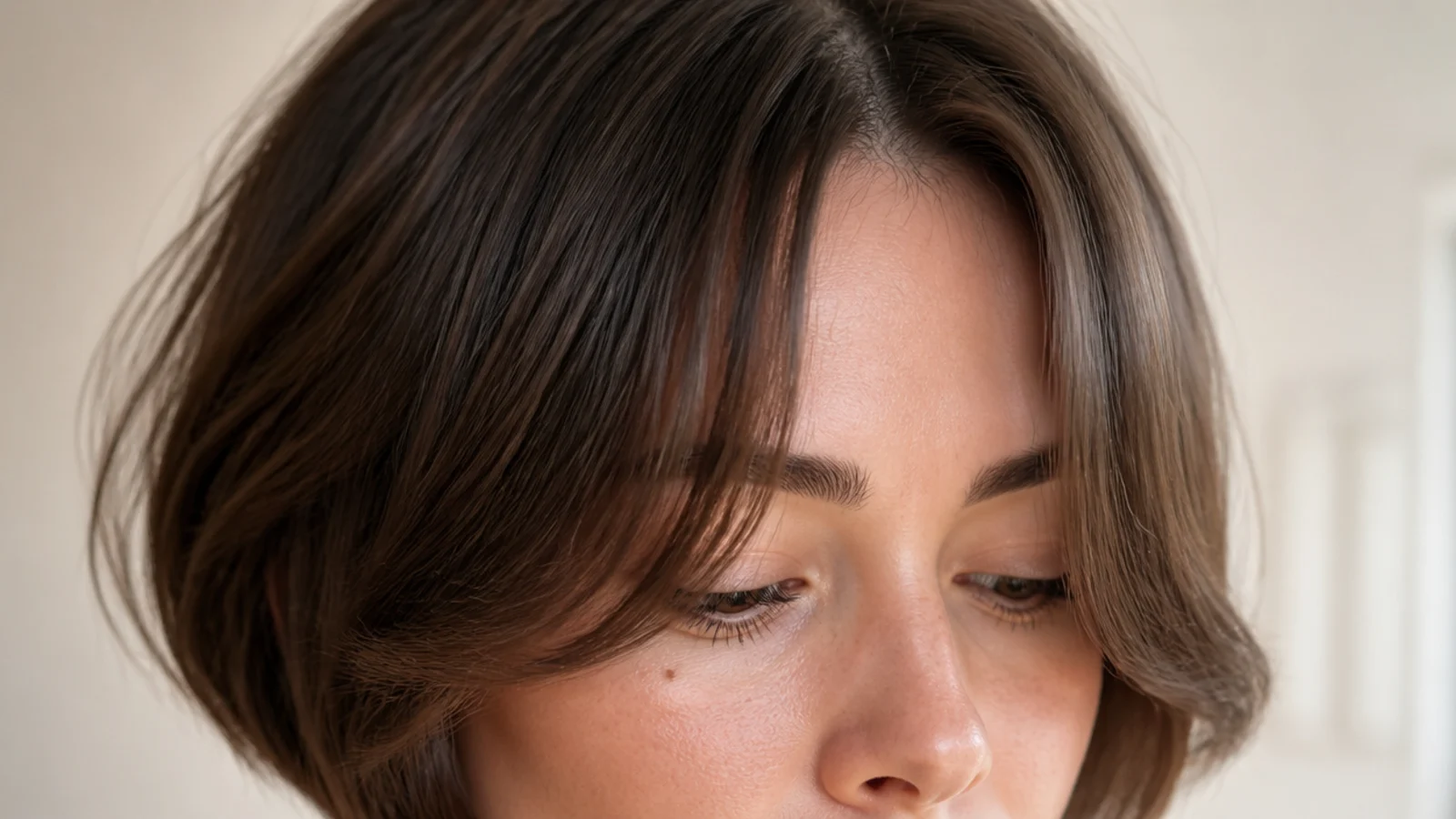
7. Wavy 2B Hair
A loose S wave lifts the fringe as it dries, so hair cut at the brow while wet finishes above it. Ask for a quarter inch of extra length and let the bend take it back up, rather than correcting after the fact.

8. Curly 3A Hair
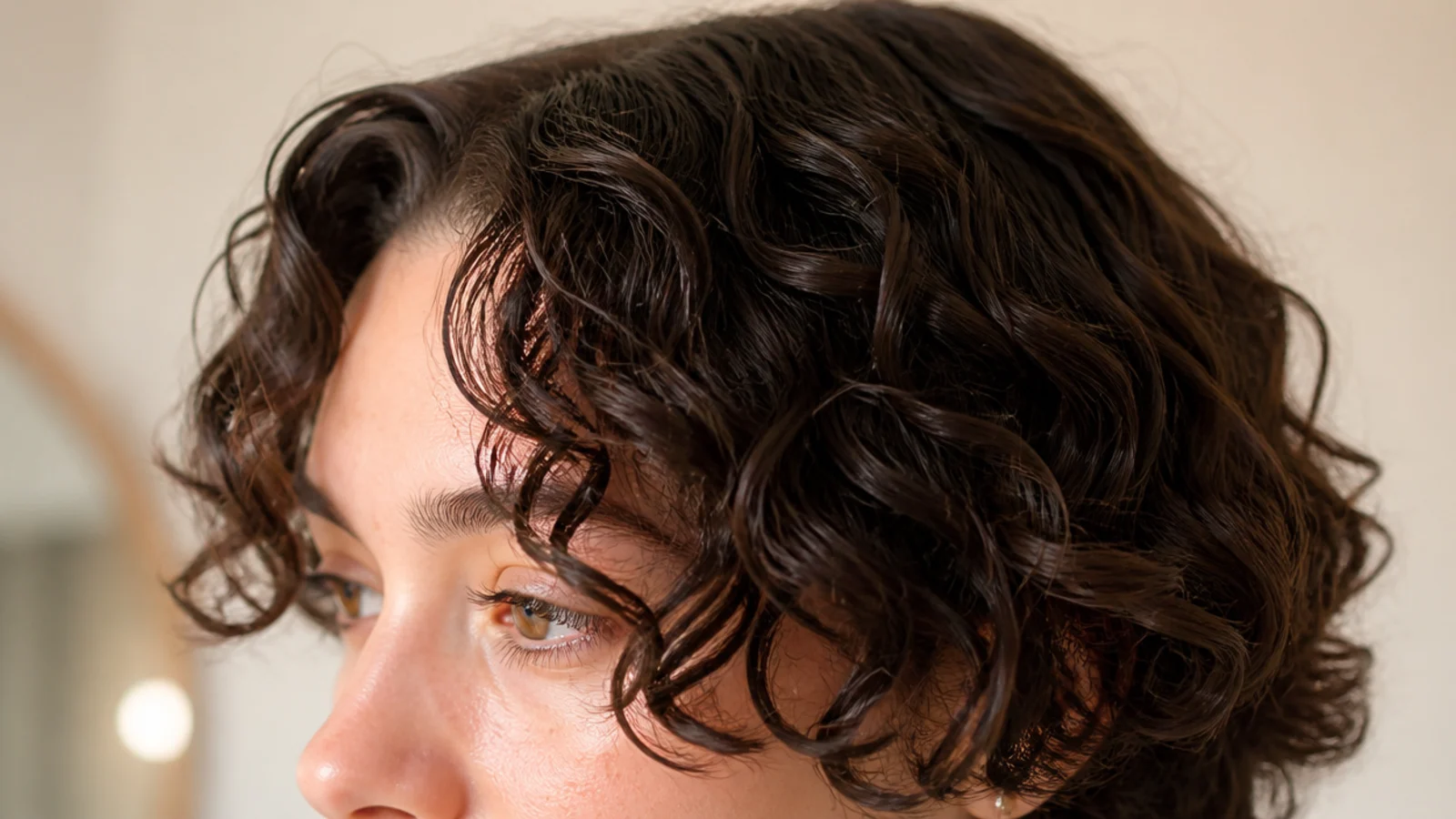
A defined curl retracts by up to a third of its wet length, which is two inches on a fringe measured at six. Cut curls dry and one coil at a time, because a wet measurement on curly hair is a prediction rather than a length.
9. Cowlick
Hair at the hairline that grows against the fringe direction lifts about half an inch and splits the fringe in two. Cut the section wider than the cowlick so it has neighbours to lie against, and wet set the root flat against the growth each morning.
10. Side Swept
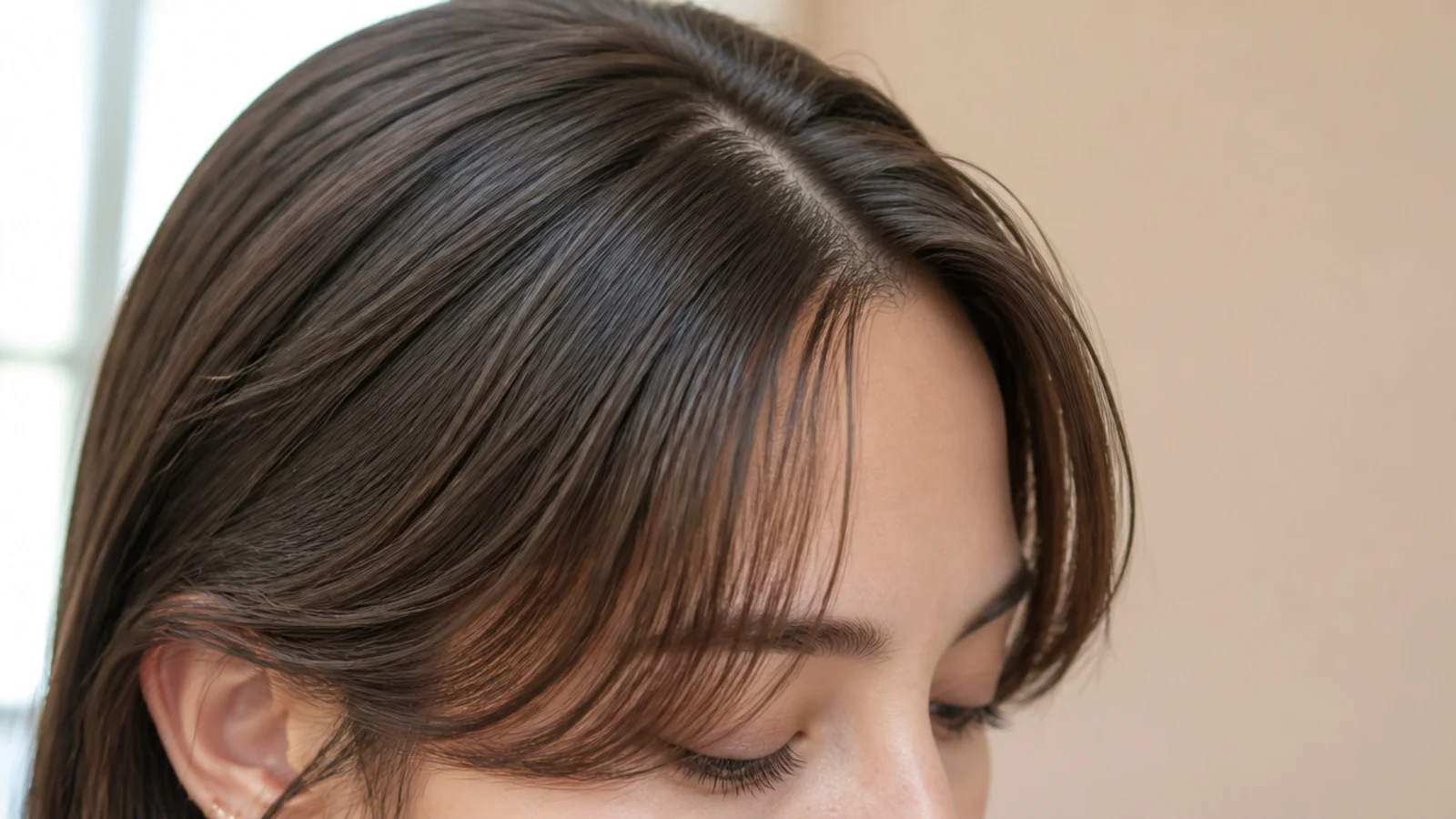
Direction is decided at the root while the hair is damp, not at the ends afterwards. Dry each half hard across the head from an off centre part and the fringe stays where it was put, which no amount of product will achieve on dry hair.
11. Baby Bangs Above the Brow
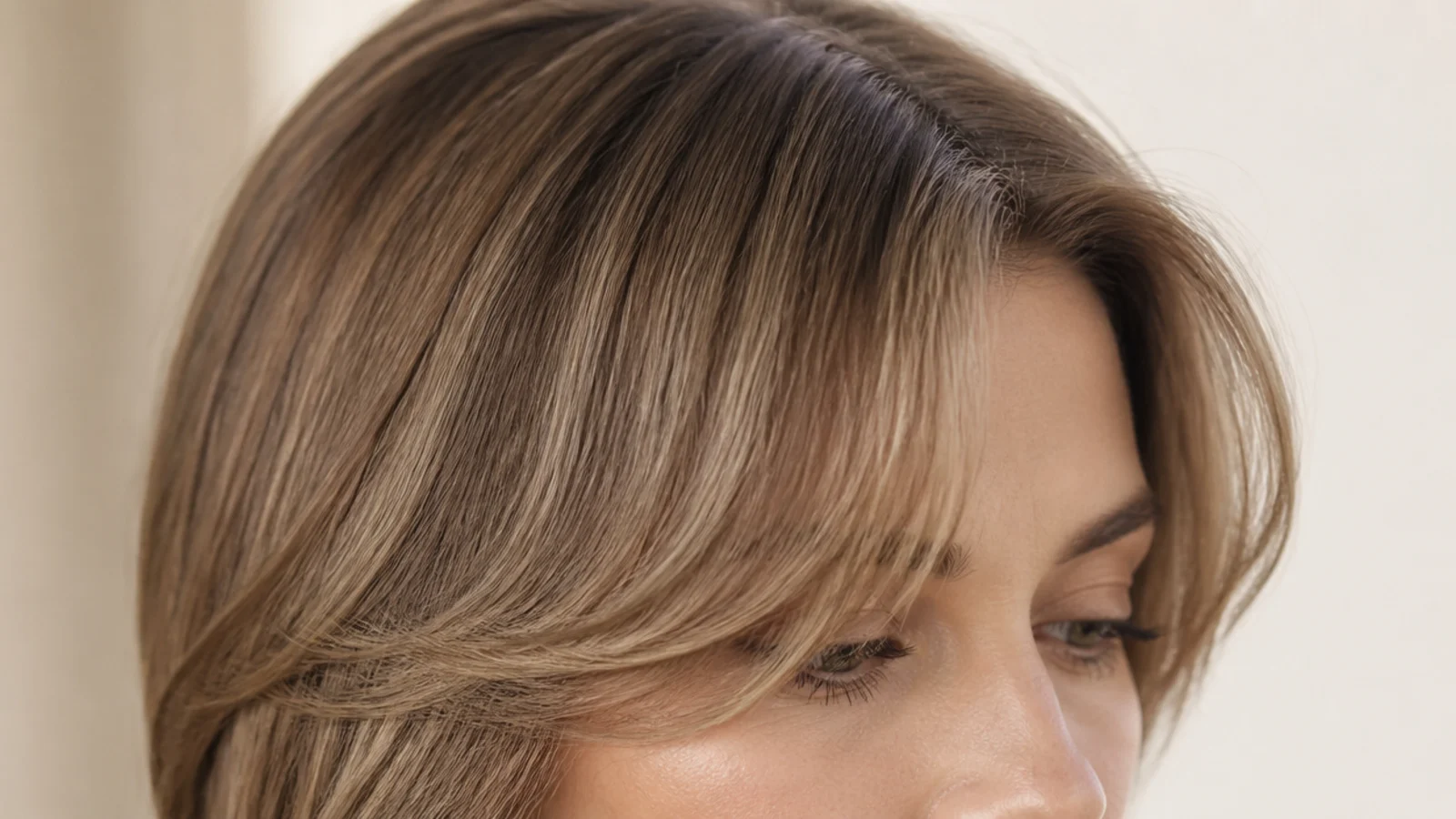
The shortest version, sitting clear of the eyebrow and exposing the lower forehead. It buys the most visible face length of any fringe here and costs the most in upkeep, because two weeks of growth is already a noticeable change at this length.
12. The Grown Out Stage
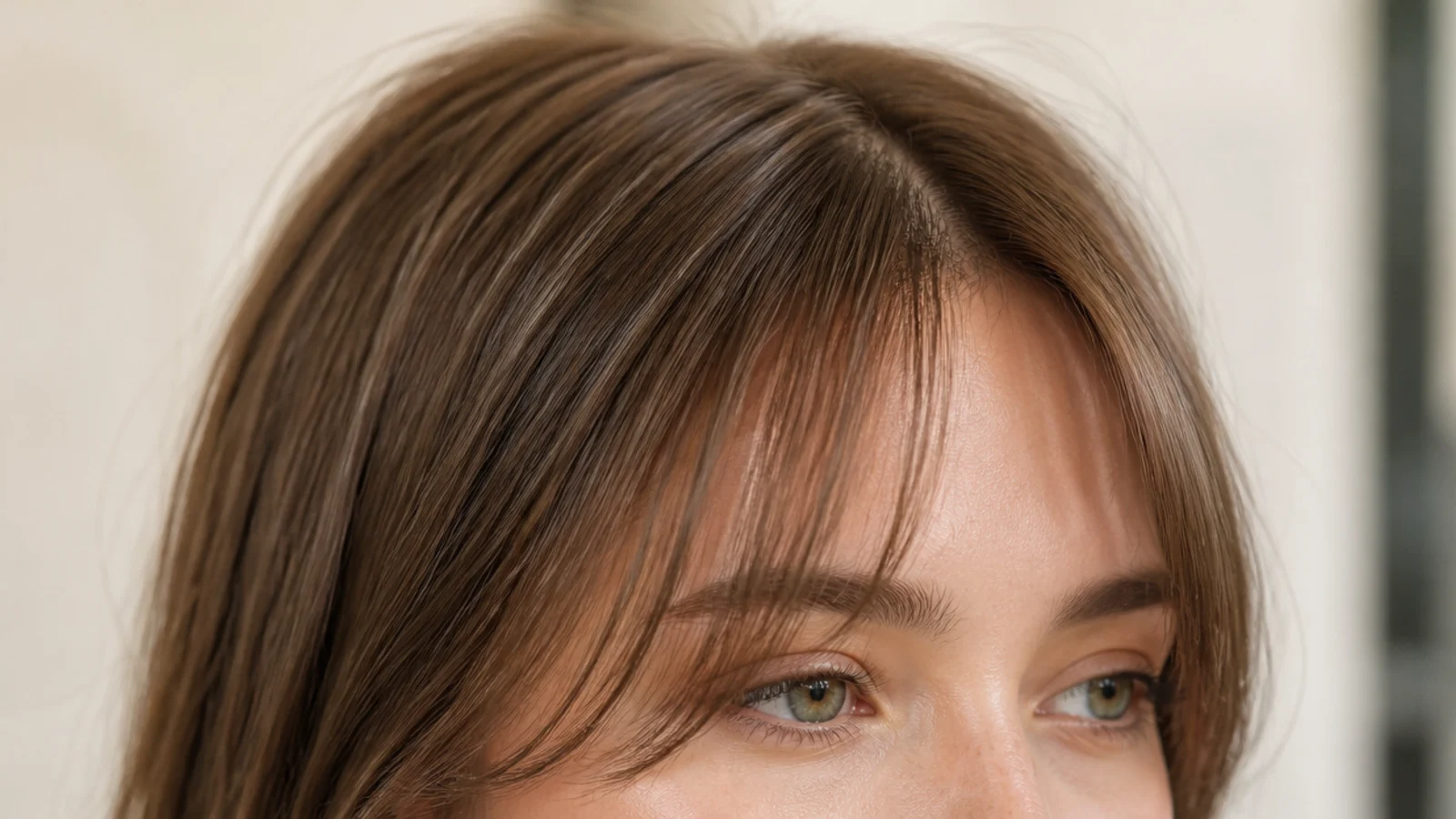
Six to eight weeks in, with the ends sitting halfway down the cheek and the graduation steeper than it was cut. Photograph it before deciding, because this stage is frequently better than the cut it came from and it is free.
13. Home Cut
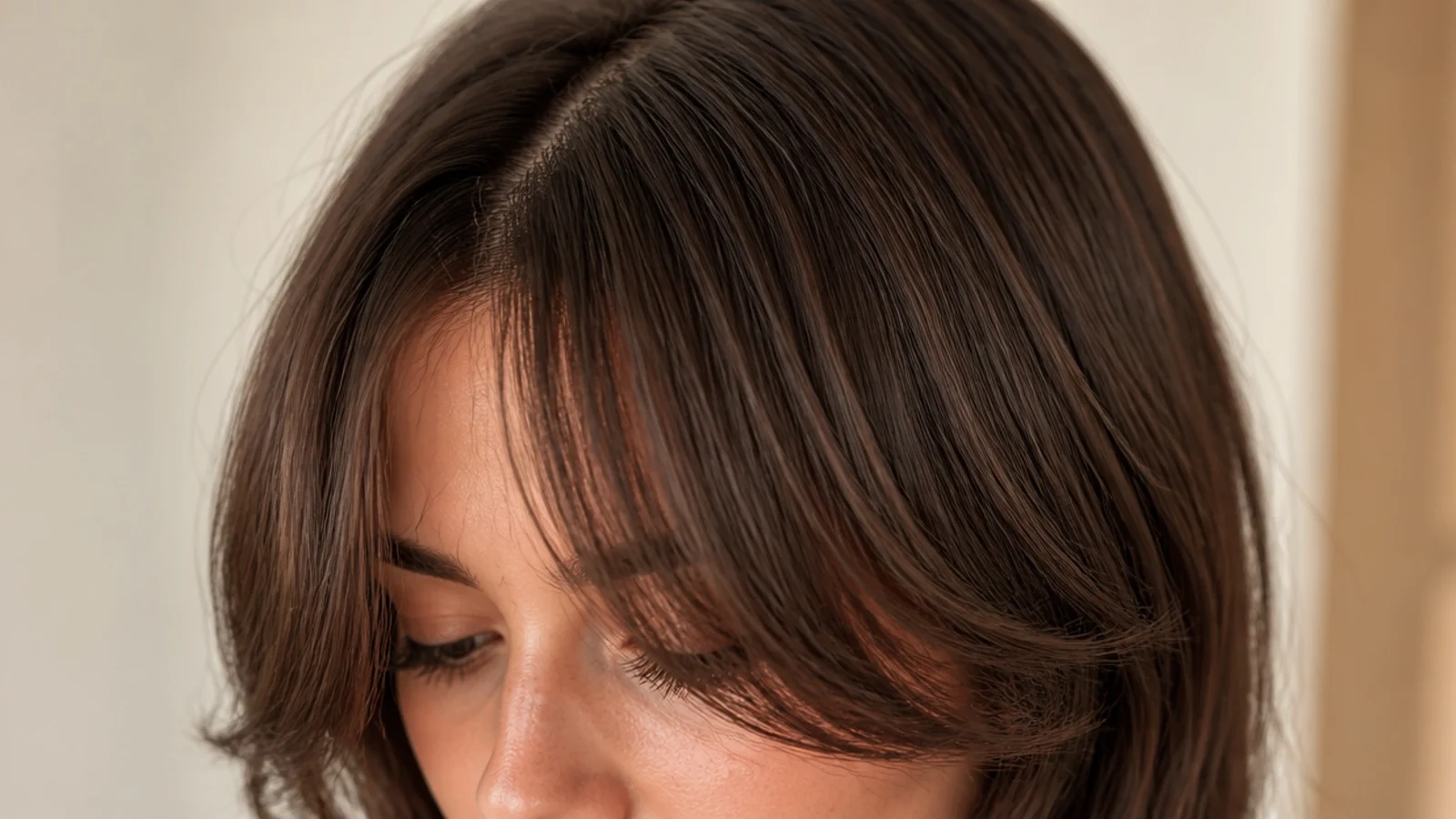
Dry hair, in the position it will be worn, with the shears held vertically so the ends come out broken rather than blunt. Take the outer pieces only and leave the shortest centre point alone, because that is the measurement everything else is cut against.
14. Heatless Rollers
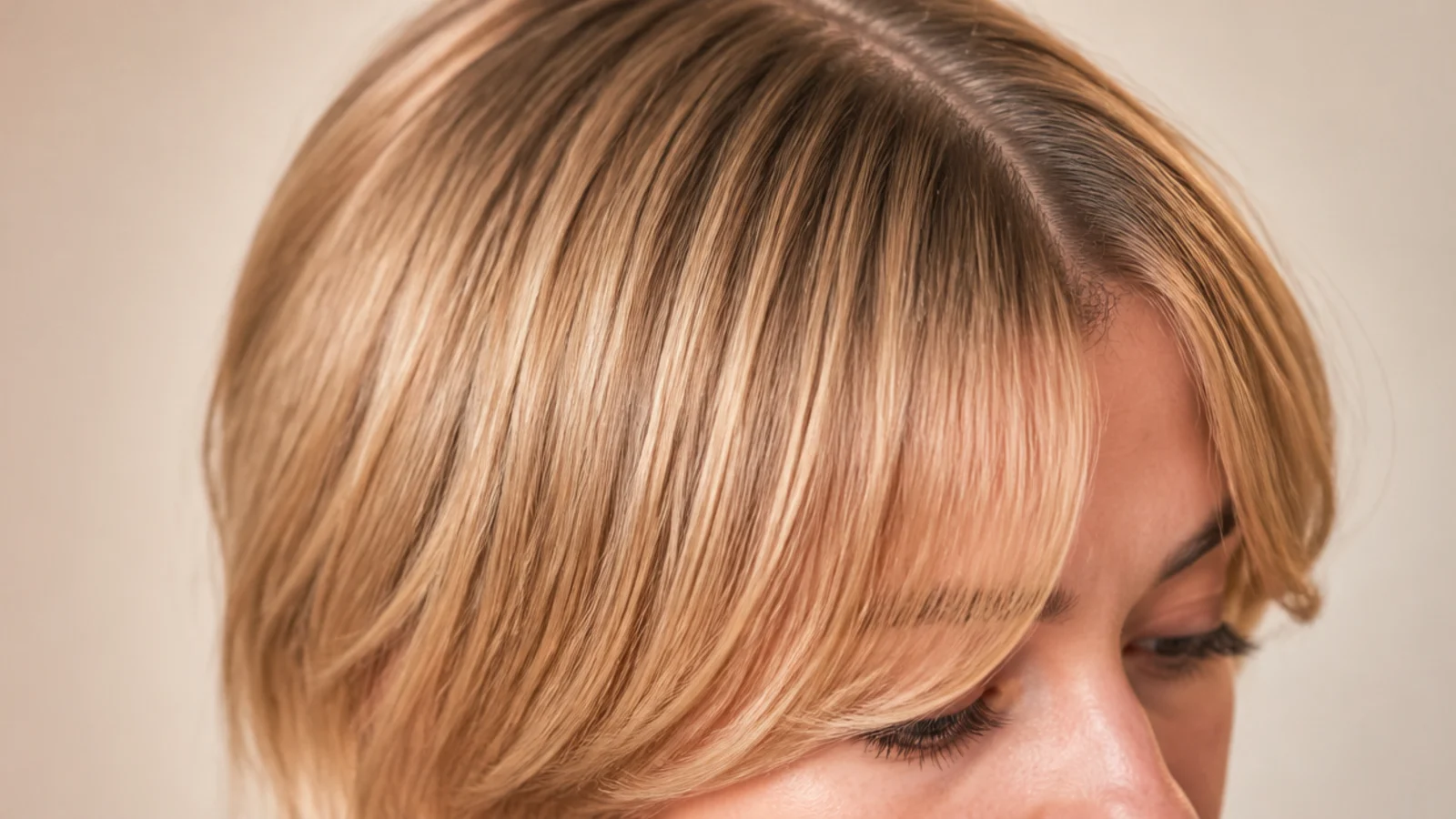
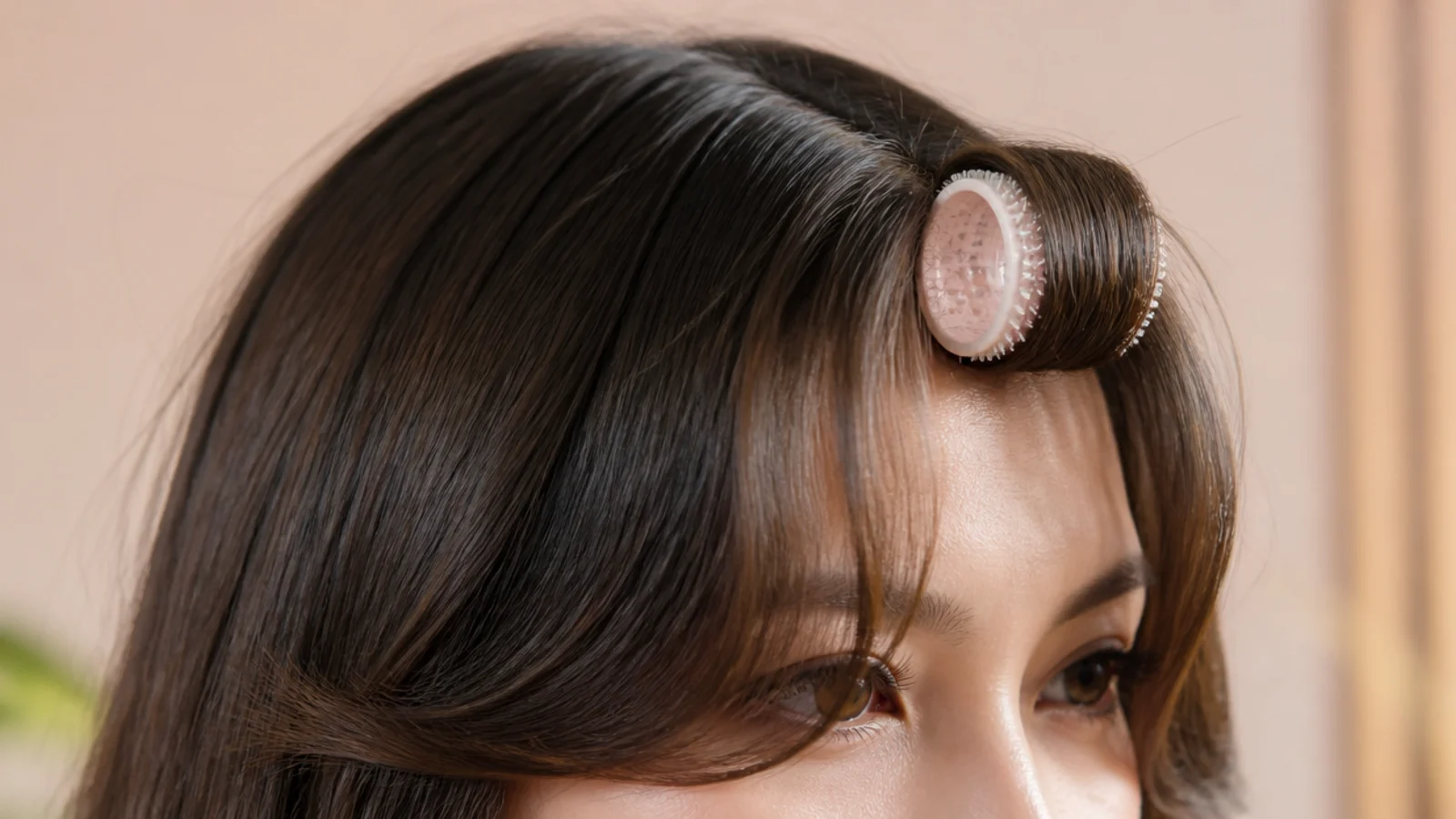
Roll the fringe damp and let it dry in place, because the set is made by evaporation rather than by heat. It gives the same bend a brush would with none of the heat exposure, and the fringe takes more direct heat per wash than any other section.
15. With a Shag
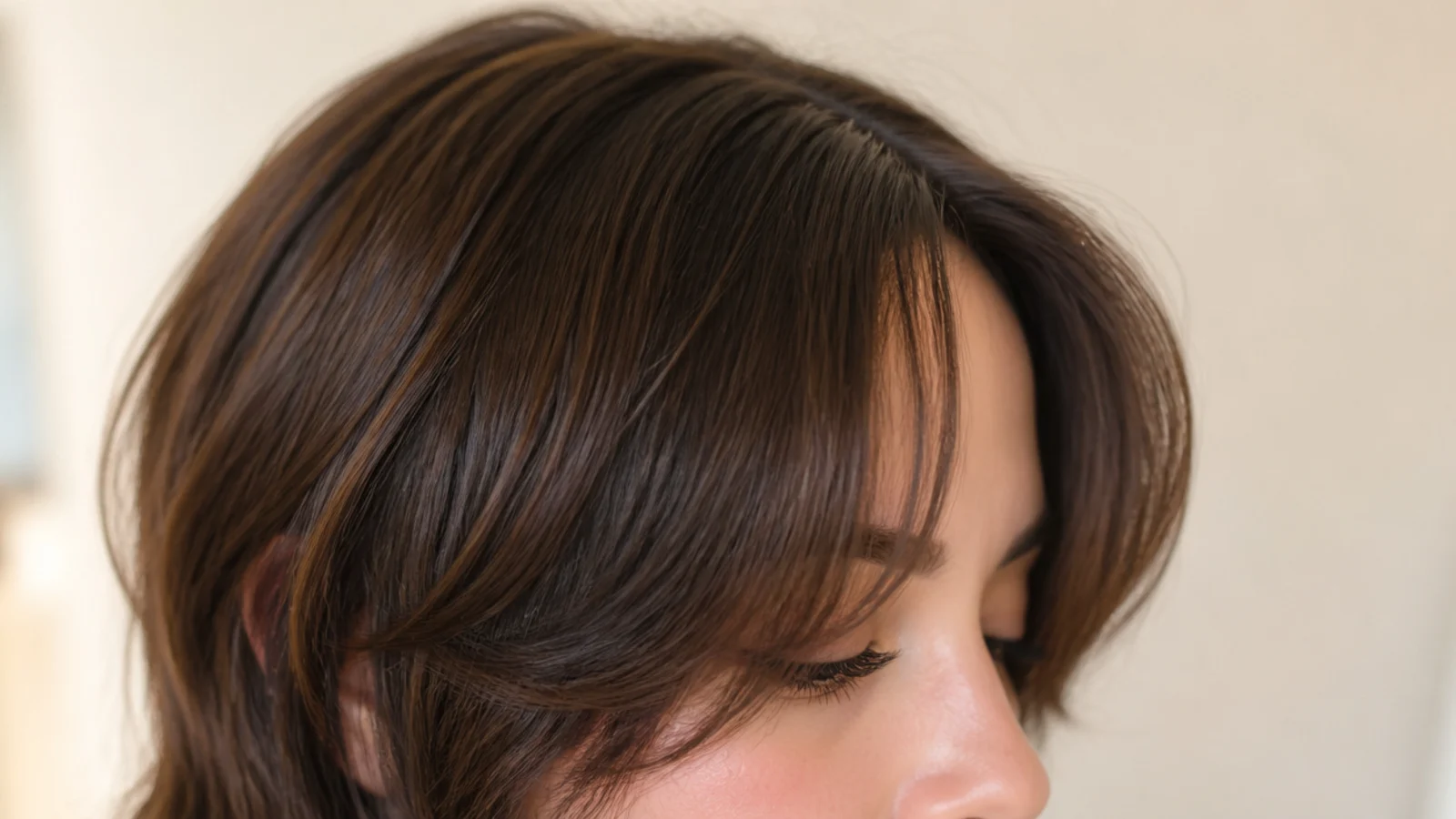
Interior layers give the fringe somewhere to blend into instead of leaving it sitting on the surface as a separate piece. It is also the easiest cut to grow a fringe out inside, because the layer beneath is already broken and the fringe simply joins it.
Final Thoughts
Take a measurement to the appointment rather than a mood. Brow at the centre, cheekbone at the ends, cut dry, is three facts a stylist can work from, and it removes the two failures that account for most disappointing fringes.
Then decide the trim schedule before the first cut rather than after, because the length you chose only exists for about three weeks. For more at this length see short curtain bangs on short hair, and for the blunter French version see short French bangs. More in Bangs and Fringe.