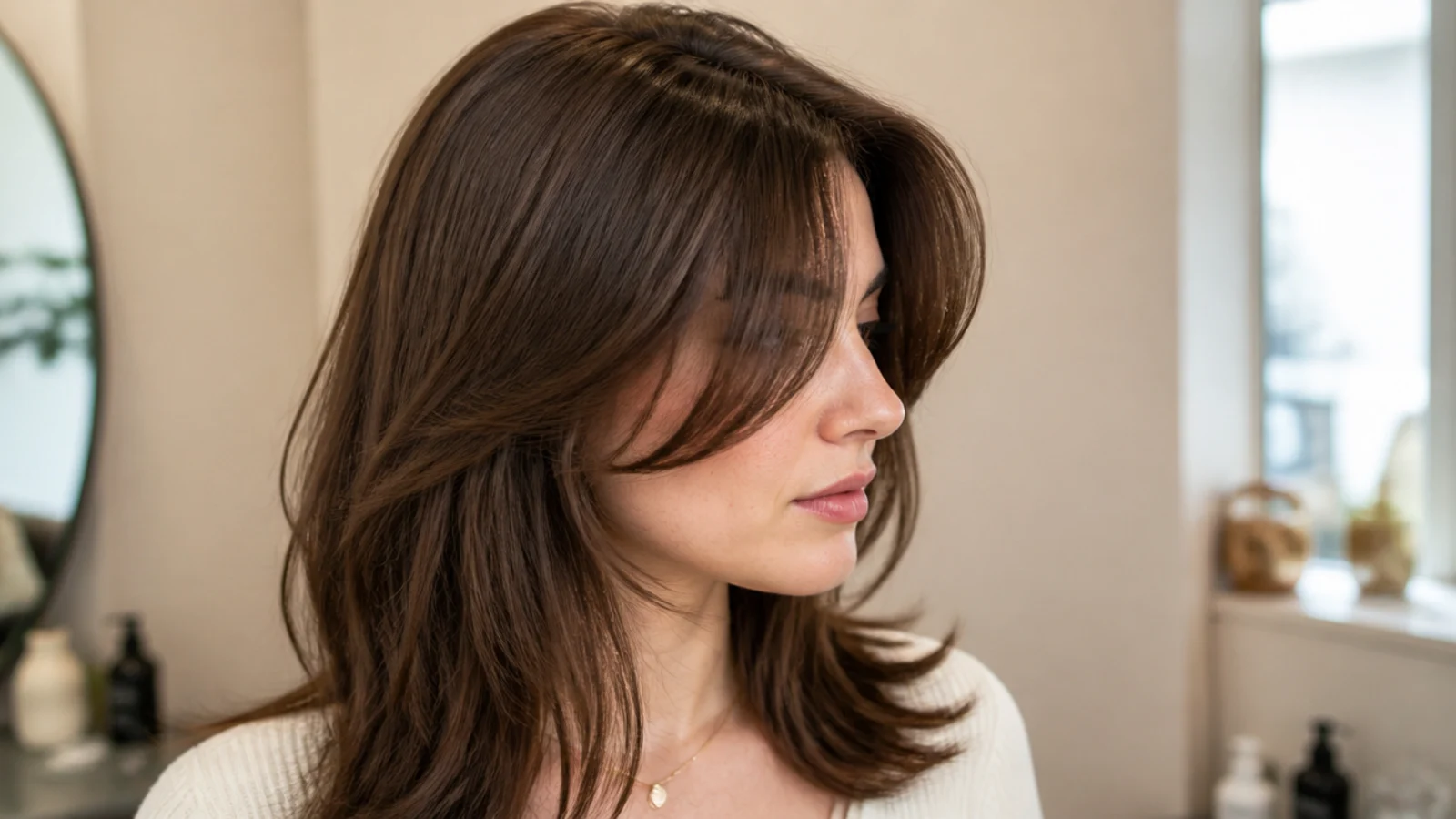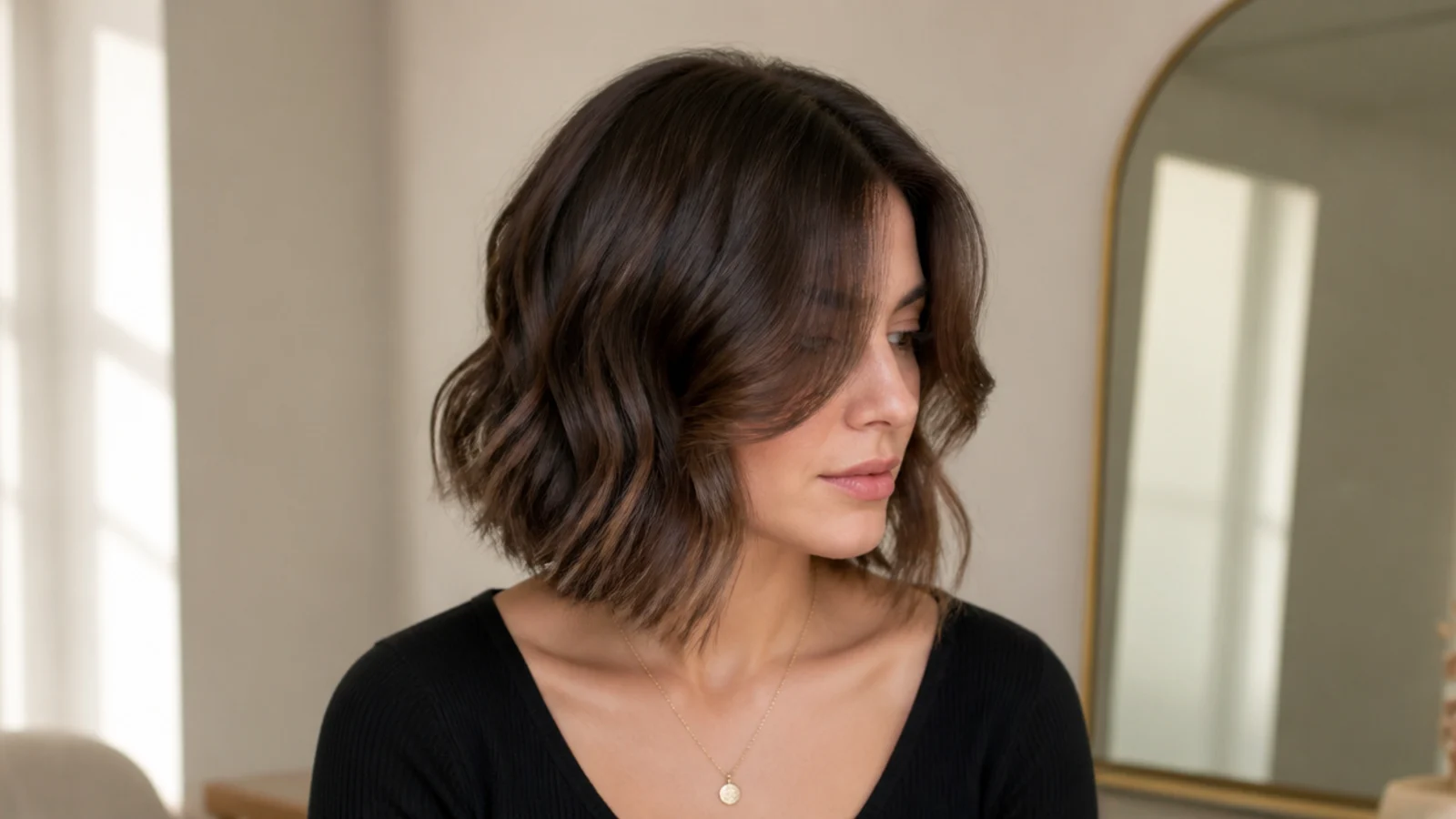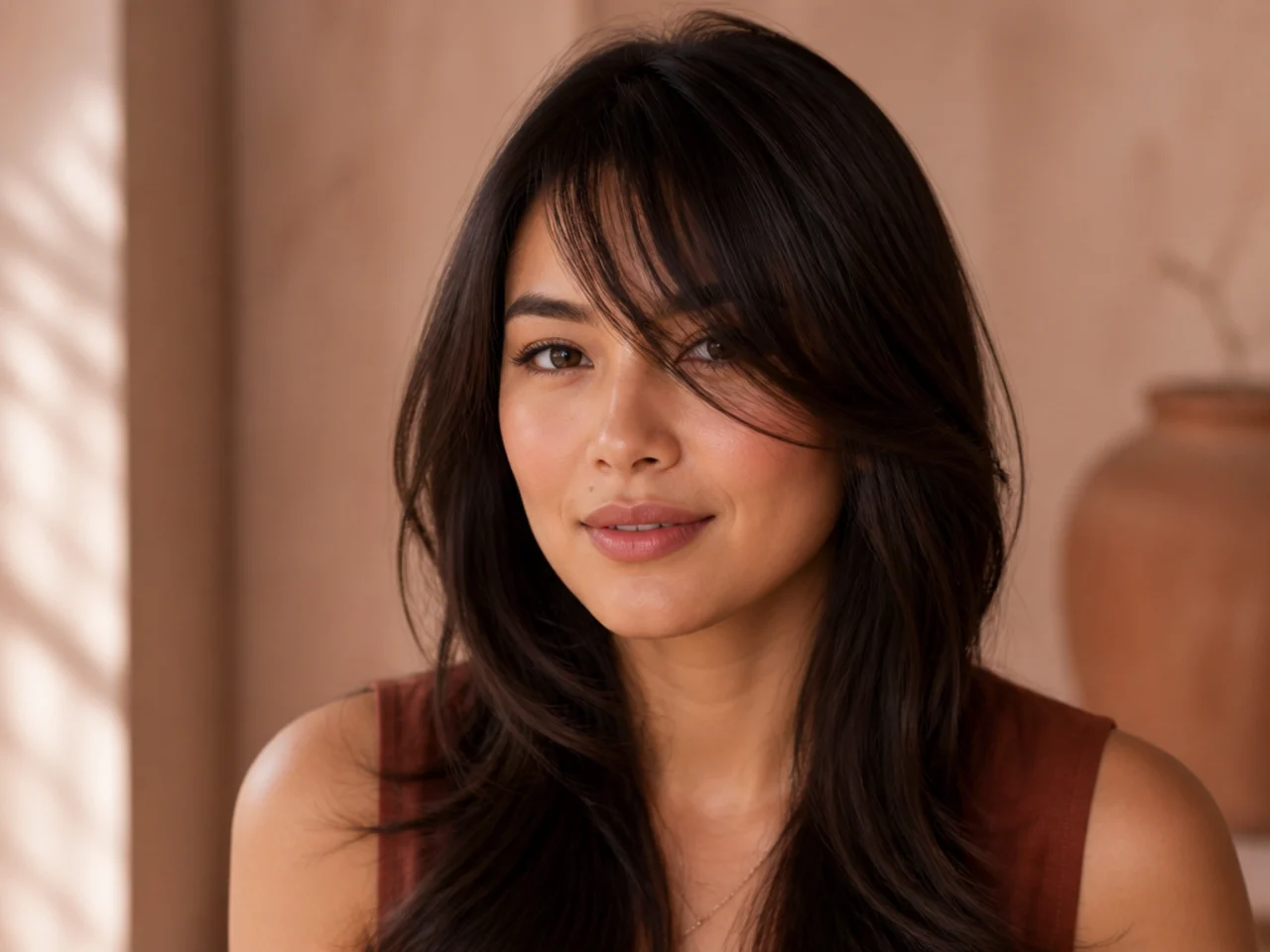
20 French Bangs With Curtain Layers
Twenty ways to wear French bangs blended into curtain layers — the hybrid cut that solves the fringe grow-out problem, because the transition point is what decides whether it reads as one cut or two.
In this article · 28
- The Transition Point
- How the Connection Is Cut
- The 20 Ideas
- 1. Classic Brow-to-Cheekbone Blend
- 2. Long Blend to the Jaw
- 3. Short Blend to the Cheek
- 4. Wispy Fringe with Curtain Layers
- 5. Full Fringe with Curtain Corners
- 6. Curtain Blend on a Bob
- 7. Curtain Blend with Long Layers
- 8. Curly Curtain Blend
- 9. Wavy Curtain Blend
- 10. Curtain Blend on Fine Hair
- 11. Asymmetric Curtain Blend
- 12. Curtain Blend with a Middle Part
- 13. Curtain Blend Swept One Way
- 14. Curtain Blend with a Shag
- 15. Curtain Blend with Highlights at the Front
- 16. Curtain Blend on Coily Hair
- 17. Curtain Blend with a Ponytail
- 18. Curtain Blend Tucked Behind One Ear
- 19. Very Long Curtain Blend
- 20. Grown-Out Curtain Blend
- Why It Grows Out Well
- Drying It
- Mistakes to Avoid
- FAQ
- Final Thoughts
This is the cut that fixes the main objection to a fringe. A plain fringe grows down into your eyeline and has nowhere to go; this one grows outward into curtain bangs, which is a style people deliberately ask for.
What makes it work is a single decision — where the fringe stops being a fringe.
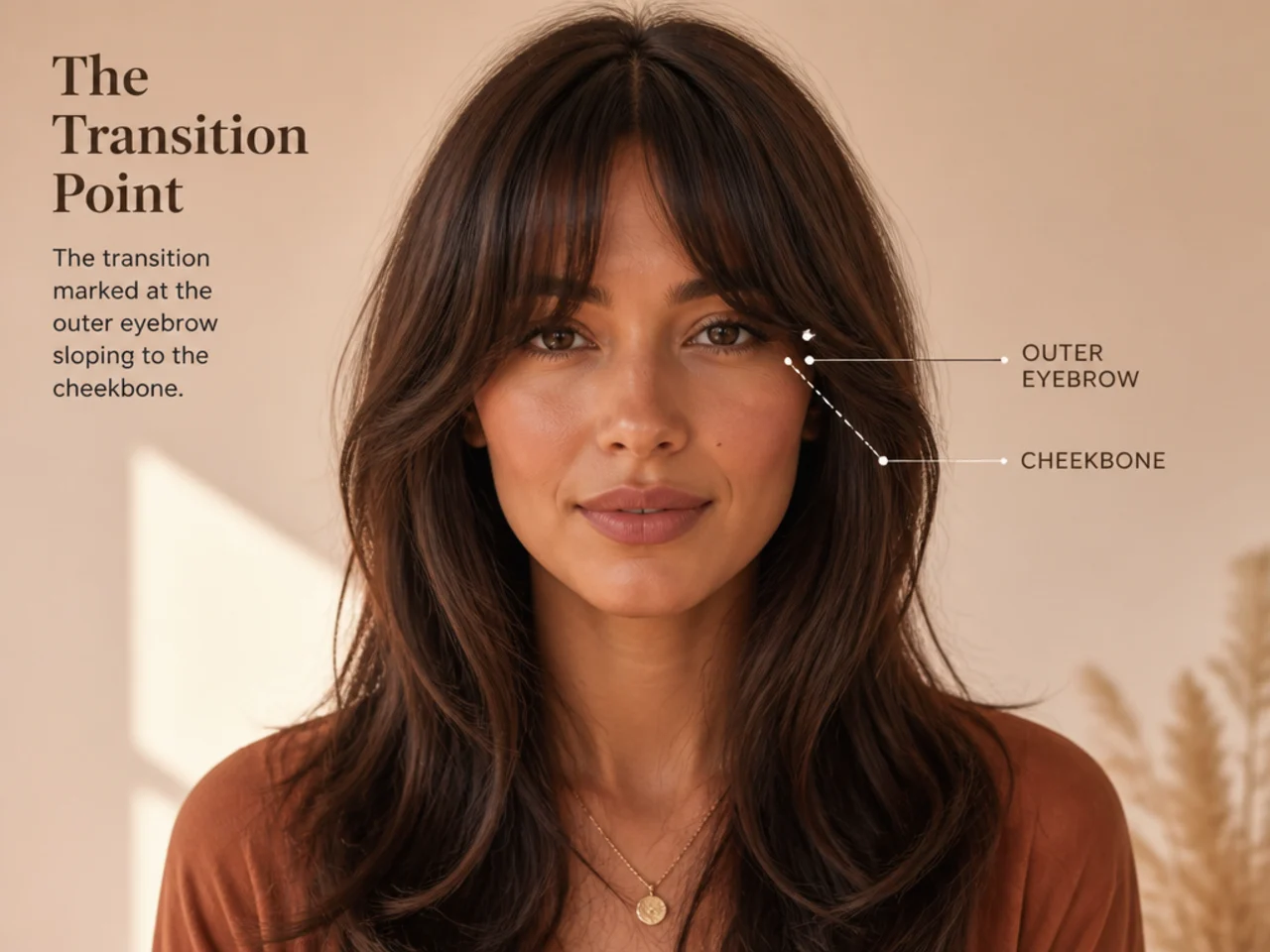
The Transition Point
The fringe should be at full length across the middle of the forehead, then begin lengthening at the outer corner of the eyebrow, sloping down to around the cheekbone.
Move that point inward and the dense section becomes too narrow to read as a fringe at all — you end up with curtain bangs and a slightly heavy middle, which is a different cut. Move it outward and the two sections meet at a visible corner, so it reads as a fringe with separate layers behind it rather than one continuous shape.
The slope matters as much as the start point. A steep drop from brow to cheekbone creates a hard diagonal; a gradual one over three or four inches is what makes the blend invisible. This is the part worth being specific about at the consultation, because "French bangs with curtain layers" describes a family of cuts rather than one.
How the Connection Is Cut
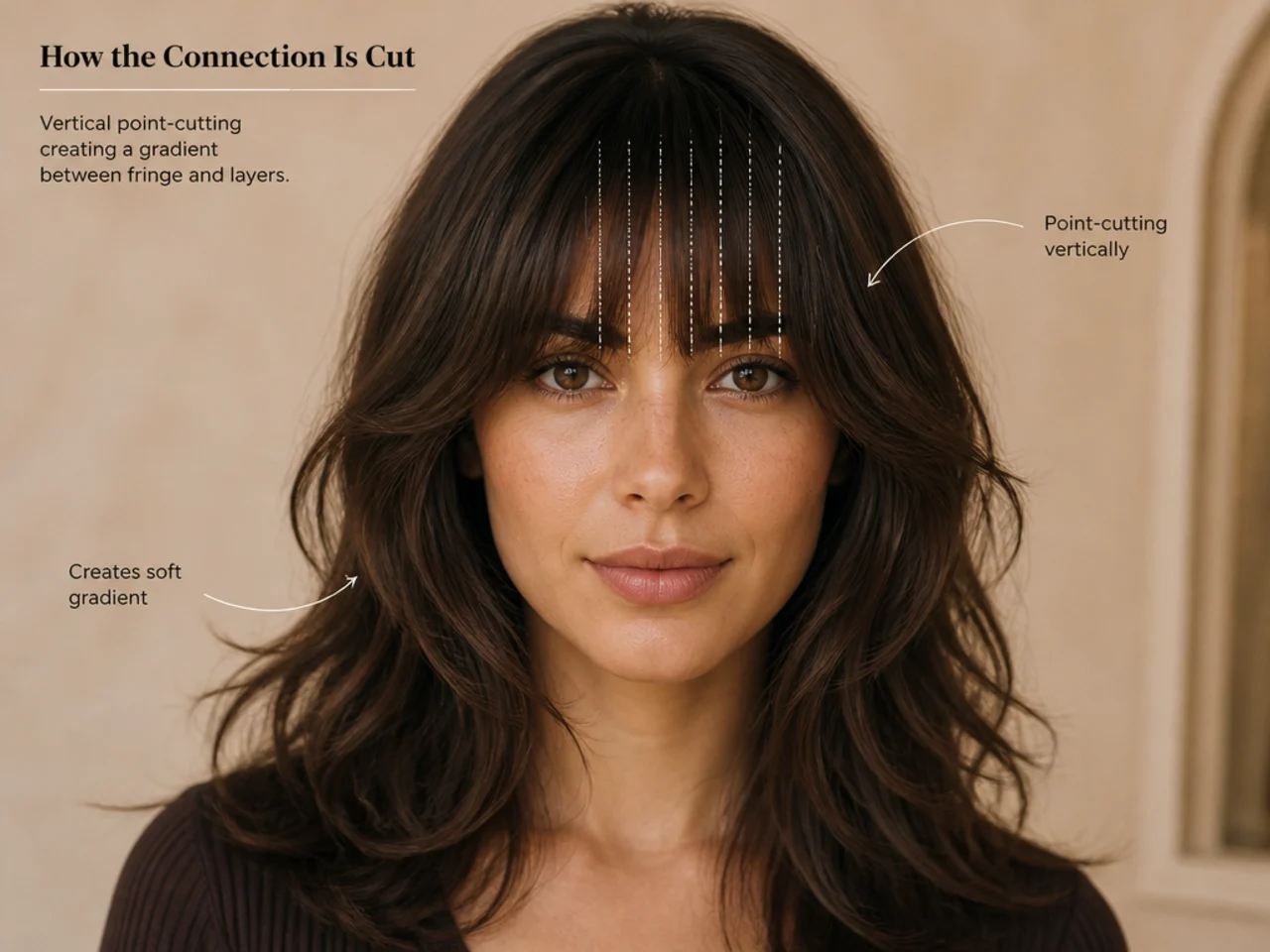
The blend is cut vertically, not horizontally. Sections are lifted and point-cut down the length so each strand is slightly longer than the one inside it, which produces a gradient rather than a step.
A cut made straight across at an angle produces the same shape on paper and a visible line in reality, because every strand at that angle ends at the same depth. The gradient has to be built strand by strand.
This is why the cut is worth paying for rather than attempting at home. The fringe itself is straightforward; the connection is not.
The 20 Ideas
1. Classic Brow-to-Cheekbone Blend
Fringe on the brow, lengthening to the cheekbone. The standard version and the most flattering.
2. Long Blend to the Jaw
The curtain sections carried all the way down to the jawline. Softer, and it frames a wider face.

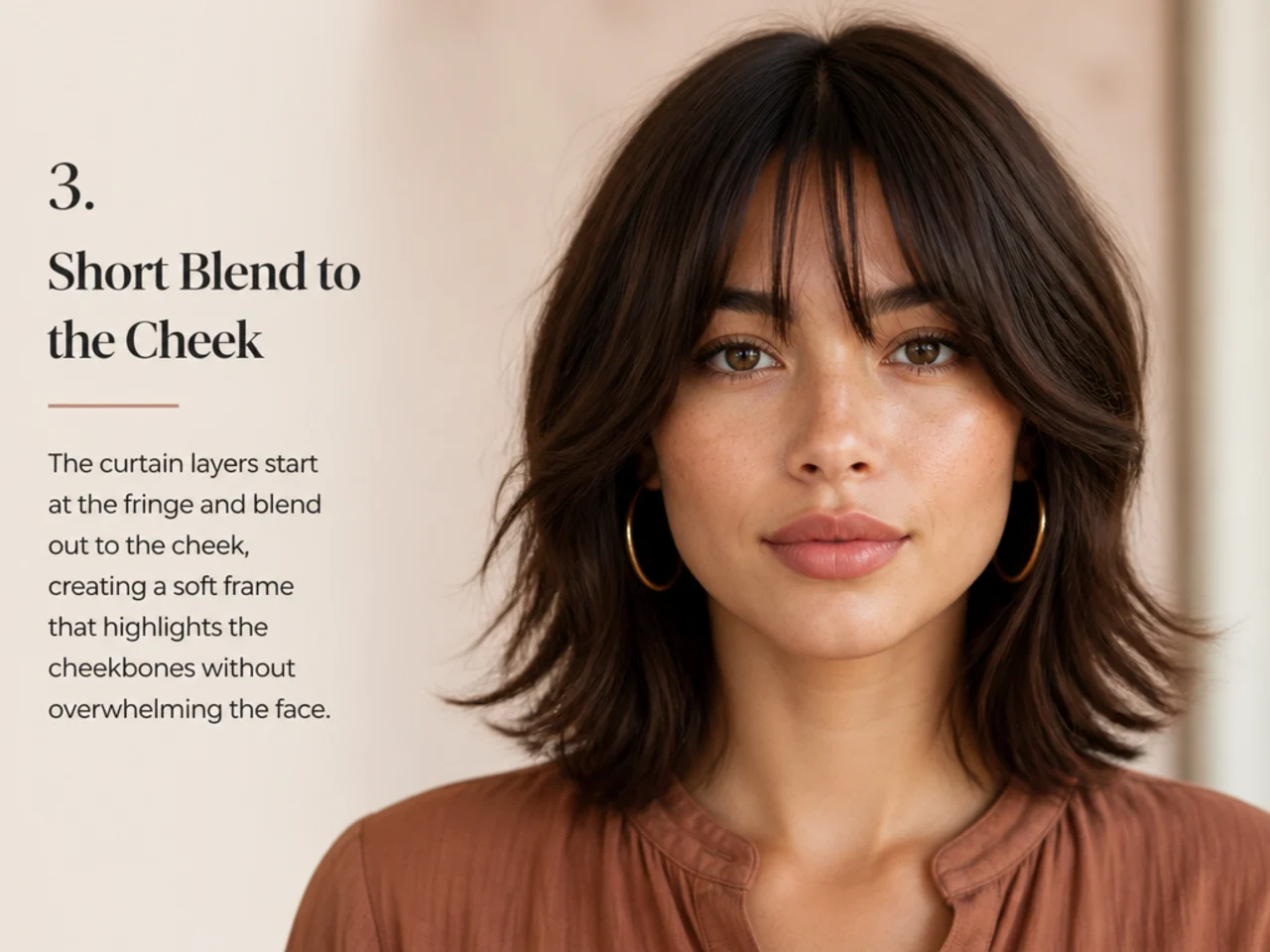
3. Short Blend to the Cheek
A quicker transition, keeping more weight at the front.
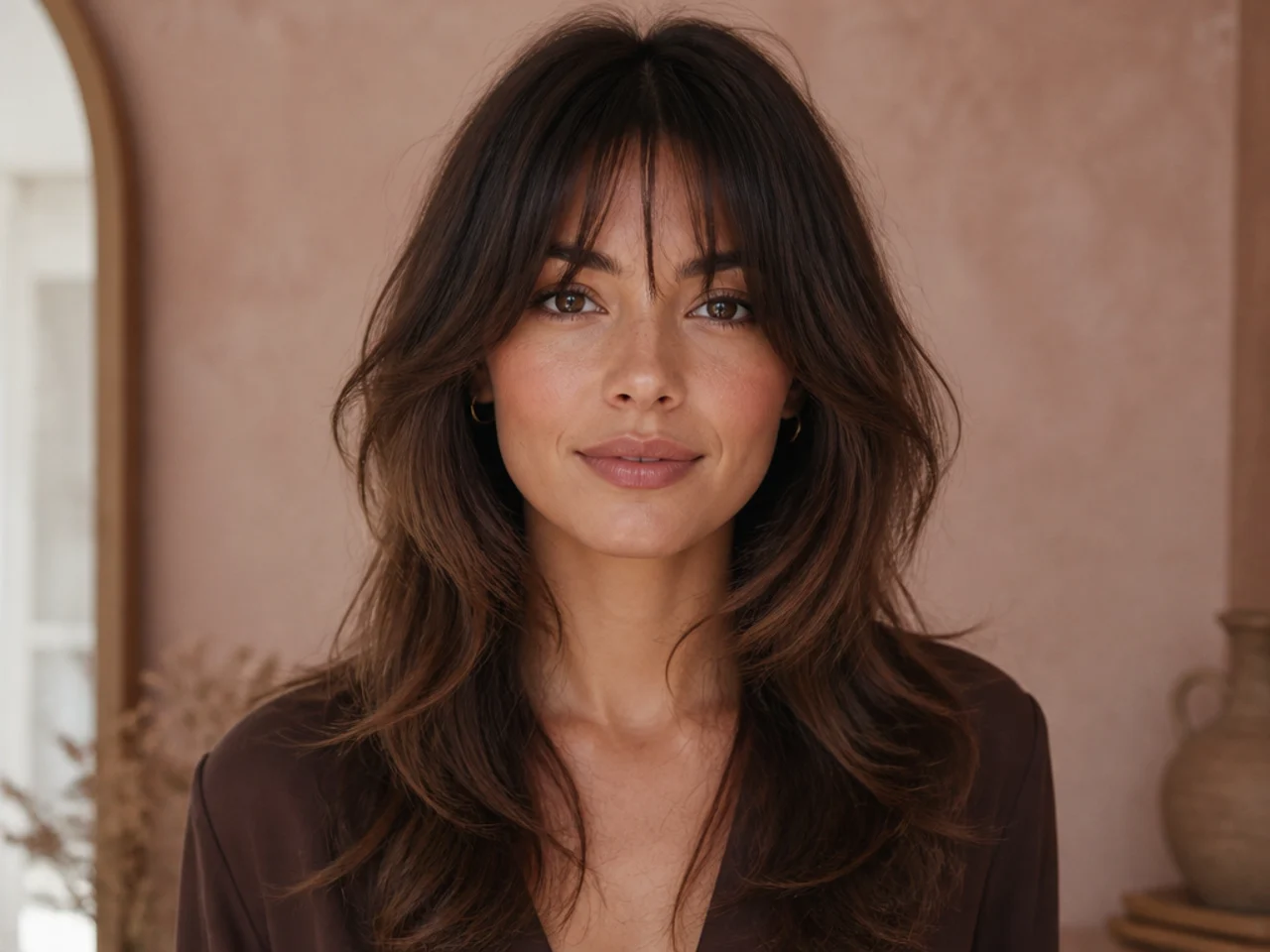
4. Wispy Fringe with Curtain Layers
Point-cut throughout so there is no defined edge anywhere in the cut.
5. Full Fringe with Curtain Corners
Dense through the middle, opening at the sides. The compromise that suits most face shapes.

6. Curtain Blend on a Bob
Short cut, soft front. The two shapes read as deliberately designed together.

7. Curtain Blend with Long Layers
The transition continuing into layering all the way down the length.

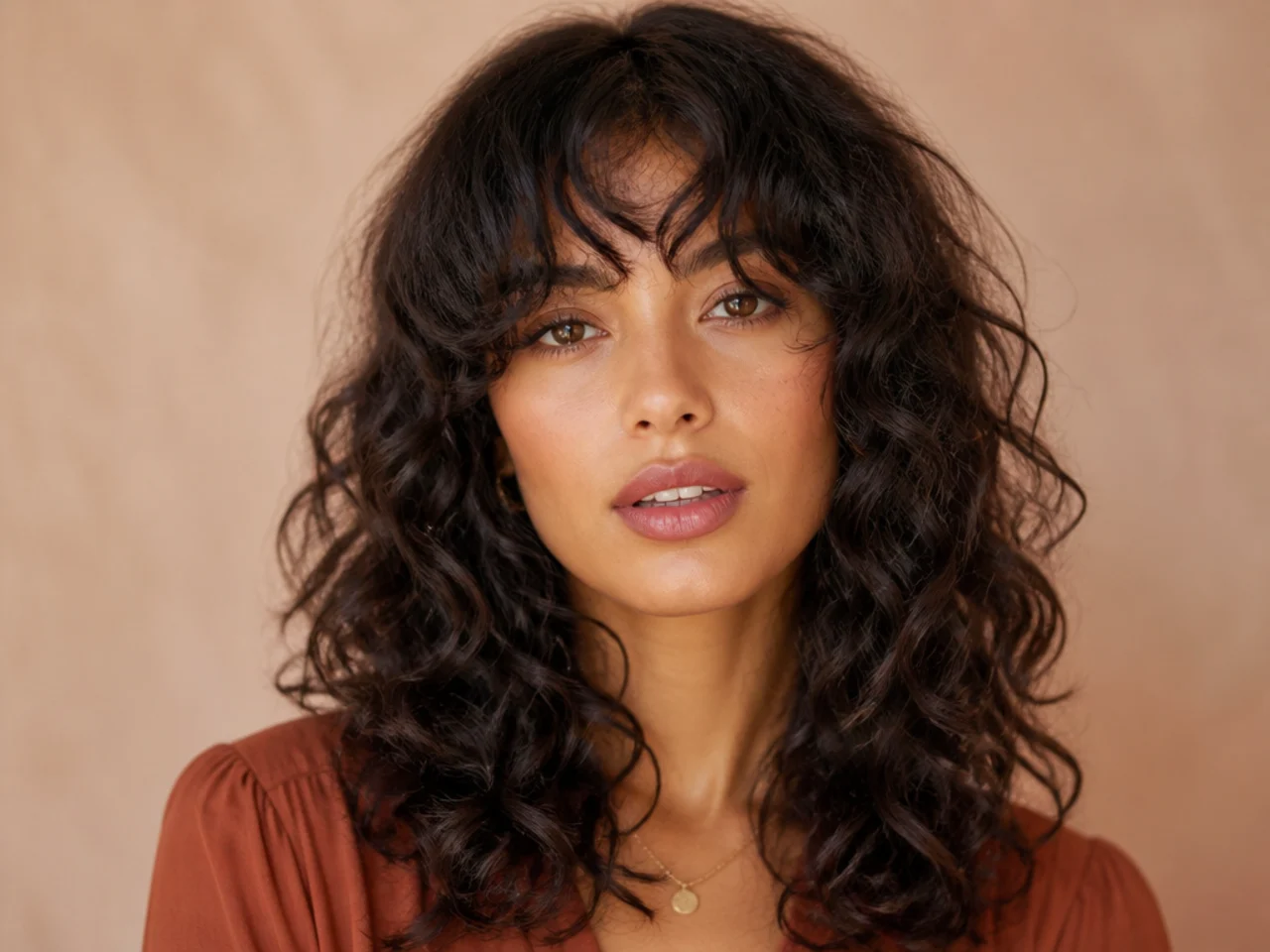
8. Curly Curtain Blend
Cut curl by curl, with the shrinkage allowance applied across the whole gradient.
9. Wavy Curtain Blend
The wave does much of the blending on its own, which makes this the most forgiving version.
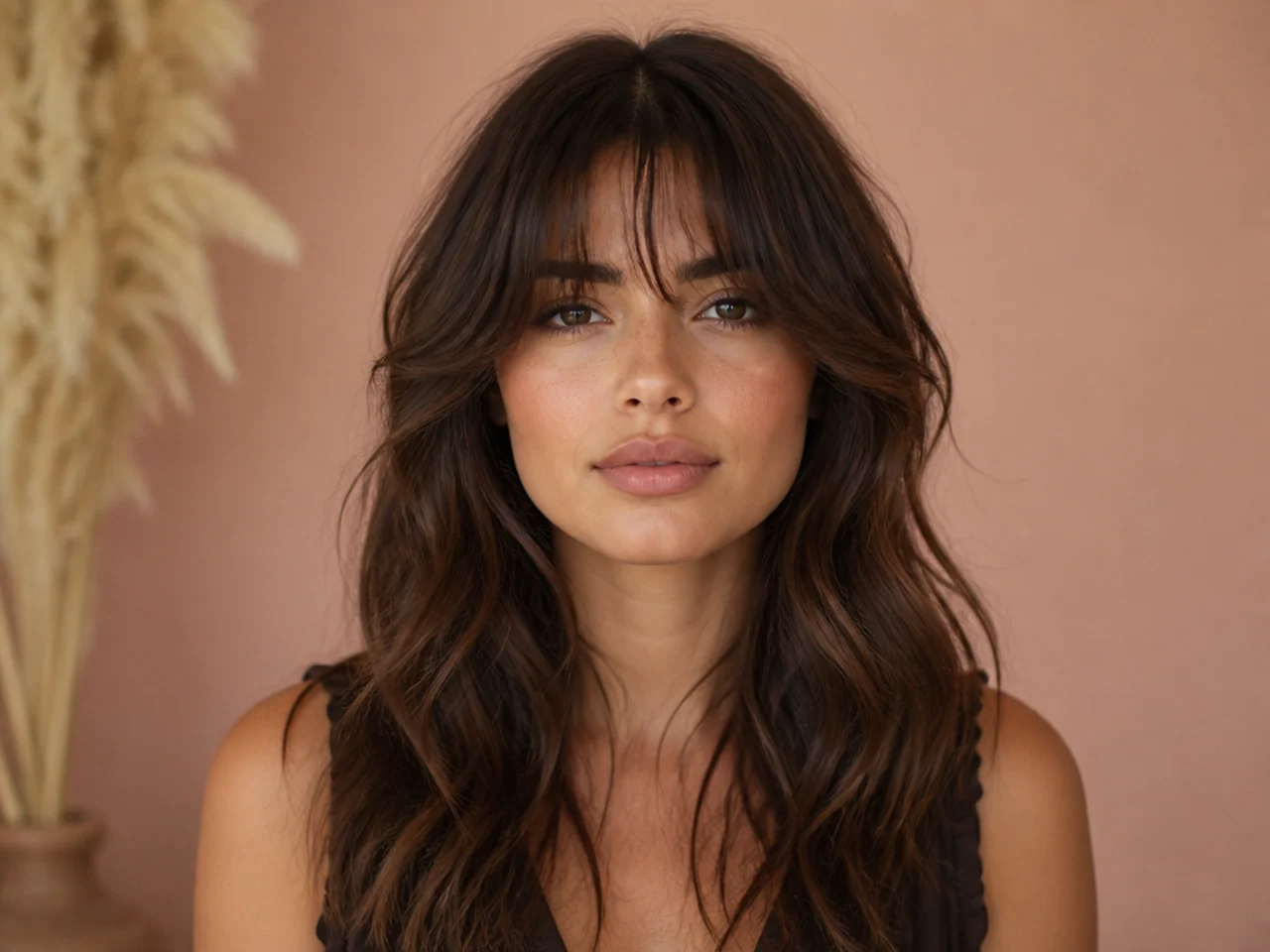
10. Curtain Blend on Fine Hair
Shallow section, gradual slope. The gradient hides the section line better than a plain fringe does.

11. Asymmetric Curtain Blend
One side transitioning higher than the other. It needs deliberate drying every day.

12. Curtain Blend with a Middle Part
Parted at the centre so both curtain sections fall evenly. The most classic way to wear it.
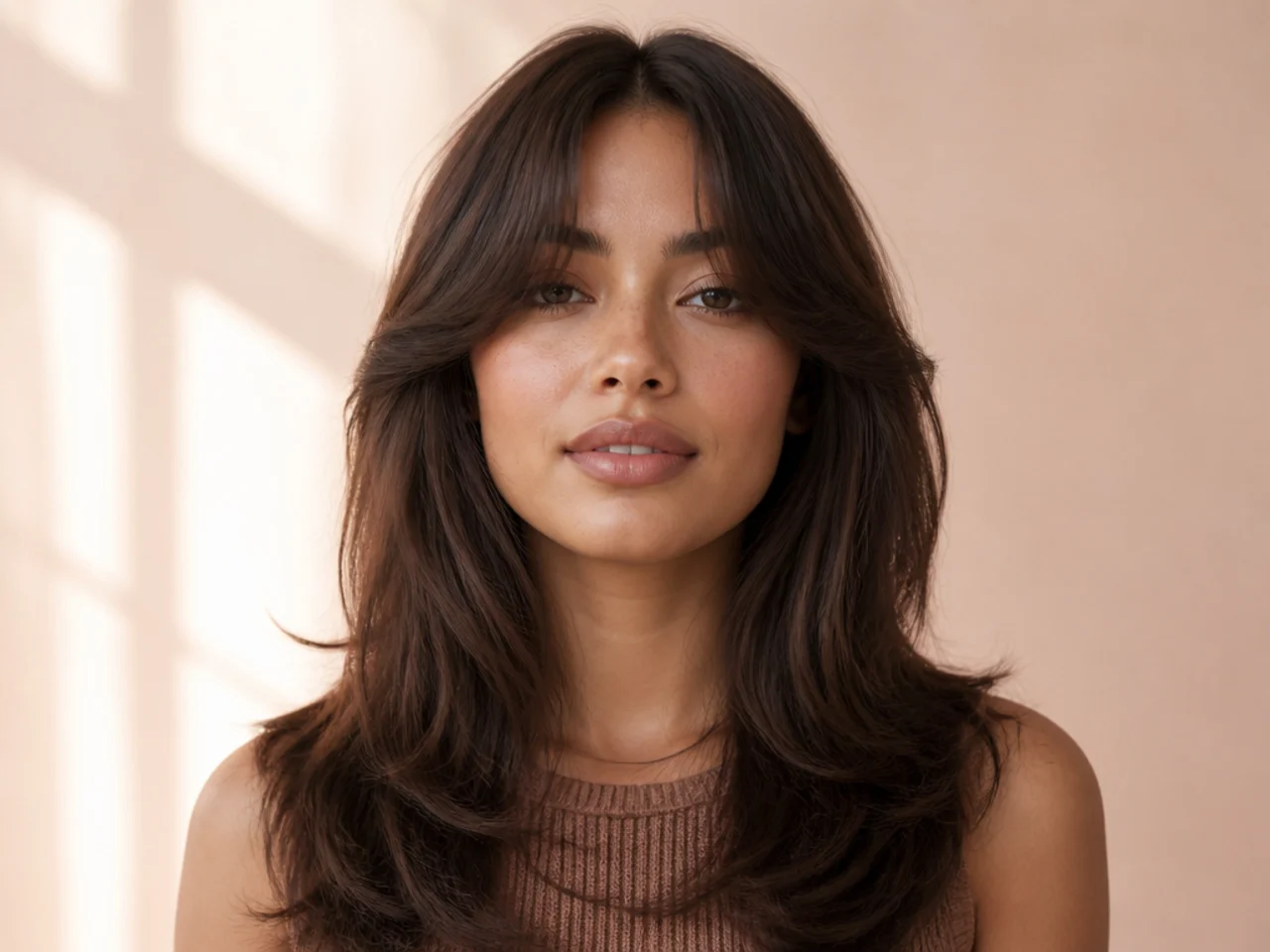
13. Curtain Blend Swept One Way
Everything dried in a single direction. It turns the cut into a deep side sweep.
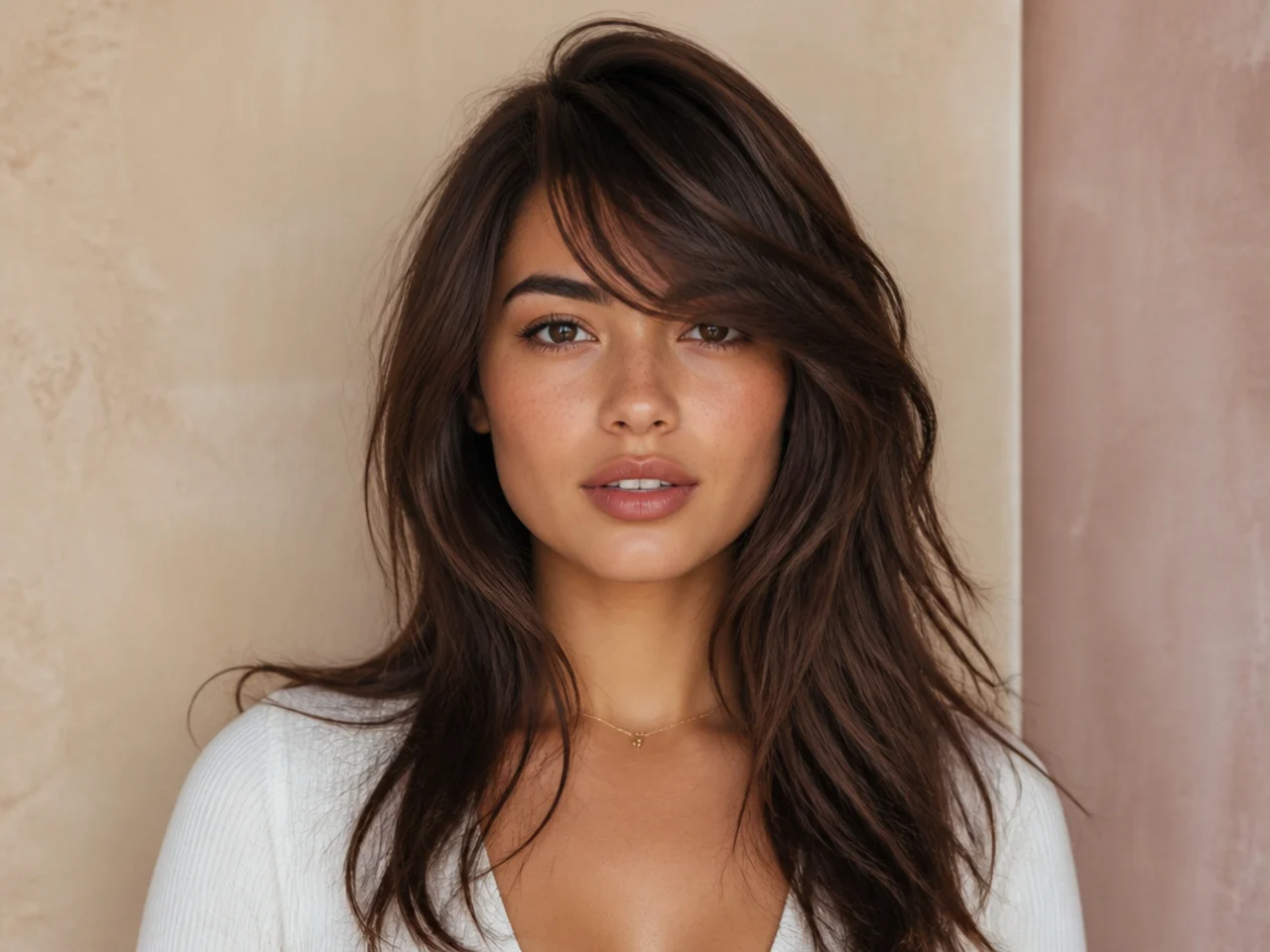
14. Curtain Blend with a Shag
Texture through the whole cut, so the gradient reads as movement rather than shape.

15. Curtain Blend with Highlights at the Front
Lighter pieces along the transition, which makes the gradient visible as colour.

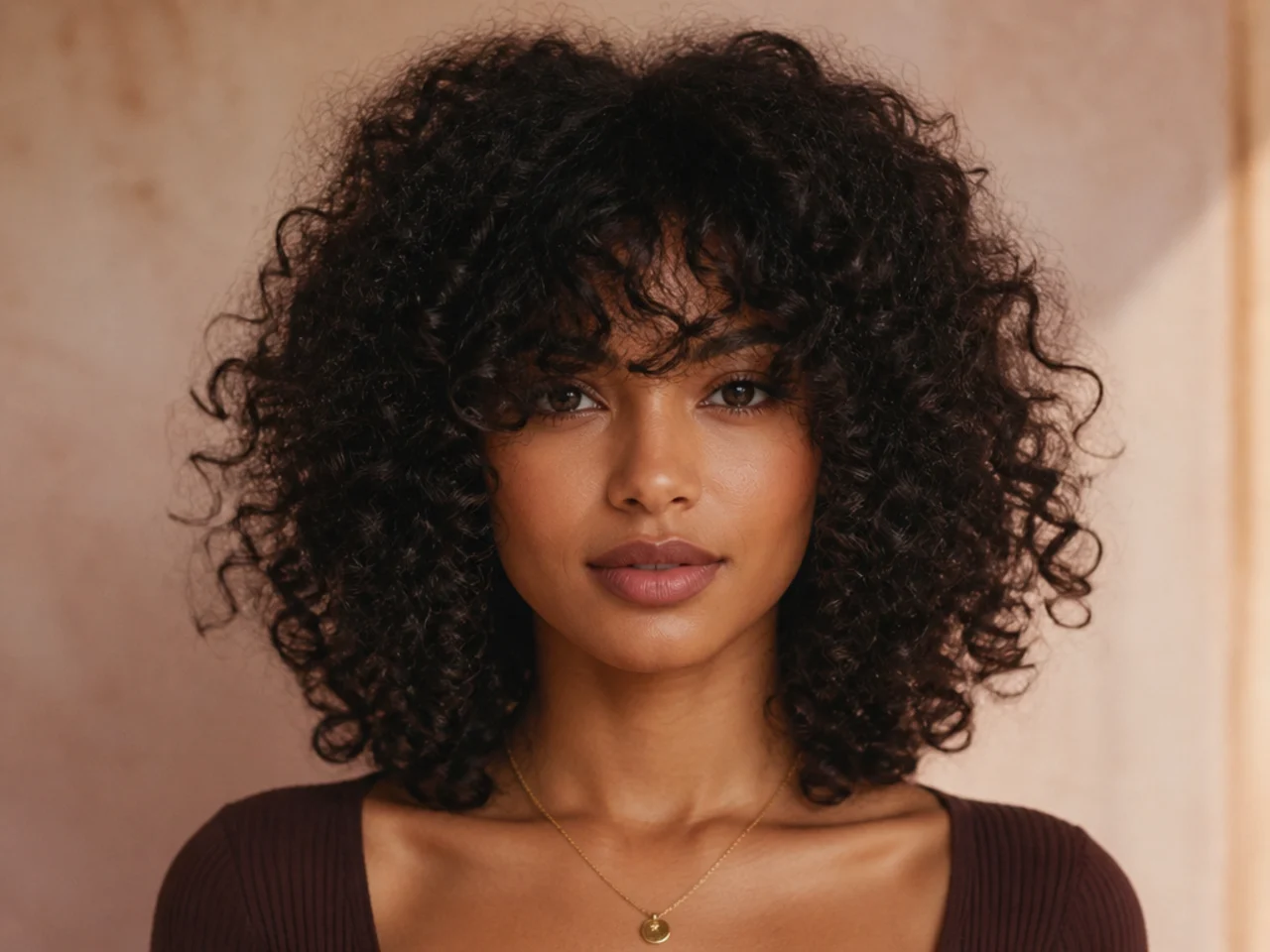
16. Curtain Blend on Coily Hair
Shaped into the pattern, with the gradient built through curl length rather than cut length.
17. Curtain Blend with a Ponytail
Fringe and curtain pieces left out, everything else gathered. The softest way to wear hair up.
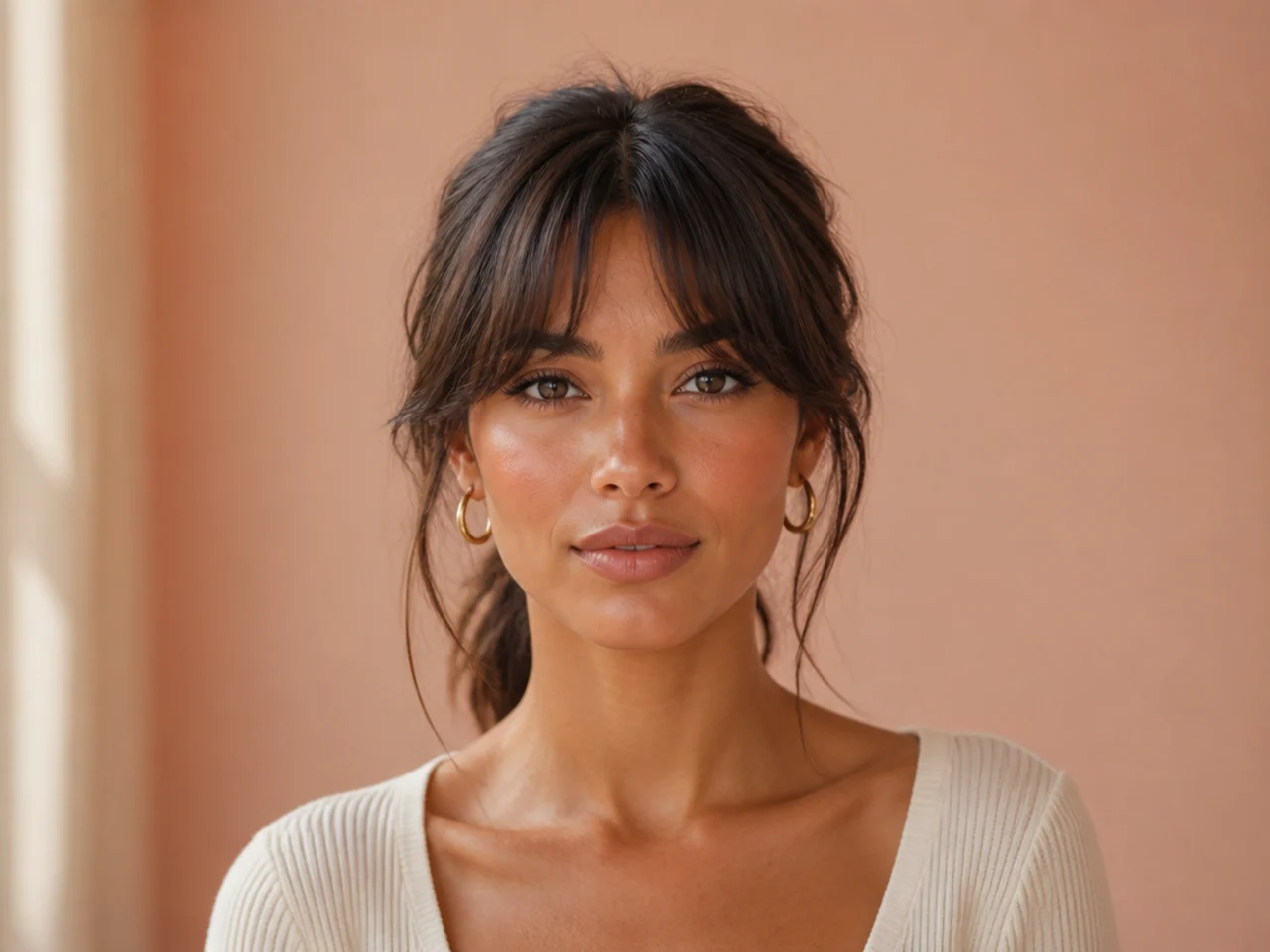
18. Curtain Blend Tucked Behind One Ear
One side tucked, the other loose. Asymmetry without cutting for it.

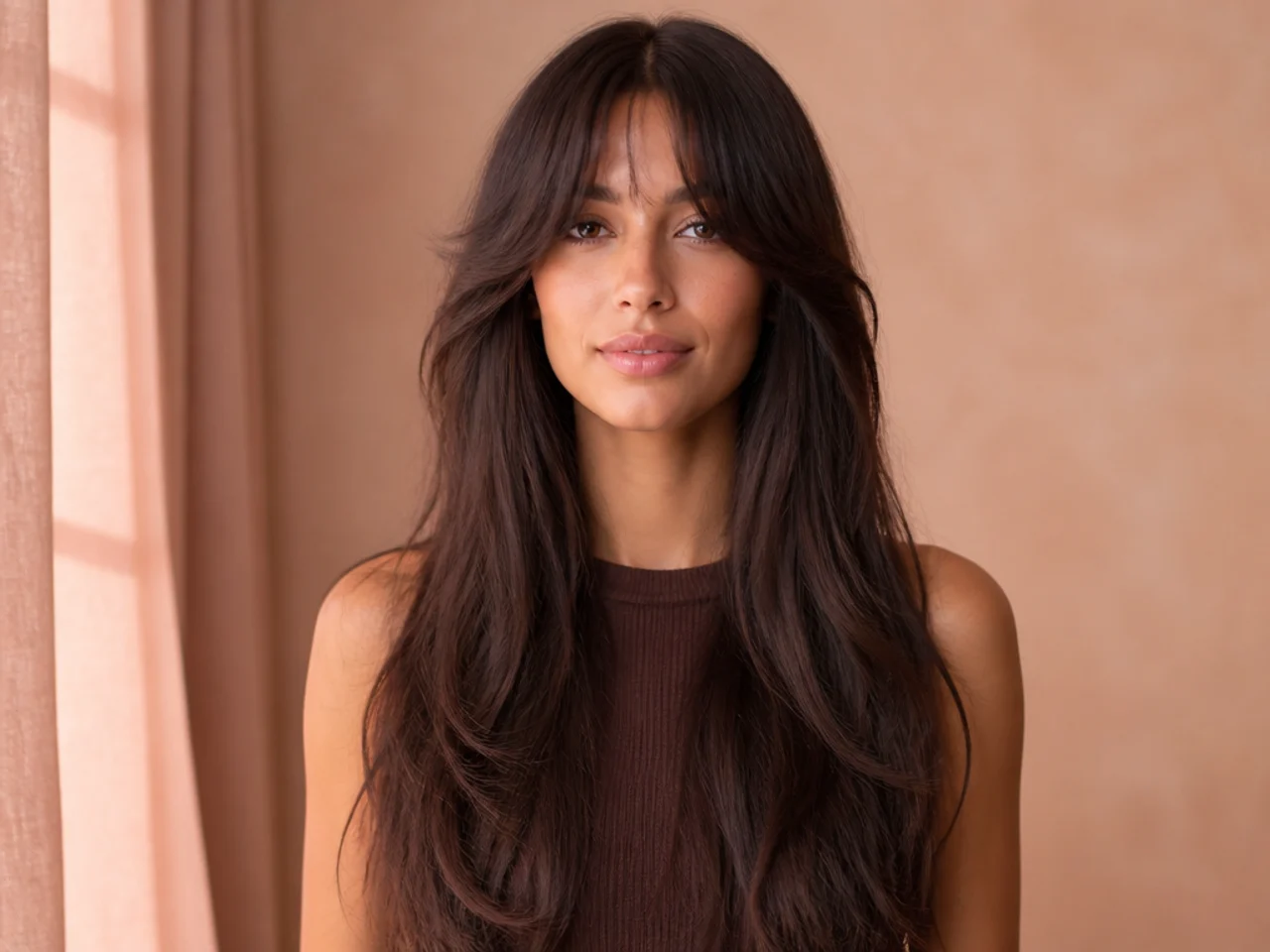
19. Very Long Curtain Blend
The transition starting at the brow and not finishing until the collarbone. Barely a fringe at all.
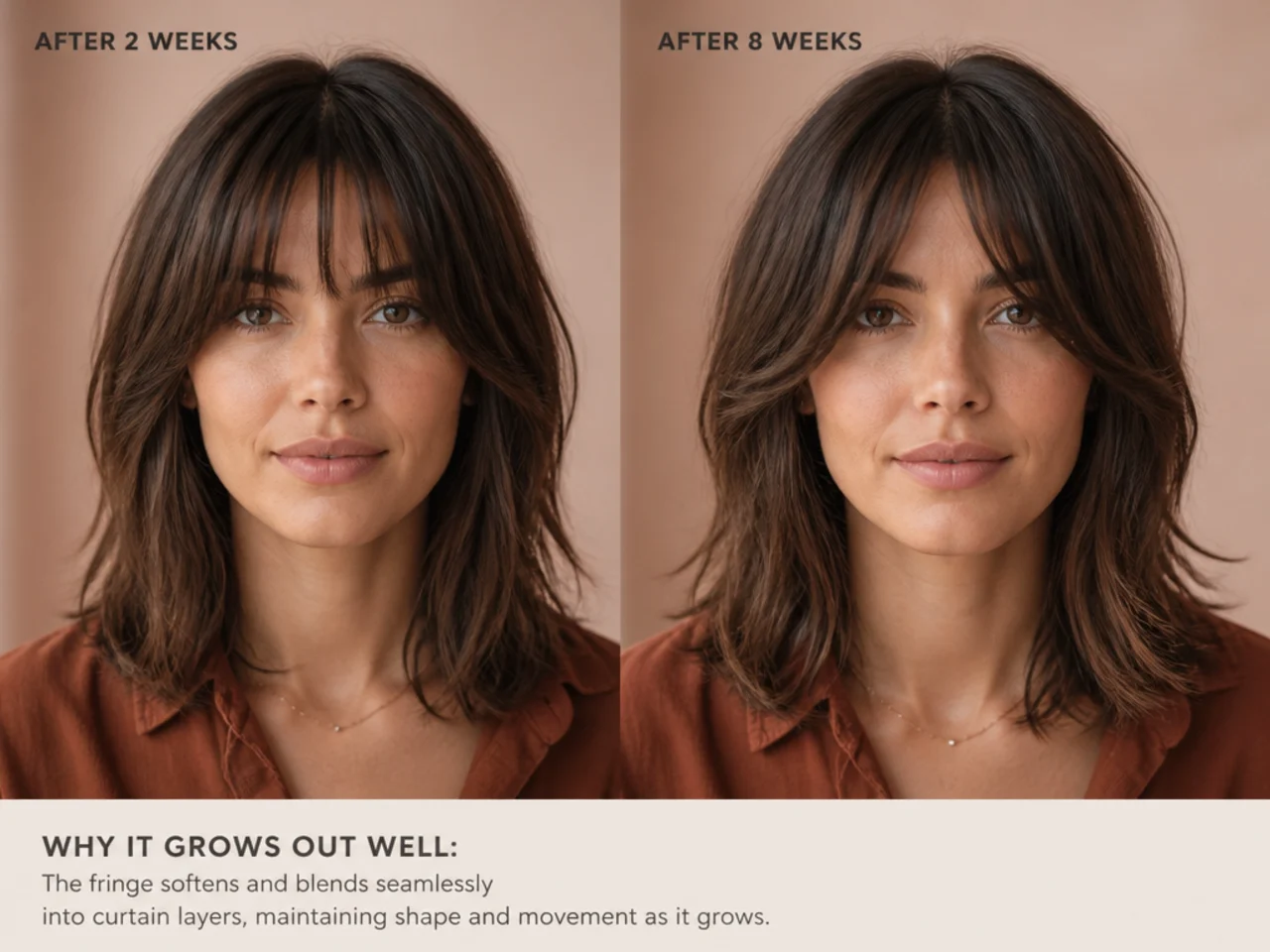
20. Grown-Out Curtain Blend
Six weeks on, and it has simply become curtain bangs. The reason to choose this cut.

Why It Grows Out Well
A plain fringe has one direction to grow: downward, into your eyes. There is no version of that which looks intentional, which is why the six-to-ten week stage is where most people either book a trim or give up on fringes entirely.
This cut grows out sideways as well as down. The dense middle section lengthens and merges into the curtain pieces around it, and at roughly eight weeks the shape has become curtain bangs — a style people book deliberately.
That means the grow-out has a destination. You are not waiting for it to be over; you are moving between two cuts you would have chosen.
Drying It
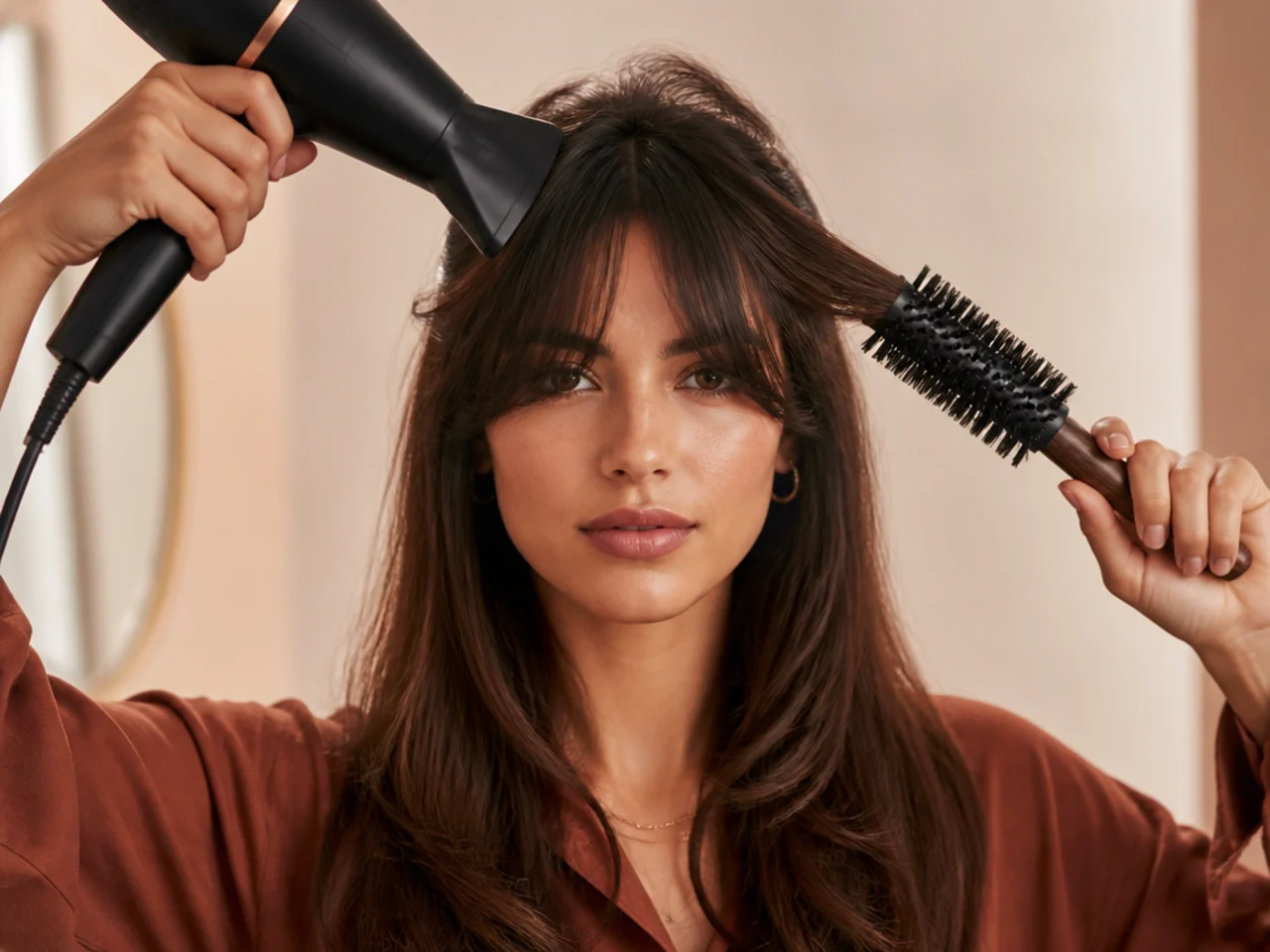
Dry the fringe section first, side to side, exactly as with any fringe.
Dry the curtain pieces away from the face. Point the airflow from the front of your face backward, so the pieces sweep outward rather than falling straight down. Falling straight down is what makes them look like ordinary long layers.
Use a round brush on the curtain sections only. One rotation outward at the cheekbone is enough to set the direction.
Finish with a cool shot. Warm air moves it, cold air keeps it there.
Mistakes to Avoid
Starting the transition too far in. The fringe stops reading as a fringe.
A visible corner where the sections meet. The blend must be point-cut vertically, not cut across at an angle.
Drying the curtain pieces straight down. They become plain layers.
Asking for it without specifying the transition point. The phrase covers a family of cuts, not one.
Attempting the blend at home. The fringe is doable; the connection is not.

FAQ
What is this cut? A dense fringe lengthening outward into face-framing pieces, with no visible break.
Where should the transition be? At the outer eyebrow corner, sloping to the cheekbone.
Does it grow out better? Considerably — it becomes curtain bangs rather than an awkward stage.

Final Thoughts
Specify the transition point when you book, and dry the curtain pieces away from your face. This is the version of a fringe with no bad stage — which makes it the one to choose if you have wanted bangs and been put off by the grow-out.
To choose between the two cuts see French bangs vs curtain bangs compared, and for the full range see 25 chic French bangs ideas. More in Bangs & Fringe.