15 Straight Short Curtain Bangs Ideas That Stay Put
Fifteen short curtain bangs cut for straight hair, and the problem nobody warns you about. Straight hair carries scalp oil down the strand faster than any other texture, so the fringe goes flat first and separates into strips.
In this article · 23
- What They Are Versus a Full Fringe
- How Short Is Too Short
- Face Shapes
- The Flat and Greasy Fix
- Styling at Home
- Trim Cadence and Grow Out
- The 15 Straight Short Curtain Bangs Ideas
- 1. Brow Grazing
- 2. Point Cut for Fine Hair
- 3. Chin Bob
- 4. Round Face
- 5. Cowlick Proof
- 6. See Through
- 7. French Bob
- 8. Blunt Edge on Thick Hair
- 9. Deep Center Part
- 10. Cheekbone Length
- 11. Sleek Pixie
- 12. Korean Flick
- 13. Money Piece
- 14. Shoulder Length
- 15. Grown Out
- Final Thoughts
Straight hair makes the cleanest curtain bang of any texture and the least forgiving, because there is nothing in the strand to hide a mistake behind.
The shortest point sits at the centre and runs longer outward. That grade is the cut. On straight hair a step anywhere along it reads as a step rather than as shadow, because a flat strand reflects light in one direction only.
The fringe goes greasy before the rest of your head. It lies against the forehead, it gets pushed aside a dozen times a day, and a straight strand gives sebum an unbroken path from root to end.
What They Are Versus a Full Fringe
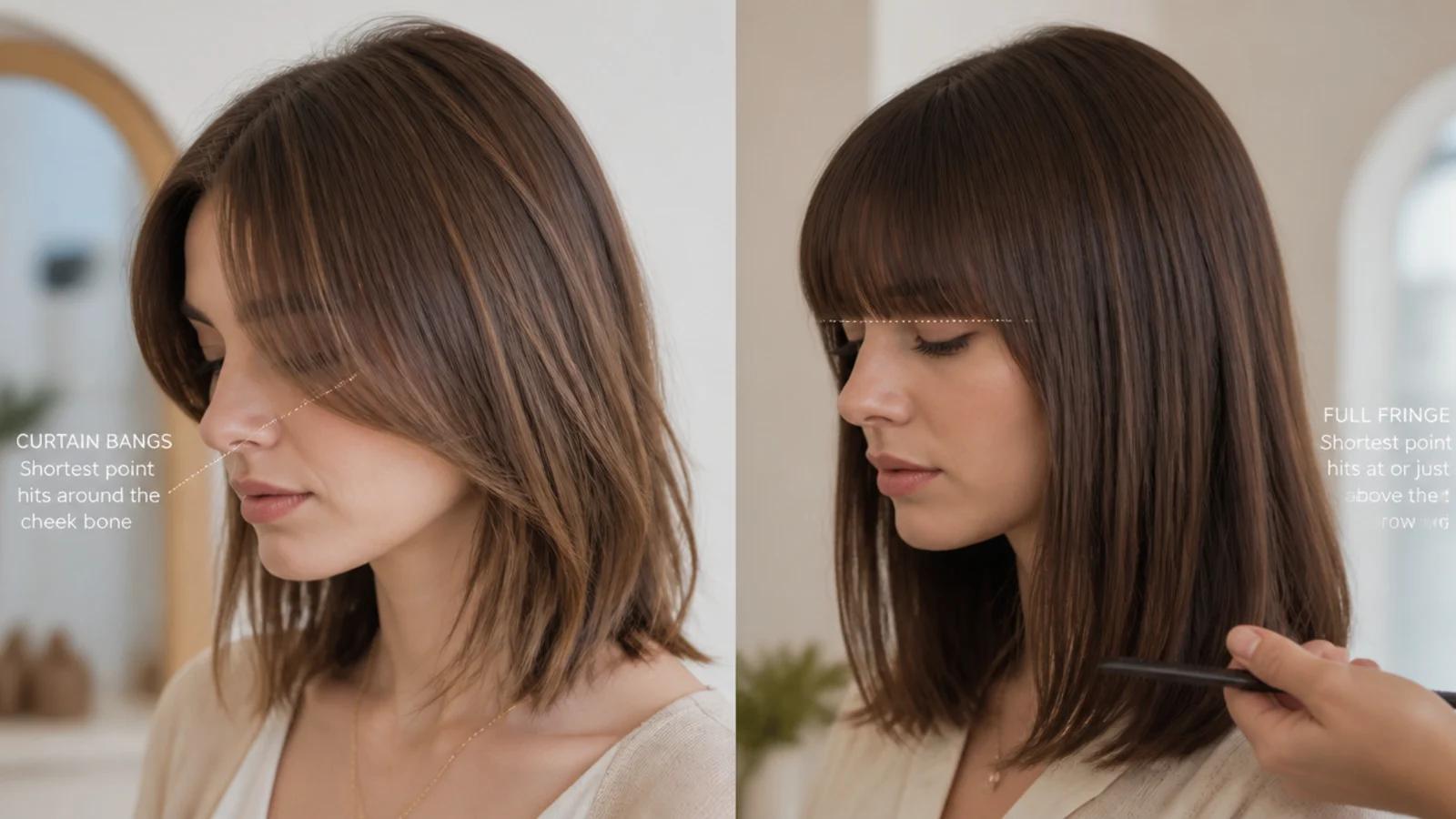
A full fringe puts its shortest point at or just above the brow and holds it level. Every strand finishes on the same line, which is why it reads as a band rather than a frame.
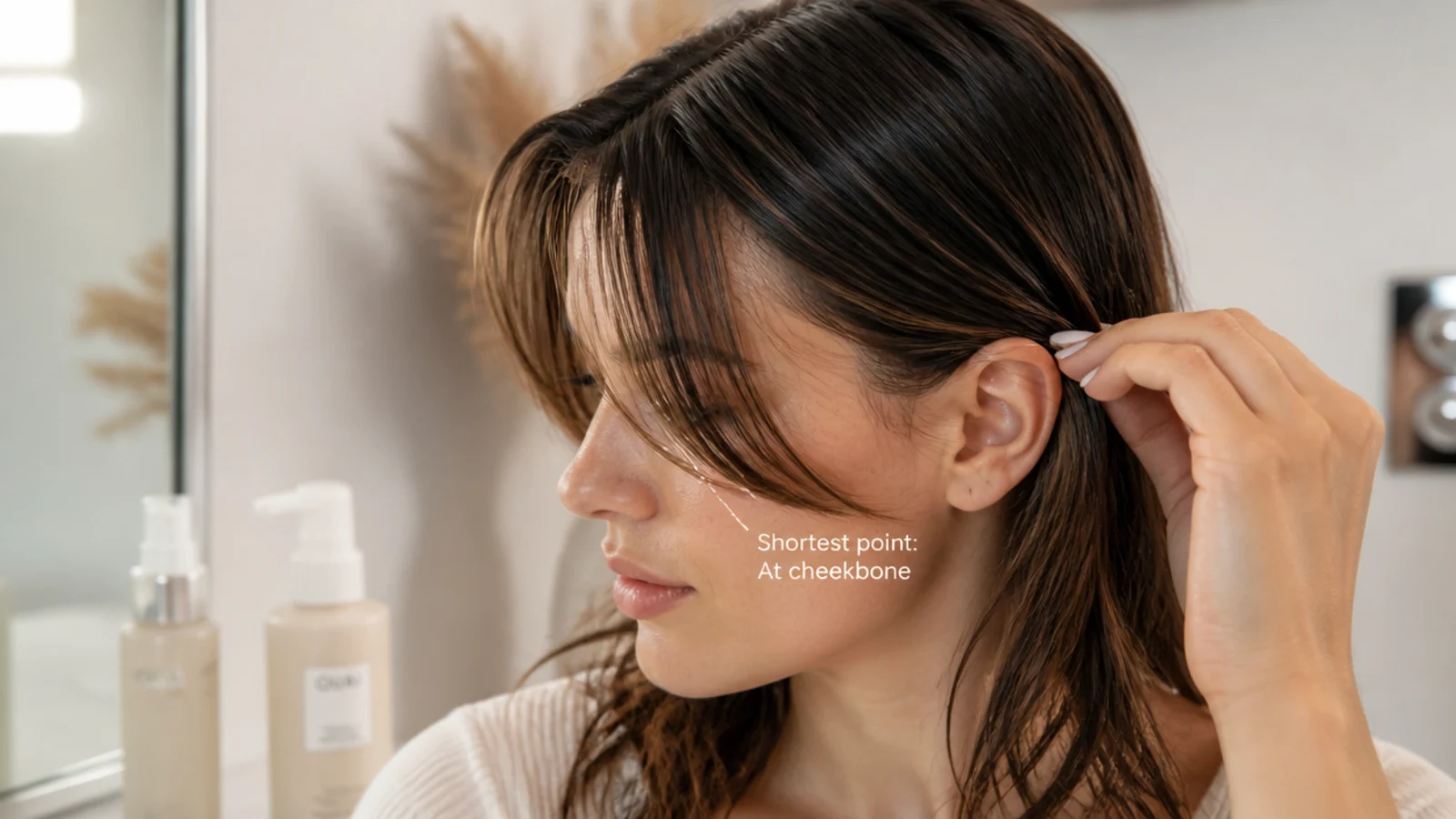
A curtain bang puts its shortest point around the cheekbone and grades longer to the sides. Nothing is level. The two halves fall open from a split, and the length at the outer edge has to reach your face-framing length to blend.
A fringe covers, a curtain bang frames. One sits across the forehead, the other runs down the sides of the face. That is a decision about which part of your face you want emphasised, not about length.
Going from one to the other takes about three months. A blunt fringe grows into a curtain bang only after the centre has dropped from the brow to the cheekbone, which is roughly an inch and a half at half an inch a month.
How Short Is Too Short
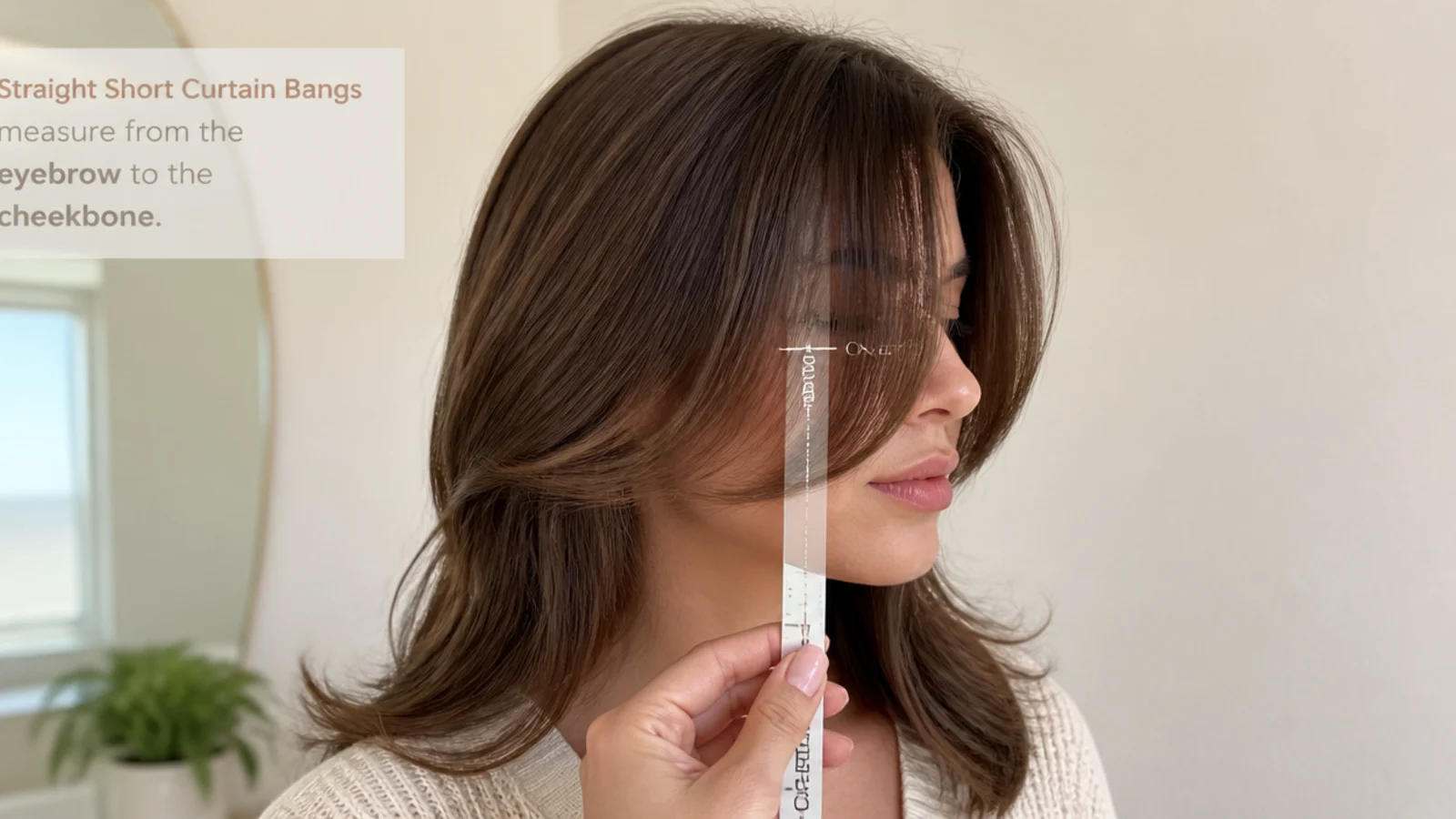
Measure from the eyebrow to the cheekbone. Those two landmarks bracket the entire usable range for a short curtain bang, and everything you might want sits between them.
Anything above the brow stops framing. With no length beside the eye there is nothing to draw the face inward, so the cut turns into a forehead treatment.
Anything below the cheekbone stops being short. The centre is no longer noticeably shorter than the sides and the split has nothing to hold it, so it reads as face-framing layers.
Write the landmark down, not the inches. An inch lands differently on every forehead, and the same measurement produces two different cuts on two people.
Face Shapes
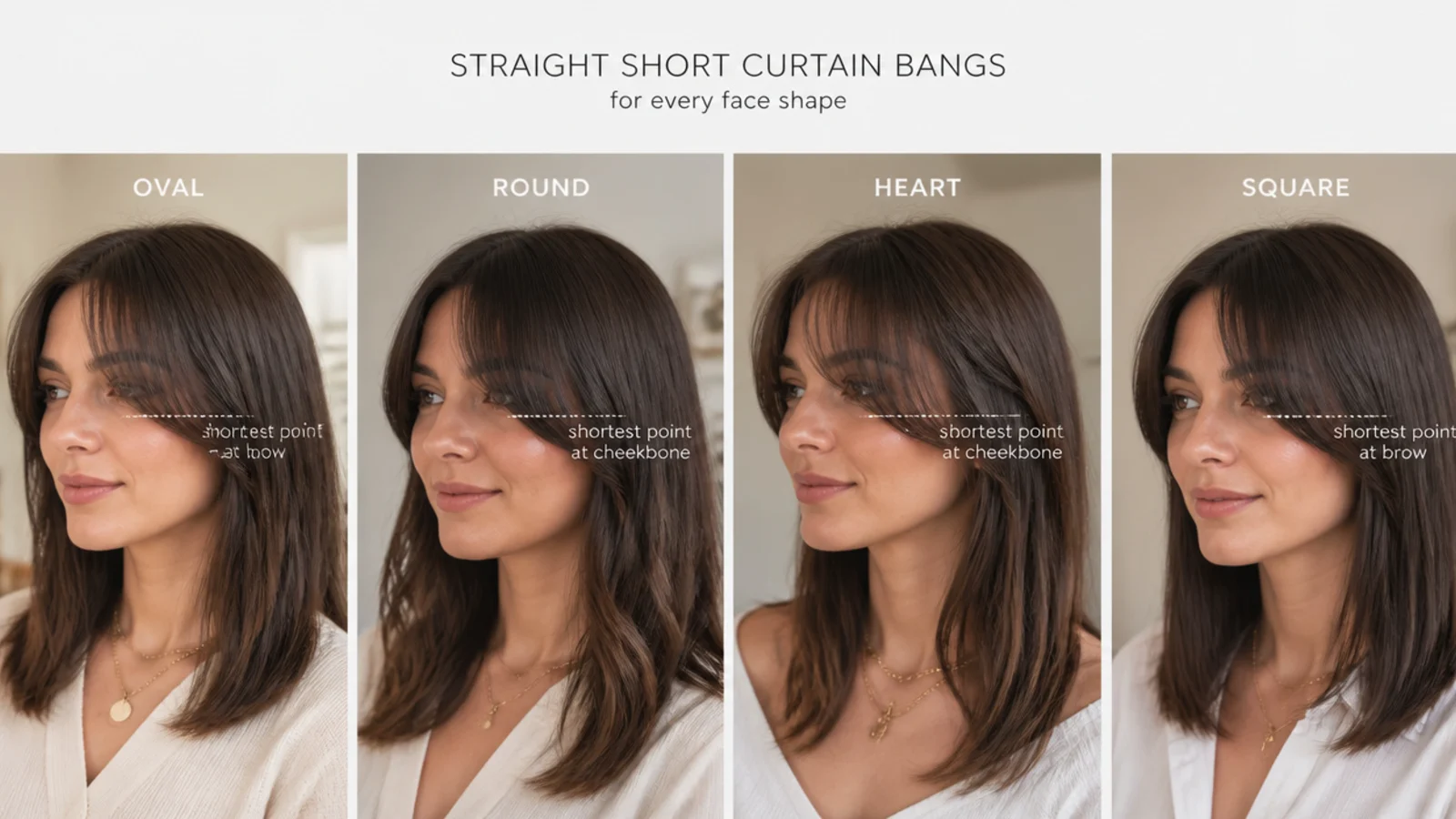
Oval takes the shortest point at the brow. Nothing needs correcting, so the cut can sit at its highest and the frame stays open.
Round takes it at the cheekbone. Length running down past the widest part of the face gives the eye a vertical to follow, which counts against the horizontal.
Heart takes it at the cheekbone too. The bang covers a wider forehead while the sides carry weight down toward the narrower chin, which balances the two ends of the face against each other.
Square takes it at the brow. Keeping the shortest point high leaves the sides long enough to fall past the jaw corners instead of stopping on them.
The Flat and Greasy Fix
Treat the fringe as a separate wash. Rinsing just the front over a basin takes two minutes and buys you two more days on the rest of the head, which is the single biggest saving available here.
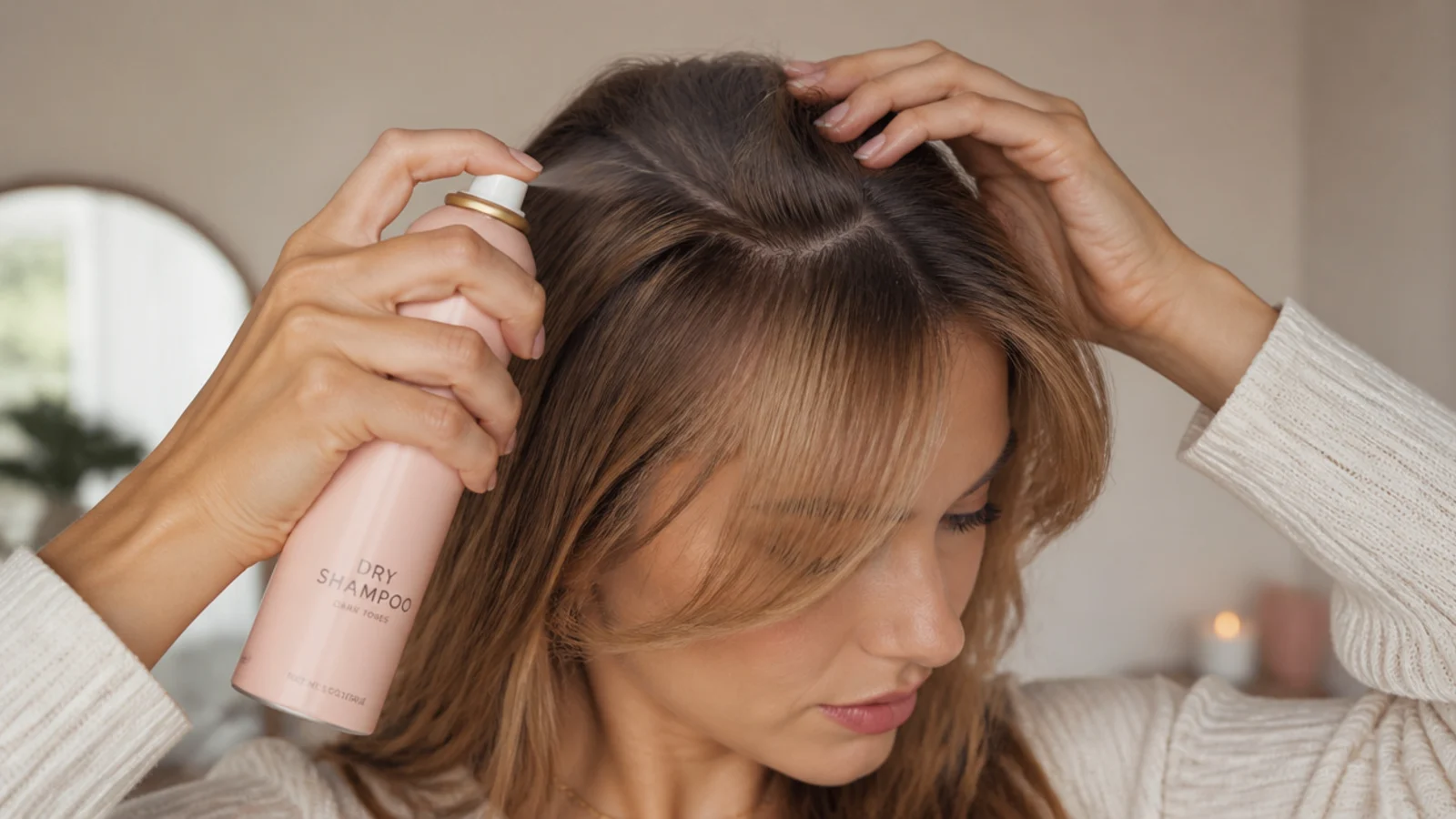
Dry shampoo is a starch or alcohol aerosol, and it works by absorption. The powder binds loose sebum so the strand stops clumping into strips. It does nothing for a scalp that is already saturated, which is why it has to go on before the fringe looks oily rather than after.
Spray at the root and wait before touching it. The carrier has to evaporate for the powder to sit where you aimed it. Brushing straight away moves wet product down the strand and makes the flatness worse.
Stop pushing it aside. Every touch transfers oil from your fingers to the one section that is already closest to your skin, and the fringe is touched more than the rest of your head combined.
Styling at Home
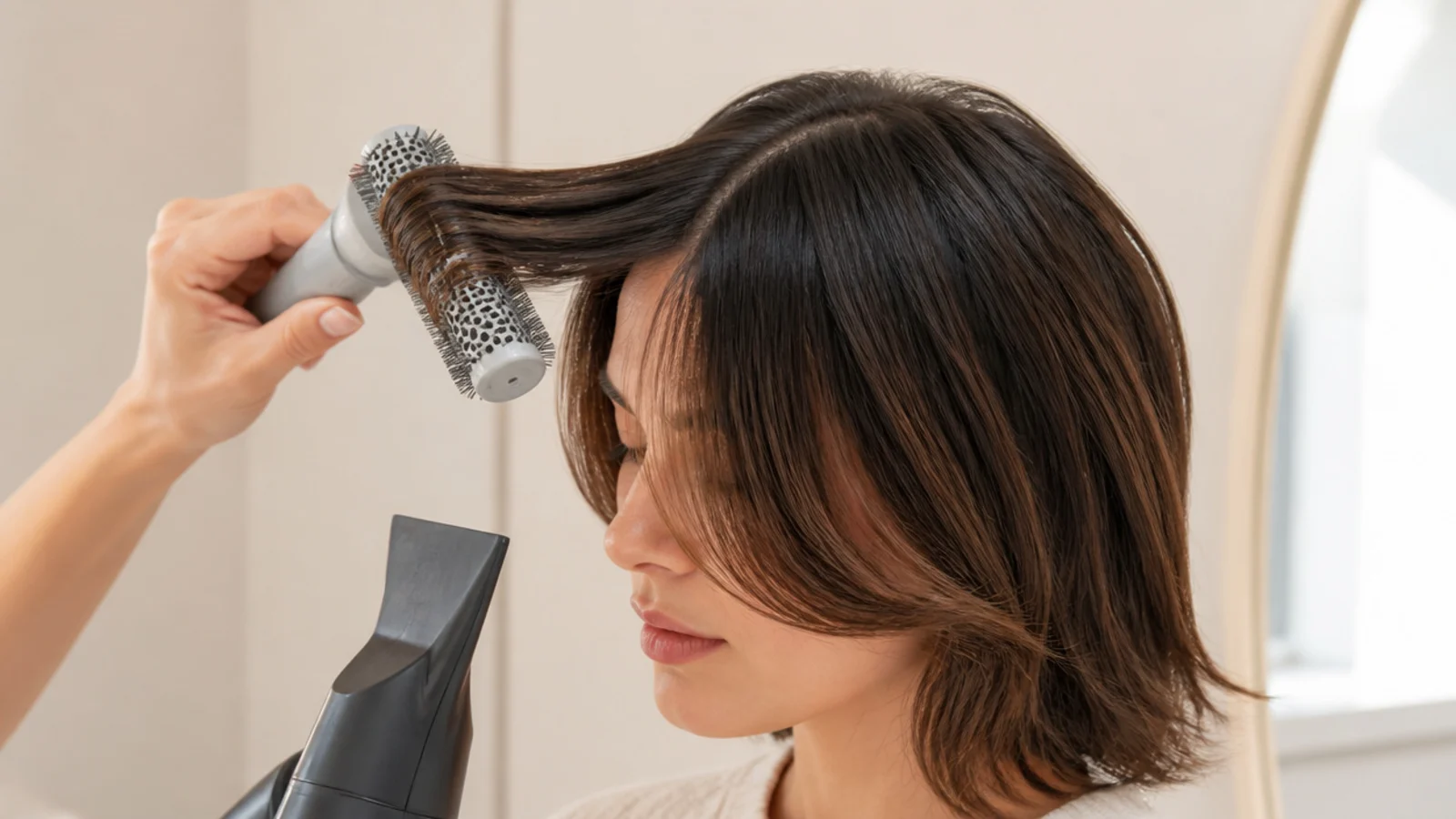
Dry the fringe wet, before anything else. Straight hair sets its root direction in the first minute of drying, and once it has dried flat only water will move it.
Overdirect across the parting and let it fall back. Drying the section to the wrong side leaves the root standing rather than lying down, which is where every bit of lift in a curtain bang comes from.
One half turn of a round brush, no more. The bend belongs in the last inch. A full rotation puts a curl in that you then flatten with an iron, which costs you the lift you just built.
Finish cold and leave it alone. The bend locks as the strand cools, so a cold shot at the end holds far longer than another minute of heat.
Trim Cadence and Grow Out
Trim every six to eight weeks to hold the shape. You are taking a few millimetres off the centre only, which resets the grade without recutting anything.
The shortest point drops one landmark every three weeks. Half an inch of growth a month means the centre moves brow to lash line, lash line to cheekbone, at almost exactly that rate.
Trim dry, never wet. Wet straight hair hangs longer than it sits and cannot spring back, so a centre placed wet comes up short every time.
To grow them out, stop trimming the centre and keep trimming the sides. The outer edges are what has to reach your length for the bang to disappear, so keeping them tidy is what makes the transition invisible.
The 15 Straight Short Curtain Bangs Ideas
1. Brow Grazing
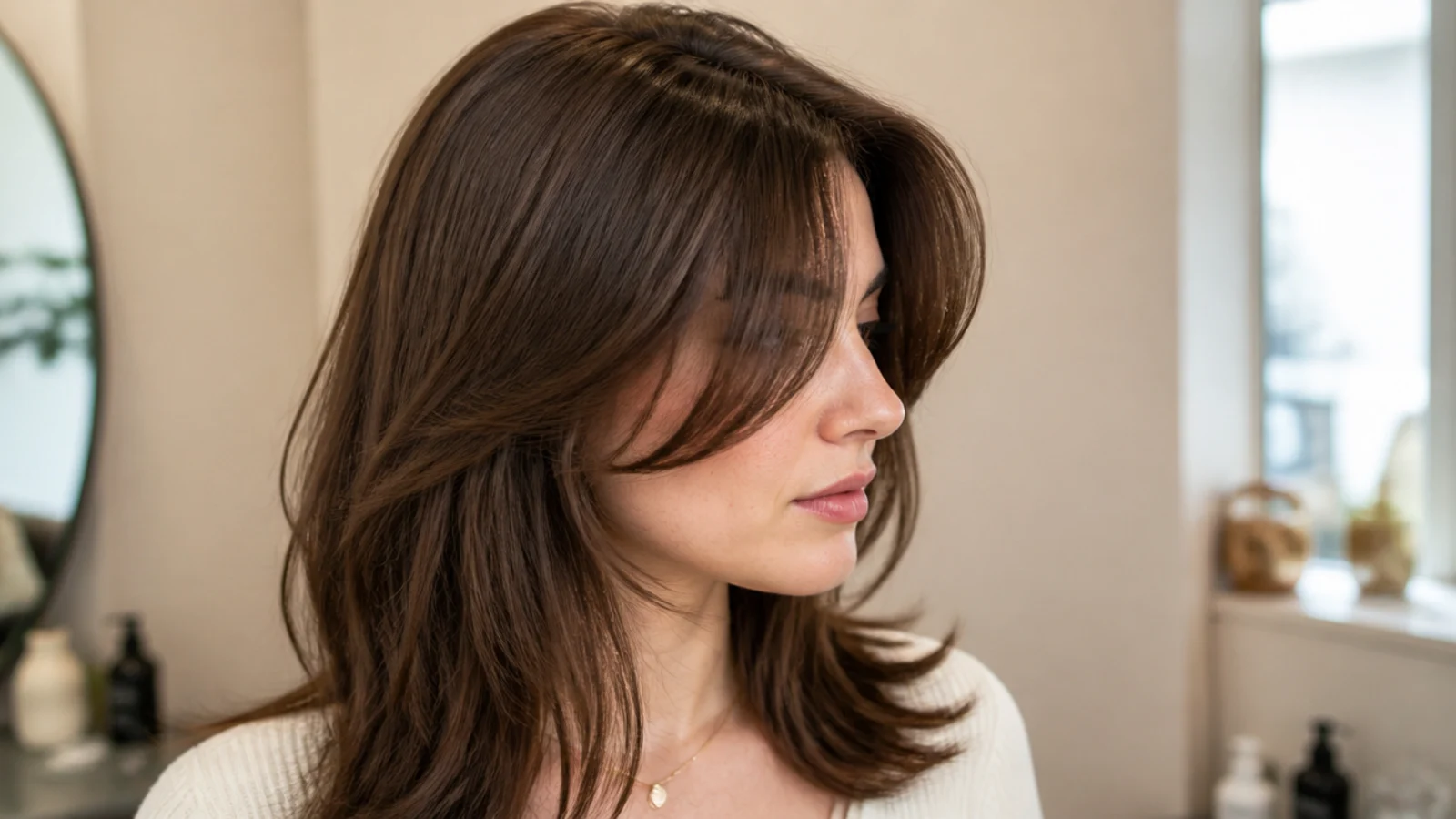
The shortest point stops right where the brow begins, which frames the eyes without asking you to see through anything. On straight hair this length holds its own weight and needs almost no styling, since there is no wave trying to lift it off the intended line.
2. Point Cut for Fine Hair
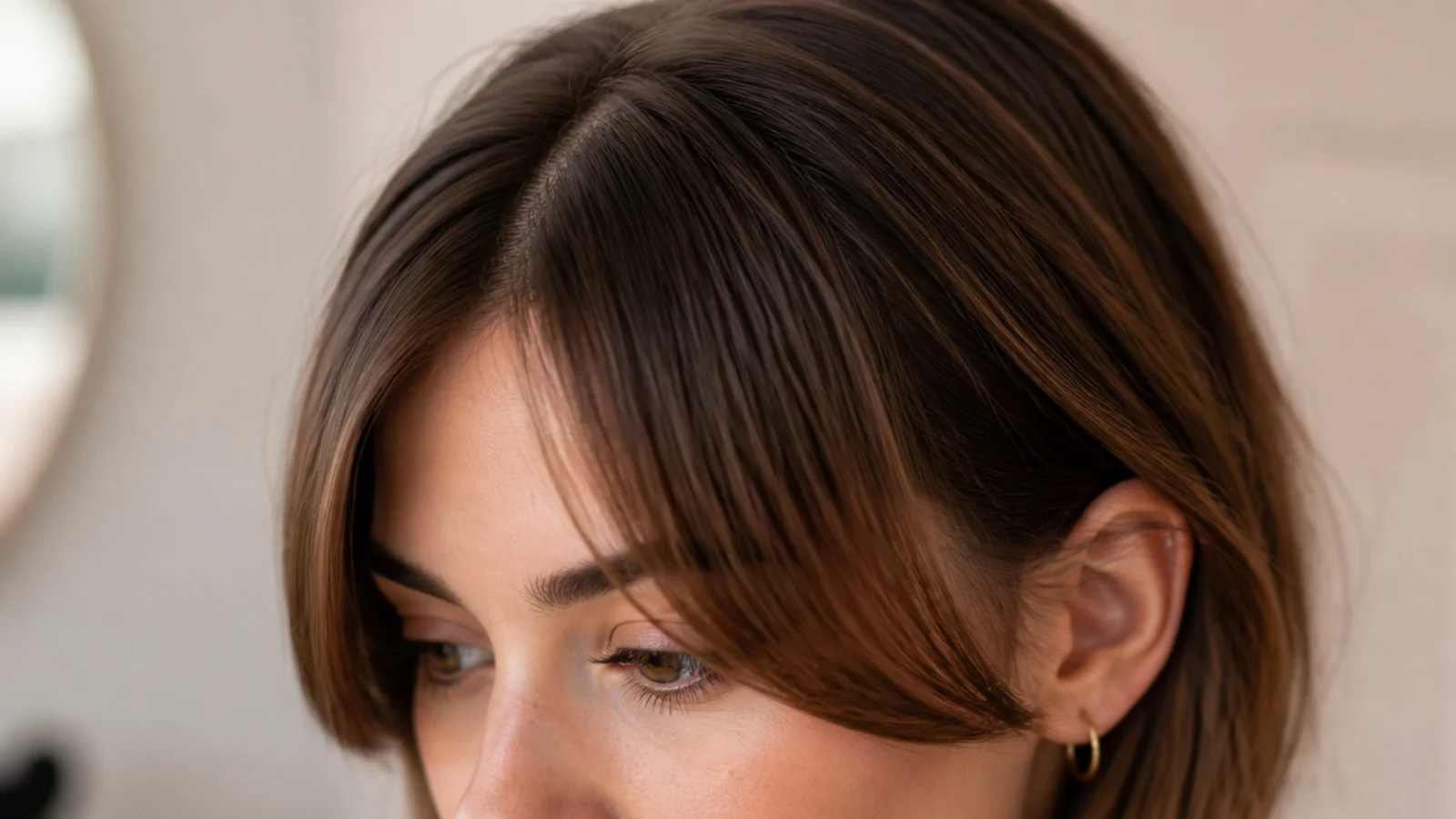
The ends are sliced into vertically so each strand finishes at a different depth. On fine straight hair that stagger reads as density, where a blunt line reads as a thin flat band with the scalp showing through above it.
3. Chin Bob
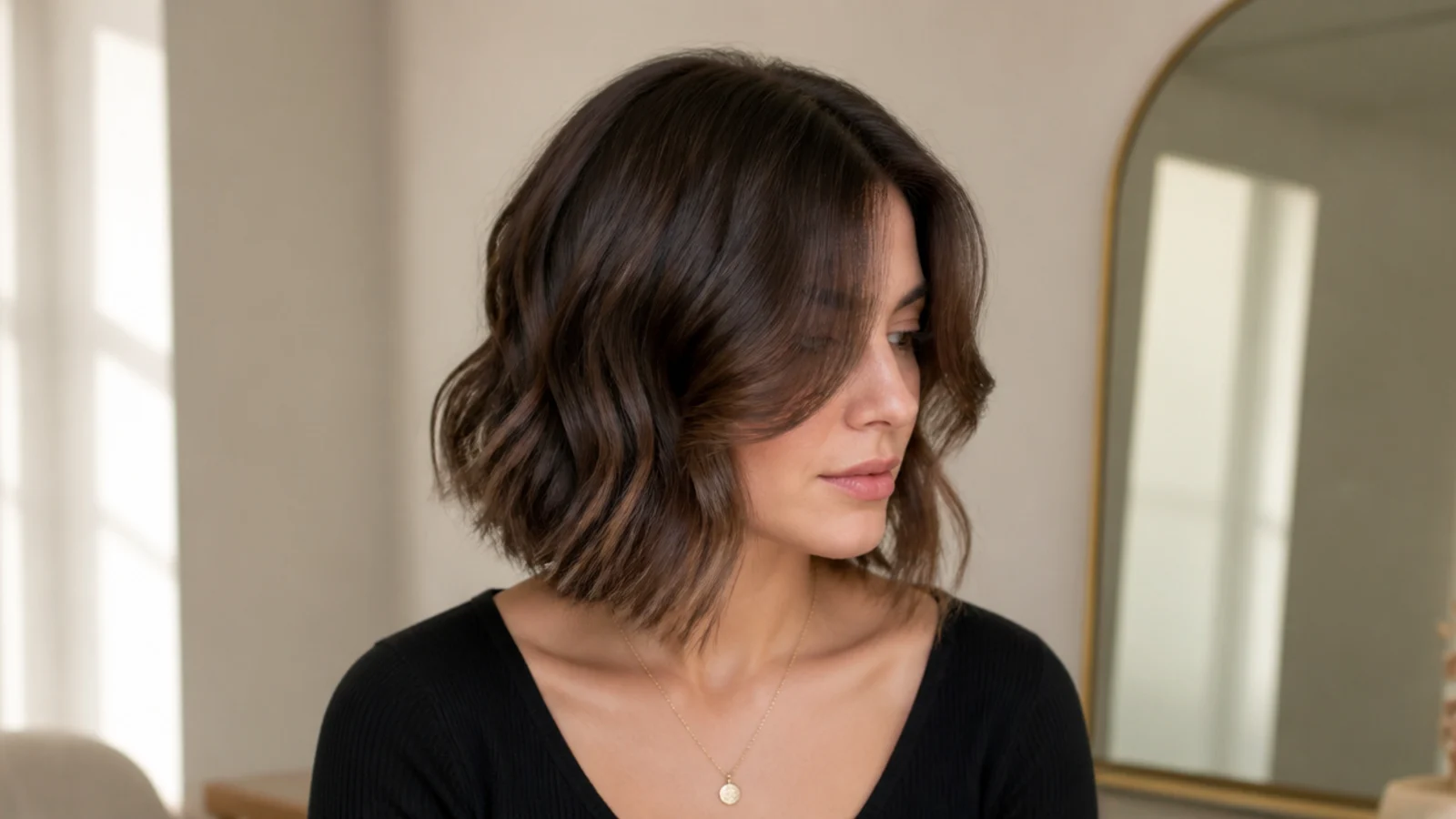
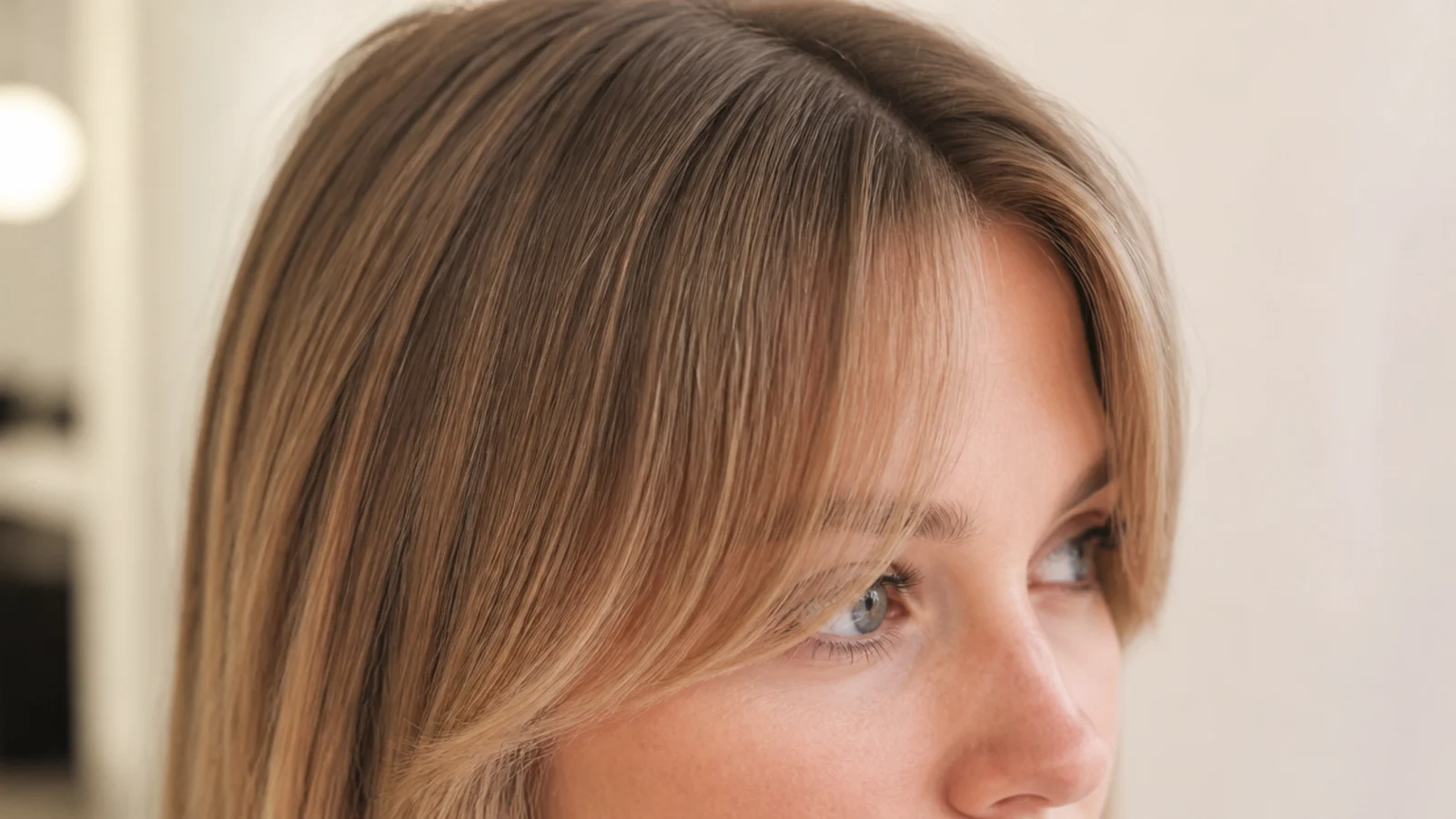
A bob that stops at the chin gives the bang somewhere to land, so the outer edge of the sweep meets the bob line instead of hanging above it. Get the two lengths to meet and the cut reads as one shape rather than a fringe added to a bob.
4. Round Face
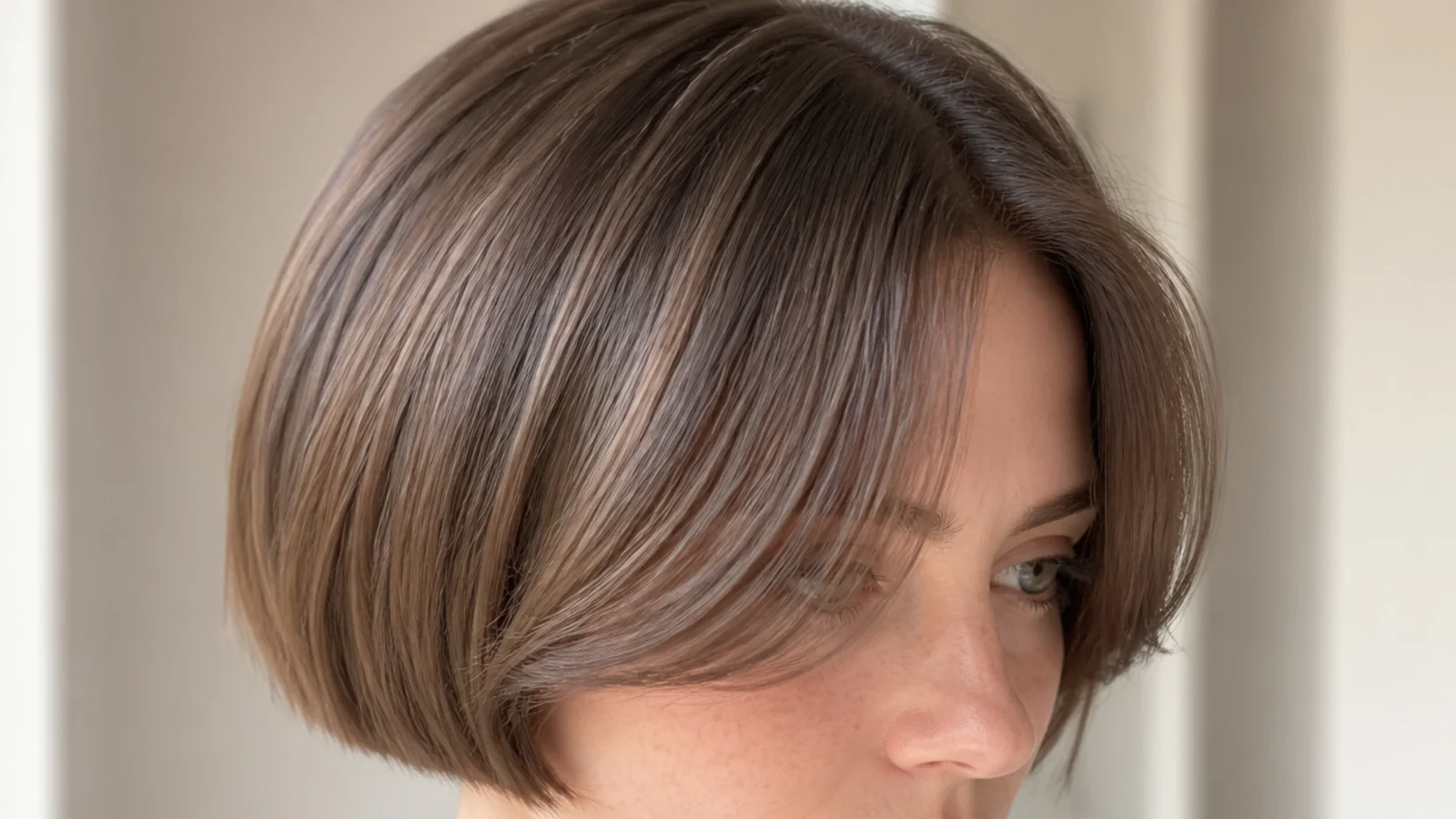
The shortest point sits at the cheekbone so the sweep runs down the widest part of the face. The eye follows the longest line available, and a vertical sweep past the cheek gives it one that competes with the width.
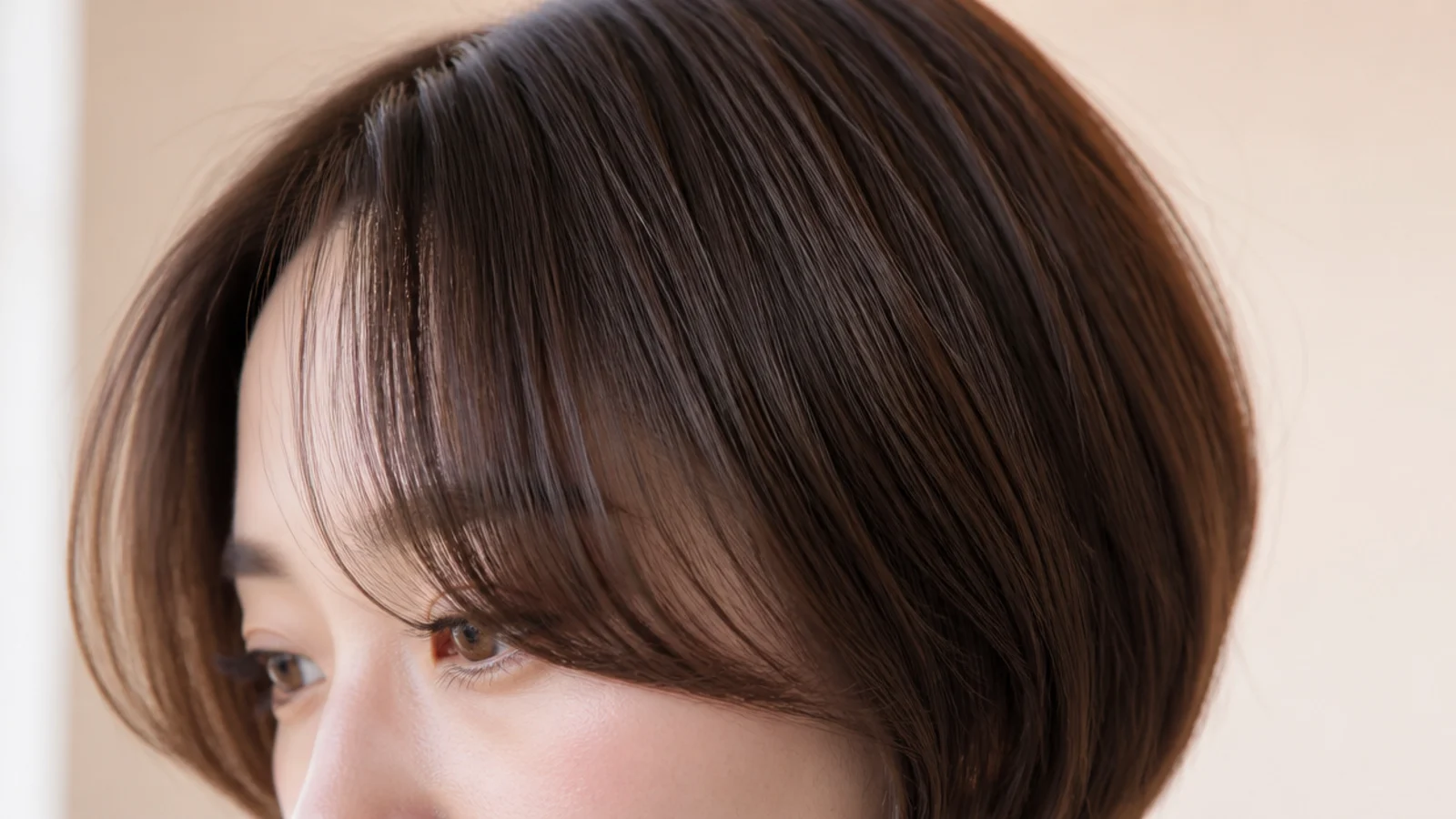
5. Cowlick Proof
Cut the bang wider than the cowlick so the swirl has neighbouring hair to hold it down. A cowlick fights any section narrower than itself, and adding half an inch of width on each side gives the cut enough weight to overrule it.
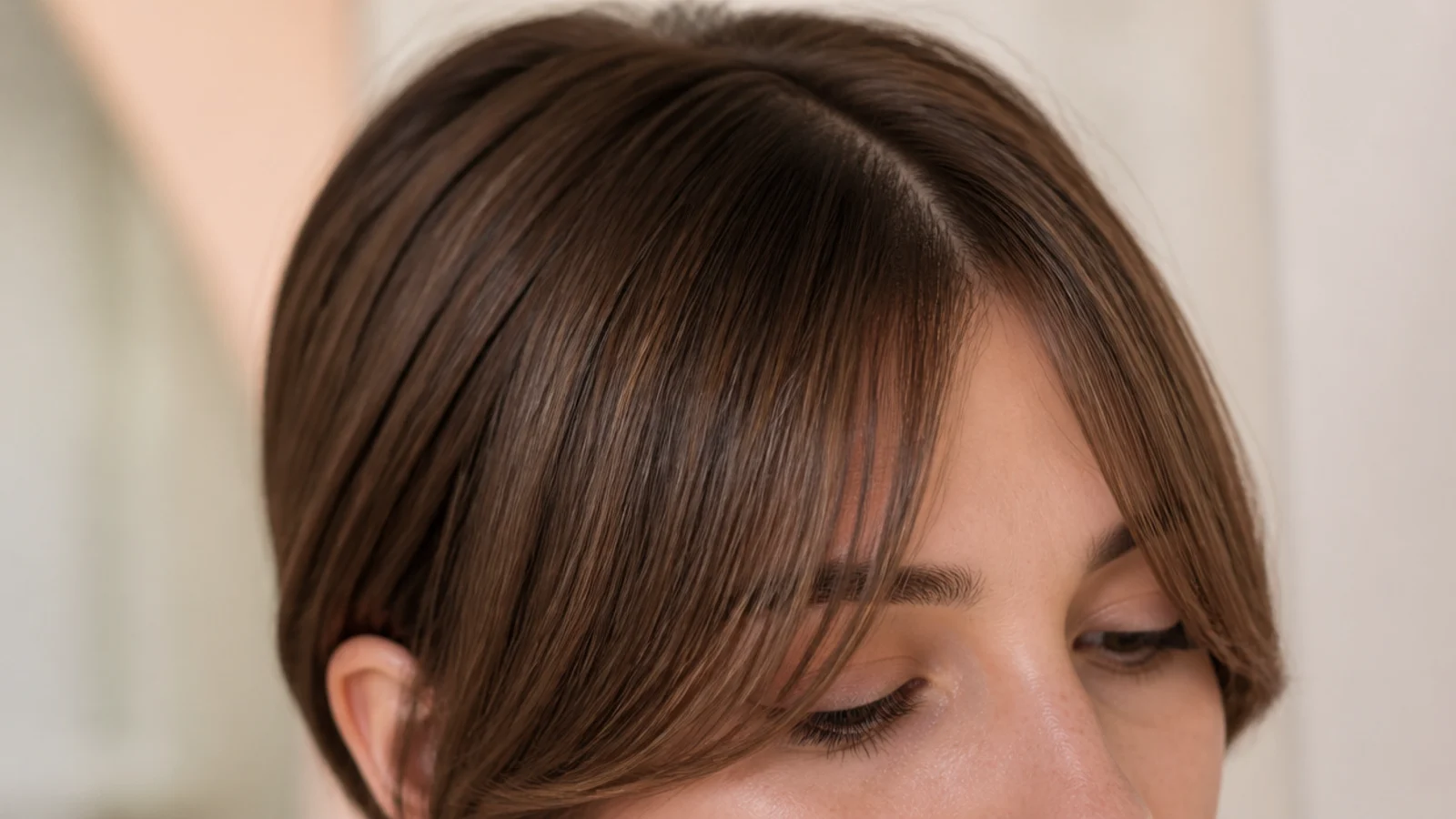
6. See Through
The bang is taken from a shallow section so a little forehead shows through it. Less hair pulled forward means the crown keeps its density, which is the trade every fine-haired person makes when they cut a fringe.
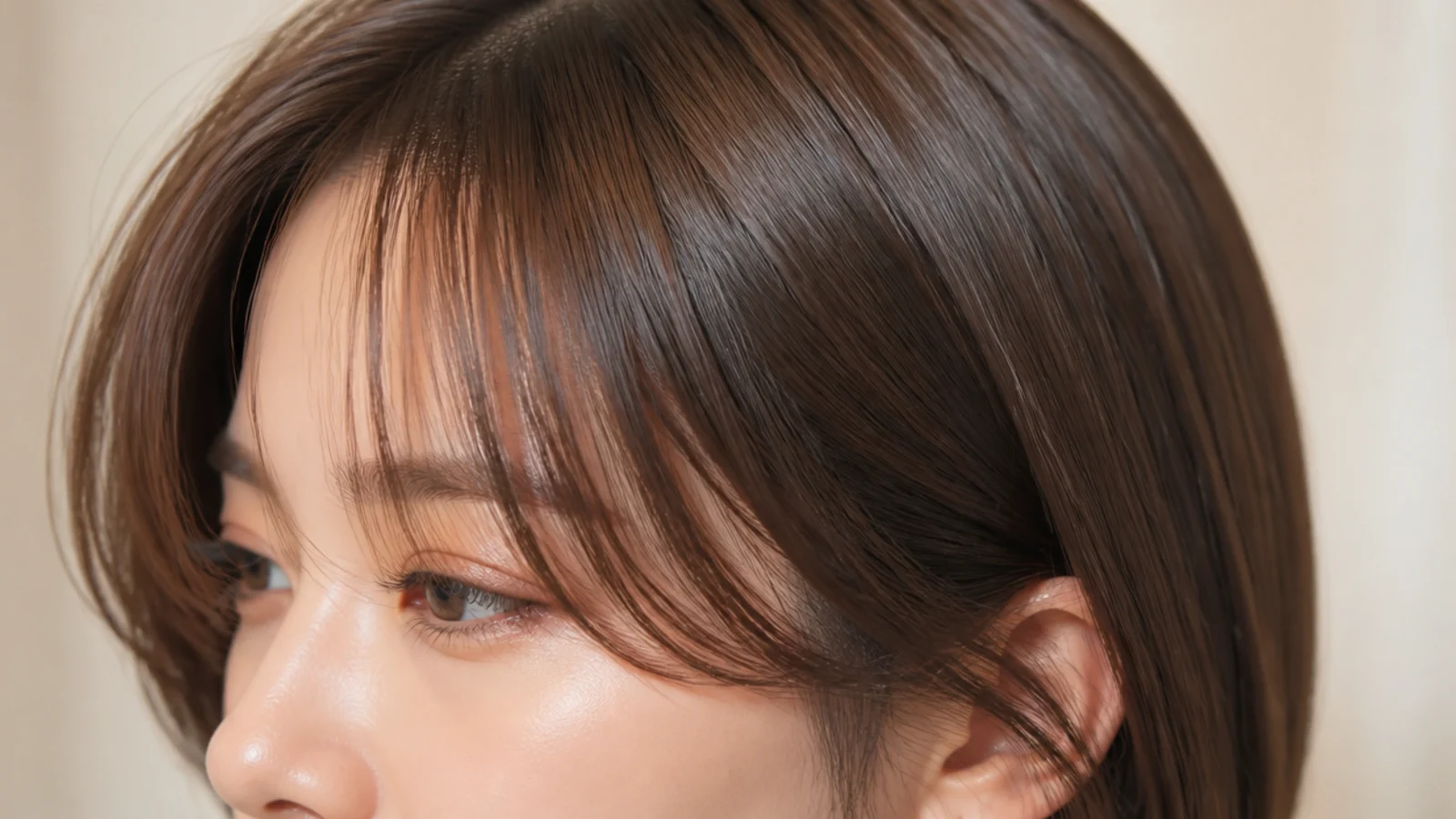
7. French Bob
A short bob with a fringe built in, where the bang is cut as part of the perimeter rather than added to it. Because both lines are set at the same appointment they grow out at the same rate, so the shape stays balanced for longer.
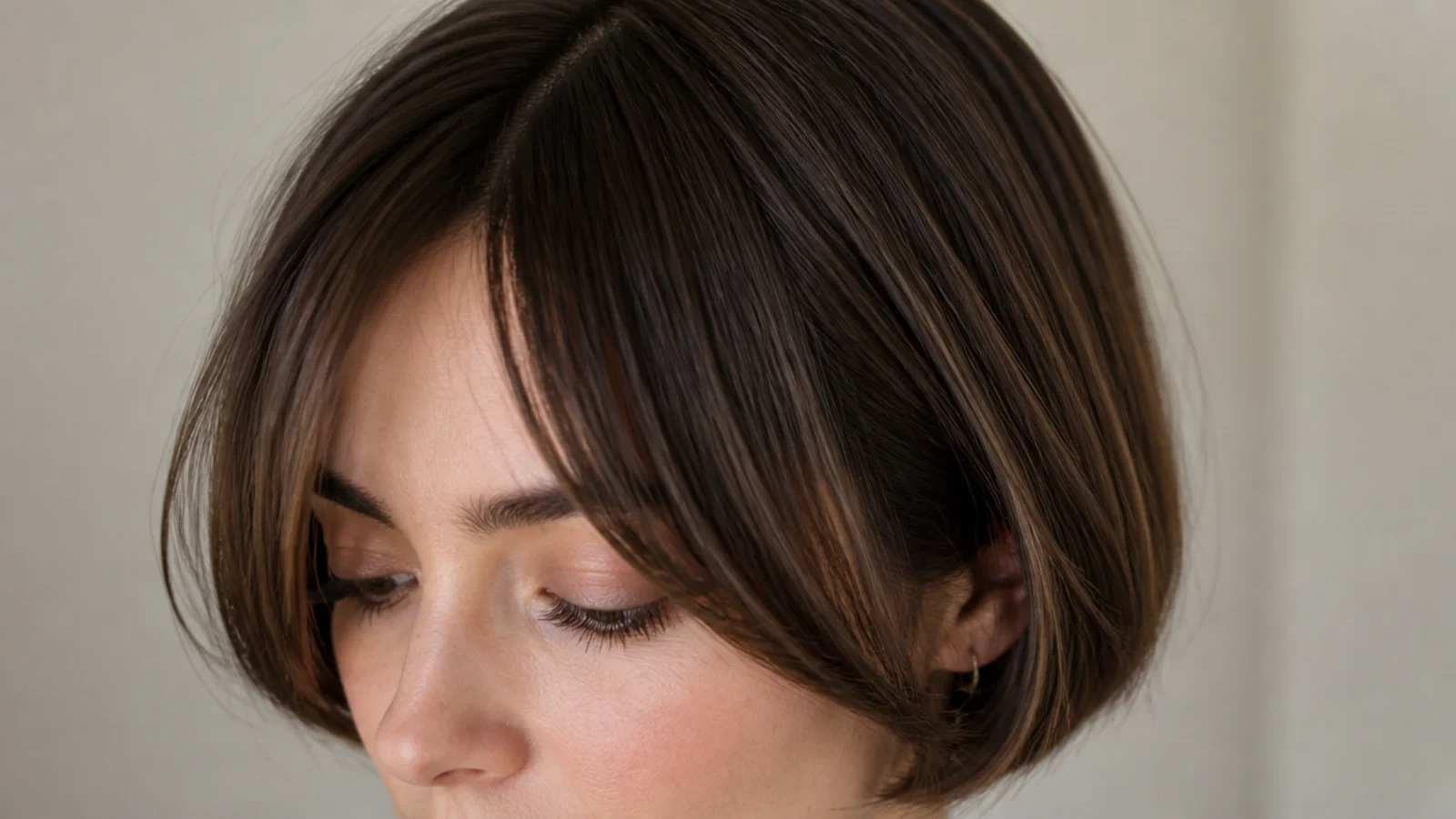
8. Blunt Edge on Thick Hair
Thick straight hair can carry a level edge that would look severe on anything finer, because there is enough density behind the line to support it. Ask for weight removed from the mid-lengths instead of the ends, so the two halves still split.
9. Deep Center Part
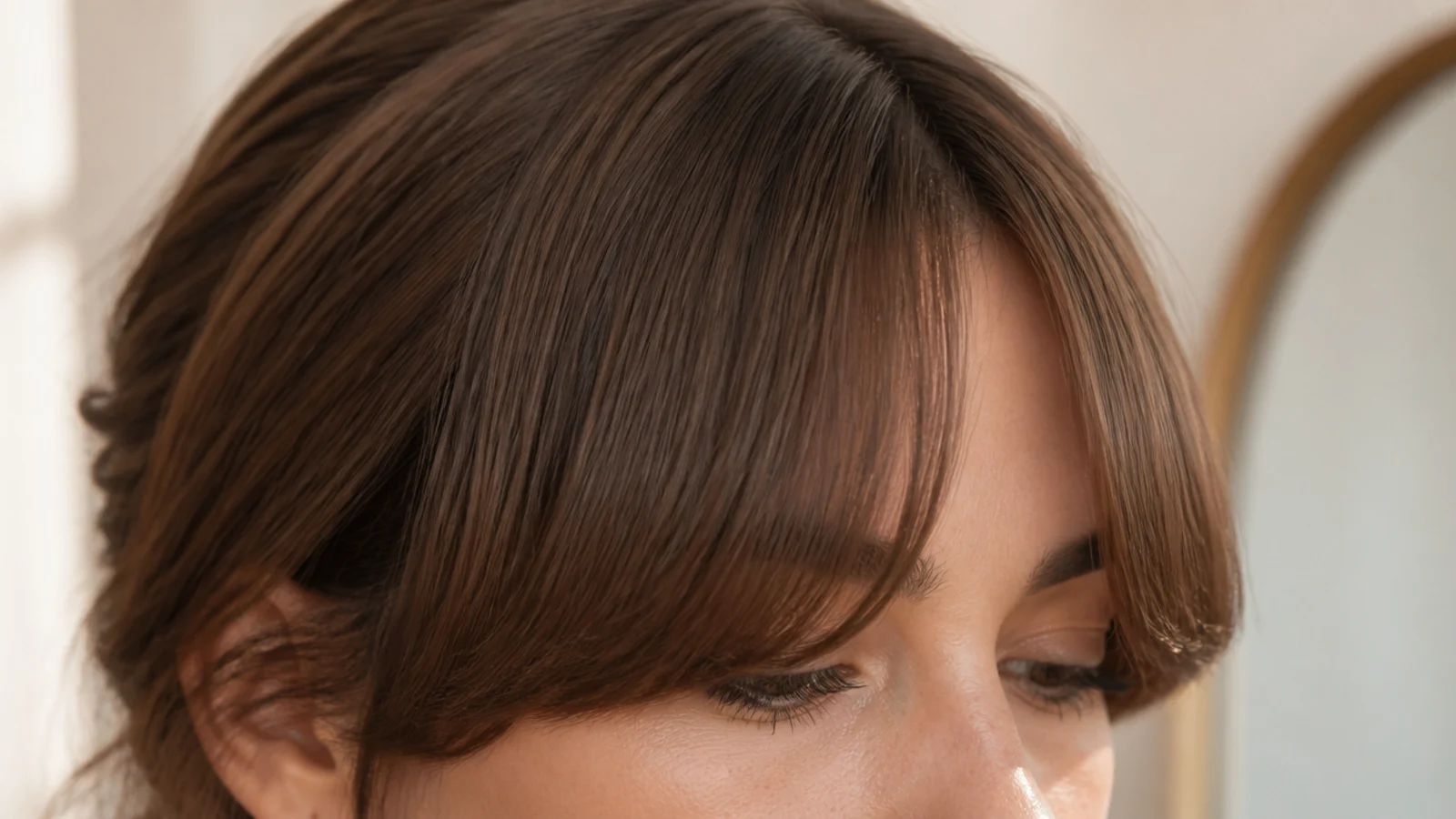
Pushing the split deeper makes the two halves fall further apart and exposes more forehead between them. It also puts more weight on each side, which on straight hair is the difference between a bang that stays open and one that closes over the eyes by lunchtime.
10. Cheekbone Length
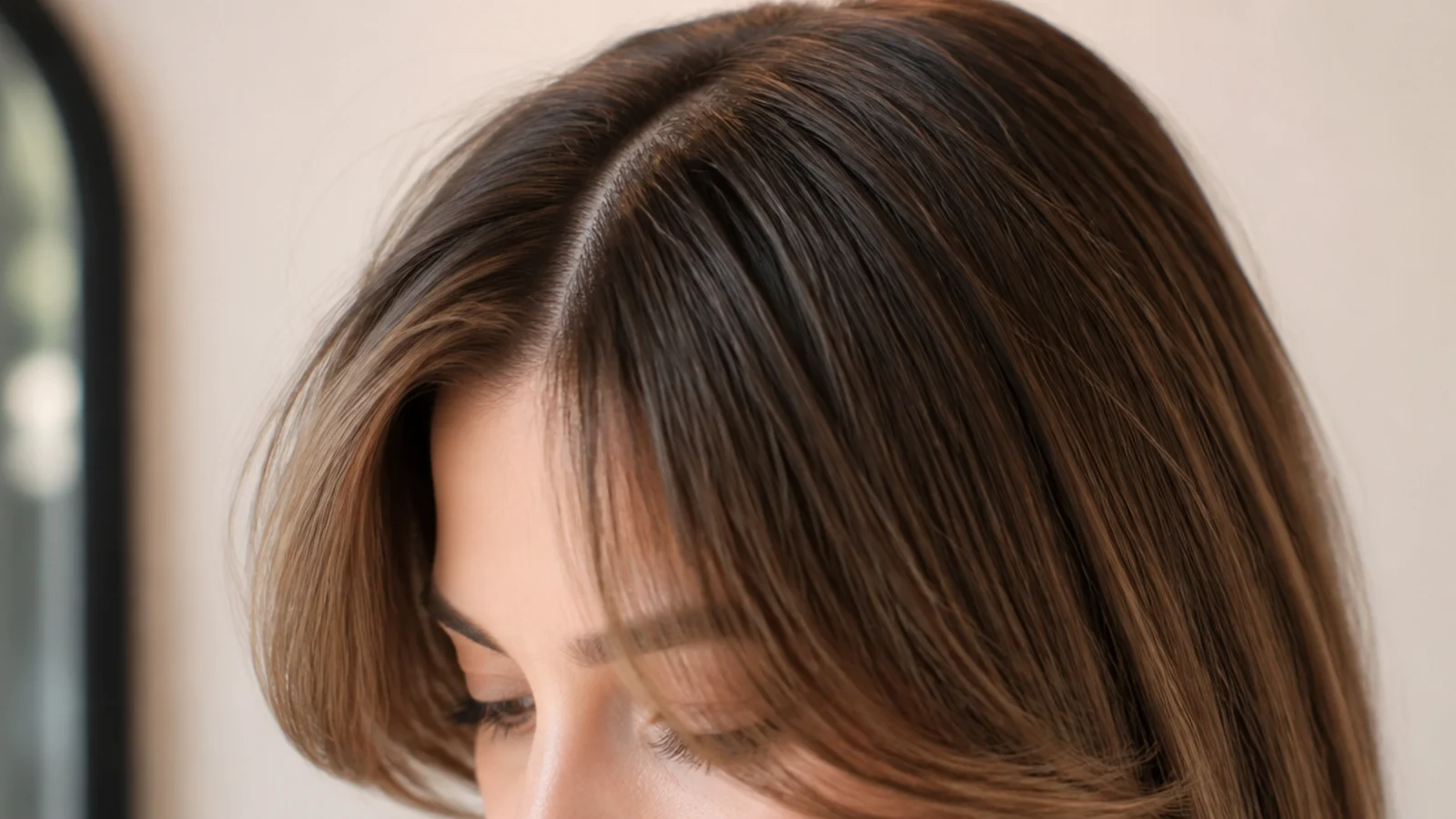
The longest short curtain bang, with the centre landing at the top of the cheek. It asks the least of you day to day because there is enough length for the strand to hold its own direction, and it is furthest from needing a trim.
11. Sleek Pixie
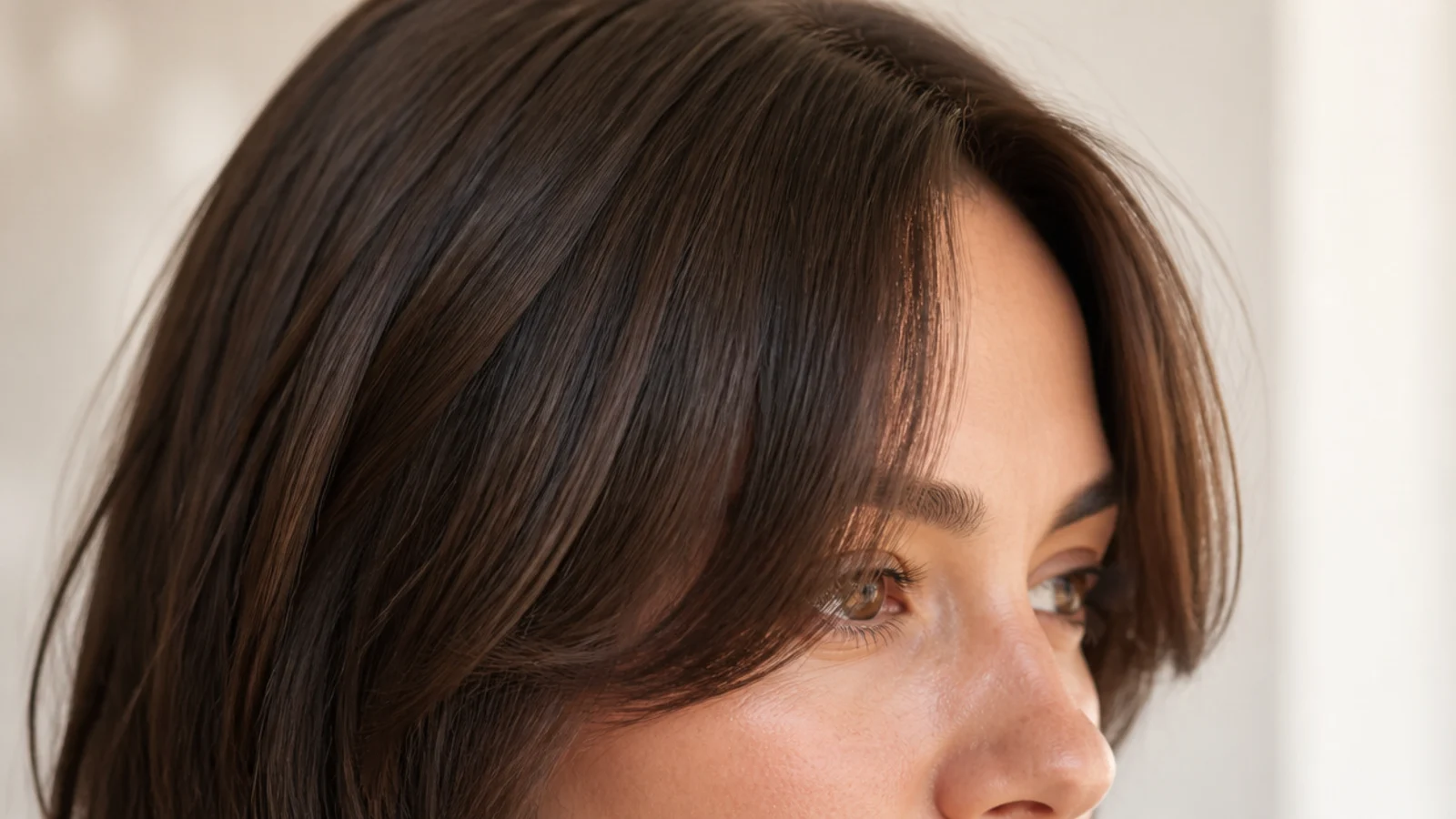
On a pixie the bang is the only length you have, so it carries the entire shape of the cut. Keep the sides of the sweep long enough to reach past the ear or the crop loses its frame and reads as a uniform short cut.
12. Korean Flick
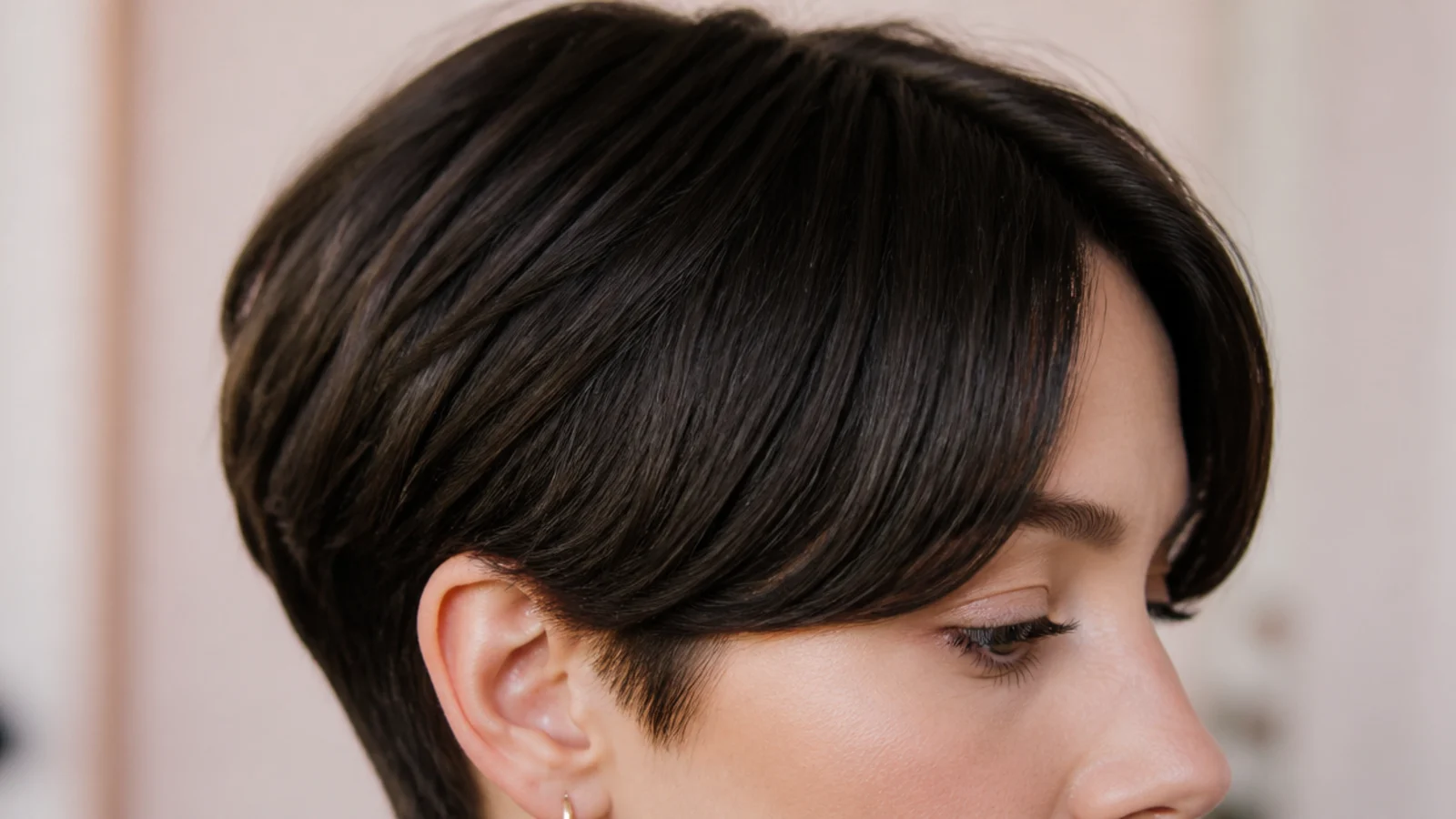
The very ends turn outward in a small hook rather than continuing down the cheek. That hook sends the sweep away from the face, which stops the bang closing over the eye and keeps the split reading as two distinct halves.
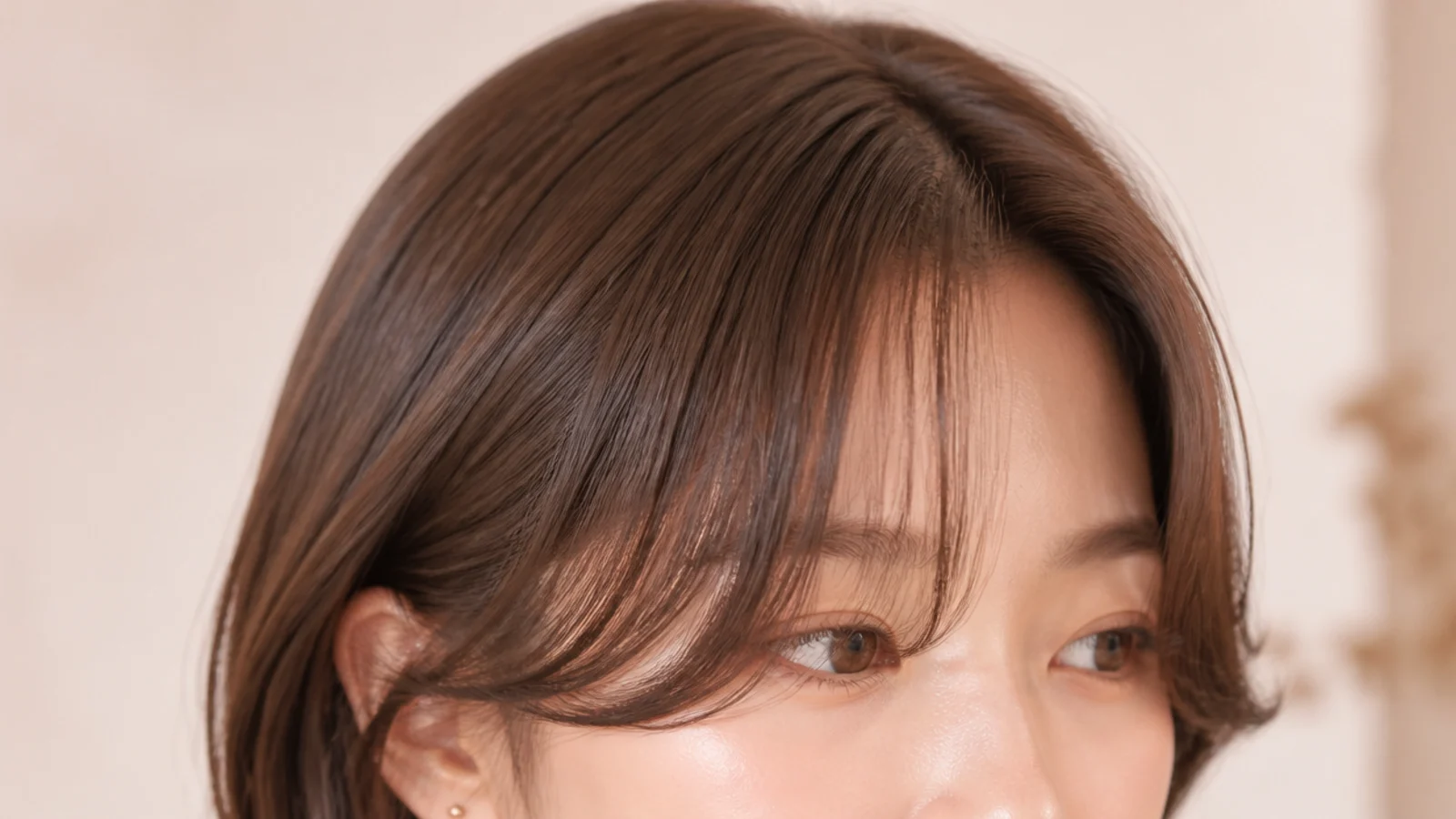
13. Money Piece
The two front sections are lightened a few shades against the rest. Tone contrast at the perimeter blurs where the cut line actually sits, so a heavy edge reads softer without a single millimetre being taken off it.
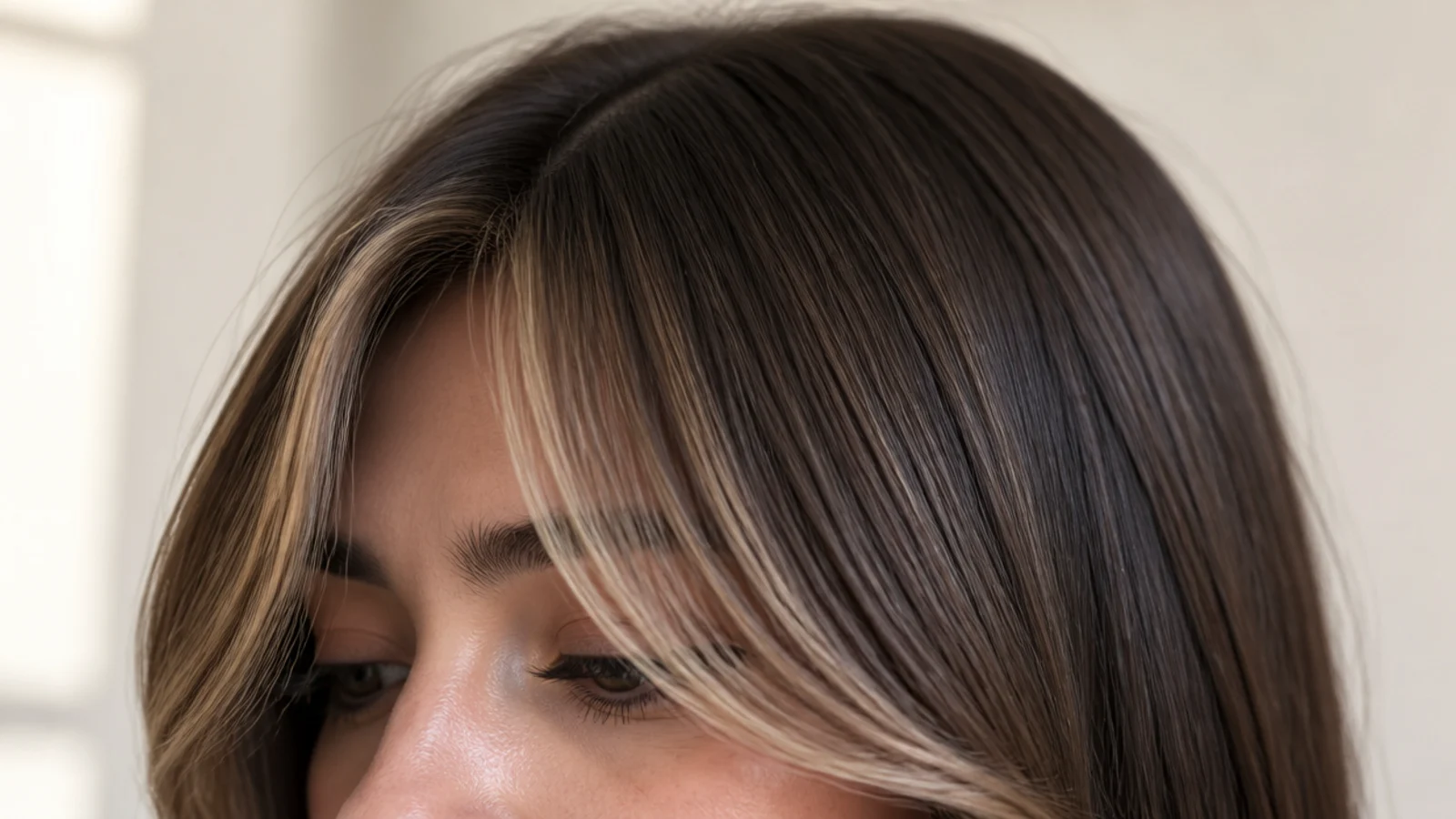
14. Shoulder Length
At shoulder length the sides have the furthest to travel, so the grade from centre to outer edge is the longest run in the cut. That length is what makes the taper look gradual, and it is also the version where a rushed blend shows most clearly.
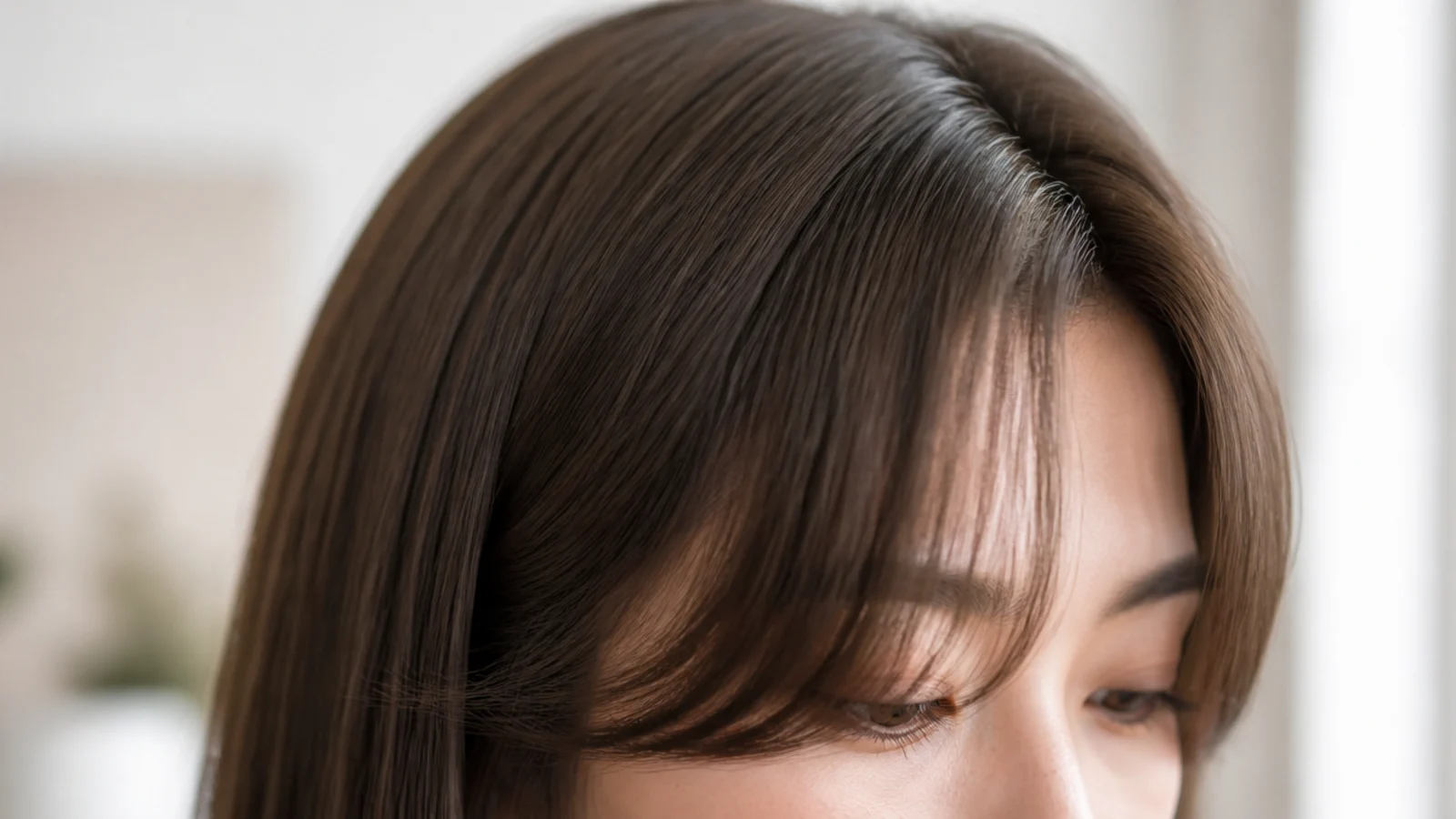
15. Grown Out
Two months on, with the centre at the cheekbone and the split loose. This is the version worth photographing before the next appointment, because it is easier to ask for a landmark you have seen on your own head than to describe one you have not.
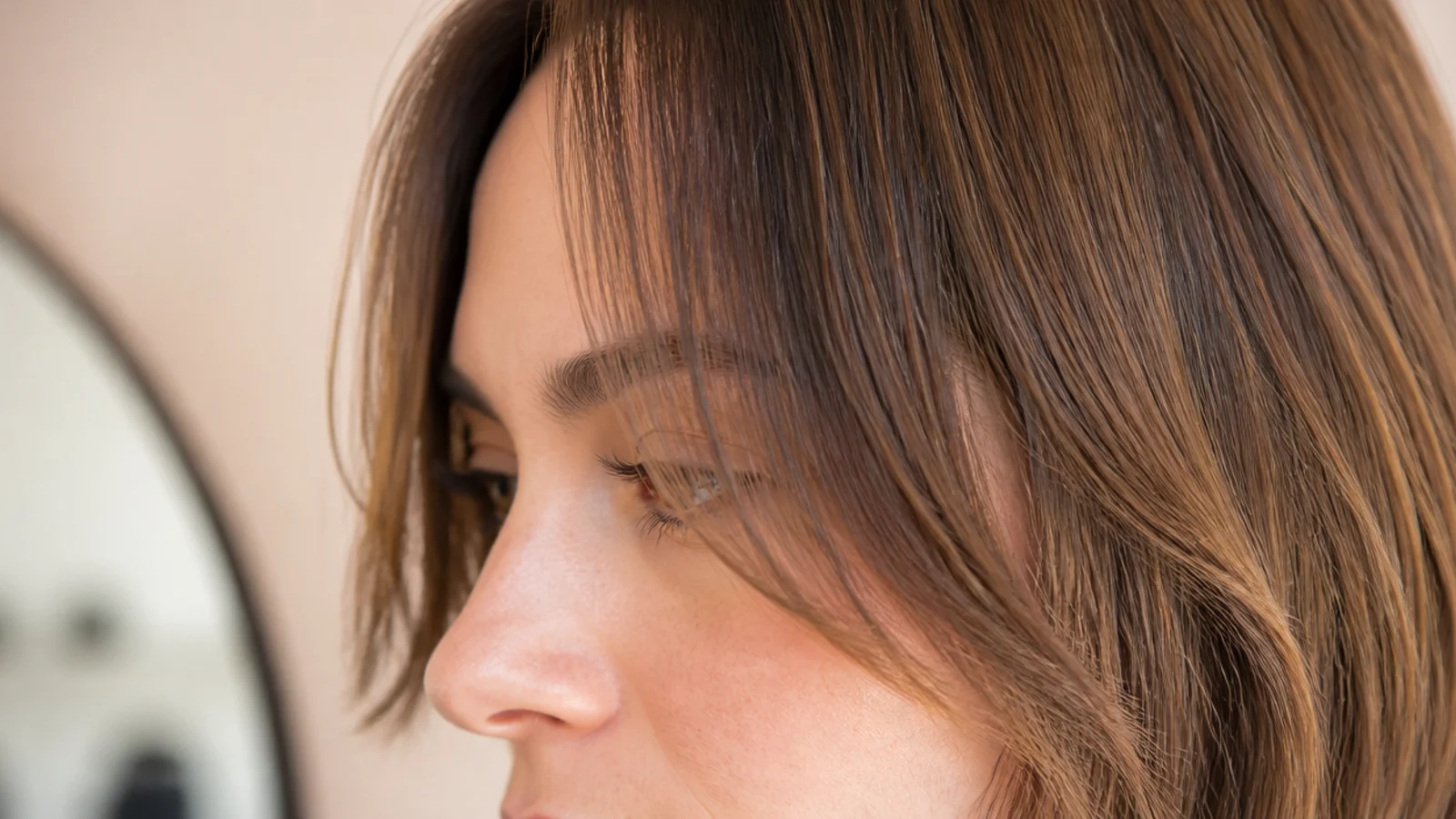
Final Thoughts
Two landmarks run this whole cut. Where the shortest point sits, and how far the grade travels before it meets your length — say both at the appointment and the result is repeatable, say neither and you get a different bang every time.
For the same cut on longer hair see 25 short curtain bangs for straight sleek hair, and for the bob version see 20 stylish curtain bangs bob cuts for thin hair. More in Bangs and Fringe.