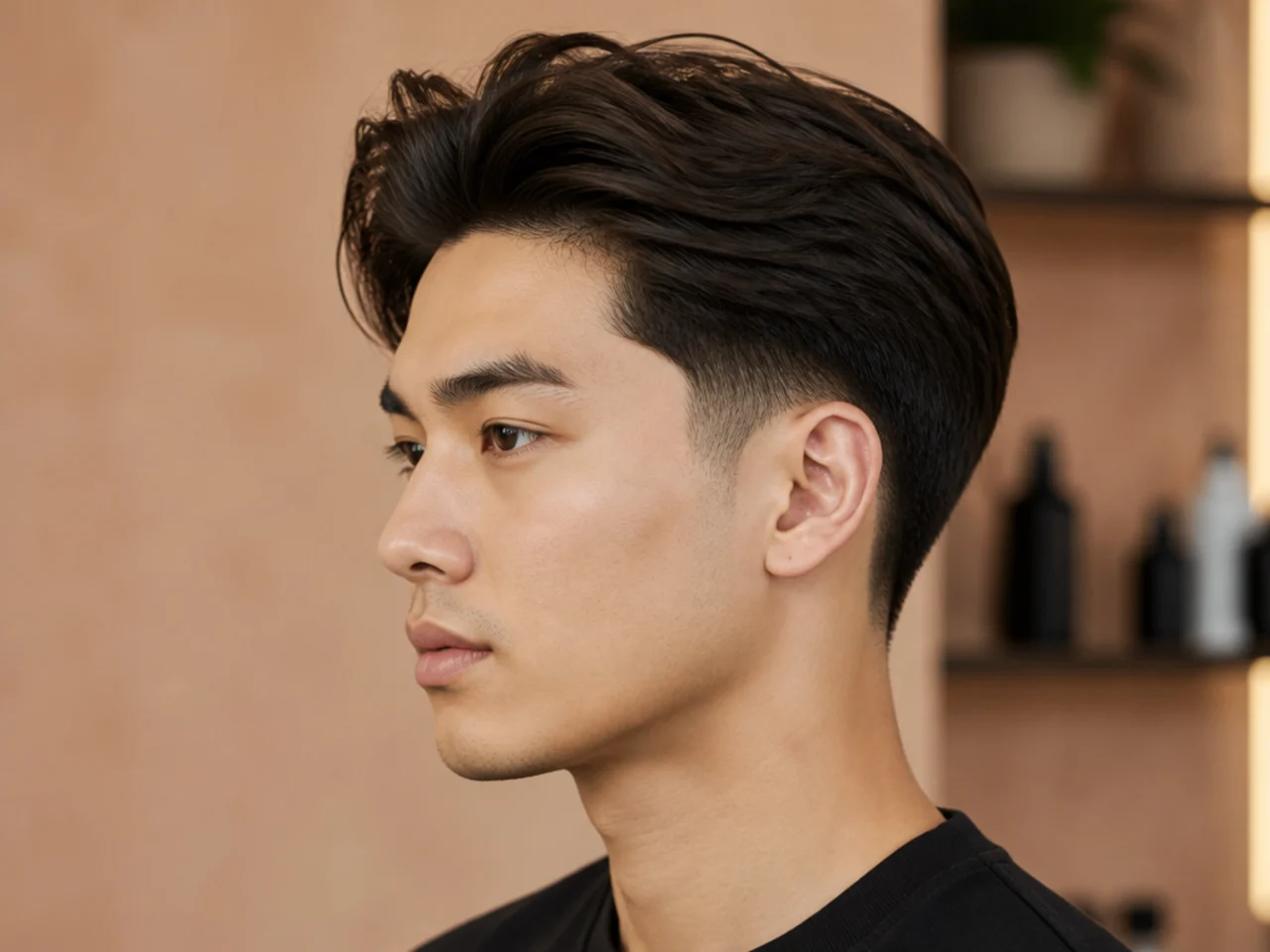
20 Blowout Taper Styles for Straight Hair
Twenty blowout taper styles built specifically for straight and fine-straight hair — with the products, tools, and blow-dry moves that keep the shape held.
In this article · 27
- What Makes a Blowout Taper Work on Straight Hair
- How to Choose Your Straight-Hair Blowout Taper
- 20 Straight-Hair Blowout Tapers Worth Trying
- 1. Classic Round-Brush Blowout Taper
- 2. Low Taper Blowout for Straight Hair
- 3. Mid Taper with a Rounded Crown
- 4. High Taper Blowout with Maximum Height
- 5. Low Skin Fade Blowout on Straight Hair
- 6. Mid Skin Fade with a Structured Top
- 7. Blowout Taper with a Side Part
- 8. Blowout Taper with a Middle Part
- 9. The Blowout Taper Pompadour
- 10. Straight-Hair Quiff Blowout Taper
- 11. Slicked-Back Blowout Taper
- 12. Blowout Taper with an Edgar Fringe
- 13. Blowout Taper with a Textured Fringe
- 14. Modern Curtains Blowout Taper
- 15. Blowout Taper Comb-Over
- 16. Piecey Blowout Taper for Fine Hair
- 17. Volume-Booster Blowout for Fine Straight Hair
- 18. Short Executive Blowout Taper
- 19. Long-Top Blowout Taper for Thick Hair
- 20. Casual Messy Blowout Taper
- Products and Tools That Actually Work on Straight Hair
- How to Ask Your Barber
- Styling and Maintenance for Straight Hair
- FAQ
The blowout taper rewards straight hair. The round brush pulls a domed silhouette you can't get from waves or coils, and the taper below keeps the perimeter clean. This guide covers twenty variations built specifically for straight and fine-straight hair, with the products, blow-dry moves, and length calls that make each shape hold from morning coffee to last light.
What Makes a Blowout Taper Work on Straight Hair
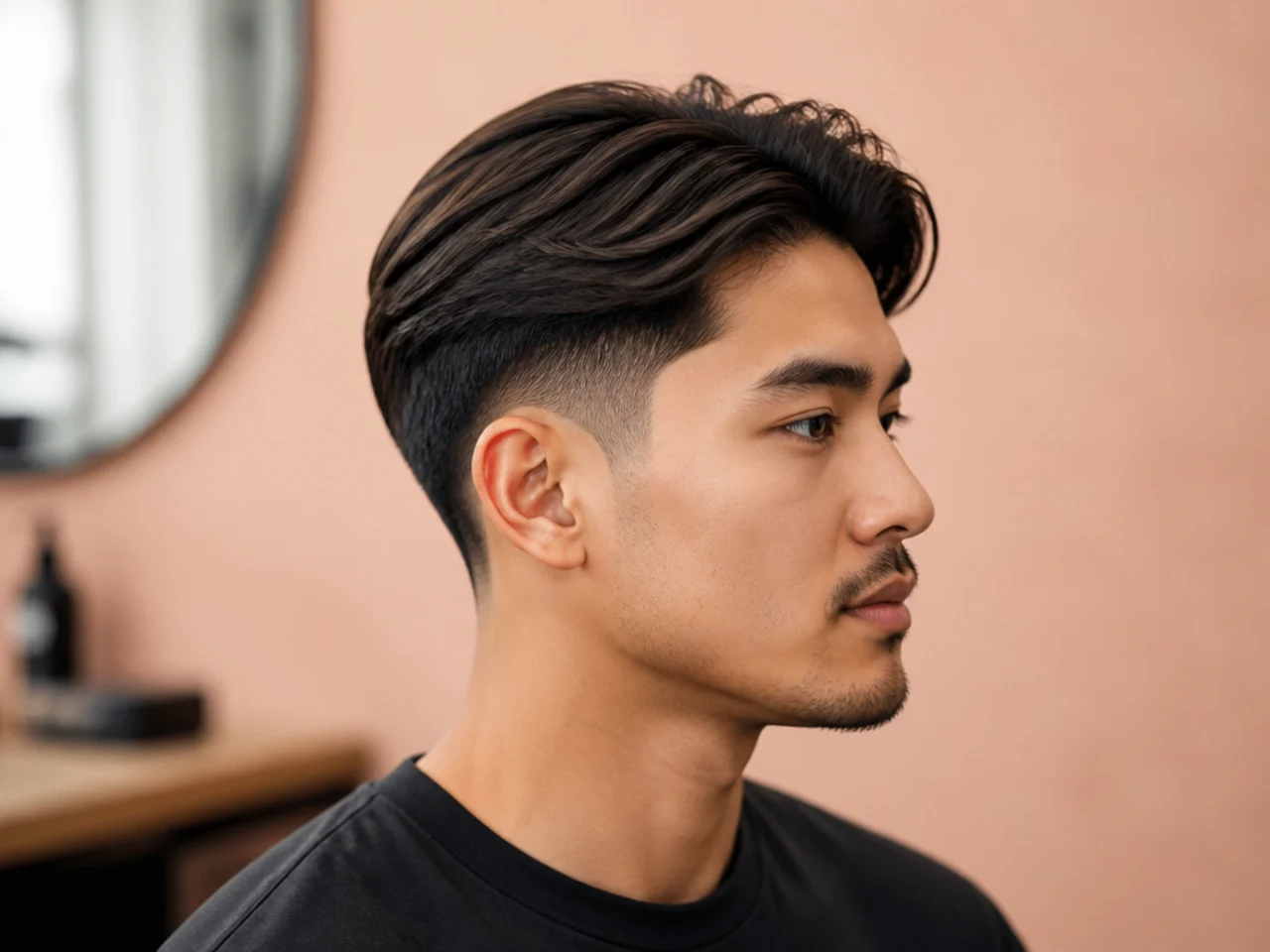
Straight hair has one advantage curly and wavy hair don't share: it does exactly what you tell it. Pull it up with a round brush and it stays up. Set it with a cool shot and the shape locks in. The blowout taper is built for that behavior — the whole cut assumes you'll blow-dry the top forward and up into a rounded crown, and straight hair holds that shape without fighting you.
The taper is the perimeter. Hair shrinks gradually on the sides and around the ears, either stopping at a #0.5 guard for a classic taper or blending to skin for a taper fade. The top stays long — usually three to six inches, depending on your density — and you shape it with heat.
Volume is the tradeoff for straight hair's cooperation. Fine straight hair needs mousse at the roots to lift. Thick straight hair carries the shape naturally but can look helmet-heavy without texture. Medium-density straight hair is the sweet spot — it lifts with a little mousse and holds without much product weight.
How to Choose Your Straight-Hair Blowout Taper
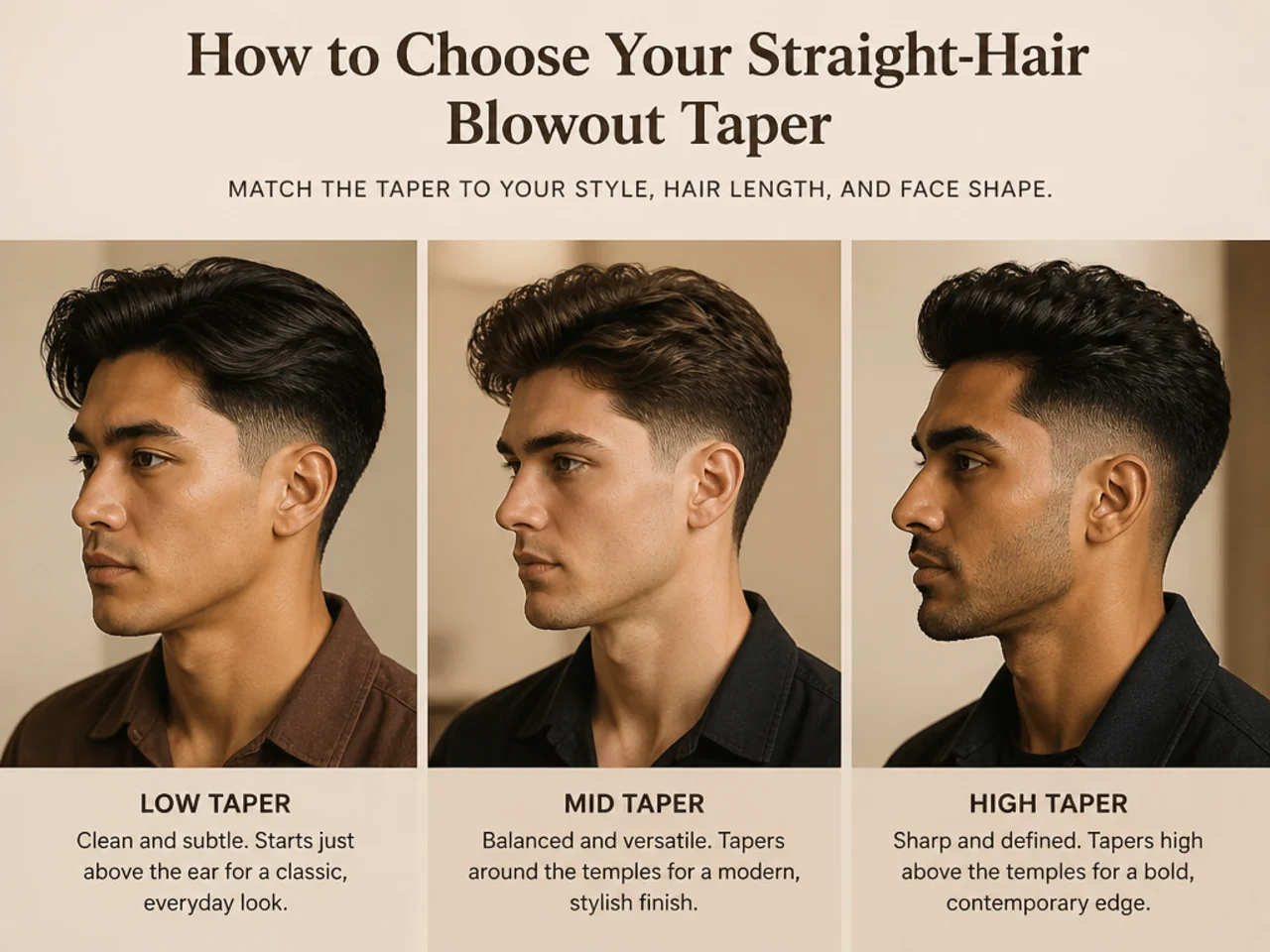
Four calls decide which variation you should ask for. Get them right in the chair and you leave with the shape you had in your head.
Density. Fine straight hair holds volume for a few hours, then drops. Cut it shorter (three to four inches) so it reads dense from every angle. Medium and thick straight hair can carry five to six inches without collapsing.
Face shape. Oval and square faces work with any fade height. Round faces need taller top volume and a mid or high taper to add vertical line. Long or oblong faces should keep the top under four inches and pick a low taper so nothing stretches the frame further.
Workplace. A low taper reads conservative in almost any office. A mid taper is the safe modern default. A skin fade or high taper photographs sharp on Pinterest but reads loud in banking, law, or medicine. Match the cut to the room you're in.
Styling appetite. A blowout taper is not an air-dry cut. You need eight to ten minutes with a dryer and a round brush every morning. If you'd rather skip that, look at a low taper fade with a shorter, textured top instead.
20 Straight-Hair Blowout Tapers Worth Trying
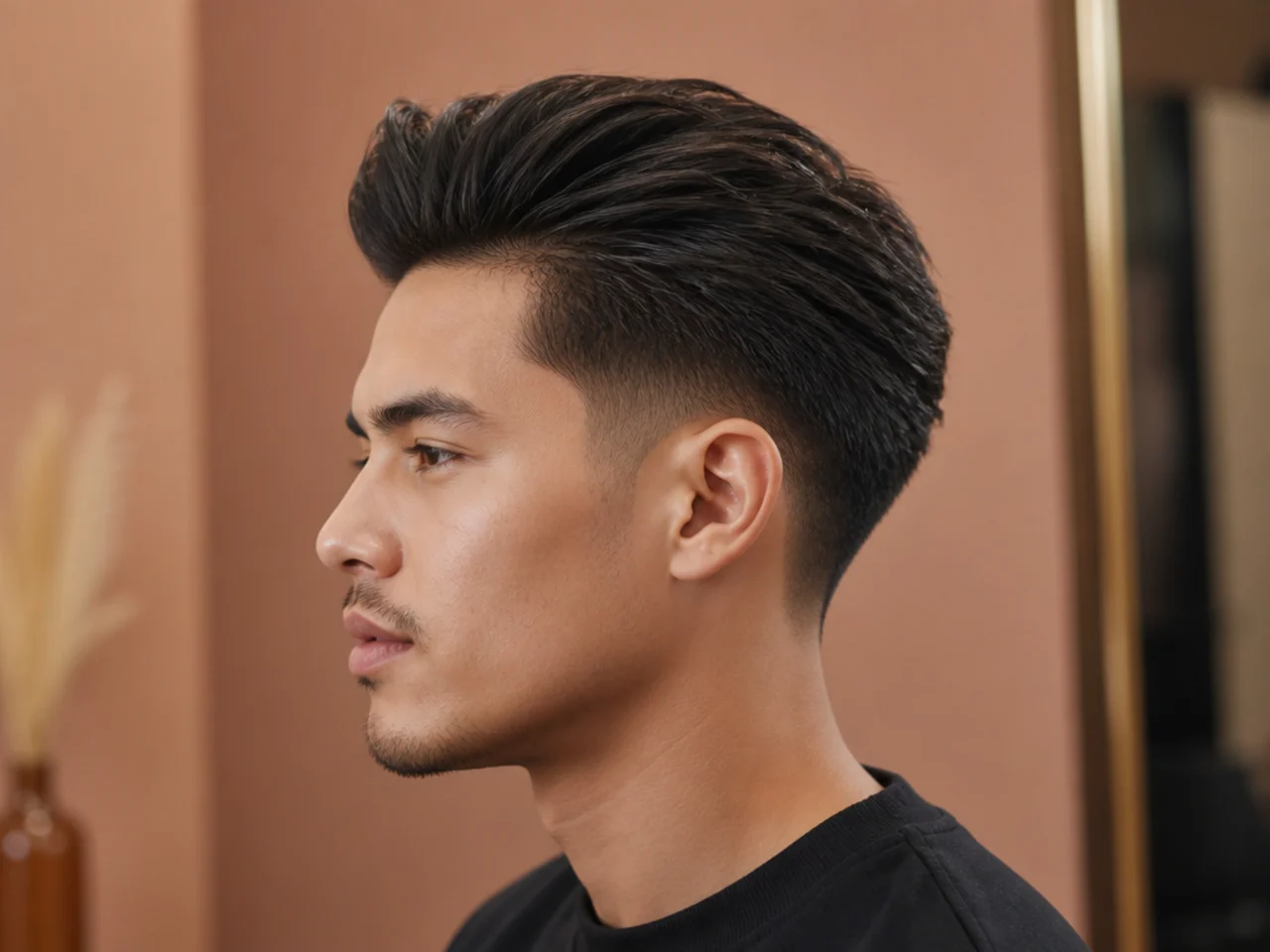
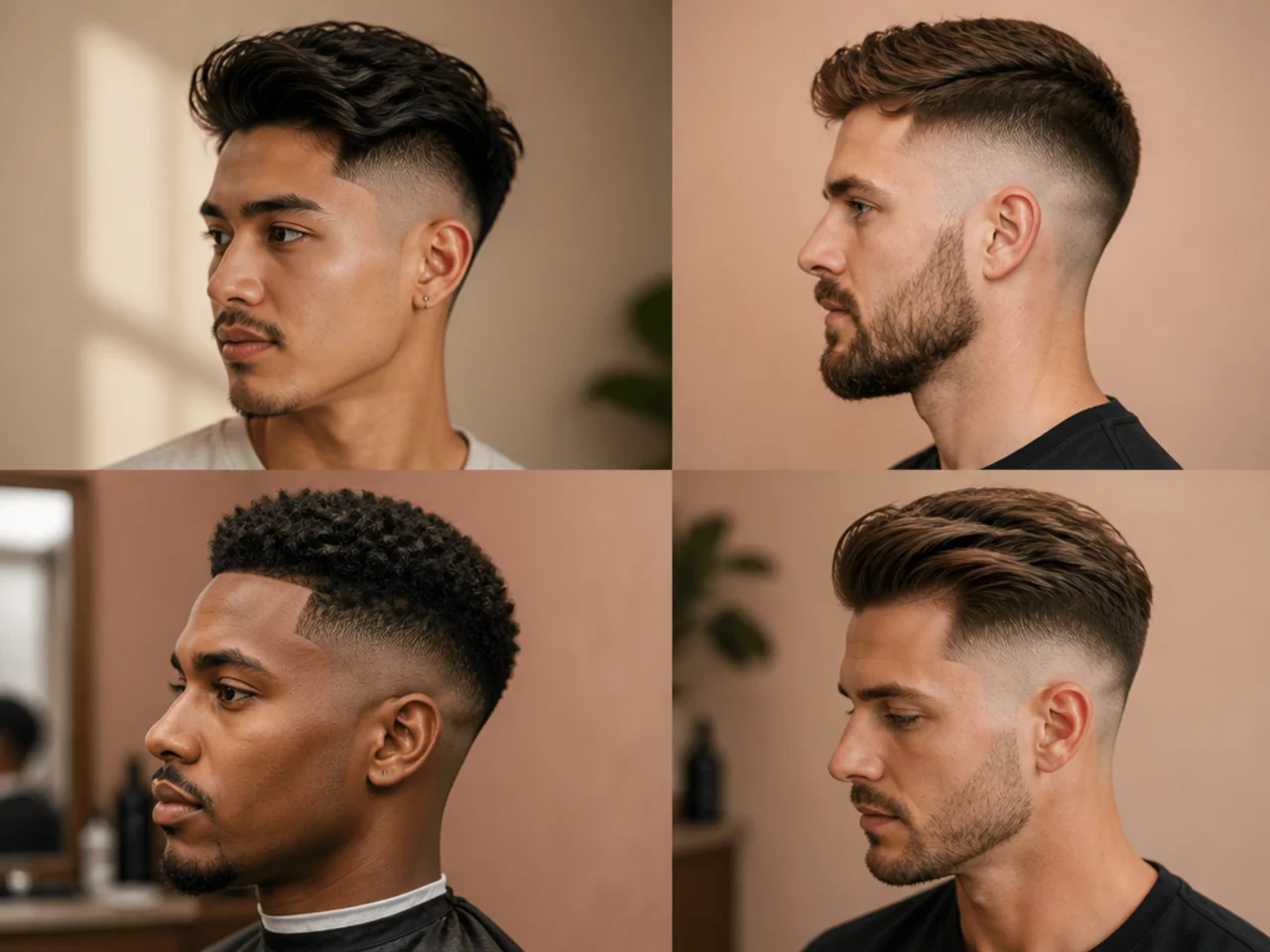
The variations below sort by fade height, then by top shape. Each entry tells you what makes the version different, who it suits, exactly what to ask for at the chair, and one styling move that locks the shape in for straight hair specifically.
1. Classic Round-Brush Blowout Taper
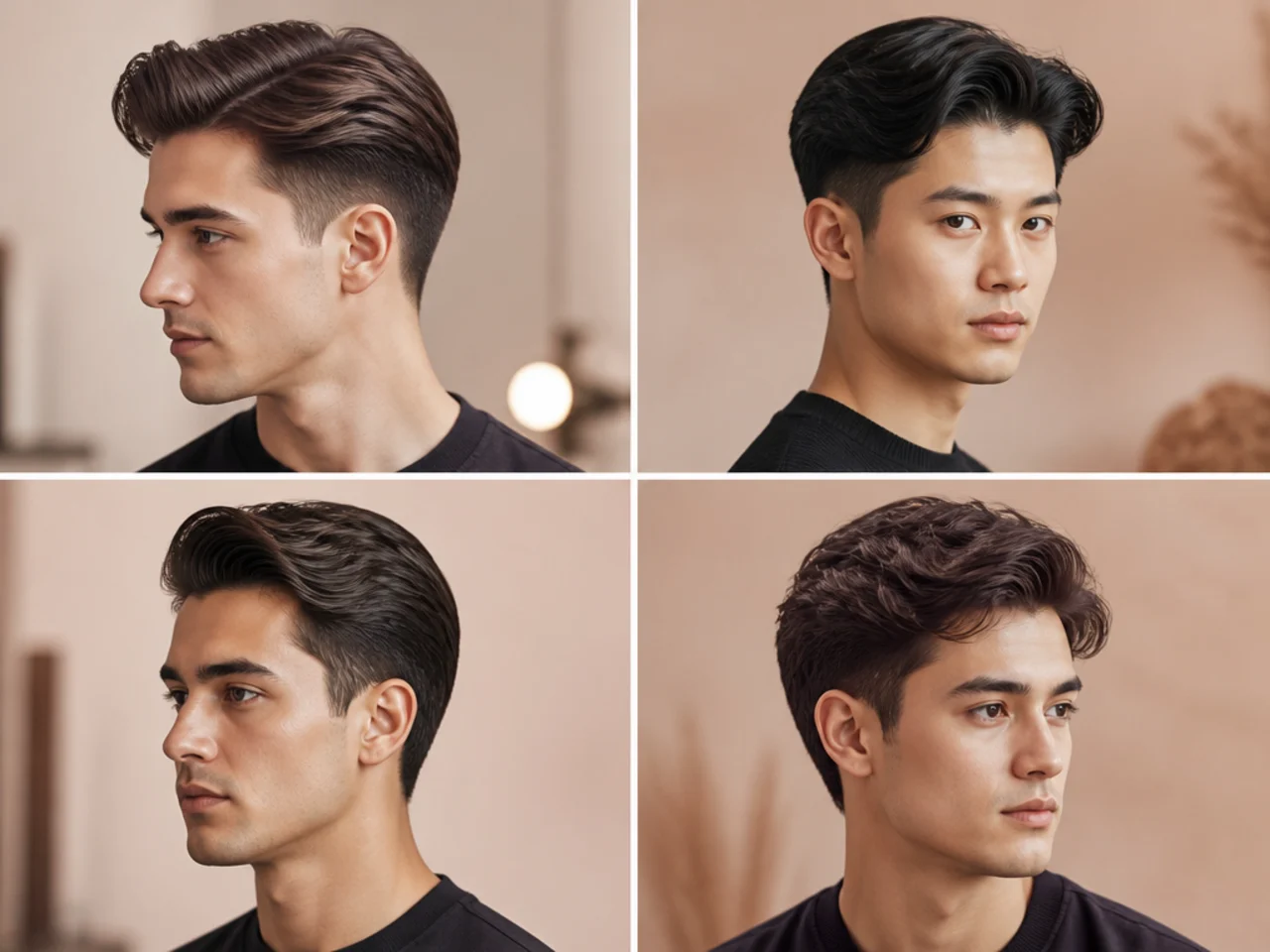
This is the default — a mid taper on the sides and back, five inches of length on top, blown forward and up into a rounded shape. Straight hair holds this silhouette cleaner than any other texture, which is why the cut caught fire on Pinterest in the first place. Best for oval and square faces with medium to thick straight hair.
Ask for: "Mid taper on the sides, 0.5 guard at the shortest, five inches on top, cut for a blowout." Say the word blowout out loud. It tells your barber to leave length weighted forward instead of stacking it evenly.
Styling tip: Volumizing mousse on damp hair, round brush pulling forward and up from the crown, cool shot to set. Matte paste worked through the ends only — nothing at the roots.
2. Low Taper Blowout for Straight Hair
The low taper barely touches the ear, keeping most of the sides intact. That conservative perimeter reads well in professional settings, and it gives straight hair room to breathe — the round-brush volume on top sits over enough length underneath that nothing looks stripped down. Best for round and long faces.
Ask for: "Low taper on the sides — 1 guard at the shortest, keep the length above the ear, four to five inches on top, cut for a blowout." Point at where you want the taper to start.
Styling tip: Root-lift spray on damp roots, blow-dry with the round brush going up first, then forward. Straight hair falls back down without the cool shot — hit the crown with cold air for ten seconds before you stop.
3. Mid Taper with a Rounded Crown
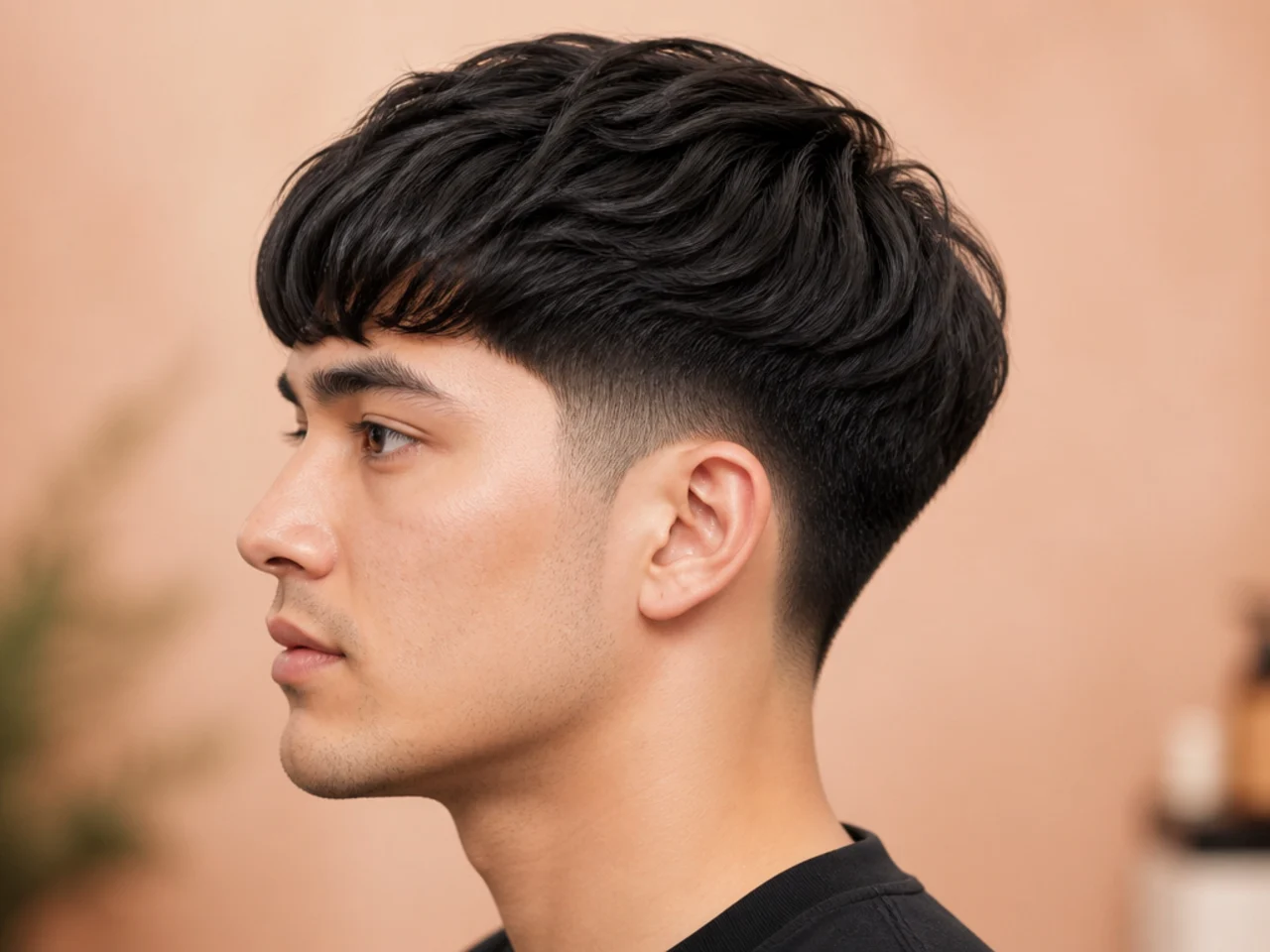
Mid taper sits at the temple line — the geometric sweet spot for a blowout. The crown gets the full round-brush treatment for that domed silhouette that reads clean from every angle. Works best with medium-density straight hair that has natural body to build on. Best for oval, square, and heart-shaped faces.
Ask for: "Mid taper at the temple, five inches through the crown, keep the shape rounded not peaked, cut for a blowout." Say rounded — otherwise some barbers default to a pointed pompadour shape.
Styling tip: Blow-dry the crown up and forward first, then work the sides in. Round brush pulled outward from the root, cool shot at the end. Matte paste worked into the ends only.
4. High Taper Blowout with Maximum Height
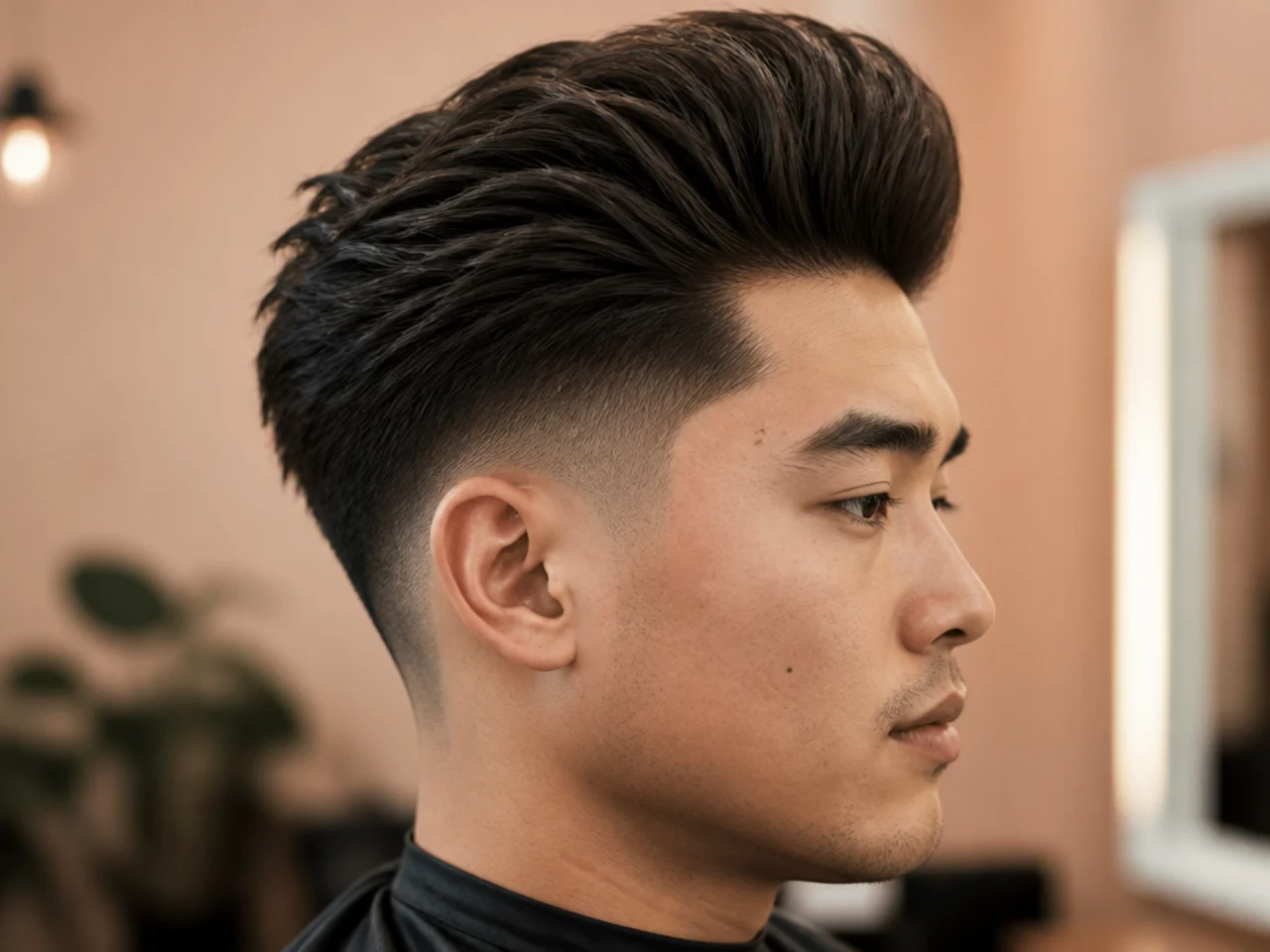
The high taper starts up near the parietal ridge, giving you the boldest possible contrast between short sides and tall top. Straight hair carries that height cleanly because the round-brush shape doesn't fight for space with wave pattern below. Best for oval and square faces with thick straight hair.
Ask for: "High taper starting at the parietal, six inches on top, keep the crown tall and rounded, cut for a blowout." Bring a photo — high tapers vary a lot in placement.
Styling tip: Blow-dry upside down first for root volume, then flip up and shape with the round brush. Texture powder at the roots before you stand up straight — it holds the height without adding weight.
5. Low Skin Fade Blowout on Straight Hair
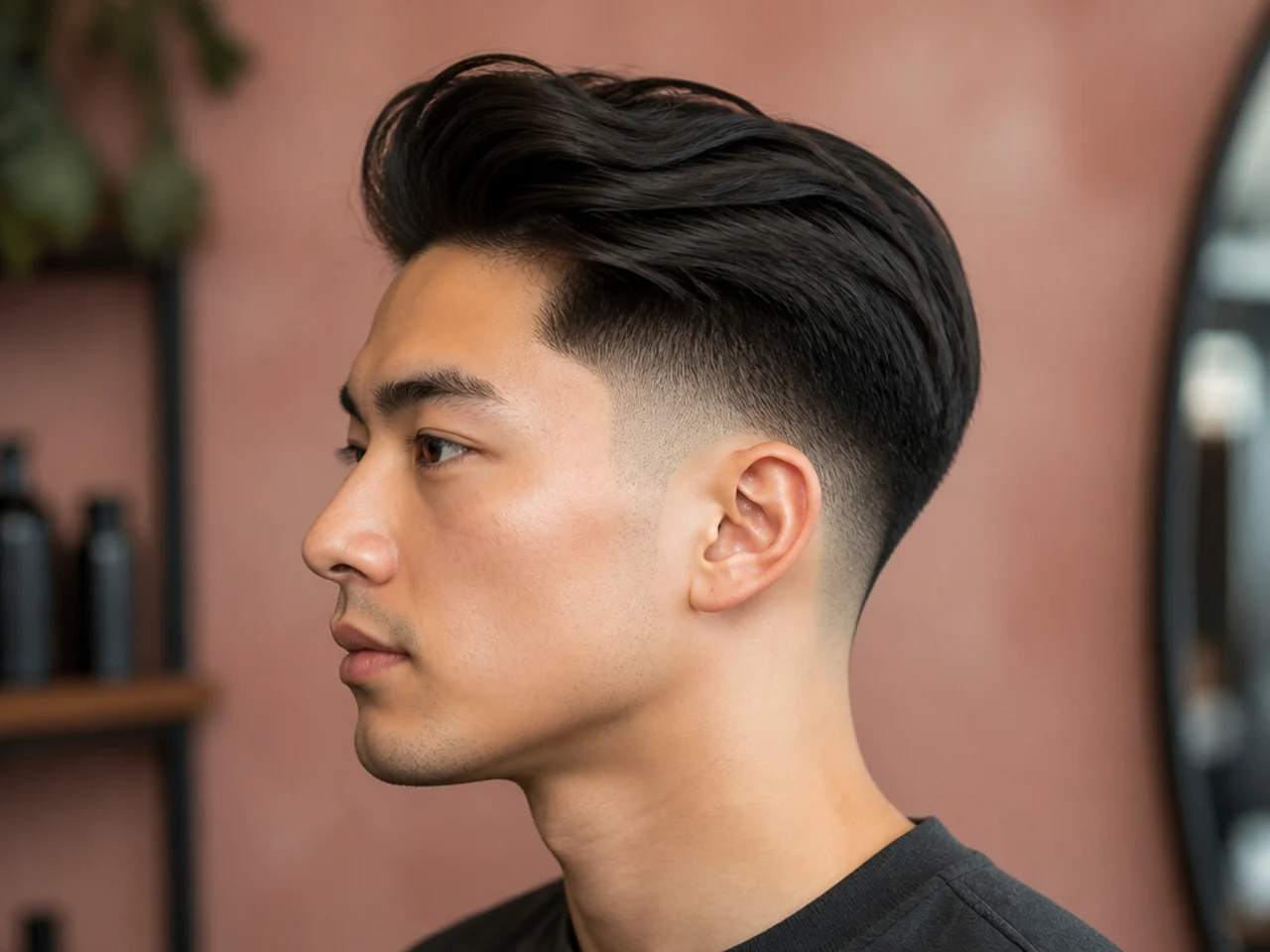
Taking a low fade to bare skin at the sideburn gives you the hardest possible contrast for a conservative height. Straight hair up top reads sharp and engineered rather than accidental against that clean base. Best for square and heart-shaped faces with medium-density straight hair.
Ask for: "Low skin fade, blowout on top, four to five inches of length, texturize the ends so the round brush has something to grip." Point at your sideburn so the barber sees where the skin should start.
Styling tip: Volumizing mousse at the roots, blow-dry upside down, then flip and shape. Finish with texture powder — that's the trick for straight hair that refuses to hold height.
6. Mid Skin Fade with a Structured Top
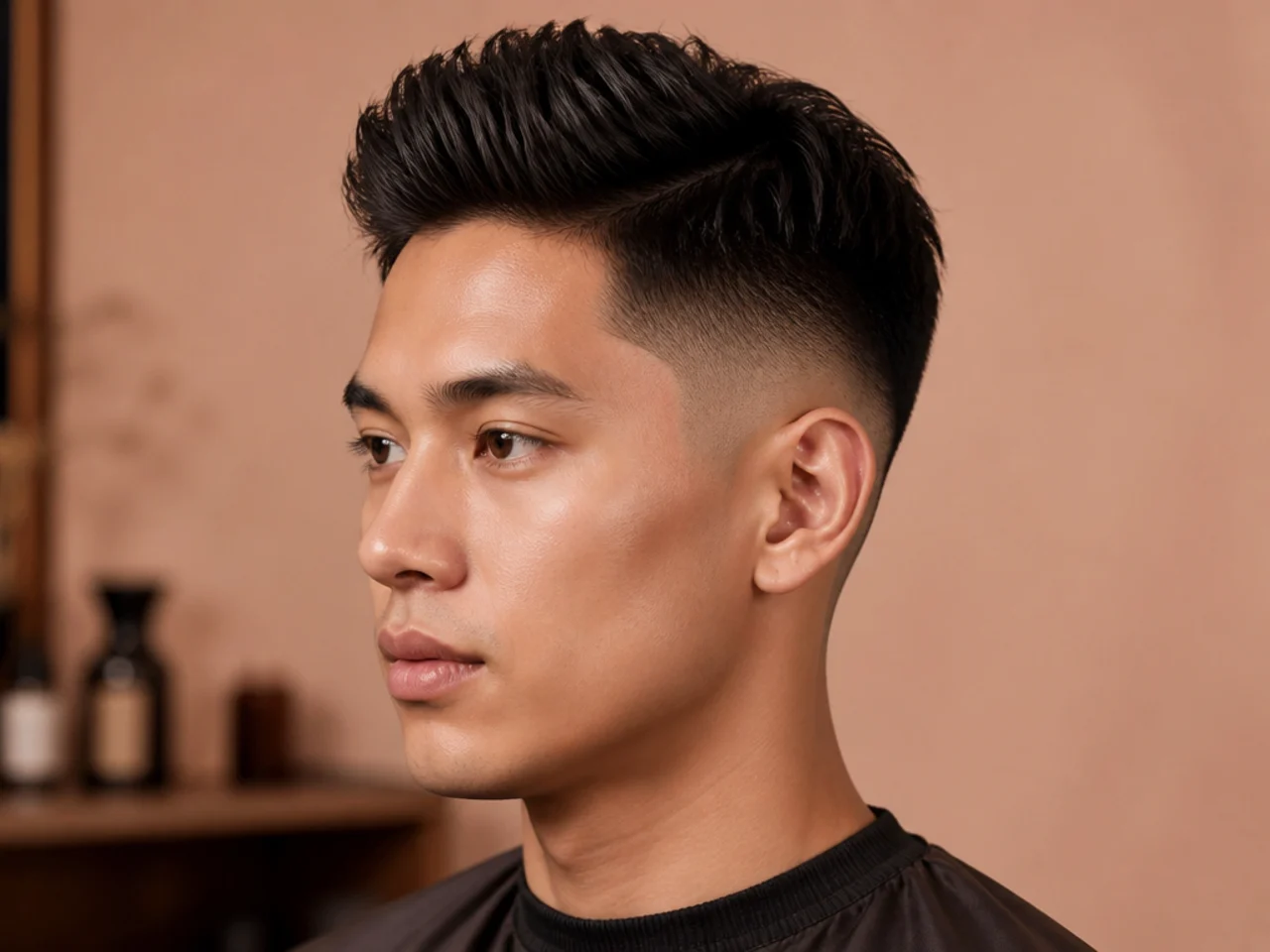
Trade the loose round-brush look for a structured, sculpted top that reads architectural. The mid fade taken to skin creates the geometric base, and straight hair carries the deliberate shape without fighting the intention. Best for square jaws and strong facial features.
Ask for: "Mid skin fade at the temple, blowout on top, five inches through the crown, cut with weight in the front third." Front weight matters — that's where the round brush lifts hardest.
Styling tip: Prep with volumizing mousse at the roots, blow-dry with the brush pulling forward, then define the shape with matte clay. Don't rake through it with a comb after finishing — that flattens the top.
7. Blowout Taper with a Side Part
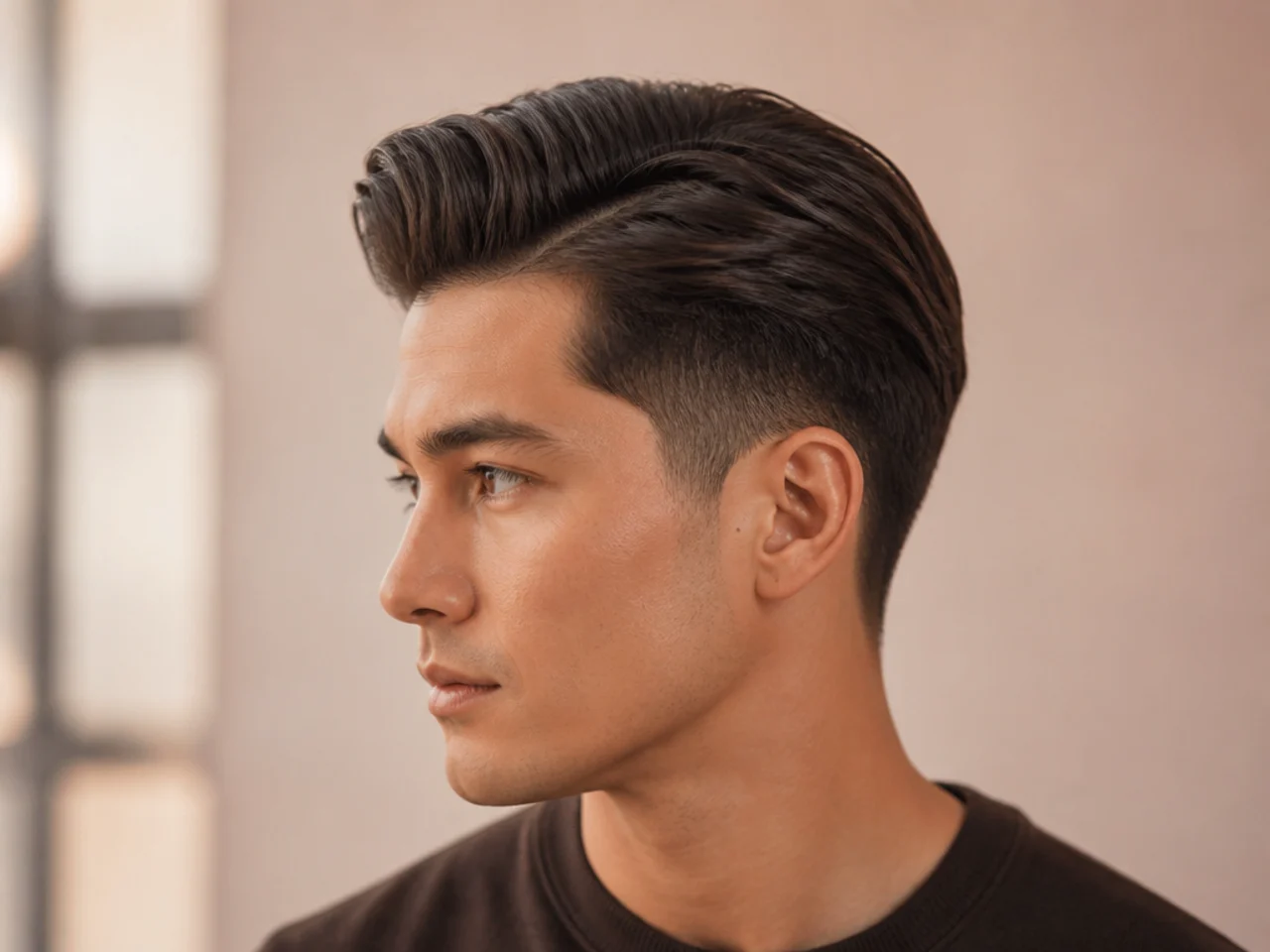
Adding a hard side part to a blowout taper splits the difference between old-school and modern. The part gives structure; the round-brush volume above it keeps the top from reading dated. Straight hair holds a side part better than any other texture — it sits where you place it. Best for oval and long faces.
Ask for: "Mid taper on the sides, hard side part scissor-carved on the left, four to five inches on top, cut so the heavier side sweeps back." Ask for the part to be scissor-cut so it holds without gel.
Styling tip: Comb the part in when hair is damp, blow-dry each side outward with a round brush, then lock the part with a light-hold cream. Zero product on the part line itself.
8. Blowout Taper with a Middle Part
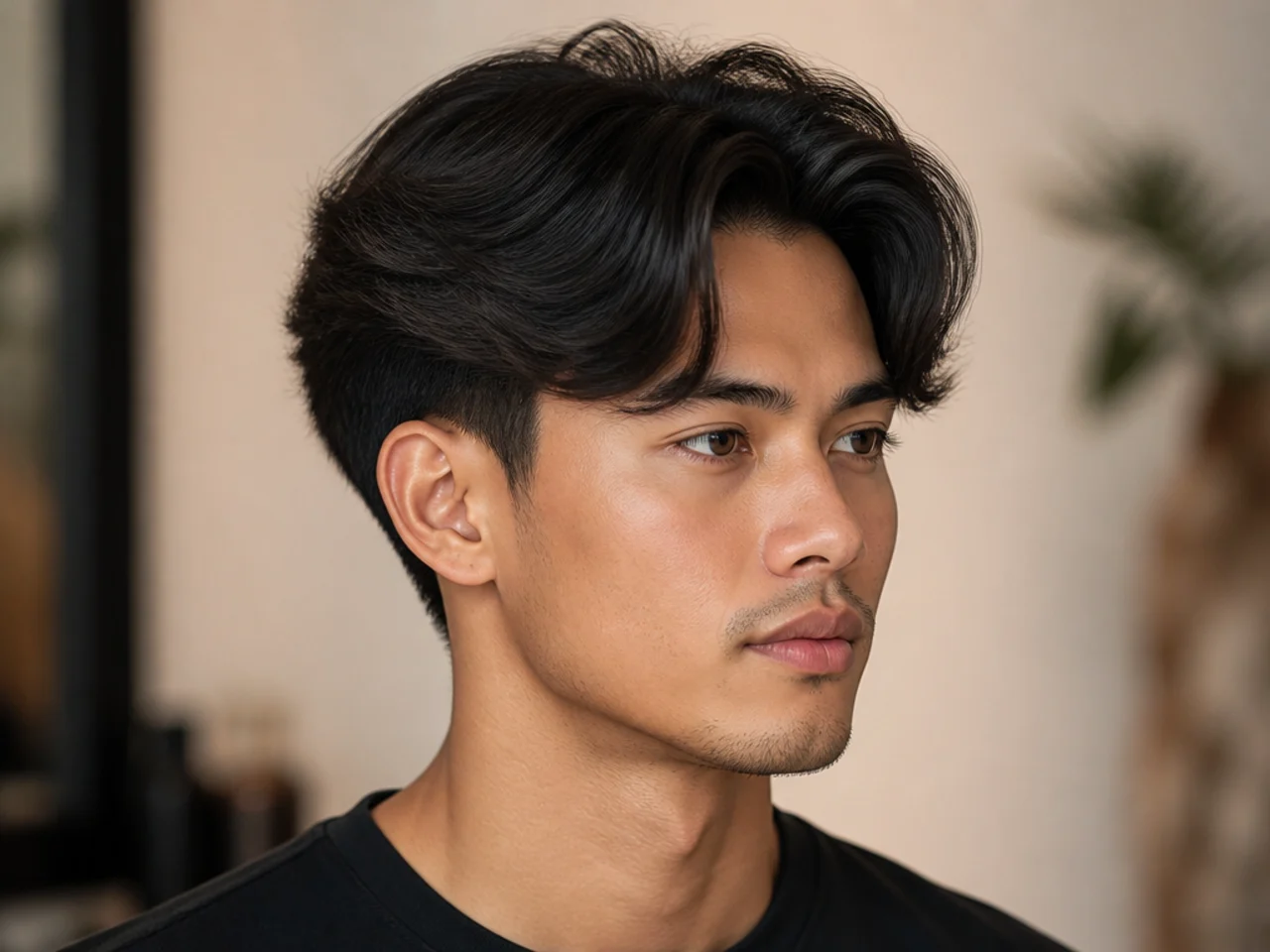
Split the volume down the middle and you get a softer, longer-reading silhouette. The middle part reads modern without going full curtain — the round-brush shape underneath the part still gives it lift, so nothing sits flat against the scalp. Best for oval and long faces with wavy or thick straight hair.
Ask for: "Mid taper on the sides, soft middle part, five inches on top, cut with weight to both sides for a blowout." Point at the crown — that's where the volume needs to lift, not at the roots along the part.
Styling tip: Blow-dry each side outward with the round brush pulling from root to end, then set the part with a comb. Light-hold cream to lock. Sea salt spray adds grit if the sides refuse to stay put.
9. The Blowout Taper Pompadour
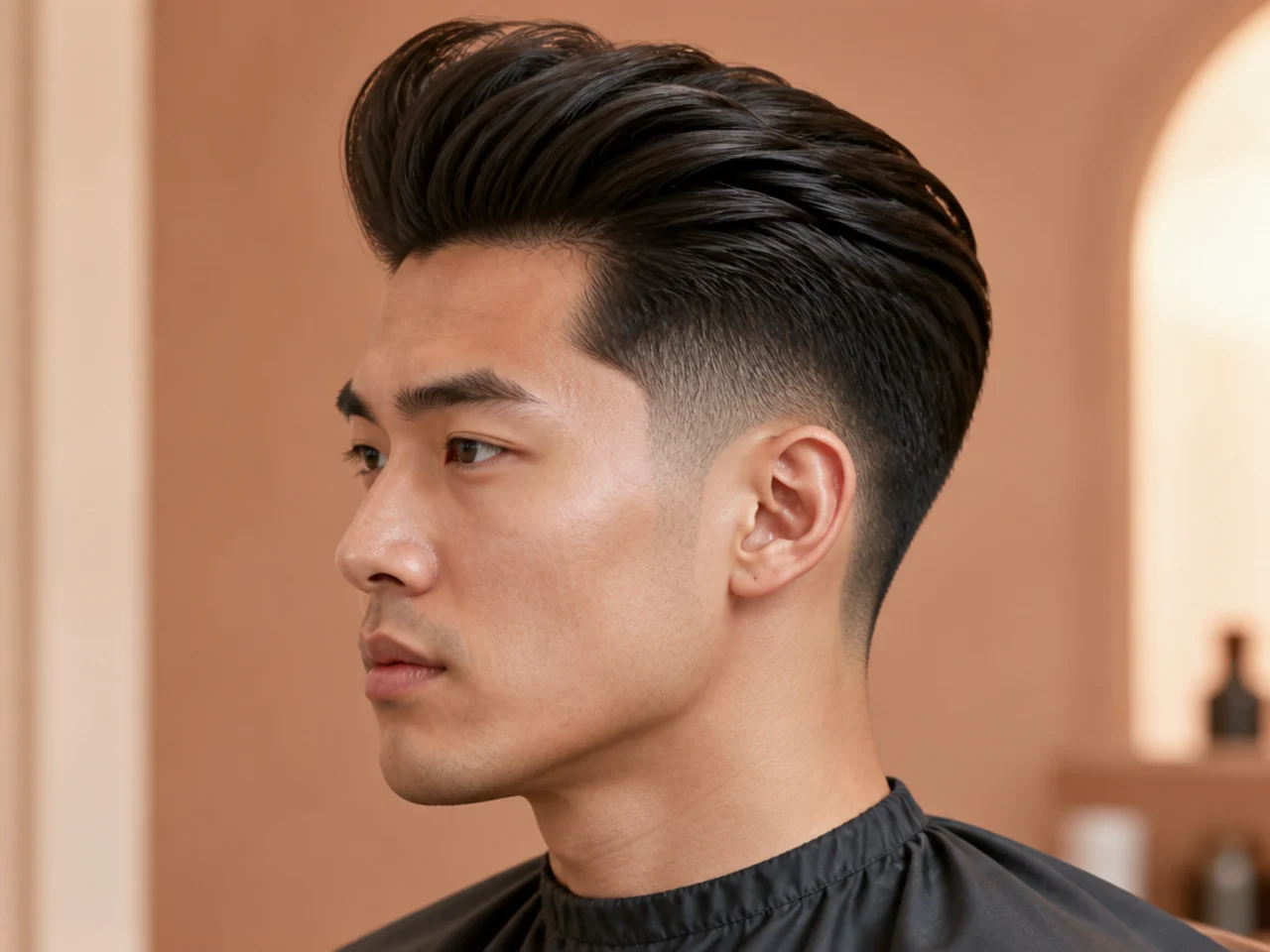
The pompadour swaps the rounded shape for pure lift at the front. Front weight, tall crown, back tapered clean. Straight hair holds a pompadour better than any other texture — the round brush pulls the front up into a wave that stays where you set it. Best for oval, square, and diamond faces with thick straight hair.
Ask for: "Mid taper on the sides, pompadour shape on top, six inches through the front, keep the back weighted for the sweep." Bring a photo. Pompadour height varies a lot shop to shop.
Styling tip: Volumizing mousse at the roots on damp hair, round brush pulling straight up and back at the front, cool shot at the peak of the wave. Pomade at the ends only — never at the roots for a pomp.
10. Straight-Hair Quiff Blowout Taper
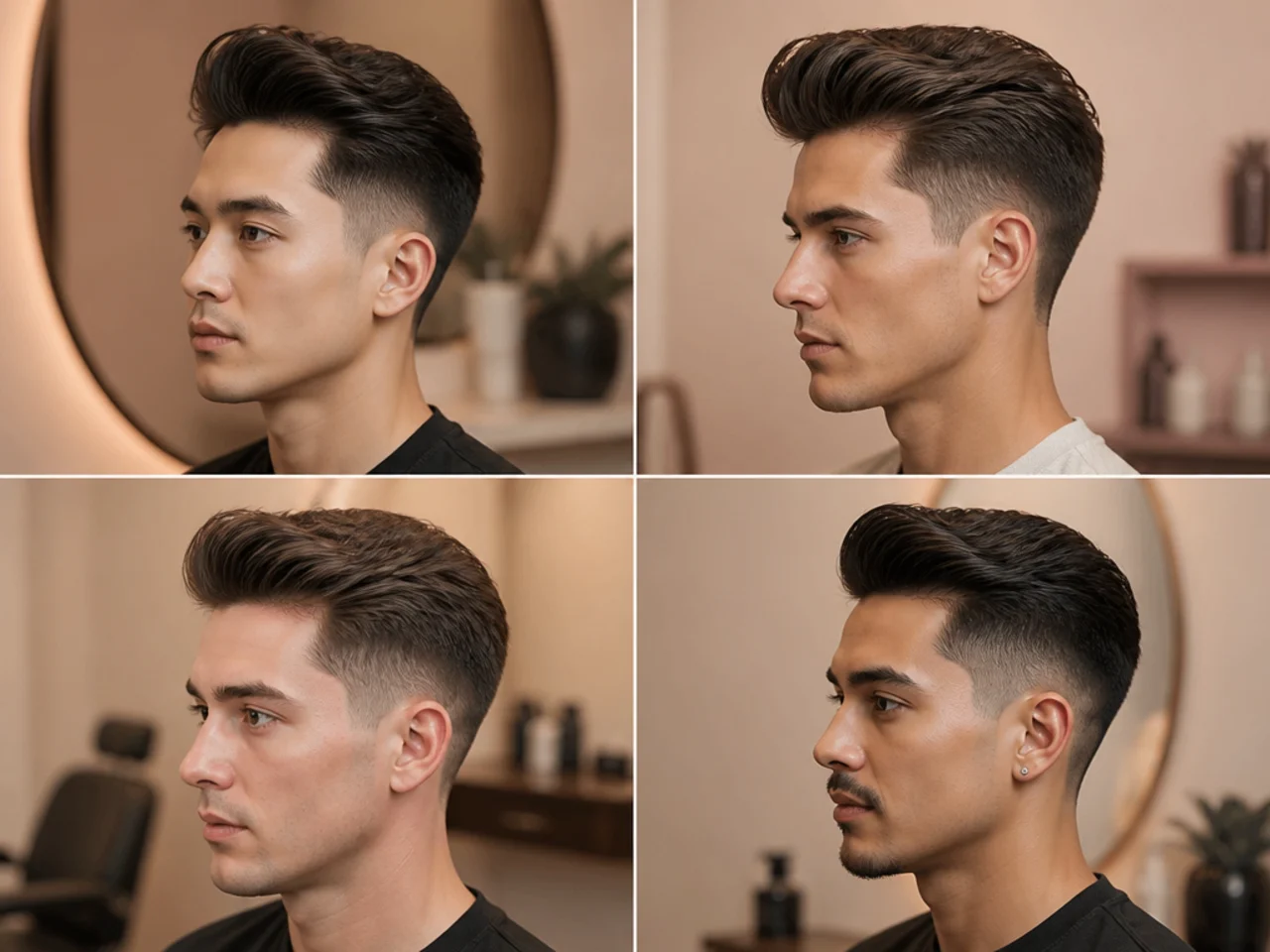
The quiff is the pompadour's textured cousin — front lift with a break in the top, less polished, more casual. Straight hair carries a quiff cleanly because the round brush can build the lift and your fingers can chop up the texture without the shape falling. Best for oval and square faces with medium to thick straight hair.
Ask for: "Mid taper on the sides, quiff on top, five inches through the front, point-cut the ends for texture." Point-cutting keeps straight hair from reading blocky at the tips.
Styling tip: Blow-dry with a round brush going up and slightly back, then break the front with your fingers and a pinch of matte clay. Nothing shiny — a quiff on straight hair reads greasy fast with pomade.
11. Slicked-Back Blowout Taper
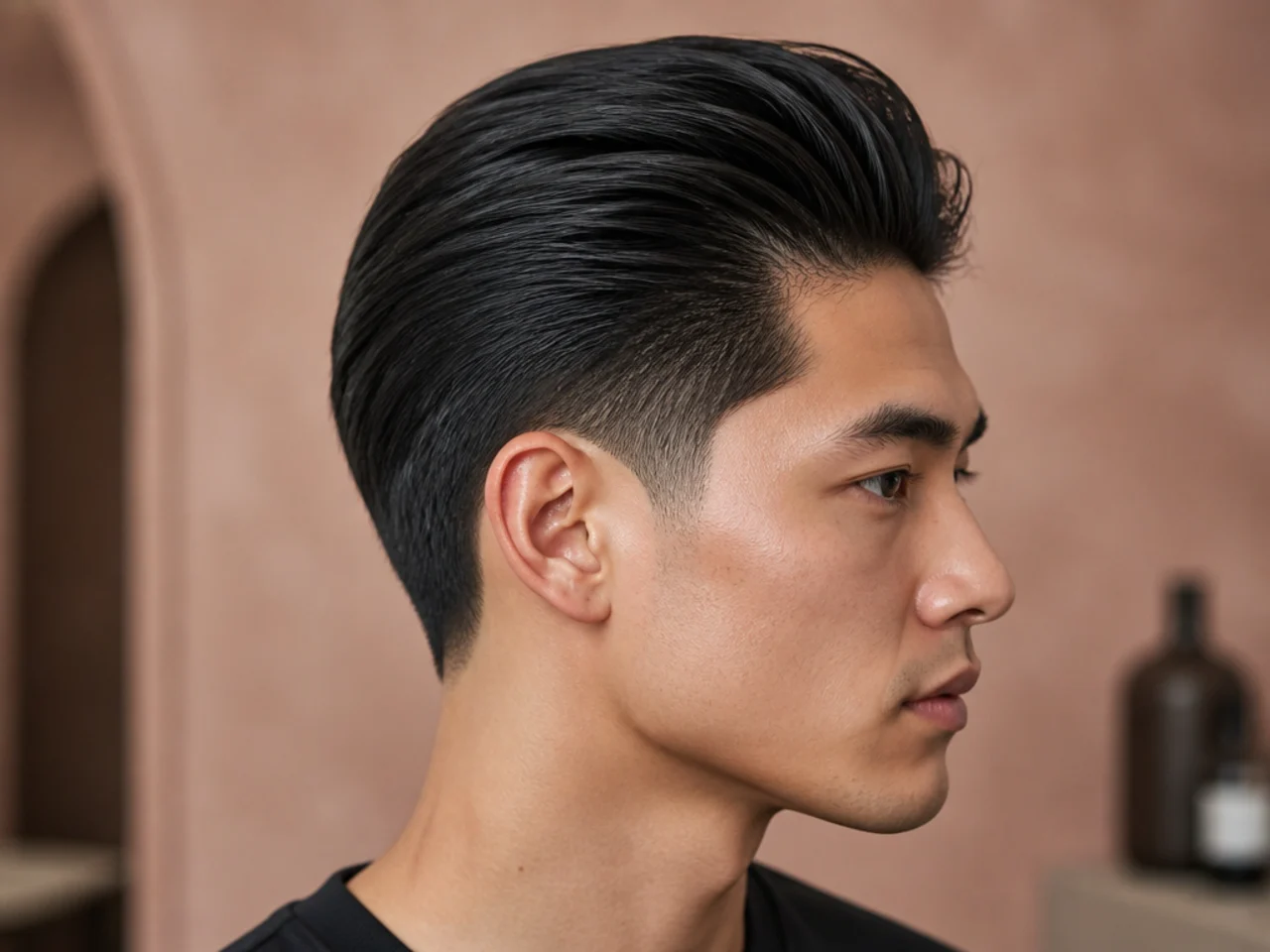
Instead of pushing the top forward, sweep everything straight back with a round brush — you get a slick back with lift built into it rather than a flat comb-through. Straight hair is the only texture that holds a true slick without cheating with heavy pomade. Best for oval and rectangular faces with medium to thick straight hair.
Ask for: "Mid taper on the sides, slick-back shape on top, five inches through the crown, keep the length weighted from the front all the way back." Say slick back with lift — that's not the same as flat-slick.
Styling tip: Damp hair, round brush pulling straight back from the front, cool shot at the top of the head. Light pomade with medium hold, worked through with a wide comb from front to back.
12. Blowout Taper with an Edgar Fringe
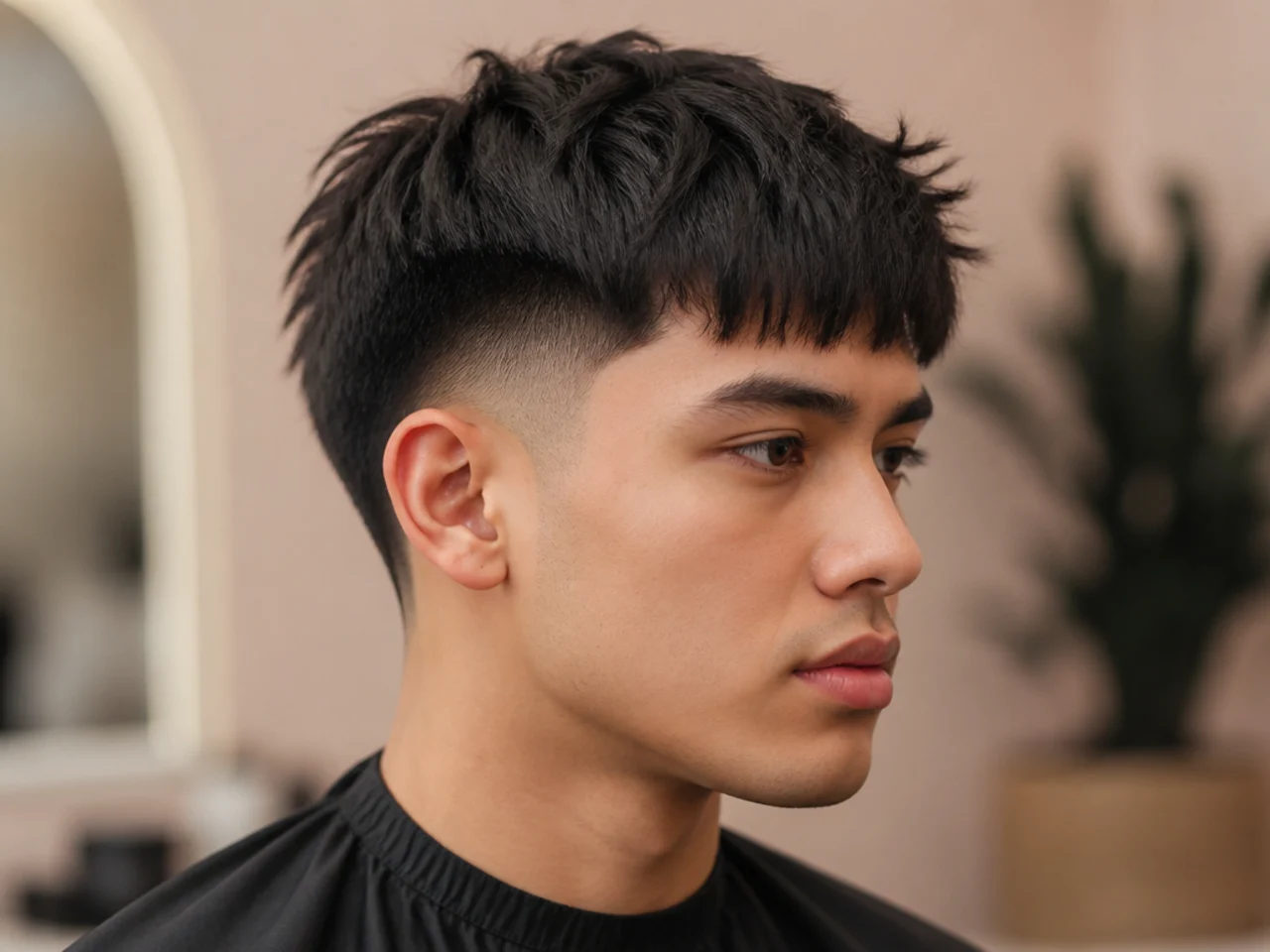
The Edgar is the blunt straight-across fringe cut heavy at the brow — pair it with a blowout taper and you keep round-brush volume through the back and crown while the front stays flat and geometric. Straight hair holds the blunt Edgar line perfectly because it doesn't curl up at the ends. Best for longer forehead heights.
Ask for: "Low or mid taper on the sides, Edgar fringe blunt across the brow, five inches through the crown, cut the back for a blowout." Bring a photo — Edgar length is highly personal.
Styling tip: Blow-dry the crown and back forward with a round brush, then comb the fringe flat against your forehead. Setting spray on the fringe only — locks the line without stiffening the rest.
13. Blowout Taper with a Textured Fringe
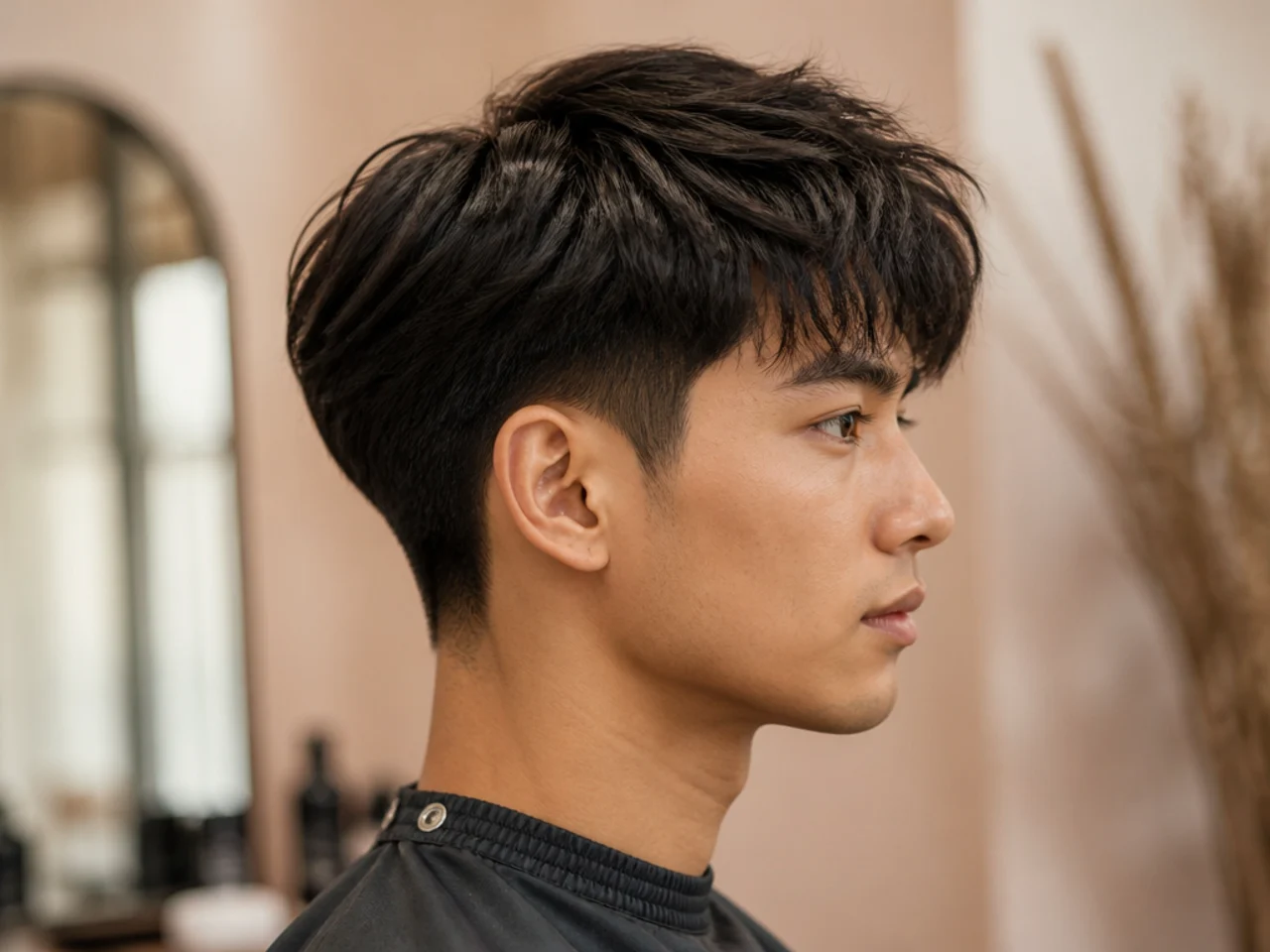
Trade the round-brushed front for a chopped, textured fringe pushed forward — the crown and back still get the volume, but the front reads casual and lived-in instead of styled. Point-cutting is essential for straight hair here or the fringe reads solid and blocky. Best for oval and long faces with medium-density straight hair.
Ask for: "Mid taper on the sides, four inches on top, point-cut the fringe for texture, keep it forward-falling with weight." Ask for the point-cut specifically — a straight scissor cut across the front reads too heavy.
Styling tip: Sea salt spray on damp hair, blow-dry the crown with a round brush going up, then rough-dry the fringe with your fingers so it stays choppy. Matte clay to finish.
14. Modern Curtains Blowout Taper
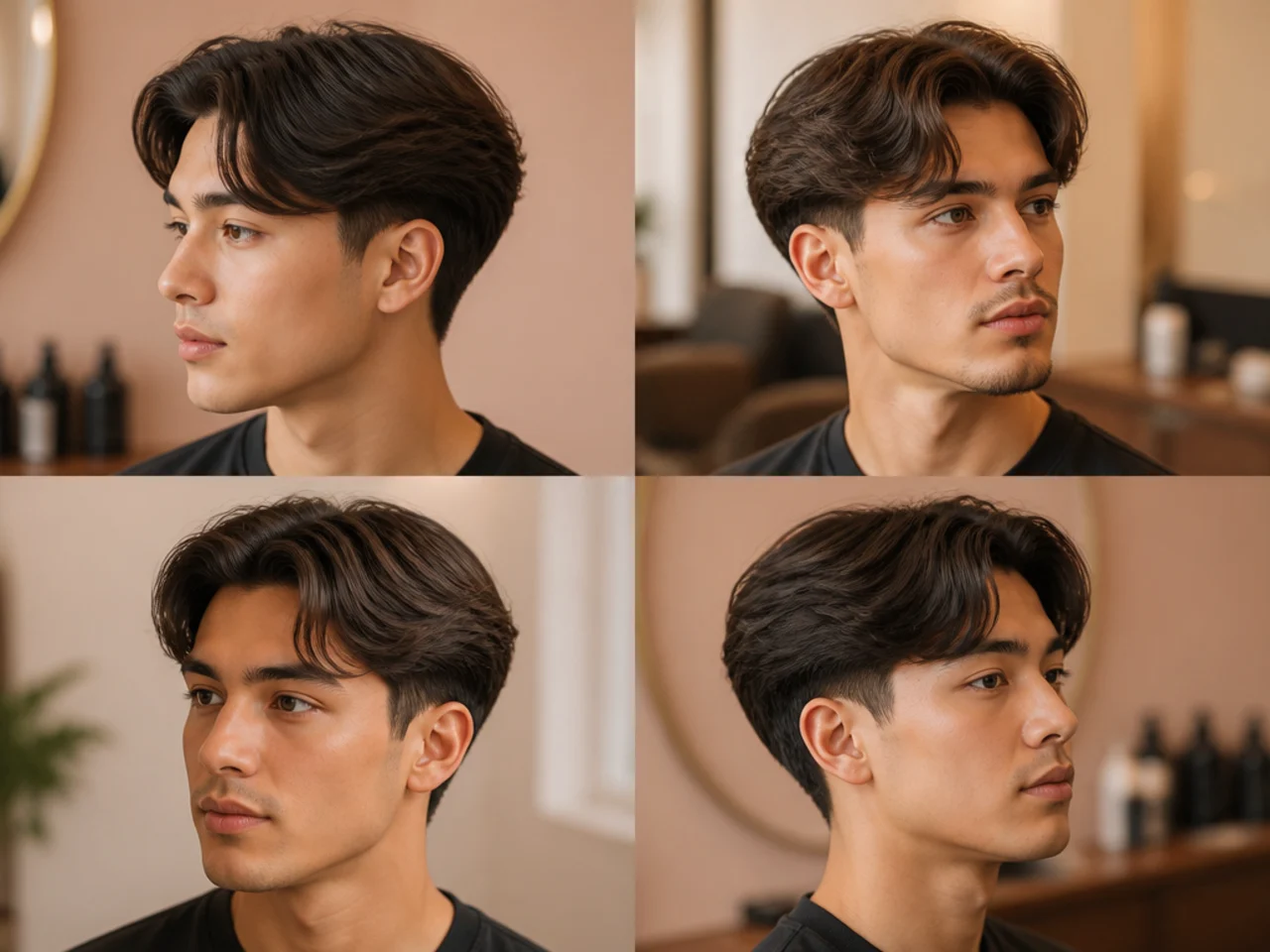
The modern curtain haircut sits between a middle part and a full sweep — the top parts down the center and falls to both sides, but with round-brush volume built into the sweep. Straight hair holds a curtain shape cleanly because it stays where you place it after the cool shot. Best for oval, long, and heart-shaped faces.
Ask for: "Mid taper on the sides, curtain shape on top, five to six inches through the front, cut with weight to both sides." Say modern curtain — some barbers hear curtain and cut a full 90s middle part.
Styling tip: Blow-dry each side outward with the round brush, then set the sweep with a comb and light hairspray. Zero product at the roots or the curtain collapses.
15. Blowout Taper Comb-Over
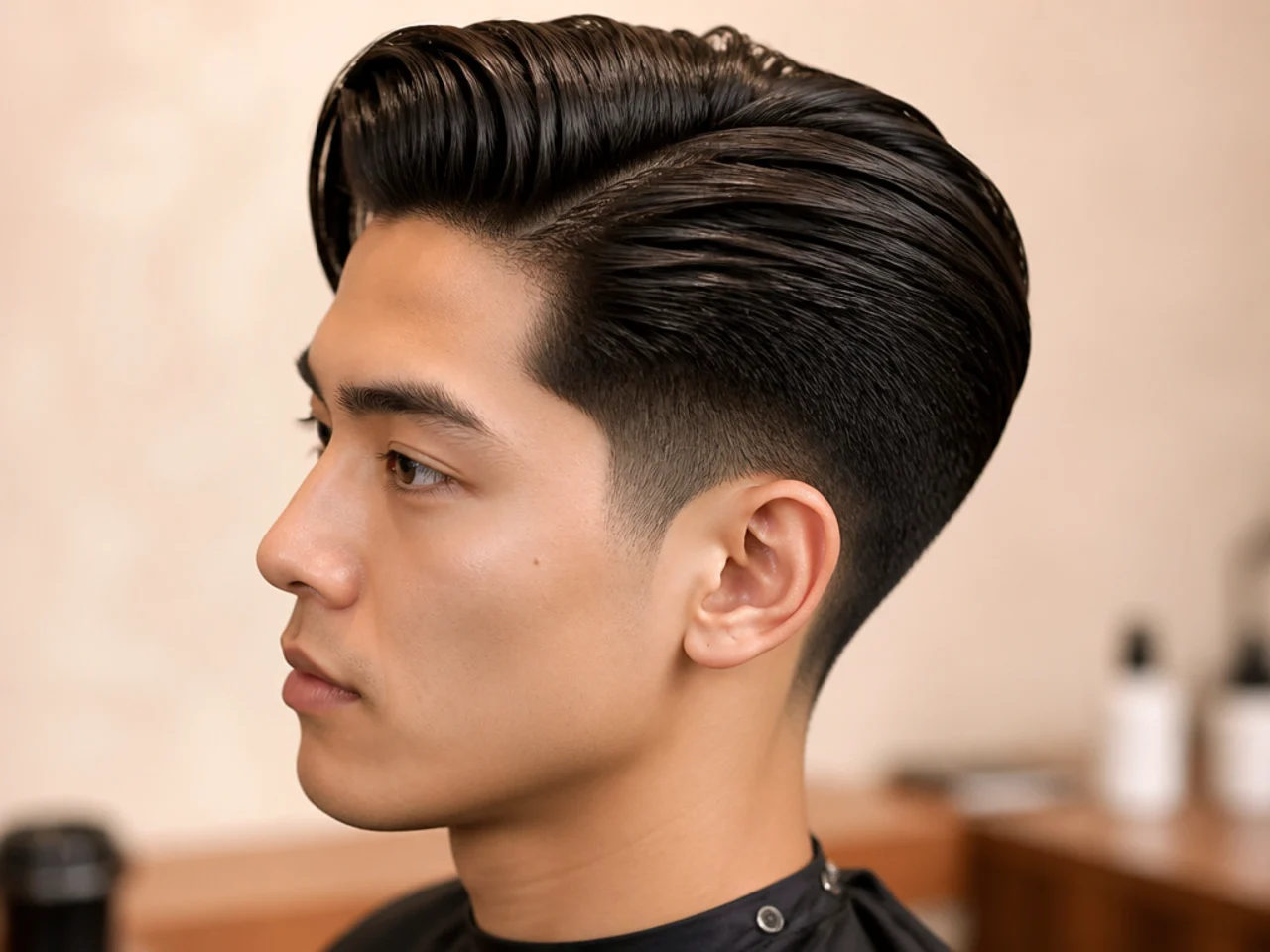
A comb-over with round-brush volume built into the sweep reads modern and executive at the same time. Hard part on the heavier side, length swept across with lift underneath — straight hair carries the deliberate structure because it doesn't have wave to fight the direction. Best for oval, square, and rectangle faces with medium to thick straight hair.
Ask for: "Mid taper on the sides, hard part on the left, comb-over on top with five inches of length, cut with weight to the sweep side." Point at where you want the part.
Styling tip: Damp hair, hard part combed in, round brush pulling across from part to opposite side with lift underneath. Light pomade worked from part to ends. Setting spray to lock.
16. Piecey Blowout Taper for Fine Hair
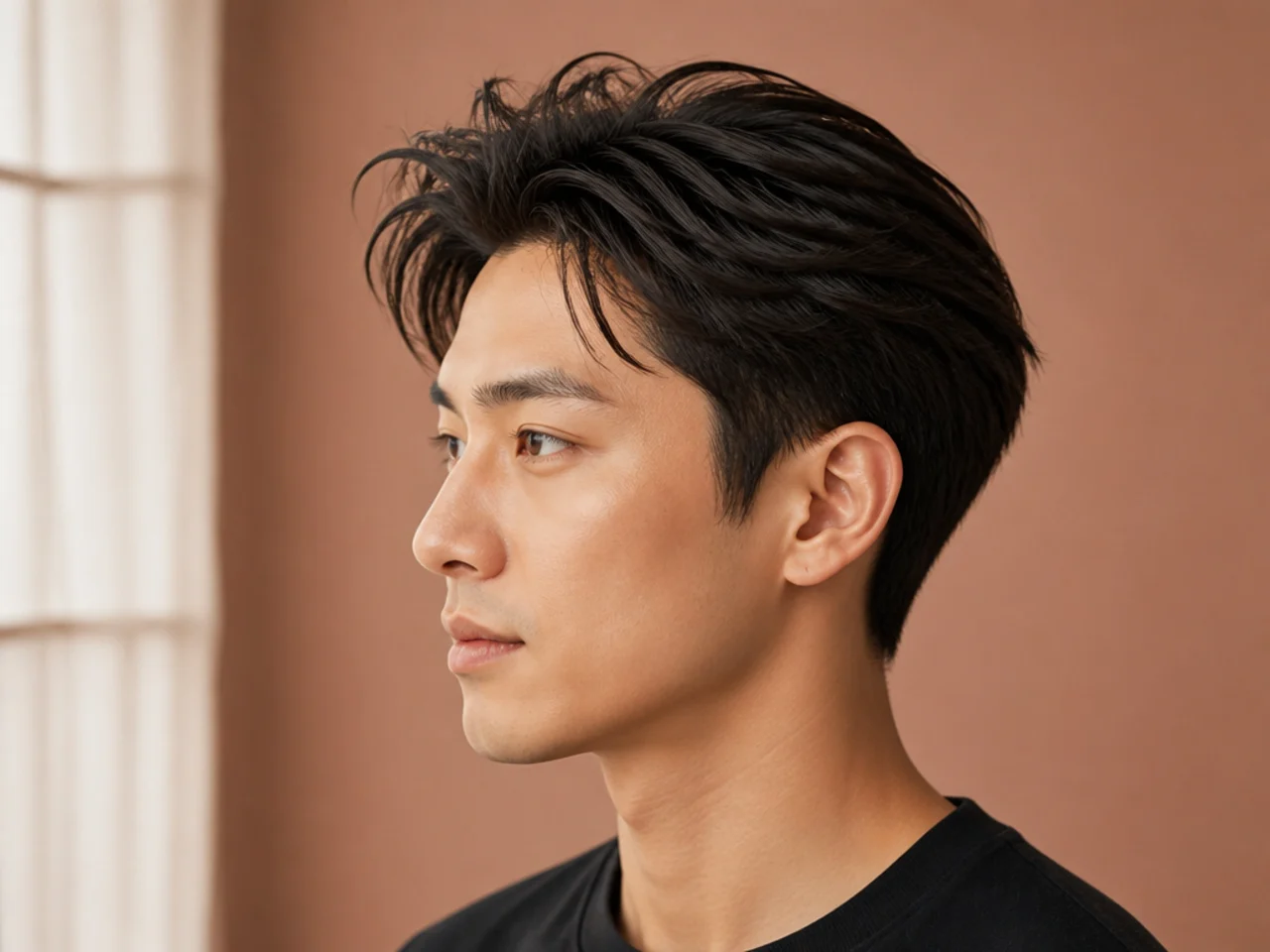
Fine straight hair reads denser when you break it up into deliberate pieces rather than sweeping it into a smooth shape. Point-cut ends, matte texture, no polish — the piecey finish creates the illusion of thickness where a rounded blowout would just look flat. Best for fine straight hair on any face shape.
Ask for: "Low or mid taper on the sides, three to four inches on top — no longer, point-cut heavily for texture, cut so the pieces separate." Length is the enemy for fine hair here.
Styling tip: Root-lift mousse at the roots, blow-dry against the natural fall, break the top into pieces with texture powder and matte clay. No cream — cream on fine hair reads greasy and stringy.
17. Volume-Booster Blowout for Fine Straight Hair
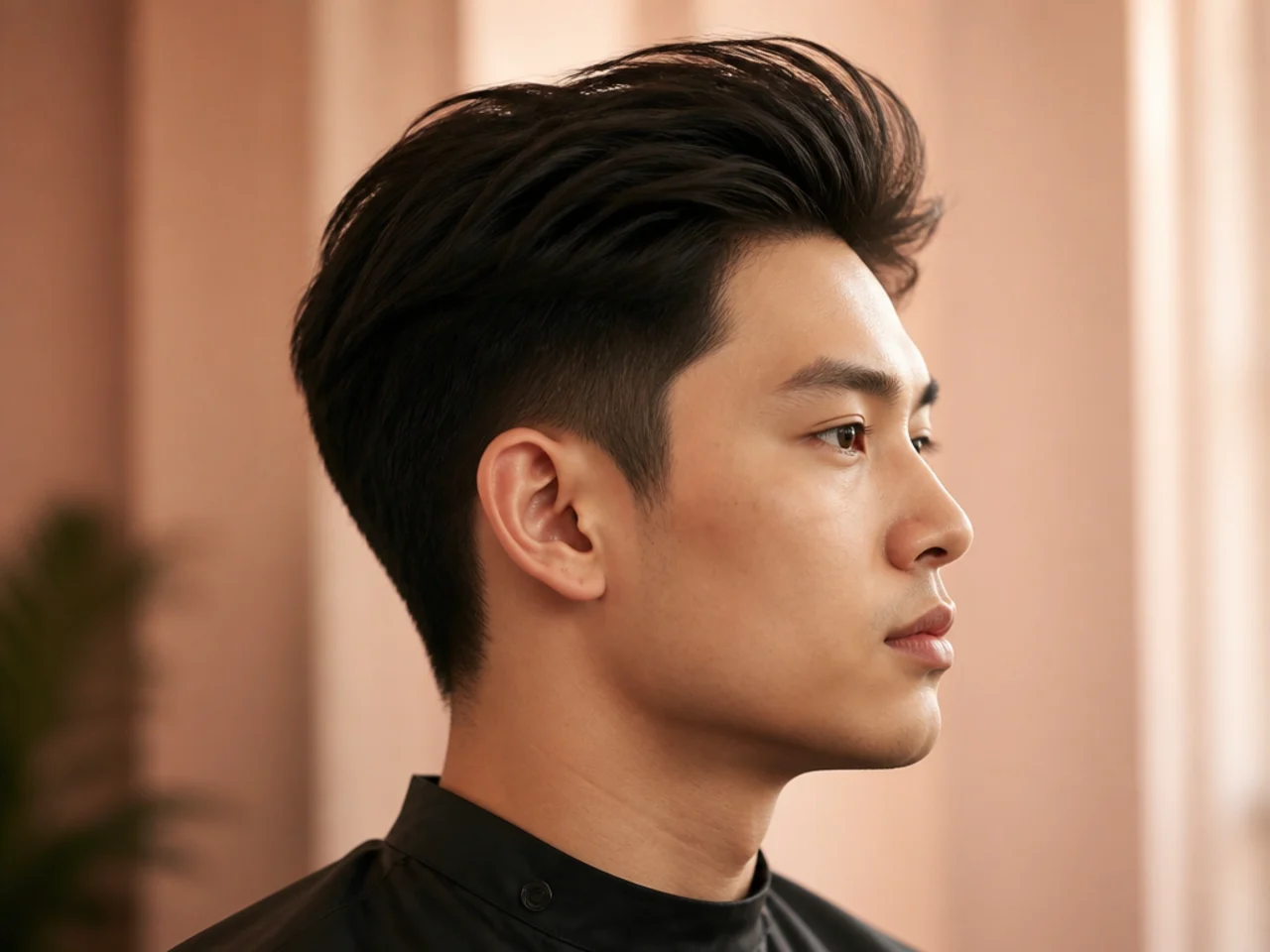
The volume-booster is a shorter, denser variation cut to maximize the appearance of thickness. Three inches on top, cut round through the crown, blow-dried against the natural fall for maximum lift. The taper stays low so nothing exposes scalp along the sides. Best for fine or thinning straight hair on oval and round faces.
Ask for: "Low taper on the sides, three inches on top, cut to look denser — round through the crown, point-cut the ends." Ask specifically for "denser" language so the barber cuts for volume, not length.
Styling tip: Thickening mousse at the roots, blow-dry the top against the natural fall (up and against your part), cool shot at the crown. Texture powder before styling — the difference is dramatic on fine hair.
18. Short Executive Blowout Taper
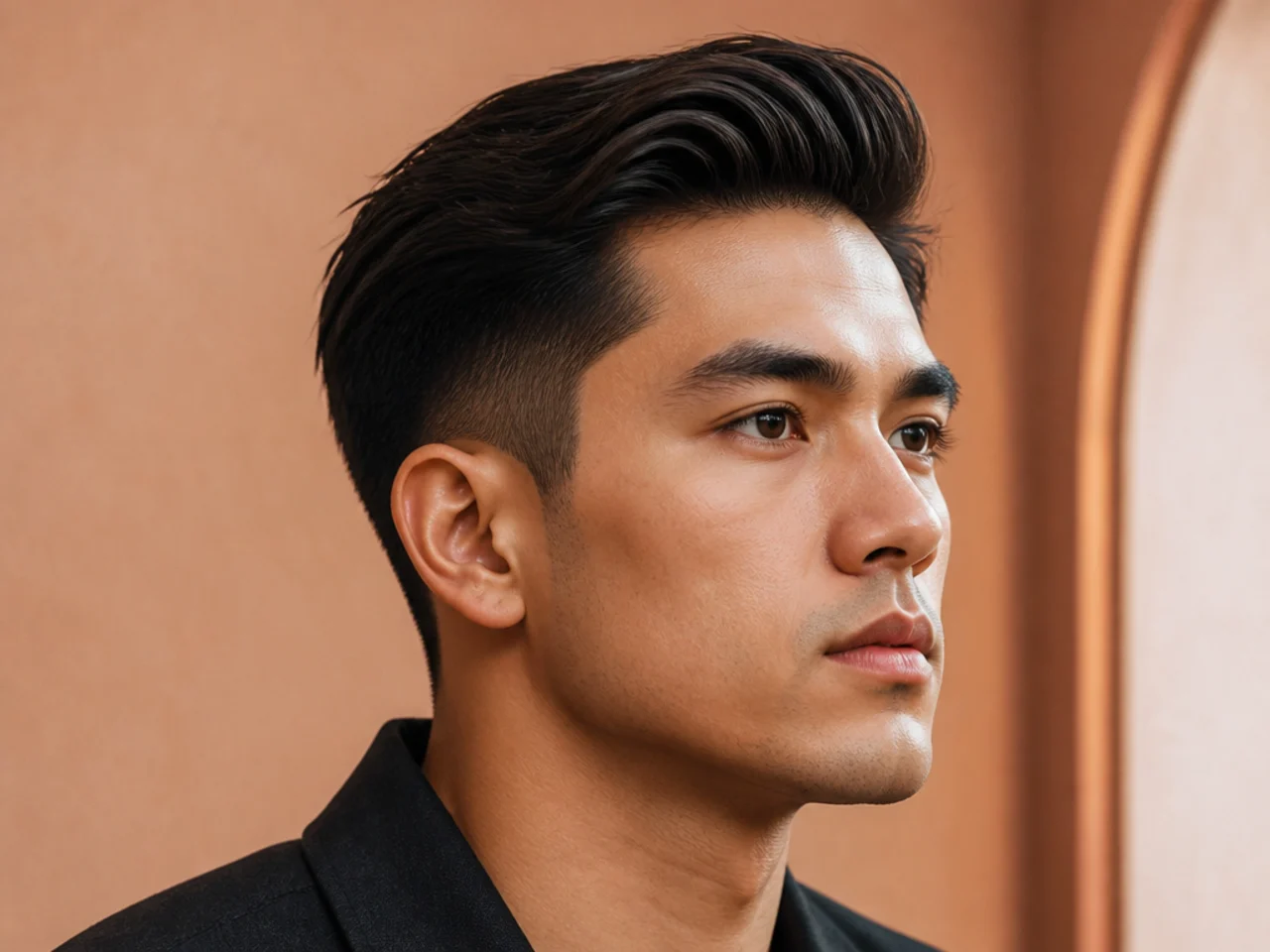
The executive version keeps the blowout shape but scales it down for a boardroom-ready silhouette. Three to four inches on top, low taper on the sides, subtle round-brush lift rather than a full pomp. Reads current without pushing dress code. Best for professional settings across face shapes.
Ask for: "Low taper on the sides — 1 guard at the shortest, three to four inches on top, cut with a soft round-brush shape, keep it conservative." Say conservative — otherwise you can end up with more volume than the office wants.
Styling tip: Root-lift spray only — no mousse for this shorter shape. Round brush pulling forward and slightly up. Matte cream at the ends. Nothing on the crown or you lose the executive read.
19. Long-Top Blowout Taper for Thick Hair
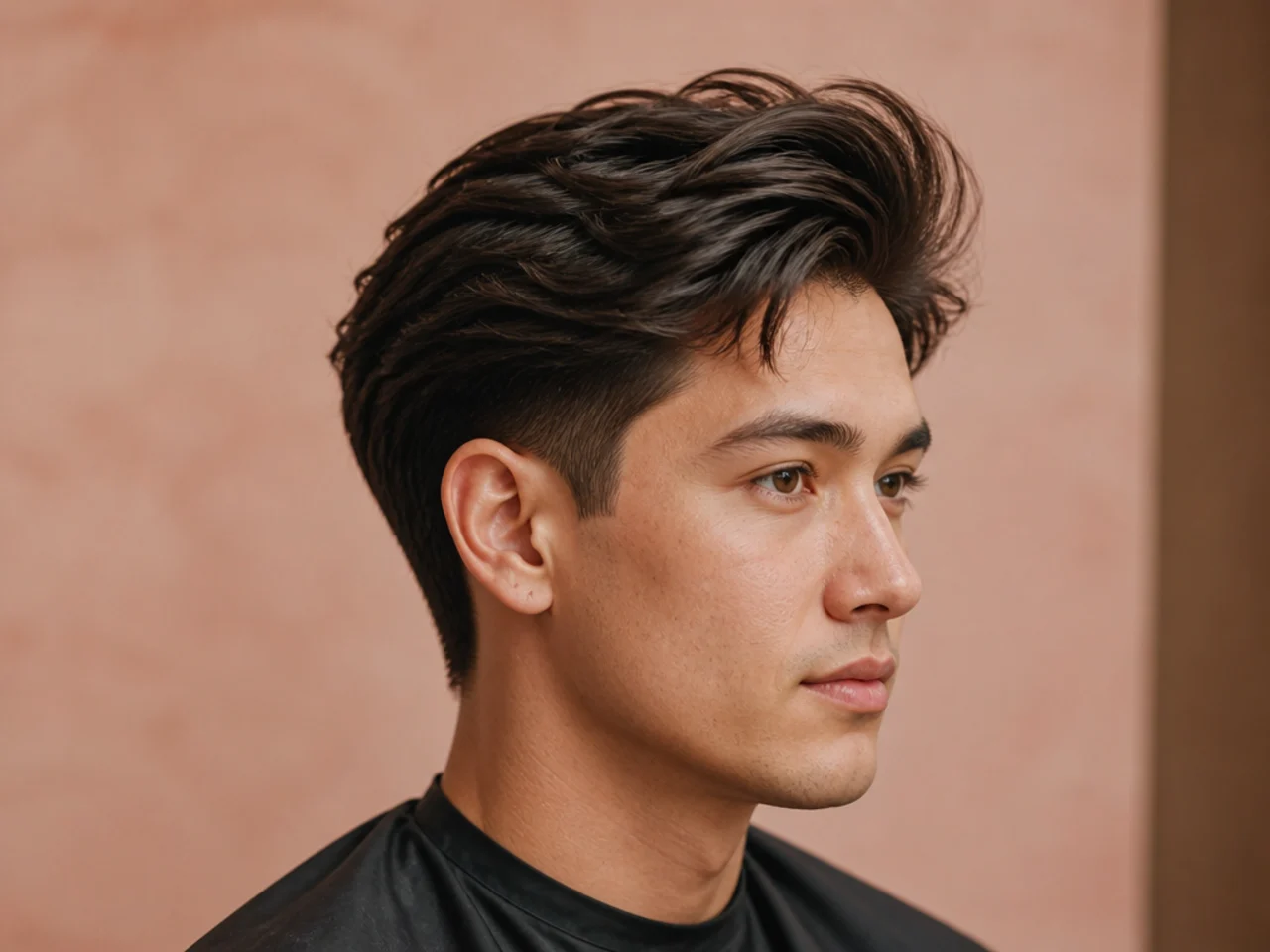
Thick straight hair can carry serious length on top — six to seven inches without collapsing. The long-top blowout taper takes advantage of that with a taller crown, more sweep, and more range of styling. Reads bold from the front and reads current from every angle. Best for oval, square, and diamond faces with thick, dense straight hair.
Ask for: "Mid taper on the sides, six to seven inches on top, cut with weight in the front and crown for a blowout, keep the back full." Bring a photo showing the length you want kept.
Styling tip: Volumizing mousse at the roots, round brush pulling the length forward and up in sections, cool shot after each section. Matte paste at the ends only. This length only works with the blow-dry — air-drying reads shaggy.
20. Casual Messy Blowout Taper
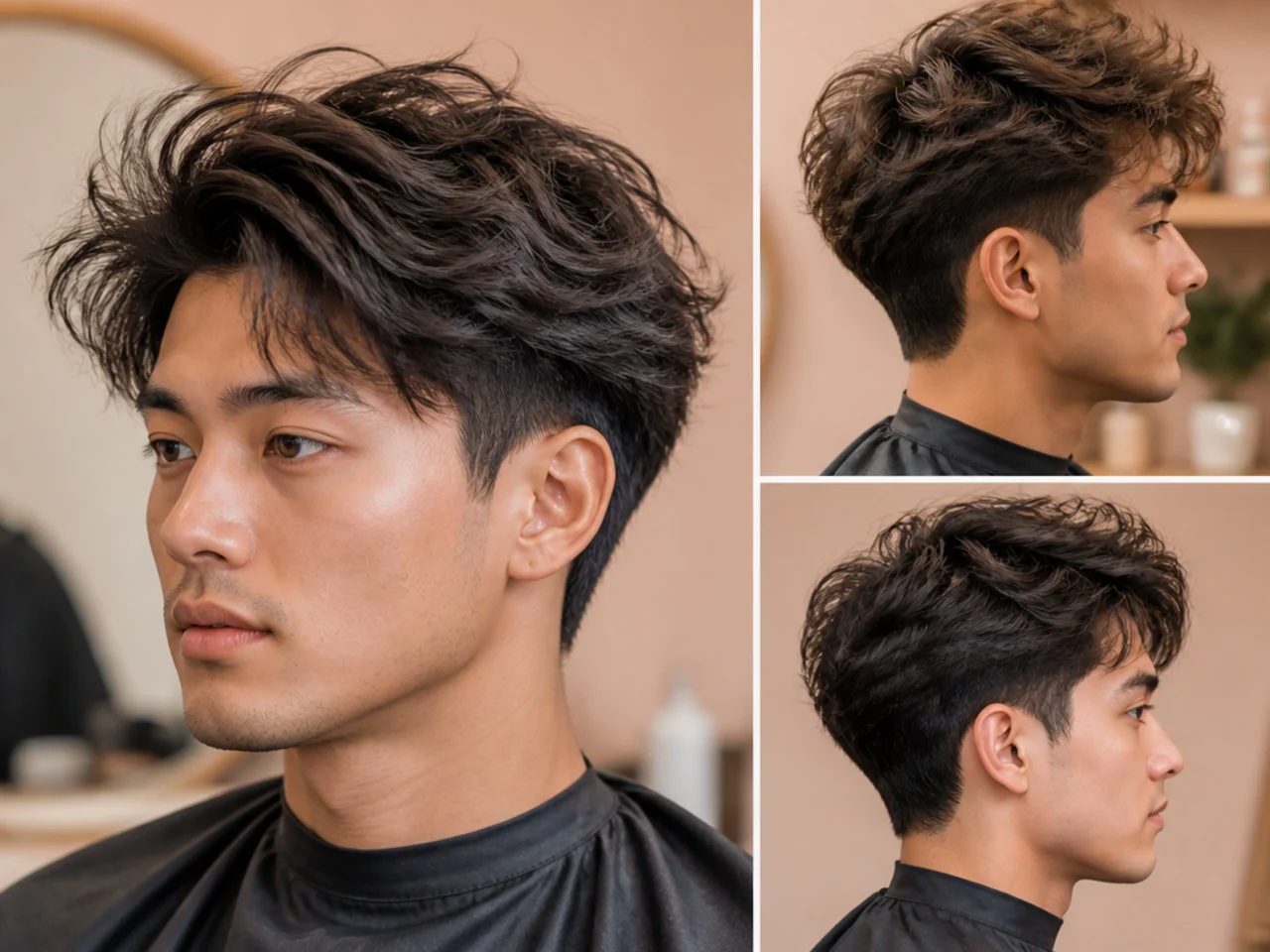
The messy version keeps the taper clean but breaks the round-brush shape on purpose. You blow-dry for volume, then rough it up with your fingers so the top reads lived-in instead of styled. Straight hair holds messy texture best when you set it with texture powder first. Best for casual dress codes and anyone who wants blowout volume without the polish.
Ask for: "Mid or low taper on the sides, four to five inches on top, point-cut everywhere for texture, keep the shape loose." Say loose or messy — not styled, not polished.
Styling tip: Sea salt spray on damp hair, rough blow-dry with your fingers rather than the round brush, texture powder at the roots. Matte clay worked through with fingers, never a comb.
Products and Tools That Actually Work on Straight Hair
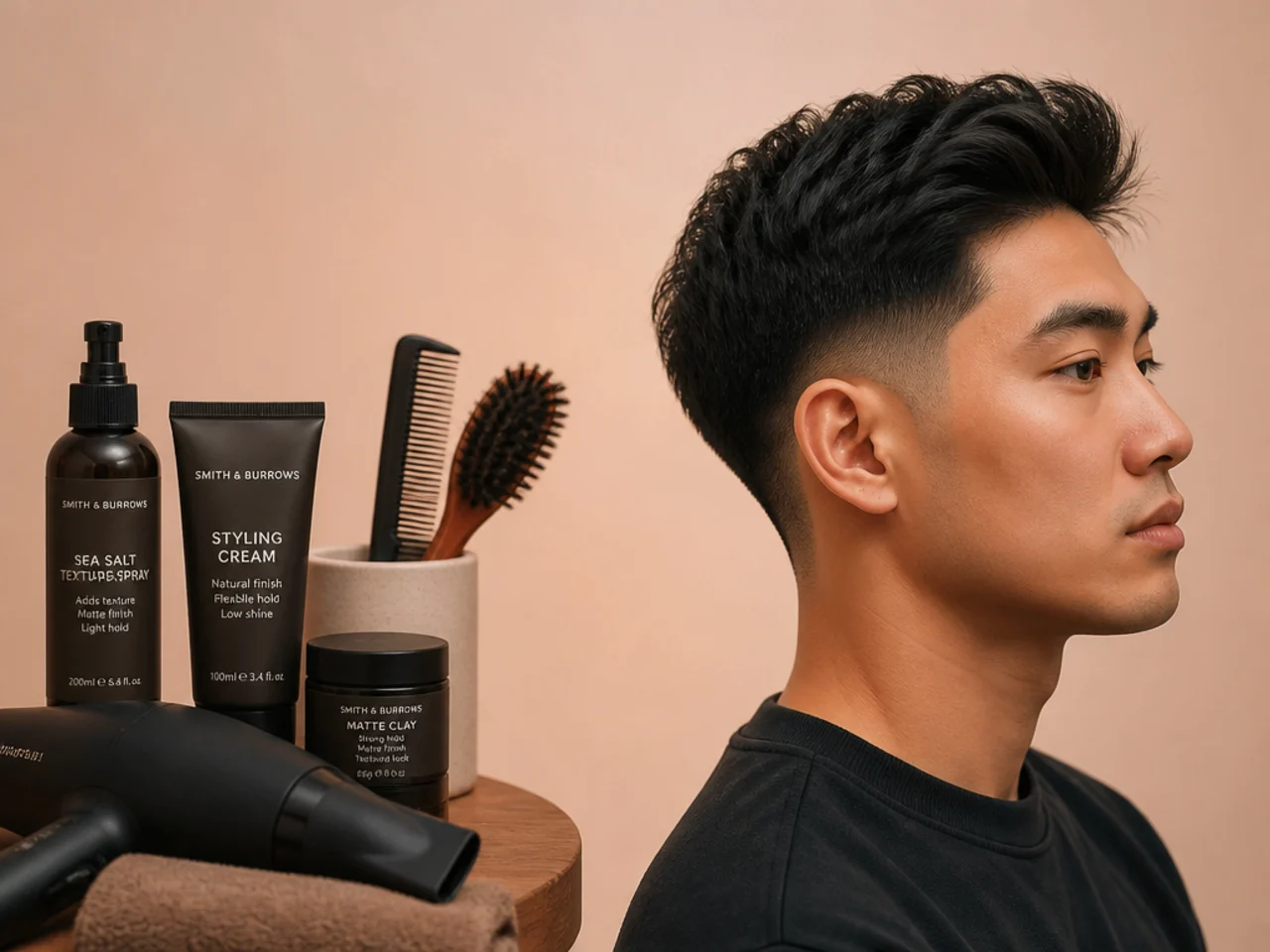
Getting the cut right is only half the job. Straight hair rewards the right products and punishes the wrong ones — one heavy pomade and the shape collapses by lunch.
Volumizing mousse or root-lift spray. Apply to damp hair at the roots only. This is the foundation for the blowout shape on straight hair. Skip it and the top drops by lunch. Skip it on fine hair and the top drops by ten a.m.
Matte paste or matte clay. The finish product. Straight hair reads greasy with shine — matte holds without adding weight. Work it through the ends only. Nothing at the roots for straight hair, ever.
Texture powder. The secret weapon for fine straight hair. Shake at the roots before styling and it grips the hair for volume that mousse alone can't produce. A pinch is plenty.
A round brush (2 to 2.5 inch barrel). The brush that shapes the whole cut. Larger barrels give softer volume; smaller barrels give tighter, more sculpted shape.
A blow-dryer with a cool-shot button. The cool shot at the end is what locks straight hair into shape. A dryer without it means the shape drops within an hour. Ionic dryers cut drying time in half — worth the spend if you're styling every day.
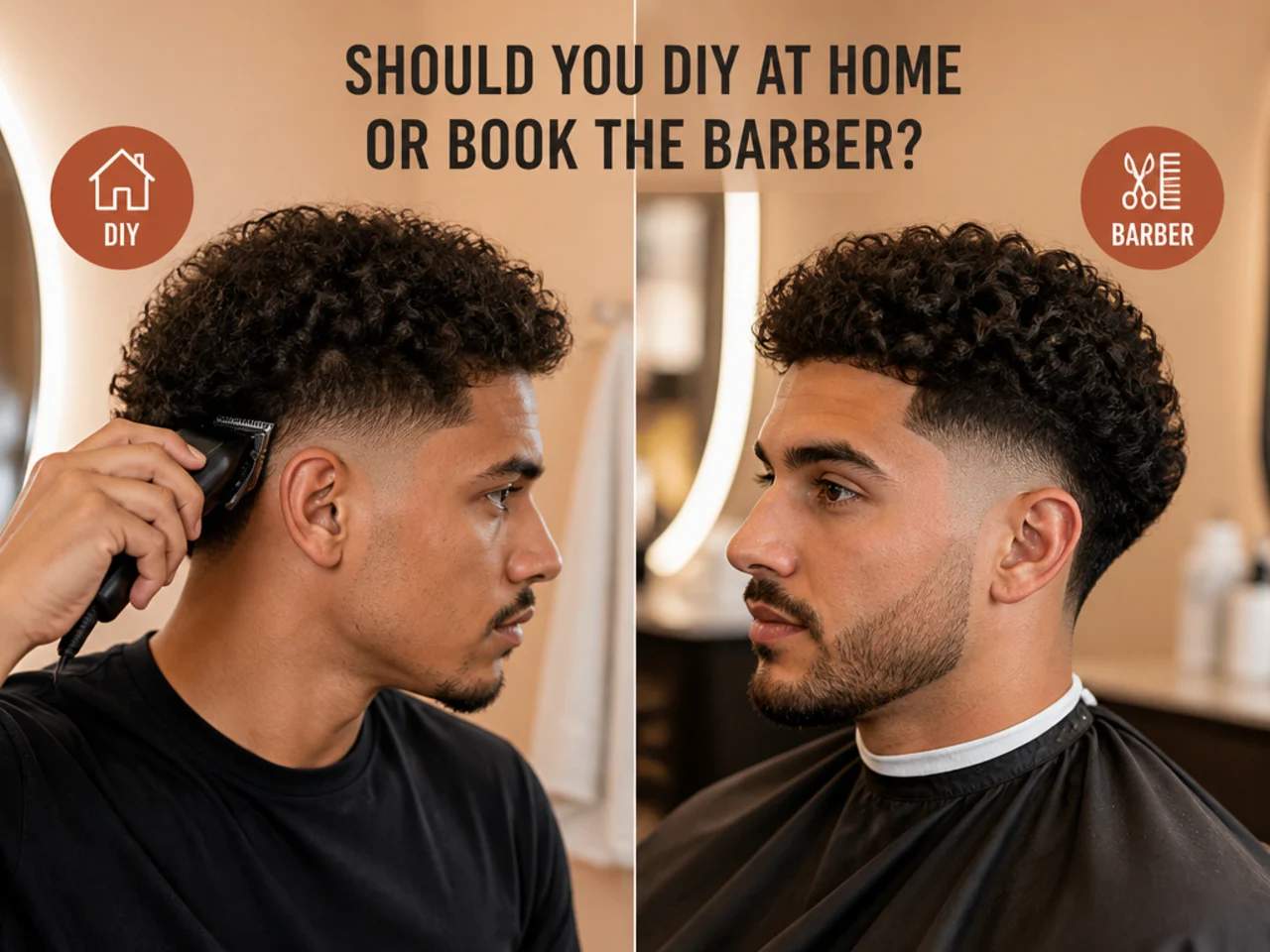
For clipper work at home between visits, the best hair clippers for men hold guard integrity and let you keep the taper edge clean for the full three weeks between cuts.
How to Ask Your Barber
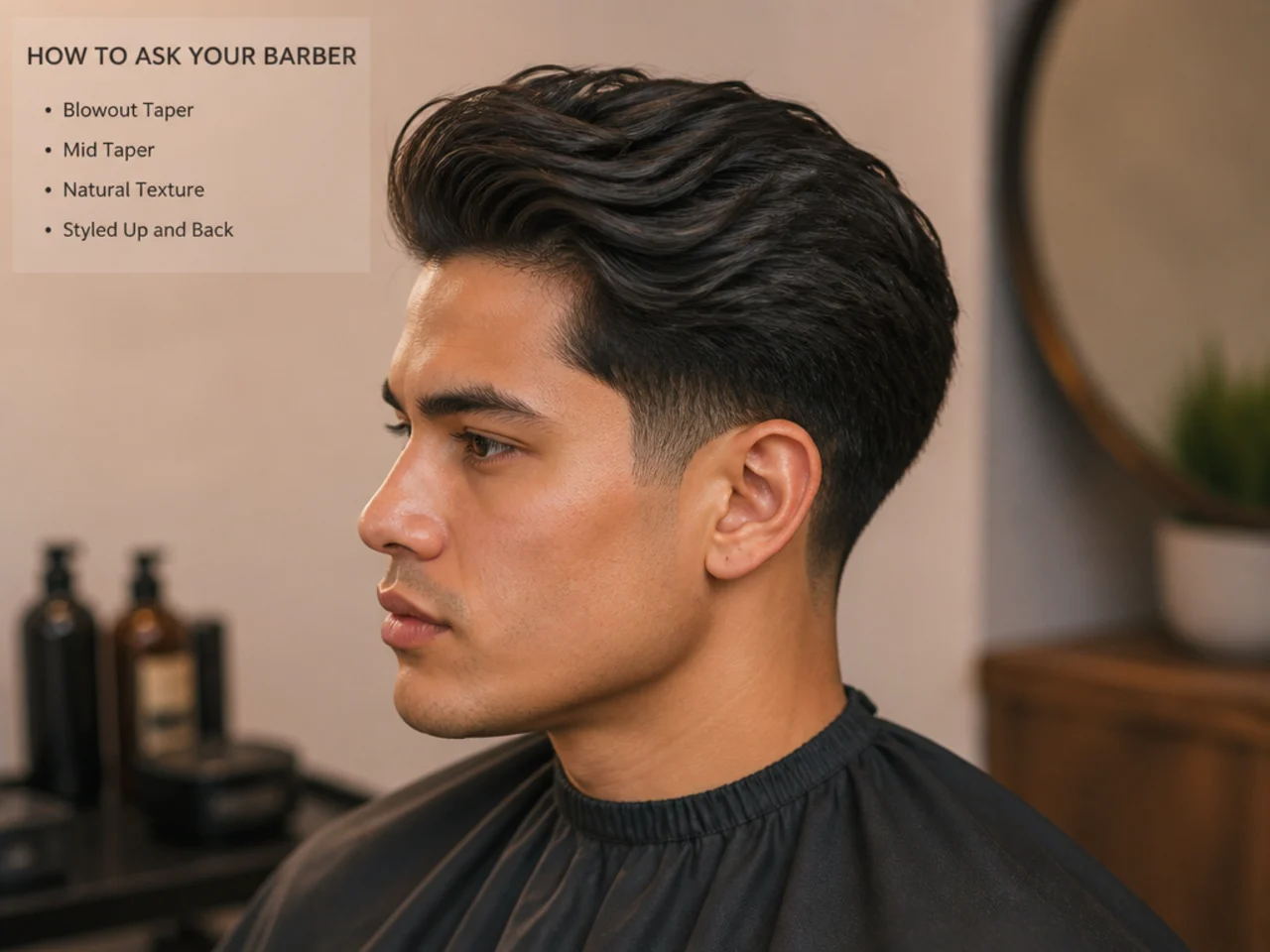
Bring a photo and use these five moves in order. Straight hair barbers know the assignment; you're just being specific.
- Show a photo first. Words describe half the shape. A photo gets everyone on the same page in ten seconds.
- Name your fade or taper height. Low, mid, or high. Point at where you want the shortest hair to start on your temple.
- Say the guard number at the shortest point. #0 or skin for a fade; #0.5 or #1 for a taper. Barbers cut in guard numbers, not adjectives.
- State the length on top in inches. Three to four for fine hair; five to six for medium to thick. Don't say "medium length" — that means different things in different shops.
- Say the word "blowout." This is the whole ask. It tells your barber to leave length weighted forward instead of stacking it evenly, which is what makes the round-brush shape work later. Ask them to cut the top for a blowout specifically.
- Ask for the ends to be point-cut. Straight hair cut with straight scissors reads blocky at the tips. Point-cutting adds movement and helps the round brush grip.
- Book the next appointment before you leave. Two to three weeks out. Good blowout barbers book solid — waiting until you notice the shape drops means waiting another three weeks after that.
Styling and Maintenance for Straight Hair
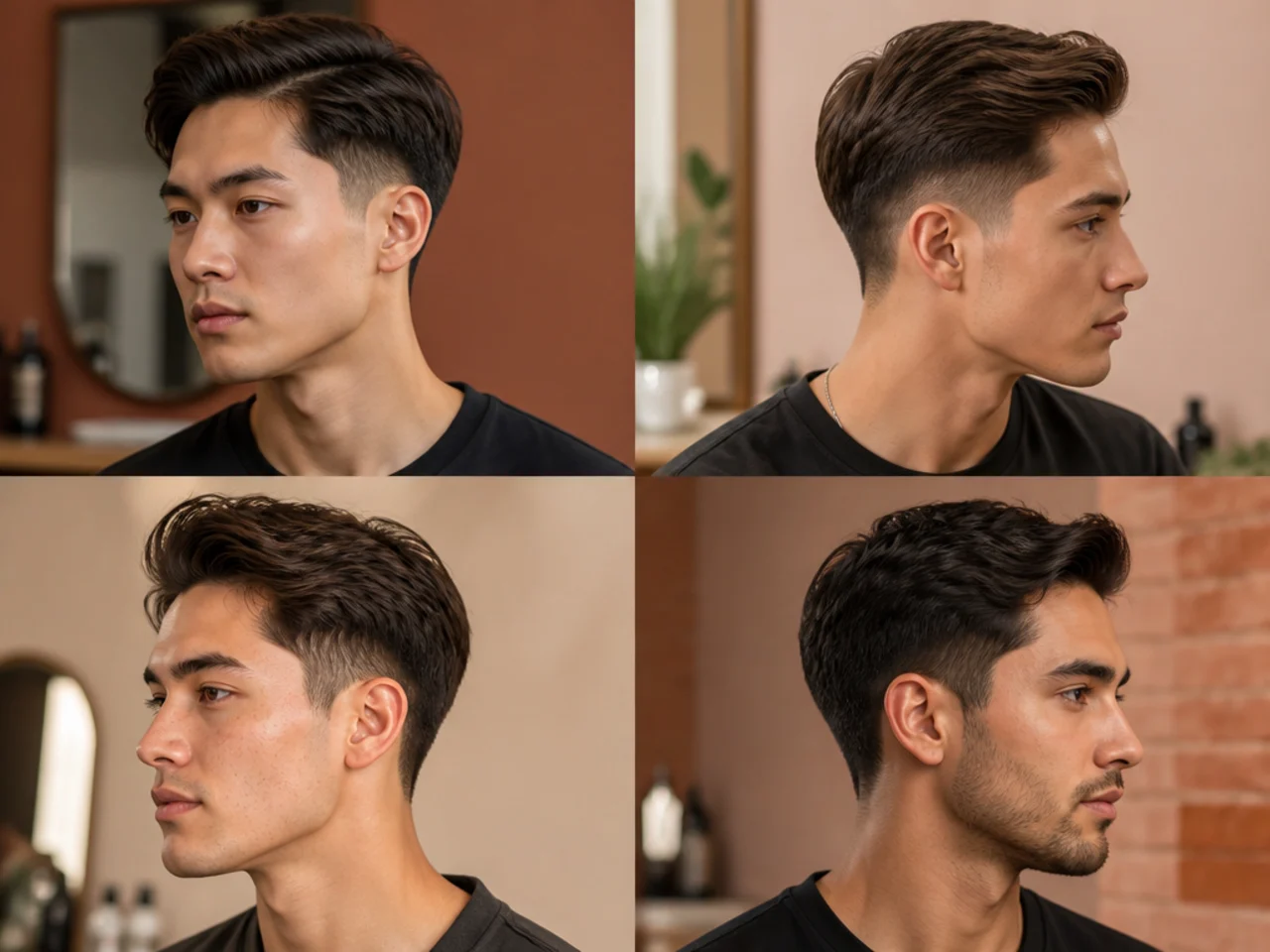
The blowout taper is not an air-dry cut. Every morning is a blow-dry morning, and the shape holds only as long as you set it. This is the deal, so plan for it.
Wash cadence. Every two to three days for straight hair. Daily washing strips the natural oils that give straight hair grip, and clean hair without oils is slippery and hard to shape. On no-wash days, rinse with water only and start the blow-dry from damp.
Morning routine. Damp hair, mousse or root-lift spray at the roots, blow-dry with the round brush. Total time: eight to ten minutes. Cool shot at the end is not optional — it's what locks the shape for the day.
Product order. Volume base first (mousse), then heat, then finish (matte paste or clay). Never the other way. Product on dry hair without heat sits on top of the strand instead of moving with it.
Refresh mid-day. Straight hair falls faster than curly or wavy. A pinch of texture powder at the crown mid-day resets the volume in fifteen seconds without a full re-style.
Sleep. The pillow is the enemy of a blowout. Sleep with the top pushed forward, not back, or you wake up with the front flattened. A silk pillowcase reduces friction and helps the shape last a second day.
Barber cadence. Every two to three weeks. The taper edge is the first thing to blur, and once it does, no styling saves the shape. Rebook before you leave the shop. For related fade heights and how they play with straight hair, see low fade vs mid fade vs high fade or the parent taper haircut guide.
If you want the full sibling variation for fade-height contrast rather than a taper stop, the blowout taper fade walks through 25 fade-height variations built on the same shape.
FAQ
Does a blowout taper actually work on straight hair? Yes — straight hair holds a round-brush shape better than any other texture, as long as you use volumizing product at the roots and set the shape with heat. Thick straight hair holds all day; fine straight hair needs mousse plus a shorter top to read dense.
What products do I need to style a blowout taper on straight hair? Volumizing mousse or root-lift spray for the base, matte paste or clay for finish, and texture powder if you have fine hair. Skip shine serums and heavy pomades — straight hair reads flat and greasy with the wrong product.
How long does the top need to be for a straight-hair blowout taper? Three to six inches. Fine straight hair does best at three to four inches so it stacks dense; thick straight hair can carry five to six for a fuller round-brush shape. Under three inches and the round brush has nothing to pull.
Which fade height suits straight hair best? Any of them work — the call is face shape and workplace. Mid taper is the safe default for oval and square faces. Low taper reads conservative for offices. High taper or skin fade shows the sharpest contrast against the straight length on top.
How do I keep the shape from falling flat by lunch? Blow-dry cold-shot at the end to set the shape, use matte paste rather than cream, and keep product at the ends only. Product at the roots weighs straight hair down. A light mist of hairspray at the crown holds all day without stiffness.
How often do I need to see my barber for a blowout taper? Every two to three weeks. The taper edge blurs quickly, and the top starts losing its cut-for-blowout weight distribution around week four. Rebook before you leave the chair — good blowout barbers book out fast.