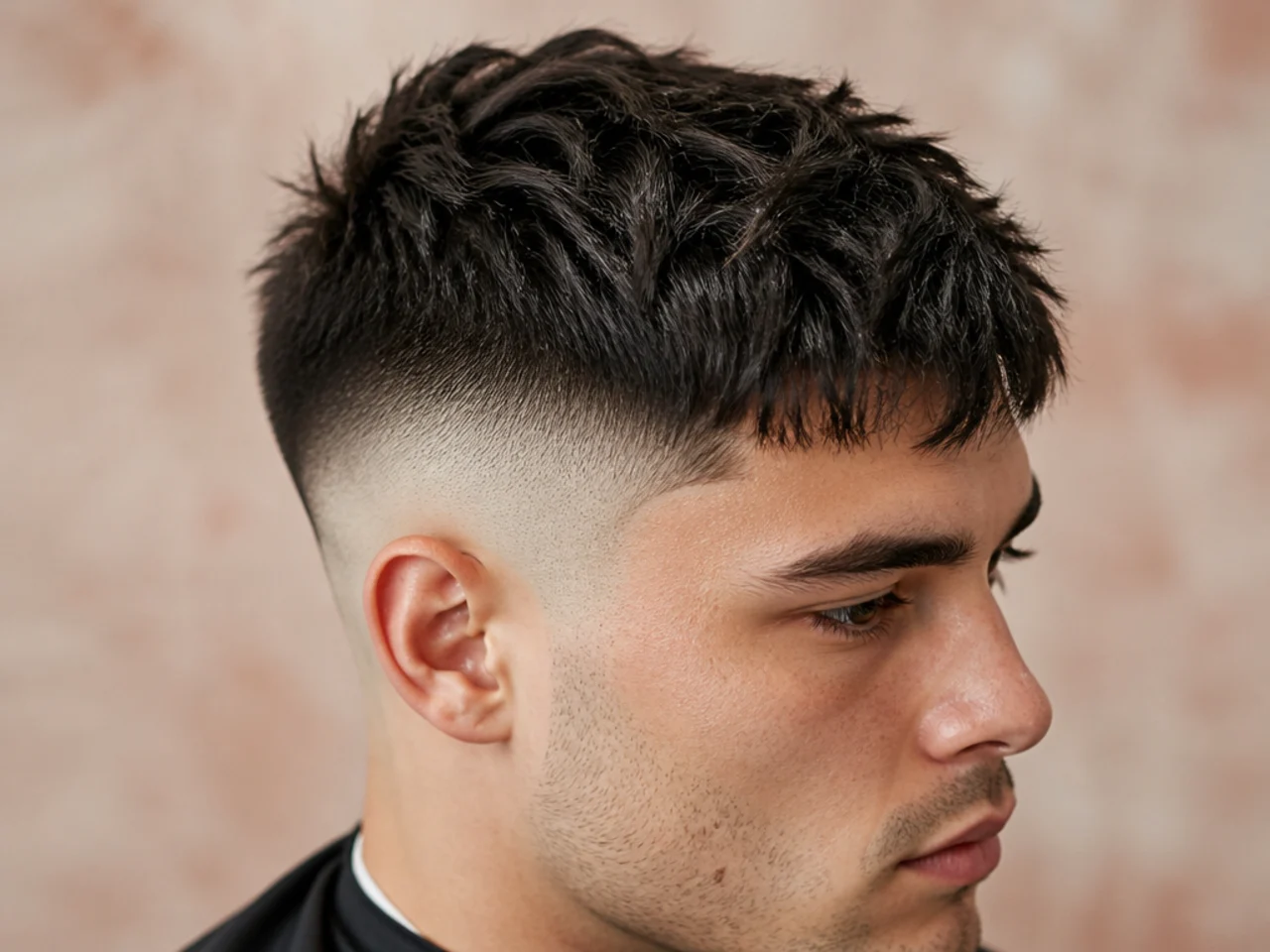
20 Textured High Fade Haircut Ideas to Try
On a mid or low fade the textured top overhangs the sides and casts a shadow. A high fade starts above the widest point of the skull, so there is nothing to overhang, and the texture has to be built to be seen from the front instead.
In this article · 27
- Why the Shadow Trick Stops Working
- How to Choose Yours
- The 20 Textured High Fade Ideas
- 1. Textured Crop With a High Fade
- 2. Textured High Skin Fade
- 3. Textured High Taper Fade
- 4. Textured Quiff Over a High Fade
- 5. Textured High Fade With a Broken Fringe
- 6. Messy Textured High Fade
- 7. Textured High Fade Comb Over
- 8. Textured High Fade With a Hard Part
- 9. Textured High Fade With a Beard
- 10. Textured High Fade on Thick Hair
- 11. Textured High Fade on Fine Hair
- 12. Textured High Fade on Straight Hair
- 13. Textured High Fade on Wavy Hair
- 14. Textured High Drop Fade
- 15. Textured High Fade Faux Hawk
- 16. Long Textured Top Over a High Fade
- 17. Short Textured High Fade
- 18. Textured High Fade With a Line-Up
- 19. Textured High Fade With Root Lift
- 20. Textured High Fade at Week Three
- Styling and Upkeep
- Mistakes to Avoid
- FAQ
- Final Thoughts
Texture is weight removed from the ends so individual pieces separate, and on most haircuts you see that separation as a shadow along the side of the head.
That shadow needs an overhang. The top has to sit proud of the sides for the ends to have anything to hang over.
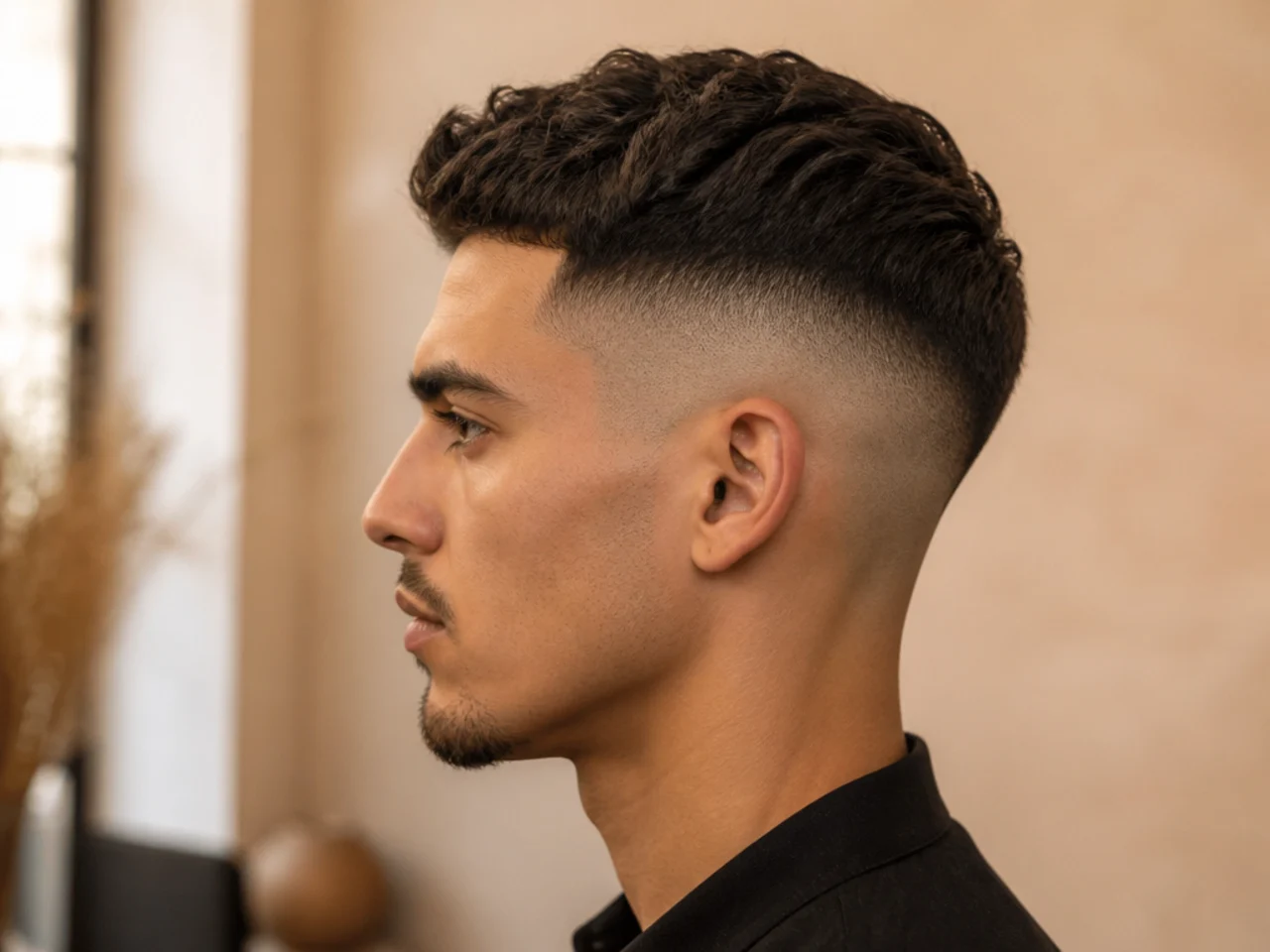
A high fade starts at or above the parietal ridge, which is the widest point of the skull. Above it the head narrows, so the top overhangs nothing and the shadow never forms.
Why the Shadow Trick Stops Working
Texture reads through contrast. On most cuts that contrast is the shadow under an overhanging top.
The overhang needs the top to be wider than the sides. Which is true below the parietal ridge and false above it.
A high fade removes the whole overhang. The top sits on the narrowest part of the skull.
So texture has to be visible from the front and above. Height, varied lengths and a broken front edge, rather than a side shadow.
How to Choose Yours
Ask for about five centimetres on top. A centimetre more than a mid fade needs, because the top carries the whole silhouette.
Ask for varied lengths through the section, not just at the tips. Internal variation is what shows from above once the side shadow is gone.
Build the front edge irregularly. A broken fringe line is the only texture visible from directly in front.
Use matte product and root lift together. Height creates the separation the sides can no longer provide.
The 20 Textured High Fade Ideas
1. Textured Crop With a High Fade
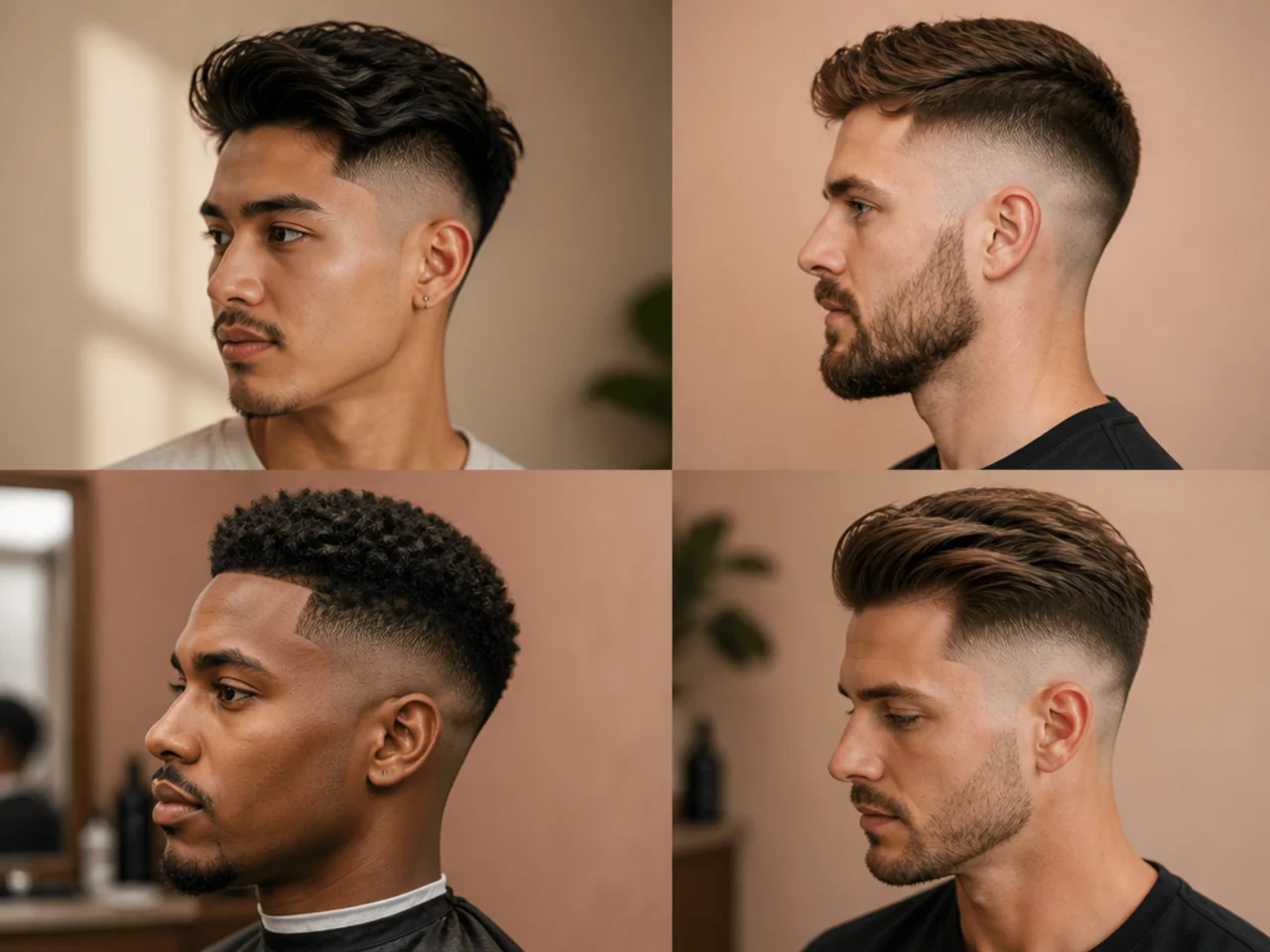
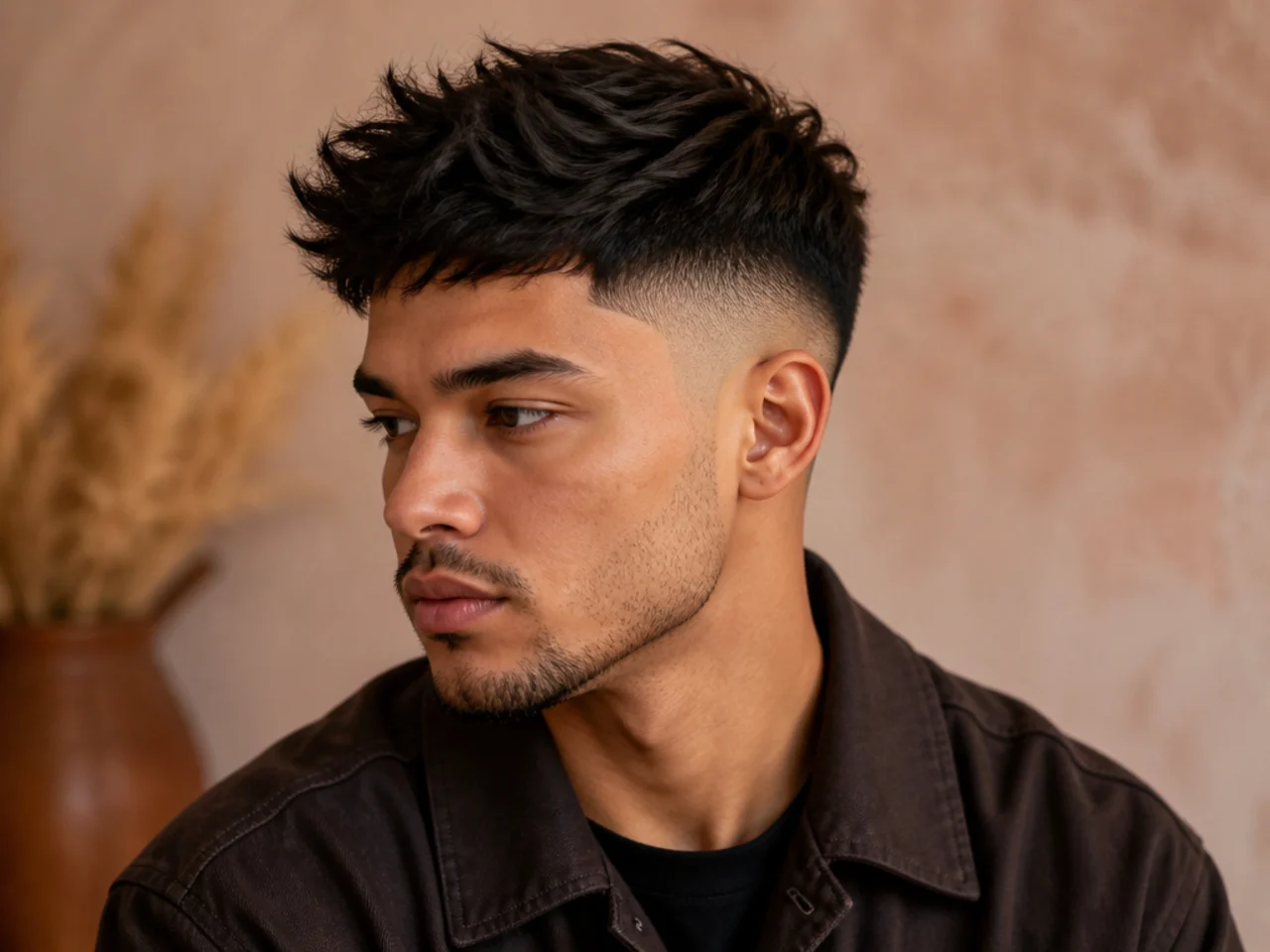
Five centimetres left on top, the ends point cut, and the whole section carried forward into an uneven fringe, much as a textured crop is built. The fringe edge is doing the work the side shadow used to do.
2. Textured High Skin Fade
Bare skin from the ridge down. It is the sharpest version and also the one where a flat top would look most obviously flat.
3. Textured High Taper Fade
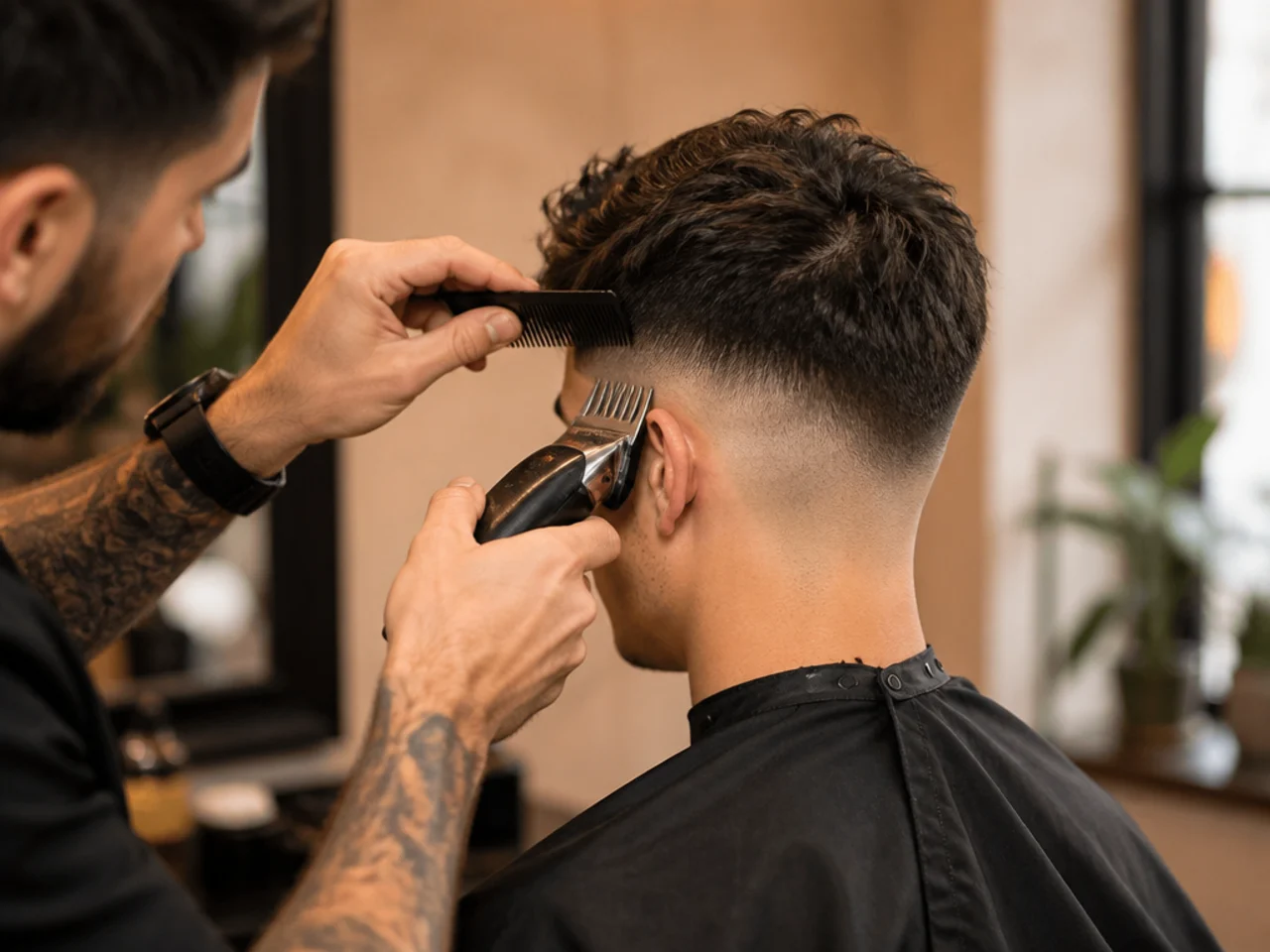
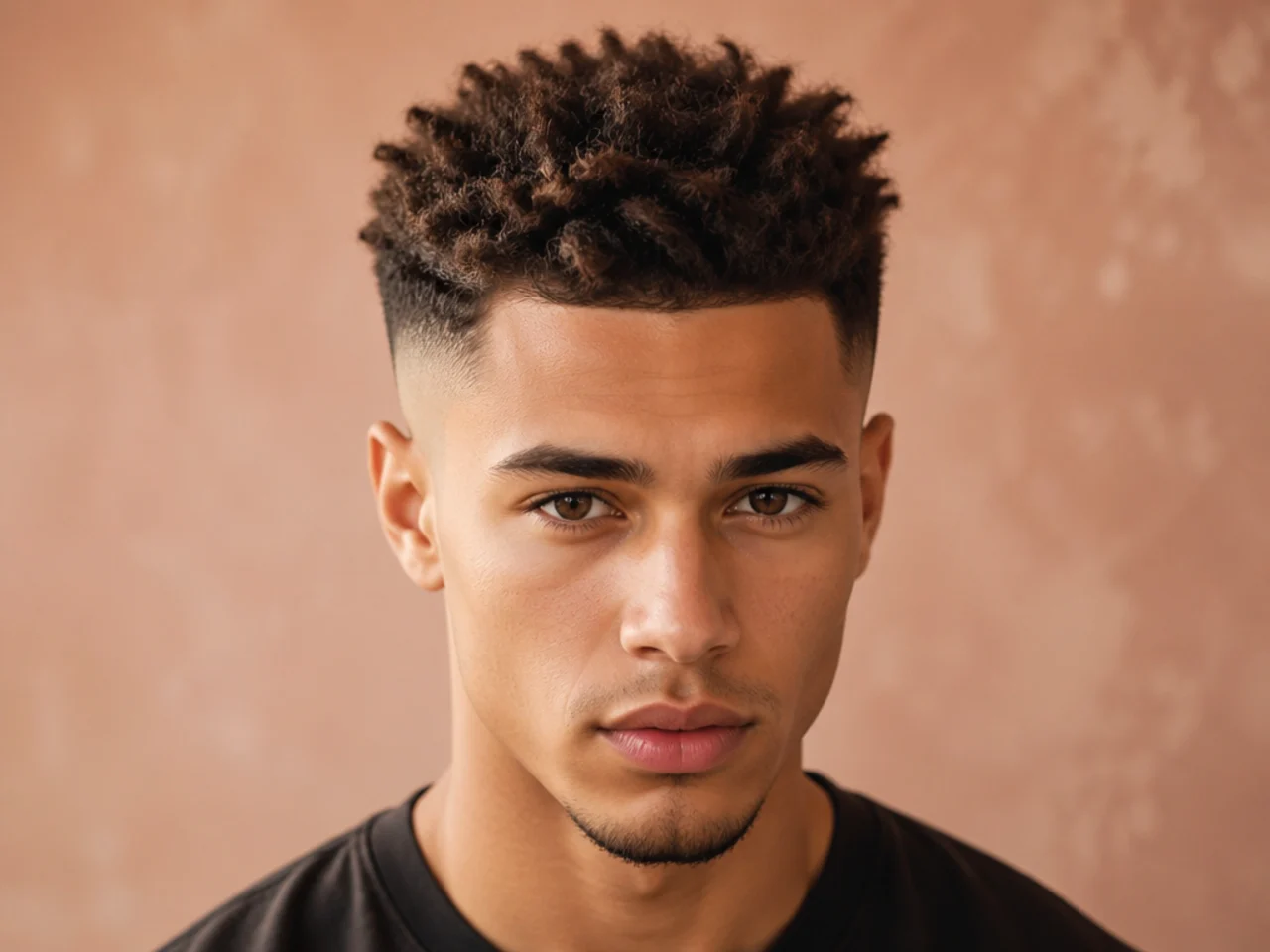
A #1 at 3mm floor. Slightly less contrast at the sides and three to four weeks of life rather than one to two.
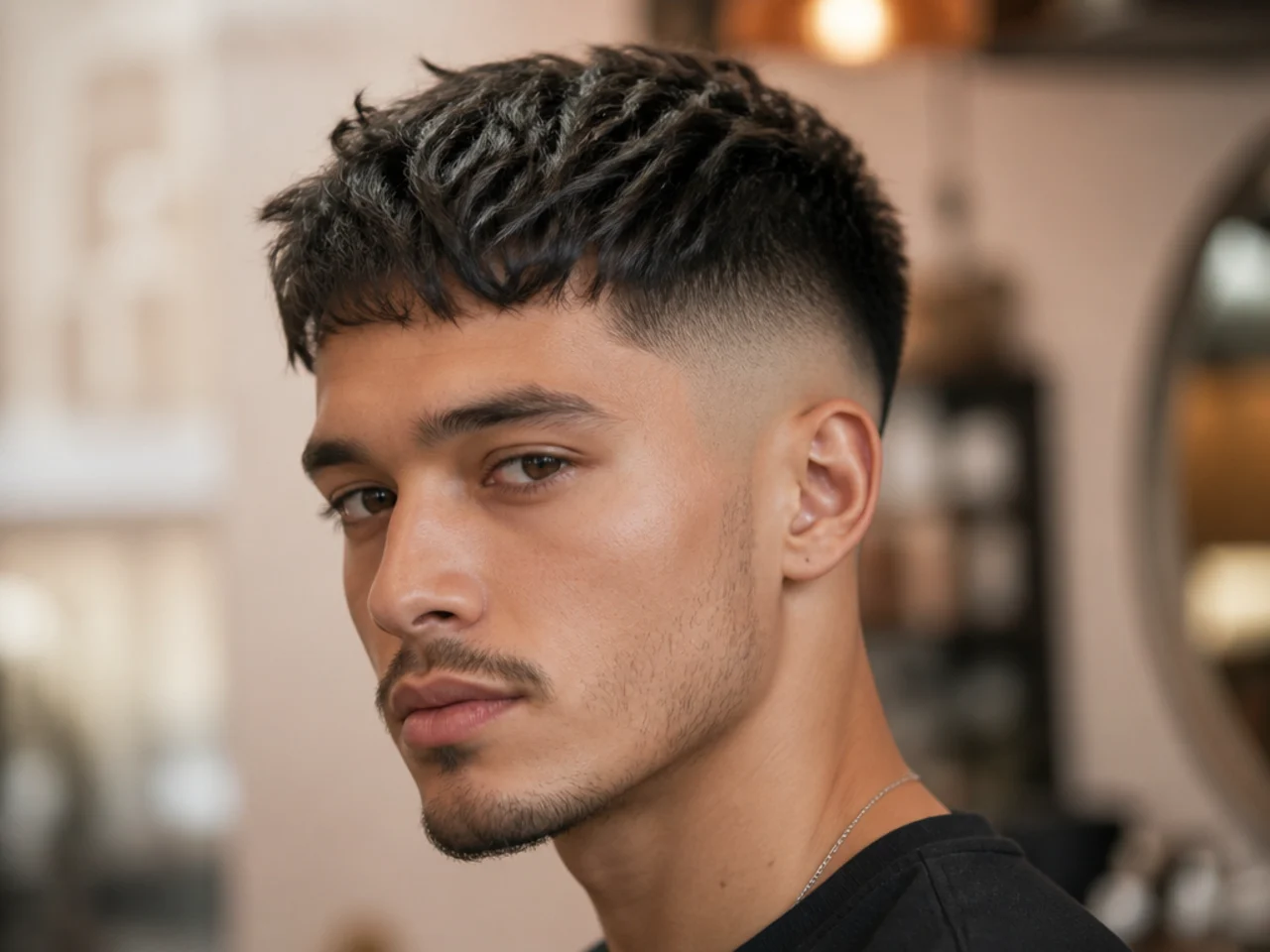
4. Textured Quiff Over a High Fade
Height built at the front, the same construction as any men's quiff with the weight taken out. Volume is the most direct way to create separation when there is no overhang left to cast a shadow.
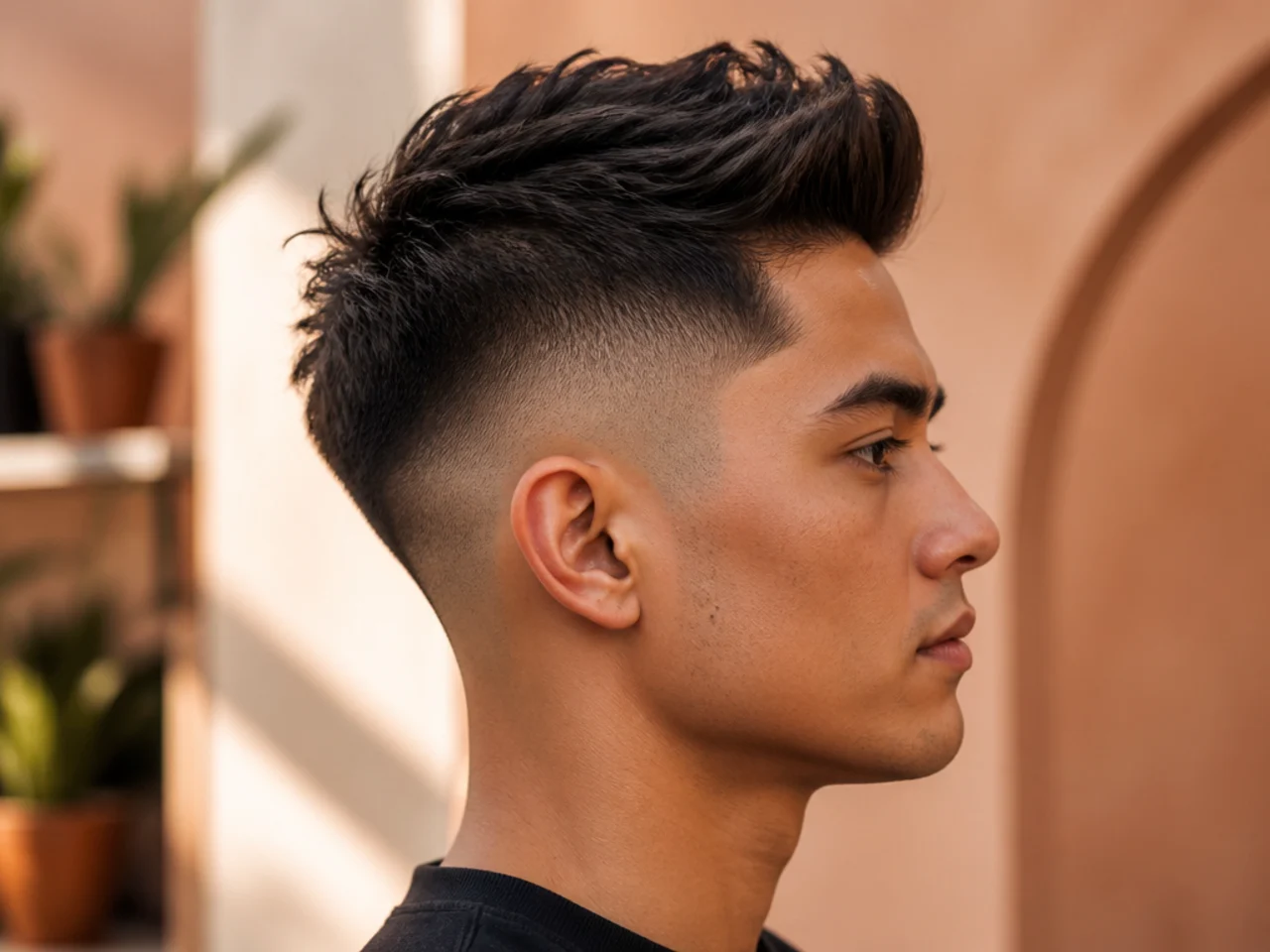
5. Textured High Fade With a Broken Fringe
Ends cut at irregular lengths across the forehead, the softer relative of a fluffy textured fringe. It is the only texture on this cut that is visible from directly in front.
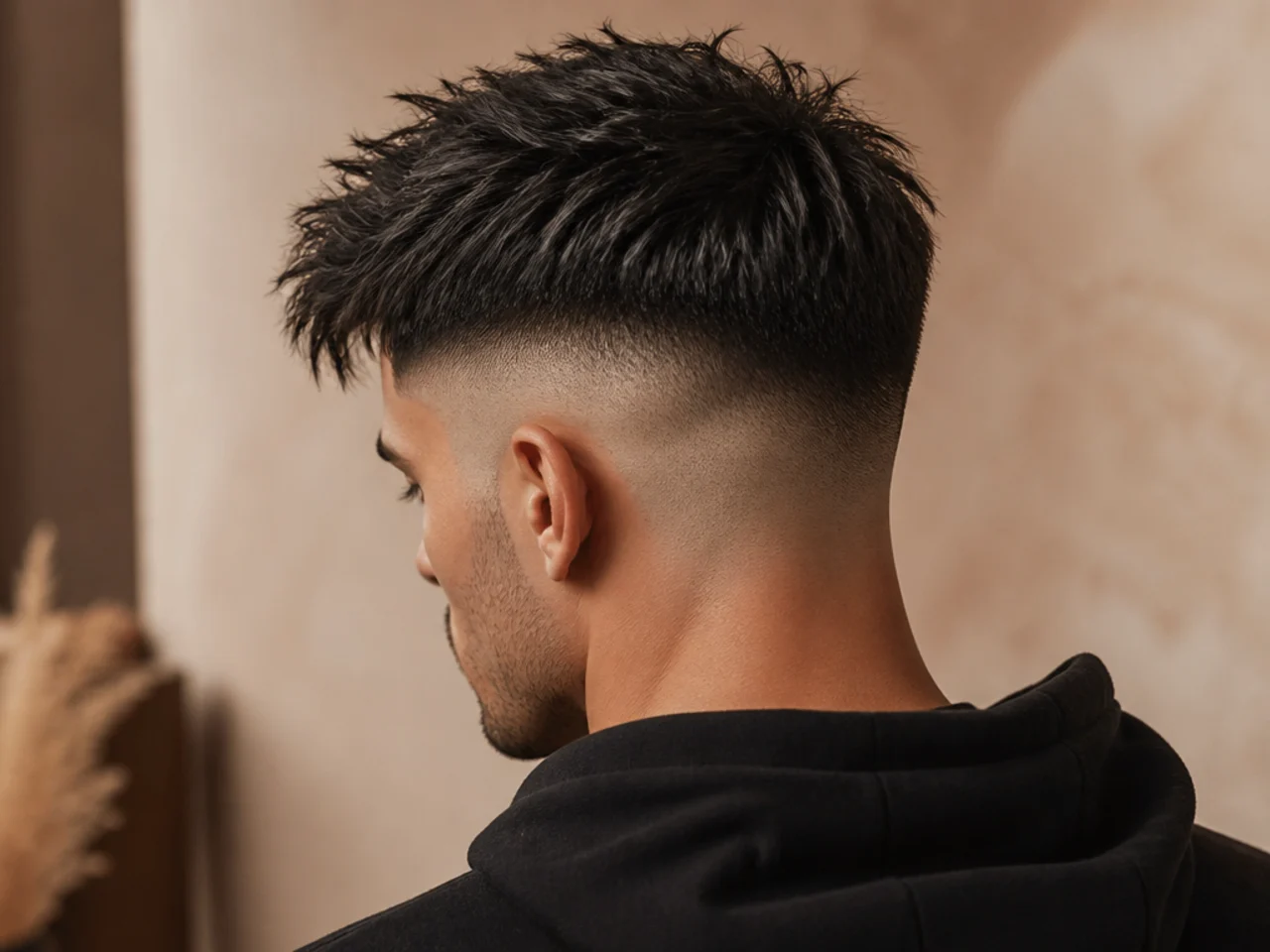
6. Messy Textured High Fade
Nothing combed or steered, with every end left lying in whichever direction it dried into. It depends entirely on the clean high line to stop it reading as unkempt.
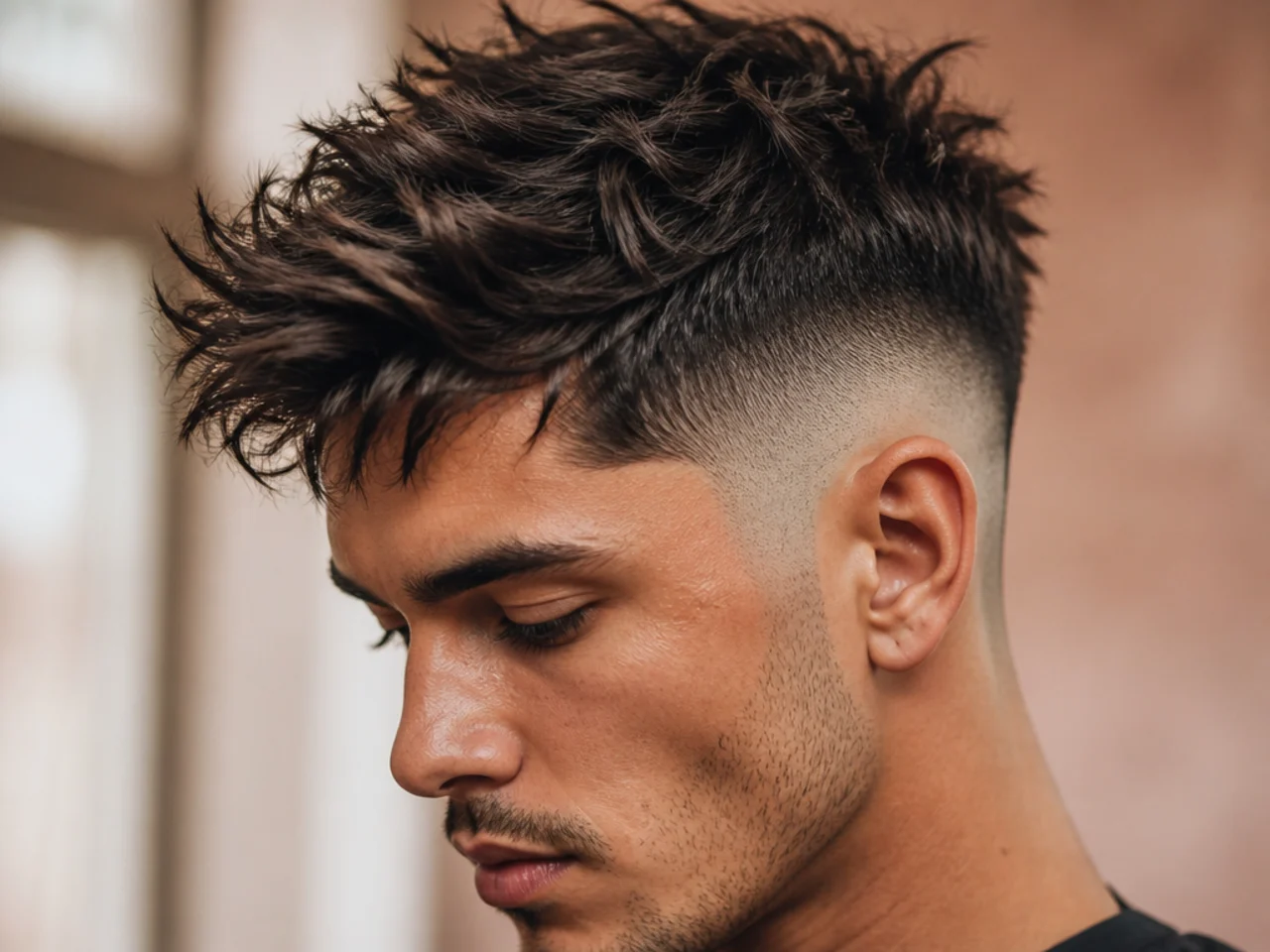
7. Textured High Fade Comb Over
Weight removed then swept to one side above bare sides. The separation stops the sweep reading as a slab, which matters more here than at any other height.
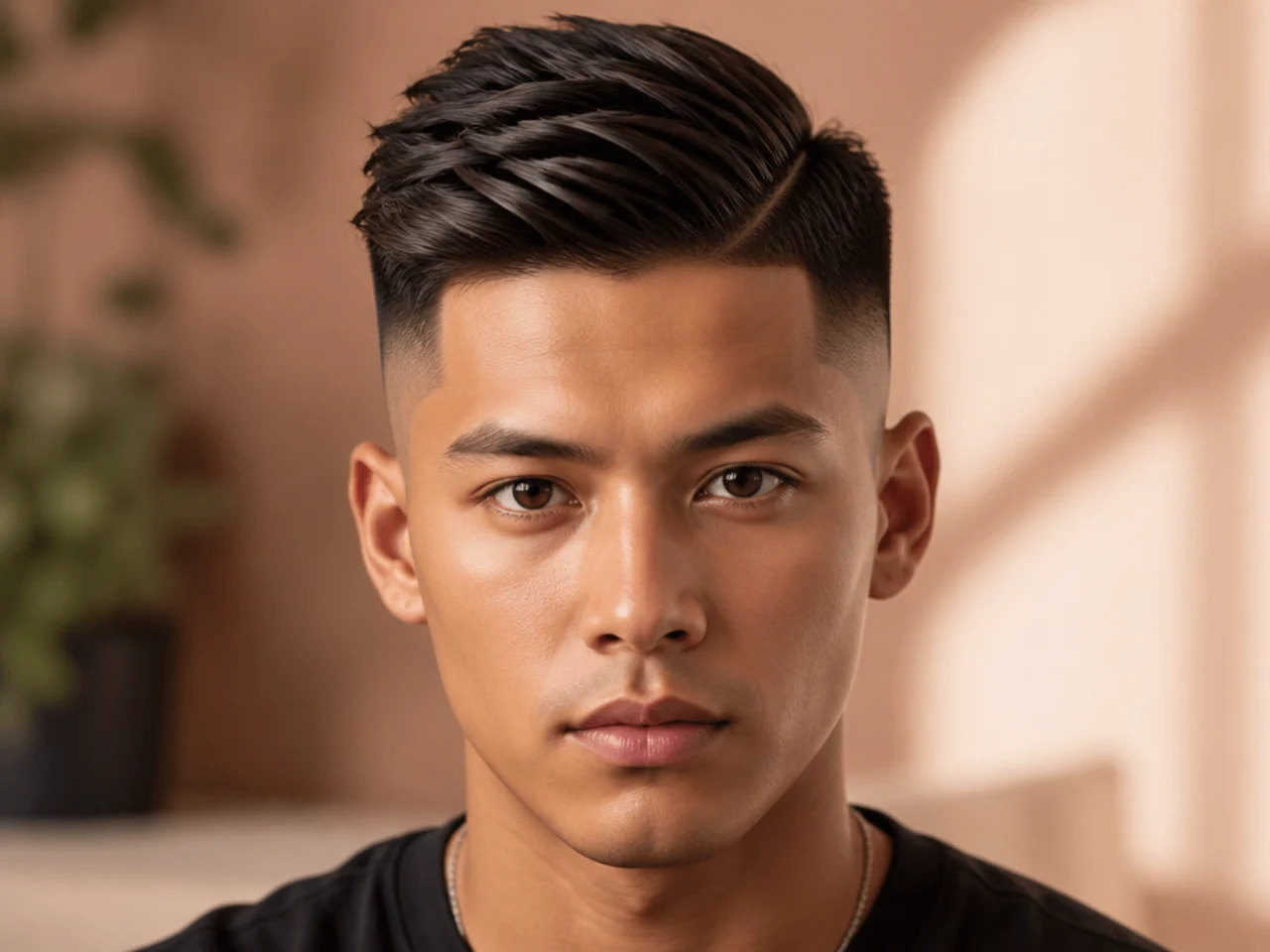
8. Textured High Fade With a Hard Part
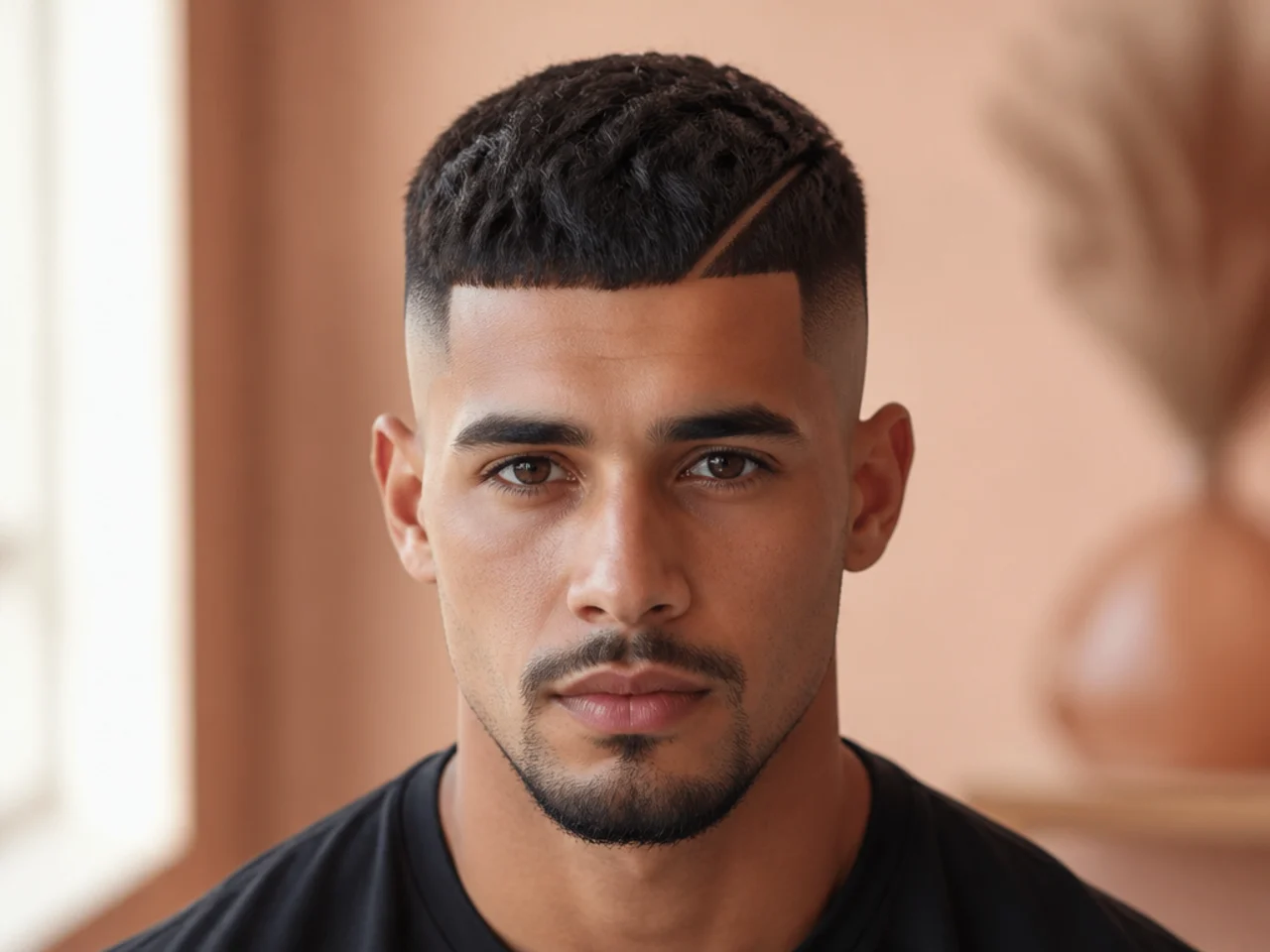
A razored line through the top and into the blend. One exact edge against a hundred broken ends is the whole contrast.
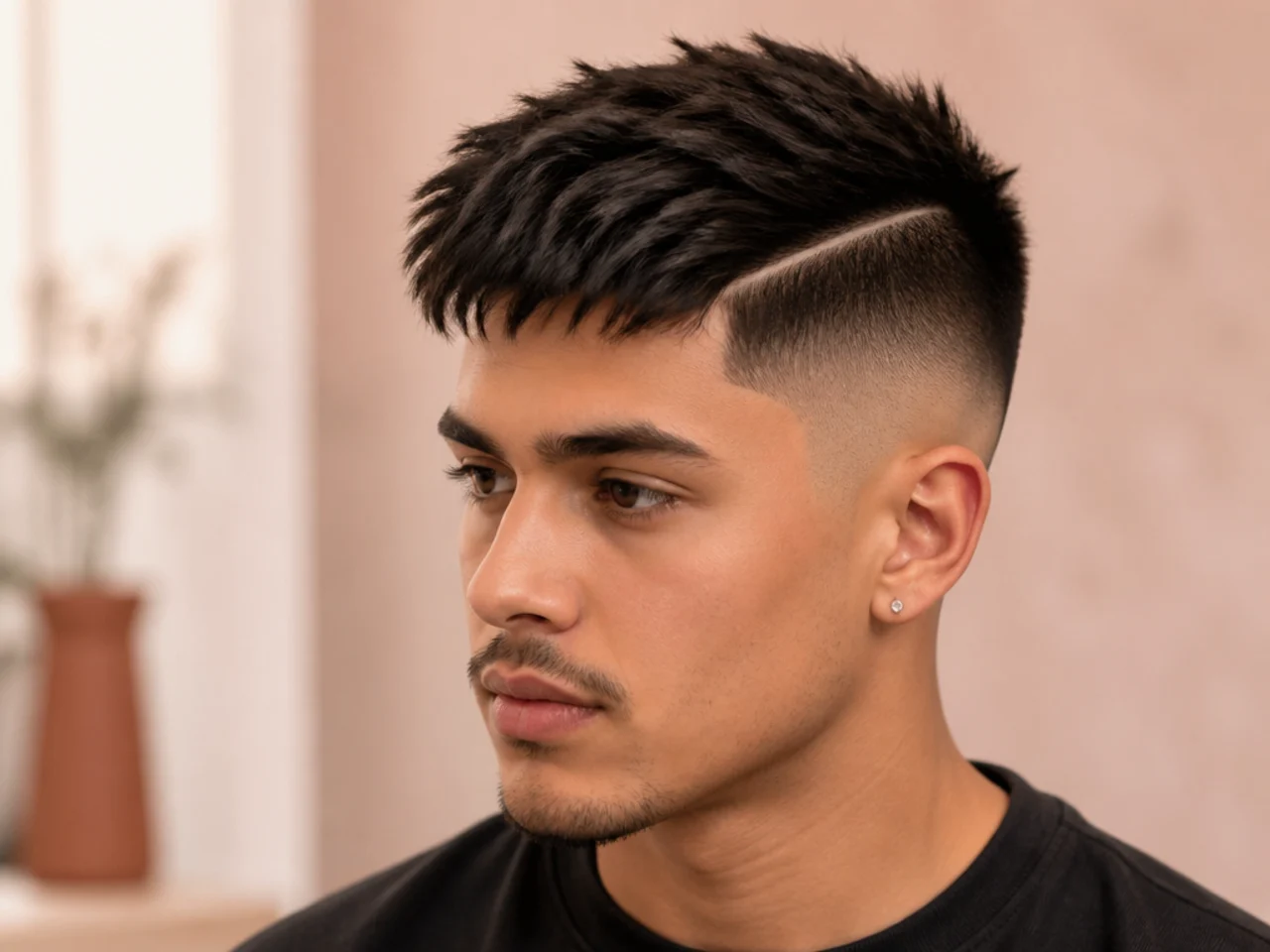
9. Textured High Fade With a Beard
Separated ends above, the widest band of bare skin any fade produces in the middle, beard below. The texture holds the eye at the crown, where you want it.
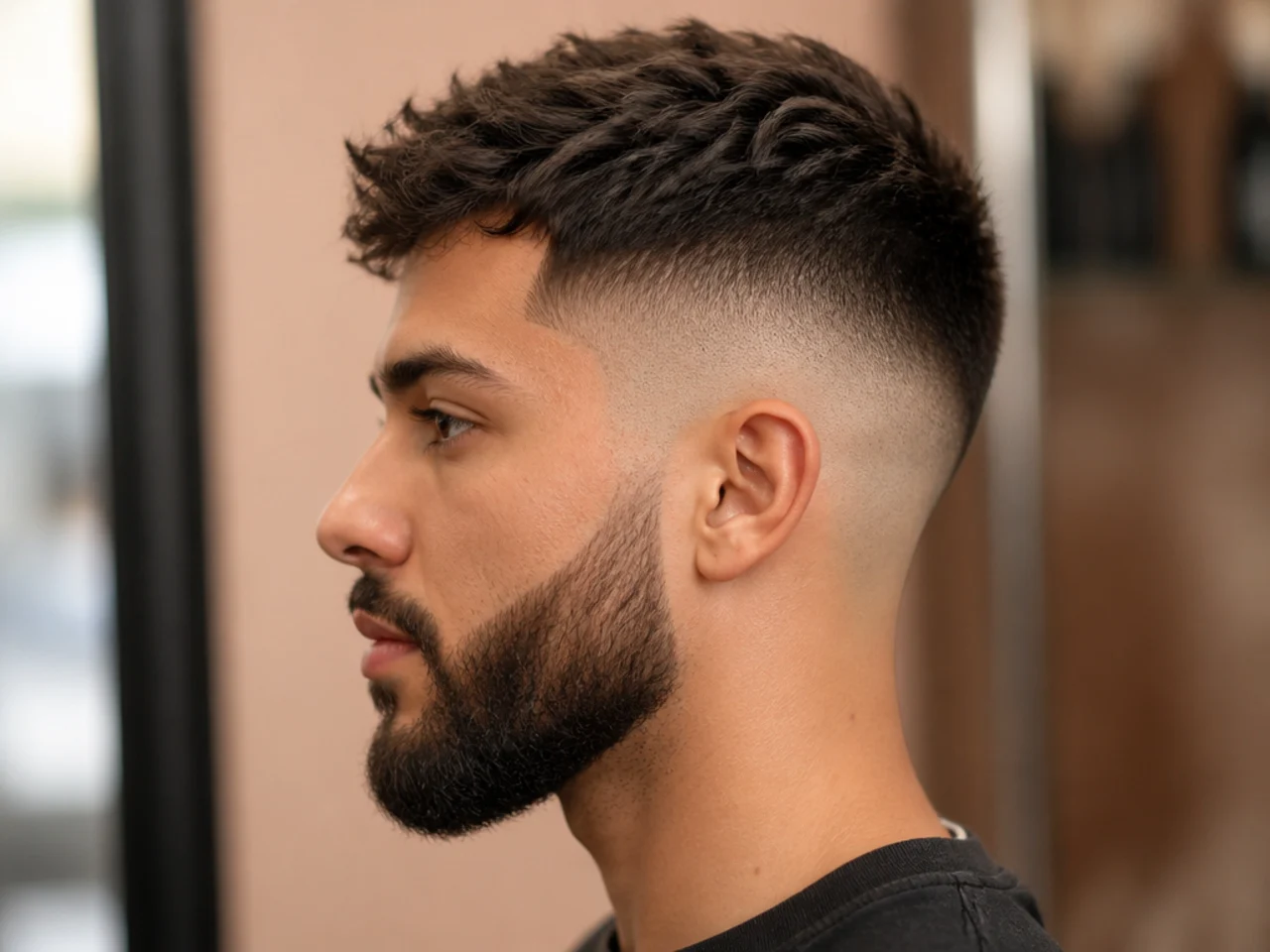
10. Textured High Fade on Thick Hair
Thick hair grows as a block, so weight removal is doing the most work here. Ask for internal thinning as well as point cutting at the tips.
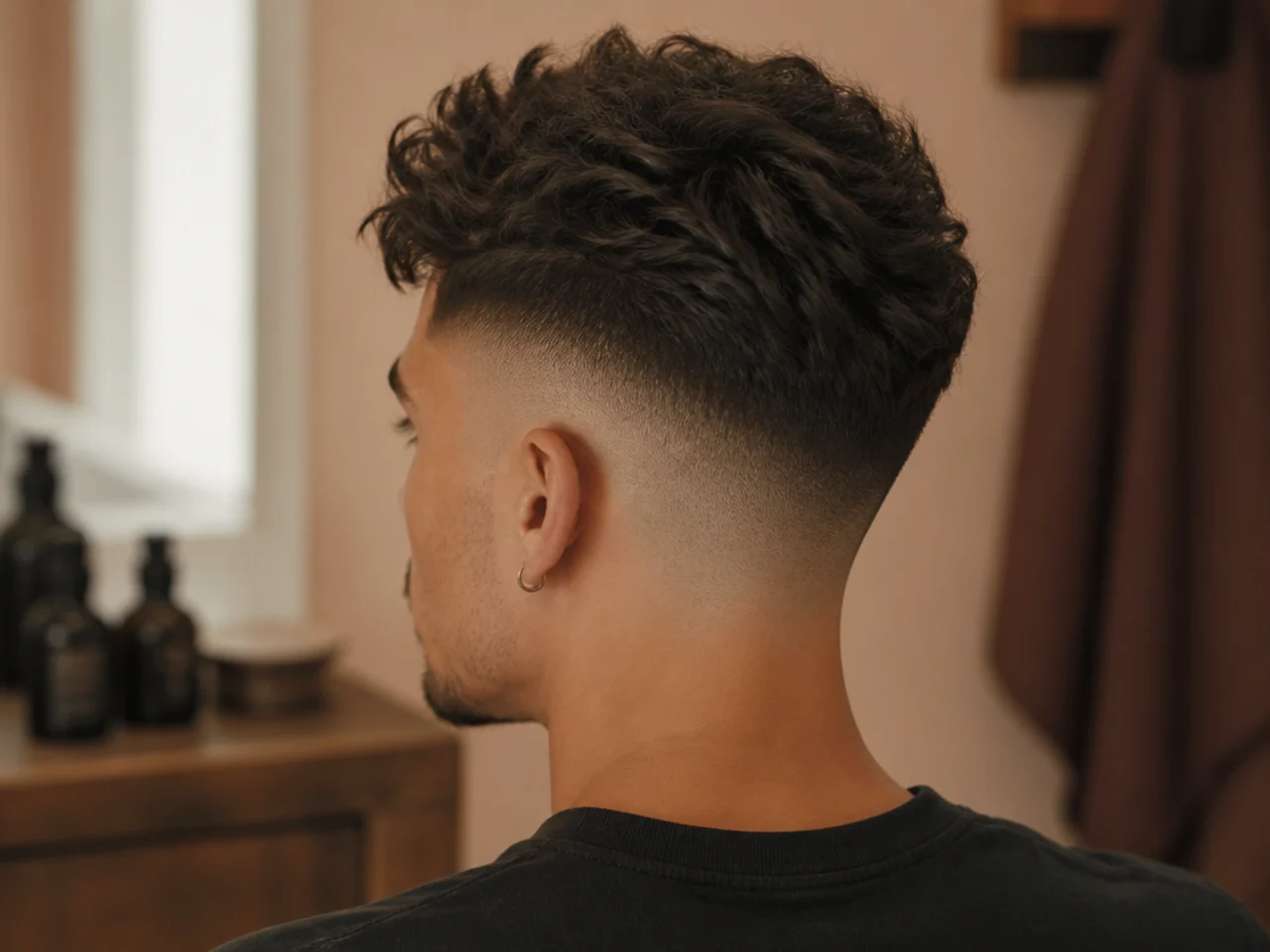
11. Textured High Fade on Fine Hair
Saved as a caution. Fine hair over a high fade shows scalp on top as well as at the sides, and thinning it further removes what little density there is.
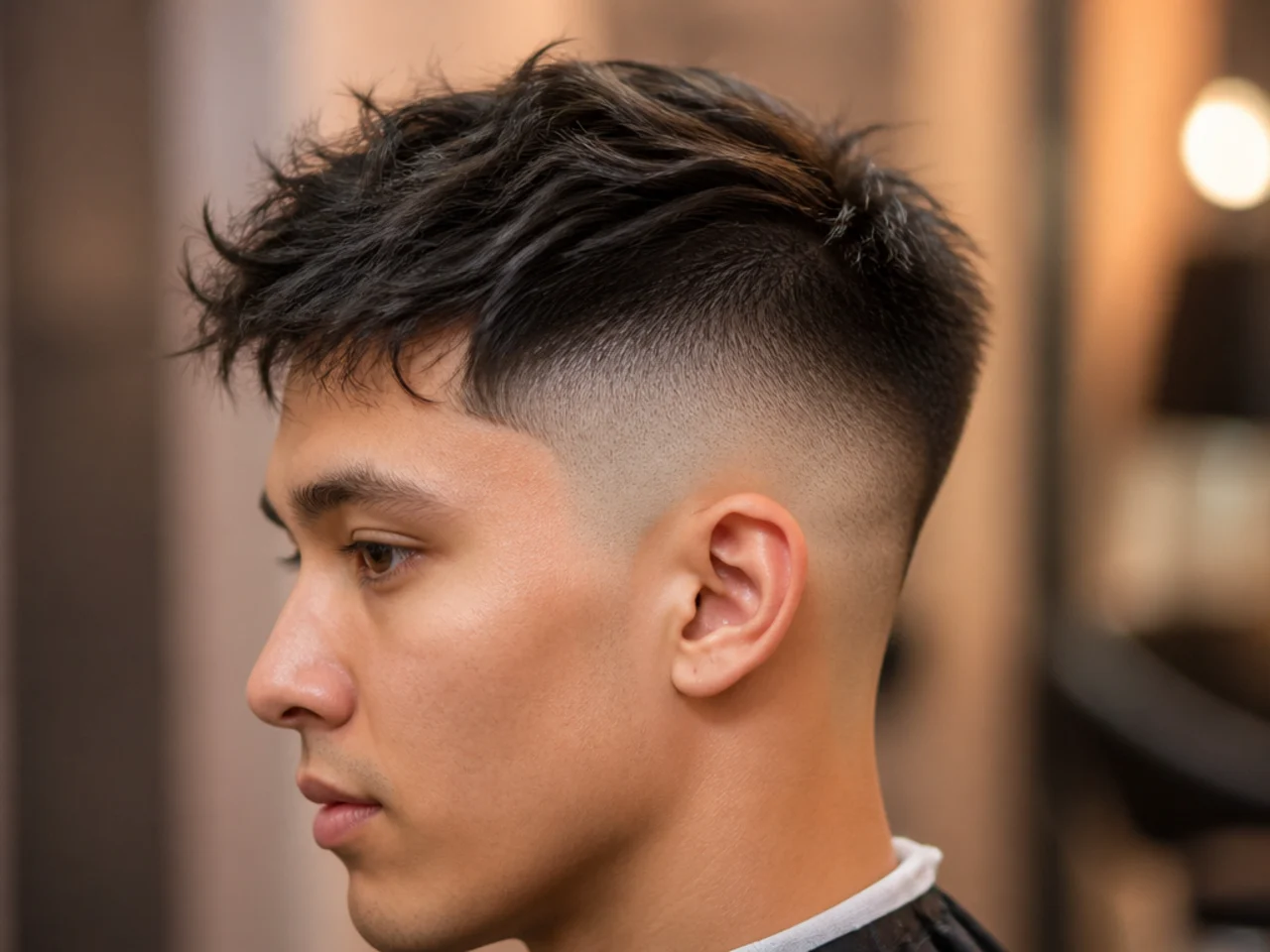
12. Textured High Fade on Straight Hair
Straight hair shows every cut end. Point cutting has to vary in depth or the result is a serrated line rather than texture.
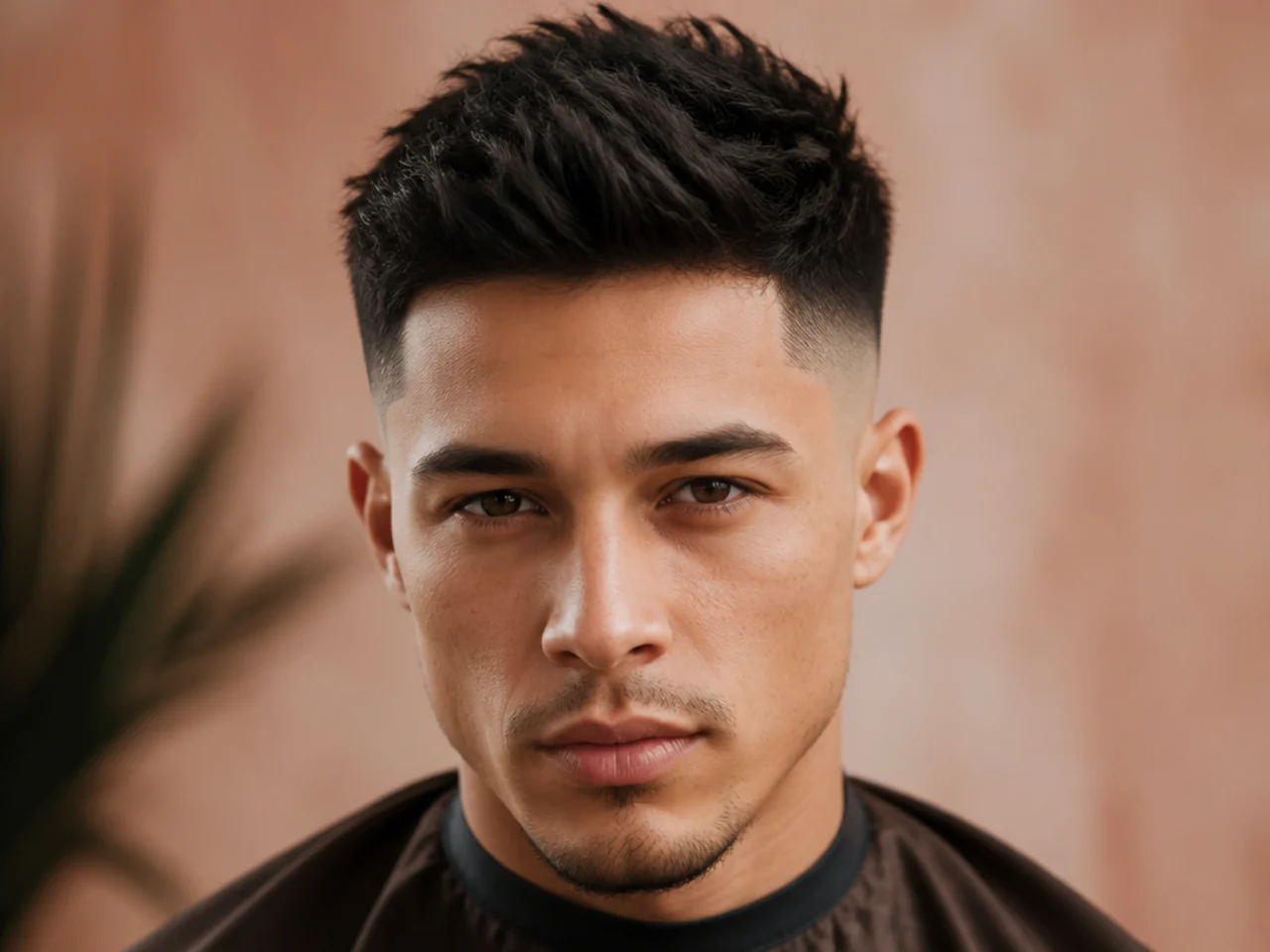
13. Textured High Fade on Wavy Hair
Wave supplies half the separation for free. It is the texture that survives the loss of the side shadow most easily. The bend in each strand holds the pieces apart from the inside, so the definition never depended on light falling across a side panel.
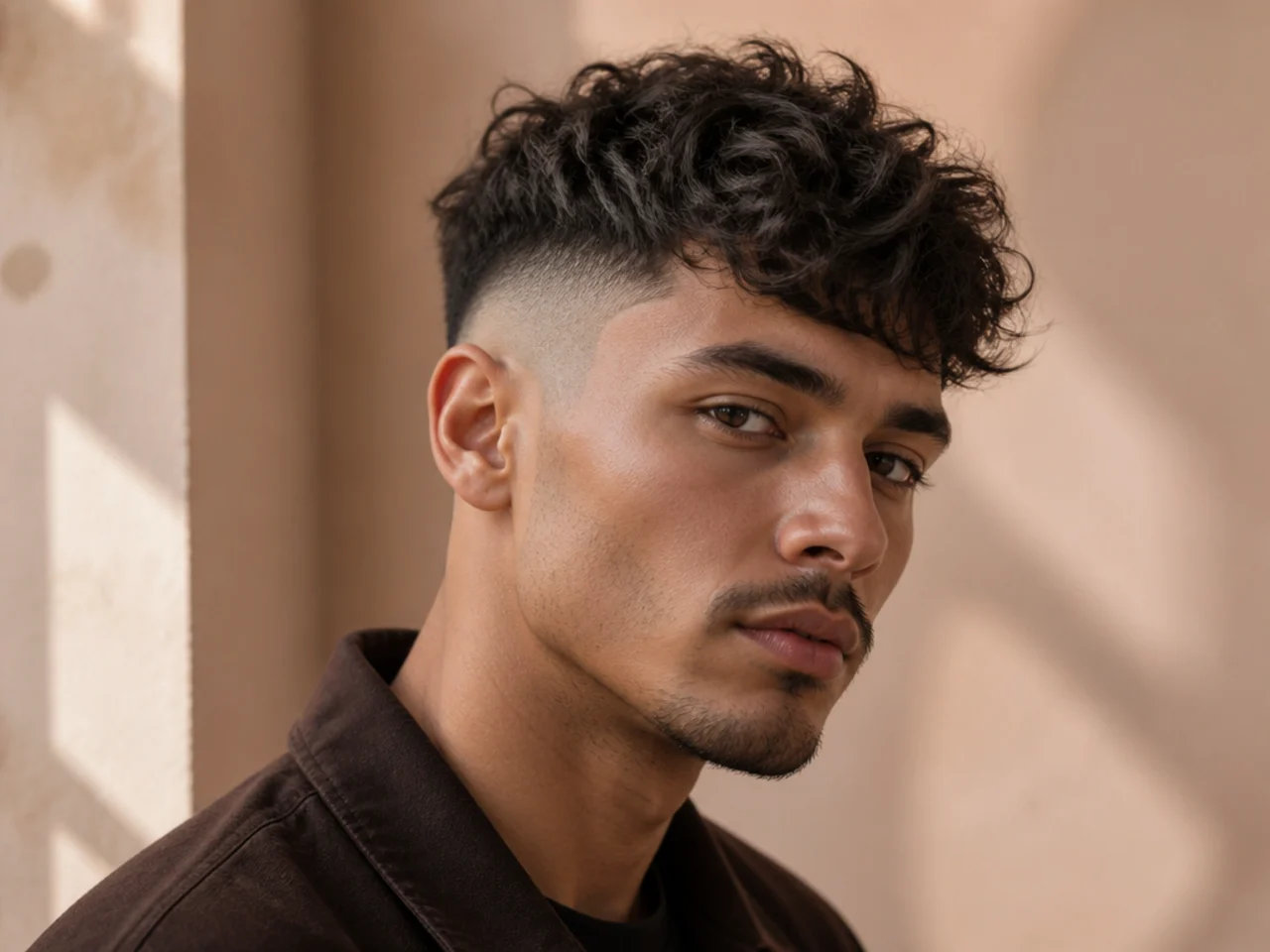
14. Textured High Drop Fade
A high line at the temple that dips down as it travels round the back of the ear. It gives back a little side height at the back, which returns a small amount of overhang.
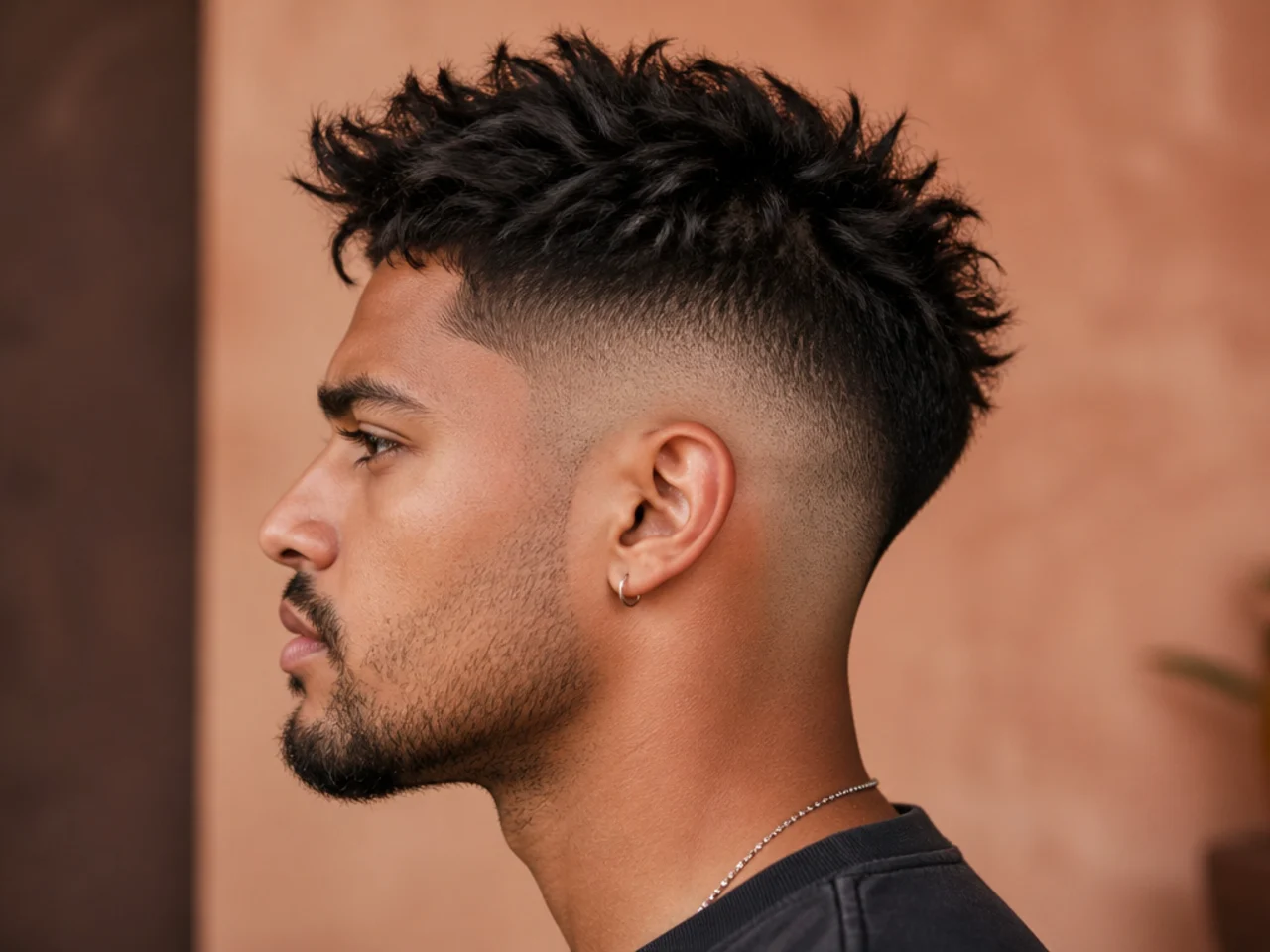
15. Textured High Fade Faux Hawk
Everything long gathered into the middle third of the top and the rest cut away. It builds the texture upward, which is the direction that still reads on this cut.
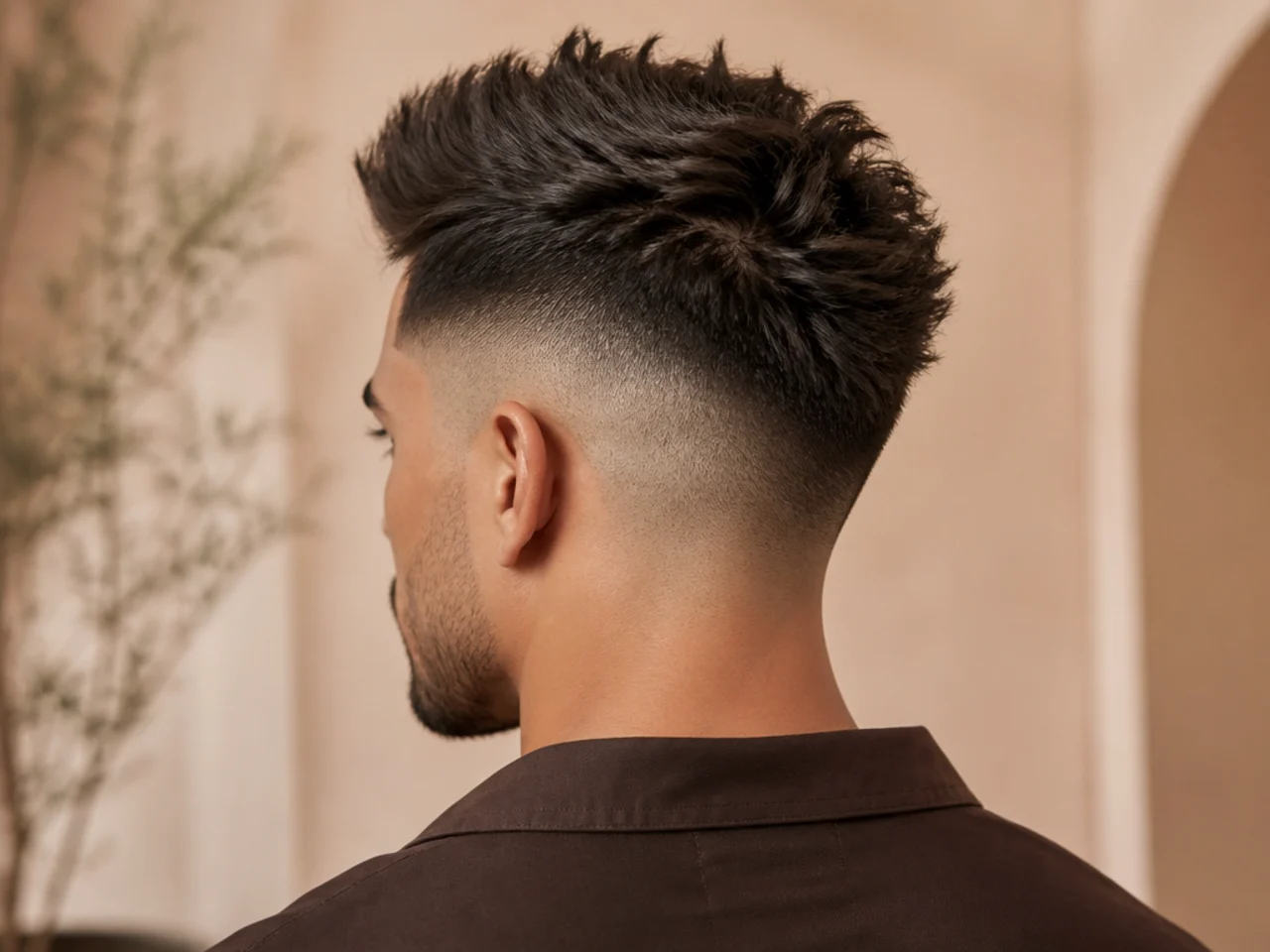
16. Long Textured Top Over a High Fade
Seven or eight centimetres, heavily point cut. Length is the simplest way to give the eye something to look at when the sides are bare.
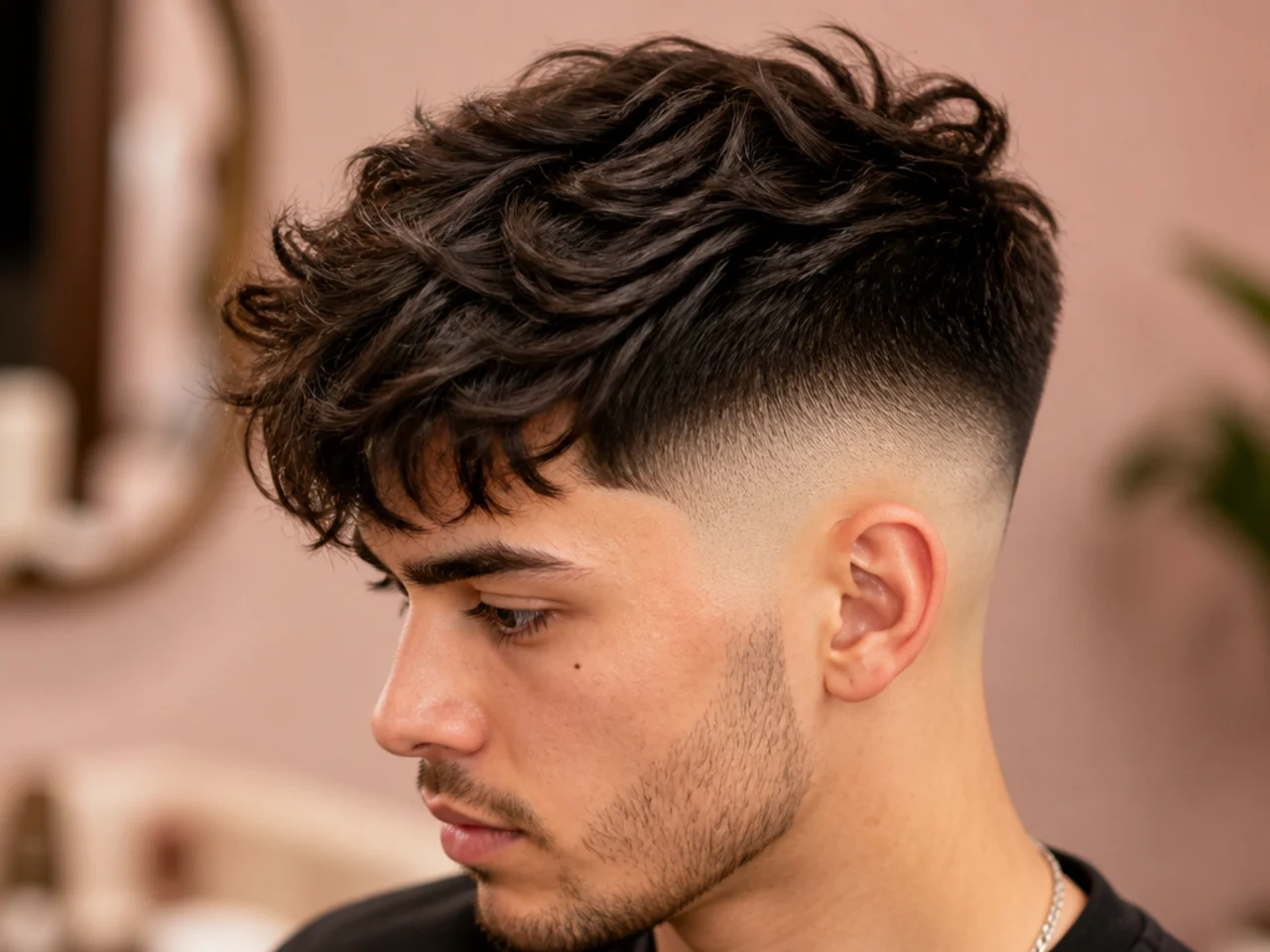
17. Short Textured High Fade
Around three centimetres. It is the version that most often disappoints, because there is neither side length nor top length carrying the shape.
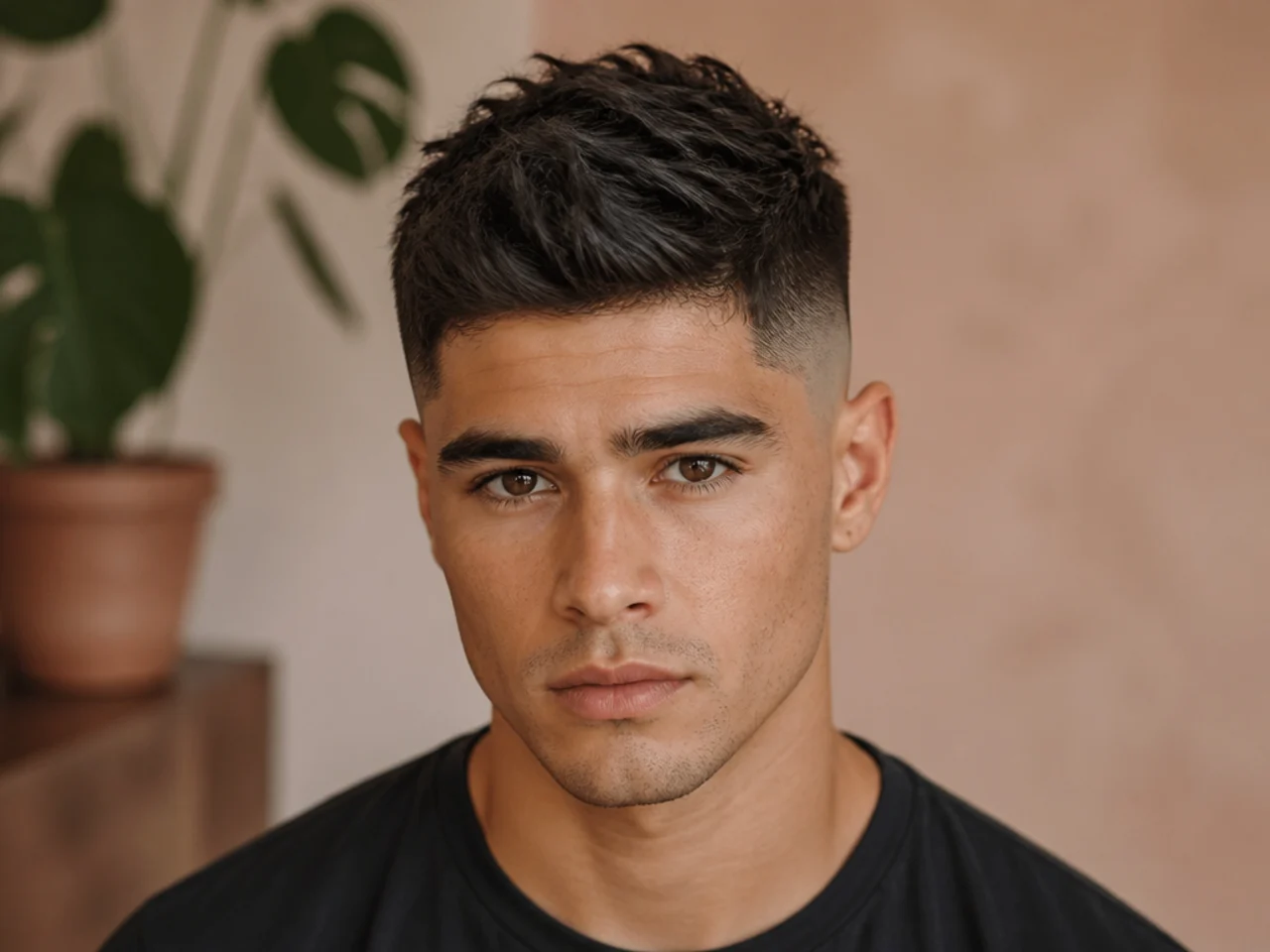
18. Textured High Fade With a Line-Up
A razored hairline under a deliberately irregular top. The contrast between one exact line and broken ends is the entire effect. It also gives the front a fixed edge, which matters once the fade has removed every other straight line from the head.
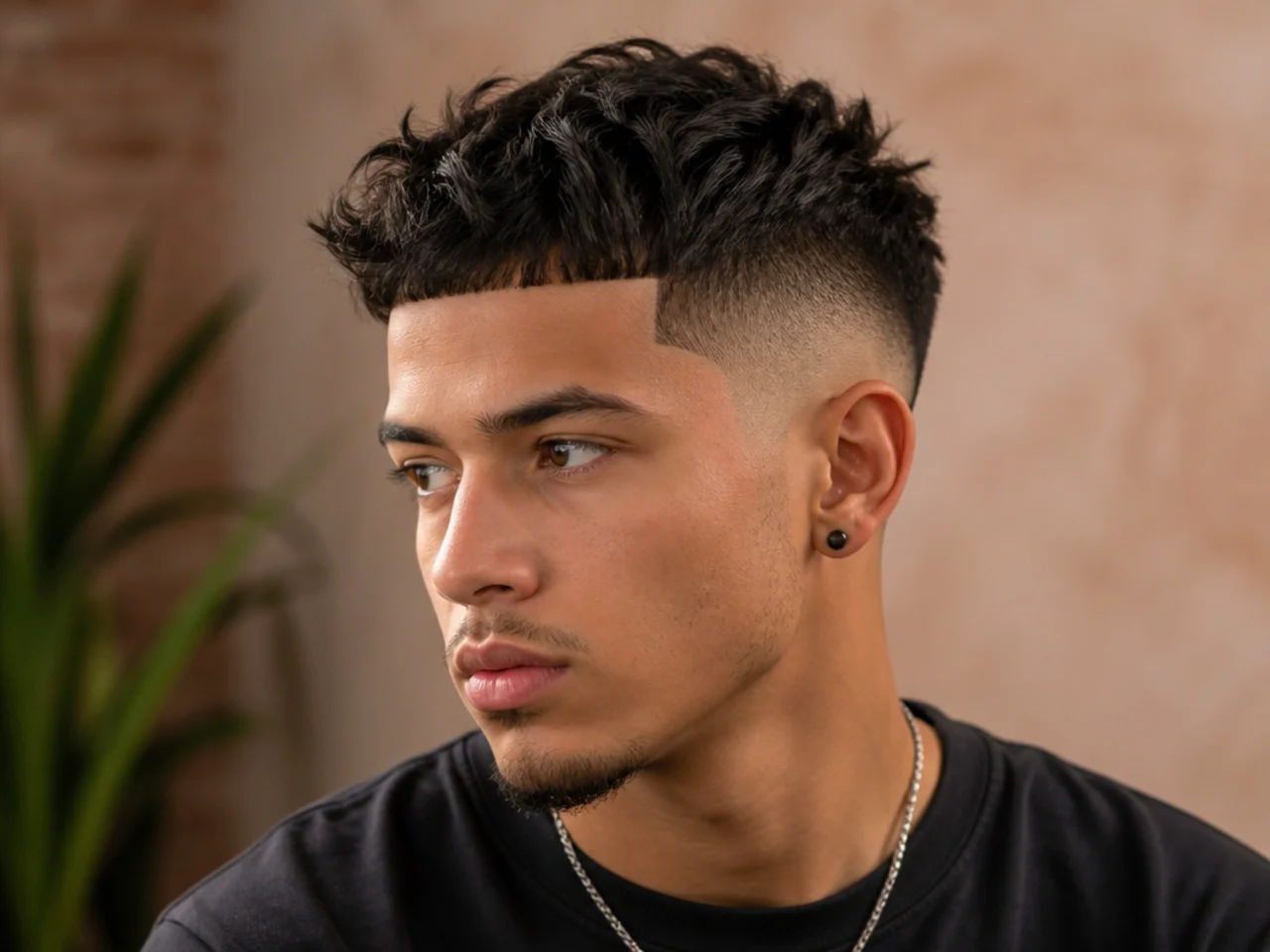
19. Textured High Fade With Root Lift
Volume built at the base of the top section only. It raises the whole shape above the ridge, which is the closest a high fade gets to an overhang.
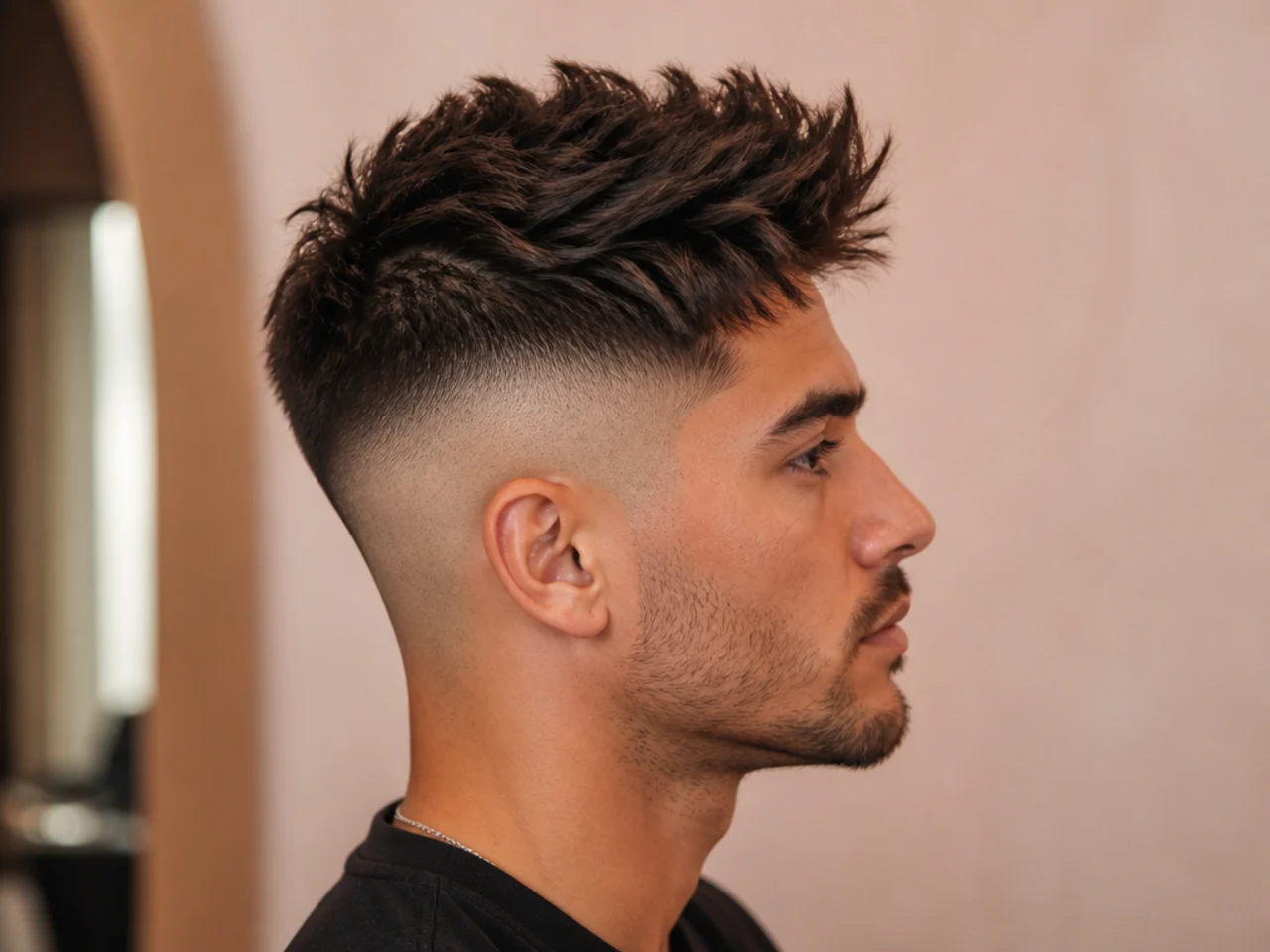
20. Textured High Fade at Week Three
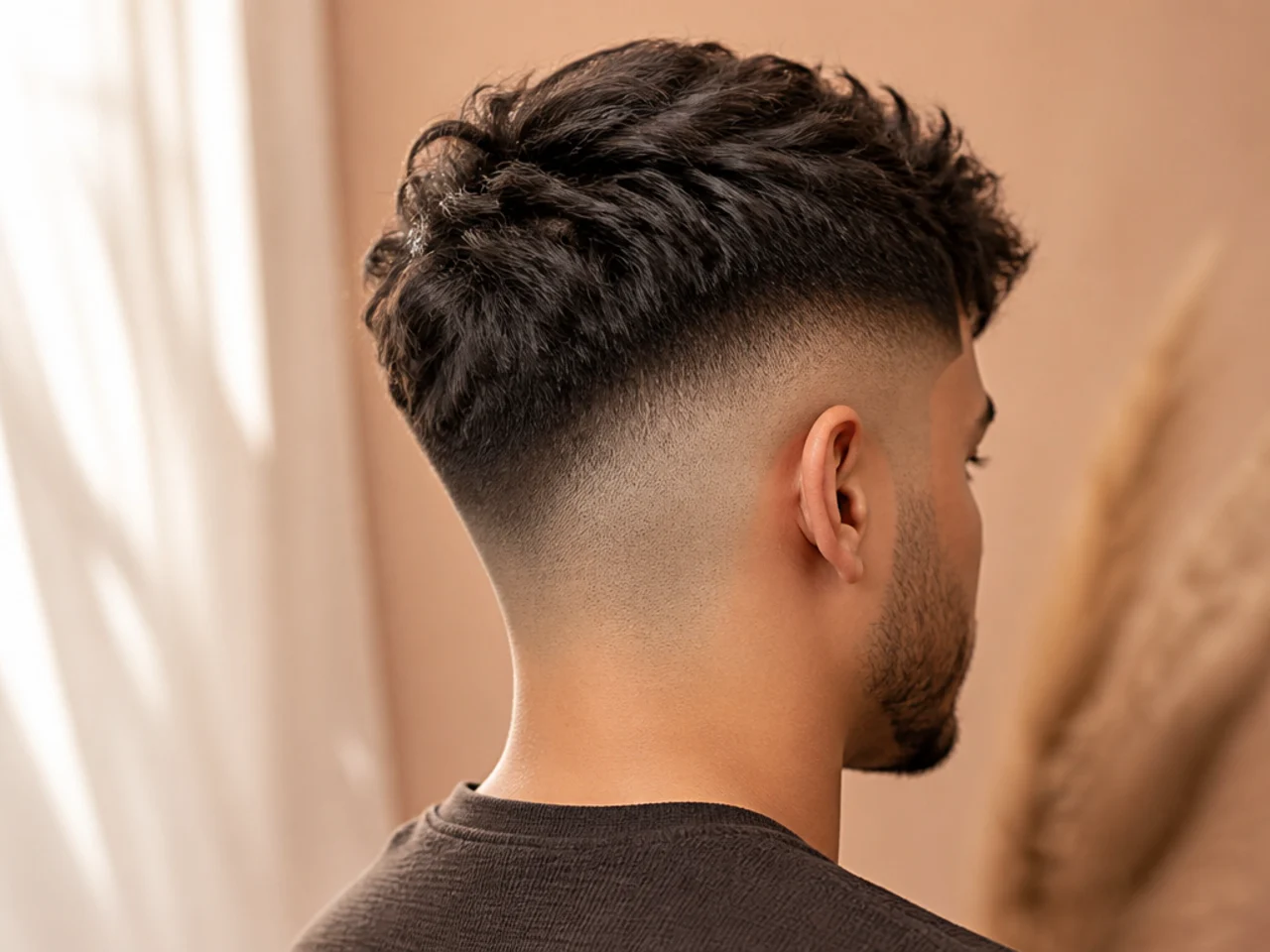
The blend has grown up toward the top and a small overhang has returned. Many textured high fades genuinely look fuller at three weeks than on the day of the cut.
Styling and Upkeep
Use matte clay and lift at the root. Height replaces the shadow the overhang used to give you.
Apply to damp hair and dry it into position. Product on bone-dry hair coats the outside and leaves the interior flat.
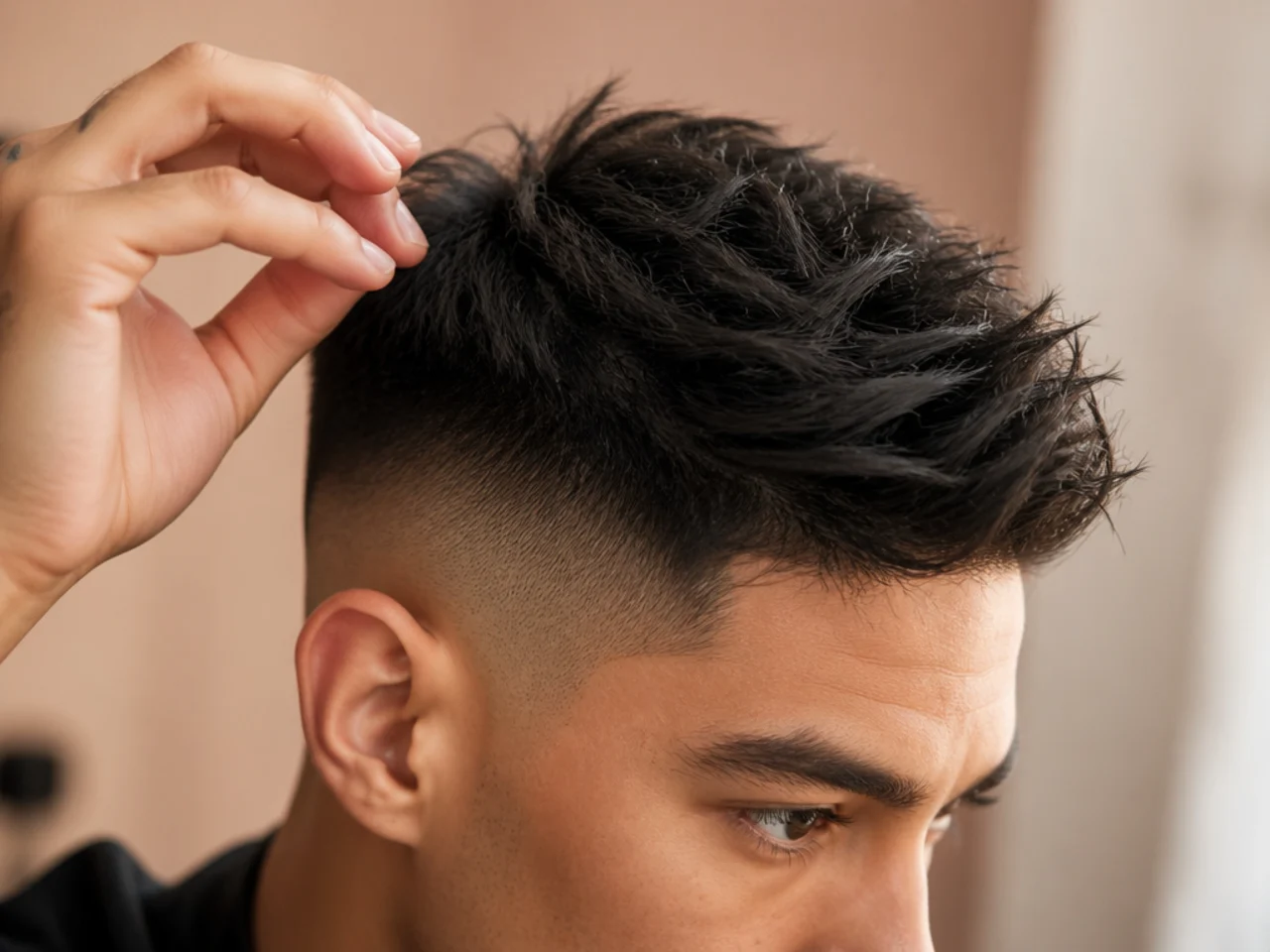
Use fingers, never a comb. A comb realigns every end onto one plane and cancels the cut.
Moisturise the exposed sides. There is more bare scalp on this cut than on any other, and it sits directly beneath a top the eye is already drawn to.
Rebook by finish. Broken ends only read against a genuinely clean side, and that side stays clean for one to two weeks on a skin finish or three to four on a #1 taper.
Mistakes to Avoid
Expecting the side shadow from a mid fade. Above the parietal ridge there is nothing to overhang.
Cutting the top too short. With bare sides, the top is the whole silhouette.
Thinning fine hair over a high fade. Two sparse areas rather than one.
Combing the top into place. It removes the separation the barber cut in.
Using a shine product. It glues the ends back together and there is no shadow left to compensate.
FAQ
Why does texture look different here? There is no overhang above the parietal ridge, so the side shadow disappears.
How do you make it visible? Build it upward and forward — root lift, varied lengths and a broken front edge.
How long should the top be? Around five centimetres, more than a mid fade needs.
Final Thoughts
Take the mid fade playbook into a high fade appointment and you get a flat top over bare sides. The shadow that made the texture visible does not exist above the parietal ridge, so the separation has to be built into the top itself — more length, more internal variation and more lift. Ask for those three things and the cut works at any height.
For the cut itself see the high fade haircut guide, and for the version where the shadow still works see textured mid fade haircut. More in Fade Haircuts.