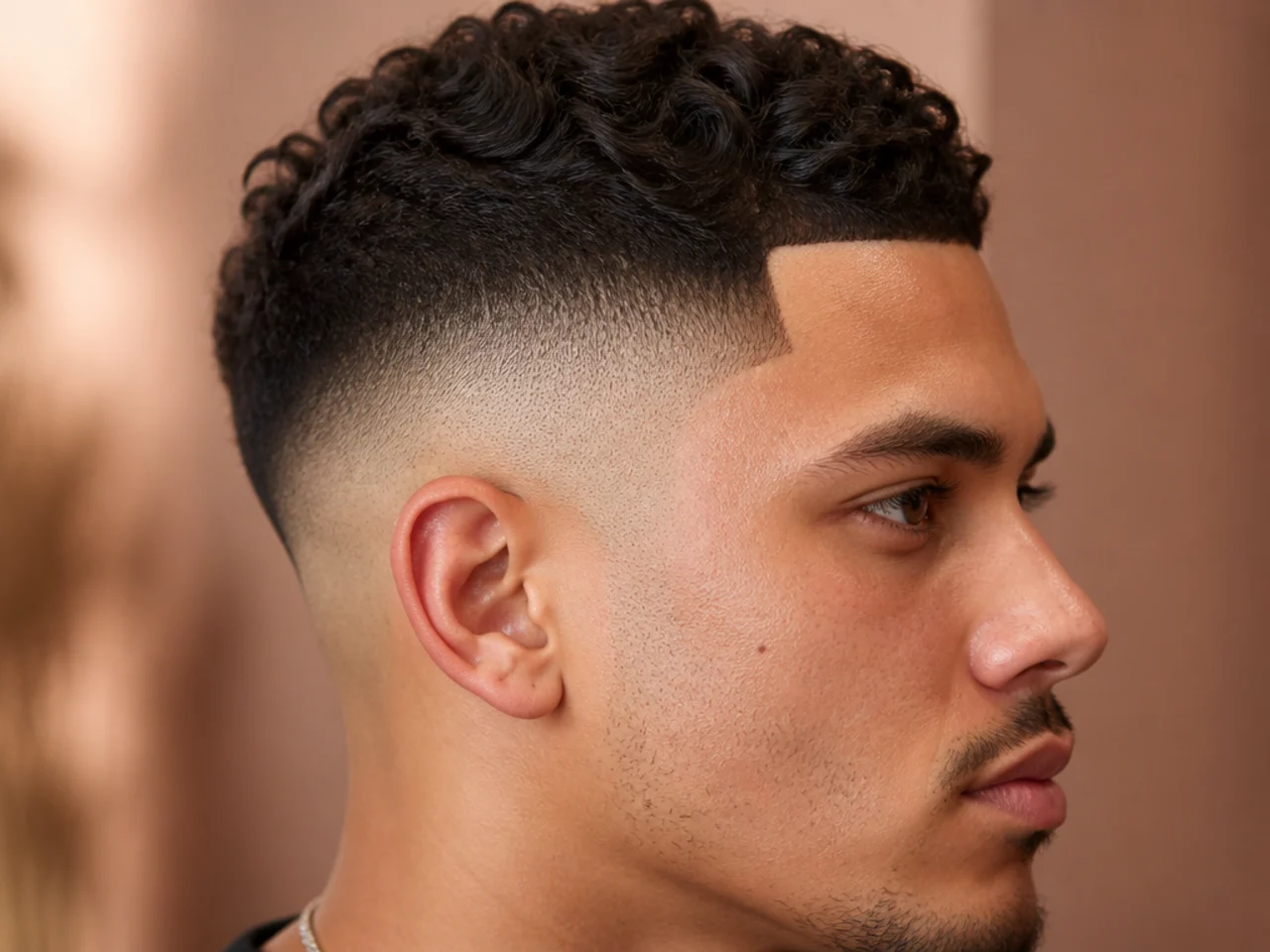
25 High Fade Haircut Ideas for Men
A high fade starts at or above the parietal ridge, which means it removes the head's width at its widest point. That makes the same face read longer and narrower, and it exposes more scalp than any other fade.
In this article · 32
- What Changes Above the Ridge
- How to Choose Yours
- The 25 High Fade Ideas
- 1. Classic High Skin Fade
- 2. High Taper Fade
- 3. High Fade With a Textured Crop
- 4. High Fade Buzz Cut
- 5. High Fade Comb Over
- 6. High Fade Slick Back
- 7. High Fade Quiff
- 8. High Fade Pompadour
- 9. High Fade With a Hard Part
- 10. High Fade With a Line-Up
- 11. High Fade French Crop
- 12. High Fade With a Forward Fringe
- 13. High Fade With Curly Hair
- 14. High Fade With 360 Waves
- 15. High Fade High Top
- 16. High Fade With a Beard
- 17. High Drop Fade
- 18. High Bald Fade
- 19. High Fade With a Design
- 20. High Fade With a Middle Part
- 21. High Fade Mullet
- 22. High Fade Faux Hawk
- 23. High Fade for a Round Face
- 24. High Fade on Thinning Hair
- 25. High Fade at Week Two
- Styling and Upkeep
- Mistakes to Avoid
- FAQ
- Final Thoughts
The parietal ridge is the widest point of your skull — the place where the side of your head stops going outward and starts going up.
A high fade starts at or above it. So it removes the head's width exactly where that width is greatest, which no other fade height does.
That has two consequences. The face reads longer and narrower, and more scalp is exposed than on any other cut, which means the hair left on top has to be dense enough to carry it.
What Changes Above the Ridge
This whole cut is defined against the widest measurement your skull has, the parietal ridge. Everything below it contributes to how broad your head looks.
A high fade takes all of it. The whole side panel, from the ear up to the widest point, goes to skin or near it.
Removing width adds apparent height. The same head reads taller and narrower without a millimetre being added on top.
It also exposes the most scalp. Which is why density on top is not optional on this cut.
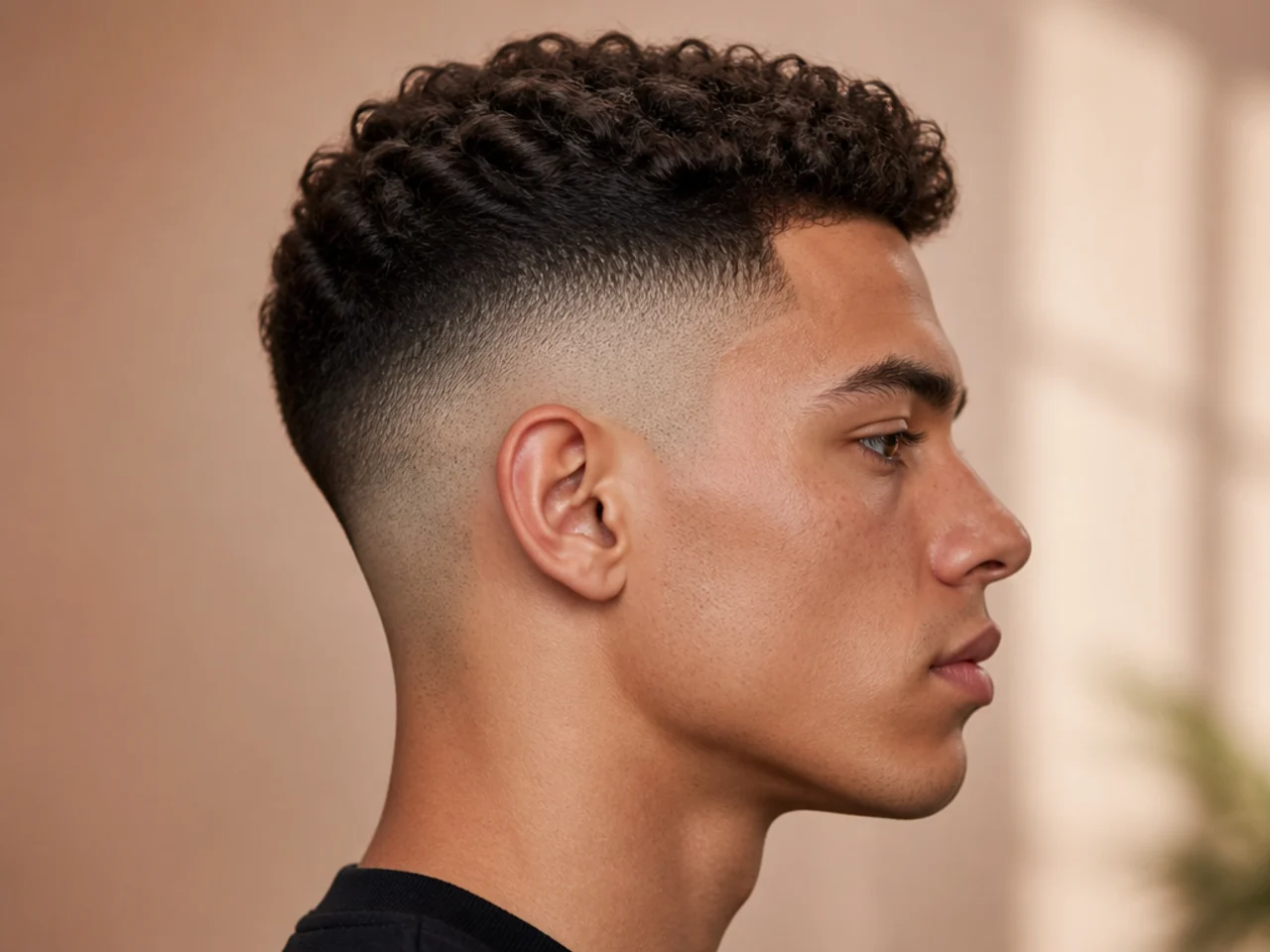
How to Choose Yours
Check your face shape first. High fades lengthen, so a round or square face gains and a long face loses.
Check your crown density honestly. All the remaining hair sits on top and it has to look like enough.
Decide skin or taper. A high skin fade blurs in one to two weeks and a high taper holding a #1 at 3mm lasts three to four.
Pick the top length to balance the width you removed. Very short on top over a high fade leaves the head reading narrow from every angle.
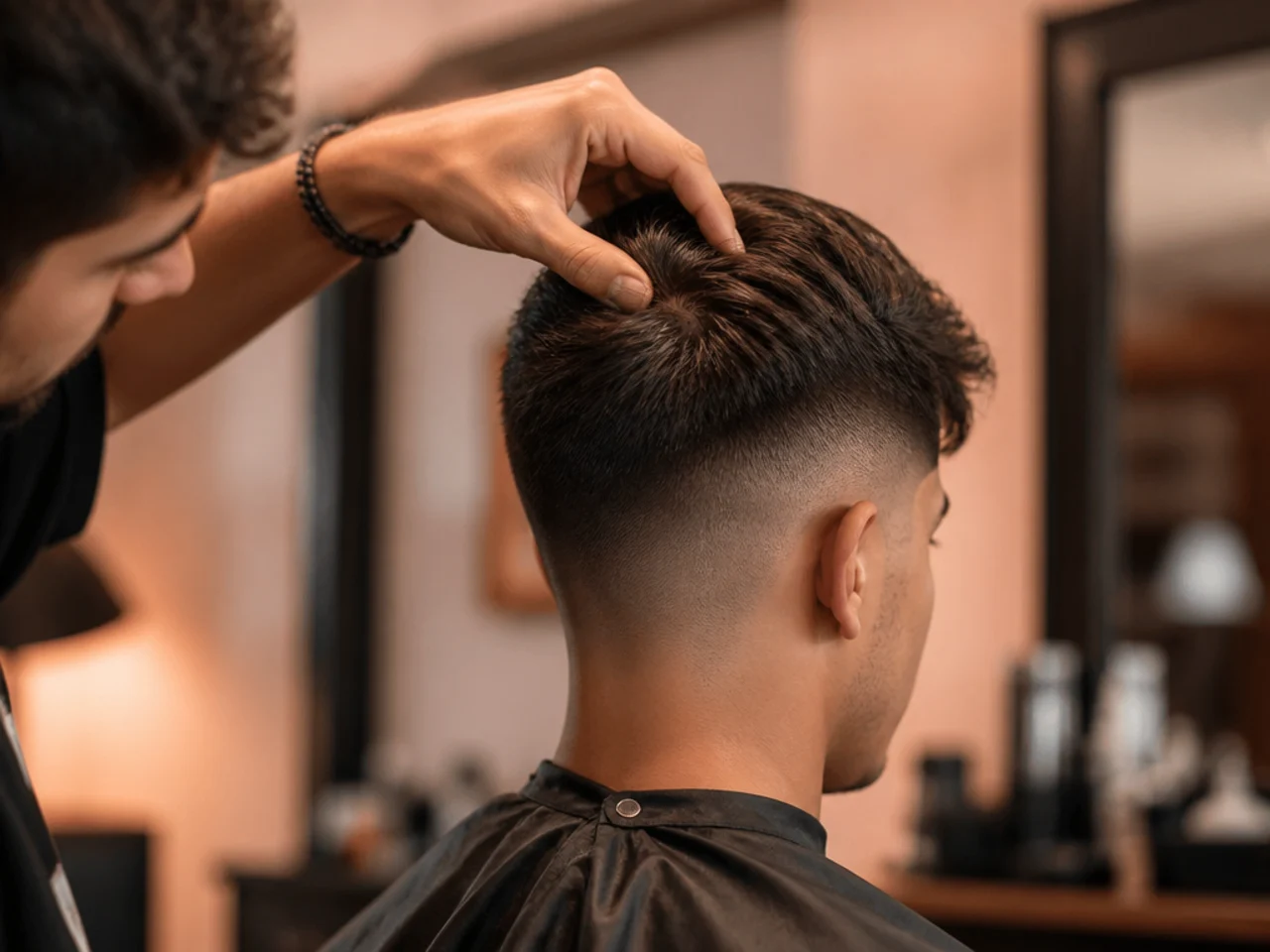
The 25 High Fade Ideas
1. Classic High Skin Fade
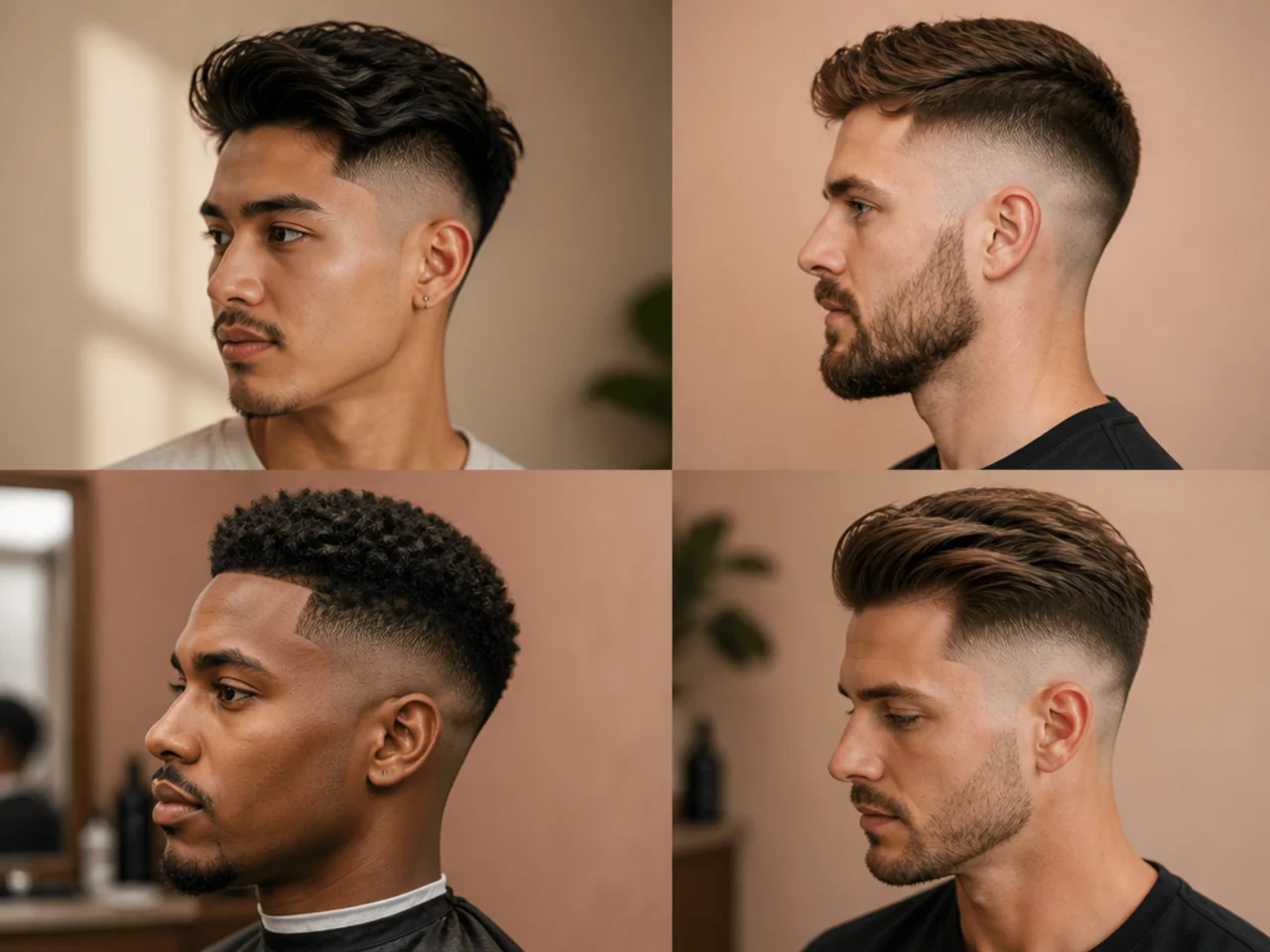
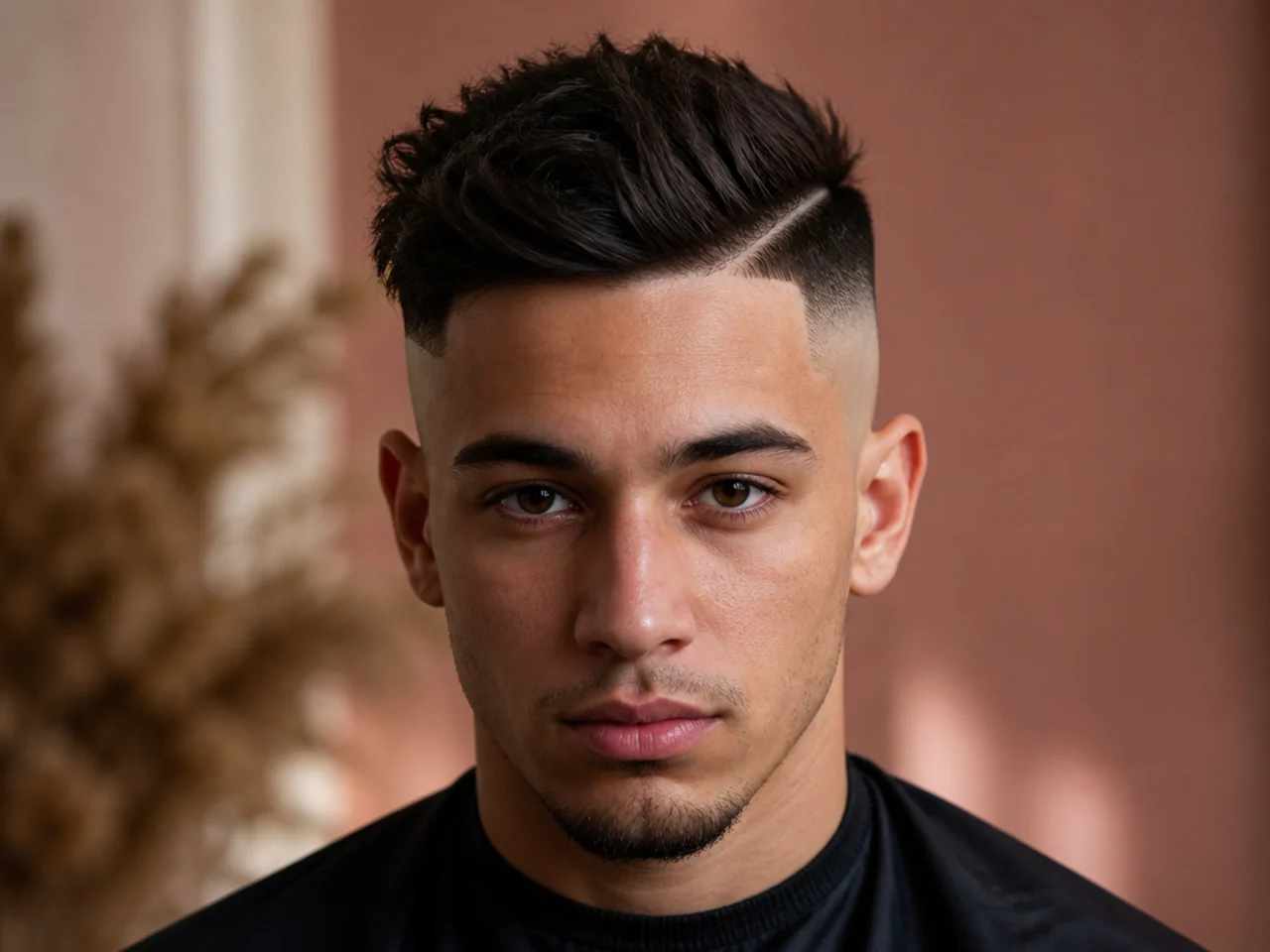
The blend running to bare skin from the ridge down. It is the reference version of the cut and the one that shows the lengthening effect most clearly.
2. High Taper Fade
Stopping at a #1 at 3mm rather than skin, which is what makes it a high taper fade rather than a fade. It softens the contrast and it holds three to four weeks instead of one to two.
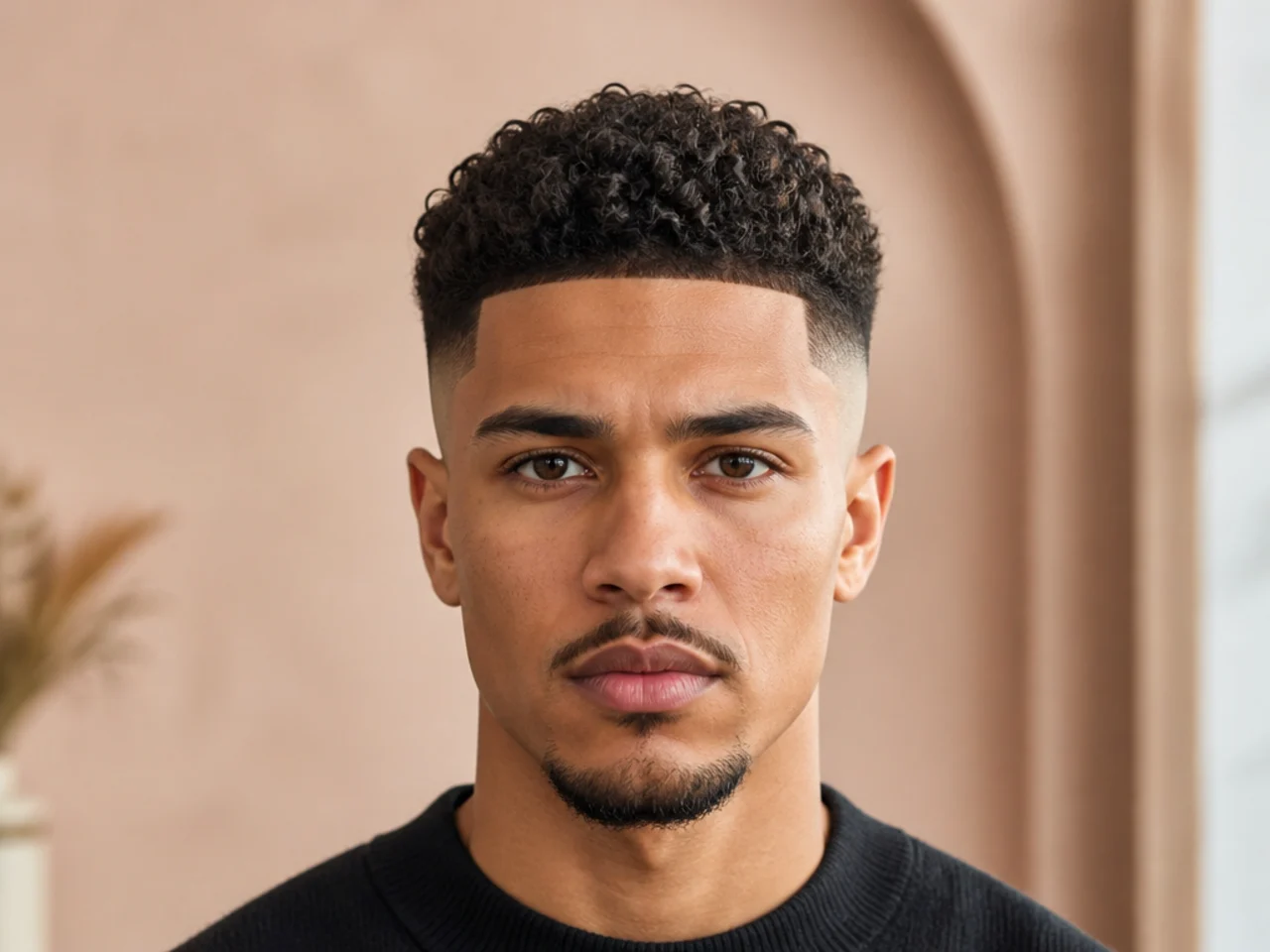
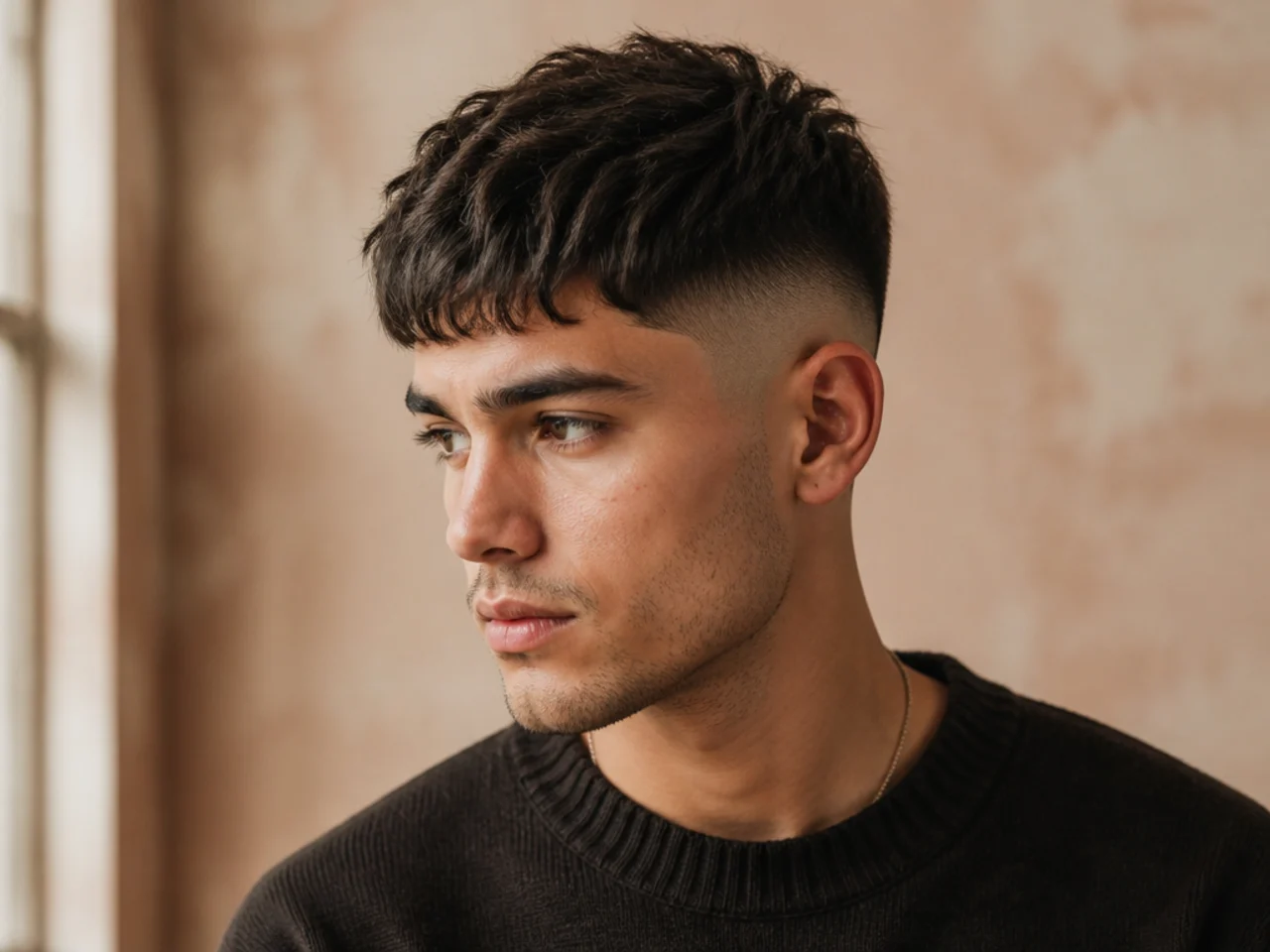
3. High Fade With a Textured Crop
Point-cut ends on top over a bare side. Texture matters more here than at any other height, because there is nothing else adding interest to the silhouette.
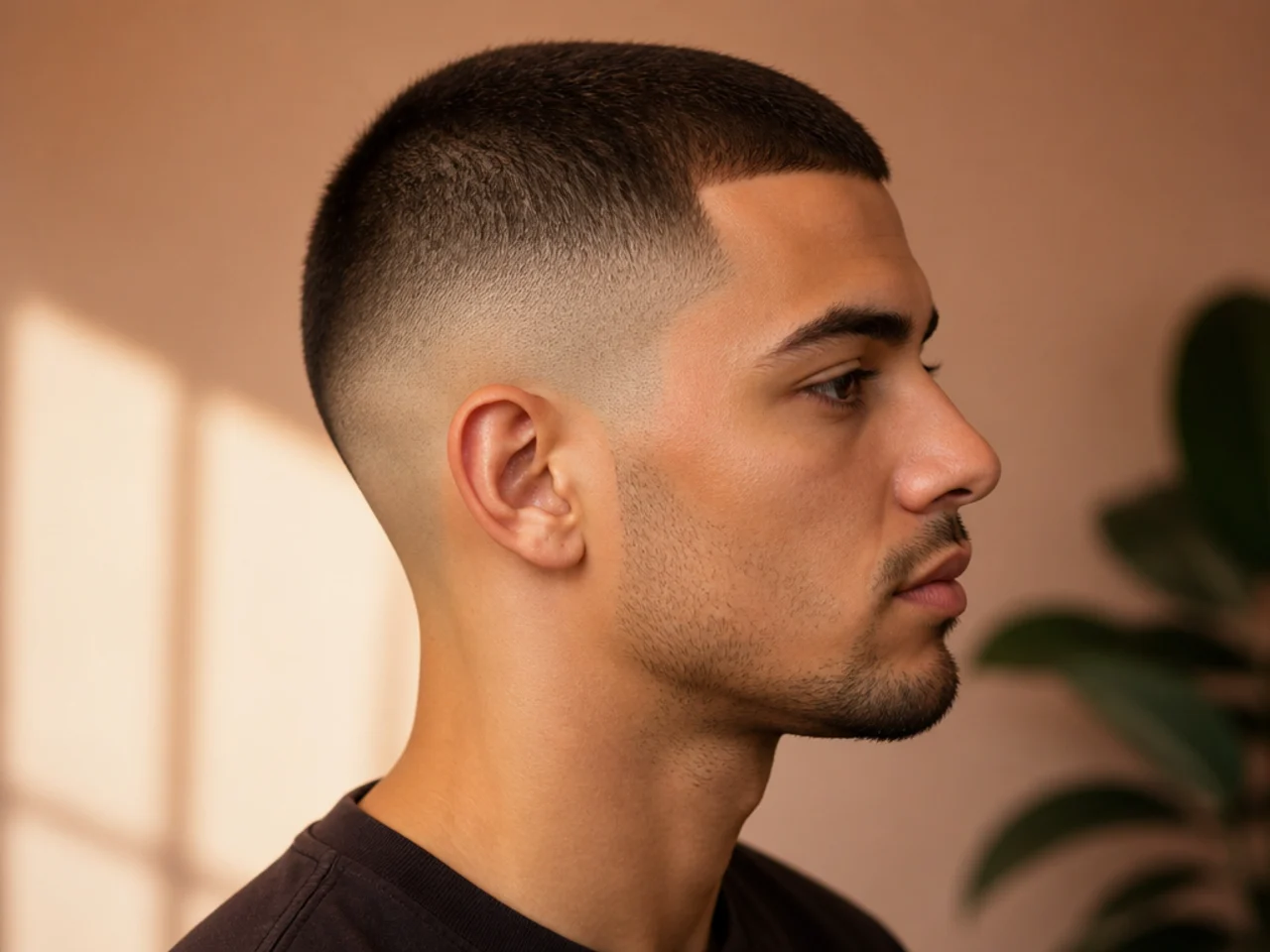
4. High Fade Buzz Cut
A #2 at 6mm on top over a high blend. Almost all shape and no length, which makes head form the entire look.
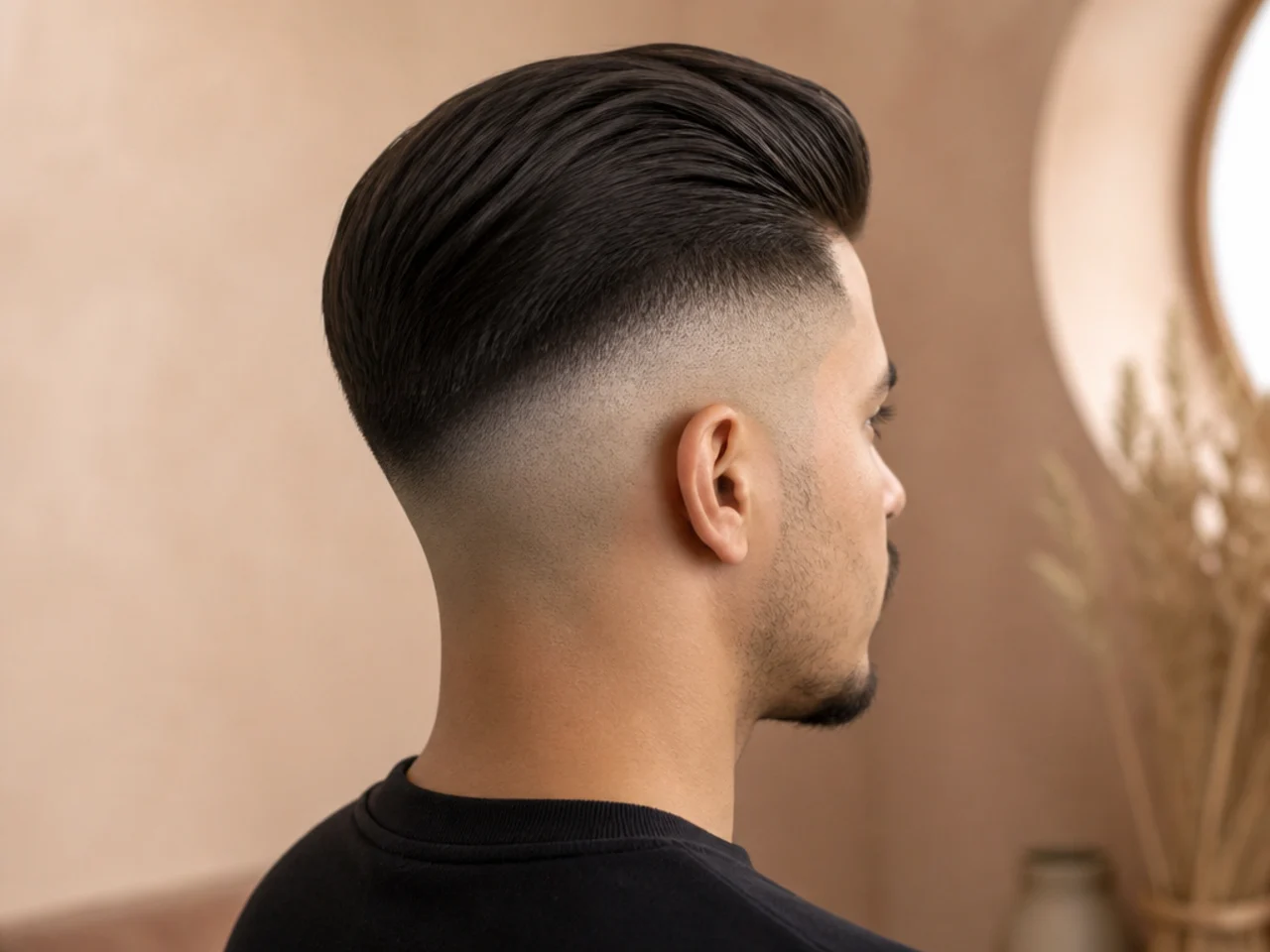
5. High Fade Comb Over
The sweep sitting entirely above the ridge. The part line has to run into the blend rather than above it, which is a decision unique to this height.
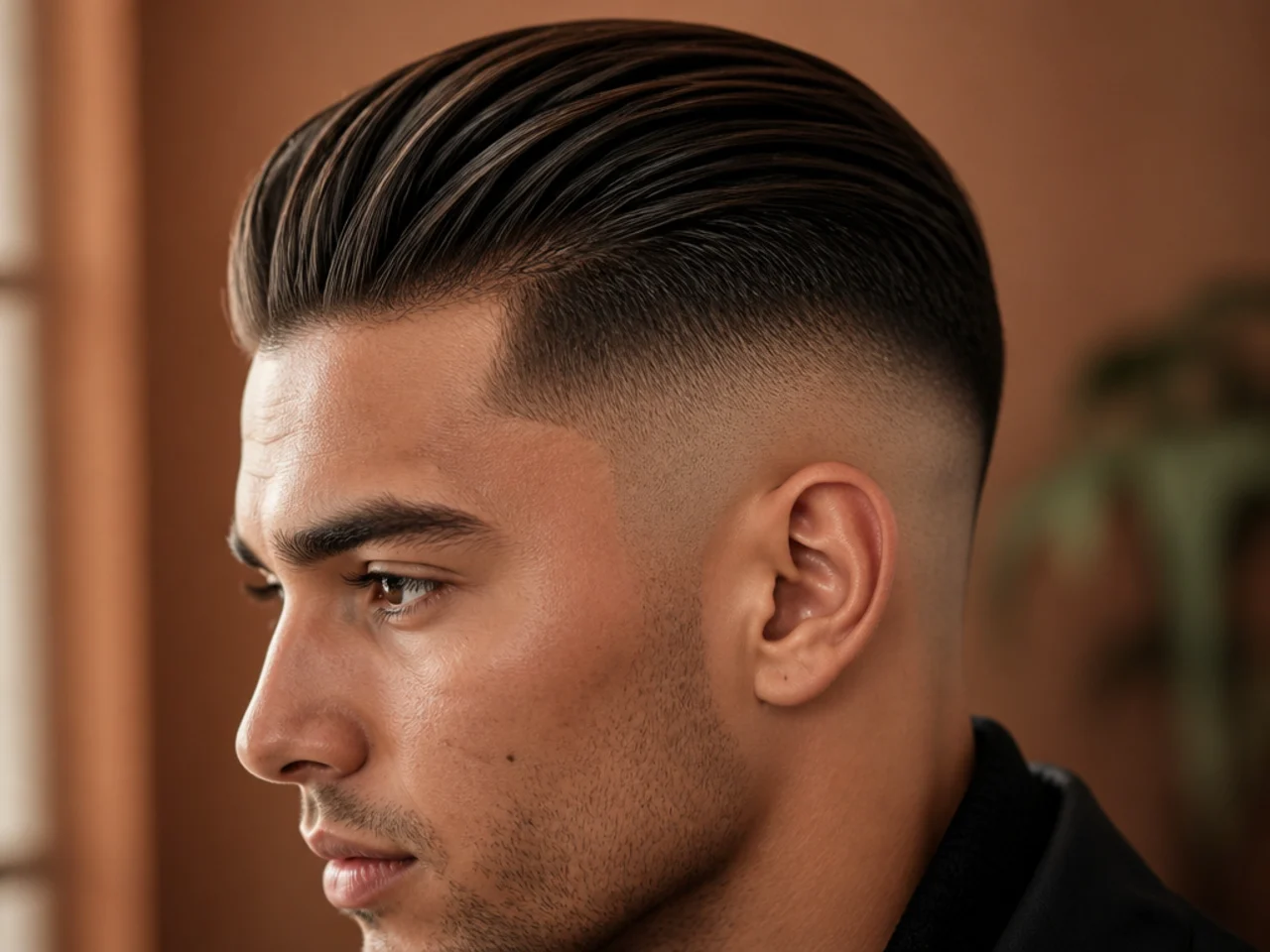
6. High Fade Slick Back
Everything combed backward with nothing overhanging, the arrangement covered in high fade slick back haircuts. It is the most exposing style on this list because every millimetre of the blend is on display.
7. High Fade Quiff
Height built at the front over bare sides. The quiff adds back the vertical the fade already created, which suits a round face particularly well.
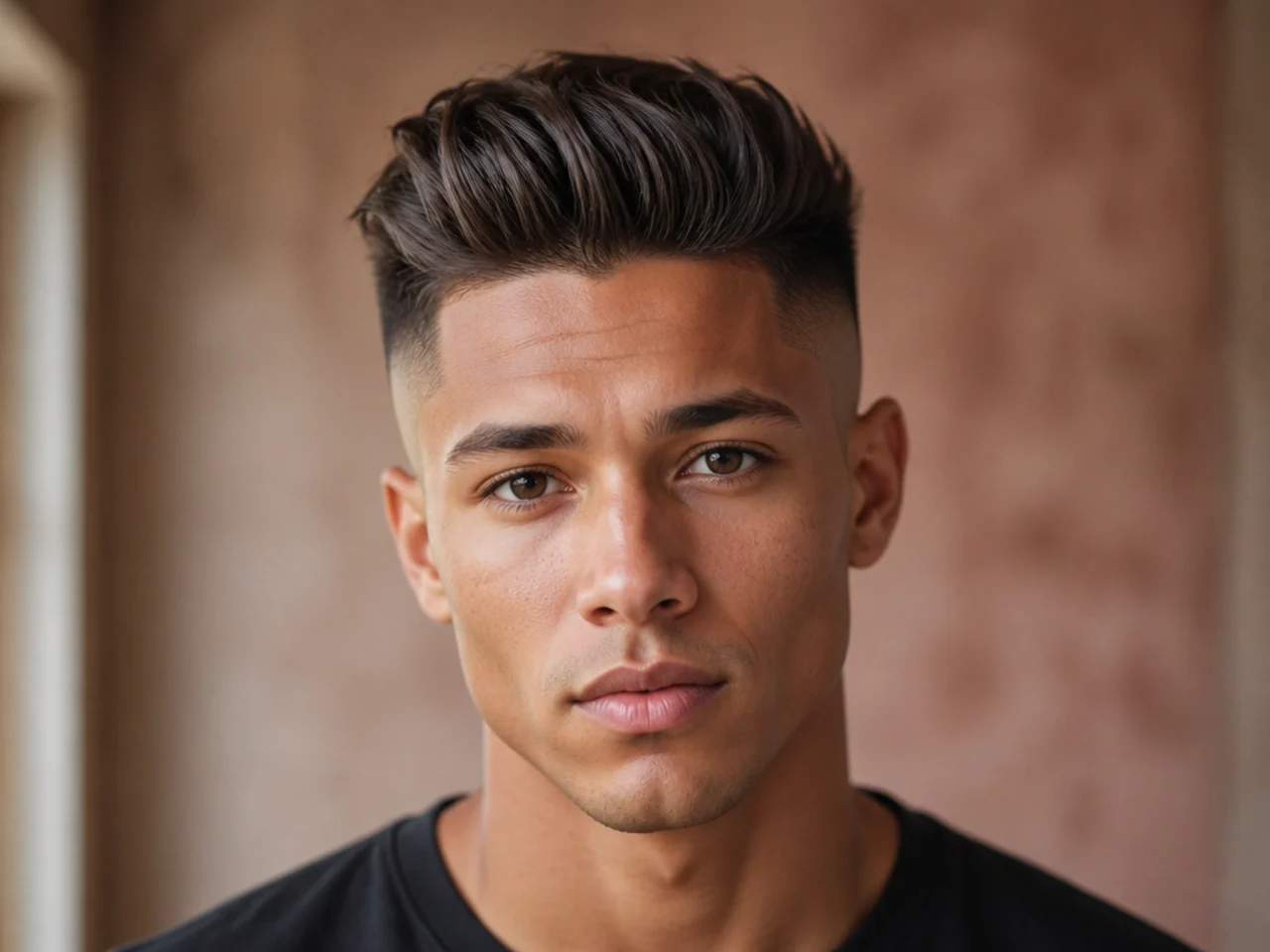
8. High Fade Pompadour
More volume, swept up and back. It needs real density on top, since a pompadour over a high fade with thin hair shows scalp from underneath.
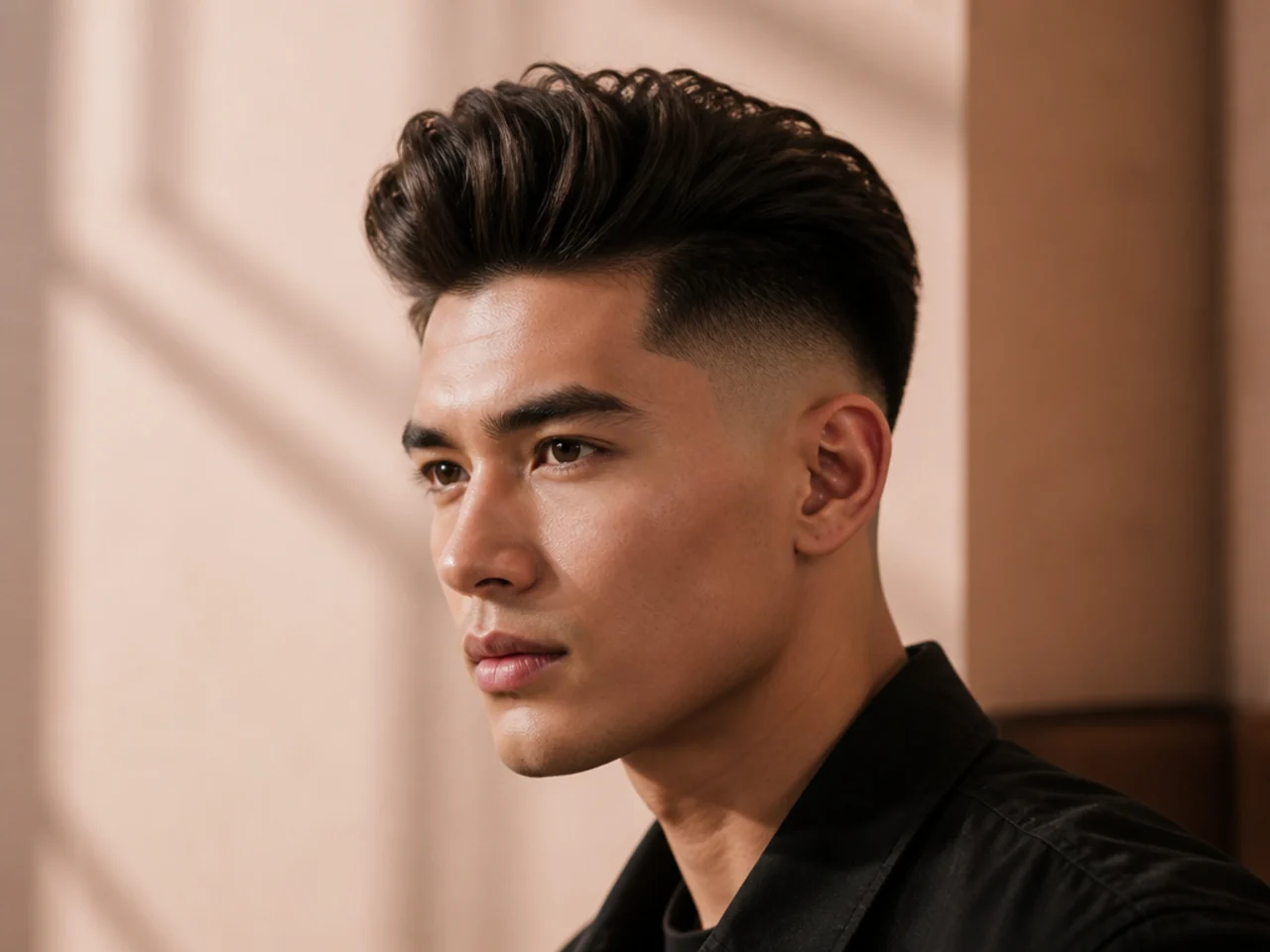
9. High Fade With a Hard Part
A razored line where the top meets the blend. On a high fade the part often has to sit inside the faded area, which turns it into a design element rather than a parting.
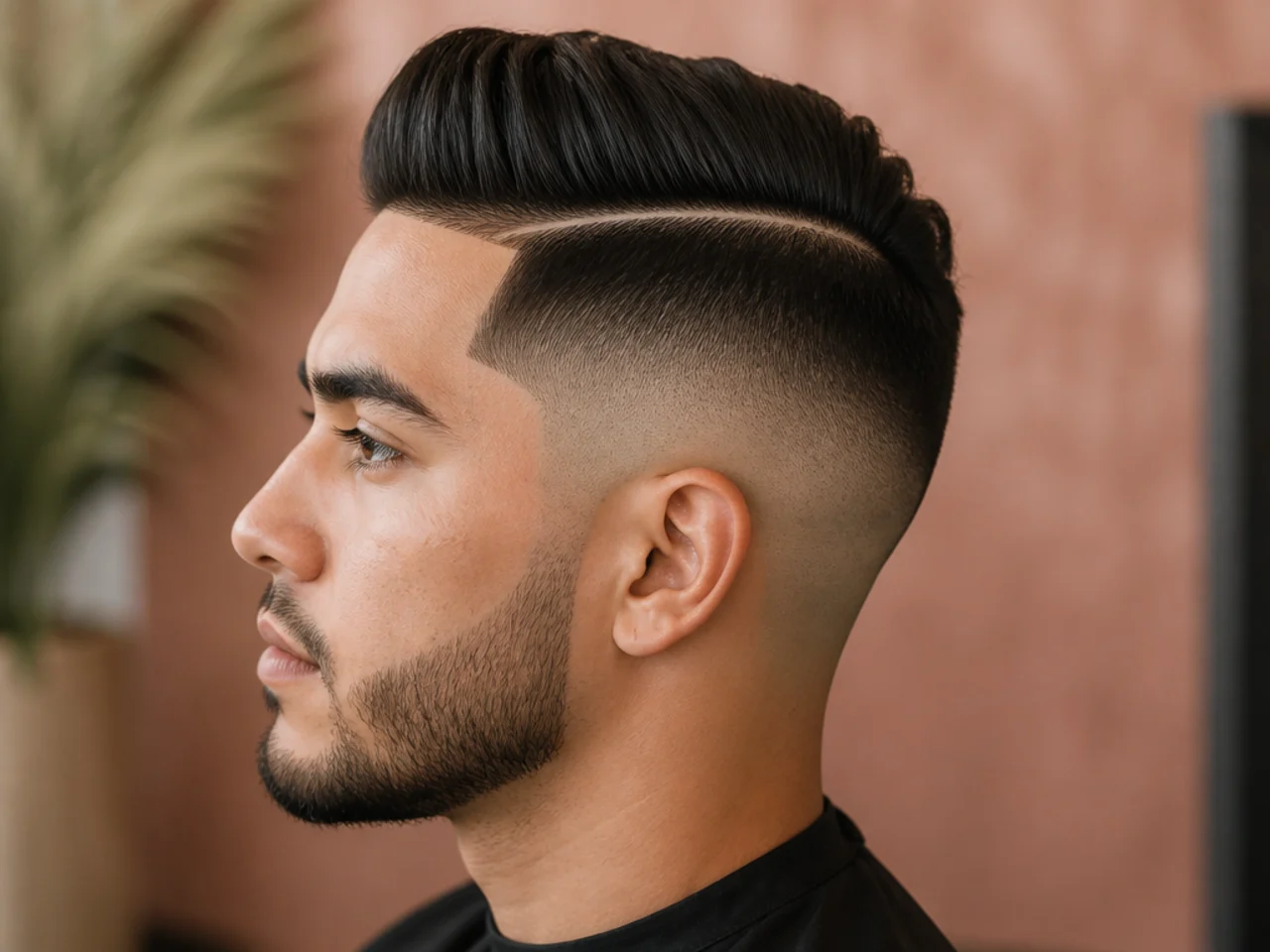
10. High Fade With a Line-Up
Hard razored edges set square across the front hairline and down both temple corners. Two hard edges on a head with very little hair, which is why the two have to agree in angle.
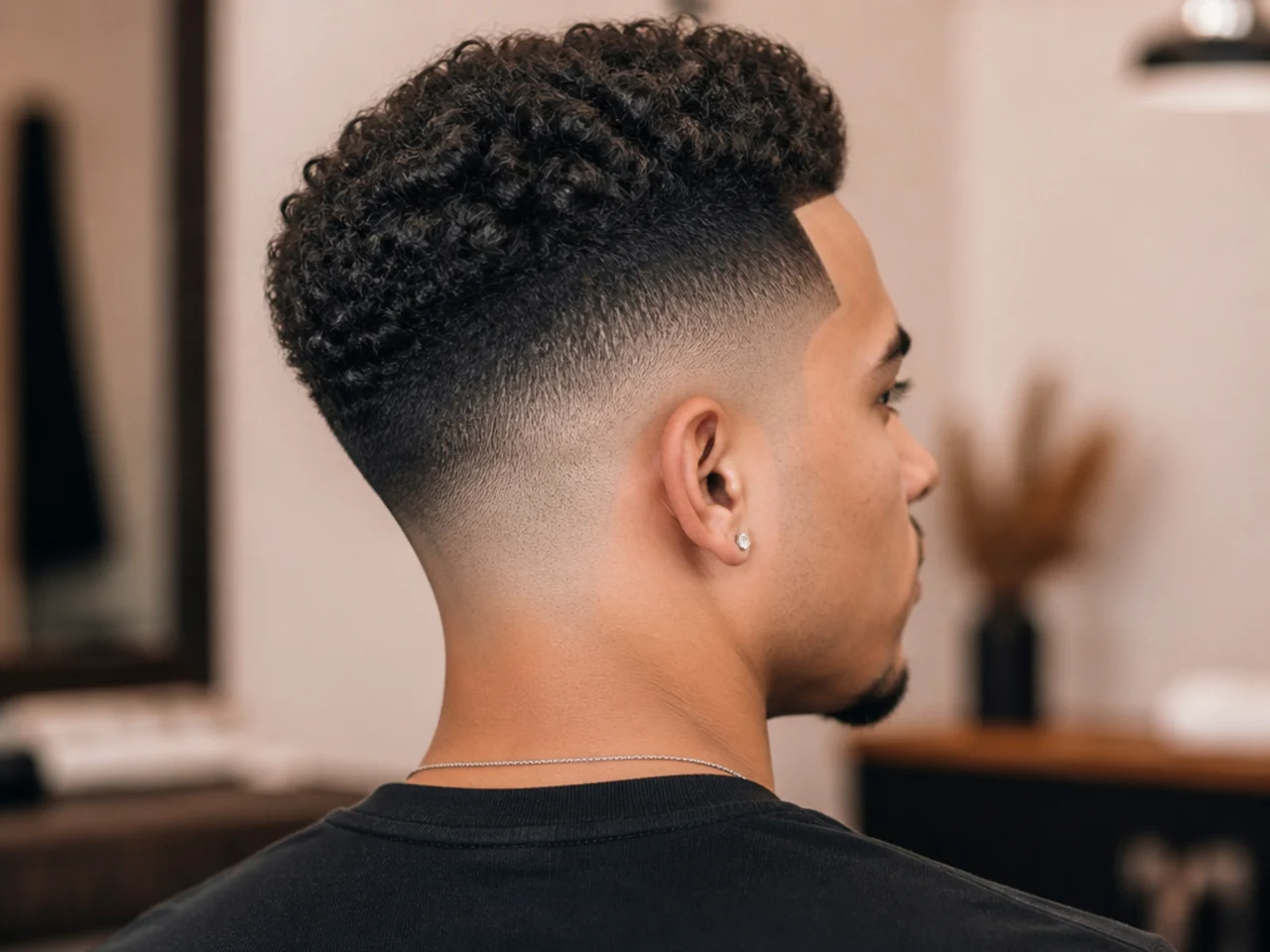
11. High Fade French Crop
A blunt fringe over a high blend. The straight fringe edge gives the face a horizontal to answer all the vertical the fade added.
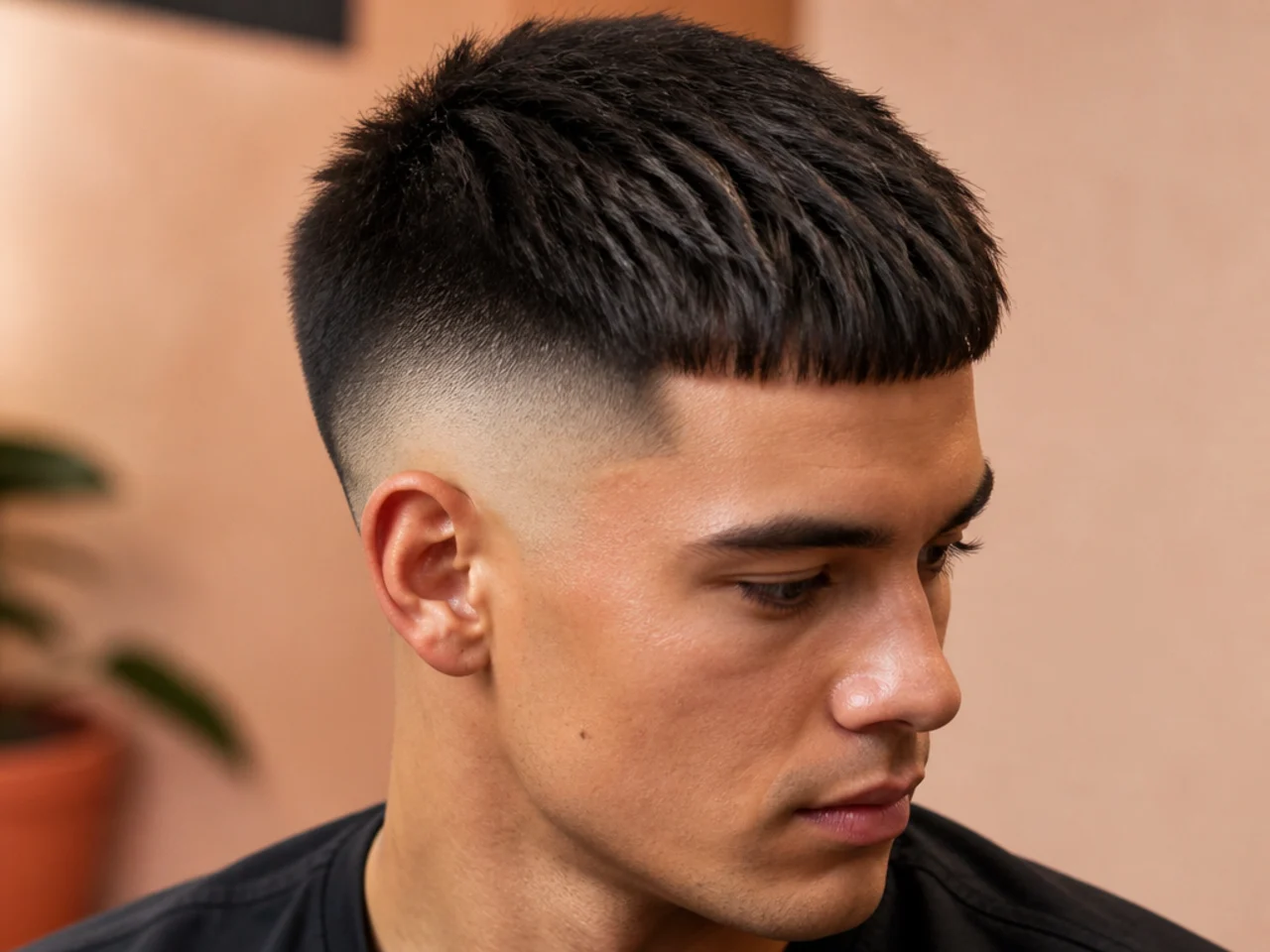
12. High Fade With a Forward Fringe
Length pushed toward the brow. It shortens the face, which is the direct counterweight to what a high fade does. Bringing hair down over the forehead moves the apparent hairline a couple of centimetres lower, and the forehead is what the high sides had just made prominent.
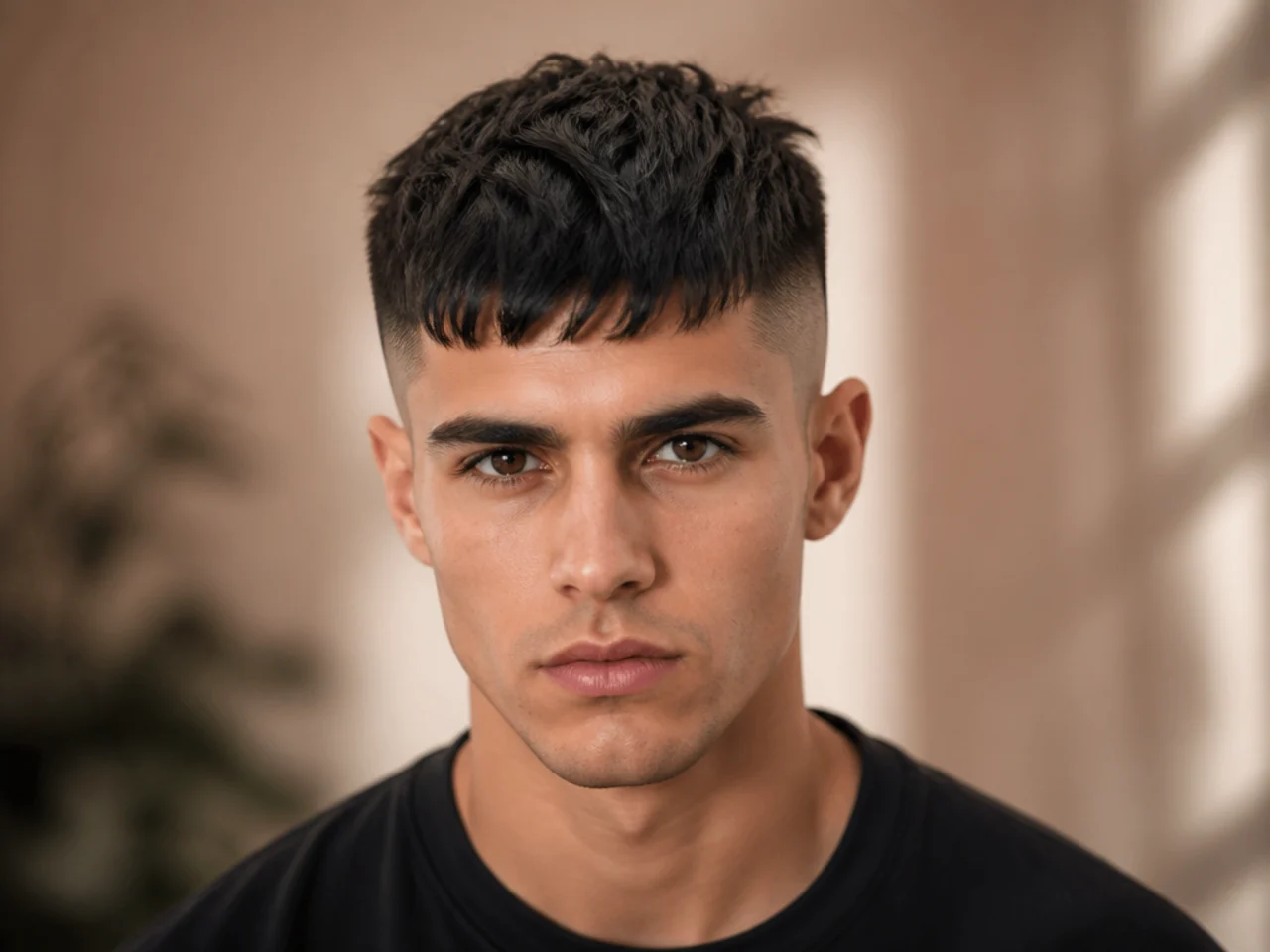
13. High Fade With Curly Hair
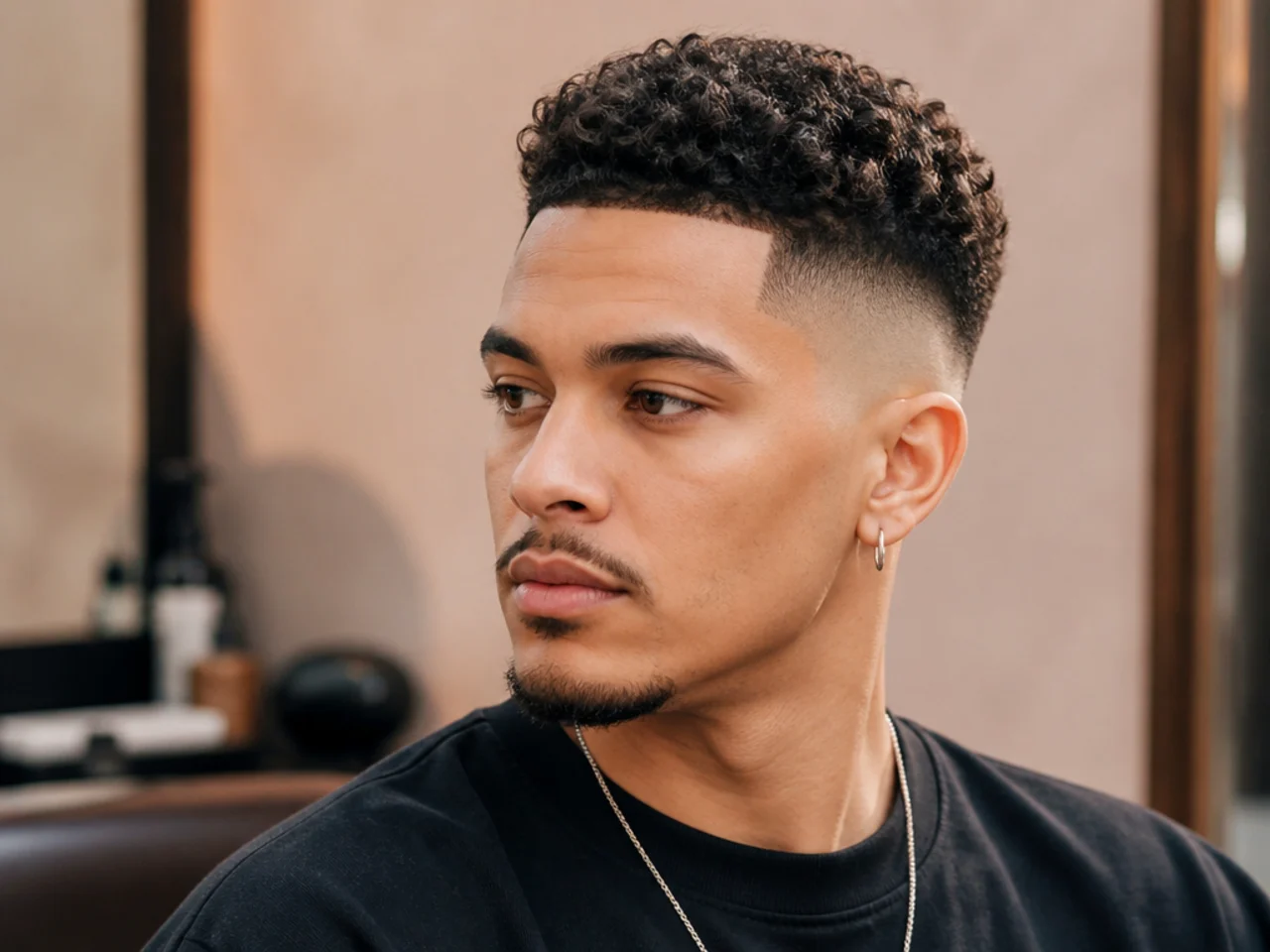
Curl mass sitting above the ridge with the sides taken bare. The risk is a cap effect, so ask for the top of the blend to be softened into the curl over two or three centimetres.
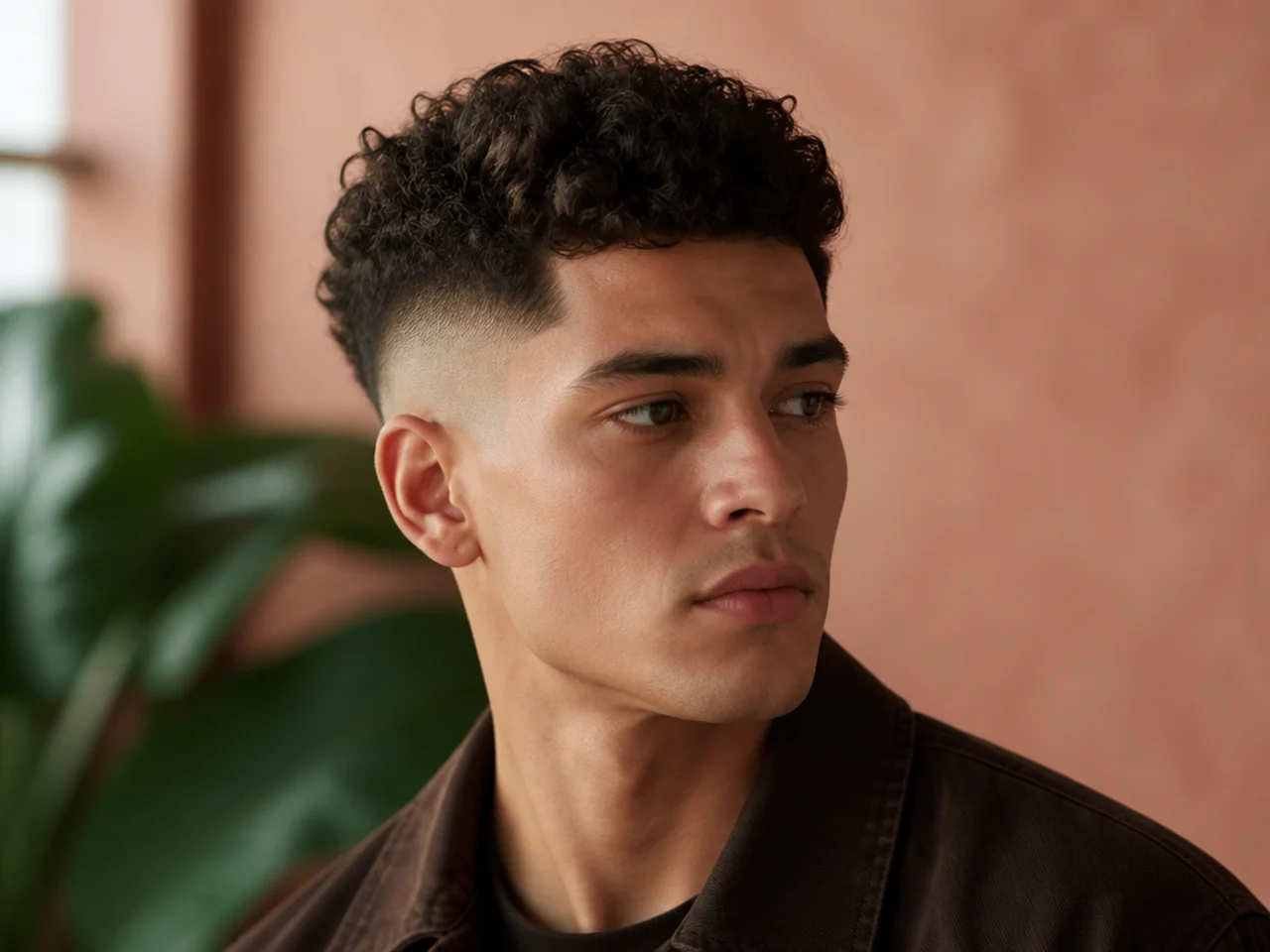
14. High Fade With 360 Waves
The pattern surviving only above the ridge. It is the smallest wave field any fade leaves, so the rows have to be well trained to read at all.
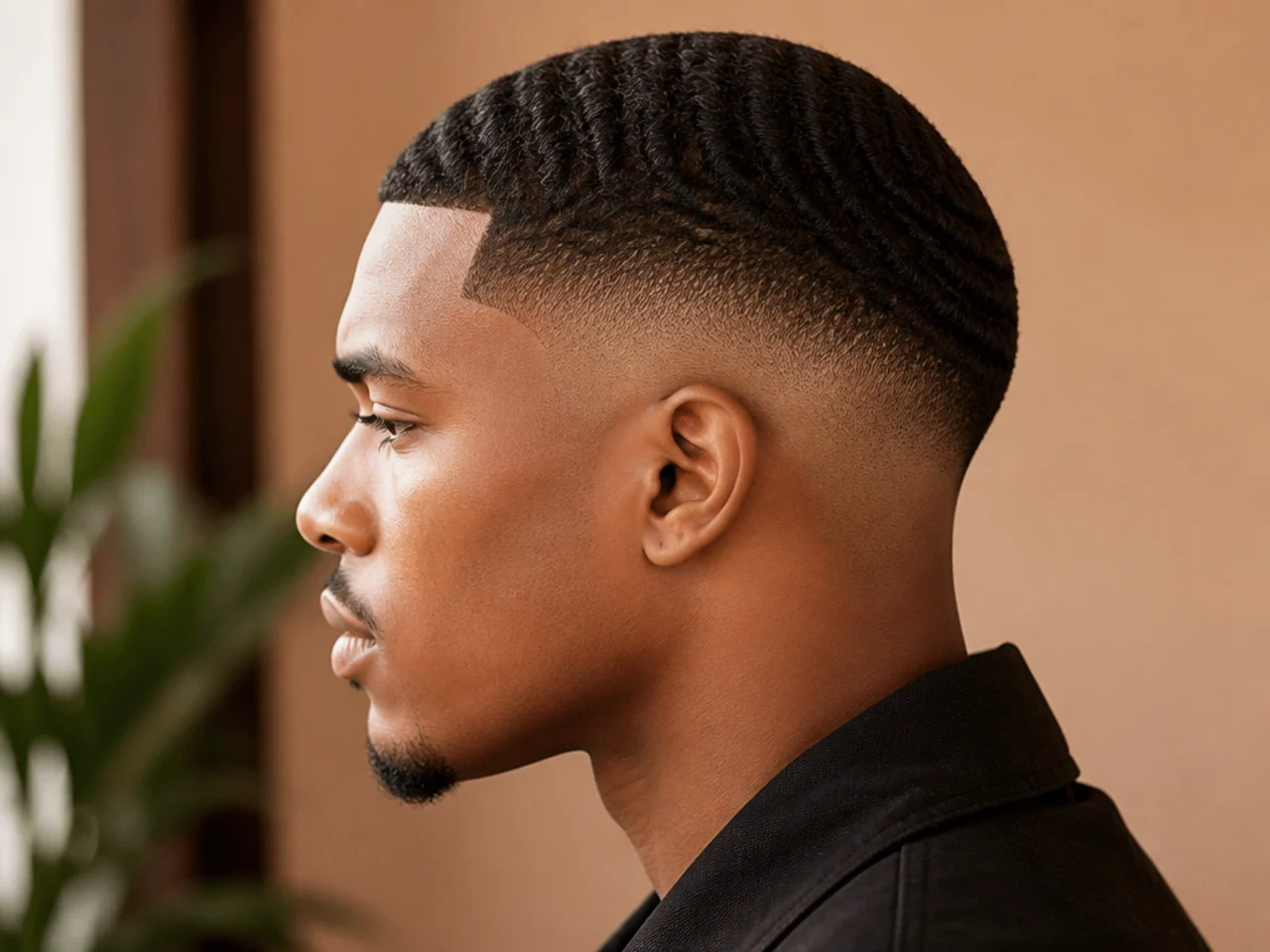
15. High Fade High Top
Coiled hair kept tall above bare sides. This is the shape a high fade produces naturally on afro texture, because the mass sits as a block above the widest point.
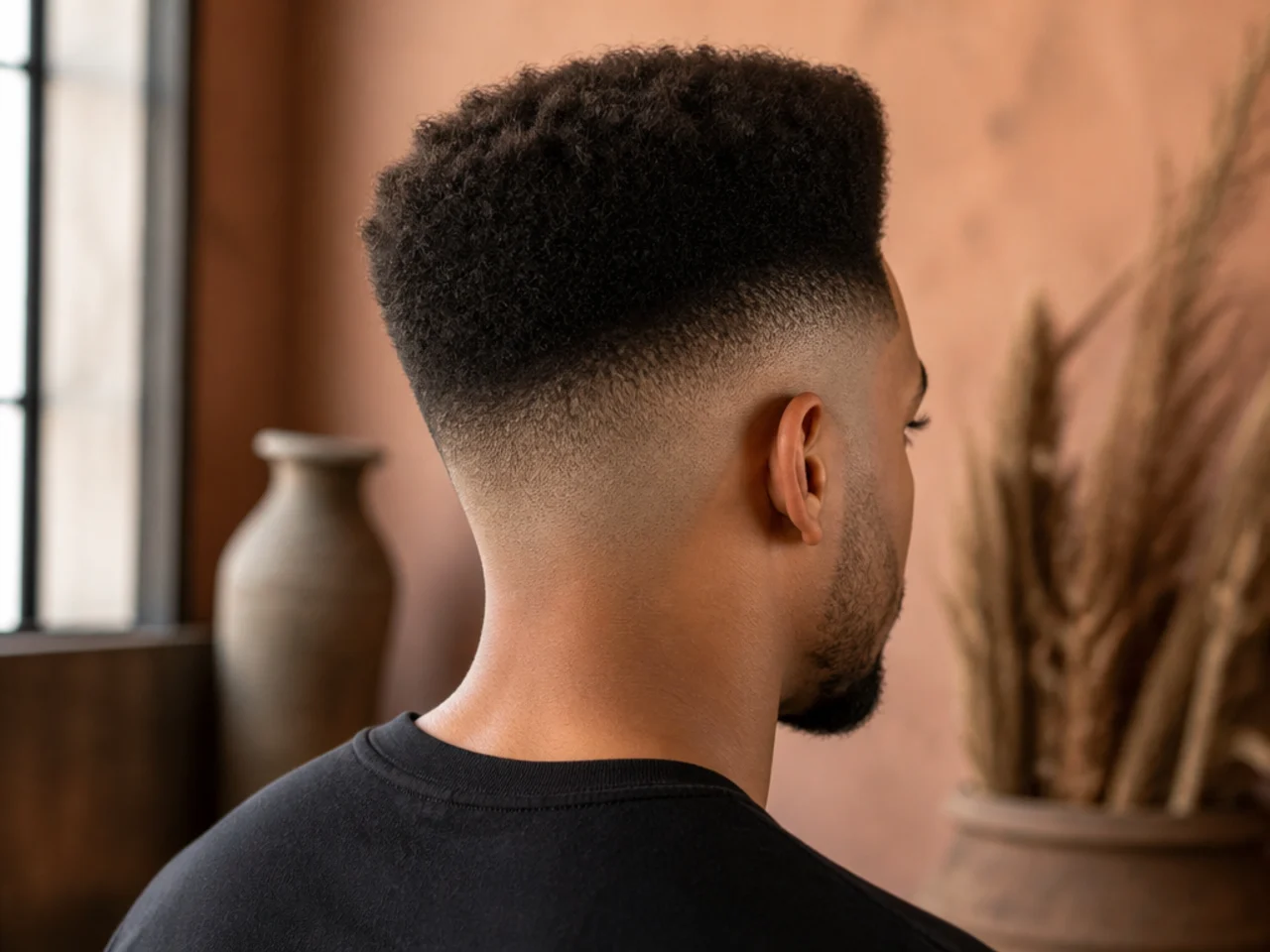
16. High Fade With a Beard
Bare skin above meeting dense beard below. It is the highest-contrast join available on a head, so the beard usually needs fading too.
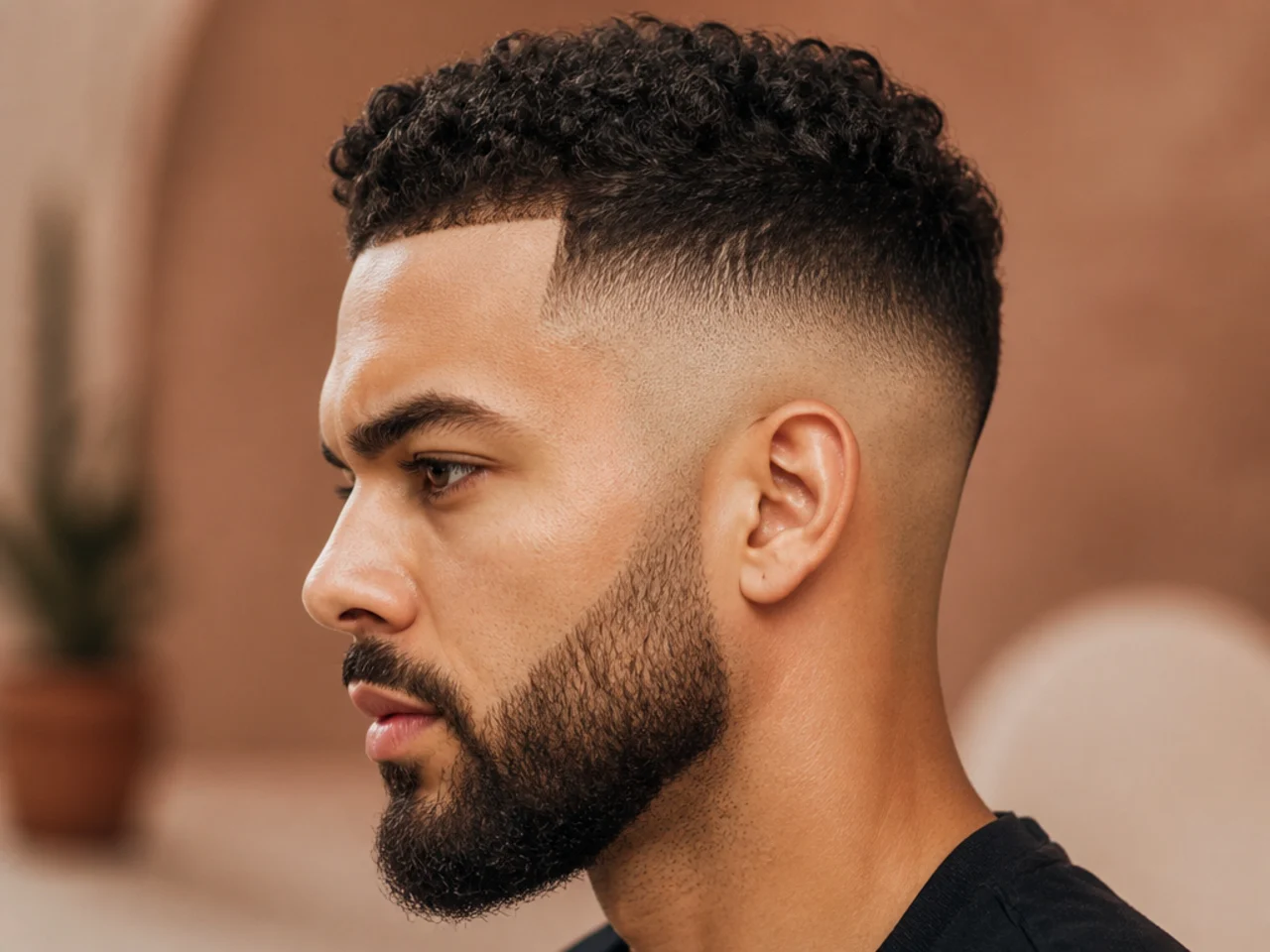
17. High Drop Fade
From a start above the ridge, the line curves downward as it passes behind the ear. It softens the back while keeping the full lengthening effect at the front.
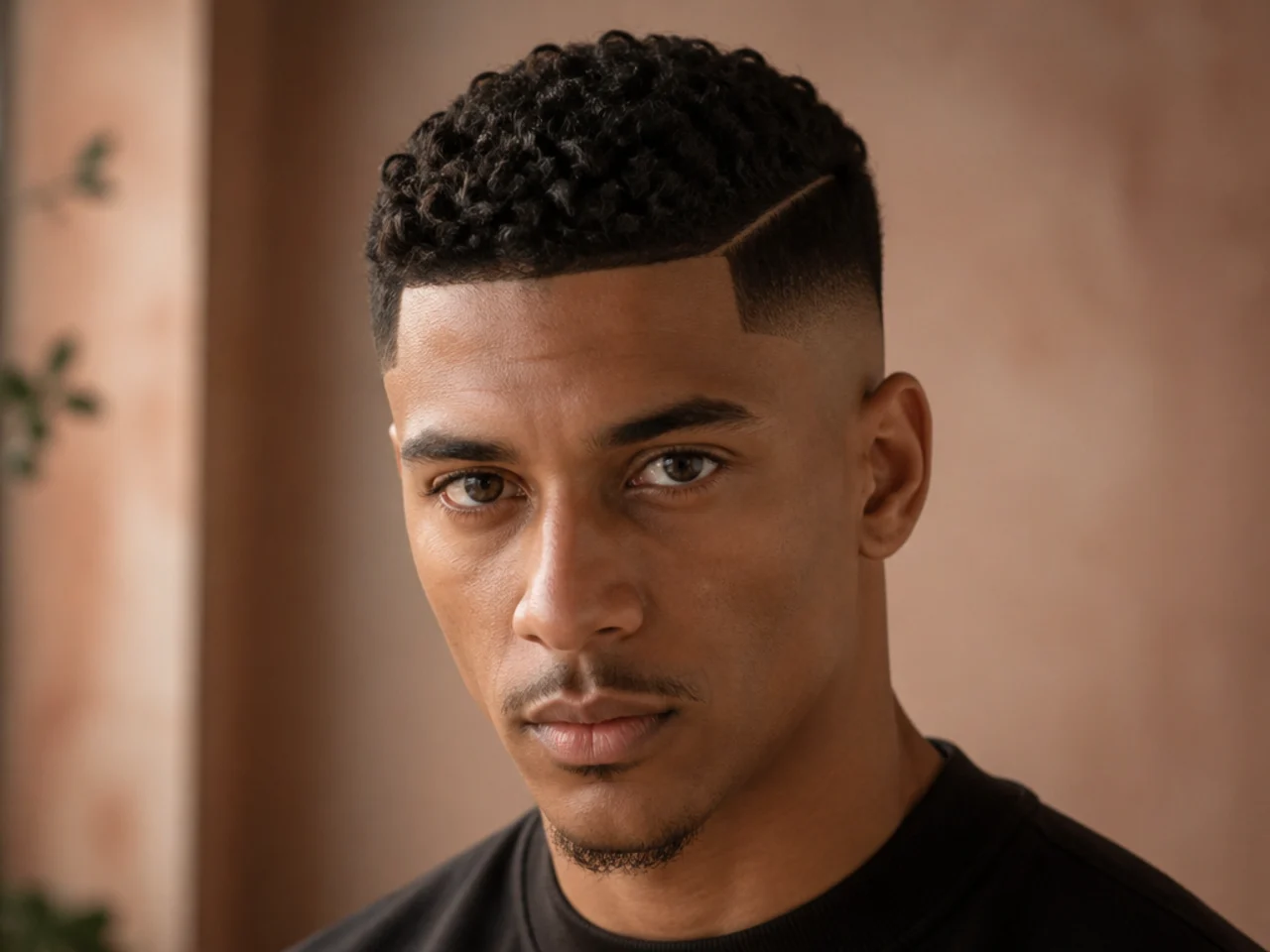
18. High Bald Fade
Razored rather than clippered at the bottom. Truly bare skin instead of a very short guard, which sharpens the whole gradient and shortens its life to about a week.
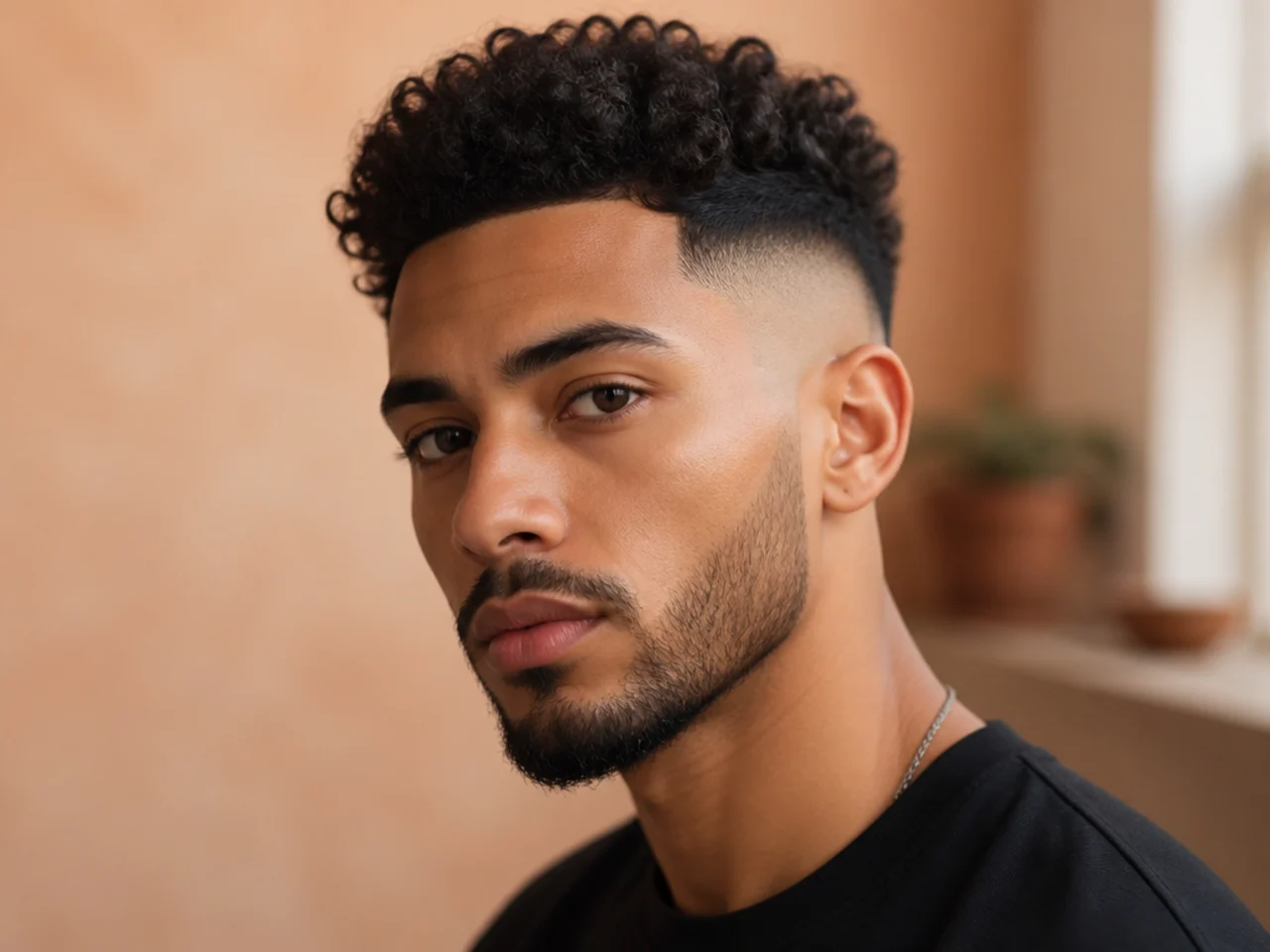
19. High Fade With a Design
A shape cut into the exposed panel. High fades offer the largest bare area of any cut, which is why the most detailed designs live here.
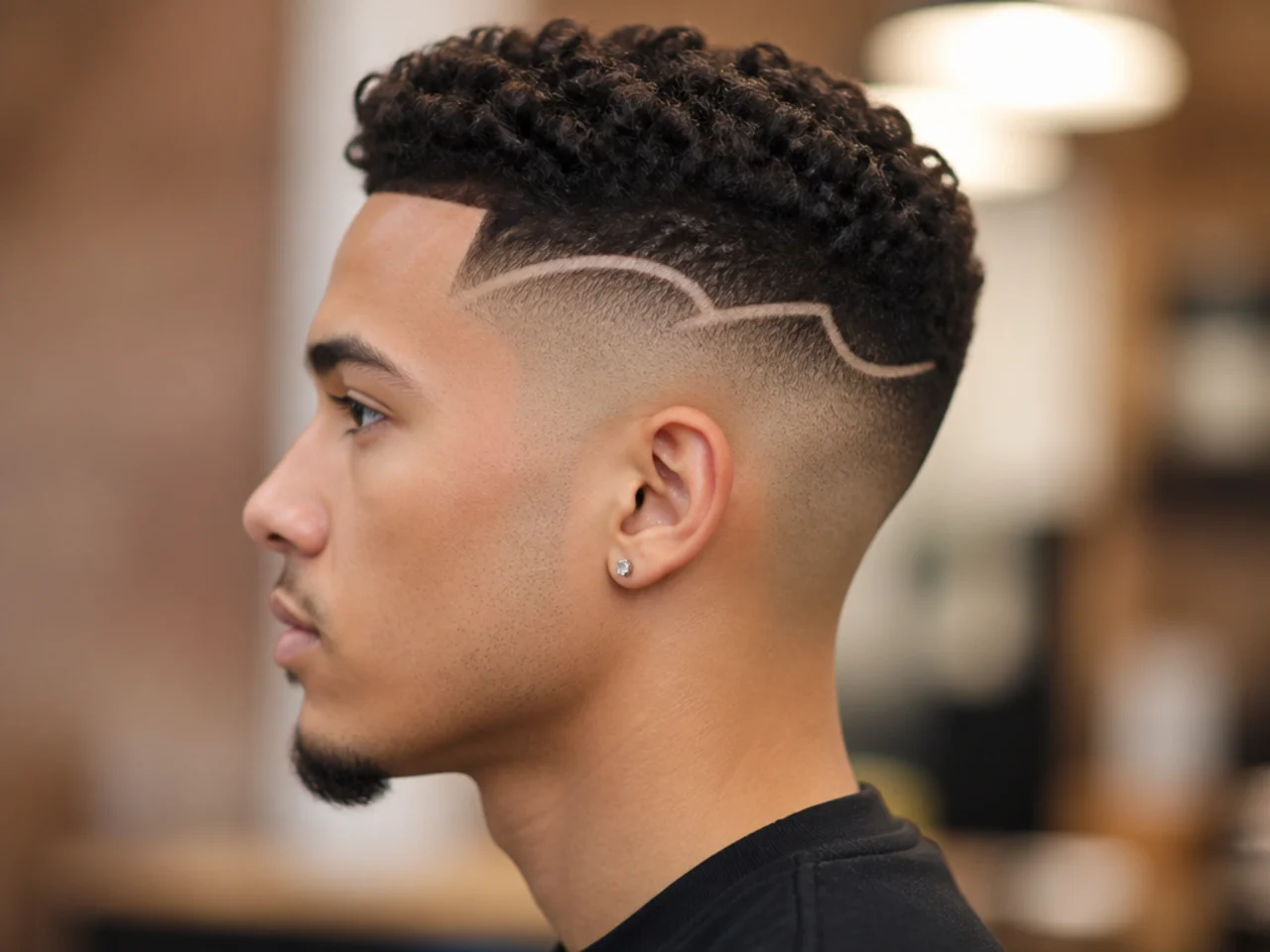
20. High Fade With a Middle Part
The top split down the centre above bare sides. It reduces height, which is worth knowing if the fade has already lengthened the face more than you wanted.
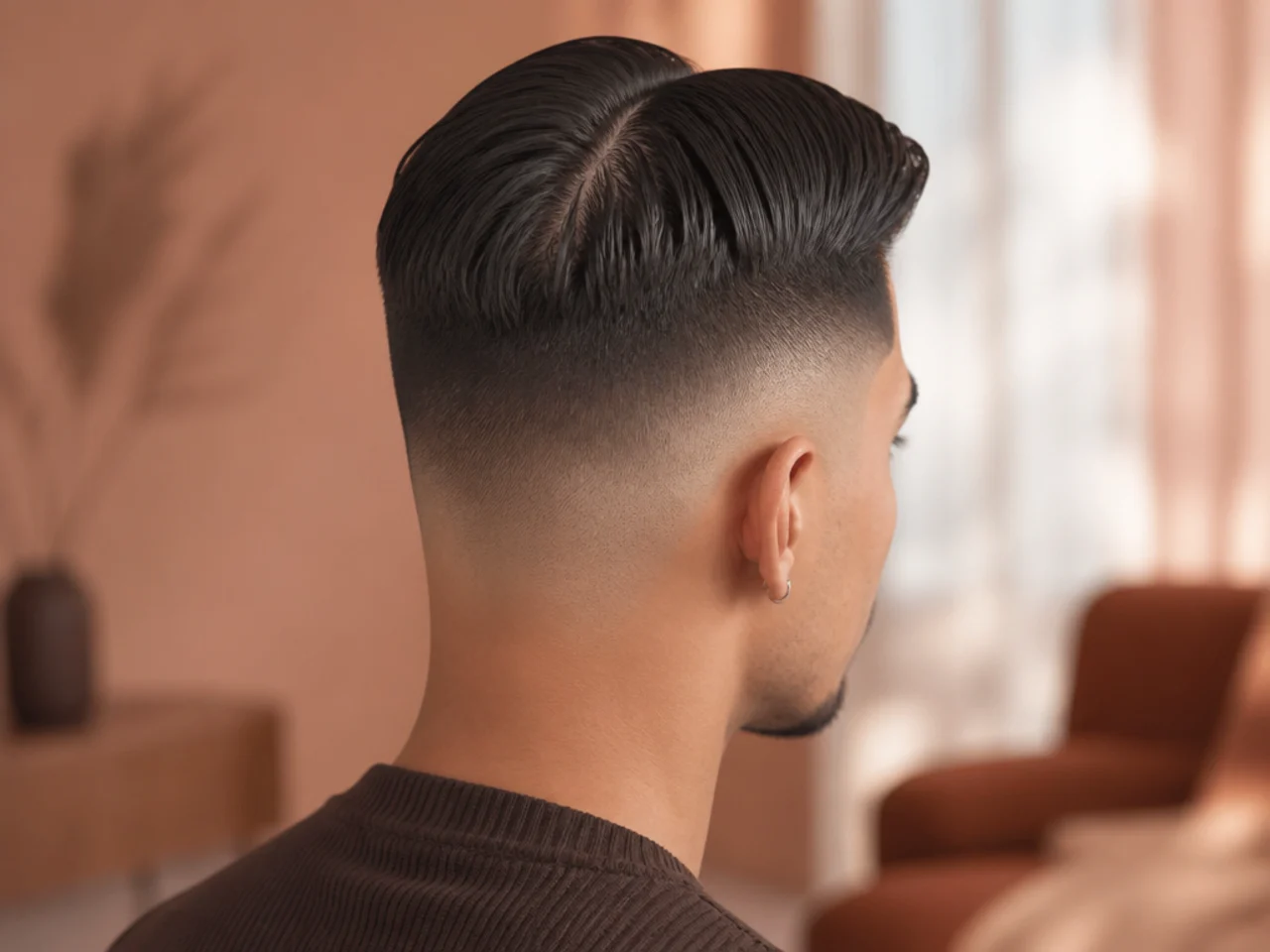
21. High Fade Mullet
Length kept at the nape with the sides taken high, the most severe entry in the faded mullet family. The contrast is extreme, which is the point, and it requires a barber willing to leave a back they have been trained to tidy.
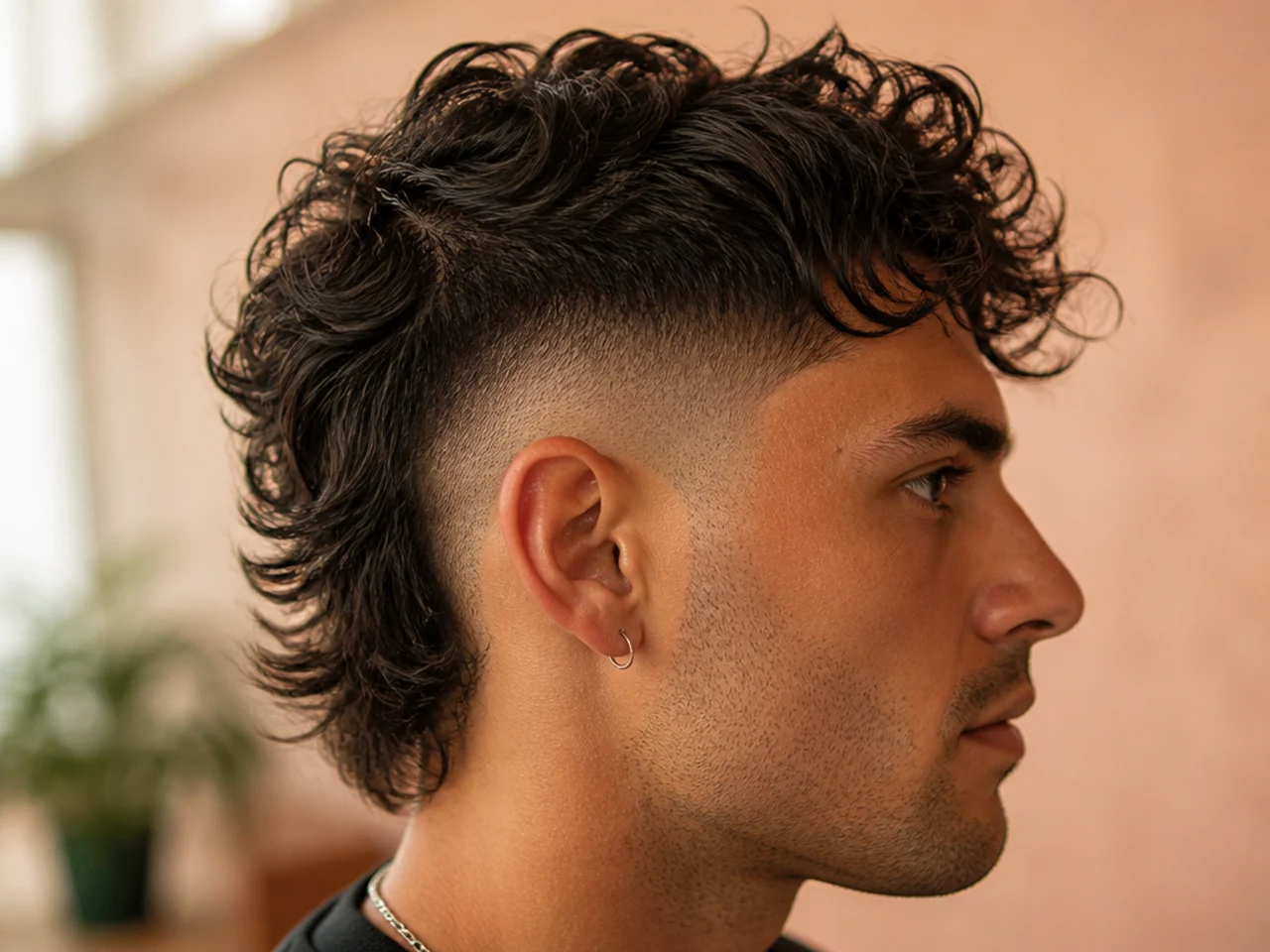
22. High Fade Faux Hawk
All the remaining weight kept in a strip running down the middle of the head. The bare sides push the eye straight to the middle, which exaggerates the height further.
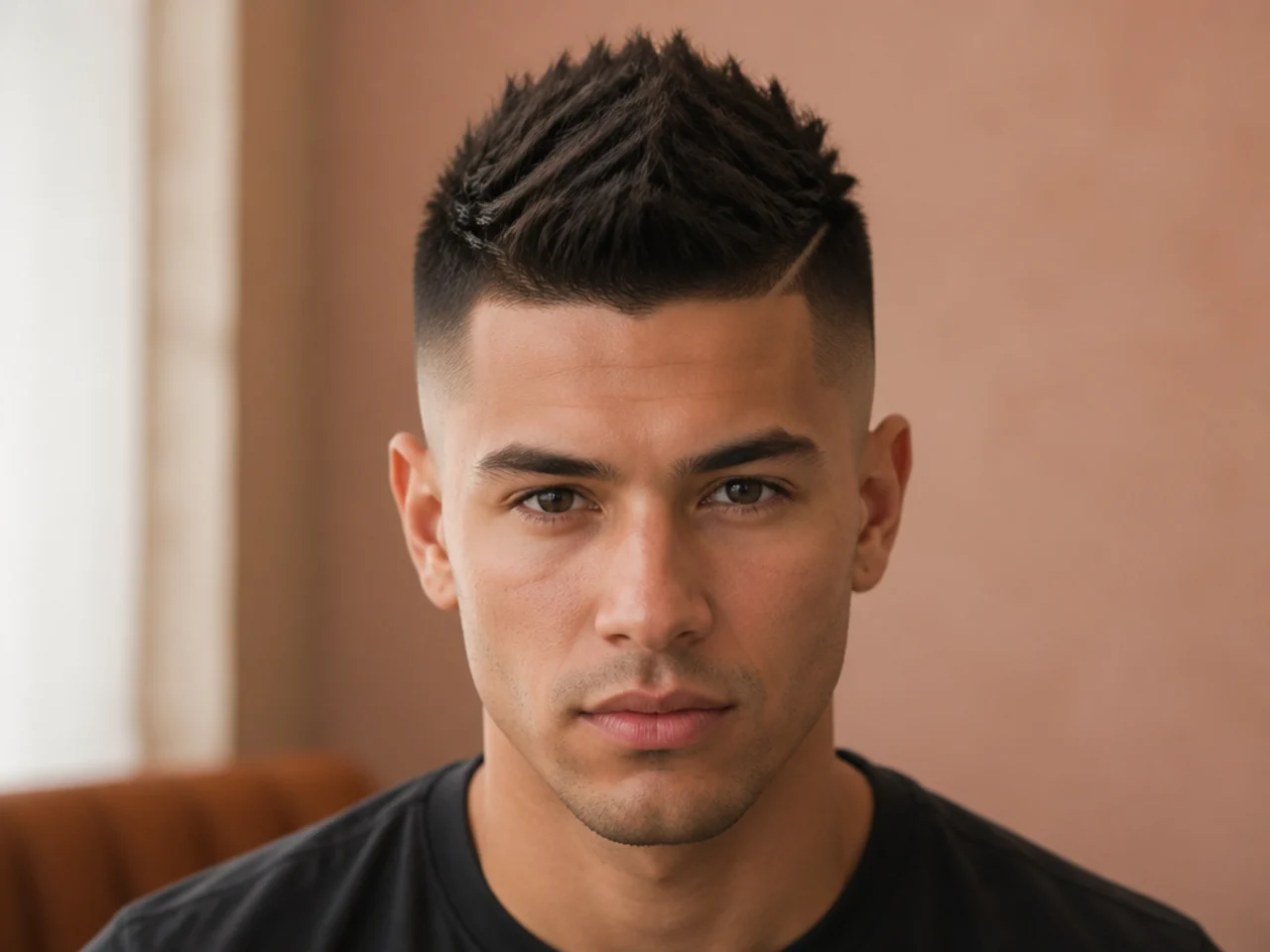
23. High Fade for a Round Face
The strongest argument for this height. Removing width at the widest point is the most direct way to make a round face read longer.
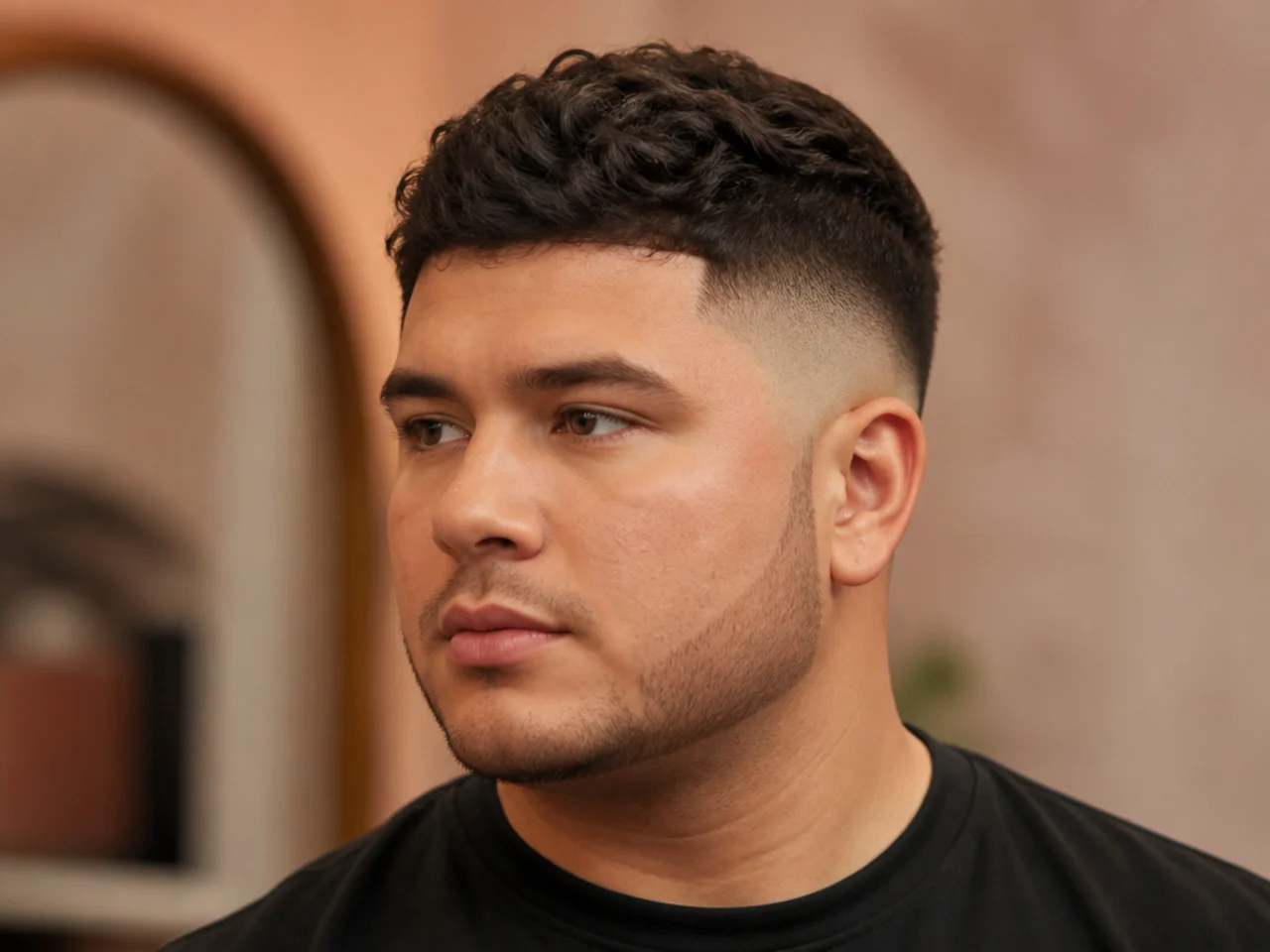
24. High Fade on Thinning Hair
Saved as a warning rather than a recommendation. A high fade exposes scalp at the sides and leaves the thin area on top with nothing to compare it against favourably.
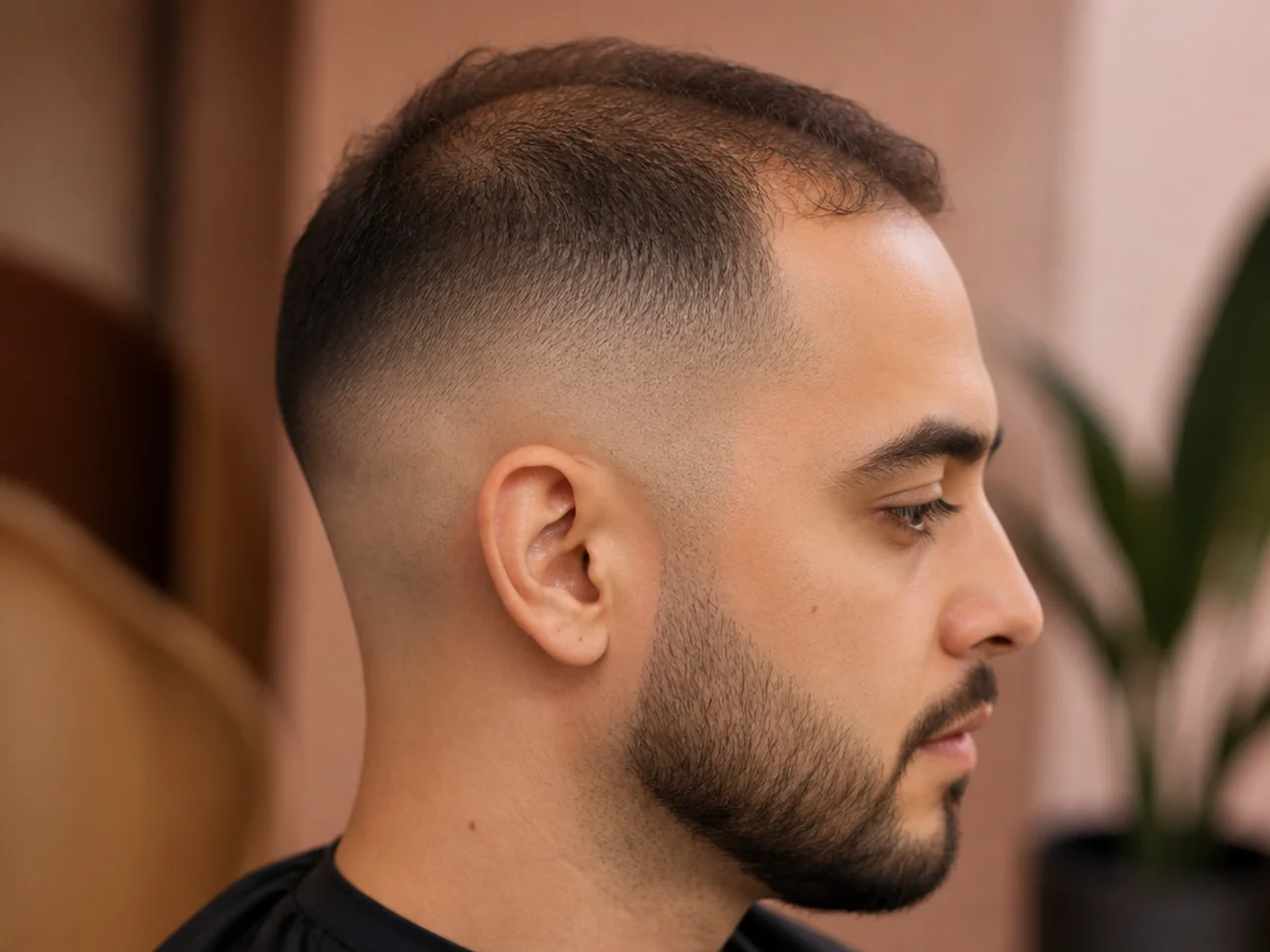
25. High Fade at Week Two
The blend has begun to close and the sides have picked up shadow. On a skin finish this is already past its best, which is the practical cost of the sharpest fade available.
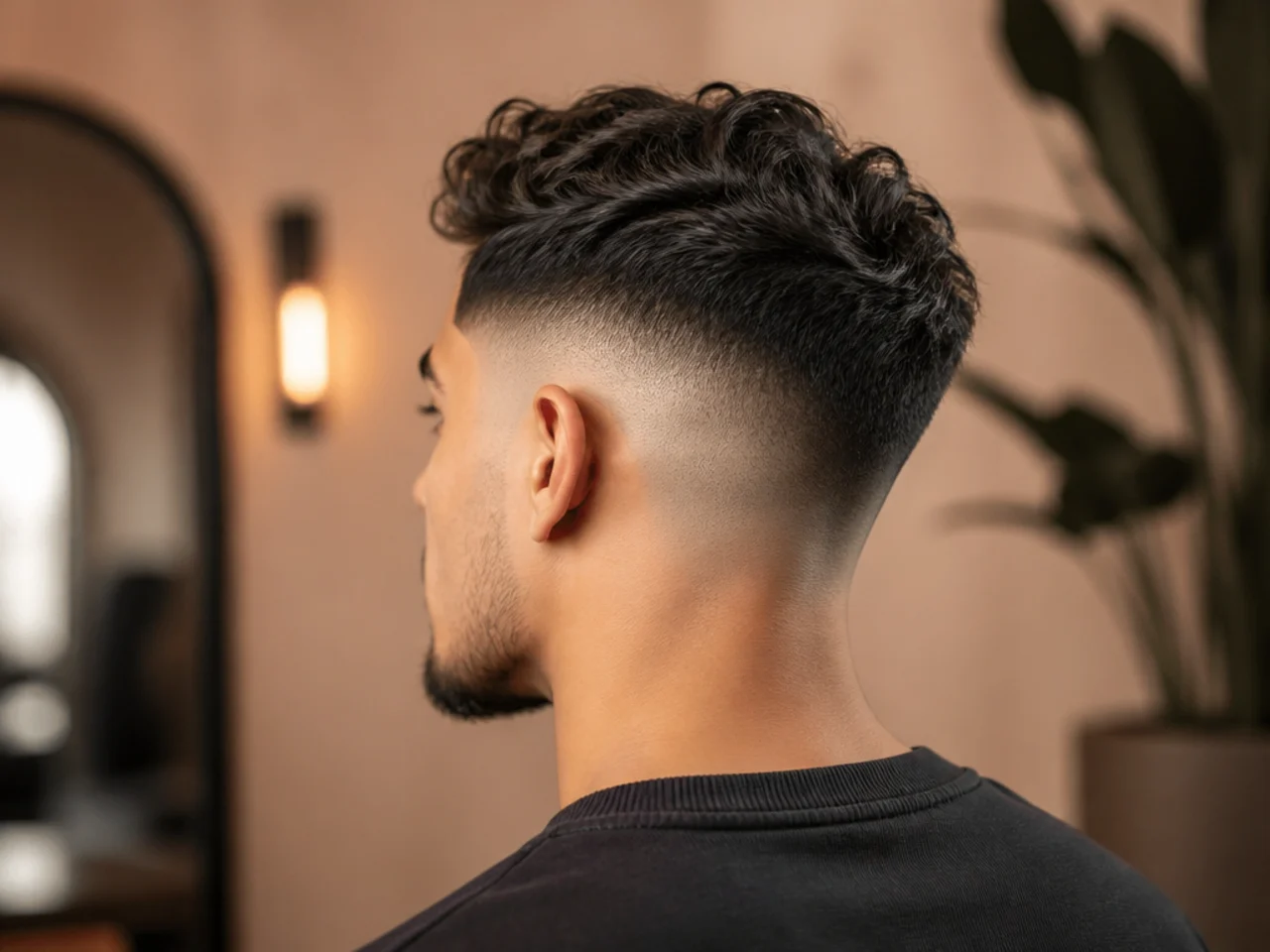
Styling and Upkeep
Moisturise the exposed skin daily. A high fade bares more scalp than any other cut and dry skin shows on it.
Use sunscreen on the sides in summer. That skin has been under hair its whole life.
Keep all product above the ridge. Under it the hair runs between 0 and 3mm, which is too short for clay to find anything to grip.
Rebook by finish. The band of bare scalp is at its widest on day one and closes from there, which gives you one to two weeks of it on a skin finish and three to four on a #1 taper.
Ask for a line-up between full cuts. It restores most of the sharpness for a fraction of the time.
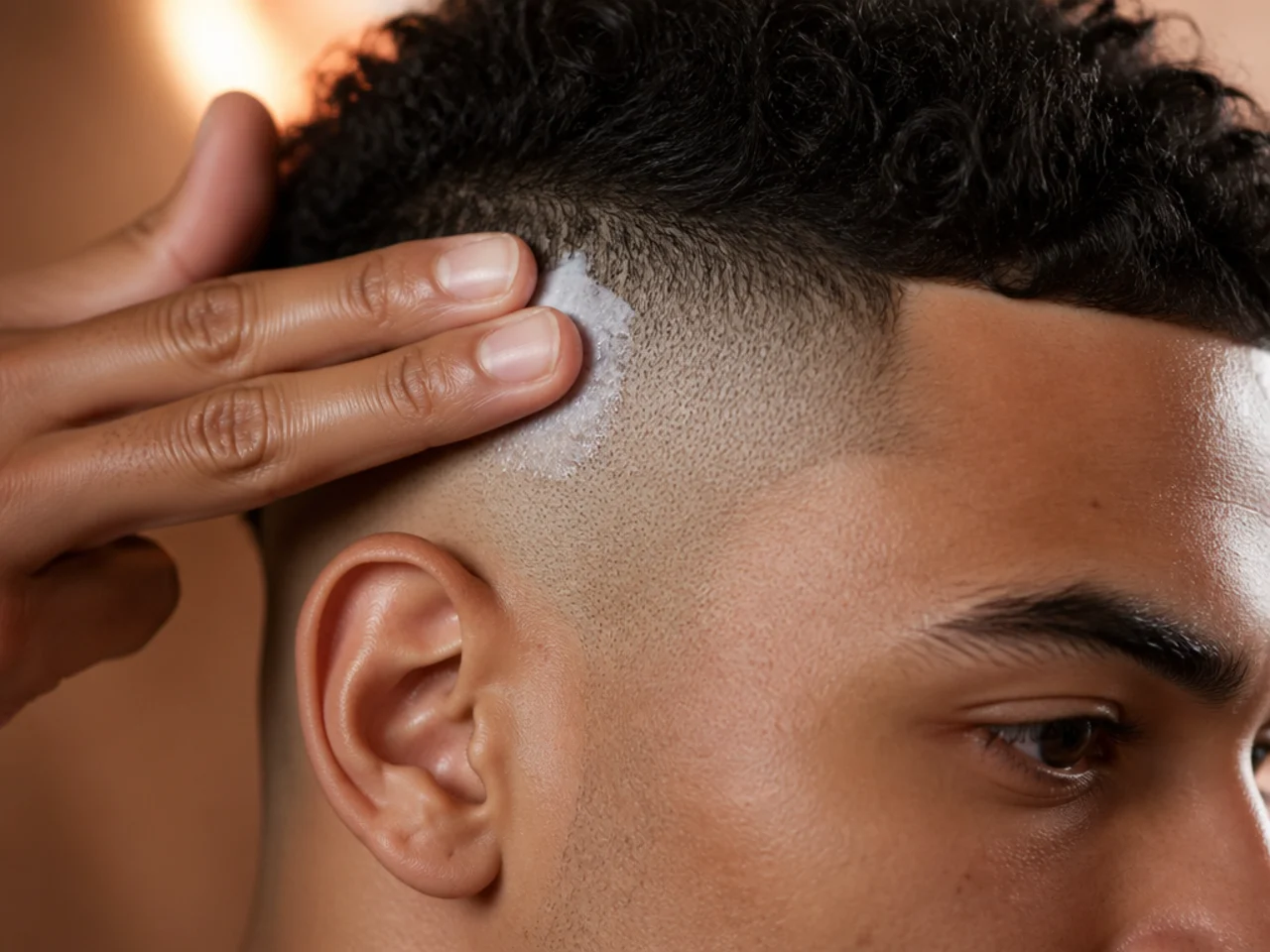
Mistakes to Avoid
Choosing it for a long face. The fade lengthens further and there is no styling fix for that.
Choosing it with a thinning crown. All the remaining density has to sit on top and be convincing.
Going shorter on top to match. Short over high leaves the head reading narrow from every angle.
Ignoring scars or uneven scalp tone. A high fade uncovers skin nobody has seen since childhood.
Rebooking a skin finish at four weeks. You will wear a blurred fade for half of every cycle.
FAQ
Where does a high fade start? At or above the parietal ridge, the widest point of the skull.
Does it suit every face? No, it lengthens, so it works against an already long face.
Why does it need density? Because it exposes the most scalp and leaves all the hair on top.
Final Thoughts
A high fade is a decision about the width of your head, and there is no way to take it back for about six weeks. If your face is round or square and your crown is dense, it is the most effective cut on the menu. If either of those is not true, a mid fade gets you most of the sharpness with none of the risk.
For the height comparison see low vs mid vs high fade, and for the same height cut as an arc see high burst fade. More in Fade Haircuts.