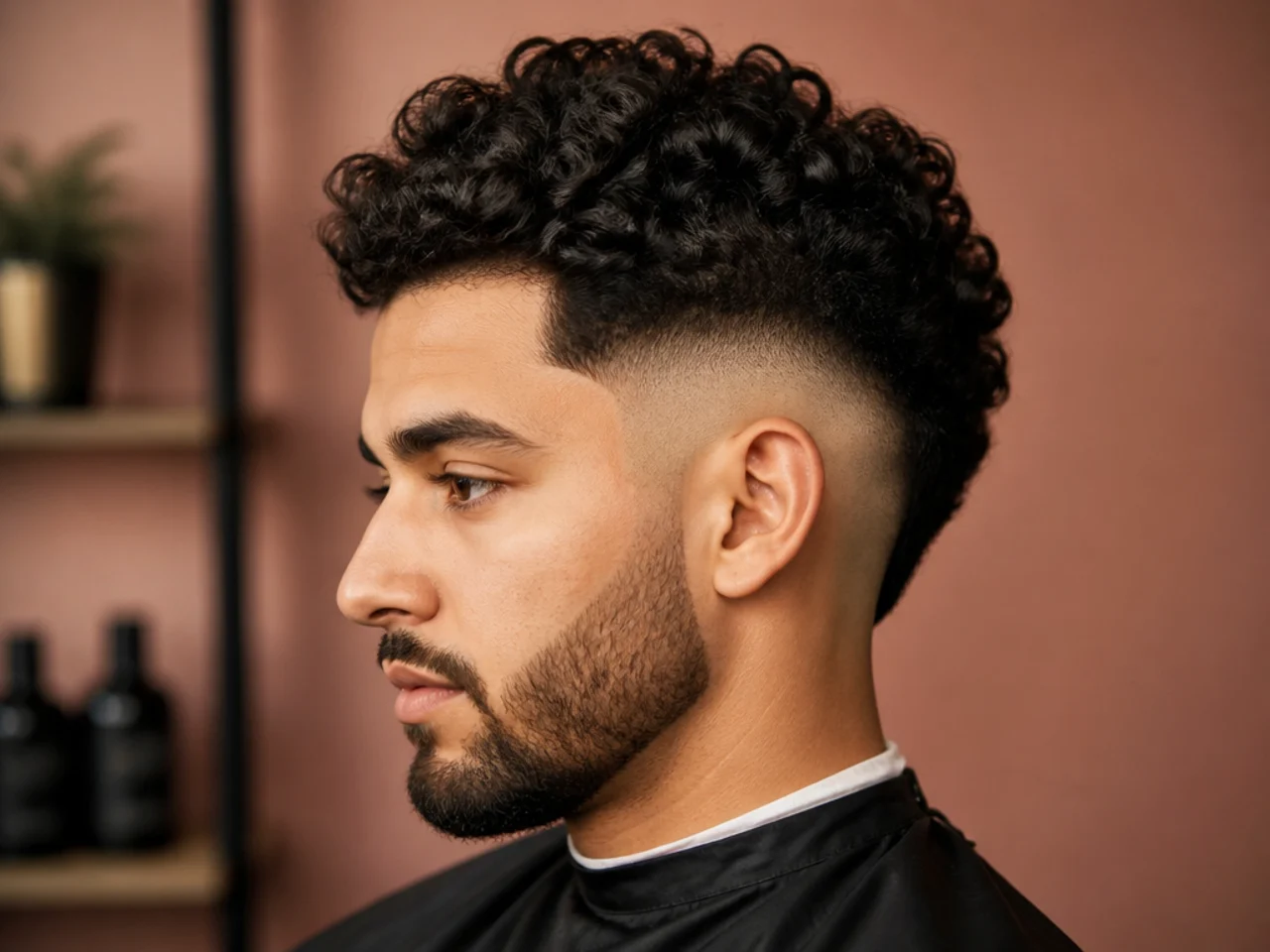
15 High Burst Fade Haircuts That Stand Out
Fifteen high burst fade haircuts with face-shape rules, guard numbers, and the exact words to hand your barber. The arc pushed above the temple for maximum contrast.
In this article · 28
- What Is a High Burst Fade?
- How to Choose Your High Burst Fade
- Popular High Burst Fade Variations
- Classic High Burst Fade
- High Burst Fade Mullet
- High Burst Fade Mohawk
- High Burst Fade Skin
- High Burst Fade Buzz Cut
- High Burst Fade with Design
- High Burst Fade Edgar
- High Burst Fade with Textured Fringe
- High Burst Fade Comma Haircut
- High Burst Fade Broccoli Top
- High Burst Fade with Curly Top
- High Burst Fade for Black Men
- High Burst Fade with Beard
- High Burst Fade Faux Hawk
- High Burst Fade Two Block
- How to Ask Your Barber for a High Burst Fade
- Styling and Maintenance
- FAQ
- What is a high burst fade haircut?
- Is the high burst fade office-friendly?
- How often should you get a high burst fade retouched?
- Can I get a high burst fade with a mullet?
- High burst fade vs high taper fade — what's the difference?
- Does a high burst fade work on straight hair?
- Is the high burst fade a good kids' cut?
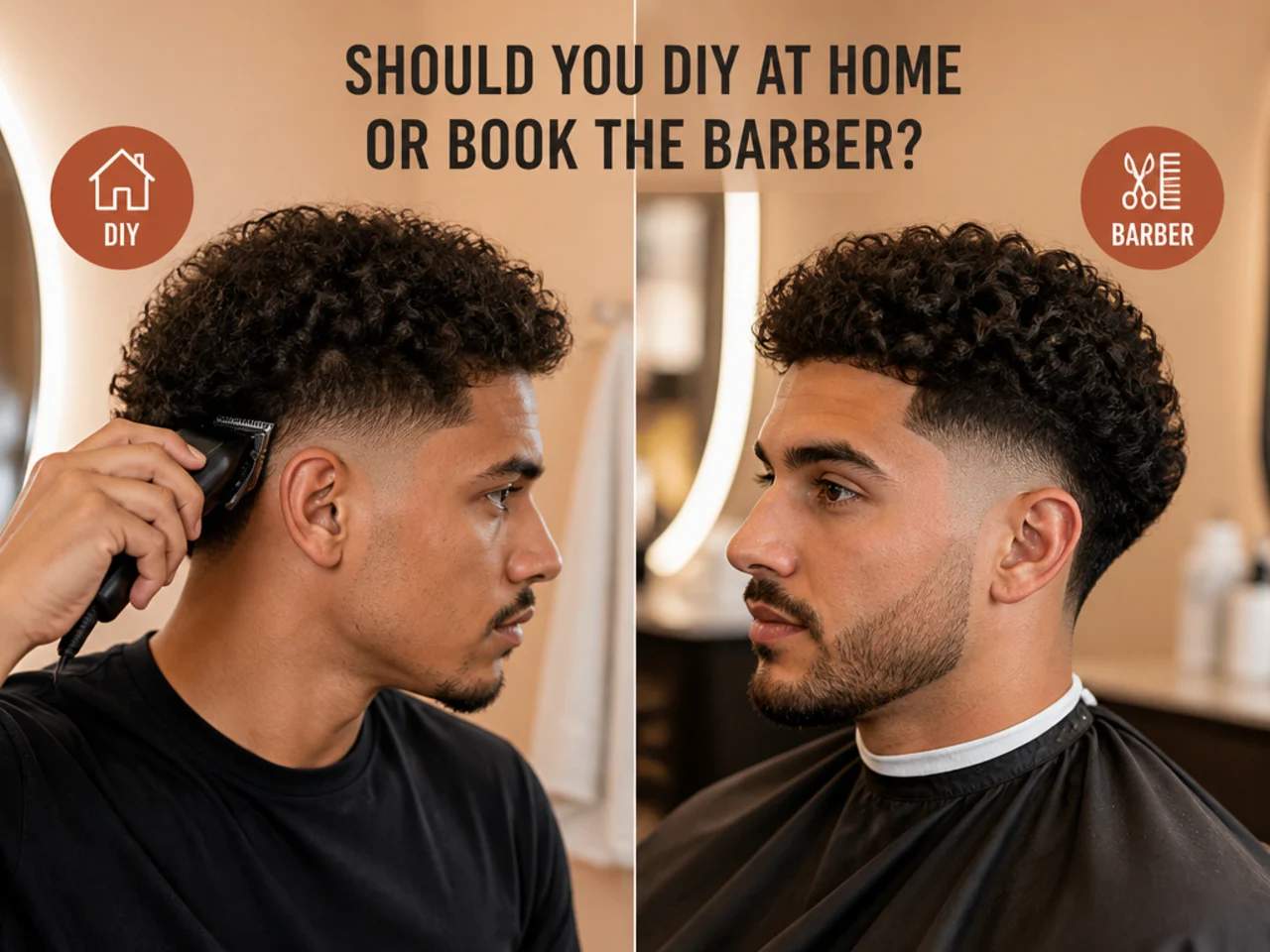
The high burst fade is the burst family turned up loud. The arc curves around the ear like every burst does, but it doesn't stop at the temple — it climbs past it, opening up the whole side of the head and giving the top style a tall, exposed stage to sit on. Below are fifteen high burst variations, each paired with the top that flatters it, plus the guard numbers and the exact words to hand your barber so you leave with the version you had in mind.
What Is a High Burst Fade?
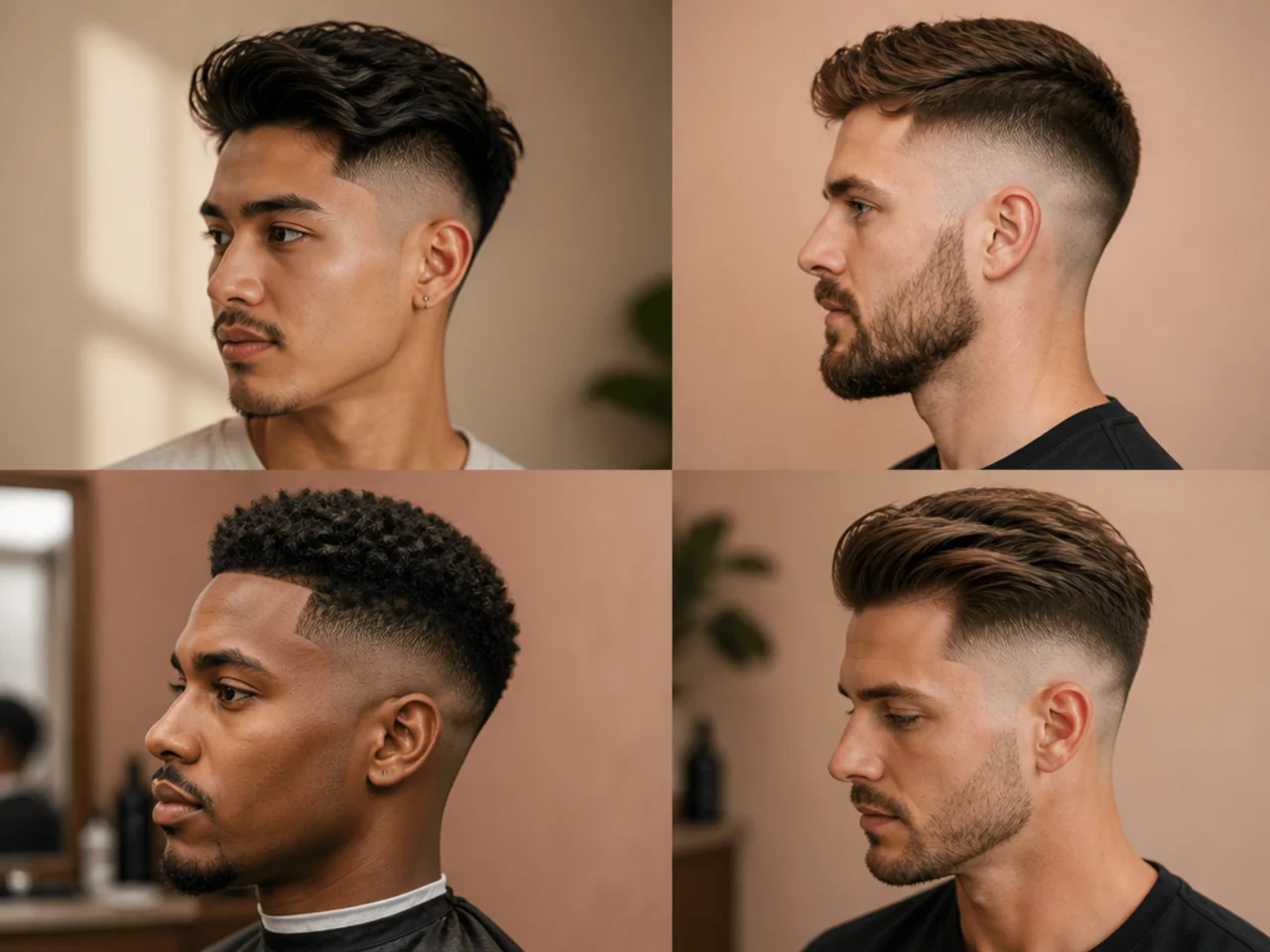
A high burst fade is a burst fade haircut with the arc pushed to the top of the side of the head. The shortest point still sits directly behind the ear, and length still grows outward in every direction. What changes is where the arc peaks: at or above the parietal ridge — the natural bend of the skull that sits above the temple.
That high peak is what separates it from its shorter siblings. Higher than a mid burst fade, which tops out at the temple line. Much higher than a low burst fade, which hugs the earlobe and dies at the nape. On a high burst, the transition from skin to length happens up near the widest bend of the skull, so more scalp is exposed and the top has to earn its keep.
Two things stay constant across every burst — the curve wraps the ear, and length grows away from the arc in a smooth gradient. On a high burst, the gradient runs longer and the top style has to carry more visual weight. Get those two rules right and pair the top to the drama below, and the shape does the rest.
How to Choose Your High Burst Fade
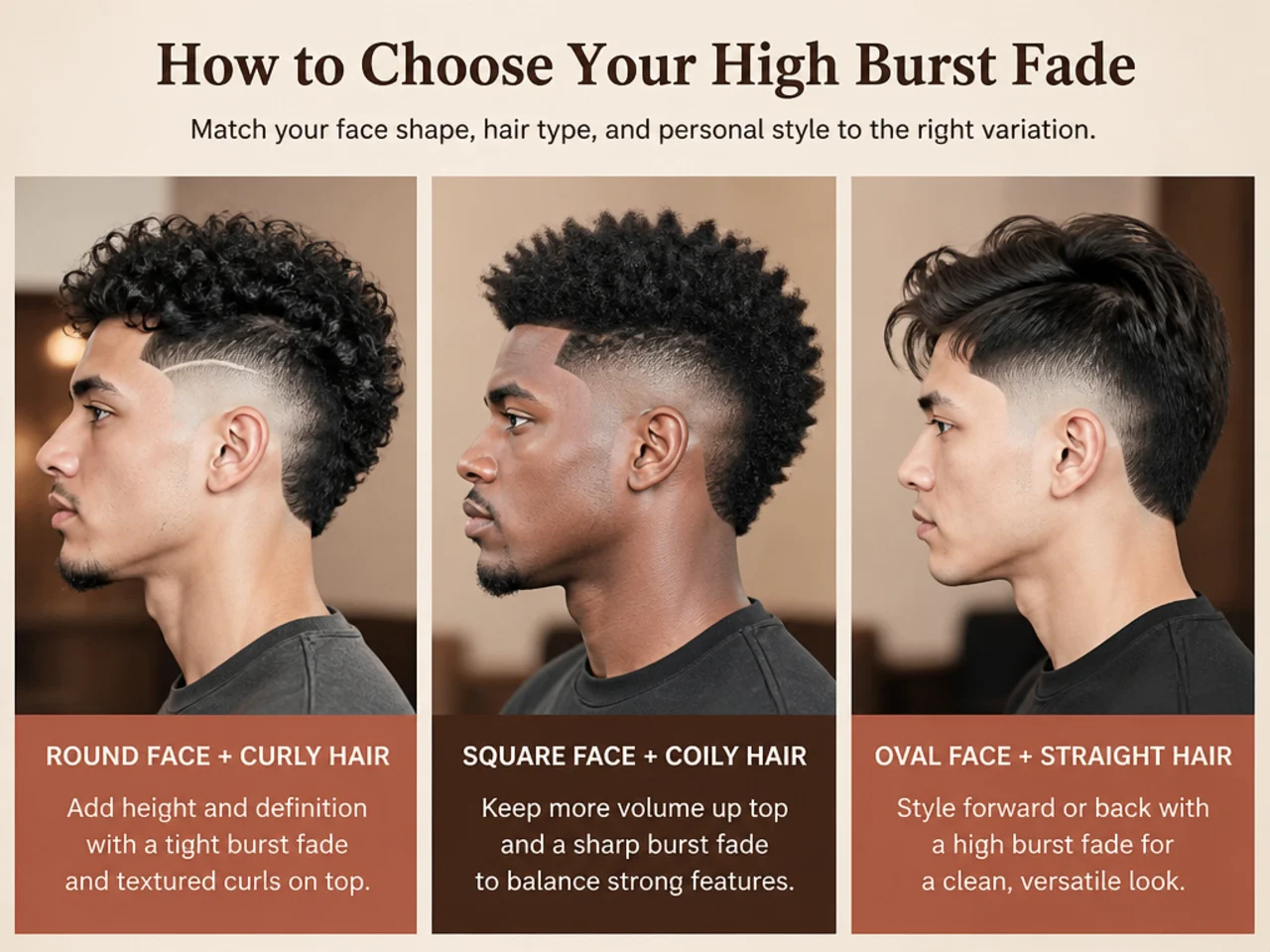
Face shape sets the ceiling. Oval, square, and diamond faces are the easiest fits — strong jaws and defined cheekbones balance the wide exposed sides without looking top-heavy. Round faces work with a high burst only if you commit to real height on top; without that vertical lift, the arc broadens the middle of the head instead of narrowing it. Long faces should think twice. If you love the look, keep the top under two inches and centered rather than swept up.
Hair type matters just as much. Curly and coily hair is the high burst's dream partner — the wide arc gives coils a defined stage, and the burst's curve mirrors the natural pattern. Wavy and straight hair need a top with real body — three inches minimum — or the exposed sides will make the head look narrow. Fine hair struggles at a high burst; the scalp shows through more than you want. Ask for a 1 or 2 at the shortest instead of skin.
Then your appetite for upkeep. A high burst blurs faster than any other burst position because more of the transition is on display. Two weeks between visits is the sweet spot, and by week three you'll see the arc soften. If monthly is your ceiling, drop to a mid burst.
Popular High Burst Fade Variations
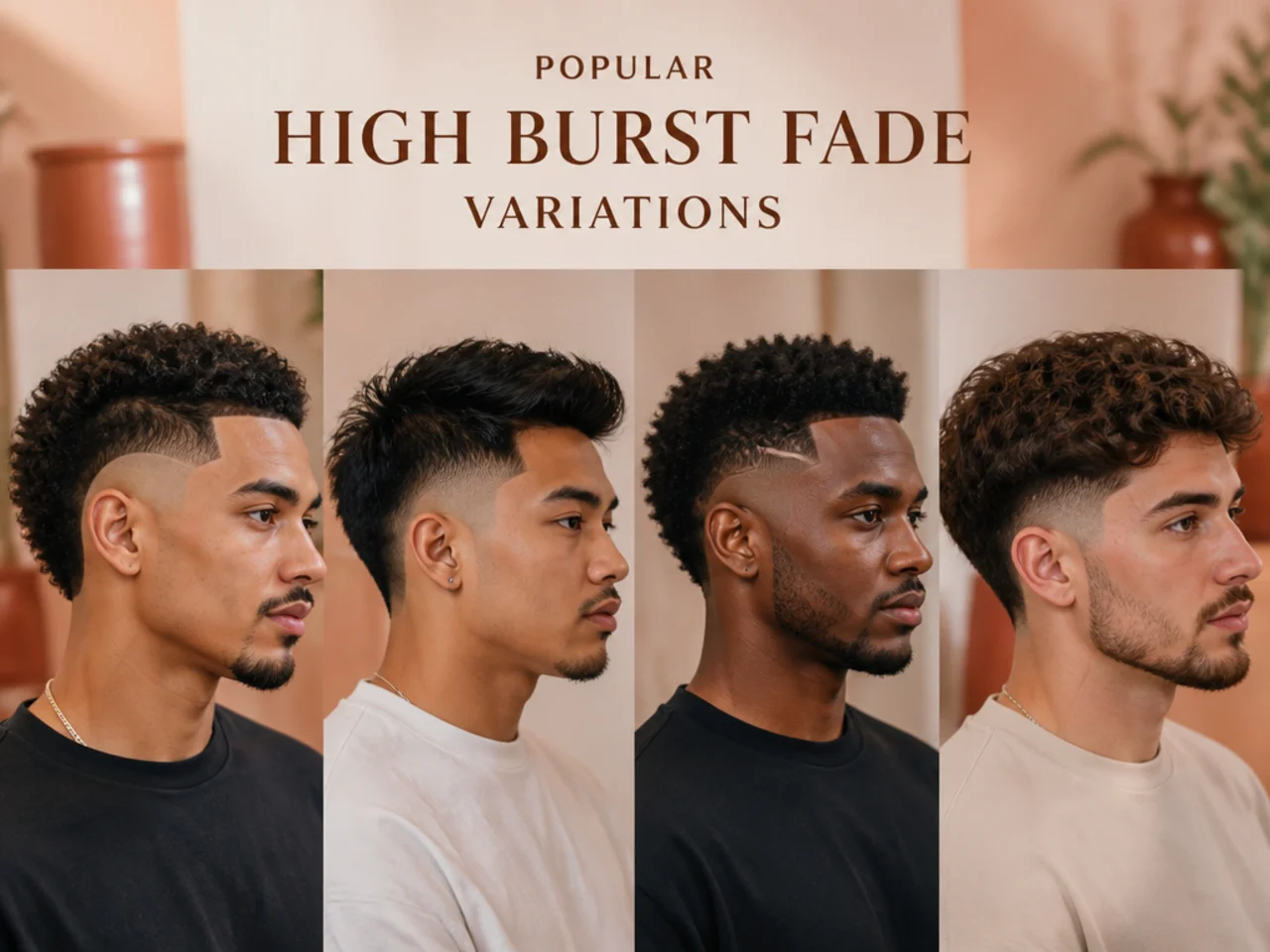
Each variation below covers what makes it different, who it suits, the exact words to say at the chair, and one styling move worth stealing.
Classic High Burst Fade
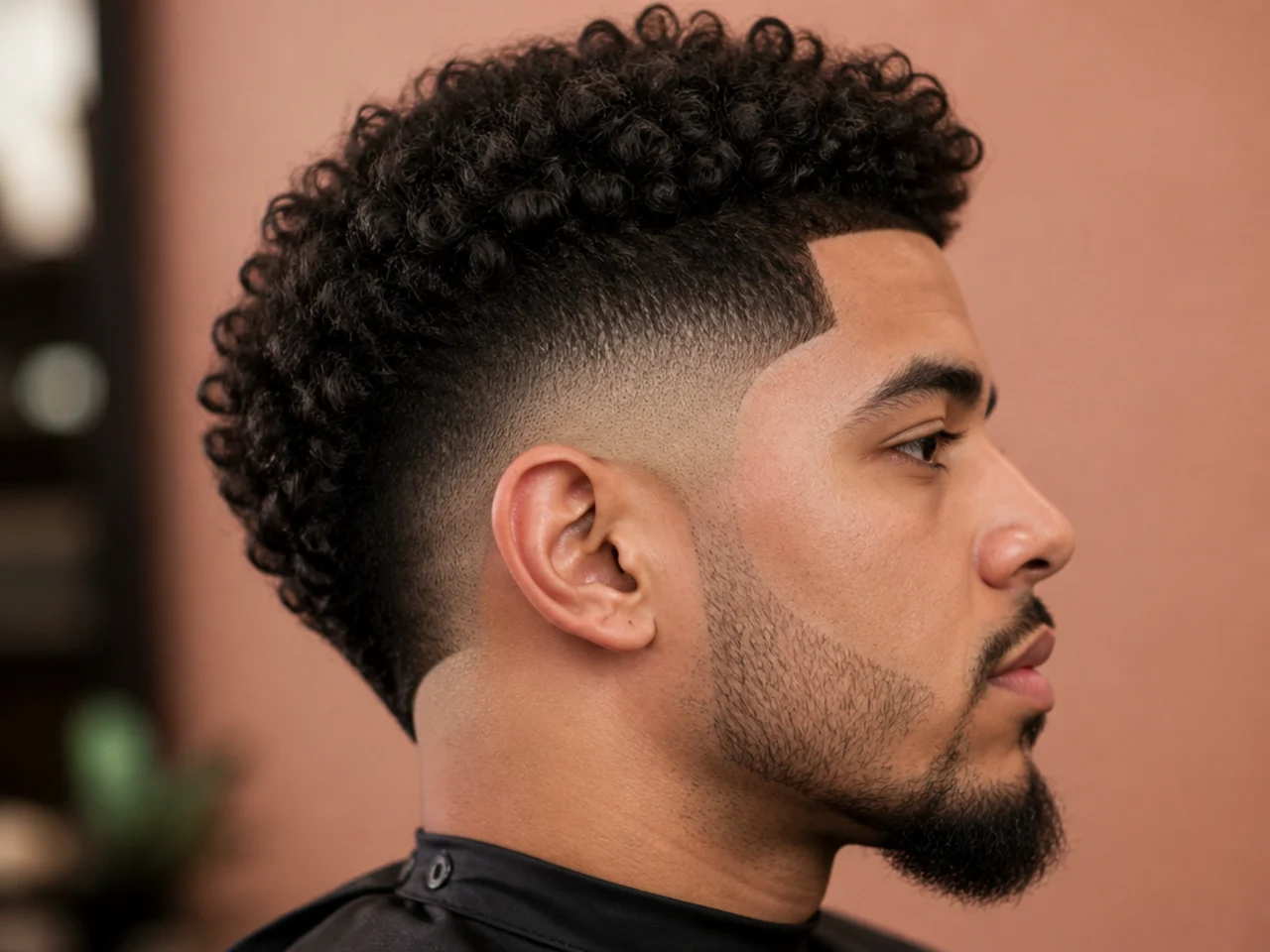
The high burst in its purest form. The arc starts just above the sideburn, curves cleanly around the ear, climbs past the temple to the parietal ridge, and dies out at the nape. No design, no extras — just the shape at full volume. Suits oval and square faces best; other face shapes should audit the top length before committing. Ask for "a high burst fade, 1 at the shortest, keep three inches on top with a soft blend into the burst." Style with a matte clay through damp hair and finger the front forward for movement. This is the reference every other variation borrows from.
High Burst Fade Mullet
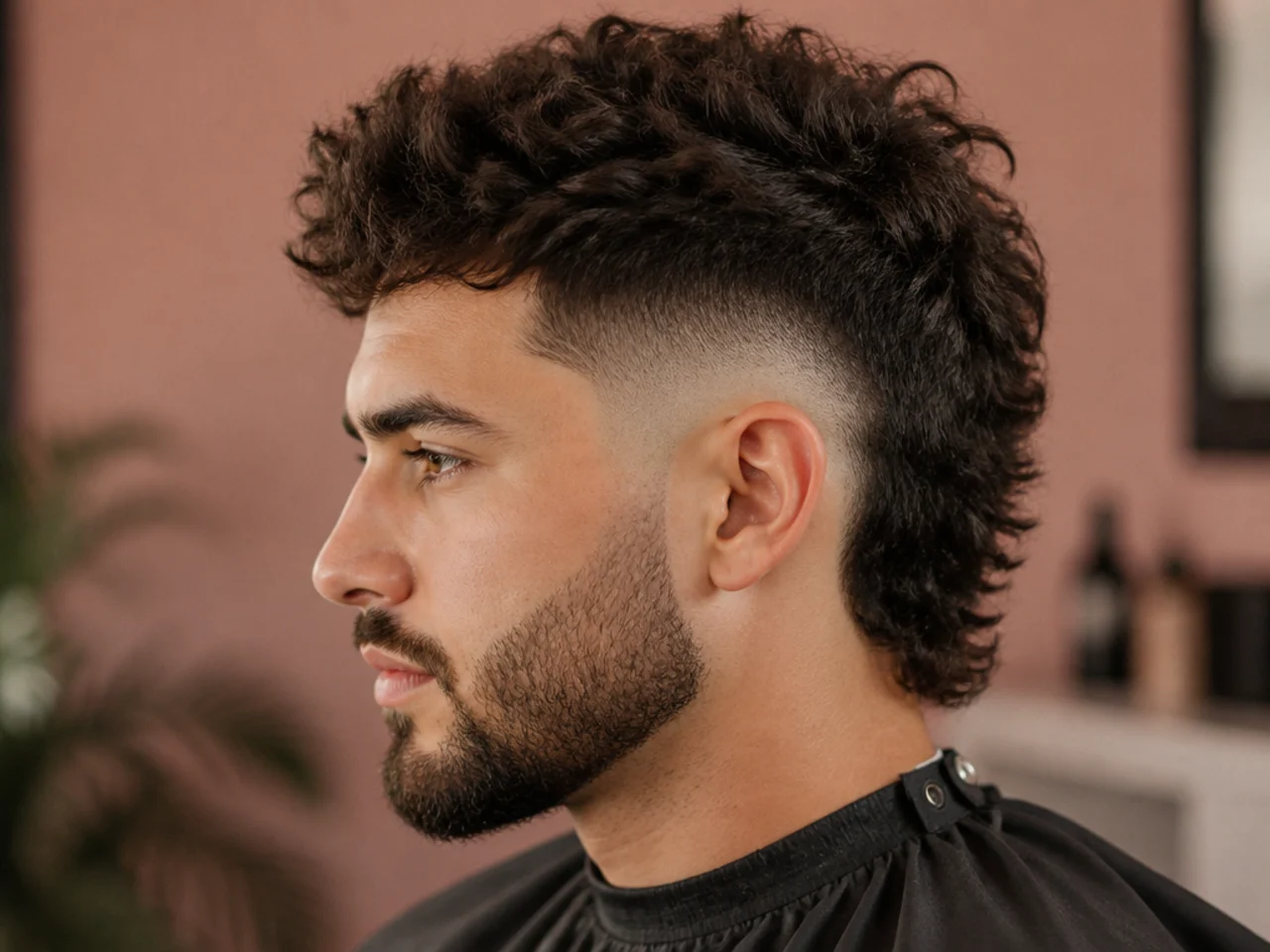
The burst fade mullet at high position is the loudest silhouette in the family. The tall arc erases the side entirely, so the length past the collar reads as pure intention. Best on oval, diamond, and heart faces where extra weight at the back balances a narrower jaw. Ask for "a high burst to skin, mullet length past the collar with feathered ends, disconnected feel where the burst meets the mullet." Blow-dry the mullet back with your fingers, then finish with a matte clay for grip. If you're new to the mullet, our modern mullet guide covers the pairings before you commit.
High Burst Fade Mohawk
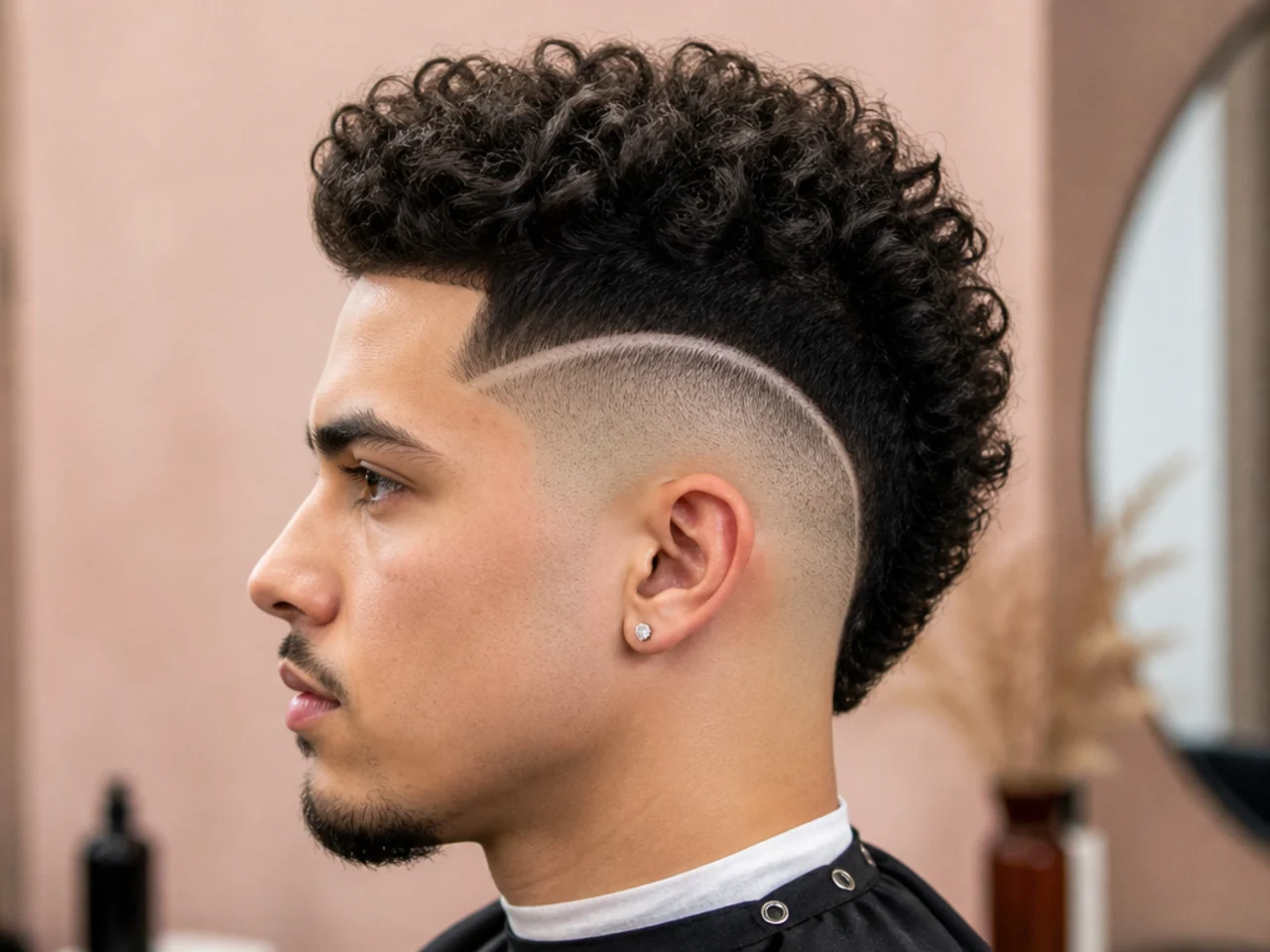
The burst fade mohawk pairing turns the high burst into a modern hawk. Both sides fade to skin above the ear, both arcs climb toward the crown, and a strip of length holds the center. Because the burst climbs high, this reads more punk than faux-hawk. Best on oval, diamond, and square faces where a vertical center line already suits the bone structure. Ask for "double high bursts to skin, three-inch mohawk strip left on top, connected at the crown, not shaved." Blow-dry the strip upward with your fingers, then hold with a strong matte paste. Commit to two-week upkeep or the shape softens fast.
High Burst Fade Skin
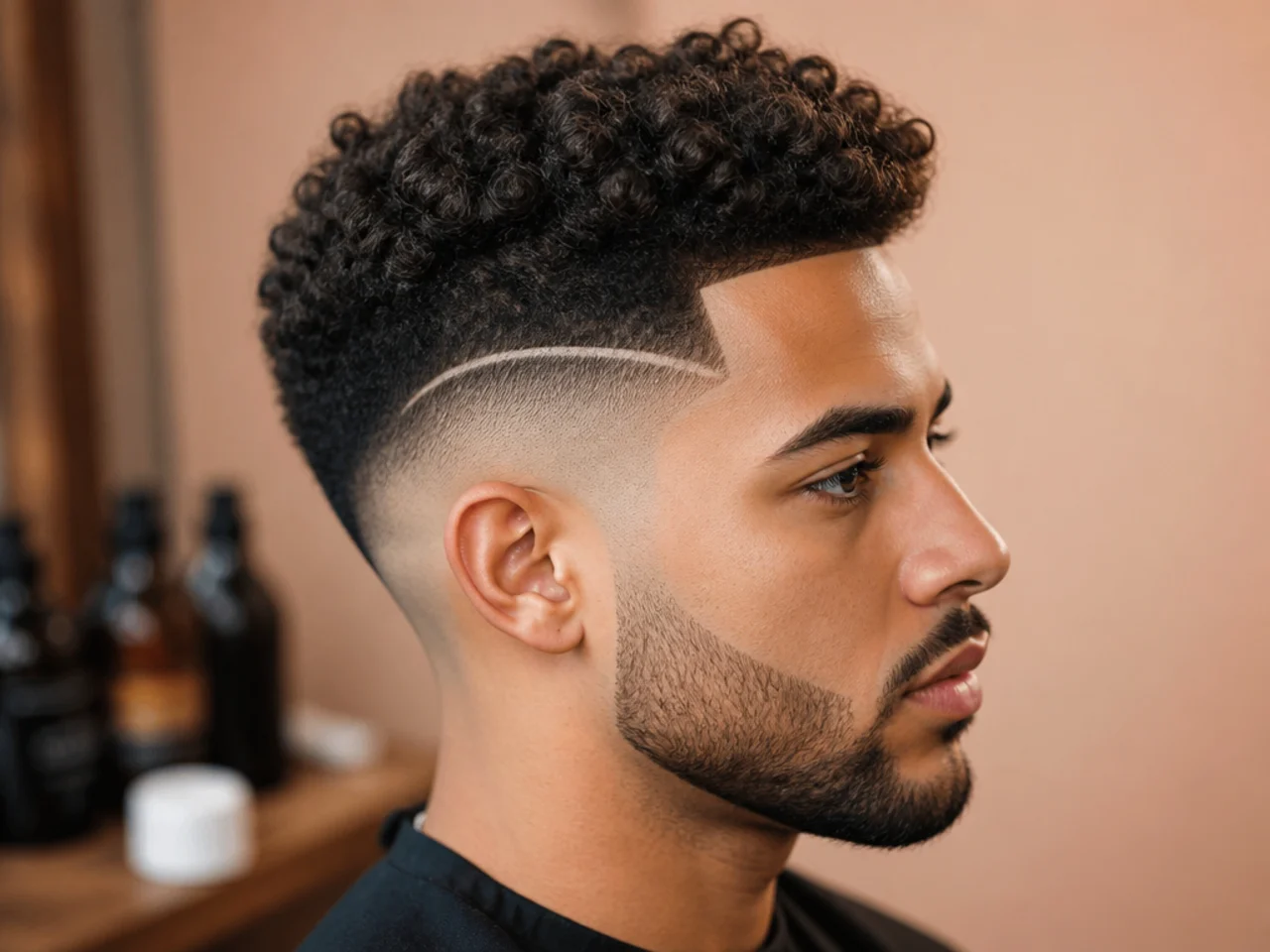
Taking a high burst all the way to bald skin is the sharpest cut on this list. The arc reads as a shaved line more than a fade — a clean, deliberate curve running from behind the ear up past the temple. Best for oval, square, and diamond faces with clean skin at the sides. Ask for "a high burst to skin around the ear, blade-on-scalp at the shortest, blended into a 2 above the parietal ridge, three inches on top." Book with a barber who can hold a straight line — the higher the burst, the more the transition matters. This isn't a first-time cut; ease in with a 1 first.
High Burst Fade Buzz Cut
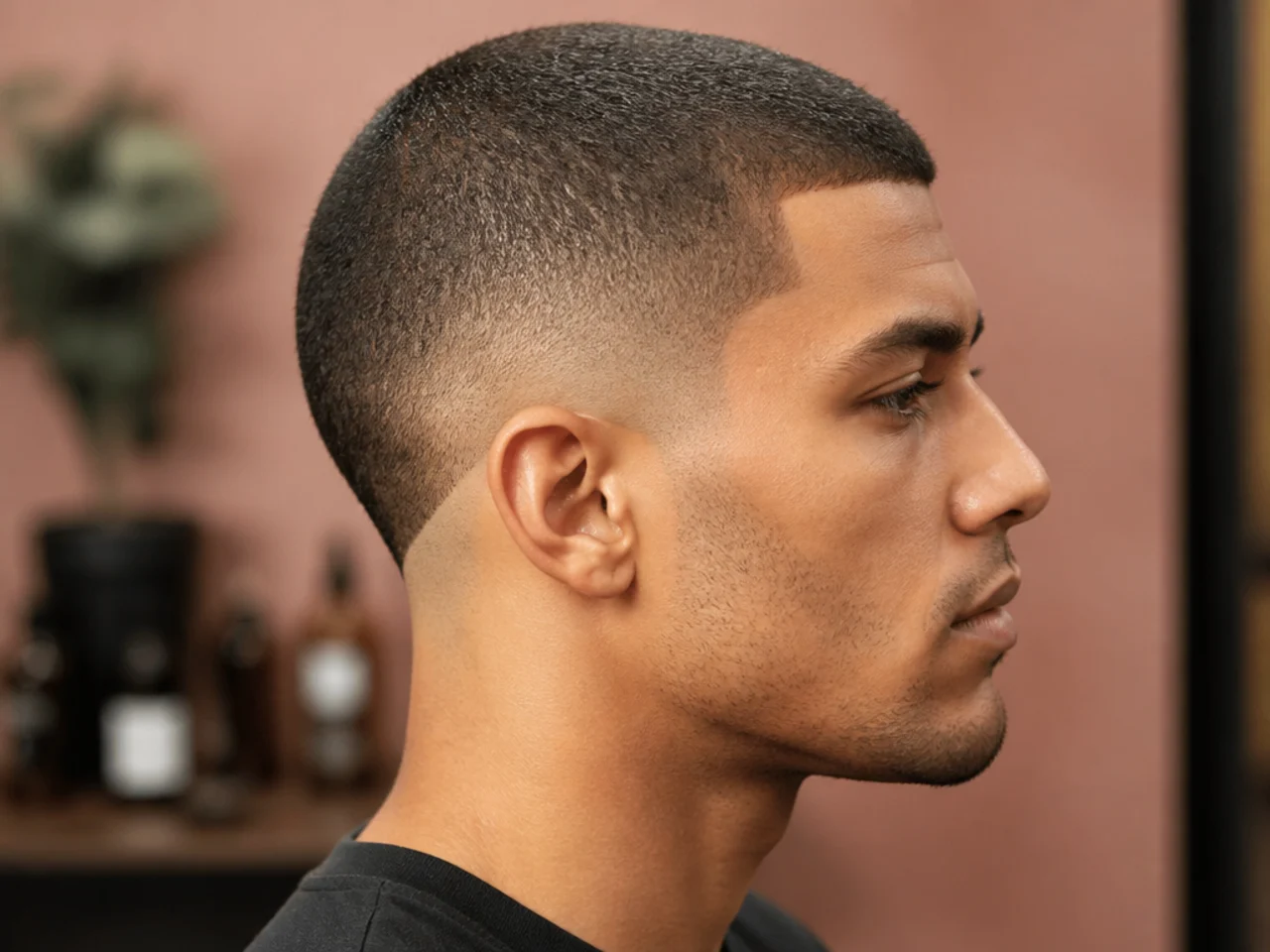
A buzz cut with a high burst is a lesson in contrast. The buzz keeps the top uniform, and the high arc introduces shape without adding any styling time. Total morning effort: rinse and go. Suits oval, square, and diamond faces where a short crop already flatters the bones. Ask for "a high burst to skin, 3 guard across the top, blended smoothly through the crown." Rub a light styling cream through damp hair with your palms and you're done. It's the highest-drama variation you can wear without ever picking up a comb.
High Burst Fade with Design
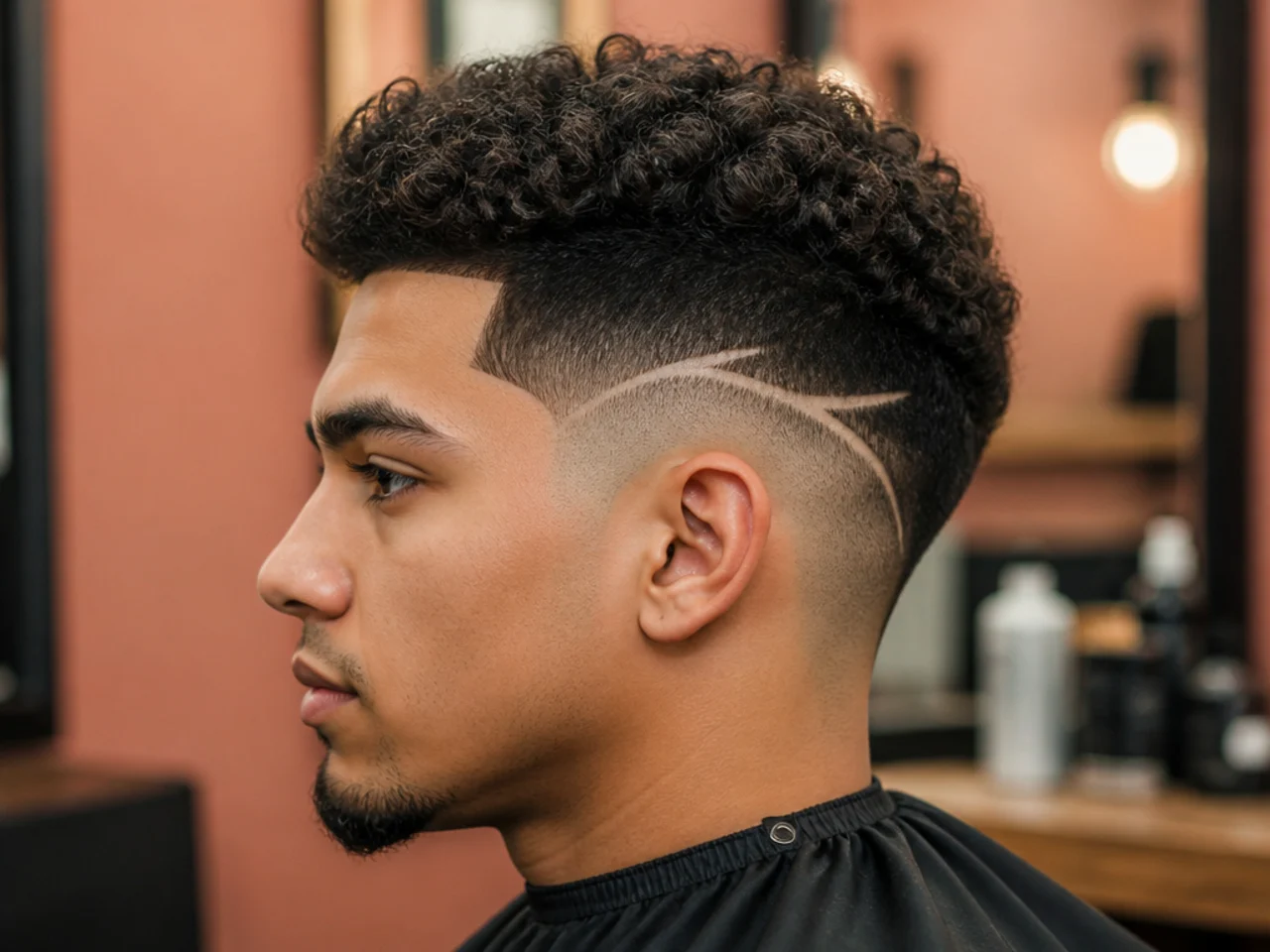
The high burst gives designs the most real estate of any burst position. A shaved design — a hard part, a lightning bolt, a set of parallel lines — cuts through the exposed skin cleanly, and the arc frames the artwork instead of competing with it. Suits oval, diamond, and square faces where bold structure carries the extra detail. Ask for "a high burst to skin with two parallel lines at the temple, three inches on top, no design through the burst itself." Agree on the design placement before the barber picks up the trimmer. Book with a barber who has a design portfolio — this is the wrong cut for their first attempt.
High Burst Fade Edgar
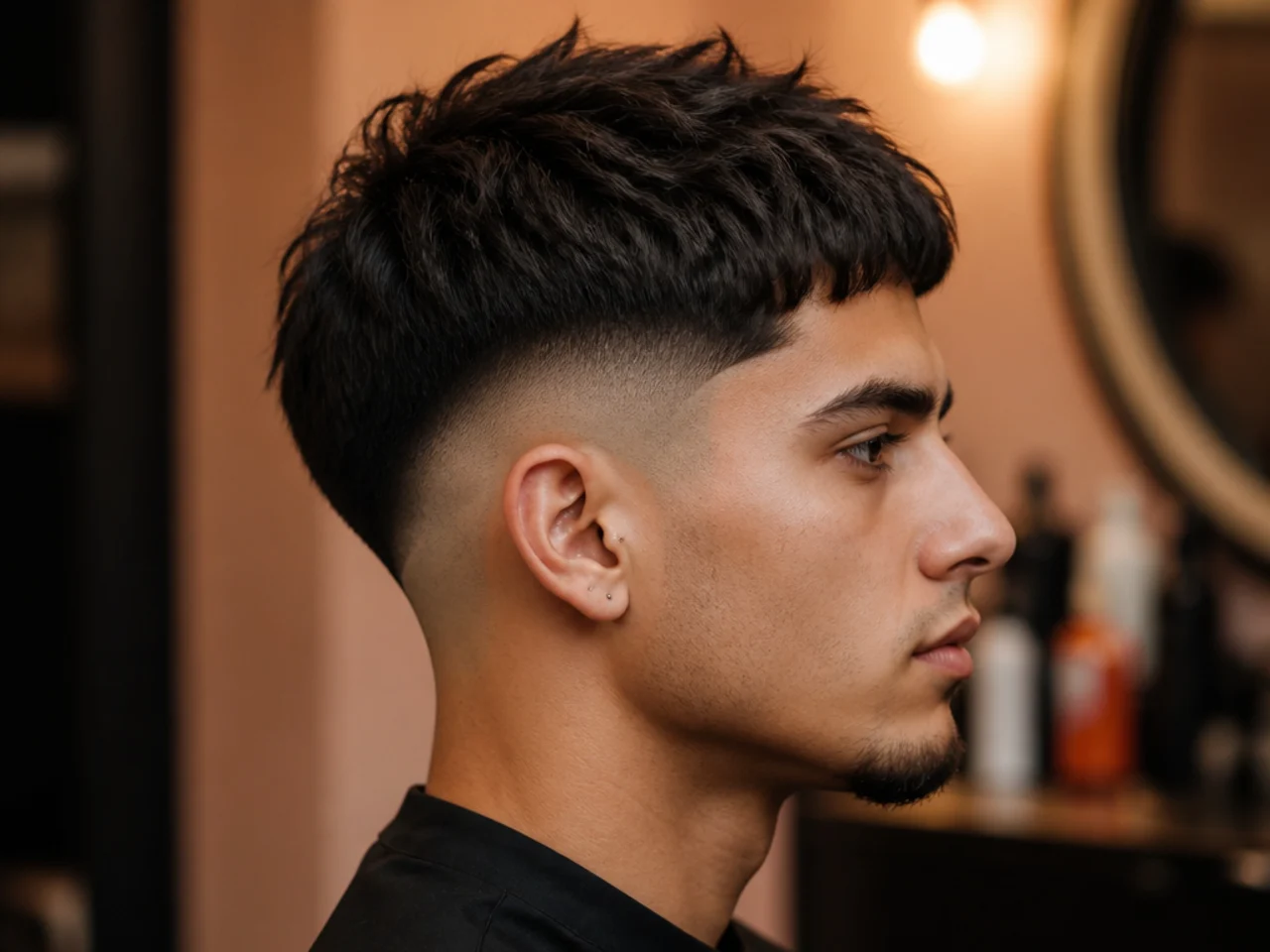
The Edgar cut drops a flat, blunt fringe across the forehead, and the high burst pulls all the visual weight onto that fringe by clearing everything below and behind it. The contrast between razor-straight fringe and curved arc is the whole play. Best for round and oval faces where the flat fringe adds structure. Ask for "a high burst to a 1, two-inch Edgar top with the fringe cut blunt across the forehead, straight line no feathering." Style with a light styling cream after a quick blow-dry forward. Bring a photo of the fringe length you want — Edgar length is personal.
High Burst Fade with Textured Fringe
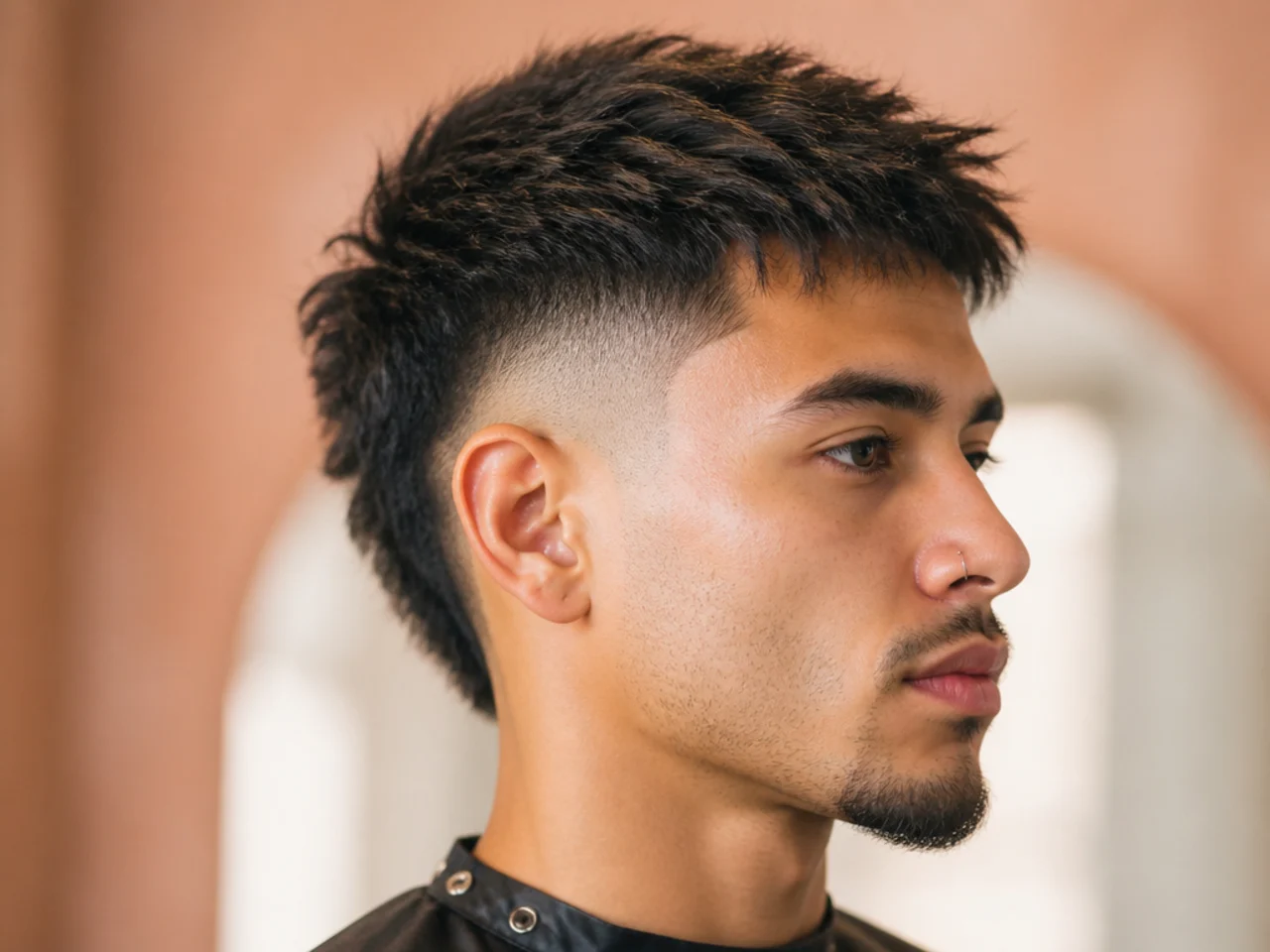
A choppy textured fringe forward over the brow with a high burst clearing everything below. The messy top and razor-clean side create tension — messy hair, sharp side, no in-between. Suits oval, round, and heart faces where a forward fringe softens the top of the face. Ask for "a high burst to a 1, two to three inches on top, point-cut through the fringe for pieces." Blow-dry forward with your fingers, then work a matte clay through the dry hair for grip and definition. If you want more fringe options, browse our textured haircuts for men collection.
High Burst Fade Comma Haircut
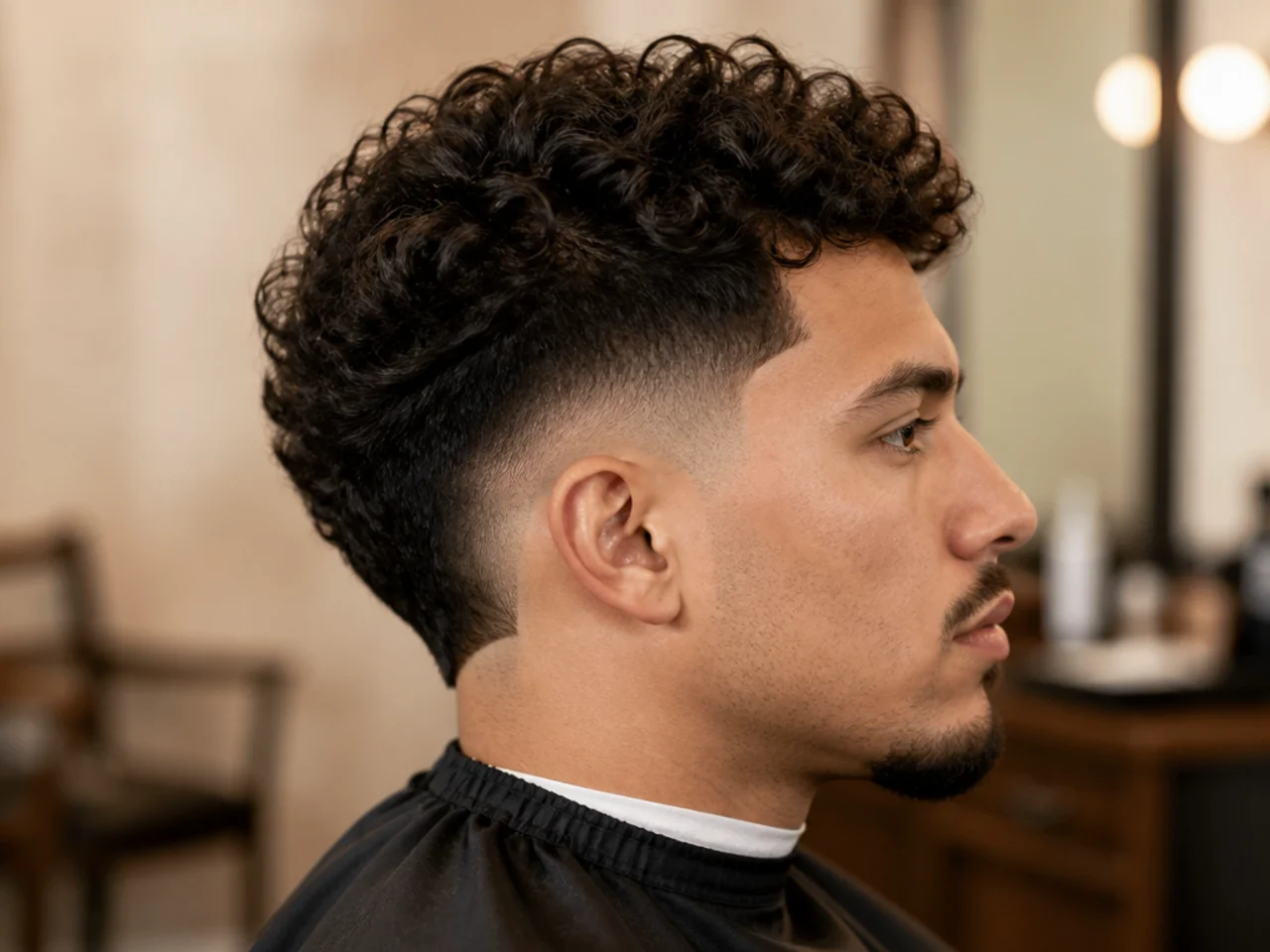
The comma haircut drops two curved comma bangs over the forehead, and the high burst throws the softness of those commas into stark relief. This is the K-drama silhouette pushed toward a bolder edit. Best for oval, heart, and long faces where the soft fringe balances a broad forehead. Ask for "a high burst to a 1, four inches through the fringe, blow-dried inward to form the comma shape." Round-brush the front pieces inward until they curl, then set with a light styling cream. Skip anything heavy — the commas need air, not weight.
High Burst Fade Broccoli Top
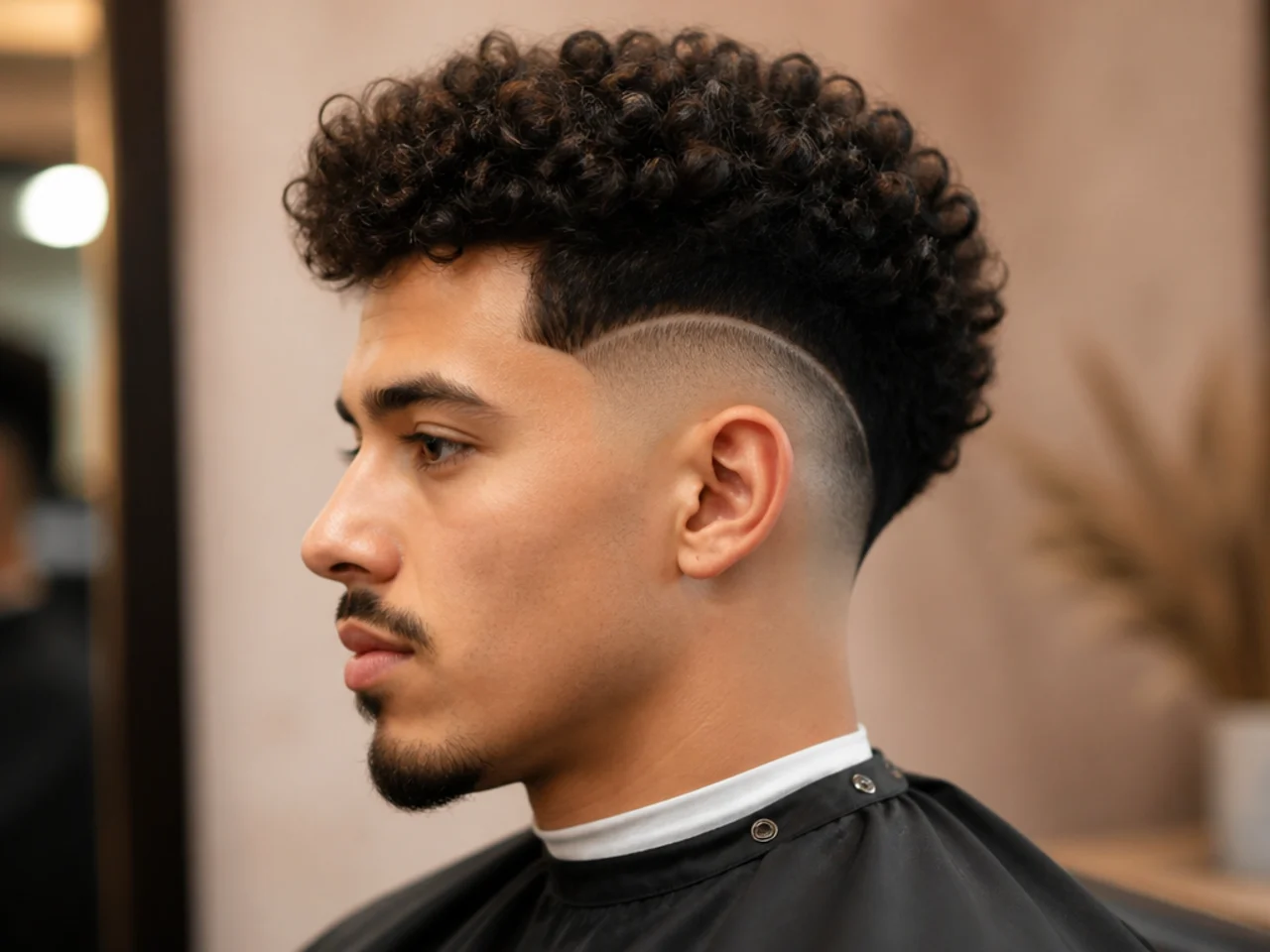
The broccoli haircut is the fluffy curly fringe that carries most of the shape, and the high burst turns it into a tower. The wide arc gives the curls a stage that emphasizes the volume without letting them spread sideways. Best on naturally curly hair; perms need weekly upkeep. Suits round and oval faces where fluff up top balances the exposed sides. Ask for "a high burst to a 1, keep four to five inches of curl on top, scissor work only through the crown." Curl cream on damp hair, diffuse on low, then pick out the top for volume before you head out.
High Burst Fade with Curly Top
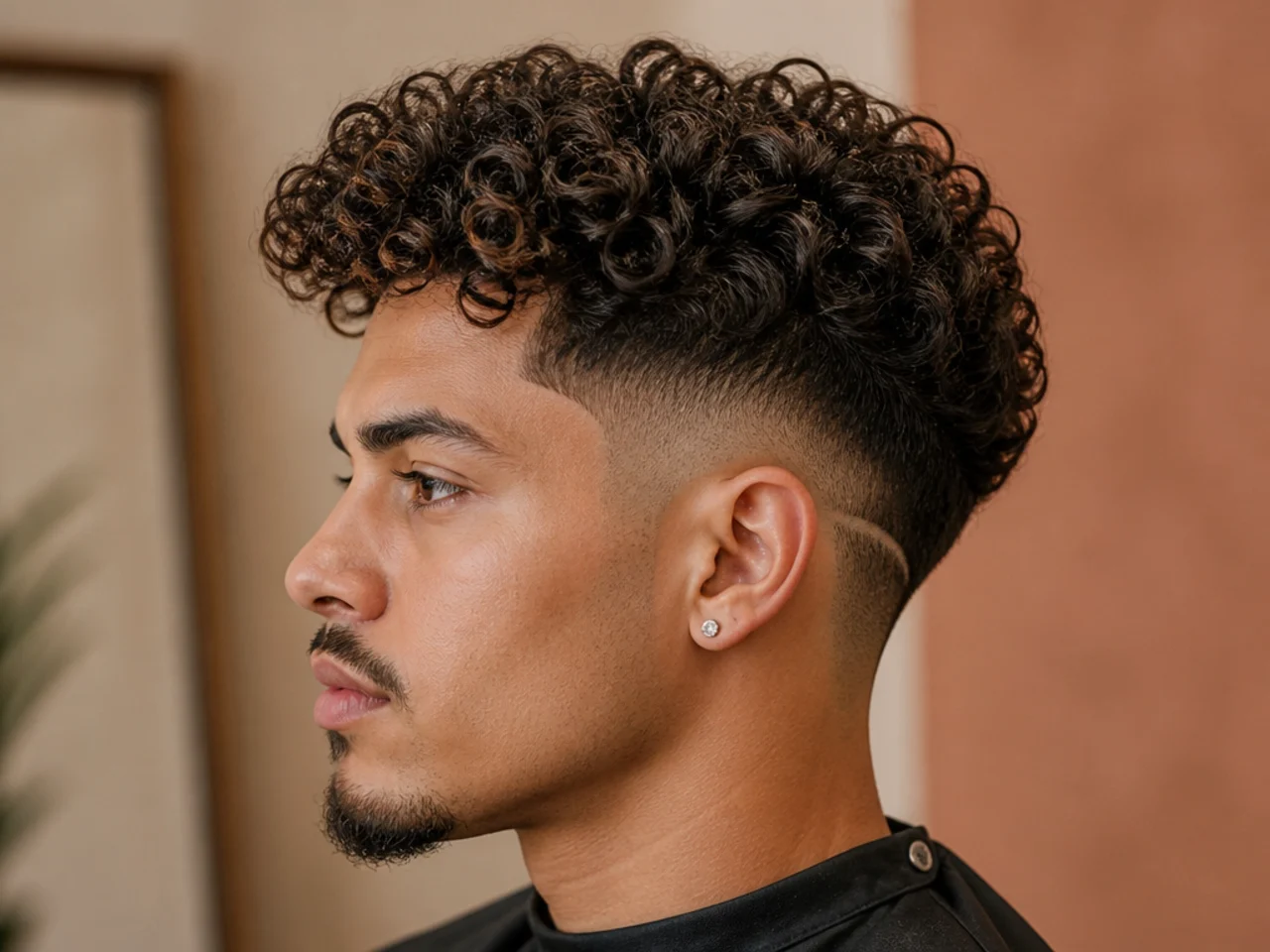
Curls and the high burst share a shape — both are built on arcs. The wide semicircle at the ear echoes the coil pattern above, giving the two the same visual language without competing. Best for heart, round, and diamond faces where volume up top balances a wider middle. Ask for "a high burst to skin, scissor-cut top with the curl pattern preserved, no thinning shears through the crown." Diffuse damp curls on low heat, then shape with a curl cream. If you want more curl-forward pairings, our curly hairstyles for men guide is the next click.
High Burst Fade for Black Men
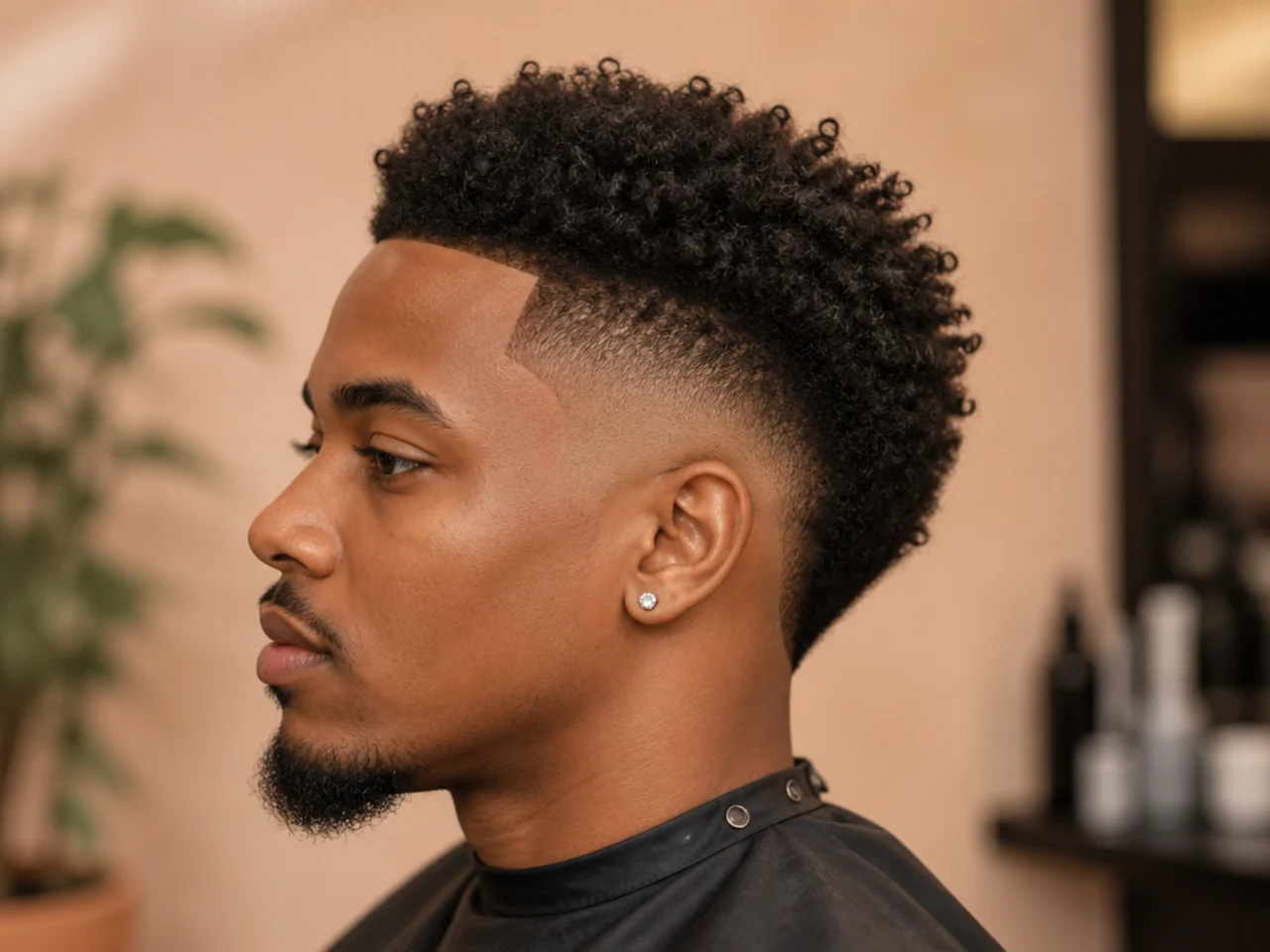
On coily hair, the high burst is one of the most-requested cuts on the fade haircuts for black men side of the shop. The wide arc gives the coils a proper stage, and the clean skin reads sharp against darker tones. Suits oval, round, and diamond faces. Ask for "a high burst to skin around the ear, scissor-cut top so the coils keep their spring, no comb through the crown." Style with a moisturizing pomade or texturizing cream and finger-coil any pieces that need extra definition. Book every two weeks — tight textures show growth faster.
High Burst Fade with Beard
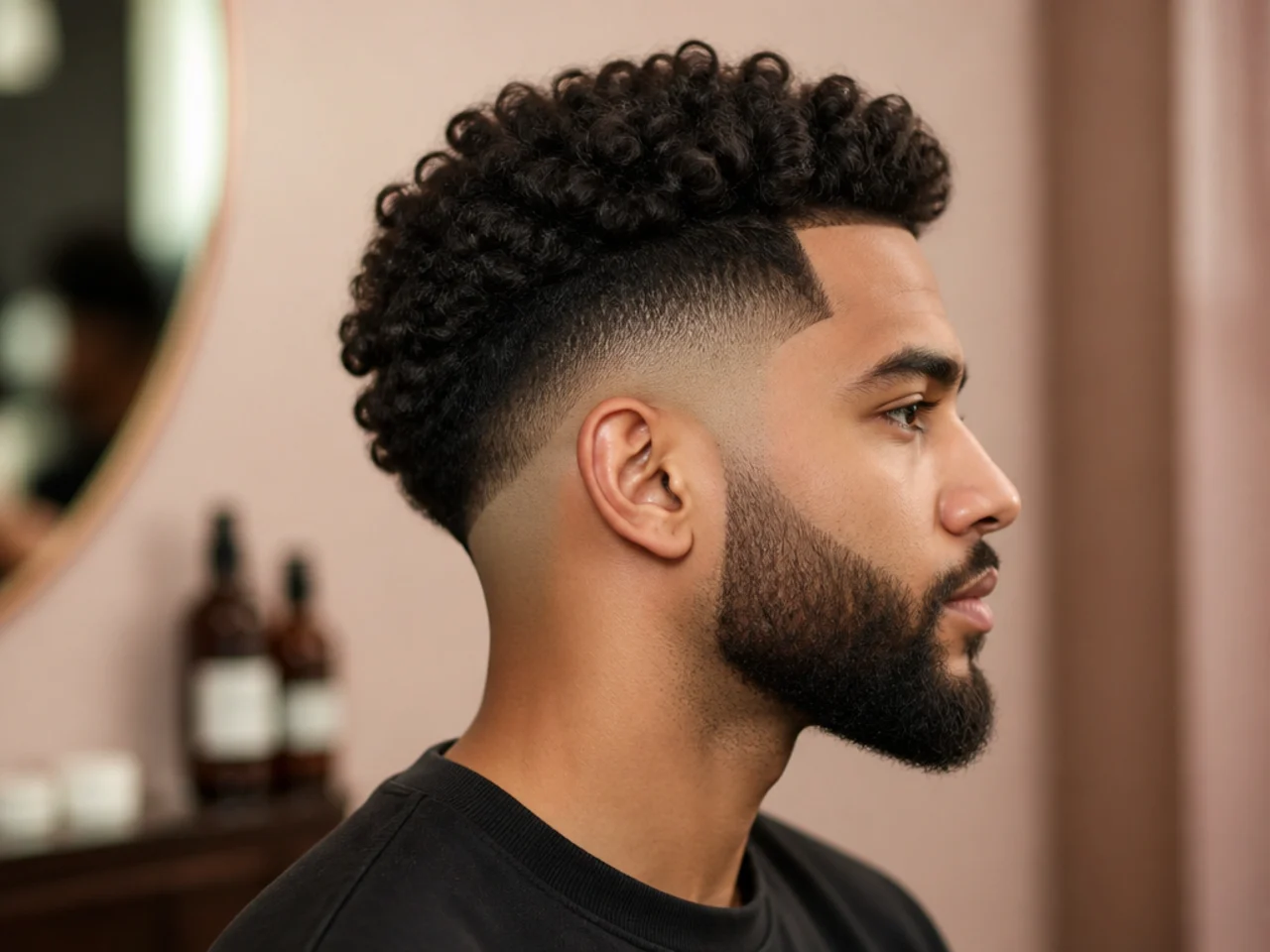
Connecting a high burst to a beard tests every skill your barber has. The arc curves around the ear and dies out where the beard picks up the line — but because the burst climbs high, the beard has to be full enough to balance the exposed side above. Ask for "a high burst to skin, sideburn razor-blended into a full beard, connected all the way through." Best on diamond, oval, and square faces where a broader jaw already suits a thick beard. Style the top with a texture clay and keep the beard oiled between visits. Do not attempt with a patchy beard — the contrast makes gaps obvious.
High Burst Fade Faux Hawk
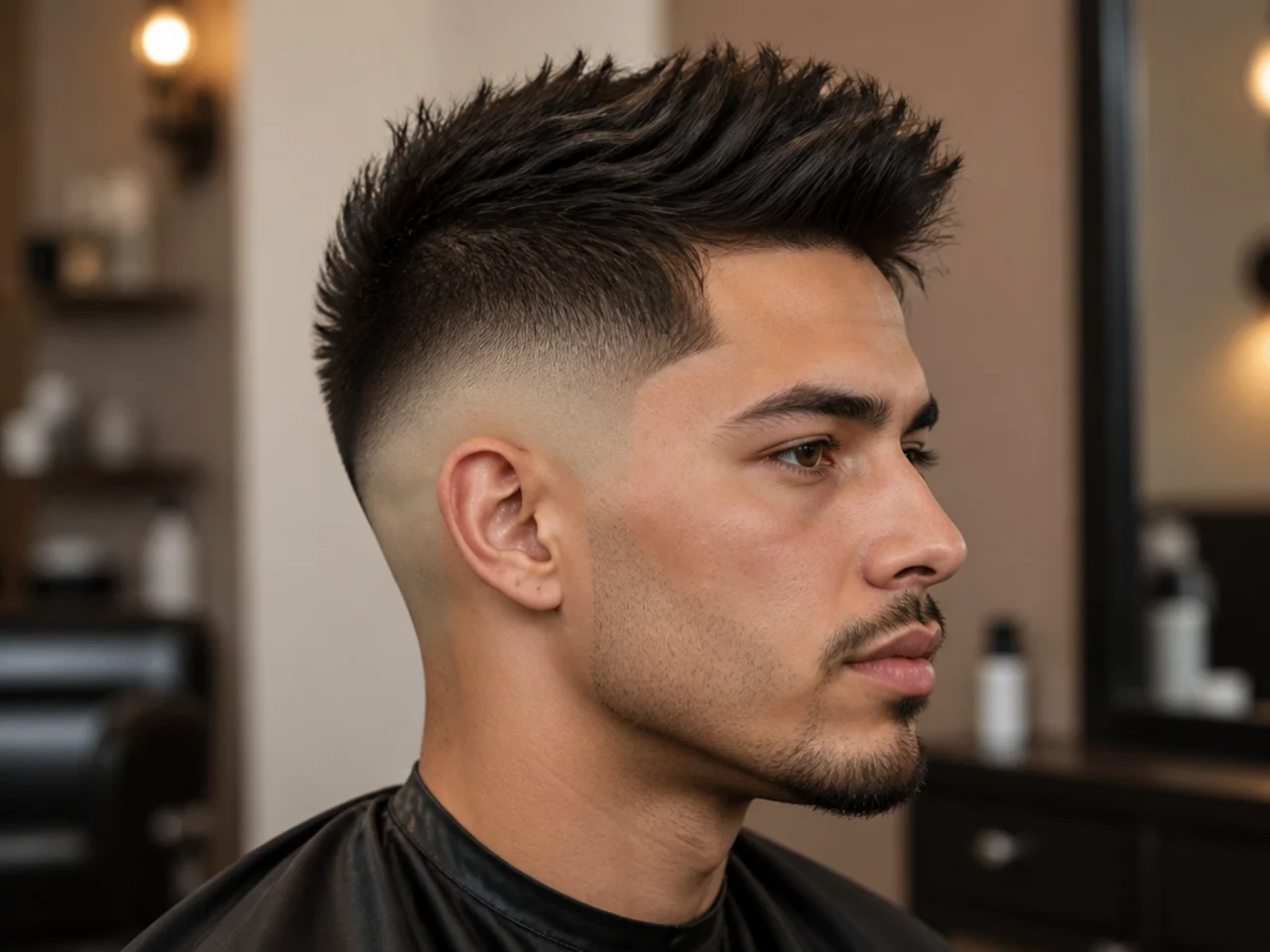
A faux hawk with a high burst reads as a full mohawk from twenty feet away. The center strip stays connected at the crown so it's not a true hawk, but the tall arcs on each side and the vertical top do most of the work. Suits oval, square, and heart faces. Ask for "a high burst to a 1 on both sides, four inches on top styled upward and inward toward a soft center, connected at the crown." Blow-dry upward with your fingers, then hit with a texture clay for hold without helmet. This is the closest you can get to a mohawk without full commitment.
High Burst Fade Two Block
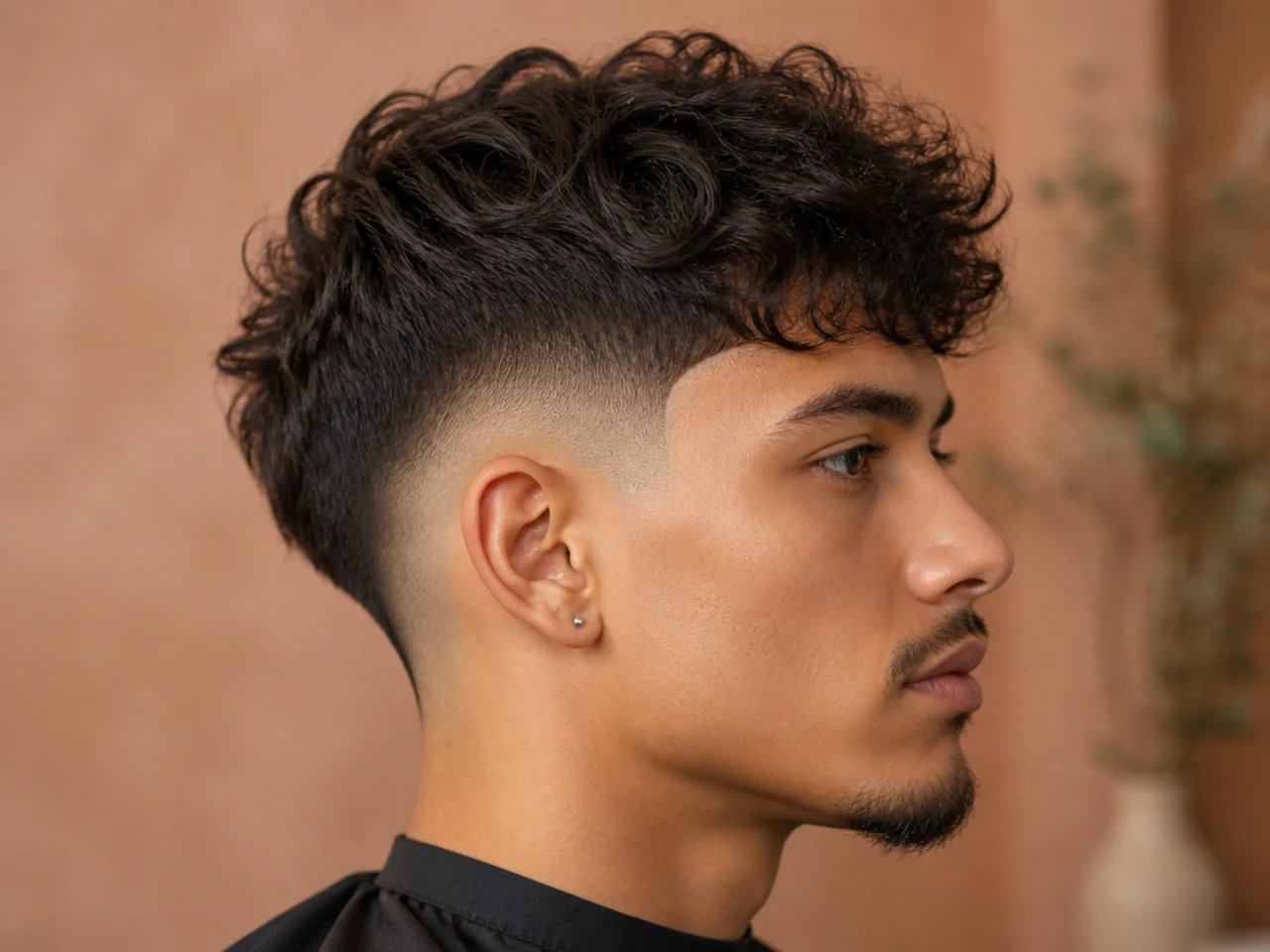
The two block silhouette drops a long, weighted top over cleanly cut sides, and the high burst gives that overhang the most dramatic frame. The top pushes forward and past the burst, so the arc reads as a hard border between length and skin. Best for oval and heart faces where a heavy top balances a narrower jaw. Ask for "a high burst to a 1, four inches on top disconnected from the burst, blunt across the fringe." Blow-dry the top forward and down, then finish with a light styling cream. This is the burst family's most Korean-leaning cut and a natural gateway to the Korean haircuts for men family.
How to Ask Your Barber for a High Burst Fade
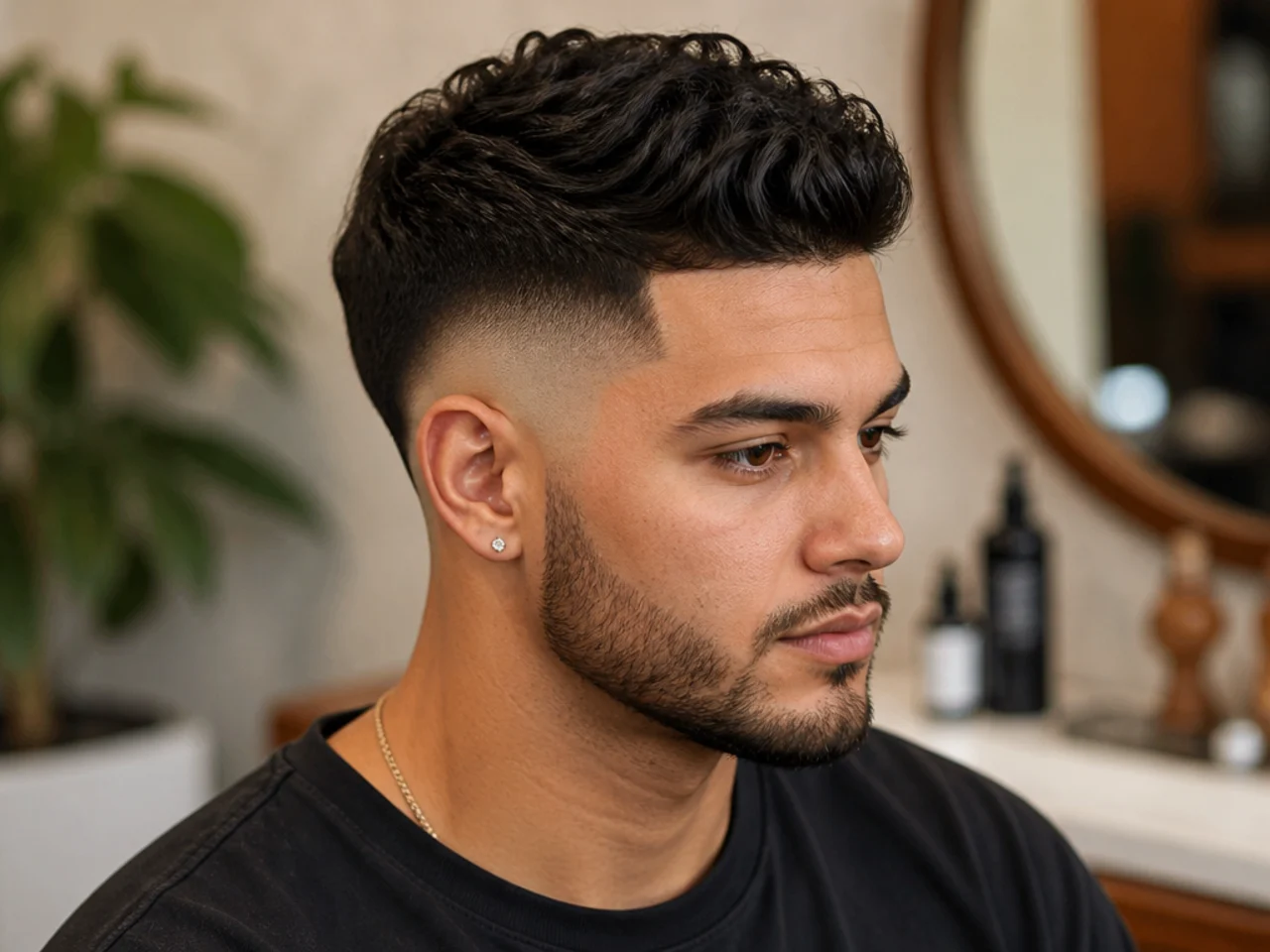
Bring a photo. That's rule one, and it matters more on a high burst than any other burst height because the arc position is the single biggest decision. Then use these seven cues:
- Say the words "high burst fade" clearly. "High burst" — not "high fade," not "burst fade," not "taper." The burst wraps the ear; the height puts the peak of the arc above the temple. Barbers don't guess.
- Name the guard at the shortest point. Skin (0) for maximum contrast, 0.5 for very short but visible, 1 for softer. Most high bursts sit at skin or 0.5 — that's where the drama lives.
- State the top length in inches. Three, four, five. The higher the burst, the more length the top needs to look balanced. Round numbers beat "medium" every time.
- Point to where the arc should peak. At the parietal ridge for standard high, half an inch above it for extra bold. Show your barber on your own head.
- Choose your neckline finish. Tapered (soft, no visible line) or blocked (sharp horizontal edge). Blocked reads sharper against the high burst.
- Confirm the top style. Textured forward, mohawk, mullet, curls, slick back, blunt fringe — this changes the point-cut work above, not just the finish.
- Book the follow-up before you leave. Two weeks, not three — the high burst grows out fastest.
Once those seven things are covered, your barber has everything they need. Show the photo to lock in the arc position, then let them work.
Styling and Maintenance
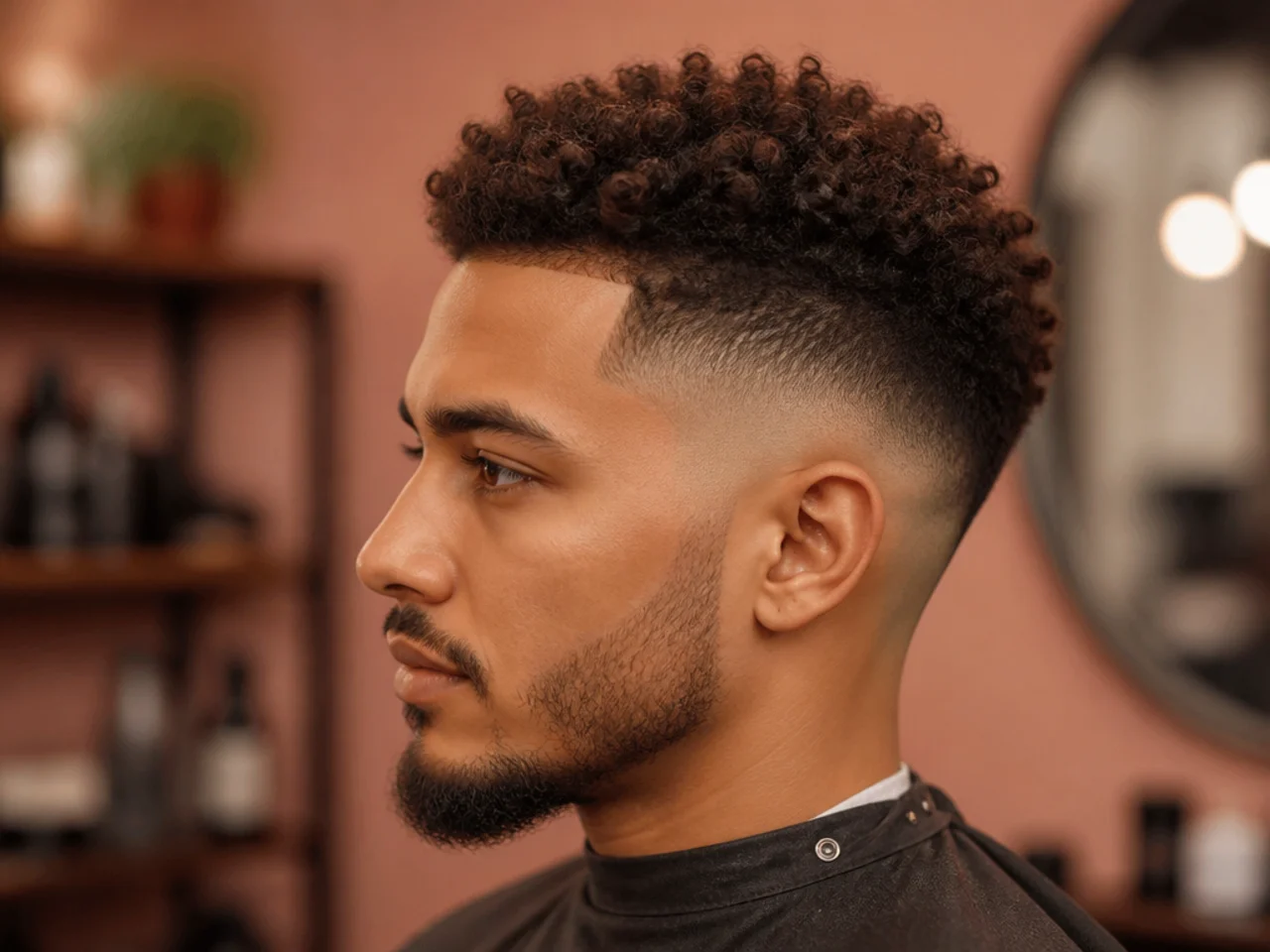
Style starts before you pick up any product.
Wash and towel-dry so the hair is damp, not dripping. Damp hair absorbs product; wet hair holds it on the surface and reads greasy. Prime the top with a sea-salt spray for grip, a light mousse for volume, or a leave-in conditioner for softness — pick one, not all three.
Blow-dry into shape. Fingers give texture, a round brush gives lift, a paddle brush gives slick. The direction of the airflow builds the direction of the finish, so decide the shape before you turn the dryer on. On a high burst, height is your friend — the top has to hold its own against the exposed sides.
Finish with a hold product suited to the top style. Matte clay for tousled crops, mohawks, and fringes. Molding paste for structured mids like the two block and slick back. Pomade for shine. Curl cream for curly, coily, and permed tops. Sea-salt spray for waves.
Maintenance is where the high burst punishes lazy schedules:
- Book every two weeks. The higher the burst, the faster the arc softens. Straight fades forgive a third week; the high burst does not.
- Wash three or four times a week. Every day strips oils; twice a week isn't enough for product-heavy tops.
- Condition every wash. More skin is exposed at the arc than any other burst position — a dry, flaky scalp shows through immediately.
- Trim the neckline yourself between visits. A quick pass with a beard trimmer on the fine hair at the nape adds a week to the shape.
- Sleep on silk or satin. Preserves top texture. Cotton pillowcases flatten waves and curls overnight.
If you want a subtler take on the arc, the low burst fade trades drama for wearability, and the mid burst fade sits in the middle. For the wider fade family, the fade haircut overview lays out every option side by side.
FAQ
What is a high burst fade haircut?
A high burst fade is a fade with the shortest point directly behind the ear, length growing outward in every direction, and the arc pushed all the way to the parietal ridge — the widest bend of the skull above the temple. It's the tallest, boldest version of the burst family.
Is the high burst fade office-friendly?
Not really. The wide exposed side and tall top make it more of a statement cut than a boardroom cut. Drop to a mid burst if your workplace runs conservative, or keep the shortest point at a 1 rather than skin so the sides look less dramatic.
How often should you get a high burst fade retouched?
Every two weeks. The higher the burst, the more transition is on display, and the higher the fade the faster the eye clocks growth. By week three the arc softens; by week four it reads like a shaggy high taper fade.
Can I get a high burst fade with a mullet?
Yes — the pairing is one of the loudest silhouettes on Pinterest right now. The tall arc erases the side entirely, so the length past the collar reads as intentional. Ask for a high burst to skin with the mullet past the collar and a feathered blend where the two meet.
High burst fade vs high taper fade — what's the difference?
Geometry. A high taper runs a clean straight line up the side of the head. A high burst curves the shortest point around the ear before climbing. Same height, completely different shape.
Does a high burst fade work on straight hair?
Yes, if the top has body. Straight hair needs three inches minimum on top to balance the exposed sides — anything shorter and the head starts to look narrow. Style with a matte clay for grip so the top holds its height.
Is the high burst fade a good kids' cut?
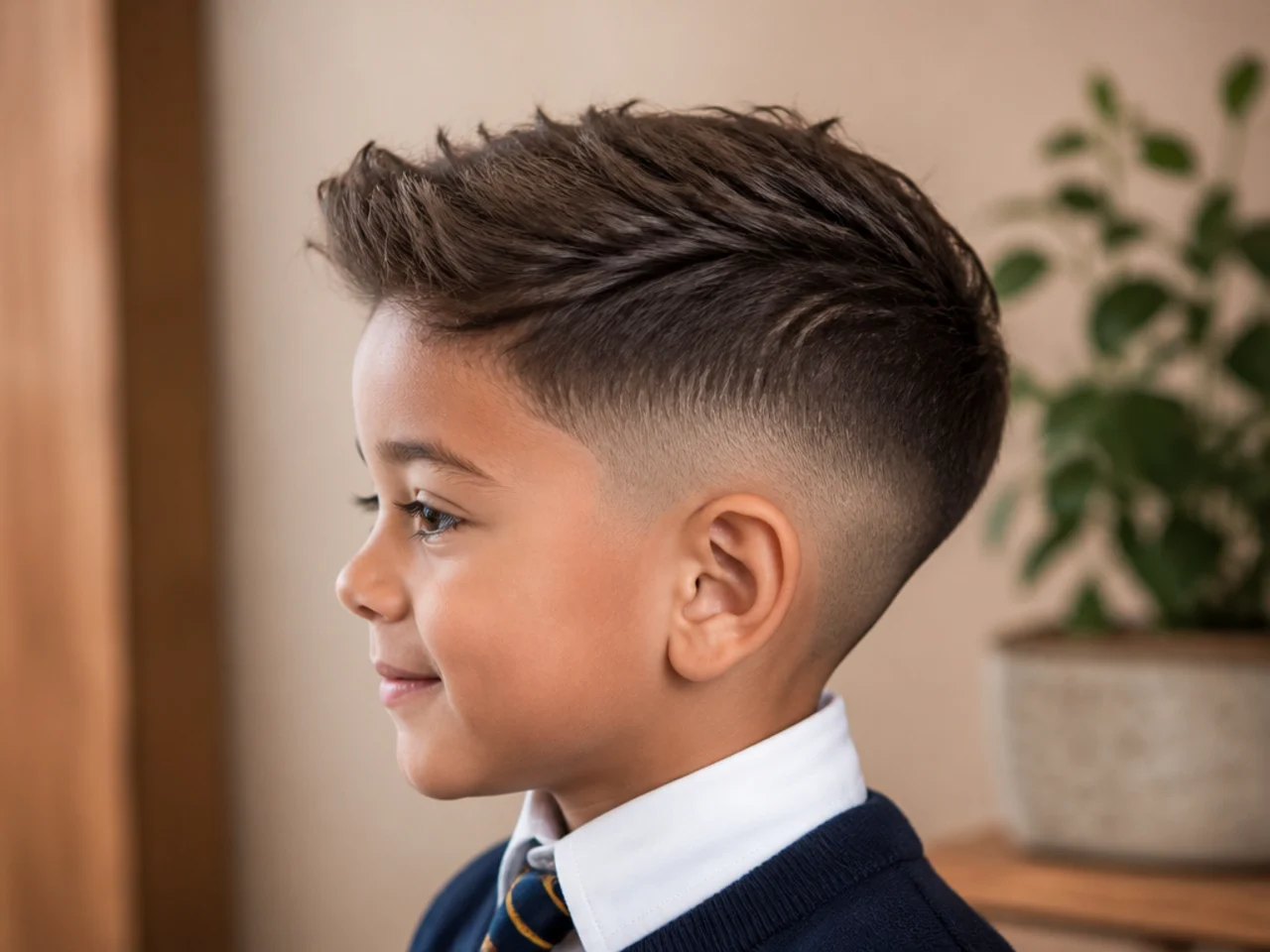
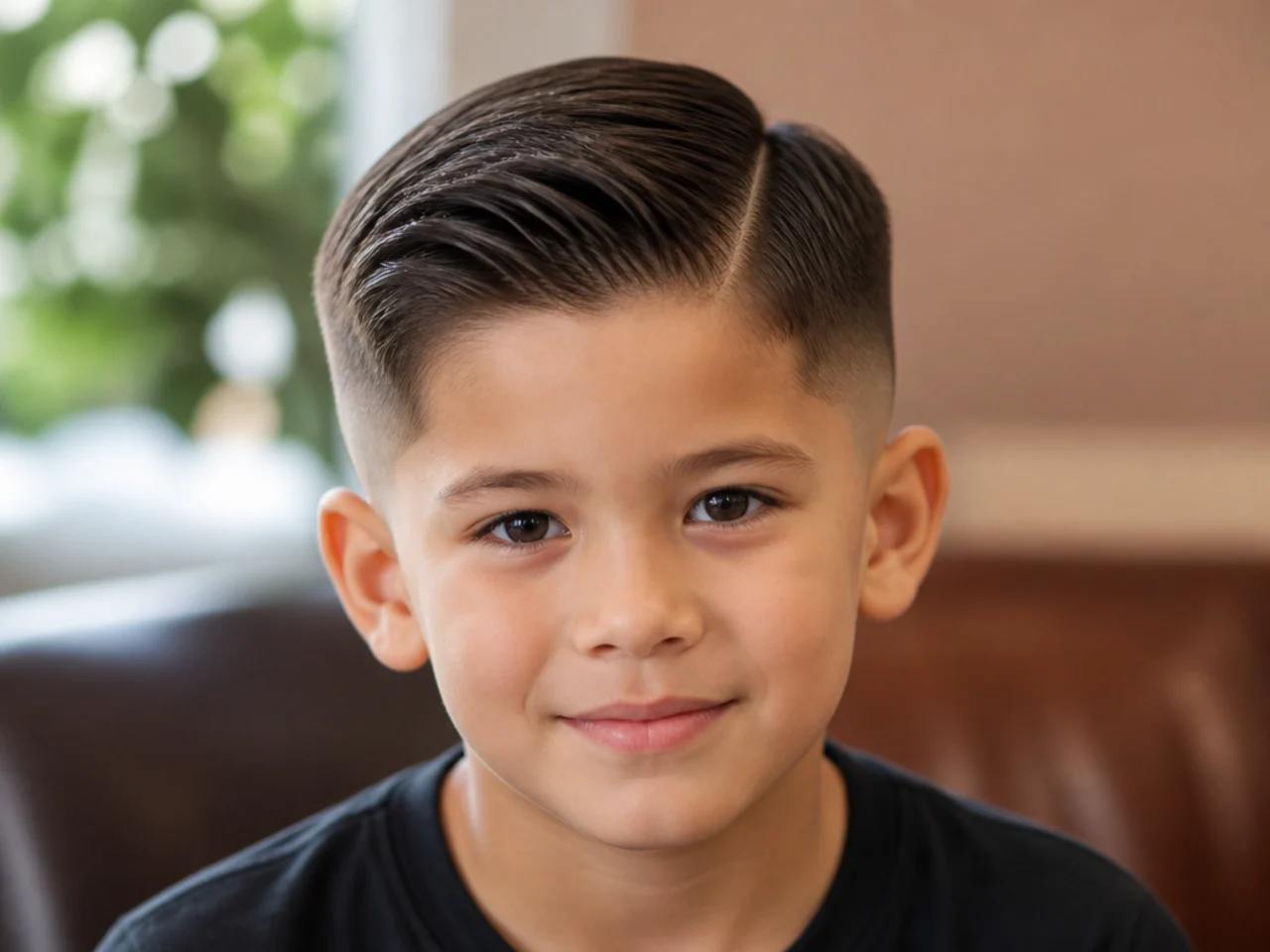
Yes, and it's growing fast in kids' chairs. The shape is bold, the maintenance is doable, and kids' hair grows fast enough that the two-week cadence isn't a hardship. Bring a photo, keep the top around three inches, and let your barber tune the drama for the school setting.