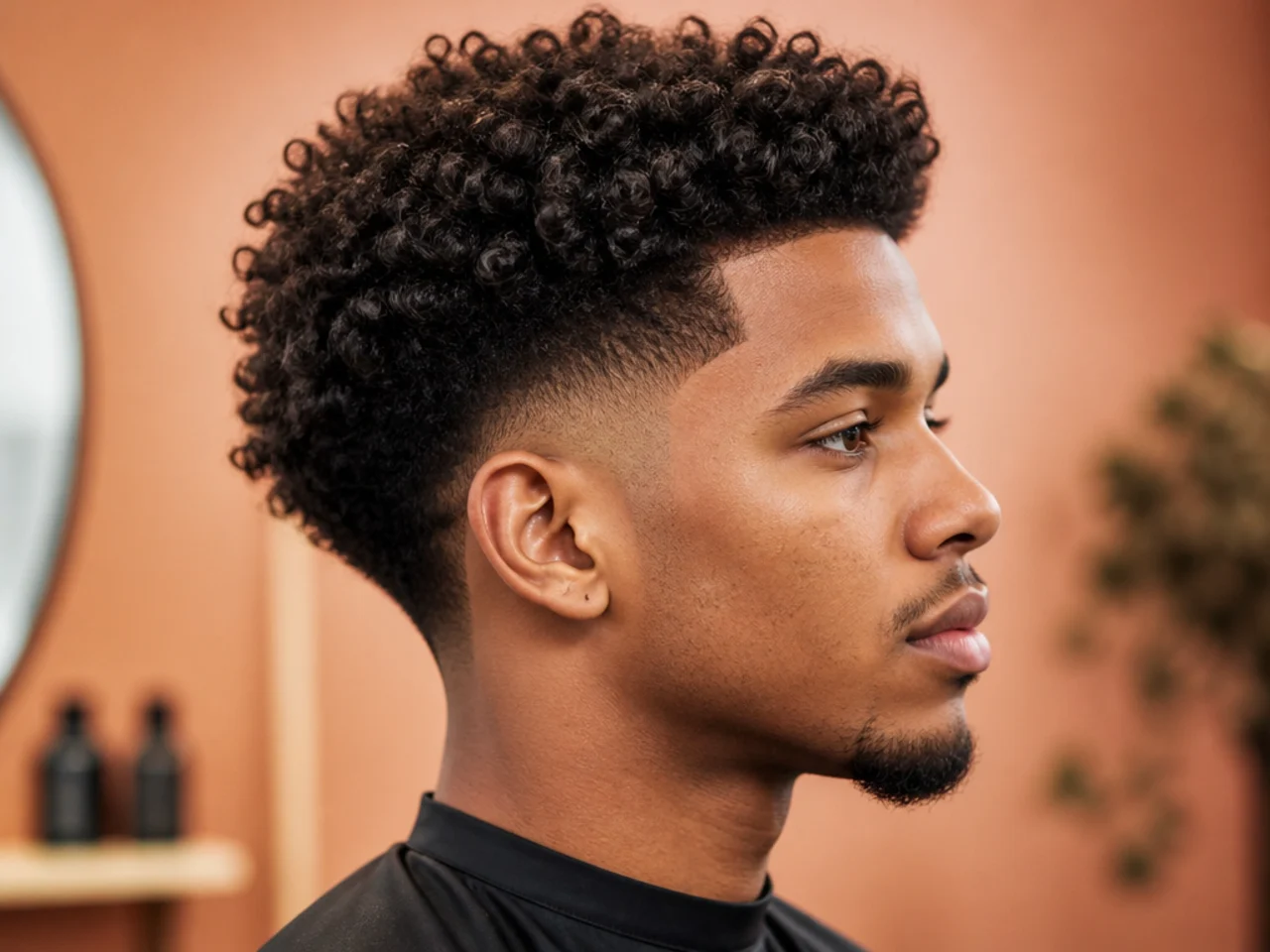
6 Burst Fade Designs Guys Get Complimented On
Six real burst fade designs — star, lightning, waves, script, geometric, tribal — with the client backstories, barber conversations, and the compliments they actually get.
In this article · 18
- What Is a Burst Fade Design?
- How to Choose the Right Design
- The Six Designs Guys Actually Wear
- 1. The Star — Marcus, 24
- 2. The Lightning Bolt — Devin, 19
- 3. The Wave Lines — Ty, 27
- 4. The Script — Andre, 32
- 5. The Geometric — Jordan, 22
- 6. The Tribal — Ellis, 29
- The Habit That Made the Difference
- What to Do Next
- FAQ
- What is a burst fade design?
- How long does a burst fade design last?
- Do burst fade designs work on curly and coily hair?
- How much extra does a design cost?
- Are burst fade designs office-friendly?
- What should I bring to my first burst design appointment?
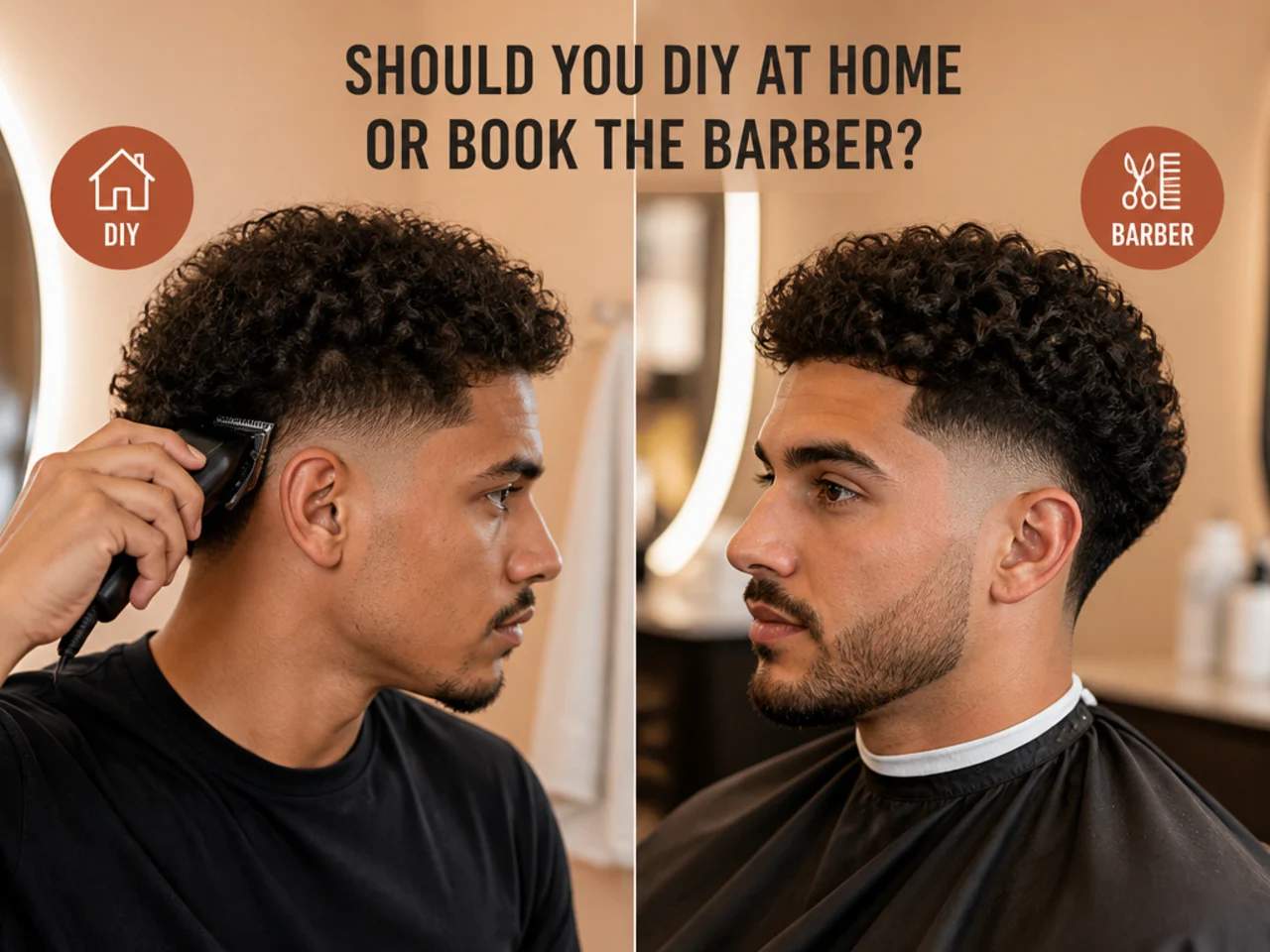
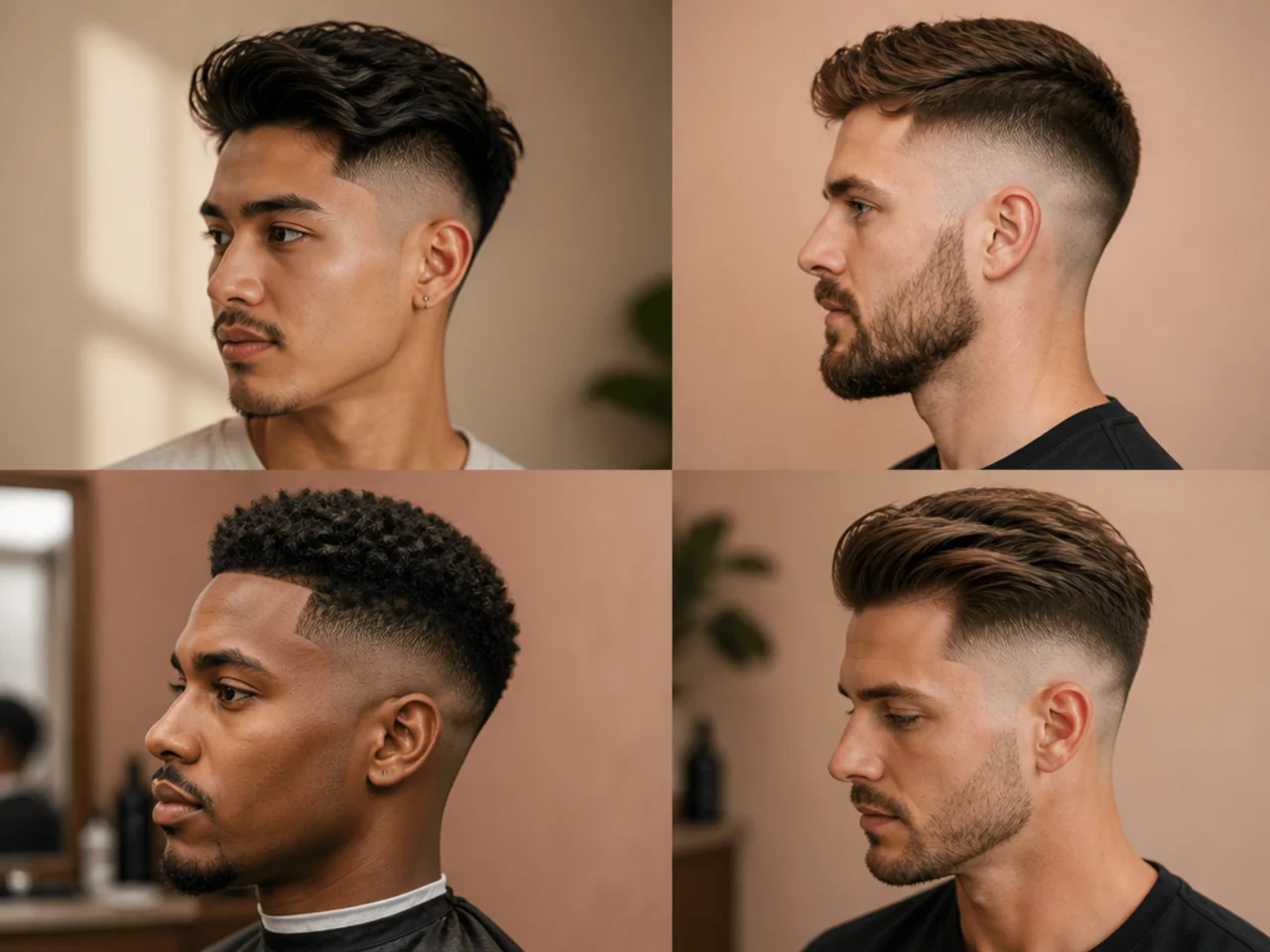
The burst fade with a design is the one cut where every client leaves the chair already scrolling for the next reference photo. I've watched six regulars work through the same conversation — pick the design, pick the placement, sit still while the trimmer draws — and come back two weeks later saying the same thing: everyone at work has asked. Below are those six stories, the exact language they used with me, what upkeep they signed up for, and the compliments they actually get.
What Is a Burst Fade Design?
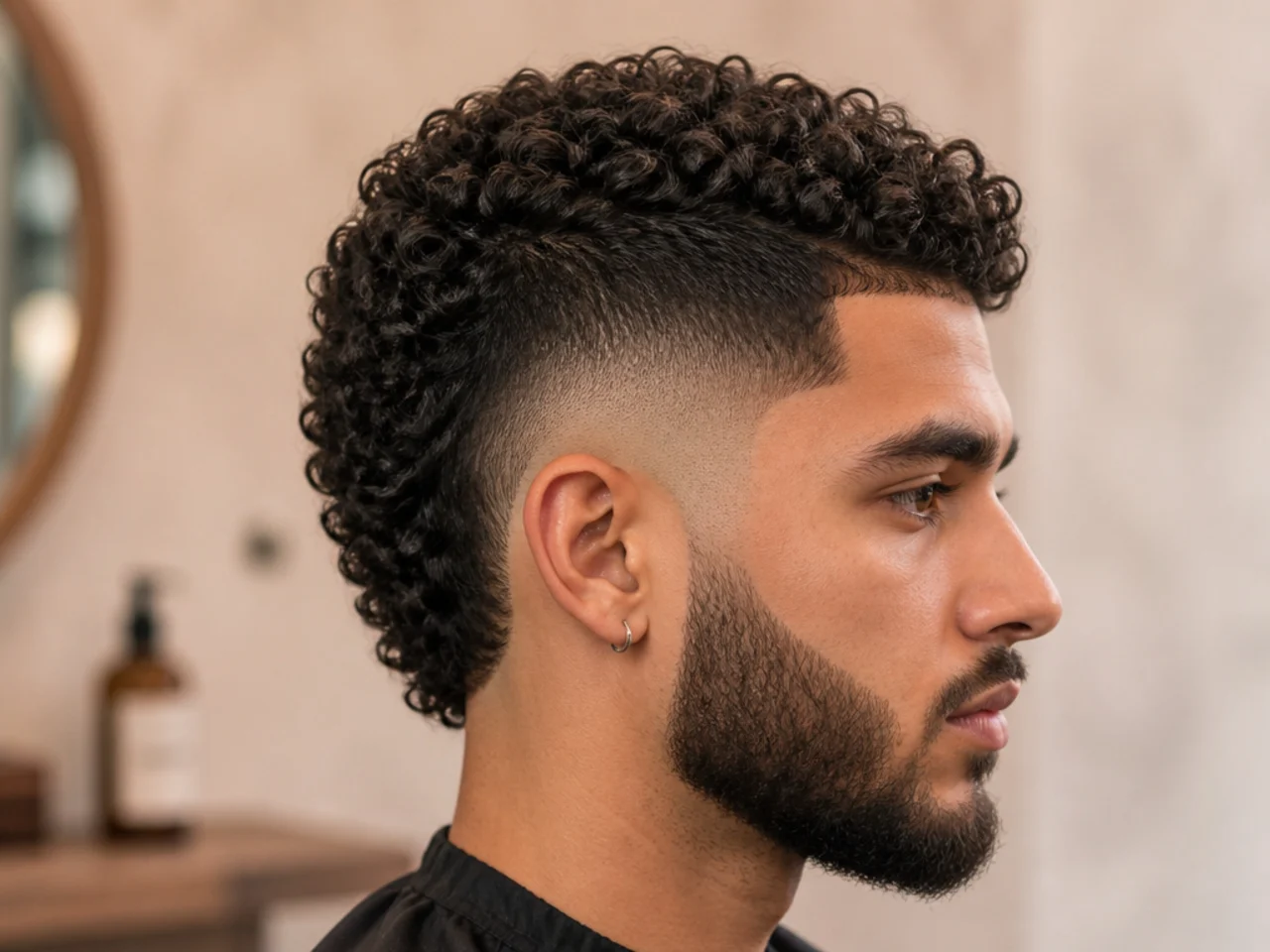
A burst fade design is a shaved pattern etched into the shortest section of a burst fade haircut. The burst is the arc that curves around your ear — the shortest point sits directly behind the earlobe, and length grows outward from there in every direction. Because the skin around the ear is already exposed, it works as a blank canvas for a shape cut in with a trimmer or straight razor.
Designs sit in one of three positions. The most common is inside the arc itself, running above or through the widest section. The second is at the temple, above where the arc rises. The third is at the nape, tucked in where only friends and hairdressers see it. Position matters more than the shape — a design at the temple reads bold from across a room, and the same design at the nape reads discreet even to the guy wearing it.
Two things separate a good design from a bad one. Line quality — a fresh straight-razor edge cuts crisper than a trimmer-only pass — and size. Anything wider than three fingers reads as a stunt; anything narrower than a pinky reads as a scratch. Every design below sits in that sweet spot. For the full family tree, see the fade haircuts hub.
How to Choose the Right Design
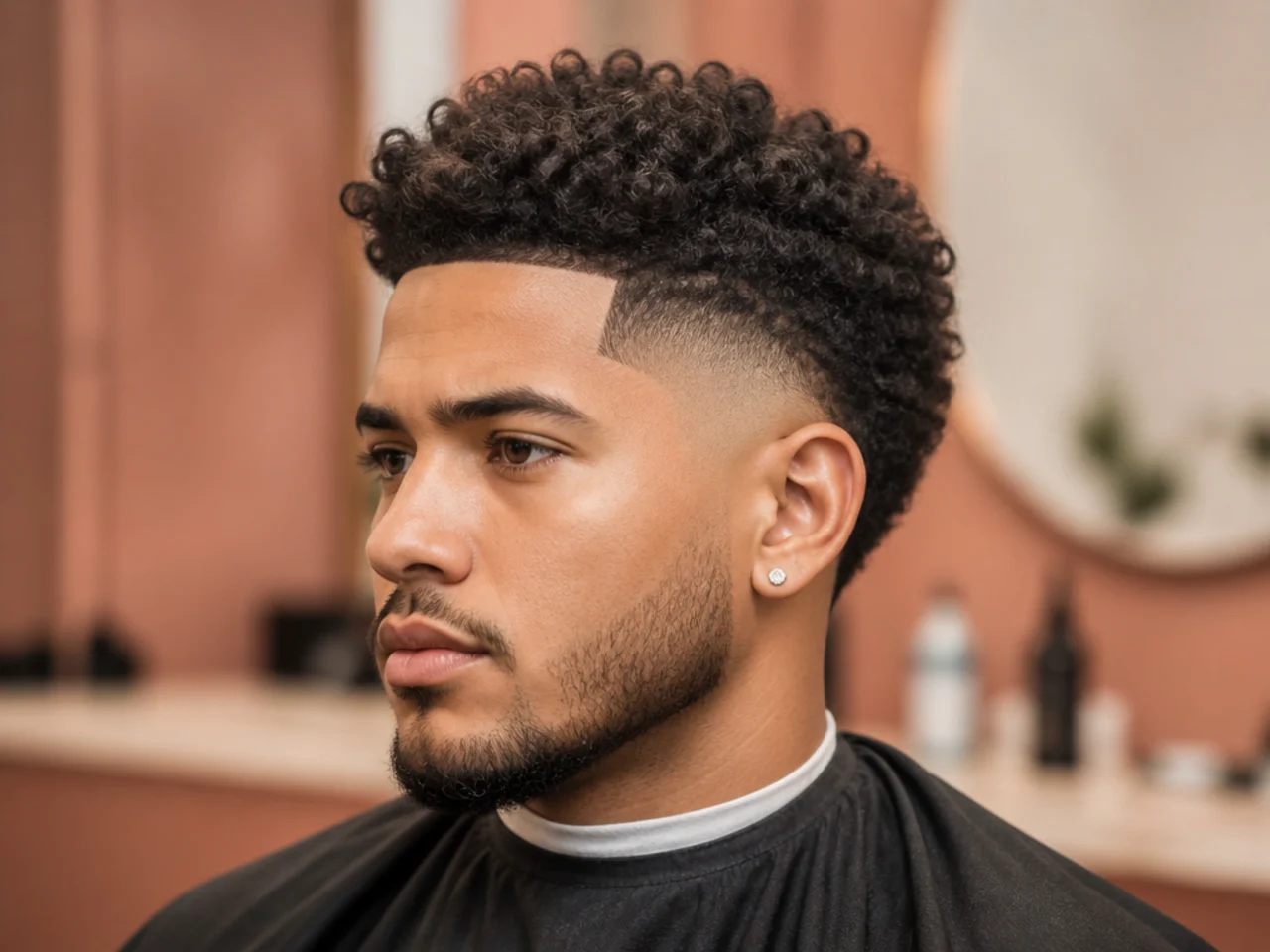
Start with your daily photo count. If you take mirror selfies, pick a design that lives on the side profile — a star, a lightning bolt, or wave lines all read best from a three-quarter angle. If you don't photograph your hair much, pick something you enjoy touching — script and tribal shapes have texture on your fingertips even when you can't see them.
Then your workplace. Anyone in a client-facing corporate role should stay small and low: one wave line at the earlobe, a discreet geometric mark at the temple. Anyone in a creative studio, hospitality, sports, or the trades can go louder — a two-inch star, a script name, a full tribal band. The design doesn't have to shout, but it has to match the room you spend the most hours in.
Finally, your hair type. Coily and tight-curl hair holds a design cleanest because the coil pattern makes the shaved lines read sharper against the darker canvas. Straight hair works fine but blurs a day faster. Wavy hair sits in between. If your hair grows half an inch a month or more, book the touch-up every ten days rather than fourteen. The design is only clean while the edges stay defined.
The Six Designs Guys Actually Wear
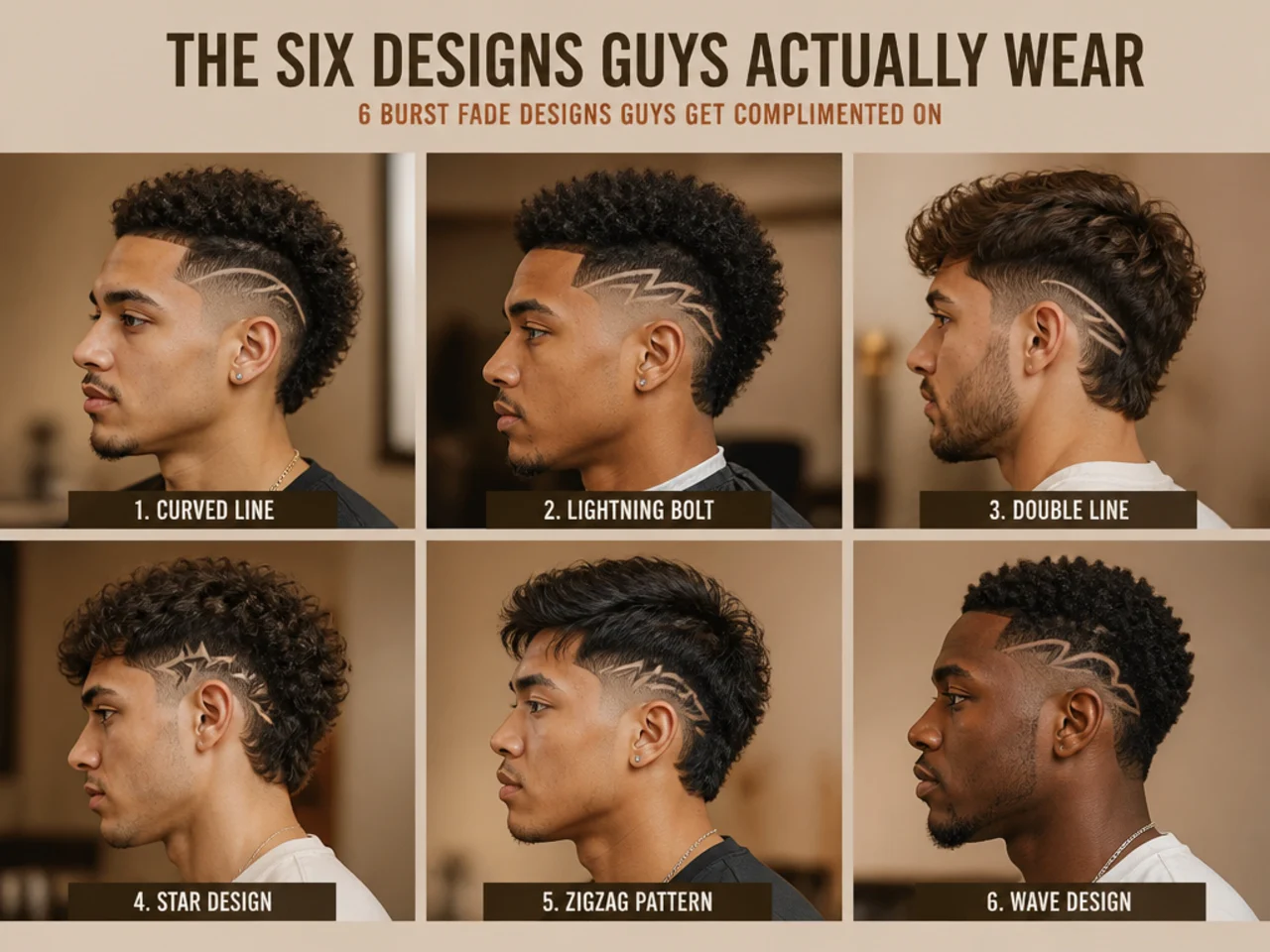
Each of these stories is one of my regulars. The design they picked, the reason they picked it, and the compliments they can't stop bringing back to the chair. Read the one closest to your life first — then borrow whatever fits.
1. The Star — Marcus, 24
Marcus works as an orderly in the pediatric ward at our local hospital. He's had type 3 coily hair his whole life and wore a straight low fade until he turned twenty-four and decided he wanted something the kids on the ward would notice. He came in with a screenshot of a five-point star and said, "I want this one behind my left ear only. Not both sides. The kids should have to catch it."
Our chair conversation took three minutes. I set the base — mid burst fade to skin around the ear, three inches of coils on top, scissor-cut so the pattern kept spring. Then I outlined the star with a trimmer at about two fingers tall, sitting just above the widest point of the arc, one point up. Mirror-checked with Marcus twice before I switched to the straight razor.
Maintenance is real. Marcus books every twelve days now, up from every three weeks with his old fade. Between visits he uses a bevel edger himself along the neckline to buy an extra day. He runs a moisturizing pomade through the coils on top after every wash and picks the top for lift.
The compliments come from patients' families more than co-workers. Three parents a week ask if he'll let their kid touch the star. The head of pediatrics finally noticed at month two and asked where he gets it done — Marcus wrote my shop name on a Post-it.
2. The Lightning Bolt — Devin, 19
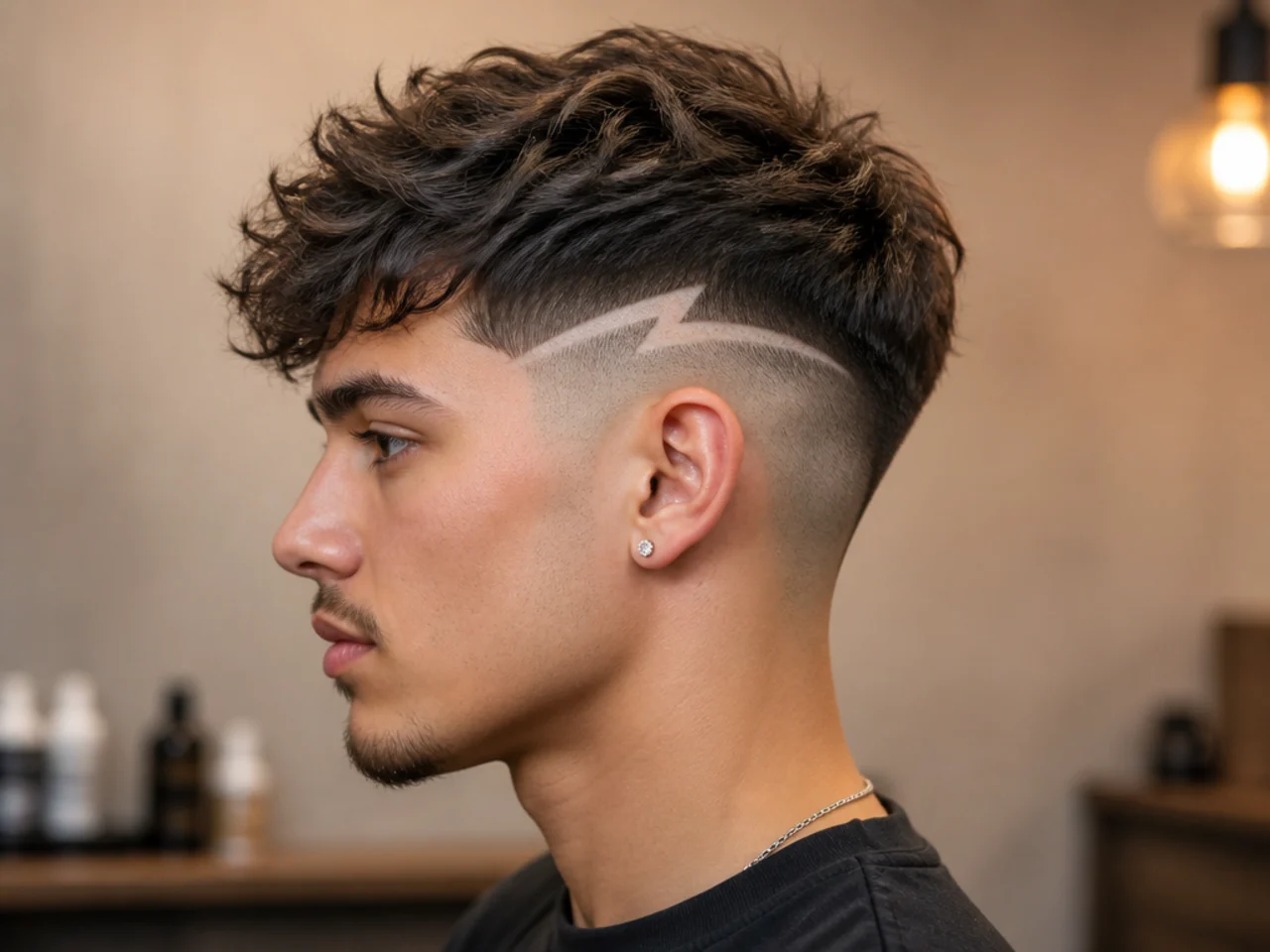
Devin is the placekicker on his junior college football team. He has straight, coarse Asian hair that grows fast — I trim him every ten days during the season. He walked in one day with a photo of a lightning bolt on a pro receiver and said, "Same energy but on my right side, so the crowd sees it when I line up."
The lightning bolt is the most-requested design in my chair by a mile because it works at any size. Devin's version is high burst to skin, arc climbing toward the temple, with a three-blade-wide bolt zig-zagging down through the widest section from just below his temple to the ridge above his ear. Top stays at two inches, textured, brushed forward.
Maintenance during football season is every seven to ten days because the bolt blurs by day nine. I hand-shape the bolt first each visit — same photo, same angles — before I re-do the burst. Devin buzzes the neckline himself between visits with a cheap trimmer he keeps in his gym bag. He conditions after every wash because the exposed skin around the bolt gets dry scalp fast.
Compliments started with teammates and moved out to the crowd. His coach mentioned it in a huddle two weeks after the first cut — "keep the hair, kid, works for you" — and Devin still repeats that quote every time he sits down.
3. The Wave Lines — Ty, 27
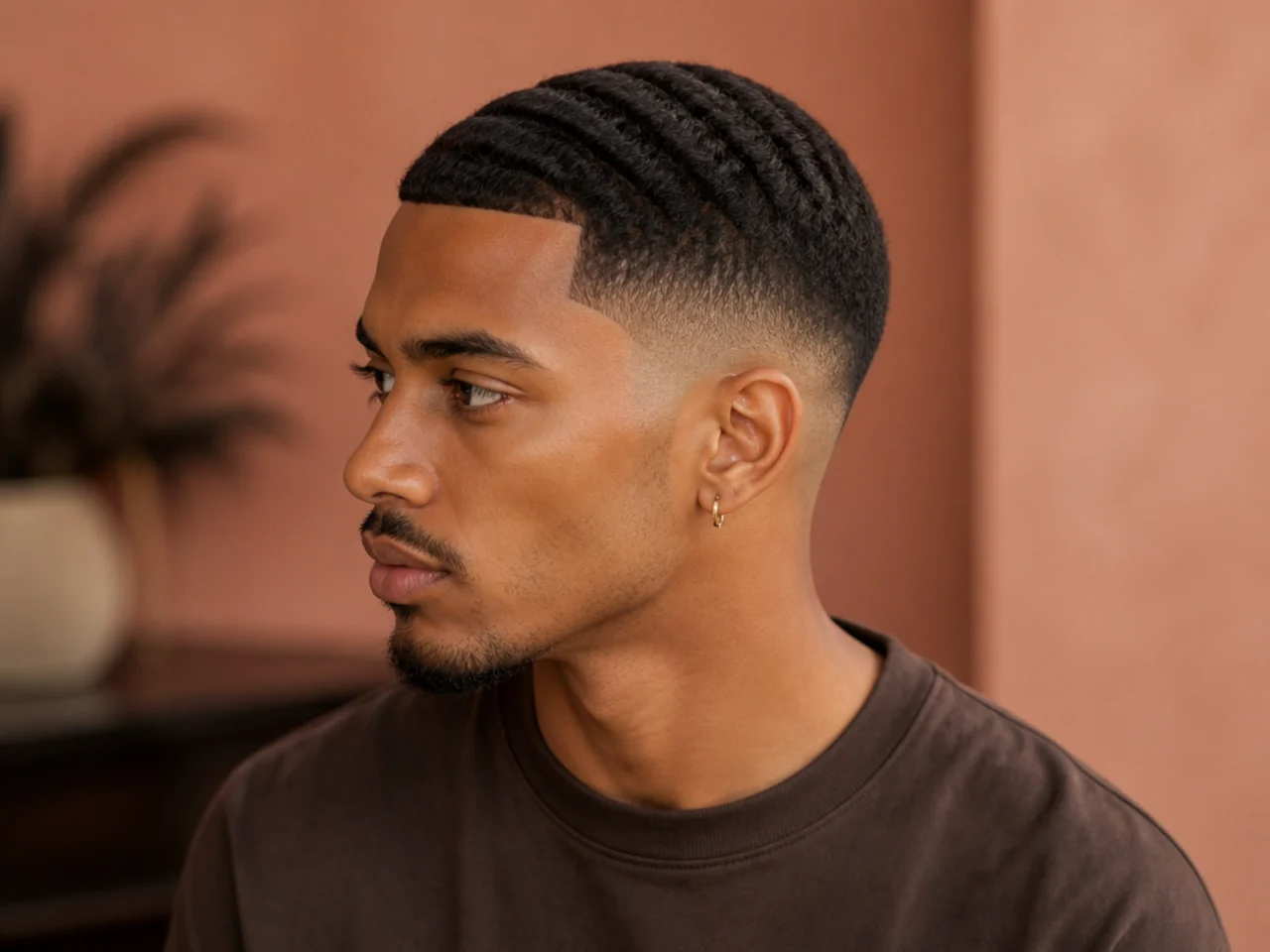
Ty drives a delivery route for a coffee wholesaler and spends eight hours a day in a truck cab, meeting different café owners at every stop. He has medium wavy hair on top — type 2b, a little coarse — and a mustache he's grown out for three years. When his sister got married last spring, he wanted a burst fade that felt personal without stealing photos from the bride.
We landed on three parallel wave lines running through the widest section of a low burst fade. Low burst to a 1 — not skin, so the design reads soft. Wave lines cut about a quarter-inch apart, all the same width, running horizontally from behind his ear to the temple line. Top left at three inches with the wave pattern preserved.
The waves are the lowest-maintenance design I do. Because Ty stayed at a 1 guard rather than skin, the lines blur gently as the hair grows in — no hard grow-out to fight. He books every three weeks, uses a sea-salt spray on damp hair, and blow-dries with his fingers. Sleeps on a satin pillowcase because his hair holds shape overnight that way.
Compliments come from every coffee shop owner on his route. He says the barista at his Tuesday stop asks him where he gets it done every single visit — same question, twenty weeks running. His fiancée has stopped rolling her eyes when I text him about his next booking.
4. The Script — Andre, 32
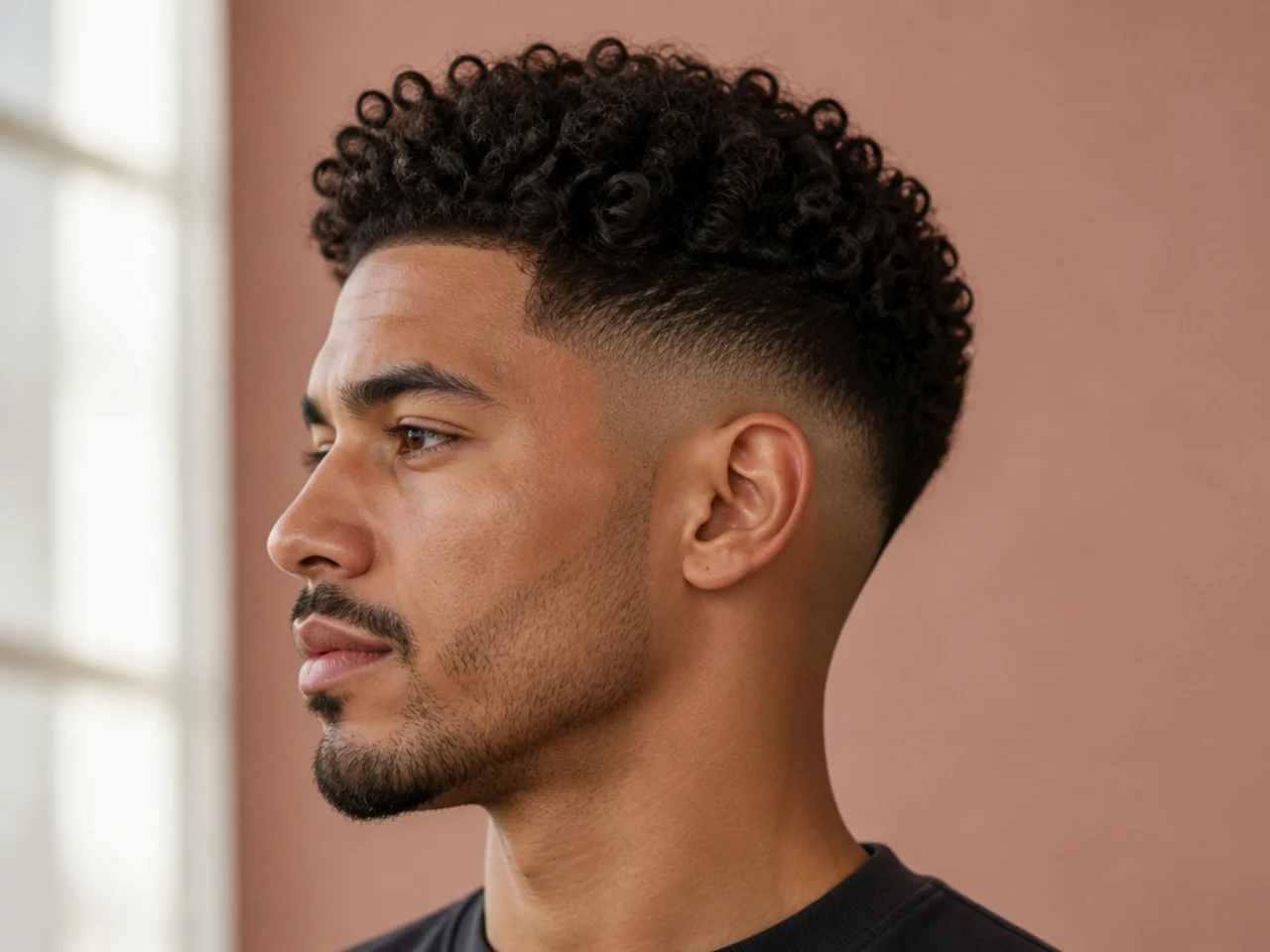
Andre is a community-college English tutor and, since his daughter Nia was born, one of the softest guys I cut. He has coily type 4a hair and wore a straight taper for a decade. When Nia turned two, he brought me a photo of a script tattoo of her name and asked if I could do the same in his hair. He wanted it behind his right ear where his own kid would see it every time he picked her up.
Script is the design that separates real design barbers from guys with trimmers. I mapped Andre's arc first — mid burst to skin — and then hand-drew "Nia" in one-inch cursive with a fine trimmer edge just above the widest point of the arc. Straight-razor for the interior of each letter so the loops looked hand-drawn, not stamped. Total time added over a regular burst: about eighteen minutes.
Maintenance is where script demands the most. Andre books every ten days, no exceptions, because letters blur into shapes by day twelve. He brings the same photo every visit so I redraw the letters exactly the same. Between visits he uses a moisturizing pomade on the top only and runs a soft-bristle brush around the design so the hair around the letters stays flat.
The compliments come from the parents at Nia's daycare more than his students. Nia herself started tracing the letters with her finger at pick-up around age three, which he says is the whole reason he asked for the design in the first place. His mom cried at his cousin's wedding when she noticed.
5. The Geometric — Jordan, 22
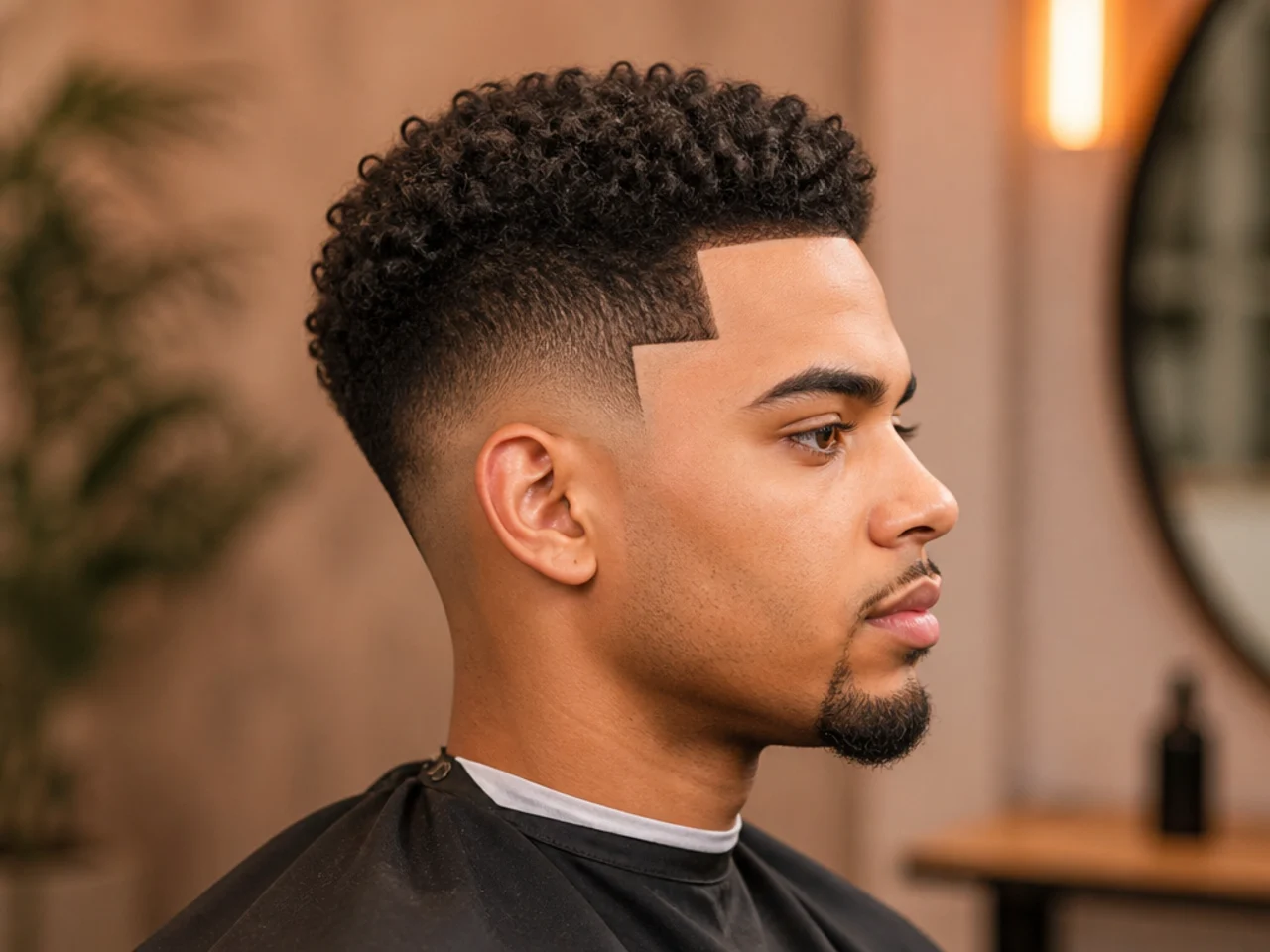
Jordan interns at a graphic design studio downtown and is the only person I know who scheduled a haircut around a client presentation. He has straight brown hair — medium density — and wanted something that looked like a font specimen at first glance. He brought me a Behance mood board with about forty geometric patterns and said, "You pick. I trust your eye."
We landed on a three-line diagonal grid. Mid burst fade to skin around the ear, textured two-inch top brushed forward. The grid sits at the temple: three straight lines cut on a forty-five-degree angle, each about two blade widths thick, spaced evenly across a two-inch square. Nothing curved, nothing organic. Clean, cold geometry that reads like a wireframe.
Geometry is technically demanding and forgives nothing. If one line is off by a millimeter, the whole design reads wrong. I use a printed grid overlay for Jordan's cut — held to his temple for reference before I draw the first line. He books every ten days. Between visits he shaves the neckline with a straight razor himself; he told me he watched a YouTube tutorial three times before trying it.
Compliments are almost exclusively other design people. Two coffee-shop strangers have asked about it — both freelance illustrators. His creative director at the internship gave him the biggest compliment of all: an offer for a full-time job after the six-week rotation.
6. The Tribal — Ellis, 29
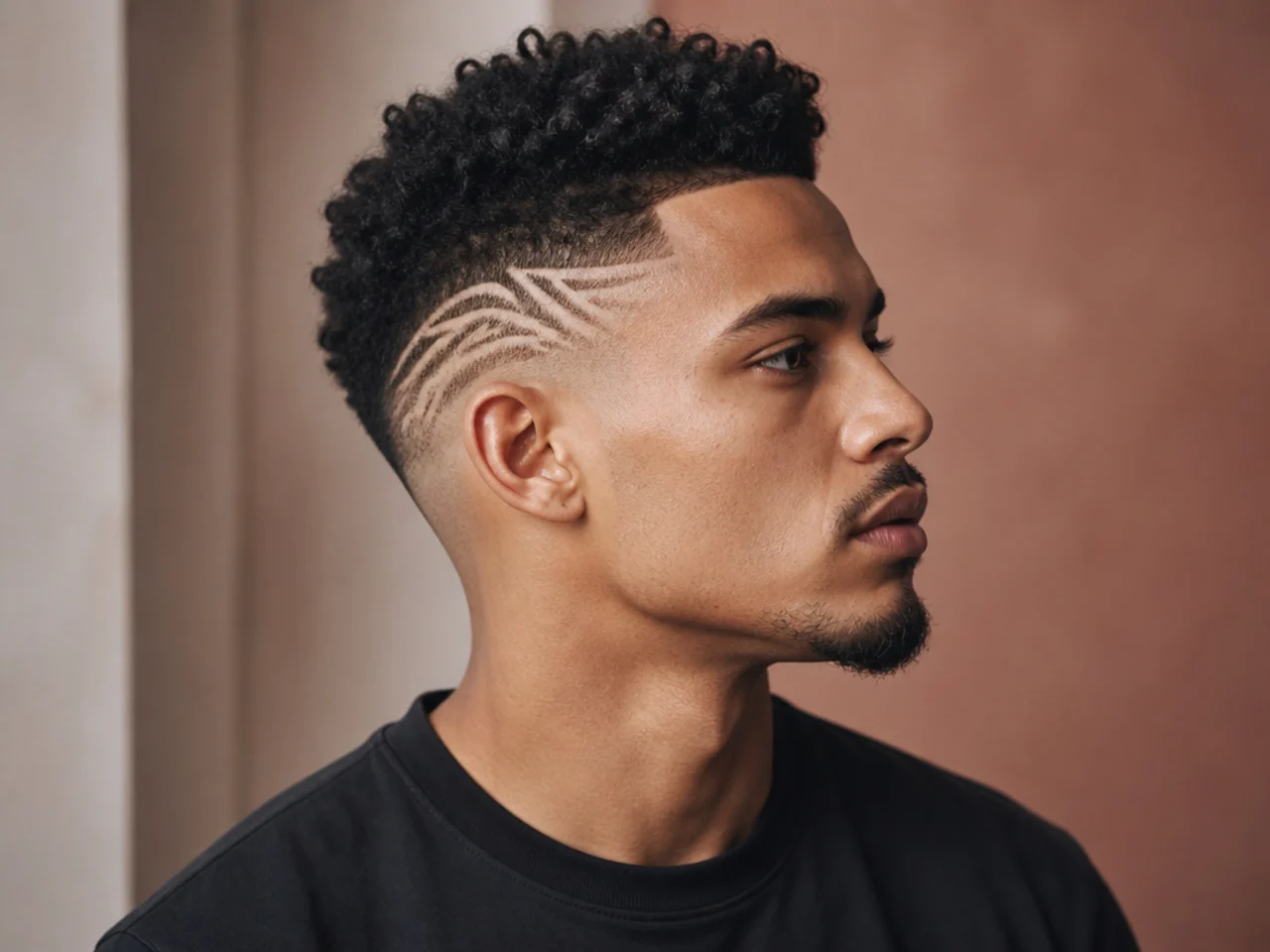
Ellis is apprenticing at a Polynesian-owned tattoo shop three blocks from mine, and his family is Samoan on his mother's side. He has dense coily hair that grows in like a hedge. He wanted a burst fade with a design that acknowledged where he comes from without appropriating patterns that aren't his to wear. His grandfather sent him three sketches over WhatsApp. He picked the curved one.
The tribal design sits in a band around the widest section of the arc: two curved parallel lines connected by six short perpendicular strokes, running from the sideburn down to the earlobe. Mid burst fade to skin, three inches of tightly coiled hair on top scissor-cut so the coils spring. Total design width: about three fingers.
Maintenance is the strictest of any design I cut. Ellis books every nine days because the pattern has more lines to blur than a single-shape design. He conditions after every wash — the exposed skin inside the curves shows dry scalp faster than anywhere else on his head — and uses a curl cream through the top with his fingers. Straight razor at every visit for the interior lines.
The compliments come from his family first, in his mother's Samoan first, and then from clients at the tattoo shop where he apprentices. The head tattooer traded him a small forearm piece for cuts. Ellis says the first thing every new tattoo client at the shop notices is the design; he's built a small side book of clients who found him through it.
The Habit That Made the Difference
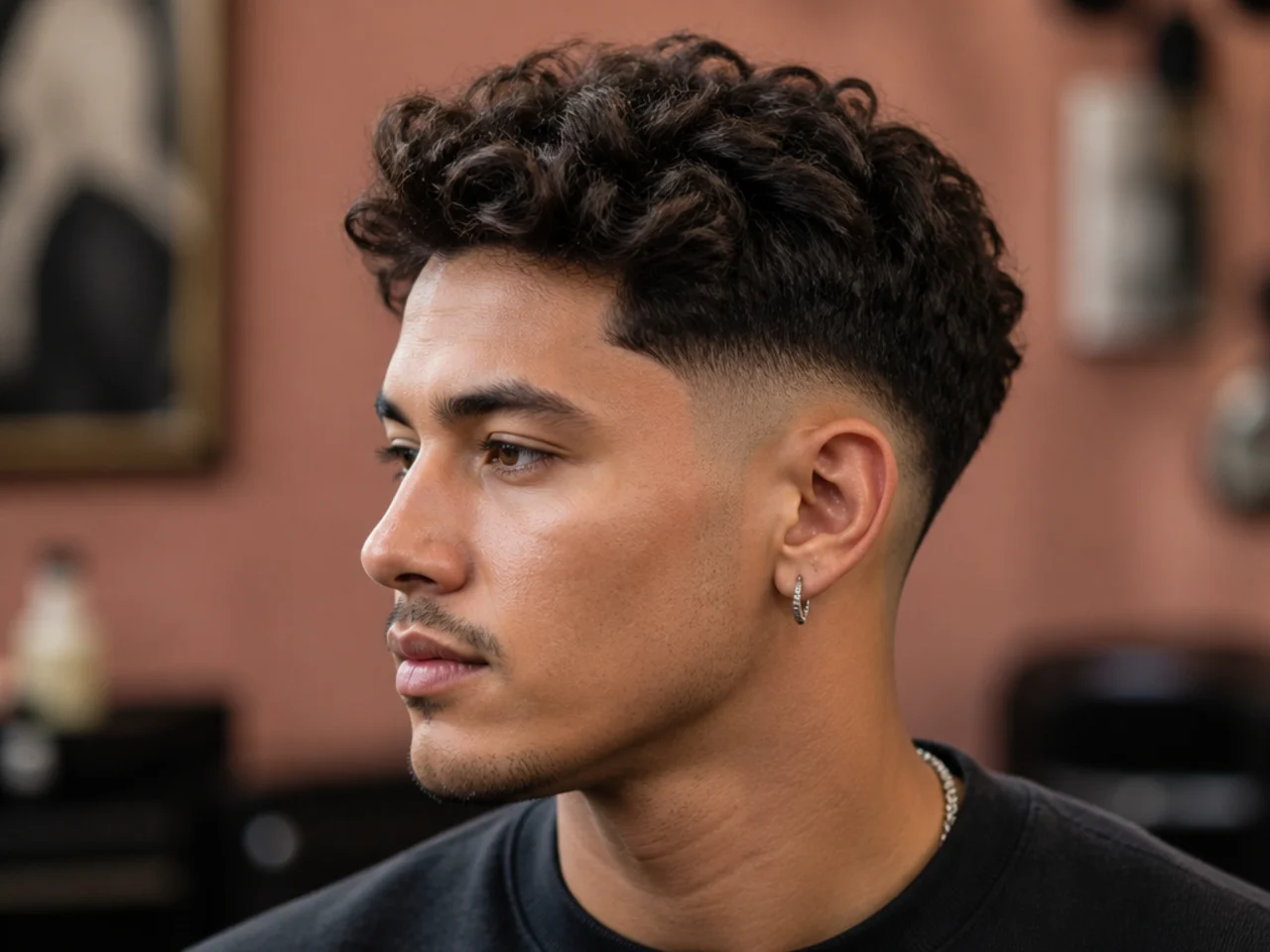
Every one of these six guys started the same way: a bad first design that they hated for the two weeks it took to grow out. In every case, the fix was the same. They stopped verbally describing the design at the chair and started bringing a printed or phone-open reference photo of the exact pattern at the exact size and placement.
Verbal descriptions do not survive the trimmer. "A small star behind the ear" gives four different barbers four different stars. A photo held next to your temple, with the fingers of your other hand spread to show the size, gives every barber the same star. That single change — reference photo plus a size-check with your fingers — is the difference between "everyone at work asked" and "everyone at work politely didn't."
The other shared habit is booking the next appointment before leaving the current one. A design blurs at a set pace based on your hair growth. You cannot beat the timeline; you can only stay ahead of it. Every one of these six clients has a standing bi-weekly slot on my calendar, and that's the only reason their designs read as intentional every day of the year.
What to Do Next
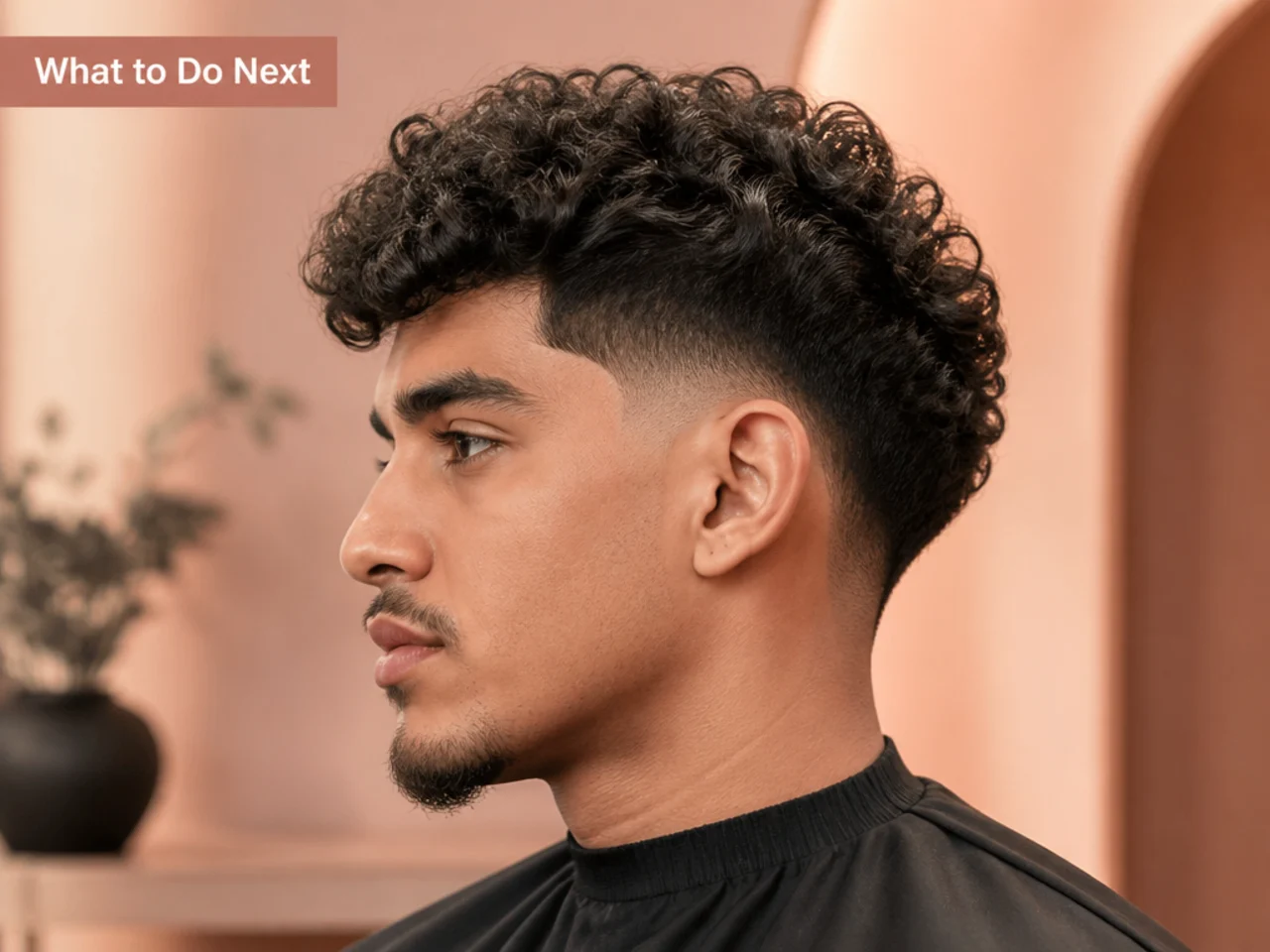
Pick your design first, then your base burst — not the other way around. If you settle on the star before the chair, you can pick the burst height that shows it best. Marcus went mid because the star needed room around the ear; Ty went low because his wave lines wanted a softer background.
Book a barber with a design portfolio, not just a fade portfolio. Ask to see three photos of shaved designs on their Instagram before you book. If they don't have any, book someone else — a barber can be great at burst fades and still put a bad star on your head.
Then think about the neighbors. For a design on top of a mullet silhouette, the burst fade mullet guide covers the shape it pairs with. For a mohawk pairing, see burst fade mohawk. Curly hair changes the design math — read burst fade curly hair first. If you're weighing burst against a straight taper as the base, burst fade vs taper walks through the choice.
Outside the burst family, the modern mullet haircut men guide covers the top-and-back silhouette that works with a design side. The edgar haircut is the fringe-forward top most requested with design work at Latin-owned shops. For a polished, no-arc side that still fits a temple design, see low taper fade. Still choosing? The fade haircut overview lays out every option.
Bring a friend to your first design appointment. Placement is the one thing you cannot see from your own angle in the mirror — a second pair of eyes drops the regret rate close to zero. My six regulars all bring someone the first time. None of them bring anyone by the third visit.
FAQ
What is a burst fade design?
A burst fade design is a shaved pattern etched into the shortest section of a burst fade — behind the ear, at the temple, or through the arc itself. Common shapes are stars, lightning bolts, wave lines, script, geometric grids, and tribal curves. The outline is cut with a trimmer, then finished with a straight razor.
How long does a burst fade design last?
A skin-cut design starts to blur around day seven and disappears by three weeks. A 0.5 or 1 guard design reads clean two or three days longer. Most clients book a touch-up every ten to fourteen days to keep the shape sharp.
Do burst fade designs work on curly and coily hair?
Yes — coily hair holds a design better than any other texture because the tight coil pattern makes the shaved lines read louder. Ask for a fresh straight-razor finish, not a trimmer alone, and book every nine or ten days because faster-growing textures blur sooner.
How much extra does a design cost?
Fifteen to forty dollars at most independent shops, depending on complexity. A single bolt or a small star sits at the low end; a full script name or a multi-line tribal band sits at the high end. Confirm the number before the trimmer touches skin.
Are burst fade designs office-friendly?
Some are. A single geometric line at the temple, a discreet wave at the earlobe, or a low burst with a tiny design at the nape can pass in most creative offices. A skin script across the crown will not. Match the design's size and position to the room where you spend most of your week.
What should I bring to my first burst design appointment?
Two photos — one of the burst you want as the base (low, mid, or high), one of the exact design at the size and placement you want. Verbal descriptions never survive the trimmer. If you can, bring a printed reference in addition to the phone screenshot.