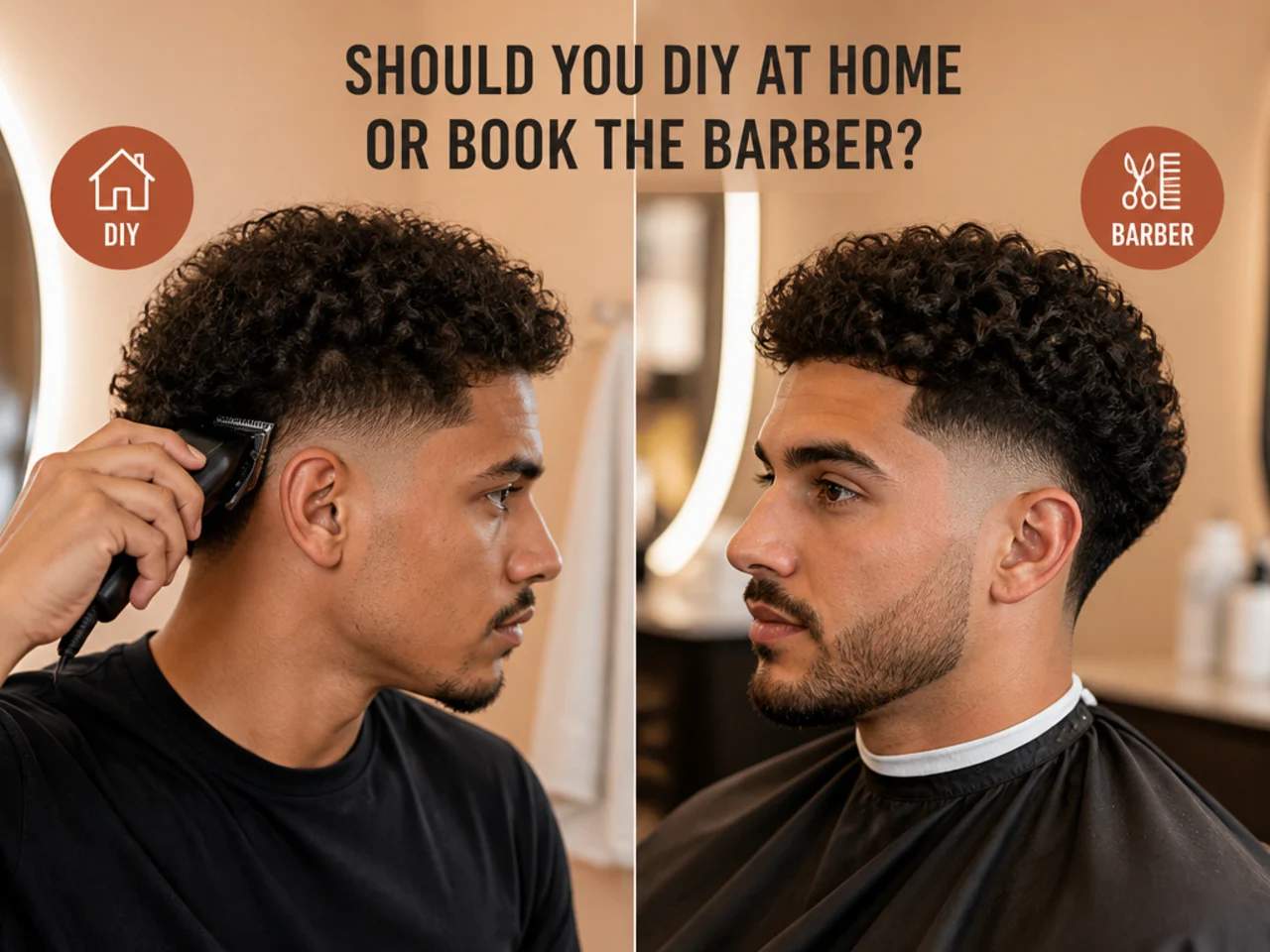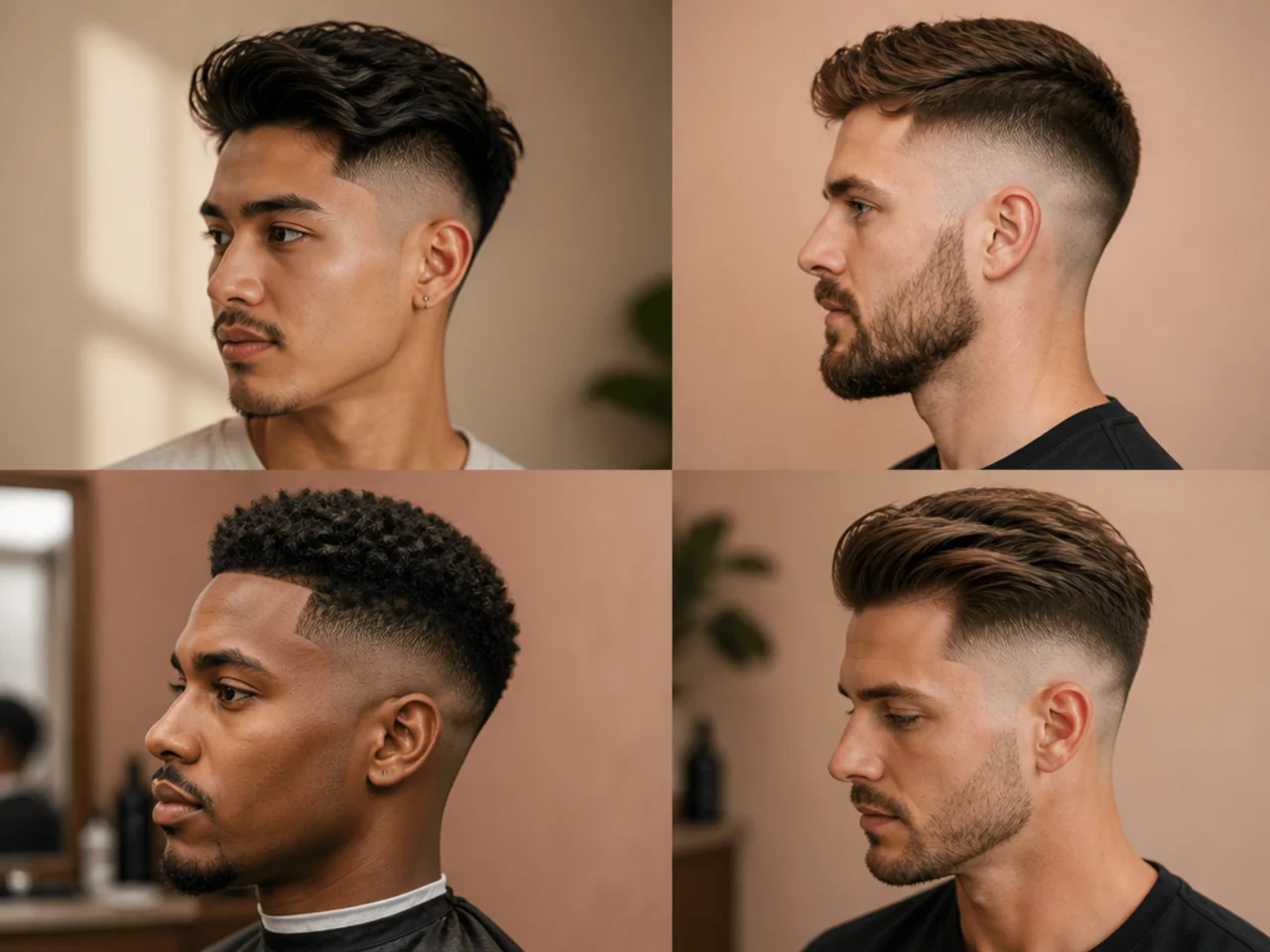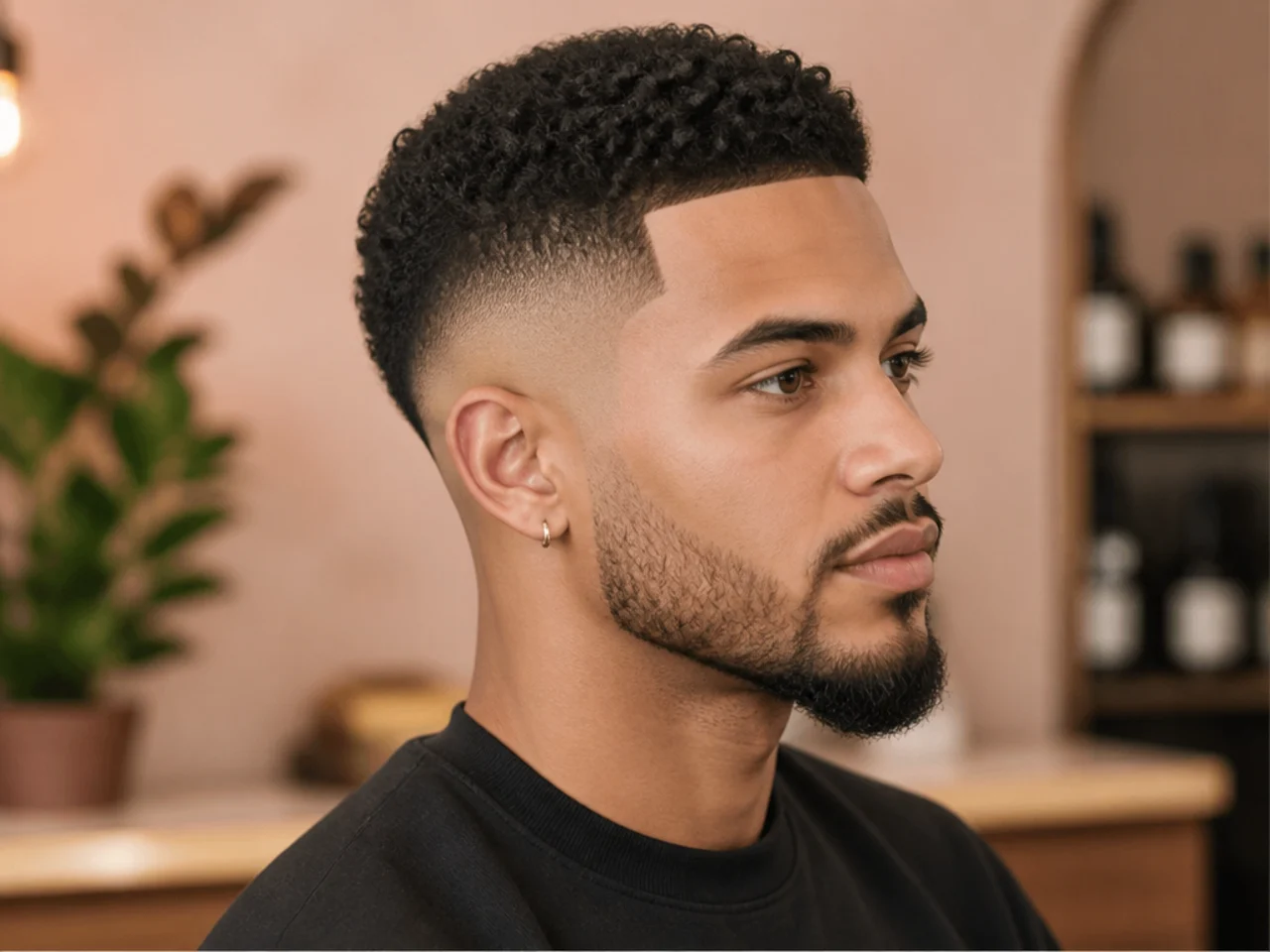
5 Ways a Burst Fade Beats a Regular Taper
Burst fade taper vs a regular taper — the arc, the nape, hair-type fit, styling time, and grow-out gap. See which one your face and lifestyle want.
In this article · 20
- The One-Line Answer
- Reason 1: The Arc Around The Ear
- Reason 2: How It Frames The Nape
- Reason 3: Hair-Type Suitability
- Reason 4: The Styling Time Gap
- Reason 5: Growth-Out Grace
- Best Face Shapes For Each
- Burst Fade vs Regular Taper: Side by Side
- Which Should You Pick?
- How to Ask Your Barber
- The One Place The Taper Still Wins
- FAQ
- What is a burst fade taper?
- Is a burst fade a type of taper?
- Can I get a burst fade on straight hair?
- Which is easier to maintain — burst or taper?
- Do I need to specify low, mid, or high for both?
- What's the difference between a burst fade and a drop fade?
- Can kids get a burst fade taper?
- Do burst fades pair with all top styles?
The burst fade and the classic taper share DNA but land in different places on the head. The burst wraps your ear in a semicircle and leaves the nape long. The taper runs a quiet gradient down the entire side and shortens the neckline with it. Both are fade-family cuts, but they answer different questions. Here are the five places the burst fade actually beats a regular taper — and the one place the taper still wins.
The One-Line Answer
The burst fade beats a regular taper when you want a cut that reads from across the room, pairs with a long-top style, and gets you compliments the day you leave the barber's chair. The regular taper wins when you want invisible, low-maintenance, and workplace-safe. Everything else on this page is nuance — but that's the ninety-percent read.
If you're bouncing between the two, the burst fade taper hybrid is the middle path. Arc around the ear, taper at the neckline, no hard fade line. It's the burst's softest and most office-friendly form.
Reason 1: The Arc Around The Ear
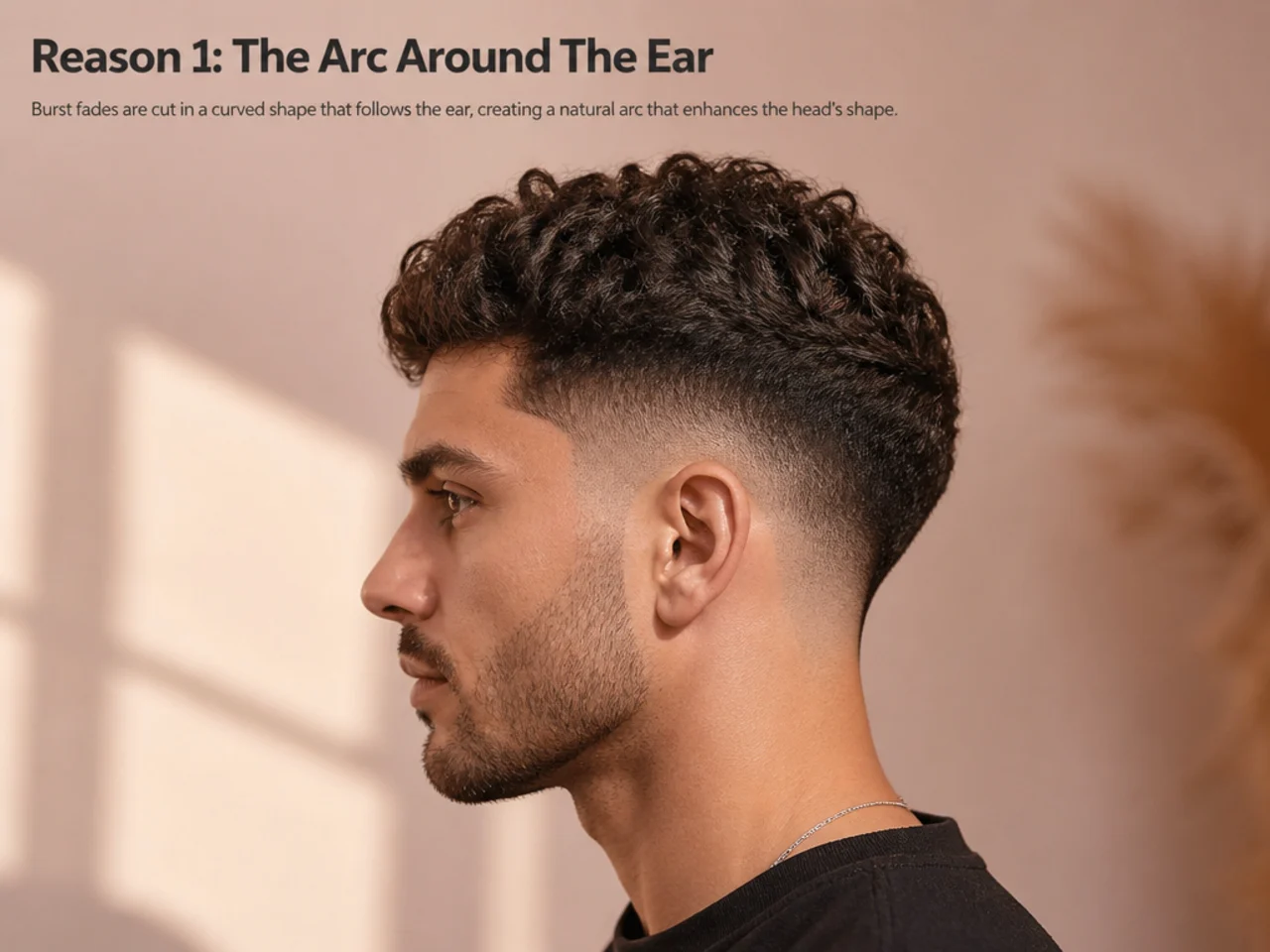
The burst fade earns its name here. Around your ear, the sides drop to skin or a short guard in a clean semicircle — the shortest point sits directly behind the ear, and length grows outward from that center in every direction. From the side, the shape reads like a halo.
A regular taper does the opposite. The blend runs vertically down the side of your head, and around the ear it stays roughly parallel — same guard length above and below the earlobe. Nothing radiates. Intentional but never loud.
That single geometry choice changes everything downstream. The arc creates a natural focal point, gives your barber a defined edge to line up, frames any earring without competing, and makes the length on top read taller because the surrounding skin creates contrast.
If you want the cut to be seen, the burst wins. If you want it to disappear into a professional wardrobe, the taper wins. The arc is the whole difference.
Ask for a burst: "Burst around the ear, taken to a 1 at the shortest point, curving down to meet the nape."
Ask for a taper: "Low taper — start the blend just above the ear, drop from a 3 to a 1 by the perimeter, no arc, no exposed skin."
Reason 2: How It Frames The Nape
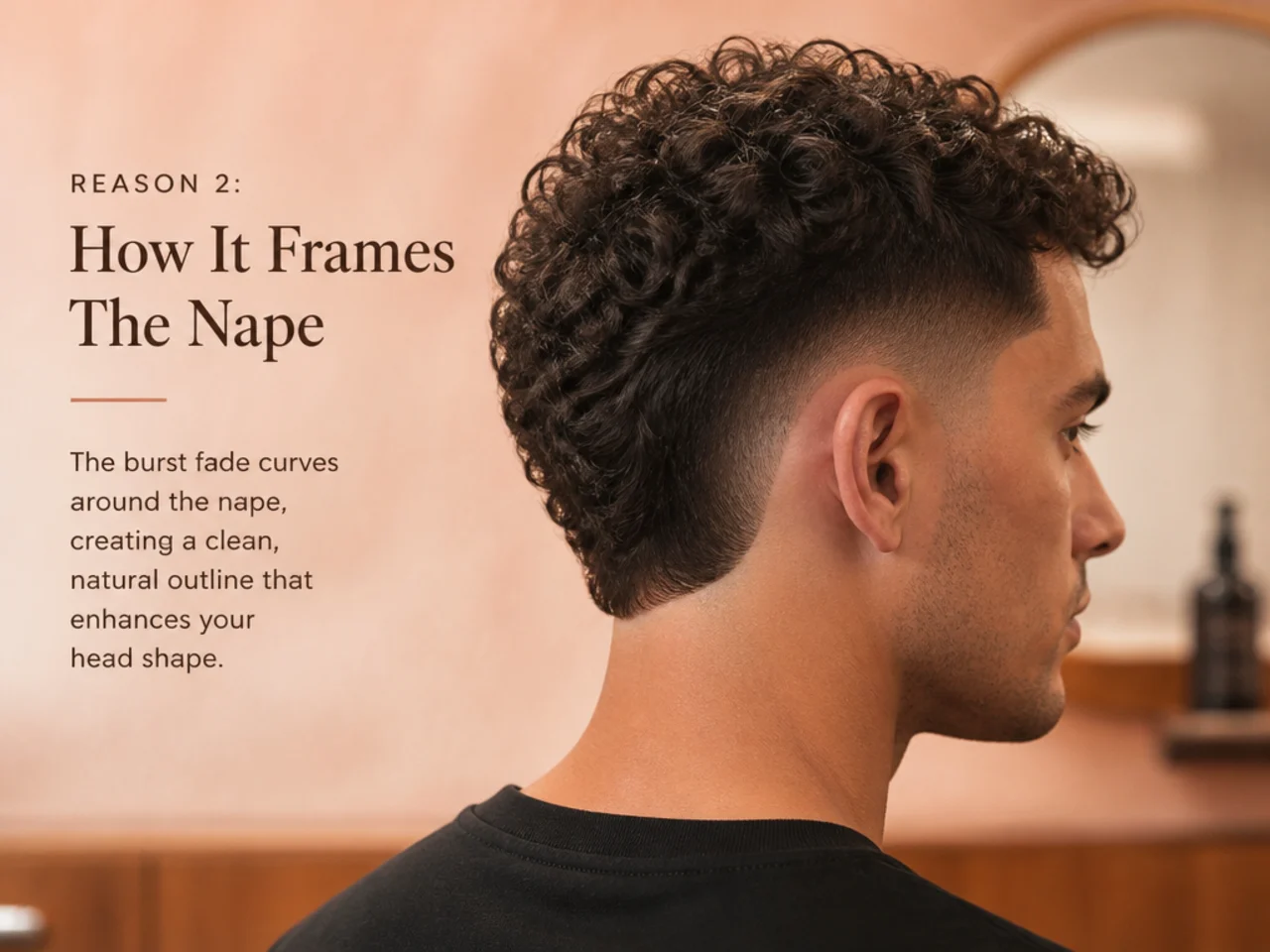
Where the two cuts really diverge is at the neckline. A burst fade leaves the nape long — sometimes past the collar, sometimes just a little longer than the sides. The arc ends behind the ear, and the length at the back is left to do whatever you asked for on top. That's why the burst pairs so naturally with a modern mullet, a rat-tail, or any long-back style. The geometry supports weight in the back instead of erasing it.
A regular taper does the opposite. The blend continues past the ear and drops into a soft point at the nape — everything at the back gets shortened along the same gradient as the sides. The neckline reads clean and close to the skin. Zero length lives below the occipital bone. That's what makes the taper the go-to for suits, collared shirts, and anywhere you want the shirt collar to sit against clean skin.
This is why the burst gets confused with a burst fade mullet so often — the two are almost always ordered together because the burst geometry begs for length in back. A taper on a mullet fights itself. The taper wants clean; the mullet wants weight; they cancel out.
If you plan to grow the back, order the burst. If you want the back to stay short and neat, order the taper.
Barber tip: if you love the burst's arc but need a shorter nape for work, ask for a "burst fade with a low taper at the neckline." The arc still reads, but the back stays professional.
Reason 3: Hair-Type Suitability
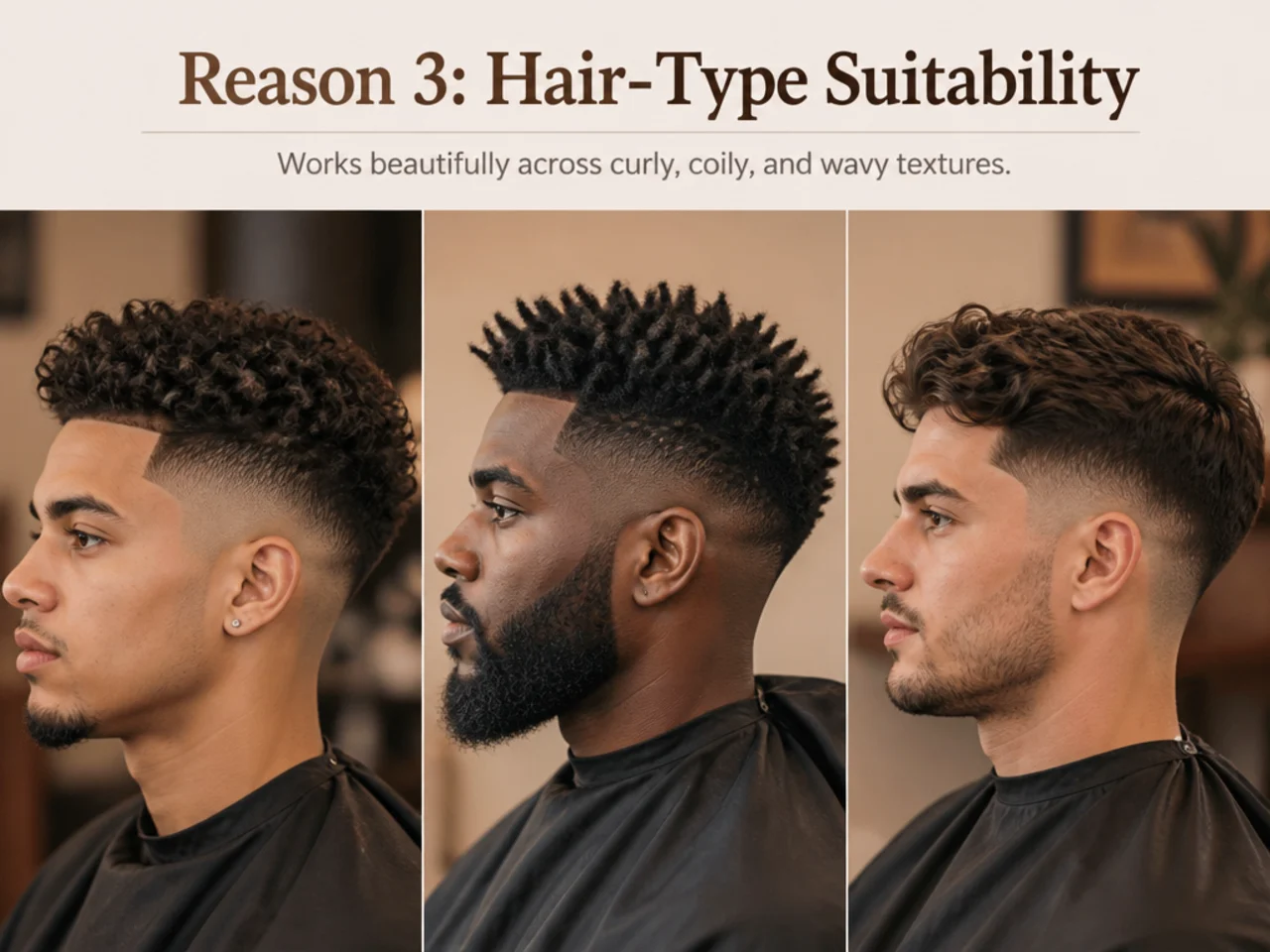
Curly, coily, and Type 3 hair love the burst. The arc echoes the natural curl pattern — both are built on the same curve, and the two shapes speak the same visual language. Take the burst to skin and the exposed side quiets the visual noise so the curl on top gets to be the loudest thing in the frame. That's why so many barbers push their curly clients toward a burst instead of a straight fade.
Wavy and straight hair also work with a burst, but the win is less automatic. On straight hair, the arc adds a sharp geometric contrast — clean lines up top, semicircle at the ear — that reads editorial rather than natural. On wavy hair, the burst pulls the eye toward the ear, which is fine if you like the emphasis and less fine if you'd rather your waves carry the whole look.
The regular taper is the opposite. It thrives on straight and wavy hair because the soft vertical gradient mirrors the natural fall of the top length — nothing competes. On tight curls, a classic taper can flatten the silhouette because the extra length on the sides adds width around the ears exactly where you don't want it. Curly guys who ask for a taper often end up with what stylists call the "helmet look" — width at ear level, height on top, nothing tapering it visually.
By hair type:
- Type 3 and 4 (curly, coily): Burst wins by a wide margin. The arc defines the curl silhouette. See burst fade curly hair for the full breakdown.
- Type 2 (wavy): Coin flip. Pick burst if you want a statement, taper if you want everyday polish.
- Type 1 (straight): Taper is the safer default. Burst still works if you want the geometry to read.
- Fine, thin, or receding hair: Taper. Full stop. The burst's exposed skin around the ear spotlights anything sparse.
Reason 4: The Styling Time Gap
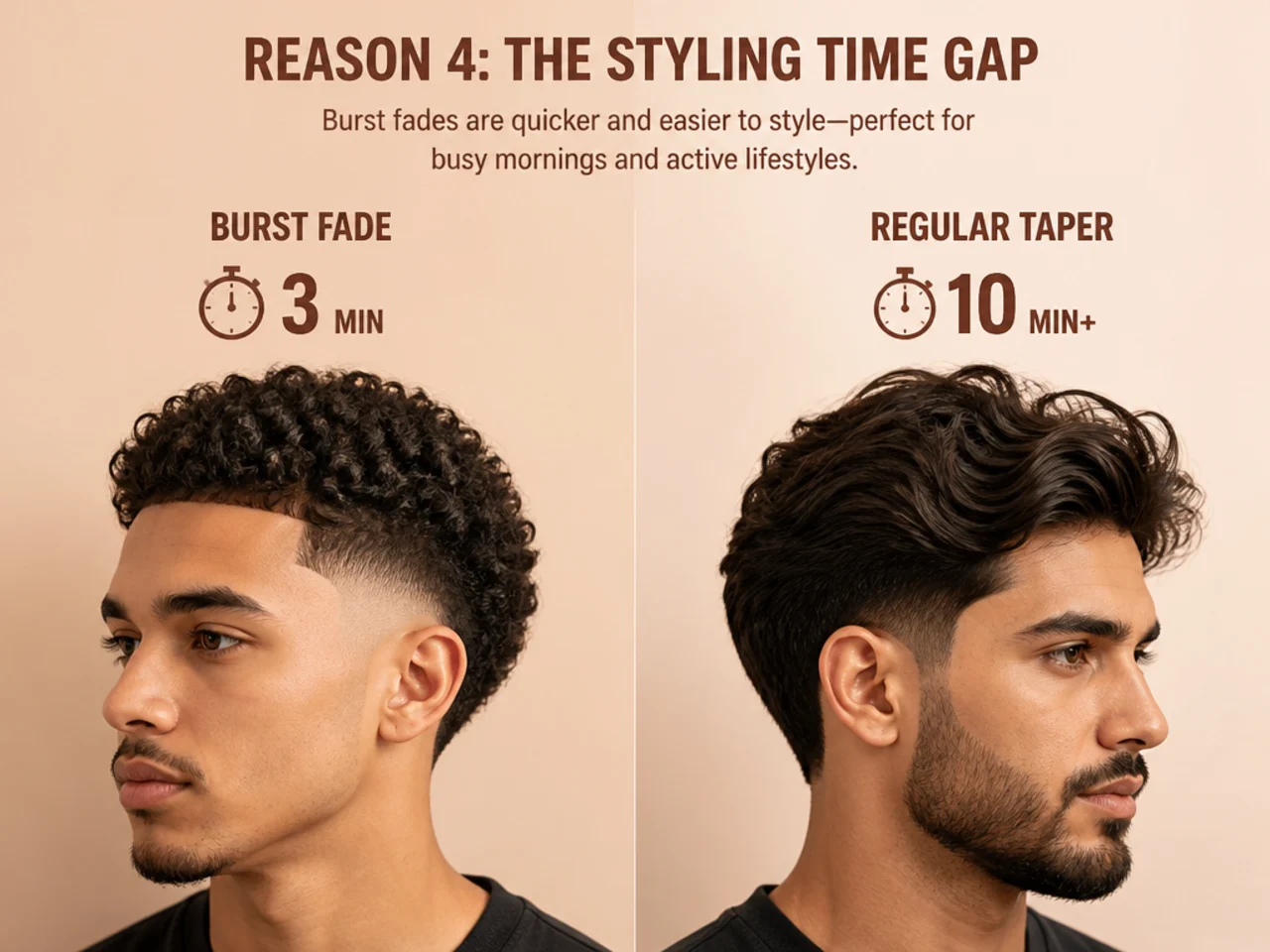
A burst fade takes less time to style than a regular taper. That surprises people. The logic is simple: the burst does the heavy lifting on shape, so the top doesn't have to work as hard. Wake up, run a fingertip of matte clay through the top, push it in whatever direction you like, walk out the door. Ninety seconds.
A regular taper leans on the top for everything. Because the sides are quiet and there's no visual focal point below, whatever's happening up top has to carry the whole cut. That usually means a blow-dry, a round brush, a styling product, and a finishing spray. Five to eight minutes. Over a year, that's roughly thirty extra hours in front of the mirror.
The catch: the burst needs more re-cuts. What you save in the morning you spend at the barber. More on that in Reason 5.
Product picks:
- Burst with curly top: curl cream on damp hair, diffuse dry.
- Burst with straight or wavy top: matte clay, worked with fingers.
- Taper with structured top: low-shine pomade, paddle brush.
- Taper with textured top: matte paste, no comb.
Reason 5: Growth-Out Grace
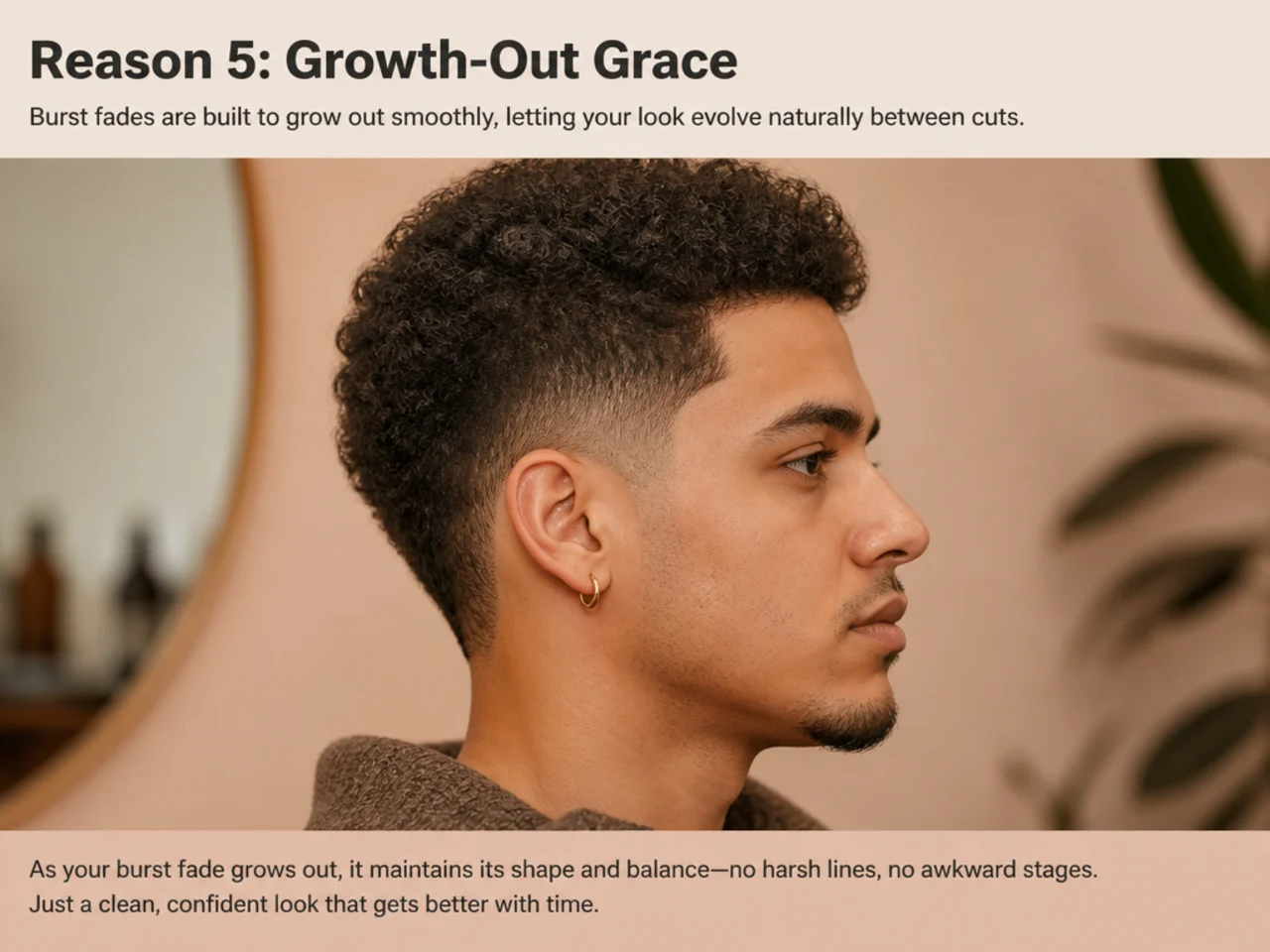
Here's the trade-off. The burst wins on styling time but loses on maintenance cadence. A burst fade needs a re-cut every two to three weeks because the arc depends on precise transitions — as soon as the shortest point grows in by an eighth of an inch, the curve softens and the halo effect disappears. You end up with a blurry crescent that looks less deliberate than the day-one version.
A regular taper stretches to four weeks without drama. The vertical gradient has more room to grow out because there's no arc to blur — the shape just shifts from crisp to soft. Some guys stretch a low taper to five or six weeks and it still reads clean. That flexibility matters if your schedule doesn't cooperate. For an even softer grow-out, book a low taper fade — the skin only shows at the perimeter.
Math over a year: a burst at $40 every two weeks runs about $1,040. A low taper at $40 every four weeks runs $520. Same barber, half the cost. Some guys pay the burst tax happily for the visual impact. Some can't. Know which one you are before you book. If you want the arc without the full cadence hit, the burst fade taper hybrid stretches to three weeks because the tapered nape hides some of the grow-out drift.
Best Face Shapes For Each
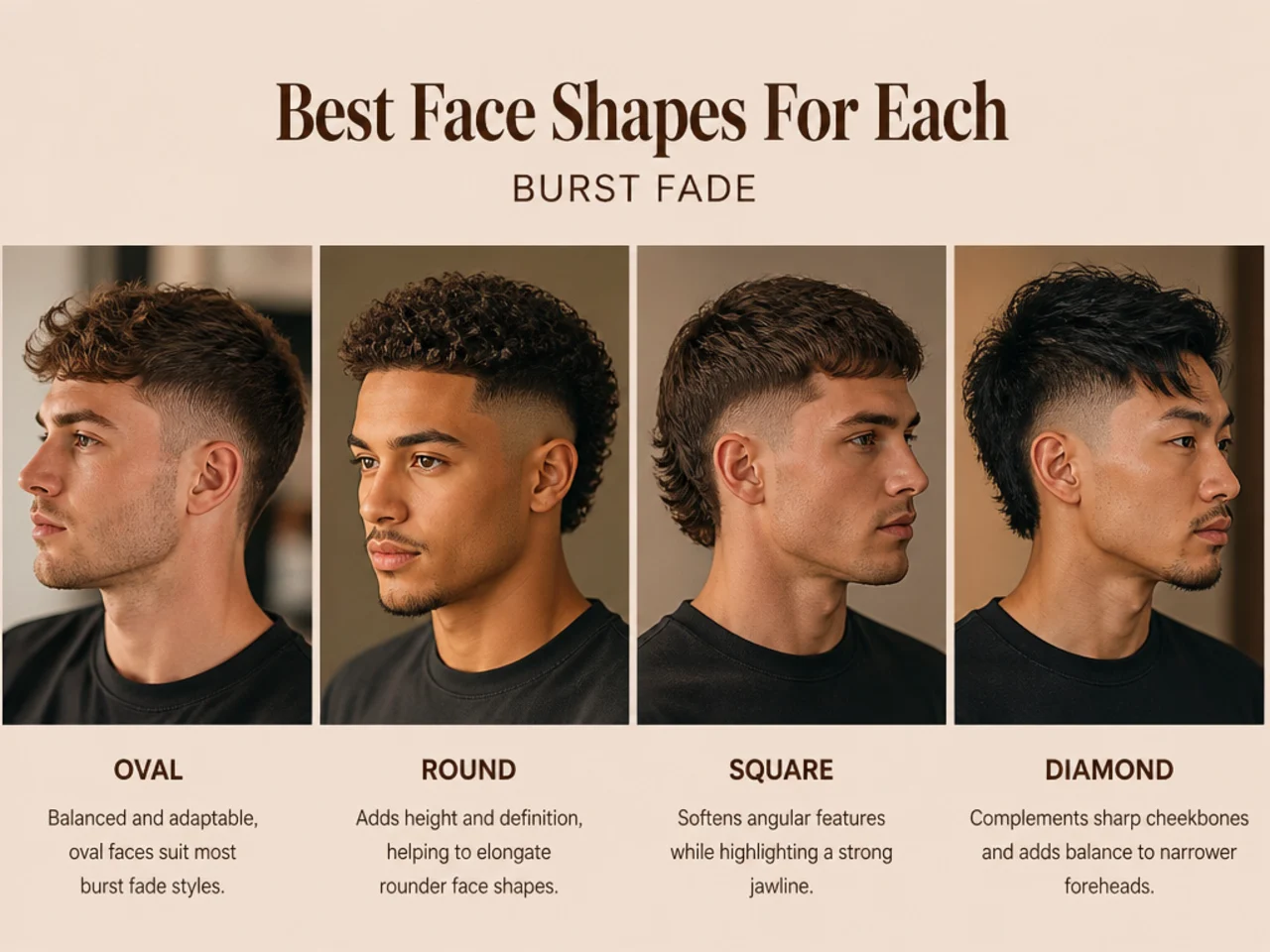
Face shape isn't a hard rule, but it tips the decision when everything else is a coin flip.
Round face. Burst wins. The arc adds vertical emphasis at the sides, which visually narrows the face. A regular taper leaves more width at ear level and can make a round face look wider still.
Oval face. Either works. Ovals are the goldilocks of face shapes because most cuts flatter them. Pick based on lifestyle, not shape.
Square face. Taper is the safer bet. The soft vertical gradient softens a strong jawline, whereas a high burst can double down on angular edges and read severe. That said, a low or mid burst with a textured top gives a square face plenty of movement.
Long or oblong face. Taper wins. A burst's exposed side visually shortens the head slightly, but the halo effect combined with any height on top can stretch a long face further. Low taper, medium top, done.
Heart face. Burst edges ahead. The arc widens the visual weight at ear level, which balances a narrower jaw. Pair with textured length up top to soften the forehead width.
Diamond face. Burst by a mile. The arc emphasizes cheekbone width in the best possible way — you're leaning into the diamond's strongest feature, not fighting it.
If your face is somewhere between two shapes, default to a mid-height burst or a low taper. Both are the safest picks in their category.
Burst Fade vs Regular Taper: Side by Side
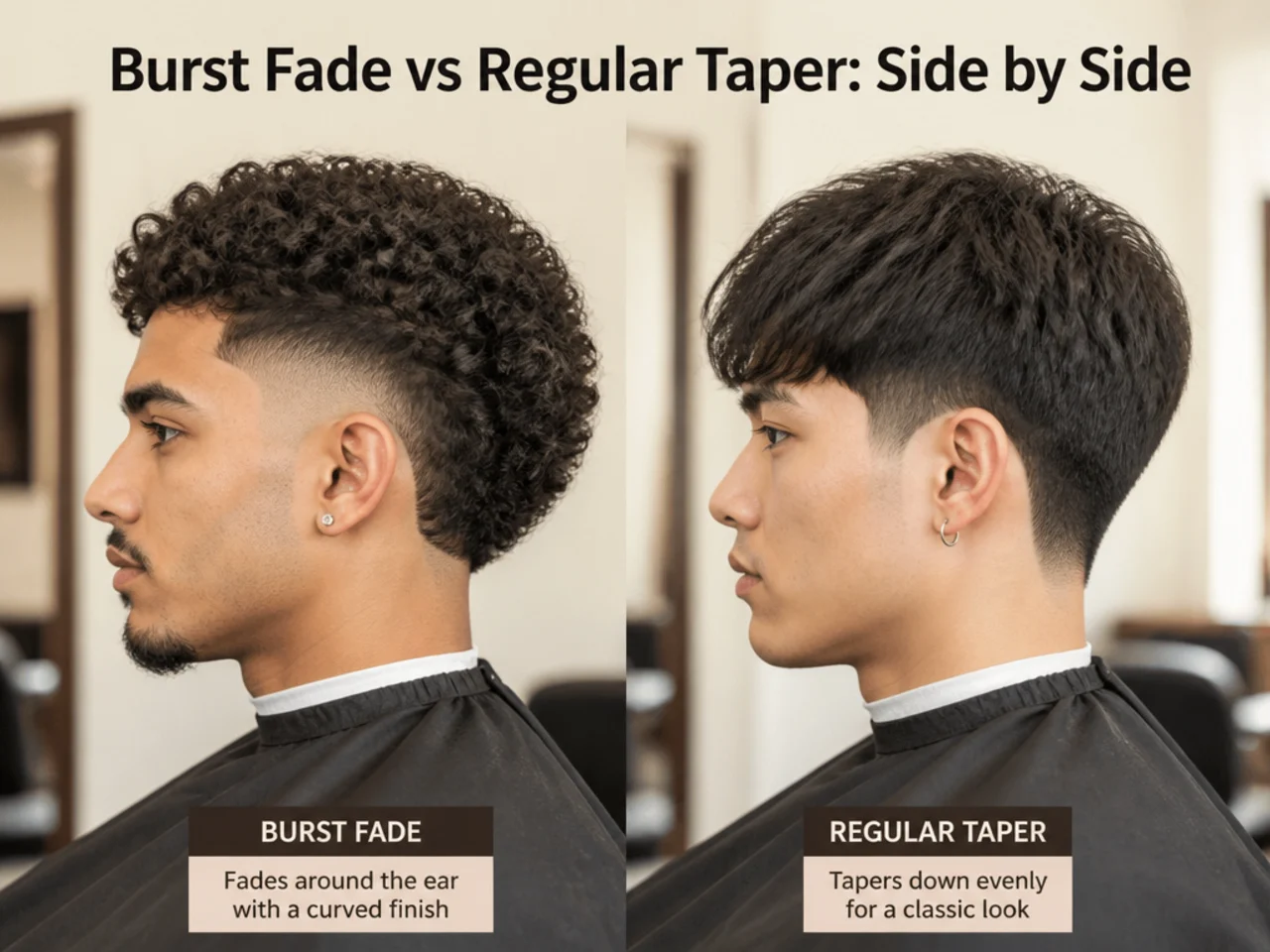
Here's the decision matrix, laid out flat.
Two more numbers worth knowing:
Workplace fit. The burst reads as a style choice; the taper reads as a haircut. Traditional finance, law, and executive-track corporate roles accept a low taper without a second look, but a high burst with skin at the ear can raise eyebrows. Modern offices, creative fields, service industry, hospitality, and trades won't blink at either.
Contrast level. A burst taken to skin creates the highest contrast in the fade family — brighter skin against darker top hair. A regular taper has almost no contrast because nothing gets exposed to bare skin. If you want a haircut people notice, the burst delivers. If you want a haircut that lets your face carry the room, the taper delivers.
Which Should You Pick?
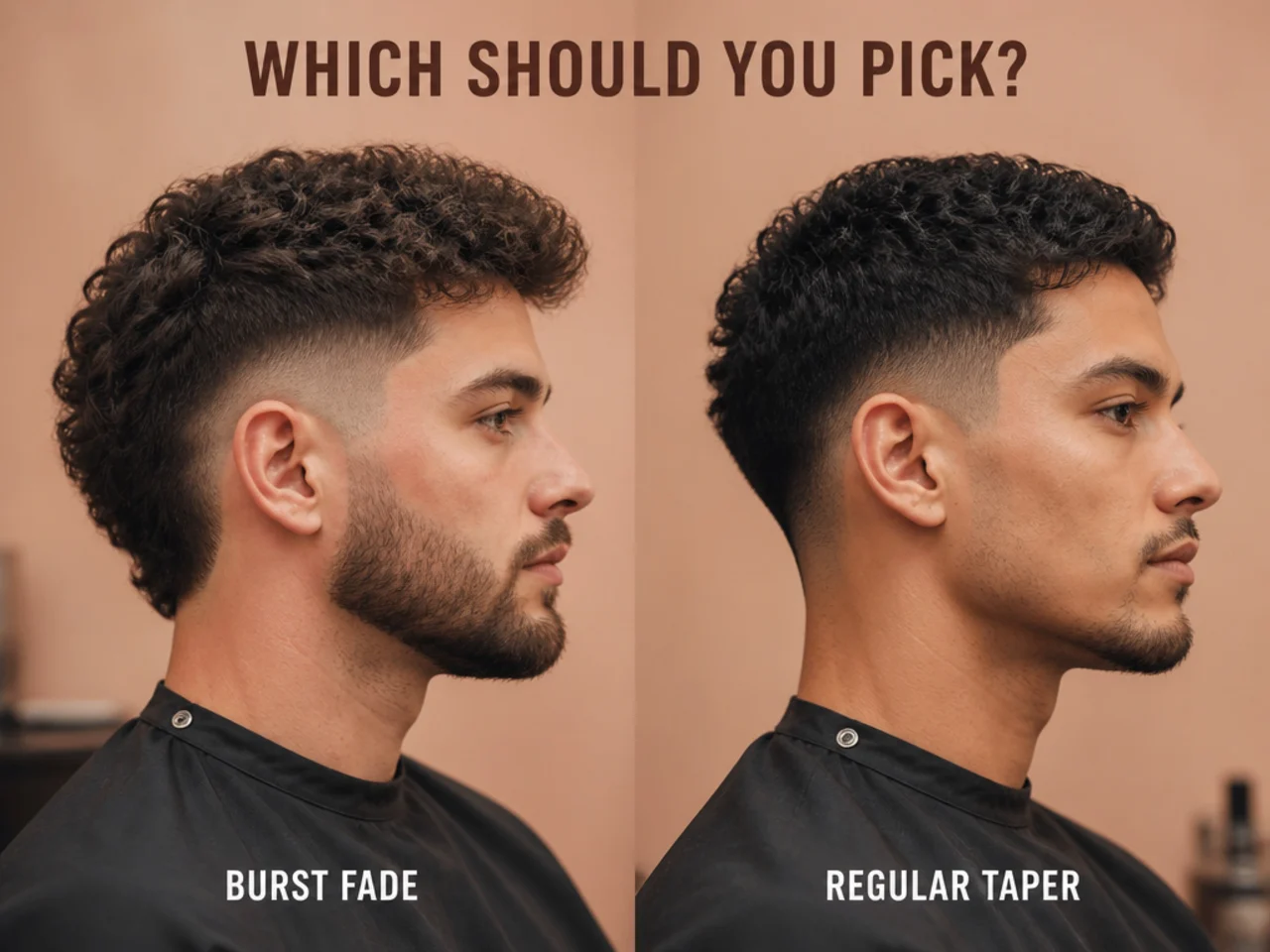
Pick the burst fade if:
- You want the haircut to read from across the room.
- You have curly, coily, or thick Type 3 hair.
- You wear a mullet, mohawk, faux hawk, or comma-hair top.
- You can commit to a re-cut every two to three weeks.
- You work in creative, trade, hospitality, or an office without a dress code.
- Your face is round, heart, or diamond and needs the arc's balancing effect.
Pick the regular taper if:
- You want the haircut to disappear into a suit or scrubs.
- You have straight, wavy, fine, or thinning hair.
- You wear a side part, comb over, French crop, or structured Edgar haircut.
- You need a cut that stretches four weeks or more between visits.
- You work in traditional finance, law, medicine, or any conservative environment.
- Your face is long, oblong, or square and needs the taper's softening effect.
Pick the burst fade taper hybrid if you want both. Arc at the ear, taper at the neckline, no hard fade line, no exposed skin below the collar. Book every three weeks. Ninety percent of the burst's visual impact with sixty percent of its maintenance load. For the fuller family of options, see the fade haircut hub and the taper haircut breakdown.
If you're still stuck: order a low burst fade. It's the safest burst on the list — the arc sits tight to the ear, the exposed skin stays minimal, and the whole cut wears clean under a shirt collar. That's the burst you can walk into any office with.
How to Ask Your Barber
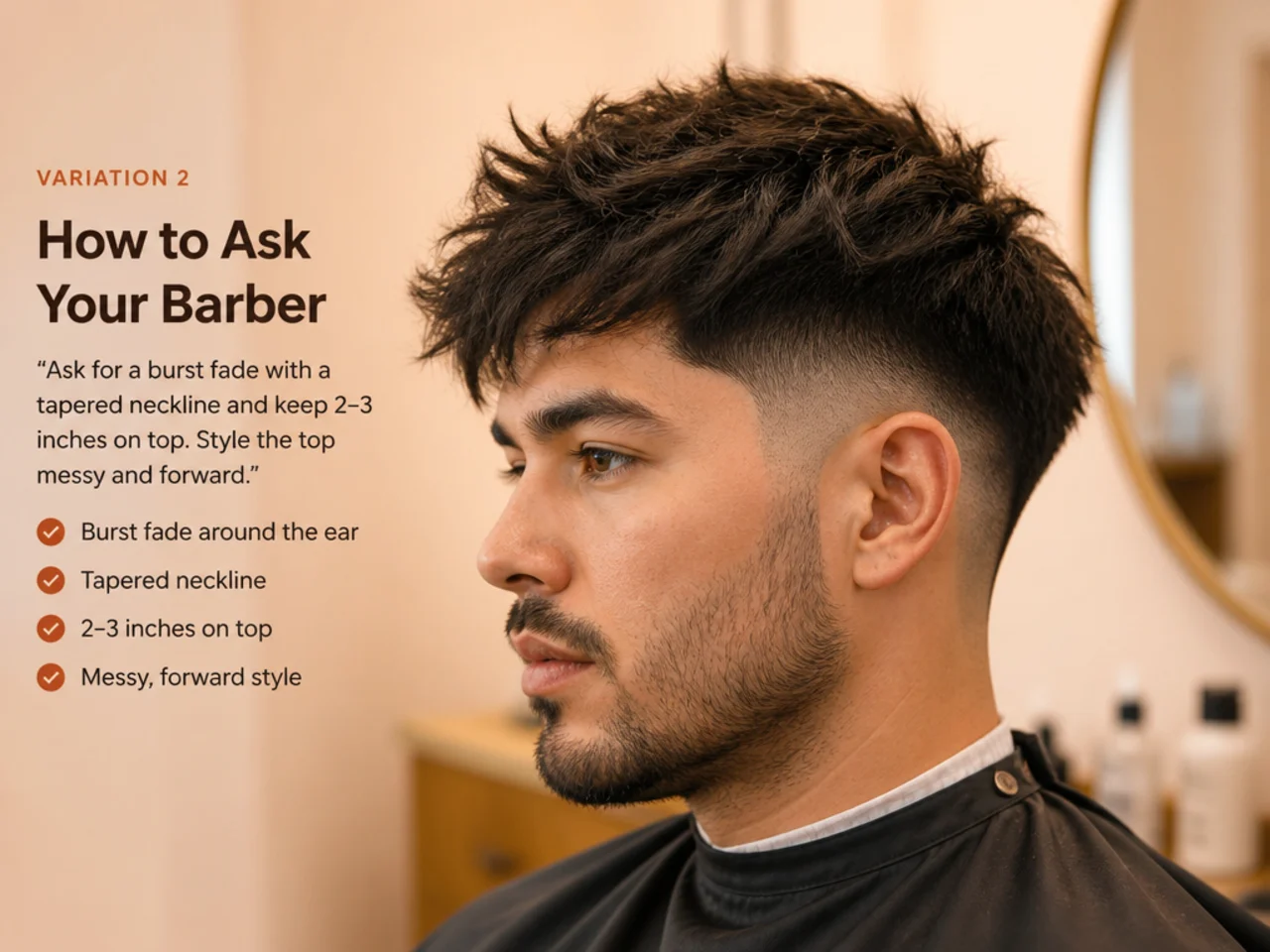
The four-number method works for both cuts. Change one word and the barber knows exactly which shape you want.
For a burst fade:
- Say the word "burst." Not fade, not taper — burst. The word specifies the arc.
- Name the height. Low, mid, or high. Low sits tight to the ear; high climbs to the temple.
- Name the guard at the shortest point. Skin (0), guard 0.5 (near-skin), or guard 1 (very short).
- Name the top length. In inches for scissor-cut tops, or a guard number for clippered.
- Name the neckline. Blocked (sharp), tapered (soft), or left long for a mullet.
- Show a photo. The arc height varies by barber's interpretation — a reference photo removes ambiguity.
For a regular taper:
- Say the word "taper." Not fade, not burst. The word signals length preserved on the sides.
- Name the height. Low, mid, or high — same logic as above.
- Name the guard on the sides. A 3 or 4 at their longest, dropping to a 1 or 2 at the perimeter.
- Name the top length. Same as above.
- Name the neckline. Blocked, tapered, or rounded. Blocked reads sharpest under a collar.
- Confirm no exposed skin. Say it out loud. If your barber's default is a fade, they may drop the sides too short without the reminder.
Two mistakes to avoid. Don't ask for a "burst 1" — say "burst to a 1" so the guard is clear. And don't confuse the burst with a drop fade: the drop follows the hairline behind the ear; the burst radiates from a center point behind the ear. Different geometries. Say the exact word.
The One Place The Taper Still Wins
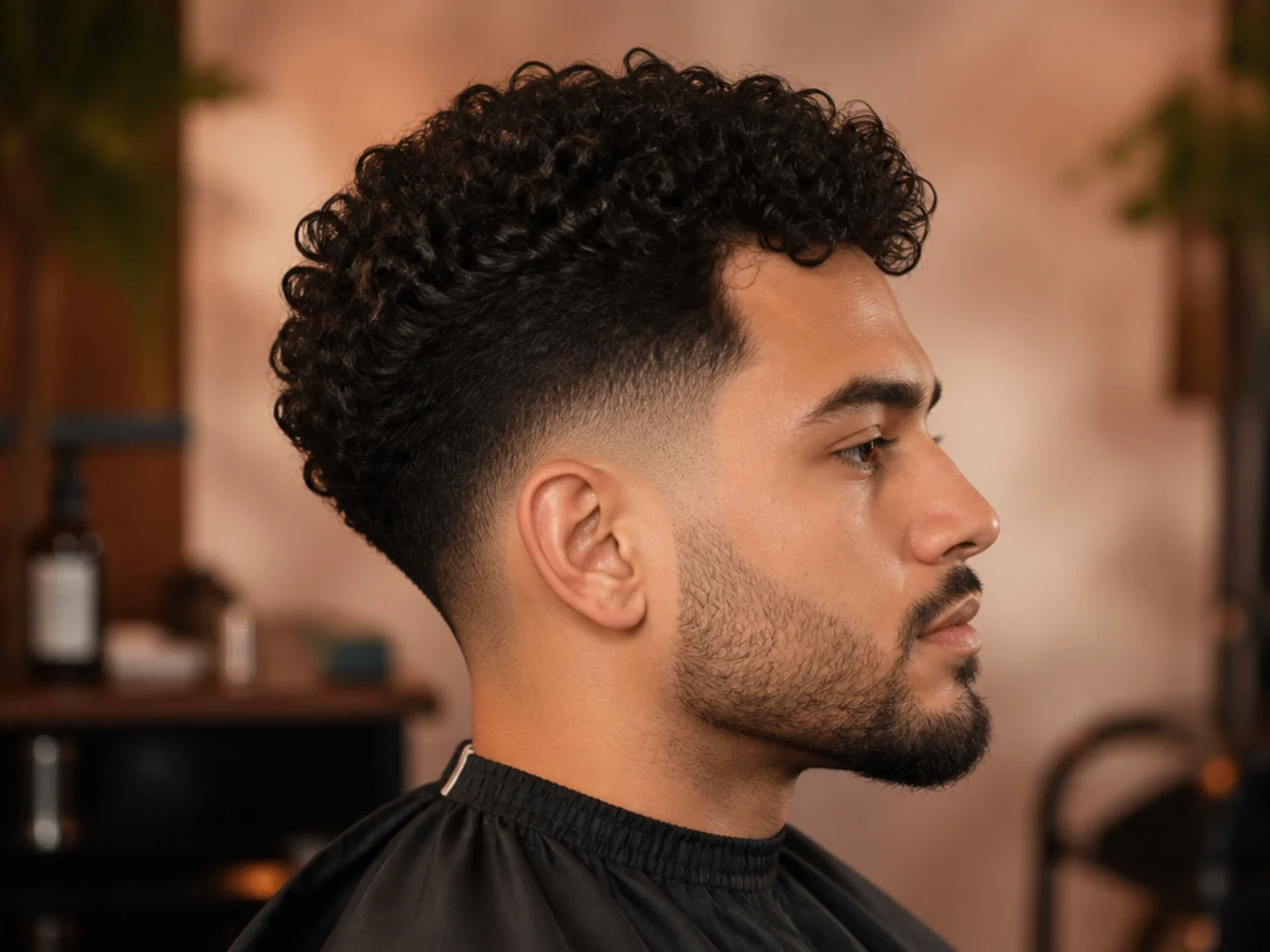
The taper wins in a boardroom. If your job requires you to look neutral — traditional finance, appellate law, private banking, conservative medicine — the burst is a risk and the taper isn't. It also wins for anyone growing hair out: a low taper keeps the transition looking intentional for months, where a burst drifts visibly in ten days. And the taper wins on the wallet — half the cuts per year, roughly half the grooming bill.
The honest read isn't "burst always beats taper." It's "burst beats taper on visual impact, curly-hair flexibility, styling time, and face-shape reach — and the taper still owns the professional register and the maintenance-averse crowd." Pick your fight, then pick your cut.
FAQ
What is a burst fade taper?
A burst fade taper is a burst fade with a tapered neckline instead of a hard fade line at the back. The arc still wraps the ear, but the back grows down softly through the nape. It's the burst's most conservative form and the closest thing to a compromise between the two cuts.
Is a burst fade a type of taper?
Technically yes — every fade in the family is a subset of a taper, because a taper is any gradual length change. In practice, barbers use "taper" to mean length preserved on the sides and "fade" to mean sides taken to skin. A burst fade takes the sides to skin or near-skin around the ear, so it lives in the fade half of the family, not the taper half.
Can I get a burst fade on straight hair?
Yes. The burst reads sharper on straight hair than any other texture because the top hair falls in clean lines, so the arc's curve becomes the visual counterpoint. Ask for a mid or high burst so the arc reads from across the room, and keep the top textured with matte clay to break up the smoothness.
Which is easier to maintain — burst or taper?
Regular taper, by a comfortable margin. A taper stretches four to five weeks between cuts. A burst wants two to three. If your calendar or budget can't handle the burst cadence, order the taper.
Do I need to specify low, mid, or high for both?
Yes, every time. Height is the second-most-important spec after the shape word. A low burst reads office-friendly; a high burst reads statement piece. A low taper is conservative; a high taper is closer to a fade. Say the height out loud — never assume the barber's default matches your vision.
What's the difference between a burst fade and a drop fade?
The burst curves around the ear in a full semicircle — the shortest point sits directly behind the ear and length grows outward in every direction. A drop fade drops down behind the ear along the hairline — the shortest point stays at the temple and the fade line lowers as it moves back. Two different curves, two different geometries. Say the exact word so the barber knows which one you want.
Can kids get a burst fade taper?
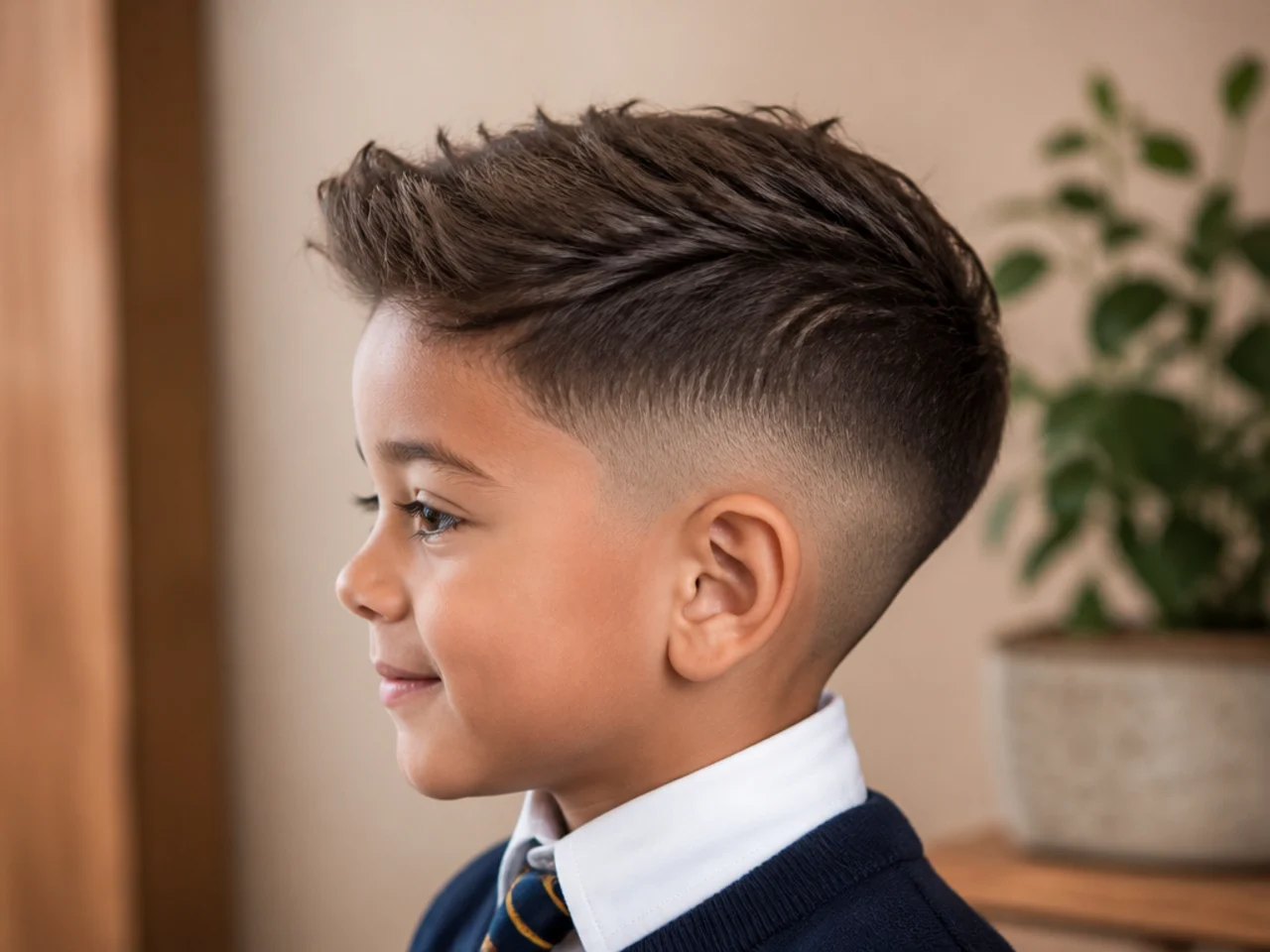
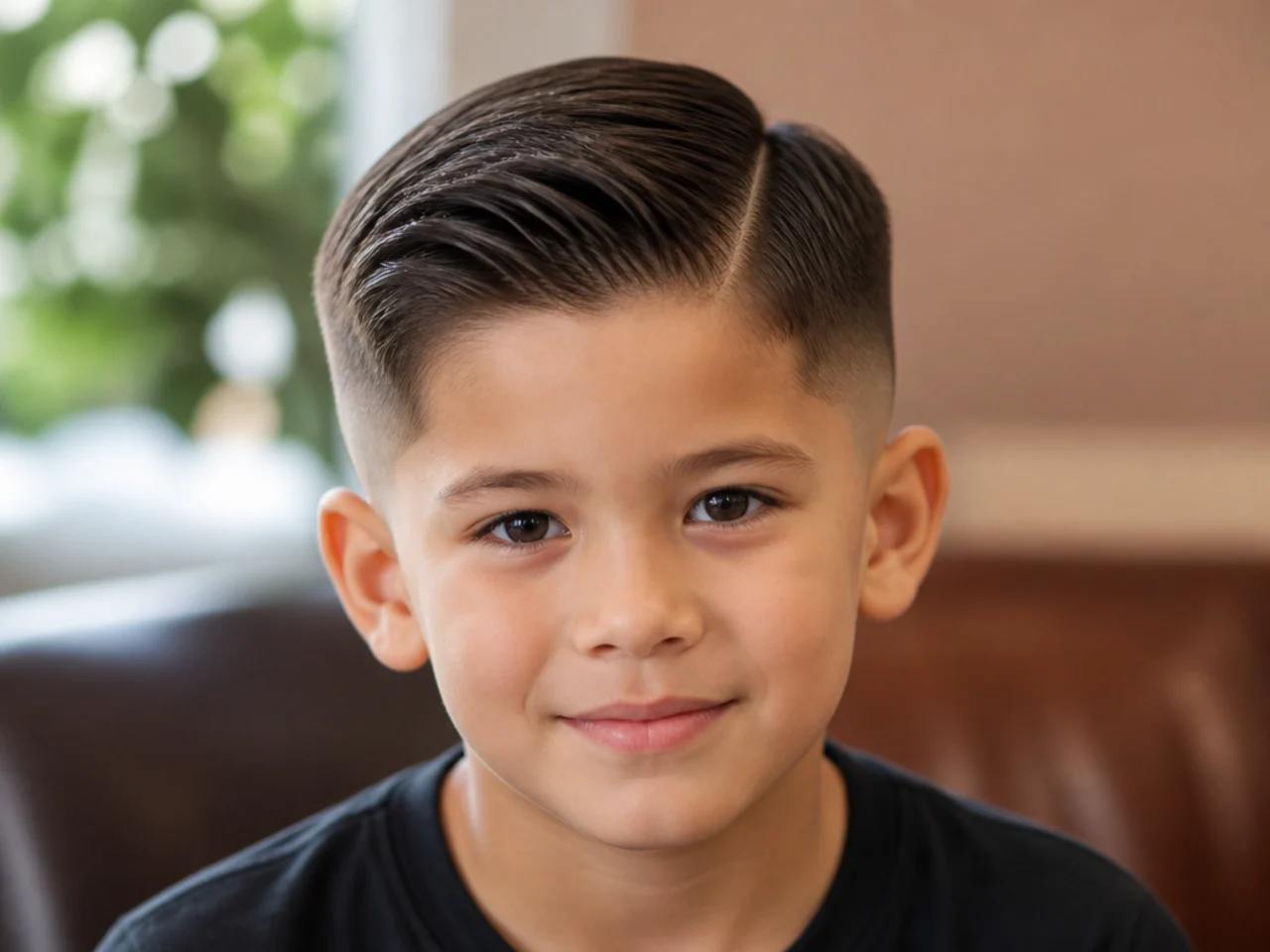
Yes — it's one of the more popular kids' burst variations because the tapered nape reads cleaner under school collars. Most kids' barbers will do it if you show a photo. Book every three weeks; kids' hair grows fast and the arc blurs sooner than adult hair does.
Do burst fades pair with all top styles?
Best pairings are anything with visual weight up top — mullets, mohawks, curly crops, comma haircut styles, textured fringes, and afros. Less ideal are short buzzes (nothing to contrast) and slick-back styles (already polished — the arc pushes the look toward busy).