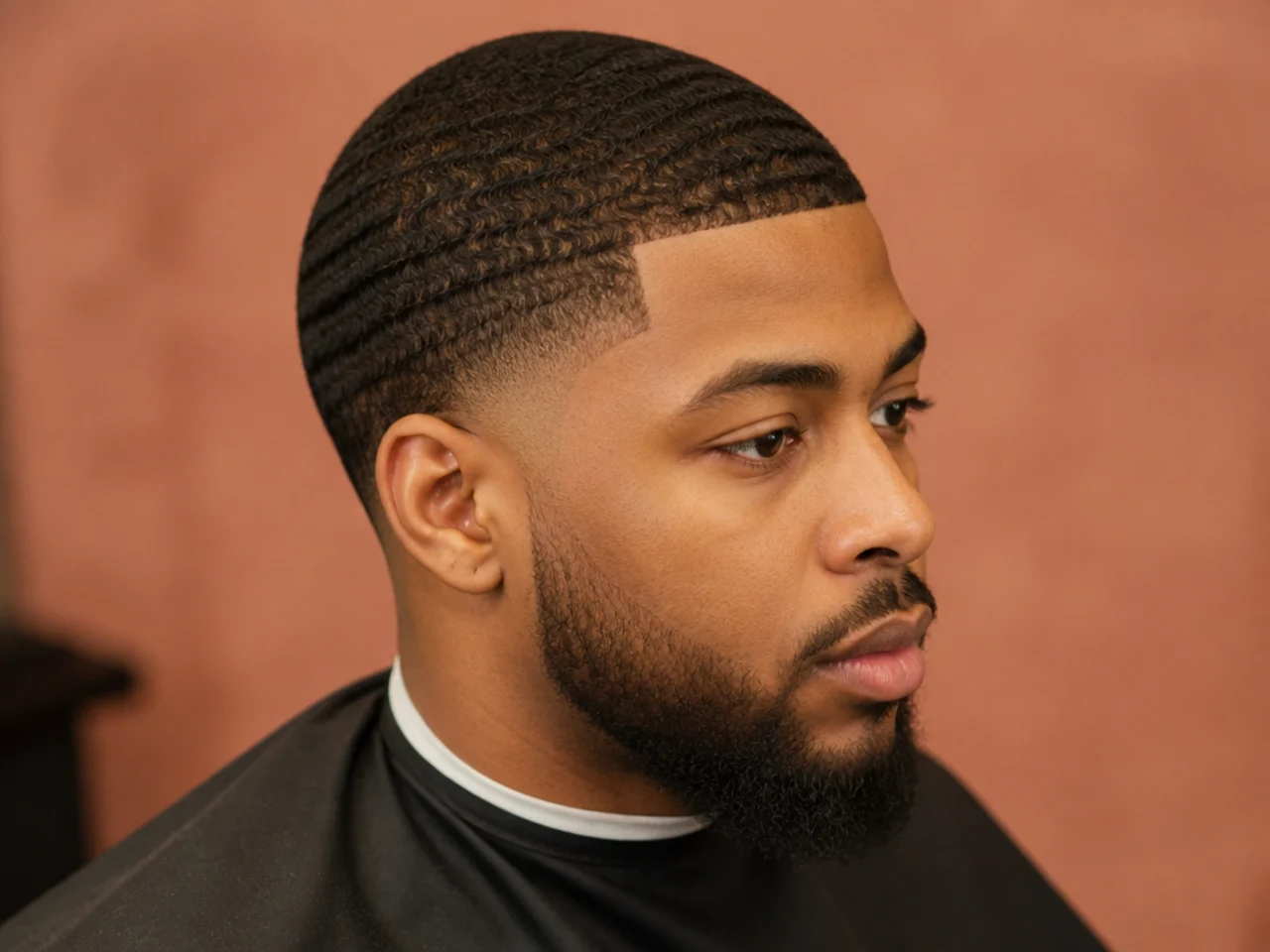
30 Haircuts for Black Men Worth Trying
Thirty haircuts for Black men worth trying — waves, twists, dreads, high tops, fades, edgars, braids, and designs. Cut recipes for 4A, 4B, and 4C hair with the exact ask for your barber.
In this article · 36
- What Makes a Great Cut for Black Hair
- How to Choose Your Cut
- The 30 Haircuts
- 1\. Low Taper Fade with 360 Waves
- 2\. Mid Fade with Natural Afro
- 3\. High Skin Fade with Short Curly Top
- 4\. Bald Fade with Sharp Line-Up
- 5\. Burst Fade with Curly Top
- 6\. Drop Fade with Two-Strand Twists
- 7\. Blowout Taper with Coily Volume
- 8\. Temple Fade with Ceaser Waves
- 9\. Undercut Fade with Sponge Coils
- 10\. Skin Fade with Hair Design
- 11\. Buzz Cut with Low Taper
- 12\. Ceaser Cut with Sharp Fringe
- 13\. Big Chop TWA
- 14\. Classic High Top Fade
- 15\. Freeform Dreads with Low Taper
- 16\. Retwisted Locs with Line-Up
- 17\. Two-Strand Twist Set
- 18\. Box Braids with Undercut
- 19\. Cornrows Straight-Back with Taper
- 20\. Sponge Twist Coils with Taper
- 21\. Defined Twist-Out with Low Fade
- 22\. Full Natural Afro
- 23\. Coily Fringe with Low Taper
- 24\. Edgar on Textured Hair
- 25\. Curly Frohawk with Burst Fade
- 26\. Textured Crop with Low Taper
- 27\. Slick-Back on Relaxed Hair
- 28\. Locs Half-Up Man Bun with Taper
- 29\. Razor Hair Design in Side Panel
- 30\. Slight Mullet on Textured Hair
- How to Ask Your Barber
- Styling and Maintenance
- FAQ
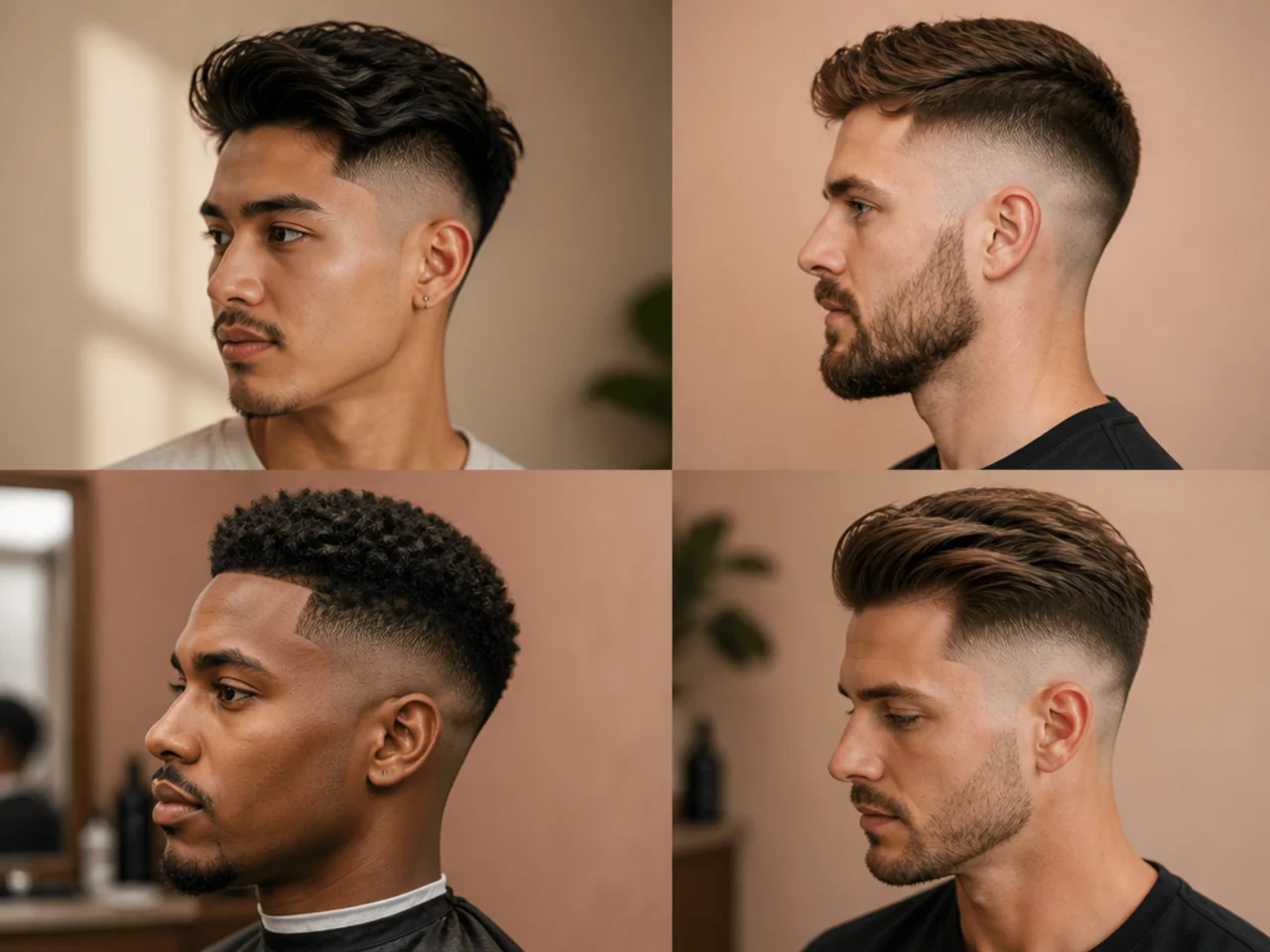
Black men have more range at the chair than any other group — waves and coils, tapers and skin fades, freeform locs and razor-carved designs, high tops and TWAs. This guide covers thirty haircuts for Black men worth trying in 2026, each with the cut recipe, who it flatters, and the exact language to hand your barber so you leave with the version you had in mind.
Want the fade family broken out separately? Start with the fade haircuts for Black men roundup. For the taper-only family, the taper fade Black men guide covers twenty-five variations at that level of detail.
What Makes a Great Cut for Black Hair
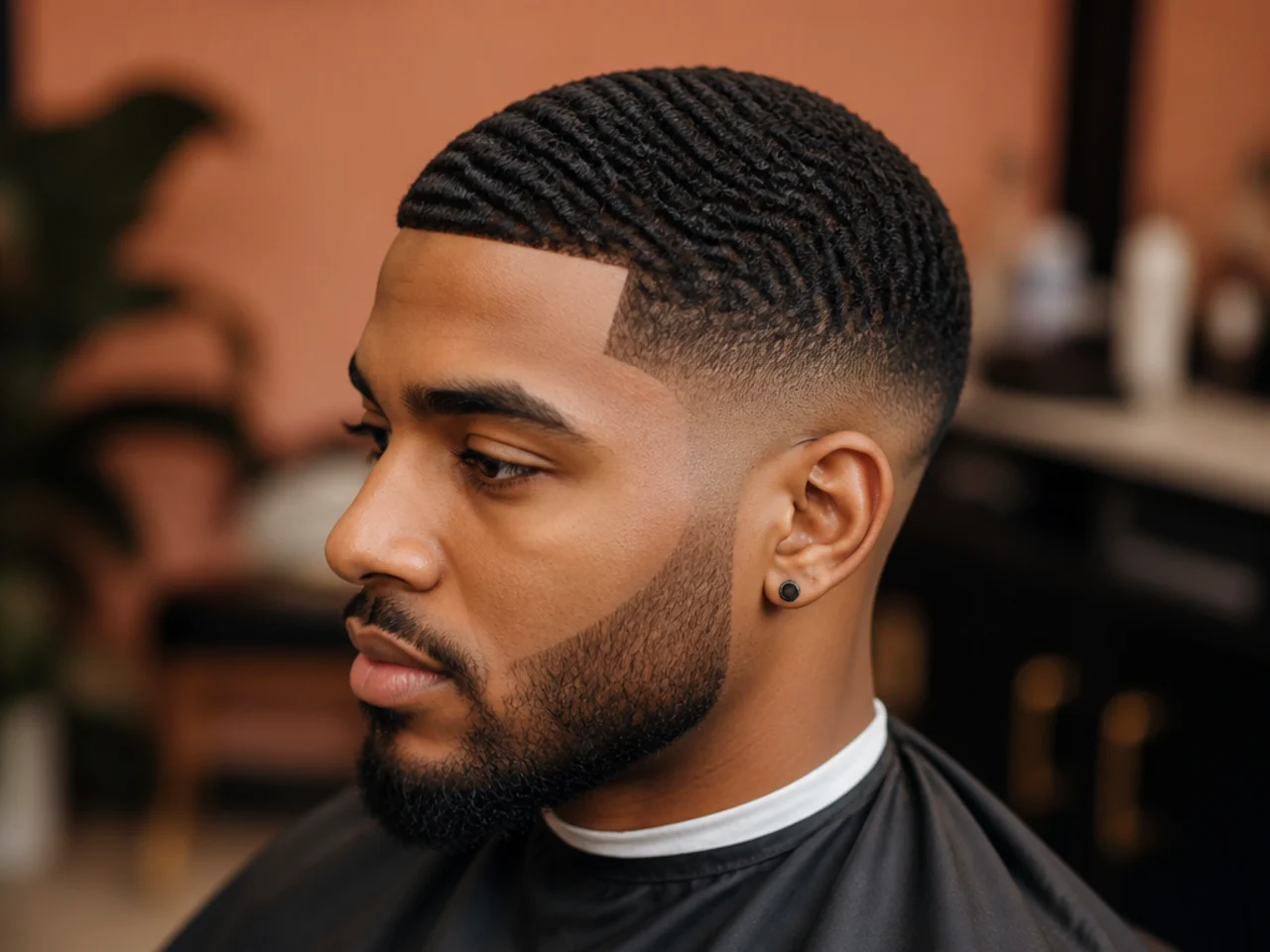
A great cut for Black hair works with the coil pattern instead of fighting it. That means three rules your barber should follow every visit: pick the top out before cutting, scissor-cut the top dry so shrinkage doesn't lie about the length, and never use thinning shears on textured hair — they wreck the pattern from the inside out.
The best barbers also match the perimeter to what you're doing on top. A tall afro wants a mid or high fade so the height reads deliberate. Short waves want a low taper so the wave pattern stays visible against the fade line. Locs and braids want the taper to sit low, matching the exact line where the protective style begins.
Texture-wise, Black hair spans 4A wavy coils, 4B S-shaped coils, and 4C tight zig-zag coils. Every cut on this list works on all three types — the difference is length and product routine, not the shape. Not sure where you sit on the curl types chart? Snap a photo of your hair damp and matched against the reference. It settles the question in ten seconds.
How to Choose Your Cut
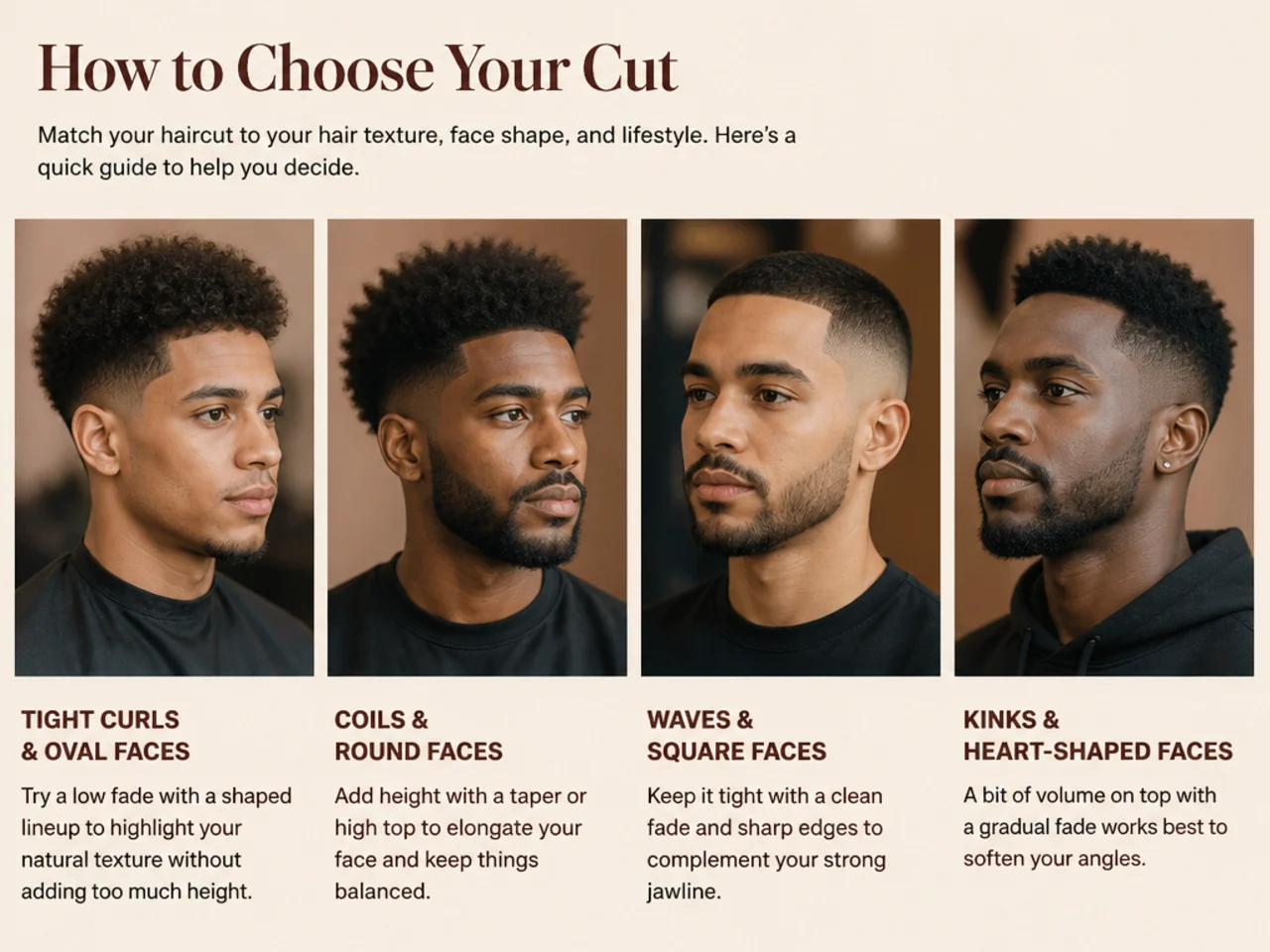
Four variables narrow the field: face shape, texture density, dress code, and how much daily styling you'll actually run.
Face shape. Oval wears every cut on this list. Round faces want vertical volume — high tops, tall afros, and frohawks add length. Square jaws soften under coily fringes and rounded afro shapes. Long faces should cap the top at four inches so the height doesn't drag. Heart-shaped faces balance well with medium-length coils or the drop fade family.
Texture density. 4A holds pattern down to an inch — waves and sponge coils show cleanly. 4B wants three to four inches for the coil to bloom. 4C needs four to six inches of dry length so the zig-zag pattern springs to life. Cutting shorter than that on 4C loses the definition.
Dress code. Corporate and courtroom favor low tapers, buzz cuts, and clean caesar shapes. Creative and casual workplaces have room for high tops, freeform dreads, and razor designs. Neither is better — they're different tools.
Styling appetite. Buzz cuts and TWAs take ten seconds a morning. Waves, twist-outs, and full afros demand a nightly durag or bonnet ritual. Locs and braids are the lowest-touch protective styles once installed. Pick the routine you'll actually run — a beautiful cut on paper falls flat if the maintenance doesn't fit your calendar.
The 30 Haircuts
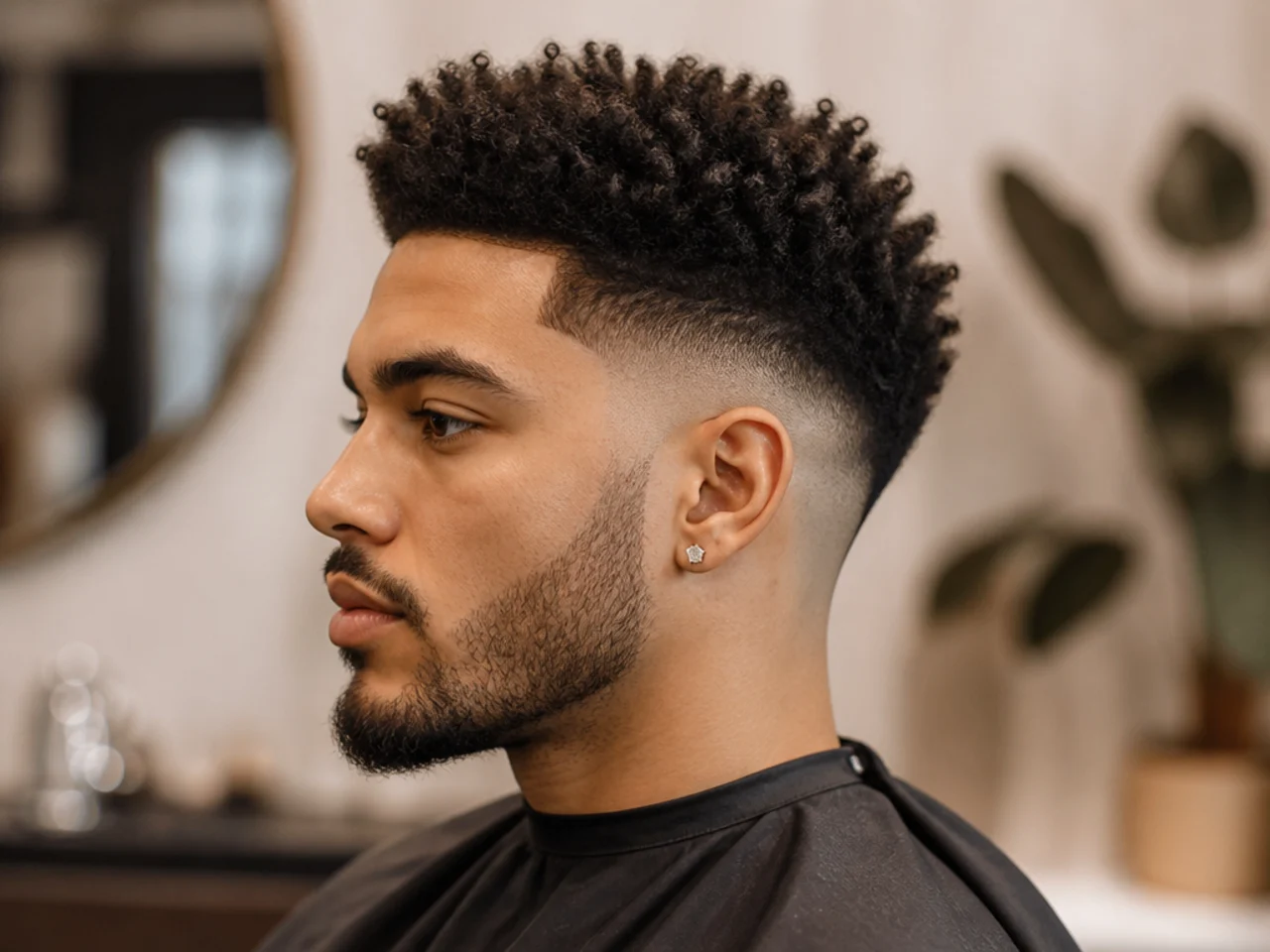
Thirty cut recipes for Black men, sorted loosely from clean-and-quiet to loud-and-detailed. Every block covers what makes it different, who it flatters, how to hand it to your barber, and one styling move worth stealing.
1. Low Taper Fade with 360 Waves
The everyday classic. A brush-and-durag wave pattern kept between a #1 and #2 guard on top, low taper fade cleaning the perimeter above the ear, sharp line-up at the forehead. Reads polished for any workplace and photographs like you spent an hour in the mirror. Best on 4A wavy texture, oval and square faces, and anyone breaking into the taper family for the first time.
Ask for: "low taper fade, #1 at the shortest, #2 on top brushed in the wave direction, sharp line-up at the forehead."
Styling: wave cream on damp hair, brush in your pattern twice a day for two to three minutes, tie down with a silk durag every night. The pattern locks in about six weeks of consistent wolfing.
2. Mid Fade with Natural Afro
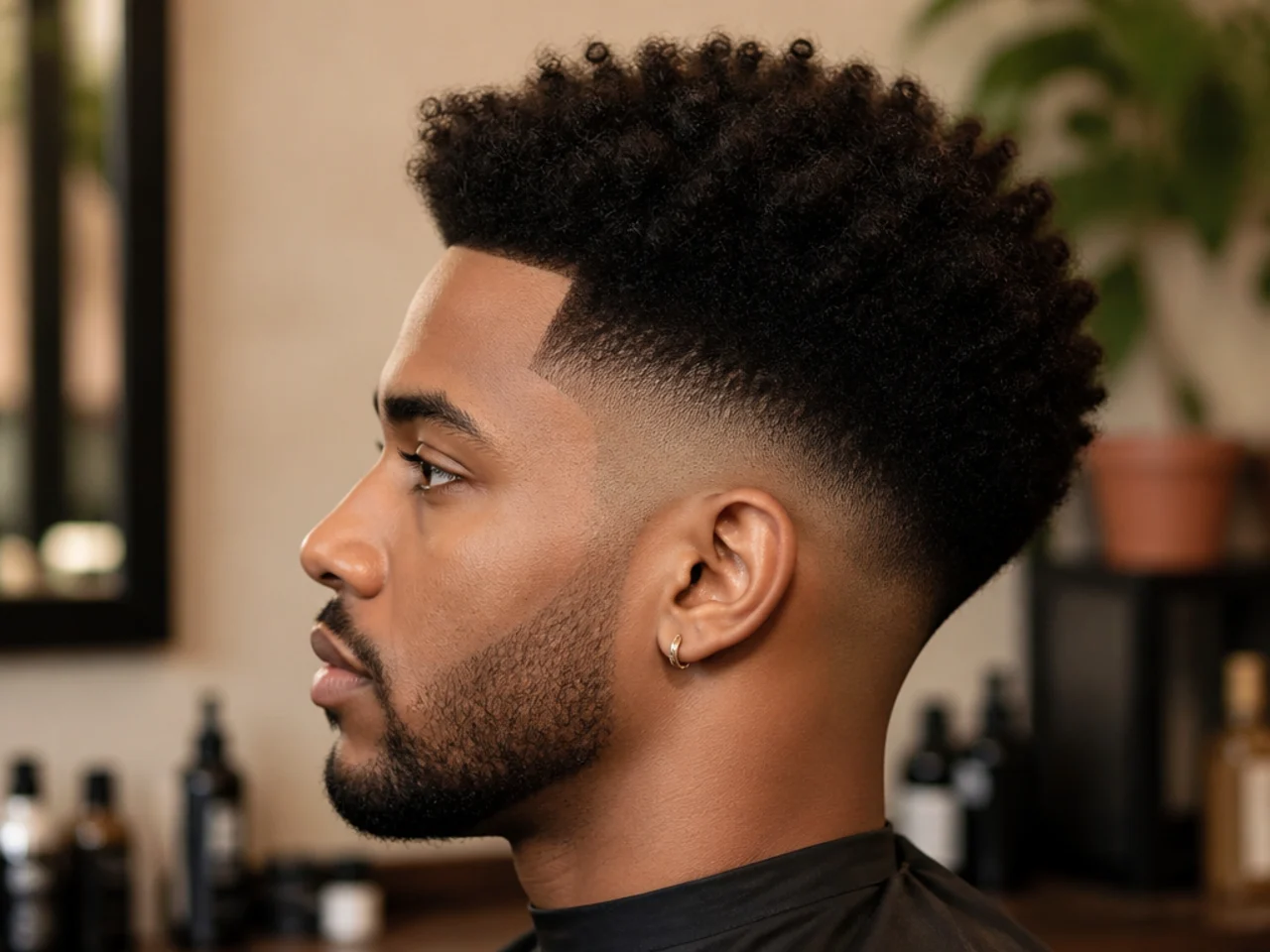
Three to four inches of natural 4B texture picked out into a soft afro shape, mid fade starting at the temple line so the afro reads full. The mid position is the sweet spot — enough clearance to frame the face, enough length to show the coil density. Suits oval, round, and heart faces.
Ask for: "mid fade, #0 at the shortest, three to four inches of natural texture on top scissor-cut dry, sharp line-up at the forehead."
Styling: moisturize daily with a leave-in and a rich butter, pick out the top with a wide-tooth afro pick before the shape sets. Wash weekly with a co-wash to keep the coil hydrated.
3. High Skin Fade with Short Curly Top
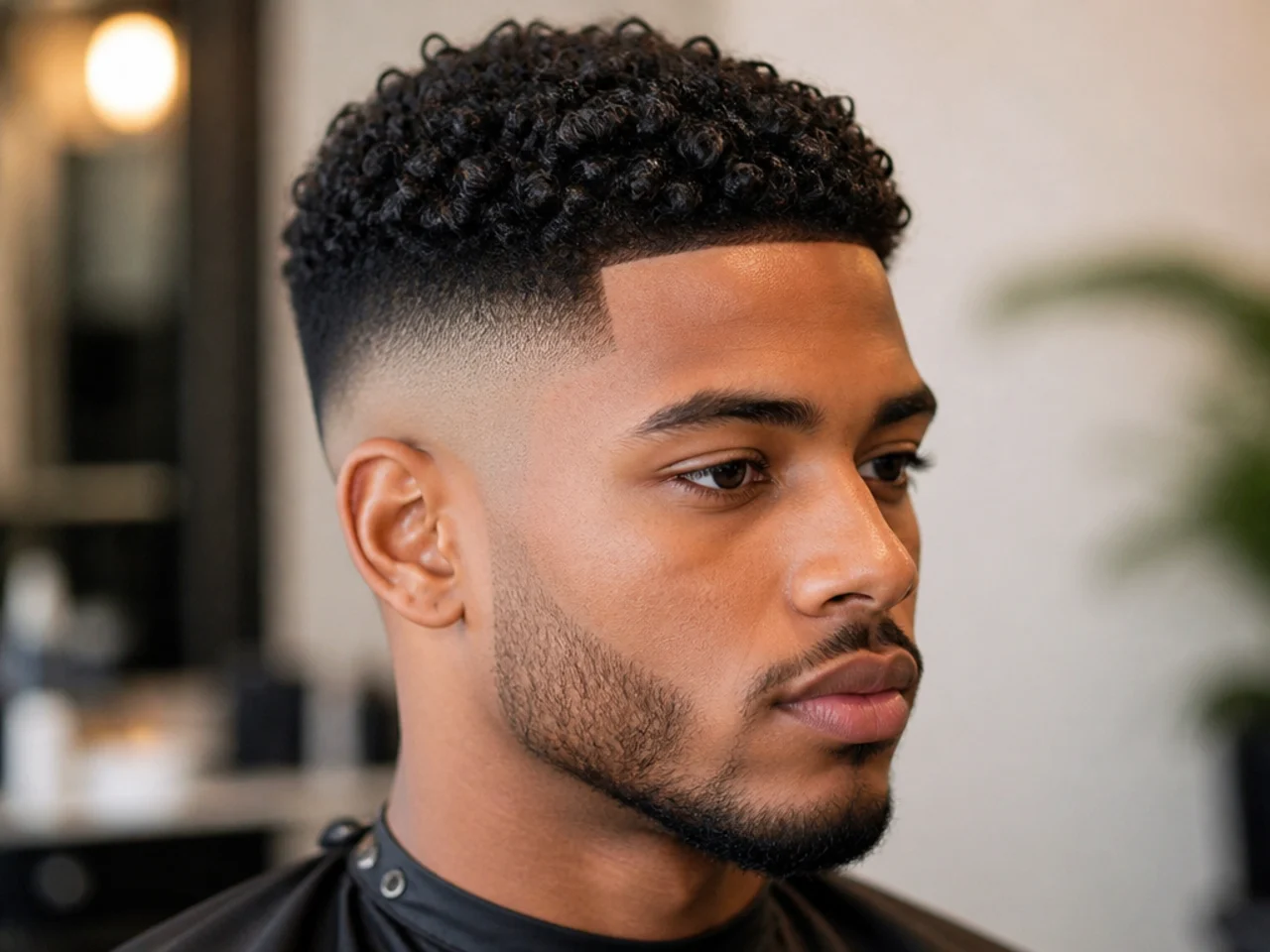
Two inches of scissor-cut curl on top, high skin fade cutting sharply above the temple, razor line-up finishing the frame. The high placement pulls all the visual weight upward and gives the curl pattern maximum contrast against exposed skin. Best on oval, square, and diamond faces with 4A texture that holds a defined curl.
Ask for: "high skin fade, bald at the shortest, two inches of natural texture on top scissor-cut dry, razored line-up at the forehead and temples."
Styling: curl cream on soaking-wet hair, scrunch, air-dry. Refresh with a water-and-conditioner spray in the morning. Book every ten to fourteen days — skin fades blur fast.
4. Bald Fade with Sharp Line-Up
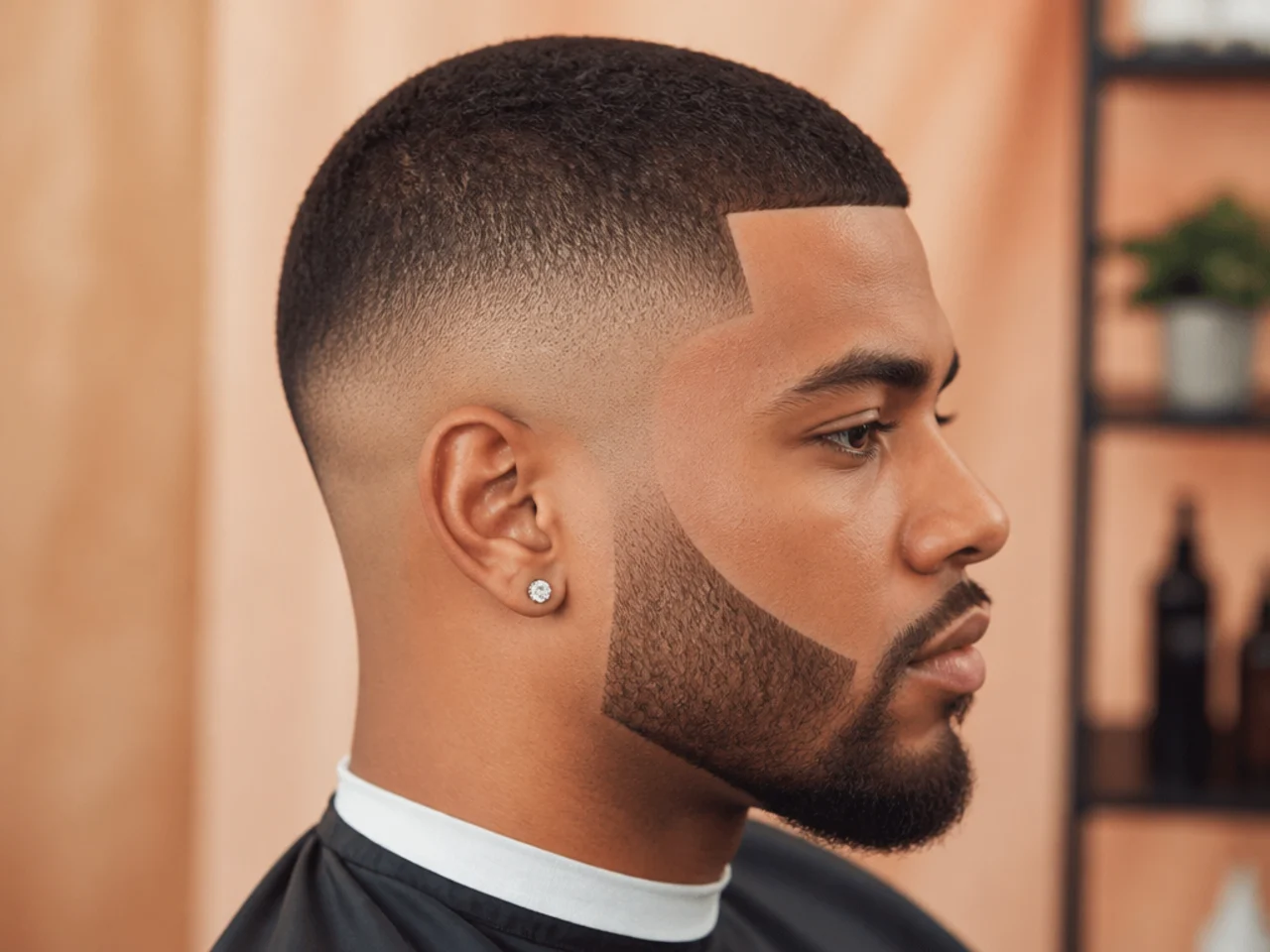
The cleanest finish in the fade family — perimeter blended all the way to bare scalp, three inches of coil sitting on top, straight razor drawing the line-up at the forehead and around the temples. Suits any face shape with a defined hairline, and any texture from 4A to 4C.
Ask for: "bald fade, low or mid, three inches of natural texture on top scissor-cut dry, razored line-up at the forehead and temples."
Styling: moisturize the exposed skin with a light beard oil so the fade line reads matte, not shiny. Sunscreen on the exposed scalp in summer.
5. Burst Fade with Curly Top
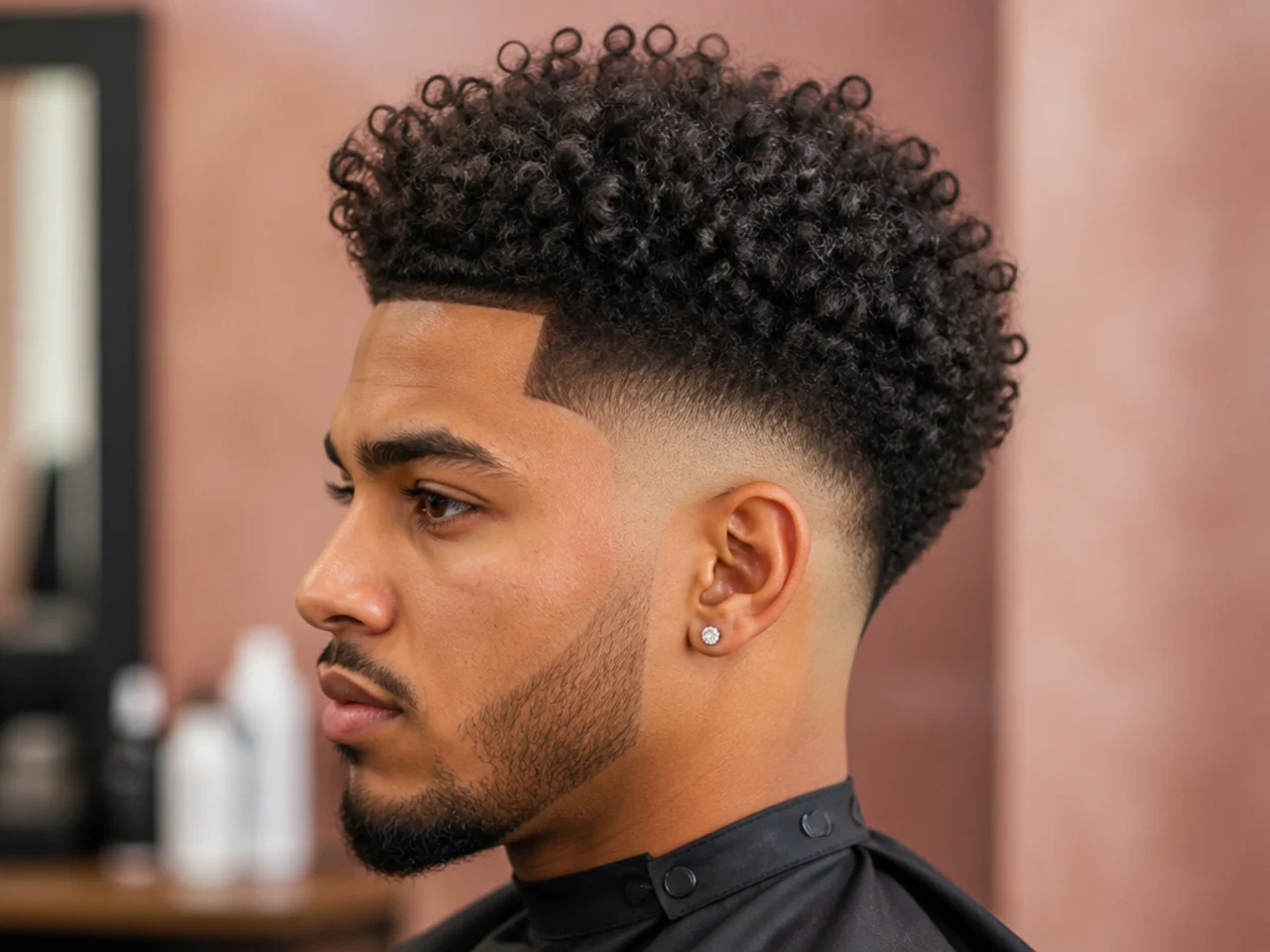
The burst fade arcs around the ear in a semicircle instead of running straight, leaving the nape longer than the sides. On a curly top, the burst shape mirrors the coil direction and gives the whole cut sculpted energy. Best on oval, heart, and diamond faces, three inches of 4A or 4B texture on top.
Ask for: "low burst fade, #0.5 at the shortest, burst arcing around each ear, three inches of natural texture on top."
Styling: curl cream on damp hair, twist small sections with your fingers for extra definition, air-dry. The burst shape holds two to three weeks before the perimeter blurs.
6. Drop Fade with Two-Strand Twists
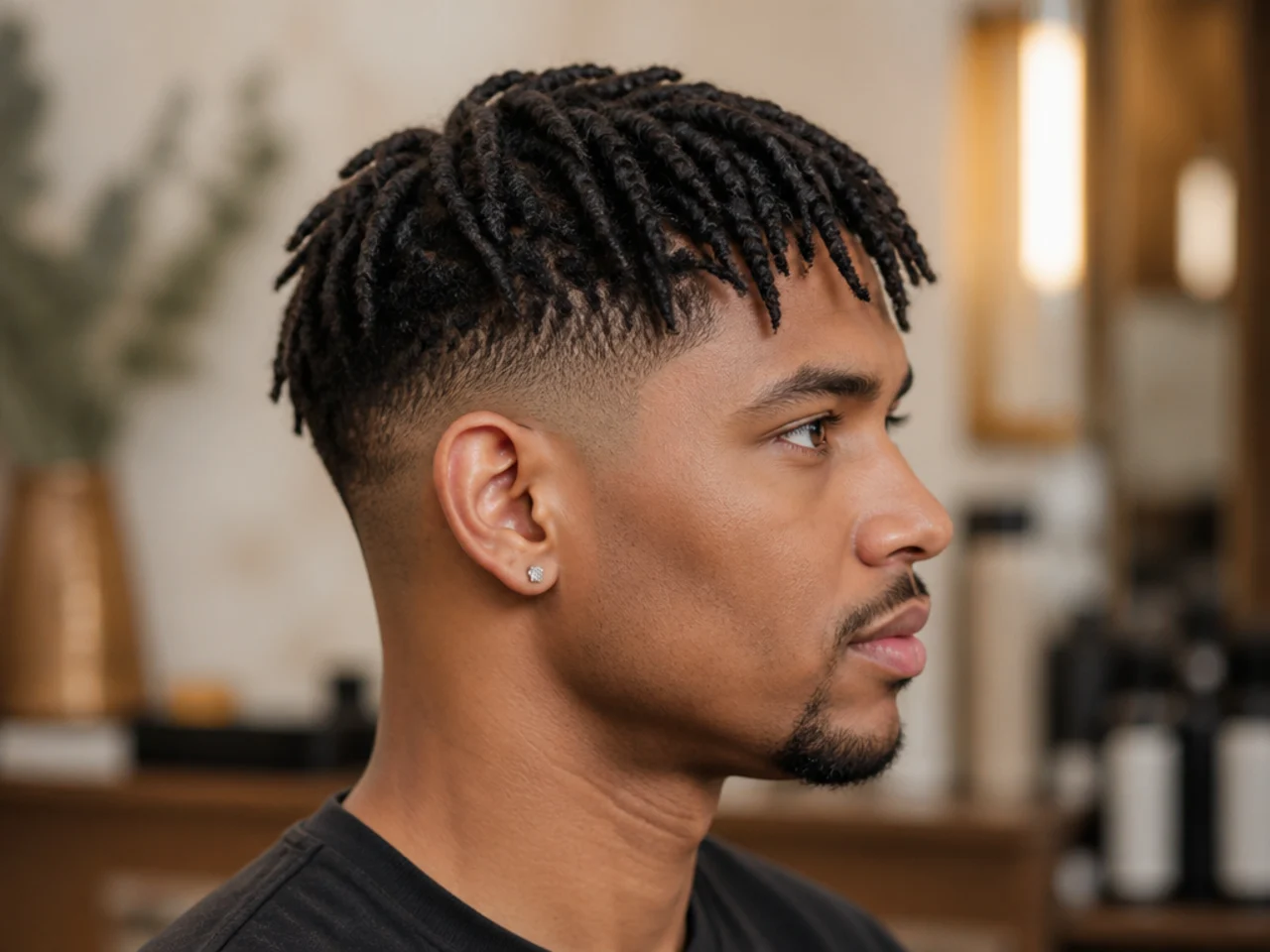
Two-strand twists set the coil pattern into uniform ropes across the top, drop fade curving behind the ear so the perimeter follows the natural round of the head. Great intermediate cut between fresh natural and a full loc journey. Suits every face shape, 4A to 4C texture, and works cleanly on medium-length tops from three to six inches.
Ask for: "low drop fade, #0.5 at the shortest, drop behind the ear, four inches of natural texture on top ready for two-strand twists."
Styling: section damp hair with a twist custard, roll each pair in the same direction, sit under a soft bonnet for the twists to set. Refresh with water and a light oil.
7. Blowout Taper with Coily Volume
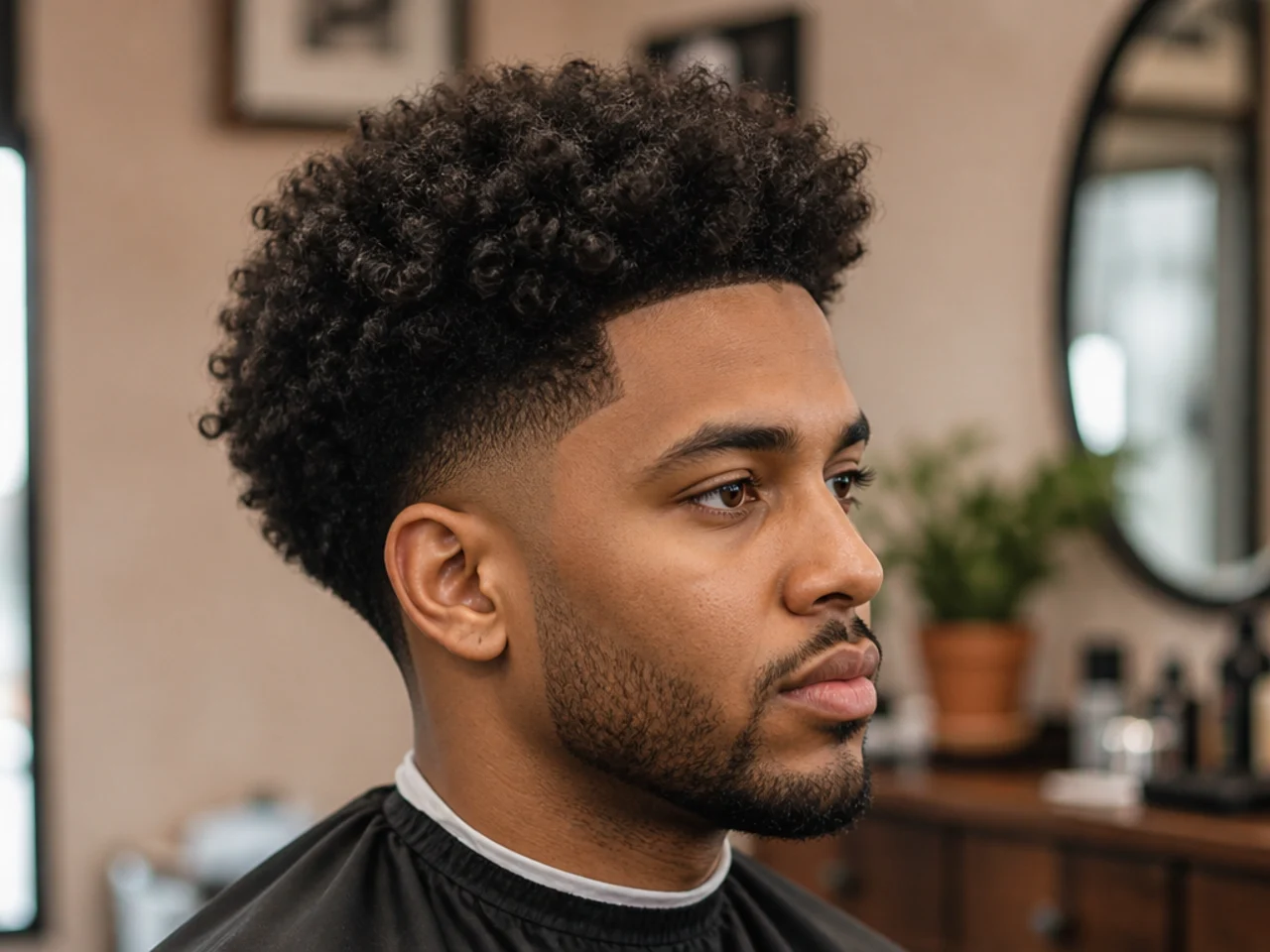
The blowout taper leaves the top full and voluminous while a taper handles the perimeter. Blown-out 4B or 4C coils sit tall and rounded, the taper draws a clean base underneath. Best on oval and heart faces with dense texture that holds shape when picked out.
Ask for: "low taper for the blowout, #0.5 at the shortest, four to five inches of natural texture on top scissor-cut dry, ready to pick out."
Styling: blow-dry on cool with a diffuser or comb attachment, pick out from the roots for maximum lift. Set the shape with a light hairspray or oil sheen.
8. Temple Fade with Ceaser Waves
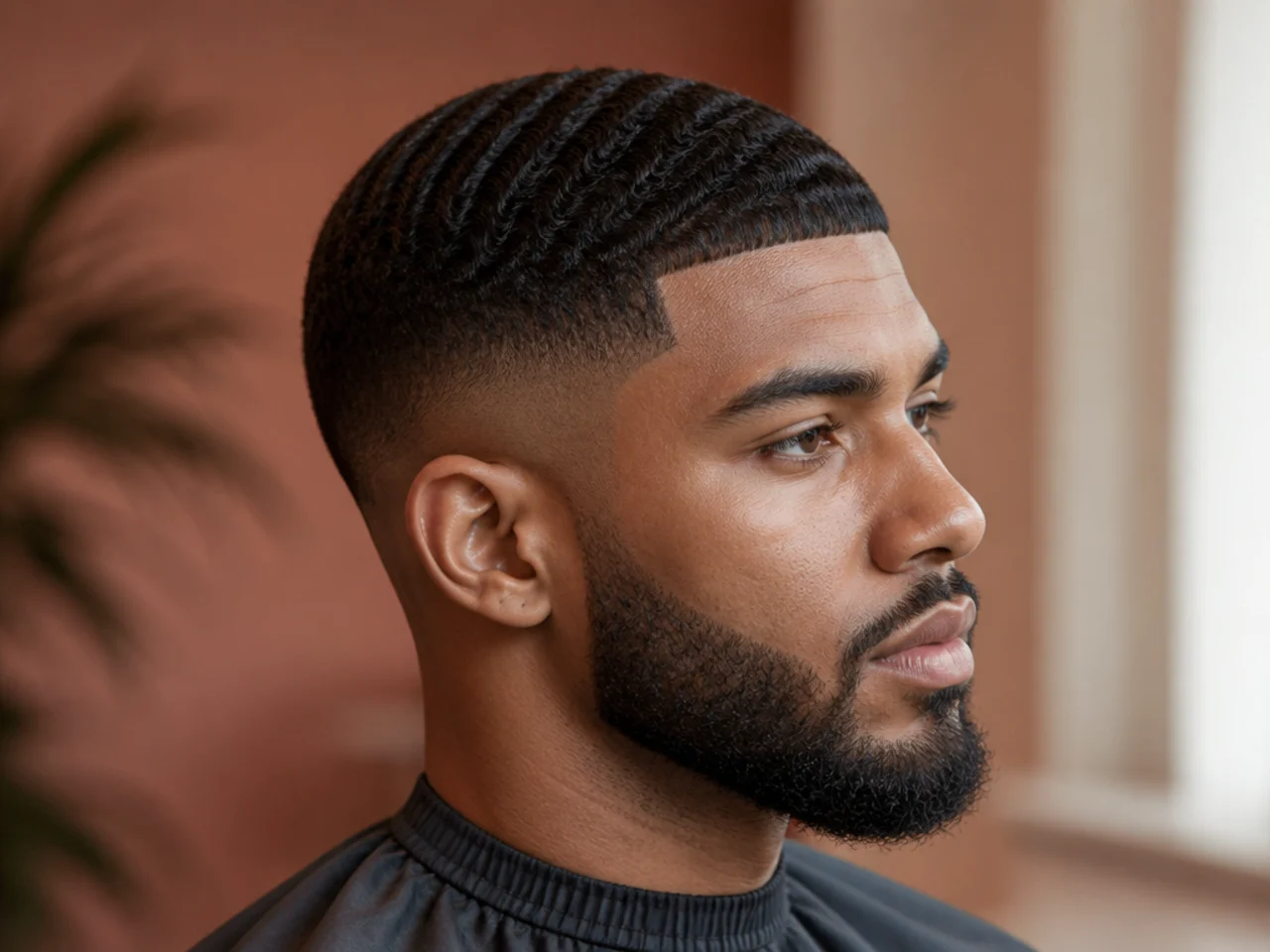
The ceaser cut with a temple-only fade — a horizontal fringe cut straight across the forehead, waves brushed through the top, fade action concentrated at the temples. The temple placement keeps the wave pattern visible at the back and nape. Best on square, oblong, and heart faces with 4A wavy texture.
Ask for: "temple fade only, #1 around the temples, ceaser cut across the forehead, waves brushed in the pattern, sharp line-up."
Styling: wave brush morning and night, tie down with a silk durag, keep the fringe blunt with a light-hold pomade. Book the temple fade every two weeks; the top holds four to six weeks.
9. Undercut Fade with Sponge Coils
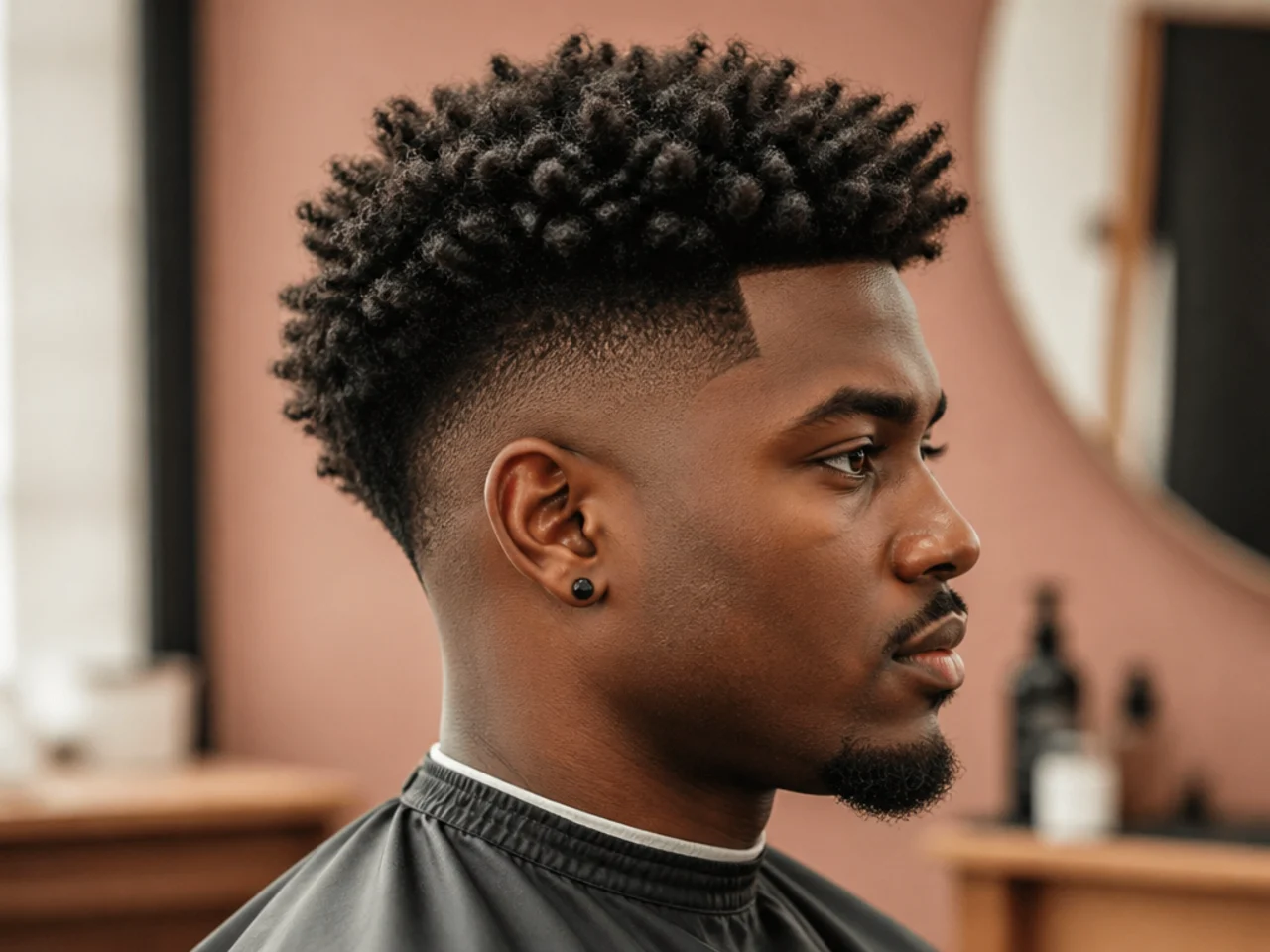
The undercut fade draws a hard disconnected line between the top and the sides — the top stays a uniform three inches with sponge coils on top, the sides drop straight down at a #1 or bald. Modern, architectural, made for photographs. Best on oval, square, and diamond faces with 4A to loose 4B texture.
Ask for: "disconnected undercut with a low skin fade, hard line at the parietal ridge, three inches of natural texture on top ready for sponge twists."
Styling: moisturize with a leave-in on damp hair, rotate the curl sponge over the top in small circles to form the coils. Refresh with water every other morning.
10. Skin Fade with Hair Design
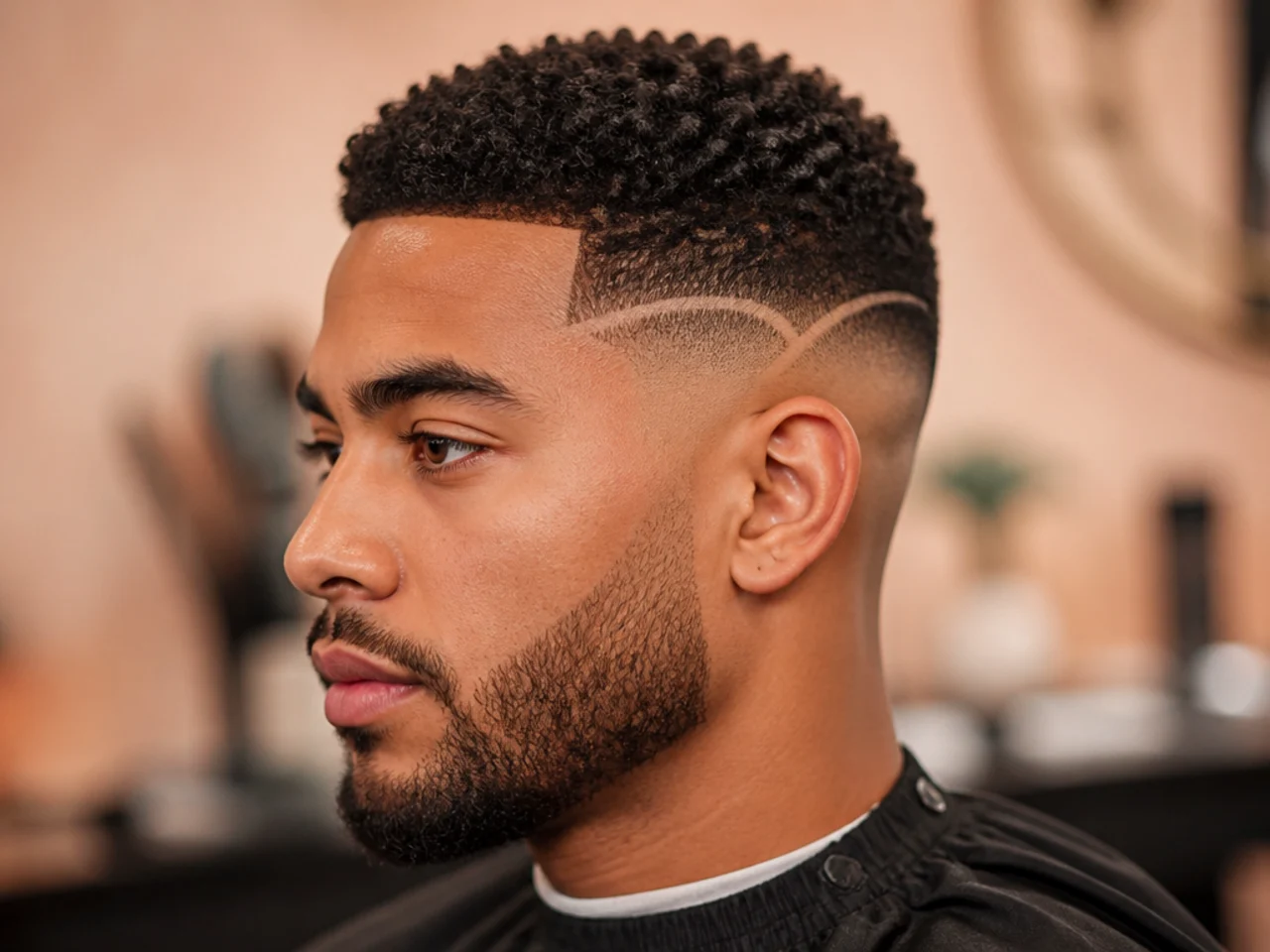
The designer cut — a razored design carved into the fade zone (arrows, stars, wave lines, custom logo). The skin fade makes the design read black-and-white, maximum contrast. Best on 4A to 4C texture with any top length, and a barber who does design work well. Bring a reference photo — designs are personal.
Ask for: "mid skin fade, bald at the shortest, razored design in the left side panel — bring a reference, three inches of natural texture on top."
Styling: keep the design panel clean with a light oil so the razor lines stay visible. Book every ten to fourteen days — the design blurs fast as the hair grows.
11. Buzz Cut with Low Taper
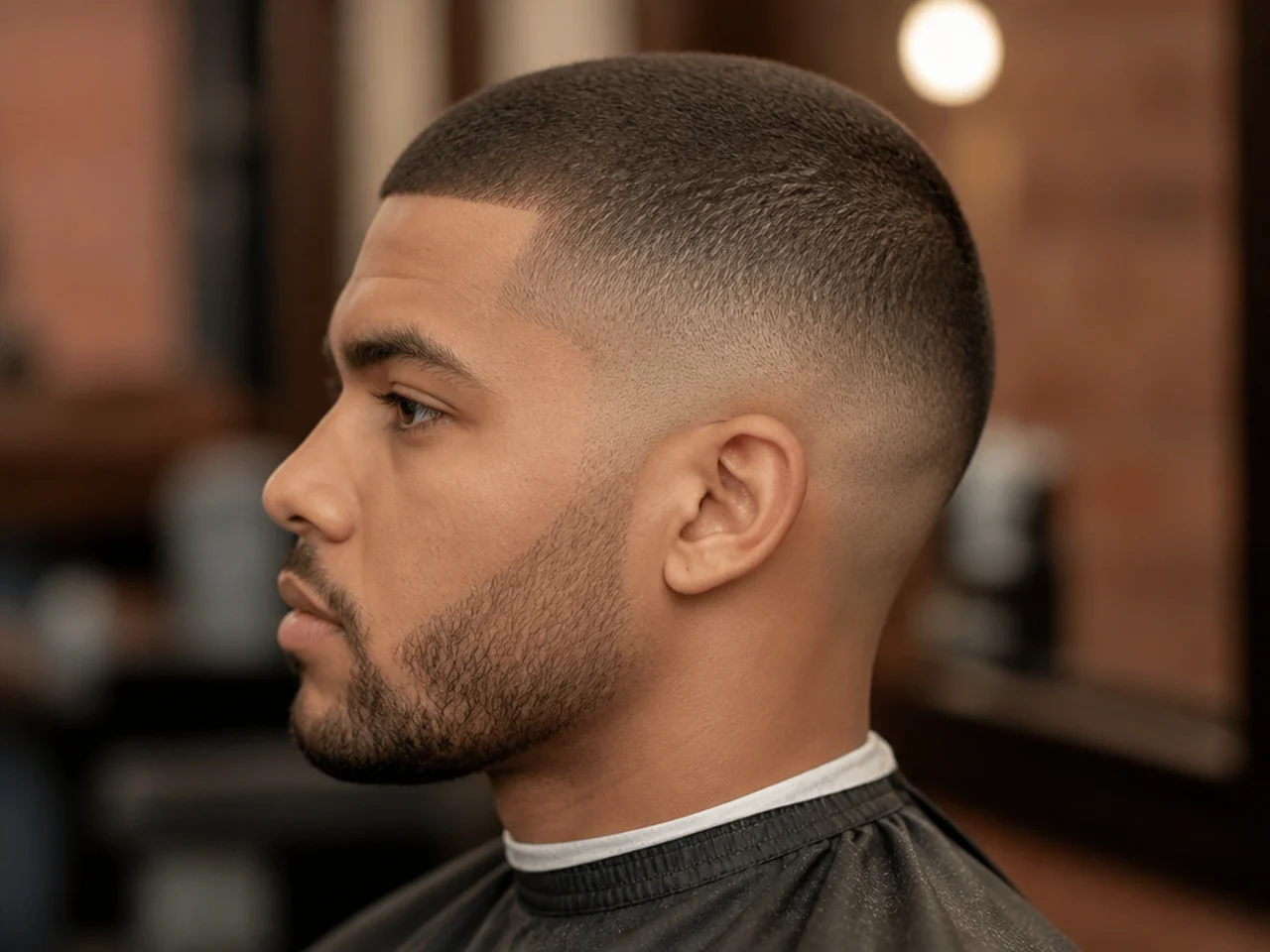
The whole head buzzed to a #2 or #3 guard, taper at the perimeter for the polish move. Reads clean, low-maintenance, and grown-man. Suits every face shape, especially oval and square. The all-time floor for time investment — ten seconds a morning with a spray of water and you're out the door.
Ask for: "buzz cut with a low taper fade, #2 all over the top, blend down to #0.5 at the perimeter, sharp line-up at the forehead."
Styling: moisturize the scalp with a lightweight oil after showering, SPF on exposed skin in summer. Book every two weeks for the fade to stay sharp.
12. Ceaser Cut with Sharp Fringe
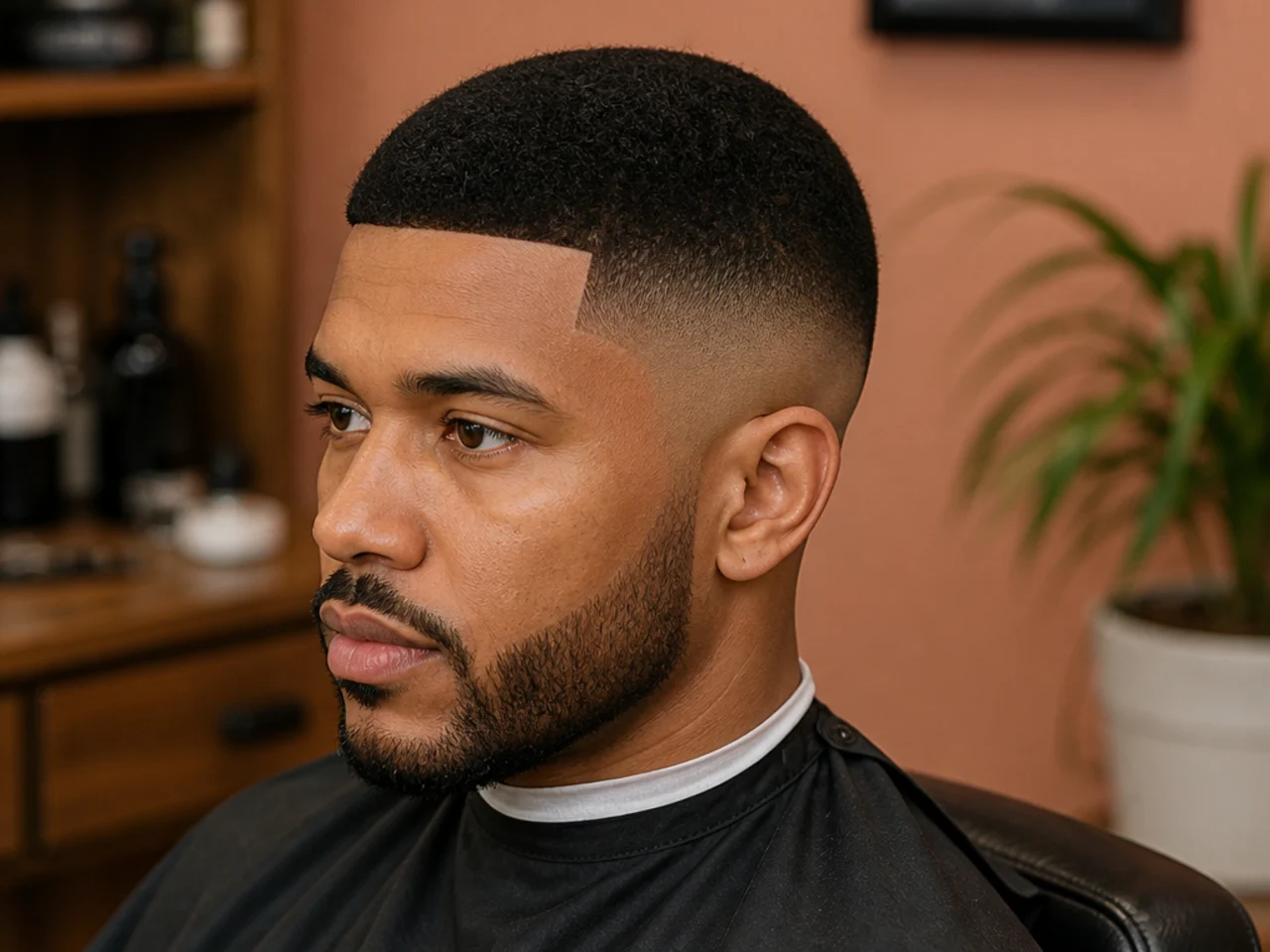
The classic — one inch of even texture across the top, cut with a hard horizontal fringe at the forehead. No fade, no taper, just a clean short cut with a defined front line. Reads timeless and hides a receding hairline better than any other short cut. Best on oval and heart faces with 4A texture.
Ask for: "ceaser cut, #2 across the top, hard horizontal fringe at the forehead, clean neckline at the nape."
Styling: moisturize with a leave-in, press the fringe flat with your palm as it dries. Refresh with water in the morning. Book every three to four weeks for the shape to hold.
13. Big Chop TWA
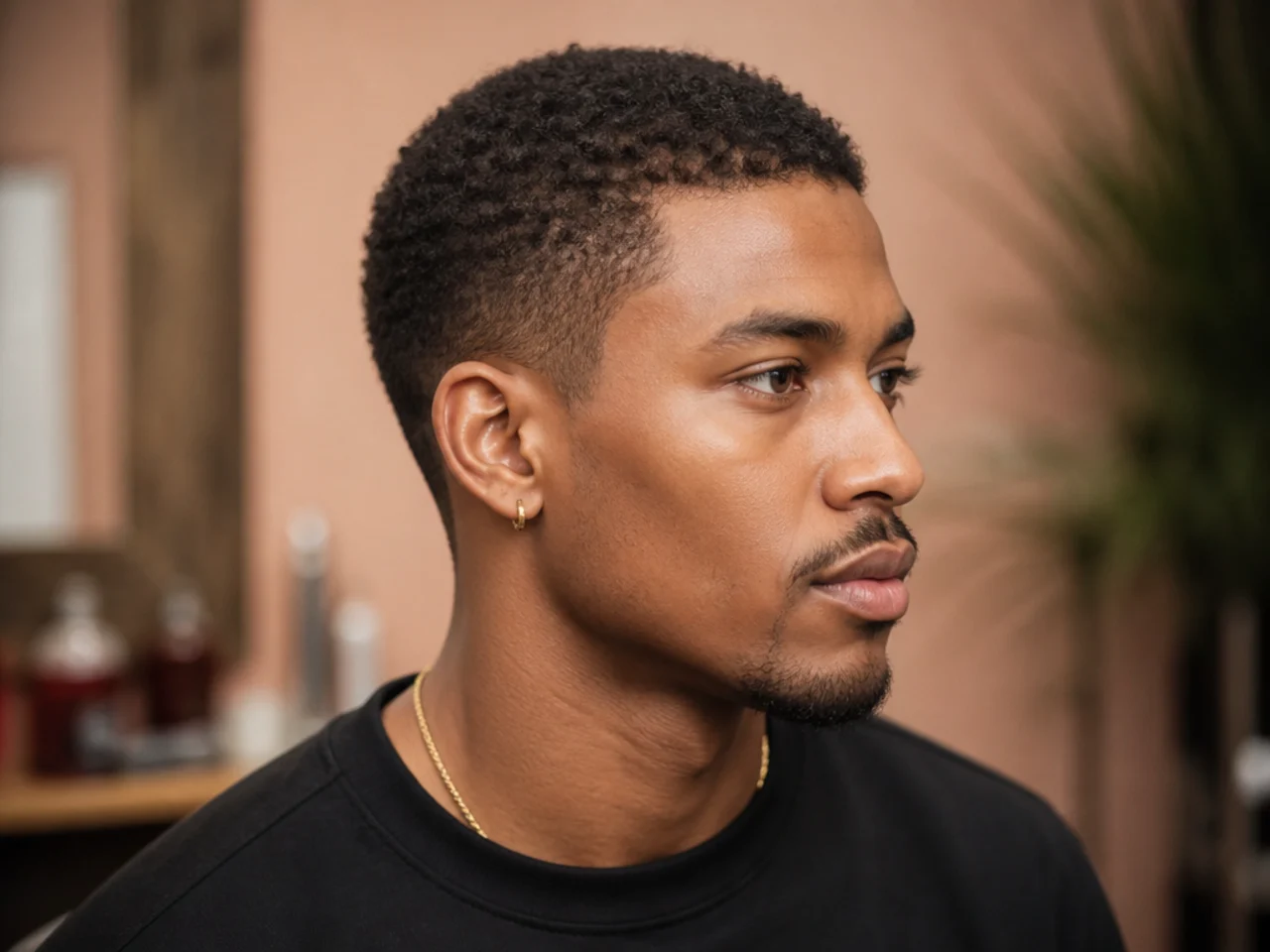
The teeny-weeny afro — half an inch to an inch of natural texture across the top from a big chop, clean perimeter, sharp line-up. Perfect first cut back into natural after cutting off relaxer, damage, or a long protective style. Sits beautifully on every face shape and stays a wearable look for four to six months as it grows.
Ask for: "TWA with a low taper, #3 or #4 on the guard for the top, blend to #0.5 at the perimeter, sharp line-up at the forehead."
Styling: moisturize daily with a leave-in and a light butter, pick out with a small afro pick for lift, sleep on satin. The TWA phase is short — enjoy it before the growth changes the shape.
14. Classic High Top Fade
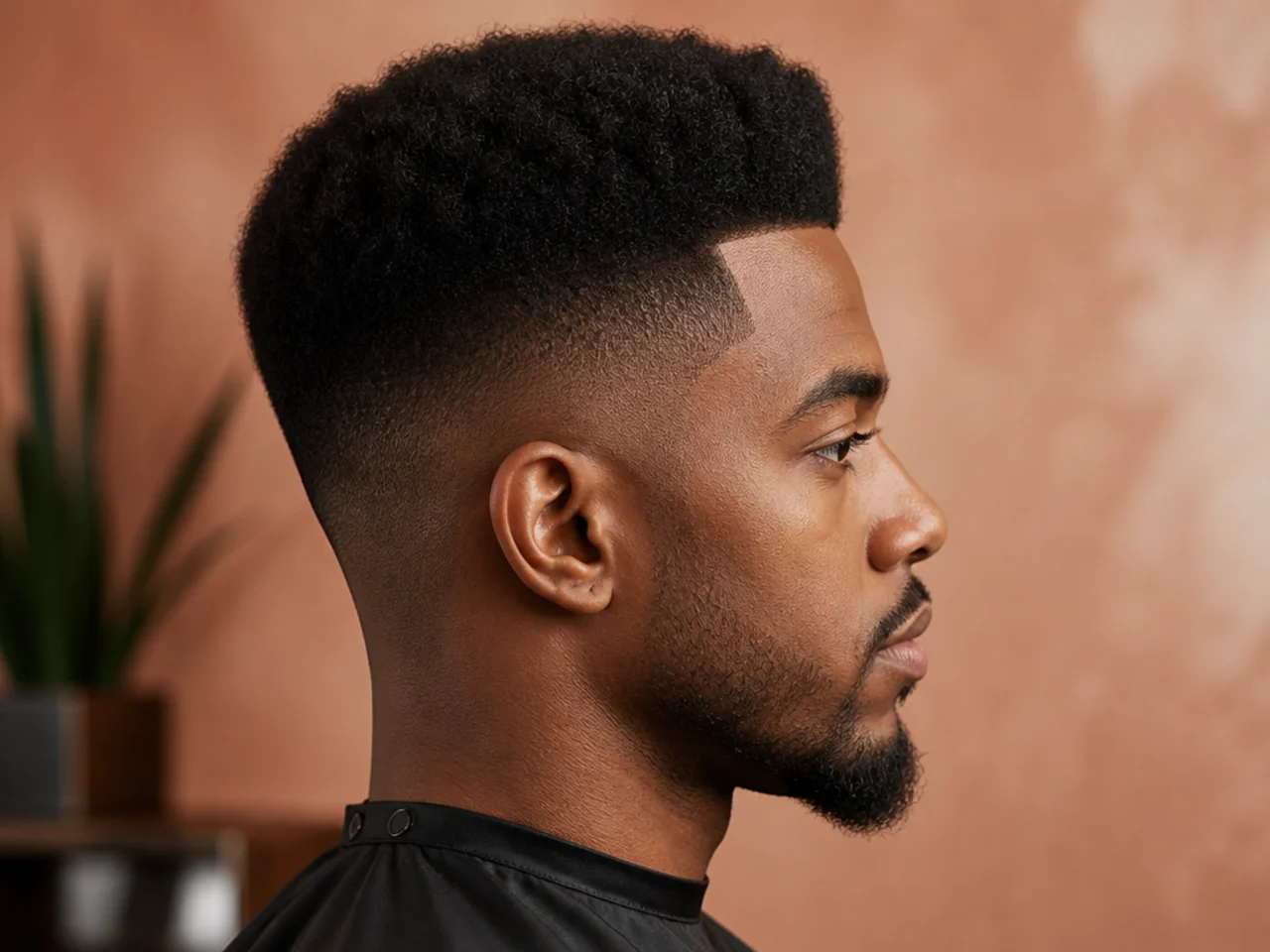
The revival cut — five to seven inches of 4B or 4C texture standing tall in a squared-off box shape, mid or high skin fade at the sides. Kid 'n Play, Fresh Prince, the Fab 5. Best on oval and round faces where the vertical adds length; long faces should scale the height back. Requires a barber who levels with clippers, not scissors.
Ask for: "high top fade, mid or high skin fade at the sides, five to six inches of natural texture on top squared off at the crown with clippers, sharp line-up."
Styling: pick out the top upside-down for maximum lift, mist with water and leave-in through the day, tie down loosely with a satin scarf overnight so the shape doesn't collapse.
15. Freeform Dreads with Low Taper
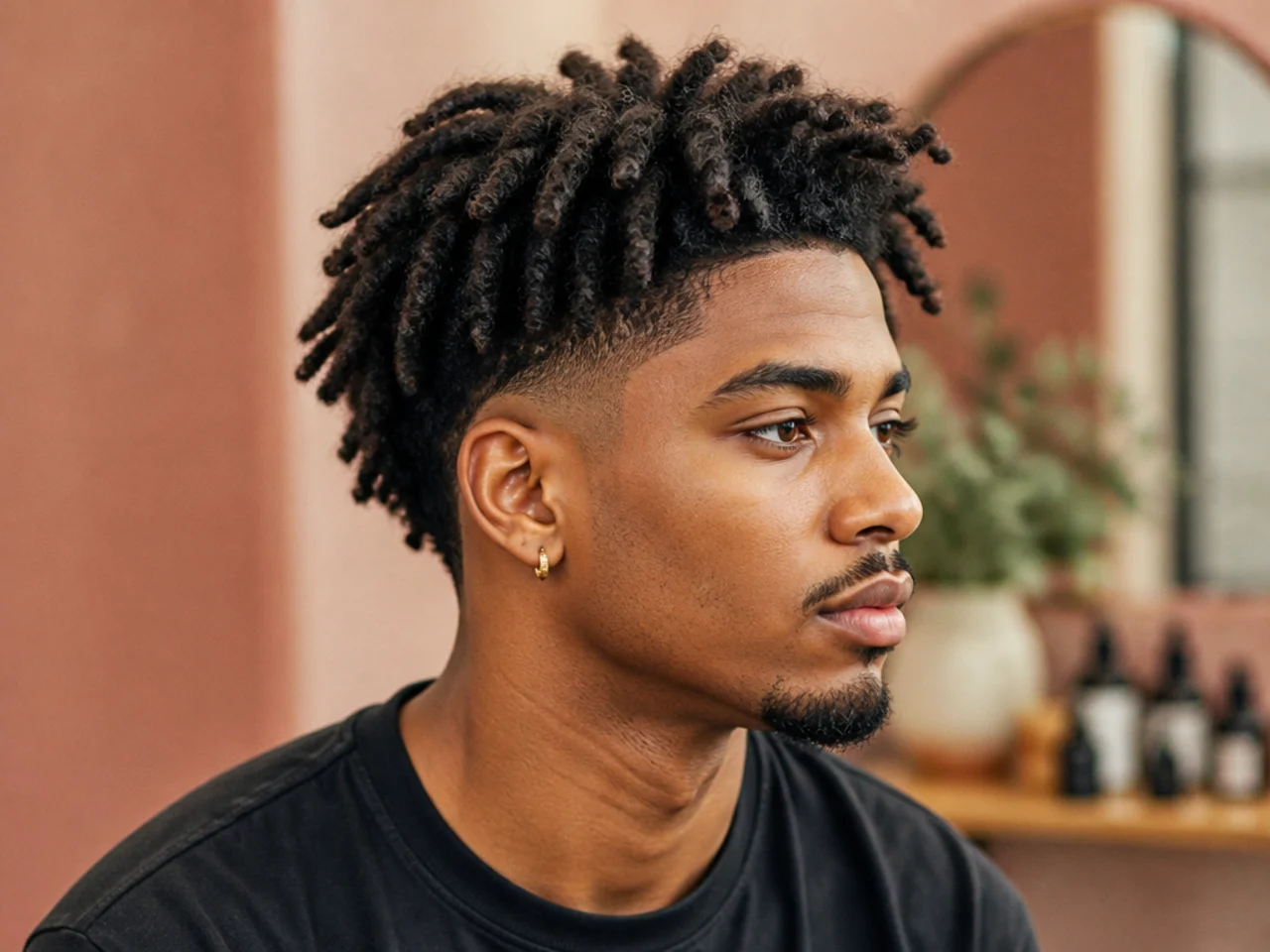
Freeform locs let the hair coil on its own with minimal manipulation — the shape is intentionally organic. A low taper at the sides gives the locs a clean frame without imposing structure. Best in the starter and budding phase, six to eighteen months of growth on top, four to six inches of loc length.
Ask for: "low taper fade, #0.5 at the shortest, taper matches where the locs begin, do not cut the locs, sharp line-up at the forehead."
Styling: wash with a residue-free shampoo every two to three weeks, mist with rose water between washes, sleep in a satin bonnet or wrap. Freeform is patience — let the locs form themselves.
16. Retwisted Locs with Line-Up
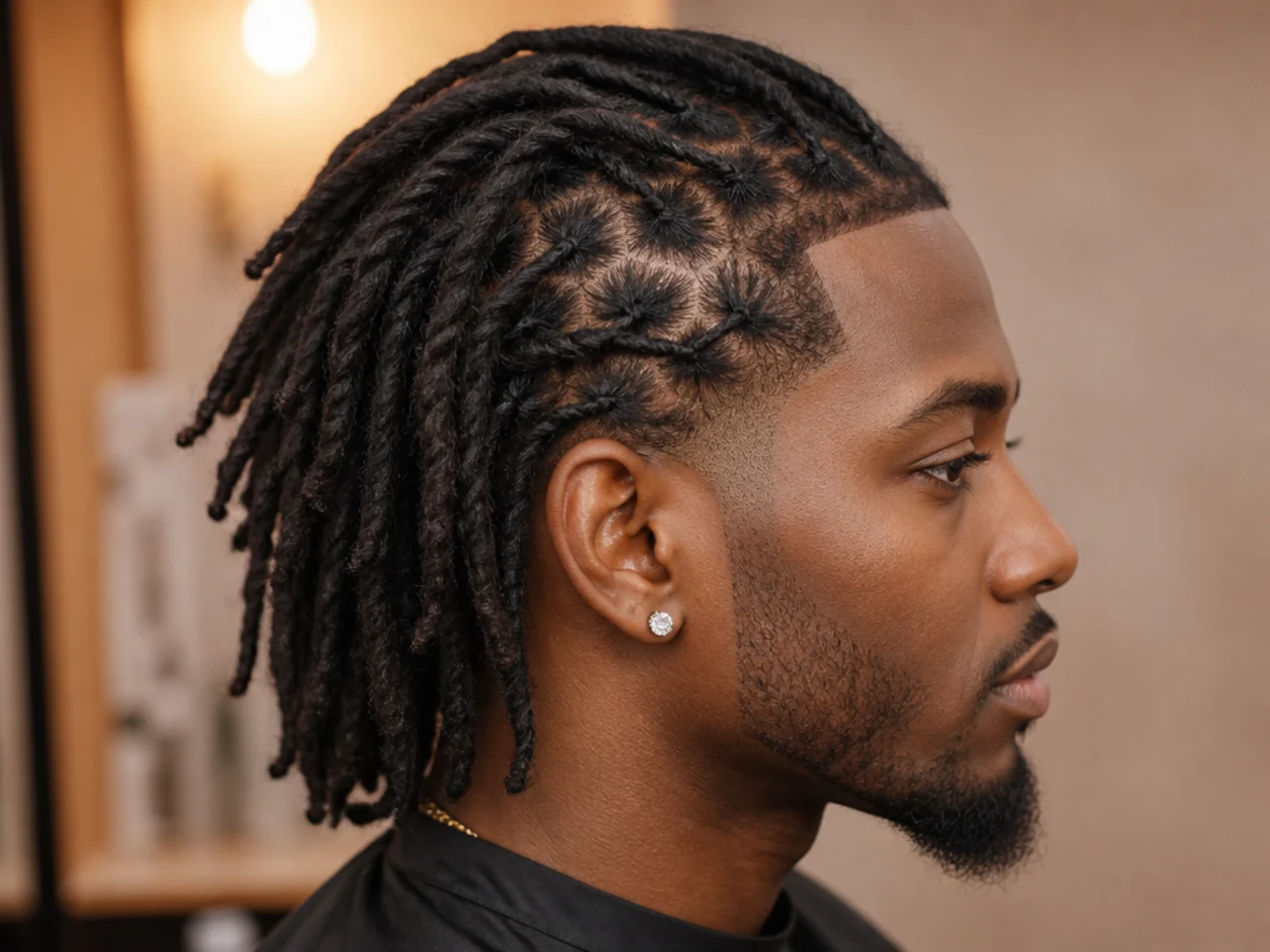
Mature locs — eighteen months or older, retwisted at the root every four to six weeks, taper at the sides, straight-razor line-up at the forehead. Suits every face shape and every dress code once the locs settle. Length runs anywhere from shoulder to lower back; the taper stays consistent.
Ask for: "low taper fade, #0.5 at the shortest, taper matches where the locs begin, do not touch the loc length, razored line-up."
Styling: retwist with a lightweight gel or aloe, palm-roll each loc between sessions, sleep on satin. Never use wax — it never comes out.
17. Two-Strand Twist Set
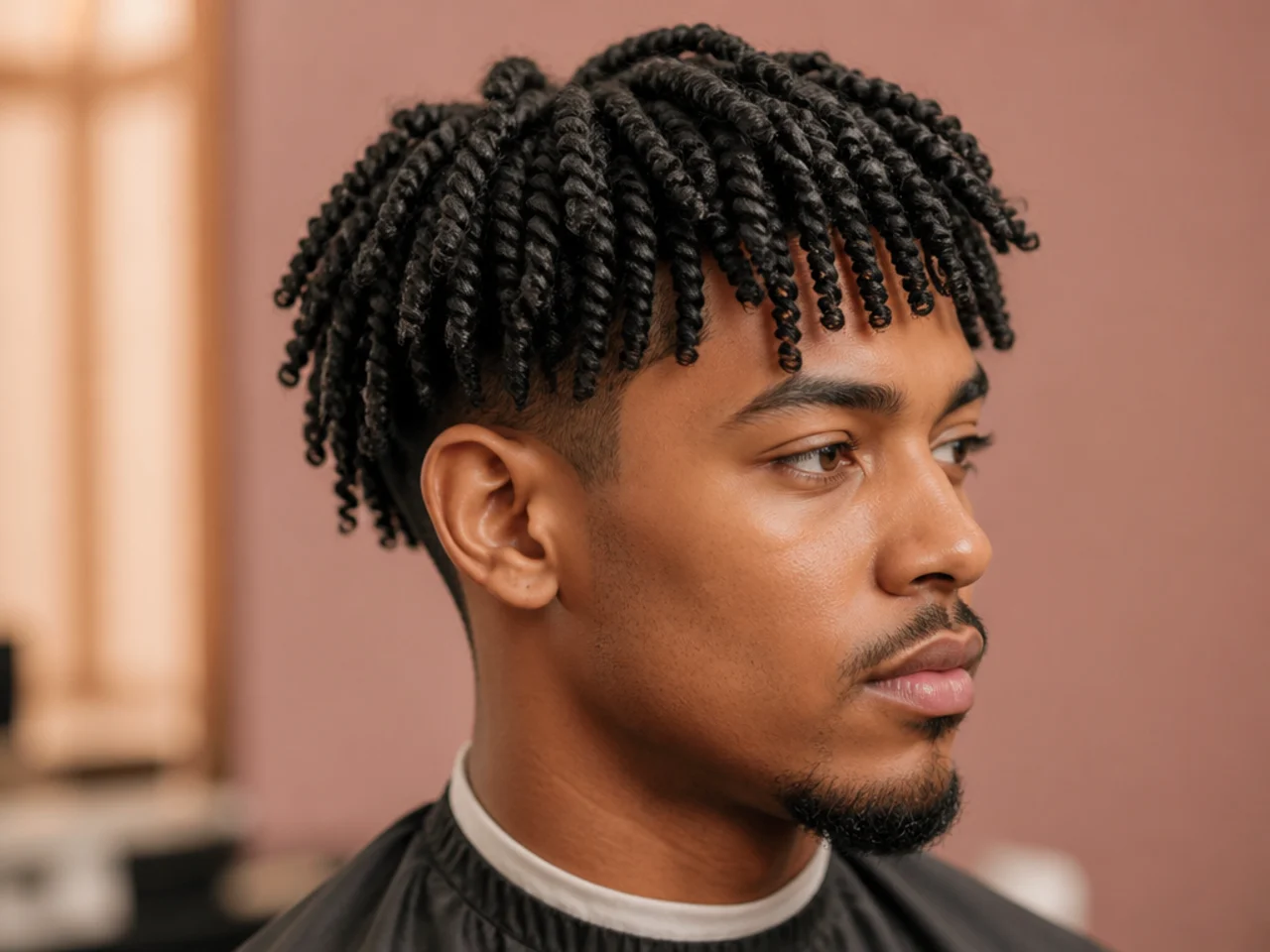
Two-strand twists installed across the top in uniform ropes, low taper at the sides. Great intermediate style between natural and locs — the twists hold two to three weeks before unraveling or maturing into starter locs. Best on 4A to 4C texture with four inches or more of length.
Ask for: "low taper fade, #1 at the shortest, four inches of natural texture on top ready for two-strand twists installed after the cut."
Styling: section on damp hair with a twist custard, roll each pair in the same direction, sit under a soft bonnet for the twists to set. Refresh with water and oil. Take down carefully — twists can transition into a twist-out if you don't want to retwist.
18. Box Braids with Undercut
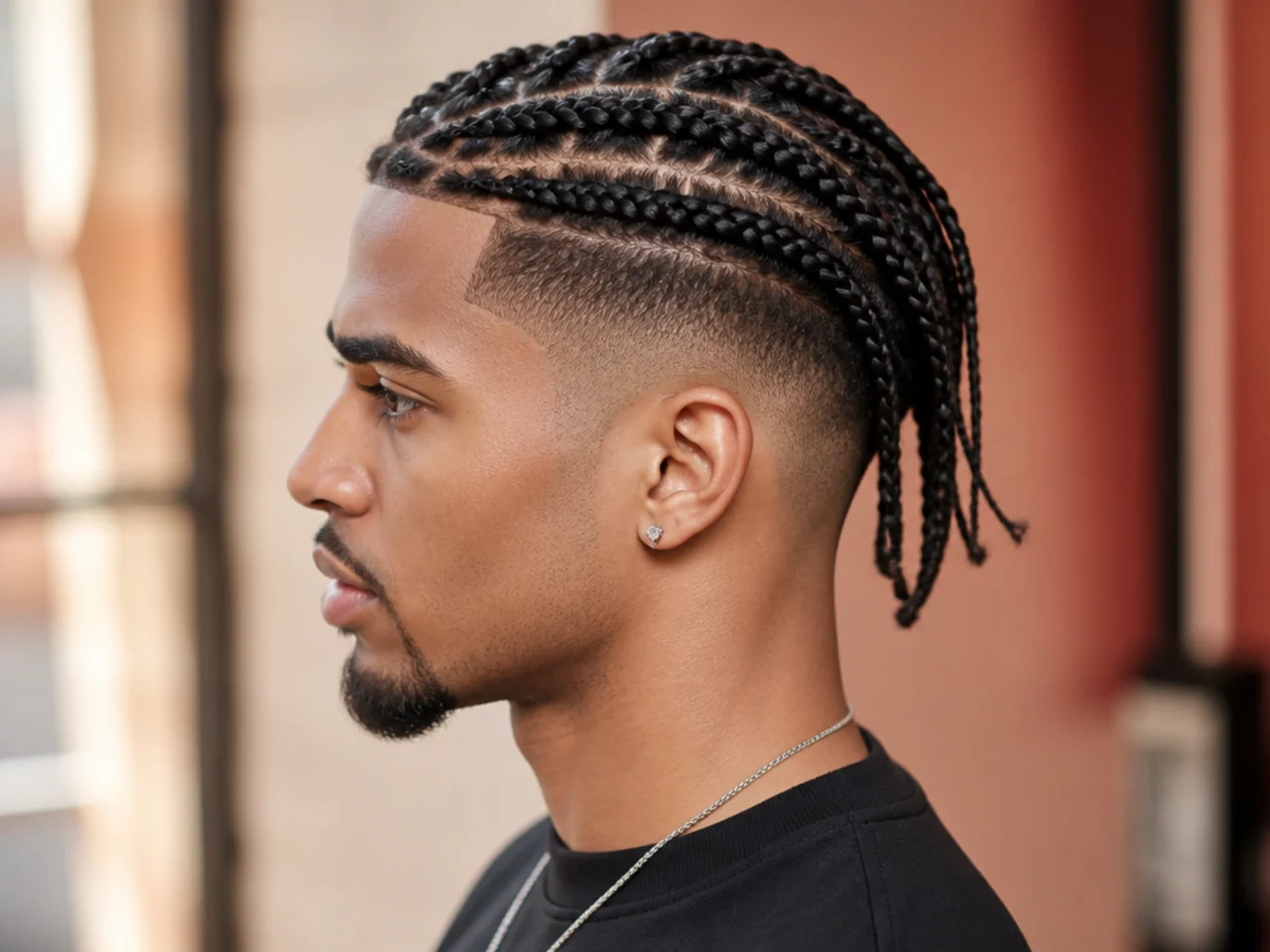
Chin- to shoulder-length box braids on top, hard undercut at the sides so the braid pattern reads as the whole design. Great long-lasting protective style — the braids hold four to eight weeks. Best on square and oval faces with 4B to 4C texture that holds a braid cleanly, and any face shape once you factor in the braid length you choose.
Ask for: "disconnected undercut with a #0.5 fade at the sides, keep six inches or more of natural texture on top for box braids after the cut."
Styling: braid installs run four to eight hours at a good braider — book separately from the barber. Moisturize the scalp with a light oil weekly, tie down with a satin scarf at night. Take out at four to six weeks, never longer.
19. Cornrows Straight-Back with Taper
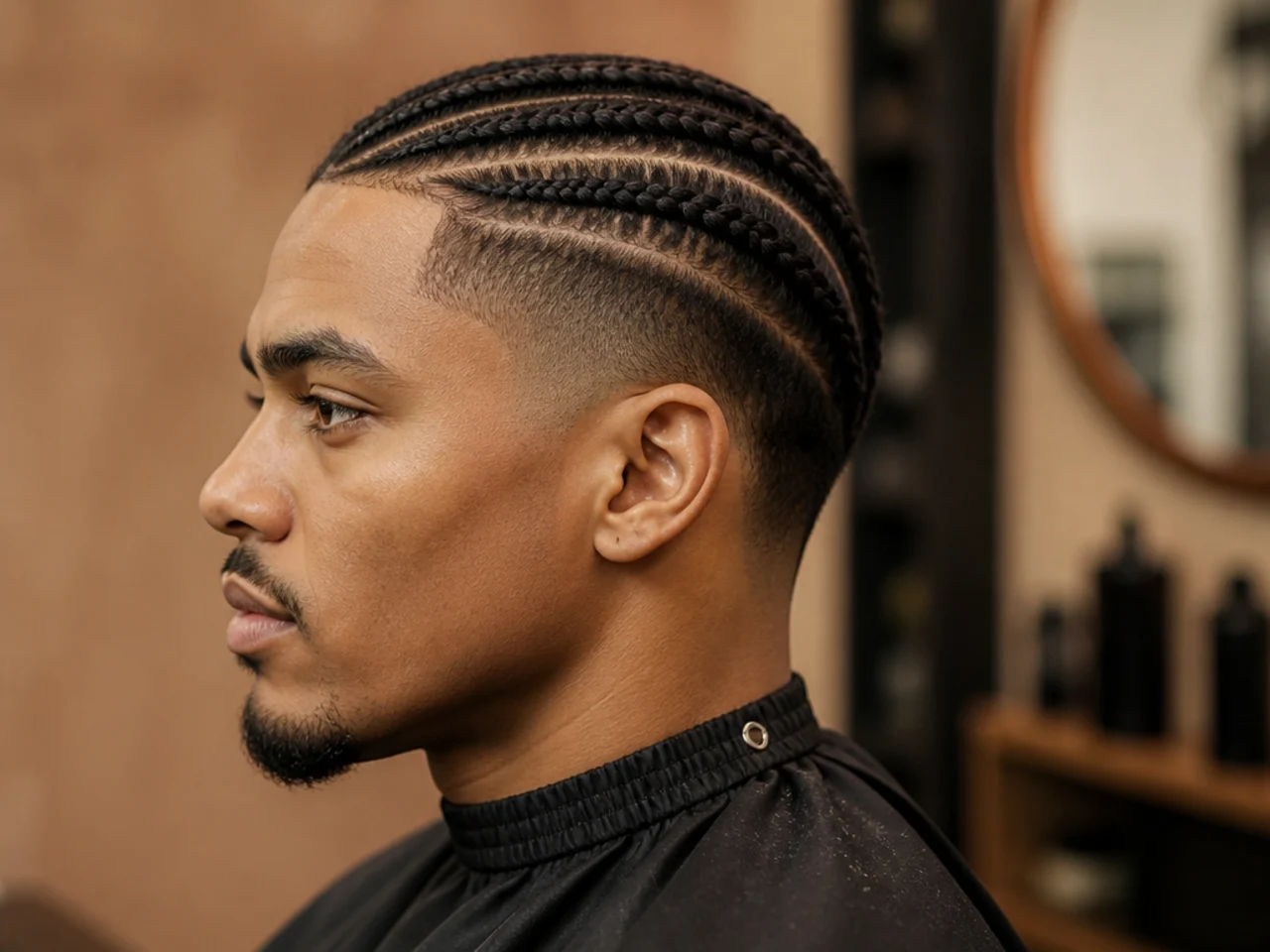
Straight-back cornrows or box-pattern braids on top, taper at the sides so the braid pattern reads as the feature. Cousin to the classic athlete cut. Best on any face shape, 4A to 4C texture, and enough length for the braid to hold — four inches minimum on top. The taper keeps the sides clean between braid appointments.
Ask for: "low taper fade, #0.5 at the shortest, taper matches the braid perimeter, do not touch the braids, sharp line-up at the forehead."
Styling: re-braid every two to three weeks, moisturize the scalp with a light oil between sessions, tie down with a satin scarf overnight. The braided pattern is your styling — no product needed on top.
20. Sponge Twist Coils with Taper
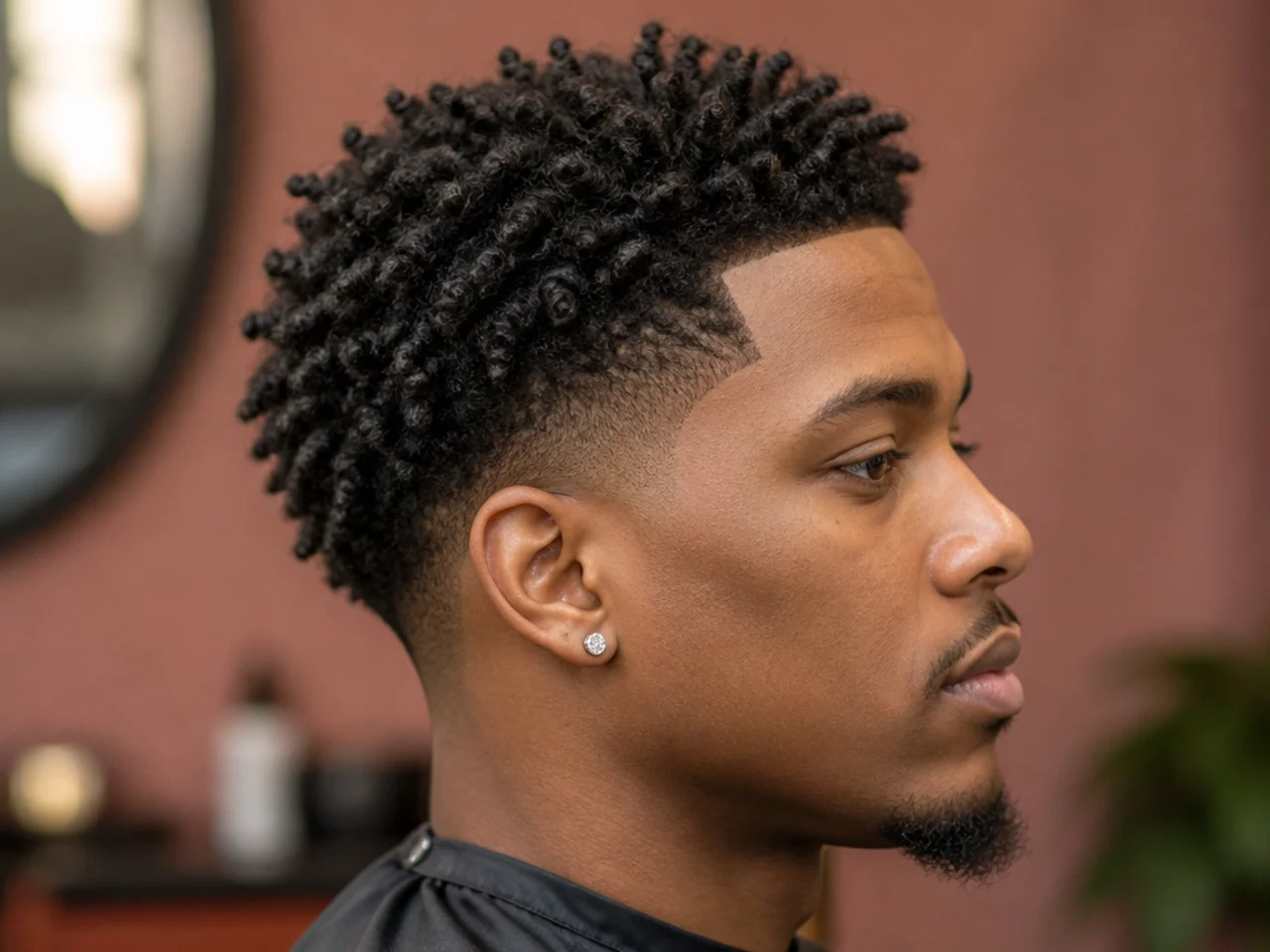
The curl sponge coils short 4A or 4B texture into small, tight, uniform curls in five minutes flat. Low taper cleans the perimeter without touching the coil zone up top. Best on natural 4A and 4B patterns, two to three inches of length, and any face shape. Everyday-natural energy without a nightly ritual.
Ask for: "low taper fade, #0.5 at the shortest, two to three inches of natural texture on top ready for sponge twists, sharp line-up."
Styling: moisturize with a leave-in and a light oil, rotate the curl sponge over damp hair in small circles to form the coils. Refresh with water every other morning; re-sponge weekly to re-form the pattern.
21. Defined Twist-Out with Low Fade
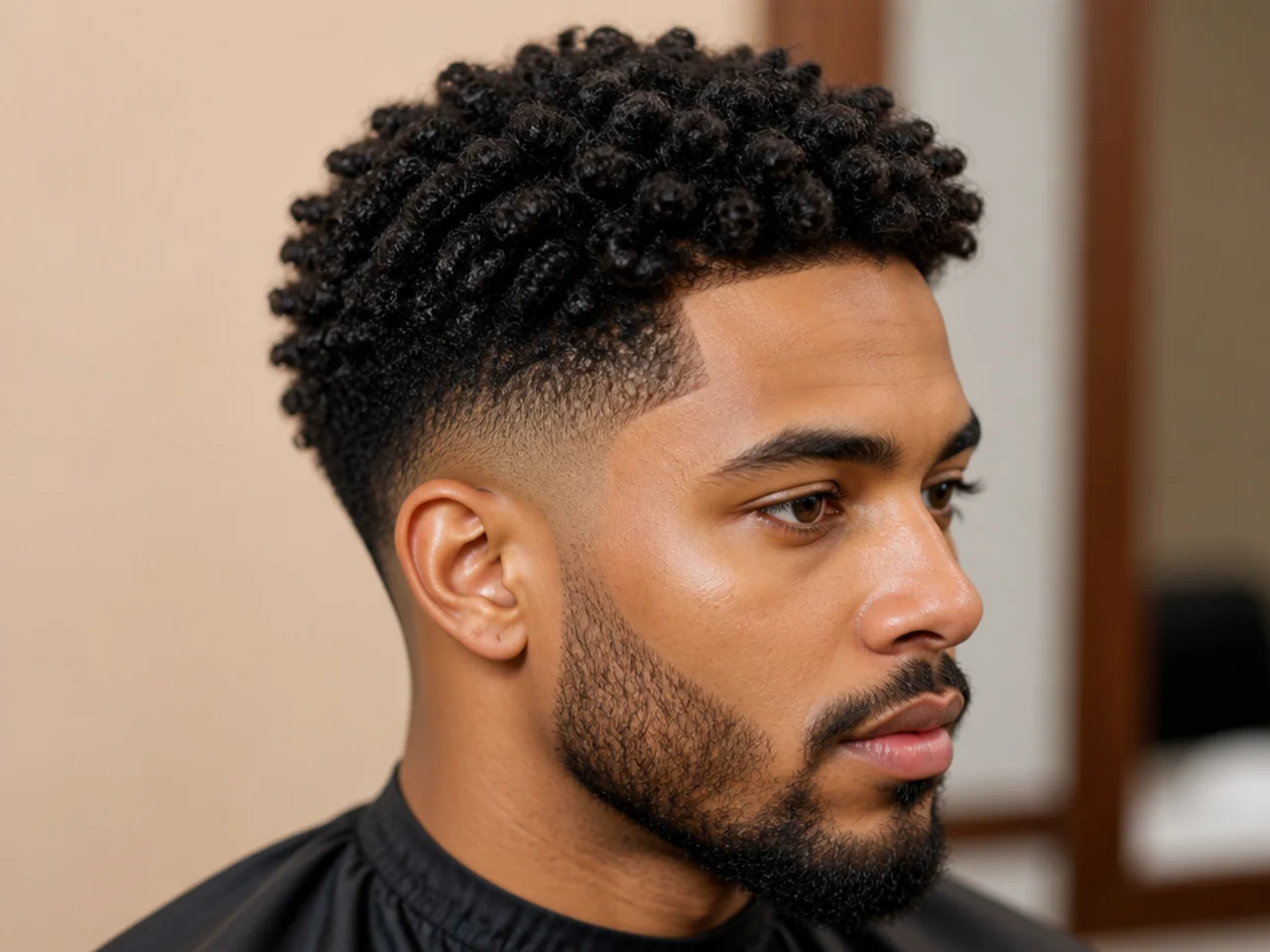
Set the twists at night, unravel in the morning, and the coil pattern reads twice as full as your natural fro. Low fade cleans the sides so the twist-out reads sharp instead of shaggy. Best on 4A and 4B texture, three to five inches of dry length, and any face shape.
Ask for: "low fade, #0.5 at the shortest, four inches of natural texture on top scissor-cut dry, soft blend for the twist-out to sit above."
Styling: two-strand twists on damp hair with a curl cream at night, unravel gently in the morning, fluff at the roots with an afro pick. Don't over-touch or the pattern turns to frizz.
22. Full Natural Afro
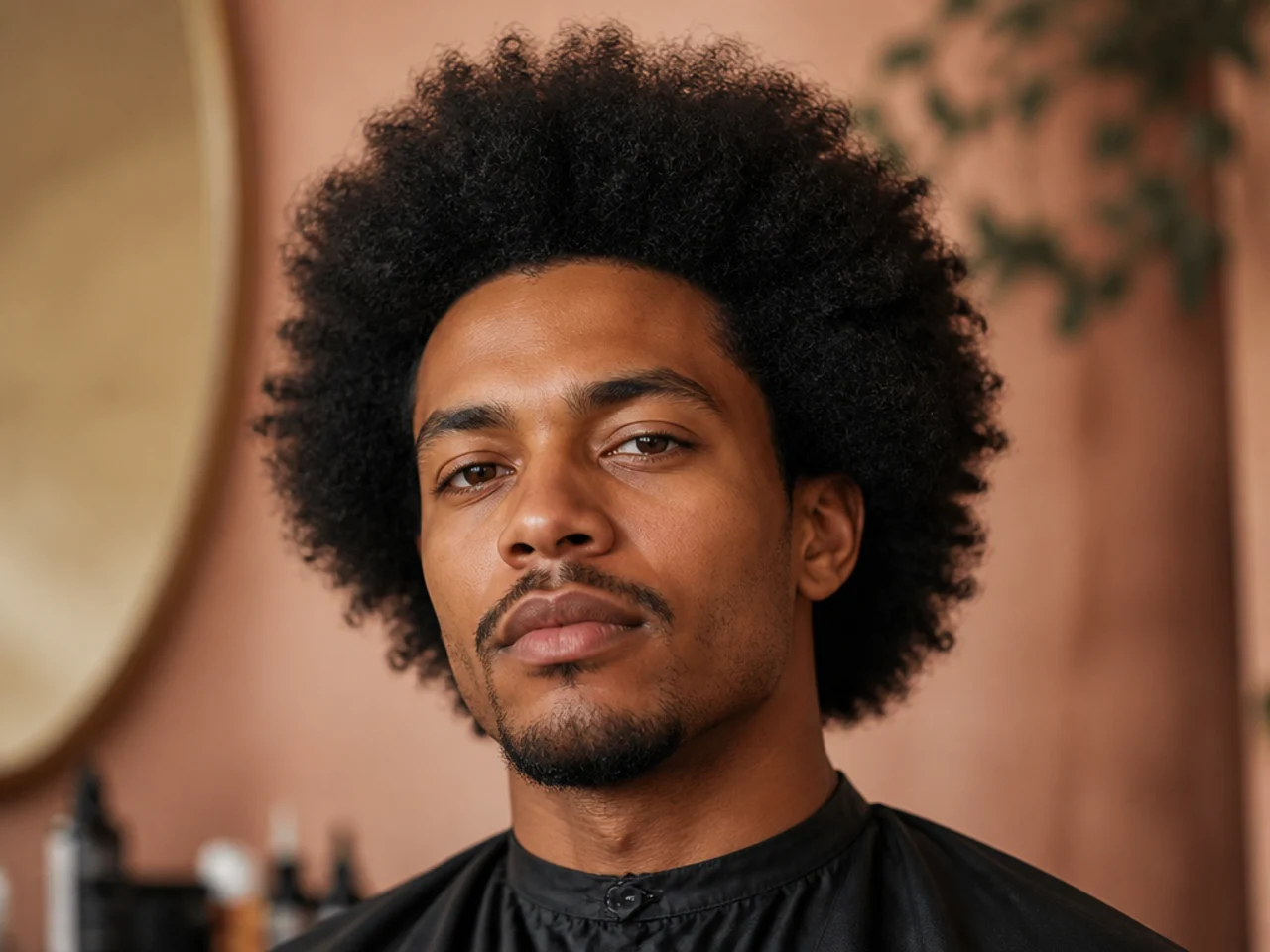
The unabashed full afro — six to ten inches of natural texture picked out into an even rounded shape, no fade, no taper, just a clean neckline at the nape and a soft line-up at the forehead. Best on oval and diamond faces with dense 4B or 4C texture that holds volume. This is a statement cut and a maintenance commitment.
Ask for: "full natural afro, keep the length across the top, even out the shape with scissors while it's picked out, clean neckline and a soft line-up at the forehead."
Styling: wash with a co-wash weekly, deep-condition every other week, moisturize daily with a leave-in and a butter. Pick out with an afro pick before you leave the house; refresh with a water spritz through the day. Sleep on satin or under a bonnet.
23. Coily Fringe with Low Taper
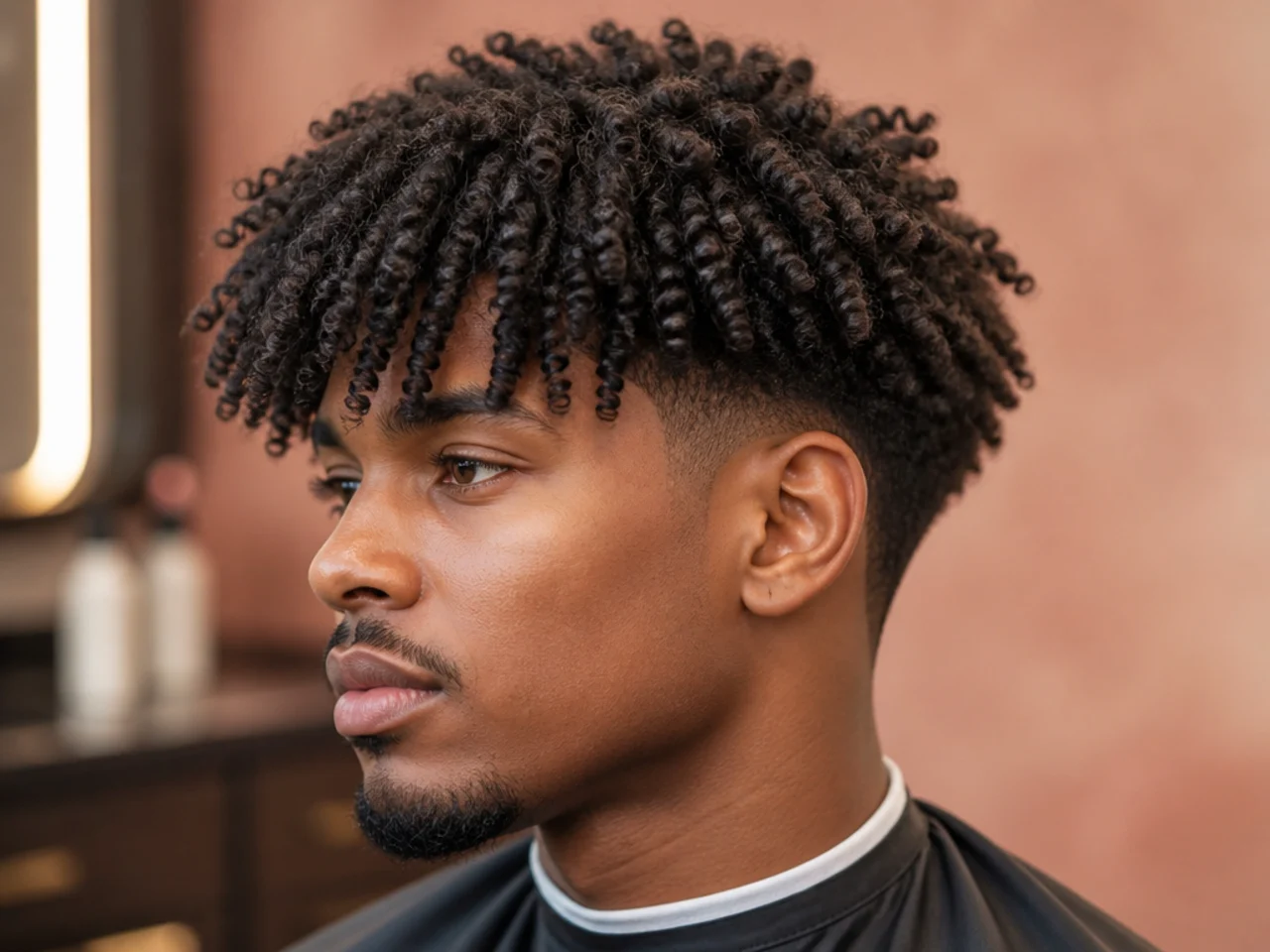
Three to four inches of 4A or 4B coil kept long enough at the front to fall past the brow, low taper clean at the sides. Softens tall foreheads, hides receding corners, and reads current without shouting. Best on square and oblong faces with 4A to 4B texture that holds a curl.
Ask for: "low taper fade, #1 at the shortest, three to four inches of texture on top with the front sections left long enough to fall to the brow."
Styling: curl cream on soaking-wet hair, twirl the front pieces with your finger, let air-dry undisturbed. Refresh with water between styling. A satin scarf across the forehead at night preserves the shape.
24. Edgar on Textured Hair
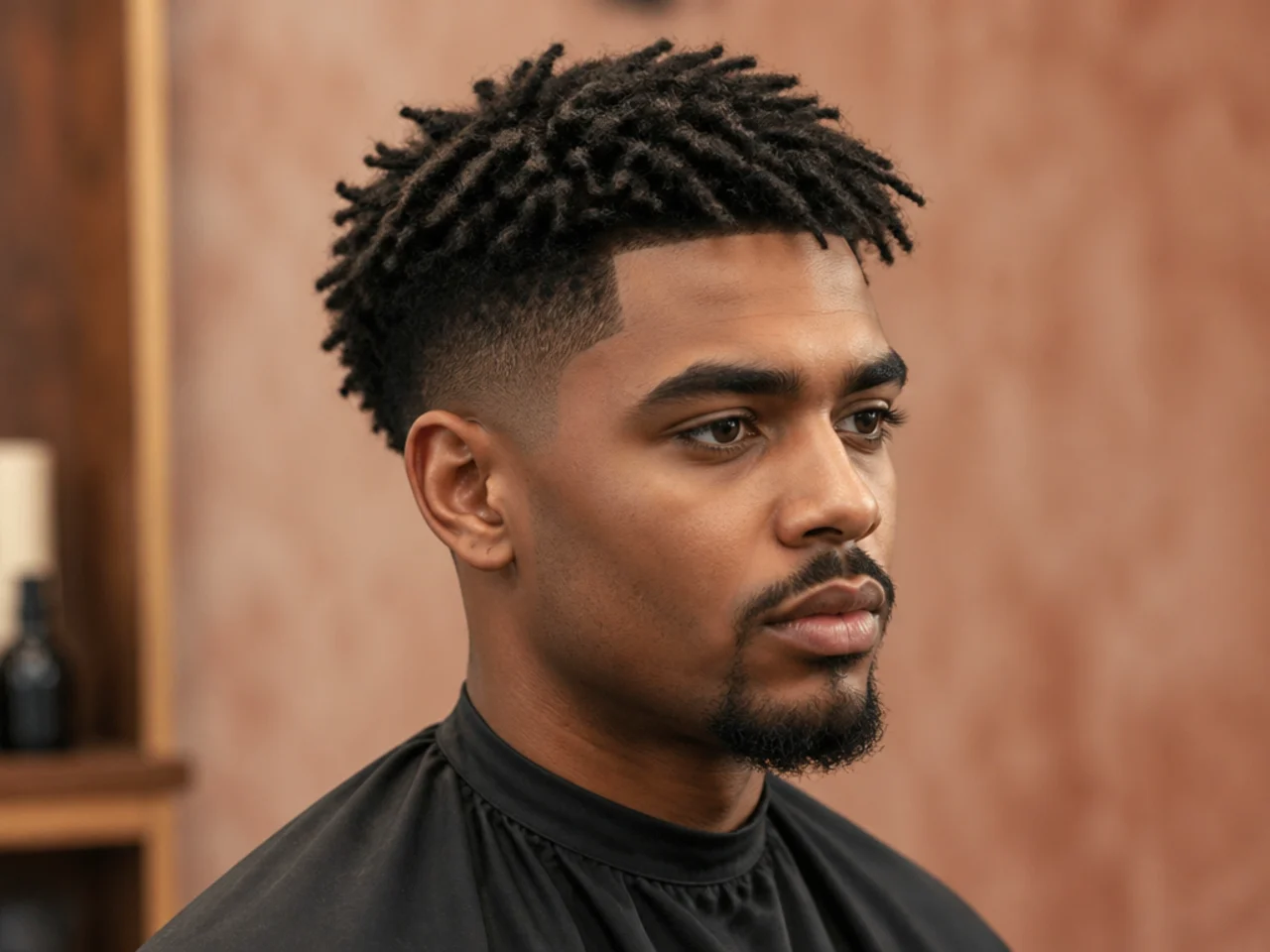
The edgar haircut played on textured hair — a straight-across fringe cut horizontally at the forehead, taper at the sides. On 4A hair the fringe reads sharp; on 4B it needs a curl cream to lay flat. Best on square and heart faces where the horizontal line balances the jaw.
Ask for: "low taper fade, #1 at the shortest, edgar-style fringe cut straight across at the forehead, two to three inches of natural texture on top."
Styling: curl cream on damp hair, comb the fringe forward, press flat with your hand as it dries. Refresh mid-day with a spritz of water. The fringe wants a fresh cut every three weeks or the line goes soft.
25. Curly Frohawk with Burst Fade
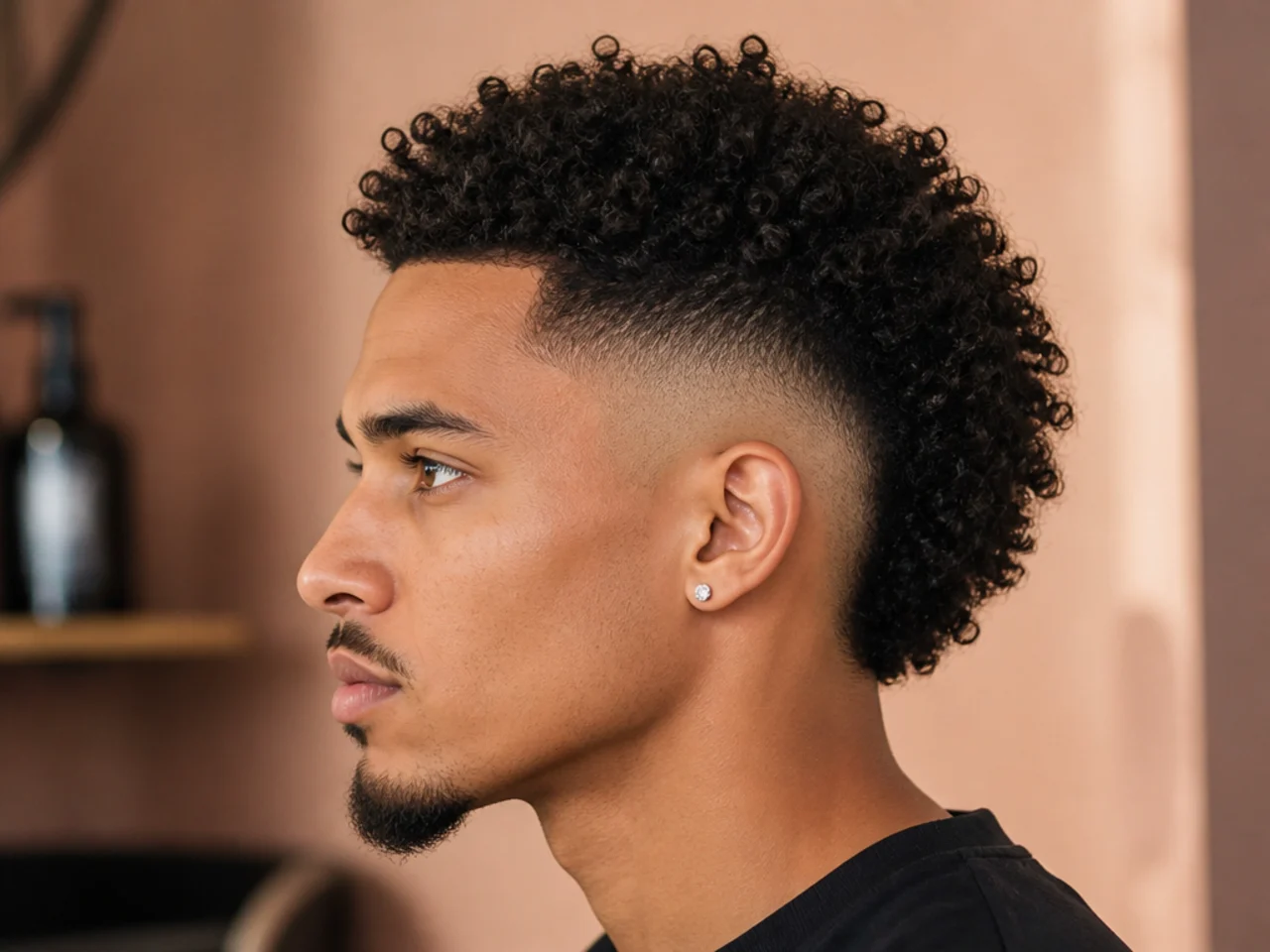
The frohawk energy without shaving the sides — a three-inch strip of 4A or 4B texture runs from crown to forehead, burst fade flanking both sides. The strip reads as the feature, the fade reads as the frame. Best on square and oval faces, medium-density texture, creative or casual workplaces.
Ask for: "burst fade on both sides, #0.5 at the shortest, three-inch strip of natural texture crown to forehead, soft blend into the sides, sharp line-up."
Styling: curl cream on damp hair, diffuse the strip upward while cupping the ends toward the scalp, lock with a light hairspray so the height holds. Book every two weeks — the burst curve blurs fast.
26. Textured Crop with Low Taper
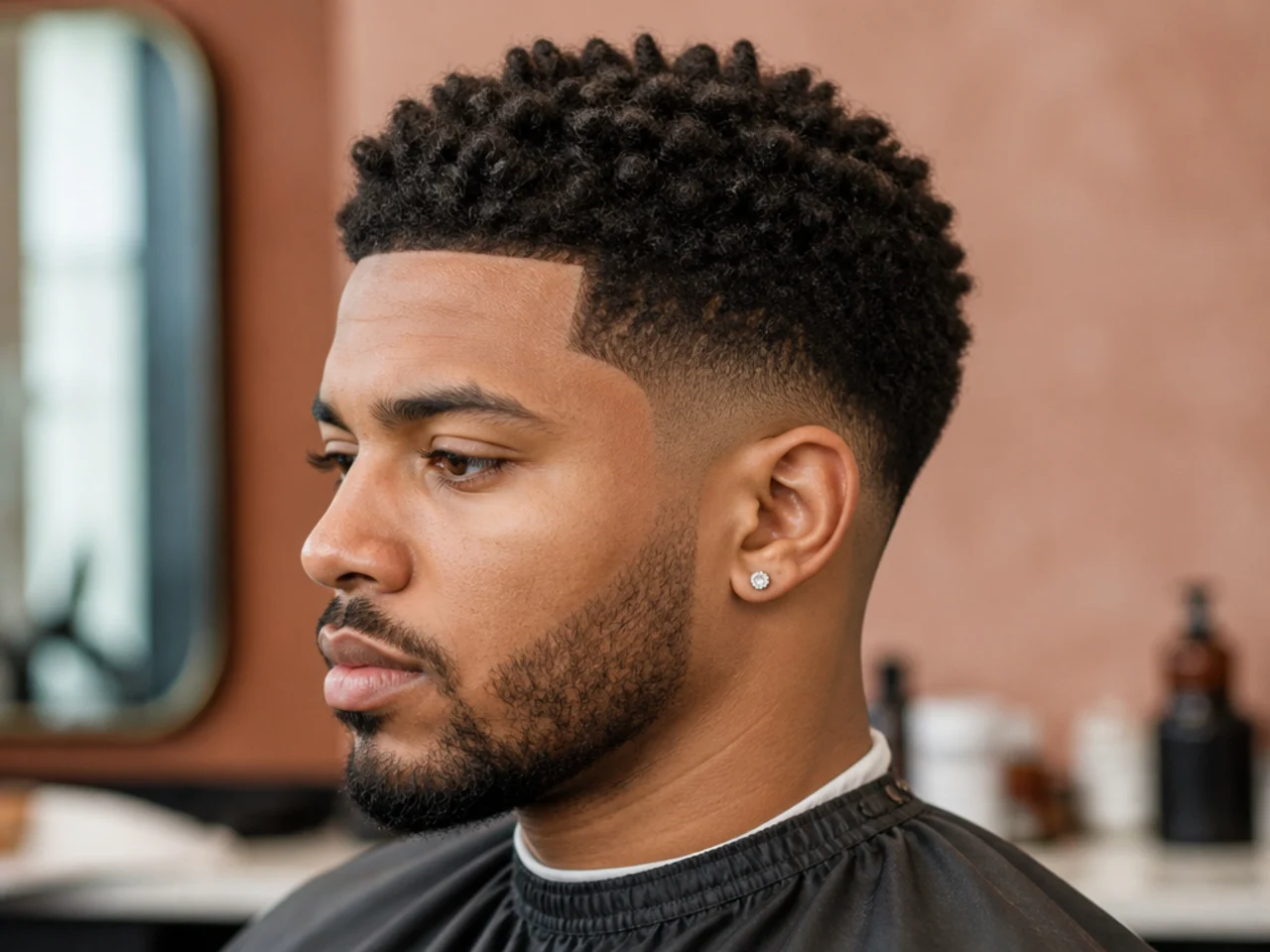
The textured crop on 4A texture — one to two inches of short coil on top, cut blunt at the front to keep the shape square, low taper at the sides. Reads architectural and low-maintenance at once. Great pivot cut between a buzz and a full natural. Best on oval, square, and round faces with 4A and looser 4B texture.
Ask for: "low taper fade, #0.5 at the shortest, one to two inches of natural texture on top scissor-cut blunt at the front, sharp line-up."
Styling: curl cream on damp hair, press the front section flat with your palm as it dries. Air-dry — no product buildup between washes. See the wider textured haircuts for men guide for variations across hair types.
27. Slick-Back on Relaxed Hair
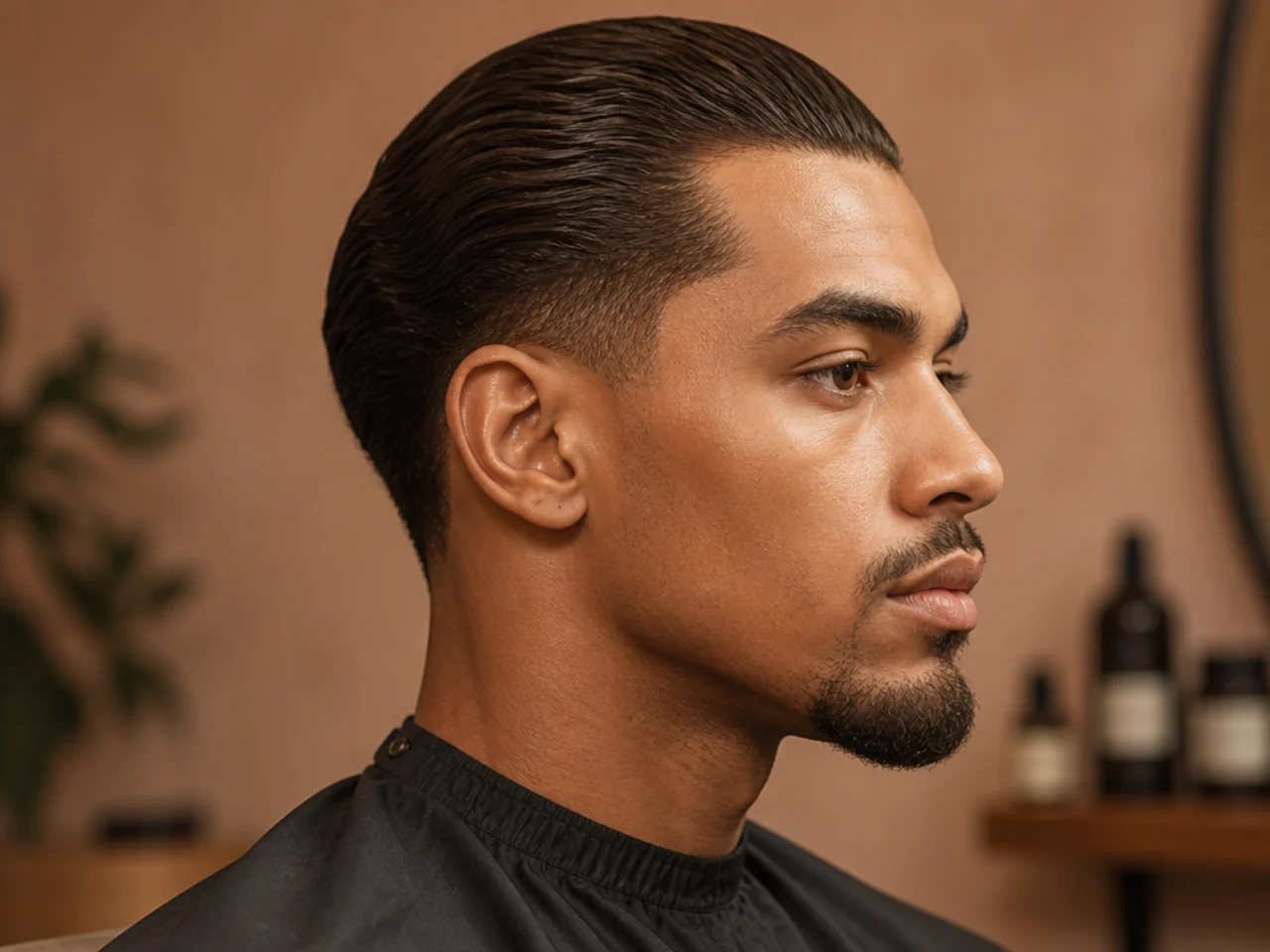
The slick-back on chemically relaxed or texturized hair — four to six inches of loosened texture combed straight back, low taper at the sides. A different animal from natural texture, but polished and old-school for anyone running relaxed hair. Best on oval and square faces where the pulled-back silhouette elongates the shape.
Ask for: "low taper fade, #1 at the shortest, four to six inches of relaxed hair combed straight back, sharp line-up at the forehead."
Styling: light-hold pomade on damp hair, comb straight back with a fine-tooth comb, tie down with a durag for the first hour to set. Deep-condition weekly to protect the chemically treated hair.
28. Locs Half-Up Man Bun with Taper
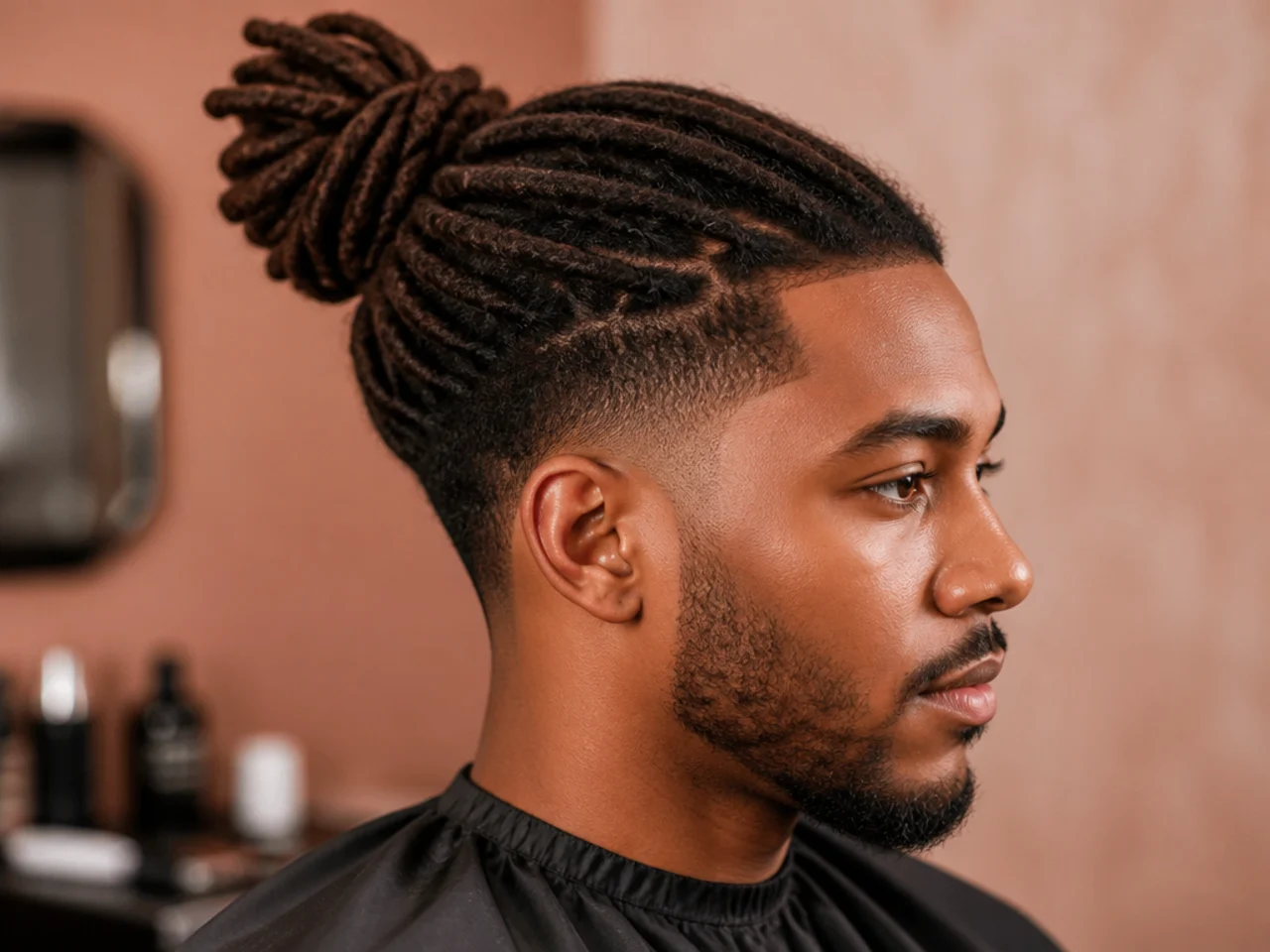
Mature retwisted locs pulled into a half-up bun at the crown, remainder falling to the shoulders or back, low taper at the sides. Great styling variation for guys with locs past shoulder length who want to switch up the silhouette without losing length. Suits oval, square, and heart faces.
Ask for: "low taper fade, #0.5 at the shortest, taper matches where the locs begin, do not touch the loc length. Sharp line-up at the forehead."
Styling: section the top half of the locs and secure with a loc tie or fabric-covered band, let the bottom half fall naturally. Palm-roll loose locs, oil the scalp weekly, sleep on satin.
29. Razor Hair Design in Side Panel
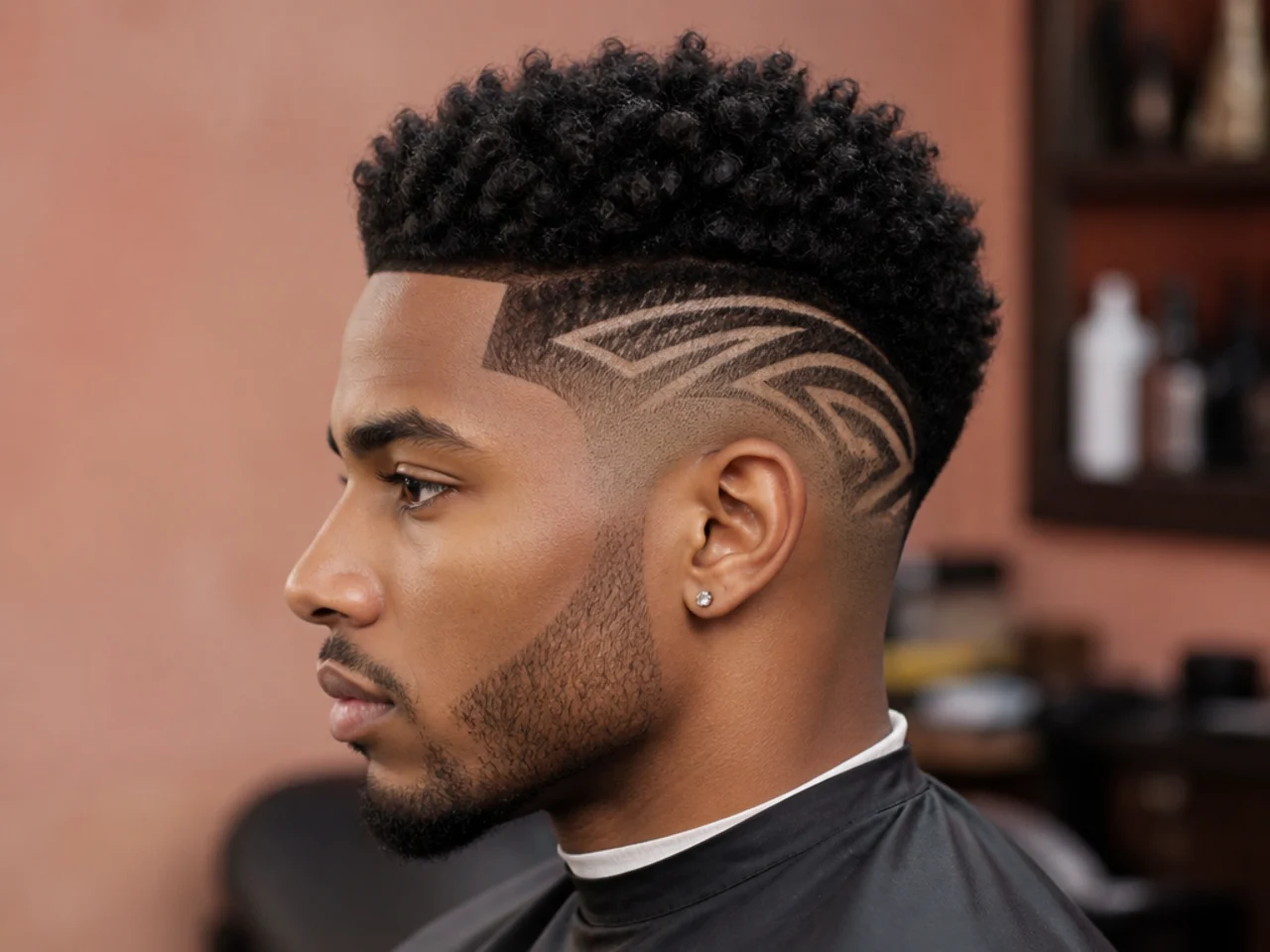
The design cut — a razored pattern carved into the side panel next to a mid or high skin fade. Arrows, stars, wave lines, custom logos, tribal-inspired geometry — the design is personal, the fade is the canvas. Bring a reference photo, and pick a barber who does design work often. Best on any face shape with 4A to 4C texture on top.
Ask for: "mid skin fade, bald at the shortest, razored design in the left side panel — bring a reference photo, three inches of natural texture on top."
Styling: the design panel wants a light oil so the razor lines stay visible; the top wants whatever your texture routine is. Book every ten to fourteen days — the design blurs fast as the hair grows back.
30. Slight Mullet on Textured Hair
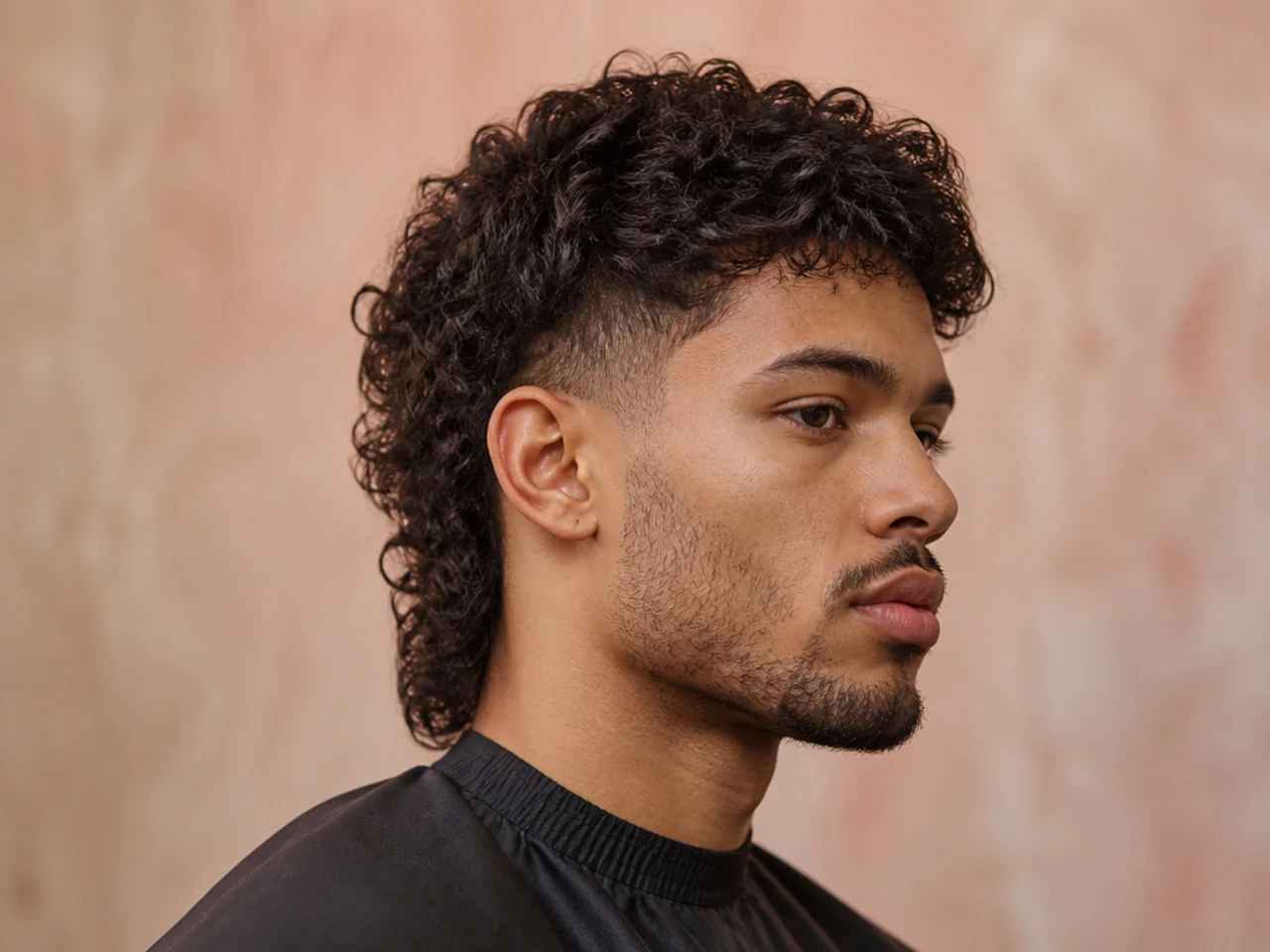
The modern mullet played on Black hair — shorter through the top and sides, longer through the back nape by two to three inches, low taper on the perimeter. Reads current, subtle, and works with waves, twist-outs, or a picked-out coil top. Best on oval and heart faces with 4A to 4B texture that holds shape.
Ask for: "low taper fade, #0.5 at the shortest, three inches of natural texture on top, keep two to three extra inches of length at the back nape for a slight mullet drop."
Styling: curl cream on damp hair, scrunch the top and back, air-dry. The back length wants a nightly satin scarf or bonnet to keep the pattern intact overnight.
How to Ask Your Barber
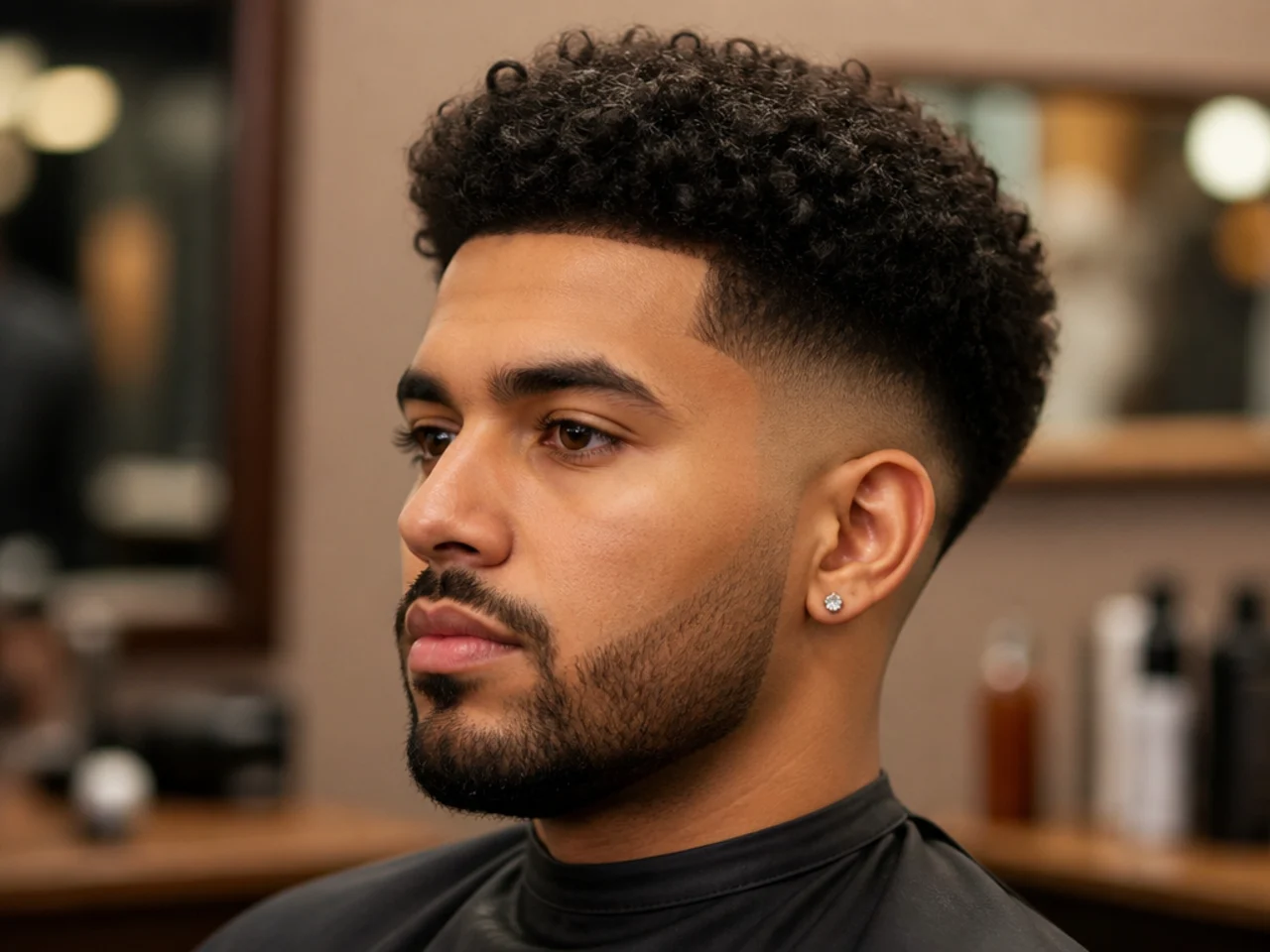
Seven lines close the conversation. Hit these and you walk out with the version you had in mind — not the version your barber assumed you meant.
- Show two photos — and pick models whose texture matches yours. A cut on 4A waves reads completely different from the same cut on 4C coils. One photo shows the sides, one shows the top.
- Name the fade family — or say "no fade." Taper, low fade, mid fade, high fade, skin fade, burst, drop, temple. Naming it upfront saves five minutes of back-and-forth.
- Confirm the guard at the shortest point. #0 for bald, #0.5 for a bald taper, #1 for a soft taper, #2 or #3 for a taper that reads like a shape-up. Guard numbers eliminate ambiguity.
- Ask for the top scissor-cut dry, with the hair picked out first. Shrinkage lies. Wet-cut 4B or 4C hair goes home two inches shorter than you thought.
- Specify the top length in dry inches. "Four inches when it's dry, so about eight when it's wet." Barbers work off numbers, not vibes.
- Name the finish details. Line-up at the forehead. Drop shape at the temple. Design in the side panel. Beard blend at the sideburn. One phrase per detail.
- Book your next appointment before you leave the chair. The good chairs fill up two weeks out. Fades hold ten to fourteen days; tapers hold two to three weeks; TWAs and buzzes need a fresh visit every fortnight.
Styling and Maintenance
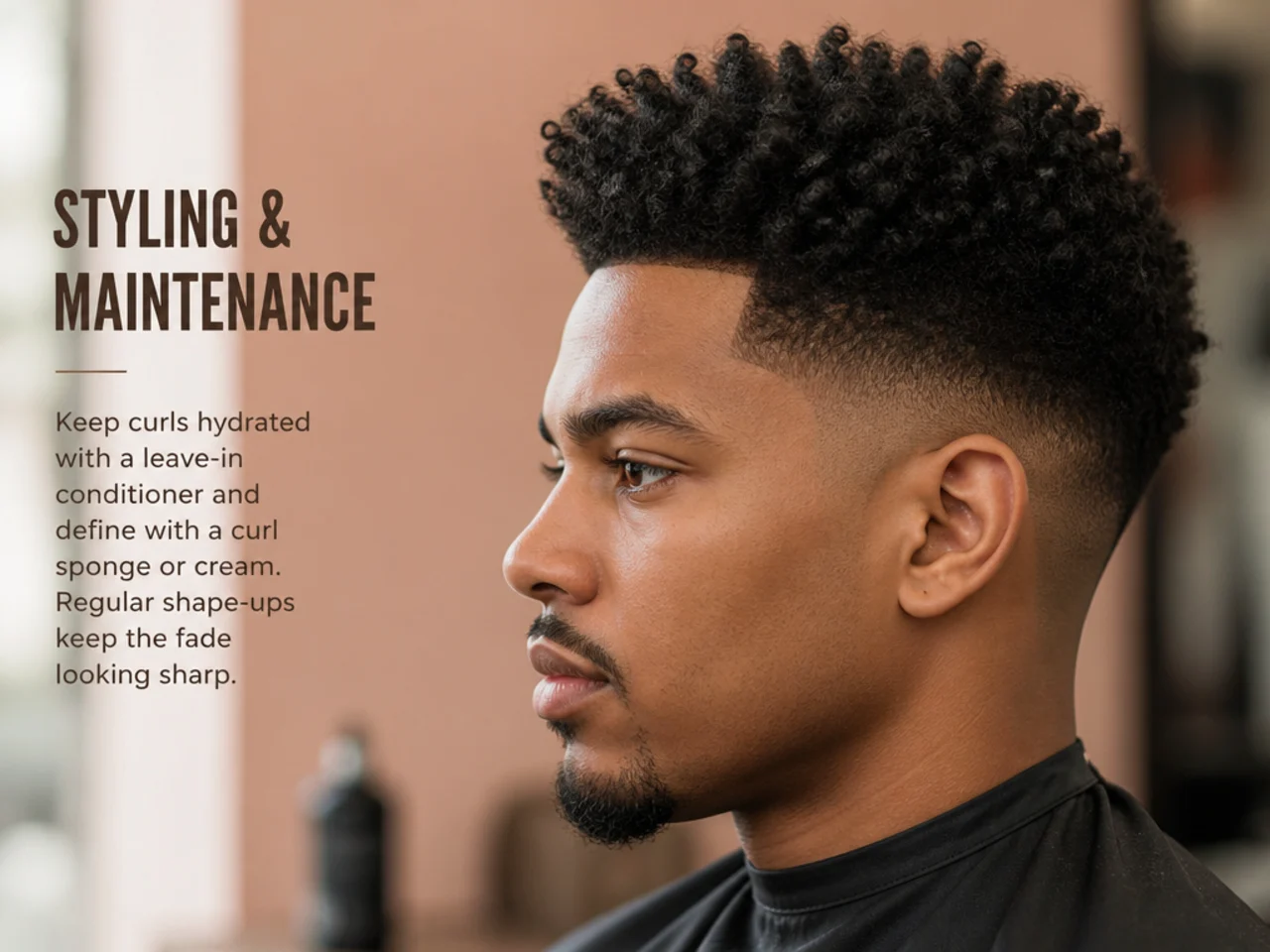
The routine is short, the discipline is daily. Water first, product second, satin third. Everything else is packaging.
Wash cadence. Once or twice a week with a sulfate-free shampoo or a co-wash. Rinse-and-condition every other day between washes if your scalp runs dry. Daily shampoo strips the oils your coils need to hold pattern and moisture.
Product order. Water-based leave-in on soaking-wet hair, curl or wave cream over it, then a light oil or butter to seal. Apply in that order every time — the leave-in is the carrier, the cream is the definer, the oil is the seal. Reverse the order and the cream sits on top of the oil and dries in patches. See the best wavy hair products guide for lightweight picks that carry looser coil types cleanly.
Overnight care. Silk durag, satin bonnet, or satin pillowcase — pick one, use it every night. Cotton pillowcases pull moisture out of your hair and shred the pattern into frizz. For waves, the durag compresses the ridges. For twist-outs and coils, the bonnet keeps the shape intact. For locs, a satin wrap does the same job.
Maintenance cadence. Taper line-up every two to three weeks. Full cut every four to six weeks. Deep-conditioning treatment weekly. Trim ends every eight to twelve weeks even if you're growing out — split ends drag the pattern down.
Between-visit cleanup. Keep the neckline sharp with a quality T-blade trimmer or the corner of your beard edger. Fifteen seconds twice a week and the taper stays crisp until your next appointment. A mid-tier detail trimmer runs $60 to $120 and pays for itself in two months of skipped shape-ups.
Scalp health. Massage a light oil — jojoba, sweet almond, or argan — into the scalp two to three times a week. Textured hair loves oil at the root; the tapered sides especially need moisture to avoid dry itch.
Product to skip. Petroleum-based greases, heavy waxes, and anything with mineral oil high in the ingredients list. They coat the hair, block moisture, and never fully wash out.
Want to explore adjacent guides? The curly hairstyles for men overview covers looser 3A to 3C patterns; the afro taper fade Black men guide zooms in on afro-first taper cuts; and the low taper fade curly hair piece walks through the low-taper family on every curl type.
FAQ
What is the most popular haircut for Black men right now? The low taper fade with 360 waves or a short natural top is the single most-requested cut in Black-owned barbershops. It reads clean in every setting, protects the coil pattern up top, and forgives a three-week gap between visits. Runner-ups include the burst fade with a curly top and the mid taper with a natural afro.
Which haircut suits 4C hair best? 4C hair loves cuts that give the coil room to breathe — twist-outs, sponge coils, freeform dreads, retwisted locs, and the high-top fade all work beautifully on 4C texture. Avoid cuts that ask 4C to lay flat without heavy product; the coil pattern always wins. A low taper at the sides frames any of these tops without touching the top length.
How often should a Black man get a haircut? Every two to three weeks for a fresh fade or line-up, every four to six weeks for a full cut on natural texture up top. Protective styles like dreads, braids, and twists stretch longer — usually a shape-up every three weeks and the top redone every four to eight weeks depending on the style. TWAs and buzzes need a fresh visit every fortnight to hold shape.
What is the difference between a taper and a fade on Black hair? A taper leaves a whisper of hair at the shortest point — usually a #0.5 or #1 guard — while a fade blends down to bare skin or a #0 guard. Tapers read softer and grow out cleaner. Fades read sharper and demand a visit every ten to fourteen days. Both preserve the coil pattern on top; the difference is in the contrast at the perimeter.
Do fades work with dreads, braids, or twists? Yes. Freeform locs, retwisted locs, box braids, cornrows, and two-strand twists all pair beautifully with a taper or fade. Ask your barber to match the perimeter to the line where your protective style begins — a smooth handoff makes the whole look read intentional instead of accidental. The fade haircuts for Black men roundup covers each pairing with photos.
How much does a haircut for Black men cost? A standard fade or taper with a scissor-cut natural top runs $40 to $80 at a Black-owned barbershop. Add a razored line-up, beard blend, or hair design and it climbs to $80 to $150. Loc retwists, braid installs, and color services are separate — expect $60 to $200 depending on complexity and length. Tip twenty percent, and book your next appointment before you leave the chair.