25 Trendy Boys Haircut Ideas to Try Now
A boy's hair grows fast enough that a hard line blurs in two to three weeks, not four. So the only useful way to rank a trendy cut is by how many weeks it holds before it stops looking cut.
In this article · 32
- Why a Boy's Haircut Ages Twice as Fast
- How to Choose Yours
- The 25 Cuts, Ranked by Weeks
- 1. Skin Fade With a Textured Top
- 2. A Shaved Hard Part
- 3. Burst Fade Around the Ear
- 4. Low Skin Fade Over a Buzzed Top
- 5. Mid Skin Fade With a Comb Over
- 6. High Skin Fade With a Line-Up
- 7. Drop Fade Behind a Fringe
- 8. The Blowout Fade
- 9. Number One All Over
- 10. Low Taper Kept at a Number One
- 11. Burst Fade Stopped at a Number One
- 12. Edgar With a Blunt Fringe
- 13. Mid Taper With a Fringe
- 14. Low Taper Over a Crop
- 15. High Taper Over a Number Two
- 16. Number Two All Over
- 17. Mid Taper Over a Number Three
- 18. The Broccoli Top Over a Number Three
- 19. Number Three All Over
- 20. Textured Crop With Scissor Sides
- 21. A Soft Mullet With an Untouched Nape
- 22. Grown-Out Curtains
- 23. Two Block With a Blunt Perimeter
- 24. A Long Fringe With Scissor-Cut Sides
- 25. Long Layers With No Line at All
- Styling and Upkeep
- Mistakes to Avoid
- FAQ
- Final Thoughts
Every roundup of trendy boys haircuts shows the cut on the day it was done. That is the one day it is guaranteed to look right, and it is the day that tells you the least.
A child's hair grows fast enough that a hard line blurs in two to three weeks, not four. So the number worth knowing is not the guard, the fade height or the name of the trend. It is how many weeks the cut holds before it stops looking cut.
Every cut below is ranked by that number. They run from a skin fade that gives you about seven good days to a scissor shape that still reads deliberate at week eight, and each one says why it lands where it does.
Why a Boy's Haircut Ages Twice as Fast
A child's hair grows faster than an adult's. A number one line on a boy is closer to a number two by week three, which is roughly the point at which an adult would only just be thinking about booking again.
The shorter the guard, the bigger the proportional change. Three millimetres growing to five is a 66 percent change and the eye catches it instantly. Thirteen millimetres growing to fifteen is a 15 percent change and nobody sees it at all.
A hard line is what ages, not the length. Hair simply getting longer is close to invisible. A crisp edge going soft and slightly uneven is the thing that makes a parent decide the cut has gone.
A longer top hangs over the corner and hides where the sides start. Two centimetres of weight on top covers the transition entirely, which is why the same taper survives longer under a crop than under a buzz.
How to Choose Yours
Pick the week number you can actually service. If the realistic gap between cuts is five weeks, a one-week cut is a stale cut for four of them.
Read the school grooming rule before you read the trend. Most policies name a minimum guard, commonly nothing shorter than a number two, which quietly deletes the top third of this list.
Judge every option at week three, not on the day. Ask the barber what the shape looks like halfway to the next appointment, and choose from that answer rather than the mirror.
Buy weeks with top length, not with shorter sides. Weight on top covers a blurring line. Going shorter underneath only makes the line blur faster and the gap wider.
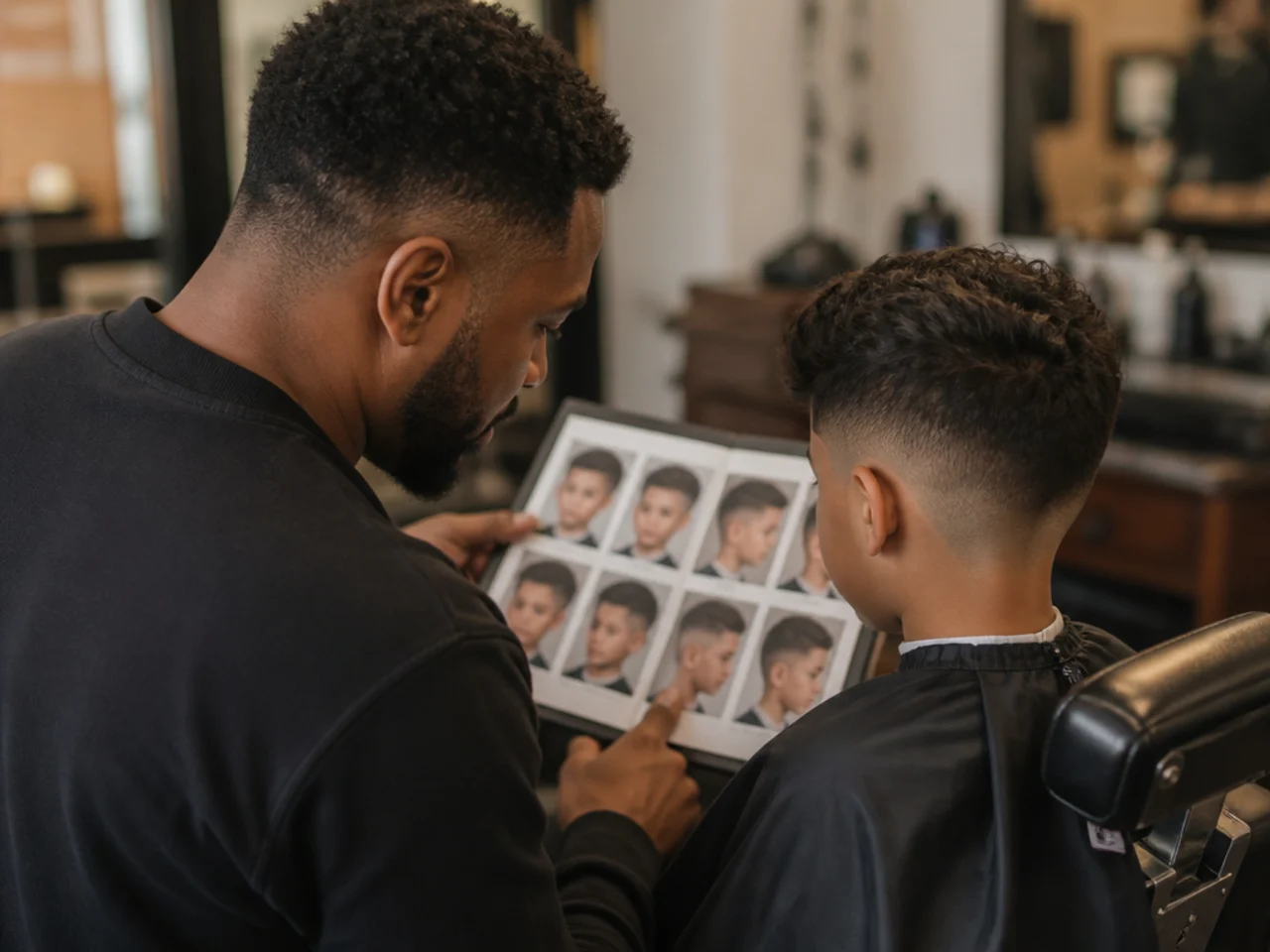
The 25 Cuts, Ranked by Weeks
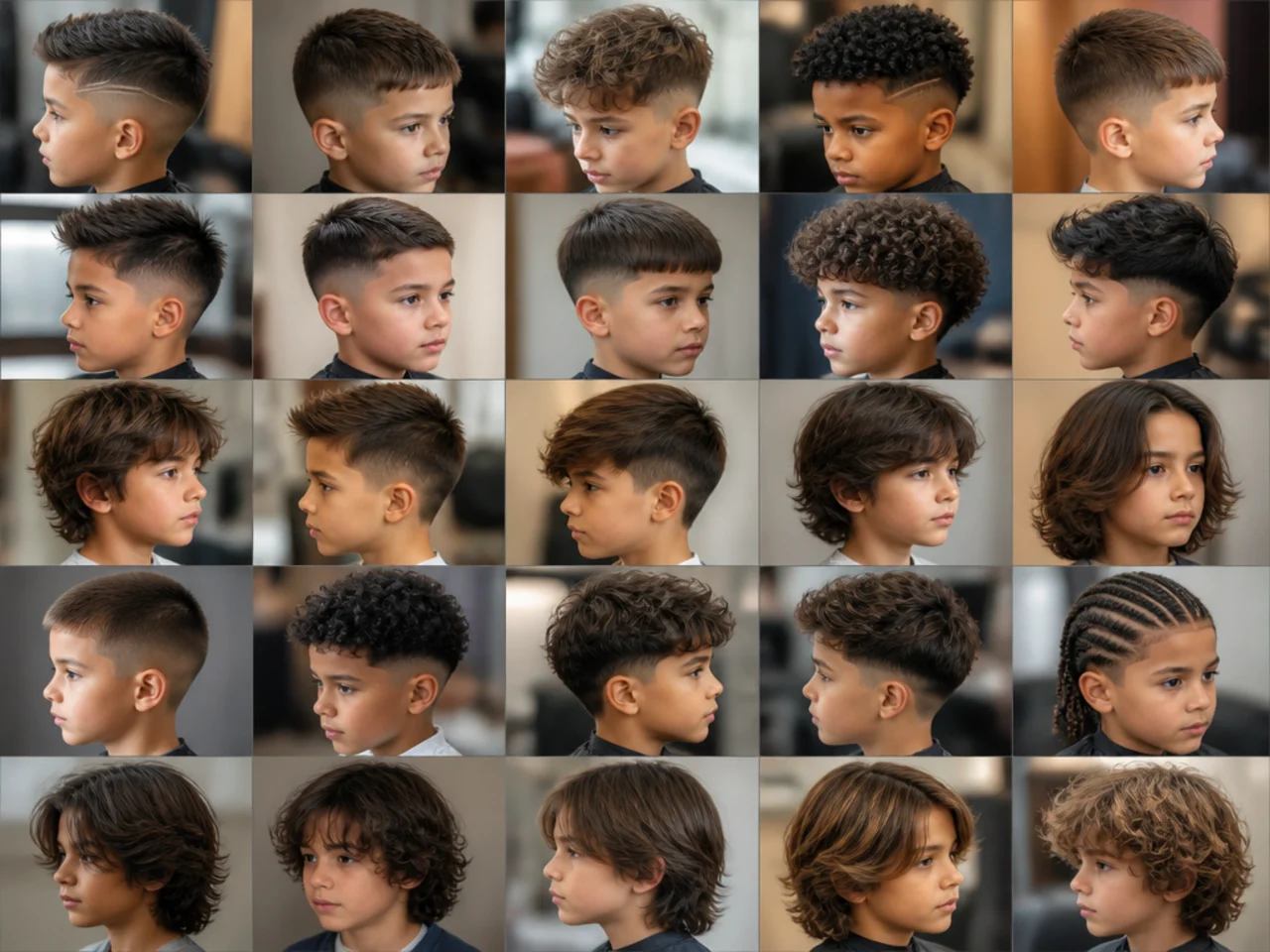
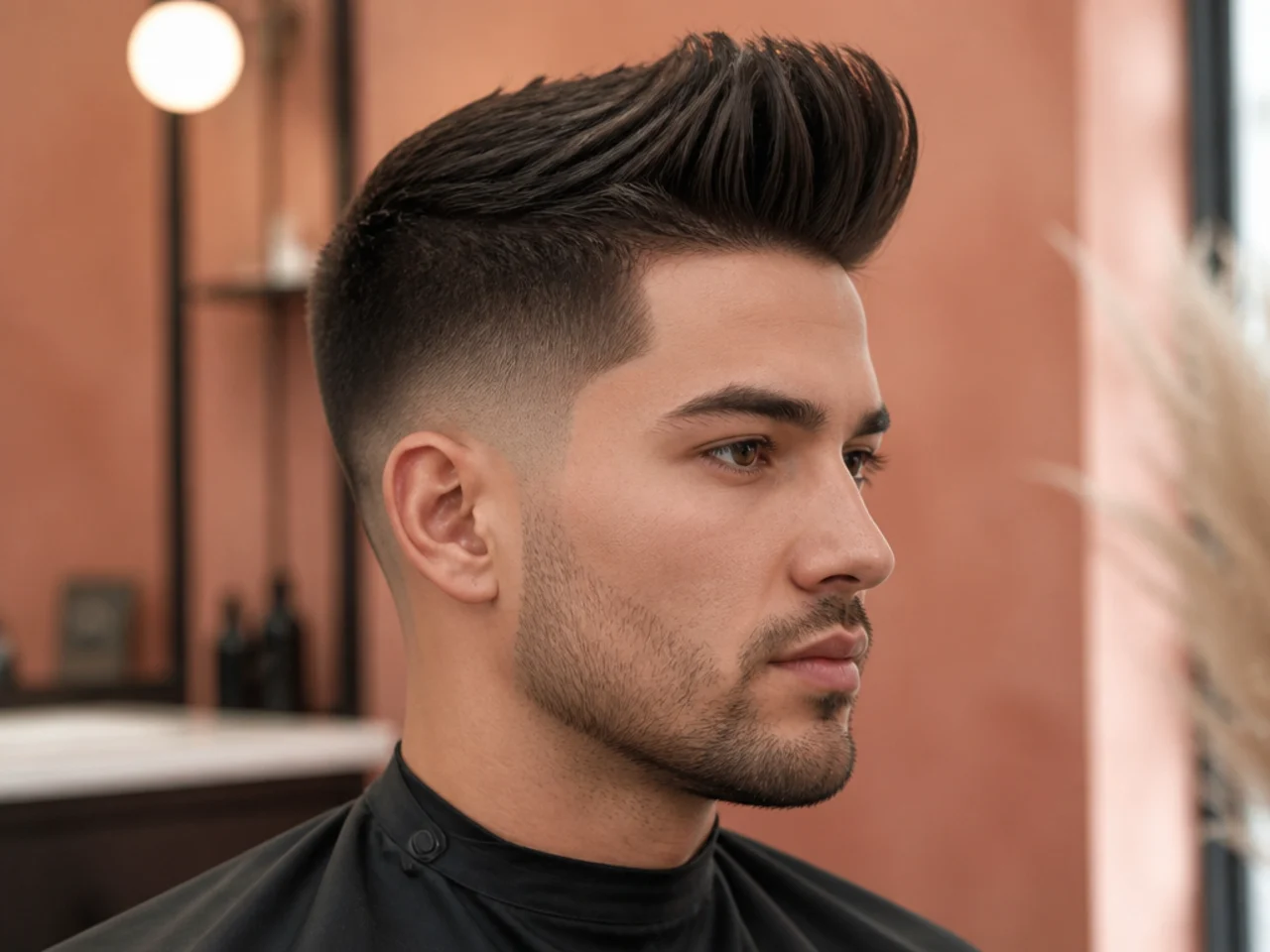
1. Skin Fade With a Textured Top
The bottom of this fade is bare skin, and skin has exactly one way to change. The day stubble comes through, the shortest point is no longer the shortest point, and on a boy that lands inside one week.
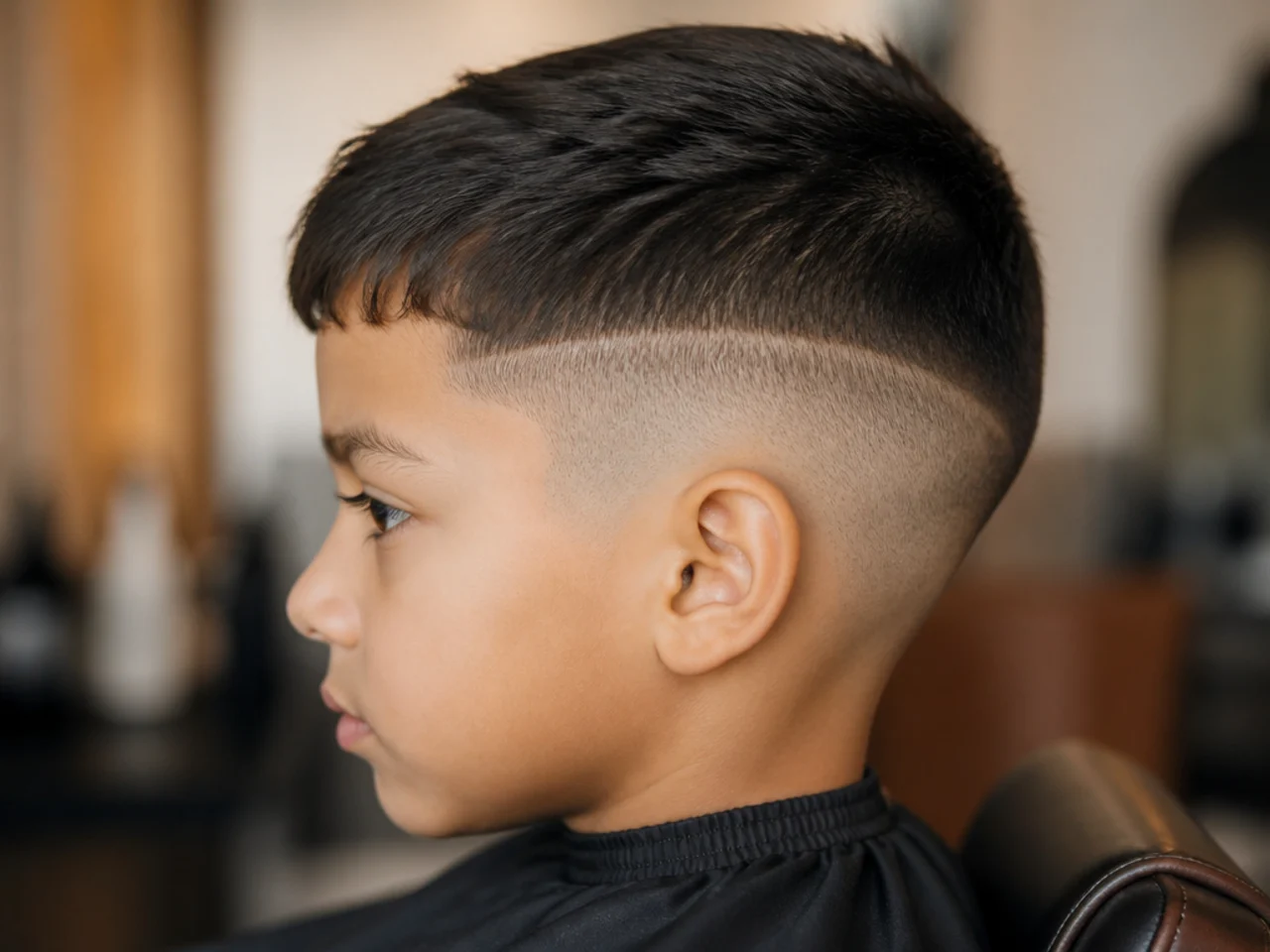
2. A Shaved Hard Part
A shaved part is a gap in the hair, and hair grows into a gap from both edges at once. That doubles the closing rate, so it is a faint parting by day ten and gone by ten to fourteen days.
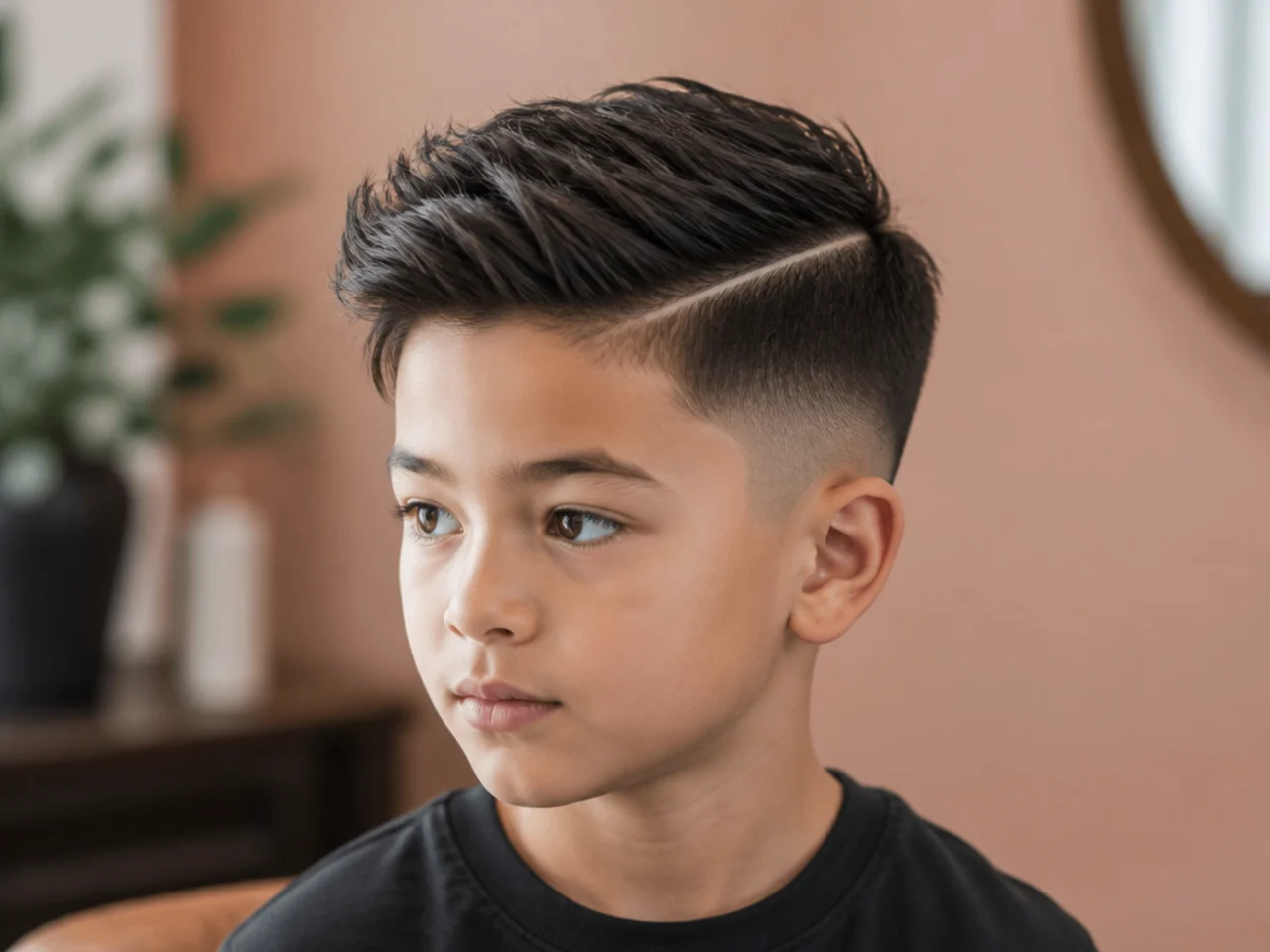
3. Burst Fade Around the Ear
The burst puts skin in a curve where the hair around it is already short, so nothing nearby disguises the regrowth. Curved edges also blur unevenly, which reads as a wobble rather than a soft edge, by day ten.
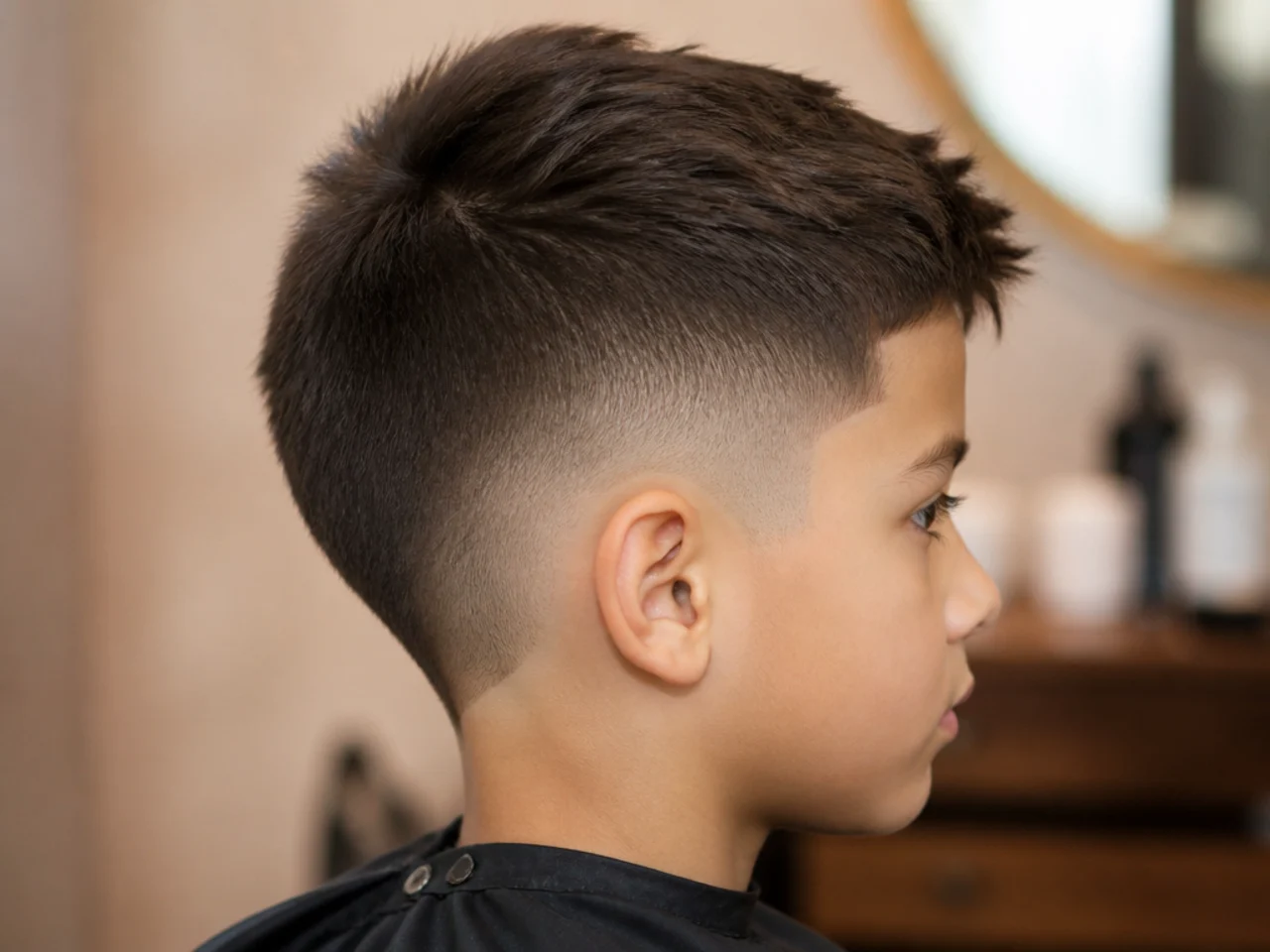
4. Low Skin Fade Over a Buzzed Top
Skin at the lowest point on the head with nothing longer anywhere to cover the transition. It gets about ten days, though it does at least grow out evenly rather than lopsided.
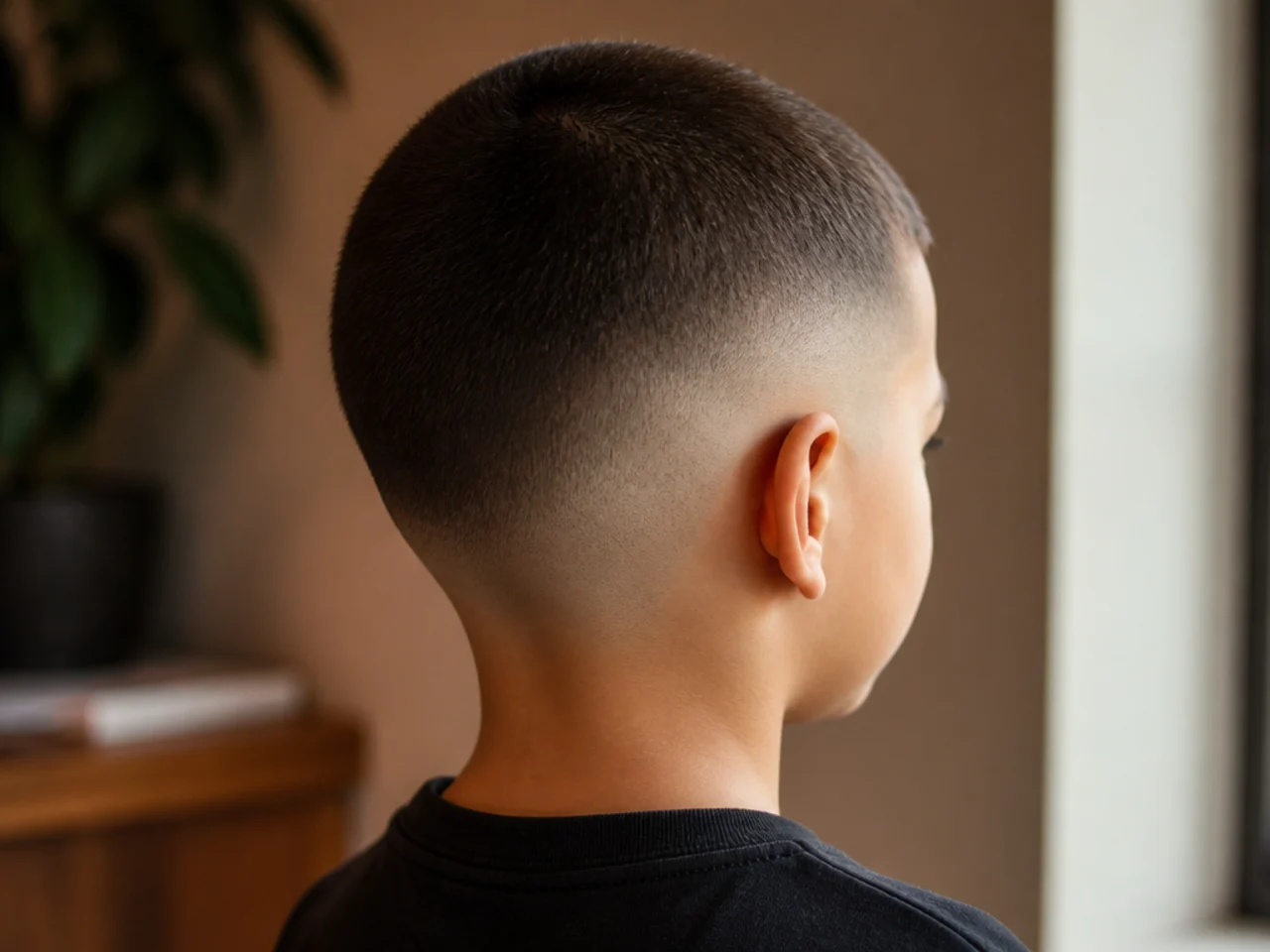
5. Mid Skin Fade With a Comb Over
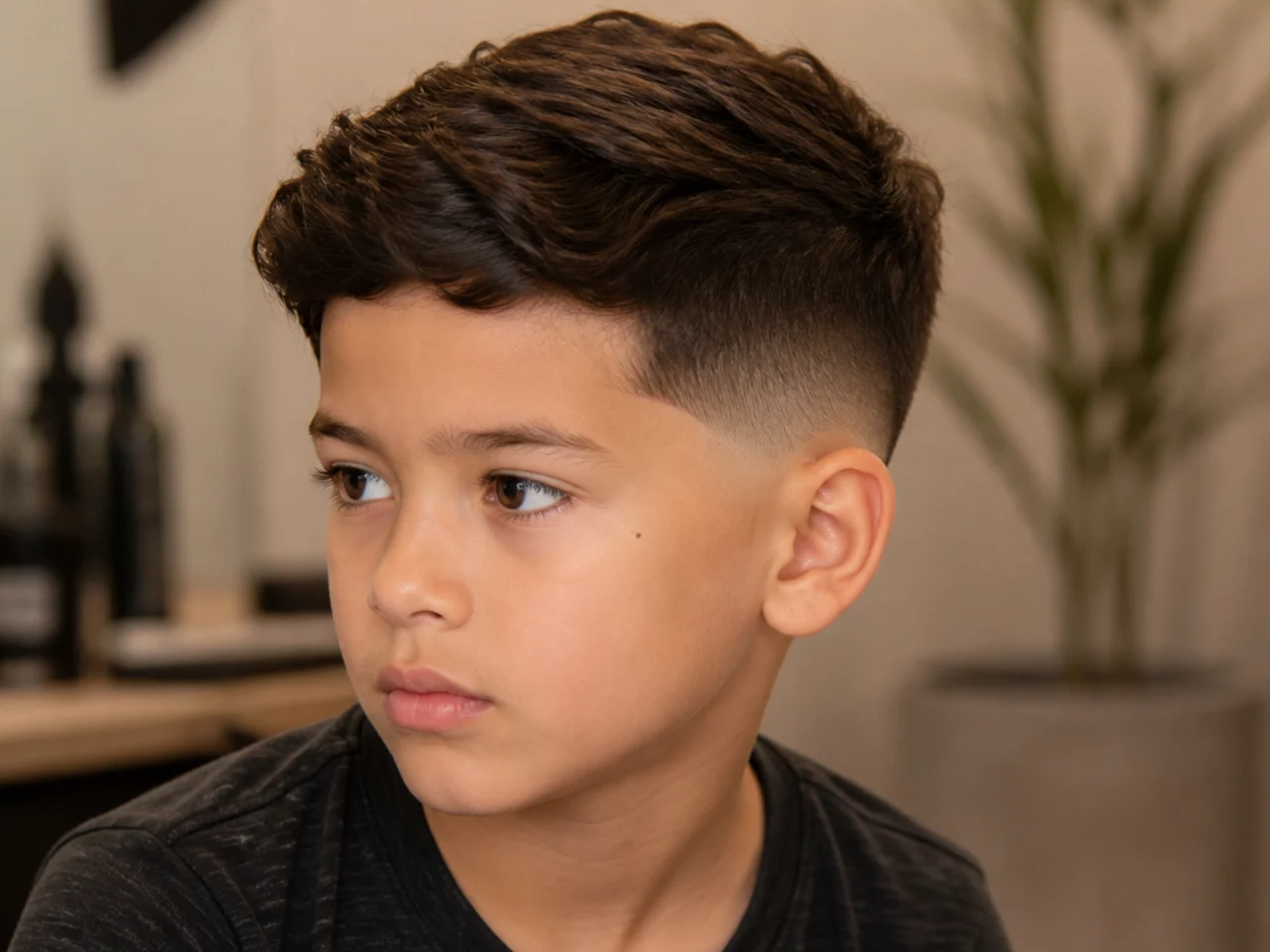
The line sits higher, where the surrounding hair is already longer, so growth has a smaller gap to close. The weight on top hangs over the corner too, which together buys it twelve days rather than seven.
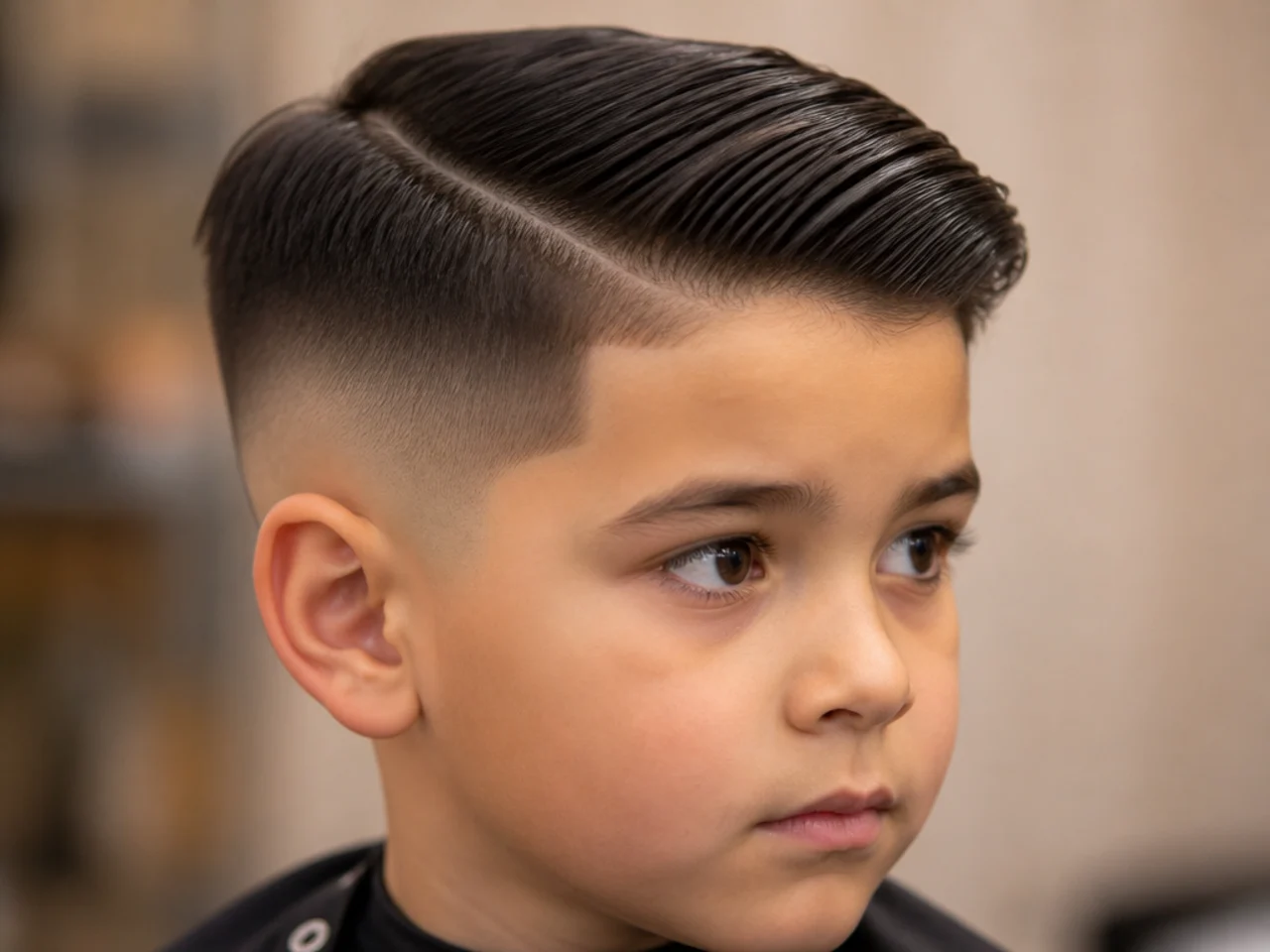
6. High Skin Fade With a Line-Up
Height is doing real work here and the fade itself will hold two weeks. The outlined hairline is what fails first, because a line-up on a child's fine front hairline softens before the fade below it has moved at all.

7. Drop Fade Behind a Fringe
The dropped curve sits lower behind the ear than the rest of the line, so that section closes first while the front still looks fine. Expect two weeks, and expect the failure in the place you cannot see from the front.
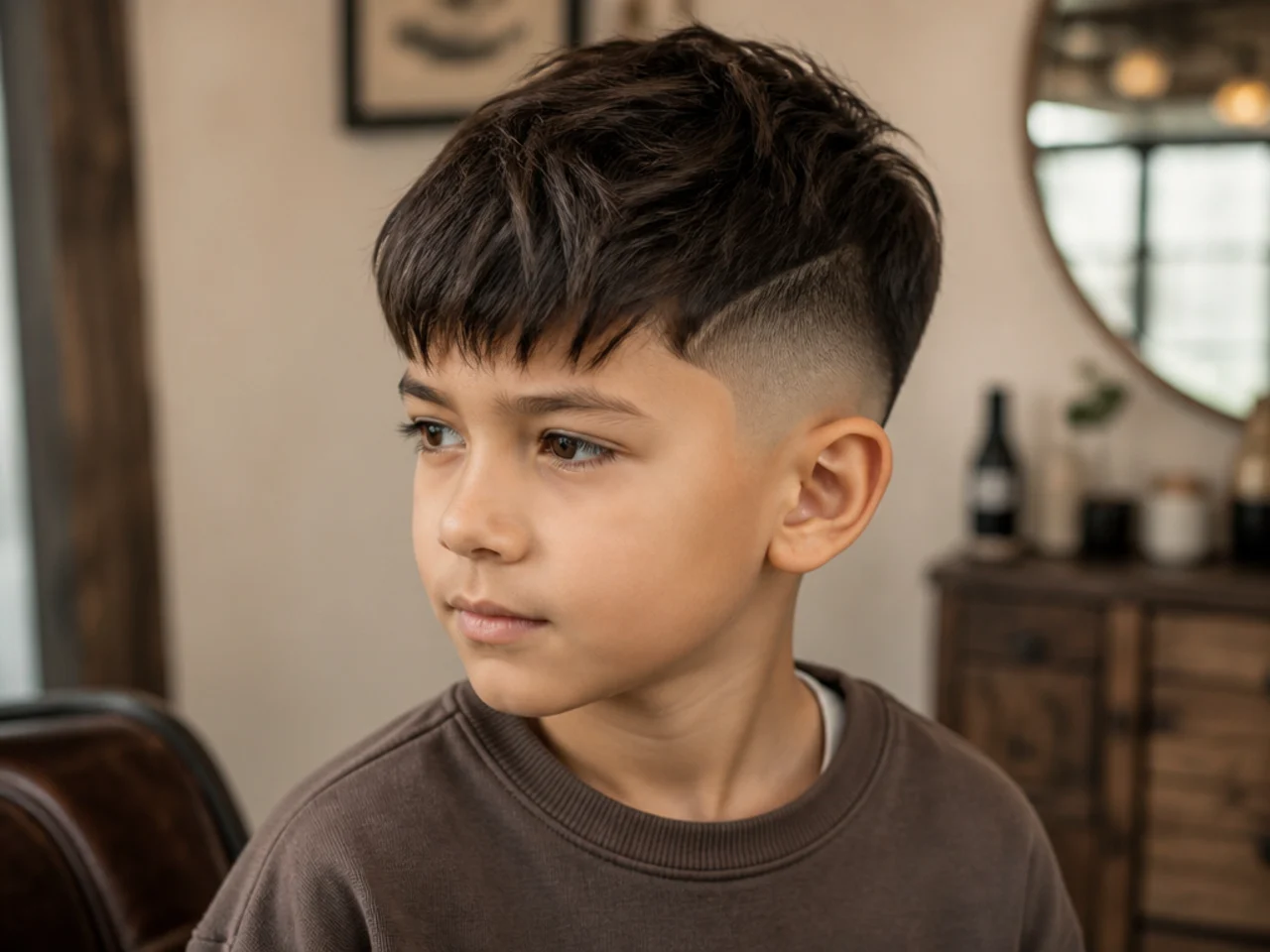
8. The Blowout Fade
Maximum contrast between a very high short line and a lot of length above it, so any softening is obvious. It also only reads when the top is brushed forward, which on a school morning it will not be, so call it two weeks.
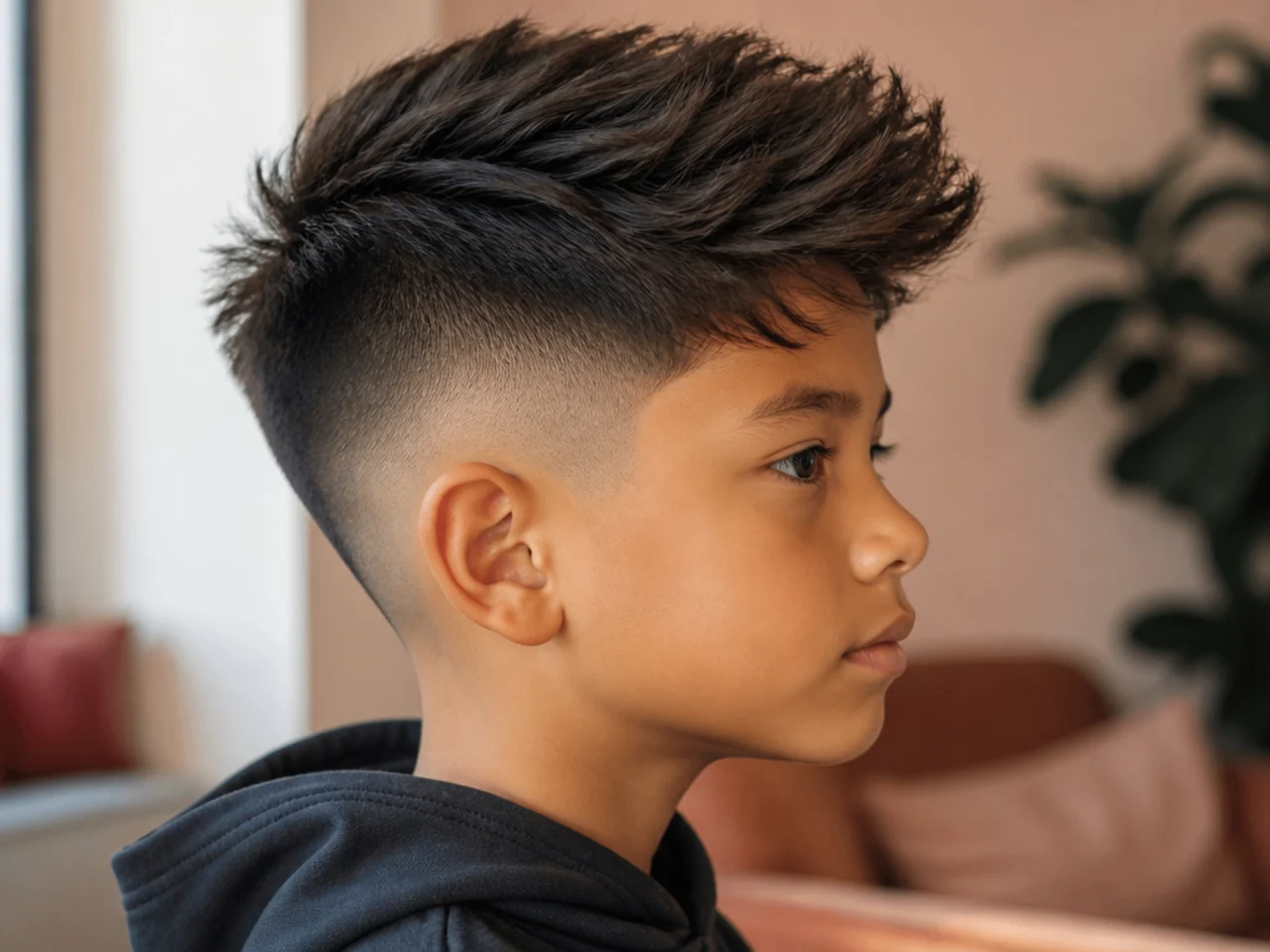
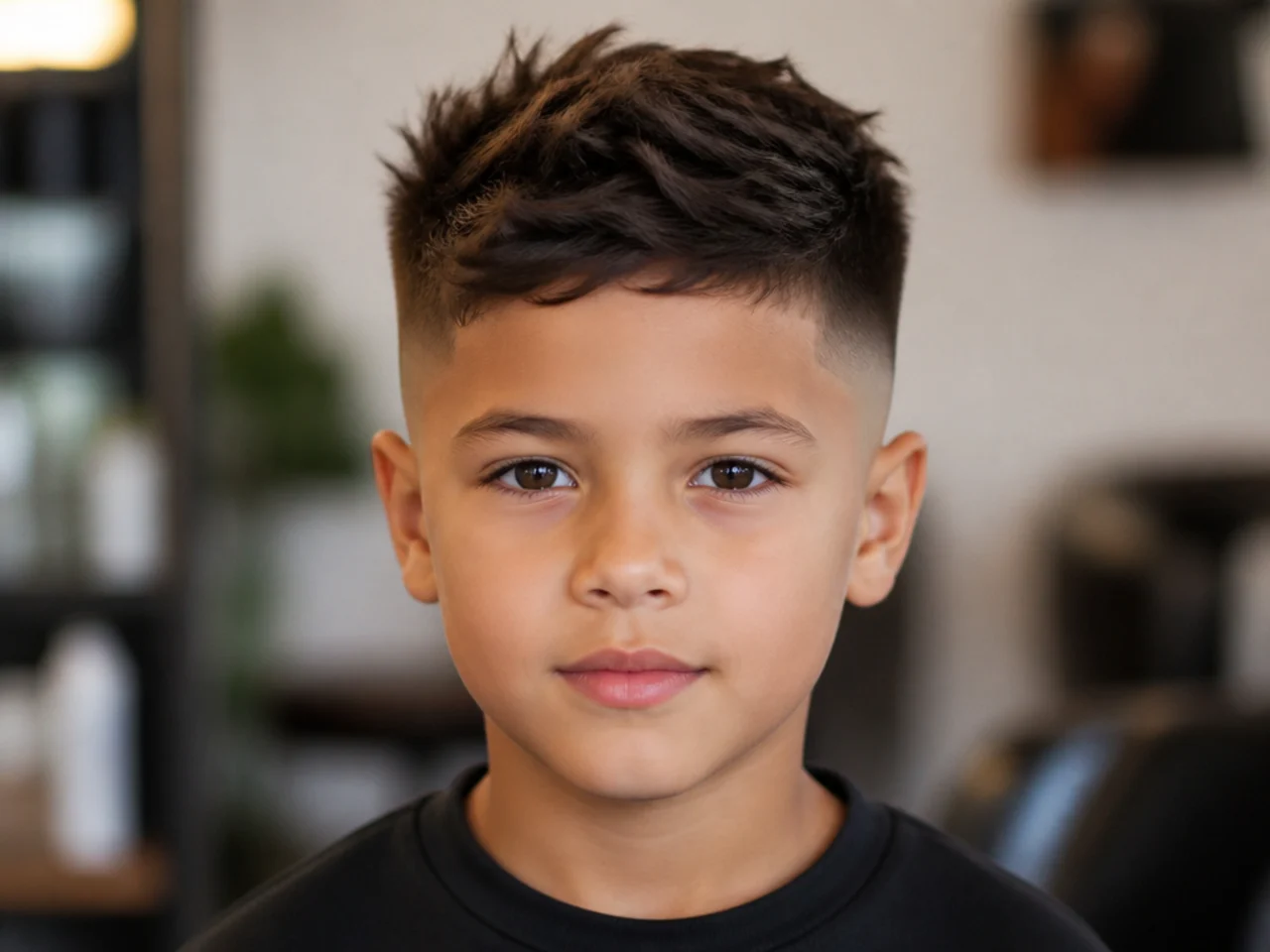
9. Number One All Over
There is no line here to blur, but three millimetres becoming five is a two-thirds increase and the head visibly changes shape. It never looks wrong, it just stops looking cut at around two weeks.

10. Low Taper Kept at a Number One
Leaving three millimetres at the neckline instead of going to skin is the single change that buys the most time, because growth from 3mm to 5mm is far less visible than growth from nothing to 2mm. Low placement caps it at two to three weeks.
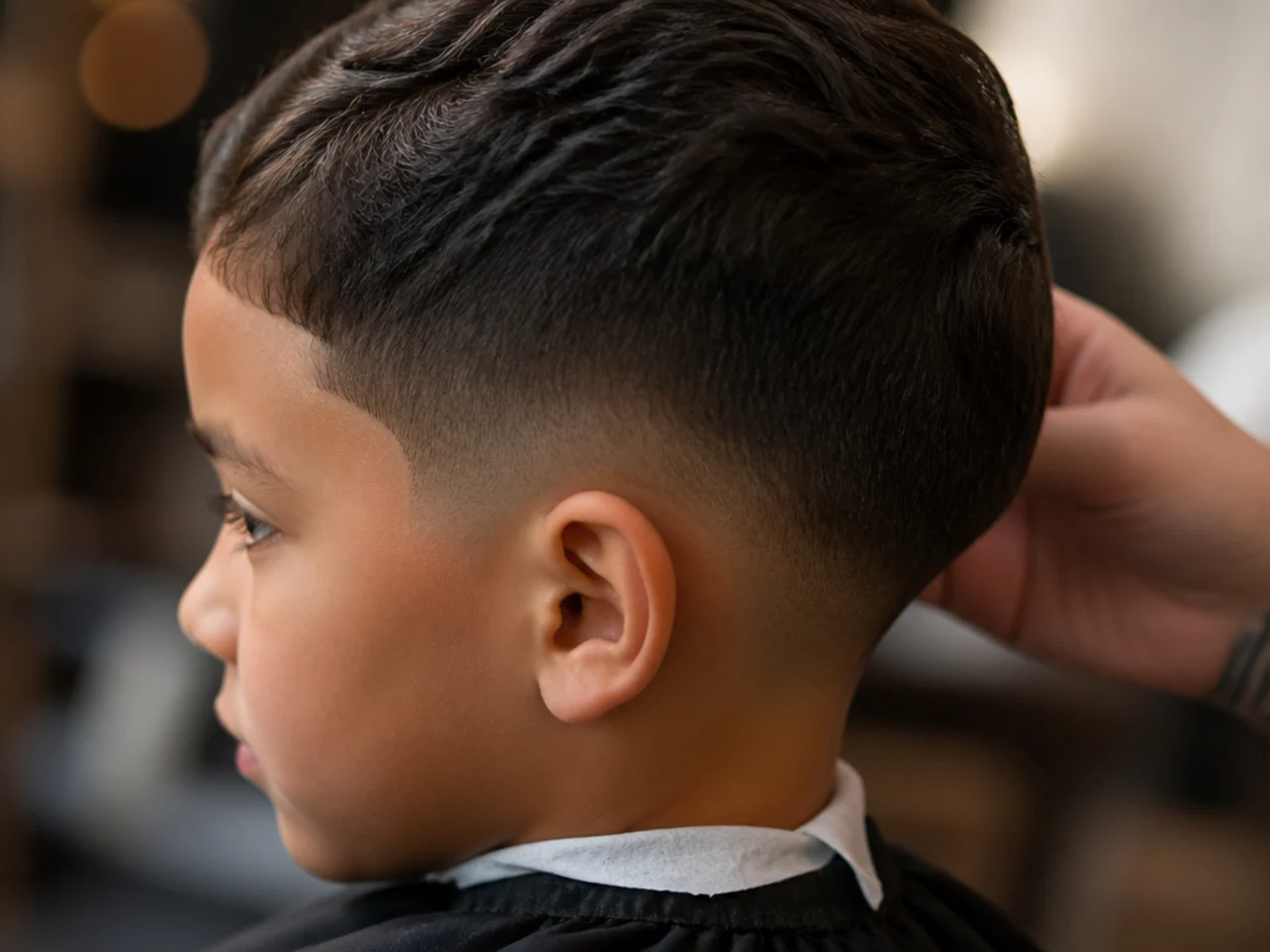
11. Burst Fade Stopped at a Number One
The same curve as the skin version, with three millimetres left in it instead of nothing. That one guard turns a ten-day cut into a three-week one, which is the clearest illustration on this page of what the bottom guard is worth.
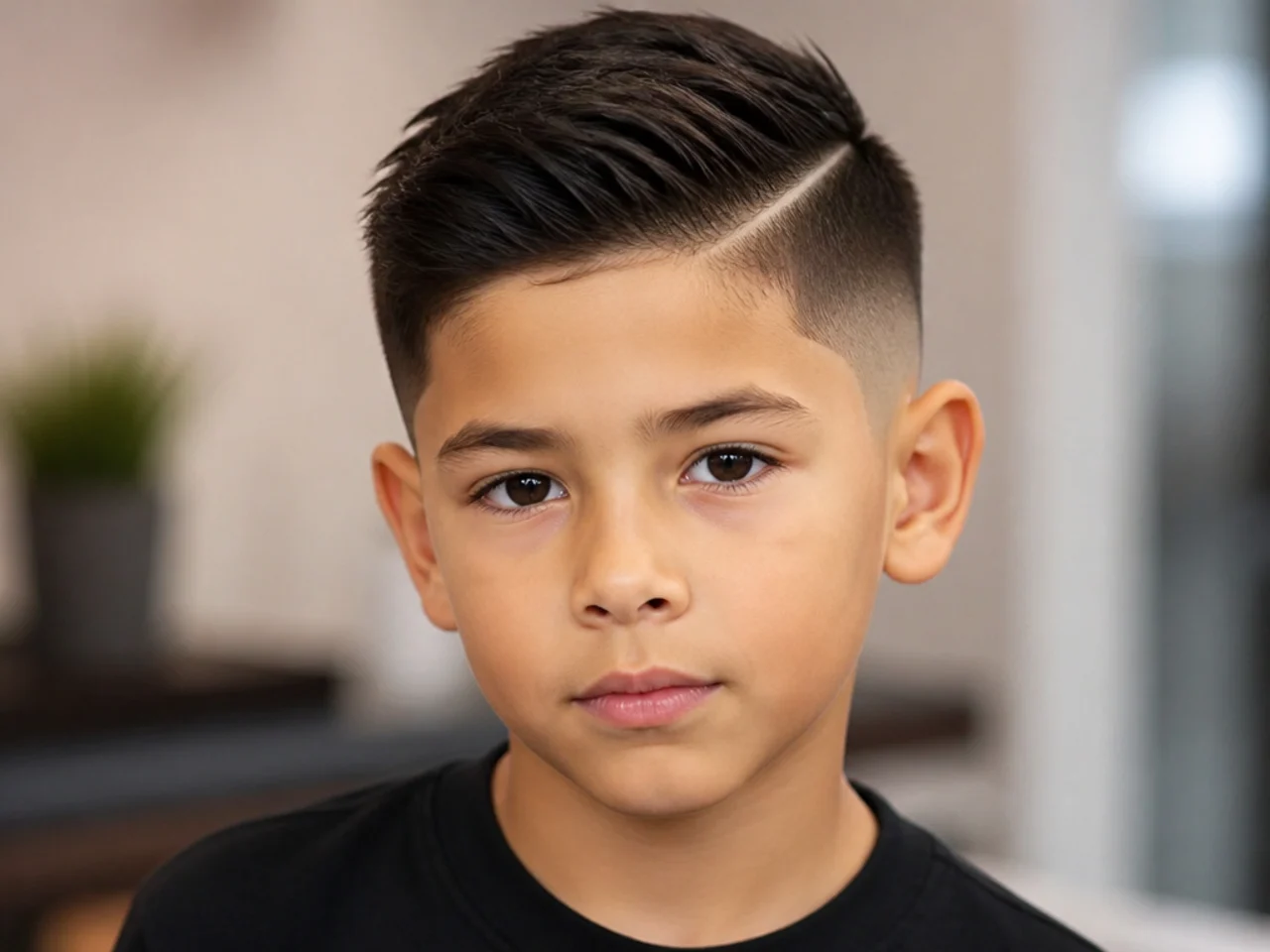
12. Edgar With a Blunt Fringe
The sides are the least of it. The straight line across the forehead is the feature, and a blunt fringe on a child drifts down and loses its edge in about three weeks regardless of what the sides are doing.
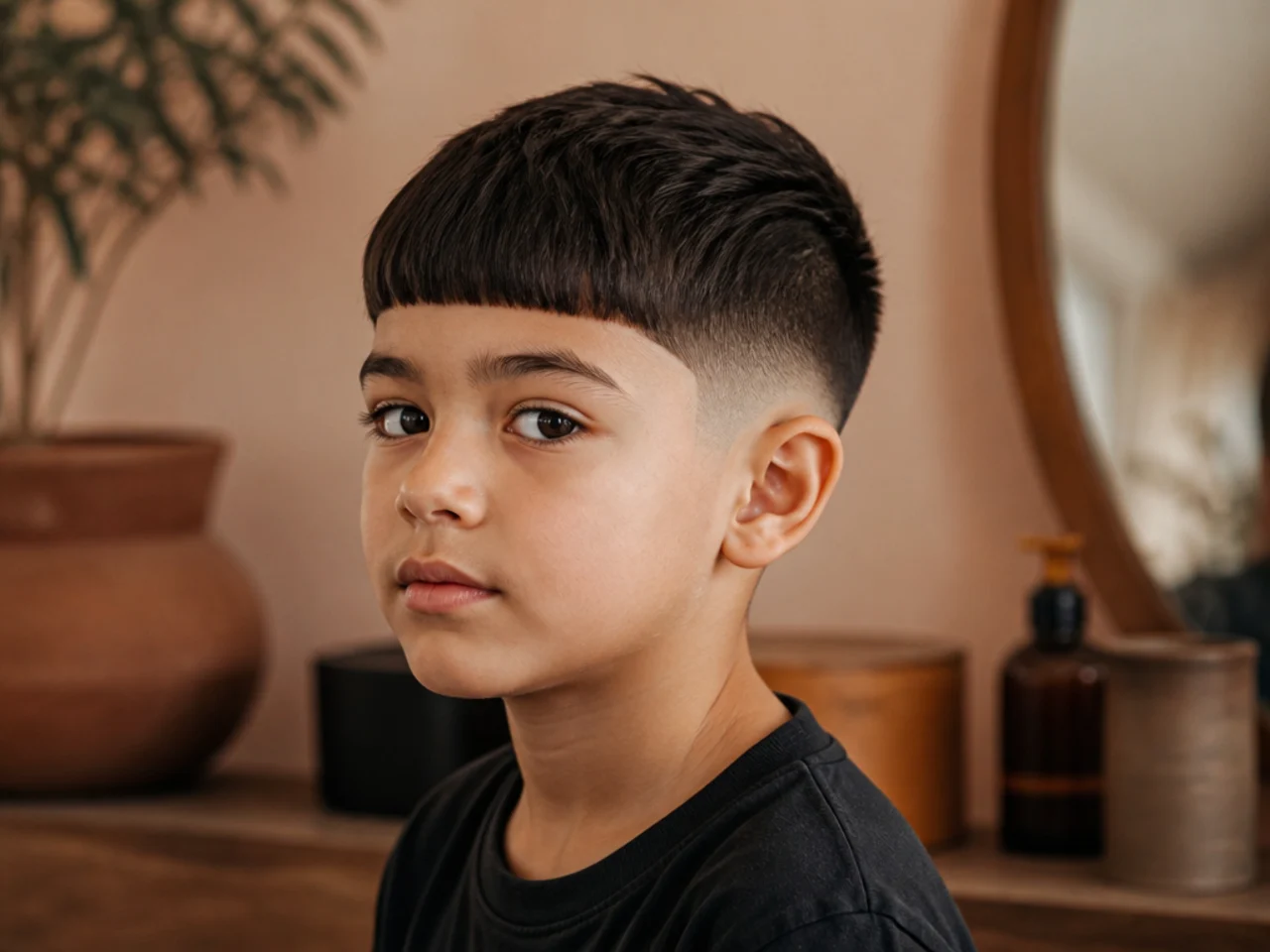
13. Mid Taper With a Fringe
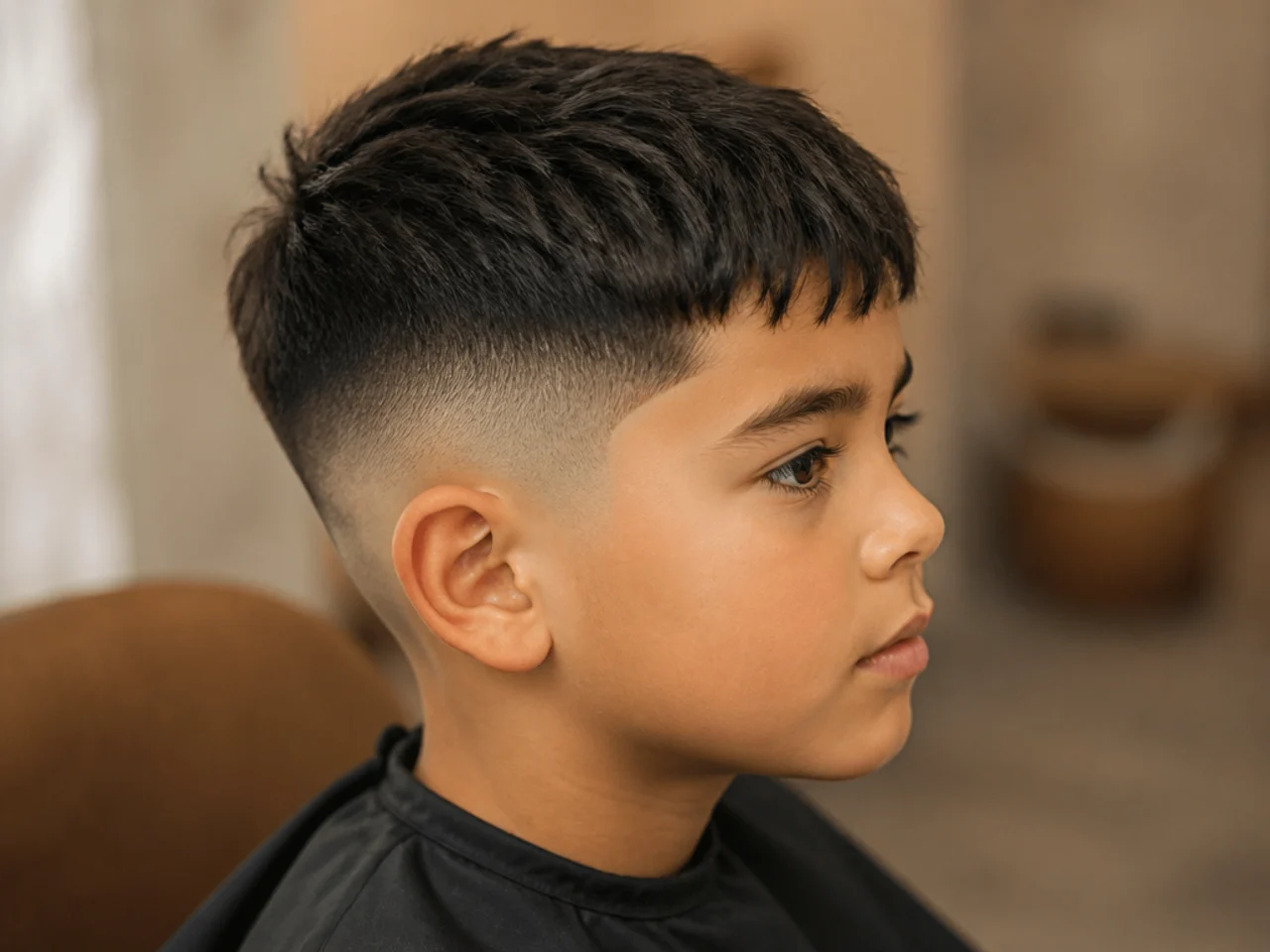
A taper leaving length at the bottom plus a line placed between temple and parietal ridge, which is high enough that growth closes a smaller gap. Reliable three weeks, and it fails softly rather than suddenly.
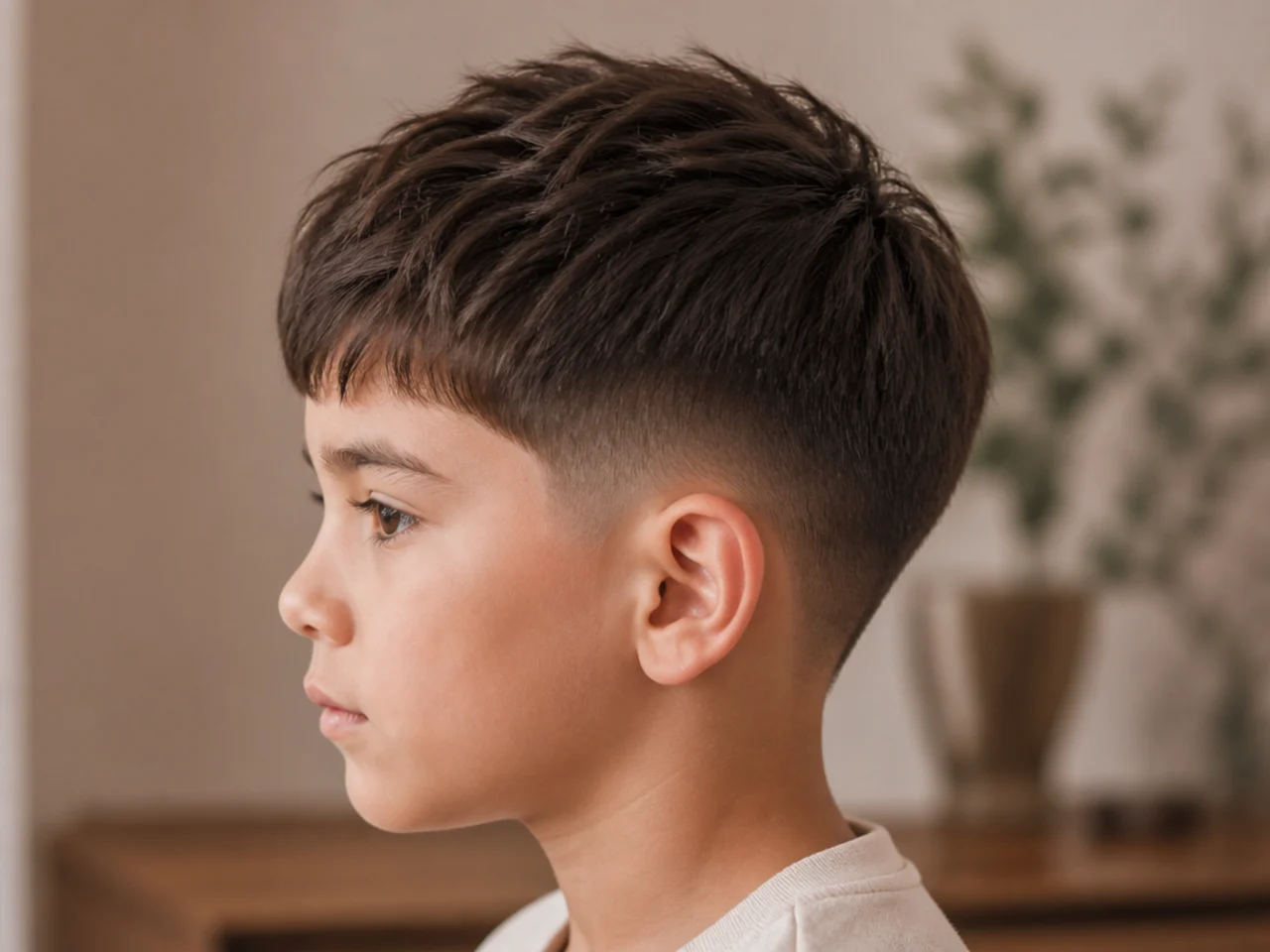
14. Low Taper Over a Crop
The line is low, which normally costs you time, but the crop's weight sits over the corner and covers exactly where the sides begin. Those two cancel out to three to four weeks.
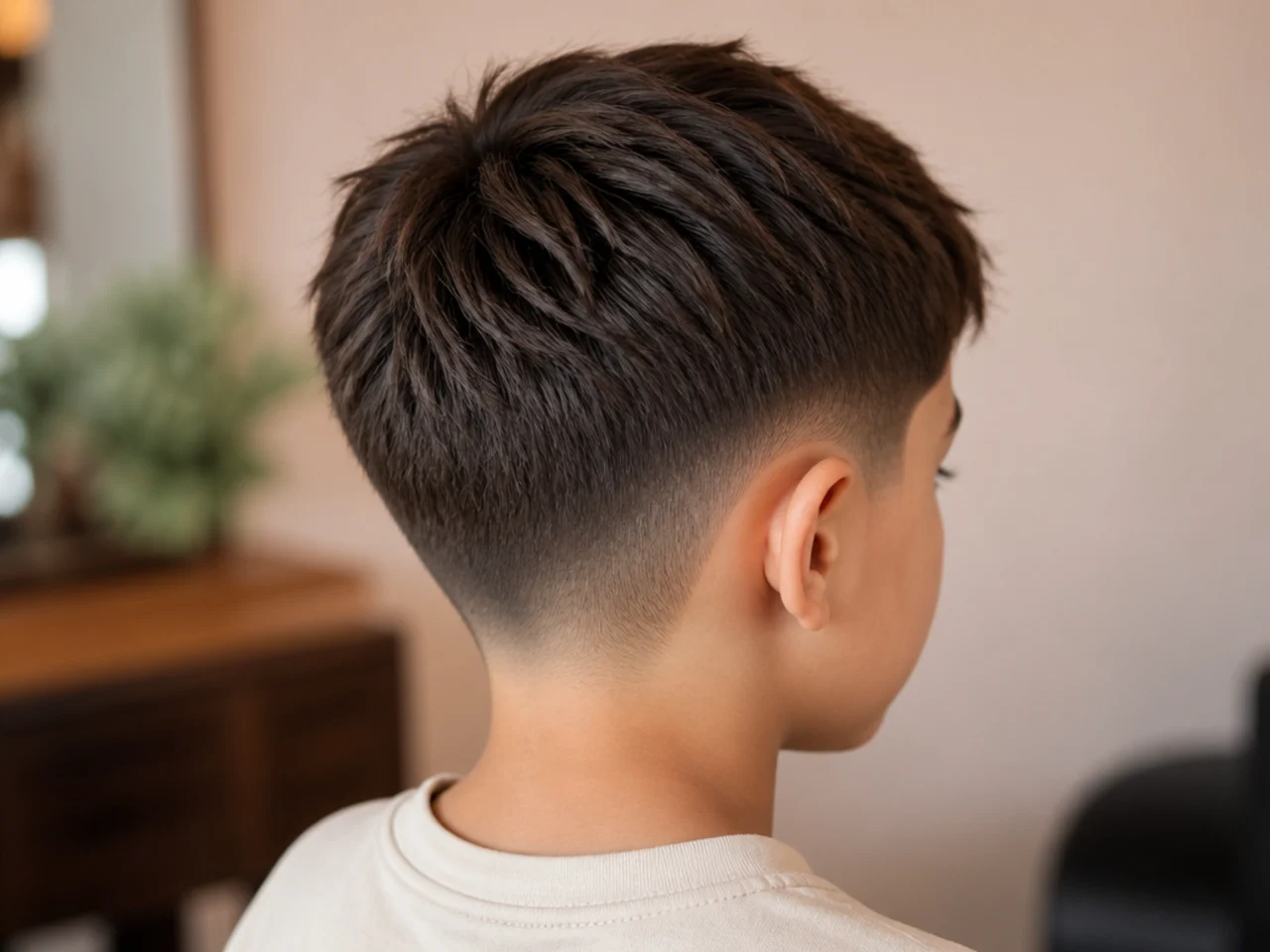
15. High Taper Over a Number Two
Both mechanisms working at once, a line placed high into longer surrounding hair and six millimetres left underneath it. That combination reliably reaches four weeks on a child.
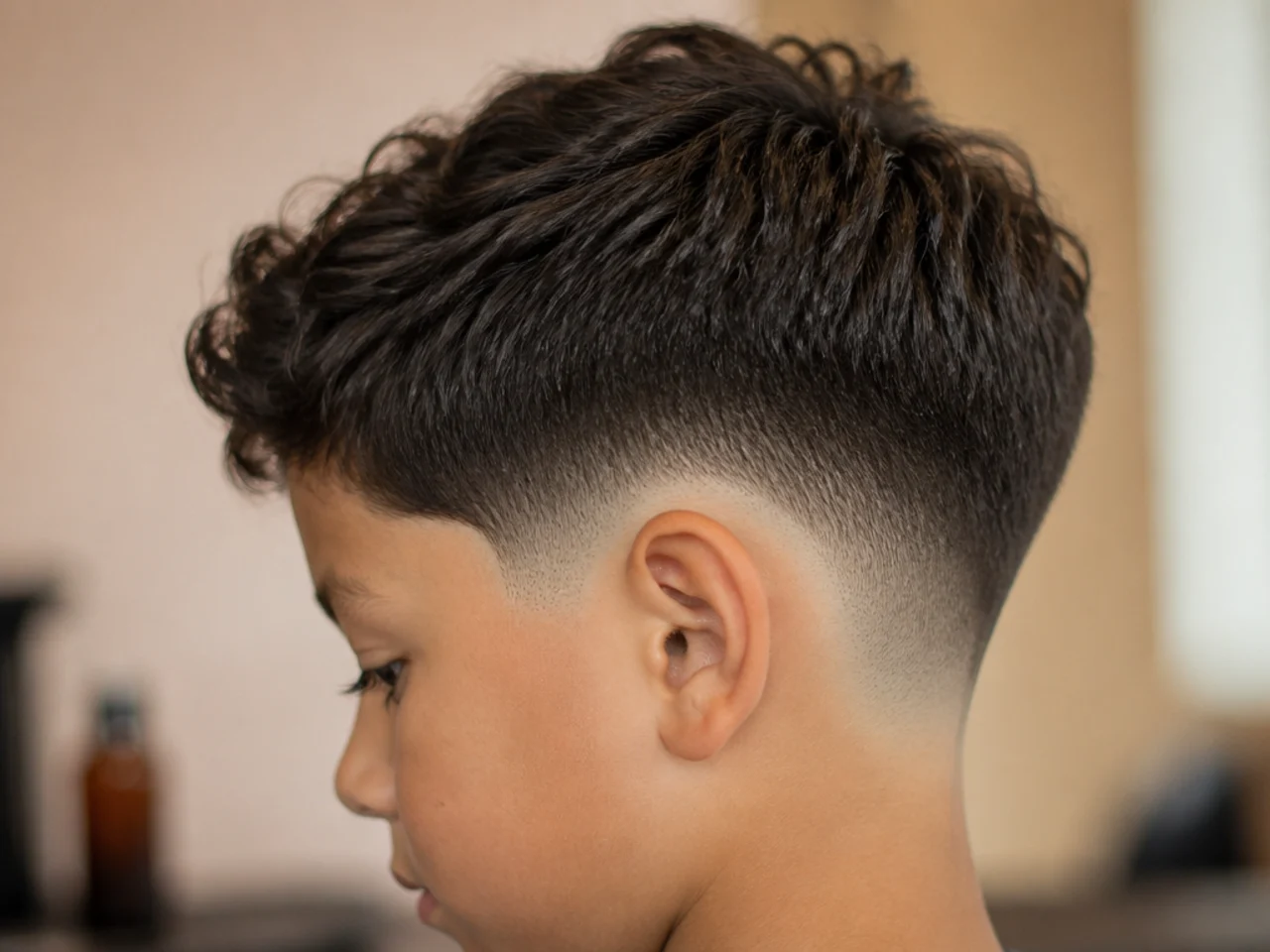
16. Number Two All Over
Six millimetres growing to eight is a change the eye barely registers, and there is no edge anywhere to go soft. It stays presentable for four weeks and clears almost every school minimum.

17. Mid Taper Over a Number Three
Ten millimetres at the neckline means the gap the blend has to cross is tiny, so the taper reads as a gentle change of length rather than a line. Comfortably four to five weeks.
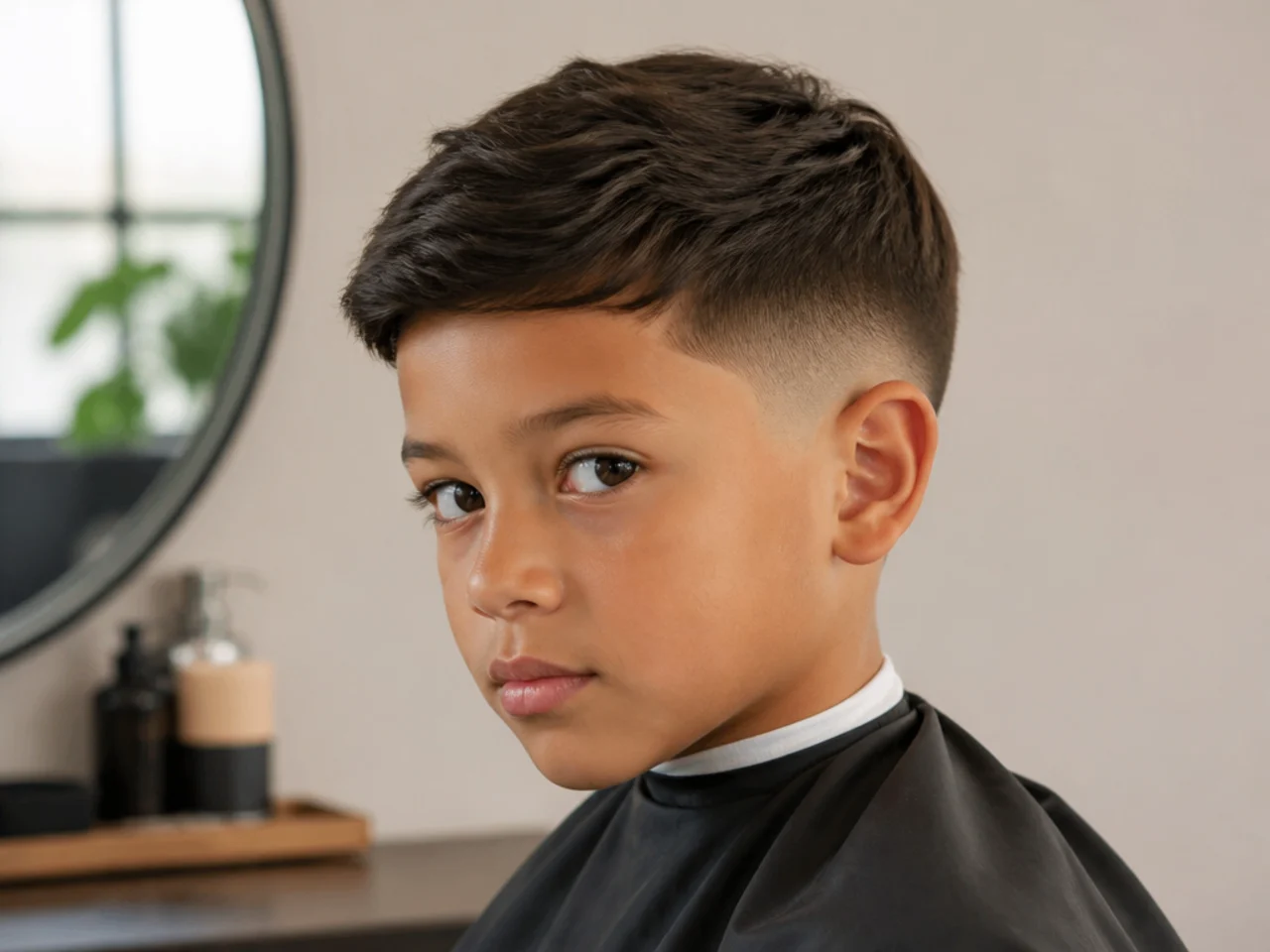
18. The Broccoli Top Over a Number Three
The round crown shape is what people recognise, and a round shape gets rounder as it grows rather than losing its identity. With a number three underneath instead of a fade, it holds five weeks.
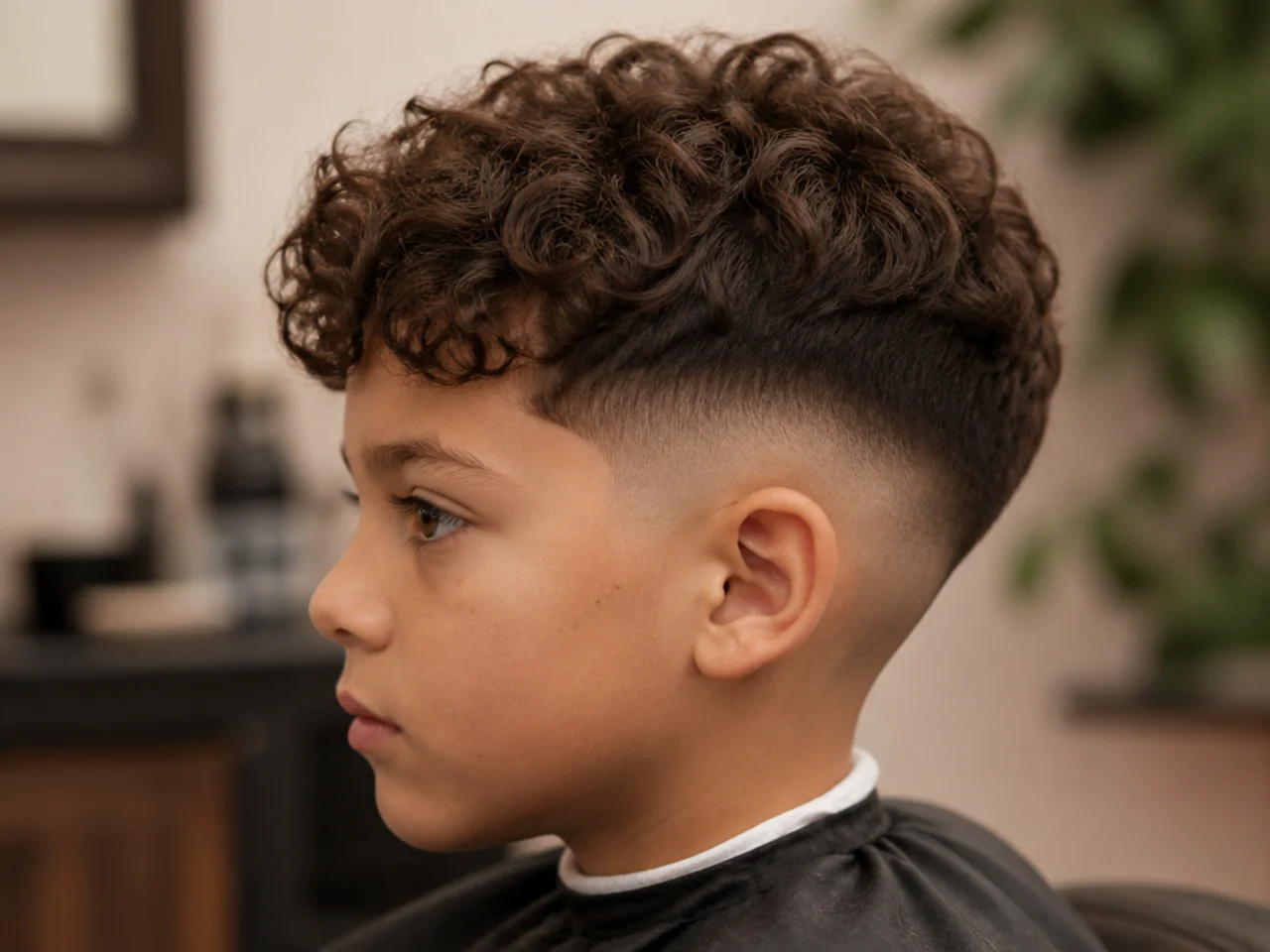
19. Number Three All Over
The most forgiving clipper cut on the list because there is no transition anywhere and ten millimetres growing to thirteen changes nothing visible. Give it five weeks and cut it whenever it suits you.

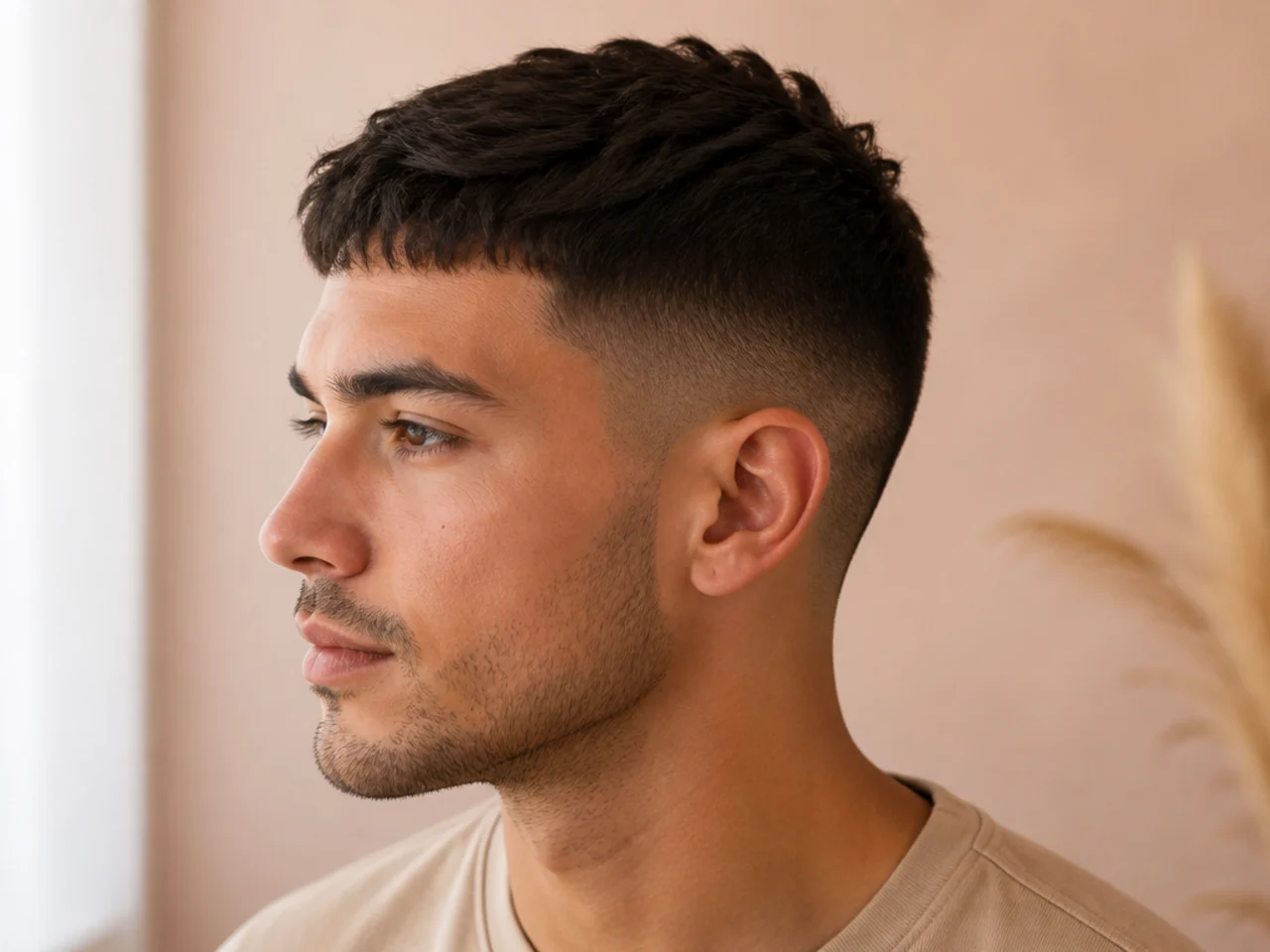
20. Textured Crop With Scissor Sides
No clipper touches this cut, so there is no hard edge anywhere that can blur. The sides simply get longer alongside the top and the proportions stay the same for five weeks.
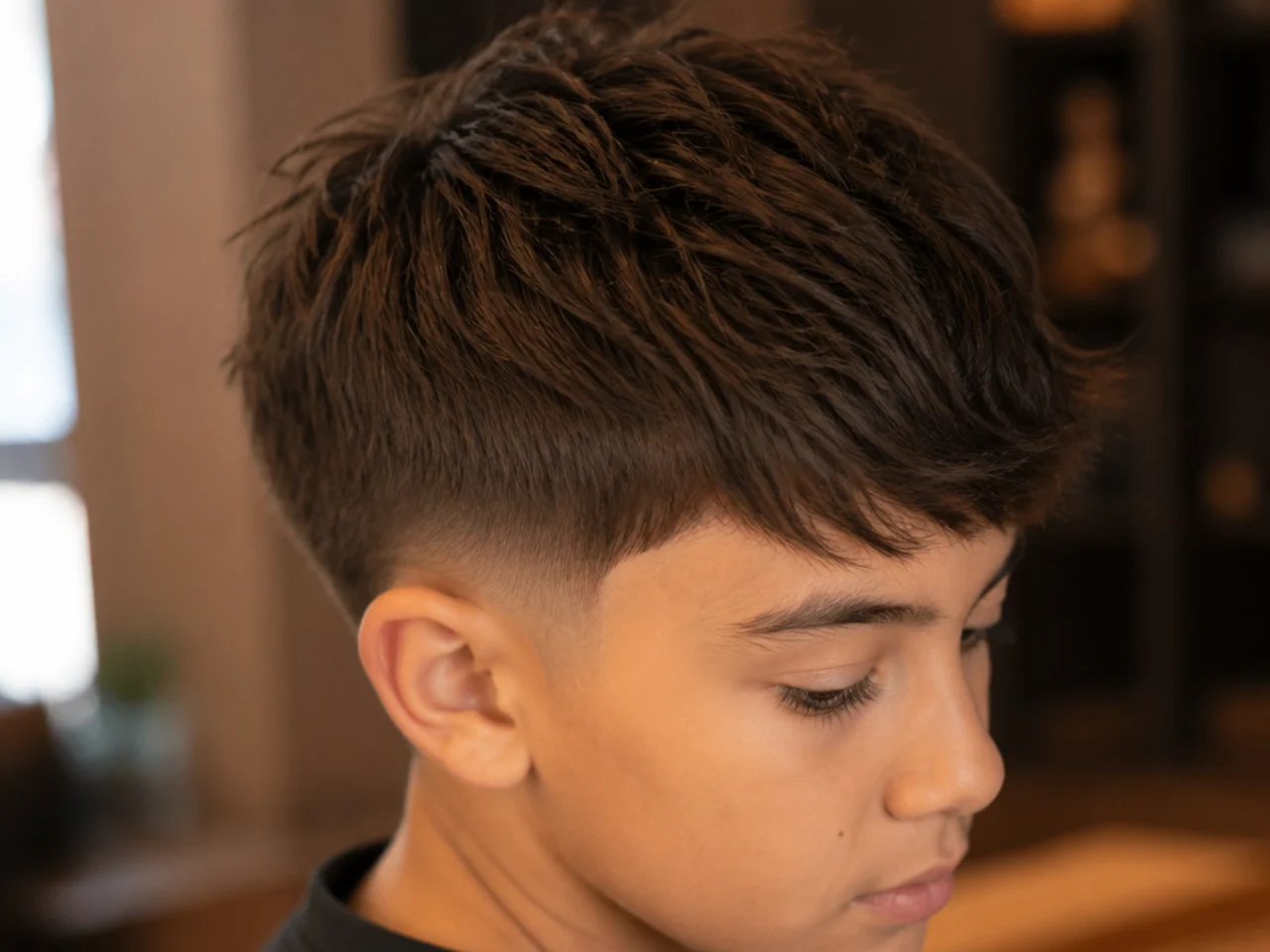
21. A Soft Mullet With an Untouched Nape
The shape lives in the difference between short sides and a long back, and that difference grows wider rather than narrower. Nothing about it depends on a line, so it holds six weeks.

22. Grown-Out Curtains
This is a shape that was designed by growing out, so growing out further is not a failure state. It reaches its best week somewhere around week four and is still fine at six weeks.

23. Two Block With a Blunt Perimeter
The step between the long top and the short sides is meant to be seen, so when growth softens it the cut does not read as broken, only gentler. Trim the perimeter and it runs six to seven weeks.
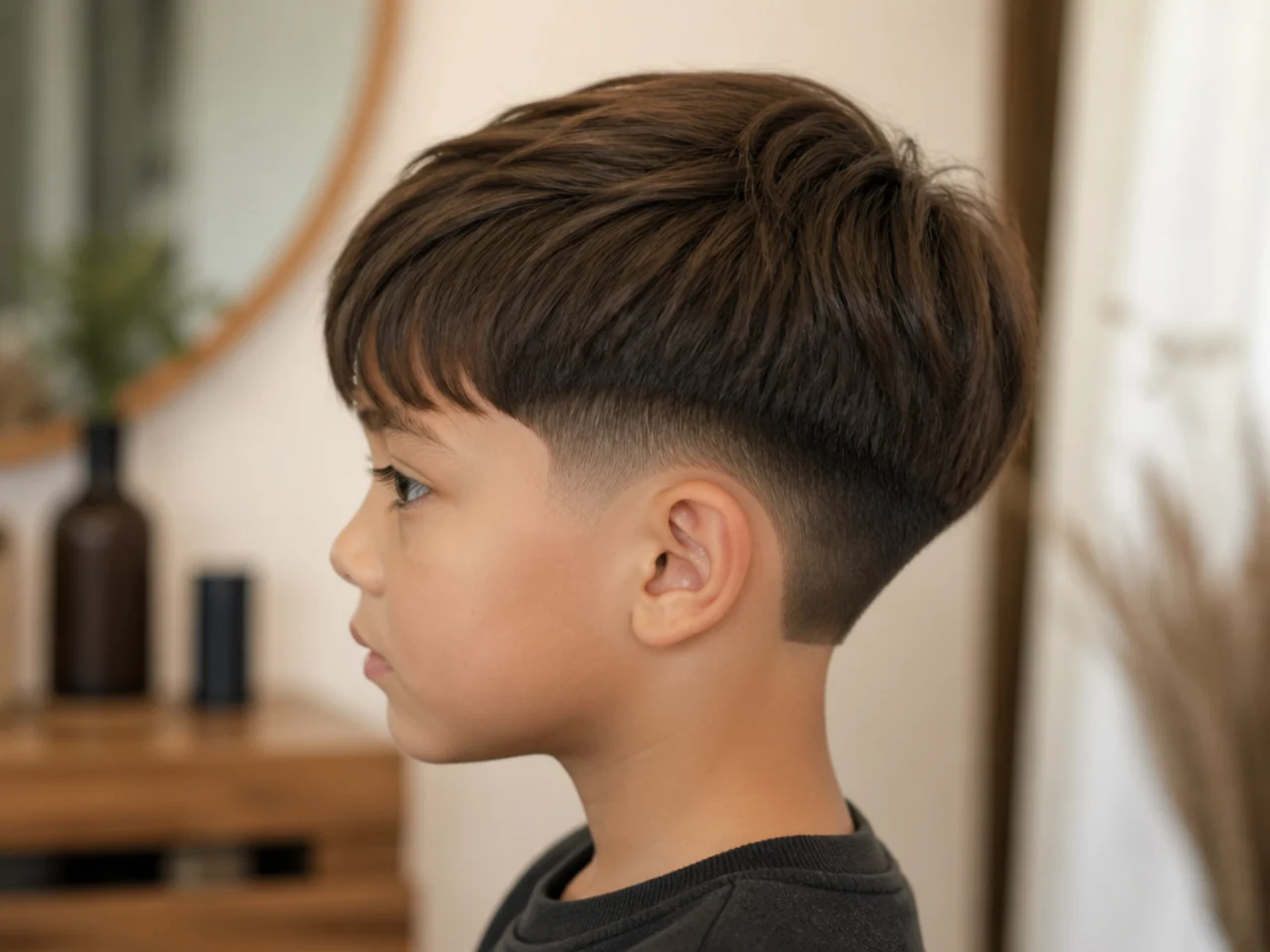
24. A Long Fringe With Scissor-Cut Sides
The only maintenance point is the front, and a fringe can be trimmed at the kitchen table in a minute without touching the rest of the cut. That makes the real interval seven weeks.
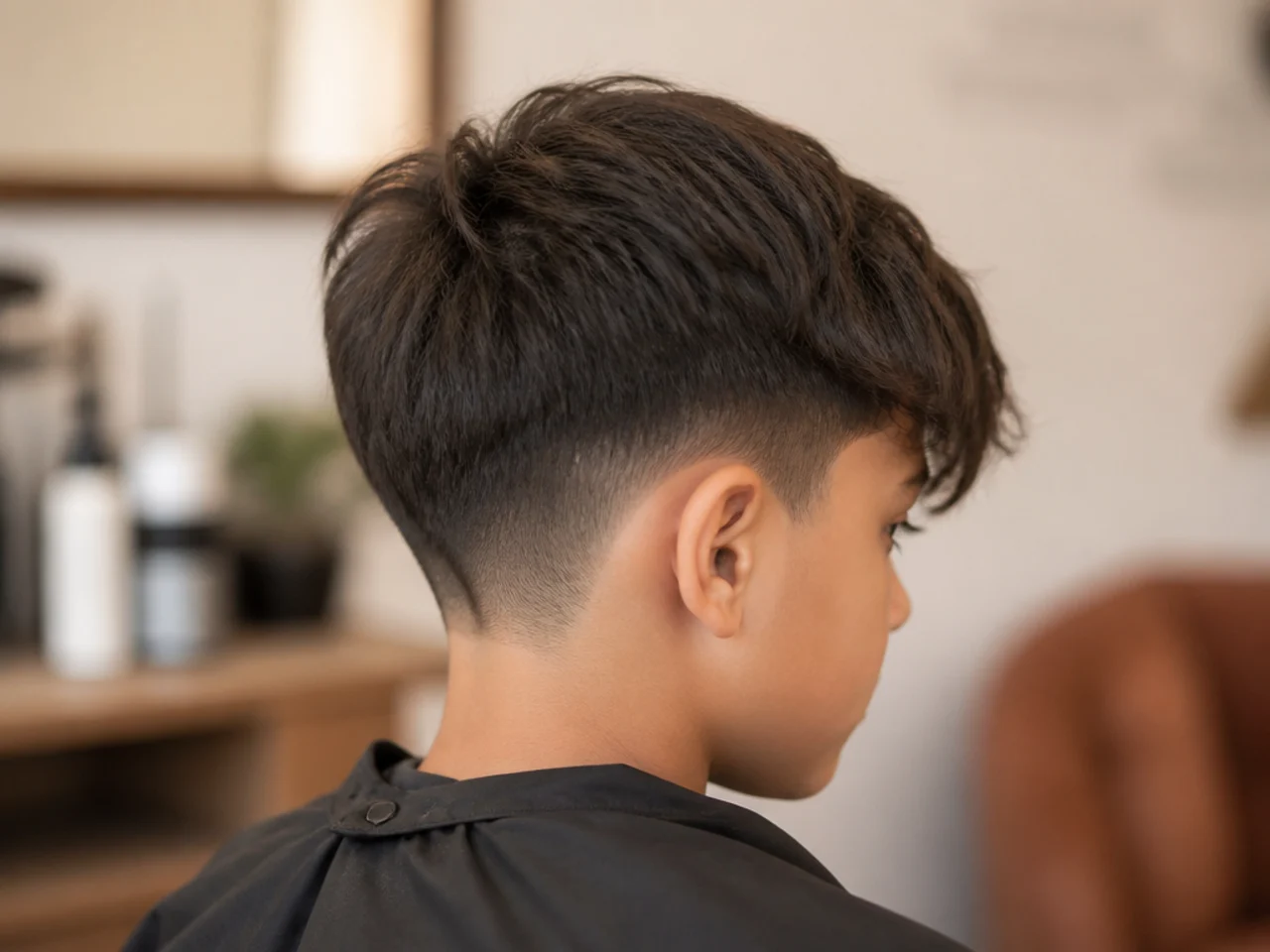
25. Long Layers With No Line at All
Nothing here can blur because nothing here is an edge, so the cut never has a moment where it stops looking cut. It changes length for eight weeks or more and then simply needs the ends tidied.
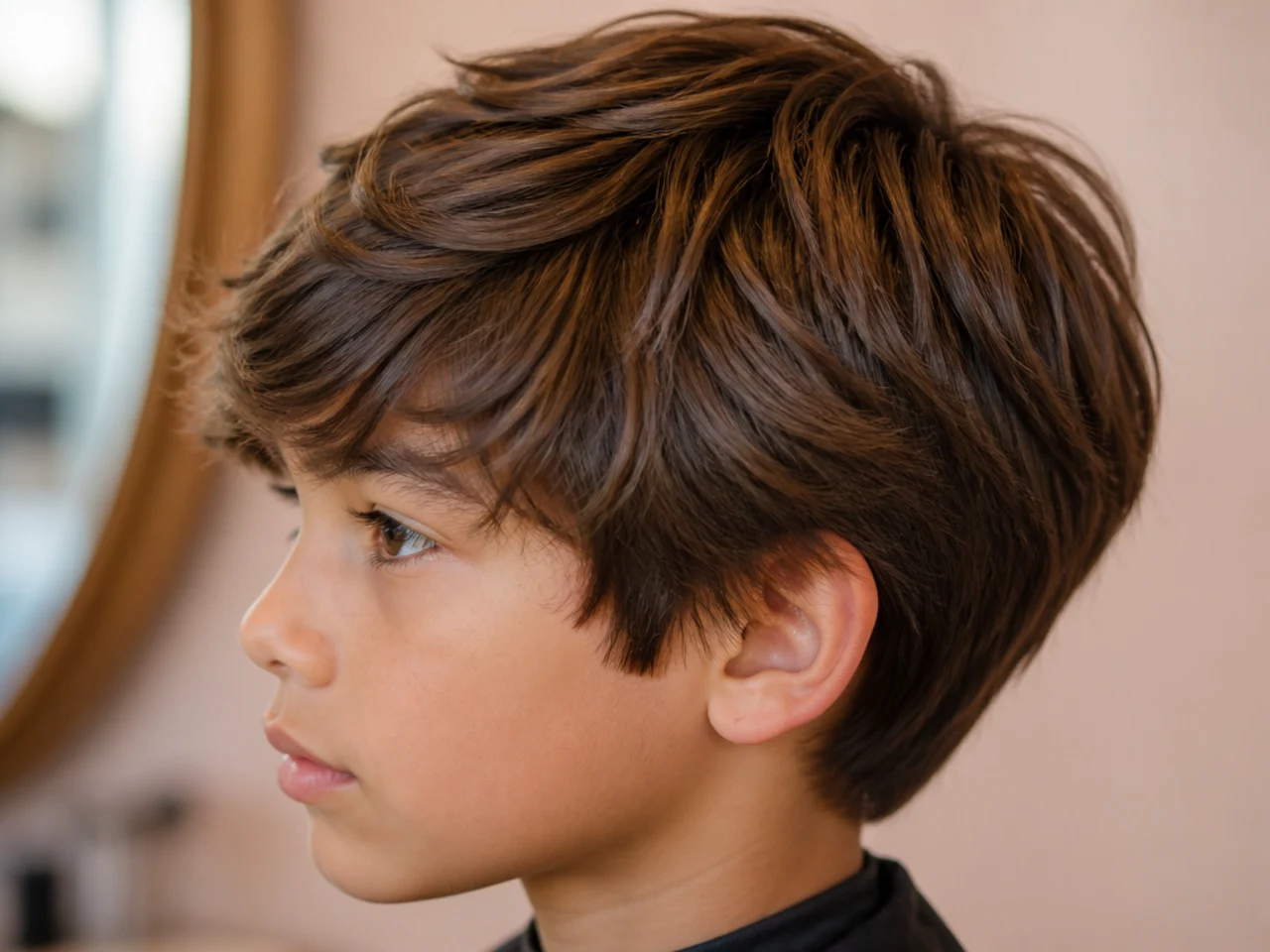
Styling and Upkeep
Choose a cut that works with nothing on it. A shape that needs paste to read will be worn unstyled every school day, so it has to look right straight off the pillow.
Cut to the calendar, not to the mirror. Set an interval that matches the week number of the cut you chose and stop reassessing it weekly.
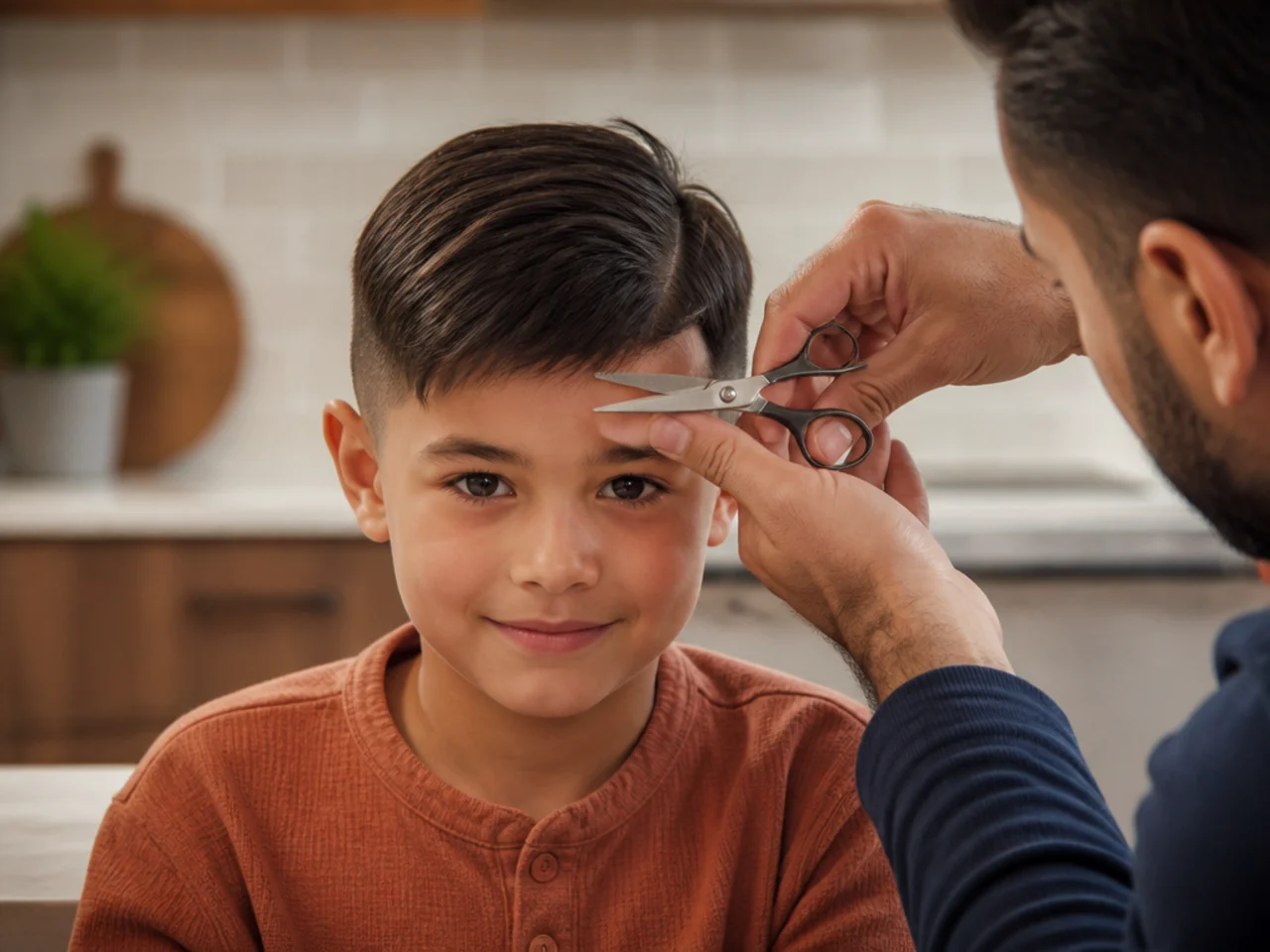
Trim the fringe between full cuts. The front is the part everyone sees and it is the one section a parent can safely take a centimetre off at home.
Take a photo at week one and week three. The week-three picture is the one to show the barber, because that is the version the cut spends most of its life as.
Move up one guard rather than booking more often. A number three instead of a number two adds a fortnight without changing what the cut looks like from across a room.
Mistakes to Avoid
Choosing from a day-one photo. Every reference image online is a week-zero image, and week zero is a week you will spend one seventh of the cycle in.
Going shorter to make it last longer. Shorter guards change proportionally faster, so a number one needs cutting sooner than a number three, not later.
Booking a skin fade on a five-week cycle. It will be a grown-out fade for four of those five weeks, which is worse than never having faded it.
Ignoring the school minimum until after the cut. A policy that names a number two makes a skin fade a problem no matter how well it suits him.
Adding a design to a cut you cannot re-cut. Shaved lines close in ten to fourteen days and fill unevenly, so they date the whole haircut around them.
FAQ
How long does a boy's haircut last? Between one week for a skin fade and eight for a scissor shape with no clipper line in it.
Why does it grow out faster than mine? Faster growth on a much shorter cut makes the same millimetre a far bigger proportional change.
What lasts a whole school term? A scissor-cut crop or long layers, because neither one has an edge that can blur.
Final Thoughts
Pick the week number first and the trend second. Once you know whether you are servicing this cut every two weeks or every six, the list above narrows to about four options, and any of those four will still look intentional on the day before the next appointment.
For the side-treatment mechanics behind the rankings see the taper haircut guide, and for the no-clipper end of the list see the textured crop haircut. More in Men's Haircuts.