20 Straight Short Hair Ideas for Men
Straight hair lies in one plane and reflects light in one direction, so every uneven pass, weight line and whorl shows as a visible mark. A short straight cut is judged on precision, and on how it handles the places hair will not lie.
In this article · 27
- What Straight Hair Shows That Other Textures Hide
- How to Choose Yours
- The 20 Straight-Hair Reveals and Their Answers
- 1. The Clipper Line Between #2 and #3
- 2. The Weight Line Where the Top Meets the Side
- 3. The Crown Whorl Cut With the Growth, Not Across It
- 4. The Front Cowlick That Will Not Sit Under a Straight Fringe
- 5. The Nape Whorl and the Rounded Neckline
- 6. Shine as a Liability
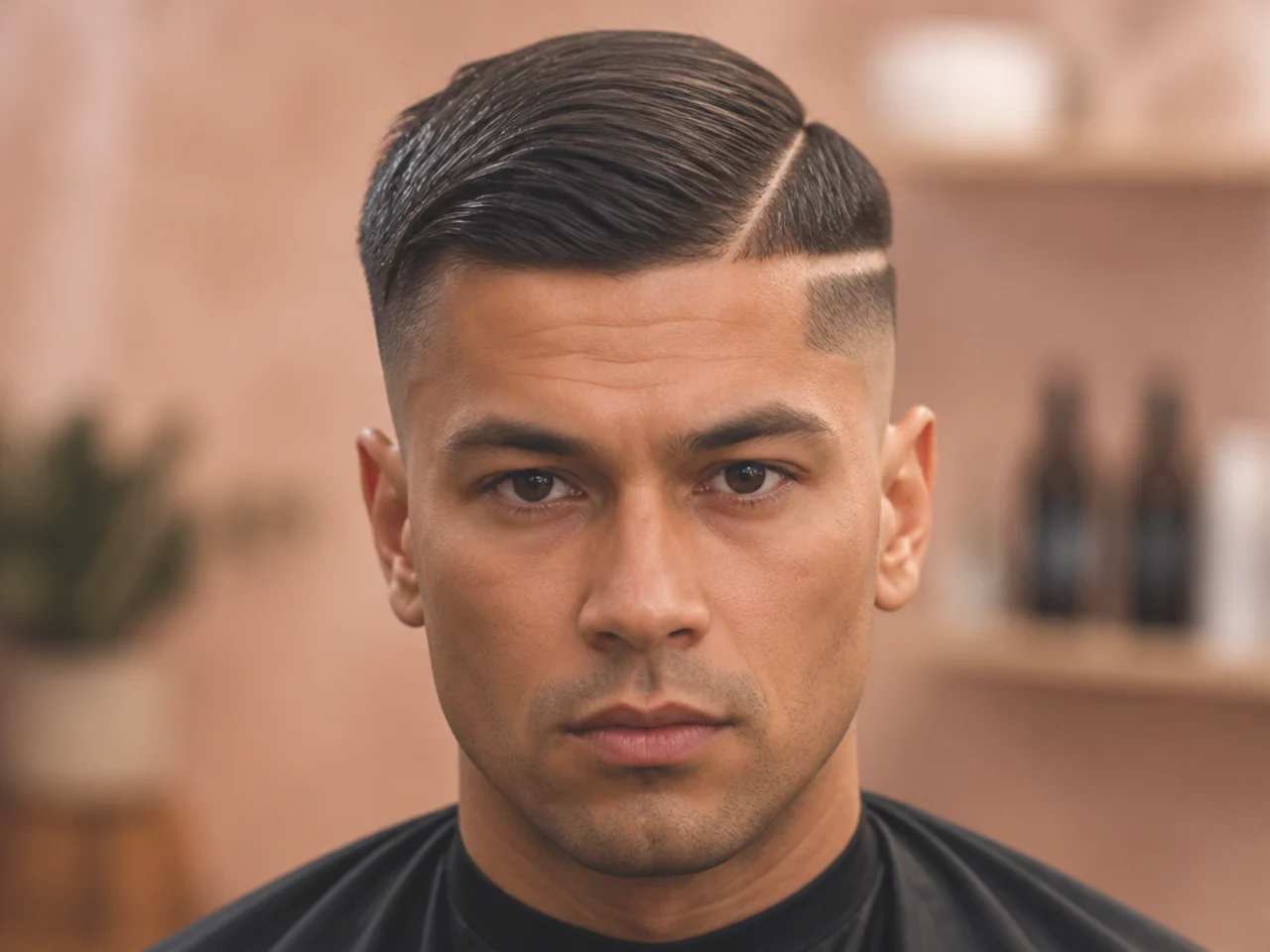
- 7. The Parting That Shows Scalp
- 8. The Guide Section Left Long
- 9. The Temple Hollow That Reads as a Gap
- 10. Chevron Growth at the Hairline
- 11. The Flat Crown That Needs Lift, Not Length
- 12. The Hard Part That Turns a Flaw Into a Line
- 13. The Blunt Fringe Versus the Point-Cut Fringe
- 14. A Line-Up So the Eye Lands Somewhere Deliberate
- 15. Second-Day Flatness
- 16. The Length at Which Straight Hair Stops Standing Up
- 17. The Two Sides That Are Not the Same Length
- 18. Scalp Visible Under Overhead Light
- 19. The Sideburns That Have to Match
- 20. The Wet-Comb Check Before You Leave the Chair
- Styling and Upkeep
- Mistakes to Avoid
- FAQ
- Final Thoughts
Straight hair is the honest texture. It shows you exactly what the barber did.
Every hair lies in the same plane and reflects light the same way. A step between guards becomes a stripe, a weight line becomes a hard edge, and a stray section becomes a visible flick.
Curl and wave scatter light and break a line up; straight hair does not. So a short straight cut is judged on the barber's precision, and on how it is built around the places straight hair refuses to lie flat. Each item names one reveal and its answer.
What Straight Hair Shows That Other Textures Hide
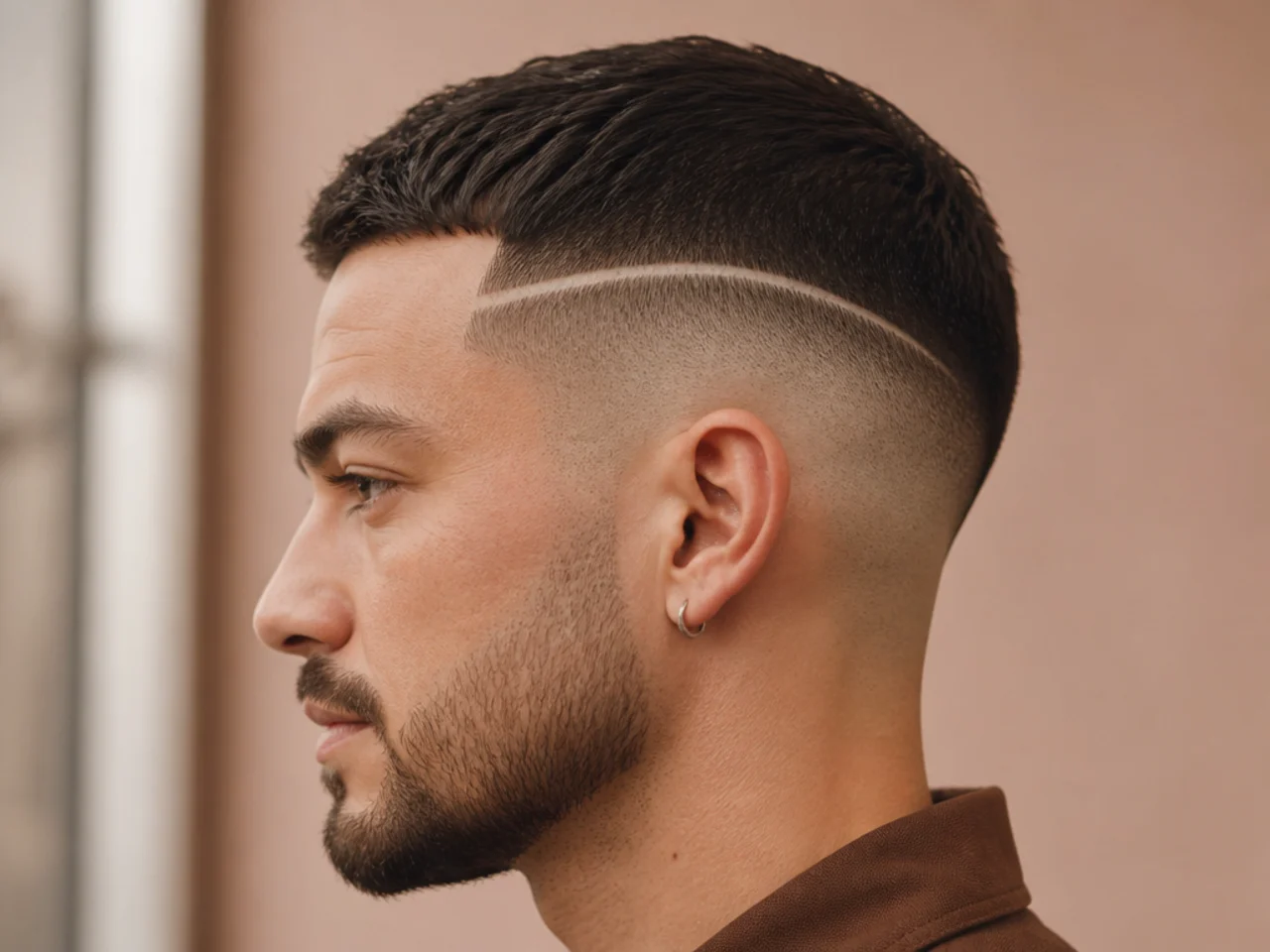
One plane, one reflection, so a step in the blend reads as a stripe. Light hits the whole side at one angle and the change in length catches it all the way around.
A weight line is a hard edge rather than a soft one. Straight hair marks the join where top meets side instead of feathering across it.
Cowlicks stand up at short length instead of being absorbed. There is no surrounding texture to disguise a section growing the wrong way.
The crown whorl is visible from behind on any guard under a #4. Below 13mm the spiral shows through as a swirl in the surface.
How to Choose Yours
Find your own trouble spots before the appointment. A cowlick, a whorl, a temple hollow — name them and the cut can be built around them.
Pick a length that either holds a spot down or ignores it. Short enough not to lift or long enough to be weighed down, never the middle.
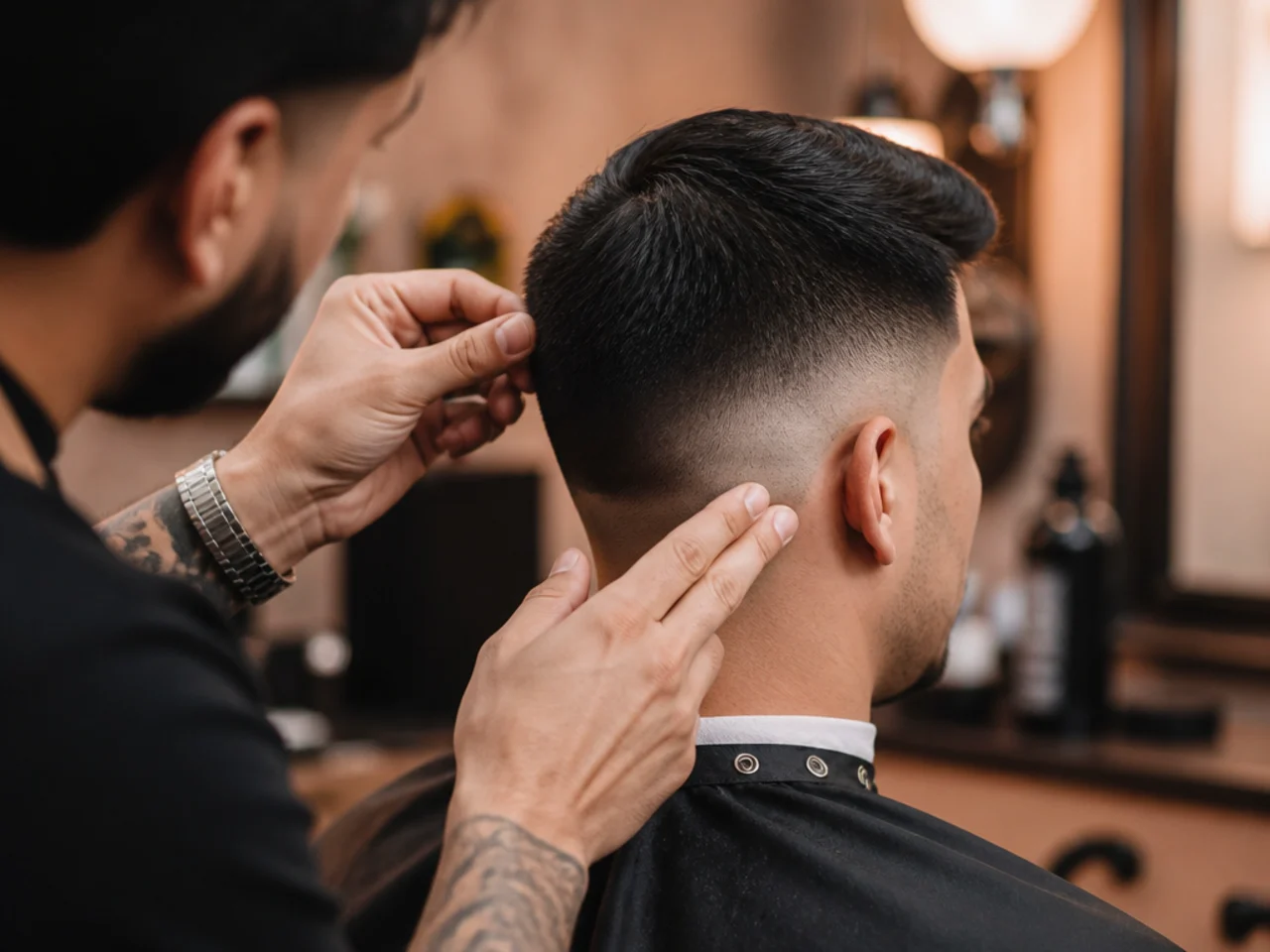
Ask for the blend to be cross-checked. Combing and cutting in a second direction is how a barber finds a line the first pass left.
Decide whether you want a deliberate line in the cut. A hard part or a line-up gives the eye an intentional edge instead of an accidental one.
The 20 Straight-Hair Reveals and Their Answers
1. The Clipper Line Between #2 and #3
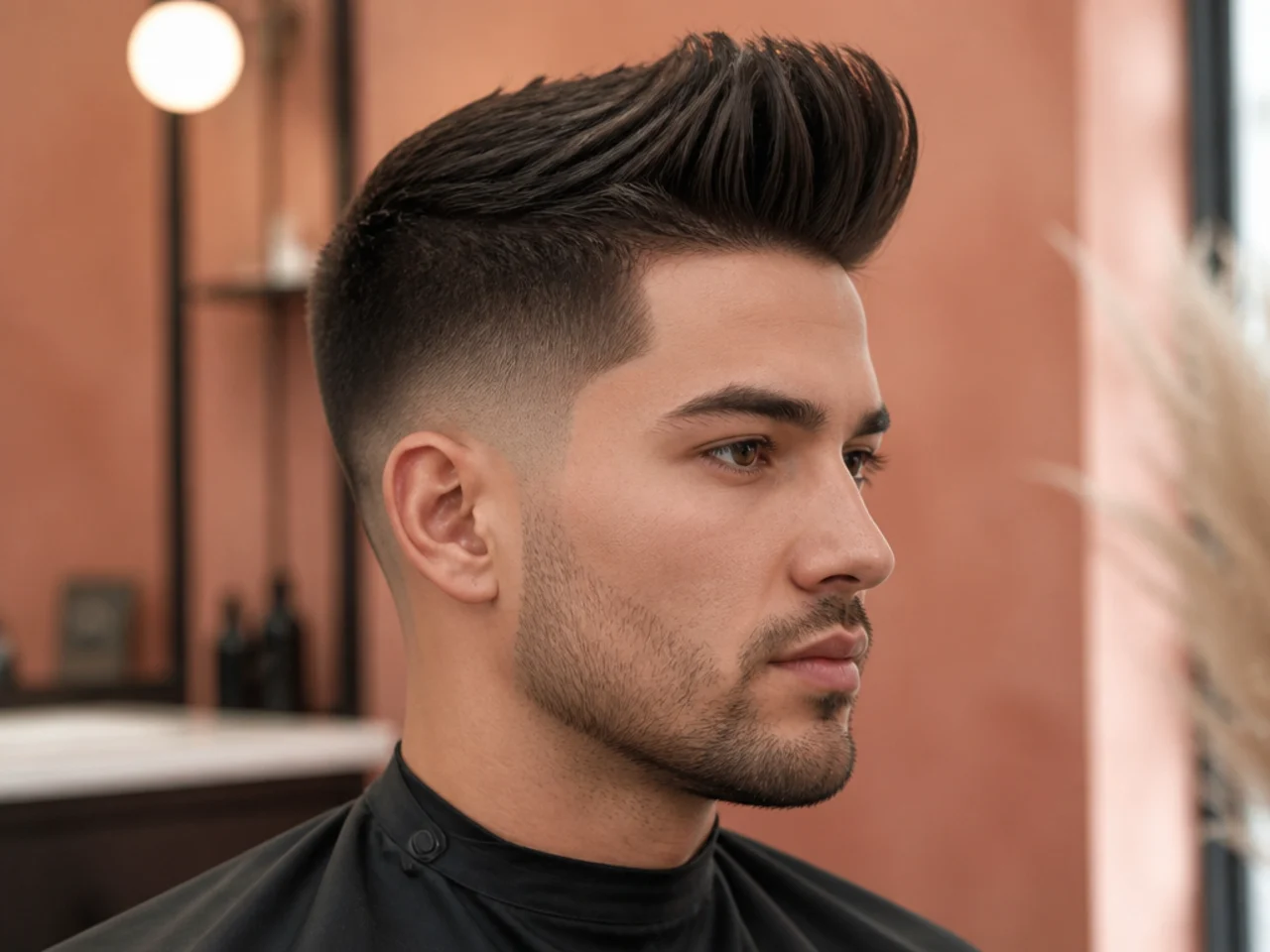
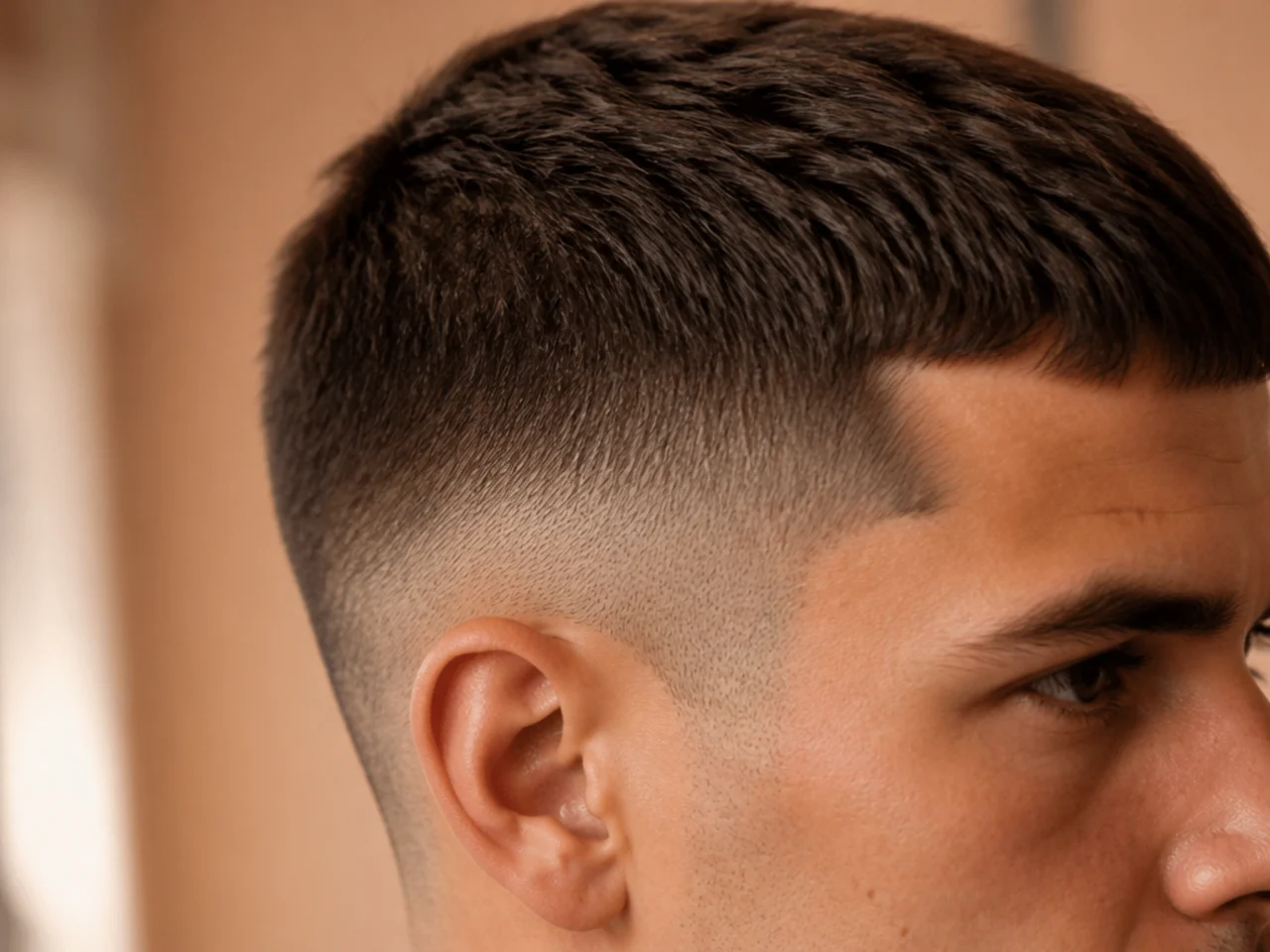
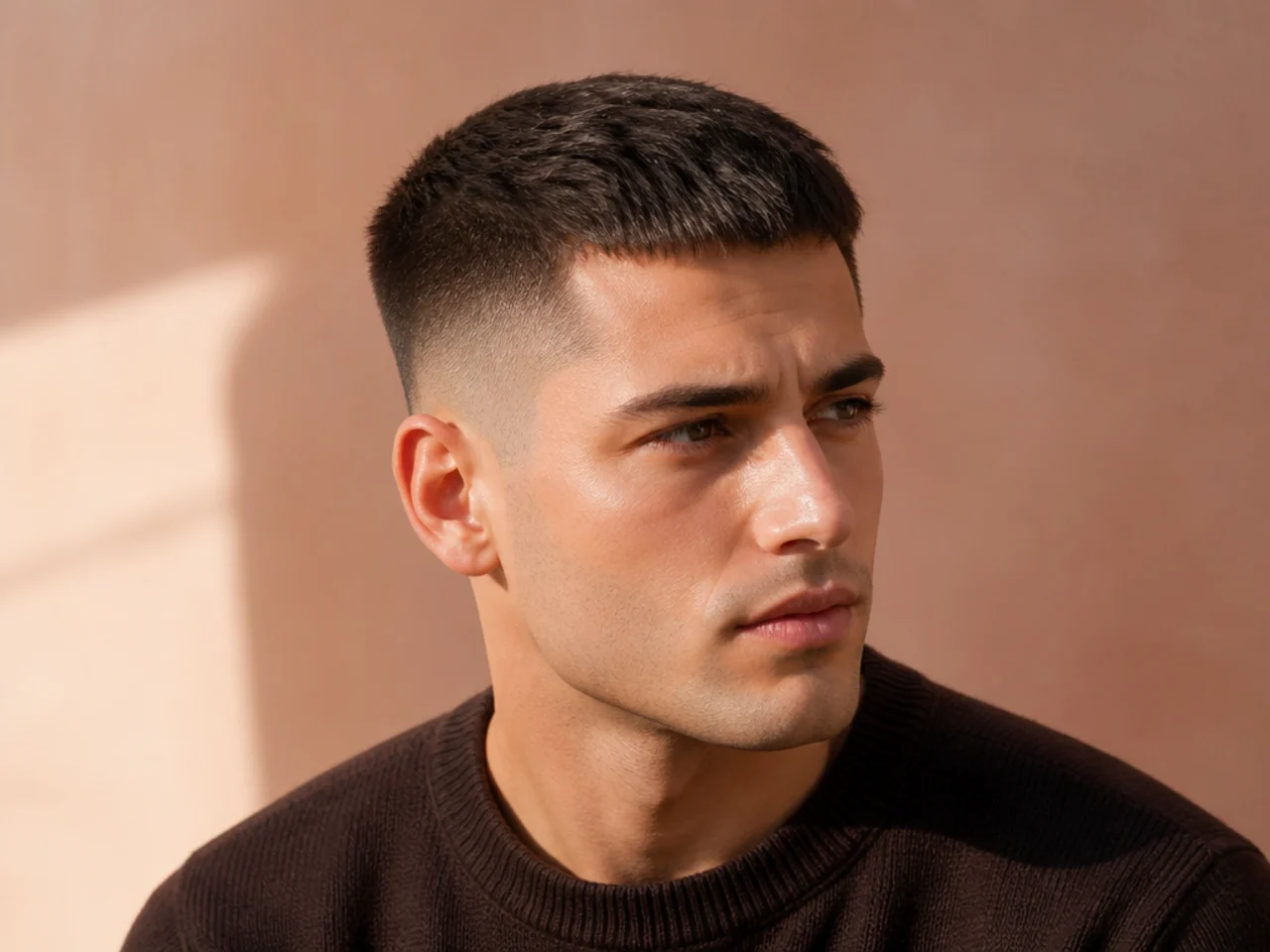
Four millimetres of difference is a visible band because nothing scatters the light across it. The answer is a cross-check — combing the section the other way and cutting again catches what the first pass missed, which is also what separates a clean low taper fade on straight hair from a stepped one.
2. The Weight Line Where the Top Meets the Side
The join between a longer top and a shorter side is a hard horizontal. Point cutting into that edge softens it, which is the difference between a shape and a shelf.

3. The Crown Whorl Cut With the Growth, Not Across It
Hair spirals out of the crown, so a clipper run straight across cuts some hairs at the root and others along their length. Following the spin keeps the length even and stops the swirl reading as a bald patch.
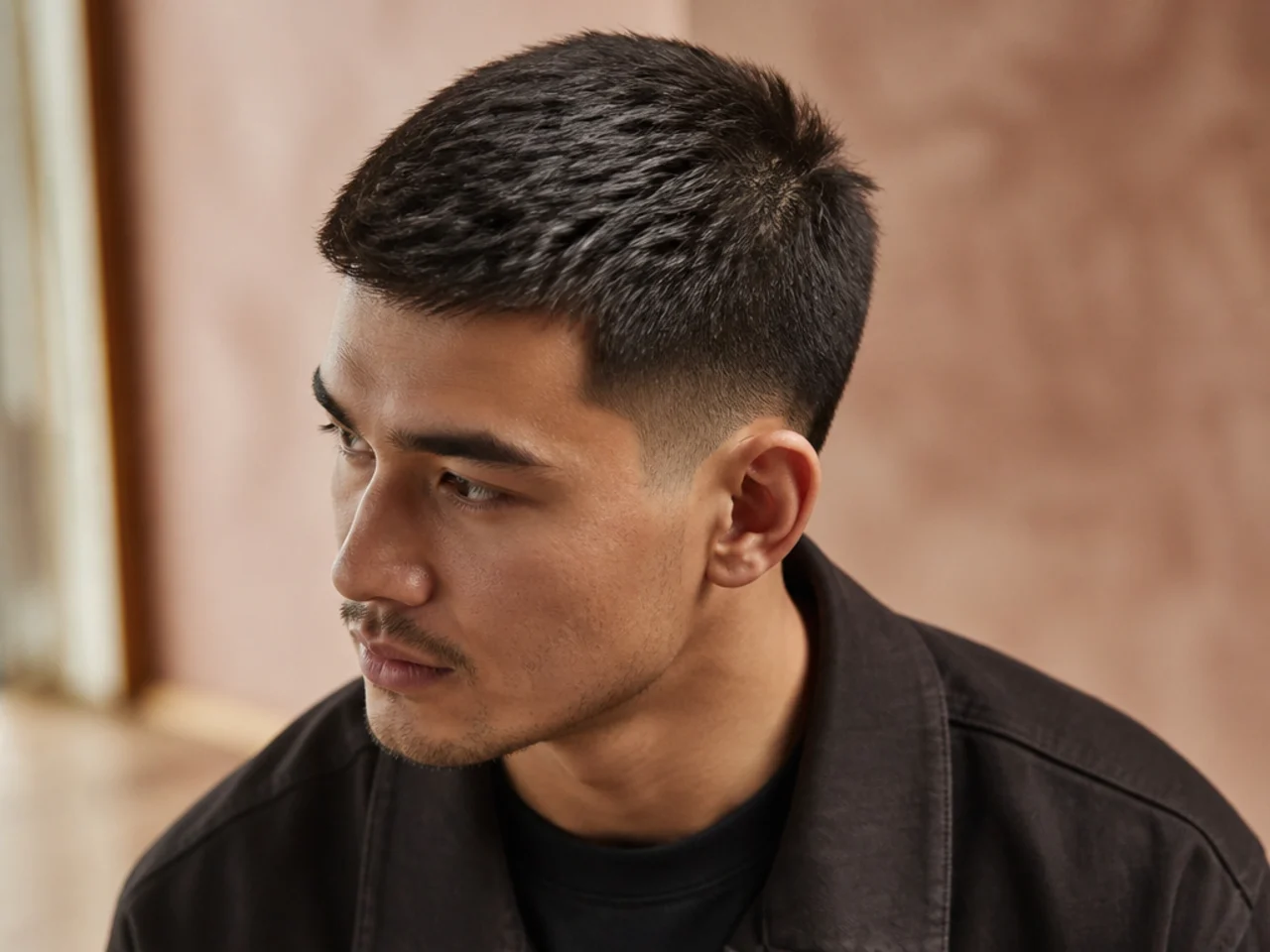
4. The Front Cowlick That Will Not Sit Under a Straight Fringe
A cowlick at the hairline pushes a section up and back regardless of length. Rather than fight it, cut the fringe shorter there and sweep it the way the hair goes.
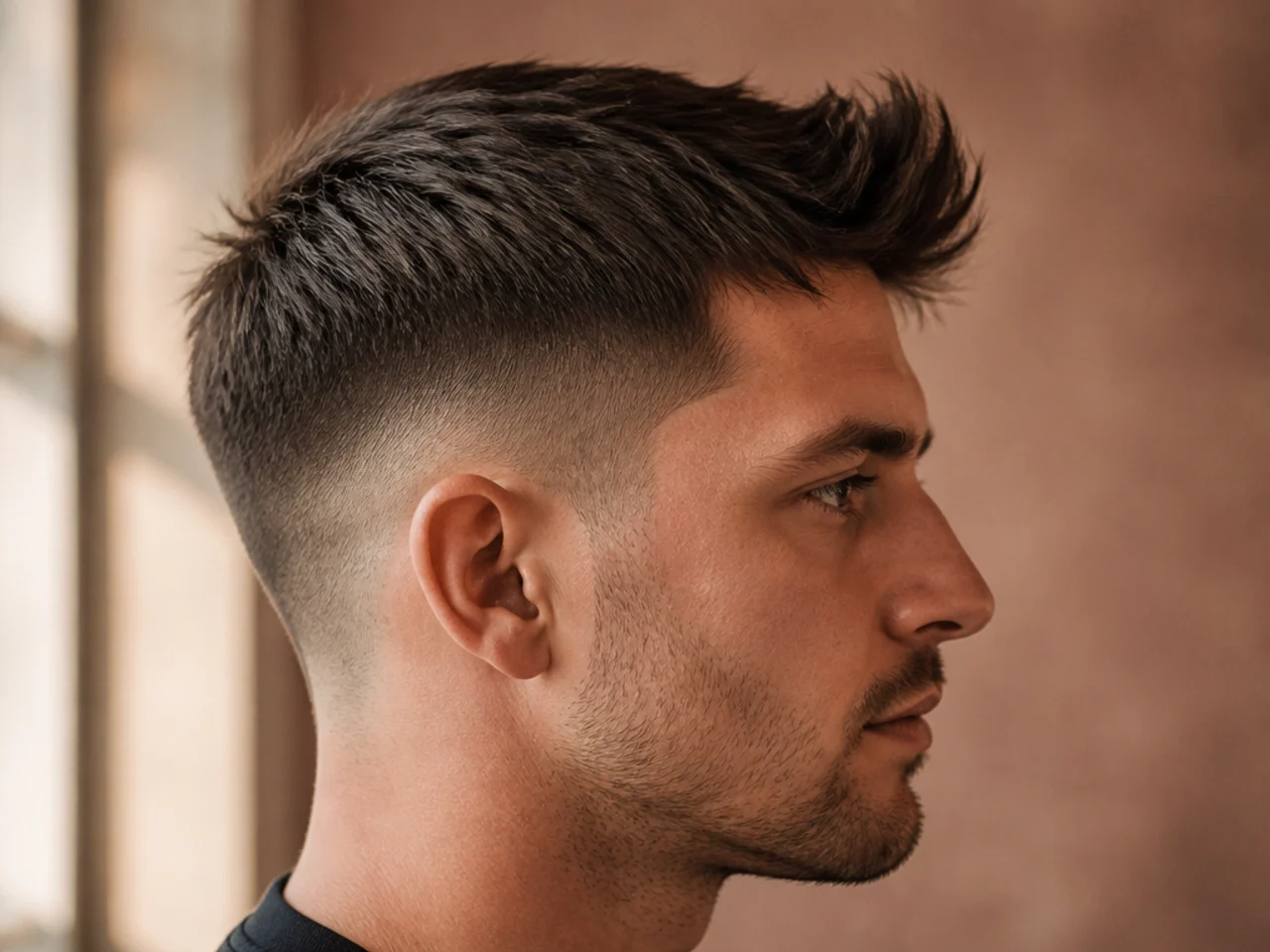
5. The Nape Whorl and the Rounded Neckline
Hair at the nape often grows in a small swirl, and a squared neckline cut across it grows out crooked within a fortnight. A rounded one follows the growth and blurs evenly.
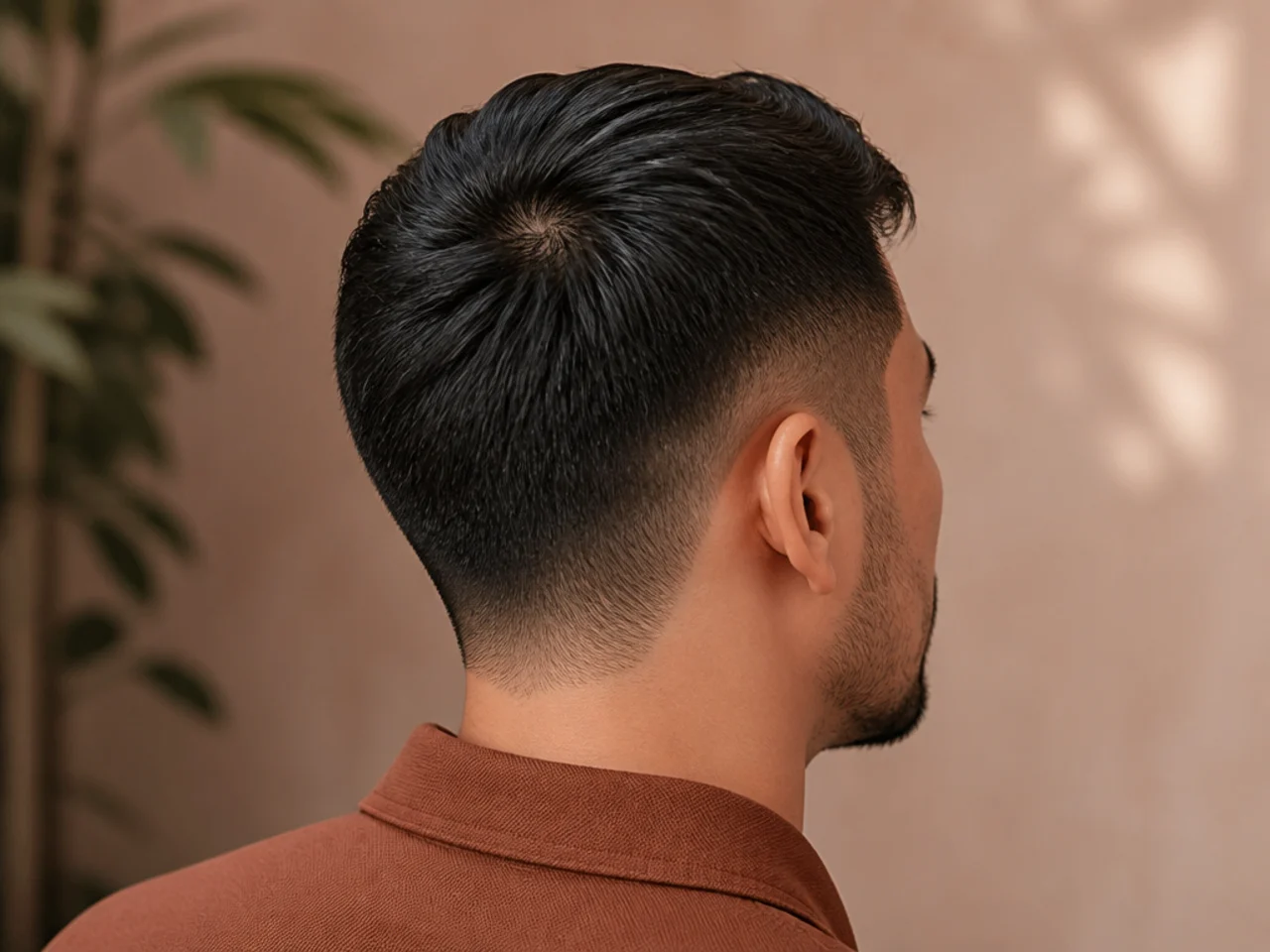
6. Shine as a Liability
Straight hair reflects a single highlight, and a highlight across a blend points at it. A matte finish scatters that reflection, which is why clay flatters where pomade exposes.
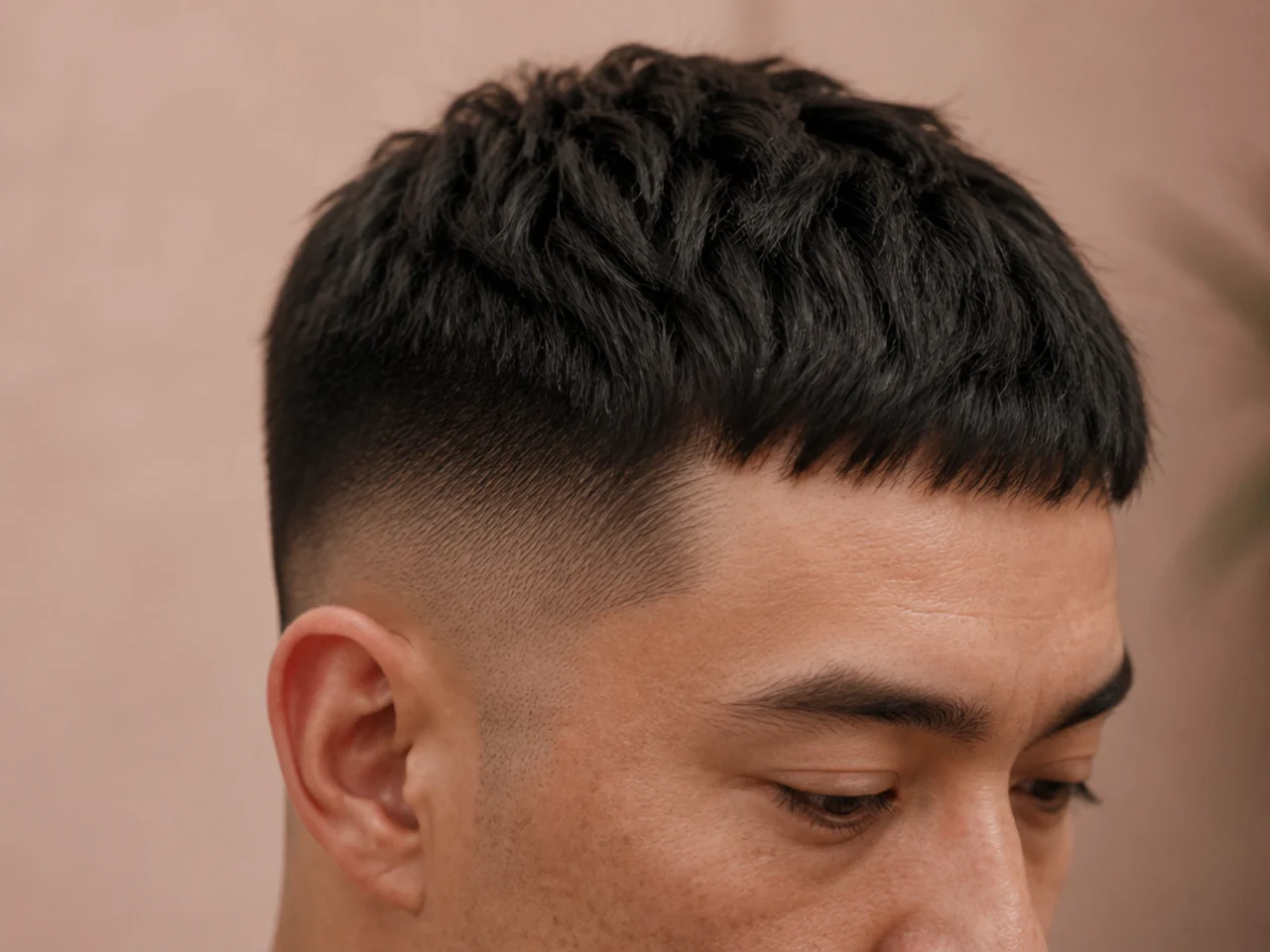
7. The Parting That Shows Scalp
Straight hair falls cleanly away either side of a part, so the gap reads as a bare line. Setting it slightly off the natural split and combing a few hairs across closes it.
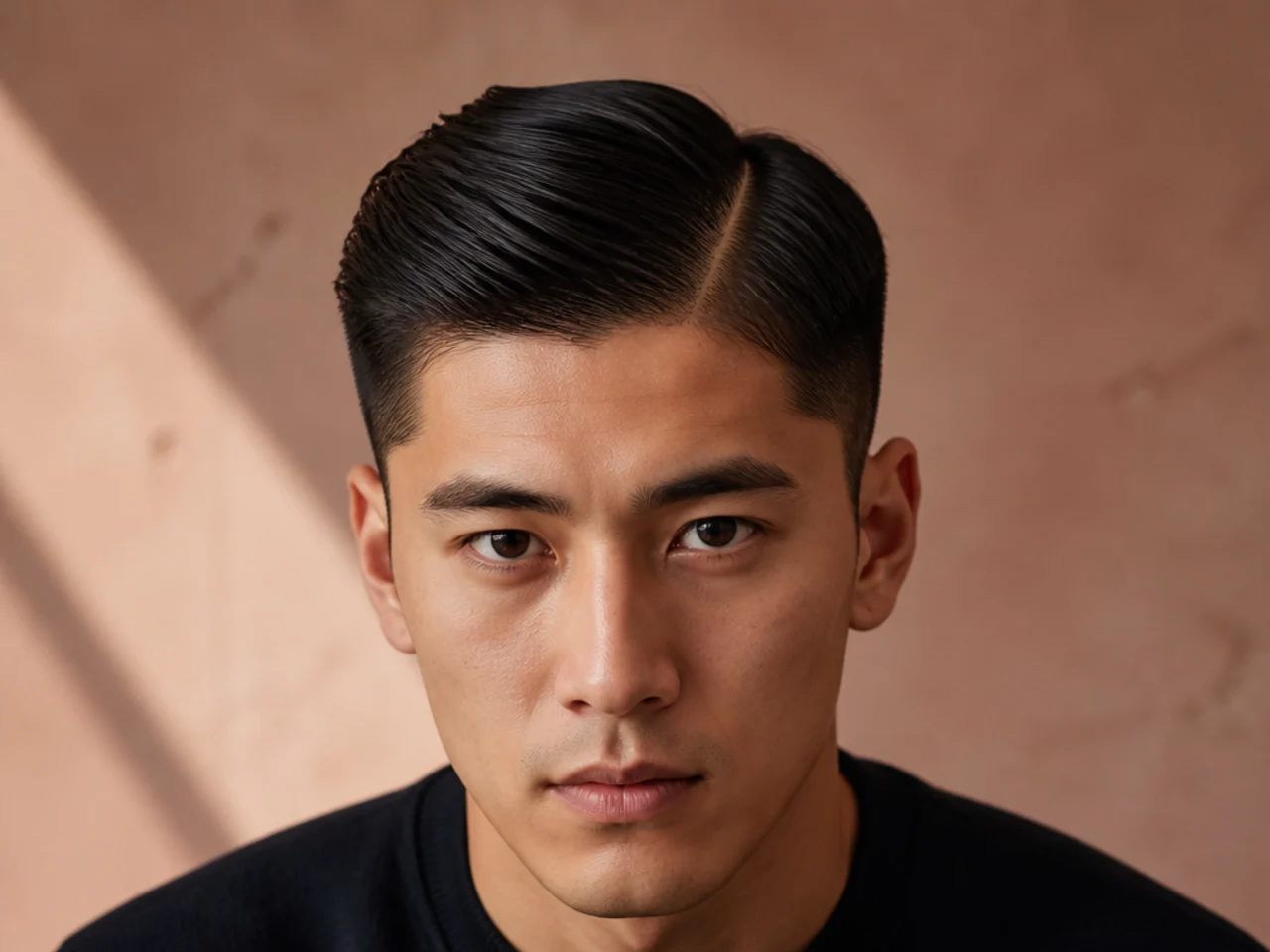
8. The Guide Section Left Long
A barber sets one section as the reference for the rest, and if the final pass misses it, it stays as a longer strip. It shows in profile as a flick catching the light, so check a side mirror.
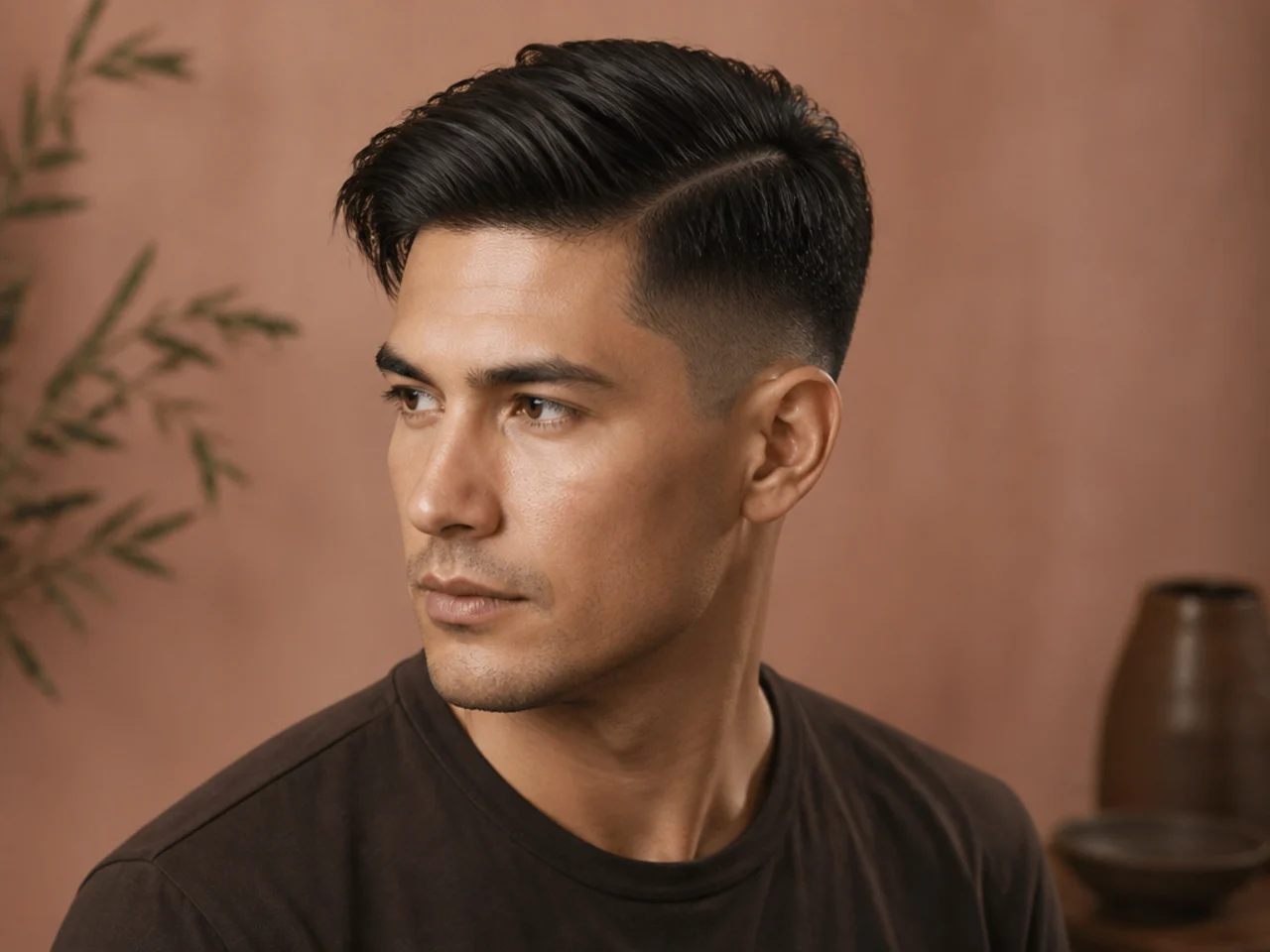
9. The Temple Hollow That Reads as a Gap
Most men have a slight recession at the temple corners, and short straight hair sits flat so the hollow shows. Leaving that corner a guard longer fills the shadow rather than outlining it.
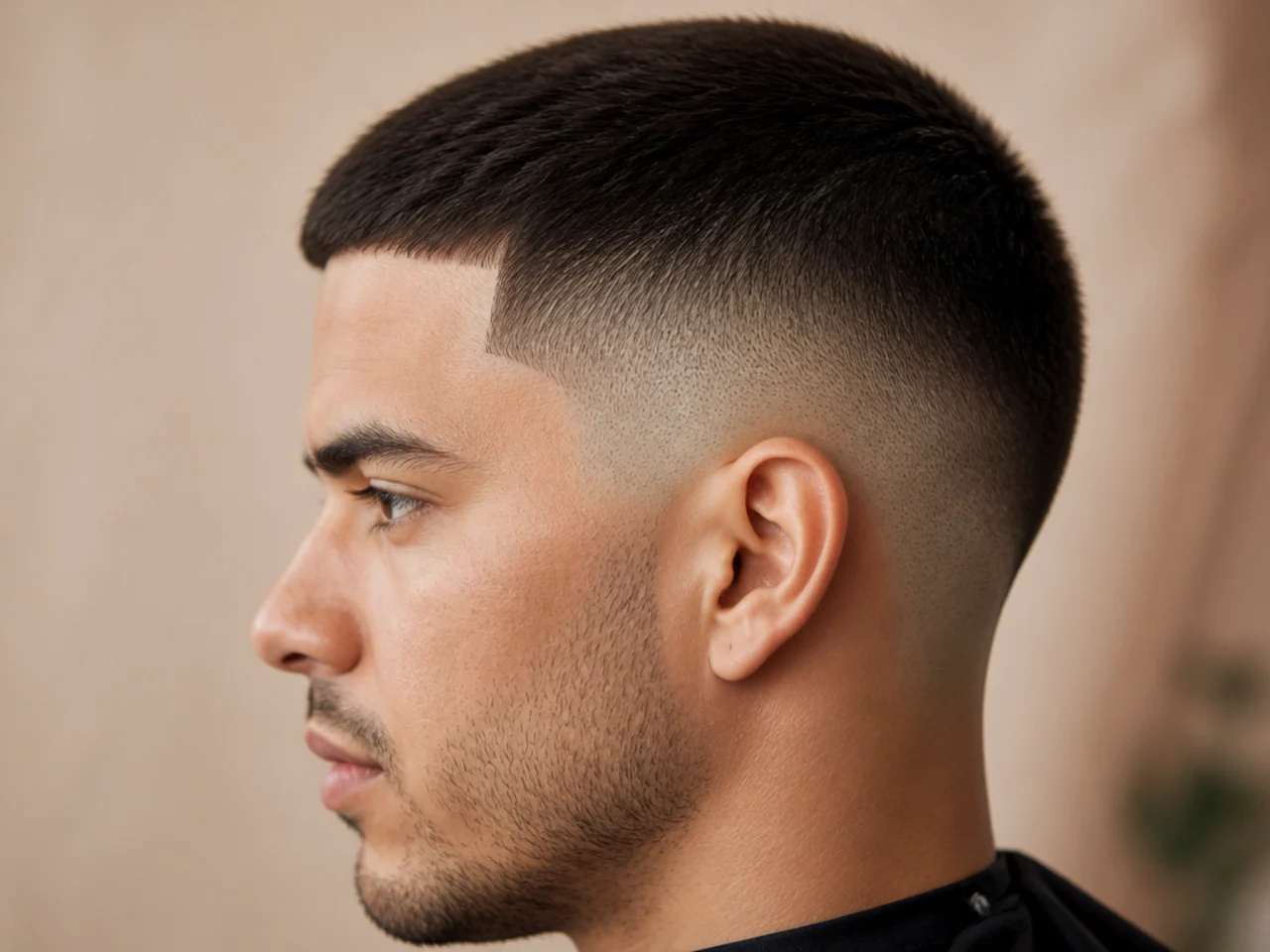
10. Chevron Growth at the Hairline
Along the front hairline the hair often grows in opposing diagonals meeting in a V. Cut blunt across it the two directions fight; point-cut, they interlock and sit flat.
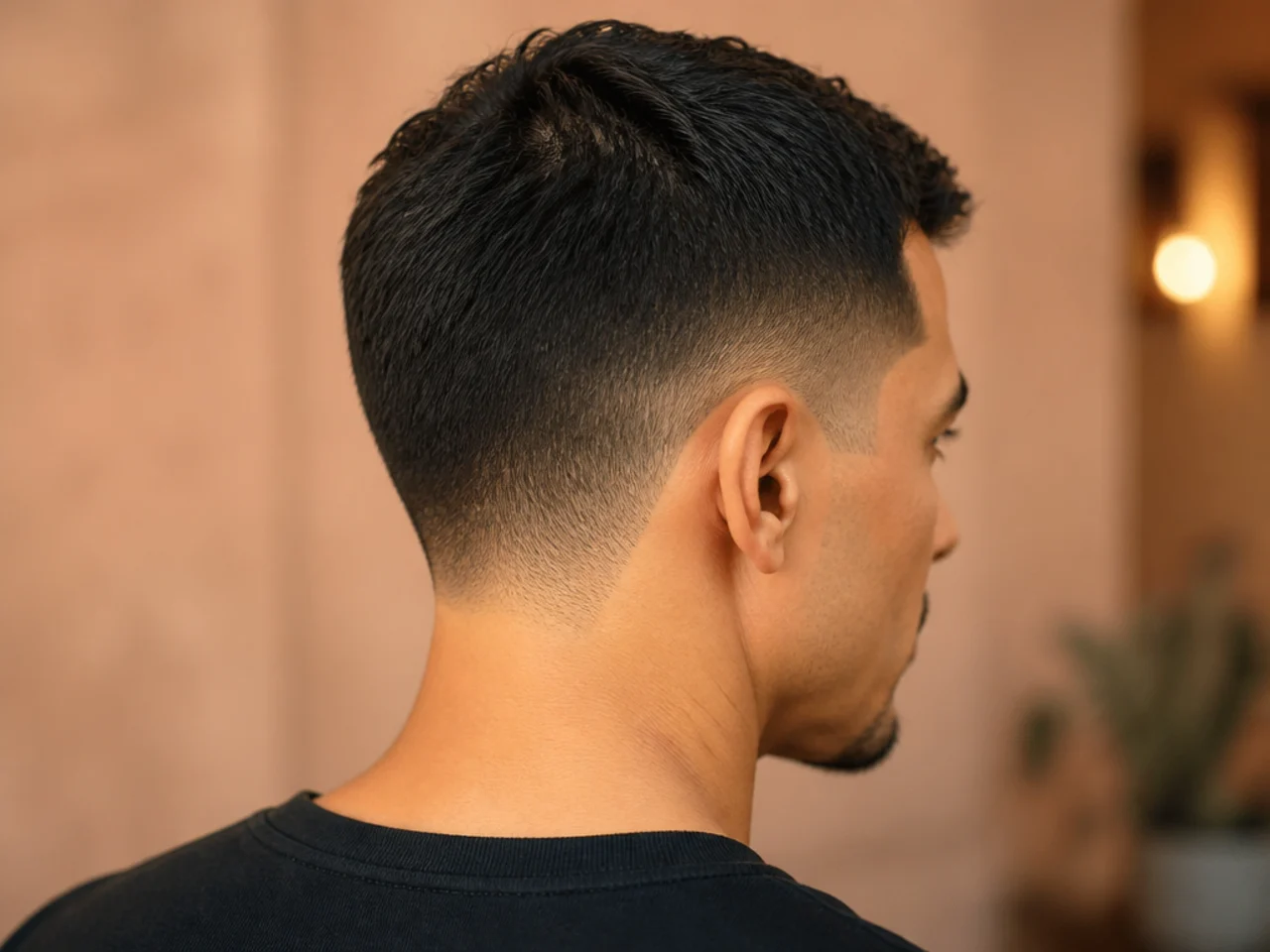
11. The Flat Crown That Needs Lift, Not Length
Straight hair at the back of the top collapses onto the skull and the head loses its profile. Shorter internal layers there give the surface something to sit on, adding height without visible length.
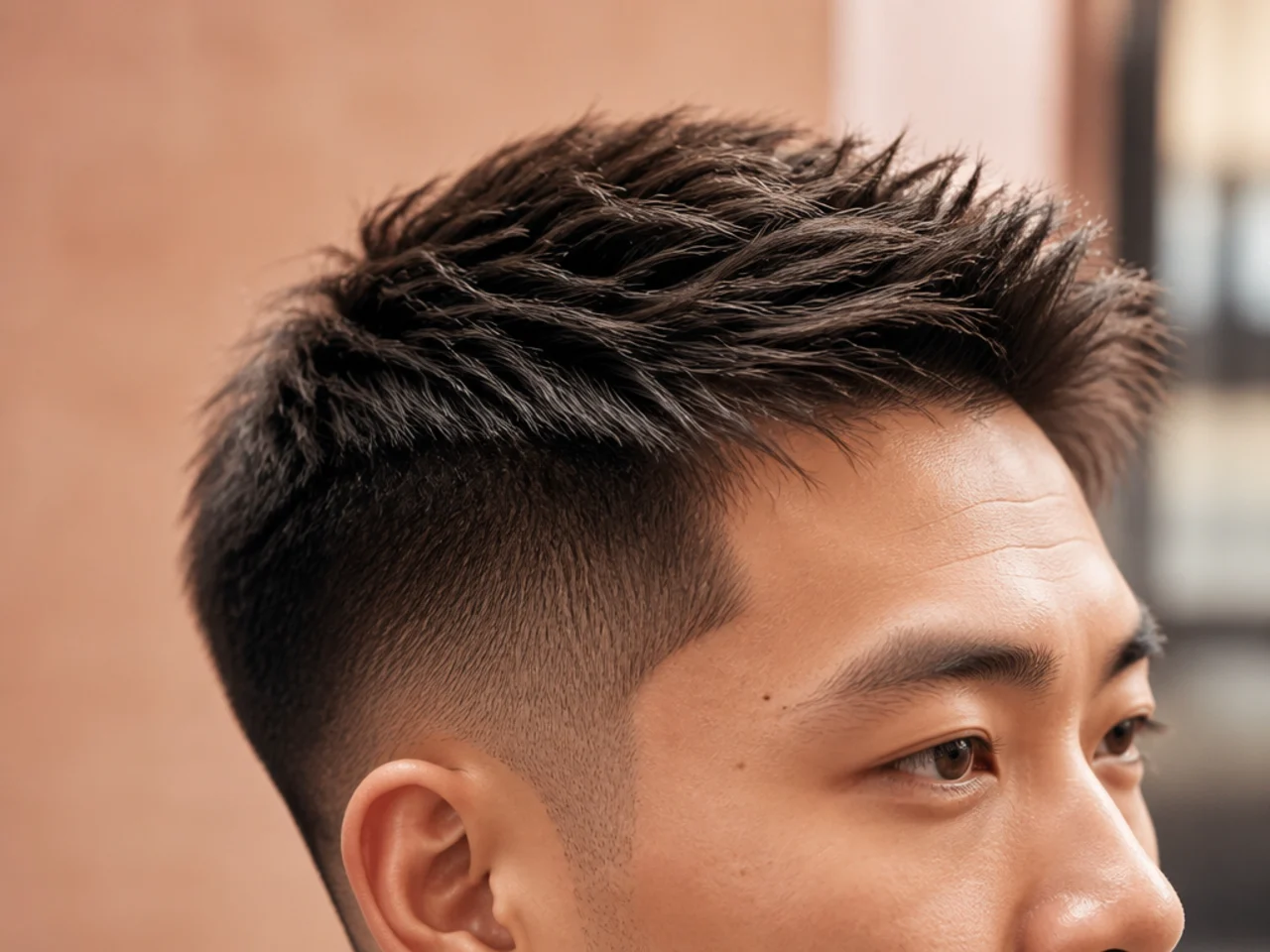
12. The Hard Part That Turns a Flaw Into a Line
A razored part is a deliberate line on a texture that displays every line anyway. It gives the eye an intentional edge, and it holds a parting that would otherwise drift by lunchtime.
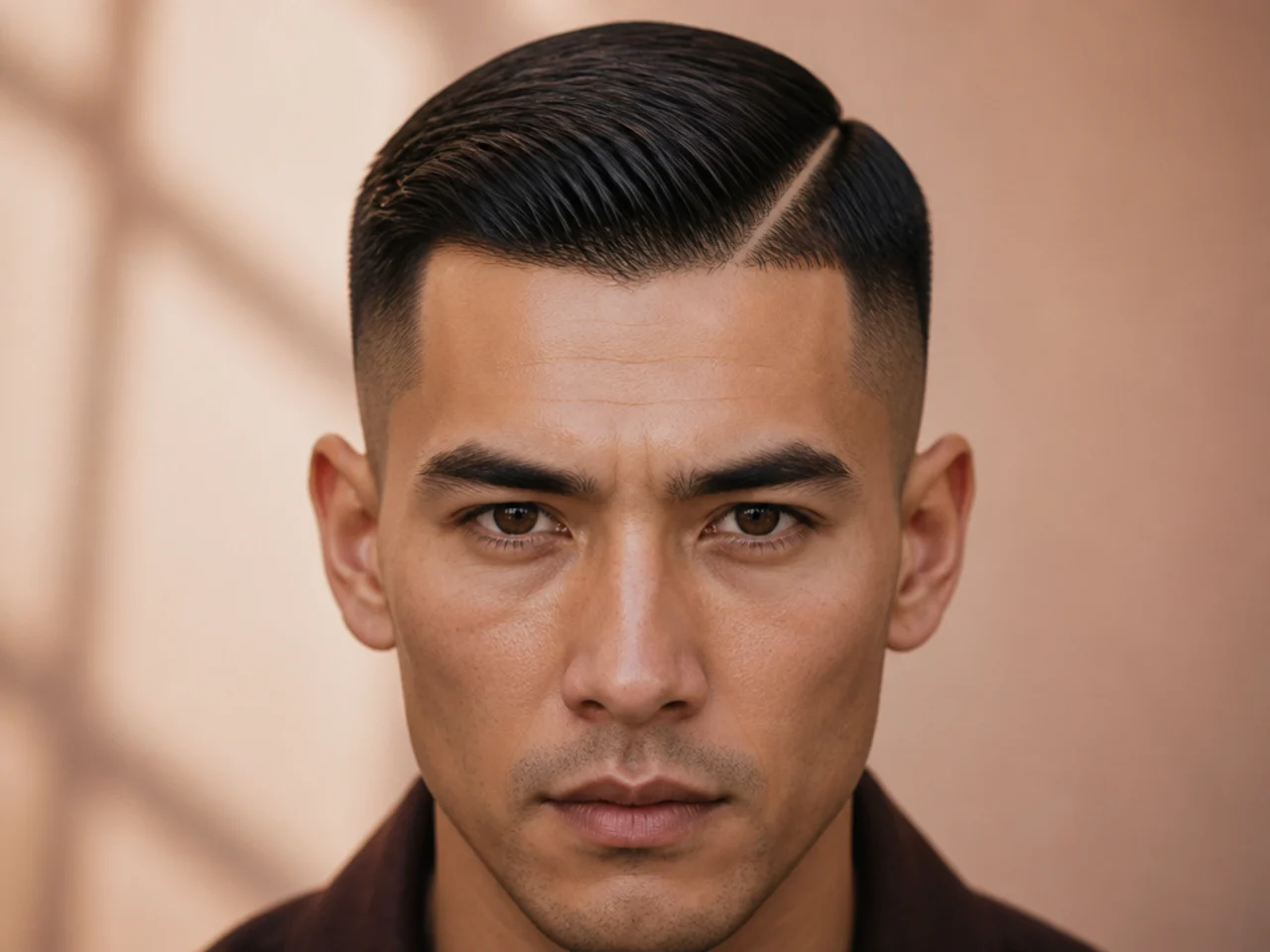
13. The Blunt Fringe Versus the Point-Cut Fringe
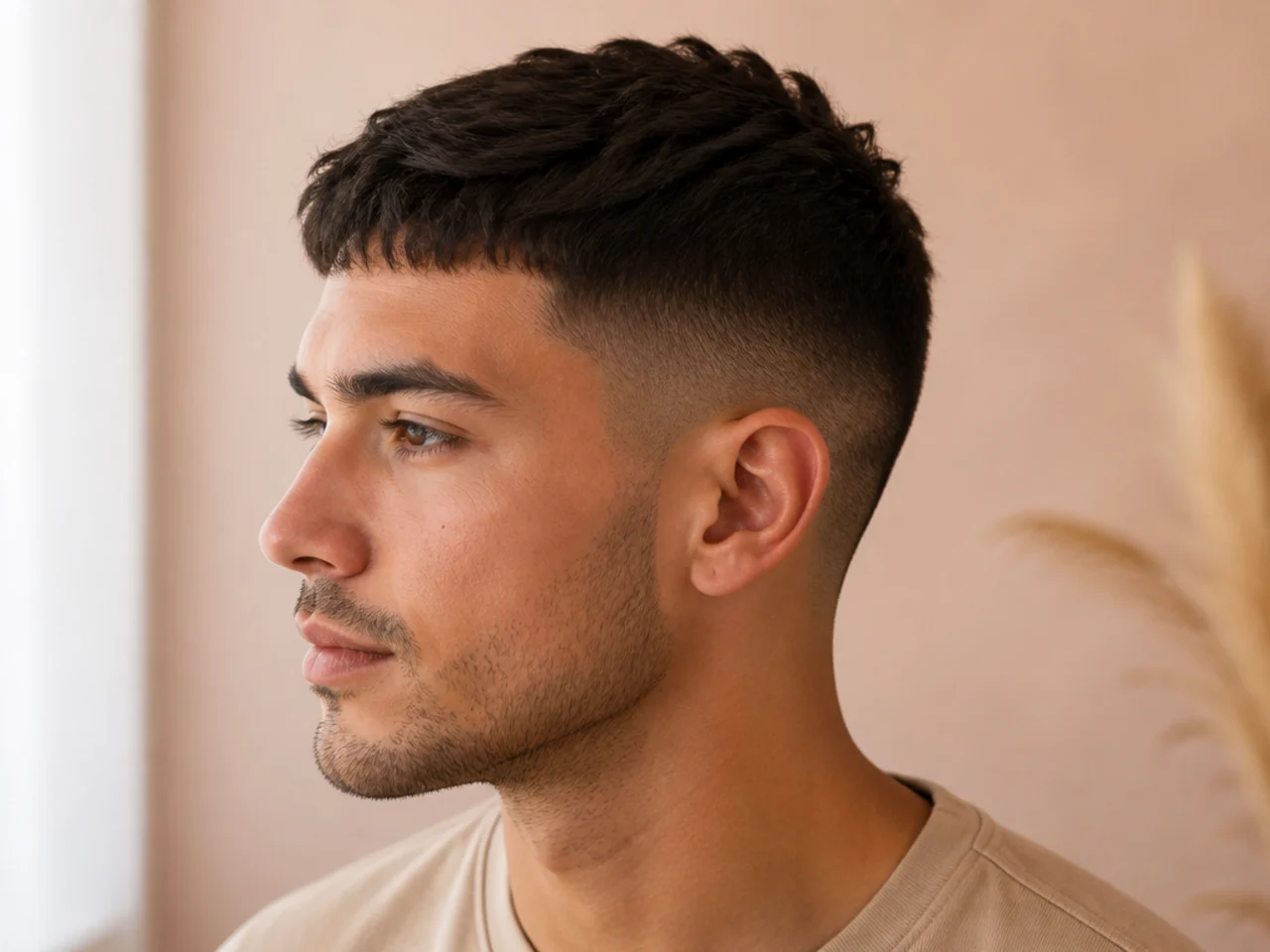
A blunt fringe is a ruler-straight edge across the forehead, which is either the point or a problem. Point cutting the same length softens it and costs no length. Both belong to the same family of men's fringe haircuts, and the edge is the only thing separating them.

14. A Line-Up So the Eye Lands Somewhere Deliberate
Squaring off the front hairline and temple edges puts one crisp intentional line in the cut. Where accidental lines are unavoidable, a deliberate one changes the rest.
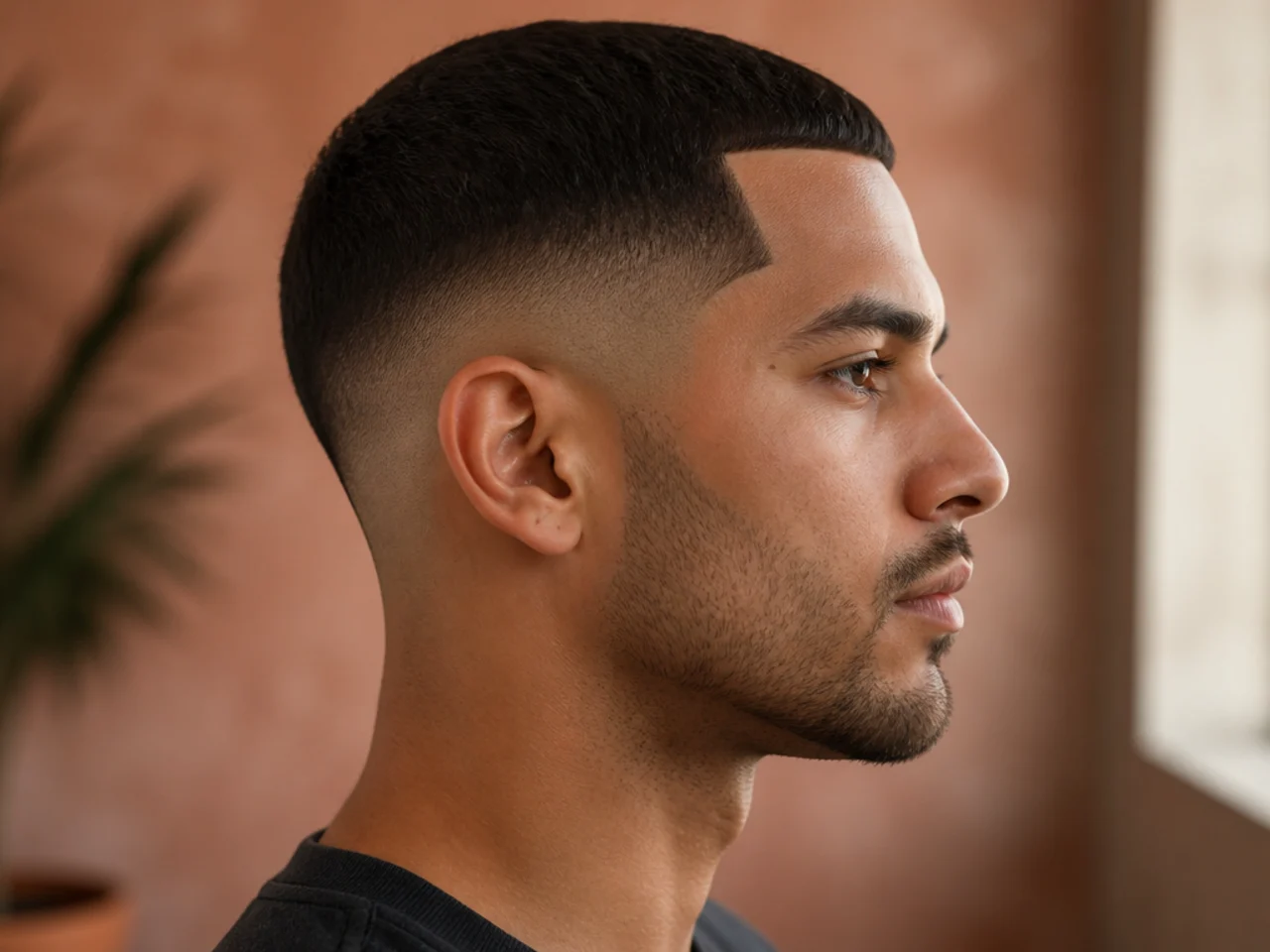
15. Second-Day Flatness
Straight hair has no bend to hold volume, so it lies down overnight and stays. A cut with shorter layers underneath recovers with water alone; a single-length top needs product.
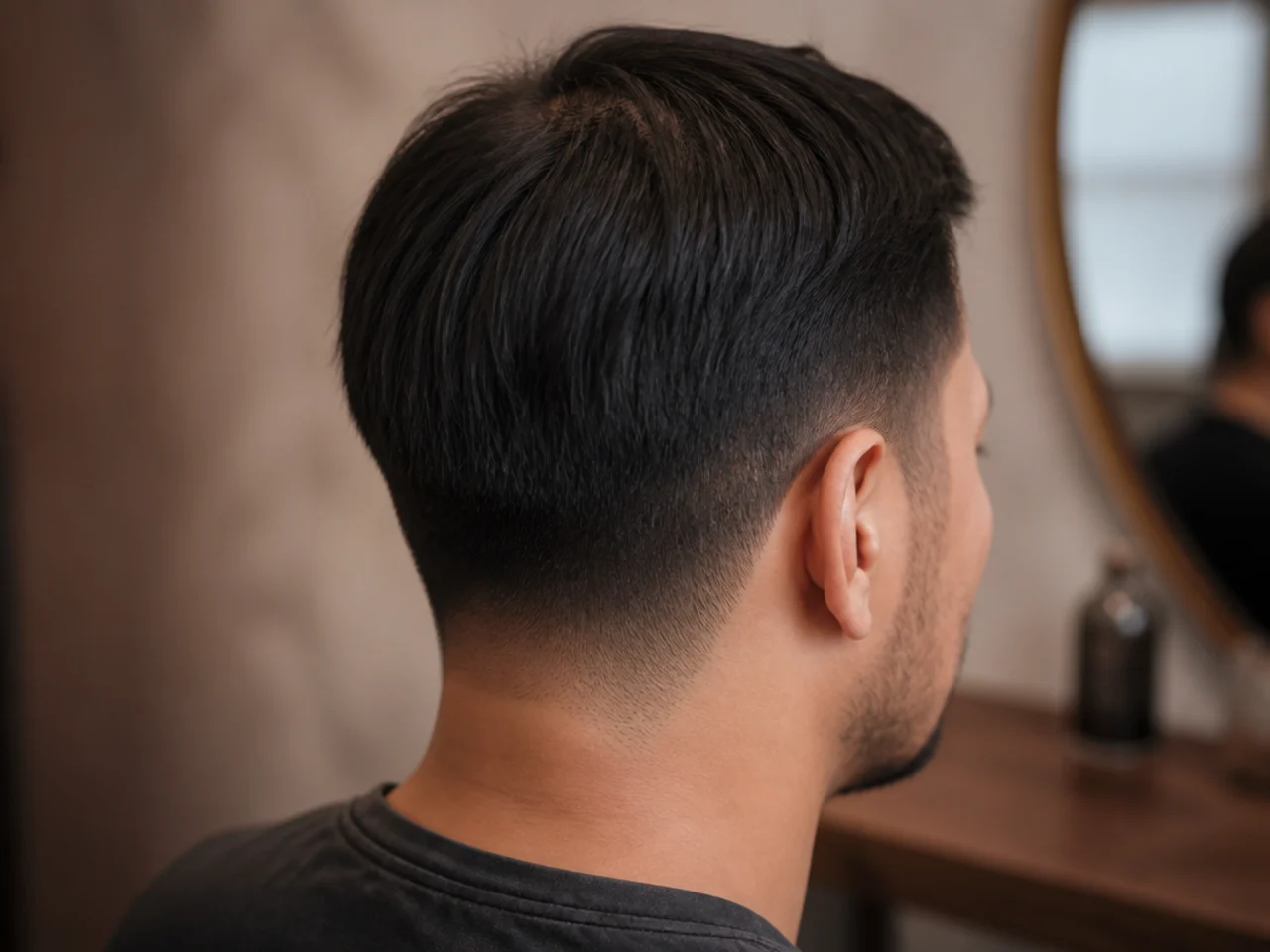
16. The Length at Which Straight Hair Stops Standing Up
Past four centimetres the hair's weight beats its stiffness and everything lies down, cowlicks included. If you have fought a standing section for years, length is the answer, not product, and the shapes waiting on the other side of that threshold are medium length cuts for straight hair.
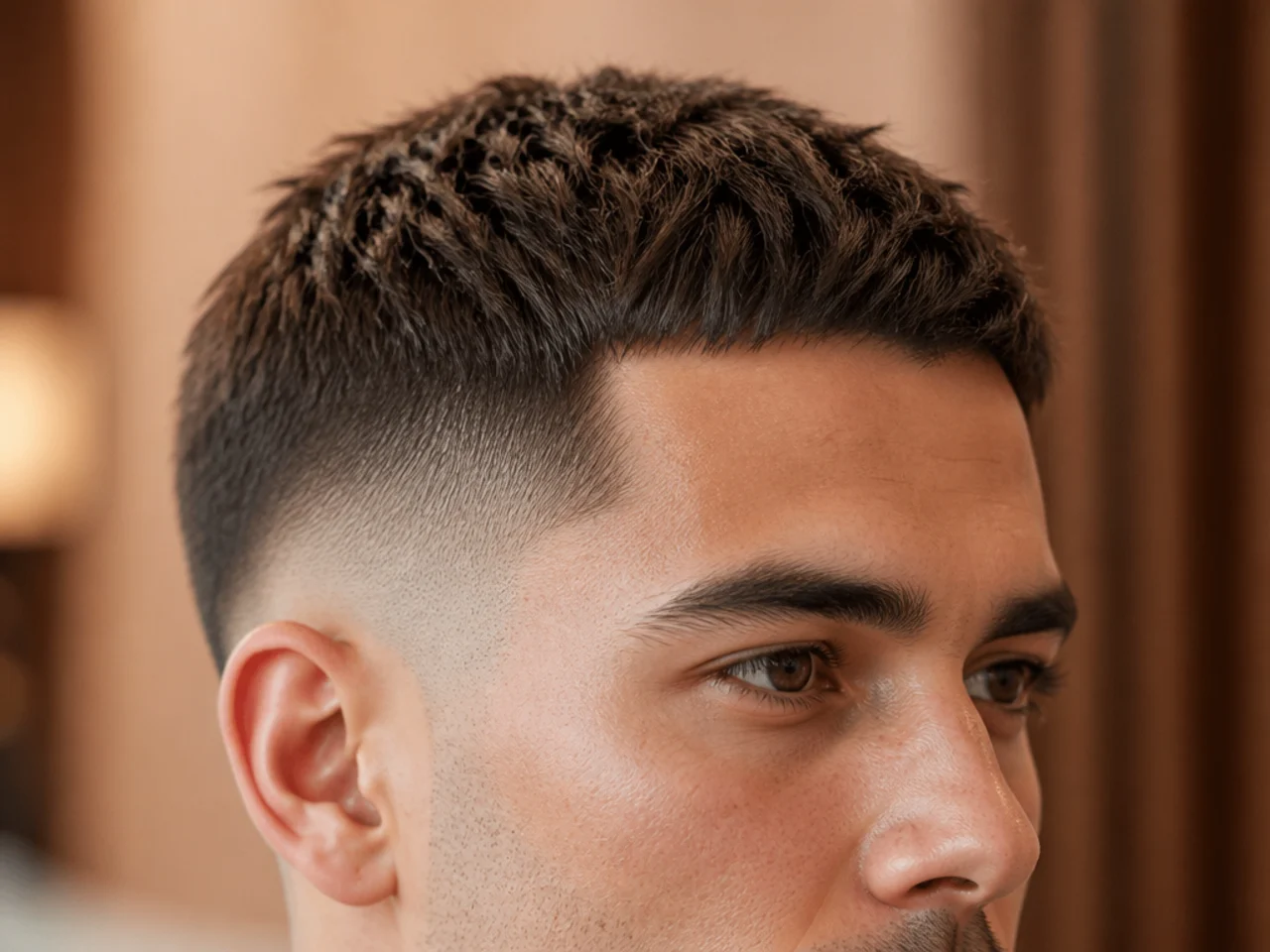
17. The Two Sides That Are Not the Same Length
Straight hair falls to a visible perimeter, so a millimetre between left and right shows against the ears. Asking the barber to check both sides together is the only catch.
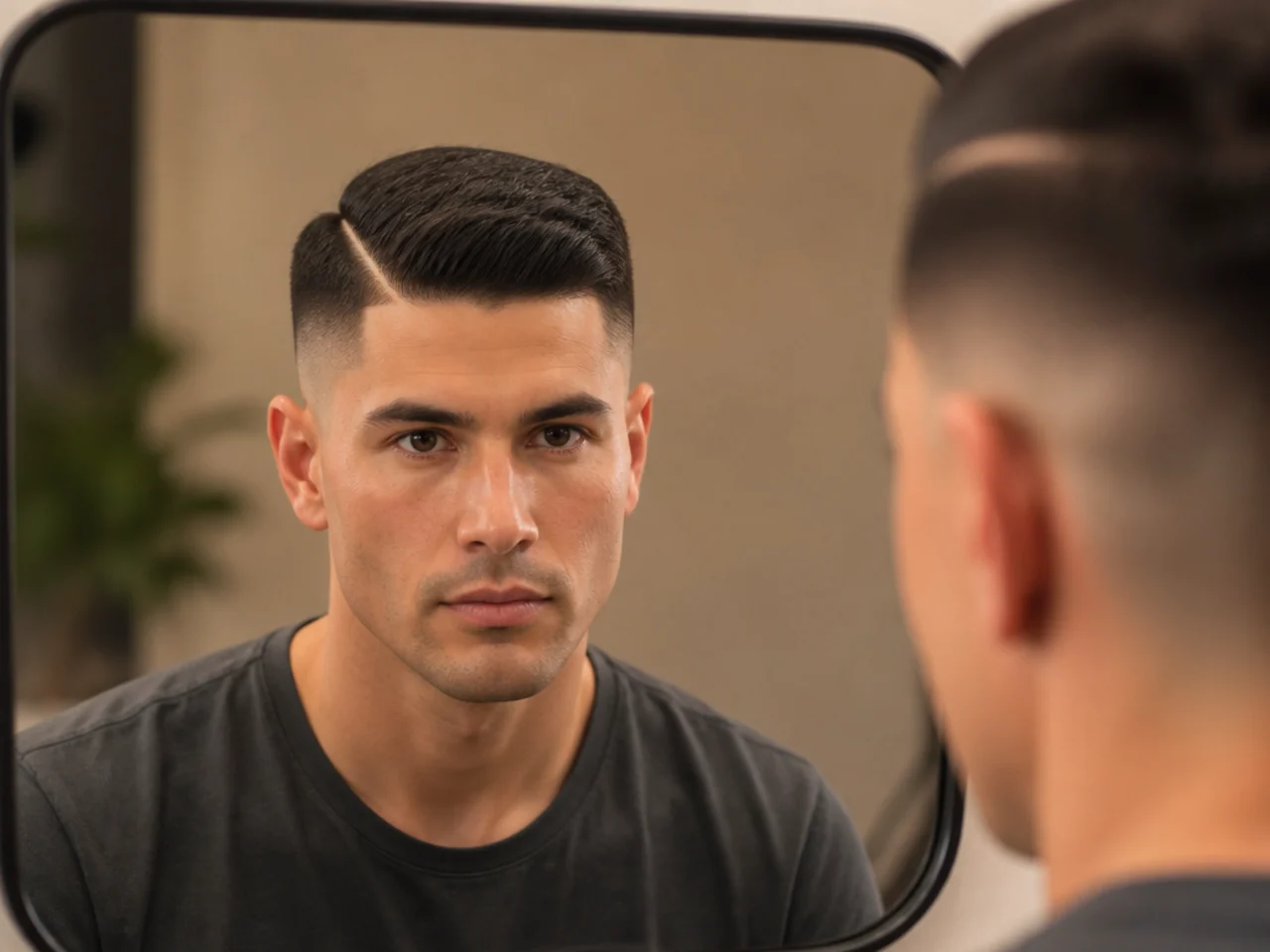
18. Scalp Visible Under Overhead Light
Straight hair sits in a single layer, so downlight passes between the hairs where curl would block it. Keeping the top longer and finishing forward gives the light less of a path.
19. The Sideburns That Have to Match
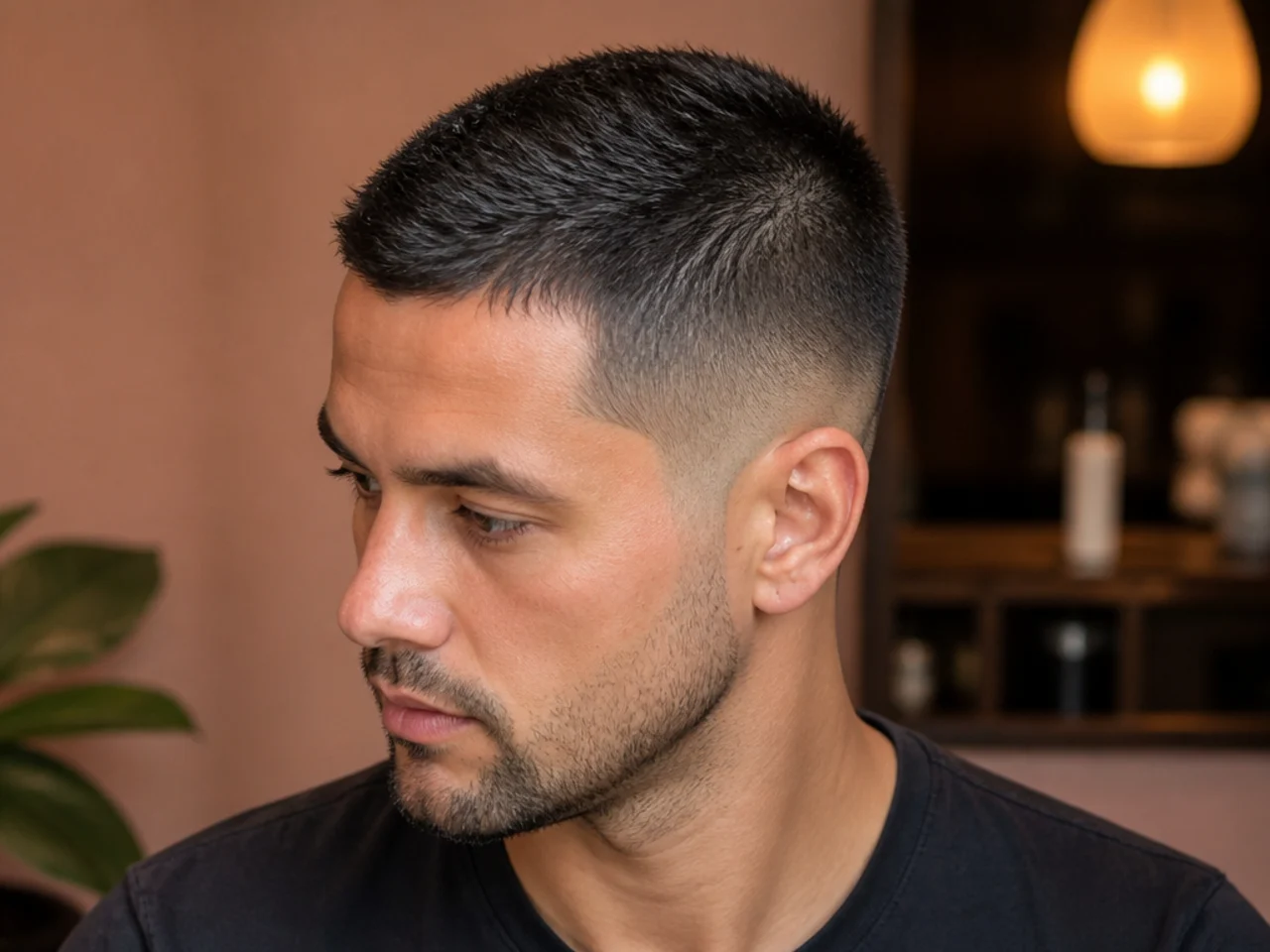
Both sideburn ends are visible at once in any mirror and every photograph, and straight hair gives them a hard edge. Check them before the cape comes off, because nothing about them softens.
20. The Wet-Comb Check Before You Leave the Chair
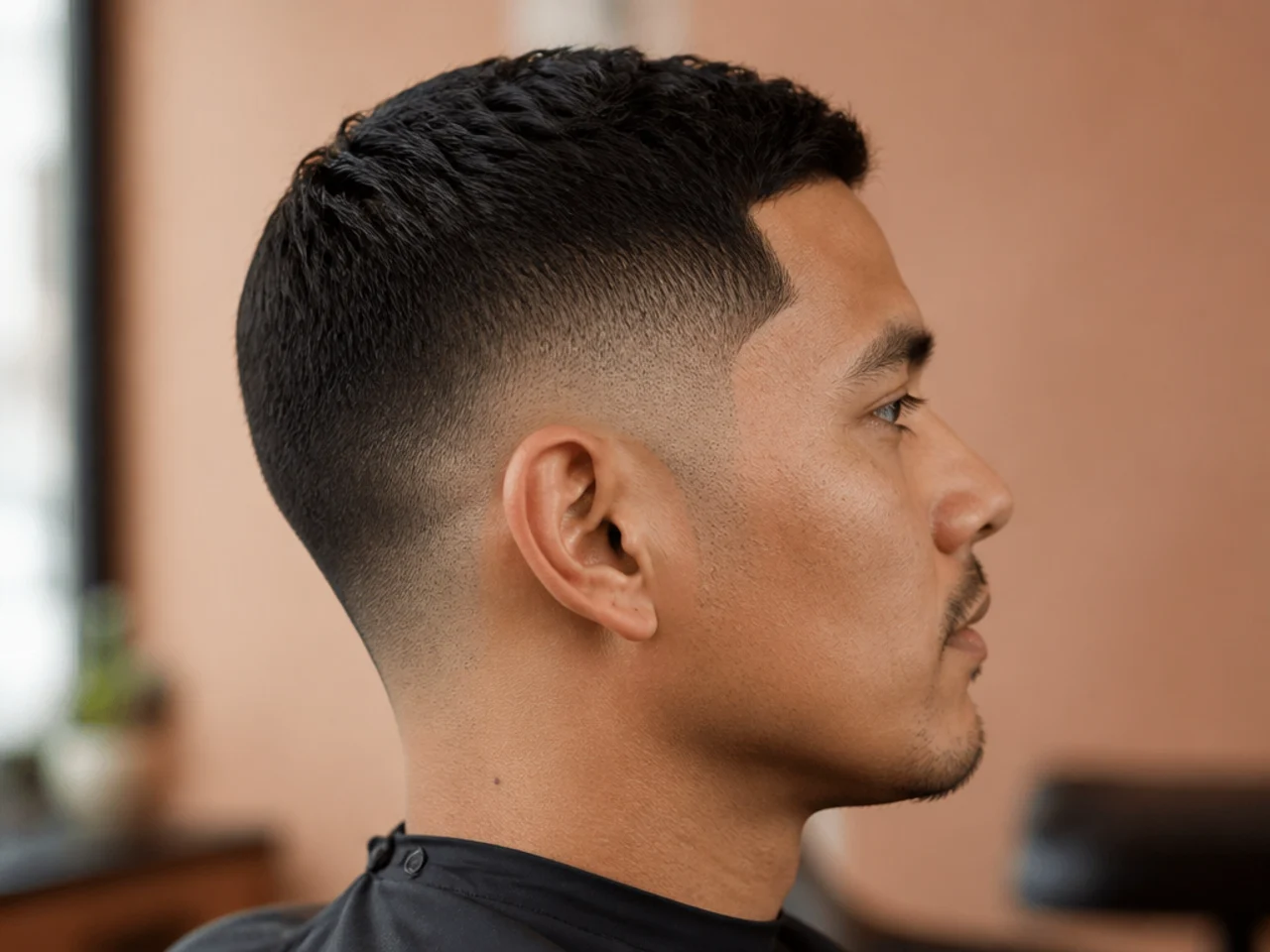
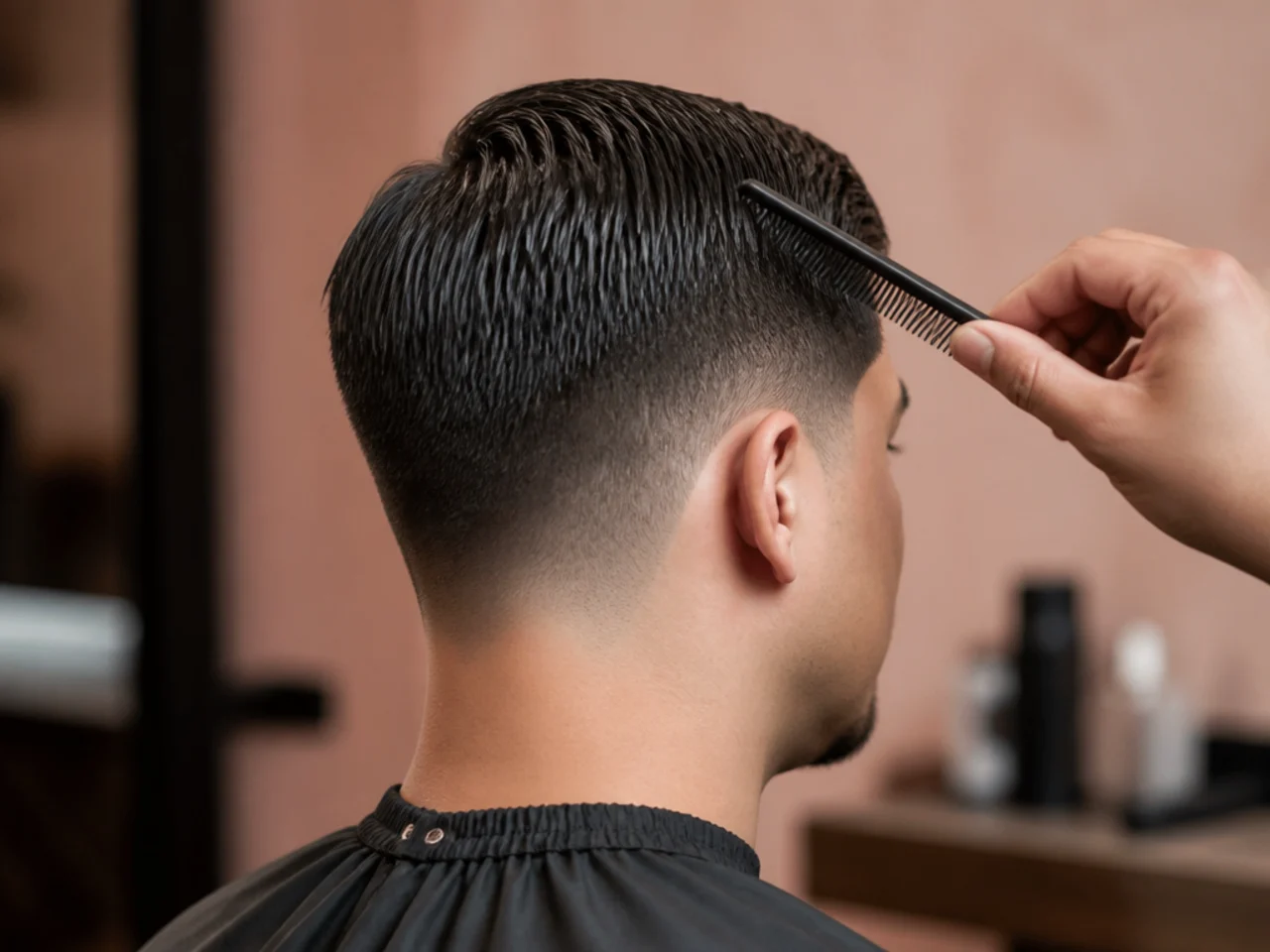
Combing the whole head flat while damp puts every hair in one plane and makes any remaining step obvious. Thirty seconds, and the last chance to catch a three-week annoyance.
Styling and Upkeep
Use matte, not shine. A single highlight on one plane points at whatever the blend did not hide.
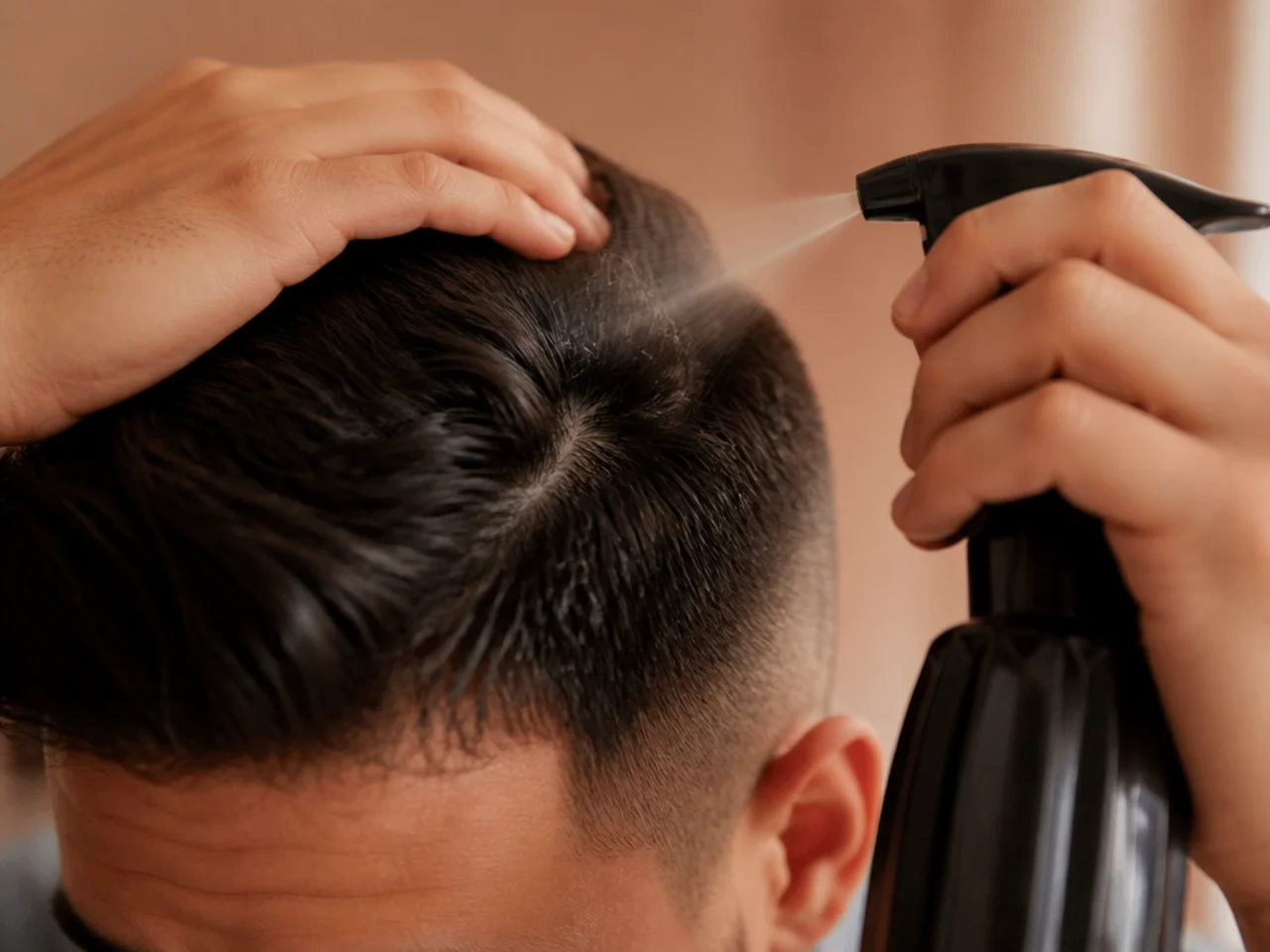
Wet the trouble spots, not the whole head. A cowlick resets with water and pressure, and the rest does not need it.
Book every three to four weeks if there is a fade. Straight hair has no bend to hide the returning line, so skin reads blurred by the second week where a taper still reads cut at the fourth.
Dry the crown before anything else. It sets while it is damp and refuses to move afterwards.
Keep the neckline between full cuts. It goes untidy first and is the cheapest to fix.
Mistakes to Avoid
Choosing the halfway length. Long enough to lift and too short to be held is where every cowlick wins.
Asking for a skin fade and expecting it to hold. On straight hair the regrowth line is visible within days.
Using a shine product to look polished. It advertises the blend rather than the style.
Squaring off a neckline that sits on top of a nape whorl. It grows out crooked, every time, because straight hair carries the whorl's direction all the way to the cut edge.
Letting the barber skip the cross-check. One cutting direction always leaves something the second finds.
FAQ
Why do clipper lines show? One plane, one reflection, so the step catches light all the way round.
How do I beat a cowlick? Go short enough to ignore it or long enough to weigh it down.
Is a hard part worth it? Usually — one deliberate line changes how the accidental ones read.
Final Thoughts
Straight hair does not need a special cut, it needs a careful one. Name your trouble spots, ask for the blend to be cross-checked, and pick a length that either holds them down or makes them irrelevant.
For a wider set of lengths on this texture see haircut ideas for men with straight hair, and for shorter variations specifically see men's short straight haircuts. More in Men's Haircuts.