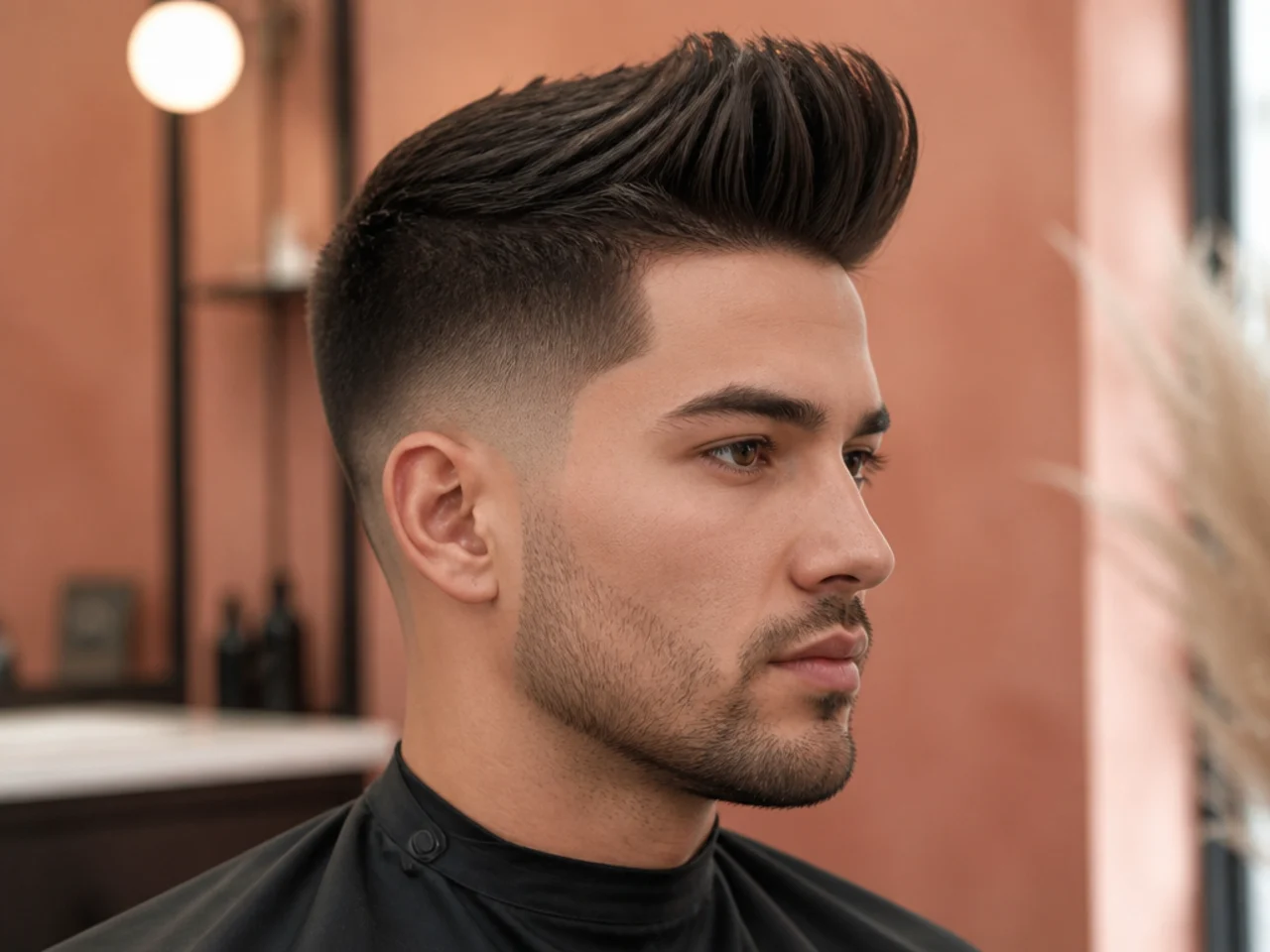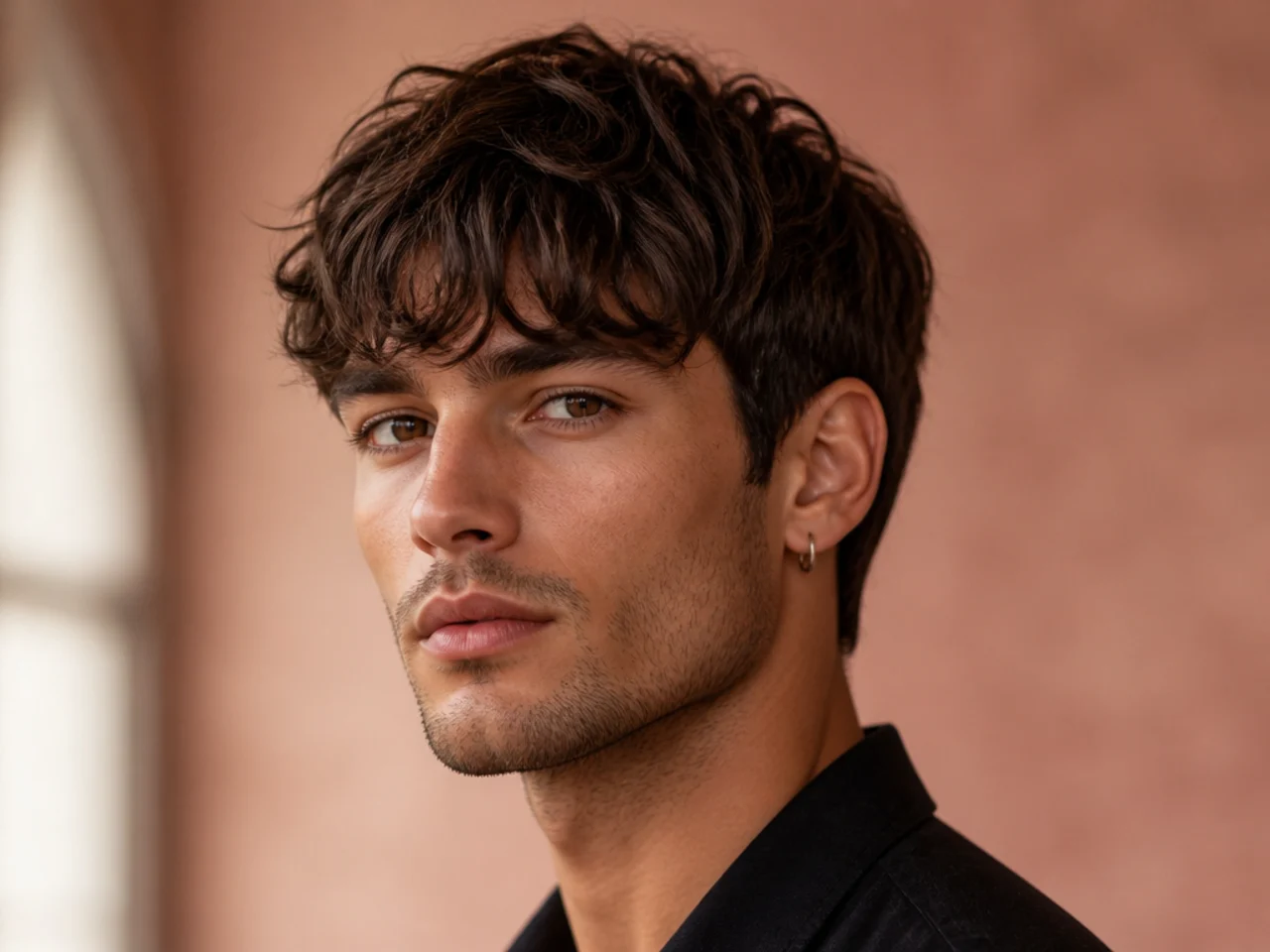
25 Fringe Haircuts for Men That Look Effortless
The fringe haircut men are asking for in 2026 looks unstyled but reads intentional. 25 effortless variations with face-shape notes and exact styling steps.
In this article · 37
- What Makes a Fringe Read Effortless in 2026
- Who a Fringe Haircut Suits
- The 25 Effortless Fringe Variations
- 1. The 2026 Soft Fringe
- 2. Air-Dry Curtain Fringe
- 3. Low-Taper Effortless Fringe
- 4. Modern Piecey Crop
- 5. Two-Minute Middle-Part Fringe
- 6. Broccoli Wave Fringe
- 7. Runway Blunt Fringe
- 8. K-Wave Comma Fringe
- 9. Feathered Long Fringe
- 10. Grown-Out Ivy Fringe
- 11. Off-Duty Surfer Fringe
- 12. Undone Shag Fringe
- 13. Mullet-Grazing Fringe
- 14. Center-Curl Comma Fringe
- 15. Low-Fade Piece Fringe
- 16. Mid-Fade Wave Fringe
- 17. Skin-Fade Micro-Fringe
- 18. Boyish Bowl Fringe
- 19. Straight-Across Blunt Fringe
- 20. Warm Blonde Fluffed Fringe
- 21. Editorial Cropped Fringe
- 22. Grown-Man Refined Fringe
- 23. Diagonal Sweep Fringe
- 24. Wispy Feather Fringe
- 25. Fluffy K-Style Fringe
- How to Ask Your Barber for an Effortless Fringe
- Styling for the Effortless Look
- FAQ
- Which fringe haircut is trending in 2026?
- Can I get an effortless fringe with curly hair?
- Does an effortless fringe work with a fade?
- How long does an effortless fringe take to grow into?
- Is the effortless fringe workplace-appropriate?
- What's the difference between this and the wider fringe haircuts guide?
The fringe your barber is quietly cutting the most in 2026 doesn't look like a fringe at all. No stiff clay. No dryer choreography. Just a longer front piece cut with soft weight, air-dried, and finger-pushed into place. This guide runs through 25 effortless fringe variations — how each one differs, who it flatters, and the two-minute morning routine that keeps it looking cut, not styled. Our wider fringe haircuts library covers 36 more takes if you want the full structured range beyond this trending-in-2026 shortlist.
What Makes a Fringe Read Effortless in 2026
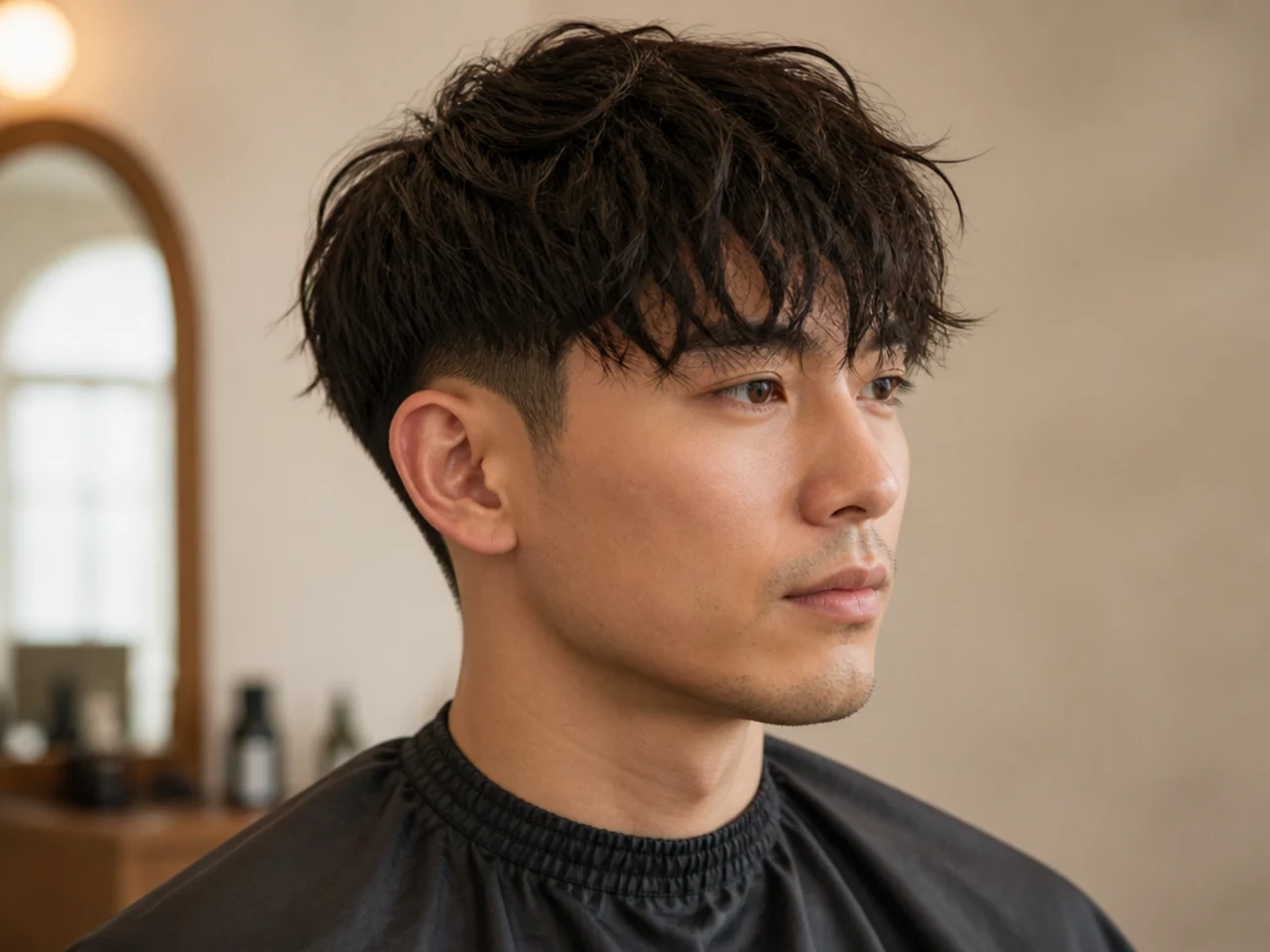
An effortless fringe is a fringe cut so the shape holds without daily styling. Your barber leaves extra length in the front piece, keeps the ends soft rather than thinning them to a point, and blends the sides with a scissor taper or low fade so nothing reads over-designed. The look sits somewhere between a barbershop cut and just-woke-up — deliberate, but not styled.
Three shifts define the 2026 version. Fringes sit longer at the front — usually brow-grazing to just below the brows. Weight is preserved instead of removed, so the front piece falls naturally instead of standing up. And finishes are matte or satin — no shine, no crunch. That's the whole trend.
The rest of the guide walks through the 25 variations men are actually asking for right now. Each one gets a face-shape note, the exact language for the chair, and the one styling move that keeps it looking effortless without spending ten minutes on it.
Who a Fringe Haircut Suits
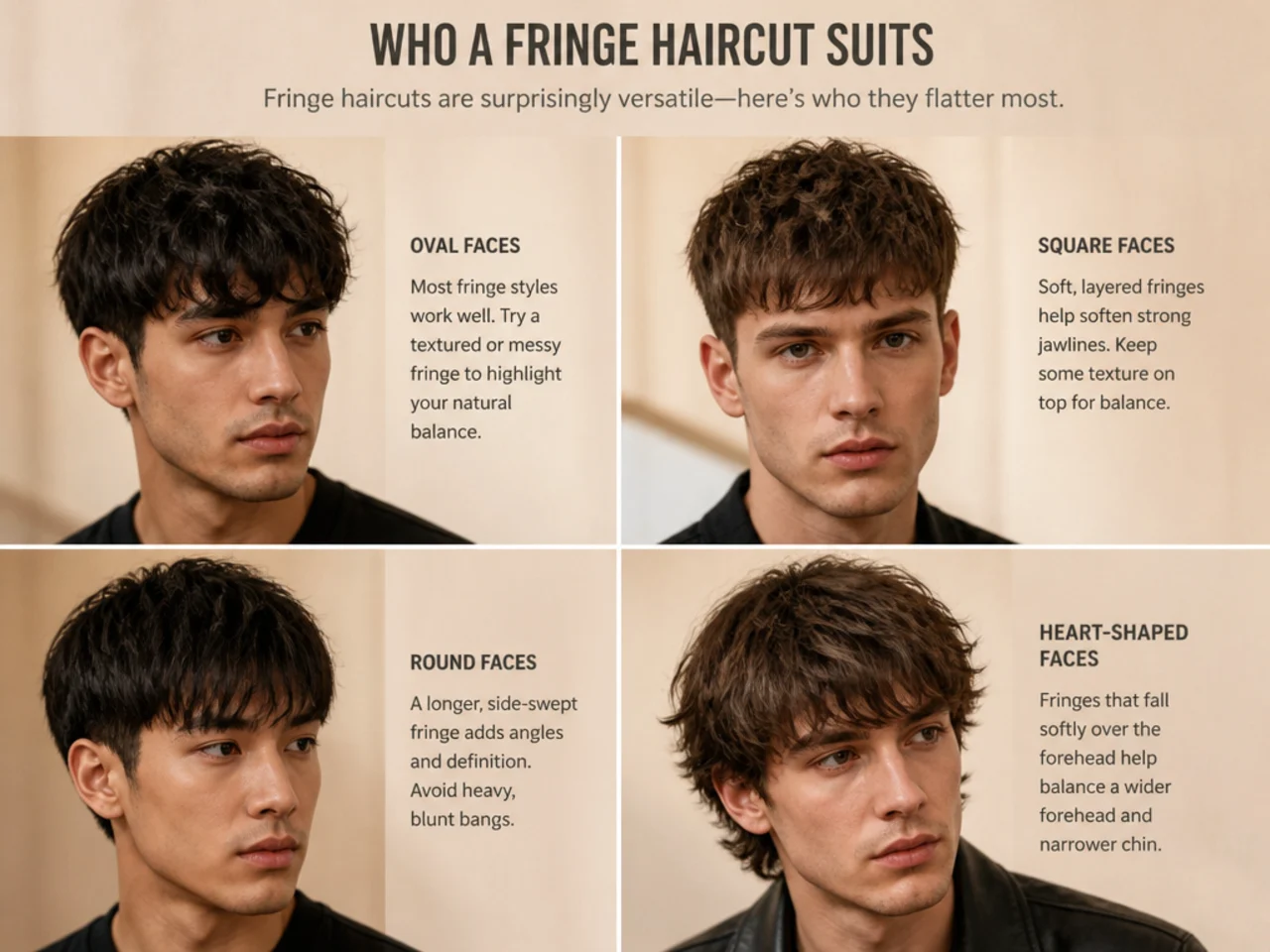
Almost every face shape wears a fringe — the variation is what does the work. Angular and square jaws benefit most from soft, textured, or wavy fringes that break the strong bottom line. Round faces suit angled, side-swept, or middle-part shapes that draw the eye vertical. Heart shapes balance under a fringe with weight left at the temples, softening a wider forehead. Oval faces suit almost every version on this list. Long or rectangular faces want a blunt or brow-grazing horizontal edge that visually shortens the frame.
Hair type sets the styling difficulty. Straight and wavy hair drop into an effortless fringe with no coaxing. Type 3 curls need the front cut longer to account for shrinkage — what lands at the brow when wet sits above it once curled. Fine hair reads best in a medium-weight version; too short exposes density, too long goes stringy. Thick hair holds almost any version but needs internal weight removal so the front piece doesn't stand up on its own. If your hair pattern doesn't match the reference photo you brought, ask your barber how to adapt it before they start cutting — most will happily flag which variations translate and which won't.
Your maintenance appetite matters too. Effortless doesn't mean zero-cost. The cuts on this list hold for 5 to 6 weeks in the chair, but the shape softens by week 4 — book earlier if you want the front piece looking sharp every day. Anyone stretching past 6 weeks is really wearing a grown-out version of the cut, which is its own thing and reads differently. Bring your last barber into the loop about your schedule so they can cut the fringe with your realistic cadence in mind.
The 25 Effortless Fringe Variations
Every variation below sits on the same core idea — a longer front piece with soft weight and natural fall. What changes is the exact length, the side treatment, and the finish. Pick the one that matches your face shape, hair type, and how much morning time you actually have.
1. The 2026 Soft Fringe
The default request this year. Front piece sits at brow length, cut with the ends left soft — no razoring, no thinning shears. Sides get a scissor blend or the softest possible taper. Best on straight to slightly wavy hair, and forgiving of almost every face shape. Ask for "a brow-length fringe with soft weight and no thinning, scissor-blended sides, matte finish." Rough-dry with your fingers pushing forward, then press a pea of matte cream through the front from underneath. Done.
2. Air-Dry Curtain Fringe
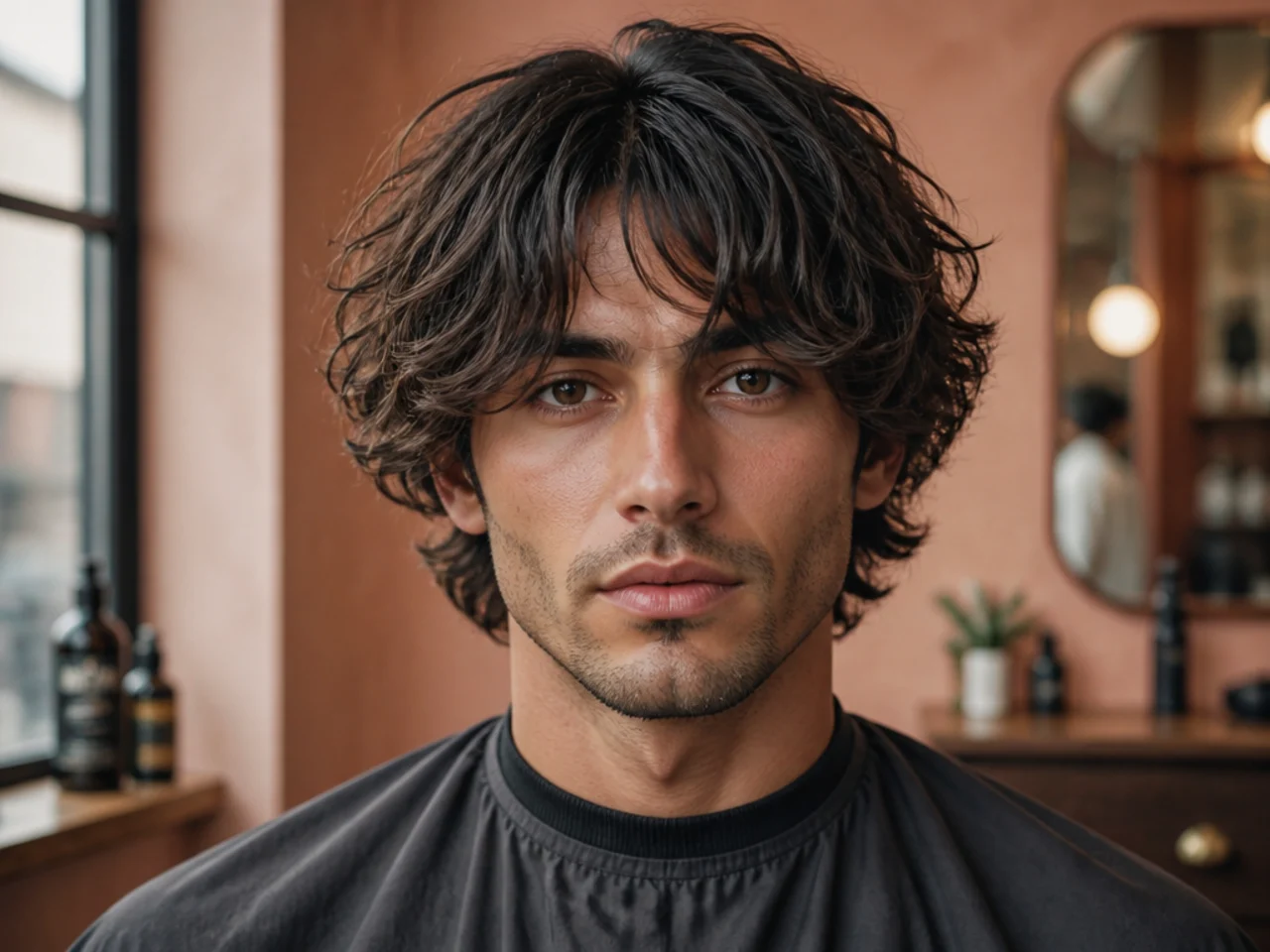
Longer, split down the middle, and finished without a dryer. Length runs 4 to 5 inches at the front so the two panels drape past the cheekbone. Best on straight or wavy hair with medium density — thick hair goes helmet-y, fine hair goes stringy. Suits oval and long faces. Ask for "a middle-part curtain fringe, 4 to 5 inches at the front, no fade, scissor sides." Wash, towel-dry, comb the part in, and let it air-dry with a leave-in cream through the mid-lengths. That's the routine.
3. Low-Taper Effortless Fringe
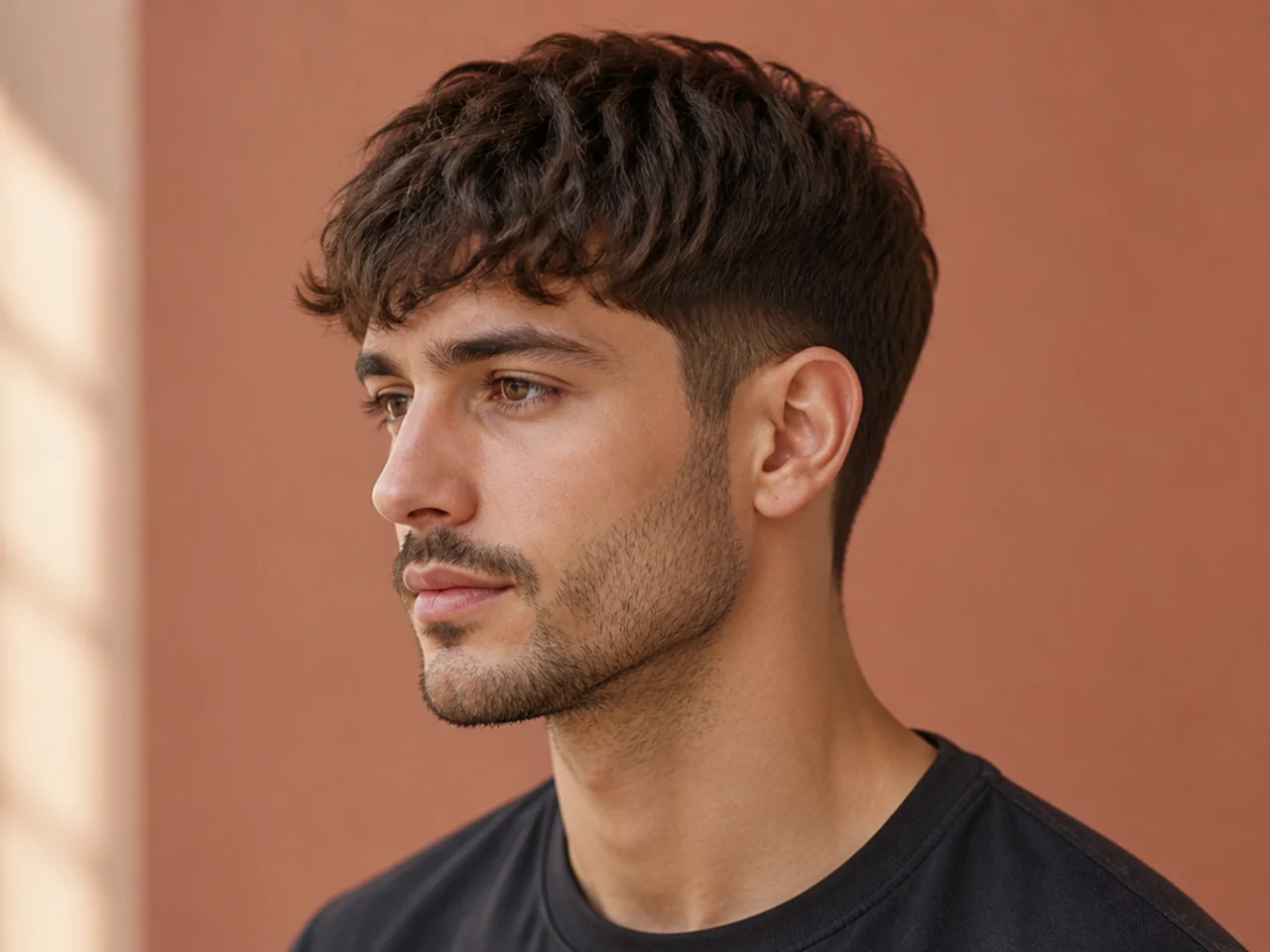
A low taper fade at the ears and neckline, brow-length fringe on top, no fuss between. The taper does the heavy lifting — clean edges make the messy top read intentional. Best on straight and wavy hair, suits square, oval, and slightly round faces. Ask for "a low taper around the ears and nape, brow-length fringe cut with soft weight, matte cream finish." Blow-dry the fringe forward with your fingers only. Skip the brush.
4. Modern Piecey Crop
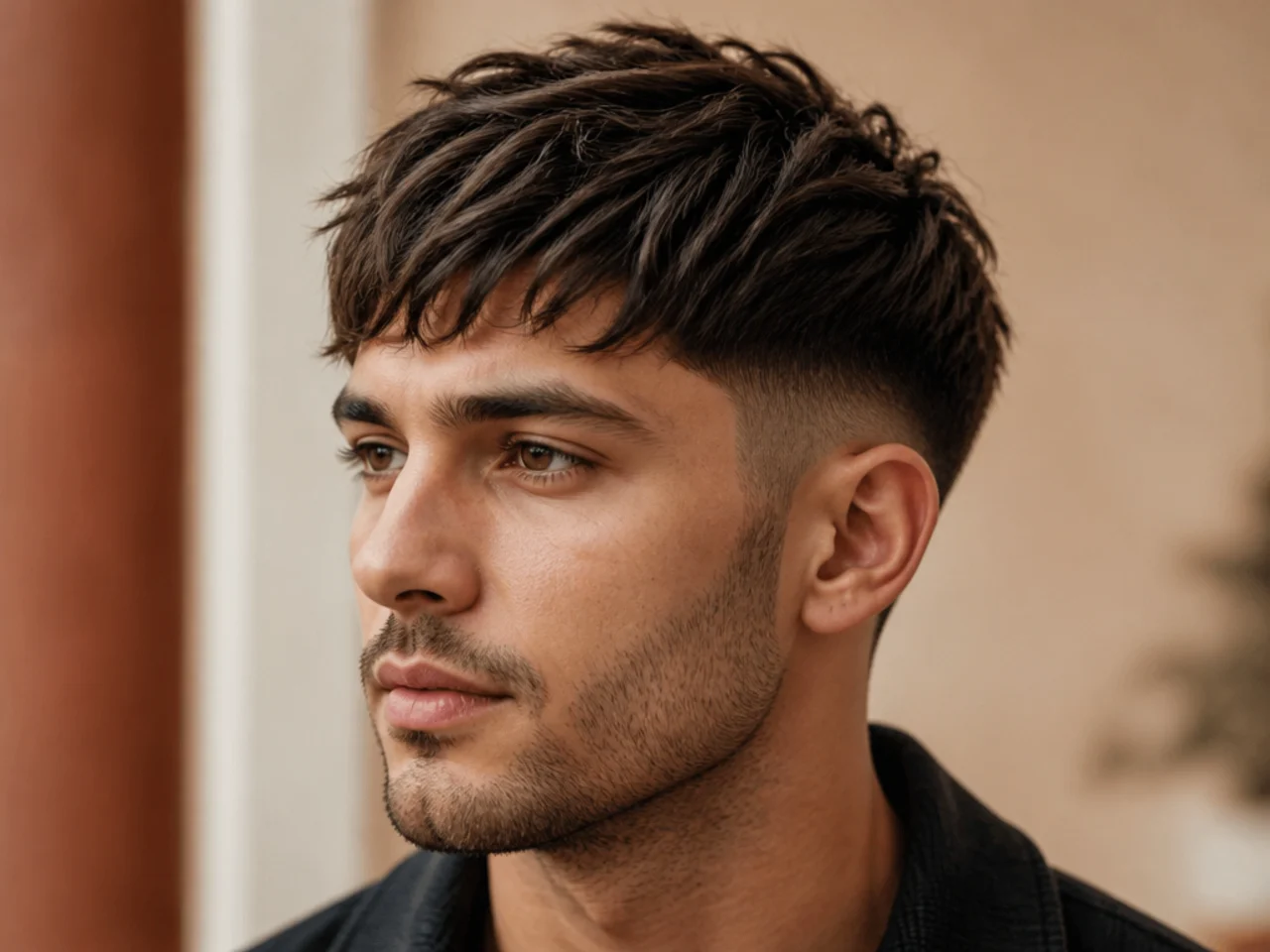
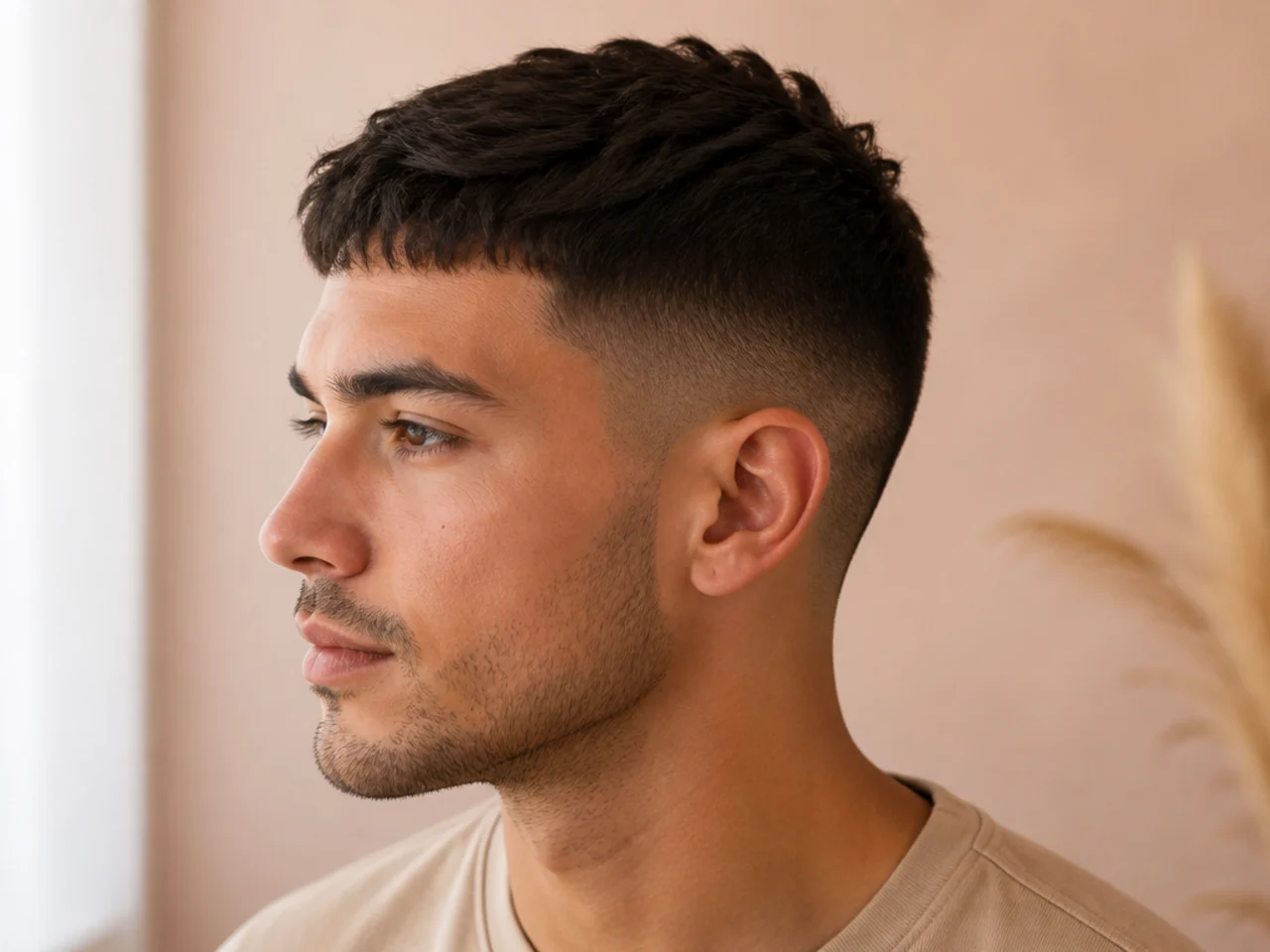
A cleaner, sharper 2026 evolution of the French crop. Short blunt fringe sits above the brow, point-cut through the top so pieces separate rather than sit as a slab. Sides run a low or mid fade. Suits square and heart-shaped faces, works on any hair type as long as there's enough length up front to see the pieces. Ask for "a piecey crop, above-brow fringe with point-cut ends, low fade sides, matte hold." Push a pea of matte clay through from underneath — surface application makes it look wet.
5. Two-Minute Middle-Part Fringe
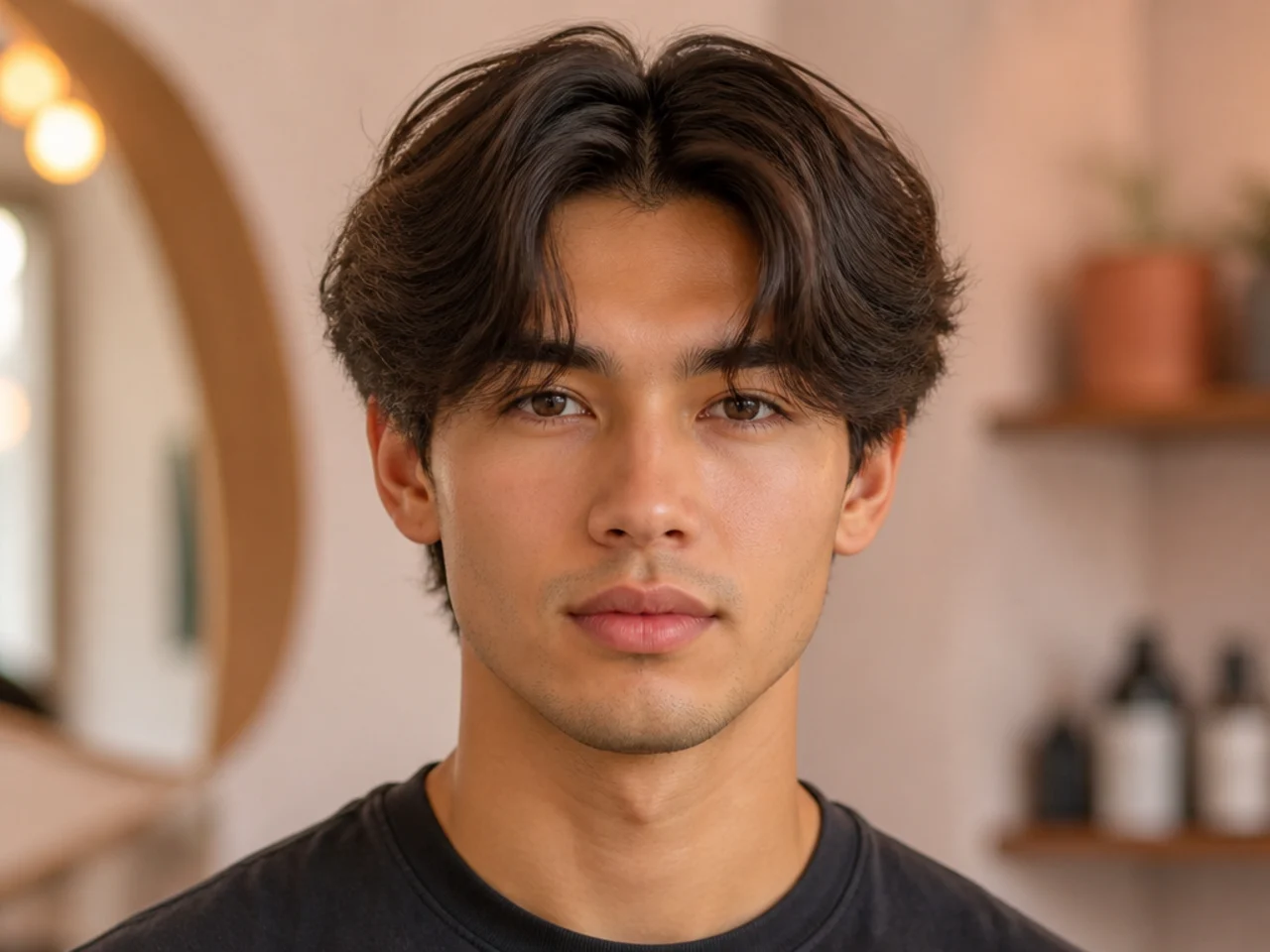
The middle part simplified. Top runs 3 to 4 inches, split cleanly down the center, curtains fall past the eyebrow. Sides sit at scissor length or the softest possible taper. Best on straight to wavy hair; curls need extra length. Suits oval, square, and round faces. Ask for "a middle-part with 3 to 4 inches on top, layered so the front falls off a center split, scissor sides." Tip your head forward under a dryer for 30 seconds, then finger-part the middle and let it fall.
6. Broccoli Wave Fringe
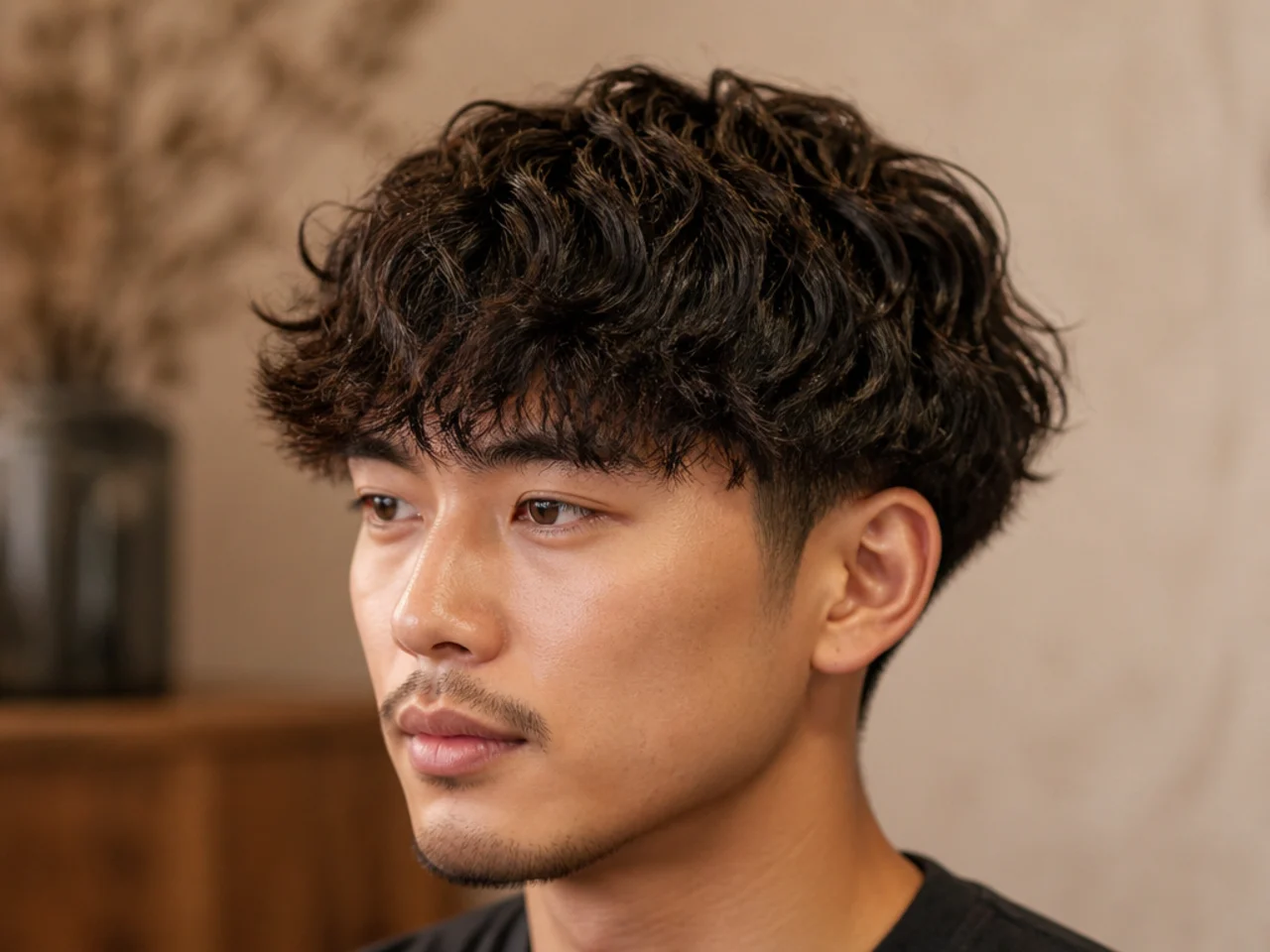
Front and top are cut long enough to hold a soft forward wave — the broccoli shape without the exaggerated volume. Best on Type 2 wave patterns and Type 3A curls. Suits round faces because the vertical bump adds length. Ask for "a broccoli-style wave up front, 3 to 4 inches on top, low taper sides." Diffuse on low heat with the front pushed forward, then flick the wave with your fingers. No brush.
7. Runway Blunt Fringe
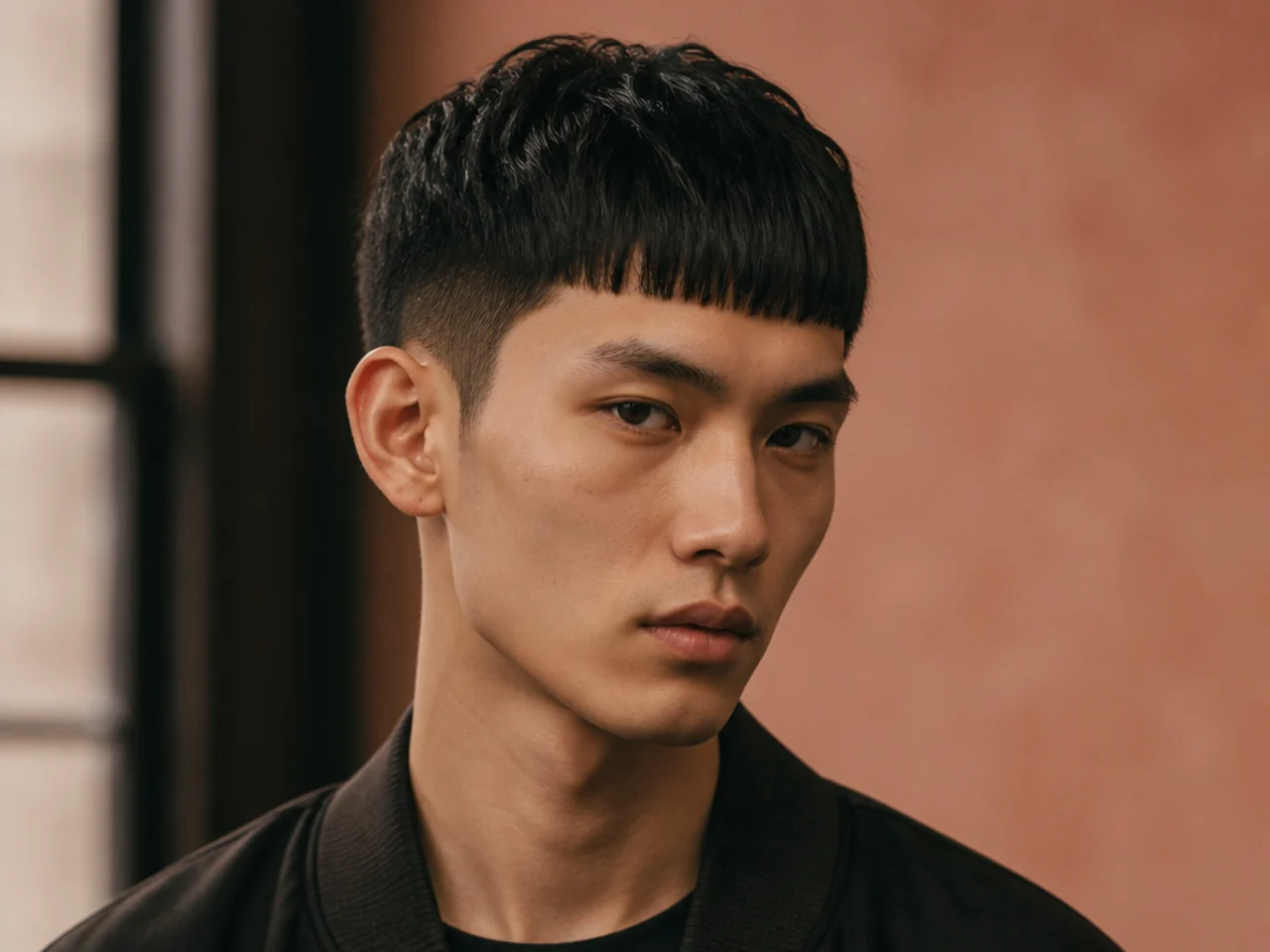
The editorial Edgar. Blunt straight-across fringe at brow height, no texture through the ends — just weight and a hard horizontal line. Sides get a scissor taper or low fade for a softer read than the classic version. Suits square and oval faces with strong hairlines. Ask for "an editorial blunt fringe, brow-length, cut flat across, low fade sides, satin finish." Comb the fringe forward while damp, let it air-dry, and press with your palm — no product needed most days.
8. K-Wave Comma Fringe
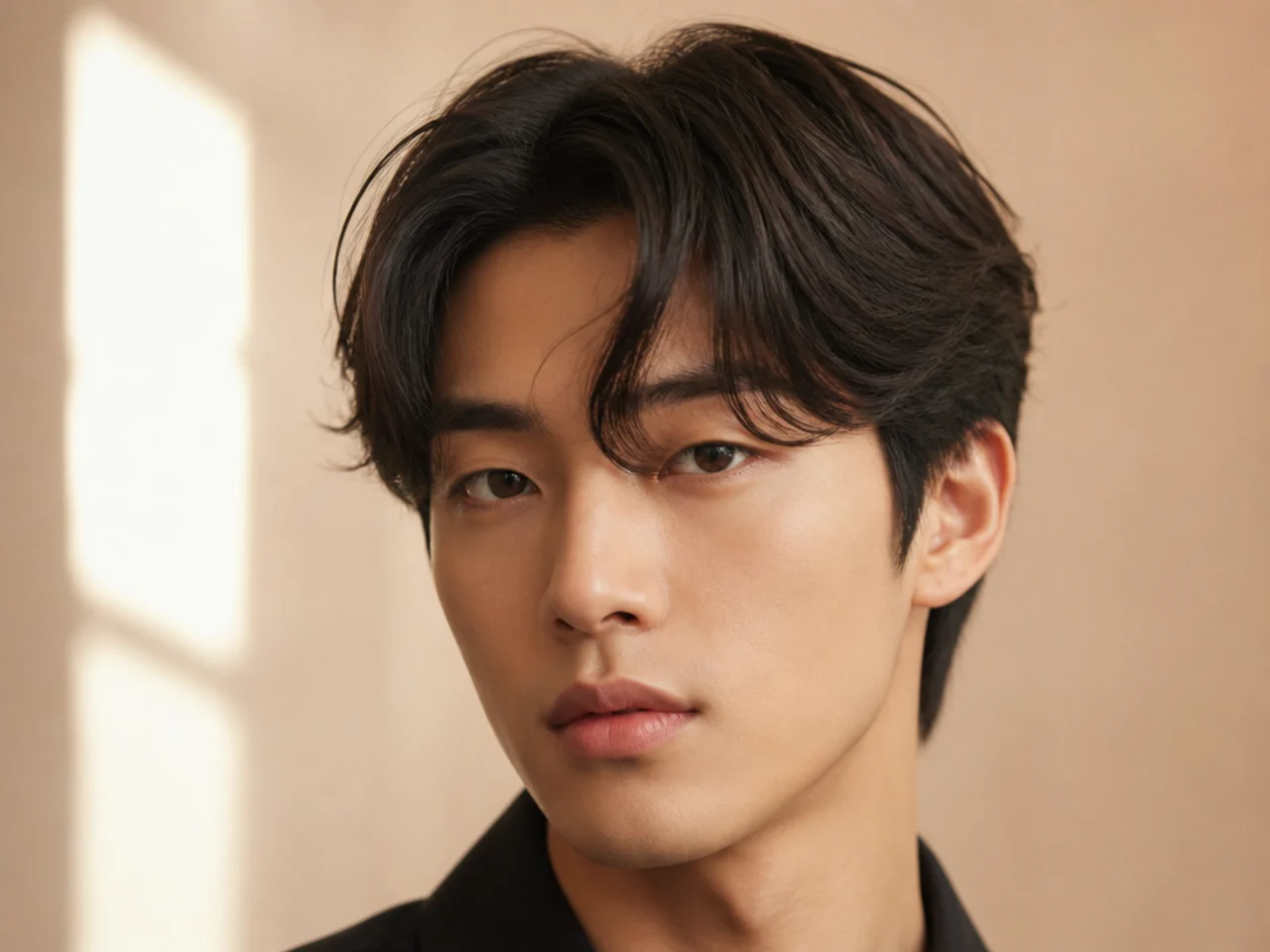
The soft-comma read of the comma haircut without the sharp two-block sides. Top runs 3 to 5 inches, cut with weight left in so the front piece hooks into a subtle comma shape. Sides sit at a soft taper. Best on straight to slightly wavy hair. Suits oval, round, and heart-shaped faces. Ask for "a comma-style fringe, 4 inches up front, layered to hold a soft forward curl, low taper sides." Round-brush the front once, hook the curl, and set with a pea of curl cream.
9. Feathered Long Fringe
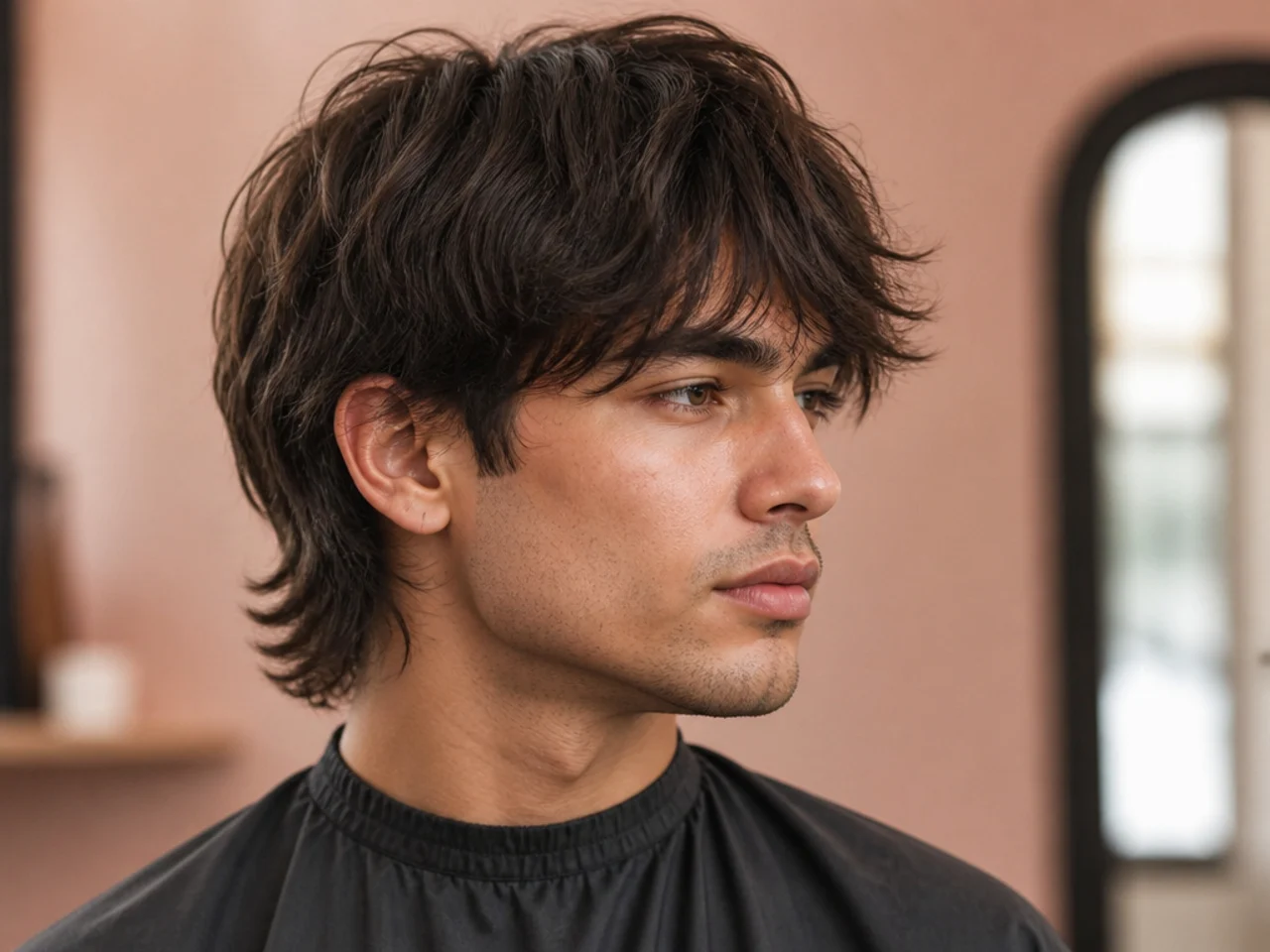
Drops past the brows, cut with feathered ends so the fringe reads soft instead of blocky. Length runs 5 to 6 inches at the front. Best on straight or wavy hair with medium density. Suits angular and long faces because the length softens the frame. Ask for "a feathered fringe past the brows, softly layered ends, scissor sides at length, no fade." Rough-dry with your fingers, then work a nickel of leave-in cream through the mid-lengths. Let the fringe fall where it wants.
10. Grown-Out Ivy Fringe
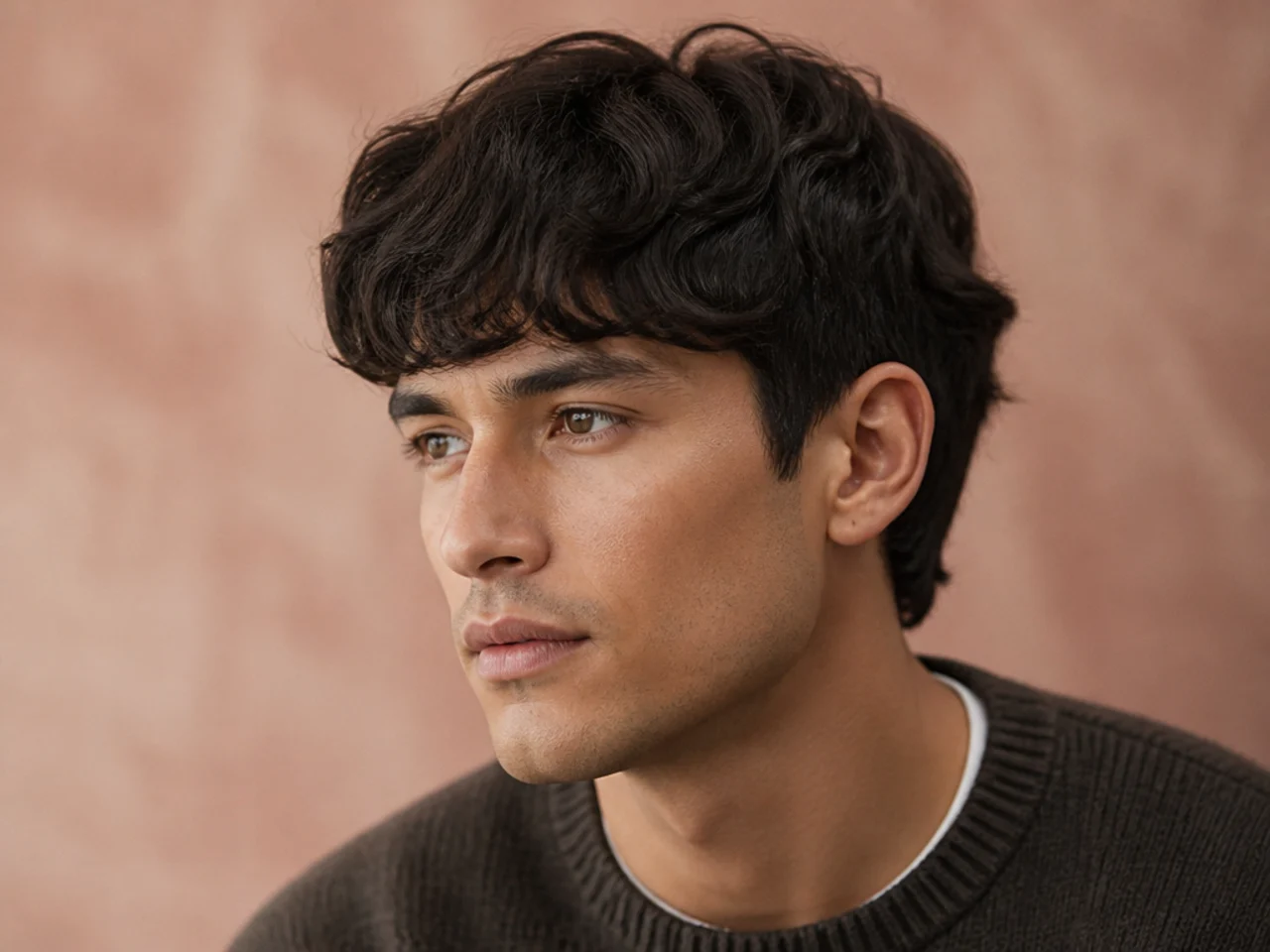
A slightly overgrown Ivy League with the front piece left long enough to fall as a subtle side-lean fringe. Vintage silhouette, modern length. Best on straight or fine hair. Suits oval, square, and round faces — the side lean adds asymmetry. Ask for "a grown-out Ivy with 3 inches up front, layered to fall as a soft side fringe, scissor-tapered sides." Blow-dry with a paddle brush on low heat, then finish with a pinch of light cream. Reads workplace-safe.
11. Off-Duty Surfer Fringe
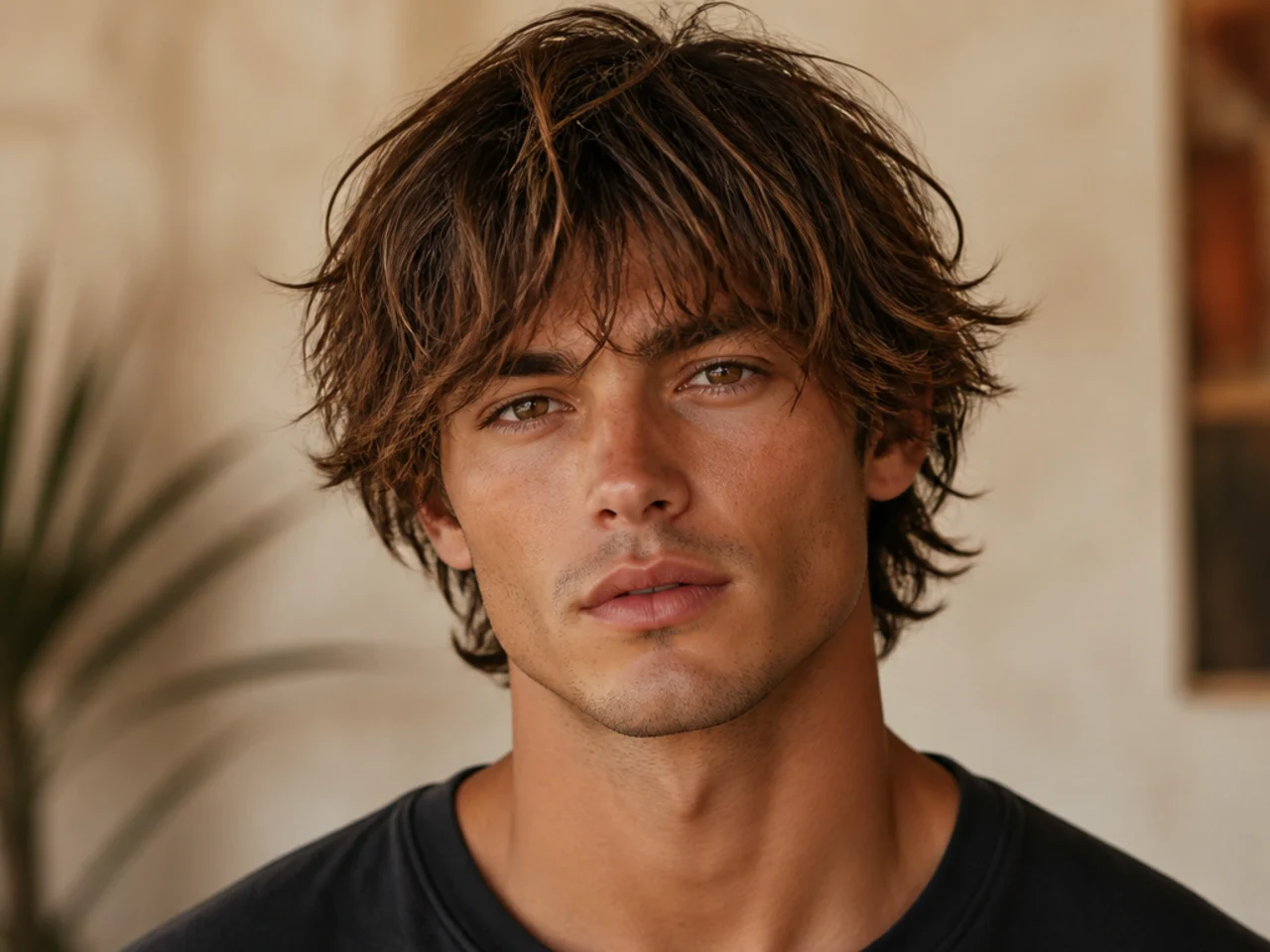
Salt-textured, wavy, and finished like you just came off a beach. Front piece sits at brow length with soft layers, sides stay long — no fade, no taper, just scissor length. Best on Type 2 waves. Suits oval and heart-shaped faces. See more at our surfer hairstyle guide. Ask for "a surfer-style fringe with brow-grazing length, soft layers, scissor sides at 2 to 3 inches." Spray sea-salt through damp hair, rough-dry with your hands, and never touch a brush.
12. Undone Shag Fringe
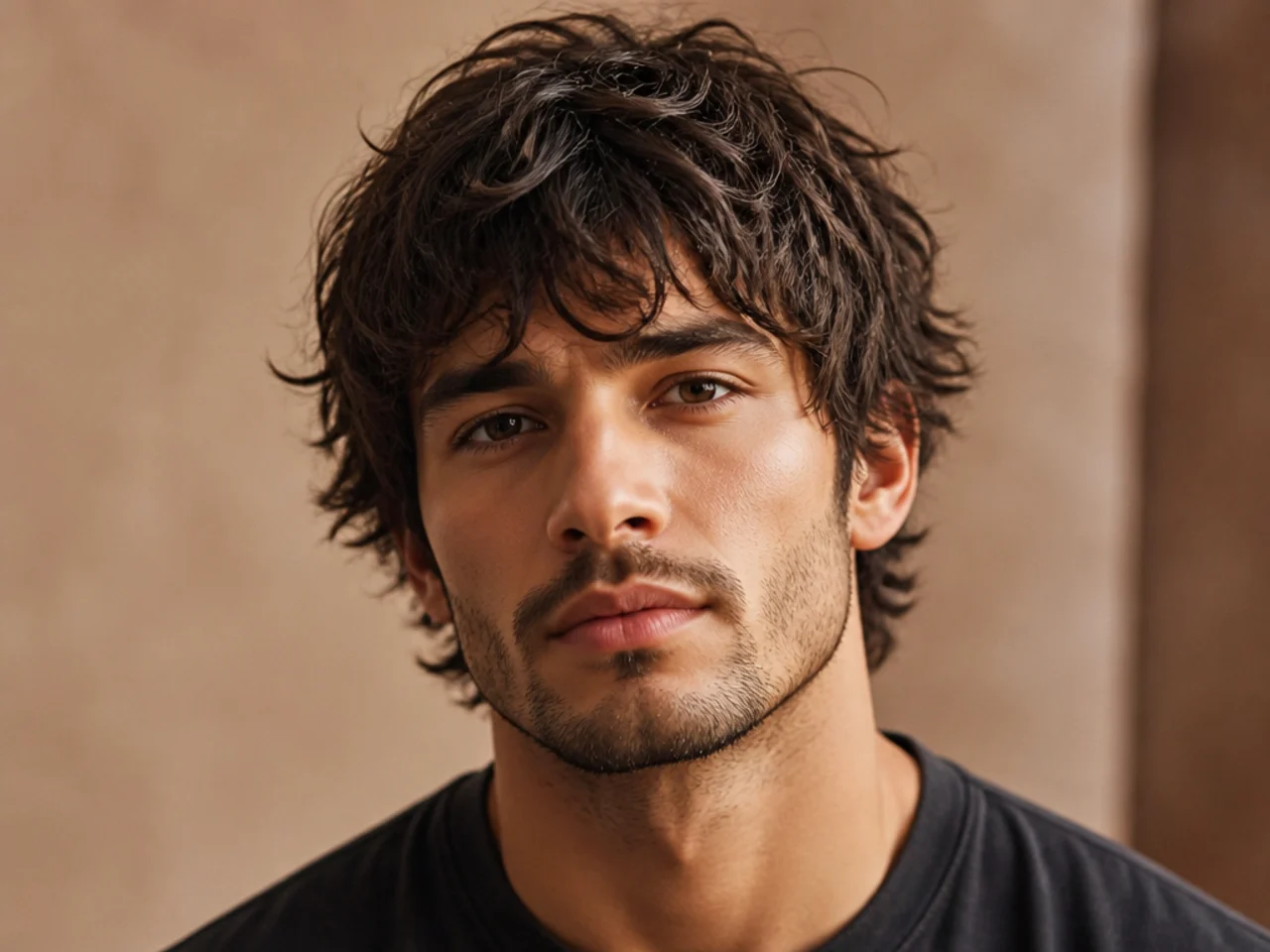
Chopped-in layers through the top with a wispy, uneven fringe up front. The mess is the point — every piece sits at a slightly different length. Best on wavy hair with medium density. Suits square and angular faces. Ask for "a shag-style top with a chopped, uneven fringe at brow length, mid taper sides, matte finish." Scrunch a fingertip of molding paste through damp hair, then rough-dry with your fingers. Don't comb.
13. Mullet-Grazing Fringe
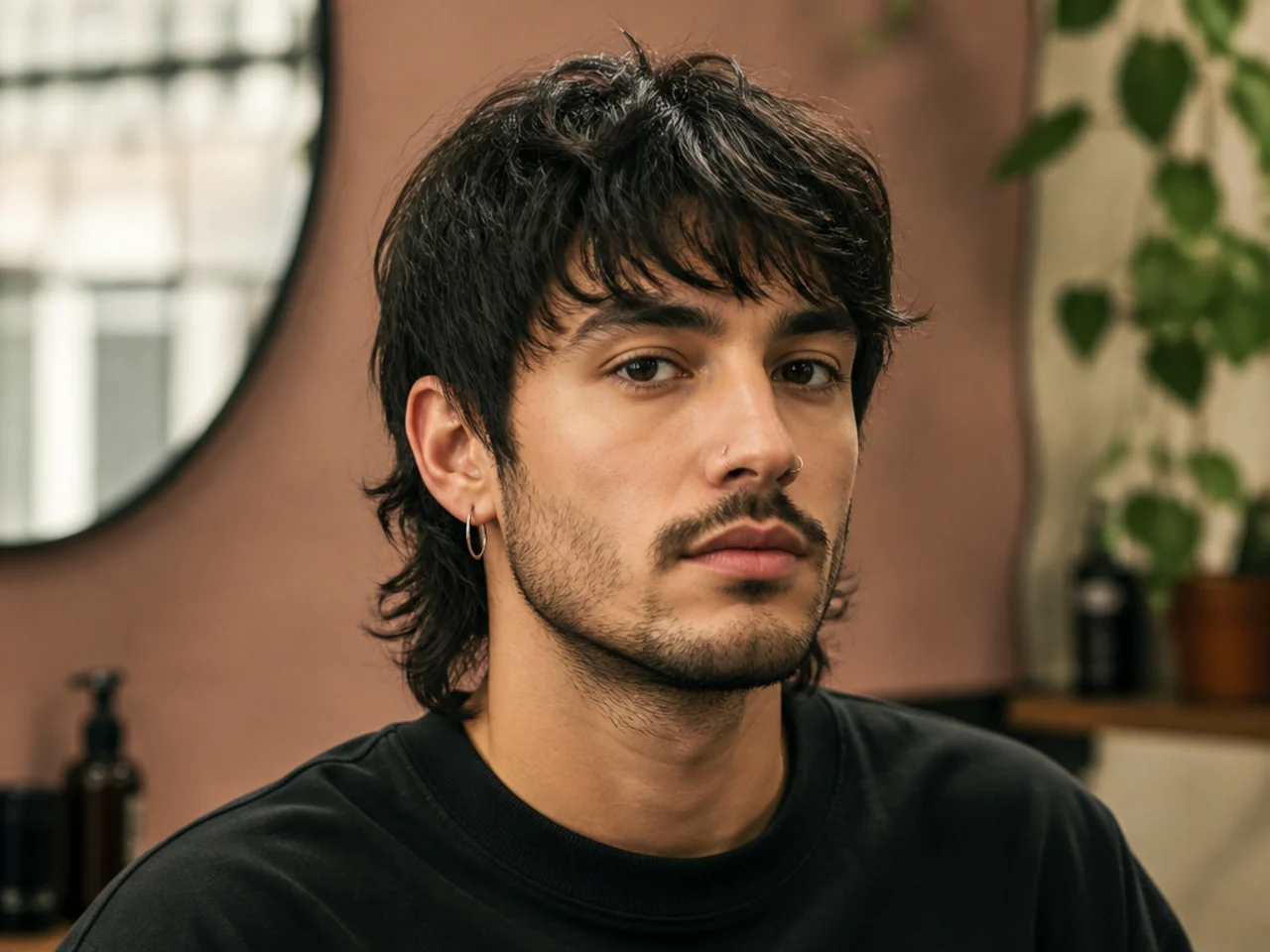
Modern short mullet with the front piece cut to graze the brow — the fringe up front balances the length at the back. Best on straight or wavy hair. Suits oval and square faces. Ask for "a modern mullet with a brow-grazing textured fringe up front, low taper sides, longer length preserved at the nape only." Rough-dry the front forward, let the back air-dry, and finish with a light matte paste through the mid-lengths.
14. Center-Curl Comma Fringe
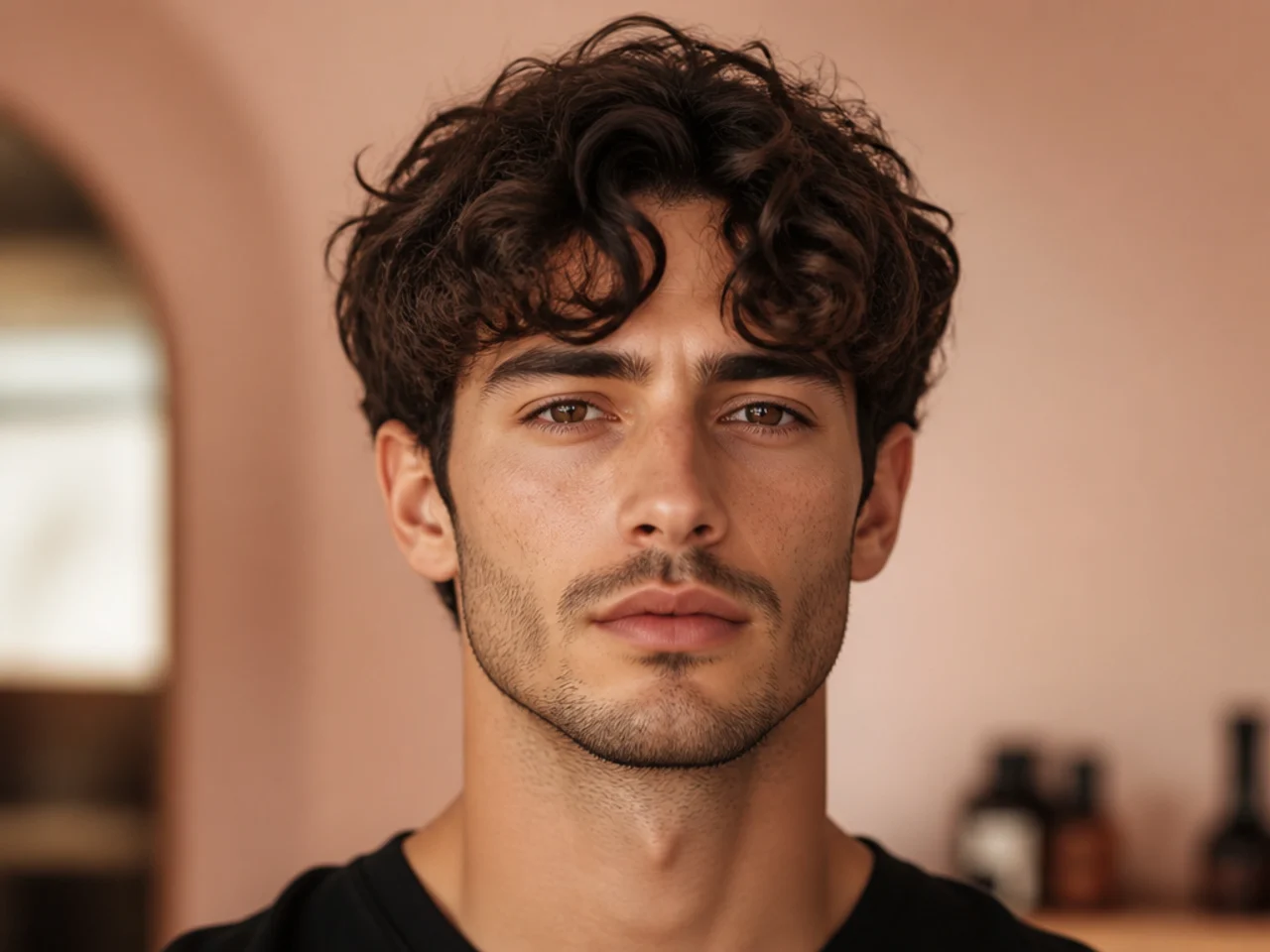
The twin-comma variation. Front piece splits down the middle and curls inward on both sides — two mirrored commas instead of one. Best on straight to wavy hair with medium density. Suits oval and round faces. Ask for "a center-part fringe with twin commas, 4 inches up front, layered to hold the curl direction, low taper sides." Blow-dry each side inward with a small round brush, hook the curls with your fingers, and set with a pea of curl cream.
15. Low-Fade Piece Fringe
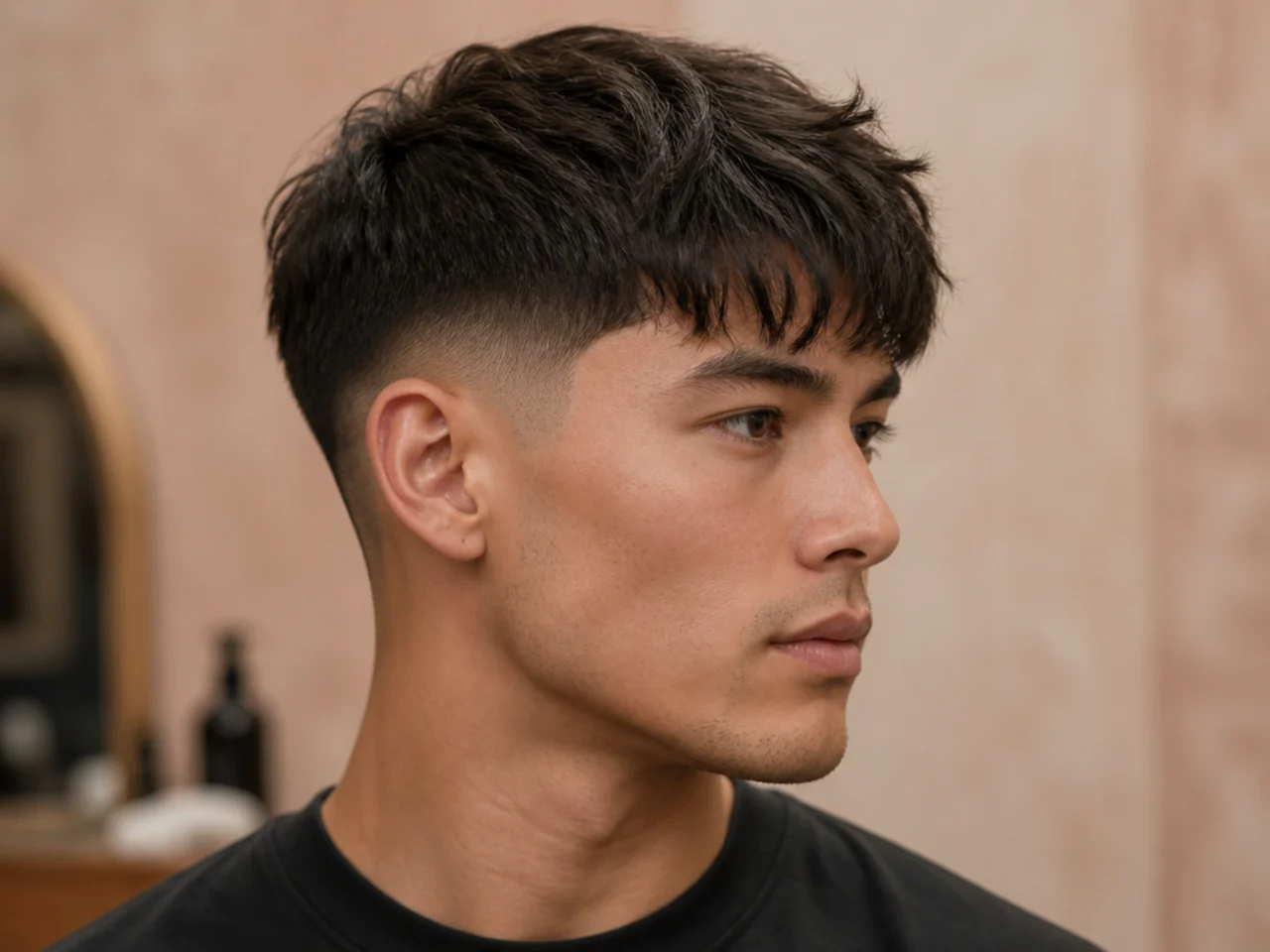
Pairs a low fade at the ears with a piecey brow-length fringe on top. Sides read office-clean. Top reads casual. Best on straight and wavy hair. Suits every face shape except very round. Ask for "a low fade starting one finger above the ear, piecey brow-length fringe, matte finish." Push a small pea of clay through from underneath — leaves the ends separated without shine.
16. Mid-Fade Wave Fringe
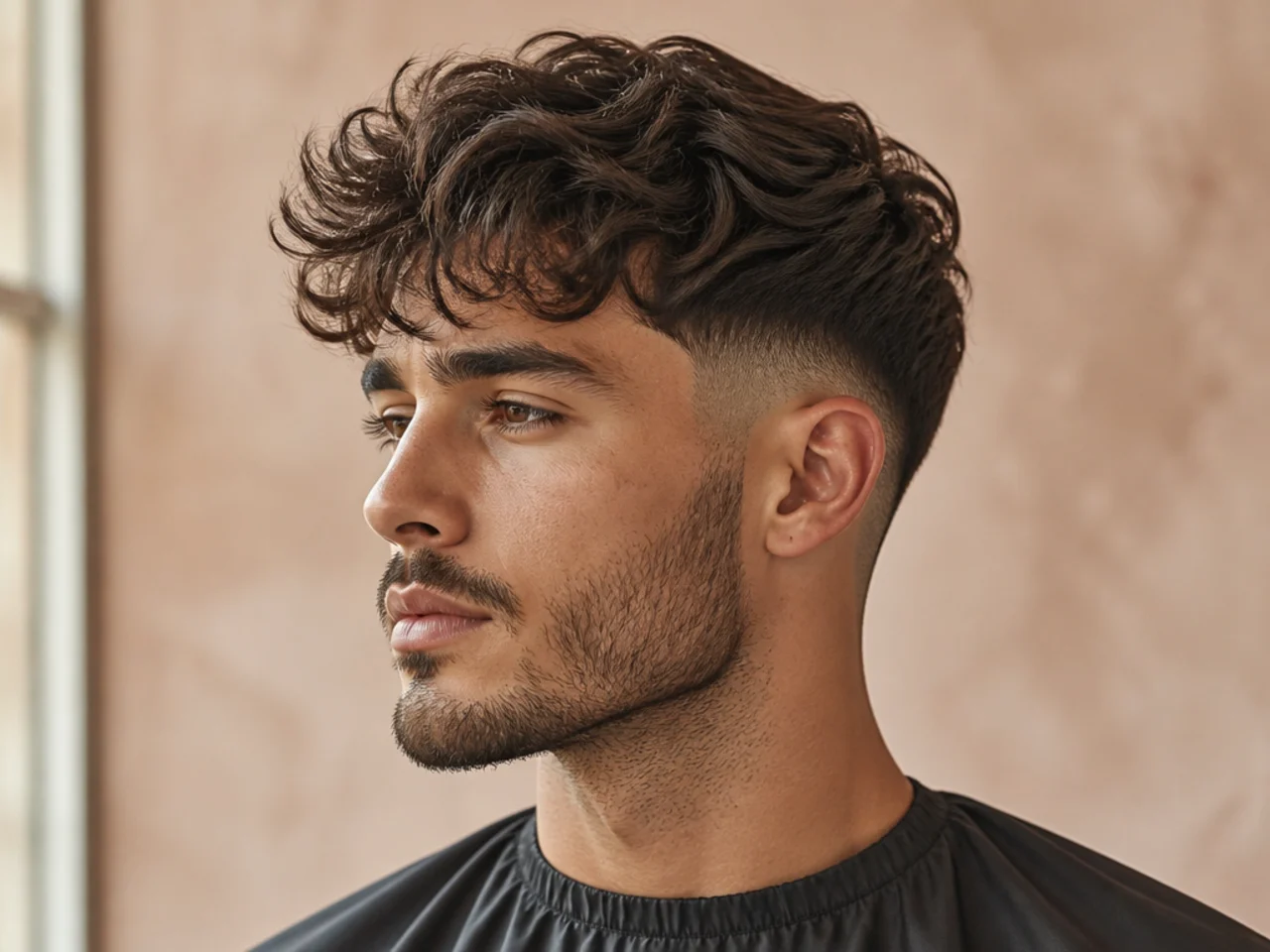
A mid fade sits at temple height, top left long enough to hold a soft forward wave. Sharper than the low-fade version, still reads effortless once styled. Best on wavy hair. Suits square, oval, and slightly round faces. Ask for "a mid fade at the temple, 3 inches on top layered to fall forward, brow-grazing fringe, matte hold." Rough-dry forward with fingers, then break the wave with a pinch of paste.
17. Skin-Fade Micro-Fringe
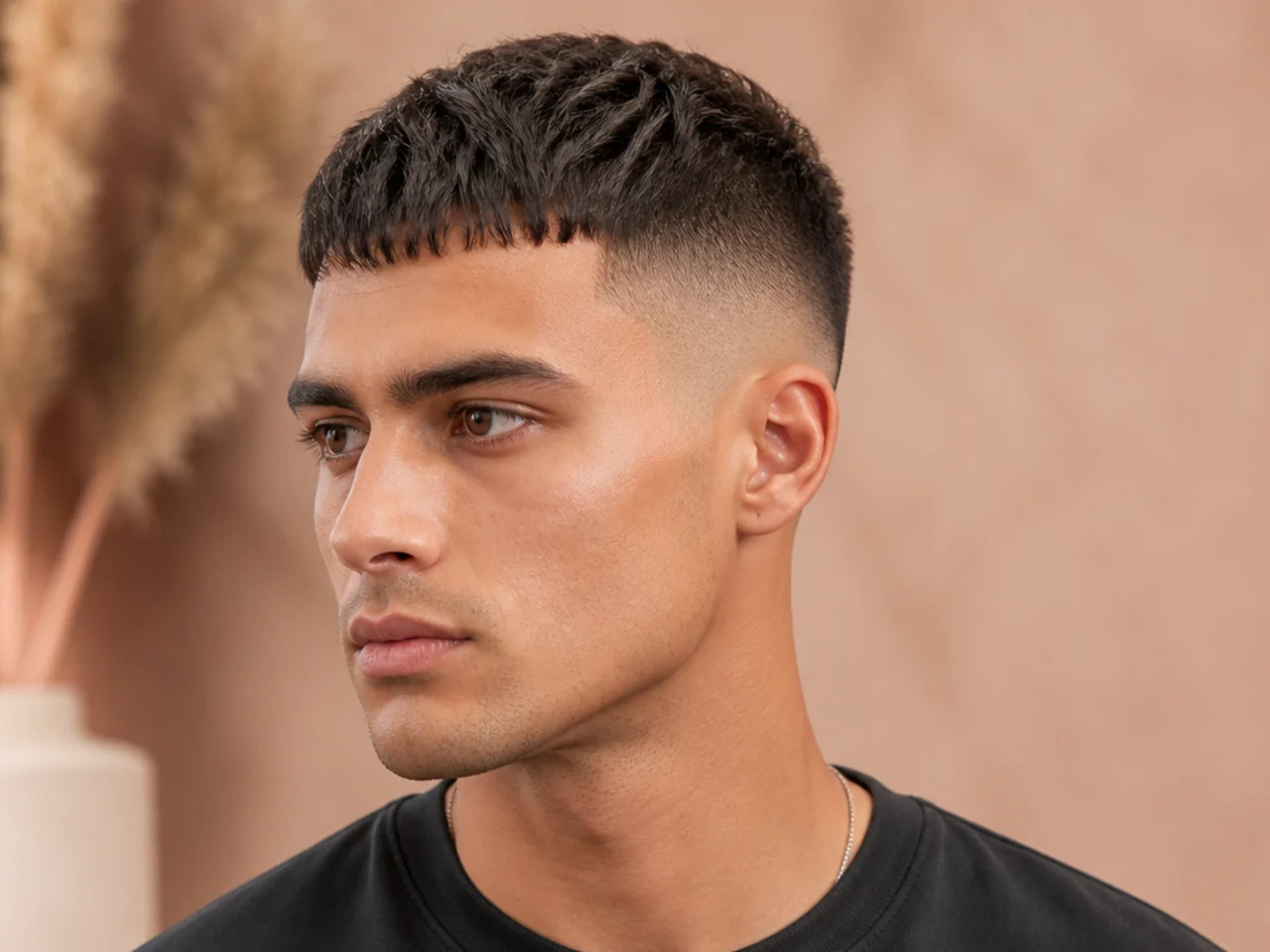
A high skin fade with a tiny fringe up front — sits well above the brow, less than a finger's width. The contrast between shaved skin and short blunt front is the whole shape. Suits square and diamond faces with strong bone structure. Ask for "a high skin fade with a micro-fringe sitting above the brow, blunt front edge, matte finish." Rub matte cream between your palms and press into the front — surface-only, no combing.
18. Boyish Bowl Fringe
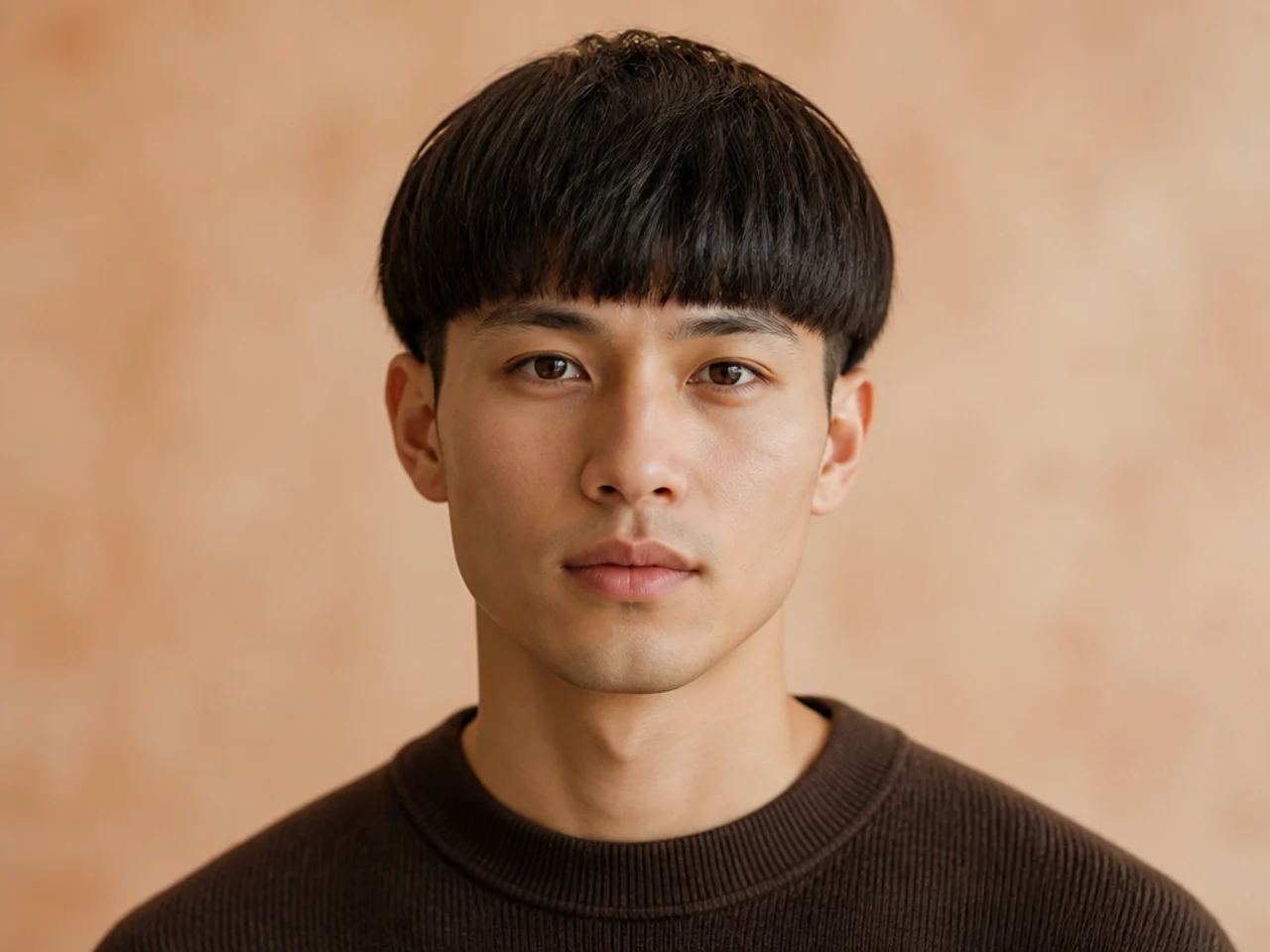
A 2026 update to the bowl. Fringe sits at brow height with a soft rounded edge — not the flat helmet of the '90s. Sides get a low fade or scissor taper. Best on straight hair with medium to thick density. Suits square and heart-shaped faces. Ask for "a modern bowl-shape fringe with a soft rounded edge, low fade sides, matte finish." Comb the top forward and press flat with your palm — no product on most days.
19. Straight-Across Blunt Fringe
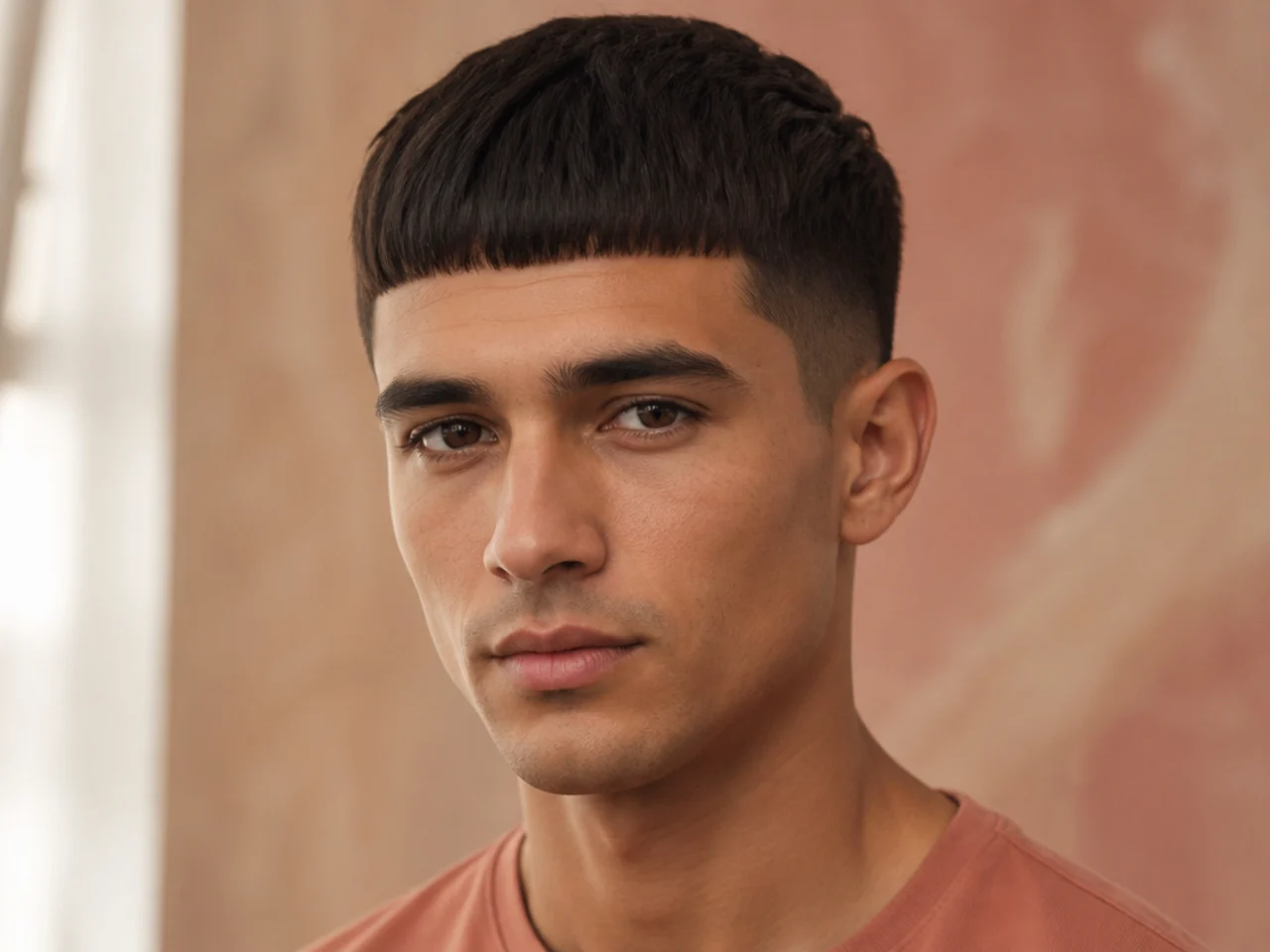
The pure horizontal fringe — flat cut across the forehead, no angle, no texture at the edge. A more restrained relative of the runway blunt fringe. Best on straight hair with medium density. Suits long, oval, and rectangular faces because the horizontal line visually shortens the face. Ask for "a straight-across blunt fringe at brow level, no texture at the ends, scissor-tapered sides." Blow-dry down with a paddle brush, run cream through the ends only.
20. Warm Blonde Fluffed Fringe
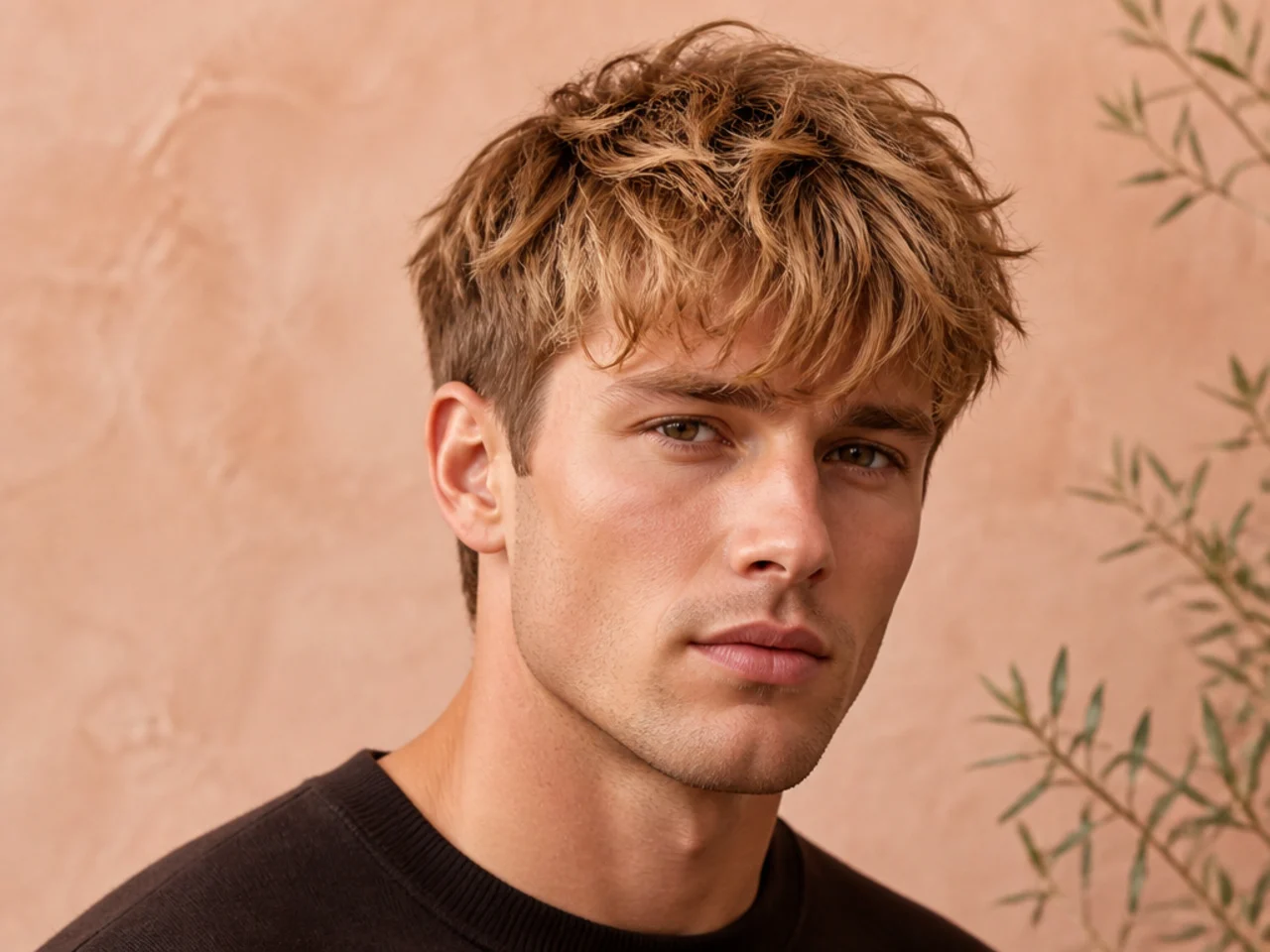
The 2026 color add. Same soft-fringe shape as #1, dyed warm blonde with the roots left dark. Color makes the fluff read editorial without any change to the cut. Best on straight or wavy hair. Suits any face shape the base cut suits. Ask for "a soft brow-length fringe, then book a color session — warm blonde ends, dark roots, no all-over lift." Style dry with a fingertip of matte cream. Book toner every 6 to 8 weeks.
21. Editorial Cropped Fringe
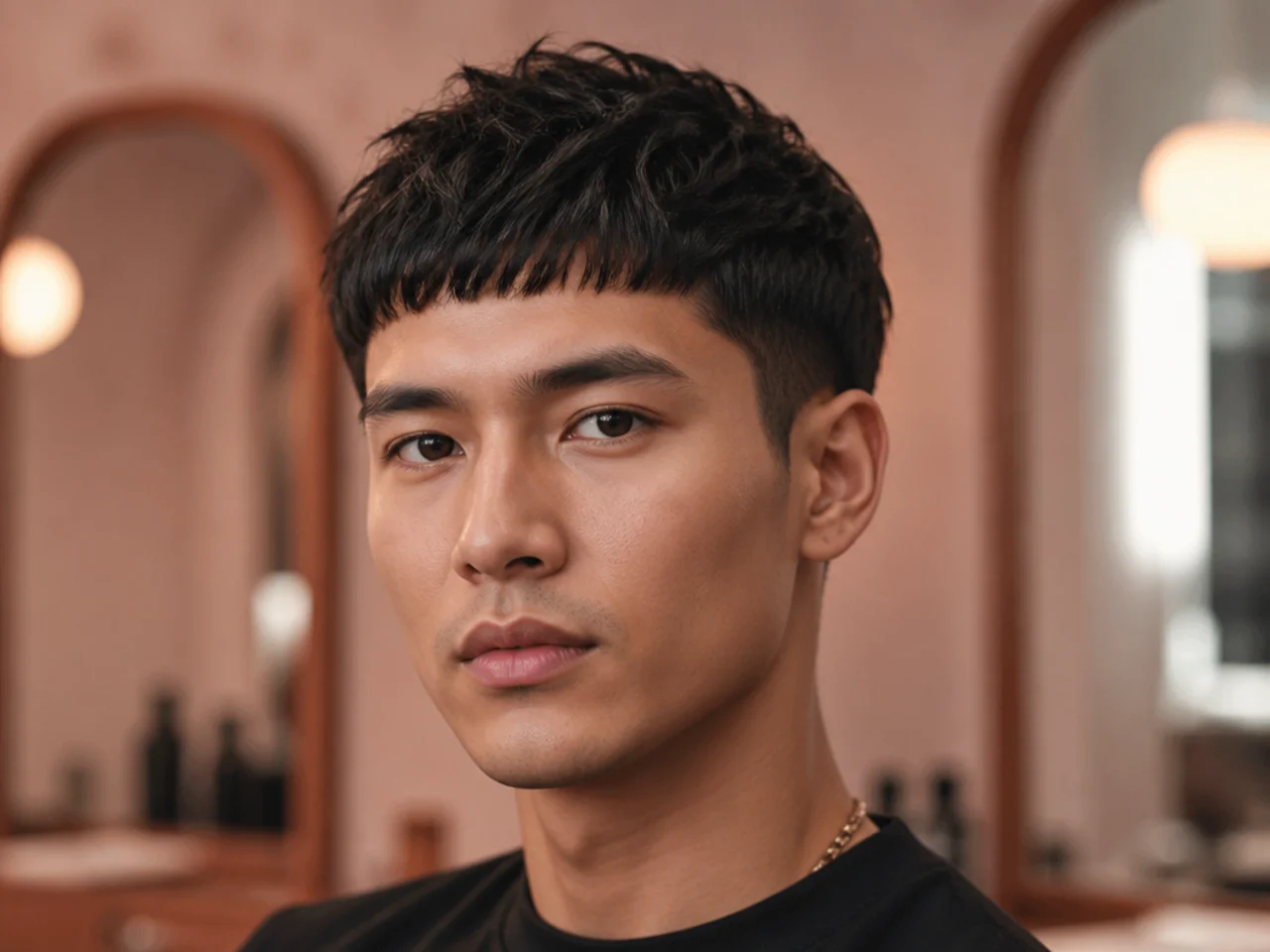
The magazine version of the crop. Short blunt fringe with defined pieces separated at the edge — reads like a photo shoot, holds like a real cut. Best on straight or fine hair. Suits square and oval faces. Similar territory to our textured haircuts guide. Ask for "an editorial short crop, blunt fringe sitting above the brow with visible piece separation, high skin fade, matte finish." Twist small pieces of the fringe between your finger and thumb with clay to define them.
22. Grown-Man Refined Fringe
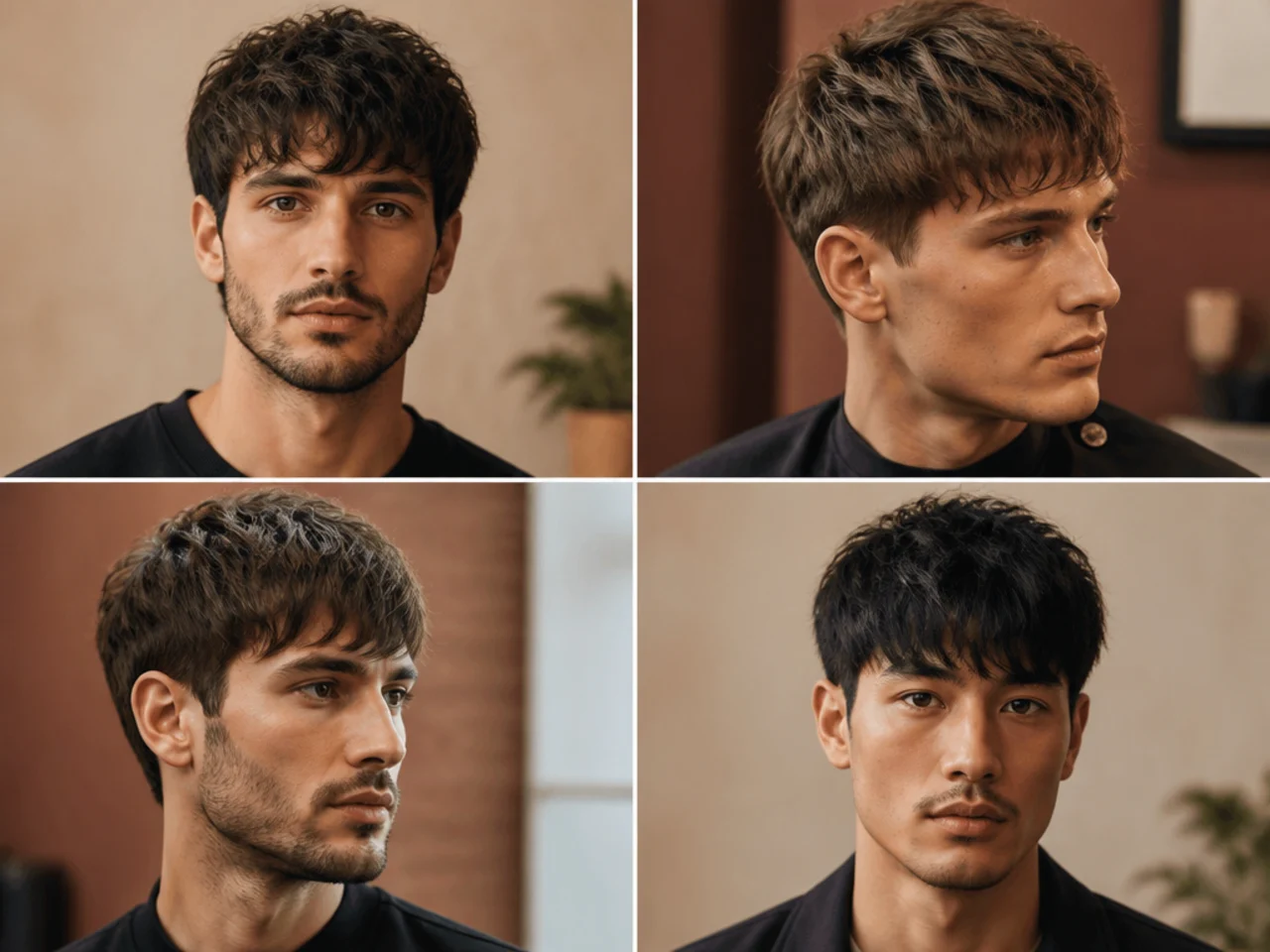
For guys past the trendy phase. Fringe sits at brow length with medium weight, sides get a scissor blend, finish is satin — a low-shine that reads pulled-together but not slick. Best on straight or wavy hair. Suits every face shape. Ask for "a refined brow-length fringe with medium weight, scissor-blended sides, satin finish — nothing that reads teenage." Blow-dry forward with a paddle brush, then finger-comb into a soft side lean and set with a pinch of cream.
23. Diagonal Sweep Fringe
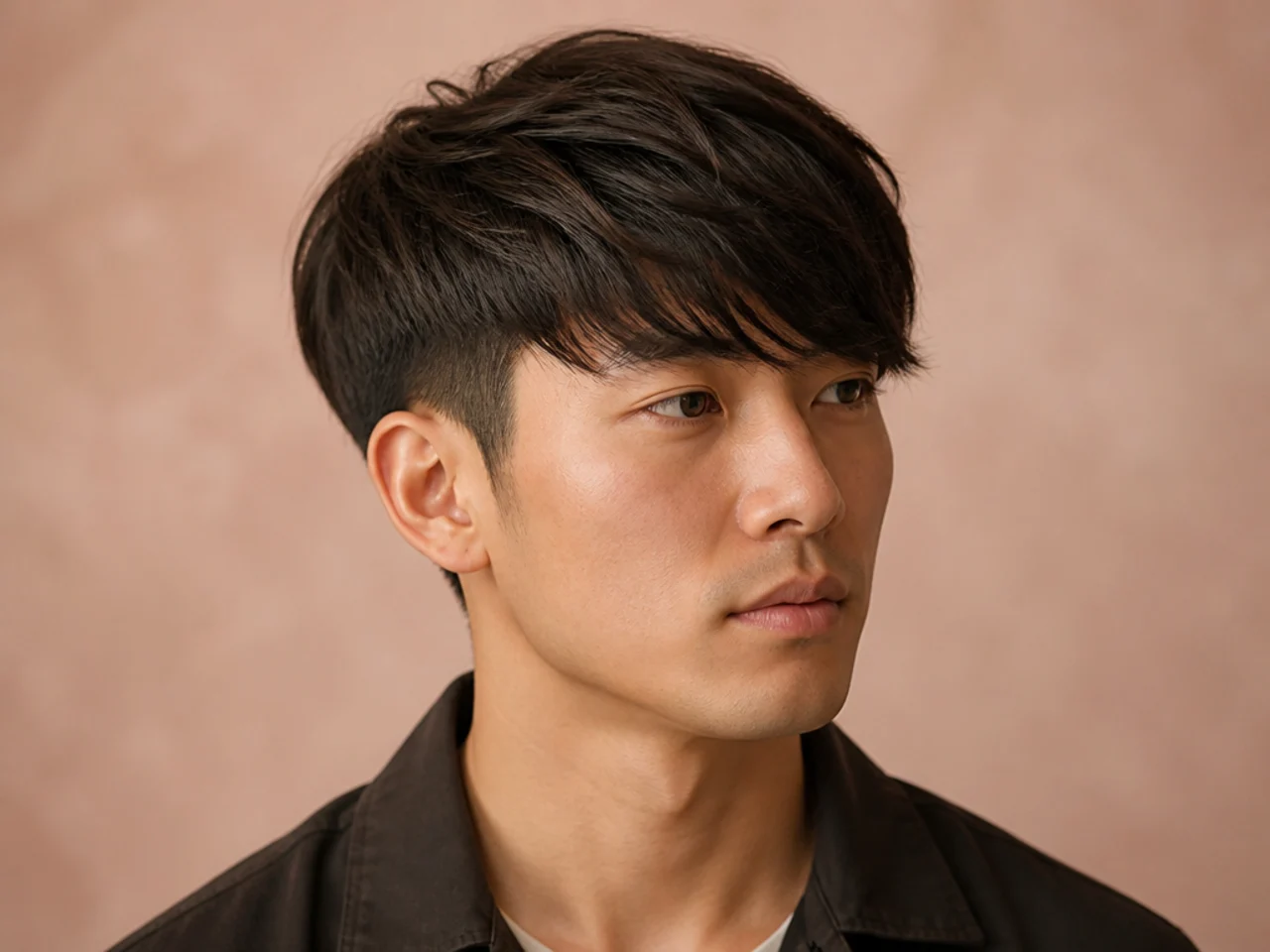
Cut with the front piece angled instead of straight — longer on one side, shorter on the other by about half an inch. Creates a diagonal line across the forehead that adds movement without heavy product. Best on straight or wavy hair. Suits round and heart-shaped faces because the angle creates length. Ask for "a diagonal sweep fringe, longer on the [left/right] by half an inch, low taper sides, matte finish." Blow-dry into the sweep direction, no brush needed.
24. Wispy Feather Fringe
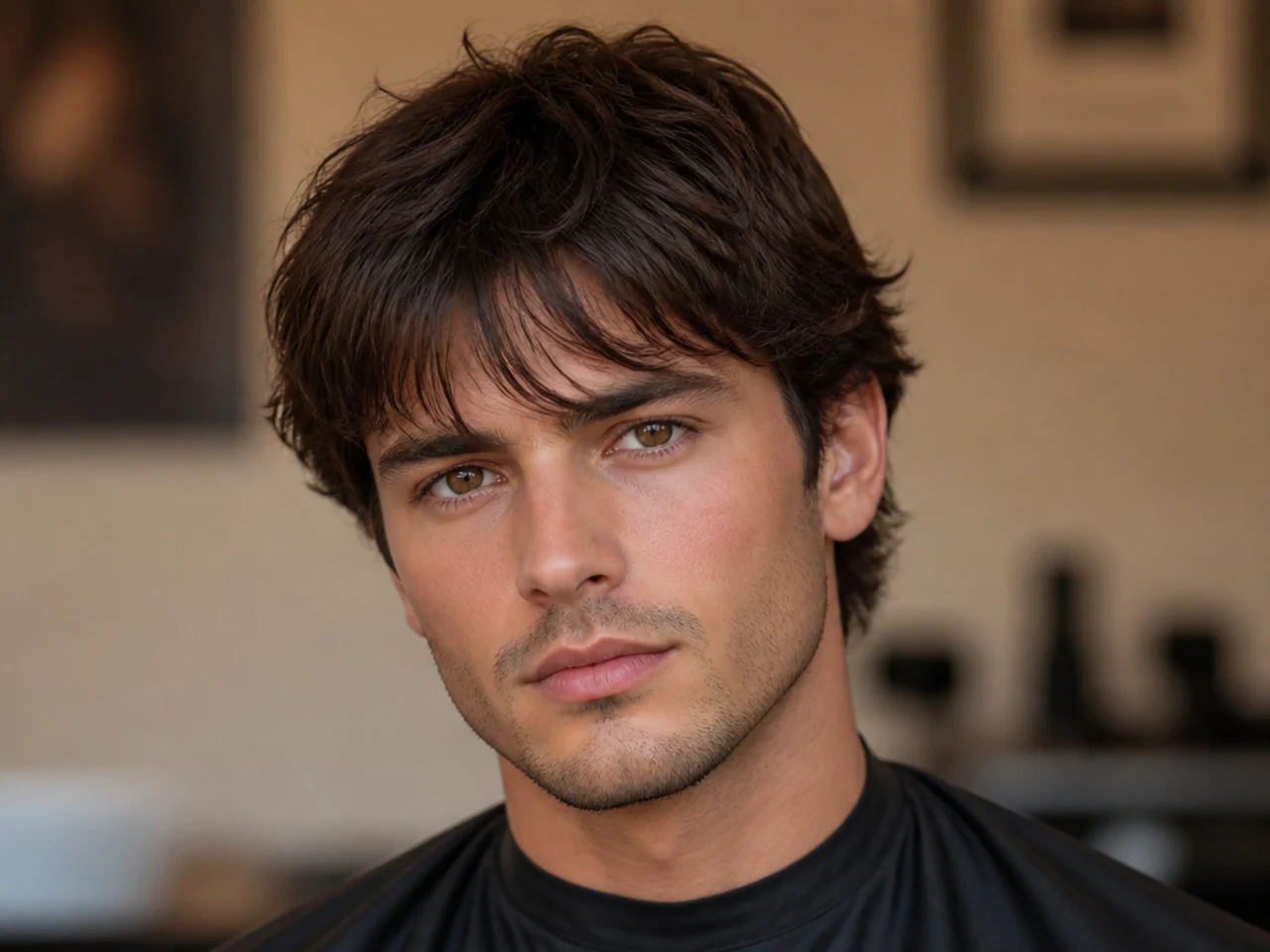
The lightest version on the list. Fringe is razor-thinned to feathered pieces that sit brow-length without any weight. Best on fine or medium hair — thick hair fights the airiness. Suits round and heart-shaped faces where solid weight would close in the features. Ask for "a wispy razored fringe at brow level, feathered ends, scissor sides, air-dry finish." Wash, towel-dry, and comb once — no product until you actually need it. Reads soft, reads young, reads current.
25. Fluffy K-Style Fringe
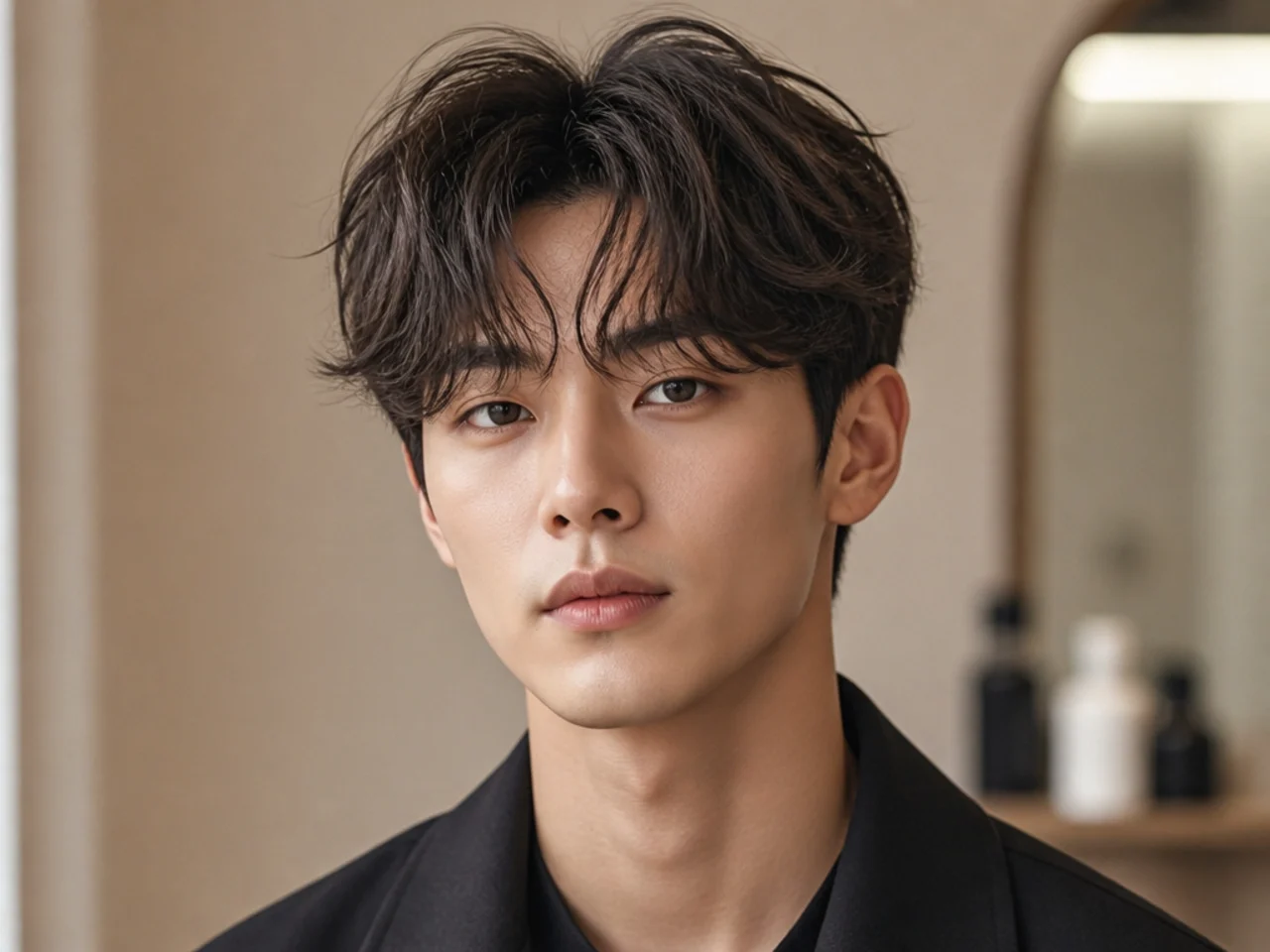
The Korean-influenced version of the effortless fringe. Top sits at 3 to 4 inches with soft forward volume, front piece grazes the brows, sides run a soft taper. Best on straight to wavy hair with medium density. Suits oval, square, and round faces. Ask for "a K-style fluffy fringe, 3 to 4 inches on top with soft forward volume, brow-grazing front, low taper sides." Diffuse forward on low heat, then hit the front with a mist of light hairspray to lock the softness.
How to Ask Your Barber for an Effortless Fringe
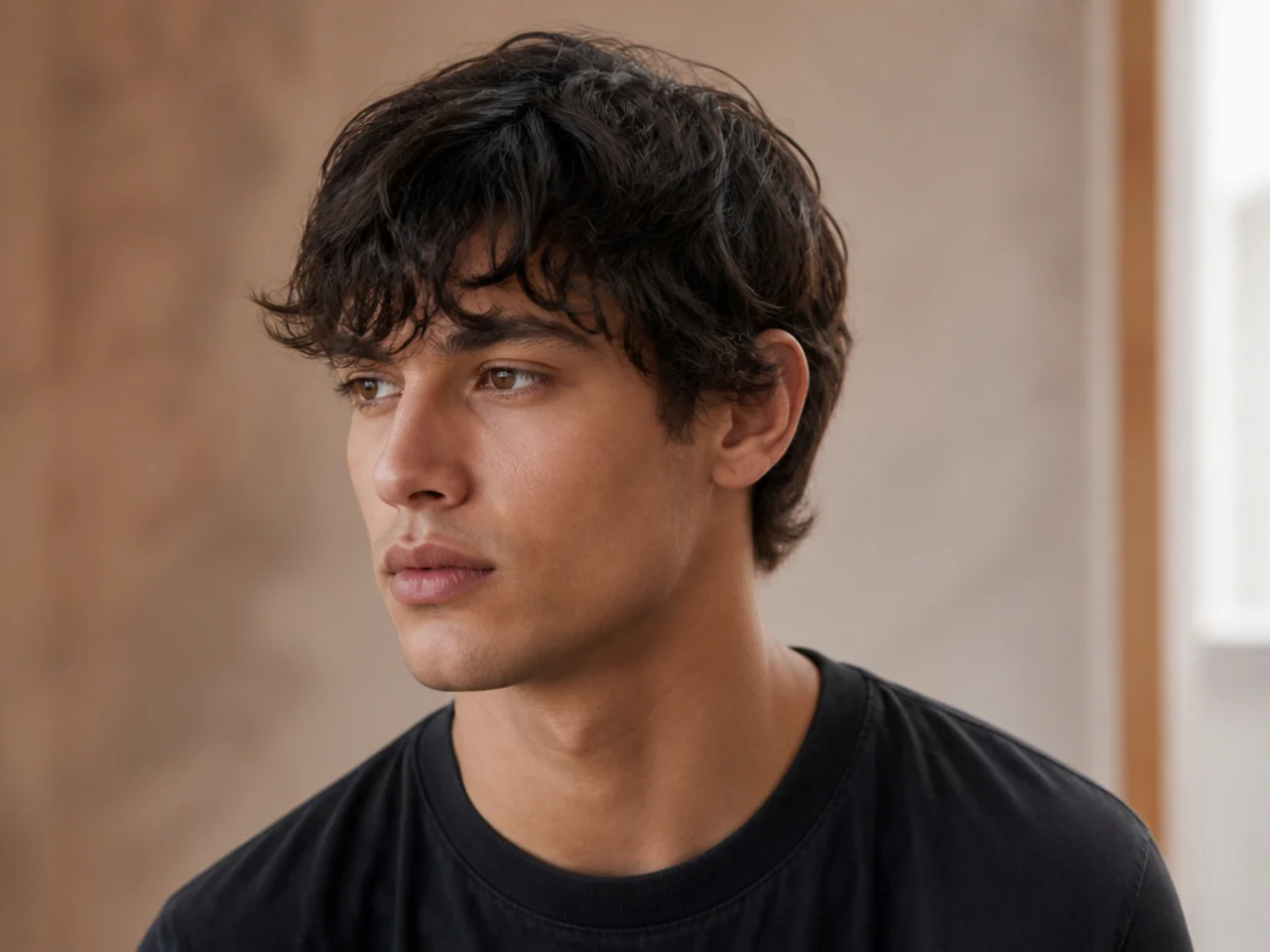
Bring a photo. Then say four specific things and the cut lands the first time.
- Show the exact variation. "Number [X] from this guide" or an equivalent reference photo. Not a description. Not a vibe. A picture.
- Specify the front length. Brow-grazing, past the brows, or covering the eyes. Point at your face if it helps — "I want it to sit right here."
- Pick the side treatment. Scissor blend for the softest read, low taper for a clean edge, mid fade for more contrast. Skip skin fades unless the variation calls for one.
- Tell them to keep the weight. Say "leave natural weight in the fringe, don't over-thin." This is the single most important instruction — thinning kills the effortless look.
- Name the finish. Matte, satin, or air-dry. That word tells your barber which product to recommend on the way out.
- Mention your hair type. Wave pattern, density, whether it goes limp by lunchtime — all of it changes how they cut.
- Ask for two-minute styling. Straight-up say "I want to spend two minutes on this in the morning, tops." Any barber worth booking will cut it to work with that.
Styling for the Effortless Look
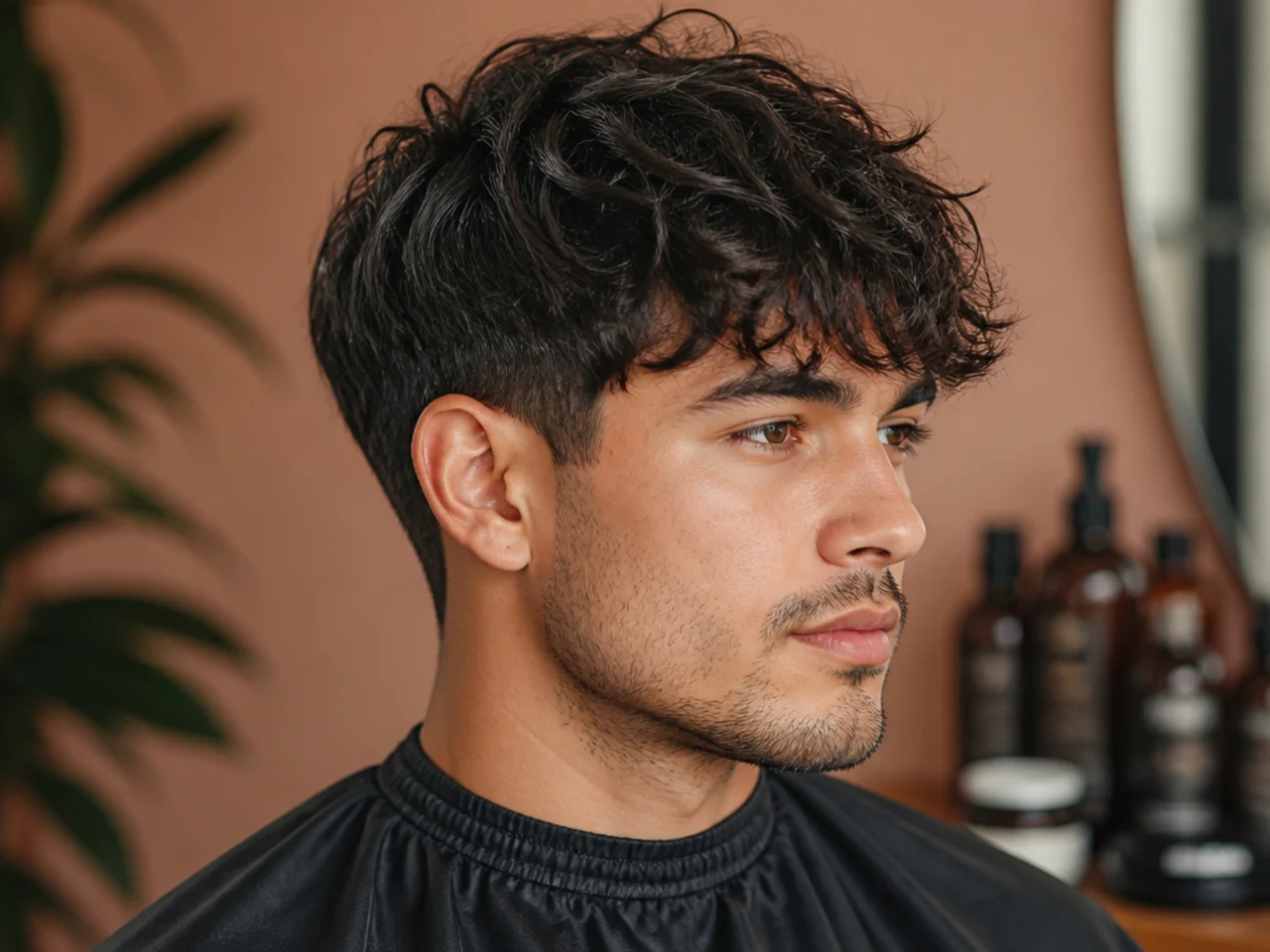
The 2026 fringe uses less product than any men's cut in the last decade. Match what you use to the finish and the shape holds without effort.
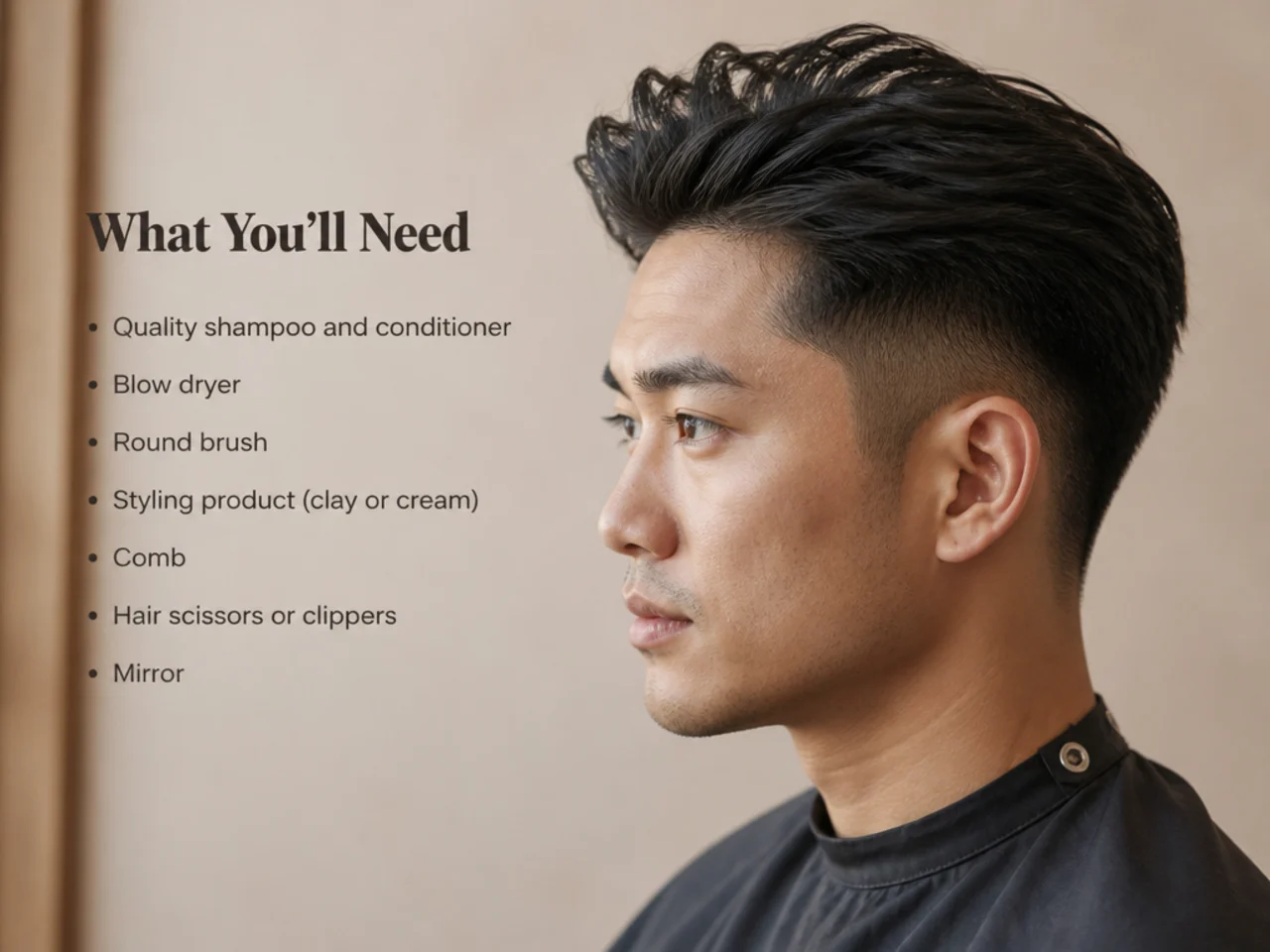
For matte finishes — pick a matte cream, texture clay, or molding paste. Warm a pea between your palms, press through the front from underneath, don't comb. Comb-through spreads product to the ends and ruins the natural fall.
For satin finishes — use a light styling cream. Same application method. The satin reads soft in daylight and pulled-together indoors.
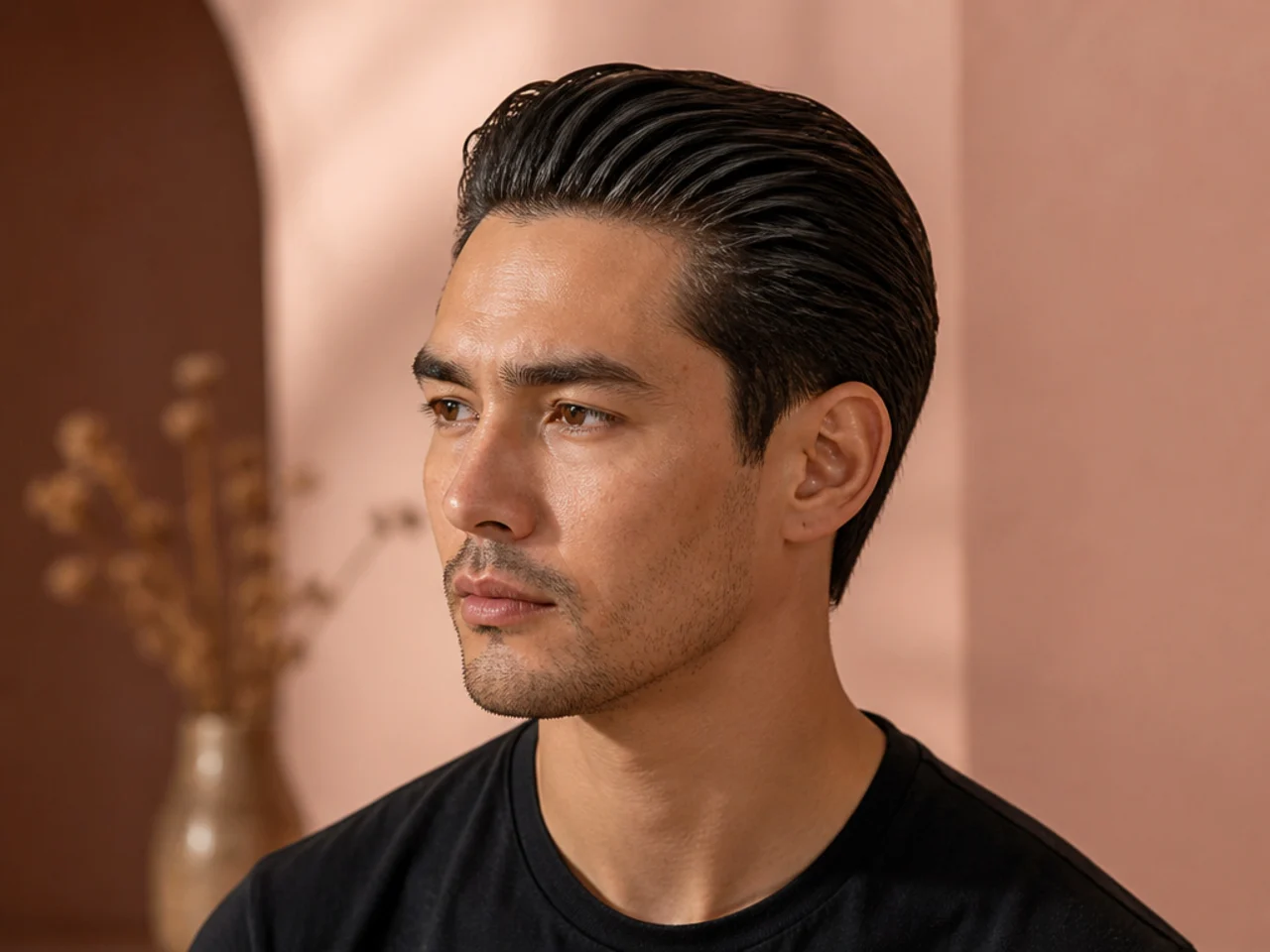
For the air-dry look — a leave-in cream and nothing else. Wash, towel-dry, apply to the mid-lengths, and skip the fringe entirely. The natural weight of clean hair does the work.
Sea-salt spray helps if your hair goes flat during the day. Spritz through the front pre-dry to add grip, then air-dry or diffuse. Never hairspray the fringe — the crunch reads styled, which is the opposite of the point.
Re-cut every 5 to 6 weeks. The effortless fringe is designed to grow out well, but past 6 weeks the front piece starts falling into your eyes without moving back out, and the sides lose their shape. Book the next appointment before you leave the chair.
Wash 2 to 3 times a week with a lightweight shampoo. Over-washing dries the ends and makes the fringe read frizzy instead of soft. Under-washing weighs the roots down and kills the natural lift the cut relies on. On non-wash days, a quick rinse and towel-dry resets the shape without stripping the natural oils that help the fringe hold. Sleep on a satin or cotton pillowcase, not a rough one — friction overnight breaks the ends and shortens time between cuts.
FAQ
Which fringe haircut is trending in 2026?
The soft, brow-grazing fringe with air-dry or matte finish leads every request list right now. Piecey crops, middle-part curtains, and K-wave fringes follow close behind. The through-line is length preserved at the front and no shiny product — that's the whole 2026 shift.
Can I get an effortless fringe with curly hair?
Yes — the cut length has to account for shrinkage. Your barber leaves the front piece cut so the fringe sits at brow level when stretched, which places it above the brow once the curl springs back. See our curly men's hairstyles guide for cuts built specifically around coil patterns.
Does an effortless fringe work with a fade?
Yes, but keep the fade low or mid. A low fade is the safest pairing — clean edges around the ears with the softness reserved for the top. Skin fades and high fades tend to make the fringe read styled instead of effortless. If you want more contrast, ask for a mid fade at the temple line.
How long does an effortless fringe take to grow into?
If you're growing from short, budget 4 to 6 months. The front piece needs to reach brow length, and any layering the previous cut left in has to grow out. Ask your barber for growth-friendly trims every 6 to 8 weeks in the meantime — just cleanup on the sides and neckline, nothing on top.
Is the effortless fringe workplace-appropriate?
Most versions are. The grown-man refined fringe, low-taper effortless fringe, grown-out Ivy, and straight-across blunt fringe all read pulled-together in a professional setting. Skip the fluffy K-style, skin-fade micro-fringe, and warm blonde variations if your workplace leans conservative.
What's the difference between this and the wider fringe haircuts guide?
This list focuses on the 25 fringe haircut men are asking for right now in 2026 — the softer, lower-maintenance, editorial-leaning versions. Our full 36-variation fringe library covers every version of the cut, including heavier, sharper, and more structured takes. Both apply. This one covers what's actually trending.