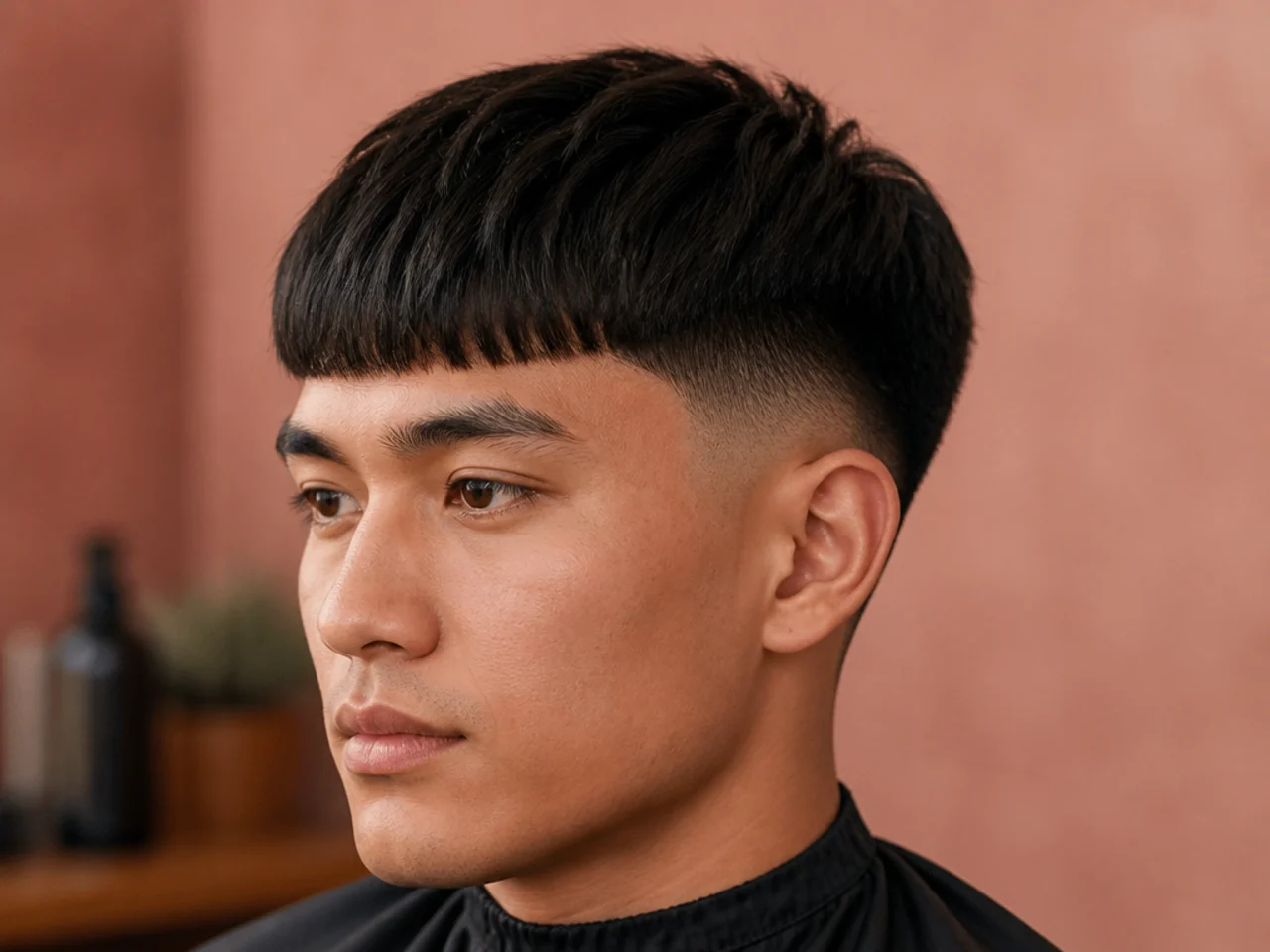
20 Low Taper Fade Fringe Haircuts for Men
Twenty low taper fade fringe haircuts for 2026 — blunt, textured, curtain, side-swept, and messy fringes with the exact ask, face-shape rules, and styling notes to leave the barber with the right one.
In this article · 26
- What Is a Low Taper Fade Fringe?
- How to Choose Your Low Taper Fade Fringe
- The 20 Variations
- 1\. Classic Blunt Fringe with Low Taper Fade
- 2\. Textured Fringe with Low Taper Fade
- 3\. Curtain Fringe with Low Taper Fade
- 4\. Side-Swept Fringe with Low Taper Fade
- 5\. Messy Fringe with Low Taper Fade
- 6\. Fluffy Broccoli Fringe with Low Taper Fade
- 7\. Middle-Part Fringe with Low Taper Fade
- 8\. Short Cropped Textured Fringe with Low Taper Fade
- 9\. Long Korean-Style Curtain Fringe with Low Taper Fade
- 10\. Piece-y Textured Fringe with Low Taper Fade
- 11\. Angled Side Fringe with Low Taper Fade
- 12\. Curly Fringe with Low Taper Fade
- 13\. Wavy Fringe with Low Taper Fade
- 14\. Edgar Fringe with Low Taper Fade
- 15\. Comma Fringe with Low Taper Fade
- 16\. Two-Block Fringe with Low Taper Fade
- 17\. Faux Hawk Fringe with Low Taper Fade
- 18\. Disconnected Fringe with Low Taper Fade
- 19\. Wispy Feathered Fringe with Low Taper Fade
- 20\. Peso Pluma Fringe with Low Taper Fade
- How to Ask Your Barber for a Low Taper Fade Fringe
- Styling and Maintenance
- FAQ
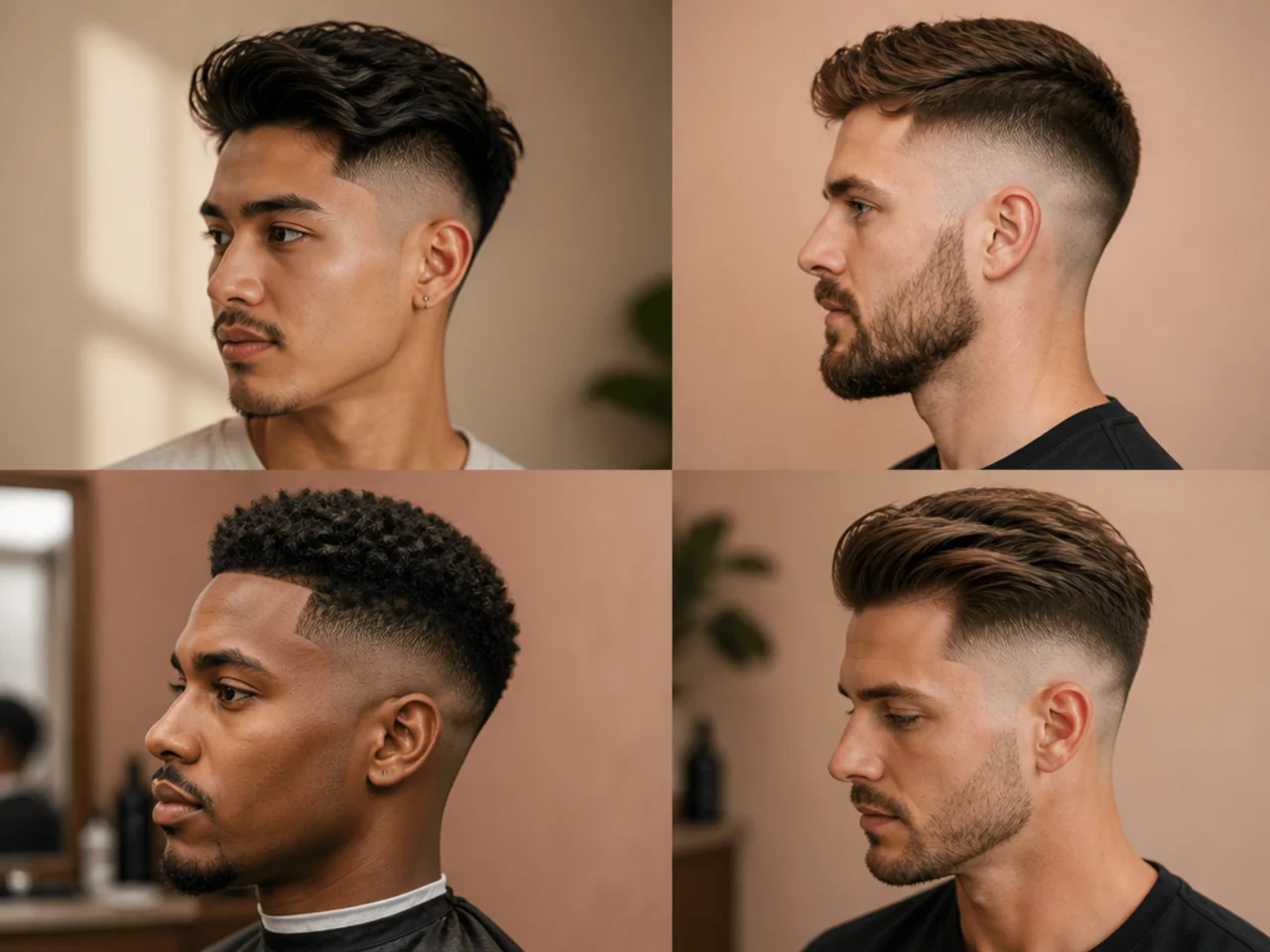
The low taper fade fringe is the most-requested fade-plus-fringe combination in the barbershop right now, and for good reason. The taper keeps the sides clean without a hard skin line, the fringe brings personality at the front, and the two together read modern on almost any face shape. Below are twenty low taper fade fringe variations worth asking for in 2026 — blunt, textured, curtain, side-swept, messy, and everything between — with cut recipes, face-shape notes, and the exact wording to hand your barber.
If you are new to the fade family, start with the low taper fade pillar, or step back to the wider fade haircut taxonomy for the full map.
What Is a Low Taper Fade Fringe?
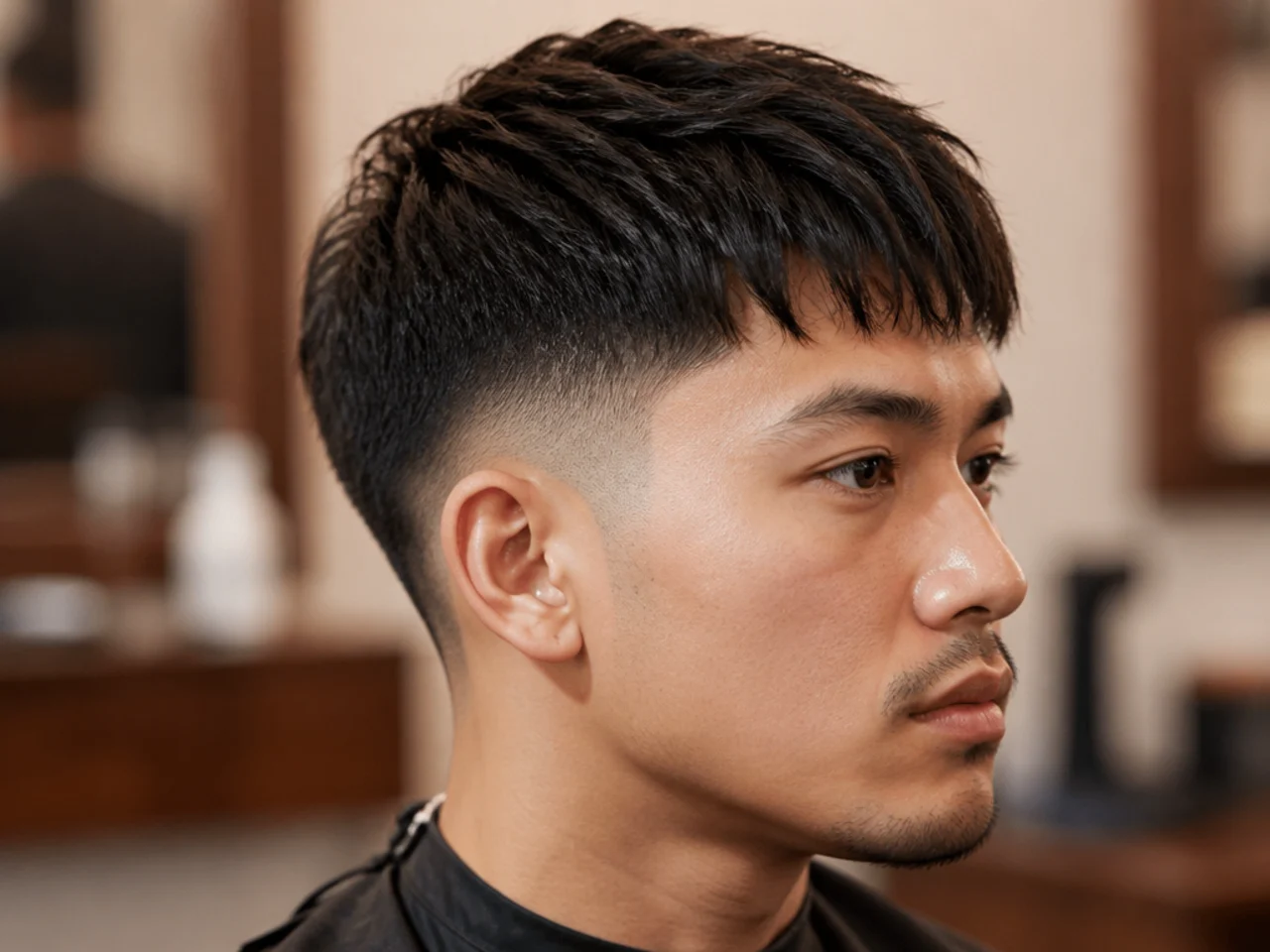
It is a two-part cut. The sides use a low taper fade — the blend starts low, right at the temple and the top of the ear, and stops at a #0.5 or #1 guard instead of dropping to bare skin. The top is left long enough at the front (usually four to six inches) that the hair falls forward as a fringe.
The taper does the polite work of keeping the sides clean without shouting. The fringe brings all the personality — texture, direction, and edge. That is why the combination beats every other fade-plus-top pairing on Pinterest right now. It is expressive at the front and quiet at the sides, which is why it slides into work, weekends, and weddings without asking for permission.
Compared with the low taper fade haircut worn short or slicked, the fringe version needs more length up top and a barber who leaves the front an inch longer than the crown. That single detail — front-heavier than crown — is what separates a fringe from a general medium top.
How to Choose Your Low Taper Fade Fringe
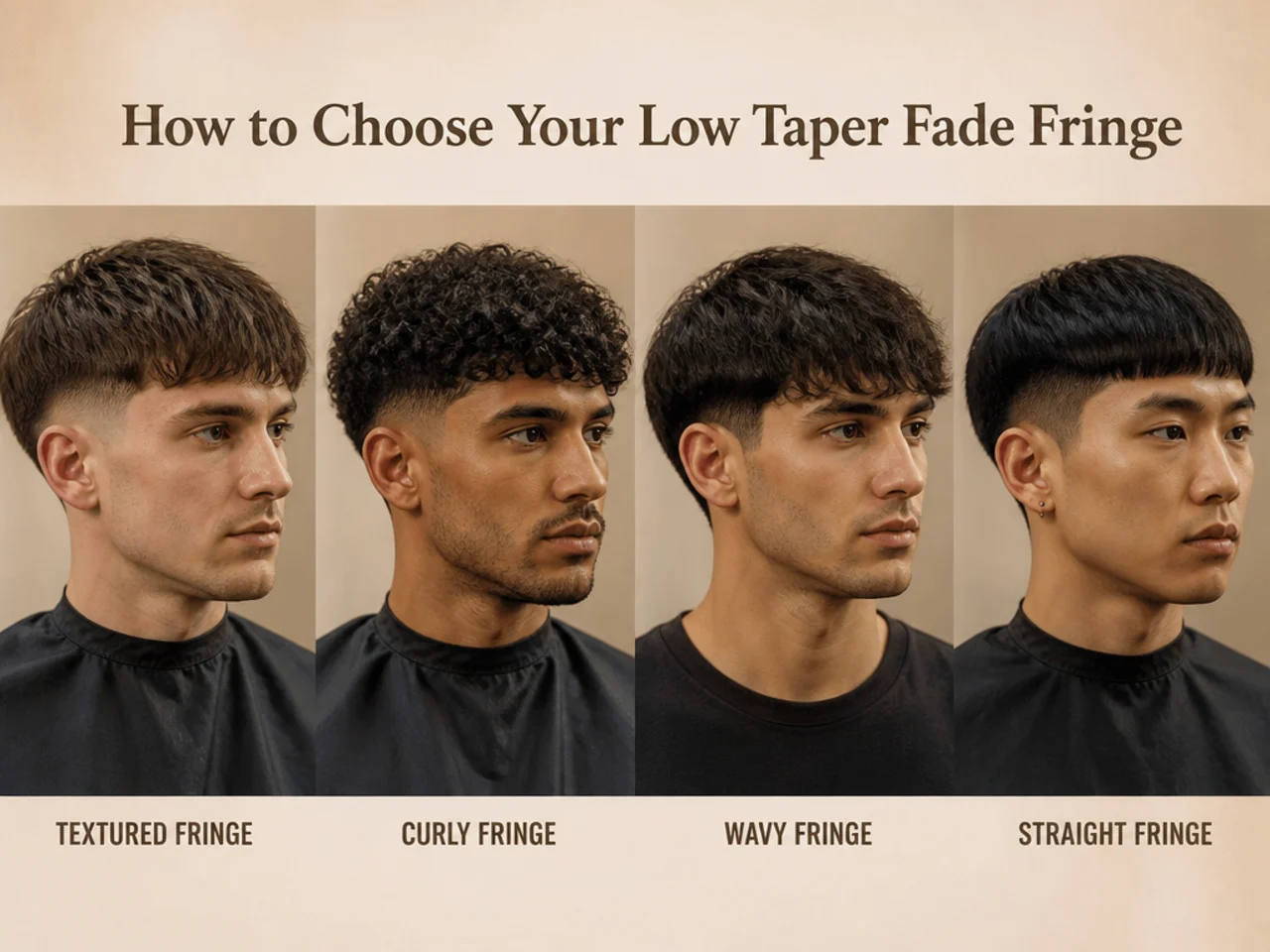
Three inputs decide the version for you: hair type, face shape, and how much time you will actually spend in front of the mirror.
Hair type. Straight hair takes blunt and side-swept fringes cleanest. Wavy hair is the natural home for textured, piece-y, and curtain versions. Curly hair rewards fluffy, corkscrew, or coily fringes — the low taper fade curly hair guide has the specific curl-type notes if you need them. Straight guys chasing texture can add a light perm; talk to your stylist first.
Face shape. Oval faces wear everything. Round faces want angled, piece-y, or textured fringes that break up the width. Long or oblong faces should ask for a heavy blunt or curtain fringe to shorten the vertical line. Square jaws suit softer curtain and side-swept fringes. Heart shapes benefit from a fringe that hides forehead width.
Styling appetite. Blunt and cropped textured fringes air-dry with a matte cream in two minutes. Curtain and Korean-style fringes need a round brush, a blow dryer, and a mirror check. Pick the routine you'll actually run.
The 20 Variations
Twenty low taper fade fringe recipes below, sorted from the clean office picks at the top to the statement styles at the end. Each entry covers what makes this version different, who it suits, the exact ask, and one styling move worth stealing.
1. Classic Blunt Fringe with Low Taper Fade
The starter version. Front section cut in one straight line just above the brows, back and sides low tapered to a #1 guard. Reads polished at any office and photographs sharp because the edge of the fringe frames the eyes. Best for oval and square faces with straight to slightly wavy hair. If you are new to the fringe world, this is the first one to ask for.
Ask for: "low taper fade, #1 at the shortest, four inches on top, blunt fringe cut in one straight line just above the brows, no texturizing on the fringe edge."
Styling: matte cream on damp hair, comb the fringe forward and flat, air-dry. Zero heat.
2. Textured Fringe with Low Taper Fade
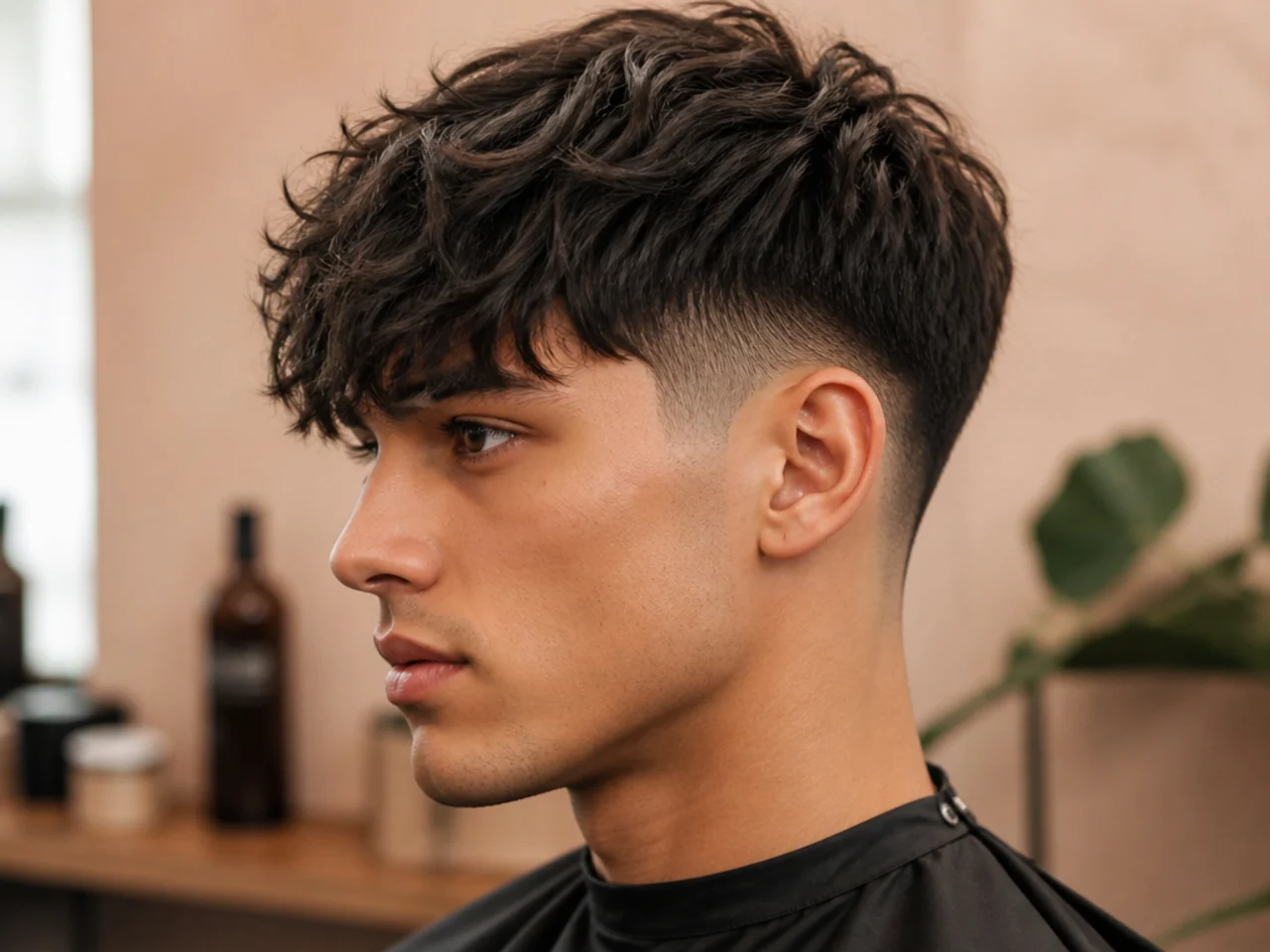
The most-requested version on the list. Fringe is cut in soft points rather than a straight edge, so the ends separate into piece-y strands that fall on the forehead. Sides low tapered to a #0.5 or #1 for contrast. Suits every face shape but shines on round and square jaws — the broken edge softens the frame. Sits right next to the textured fringe men family.
Ask for: "low taper fade, #0.5 at the shortest, five inches on top with the front point-cut into a piece-y fringe touching the brows, keep the ends soft."
Styling: matte clay through damp roots, push forward with fingers, break the fringe apart into pieces before it fully dries.
3. Curtain Fringe with Low Taper Fade
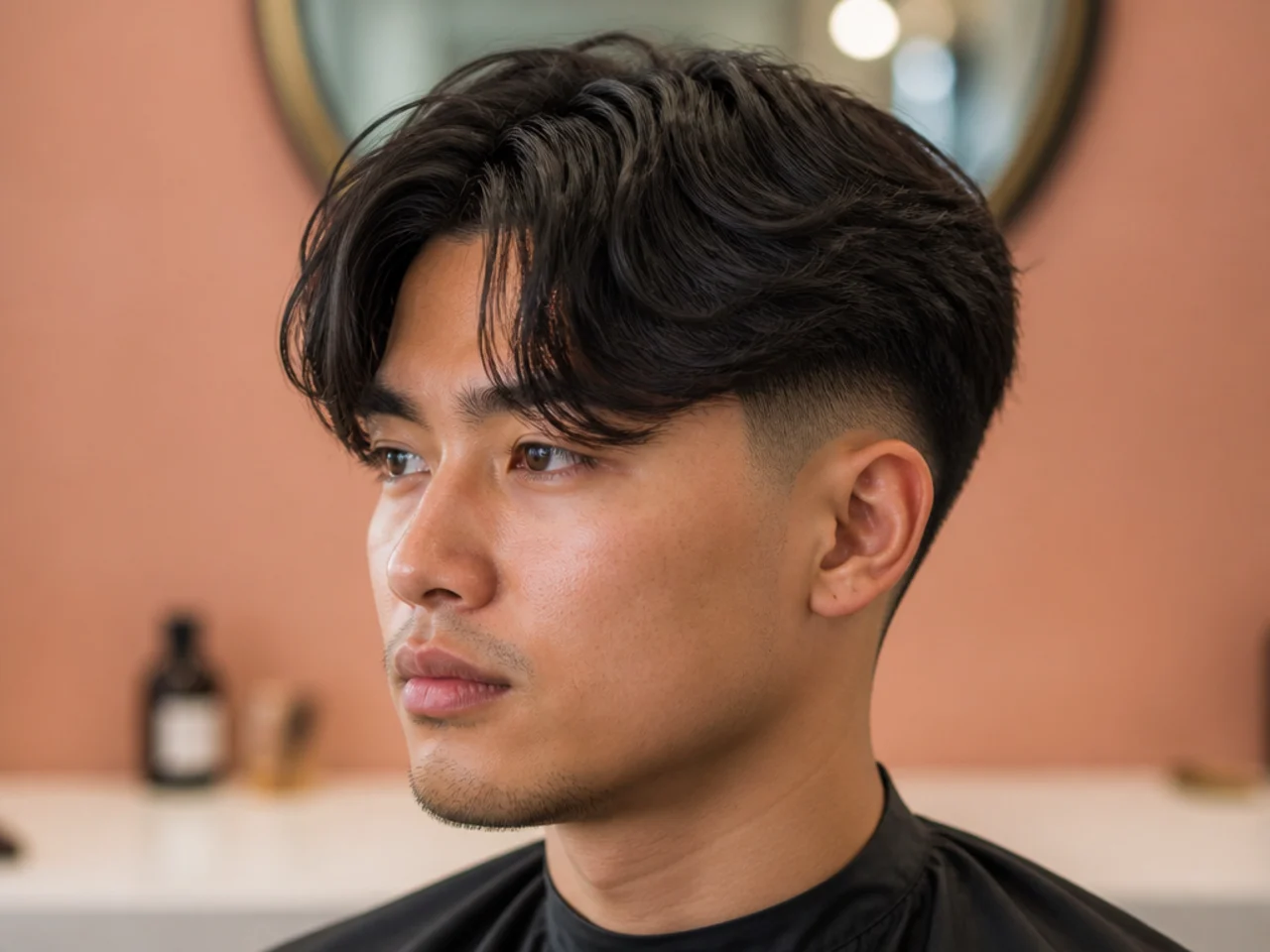
The face-framing option. Front section grows to five to six inches, splits down a natural middle, and falls in two curtains along the cheekbones. Sides low tapered so the length up top reads intentional and not overgrown. Best for oval, heart, and long faces. Straight or wavy hair holds it best — curly hair needs a heavier product routine to make it lie flat.
Ask for: "low taper fade, #1 at the shortest, six inches at the front for a curtain fringe splitting down the middle, sides finished soft."
Styling: round-brush the fringe up and out with a blow dryer, split the middle with your fingers, spray with a light hold hairspray so the curtains do not collapse by noon.
4. Side-Swept Fringe with Low Taper Fade
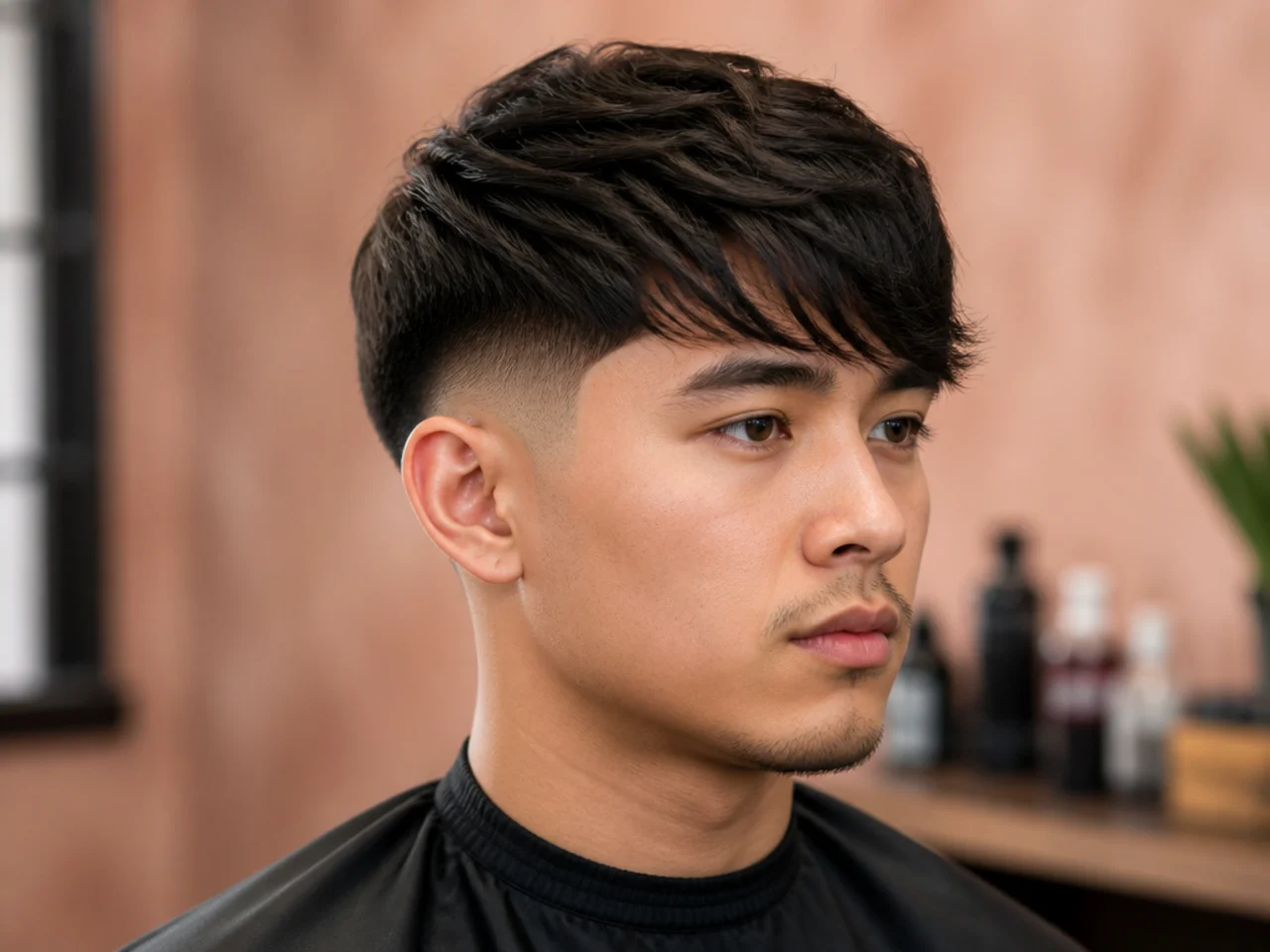
The corporate favorite. Fringe swept diagonally across the forehead from a soft side parting, sides low tapered for the polished frame. Reads senior at any workplace and pairs perfectly with a suit. Best for oval, round, and square faces. Wavy hair holds the sweep longest — dead-straight hair can slip out of place by lunch.
Ask for: "low taper fade, #1 at the shortest, four to five inches on top, side-swept fringe from a soft parting at the left temple down to the right brow."
Styling: cream pomade on damp hair, comb from the parting across the forehead, finish with a shot of light hairspray at the parting line.
5. Messy Fringe with Low Taper Fade
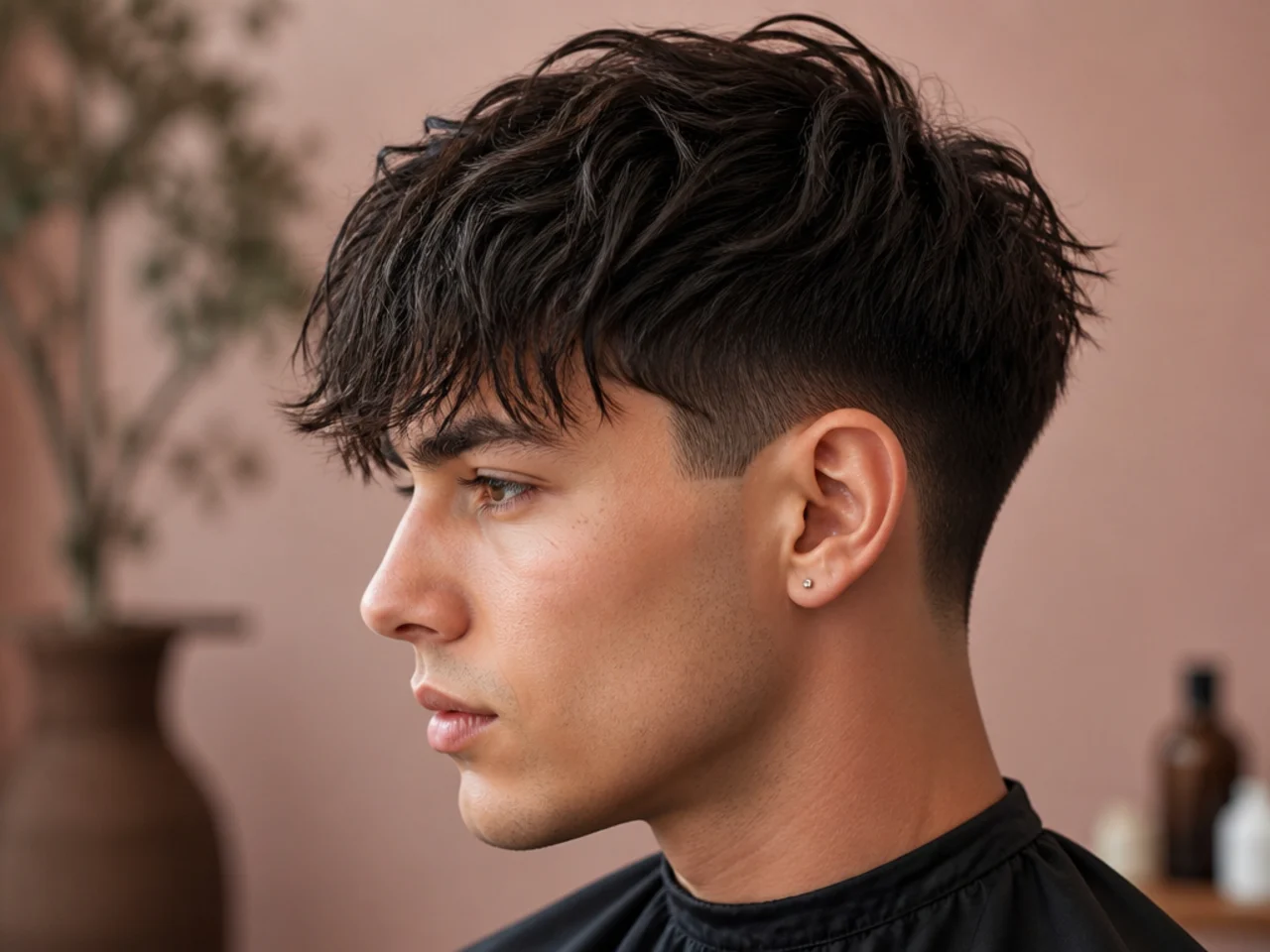
The 6-AM alarm hero. Fringe cut with heavy internal texture so the ends fall in a controlled mess — some pieces forward, some up, some to the side, all photograph-ready. Sides low tapered for contrast. Best for oval and square faces with wavy or thick straight hair. Direct sibling of the messy fringe haircut men family.
Ask for: "low taper fade, #0.5 at the shortest, five inches on top, texturize the fringe with a razor for a broken, tousled finish."
Styling: sea-salt spray through damp hair, rough-dry with fingers, twist a few pieces of the fringe by hand, walk out.
6. Fluffy Broccoli Fringe with Low Taper Fade
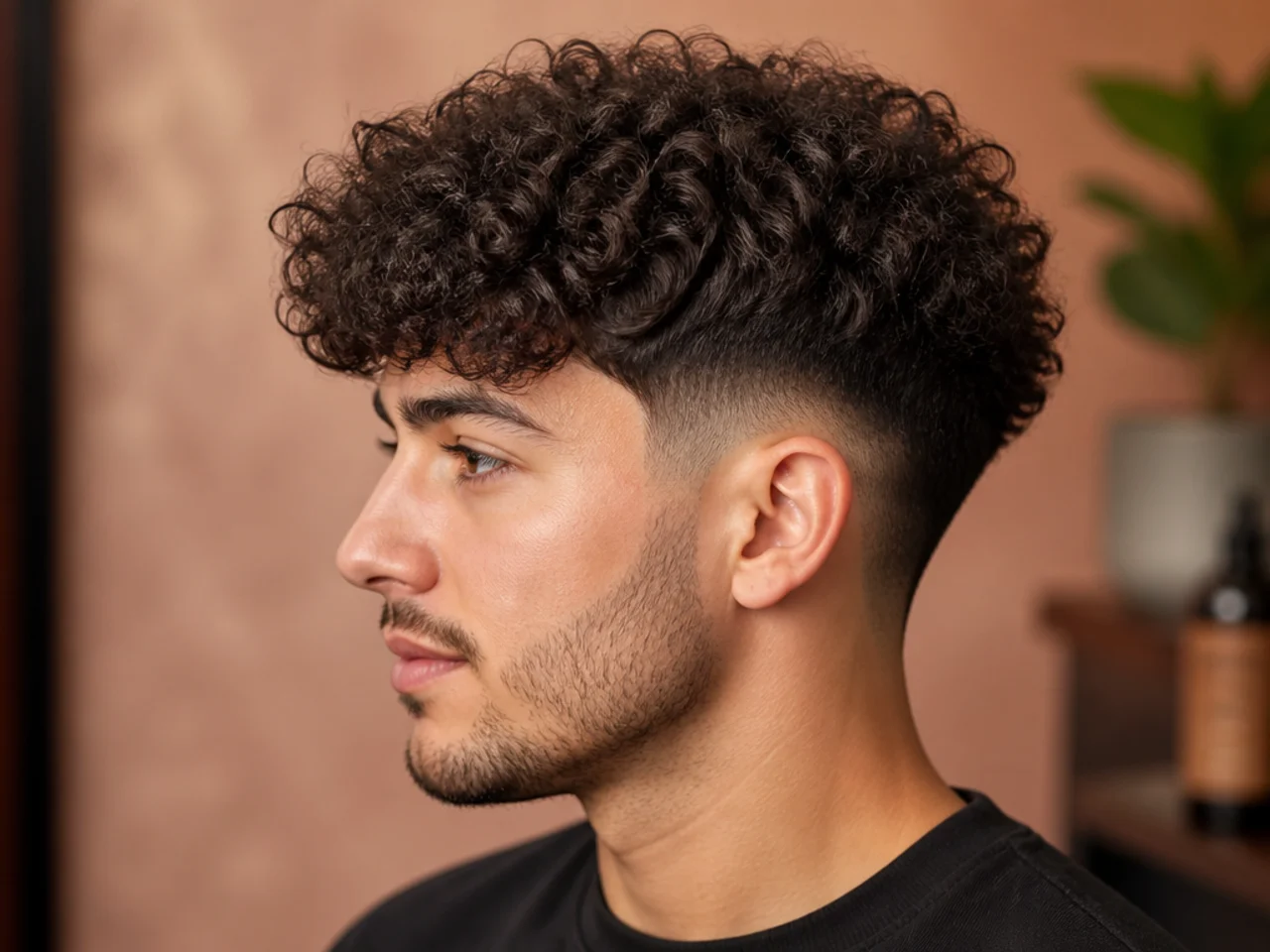
The broccoli haircut played with a fringe. Dense wavy or curly top with a defined pouf shape, front pieces left long enough to break into a fringe over the brows. Sides low tapered so the top volume reads intentional. Best for oval and round faces with 2B to 3A texture. Not a natural fit for pin-straight hair — a light perm helps.
Ask for: "low taper fade, #1 at the shortest, four to five inches of natural texture on top, front pieces long enough to fall as a soft broccoli fringe."
Styling: curl cream on soaking-wet hair, diffuse on low heat cupping upward, no touching once dry.
7. Middle-Part Fringe with Low Taper Fade
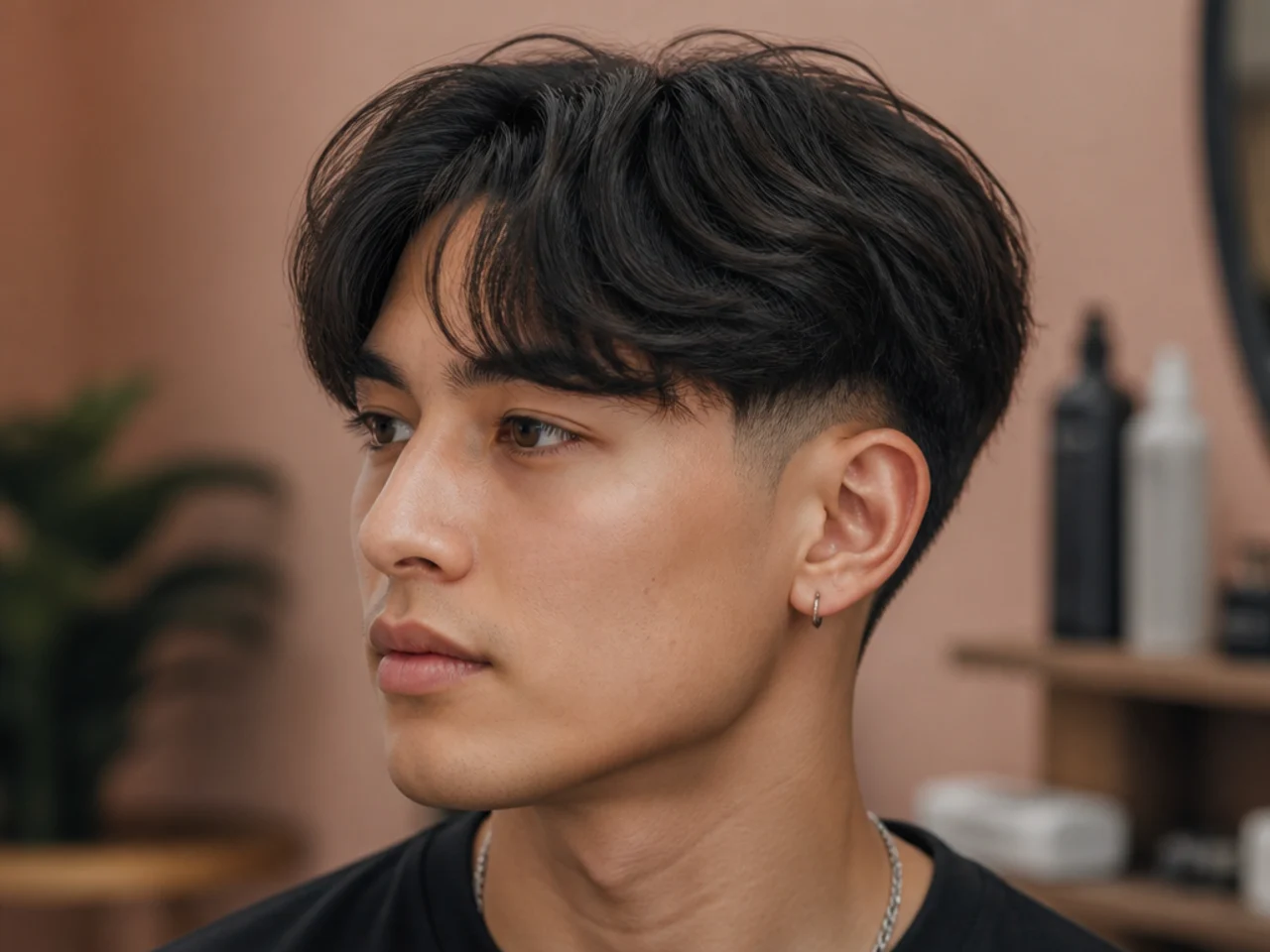
The K-pop-influenced classic. Front hair split evenly down the middle so both sides fall into short symmetrical fringes at the brows, sides low tapered for the modern frame. Sibling of the middle-part haircut men roundup. Best for oval, heart, and long faces. Straight and wavy hair both work — the split is easier on straight hair.
Ask for: "low taper fade, #1 at the shortest, five inches on top with the front split down the middle, both sides falling to the brows in short curtains."
Styling: cream pomade on damp hair, comb from the middle out, low-heat blow dry with a small round brush to lift the roots at the part.
8. Short Cropped Textured Fringe with Low Taper Fade
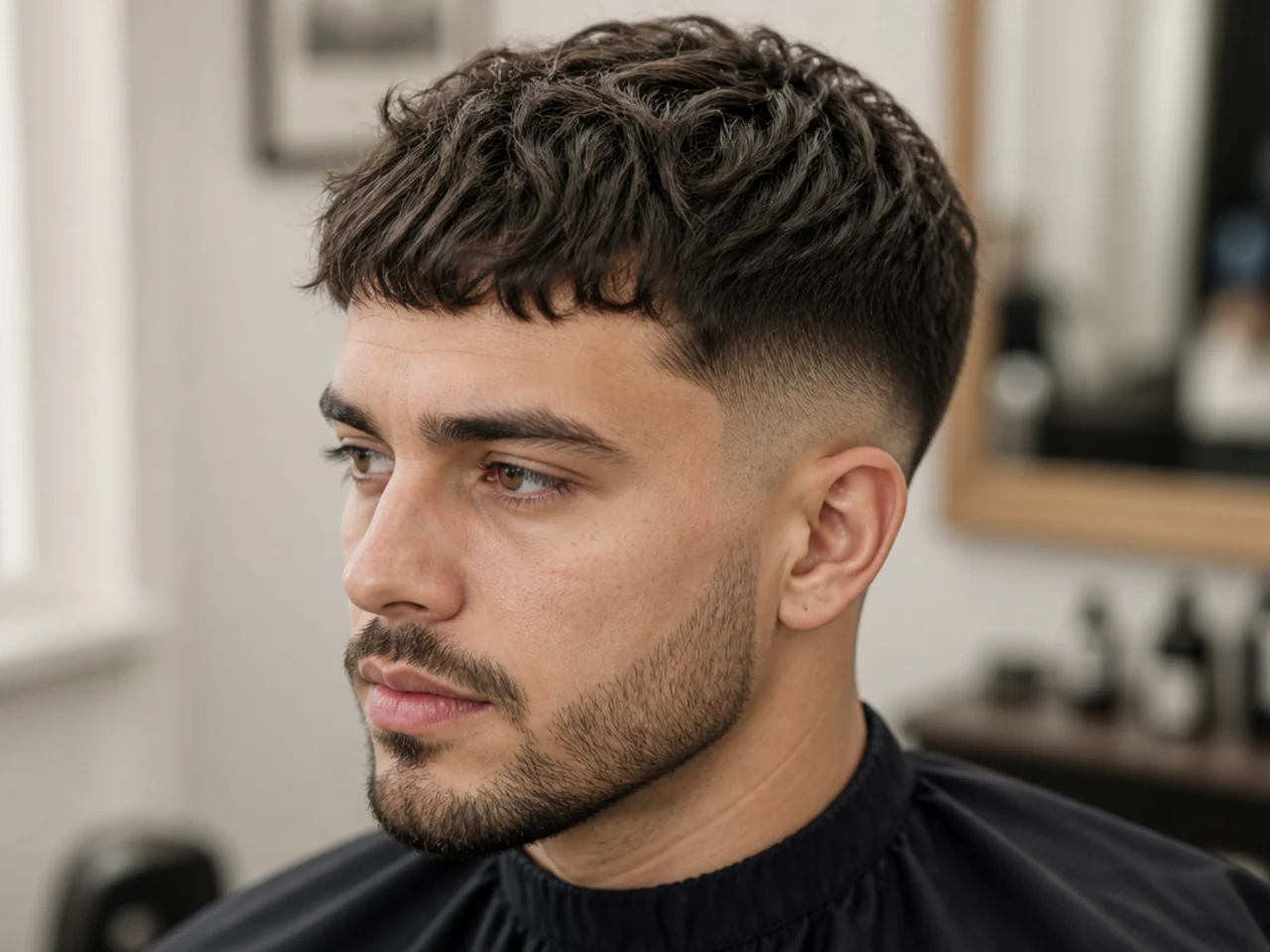
The French crop haircut fringe with a low taper instead of a skin fade. Fringe cut short and heavily textured so it sits just above the brows without any weight. Sides low tapered for softer contrast than the classic crop. Best for oval, round, and diamond faces. Straight hair holds it cleanest. A great pick if you want low maintenance without going full buzz.
Ask for: "low taper fade, #1 at the shortest, two to three inches on top, short textured fringe cut just above the brows, point-cut for softness."
Styling: matte clay rubbed between palms, push forward into the fringe, walk out. Sixty seconds total.
9. Long Korean-Style Curtain Fringe with Low Taper Fade
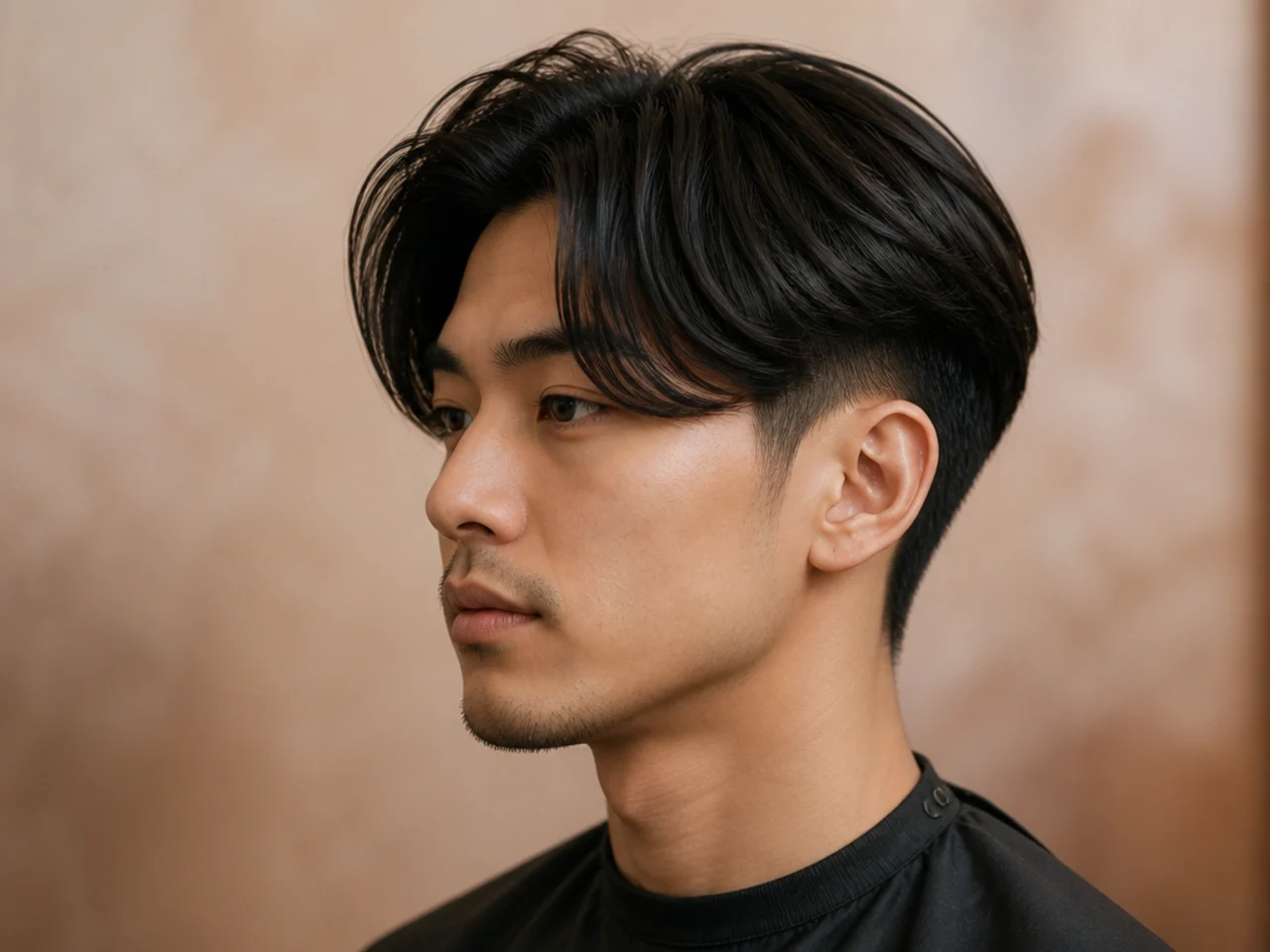
The Korean haircuts for men archetype. Curtain fringe grown out longer — reaching past the cheekbones on both sides — with a low taper fade keeping the sides clean beneath the length. Best for oval, heart, and long faces with straight or wavy hair. High styling commitment but photographs like a stylist did it.
Ask for: "low taper fade, #1 at the shortest, six to seven inches at the front for a long curtain fringe past the cheekbones, sides finished soft, no thinning shears."
Styling: heat protectant on damp hair, round-brush the fringe up and out with a blow dryer, split the middle, finish with a light-hold hairspray.
10. Piece-y Textured Fringe with Low Taper Fade
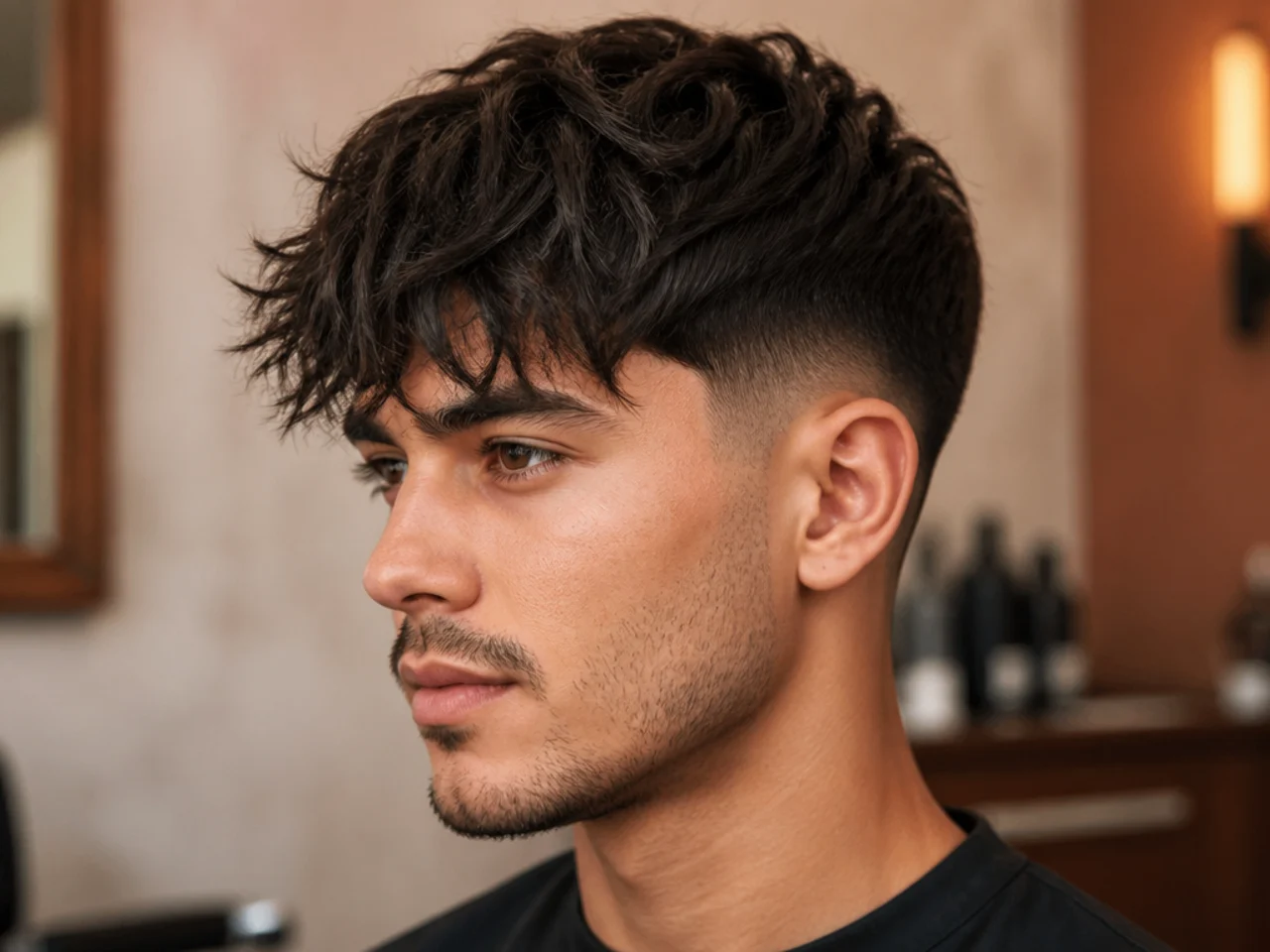
The magazine-shoot fringe. Fringe cut into distinct pieces so individual strands separate on the forehead and catch the light. Sides low tapered for the contrast. Best for oval and square faces with fine to medium hair. Fine hair actually benefits — the pieces make thin hair look denser. Wavy hair holds it longer than straight.
Ask for: "low taper fade, #0.5 at the shortest, four to five inches on top, deep point-cut piece-y fringe falling in separated strands, keep the ends soft."
Styling: sea-salt spray through damp hair, blow-dry rough with a diffuser, twist individual pieces of the fringe between fingertips before it fully dries.
11. Angled Side Fringe with Low Taper Fade
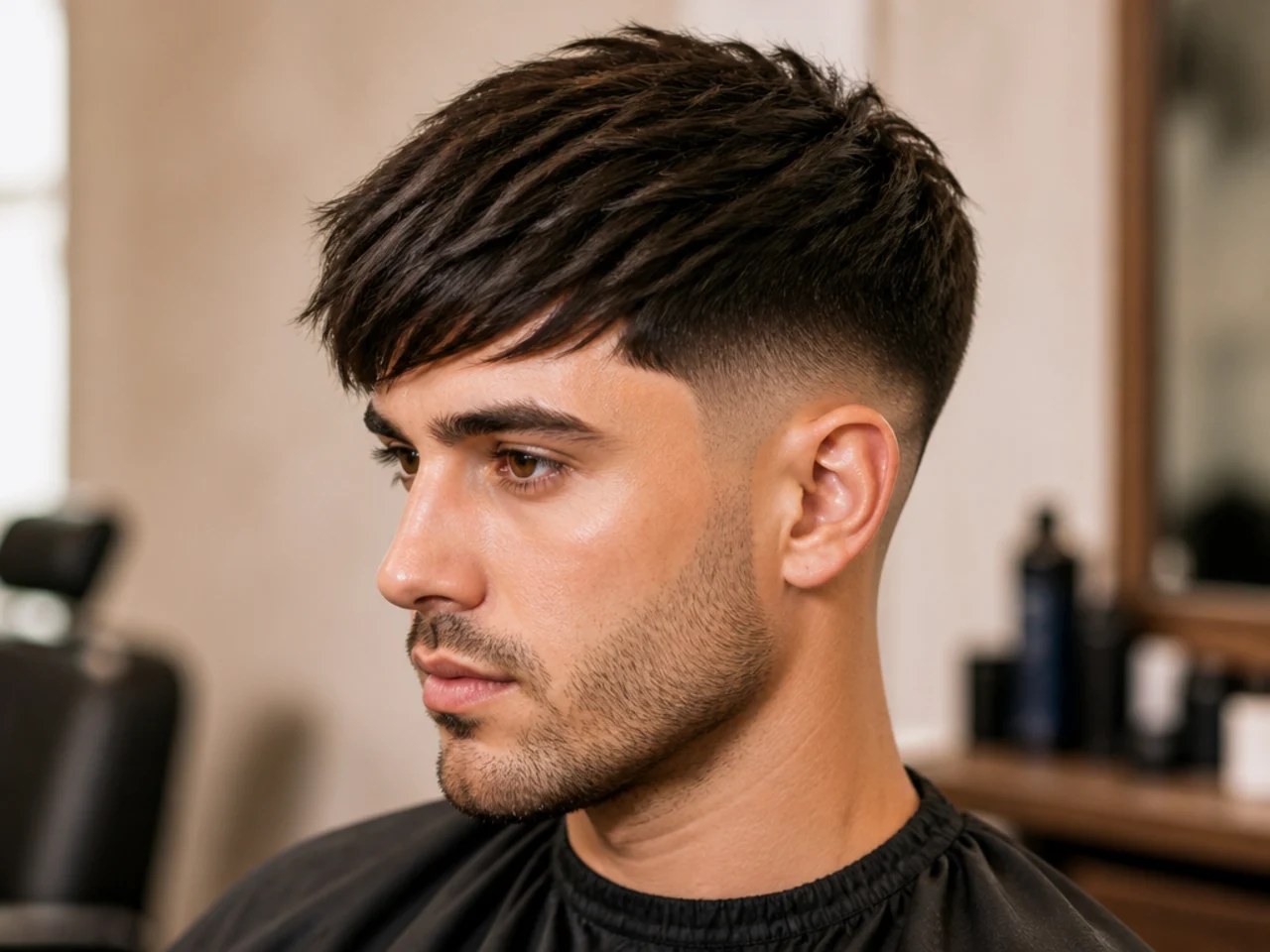
The asymmetrical option. Fringe cut on an angle — longest at one temple, shortest at the opposite brow — for a graphic diagonal line across the forehead. Sides low tapered to keep the shape sharp. Best for oval, square, and diamond faces. Straight hair holds the angle cleanest; wavy hair softens it and reads more relaxed. A great pick if the classic side-sweep feels too safe.
Ask for: "low taper fade, #1 at the shortest, five inches on top with an angled fringe from the left temple down to the right brow, cut in one clean line."
Styling: cream pomade on damp hair, comb along the angle in one direction, spray at the temple.
12. Curly Fringe with Low Taper Fade
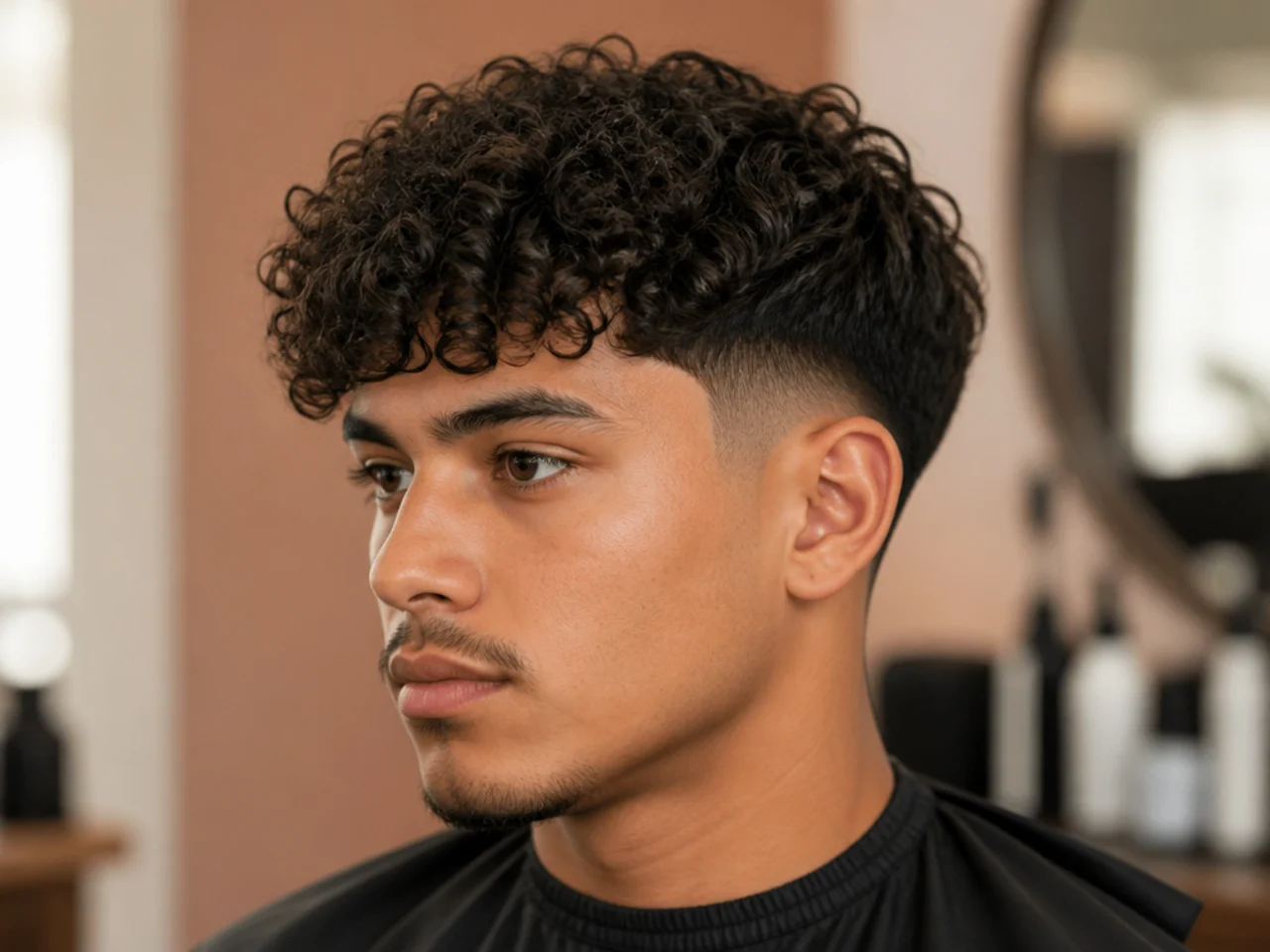
The natural-curl version. Front section left long enough that the natural 2C or 3A curl pattern forms a soft fringe over the brows, sides low tapered so the pattern flows into them. Sibling of the curly hair haircuts guide. Best for oval, square, and long faces with genuine curl. Non-negotiable rule: no thinning shears near the fringe.
Ask for: "low taper fade, #1 at the shortest, five inches of natural curl on top with the front pieces long enough to fall as a curly fringe to the brows, scissor-cut dry throughout."
Styling: leave-in on soaking-wet hair, curl cream over it, plop for ten minutes in a microfiber, air-dry undisturbed.
13. Wavy Fringe with Low Taper Fade
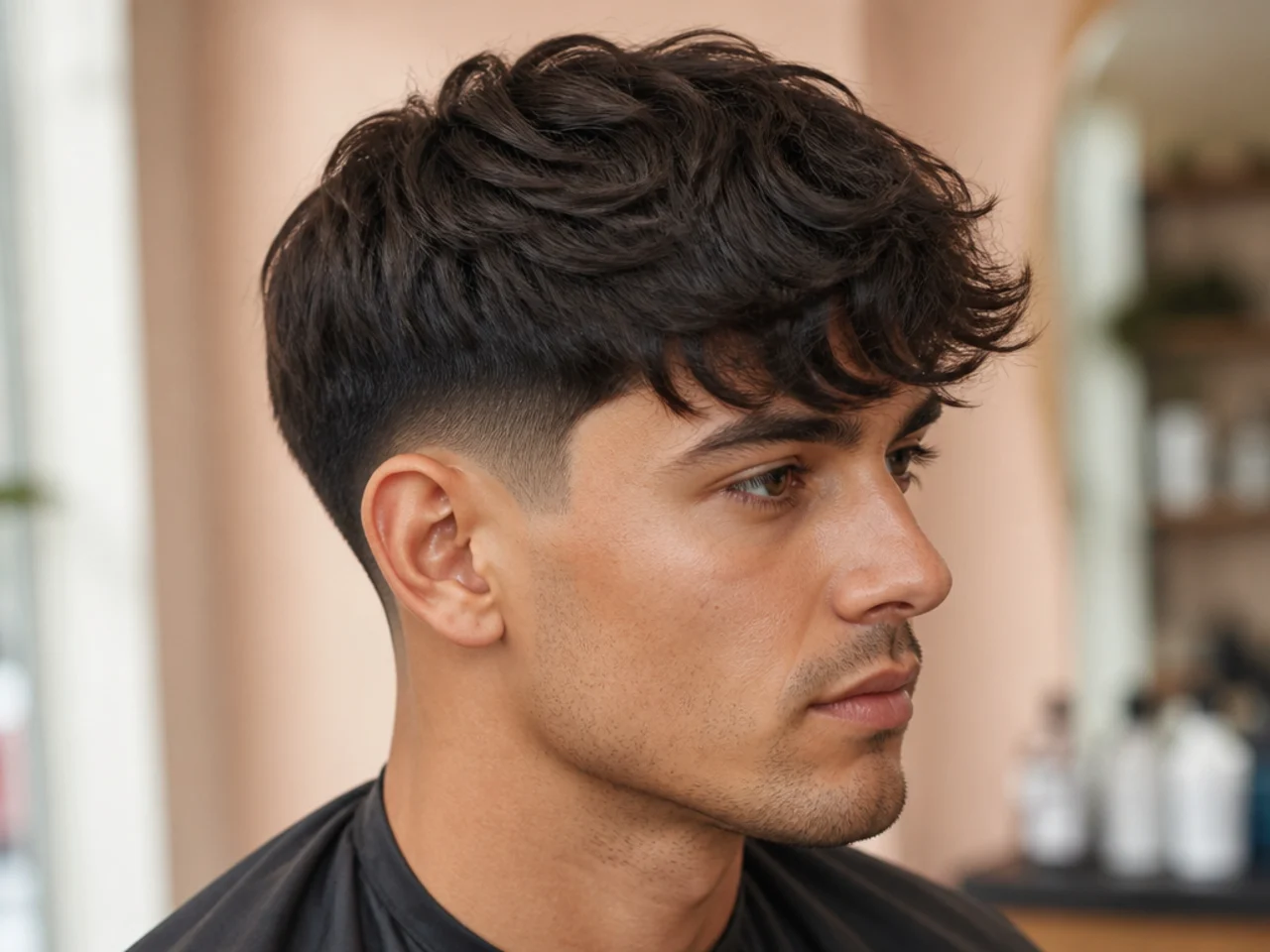
The lucky-hair-type version. Natural 2A to 2C wave pattern shaping the fringe on its own, sides low tapered for the polished frame. Reads effortless because most of the work is already done by your texture. Best for oval, square, and heart faces. If your waves flatten in humidity, keep the fringe a touch longer than you think — weight helps the bend hold.
Ask for: "low taper fade, #1 at the shortest, five inches on top with a natural wavy fringe falling to the brows, point-cut the ends, no thinning shears."
Styling: sea-salt spray on damp hair, scrunch upward, air-dry or diffuse on low heat.
14. Edgar Fringe with Low Taper Fade
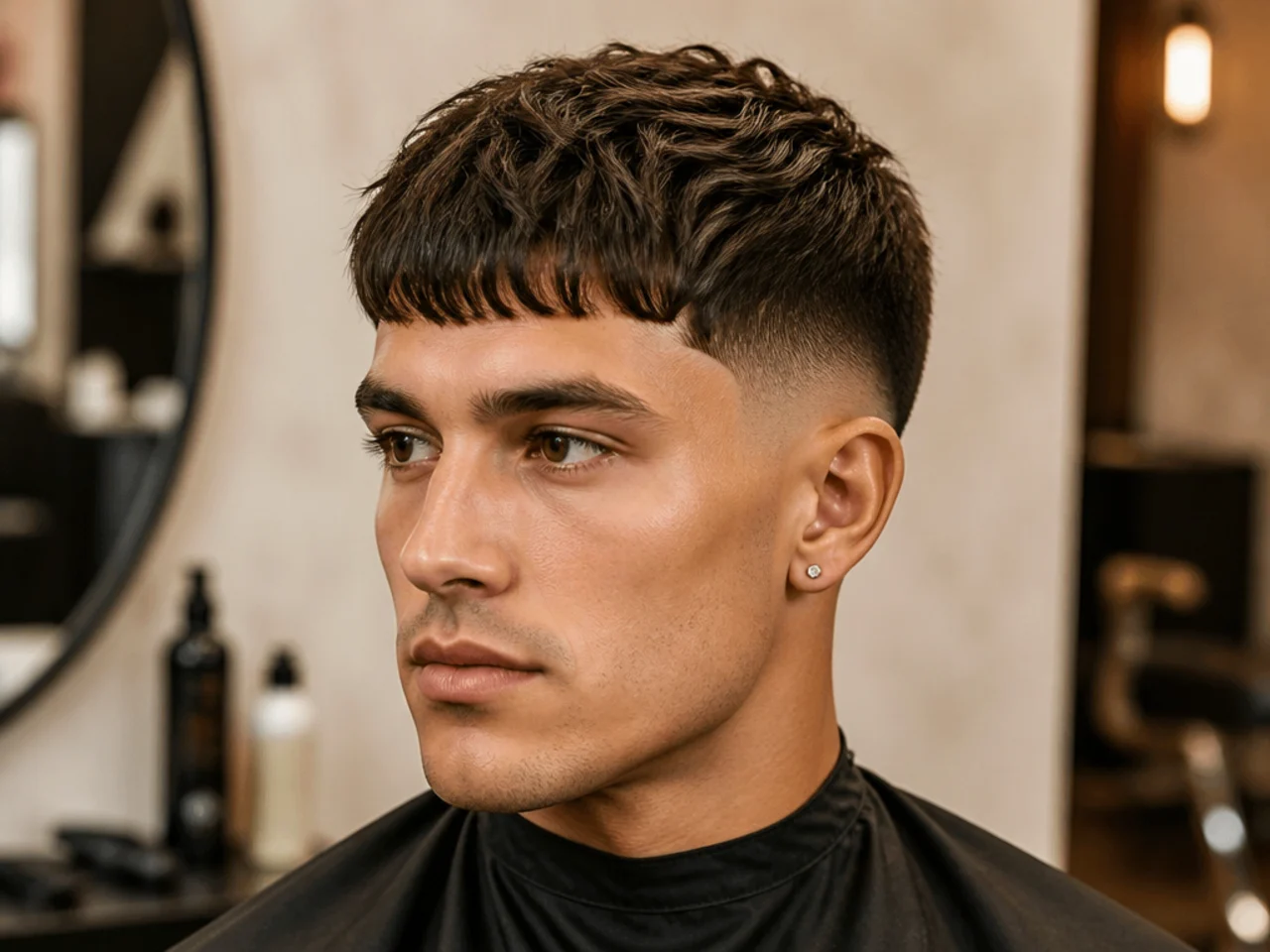
The Edgar haircut fringe softened by a taper instead of a skin fade. Front section cut in a hard, dead-straight blunt line across the forehead — the signature Edgar shelf — with the low taper keeping the sides more forgiving. Best for square and oval faces with dense straight hair. Younger crowd. Not the pick for a conservative office.
Ask for: "low taper fade, #0.5 at the shortest, two and a half inches on top, hard blunt fringe cut in a straight line across the forehead, sharp line-up at the temples."
Styling: matte clay through damp hair, comb the fringe forward and press flat with the palm. Set with hairspray if you need it to hold.
15. Comma Fringe with Low Taper Fade
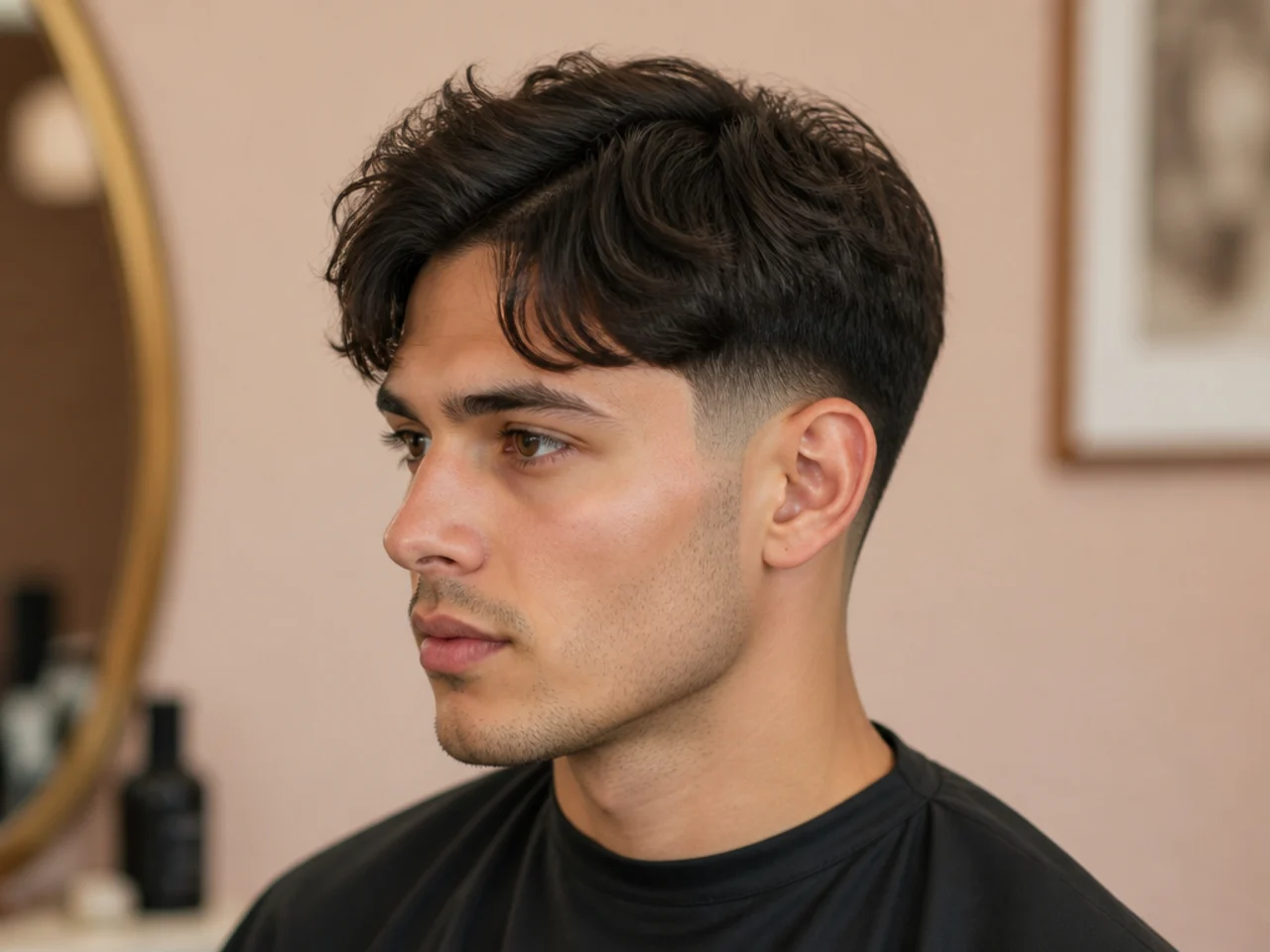
Front sections styled to bend into a soft comma shape at the brows — the comma haircuts signature — with a low taper fade underneath for the modern frame. Best for oval and square faces with straight to slightly wavy hair. Requires a round brush and five patient minutes each morning. Reads polished and slightly K-drama.
Ask for: "low taper fade, #1 at the shortest, five inches on top, front pieces long enough to shape into a comma curve at the brows, soft blend at the sides."
Styling: cream pomade on damp hair, round-brush each front piece into a curved comma shape with a blow dryer, cool shot at the end to set.
16. Two-Block Fringe with Low Taper Fade
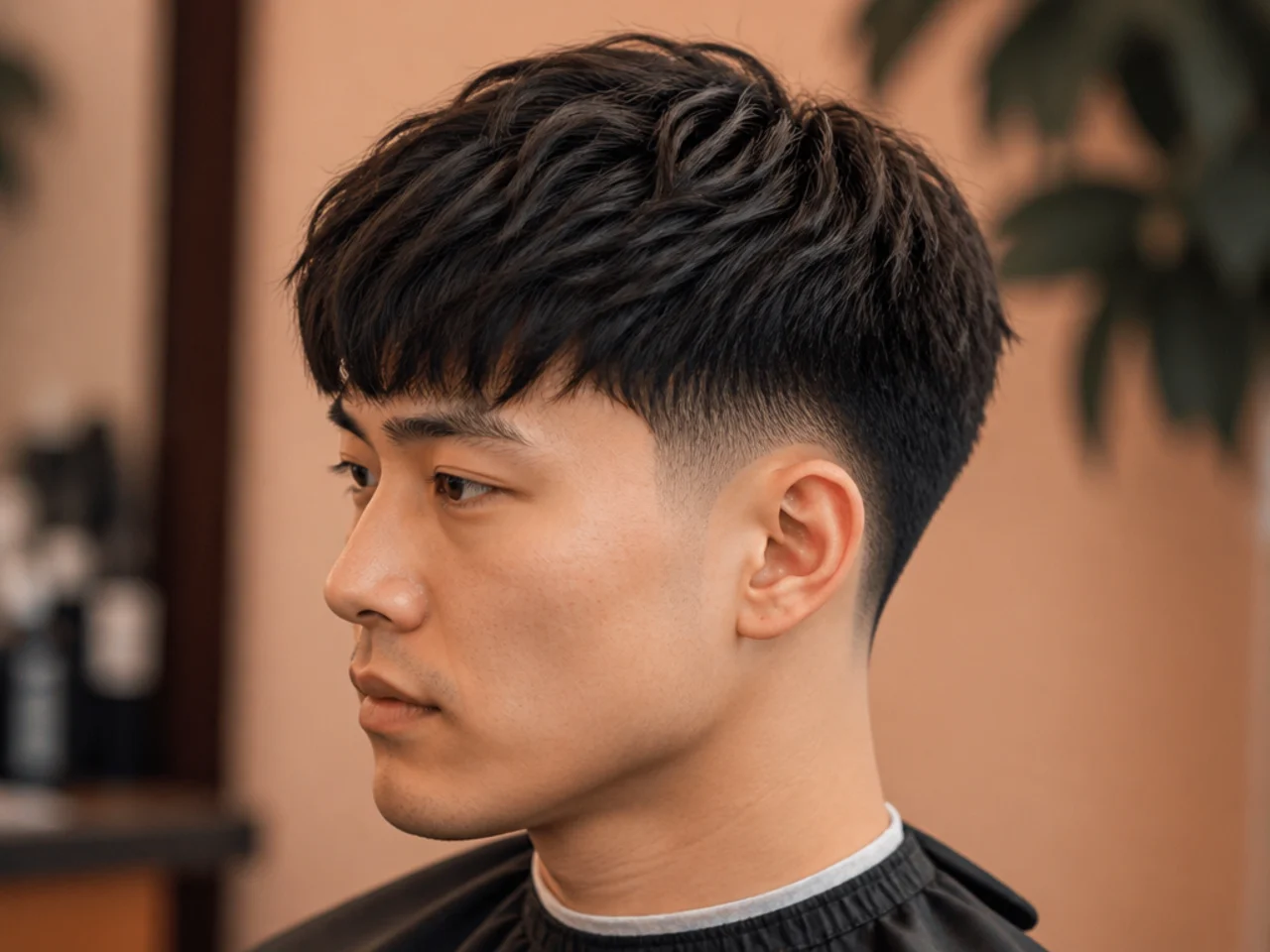
The two-block haircut evolved. Top left long enough for a proper fringe (usually curtain or middle-parted), lower block clippered short, low taper fade cleaning the perimeter. Best for oval and square faces. Straight and wavy hair both work. The disconnection between the long top and the short block is what makes the fringe read as intentional and not overgrown.
Ask for: "low taper fade, #1 at the shortest, five to six inches on top in a two-block shape with a middle-parted fringe, disconnected from the shorter lower section."
Styling: heat protectant on damp hair, blow-dry the fringe forward with a round brush, split down the middle, spray to hold.
17. Faux Hawk Fringe with Low Taper Fade
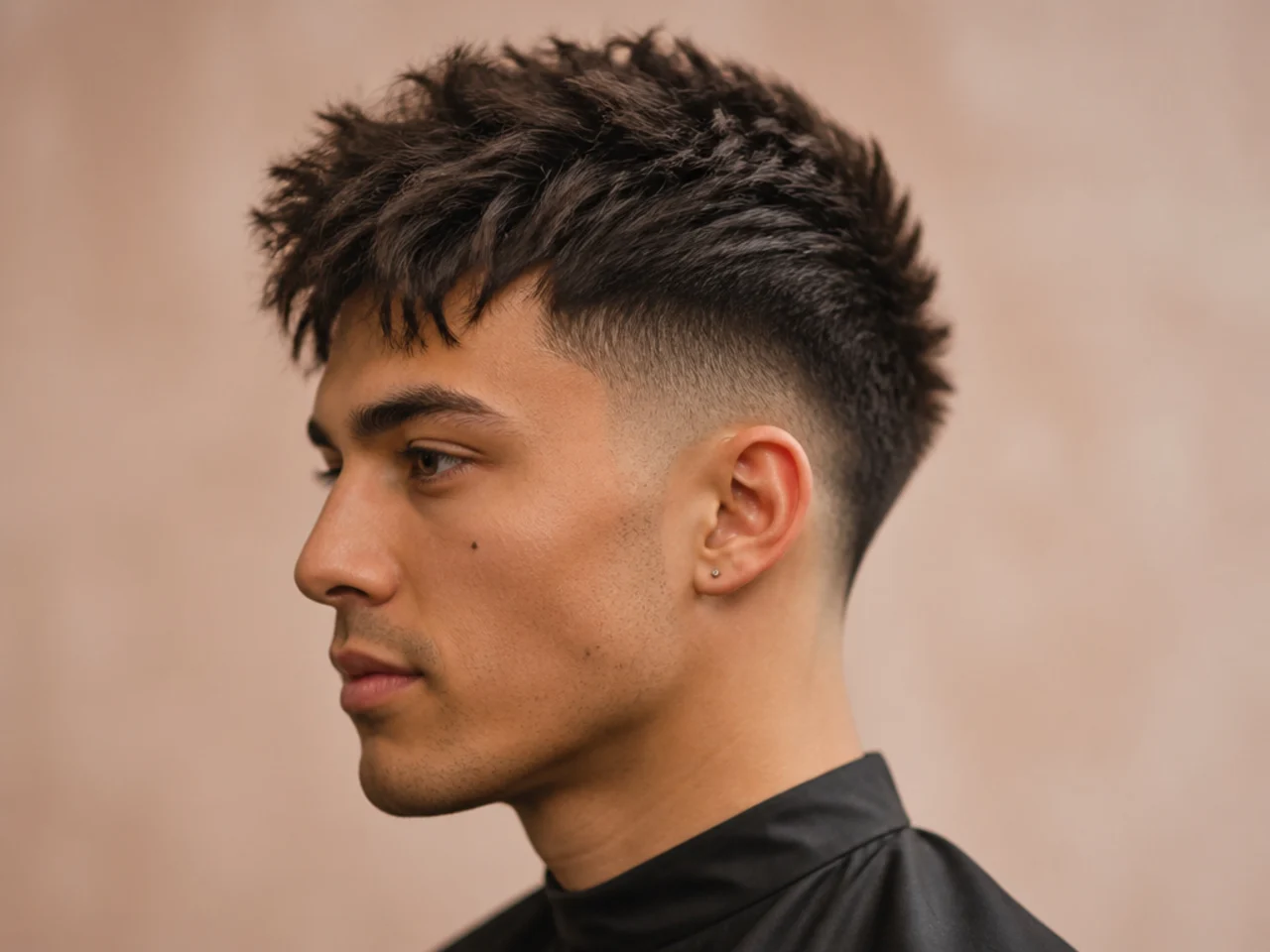
The vertical version. Top styled up and forward into a lifted fringe that peaks at the crown — a subtle faux hawk shape — with the low taper fade flanking both sides. Best for oval, round, and long faces. Wavy and thick straight hair hold the lift longest. A statement version — not for the boardroom, but excellent for a night out.
Ask for: "low taper fade, #0.5 at the shortest, five inches on top left long across the front and crown for a faux hawk with the fringe styled up and forward, keep the sides sharp."
Styling: strong-hold matte clay through damp hair, push up and forward from the roots, set with a shot of hairspray from underneath.
18. Disconnected Fringe with Low Taper Fade
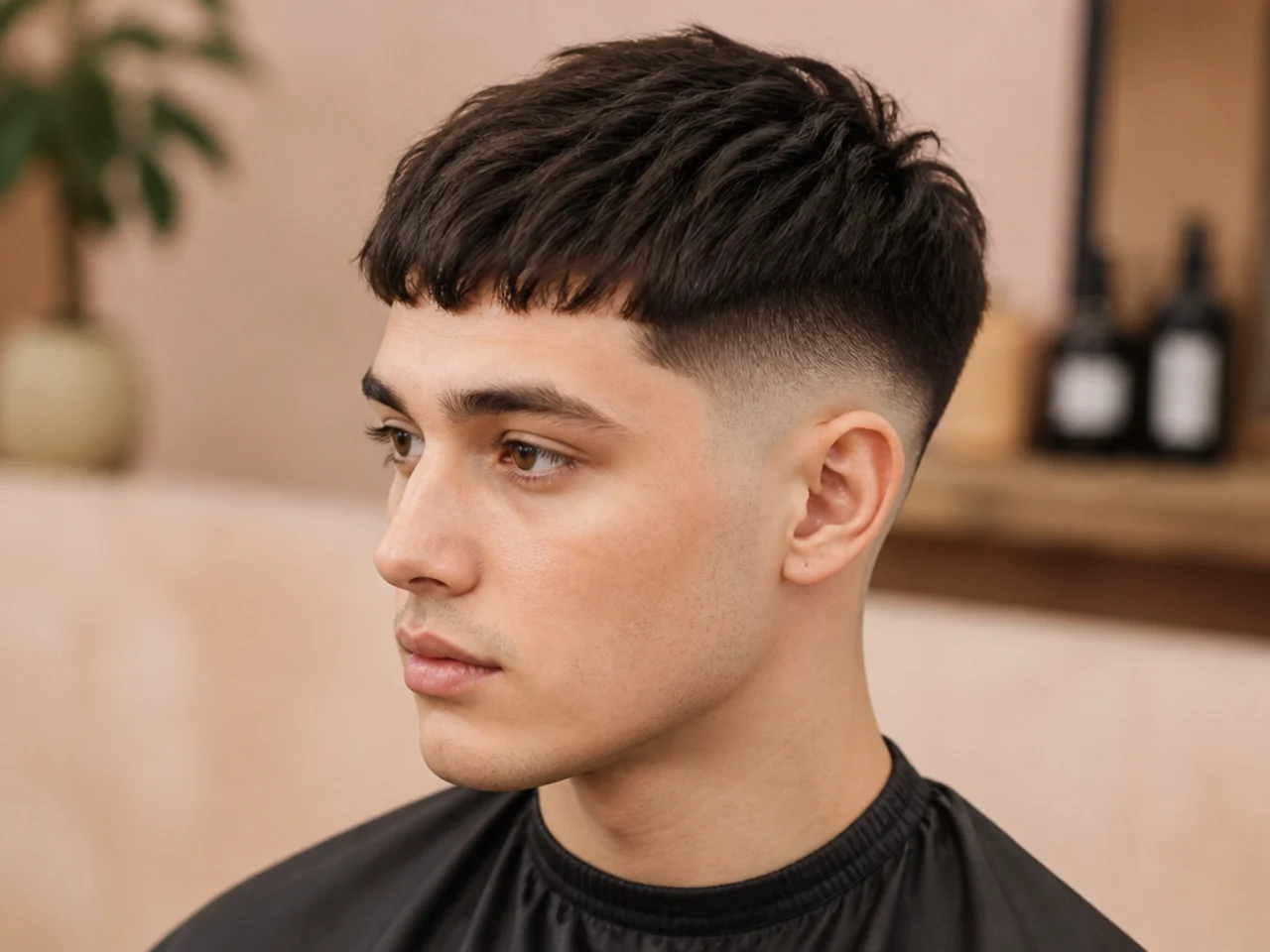
The hard-line option. Zero blend between the top length and the fade — the transition is a clean cut, not a gradient — with a heavy fringe falling forward and a low taper below. Best for oval and square faces with thick straight or wavy hair. High-contrast, statement version. Grows out awkward if you skip the four-week fade touch-up.
Ask for: "low taper fade, #0.5 at the shortest, five inches on top, hard disconnect between the top and the fade — no blend at the transition — with a heavy fringe on the front."
Styling: matte clay on damp hair, push forward into the fringe, let the disconnect do the visual work.
19. Wispy Feathered Fringe with Low Taper Fade
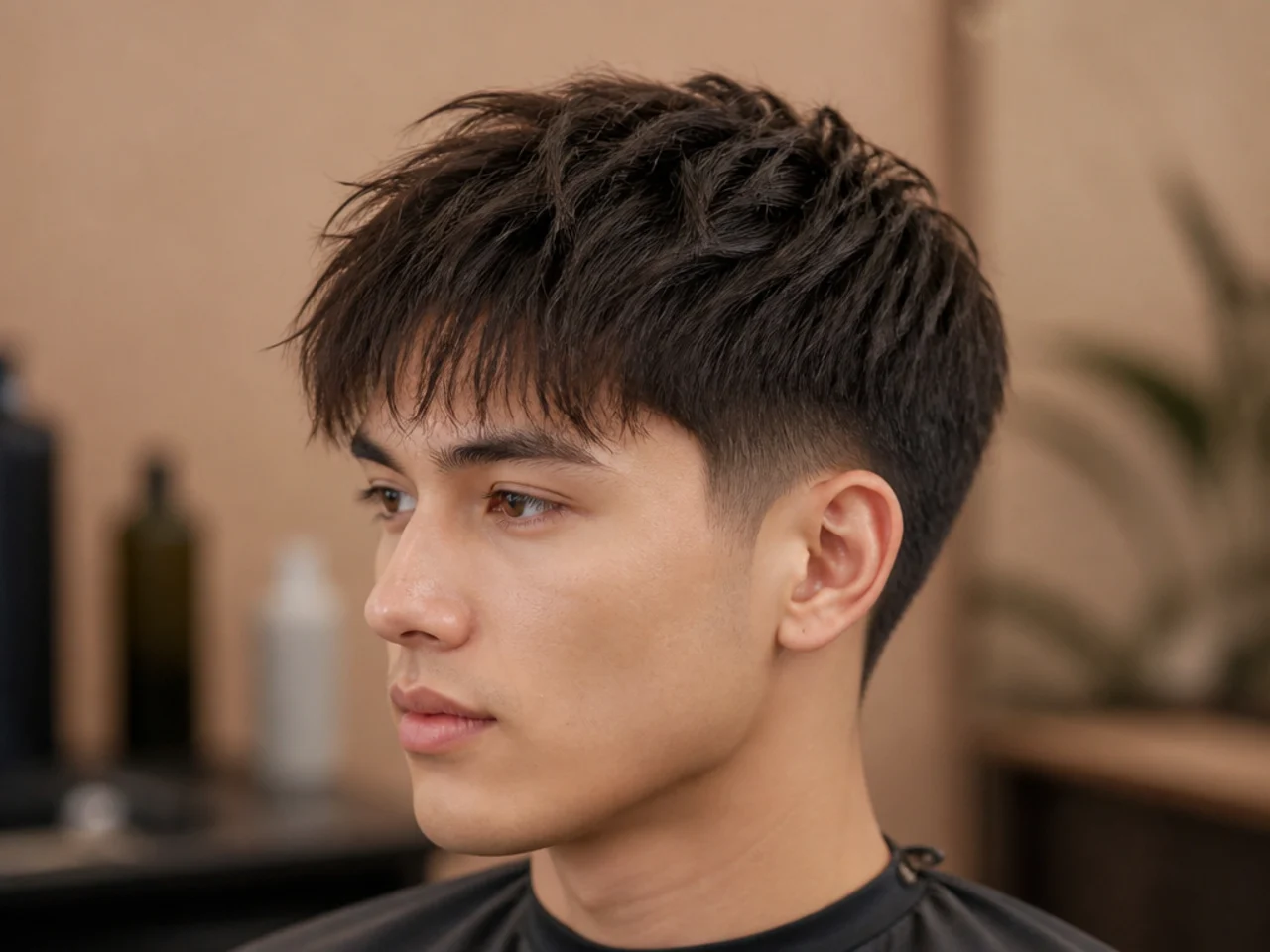
The lightweight version. Fringe heavily feathered so the ends taper to fine points and float on the forehead — no weight, all movement. Sides low tapered for softness. Best for fine and thin hair, and for oval, heart, or long faces. If your hair is dense, ask for internal thinning to get the same lightness — otherwise the wispy effect collapses under its own weight.
Ask for: "low taper fade, #1 at the shortest, four to five inches on top with a heavily feathered fringe, point-cut and razored to fine tapered ends, no weight left in the ends."
Styling: light mousse on damp roots, low-heat blow dry with fingers only, no brush.
20. Peso Pluma Fringe with Low Taper Fade
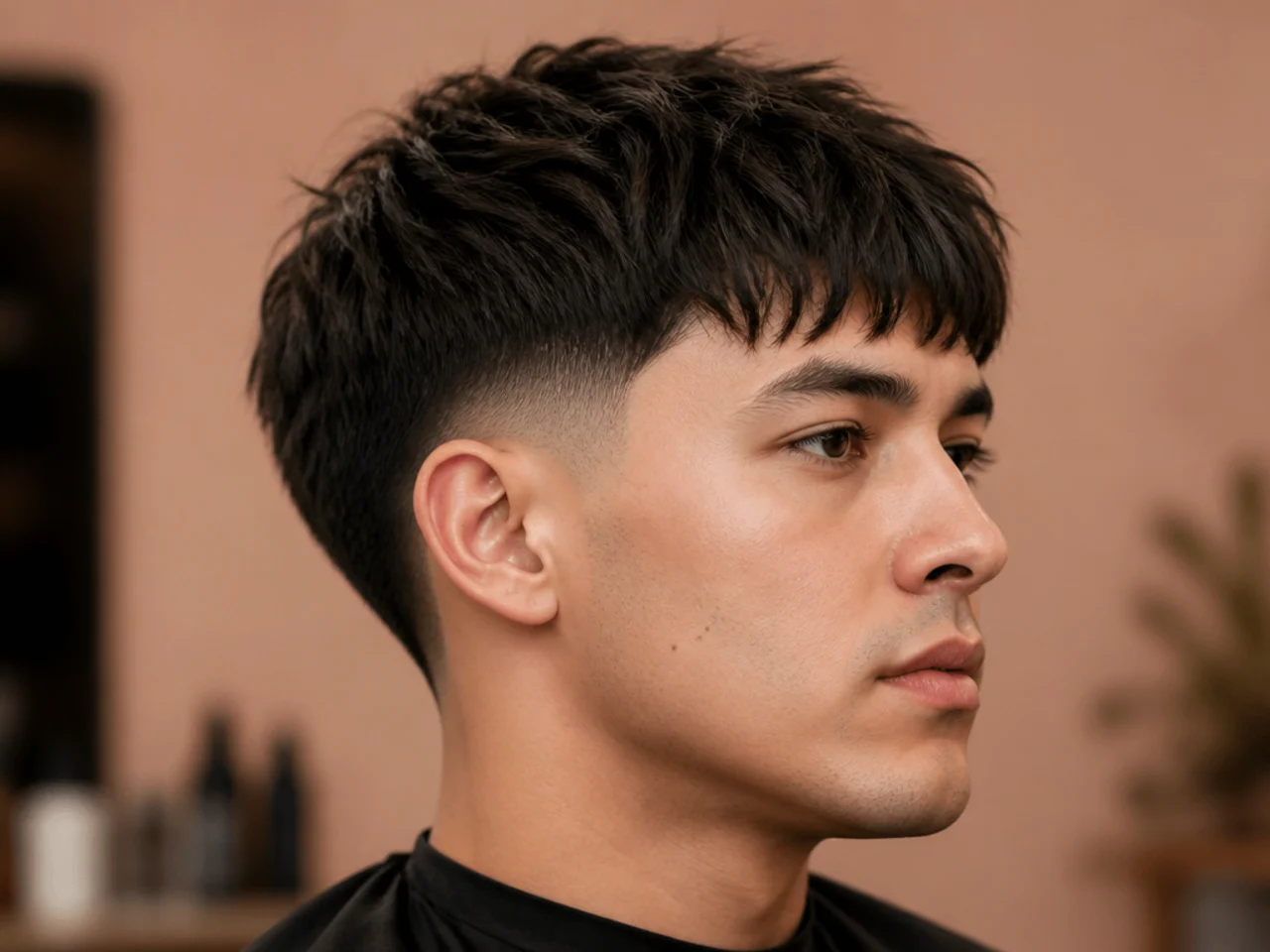
The pop-star version. Long feathered fringe falling past the brows in soft layers, front-heavy silhouette, low taper fade at the sides — the Peso Pluma new haircut with a taper instead of a skin fade. Best for oval, heart, and square faces with straight to wavy hair. Statement styling, moderate maintenance, high Pinterest saves.
Ask for: "low taper fade, #1 at the shortest, six inches at the front layered into a long feathered fringe past the brows, front-heavy layering, soft blend at the sides."
Styling: heat protectant on damp hair, blow-dry the fringe forward and down with a paddle brush, finish with a low-hold cream through the ends.
How to Ask Your Barber for a Low Taper Fade Fringe
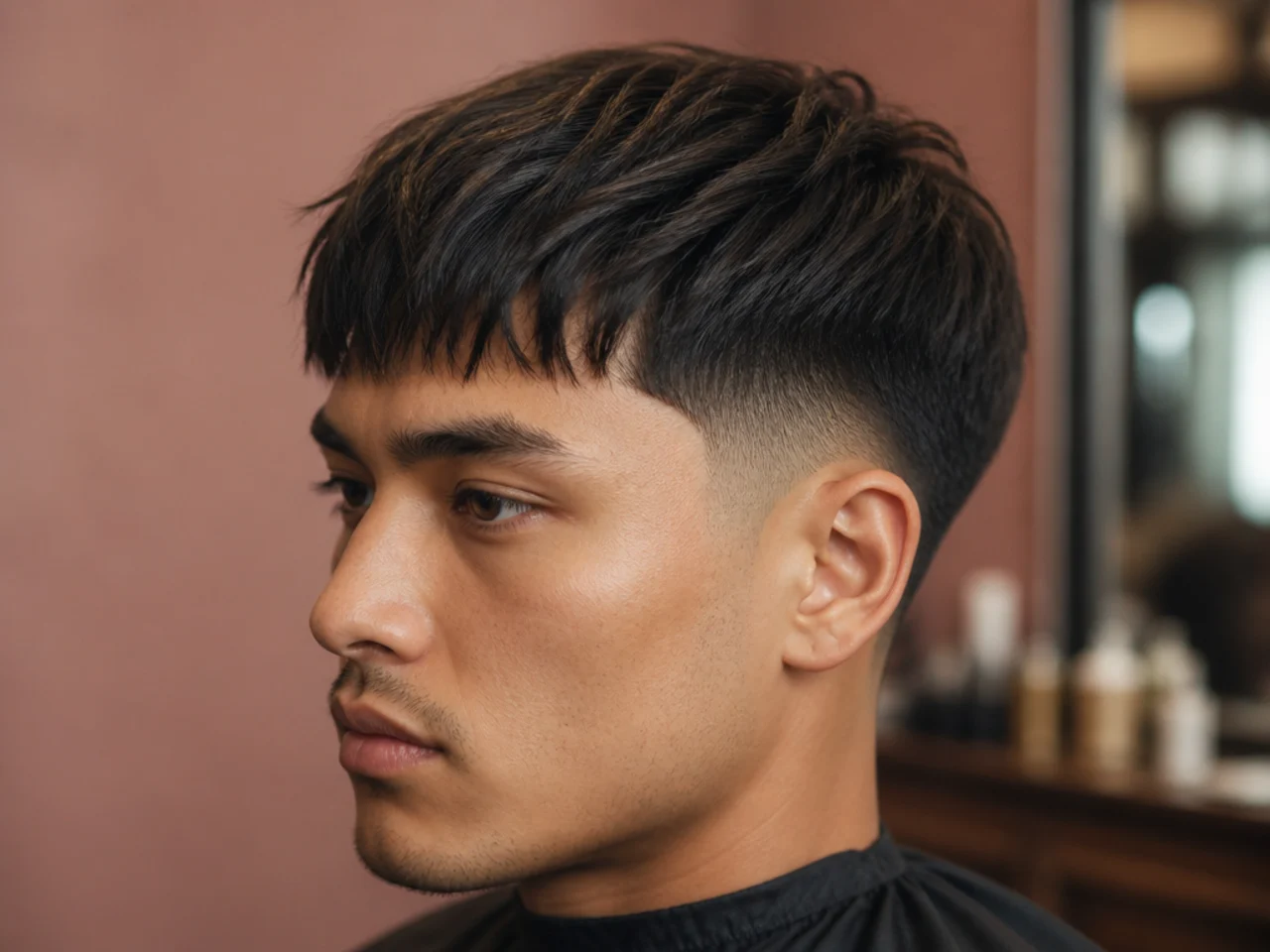
Come with two reference photos and use this script. The first four sentences are the same for every version — only the fringe wording changes.
- Name the fade. "I want a low taper fade — blend starting at the temple and top of the ear, finished at a #0.5" (very short) or "a #1" (softer). This one line tells the barber where the fade sits and how short to go.
- State the top length. "Leave four to six inches on top" — pick your number. Anything shorter is not fringe territory.
- Specify front-heavier. "Keep the front an inch longer than the crown so the fringe drops forward." This is the sentence most people forget. Without it, the fringe will not form.
- Name the fringe shape. Use the "Ask for:" line from your chosen variation above verbatim. Blunt, textured, curtain, side-swept, messy — one word does most of the work.
- Confirm cutting method. "Scissor-cut on top, dry, no thinning shears on the fringe." Thinning shears kill fringes. Ask for the ends to be point-cut or razored for softness instead.
- Show both photos. Front angle for the fringe shape, three-quarter side for the taper height. Say "this fringe, this fade — the two together."
- Ask for the mirror check. Before the barber cleans up, have them hand you the mirror and lift the fringe once. If the front is not visibly longer than the crown, ask for it now, not next visit.
Styling and Maintenance
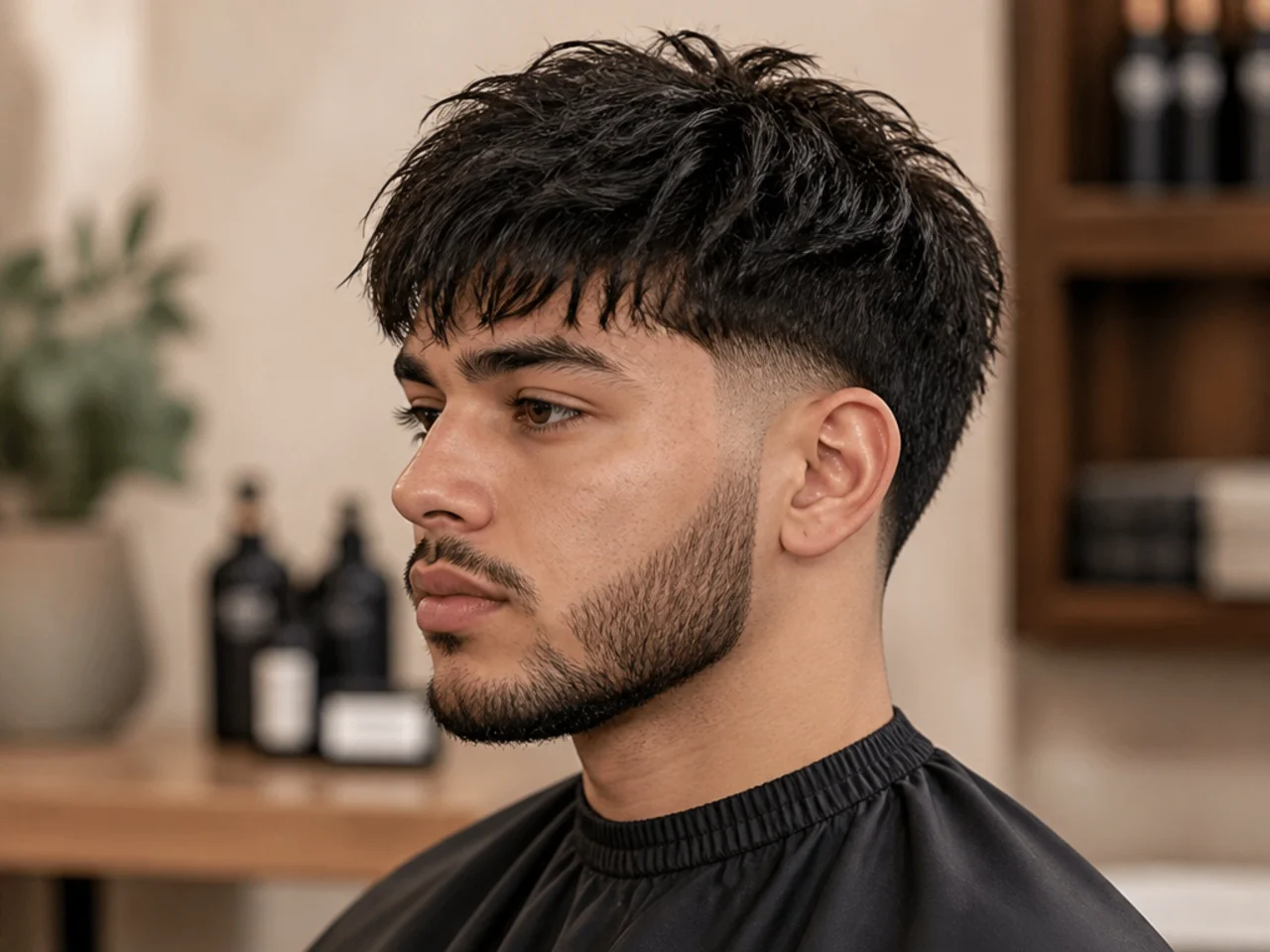
The low taper fade fringe rewards a small kit and a two-minute morning. Here is the routine that covers every variation on the list.
Wash. Sulfate-free shampoo two to three times a week — daily washing strips the natural oils that give fringes movement. Condition the mid-lengths and ends only. Skip the roots.
Product base. Two products cover the whole list. A matte clay for structured, textured, or piece-y fringes. A cream pomade for blunt, side-swept, curtain, or comma fringes. Add a sea-salt spray if you want more separation on textured versions, and a light hairspray if your fringe collapses by lunch.
Dry technique. Damp is the target — not soaking, not fully dry. Blow-dry the fringe forward with a round brush for curtain, comma, and Korean-style versions. Rough-dry with fingers for messy and textured versions. Air-dry for blunt and cropped versions.
Cadence. Fade touch-up every three to four weeks (fifteen minutes, $15 to $25). Full cut every six to eight weeks. Fringe trim as soon as the ends hit your lashes — a five-minute in-shop trim is often free between full cuts.
Overnight. Sleep on a satin pillowcase. Cotton drags the fringe into weird bends by 7 AM. On wavy and curly versions, this is non-negotiable.
FAQ
Is the low taper fade fringe still trending in 2026? Yes — it is one of the most-saved fade combinations on Pinterest right now and shows no sign of cooling. The taper reads modern without being aggressive, and the fringe brings the personality that a plain skin-fade-plus-short-top cannot. Expect it to stay dominant through the year.
Which fringe length is easiest to style? The blunt fringe. Comb forward, done. The cropped textured fringe is a close second — matte clay, palm-press, out the door. The curtain and Korean-style fringes take five to eight minutes with a round brush and blow dryer. If you hate styling, stay with the blunt or the cropped textured version.
Can I grow a low taper fade into a curtain fringe? Yes, and this is the easiest transition. Keep the low taper alive with monthly touch-ups while the top grows. Around week ten to twelve the front will be long enough to fall as a proper curtain. Get a shape-up at week eight so the crown does not overtake the fringe.
What is the difference between a low taper fade fringe and a low taper fade middle part? The middle part is one specific way to wear a fringe — split down the middle so both halves fall as short curtains. A fringe more broadly is any front section styled to fall onto the forehead. All middle-part low tapers are technically fringes; not all low taper fade fringes are middle-parted. The low taper fade design roundup shows both side by side.
Does it work with a beard? Yes. Blend the sideburn into the top of the fade so the transition reads as one shape. Keep the beard trimmed short to medium — a heavy beard fights the softness of the taper and pulls the eye down. Get both trimmed on the same visit so the shapes stay balanced.
How much should I expect to pay? Standard low taper fade fringe at a mainstream barbershop: $35 to $60. At a specialist scissor-cut shop that takes the time to point-cut the fringe: $70 to $120. Add a tip. A fade-only touch-up between full cuts is $15 to $25 and takes fifteen minutes.