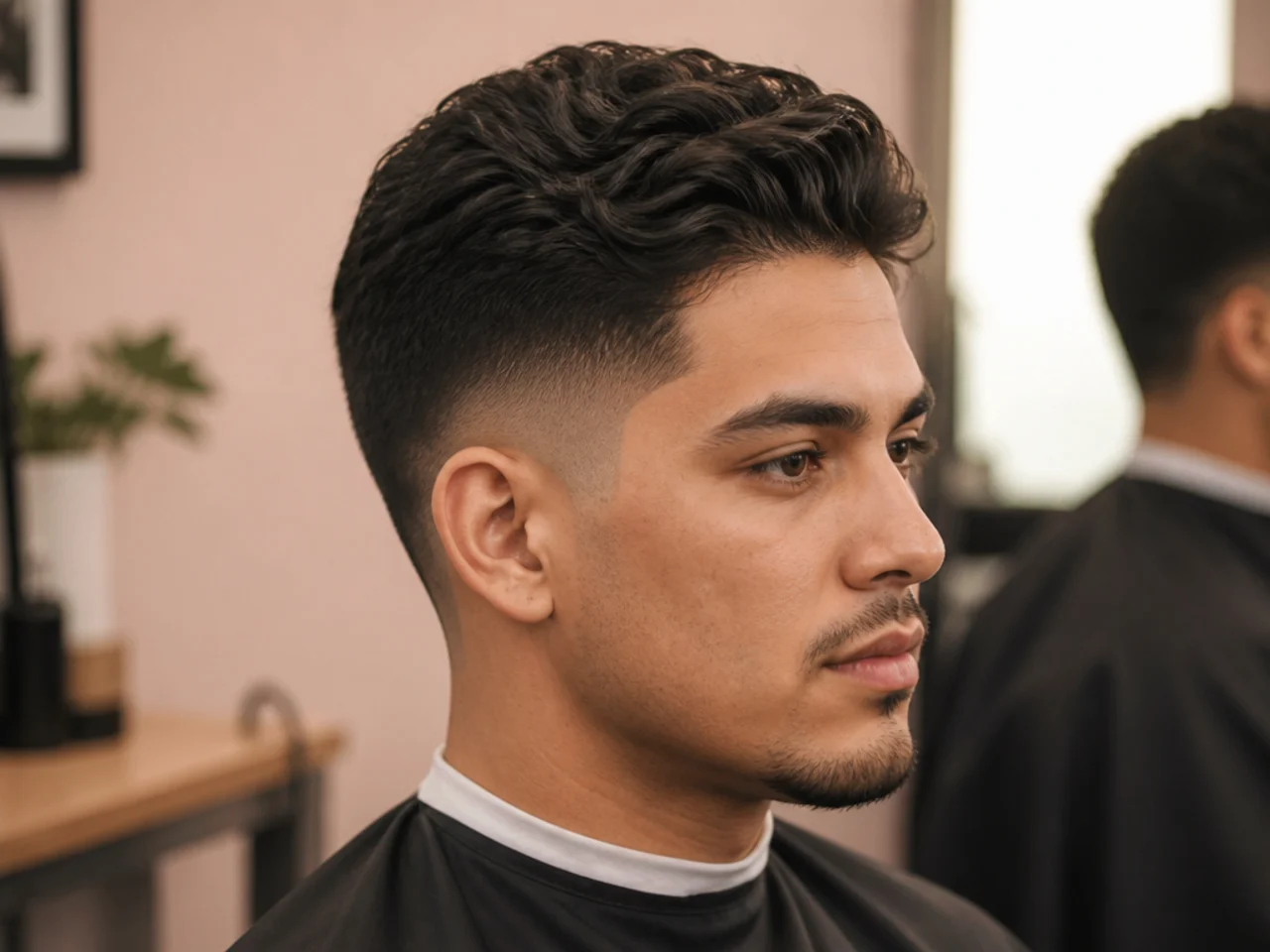
30 Low Taper Fade Haircuts That Look Sharp
Thirty low taper fade haircut variations for 2026 — face-shape notes, hair-type calls, guard numbers, and the exact language to hand your barber.
In this article · 48
- What Is a Low Taper Fade?
- Anatomy of a Low Taper Fade
- Low Taper Fade vs Other Fade Types
- How to Choose Your Low Taper Fade
- Classic Low Taper Fades
- 1\. Classic Low Taper Fade
- 2\. Low Taper Fade with Textured Crop
- 3\. Low Taper Fade with Ivy League Top
- 4\. Low Taper Fade with Comb Over
- 5\. Low Taper Fade with Side Part
- 6\. Low Taper Fade with Slick Back
- Low Taper Fades for Curly & Textured Hair
- 7\. Low Taper Fade with Curly Top
- 8\. Low Taper Fade with Afro
- 9\. Low Taper Fade with Broccoli Top
- 10\. Low Taper Fade with 360 Waves
- 11\. Low Taper Fade with Dreads
- 12\. Low Taper Fade with Twists
- Low Taper Fades for Straight & Fine Hair
- 13\. Low Taper Fade for Straight Hair
- 14\. Low Taper Fade for Asian Hair
- 15\. Low Taper Fade with Caesar Cut
- 16\. Low Taper Fade with Fringe
- 17\. Low Taper Fade Buzz Cut
- 18\. Low Taper Fade with Middle Part
- Bold & Statement Low Taper Fades
- 19\. Low Taper Fade Pompadour
- 20\. Low Taper Fade with Quiff
- 21\. Low Taper Fade Blowout
- 22\. Low Taper Fade Modern Mullet
- 23\. Low Taper Fade Faux Hawk
- 24\. Low Taper Fade with Long Top
- Specialized Low Taper Fade Styles
- 25\. Low Taper Fade with Hard Part
- 26\. Low Taper Fade Edgar Cut
- 27\. Low Taper Fade with Hair Design
- 28\. Low Taper Fade with Beard
- 29\. Low Taper Fade Undercut Disconnect
- 30\. Low Taper Fade Messy Texture
- How to Ask Your Barber for a Low Taper Fade
- Styling & Maintenance
- FAQ
- Is a low taper fade good for professional settings?
- How is a low taper fade different from a regular taper?
- Can I get a low taper fade with any hair type?
- How often do I need to re-cut a low taper fade?
- What length should I leave on top?
- Is a low taper fade good for round faces?
The low taper fade is the fade you can wear anywhere. The blend starts down at the nape and behind the ear, dies quietly into your neckline, and leaves enough length on the sides to look tidy at a Monday meeting and sharp on a Saturday night. This guide walks through 30 low taper fade haircut ideas worth asking for in 2026, with face-shape notes, hair-type calls, guard numbers, and the exact language to hand your barber.
What Is a Low Taper Fade?
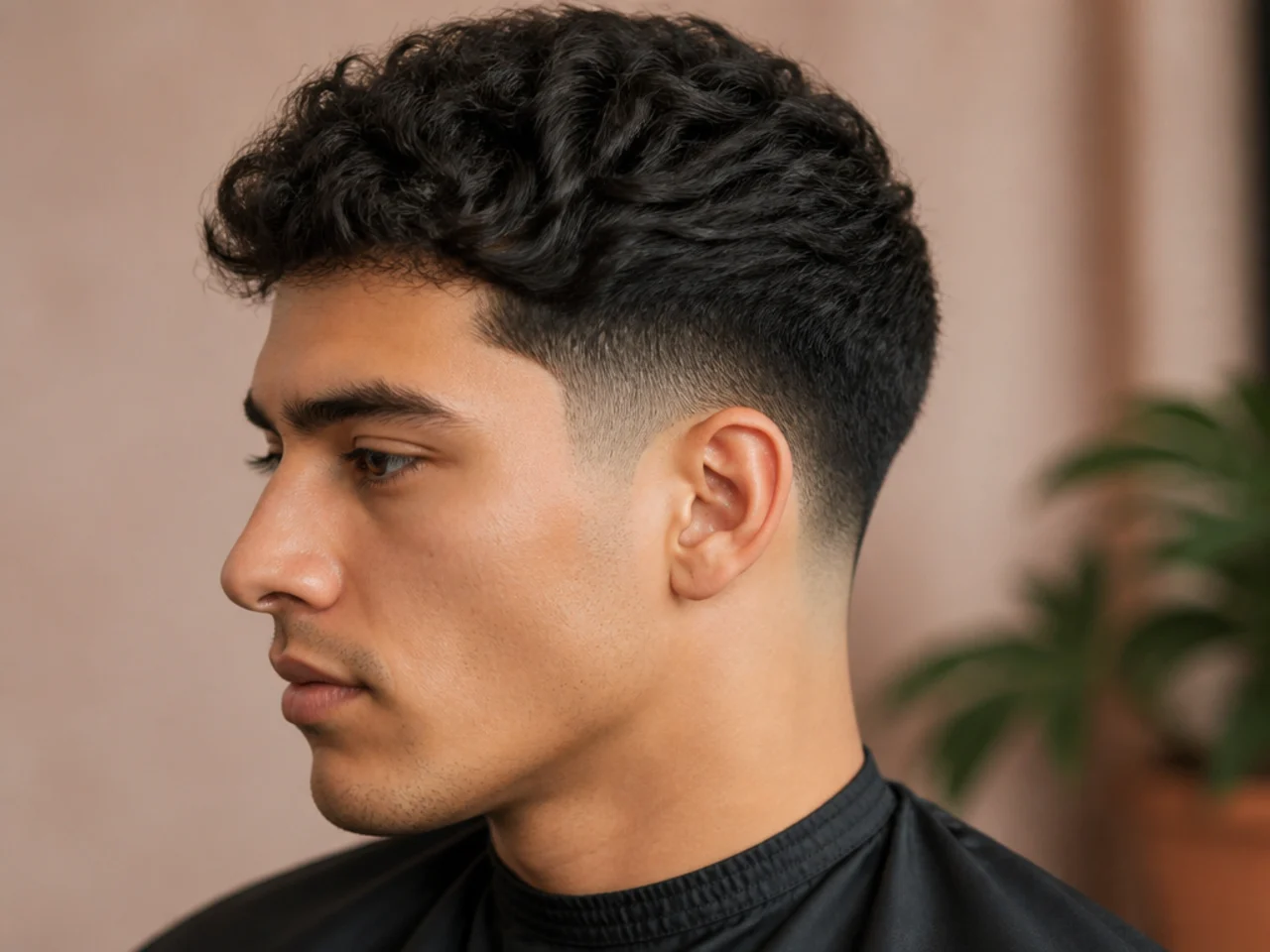
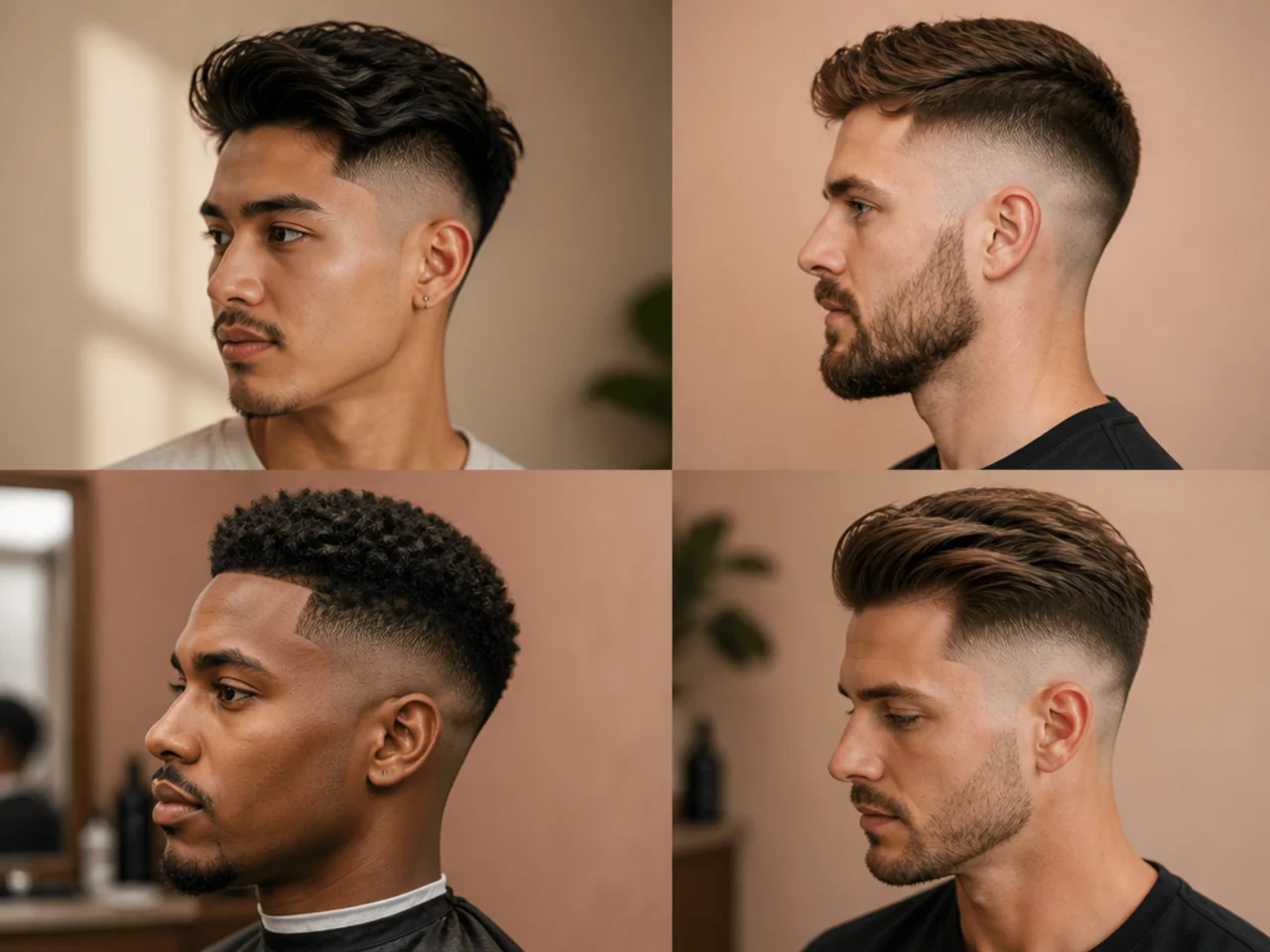
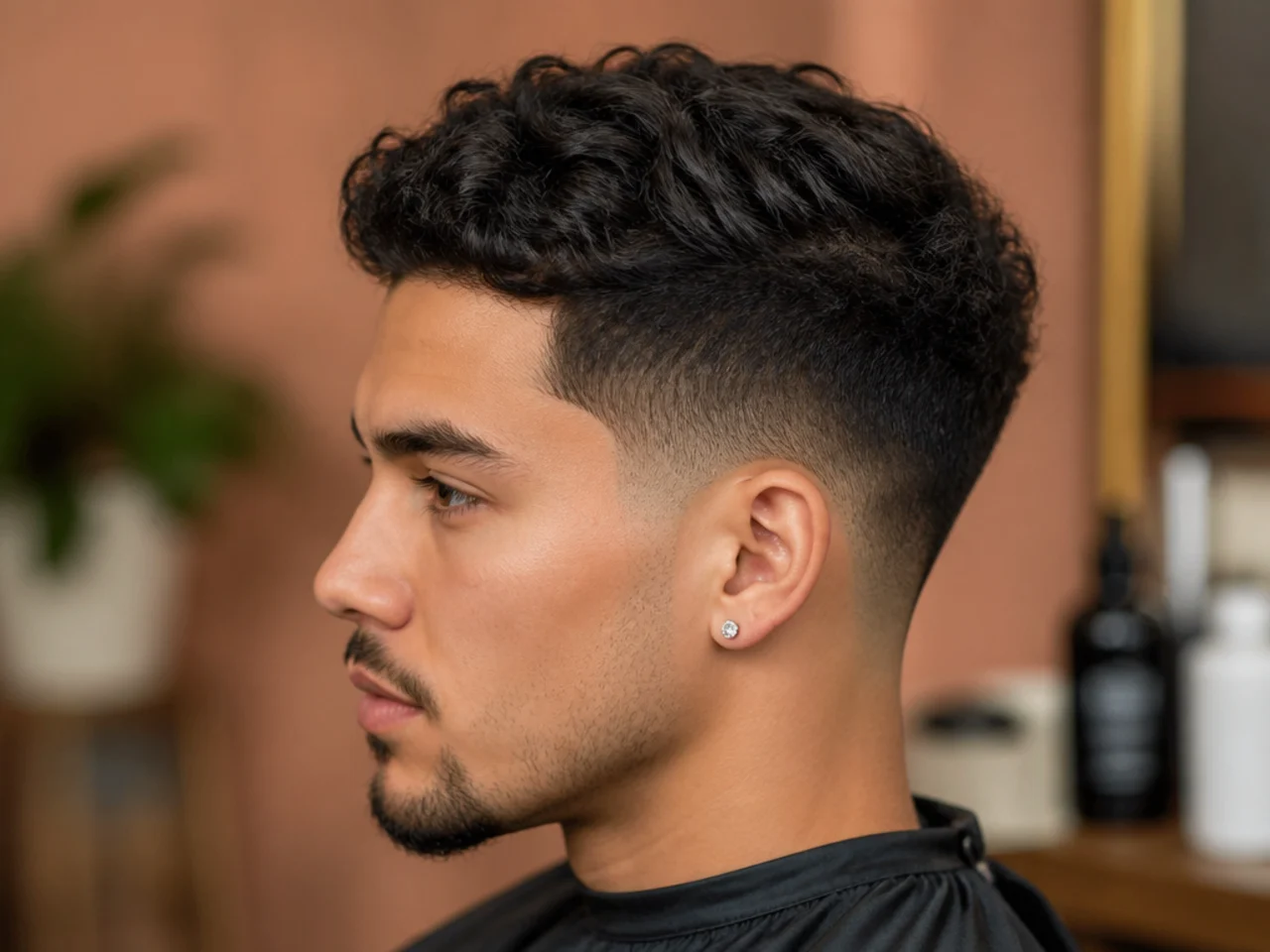
A low taper fade is a men's cut where the sides stay mostly full but the perimeter — behind the ear, at the sideburn, along the nape — blends down through short clipper guards. The transition sits low on the head, about a finger's width above the ear, and stops at a #0.5 or #1 instead of running to bare skin. The top stays whatever length you asked for.
Think of it as the taper haircut with a little more gradient work — enough to read as a fade, not so much that your sides look shaved. It's the most work-appropriate cut in the fade haircut family and the one barbers reach for when a client says "clean me up, but nothing crazy."
That subtle drop is what earns the low taper its reputation. Grown to three weeks it still reads intentional. Photographed head-on it doesn't scream barbershop. That's why Pinterest keeps ranking it above the louder options and why the search volume climbs every quarter.
Anatomy of a Low Taper Fade
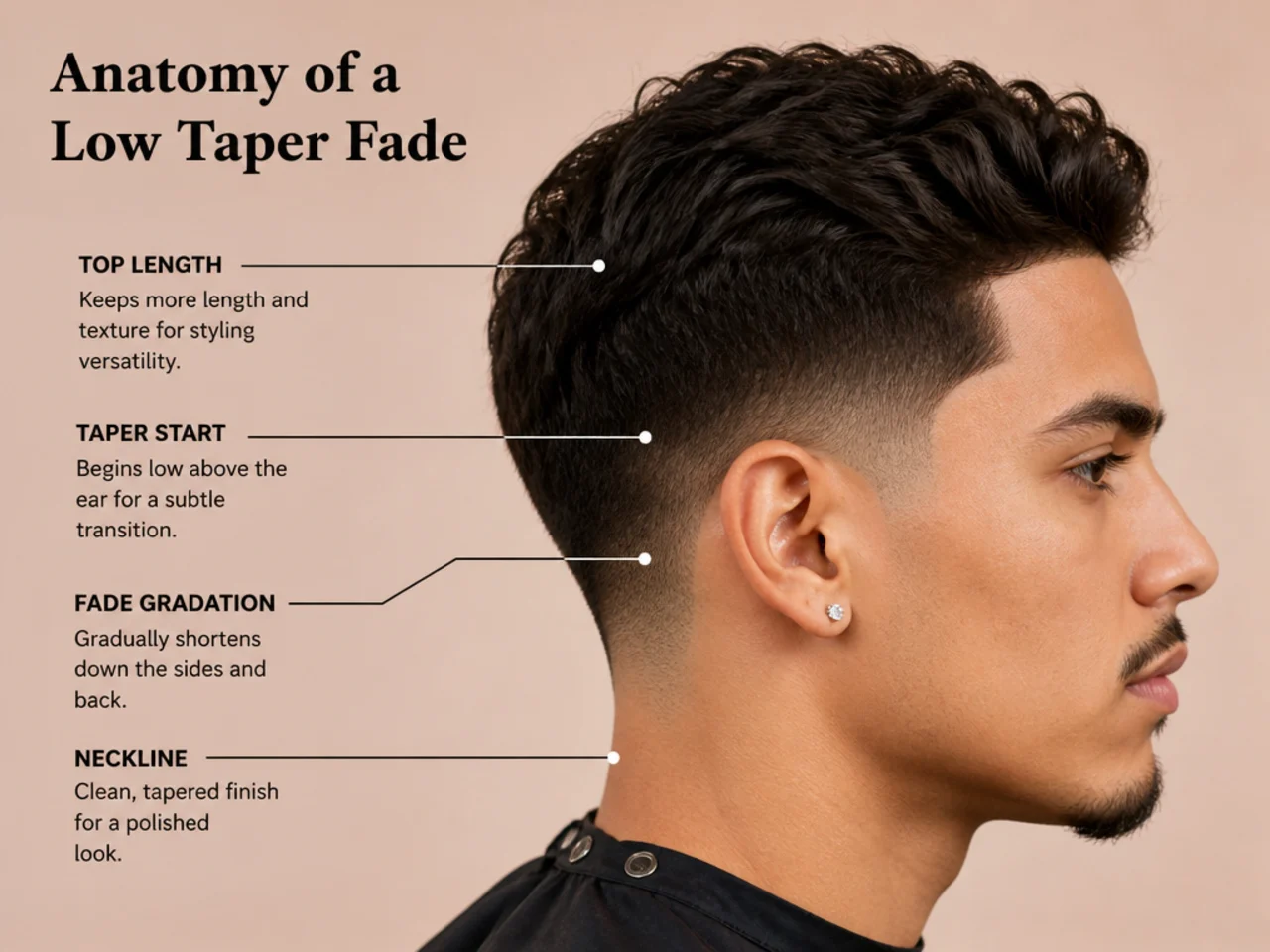
The fade start sits about an inch above the top of your ear, following the natural curve of the hairline. Anything lower is a plain taper; anything higher moves you into mid-fade territory.
The graduation runs through three or four guards in sequence. Most barbers open with a #2 at the widest point, drop to a #1 through the middle of the blend, then finish with a #0.5 at the perimeter. Skin never enters the picture — that's the whole reason it's a taper and not a full fade.
The top stays untouched by the clippers. You can leave anywhere from a #4 buzz to eight inches of curl on top and the low taper still frames it correctly.
The neckline finishes either tapered (a soft blend down the nape) or blocked (squared corners). Tapered ages better between cuts because there's no hard line to grow out.
Low Taper Fade vs Other Fade Types
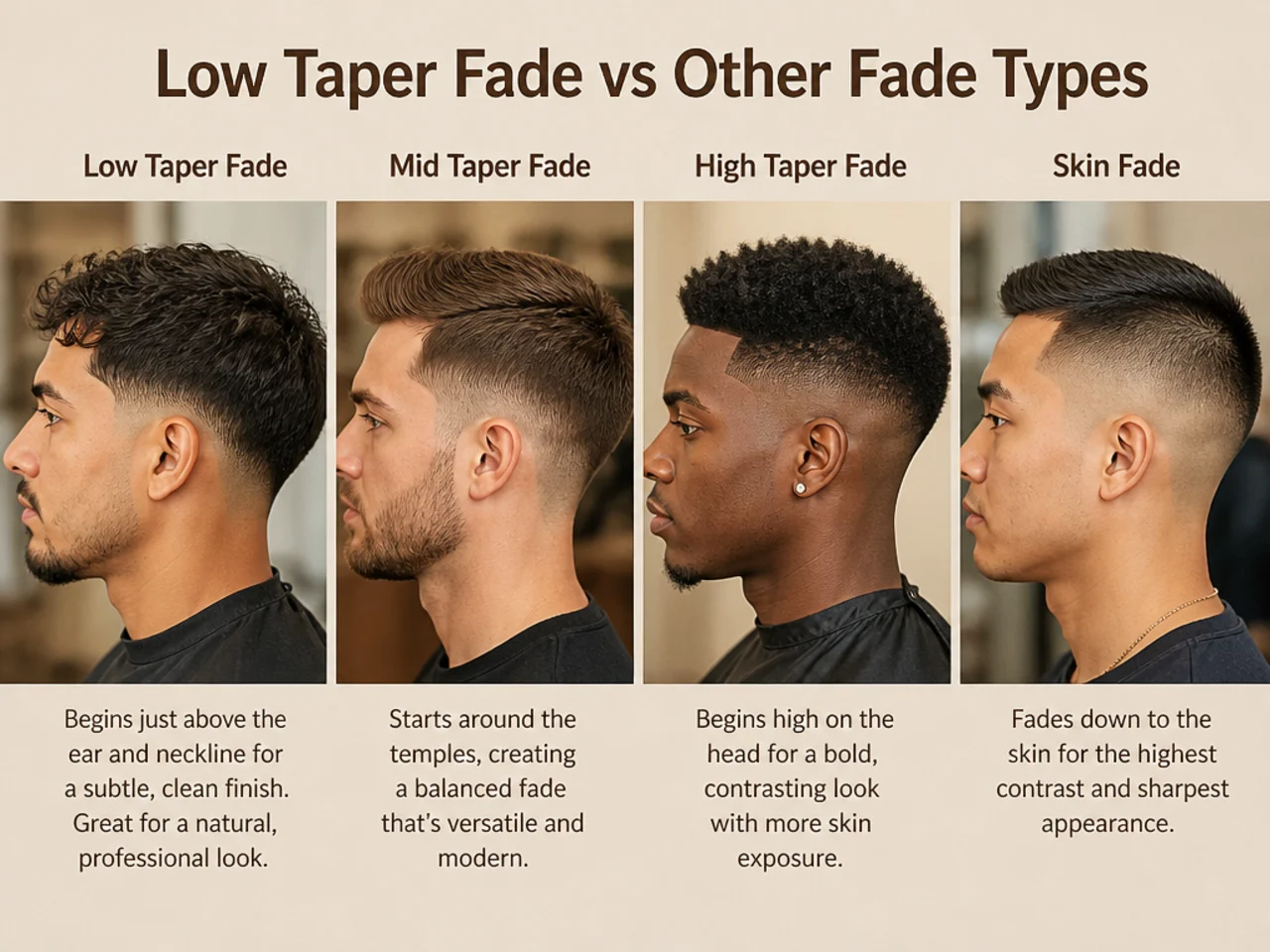
Height is the only real variable across the fade family. Everything else — top length, texture, styling — is independent of where the blend starts.
Low taper vs low fade haircut. Both start at the same height, but the low fade drops all the way to skin or a #0 at the shortest point. The taper stops at a #0.5 or #1 — softer contrast, no bare patch above the ear, slower grow-out. The taper wins in offices; the fade wins in photos.
Low taper vs mid fade haircut. A mid fade starts an inch or two higher, right around the top of the ear. Bolder. More skin visible. If you like the low taper's softness but want a bit more visual weight, try the mid.
Low taper vs high taper fade haircut. The high taper begins at the temple, exposing much more skin. It reads modern and youthful. The low taper reads timeless and versatile. Different rooms, different verdicts. Read the full low fade vs mid fade vs high fade breakdown if you're still deciding.
Low taper vs burst fade haircut. A burst fade curves in a horseshoe around the ear instead of dropping in a straight line. Same low start, different silhouette. Pick the burst if you want more shape around the ear; pick the low taper if you want the cleanest possible perimeter.
If you want to go deeper on the specific low-taper shapes barbers cut every day, browse the sibling low taper fade roundup — it covers 35 variations with more focus on styling recipes.
How to Choose Your Low Taper Fade
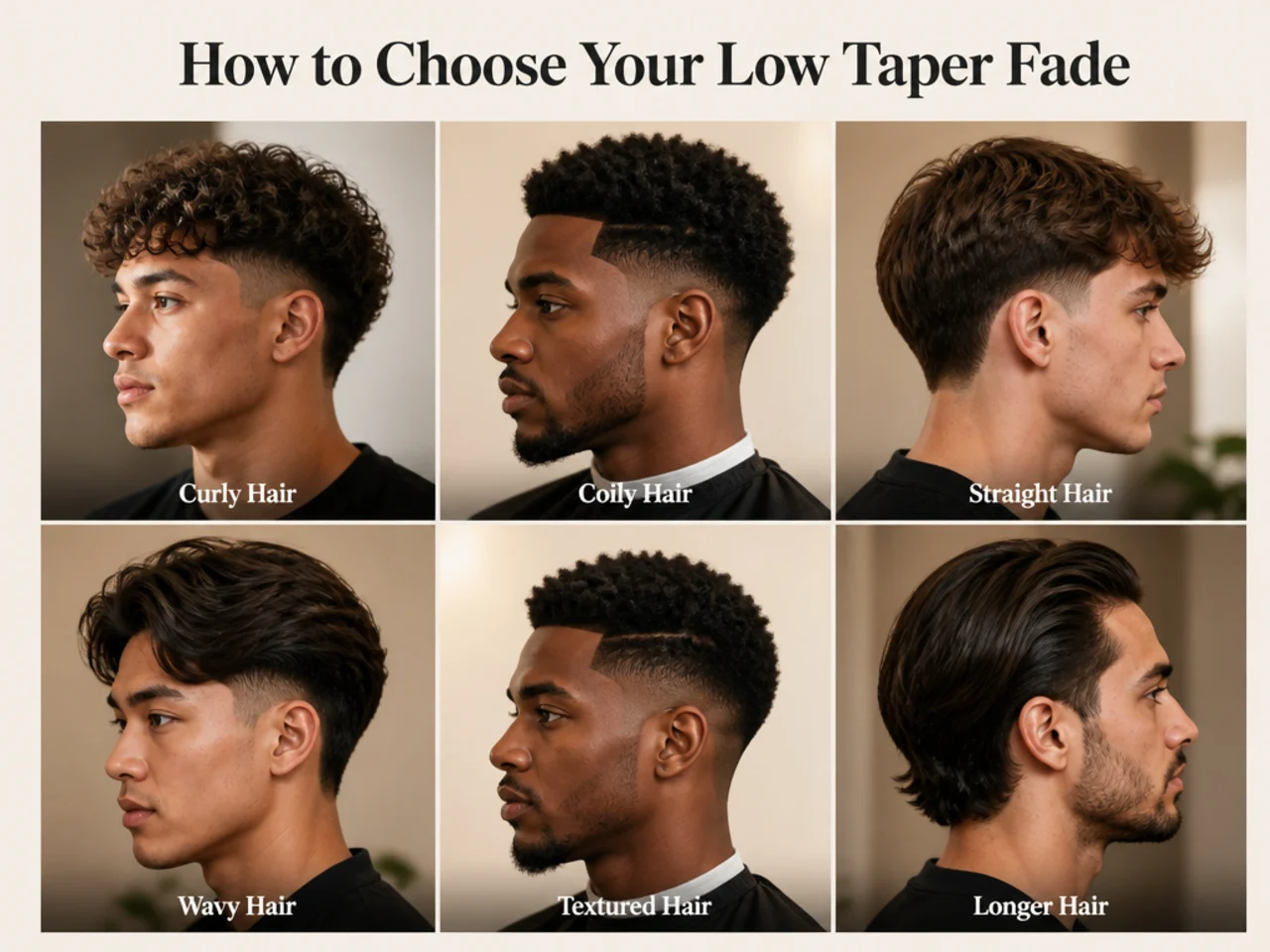
Four filters cut the 30 options below down to two or three real candidates.
Hair type first. Curly and coily hair pair especially well with a low taper — the blended perimeter removes bulk that would otherwise sit like a helmet at the sides. Straight hair needs a pre-styler to hold shape on top. Fine hair benefits from the reduced sidewall volume. Thick hair holds every variation without breaking a sweat.
Face shape second. Round faces want vertical lift up top — quiff, pompadour, textured crop. Long and rectangular faces want length restraint on top and lean into fringes. Square faces balance well with softer top texture. Oval faces wear anything. Heart-shaped faces want a forward fringe or textured crop to widen the jaw side.
Workplace third. Corporate rooms tolerate the low taper better than any other fade. Creative fields open the door to designs, colors, and mullets. Trades and outdoor work reward shorter tops and skin-safe finishes.
Maintenance fourth. Be honest — if you can't book every two or three weeks, pick a variation that grows out well (classic, side part, textured crop). If you can, pick anything. The bolder the top, the more obvious a grown-out fade looks against it.
Classic Low Taper Fades
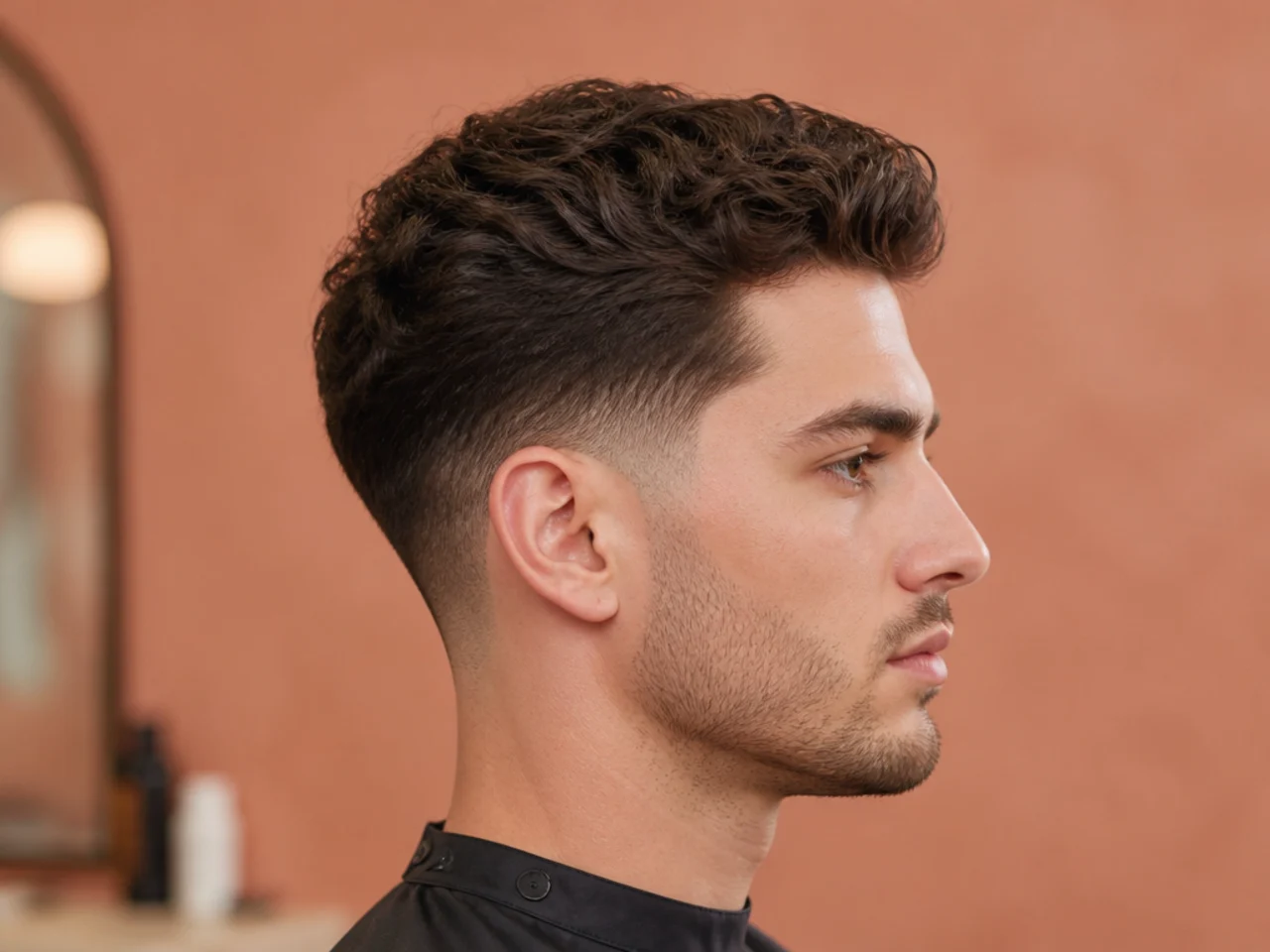
These six are the cuts every barber can execute without a photo. Start here if it's your first low taper — trade up to something bolder once you've lived with the shape for a cycle.
1. Classic Low Taper Fade
The baseline every other variation builds off. Sides open at a #2 just above the ear, blend down to a #0.5 at the neckline, top left at two to three inches with natural texture. Suits any face shape and any hair type — that's why it's the barber's default. Works especially well on straight and wavy hair with medium density.
Ask for: "Low taper fade, #2 blending down to #0.5, two inches on top with a matte finish, tapered neckline."
Styling tip: a pea-sized amount of matte clay worked from root to tip. Finger-comb forward — a comb over-styles it.
2. Low Taper Fade with Textured Crop
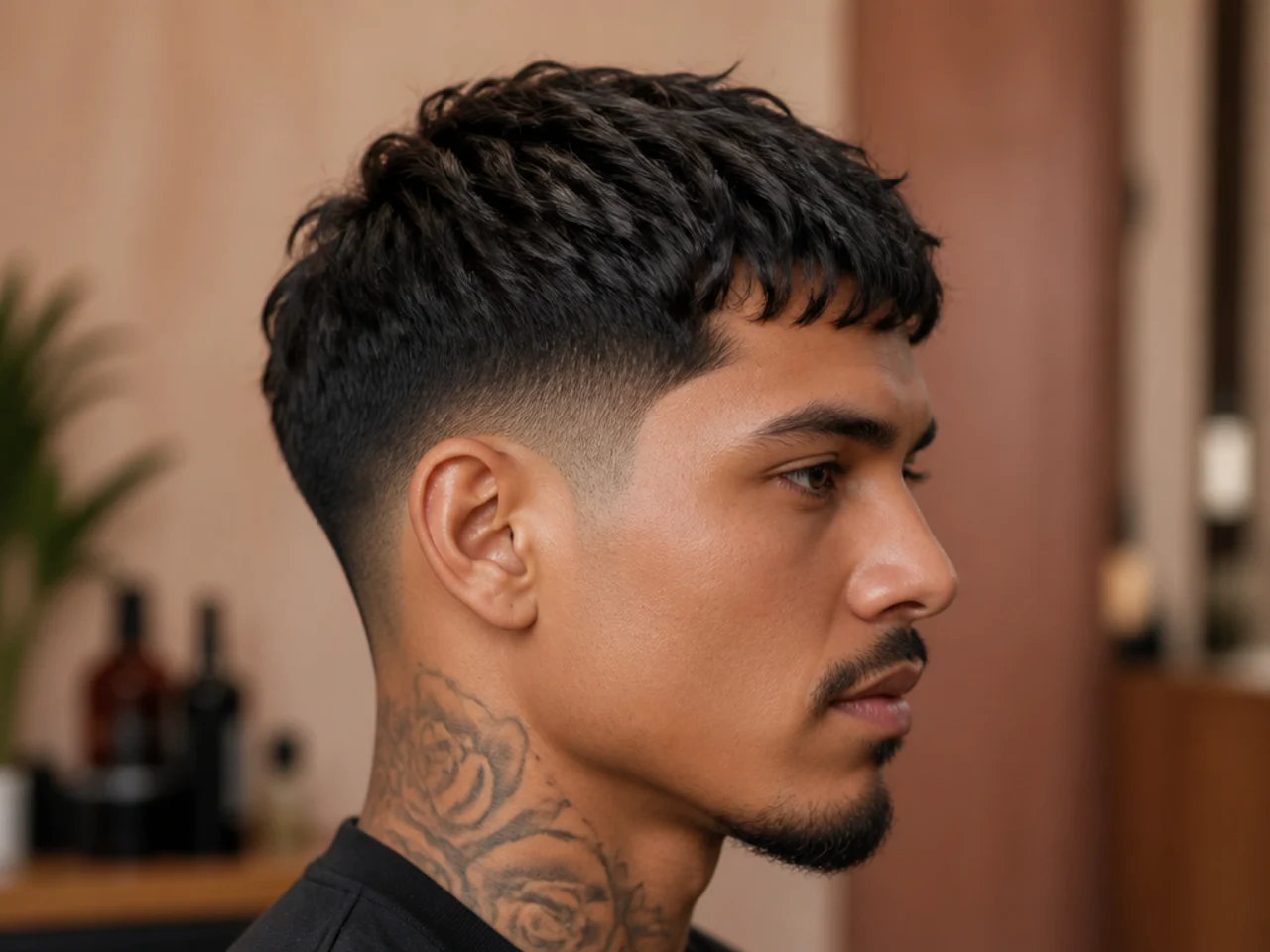
Choppy, point-cut layers on top with a short forward fringe. The taper holds the perimeter tight while the crop does the visual work. Best on straight to wavy hair with medium density. Round and oval faces benefit most — the fringe visually shortens the forehead.
Ask for: "Low taper fade with a textured crop, scissor the top with visible layers, keep a short blunt fringe on the forehead."
Styling tip: matte paste on damp hair, blow-dry with fingers pushing forward, then break the fringe apart with your thumbs. Never brush.
3. Low Taper Fade with Ivy League Top
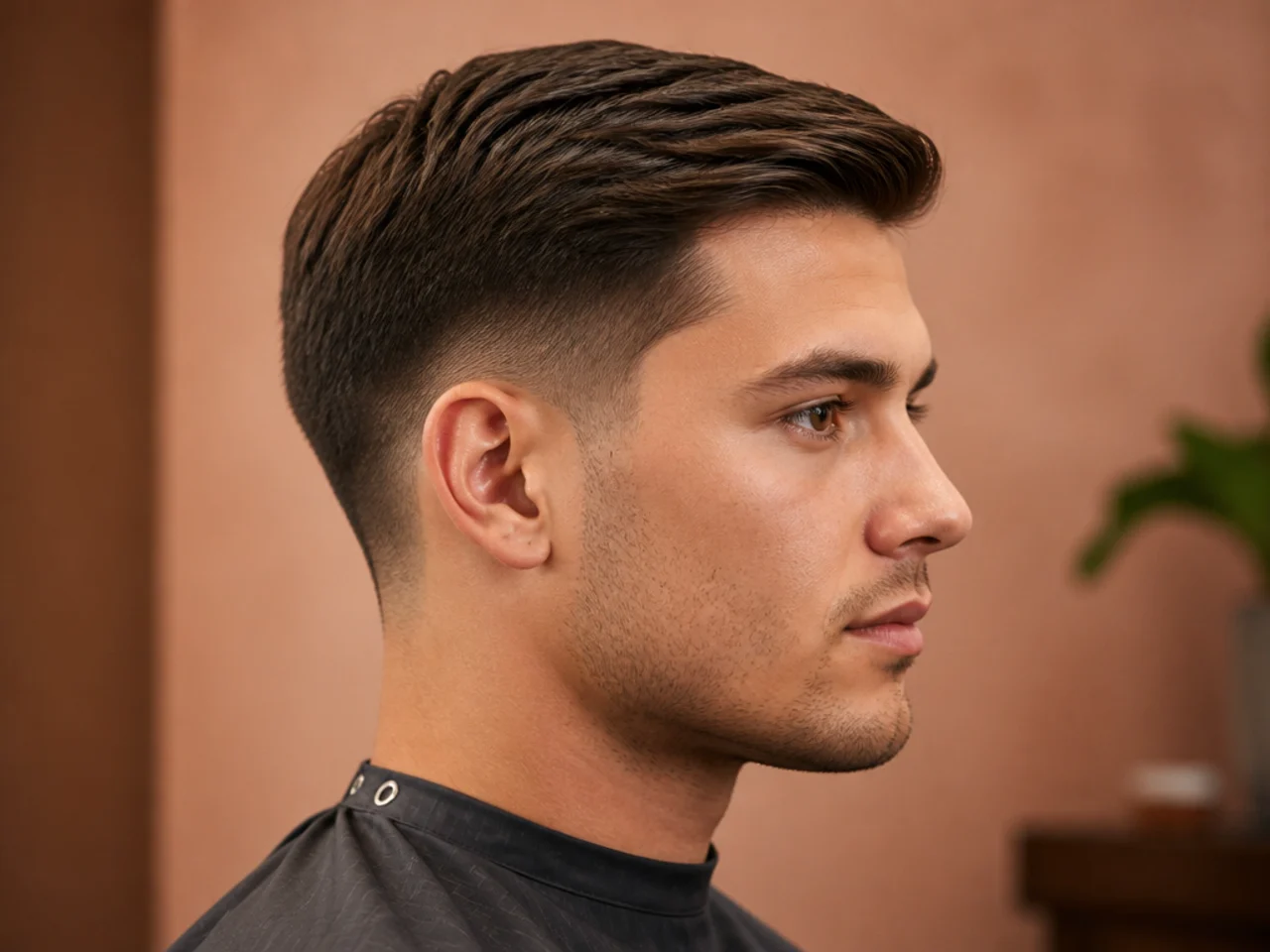
The prep-school variation — three inches on top, combed neatly to one side, low taper holding the sides in check. Reads clean and conservative without looking dated. Straight to wavy hair, medium density. Oval, square, and heart-shaped faces.
Ask for: "Low taper fade, three inches on top with a natural side part, medium-hold pomade finish."
Styling tip: a low-shine pomade combed through damp hair, part with the tip of a fine-tooth comb, blow-dry along the sweep direction. Two minutes, out the door.
4. Low Taper Fade with Comb Over
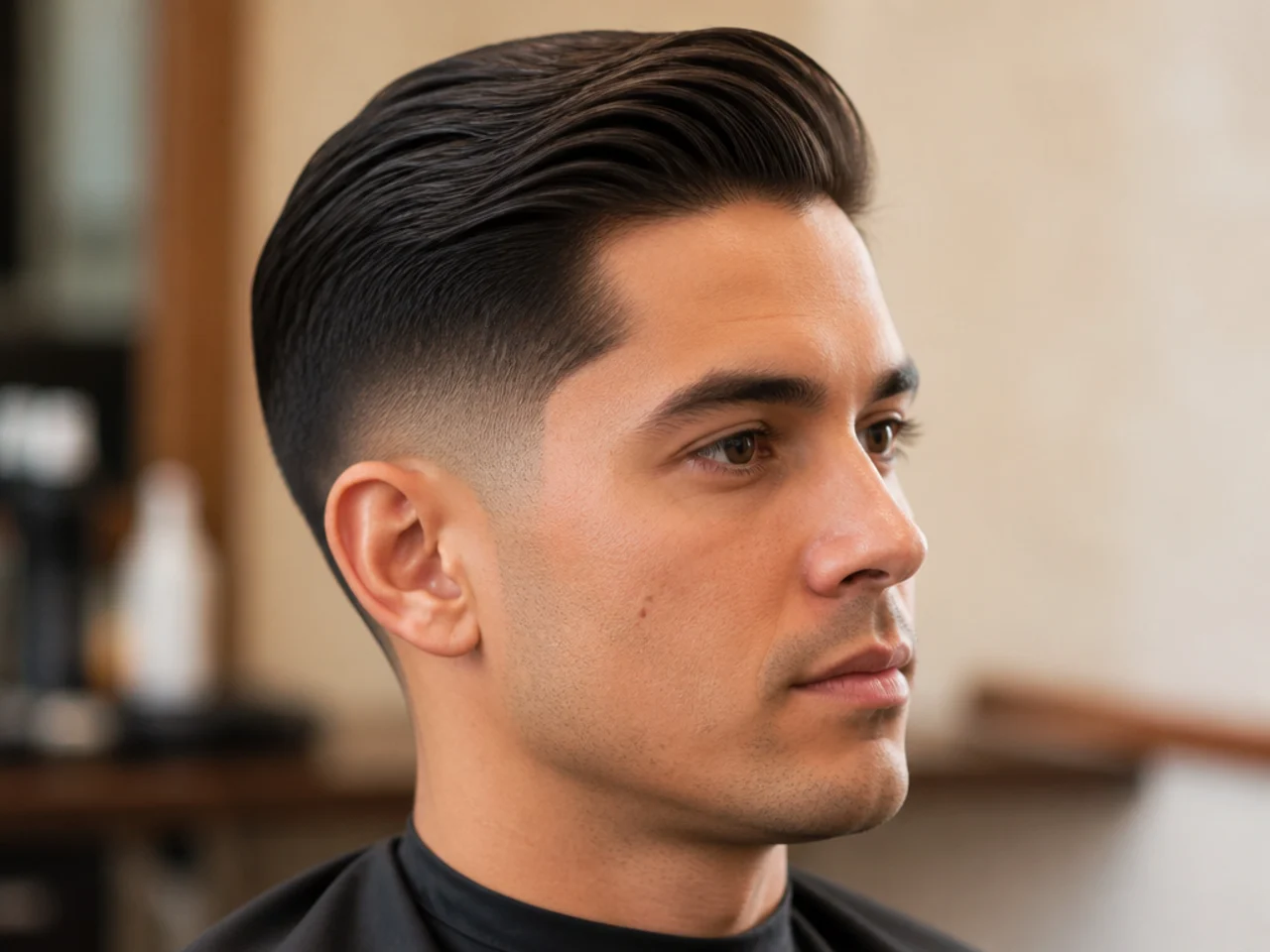
Defined side part, hair swept firmly across, low taper below. The modern comb over — intentional, not corrective. Straight to wavy hair, medium density. Oval, square, and rectangular faces.
Ask for: "Low taper fade, hard or natural side part on my [left/right], three inches on top combed over."
Styling tip: round-brush the top upward and over in your sweep direction, then finish with a medium-hold clay. Skip the shaved hard part if you want the cut to age gracefully between visits.
5. Low Taper Fade with Side Part
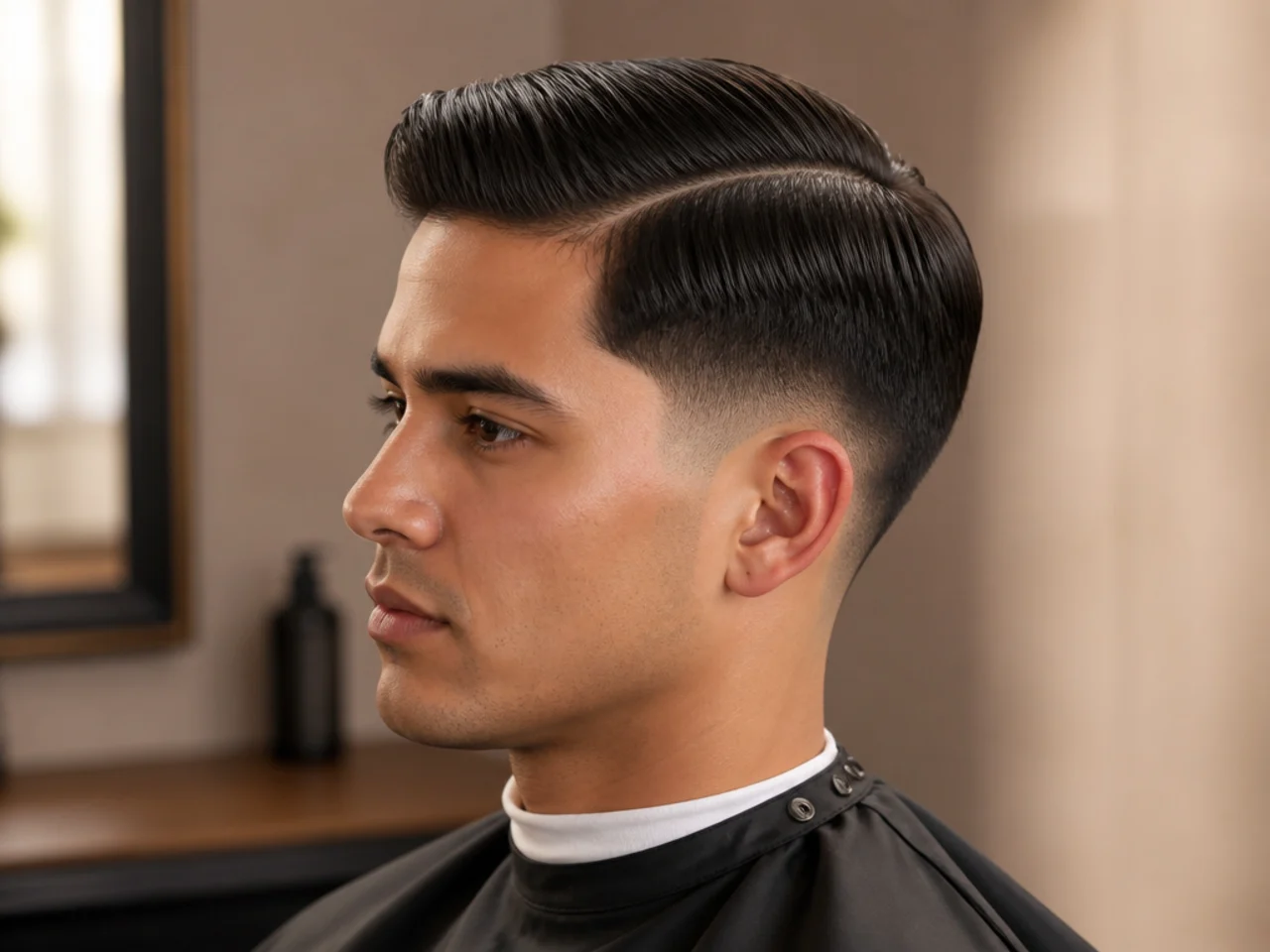
Softer than a comb over — the part is there, the hair sits where you comb it, but nothing feels forced. Straight to wavy hair, medium density. Every face shape wears this well.
Ask for: "Low taper fade, natural side part on my [left/right], two to three inches on top with a soft finish."
Styling tip: styling cream on damp hair combed into position, then air-dry or blow-dry lightly. This is the low-effort cut for guys who want polish without a daily routine.
6. Low Taper Fade with Slick Back
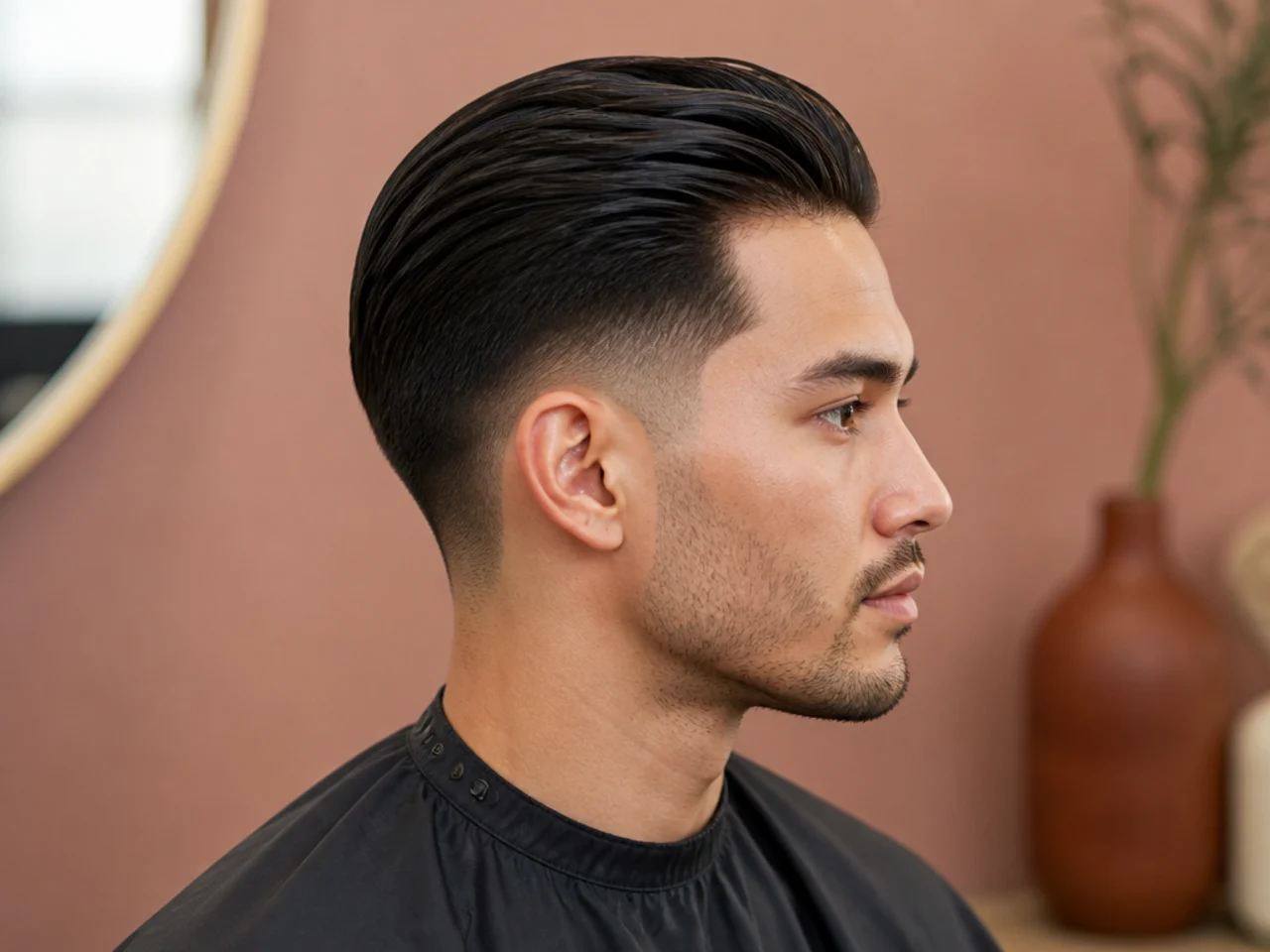
Combed straight back from the hairline, glossy finish, low taper underneath. Vintage silhouette with modern discipline at the perimeter. Straight to wavy hair. Oval, diamond, and rectangular faces.
Ask for: "Low taper fade, four inches on top, want to slick it back with shine — leave enough for a full sweep."
Styling tip: oil-based pomade on damp hair for authentic gloss, comb from front to back, blow-dry with lift at the crown. Set with a light hairspray if you're heading outdoors.
Low Taper Fades for Curly & Textured Hair
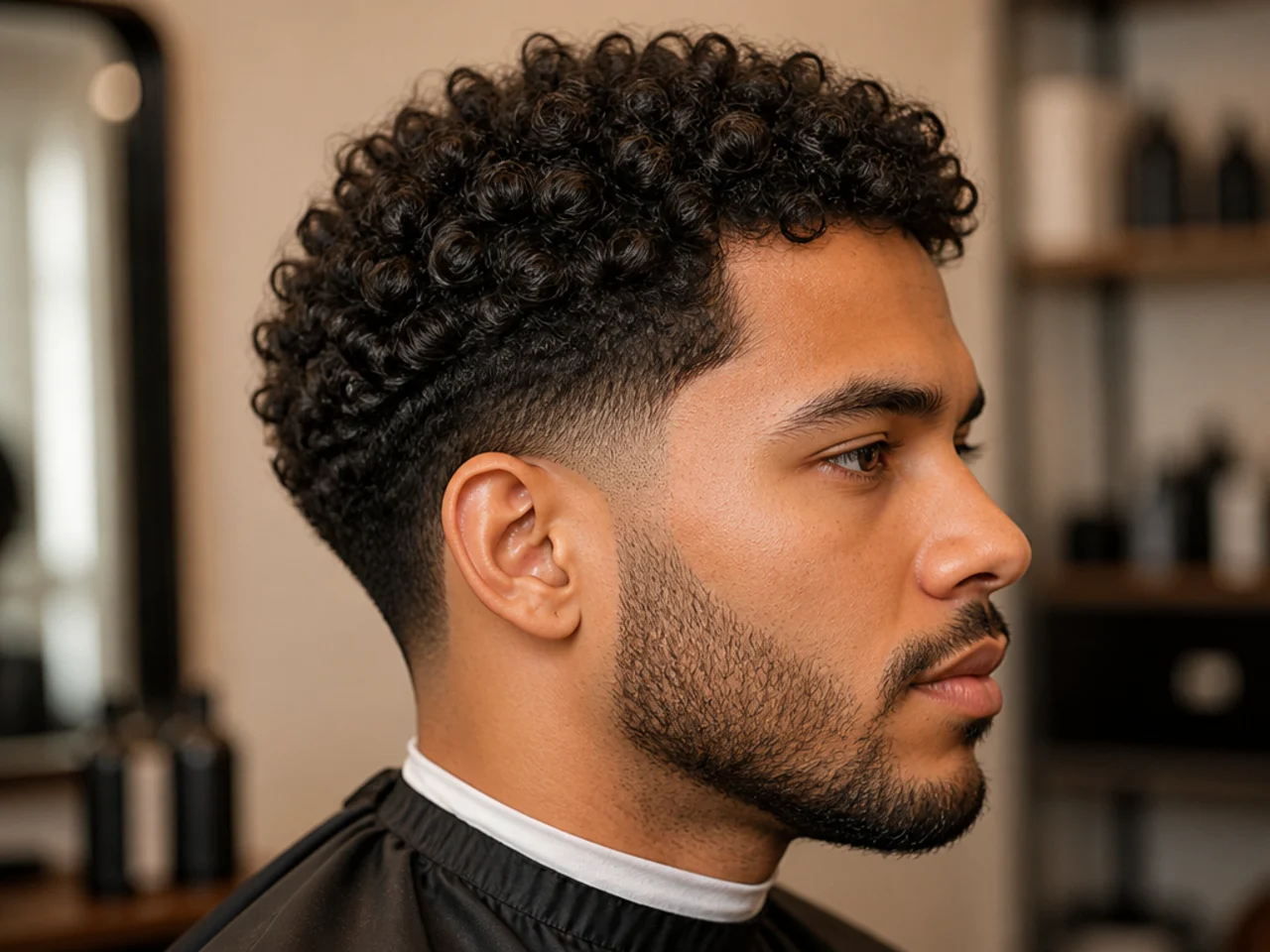
Curly, coily, and textured hair is where the low taper earns its keep. The blended perimeter defines the volume up top without stripping the length that gives your curl pattern personality. For cuts beyond the taper family, see the full curly hairstyles for men guide.
7. Low Taper Fade with Curly Top
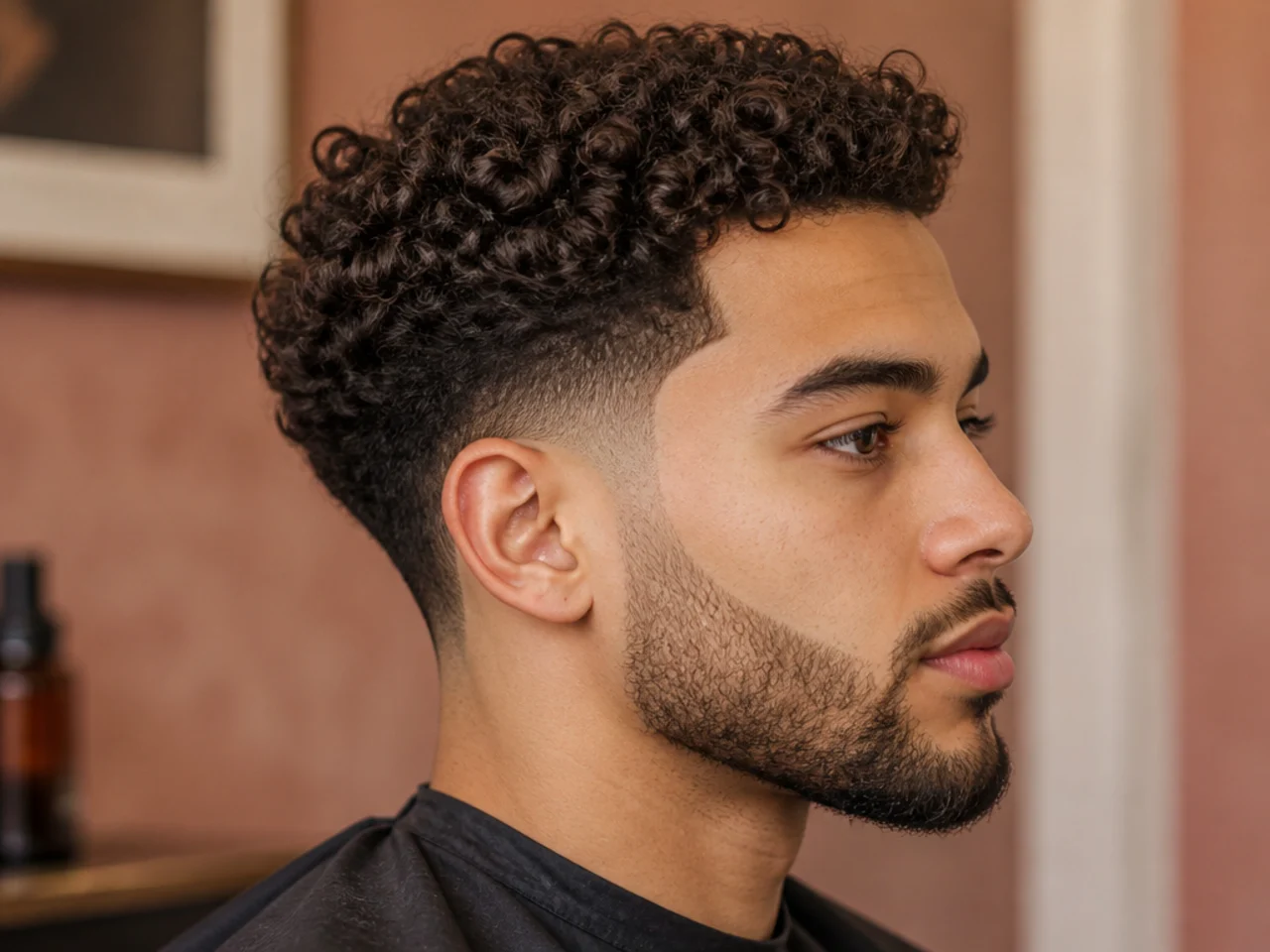
Three to four inches of curl on top with the taper blending the sides down. Best for type 2b through 3b patterns — enough curl to have movement, not so much that it needs a full afro. Oval, square, and heart-shaped faces.
Ask for: "Low taper fade, scissor the top — no thinning shears — leave three inches and let the curl show."
Styling tip: curl cream on soaking-wet hair, scrunch upward toward the scalp, diffuse on low heat. Break the cast with your fingers once dry.
8. Low Taper Fade with Afro
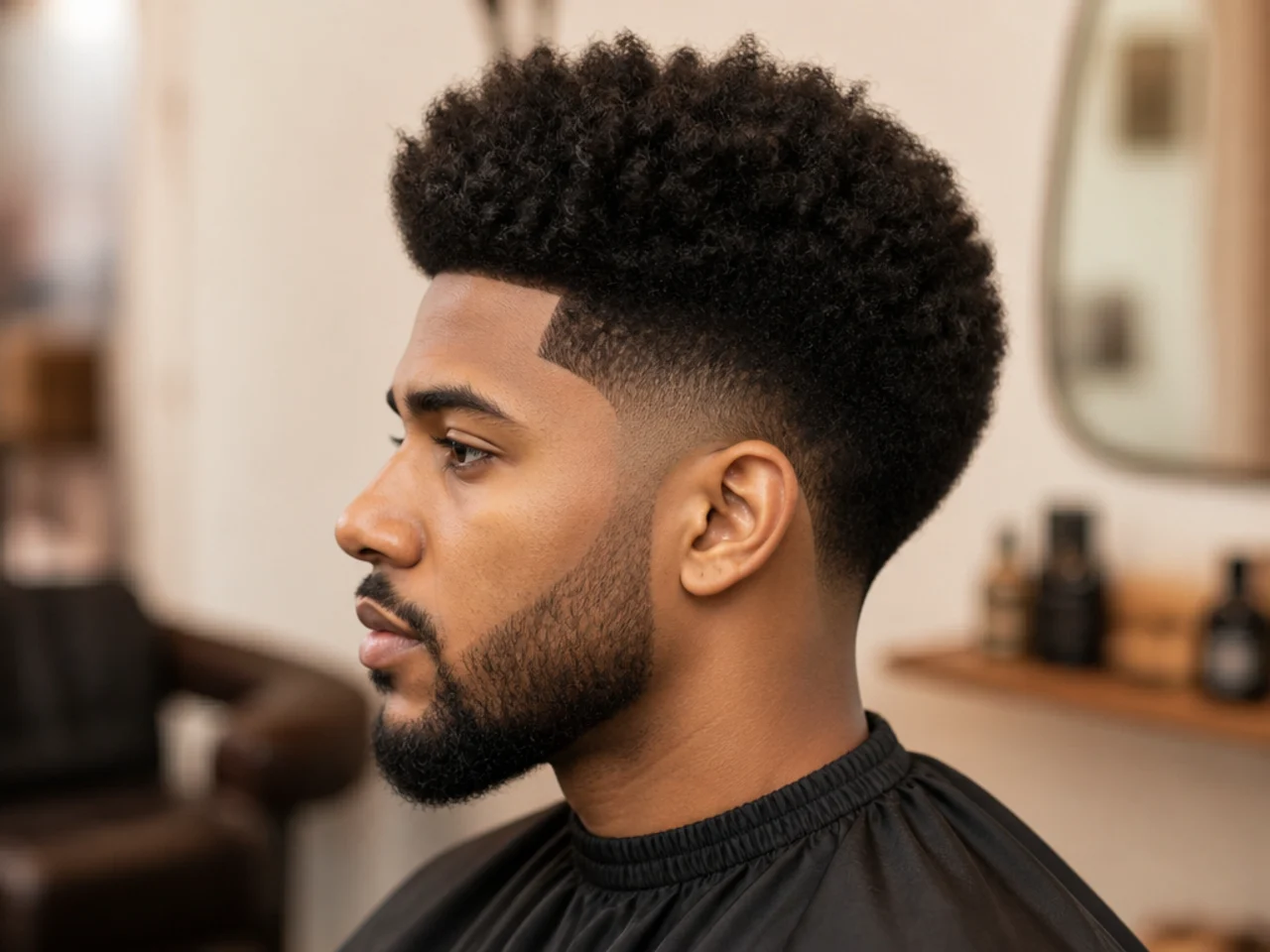
Rounded, full afro on top with the sides tapered low to expose the neckline. Statement cut that keeps the profile soft. Type 4a-4c coils with real density. Round, oval, and square faces all benefit — the afro adds visible vertical inches.
Ask for: "Low taper fade, scissor the top round — four to six inches — no thinning."
Styling tip: pick from the roots outward while hair is slightly damp. Edge control along the hairline keeps the perimeter sharp for photos.
9. Low Taper Fade with Broccoli Top
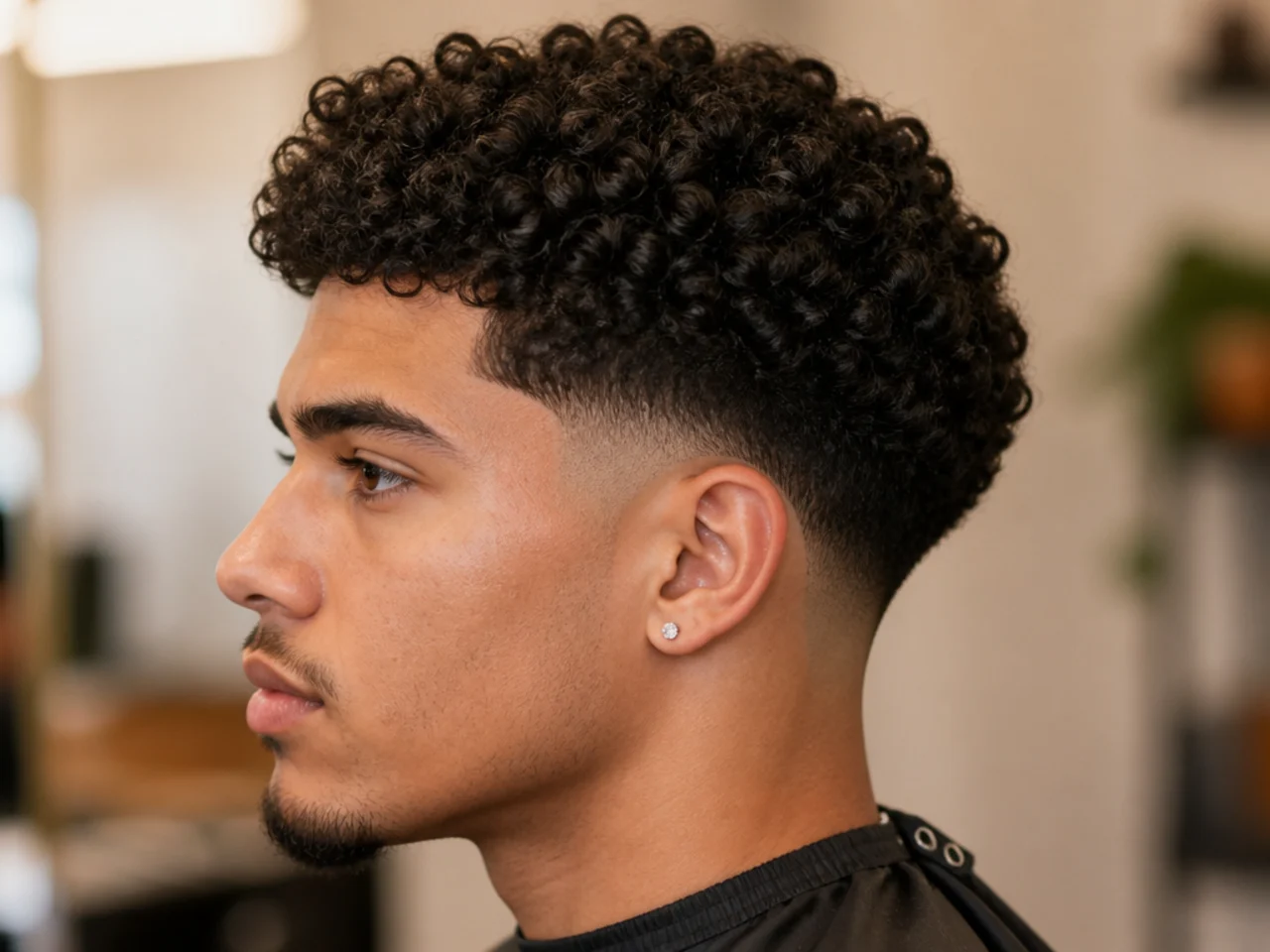
Curly mass on top — the "broccoli" silhouette — with a clean low taper underneath. The Gen Z uniform since about 2022. Loose curly to type 3 hair. Oval and heart-shaped faces.
Ask for: "Low taper fade, four inches of curl on top — I want the broccoli look."
Styling tip: curl cream on wet hair, diffuse in an upward lifting motion until 80% dry, then finger-shape the top into its rounded silhouette. Keep the front edge blunt so the cauliflower shape reads.
10. Low Taper Fade with 360 Waves
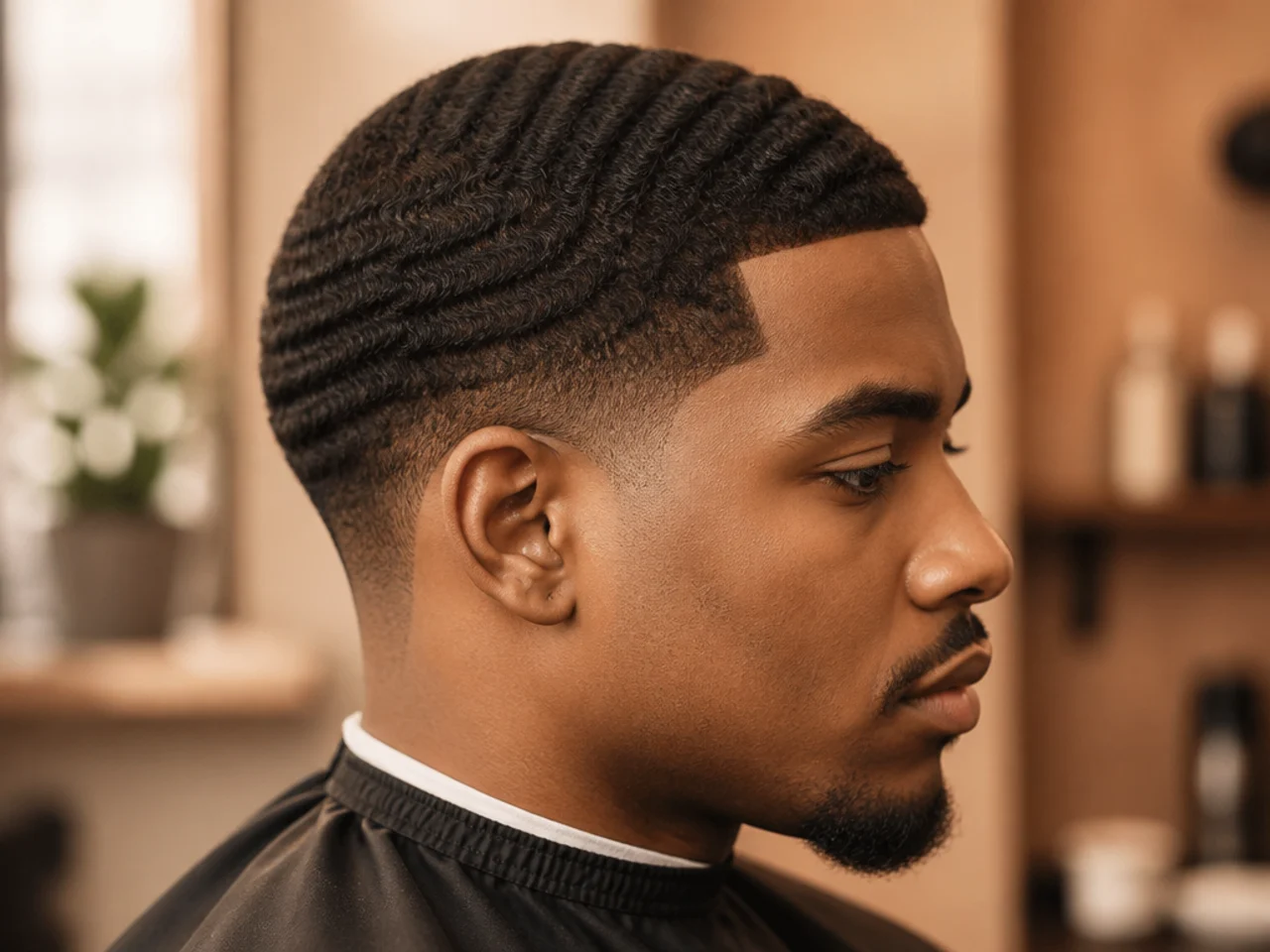
Deep wave pattern brushed into the top, clean low taper below the wave line. Type 3c to 4a hair. The pattern reads best in natural light, and the fade is what makes it pop against clean sides.
Ask for: "Low taper fade, keep the top at a #2 for waves — soft neckline, no hard line."
Styling tip: brush 20 minutes a day in your wave direction, wave pomade after each session, durag overnight. Book fade touch-ups every ten days to keep the contrast honest.
11. Low Taper Fade with Dreads
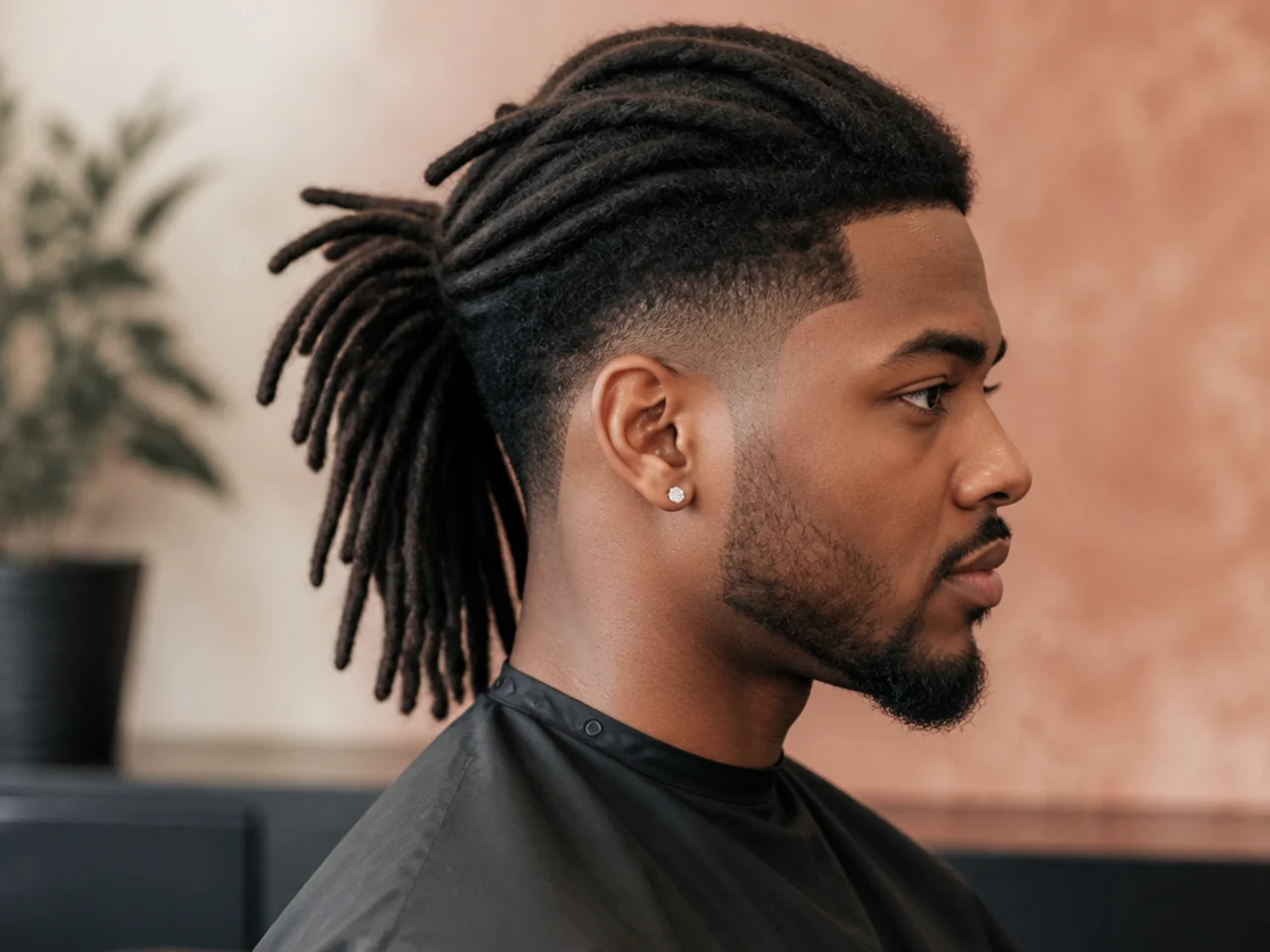
Locs on top, tight low taper on the sides. Type 3b-4c hair. Oval, diamond, and square faces. Combines a bohemian top with sharp barbering — the tension between the two is what makes it work.
Ask for: "Low taper fade, don't touch the locs — just clean up the perimeter."
Styling tip: lightweight oil (jojoba, argan) on the roots only. Retwist every four to six weeks. Book the fade every two weeks — locs make grown-out sides look scruffy fast.
12. Low Taper Fade with Twists
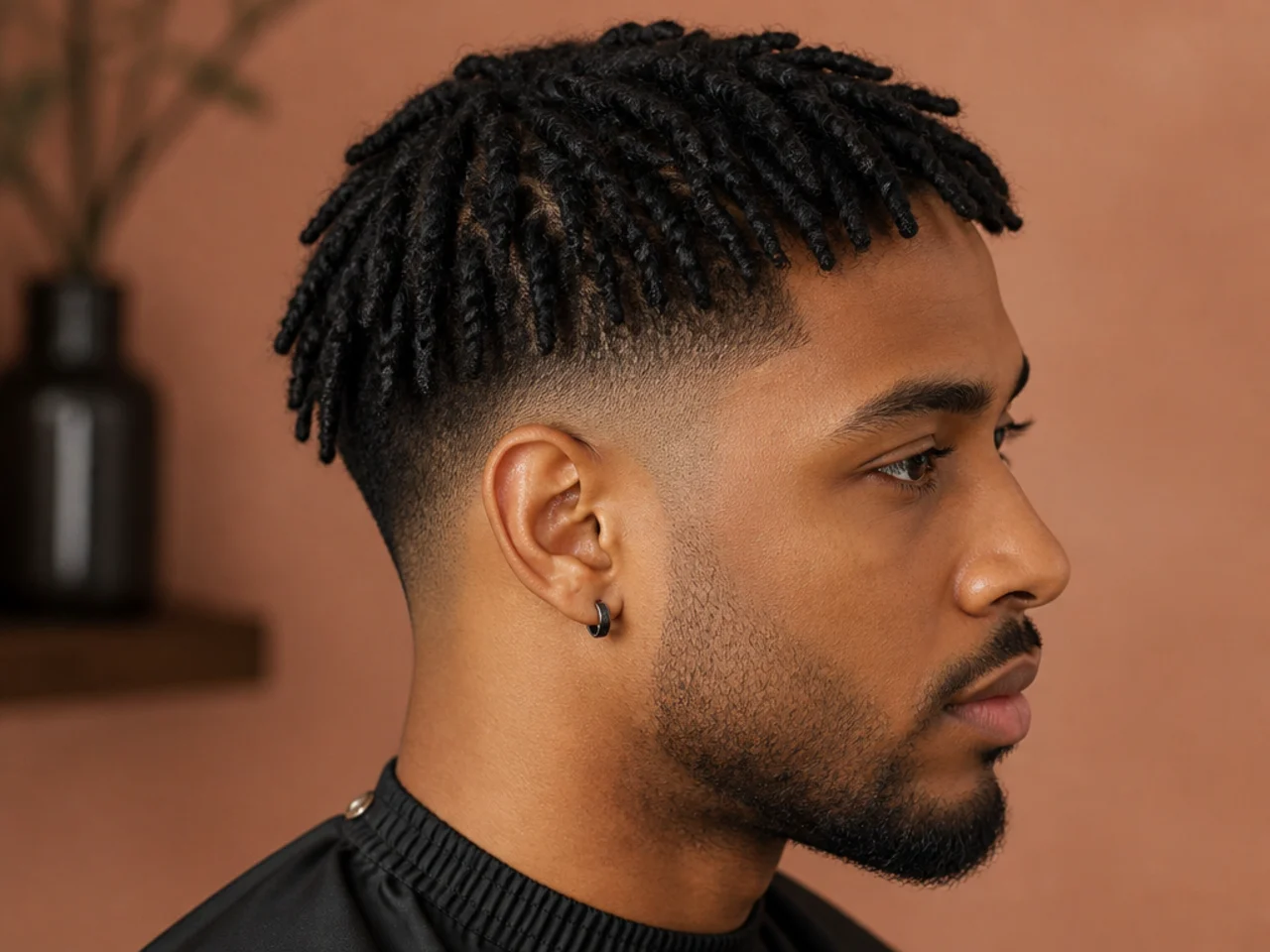
Two-strand or comb-coil twists on top with a low taper holding the sides. Protective style that stays sharp for weeks. Type 3c-4c hair. Every face shape.
Ask for: "Low taper fade — I'm going to twist the top after, so leave four inches for the twists."
Styling tip: twist on damp hair with a light styling gel, sit under a hood dryer or air-dry overnight in a satin bonnet. Refresh with water and oil every morning.
Low Taper Fades for Straight & Fine Hair
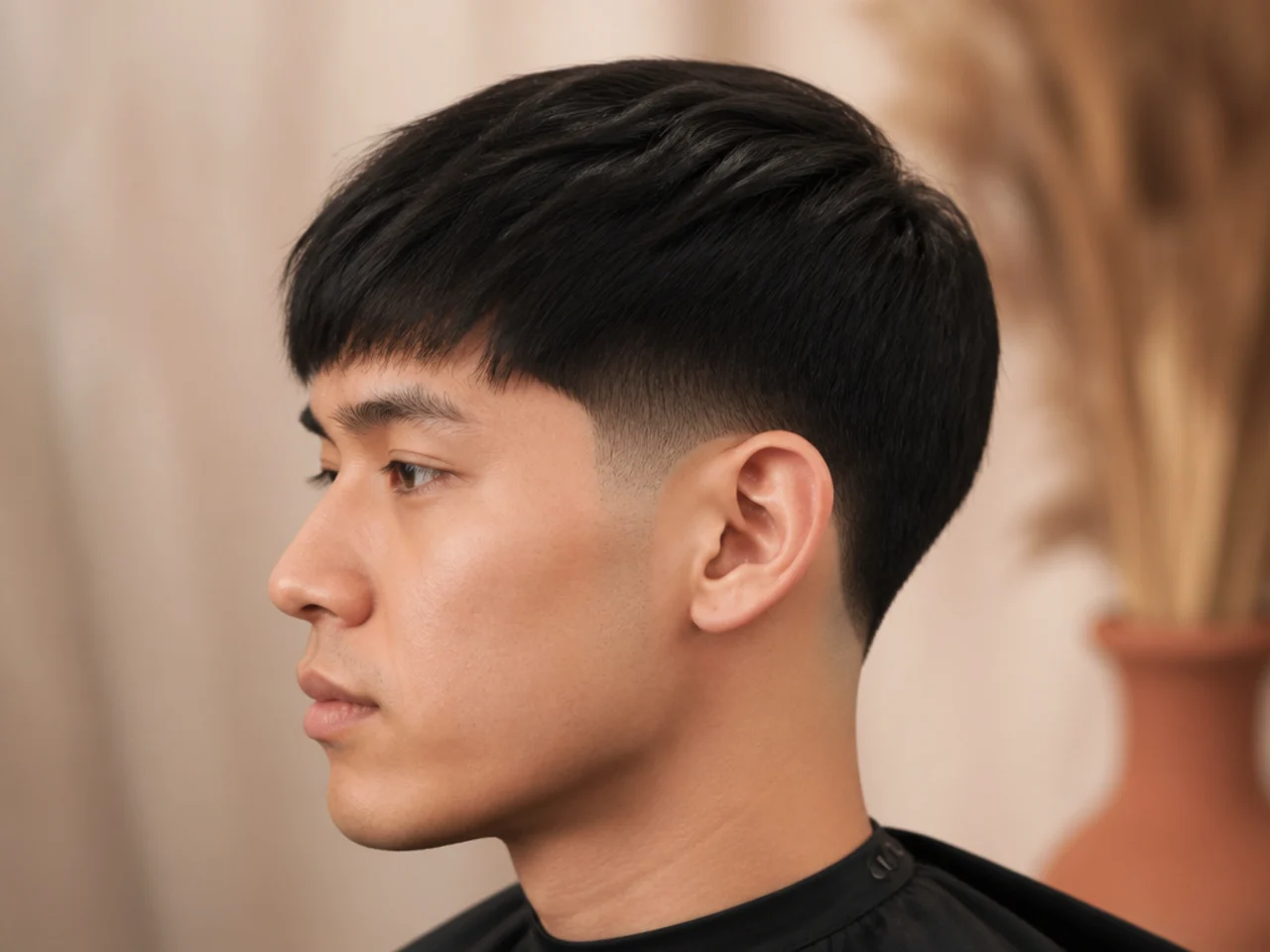
Straight and fine hair can look flat without the right cut. The low taper solves it by removing sidewall bulk that competes with the top — every ounce of volume you build reads more clearly.
13. Low Taper Fade for Straight Hair
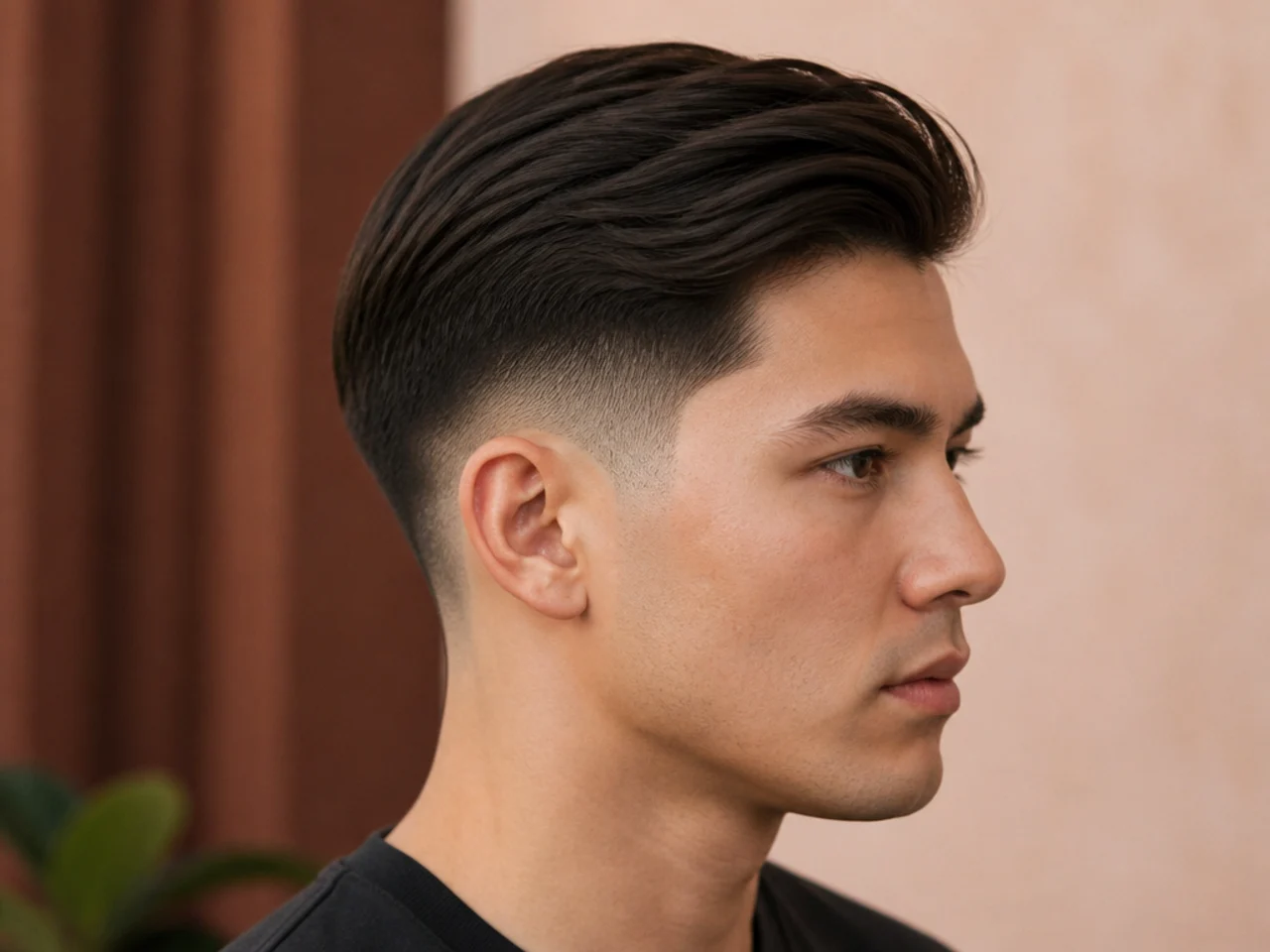
Sleek top, softly tapered sides. Type 1 hair with medium to thick density. Square, oval, and rectangular faces. The base for slick backs, side parts, comb-overs, and Ivy League tops.
Ask for: "Low taper fade, three inches on top — I want the option to slick it back or comb it over."
Styling tip: sea salt spray on damp hair, round-brush blow-dry for root lift, then medium-hold pomade for the finish. The pre-styler is the whole difference between flat and full.
14. Low Taper Fade for Asian Hair
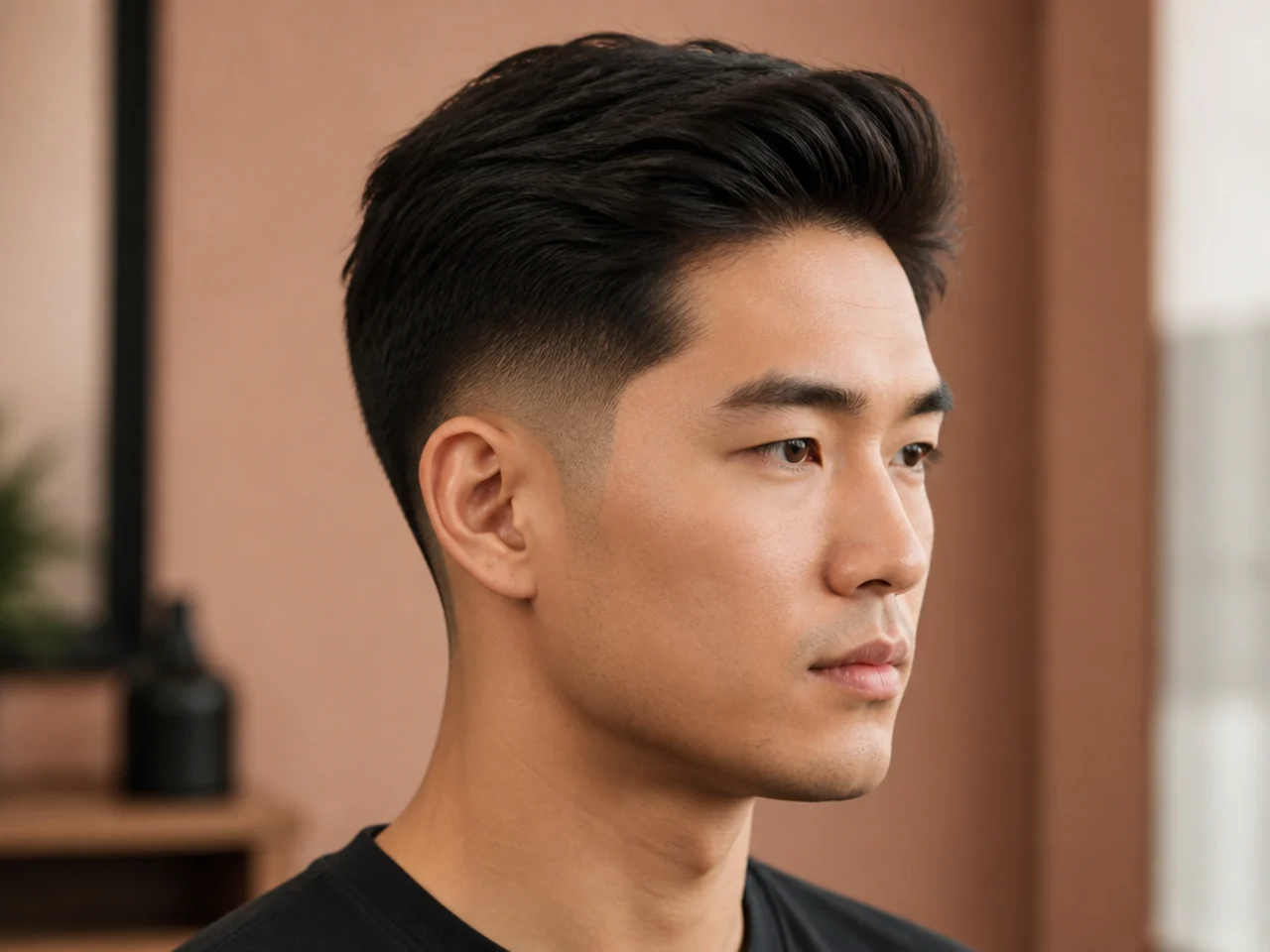
Cut adapted for straight, dense Asian hair — type 1b-1c. The low taper keeps things professional while a texturized top delivers movement without heaviness. All face shapes, oval and square especially. Pair it with a two-block or comma-shape top from the Korean haircuts for men playbook if you want something more editorial.
Ask for: "Low taper fade, three inches on top — texturize it heavily, my hair is thick and straight."
Styling tip: texture powder at the roots for grip, then a lightweight matte clay for shape. Asian hair holds height once you give it grit.
15. Low Taper Fade with Caesar Cut
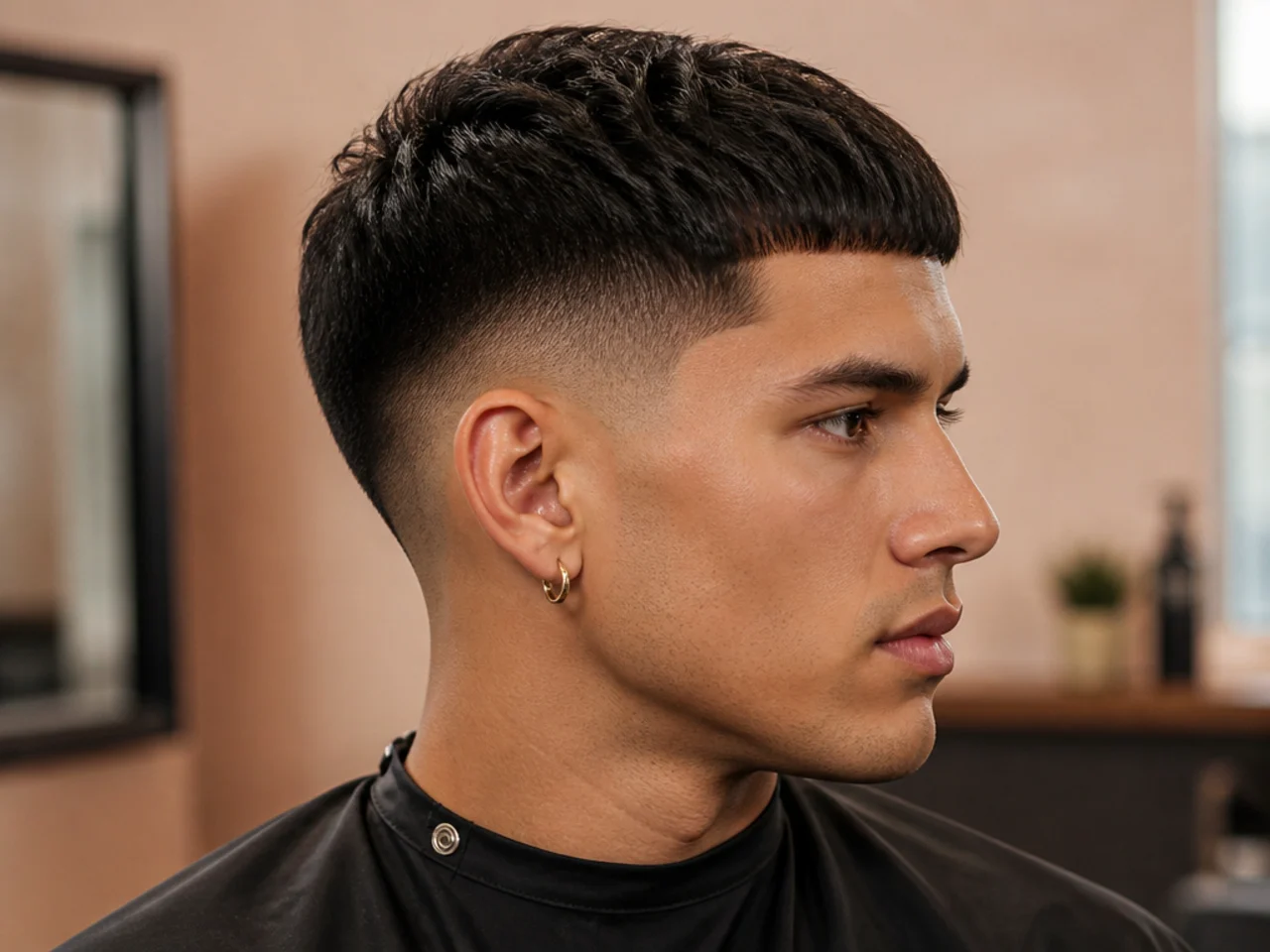
Short forward fringe pulled straight across the forehead, low taper at the sides. Roman-emperor energy on a modern base. Straight to slightly wavy hair. Oval and square faces. A great choice if your hairline is receding — the fringe covers without announcing itself.
Ask for: "Low taper fade, one inch on top, straight fringe combed forward — Caesar style."
Styling tip: styling cream on damp hair, combed forward, air-dried. It should look flat and intentional, not styled.
16. Low Taper Fade with Fringe
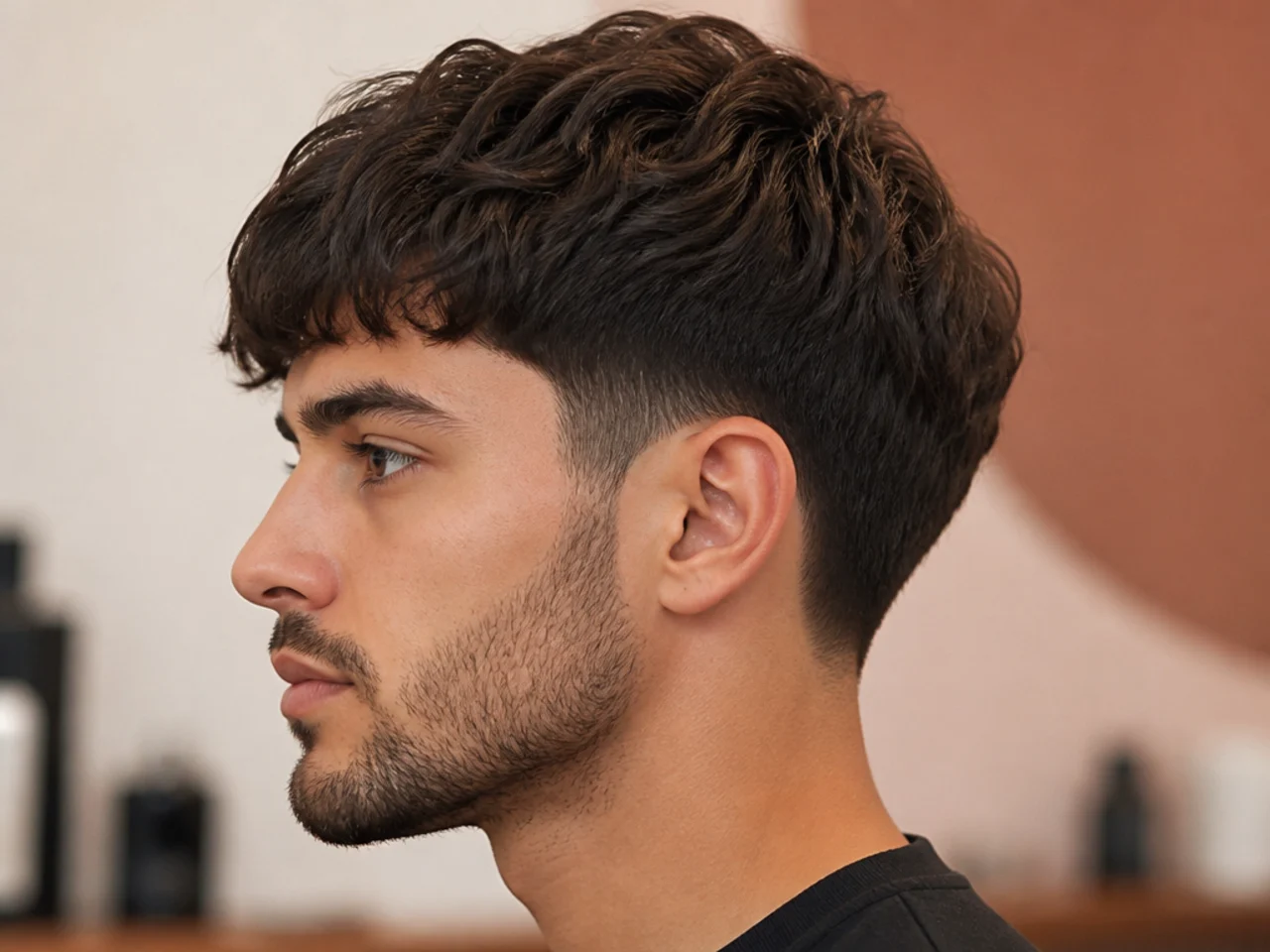
Softer than a Caesar — the fringe still points forward but sits with more texture and piecey separation. Straight to wavy hair, medium density. Round, oval, and heart-shaped faces.
Ask for: "Low taper fade with a textured fringe — point-cut the ends, keep the length forward."
Styling tip: matte clay through the fringe, twist small sections between fingertips for separation. Never blunt-cut straight across unless you actually want a Caesar.
17. Low Taper Fade Buzz Cut
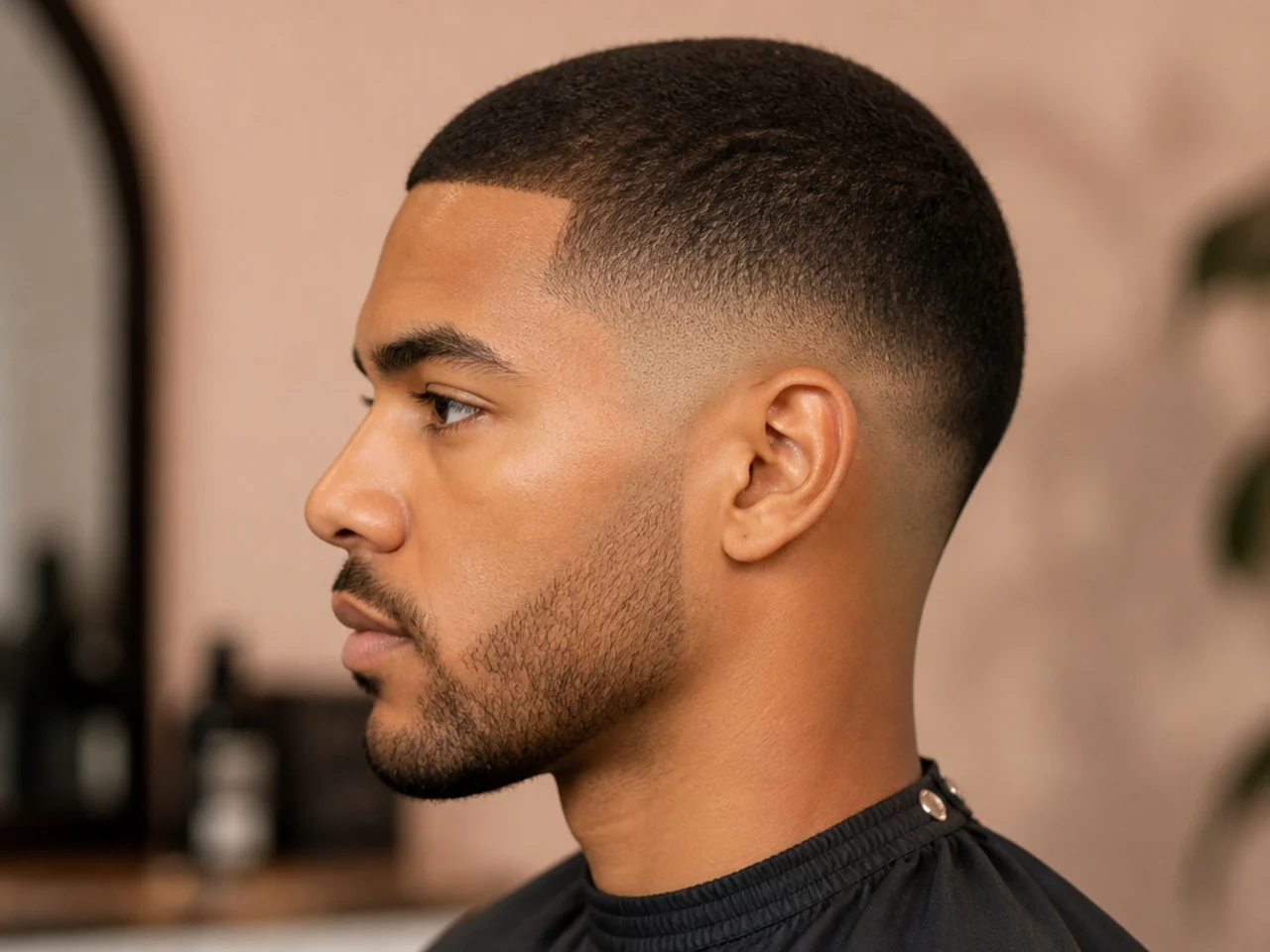
Top gets a #3 or #4 all over. Sides run a low taper into the neckline. Zero daily styling. Texture doesn't matter at that length, so any hair type works. Suits square, oval, and heart-shaped faces — strong jaws especially.
Ask for: "Low taper fade with a #3 buzz on top, tapered neckline."
Styling tip: a lightweight scalp moisturizer prevents the buzz from looking dry under office lighting. Skip pomade — there's nothing to hold.
18. Low Taper Fade with Middle Part
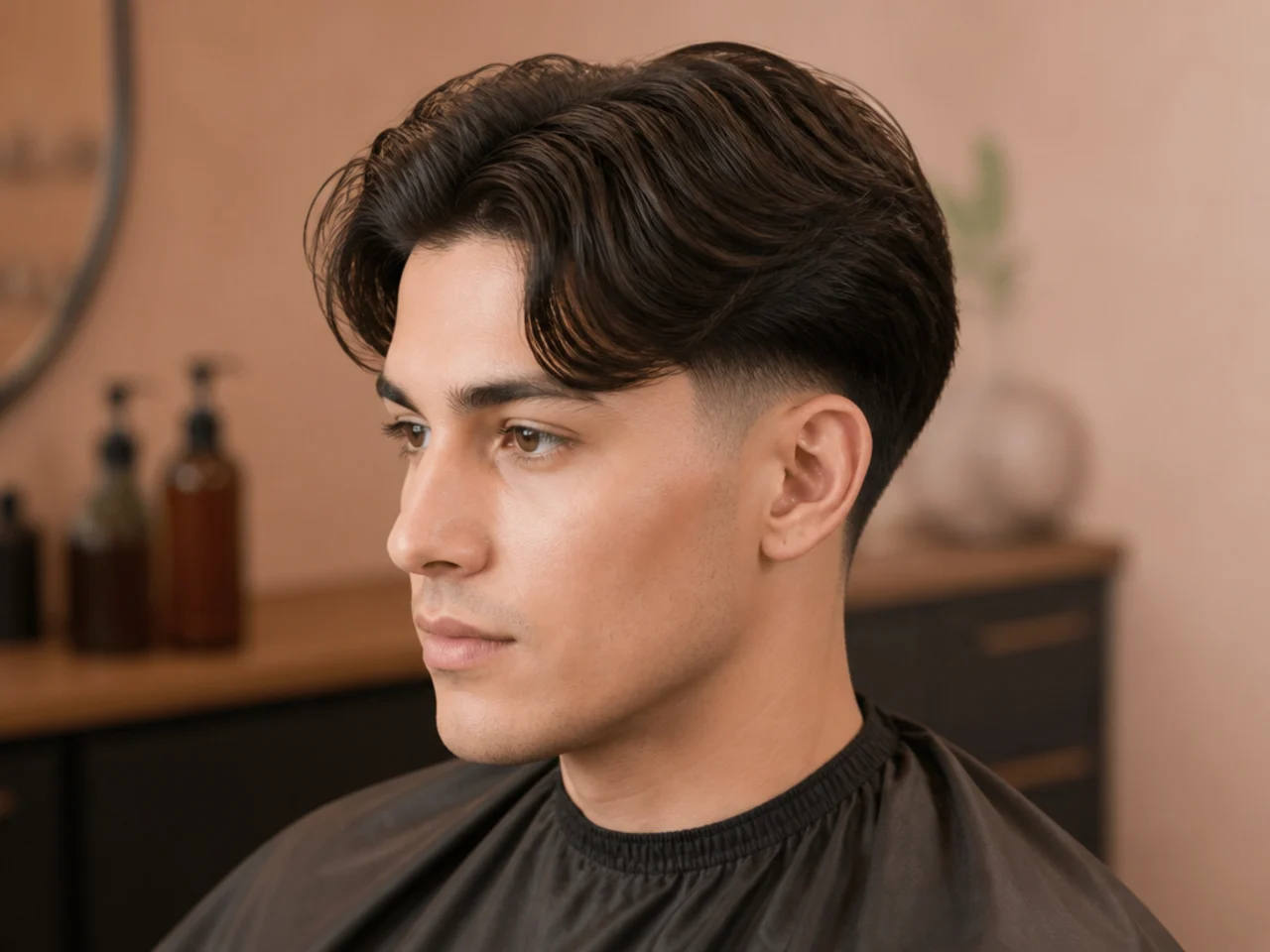
Center part with two curtain-like sweeps of hair falling either side, low taper holding the perimeter. Straight to wavy hair, four inches or more on top. Oval, diamond, and heart-shaped faces.
Ask for: "Low taper fade, keep the top at least four inches — I'm parting it down the middle."
Styling tip: styling cream on damp hair, part with a comb, blow-dry each side outward using a paddle brush. Finish with a light hairspray to hold the sweep.
Bold & Statement Low Taper Fades
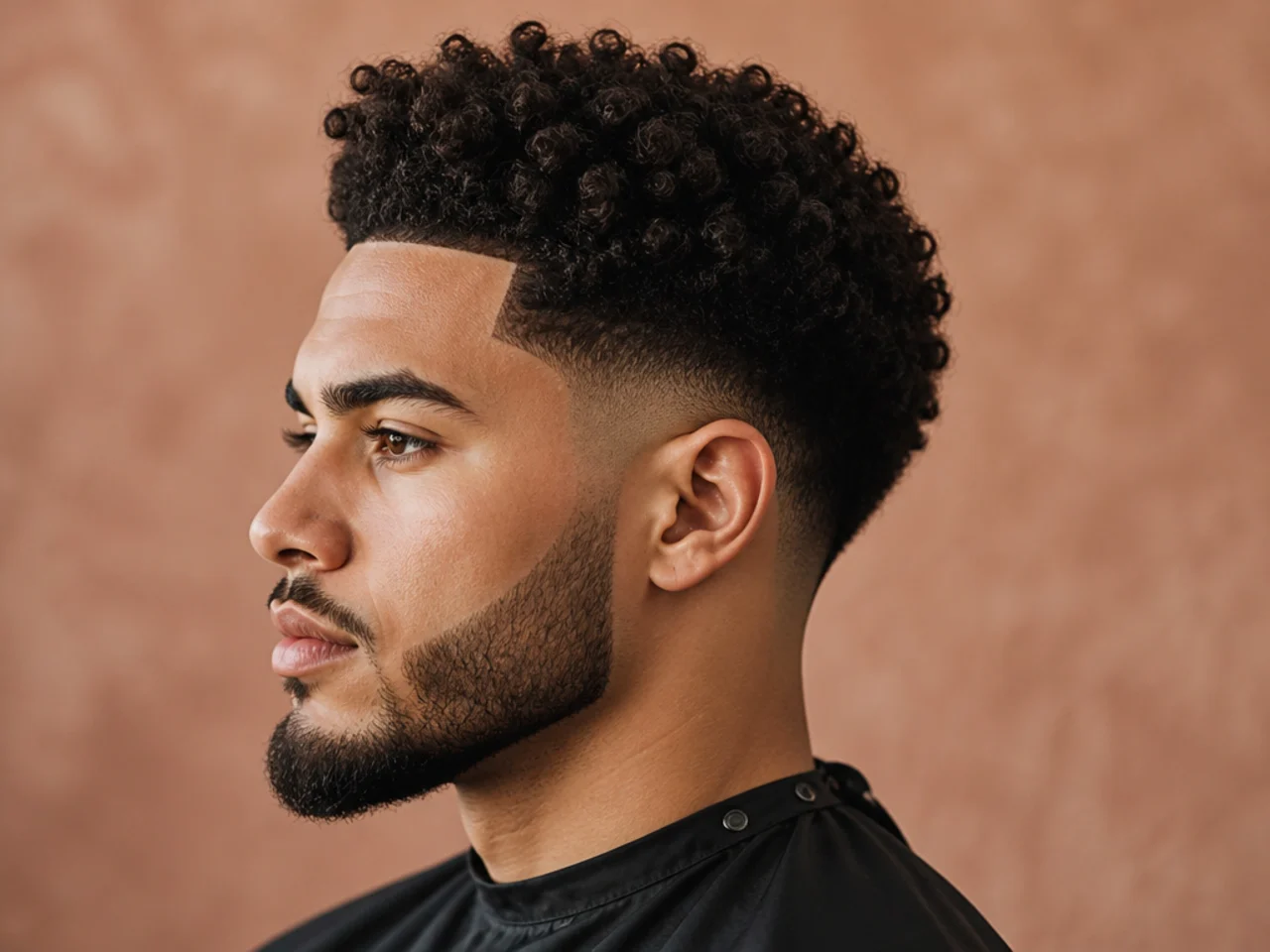
These variations trade the low taper's usual quiet for something louder up top. The perimeter still ages gracefully, but the styling commitment goes up in exchange for the drama.
19. Low Taper Fade Pompadour
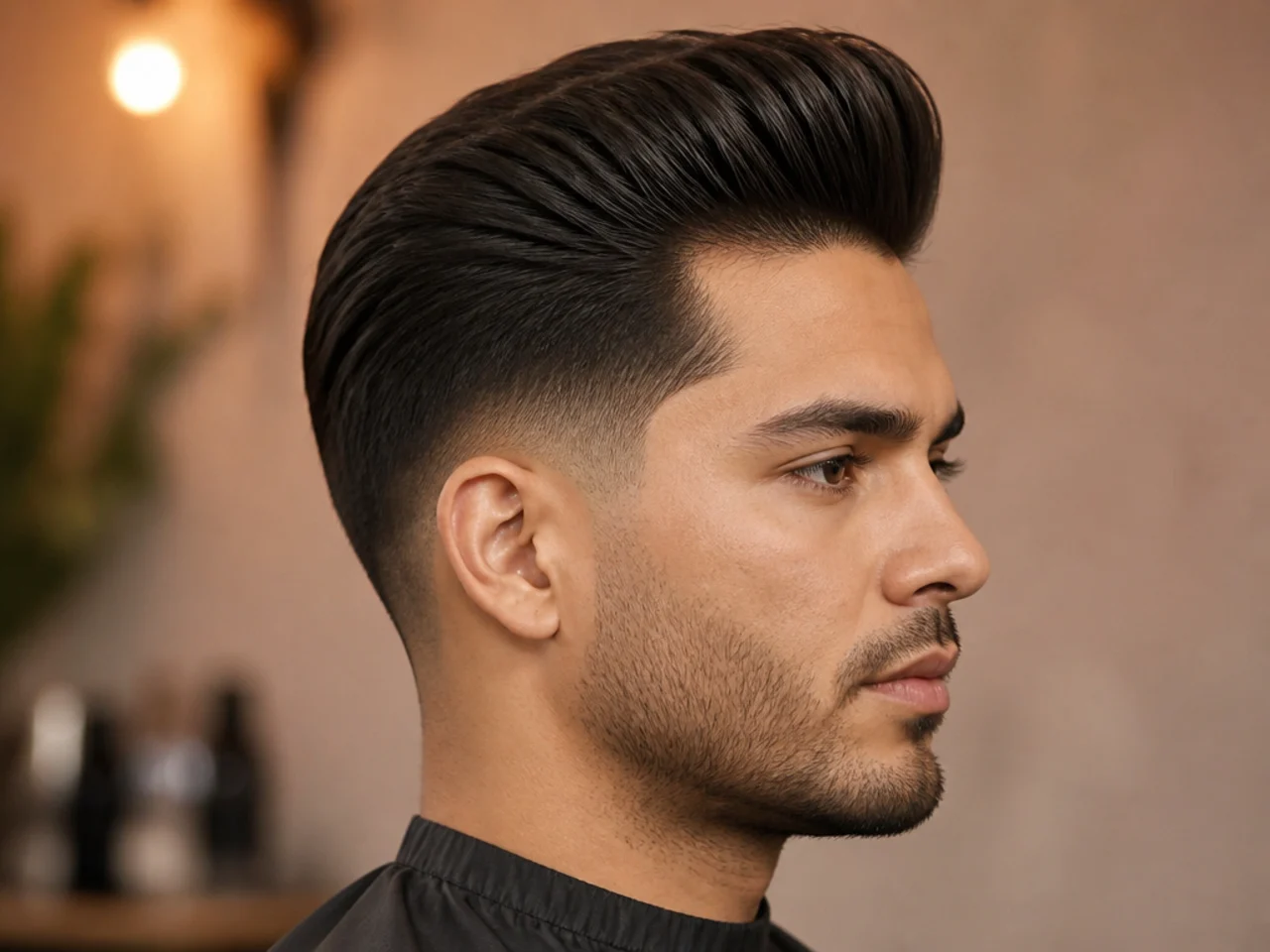
Maximum height at the front, sweeping back toward the crown, low taper holding the sides discreetly. Six-plus inches on top. Straight to wavy hair with body. Oval and square faces — the height elongates.
Ask for: "Low taper fade, six inches on top for a full pompadour — height at the front."
Styling tip: strong-hold mousse on damp hair, round-brush blow-dry upward from front to back, strong pomade for shape, hairspray to lock. Fifteen-minute style — plan your morning around it.
20. Low Taper Fade with Quiff
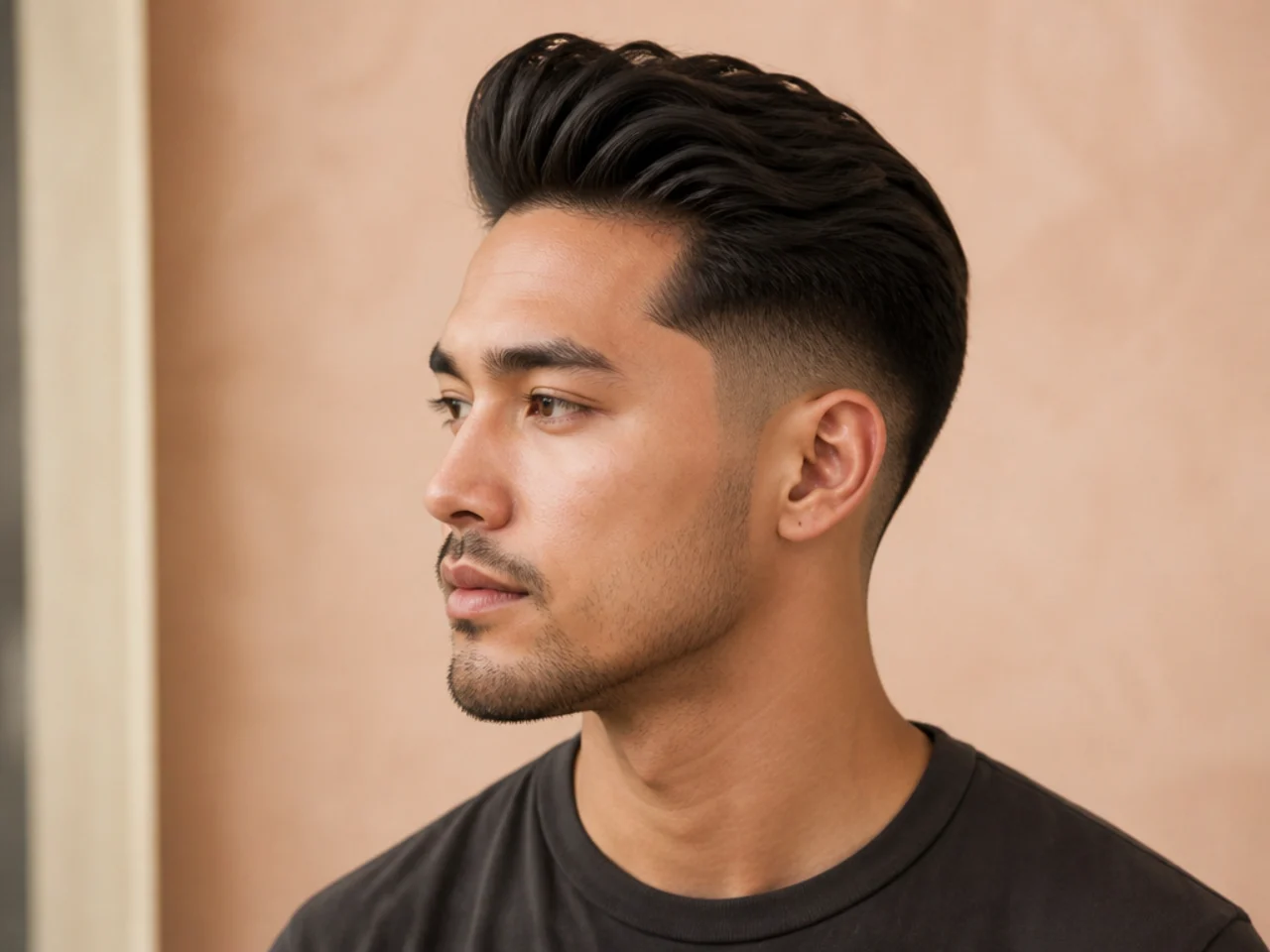
Front volume that slopes back rather than standing straight up. The pompadour's more forgiving cousin, with a low taper keeping the overall shape modern. Straight to wavy hair. Round and oval faces.
Ask for: "Low taper fade, four inches on top for a quiff — height at the front, sloping back but not a full pomp."
Styling tip: volume mousse, blow-dry the front up and slightly back with fingers, medium-hold pomade, light hairspray. Height without the daily commitment.
21. Low Taper Fade Blowout
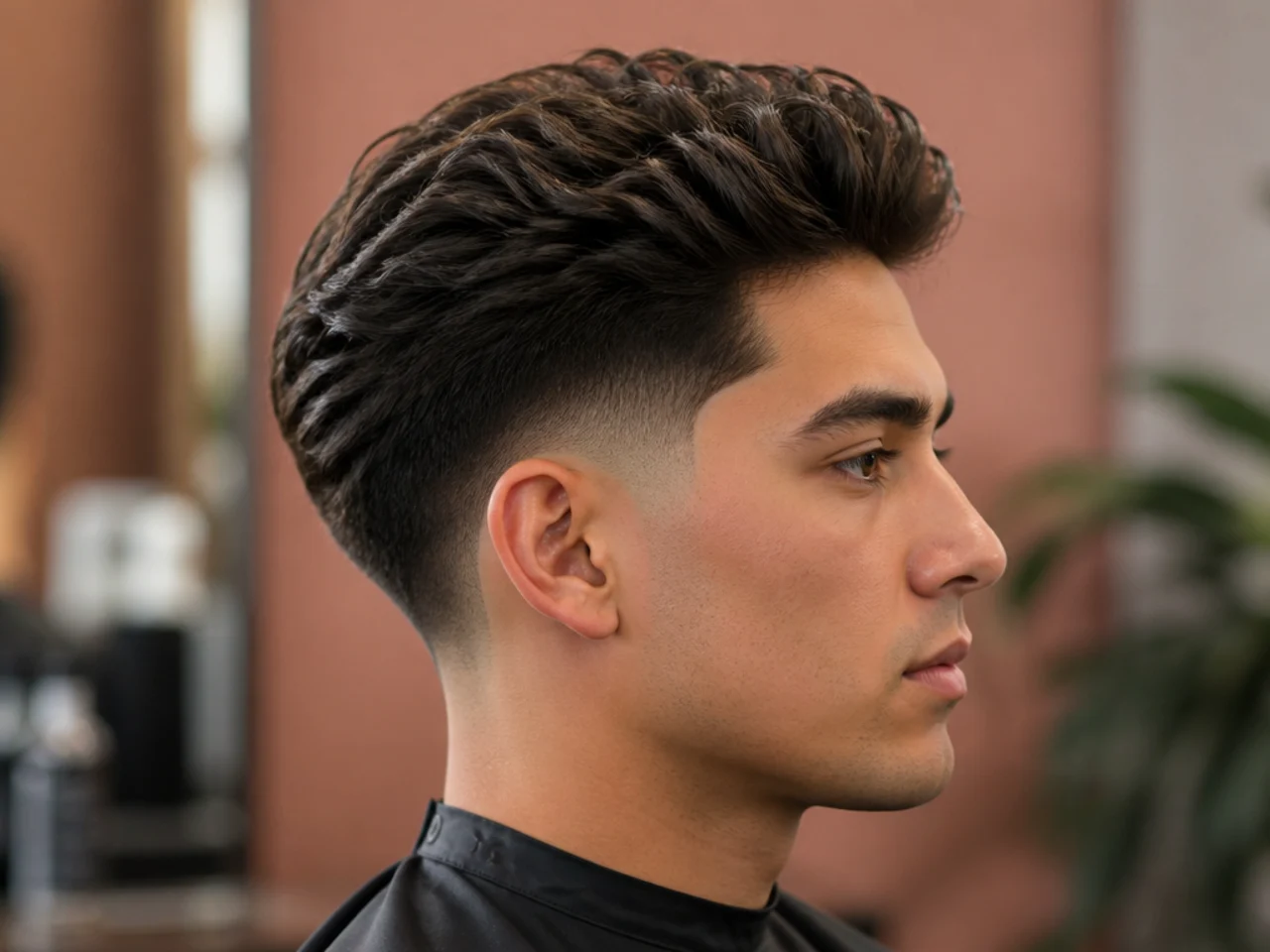
Explosive curl or wave volume up top with a discreet low taper below. Not to be confused with the blowout taper, which pushes the blend higher — this one keeps the transition subtle so the top does all the talking. Curly hair (3a-4a) with density. Oval and round faces.
Ask for: "Low taper fade, four inches of curl on top — I want a full blowout up top."
Styling tip: curl cream on wet hair, diffuse in an upward lifting motion until 80% dry, texture clay to hold. Sleep in a bonnet or restyle every morning — pick one.
22. Low Taper Fade Modern Mullet
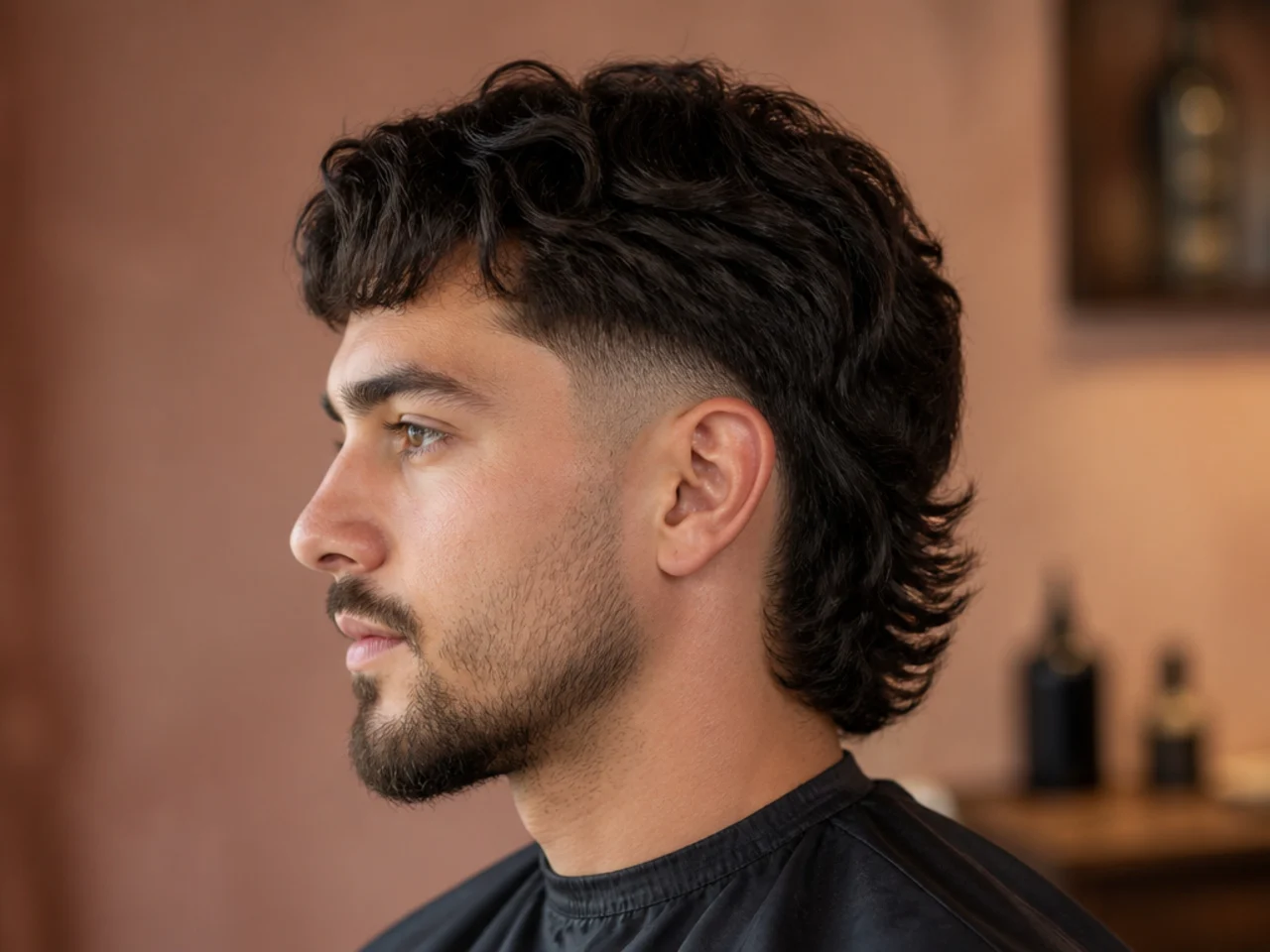
Short fringe and top, longer back — the modern mullet version, not the '80s throwback. The low taper wraps the sides while the back is left to hang with texture. All hair types with real density. Oval and diamond faces.
Ask for: "Low taper fade, keep the top three inches, leave the back long for a modern mullet — textured, not blocky."
Styling tip: sea salt spray through the back, matte clay on top, scrunch and finger-style. Keep the back shoulder-length or shorter or it starts reading costume.
23. Low Taper Fade Faux Hawk
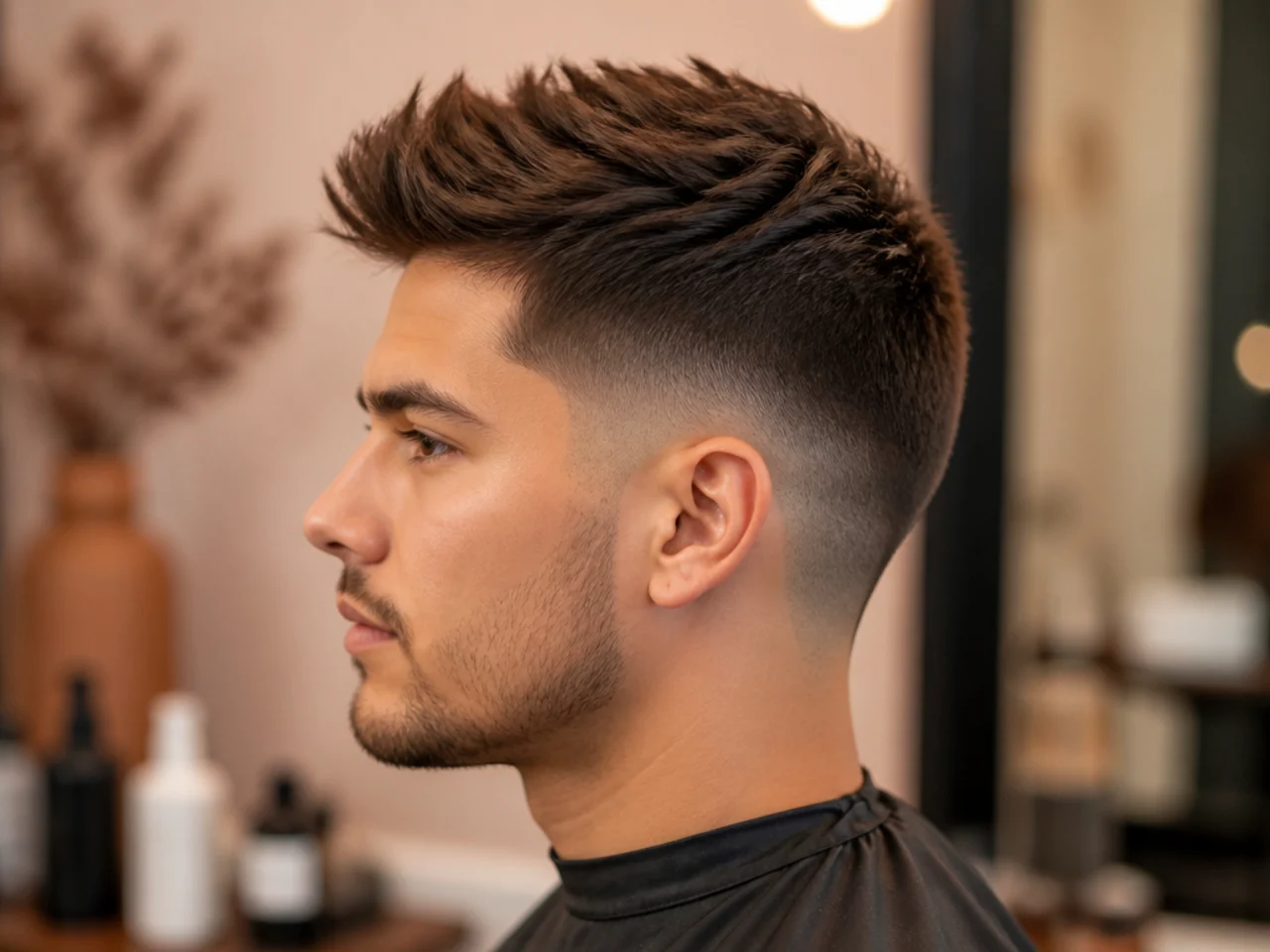
Central strip of longer hair with tapered sides flanking it. No shaved patches — hence the "faux." Straight to wavy hair. Oval, square, and rectangular faces.
Ask for: "Low taper fade, three inches through the middle of the top — style-ready for a fohawk."
Styling tip: strong-hold gel or paste, pull the center up and inward. Spike for a night out, smooth flat for the office — same cut, two looks.
24. Low Taper Fade with Long Top
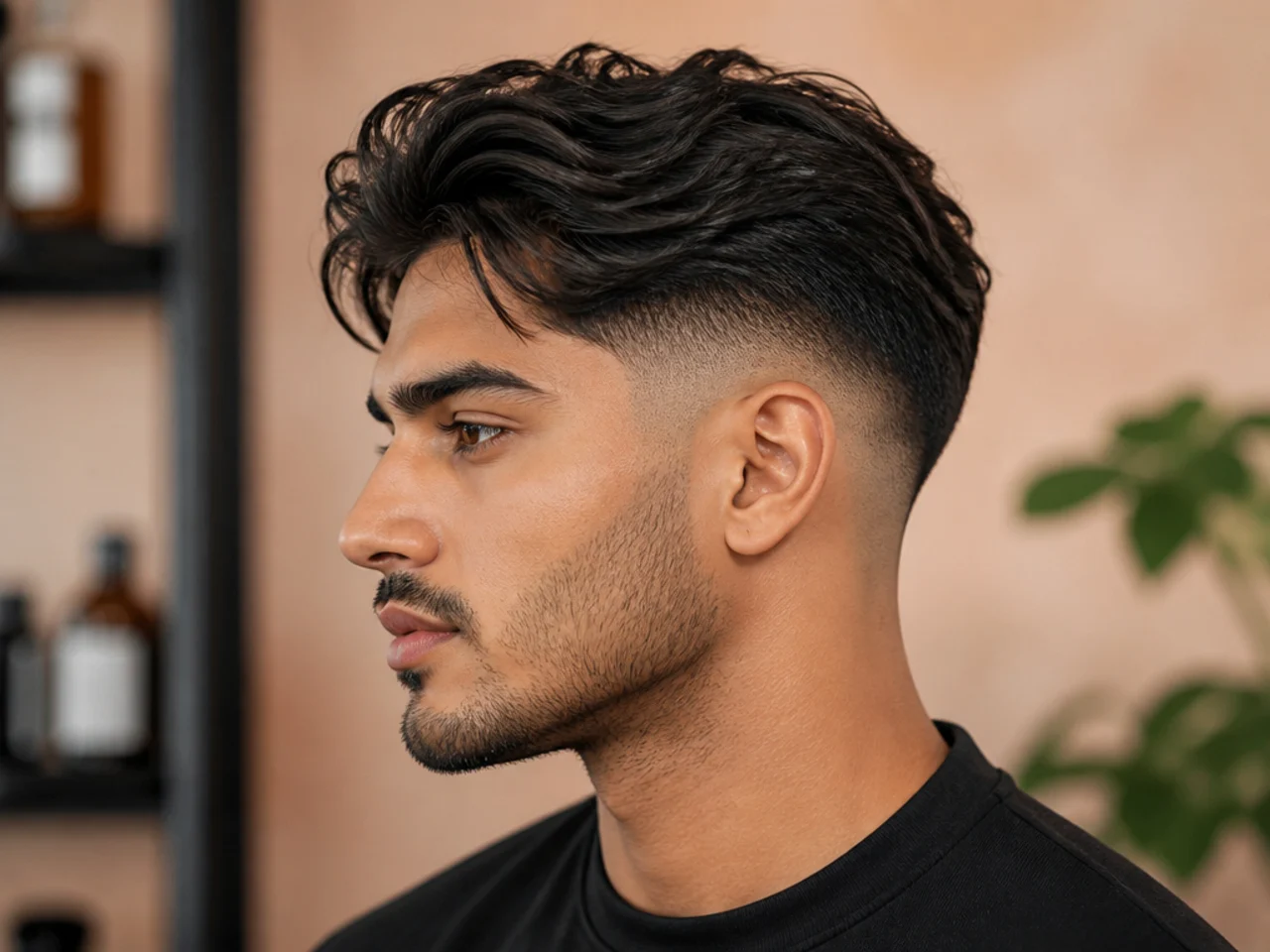
Six-plus inches on top with a discreet low taper. Wear it down, back, bunned, or half-up. All hair types with density. Oval and diamond faces.
Ask for: "Low taper fade, keep the top long — six inches or more — just clean up the sides."
Styling tip: leave-in conditioner is non-negotiable at this length. The disparity between long top and blended sides makes any dryness obvious. Trim the top monthly and minimize heat.
Specialized Low Taper Fade Styles
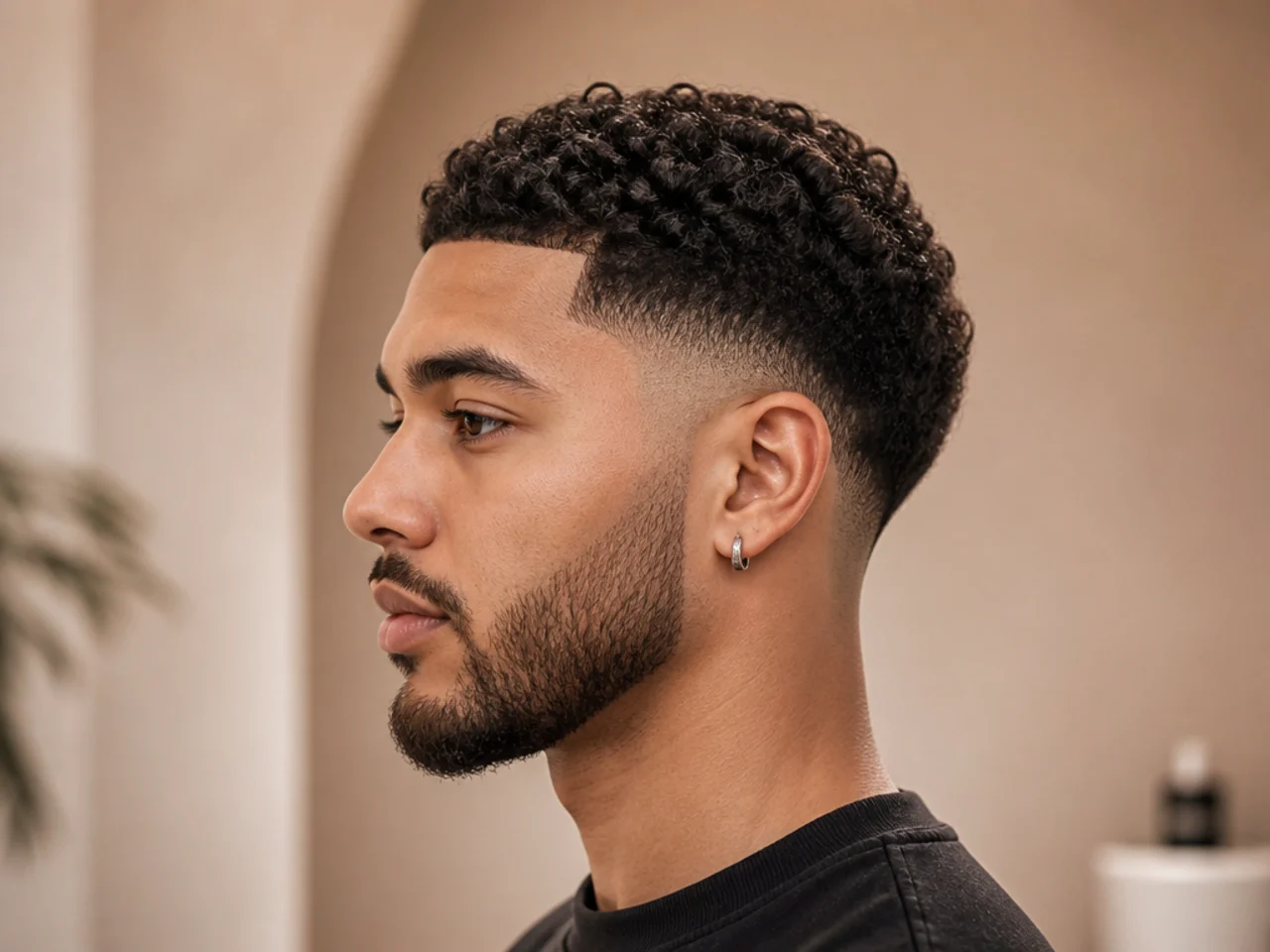
These variations layer specific techniques onto the base cut — a shaved line, a razor design, a facial-hair blend. Bring photos for these. Verbal descriptions rarely land them correctly.
25. Low Taper Fade with Hard Part
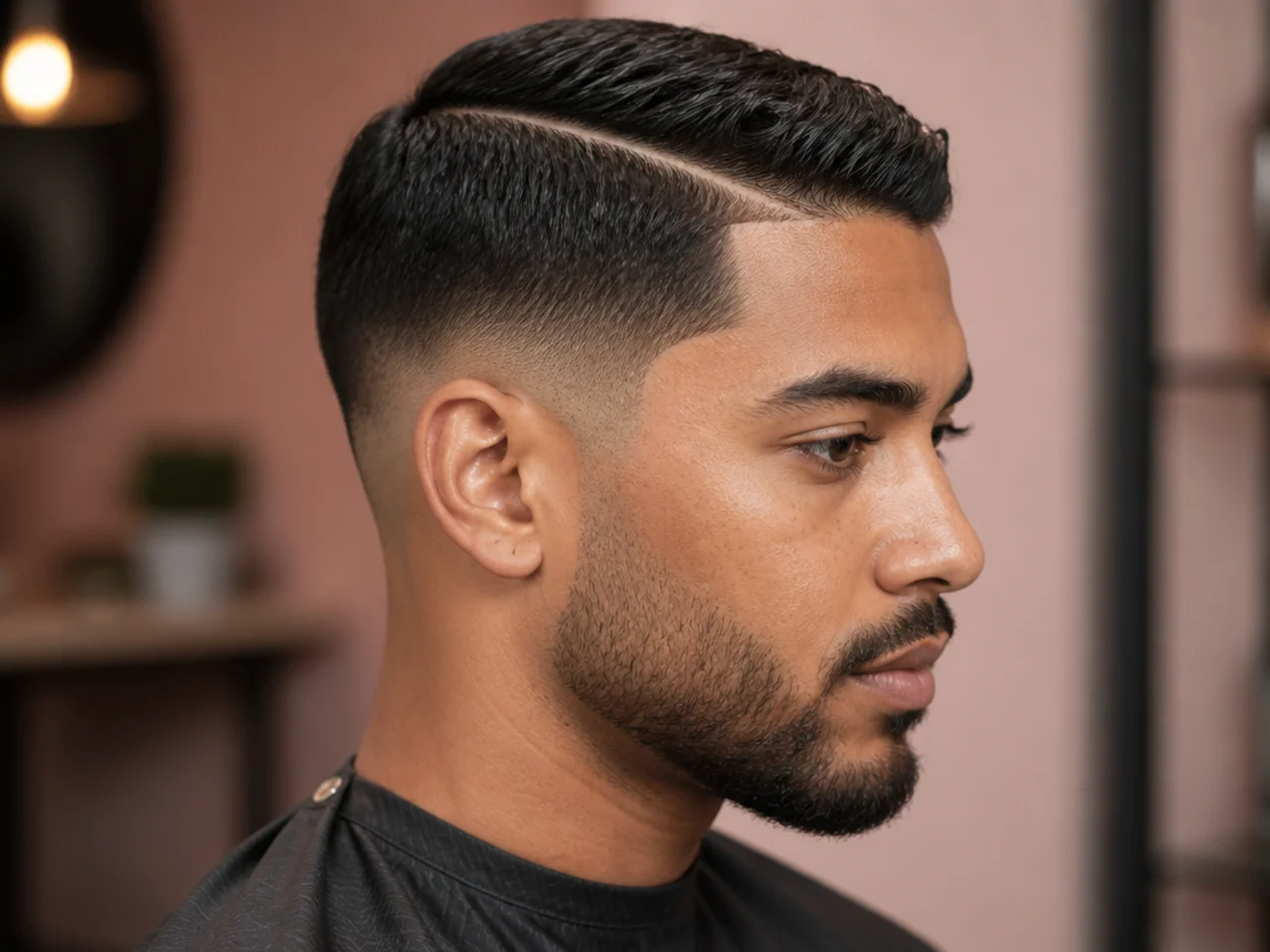
A shaved line separating the top from the tapered side. Small detail, big visual impact. Straight or slightly wavy hair. Oval, square, and rectangular faces.
Ask for: "Low taper fade with a hard part on my [left/right], about an inch and a half from center."
Styling tip: the hard part is your styling guide. Comb across it, pomade to hold direction. The line needs a re-cut every two weeks or it grows in fuzzy.
26. Low Taper Fade Edgar Cut
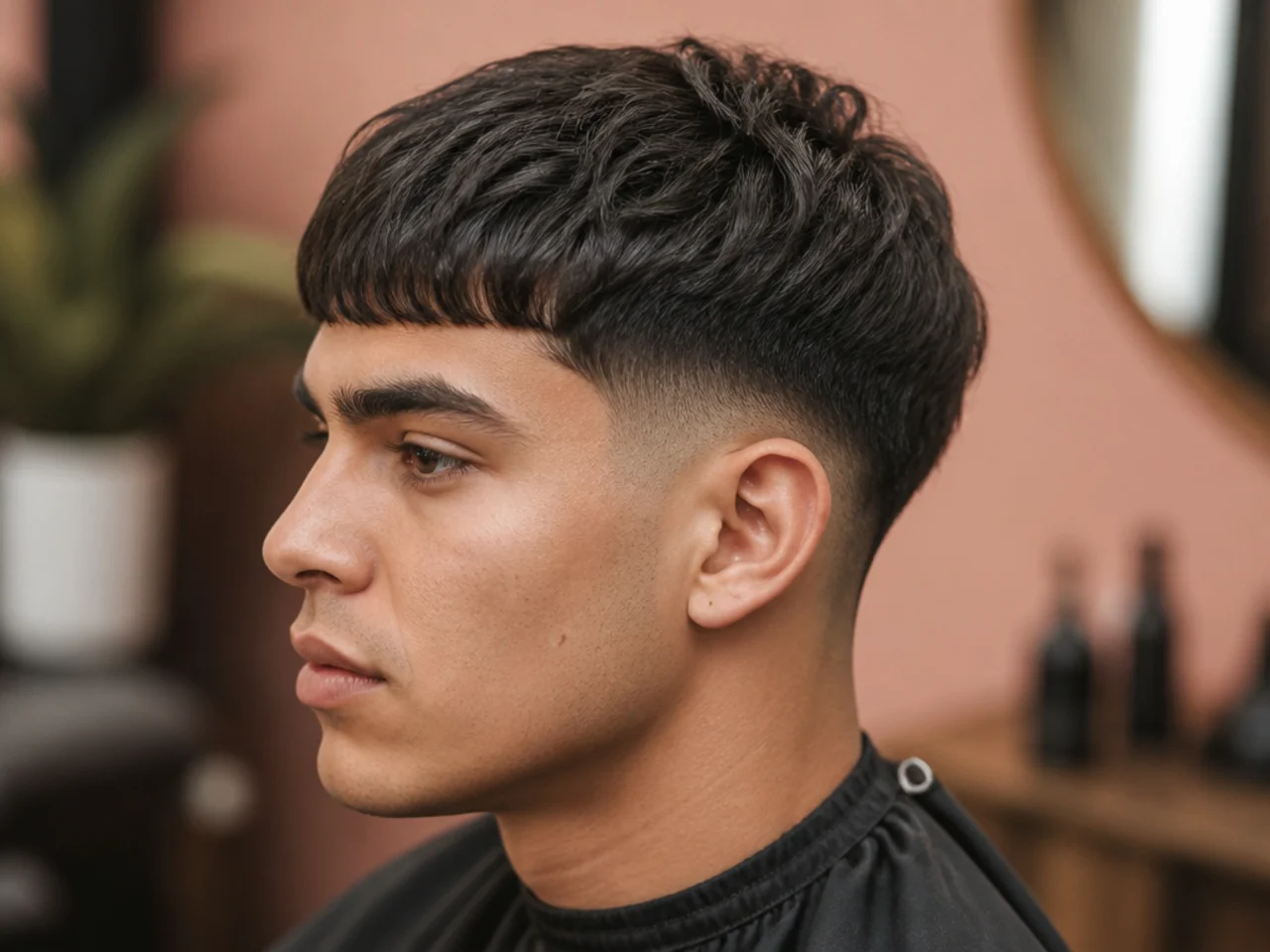
Blunt, straight horizontal fringe with sharp temple points and a low taper. Popular in Latino communities. Straight to wavy hair, medium to thick density. Oval and square faces.
Ask for: "Low taper fade with an Edgar — straight blunt fringe across the forehead, sharp temple points."
Styling tip: the cut does the work. Light pomade to hold the fringe in position, edge control at the temples every couple of days. Book fade touch-ups every two weeks — the temple points blur fast.
27. Low Taper Fade with Hair Design
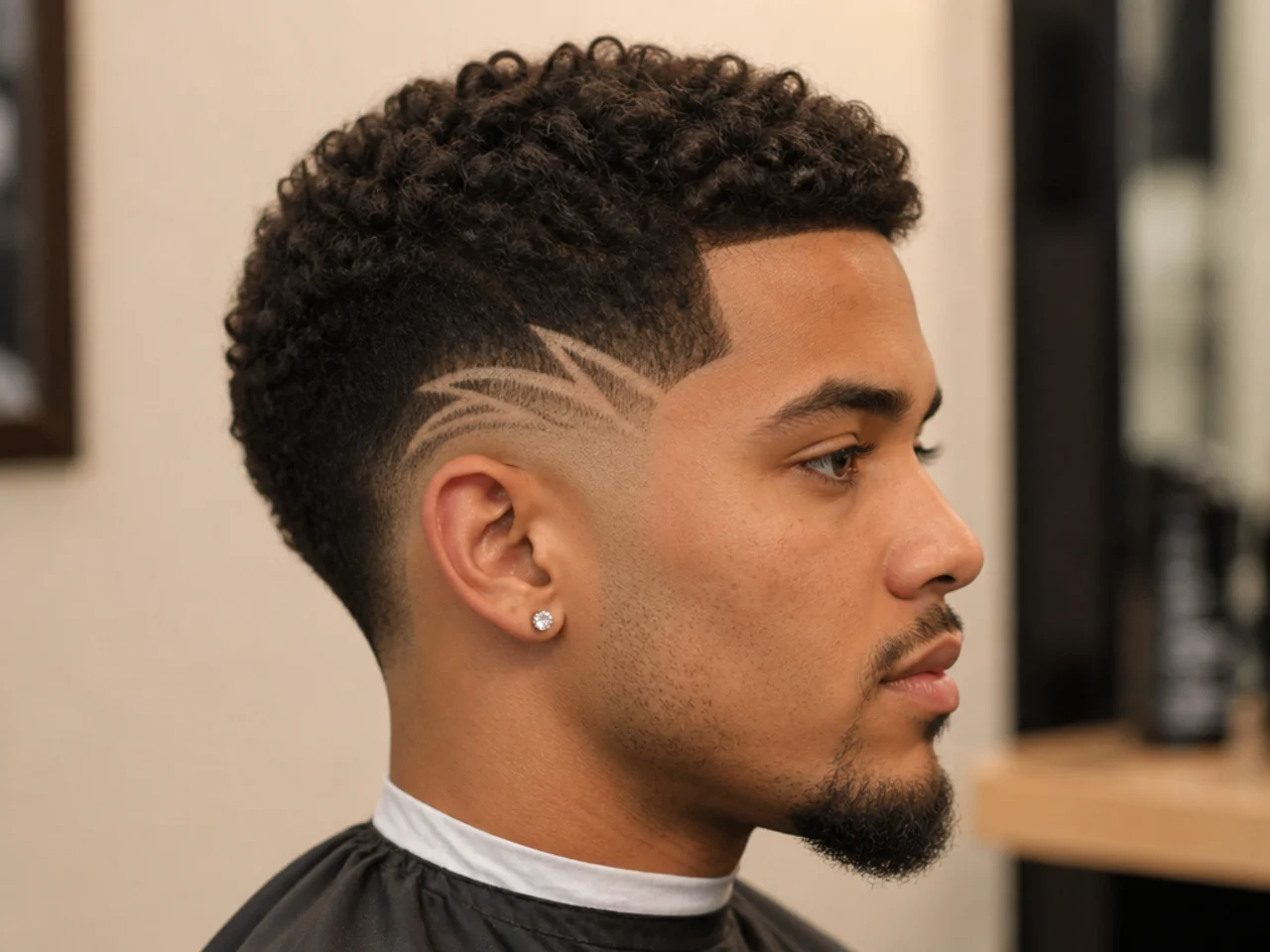
Razor lines, geometric patterns, or freehand artwork shaved into the tapered section. Every hair color, though darker hair shows the detail better. Every face shape.
Ask for: Bring a photo. Point to where you want the design. Ask, "Can you freehand this or should we sketch it first?"
Styling tip: don't overwash the designed area — friction erases the crispness. Simple lines last seven to ten days; intricate work needs a re-do every week.
28. Low Taper Fade with Beard
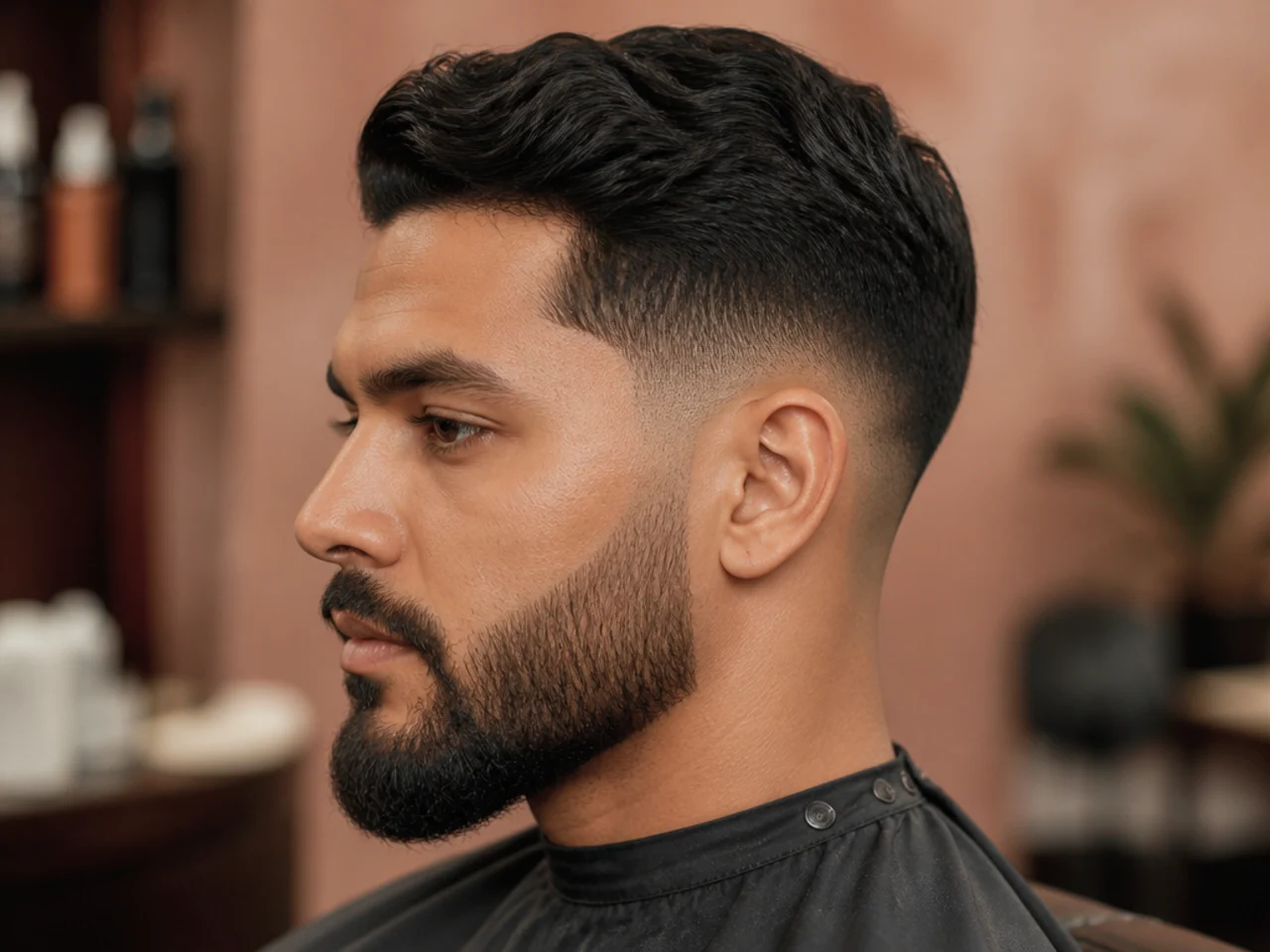
Low taper fade with the sides continuing down into a shaped beard. Complete grooming statement. Every hair type. Square faces (beard softens the jaw); round faces (beard adds definition below the cheek).
Ask for: "Low taper fade and blend it into the beard — I want a seamless connection." Or ask for a defined break at the jawline if you'd rather have separation.
Styling tip: beard oil on damp facial hair, trim weekly, brush downward. The line between fade and beard is where most cuts fail — a skilled barber charges more here for good reason.
29. Low Taper Fade Undercut Disconnect
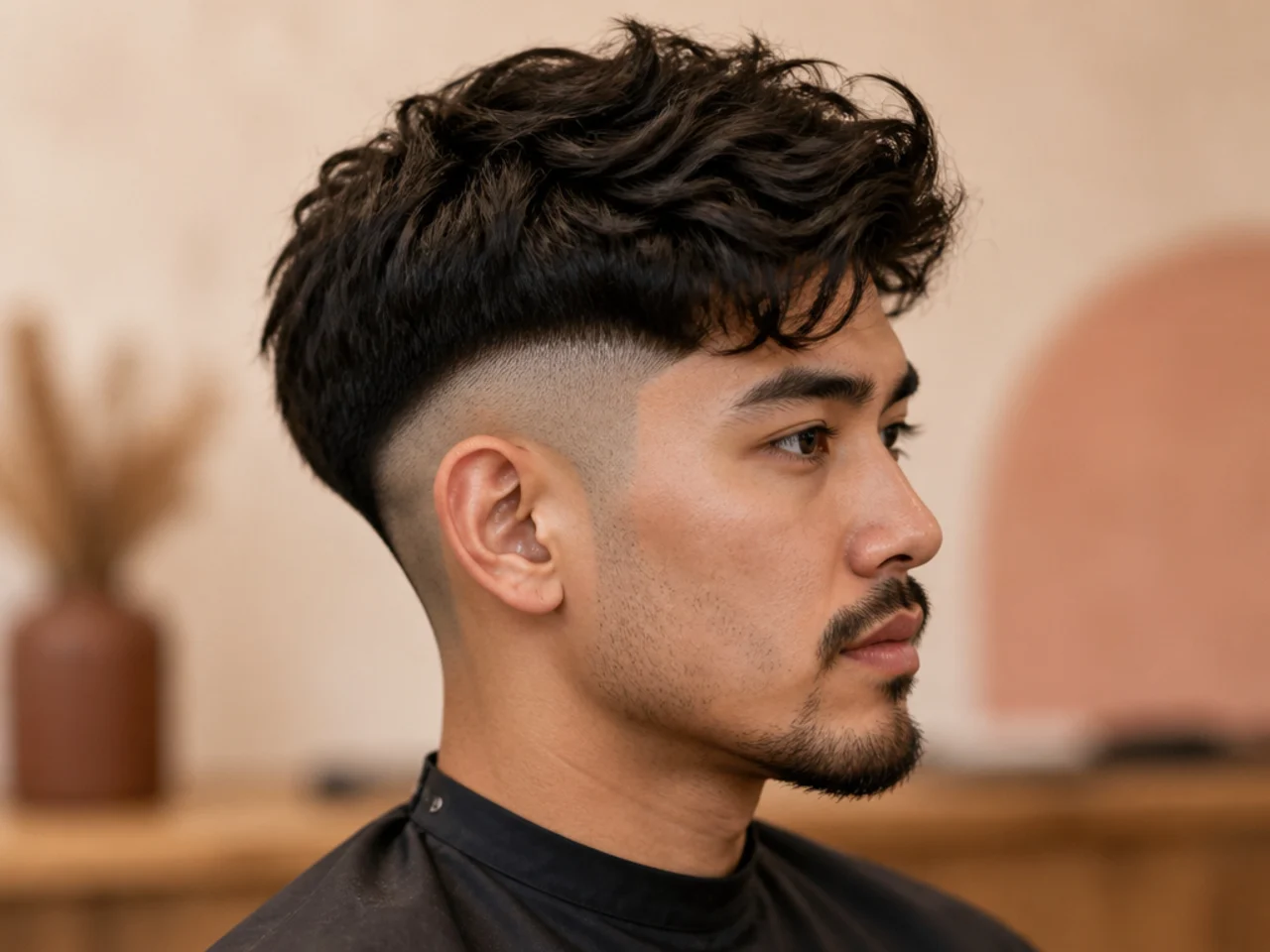
Longer top that sits distinctly separate from the sides — disconnected rather than blended. Pairs the low taper's soft perimeter with a hard line at the top. The full undercut fade guide has more disconnect variations. Straight or wavy hair with density. Oval, square, and rectangular faces.
Ask for: "Low taper fade with a disconnect at the top — no blending between the top and the sides."
Styling tip: strong-hold products maintain the visible separation. Slick back, pompadour, or messy texture all work over this base — the disconnect is what stays constant.
30. Low Taper Fade Messy Texture
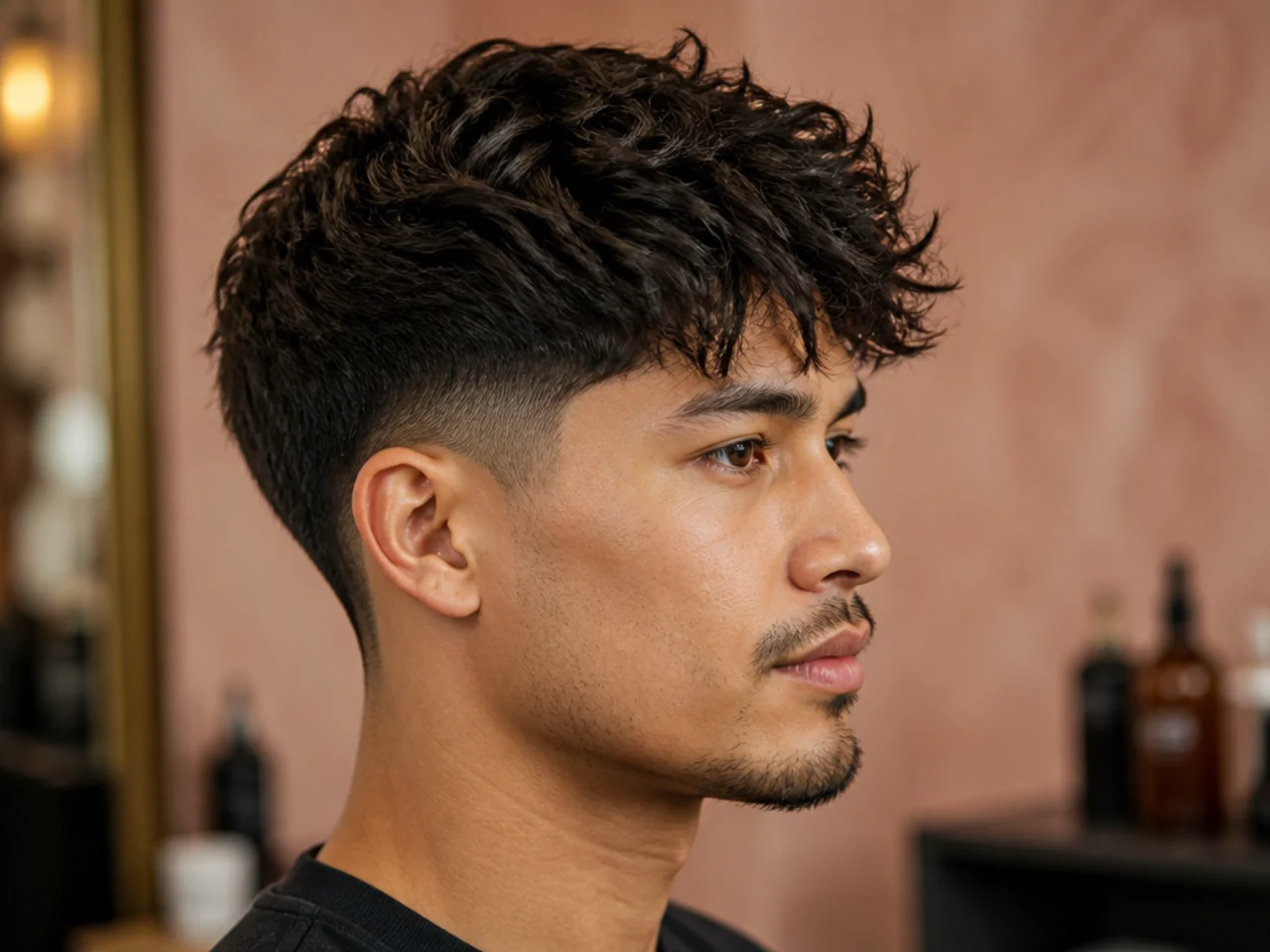
Intentionally undone top with a structured low taper below. The "I didn't try" look that takes ten minutes to build. Straight to wavy hair, medium density. Round, heart, and square faces.
Ask for: "Low taper fade, texturize the top — I want it looking casual, not styled."
Styling tip: sea salt spray, blow-dry with fingers, matte paste. Then intentionally break the shape you built — pull sections in different directions, leave one piece out of place. That's the whole trick.
How to Ask Your Barber for a Low Taper Fade
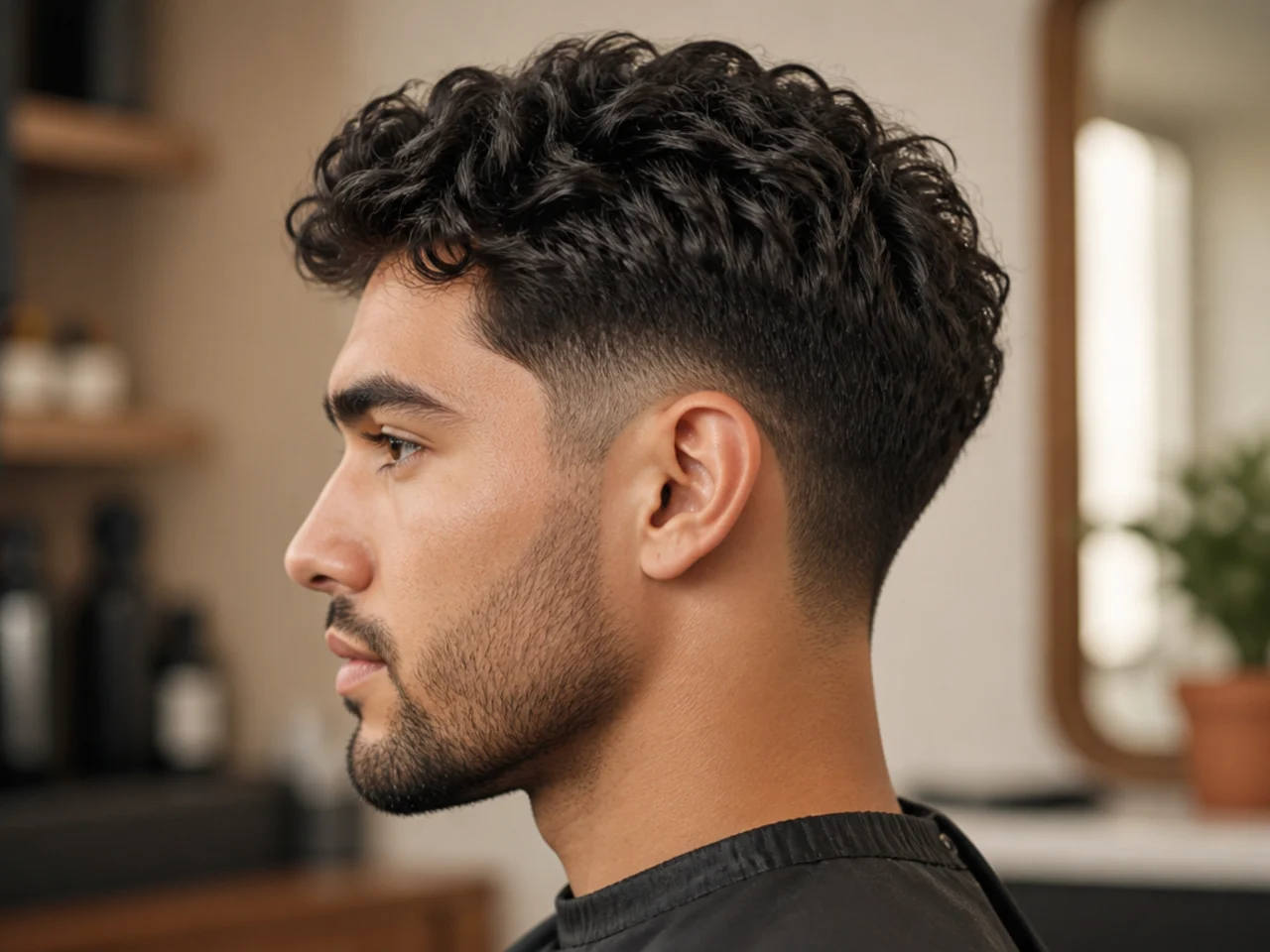
Barbers work from four data points and a photo. Nail these and you walk out with what you had in mind — not what your barber assumed you wanted.
-
Bring reference photos. Two or three, showing front and side. Pick people whose hair type and face shape resemble yours — a curly top won't translate to straight hair, and no photo choice fixes that gap.
-
State the fade height. "Low taper, starting about an inch above my ear." Point to your own head if it helps. Height is the single number that separates this from every other fade.
-
Say the shortest guard number. "Down to a #0.5" or "down to a #1." The low taper never runs to bare skin — that would push it into low-fade territory.
-
Give the top length in inches. "Two inches on top," "four inches for a pomp." Never "medium" — that means nothing to a barber. Inches are universal.
-
Pick a finish. Matte and textured, or glossy and sleek. That single choice decides whether they leave the top choppy or scissor it smooth.
-
Choose a neckline. Tapered (soft blend into the nape), blocked (squared corners), or natural (follow your hairline). Tapered ages best between visits.
-
Book the return trip before you stand up. Two to three weeks for a low taper. Standing appointments always beat scrambling for a slot.
Styling & Maintenance
The low taper is the most forgiving fade in the family — it grows out gracefully. That doesn't mean skipping care. The right routine keeps the top healthy and the perimeter sharp all the way to your next cut.
Wash cadence by hair type. Straight and oily: every other day with a mild shampoo. Wavy: two to three times a week. Curly: one to two times weekly. Coily: once, with rinse-conditioning on off-days. Clarify weekly or biweekly to strip product residue.
Products worth owning. A matte clay for textured crops, messy tops, and spikes. A sea salt spray as a pre-styler for straight or fine hair — it adds grit before you build volume. A medium-hold pomade for comb overs, side parts, and Ivy League tops. An oil-based pomade for slick backs and pompadours that need shine. A curl cream for curly and coily variations. A leave-in conditioner for anything above three inches on top. A sulfate-free shampoo if you color your hair or if your scalp runs dry.
Blow-dry routine. For volume, flip your head upside down and lift at the roots with a round brush. For sleek finishes, use a concentrator nozzle and keep the airflow root-to-tip. For curls, diffuse on low. Finish every style with a cool shot to lock the cuticle and hold the shape.
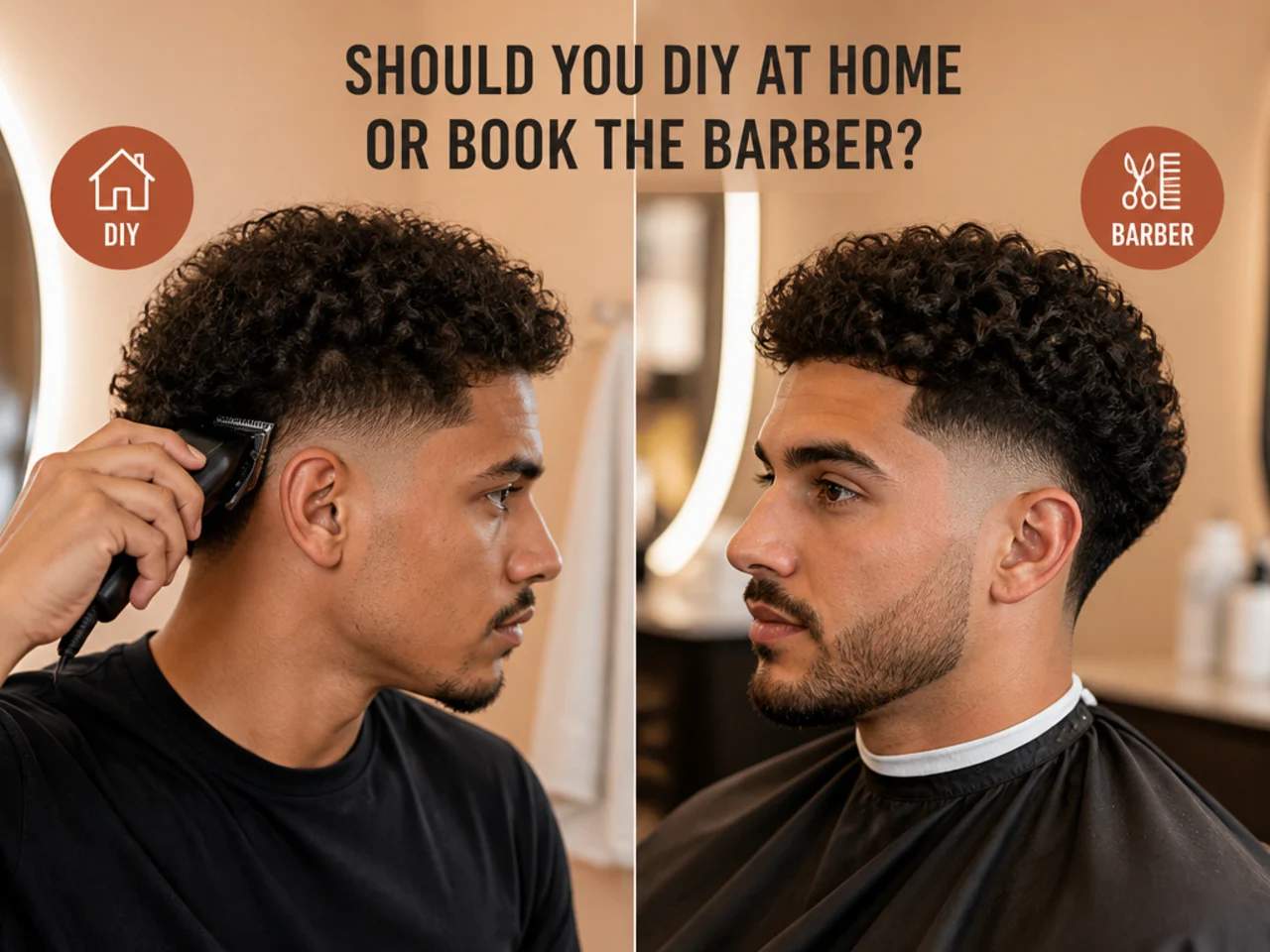
Between cuts. Book every two to three weeks to keep the low taper sharp. Grown past four weeks the transition line blurs and the cut stops reading intentional. Home edge-ups on the neckline and sideburns with a decent trimmer can extend a visit by a week — leave the actual blend to the pro.
Nightly. Rinse heavy product before bed so the pillow doesn't smear it. Sleep on a satin or silk pillowcase, especially with a curly or coily top. Apply an overnight leave-in if your hair runs dry or if you sleep with the heat on.
Budget honestly. Expect $25 to $45 per visit in most US markets. Two-week cadence at $30 comes to roughly $780 a year — the entry fee for the cut. Plan for it before you commit to the style.
FAQ
Is a low taper fade good for professional settings?
Yes — the low taper is the most work-appropriate fade you can ask for. The blend sits low and never runs to bare skin, so the cut reads polished rather than aggressive. Nothing about it will raise an eyebrow in a corporate office or a client meeting.
How is a low taper fade different from a regular taper?
A regular taper only touches the sideburns and the neckline — everything above stays roughly the same length. A low taper fade extends the blend up through the side panel so you get more visible gradient. Both look clean; the fade version reads more modern and photographs better.
Can I get a low taper fade with any hair type?
Yes. Curly, coily, straight, wavy, and fine hair all wear the low taper well — the variation is what matches your texture. Curly and coily hair benefit especially because the blended perimeter defines the natural pattern on top.
How often do I need to re-cut a low taper fade?
Every two to three weeks. The low taper grows out more gracefully than a mid or high fade thanks to the softer contrast, but the transition line still blurs by week four. Book your next appointment before you leave the chair.
What length should I leave on top?
Depends on the variation. Two inches for a classic or textured crop, one inch for a Caesar or buzz, three to four inches for a comb over or quiff, six-plus for pompadours, mullets, and long tops. Bring a photo and match it to your face shape.
Is a low taper fade good for round faces?
Yes, with the right top. Round faces want vertical lift — pair a low taper with a pompadour, quiff, textured crop, or faux hawk. Skip the buzz and the Caesar unless you specifically want a rounder overall silhouette.