20 Jellyfish Haircut Bangs Ideas That Balance the Bell
Twenty bang shapes for a jellyfish cut, and the two things nobody mentions. The bell already draws one horizontal across your face, and the fringe is cut out of the bell's own hair, so every strand it gains the bell loses.
In this article · 28
- What Jellyfish Haircut Bangs Are
- Jellyfish Versus Hime Wolf and Mullet
- Bangs by Face Shape and Texture
- What to Ask Your Stylist For
- Styling the Bell and the Bangs
- Growing Out Jellyfish Bangs
- The 20 Jellyfish Haircut Bangs Ideas
- 1. Wispy Curtain Bangs
- 2. Hime Bangs
- 3. Micro Bangs
- 4. Baby Bangs
- 5. V Bangs
- 6. Side Swept Bangs
- 7. Full Blunt Bangs
- 8. Wavy Curtain Bangs
- 9. Choppy Bangs
- 10. Curly Bangs
- 11. Bleached Bangs
- 12. Long Wispy Bangs
- 13. French Bangs
- 14. Micro Bangs With an Undercut
- 15. Feathered Bangs
- 16. Ruler Straight Blunt Bangs
- 17. Pink Bell With Matching Bangs
- 18. Bottleneck Bangs
- 19. Grown Out Curtain Bangs
- 20. No Bangs With Side Pieces
- Final Thoughts
A fringe on a jellyfish is not the same decision as a fringe on any other cut, for two reasons that never appear in the reference photo.
The bell already draws a horizontal across your face. Adding a blunt fringe gives you a second one, and two parallel lines close together compress everything between them.
The fringe is cut out of the bell's own section. Every strand the fringe gains, the bell behind it loses, which is why a heavy blunt fringe on fine hair leaves the bell looking see through.
What Jellyfish Haircut Bangs Are
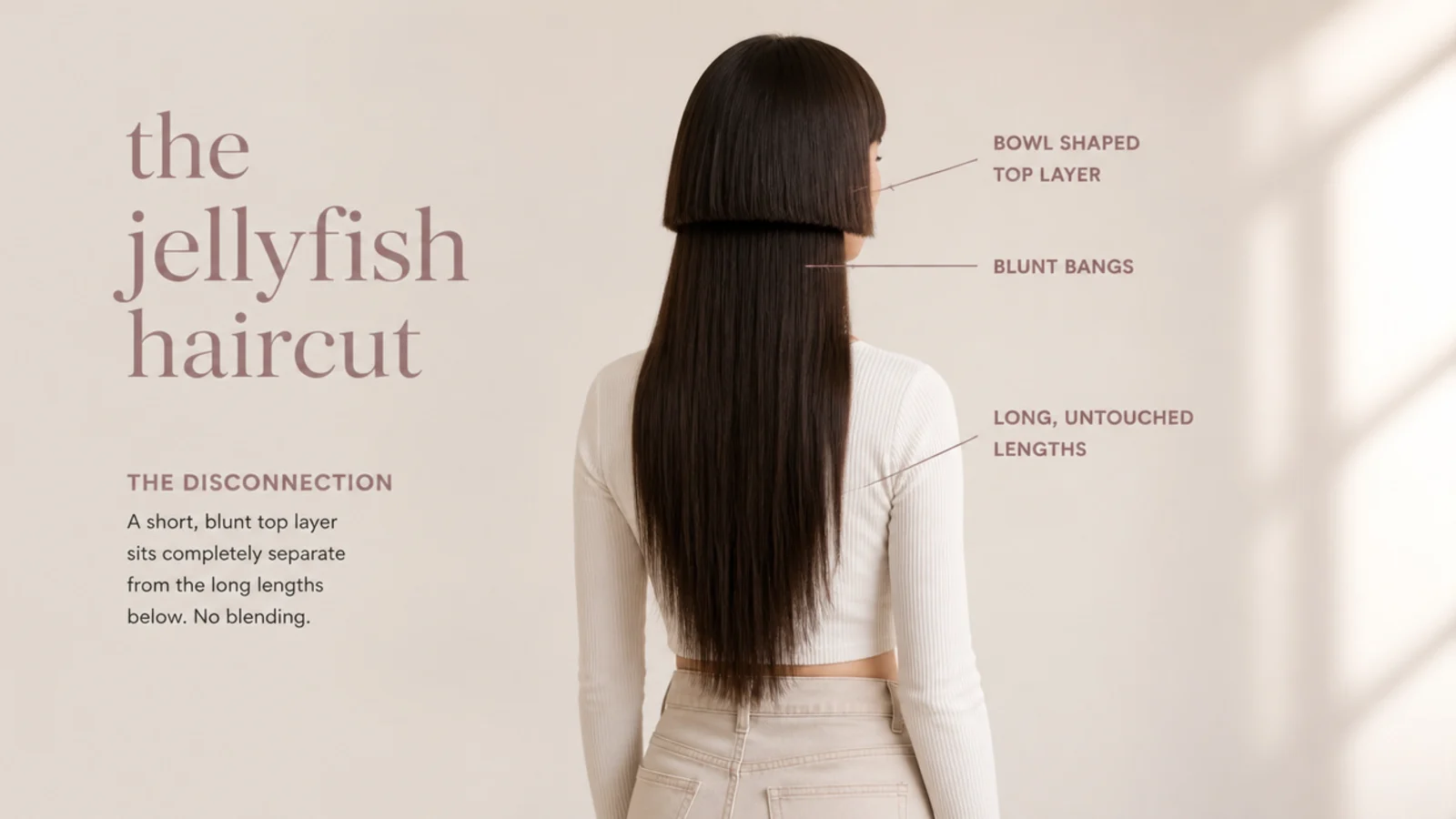
The fringe belongs to the bell. It is the front of the same section, cut shorter, which is why the two are always trimmed on the same visit.
It gives the shape a third line. The long hem, the bell hem and the fringe, stacked from bottom to top.
Density is a zero sum trade. A fringe cut heavy takes its weight from the bell, and a fringe cut light leaves the bell solid.
It changes the front view completely. A jellyfish without a fringe reads as a bob from the front. With one it reads as a deliberate shape from every angle.
Jellyfish Versus Hime Wolf and Mullet
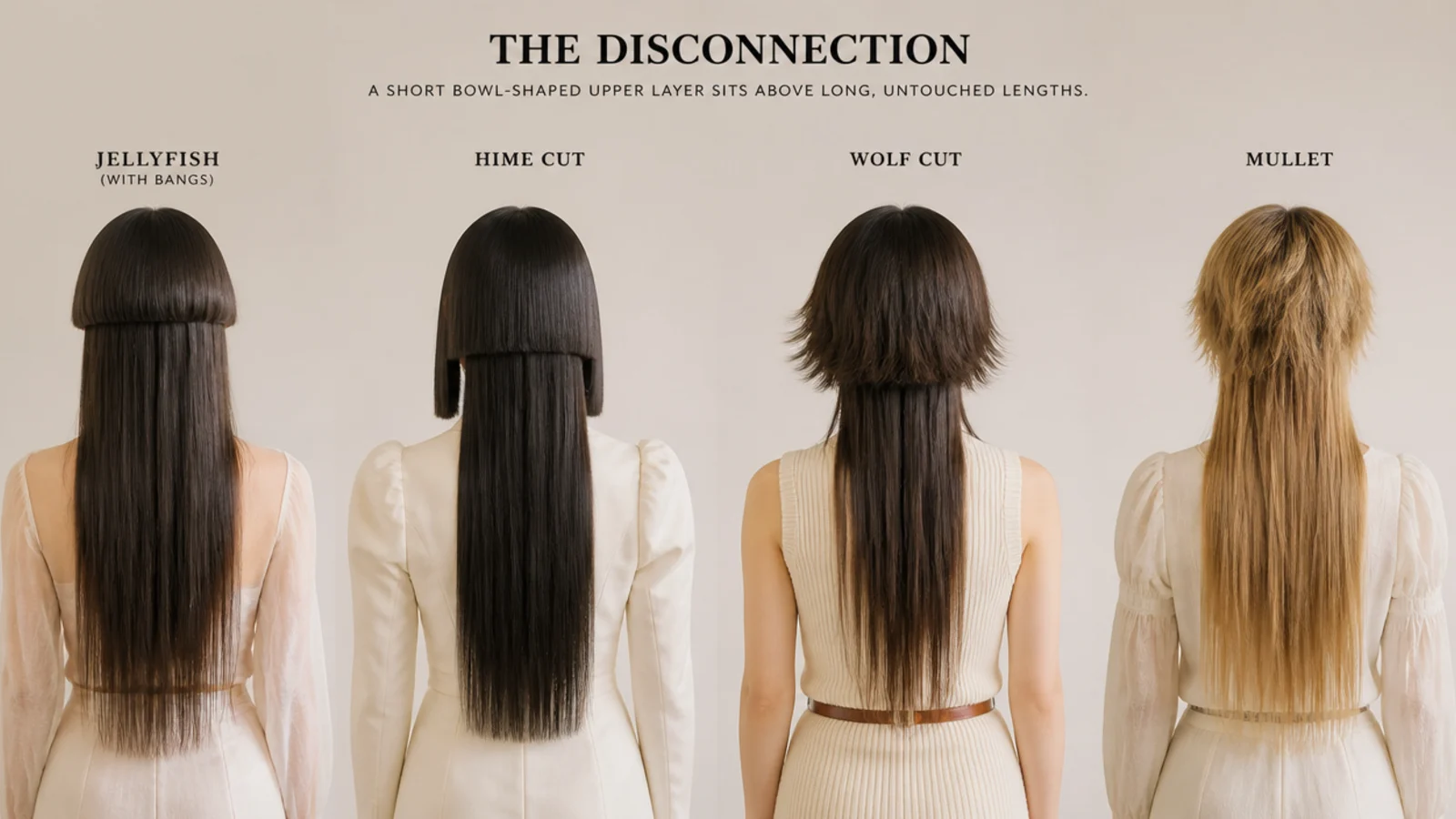
Hime adds straight side panels. Two more horizontals at the cheekbone, which makes it the most structured member of this family.
A wolf cut blends everything. Crown layers falling into long ends through a gradient, with the fringe softened into the face frame.
A mullet keeps the weight at the back. The change runs front to back along the head rather than around it.
A jellyfish cuts one disconnected horizontal. Level to the floor, all the way around, with nothing joining the two lengths. The fringe sits inside the upper section rather than bridging them.
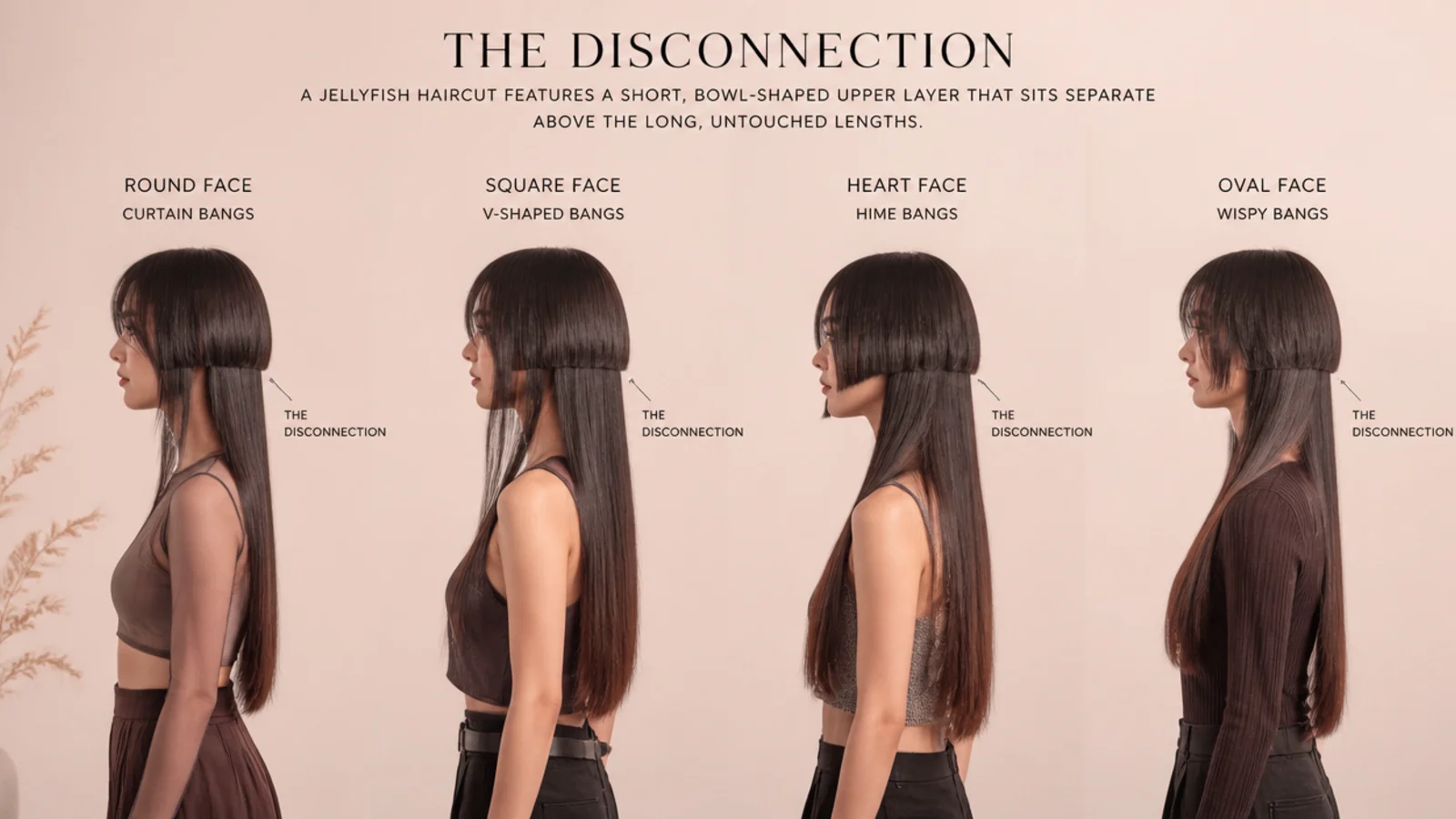
Bangs by Face Shape and Texture
Keep the two lines apart. A high fringe wants a low bell and a low fringe wants a high one, because parallel lines close together shorten the face between them.
Round faces want a fringe that breaks the horizontal. Curtain, V and bottleneck shapes all introduce a diagonal, which is the opposite of what a round face already has too much of.
Long faces can take a full blunt fringe. A hard horizontal high on the forehead removes visible vertical, and there is enough of it to spare.
Cowlicks decide the density. A fringe cut over a strong swirl at the hairline splits itself apart, so that section needs cutting heavier or the fringe needs cutting longer.
Fine hair cannot afford a heavy fringe. The weight comes out of the bell, and a thin bell removes the one thing this cut is built to show.
What to Ask Your Stylist For
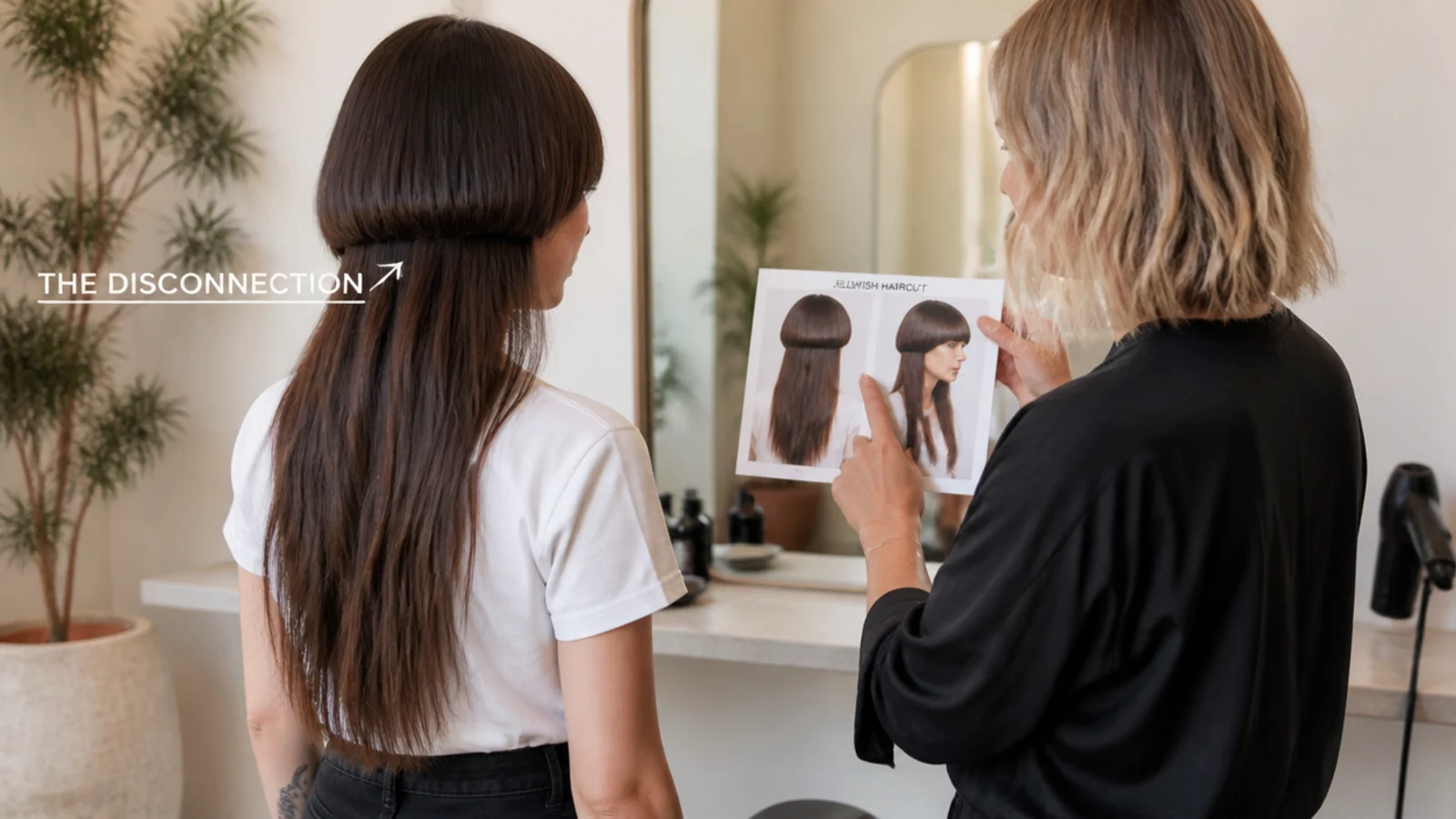
Ask for the fringe after the bell, not before. The bell sets the proportion, and a fringe cut first has nothing to be measured against.
Name a landmark, not a length. Brow, mid forehead, lash line or cheekbone. Inches land differently on every forehead.
Say how much of the section you want in it. Light, medium or full. This is the density conversation, and it is the one people skip.
Ask for it cut dry at the end. Wet hair sits lower under tension and a fringe cut wet rises as it dries, which is how micro fringes happen by accident.
Styling the Bell and the Bangs
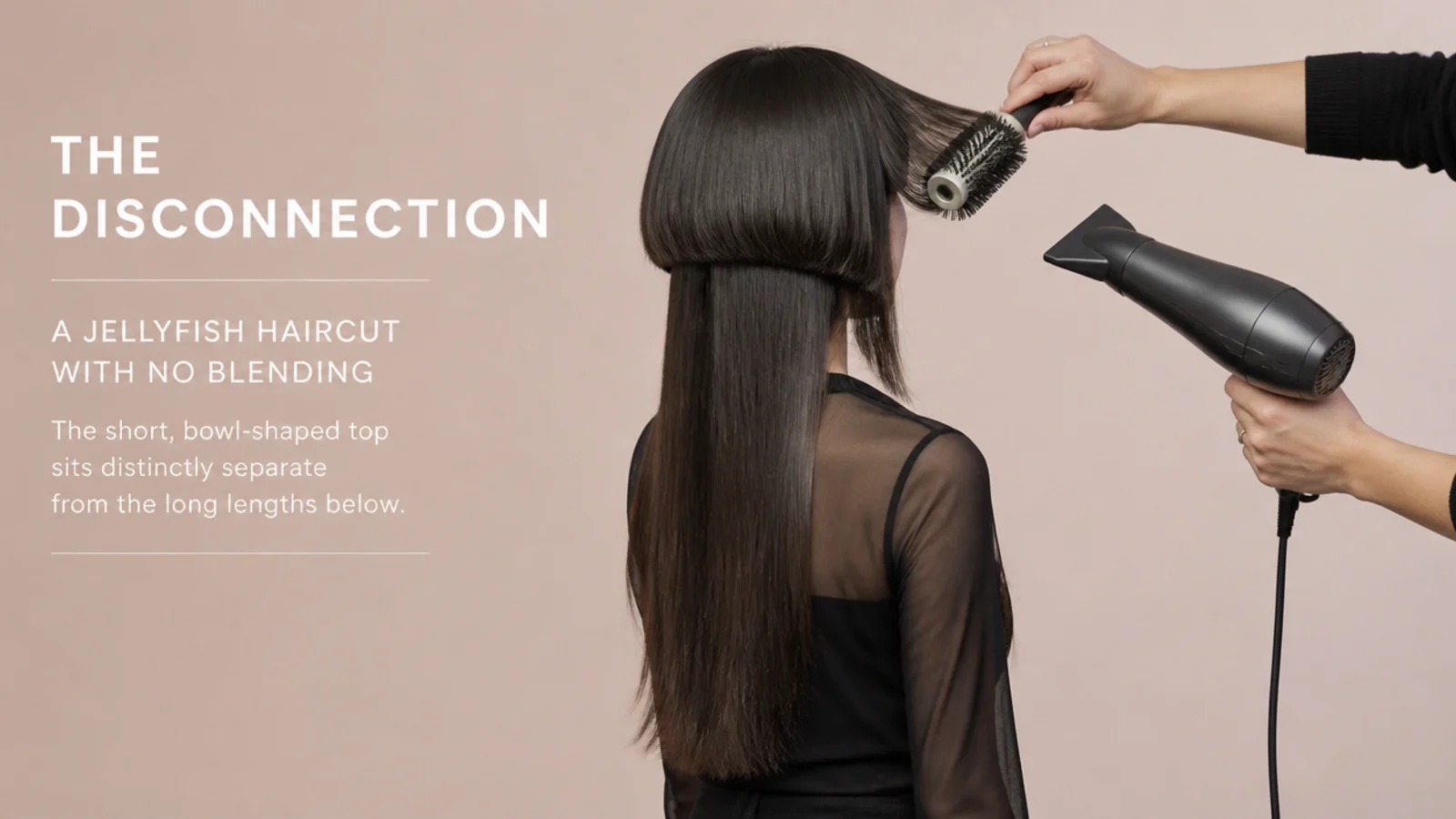
Dry the fringe first, immediately after washing. A fringe left wet dries into whatever shape it fell into, and once it sets there it stays.
Aim the dryer across the fringe, not down it. Moving side to side breaks a cowlick apart before it can set into a parting.
Round brush the bell under, leave the fringe flat. The bell wants a curve toward the neck and the fringe wants no curve at all.
Keep oil away from both. Product weight drops a dome and separates a fringe into strips, and the front of your head is where both faults are visible.
Growing Out Jellyfish Bangs
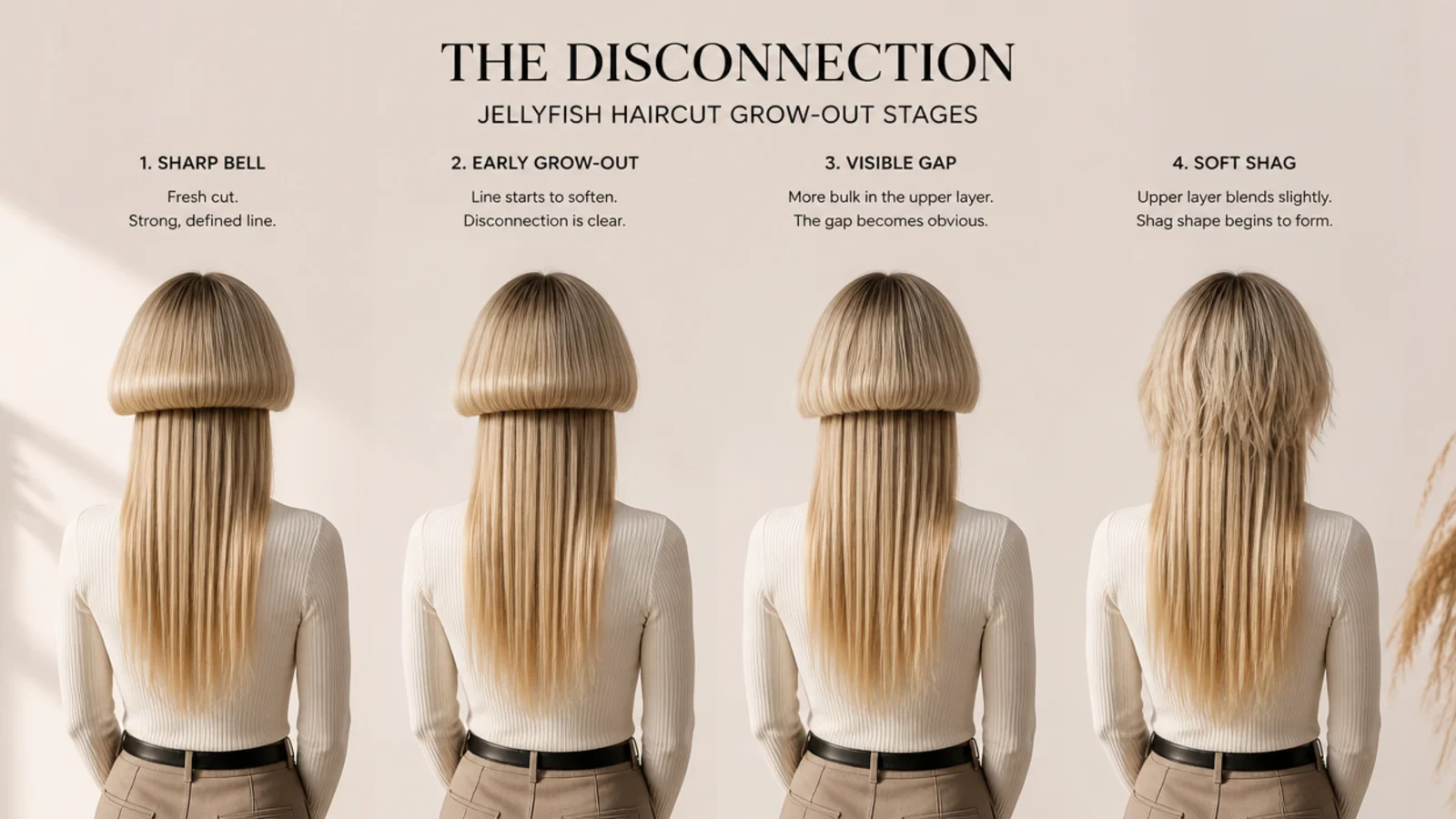
Hair grows roughly half an inch a month. A fringe cut at the brow reaches the lash line in about six weeks, which is the point most people give up and cut it again.
The cheekbone is the awkward stage. Long enough to be in the way and too short to tuck, and it lasts around two months.
Past the cheekbone it becomes a face frame. From there it merges into the bell and the grow out is effectively finished.
Pin it sideways rather than trimming it. Every trim resets the clock, and the awkward stage has to be crossed once either way.
The 20 Jellyfish Haircut Bangs Ideas
1. Wispy Curtain Bangs
Parted in the centre and cut longer toward the outside, so the fringe reads as two diagonals rather than as a horizontal. That is why it pairs with a high bell where a blunt fringe would not, since the two shapes never sit parallel.
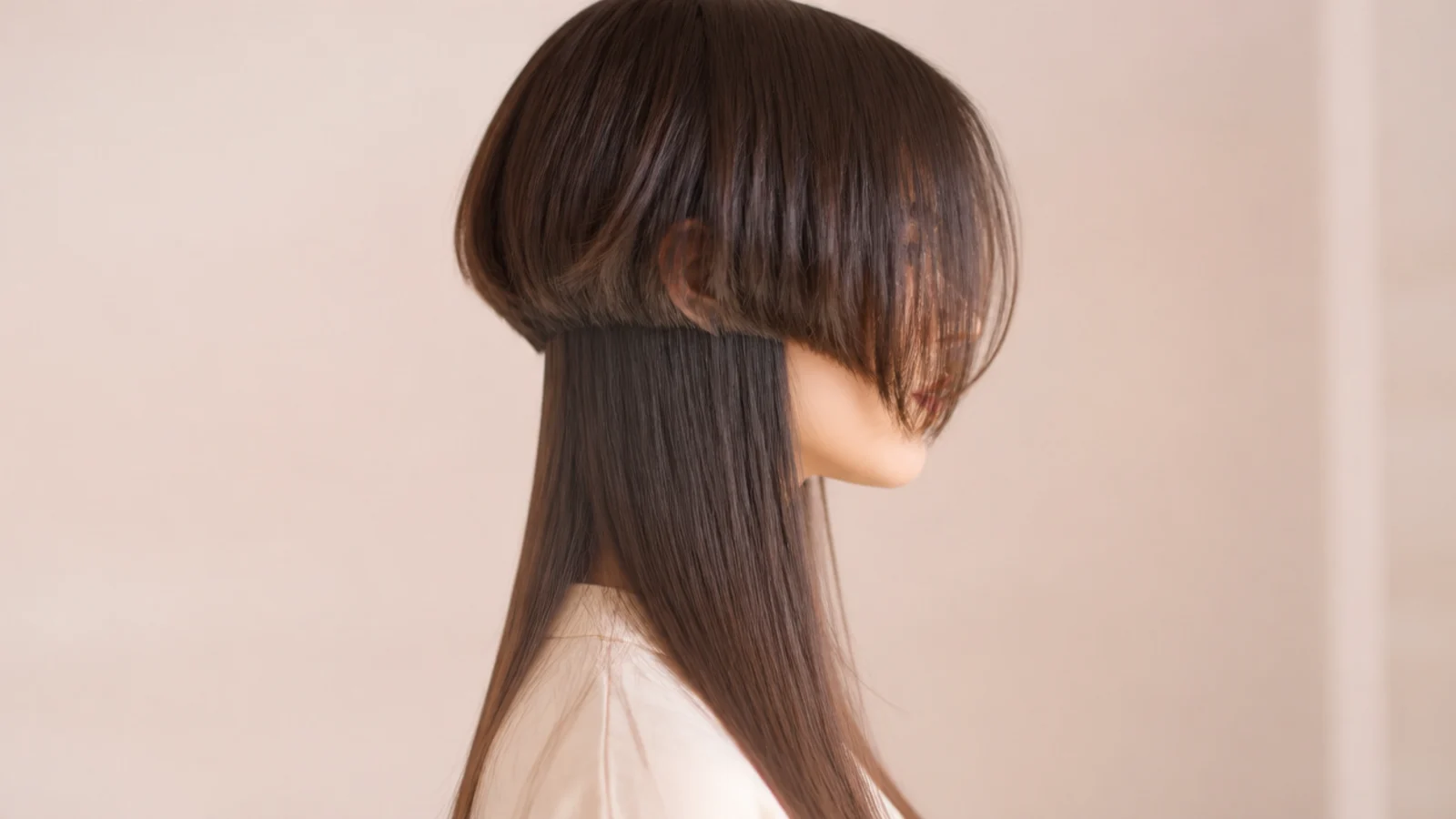
2. Hime Bangs
A straight fringe plus two straight side panels at the cheekbone, giving three parallel lines above the bell hem. It is the most architectural option here and the least forgiving, because all four horizontals have to be genuinely level with one another.
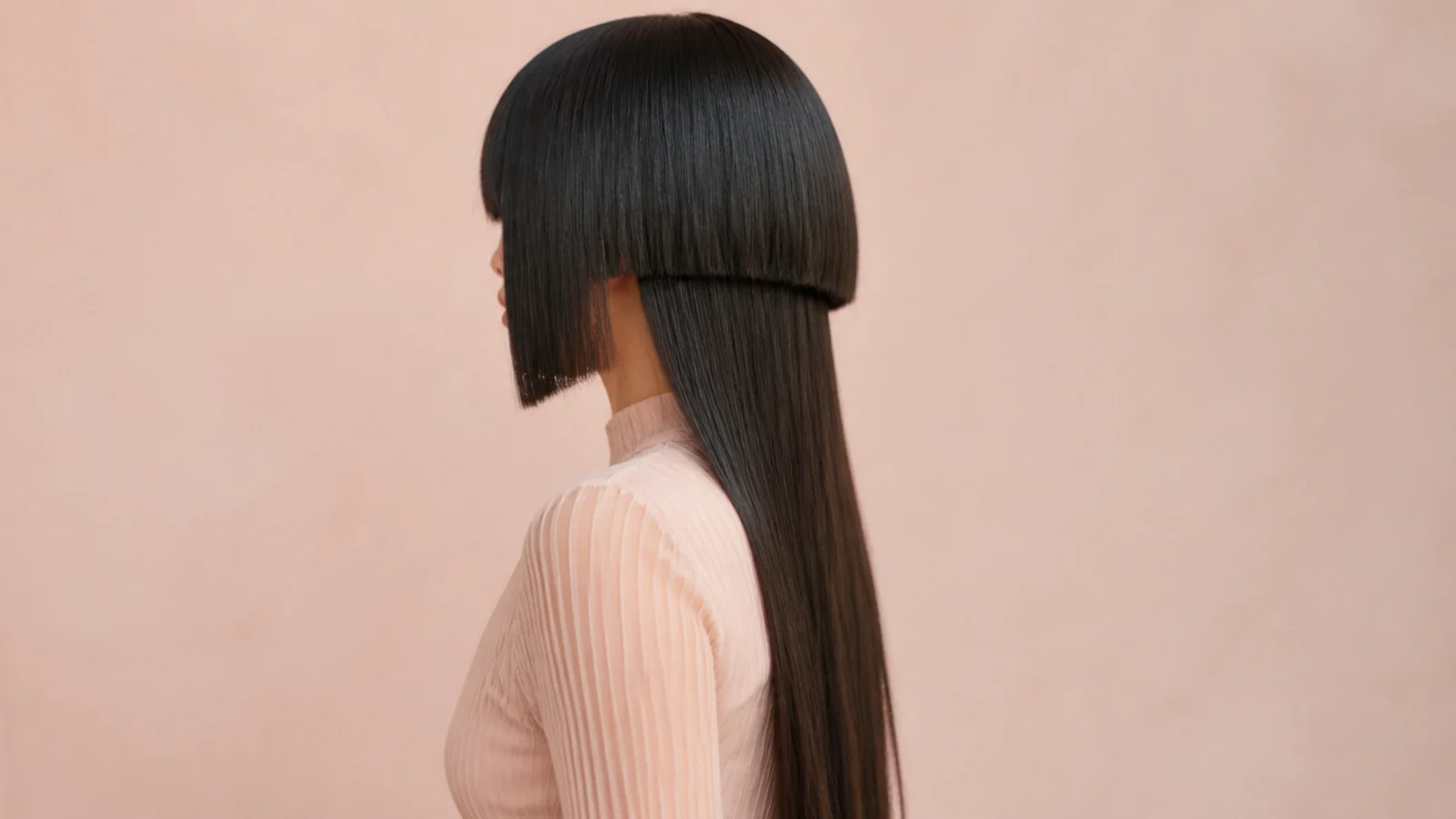
3. Micro Bangs
Cut well above the brow, which puts the maximum possible distance between the fringe line and the bell hem. That separation is what stops the face reading as compressed, and it is the only reason a micro fringe works on this cut at all.
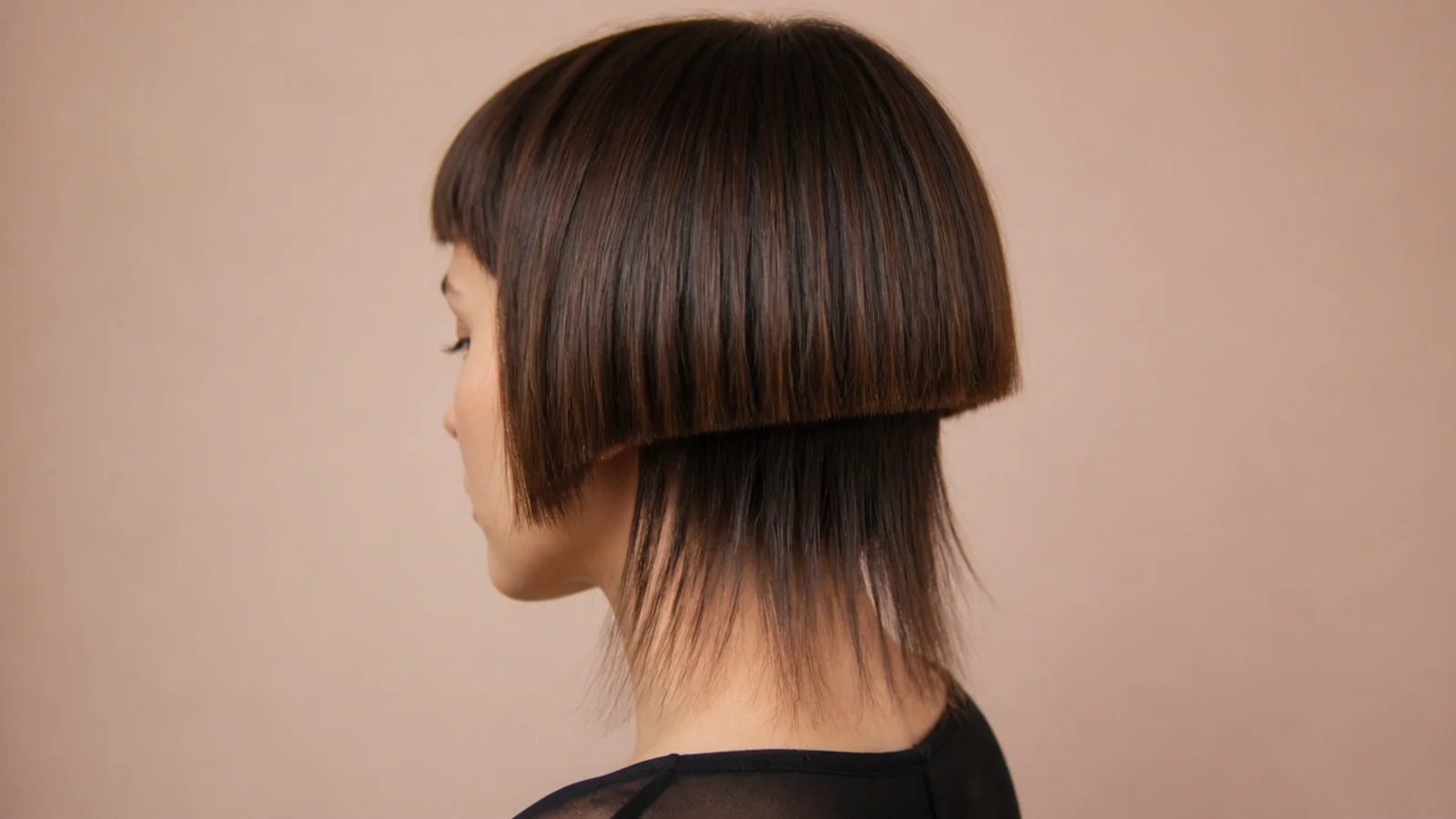
4. Baby Bangs
A little longer than micro and sitting around mid forehead, which is close enough to the brow to need trimming every three weeks. Hair grows about half an inch a month and there is very little room here before the shape becomes something else.
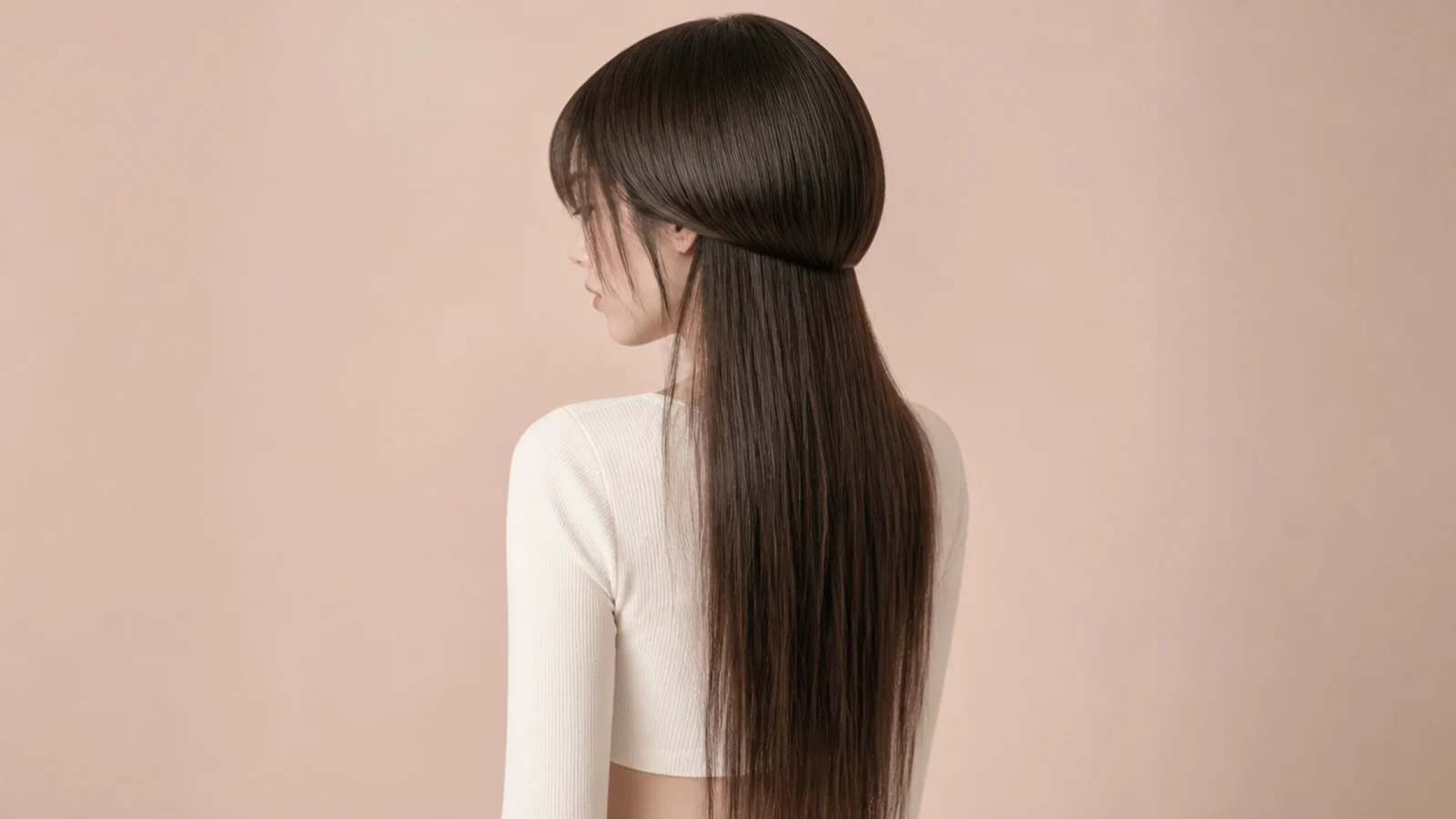
5. V Bangs
The fringe comes to a point at the centre of the forehead, adding a downward angle against the bell horizontal. It suits a rounder face because the point supplies vertical direction at exactly the spot where the bell hem is removing it.
6. Side Swept Bangs
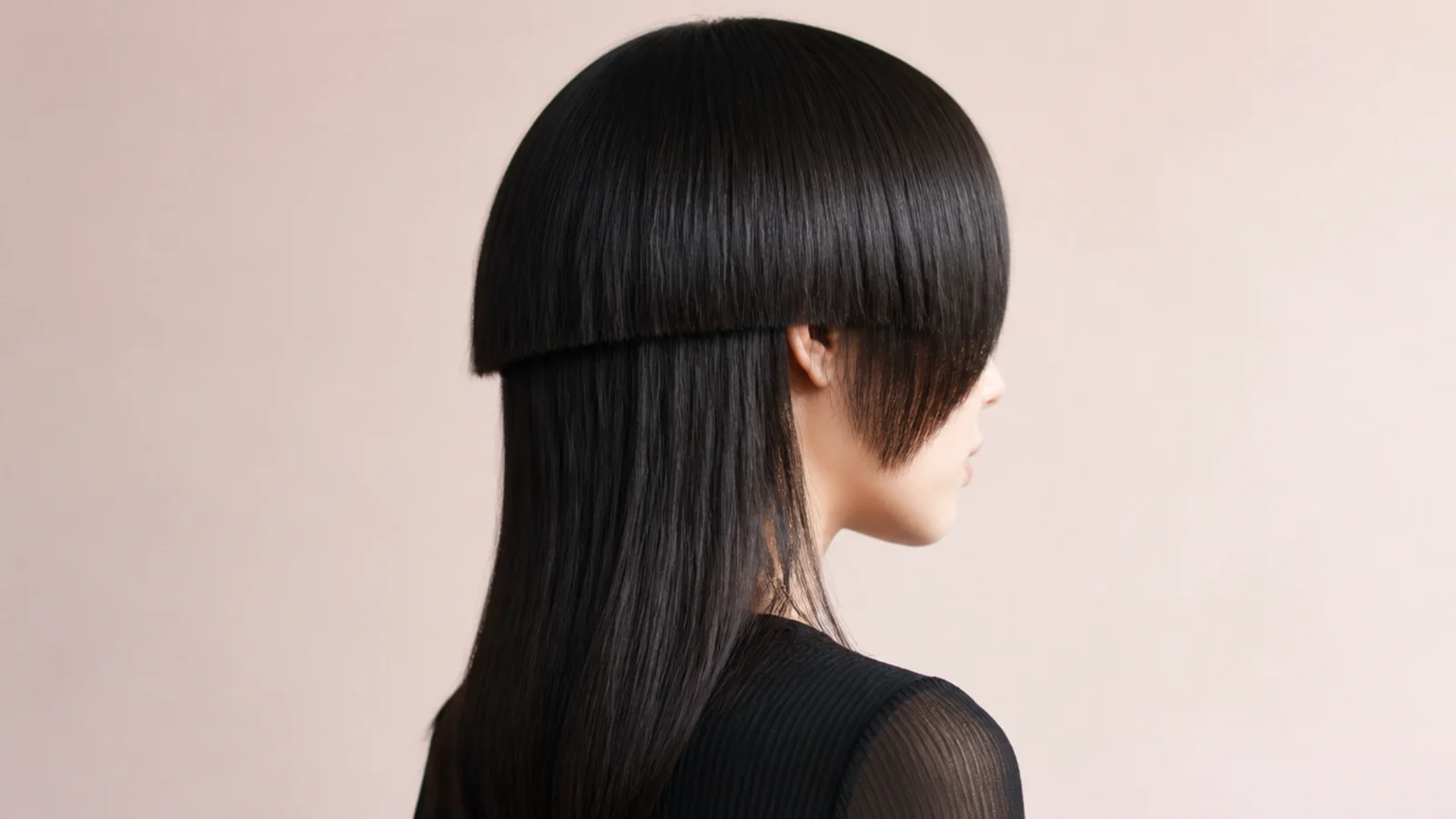
One long diagonal across the forehead, which is the quietest fringe on this page because it introduces no second horizontal at all. It needs a deep parting to hold its direction, since a shallow one lets the weight fall back to centre.
7. Full Blunt Bangs
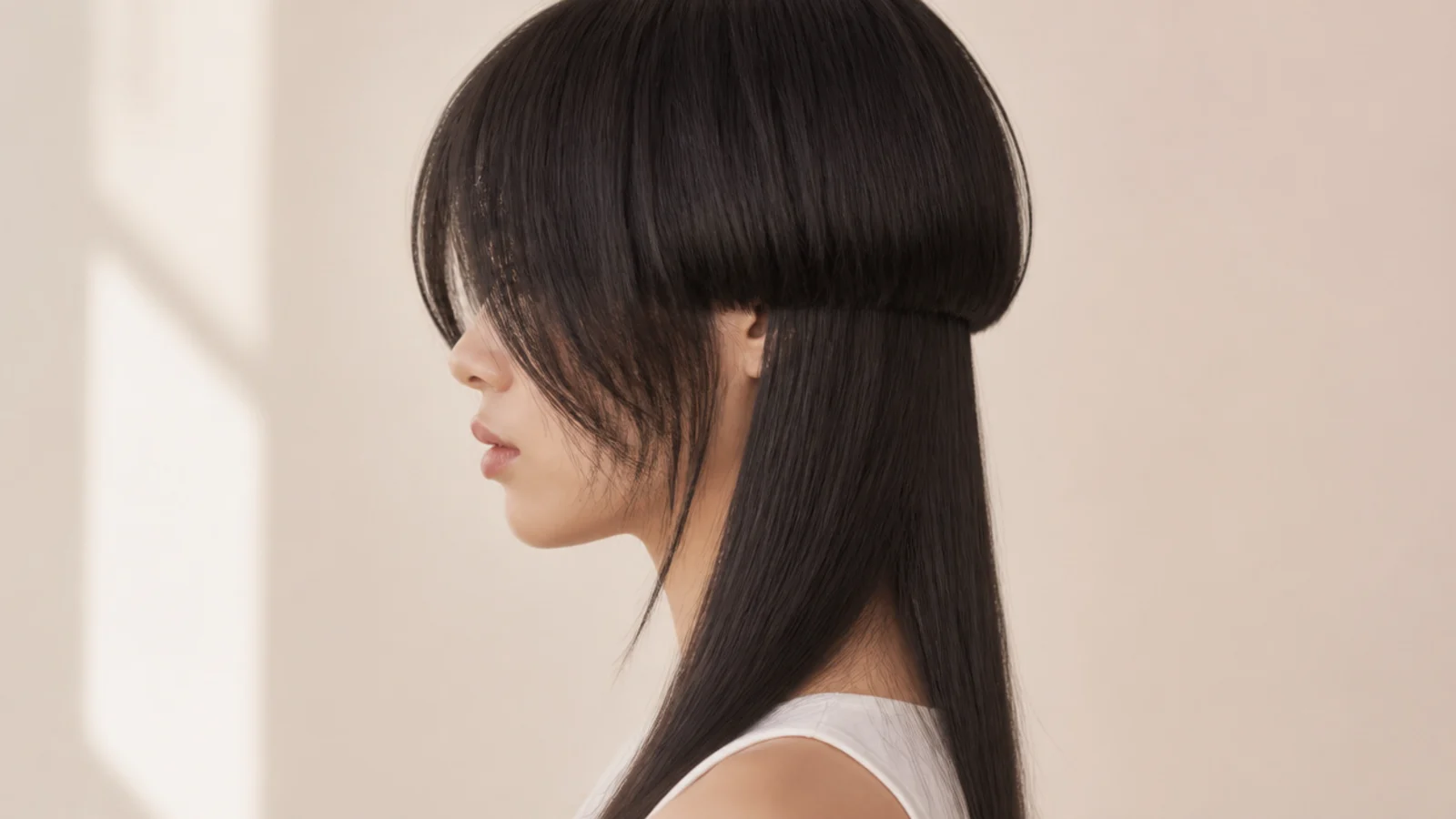
The heaviest option and the one that takes most density out of the bell behind it. Straight across the brow gives you two hard parallel lines, so it wants a low bell at the jaw to keep enough distance between them.
8. Wavy Curtain Bangs
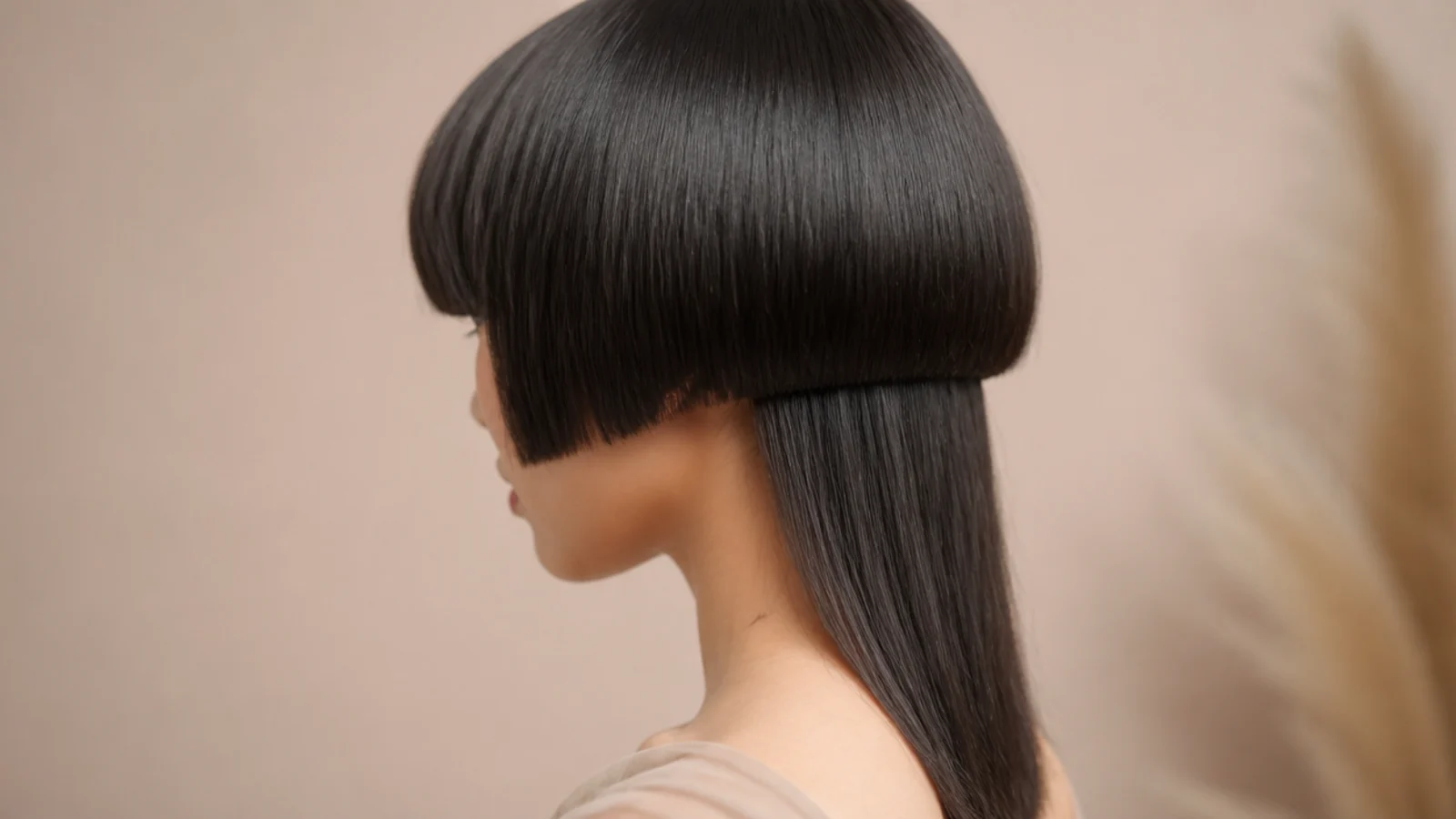
Wave scatters light where a blunt edge returns it in one direction, so a waved curtain fringe softens the front of the cut without shortening it. It also hides the trim schedule, because a wave has no line to grow out of shape.
9. Choppy Bangs
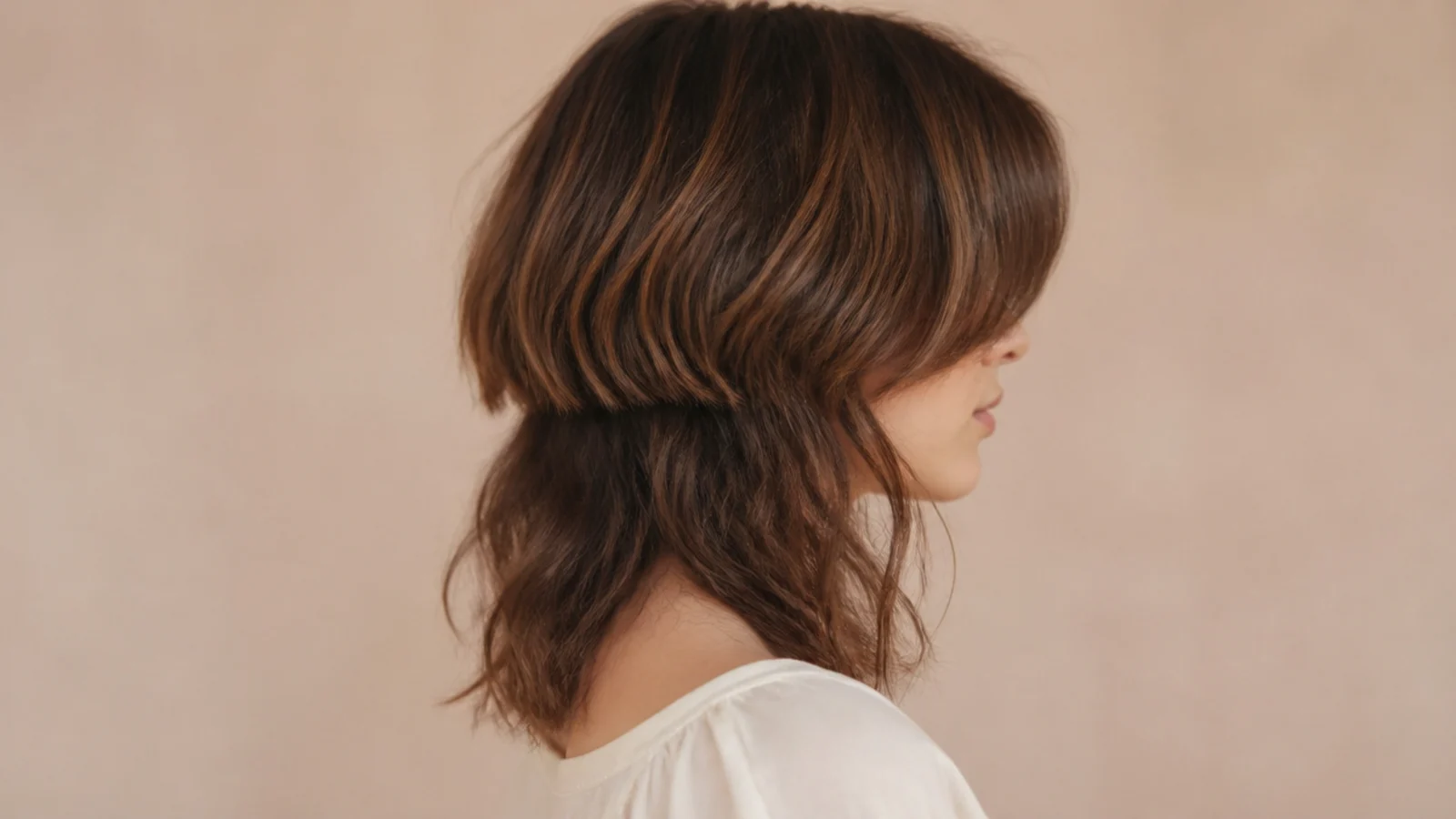
Deep point cutting breaks the fringe into separate strands so it reads as texture rather than as a line. That makes it the one heavy fringe that does not add a second horizontal, which is useful when you want density without compression.

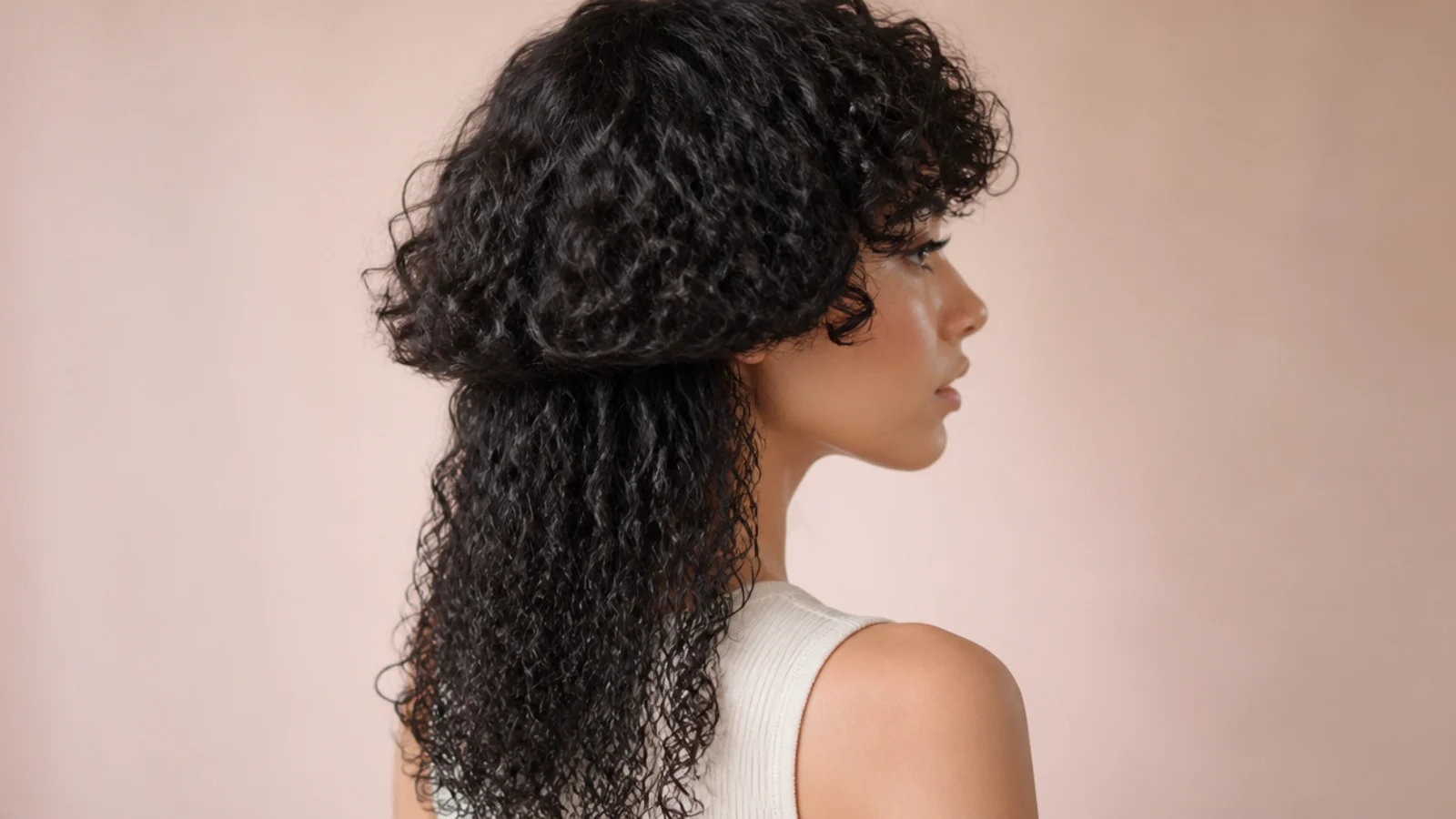
10. Curly Bangs
Curl loses length as it dries, so a curly fringe has to be cut dry and one spiral at a time. Cut it as a straight ribbon and it springs up to a far shorter fringe than anyone in the room intended.
11. Bleached Bangs
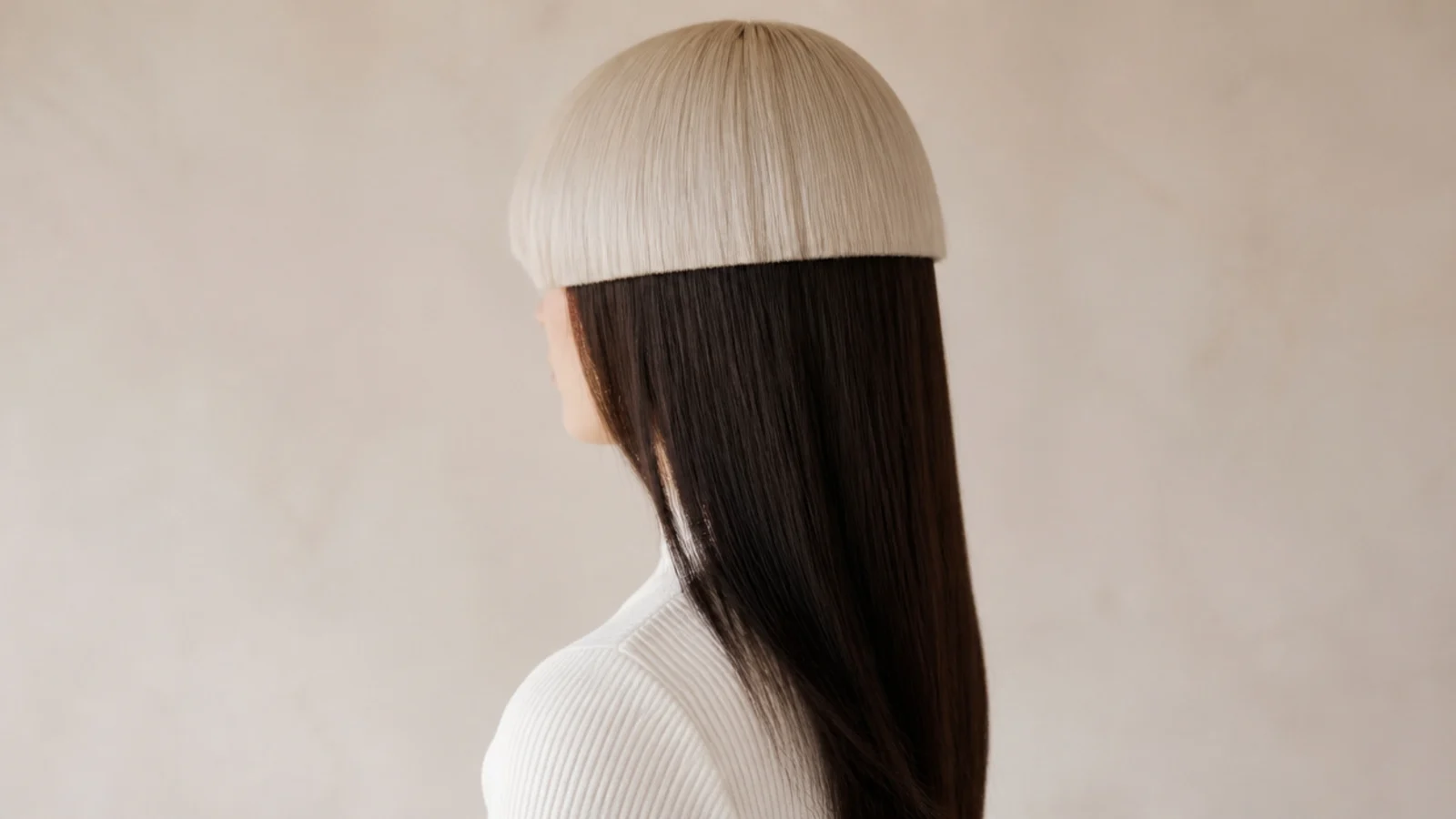
The smallest section on your head carrying the biggest statement, and it sits at the front hairline where regrowth is most visible. Expect a visible line within a month, and plan on it being part of the look rather than a fault.
12. Long Wispy Bangs
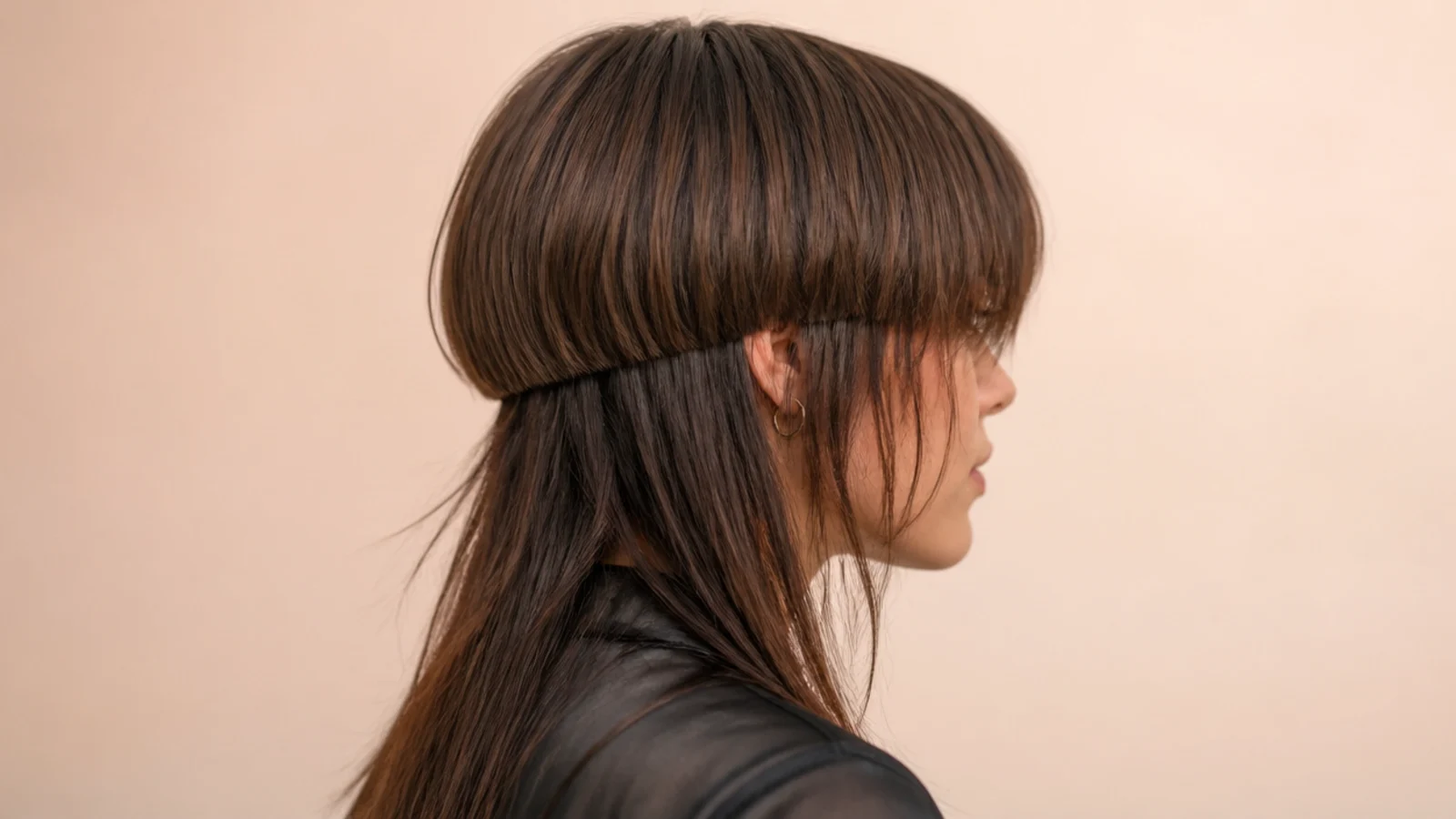
Cut past the brow with the density kept light, so the fringe reaches toward the bell hem instead of sitting parallel above it. Reducing the distance between the two lines only works when one of them is soft enough not to register as a line.
13. French Bangs
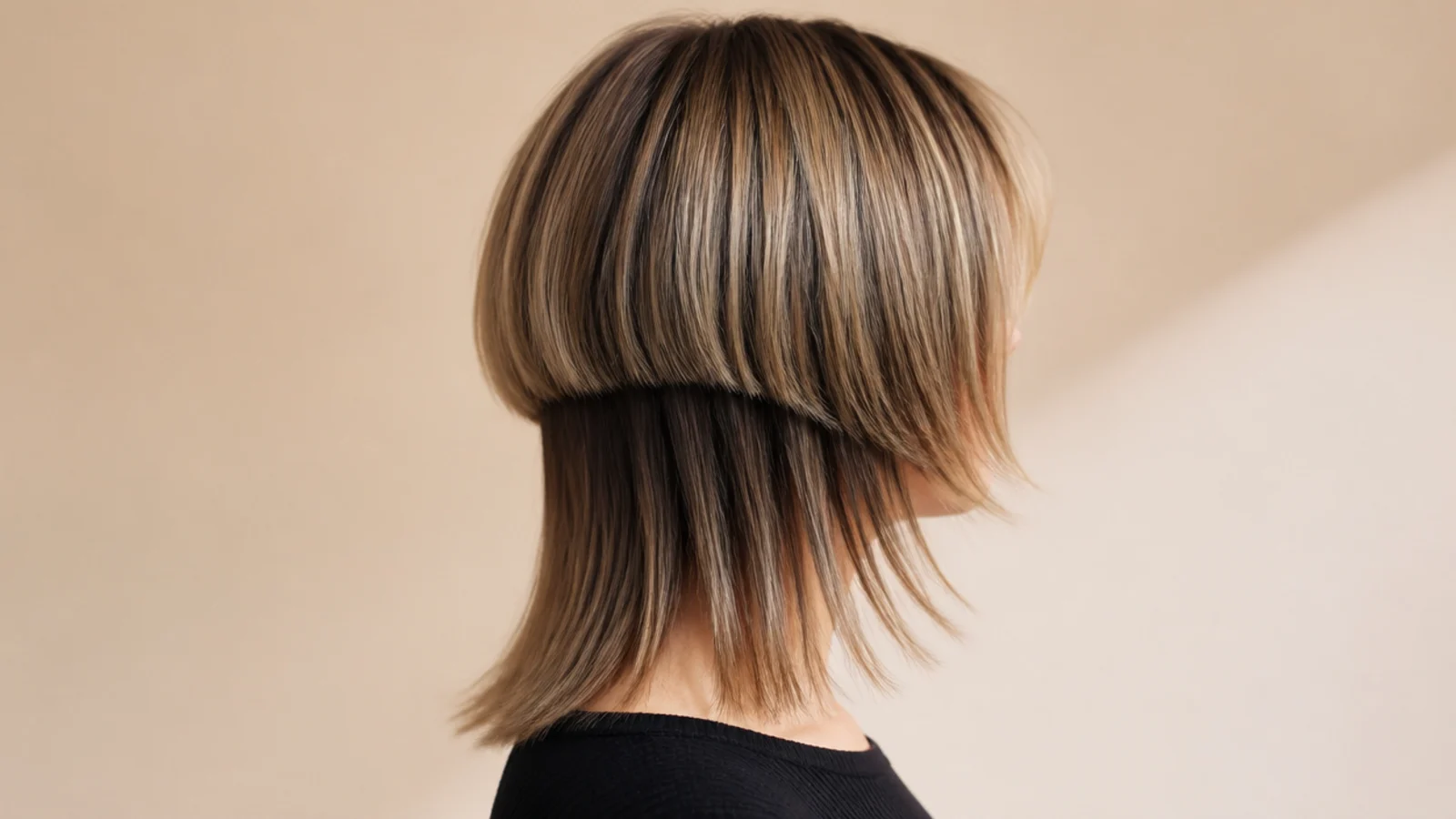
Slightly rounded, cut at the brow with a natural gap in the centre and less density than a full fringe. That gap is doing the work, because it turns one continuous horizontal into two short ones with a break between them.
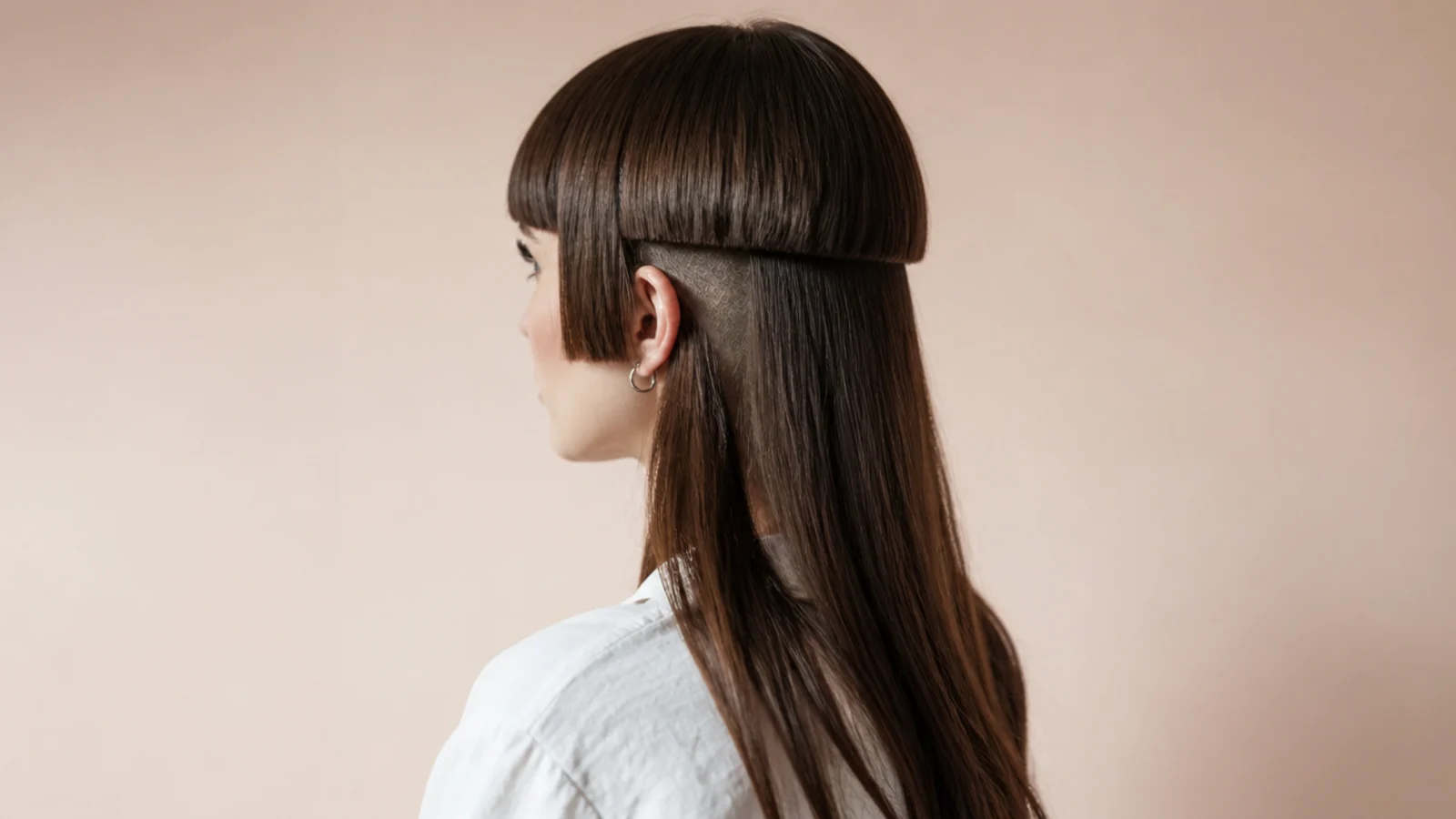
14. Micro Bangs With an Undercut
Two hard edges at opposite ends of the head, one at the forehead and one at the nape, with the bell hanging between them. The pairing works because both are cut with a straight edge, so the shape reads as one intention rather than two.
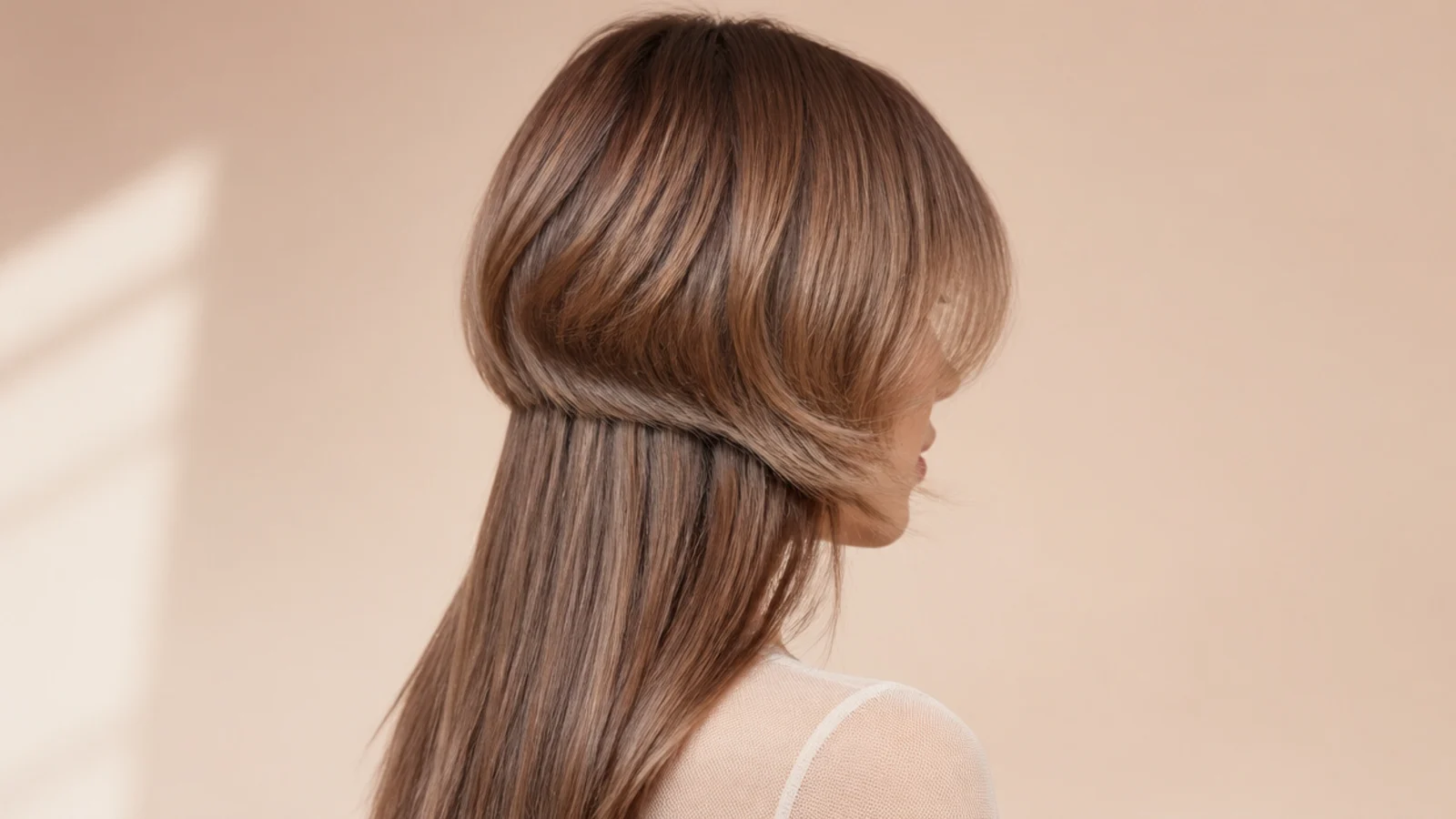
15. Feathered Bangs
Layered internally so the ends taper rather than stopping together, which removes the horizontal entirely and leaves movement in its place. It is the most forgiving fringe here for anyone whose hairline refuses to sit flat.
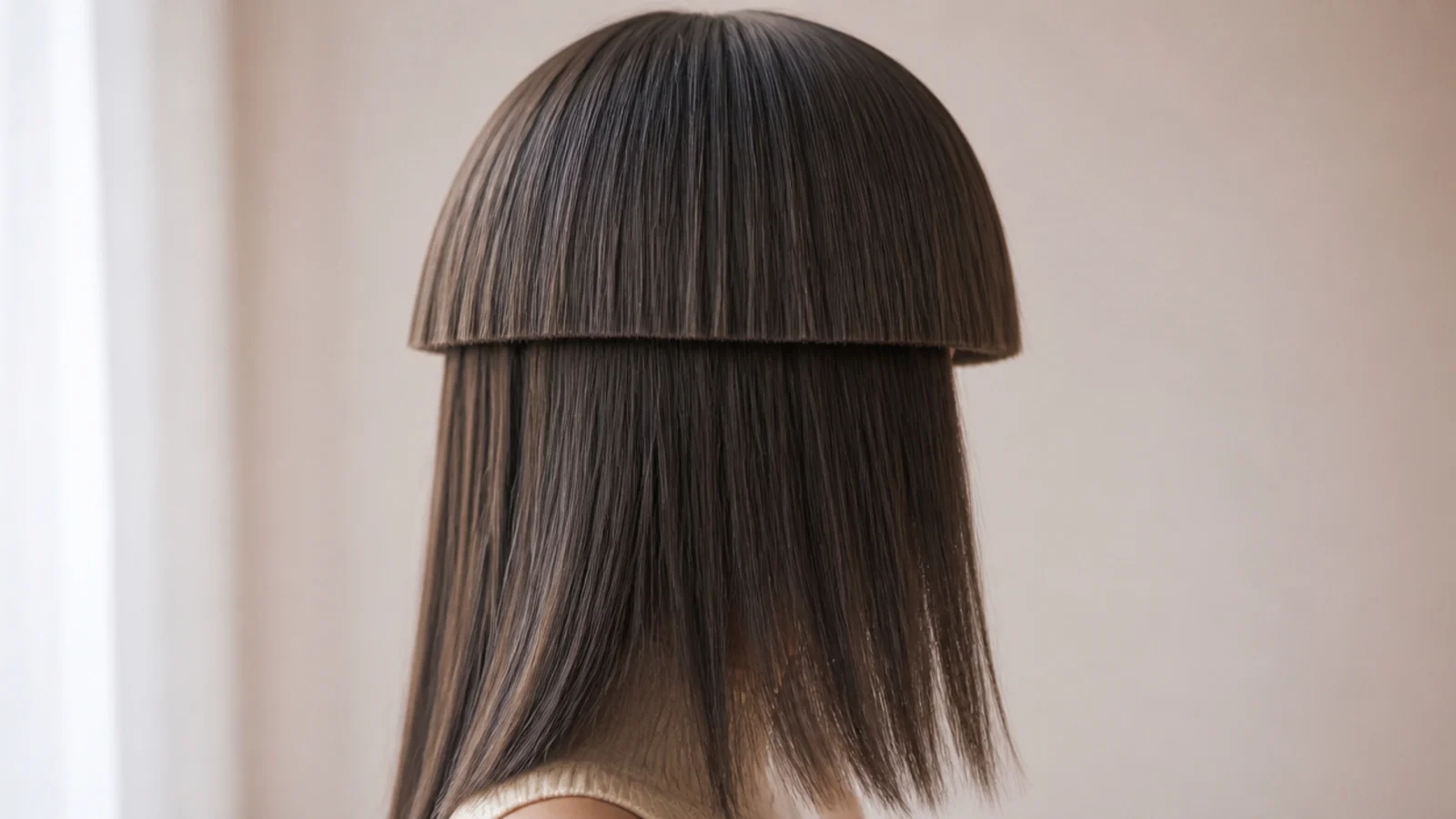
16. Ruler Straight Blunt Bangs
The hardest line available, cut with the section held under even tension and checked against a fixed horizontal. Any drift shows immediately, because a straight edge above a pair of eyes is the most closely read line on a human face.
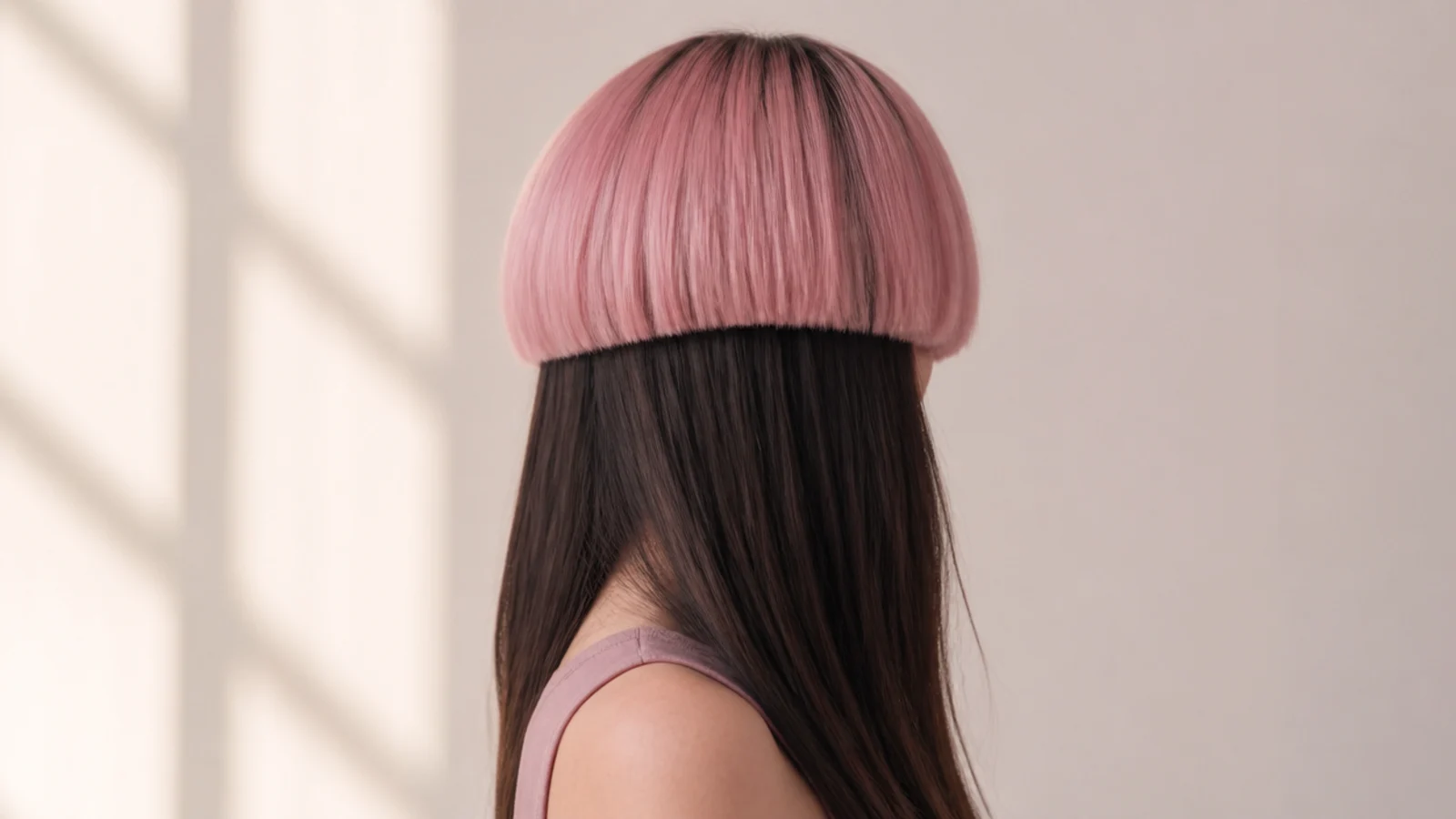
17. Pink Bell With Matching Bangs
Because the fringe comes out of the bell section, colouring the bell colours the fringe automatically, which is why this pairing costs nothing extra. Leaving them different shades would mean masking one part of a single section during processing.
18. Bottleneck Bangs
Shortest in the centre and lengthening quickly at the sides, so the fringe opens outward like a bottle neck. That curve keeps the eyes clear while the longer edges reach toward the bell hem and soften the gap between the two lines.
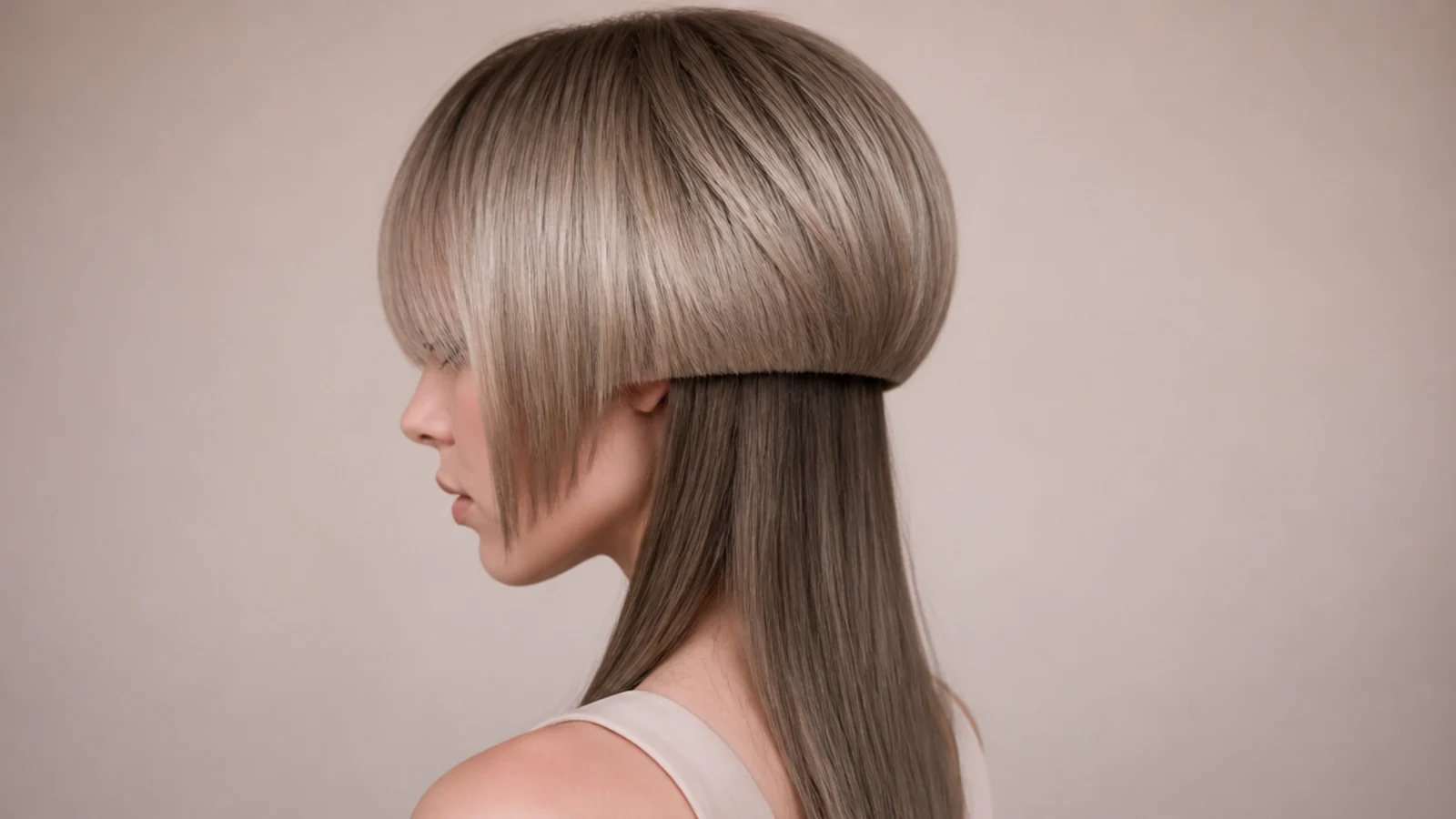
19. Grown Out Curtain Bangs
Once the shortest pieces pass the cheekbone the fringe stops behaving like a fringe and starts behaving like the front of the bell. That is the point where the grow out is over, and it arrives roughly four months after the last trim.
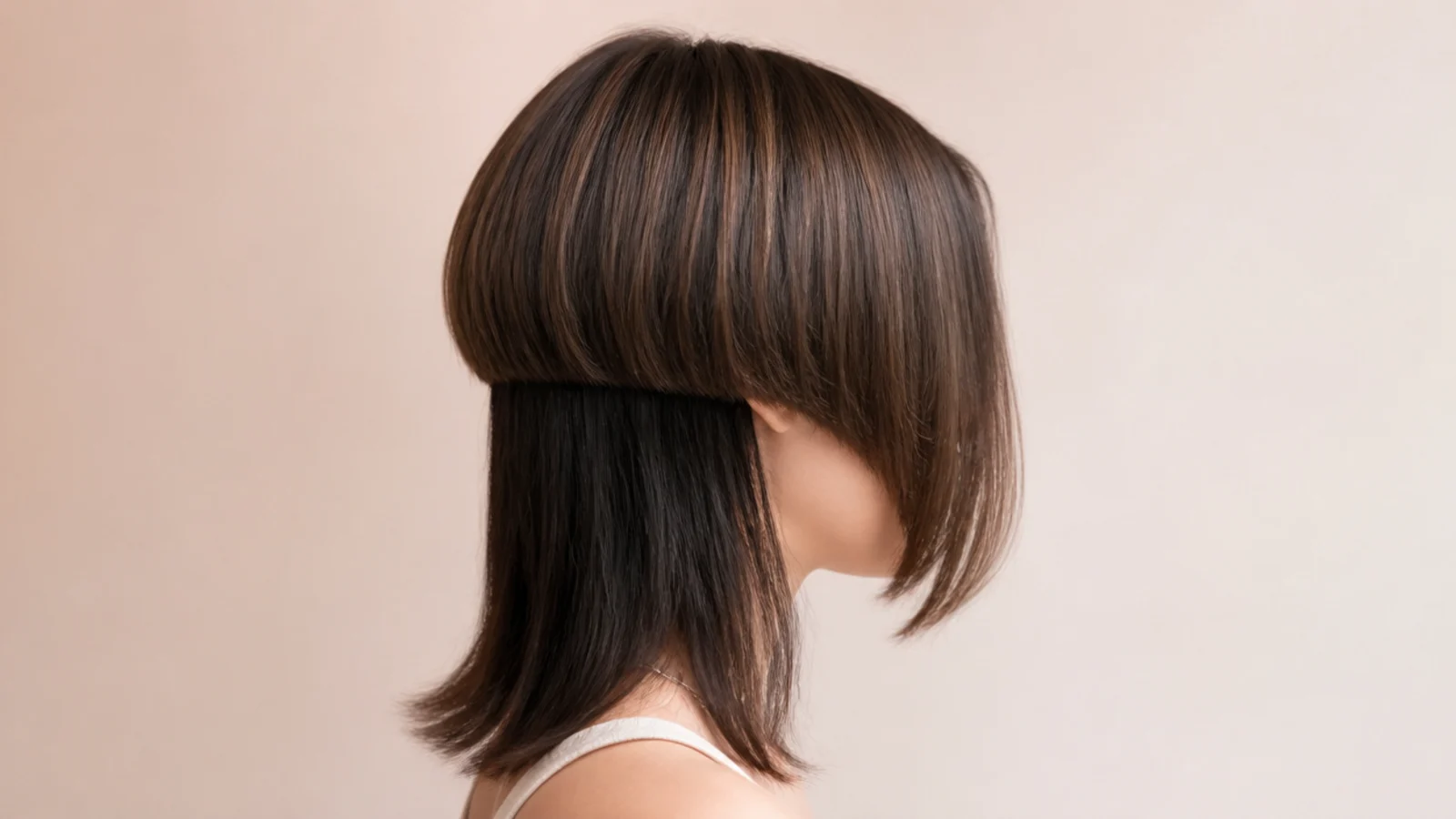
20. No Bangs With Side Pieces
Two loose pieces left at the front of the bell instead of a fringe, which frames the face without adding a second horizontal anywhere. It is the version to choose when the bell is already high, because there is no room left above it.
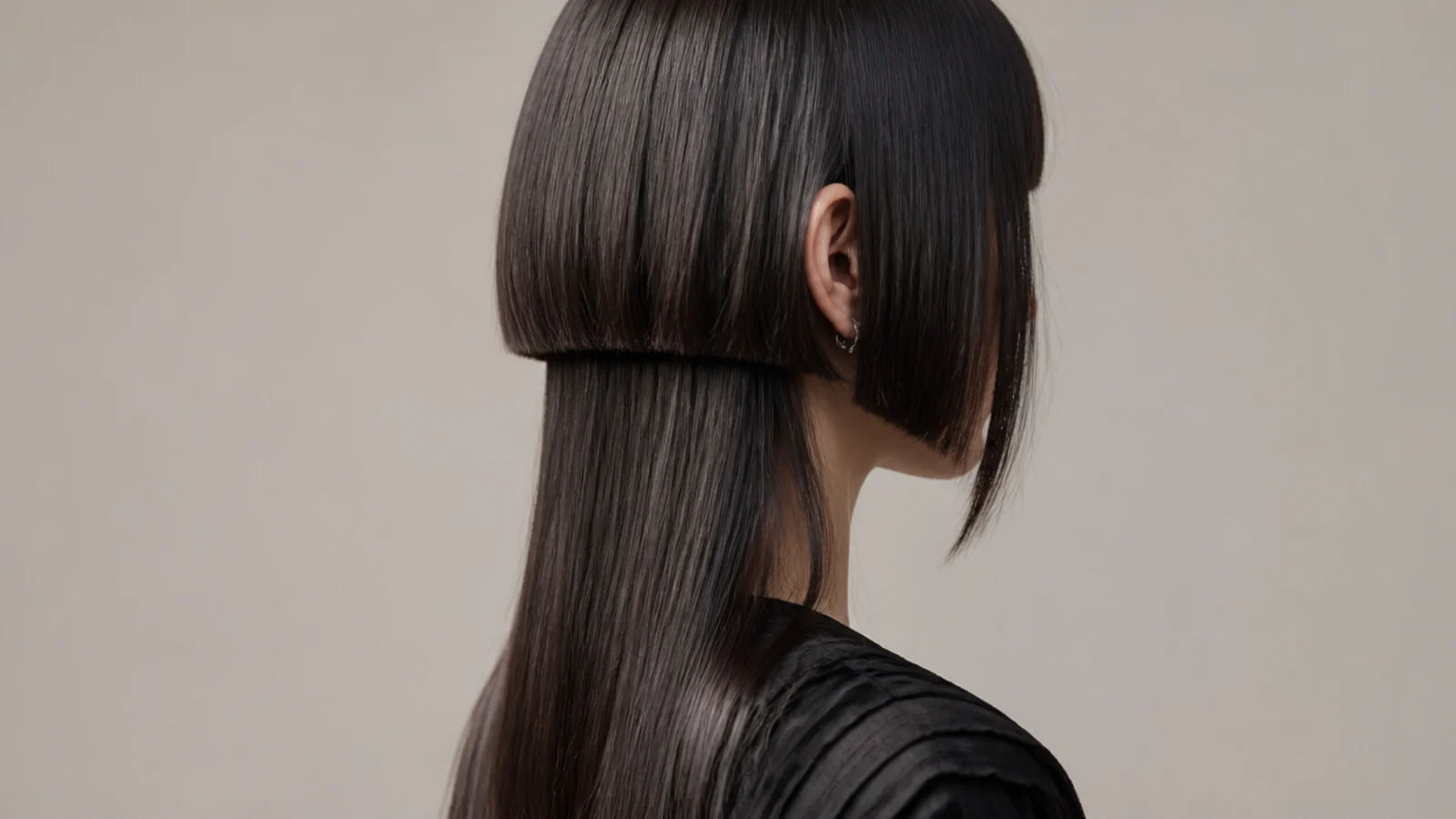
Final Thoughts
Decide the bell height first and let it choose the fringe. A high bell has almost no room above it, which rules out anything blunt and leaves you with curtain, V or side swept shapes, while a jaw length bell will carry a full fringe without the face closing up between the two lines.
For the shape itself and every length it comes in see the jellyfish haircut guide, and for the blended cousin of the same idea see the shag haircut with bangs. More in Mullet and Wolf Cuts.