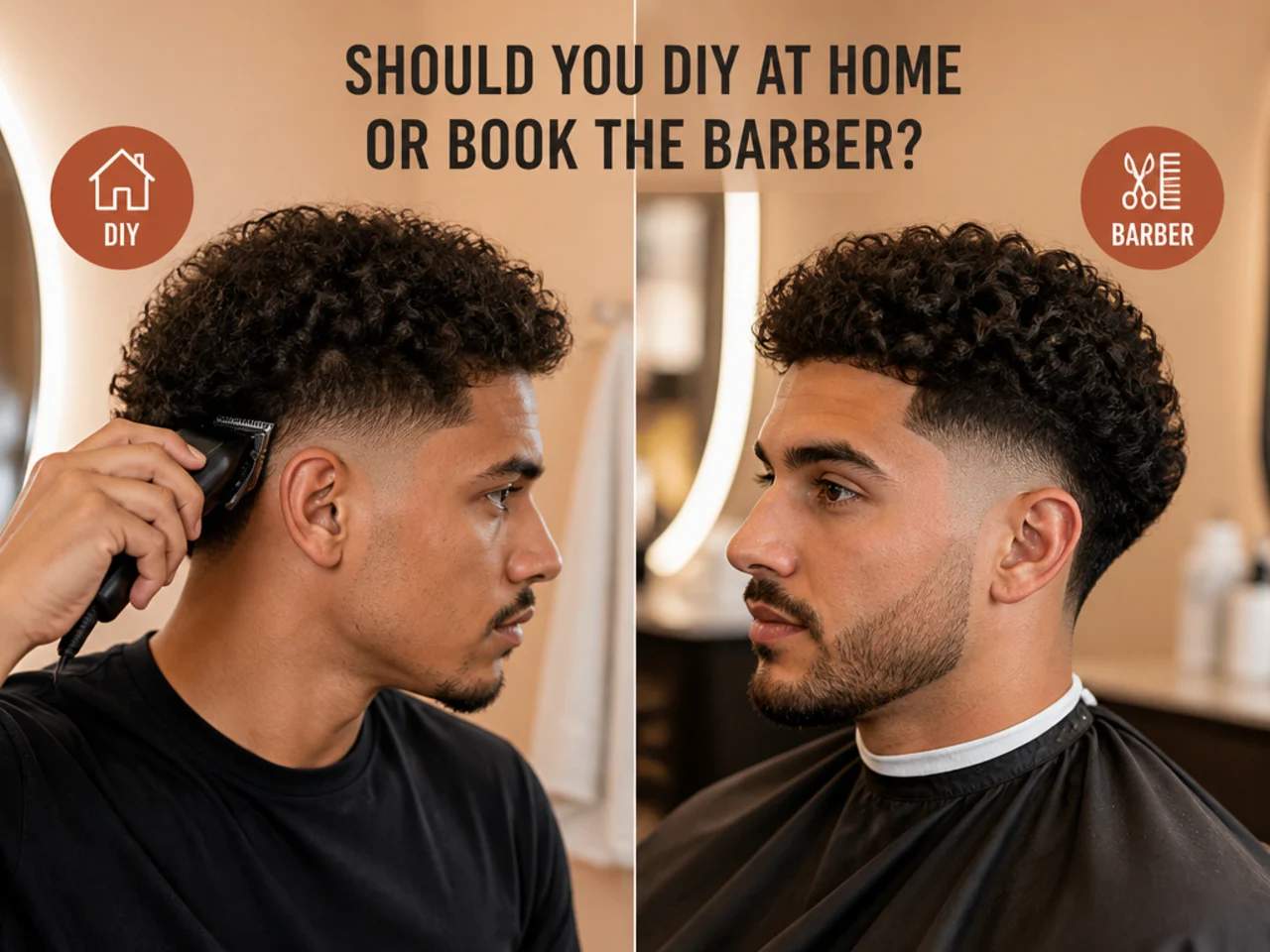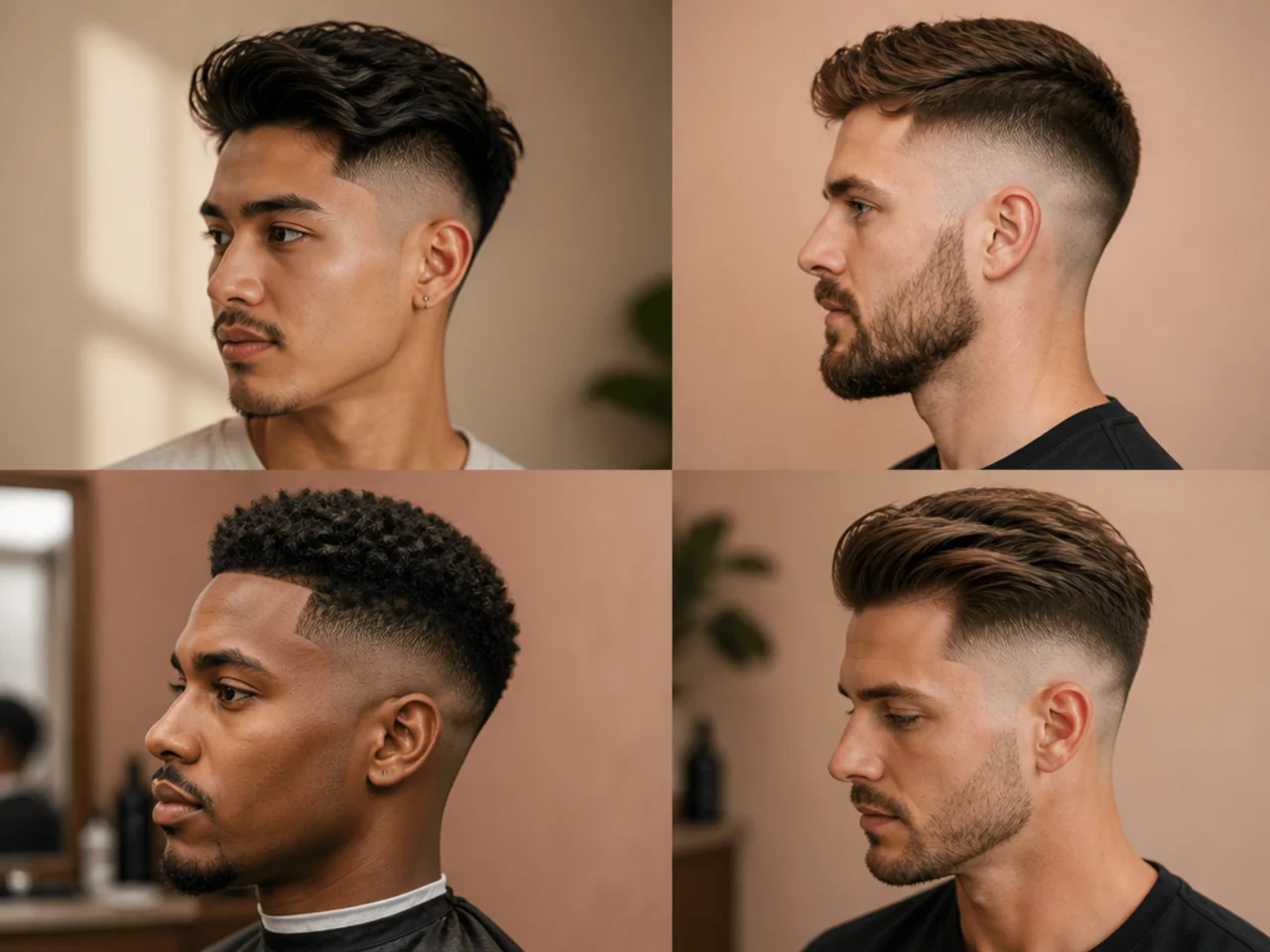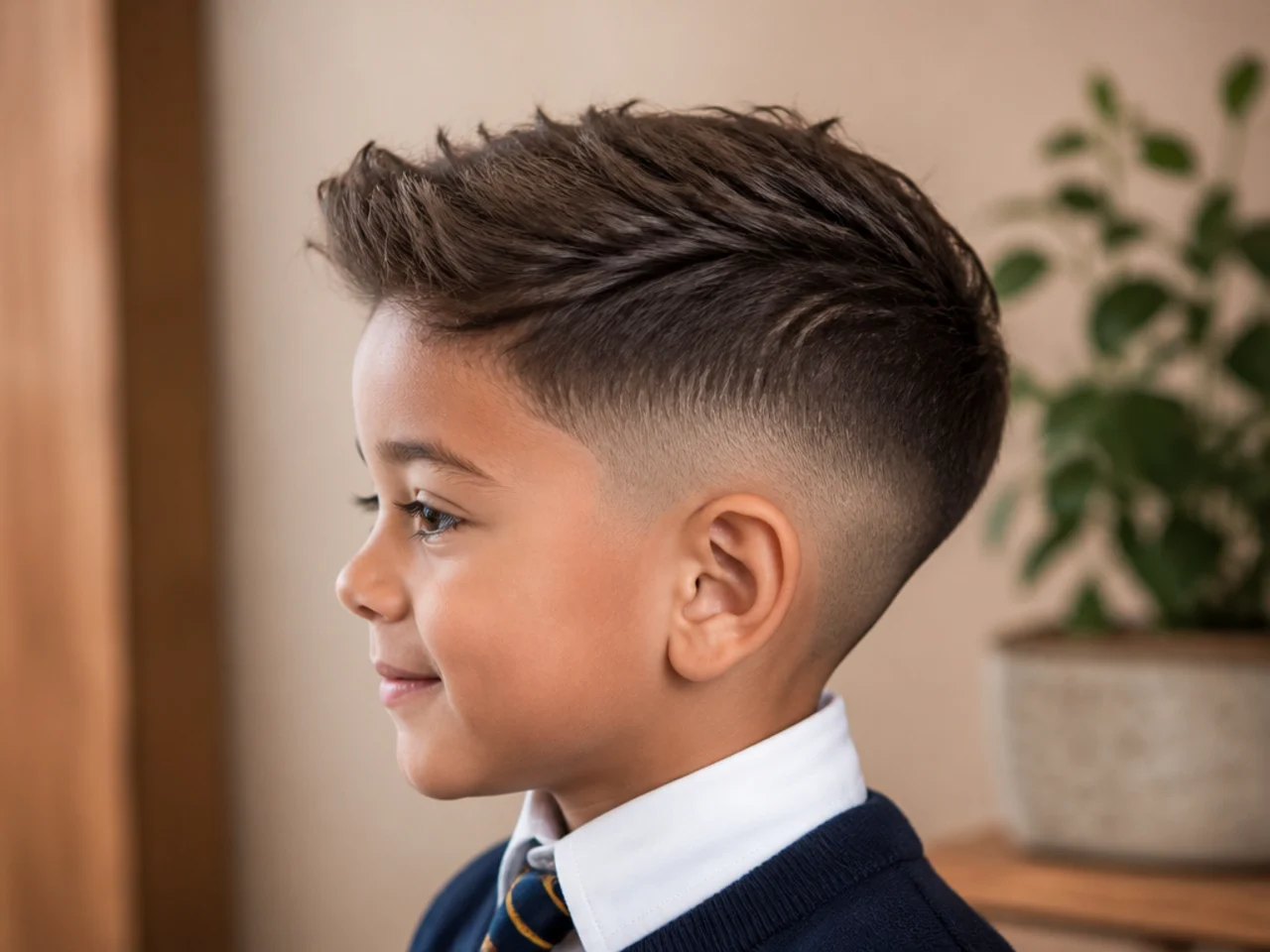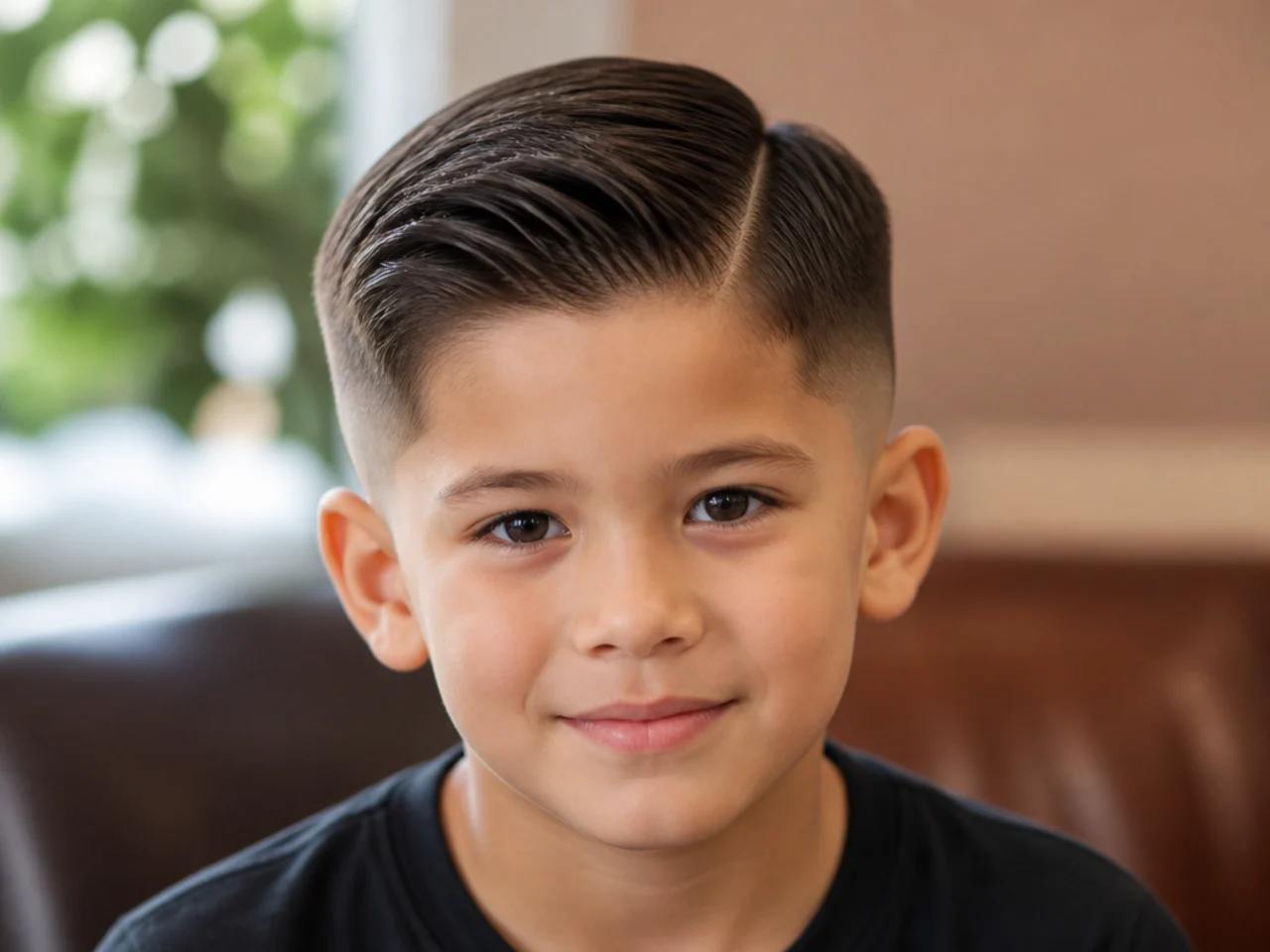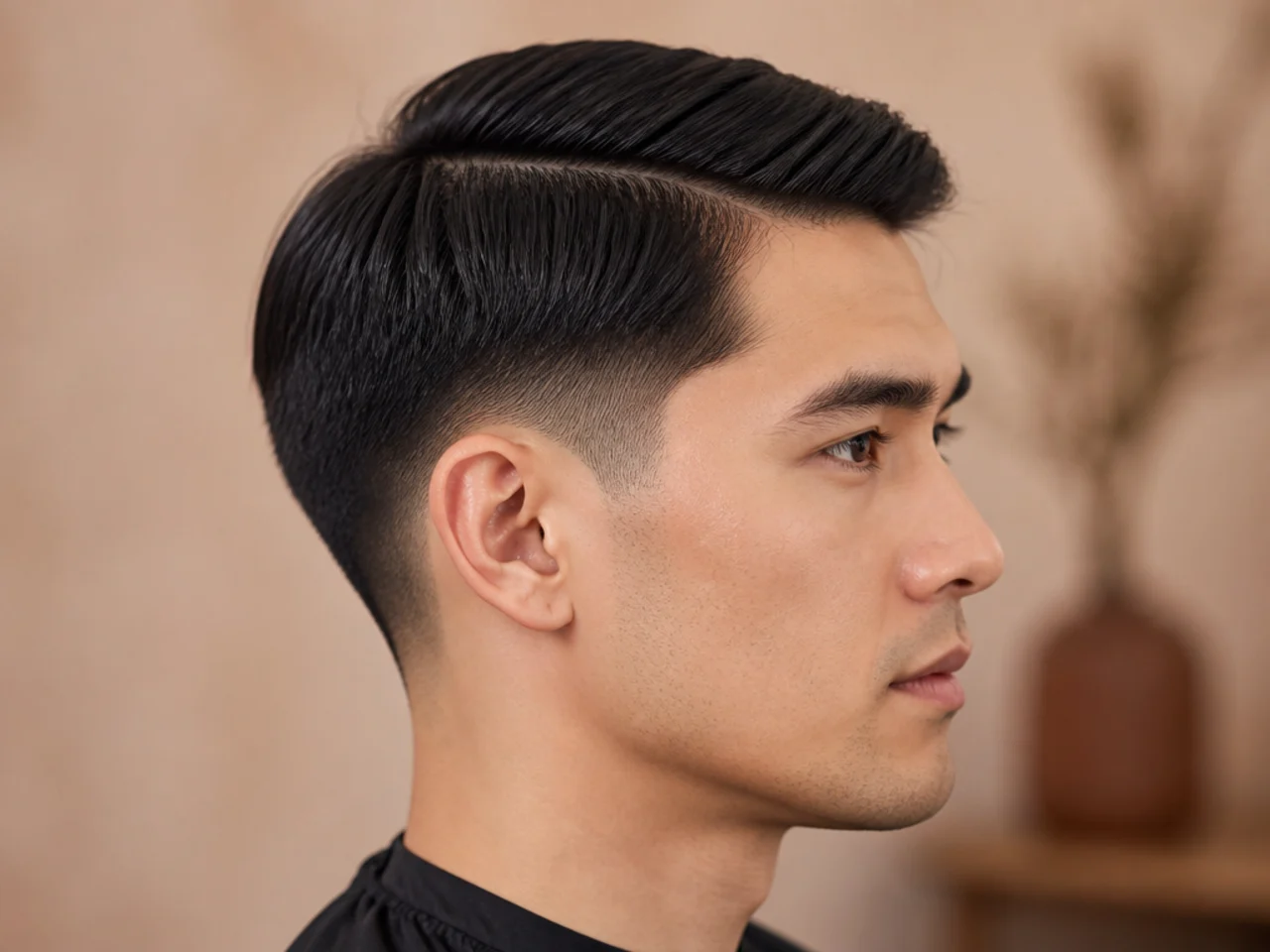
20 Low Taper Fades for Straight Hair
Twenty low taper fade straight hair variations for 2026 — face-shape notes, guard numbers, the exact ask for your barber, and styling that keeps flat hair from looking flat.
In this article · 26
- Why the Low Taper Fade Works on Straight Hair
- How to Choose Your Variation
- The 20 Variations
- 1\. Classic Low Taper with Straight Side Part
- 2\. Low Taper Fade with Straight Middle Part
- 3\. Low Taper Slick Back on Straight Hair
- 4\. Low Taper Fade with Textured Crop
- 5\. Low Taper Fade with Straight Comb Over
- 6\. Low Taper Fade with Straight Fringe
- 7\. Low Taper Fade with Straight Quiff
- 8\. Low Taper Two Block on Straight Hair
- 9\. Low Taper Fade with Straight Comma Hair
- 10\. Low Taper Fade with Ivy League Top
- 11\. Low Taper Fade with Straight Crew Cut
- 12\. Low Taper Pompadour on Straight Hair
- 13\. Low Taper Fade with Curtain Bangs
- 14\. Low Taper Fade with Straight Disconnect
- 15\. Low Drop Taper on Straight Hair
- 16\. Low Taper Fade with Straight Faux Hawk
- 17\. Low Taper Fade with Straight Bro Flow
- 18\. Low Taper Fade with Straight Line-Up
- 19\. Low Taper Fade with Straight French Crop
- 20\. Modern Straight Mullet with Low Taper
- How to Ask Your Barber for a Low Taper Fade on Straight Hair
- Styling and Maintenance for Straight Hair
- FAQ
The low taper fade is the fade straight-haired guys should default to. The blend stays low, stops at a #0.5 or #1 guard instead of running to bare skin, and lets the top read whatever length you want without a hard line breaking the profile. Straight hair shows the gradient better than any other texture — there's no curl to fight the taper, no coil to hide the shortest point. Below are twenty low taper fade straight hair variations worth asking for in 2026, with face-shape notes, hair-type calls, guard numbers, and the exact wording to hand your barber.
New to the wider family? Start with the low taper fade pillar, or step up to the full fade haircut taxonomy.
Why the Low Taper Fade Works on Straight Hair
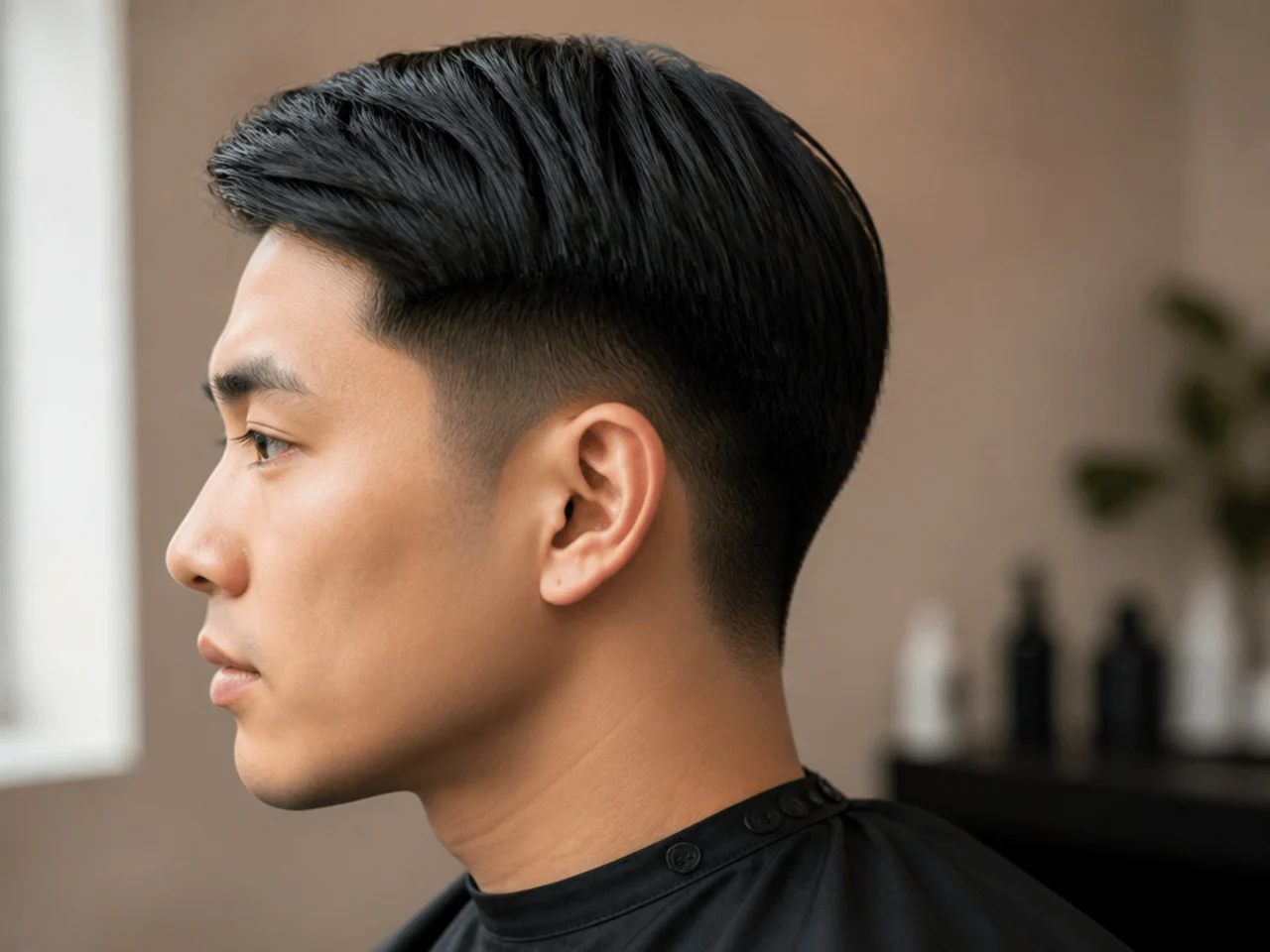
Straight hair falls where gravity puts it. That makes the fade line the loudest feature on the cut — every millimeter of grow-out, every uneven pass of the clipper, every wobble in the transition reads instantly. The low taper is the friendliest fade for that reason. It sits low on the head, blends slowly through three guards, and finishes at a #0.5 or #1 instead of skin. There's no dramatic contrast for the eye to fixate on. Just a soft handoff between the top length and the perimeter.
That softness is also why straight-haired guys who want a modern look but hate the "just left the shop" high-fade energy keep landing here. Grown out to week four the low taper still reads intentional. Photographed head-on it doesn't shout. Compared to a low fade haircut that drops to bare skin, the taper reads calmer and grows out three weeks slower.
The other reason it works: straight hair pairs cleanly with any top. Buzz to bro flow, side part to slick back, crew cut to modern mullet — the low taper frames all of them. Pick the top for your face; the taper stays constant.
How to Choose Your Variation
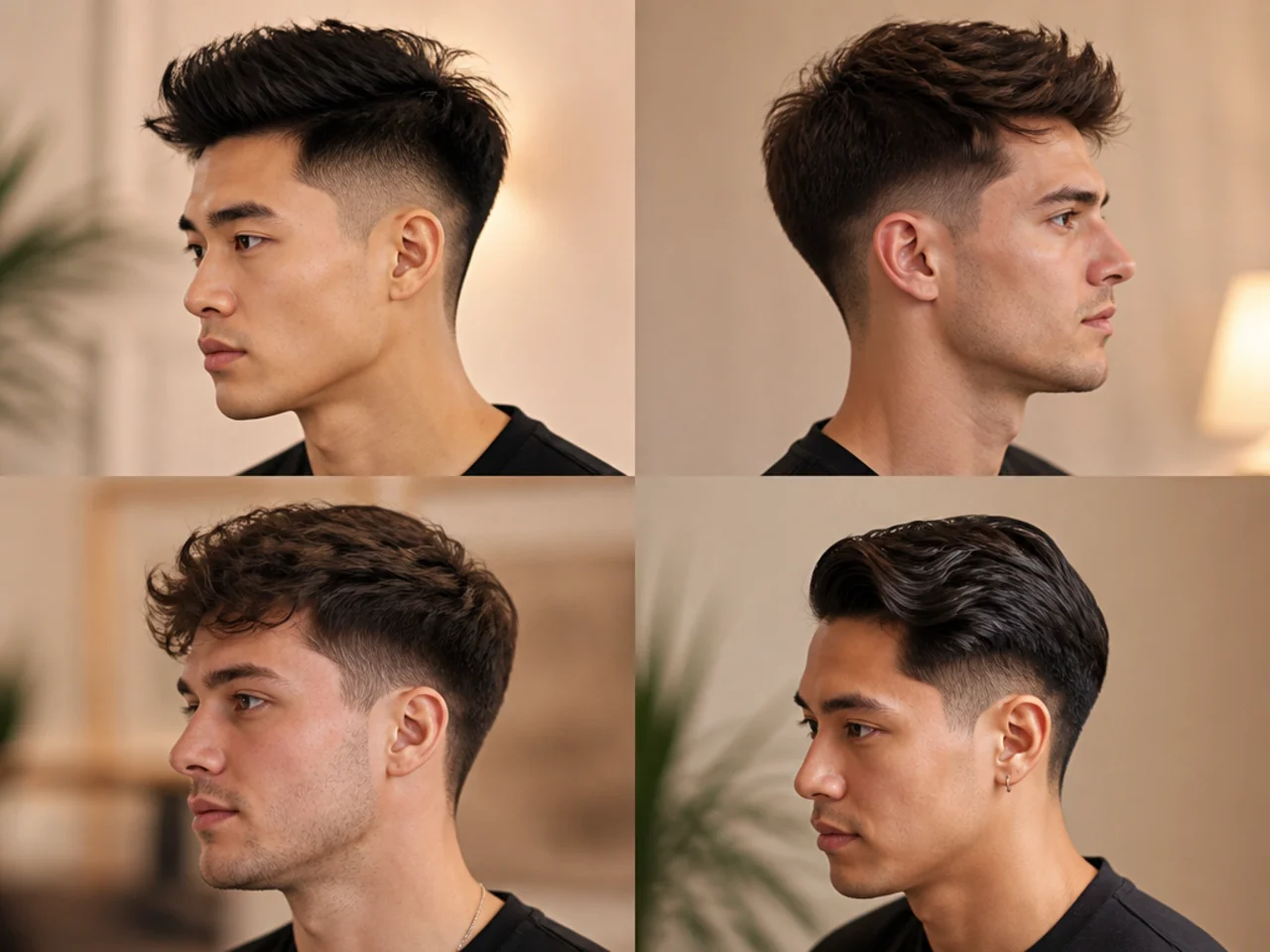
Three things decide the version for you: your face shape, your hair density, and how much time you'll actually spend styling.
Face shape. Round faces want vertical lift — pompadour, quiff, textured crop, side sweep. Long faces need width and restraint — keep the top under three inches so the total silhouette doesn't stretch. Square jaws suit softer shapes that offset the angles — a fringe, a middle part, a curtain drape. Oval wears everything. Heart-shaped faces flatter with fringes that break the forehead and taper crown length.
Hair density. Fine straight hair reads best with texture-heavy tops (textured crop, messy quiff, side sweep) that create the illusion of thickness. Medium-density hair suits almost every variation on this list. Thick straight hair carries longer tops without collapsing — pompadour, slick back, bro flow, mullet all fit here.
Styling appetite. A crew cut with a low taper takes ten seconds and a hand towel. A slicked-back pompadour needs a blow-dryer, a round brush, and five minutes. Pick the routine you'll actually run, not the one you promise yourself you'll start on Monday.
The 20 Variations
Twenty low taper fade straight hair recipes, sorted loose-to-tight and short-to-long. Each block covers what makes it different, who it suits, the exact ask, and one styling move worth stealing.
1. Classic Low Taper with Straight Side Part
The starter version — three inches of straight length combed to one side over a natural part, low taper dropping softly behind the ear. Reads polished in any office. Best for oval, square, and diamond faces, and any guy new to fades on straight hair.
Ask for: "low taper fade, #1 at the shortest, three inches on top scissor-cut with point cut ends, natural side part combed to the left."
Styling: matte clay on damp hair, comb the part in place, blow-dry down on cool. Skip pomade — shine will kill the classic feel.
2. Low Taper Fade with Straight Middle Part
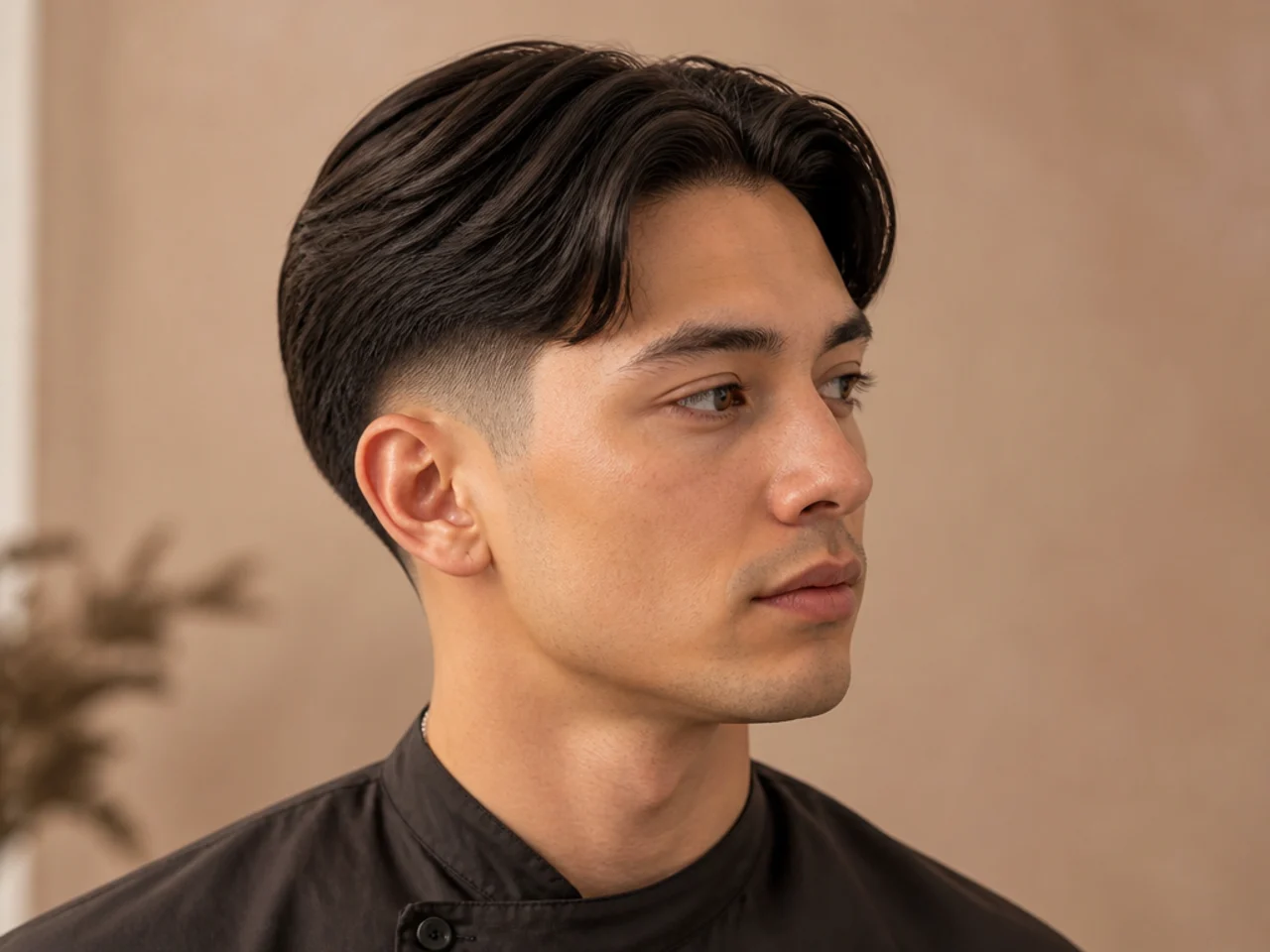
The modern middle-part shape — four to five inches of straight length split down the center, both halves falling to the cheekbones, low taper cleaning the sides. Reads current without needing product. Best for oval and heart-shaped faces; long faces should stay under four inches so the drape doesn't drag. Related territory covered in the middle part haircut for men guide.
Ask for: "low taper fade, #1 at the shortest, four to five inches on top with layering to encourage a natural middle part, point cut ends."
Styling: sea-salt spray on damp hair, blow-dry with a round brush parted down the center, finish with a light cream for hold without stiffness.
3. Low Taper Slick Back on Straight Hair
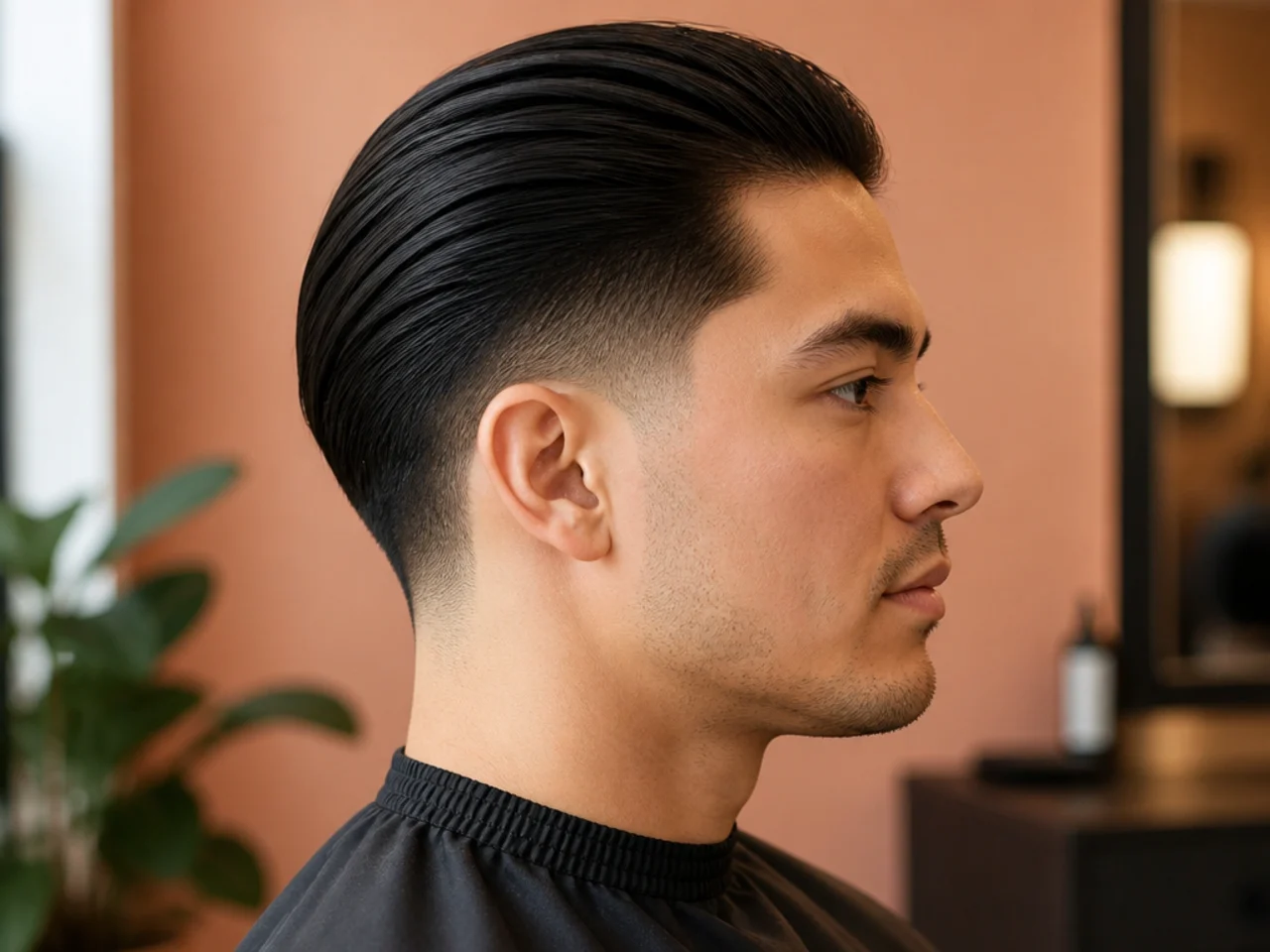
Straight hair takes a slick back better than any other texture — no cowlicks fighting the direction, no curl breaking the line. Four to five inches on top swept straight back over a low taper. Best for oval and square faces; the volume at the crown adds height without adding width. Anchored by the wider slick back haircut family.
Ask for: "low taper fade, #1 at the shortest, five inches on top with light layers, dry back with a round brush styling."
Styling: strong-hold cream on damp hair, dry back with a round brush pulling up and over, finish with a light pomade for shine or a matte paste for hold without gloss.
4. Low Taper Fade with Textured Crop
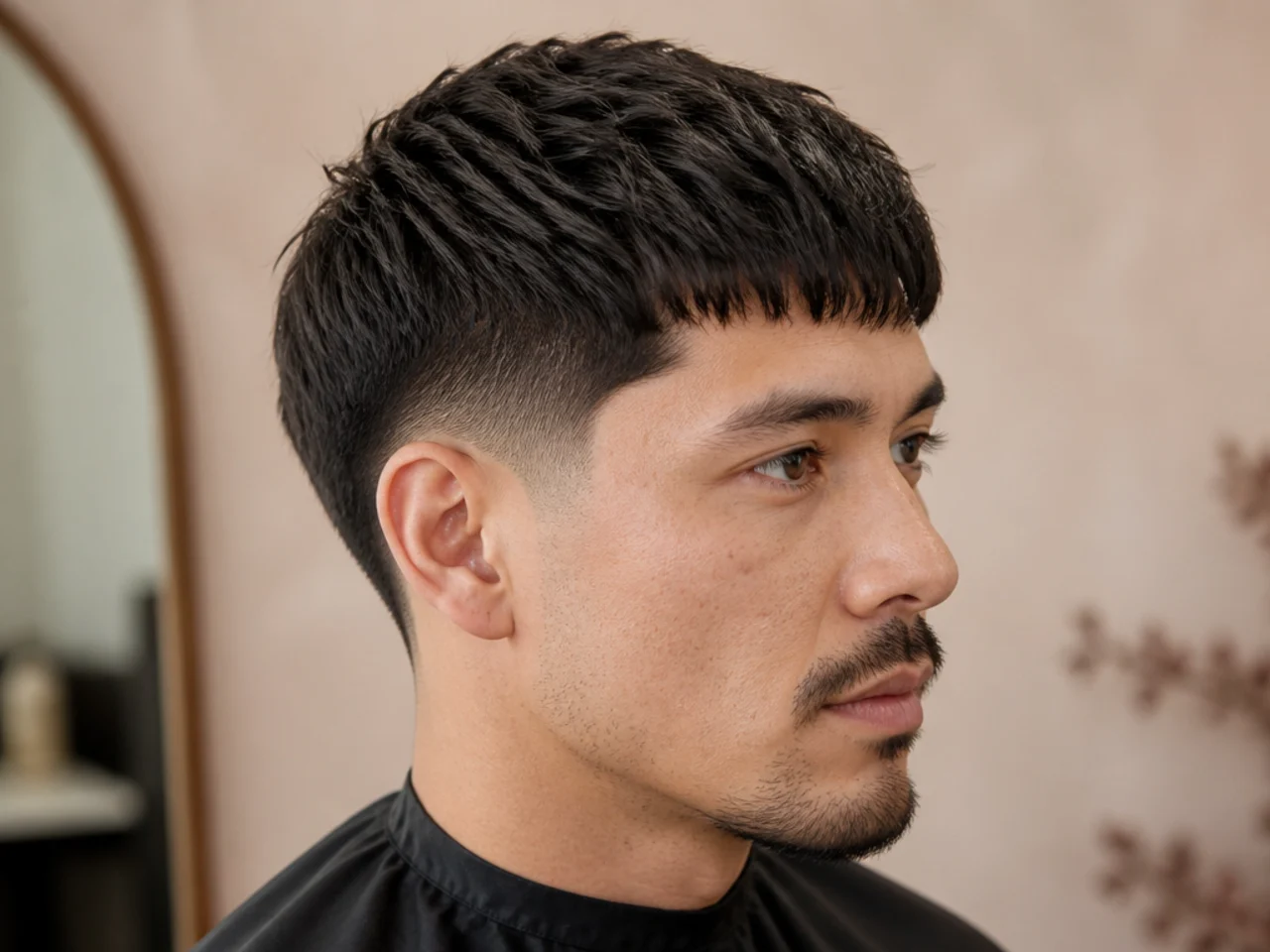
The textured crop is the best low-maintenance option on this list for straight hair. Two inches of length up top, aggressively point-cut and razored so the ends look broken and dense, small forward fringe at the front, low taper cleaning the sides. Best for square and heart-shaped faces, and thin straight hair that needs the fake density.
Ask for: "low taper fade, #1 at the shortest, two inches on top point cut and razor-textured throughout, small forward fringe at the front."
Styling: matte clay on dry hair, push forward and down from the crown, break up the fringe with fingers. Under ten seconds total.
5. Low Taper Fade with Straight Comb Over
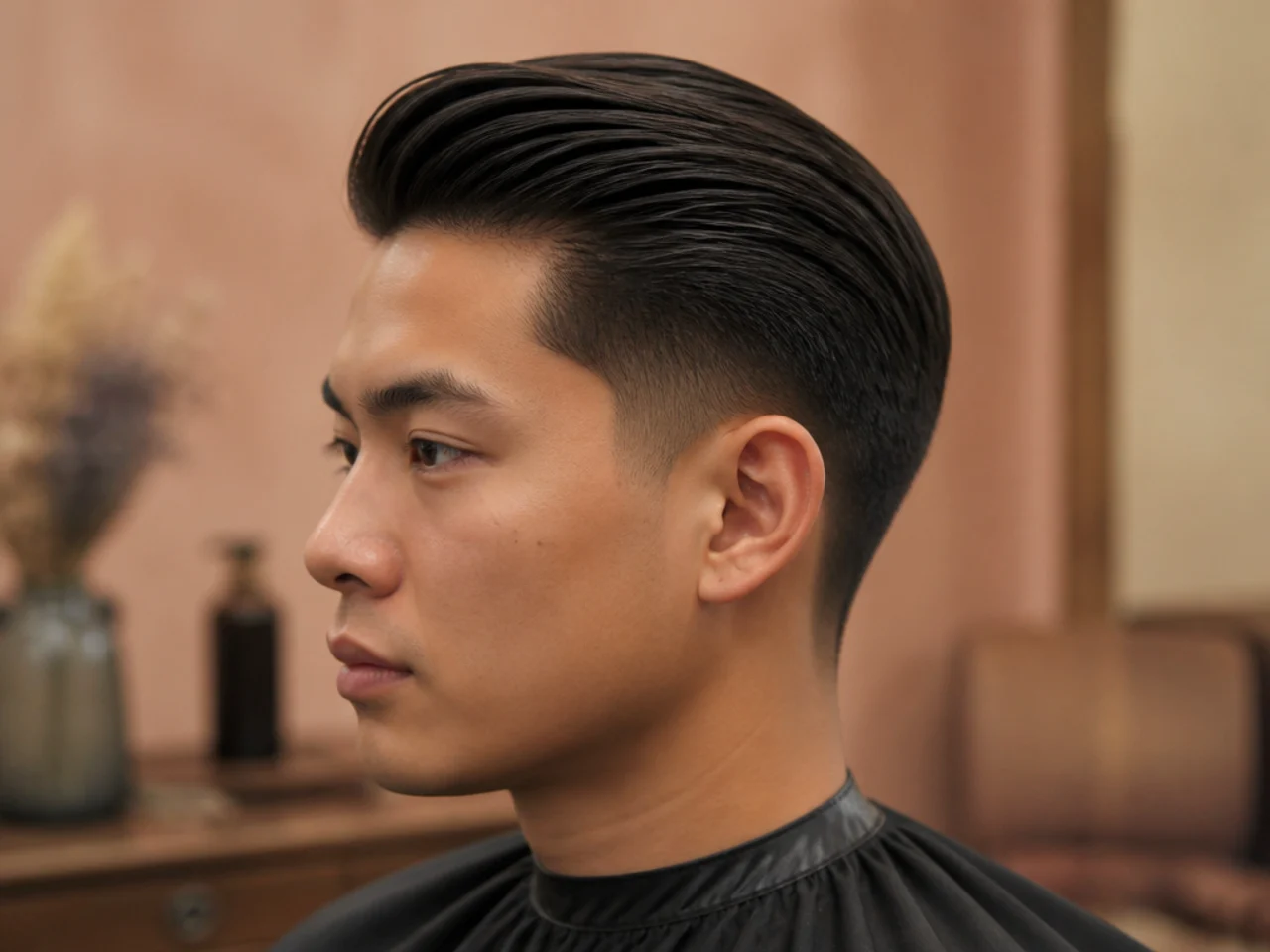
The comb over haircut softened with a taper — three to four inches of straight length combed across from a hard part on one side, low taper on both sides. Reads old-money-polished. Best for oval, square, and diamond faces; not the play for round faces without extra crown lift.
Ask for: "low taper fade, #1 at the shortest, four inches on top, hard part razored on the left, comb-over from the part to the right."
Styling: medium-hold cream on damp hair, comb the part in place while blow-drying, a pea of pomade over the top to lock the direction.
6. Low Taper Fade with Straight Fringe
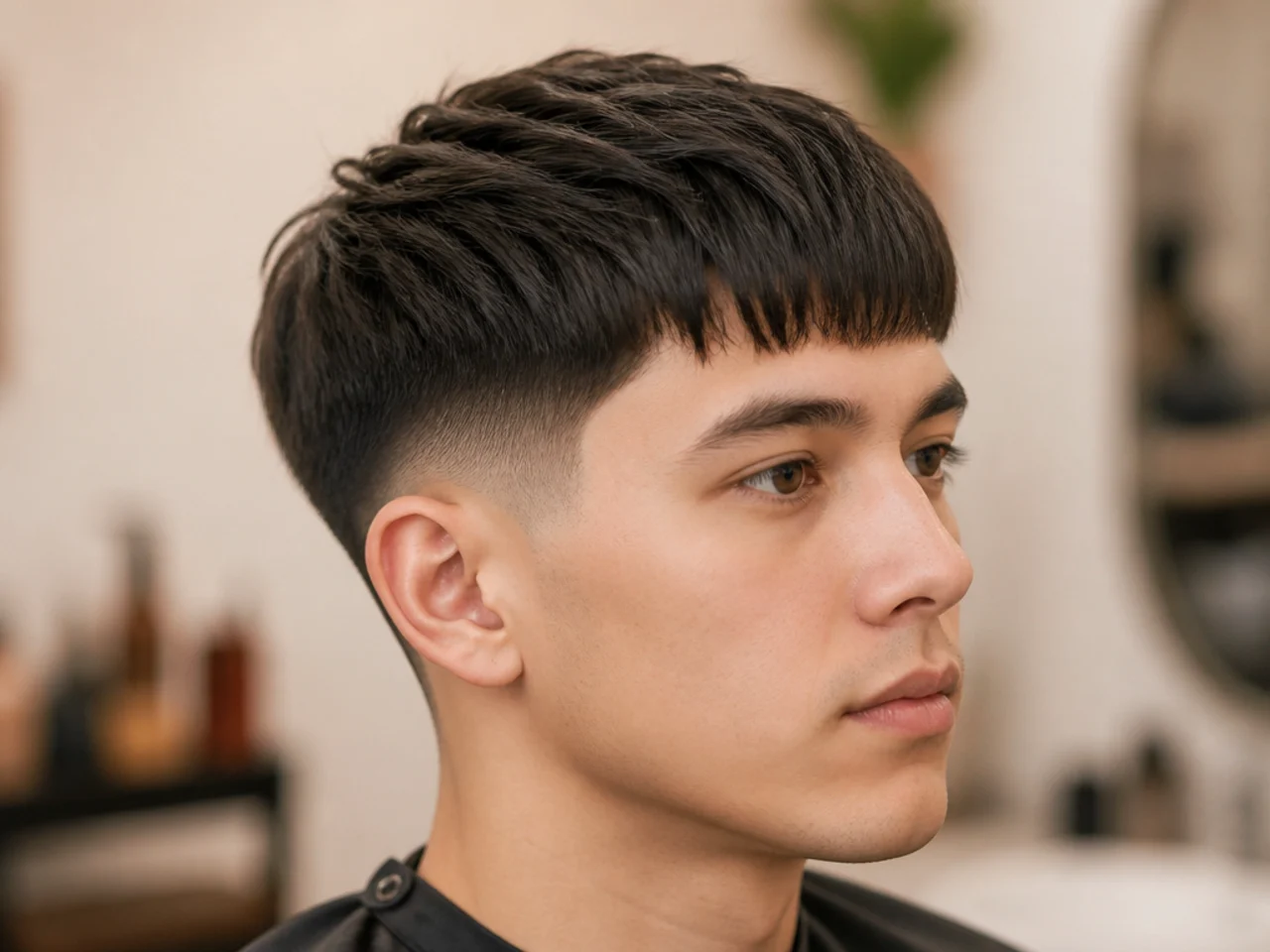
The fringe played on straight hair — four inches of length up top, front section left long enough to fall to the brow, back and sides tapered clean. The fringe hides tall foreheads and softens angular jaws. Best for square and oblong faces with fine to medium straight hair. See the wider fringe haircuts for men roundup.
Ask for: "low taper fade, #1 at the shortest, four inches on top with the front left long enough to fall to the brow, point cut throughout."
Styling: sea-salt spray on damp hair, blow-dry the fringe forward and down, break up the ends with fingers and a pea of matte cream.
7. Low Taper Fade with Straight Quiff
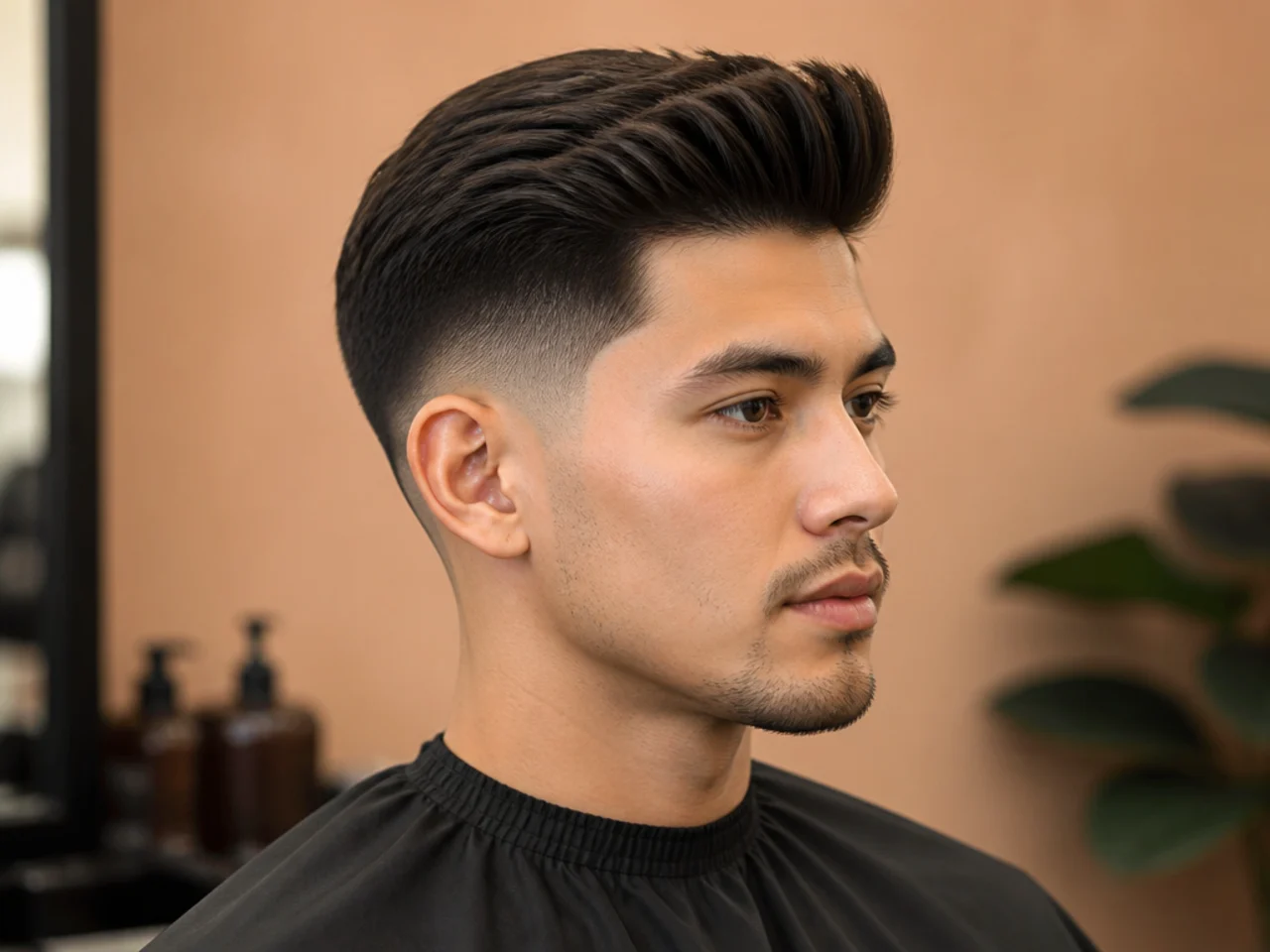
The quiff on straight hair — four to five inches of length lifted up and slightly back at the front, low taper at the sides. Requires medium to thick density to hold the lift. Best on square, heart, and oval faces; round faces get the height they need from this shape. Anchored by the wider quiff hairstyles for men family.
Ask for: "low taper fade, #0.5 at the shortest, four to five inches on top with length concentrated at the front, quiff styling."
Styling: strong-hold cream on damp hair, blow-dry the front up and back with a round brush, lock with a matte paste and a light hairspray at the crown.
8. Low Taper Two Block on Straight Hair
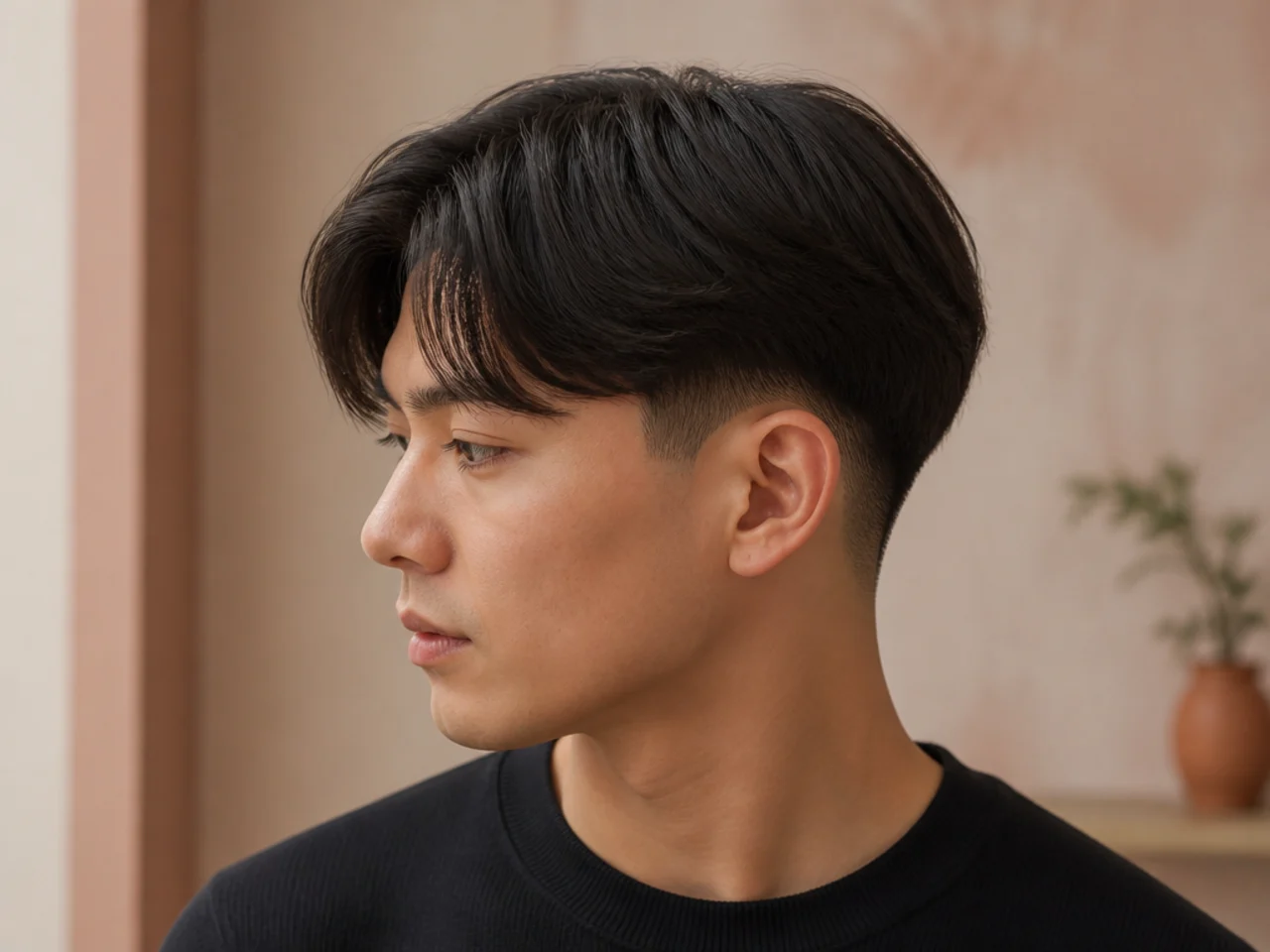
The K-pop two-block silhouette played on straight hair — long top length falling over a hidden clippered lower block, low taper finishing the perimeter. Reads current without needing daily product. Best for oval and heart-shaped faces, medium-density straight hair. See the wider two block haircut guide for variations.
Ask for: "two block with a low taper fade, four to five inches of straight length on top blown down over the sides, #1 guard hidden underneath."
Styling: blow-dry the top pieces downward toward the sides so they lie flat over the hidden block, matte cream through the ends for control.
9. Low Taper Fade with Straight Comma Hair
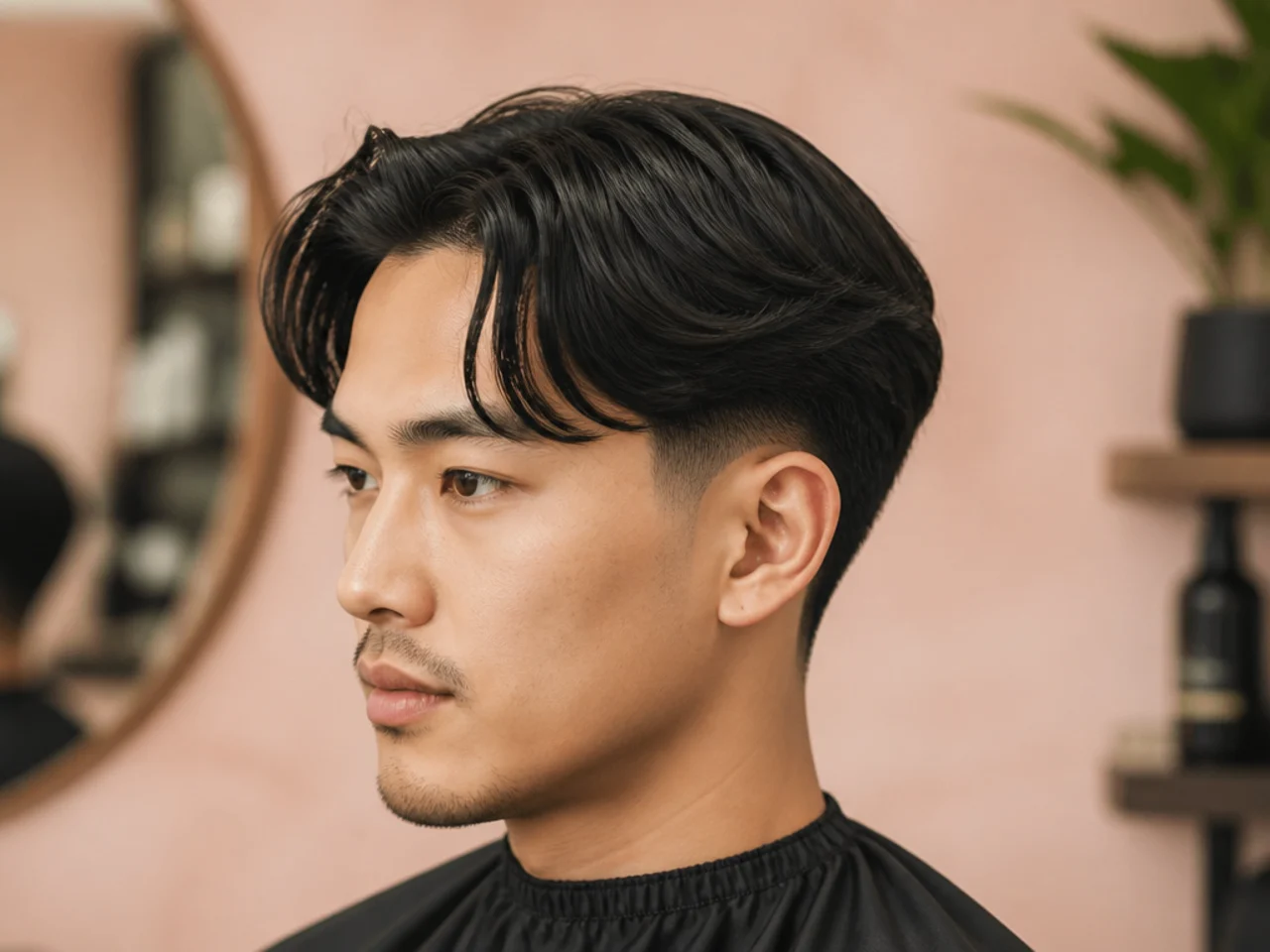
The Korean comma shape on straight hair — three to four inches of length with the front fringe curled into a soft comma against the forehead, low taper at the sides. Reads youthful and current. Best on oval, square, and heart faces, fine to medium straight hair.
Ask for: "low taper fade, #0.5 at the shortest, three to four inches on top, front fringe layered so it curves into a comma shape when styled."
Styling: damp hair, blow-dry the fringe with a round brush rolling inward at the end to form the comma, hold with a light-hold cream.
10. Low Taper Fade with Ivy League Top
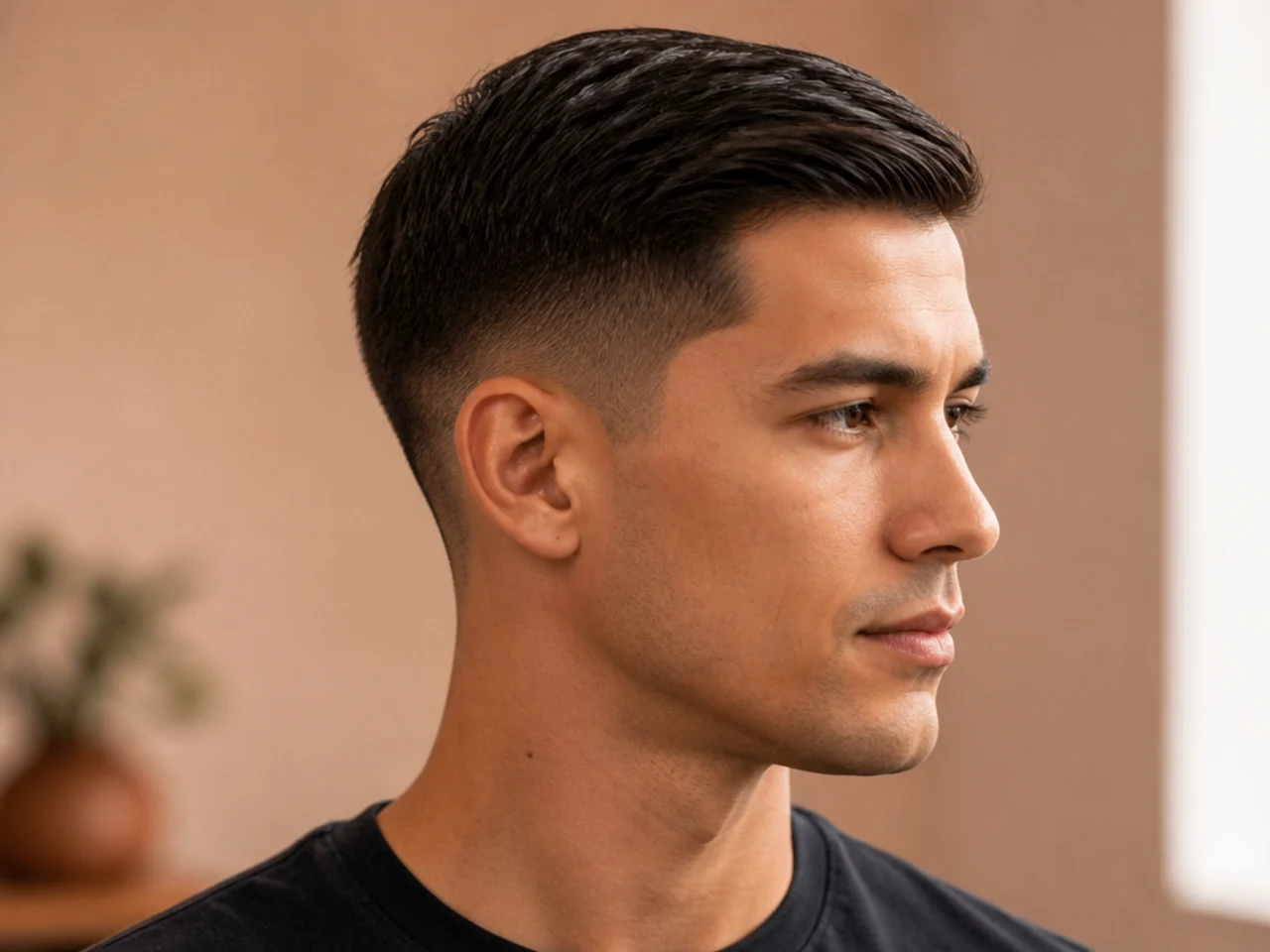
The Ivy League haircut with a modern perimeter — two to three inches on top parted to one side and combed neatly, low taper replacing the traditional taper for a cleaner finish. Reads classic and professional. Best for oval, square, and diamond faces.
Ask for: "low taper fade, #1 at the shortest, three inches on top, natural side part combed neatly to the right, no fringe pieces on the forehead."
Styling: light-hold cream on damp hair, comb the part in place, blow-dry down on medium heat. Finish with a matte finishing paste.
11. Low Taper Fade with Straight Crew Cut
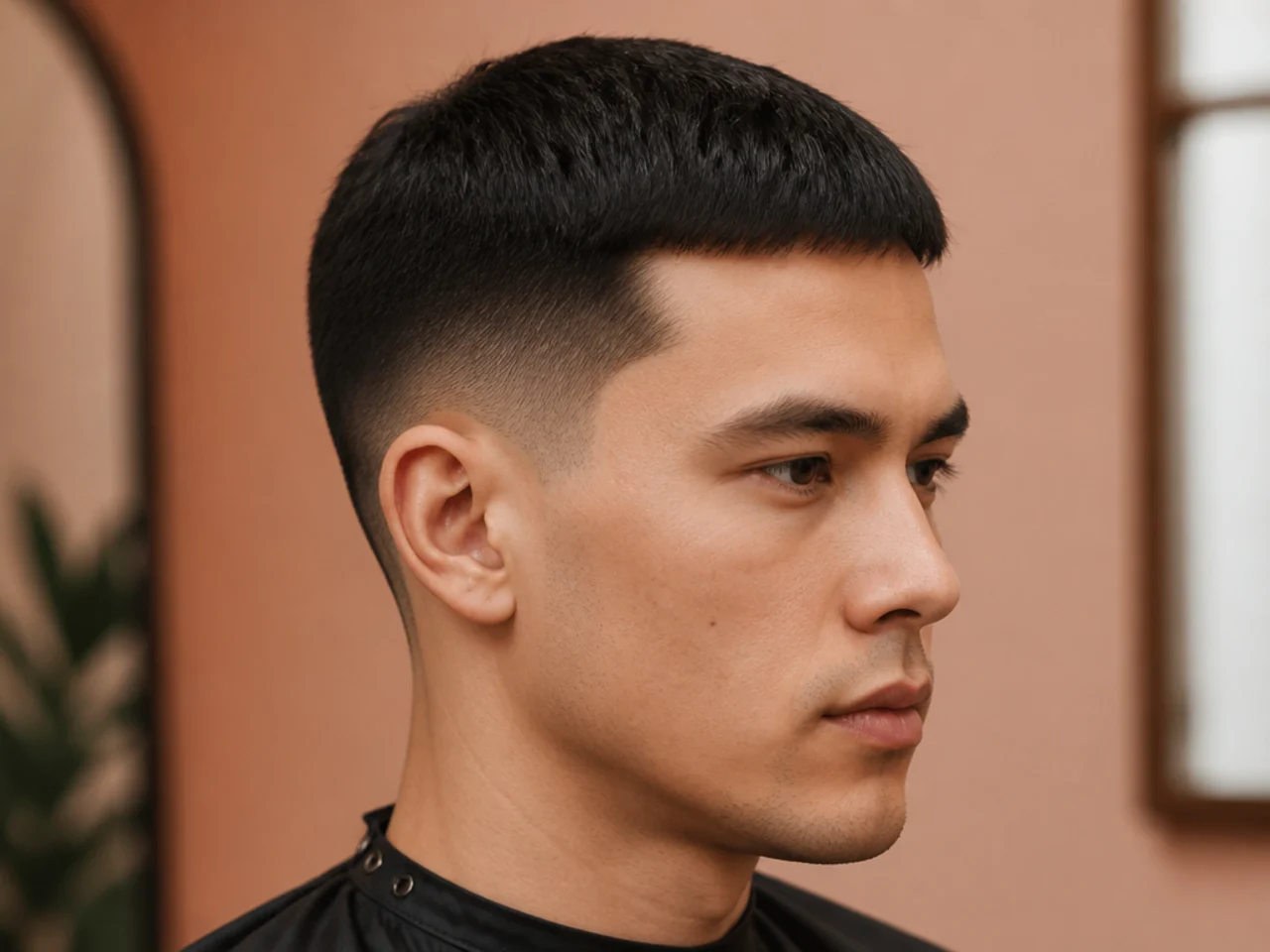
The lowest-maintenance option here — a #4 to #6 guard on top scissor-blended at the crown, low taper below. Reads sharp with zero styling time. Best for oval, square, and diamond faces, thick straight hair that would need serious taming at any longer length.
Ask for: "low taper fade, #1 at the shortest, #4 to #6 guard on top scissor-blended, tapered nape."
Styling: run wet hands through it, done. Or leave it dry. It's a crew cut — that's the whole appeal.
12. Low Taper Pompadour on Straight Hair
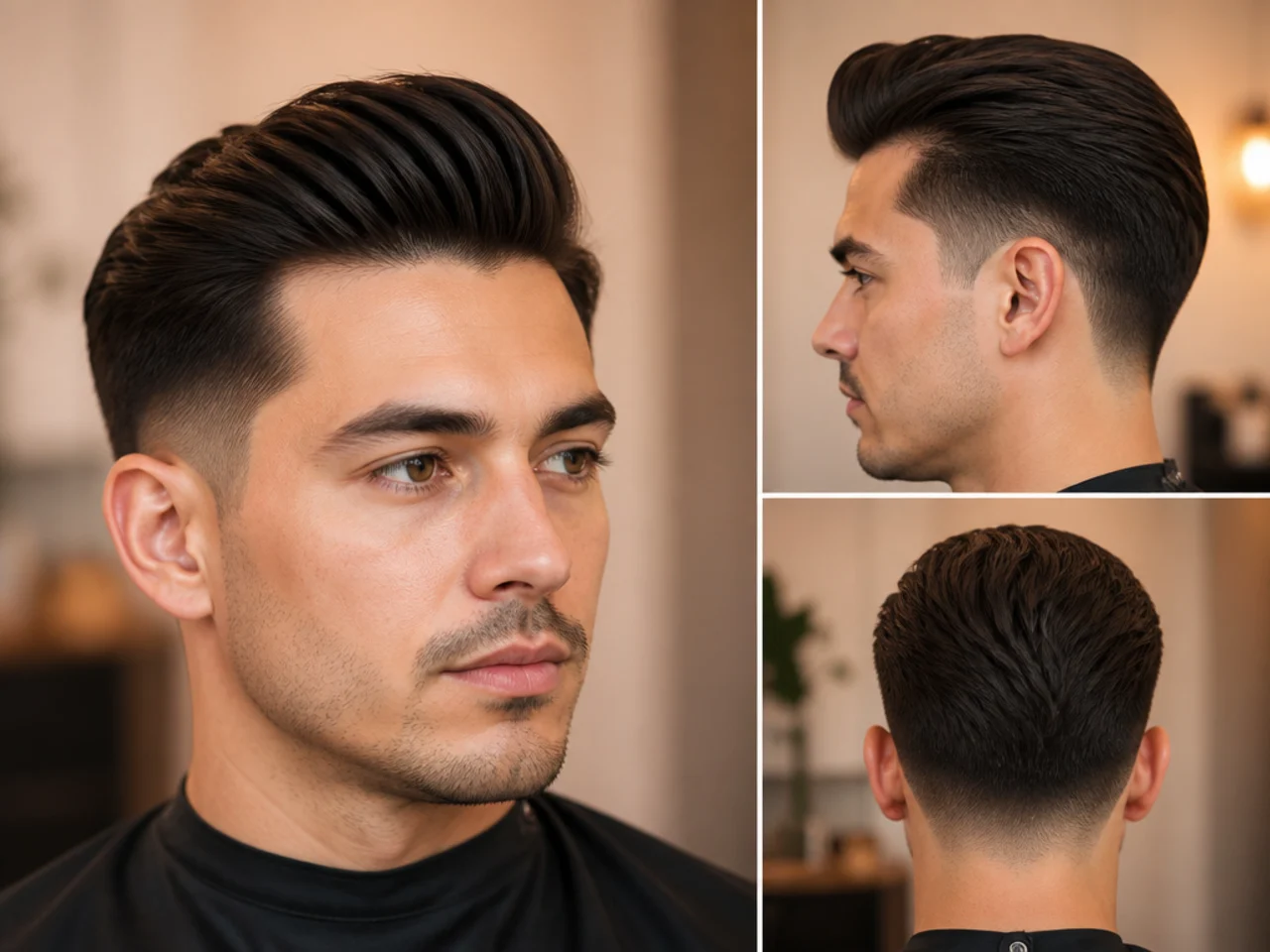
The pompadour needs length and body — six to seven inches on top, swept up and back into serious volume at the front, low taper cleaning the sides. Best on oval and square faces with thick straight hair. Round faces get flatter with the vertical lift here.
Ask for: "low taper fade, #0.5 at the shortest, six to seven inches on top with heavy layering for pompadour styling, gradual blend at the transition."
Styling: strong-hold cream on damp hair, blow-dry with a round brush lifting straight up and back, lock with a firm-hold pomade or a matte paste.
13. Low Taper Fade with Curtain Bangs
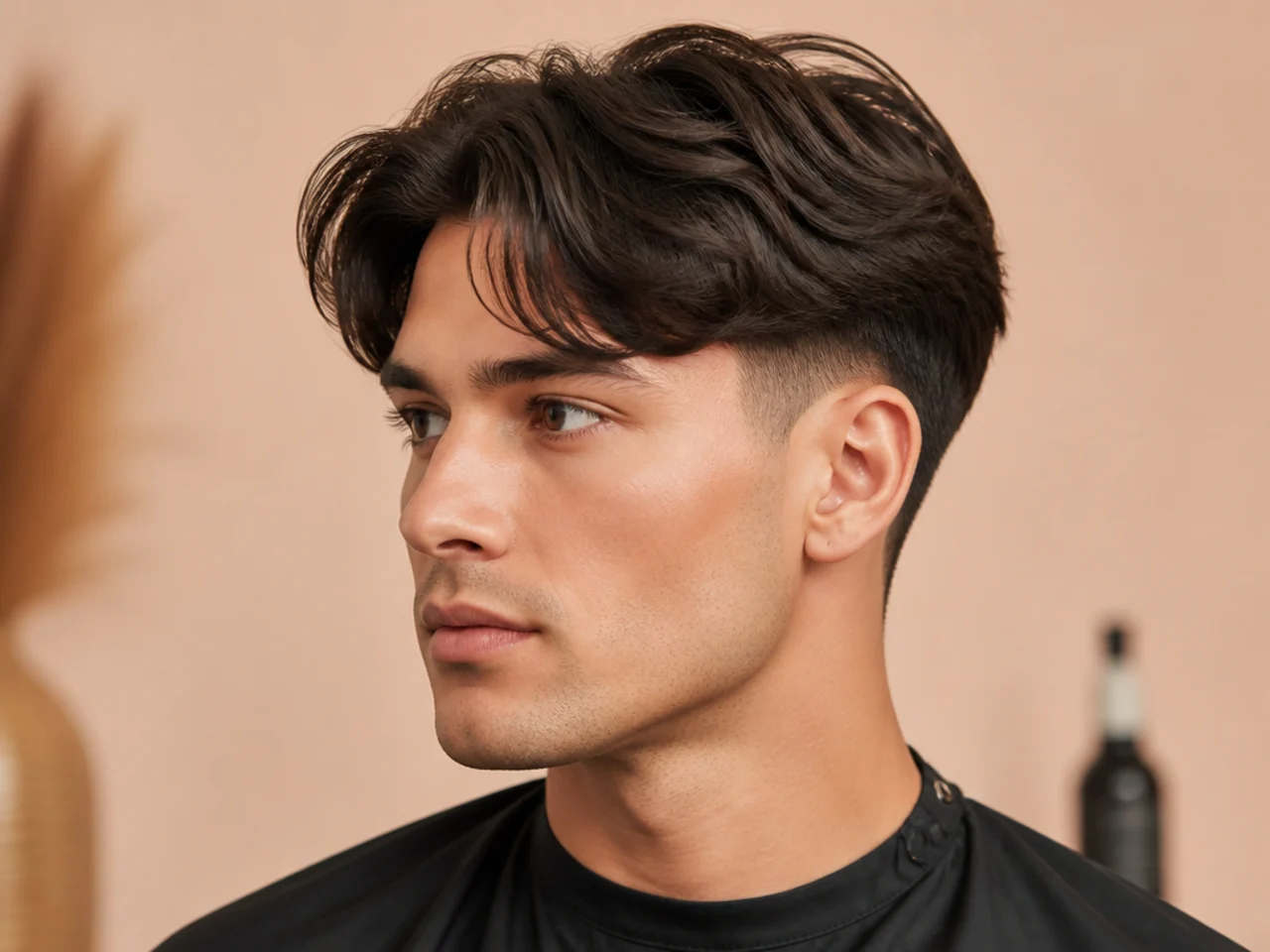
The curtain shape — five inches of length parted in the middle, both sides swept back and slightly outward so the fringe frames the face like open curtains. Low taper at the sides so the curtain reads intentional. Best for oval, heart, and diamond faces; adds softness to sharp jawlines.
Ask for: "low taper fade, #1 at the shortest, five inches on top layered for a middle-part curtain shape, front pieces to the cheekbones."
Styling: sea-salt spray on damp hair, blow-dry down and outward with a round brush from the middle part, finish with a light cream for movement without stiffness.
14. Low Taper Fade with Straight Disconnect
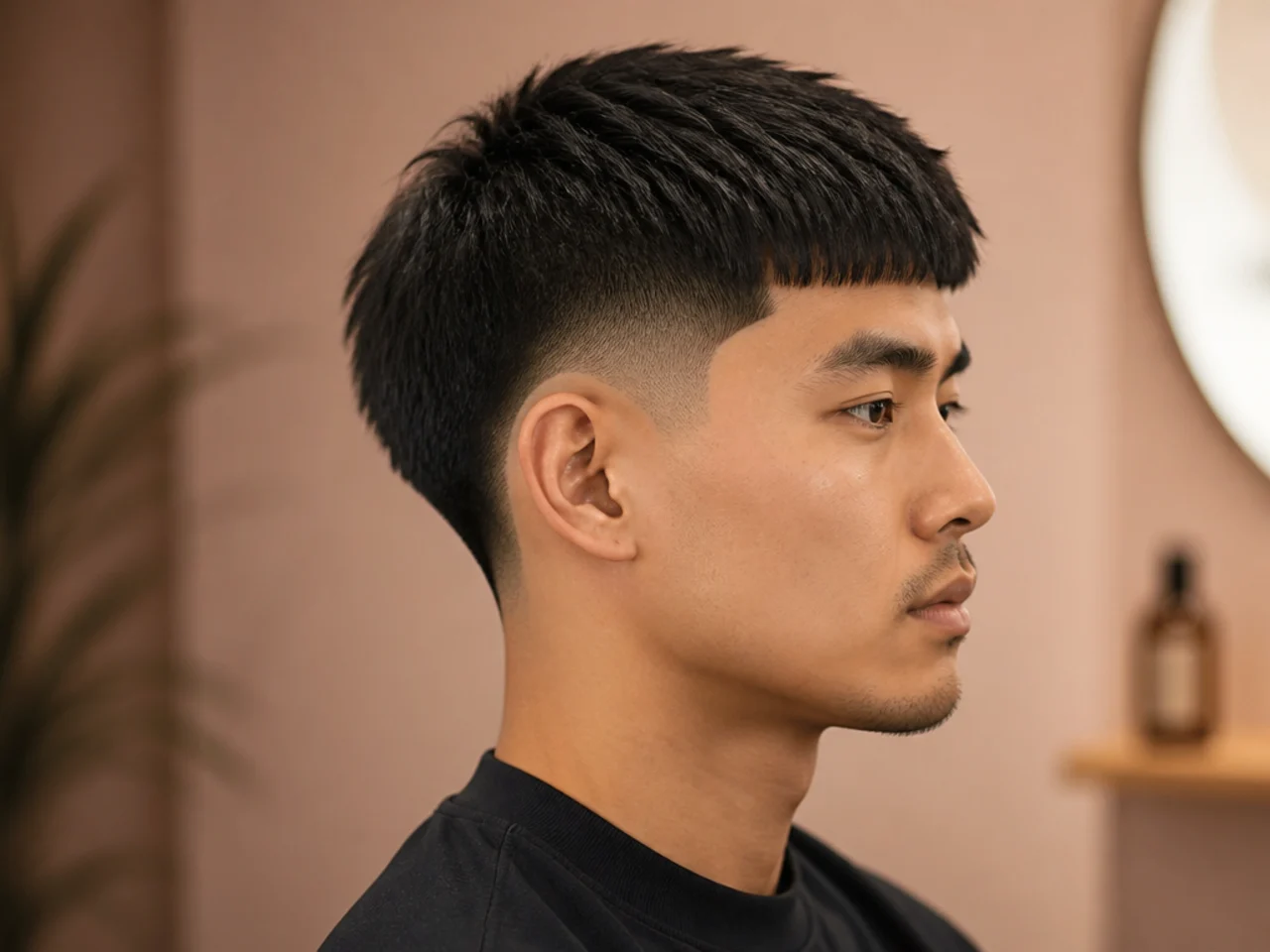
A full disconnect between the low taper and the top — no blend line, hard visual break, four to five inches of straight length brushed back. The tension is what gives it that hawk-adjacent energy without an actual mohawk. Best on thick straight hair and round faces that benefit from the vertical lift.
Ask for: "low taper fade with a disconnect on top, #0.5 at the shortest, five inches of straight length on top, hard visual break at the transition."
Styling: matte cream on damp hair, blow-dry the top up and back, finish with a firm-hold paste for shape without shine.
15. Low Drop Taper on Straight Hair
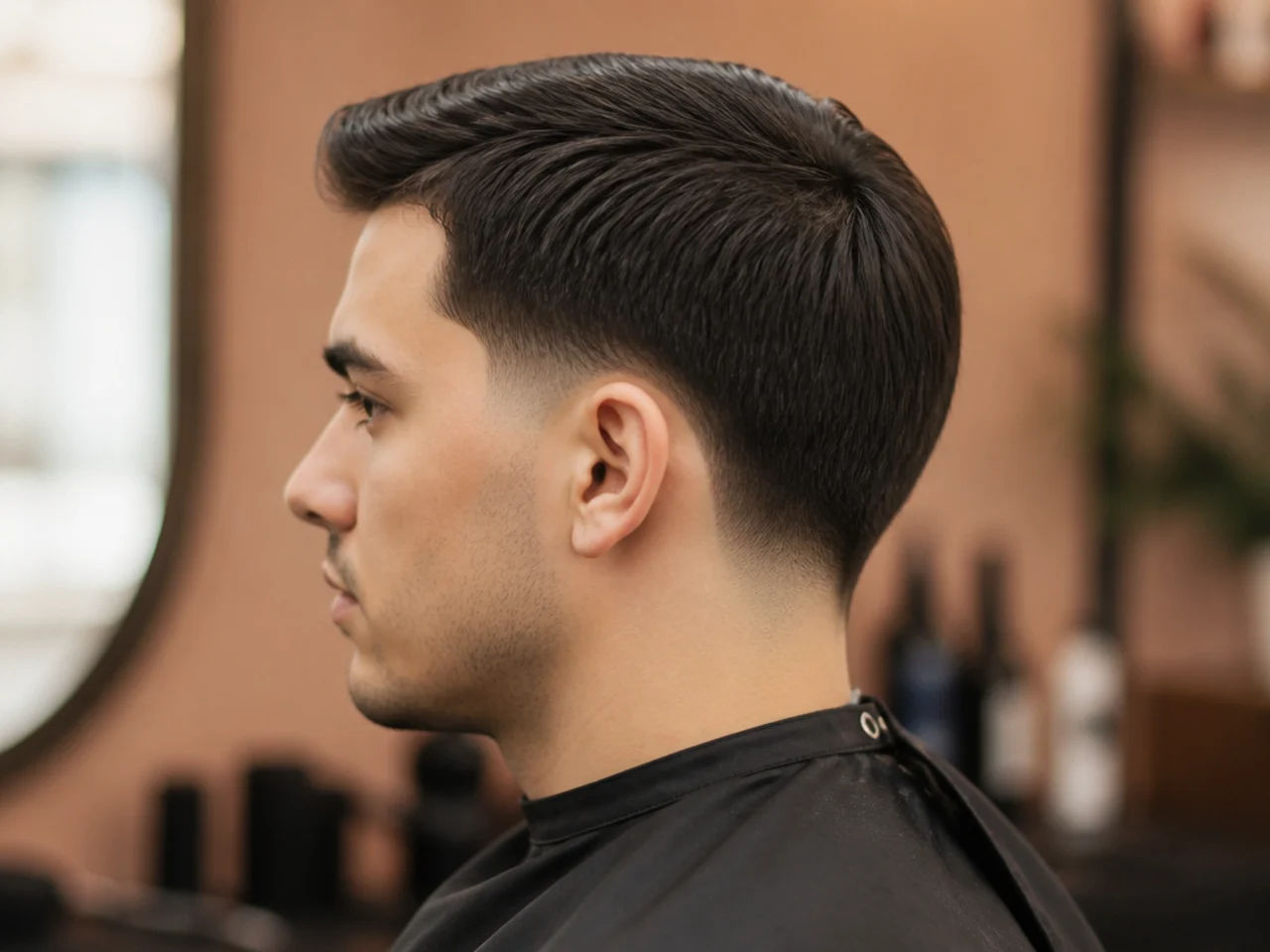
The drop shape curves the taper line behind the ear instead of running horizontal. On straight hair, that arc looks sculpted around the skull rather than clipped. Three to four inches of straight length on top, low drop below. Best for oval and diamond faces; if you liked the standard version but want it more custom, ask for the drop.
Ask for: "low drop taper fade, #0.5 at the shortest, three to four inches on top scissor-cut, curved drop behind the ear."
Styling: any daily routine you already run. This is a fade-line detail, not a top-shape change.
16. Low Taper Fade with Straight Faux Hawk
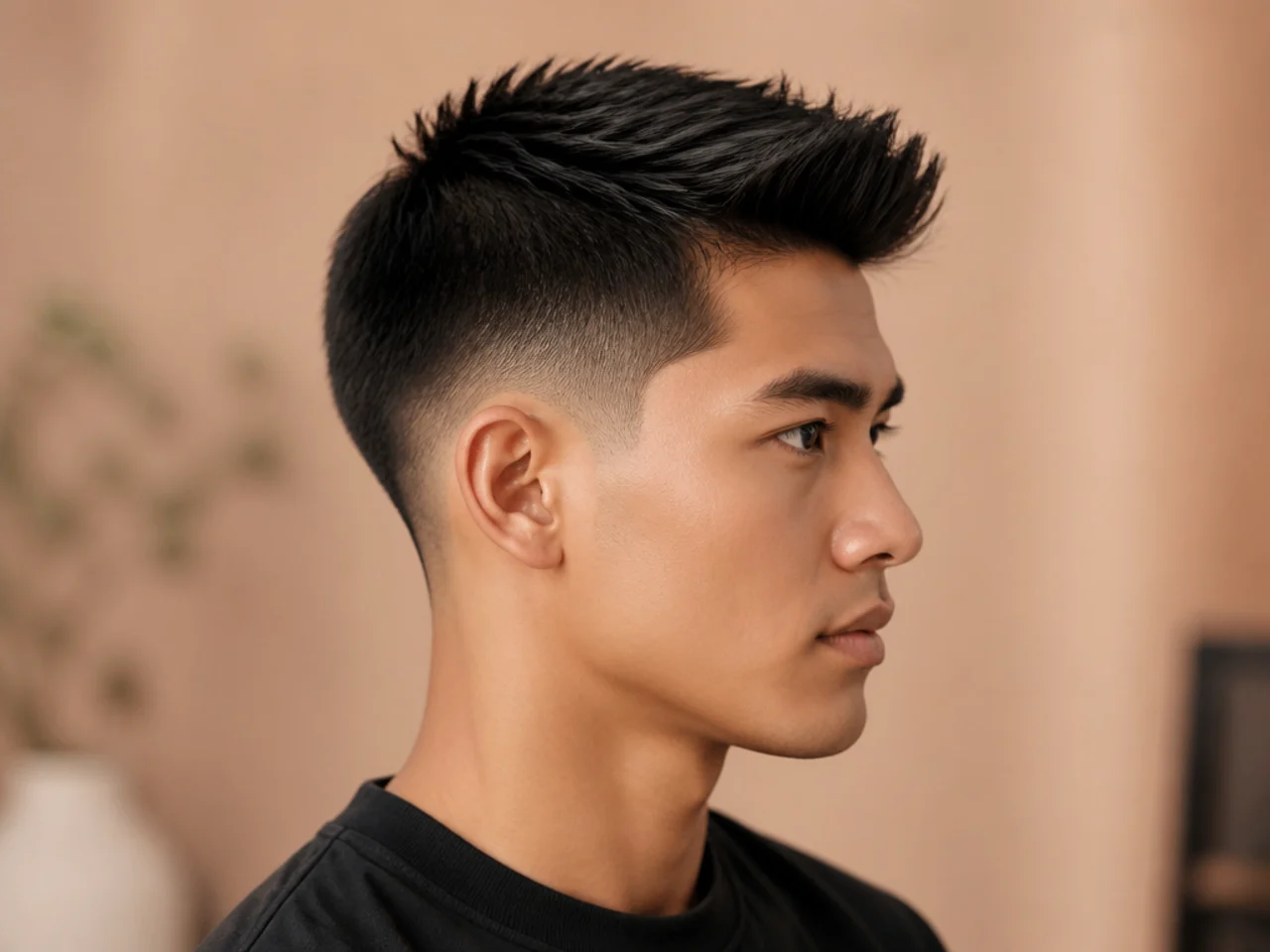
The faux-hawk without the shaved sides. A three-to-four-inch strip of straight length runs from crown to forehead, low taper flanking on both sides. Best for square and oval faces, thick straight hair that will hold the strip upright.
Ask for: "low taper fade, #0.5 at the shortest, keep a three-inch strip of straight length crown to forehead, soft blend into the sides."
Styling: strong-hold cream on damp hair, blow-dry the strip up and slightly forward, finish with a matte paste and a light hairspray for hold.
17. Low Taper Fade with Straight Bro Flow
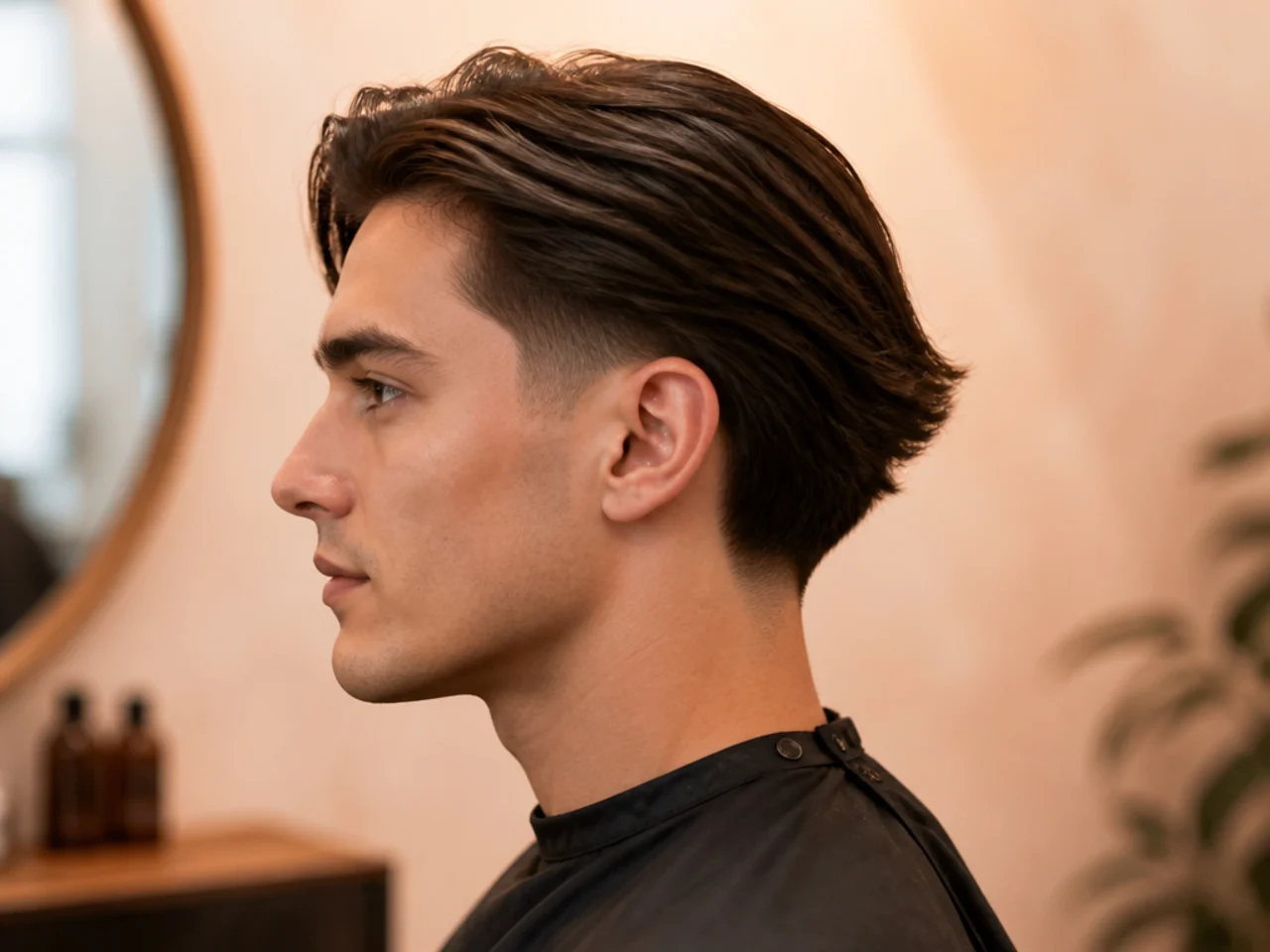
The surfer/bro flow shape played on straight hair — six-plus inches of length swept back and to one side naturally, low taper at the sides to keep the length from reading unkempt. Best on oval and square faces, medium to thick straight hair. Skip if your hair is very fine — the length needs body to sit right.
Ask for: "low taper fade with long hair, #1 at the shortest, keep six to seven inches on top with light face-framing layers, feathered blend at the transition."
Styling: sea-salt spray on damp hair, air-dry or blow-dry back with fingers, occasional touch-up with a matte pomade for control.
18. Low Taper Fade with Straight Line-Up
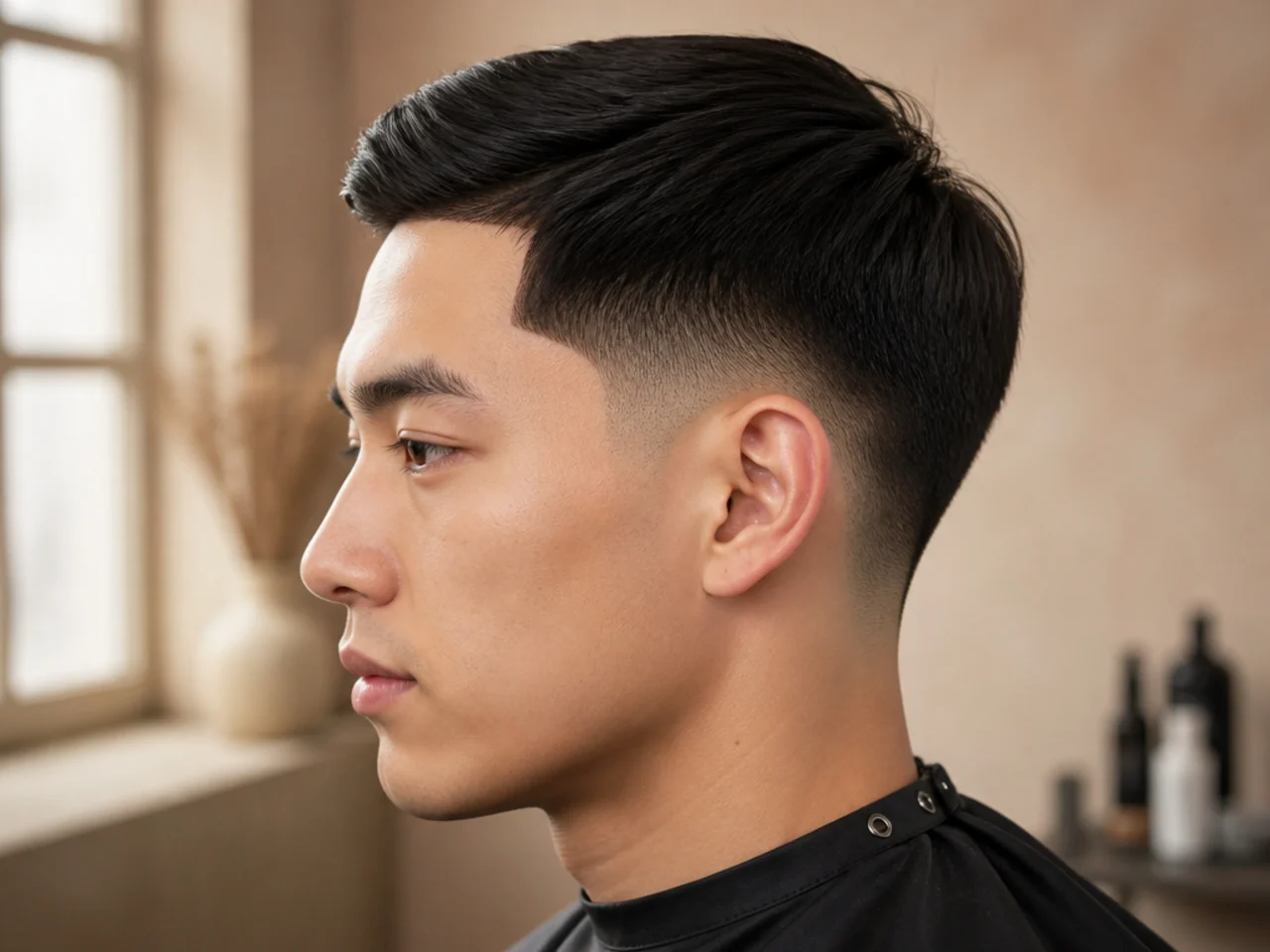
The line-up is what turns a good low taper into a great one. A razored, hard-line edge at the forehead and temples squares off the whole cut. Best on square and heart-shaped faces where the geometric frame adds structure. Requires a barber who does razor work well.
Ask for: "low taper fade, #0.5 at the shortest, three inches of straight length on top, sharp razor line-up at the forehead and temples."
Styling: any daily routine you already run. The line-up blurs faster than the fade — book a shape-up every ten to fourteen days.
19. Low Taper Fade with Straight French Crop
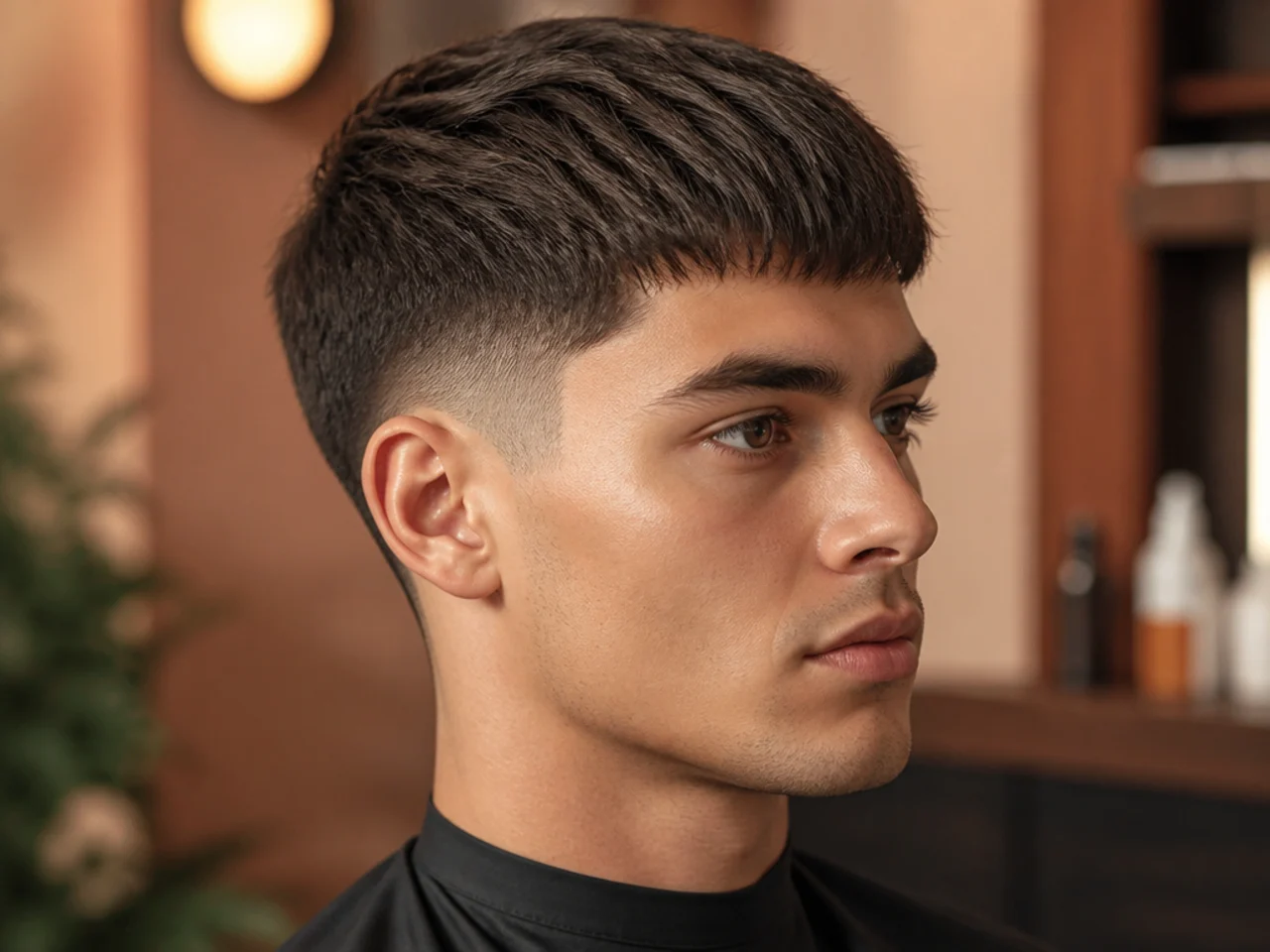
The French crop played on straight hair — two inches of length up top, blunt-cut fringe pushed forward across the forehead, low taper at the sides. Reads sharp and Continental. Best for oval, square, and diamond faces, fine to medium hair; the fringe hides high foreheads well.
Ask for: "low taper fade, #1 at the shortest, two inches on top, blunt straight fringe pushed forward across the forehead."
Styling: matte clay on dry hair, push the fringe forward with fingertips, break up the ends. Ten seconds total.
20. Modern Straight Mullet with Low Taper
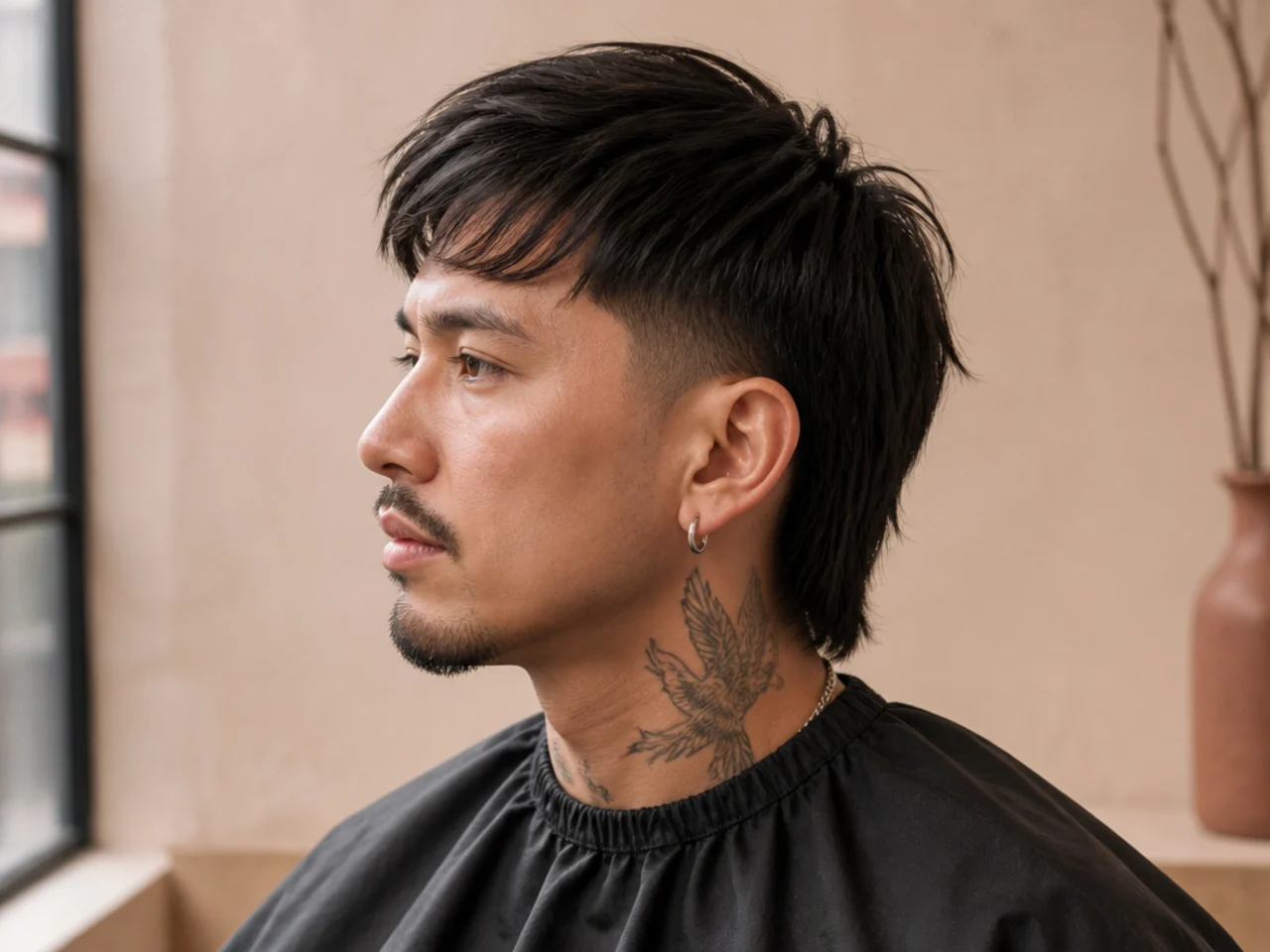
The mullet on straight hair — short and textured through the front and top, length kept from the crown flowing down to the collar, low taper cleaning the sides. The low fade taper mullet's calmer cousin. Best on oval and square faces, medium-density straight hair; skip on very fine hair — the nape length will hang without body.
Ask for: "low taper fade at the sides, three inches on top with a modern mullet shape flowing to the collar in back, feathered transition through the crown."
Styling: sea-salt spray on damp hair, blow-dry the top forward and the nape down, matte cream through the length for texture. The mullet's supposed to look a little wild.
How to Ask Your Barber for a Low Taper Fade on Straight Hair
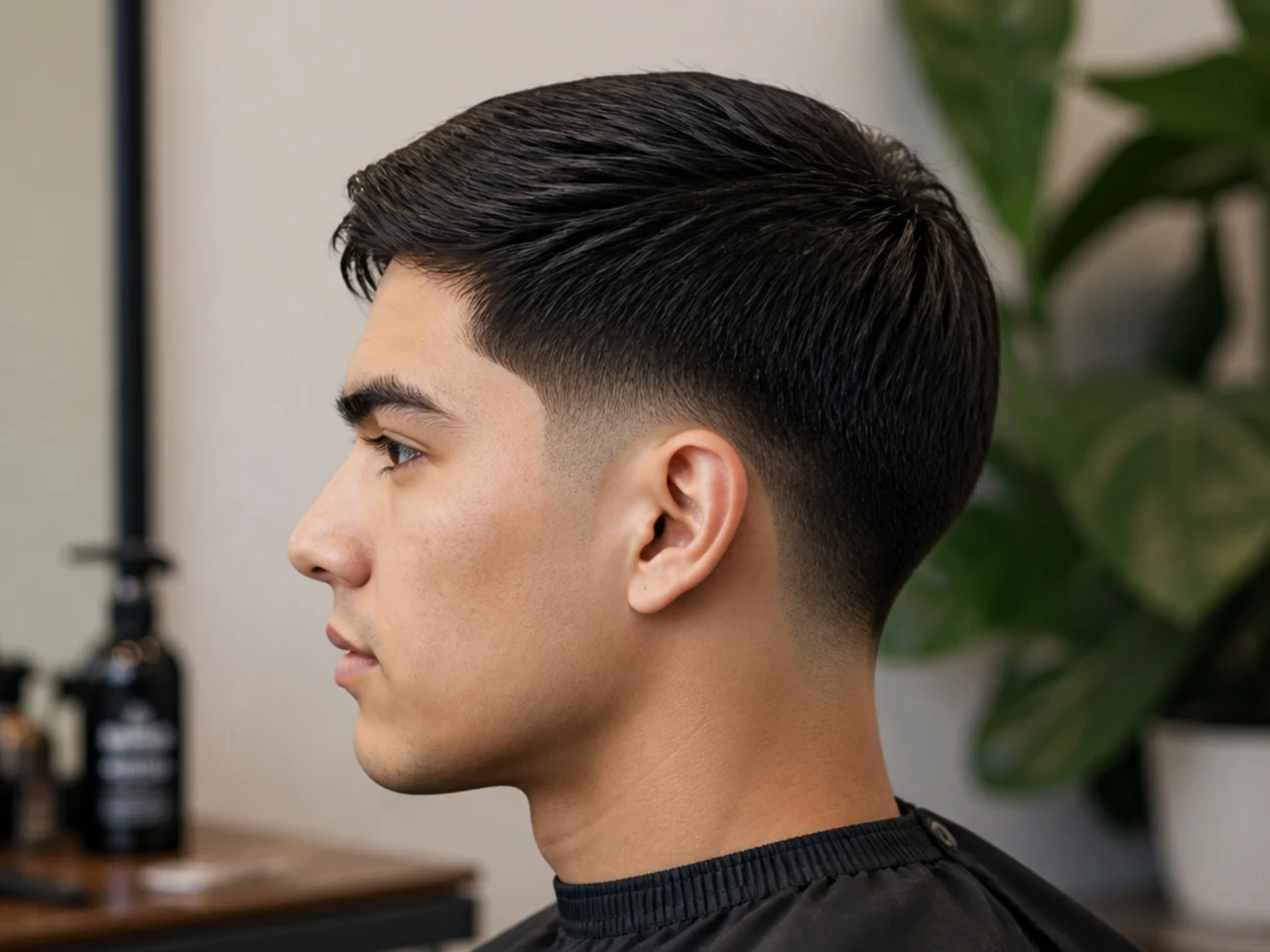
Seven lines cover the whole conversation. Nail these and you'll walk out with the version you had in mind — not the one your barber assumed.
- Show a photo — and pick one with straight hair. A low taper looks completely different next to curls than next to straight hair. Screenshot a reference where the model's texture matches yours so your barber sees the top shape you actually want.
- Say the words "low taper fade." Not "low fade," not "taper." The two together tell your barber where to start (above the ear) and where to stop (#0.5 or #1, never skin).
- Confirm the guard at the shortest point. #0.5 for sharper contrast, #1 for softer. Do not go below #0.5 — the moment you cut to skin, you have a fade, not a taper.
- Ask for point cutting on the top. Straight hair with a blunt cut looks shelf-flat. Point cutting breaks up the ends and adds the movement straight hair needs to read modern.
- Specify the top length in inches, not guards. "Three inches on top" beats "a #6 on top" every time. Guards flatten the top; scissor lengths preserve the shape you have in the reference photo.
- Name the finish. Line-up at the forehead. Drop shape at the temple. Tapered nape or blocked nape. One phrase per detail is all your barber needs.
- Book your next appointment before you leave. Straight hair shows grow-out at the fade line faster than any other texture. Every three weeks for the perimeter, every five to six for the top.
Styling and Maintenance for Straight Hair
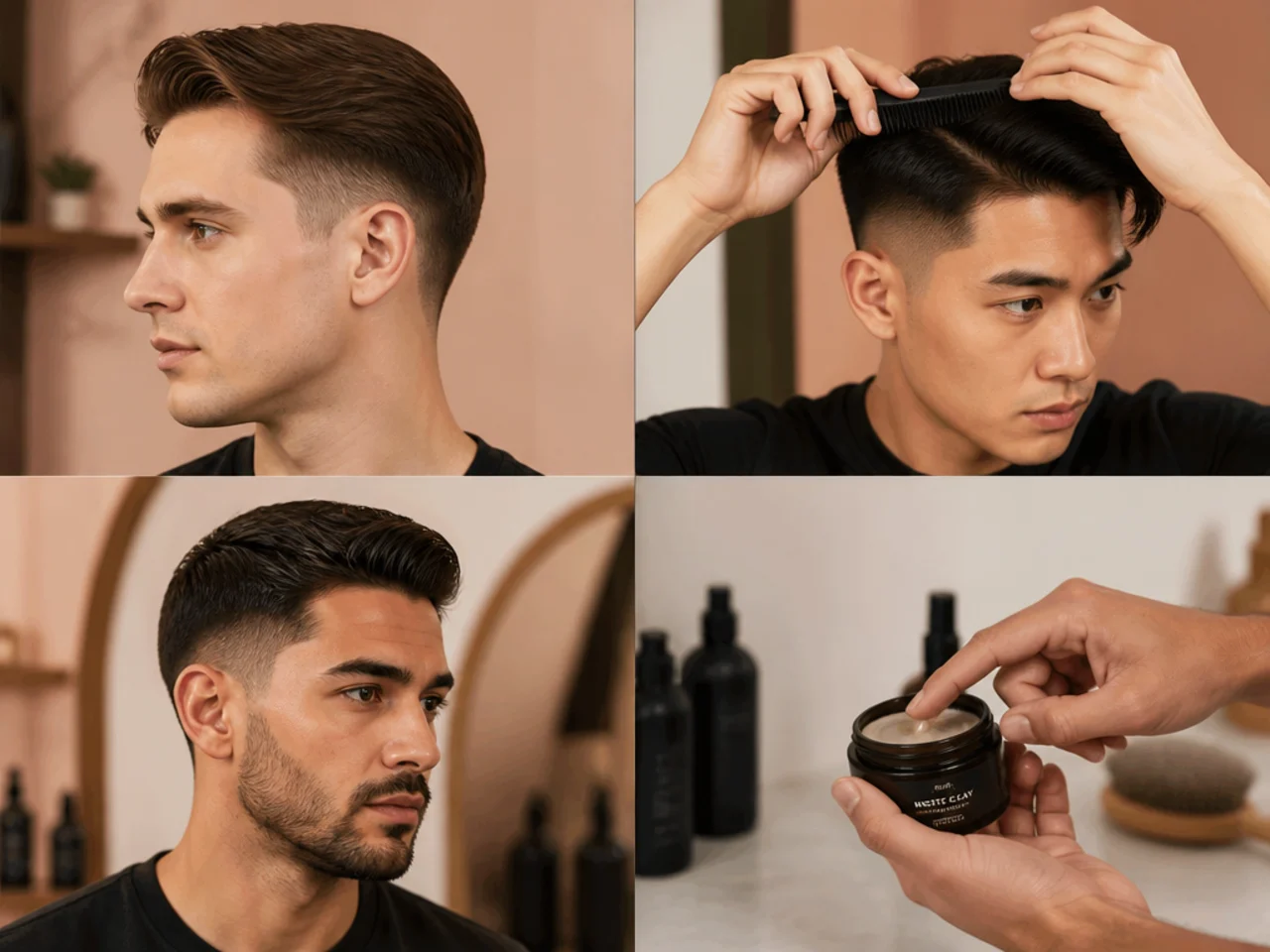
The routine for straight hair is about texture and hold. Straight hair falls flat naturally; product and technique are what give it shape.
Wash rhythm. Two to three times a week with a sulfate-free shampoo. Straight hair oils up faster than curly hair, but daily shampoo strips the scalp and makes the roots go greasier by afternoon. Rinse with conditioner on off days.
Product picks by shape. Matte clay for textured crops, quiffs, and messy shapes — hold with zero shine. Sea-salt spray for movement on longer tops and bro flow. Strong-hold cream for slick backs and pompadours where you need shape control. Light pomade for classic side parts and Ivy League tops where shine works with the polish.
Drying method. Air-dry for short crew cuts and textured crops. Blow-dry with a round brush for slick backs, pompadours, curtain shapes, and any style needing direction and lift. Keep the heat on medium — hot air on fine straight hair makes the ends brittle inside a month.
Overnight care. Silk or satin pillowcase preserves the style overnight so you're not restyling from scratch. If you sleep on your stomach or side, comb the hair away from the direction it will land in the morning.
Maintenance cadence. Fade line-up every three weeks. Full cut every five to six weeks. Trim ends every ten weeks even if you're growing out — split ends drag the top shape down. See the full best wavy hair products guide for lightweight picks that also carry straight hair well.
Between-visit cleanup. Keep the neckline sharp with a quality edger or the corner of your beard trimmer. Fifteen seconds in the mirror twice a week and the fade stays crisp until your next appointment.
Still deciding on the height? Compare the low taper against the mid and high in the low fade vs mid fade vs high fade breakdown before you book.
FAQ
Can I get a low taper fade on fine straight hair? Yes — and the fade actually helps fine hair look denser. Ask for a textured crop or a messy quiff on top and use a matte clay or a sea-salt spray. The contrast between the tapered sides and the textured top creates the illusion of density that fine hair rarely reads on its own.
Is a low taper the same as a low drop fade on straight hair? Not quite. The taper stops at a #0.5 or #1 guard; a low drop fade drops to skin at the curved perimeter behind the ear. Both suit straight hair, but the taper reads softer and grows out more gracefully. Try the drop version (#15 on this list) if you want more shape without the aggression of a skin drop.
How do I stop the fade line from looking harsh on straight hair? Ask for a longer blend zone at your next appointment — a #1.5 or #2 through the middle of the taper instead of jumping straight from #2 to #1. The extended blend softens the transition so straight hair drapes over it instead of highlighting it.
Can I blow-dry the top without ruining the fade? Yes. Blow-dry the top only, keep the nozzle above the ear line so the tapered sides don't get direct heat. Straight hair holds heat damage faster than curly hair — medium heat, not high, and always a leave-in or heat protectant first if you dry regularly.
Does the low taper work with a beard? Perfectly. Blend the sideburn into the fade line so the transition reads as one shape. Keep the beard the same guard length as the top of the fade or slightly longer — matching guards create the cleanest visual connection. Get both trimmed at the same visit.
How much should I expect to pay? Standard low taper fade with a scissor-cut top at a mainstream barbershop: $35 to $60. Add a beard blend or razor line-up at a specialist shop: $70 to $130. Tip 20 percent. A fade-only touch-up between full cuts runs $15 to $25 and takes fifteen minutes.