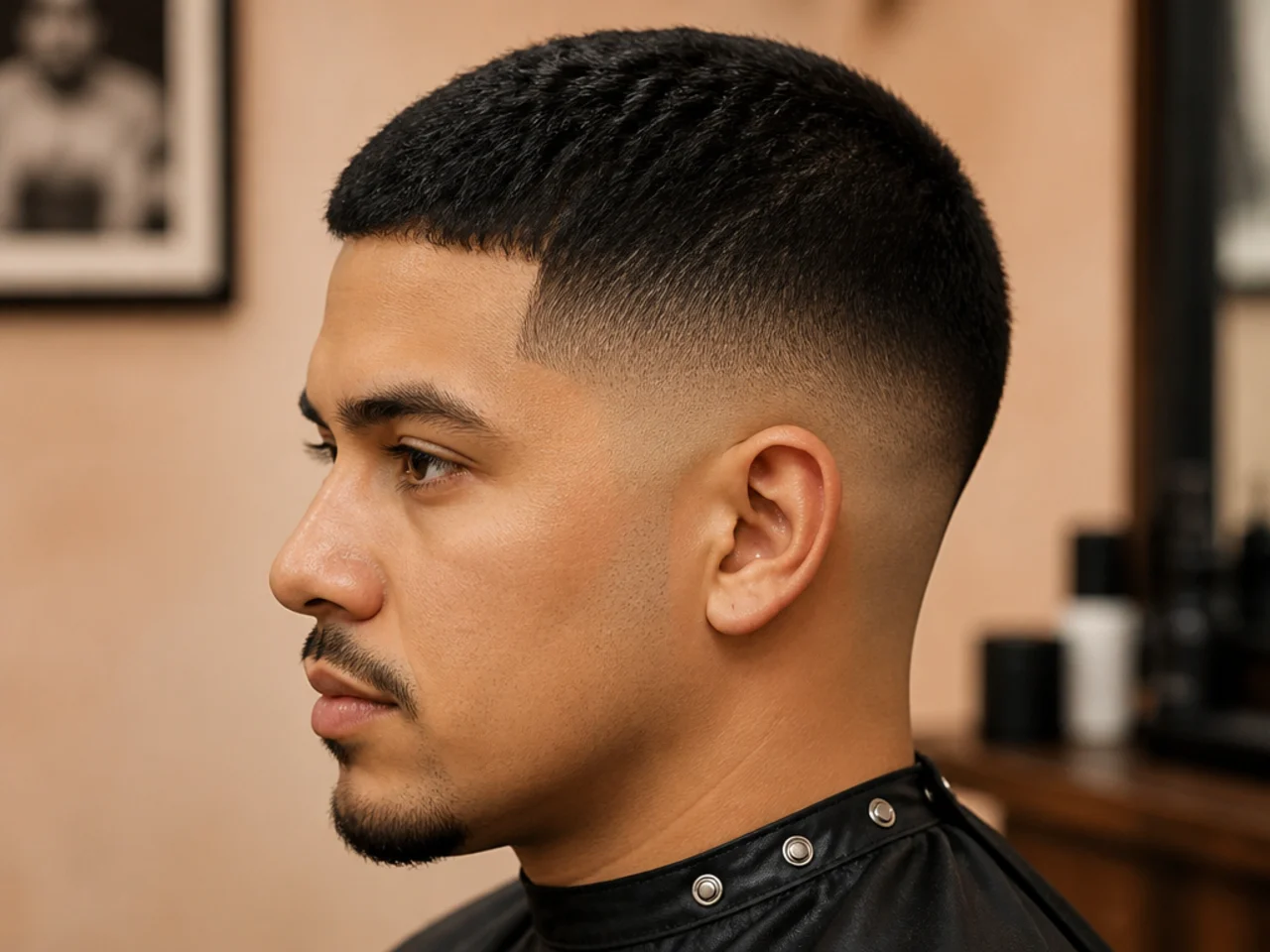
25 Low Taper Fade Haircuts Worth Trying
Twenty-five low fade taper haircuts for 2026 — face-shape notes, hair-type calls, guard numbers, and the exact words to hand your barber. Photos in.
In this article · 38
- What Is a Low Fade Taper?
- Low Fade Taper vs Low Taper Fade — Same Thing?
- How to Choose Your Low Fade Taper
- 25 Low Fade Taper Ideas Worth Trying
- 1. Classic Low Fade Taper with Short Top
- 2. Low Fade Taper with Textured Crop
- 3. Low Fade Taper with Fringe
- 4. Low Fade Taper with Curls
- 5. Low Fade Taper with Edgar
- 6. Low Fade Taper with Comma
- 7. Low Fade Taper with Slick Back
- 8. Low Fade Taper with Mullet
- 9. Low Fade Taper with Ivy League
- 10. Low Fade Taper with French Crop
- 11. Low Fade Taper with Quiff
- 12. Low Fade Taper with Comb-Over
- 13. Low Fade Taper with Line-Up
- 14. Low Fade Taper with Korean Top
- 15. Low Fade Taper with Two-Block
- 16. Low Fade Taper with Buzz
- 17. Low Fade Taper with Faux Hawk
- 18. Low Fade Taper with Wolf Cut
- 19. Low Fade Taper with Brush Up
- 20. Low Fade Taper with Pompadour
- 21. Low Fade Taper with Blowout
- 22. Low Fade Taper with 360 Waves
- 23. Low Fade Taper with Long Top
- 24. Low Fade Taper with Design
- 25. Low Fade Taper with Beard
- How to Ask Your Barber for a Low Fade Taper
- Styling and Maintenance for a Low Fade Taper
- FAQ
- Is a low fade taper the same as a low taper fade?
- Which top style pairs best with a low fade taper?
- How often should I re-cut a low fade taper?
- Is a low fade taper professional enough for a corporate office?
- Can I get a low fade taper on curly or coily hair?
- What length should I leave on top with a low fade taper?
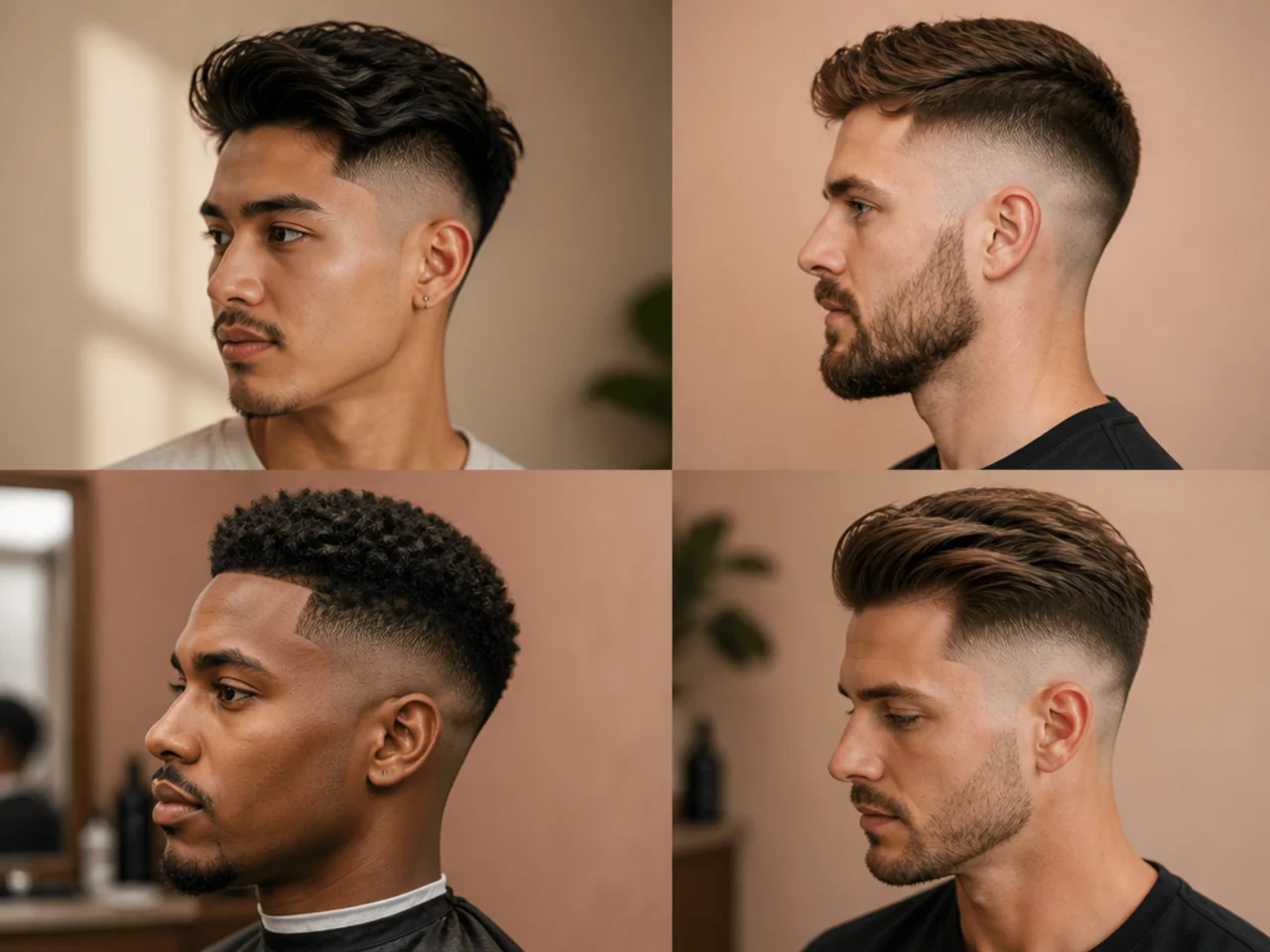
The low fade taper is the softest, most forgiving cut in the fade family — the sides shrink as they drop, but they never run to bare skin. That subtle blend is what survives a Monday meeting and a Friday night without a costume change. Below: 25 low fade taper haircuts worth trying in 2026, each with face-shape notes, hair-type calls, guard numbers, and the exact words to hand your barber.
What Is a Low Fade Taper?
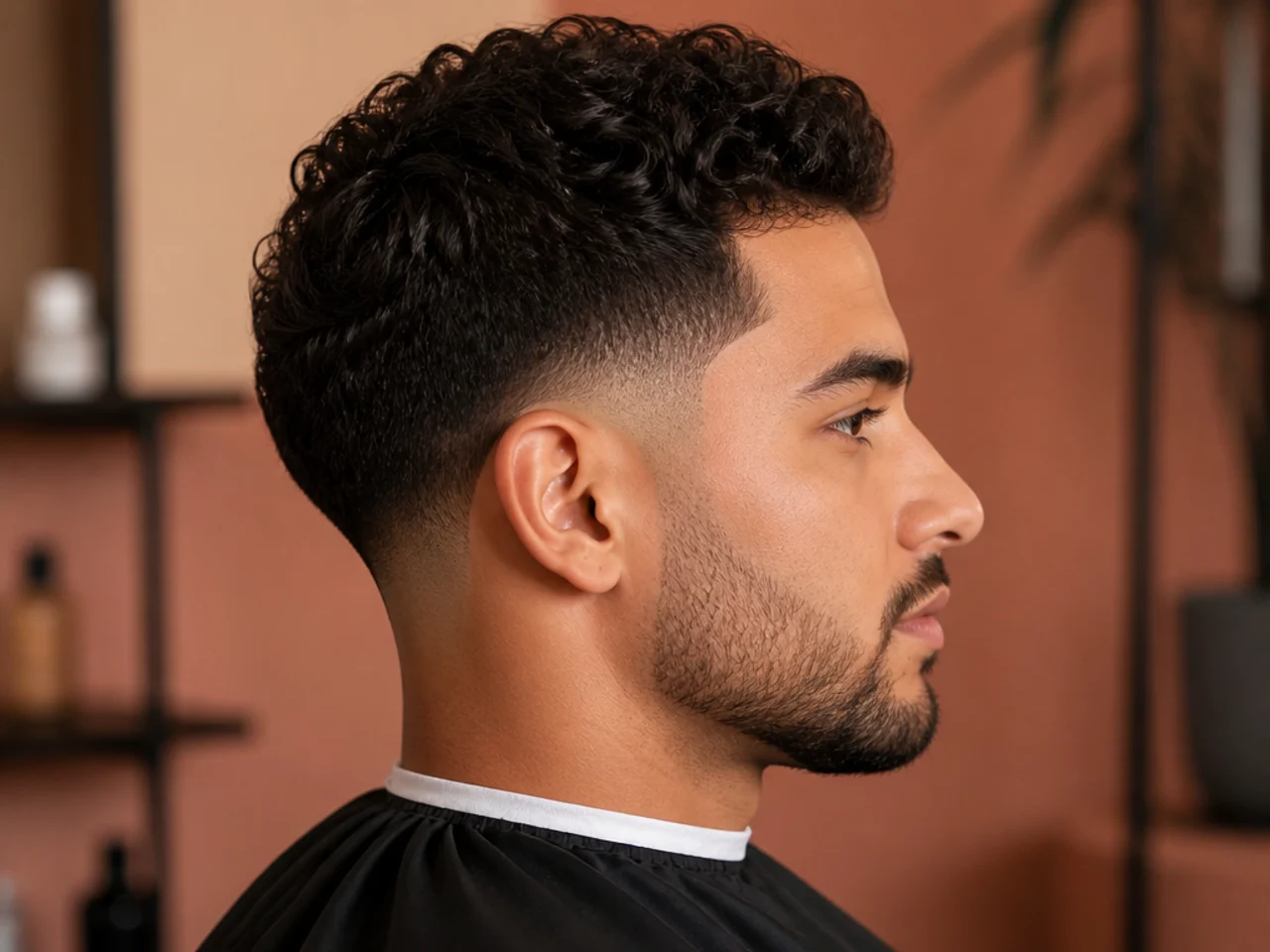
A low fade taper is a men's cut where the sides and back gradually shorten from your top length down through a couple of clipper guards, ending at a short 0.5 or 1 instead of bare skin. The transition sits low on the head, about a finger's width above the top of the ear. Anything higher is a mid fade, anything lower is a plain taper.
The word order barely matters. "Low fade taper" and "low taper fade" describe the same haircut, and every barber understands both. What actually changes the cut is where the blend starts (low, mid, high), where it ends (a short guard or bare skin), and what you keep on top. Both this cut and the standard low fade haircut sit inside the wider fade haircut family — the difference is that a low fade taper stops short of skin, which is why it grows out slower and reads softer.
Men reach for it first because it forgives grow-out and passes every dress code. It looks intentional under a hoodie, tidy under a collar, and photographed head-on it doesn't scream barbershop. The full sibling roundup at low taper fade covers 35 variations if you want to compare shapes.
Low Fade Taper vs Low Taper Fade — Same Thing?
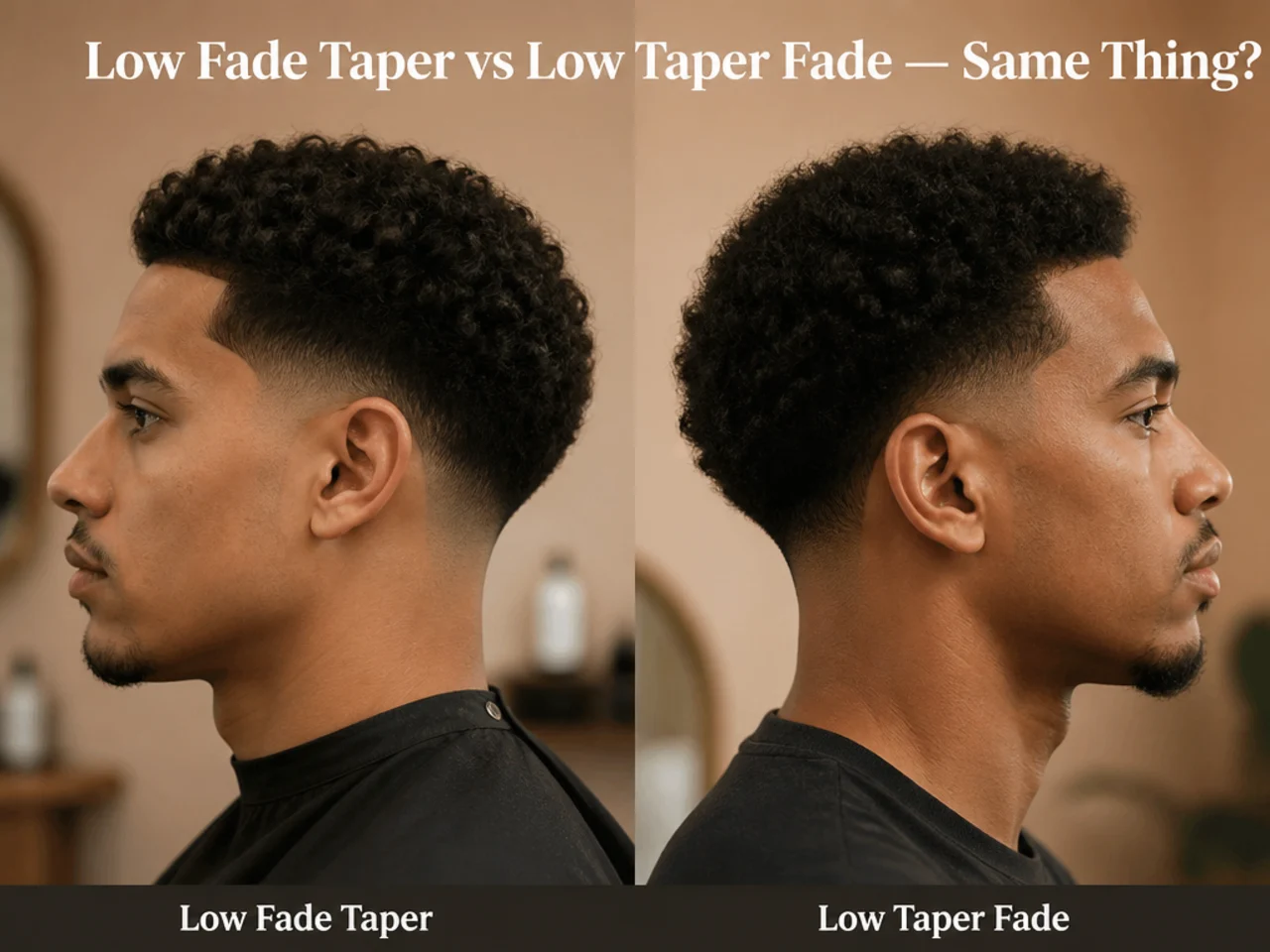
Same cut. The two phrases describe the same haircut and every barber worth their salt understands both. "Low fade taper" is the long-tail search variant that people type when they're on their phones — "low taper fade" is the grammatically standard order. Either way, the cut is the same: a low blend that ends at a short guard rather than skin.
If you want to see how the family compares to the sharper cousins in the fade world, the low taper fade haircut deep-dive breaks down the anatomy and the low fade vs mid fade vs high fade comparison shows where each height starts on your head. Ask for either phrase and add three details — the guard at the shortest, the top length in inches, and the finish — and your barber has enough to work.
How to Choose Your Low Fade Taper
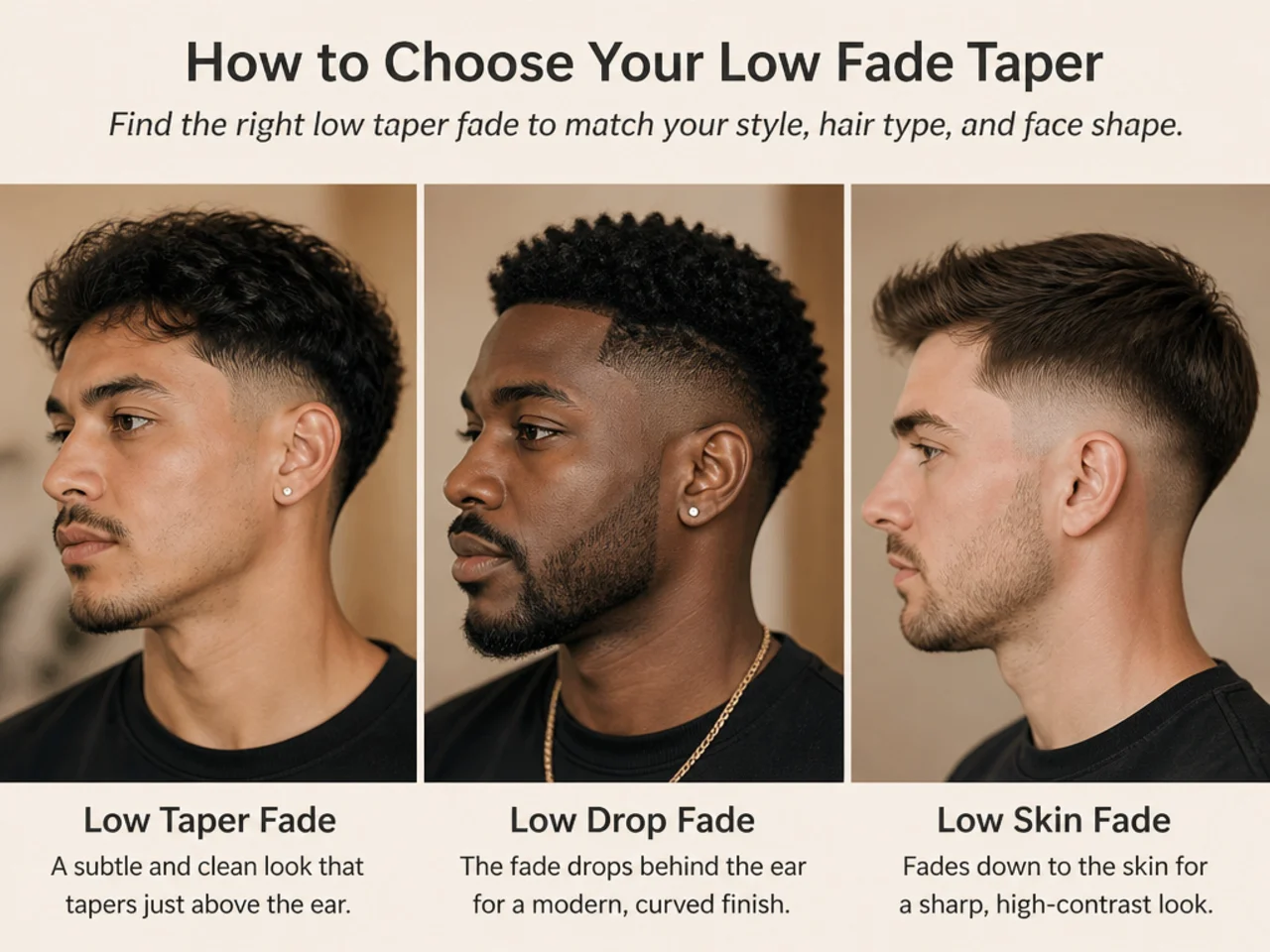
Three filters narrow 25 options to two or three real candidates: face shape, hair type, and how much time you'll actually spend on styling in the morning.
Face shape. Oval faces wear anything — start with a classic short top or a textured crop. Round faces want vertical lift on top: pompadour, quiff, brush-up, or comma. Square jaws soften with texture, so lean into a textured crop or fringe. Long faces should keep the top under three inches and add width with a French crop or curtain-heavy fringe. Heart-shaped faces balance with a beard and a medium top. Diamond faces flatter swept crown texture over the cheekbones.
Hair type. Straight hair shows the fade line most clearly — pair it with a side part, slick back, or short comb over. Wavy hair holds a brushed-back, tousled, or messy fringe best. Curly and coily hair rewards the taper with defined contrast, so ask for scissor work on top. Thick hair carries height (pompadour, wolf cut); fine hair reads fuller with a short top and tight sides.
Lifestyle. Corporate offices — a classic short top, side part, or Ivy League. Modern jobs — almost anything is on the table. Creative and social — the loud picks: edgar, mullet, faux hawk, design. Low-effort mornings — buzz or crew, no product required. The low fade haircut for men guide covers workplace-safe pairings if you're still weighing the call.
25 Low Fade Taper Ideas Worth Trying
Twenty-five variations, sorted from clean and quiet to sharp and loud. Each block covers what makes that pairing different, who it flatters, the exact request to hand your barber, and one styling move worth stealing.
1. Classic Low Fade Taper with Short Top
The default. About an inch to an inch-and-a-half of length on top, combed forward or lightly to one side, with a soft blend down through a 1 to a 0.5 at the ear. Suits every face shape and every hair type — this is the pick when you can't decide. Ask for: "low fade taper, 1 at the shortest, keep an inch on top, matte finish." Rub a pea of cream through damp hair, comb once, walk out.
2. Low Fade Taper with Textured Crop
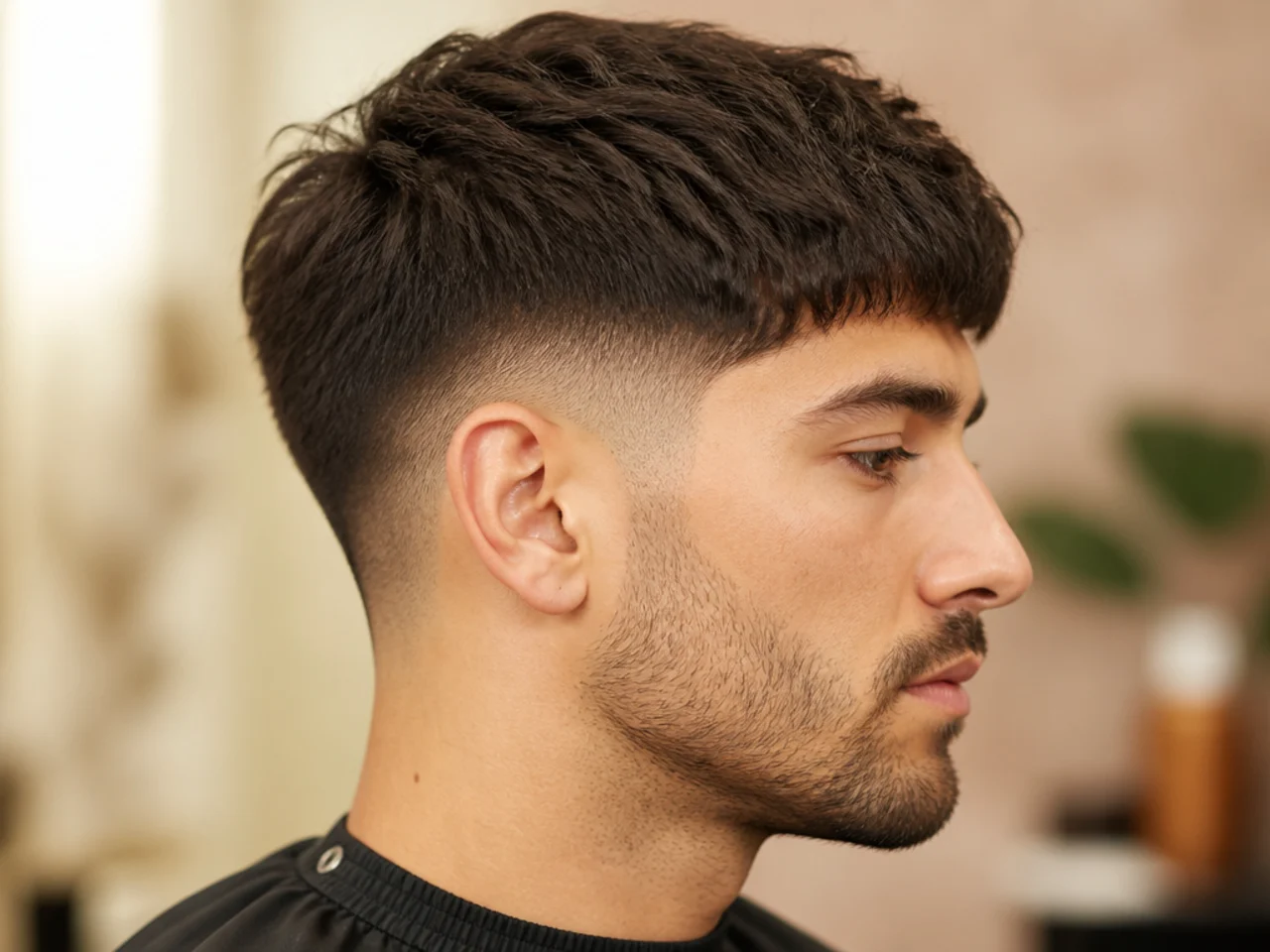
The current default for guys under thirty-five. Point-cut length of about 1.5 to 2 inches on top with a low fade taper that drops through a 1 to a 0.5 at the sides. The texture breaks up light and reads modern without trying too hard. Best on straight to wavy hair with medium density. Suits oval, square, and round faces. Ask for: "low fade taper, 0.5 at the shortest, textured crop on top at 1.5 inches, point-cut ends." Press a pea of matte clay through damp hair with your palm, then break the fringe apart with your thumbs.
3. Low Fade Taper with Fringe
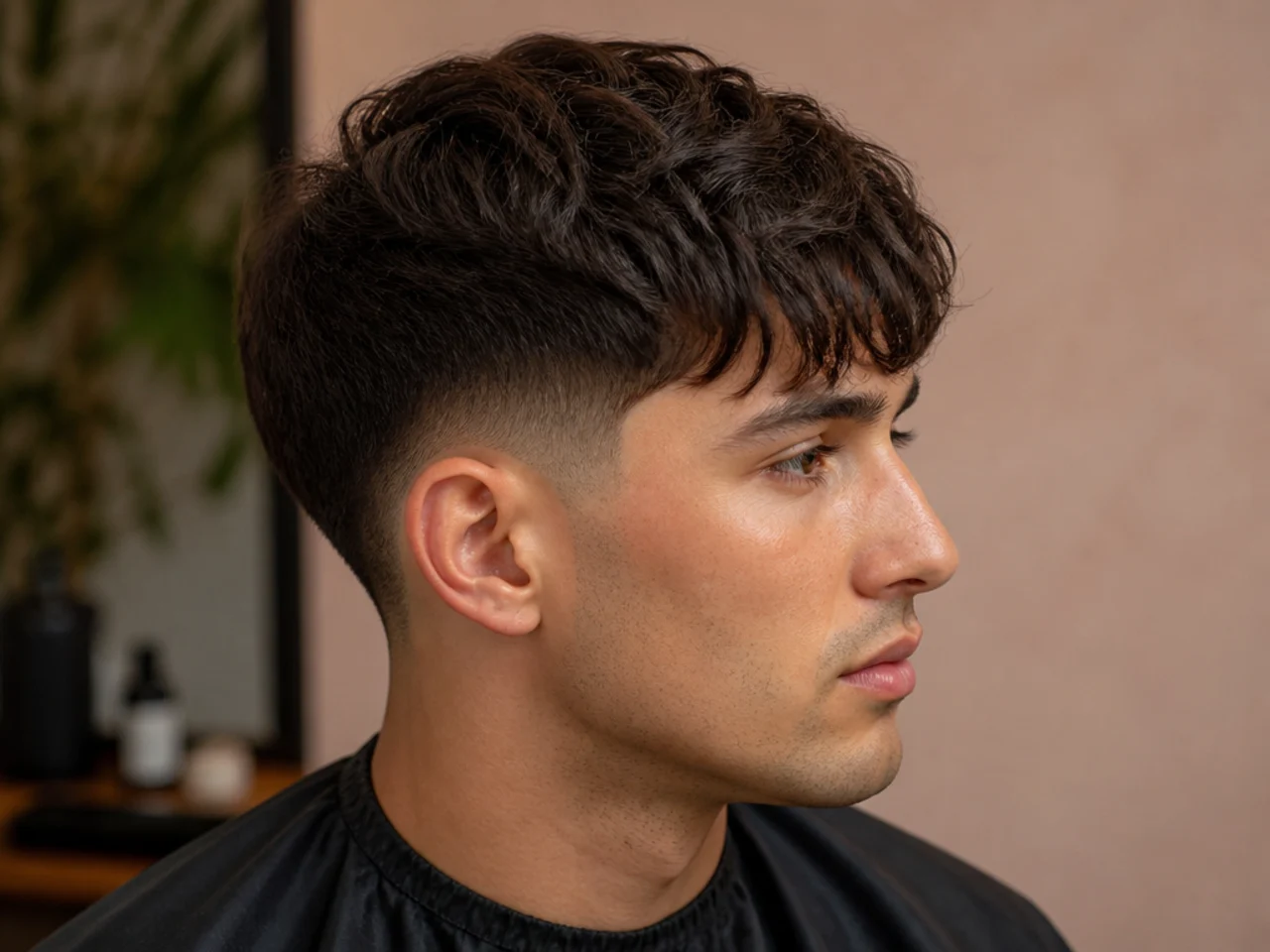
Length kept longer through the front so the fringe falls across your forehead in a tousled arc. The fringe haircut for men reads current on wavy to straight hair with medium density. Best for oval, heart, and long faces because the fringe softens forehead width. Ask for: "low fade taper, 1 at the shortest, three inches through the fringe grading shorter to the crown." Sea salt spray on damp hair, rough-dry with your fingers, break up the fringe with a matte paste.
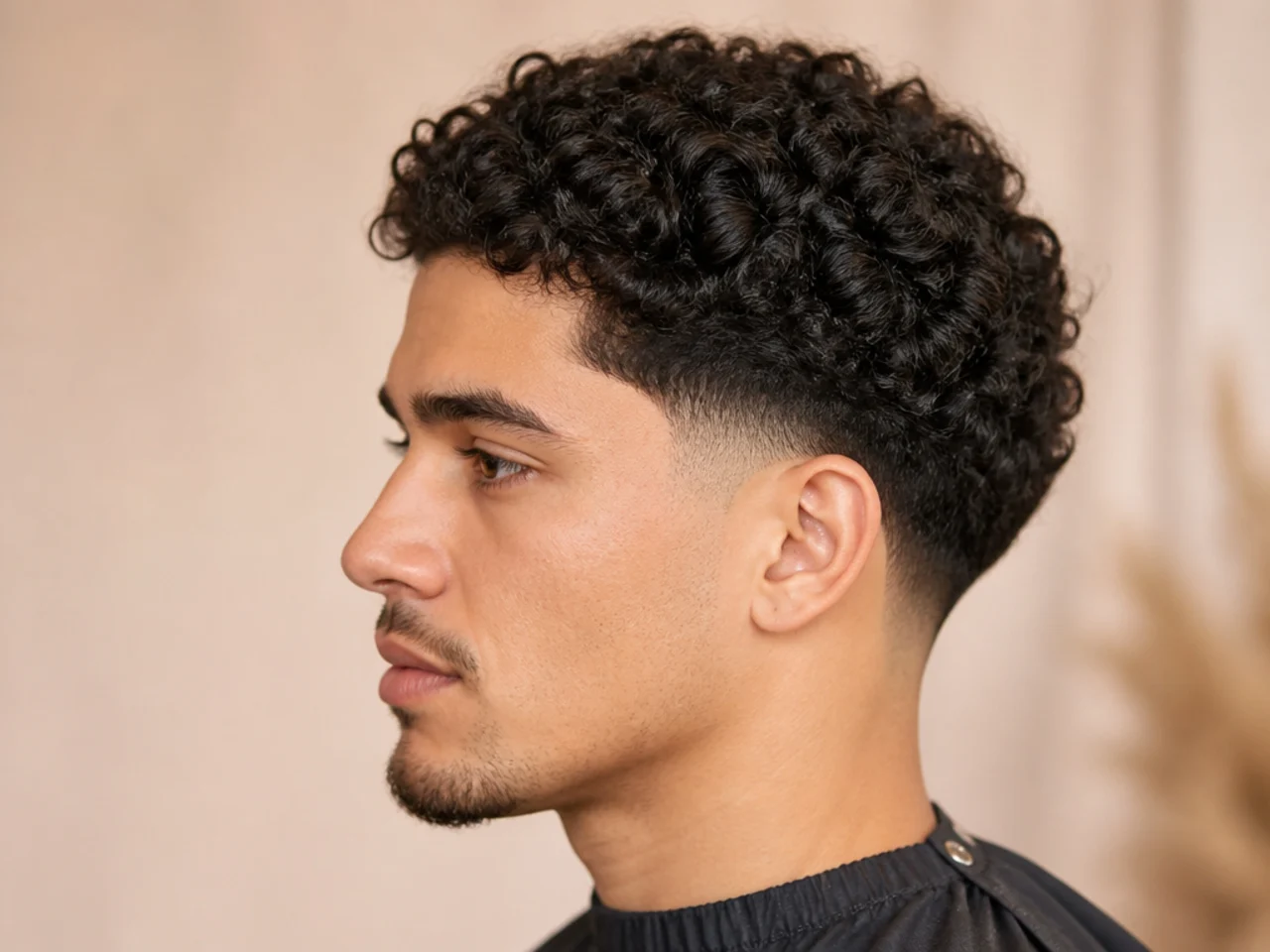
4. Low Fade Taper with Curls
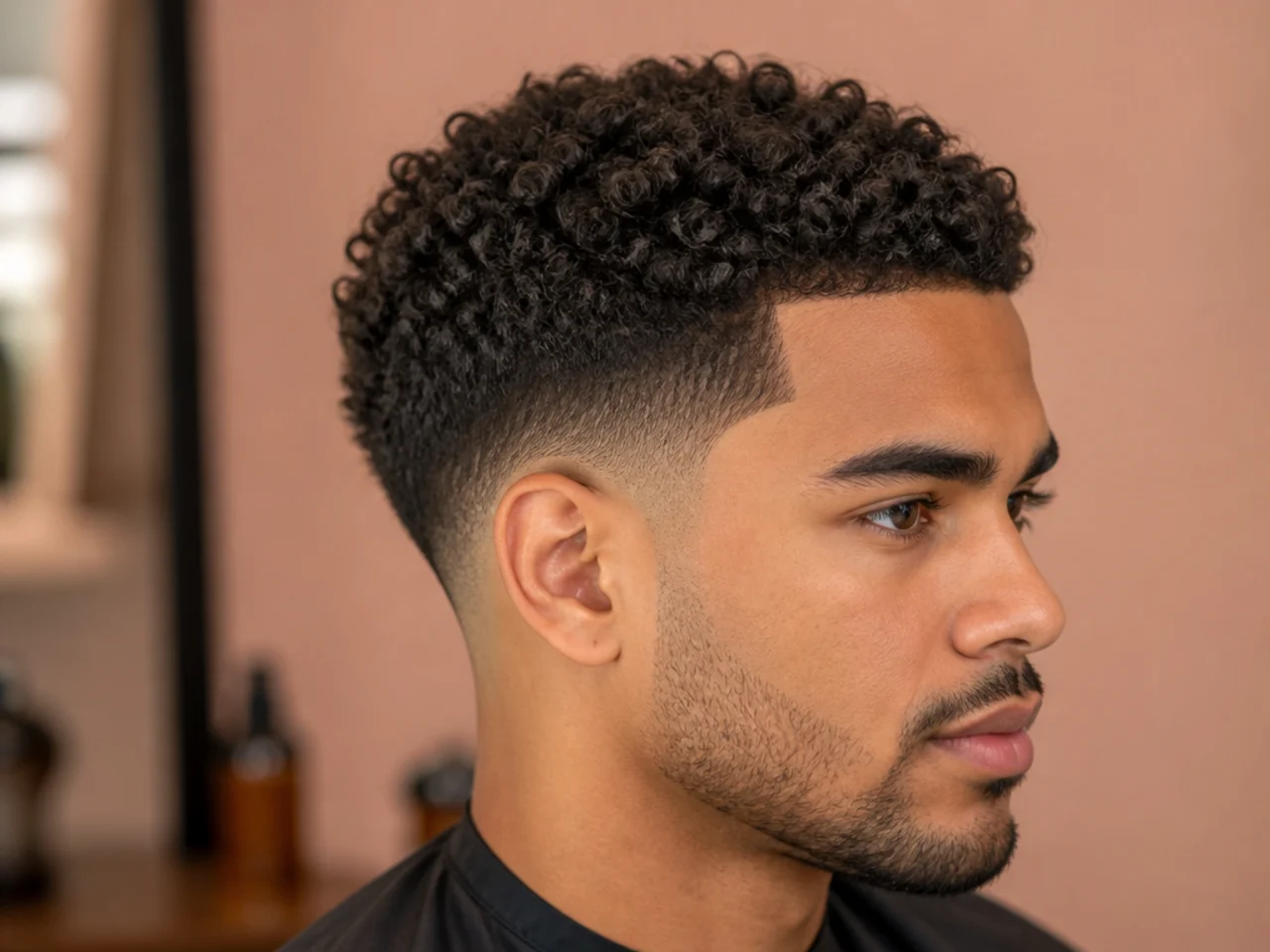
Real curl kept on top, low fade taper below to hold the shape without cutting into the pattern. Three to four inches of curl on top, all scissor work — no thinning shears. Best on 3A through 3C curl patterns, and it suits oval, heart, and diamond faces. Ask for: "low fade taper, 1 at the shortest, scissor-cut the top to keep the curl pattern, soft blend at the transition." Curl cream on soaking-wet hair, scrunch upward toward the scalp, then air-dry undisturbed. See more length ideas in the curly hairstyles for men guide.
5. Low Fade Taper with Edgar
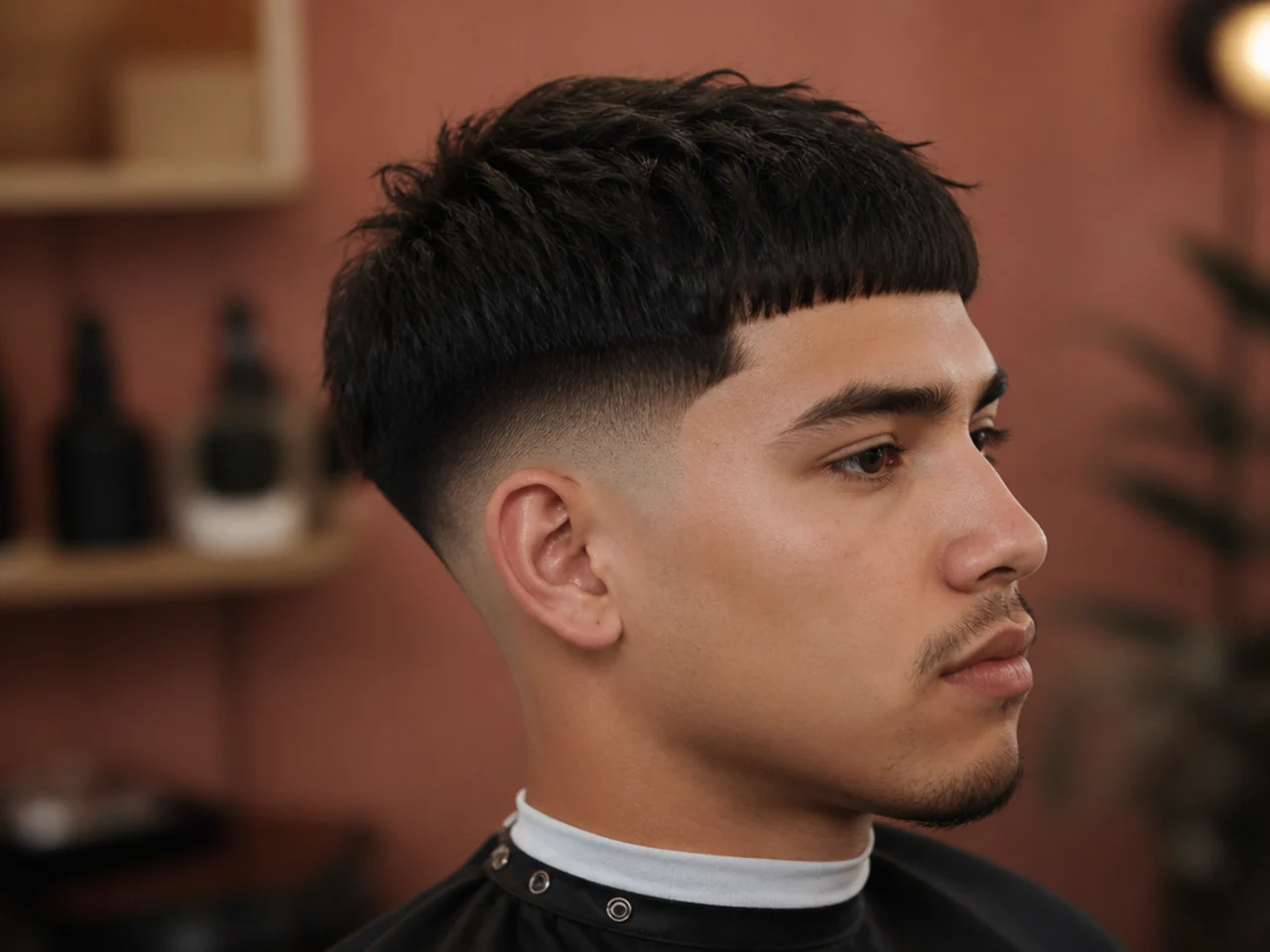
The edgar haircut drops a razor-straight fringe onto the forehead and squares the temple corners. Pair it with a low fade taper instead of a skin fade and you get the shape without the aggressive maintenance schedule. Best on straight to wavy hair with medium to thick density. Suits square and oval faces most cleanly. Ask for: "low fade taper, 0.5 at the shortest, Edgar top — blunt fringe cut straight across at the brow, sharp temple points, two inches on top." Light styling cream after a blow-dry forward, and touch up the temple points weekly.
6. Low Fade Taper with Comma
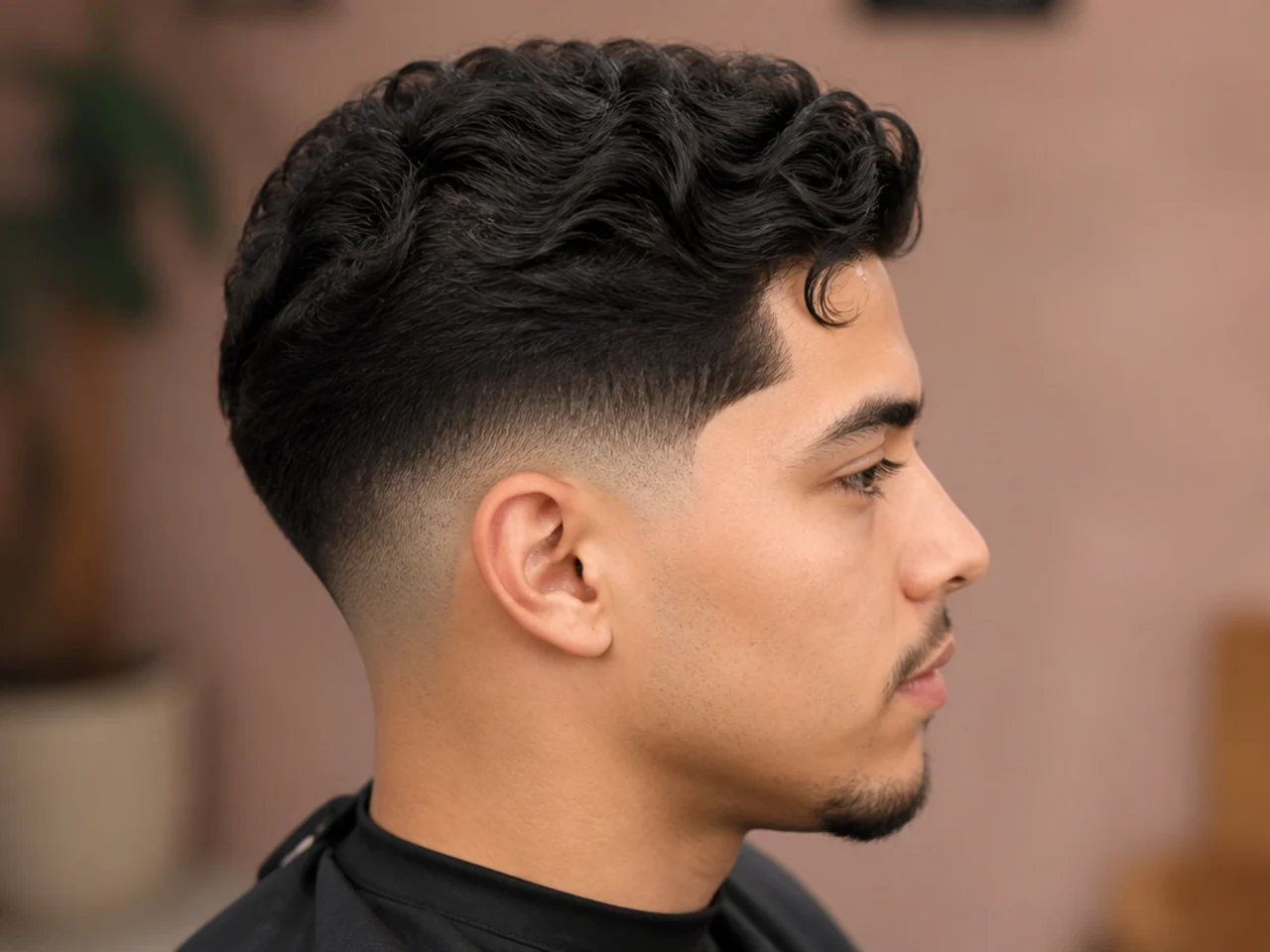
The comma haircut sweeps a curved comma-shaped fringe forward and to one side, and the low fade taper cleans the perimeter without disrupting the sweep. Big in Korean and East Asian barbershops for a reason. Best on straight to lightly wavy hair with three to four inches on top. Suits oval, heart, and long faces. Ask for: "low fade taper, 1 at the shortest, three inches on top, comma fringe swept forward and to my dominant side." Blow-dry the fringe forward with a round brush, curling the ends inward to build the comma shape.
7. Low Fade Taper with Slick Back
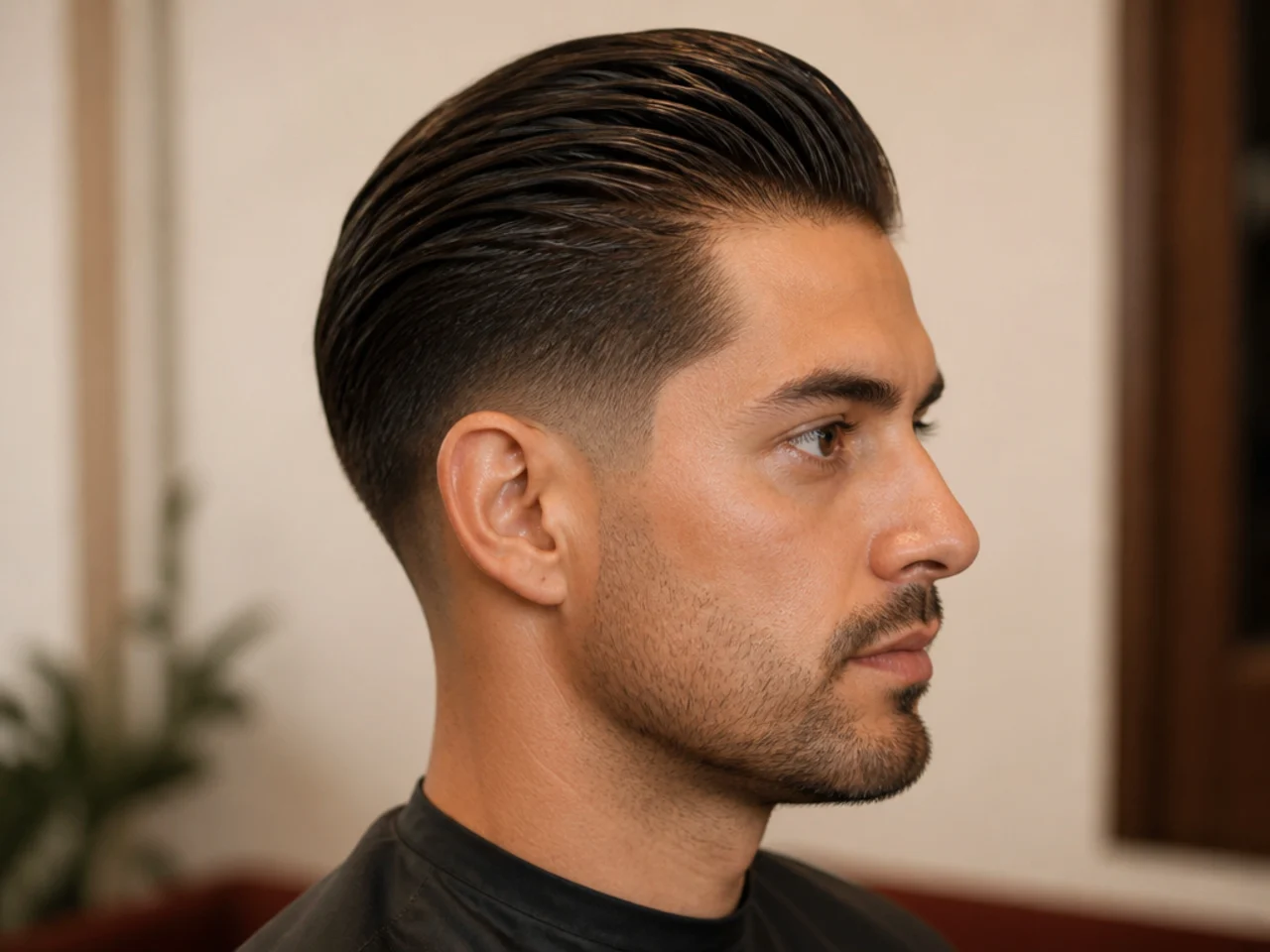
The formalwear cut. Three to four inches on top combed straight back from the hairline with a shine finish, low fade taper below to keep the collar area quiet. Best on straight to lightly wavy hair — too much curl fights the slick. Suits oval, square, and diamond faces. Ask for: "low fade taper, 1 at the shortest, keep three inches on top, cut for a slick back, side part optional." Apply a shine pomade to damp hair, comb straight back in one pass, then let it set without touching. The full slick back haircut guide covers styling nuance.
8. Low Fade Taper with Mullet
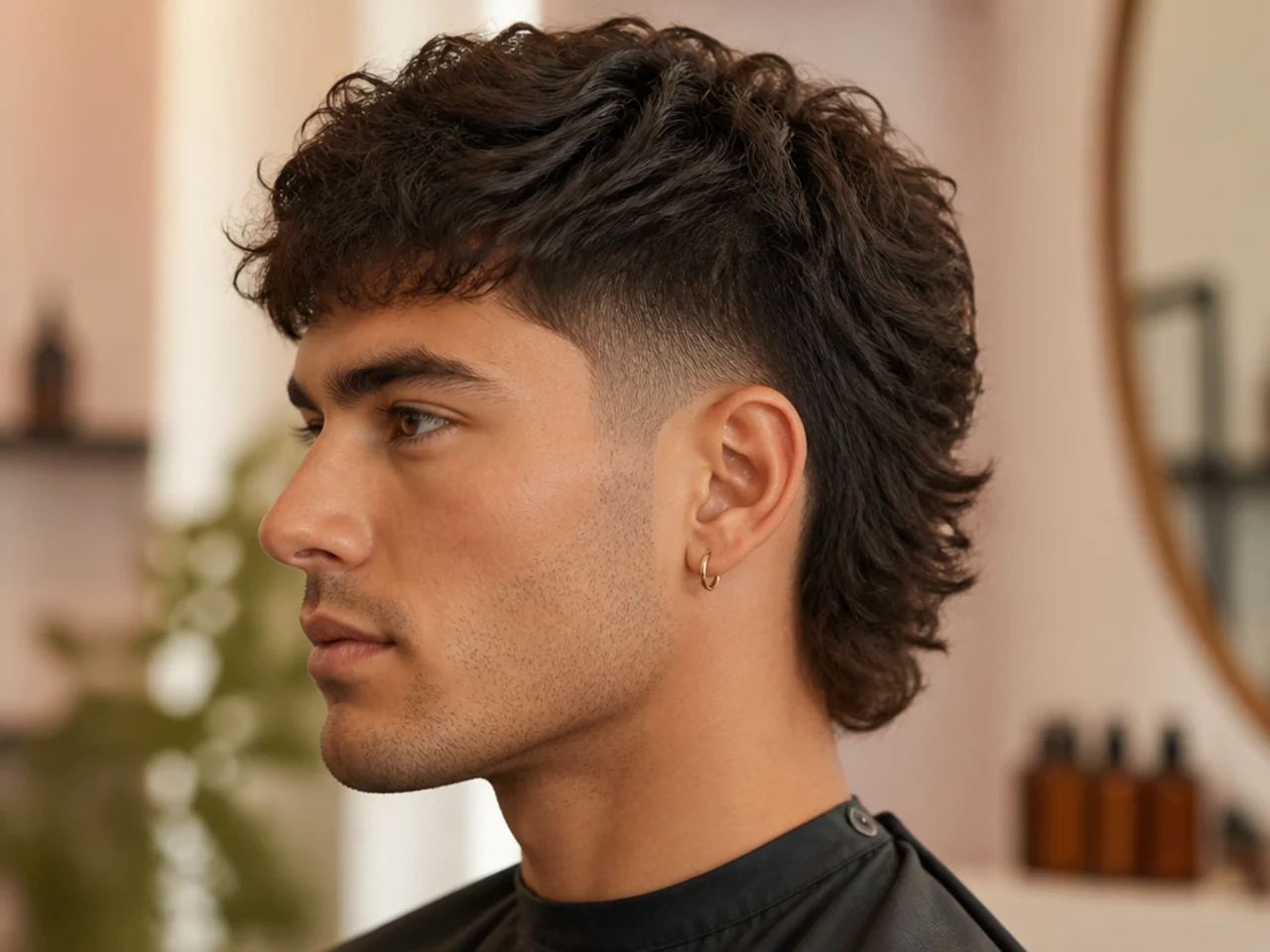
Short and faded through the front and sides, longer through the back. The modern mullet uses the low fade taper to keep the sides professional so the length in the back reads intentional. Best on straight and wavy hair. Suits oval faces — the extra width from a fringe and back can throw off round or square shapes. Ask for: "low fade taper, 1 at the shortest, two inches through the top, disconnect to four inches through the back, textured fringe." Sea salt spray, air-dry, tousle with your fingers. Never a comb through the back.
9. Low Fade Taper with Ivy League
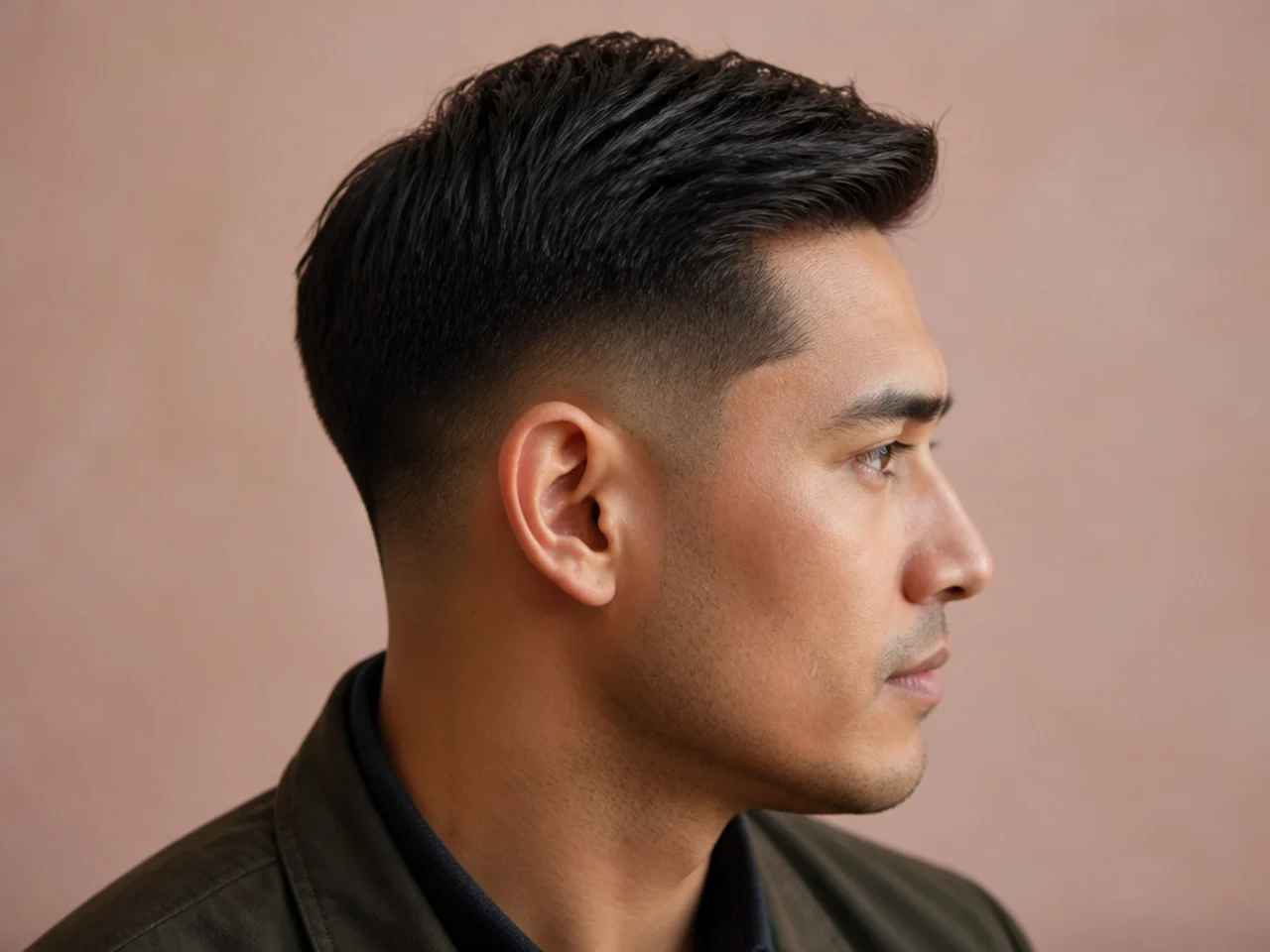
Prep-school classic, modernized. The Ivy League leaves about two inches on top combed to one side, with a low fade taper handling the sides instead of a soft everyday taper. Best on straight to lightly wavy hair with medium density. Suits oval, square, and triangular faces. Ask for: "low fade taper, 1 at the shortest, Ivy League on top at two inches, soft side part on my dominant side." Light-hold pomade through damp hair, comb the part in, done in under two minutes.
10. Low Fade Taper with French Crop
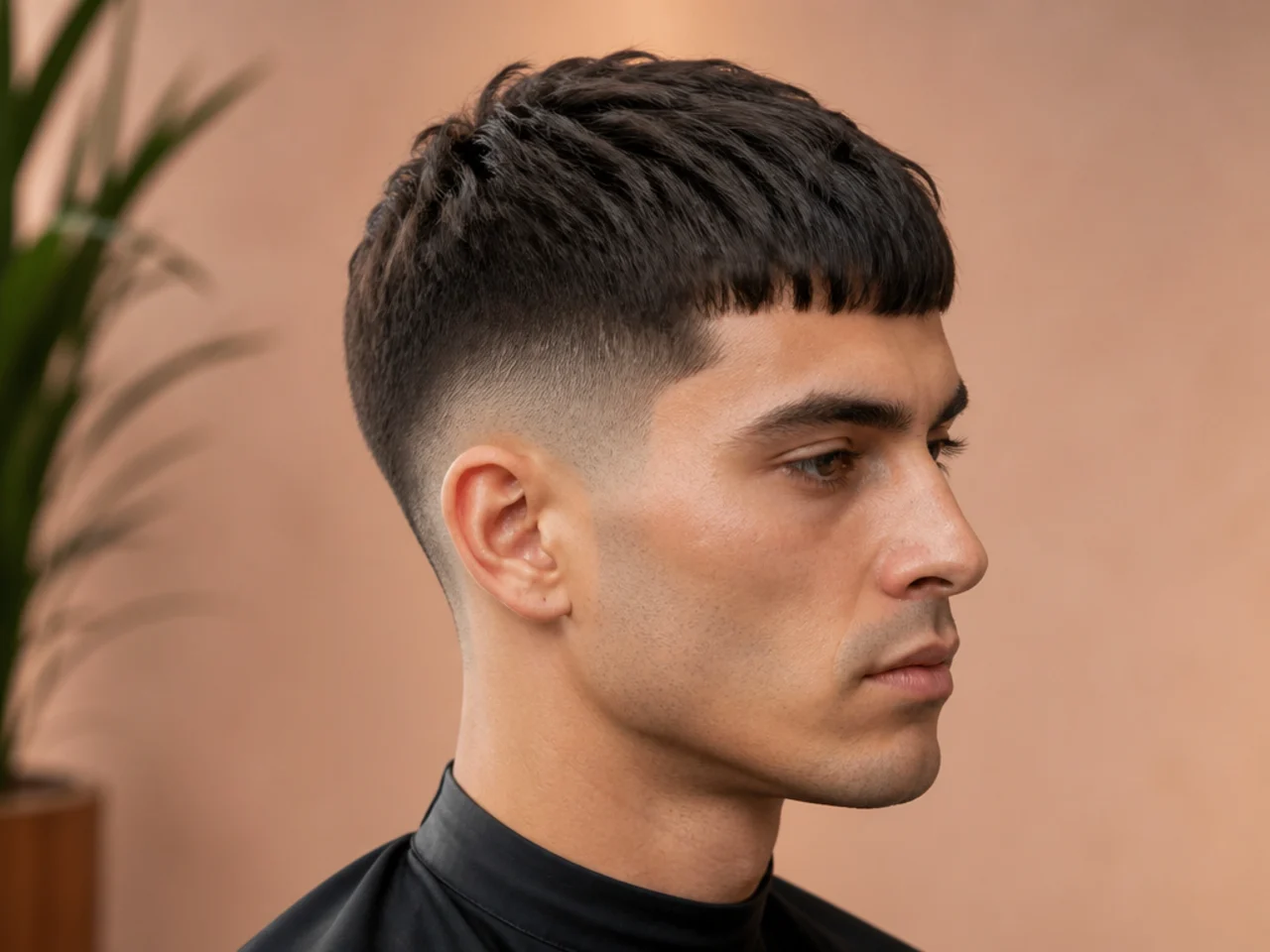
The French crop leaves a blunt fringe on the forehead and short choppy layers on top. Pair it with a low fade taper and you get a fine-hair cheat code — the choppy top fakes density, the taper cleans the sides without exposing scalp. Best for thin to medium hair on square, oval, and long faces. Ask for: "low fade taper, 1 at the shortest, textured French crop on top with a blunt fringe to mid-forehead." Light-hold sea salt spray on damp hair, air-dry, style with your fingertips.
11. Low Fade Taper with Quiff
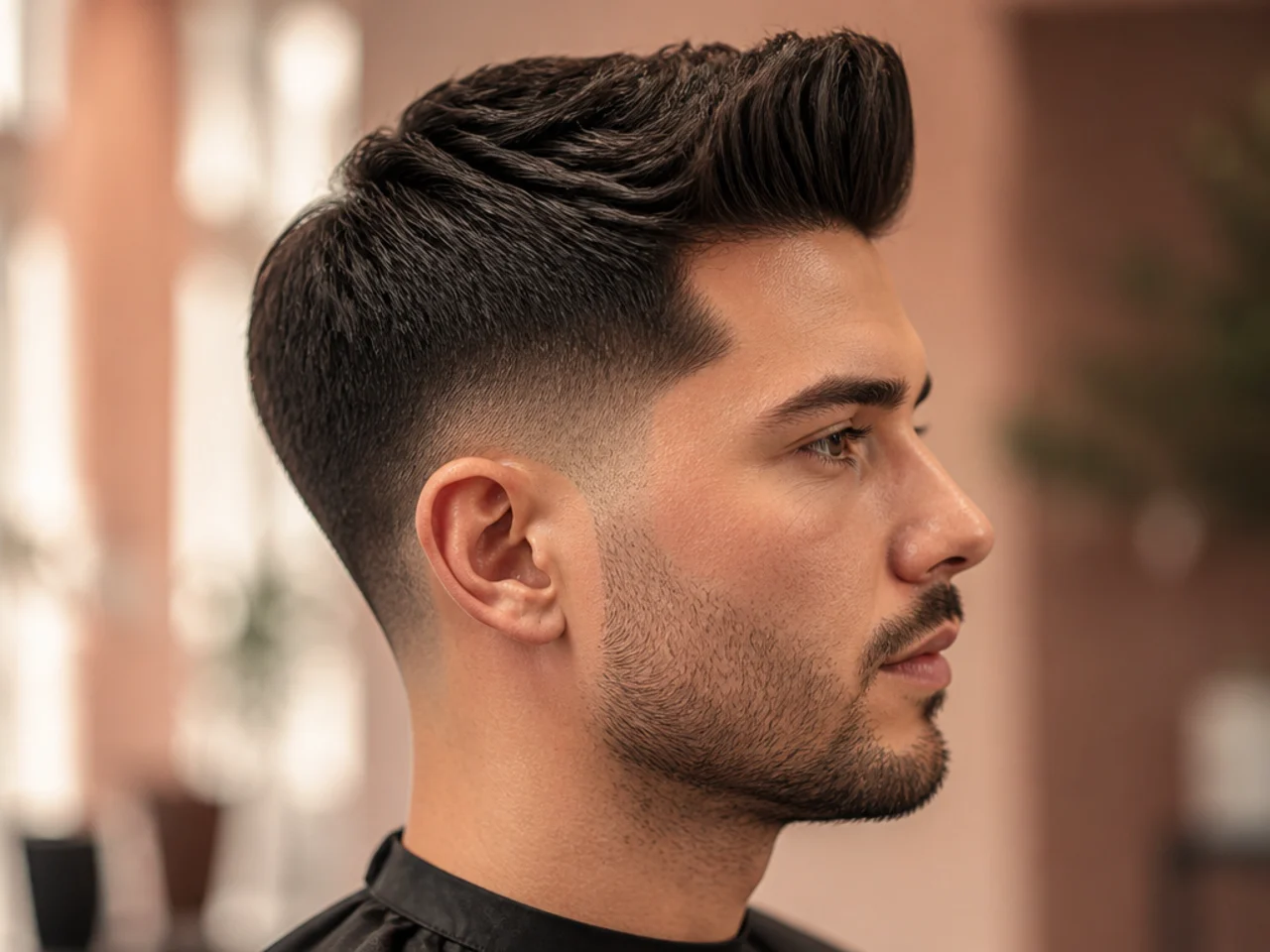
The pompadour's more forgiving cousin. The quiff builds three inches of front volume that slopes back rather than standing straight up, with a low fade taper below to keep it modern. Suits round and oval faces because the vertical lift lengthens the frame. Best on straight and wavy hair with real density. Ask for: "low fade taper, 1 at the shortest, three inches on top with weight kept at the front, cut for a quiff." Volume mousse at the roots, blow-dry pushing the front up and back with your fingers, then finish with a light pomade.
12. Low Fade Taper with Comb-Over
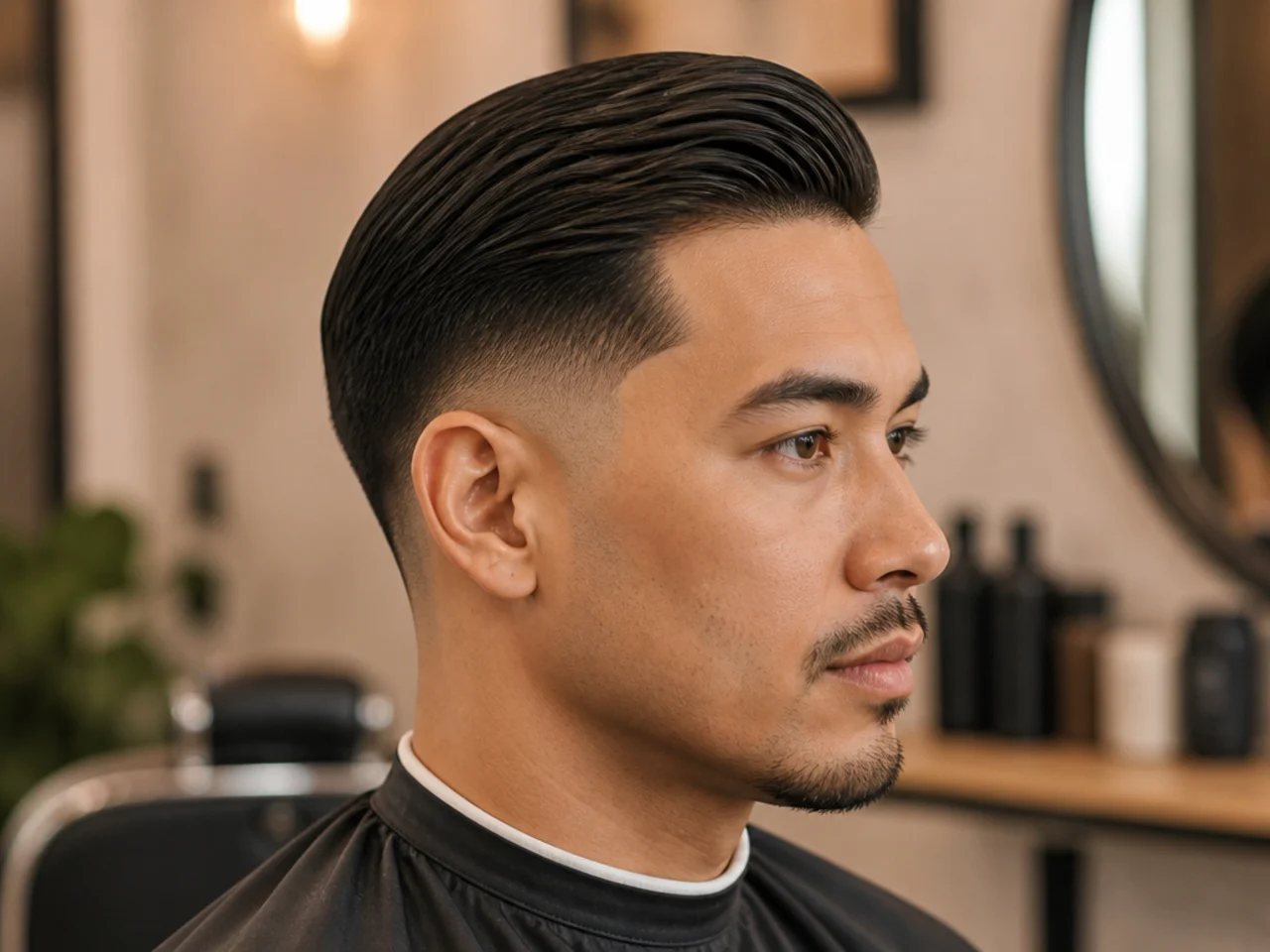
The comb over is the most versatile styled cut on this list — structured for work, tousled for weekends, slicked for black-tie. The low fade taper keeps it from tipping into "dad haircut" territory. Best on straight and wavy hair, three to four inches on top. Fits every face shape. Ask for: "low fade taper, 1 at the shortest, three to four inches on top, low side part on the left, combed over with soft hold." Blow-dry across the part with a paddle brush, then set with a medium-hold cream pomade.
13. Low Fade Taper with Line-Up
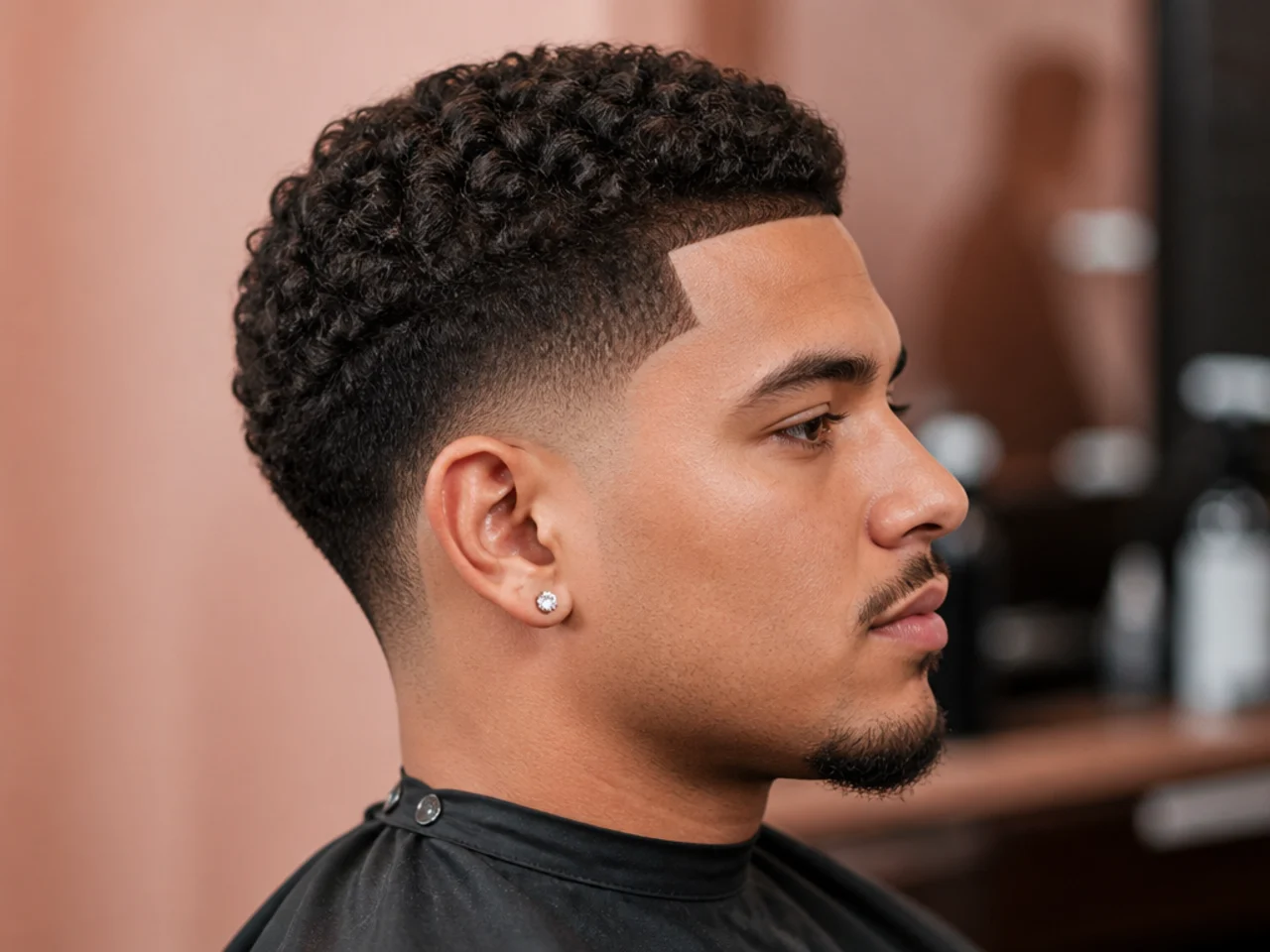
The line-up is a razor-sharp edge cut along the forehead and temple that squares off the entire cut. It's a clean-shave-level detail that turns a good haircut into a great one. Best on thick, coarse hair and strong bone structure. Square and oval faces benefit most. Ask for: "low fade taper, 1 at the shortest, three inches on top scissor-cut, line-up at the forehead and temples, brushed-back finish." Refresh the line-up between visits with a quality edger — the finish blurs faster than the fade itself.
14. Low Fade Taper with Korean Top
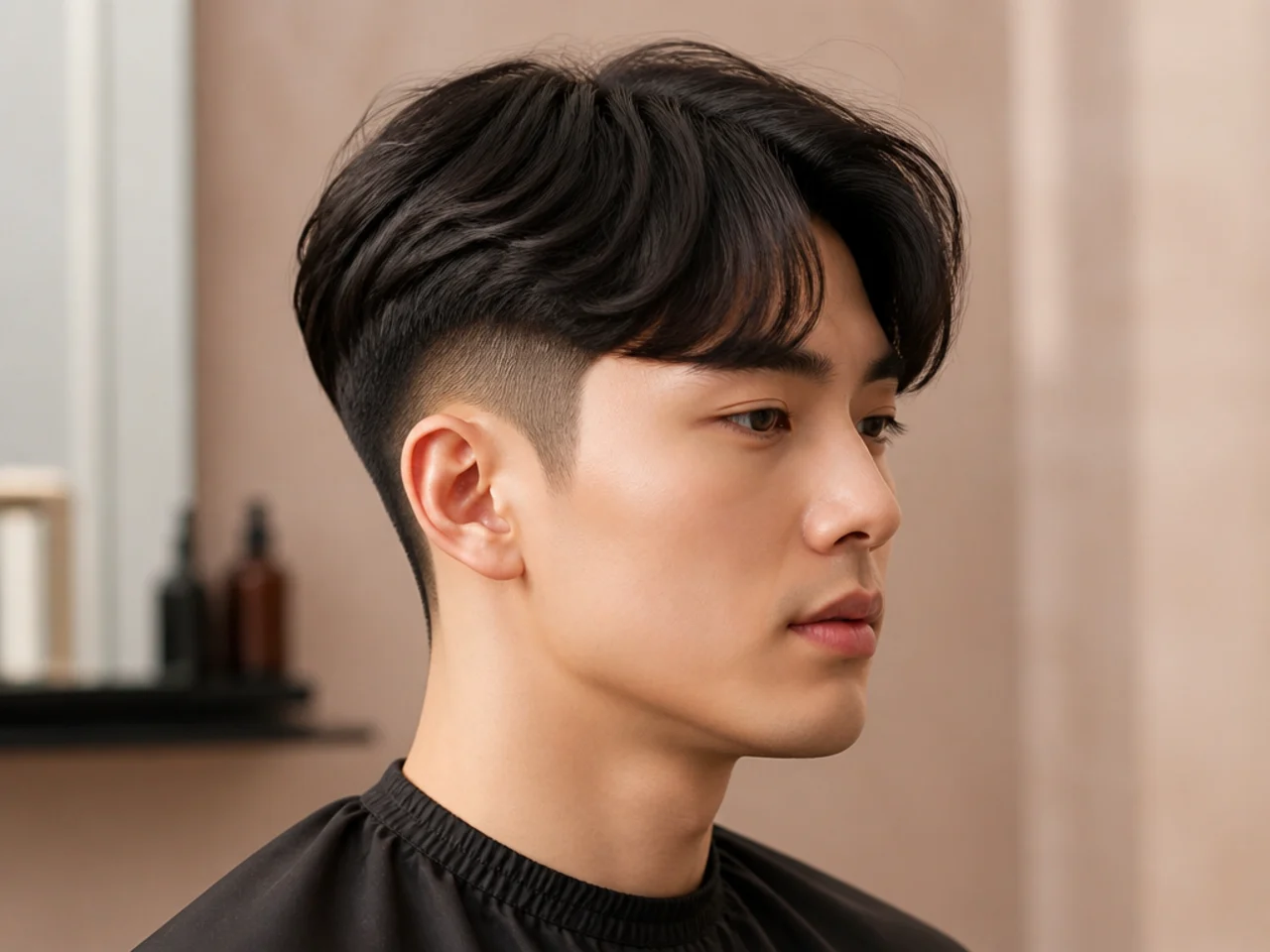
The Korean haircut for men leans on soft texture, a side-swept fringe, and a clean perimeter — the low fade taper is a perfect fit for the sides. Best on straight to lightly wavy hair with three to four inches on top. Suits oval, heart, and long faces because the fringe softens the forehead. Ask for: "low fade taper, 1 at the shortest, three inches on top with side-swept fringe, natural finish." Blow-dry the fringe to your dominant side with a round brush, then set with a light cream — no wet-look shine.
15. Low Fade Taper with Two-Block
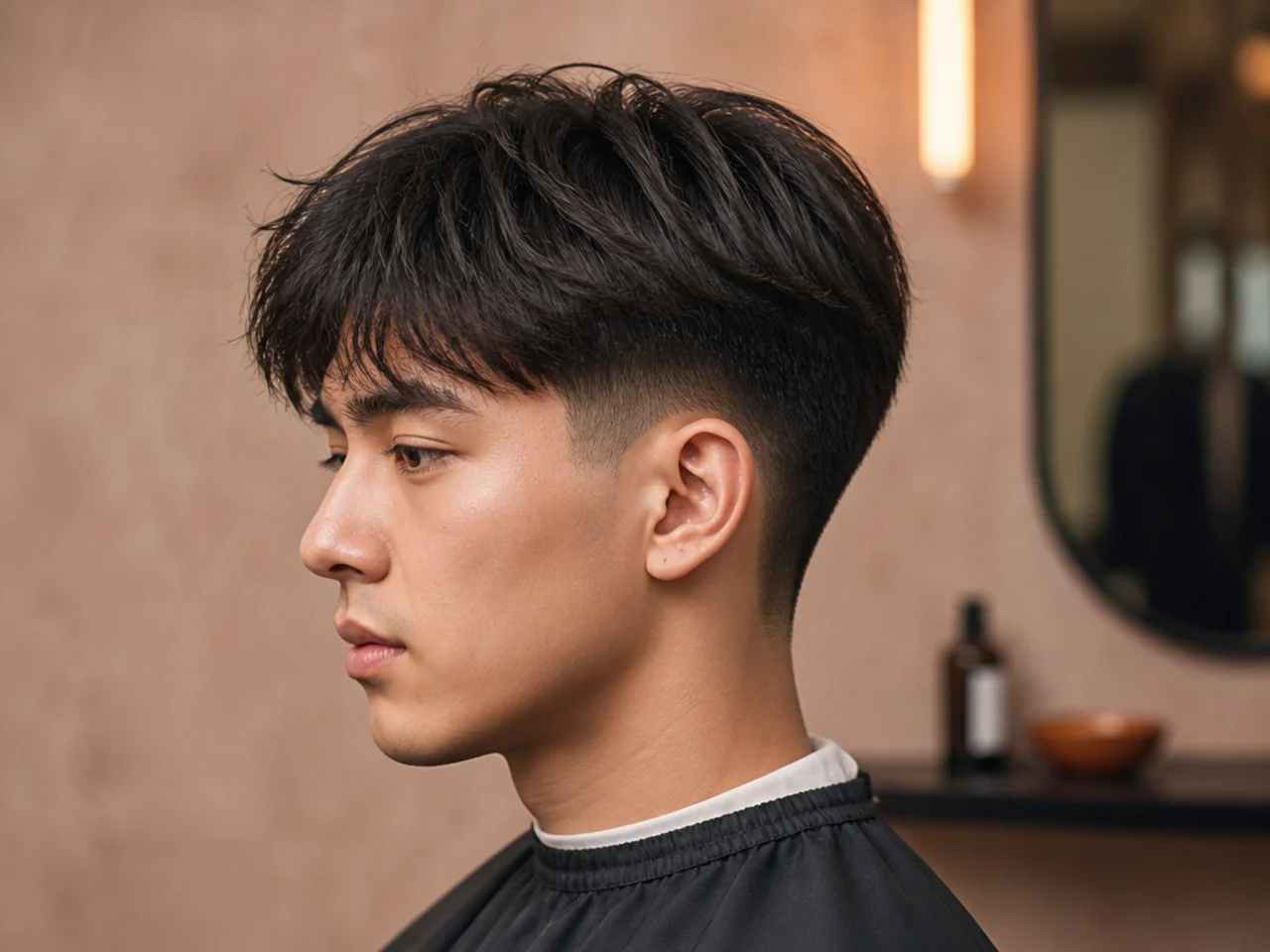
The two-block disconnects the longer top from the short faded sides — a modern Korean and East Asian barbershop favorite. The low fade taper below softens the disconnect so it doesn't read aggressive. Best on straight to lightly wavy hair with real density. Suits oval, square, and heart faces. Ask for: "low fade taper, 1 at the shortest, disconnected two-block, four inches on top." Matte clay through damp hair, blow-dry the top forward and to one side, finish with a light hairspray for hold.
16. Low Fade Taper with Buzz
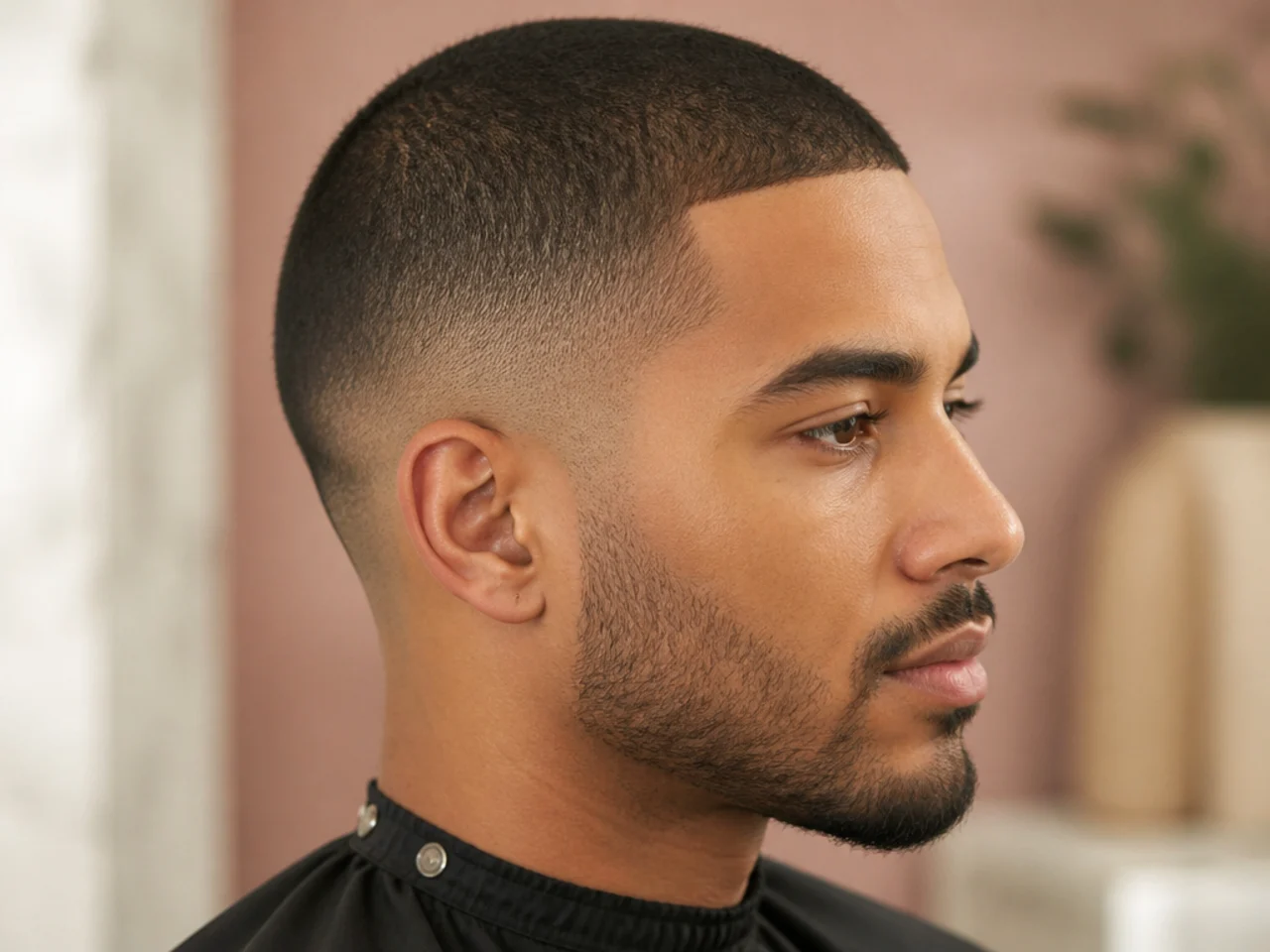
The lowest-effort cut on the list. Number 3 or 4 across the top, low fade taper on the sides dropping to a 0.5 at the ear. Suits every face shape but especially rewards square jaws. Any hair type, any density. Ask for: "low fade taper, 0.5 at the shortest, number 3 across the top, blended through the crown." Rinse in the shower and walk out. If your hair grows fast, book every two weeks; if not, three is fine. Full buzz cut options in the family guide.
17. Low Fade Taper with Faux Hawk
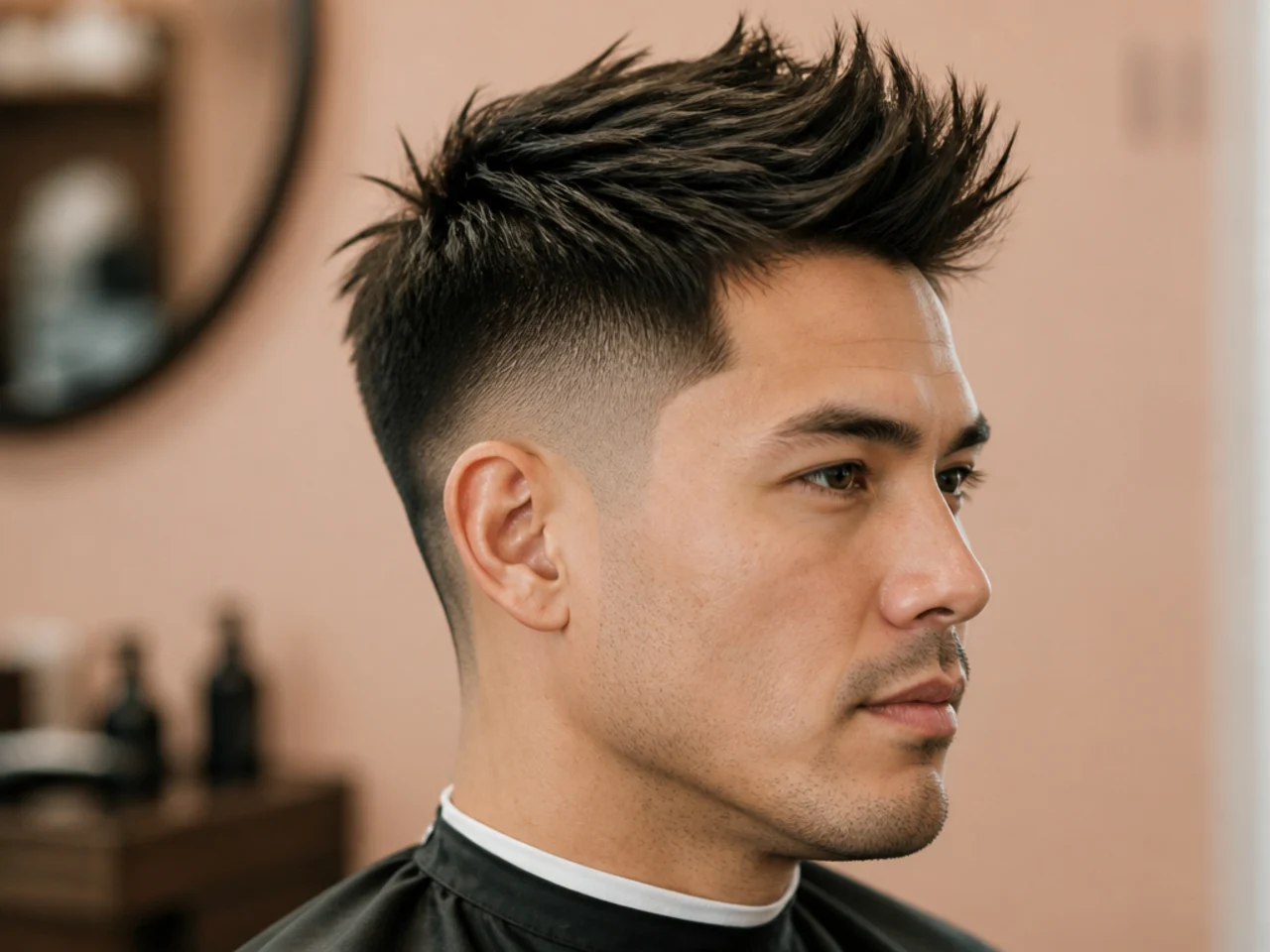
A central strip of length running crown to forehead, faded low on the sides so the hawk is styled rather than shaved. Bolder than a classic short top but still wearable at work. Best on straight to wavy hair with real density. Suits square, oval, and rectangular faces. Ask for: "low fade taper, 0.5 at the shortest, keep a three-inch strip down the center, style upward toward the front." Strong-hold clay, pull the strip up and slightly inward with your fingers, no comb.
18. Low Fade Taper with Wolf Cut
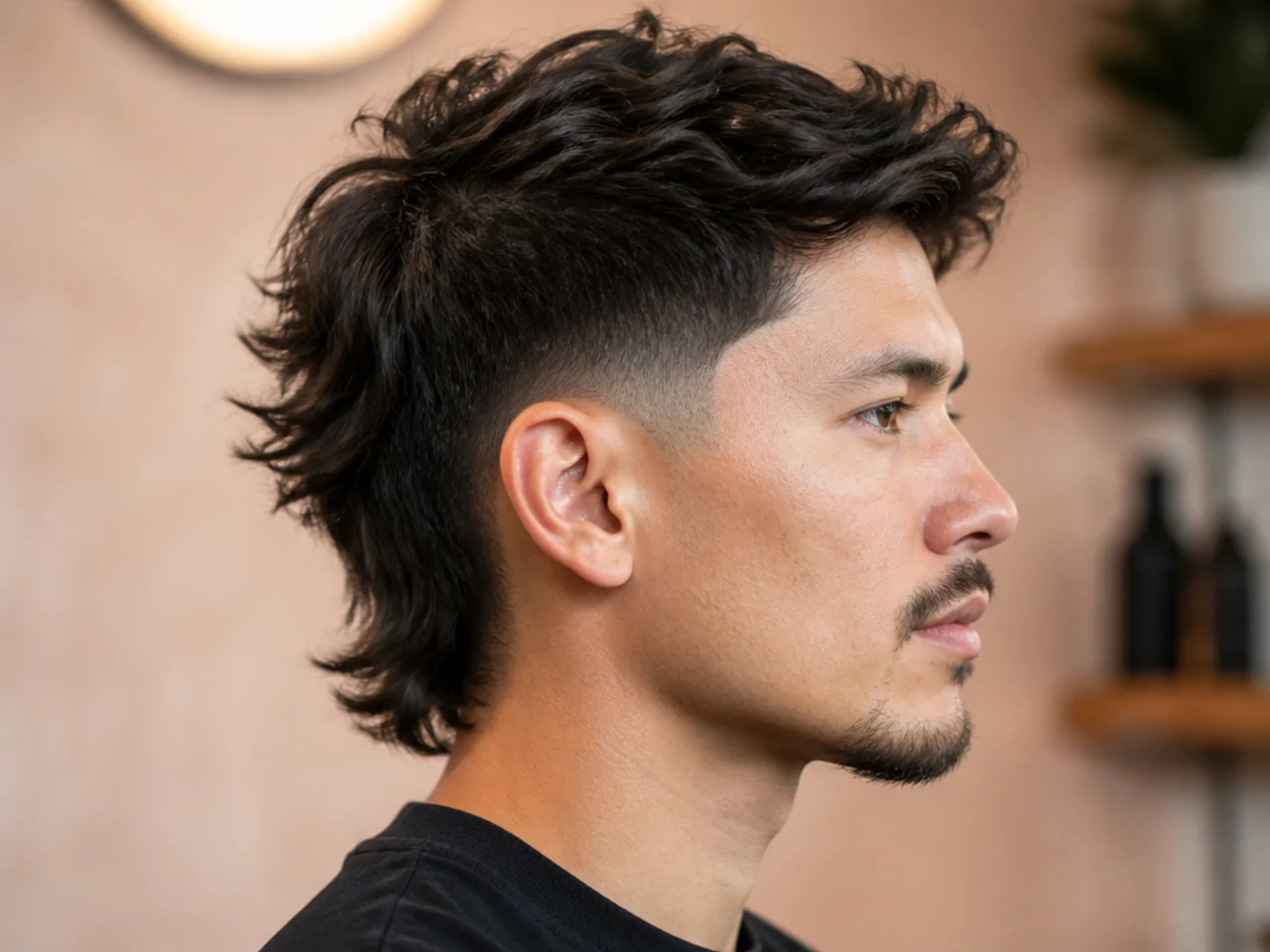
The wolf cut for men piles heavy shaggy layers on top with disconnected length through the back — a shaggier cousin of the mullet. The low fade taper keeps the sides intentional so the wolf reads styled, not overgrown. Best on wavy hair with medium to thick density. Suits oval and long faces. Ask for: "low fade taper, 1 at the shortest, keep four to five inches on top with heavy layers, disconnect through the back." Sea salt spray on damp hair, rough-dry with your fingers, break up the layers with a matte paste.
19. Low Fade Taper with Brush Up
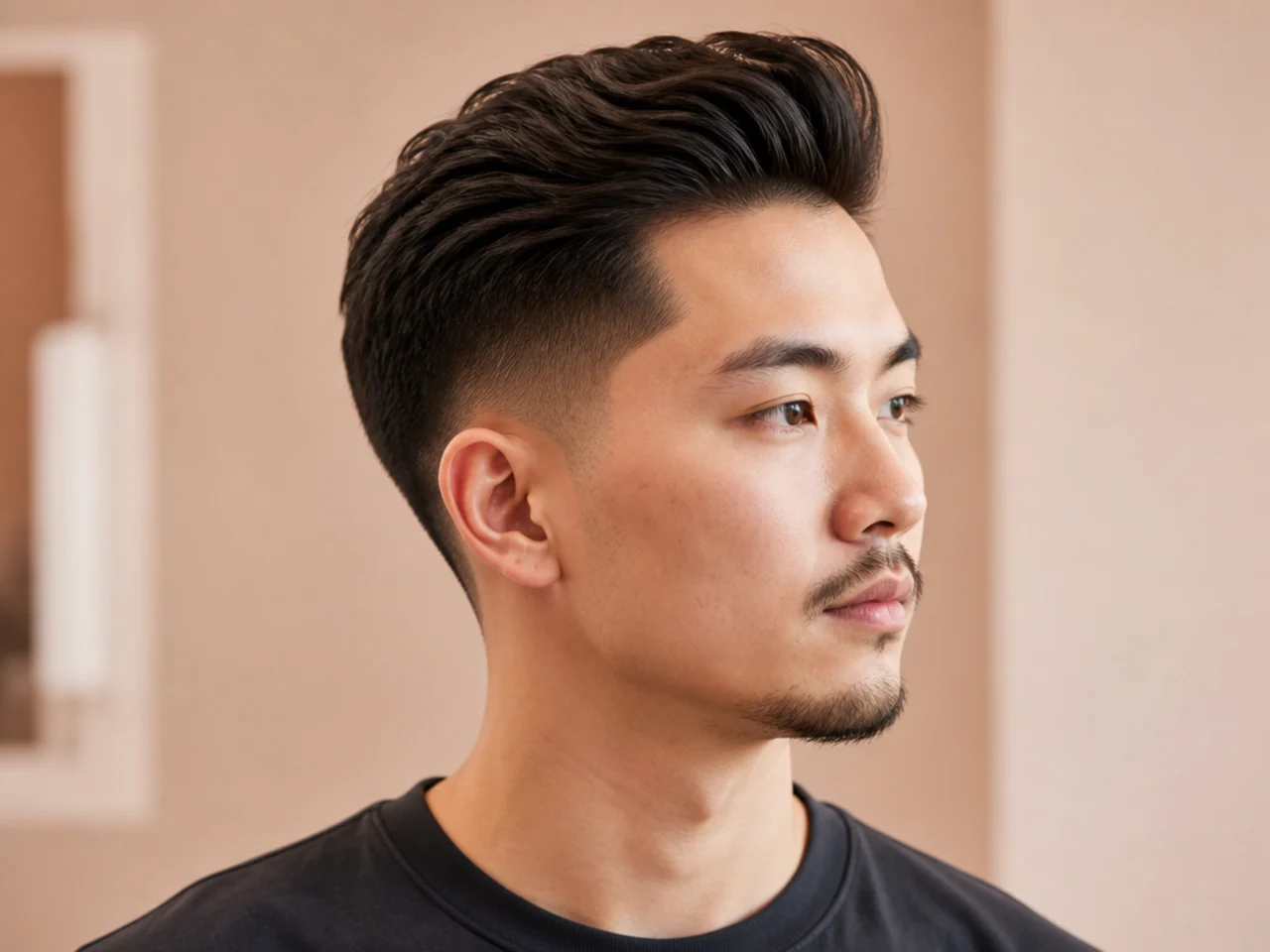
A brush-up runs three inches of length upward from the fringe in one soft sweep. The low fade taper gives it a modern edge without the harsh line of a full undercut. Suits square and heart-shaped faces best, and thick straight or wavy hair holds the upward volume without collapsing. Ask for: "low fade taper, 1 at the shortest, three inches on top, soft blend, brushed-up finish." Blow-dry the top straight up with a round brush, then lock in with a fiber pomade or strong-hold clay.
20. Low Fade Taper with Pompadour
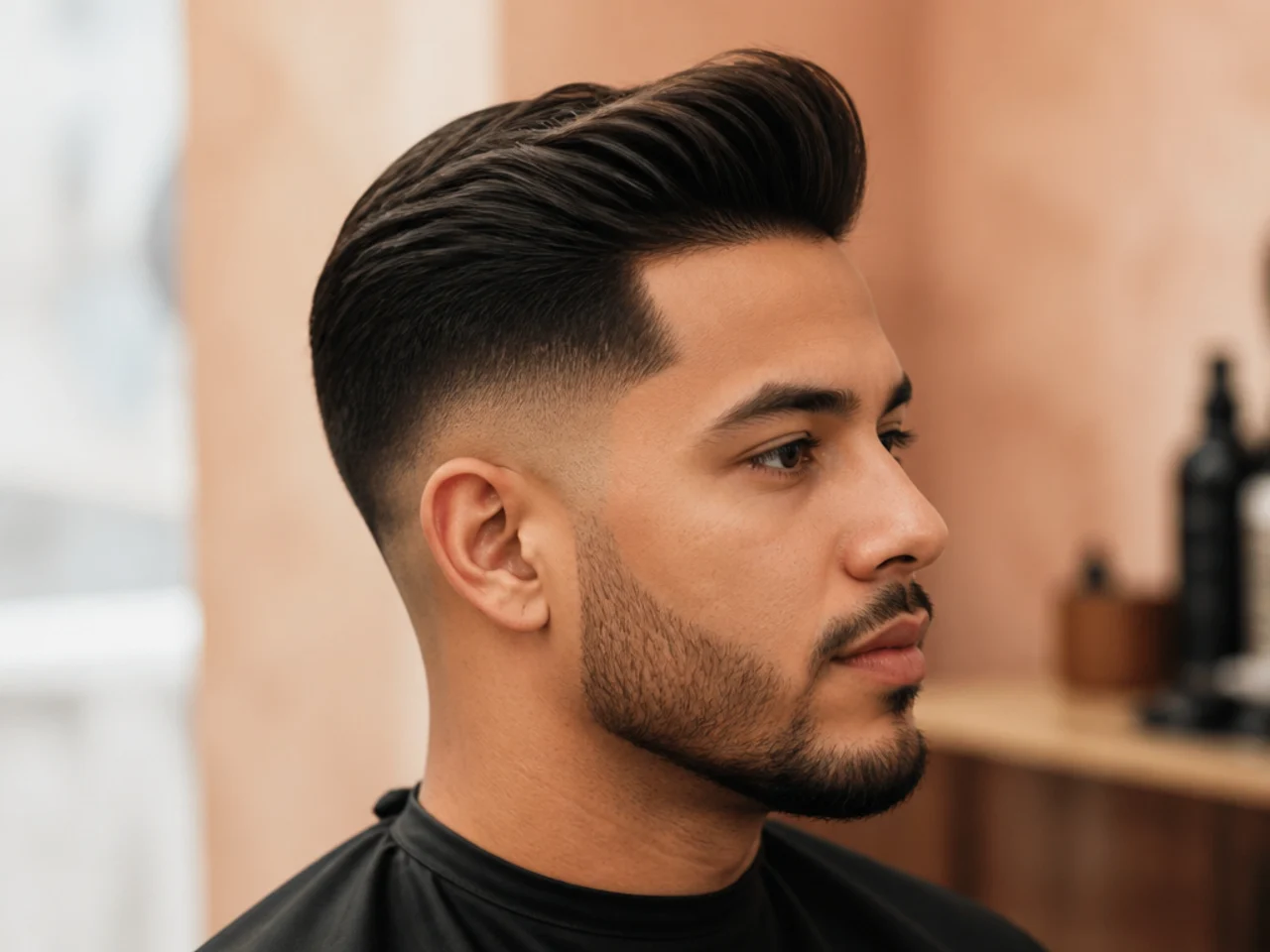
Height and volume at the front, brushed up and back. The low fade taper is the modern update — old-school pomps used harder fades or straight tapers, but the taper gives a softer, contemporary feel. Best for square and heart-shaped faces, and thick straight or wavy hair with the confidence to pull off obvious volume. Ask for: "low fade taper, 1 at the shortest, four to five inches on top with length concentrated at the front, pompadour styling." Blow-dry the front up and back with a round brush, work in a strong-hold pomade, then lock with a light hairspray.
21. Low Fade Taper with Blowout
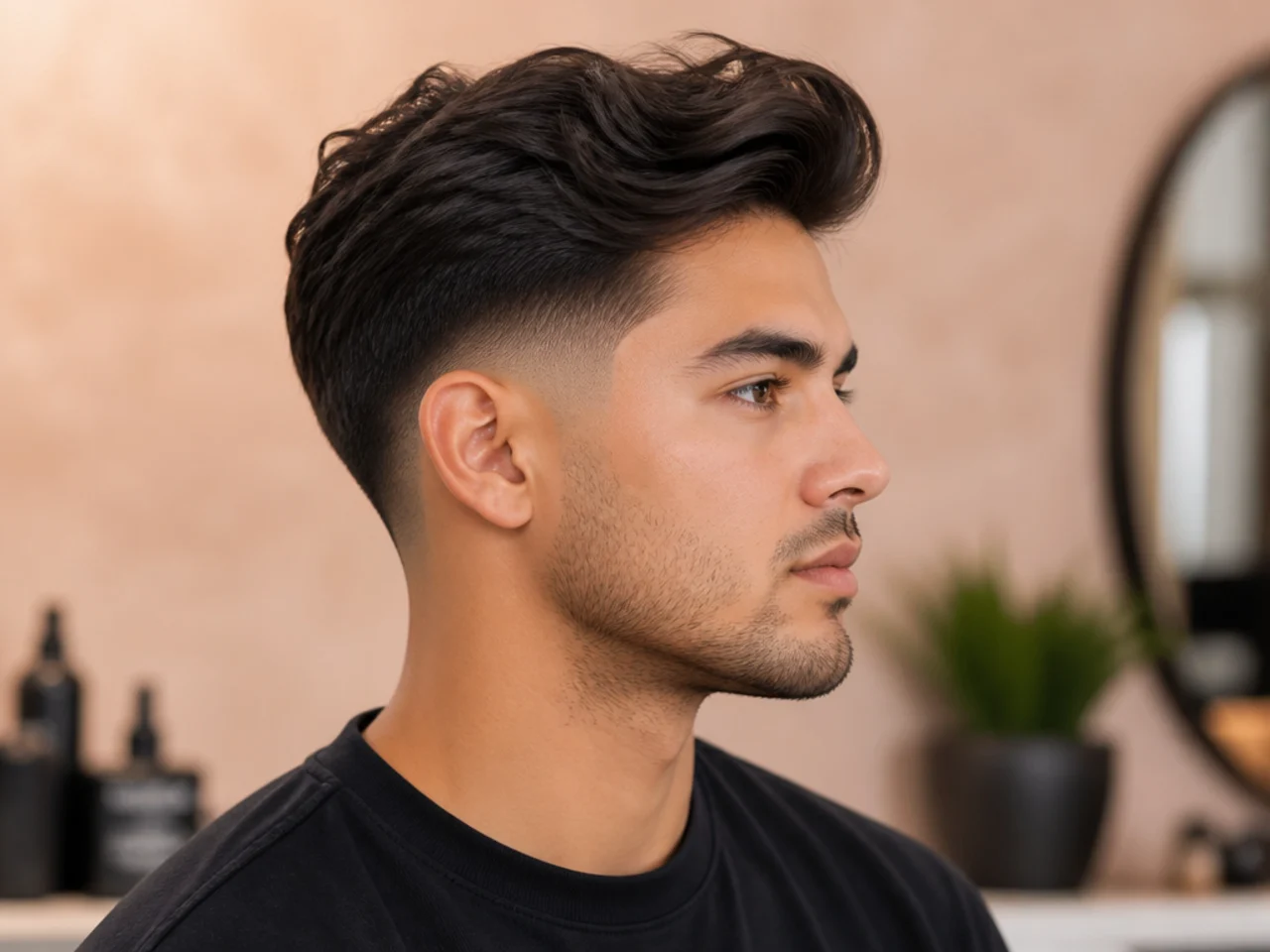
A blowout leaves three to four inches of curl or wave on top with all the volume blown outward and upward — big silhouette, tight faded sides. The low fade taper keeps the sides quiet so the blowout does the talking. Best on 2C waves through 3B curls. Suits oval, square, and heart faces. Ask for: "low fade taper, 0.5 at the shortest, keep three inches on top, cut for a blowout with the length concentrated on top." Curl cream on soaking-wet hair, blow-dry upward with a diffuser or round brush, then pick out the top for volume.
22. Low Fade Taper with 360 Waves
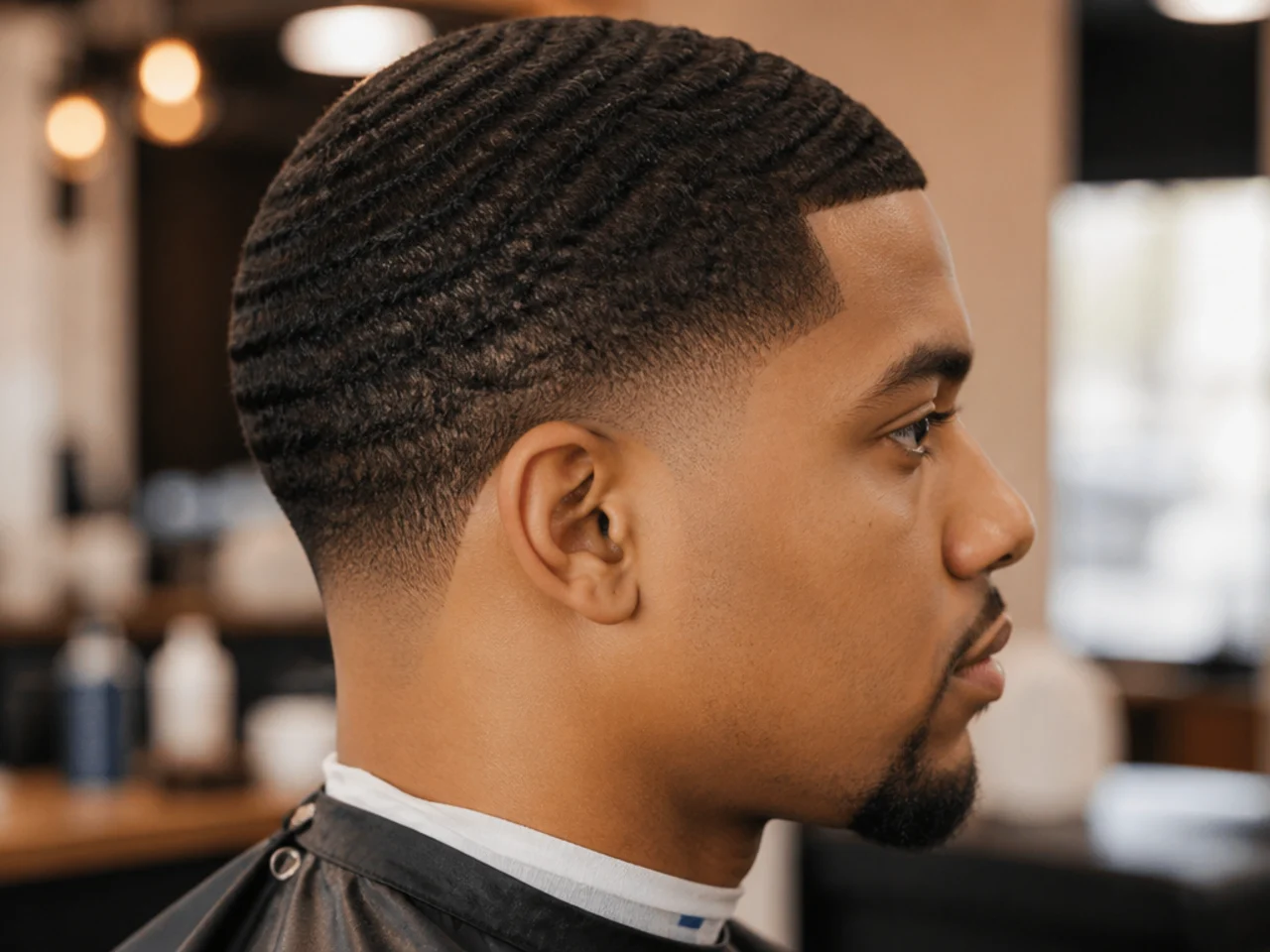
Short coarse hair (about a half inch) brushed into a 360 wave pattern, low fade taper dropping the sides so the pattern reads sharp. Best on coarse Black hair with wave potential in the 3C to 4A range. Every face shape works. Ask for: "low fade taper, 1 at the shortest, 1 guard across the top, brush-train the wave pattern, sharp line-up." Durag every night, wave pomade after every brush session, and brush 100 strokes in the wave direction daily for the first month.
23. Low Fade Taper with Long Top
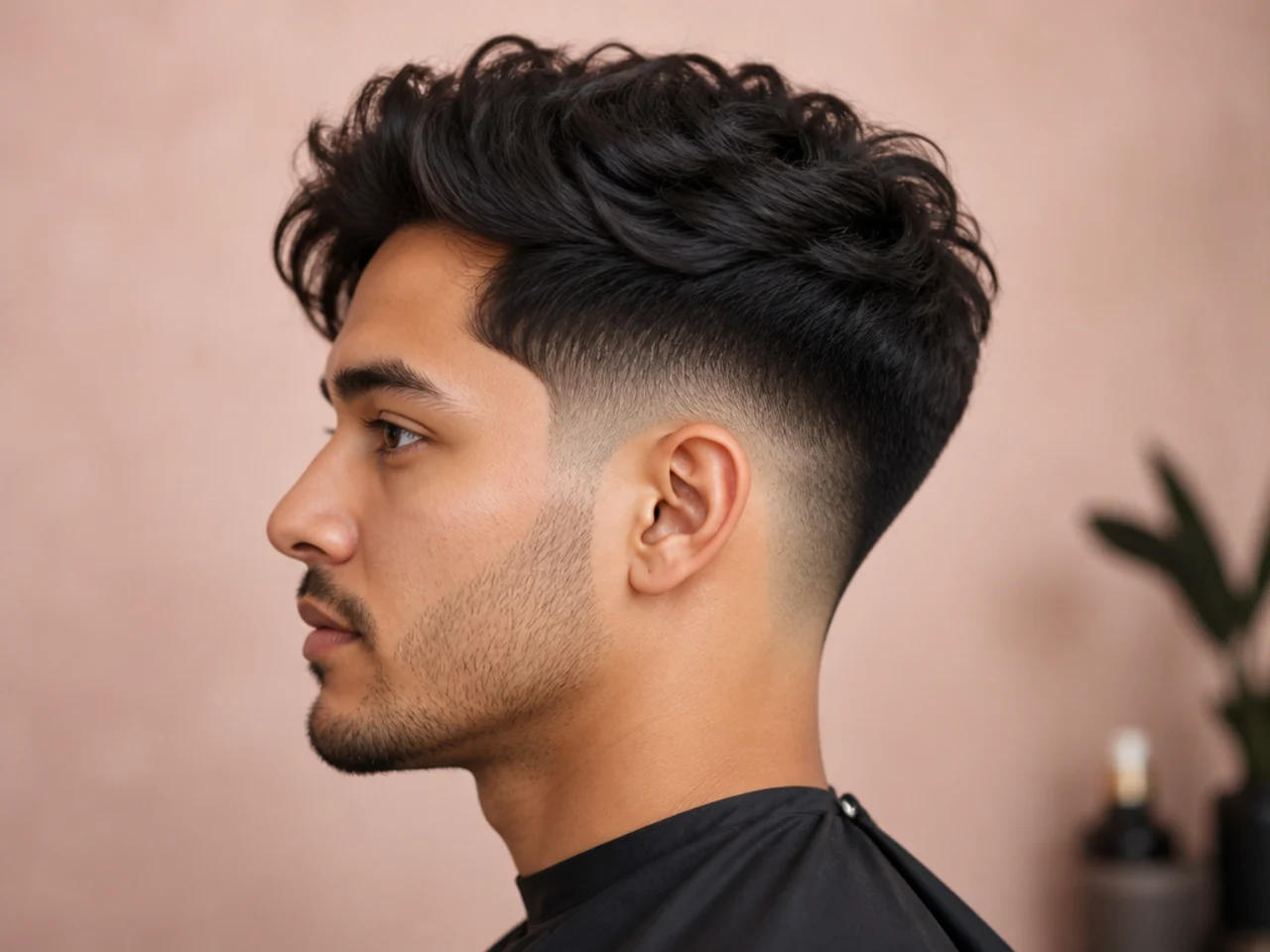
Five to six inches on top with a low fade taper below — the most flexible cut on this list. Wear it slicked back for a meeting, tousled for a date, brushed forward on a lazy Sunday. Best on thick straight or wavy hair. Suits oval and square faces; very long faces should keep the top under four inches. Ask for: "low fade taper, 1 at the shortest, five inches on top, feathered blend at the transition." Blow-dry with your fingers for volume, finish with a light cream for separation. The goal is movement, not helmet.
24. Low Fade Taper with Design
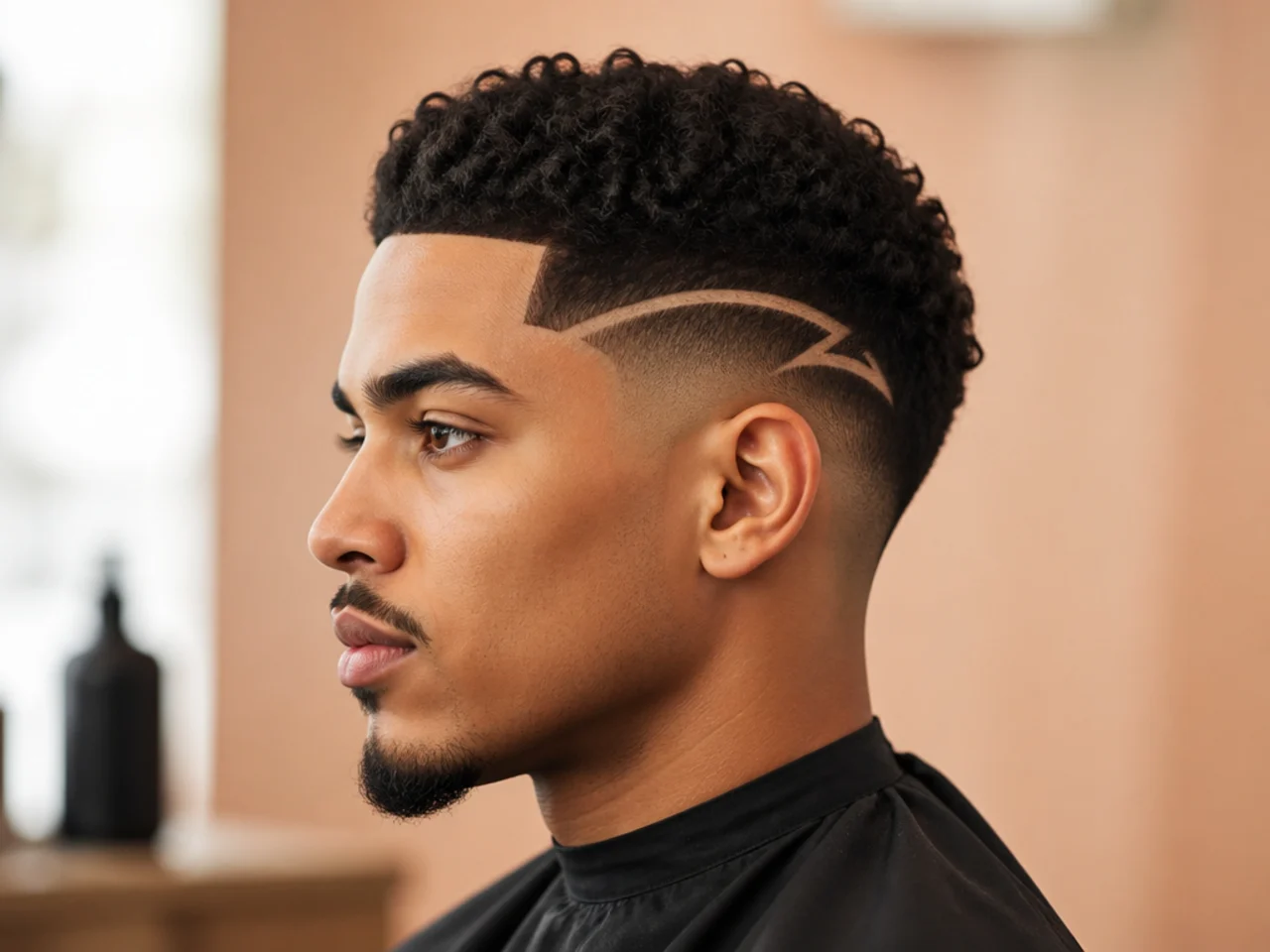
The customization layer. A single razor line, a geometric shape, or a full pattern etched into the shortest part of the taper. The low fade taper is the ideal canvas because the sides are short but not skin-shaved, so the design has depth. Best in creative fields and social settings; skip in strict corporate offices. Ask for: "low fade taper, 0.5 at the shortest, one hard line through the temple [or bring a photo]." Rebook every 10 to 12 days — designs blur faster than the fade itself. Similar detail work anchors the low drop fade haircut family too.
25. Low Fade Taper with Beard
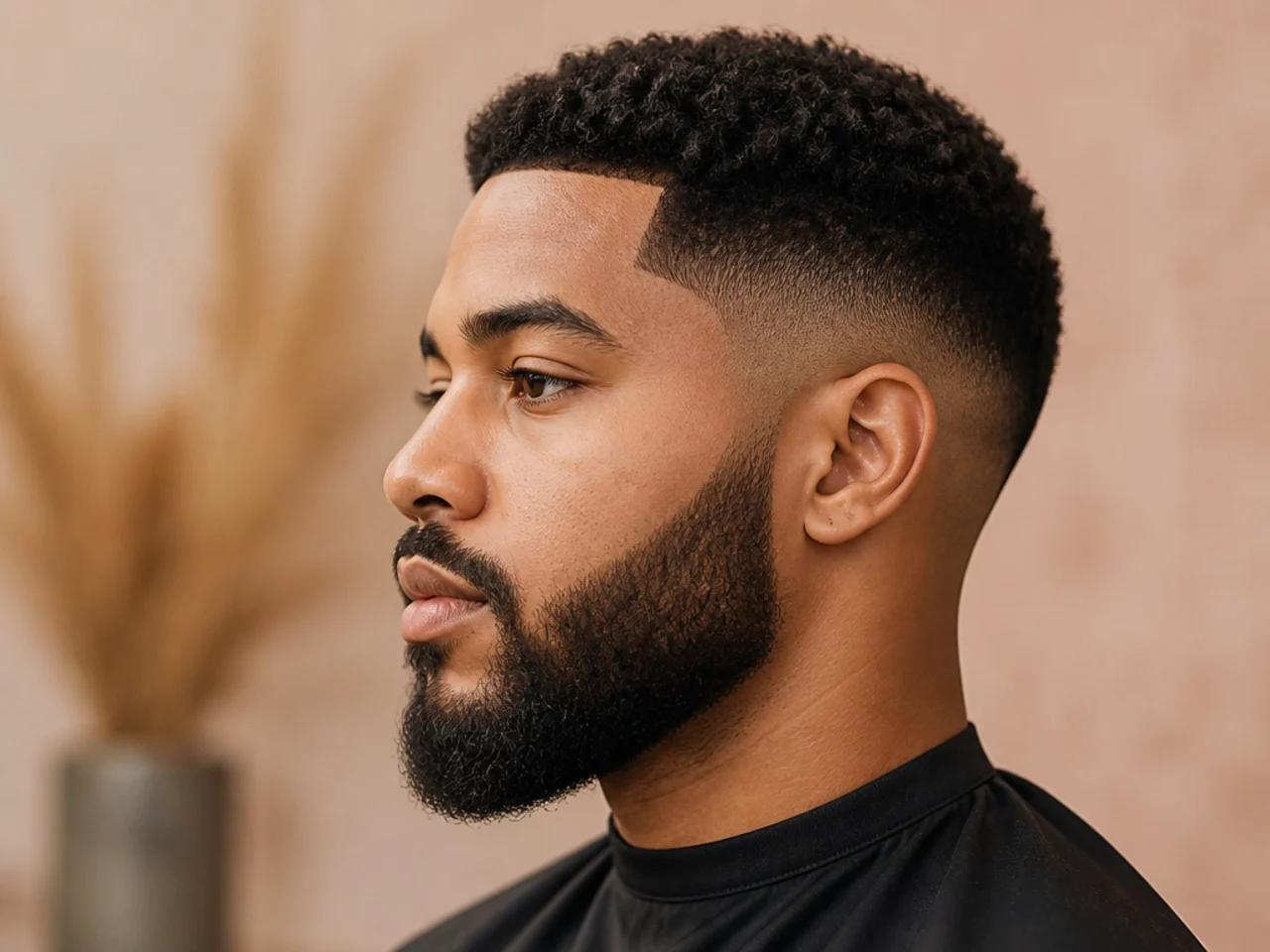
The trick with a beard is connecting the taper to the beard so they read as one intentional shape, not two haircuts. A razor finish through the sideburn is the pro move — smooth transition from taper to beard. Best for square, oval, and heart-shaped faces, and any hair type. Ask for: "low fade taper, 1 at the shortest, sideburn razor-blended into the beard, beard trimmed to my jaw at a 3 guard." Beard oil daily, actual beard shampoo (not body wash), and get the fade and beard shaped together every two weeks.
How to Ask Your Barber for a Low Fade Taper
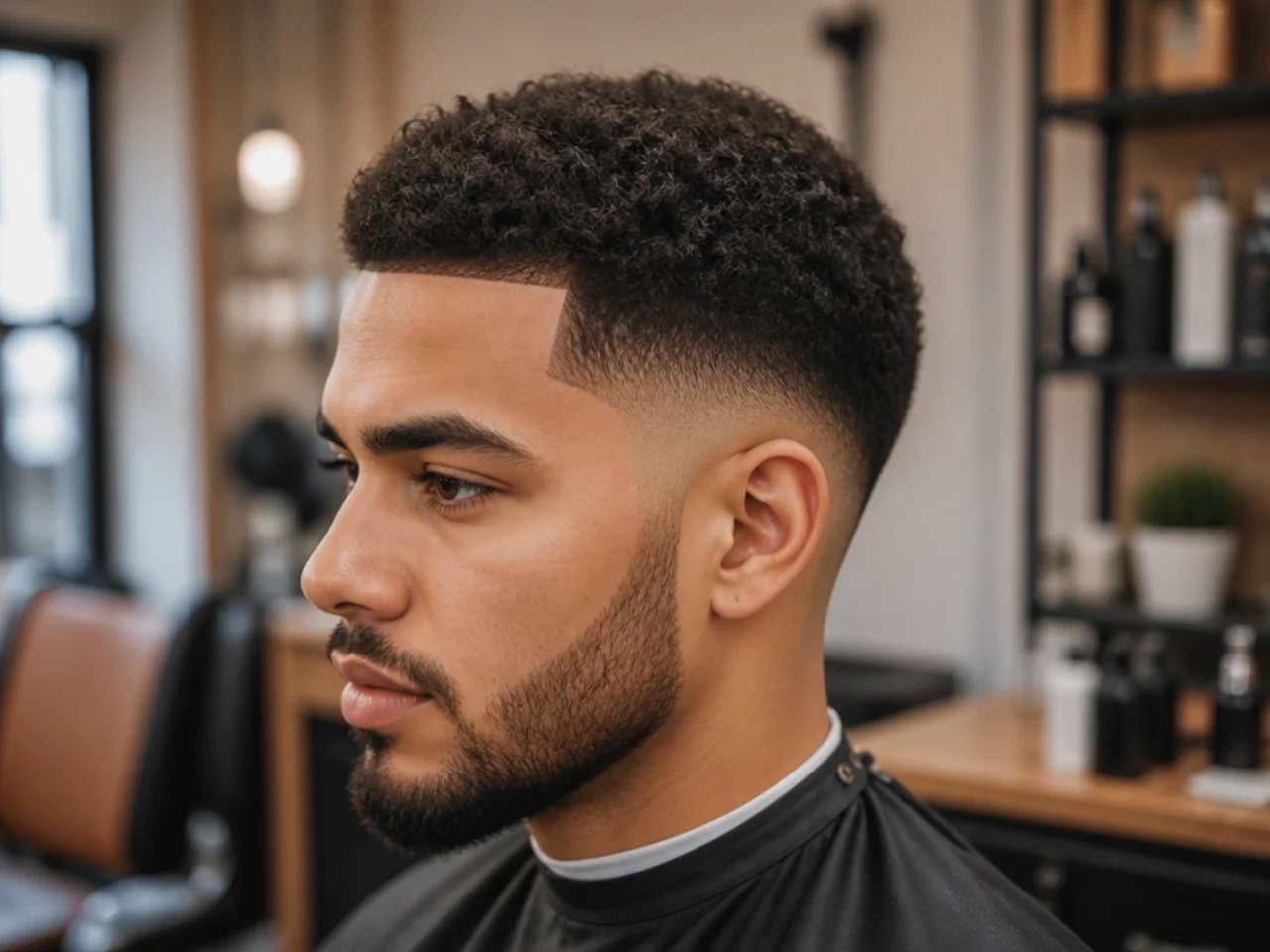
Seven things your barber needs to know. Cover these and you leave with the cut you asked for.
- Bring a reference photo. One image from the front and one from the side. Pick a photo where the hair type matches yours — a low fade taper on 3C curls reads nothing like a low fade taper on straight fine hair.
- Say the phrase in full. "Low fade taper" or "low taper fade" — either works. Do not just say "low fade" or "taper," because those are different cuts.
- Give the guard number at the shortest point. 0.5 for sharper, 1 for softer. Below 0.5 starts to look like a full fade rather than a taper.
- State the top length in inches. "Two inches" is clearer than "medium." If you use centimeters, say so up front.
- Talk about the blend. "Soft blend at the transition" prevents visible clipper lines and keeps the taper reading as one gradient rather than three stripes.
- Describe the finish. Matte and textured, or sleek and shiny. Your styling routine at home should match this call.
- Book the next appointment before you leave. Fades look sharpest for two weeks — good barbers book out fast, so lock the next visit in on the way out.
Styling and Maintenance for a Low Fade Taper
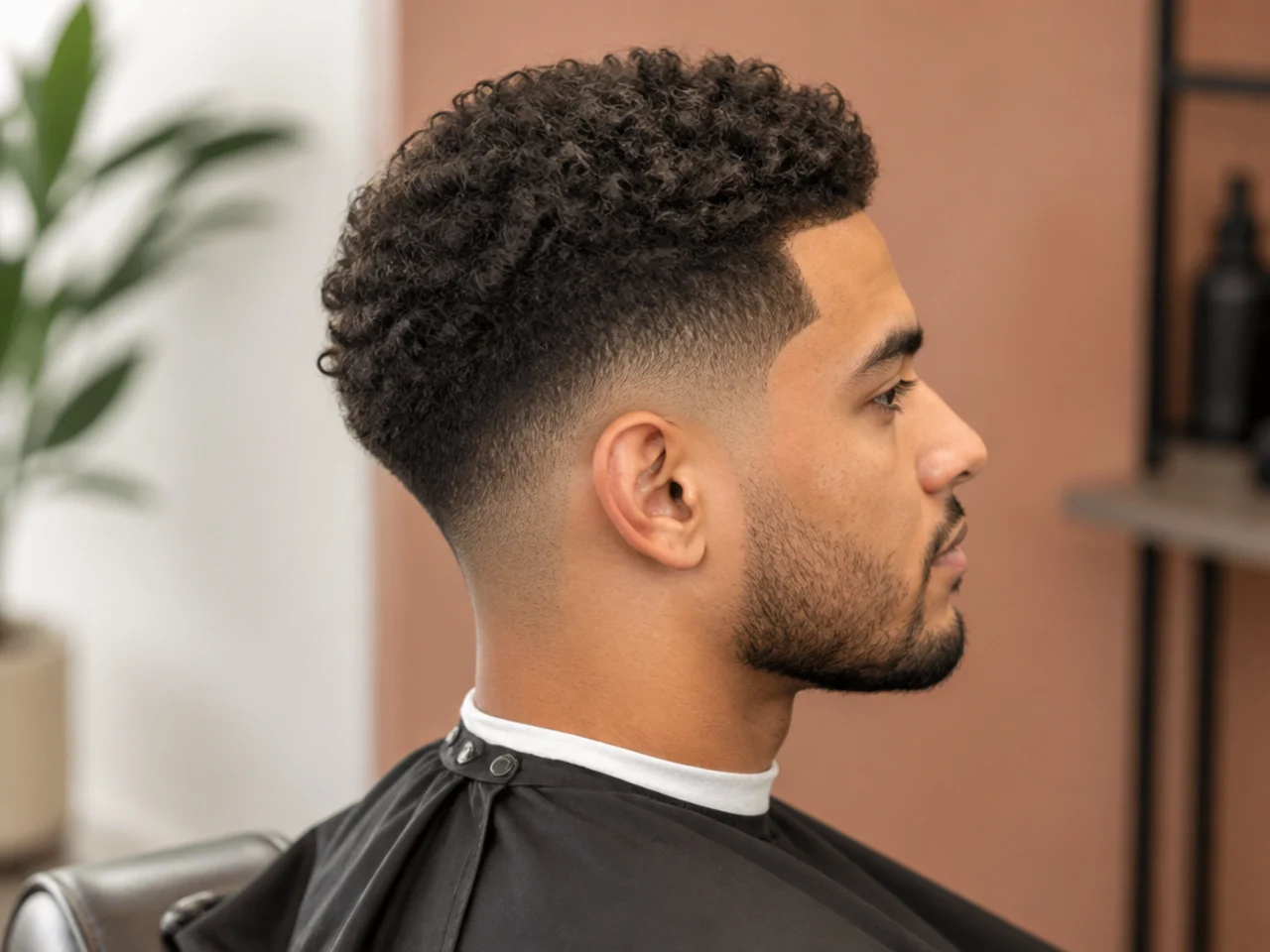
A low fade taper looks its sharpest for two weeks, then starts to soften at the transition line. Booking every three to four weeks keeps the shape fresh. Between visits, one right product beats three mediocre ones.
Match the product to the top style:
- Matte clay — textured crops, edgars, brush-ups. Grips without shine.
- Fiber paste — quiffs, faux hawks, blowouts. Holds structure with a hint of separation.
- Water-based pomade — comb-overs, side parts, slick backs. Reworkable through the day, easy to rinse.
- Sea salt spray — waves, curtain fringes, tousled tops. Adds grip and volume before your finisher.
- Curl cream — curly fringes, blowouts, afros. Defines without crunching.
- Beard oil — any beard-blend variation. One drop after a shower, combed downward.
- Wave pomade — 360 wave tops. Non-negotiable if you're brushing daily.
If you can only own one product, make it a medium-hold matte clay — it covers 80% of the cuts here. For volume-forward looks like the blowout or pompadour, add a texture powder at the roots for lift.
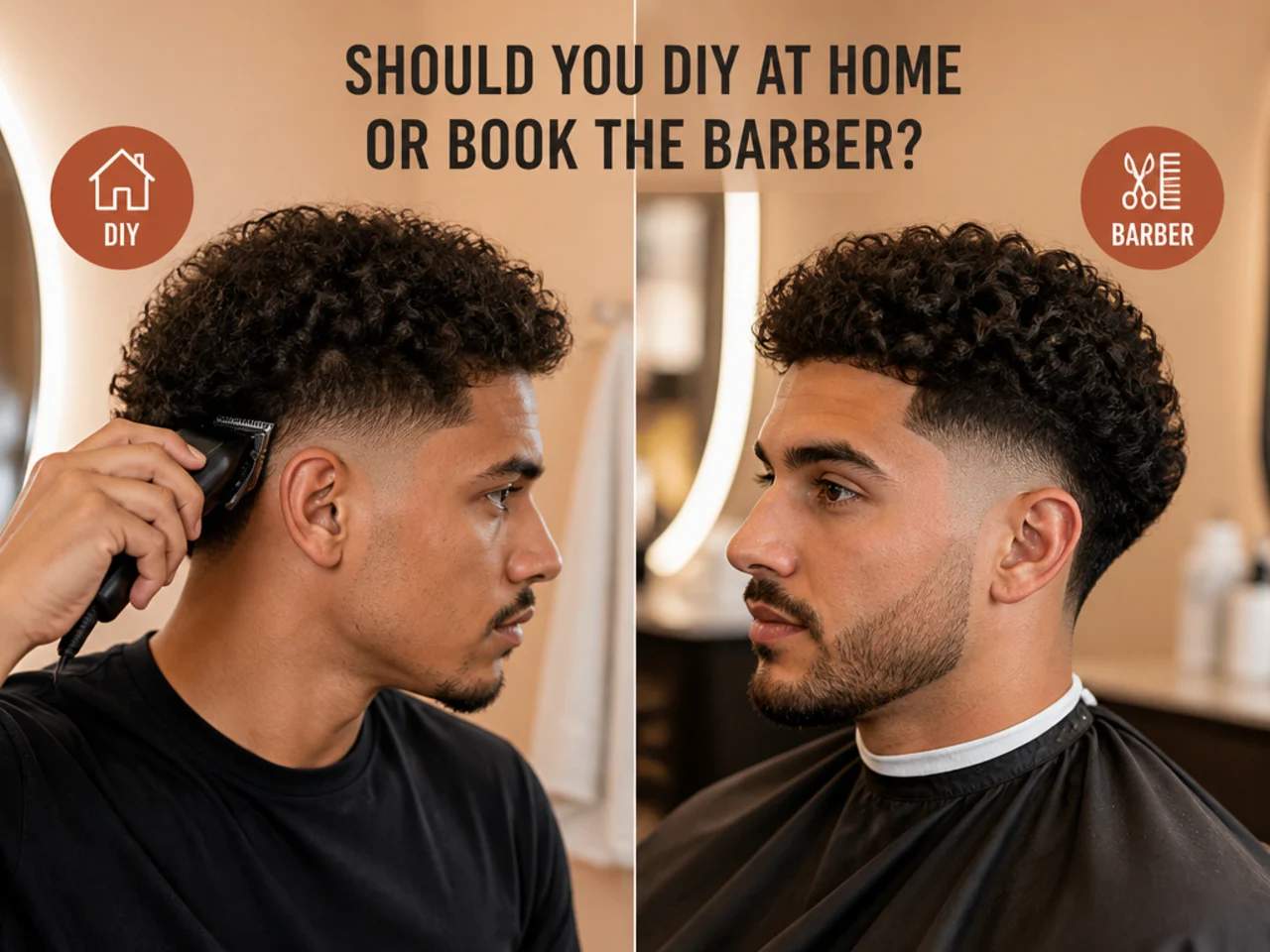
Wash two or three times a week, not daily. Daily washing strips the oils that give hair body. Condition every wash. Sleep on satin if you're curly or waved — cotton pillowcases flatten the pattern overnight. Between visits, a beard trimmer can clean up the neckline and around the ears to buy an extra week of sharpness. Do not attempt the full taper at home — blending clipper guards is one of the hardest skills in barbering, and a home attempt almost always leaves a hard line your barber has to cut around next visit.
If your low fade taper drops all the way to a 0.5, rinse the faded panels in the shower and pat dry with a clean towel every day. Thirty seconds. That single habit prevents the ingrown hairs and razor bumps that make a fresh taper itchy by day four.
FAQ
Is a low fade taper the same as a low taper fade?
Yes — barbers use both phrases for the same haircut. The blend starts just above the ear and ends at a short guard rather than skin. Say either version at the chair and you'll get the same cut.
Which top style pairs best with a low fade taper?
Almost any top pairs cleanly. The most-requested combinations in 2026 are the textured crop, the fringe, the comma cut, the Korean two-block, and the classic short side part. Choose the top based on your face shape and how much time you'll actually spend styling.
How often should I re-cut a low fade taper?
Every three to four weeks for a soft taper, every two for a low fade taper that runs to a 0.5 or bare skin. The transition line blurs first — usually by day fourteen — so book the next appointment before you leave the chair.
Is a low fade taper professional enough for a corporate office?
Yes — it's the most work-appropriate fade you can ask for. The blend sits low and stops short of bare skin, so nothing about the cut looks aggressive in a headshot or across a boardroom table. Pair it with a short top like the Ivy League or a classic comb over and you'll pass any dress code.
Can I get a low fade taper on curly or coily hair?
Yes. Curly and coily hair wear the low fade taper better than most textures because the clean perimeter defines the natural pattern on top. Ask your barber for scissor work on the top so the curl pattern is preserved rather than thinned out. For more length ideas, see the sibling roundup on the low burst fade, which offers a curved alternative for curls.
What length should I leave on top with a low fade taper?
Two inches for a classic short top, three to four for a comma or Korean cut, five plus for a wolf cut or long comb-over. Bring a photo and match the length to your face shape — round faces want vertical lift, long faces want restraint, oval faces get to try almost anything.