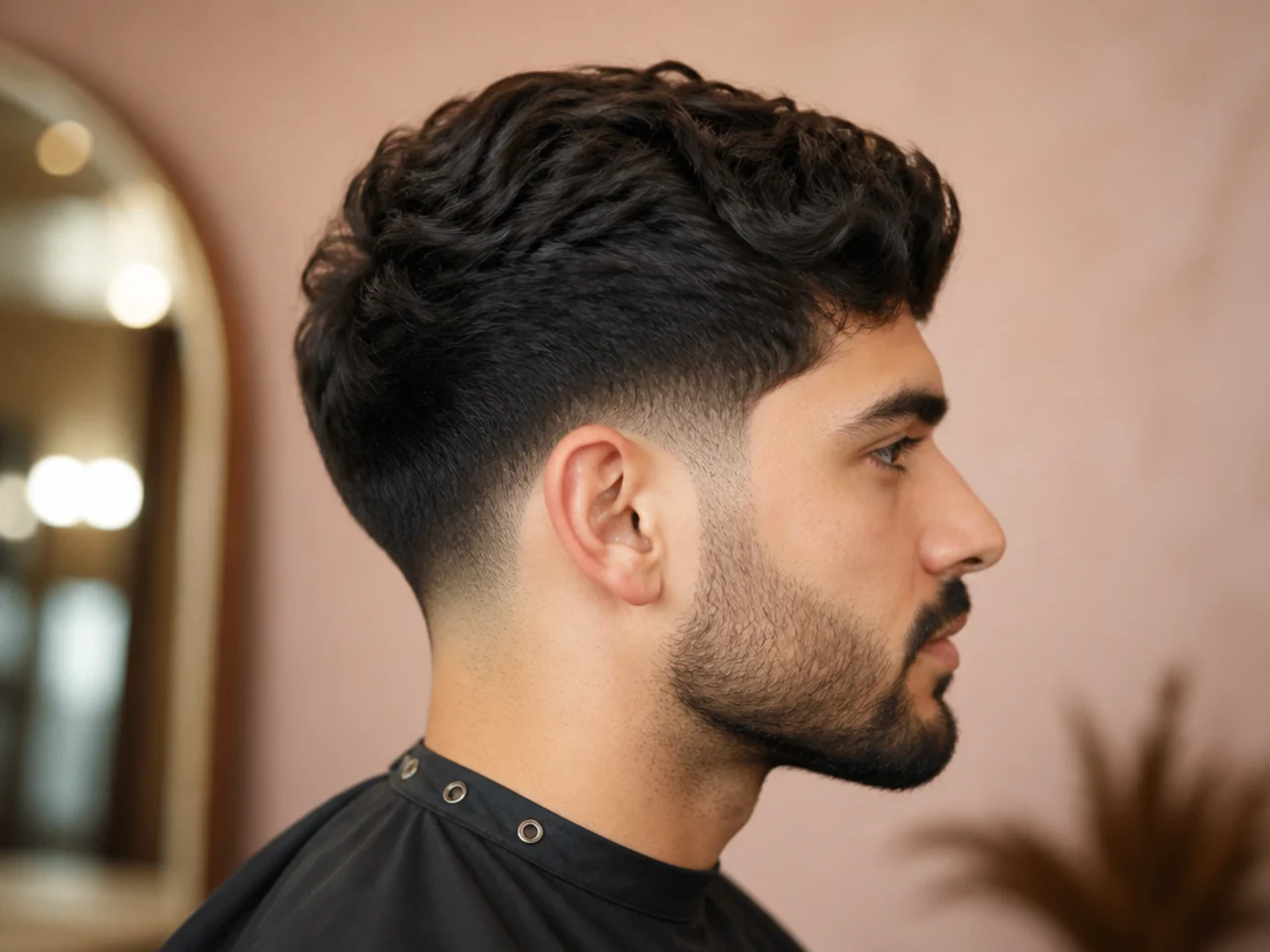
20 Low Drop Fade Haircuts Worth Trying
The low drop fade curves behind the ear for a rounder profile than a plain low fade. Here are 20 variations, who each one suits, and how to ask for them.
In this article · 26
- What Is a Low Drop Fade?
- How to Choose Your Low Drop Fade
- 20 Low Drop Fade Variations Worth Trying
- 1. Classic Low Drop Fade
- 2. Low Drop Skin Fade
- 3. Low Drop Fade with a Textured Crop
- 4. Low Drop Fade with a Middle Part
- 5. Low Drop Fade with a Comb Over
- 6. Low Drop Fade for Curly Hair
- 7. Low Drop Fade with a Textured Fringe
- 8. Low Drop Fade with a Slick Back
- 9. Low Drop Fade with a Pompadour Front
- 10. Low Drop Fade with a Quiff
- 11. Low Drop Fade with a Hard Part
- 12. Low Drop Fade with a Modern Mullet
- 13. Low Drop Fade with an Edgar Fringe
- 14. Low Drop Fade with a Two-Block Top
- 15. Low Drop Fade for Coily Hair
- 16. Low Drop Fade with 360 Waves
- 17. Low Drop Fade for Asian Straight Hair
- 18. Low Drop Fade with a Beard Blend
- 19. Low Drop Fade with a Braided Top
- 20. Low Drop Fade with a Deep Drop
- How to Ask Your Barber for a Low Drop Fade
- Styling and Maintenance for a Low Drop Fade
- FAQ
The low drop fade is a low fade with a curve. The blend starts just above your ear, then arcs down and around behind it instead of running straight across — so your profile reads round instead of blocky. This guide covers the twenty low drop fade haircuts men are asking for in 2026, with photos, face-shape and hair-type notes, and the exact language to hand your barber so you walk out with the shape you had in mind.
What Is a Low Drop Fade?
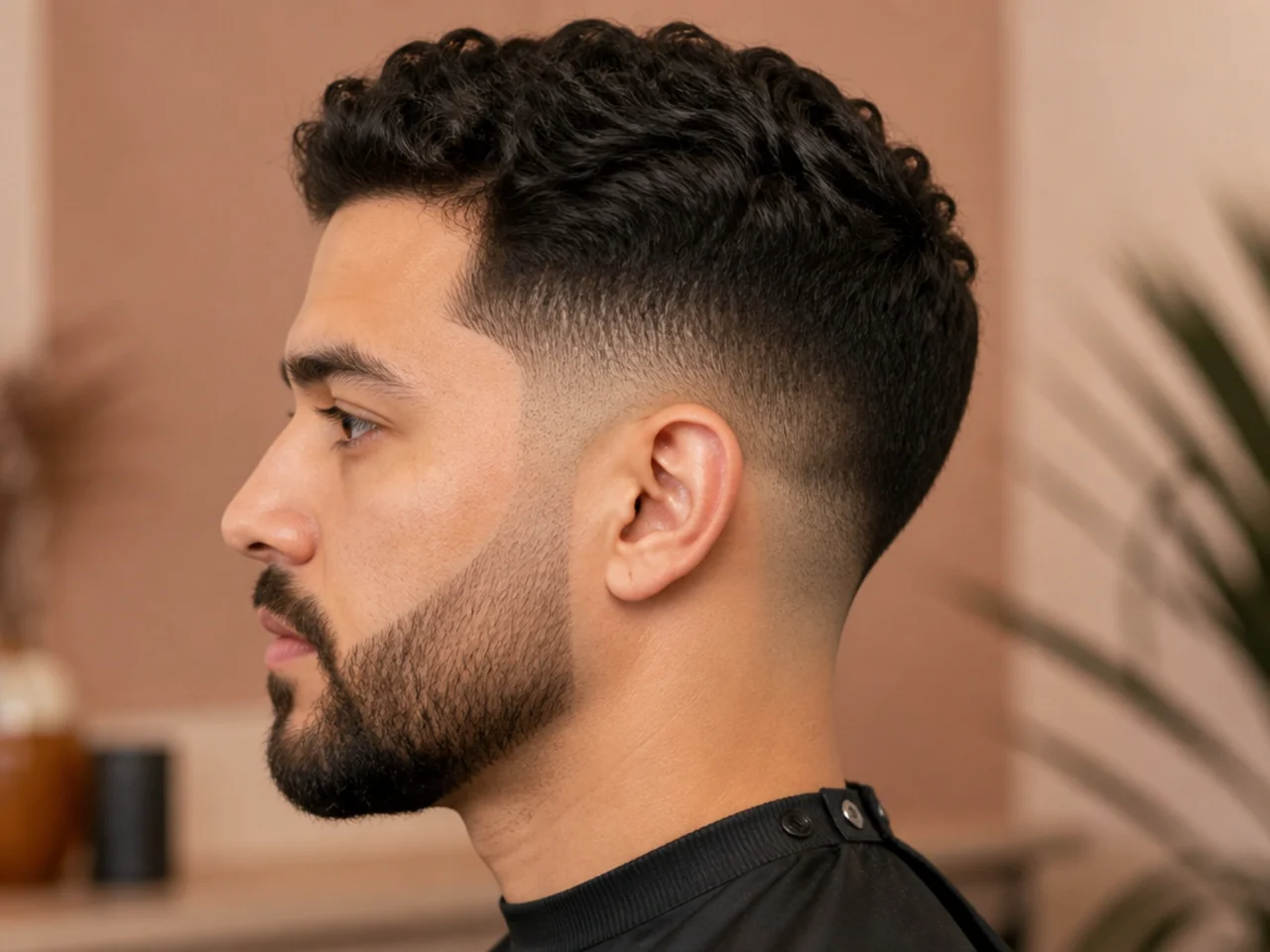
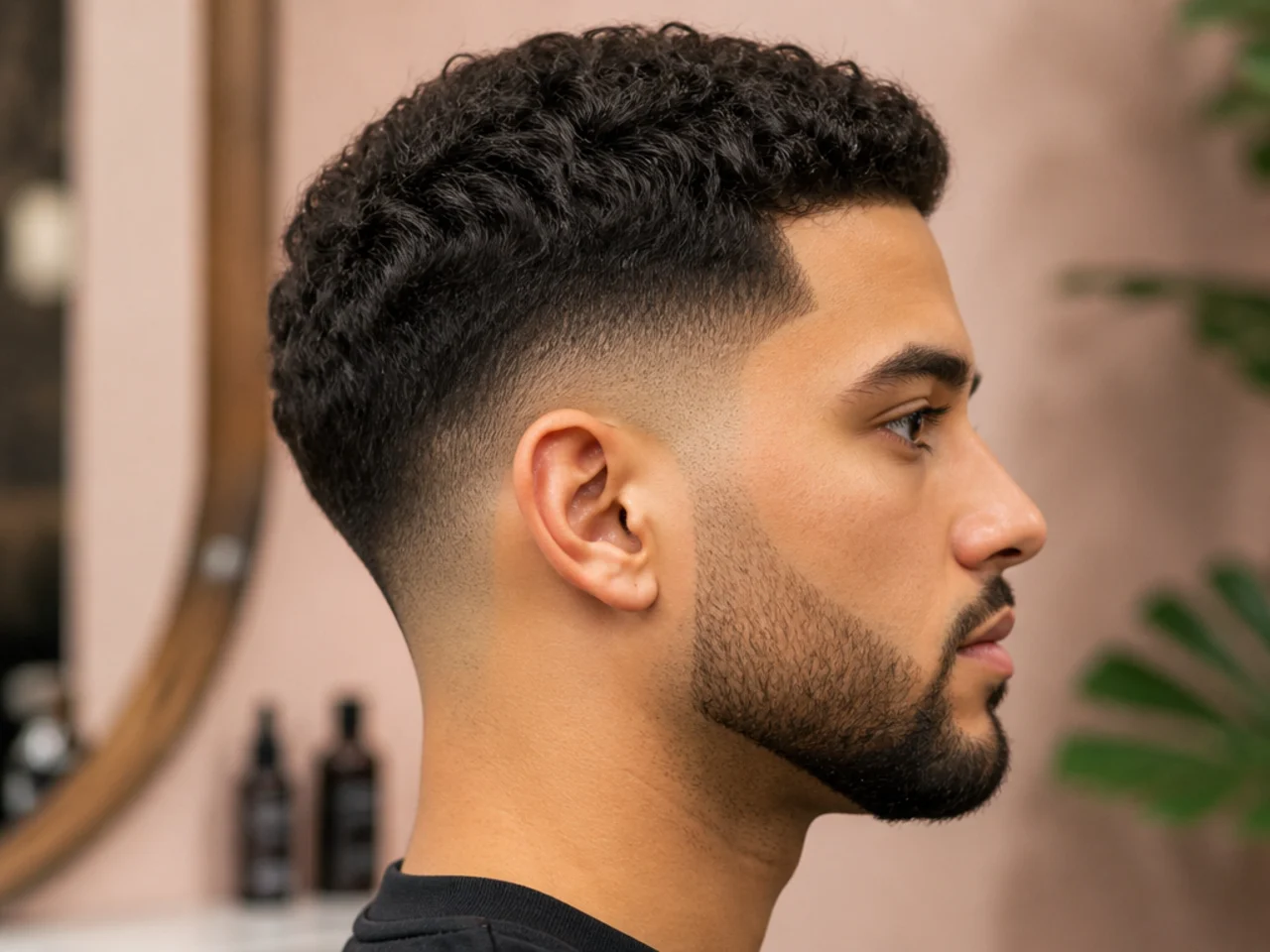
A low drop fade is two things at once. First, it's a low fade — the blend starts just above your ear and shrinks down to a #0.5 or skin at the shortest point. Second, it's a drop — the fade line doesn't run level across your head. It arcs down behind the ear, following the curve of your skull, and lands roughly a fingernail lower than where it started.
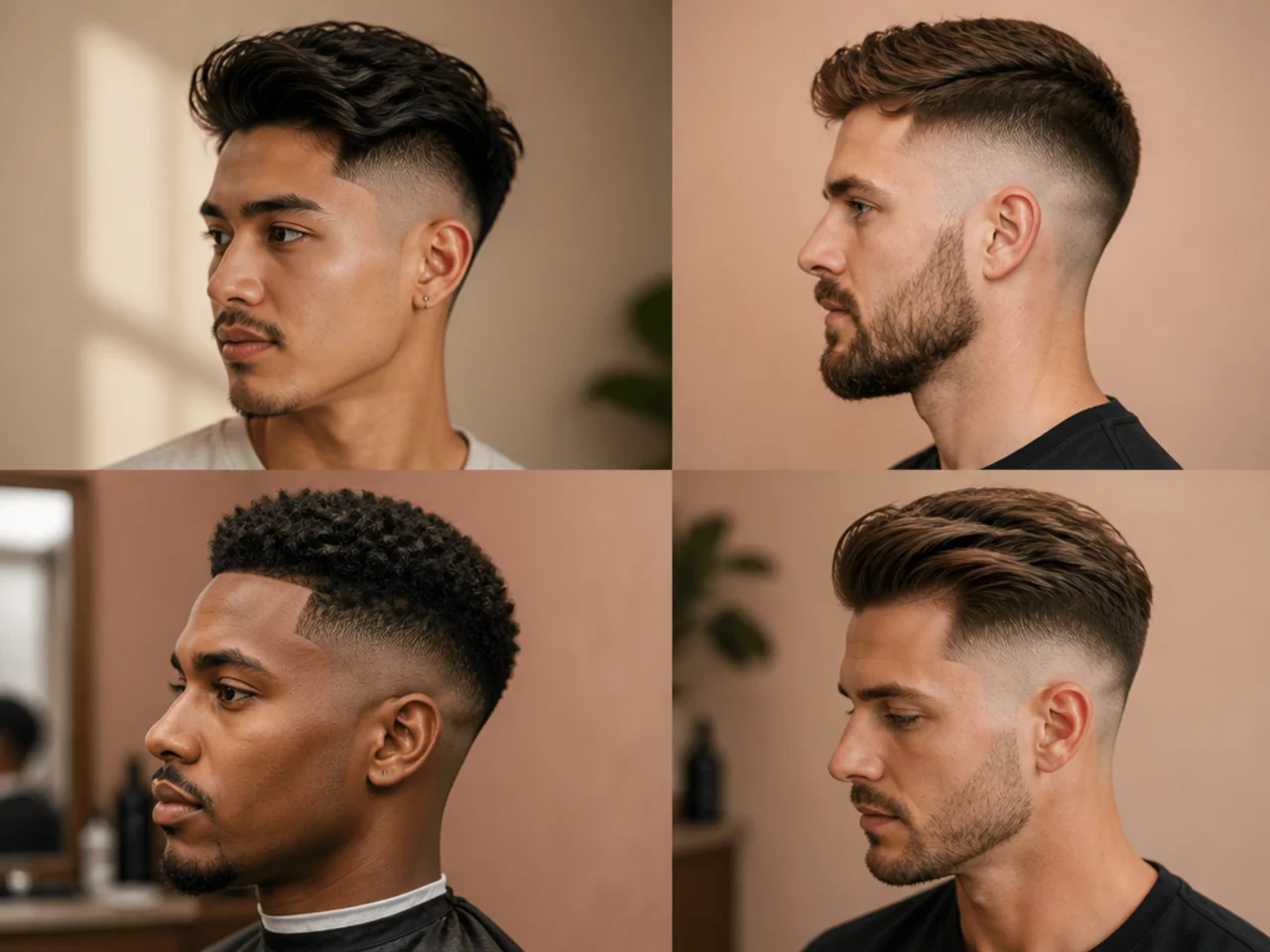
The drop is what separates it from a plain low fade haircut. A regular low fade holds a horizontal line — clean, geometric, sits flat against the ear. A drop fade rounds that line, wrapping the taper along the natural bone behind the ear. From the side, your head reads more oval and less flat. From the front, both look nearly identical.
Height still matters. Low drop fades keep most of your sideburn intact and read the most work-appropriate of the drop family. Mid and high drop versions strip more length from the sides. All three drop the curve the same way — only the starting point moves. If you're comparing heights side by side, the fade haircut pillar walks through the differences.
Get the drop right and the profile view does most of the work. Get it wrong and it reads as an uneven fade line. Bring a photo.
How to Choose Your Low Drop Fade
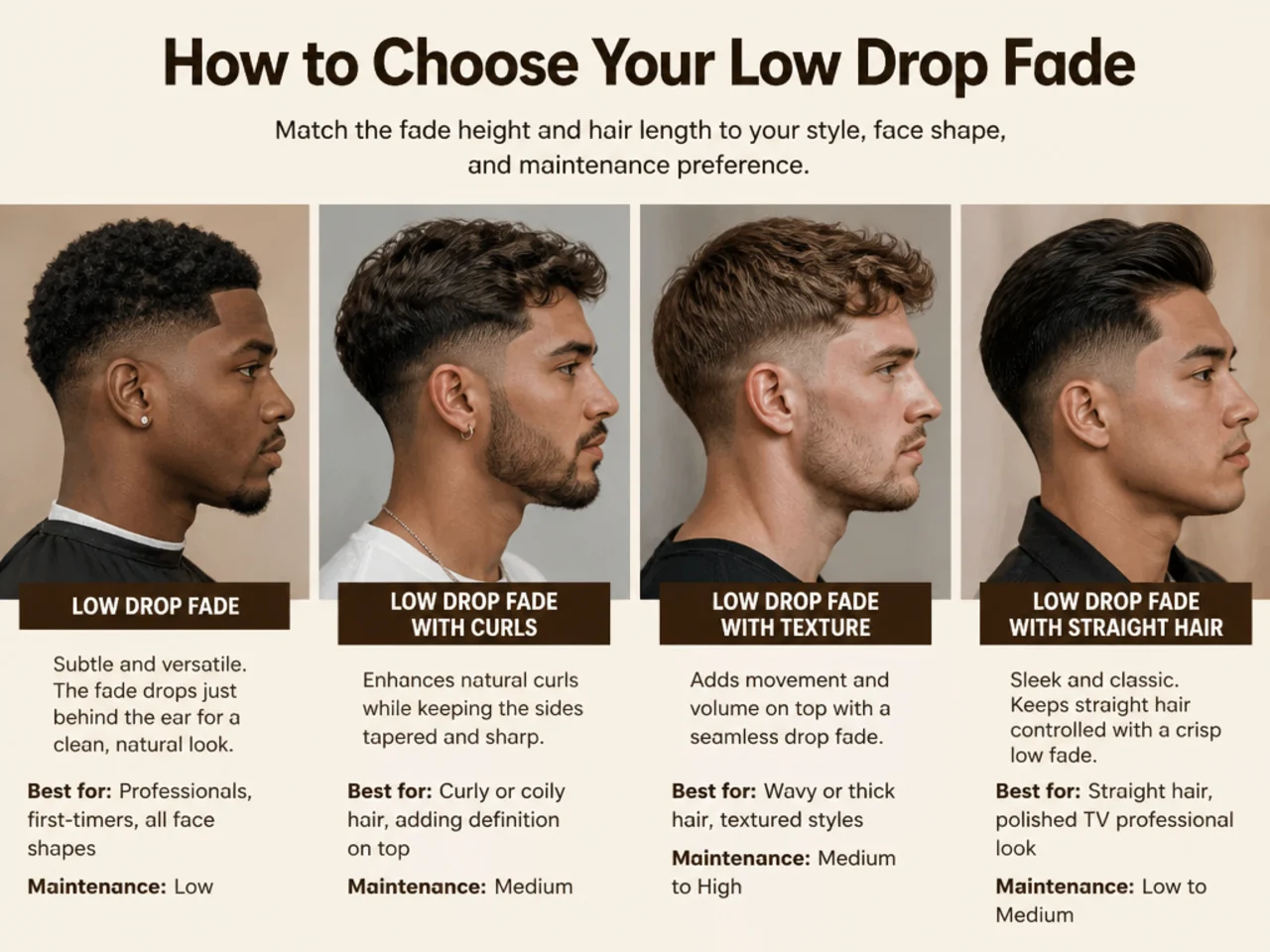
Three variables decide the version you should book. Get them right and the cut works on the first appointment.
Head shape from the side. The drop fade earns its keep on flatter occipital bones — the back of your head reads round instead of long-and-flat. If your profile is already rounded, the drop is optional. If your head reads square or long from the side, the drop is one of the sharpest fixes short of hats. Check yourself with two mirrors before your appointment.
Hair type. The low drop fade suits every texture. Curly and coily hair love it because the curve echoes the round crown on top. Wavy and thick straight hair carry the contrast well. Fine hair benefits because the taper hugs your bone structure, adding shape you don't naturally have.
Workplace and maintenance. A low drop fade reads office-friendly — the drop is subtle enough that a suit doesn't fight it. But the curve blurs faster than a straight line, so plan on booking every two to three weeks. Miss a week and the arc goes soft; miss two and the whole shape reads uneven.
20 Low Drop Fade Variations Worth Trying
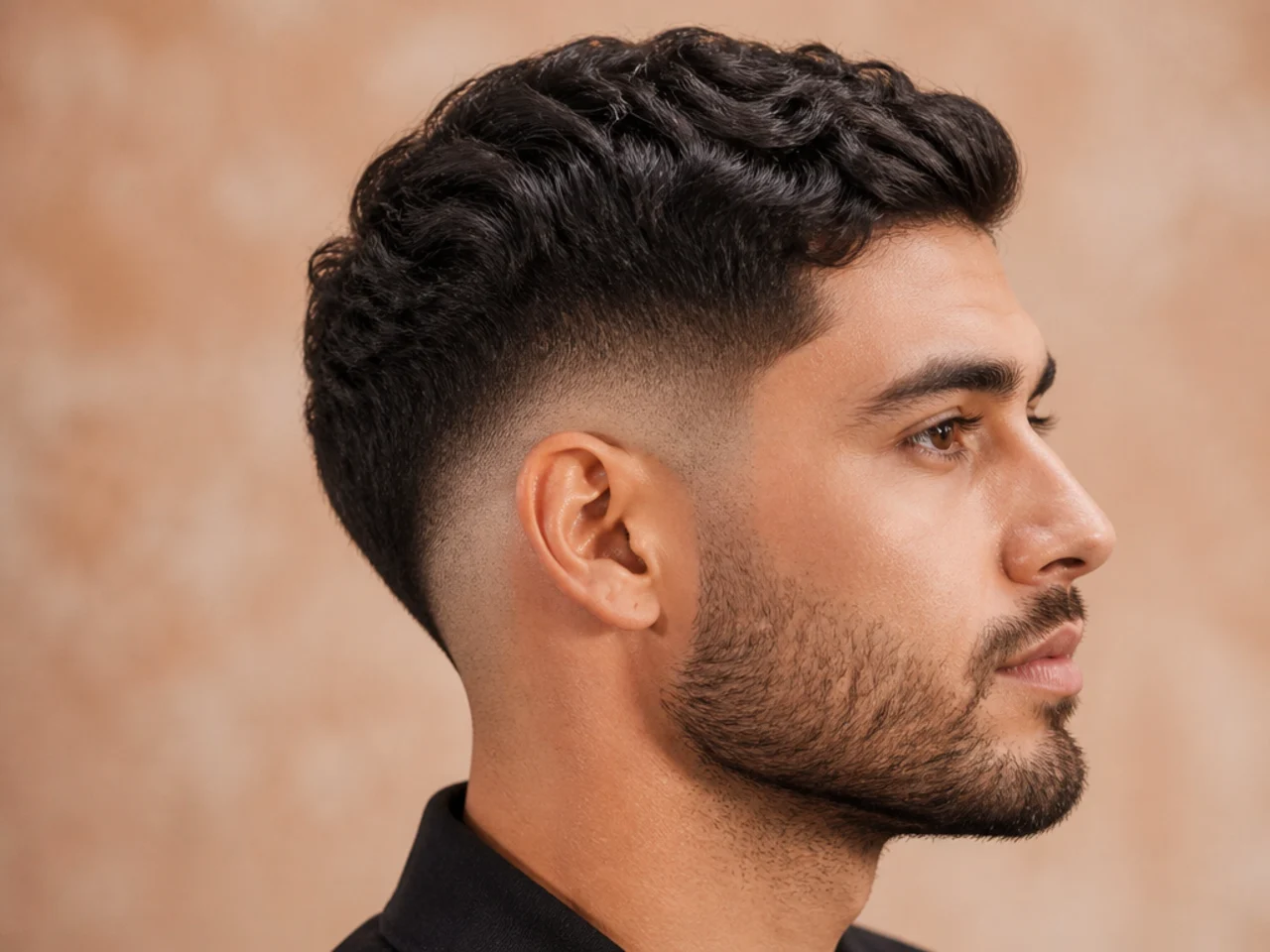
The variations below move from clean and quiet to sharp and loud. Each entry tells you what makes it different, who it suits, exactly what to ask for, and one styling move that locks the shape in.
1. Classic Low Drop Fade
The baseline every other version builds off. Fade starts at ear height, drops a finger's width behind it, blends up to a #2 through the parietal ridge. Length on top stays untouched, so you can wear it with any style you like. Best for guys booking their first drop fade or anyone who wants a rounder profile without a hard visual statement. Works on every face shape and every hair type.
Ask for: "Low drop fade, 0.5 at the shortest, drop behind the ear about a half-inch, blend up to a 2, leave the top as it is."
Styling tip: Air dry, then work a pea of matte paste through with your fingers. No comb needed — the fade does the shape work.
2. Low Drop Skin Fade
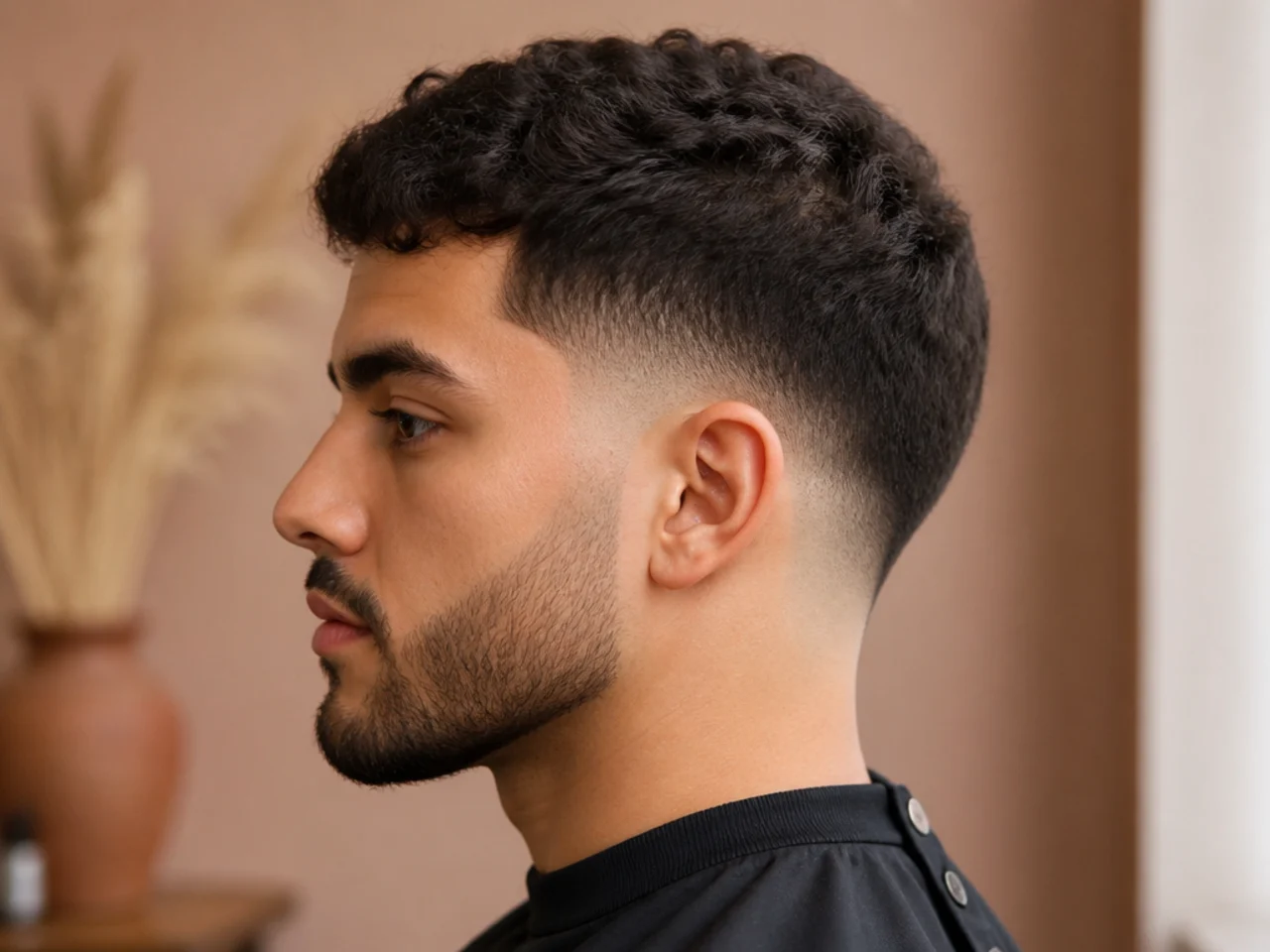
Push the fade all the way down to bare skin at the temple and behind the ear. Sharpest possible contrast and cleanest photograph in the low drop family. Best for guys with defined jawlines and dark hair — light hair loses the contrast against the scalp. Square, oval, and diamond faces suit it best.
Ask for: "Low drop skin fade, take the arc behind the ear to bare skin, blend up to a 2, keep three inches on top."
Styling tip: Fragrance-free sunscreen on the fresh skin the first two days. Skip the aftershave — freshly shaved scalp burns from alcohol.
3. Low Drop Fade with a Textured Crop
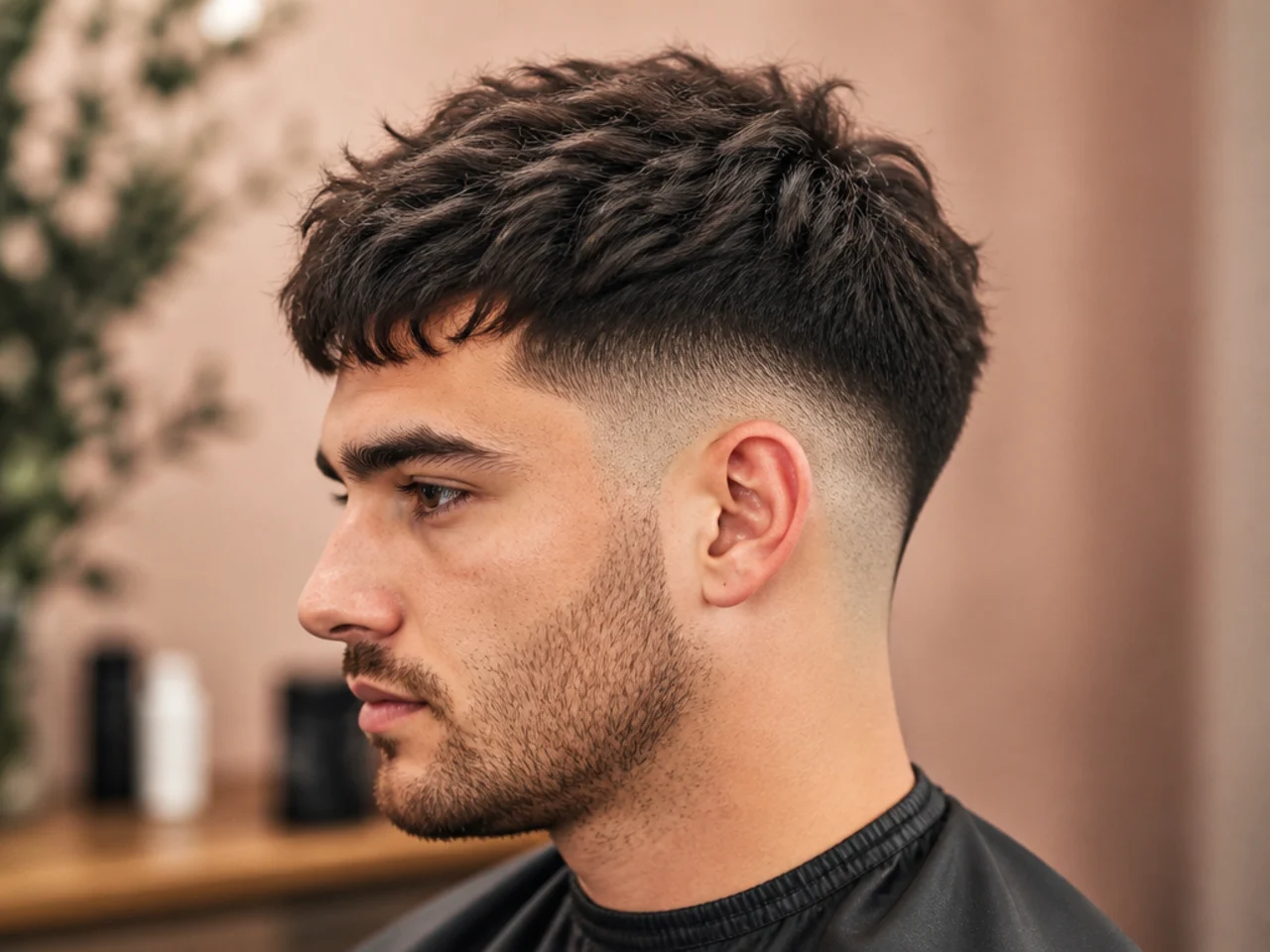
Pair the drop with a short, textured crop on top — fringe pushed forward, choppy point-cut ends. The curve at the ear echoes the rounded shape at the crown, so the whole cut reads unified. Best for square and heart-shaped faces with straight or wavy hair, and for guys who want a low-effort morning routine.
Ask for: "Low drop fade, 0.5 at the shortest, textured crop on top, an inch and a half at the fringe, point-cut the ends for texture."
Styling tip: Sea salt spray on damp hair, rough-dry with your fingers, matte clay to finish. Zero shine on this one — it's the whole point.
4. Low Drop Fade with a Middle Part
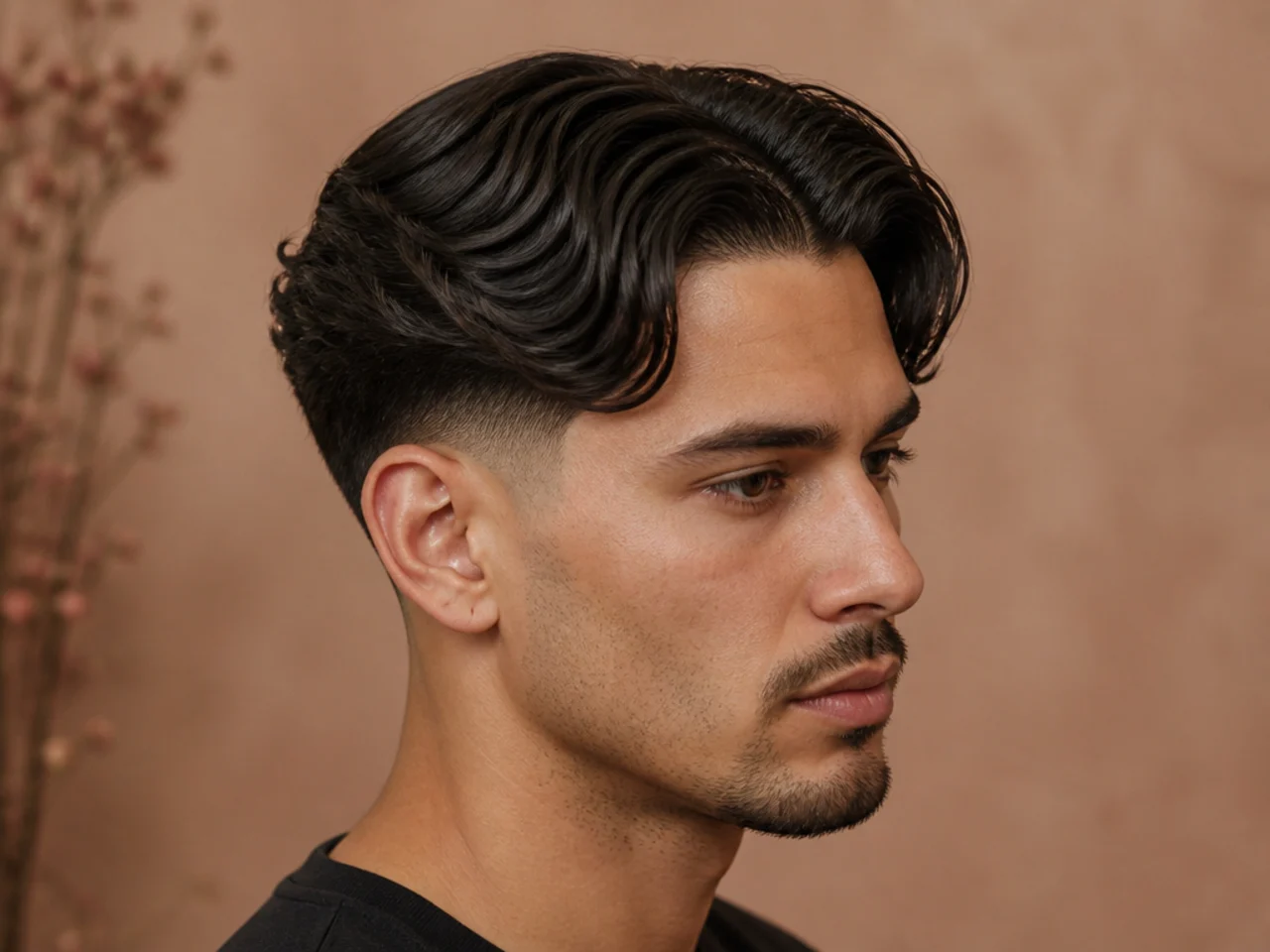
Middle part with soft length on either side sitting over a low drop fade. The drop softens what could otherwise read too geometric across the crown. Best for guys with medium-thick straight or wavy hair, and oval or heart-shaped faces.
Ask for: "Low drop fade, 0.5 at the shortest, three inches on top, cut with a middle part in mind so the length falls to both sides."
Styling tip: Dry with a brush going forward and down, then split the part with your fingers. Light-hold cream at the ends only — nothing at the roots or the part collapses.
5. Low Drop Fade with a Comb Over
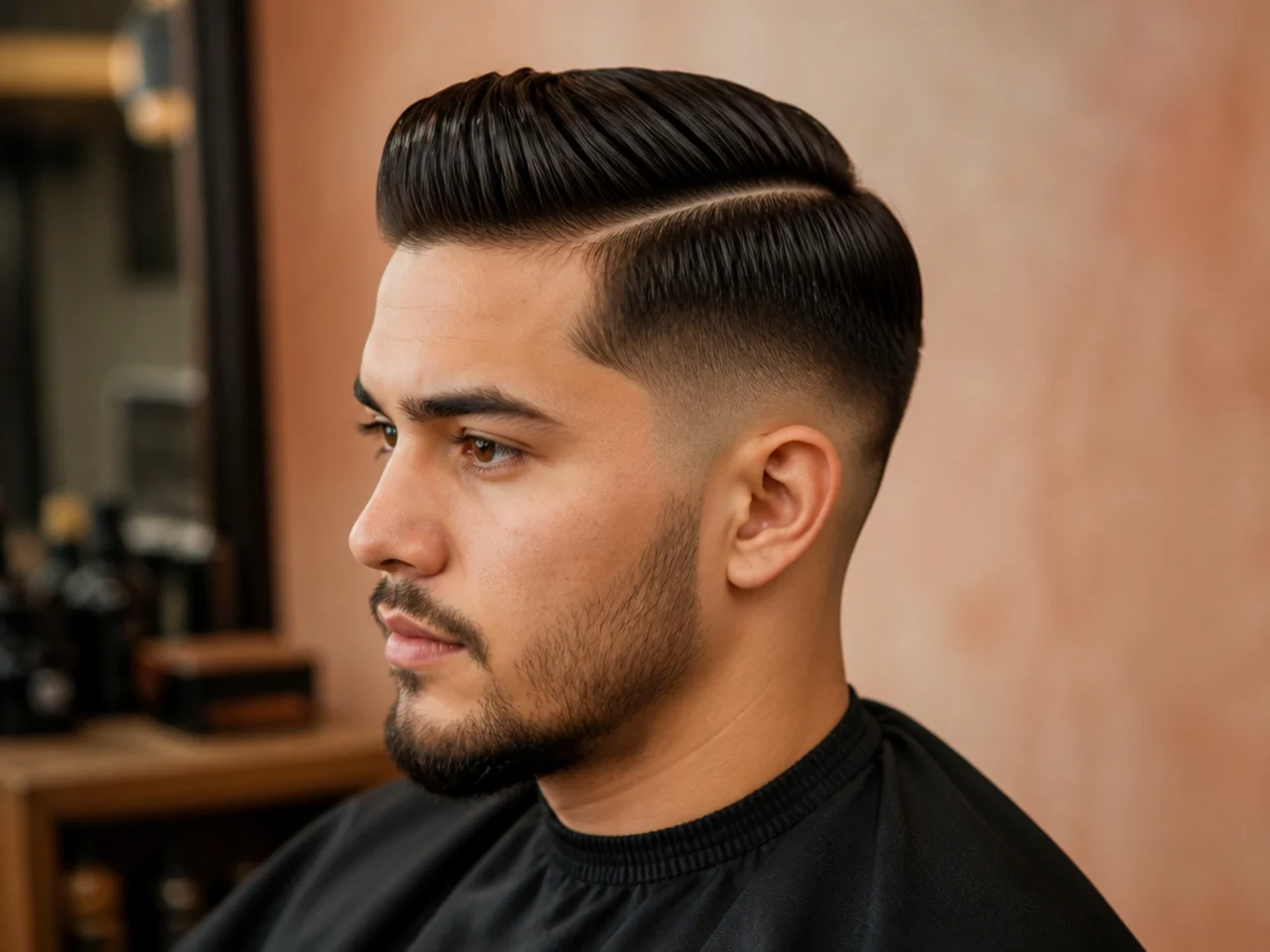
Classic barbershop combination. Longer length on top swept to one side, low drop fade underneath rounding the silhouette. Reads clean-cut in any workplace. Best for square, oval, and triangular faces with wavy or straight hair.
Ask for: "Low drop fade, drop behind the ear, four inches on top, cut with weight to the left [or right] for a comb over."
Styling tip: Blow-dry the top in the sweep direction while brushing, then hit with a satin-finish pomade. Comb the part before the pomade sets — one pass is enough.
6. Low Drop Fade for Curly Hair
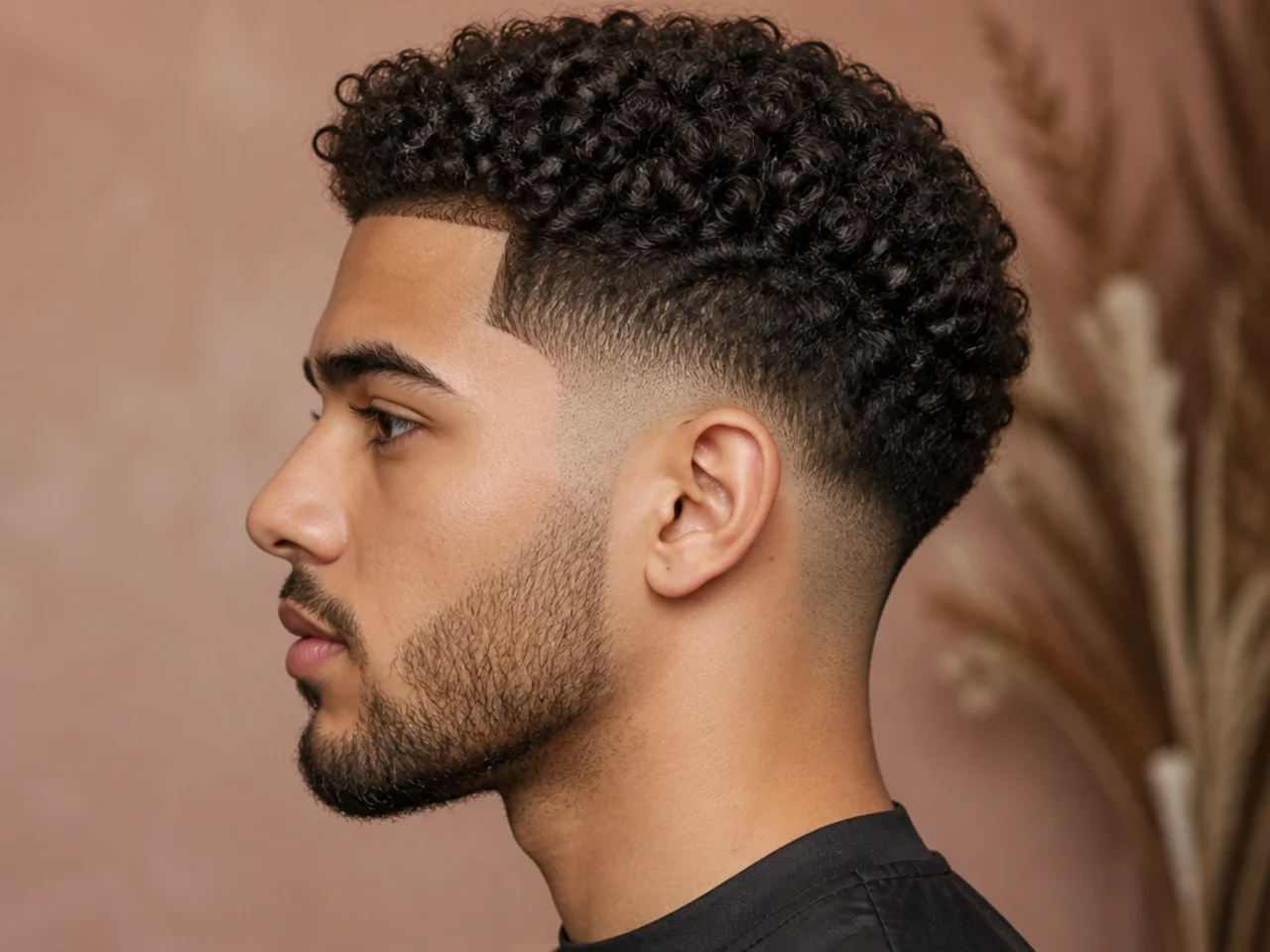
The curl pattern already builds volume; the drop fade defines the perimeter. Curls stack round on top, the fade curves round behind the ear — the whole cut reads intentional rather than accidental. Best for 3a–3c curls with two to five inches of length. See more shapes in the curly hair men's haircut guide.
Ask for: "Low drop fade, scissor cut on top to preserve the curl pattern, three to five inches, shape the crown rounded."
Styling tip: Curl cream on damp hair, diffuser on low heat with the hood cupped up. Don't touch after — every touch flattens the pattern.
7. Low Drop Fade with a Textured Fringe
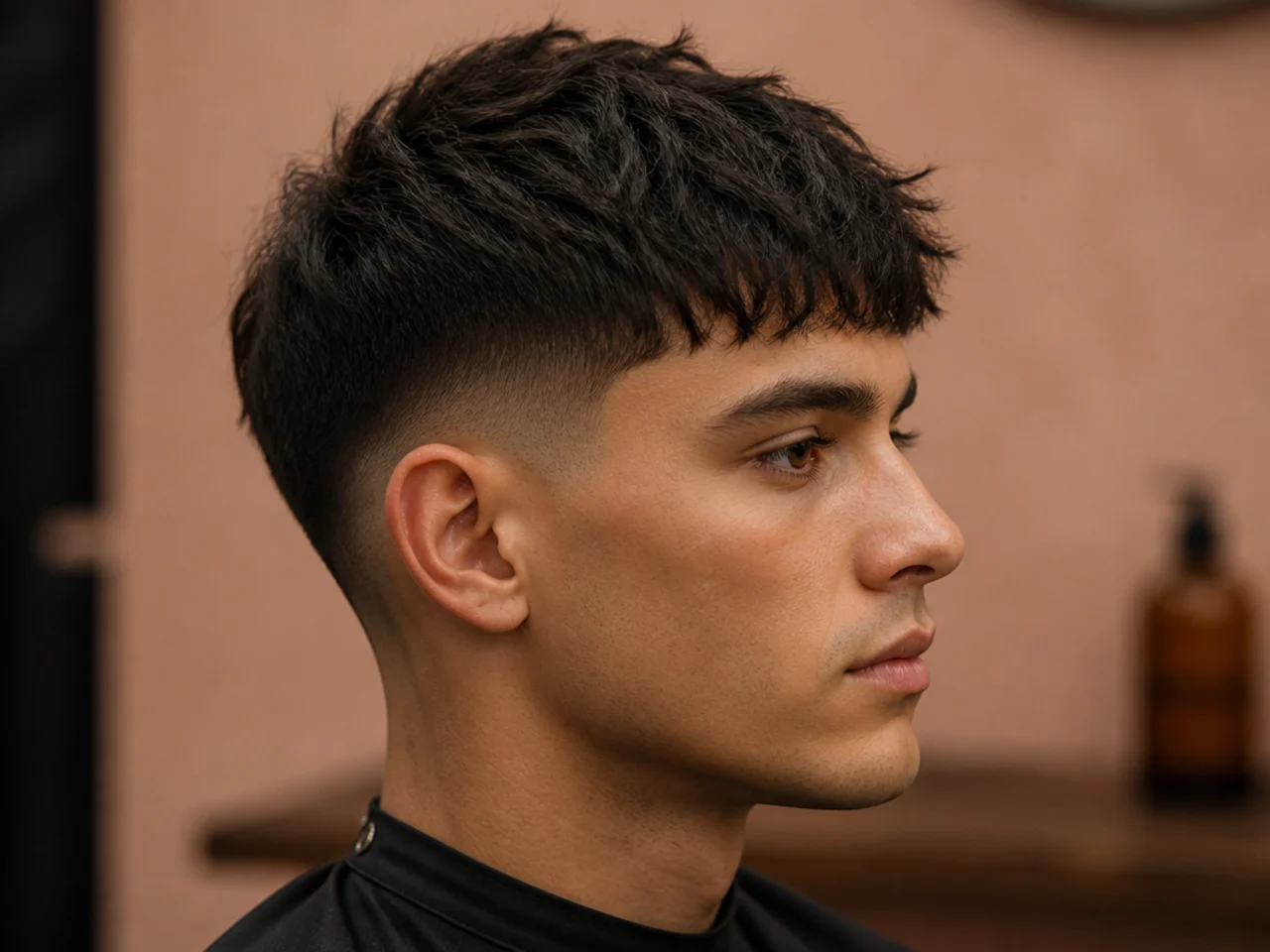
Take a textured fringe and drop it over a low fade. Fringe pushed forward across the brow, drop behind the ear giving the profile shape. Reads modern and casual at the same time. Best for wavy hair and oval, square, or heart faces.
Ask for: "Low drop fade, 0.5 at the shortest, two and a half inches on top, textured fringe pushed forward, point-cut ends."
Styling tip: Salt spray on damp hair, rough-dry with fingers, matte clay through the ends only. Ruffle the fringe — never comb it flat.
8. Low Drop Fade with a Slick Back
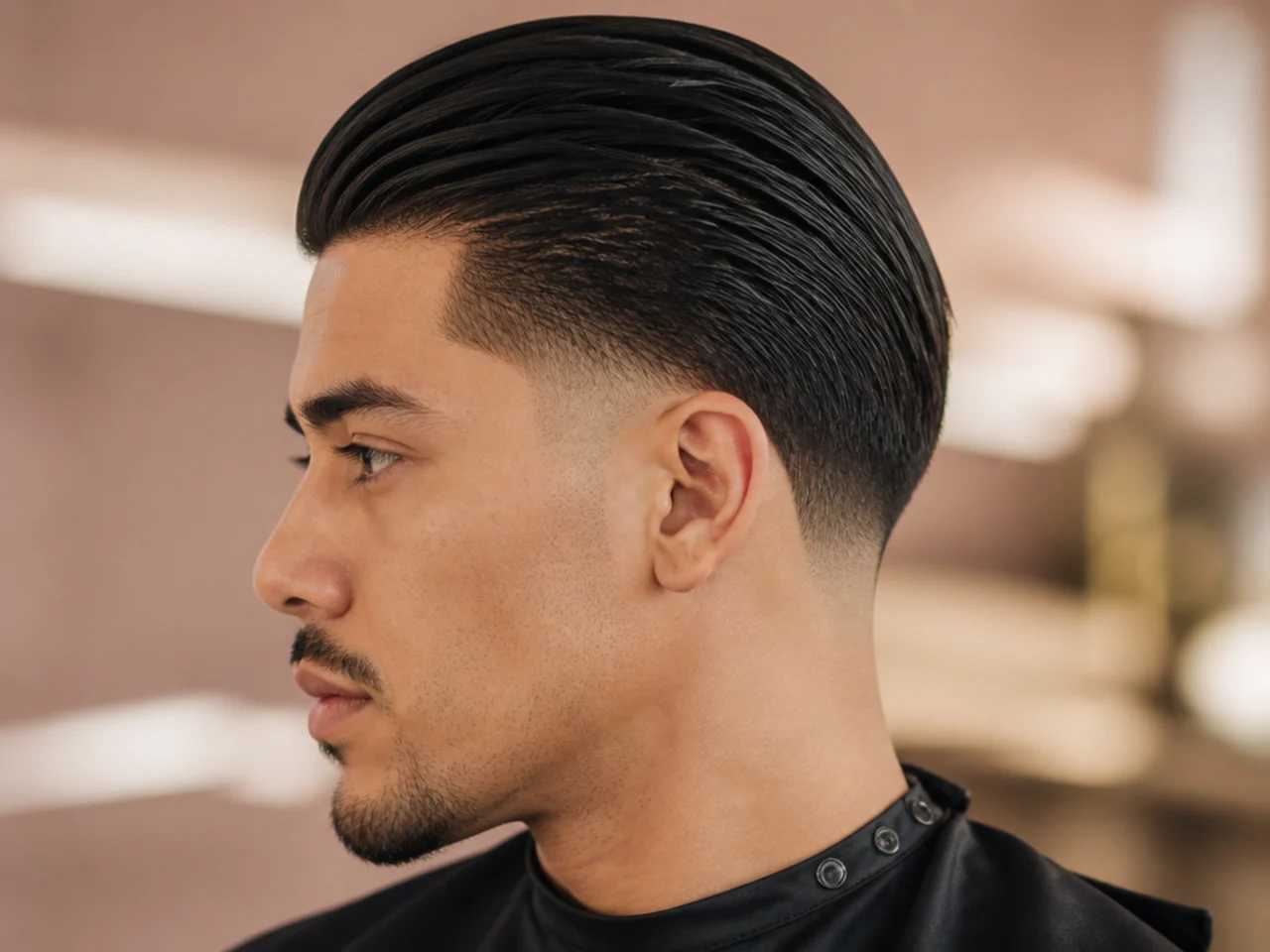
Longer length on top slicked straight back, low drop fade curving the sides. The drop softens the transition into the neckline, so the slick reads clean rather than helmet-flat. Best for oval, square, and heart faces with medium to thick straight or wavy hair.
Ask for: "Low drop fade, 0.5 at the shortest, five inches on top, cut with weight to slick back."
Styling tip: Comb hair back while damp, work satin pomade root to tip, then re-comb. Setting spray if you're out all day and want the slick to hold through humidity.
9. Low Drop Fade with a Pompadour Front
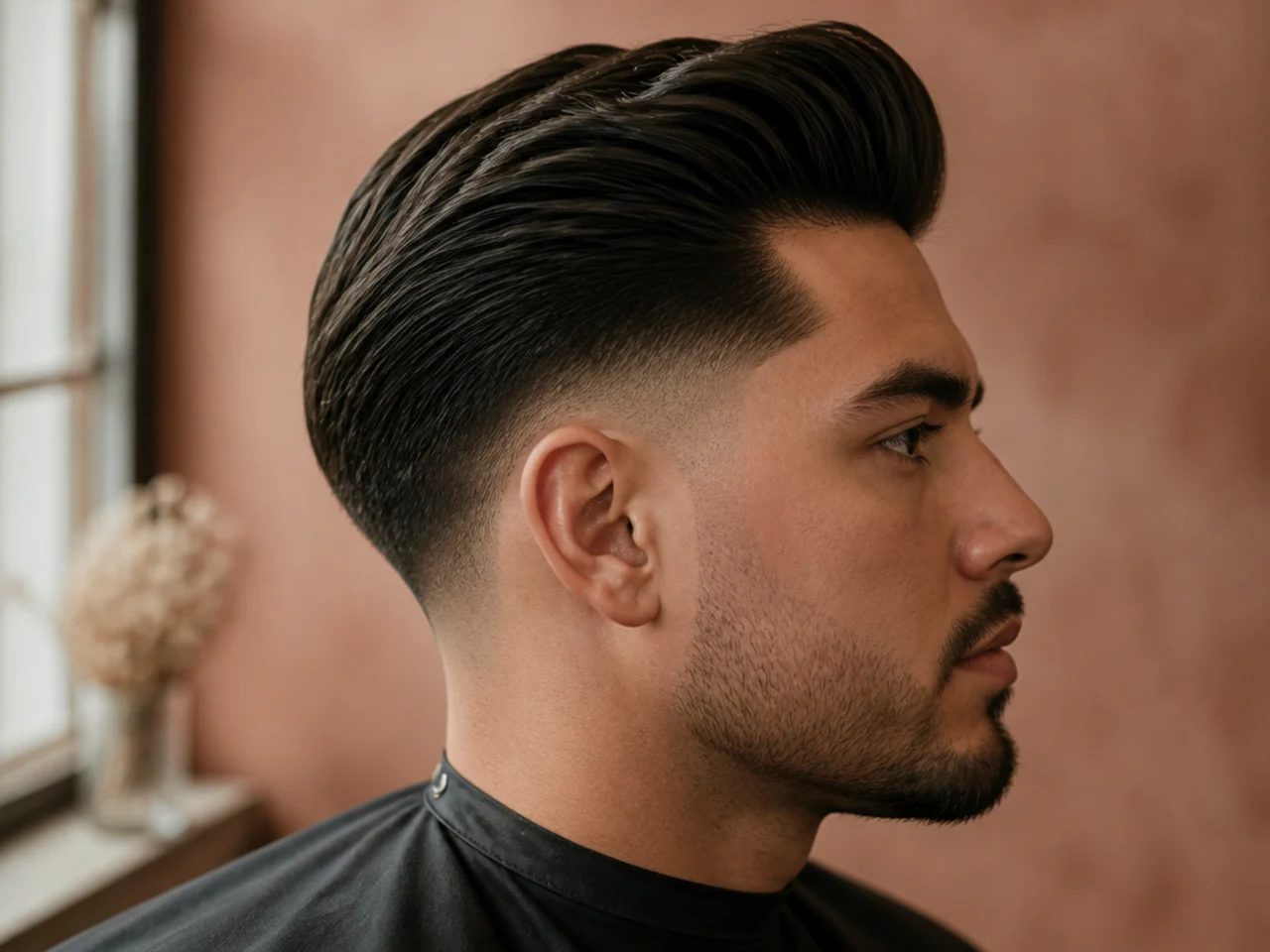
Big front lifted tall at the hairline, low drop fade base underneath. The drop makes the pompadour read taller from the profile — small optical trick, real result. Best for oval and square faces with thick straight or wavy hair.
Ask for: "Low drop fade, drop behind the ear, six inches through the pompadour front, tapered back through the crown."
Styling tip: Blow-dry the front section straight up with a round brush, strong-hold cream to lock the height. Cool shot at the end sets the peak.
10. Low Drop Fade with a Quiff
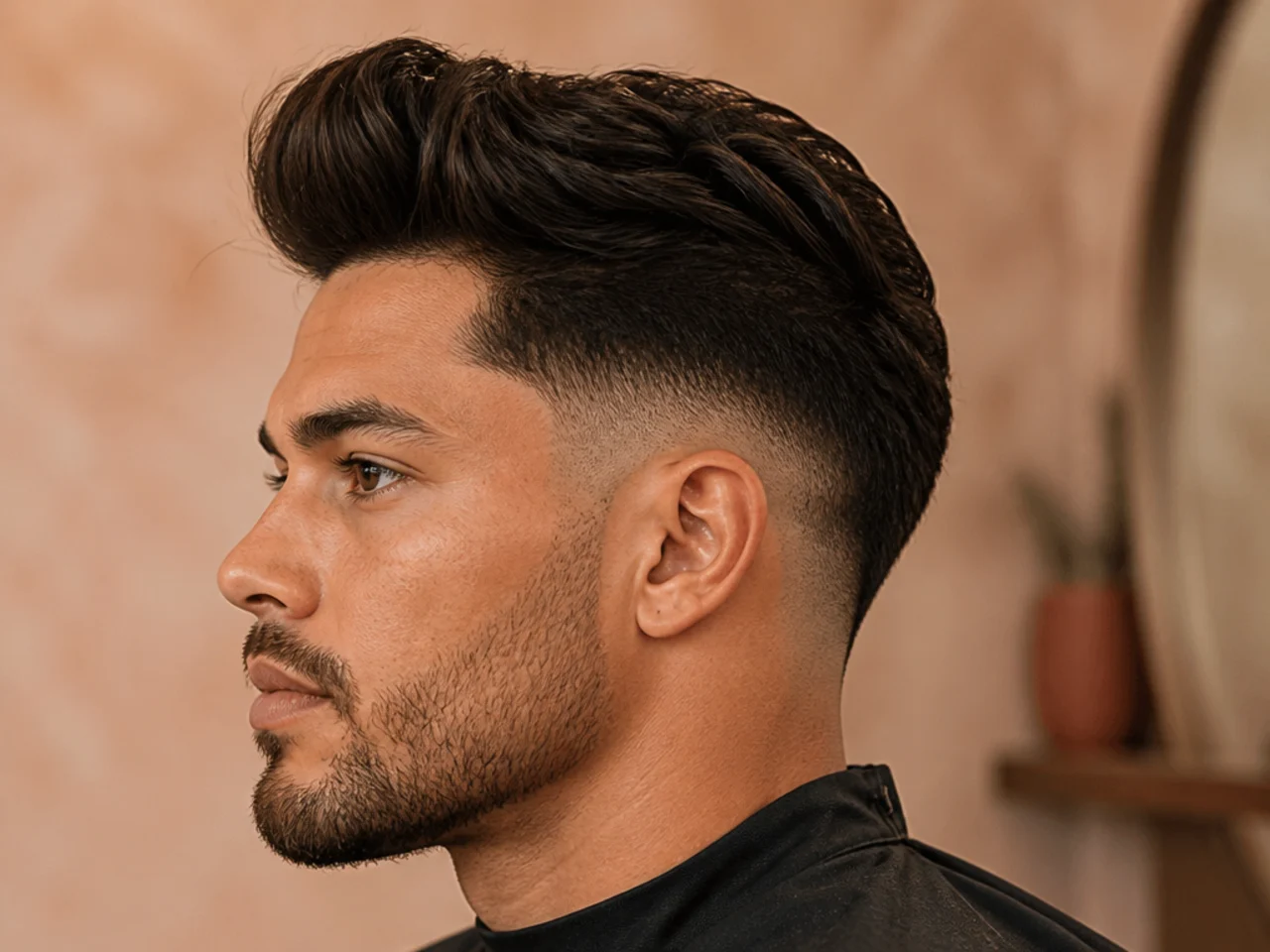
Angled front lifted at the hairline into a soft peak, low drop fade underneath. Reads sportier than a full pompadour, less dressy. Best for square and oval faces with medium to thick hair. Check the men's low fade haircut guide for more front variations.
Ask for: "Low drop fade, 0.5 at the shortest, four inches at the quiff front, weight forward."
Styling tip: Blow-dry the front up and back with a small round brush. Matte cream to hold, no shine — quiffs read greasy the moment they catch light.
11. Low Drop Fade with a Hard Part
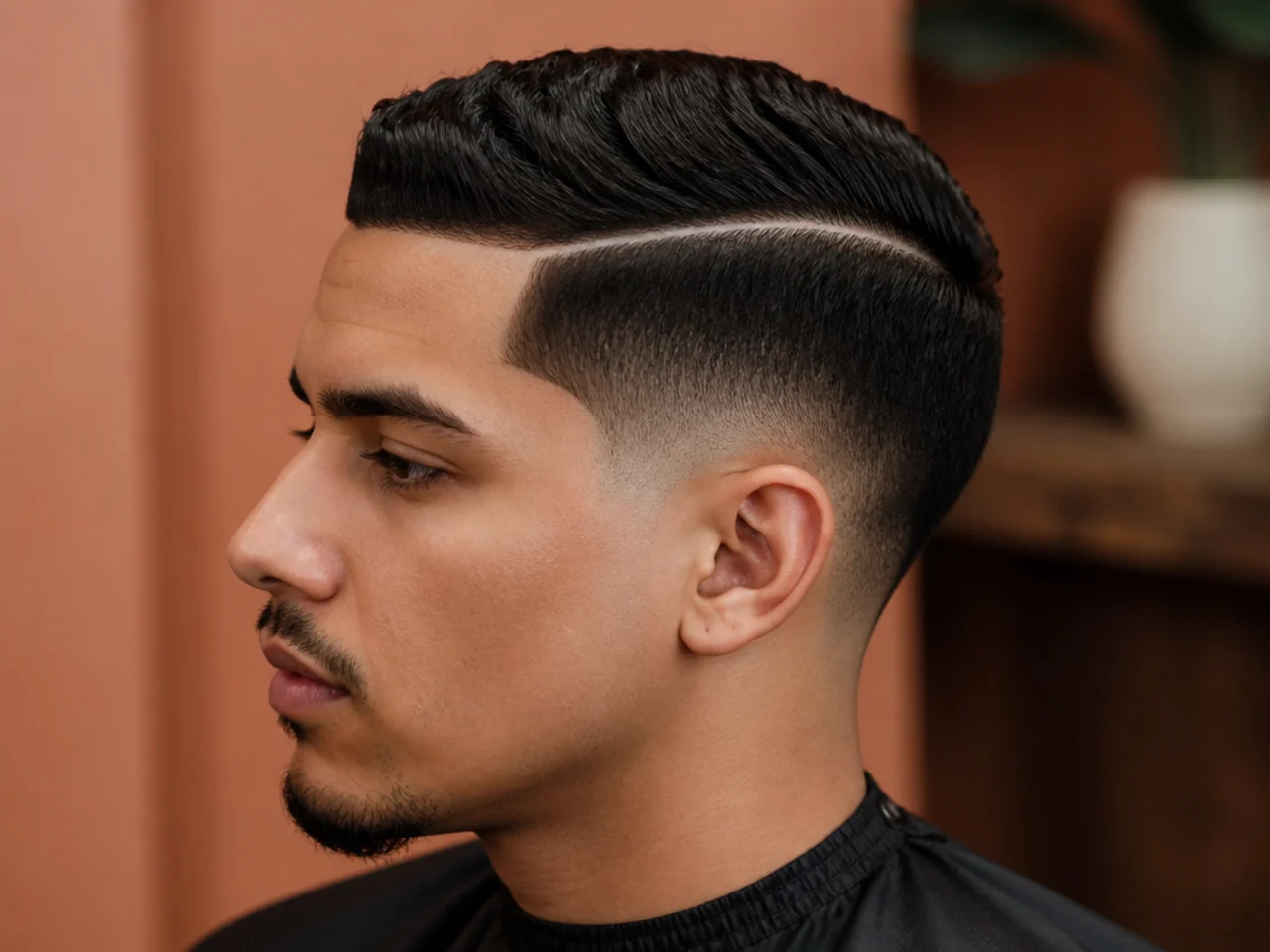
Razor-carved line separating the top length from the drop fade below — a permanent parting that reads sharp for two weeks. Adds a piece of geometry without going full pattern work. Best for guys who want an extra design detail with their fade without committing to a full line-up.
Ask for: "Low drop fade, 0.5 at the shortest, hard part on the left [or right] side, three inches on top brushed away from the part."
Styling tip: Brush the top away from the hard part so the line stays visible all day. Ask your barber to re-cut the razor line at week two if it starts closing up.
12. Low Drop Fade with a Modern Mullet
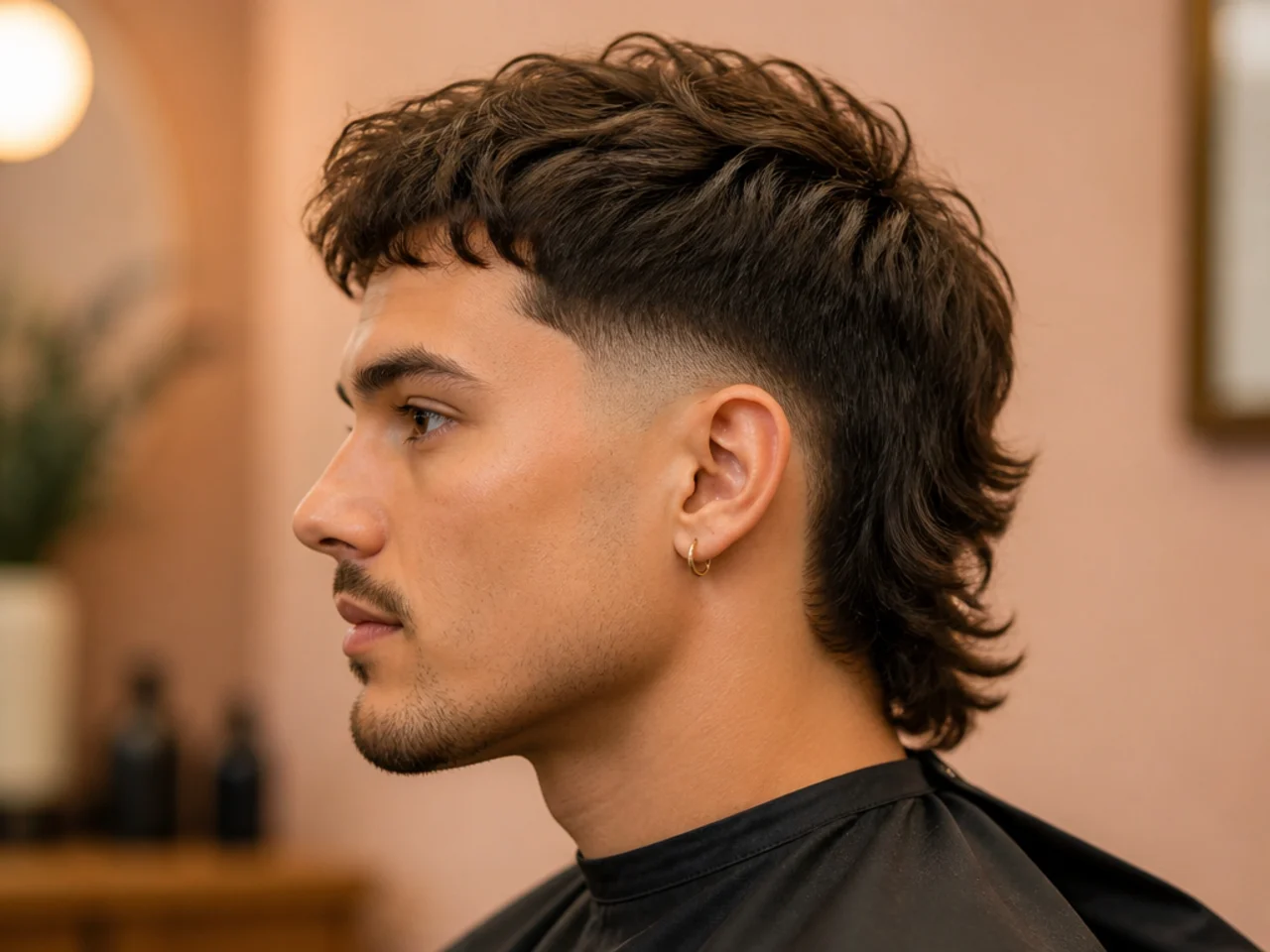
Length left long at the nape, low drop fade wrapping the sides. The drop makes the mullet transition feel natural rather than accidental — the arc guides the eye into the longer back. Best for wavy hair, oval faces, and guys who want the modern mullet with the cleanest possible sides.
Ask for: "Low drop fade, drop behind the ear, three inches on top, four inches at the nape for a mullet, keep the back weighted."
Styling tip: Rough-dry the back with your fingers, sea salt spray for texture. Matte clay for the top only — the back should read loose.
13. Low Drop Fade with an Edgar Fringe
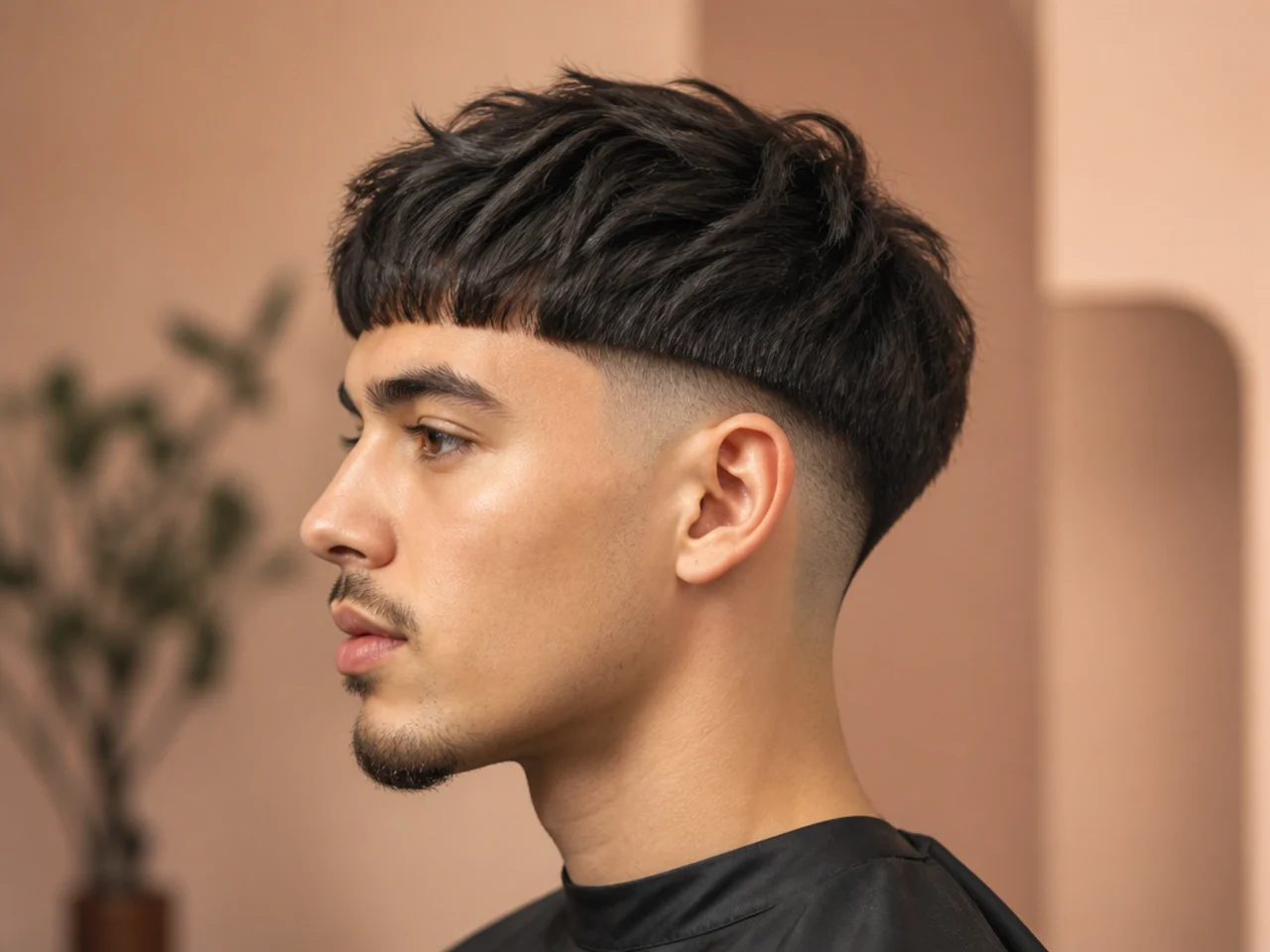
An Edgar haircut is a blunt, heavy straight-across fringe cut flat at the forehead. Pair it with a low drop fade and you get sharp geometry on top with a soft rounded perimeter. Best for guys with taller foreheads and dense straight hair.
Ask for: "Low drop fade, 0.5 at the shortest, Edgar fringe blunt across the brow, two inches through the fringe, kept heavy."
Styling tip: Blow-dry the fringe flat with a paddle brush, setting spray to lock. Trim the fringe every two weeks — Edgar length walks up your forehead fast.
14. Low Drop Fade with a Two-Block Top
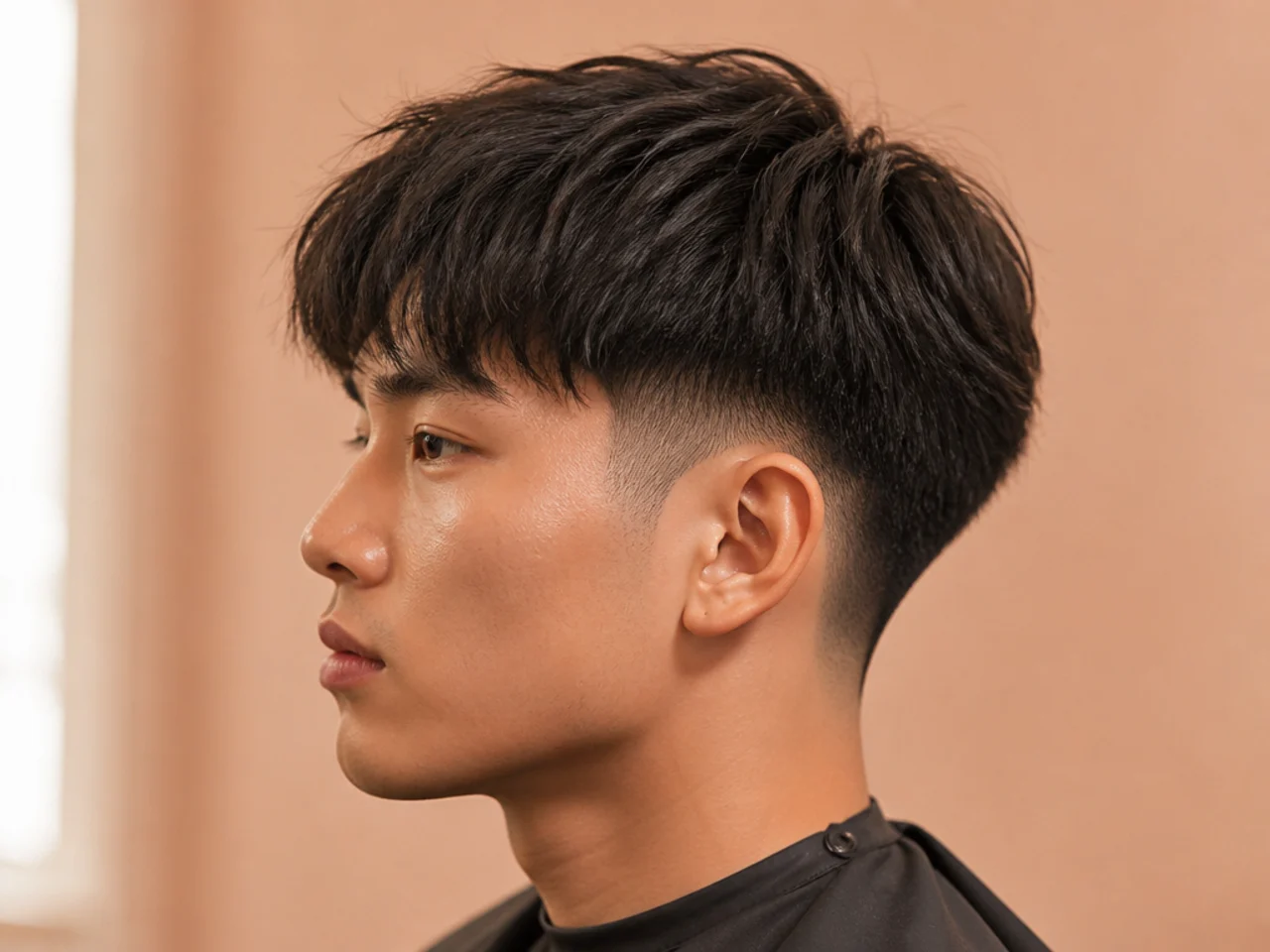
Two-block treatment leaves a distinct undercut band around the sides while keeping a longer layer of hair on top that falls over the edge. Add a low drop fade underneath and the two-block corner gets a rounded transition instead of a hard step. Best for oval and heart faces with straight hair — popular in Korean and East Asian barbering.
Ask for: "Low drop fade, drop behind the ear, two-block undercut style with three inches on top falling over the fade line."
Styling tip: Blow-dry the top forward, then finger-comb the ends down over the fade edge. Light matte cream to hold the shape without freezing it.
15. Low Drop Fade for Coily Hair
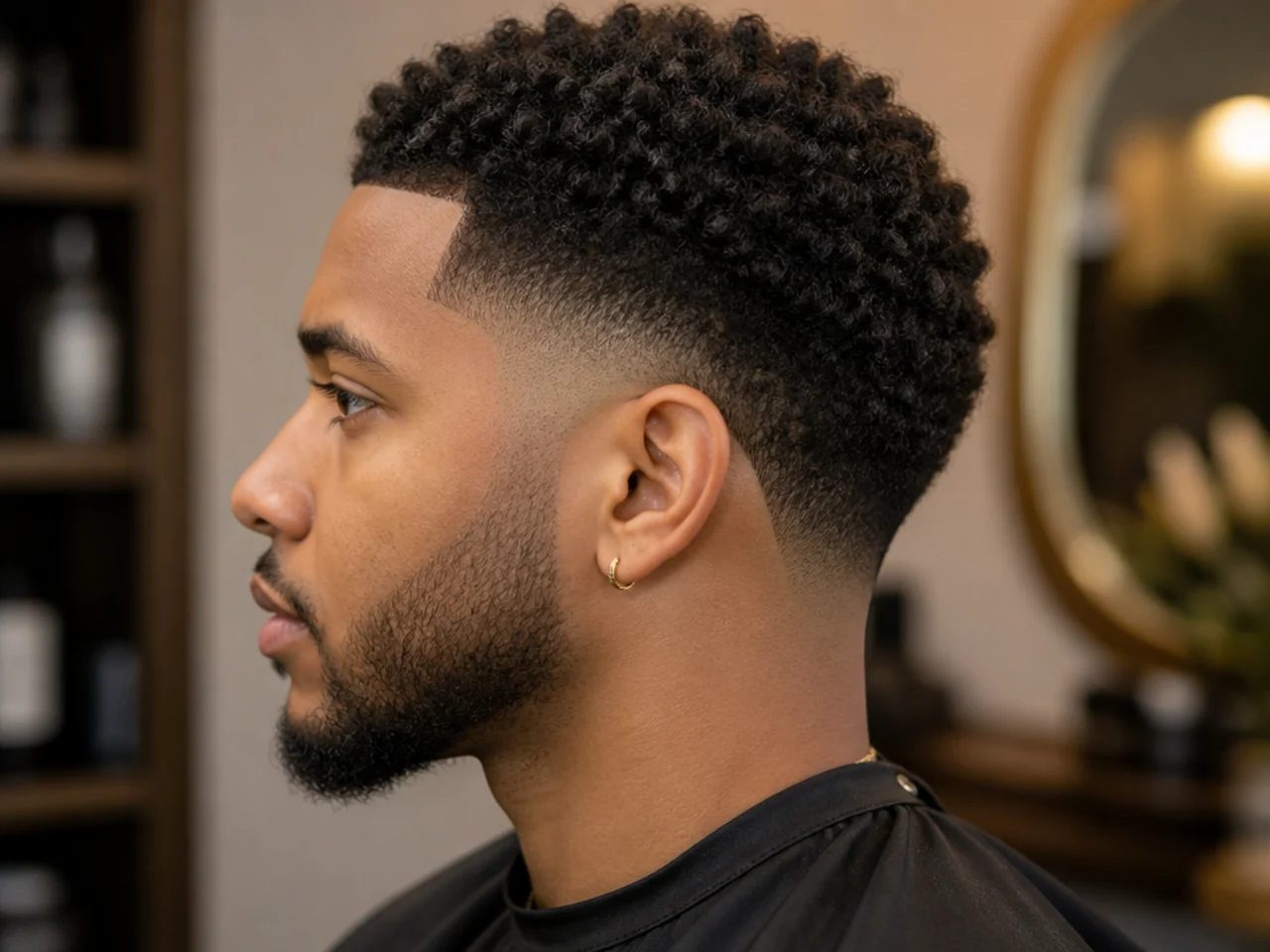
Coily hair (4a–4c) shaped rounded on top with a low drop fade running the perimeter. The drop echoes the natural round shape of the coil crown, so the perimeter reads unified with the top instead of fighting it. Popular in Black barbershops for its clean profile without the sharpness of a mid or high fade. See more in fade haircuts for Black men.
Ask for: "Low drop fade, 0.5 at the shortest, scissor cut on top to preserve the coil pattern, two to four inches, keep the crown full."
Styling tip: Pick out damp hair with a wide-tooth pick, diffuser on low to set the shape. Silk bonnet overnight preserves it into day two.
16. Low Drop Fade with 360 Waves
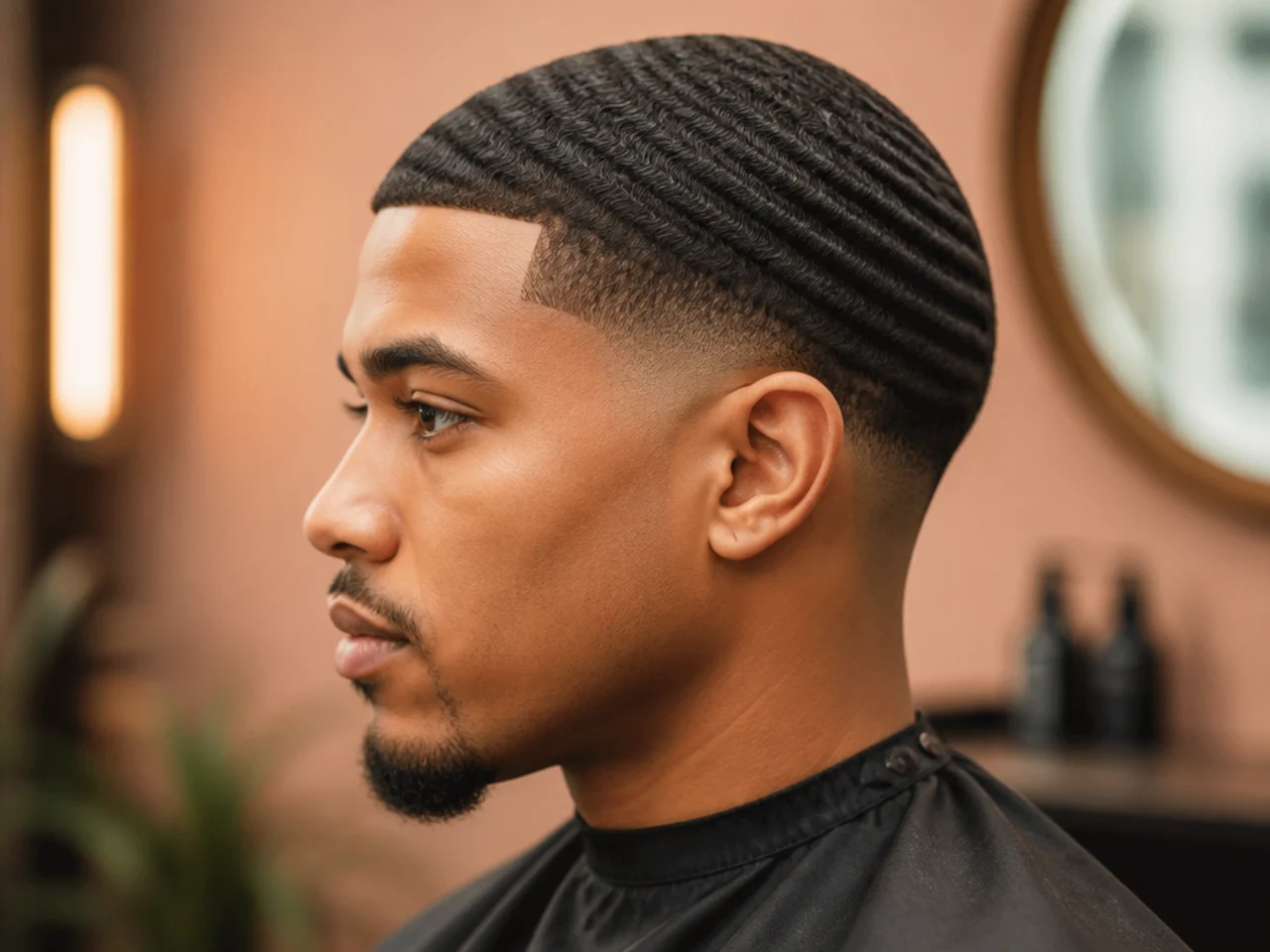
Waves need short — but not too short — and a low drop fade holds the wave pattern intact while cleaning up the perimeter. The drop curves along with your wave direction, so the whole cut reads unified. Best for coarse hair worn short with a brushing and durag routine.
Ask for: "Low drop fade, keep the top at a #1 or #1.5 for waves, drop the arc behind the ear, don't touch the crown pattern."
Styling tip: Brush morning and night with a hard boar-bristle brush from the crown forward. Wear a durag at night. Wolf your hair for four to six weeks before your next cut so the pattern deepens.
17. Low Drop Fade for Asian Straight Hair
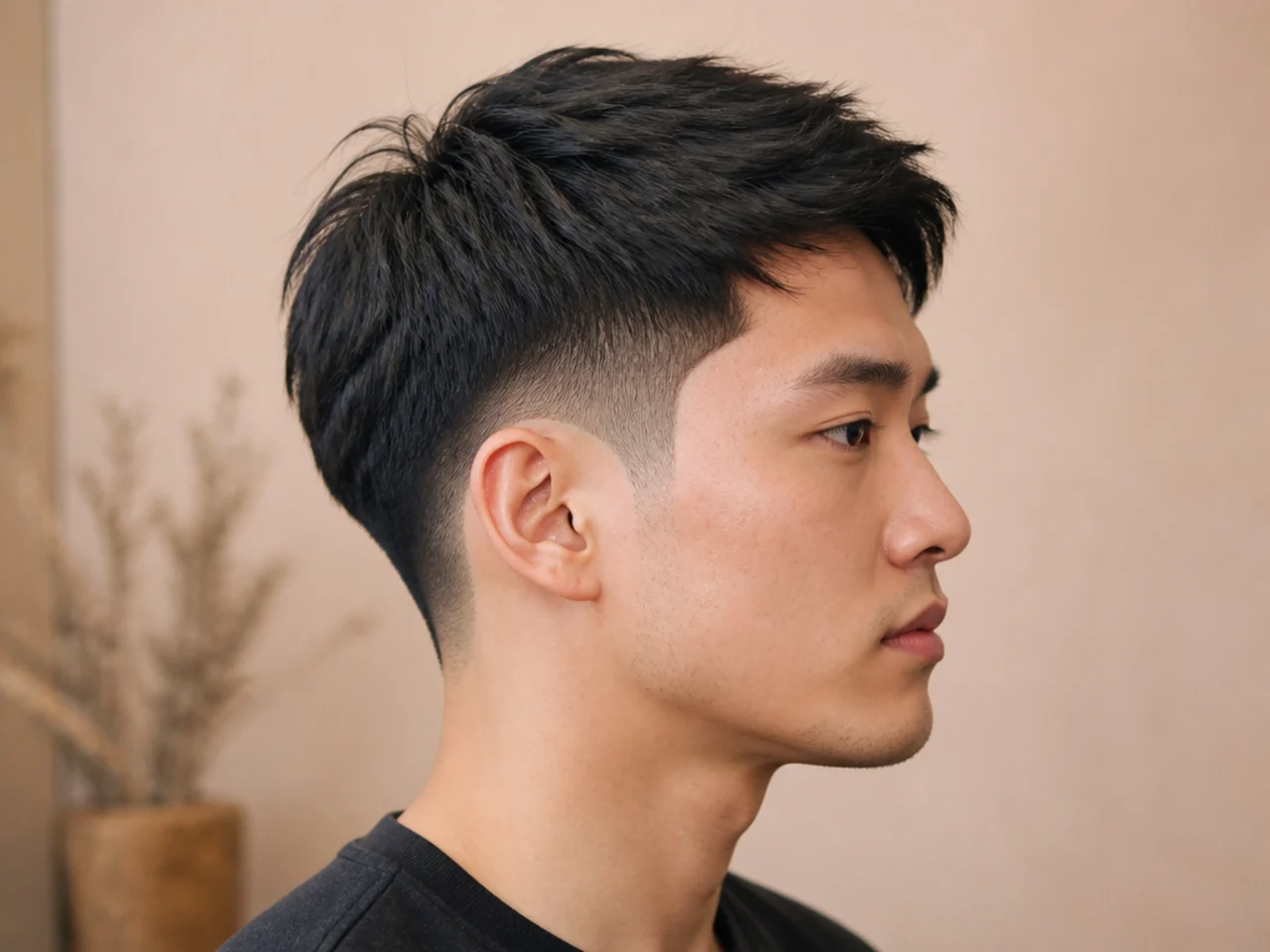
Coarse, dense straight hair on a low drop fade base. Weight can push straight hair flat — the drop lifts the profile visually so the top doesn't read helmet-shaped. Best for oval and square faces with medium to thick Asian straight hair.
Ask for: "Low drop fade, drop behind the ear, three inches on top, texturize the ends so the top doesn't sit heavy."
Styling tip: Blow-dry the top with a light forward brush, then break the ends with a matte clay. Coarse straight hair holds without much product — under-apply and add if you need more.
18. Low Drop Fade with a Beard Blend
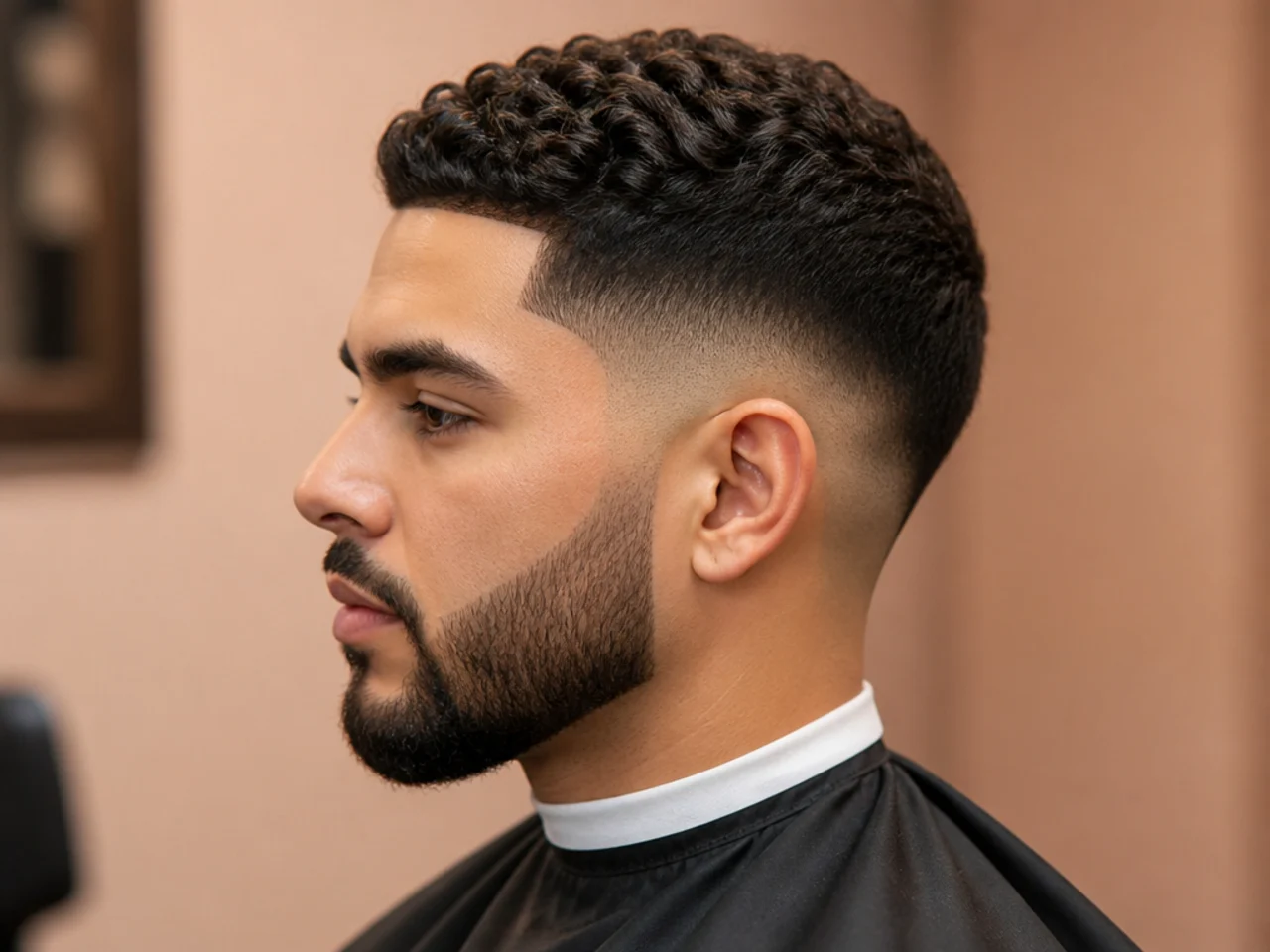
Blend the low drop fade into the beard rather than stopping it at the sideburn. The taper carries down along your jaw and softens the transition between hairline and beard, so the whole side of your face reads unified. Best for guys with medium to full beards — sparse beards can't hold the blend cleanly.
Ask for: "Low drop fade, drop behind the ear, blend the sideburn straight down into the beard with no hard line."
Styling tip: Brush the beard down after a shower to train it into shape, then beard oil at the roots. Line up your cheeks with a trimmer every four to five days so the blend stays sharp.
19. Low Drop Fade with a Braided Top
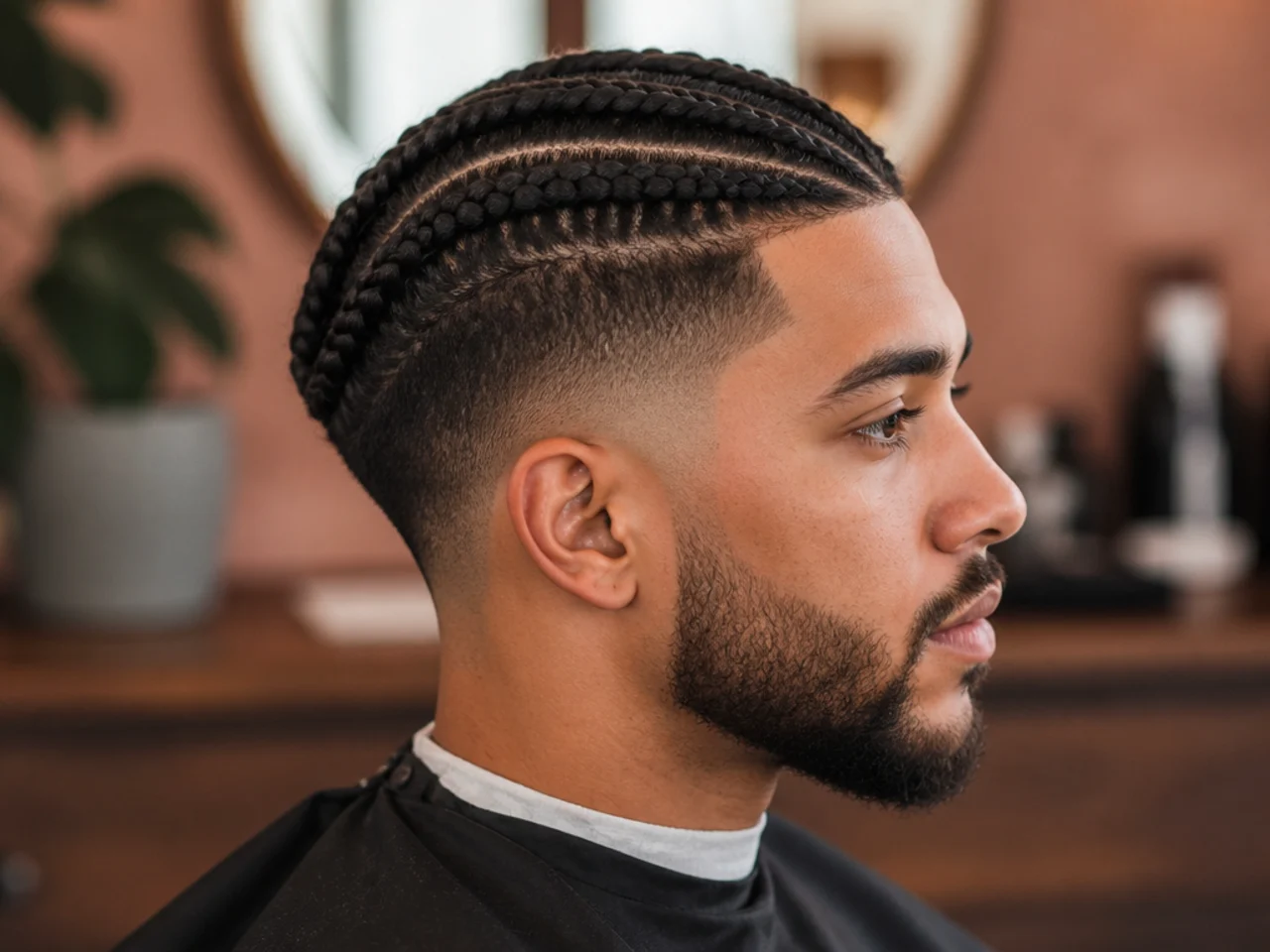
Length on top left long enough to braid — small twists, cornrows, or box braids — over a low drop fade base. The drop keeps the perimeter clean without touching the braided length. Best for coily hair grown out to four inches or more.
Ask for: "Low drop fade, 0.5 at the shortest, leave the top length untouched for braids, clean up the neckline square."
Styling tip: Book the braid service separately — most barbers who fade don't braid the top same day. Schedule the braid the same afternoon so both look fresh together for photos.
20. Low Drop Fade with a Deep Drop
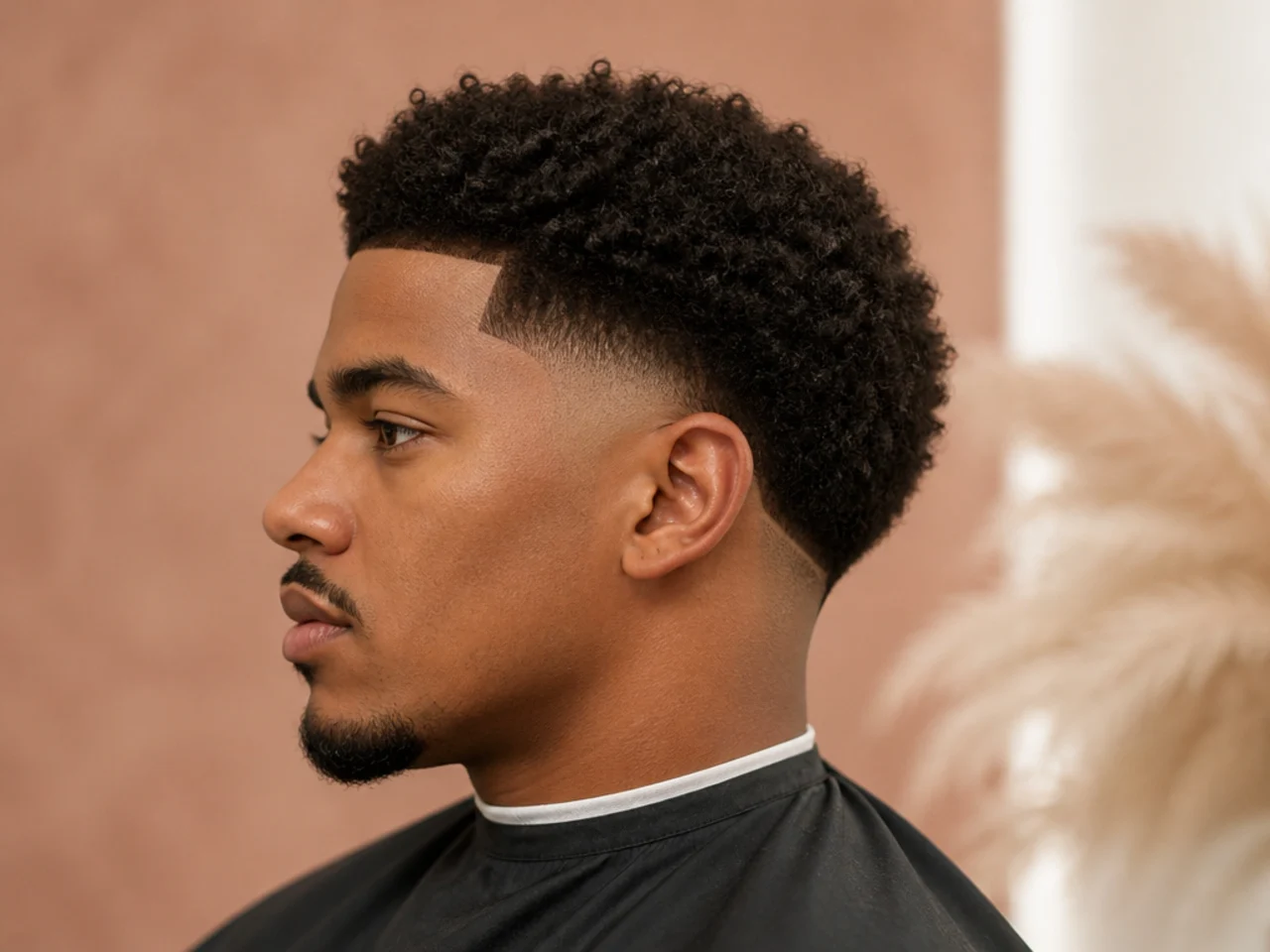
The most dramatic version — instead of a subtle finger-width drop, the arc plunges further behind the ear, nearly reaching the nape. Reads architectural from the profile view without pushing the fade higher on the head. Best for guys with flatter occipital bones who want the most visible drop possible while keeping the low starting point.
Ask for: "Low drop fade, exaggerate the drop — take the arc down deep behind the ear, blend up to a 2, three inches on top."
Styling tip: No styling changes — the perimeter is doing all the work. Ask your barber to check the drop with a hand mirror before you leave the chair.
How to Ask Your Barber for a Low Drop Fade
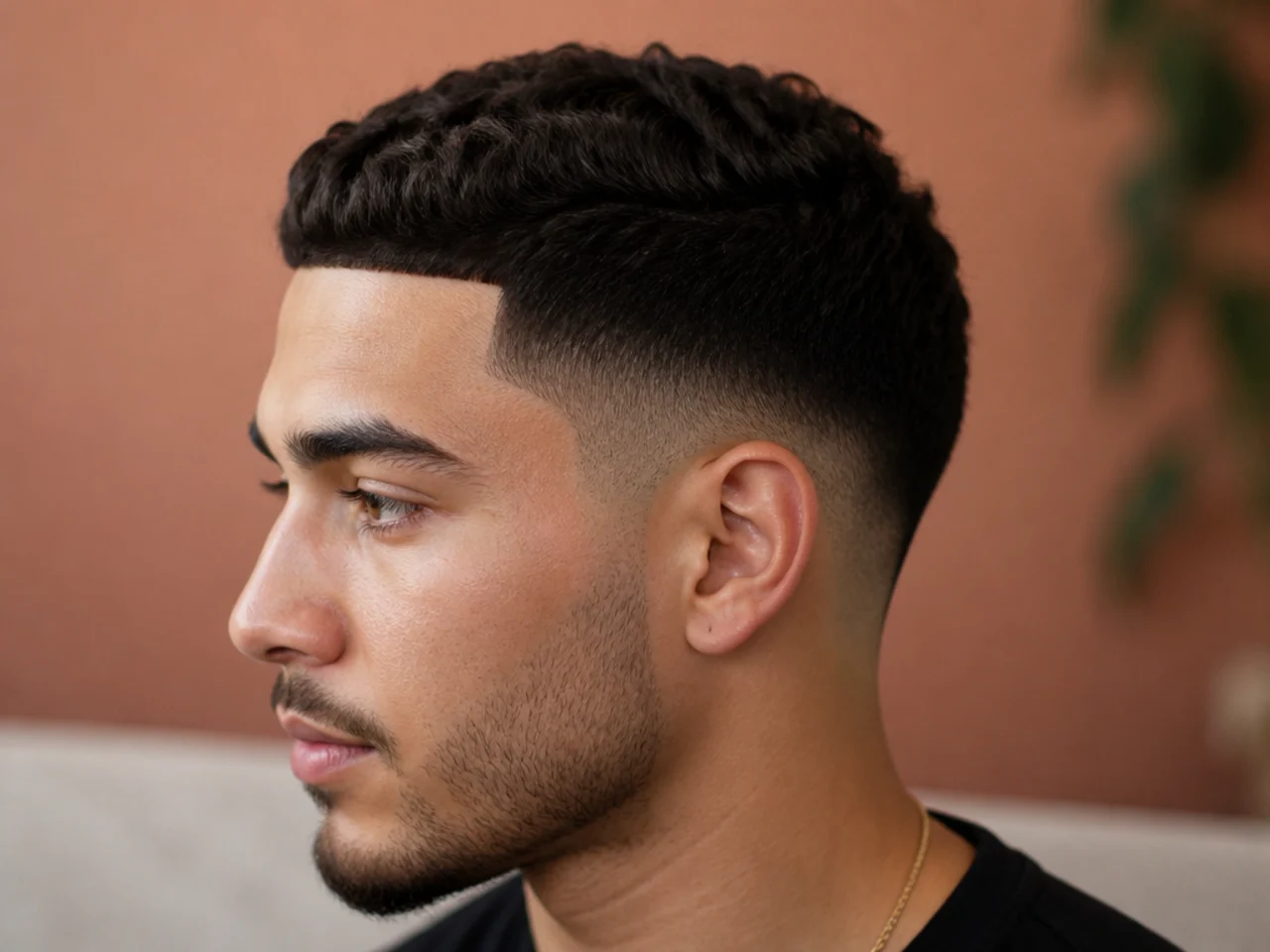
Show up with a photo, four numbers, and one hand gesture. You'll leave with the cut you actually wanted.
- Bring a photo. Any one from this article works. A photo closes a ten-percent verbal gap every time. Save two: one for the side profile (so the drop is obvious), one for the front (so the top style reads clearly).
- Say the word "drop" out loud. This is the whole difference from a plain low fade. Skip this word and your barber cuts a straight line by default. "Low drop fade" or "low fade with a drop" — either works.
- State the fade height. Say "low." The fade starts just above the ear. Point at your sideburn if the word gets fuzzy in translation.
- State the guard number at the shortest point. #0 (skin), #0.5 (shadow), or #1 (hint of length). #0.5 is the safe default; skin reads sharper but blurs by week two.
- State the length on top in inches. Two to five inches covers most variations here. Under two, no hair to shape. Over five, you're pairing with a specific style — mullet, pompadour, slick back — and should name which so your barber weights the cut correctly.
- Show where the drop should land. Trace the arc with your finger from your temple down behind your ear. Half an inch of drop reads subtle; a full inch reads dramatic. This is the one measurement no photo captures perfectly — the hand gesture matters.
- Book the next appointment before you leave. Every two to three weeks. Drop fade lines blur faster than straight lines because the curve is the whole point of the cut. Rebook or you're chasing chairs.
Styling and Maintenance for a Low Drop Fade
The cut is half the deal. Routine is the other half.
The daily routine (five minutes):
- Towel-dry to damp. Not soaking. Squeeze the water out first.
- Prep with a small amount of product. Matte paste for straight and wavy. Curl cream for curly and coily. Nothing at the roots — product weighs down the volume you want.
- Shape with your fingers or a brush. Whichever the specific variation calls for. Air dry or blow dry, but always finish with a cool shot to lock the shape.
- Line up the neckline every four to five days. Cheap trimmers keep the back clean between shop visits.
Between cuts:
- Wash every two to three days. Overwashing strips the natural oils that give hair body. Underwashing weighs it down.
- Condition only above the taper line. Conditioner on the sides softens the fade edge and blurs the drop faster.
- Sunscreen on skin-faded areas the first two days. Freshly shaved skin burns fast — pick a fragrance-free formula.
- Sleep on silk if you have curly or coily hair. Cotton crushes the pattern and pulls out moisture. A silk pillowcase or a bonnet holds the shape overnight.
- Book every two to three weeks. Drop fades blur faster than straight lines because the curve is what makes the cut. The moment the arc goes soft, the whole shape reads uneven.
Skip the trim and skip the touch-ups and a drop fade turns into a shaggy low taper by week four. This is a cut with an expiration date — rebook before you leave the chair.
FAQ
Is the low drop fade still trending in 2026? Yes — it's one of the most-requested fades in barbershops right now. Pinterest search volume climbed through 2025 and hasn't peaked. The subtle profile shape works with every top style, which is why it hasn't burned out as a fad.
What's the difference between a low drop fade and a low taper fade? A low taper fade keeps the line straight across the head — it tapers as it drops from top length to short sides, but the line runs level with the ear. A low drop fade curves the line down behind the ear. Both start at ear height; only the shape of the arc differs.
Which face shape suits a low drop fade best? All of them, honestly. Square and diamond faces benefit most because the drop softens hard angles at the temple. Round faces still work — the drop follows the head shape without shrinking the frame further. Long faces should keep top length modest so the whole silhouette doesn't stretch.
Can I get a low drop fade with a beard? Yes — variation #18 covers this. Ask your barber to blend the fade into the beard rather than stopping it at the sideburn. Full beards blend cleanest; sparse beards can't hold the taper without breaking up visibly.
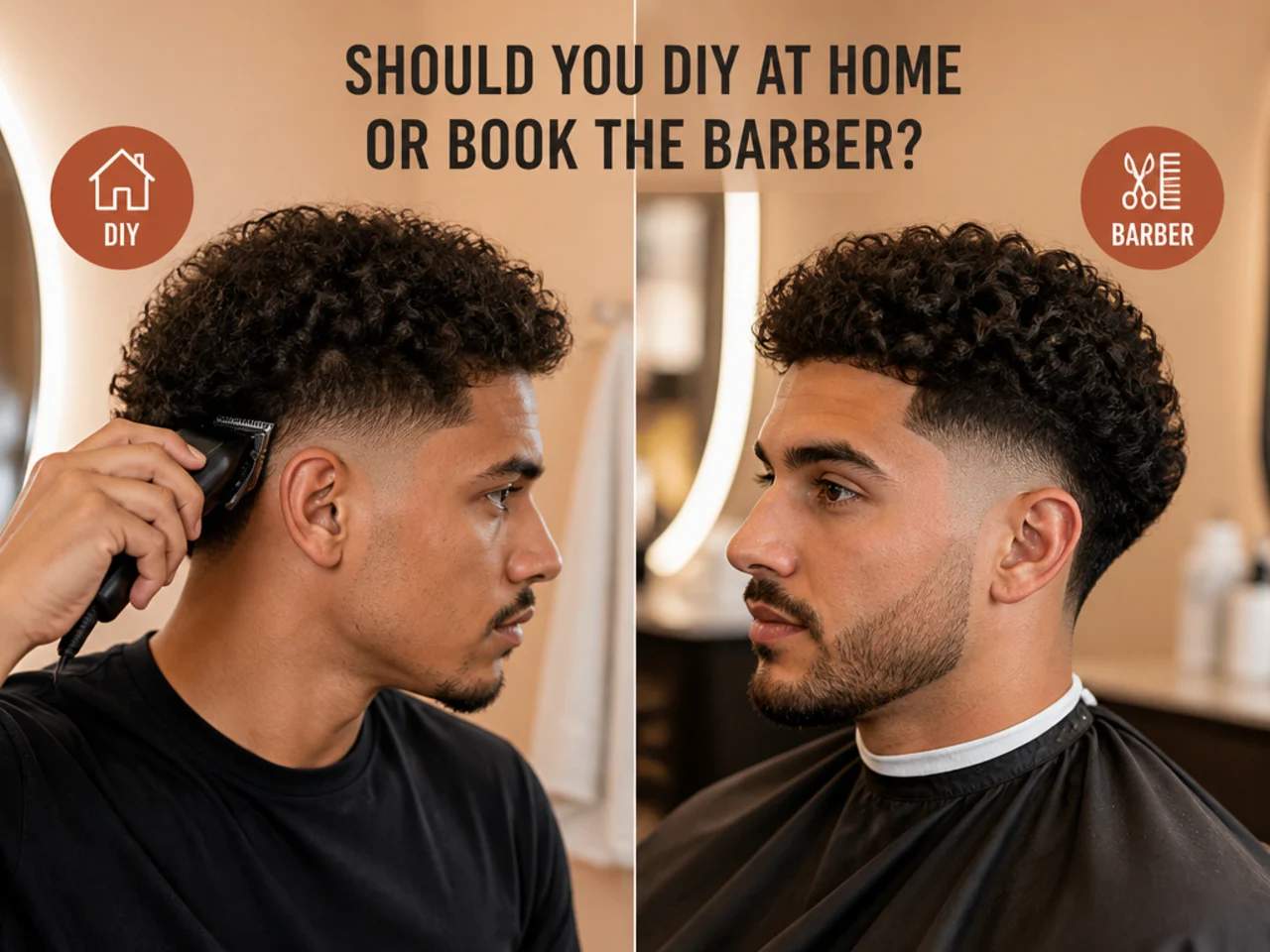
Can I do a low drop fade at home? No. The drop curve needs mirror angles, clipper skill, and steady hands you can't get on your own head. The straight line of a plain low fade is possible with patience and two mirrors; the curve is not. Leave this one to the barber and handle the neckline yourself between visits.
How does a low drop fade compare to a low burst fade? A low burst fade curves in a full semi-circle around your ear, leaving the nape longer. A low drop fade dips the line behind the ear but doesn't wrap around it — the arc is more subtle. Burst reads loudest, taper reads quietest, drop sits in the middle.