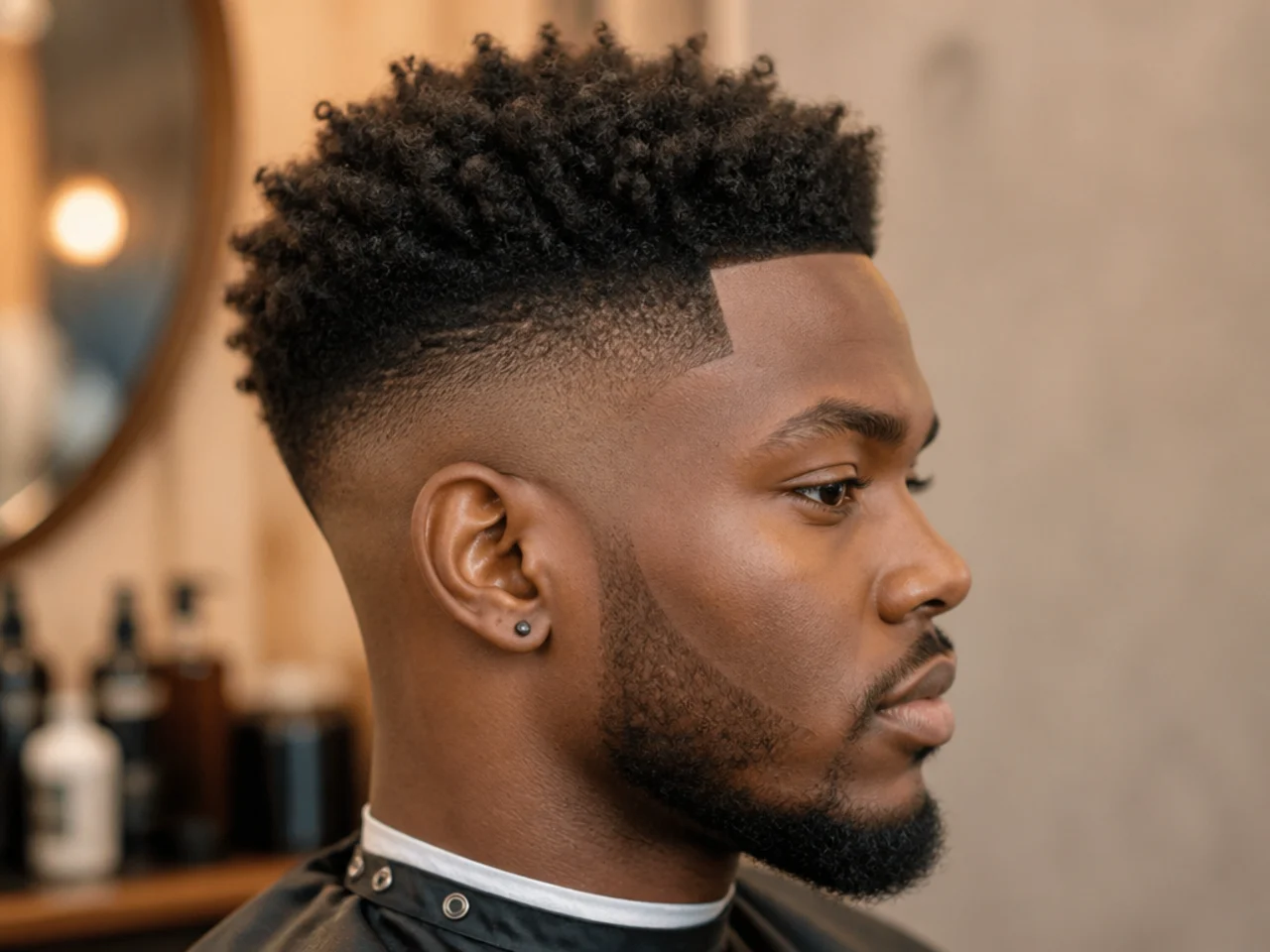
23 Fade Haircuts For Black Men: Sharp, Cool Variations
Upgrade your look with the hottest Fade Haircuts for Black Men! Stylish fades, sharp line-ups, and modern cuts perfect for every hair type and vibe.
In this article · 34
- Stylish, Trending Black Men's Fade Haircut Styles
- Low Fade
- Mid Fade
- High Fade
- Taper Fade
- Drop Fade
- Skin Fade
- Burst Fade
- Temp Fade
- Afro Fade
- High Top Fade
- Fade with Line Up
- Short Afro Curls with Low Skin Fade
- Twists Fade
- Dread Fade
- Low Skin Fade
- Temp Taper Fade
- Waves Fade
- Low Taper Fade
- Mid Temp Fade with Short Hair and Beard
- Buzz Cut Fade
- Sponged Long Afro Fade
- Low Temp Fade with Thick, Medium Curls
- Burst Fade Mohawk
- Faux Hawk Fade
- Why the Low Taper Black Male Style Is Trending
- Modern Black Men Haircuts to Try This Year
- Types of Fade Haircuts For Black Men
- Wrapping Up
- FAQ's
- What's The Best Fade For Black Men?
- What Is A Taper Vs Fade?
- What Is The Gen Z Haircut Called?
- Which Fade Haircut Is Best?
Fades hit different on 4A, 4B, and 4C hair. Clean skin on the sides makes your natural curl pattern up top read louder — the contrast is the whole point. This guide walks through 24 fade variations, how to describe each at the chair, and what suits your face and hairline. One thing up front: book your next cut before you leave. Fades blur by week two, and the taper line goes soft by week three.
Stylish, Trending Black Men's Fade Haircut Styles
You have more range on textured hair than any other type. The same fade family can look conservative under a low taper or land as a full statement under a high top. Here are 24 variations worth knowing, each with a specific way to ask for it.
Low Fade
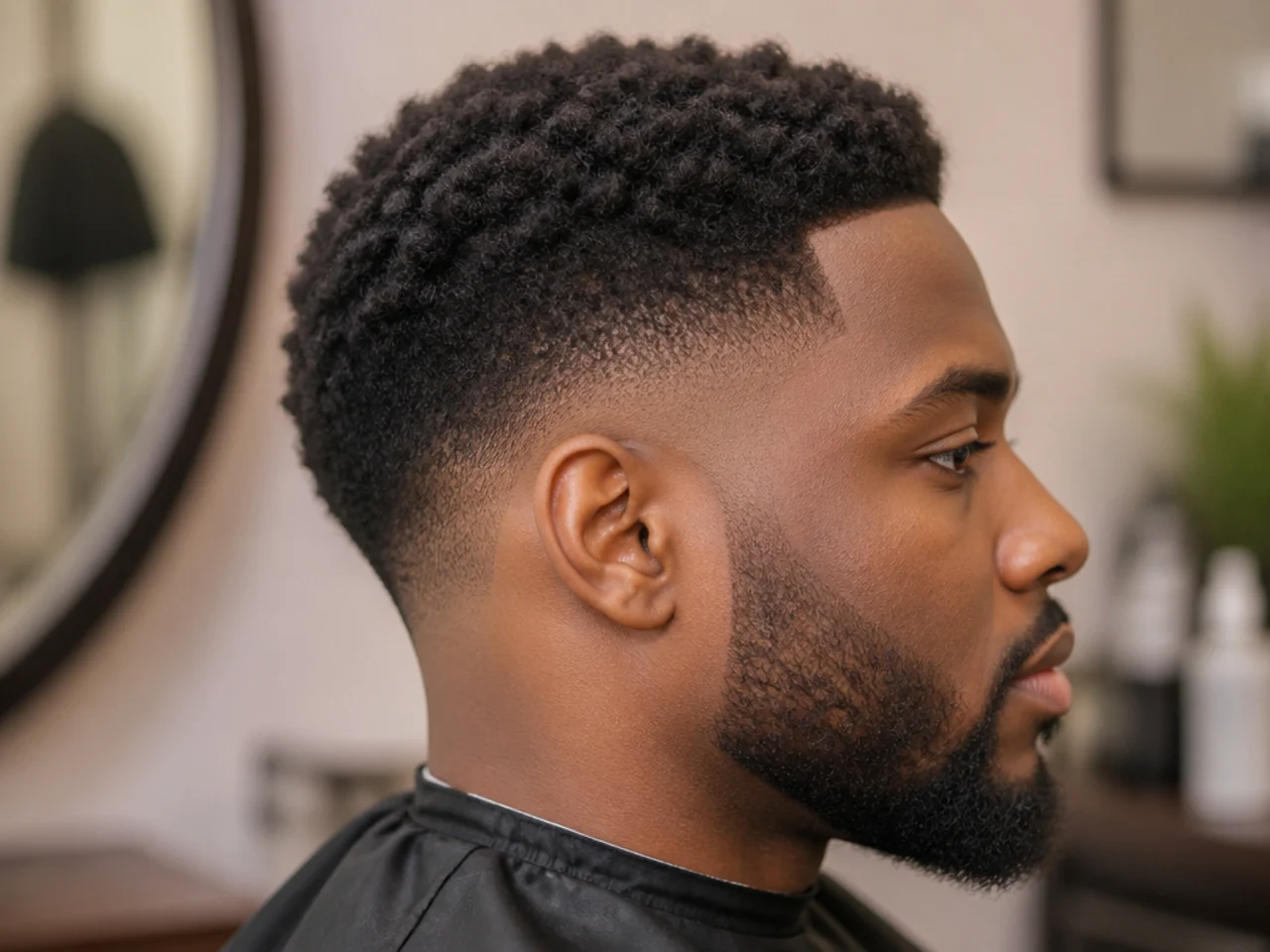
The Low Fade starts just above the ear and drops to the neck in a short window — usually two fingers wide. The transition sits low enough that most of your head still carries hair, so it reads clean and works for professional settings without shouting. Best for square and oval faces, and for guys with a straight or slightly rounded hairline. Pair it with waves, short curls, a sponged top, or a buzzed top around half an inch. Ask your barber for a low fade haircut starting a finger above the ear, guard 1 at the low point, blending up to guard 3 through the parietal ridge. Add a matte pomade or curl cream after a quick blow-dry, and hit it with a du-rag at night to keep the top laid down.
Mid Fade
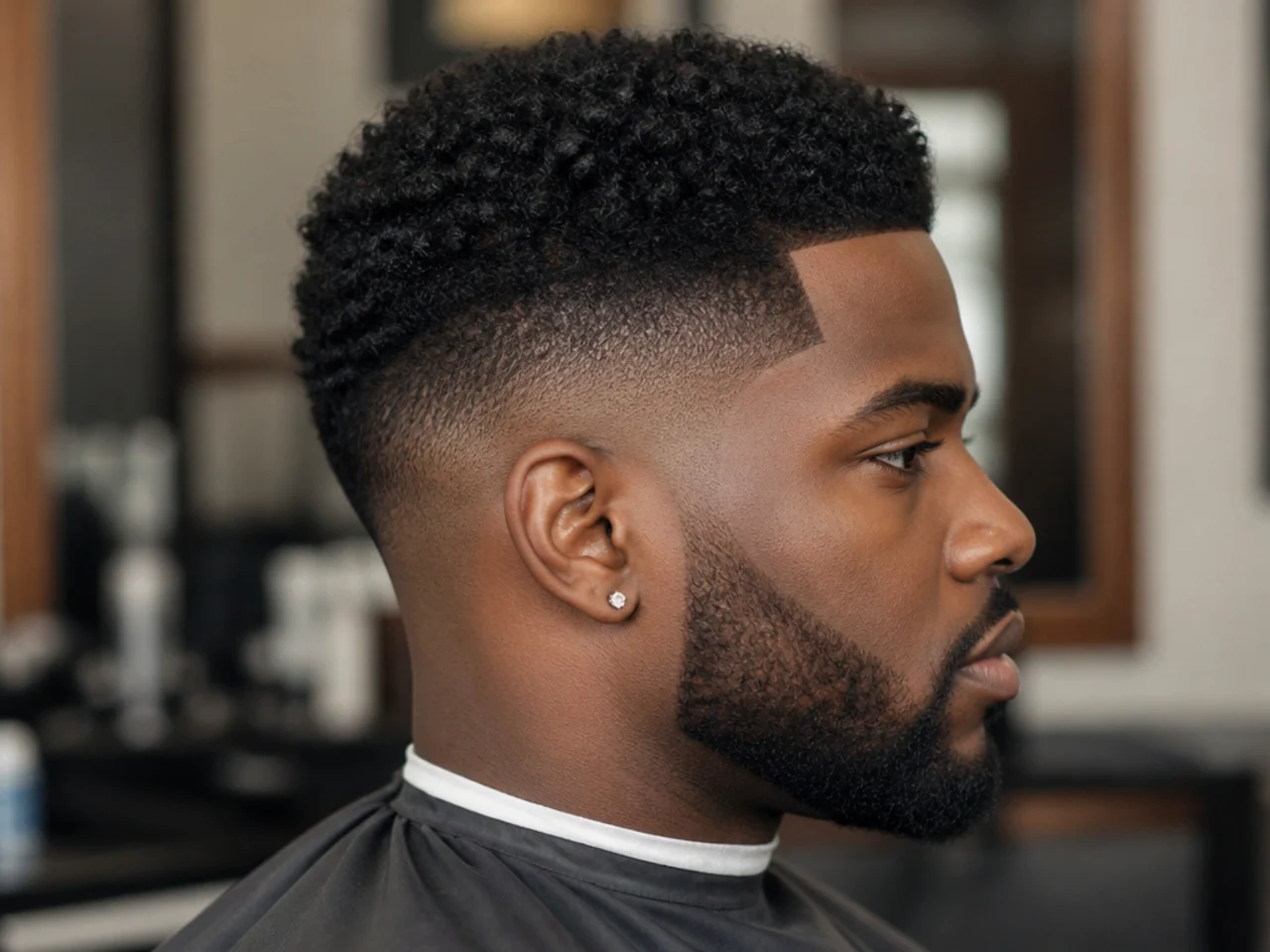
A Mid Fade splits the difference — the fade starts at the temple line, right where your parietal ridge begins to curve. You get more skin than a low fade, but the top still frames your face. It suits oval, round, and heart faces, and it flatters a curved or rounded hairline. Try it with a short afro at 1 to 2 inches, twists, or dense 360 waves. Tell your barber mid fade haircut, starting at the temple, blending from guard 0.5 to a scissor-cut top. Ask for a soft transition — no hard line. Two weeks in, run to the shop for a quick edge-up if you want the line-up sharp again.
High Fade
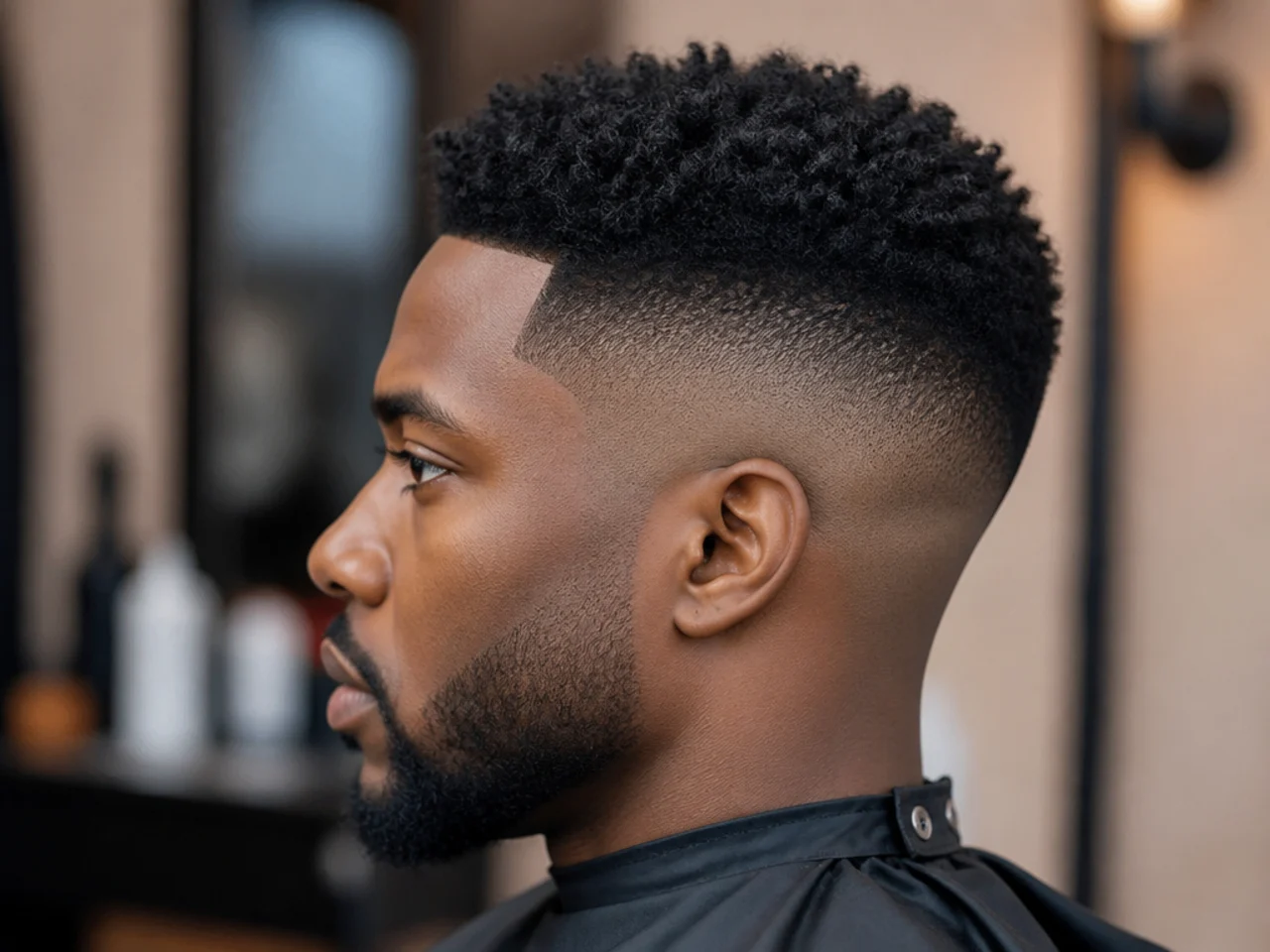
The High Fade starts above the temple, closer to the crown, so most of your head shows exposed skin or short fade. It reads bold. Save it for oval, square, and diamond faces — round faces can look wider under a high fade because the fade sits right at cheekbone level. It's the fade for a high top, a mini afro, or dense waves you want to show off. Ask for guard 0 or 0.5 at the bottom, fading up to guard 3, with a hard part above the temple if you want extra structure. High fades need a visit every 10 to 14 days. Any longer and the transition line looks smudged, not sharp.
Taper Fade
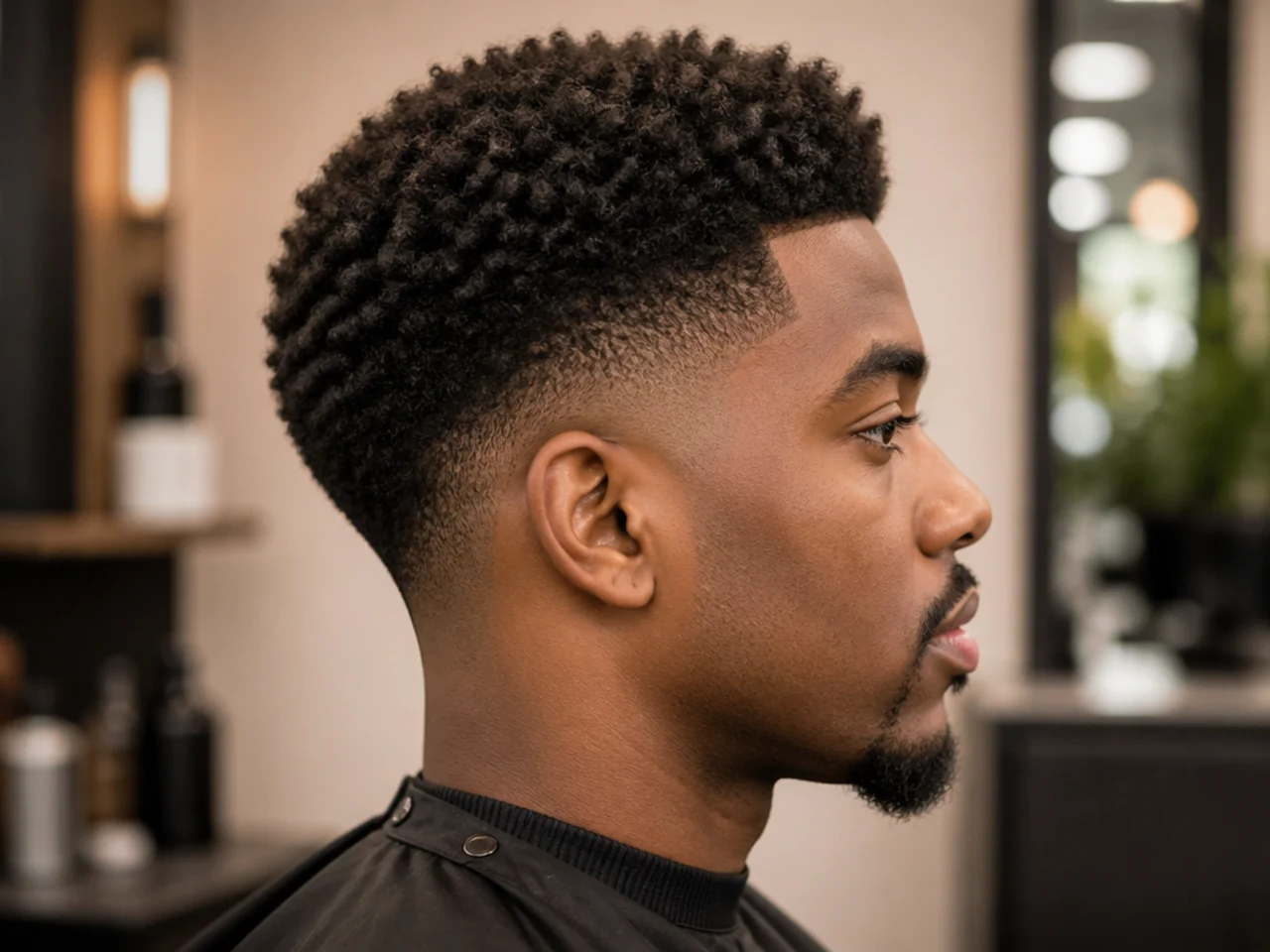
A Taper Fade is subtler than a full fade — the hair gets shorter through the nape and around the ear but doesn't blend to skin. Great for corporate settings, weddings, or anywhere you want structure without shouting. Suits every face shape. Ask for a taper around the ear and neck, keeping guard 2 or 3 at the shortest point. For a slightly sharper version, look at the high taper fade haircut — the taper carries higher up the head and gives more visible contrast. Style your top with a light curl cream and pat it into shape. You can push a taper to three weeks between cuts, which is why guys who travel love it.
Drop Fade
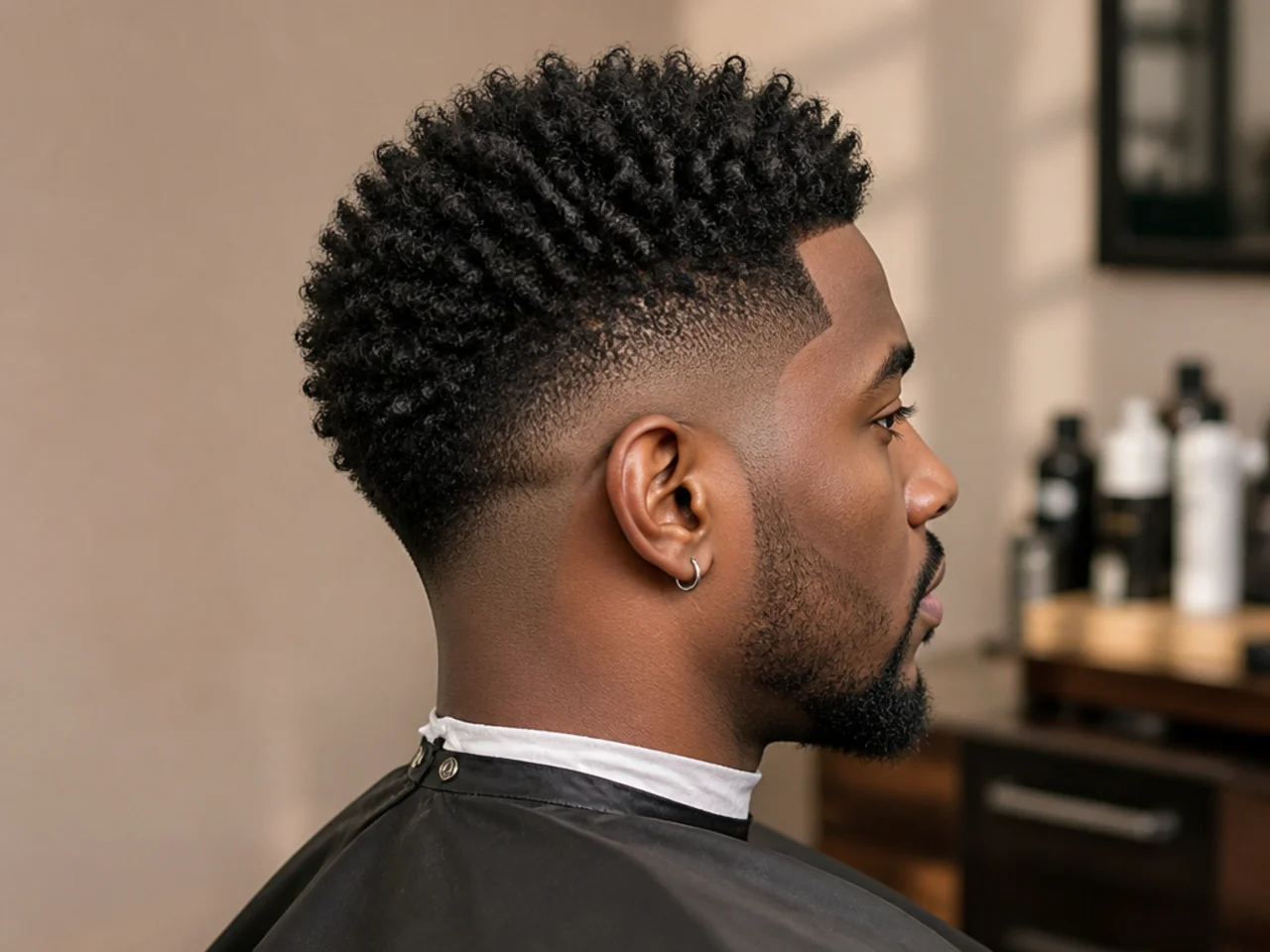
The Drop Fade curves down behind the ear so the fade line drops lower at the back than it does at the temple. It follows the natural round of your head. This one flatters heart-shaped and oval faces, and it works particularly well when your hairline curves rather than sitting flat. Pair it with two-strand twists, braids, a small mohawk, or a curly top around 2 inches. Ask for the fade to drop a full inch behind the ear, guard 1 at the low point. The drop shape adds movement, so you don't need a hard part or line-up unless you want one. Coconut oil on the top after a shower keeps the curls springy through the day.
Skin Fade
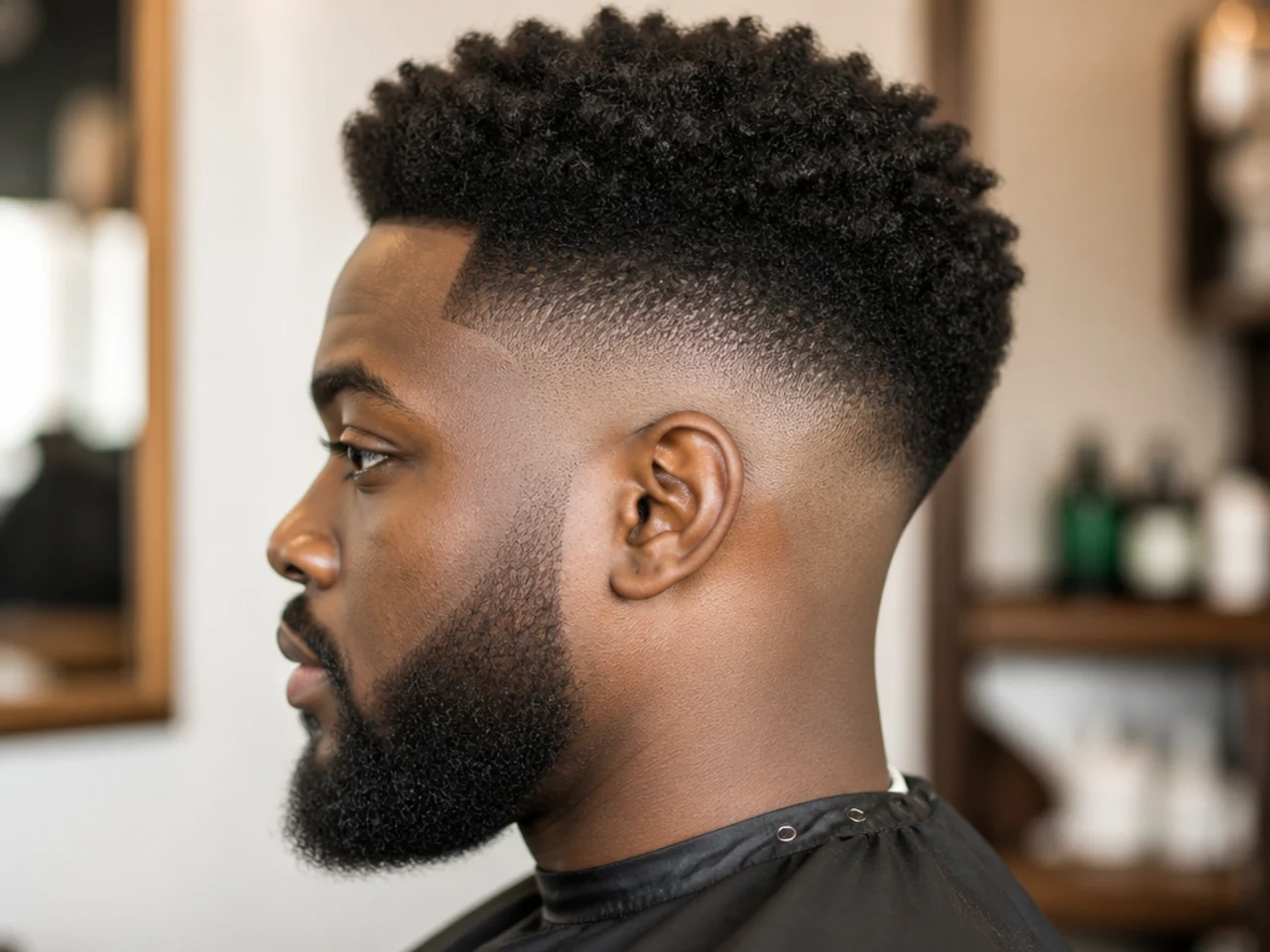
A Skin Fade blends all the way to bare scalp — no guard, just clippers and a foil shaver at the very bottom. It's the sharpest, cleanest version of any fade family. Works with every face shape, but it rewards a defined hairline the most. Ask for a bald fade or a zero fade, then specify where you want it — low, mid, or high. Add a straight line-up at the temples for structure. Skin exposed at the bottom stains easily from dark clothing collars, so pat the neck dry after showering. Keep sunscreen on the exposed skin through the summer, and book every 10 days if you want the fade to look freshly cut.
Burst Fade
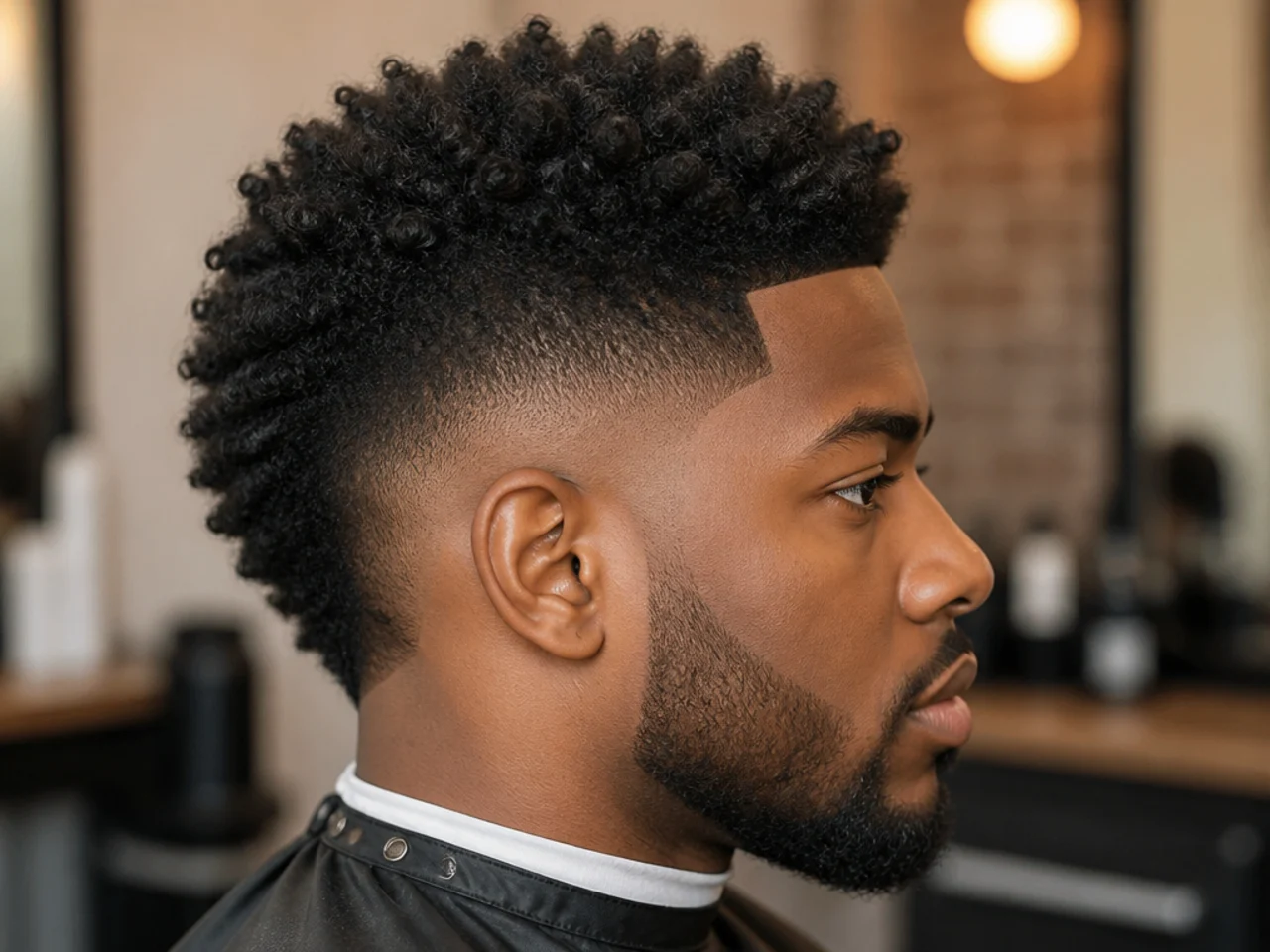
The Burst Fade fades in a semicircle around the ear, leaving the back of your neck longer than the sides. It creates a burst of shape that draws the eye up to whatever you're doing on top. Perfect for mohawks, faux hawks, high tops, or a curly top with a lot of volume. Ask for a burst starting behind the temple, arcing around the ear, and finishing at the base of the skull. Guard 0 or 0.5 at the shortest point. The burst pairs naturally with textured tops because the round fade shape mirrors curl direction. Two-week visits keep the burst edge crisp — after that, the fade blurs into the longer nape hair and the shape gets lost.
Temp Fade
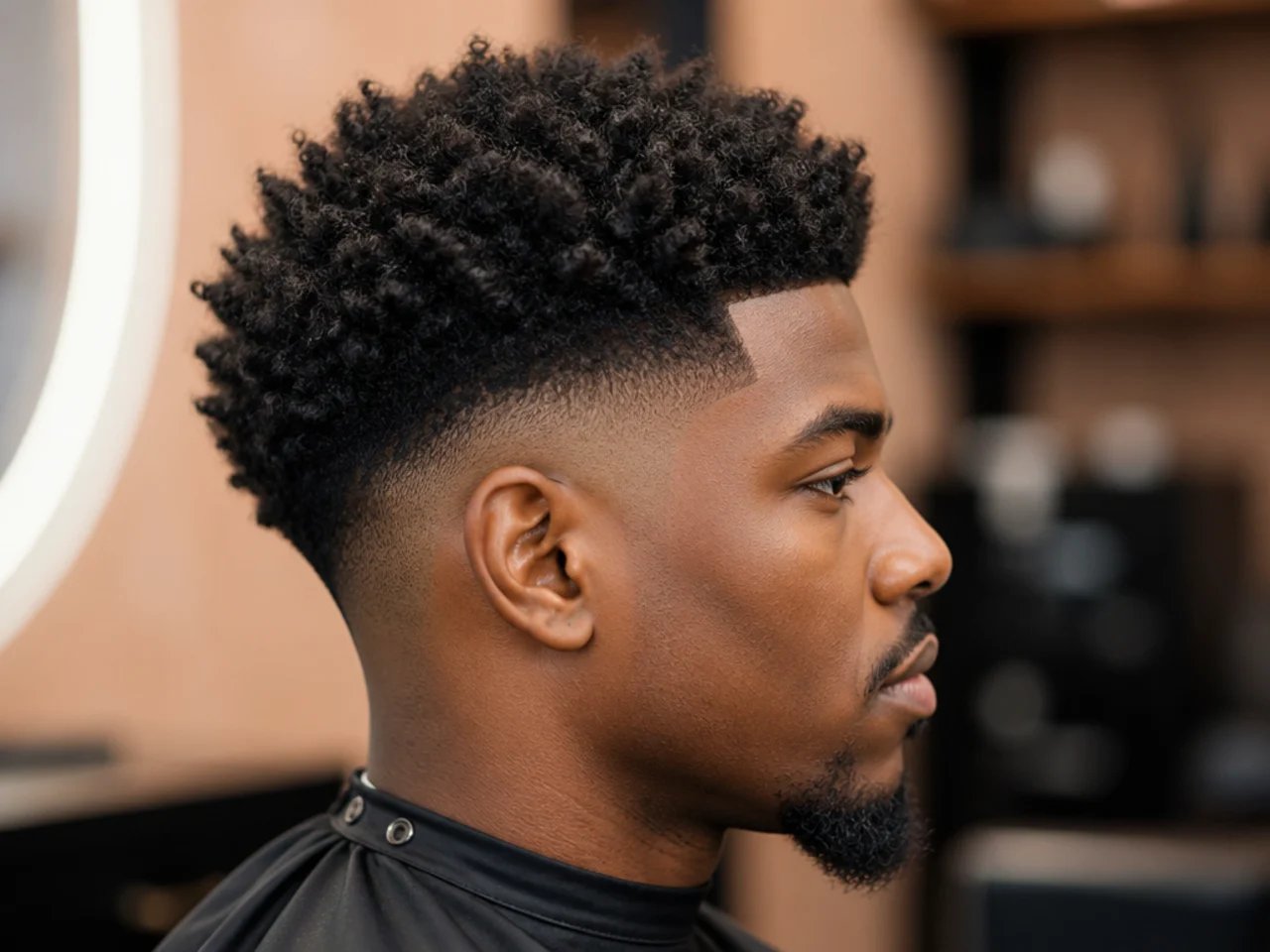
A Temp Fade — sometimes called a temple fade — only fades the corners at the temples. Everything else stays your regular length. It's a targeted move for guys who want a hint of structure without committing to a full fade. Great for round and square faces, and it's a smart first fade if you're transitioning from a longer style. Ask for a temple taper about two inches long, guard 0 at the shortest point, blending up to your natural length. The temp fade lets your hairline lead the design — talk to your barber about a straight line-up, a curved one, or a subtle taper into the sideburn. This is the lowest-maintenance fade in the guide.
Afro Fade
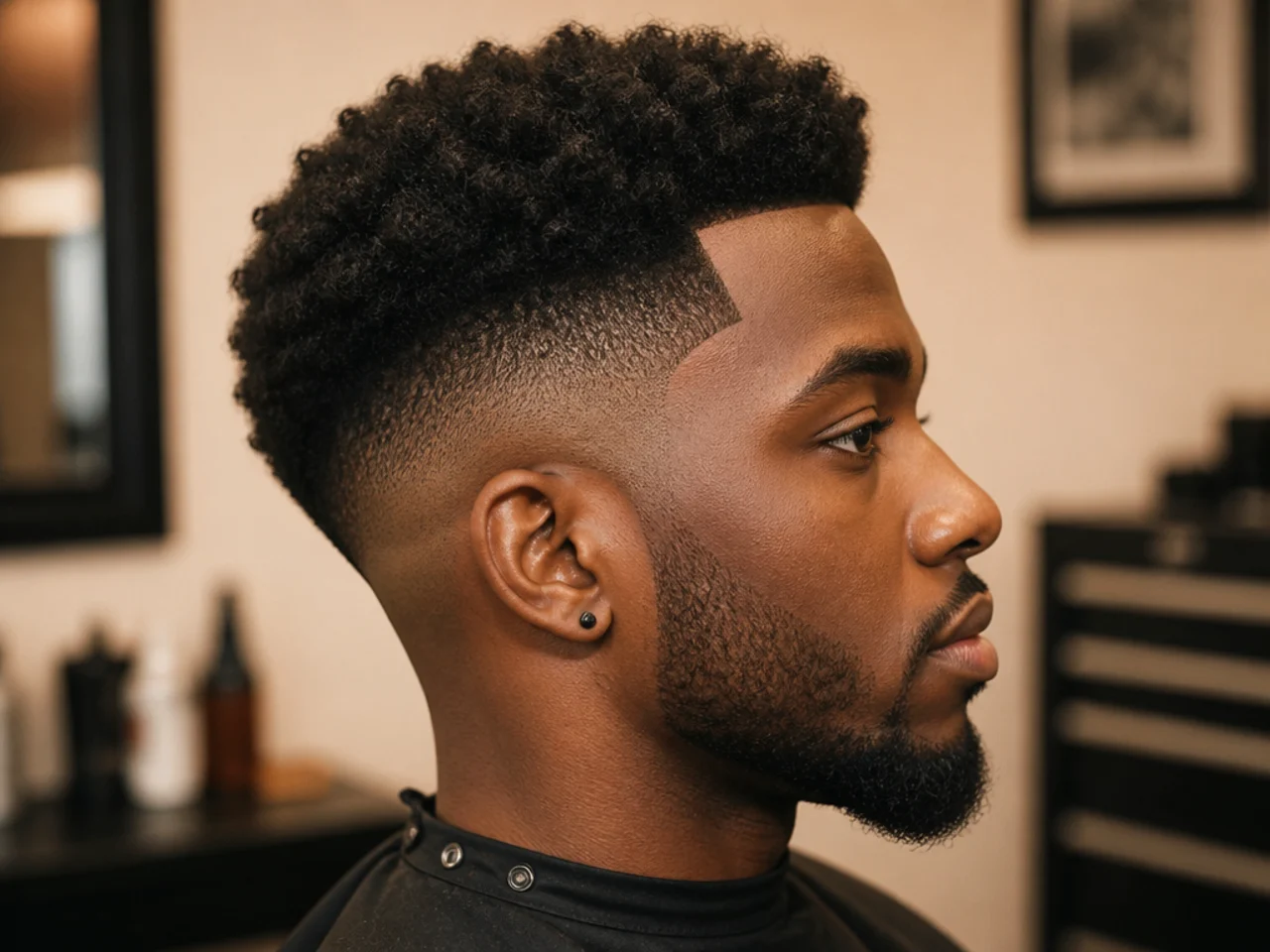
The Afro Fade keeps a shaped afro up top and fades or tapers the sides. The bigger the afro, the sharper the contrast. Fits oval and square faces, and pairs well with a defined hairline shape — because a shaped afro amplifies whatever your hairline is doing. Ask for the fade at whatever height suits you — a low fade preserves more volume around the head, a high fade throws all the visual weight upward. Have your barber sponge or pick out the afro at the end of the appointment so the shape is even. Moisturize daily with a leave-in, and sleep on a satin pillowcase or under a bonnet. Afros need moisture more than they need product — dry curls lose their shape fast.
High Top Fade
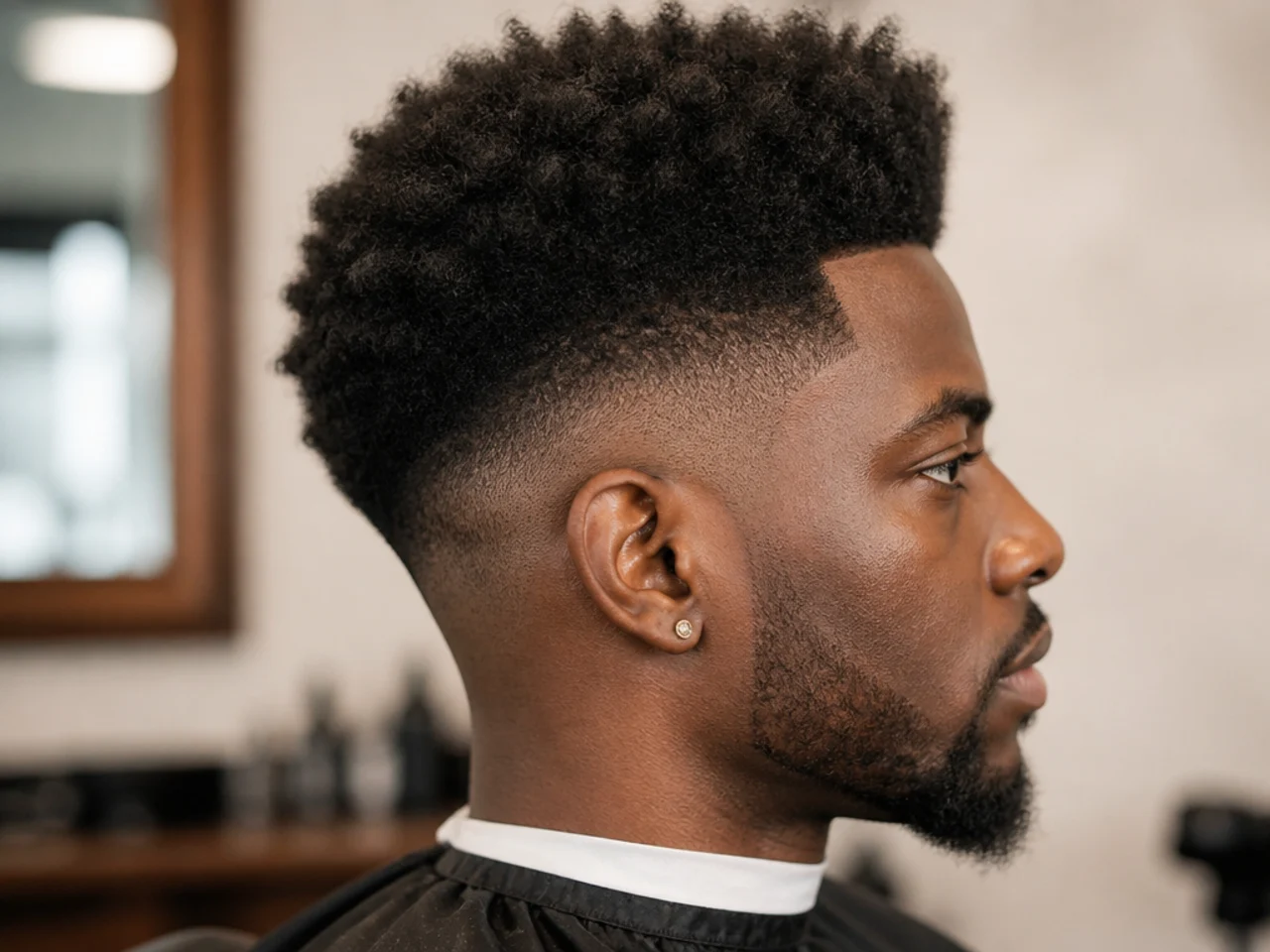
The High Top Fade stacks flat-topped, blocky hair on top over faded sides. It's a heritage cut — Kid 'n Play, Fresh Prince, the Fab 5 — and it comes back into rotation every few years. Best for oval and long faces where the added height doesn't feel unbalanced. Ask for the top at 3 to 4 inches, cut flat with a comb-and-clipper technique, and a mid or high skin fade on the sides. Precision is everything here. Your barber needs to know how to level the top with clippers, not scissors, or the shape sags within a week. Pat the top with a boar-bristle brush and moisturizer every night to hold the shape and stop it from leaning.
Fade with Line Up
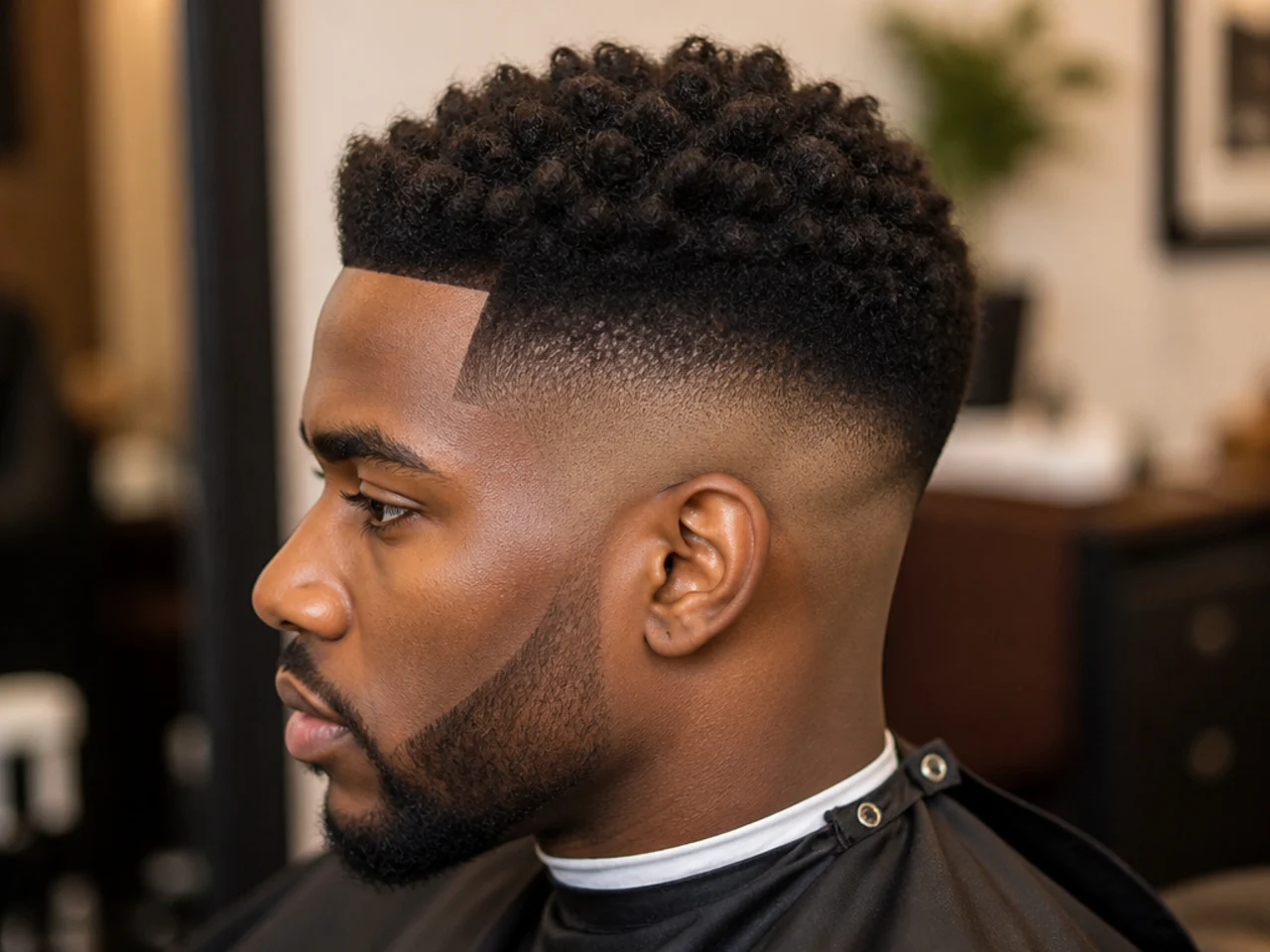
A Fade with Line Up takes any fade and adds a straight, razor-defined edge across your hairline. The line-up runs along the forehead, down the sideburns, and around the beard. It's the finish that separates a good cut from a great one. Any face shape works — the line-up is what tightens the whole look. Tell your barber where you want the line drawn: at your natural hairline, or a hair below to build the line back over a few visits. Ask for a straight razor on the finish, not just clippers. Between cuts, use a trimmer to touch up stray hairs along the line, but leave the actual straight edge alone — that's your barber's work.
Short Afro Curls with Low Skin Fade
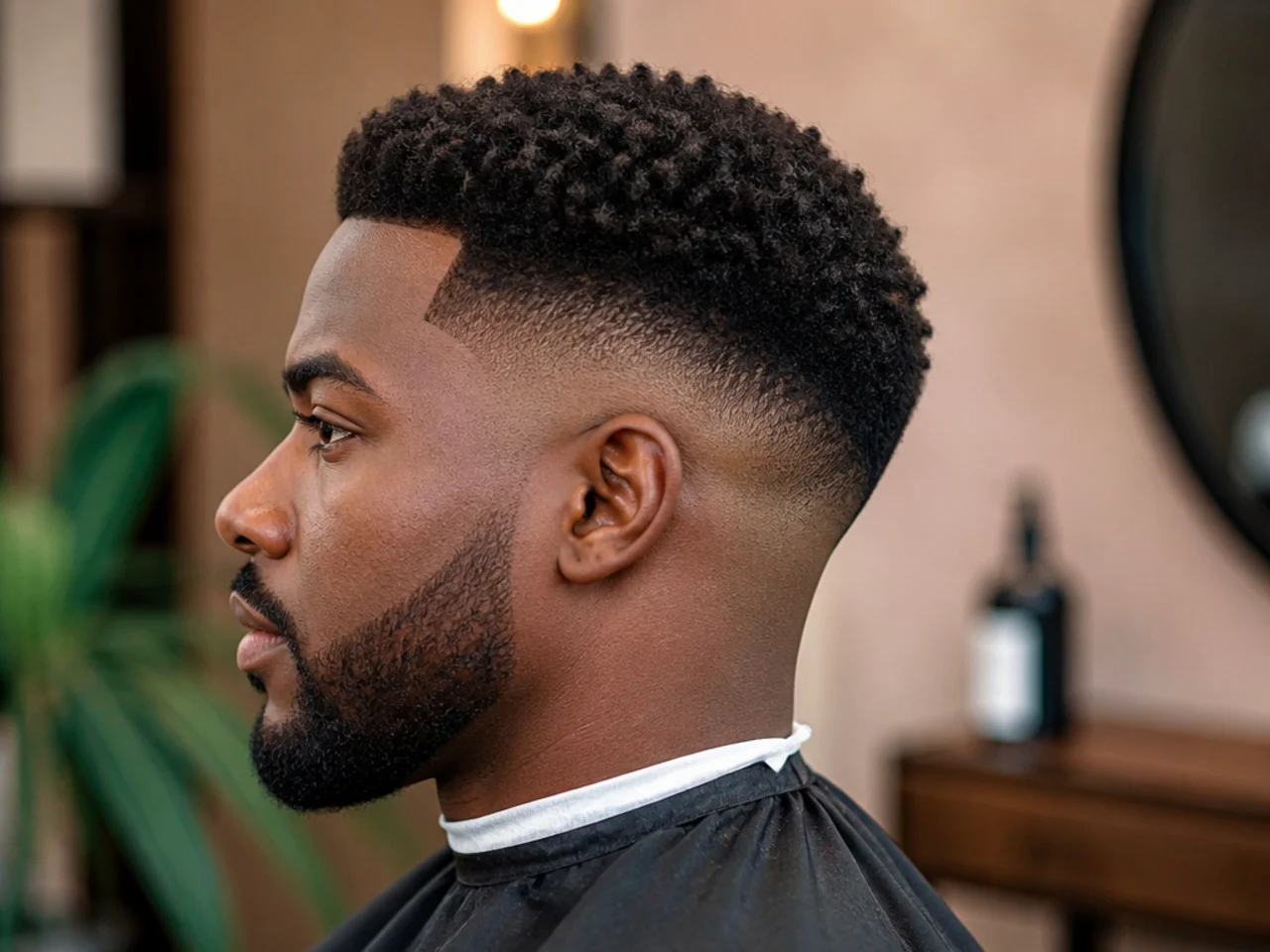
Short afro curls with a low skin fade is the everyday move. You keep 1 to 2 inches of curl on top, cut in a rounded shape, with a bald fade blending in at the ears. Suits every face shape and every hairline. This is the fade for guys who want to show off their natural pattern without a lot of styling. Ask for a low skin fade and scissor work on the top — no clippers on the curls, which flatten the pattern. Add a curl-defining cream after showering, scrunch, and let it air dry. Explore more curly hairstyles for men if you want to see variations on this same silhouette. Two-week visits keep the fade crisp against the curls.
Twists Fade
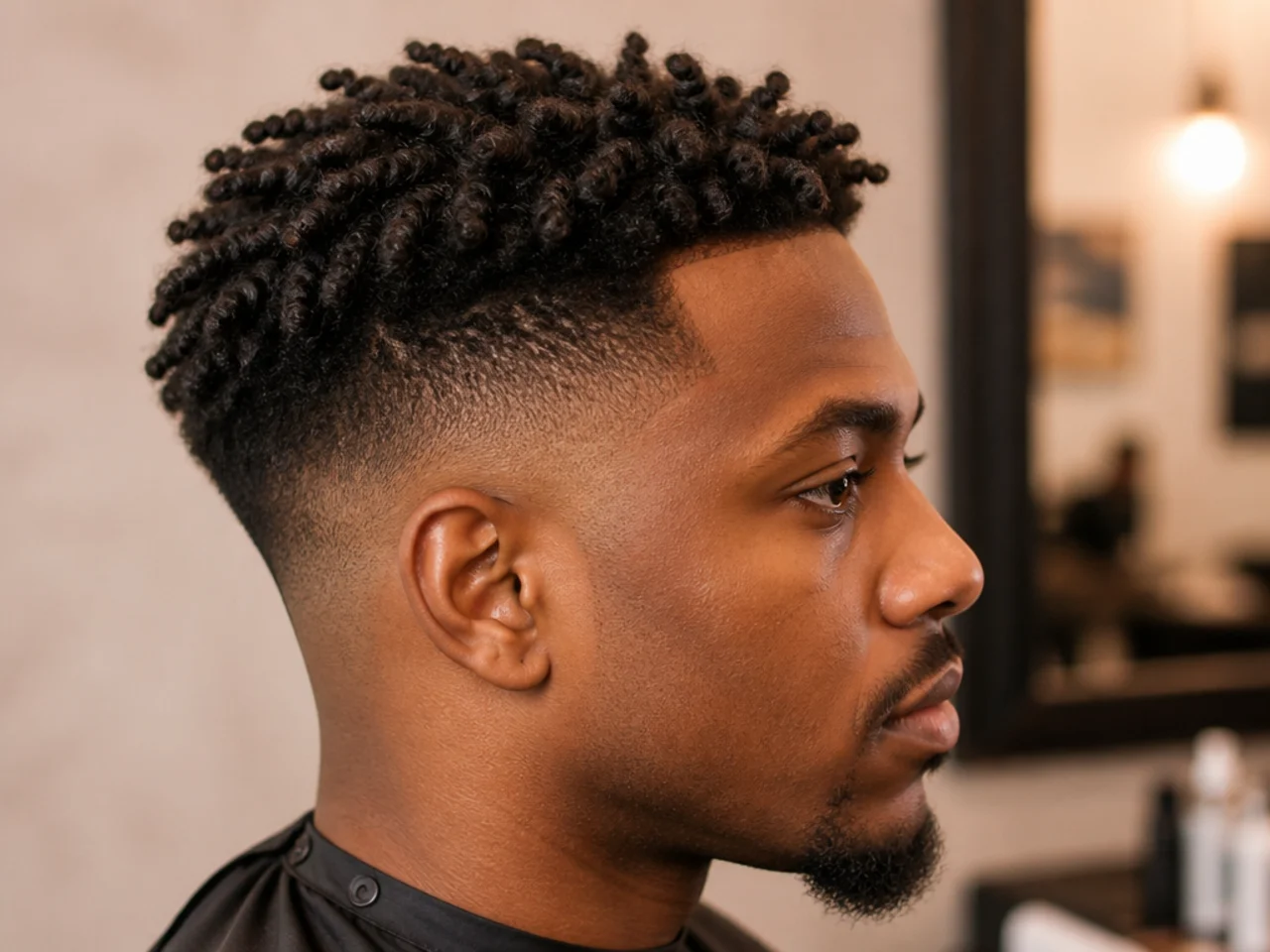
Short two-strand twists with a fade take a barber and a stylist working together — or one talented person who does both. The twists sit on top in even rows, and the fade blends the untwisted sides. Perfect for round and oval faces, and for guys with dense hair that holds twists cleanly. Ask for a low or mid taper fade, then have the top twisted with a curl gel while damp. Keep twists in for two to three weeks before untwisting or retwisting. Explore other textured haircuts for men if you want to see how twists compare to braids or coils. Sleep on a satin pillowcase so the twists don't unravel overnight, and re-oil the scalp weekly.
Dread Fade
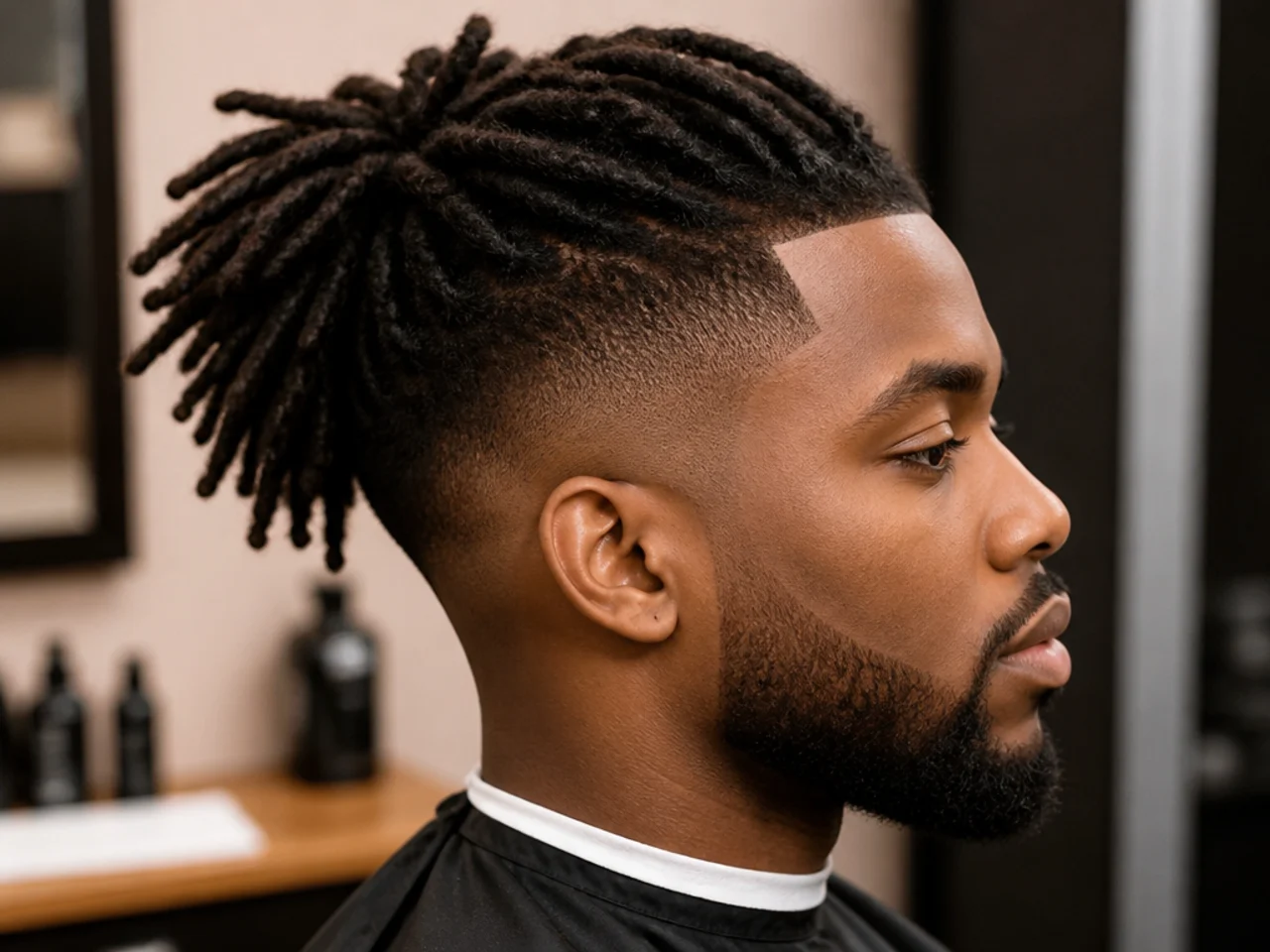
The Dread Fade pairs long locs on top with faded sides — either the locs run through the top only, or they sit in a mohawk formation with skin on either side. Works for oval, square, and long faces. Ask for the fade first — low, mid, or high — then let the locs cascade or pull them into a top-knot. If your locs are new, don't fade too high or you'll expose the retwisting sections at the roots. Between cuts, wash locs weekly with a residue-free shampoo, and retwist the roots every four to six weeks. The line-up frames the locs, so keep it fresh even when the fade is holding through week three.
Low Skin Fade
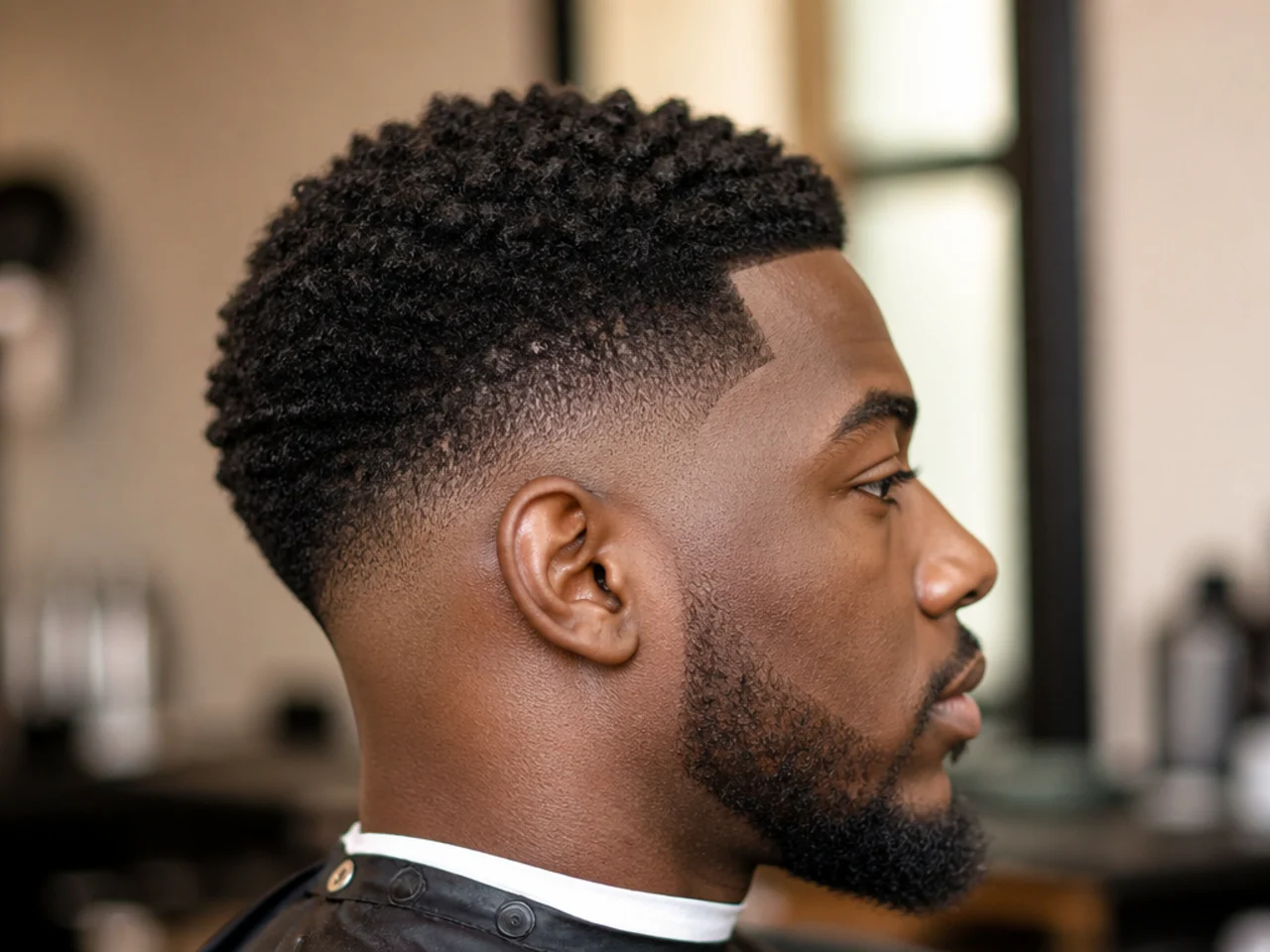
The Low Skin Fade is the low fade's sharper cousin — same starting point, but the shortest section blends to bare skin. It reads cleaner and more modern. Suits every face shape, and it's particularly strong for guys with a defined hairline. Ask for a low fade to skin, starting a finger above the ear, blending up to guard 3 or 4 through the parietal. Great with a short afro, waves, or a scissor-cut curly top around an inch and a half. The exposed skin at the neckline needs sunscreen if you're outdoors much, and a quick rub of moisturizer keeps the fresh-cut skin from getting flaky. Book every 10 to 14 days to hold the sharpness.
Temp Taper Fade
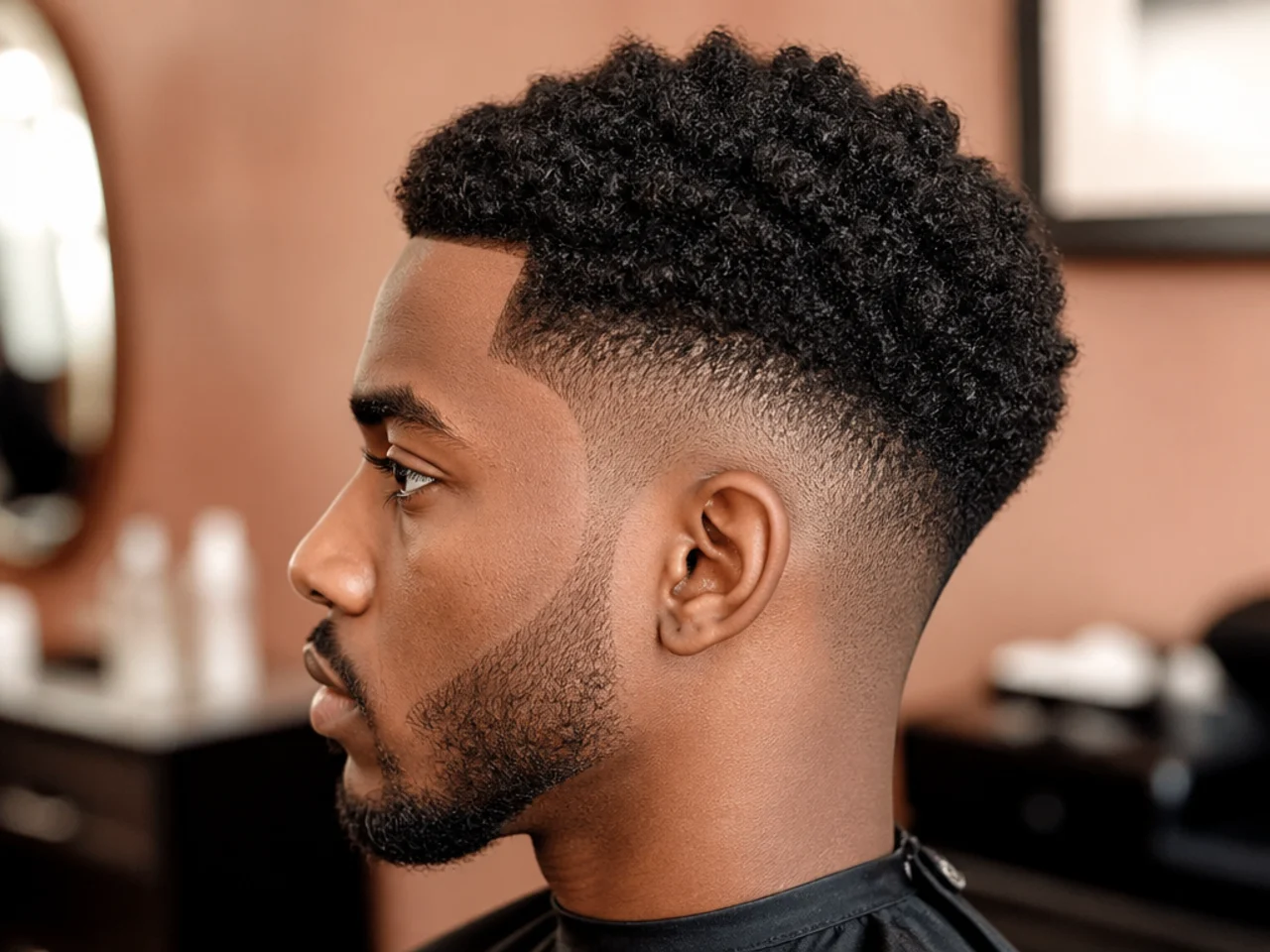
A temp taper fade softens the corners at the temples with a taper instead of a full fade. Less dramatic than a temp fade, cleaner than doing nothing. Fits every face shape, and it's a smart middle ground for guys who want structure without exposed skin. Ask for a temple taper starting at the corner of the hairline, blending from guard 1 up to your natural length over about two inches. The taper lets the rest of your hair stay long — a shape-up for the hairline, minus the commitment. Any top style works, from twists to a small afro to short curls. Between visits, use a trimmer along the sideburn to keep the taper edge clean.
Waves Fade
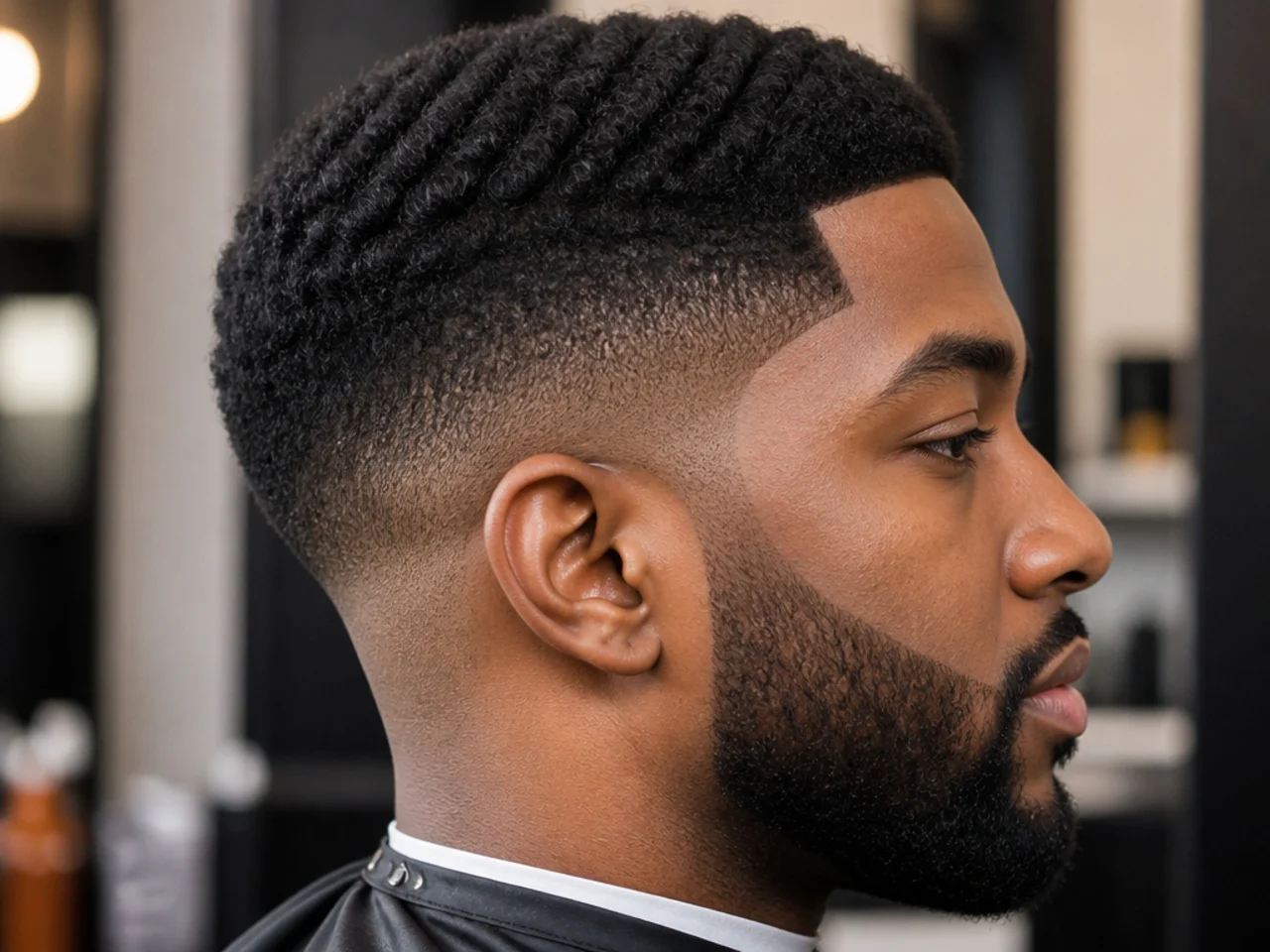
A Waves Fade is a taper or skin fade under a set of 360 waves. The clean sides make the wave pattern up top pop against the fade line. Best for oval and round faces, and it rewards dense, coarse hair that holds a wolfing session. Ask for a bald taper — no drop, just a clean fade from skin at the ear to guard 1 across the top. The top stays uncut for the length of your wolfing cycle. Your brush routine is the whole game: soft, medium, hard, in that order, twice a day. Wear a du-rag or wave cap for at least 30 minutes after each brush session, and sleep in silk every single night.
Low Taper Fade
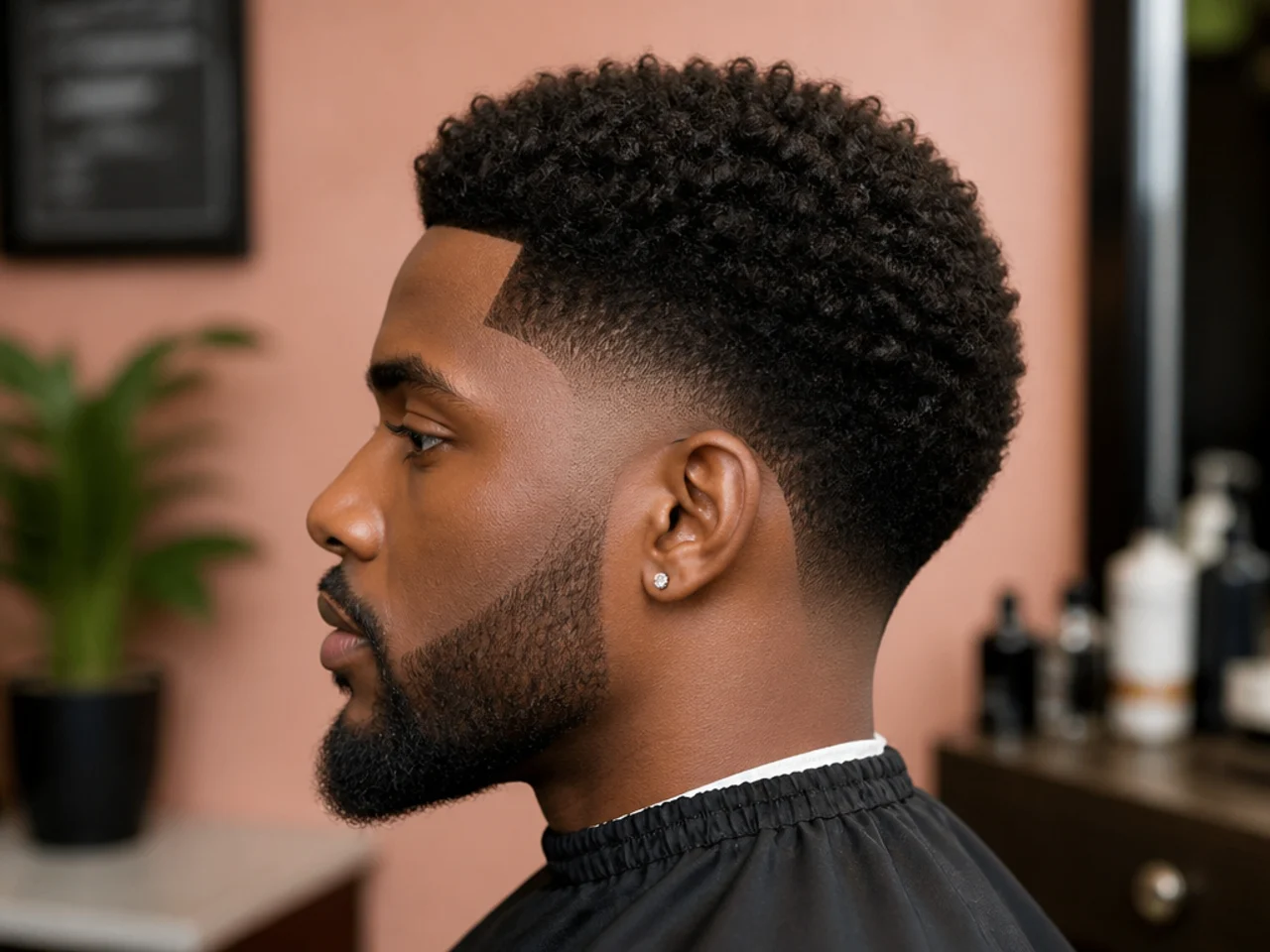
The low taper fade is the subtlest fade in the family. The taper starts at the nape and around the ear, blending from guard 1 or 2 up to your natural length without ever going to skin. It looks polished in a suit and casual in a hoodie. Suits every face shape and every hairline. Ask for a low taper, guard 2 at the shortest point, keeping the length above the parietal ridge untouched. Pair it with short curls, waves, a small afro, or twists. This is the fade for guys who want three to four weeks between cuts — the taper blurs slower than a skin fade, so it forgives a delayed appointment without looking scruffy.
Mid Temp Fade with Short Hair and Beard
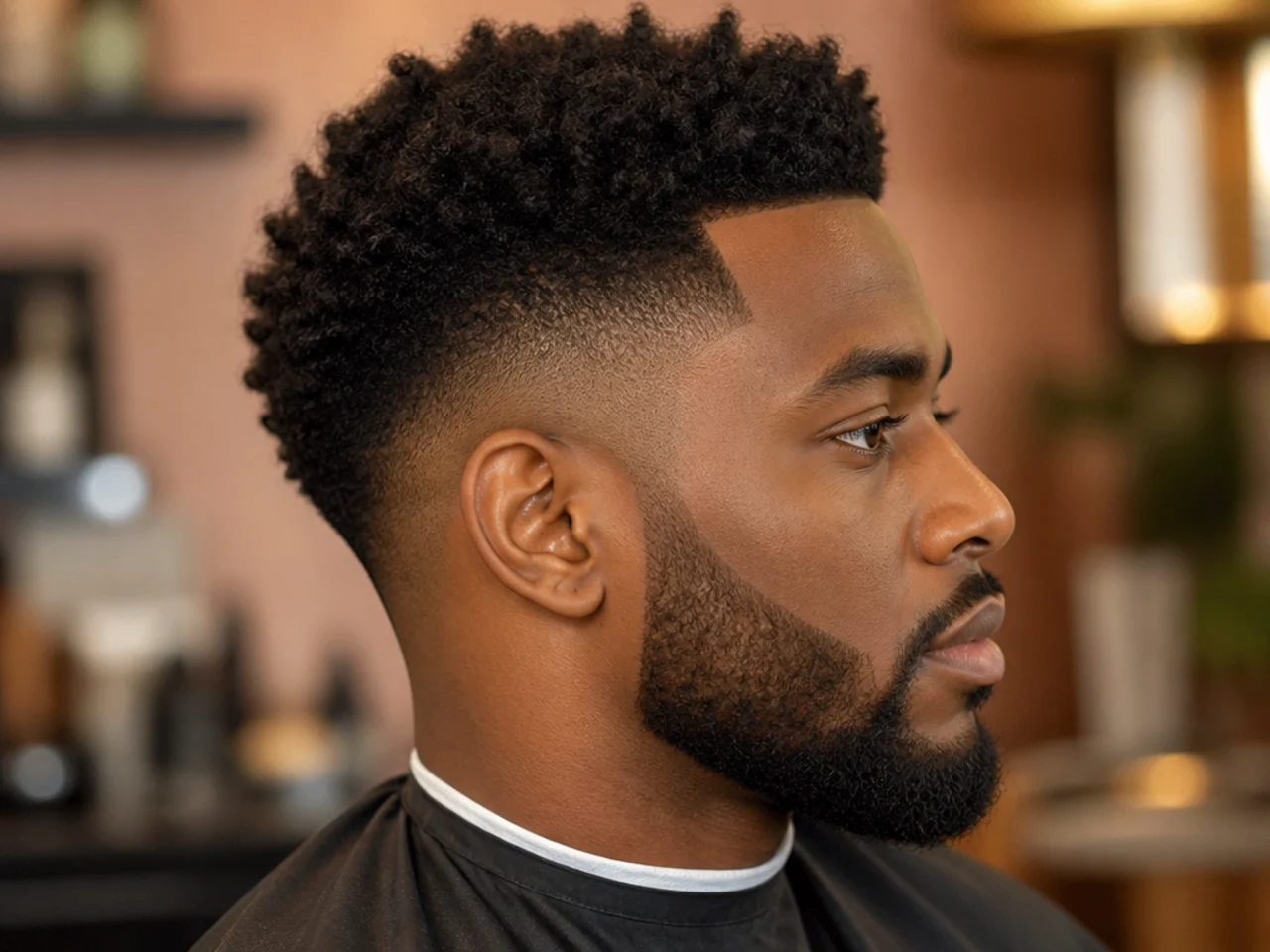
A mid temp fade with short hair and beard puts a mid-height temple fade against a matched beard fade. The fade line runs from the sideburn into the beard so the transition looks continuous. Best for oval, square, and diamond faces where the beard adds jaw definition. Ask for a mid temple fade tied into a full beard shape-up, guard 0.5 at the shortest section, with the beard tapered to match. Keep the top short — around half an inch of texture. Beard oil every morning, and comb the beard down before your barber shapes it so the length reads accurately. Book beard trims on the same schedule as head cuts so both stay sharp together.
Buzz Cut Fade
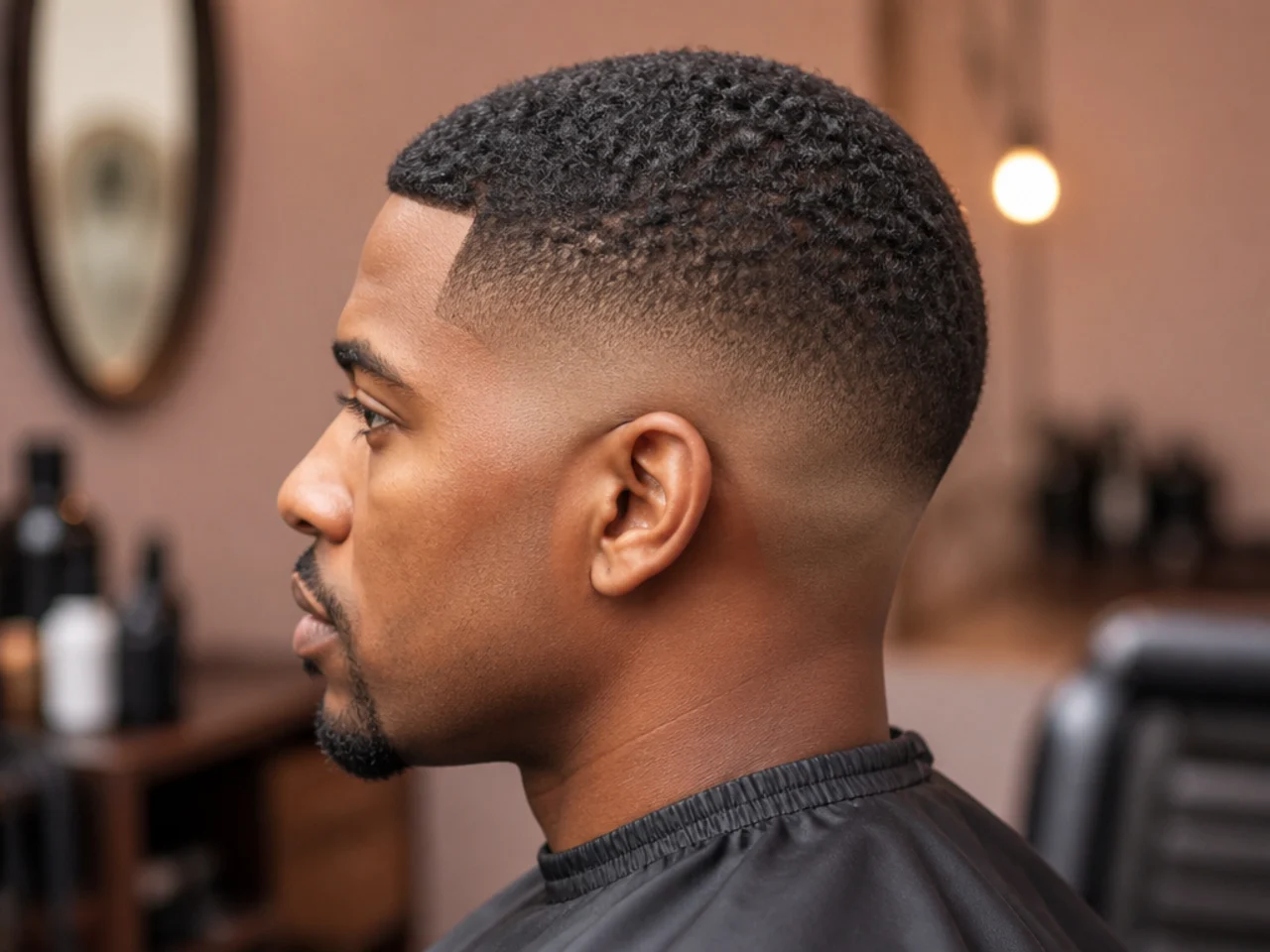
A Buzz Cut Fade takes a short all-over buzz — usually guard 1 or 2 — and adds a fade underneath. Total time in the chair: 15 minutes. Suits oval, square, and diamond faces, and it's the fade for guys with a strong hairline and skull shape to show off. Ask for a guard 1 or 2 top, blended into a low or mid skin fade. Add a chin patch or a short beard for balance. Zero styling required — a splash of water and a rub of the head is your morning routine. Book every two weeks or the top starts to catch up to the fade and the contrast disappears. Consider an undercut fade variation if you want a harder line between the top and sides.
Sponged Long Afro Fade
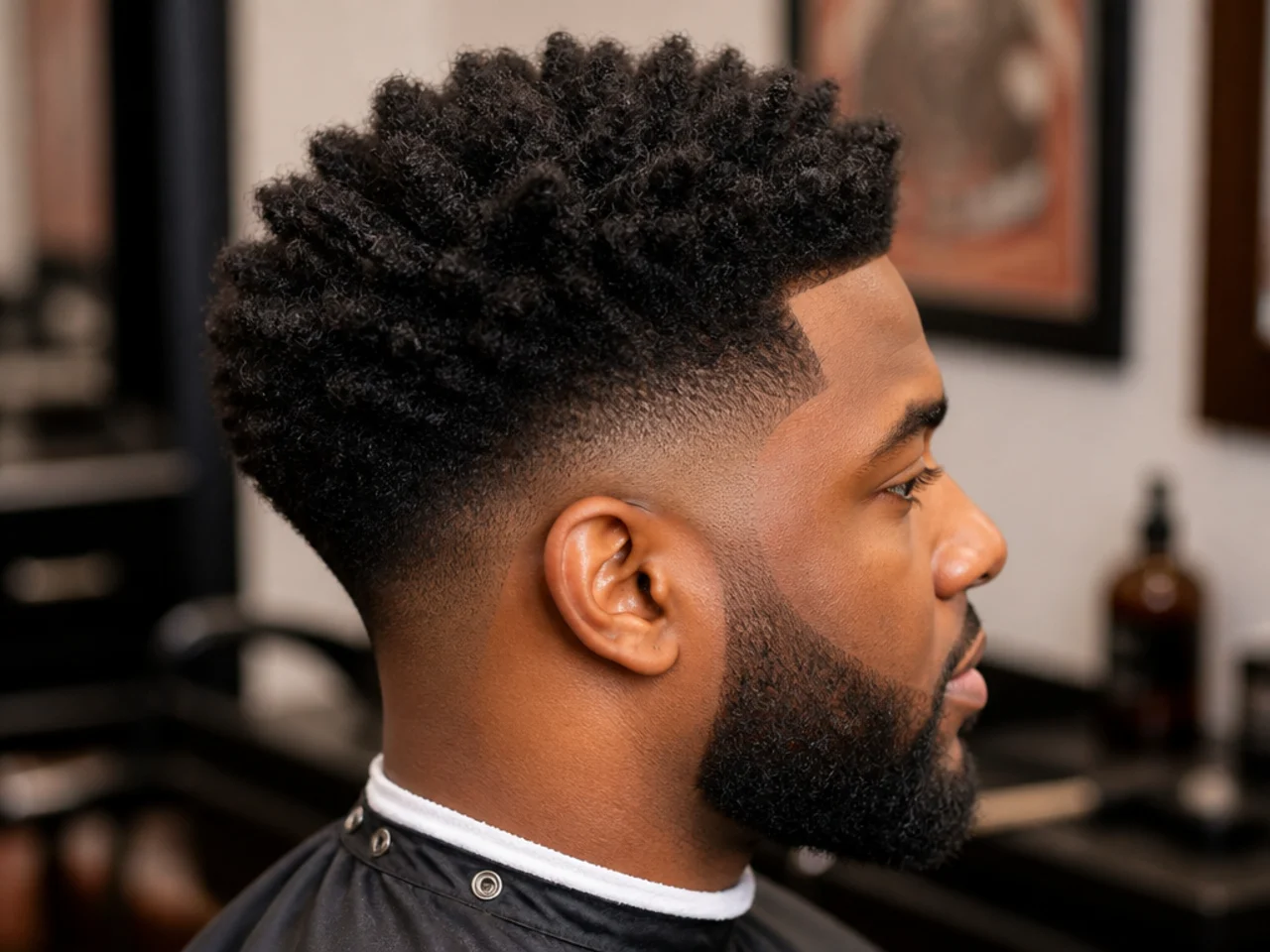
A sponged long afro with a fade takes your natural coil pattern and defines it with a hair sponge — small circles across the top to form the coils. The fade underneath keeps the sides sharp against the volume above. Best for oval, square, and long faces. Ask for the fade first — mid or high, blended to skin — then have your barber sponge the top while your hair is still damp. Keep the top 3 to 4 inches long or the coils won't form. Moisturize with a leave-in before you sponge, and sleep in a bonnet to preserve the coils overnight. Fades need to stay tight because the top volume amplifies any blur in the fade line.
Low Temp Fade with Thick, Medium Curls
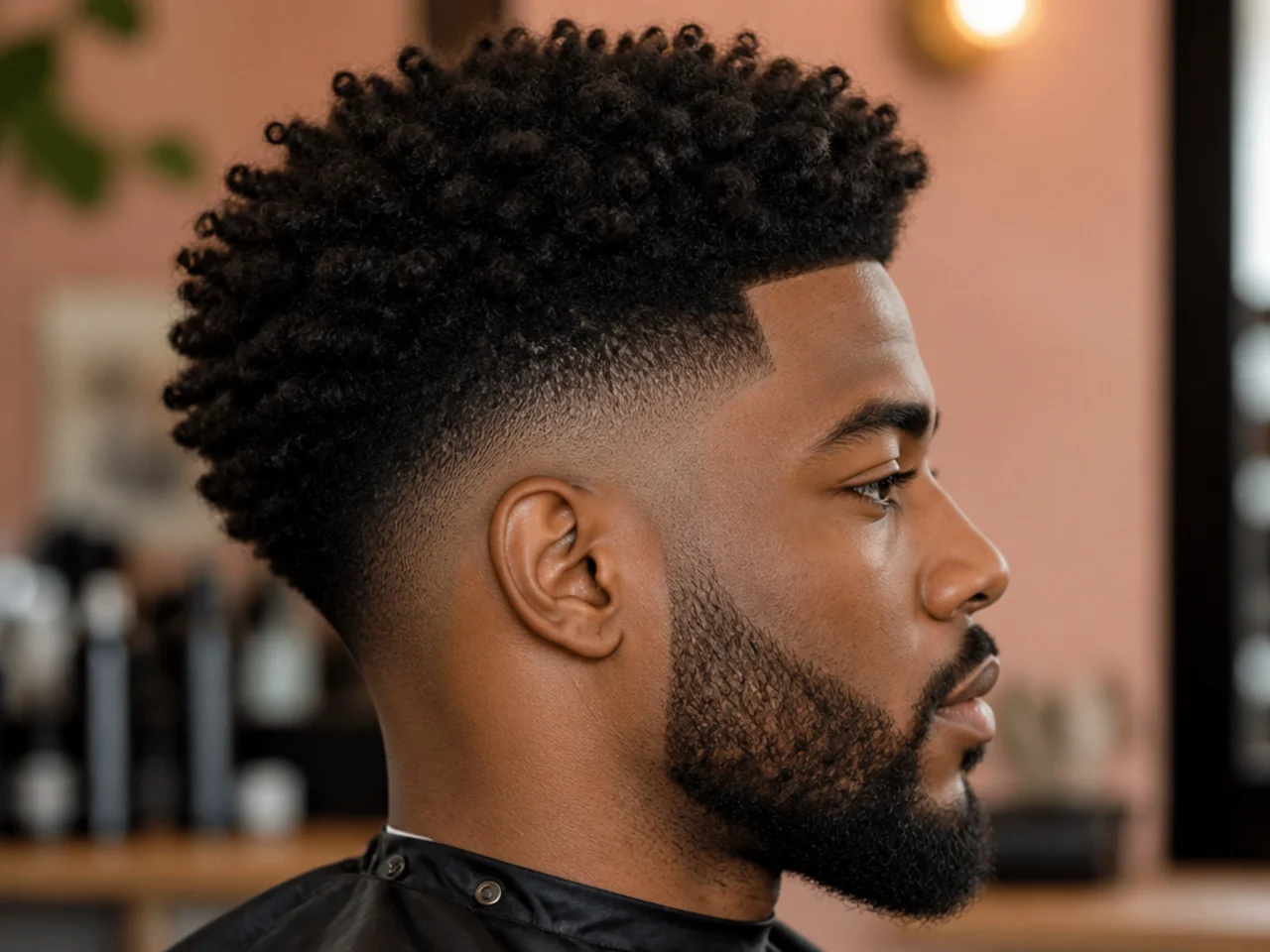
A low temp fade under thick, medium-length curls is a soft, wearable look. The fade is subtle at the temples, and the curls up top do the heavy lifting. Great for round and heart faces, and for guys with 3B, 3C, or 4A texture that holds definition well. Ask for a low temple taper, guard 1 at the shortest, blending into a scissor-cut curly top around 2 inches long. Cream, scrunch, air dry — no diffuser needed. Refresh in the morning with a water-and-conditioner spray. Two- to three-week visits work here because the low temp doesn't blur as fast as a full fade. Sleep in a satin bonnet or on a satin pillowcase to hold curl integrity through the night.
Burst Fade Mohawk
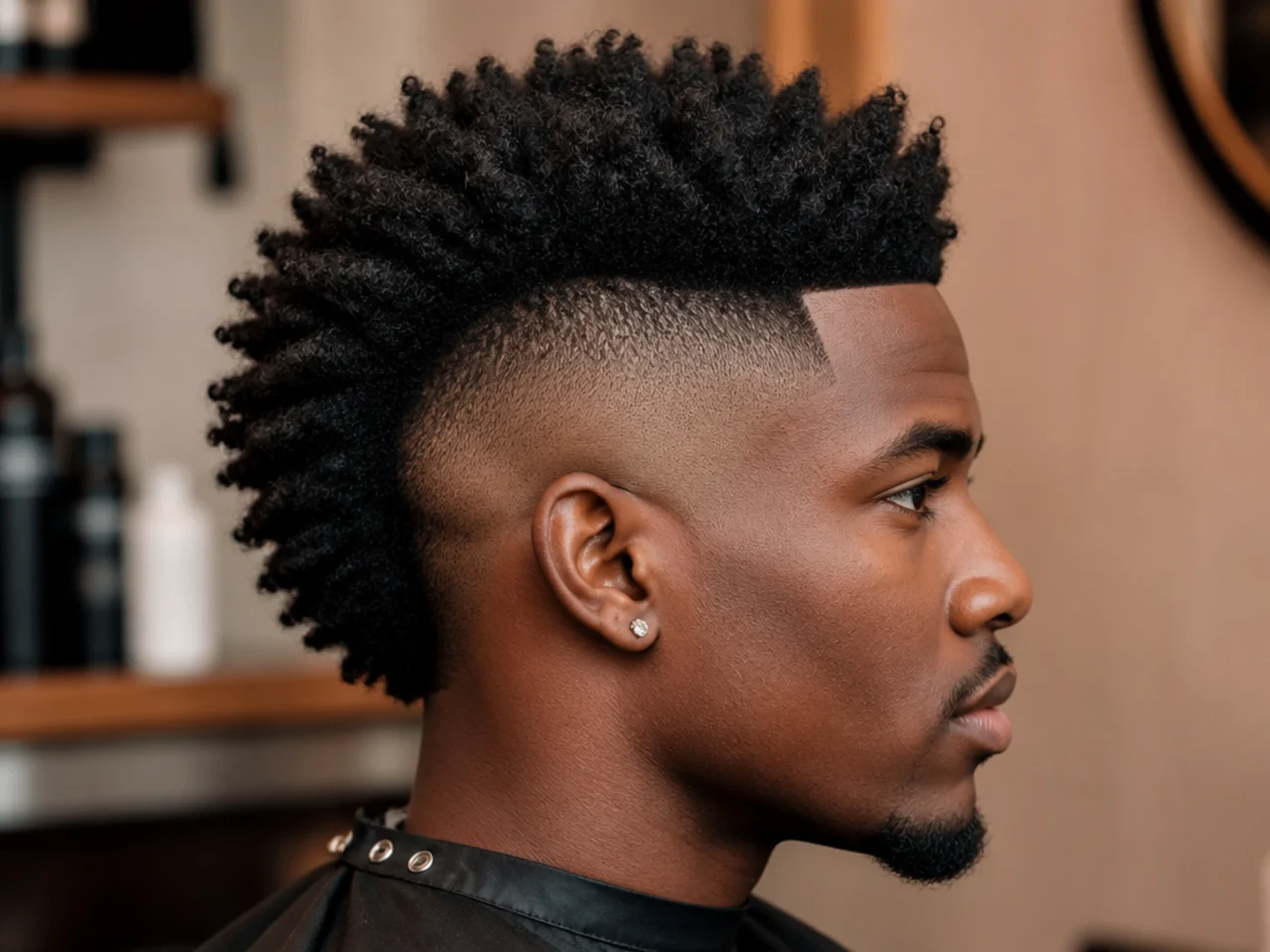
A burst fade mohawk is one of the boldest cuts you can ask for. The mohawk strip runs down the center of your head — usually 2 to 4 inches wide — and the burst fade curves around each ear, leaving the back of the neck longer than the sides. Best for oval and long faces. Ask for a wide mohawk strip with a burst fade to skin around each ear, and let the top hair grow curly or twist it for texture. Pair with a full beard and a hard part along one side of the mohawk to add structure. This cut demands a talented barber and a fresh line-up every two weeks — the shape falls apart fast without maintenance.
Faux Hawk Fade
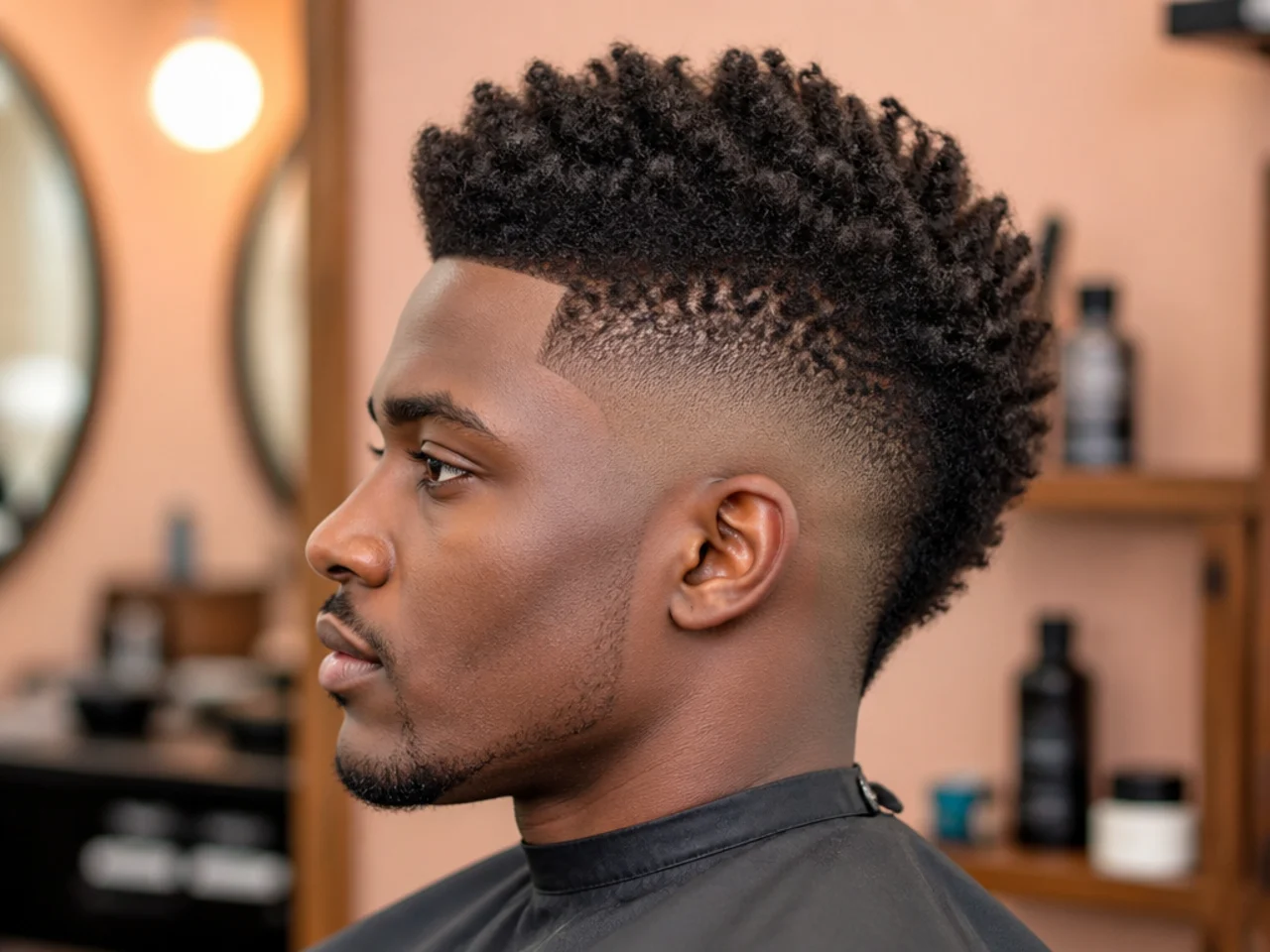
A faux hawk fade gives you the mohawk silhouette without shaving the sides. The top hair sweeps up and toward the center, and the fade underneath — usually a drop or mid fade — carries the eye upward. Best for oval, square, and heart faces. Ask for a mid drop fade, guard 0.5 at the shortest, with the top scissor-cut to 2 or 3 inches. Style up with a matte cream or curl gel while damp. The faux hawk fade is a good pivot cut if you want mohawk energy without a full commitment — you can style it flat on formal days. Consider a modern mullet or a classic fade haircut if you want to explore adjacent shapes.
Why the Low Taper Black Male Style Is Trending
The low taper is the fade every barber gets asked for right now. Reason one: it reads cleanly in every setting — courtroom, cookout, wedding, gym. There's no context where it looks out of place. Reason two: it protects your top hair. The taper doesn't chew through the parietal ridge like a mid or high fade, so your curls, waves, or twists have more visual real estate up top.
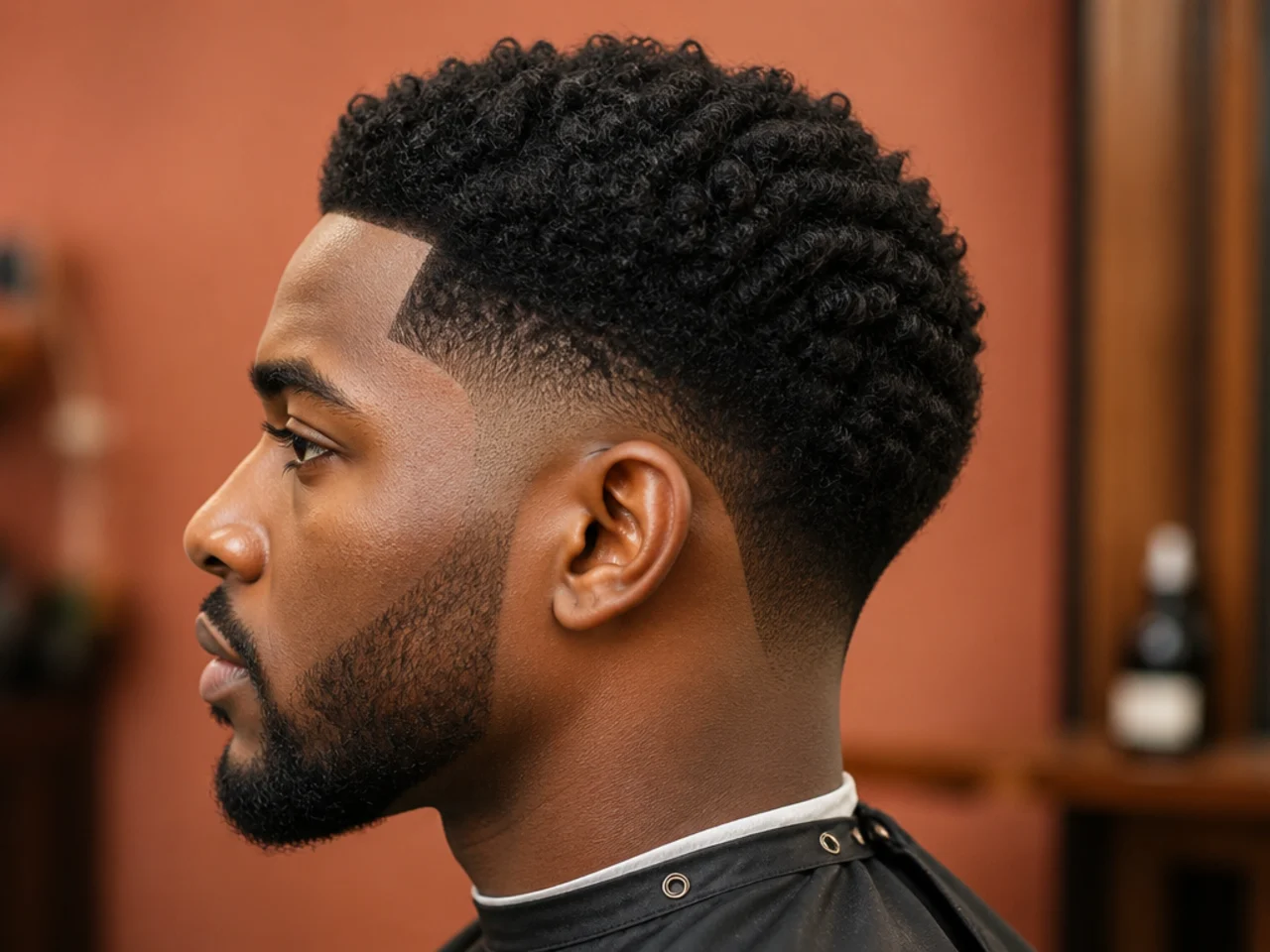
Reason three: forgiveness. A low taper blurs slowly. Where a skin fade starts looking messy at day 10, a low taper still holds at day 21. That's a real quality-of-life difference for guys with unpredictable schedules and travel weeks.
Celebrities and streetwear have accelerated the trend, but it's staying because it works across 4A, 4B, and 4C textures without any special tricks. Whatever you're growing up top — waves, coils, twists, a short afro — the low taper frames it without stealing the shot. Ask for a guard 1 or 2 at the shortest point, blending into your natural length over about two inches at the nape and around the ear. Any good barber knows the shape by name at this point.
Modern Black Men Haircuts to Try This Year
This year's trending cuts share a common instinct: pair a defined fade with natural texture on top. Nobody's flattening curls anymore. The low taper, burst fade, curly top fade, and short afro fade are all doing the same job — giving your texture a clean stage to sit on.
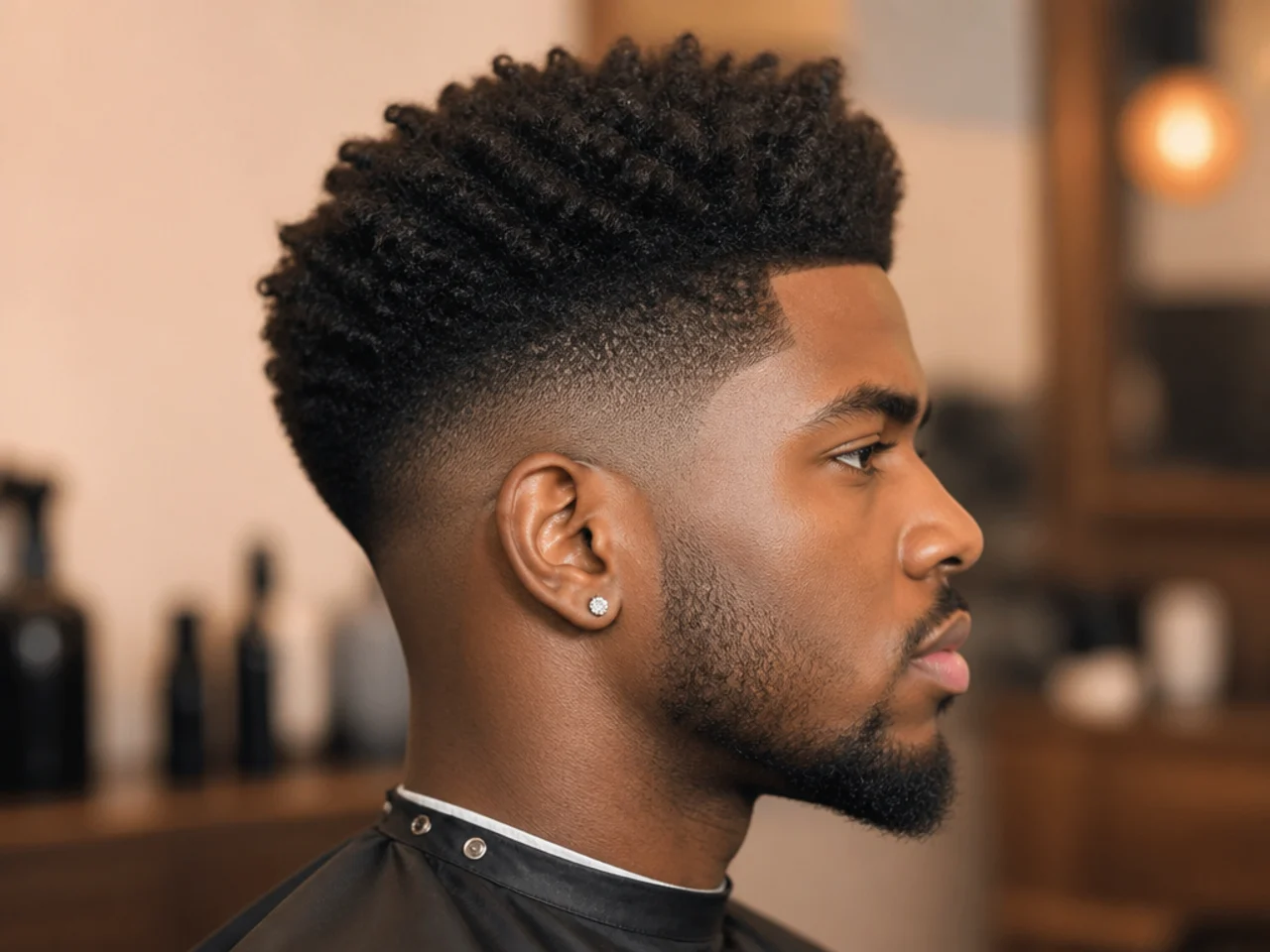
You'll also see more integration between fades and braids, twists, and sponge coils. Barbers are collaborating with stylists — or handling both — to deliver looks that used to require two chairs. Line-ups have gotten more precise too, with straight razors replacing trimmers for the final edge work at good shops.
When you pick your cut, weigh three variables: face shape, hair texture, and how often you can realistically book a chair. A high skin fade needs weekly maintenance; a low taper doesn't. Match the cut to your calendar and you'll actually keep it sharp. Bring two or three reference photos to your first appointment with a new barber — language alone doesn't always land, and the pictures fill the gap on guard number and top length.
Types of Fade Haircuts For Black Men
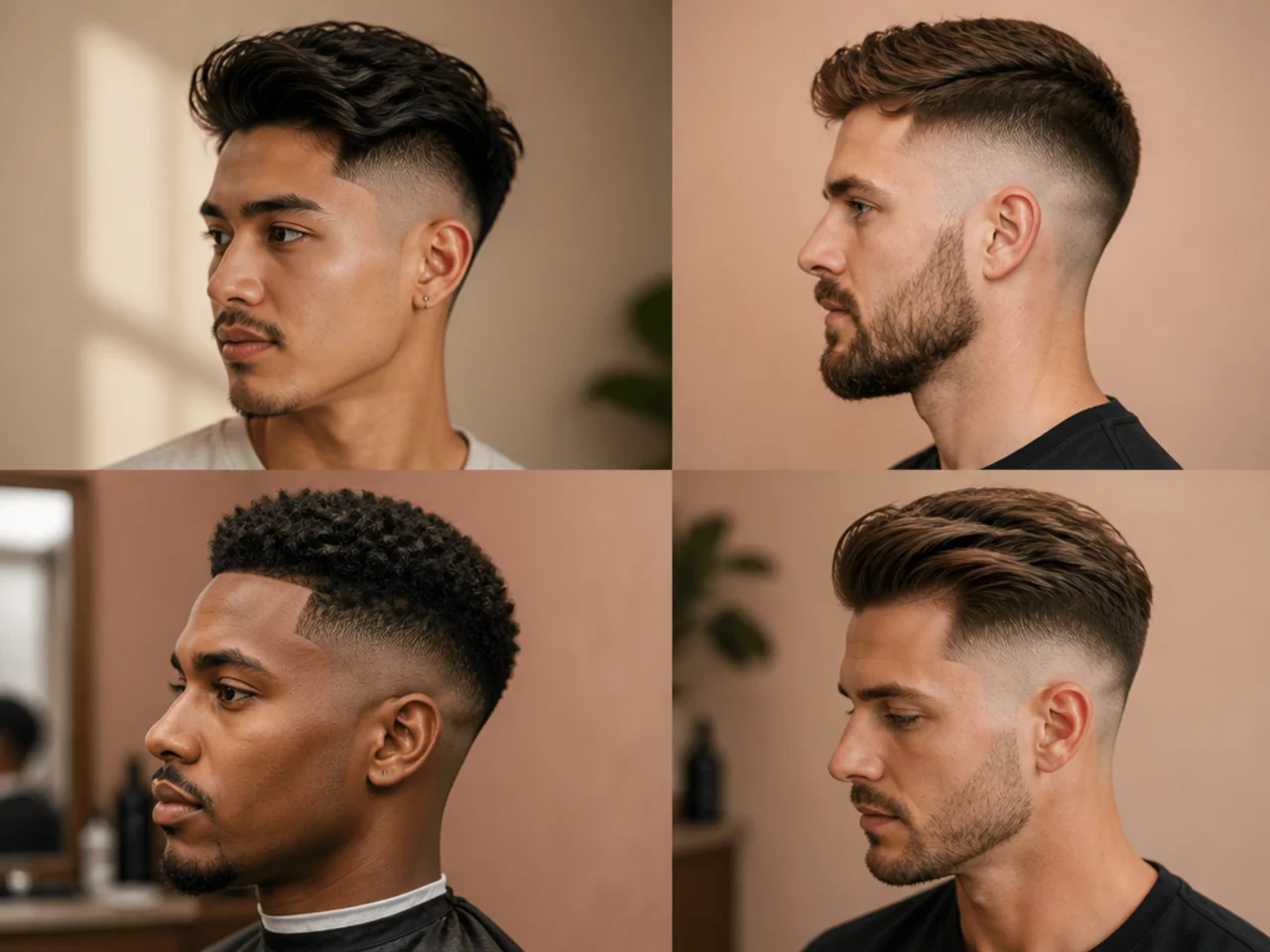
Each fade family serves a different silhouette. Start with the height, then decide how sharp you want the transition. Every version pairs beautifully with textured hair on top, and each can be adapted from a clean Ivy haircut-style short top to a full curly crown depending on where you set the length.
- Low Fade: Starts a finger above the ear. Subtle, professional, forgiving between cuts.
- Mid Fade: Starts at the temple line. Balanced — the middle ground of the fade world.
- High Fade: Starts above the temple. Bold contrast, needs weekly maintenance.
- Skin Fade: Blends to bare scalp at the shortest point. The sharpest finish.
- Drop Fade: Curves lower at the back than the temple. Follows head shape.
- Burst Fade: Semicircle around the ear. Made for mohawks and volume.
- Temp Fade: Only fades at the temples. Lowest-maintenance option in the family.
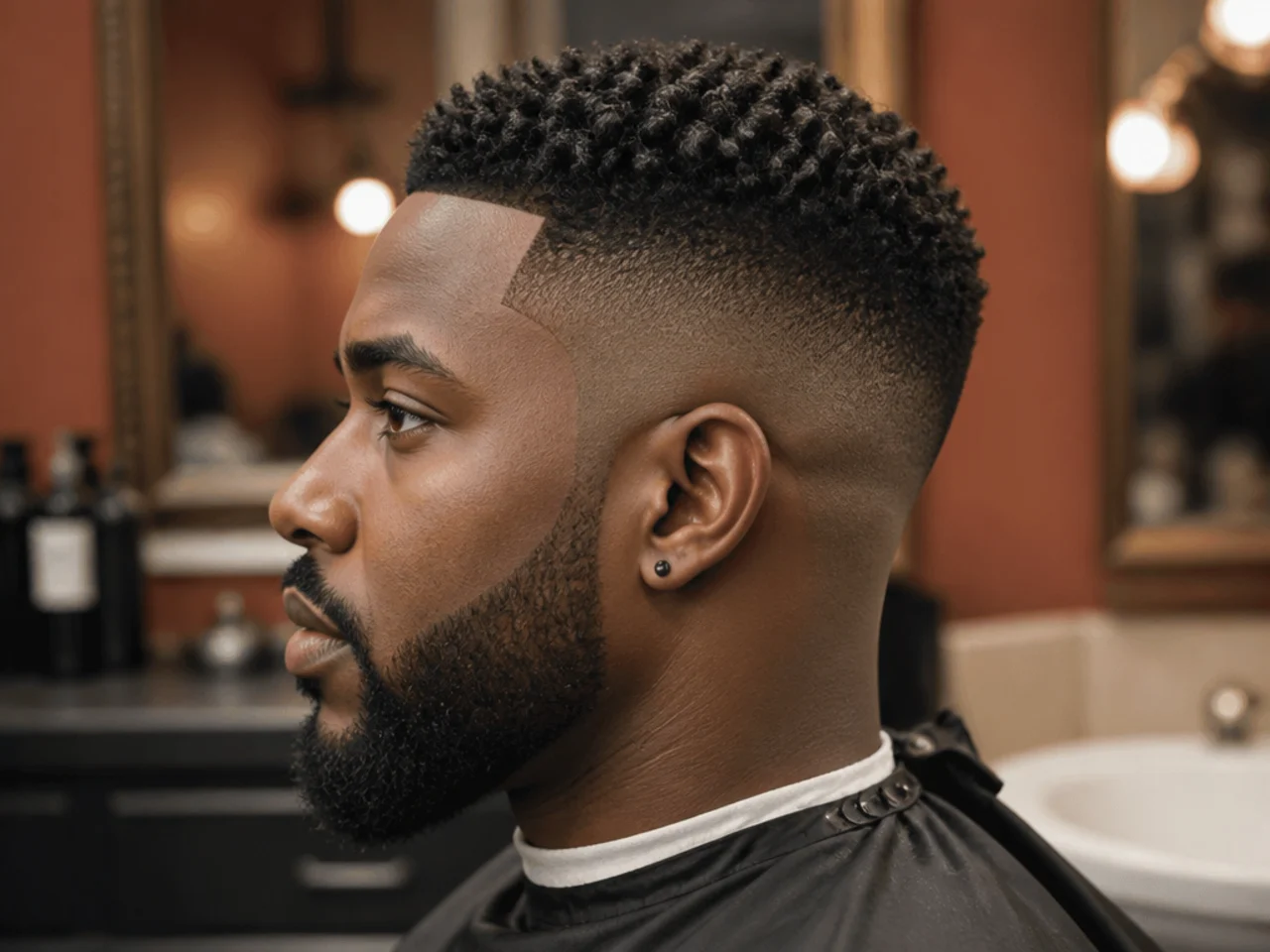
Pick two or three from that list and screenshot them for your barber. Show, don't just tell — a picture confirms guard number and top length in a way that words alone won't.
Wrapping Up
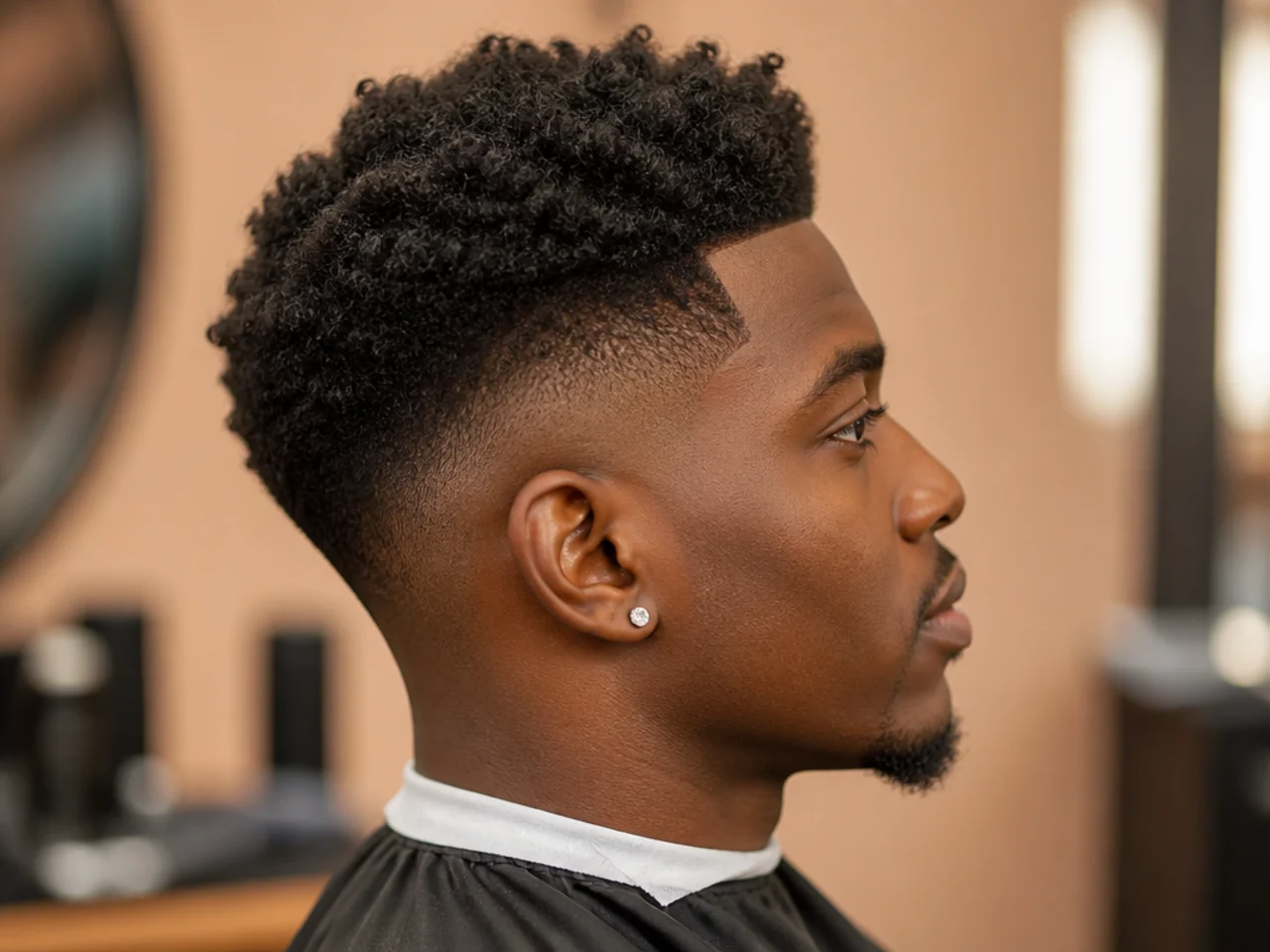
Fades work on 4A through 4C hair because the contrast is honest — your natural texture up top, clean lines on the sides. Nothing about your curl pattern needs to change or straighten out. The variations in this guide cover conservative to bold, low-maintenance to weekly-chair, and everything in between.
Two things stay true across every version: get your top length right, and book your next appointment before you leave the chair. A fade cut sharp on day one but blurred by day twelve isn't holding its promise. Two-week visits keep everything crisp. That's the maintenance conversation nobody has upfront, and it's the single biggest factor in whether your cut looks the way you wanted it to a week after leaving the shop.
Pick a variation that fits your face shape, your hairline, and your calendar. Bring a photo. Talk guard numbers. Talk top length. The rest is your barber's craft — and yours is the follow-through at home with moisture, a du-rag, and consistent visits.
FAQ's
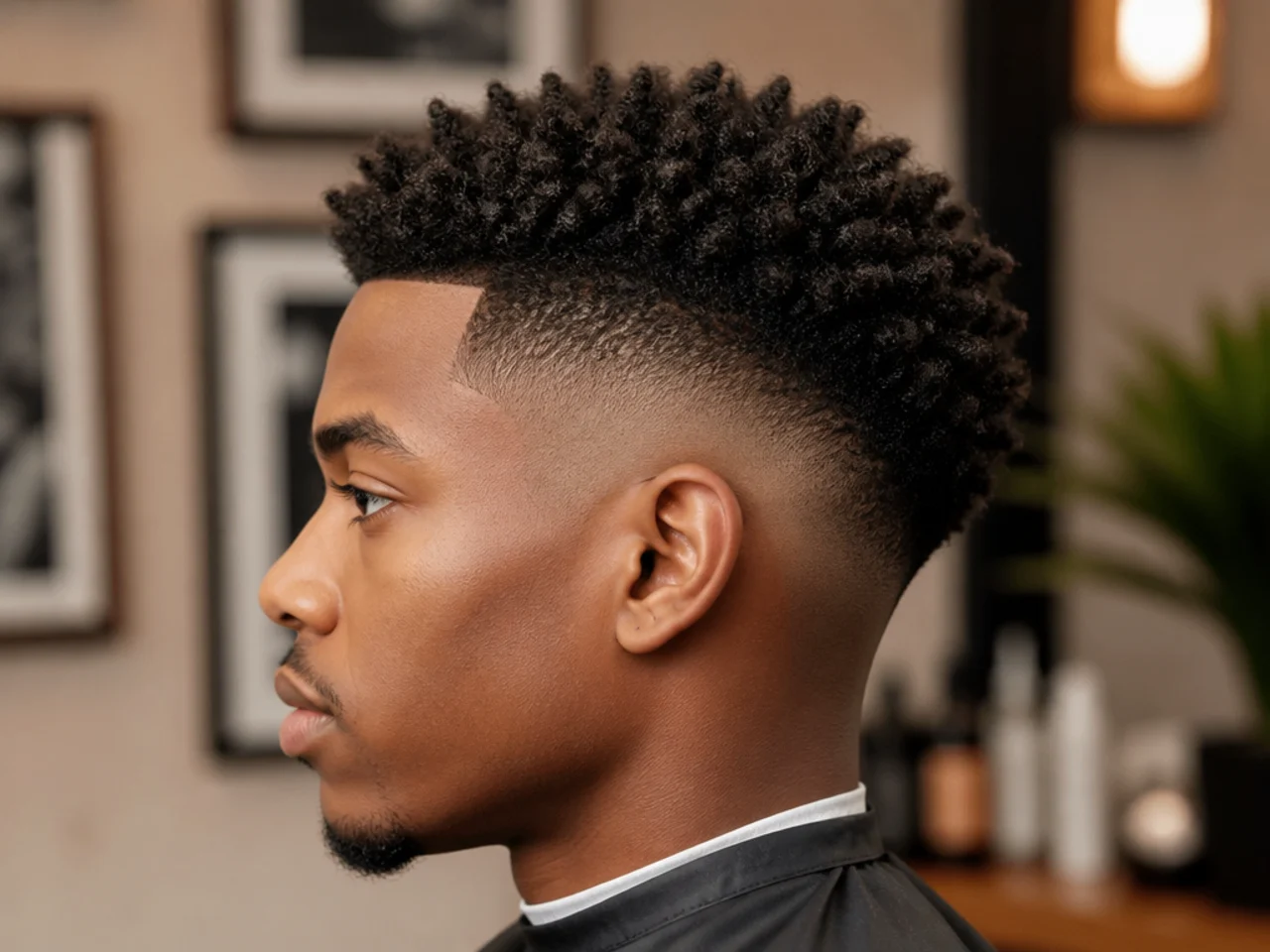
What's The Best Fade For Black Men?
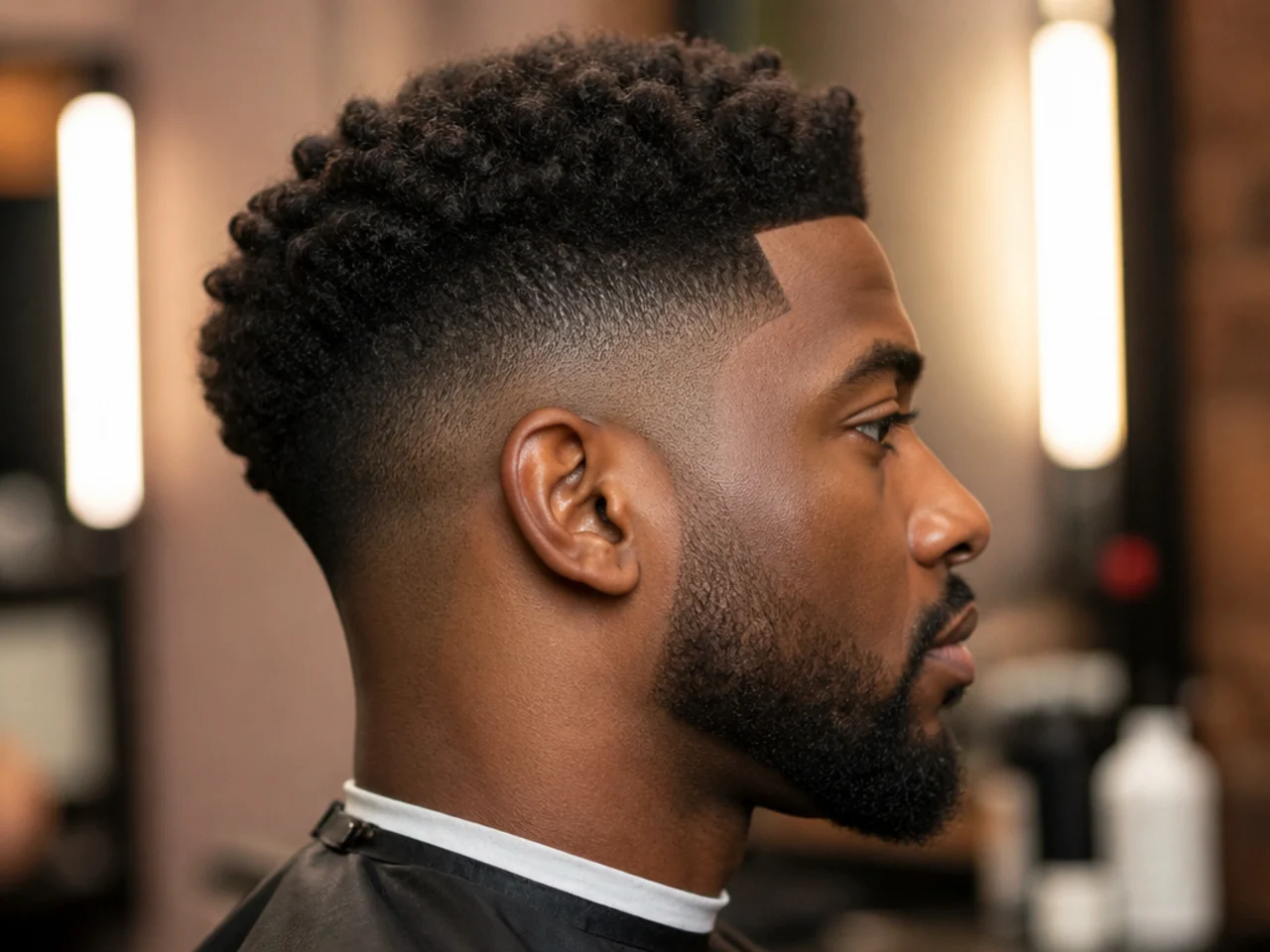
There's no single best fade — the best one is the fade that matches your face shape, hair density, and how often you can sit in a chair. If you want low-maintenance and versatile, the low taper. If you want maximum contrast to show off waves or a shaped top, the mid skin fade. If you're growing a high top or a mini afro, the high fade sets the stage. Bring a photo and your realistic maintenance schedule to your barber, and let them help you land the right shape for your head.
What Is A Taper Vs Fade?
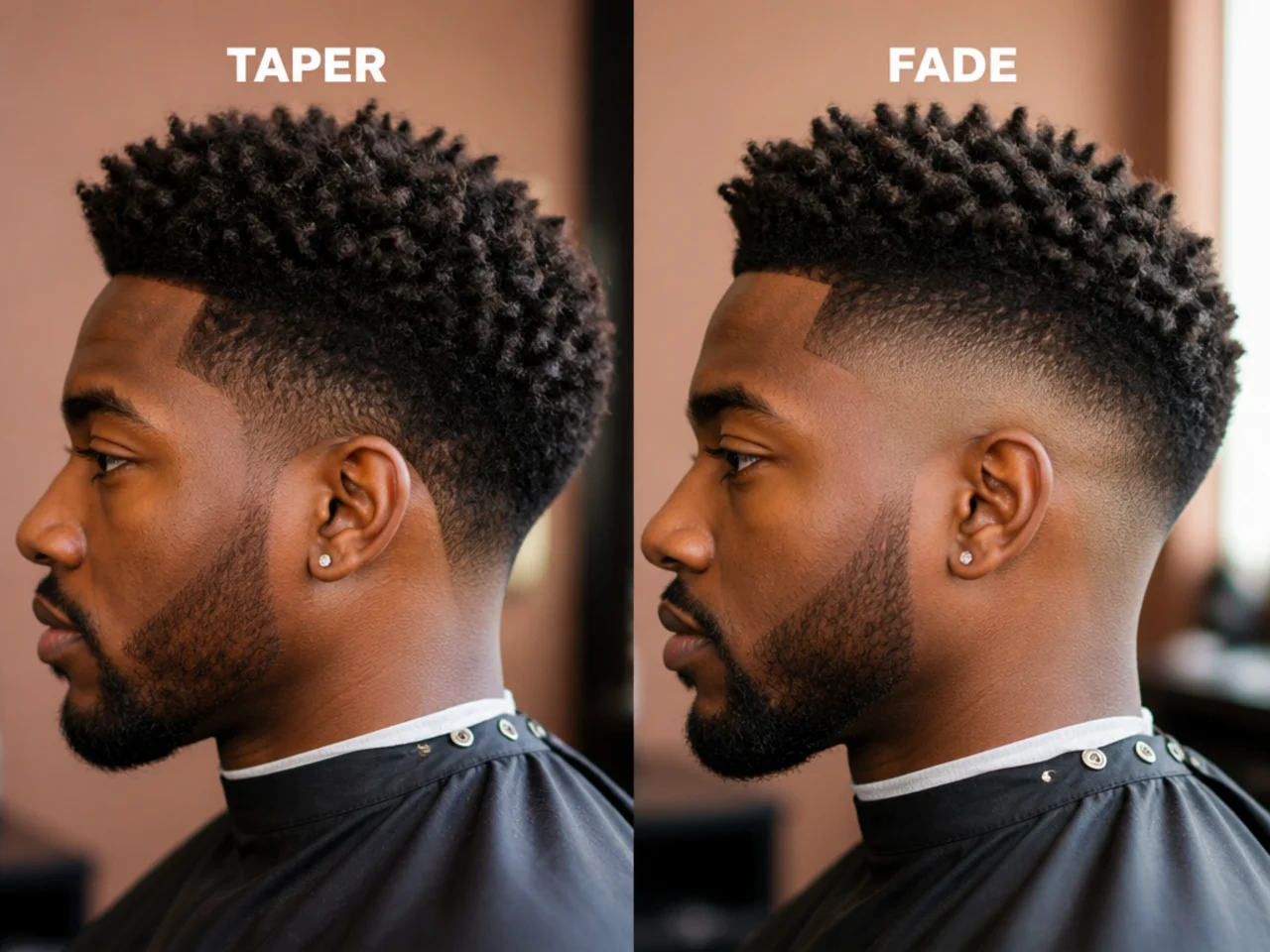
A taper leaves hair at the shortest point — usually guard 1 or 2 — and blends up to your natural length. A fade goes shorter, often to skin or guard 0. Tapers are subtler and more forgiving between cuts. Fades are sharper but need more frequent visits to stay looking fresh. Same tools, same technique, different end points. Barbers sometimes use the terms interchangeably, so specify the guard number at the low point to avoid a miscommunication at the chair.
What Is The Gen Z Haircut Called?
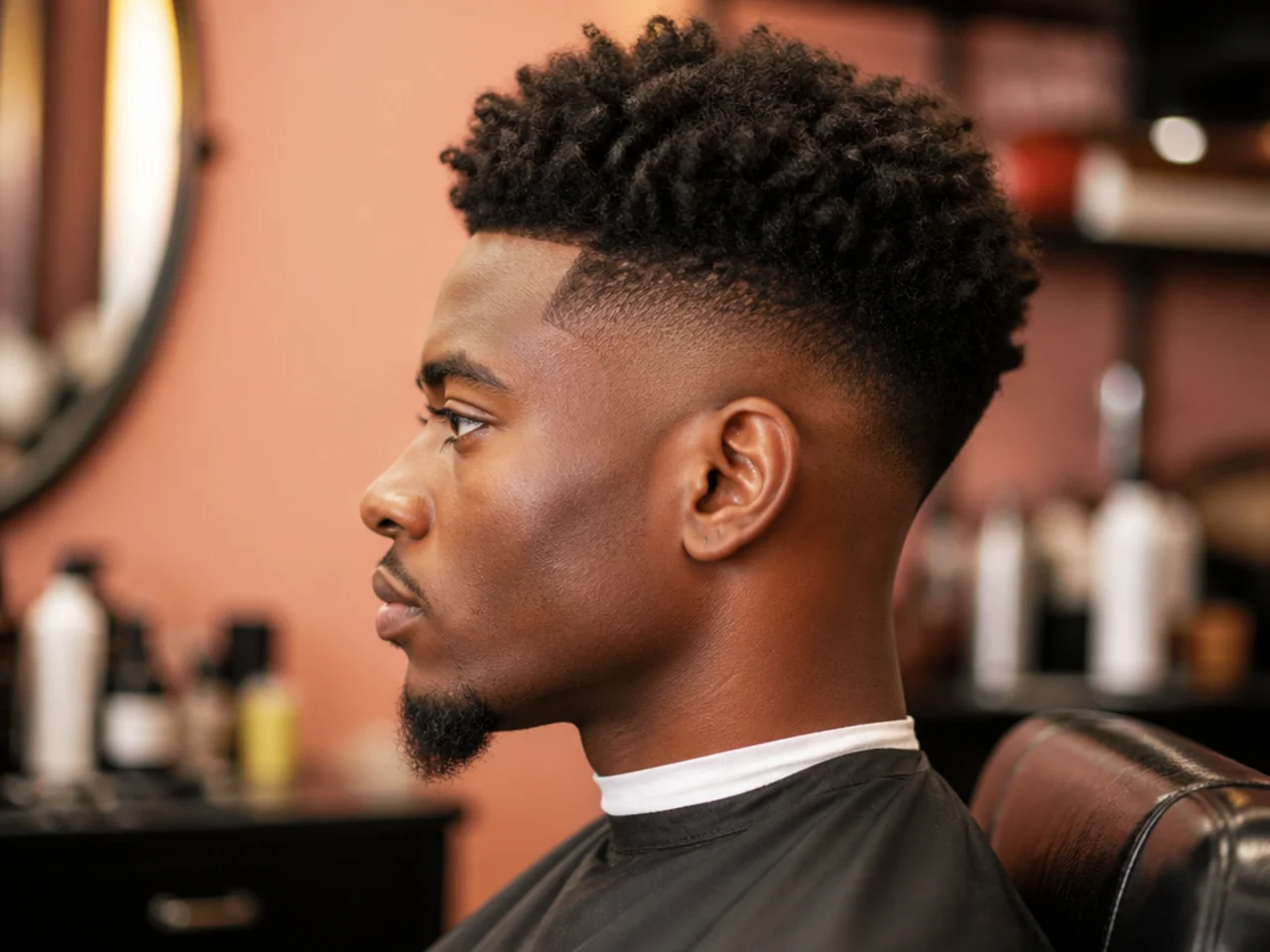
Gen Z has a few signature cuts: the modern mullet, the middle-part fringe, the broccoli, and the shag. On Black men specifically, the low taper with 360 waves has been a Gen Z staple for years now, and the curly top with a burst fade is another. Fades aren't a generational statement anymore — they're the base layer that carries every top style, from a Gen Z high top to a mid-30s low taper with waves.
Which Fade Haircut Is Best?
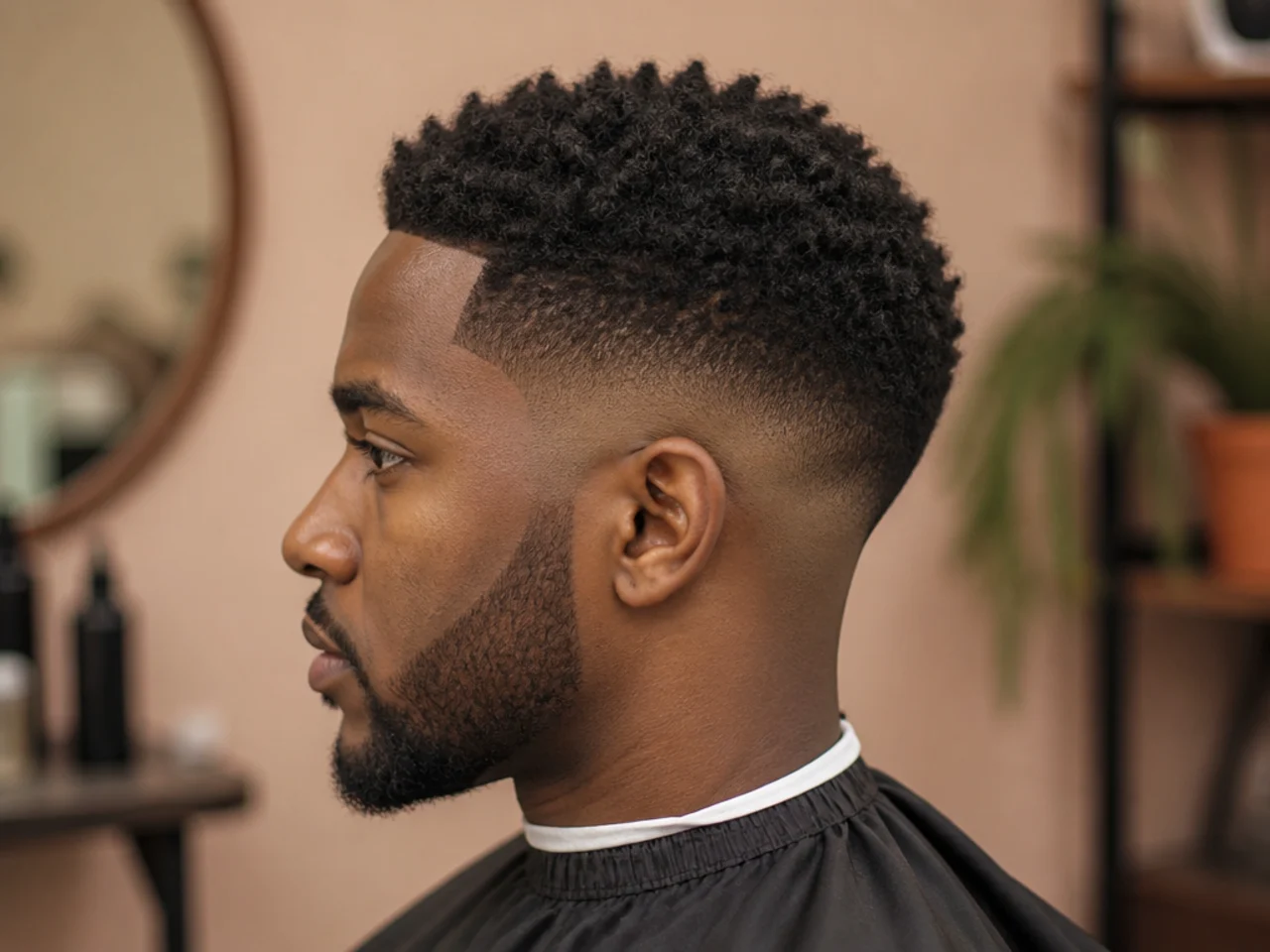
For versatility across settings, the low taper wins. For sharpness and definition, a low or mid skin fade. For bold statement cuts like mohawks and faux hawks, the burst fade is the move. If you're brand new to fades, start with a low taper — it's forgiving, it flatters every face shape, and it lets you decide later whether you want to go sharper, higher, or shorter on your next visit.