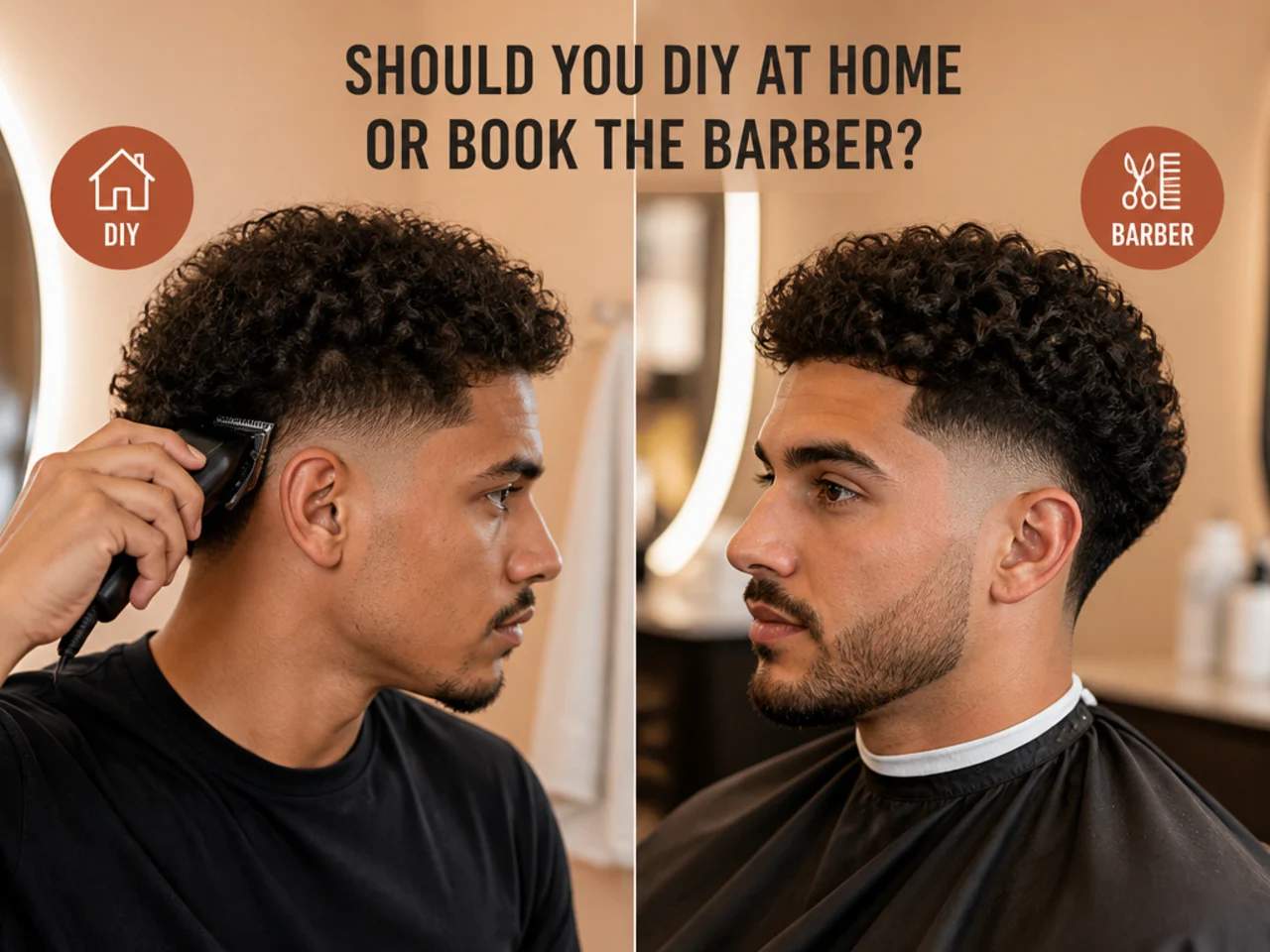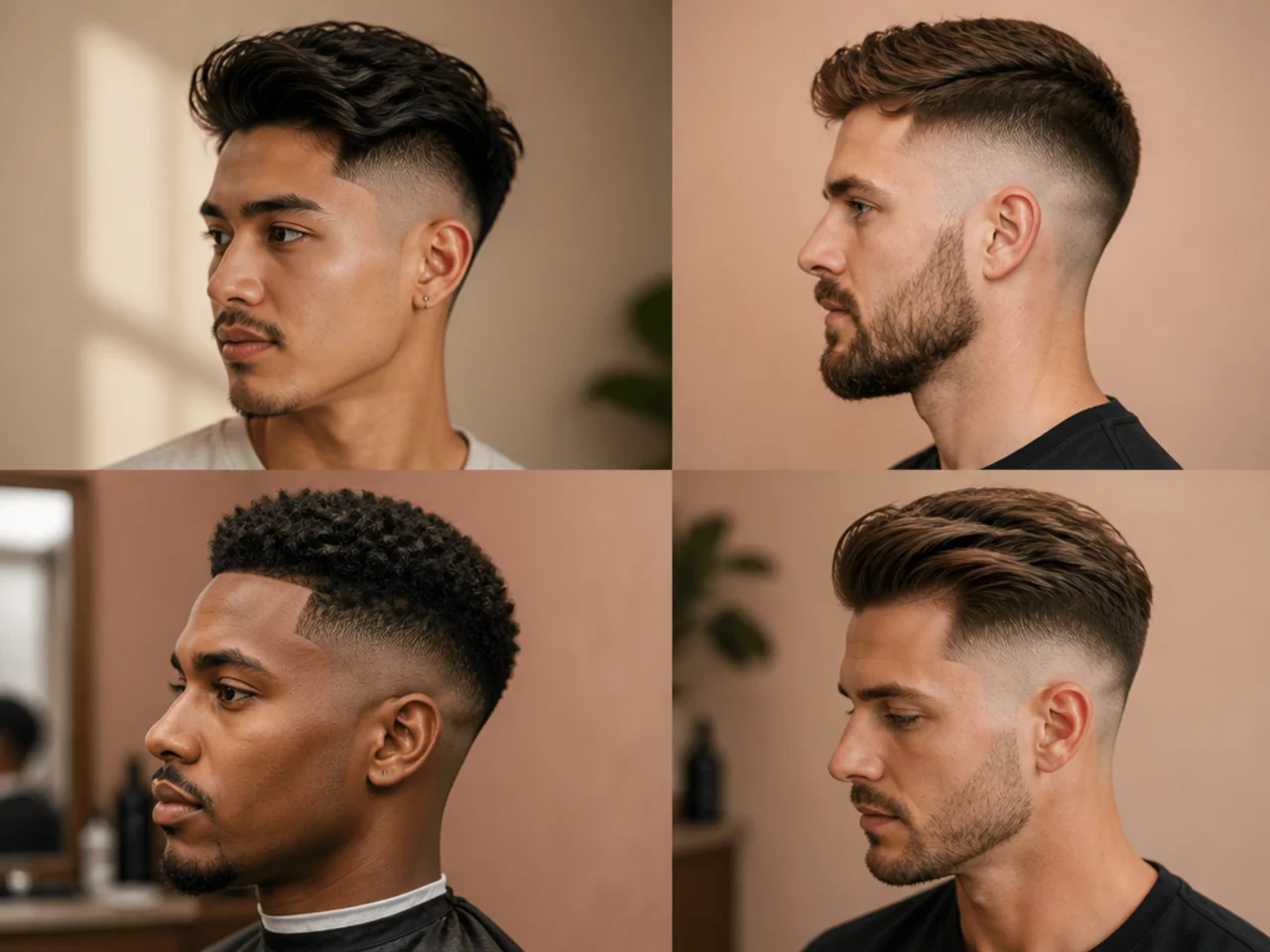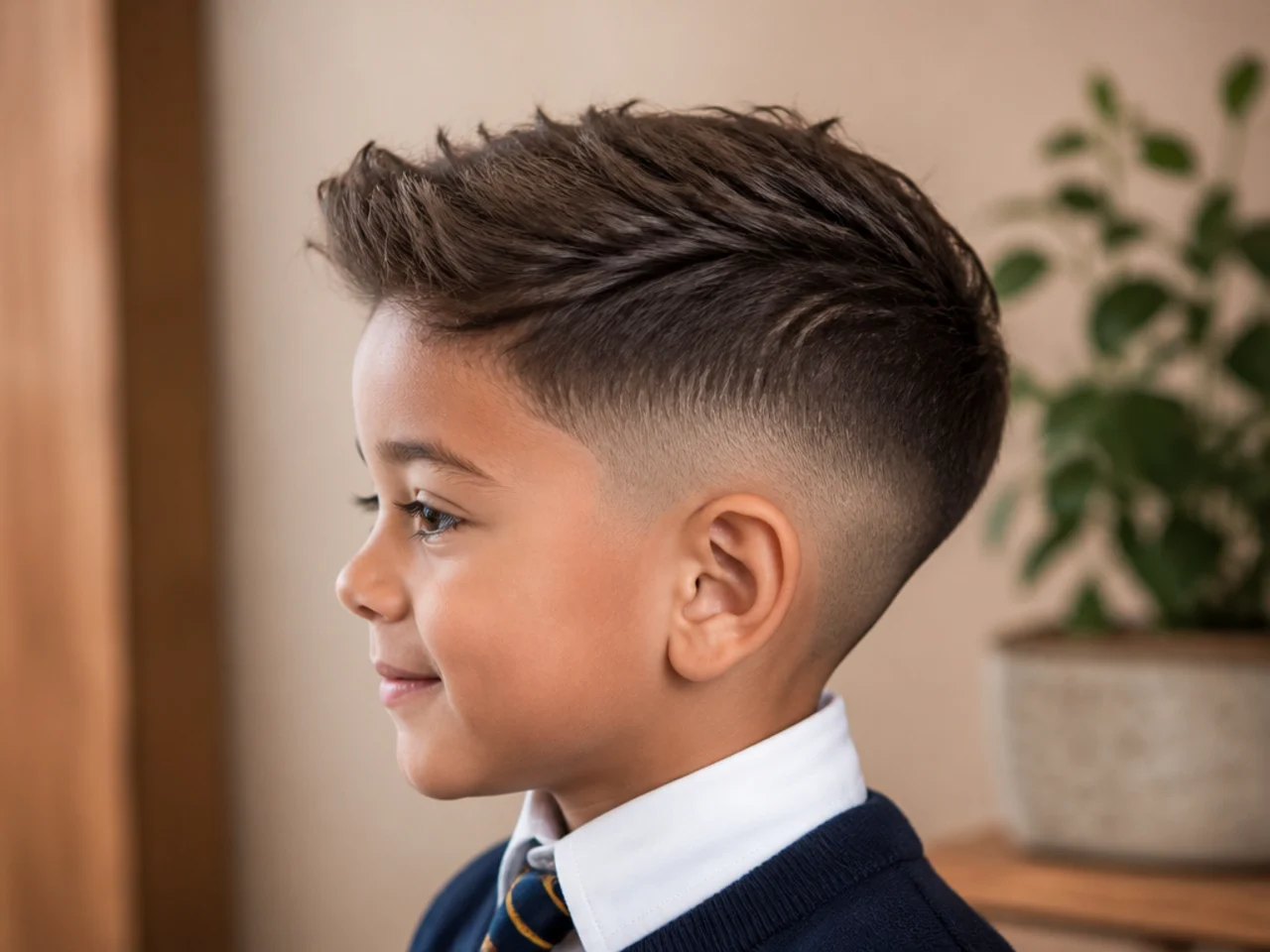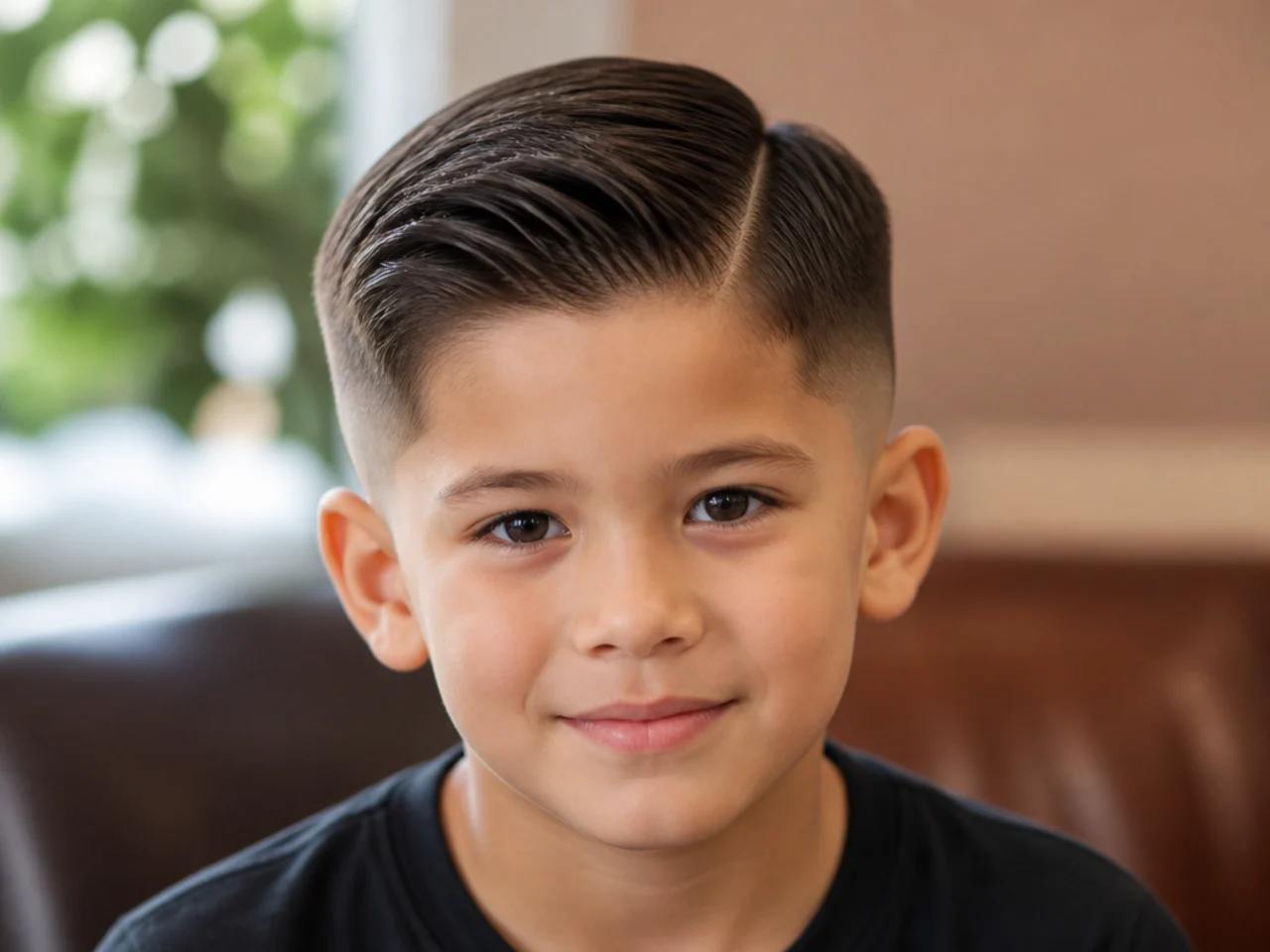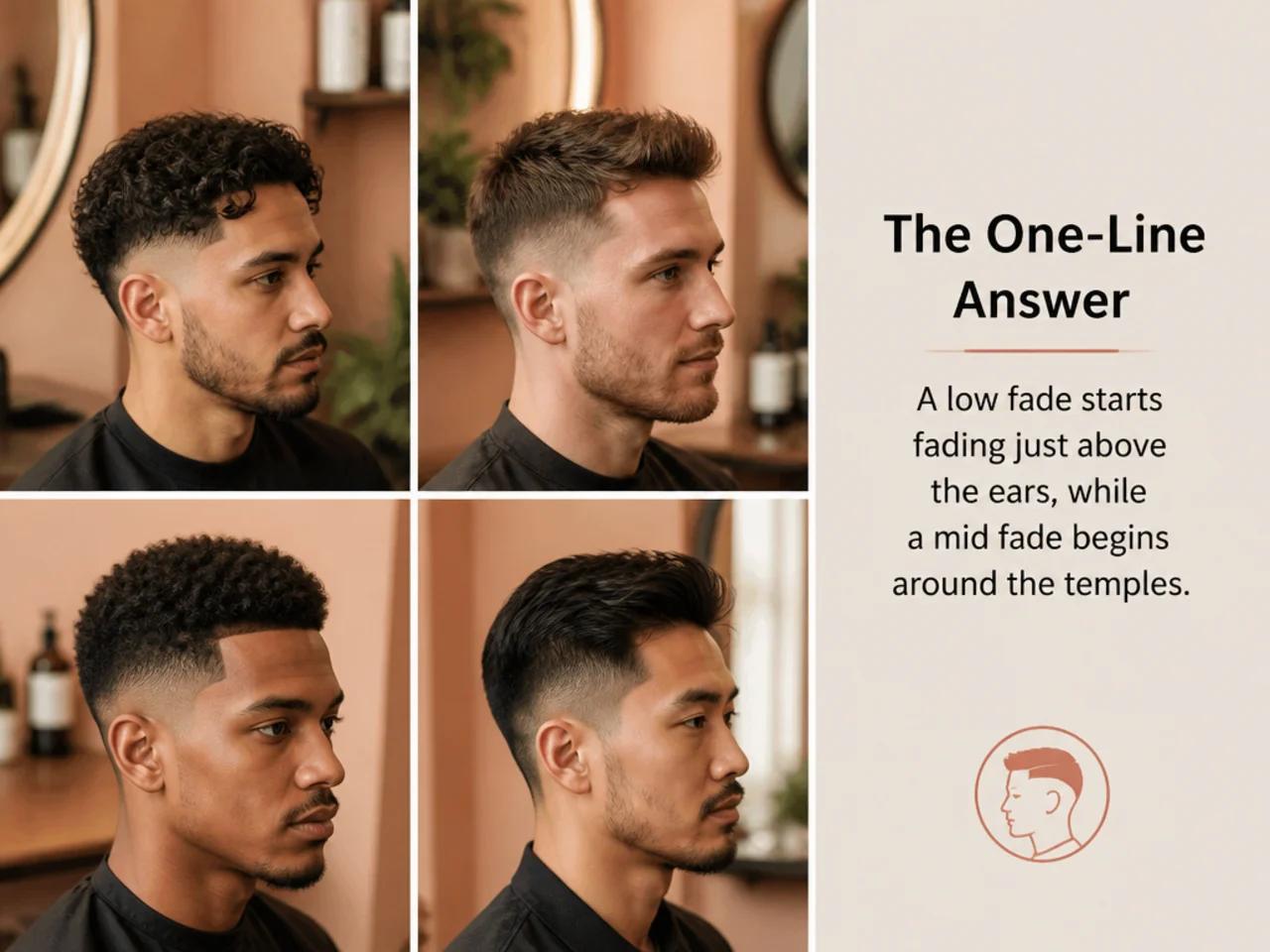
4 Differences Between a Low and Mid Fade
Low vs mid fade — the four real differences barbers care about: start height, contrast, face-shape fit, and grow-out cadence. See how to pick and how to ask.
In this article · 15
- The One-Line Answer
- Difference 1: Where the Fade Starts
- Difference 2: The Contrast Level
- Difference 3: Face-Shape Fit
- Difference 4: Grow-Out Cadence
- Low vs Mid Fade: Side by Side
- Which Should You Pick?
- How to Ask Your Barber
- FAQ
- What is a low mid fade?
- Which is more popular in 2026, low fade or mid fade?
- Can I get a mid fade if my hair is thin on top?
- How much longer does a mid fade take to cut than a low fade?
- Can I get a low or mid fade with long hair on top?
- Should I ask for a drop fade version of either?
Low fade or mid fade — one inch of height changes everything about how the cut reads on your face, in the mirror, and in your barber's chair three weeks later. The two live in the same family but land in different places. Here are the four real differences between a low fade and a mid fade, the ones a working barber uses to steer the decision, and how to know which one belongs on your head.
The One-Line Answer
Low fade is the safe, quiet, workplace-invisible pick. Mid fade is the modern, visible-but-not-loud pick. The low fade drops to skin below your temple and keeps the whole cut low-profile. The mid fade climbs a full inch higher and creates a visible skin panel at eye level, which changes the balance of the whole head.
Everything else on this page is nuance. If you want the quick call: pick the low fade if your workplace or face shape ask for restraint, and pick the mid fade if you want the cut to read modern without shouting. For the wider family, see the fade haircut hub, or if you want the third height in the mix, the low fade vs mid fade vs high fade breakdown covers all three.
Difference 1: Where the Fade Starts
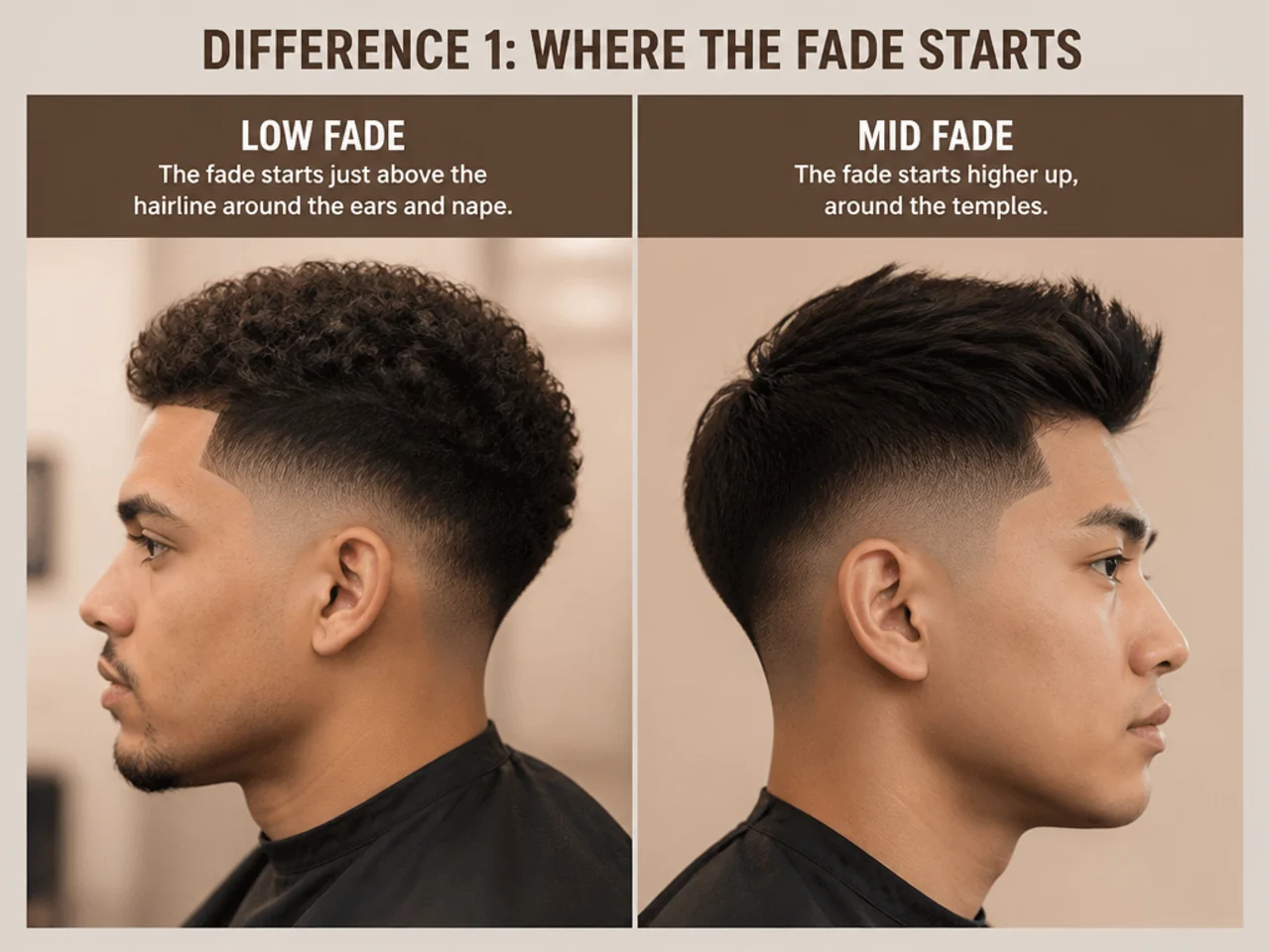
This is the difference the other three come from. A low fade starts just above the ear, wraps around the back, and finishes the blend below your temple. The transition zone is roughly one to one-and-a-half inches of vertical fade, all of it sitting below the widest part of your head. From across the room, it reads as a normal short back and sides.
A mid fade starts at your temple, right around the level of your eyebrow. That's the visual midpoint between your ear and the parietal ridge — the ledge where the side of your head turns into the top. The transition zone sits noticeably higher and covers roughly the same one to two inches of vertical fade, but it's happening at eye level. That single change moves the fade from background to foreground.
To picture it on your own head, put a finger just above your ear — that's where a low fade starts. Now slide your finger up an inch, until you feel the outer edge of your eyebrow. That's a mid fade. The distance between those two points is small in inches and large in effect.
Your barber uses these landmarks to set the line. When you sit down, they'll usually mark the fade height with clipper-over-comb before running the first pass, so the two of you agree on the exact starting point. If you're unsure, ask them to hold a comb at both heights and take a look in the mirror before they commit — good barbers do this without prompting.
Ask for a low fade: "Low fade, starting just above the ear, dropping to a 0.5 at the shortest point, blended clean to the top."
Ask for a mid fade: "Mid fade, starting at the temple level with my eyebrow, dropping to a 0.5 at the shortest point, blended clean to the top."
Change one phrase — "just above the ear" versus "at the temple" — and the whole cut shifts. That's the whole first difference.
Difference 2: The Contrast Level
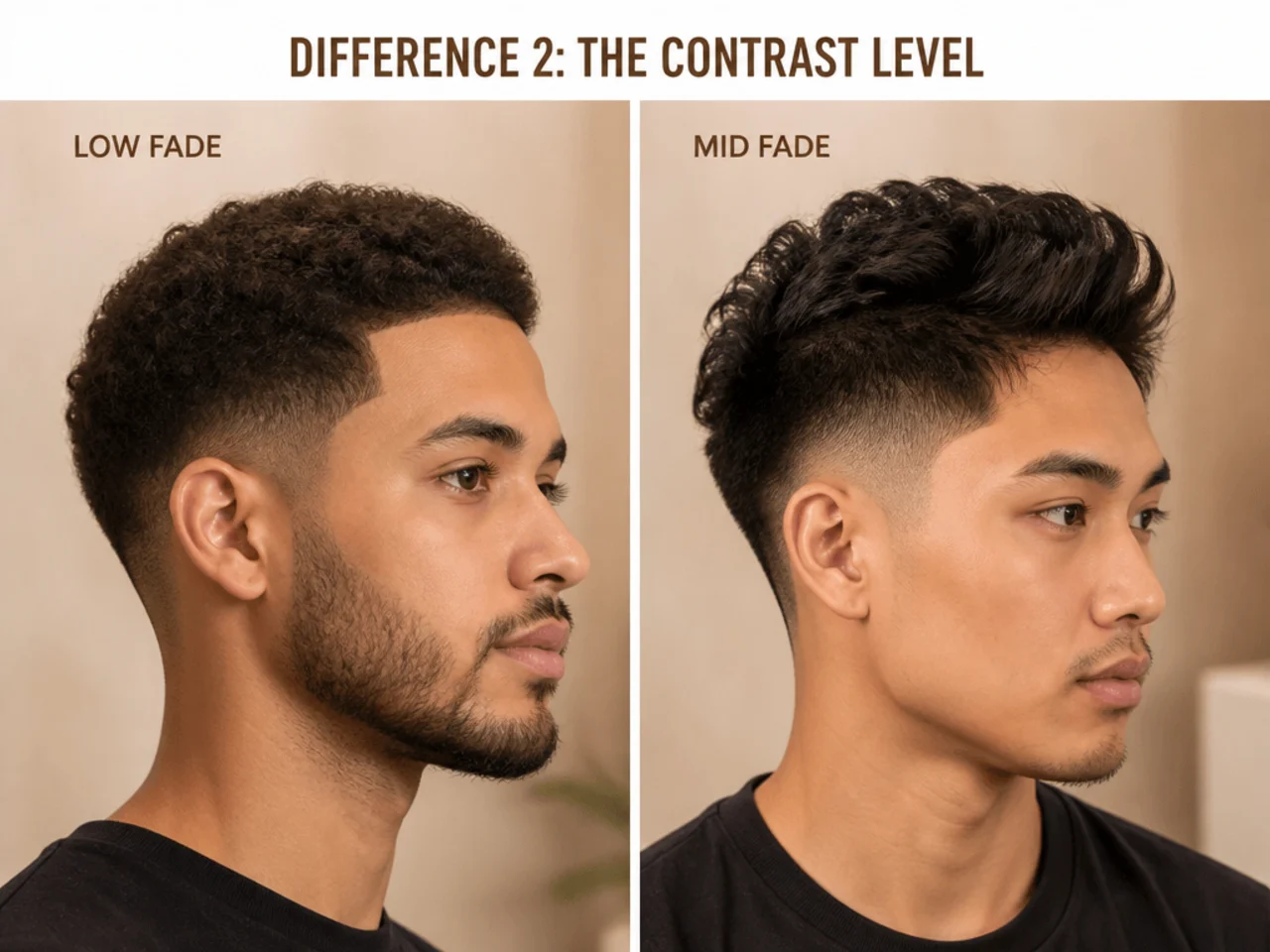
Because the mid fade sits higher, more of your side panel is short and skin-close. That means more visible contrast between the skin section and the length on top. A low fade only exposes a narrow strip near the ear, so the eye reads it as a soft transition. A mid fade exposes roughly twice as much side panel, so the eye reads it as a clear two-tone: skin below, length above.
Contrast reads as intent. When someone sees a mid fade, they know a barber cut it. A low fade is quieter — some people won't clock it as a fade at all. If your goal is to look "put together" without anyone noticing you spent forty dollars on a haircut, the low fade is designed for that. If your goal is to have your haircut do part of the styling work for you, the mid fade contrast handles it.
Skin fades amplify this even more. Take either height to a 0 guard and the contrast triples. A mid skin fade is a statement piece. A low skin fade is still restrained because the skin panel stays small and low. Same skin, different real estate. If you like the crispness of skin but not the visibility, low skin fade is your compromise.
Contrast also drives how much your styling matters. High contrast begs for a defined top — matte clay, a textured crop, a quiff, a hard part — because the fade sets an expectation the top has to live up to. Low contrast forgives a lazy morning; the eye doesn't demand as much from the length on top. That's part of why the low fade wears well as a low-maintenance option.
Difference 3: Face-Shape Fit
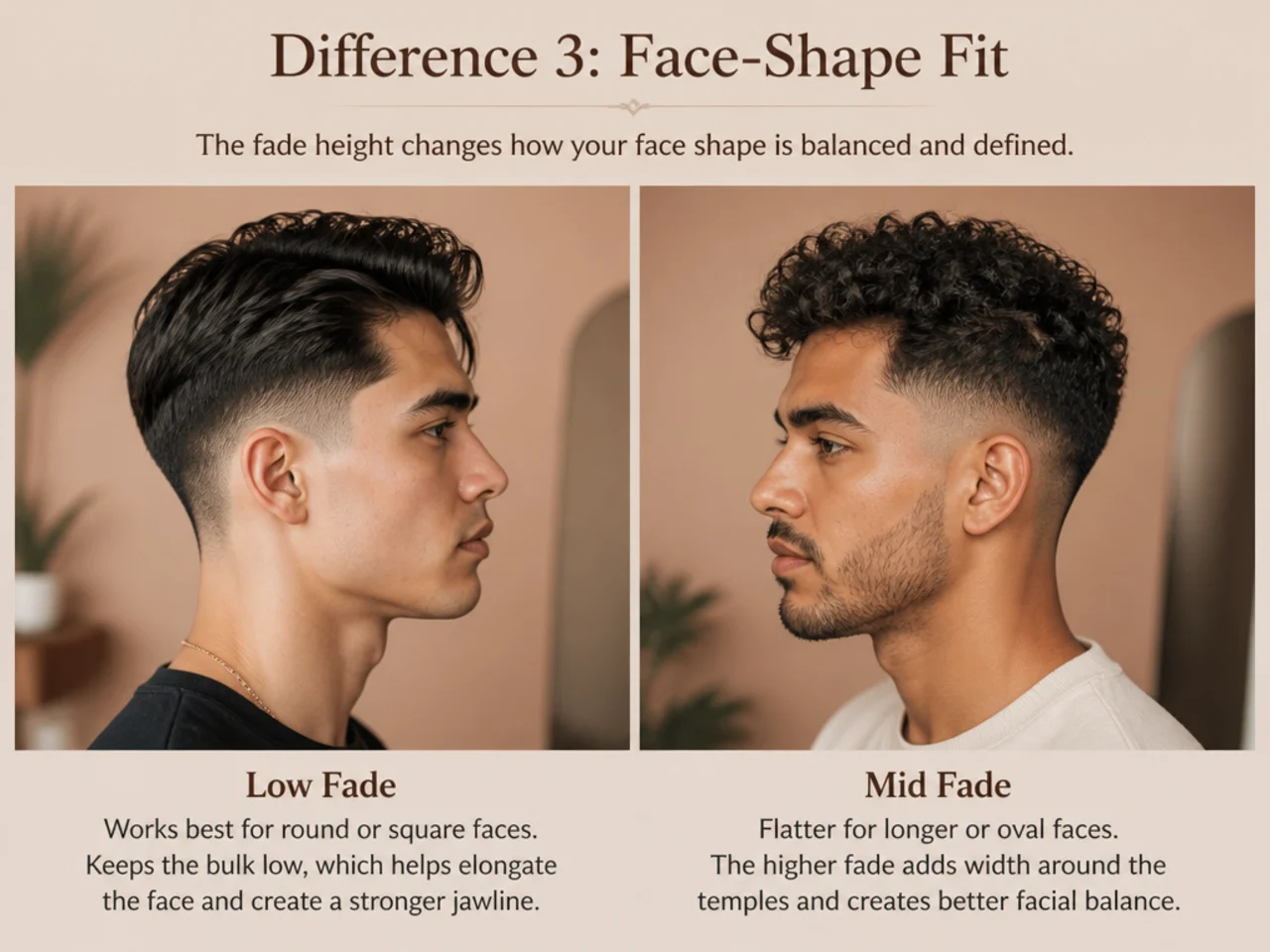
Face shape is where the low-versus-mid choice earns its keep. The two heights flatter different faces because they redistribute visual weight in opposite directions — low keeps the weight low, mid pushes it up.
Round face. Mid fade wins. The taller fade zone adds vertical, which narrows the visual width at the cheeks and lengthens the face slightly. A low fade sits at the same level as the widest part of a round face, which can make it look wider still. Pair the mid with height on top — a quiff, a pomp, a textured crop — and the balancing effect gets even stronger.
Oval face. Either works. Ovals are the goldilocks of face shapes because almost everything flatters them. Pick based on lifestyle — the low fade if you want easier maintenance, the mid fade if you want a more current look. Both photograph well from every angle.
Square face. Low fade edges ahead. The soft, low blend keeps the eye focused on the strong jaw and cheekbones rather than adding a second angular line above them. A mid fade still works if the top is soft — think medium flow or a longer textured top — but a mid skin fade on top of a square jaw can read severe. If you want more guidance on angular jawlines, the haircuts for square faces guide has more angles to consider.
Long or oblong face. Low fade, every time. A mid fade adds vertical, and long faces don't need more length. Keep the fade line low, keep the top modest — under two inches at the front — and the whole cut visually shortens the face.
Heart face. Mid fade tips ahead. A heart shape has a narrower jaw and wider forehead, so a mid fade's exposed side panel at eye level widens the ear line and rebalances toward the chin. Keep the top with some sweep or texture so the forehead doesn't dominate.
Diamond face. Mid fade by a small margin. Diamonds have prominent cheekbones and narrower foreheads and jaws — a mid fade's contrast zone sits right at the cheekbone width and lets the strongest feature carry the look.
Thinning temples or receding hairline. Low fade, no debate. A mid fade sits directly on top of the temple line and pulls the eye straight to it. A low fade sits below the temple, so the fade line frames the sides without spotlighting the thin patches. This is a bigger deal than most guys realize — the wrong fade height can visually age a receding hairline by five years.
If your face is somewhere between two shapes, split the difference and go low. You can always raise the fade line half an inch on the next visit — you can't lower one that's already been cut.
Difference 4: Grow-Out Cadence
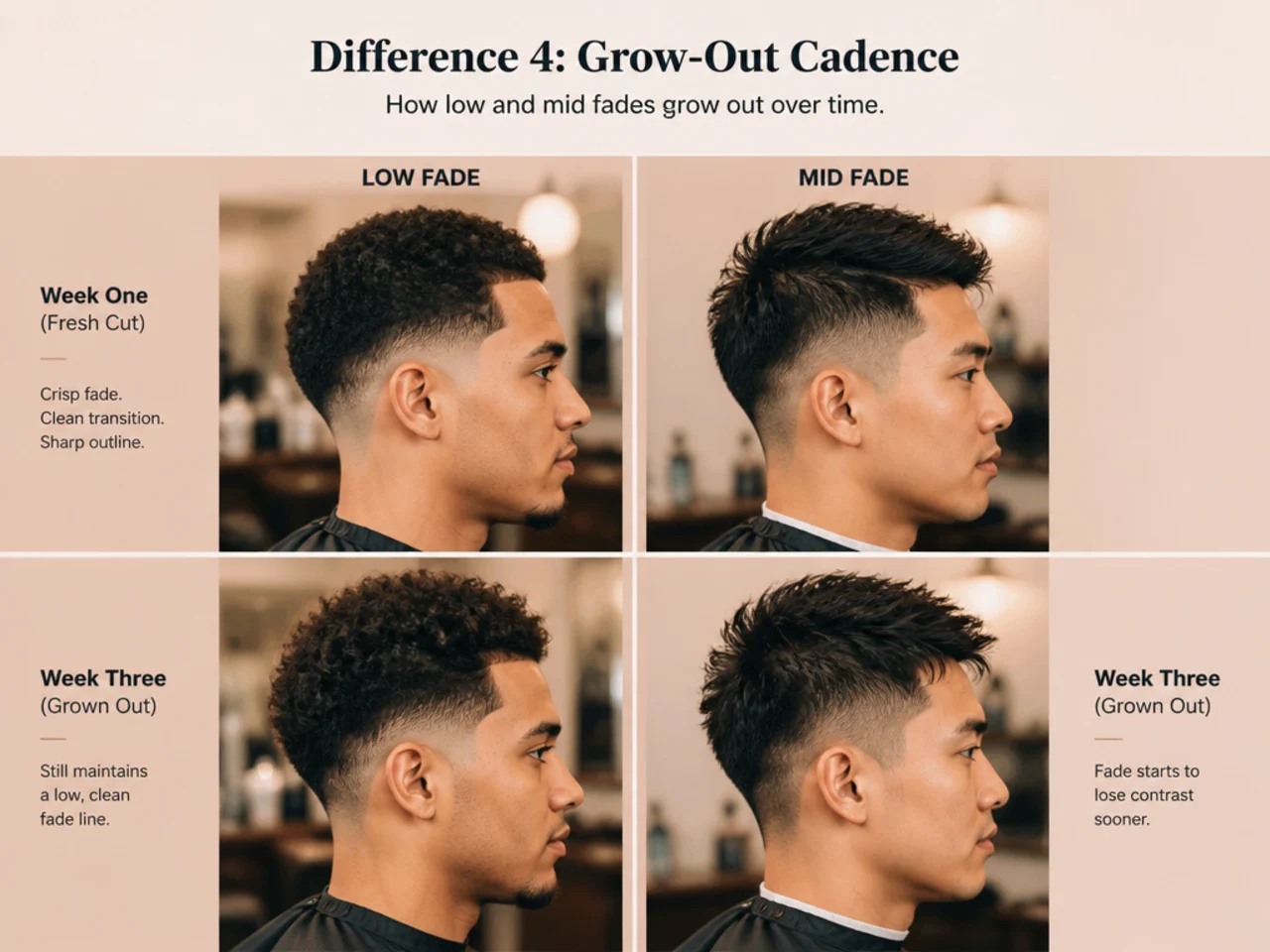
Here's the practical difference nobody talks about until they're two weeks out from their last cut. The low fade tolerates grow-out better than the mid. That has nothing to do with the fade itself and everything to do with where the blur happens.
A low fade blurs below your temple, out of your direct line of sight. It also sits inside the shadow line of your ear, which hides some drift. You can stretch a low fade three to four weeks before it looks shaggy, and in a pinch you can push it five weeks with a hat or a slightly parted top. The low fade haircut is the fade of choice for anyone whose calendar doesn't cooperate with barber appointments.
A mid fade blurs at eye level, in the exact spot your reflection catches every morning. The blend goes from crisp to soft in ten to fourteen days. By week three, the skin panel has grown in enough that the two-tone effect is gone, and the cut reads more like a bad taper than a fresh fade. Two-to-three-week cadence is not optional if you care how it looks. See the mid fade haircut pillar for more on the styling cadence that keeps a mid crisp.
Do the math over a year:
- Low fade at $40 every four weeks: $520 a year, 13 cuts.
- Mid fade at $40 every two-and-a-half weeks: roughly $832 a year, 21 cuts.
That's a $300 delta and roughly eight extra hours in the chair. Some guys pay the difference happily for the visibility. Some can't. Know which one you are before you commit to a rotation.
If you love the mid fade's look but not its schedule, ask for a mid taper fade — the tapered version stops the blend before it reaches skin, which means the grow-out drift is softer and less visible. You gain a week between cuts and give up about ten percent of the mid's contrast. Or step down to a low taper fade, which combines the low fade's forgiving cadence with a softer taper transition that stretches even further.
Low vs Mid Fade: Side by Side
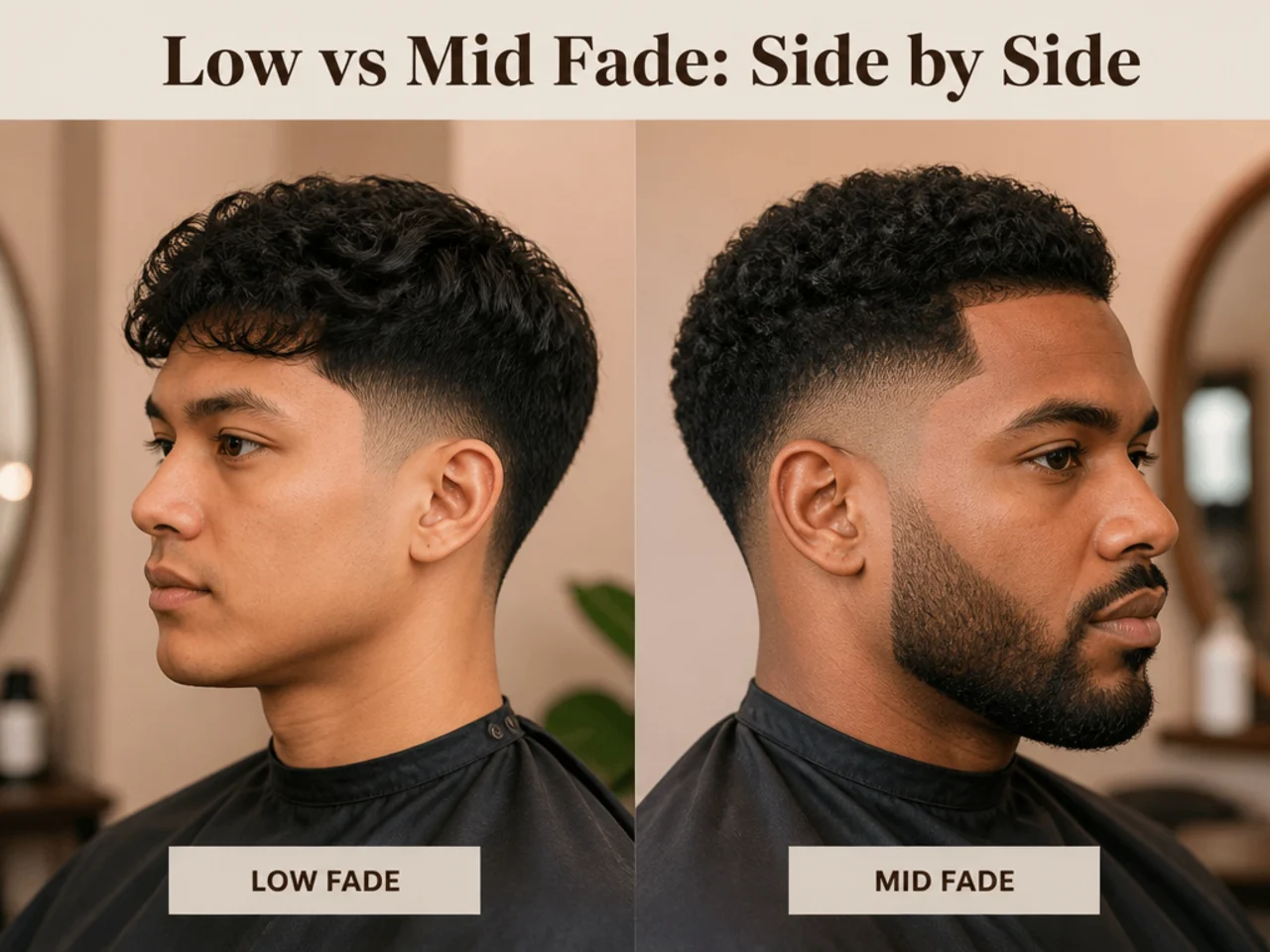
Here is the low vs mid fade decision matrix, laid out flat. Read across for whichever number matters most to you, then pick.
Two axes the table can't hold cleanly. The beard interaction goes low — a low fade lets a full beard read as the main event; a mid fade competes with the beard for attention. And the hair type on top goes both ways — thick, coarse, and curly hair usually shines under a mid because the higher fade removes side bulk, while fine or straight hair is more forgiving under a low because there is less contrast to prop up.
Which Should You Pick?
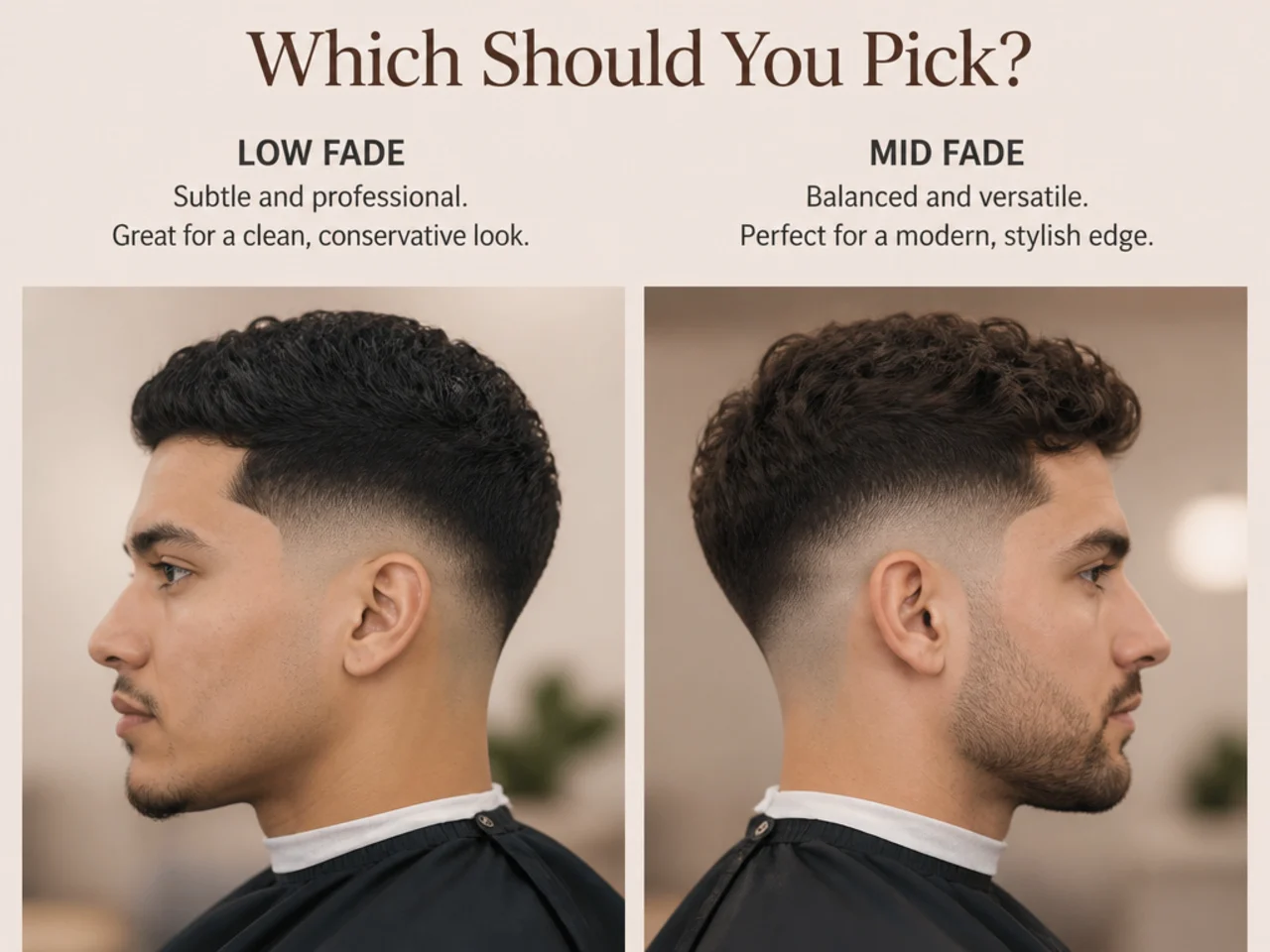
Pick the low fade if:
- Your workplace is traditional — finance, law, medicine, courtroom, executive-track corporate.
- Your face is long, oblong, or square, or your temples are thinning.
- You want a cut that stretches four weeks or more between visits.
- You wear a full beard and want it to be the loudest thing on your face.
- You want a haircut nobody notices in the wrong way.
- You pair with a side part, a comb over, a slick back, or a longer top.
Pick the mid fade if:
- Your workplace is modern — tech, agency, creative, hospitality, service, medicine in scrubs.
- Your face is round, heart, or diamond and could use vertical or side balance.
- You have thick, coarse, or curly hair that carries visible weight on the sides.
- You can commit to a re-cut every two to three weeks.
- You want the haircut to do part of the styling work for you.
- You pair with a textured crop, a quiff, an Edgar, or a hard part.
Pick the middle path — a low fade with a slightly higher start point, or a mid fade with a soft taper at the perimeter — if you can't commit either direction. Both are safe compromises that lean toward whichever height you started from. First cut with a new barber? Go low. You can always come up on the next visit — you can never come down without waiting a month for the sides to grow back.
If you're still torn: default to a low fade with a soft taper. It's the most forgiving fade you can order, works in every setting on this list, and gives you room to test the height on your face before committing to the mid.
How to Ask Your Barber
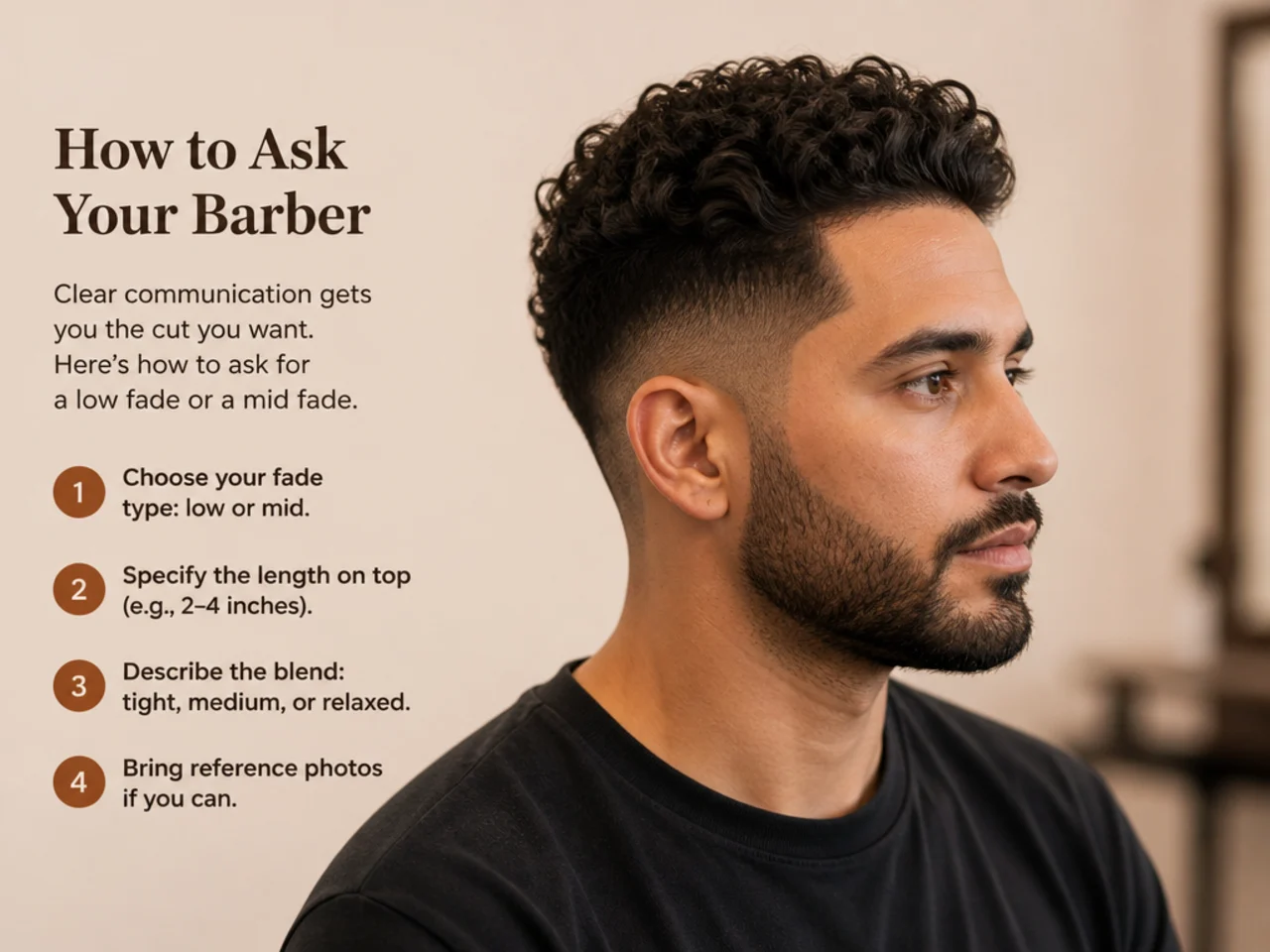
The five-word method works for both. Change the height word and the barber knows exactly which one you want.
- Say the height. "Low fade" or "mid fade." Not "kind of low" or "somewhere in between" — pick one.
- Name the landmark. For a low: "starting just above the ear." For a mid: "starting at the temple." This removes the barber's interpretation.
- Name the guard at the shortest point. Skin (0), 0.5 (near-skin), or 1 (very short). Most first-time fades should start at 0.5 or 1.
- Name the top length. In inches for scissor-cut tops ("keep about two inches on top"), or a guard number for clipper-cut tops ("guard 3 on top").
- Name the finish. "Matte and textured" for casual styling, "sleek and shiny" for a formal top.
- Show a photo. Height varies by barber's interpretation — a reference photo removes ambiguity in the last mile.
Two common mistakes to avoid. First, don't ask for "a low-mid fade" — that means nothing to your barber and forces them to guess. Pick a lane. Second, don't confuse the fade height with the neckline. You can order a low fade with a blocked, tapered, or rounded neckline independently. Say both out loud.
If you're moving from a low to a mid (or the other way around), tell your barber that this cut is a transition and you want the new height blended into what's already there. Otherwise you'll have a visible line where the old fade meets the new. Good barbers know how to handle this — they just need to know it's happening.
For the softer, non-skin variants of both heights, the taper haircut rundown covers what changes when you keep a guard length at the shortest point instead of going bare.
FAQ
What is a low mid fade?
There's no such thing as an official "low-mid" fade — it's a barber-shop shorthand for a fade that starts a little higher than a classic low fade but lower than a full mid. Some barbers cut it that way as a personal signature. If you want one, ask for a "low fade with a slightly higher start point" and show a photo. Don't just say "low-mid" — you'll get a different cut from every barber.
Which is more popular in 2026, low fade or mid fade?
The mid fade is having a moment on Pinterest and Instagram — it's the default request for men in their twenties and early thirties because it reads modern without reading trendy. The low fade is quieter but never really goes out. It's the request from men who want a haircut that doesn't age.
Can I get a mid fade if my hair is thin on top?
Yes, but it's a trade-off. A mid fade adds visual contrast that pulls the eye upward, which can highlight thin spots on top. If your hair is thin on top, keep the mid fade's top length modest — under one-and-a-half inches — and use a matte styling product that adds visual texture without shine. A low fade is the safer default if your hair is thin.
How much longer does a mid fade take to cut than a low fade?
About five to ten minutes more, and that's mostly because the blend is longer. A mid fade covers more vertical space and requires more clipper passes to keep the gradient smooth. Some barbers charge a couple of dollars more for it, but most don't.
Can I get a low or mid fade with long hair on top?
Both work with long hair, but the low fade is the more natural pairing. Long hair sits over the top of the head and pushes toward the sides — a low fade keeps the transition below where long hair falls, so the sides read clean. A mid fade with long hair on top can look disconnected if the length isn't styled to flow over the fade line. If you want long-on-top length with visible sides, ask your barber to blend the top into the fade rather than leaving a hard disconnect.
Should I ask for a drop fade version of either?
Sure. A drop fade curves down behind the ear instead of running level, which follows the natural head shape and flatters most people. You can order a low drop fade or a mid drop fade, and both work well — the drop softens the fade line slightly and hides grow-out for an extra few days. Say "drop" in your order and your barber will know.