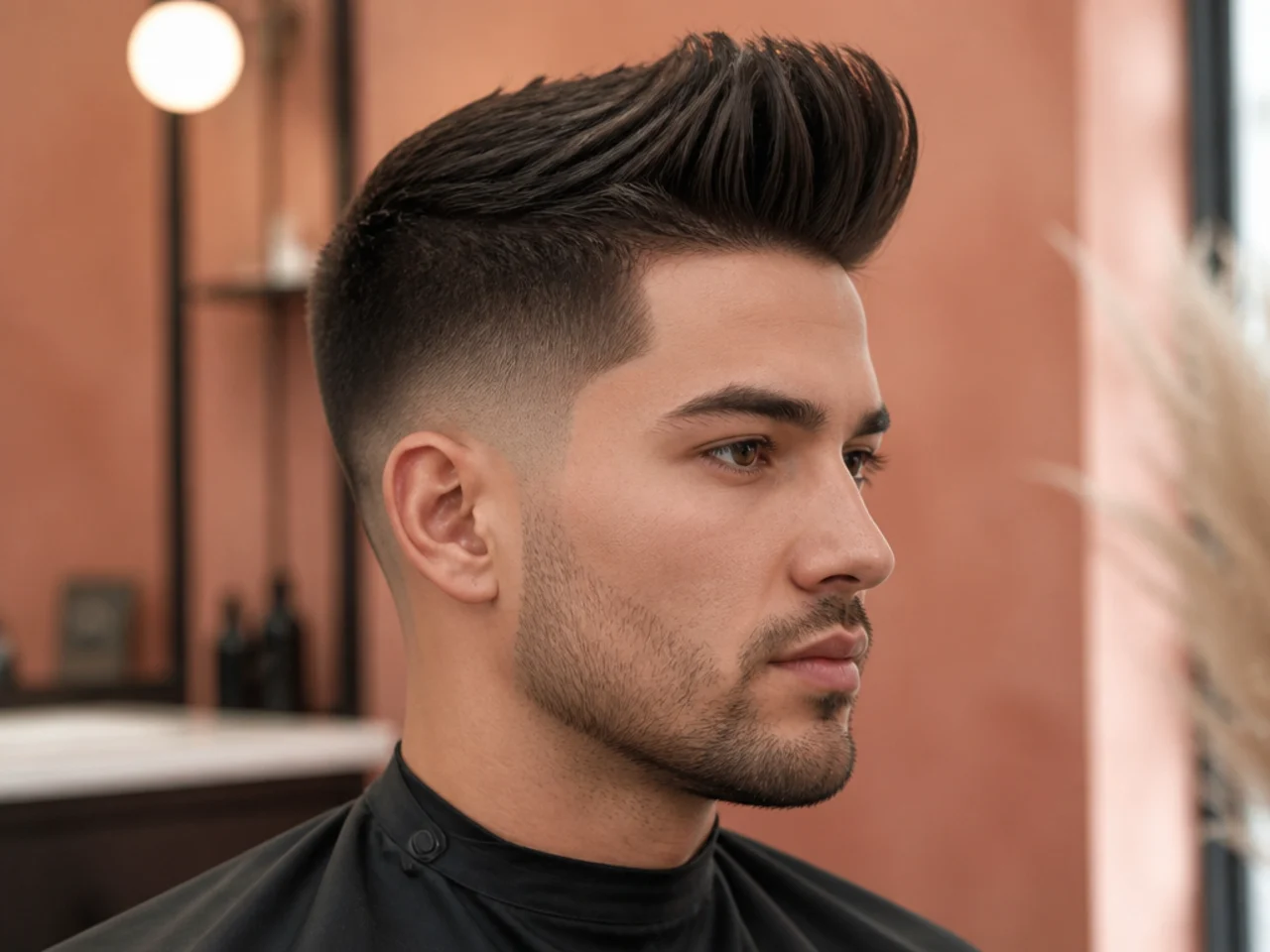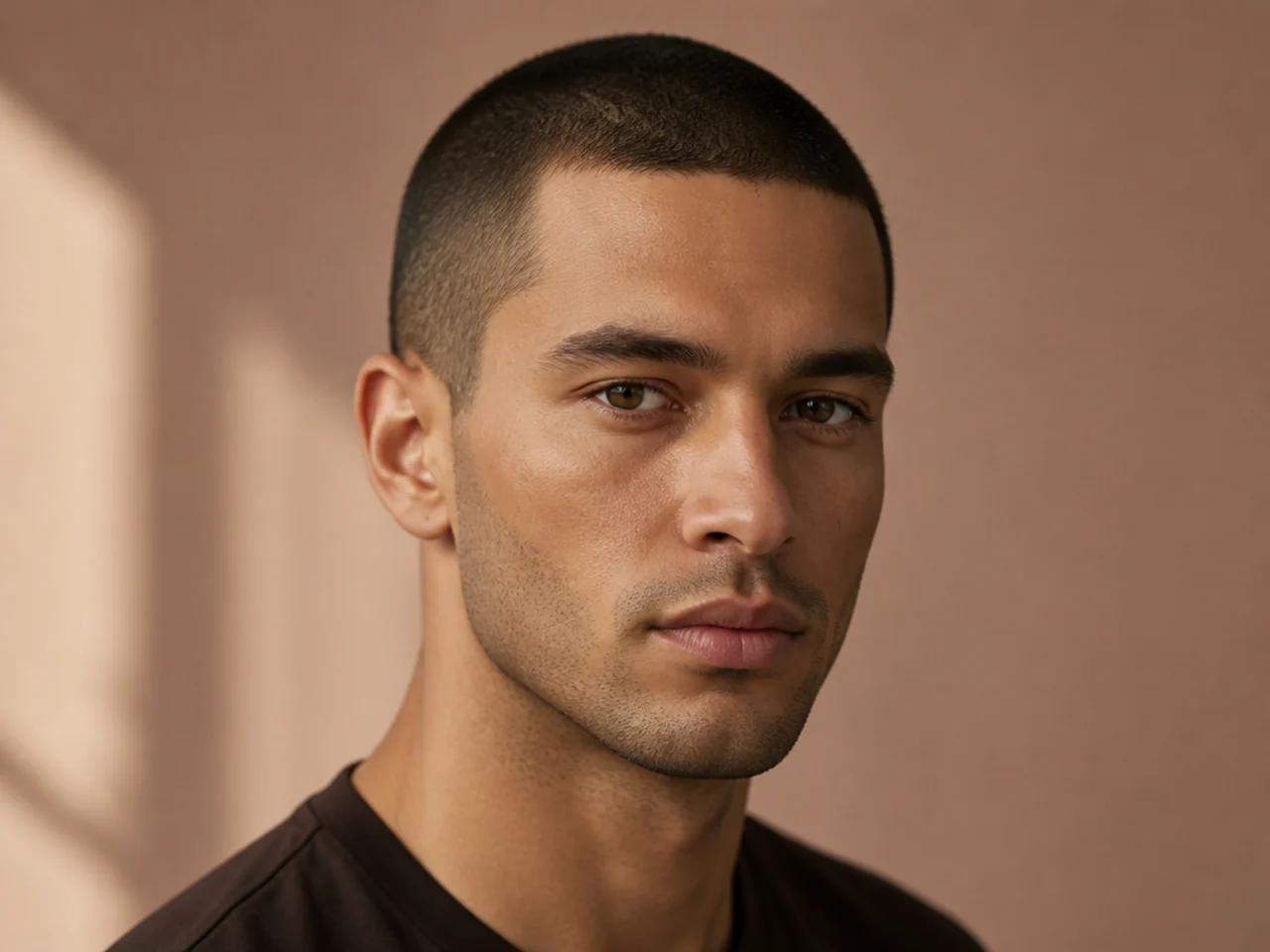
5 Reasons Short Hair Is the Easiest to Style
Short hair is the easiest style men can ask for. Five real reasons — styling time, product simplicity, cap-proof durability, grow-out grace, and face fit.
In this article · 17
- The One-Line Answer
- Reason 1: Under Ten Minutes From Alarm To Door
- Reason 2: One Product, Zero Learning Curve
- Reason 3: Sleep, Wind, And Caps Don't Break It
- Reason 4: A Wrong Cut Grows Back In Weeks, Not Months
- Reason 5: Face-Shape Rules Get Simpler, Not Stricter
- Short Hair vs Longer Hair: The Real Trade-Offs
- Which Short Cut Should You Ask For?
- How To Ask Your Barber
- The One Place Longer Hair Still Wins
- FAQ
- Is short hair really easier to style than long hair?
- What's the easiest short haircut for men to maintain?
- How often do I need to cut short hair?
- What product should I use on short hair?
- Which face shape suits short hair best?
- Can I style short hair without any product?
Short hair does the styling for you. Anything under two inches on top skips the blow-dryer, the brush, the heat protectant, and the finishing spray — swap them for a fingertip of clay and a mirror check on the way out. This guide walks through the five reasons short hair beats longer styles on time, product cost, durability, grow-out, and face-shape flexibility — plus the short cuts to ask for and the one place long hair still wins.
The One-Line Answer
Short hair is the easiest men's style because the cut carries the shape. You don't need to build volume, redirect texture, or fight cowlicks — the barber already did that in the chair. Longer styles hand all of that work back to you every morning. That's the whole argument in a sentence.
The trade-off is honest: short hair asks for more time at the barber and less time at the mirror. Longer hair reverses the deal. If your calendar has thirty spare minutes for a haircut every three weeks but not ten minutes for daily styling, short wins. If the opposite is true, look at medium-length hairstyles for men instead. Everything on this page is nuance around that trade-off.
Reason 1: Under Ten Minutes From Alarm To Door
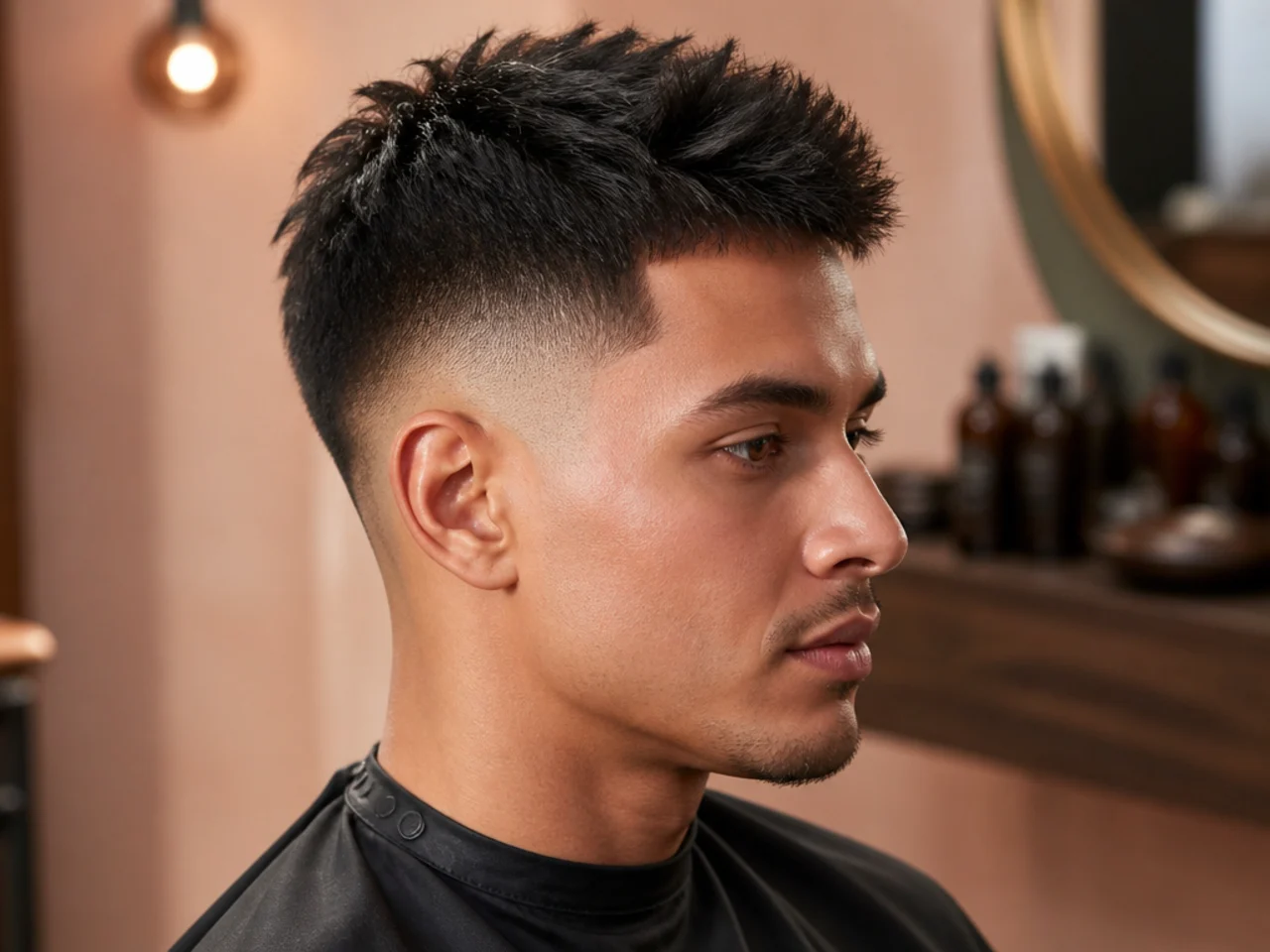
The core reason short hair wins is time. A crew cut, a buzz, a French crop, or an Ivy League takes ninety seconds to style from wet or dry. You towel-dry, rub a pea-sized dot of matte clay between your palms, rake it through with your fingers, glance in the mirror, and walk out.
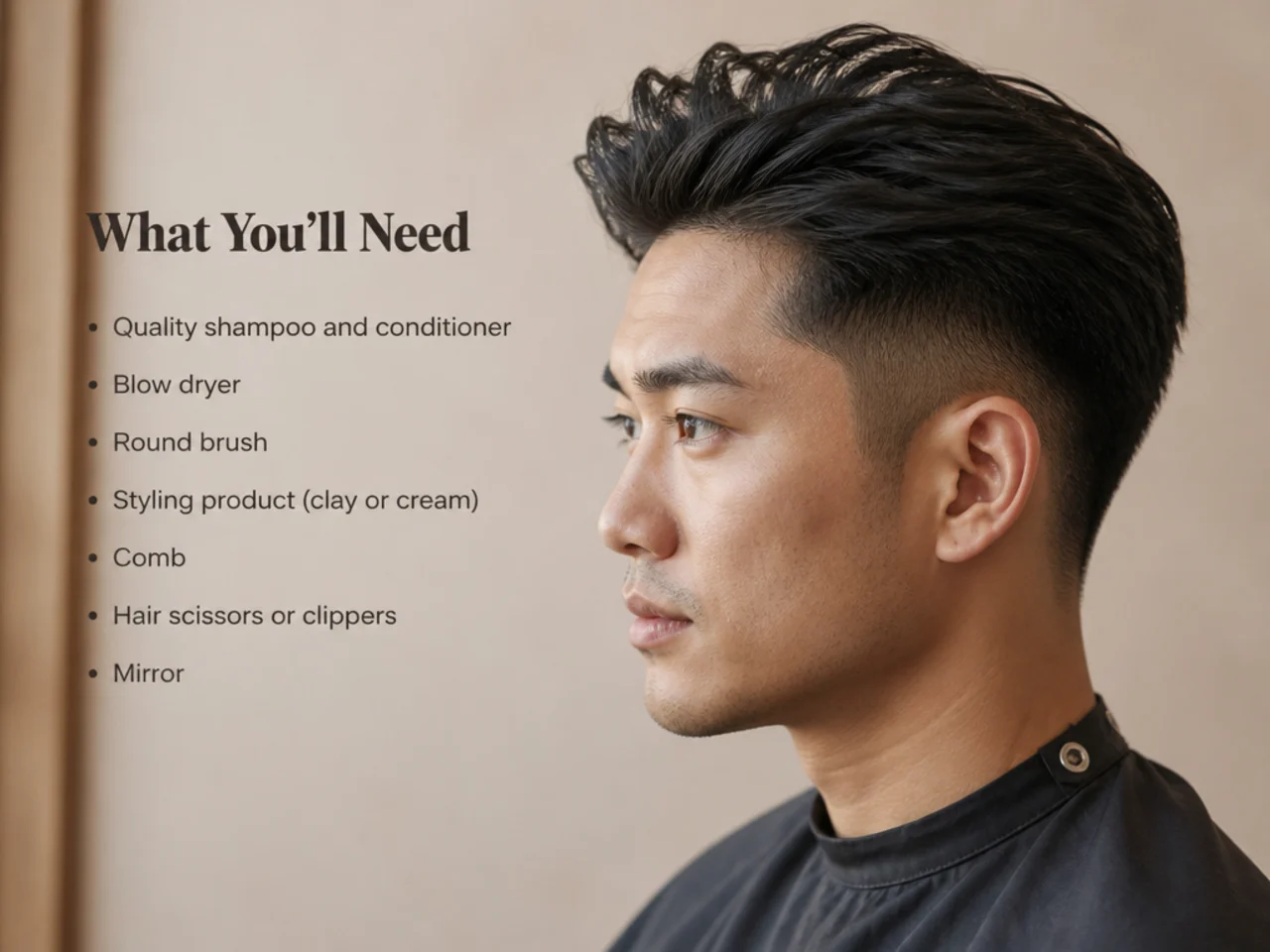
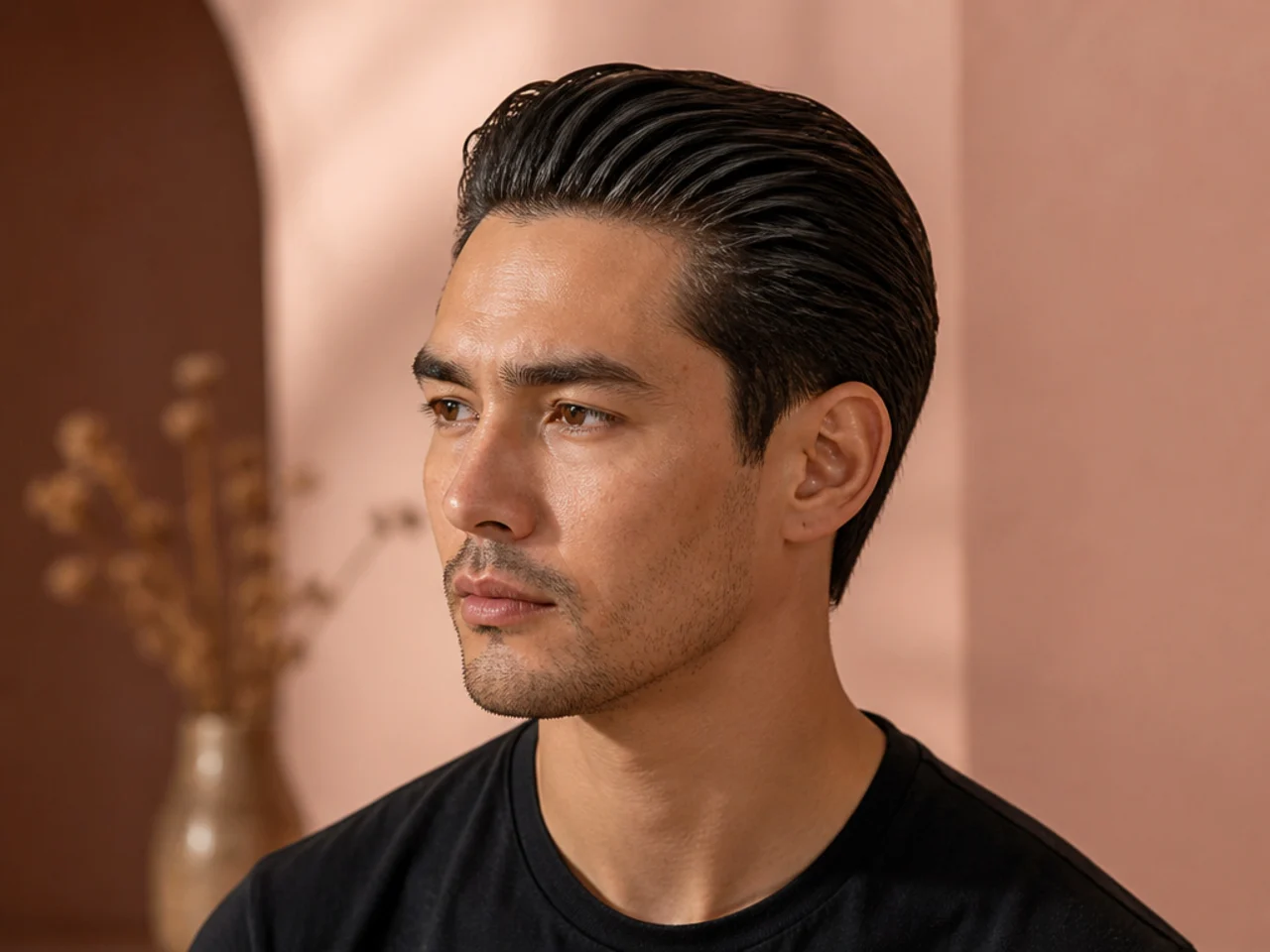
A medium-length quiff or a slick back is a different job. You start with a heat protectant, then a blow-dryer with a round brush, then a styling cream to hold the shape, then a light hairspray to keep it there. Five to eight minutes on a good day, longer if your hair fights you. Over a five-day workweek, that's roughly thirty extra minutes at the mirror. Over a year, twenty-five hours.
The math gets worse when you factor in the days it doesn't cooperate. Long hair has more failure points — a cowlick that won't lie flat, a part that keeps drifting, waves that go flat by lunch. Short hair has fewer surfaces to misbehave. What you see in the mirror at 7 a.m. is what walks into the office at 9.
For guys who value morning speed above everything, look at the short simple mens haircuts guide for the full family. The buzz, the crew, the French crop, and the Ivy League all live in that ninety-second bracket. If you're willing to stretch to three minutes, a textured crop or a short side part joins the club.
Barber tip: buy a clay you actually like the smell of. You'll reach for it every single day for the next year, and a bad scent will sour the whole ritual. Pay the extra five dollars.
Reason 2: One Product, Zero Learning Curve
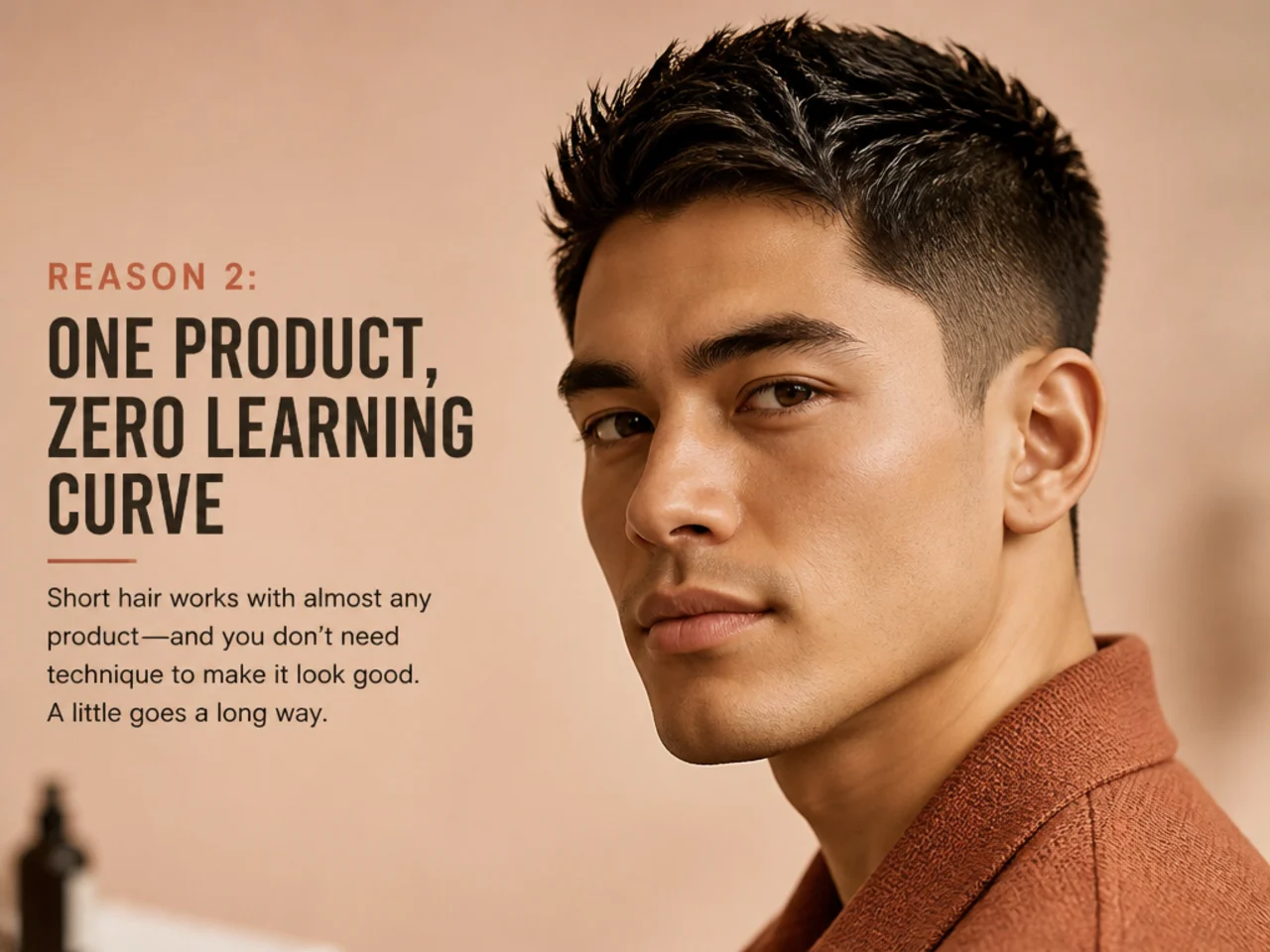
Short hair asks for one product. That's the whole product list. A matte clay for straight or wavy hair. A curl cream for curly and coily hair. Nothing else earns a spot on the counter until you decide you want a specific finish.
Longer styles need a shelf. Heat protectant. Blow-dryer. Round brush. Styling cream or paste. Finishing spray or hairspray. Sea-salt spray for texture. Maybe a dry shampoo for day two. Each product costs money, takes shelf space, and comes with a learning curve — too much and your hair goes greasy, too little and it goes flat. You learn the exact amount over months of trial and error.
Short hair skips all of that. A pea-sized dot of matte clay works on every day-one to day-fourteen version of a crew cut, buzz cut, or French crop. You cannot really overdo it — the hair is too short to weigh down. You cannot really underdo it either, because the cut still holds its shape without any product. The clay just adds a little texture and stops the hair from lying flat.
By hair type, the product picks are:
- Straight, fine, thin hair: matte clay, pea-sized dot. Skip if buzzed.
- Straight, thick hair: matte clay or matte paste, a slightly larger dot.
- Wavy hair: matte clay applied to damp hair for shape, or dry hair for texture.
- Curly and coily hair: curl cream on damp hair, air-dry or diffuse.
- Under half an inch on top: nothing needed. Air-dry, walk out.
If you want to buzz it yourself between visits, best hair clippers for men covers the two or three tools worth owning — and one clipper plus one clay covers your whole grooming brief for a year.
Reason 3: Sleep, Wind, And Caps Don't Break It
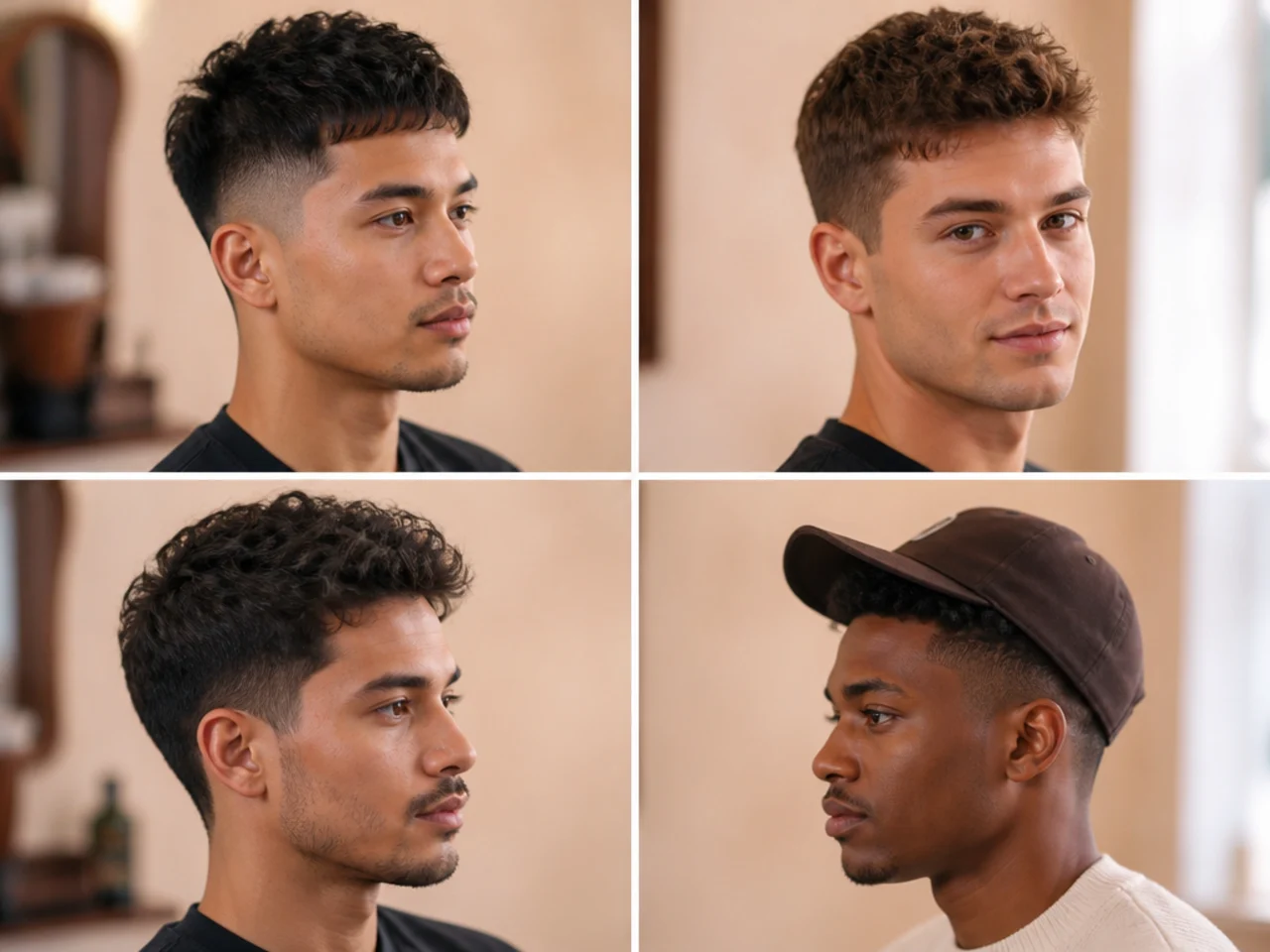
Short hair survives the day. Longer hair fights it. That's the invisible reason short cuts feel so much easier — the styling holds up against the four things that ruin every other man's hair: sleep, wind, hats, and humidity.
Sleep flattens a slick back or a quiff overnight. You wake up with a bent front piece or a collapsed volume section, and the only fix is a shower or a re-wet and a redo. Short cuts don't care. Sleep on a crew cut and it looks the same in the morning. Sleep on a curly buzz and the waves reset when you rinse your face. Zero recovery work.
Wind is worse for long hair than most guys admit. A ten-mile-per-hour breeze rearranges a side part into a shape you didn't ask for, and a stronger gust turns a quiff into a Muppet. Short hair reads the same from every angle in every weather. It doesn't lift, whip, or blow across your face.
Hats are the biggest one. Anything with structured volume on top gets crushed the second you put on a beanie, a baseball cap, or a hoodie. Longer styles come off looking like the cap was pressed with an iron — you have to comb them back into shape or accept the ring around your head for the rest of the day. Short cuts vanish under a cap and re-emerge intact. Take it off, run a hand through it, done.
Humidity is the same story — short hair holds its shape because there isn't enough length to expand into. Hot-climate barbers push short cuts through the whole summer for exactly this reason.
If you cycle between a helmet, a hard hat, a beanie, or a baseball cap all day, look at the crew cut hairstyles family. All of them shrug off headwear.
Reason 4: A Wrong Cut Grows Back In Weeks, Not Months
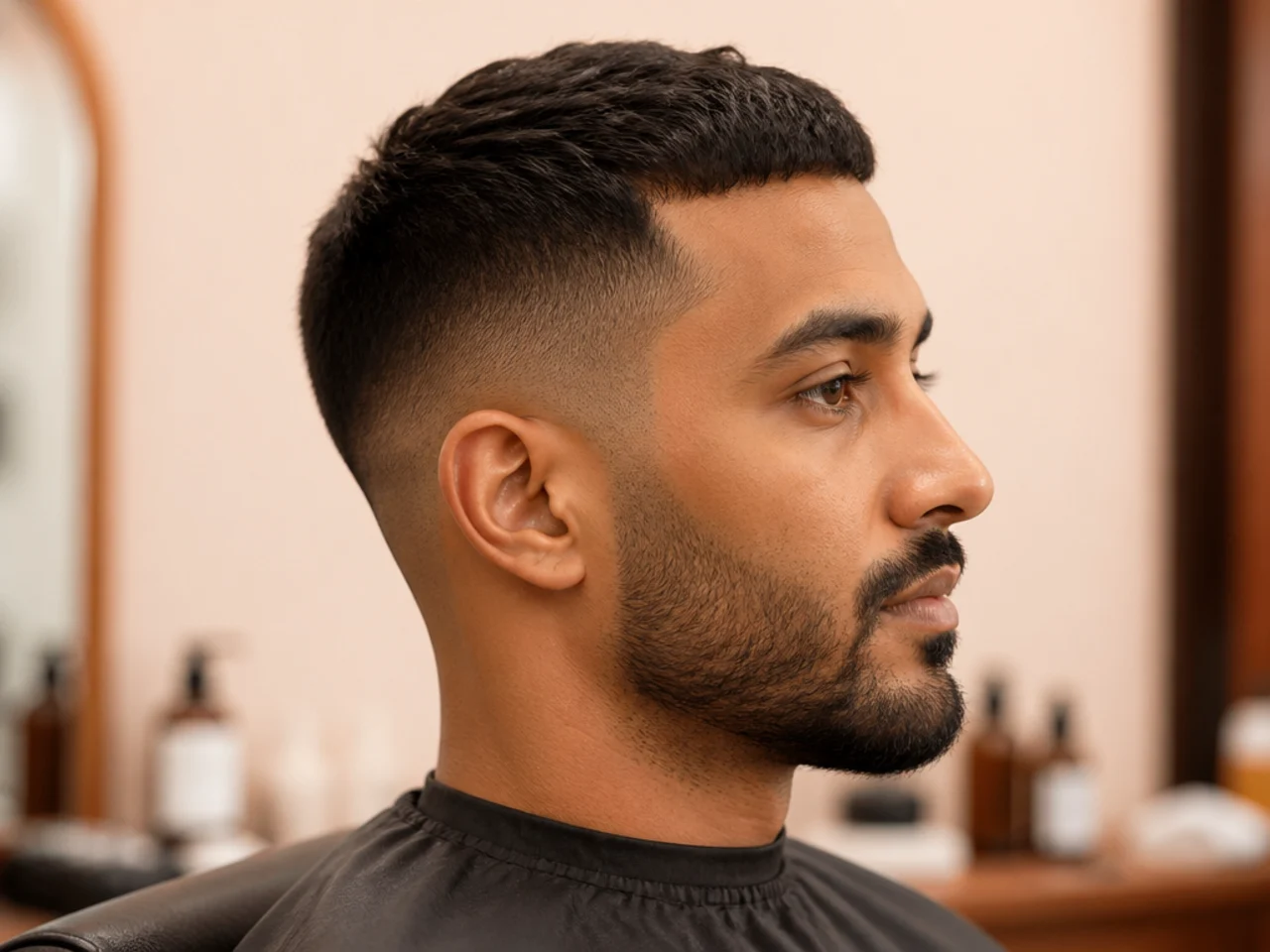
Every man is one bad appointment away from a haircut he hates. With short hair, the fix is easy — go shorter, or wait three weeks. Neither destroys your month.
Longer hair doesn't offer that grace. A bad chop at four inches takes six to eight months to grow out and blend back into the length you wanted. A layered cut you don't like can take a year to look right again. Every morning during that window, you're styling a mistake and hoping no one notices.
Short cuts also let you experiment cheaply. Want to try a French crop? It grows back in four weeks. Want to try a buzz? Six weeks. Want to try a mid fade? The fade line grows out in a fortnight. Compare that to trying a shag cut and realizing after a month that you hate it — you're now stuck growing shag length for the next six months just to reset.
Grow-out timelines by cut, on average hair growth of half an inch per month:
- Buzz cut (guard 1): back to a natural short length in four weeks.
- Crew cut: back to a longer, tousled look in eight weeks — usually still styleable throughout.
- French crop: grows into a textured crop or a medium-length fringe in six to ten weeks. Both look intentional.
- Ivy League: grows into a short side part or a longer classic short in eight to twelve weeks.
- Skin fade: the fade line blurs in two weeks — a re-cut resets, but the top length is fine.
Compare that to growing out a quiff, a slick back, or a two block — you're committed to that shape for as long as you have the length. Short hair keeps the option open. If you're the type who changes your mind twice a year, short is the answer.
The general rule: any short cut can transition into any other short cut in six to twelve weeks. Longer styles don't offer that kind of pivot without a full reset.
Reason 5: Face-Shape Rules Get Simpler, Not Stricter
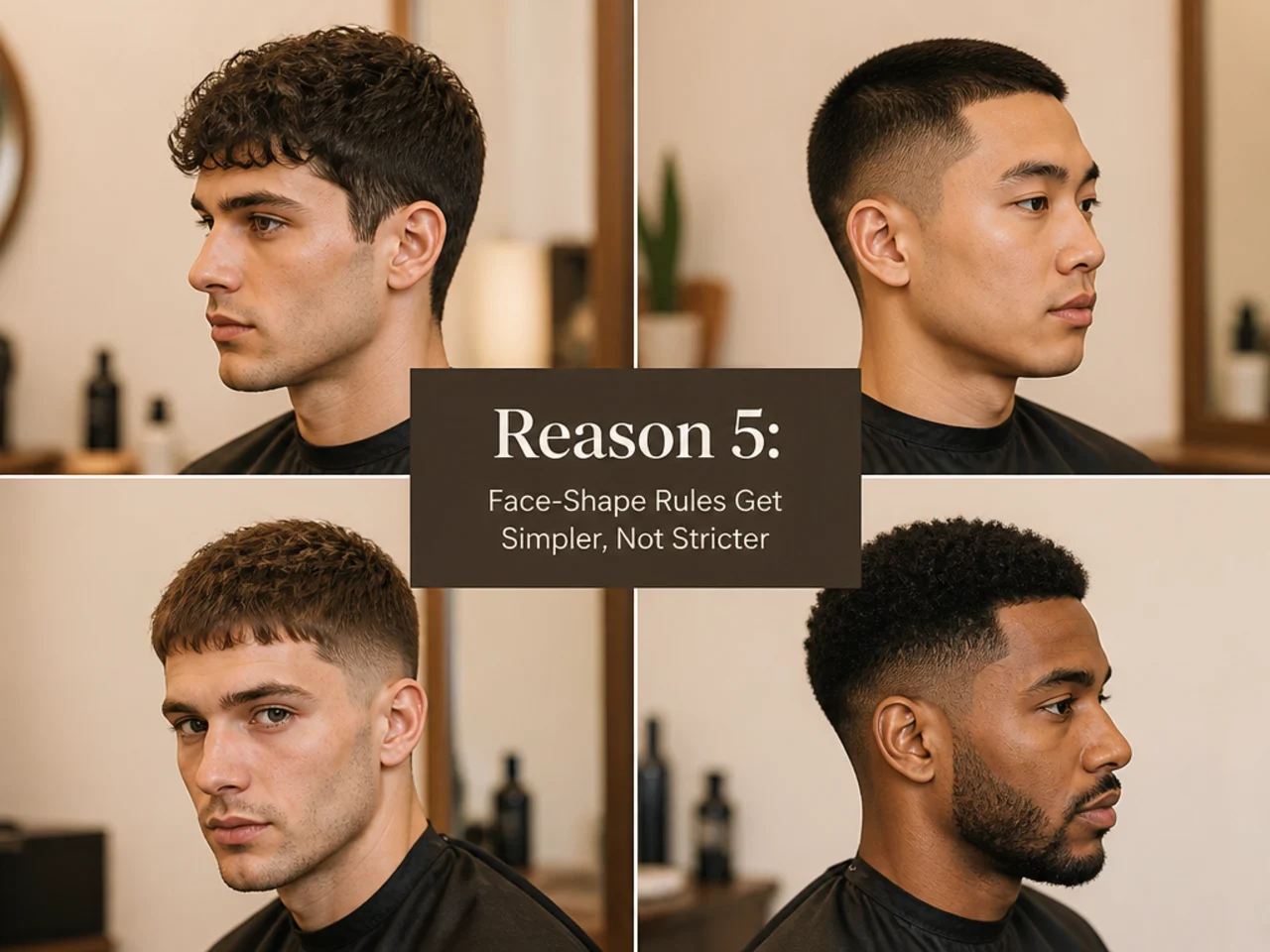
Guys assume short hair has stricter face-shape rules than long hair. It's the opposite. Long styles have a hundred variables — length, layers, part, texture, volume, movement — and all of them need to flatter your face at once. One wrong choice and the whole look feels off. Short hair has three variables: top length, side treatment, and hairline shape. Get those three right and any face works.
Here's what actually matters for each face shape, kept short:
Oval. Anything works. You're the goldilocks. Pick based on lifestyle, not shape.
Round. Keep a little more length on top (one to two inches) so the height stretches the face vertically. Buzz cuts and very short crops can widen a round face — a textured crop or an Ivy League adds the lift you want.
Square. Soften with texture, not length. A messy French crop or a lightly tousled crew cut breaks the jawline's blocky read. Skip blunt buzz cuts and razor-sharp side parts.
Long or oblong. Keep the top short and the sides moderate — not too faded. A classic short back and sides or an Ivy League anchors the length so the face doesn't stretch further. Avoid tall styling and skin fades, which both extend the visual height.
Heart. A little length up top plus faded sides balances a narrow chin — a mid fade with a short quiff-adjacent top is the classic pick. Skip anything with a hard blunt fringe, which emphasizes the forehead width.
Diamond. Cheekbones are the strength. A crop, a crew, or a short scissor-cut top with tapered sides frames them cleanly. Skip anything ultra-short that exposes the temples — it can make a diamond face read gaunt.
For a deeper look at what suits every face, cross to 14 chic buzz cuts for every face shape — it uses buzz cuts as the case study, and the same logic scales up to any short cut.
Short Hair vs Longer Hair: The Real Trade-Offs
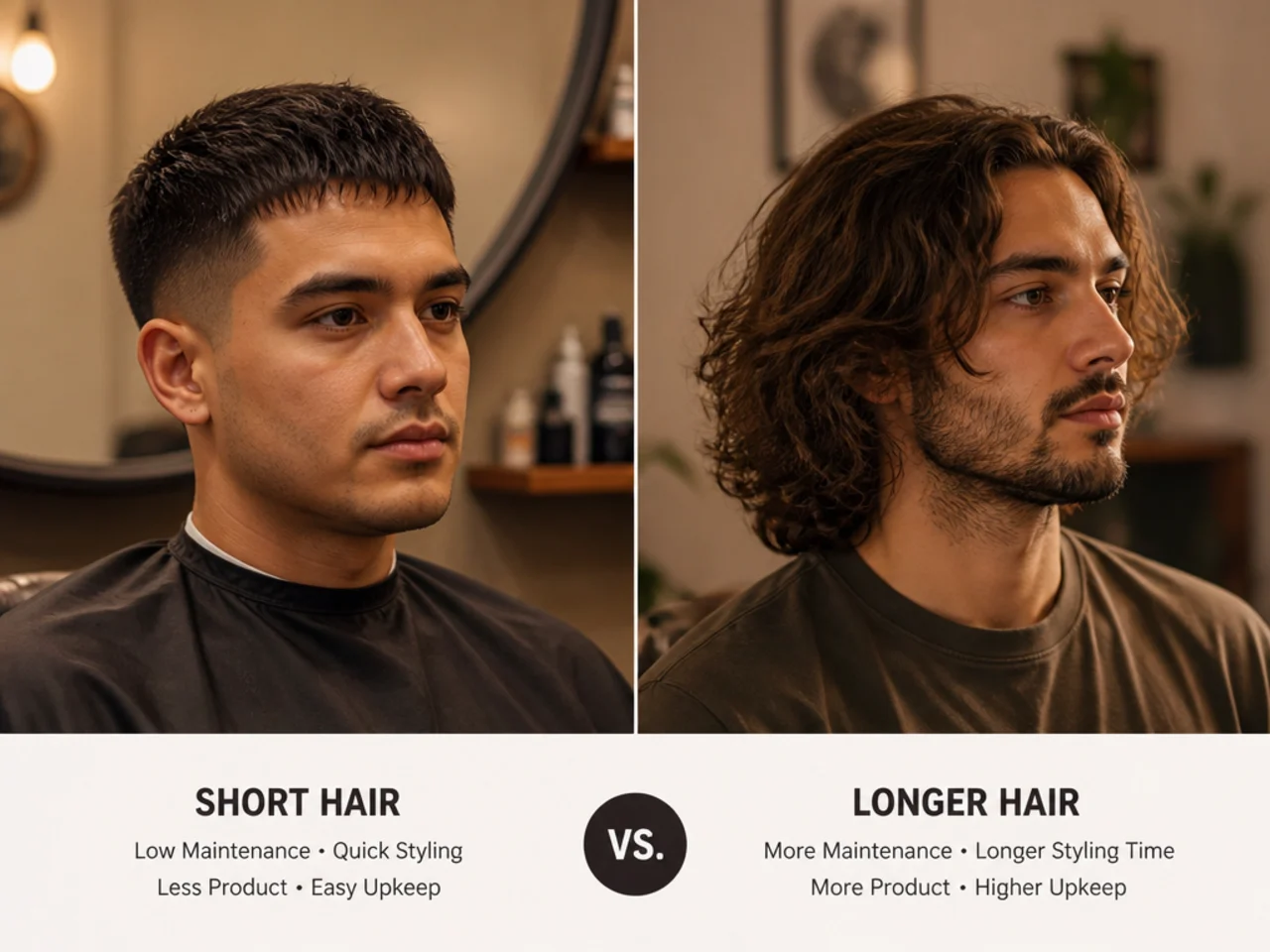
Here's the honest side-by-side. Short hair wins most axes — but longer styles have their moments.
Two more axes worth calling out:
Annual cost. Short cuts with fades run a hundred and fifty to three hundred dollars a year at a barbershop pace of every three weeks. A scissor-cut short back and sides at every six weeks lands around a hundred to a hundred and fifty a year. Longer cuts run seventy-five to a hundred and fifty a year because you visit less often, but the product shelf costs sixty to a hundred a year to keep stocked. Roughly the same total, distributed differently.
Confidence signal. Short cuts read clean, professional, and low-effort — which reads well in most environments. Longer styles read as a style choice, which is powerful when it lands and a liability when it doesn't. In a room where you don't know the dress code, short hair is the safer read.
Which Short Cut Should You Ask For?
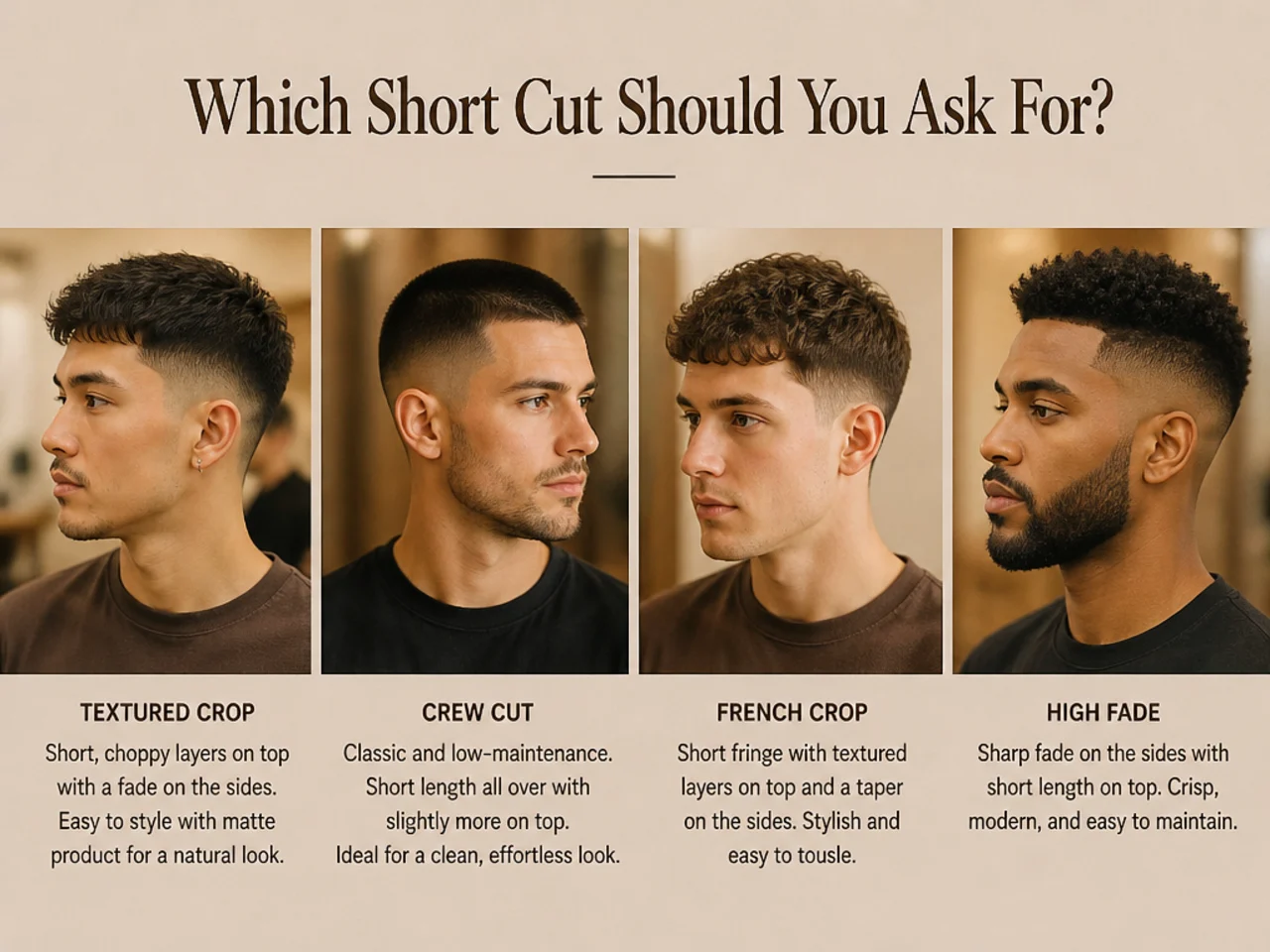
If you're moving from longer hair to short for the first time, don't pick a haircut you saw once on Pinterest. Pick the one that matches your face, your workplace, and your styling appetite. Here are the five to consider, in order of ease.
1. Buzz cut. The lowest possible bar. Guard 1 to guard 3 all over. Zero styling, zero product, zero decisions. Best for straight-across hairlines and confident head shapes. If you want to try short without committing, this is where you start. See buzz cuts haircuts for the full guard-by-guard breakdown.
2. Crew cut. A guard 2 or 3 on the sides, half an inch to an inch on top, tapered around the ears. Reads clean everywhere, styles in ninety seconds, works with any face shape. This is the default short cut for men who want to look polished without thinking about it.
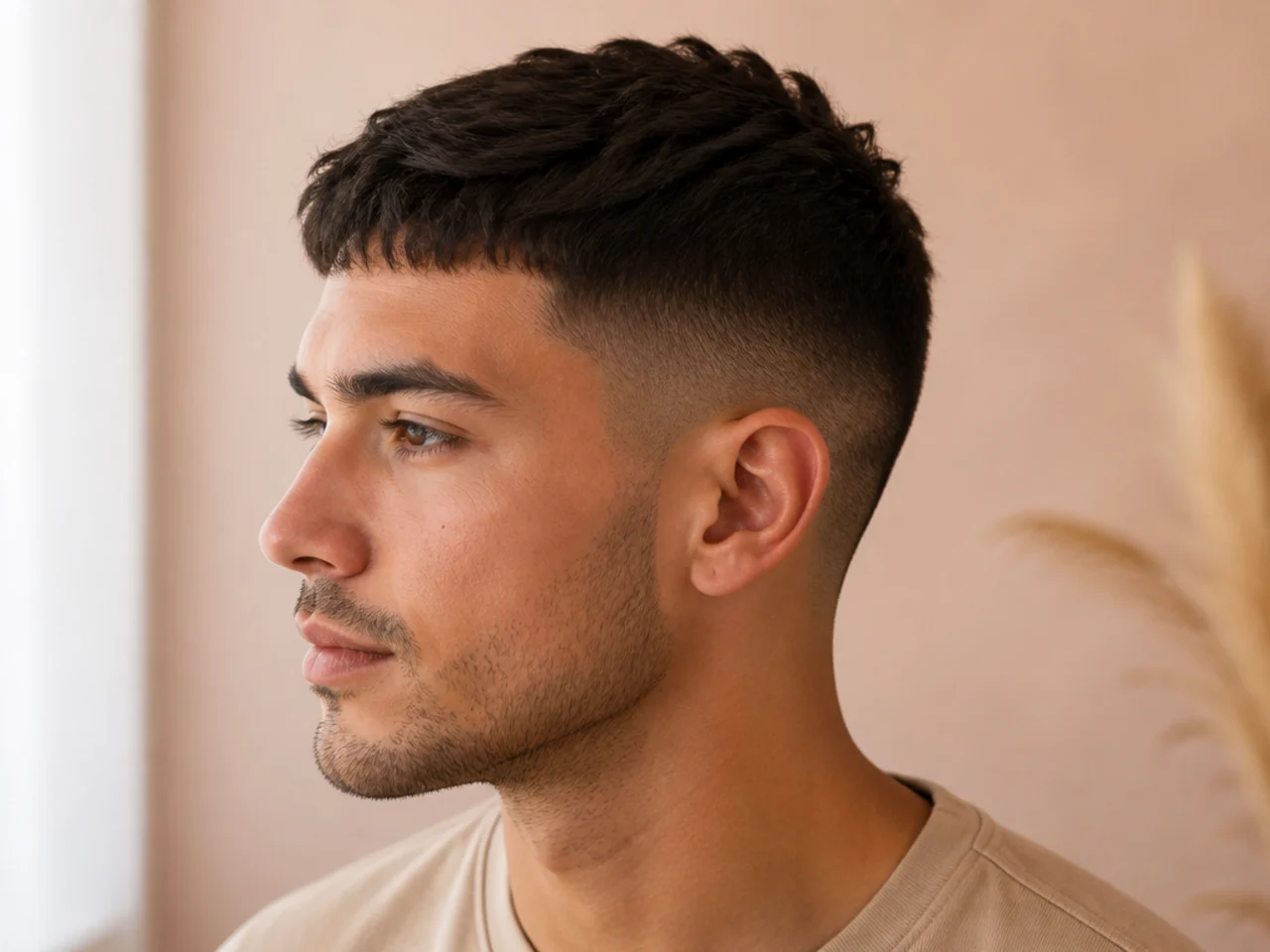
3. French crop. A short, textured top with a short blunt fringe, faded or tapered sides. Slightly more character than a crew cut, still under two minutes to style. Best for straight or wavy hair and round or oval faces. See french crop haircut for length variations.
4. Ivy League. A crew cut with an extra inch on top so you can comb it into a soft side part. Reads more traditional and more professional. Best for straight and wavy hair, oval and long faces. See ivy league haircut for the classic references.
5. Short side part with a low fade. The most versatile of the five. A low fade haircut on the sides, an inch or two on top parted to one side. Slightly more styling than the others (two minutes with a comb and a light clay) but reads sharp in every setting. Best if you want to look put-together without going all-in on a buzz.
If you can only pick one and you don't know where to start, pick the crew cut. It flatters the most face shapes, works in the widest range of workplaces, and grows out gracefully into any of the other four cuts on the list.
How To Ask Your Barber
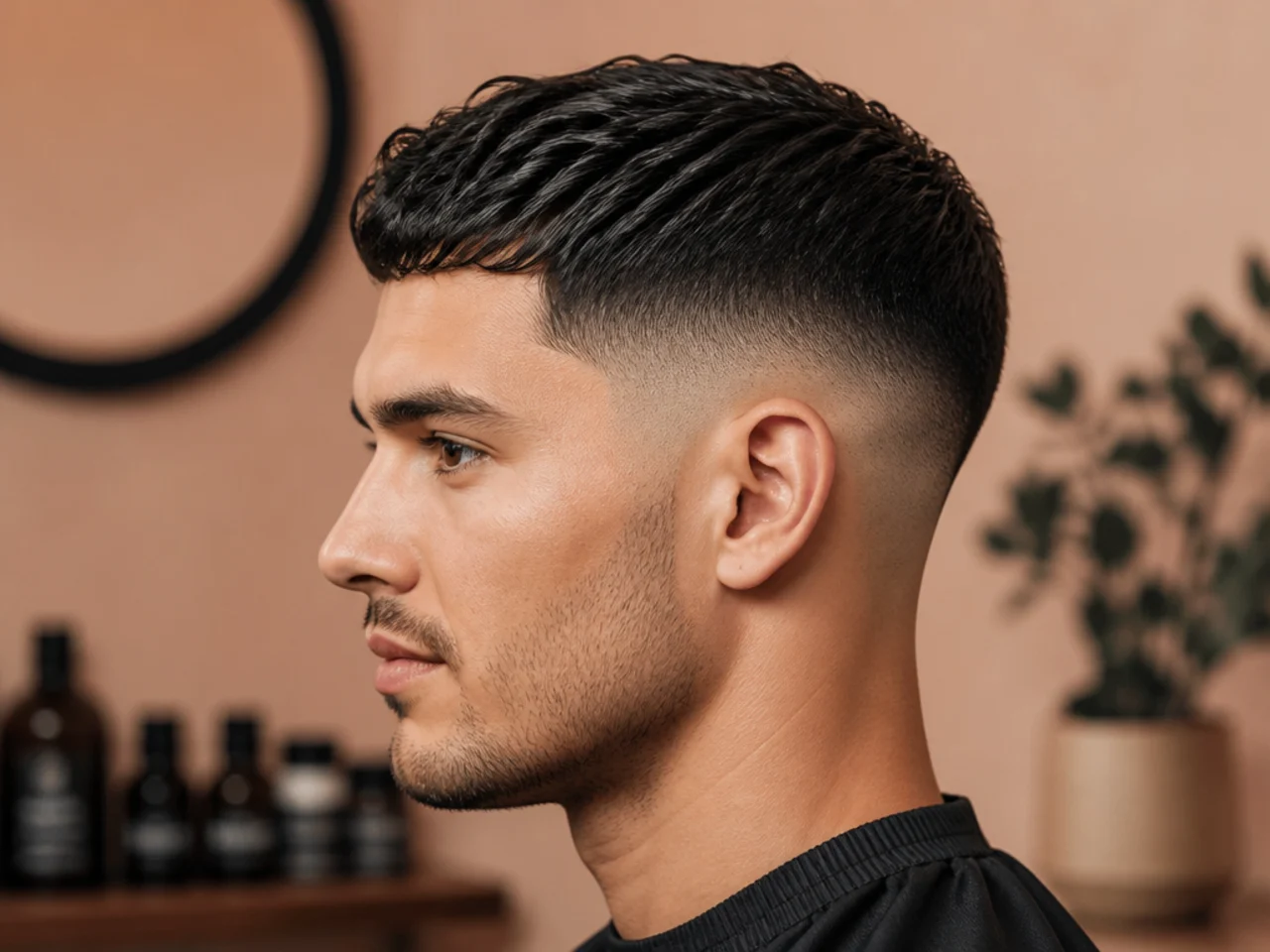
The four-number method works for any short cut. Change one word and your barber knows exactly what shape you want.
- Show a photo. One or two reference images beat any description. Save them before the appointment.
- Name the top length. In inches for scissor-cut ("keep it at one inch on top") or guard number for clippered ("guard 3 on top").
- Name the side treatment. "Faded to a 1 at the shortest," "tapered to a 2 at the perimeter," or "scissor-cut short back and sides, no fade."
- Name the finish on top. Matte and textured is the modern default. Neat and combed reads classic. Rough and choppy reads textured crop.
- Name the neckline. Blocked (sharp) or tapered (soft). Blocked reads under a collar cleanly; tapered reads better when growing out.
- Confirm the fringe. Say "keep it short and blunt" for a French crop, "leave it long enough to comb back" for an Ivy League, or "same length as the top" for a crew cut.
- Book the next appointment before you leave. Short cuts drift fast — schedule the re-cut while the chair is still warm.
The One Place Longer Hair Still Wins
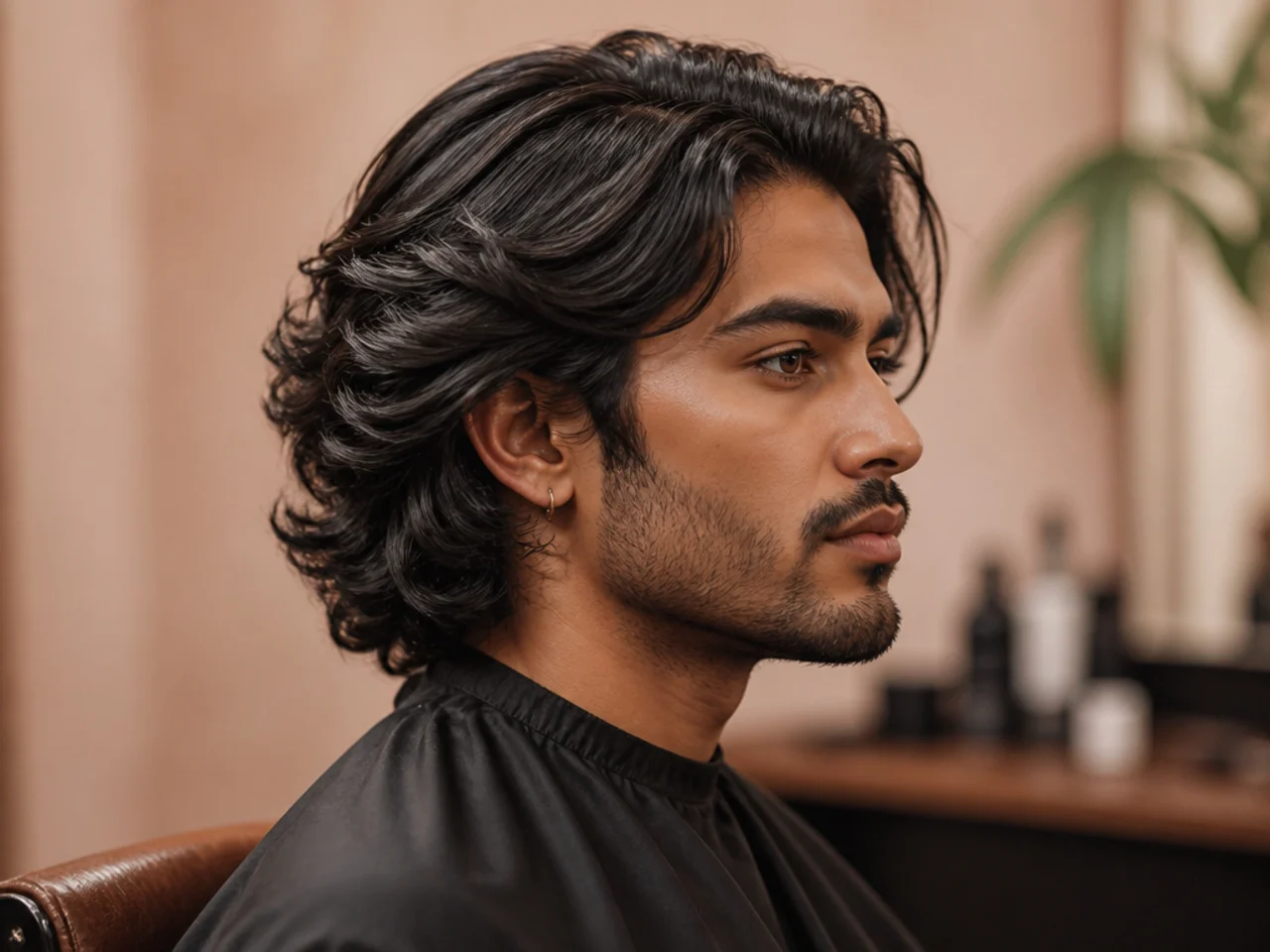
Range. That's the honest counter. Longer hair can be styled six different ways for six different occasions — swept back for the office, tousled for the weekend, a soft quiff for a date, pulled back for the gym. Short hair reads the same in every setting. The polish is there; the variety isn't.
Longer hair also carries more personal style. A well-styled medium-length haircut communicates something about the person underneath in a way a crew cut cannot. That matters in creative fields, hospitality, and anywhere your look is part of your professional signature. If you want your hair to say something specific, the medium length hairstyles for men guide is the better starting point.
The honest read isn't "short always beats long." It's "short beats long on time, product, durability, grow-out, and face-shape flexibility — and long still owns range and personal expression." If your calendar values the first list more than the second, short wins.
FAQ
Is short hair really easier to style than long hair?
Yes, and it isn't close. A cut under two inches on top takes ninety seconds and one product. A medium-length style takes five to eight minutes and three to five products. Same polish, one-fifth the time.
What's the easiest short haircut for men to maintain?
A buzz cut, a crew cut, or a French crop. All three sit under an inch on top, take zero styling on most mornings, and hide a bad hair day under a hat. For a slightly more polished look, ask for an Ivy League — same brief with a little more length to comb.
How often do I need to cut short hair?
Every three to five weeks for any cut with a fade, taper, or hard line. Every six to eight weeks for a scissor-only short back and sides. Buzz cuts you can maintain at home between visits with a clipper and a mirror.
What product should I use on short hair?
One matte clay for straight or wavy hair; one curl cream for curly and coily. That's the entire list until you decide you want a specific finish. Skip pomades and gels unless you want a shiny 1950s look.
Which face shape suits short hair best?
All of them, with small tweaks. Oval faces wear any short cut cleanly. Round faces want a little length on top for vertical lift. Square faces soften with textured tops instead of blunt lines. Long faces stay shorter on top so the face doesn't stretch further.
Can I style short hair without any product?
Yes — anything under half an inch on top looks finished dry, straight out of the shower. Air-dry, tousle with your fingers, walk out. Longer than half an inch, add a fingertip of matte clay to keep it from lying flat.