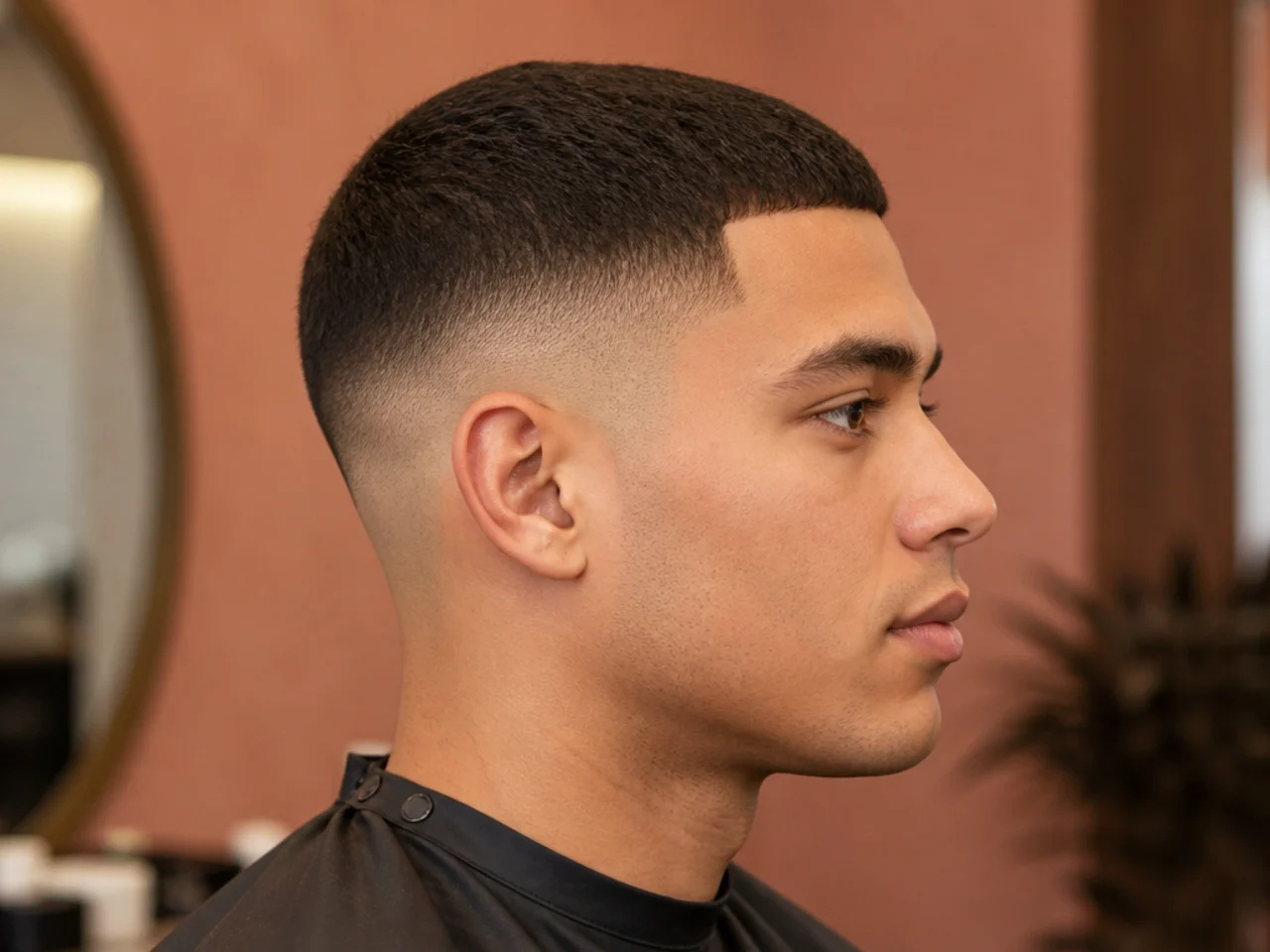
20 Low Skin Fade Haircuts That Look Crisp
Twenty low skin fade haircut men are asking for right now — every variation goes to bare skin above the ear for a razor-crisp, chair-fresh finish.
In this article · 32
- What Is a Low Skin Fade?
- How to Choose the Right Low Skin Fade for You
- The 20 Crisp Low Skin Fade Variations
- 1. Classic Low Skin Fade Crew Cut
- 2. Low Skin Fade Ivy League
- 3. Low Skin Fade Side Part
- 4. Low Skin Fade Comb Over
- 5. Low Skin Fade French Crop
- 6. Low Skin Fade Caesar
- 7. Low Skin Fade Textured Crop
- 8. Low Skin Fade Slick Back
- 9. Low Skin Fade Pompadour
- 10. Low Skin Fade Quiff
- 11. Low Skin Fade Buzz Cut
- 12. Low Skin Fade with Hard Part
- 13. Low Skin Fade Undercut
- 14. Low Skin Fade with Beard Blend
- 15. Low Skin Fade with Line Up
- 16. Low Drop Skin Fade
- 17. Low Skin Fade with Textured Fringe
- 18. Low Skin Fade Curtain
- 19. Low Skin Fade with Curly Top
- 20. Low Skin Fade with Edge Design
- How to Ask Your Barber for a Crisp Low Skin Fade
- Styling and Maintenance for a Chair-Fresh Skin Fade
- FAQ
- What makes a low skin fade look crisp instead of scruffy?
- How is a low skin fade different from a low taper fade?
- Can I get a low skin fade if I have thin or receding hair?
- What's the sharpest low skin fade for curly or coily hair?
- Is a low skin fade a workplace-appropriate cut?
- How do I know if my low skin fade has grown out too much?
The sharpest haircut a barber can send you out the door with is a low skin fade — the sides taken down to bare scalp above the ear, blended clean into whatever length is left on top. It photographs razor-clean, respects a shirt collar, and never once touches the hair above your temple. This guide covers the twenty low skin fade haircut variations men are booking in 2026 for that just-left-the-chair finish, with face-shape notes and the exact wording to hand your barber.
Want the wider taxonomy first? Start with the fade haircut pillar, or the skin fade haircut men guide for the height-by-height breakdown across the family.
What Is a Low Skin Fade?
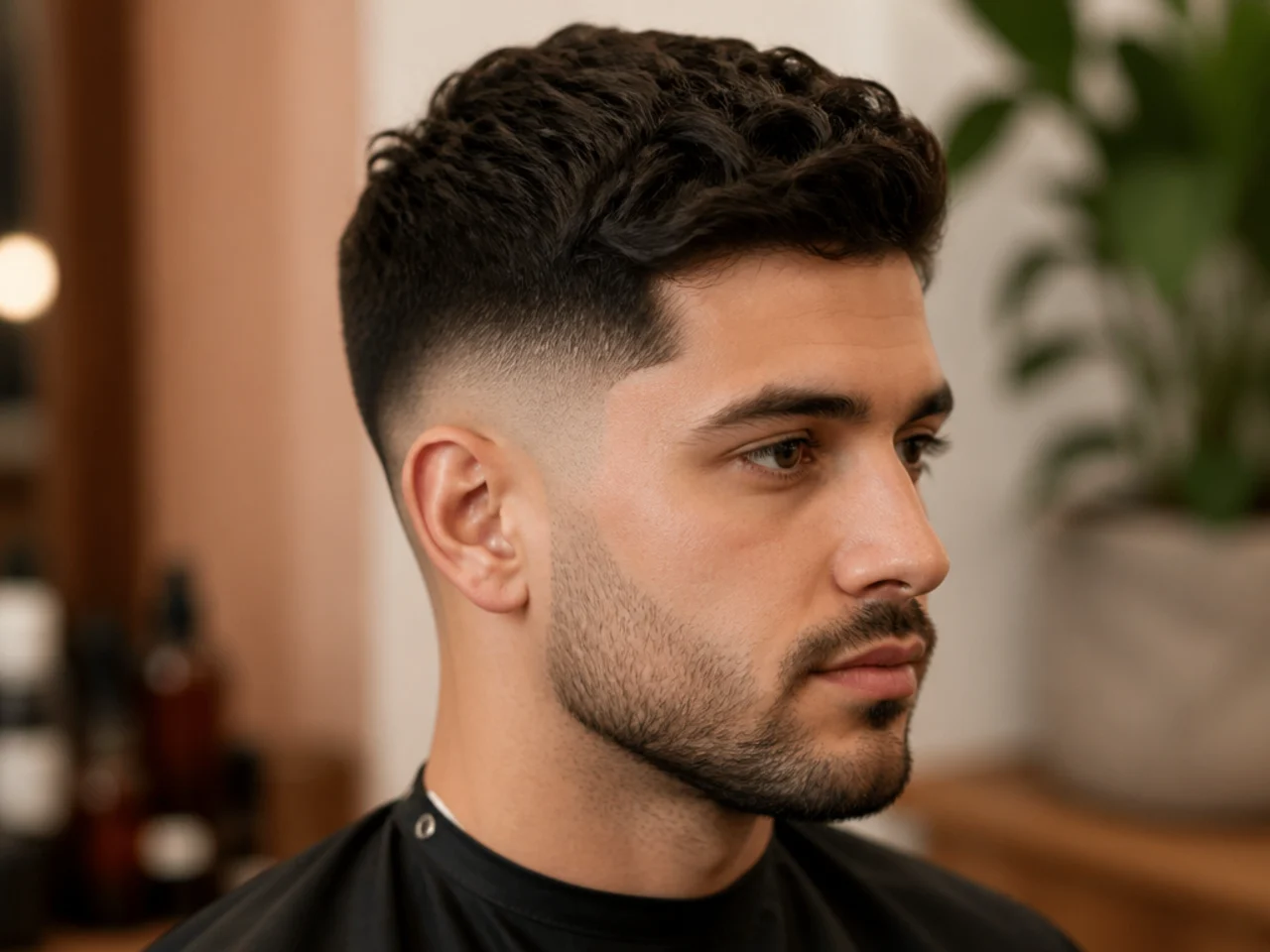
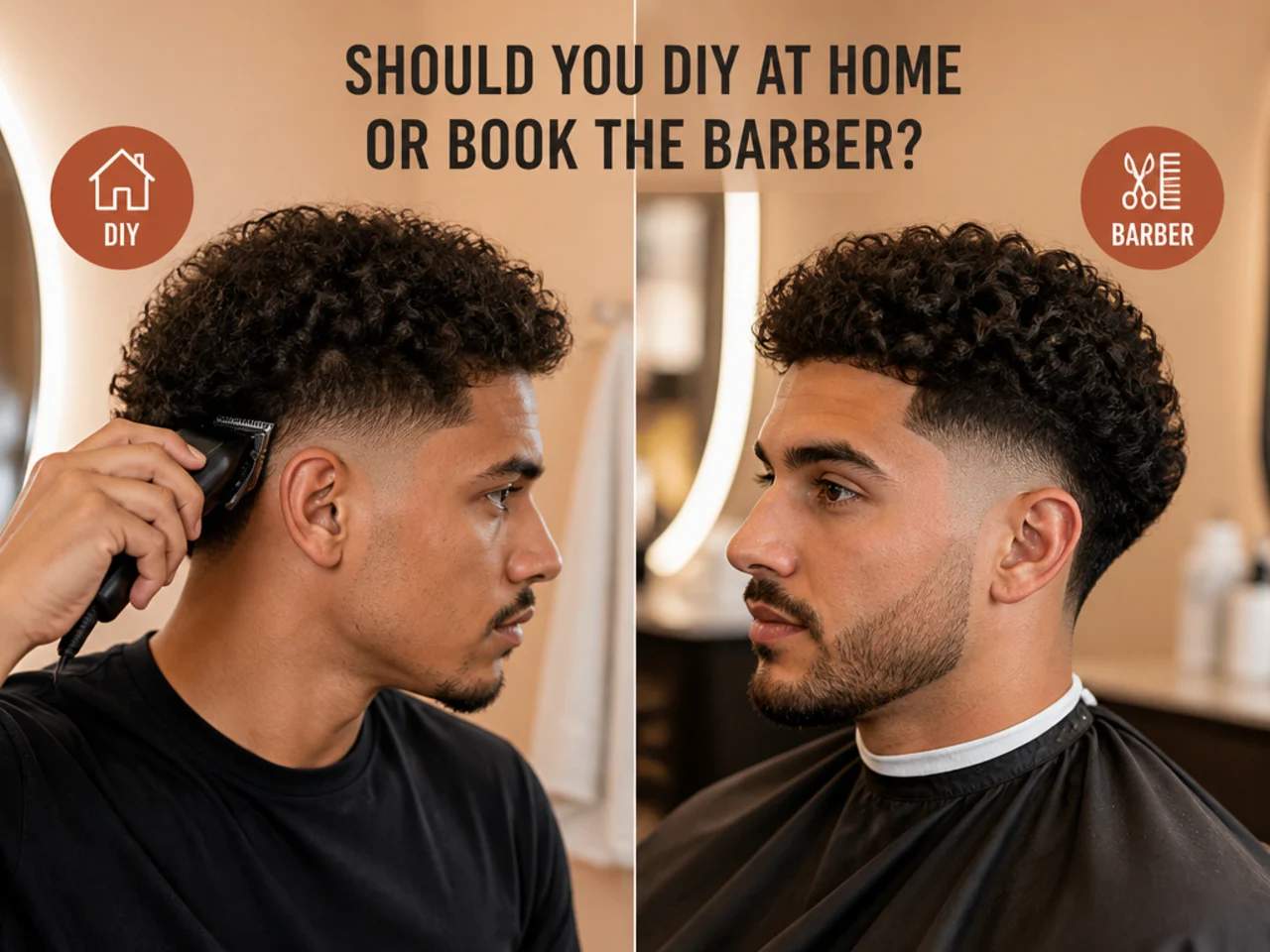
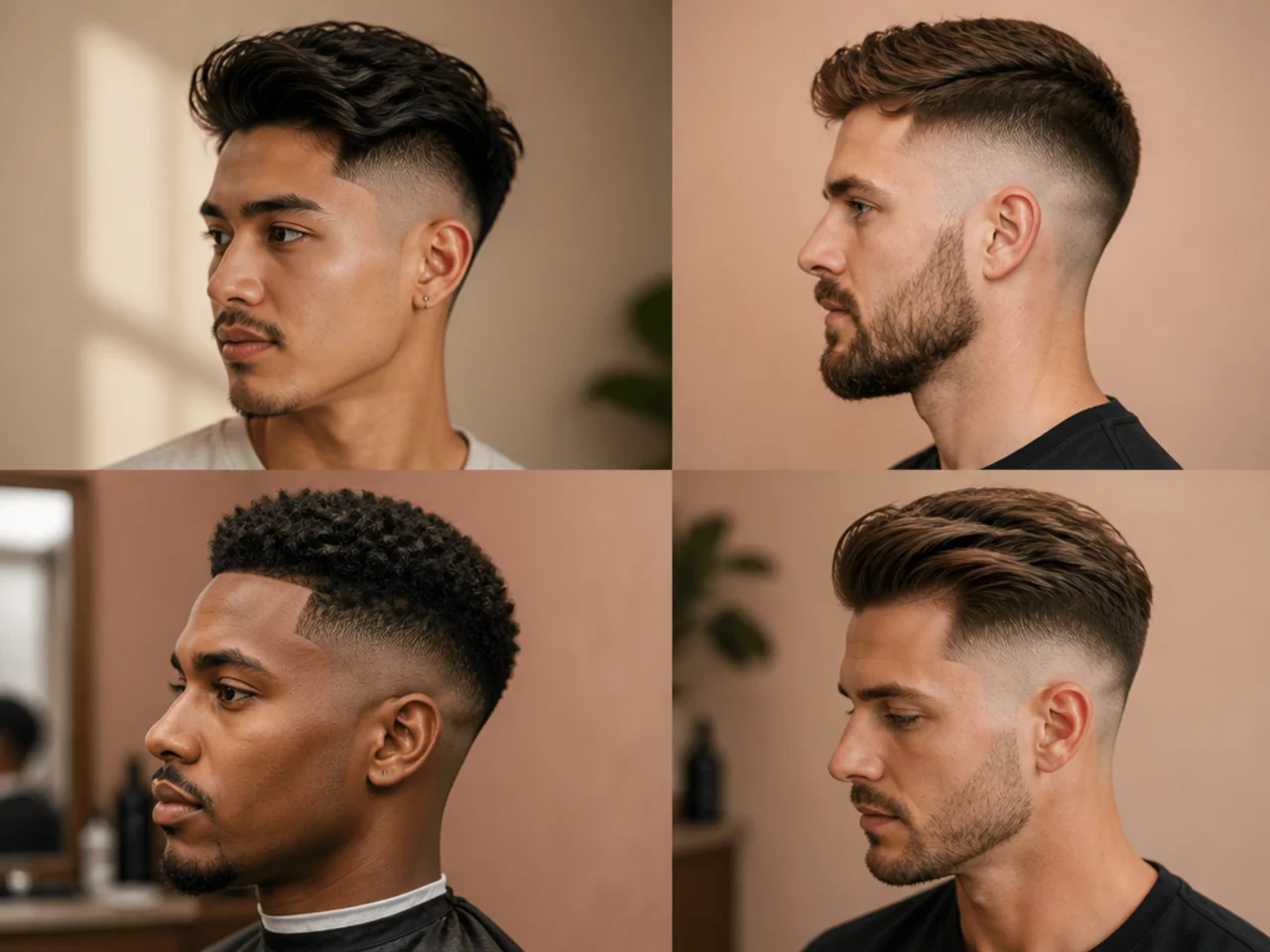
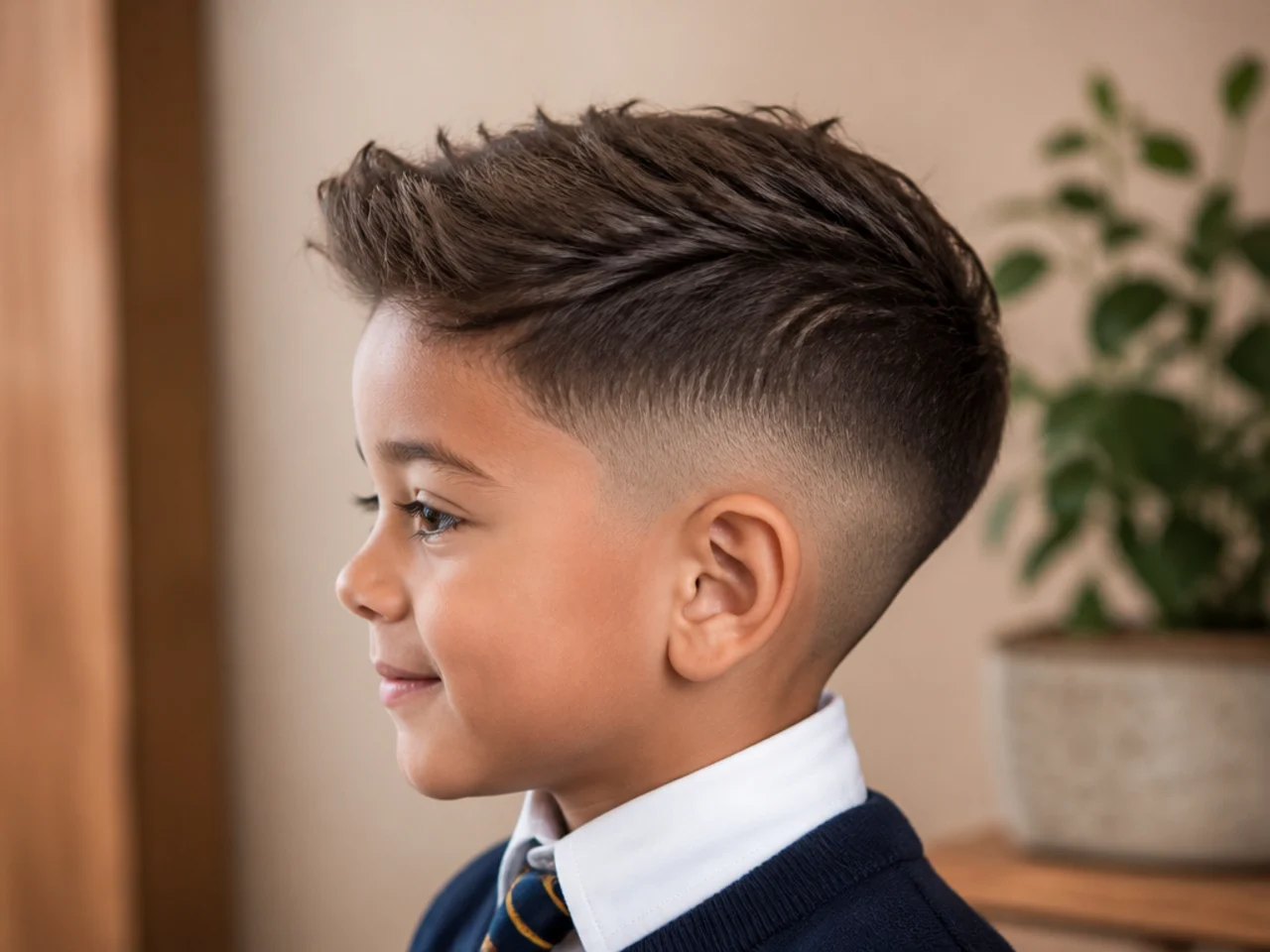
A low skin fade drops the sides of your head to bare scalp at the shortest point and starts that taper just above the top of the ear. Nothing above the temple gets touched. The barber blends up through a #0.5, a #1, a #2 — usually three or four guard sizes — until the transition reads as a smooth gradient rather than a set of visible stripes. Then a straight-edge razor cleans the neckline and the shortest panel until the skin is glassy.
The word skin is the load-bearing detail. A #0.5 low fade is not a low skin fade. Bare scalp at the shortest point is what pushes the contrast against your top hair from crisp to razor-sharp, and it's what makes a fresh cut photograph like it was shot for a magazine. It also shortens the sharp-look window from three weeks to about ten days, which is the trade you make for the finish.
Compared with a mid or high skin fade, the low version keeps every risk lower. Less scalp shows. Grow-out reads softer. A receding hairline or a thinning temple stays hidden below the transition line. If you're weighing where to start the fade, the low fade vs mid fade vs high fade breakdown covers the height decision first.
How to Choose the Right Low Skin Fade for You
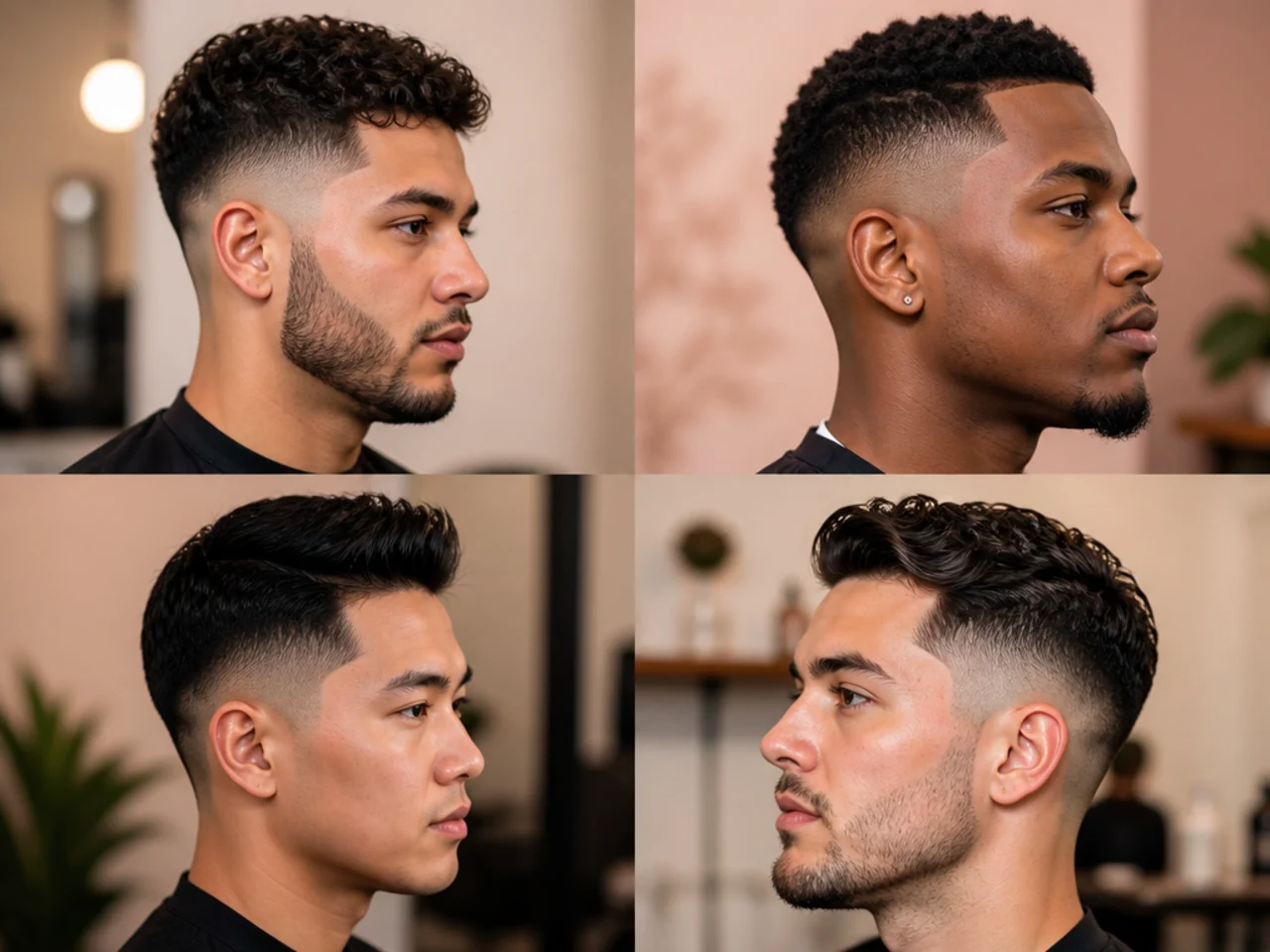
Three filters narrow twenty variations to the two or three that will read crispest on you: face shape, hair texture, and how often you can realistically book a chair.
Face shape. Oval faces suit any variation on this list — default to a classic crew or textured crop. Round faces read cleaner with vertical lift up top: a quiff, pompadour, or short comb over pulls the eye up. Square jaws soften with a Caesar or French crop that adds a horizontal fringe line. Long and oblong faces should keep the top under two inches so the silhouette doesn't stretch further — the low skin fade already narrows the sides, which flatters this shape strongly. Heart faces balance well with a medium-length side part; diamond faces suit a swept crown that offsets the cheekbones.
Hair texture. Straight hair holds a side part, slick back, and Caesar cleanest against the skin panel. Wavy hair suits a textured crop or a brushed-back quiff without much product. Curly and coily hair actually pop against a low skin fade — the glassy wall makes the pattern the centerpiece of the whole cut. For pattern-specific detail see the fade haircuts for black men guide.
Booking cadence. Ten to fourteen days for the sharpest read, three weeks max before the panel fills in with stubble and the transition softens. If you can't get to the chair every two weeks, ask for a longer low taper fade instead — the taper stretches to a month at the cost of some contrast.
The 20 Crisp Low Skin Fade Variations
Twenty variations, sorted from the polished workplace defaults to the sharpest modern statements. Each block covers what makes the version different, who it suits, the exact language to hand your barber, and one styling move that keeps it looking chair-fresh.
1. Classic Low Skin Fade Crew Cut
The default answer to "what should I get" from every barber. Half an inch to an inch of length on top, tapered slightly toward the crown, sitting on a low skin fade that runs from a #2 through a #1 and a #0.5 down to bare scalp above the ear. Works for every face shape and every hair texture on earth. See the wider crew cut hairstyles family for length variations.
Ask for: "Low skin fade, three-quarter-inch crew on top with a slight taper to the crown, matte finish."
Styling: A pea of matte paste rubbed into dry hair, finger-comb forward. Ninety seconds. Done.
2. Low Skin Fade Ivy League
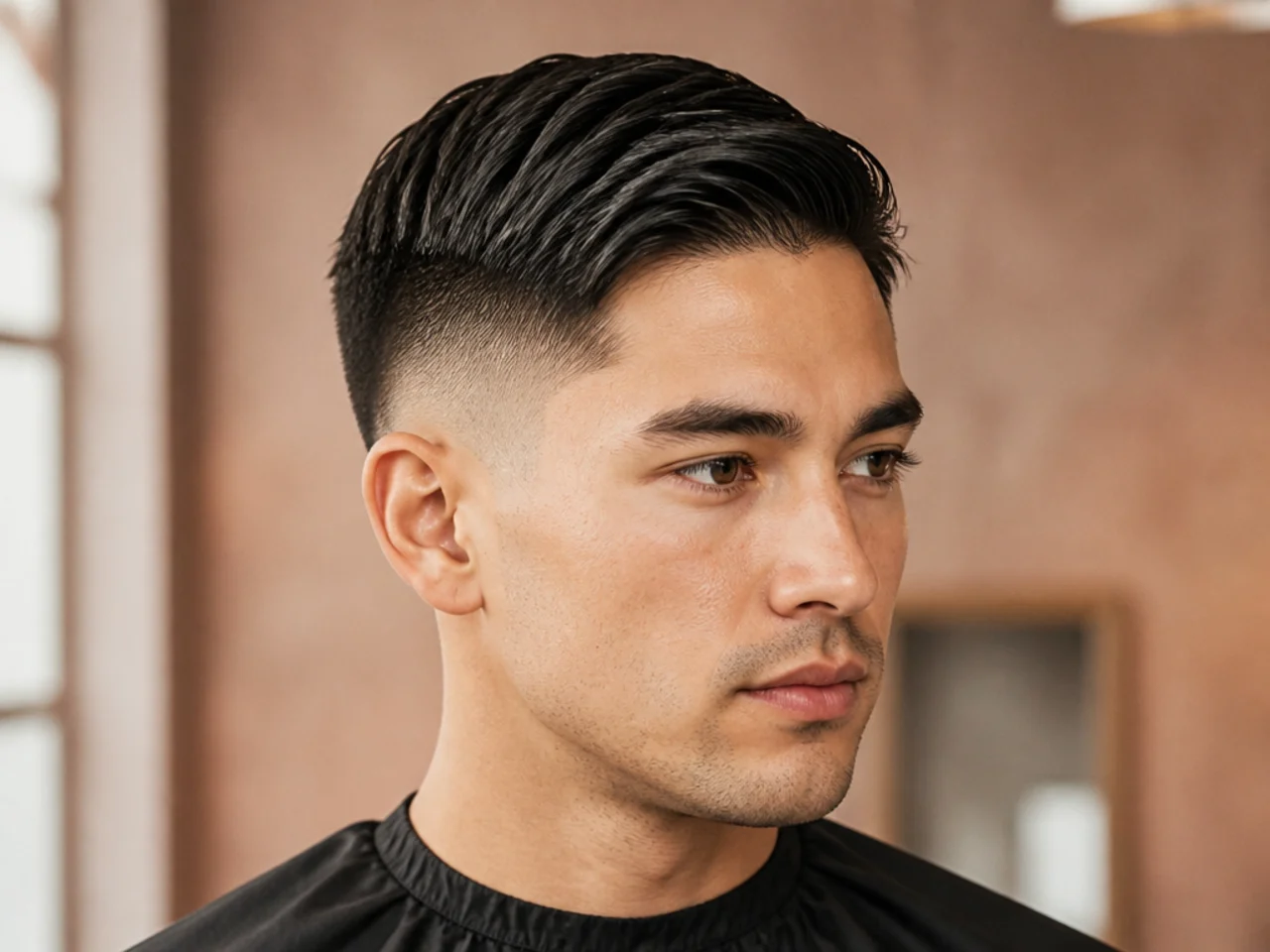
The collegiate polish pick, sharpened. About an inch and a half of length on top, long enough to comb into a natural side part, with the weight kept at the front for shape. The bare-skin panel replaces the tapered sides you'd normally see under this cut and pulls the whole silhouette tighter. Suits oval, square, and long faces best. Full styling reference in the Ivy League haircut guide.
Ask for: "Low skin fade, Ivy League on top at 1.5 inches, natural side part on the left."
Styling: Blow-dry with a paddle brush across the part, then set with a low-shine cream pomade.
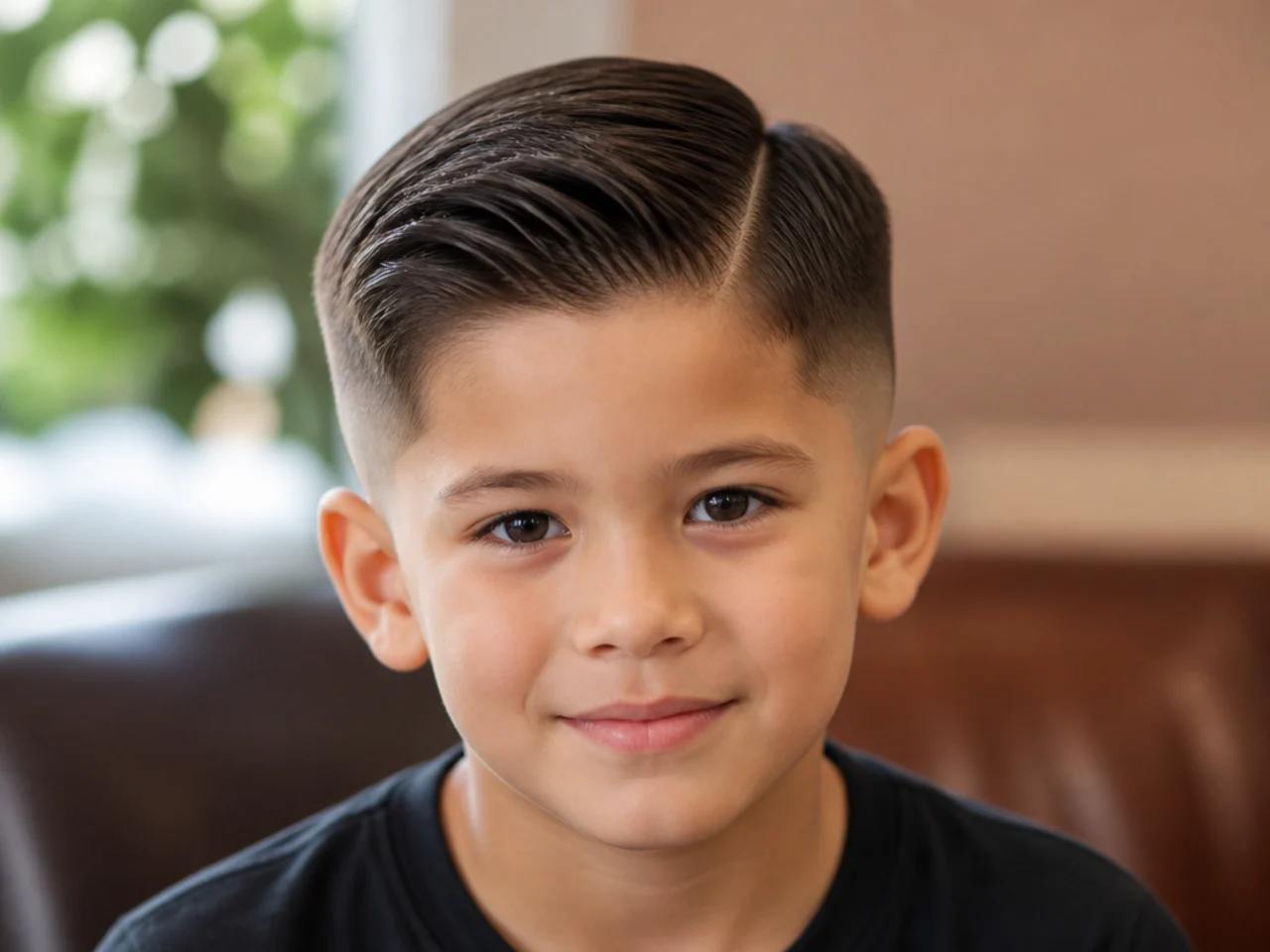
3. Low Skin Fade Side Part
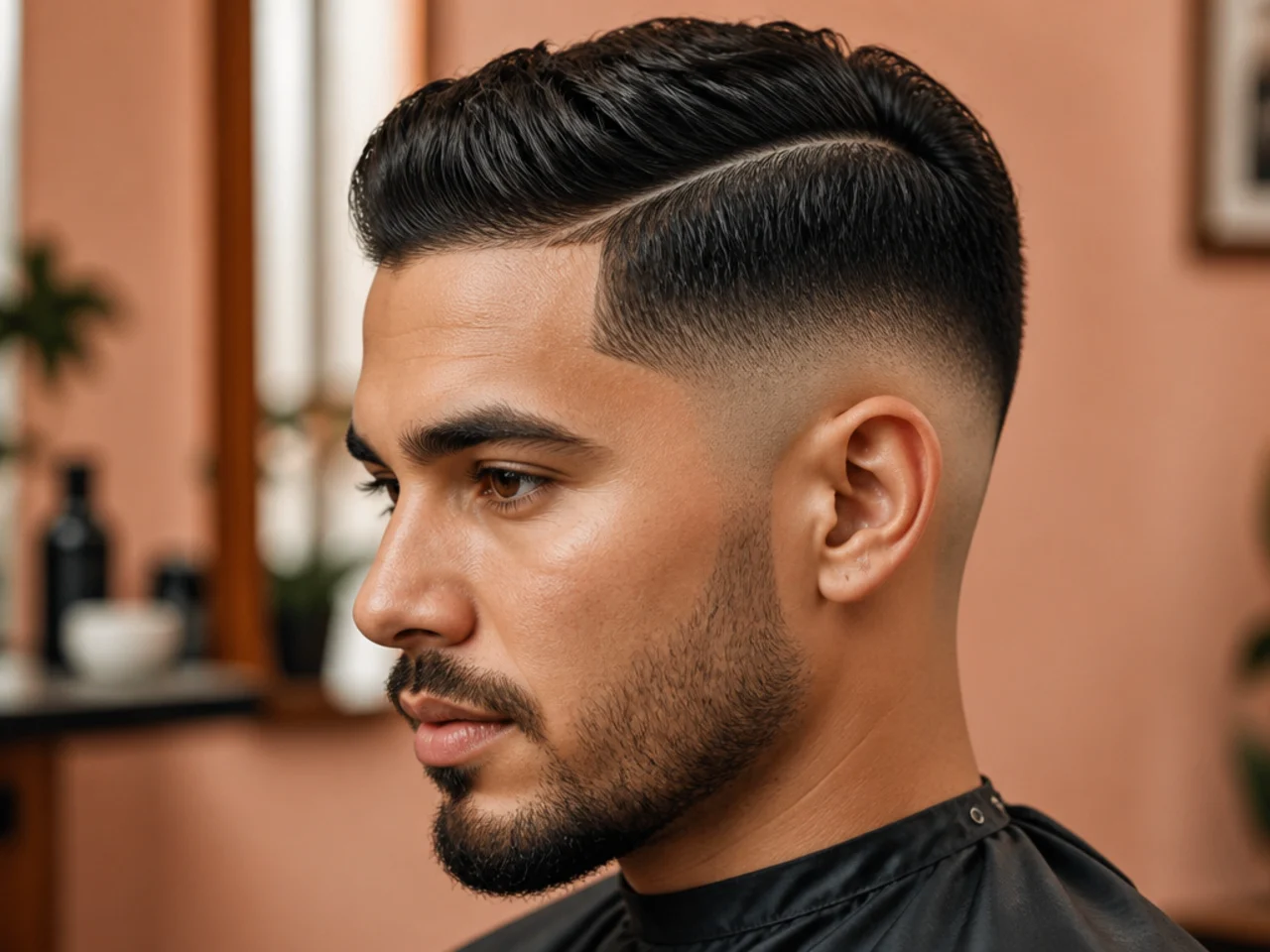
The executive standard, taken to the next contrast level. Two inches on top combed cleanly from a defined side part, sides dropped through a low skin fade so the collar area photographs razor-clean. Best on straight to lightly wavy hair. Suits oval, square, and diamond faces. For more part variations, see the side part hairstyles for men roundup.
Ask for: "Low skin fade, keep two inches on top, defined side part on the left, comb-friendly finish."
Styling: Comb the part while hair is damp, apply a cream pomade, set with a light mist of hairspray for hold without shine.
4. Low Skin Fade Comb Over
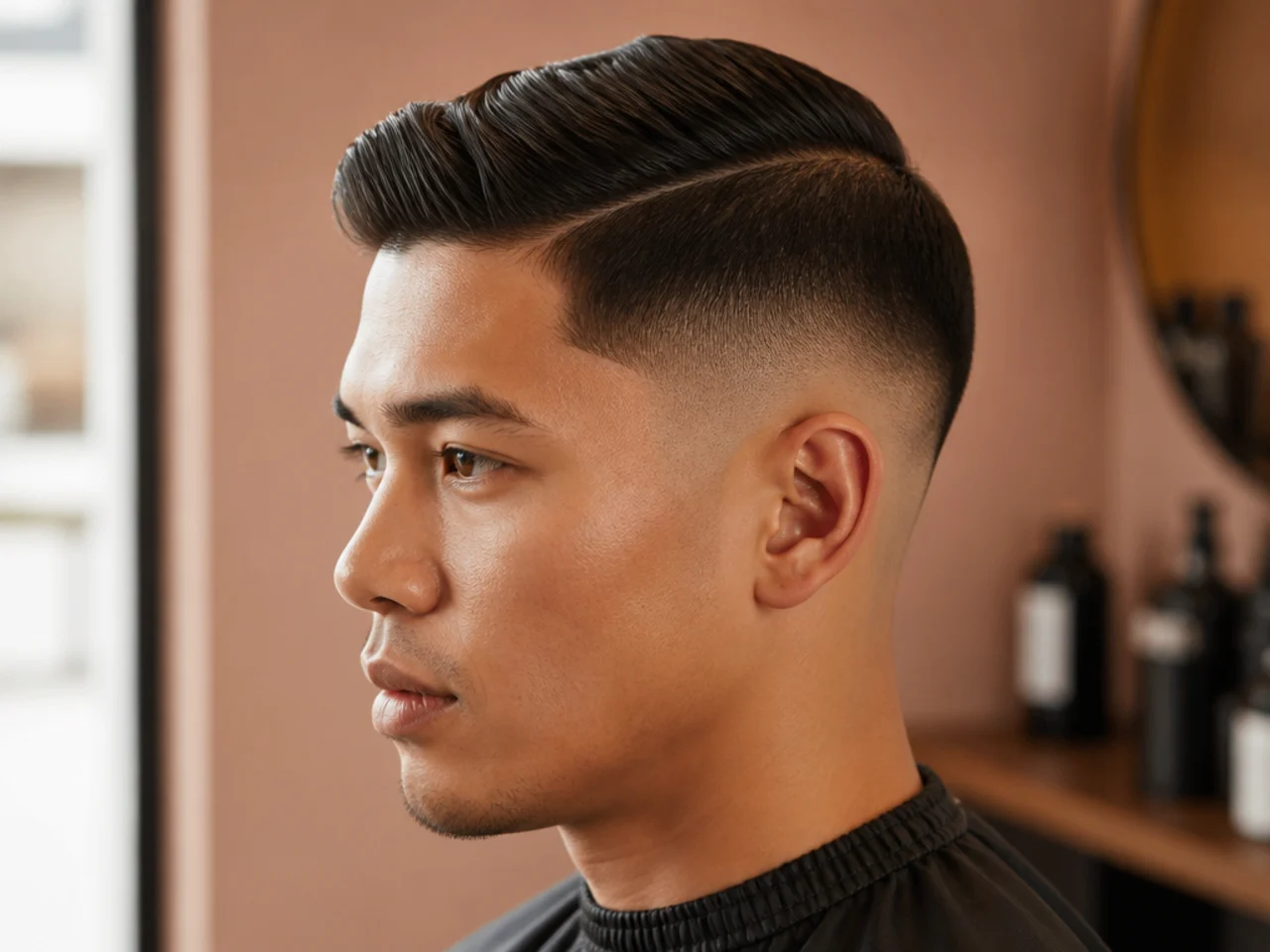
The traditional business standard, modernized and sharpened. A longer top — three inches or so — combed from a low part across to the opposite side, low skin fade underneath so nothing above the ear competes with the sweep. Suits oval, square, and diamond faces. See the full comb over haircut breakdown for length variations.
Ask for: "Low skin fade, three inches on top, low side part combed over with soft hold."
Styling: Paddle-brush across the part with a warm dryer, finish with a medium-hold cream pomade — low shine, never wet.
5. Low Skin Fade French Crop
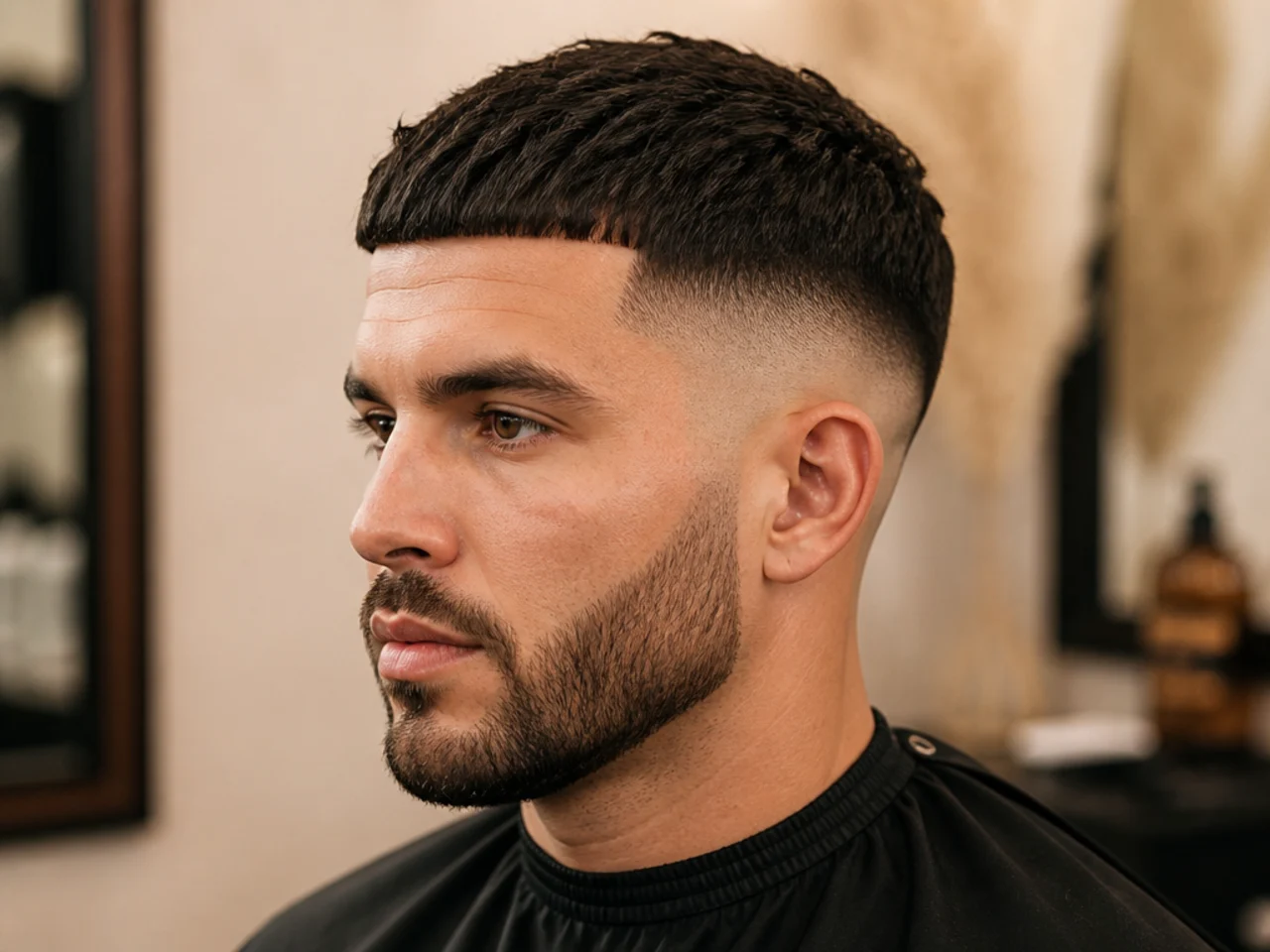
The understated European polish. A short, blunt fringe brushed forward across the forehead, an inch to an inch and a half of length behind it, low skin fade at the sides to keep the shape razor-crisp at the ear. Best on straight and lightly wavy hair. Suits round, oval, and long faces because the fringe adds horizontal balance. More styling in the French crop haircut guide.
Ask for: "Low skin fade, French crop on top at 1.25 inches, blunt fringe to mid-forehead."
Styling: Sea-salt spray on damp hair, blow-dry forward with a round brush, finish with a light matte paste.
6. Low Skin Fade Caesar
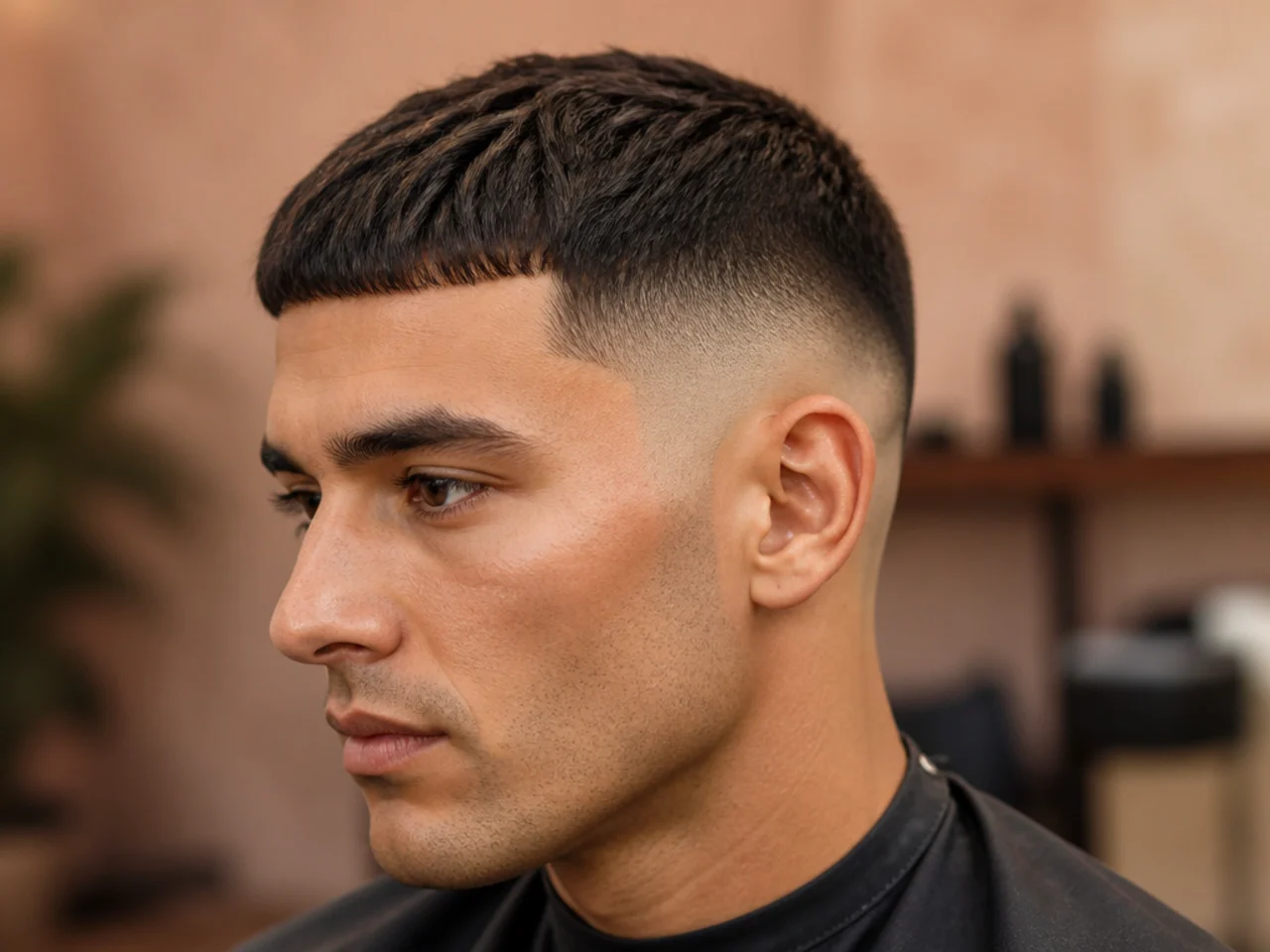
The military-clean pick with maximum contrast. Uniform half-inch to one-inch length across the top, blunt fringe combed straight forward, low skin fade at the sides. Requires zero product to look sharp. Suits every face shape, every hair texture. Frames wide foreheads especially well and reads crisp from day one through day ten.
Ask for: "Low skin fade, one-inch Caesar on top with a blunt forward fringe."
Styling: Towel dry, run a bit of matte cream through with your fingers, walk out.
7. Low Skin Fade Textured Crop
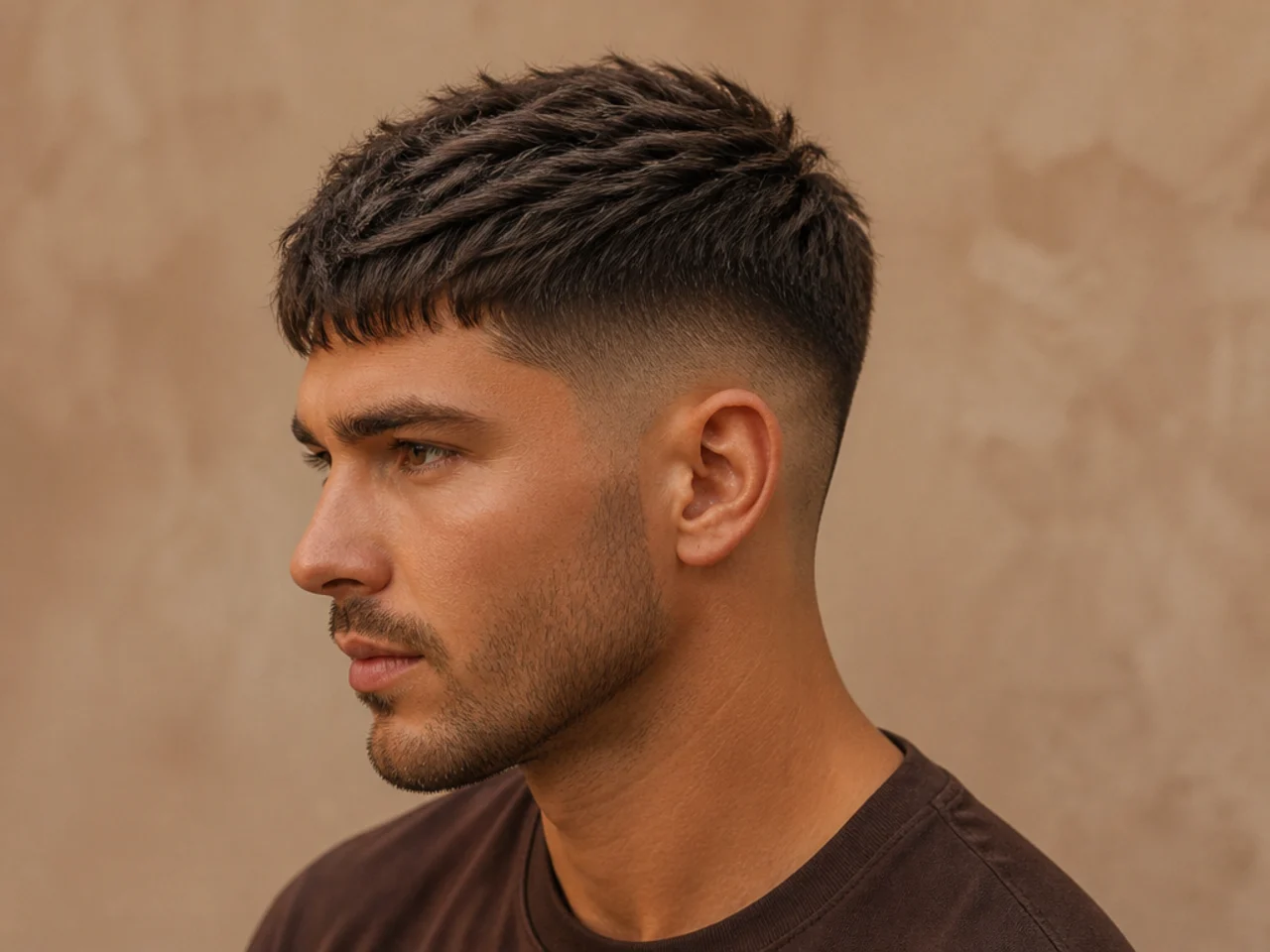
Clean at the sides, current at the front. About an inch and a half of point-cut length on top for movement, low skin fade underneath to keep the sides polished and the transition line sharp. Suits square, oval, and round faces. Reads modern across every workplace short of a boardroom. See more crop variations in textured haircuts for men.
Ask for: "Low skin fade, textured crop at 1.5 inches, point-cut ends, matte finish."
Styling: Matte clay warmed between palms, pressed through damp hair, fringe broken up with the thumbs.
8. Low Skin Fade Slick Back
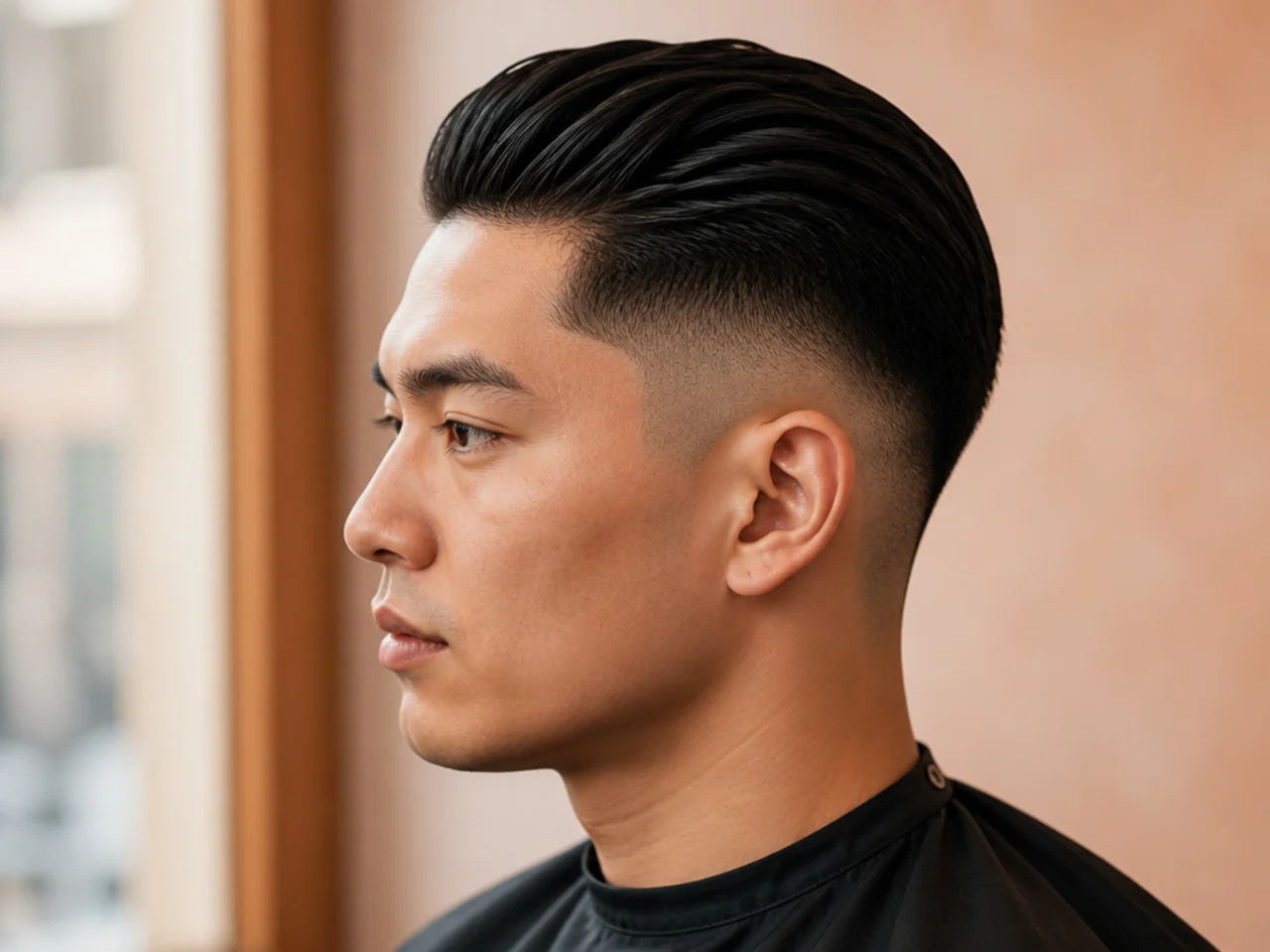
The formalwear pick with the sharpest possible finish. Three inches on top combed straight back from the hairline, medium shine, low skin fade below so the transition line stays out of frame under a collar. Best on straight to lightly wavy hair. Suits oval, square, and diamond faces. See the full slick back haircut guide for hold and shine variations.
Ask for: "Low skin fade, three inches on top cut for a slick back, side part optional."
Styling: Shine pomade on damp hair, comb straight back in one clean pass from the hairline, don't touch it after.
9. Low Skin Fade Pompadour
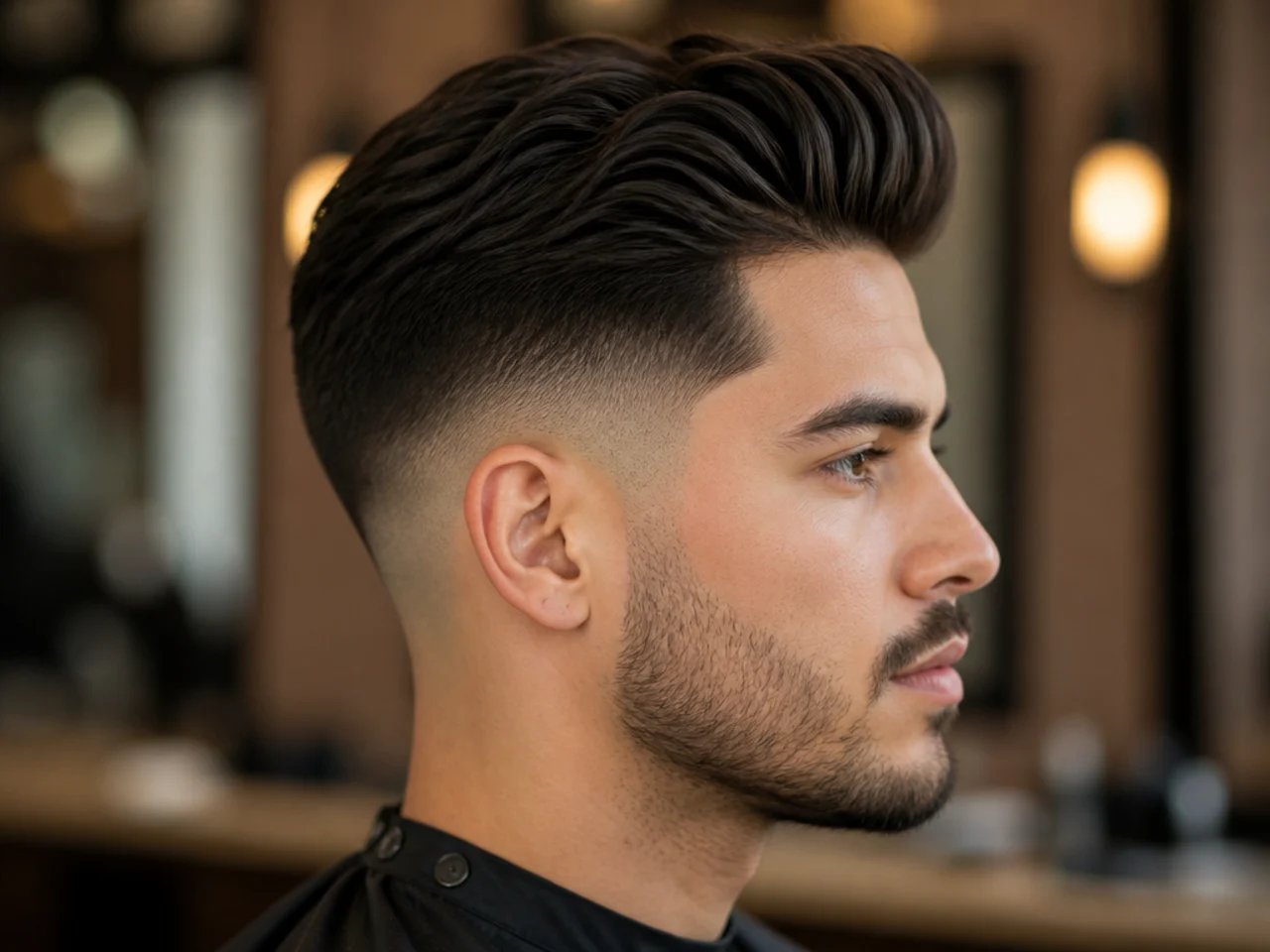
The refined vintage statement with a modern edge. Four inches or so of length on top swept up and back with real volume through the front, low skin fade at the sides to keep the whole shape architectural instead of retro-messy. Suits oval, square, and diamond faces best because the height flatters strong lines. Needs straight or lightly wavy hair to hold the sweep.
Ask for: "Low skin fade, four inches on top, pompadour shape with height at the front."
Styling: Blow-dry with a round brush up and back, set with a firm cream pomade and a light mist of spray for hold.
10. Low Skin Fade Quiff
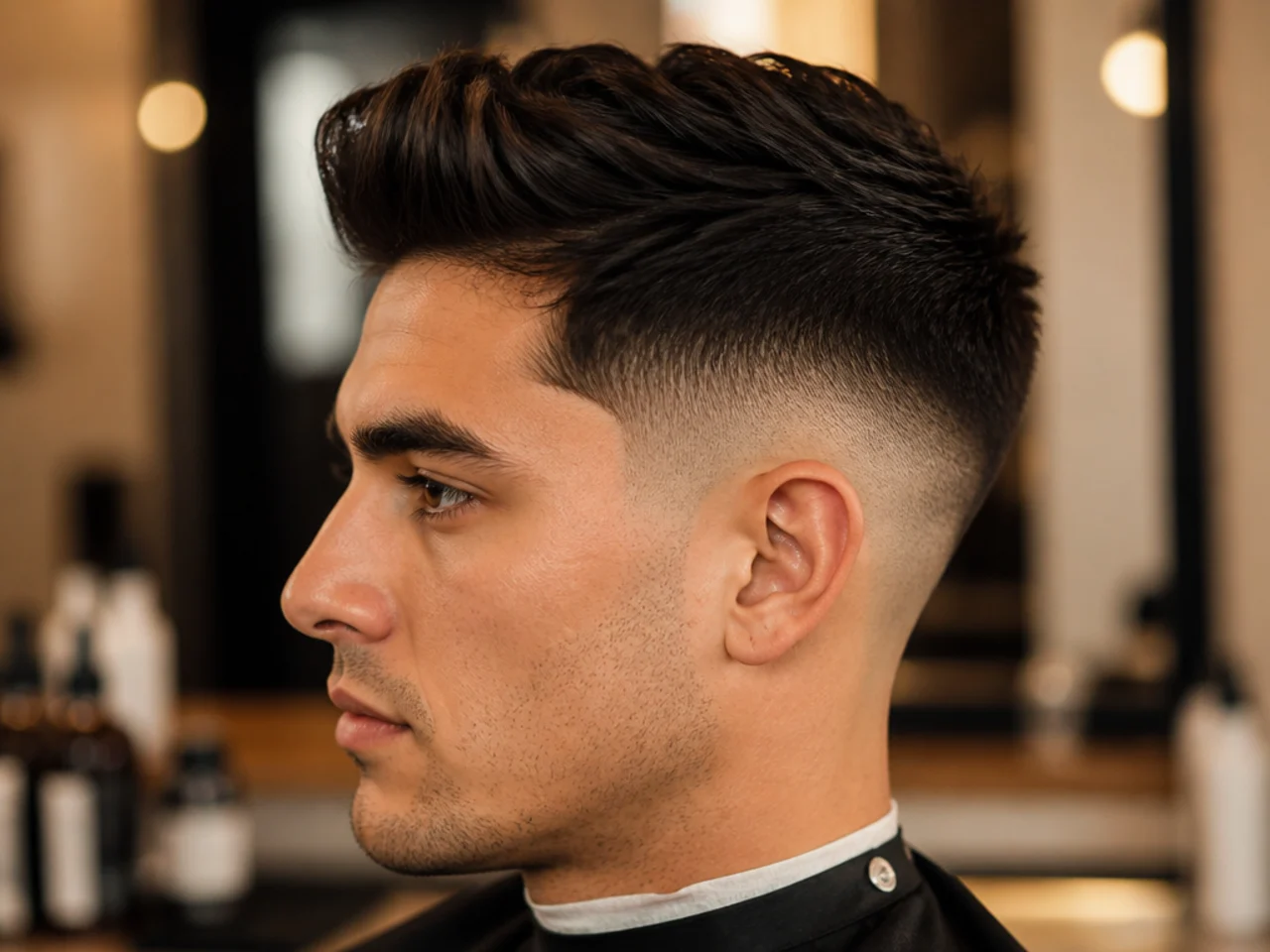
The polished statement without the pompadour commitment. Two and a half inches on top swept forward and up at the front, low skin fade dropping through a #1 and a #0.5 to bare scalp above the ear. Suits round and oval faces best because the front lift adds vertical line. See the full quiff hairstyles men guide for lift variations.
Ask for: "Low skin fade, 2.5 inches on top cut for a quiff, front weight kept for lift."
Styling: Blow-dry forward and up with a round brush, finish with a medium-hold matte cream — never gel.
11. Low Skin Fade Buzz Cut
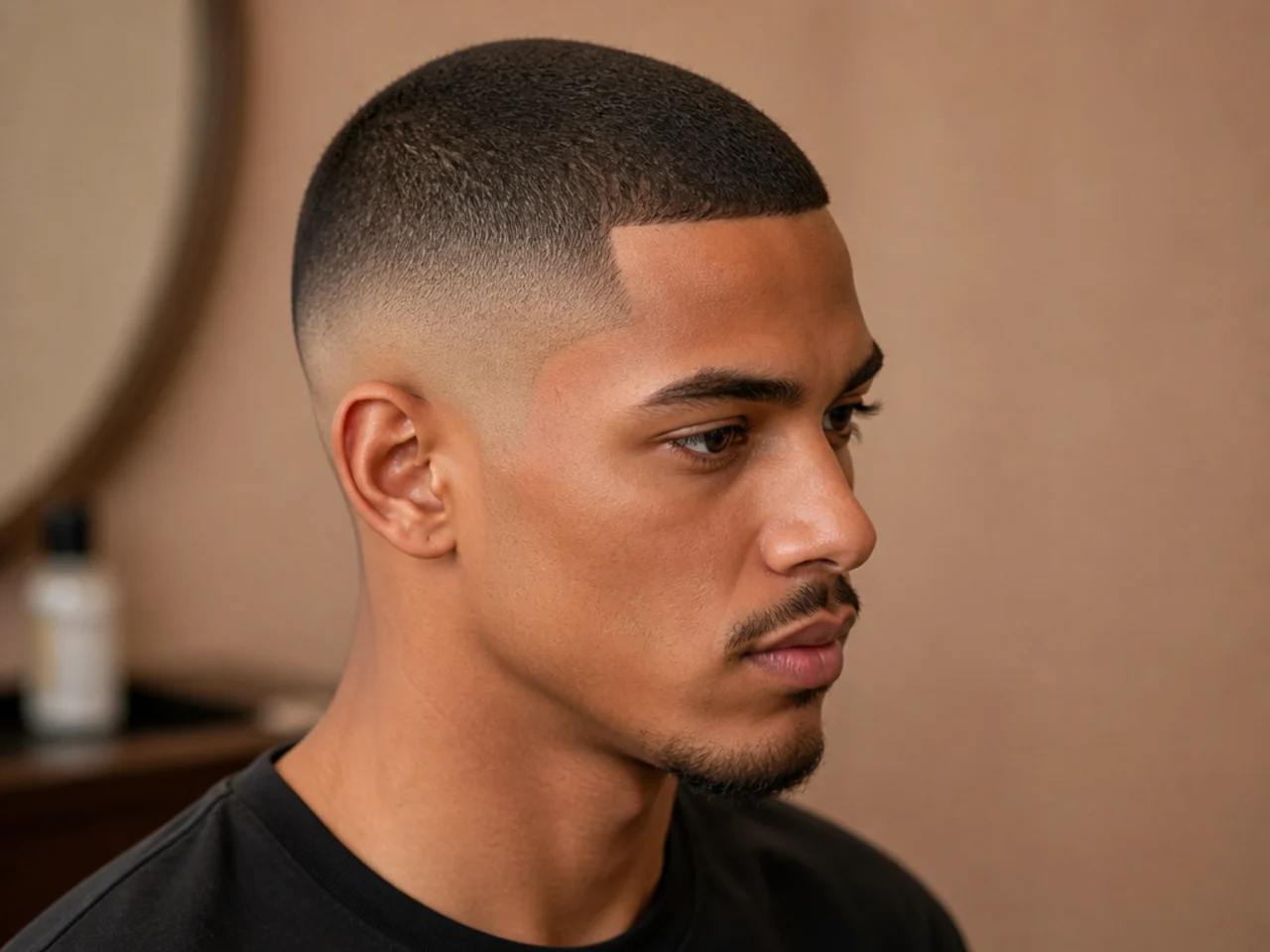
The immaculate minimalist. A #2 buzz across the entire top, low skin fade dropping from that #2 through a #1 and a #0.5 to bare skin at the ear. Suits every face shape except very long. Reads clean the moment you leave the chair and stays that way for a solid two weeks with almost no maintenance from you.
Ask for: "Low skin fade, #2 buzz across the top, clean skin transition around the crown."
Styling: None required. Run a soft-bristle brush across the top once a day to keep it looking freshly cut.
12. Low Skin Fade with Hard Part
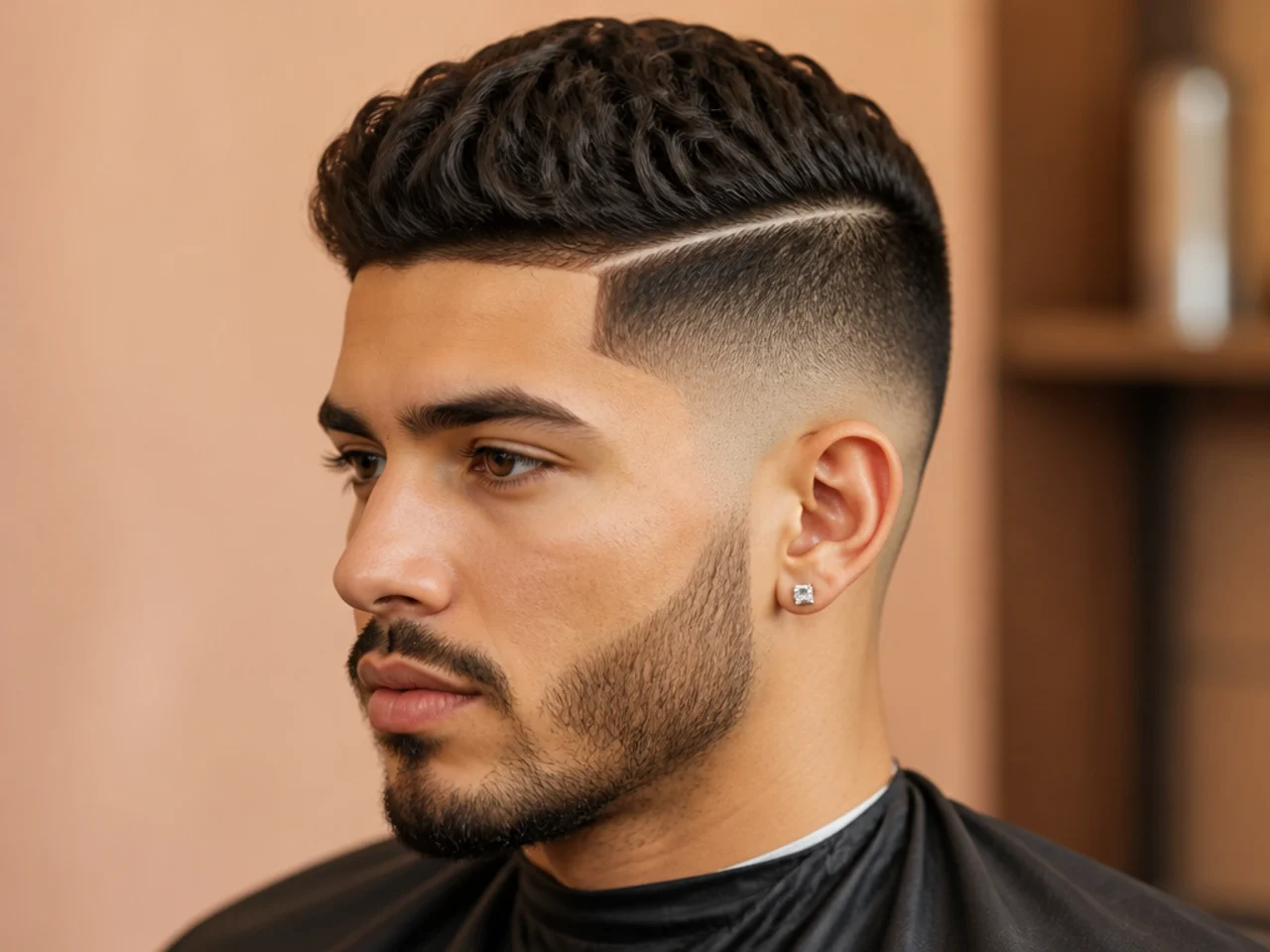
The crispest tailored variation on the list. A razor-shaved line separates the top from the sides along the parting line, low skin fade underneath, top combed over the part. The hard part reads sharpest for the first ten days and softens as it grows. Suits oval, square, and long faces. Best on straight to wavy hair.
Ask for: "Low skin fade, two inches on top, hard part shaved on the left, combed over."
Styling: Comb the part while damp so the hard line stays visible, then set with a low-shine cream.
13. Low Skin Fade Undercut
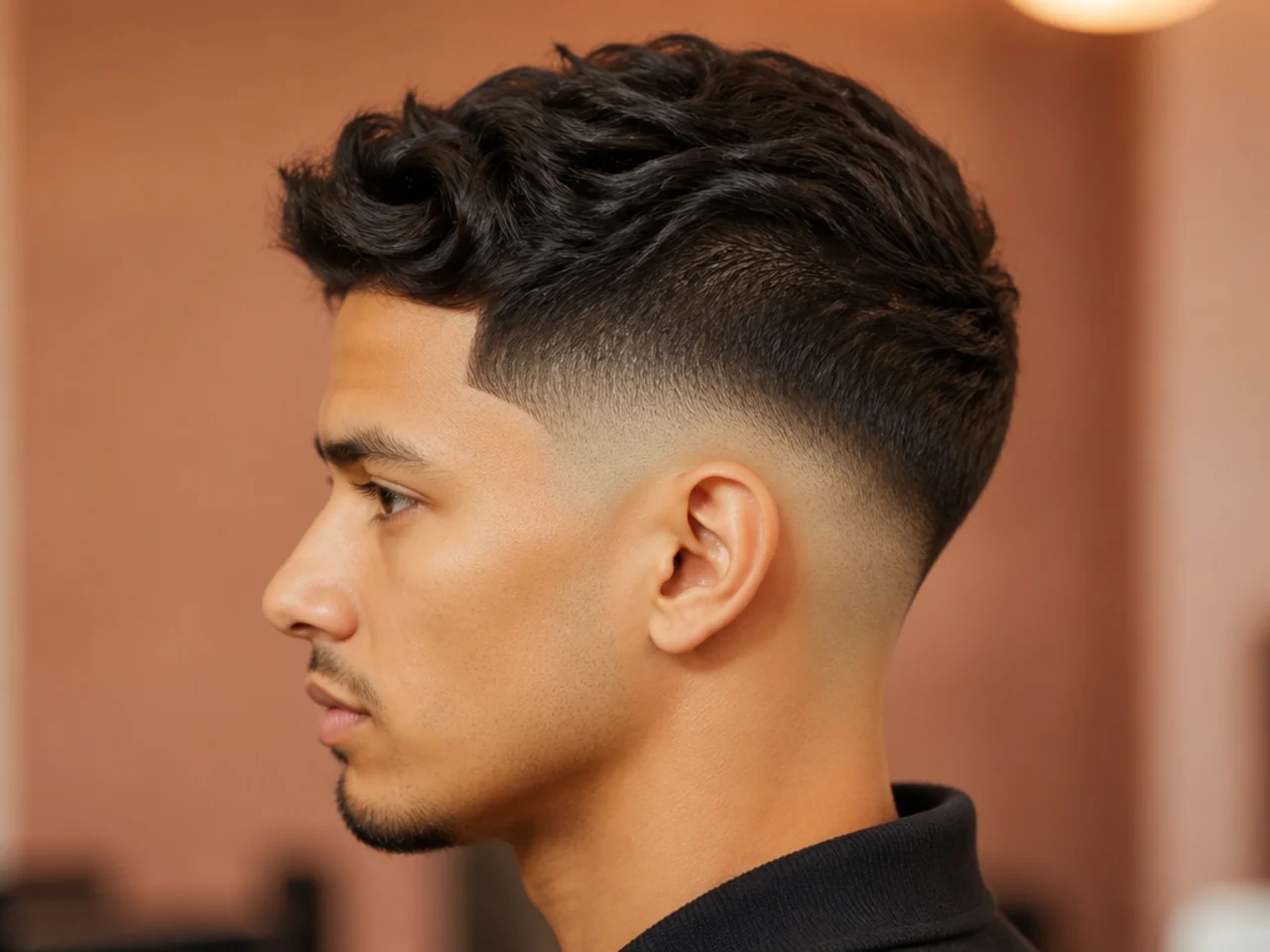
The clean disconnect. Longer, uniform length across the top with a low skin fade below that never blends into it — the top length just sits over the faded sides so the transition reads as a hard visual step. Suits oval, square, and diamond faces. Best on straight, wavy, or coily hair with medium density. See the full undercut fade guide for disconnect variations.
Ask for: "Low skin fade, undercut with three inches on top, no blend at the crown."
Styling: Cream pomade on damp hair, comb back or over depending on the day, finish with a light spray.
14. Low Skin Fade with Beard Blend
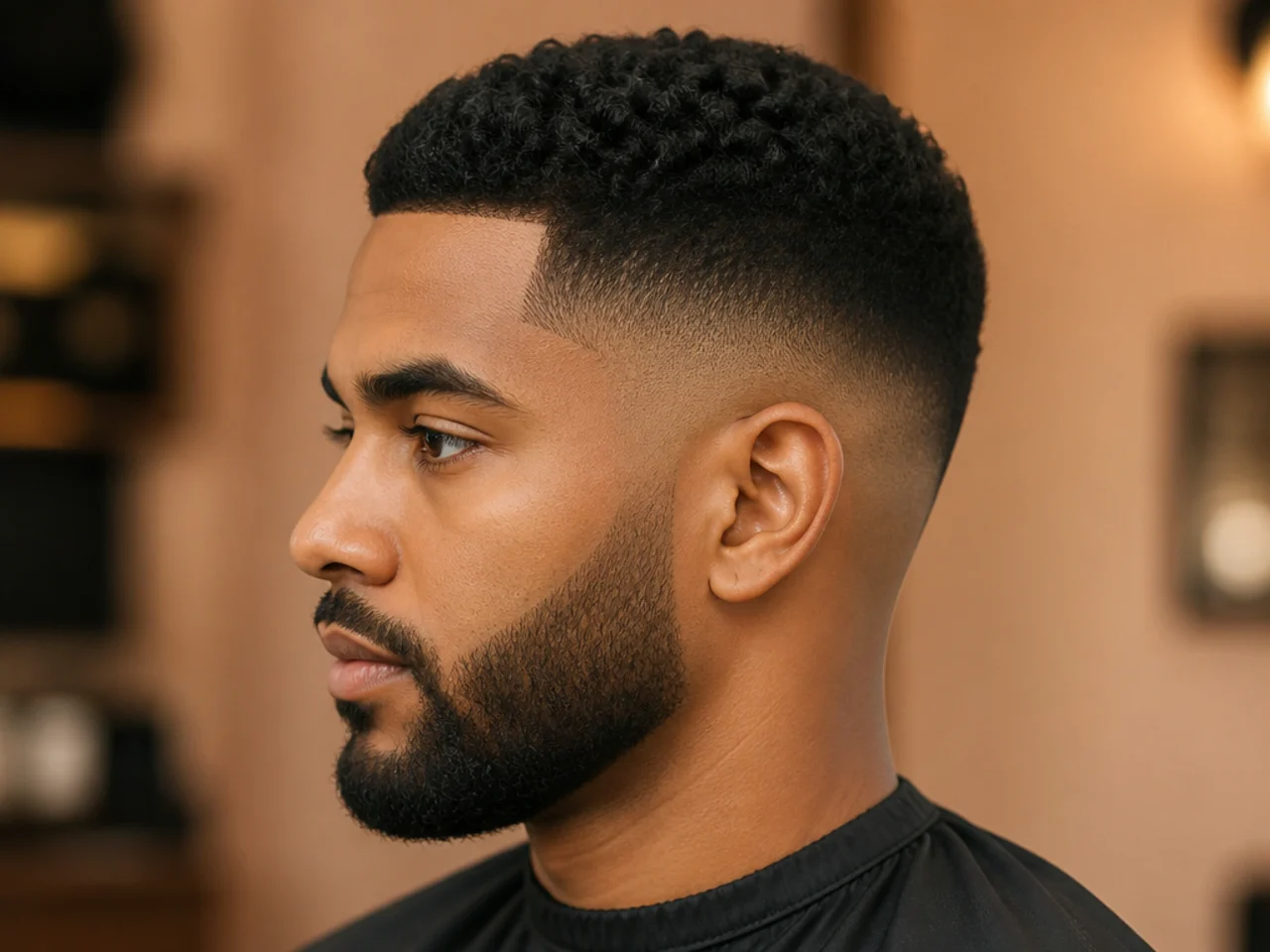
The full package. A low skin fade at the sides paired with a trimmed short beard that blends straight into the sideburn so the transition is one continuous curve from beard to fade to top. Suits oval, square, and diamond faces best. Any hair texture works. Ask your barber to trim the beard in the same appointment — a mismatched beard undoes the whole finish. Pair with a Caesar, crop, or Ivy League top for the sharpest read.
Ask for: "Low skin fade, blend the beard into the sideburn as one continuous line, keep the beard at a #3 all over."
Styling: Beard oil through the beard, matte paste through the top.
15. Low Skin Fade with Line Up
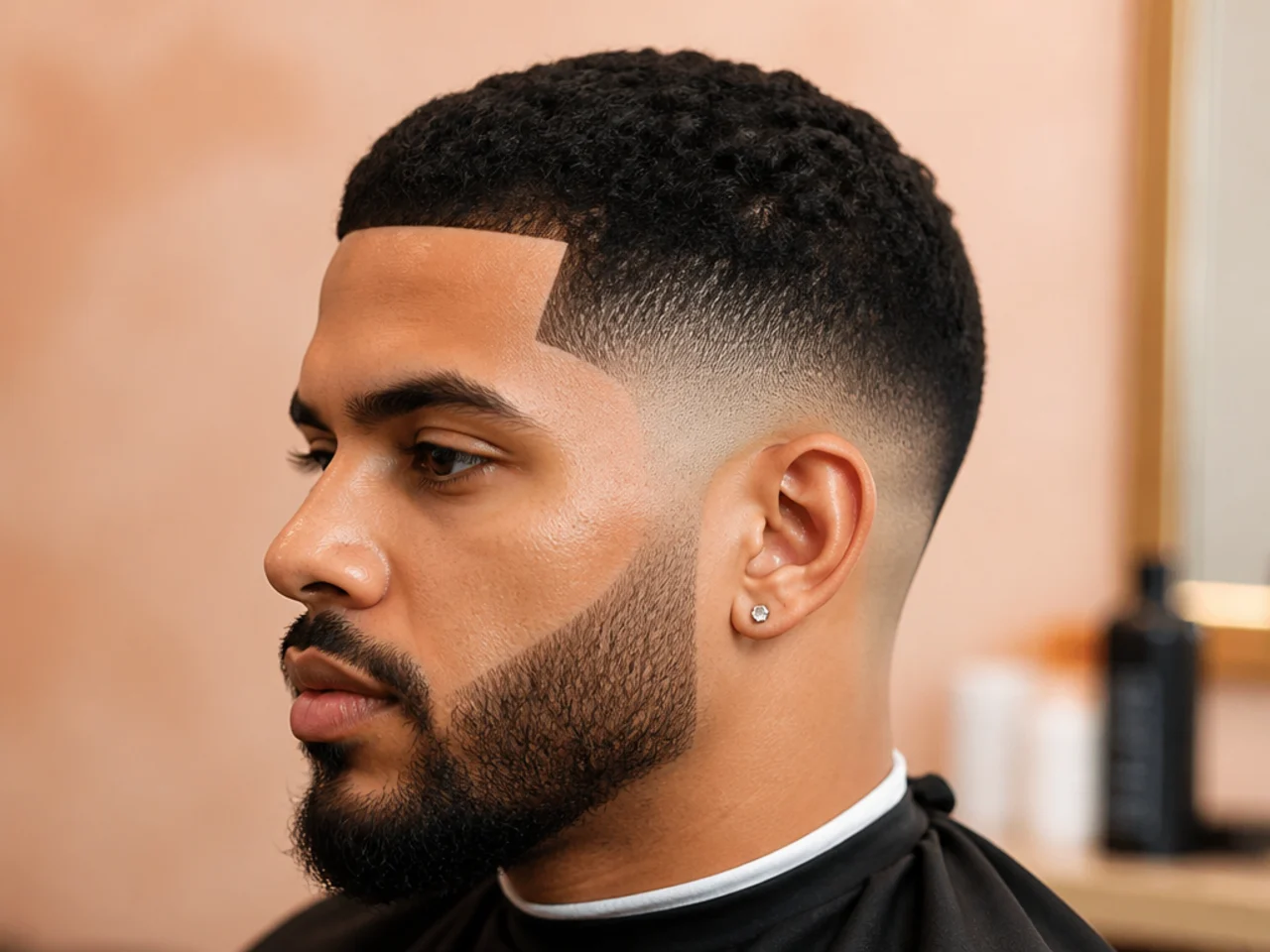
Sharper than any clipper-only finish. A low skin fade at the sides paired with a razor-shaved line-up along the forehead and temples that defines every edge as a straight line. Suits oval, square, round, and diamond faces. Best on straight, coily, or curly hair where the line-up reads cleanest against the skin panel. Common pairing with the 15 trendy skin fade haircuts for a fresh look family.
Ask for: "Low skin fade, line-up on the forehead and temples, natural neckline."
Styling: Whatever the top calls for. The line-up carries the polish on its own.
16. Low Drop Skin Fade
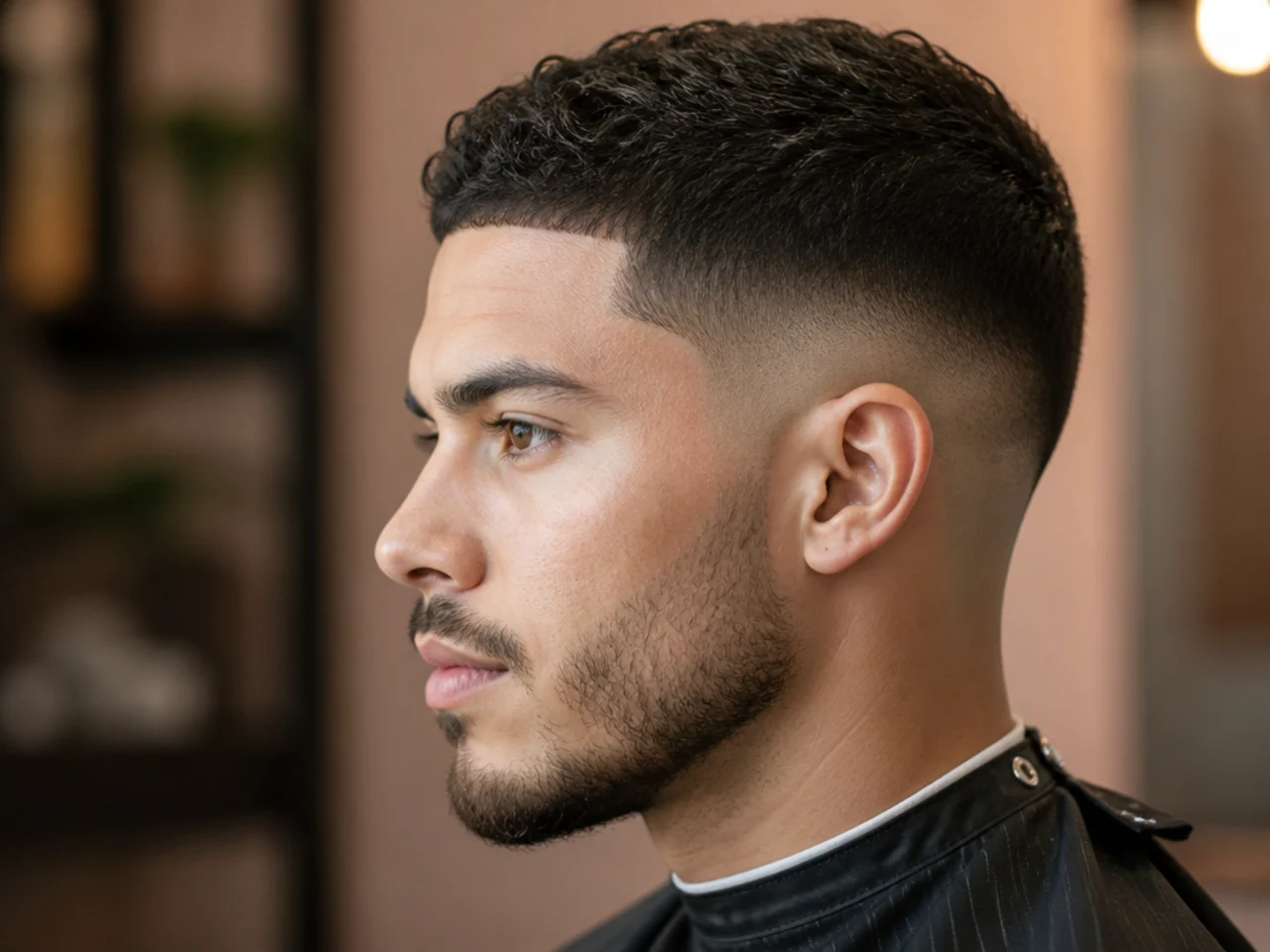
The sharpest shape variation in the family. A low drop fade arcs down behind the ear rather than sitting flat, taken all the way to bare skin, so the fade reads as sculpted from the side rather than horizontal. Paired with two inches on top combed neatly to one side. Suits oval, square, and diamond faces best. Any hair texture works — the drop arc reads clean on all of them.
Ask for: "Low drop skin fade, arc drops behind the ear, two inches on top combed to the right with soft hold."
Styling: Cream pomade on damp hair, comb once cleanly to the side, done in a minute.
17. Low Skin Fade with Textured Fringe
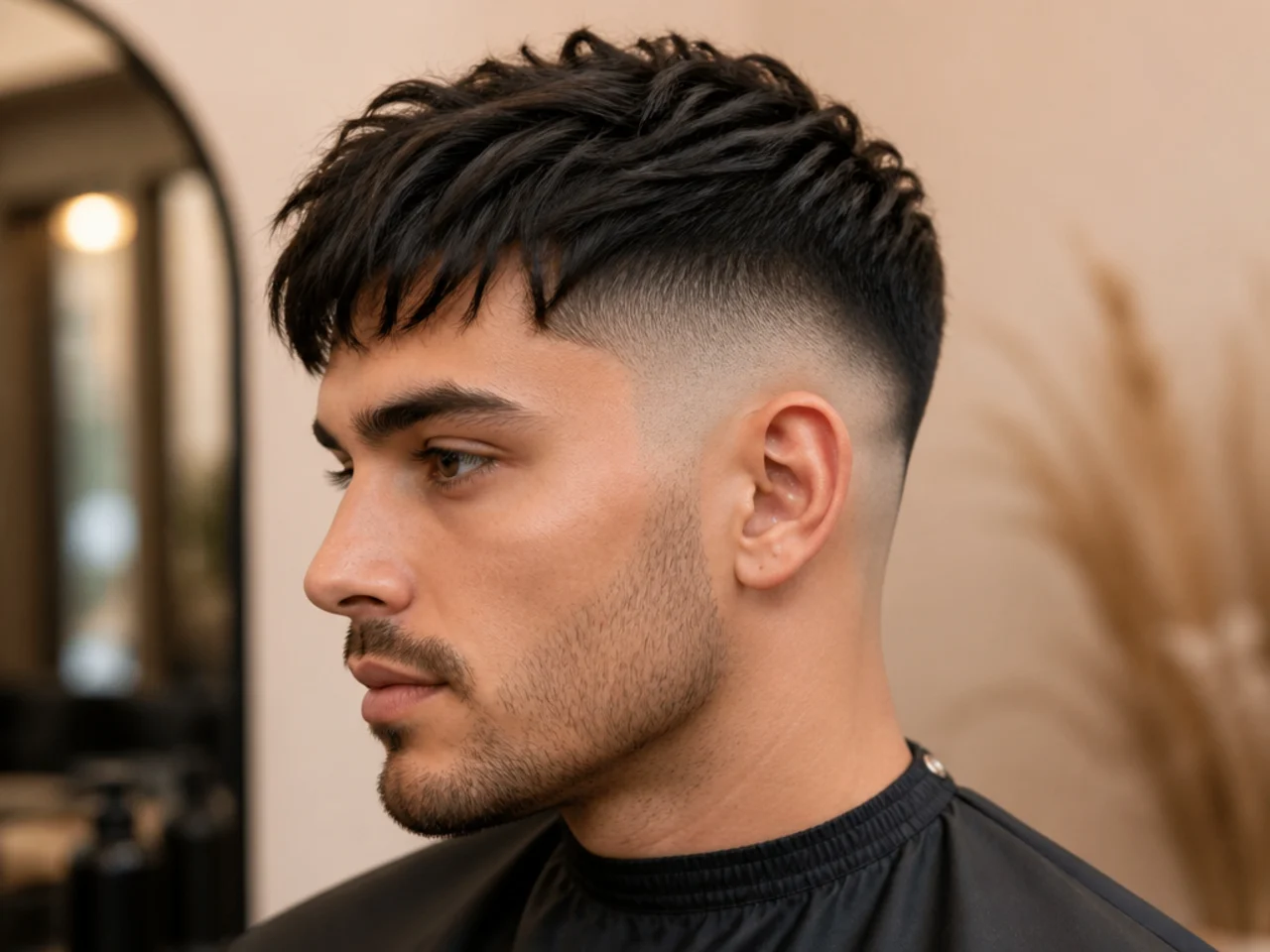
Crisp at the sides, current at the front. A textured, piecey fringe pushed forward to brow length, two inches or so of length behind it, low skin fade to keep the whole silhouette razor-tidy. Suits oval, round, and square faces. Best on straight to wavy hair with any density. Reads modern without any of the retro drift a full pompadour or slick back can carry.
Ask for: "Low skin fade, two inches on top point-cut for texture, fringe left to brow length."
Styling: Matte cream on damp hair, finger-comb forward, break the fringe apart with your thumbs.
18. Low Skin Fade Curtain
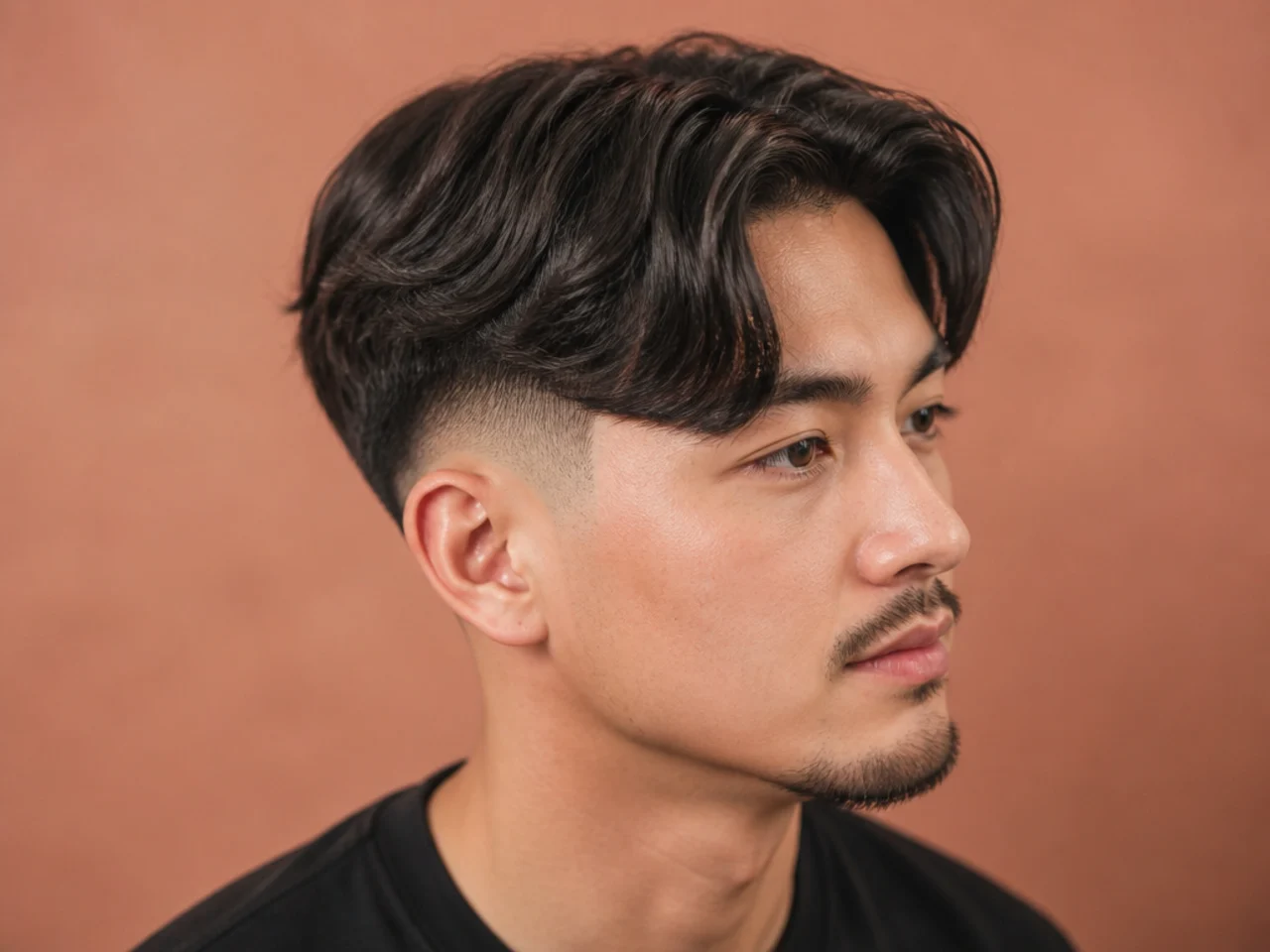
The Korean-adjacent modern statement. Two and a half to three inches of length on top parted down the middle so the front sweeps away from the face in two soft curtains, low skin fade underneath to keep the whole look intentional rather than shaggy. Suits oval, heart, and diamond faces best. Best on straight to wavy hair with medium density. Reads current without going trend-heavy.
Ask for: "Low skin fade, 2.5 inches on top with a middle part, curtain shape swept away from the face."
Styling: Blow-dry with fingers pushing back from the middle part, finish with a light cream for control without stiffness.
19. Low Skin Fade with Curly Top
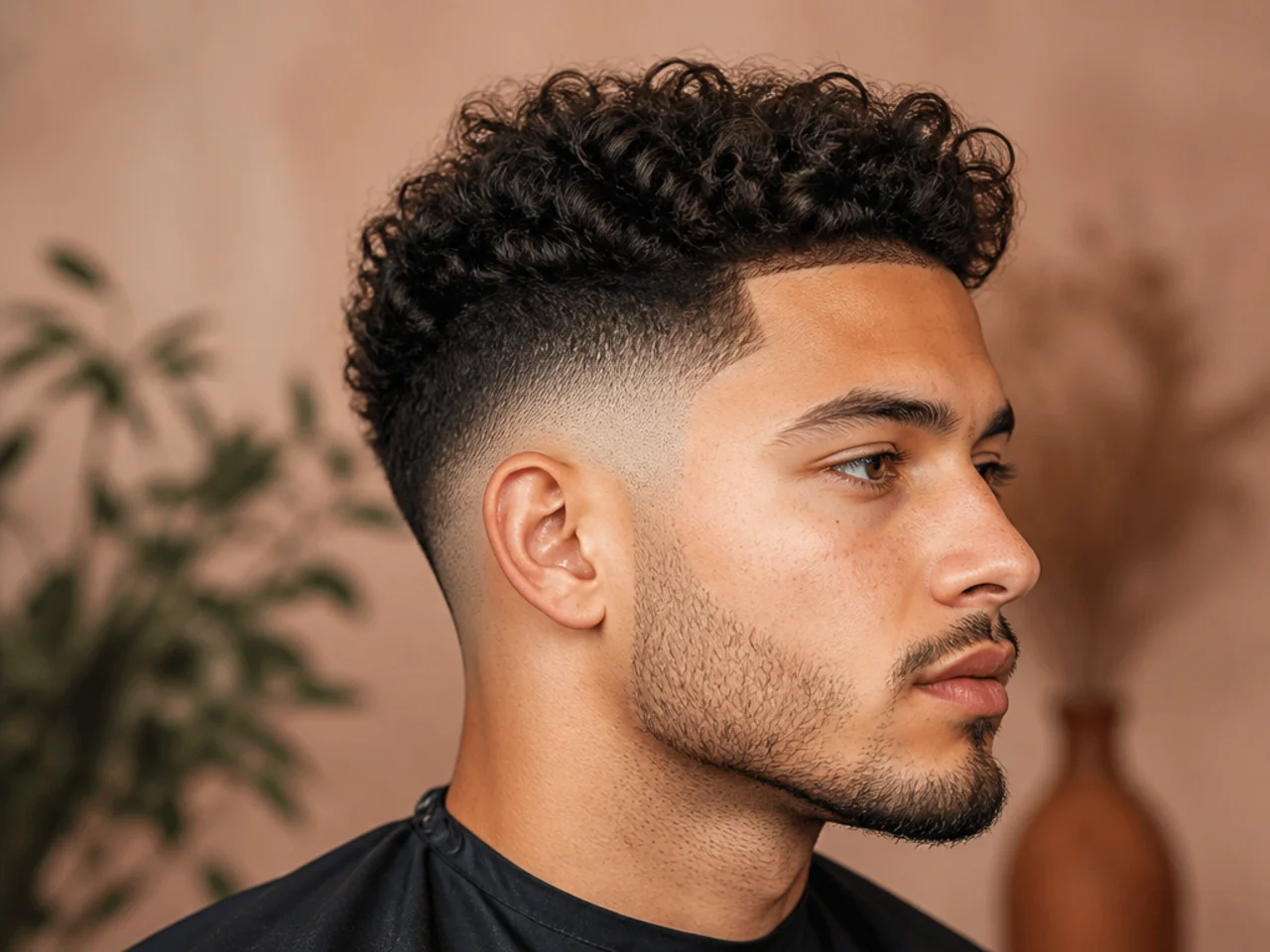
The cleanest possible frame for a curl pattern. Two to three inches of scissor-cut length on top left in its natural curl shape, low skin fade at the sides so the glassy wall makes the curl pattern the entire visual event. Suits every face shape when the top length is chosen for it. Best on any curl type from loose 2B waves through defined 3C coils. See more curly and coily fade options in the low taper fade curly hair guide.
Ask for: "Low skin fade, scissor-cut curly top at two inches, keep the curl shape intact."
Styling: Curl cream on soaking-wet hair, scrunch upward with a T-shirt, air-dry.
20. Low Skin Fade with Edge Design
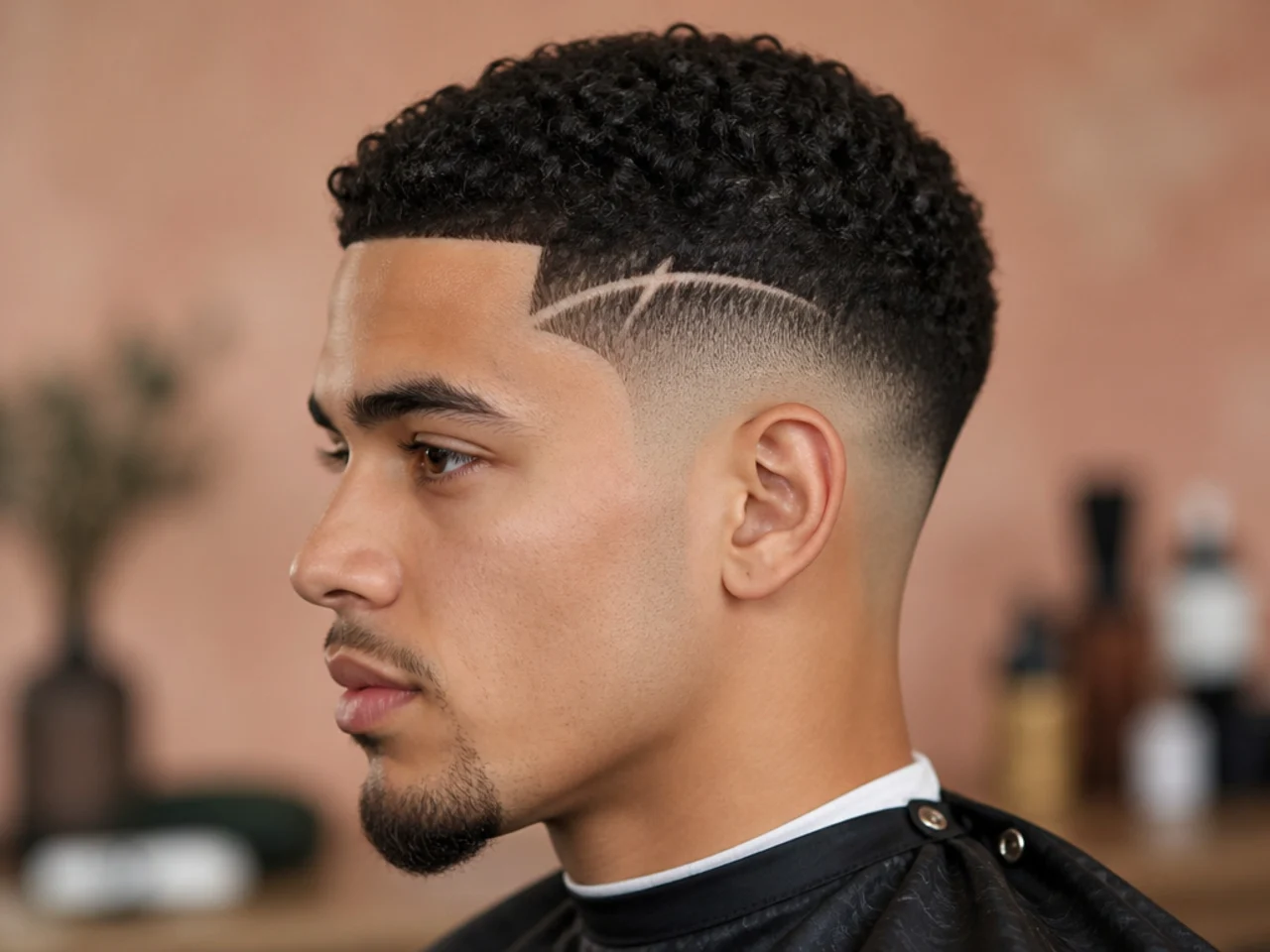
The most personal variation on the list. A low skin fade with a razor-etched line or geometric pattern along one side of the shaved panel — a single sharp diagonal, a lightning bolt, or a soft-arc lightning across the temple. Suits any face shape. Best on straight or coily hair where the etched detail reads cleanest against the skin. Ask for something conservative on the first pass; you can always come back for more.
Ask for: "Low skin fade, small etched line design on the left side above the ear — I'll show you a photo."
Styling: Nothing new. Keep the etched panel out of sun for the first two days so it doesn't shadow-tan.
How to Ask Your Barber for a Crisp Low Skin Fade
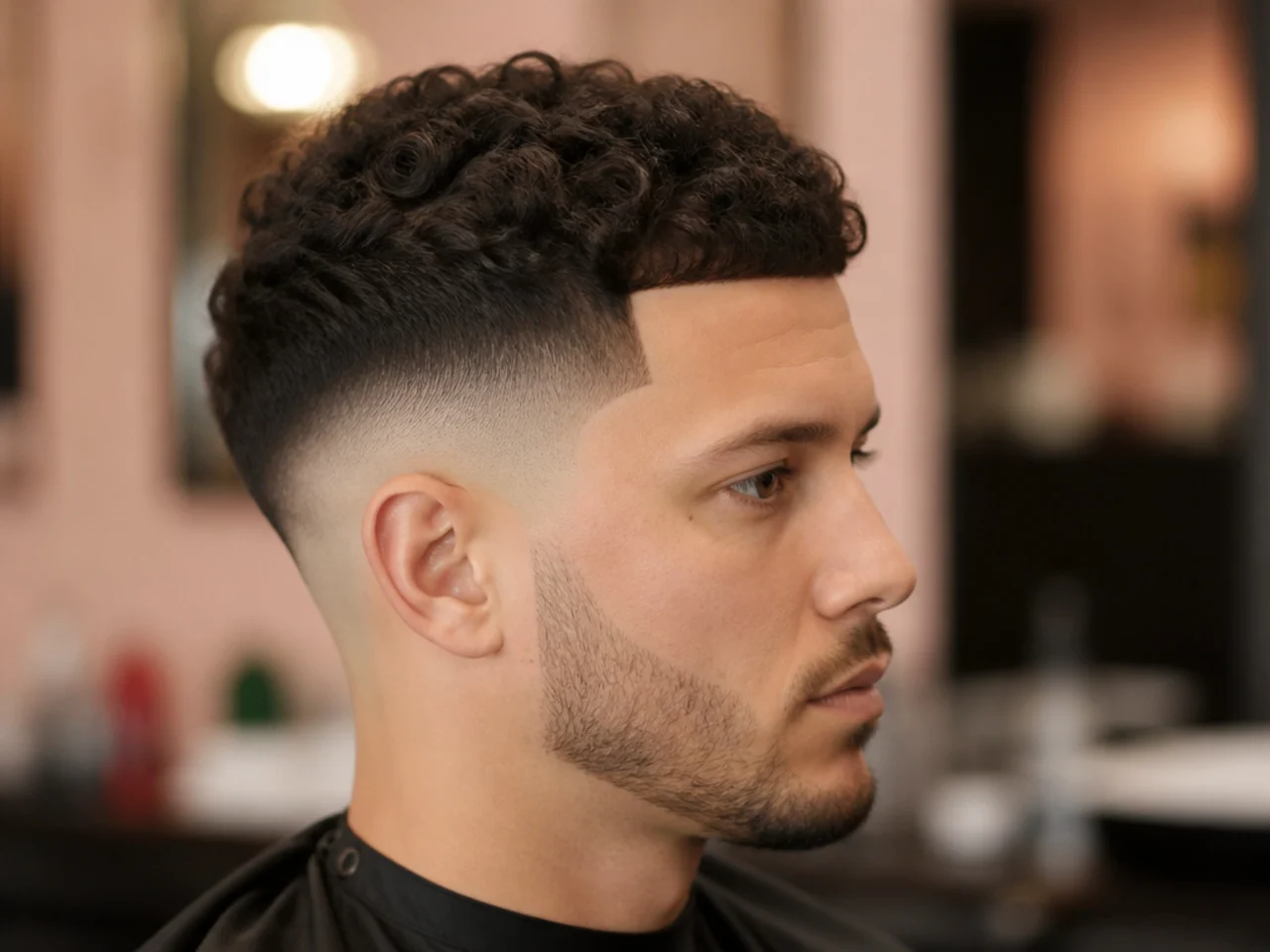
Barbers cut off numbers, not vibes. Walk in with these six items ready and you'll leave with the cut you had in your head.
- A reference photo. Save one of the images above to your camera roll and pull it up at the chair. Pictures kill 90% of the misunderstanding, and skin fades are the family where miscommunication hurts most.
- The word "skin". Say "low skin fade" — the height and the finish get set in three words. Skip either one and you may leave with a #0.5 low fade instead.
- The transition band. Say what guards you want between skin and the top. A #0.5 to a #1 to a #2 is the standard three-band blend. Say it out loud so the barber knows the top guard length too.
- The top length in inches. Not "short" or "medium" — inches. Half an inch, one, two, three. Barbers work off measurements.
- The top shape. Crew, crop, side part, slick back, quiff. Name the shape so the barber knows how to cut for that finish, not just to a length.
- The neckline. Straight or arched. Straight reads sharpest under a collar. Arched softens the whole back and pairs with wider shoulders. Decide before the razor moves.
Styling and Maintenance for a Chair-Fresh Skin Fade
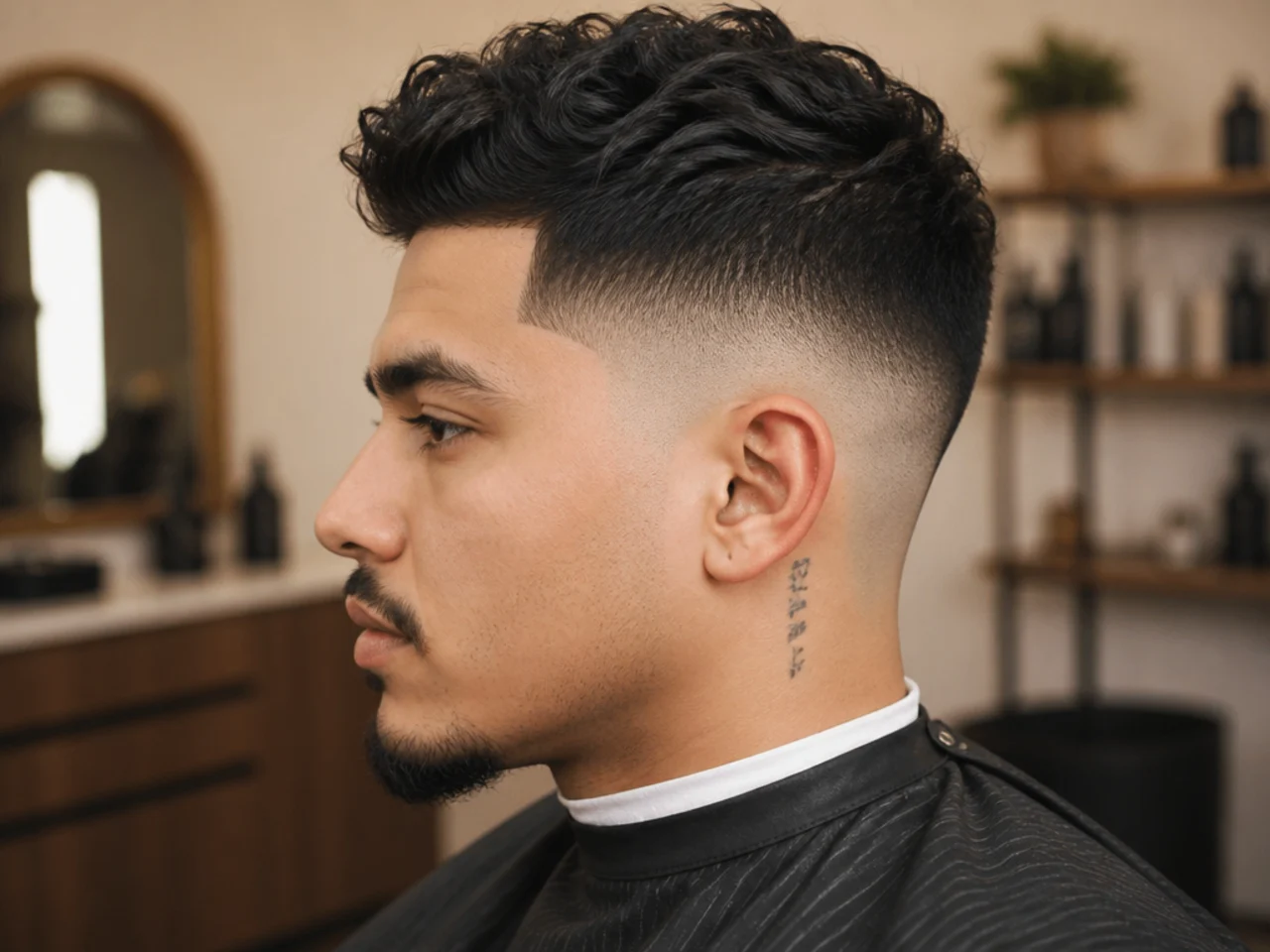
The cut is only half the crisp read. Product choice, daily routine, and re-cut cadence do the rest — and a skin fade adds one more line to the routine that a regular fade doesn't: care for the bare-scalp panel itself.
Product picks by top style. A matte paste or clay for anything textured (crops, crew cuts, quiffs) — it grips without shine. A cream pomade for anything combed (side parts, comb overs, Ivy Leagues) — enough hold for the shape, low enough shine to read modern. A shine or firm-hold pomade only for slick backs and traditional pompadours. Sea-salt spray on damp hair before blow-drying if you want grip in fine hair.
Daily routine. Ninety seconds is enough for every variation on this list. Damp hair holds product better than dry — a light towel dry, a small amount of your chosen product warmed between the palms, applied through the top, then shaped in one clean pass. Overworking dries the finish out and makes it look tired by lunch.
Scalp care for the skin panel. This is what separates a good self-maintained skin fade from a rash-flecked one. Rinse the shaved panel in the shower every morning for the first two days after a cut and pat dry with a clean towel — thirty seconds of habit that prevents the ingrown hairs and razor bumps that leave a fresh cut itchy by day four. A thin layer of moisturizer or an aftershave balm on the shaved panel that first night helps the skin recover. On sunny days, run a light layer of sunscreen across the bare zone — the skin under a fresh skin fade burns faster than the rest of your face because it hasn't seen daylight in months.
Between-visit maintenance. A small pair of over-ear trimmers and a straight-edge razor handle the ear line and the neckline every three days. That two-minute touch-up is what keeps a ten-day-old low skin fade looking three days old. Do not touch the skin panel or the fade transition itself — that's your barber's job. If you're new to at-home upkeep, the best hair clippers for men guide covers what to buy and what to skip.
Re-cut cadence. Every 10 to 14 days for the sharpest skin fade read. Every three weeks and you're looking at a soft, blurring transition instead of a crisp line. Book the next appointment on the way out — the moment you decide to wait until it "looks bad", it already has.
FAQ
What makes a low skin fade look crisp instead of scruffy?
Three details separate a crisp low skin fade from a soft one — a razor-clean scalp panel that has no clipper stubble in it, a transition line that hasn't blurred past day 10, and a top that's been shaped in the last three weeks. Miss any of the three and the whole cut reads tired, no matter how sharp the fade was on day one. Book the touch-up for day 12, not day 21.
How is a low skin fade different from a low taper fade?
A low skin fade drops the sides all the way to bare scalp — you can see the skin panel at the shortest point. A low taper fade stops at a #1 or a longer #0.5 so there's still visible hair at the shortest point. The skin fade reads sharper and needs a barber every two weeks; the taper reads softer and stretches to a month. Both start at the same place — just above the top of the ear.
Can I get a low skin fade if I have thin or receding hair?
Yes, and the low version is the smartest fade you can pick for a receding hairline. The shortest point of the fade sits below the temple, so the bare-scalp panel never spotlights the recession the way a mid or high skin fade would. Pair it with a Caesar, French crop, or short forward-swept top so the fringe hides the receding line rather than exposing it. Avoid combed-back styles that pull hair away from the front hairline.
What's the sharpest low skin fade for curly or coily hair?
A low skin fade with a scissor-cut curly top gives you the crispest contrast without thinning the pattern. The bare skin at the shortest point makes the curl definition read as the visual centerpiece of the whole cut. Apply a curl cream on soaking-wet hair after every wash, scrunch upward, and air-dry. See the fade haircuts for black men guide for pattern-specific detail.
Is a low skin fade a workplace-appropriate cut?
Yes — the low version is the safest skin fade for any office in the country. Because the bare-scalp panel sits below the top of your ear, no skin shows above the temple and the collar area stays clean. Pair it with a side part, comb over, or Ivy League top and it passes every corporate dress code without a second look. See the professional hairstyles for men guide for more workplace-approved cuts.
How do I know if my low skin fade has grown out too much?
Two signals. First, the skin panel — if the shortest point reads as short stubble instead of visible skin, the panel has filled in and the sharp edge is gone. Second, the neckline — if there's fluff below the razor line at the nape, book the appointment. Both usually happen around day 10 for a fresh skin fade. The panel starts to look grey-brown instead of visibly skin-toned once the stubble takes hold.