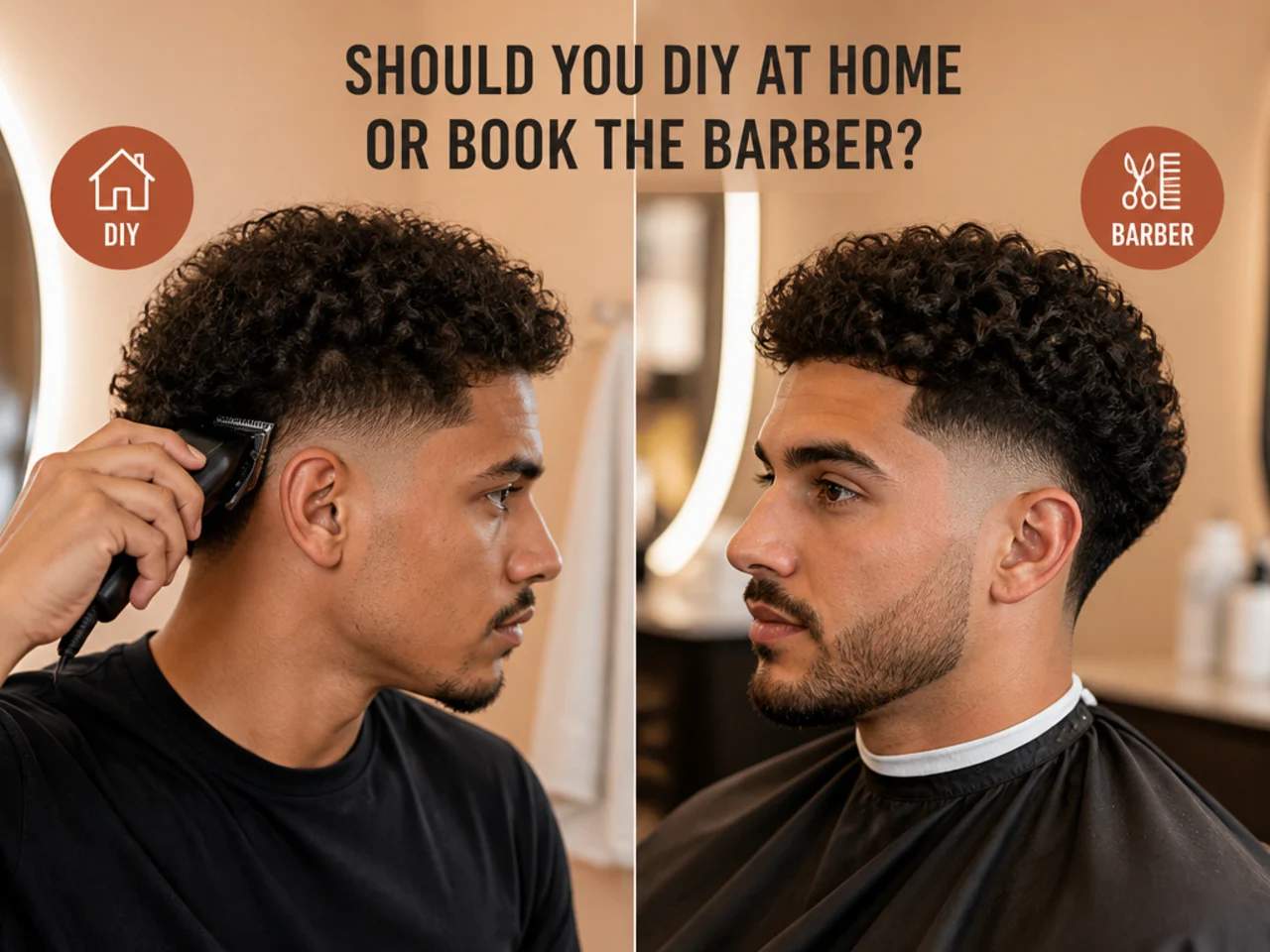
5 Ways a Blowout Taper Beats a Flat Taper
Low taper blowout vs a flat taper — 5 real wins across volume, texture, styling time, grow-out, and face shape. See which one your look wants.
In this article · 17
- The One-Line Answer
- Reason 1: The Volume Difference
- Reason 2: Texture and Movement
- Reason 3: Styling Time and Product Load
- Reason 4: Grow-Out Grace
- Reason 5: Face-Shape Range
- Low Taper Blowout vs Flat Taper: Side by Side
- Which Should You Pick?
- How to Ask Your Barber
- The One Place The Flat Taper Still Wins
- FAQ
- What's the difference between a low taper blowout and a flat taper?
- Is a low taper blowout hard to style at home?
- Which face shape suits a low taper blowout best?
- How often do you re-cut a low taper blowout?
- Can a low taper blowout work on straight hair?
- Is the low taper blowout office-friendly?
The low taper blowout and the flat taper wear the same clean sides — the difference lives on top. One gets round-brushed skyward for volume; the other gets combed flat for polish. Same foundation, two different silhouettes. Here are the five places the blowout beats the flat styling — plus the one moment where the flat taper still wins the room.
The One-Line Answer
The low taper blowout beats a flat taper when you want a cut that reads tall, holds texture through the day, and pulls compliments the moment you leave the chair. The flat taper wins when you want quiet, fast, and boardroom-neutral.
That's the ninety-percent read. Everything below is nuance — grow-out cadence, face-shape fit, product load, styling time. The taper foundation is the same in both cuts: a low, soft gradient that touches skin only at the perimeter and sits invisibly under a shirt collar. What differs is the top language. Round-brushed with heat and matte cream, the top climbs. Combed flat with pomade, the top sits.
If you can commit five minutes a morning and own a blow-dryer, the blowout taper is almost always the better choice. If you can't, the flat wins by default.
Reason 1: The Volume Difference
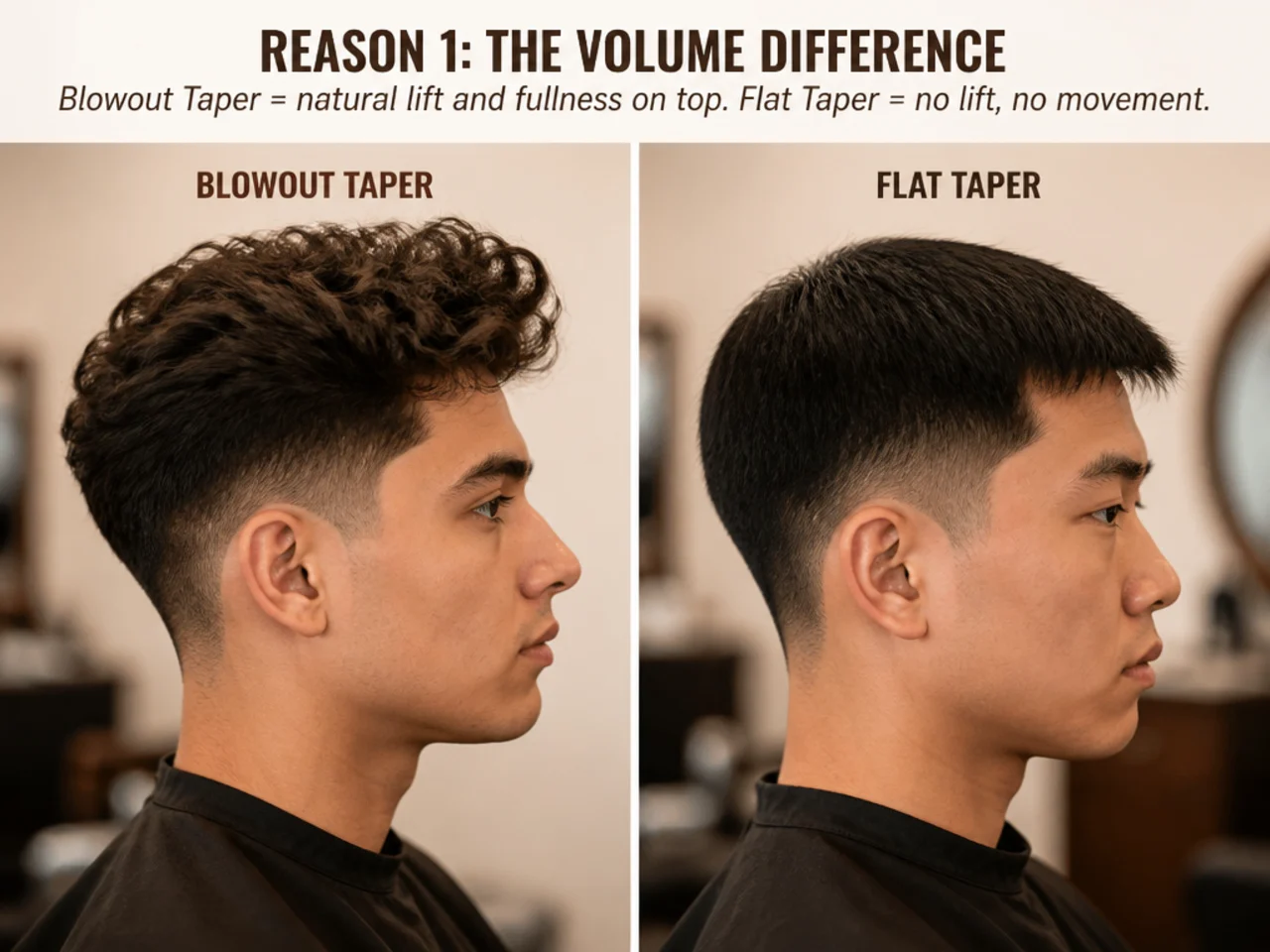
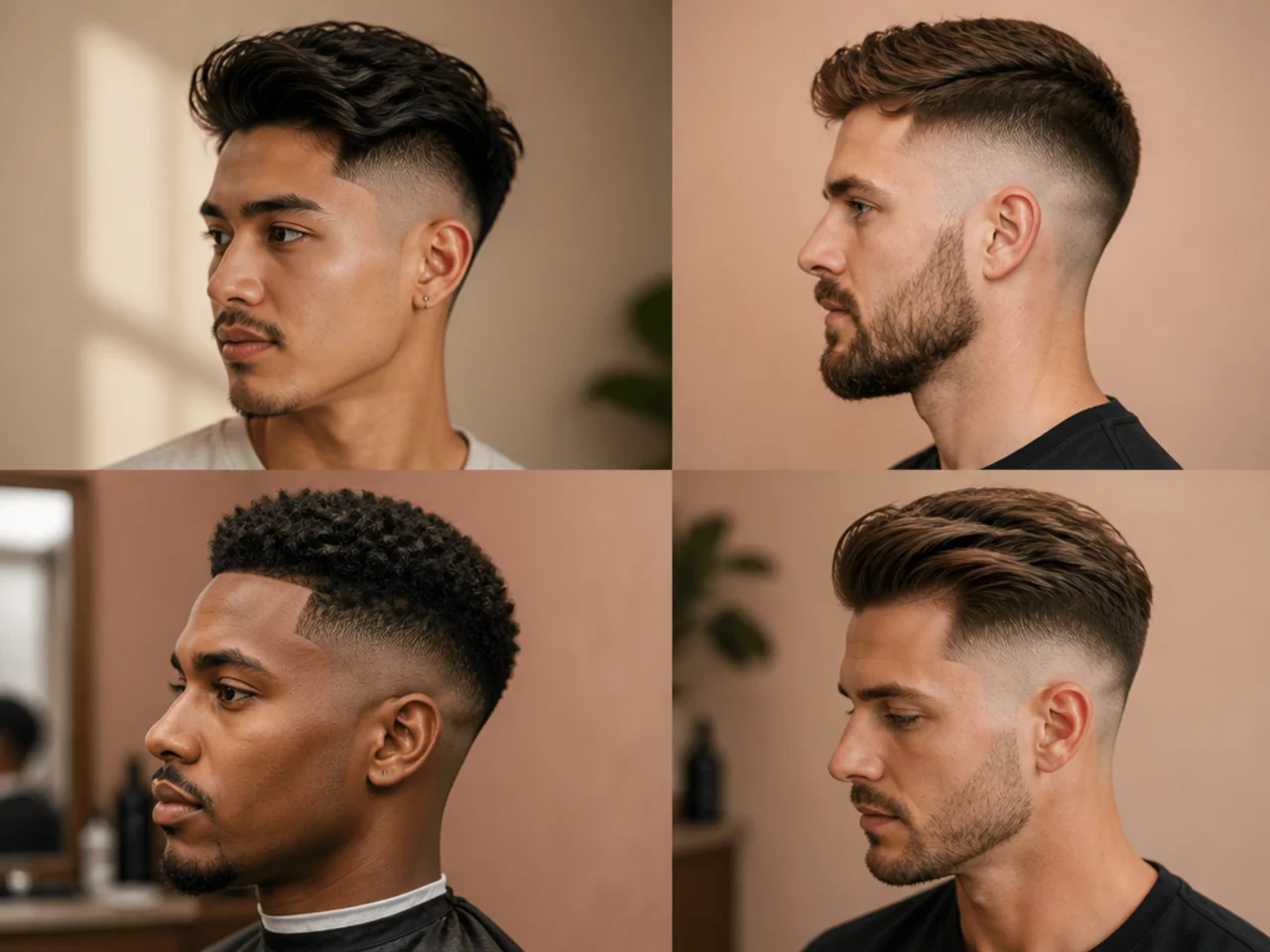
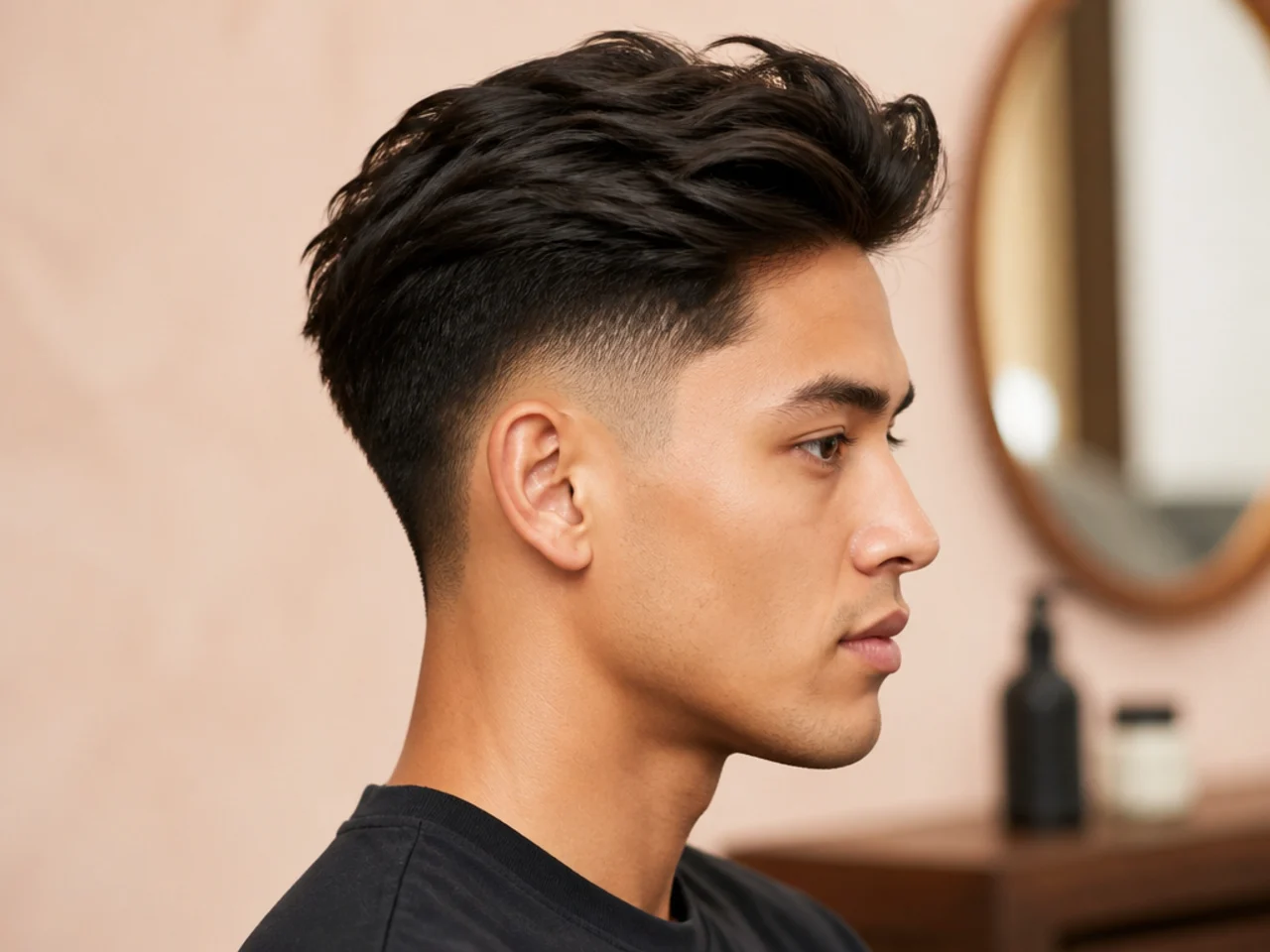
Volume is the whole reason people book a blowout. A round brush pulled through damp hair with heat and lift adds one to two inches of visible height at the crown and front — same length, different geometry. From the side, the flat taper's silhouette hugs the skull. The blowout's silhouette climbs. Same cut on the walls of the room; only the roof has changed.
The mechanic is simple. Heat softens the hair's protein bonds. The brush shapes those bonds into a lifted curve. A cool-shot from the dryer locks the shape as the bonds re-set. That's the whole trick, and it works on straight, wavy, and curly hair as long as there's four inches or more of length on top.
The flat taper skips all of that. Pomade or matte paste, comb through, done. The hair sits where gravity puts it. That's the point — flat is a design choice, not a shortcut. But you're leaving inches of vertical stretch on the table.
Real numbers: on four inches of length, expect roughly one to one-and-a-half inches of visible lift once the cool-shot locks in. On six inches, closer to two. That's the difference between a haircut that reads modest and one that reads full. Same barber, same day, same low taper on the sides. Different silhouette entirely.
If you don't own a dryer or a round brush, the blowout isn't a haircut choice — it's a shopping list. Add both to the cart before you book, or the whole cut collapses on morning one.
Reason 2: Texture and Movement
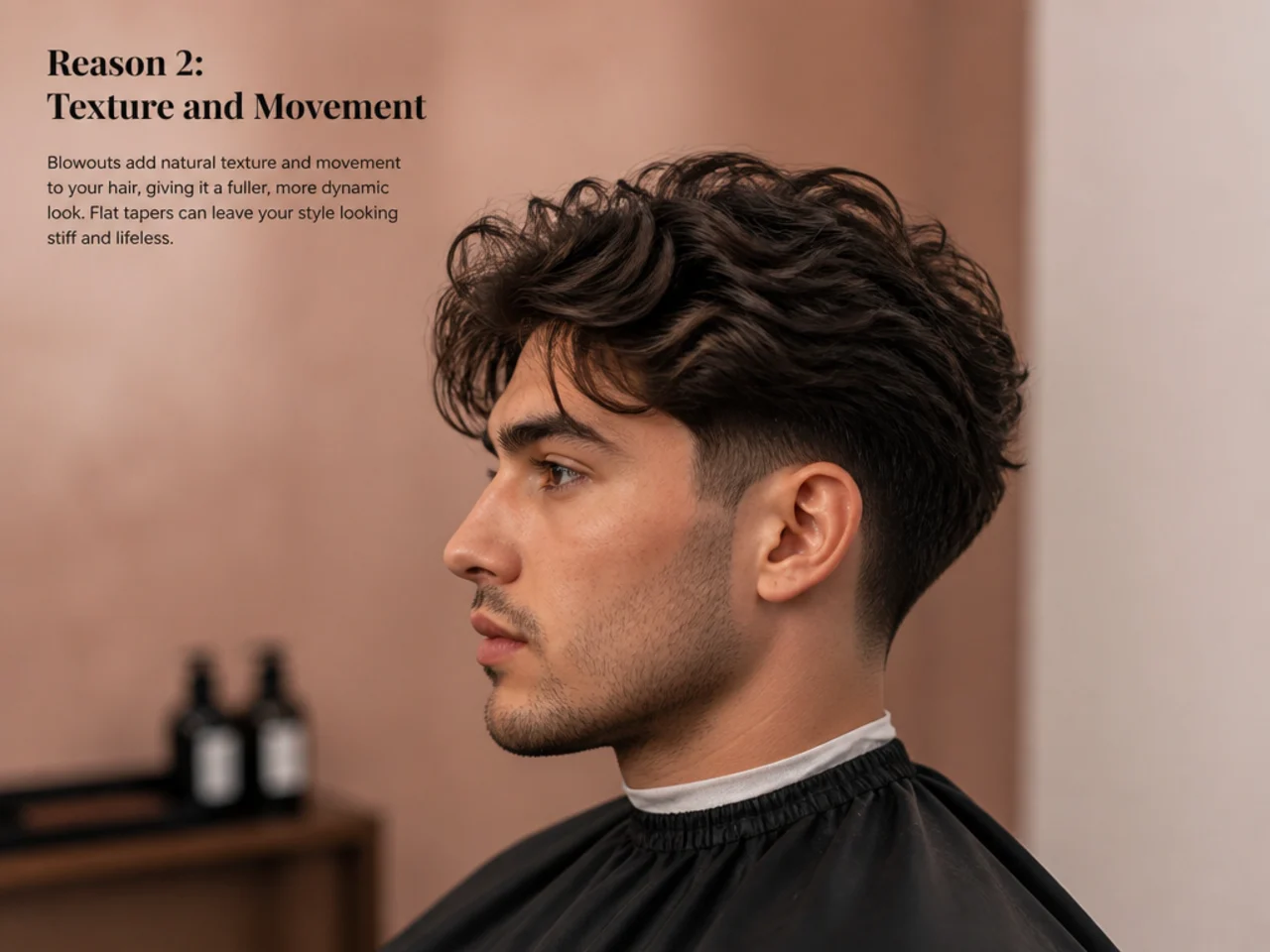
Volume is height. Texture is what happens between the strands.
The blowout separates hair as the brush pulls through — each pass lifts a slice of hair, dries it in the raised position, and drops it back down looking like an individual piece instead of a block. From the front, you see wave patterns, natural break points, and light catching the ends. It reads alive.
Flat styling erases that. Pomade coats every strand and pulls them into a single sheet. The top reads as one plane, one direction, one texture. That's the classic slick-back or side-part look — polished, uniform, controlled. And exactly the wrong choice if your hair has natural wave or curl you want to see.
Wavy hair is the sweet spot for the blowout. 2A to 2C waves stack in a round-brush shape, add movement for free, and hold texture through the day with almost no product. Straight hair needs more work — mousse at the roots, matte cream at the ends, texture spray for grit — but still holds separation you can't get with a comb. Curly hair, especially Type 3 curls, reads best diffuse-dried rather than round-brushed, but the principle holds: the blowout preserves the curl pattern where a flat comb-forward crushes it.
Coily and 4A–4C hair belong in the blowout column too. The taper's role stays the same; what changes on top is a pick-out and pat rather than a round-brush, and the volume reads as an afro shape rather than a pomp. The texture speaks the same language either way.
Flat styling reads best on dense straight hair that holds a comb shape without going limp. Everything else usually benefits from the blowout treatment.
Reason 3: Styling Time and Product Load
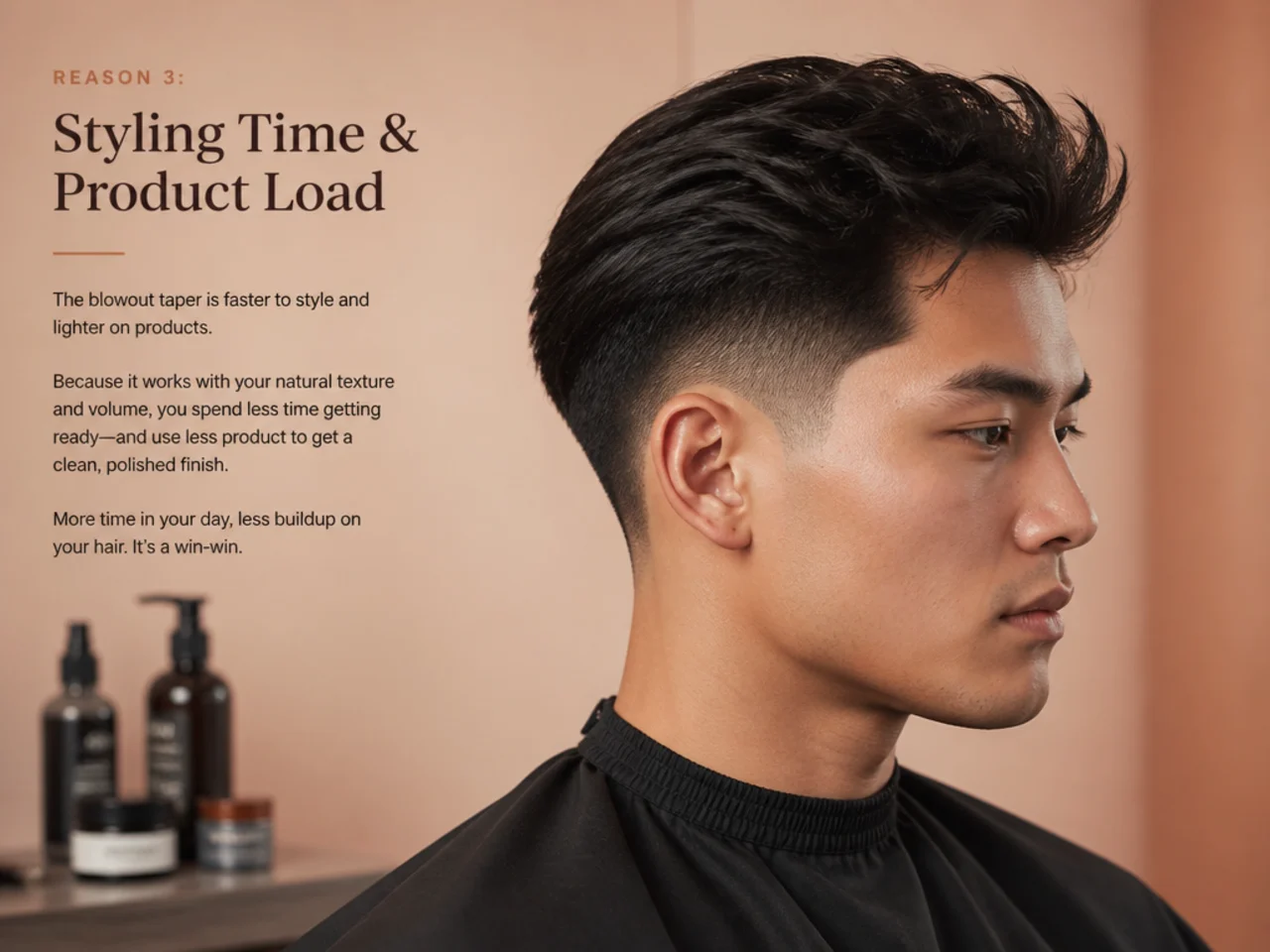
The flat taper wins on the clock. Two minutes with a fingertip of pomade or matte paste, comb through, walk out. That's the entire routine. Over a year, roughly ten hours of styling time — small enough to disappear.
The blowout costs more. Real routine: towel-dry the top to damp (not wet, not dry), mousse or sea-salt spray at the roots, blow-dry with a round brush going forward and up, cool-shot to lock the shape, matte cream worked through the ends only, texture spray to break up over-neat spots. Six to eight minutes if you know what you're doing. Twelve minutes if you don't.
Multiplied out, the blowout costs you twenty to twenty-five hours a year in front of the mirror. That's real time. Some guys don't want to spend it. Fair enough.
The product load also grows. Flat styling needs one product — a pomade or paste. The blowout needs three to four: a root-lift mousse or sea-salt spray, a matte cream or paste for hold, a texture spray for finish, and optionally a heat protectant if you're blow-drying daily. Add a round brush and a decent hooded dryer and you're roughly $80 into the toolkit before your first cut.
The honest math: the flat taper wins the morning race but loses the visual battle. The blowout costs more time and money, but the payoff is a haircut people notice.
Product picks:
- Blowout on wavy hair: sea-salt spray on damp, blow-dry with round brush, finish with matte cream.
- Blowout on straight hair: volumizing mousse at roots, round brush and cool-shot, matte paste for hold.
- Flat taper on straight hair: medium-hold pomade, wide-tooth comb, done.
- Flat taper on wavy hair: matte clay to control the wave, no comb.
Reason 4: Grow-Out Grace
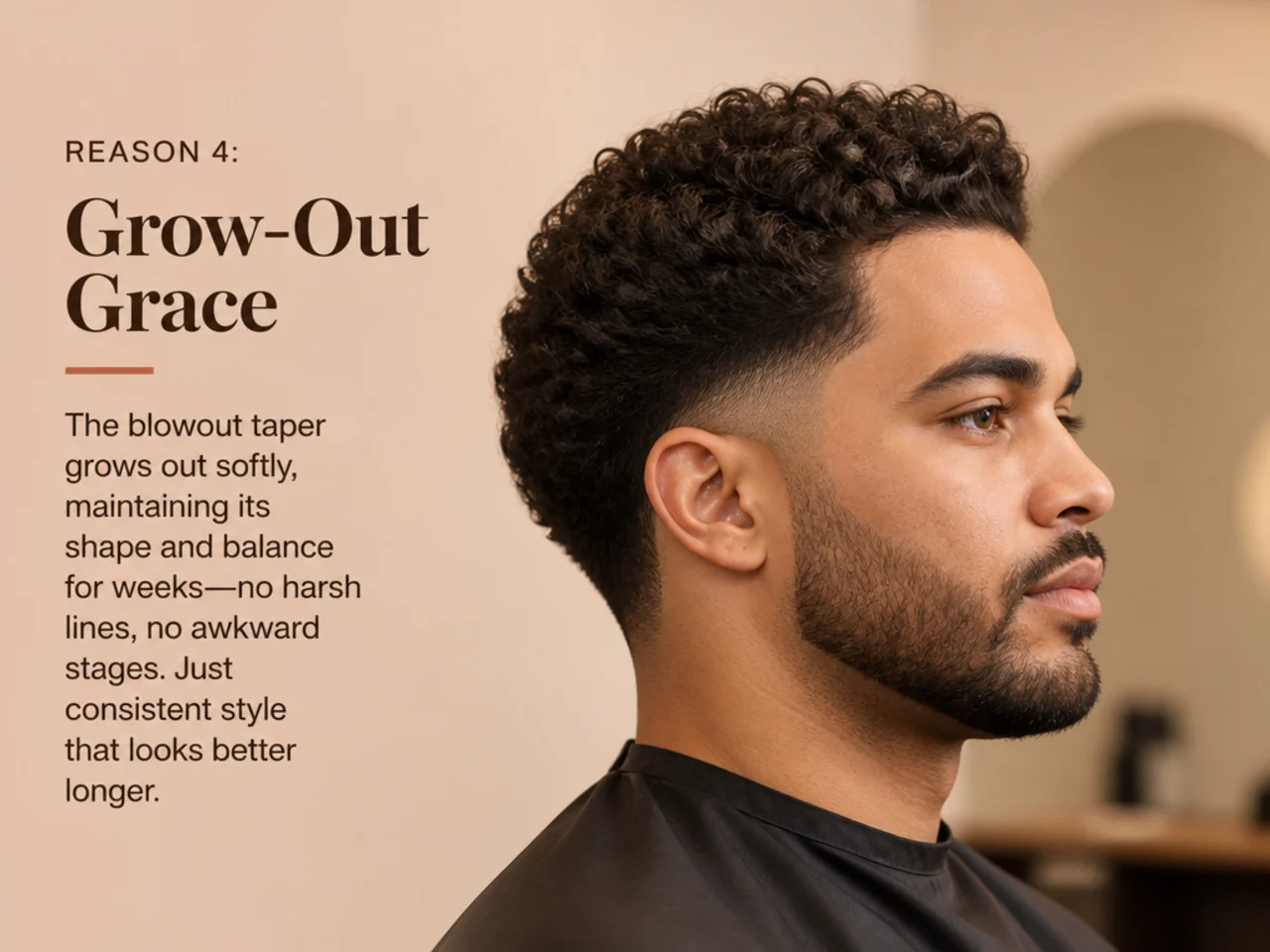
Both cuts share the same taper foundation, so the perimeter grows out at the same rate. What differs is how the top handles extra length between visits.
A flat taper punishes grow-out. Two extra weeks of length on top and the flat styling starts reading shaggy — the pomade can't hold the increased weight, the side-part parts flop, the comb-forward slips over the ears. You lose the shape by week three, and you're back in the chair before the taper itself needs re-cutting.
A blowout absorbs grow-out. Extra length just means more hair for the round brush to lift, more volume at the crown, more silhouette to work with. A cut that looked full at week one looks fuller at week four. Some guys actively wait for the four-week mark because that's when the blowout hits its visual peak.
Real numbers: a low taper blowout stretches to five weeks between visits if you're stretching. The flat taper wants three weeks max on top, or you're wearing something that looks unintentional. That's roughly $260 a year in extra cuts on the flat side, assuming a $40 appointment.
The catch: the taper itself still blurs at the perimeter around week two or three regardless of which top you're wearing. The blowout doesn't fix the taper — it gives you room to postpone. If you want a razor-sharp perimeter every day, both cuts want the two-week schedule. If you're comfortable with a slightly soft line after week three, the blowout gives you the flexibility a flat top can't.
One more grow-out note: if you're growing your hair long on top intentionally — say, from four inches toward six or eight — the blowout carries you through the awkward middle months where a flat cut looks unfinished. The volume masks length that's not quite there yet.
Reason 5: Face-Shape Range
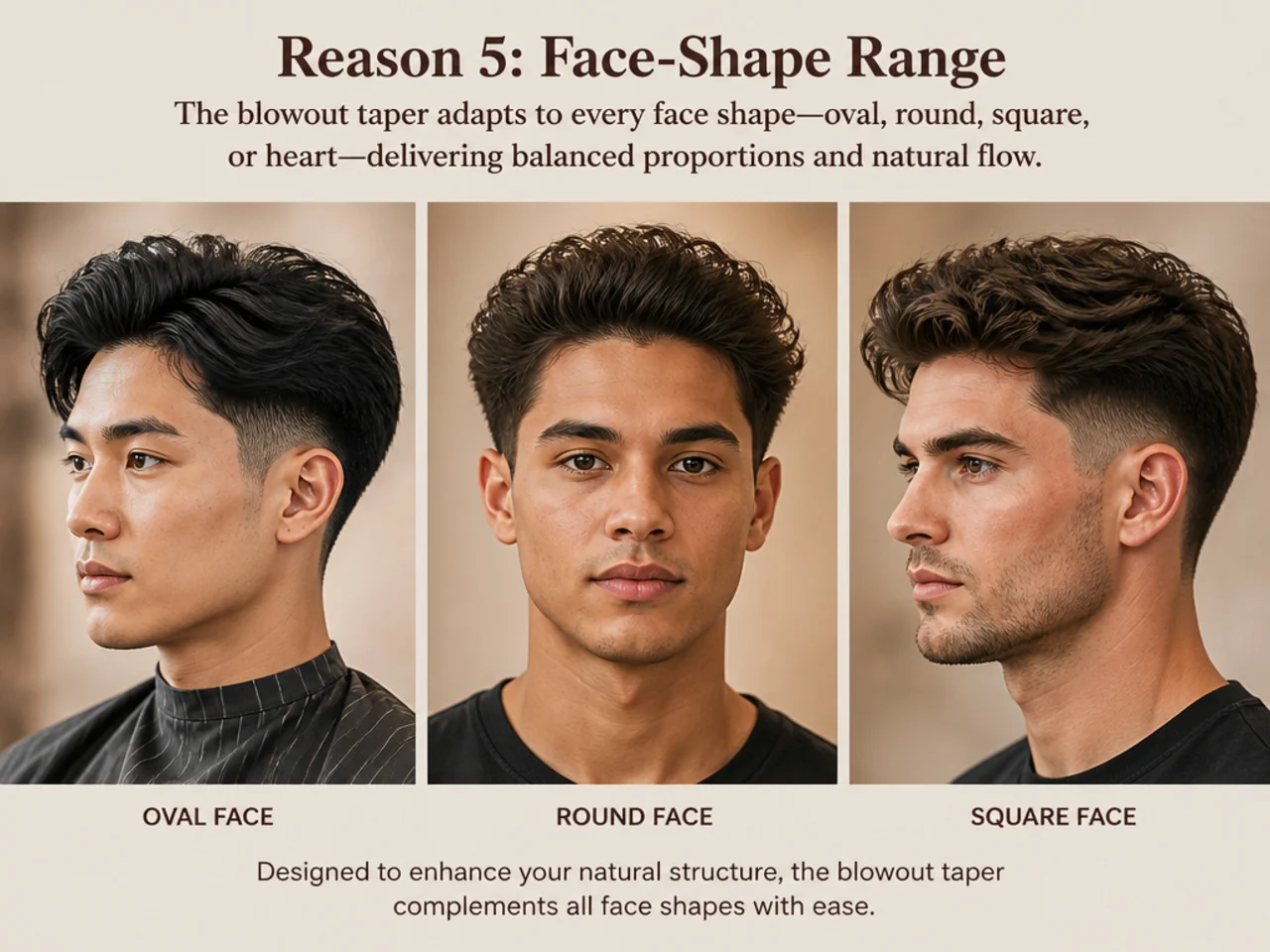
Face shape is where the blowout opens the widest lead.
Round faces. The blowout wins outright. Volume up top adds vertical stretch, which visually narrows a round face. A flat taper does the opposite — it accentuates width at the temples and crown because there's no height to counterbalance. If your face is round, the blowout isn't a preference; it's the correct answer.
Square faces. The blowout wins again, softened. Height on top adds proportion to a strong jawline, letting the two ends of the face read balanced. A flat side-part or slick-back on a square face reads severe — all right angles, no softening. The blowout's rounded silhouette breaks that geometry.
Heart faces. The blowout takes it. A heart face is wider at the forehead and narrower at the jaw. Volume up top can either exaggerate that width or add height that shifts attention upward — with the right silhouette, the blowout does the second. A flat taper on a heart face tends to flatten the top and leaves the forehead reading larger by contrast.
Diamond faces. The blowout wins comfortably. Cheekbone width is the diamond's strongest feature, and a tall blowout balances the point at the top of the head so the cheekbones don't sit as the visual peak. A flat taper leaves the diamond's shape unopposed.
Oval faces. Either works. Ovals are the goldilocks of face shapes — most cuts flatter them because the proportions are already balanced. Pick based on styling appetite, not shape.
Long or oblong faces. The flat taper wins. Adding height to a long face makes it longer. If your face is roughly one-and-a-half times taller than it is wide, skip the blowout and keep the top flat or textured but low. The blowout will visually stretch the face further, which is the one situation where the flat wins on shape grounds.
That's five face shapes where the blowout wins outright or ties, and one where the flat wins. If your face isn't obviously long or oblong, the blowout is the shape-correct choice.
Low Taper Blowout vs Flat Taper: Side by Side
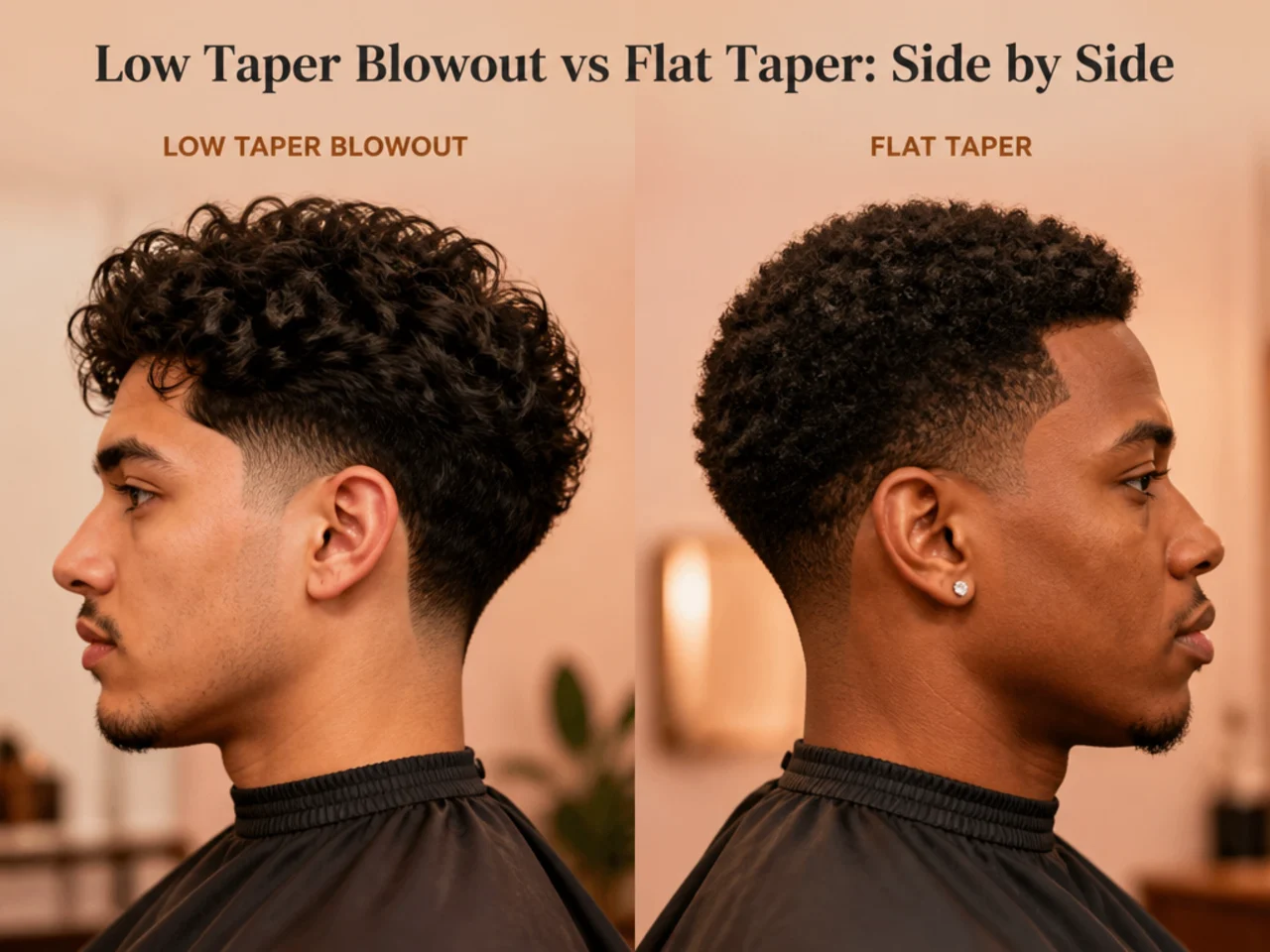
Here's the decision matrix, laid out flat.
Two more numbers worth knowing:
Workplace fit. Both cuts read professionally at the low taper level — the sides sit clean under a shirt collar, no exposed skin above the ear, no aggressive contrast. The blowout adds visual height that most modern offices accept without pause; the flat taper stays neutral enough for traditional finance, law, and executive-track roles that don't love volume up top. Compare the fade heights themselves in the low fade vs mid fade vs high fade breakdown if you're still weighing the base.
Long-term commitment. The flat taper is a two-year haircut — set it, forget it, keep pomade in the medicine cabinet. The blowout is a routine you learn and improve — first month you're clumsy with the round brush, third month it's automatic, six months in you can't imagine wearing your hair any other way.
Which Should You Pick?
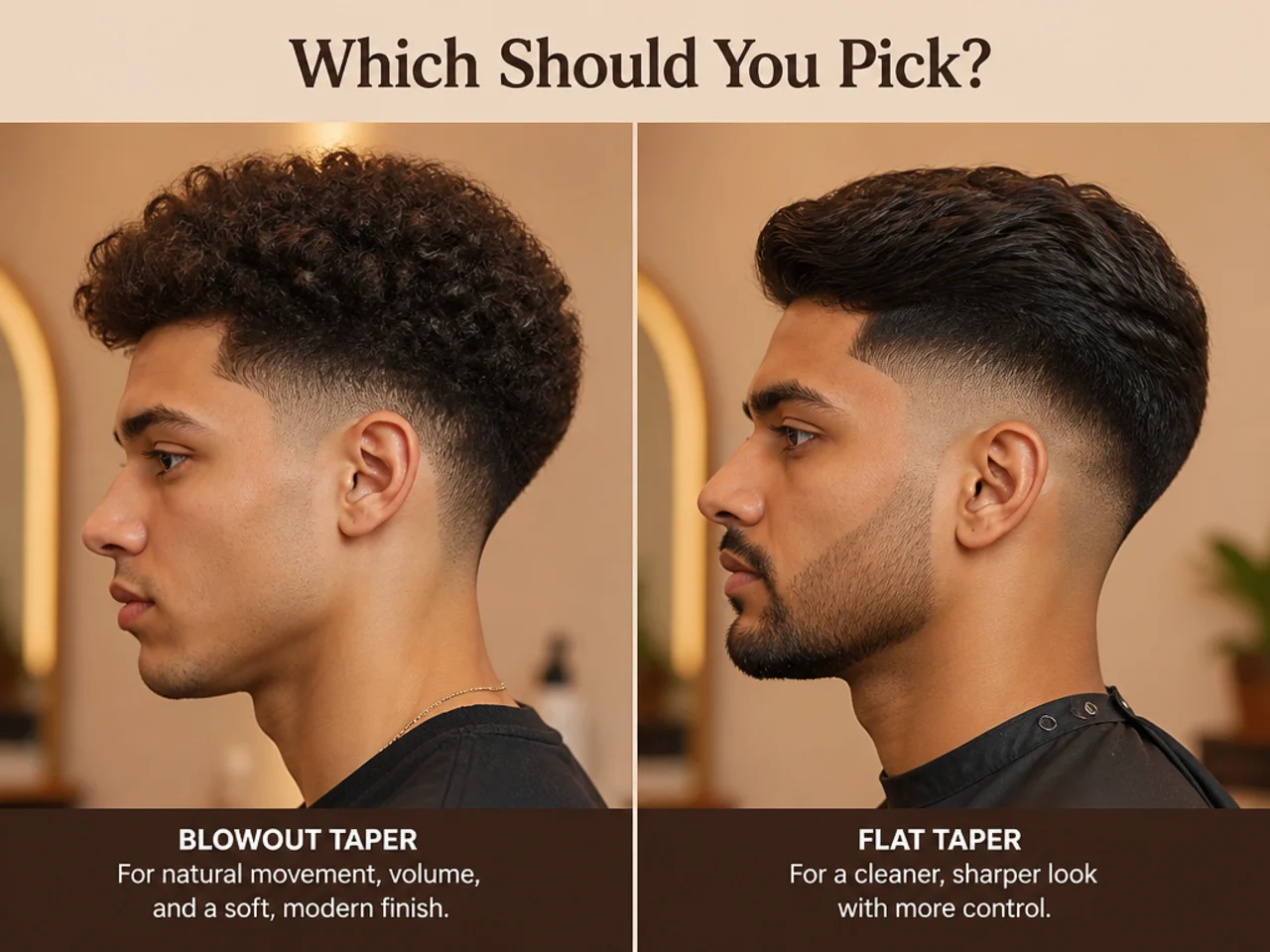
Pick the low taper blowout if:
- You want the haircut to read from across the room.
- You have a round, square, heart, or diamond face shape.
- Your hair is wavy, curly, coily, or dense straight — anything with body or the potential for body.
- You own a blow-dryer and a round brush, or you're willing to buy them.
- You can commit five to eight minutes to styling each morning.
- You like the idea of a cut that stretches four weeks between visits without falling apart on top.
- You work in a modern office, creative field, service industry, hospitality, or a role without a strict dress code.
Pick the flat taper if:
- You want a cut that disappears into professional wardrobes.
- You have a long or oblong face that height would stretch further.
- Your hair is fine, thin, or receding — the flat lay hides scalp better than a lifted style.
- You want a two-minute morning routine and one product on the shelf.
- You work in traditional finance, law, appellate work, or any environment where visual neutrality reads as competence.
- You already own a comb and a pot of pomade and don't want a bathroom-counter upgrade.
If you're stuck between the two: try the blowout for one cycle. Six weeks with the round brush and the matte cream will tell you if you love the silhouette or resent the extra minutes. Worst case, the top grows out enough by month two to switch back to a flat side-part without a second visit. For the full family of related fade options, see the fade haircut hub and the broader taper haircut breakdown.
How to Ask Your Barber
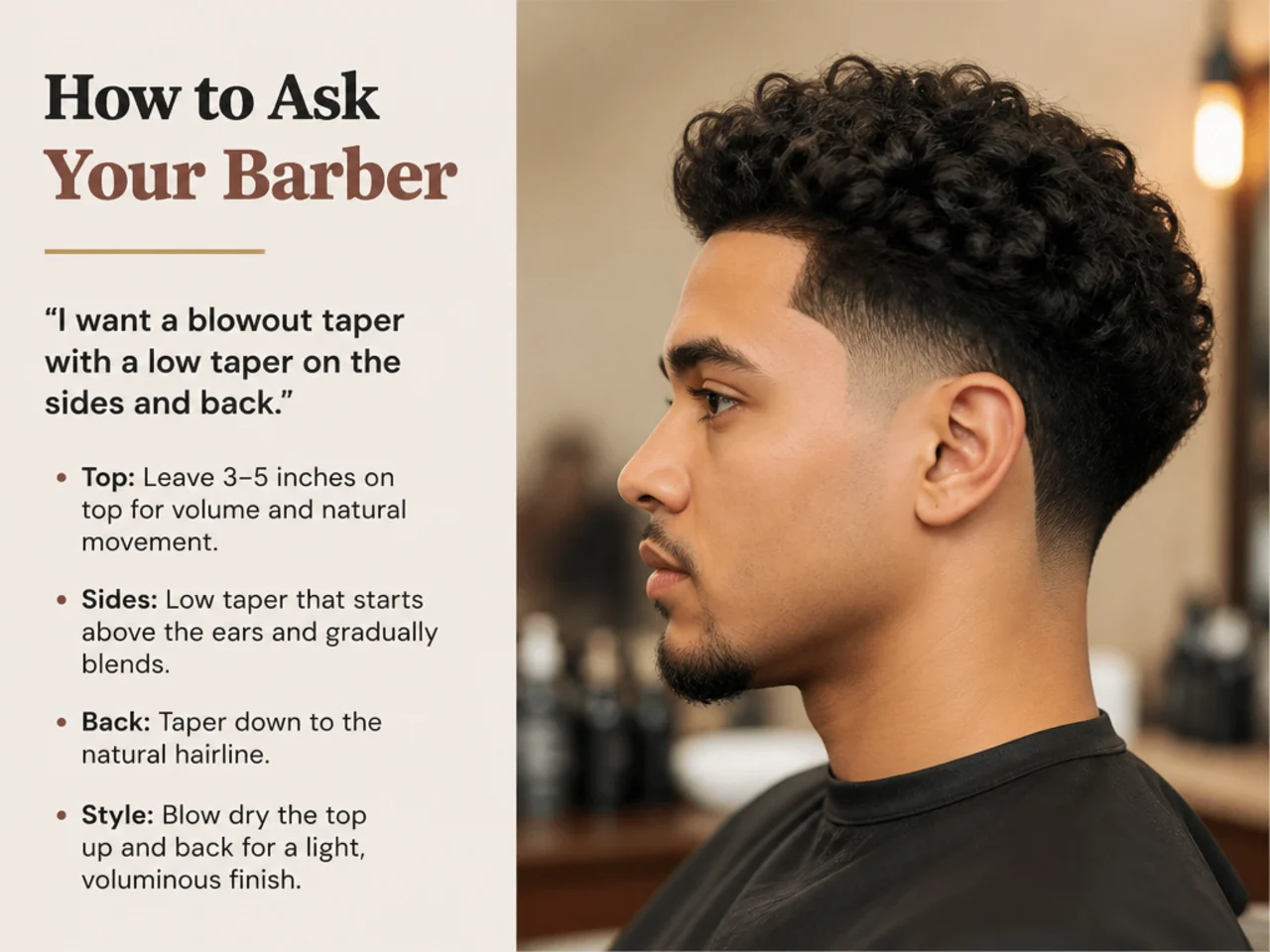
The taper foundation is identical for both cuts, so the ask starts the same. Only the last two lines change.
For a low taper blowout:
- Say "low taper." Not fade, not low fade — taper means the sides stay short but never hit skin except at the perimeter.
- Name the guard at the shortest point. A 0.5 or 1 at the ear line, blending up to a 2 or 3 by the parietal ridge.
- Say "cut for a blowout." This tells your barber to leave weight in the front and crown so the round brush has something to lift. Without this line, the barber may over-texturize and kill the volume.
- Name the top length. Four to six inches is the blowout sweet spot. Below four, there's nothing to lift. Above six, it drops under its own weight.
- Show a photo. Blowout heights vary shop to shop — a reference photo removes ambiguity.
For a flat taper:
- Say "low taper." Same word, same expectation on the sides.
- Name the guard. Same as above — 0.5 or 1 at the shortest, blending up to a 2 or 3.
- Say "cut flat on top." Or name the specific top style — side part, comb-over, slick-back, French crop. Different top styles cut slightly differently.
- Name the top length. Two to four inches for flat styling. Anything longer starts wanting volume whether you asked for it or not.
- Confirm no built-in lift. Some barbers texturize the crown by habit — say "leave the weight, cut for a flat comb-through" to override that.
Two mistakes to avoid. Don't ask for a "blowout fade" if you want a taper — the fade takes the sides to skin much higher and changes the whole cut. And don't ask for "some volume on top" if you want a real blowout — that's the flat side-part with a hint of lift, not a blowout.
The One Place The Flat Taper Still Wins
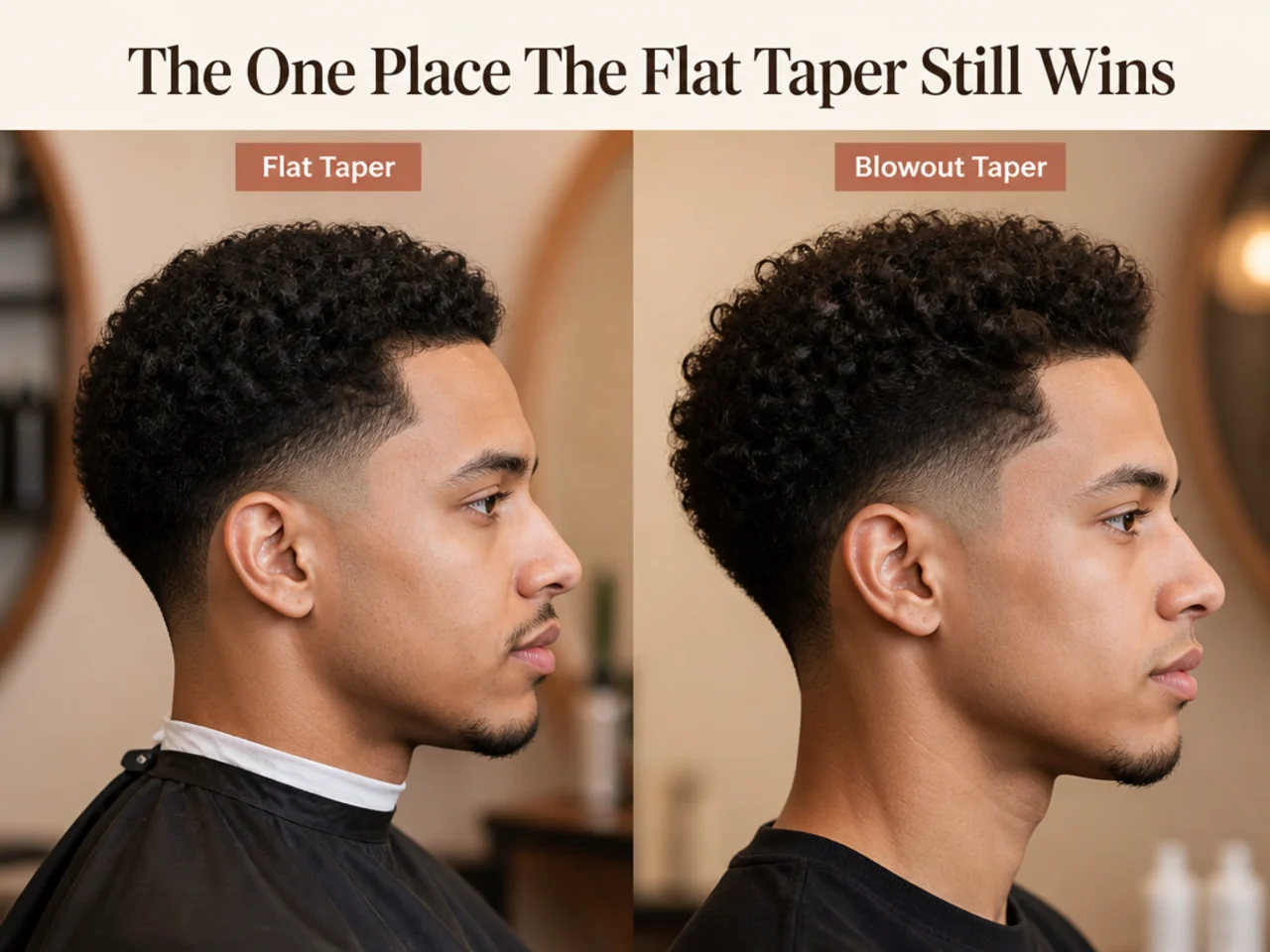
The flat taper wins in a courtroom. If your job requires visual neutrality — traditional finance, appellate law, private banking, senior medicine — the blowout is a signal and the flat taper isn't. It also wins for anyone with a long or oblong face where extra vertical height would work against you, and for anyone with fine or thinning hair that reads denser when it lays close to the scalp than when it's lifted away.
The honest read isn't "blowout always beats flat." It's "blowout beats flat on volume, texture, styling flexibility, grow-out grace, and face-shape range for most people — and the flat taper still wins the professional register, the long-face crowd, and the two-minute-morning crowd." Pick your fight, then pick your cut.
If your job is neutral and your face is long but you still want some of the blowout's benefits, split the difference: order a low fade taper with a moderate top styled with texture cream rather than round-brushed. You get separation and movement without the vertical stretch a full blowout adds. For a sibling comparison in the same family, see how a burst fade beats a regular taper — the trade-offs read differently but the framing is the same.
FAQ
What's the difference between a low taper blowout and a flat taper?
Both cuts share the same low taper on the sides — a soft gradient that touches skin only at the perimeter and stays invisible under a shirt collar. The difference is entirely on top. A blowout is round-brushed with heat to lift the hair one to two inches above its natural fall. A flat taper is combed with pomade or paste to keep the hair close to the head. Same foundation, opposite silhouettes.
Is a low taper blowout hard to style at home?
Not hard, but not automatic. Expect six to eight minutes with a blow-dryer, a round brush, mousse or sea-salt spray, and a matte cream. The first few tries you'll wrestle with the brush; by week two the routine feels natural. Watch your barber blow-dry the cut in the chair once — that's usually all the tutorial you need to lock the technique in.
Which face shape suits a low taper blowout best?
Round, square, heart, and diamond faces all win with a blowout — the volume adds vertical proportion that balances width. Oval faces work with either. Long or oblong faces should stick with a flat taper — added height stretches an already-long face further. Beyond face shape, hair type matters too: wavy and curly hair get the biggest visual payoff from the blowout treatment.
How often do you re-cut a low taper blowout?
Every three to four weeks for the taper itself, and the top stretches to five weeks between cuts because the volume absorbs grow-out. A flat taper wants three weeks max on top before it starts reading shaggy, so the blowout actually saves you cuts across a year even though the daily styling takes longer. Book the next appointment before you leave the chair — good blowout barbers book out fast.
Can a low taper blowout work on straight hair?
Yes, with more effort than wavy or curly hair. Straight hair has no natural body to help the round brush, so you'll need volumizing mousse at the roots, a strong-hold matte cream to lock the shape, and a full cool-shot at the end. Once the routine is dialed in, straight hair holds a blowout as well as any other texture — some barbers even prefer straight hair for the blowout because the silhouette reads cleaner without pattern interference.
Is the low taper blowout office-friendly?
Yes for most modern offices — the taper foundation reads clean under a shirt collar and there's no exposed skin above the ear. Traditional finance, law, and executive-track roles may prefer a flatter top; medium-height offices, tech, creative, hospitality, and service industries won't blink at either version. If your workplace leans conservative but you love the blowout silhouette, keep the top length at four inches rather than six and the whole cut reads more restrained.