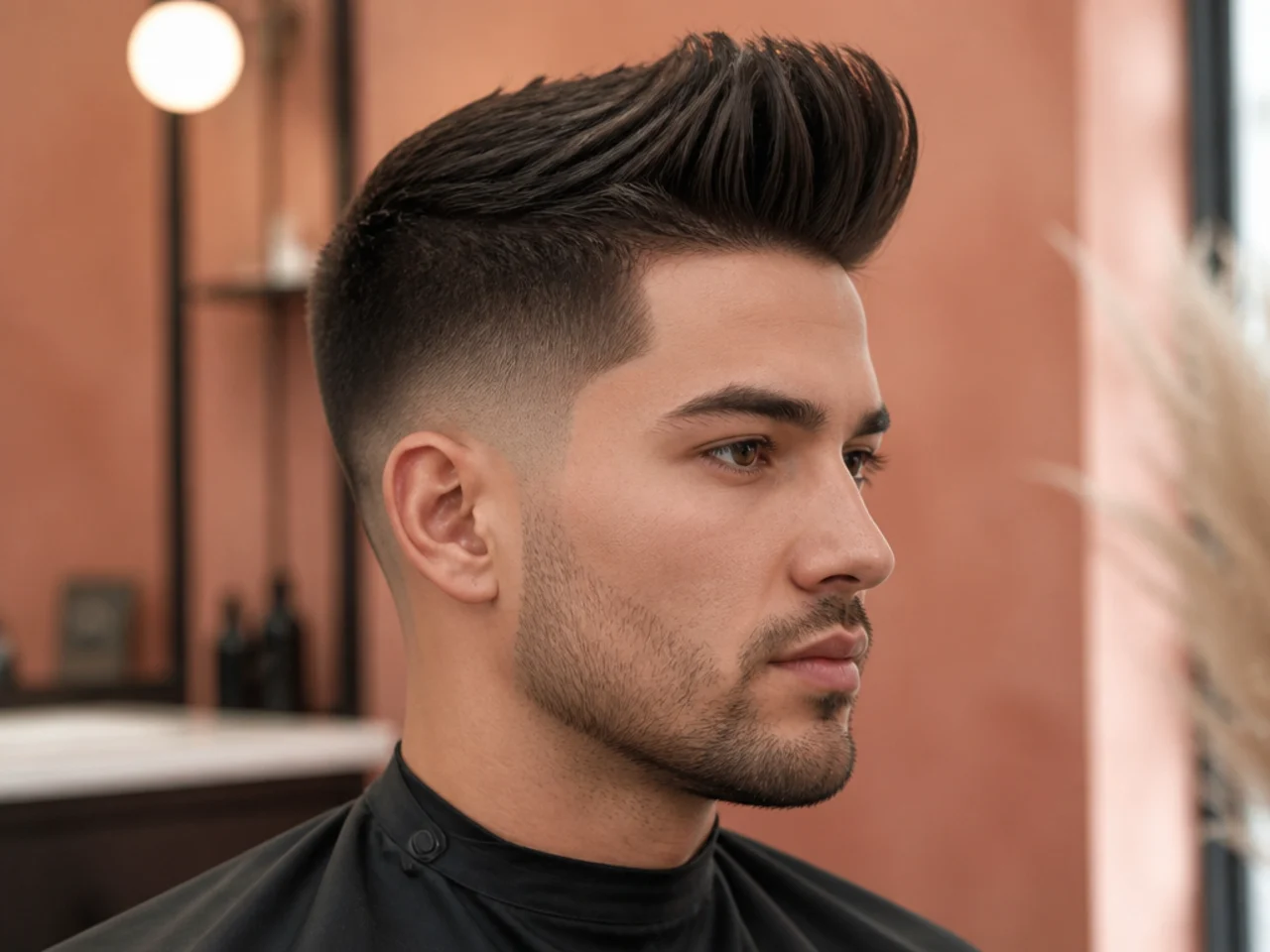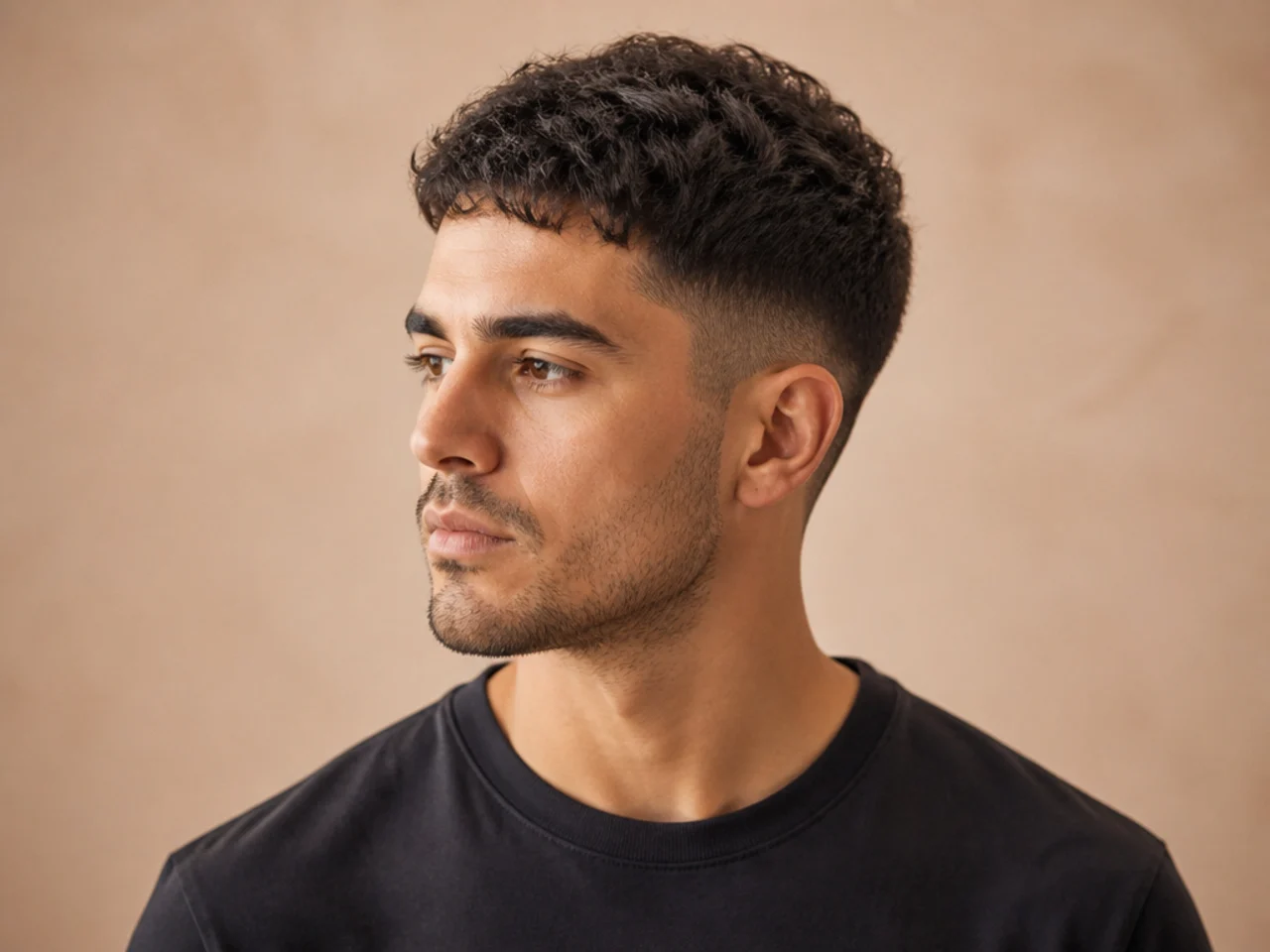
15 Textured Crop Haircuts That Suit Any Face
Fifteen textured crop haircut ideas for men that flatter every face shape. Photos, fade options, hair-type notes, and the exact ask for your barber.
In this article · 27
- What Is a Textured Crop Haircut?
- How to Choose Your Textured Crop
- The 15 Textured Crop Variations to Know
- 1. Classic Textured Crop
- 2. Short Textured Crop
- 3. Longer Textured Crop
- 4. Textured Crop with Low Fade
- 5. Textured Crop with Mid Fade
- 6. Textured Crop with High Skin Fade
- 7. Textured Crop with Low Taper Fade
- 8. Textured Crop with Drop Fade
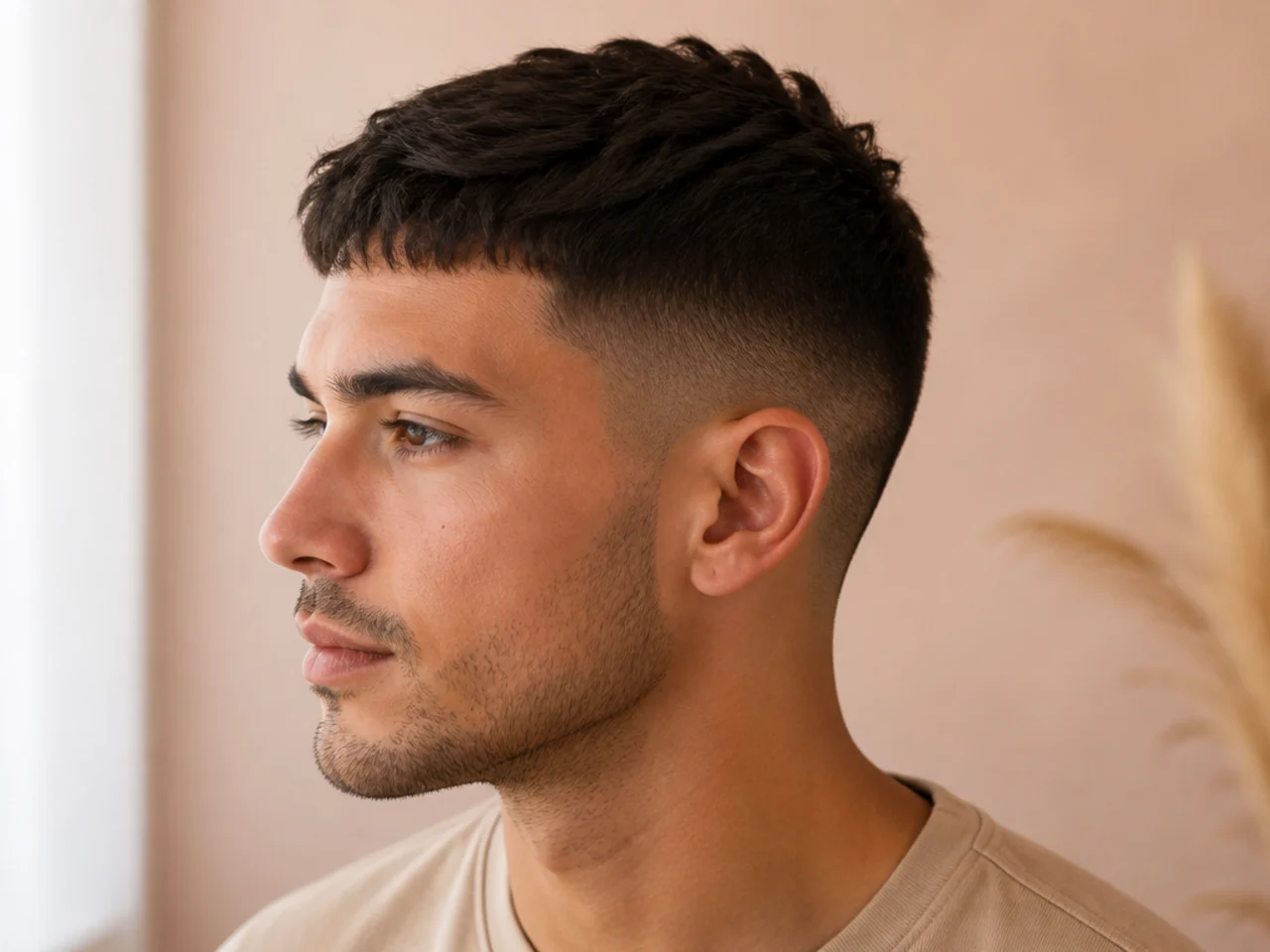
- 9. Blunt-Front Textured Crop
- 10. Side-Swept Textured Crop
- 11. Curly Textured Crop
- 12. Wavy Textured Crop
- 13. Textured Crop with Curtain Fringe
- 14. Textured Crop with Line-Up
- 15. Textured Crop for Thinning Hair
- How to Ask Your Barber
- Styling and Maintenance
- FAQ
- What is a textured crop haircut for men?
- Which face shape suits a textured crop best?
- How do I ask my barber for a textured crop?
- Is the textured crop good for thinning hair?
- What's the difference between a textured crop and a French crop?
- How often should I re-cut a textured crop?
The textured crop is the short men's cut that reads modern on every face shape. Short top, forward-swept fringe, broken ends from point-cutting or razoring, sides finished with a taper or fade. Below, fifteen variations barbers actually cut — every fringe direction, every fade height, every hair type. Each one covers who it flatters, how to ask, and the styling move that seals it. For the wider family, start with our French crop guide.
What Is a Textured Crop Haircut?
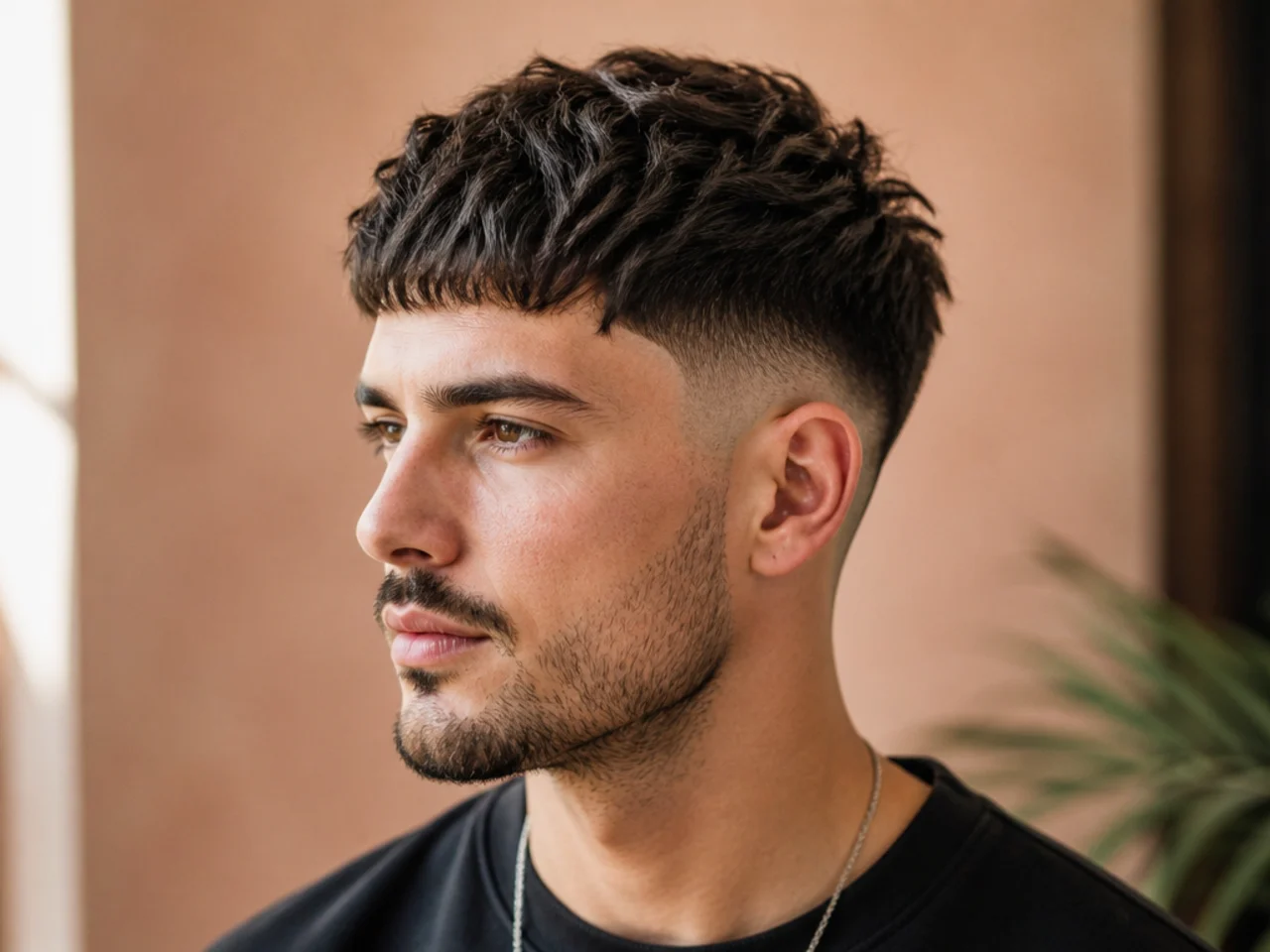
A textured crop is a short-top cut with a forward fringe and broken ends. Top length runs 1 to 2 inches. The fringe sits at or just above the brow. Sides drop to a taper or fade. What makes it "textured" is technique — your barber uses point-cutting (scissors angled vertically into the ends), razoring (a straight razor sliding down each section), or thinning shears (weight pulled from inside the hair) so the fringe finishes with visible separation instead of a heavy blunt shelf.
The cut belongs to the French crop family. Most modern French crops are, in practice, textured crops — the terms overlap. What sets this variation apart is the emphasis on the technique: the barber isn't cutting a length, they're breaking the ends up so the shape sits with light and movement. For the full range of the technique across cut families, see our textured haircuts for men guide. Fine hair reads denser. Thick hair moves easier. Wavy and curly hair get room to bend.
How to Choose Your Textured Crop
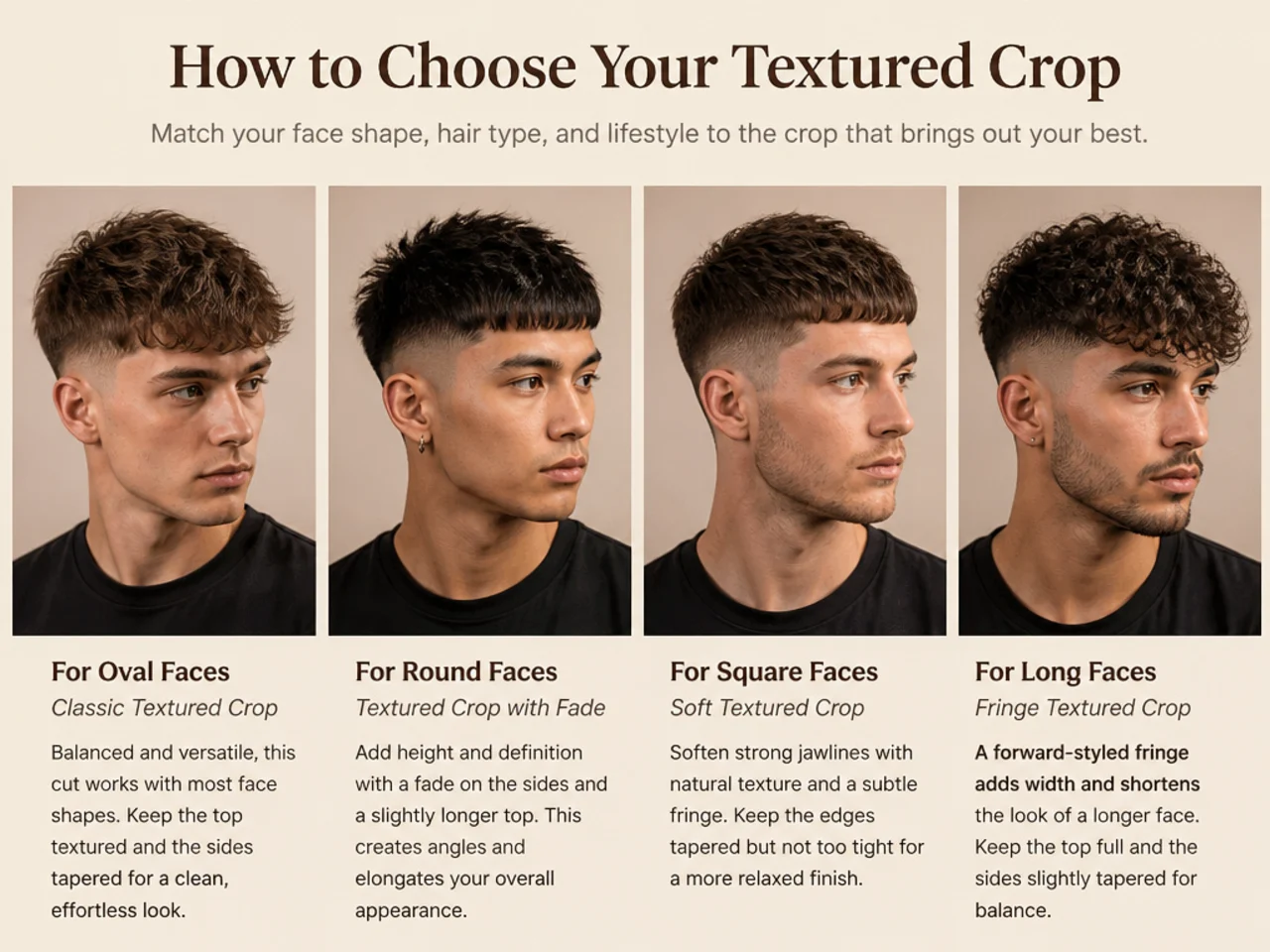
Face shape does most of the picking. Round and square faces want a shorter fringe or a side-swept version — anything that breaks symmetry. Long or oval faces suit a heavier forward drop that balances vertical face length. Angular jawlines pair with a mid or high fade for contrast that reframes the face. Softer face shapes want a low taper — the gentler frame keeps the crop from looking overly graphic.
Hair type sets the technique. Fine and medium straight hair take point-cutting best because the broken ends stack visually and add the illusion of density. Thick hair benefits from heavier razoring or thinning shears so the top doesn't sit bulky. Wavy hair drapes naturally into a textured front with almost no styling. Curly hair needs longer length (2 to 3 inches minimum) so the coil pattern stays intact, and should be dry-cut, not wet-cut.
Styling appetite settles the last question. A short point-cut crop air-dries in place with a fingertip of matte clay. A longer razored version with a curtain-adjacent fringe wants a blow-dryer most mornings. Pick the one that matches how much time you actually want at the mirror.
The 15 Textured Crop Variations to Know
Fifteen variations your barber will recognize by name. Some short, some medium. Some paired with a skin fade, some with a soft taper. Each entry covers the shape, the face and hair type it flatters, the exact ask, and one styling move that gets the finish right.
1. Classic Textured Crop
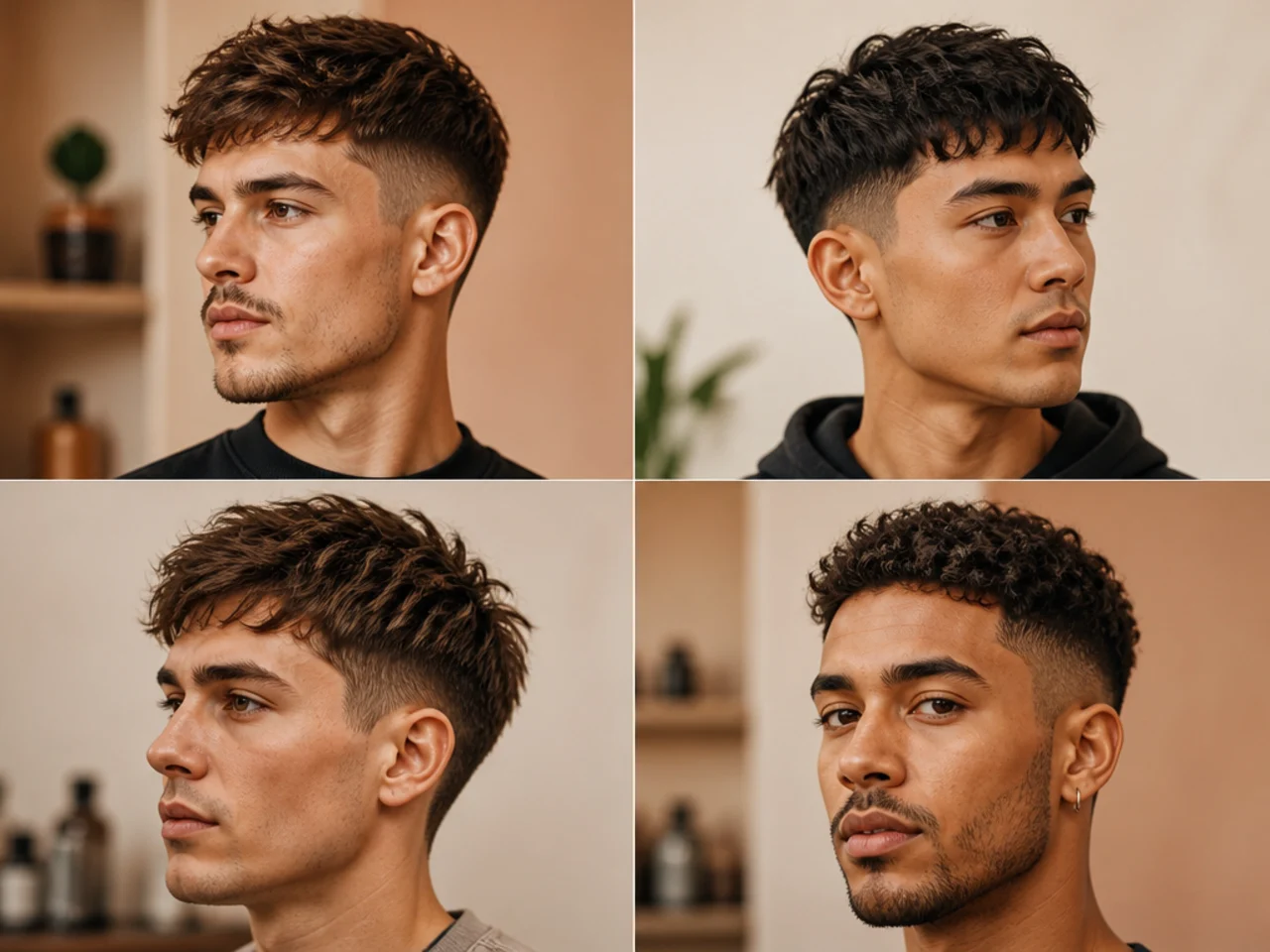
The classic textured crop is where every conversation about this cut starts. Top runs 1.5 inches, point-cut throughout. Fringe sits just above the brow, pushed forward. Sides fade from a #2 down to a #1, or take a mid taper for less contrast. Reads modern without being loud — the safest version to walk in and ask for.
Suits every face shape. Fine to medium straight or wavy hair takes it best.
Ask for a "classic textured crop, 1.5 inches on top, point-cut fringe forward at 1.75 inches, mid taper on the sides."
Style with a pea of matte clay pressed forward and down through the fringe. Air-dry.
2. Short Textured Crop
The short textured crop drops the top to about 1 inch — a #4 clipper guard passed against the grain and cleaned up with texturizing scissors. Fringe is short too, clearing the brow by a half inch. Sides usually take a low fade or low taper so the whole cut sits close and clean.
Works on nearly every face shape because there isn't enough length up top to build a shape that fights your features. Great for high hairlines and thinning tops — the shortness plus the broken edge disguises evenness at the front.
Ask for a "short textured crop, 1 inch on top cut against the grain, half-inch fringe forward, low fade on the sides."
Skip product entirely, or press a fingertip of matte clay across the top for a slightly polished finish. This is one of the more forgiving low-maintenance men's cuts you can commit to.
3. Longer Textured Crop
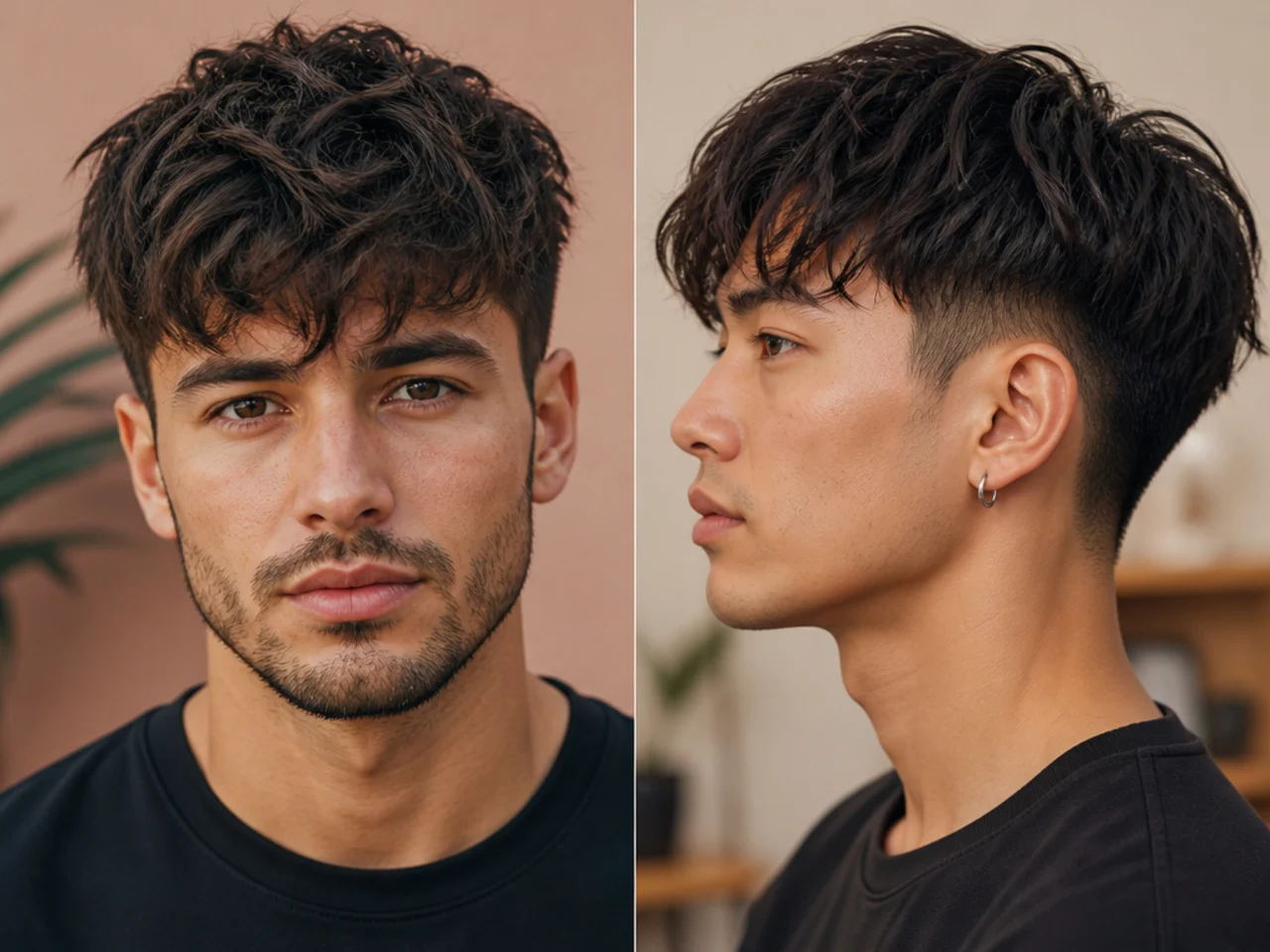
The longer version stretches the top to 2 to 2.5 inches. The fringe lands at brow level with enough weight to sit forward and down naturally. Every layer gets razored so the ends feather instead of blocking. Sides usually take a mid fade or drop fade — the added top length wants a defined transition to keep the shape from reading unfinished.
Best on angular, oval, or long faces where the added top weight balances the vertical read. Straight and wavy hair with medium-to-thick density holds the length cleanly.
Ask for a "longer textured crop, 2.5 inches on top, razored throughout, forward fringe at brow level, mid fade on the sides."
Style with a light cream on damp hair, blow-dry with fingers pushing the fringe forward, then finger-set with matte clay for hold that still moves.
4. Textured Crop with Low Fade
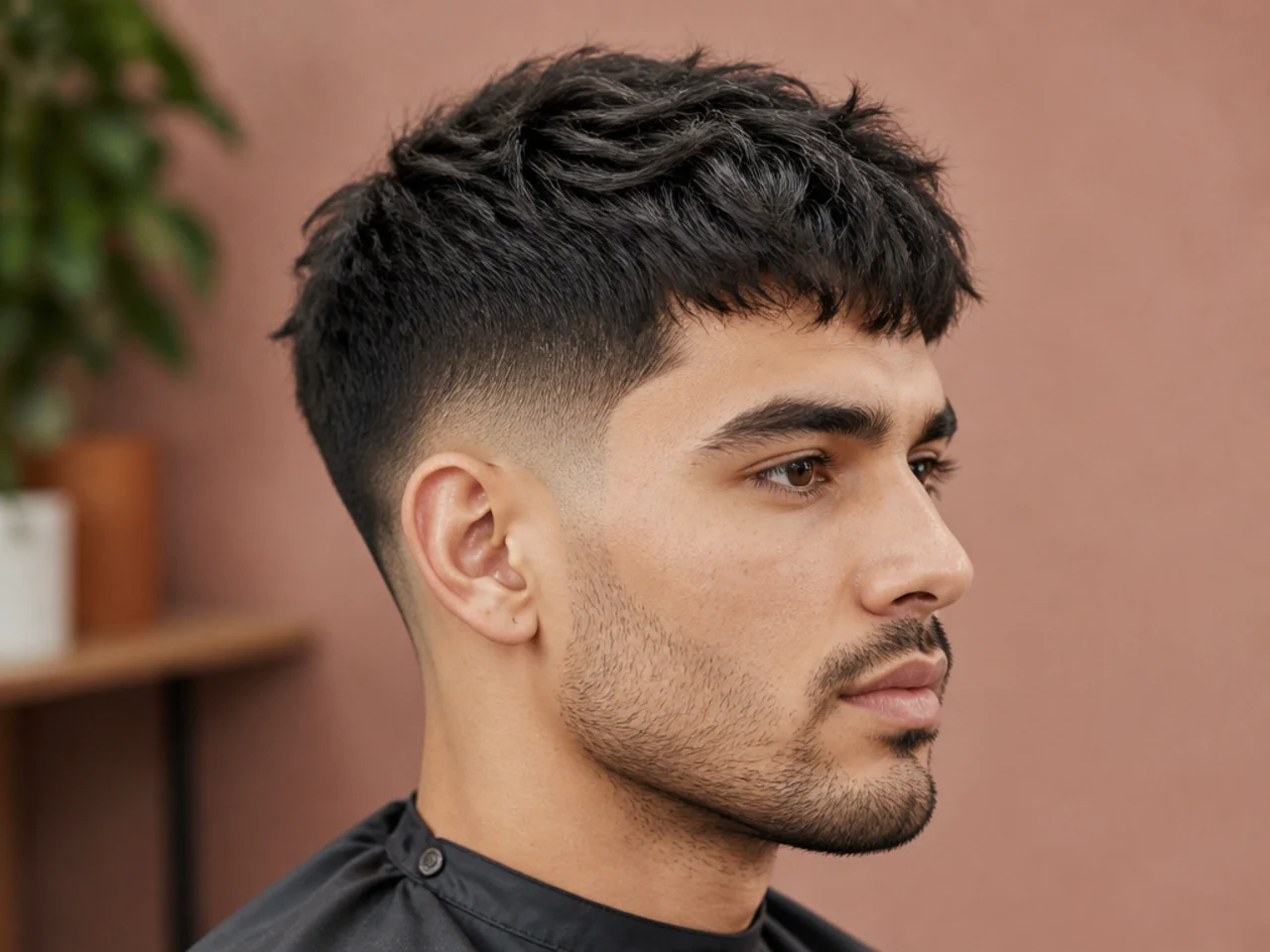
The low fade starts just above the ears and keeps most of the side length. It's the workplace-safe pairing — the crop reads modern up top, the sides read close to a normal short back and sides. Top length runs 1.5 inches, fringe forward at brow level.
Suits every face shape. Any hair type. Any dress code from casual to corporate.
Ask for a "textured crop, 1.5 inches on top, forward fringe, low fade starting just above the ears."
Style with matte clay through damp hair, forward and down. Book every 3 to 4 weeks — low fades hold shape longer than any other height.
5. Textured Crop with Mid Fade
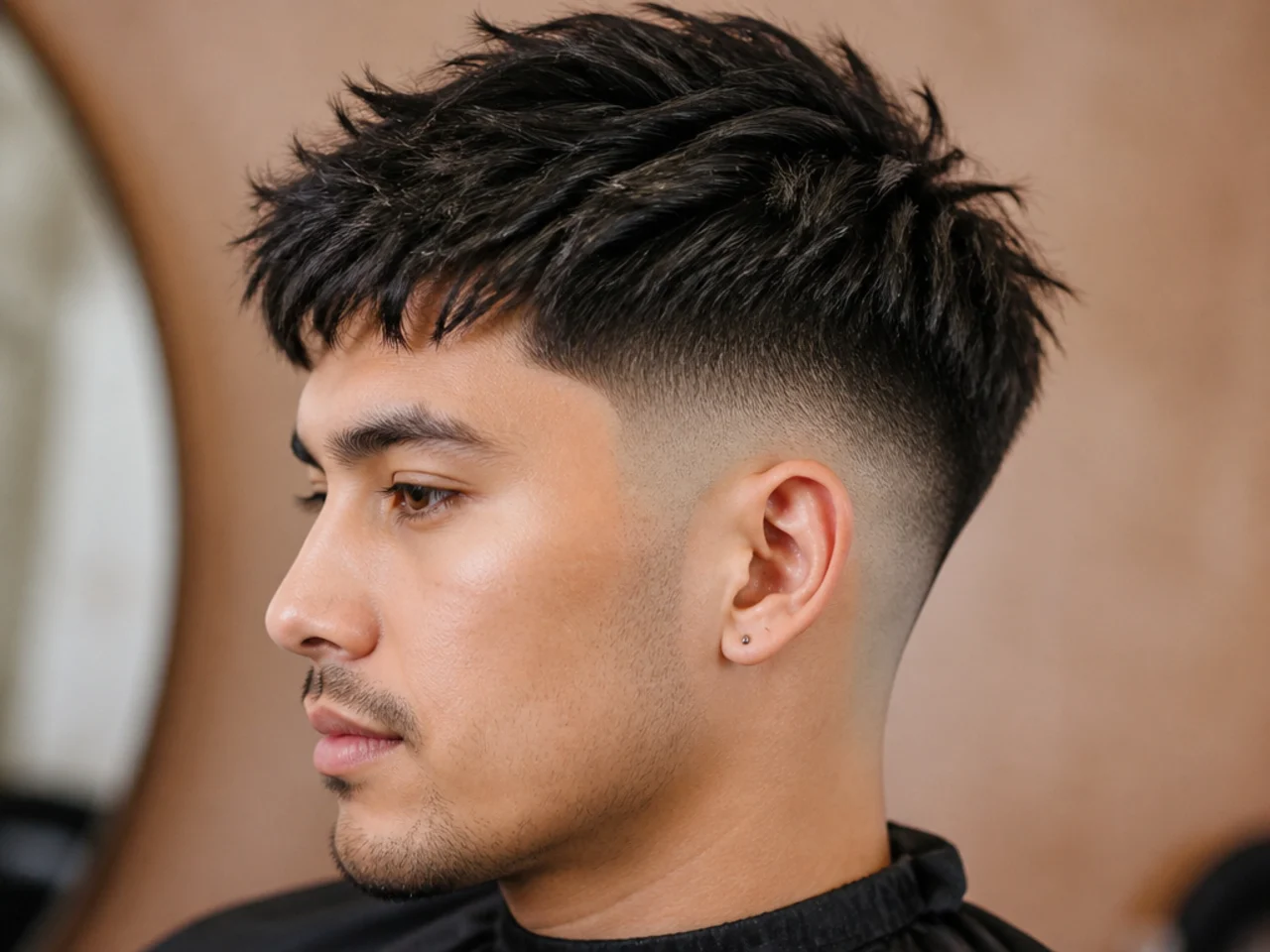
The mid fade starts at the temple — between the top of the ear and the corner of the brow. It's the most-requested fade paired with a textured crop, and for good reason: the contrast is balanced, the crop sits above a clean transition, and the whole cut reads modern without pushing into statement territory.
Suits almost any face shape. Square, oval, and slightly round faces all wear it well. Straight, wavy, or lightly curly hair all take it.
Ask for a "textured crop, 1.5 inches on top, forward fringe, mid fade starting at the temple with a defined line-up."
Style with matte paste worked through the fringe, pressed forward. Book every 3 weeks to keep the fade sharp.
6. Textured Crop with High Skin Fade
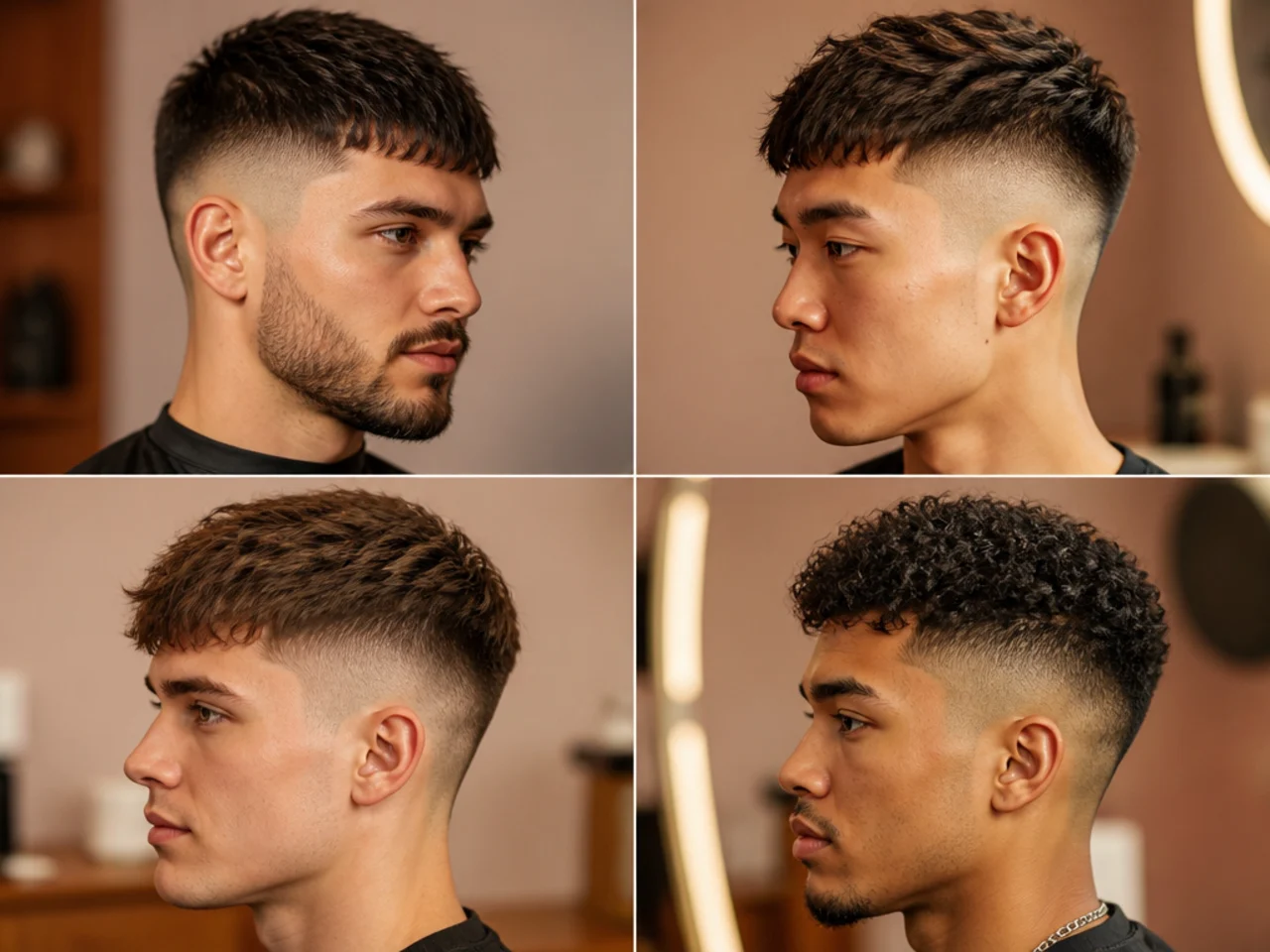
A high skin fade puts skin near the parietal ridge — the sides drop from long top to zero in a small vertical span, giving you maximum contrast. Reads bold in every setting. Best on confident dressers who want the cut to be the visual focus.
Suits angular faces where you want to accentuate the jawline by exposing the sides. Long and oval faces also wear it well because the vertical fade offsets face length.
Ask for a "textured crop, 1.25 inches on top, forward fringe, high skin fade starting above the ear with a defined line-up."
Style with matte clay for hold with a dry finish. Book every 2 to 3 weeks — high fades soften fastest and the collapse shows.
7. Textured Crop with Low Taper Fade
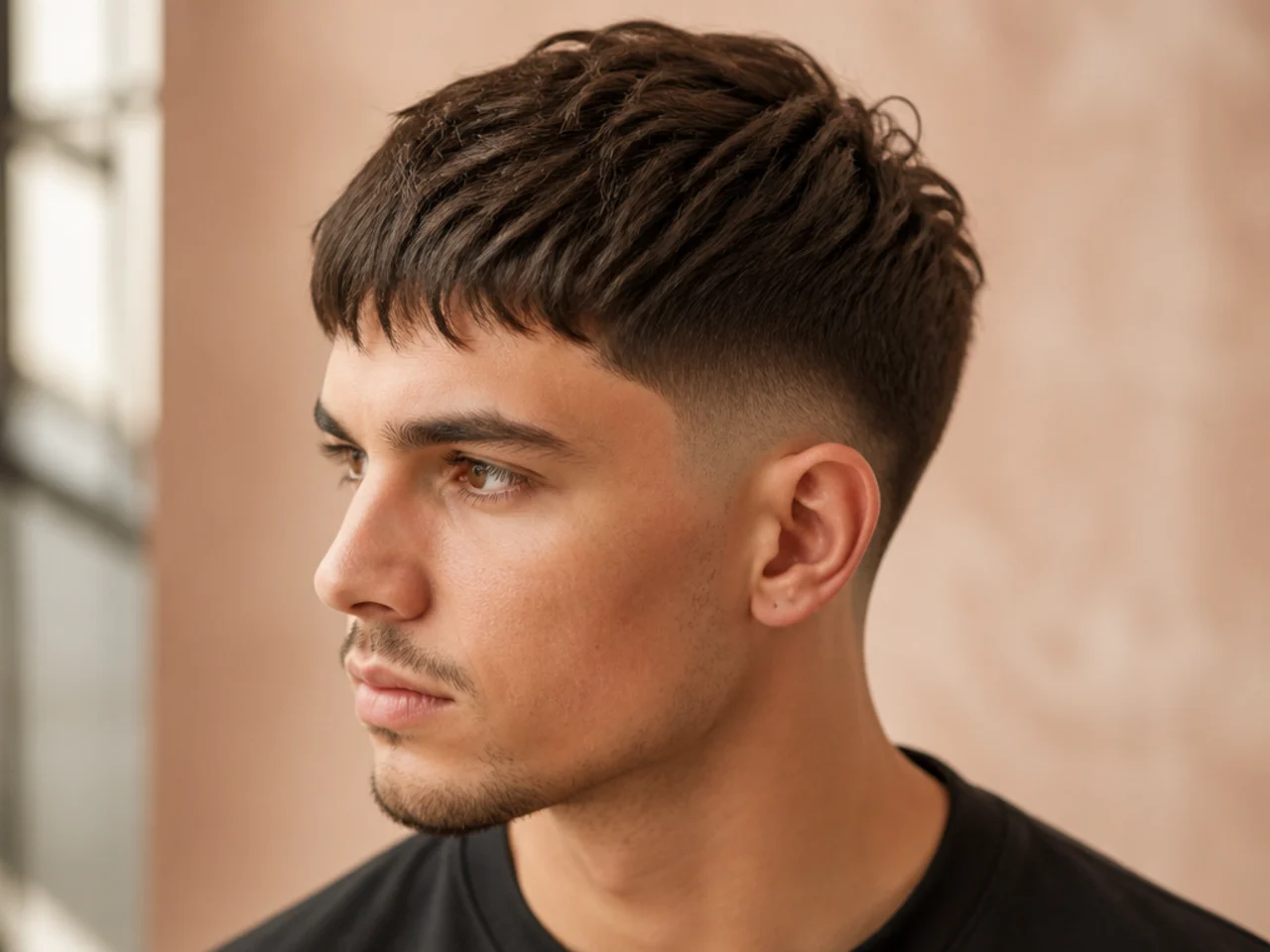
The low taper fade is the softest fade option — it tapers only around the ears and neckline, keeping most of the side length. The taper grows out cleanly, so this is the pairing to pick if you can't get back to the chair every 3 weeks.
Suits every face shape. Any hair type. Great on softer face shapes that don't want the contrast of a full fade.
Ask for a "textured crop, 2 inches on top, forward fringe, low taper fade around the ears and neckline."
Style with matte cream through damp hair, air-dry with fingers directing the fringe forward. Book every 4 to 6 weeks.
8. Textured Crop with Drop Fade
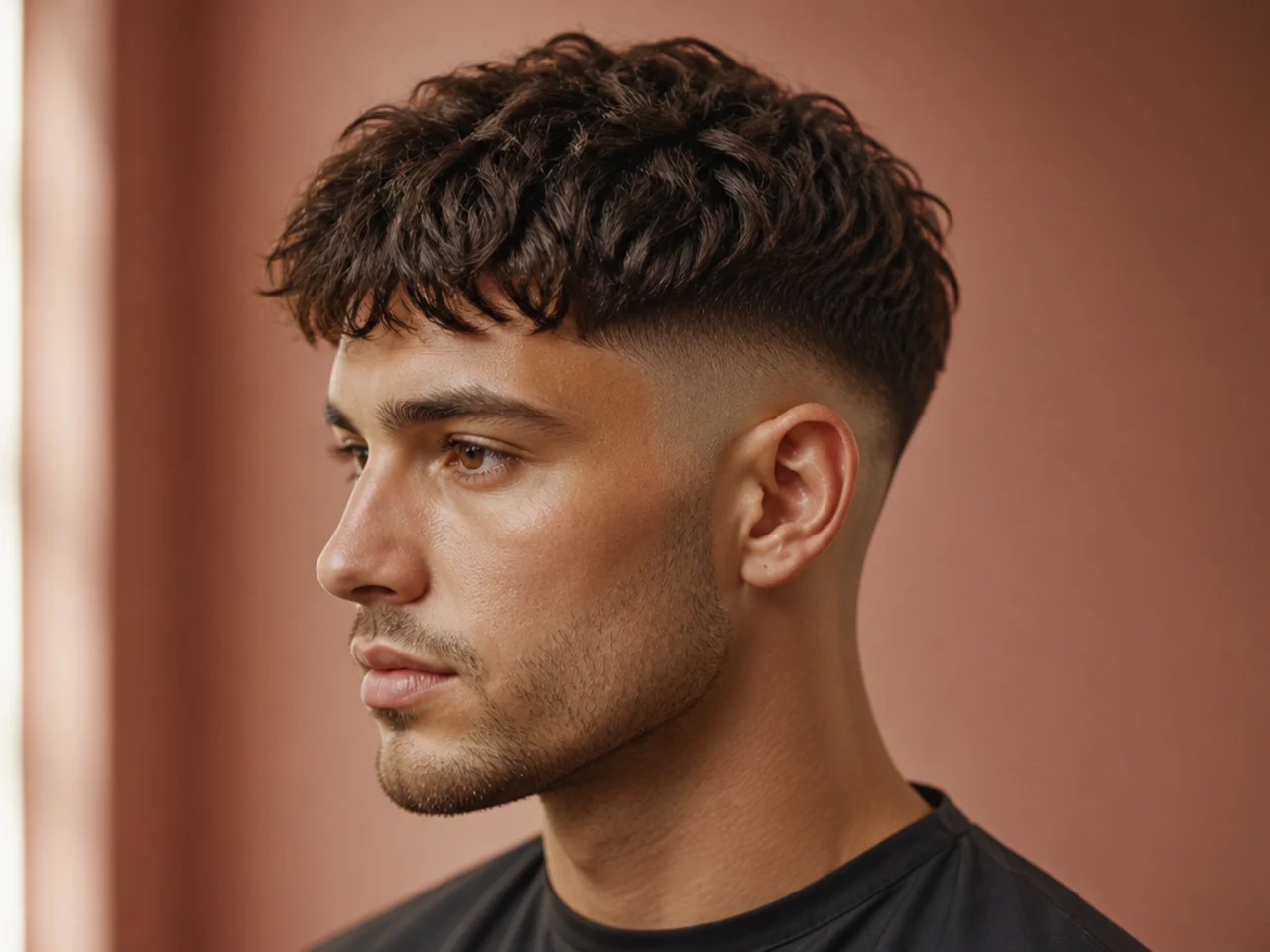
A drop fade follows the curve of the head down behind the ears rather than staying on a flat horizontal line. It's the modern alternative to a straight-line mid fade — reads softer and hugs the skull better on round or wide-set head shapes. Top runs 1.75 inches with a forward fringe.
Suits diamond and heart-shaped faces because the curved line frames the temples without adding width. Straight to wavy hair holds the top length; the fade does the shape work.
Ask for a "textured crop, 1.75 inches on top, forward fringe, drop fade curving down behind the ears."
Style with matte paste pressed forward through damp hair. Book every 3 weeks — drop fades soften around the ear first.
9. Blunt-Front Textured Crop
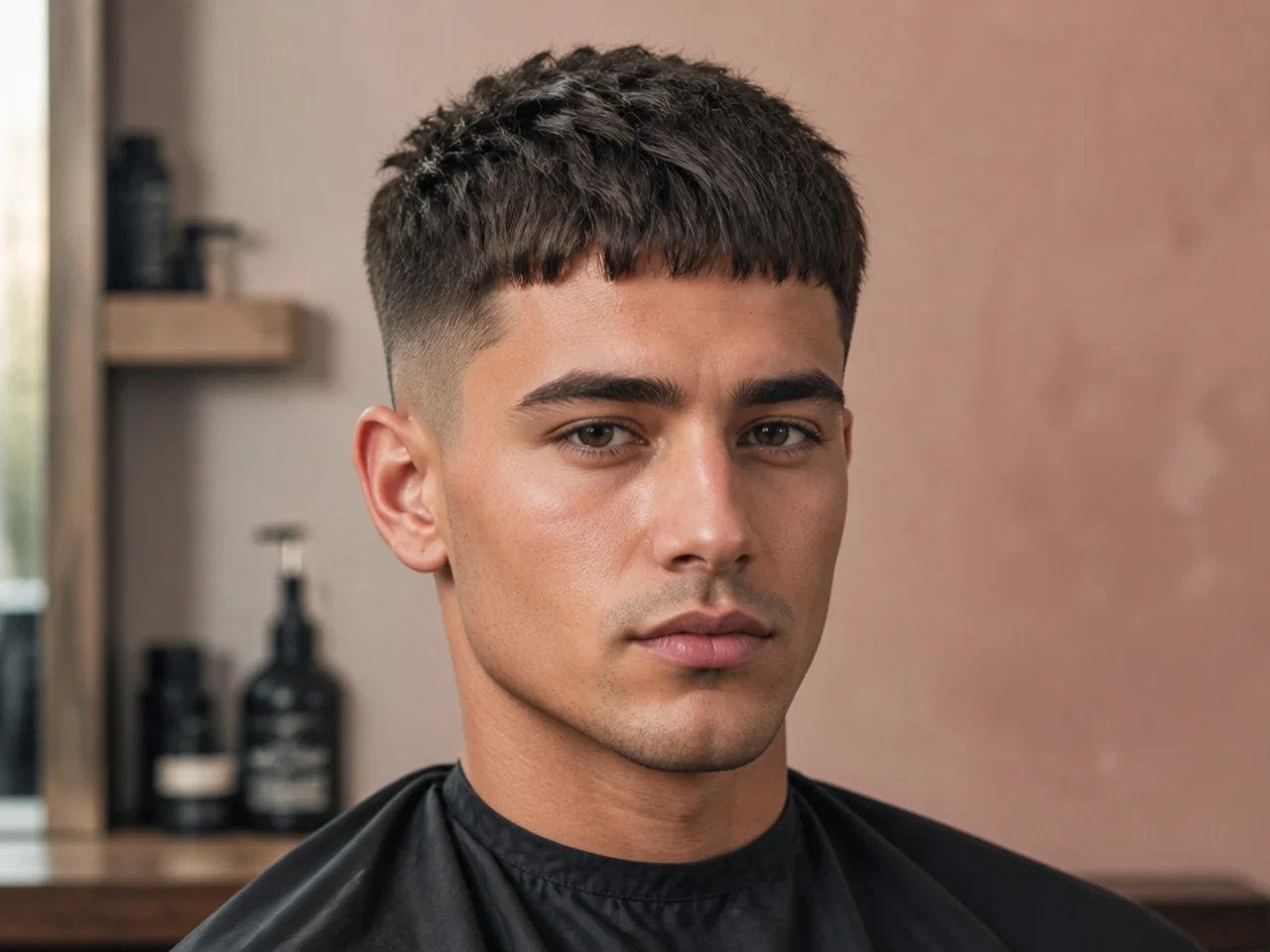
This is where the textured crop starts to look like the Edgar — but softer. The fringe cuts in a straight line across the forehead at brow level, and the interior runs textured so the block up front reads with movement. Difference from the pure Edgar: the horizontal line here is cut with shears rather than a straight razor, so the edge reads softer.
Suits angular, diamond, and long faces with a defined hairline. Straight and slightly wavy hair holds the blunt edge cleanly.
Ask for a "blunt-front textured crop, blunt fringe at brow level, 1.75 inches on top texturized through the interior, mid fade on the sides."
Style with matte cream, comb the fringe straight down, press flat with fingers. Skip the blow-dryer — heat lifts the fringe and kills the graphic line.
10. Side-Swept Textured Crop
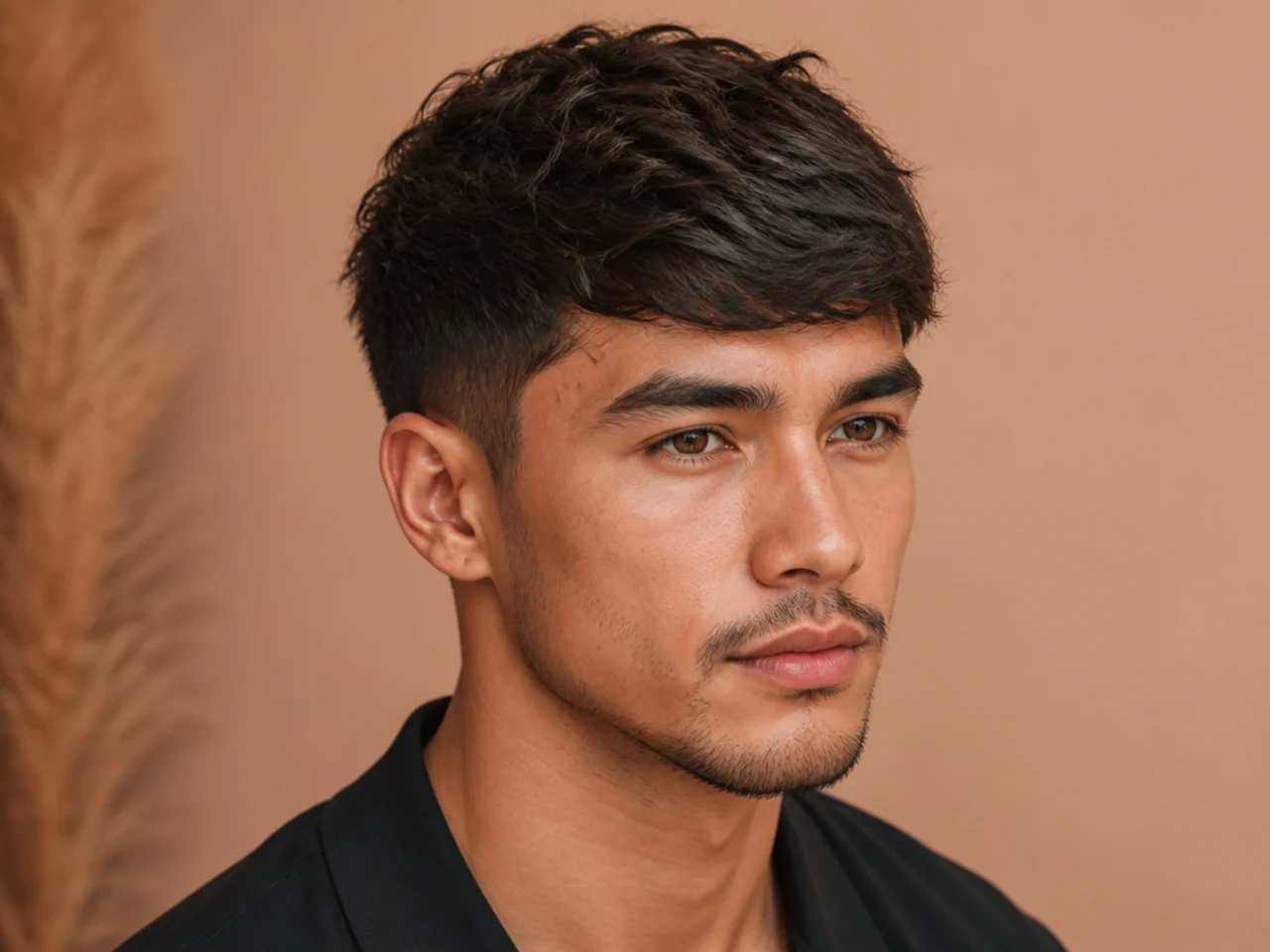
Instead of pulling the fringe straight forward, this version pushes it forward and slightly to one side, letting it sweep diagonally across the top of the forehead. Top runs 2 inches. Sides usually take a low fade so most of the head still reads long. The diagonal breaks the symmetry every other variation locks into.
Best on round or square faces because the diagonal fringe adds angle. Straight and lightly wavy hair holds direction; tight curls fight it.
Ask for a "side-swept textured crop, 2 inches on top, fringe swept forward and slightly left, low fade on the sides."
Blow-dry the fringe in the direction you want it to fall, then set with a light cream pomade or matte clay.
11. Curly Textured Crop
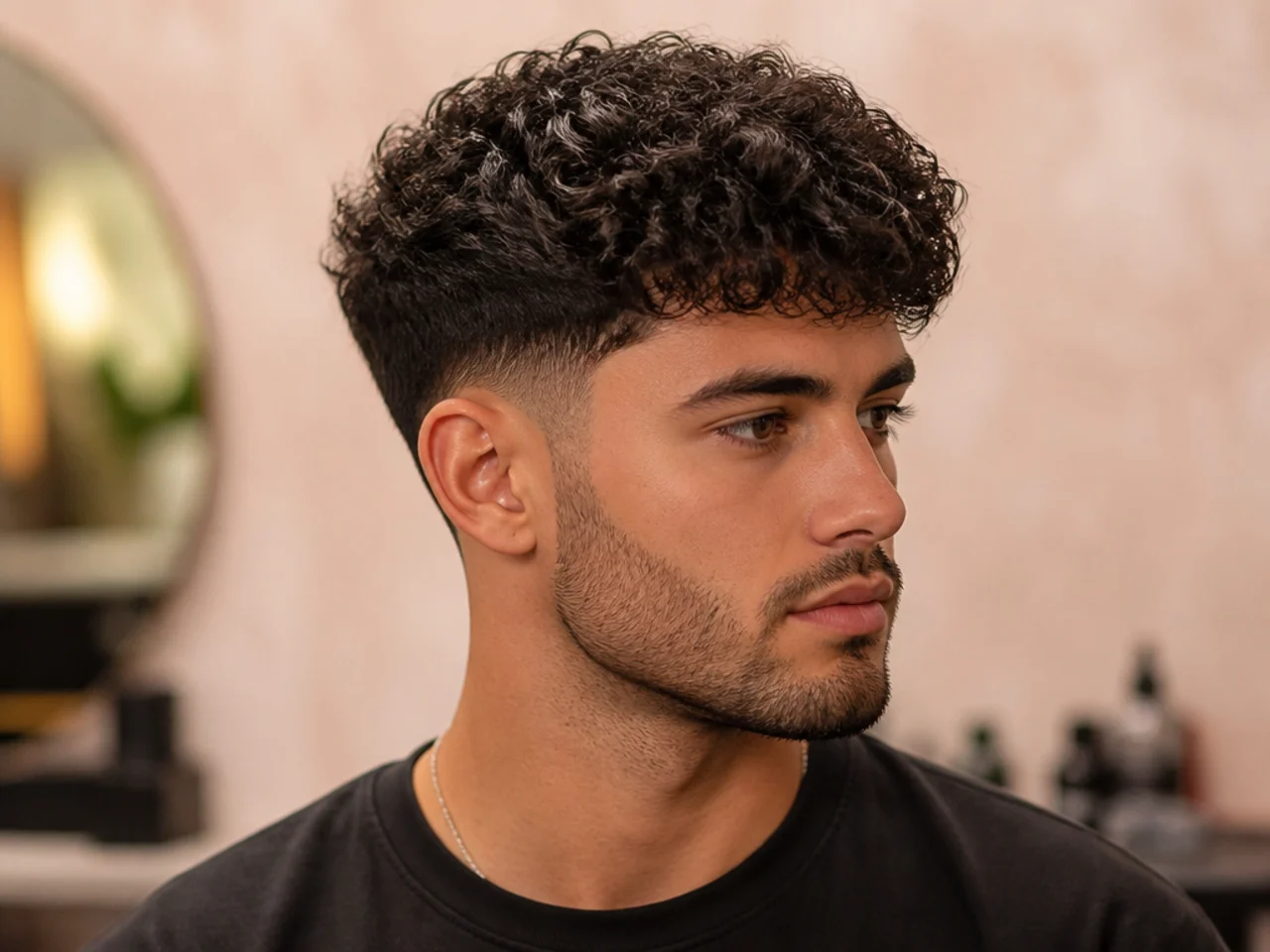
Curly hair carries a textured crop naturally — the coil pattern already breaks the fringe edge. Your barber's job is to keep the shape from ballooning. Top runs 2.5 to 3 inches so curls have room to fall forward instead of pushing out sideways. Sides fade close so the curl density up top reads as intentional volume. Dry-cut only.
Best on Type 3A through 3C curl patterns. Oval, round, and heart-shaped faces suit the forward volume best. For more guidance, see our curly hairstyles for men guide.
Ask for a "curly textured crop, 2.5 inches on top measured wet, dry-cut for shape, mid fade on the sides — leave the curl pattern intact."
Style with curl cream on damp hair, scrunch upward and forward, diffuse-dry on low heat. Never brush dry curls.
12. Wavy Textured Crop
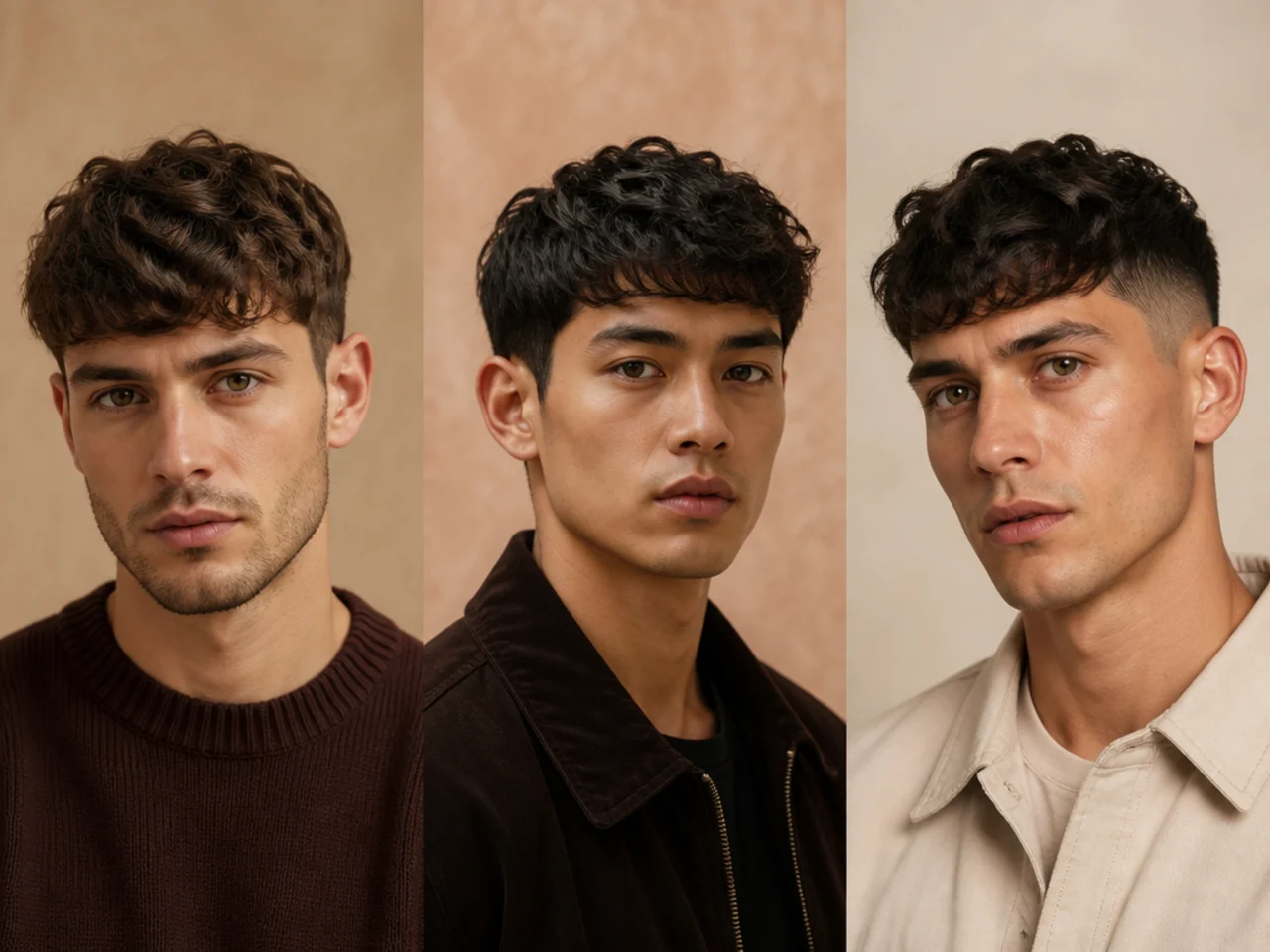
Wavy hair meets the textured crop right in the middle. Top runs 2 inches — long enough for the wave to show, short enough for the shape to still read as a crop. Sides take a low fade or low taper. The fringe falls forward with natural bend from the wave pattern. Every layer gets point-cut so the wave sits with separation rather than a heavy plate.
Best on oval and slightly rectangular faces because the wave adds width without vertical height. Wavy hair with medium density holds the shape.
Ask for a "wavy textured crop, 2 inches on top cut dry, point-cut throughout, low fade on the sides, fringe left forward at 2 inches."
Style with sea-salt spray on damp hair, gently squeeze upward with fingers, air-dry. Never blow-dry a wave straight — you'll lose it.
13. Textured Crop with Curtain Fringe
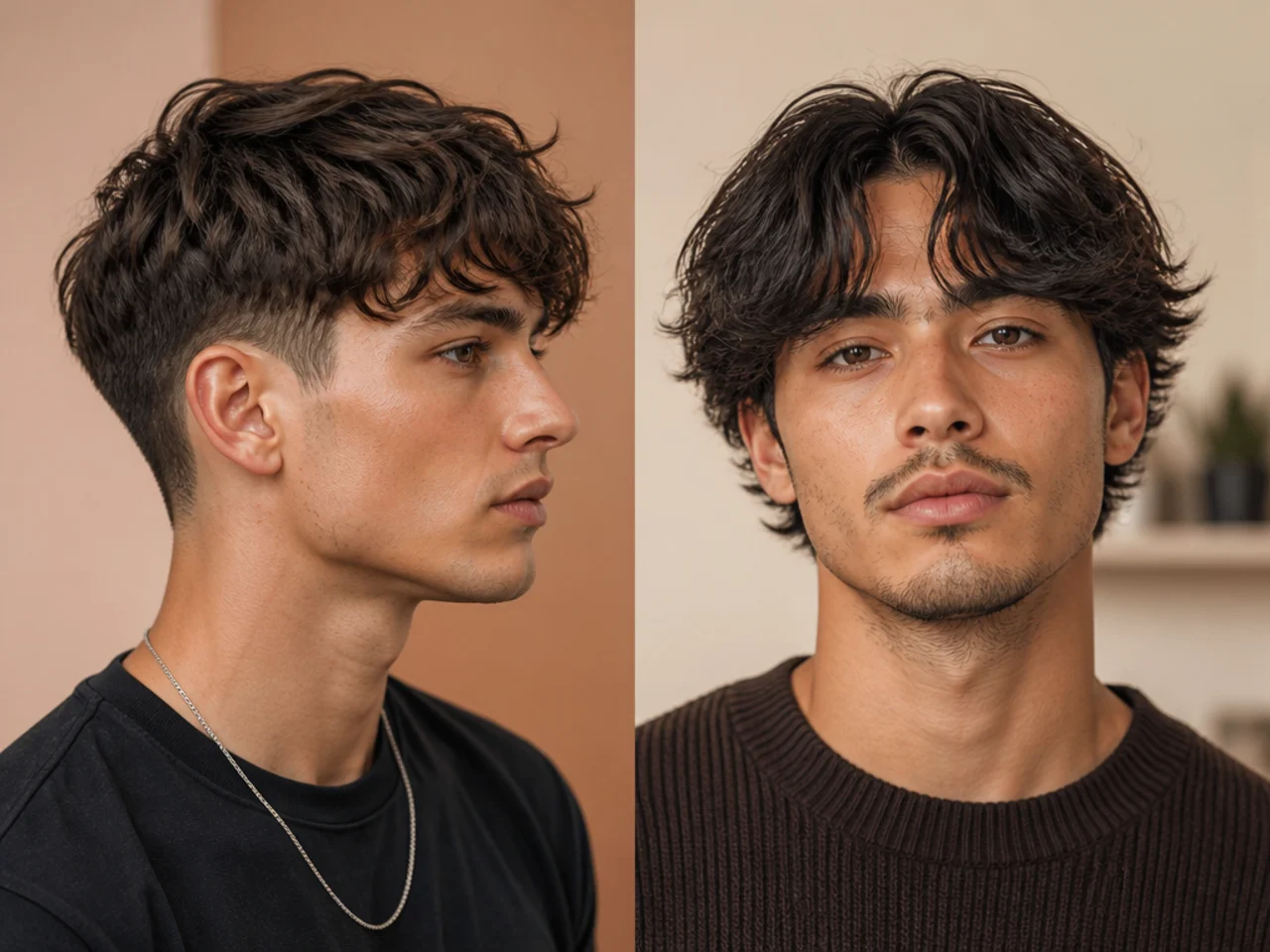
This variation stretches the fringe long enough to part naturally in the middle — a curtain-adjacent front section that falls to either side of the forehead instead of a solid forward drop. Top runs 2 to 2.5 inches; fringe runs 3 to 3.5. Sides sit with a low fade or low taper so the length up top stays the focus. Related in feel to the Korean-style haircut and to our full textured fringe guide.
Suits long, oval, and heart-shaped faces because the parted fringe adds horizontal width across the forehead. Straight and wavy hair drapes cleanly; tight curls fight the middle part.
Ask for a "textured crop with a curtain fringe, 2.5 inches on top, 3.5 inches at the front, razored throughout, low fade on the sides."
Blow-dry the fringe forward with a paddle brush after applying a light cream, then part with fingers and let air-dry into shape.
14. Textured Crop with Line-Up
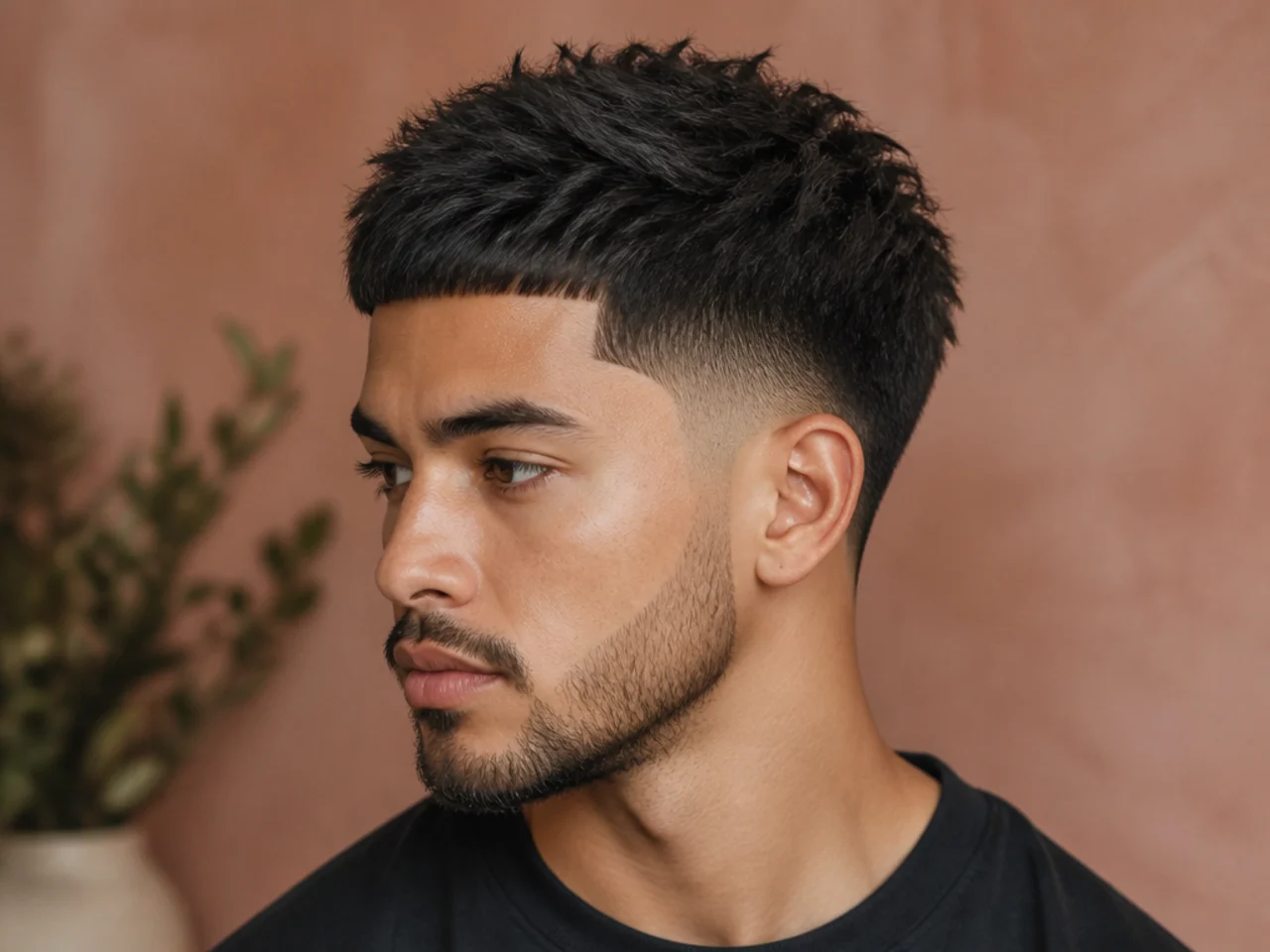
A line-up is a razored edge along the hairline — the barber uses a straight razor to define the front hairline, temple, and around the ears with a hard graphic line. Pairs beautifully with a textured crop because the sharpness plays off the softness of the broken fringe. Sides usually take a mid or high fade. Common on the comma haircut family and other K-influenced short cuts.
Suits round, oval, and heart-shaped faces where the sharper geometry adds definition. Any hair type that holds a fringe.
Ask for a "textured crop with a razor line-up along the hairline, temple, and around the ears, 1.5 inches on top, forward fringe, mid fade on the sides."
Style with matte clay pressed forward. Book weekly for the line-up — it blurs after seven days and reads unintentional past ten.
15. Textured Crop for Thinning Hair
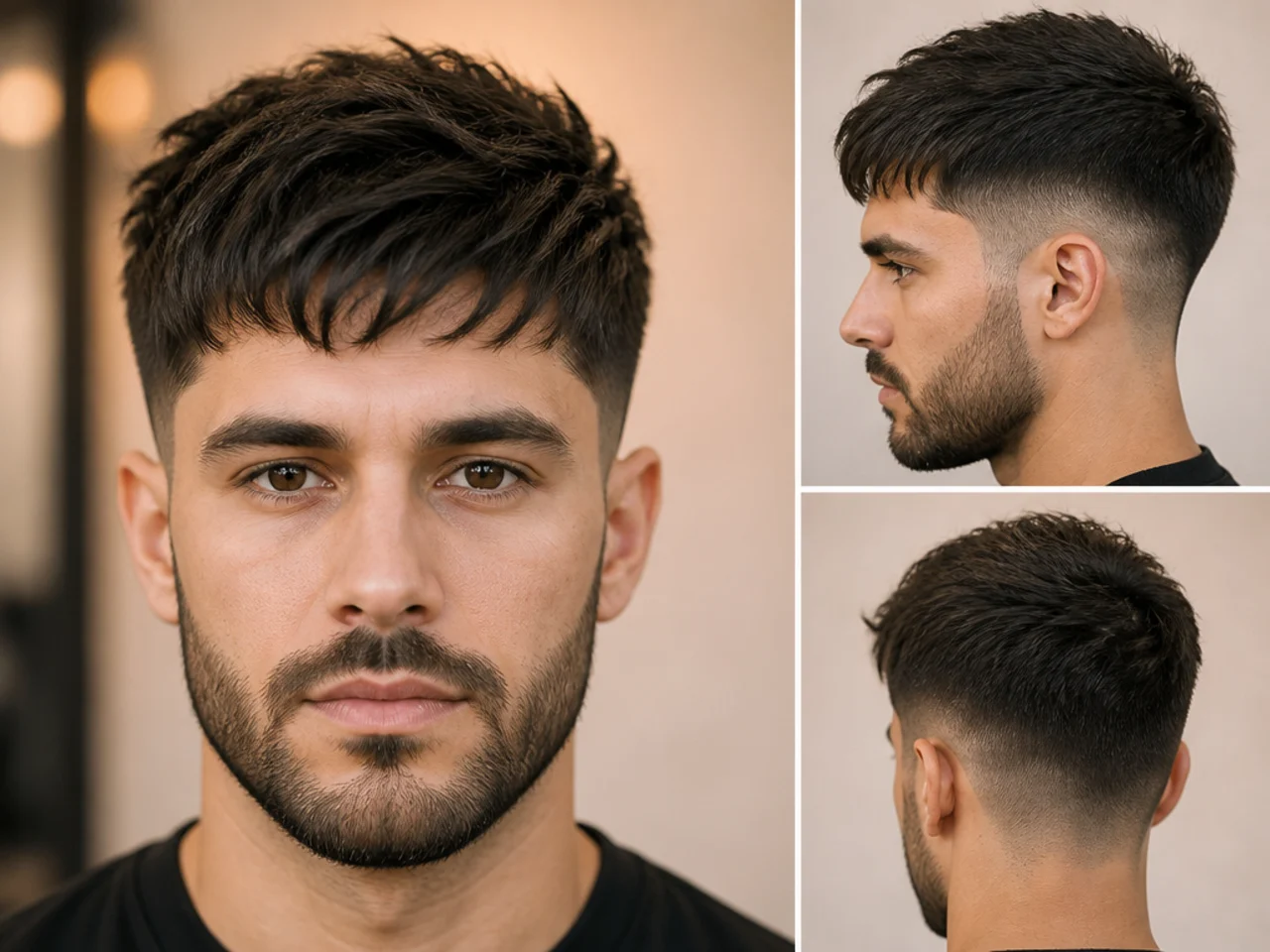
The textured crop is arguably the best short cut on the modern menu for thinning or receding hair. Broken ends stack visually so density reads higher than it actually is. The forward fringe hides recession at the temples and softens the hairline. And a low fade minimizes the contrast between hair and scalp, so thin areas don't spotlight themselves. Top stays short (about 1 inch), fringe short (clearing the brow by a half inch).
Best on any face shape with a receding or thinning front — the shape flatters rather than fights the change. Fine and medium-thickness hair take it best.
Ask for a "textured crop for thinning hair, 1 inch on top, short forward fringe just above the brow, low fade on the sides, matte finish."
Style with a fingertip of matte clay pressed forward. Skip anything shiny — gloss reveals the scalp underneath and cancels the illusion the cut works to build. A close cousin to the buzz cut family if you eventually want to go shorter.
How to Ask Your Barber
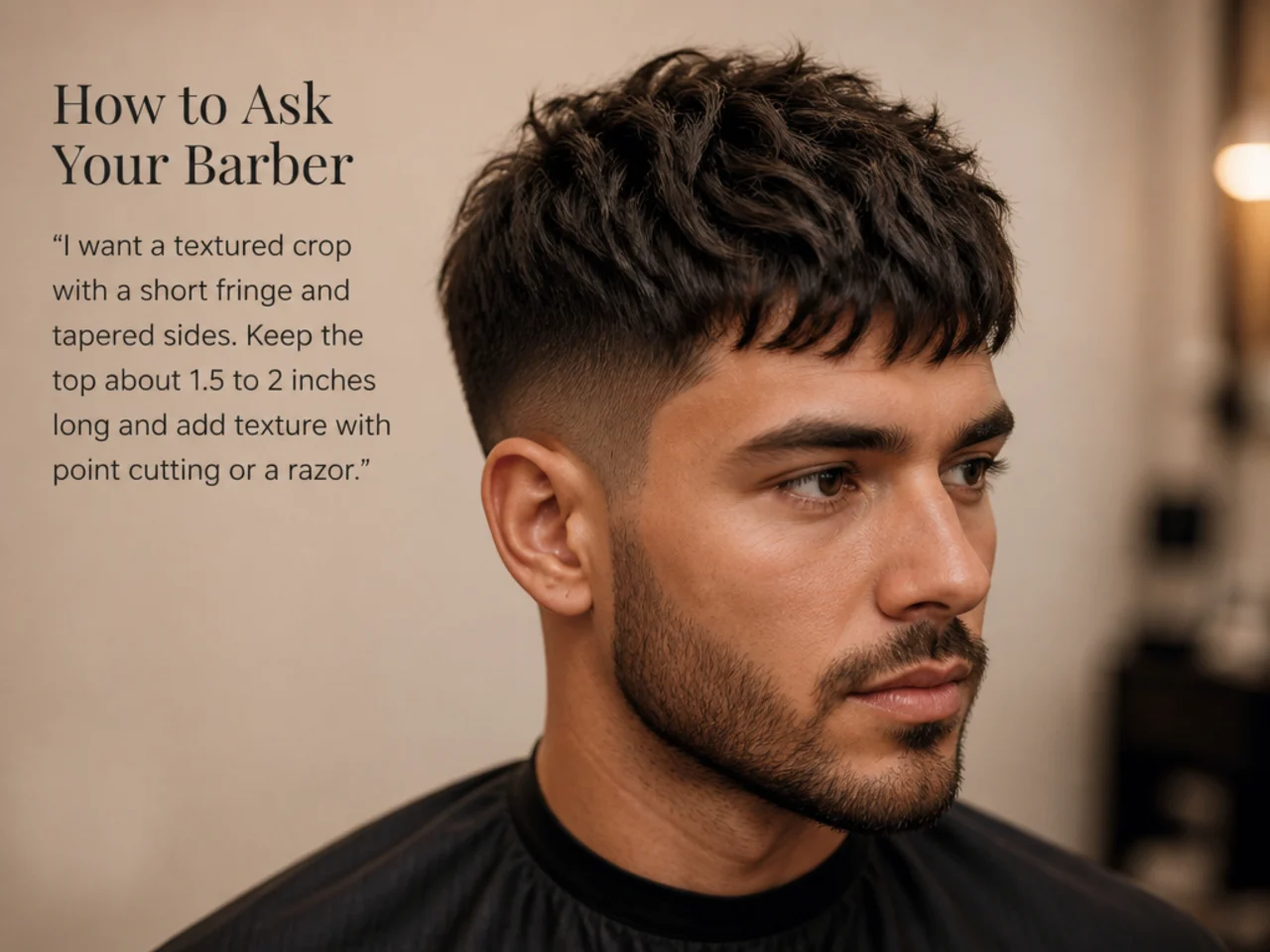
Walk in with a photo and a plan. Barbers can read a picture faster than a paragraph, and the specifics below are the difference between the cut you asked for and the cut you got.
- Show the photo first. Screenshot the exact variation from this guide or one you saved from Pinterest. Point to the fringe specifically.
- State the top length in inches. "One and a half on top" is unambiguous. "A little long on top" is not.
- Call the fringe length and direction. Forward, side-swept, blunt at the brow, or curtain-parted. Include the fringe length in inches too.
- Name the texturizing technique. Say "point-cut," "razored," or "thinned through the interior." Each finishes differently.
- Specify the fade or taper. "Mid fade starting at the temple." "Low taper around the ears only." "Low fade starting just above the ears."
- Confirm the finish. Matte and textured, or sleek and shiny. This decides the product you'll style with at home.
- Ask about the growth-out. If you can't book every 3 weeks, tell them — they'll cut the fringe slightly longer and pick a taper or low fade so the shape holds.
Styling and Maintenance
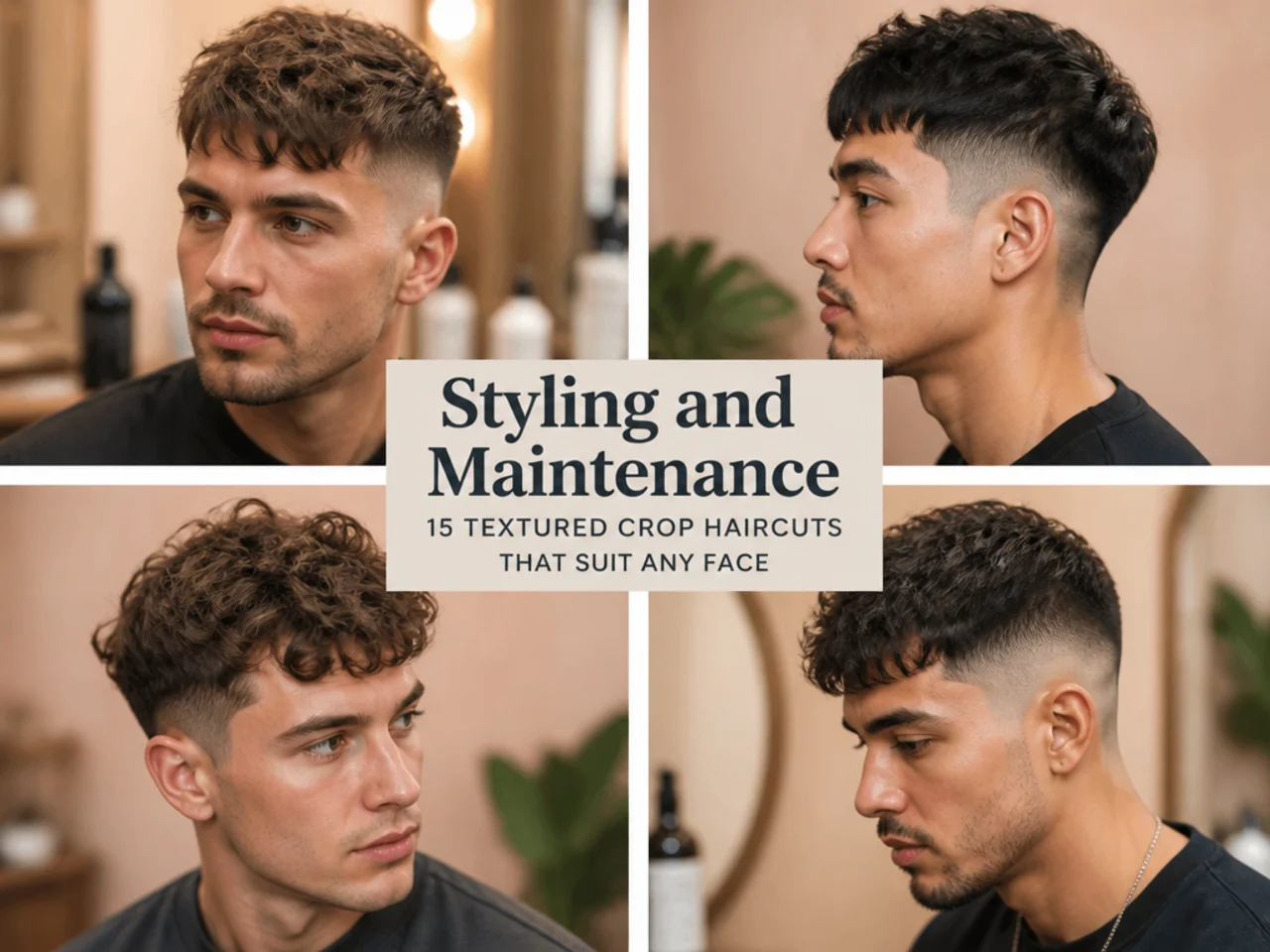
Textured crops want matte products almost exclusively. Shine fills the gaps between pieces and turns the fringe back into a solid block — the opposite of what you paid for.
Matte clay is the workhorse. A pea-size amount rubbed between the palms, then pressed forward and down through the fringe. Enough hold, dry finish, no build-up. Matte paste sits a touch lighter — pick it for side-swept or messy variations. Sea-salt spray on damp hair adds grip and separation before styling, especially for wavy and thick hair. Curly variations want curl cream and a diffuser instead.
One product is usually enough. Layering paste over spray over cream cancels the finish and turns everything into a heavy mess.
Cadence depends on the fade. Short-top versions with a mid or high fade want a re-cut every 3 weeks — fades collapse fastest, and once the fade blurs the shape blurs with it. Longer versions with a low taper stretch to 5 or 6 weeks. High skin fades want every 2 to 3 weeks; line-ups want weekly touch-ups.
Wash the fringe every second or third day, not daily. Over-washing strips the oils that give textured hair its bite. When you do wash, follow with a light conditioner through the mid-lengths only — never on the roots, or the fringe sits flat by lunch.
FAQ
What is a textured crop haircut for men?
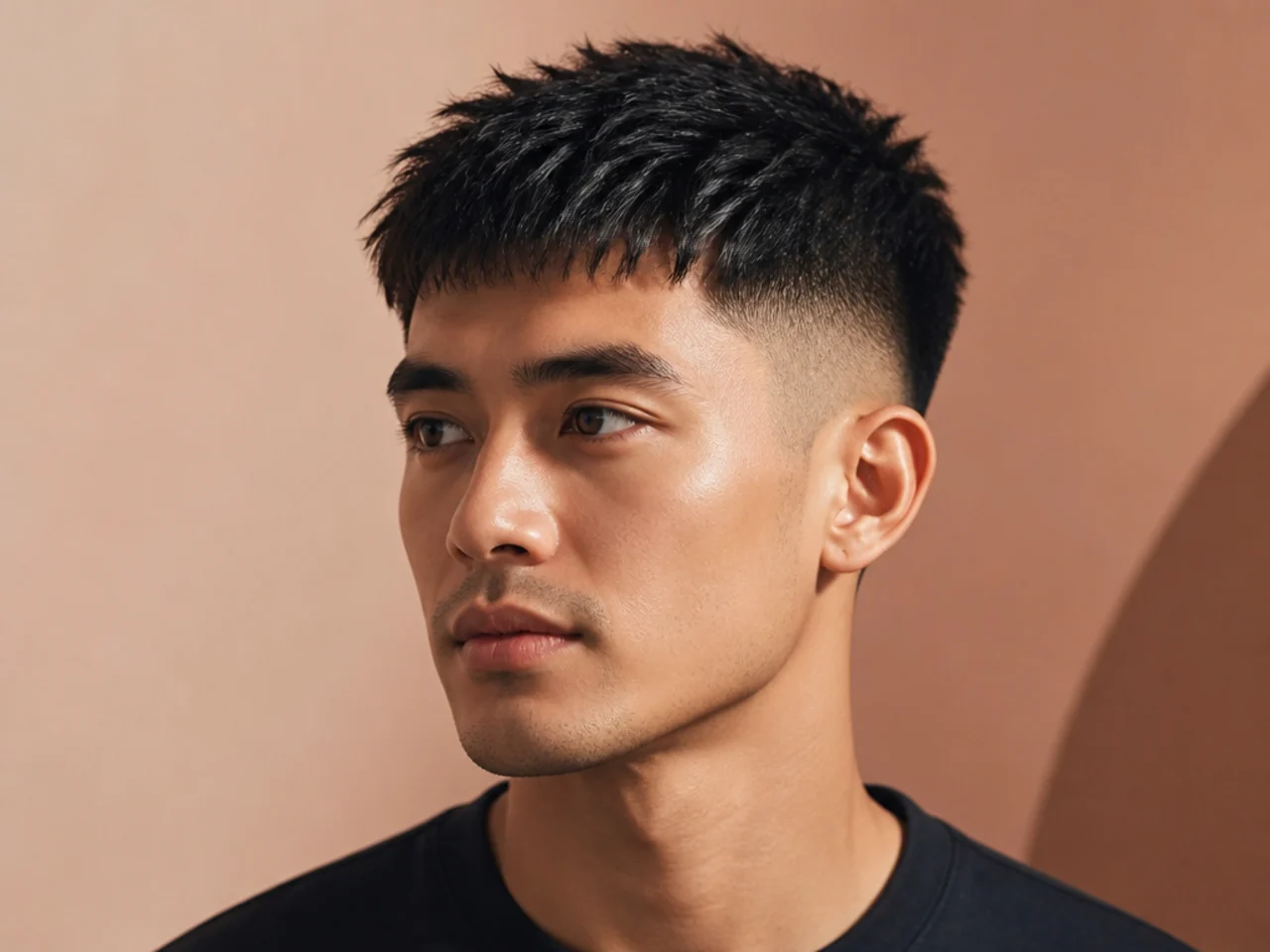
A textured crop is a short-top men's cut with a forward fringe and ends broken up by point-cutting, razoring, or thinning shears. Top runs 1 to 2 inches, fringe sits at or just above the brow, sides drop to a taper or fade. The technique — broken ends instead of a blunt shelf — is what separates the modern textured crop from an older French crop or a caesar cut.
Which face shape suits a textured crop best?
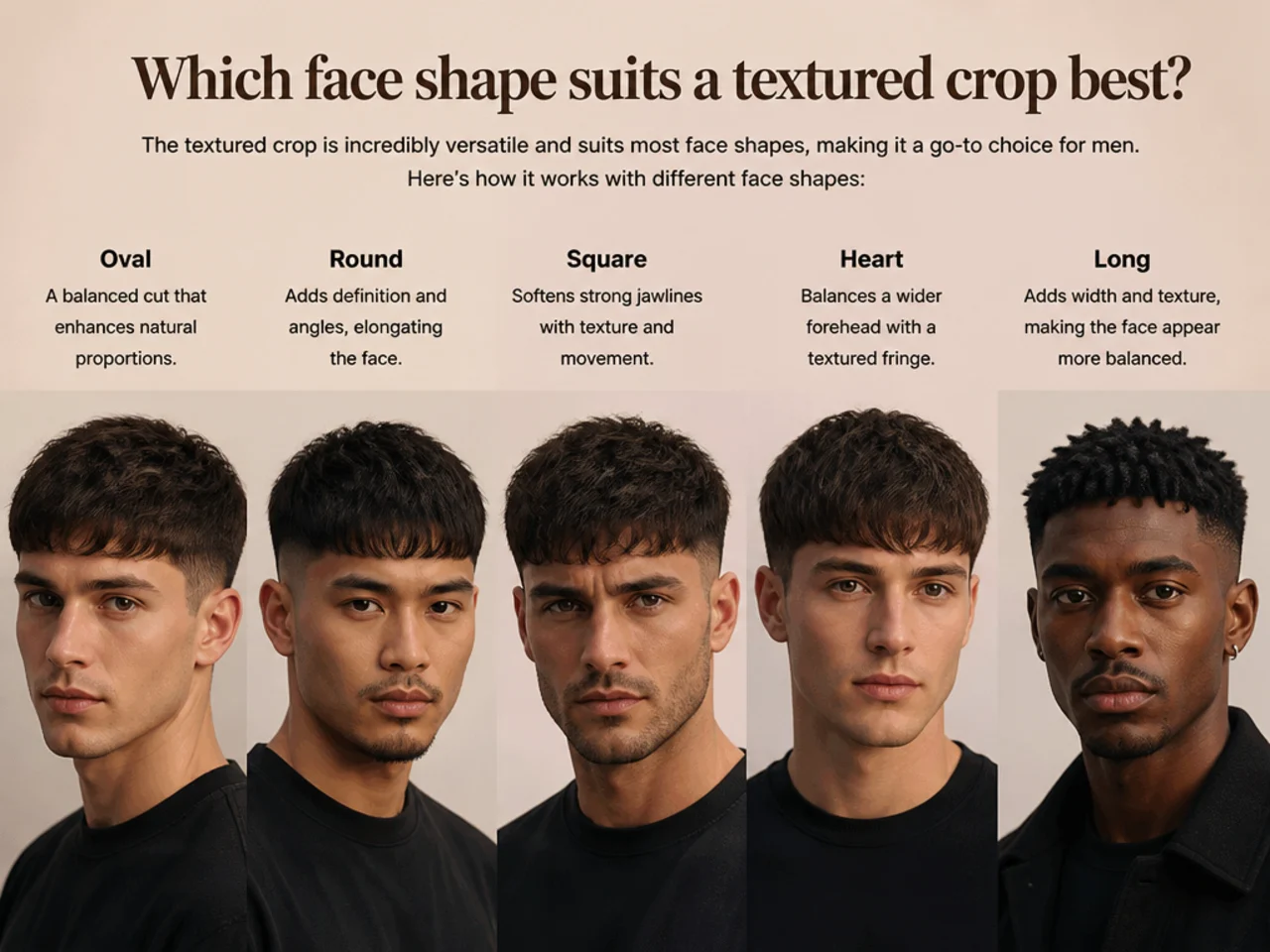
All of them — the finish changes the fit. Round and square faces want a shorter fringe or a side-swept version so the crop adds diagonal angle. Long and oval faces suit a heavier forward drop that shortens the visual length of the face. Angular jawlines pair with a mid or high fade for graphic contrast. Softer face shapes suit a low taper for a gentler frame.
How do I ask my barber for a textured crop?
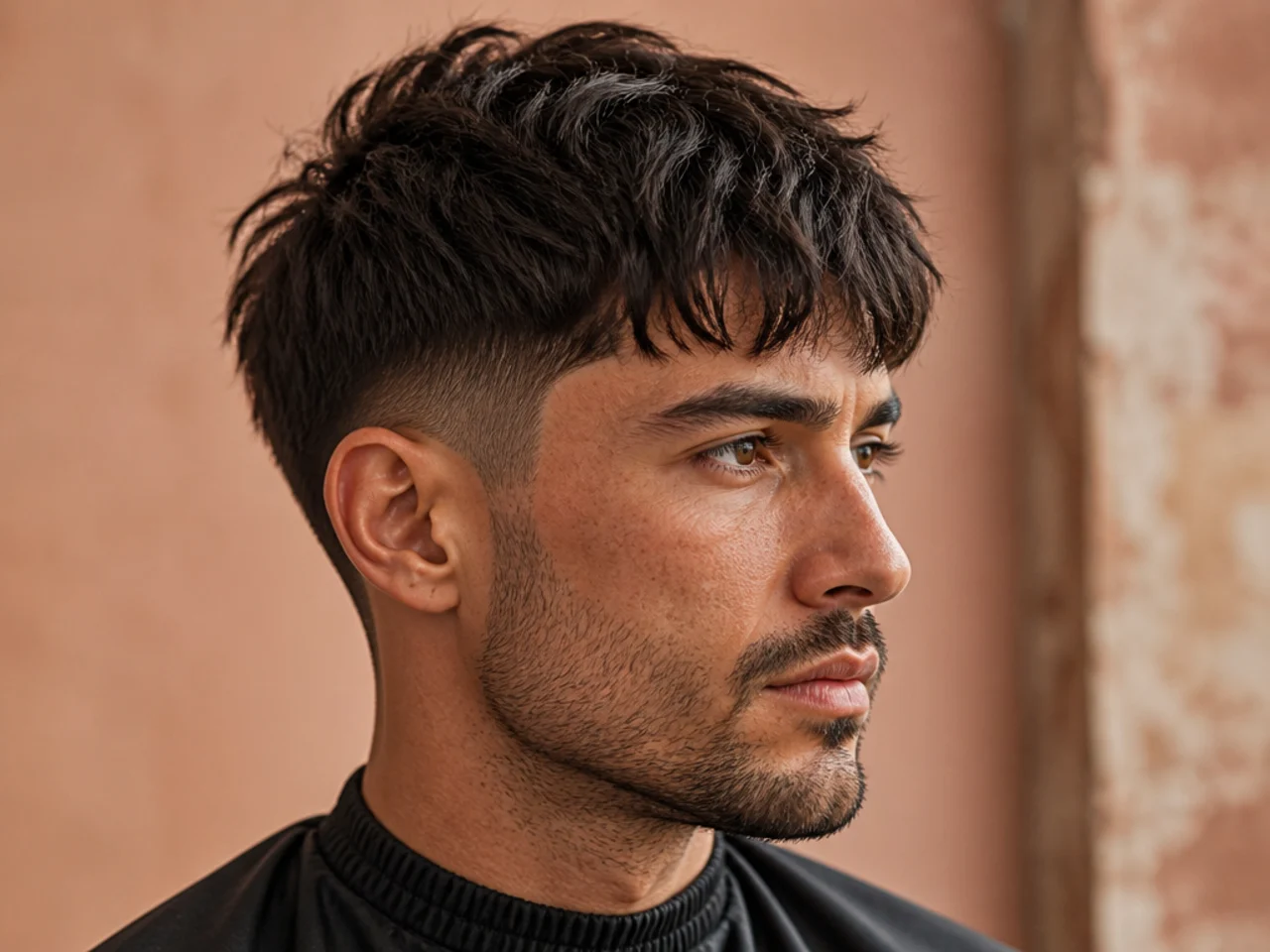
State top length in inches (usually 1 to 2 inches), fringe length and direction (forward, side-swept, blunt, or curtain-parted), texturizing technique (point-cut, razored, or thinned), and side treatment (low, mid, or high fade — or a low taper). A photo seals it. Unsure which fade to pair? Ask for a mid fade — it's the safest across face shapes and workplaces.
Is the textured crop good for thinning hair?
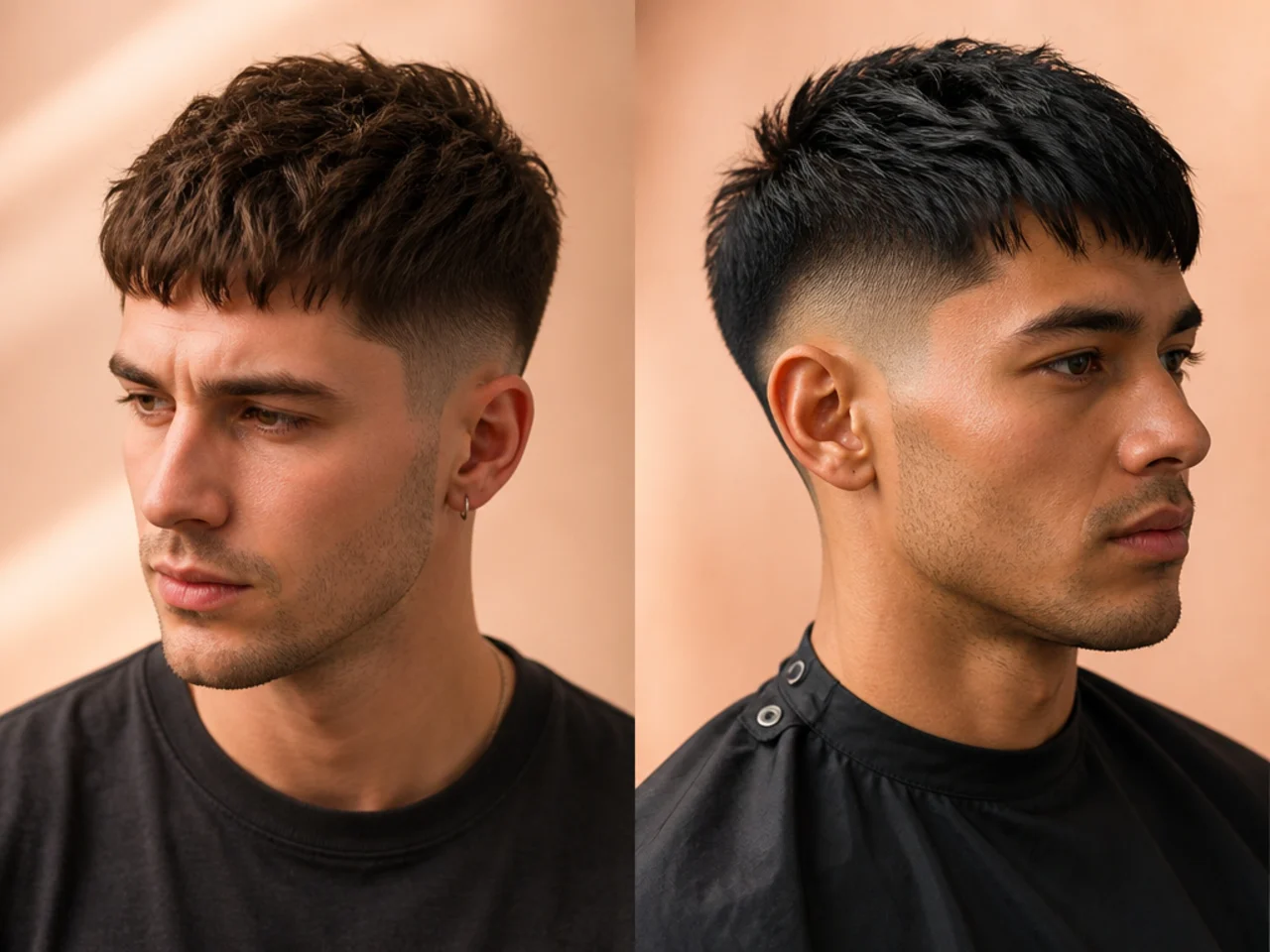
Yes — it's arguably the best short cut for thinning or receding hair on the modern menu. Broken ends stack visually so density reads higher than it is. The forward fringe hides recession at the temples, and a low fade minimizes hair-to-scalp contrast so thin patches don't spotlight themselves. Keep the top under 1.5 inches and finish with matte clay — never anything shiny.
What's the difference between a textured crop and a French crop?
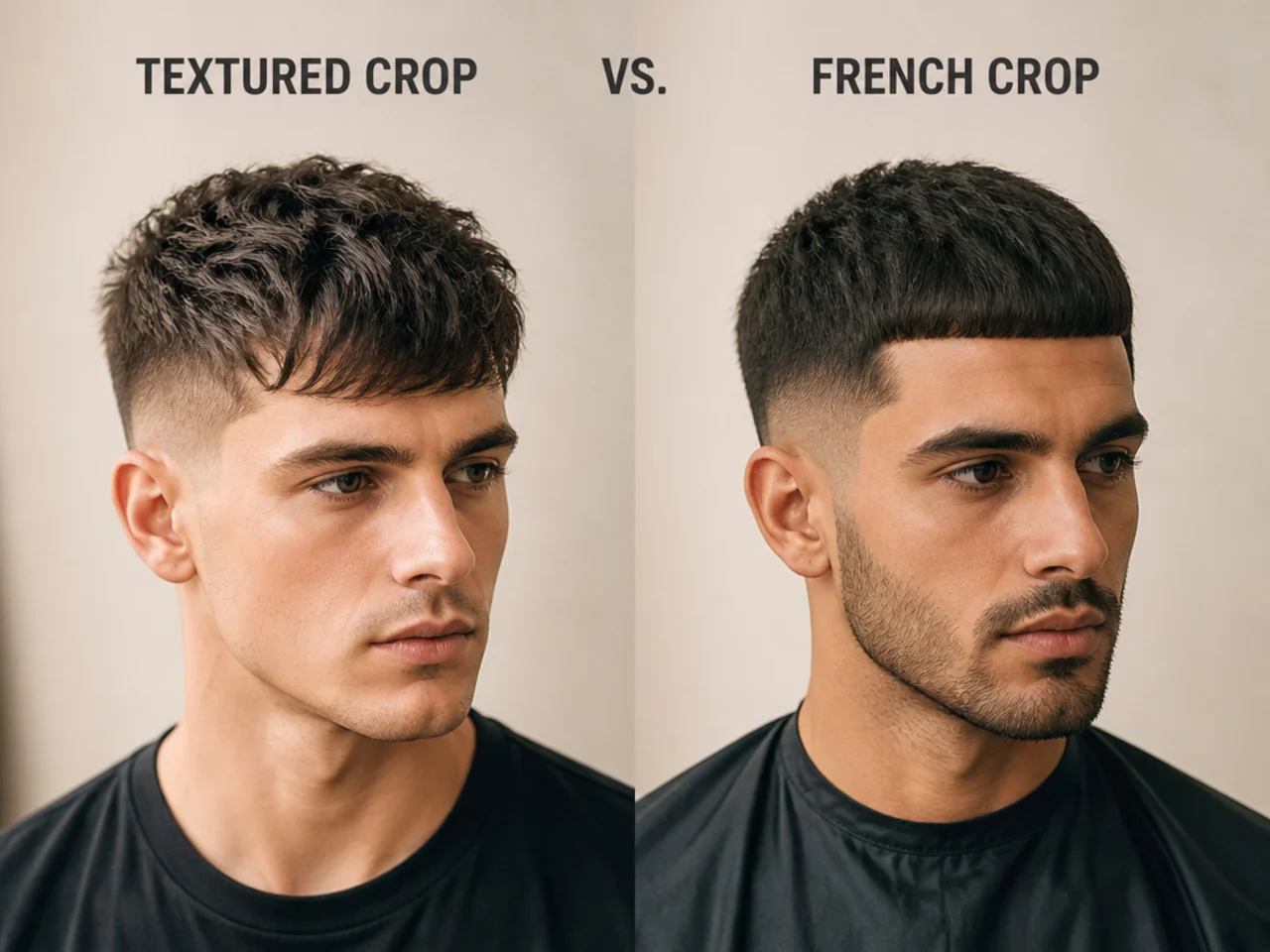
A French crop is the family. Textured crop is the modern version of that family, cut with point-cutting or razoring so the fringe sits with visible separation instead of a heavy blunt shelf. Most French crops today are, in practice, textured crops — the two terms have collapsed into each other. Classic French crop still refers to the older, blunter-edged variation with a solid fringe line; textured crop is what almost every barber now cuts by default.
How often should I re-cut a textured crop?
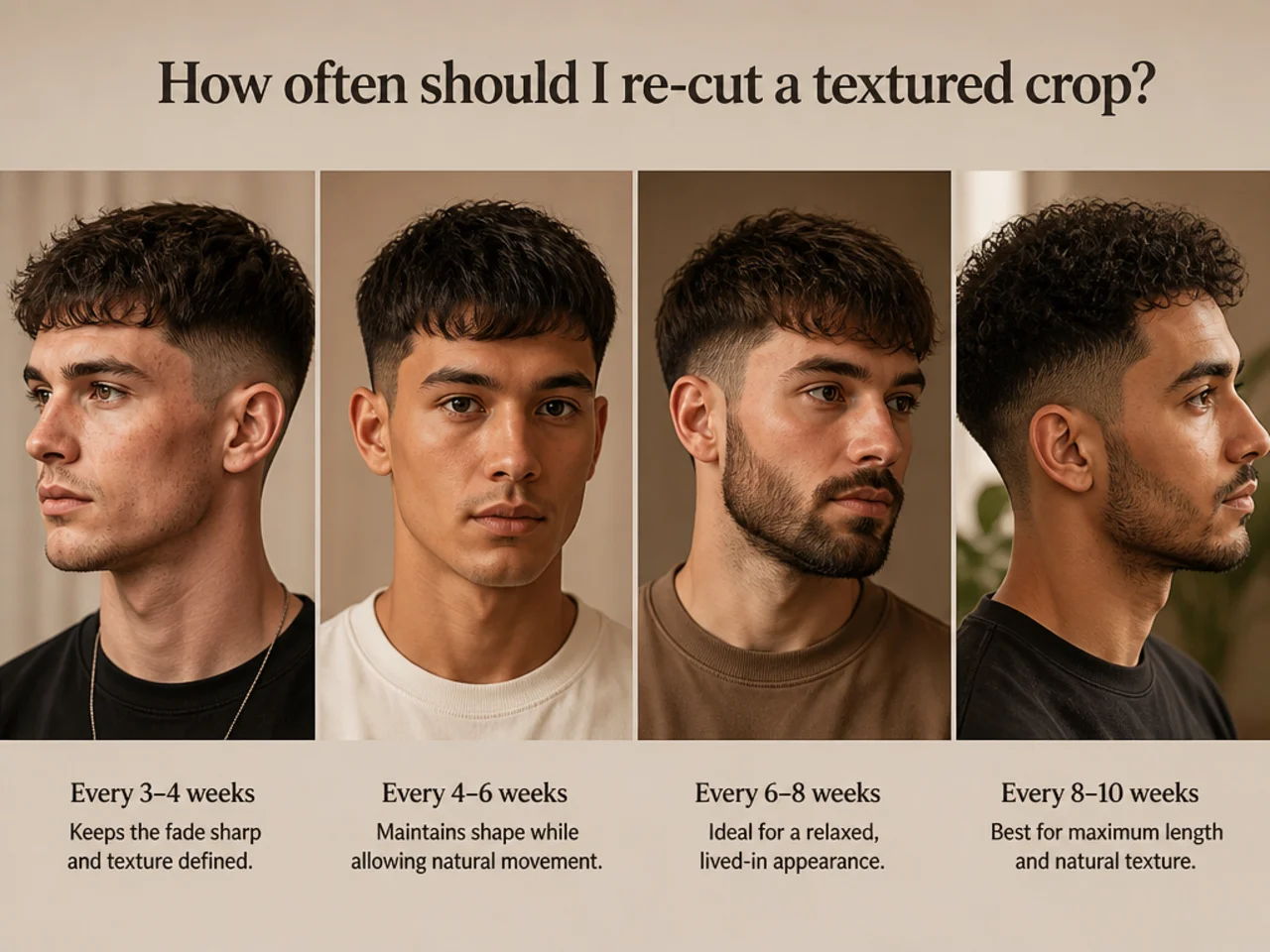
Every 3 to 4 weeks for short versions with a mid or high fade, 5 to 6 weeks for longer variations paired with a low taper. High fades and skin fades want the tightest window — every 2 to 3 weeks — because the fade softens fastest and the collapse is the most visible. Line-ups want weekly touch-ups. The moment the fringe starts sitting heavy or the fade blurs, book — waiting past that just gives the next cut more work to reset.