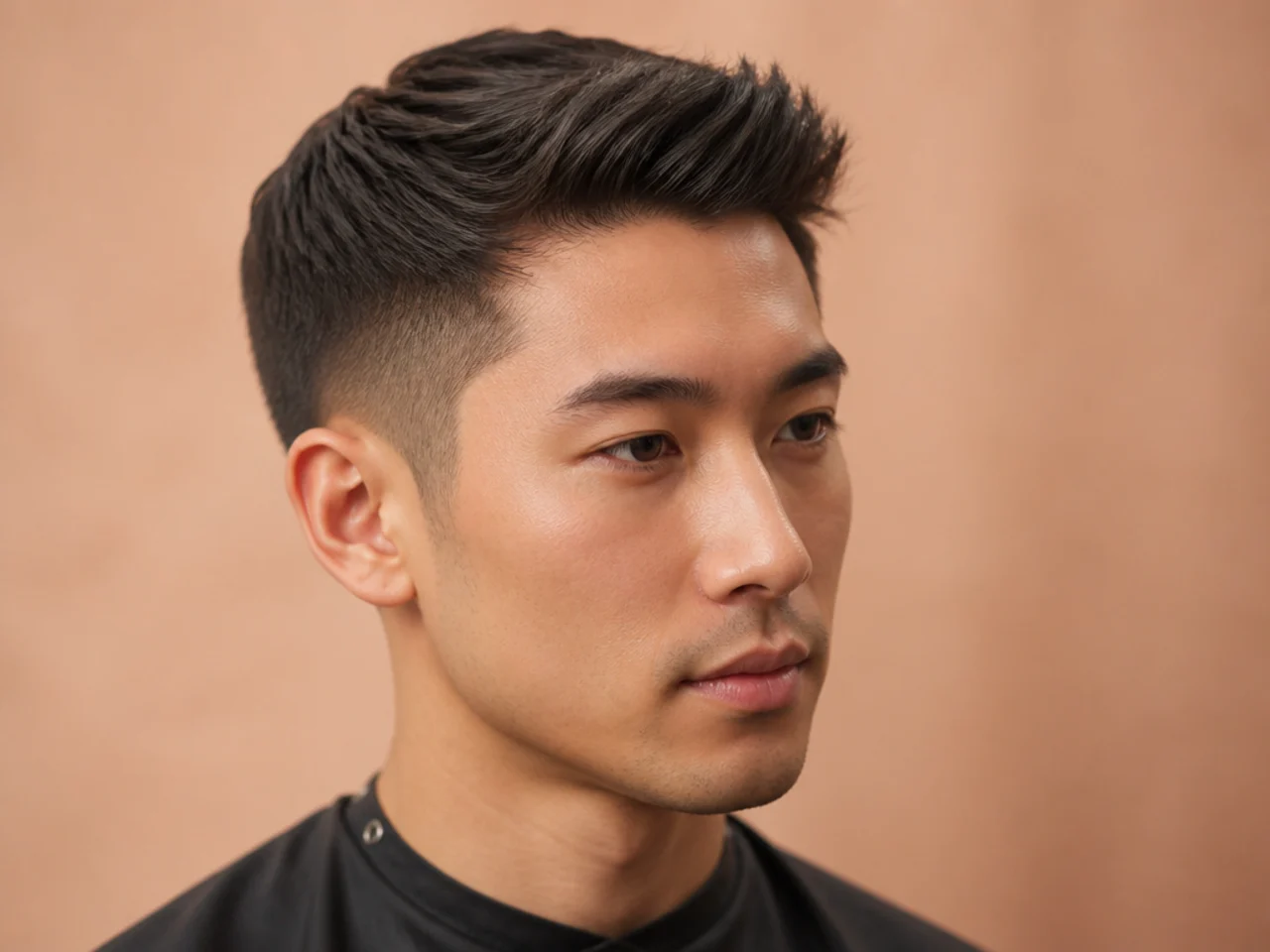
20 Short Haircuts for Straight Hair Guys
Twenty short haircuts for straight hair men — buzz cuts, French crops, Ivy Leagues, quiffs, and slick backs, with the exact ask for your barber.
In this article · 30
- What Makes Straight Hair Work Short
- How to Choose Your Straight Hair Short Cut
- The Buzz and Butch Family
- Classic Buzz Cut
- Butch Cut with Skin Fade
- High and Tight
- Long Buzz with Line-Up
- Crew Cut and Ivy League Territory
- Short Crew Cut
- Classic Crew Cut
- Ivy League
- Princeton Cut
- French Crop and Cropped Fringe Cuts
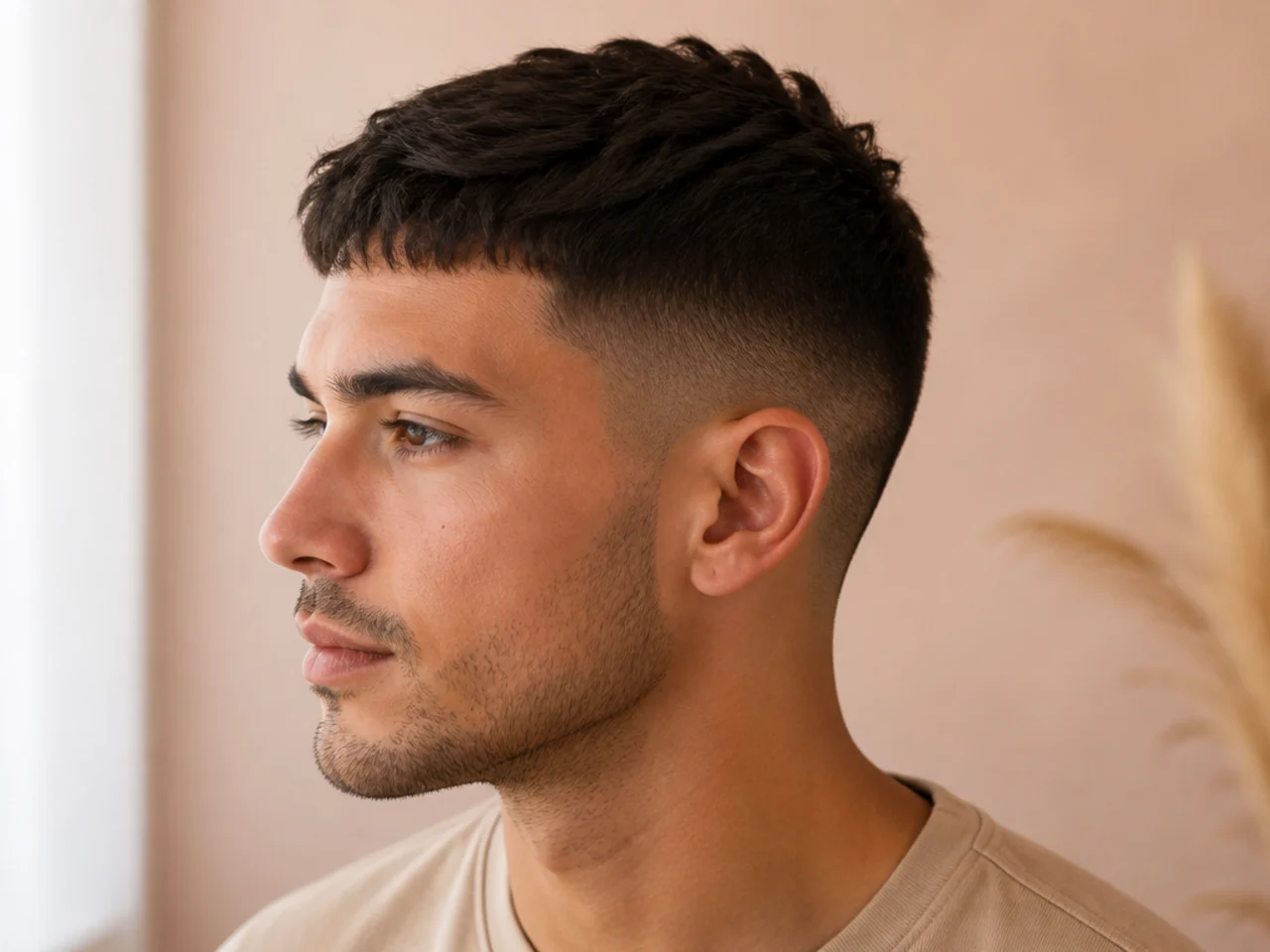
- Classic French Crop
- Textured French Crop
- Caesar Cut
- Edgar Cut
- Textured Tops and Volume Cuts
- Short Textured Quiff
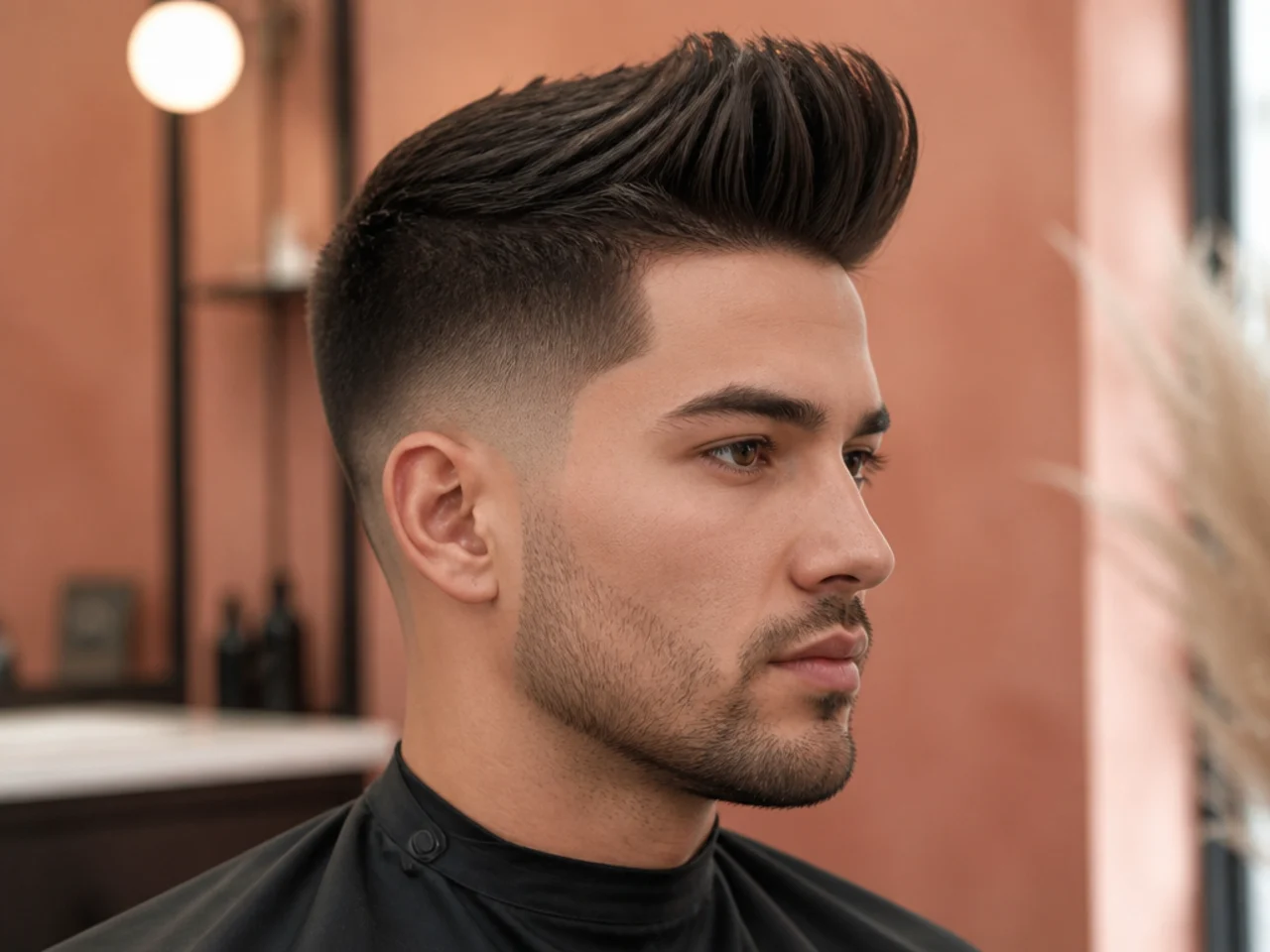
- Short Pompadour
- Short Brush Up
- Short Spiky Cut
- Sleek and Parted Styles
- Classic Side Part
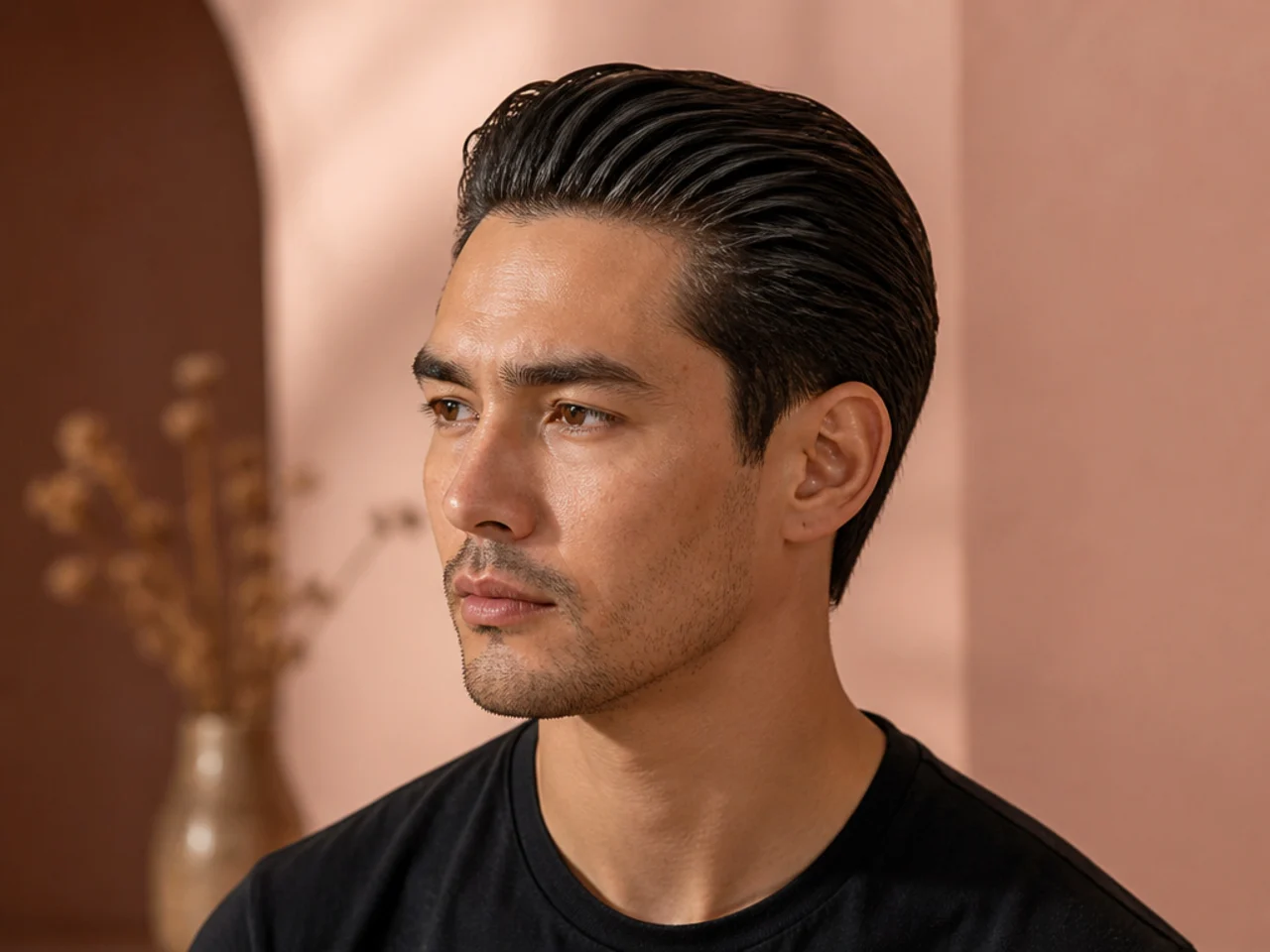
- Slick Back Undercut
- Short Comb Over with Low Fade
- Modern Executive with Skin Fade
- How to Ask Your Barber for a Short Straight-Hair Cut
- Styling and Maintenance for Short Straight Hair
- FAQ
Straight hair rewards a short cut the way no other texture does. It lies flat where you tell it to, holds a line for weeks, and reads sharp under any light. This guide walks through twenty short haircuts straight hair guys are asking for — buzz cuts, crews, French crops, quiffs, slick backs, and fade combos — with the barber ask for each, face-shape notes, and the thirty-second styling move that finishes the look at home.
What Makes Straight Hair Work Short
Straight hair carries a short cut for two reasons the other textures don't. The strand sits flat and even against the scalp, which means a buzz or crew reads uniform instead of tufty. And the shape a barber cuts today is the same shape you wake up to for weeks — no spring-back, no drift, no compromise.
The tradeoff is honesty. Fine straight hair shows every gap. Thick straight hair fights any style that asks it to lift or bend. Both are handled by the same fix — pick the cut for your density before you pick it for the trend, and add a fade at the sides so the eye moves the way you want.
Short reads clean in every workplace, every dress code, and every age bracket. It also flatters receding hairlines and cowlicks better than any medium or long cut, because it stops trying to hide what's actually there. See our short simple mens haircuts pillar for the broader family view.
How to Choose Your Straight Hair Short Cut
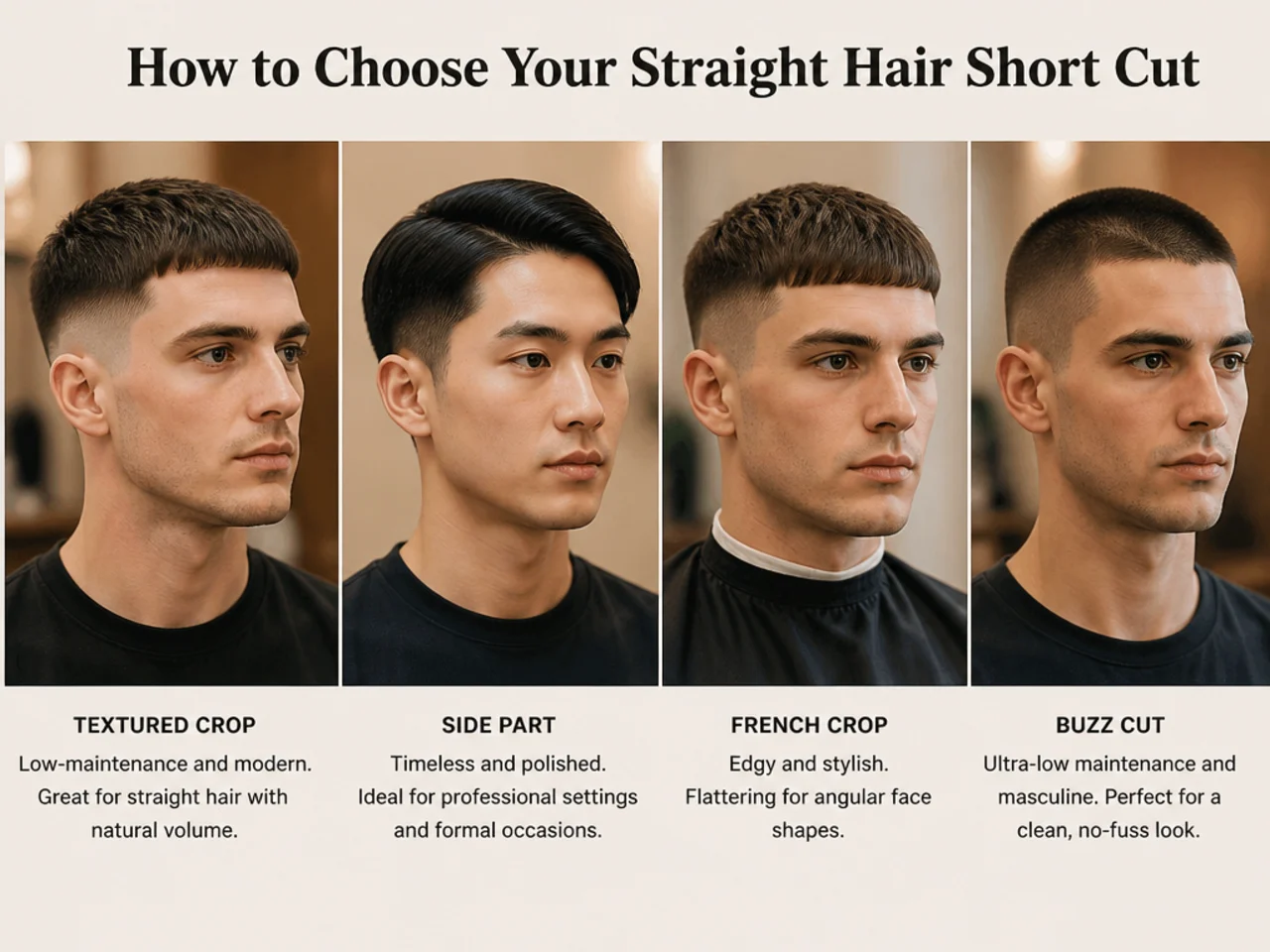
Face shape does most of the choosing. Round faces want height at the front — a short textured quiff, brush up, or pompadour lengthens the silhouette. Square faces carry almost every short cut with equal ease; the strong jawline balances a buzz, crew, or Ivy League. Oval faces are the easiest — every cut on this list works, so let hair density decide. Heart-shaped faces want a forward fringe like a French crop or Caesar to balance a narrower chin. Long or oblong faces should reach for a Caesar, cropped fringe, or Edgar — the forward fringe visibly shortens the forehead.
Density is the second filter. Fine straight hair reads best short and neat — buzz, crew, Ivy League, or a short French crop. Thick straight hair carries any short cut and rewards point-cutting on top to break up bulk. Medium straight hair is the sweet spot; you can wear any variation below and it'll sit right.
Workplace is the tiebreaker. Trades and uniformed jobs suit a buzz, high and tight, crew, or short crop. Corporate rewards an Ivy League, side part, or short comb over with a low fade. Creative offices carry anything on this list.
The Buzz and Butch Family
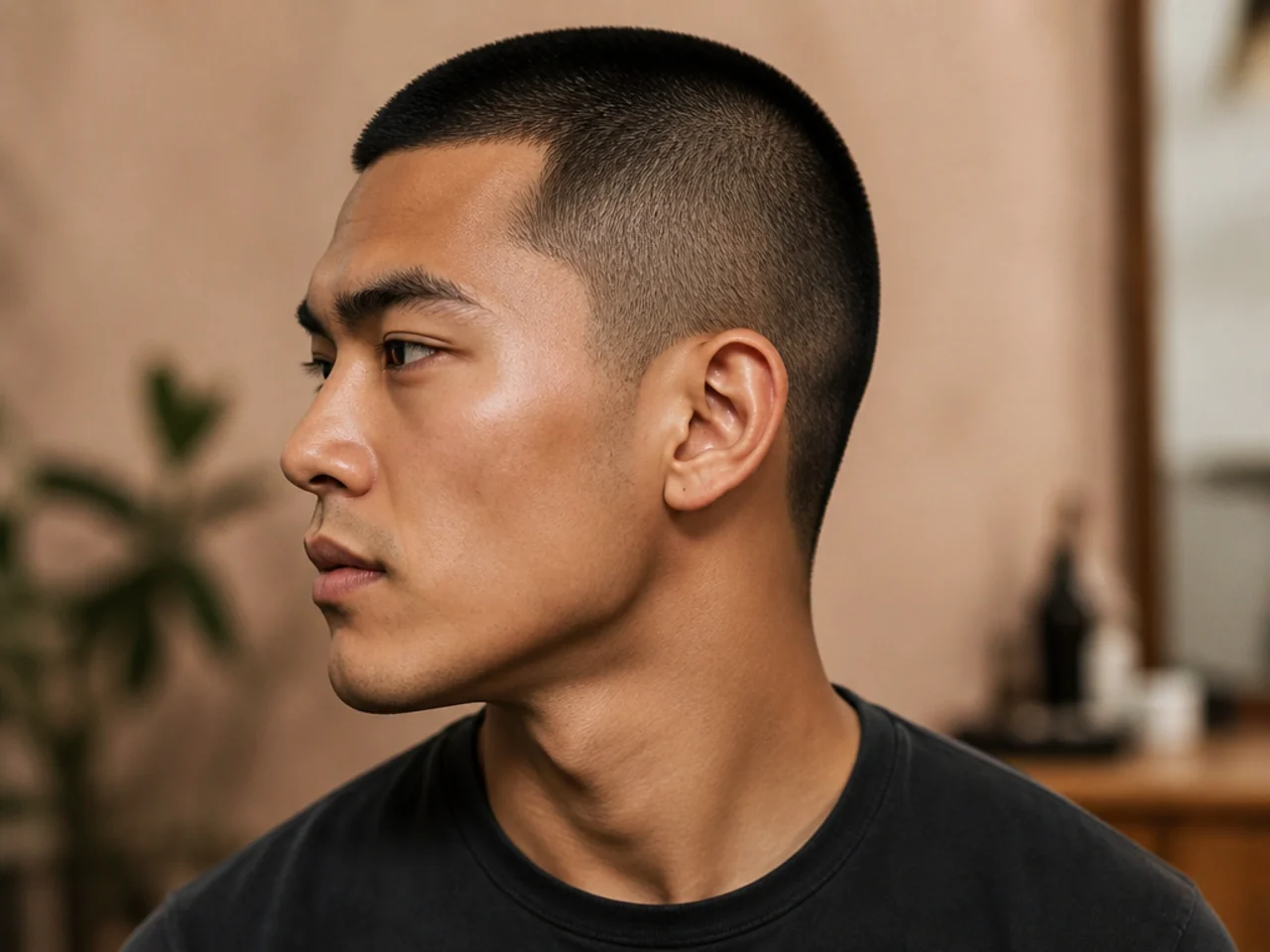
The buzz cut family is one clipper decision — which guard number — and straight hair reads clean at every step. A home clipper set makes this the cheapest long-term short cut on the list; see our best clippers for men breakdown before you buy.
Classic Buzz Cut
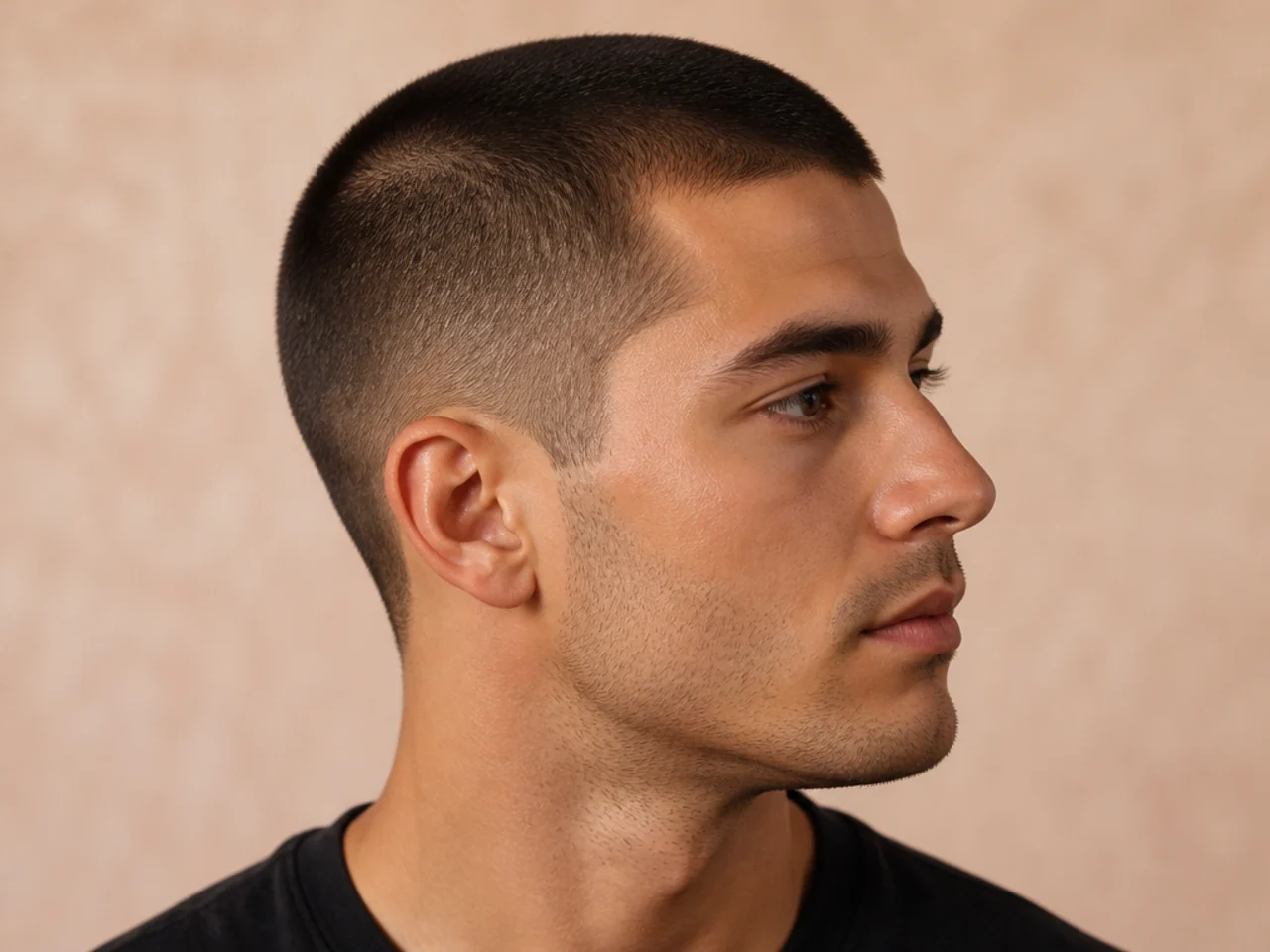
The classic buzz is a #1 guard all over — about an eighth of an inch. On straight hair, that length is the sweet spot: short enough to disappear into the routine, long enough to hold color and read as an intentional haircut rather than a lockdown special. Best on square and oval faces, thick or thinning hair, and any workplace that respects a clean silhouette.
Ask for: "Number one all over, square neckline, blend the sideburns down." Skip product entirely. If you want a whisper of shine, tap a drop of face moisturizer through the hair while it's still damp. Rebook every four weeks — the outline is what softens first on a buzz.
Butch Cut with Skin Fade
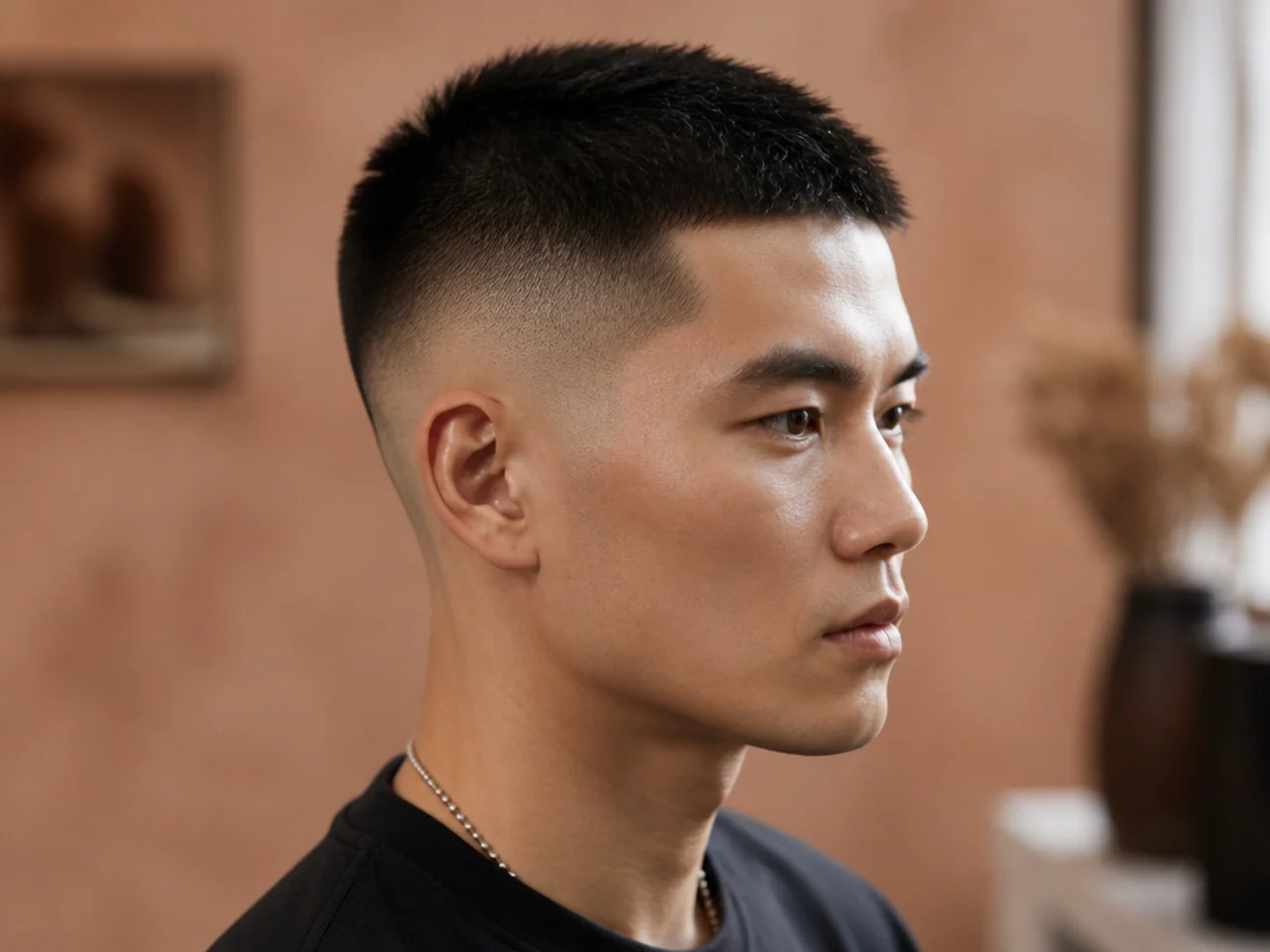
The butch is a #2 or #3 all over the top with a skin fade at the sides. Half a step longer than a buzz, half a step shorter than a crew. On straight hair the extra length gives the top just enough weight to look intentional, while the skin fade at the temple pulls the silhouette upward. It's the lowest-effort cut on the list that still reads styled.
Best on square and diamond faces, thick straight hair, and athletic lifestyles. Ask for: "Butch cut, number three on top, skin fade at the sides, square neckline." Styling is zero — towel-dry and walk out.
High and Tight
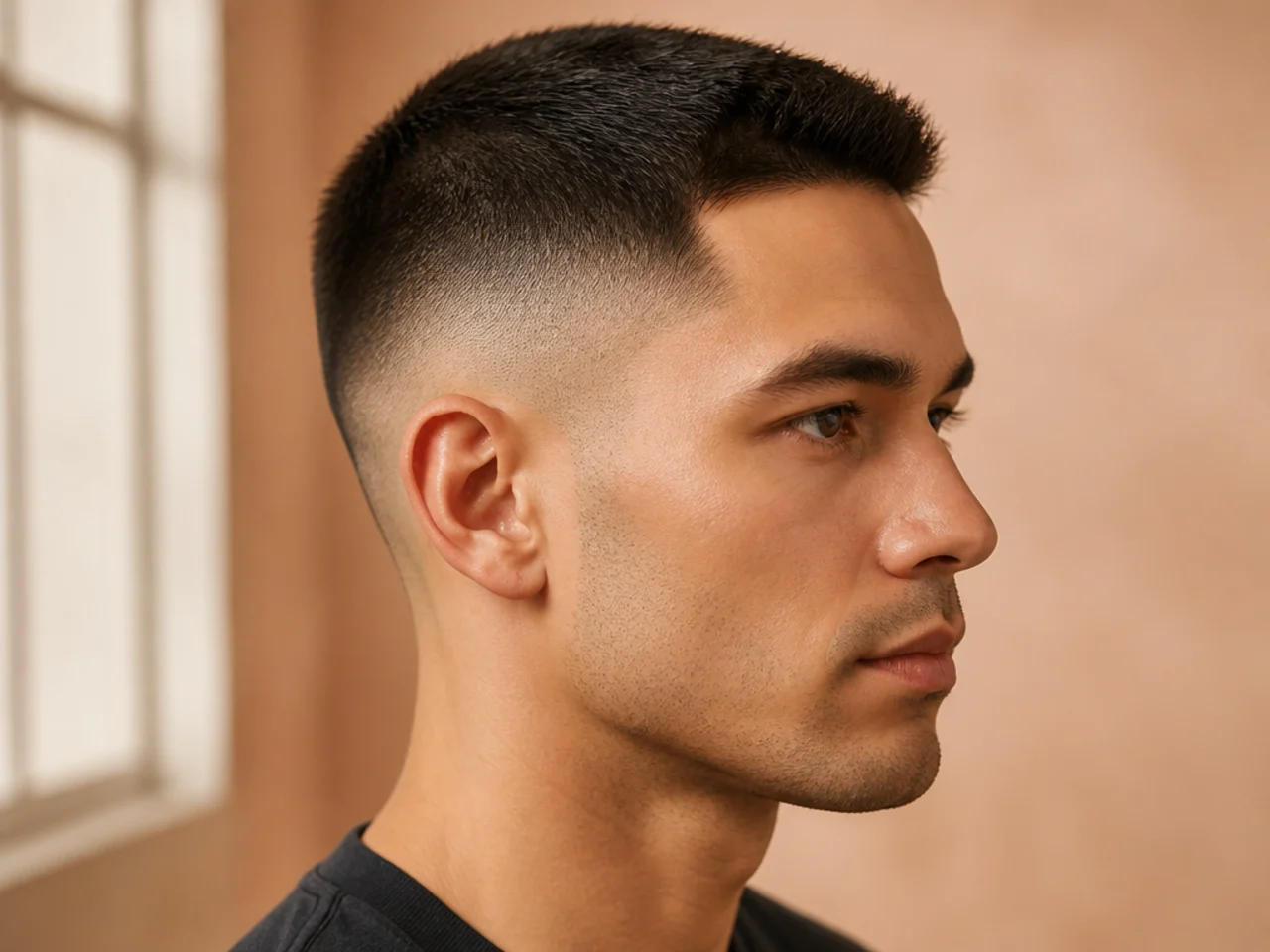
The high and tight is a #2 or #3 on top with a #0 or skin fade jumping in high — above the temples, sometimes as high as the crown. Straight hair carries the sharp contrast well because the top sits flat and even, so the transition reads clean instead of choppy. Military roots, civilian polish.
Best on strong features and thick straight hair. Ask for: "High and tight, number three on top, skin fade jumping in high above the temple, square neckline." Optional: add a razored line part or a subtle shaved design at the temple — mention it before the cut starts so the barber can plan the fade around it. Rebook every three weeks; the high fade line drifts fast.
Long Buzz with Line-Up
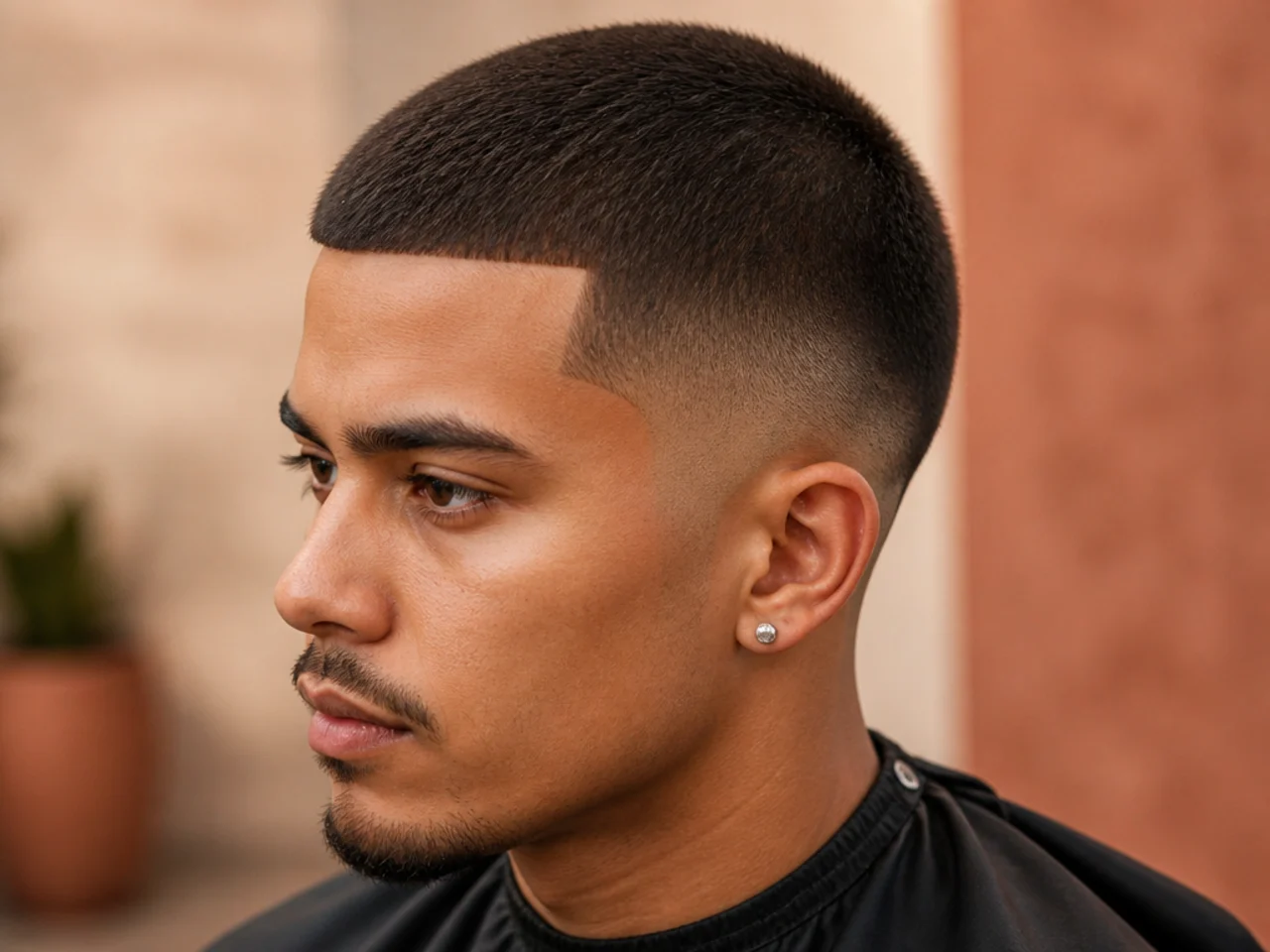
A #4 or #5 buzz leaves roughly half to five-eighths of an inch on top — the ceiling of the buzz family. Add a razor-sharp line-up at the forehead and temples and the cut jumps from utility to style. On straight hair the flat lay of the top makes the line-up read especially crisp; there's no curl pattern to break up the geometry.
Best on every face shape, strong hairlines, and dark hair colors that hold the line as it grows in. Ask for: "Number four on top, sharp line-up at the forehead and temples, low or skin fade at the sides." Rebook every two to three weeks — the line grows in visibly.
Crew Cut and Ivy League Territory
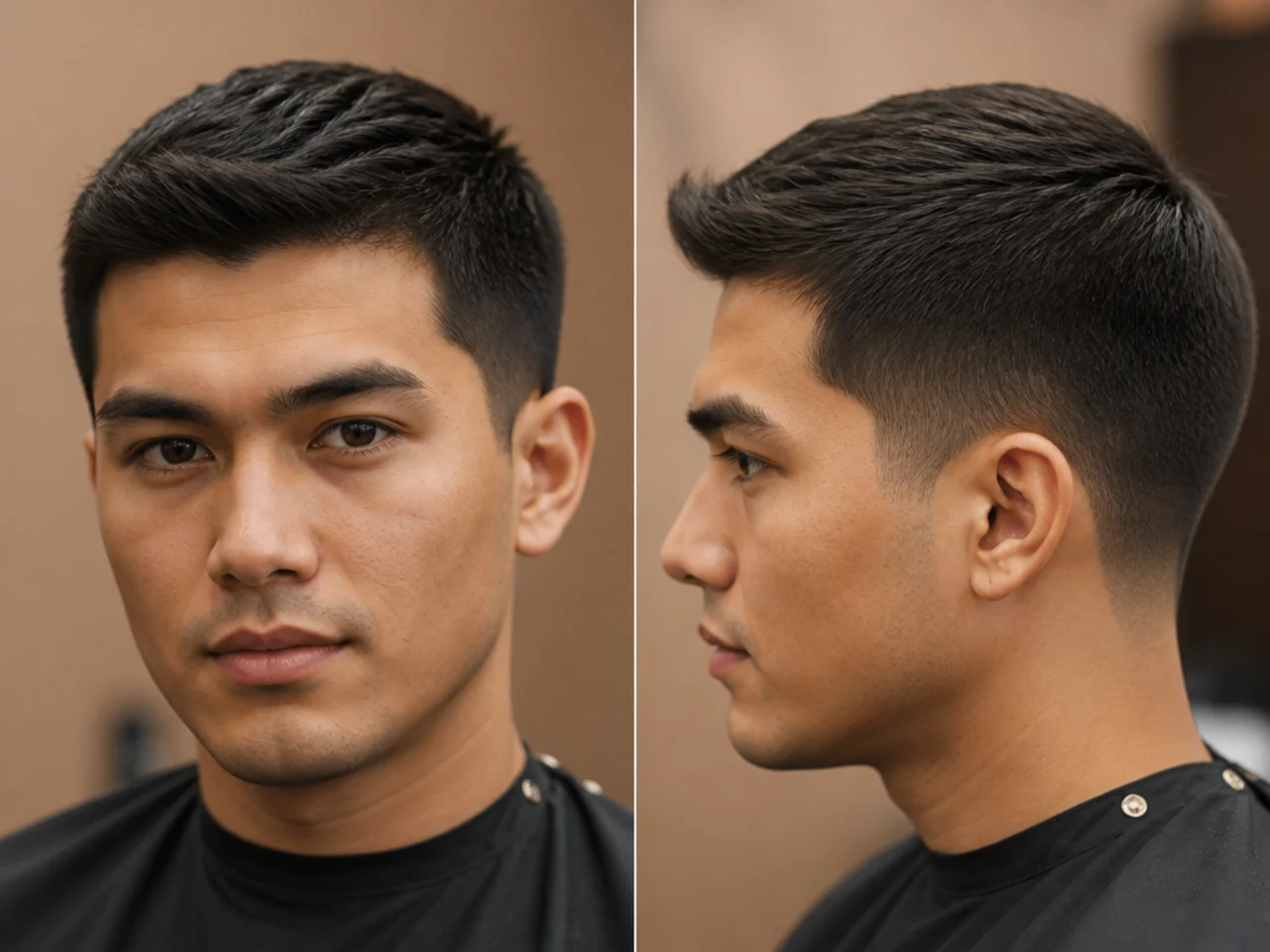
Scissor work on top, clipper work on the sides. The crew cut family is where short straight-hair cuts pick up their polish — and where a good barber earns his money, because scissor-blending is what makes a short cut look expensive.
Short Crew Cut
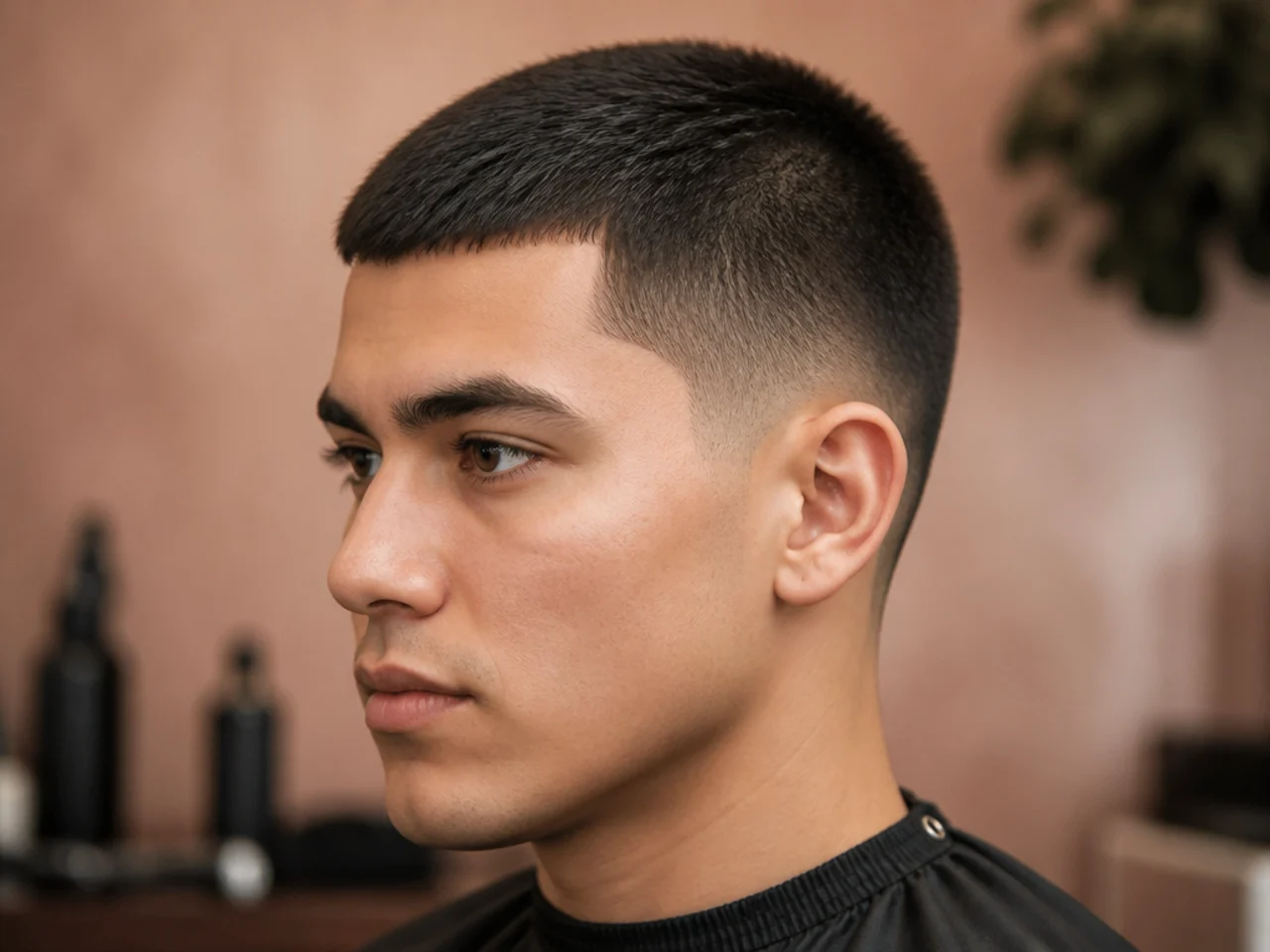
The short crew keeps three-quarters of an inch on top — the shortest scissor-cut length before you cross into buzz territory. On straight hair that length sits crisp and even; the front is barely long enough to nudge forward with a fingertip. Best on square and diamond faces because the tight profile shows off the bone structure.
Ask for: "Short crew cut, three-quarter inch on top graduated slightly shorter to the back, number two tapered sides, square neckline." No product needed. If you want a hint of shine, tap a drop of light cream into the front only.
Classic Crew Cut
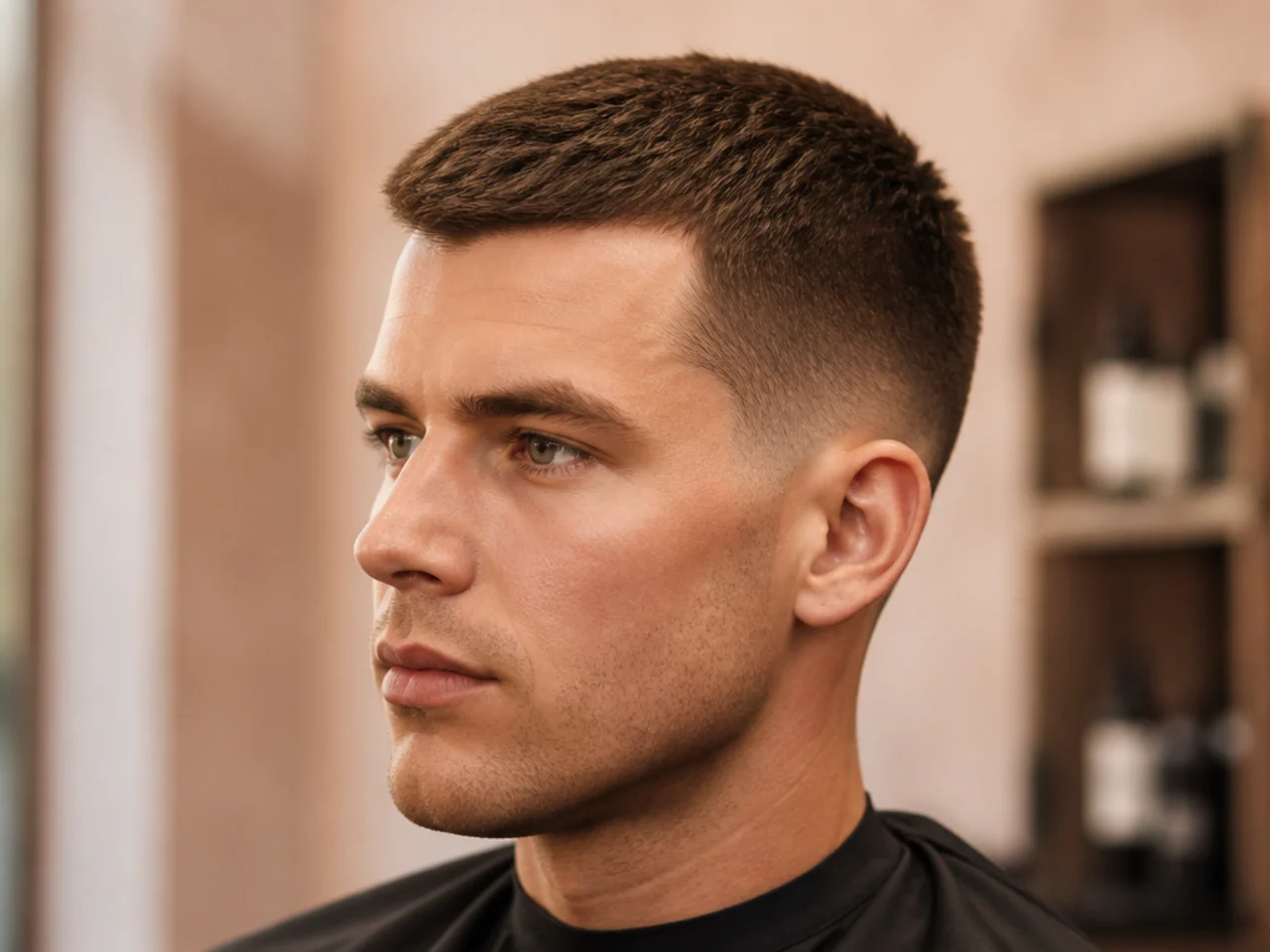
The classic crew keeps about an inch on top, scissor-graduated — front slightly longer than back — with sides tapered from a #2 down to a #1 at the perimeter. On straight hair the one-inch length is versatile enough to lift with product or leave flat, which is why military barbers have cut nothing else for decades.
Best on every face shape and every straight-hair density. Ask for: "Crew cut, one inch on top graduated shorter to the back, number two tapered sides." A pea of matte clay pushed forward with your fingers finishes the whole look in thirty seconds.
Ivy League
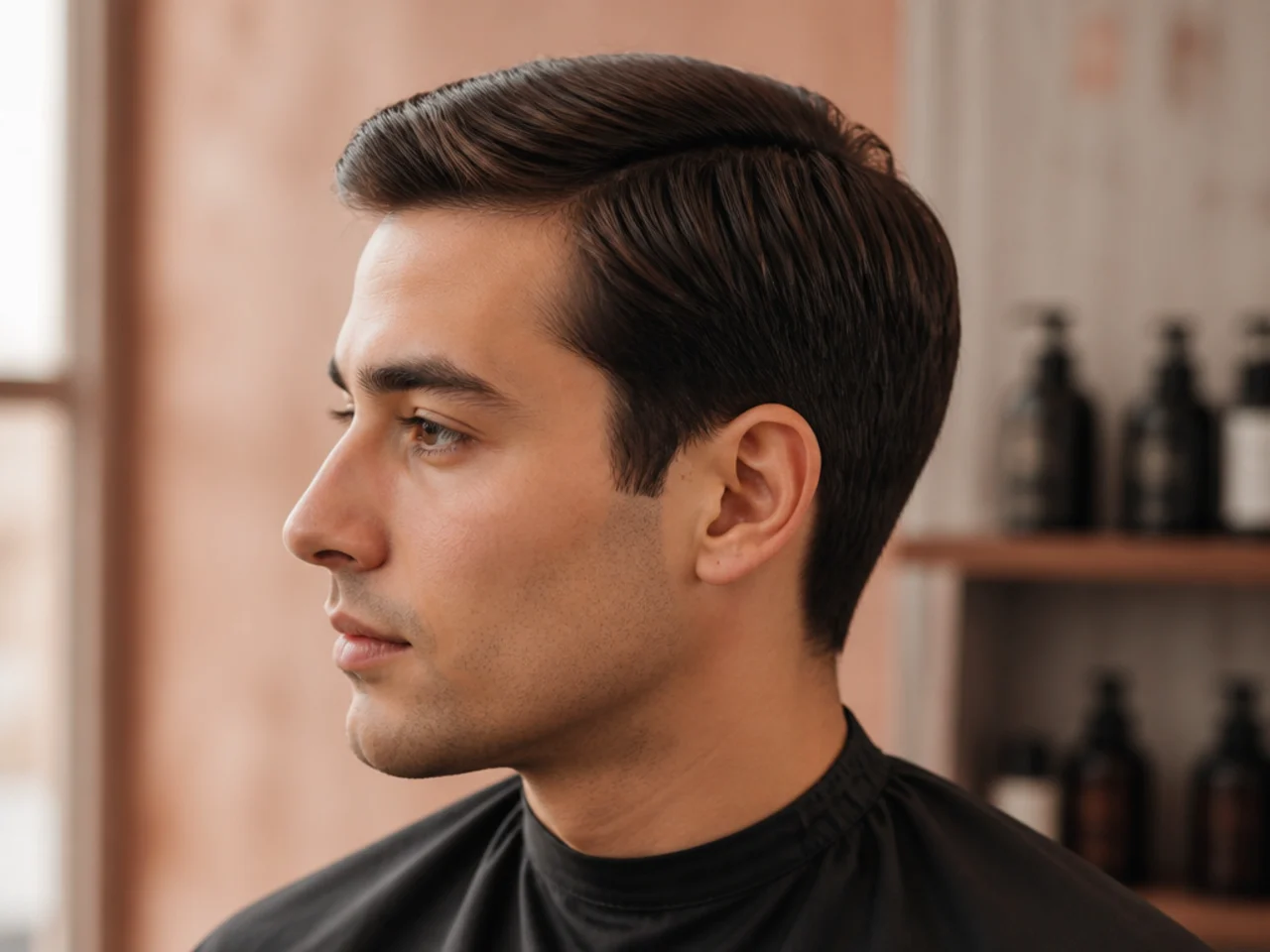
The Ivy League is a crew cut with enough length on top — an inch and a half to two inches — to hold a defined side part. It's the boardroom-friendly short cut, and it may be the single most flattering option on this list for straight hair specifically, because straight hair holds a part cleaner than any other texture.
Best on oval, square, and heart-shaped faces. Ask for: "Ivy League, two inches on top, part on the left [or right], scissor-blended sides." Blow-dry to the part with a small round brush, work a light-hold pomade or medium-shine cream through, comb once. Rebook every five to six weeks — the scissor-blended sides grow out gracefully.
Princeton Cut
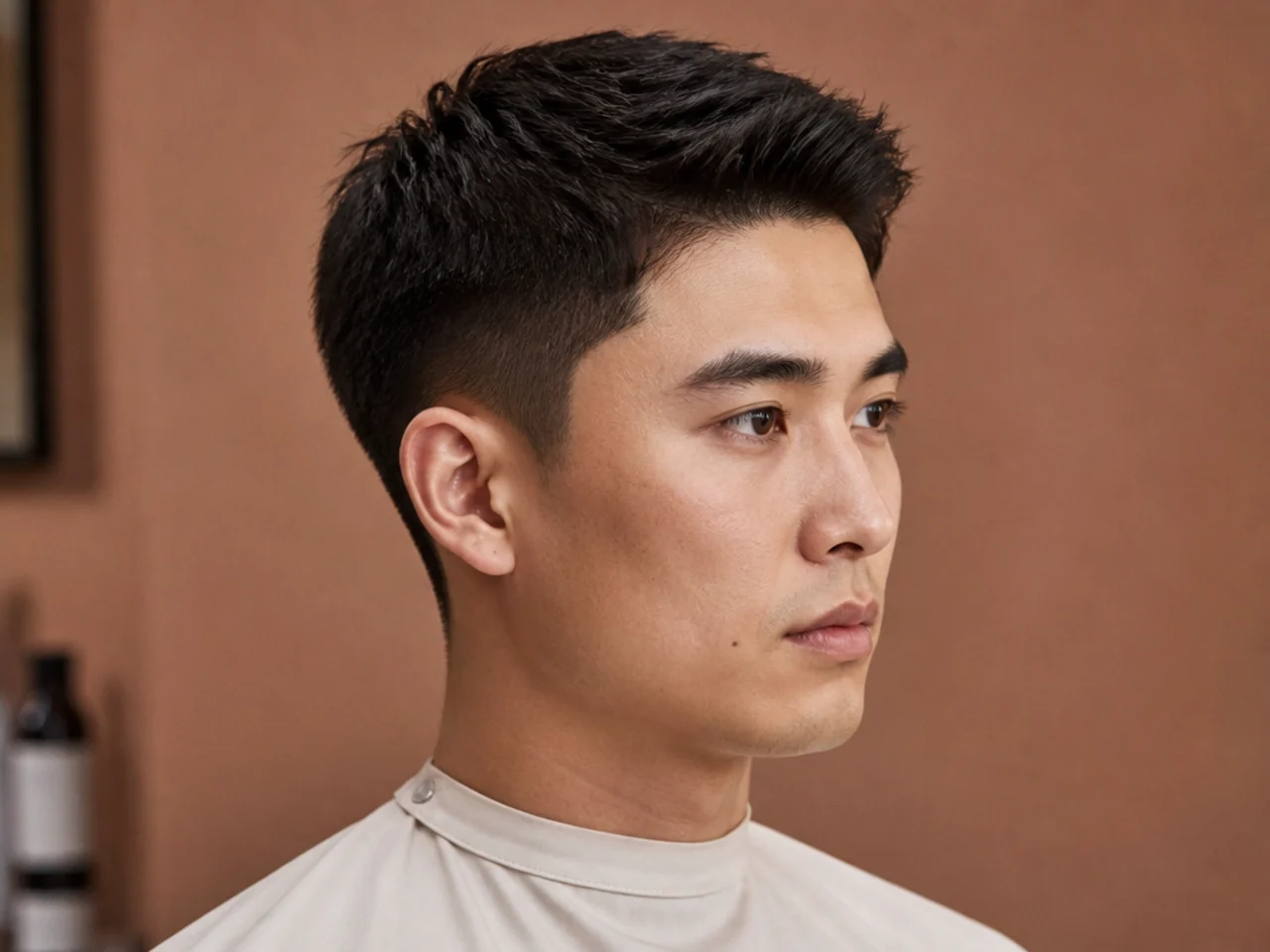
The Princeton is the Ivy League's slightly-longer, softer cousin — two inches or a shade more on top, with a natural part that falls where your hair wants to go instead of a defined razored line. On straight hair the natural part sits obvious and clean, so you get the polish without the formal read.
Ask for: "Princeton cut, keep two inches on top, natural part, taper the sides low." Style with a medium-shine cream — restraint on product keeps it from looking dated. Best on oval and square faces, and straight hair with any density.
French Crop and Cropped Fringe Cuts
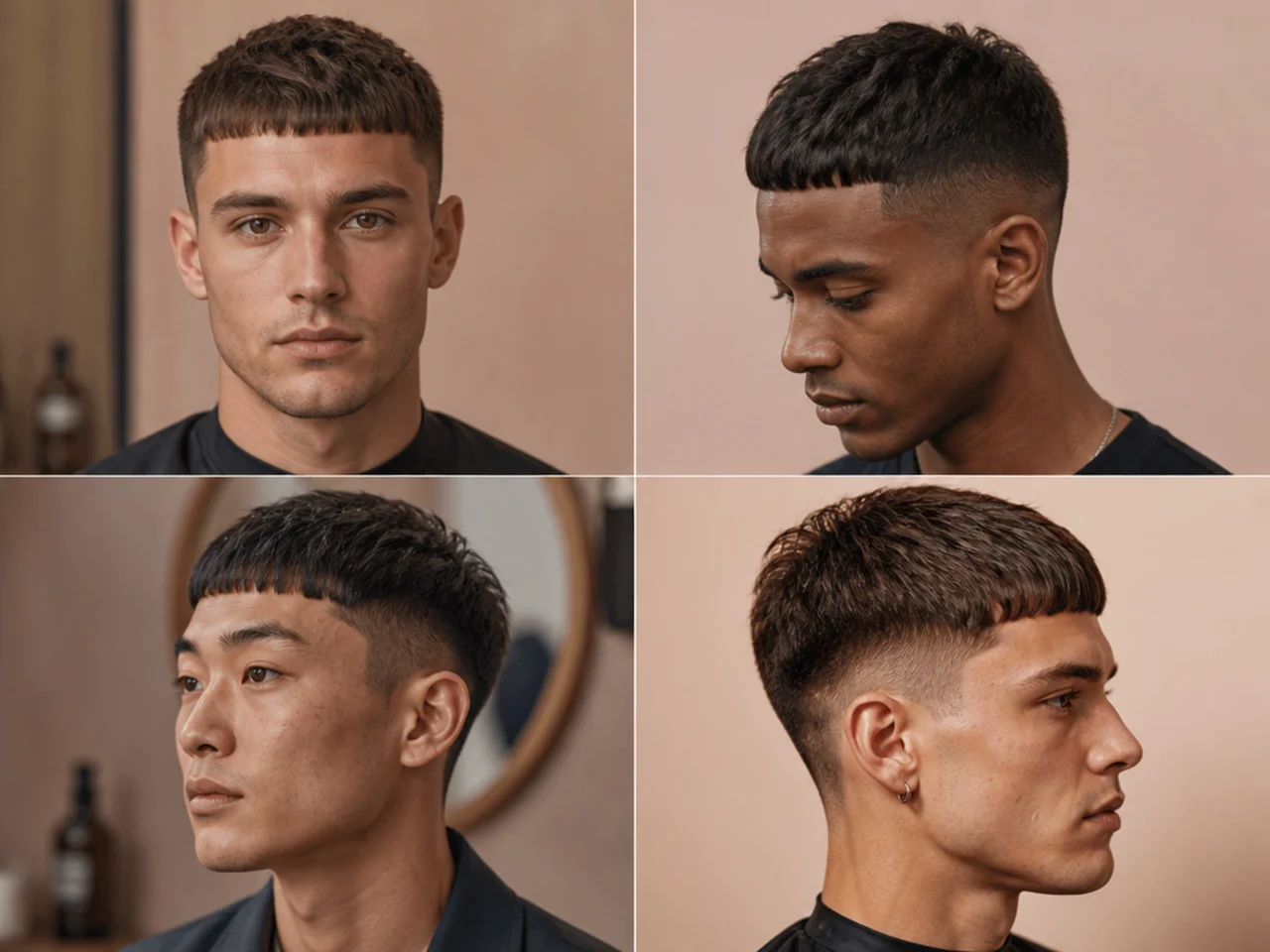
Short top, forward fringe. The French crop family flatters high foreheads and receding hairlines because the fringe covers what a slick-back would expose. Straight hair is the family's natural home — the fringe lays flat and even without a diffuser or curl cream.
Classic French Crop
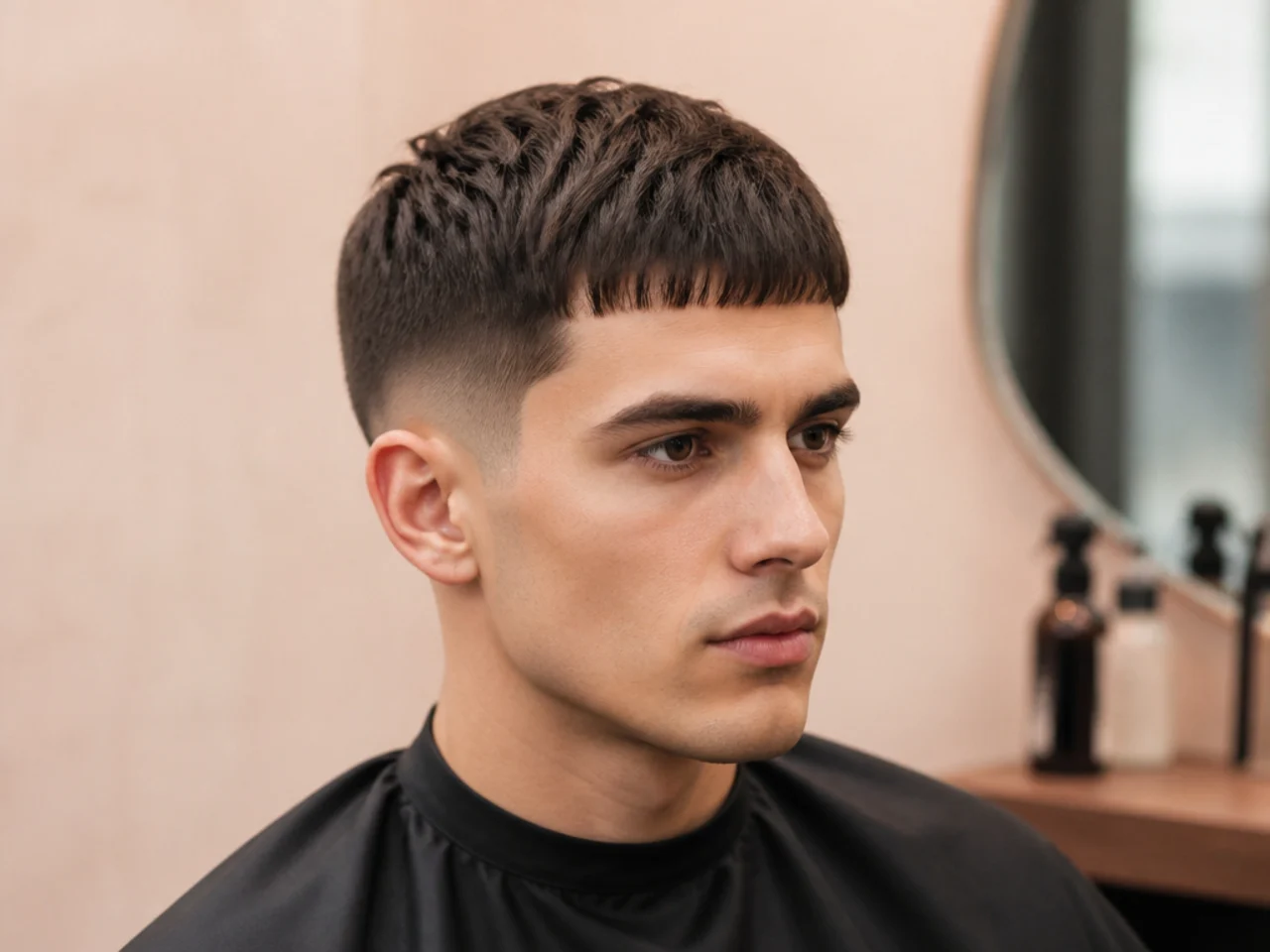
The classic French crop keeps about an inch and a half on top with a blunt fringe just above the brow. A mid fade at the sides sharpens the silhouette. Straight hair carries the blunt fringe better than any other texture — it sits exactly where the barber cuts it and doesn't need coaxing.
Best on high foreheads, oval and heart-shaped faces, and fine to medium straight hair. Ask for: "French crop, inch and a half on top, blunt fringe just above the brow, mid fade at the sides." Bring a photo — fringe length is the whole point, and half-inch differences matter. Style with a matte paste pushed forward with your fingers.
Textured French Crop
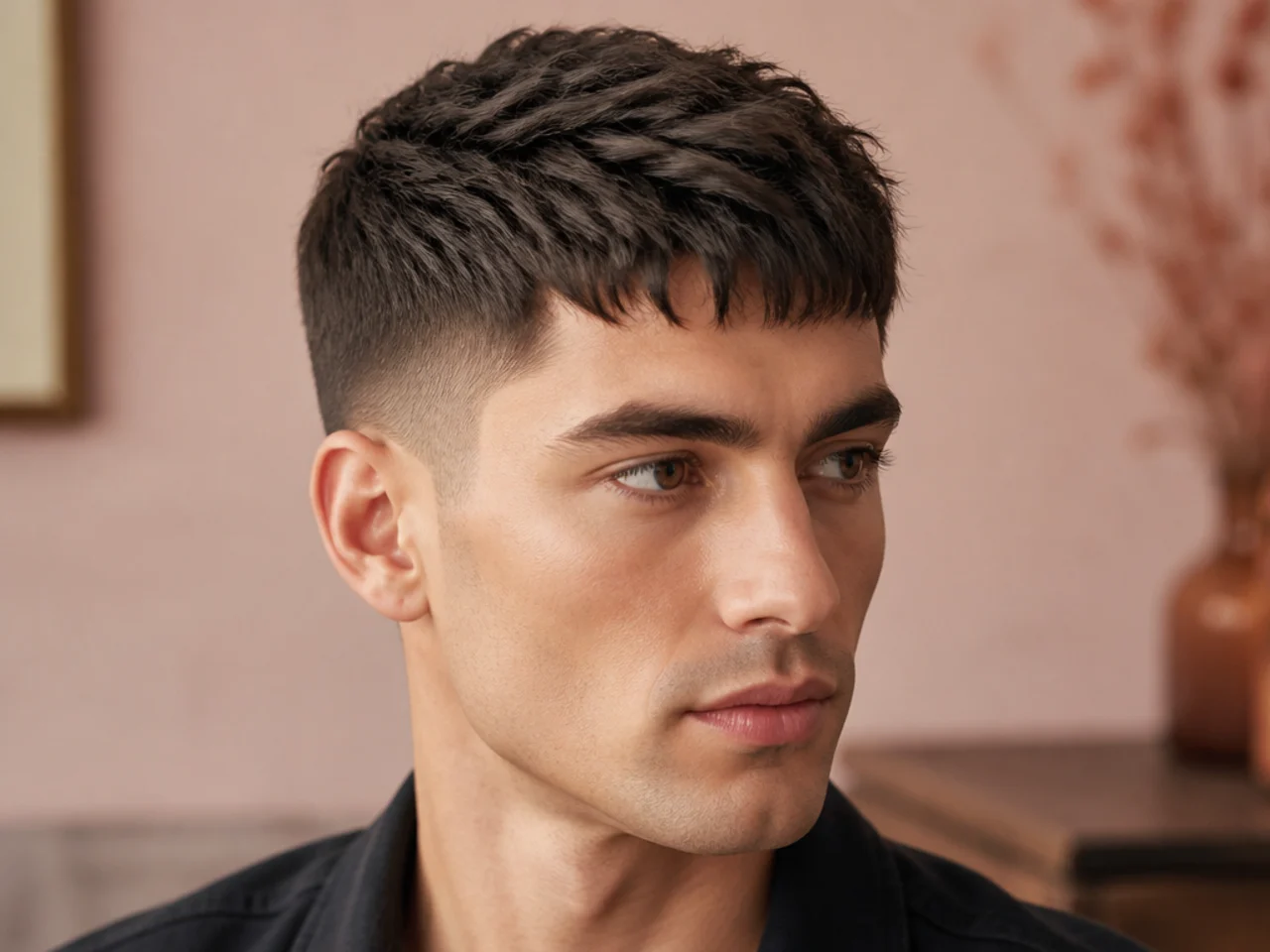
The textured version keeps the same length but swaps the blunt fringe for a piecey, point-cut edge — softer, more casual, less committed. On straight hair the point-cutting adds the movement that a blunt cut can lack. Best on fine-to-medium straight hair; skip it if your hair is very thick and coarse, since the texture disappears under weight.
Ask for: "Textured French crop, inch and a half on top point-cut for texture, soft fringe at the brow, low fade at the sides." A dab of sea-salt spray under a matte cream adds grip and lifts the roots.
Caesar Cut
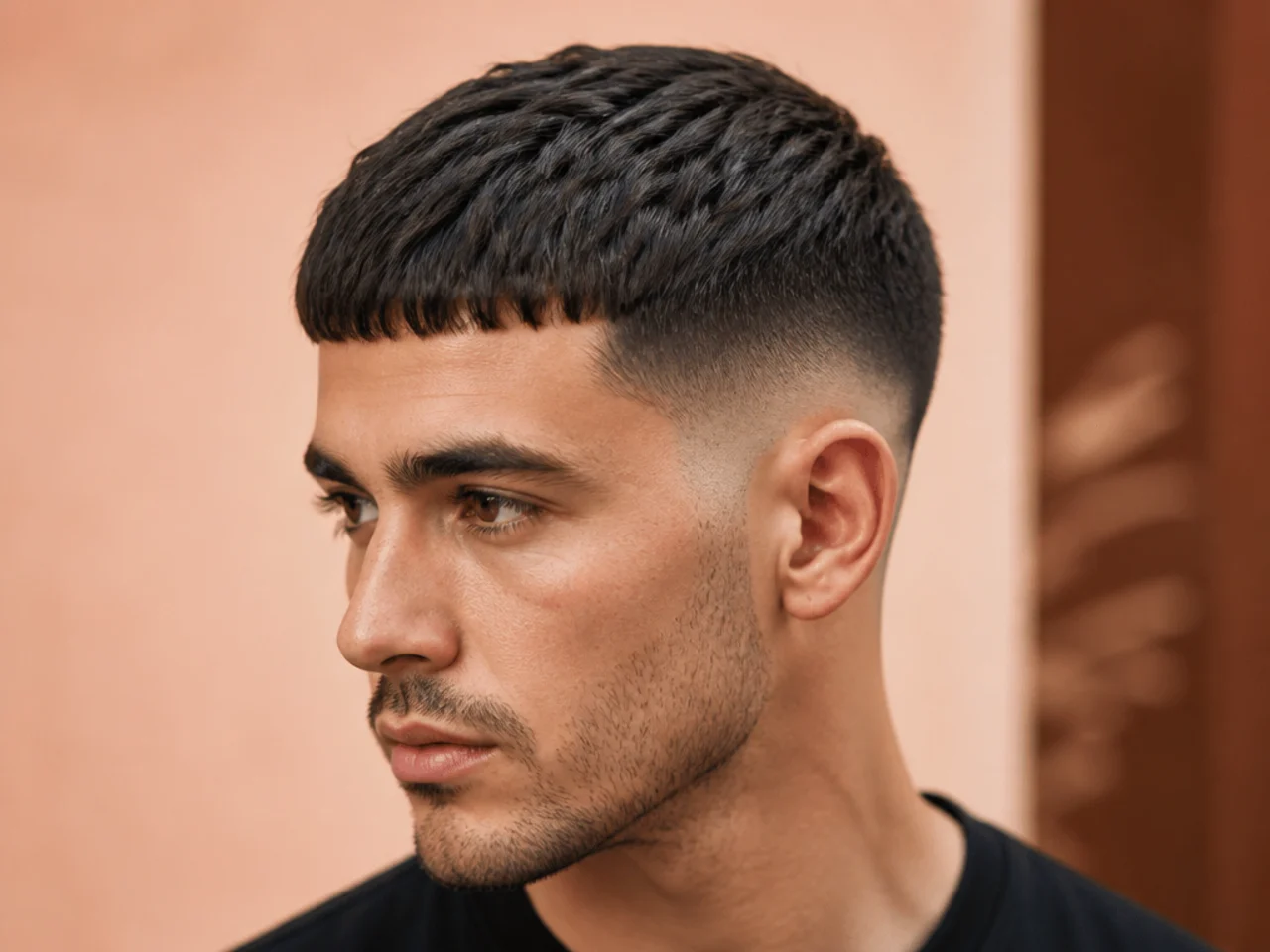
The Caesar is the classical ancestor of the French crop — about an inch on top, brushed forward, ending in a short even fringe across the brow. Modern versions pair it with a low or mid fade at the sides for contrast. Straight hair carries the Caesar as cleanly today as it did two thousand years ago; the flat lay of the top is the whole point.
Best on high foreheads, receding hairlines, round faces, and any straight-hair density. Ask for: "Caesar cut, one inch on top brushed forward, straight fringe at the brow, low fade at the sides." Style with a matte pomade or a light clay for a modern read.
Edgar Cut
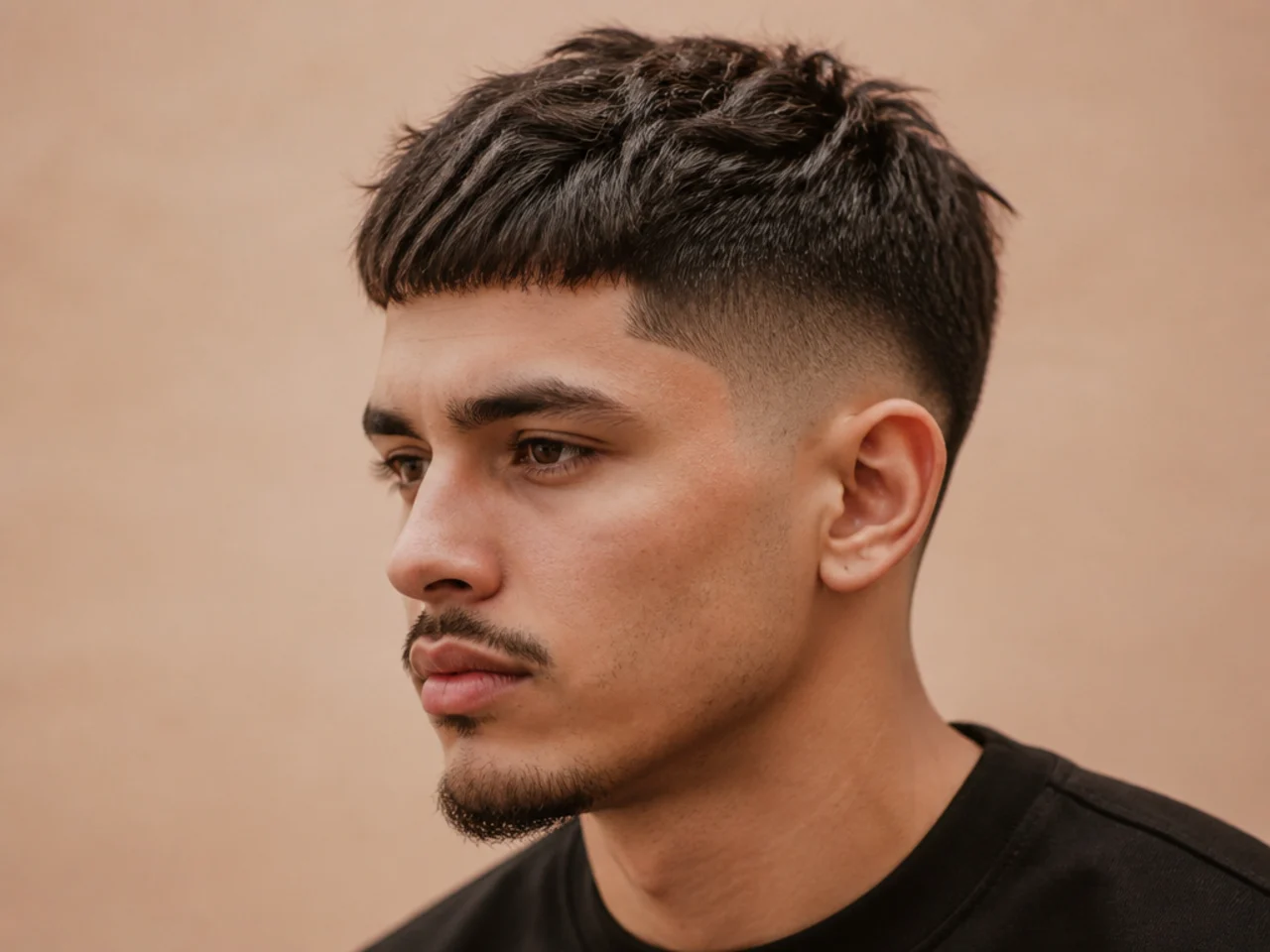
The Edgar is a short cut with a hard, razor-straight fringe line and a skin fade at the sides. Popular in Latino and streetwear communities, it reads bold and current. Straight hair is essentially a prerequisite for the Edgar to look right — curls and waves round the line off, but a flat straight fringe holds the geometry the cut is built on.
Best on straight hair and round-to-oval faces. Ask for: "Edgar cut, three-quarter inch on top, straight hard fringe line, skin fade jumping in mid to high." A drop of matte cream keeps the fringe sitting exactly where the barber left it. Rebook every two to three weeks — the line grows out visibly.
Textured Tops and Volume Cuts
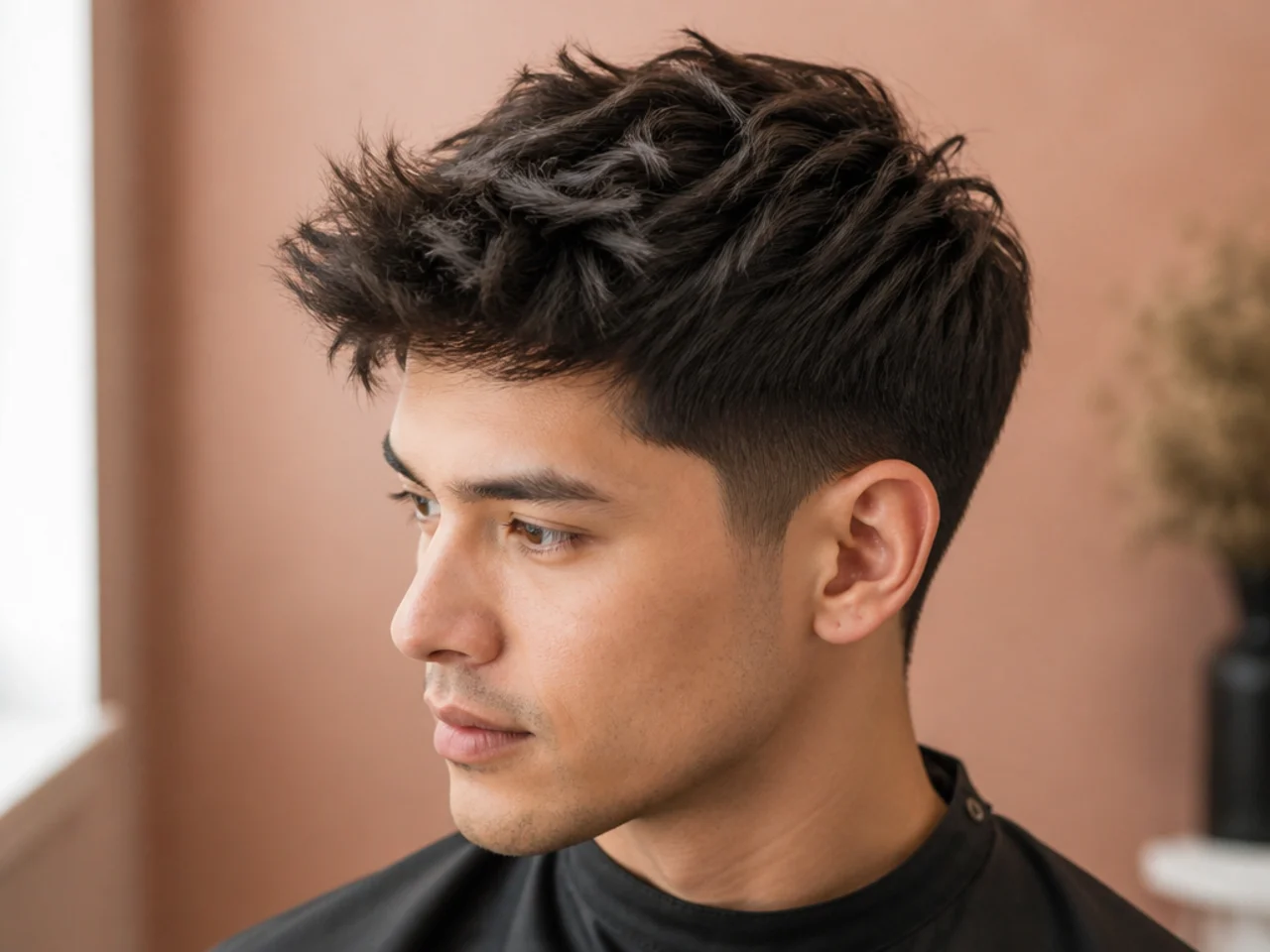
Two inches on top gives straight hair enough to lift, tousle, or brush. These cuts trade the flat profile of a buzz for shape without adding real styling time — and straight hair rewards the extra length because it stays exactly where you put it.
Short Textured Quiff
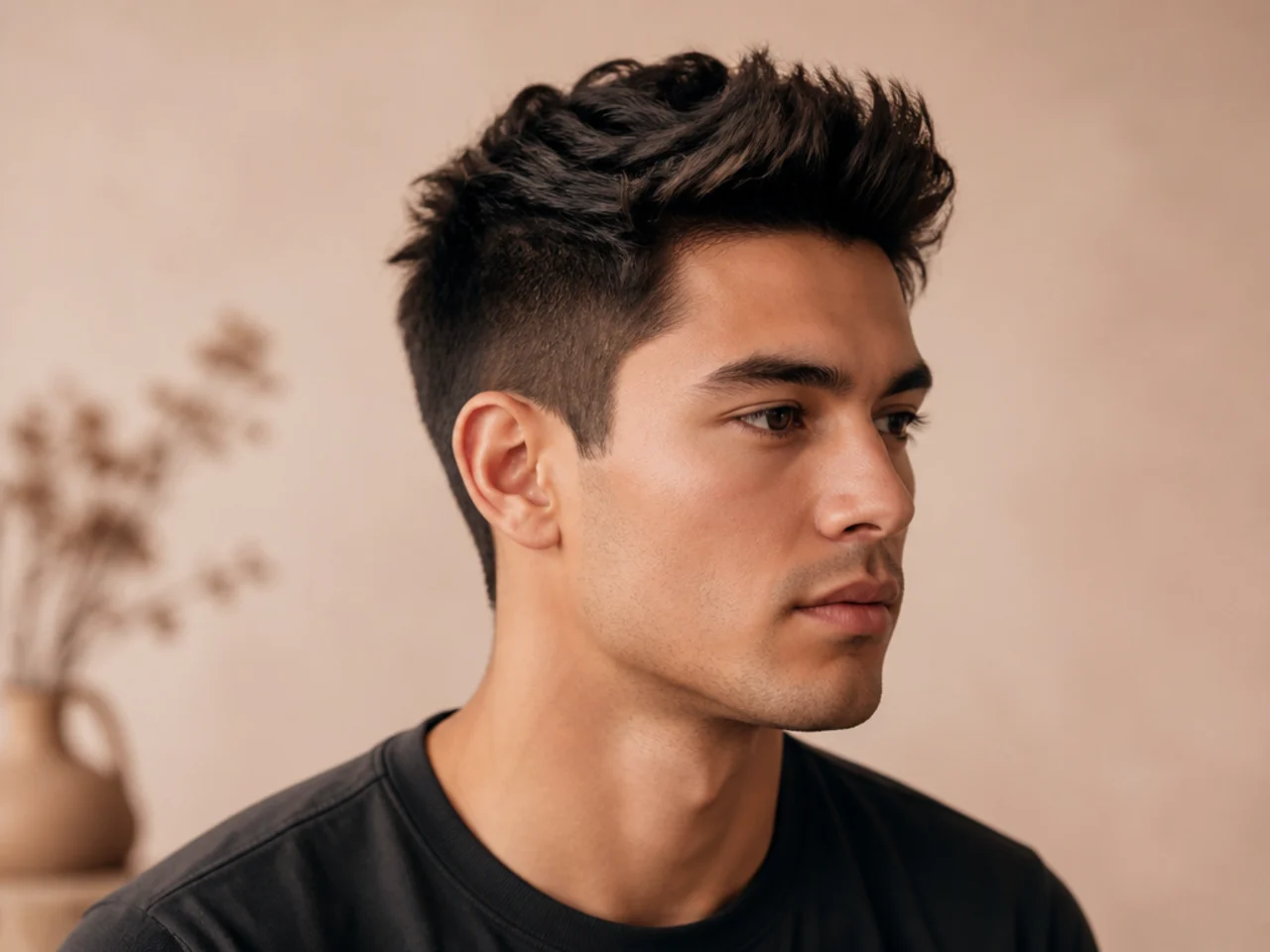
The short quiff keeps about two inches on top, point-cut for movement, with volume built up at the front. A low or mid fade at the sides makes the lift read intentional. Straight hair holds the quiff shape all day, which is why it's the most-requested short textured cut for guys with straight hair.
Best on round, heart-shaped, and oval faces — the vertical lift adds length to the silhouette. Ask for: "Short textured quiff, two inches on top point-cut for texture, mid fade at the sides." Blow-dry the front up and back, work a matte paste through, tousle with your fingers.
Short Pompadour
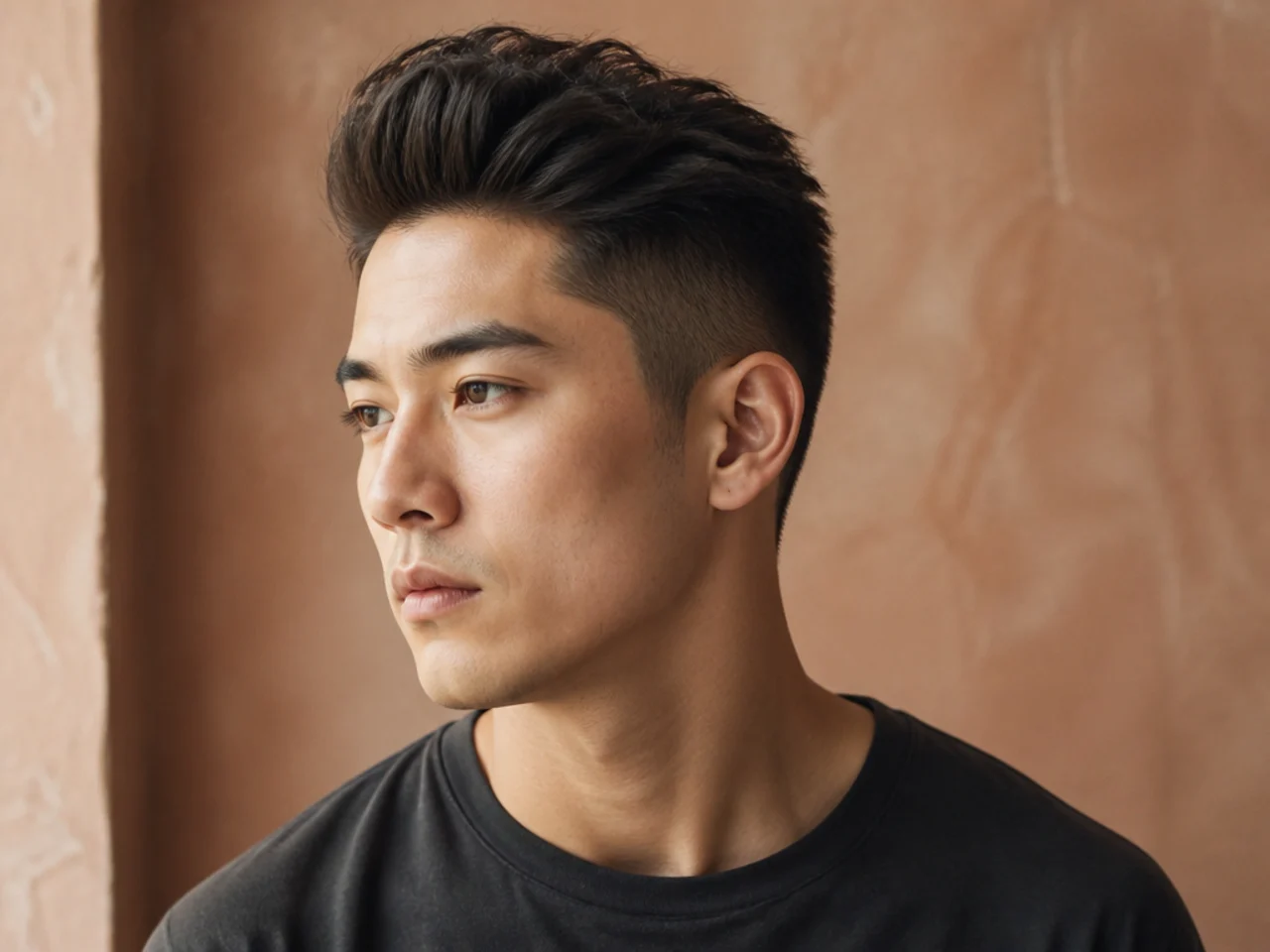
A short pompadour keeps the same two inches but styles it back and up with more sheen than a quiff. Retro roots, modern silhouette. Straight hair is the classic pompadour texture — it slicks back in one comb pass without fighting, and it holds the arc a curl or wave would collapse.
Best on oval and square faces and medium to thick straight hair with body. Ask for: "Short pompadour, two inches on top, low taper fade at the sides." Blow-dry back with a small round brush, work a medium-shine pomade through, comb once.
Short Brush Up
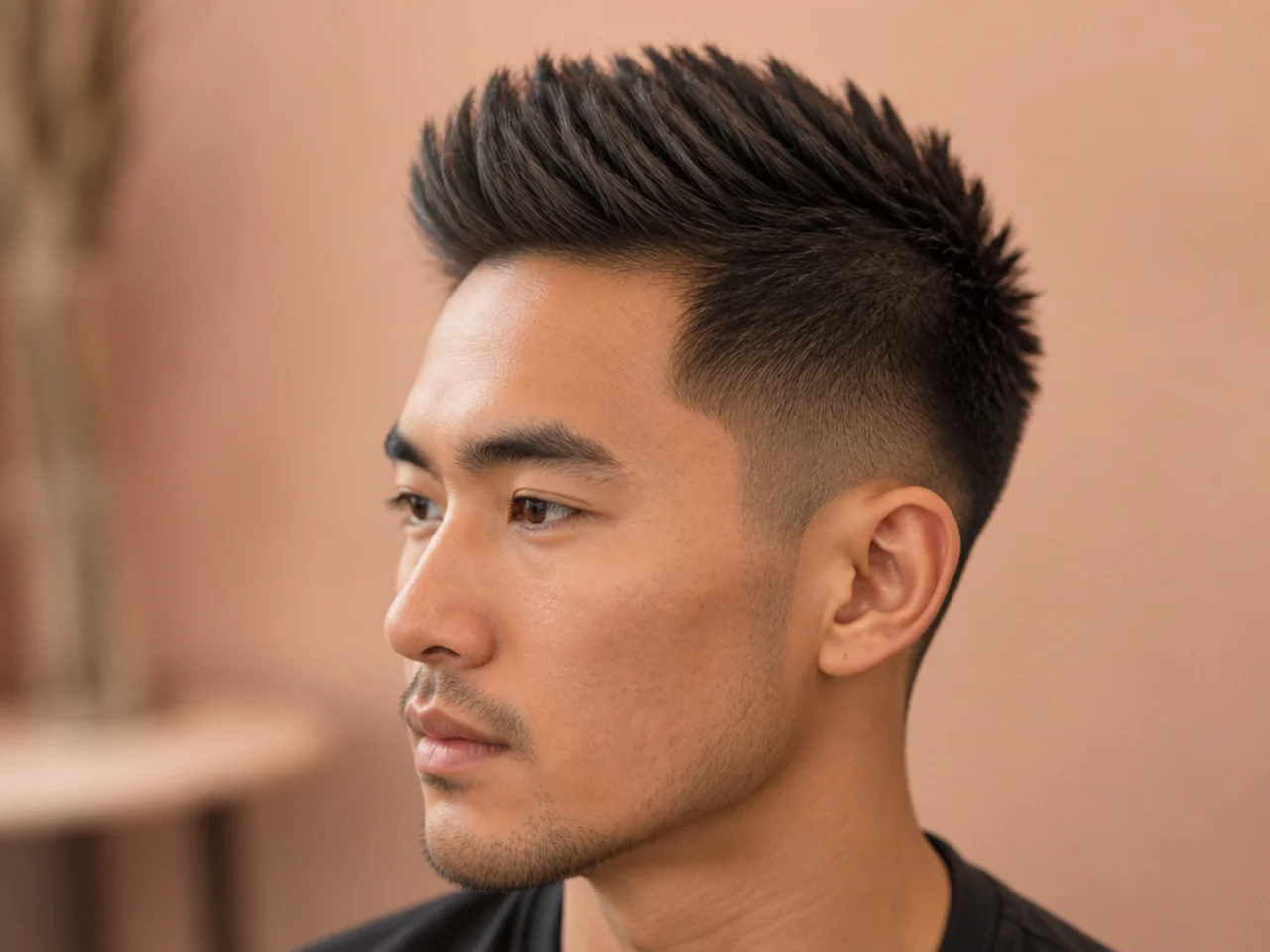
The brush up keeps an inch and a half on top brushed straight up and forward. Sides fade cleanly to draw the eye upward — usually paired with a low or mid fade. Reads modern and photographs well. On straight hair the brush up sits sharp because each strand points where you brush it, no negotiation.
Best on round and heart-shaped faces because the vertical lift adds length. Ask for: "Brush up, inch and a half on top, low fade at the sides, square the neckline." Blow-dry up with a vent brush, work a light-hold clay through with your fingertips.
Short Spiky Cut
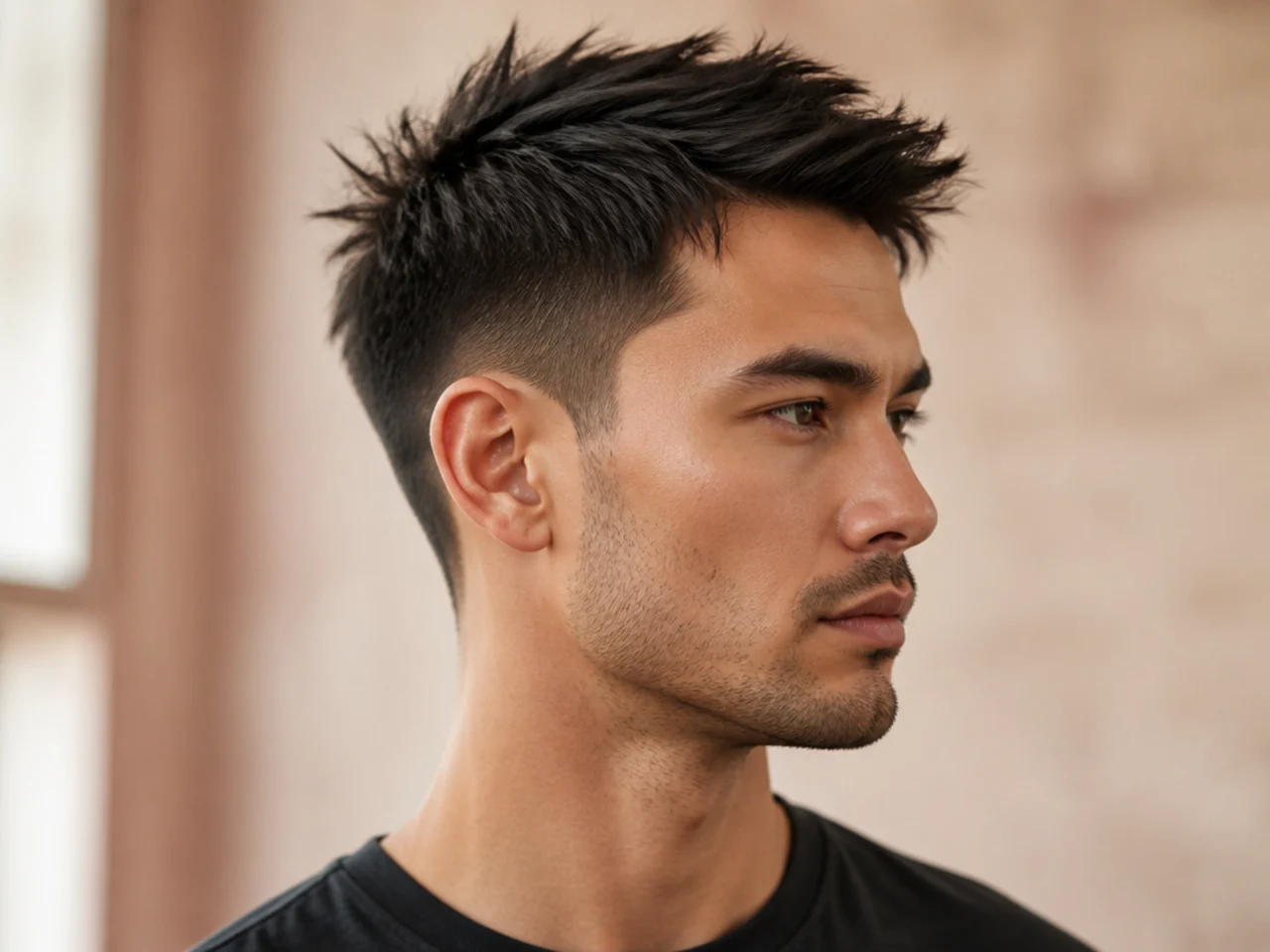
Short spikes keep an inch to an inch and a half on top with heavy point-cutting for texture, and a fade at the sides to make the spikes stand out. Straight hair is essentially the requirement for real spikes — a wave or curl pattern rounds the tip and kills the effect. Playful without being a costume, and best on guys under 40 in casual dress codes.
Ask for: "Spiky cut, inch and a half on top heavily point-cut for texture, low or mid fade at the sides." Firm-hold matte clay pinched into small sections with your fingertips. Add a sea-salt spray under the clay if your hair is fine — it gives the tips the grip they need to stand up.
Sleek and Parted Styles
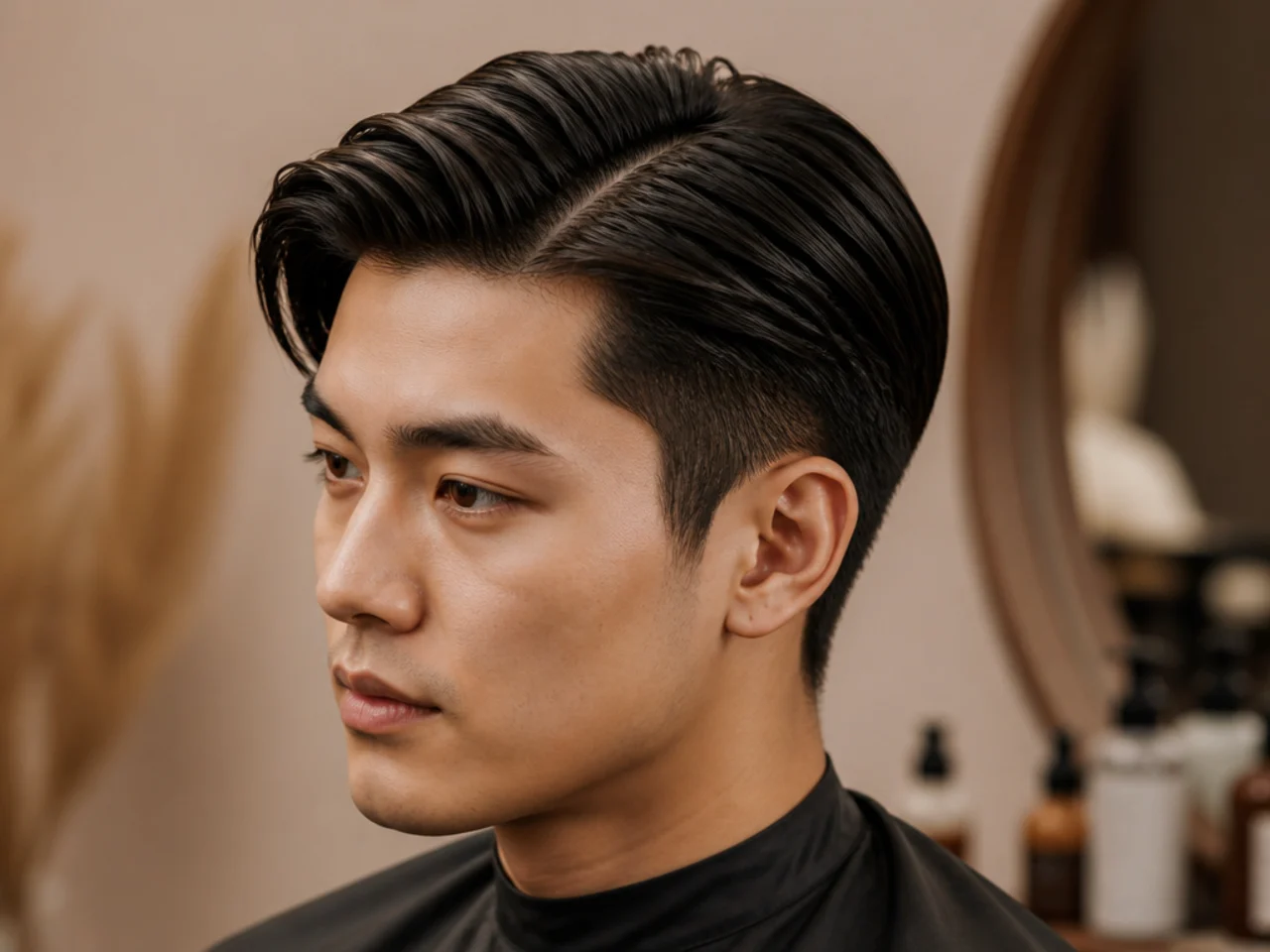
Straight hair is where sleek styles live. A defined part, a slick back, a comb over — every one of them relies on strands sitting exactly where a comb places them, which is straight hair's home turf. All four cuts below suit corporate and formal dress codes and read polished at any age.
Classic Side Part
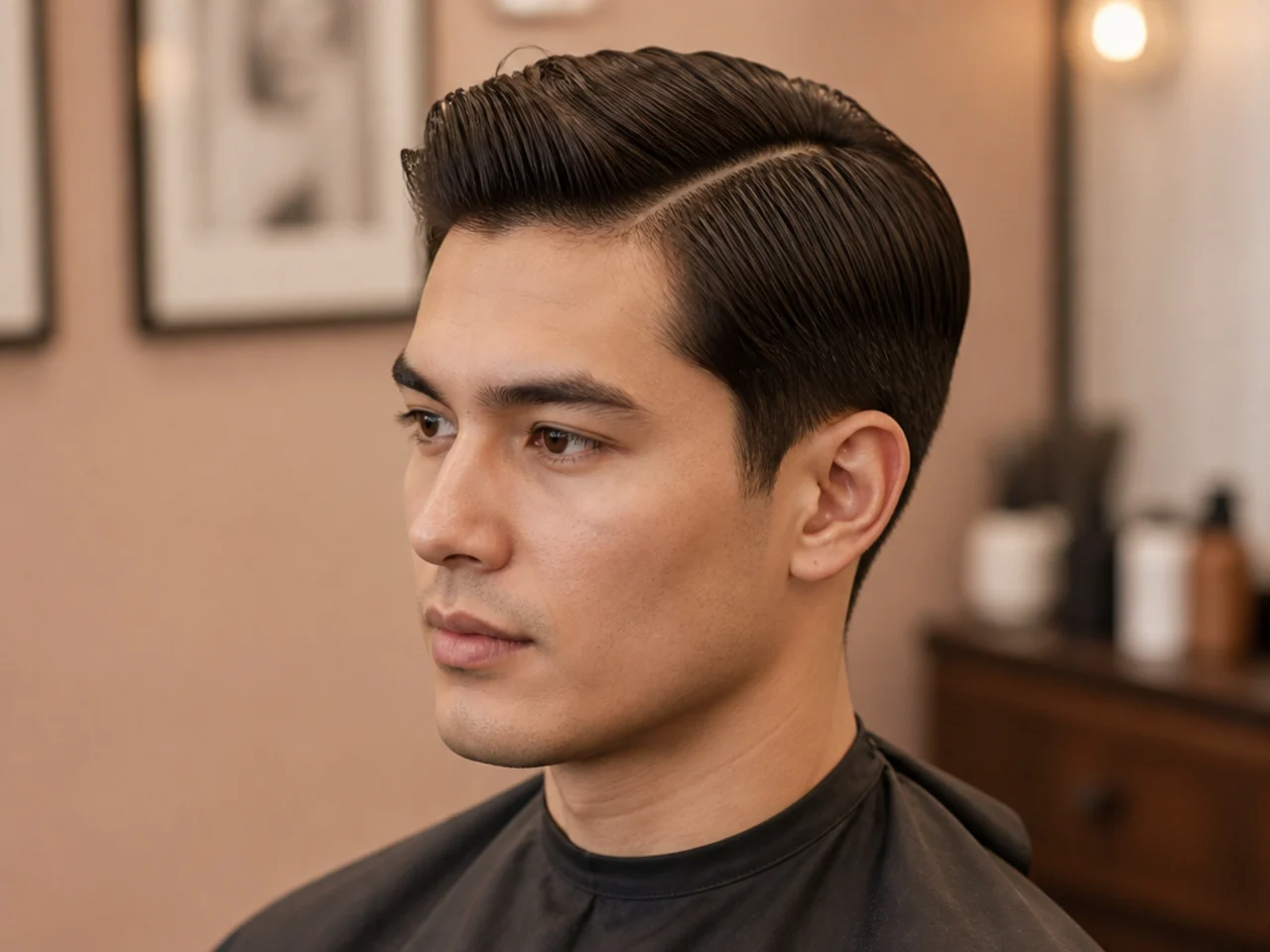
The classic side part keeps about an inch and a half on top with a defined part on the side — natural or razored — and a low fade or scissor-taper at the sides. The most workplace-friendly short cut on the list, and one of the most flattering across face shapes because the part visually widens the crown and narrows the jaw at the same time.
Best on oval, square, and heart-shaped faces, and any straight-hair density. Ask for: "Classic side part, inch and a half on top, part on the left [or right], low fade at the sides." Confirm which side you actually part on before the barber picks — it should feel natural, not forced. Blow-dry to the part, work a light pomade through, comb once.
Slick Back Undercut
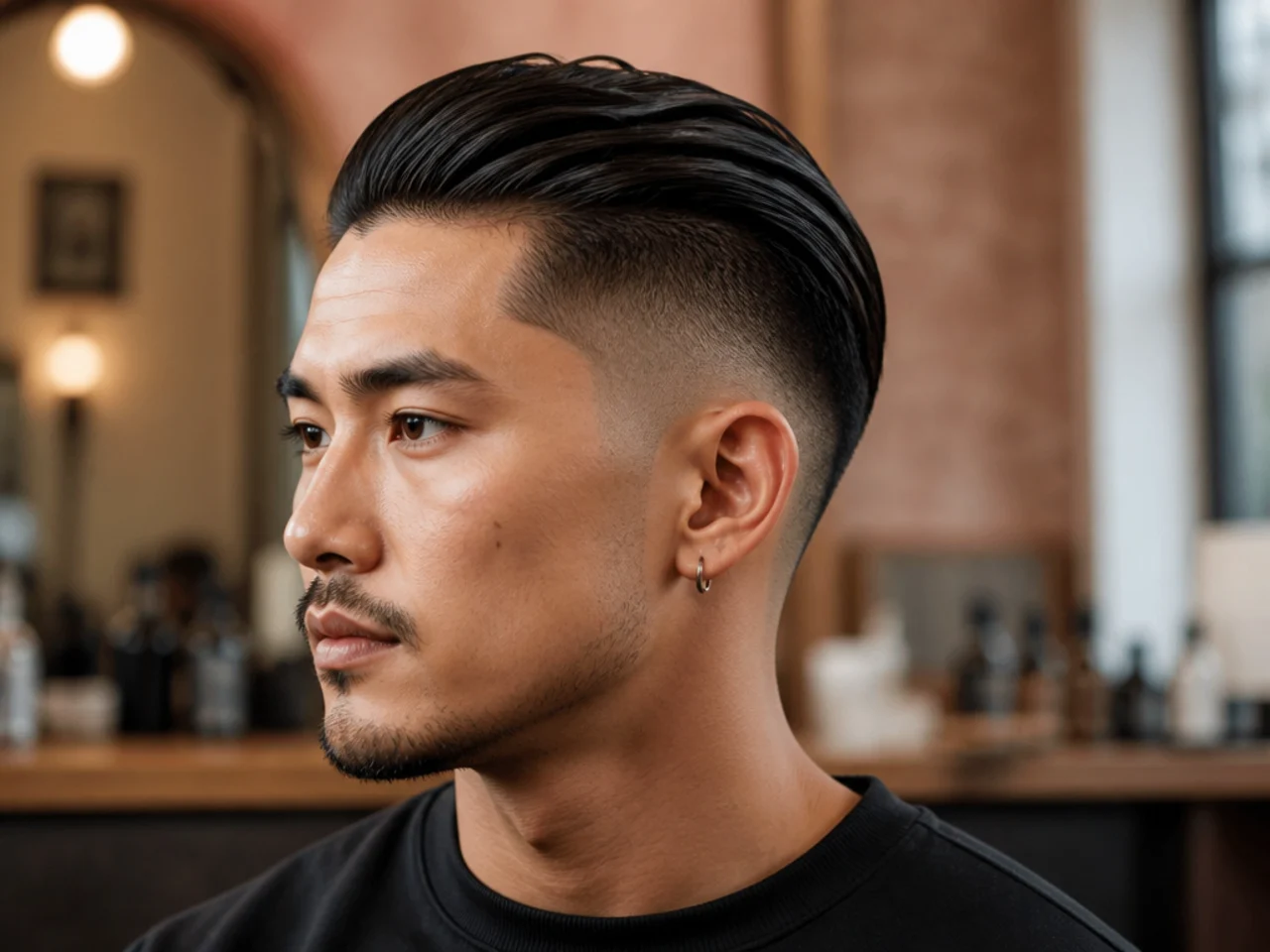
The slick back is the classic straight-hair power move: two inches on top combed straight back with a defined undercut at the sides. Straight hair combs back in one clean pass — a wave or curl would fight this every morning. Reads sharp in boardrooms, weddings, and any night out where you're overdressed on purpose.
Best on oval and square faces and medium to thick straight hair. Ask for: "Short slick back with a disconnected undercut, two inches on top, sides clippered to a number two." Blow-dry back with a round brush, work a medium-hold pomade through, comb straight back. A hair spray sets it for the night.
Short Comb Over with Low Fade
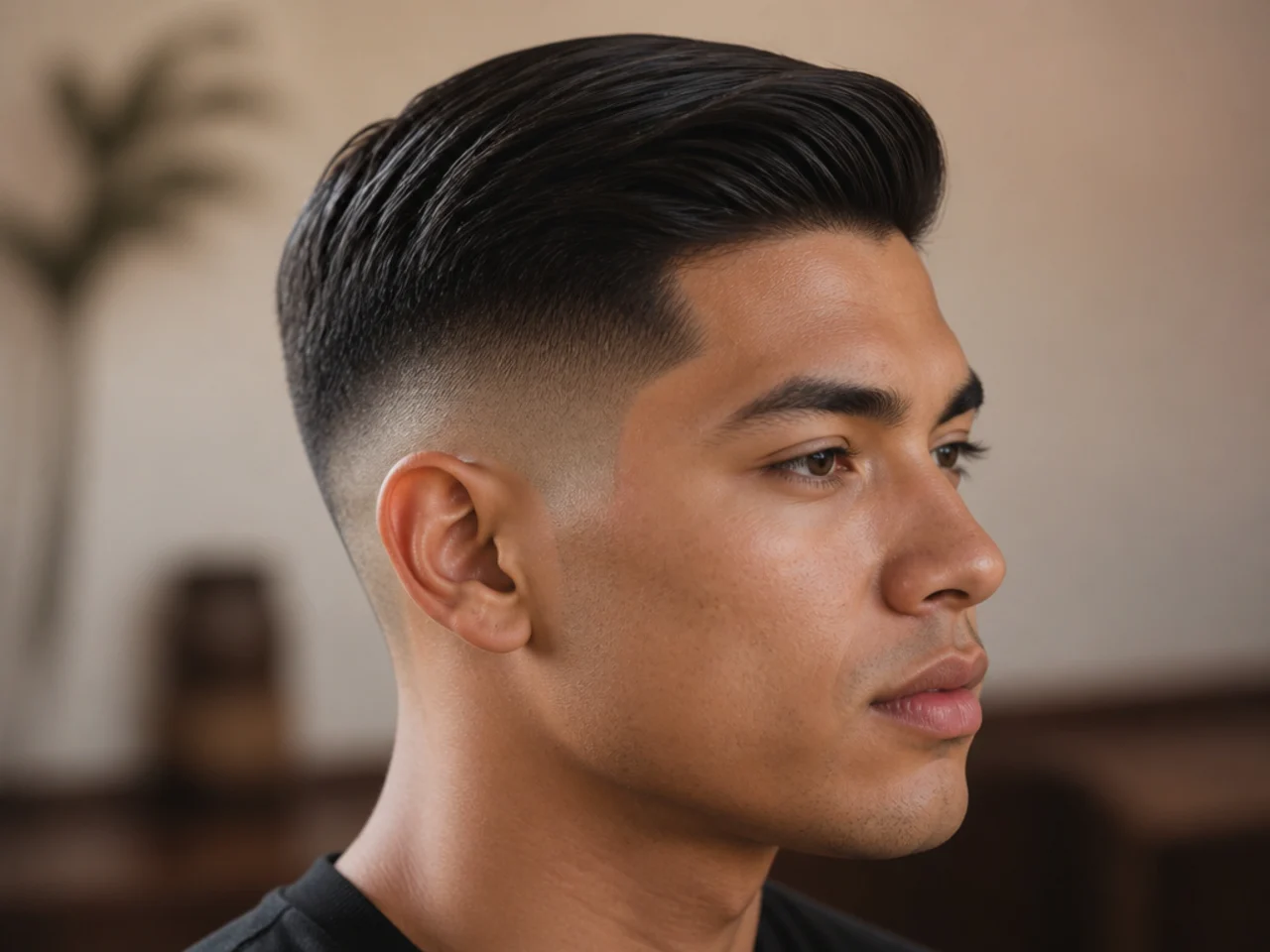
A short comb over keeps about two inches on top, brushed to one side with a razored or natural part, paired with a low fade. Closest thing to a suit in haircut form. Straight hair sweeps across the crown in one comb pass and stays there — the reason this cut has been the executive default for eighty years.
Best on oval and square faces and any straight-hair density. Ask for: "Short comb over with a razored part on the left [or right], two inches on top, low fade at the sides, square neckline." Blow-dry with a round brush toward the part, work a medium-hold pomade through, comb across.
Modern Executive with Skin Fade
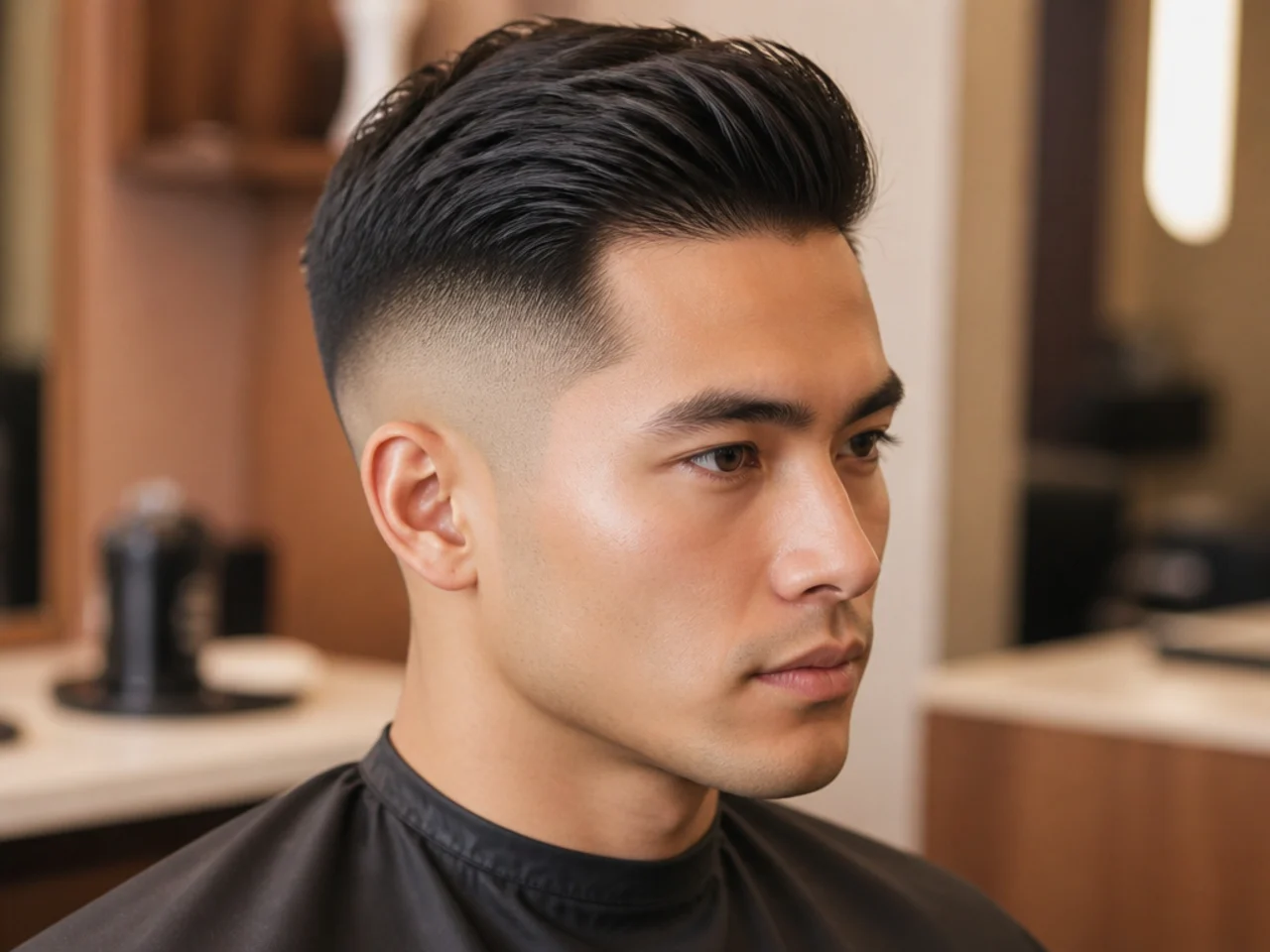
The modern executive is the classic comb over rebuilt for 2026 — same two inches on top brushed to one side, but with a hard razored part and a skin fade at the sides instead of a soft one. Reads unmistakably current while still sitting inside every corporate dress code. Straight hair holds the hard part clean and lets the skin fade meet the top with no soft edges.
Best on oval, square, and diamond faces and medium to thick straight hair. Ask for: "Modern executive cut, two inches on top brushed to one side, hard razored part on the left [or right], skin fade jumping in mid." Blow-dry to the part, work a light-shine pomade through, comb once. Rebook every three weeks to keep the fade line and the razored part crisp.
How to Ask Your Barber for a Short Straight-Hair Cut
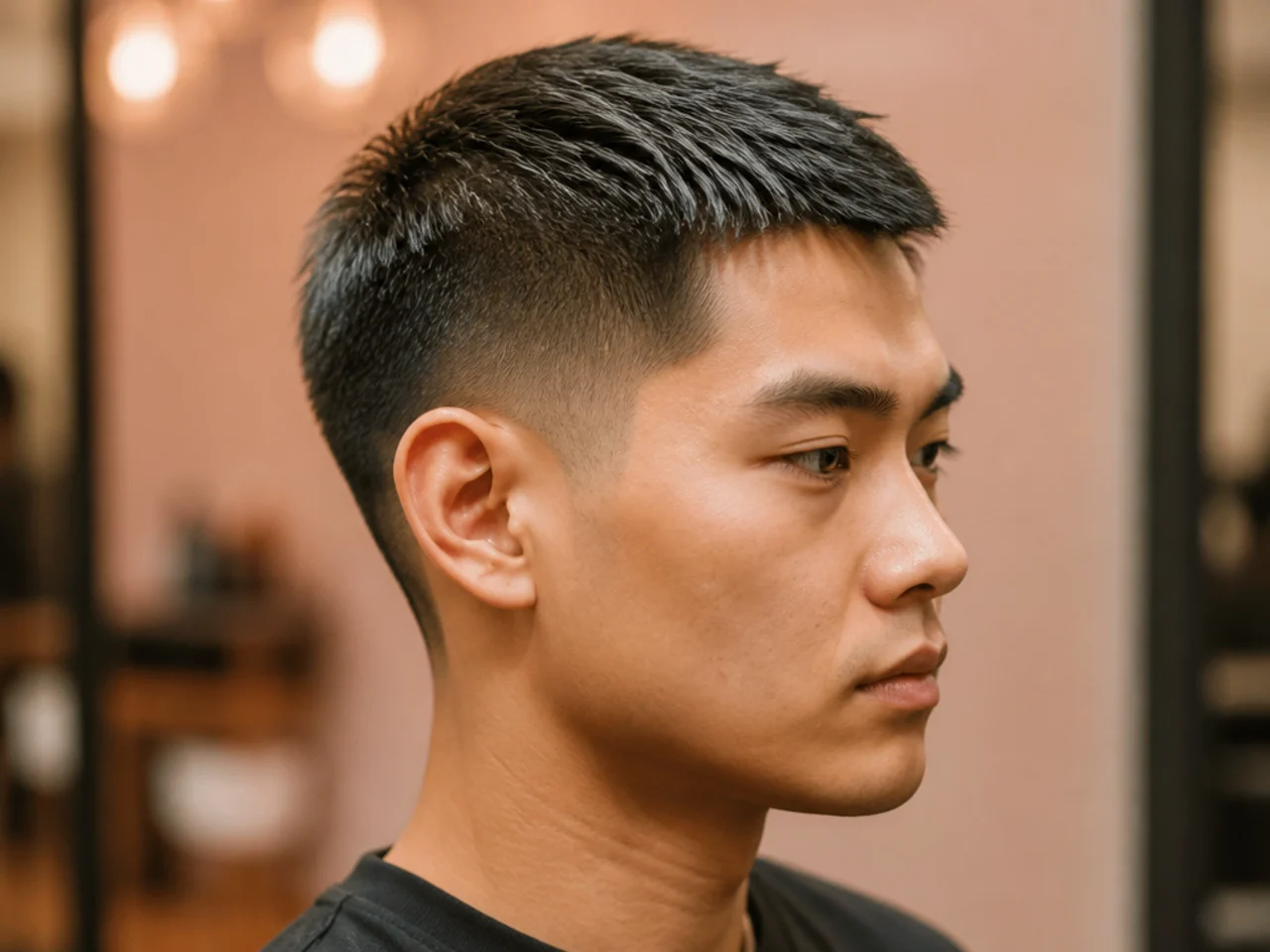
Every short cut lives or dies by six specifics. Get them right and you walk out with the cut in your head.
- Bring a photo. Words vary; photos don't. Two references — one from the front, one from the side — beat any description. Screenshot from Pinterest is fine.
- Name the top length in inches or guard numbers. "Inch on top" or "number two on top." Barbers cut to numbers, not vibes.
- Name the side treatment. Taper, low fade, mid fade, high fade, skin fade, or scissor-blend. Point at where the fade should start on your head — barbers appreciate the map.
- Name the neckline. Square, round, or tapered. Square reads sharpest on short straight-hair cuts. Round softens.
- Say the finish you want. Matte and textured, sleek and shiny, or somewhere between. Your barber picks product cues from that word.
- Say your rebook cadence. If you can only come every six weeks, ask for a scissor-taper or low fade instead of a skin fade — it grows out cleaner.
- Ask for point-cutting on the top. Especially on crews, quiffs, and crops. Blunt-cut ends sit heavy on straight hair; point-cut ends move.
Styling and Maintenance for Short Straight Hair
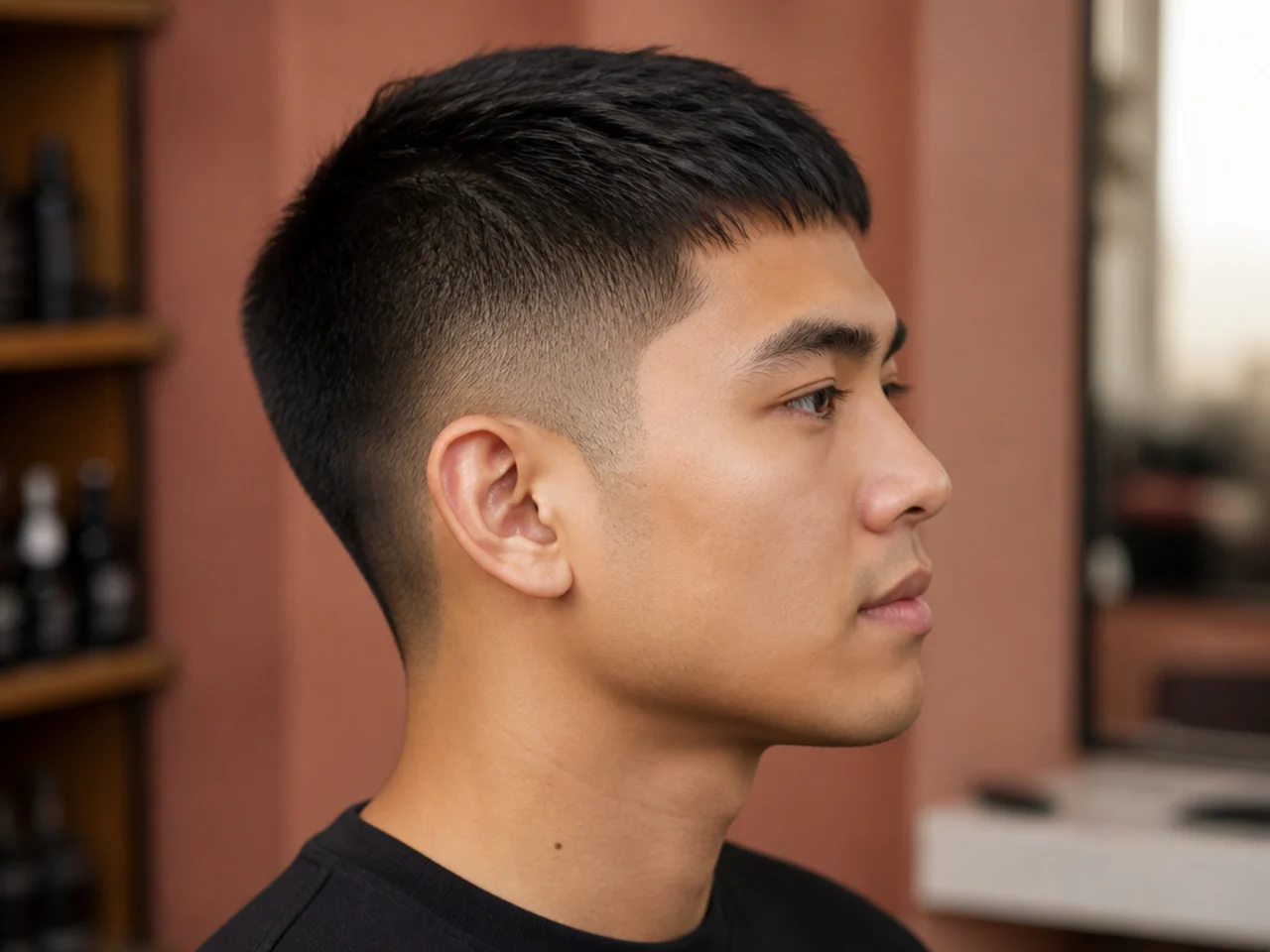
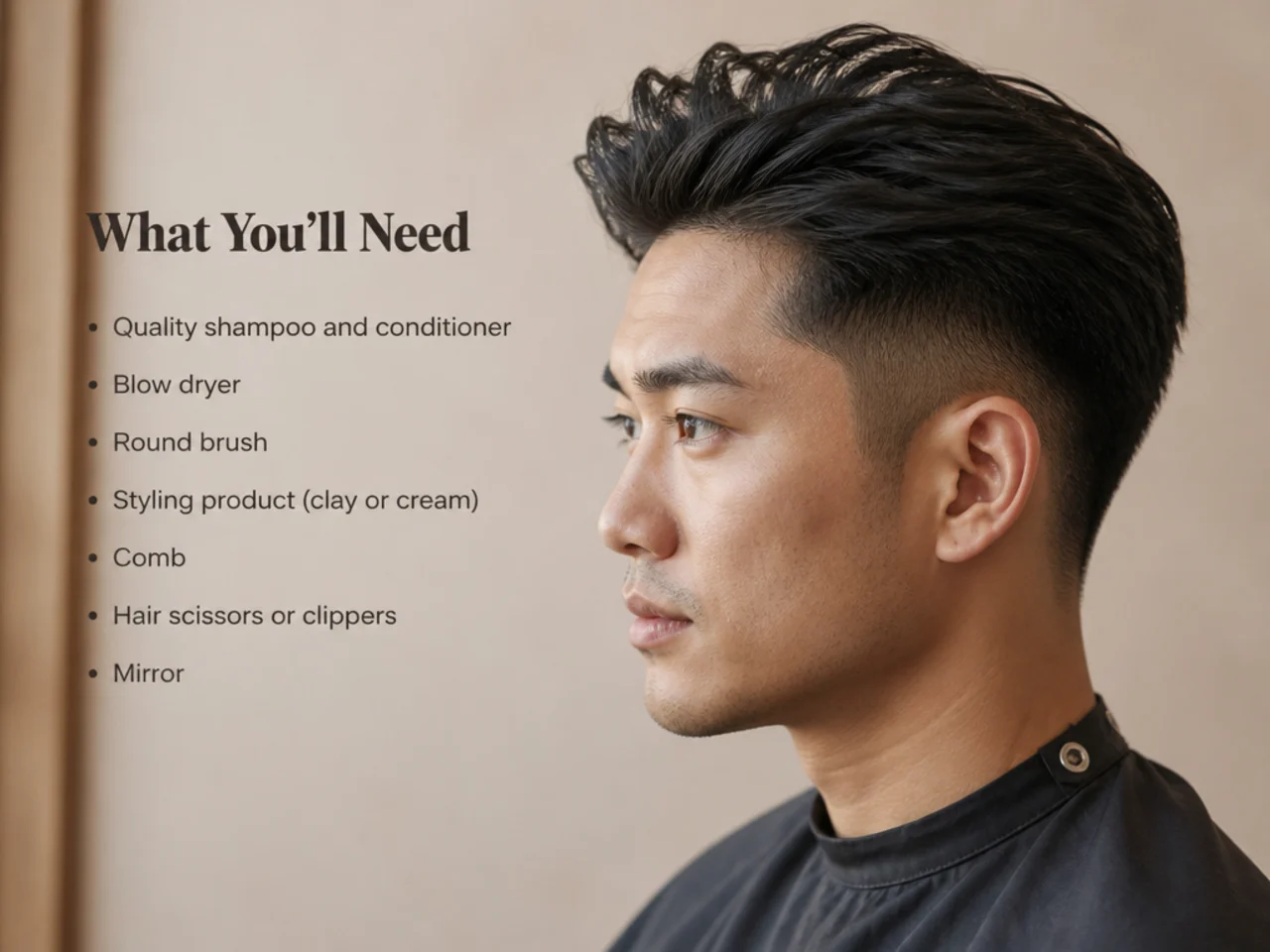
Short straight hair needs one product. That's the whole system. Match the product to the finish you asked for:
- Buzz, butch, and high and tight — nothing. A drop of face moisturizer through damp hair adds a whisper of shine if you want it.
- Crew and Ivy League — light-hold pomade or a medium-shine cream. Blow-dry to the part first.
- French crop, textured crop, Caesar, and Edgar — matte paste or matte cream, worked forward with your fingers.
- Quiffs, brush ups, pompadours, and spikes — firm-hold matte clay with a sea-salt spray pre-styler if your hair is fine.
- Side parts, comb overs, and slick backs — medium-hold pomade with a light shine. Blow-dry with a round brush toward the direction of style.
Wash cadence matters more on straight hair than any other texture. Straight strands wick scalp oil down to the ends faster, which means daily shampoo is tempting — but daily shampoo also strips the scalp and pushes it to overproduce. Sulfate-free shampoo two or three times a week is the sweet spot. Rinse with cool water on the last pass to close the cuticle. Skip conditioner on the top of buzz, crew, and high-and-tight cuts; use it on any scissor-cut length past an inch.
Rebook by cut type. Skin fades and hard line-ups want two to three weeks. Standard low or mid fades and buzz cuts want three to four weeks. Scissor-blended cuts like the Ivy League, Princeton, or short quiff hold for five to six. The moment the outline softens is the moment to book — a fade especially reads messy the second week past its rebook.
Straight hair sits obedient at any length, but the outline is what dates a cut. Rebook on time, keep one matte product on the shelf, and the same short cut looks sharp for years.
FAQ
Quick answers to the questions barbers get every week from straight-haired guys.
Does thick straight hair suit short cuts? Yes — but ask for point-cutting on the top to break up the bulk, and pair it with a fade or taper at the sides so the sides don't sit as a wall of hair. A blunt-cut short top on thick straight hair reads heavy; point-cut ends move.
Which short cut hides a receding hairline on straight hair? French crop, Caesar, Edgar, and short cropped fringe — all four have a forward fringe that covers the temple corners. A buzz or butch also works, but by embracing the recession instead of hiding it. Slick backs and comb overs expose the hairline and should be skipped if that's what you're trying to hide.
What's the best short cut for fine straight hair? Short textured crop, French crop, or classic buzz. Fine straight hair looks fullest when it's short and even; the moment you leave length on top it starts to show scalp. Add a sea-salt spray pre-styler under any matte product for grip.
Can I add waves or texture to straight hair with a short cut? A little. Sea-salt spray on damp roots, blown dry against the grain, gives fine straight hair some grip. But you'll never fake real texture — better to lean into what straight hair does best (sharp lines, defined parts, clean fades) than fight for a look that doesn't belong to you.
How short can straight hair go before it stops looking good? A #0 (skin) reads honest and works on strong jawlines and dark stubble. Everything from a #1 up sits fine on almost any face shape. The floor is really about your comfort, not the hair — straight hair carries the shortest length as gracefully as any other texture.
Should I switch products in summer? Swap a firm-hold clay for a lighter matte cream when it's hot. Sweat combines with heavy product on the scalp and reads greasy on straight hair faster than on wavy or curly. A sulfate-free shampoo two or three times a week keeps the buildup in check.