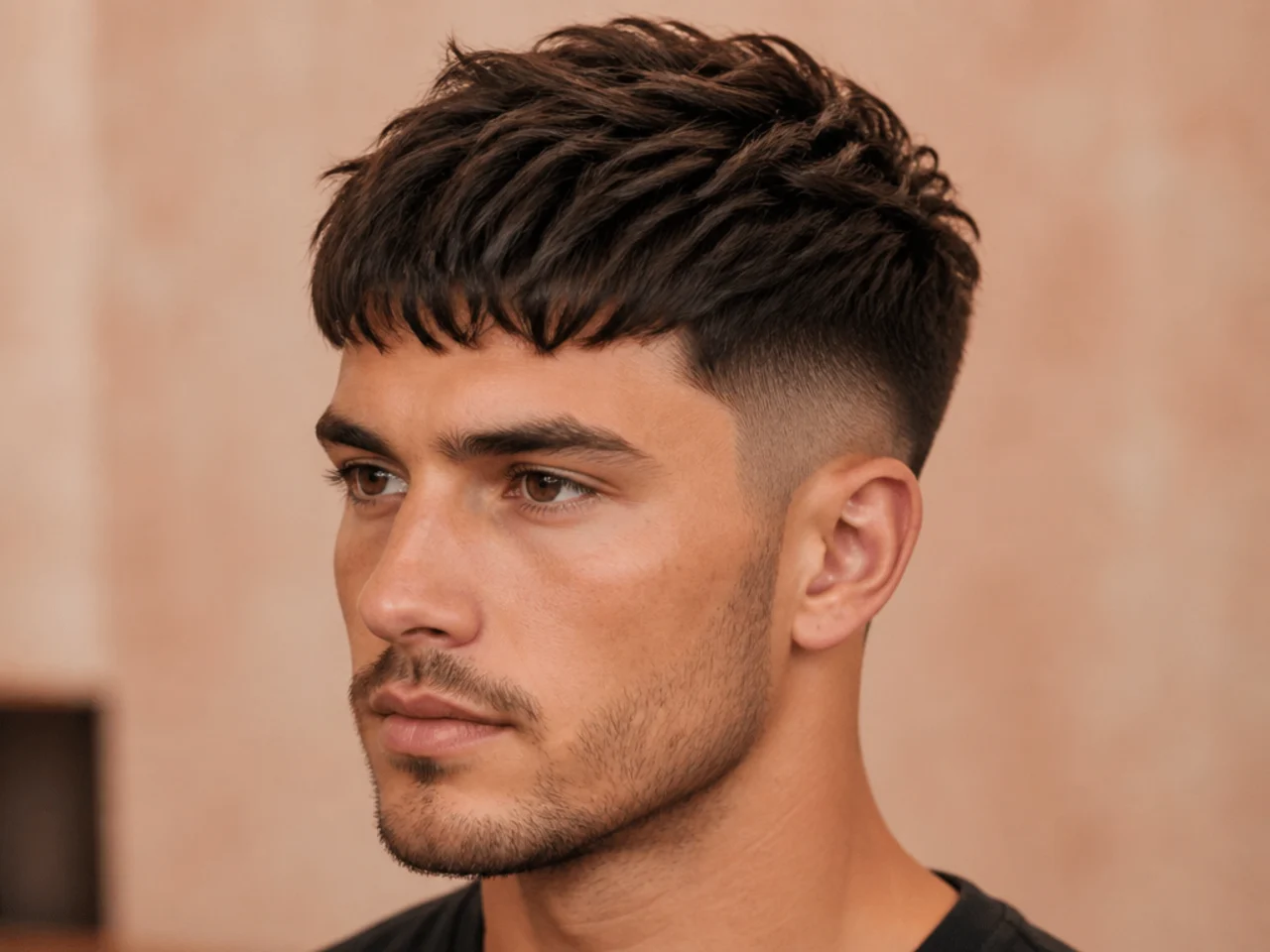
20 Haircuts for Men With Thick Hair
20 haircuts for men with thick hair — French crop, quiff, slick back, flow, crew cut, and taper variations with clipper numbers and styling notes.
In this article · 30
- What Is a Thick Hair Haircut?
- How to Choose Your Thick Hair Cut
- The 20 Thick Hair Variations
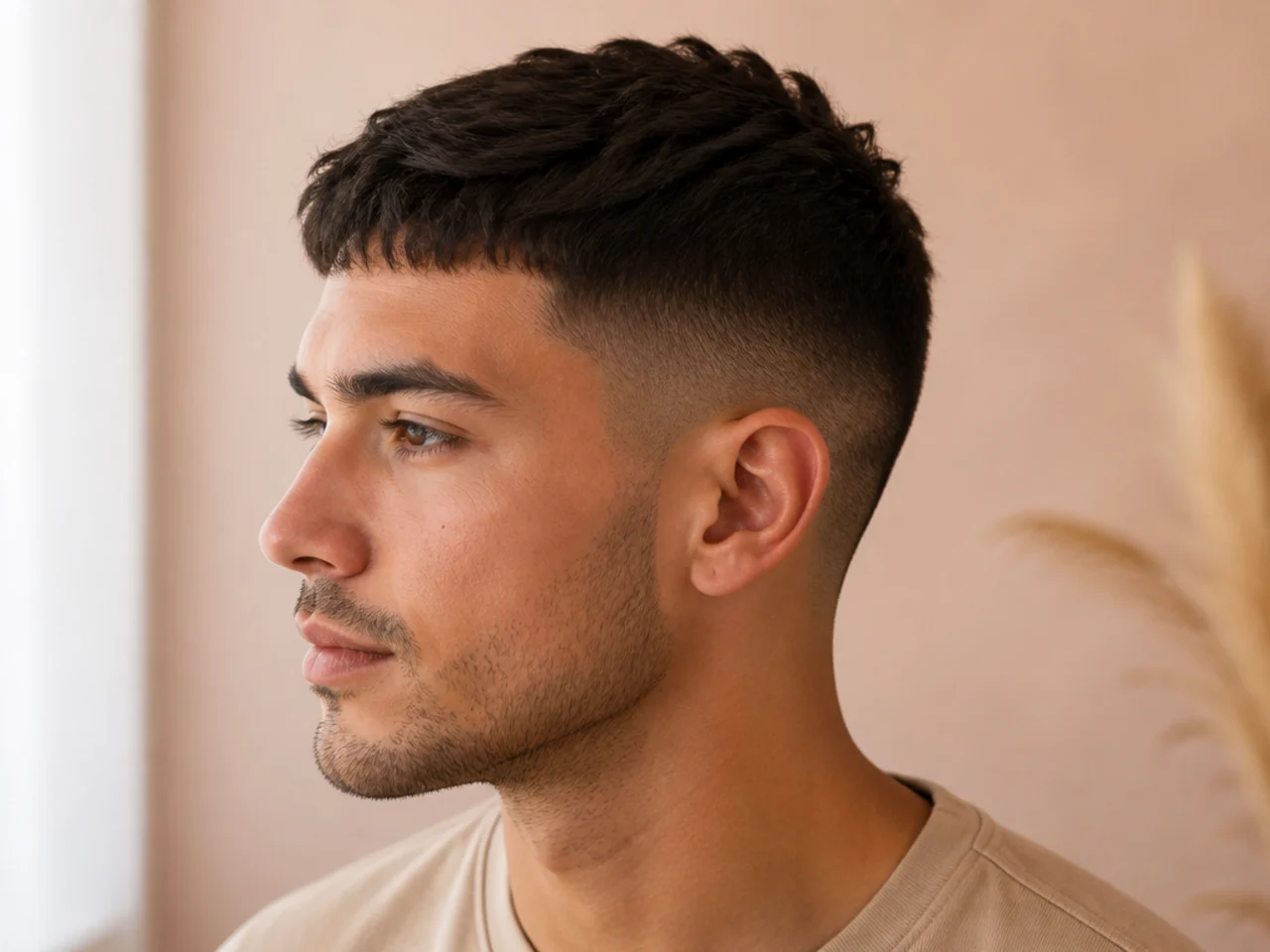
- 1. Textured French Crop
- 2. High Volume Quiff
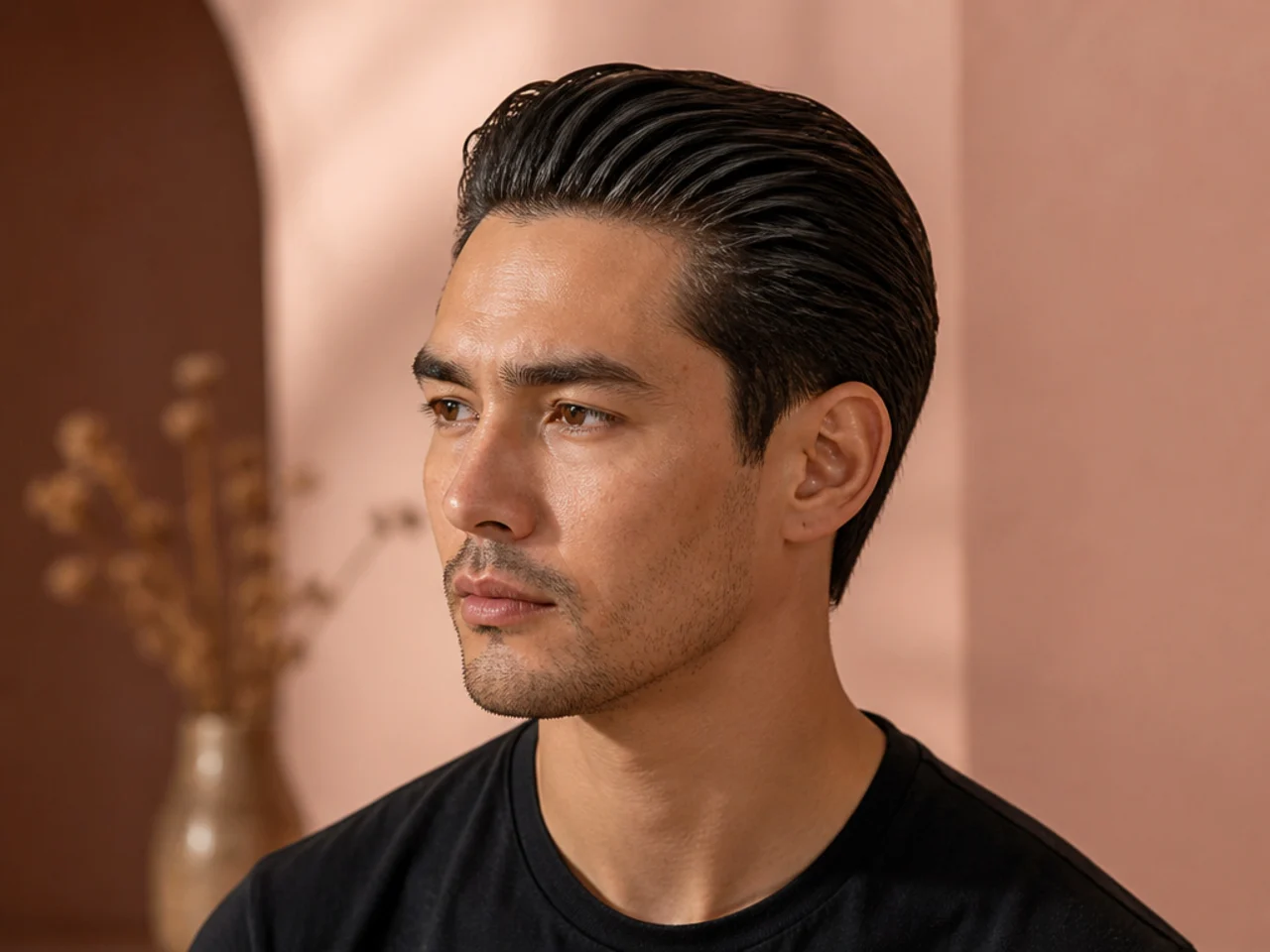
- 3. Slick Back with Mid Fade
- 4. Ivy League
- 5. Layered Flow
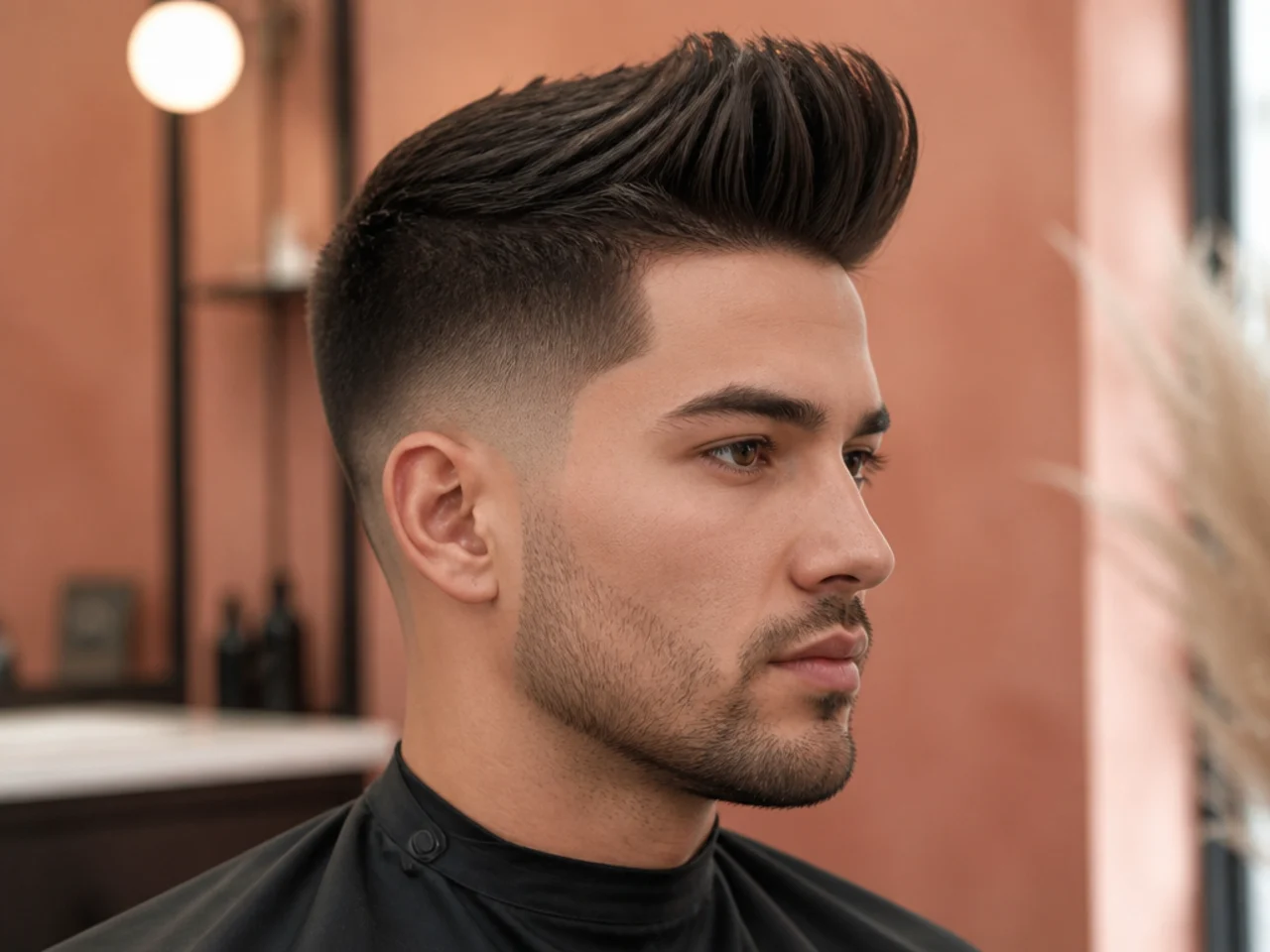
- 6. Modern Pompadour
- 7. Undercut with Textured Top
- 8. Textured Crew Cut
- 9. Buzz Cut
- 10. Comb Over with Fade
- 11. Long Layered Shag
- 12. Side Part with Volume Control
- 13. Messy Textured Fringe
- 14. Brush Up with Taper
- 15. Two Block Cut
- 16. Curtain Fringe
- 17. Broccoli Cut
- 18. Textured Crop with Fade
- 19. Layered Middle Part
- 20. Skin Fade with Textured Top
- How to Ask Your Barber
- Styling and Maintenance
- FAQ
- What is the best haircut for thick hair on men?
- Should men with thick hair thin their hair out at the barber?
- How often should thick hair be cut?
- What products work best on thick hair?
Thick hair is a good problem. Density gives you options no fine-haired guy has — full quiffs that actually stand up, layered flow that sits with weight, and crops that hold their shape past lunch. The trick is choosing a cut that works with the bulk instead of fighting it. This guide covers the 20 haircuts men with thick hair are asking for right now, who each one suits, and the exact language for your barber.
What Is a Thick Hair Haircut?
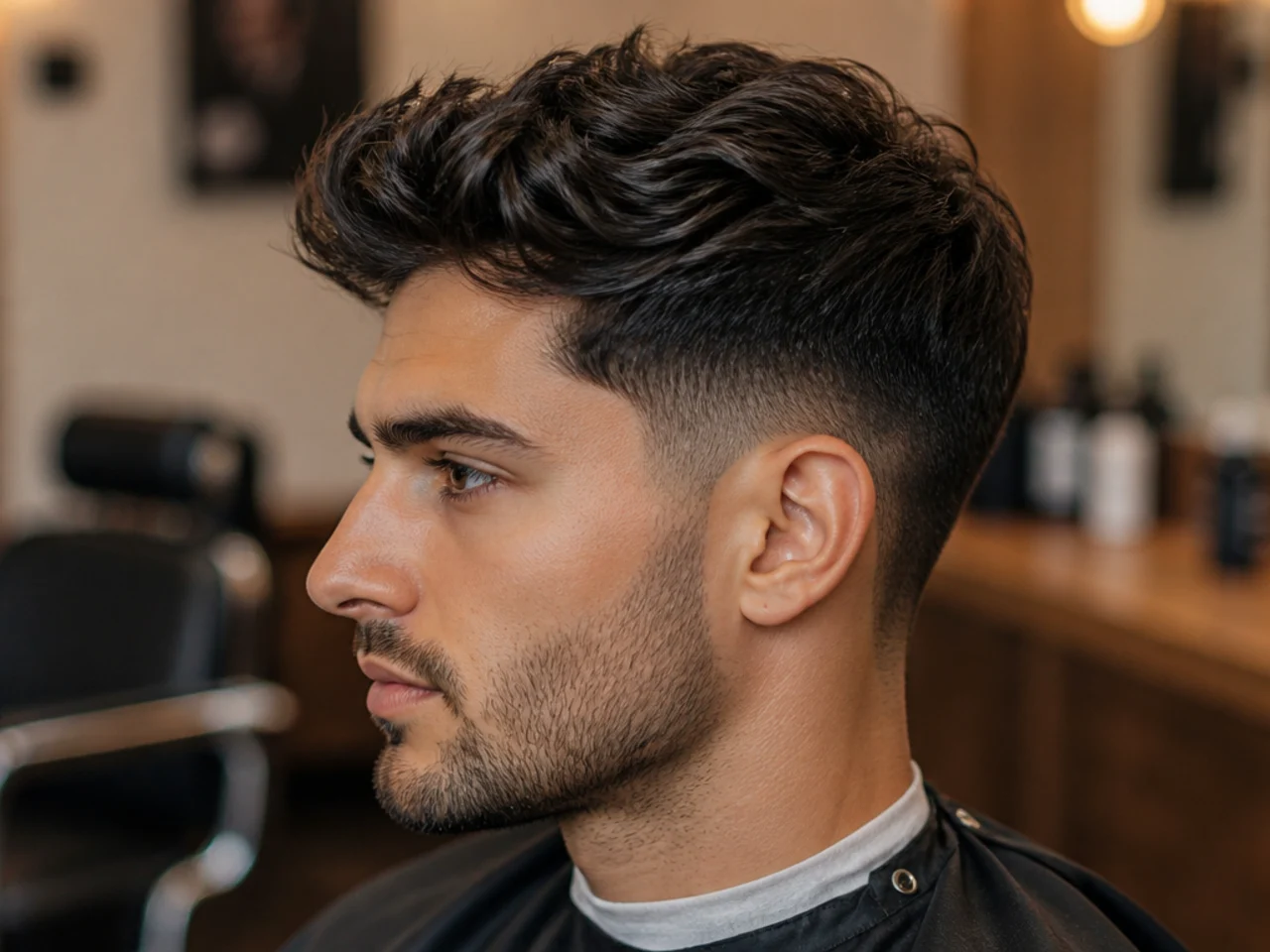
Thick hair is defined by strand density — the number of hairs per square inch of scalp — not by individual strand diameter. A guy can have fine strands and still have thick hair if there are enough of them. Cuts built for thick hair account for that density by removing weight from the interior of the shape rather than the surface.
The cutting language is different too. Where fine hair wants blunt lines and layered volume to build the illusion of density, thick hair wants point-cutting, internal thinning with scissors, and shape work that lets the sides sit close to the head. A good thick-hair cut looks controlled without looking flattened.
Face shape and hairline matter more with thick hair because there is more raw material to work with. That is why the same cut on two different guys with thick hair can read completely different — the underlying head shape shows through the volume, so cuts have to be tailored to it rather than pulled off the wall.
How to Choose Your Thick Hair Cut
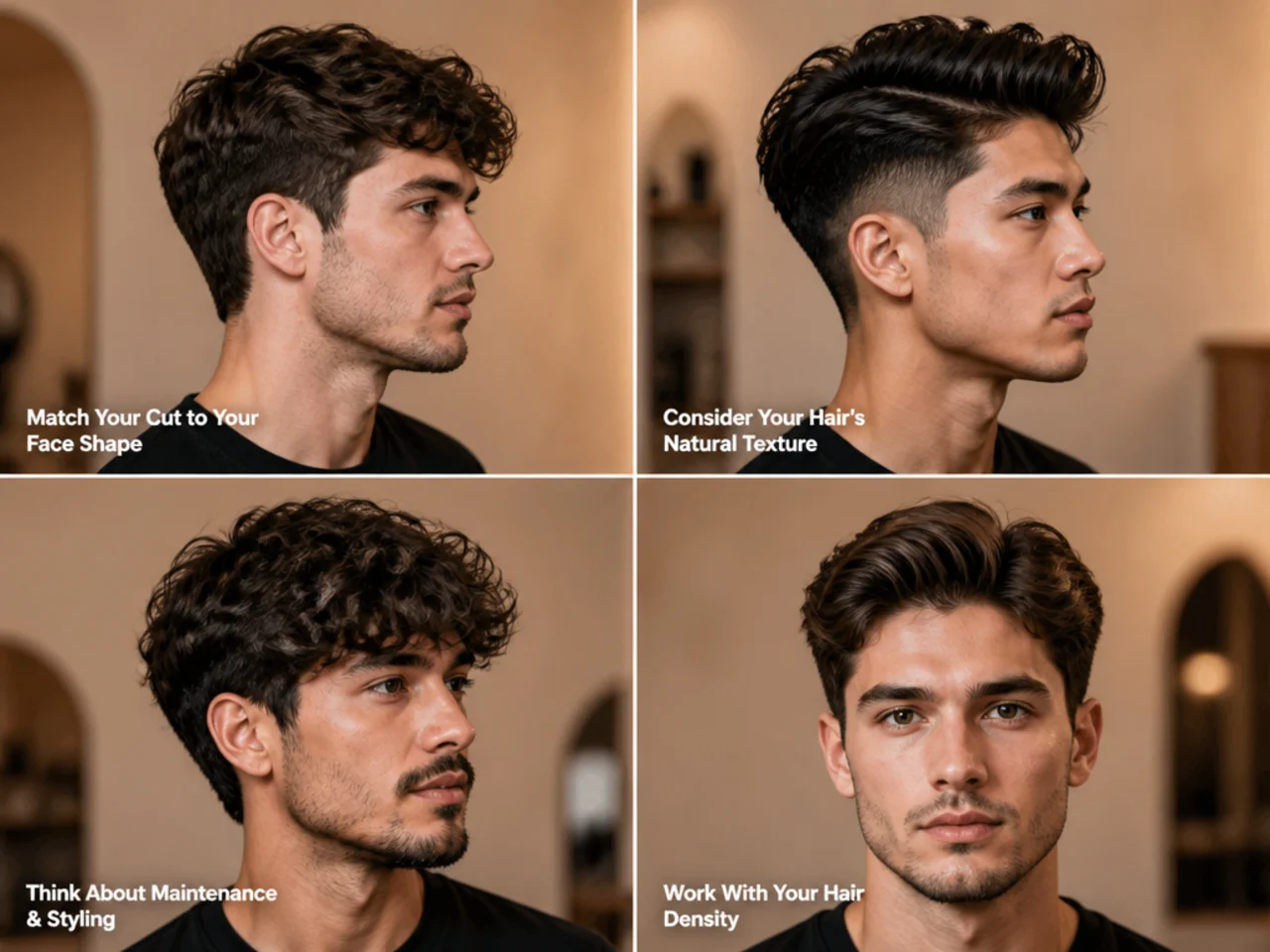
Face shape sets the top length. Oval faces work with any variation on this list. Round and square faces want height at the crown and shorter sides to lengthen the visual read — quiffs, brush ups, and pompadours flatter here. Long faces stay with shorter tops and forward fringes so the head does not stretch further. Heart and diamond faces suit textured crops and forward-swept styles that balance a wider forehead.
Hair type sets the cutting method. Straight thick hair reads sharpest with heavy point-cutting and internal thinning — the natural weight shows every layer line. Wavy thick hair sits best with cuts in the direction of the wave and less internal work. Coarse or coily thick hair wants scissor-only work on dry hair so the pattern sets the shape.
Lifestyle sets the maintenance rhythm. If you can commit to 90 seconds of styling and a rebook every four weeks, a full quiff or slick back is on the table. If your morning window is under a minute, stay with textured crops, crew cuts, and buzz variations that need no product at all. Match the cut to how much time you will actually give it.
The 20 Thick Hair Variations
Each variation below tells you what makes it different, who it flatters, and the exact language for the chair. Bring a photo and hand your barber the numbers.
1. Textured French Crop
The French crop is the barber's default recommendation for thick hair. One-and-a-half to two inches on top, heavily point-cut, with a short blunt fringe brushed forward. The internal texture removes the bulk so the shape reads clean.
Best on square, oval, and heart faces. Works with any thick hair type from straight to lightly wavy.
Ask for: "Textured French crop, two inches on top with heavy point-cutting to remove bulk, blunt fringe just above the brow, low fade at the sides." Style with a pea-sized matte paste worked through damp hair and finger-swept forward.
2. High Volume Quiff
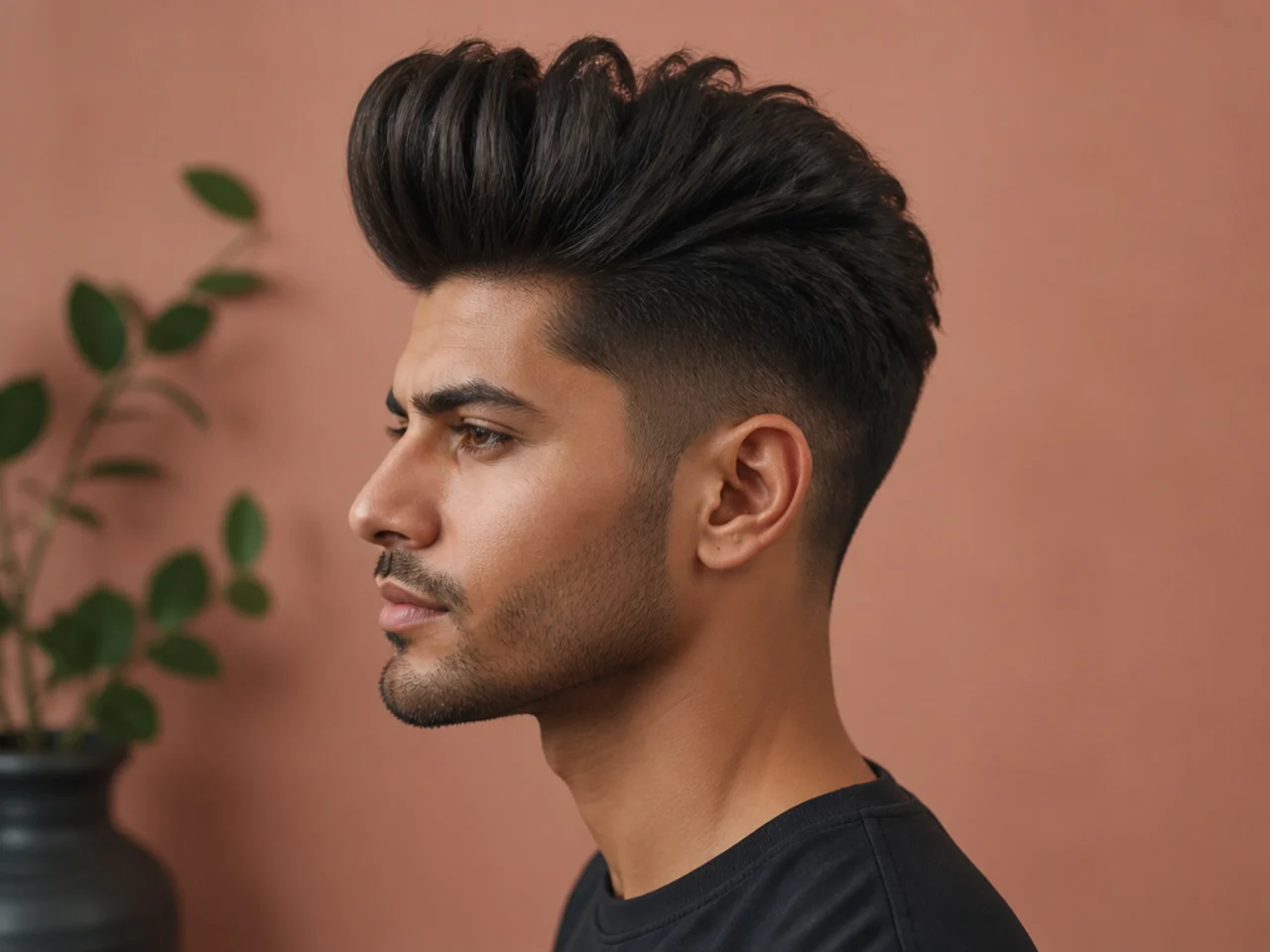
Thick hair was built for the quiff. Three to four inches on top, layered internally to remove weight but leave the surface volume intact, then swept up and back. The density gives the front the lift a fine-haired guy has to fake with product.
Suits oval, round, and heart faces where the vertical line adds proportion. Best on straight to slightly wavy thick hair.
Ask for: "High quiff, three-and-a-half inches on top with internal thinning, mid fade at the sides — square the neckline." Blow-dry the front up and back with a round brush, then set with molding paste.
3. Slick Back with Mid Fade
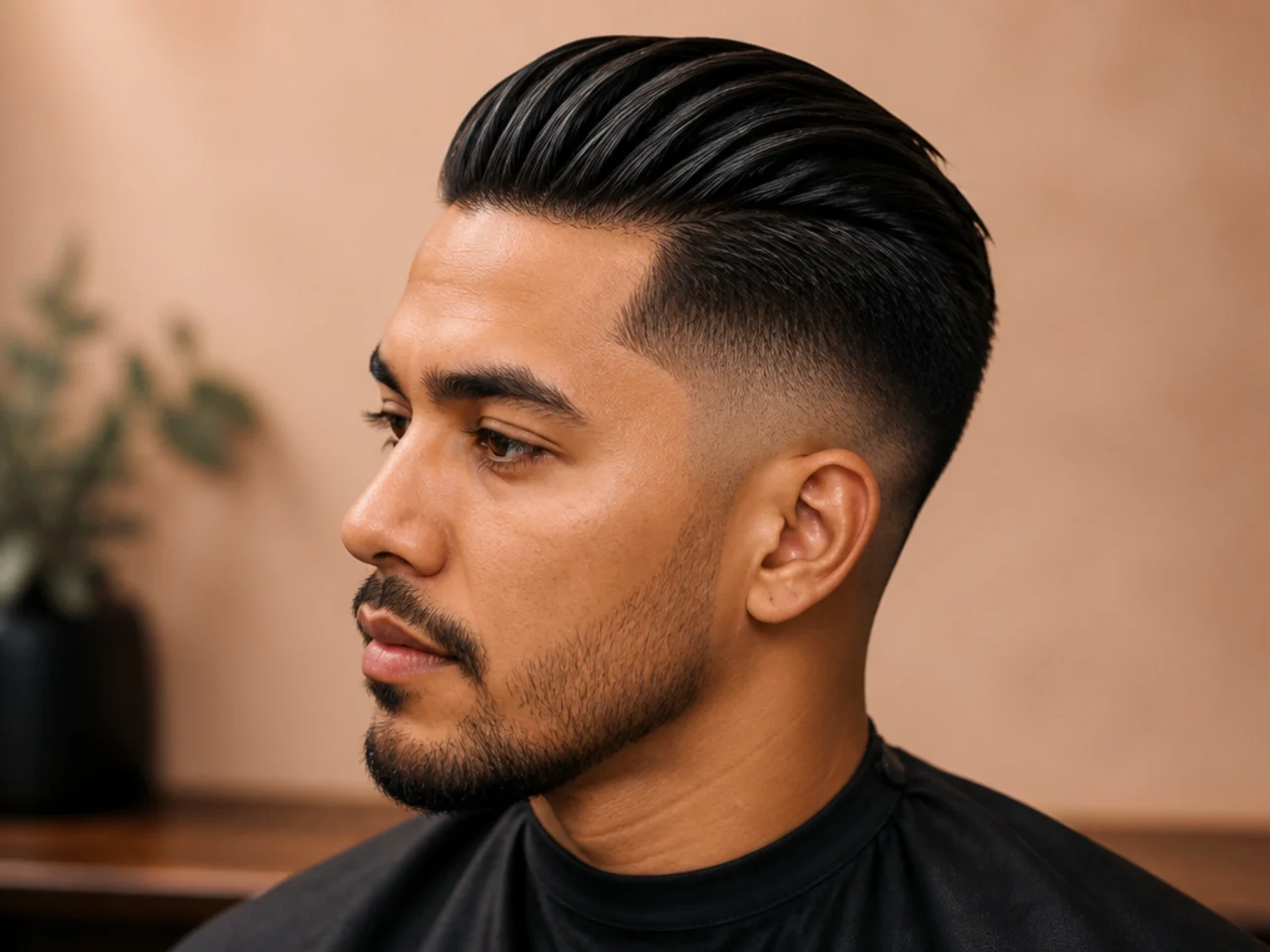
The slick back works on thick hair when the sides are faded down to give the top somewhere to sit. Four to five inches on top, brushed straight back, with a mid fade cutting away the visual bulk at the temples.
Best on oval, square, and rectangular faces. Works on straight to wavy thick hair that holds a shape.
Ask for: "Slick back, five inches on top with internal thinning to remove weight, mid fade at the sides — point-cut the top so it does not sit like a helmet." Comb through medium-hold pomade on damp hair, then use a light hairspray to hold.
4. Ivy League
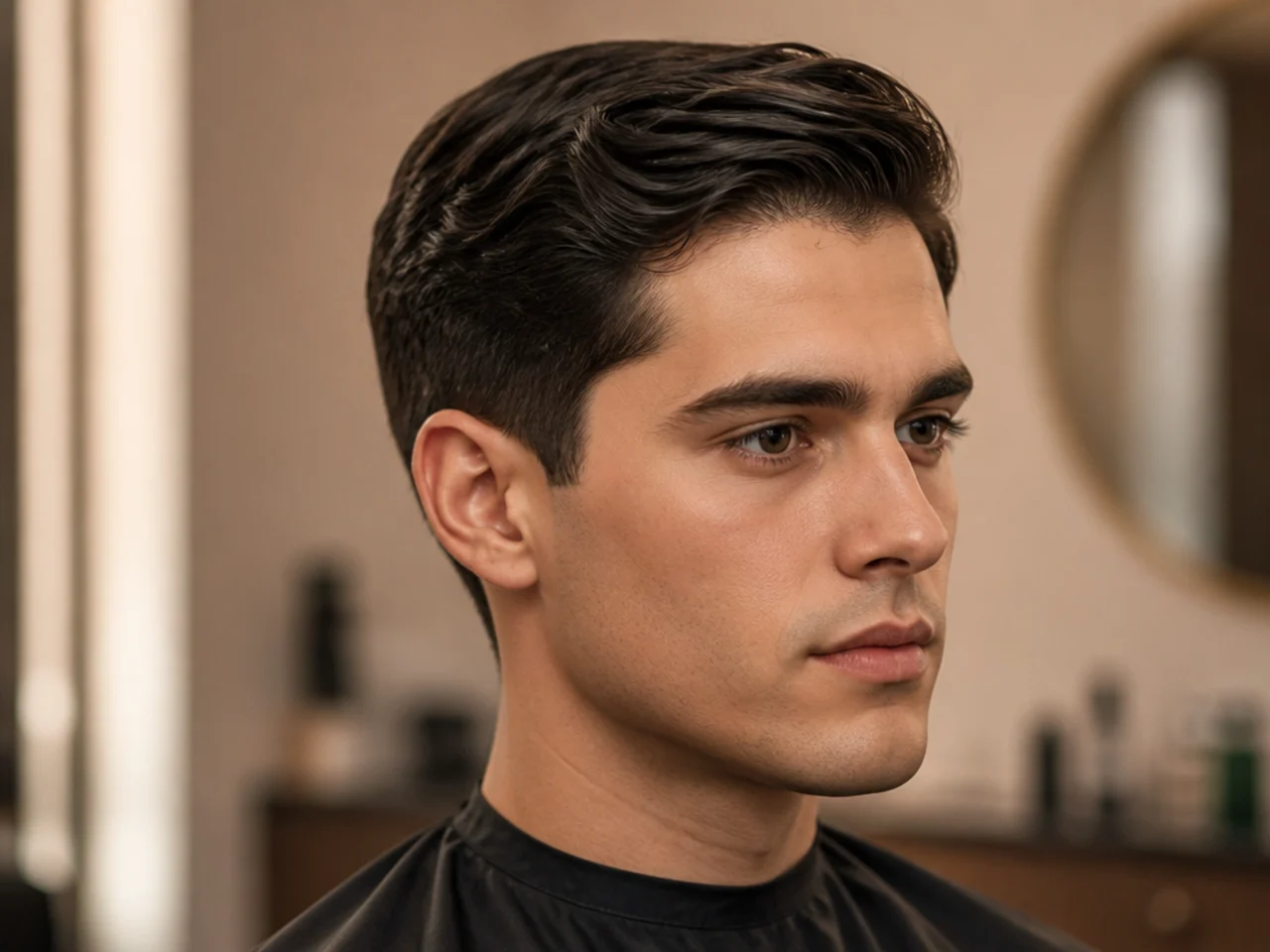
The Ivy League is a longer crew cut with enough length to part on the side. Two to three inches on top, tapered sides, and a soft side part that reads polished without being formal.
Suits oval and square faces. Best on straight to slightly wavy thick hair — coarse waves need extra scissor work to sit flat.
Ask for: "Ivy League, two-and-a-half inches on top with a soft side part, scissor-cut sides tapered short, blend into a low taper at the neckline." Comb through a light styling cream on damp hair and let it air-dry.
5. Layered Flow
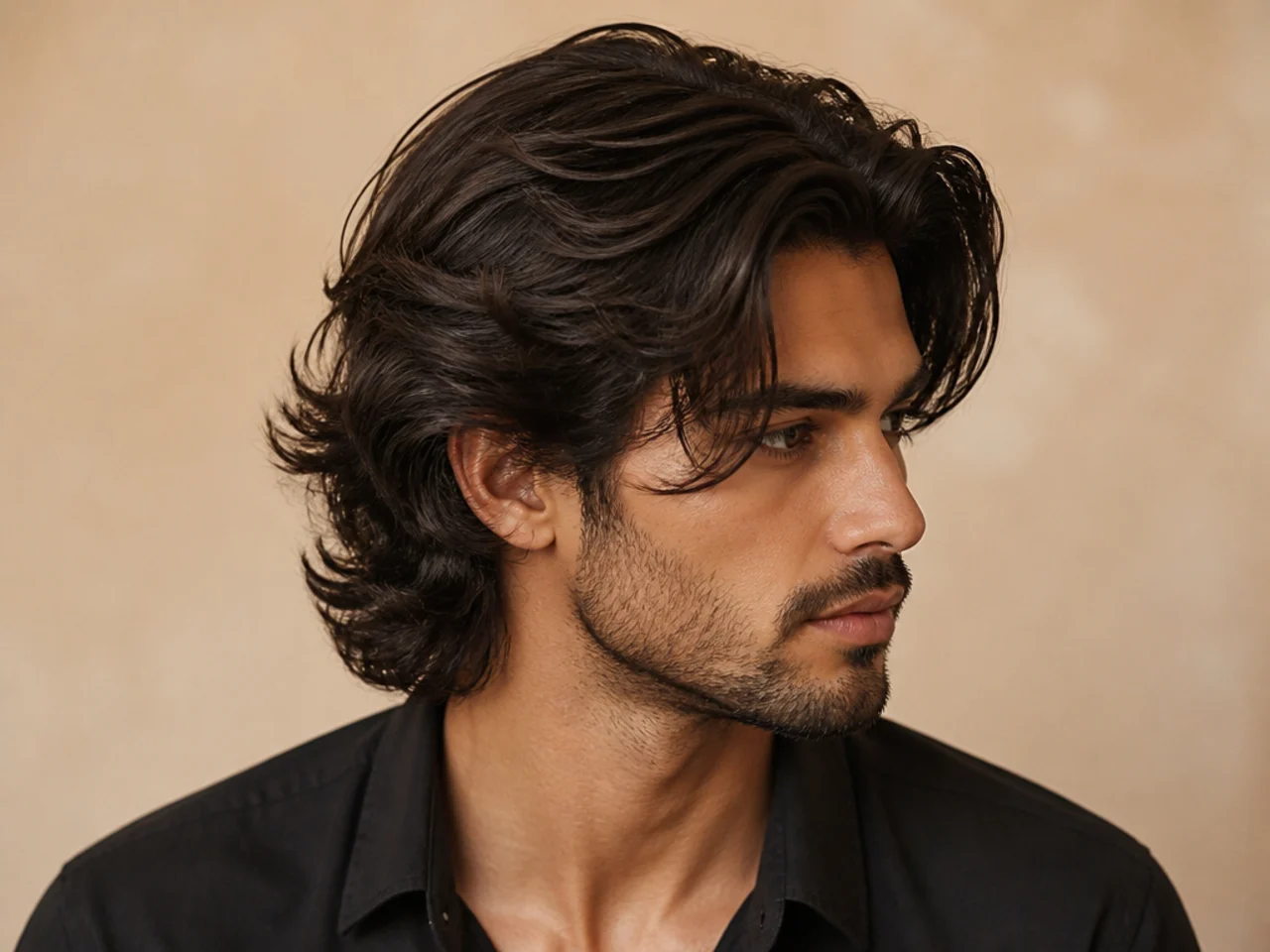
Flow is thick hair's longer-form answer. Four to six inches on top with heavy internal layering, scissor-blended sides that tuck behind the ear, and hair that falls naturally back off the face. The layering handles the weight so the shape moves instead of sitting.
Suits oval and rectangular faces. Best on wavy thick hair — straight thick hair needs air-dry texture from sea-salt spray to build the movement.
Ask for: "Flow cut, six inches on top with heavy internal layers, scissor-blend the sides long enough to tuck behind the ear, V-shape at the neckline." Salt spray on damp hair, blow-dry backward with fingers, no comb.
6. Modern Pompadour
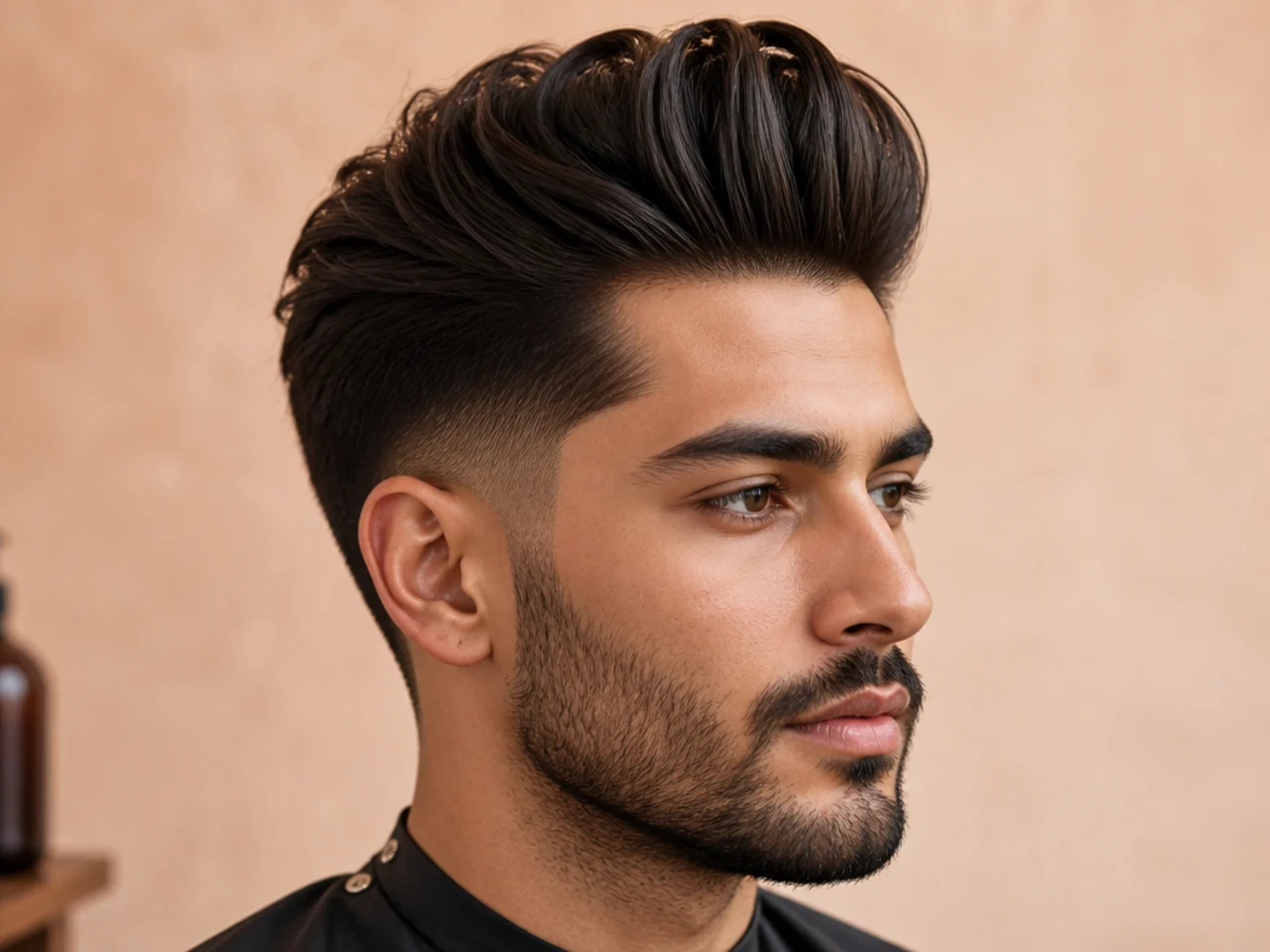
The pompadour and thick hair are made for each other. Four to five inches on top, tapered gradually shorter toward the back, with a low or mid fade at the sides. The density gives the front the height a pompadour needs without any teasing.
Best on oval, square, and rectangular faces. Works on straight to wavy thick hair that will hold shape after a blow-dry.
Ask for: "Modern pompadour, five inches at the front tapering to three inches at the crown, mid fade at the sides — internal thinning to keep it moving." Blow-dry the front up and back over a round brush, set with pomade and a light-hold spray.
7. Undercut with Textured Top
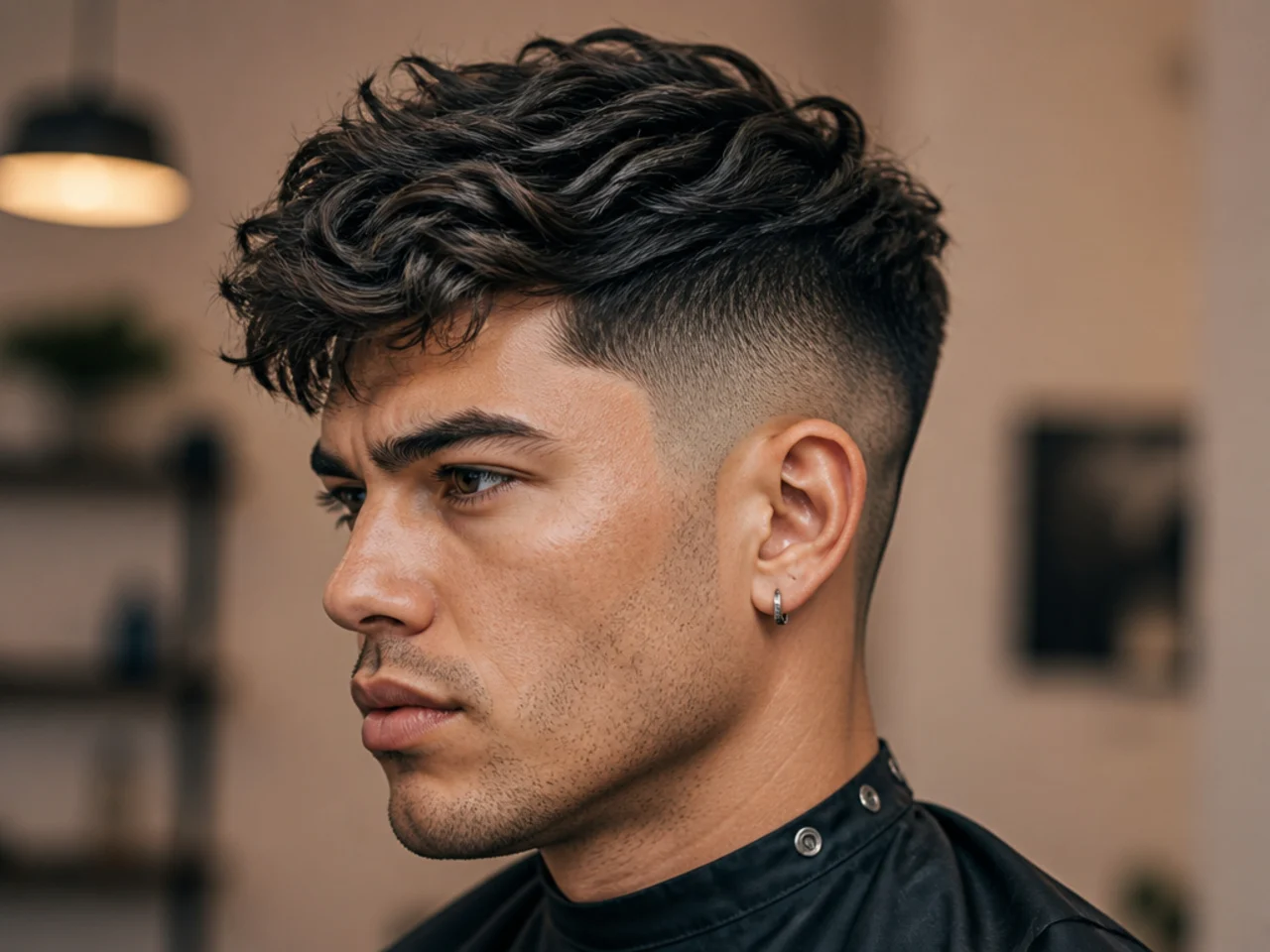
The undercut disconnects the sides entirely — no fade, no blend. Three to four inches on top, point-cut for texture, with a hard-line #1 or #2 clipper drop at the sides. The contrast is the point.
Suits square, oval, and diamond faces where sharp geometry reads well. Best on straight to slightly wavy thick hair.
Ask for: "Undercut, three inches on top with heavy internal texture, guard 1 disconnected sides, hard line at the transition — no blend." Style with medium-hold pomade combed back, or leave the top messy for a rougher read.
8. Textured Crew Cut
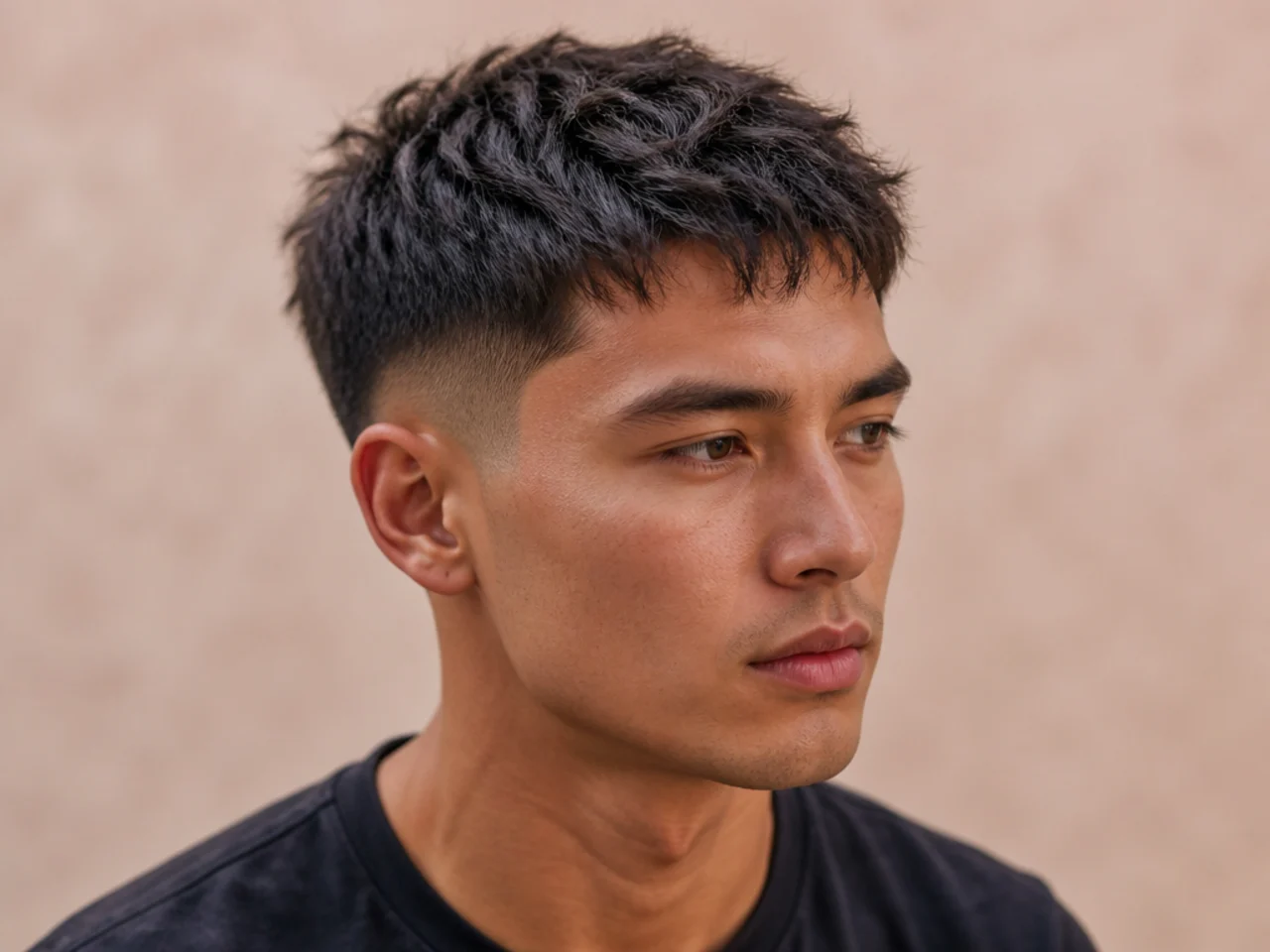
The crew cut with thick hair is a low-effort win. One-and-a-half inches on top, point-cut for texture rather than blunt, with a taper or low fade at the sides. The density gives the top natural body without needing to build any.
Suits every face shape. Works on any thick hair type.
Ask for: "Textured crew cut, one-and-a-half inches on top with point-cutting for movement, low fade at the sides — keep the front a touch longer." A pea-sized matte clay warmed in the palms, run through damp hair with the fingers.
9. Buzz Cut
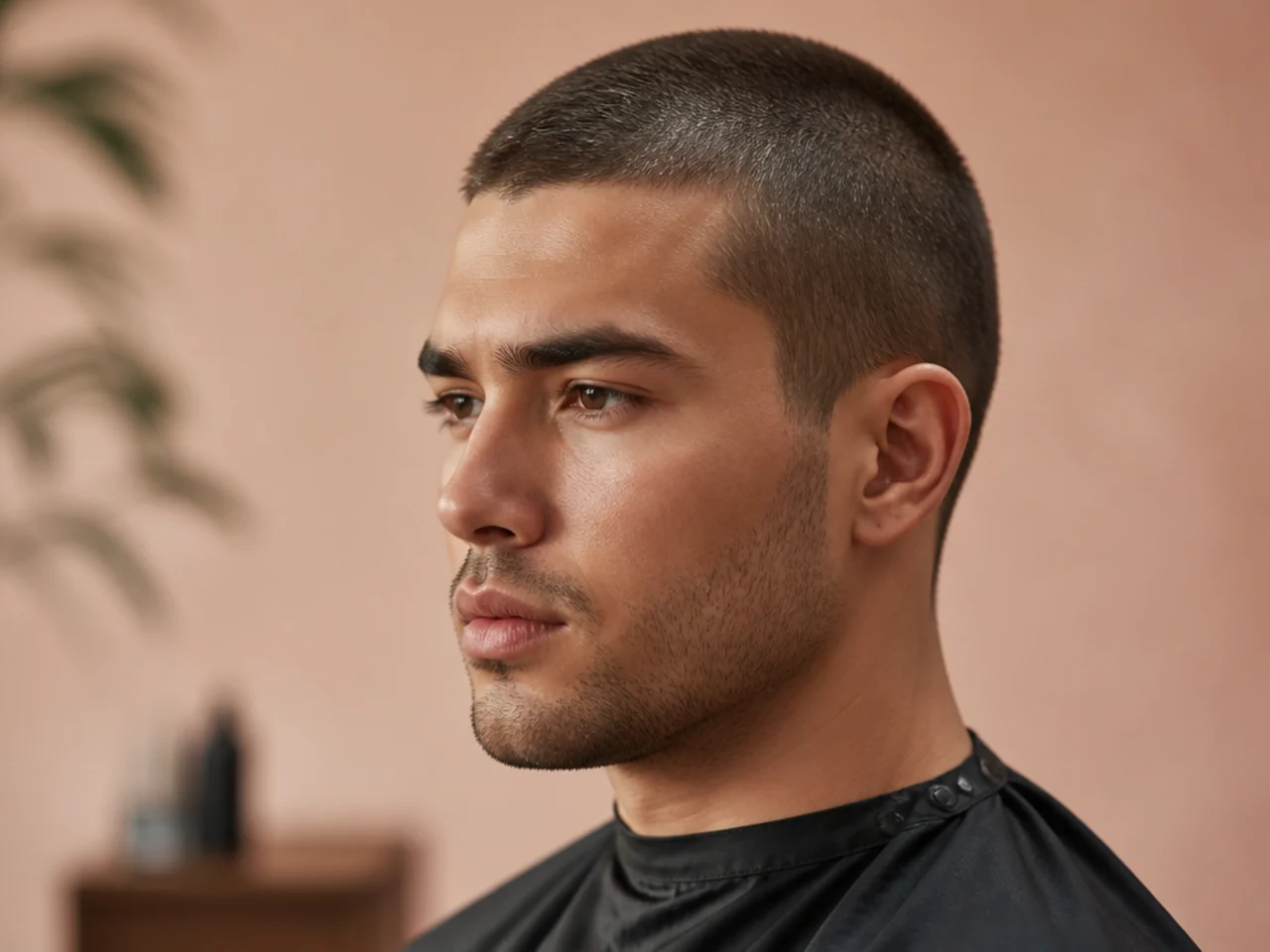
The buzz cut reads its best on thick hair because the density makes the color solid — no patchy spots, no visible scalp. A number two or three all over, blended into a low taper or fade at the neckline.
Suits guys with a strong jawline, even hairline, and any face shape. Especially good for guys who want to skip styling entirely.
Ask for: "Buzz cut, number three on top and sides, low taper at the neckline — square the back." No styling, no product. Splash your face, dry, walk out.
10. Comb Over with Fade
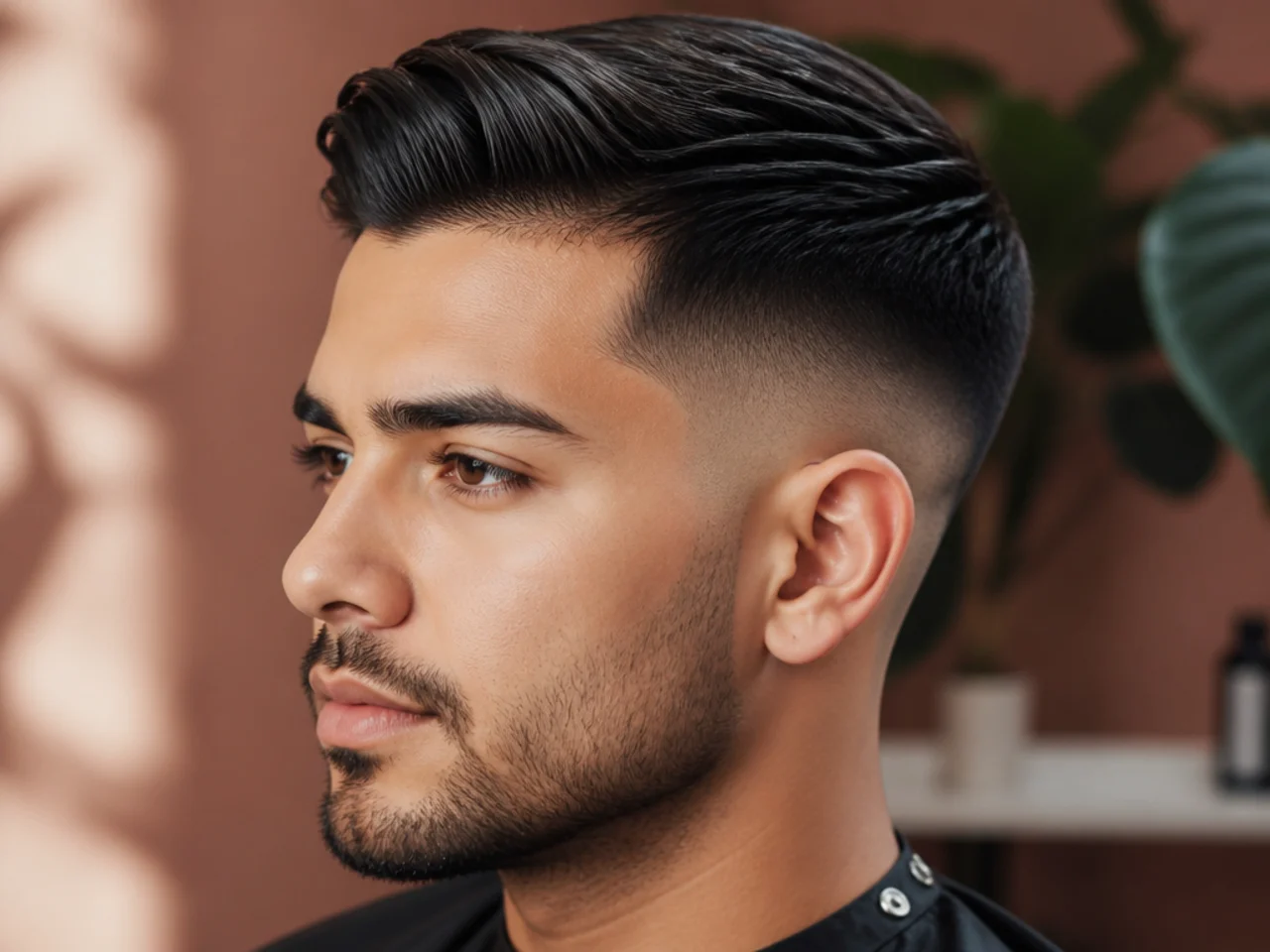
The comb over with thick hair reads sharp because the density holds the side-part shape without needing pomade to force it. Three to four inches on top, combed to one side, with a mid fade at the sides.
Best on oval and square faces. Works on straight to wavy thick hair with enough length to lay flat.
Ask for: "Hard comb over, four inches on top with internal thinning, part on the left [or right], mid fade at the sides, razor the part line in." Blow-dry with a round brush toward the part, set with medium-hold pomade.
11. Long Layered Shag
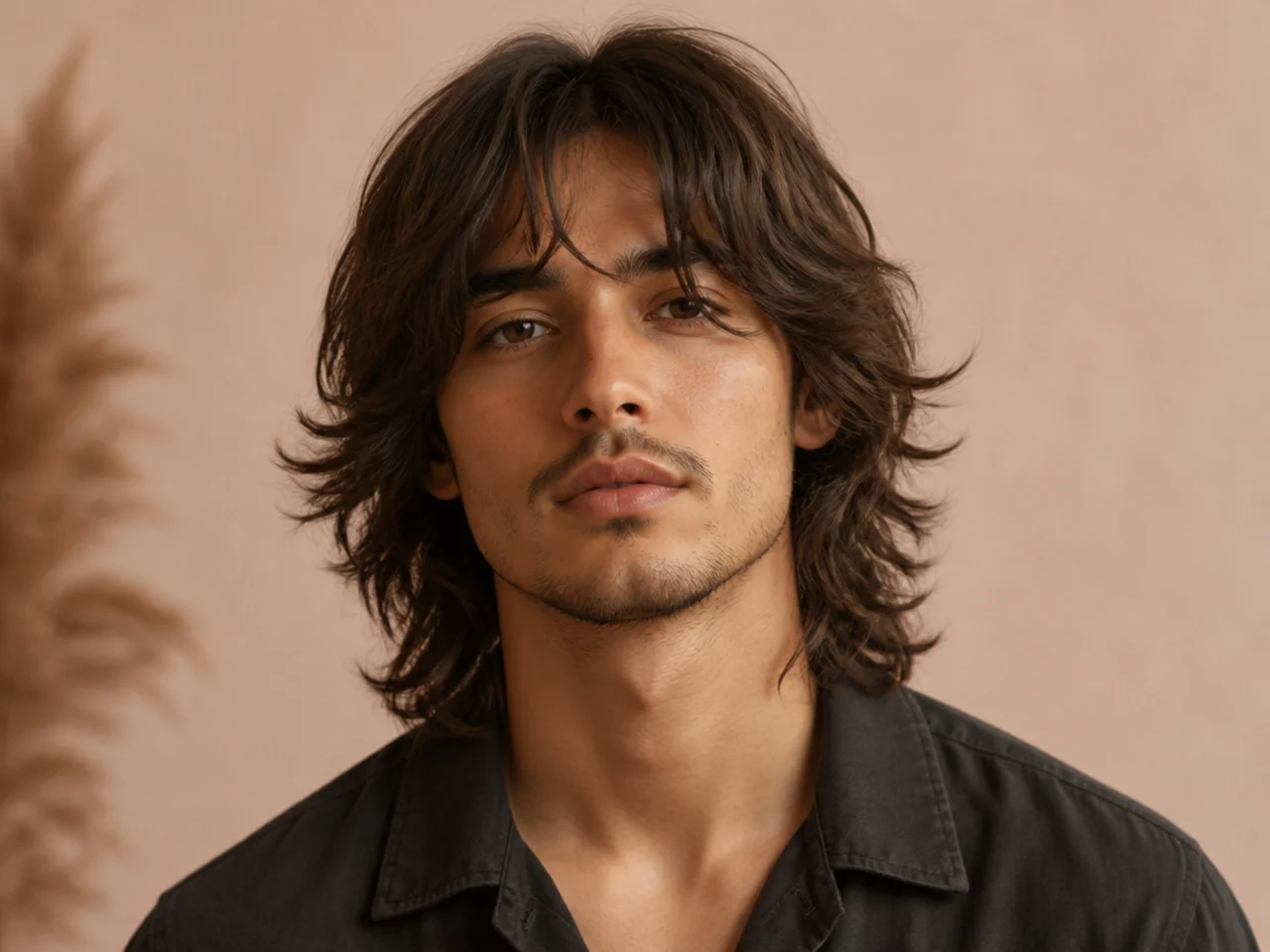
The shag builds a whole silhouette out of layers. Five to seven inches on top with heavy internal layering, a long forehead fringe, and scissor-blended sides that show the hair's natural movement. Reads laid-back without looking sloppy.
Best on oval faces and wavy thick hair. Skip on straight thick hair unless you want to work sea-salt spray in daily.
Ask for: "Shag cut, six inches on top with heavy layers, long forehead fringe touching the brow, scissor-blended sides — keep them long enough to move." Salt spray on damp hair, scrunch upward, air-dry.
12. Side Part with Volume Control
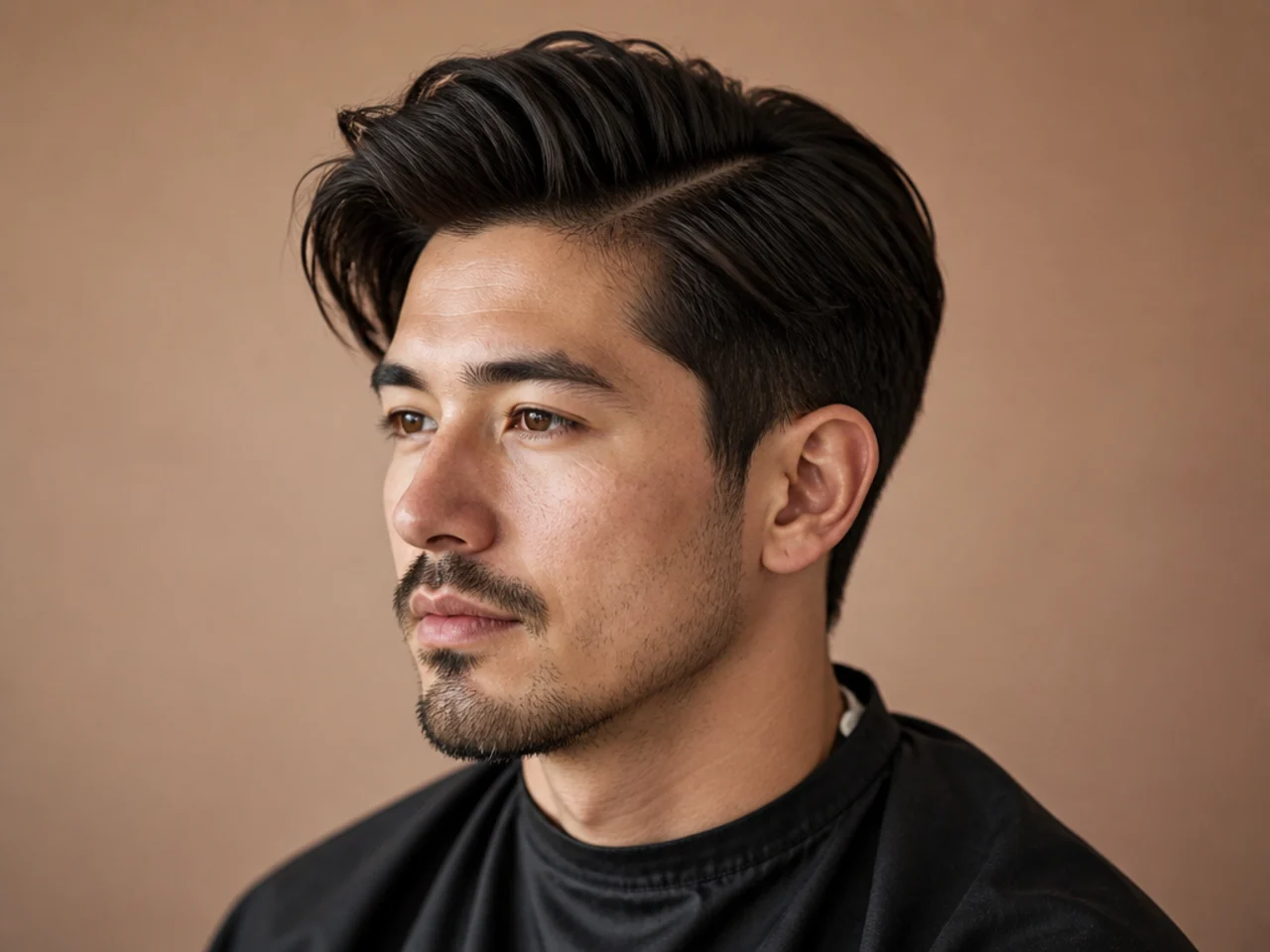
The classic side part on thick hair only works when the volume is controlled. Three inches on top with aggressive internal thinning, a natural side part, and scissor-blended sides that sit close to the head.
Suits oval, square, and heart faces. Best on straight to slightly wavy thick hair.
Ask for: "Side part, three inches on top with internal thinning to sit flat, natural part on the left [or right], scissor-blend the sides tight." Comb through a light styling cream on damp hair, blow-dry to the part.
13. Messy Textured Fringe
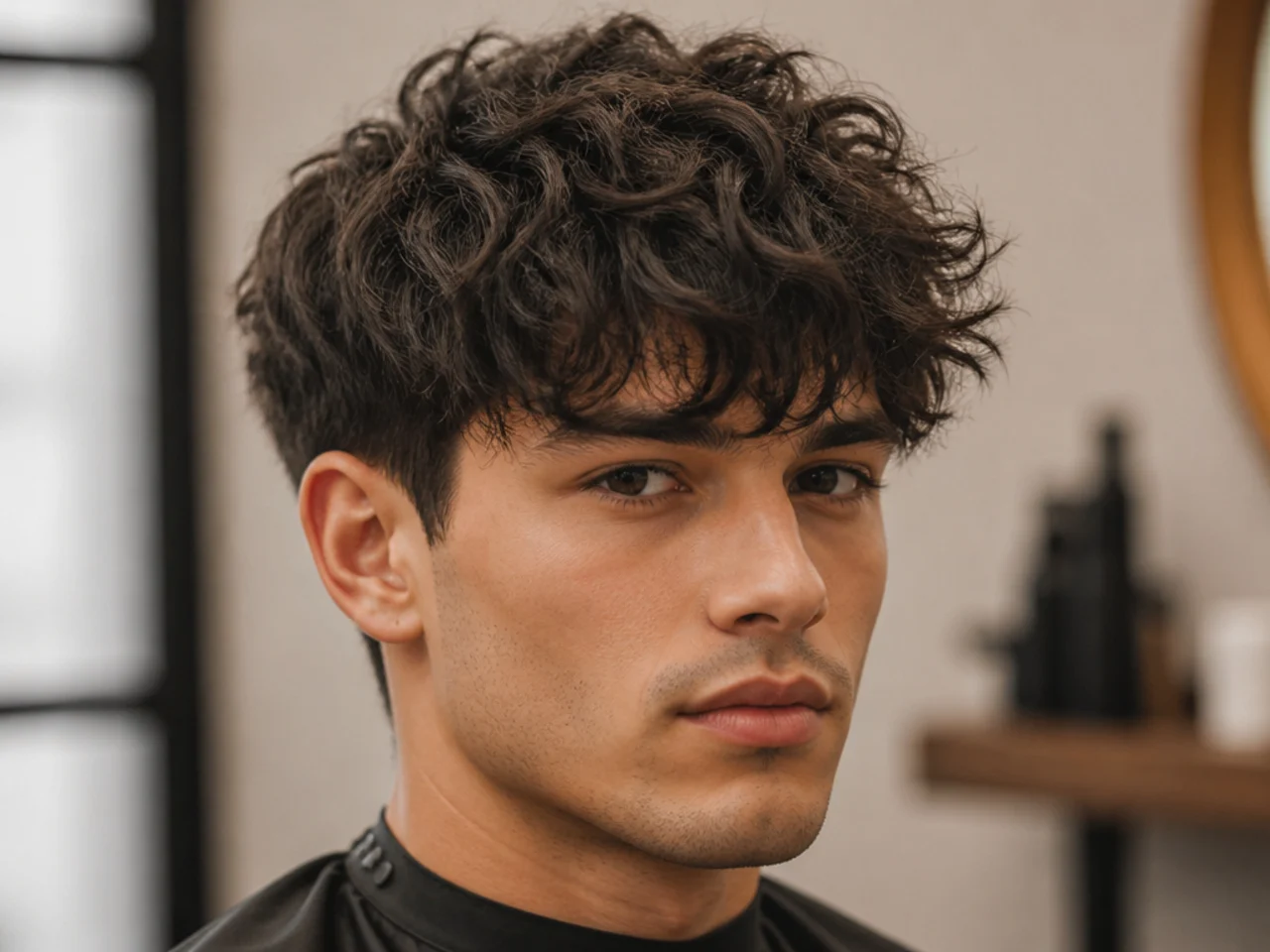
Thick hair holds the messy fringe shape better than any other hair type. Two to three inches on top with heavy point-cutting, a forward fringe cut in piecey sections, and low or mid fade at the sides. The density keeps the pieces separate instead of clumping.
Suits round, oval, and heart faces. Best on straight to slightly wavy thick hair.
Ask for: "Messy textured fringe, two-and-a-half inches on top with aggressive point-cutting, fringe cut in piecey sections to the brow, low fade at the sides." Matte paste on damp hair, push forward and up with fingertips.
14. Brush Up with Taper
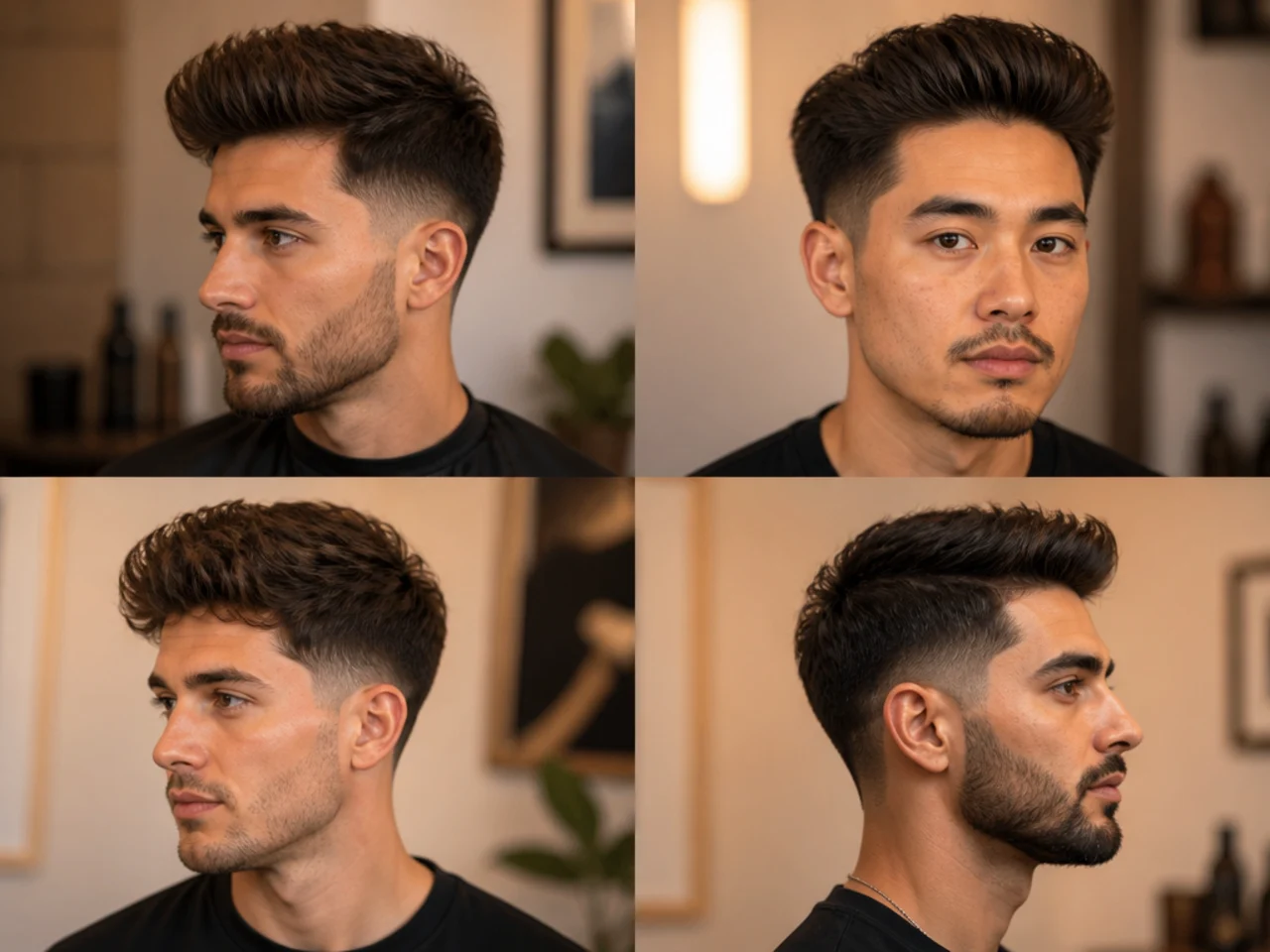
The brush up works on thick hair when the sides are tapered short enough to draw the eye upward. Two to three inches on top brushed straight up and slightly forward, with a low or mid taper at the sides.
Suits round, square, and heart faces where vertical lift lengthens the read. Best on straight to slightly wavy thick hair with body.
Ask for: "Brush up, two-and-a-half inches on top with internal thinning, low taper at the sides — square the neckline." Blow-dry the roots up with cold air, work light-hold clay through with the fingers.
15. Two Block Cut
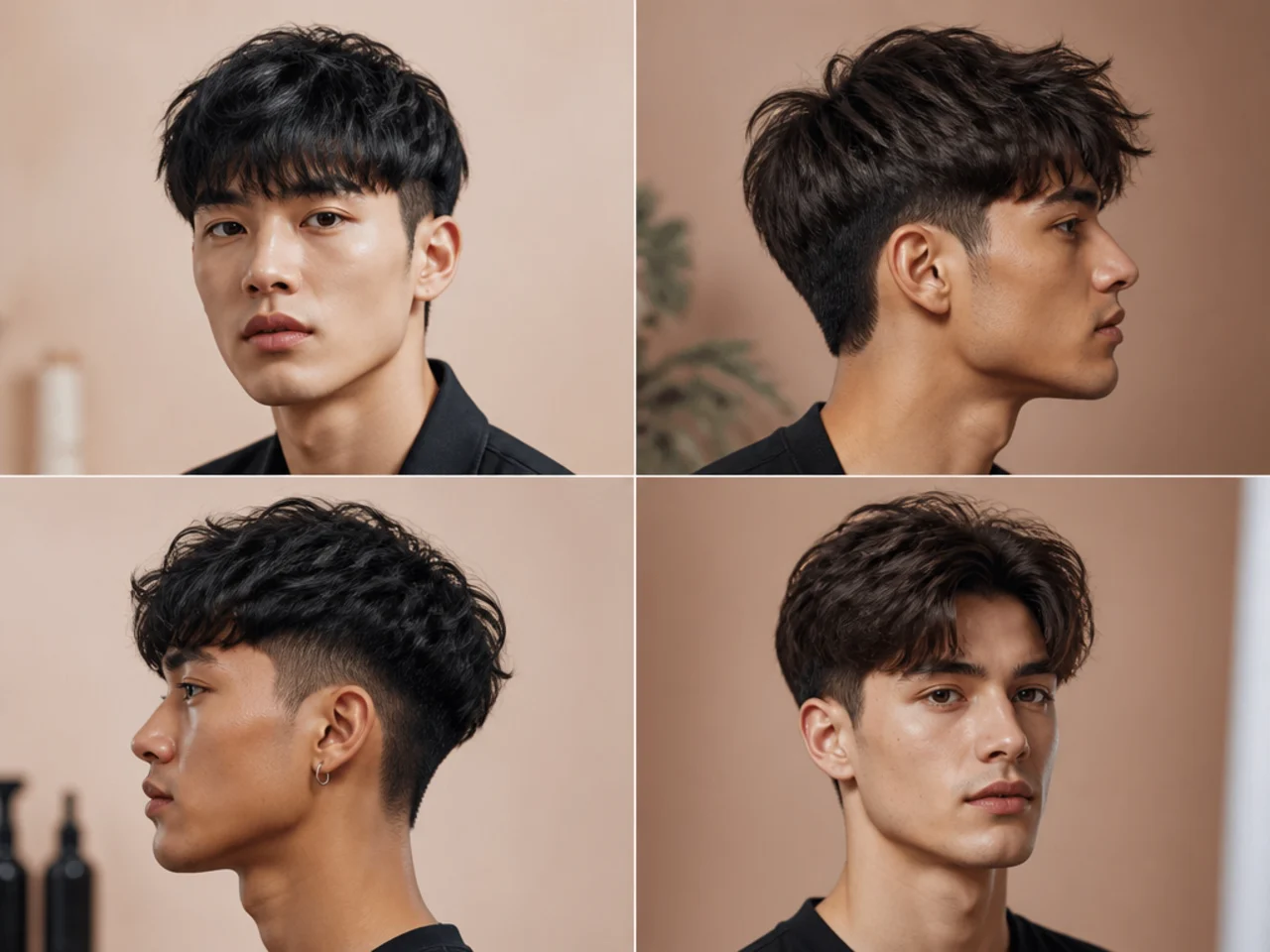
The two block keeps the top and sides at two distinct lengths — no blend, no taper. Three to four inches on top left long, sides clipped short at a #1 or #2. Popular in K-drama and current on guys under 30.
Suits oval, heart, and diamond faces. Best on straight to slightly wavy thick hair.
Ask for: "Two block, three-and-a-half inches on top with internal thinning, guard 2 sides — hard block line, no blend." Blow-dry the top with fingers, finish with a light matte cream.
16. Curtain Fringe
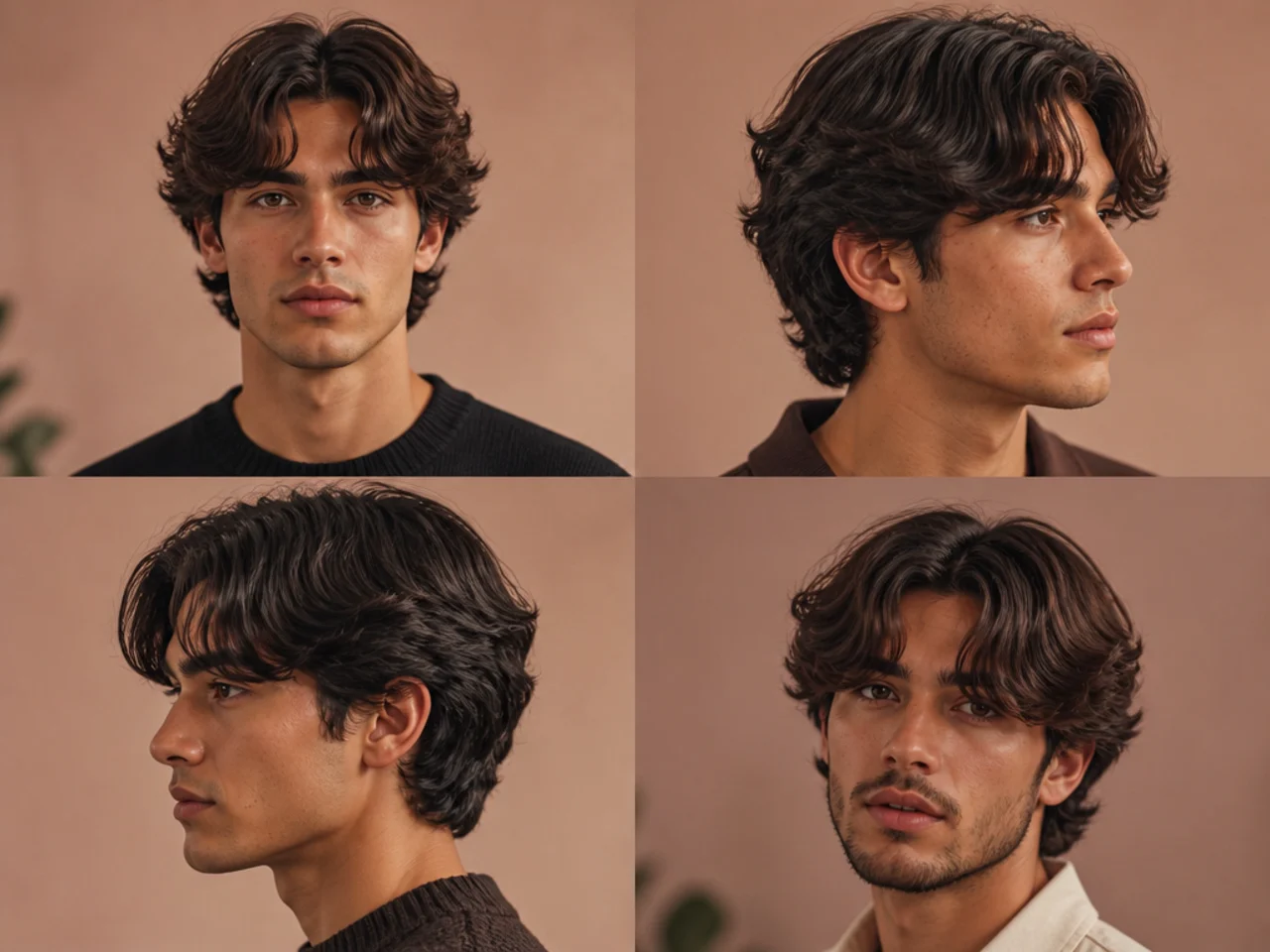
The curtain fringe parts down the middle and falls to either side of the forehead. Four to five inches on top, with the front layered slightly longer to drape naturally, and tapered sides beneath.
Suits oval and heart faces. Best on straight to slightly wavy thick hair that will hold a middle part after a blow-dry.
Ask for: "Curtain fringe, five inches on top with the front slightly longer, middle part, low taper at the sides." Blow-dry the front from the roots outward with a round brush, set with light-hold cream.
17. Broccoli Cut
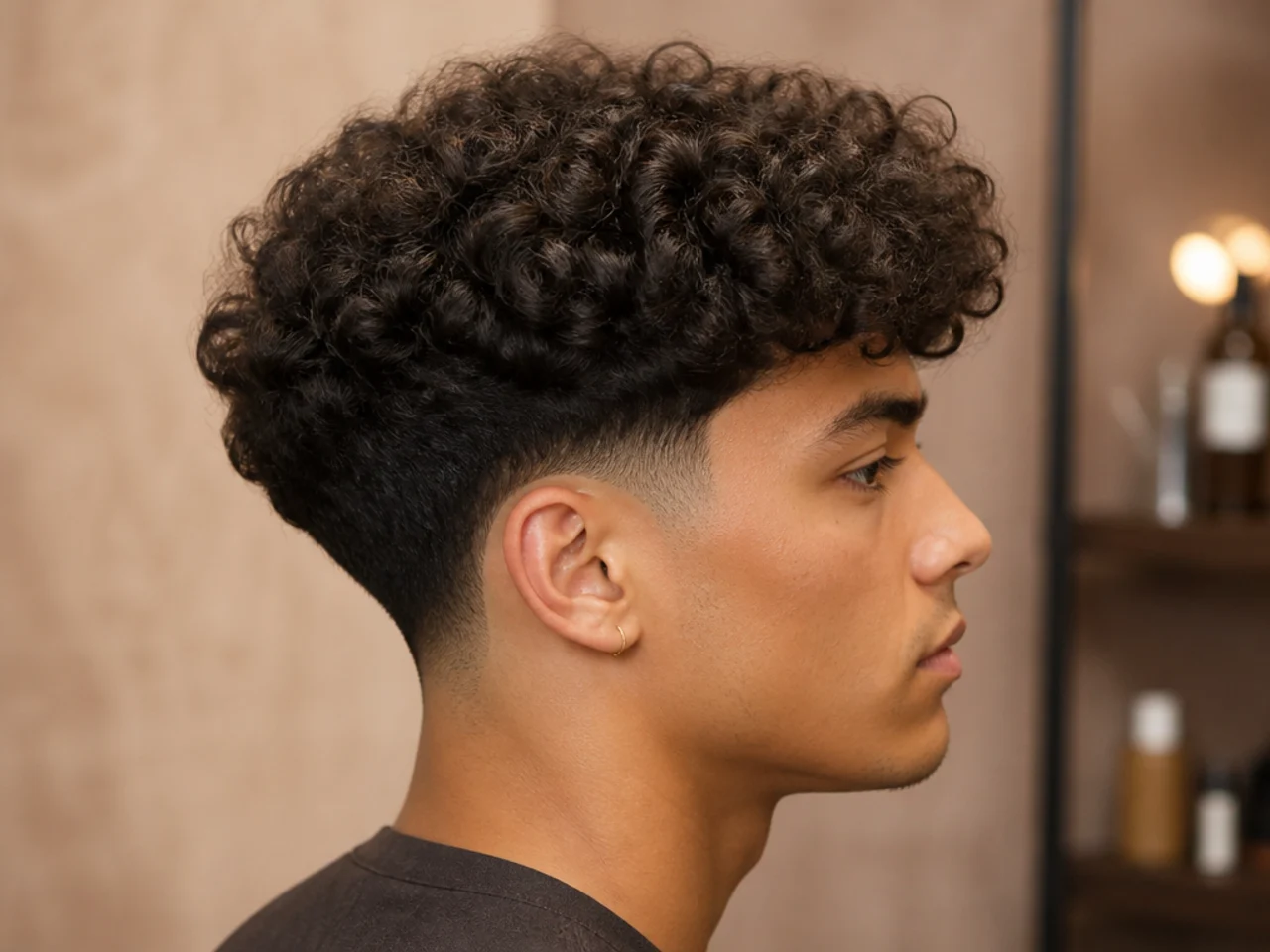
The broccoli cut needs thick hair to work — it depends on volume at the crown that fine hair cannot produce. Three inches of curled or heavily textured hair on top, with a high fade at the sides that pushes all the visual weight upward.
Best for guys under 25 in casual or creative environments. Suits oval, heart, and diamond faces.
Ask for: "Broccoli cut, three inches on top with tight internal texture, high skin fade at the sides — keep the top round and volumized." Perm setting spray or salt spray on damp hair, twist small sections, air-dry or diffuse.
18. Textured Crop with Fade
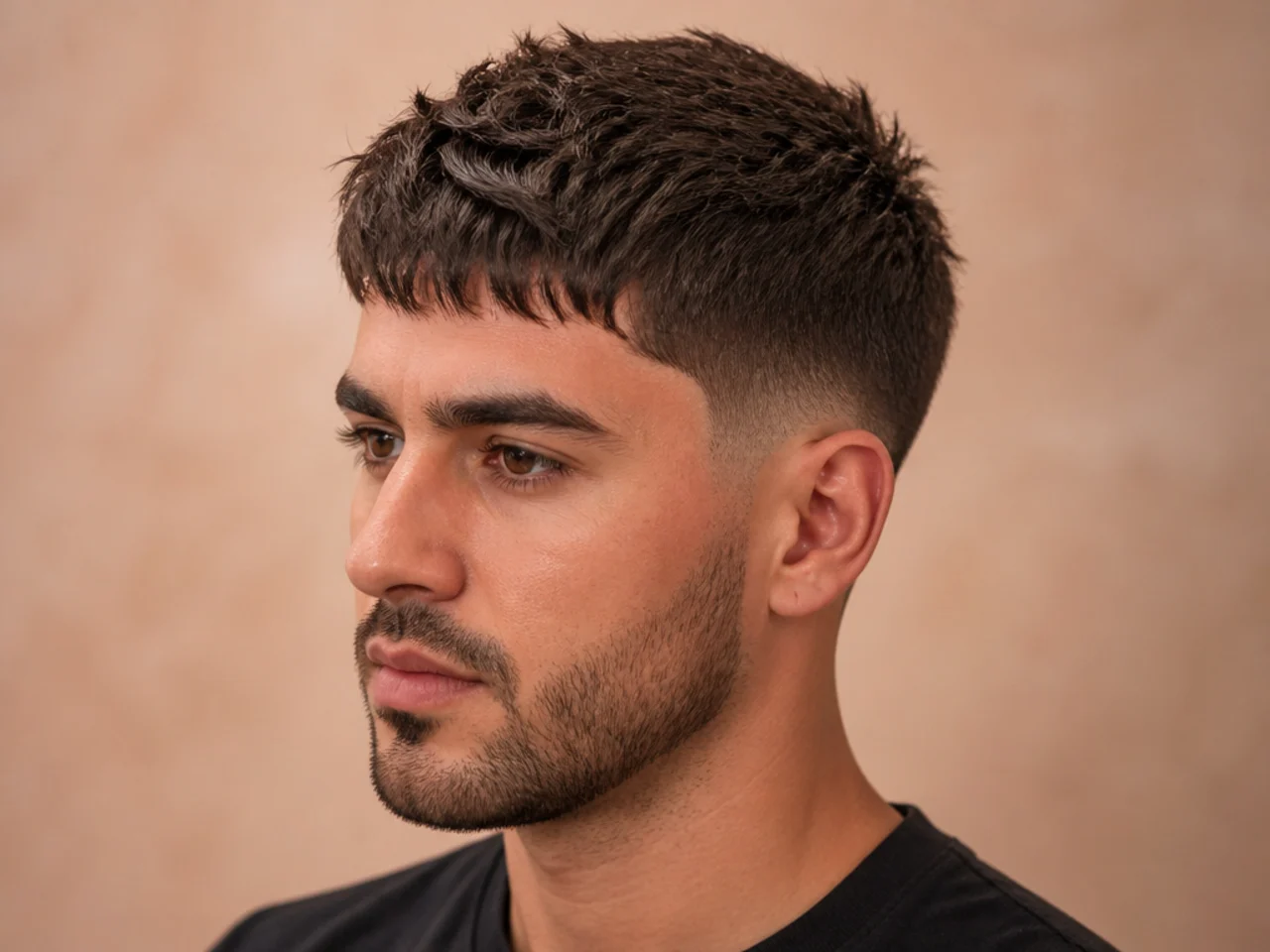
The textured crop is the workhorse for thick hair. One-and-a-half to two inches on top with heavy point-cutting, forward-swept with a slight fringe, and mid fade at the sides that cuts the visual bulk down.
Suits every face shape. Works on any thick hair type from straight to lightly coily.
Ask for: "Textured crop, two inches on top with heavy internal thinning, forward-swept with a soft fringe, mid fade at the sides — square the neckline." Matte paste on damp hair, push forward with fingertips.
19. Layered Middle Part
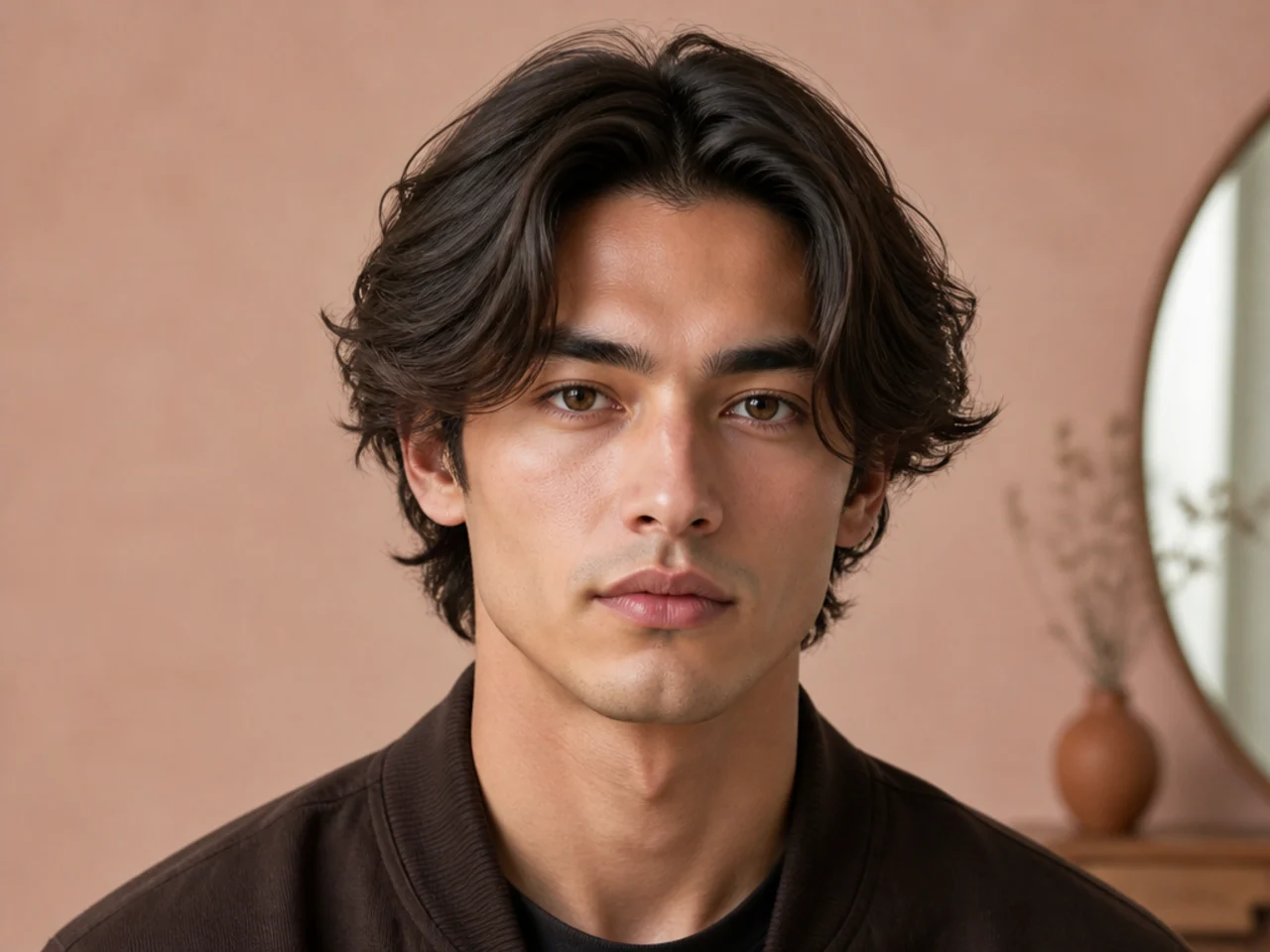
The middle part on thick hair needs internal layering to keep the sides from puffing outward. Four to five inches on top, parted down the center, with scissor-cut sides blending long into the taper.
Suits oval, heart, and rectangular faces. Best on straight to slightly wavy thick hair.
Ask for: "Middle part, five inches on top with heavy internal layers, natural center part, scissor-cut sides long enough to tuck." Light cream on damp hair, blow-dry to the part, no product weight.
20. Skin Fade with Textured Top
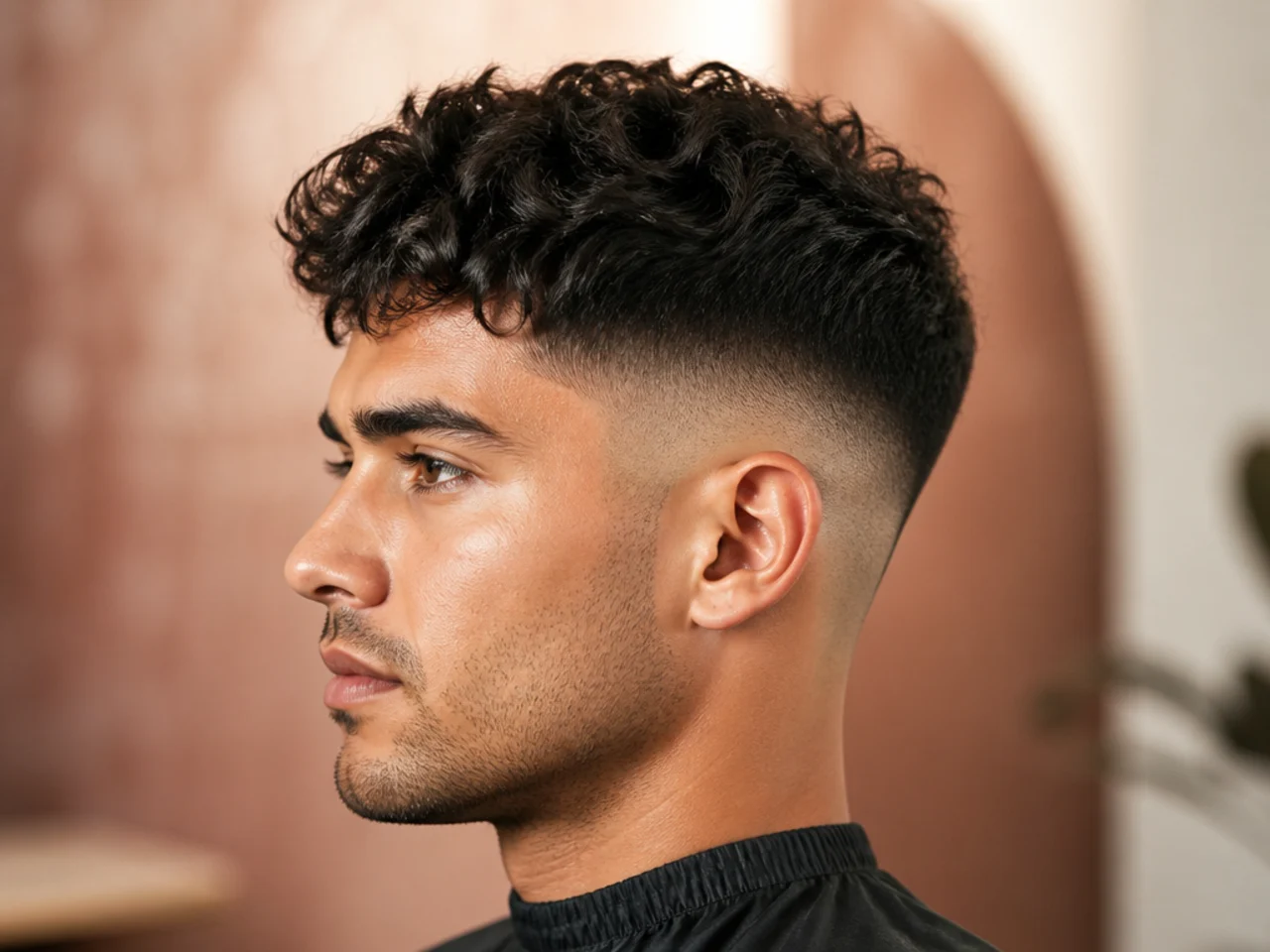
The skin fade removes all the visual bulk at the sides and lets the thick top do the shape work. Two to three inches on top with heavy point-cutting, and a skin fade jumping in at mid-temple.
Best for oval, square, and diamond faces. Works on straight to slightly wavy thick hair.
Ask for: "Skin fade with a textured top, two-and-a-half inches on top with aggressive point-cutting, mid-to-high skin fade at the sides — hard line at the temple." Matte clay on damp hair, push forward or up depending on your shape preference.
How to Ask Your Barber
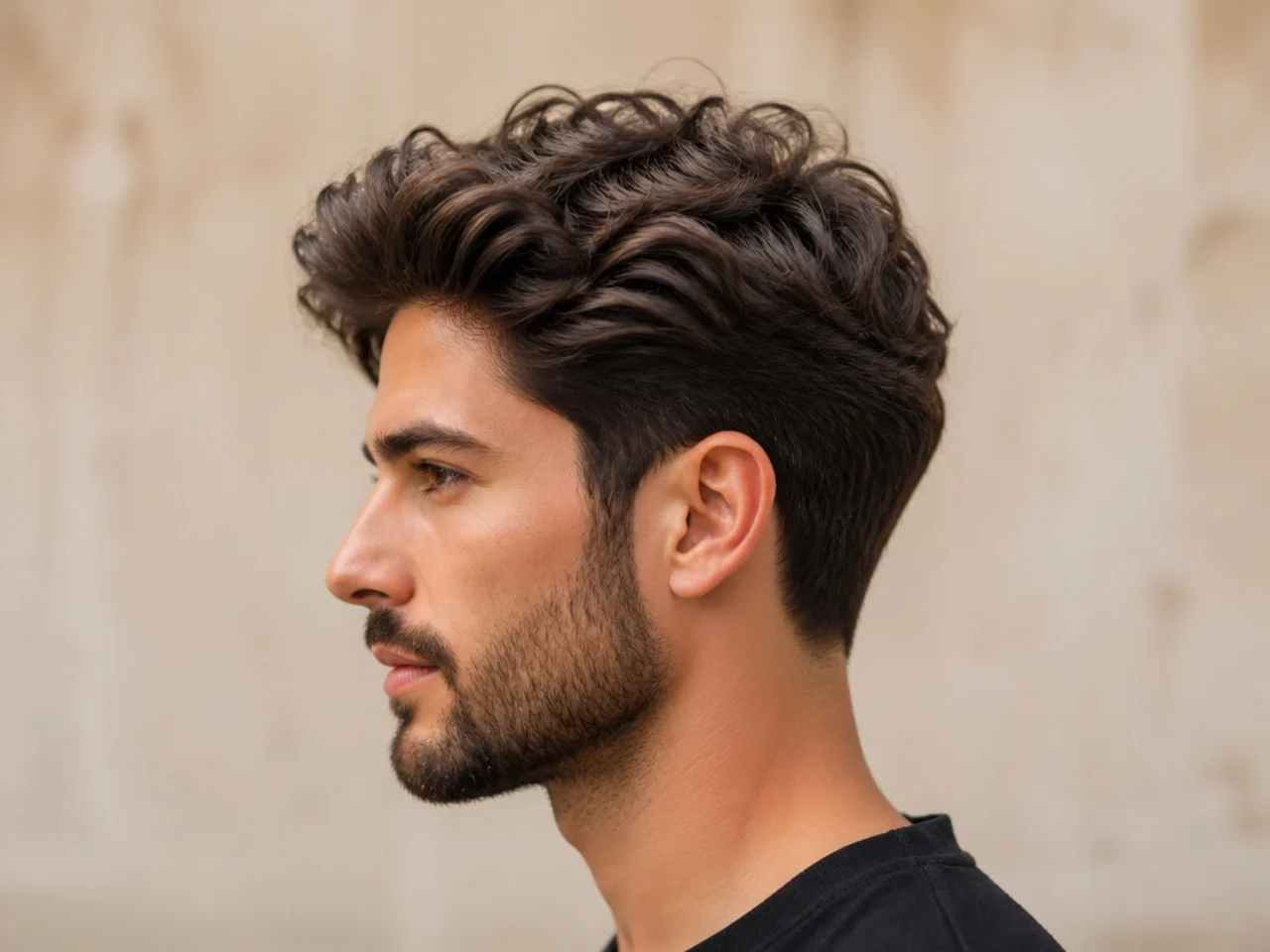
Bring a photo. That is rule one for thick hair because the same cut on two different guys can read completely different — the underlying head shape and density change what the cut becomes.
- Say your hair is thick before the first cut. Barbers cut differently for density than they do for a straight hair-type read — more point-cutting, more internal thinning, less blunt-line work.
- Set the top length in inches. One inch for buzz variations, two for crops and crew cuts, three to four for quiffs and comb overs, five-plus for flow and shag.
- Ask for internal thinning, not thinning shears alone. Point-cutting with scissors removes bulk without creating hollow spots. Thinning shears used across the whole shape can leave weird gaps that grow out messy.
- Set the side treatment. Scissor-blended, low taper, mid taper, low fade, mid fade, high fade, skin fade, or hard-line undercut. Thick hair benefits from shorter sides because the bulk balances out.
- Confirm the fringe. Blunt, textured, side-swept, forward, curtain, or none. Fringes on thick hair need enough removal work to sit right — otherwise they read heavy.
- Ask for the neckline finish. Square for structure, rounded for softness, or blocked for a barbershop-clean read.
- Show the photo one more time before scissors touch hair. Confirming the shape after the barber has felt your density catches misunderstandings early.
Styling and Maintenance
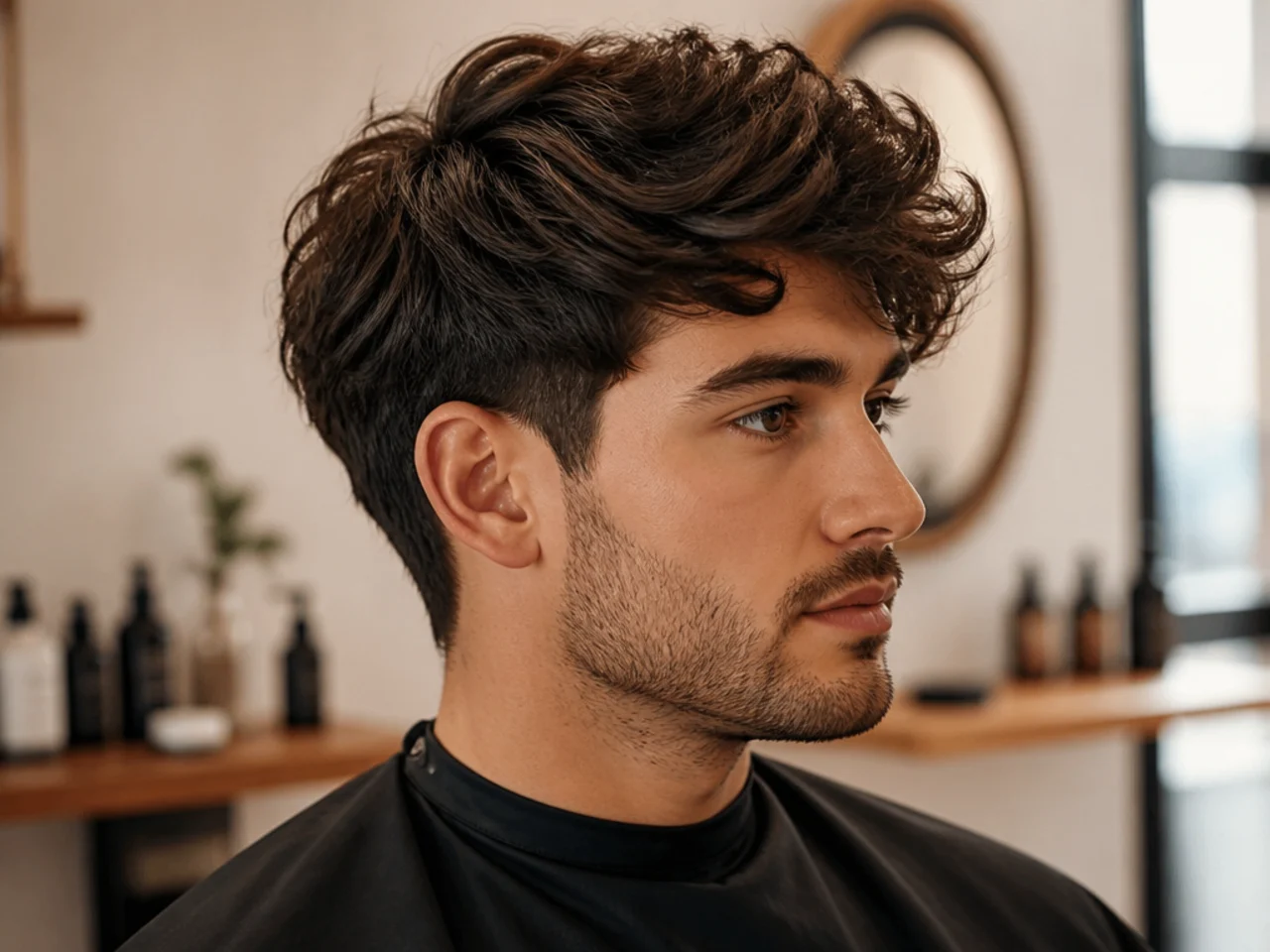
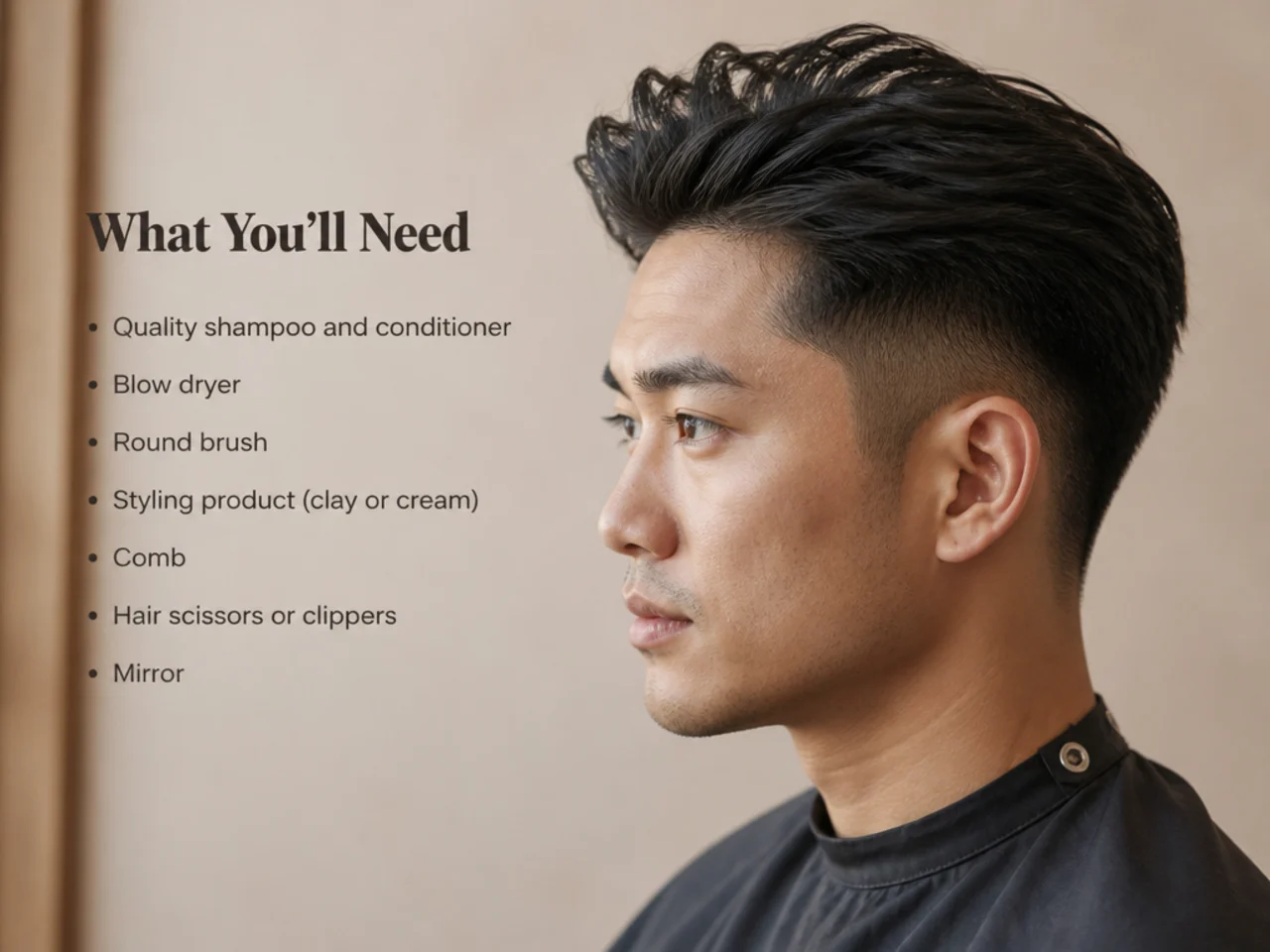
Wash and towel-dry so hair is damp, not soaking. Damp hair holds product in the strand; wet hair pushes it to the surface where it drips or crunches. On thick hair, damp is the difference between hold that lasts all day and hold that fails by noon.
Prime with a light sea-salt spray or a leave-in cream depending on the finish you want. Matte reads on thick hair through matte clay or molding paste — skip glossy pomades unless you are going full slick back or Ivy League. Warm a nickel-sized dab between the palms, then work it through with fingers first, comb second. Fingers place product, combs distribute it.
Blow-dry from the roots outward, not from the tips down. The direction of the airflow at the root sets the shape — backward for slick and flow, upward for quiff and brush up, forward for crop and French crop, sideways for side part and comb over. Ten seconds of cold air at the end locks the shape.
Re-cut the shape every four to five weeks for short and medium cuts, every six to eight for long flow and shag. Thick hair grows out heavier than fine hair, so a two-week delay past that turns a clean shape into a helmet. Fades and skin tapers need touch-ups every two to three weeks between full cuts — the sides grow fastest and blur the shape first.
Wash three to four times a week with a sulfate-free shampoo. Condition every wash — thick hair looks worse dry than fine hair does because the volume amplifies frizz. A leave-in conditioner between washes keeps the mid-lengths and ends from puffing. If you use styling clay, clarify once a week with a stronger shampoo to prevent buildup at the roots. For the tool that shapes the sides between visits, browse our best hair clippers for men guide, or explore the full mens haircuts hub for sibling shapes.
FAQ
What is the best haircut for thick hair on men?
There is no single best — the right cut depends on your face shape and how much styling time you want to give it each morning. Textured French crops, layered flows, and mid-fade quiffs handle thick density best because they remove weight rather than sitting on top of it. For a broader look at options that read modern without extra effort, see our short simple mens haircuts guide.
Should men with thick hair thin their hair out at the barber?
Sometimes — but with scissors and point-cutting, never with thinning shears alone across the whole shape. Thinning shears can leave hollow spots that grow out messy. Ask your barber to remove bulk from the interior with point cuts, then leave the surface intact. That method reads clean on any thick hair type.
How often should thick hair be cut?
Every four to five weeks for shorter shapes like crops and crew cuts. Every six to eight weeks for medium-length flows and shags. Thick hair grows out heavier than fine hair, so waiting past that turns a clean shape into a helmet. Fade sides need retouches every two to three weeks between full cuts.
What products work best on thick hair?
Matte clay for structure, molding paste for texture, and a light-hold spray for hold. Skip anything glossy — it weighs thick hair down and reads greasy. A sea-salt spray on damp hair adds grip before the main product goes in. For sibling face-shape guides, browse our 25 trendy haircuts for thick wavy hair and 20 stunning short hairstyles for thick hair breakdowns, or the 15 trendy buzz cut styles for thick hair roundup for the shorter end.