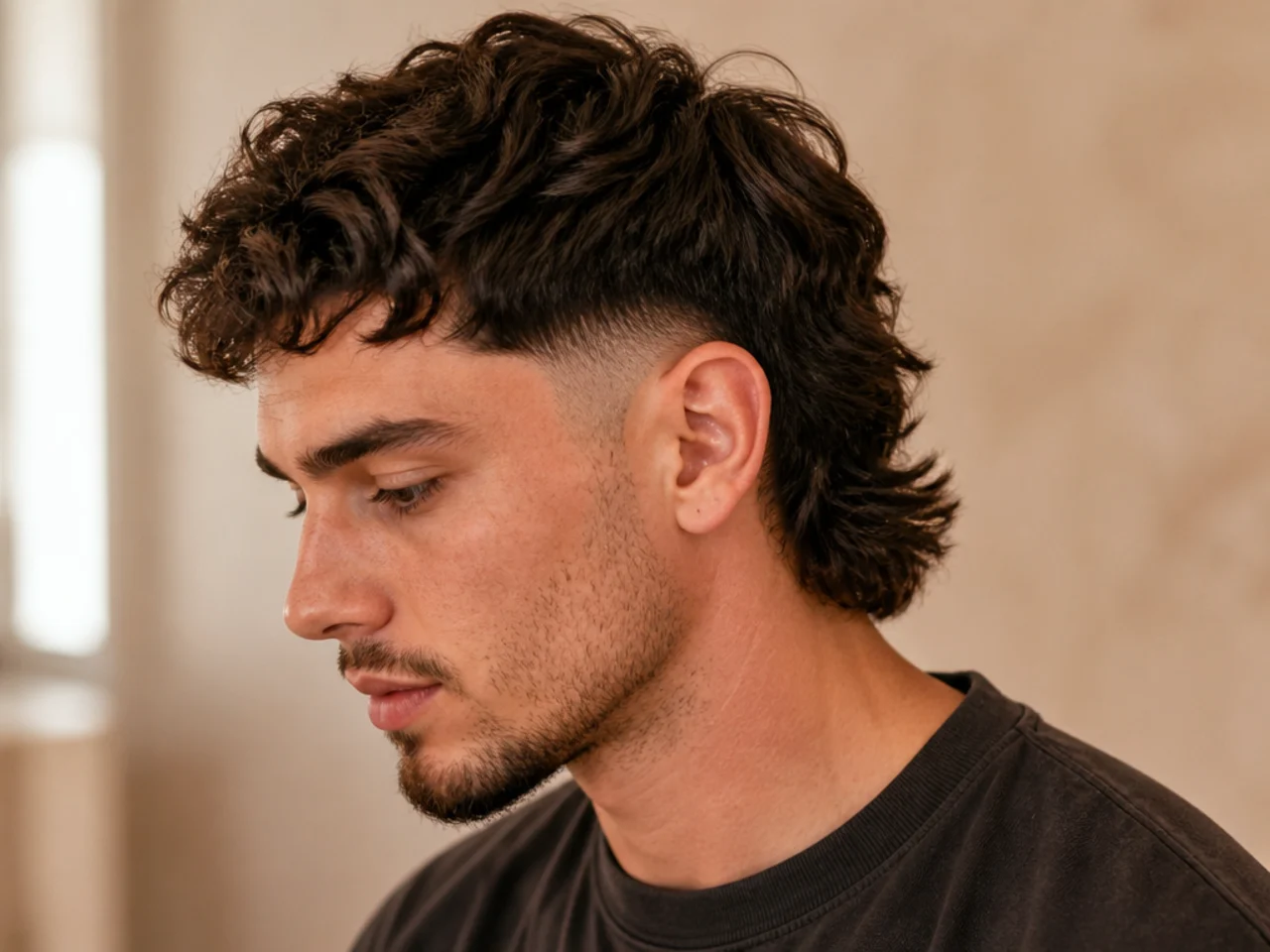
20 Short Mullet Fades For Men With Straight Hair
A short mullet lives or dies on the ratio between the tail and the sides, and straight hair shows that ratio with nothing to soften it. Twenty short mullet fades, with the fade heights and tail lengths that hold up on hair that falls flat.
In this article · 27
- What Counts as a Short Mullet
- Choosing Your Fade Height for Straight Hair
- The 20 Short Mullet Fades
- 1. Low Fade Short Mullet
- 2. Mid Fade Short Mullet
- 3. High Fade Short Mullet
- 4. Burst Fade Short Mullet
- 5. Taper Short Mullet
- 6. Skin Fade Short Mullet
- 7. Blunt Tail Short Mullet
- 8. Tapered Tail Short Mullet
- 9. Textured Top Short Mullet
- 10. Forward Fringe Short Mullet
- 11. Hard Part Short Mullet
- 12. Disconnected Short Mullet
- 13. Blended Short Mullet
- 14. Short Mullet With Longer Sides
- 15. Short Mullet With a Beard Fade
- 16. Short Mullet With Long Sideburns
- 17. Short Mullet on Fine Straight Hair
- 18. Short Mullet on Thick Straight Hair
- 19. Short Mullet at Week Four
- 20. Grown Out Short Mullet
- Styling and Upkeep
- Mistakes to Avoid
- FAQ
- Final Thoughts
A short mullet stops reading as a mullet the moment the tail and the sides get too close in length, and straight hair shows that failure with nothing to hide behind.
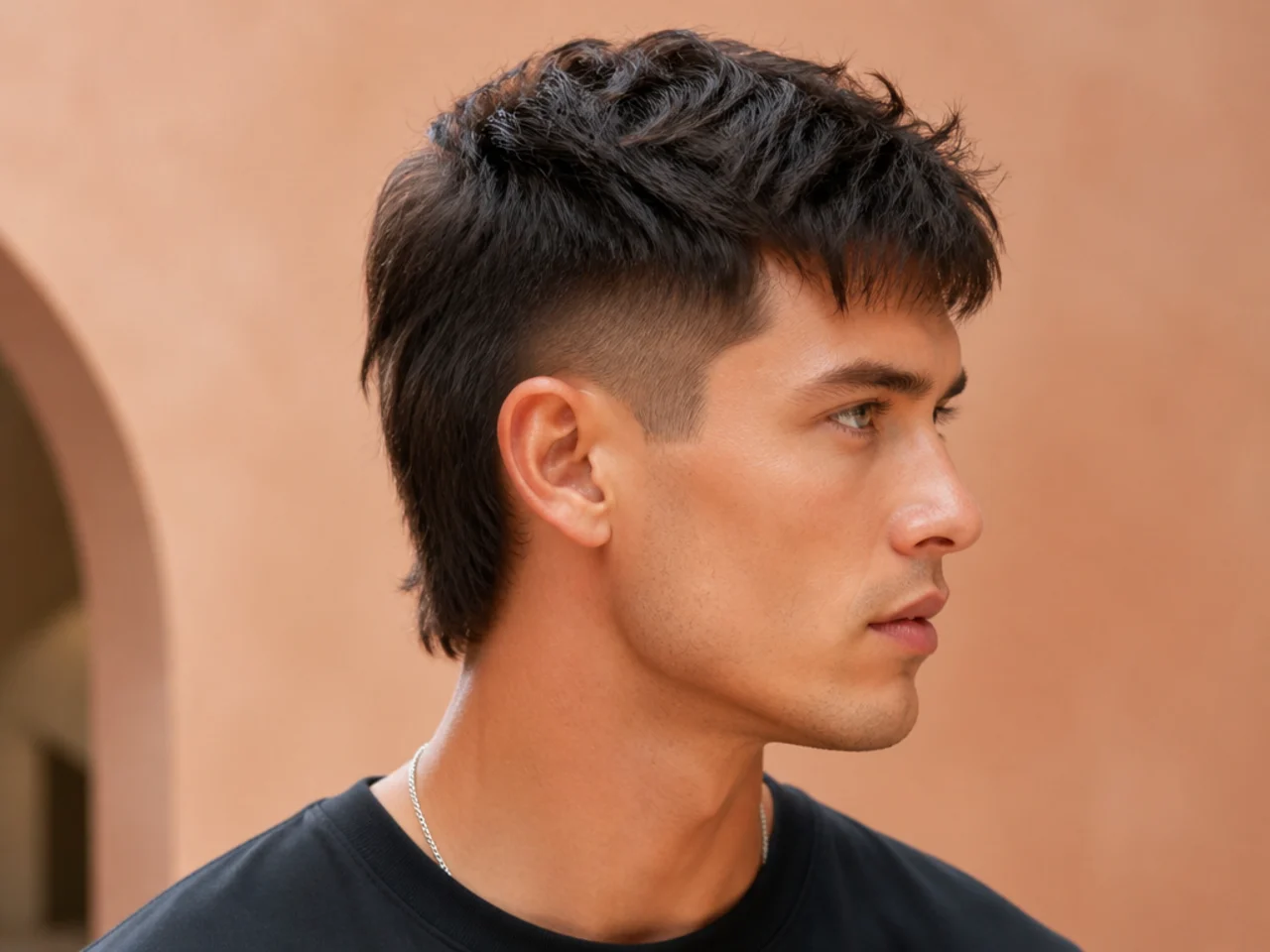
The cut is a ratio, not a length. The tail needs to be about double the sides, which on a short mullet means five to eight centimetres at the back against six to ten millimetres at the side.
Straight hair makes the ratio visible. Each strand falls in a single line with no bend to scatter light, so the step between the two lengths is read as a step.
What Counts as a Short Mullet
The tail stops at the top of the neck. Anything reaching the collar is a standard mullet, and the short version is defined by staying above it.
The front stays cut short. A mullet is short at the front and sides and long at the back, so growing the top out changes it into a different cut entirely.
Length at the crown is what joins them. Without a few centimetres over the occipital bone, the tail sits as a separate patch rather than as the end of a shape.
The sides can fade or taper. A fade goes to skin and a taper leaves hair behind, and on a short mullet that choice sets the whole contrast level.

Choosing Your Fade Height for Straight Hair
Straight hair punishes a rushed blend. There is no wave to break up the gradient, so every uneven pass shows along the whole line. Ask for blending time rather than a shorter guard.
Go lower than the photograph. A low fade starting at the top of the ear leaves width on the head, and straight hair already sits flat against the skull.
Match the tail length to the fade height. A high fade with a short tail leaves almost nothing long, and the cut reads as a mistake rather than a choice.
Ask for a guard number, not a word. A number two is six millimetres and a number three is ten, and those four millimetres change the contrast more than most people expect.
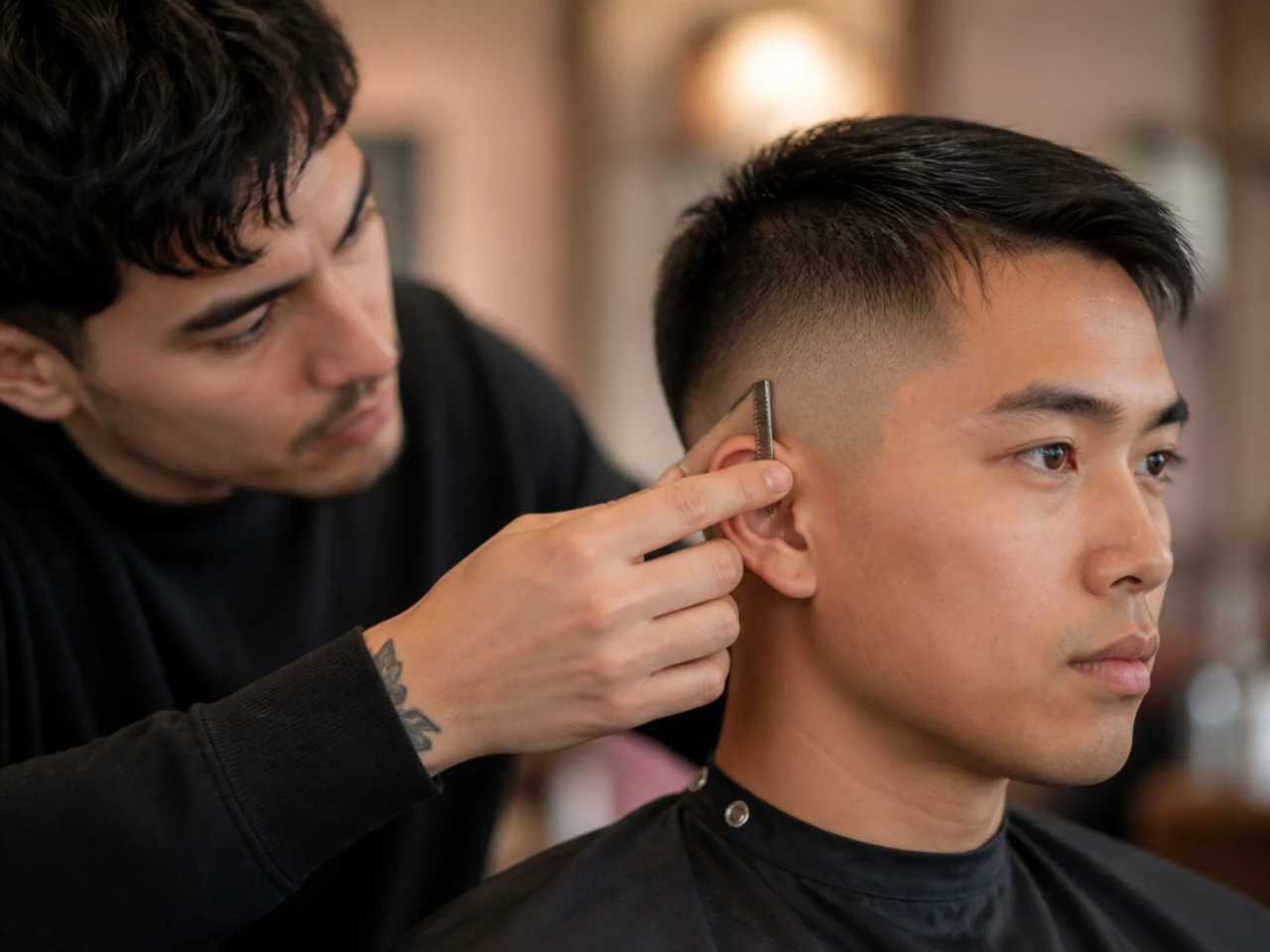
The 20 Short Mullet Fades
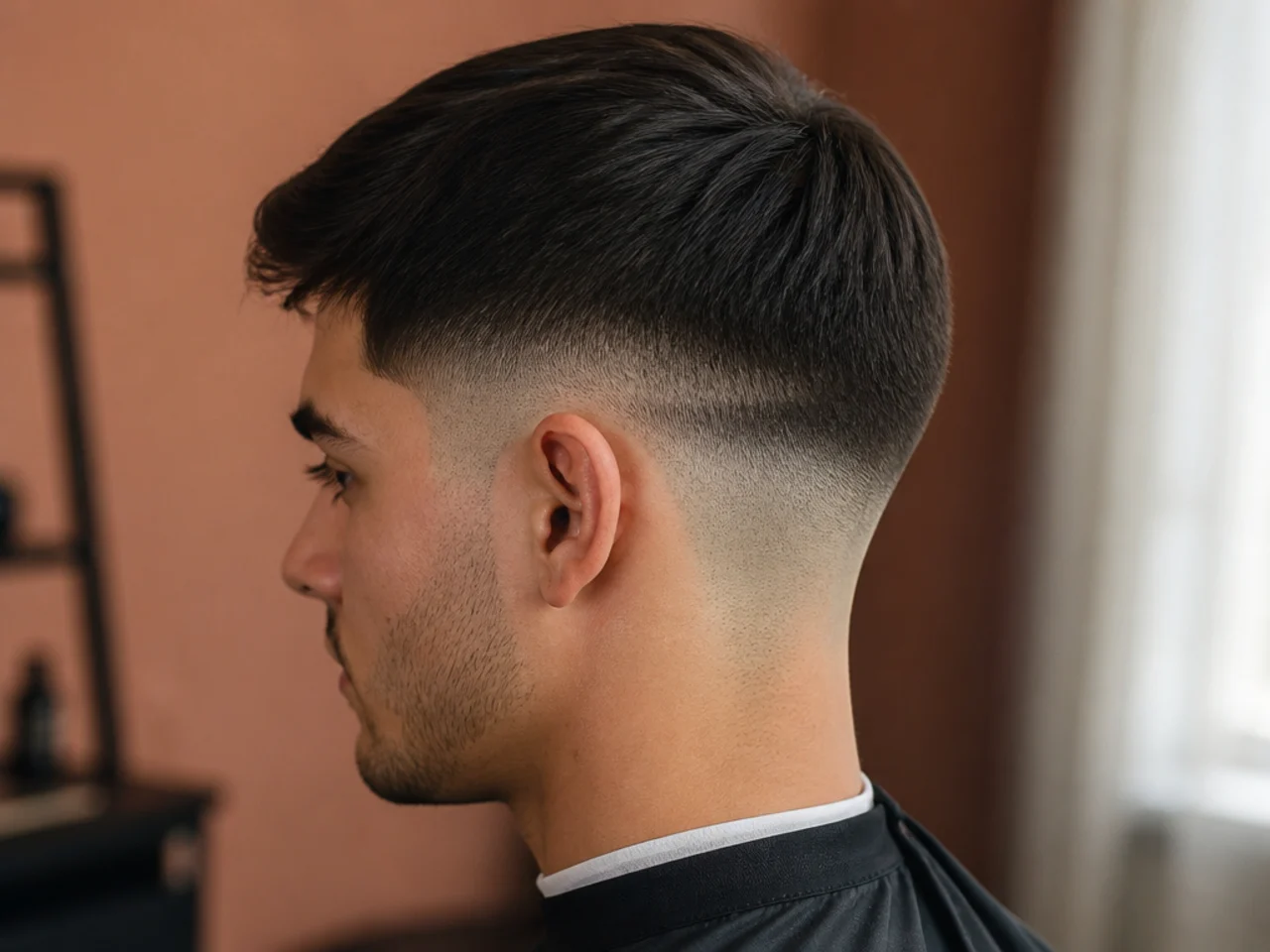
1. Low Fade Short Mullet
The shortening begins at the top of the ear and leaves the widest part of the head untouched. On straight hair, which already lies close to the skull, keeping that width is what stops the head reading narrow from the front.
2. Mid Fade Short Mullet
The line starts between the ear and the parietal ridge. The gradient has further to travel, so it takes more passes to keep smooth, and on straight hair a rushed mid fade shows every one of those passes as a horizontal band.
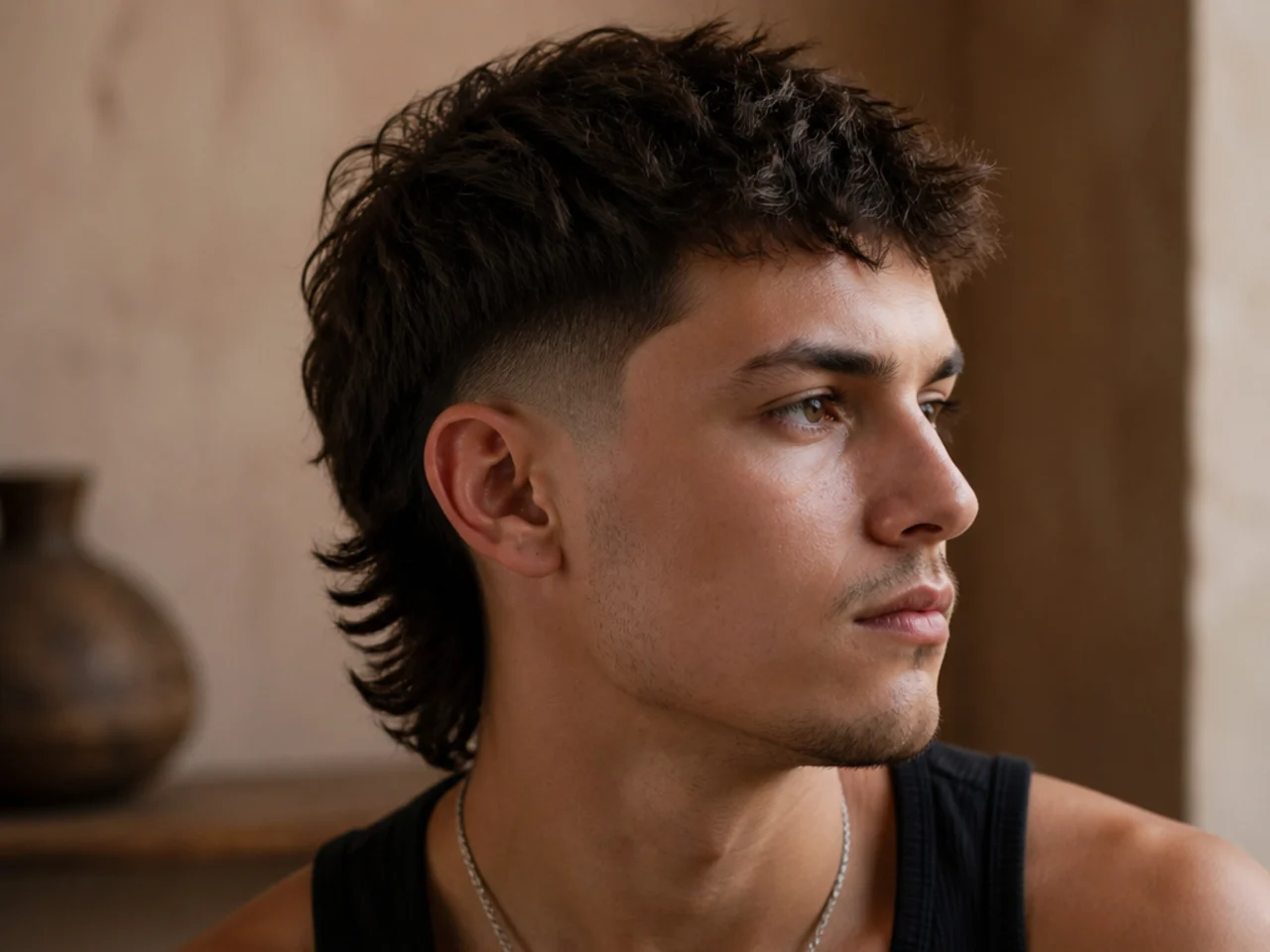
3. High Fade Short Mullet
The shortening begins at or above the parietal ridge, the widest point of the skull. That maximises the contrast against the tail but narrows the head, so it needs a broad face and a tail long enough to justify the jump.
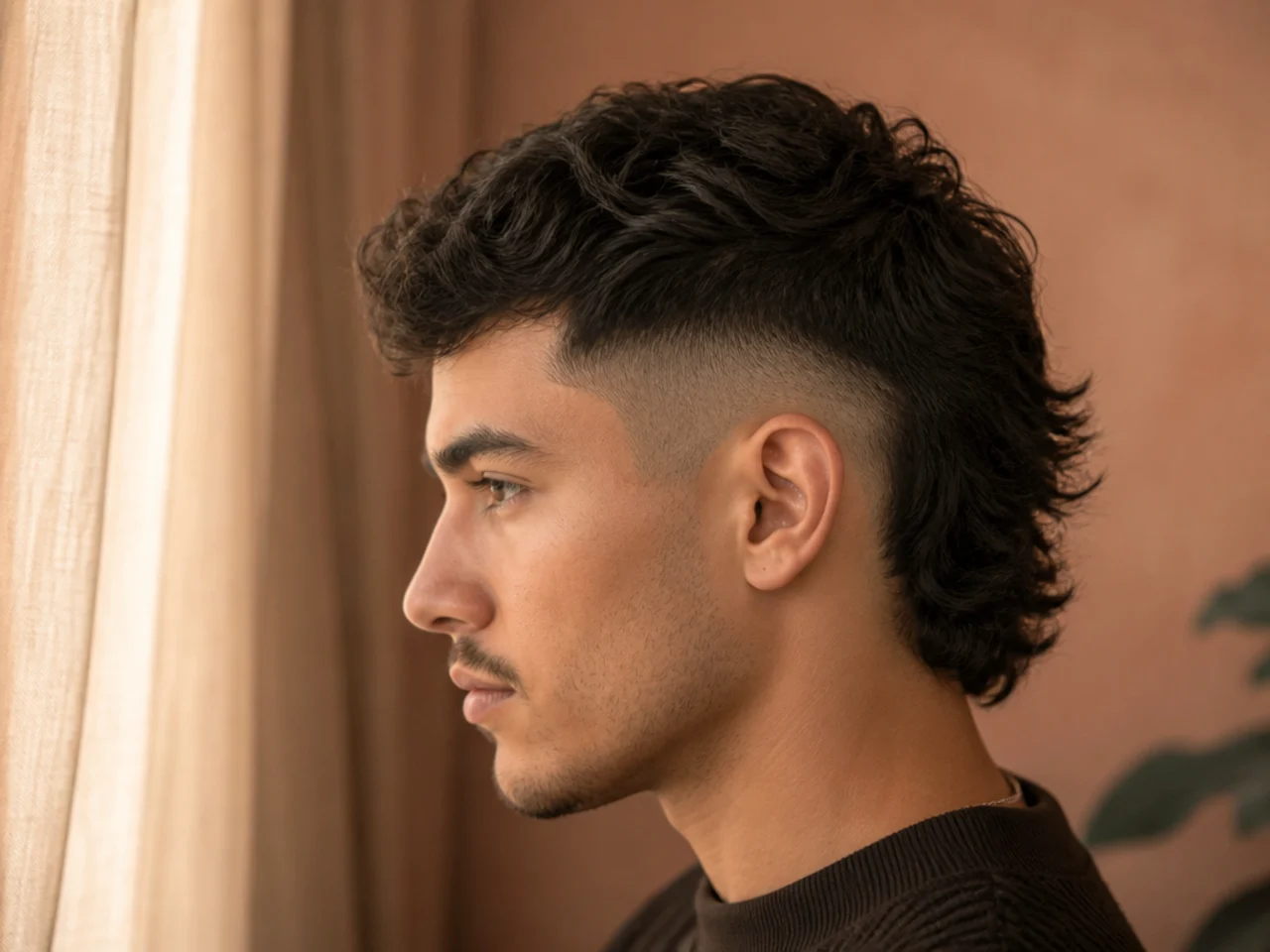
4. Burst Fade Short Mullet
The fade arcs in a semicircle around the ear and stops before the back, leaving the tail at full length. It is the only fade shape that shortens the sides without cutting into the length the mullet depends on.
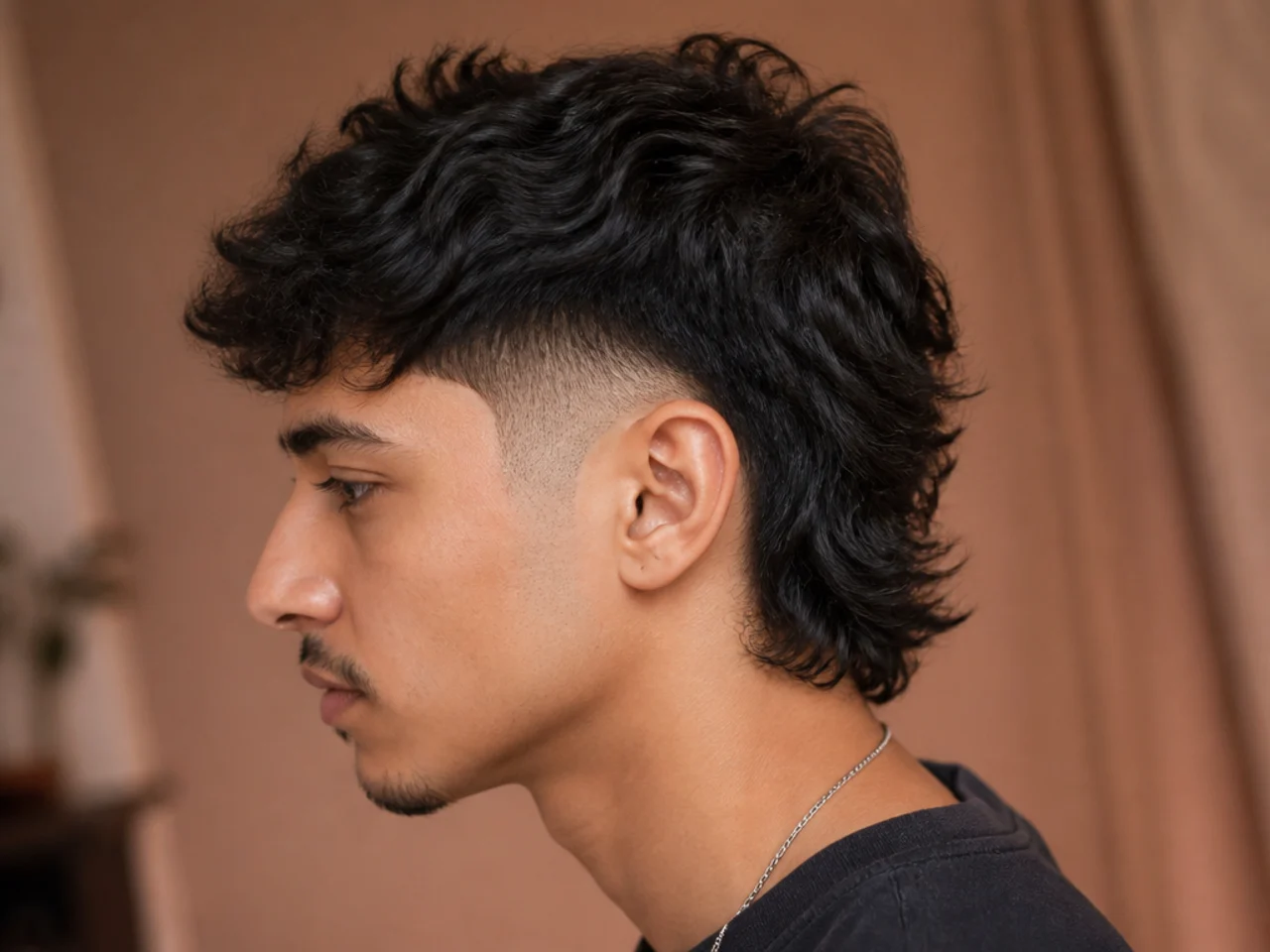
5. Taper Short Mullet
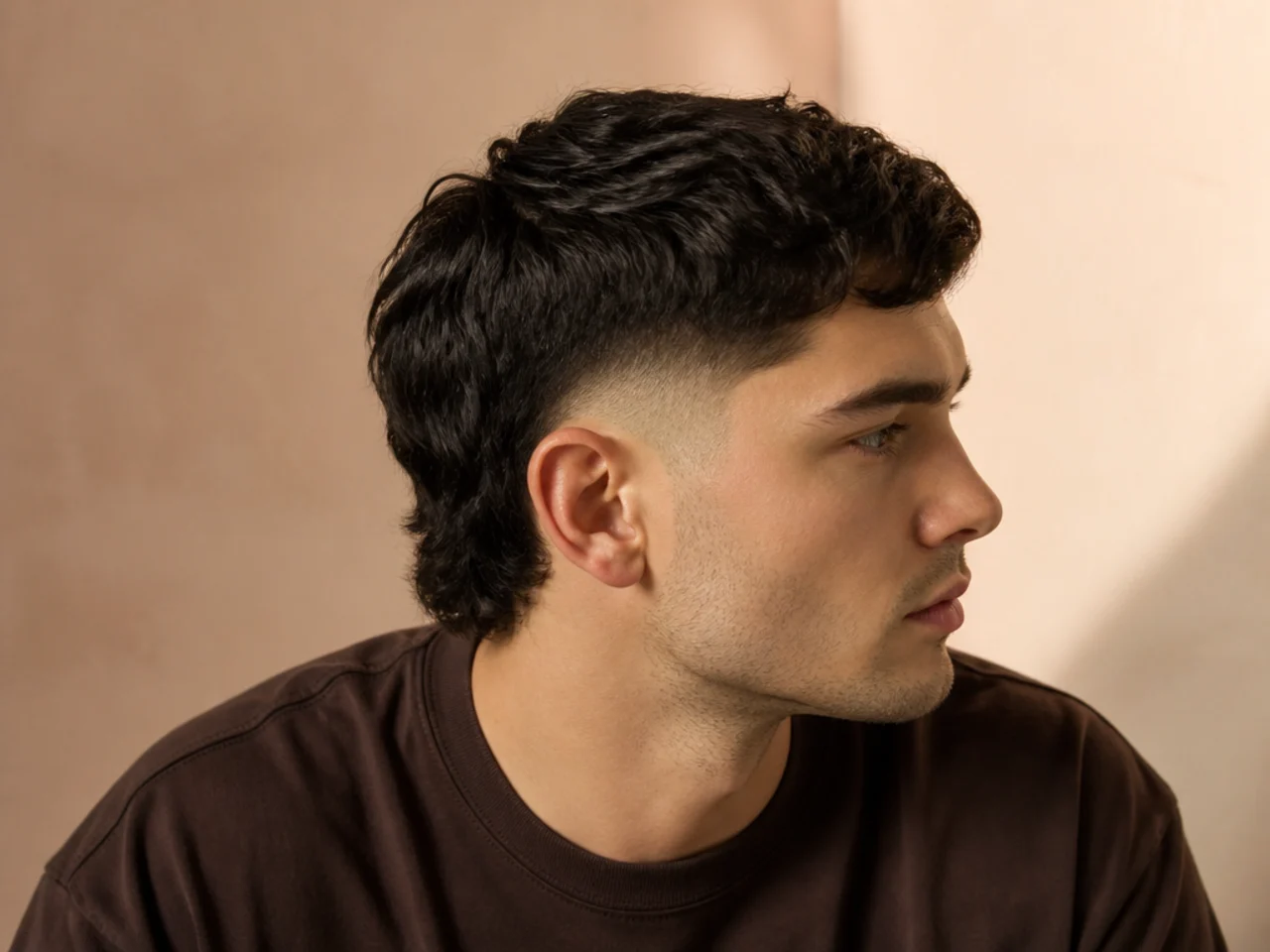
The sides shortened gradually but never taken to skin, finishing around a number one at three millimetres. Because hair is always left behind, the regrowth blurs instead of appearing as stubble, and the cut still reads correctly at three to four weeks.
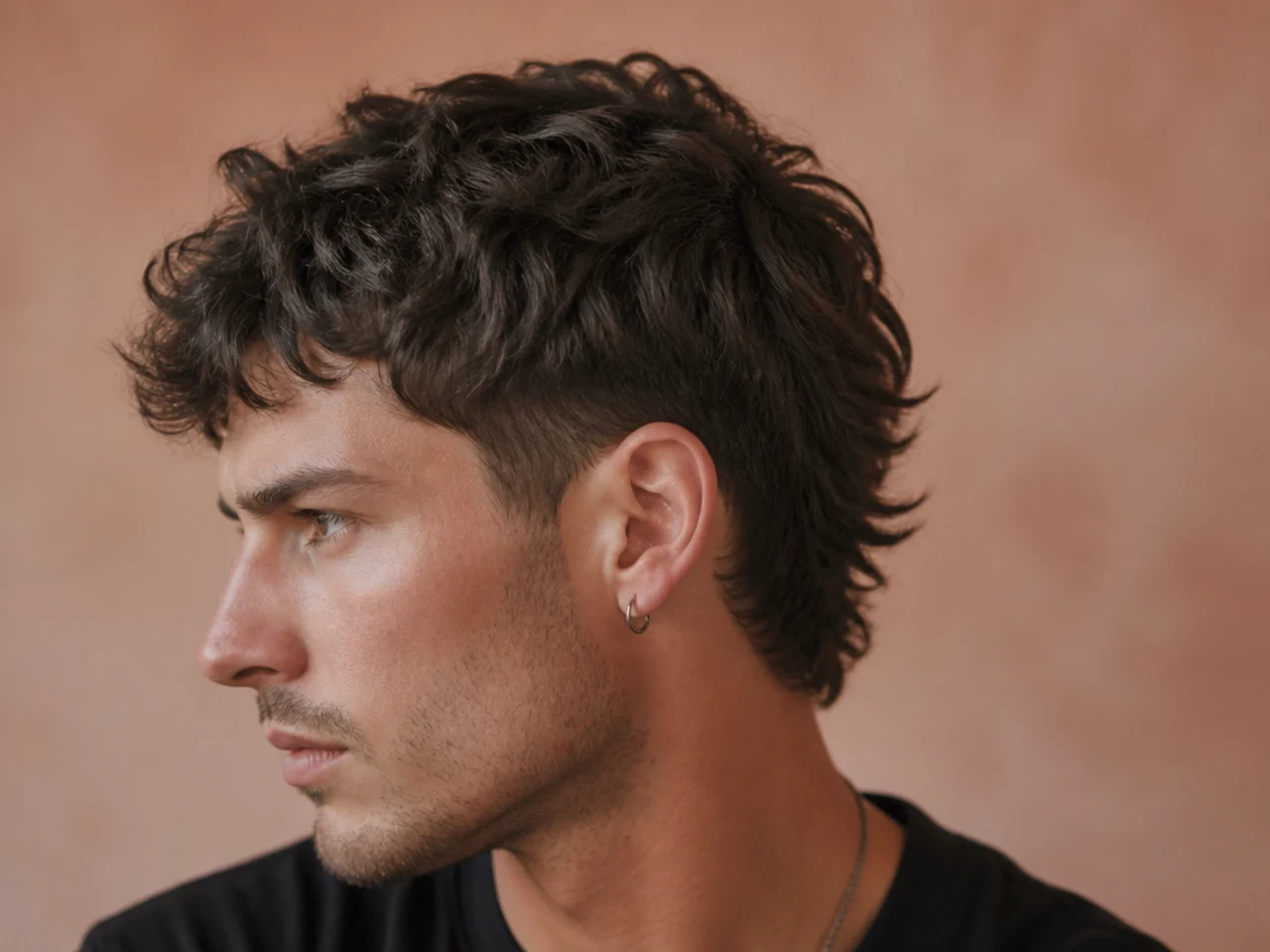
6. Skin Fade Short Mullet
The sides taken to nothing. Skin reflects light where hair absorbs it, so the contrast against the tail is much harder than a taper delivers. The trade is the schedule, because bare skin becomes visible stubble within one to two weeks.
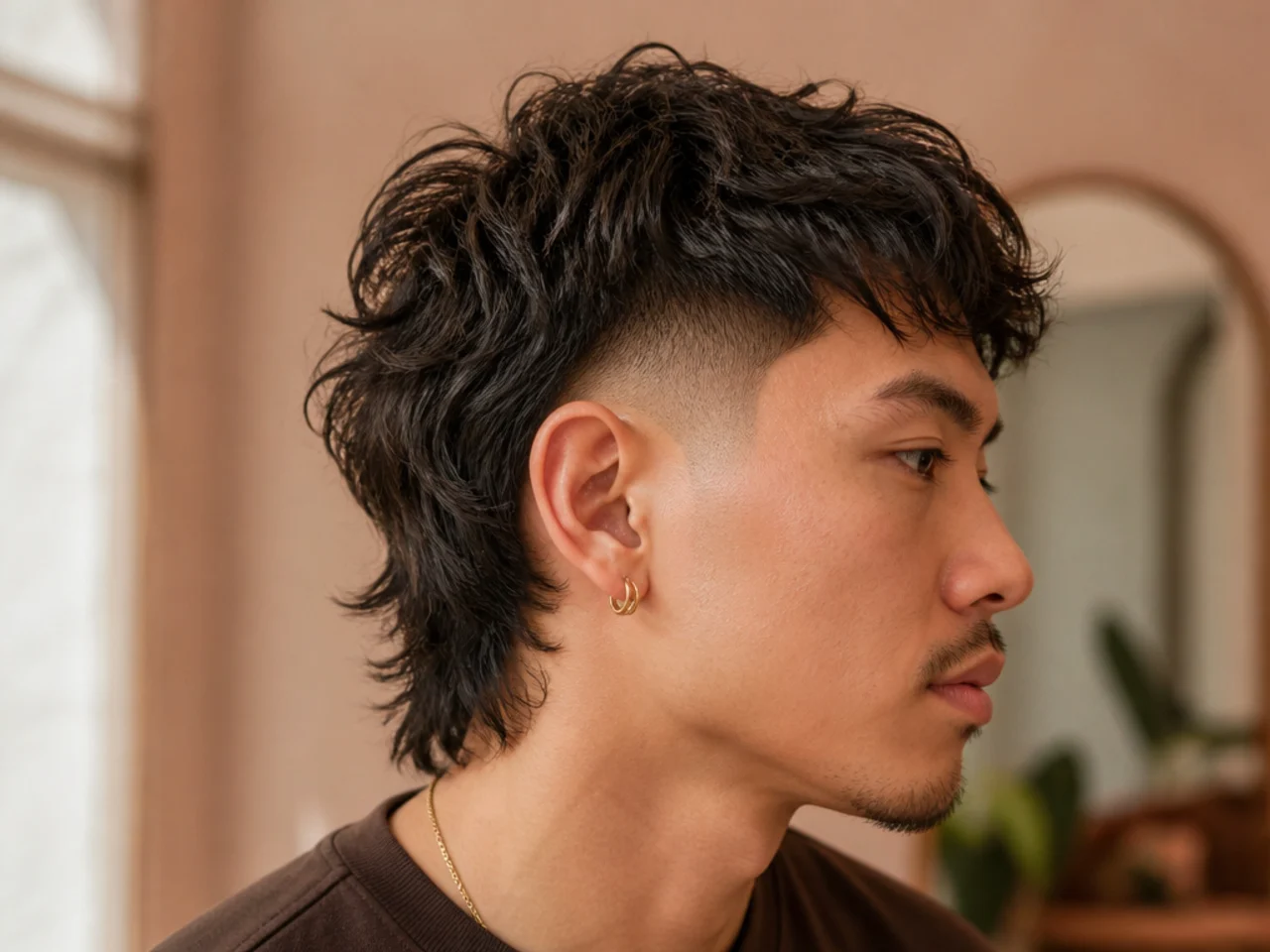
7. Blunt Tail Short Mullet
The bottom edge cut straight across rather than softened. Straight hair holds a blunt line better than any other texture because the strands fall in parallel, and that single hard edge is what makes a short tail look intentional.
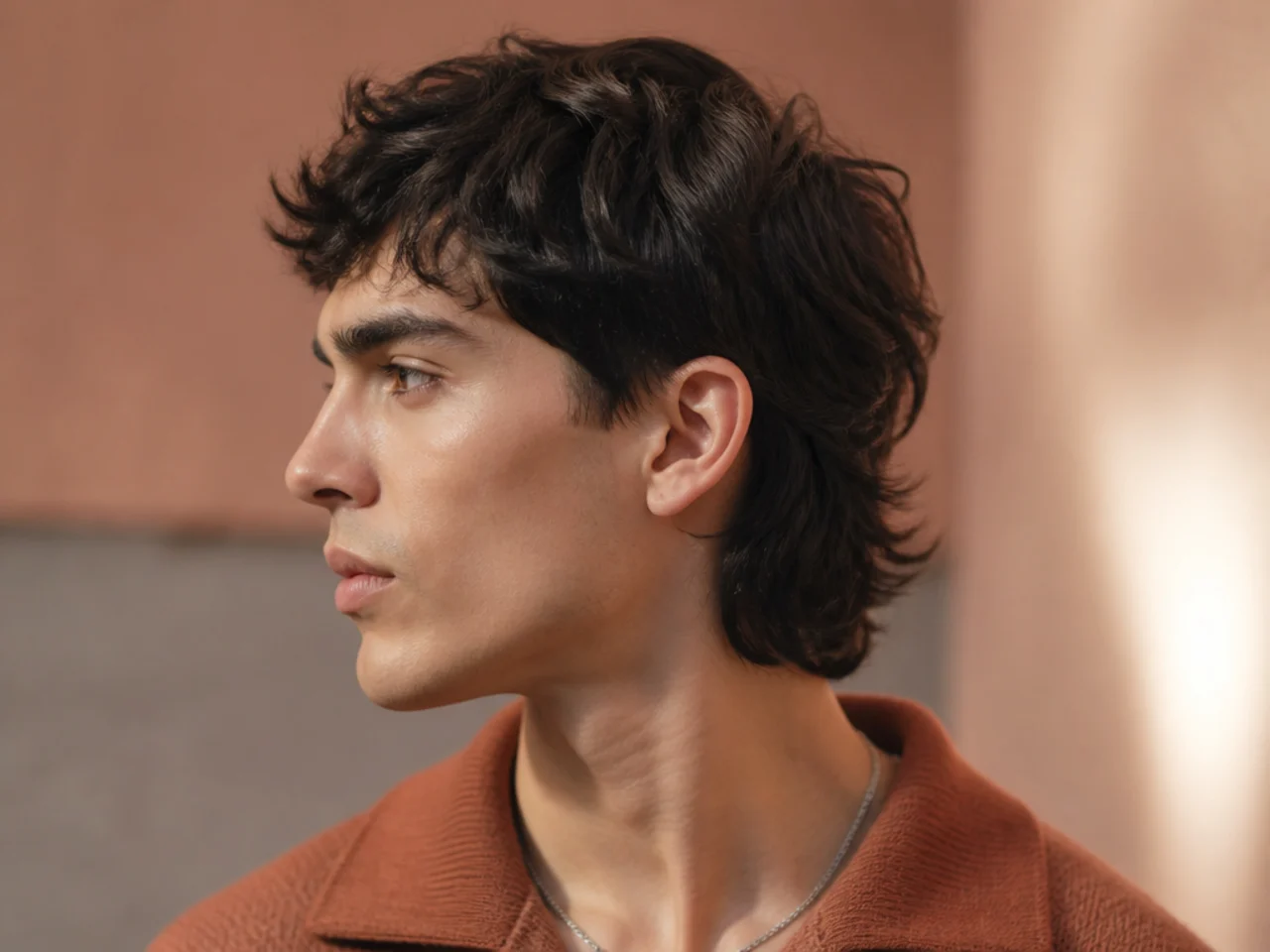
8. Tapered Tail Short Mullet
The tail thinned to a soft point instead of a straight line. It grows out with nothing to correct, since there is no hard edge to move down the neck, which is why barbers default to it on anyone who cannot get back in every month.

9. Textured Top Short Mullet
The top point cut into uneven lengths so the short pieces sit on the longer ones and hold them apart. Straight hair has no natural lift, so this is where the volume has to come from if the top is going to stand at all.
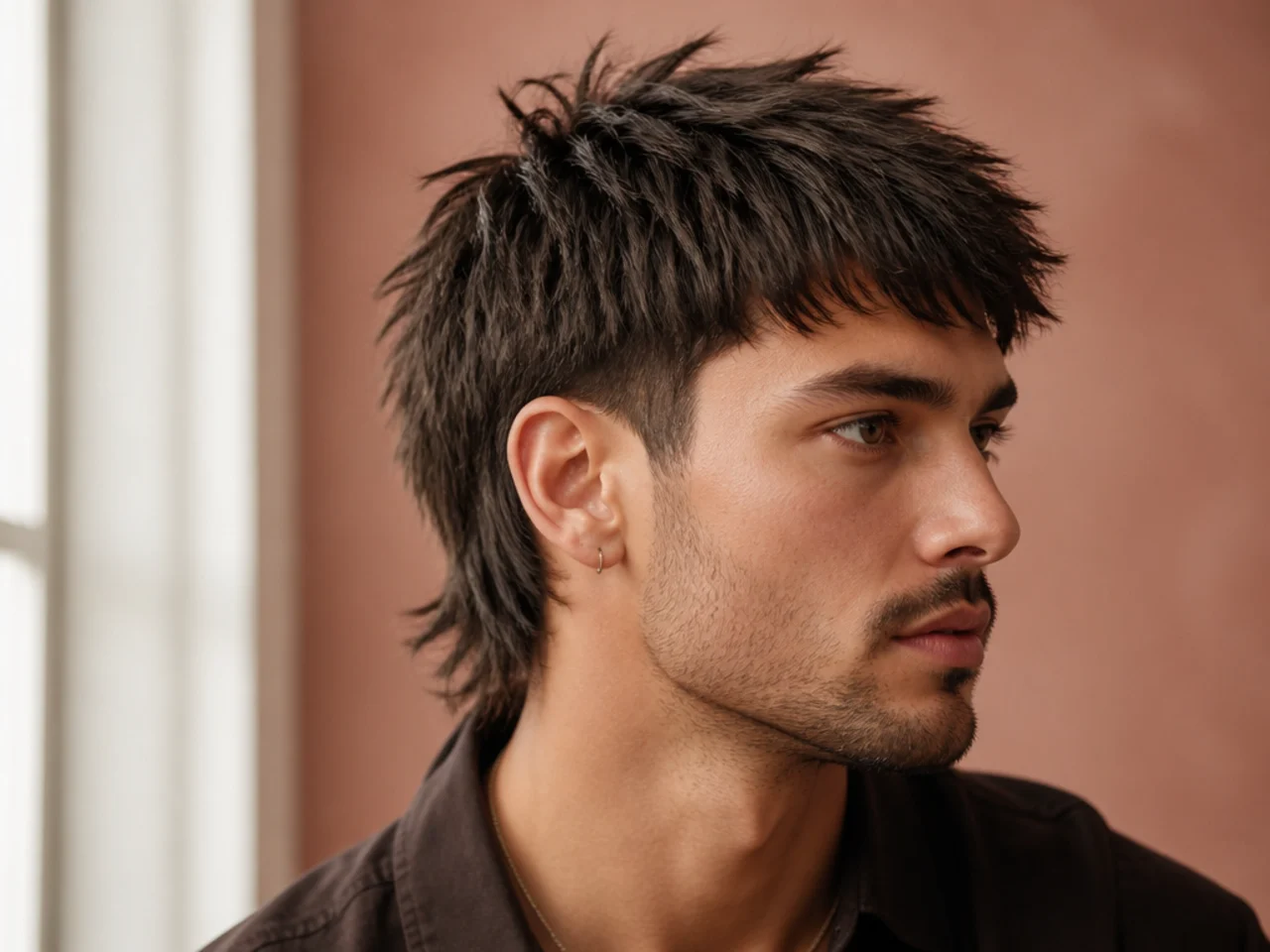
10. Forward Fringe Short Mullet
The top pushed forward into a short fringe rather than back. It gives the cut a front as well as a back, and on a high forehead the fringe restores the proportion the fade took away at the temple.

11. Hard Part Short Mullet
A trimmer line cut along the parting. It gives the eye a vertical against the fade's horizontal, which stops the side of the head reading as a flat band, and it holds its definition for about a week before regrowth closes it.
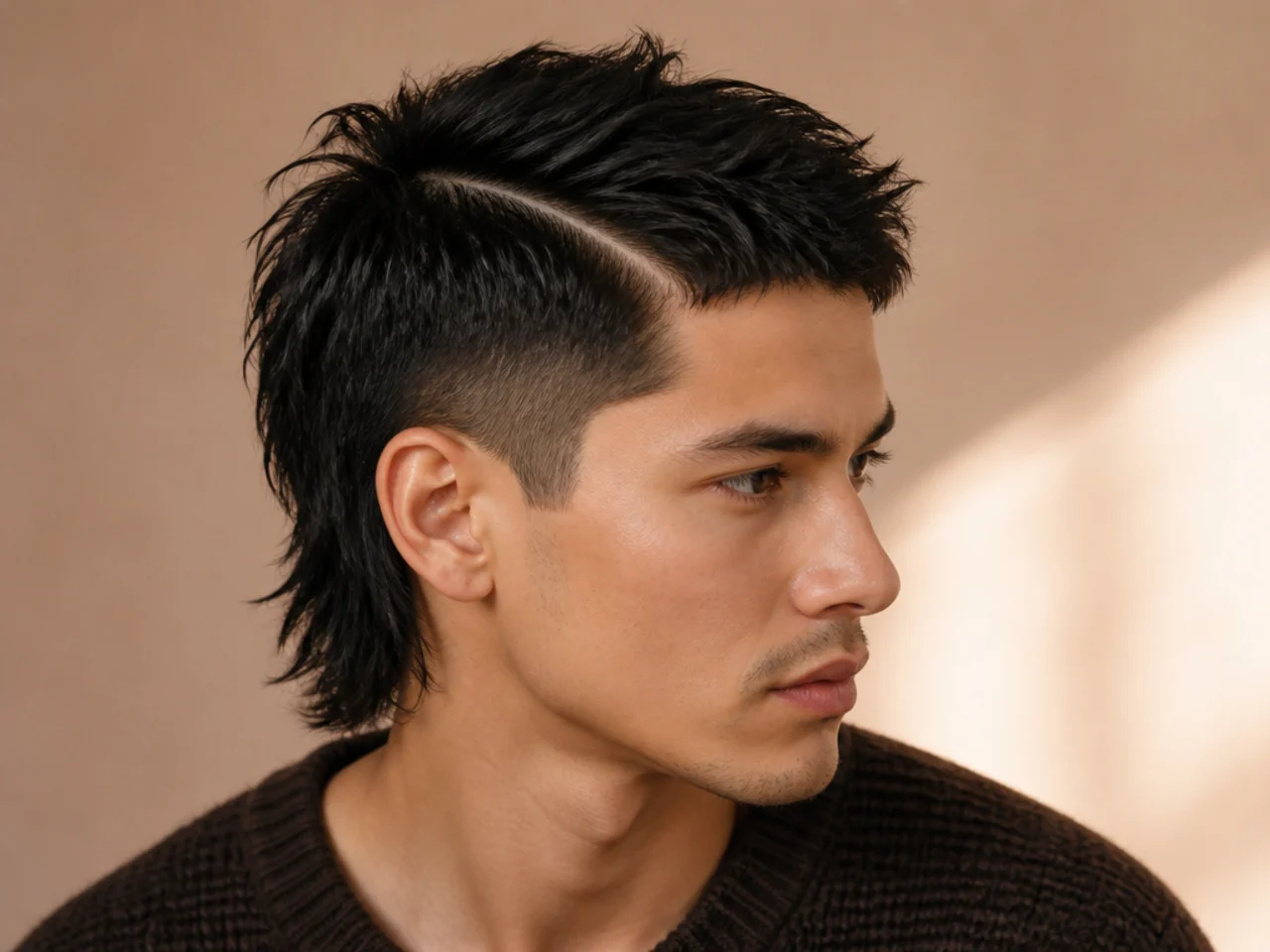
12. Disconnected Short Mullet
The tail cut long and the sides cut short with no gradient between them. The hard line is the effect, and on straight hair it is at its sharpest, because there is no bend anywhere to blur the boundary.
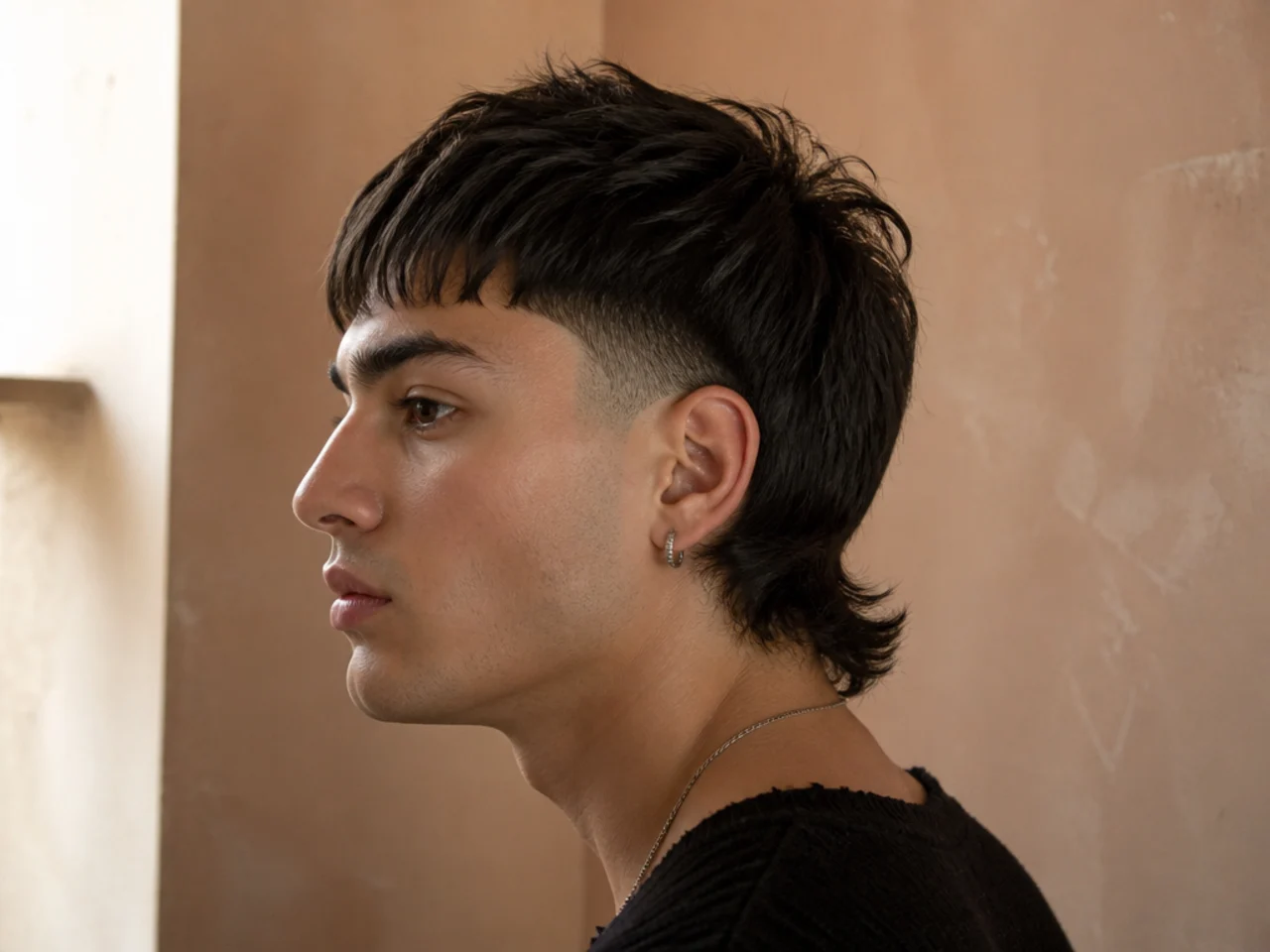
13. Blended Short Mullet
The tail taken gradually into the sides with no visible edge. It reads far softer and grows out without a stage where an old line sits at the wrong height, which makes it the safest first attempt at the cut.
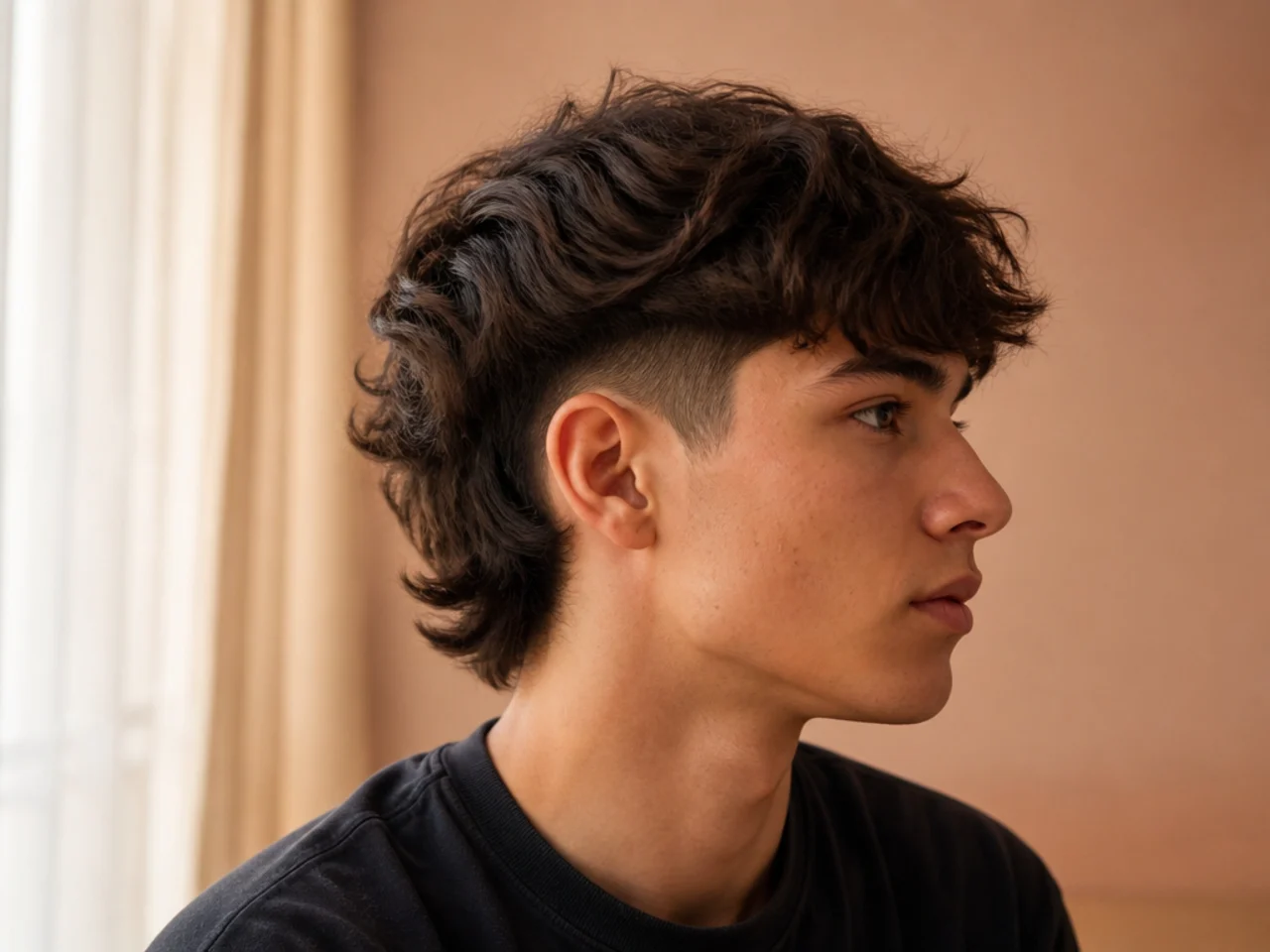
14. Short Mullet With Longer Sides
The sides left at a number four, thirteen millimetres, instead of faded. The ratio between tail and side narrows, so the cut reads as a shape rather than a statement, and it is the version that passes unremarked at work.

15. Short Mullet With a Beard Fade
The side fade continues down into the beard as one gradient, which removes the second horizontal across the jaw. The join has to land where beard density actually begins, usually just below the earlobe, or the gradient runs out of hair partway down.
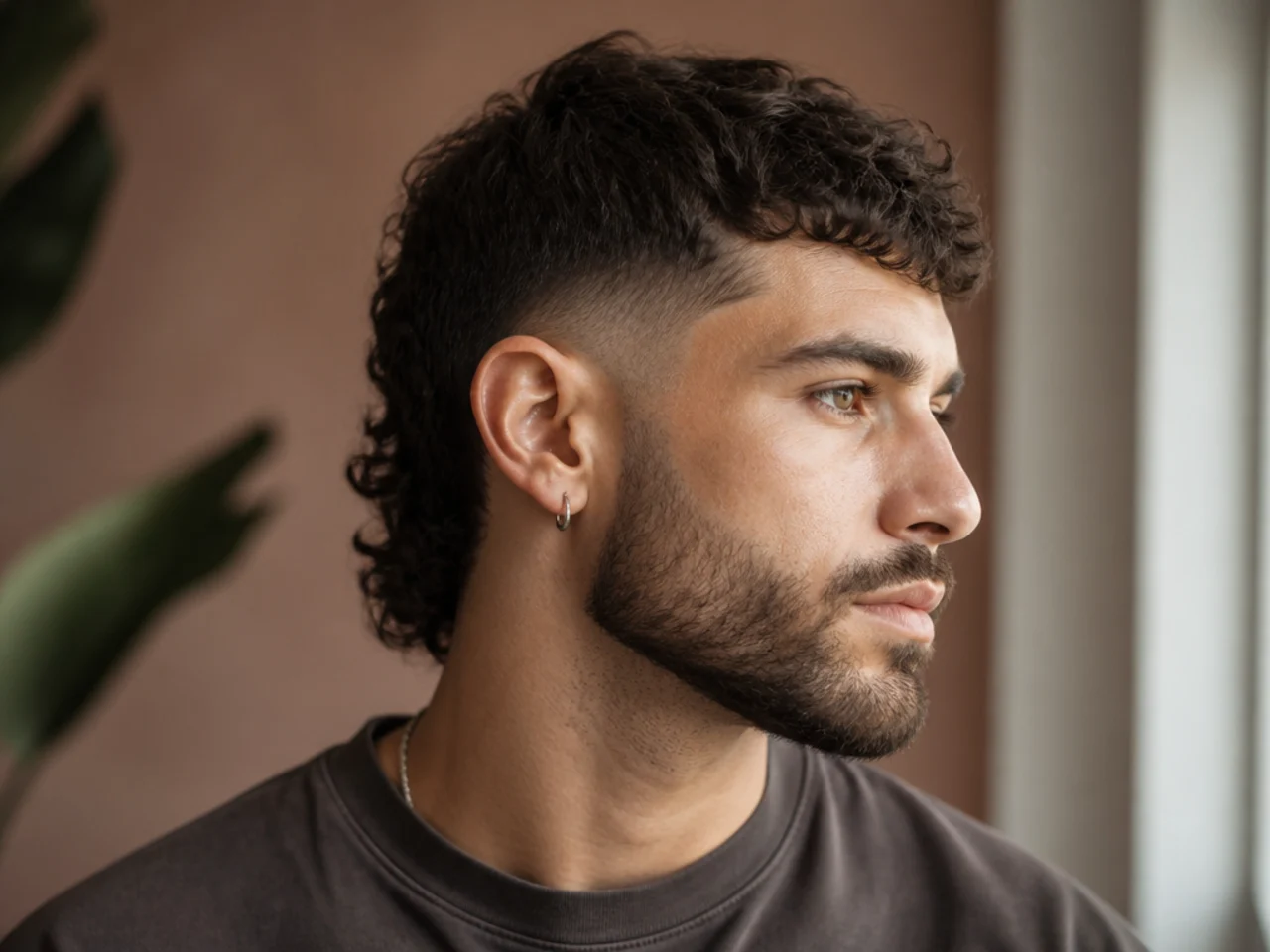
16. Short Mullet With Long Sideburns
The sideburns left below the fade line as two vertical marks either side of the face. They give the front view something to hold in a cut where all the length lives at the back, which is the front view's usual problem.
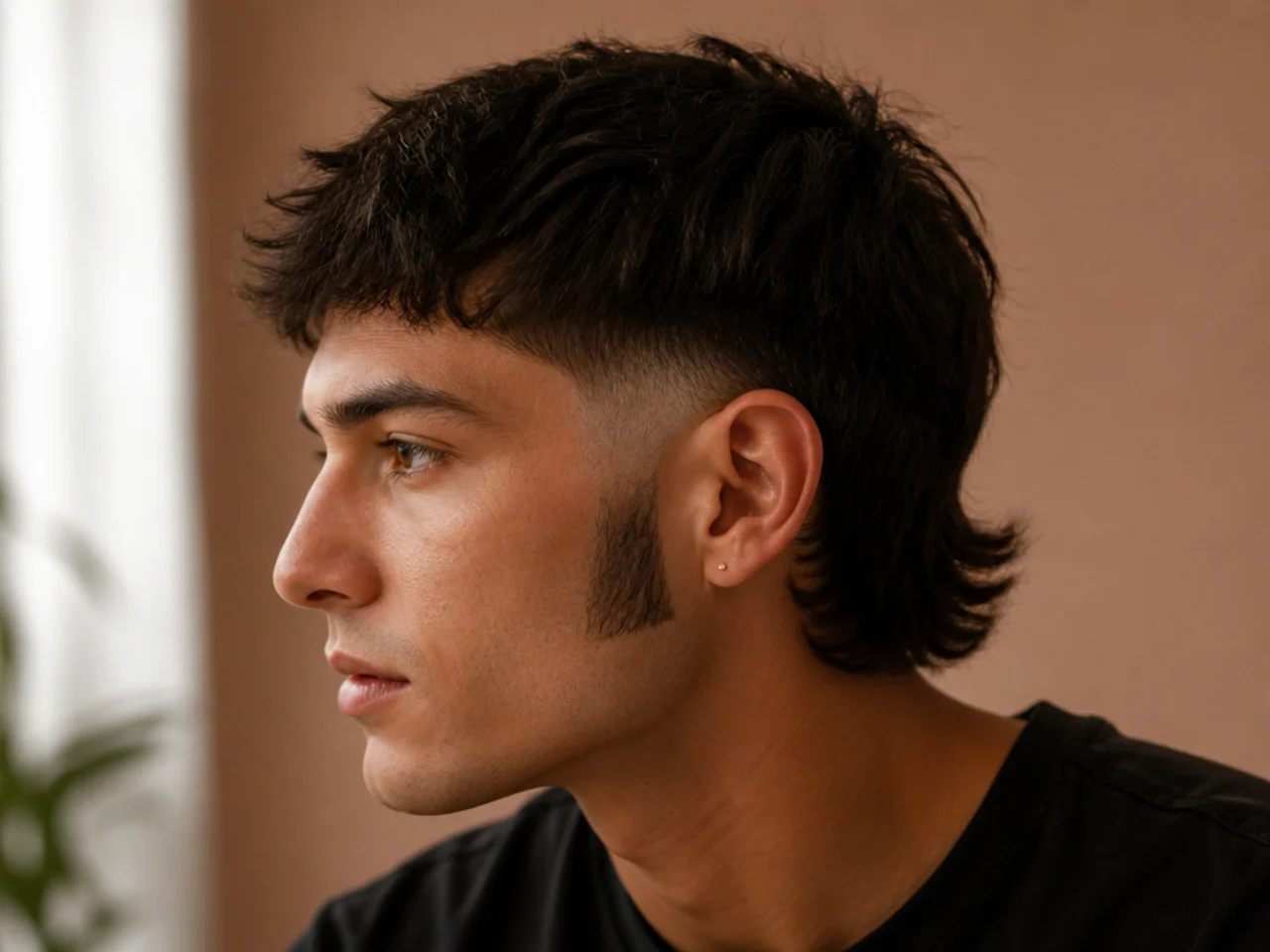
17. Short Mullet on Fine Straight Hair
Fine hair shows scalp at short guards, so keep the sides at a number two, six millimetres, rather than a one. A number one leaves three millimetres, and on a thin head those strands sit far enough apart to show skin between them in daylight.
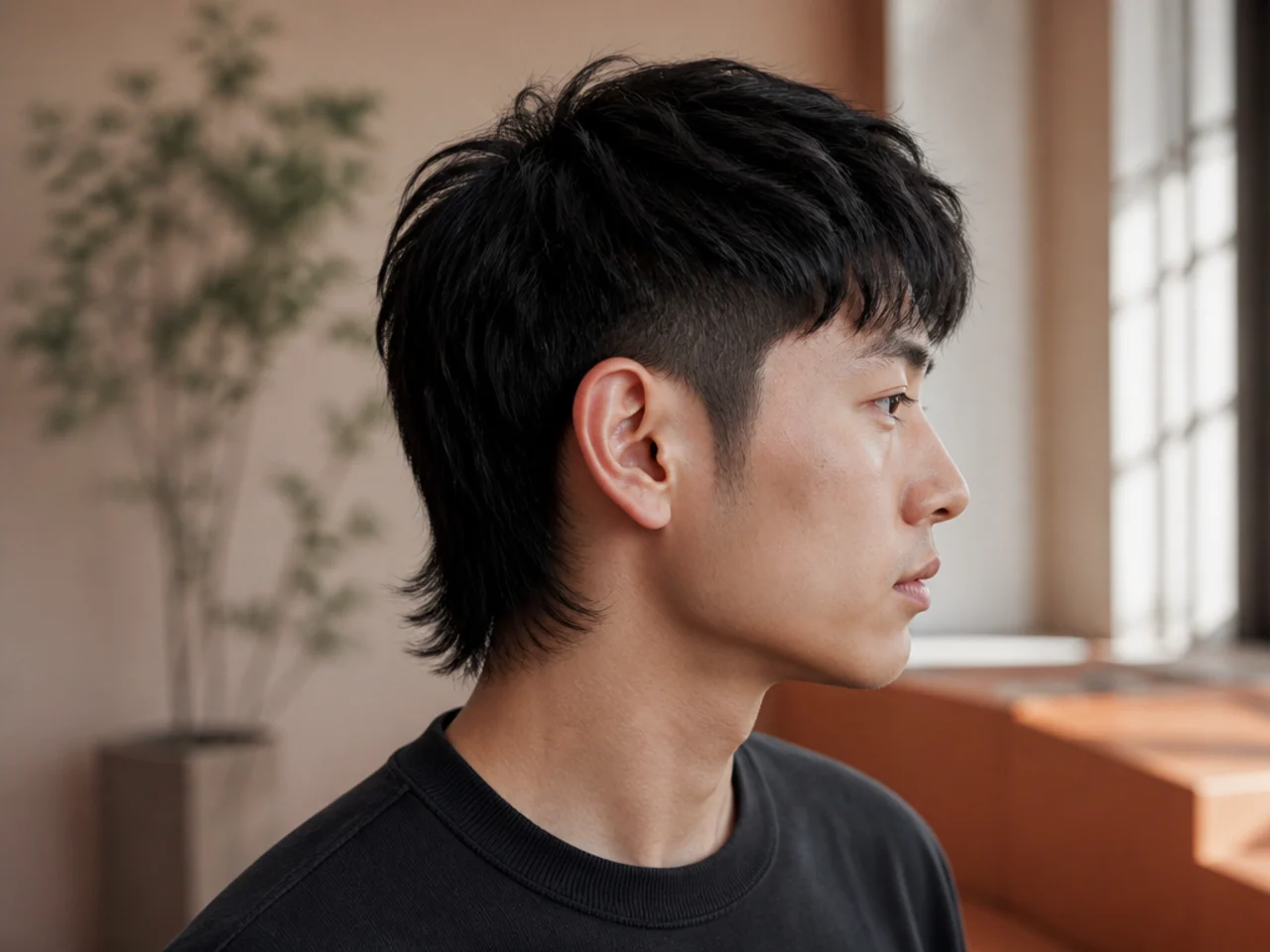
18. Short Mullet on Thick Straight Hair
Thick straight hair holds a line sharply, so the gradient needs more passes to stay smooth and the tail wants weight removed from underneath rather than off the ends. More on the texture in short haircuts for men with thick hair.
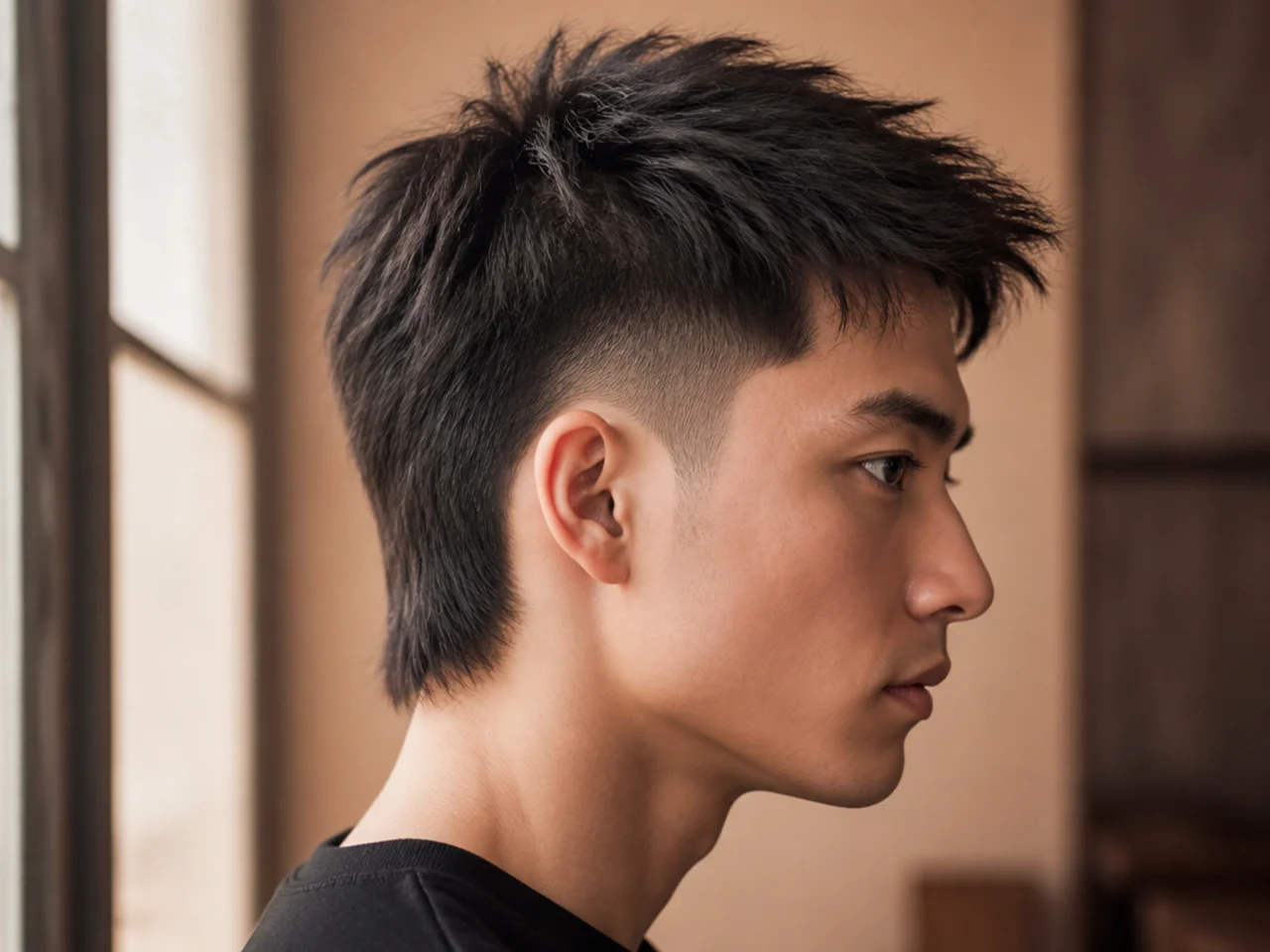
19. Short Mullet at Week Four
The fade has softened and the tail has gained about a centimetre, so the ratio between them has widened rather than closed. This is why a short mullet ages better than most fades, since growth pushes it further into the shape instead of out of it.
20. Grown Out Short Mullet
By week eight the tail is touching the collar and the sides have caught up enough that the fade line is gone. What is left is a standard mullet, which is worth knowing in advance, since it means one cut delivers two shapes if you let it.

Styling and Upkeep
Give guard numbers, not adjectives. A number two is six millimetres and a number three is ten, and short means both of them to different barbers.
Book by the fade. Two to three weeks for skin, three to four for a taper, six to eight for the tail.
Dry the top before judging the sides. The contrast only reads correctly once the top is in position, and straight hair sits flat until it is dried into place.
Use a matte product at the root. Straight hair has no bend to hold height, so anything shiny or heavy on the ends drops the top flat within an hour.
Check the nape in a hand mirror. The tail edge is the part you never see and the part everyone behind you does.

Mistakes to Avoid
Letting the tail and the sides get too close. Below roughly double, the eye stops reading two lengths and sees an overgrown taper.
A number one on fine straight hair. Three millimetres on a thin head shows scalp between the strands in daylight.
Rushing the blend on straight hair. There is no wave to scatter light, so every uneven pass reads as a band across the side of the head.
Growing the top out. A mullet is short at the front by definition, and length up there turns it into a different cut.
Changing the fade height every visit. It is the variable that makes the cut look different each time, so write the number down and read it out.
FAQ
How long should the tail be? Five to eight centimetres, roughly double the sides.
Fade or taper? A taper holds three to four weeks, a skin fade wants two to three.
Which guard on the sides? A number two at six millimetres for fine hair, a number one for thick.
Final Thoughts
Describe the cut as two numbers and a shape. "Number two on the sides, low fade starting at the top of the ear, tail to the top of the neck cut blunt" is four facts a barber can act on, and it comes back the same next time.
For the range of lengths this cut covers see the short mullet haircut for men, and for what else suits flat falling hair see straight short hair for men. More in Fade Haircuts.