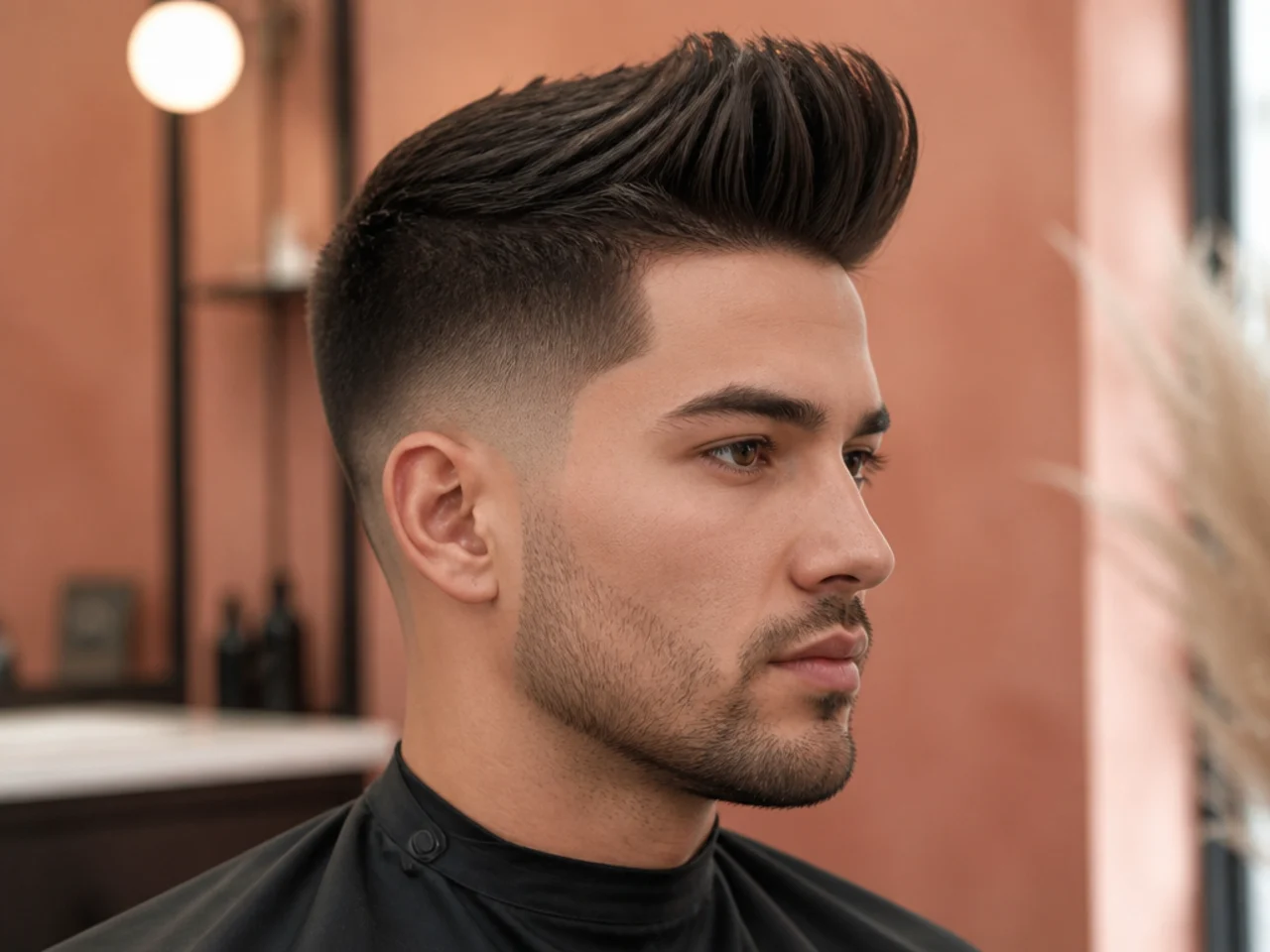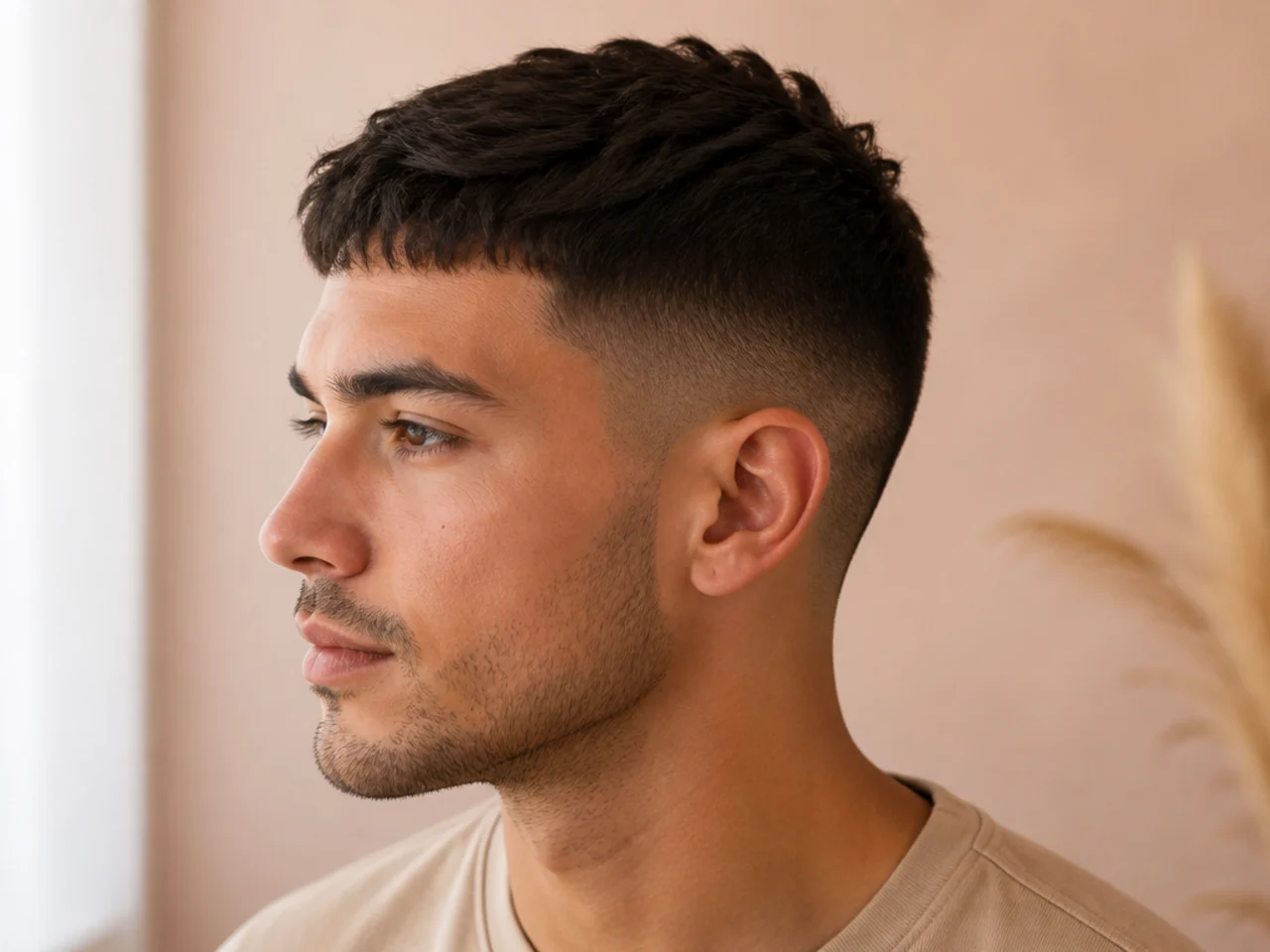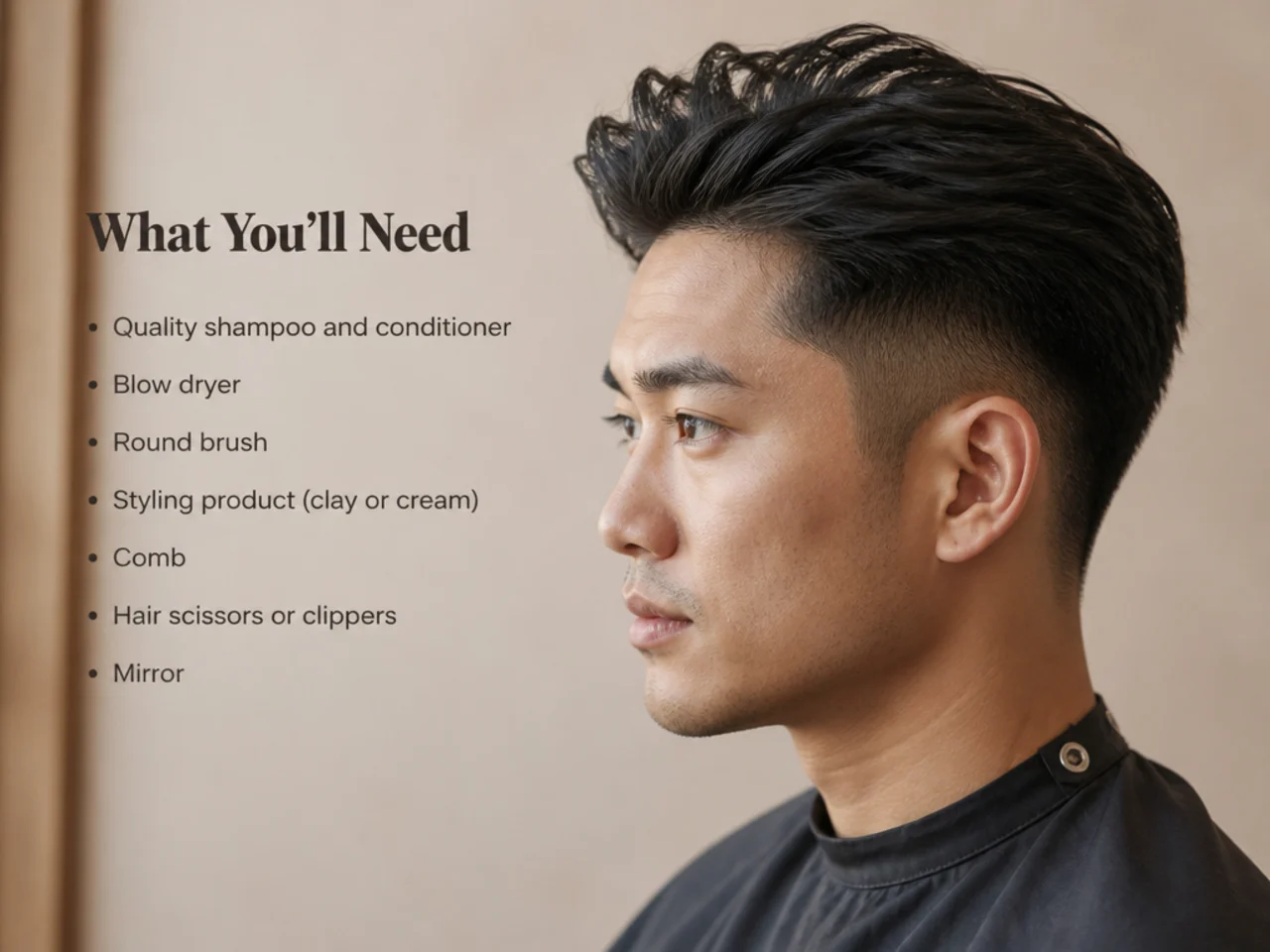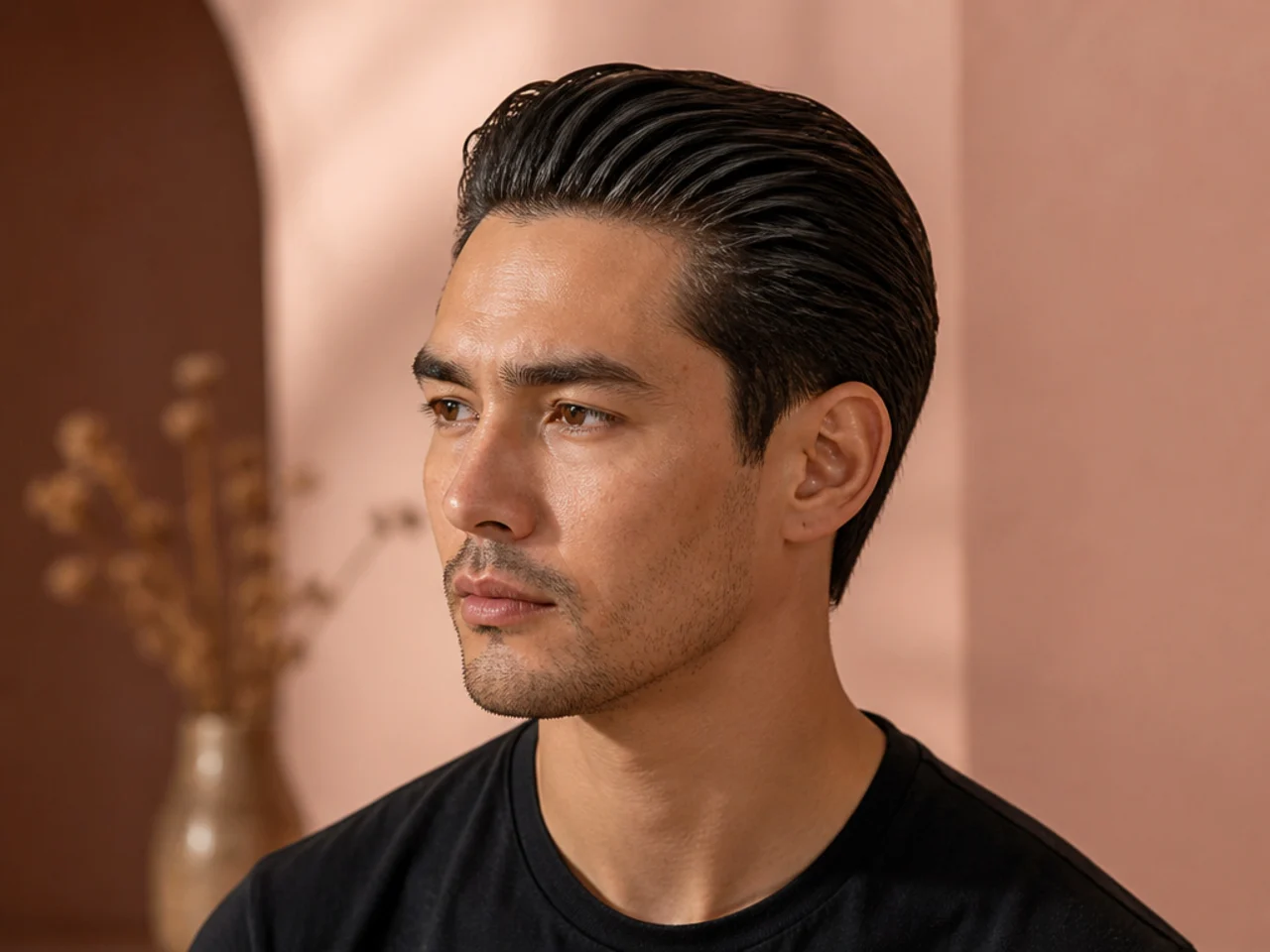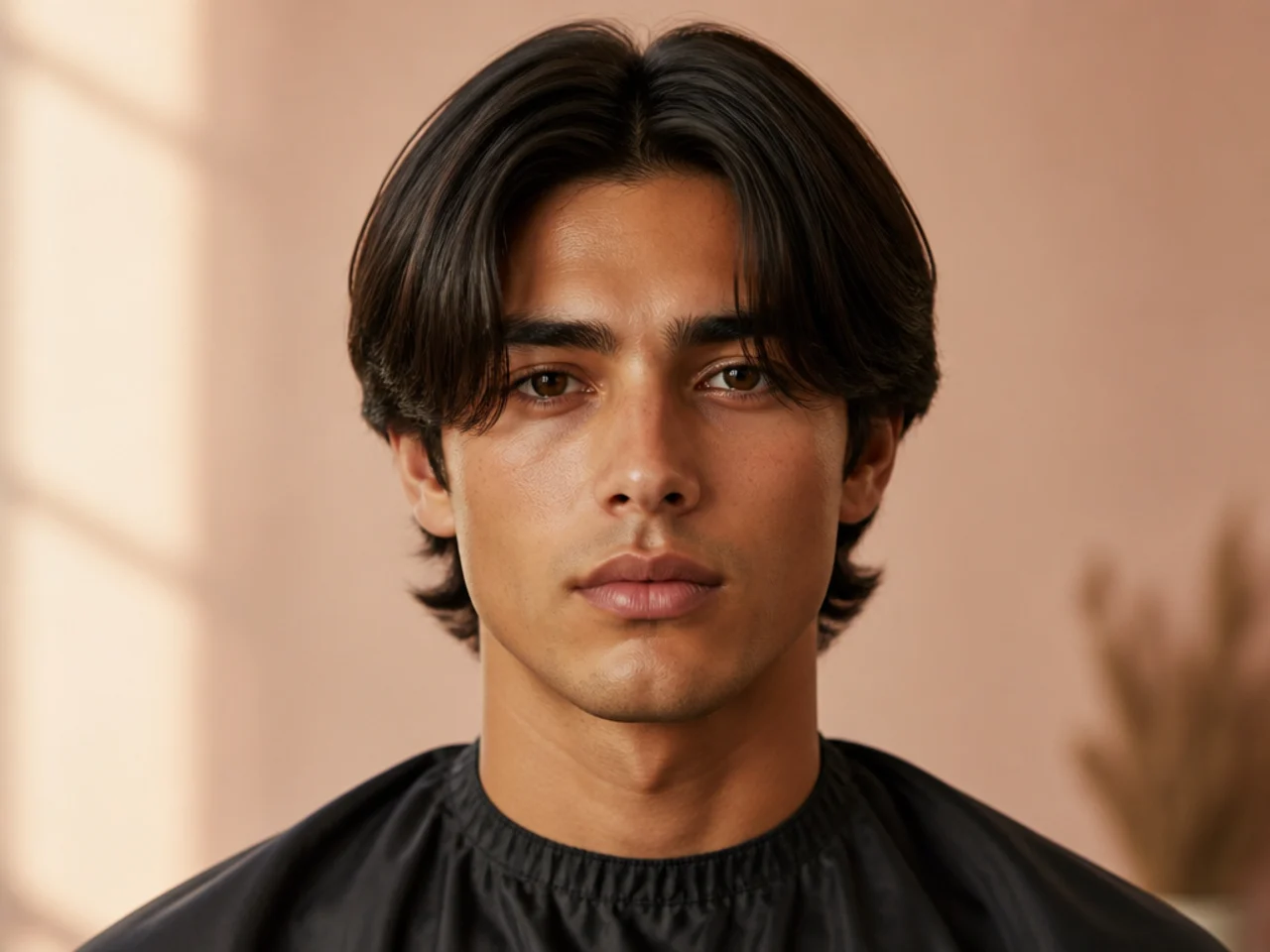
20 Middle Part Haircuts for Straight Hair
Twenty middle part haircut straight hair men variations for 2026 — face-shape notes, top-length ranges, side-treatment choices, and the exact wording to hand your barber.
In this article · 26
- What Makes a Middle Part Work on Straight Hair
- How to Choose Your Variation
- The 20 Variations
- 1. Classic Straight Curtains
- 2. Middle Part with Low Taper Fade
- 3. Middle Part with Mid Fade
- 4. Two-Block Middle Part
- 5. Short Straight Middle Part
- 6. Long Straight Middle Part Flow
- 7. Middle Part with Disconnected Undercut
- 8. Curtain Fringe at the Brows
- 9. Sleek Straight Slick-Back Middle Part
- 10. Blunt-Ended '90s Curtains
- 11. Point-Cut Textured Middle Part
- 12. Straight Bro Flow with Center Split
- 13. Middle Part with Low Drop Fade
- 14. Straight Comma Fringe Middle Part
- 15. Voluminous Middle Part for Fine Hair
- 16. Middle Part with Razor Line-Up
- 17. Grown-Out Middle Part with Wispy Sideburns
- 18. Middle Part with Skin Fade
- 19. Layered Straight Middle Part Shag
- 20. Middle Part with Deep Internal Layers
- How to Ask Your Barber for a Middle Part on Straight Hair
- Styling and Maintenance for Straight Hair
- FAQ
The middle part is the haircut straight hair was built for. Curly guys need a keratin treatment to fake the drop. Wavy guys need product to lock the split. Straight hair does it in one blow-dry — the curtains fall the moment you comb the part in, and gravity does the rest. Below are twenty middle part haircut straight hair men variations worth asking for in 2026, with face-shape notes, exact top-length calls, side-treatment choices, and the wording to hand your barber.
Anchoring the wider family? Start with the middle part haircut for men pillar for the full base template.
What Makes a Middle Part Work on Straight Hair
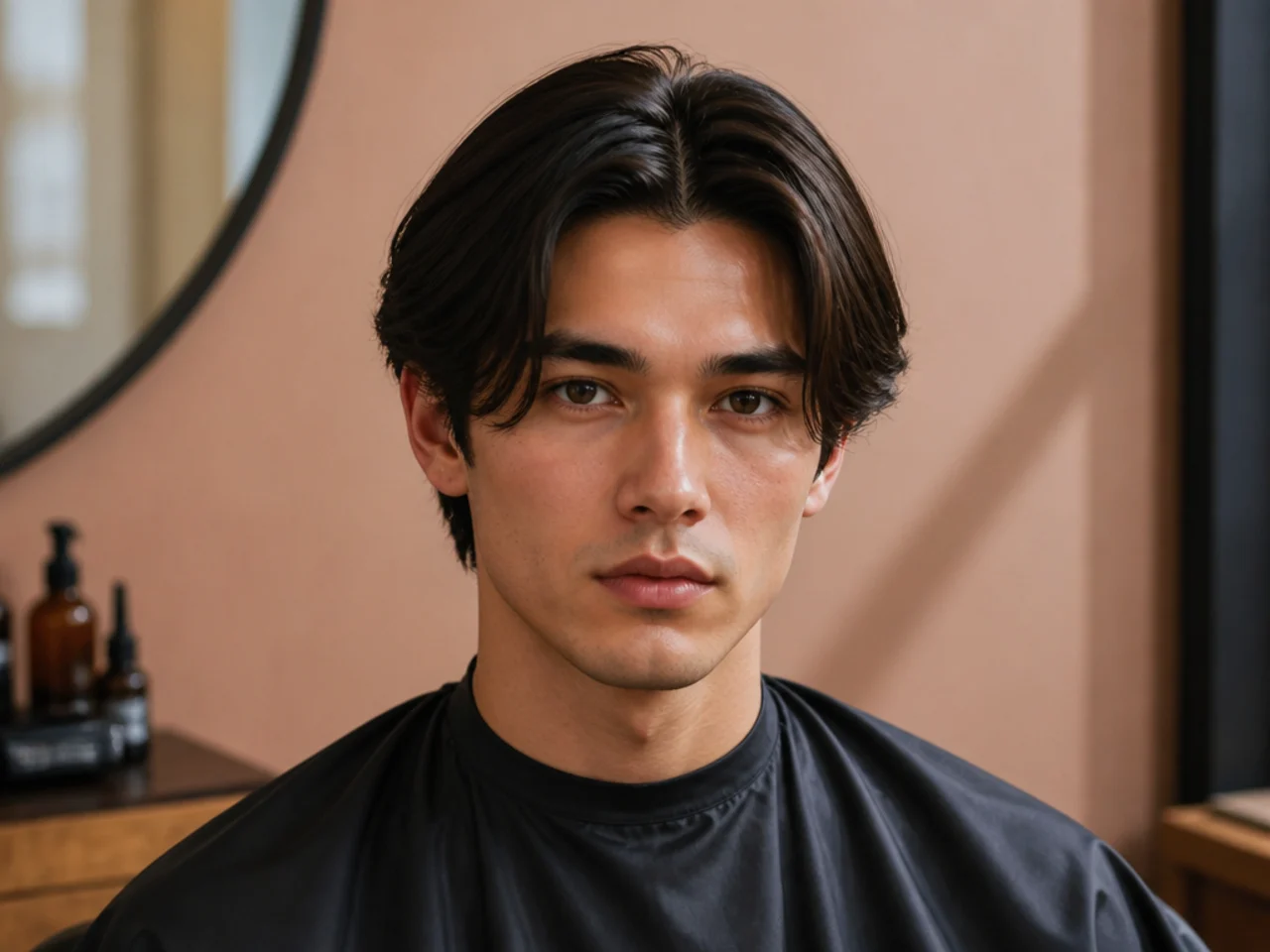
Straight hair sits where you put it. That's the whole reason middle parts are easier on this texture — the split you comb in during blow-dry stays in through the day, and the curtain drop is a straight line down instead of a curl fighting its own coil. The trade-off is that everything reads sharper. A crooked part is obvious. A flat crown reads flat. A blunt end reads like a shelf.
The fix is the cut, not the styling. Ask for point-cut or razored ends on the top so the drop finishes in a soft edge instead of a hard line. Ask for real internal layering — not thinning shears run once through the mid-shaft — so the mass has movement built in. Ask for the sides to sit shorter than you think you want; straight hair looks wider than it is when the sides are long, and a taper or fade tightens the whole silhouette.
Product philosophy stays lean. Matte clay or paste for texture-forward shapes. Sea-salt spray for movement. Light cream for hold. Pomade only for the sleek slick-back and Ivy League versions where shine works with the polish.
How to Choose Your Variation
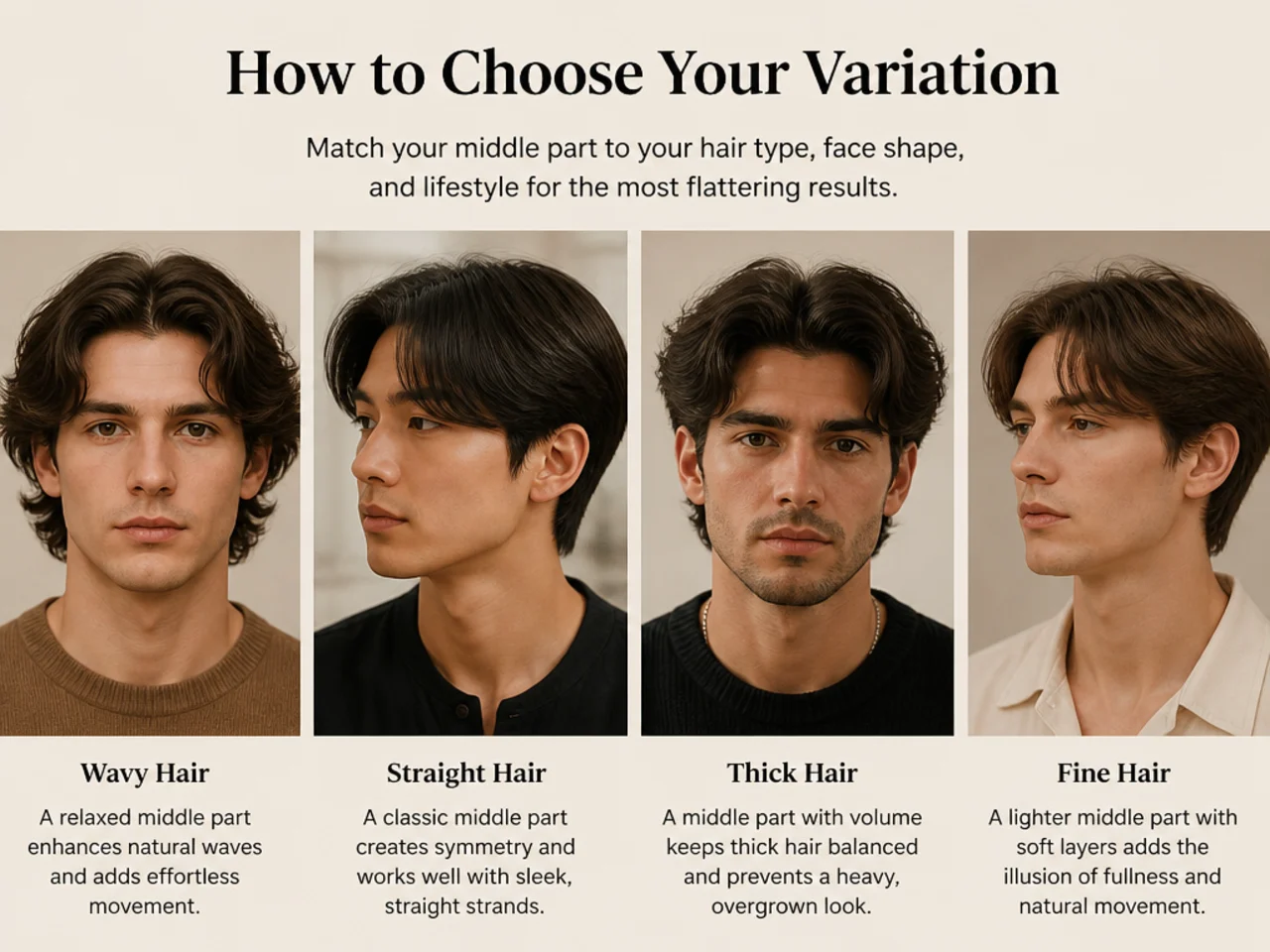
Three levers decide the version for you: face shape, hair density, and your styling ceiling.
Face shape. Oval, heart, and diamond faces wear almost every variation on this list — the symmetry of the split matches your natural balance. Round and square faces want vertical height, so bias toward five to six inches on top and skip the sleek slick-back. Long faces should stay at four to five inches with dense sides so the width offsets length. Rectangular faces suit blunt curtain ends and heavier fringes that break the length at the forehead.
Hair density. Fine straight hair wants texture-forward shapes with volume built in — point-cut ends, internal layering only through the mid-shaft, and a bit of sea-salt spray to fake body. Medium density is the widest playground; every variation below works. Thick straight hair carries the longest tops without collapse — six-plus inches, blunt curtains, full flow — but needs the sides tamed with a taper or a fade to stop the silhouette from ballooning.
Styling ceiling. A short middle part with a low taper takes ninety seconds after a shower. A voluminous curtain with volume powder at the roots is a five-minute round-brush routine. Pick the daily rhythm you'll actually run, not the one you promise yourself you'll start on Monday.
The 20 Variations
Twenty middle part haircut straight hair men recipes, sorted classic-to-modern and short-to-long. Each block covers what makes it different, who it suits, the exact ask, and one styling move worth stealing.
1. Classic Straight Curtains
The baseline. Five inches on top split straight down the middle, both halves falling to the cheekbones, sides scissor-blended to sit just above the ear. No fade, no undercut, no loud detail. Best for oval, heart, and diamond faces with medium-density straight hair. The safest first middle part on this list.
Ask for: "Five inches on top scissor-cut with point cut ends, scissor sides tapered to above the ear, layered so the front falls forward off a natural center split."
Styling: Matte cream on damp hair, comb the part in, blow-dry with the head tipped forward under a nozzle. Finger-comb both curtains out and leave them.
2. Middle Part with Low Taper Fade
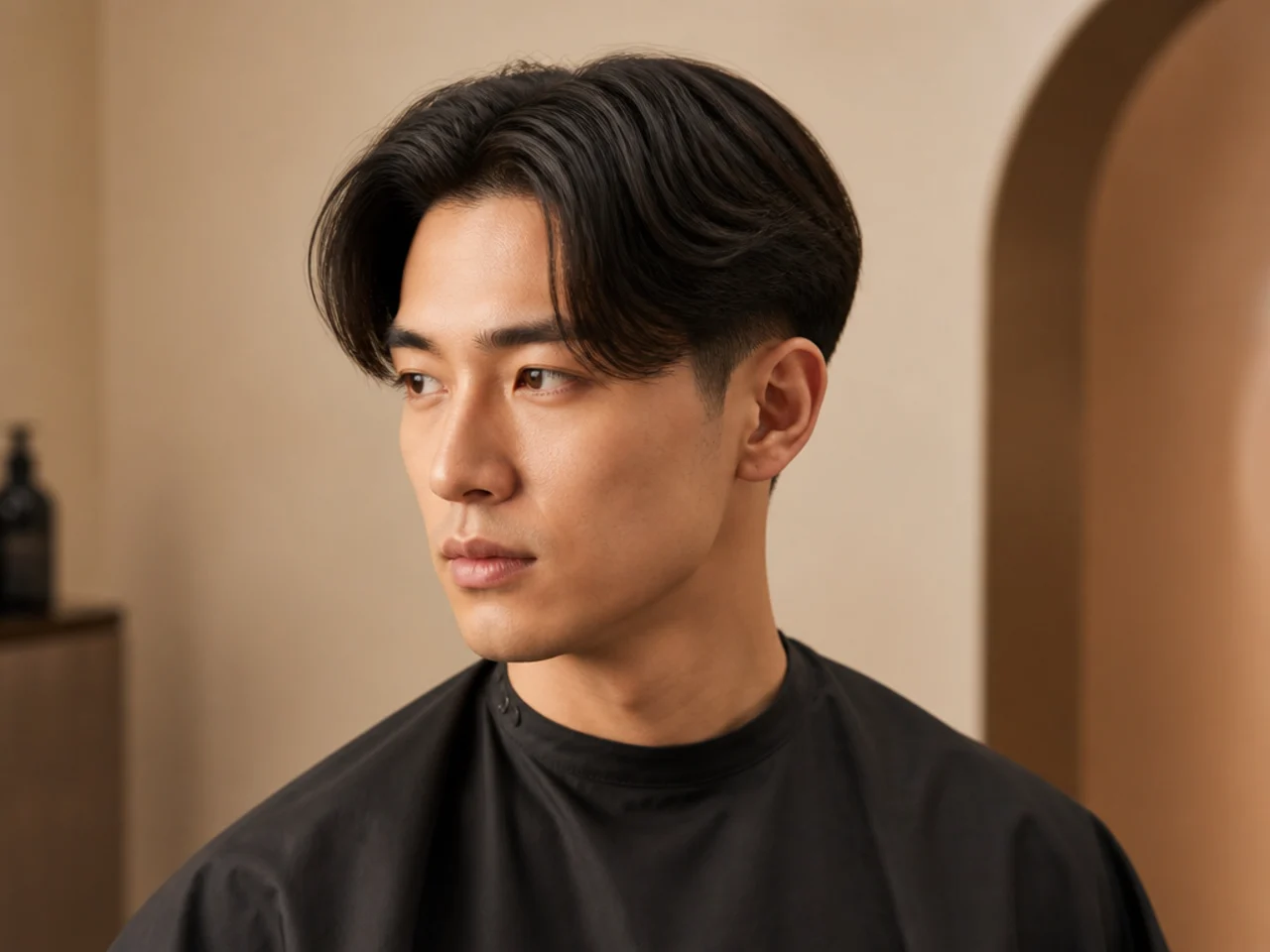
The most-requested modern version. Full five-inch curtain on top over a low taper fade that stays low, stops at a #1 guard, and tightens the whole silhouette without shouting. Best for square, oval, and diamond faces. Straight hair shows the taper's gradient better than any other texture.
Ask for: "Low taper fade around the ears and nape stopping at a #1, five inches on top scissor-cut with point-cut ends, split down the middle."
Styling: Matte paste on damp hair, blow-dry forward with a nozzle, split with a comb. Rebook the fade every three weeks.
3. Middle Part with Mid Fade
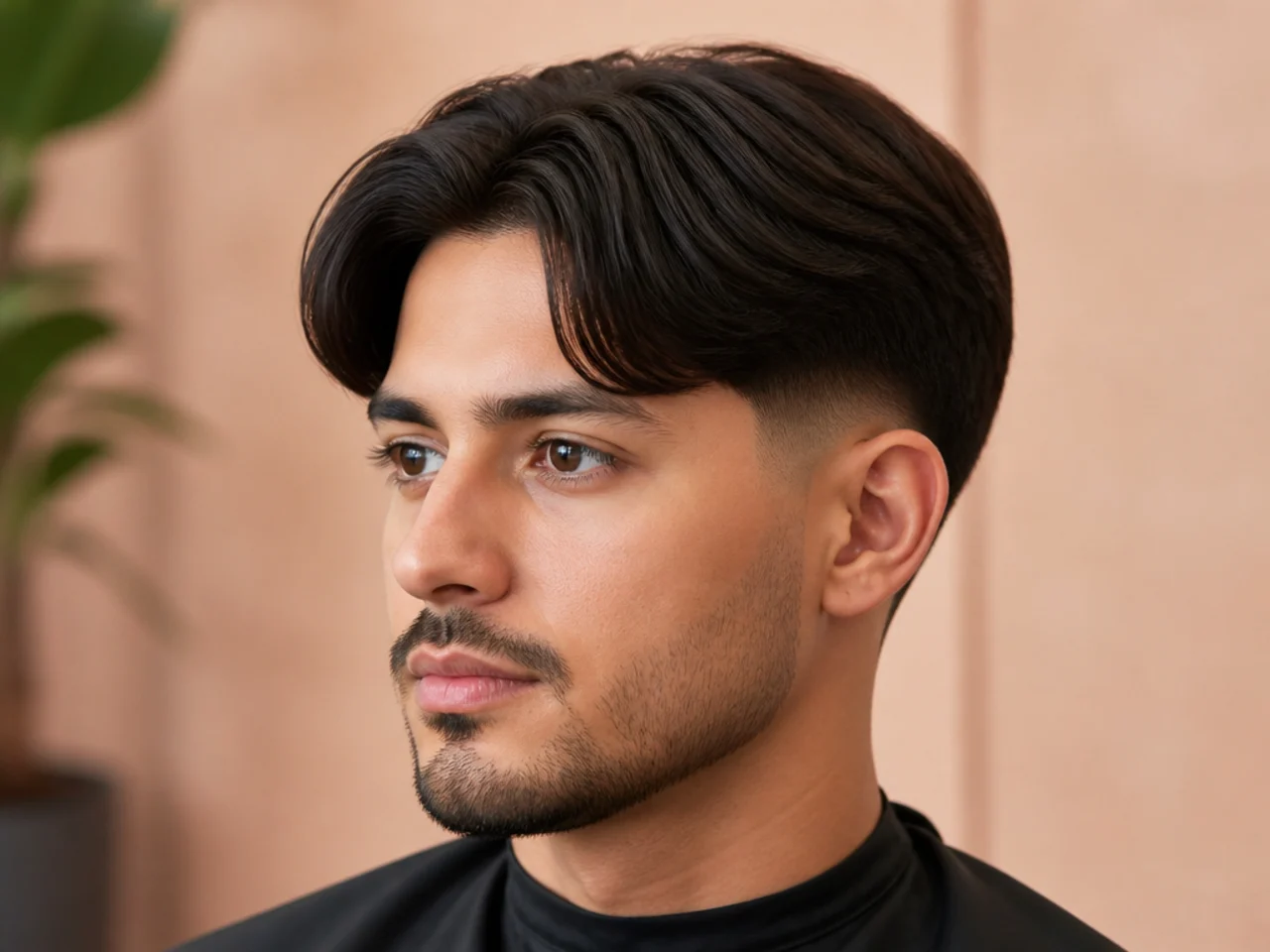
Sharper contrast, cleaner temple. The mid fade hits at the temple, keeps the ears clean, and lets the top drop the full curtain. Reads modern in an office and current at a bar. Best on oval, round, and square faces — the most face-shape-forgiving fade family for a middle part.
Ask for: "Mid fade around the temple and back to a #0.5 at the shortest, five inches on top scissor-cut, split down the middle, layered for movement."
Styling: Blow-dry front-forward with a nozzle, split, matte clay each side out and away. Book the fade every two weeks — mid fades blur fastest.
4. Two-Block Middle Part
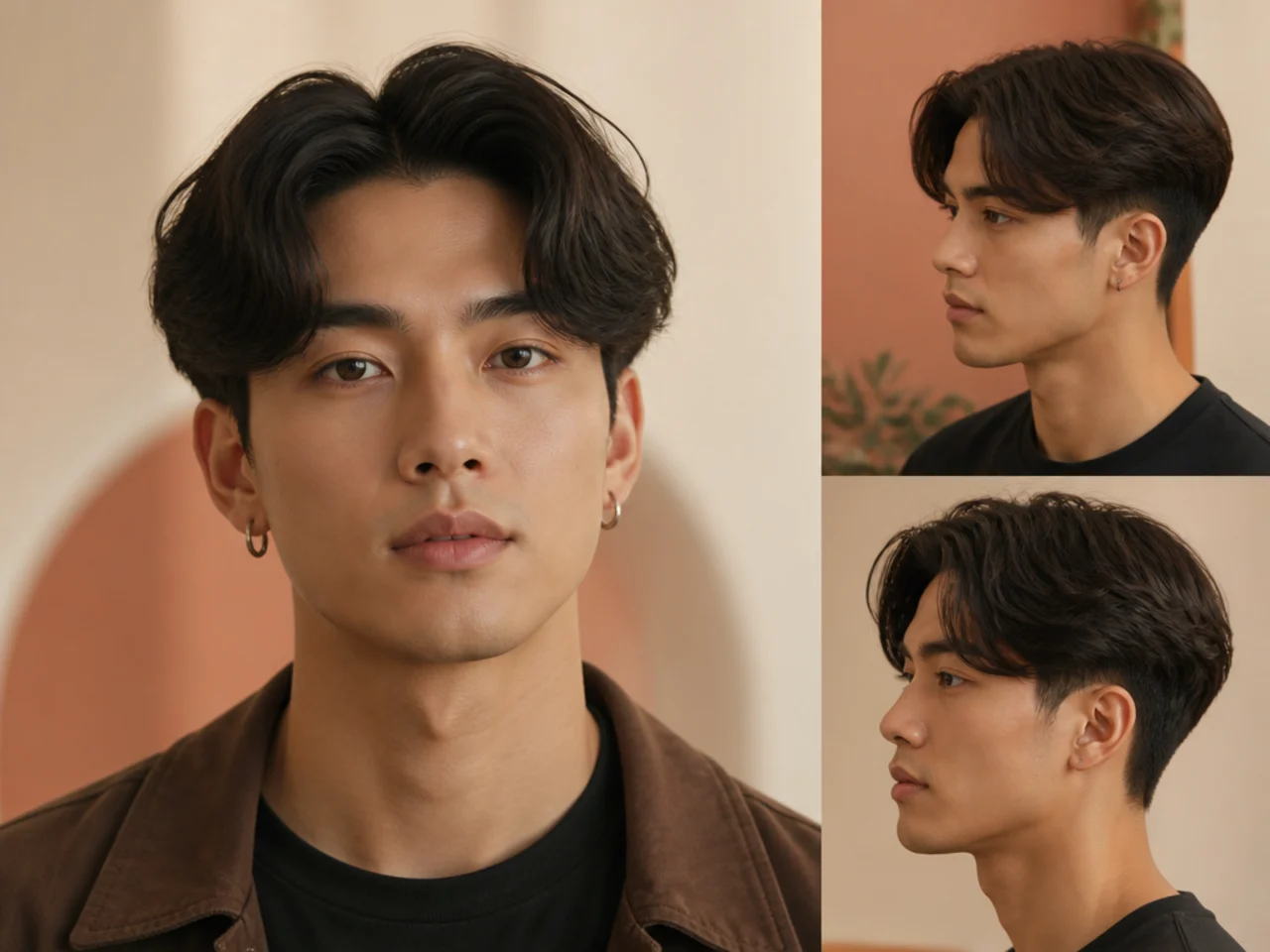
The Korean signature — long top over a hidden clippered lower block, straight middle part on top. Straight hair drapes flat over the block so the disconnect reads clean instead of shaggy. Best on oval, heart, and long faces with medium-density straight hair. See the wider two block haircut guide for pairing tapers.
Ask for: "Two block cut with a #2 hidden underneath, five to six inches on top scissor-cut, split down the middle, tapered sides and back."
Styling: Blow-dry the top forward with a round brush, split it center, push each side outward. Matte clay locks the split without gloss.
5. Short Straight Middle Part
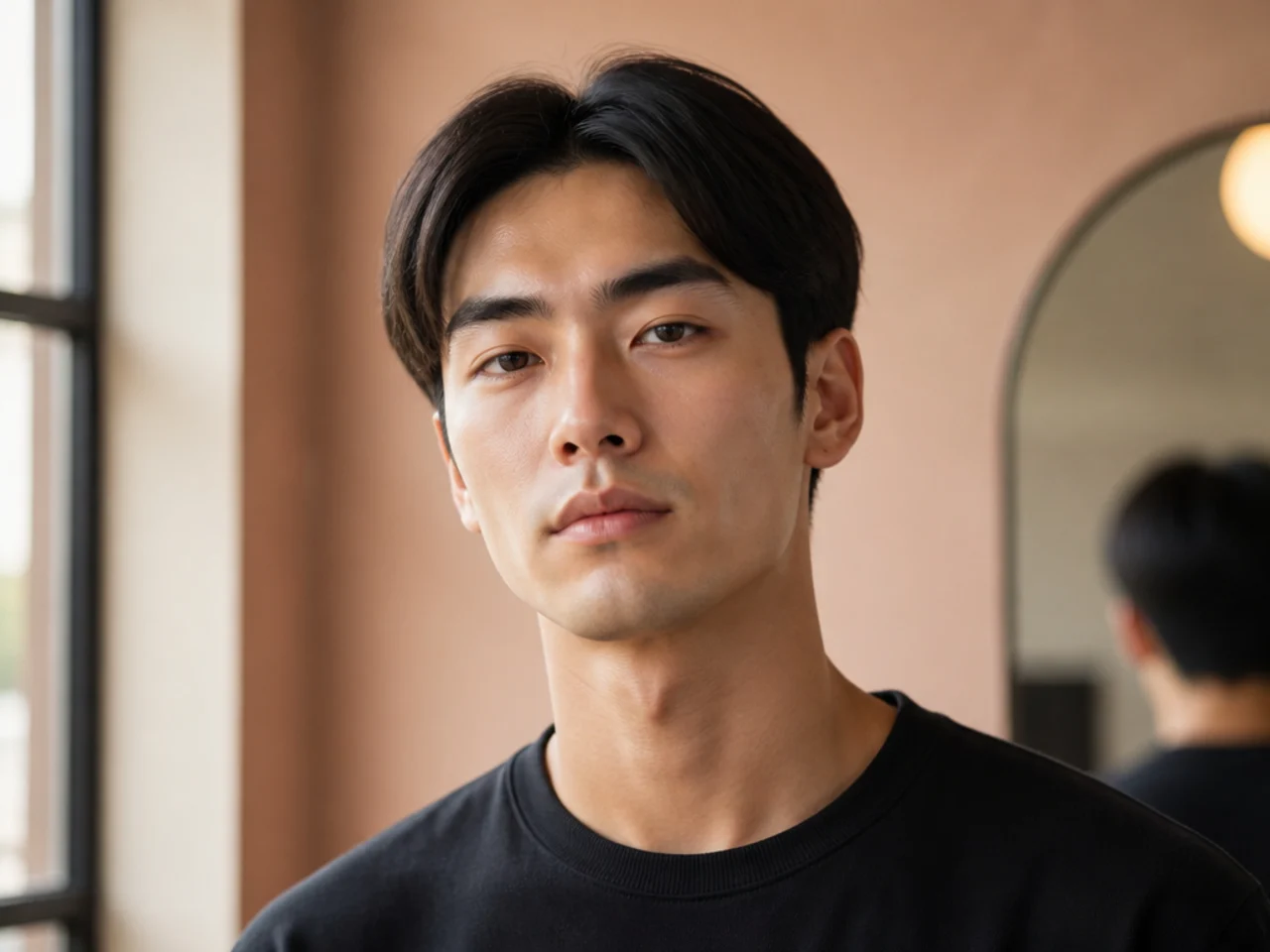
Office-legal. Three to four inches on top — enough to hold a split, not enough to fall in your eyes. Pairs a scissor-cut top with a short taper on the sides so the shape holds without a fade. Best for round and square faces that need the shorter top's vertical read, or any straight-haired guy easing into the middle-part family.
Ask for: "Three inches on top scissor-cut, short taper on the sides above the ear, layered so it can part center."
Styling: Wide-tooth comb the split in while damp, blow-dry angled down the shaft, set with a matte clay. The safest middle part in this guide.
6. Long Straight Middle Part Flow
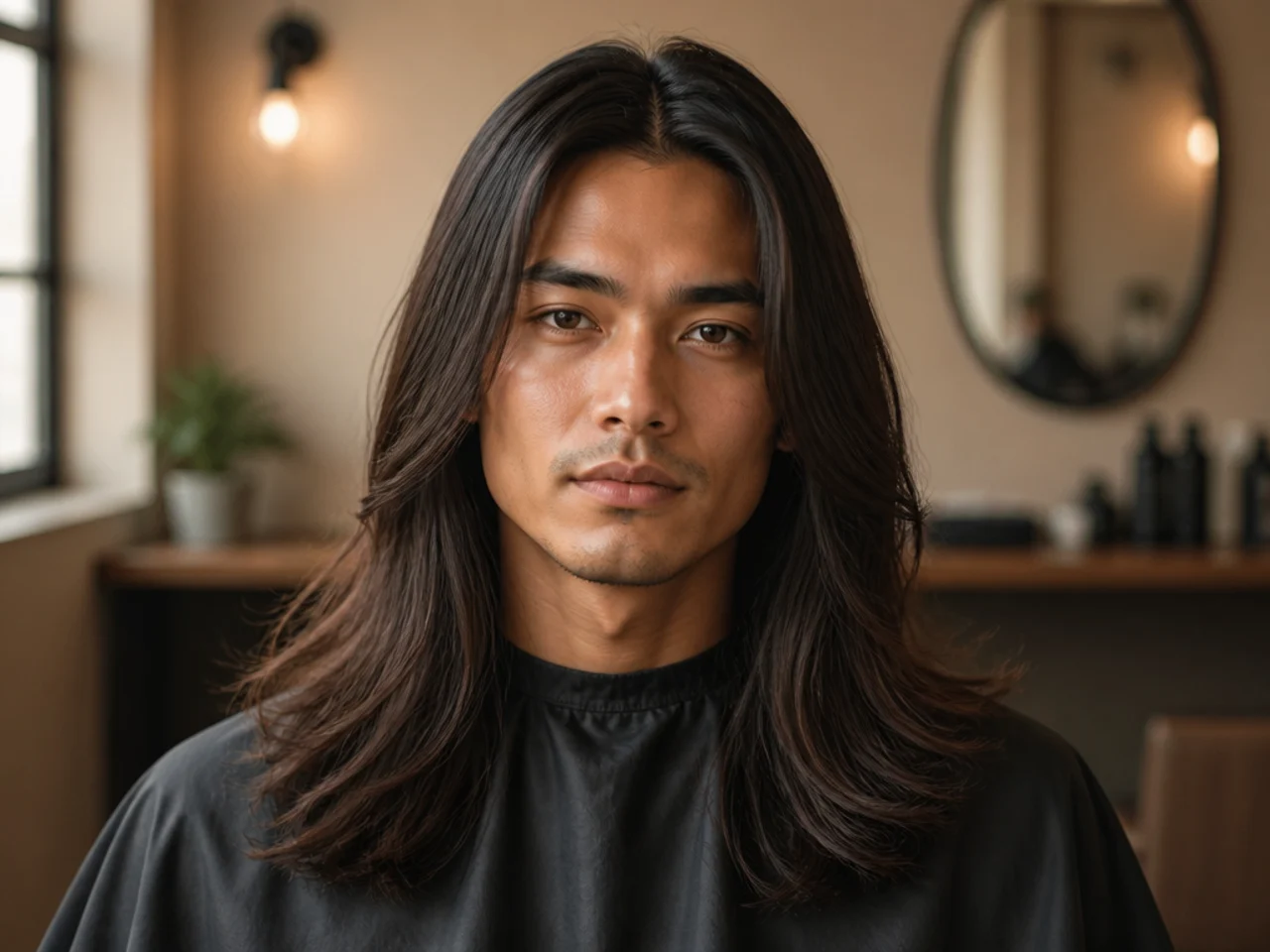
Chin-length and past. Real length changes the physics — gravity does the parting for you and the curtains actually drape. Best on oval and long faces because the width around the jaw balances the shape. Straight hair only; wavy hair fights the drop below the cheekbone.
Ask for: "Six-plus inches on top, layered from the cheekbone down, sides connected, no fade, no taper."
Styling: Wash, condition heavier than you think, towel-dry, work a leave-in through the mids. Blow-dry upside down for root lift, then split with fingers.
7. Middle Part with Disconnected Undercut
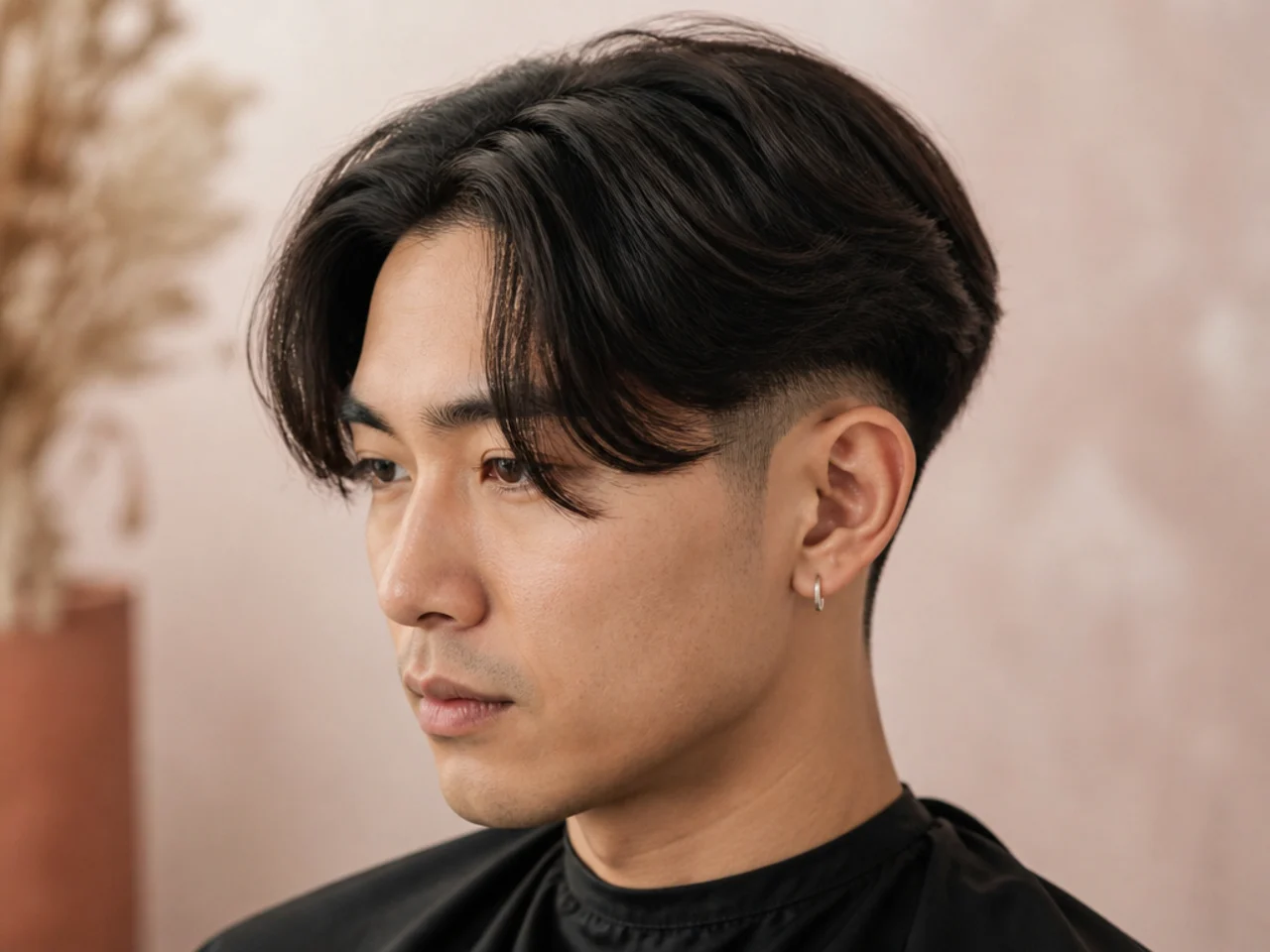
The strongest contrast on this list. Five to six inches of straight length up top over a shaved undercut at a #1 or #2, hard visual disconnect with no blend. Best on square and diamond faces because the disconnect adds jaw definition. Any hair density.
Ask for: "Disconnected undercut at a #2 with no blend, five to six inches on top scissor-cut, layered for a middle part with length in the front."
Styling: Blow forward with a nozzle, split, lock with a strong-hold matte paste. Book the undercut every three weeks.
8. Curtain Fringe at the Brows
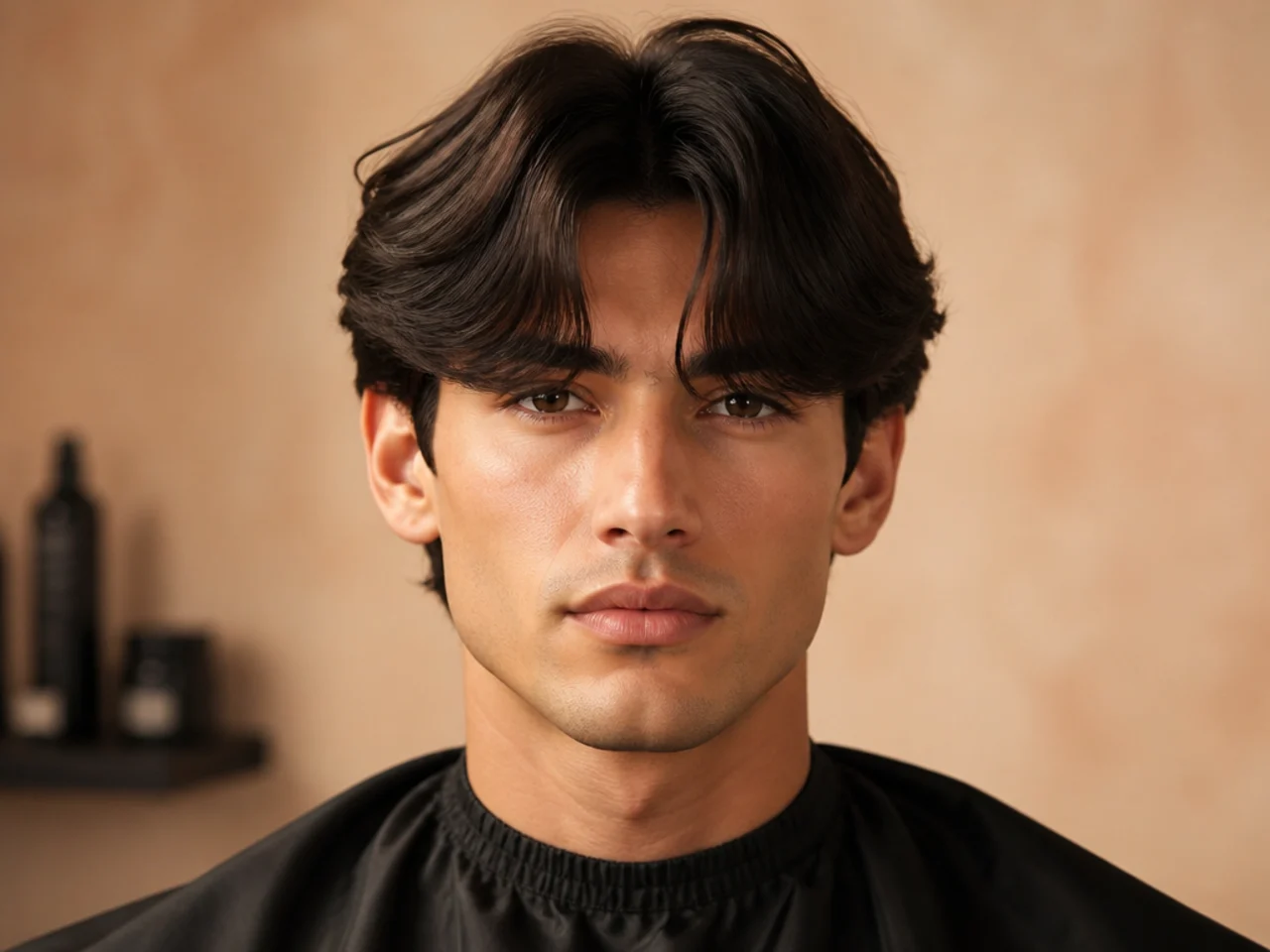
The fringe haircut family, but split. Front pieces sit at brow length, cut so they part forward and outward off a center line. Sides connected, short. Best on oval, heart, and long faces; the brow-length front hides tall foreheads.
Ask for: "Curtain fringe at the brow, cut to part center, scissor sides above the ear, no fade."
Styling: Blow-dry the fringe forward first with the fingers, then twist and split it. A pea of light cream through the fringe ends holds the separation.
9. Sleek Straight Slick-Back Middle Part
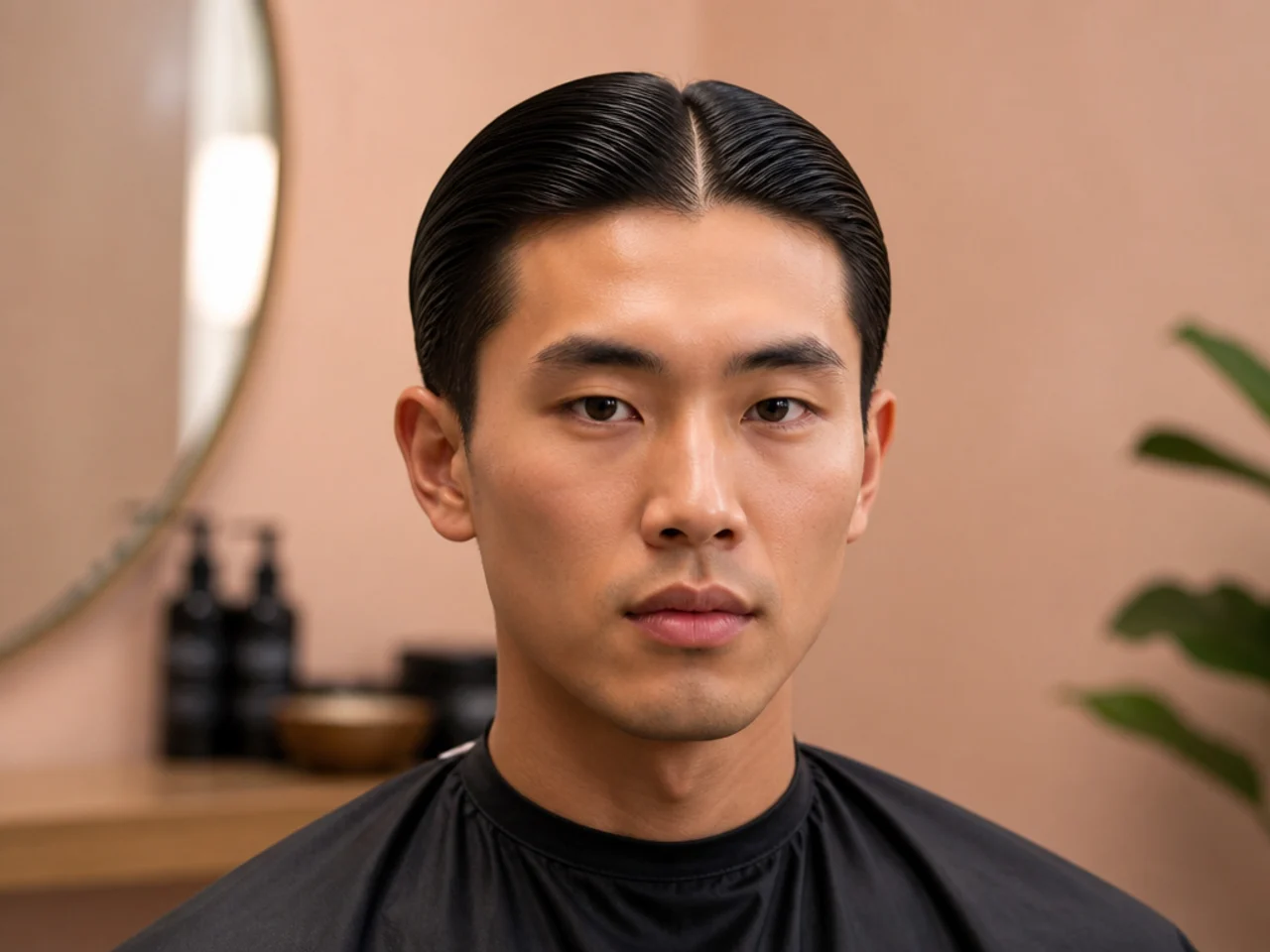
The Wall Street version. Sides cut short with a #2 clipper, top kept at four inches and combed flat off a razor-sharp center split, then swept slightly back and to the sides. Straight hair takes this cleaner than any other texture — no cowlicks, no curl breaking the line. Best on oval and heart faces with fine to medium straight hair. Anchored by the wider slick back haircut family.
Ask for: "#2 on the sides blended up, four inches on top scissor-cut, split dead center and combed flat then swept back."
Styling: Blow back and to the sides with a round brush, finish with a shine-forward pomade combed through with a fine-tooth comb. This is the one middle part where gloss beats matte.
10. Blunt-Ended '90s Curtains
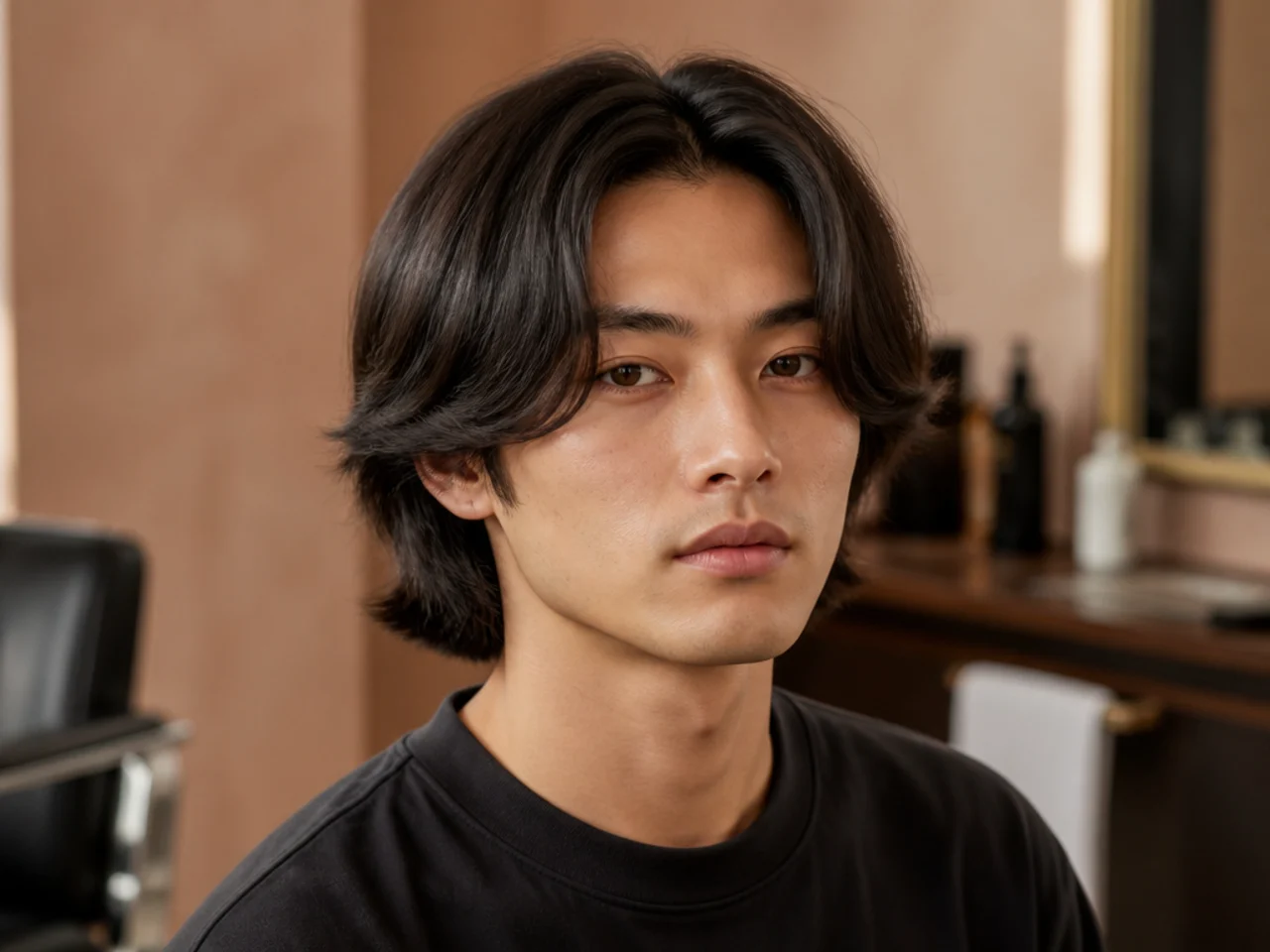
The Leonardo DiCaprio, 1996. Bluntly cut ends around the jawline, no fade, no undercut, parted straight down the middle with two full curtains falling forward. Best on oval and heart-shaped faces because the width at the jaw softens strong lines. Medium-density straight hair only — fine hair collapses under the blunt weight.
Ask for: "Curtain cut, blunt ends, jaw length, no layers past the mid-shaft, split down the middle."
Styling: Air-dry to 80%, twist a coin-sized bit of cream between your palms, rake it front-to-back through both sides. Don't touch a round brush — the point is the flat drop, not lift.
11. Point-Cut Textured Middle Part
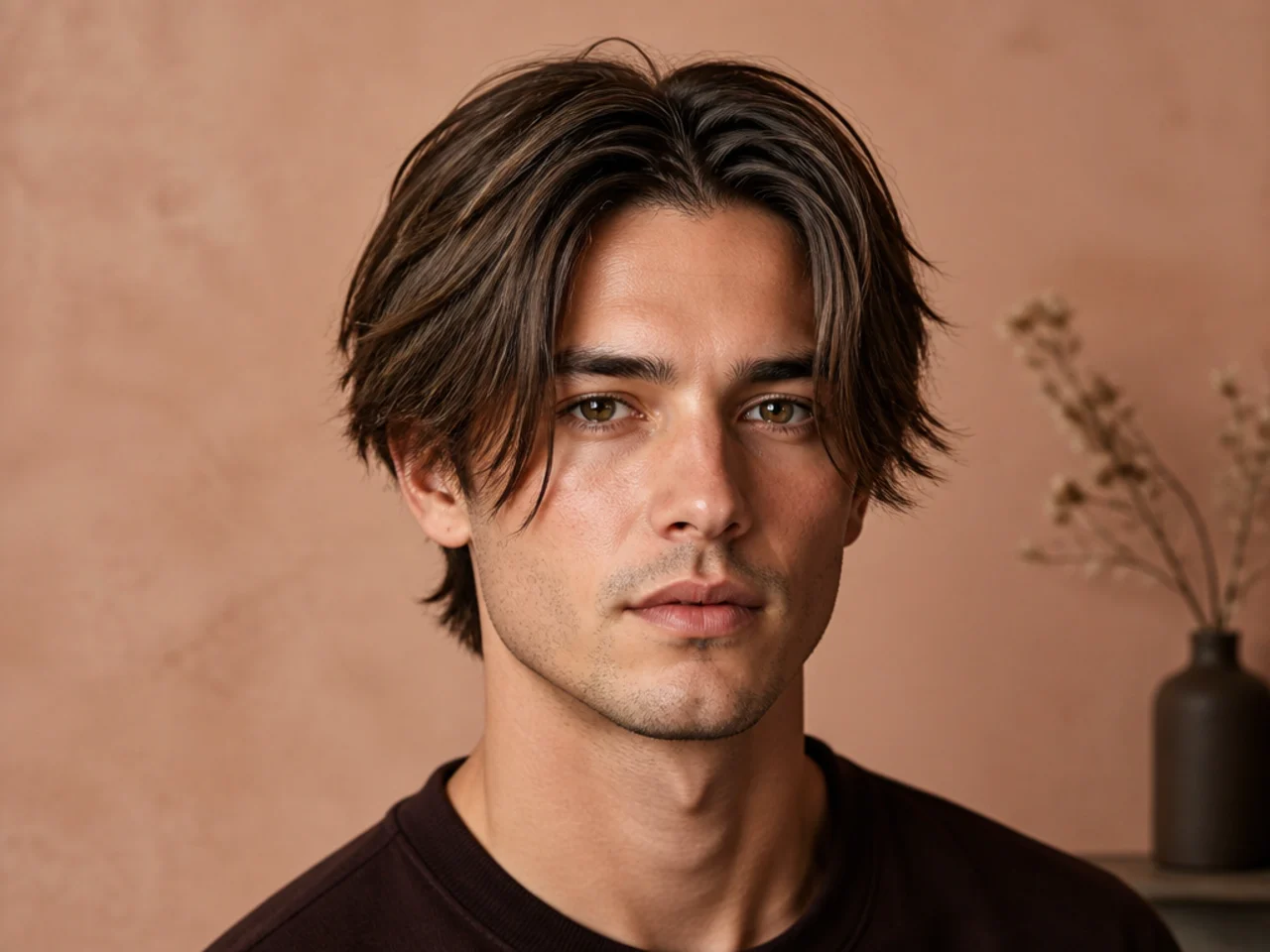
Same base cut as the classic, styled with more break at the ends. Top around four to five inches, aggressively point-cut and razored so the ends sit feathered instead of blunt, sides scissor-blended clean. Best on square, diamond, and round faces because the asymmetric texture softens sharp lines and fakes density on straight hair. Fine to medium straight hair.
Ask for: "Point-cut top around four to five inches, razored through the mids and ends, natural sides, cut so the middle part isn't rigid."
Styling: Rough-dry, work a matte paste between your palms, push it in front-to-back with fingers. Don't comb after. If it looks too neat, muss it with damp hands.
12. Straight Bro Flow with Center Split
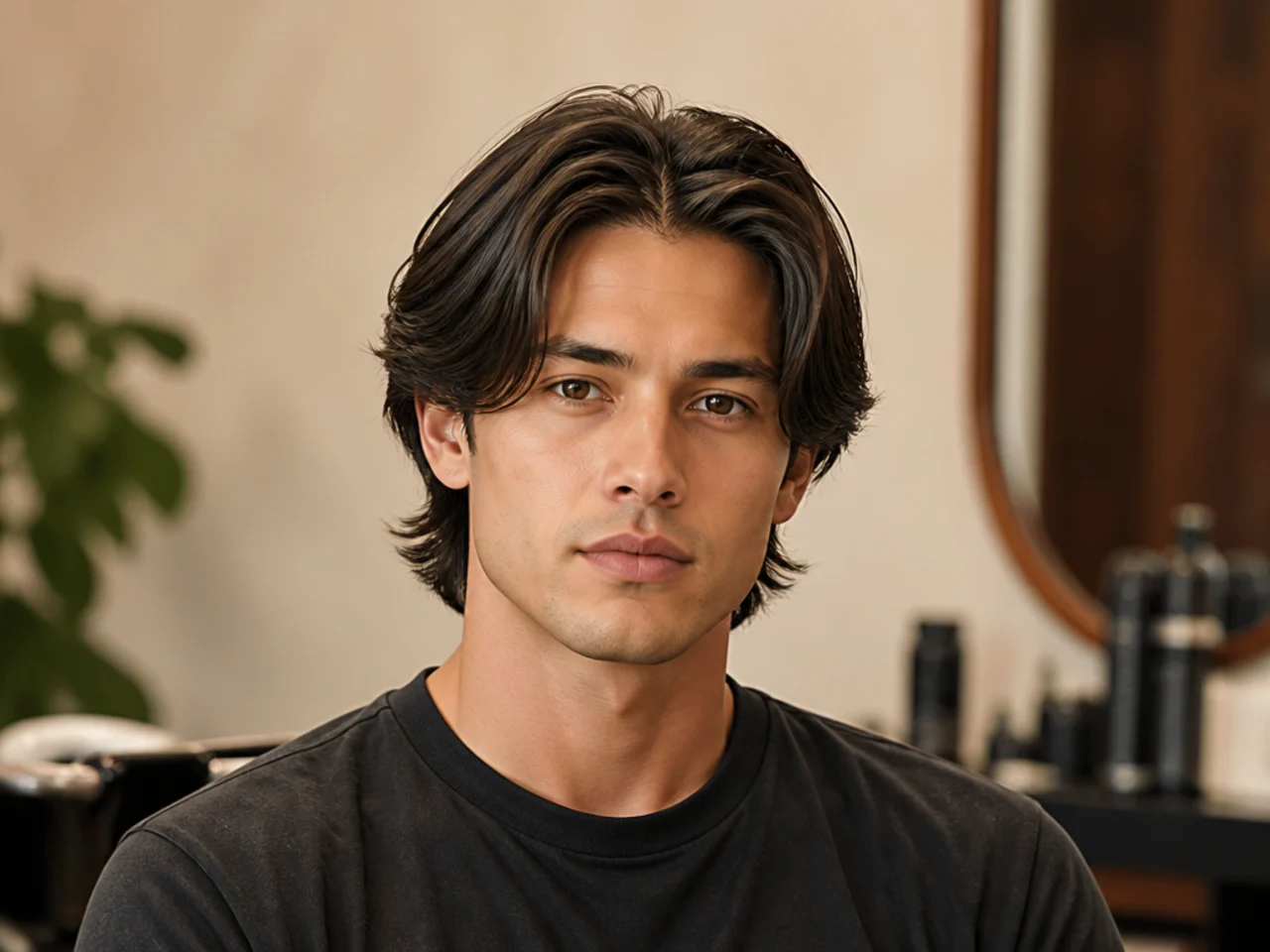
Softer than the classic — think surfer, not sales meeting. Six inches on top, cut into long layers that carry movement all the way down, sides fully connected. Best on oval, heart, and long faces. Straight hair with medium density; fine hair won't carry the length. A close cousin of the surfer hairstyle family — pick this when you want the bro flow shape framed around a center split.
Ask for: "Six inches on top, long soft layers, sides connected — no fade, no taper. Cut for a natural center part with movement."
Styling: Rough-dry upside down, spritz a sea-salt spray through the ends, finger-comb the center split in. A single mist of light-hold spray sets it.
13. Middle Part with Low Drop Fade
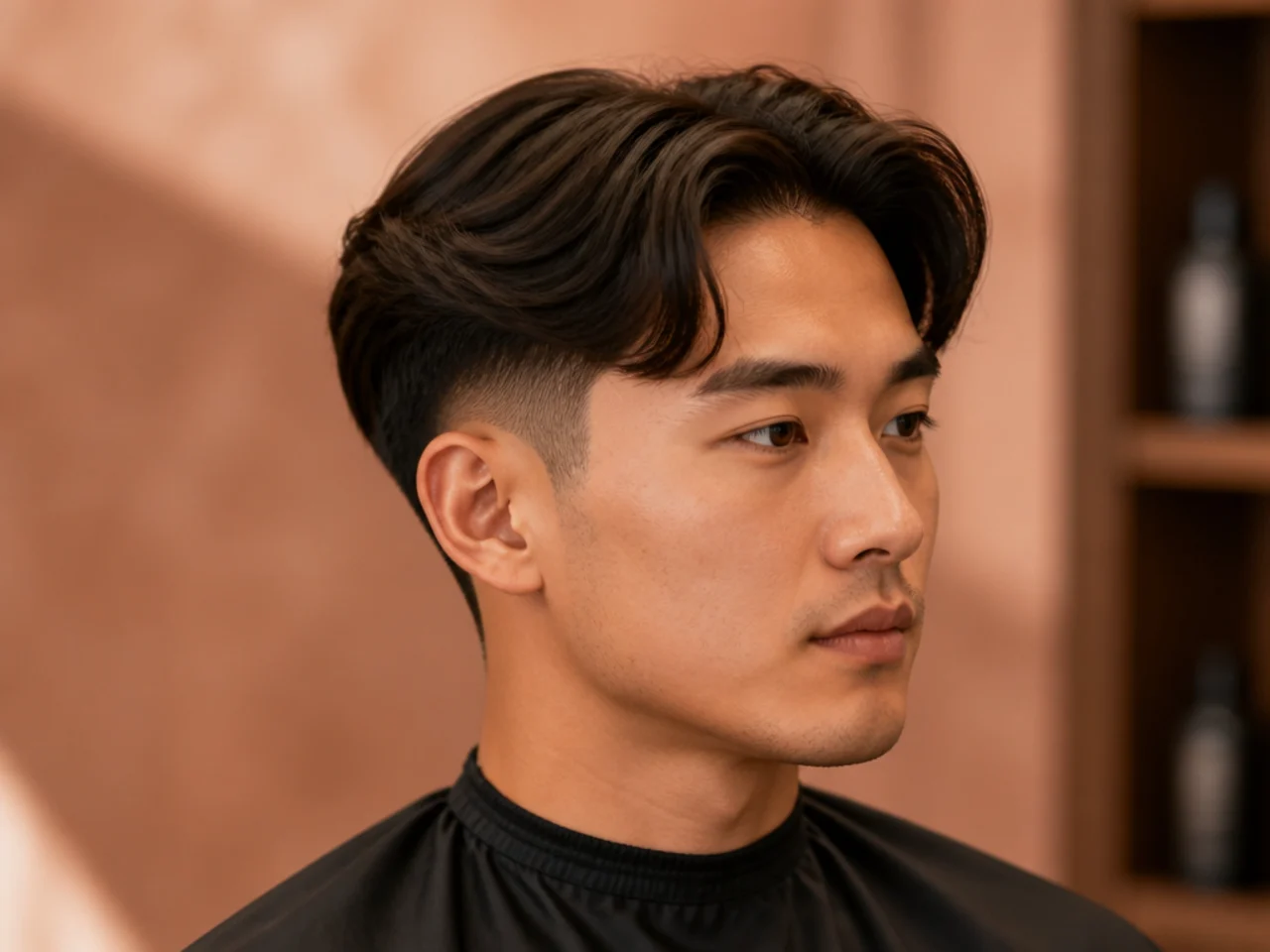
The drop fade curves the taper line behind the ear instead of running horizontal. On straight hair the arc reads sculpted around the skull rather than clipped. Five inches of straight length on top parted down the middle, low drop below. Best for oval and diamond faces; ask for this if you liked the standard low taper but want more shape at the perimeter.
Ask for: "Low drop fade to a #0.5 at the shortest, five inches on top scissor-cut, curved drop behind the ear, split down the middle."
Styling: Any daily routine you already run for the top. The drop is a fade-line detail, not a top-shape change.
14. Straight Comma Fringe Middle Part
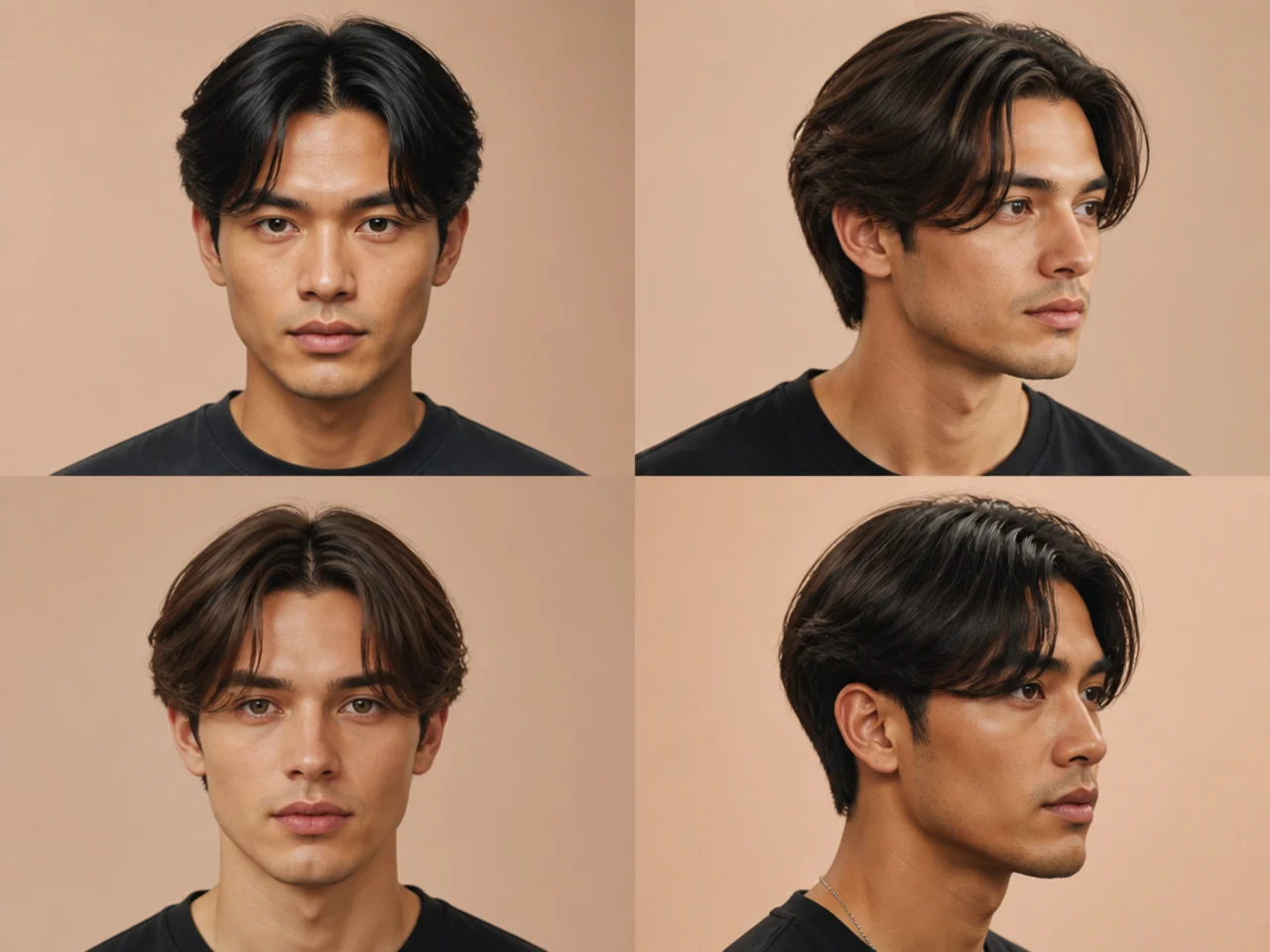
The Korean comma shape on straight hair. Four to five inches on top with the front fringe rolled inward into a soft comma against the forehead, both sides falling into a center split. Reads current and youthful. Best on oval, square, and heart faces with fine to medium straight hair. Overlaps with the wider Korean haircuts for men family.
Ask for: "Four to five inches on top layered for a middle part, front fringe layered so it curves into a comma shape when styled, scissor sides above the ear."
Styling: Blow-dry the fringe with a round brush rolling inward at the end to form the comma, hold with a light-hold cream. The comma is a styling move, not a cut detail — you make it every morning.
15. Voluminous Middle Part for Fine Hair
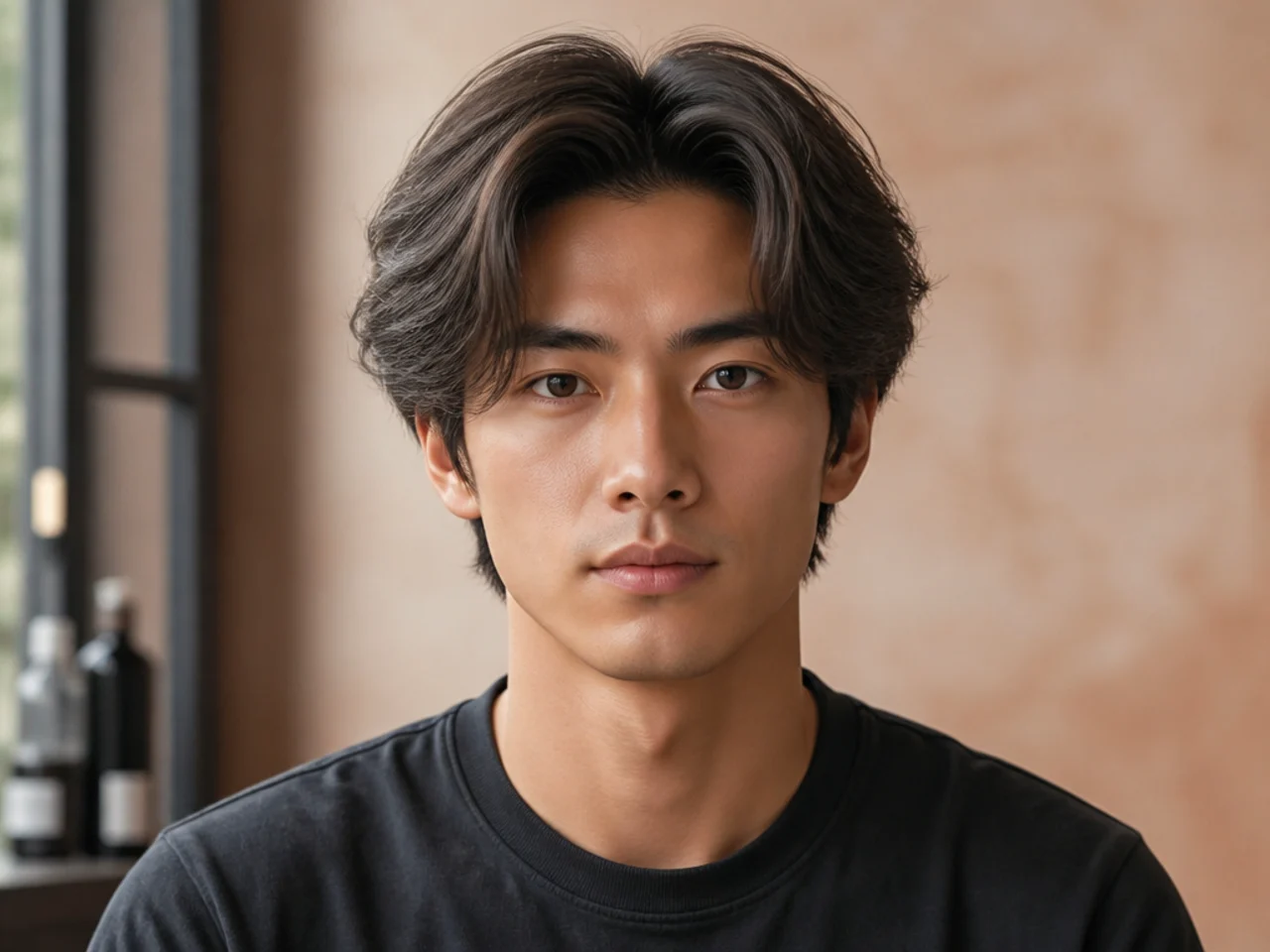
Built specifically for fine straight hair that flops. Length runs five inches, but the layering is targeted only through the mid-shaft so the ends stay heavier. Sides sit scissor-blended clean. Best on any face shape — the volume is the point. Fine straight hair only; medium or thick hair reads like a helmet at this cut.
Ask for: "Curtain cut at five inches, internal layering only through the mid-shaft, do not thin the ends, sides scissor-blended above the ear."
Styling: Sea-salt spray on damp hair at the roots, blow-dry with a round brush lifting straight up from the scalp. Volume powder at the roots holds all day.
16. Middle Part with Razor Line-Up
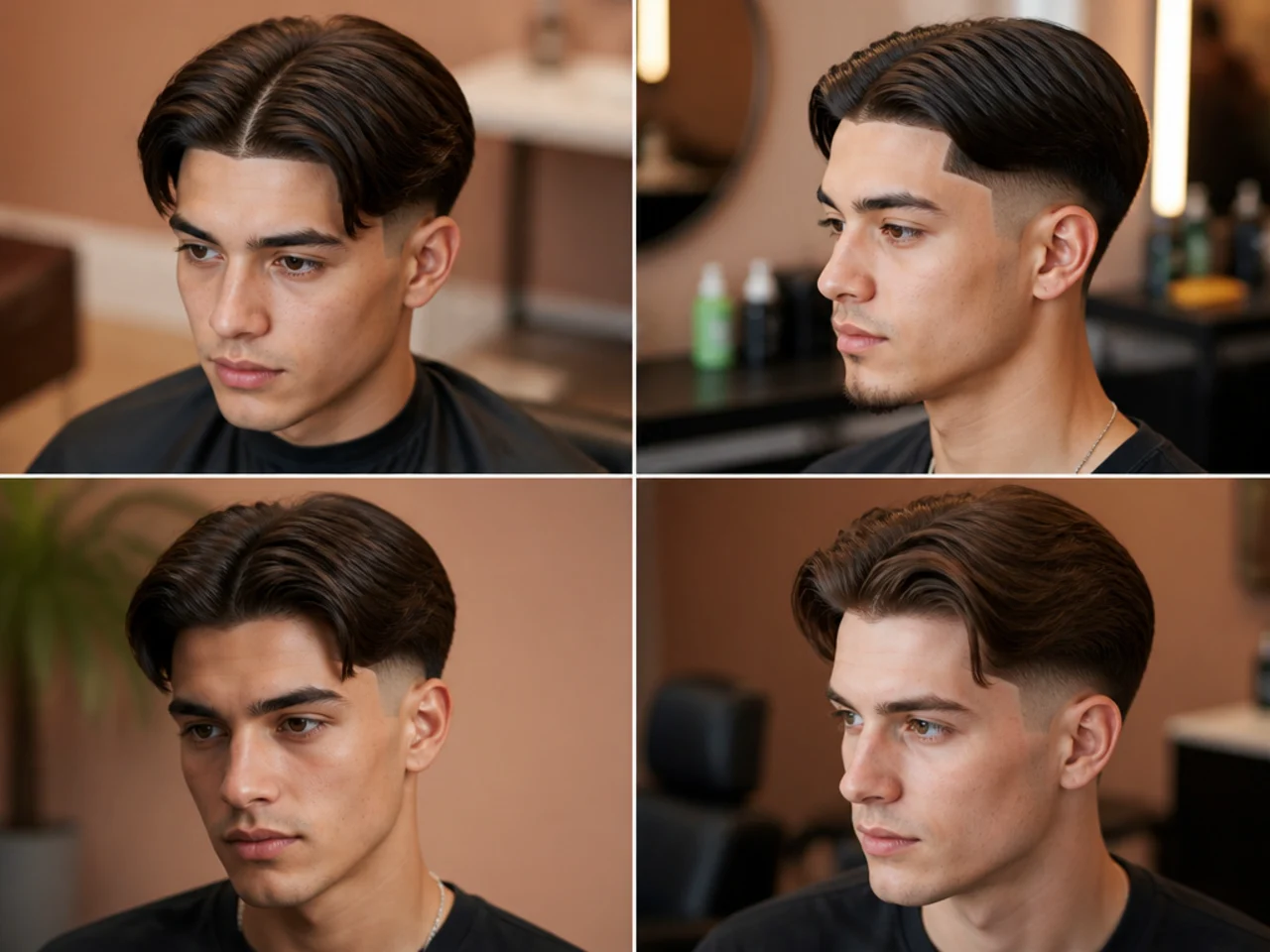
The line-up is what turns a good middle part into a great one. A razored, hard-line edge at the forehead and temples squares off the whole cut, then the middle part drops from that clean frame. Best on square and heart-shaped faces where the geometric line adds structure. Requires a barber who does razor work well — a wobbly line-up wrecks the whole look.
Ask for: "Low taper fade to a #0.5 at the shortest, five inches on top, sharp razor line-up at the forehead and temples, split down the middle."
Styling: Any daily routine you already run. The line-up blurs faster than the fade — book a shape-up every ten to fourteen days.
17. Grown-Out Middle Part with Wispy Sideburns
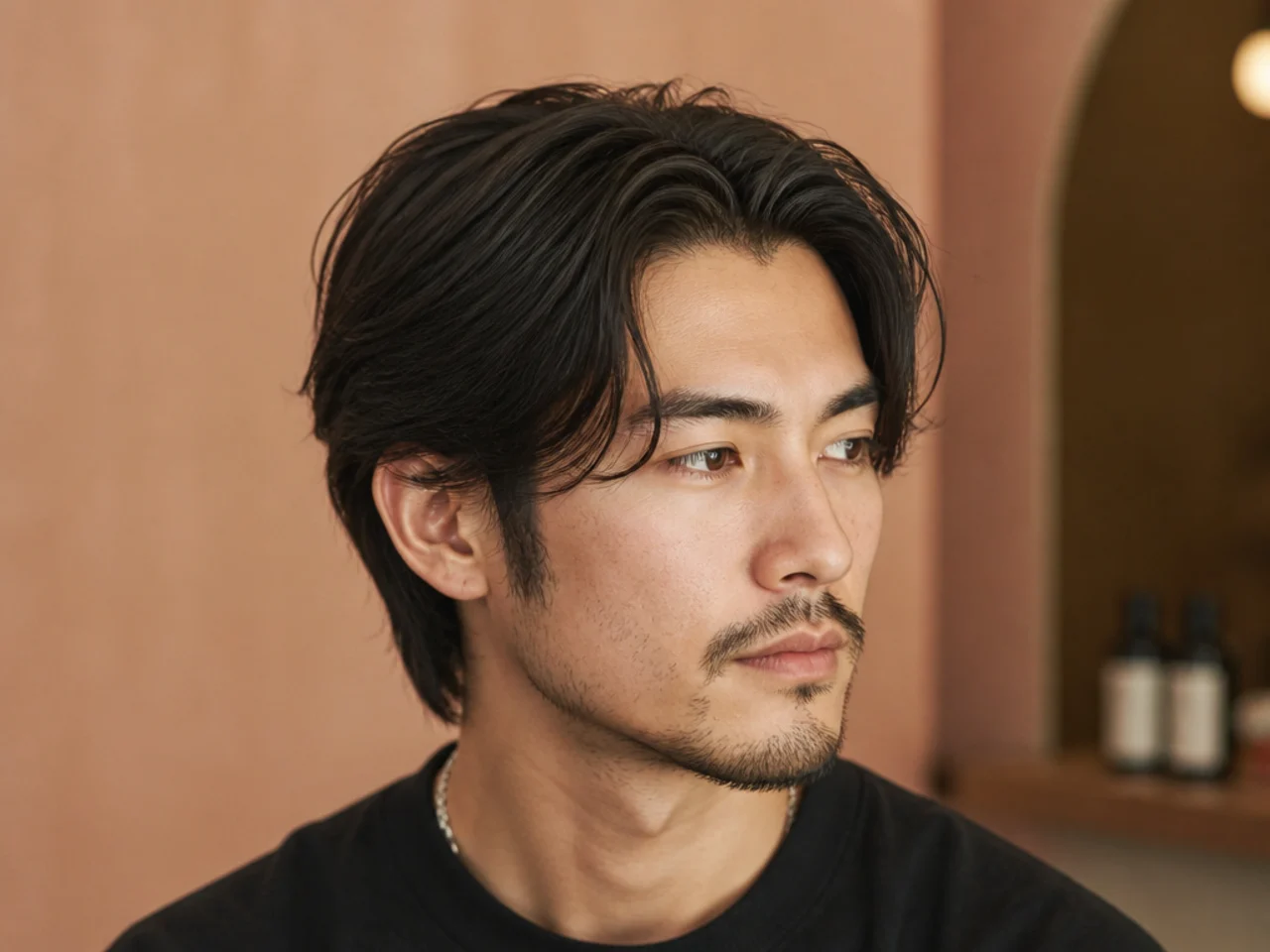
The lived-in version. Top at five to six inches with the sides grown out to just past the ear, sideburns kept wispy and natural, no fade line at all. Reads intentional grown-out instead of neglected because the perimeter is trimmed clean, not clippered short. Best on oval and heart faces with medium-density straight hair.
Ask for: "Six inches on top, sides grown to just past the ear with the ends dusted only, sideburns wispy and connected, no fade, no taper, cut for a center part."
Styling: Wash, condition, towel-dry, apply a light cream through the mids. Air-dry or diffuse on cool, split with fingers. Do not blow-dry hot — the whole point is the softness.
18. Middle Part with Skin Fade
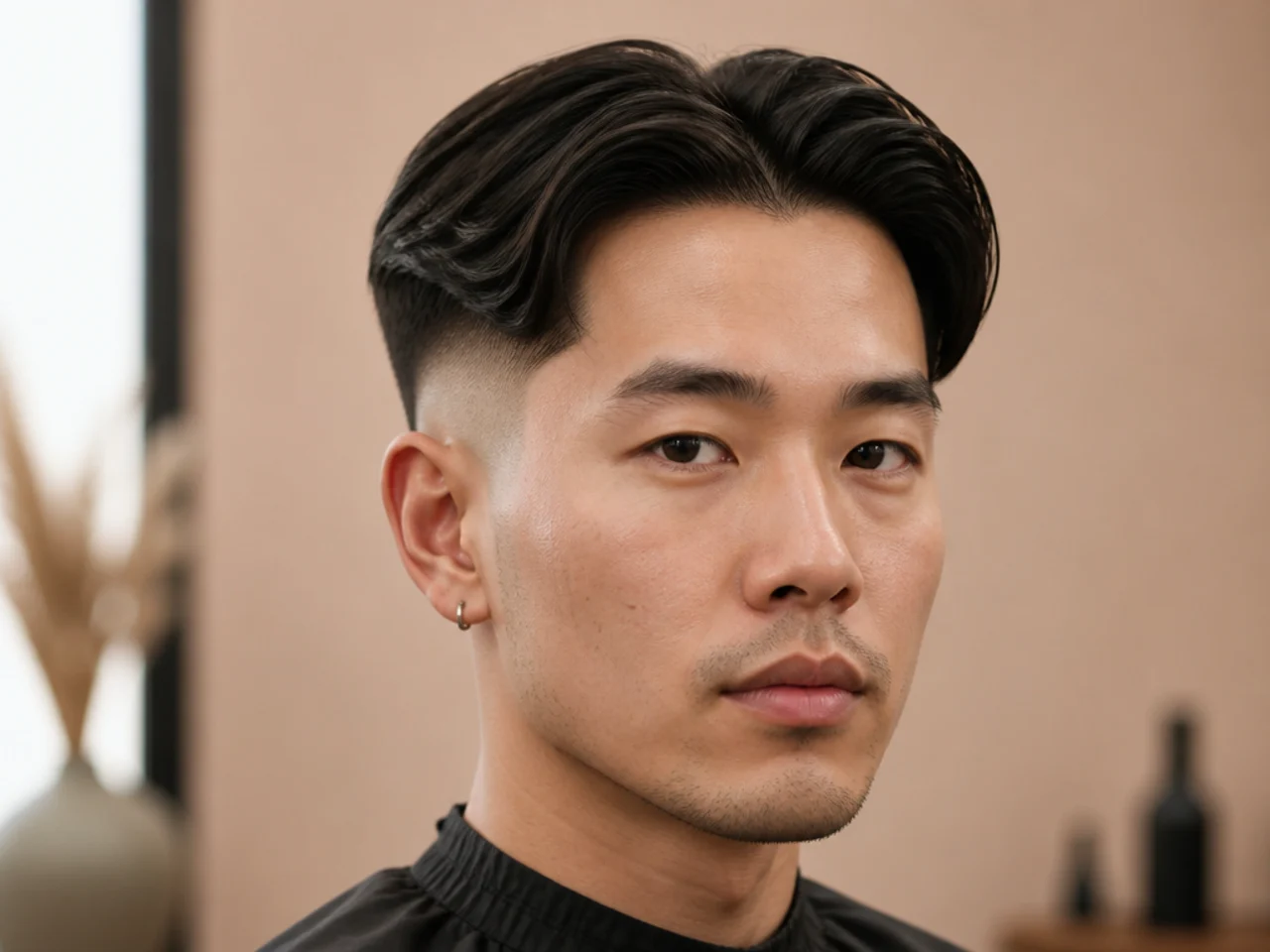
Maximum contrast. A low fade haircut taken all the way to skin at the perimeter, with a full five-inch straight curtain on top. Reads sharpest of any middle part on this list. Best on square, diamond, and heart faces because the contrast highlights the jaw. Book a chair every two weeks or the skin edge grows out into scruff.
Ask for: "Low skin fade around the ears and nape, five inches on top scissor-cut, split down the middle, layered for movement."
Styling: Matte paste on damp hair, blow-dry forward with a nozzle, split with a comb. Line-up touch-up every ten days keeps the perimeter reading intentional.
19. Layered Straight Middle Part Shag
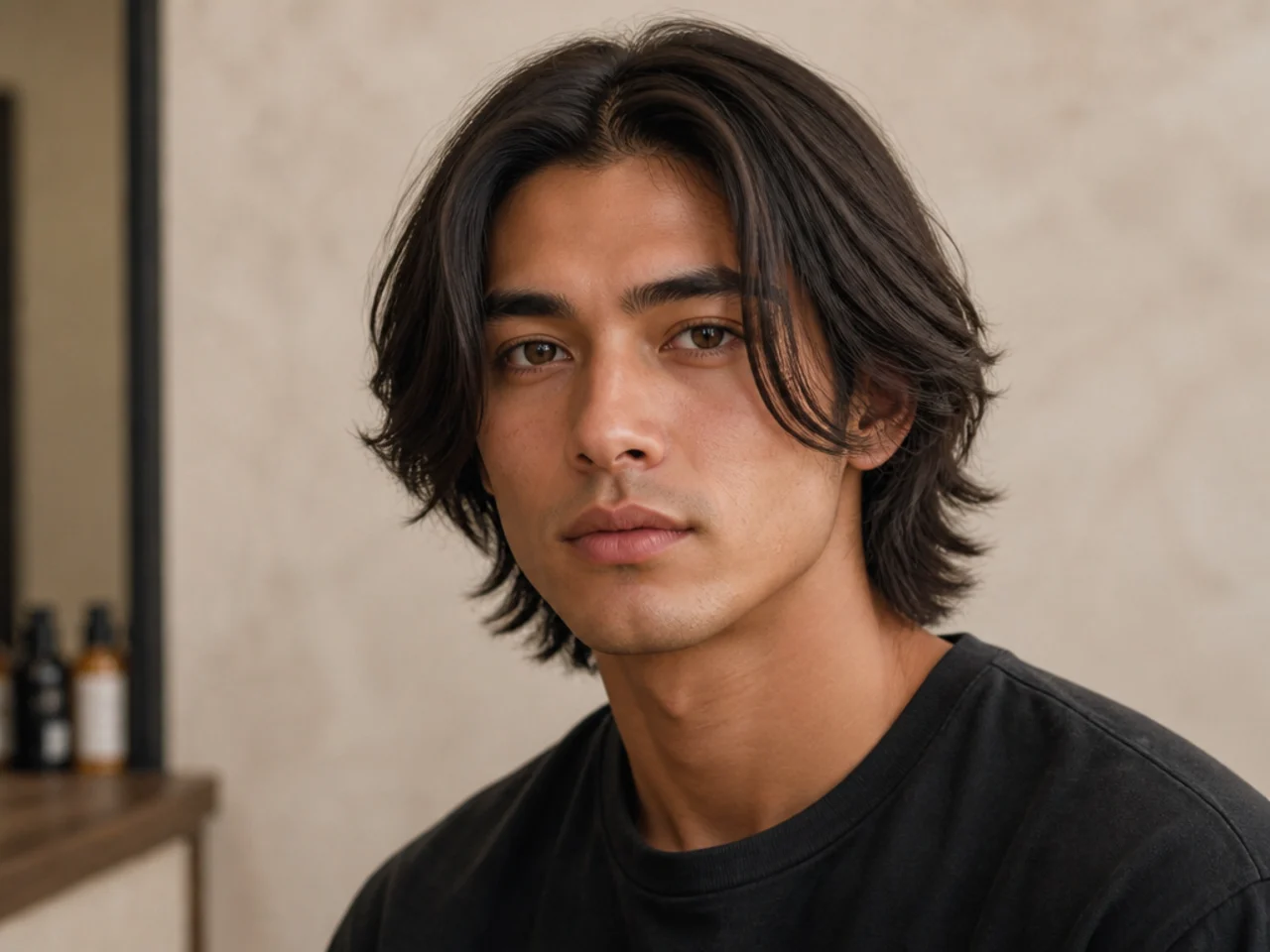
The shag on straight hair, framed around a center split. Six inches of length on top, deep internal layering through the crown and mids so the shape carries movement instead of hanging flat, sides connected at the ear with layered ends. Best on oval, heart, and long faces with medium to thick straight hair. Fine hair loses too much mass to the layering to hold the shape.
Ask for: "Six inches on top, deep internal layering through the crown and mid-shaft, sides connected at the ear with layered ends, no fade, cut for a middle part with movement."
Styling: Sea-salt spray on damp hair, diffuse on low with a scrunch, split with fingers. The shag is supposed to look a little wild — resist the urge to comb it neat.
20. Middle Part with Deep Internal Layers
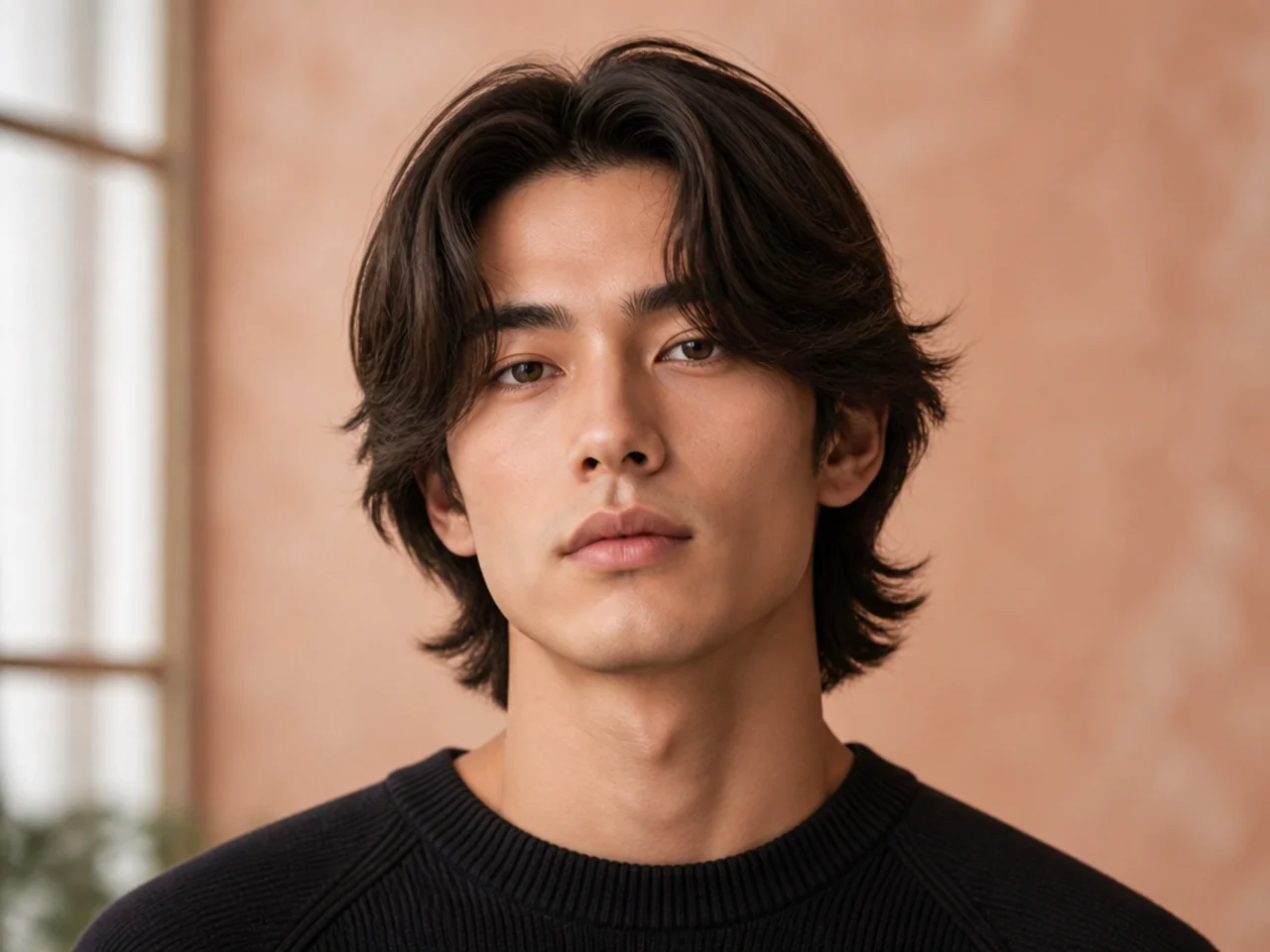
Built for thick straight hair. Length runs five inches, but the internal texture is removed all the way through the crown and mid-shaft so the mass doesn't sit like a helmet. Sides scissor-blended clean or with a soft taper. Best on square and round faces because the height adds vertical read. Thick straight hair only — fine hair collapses under the layering.
Ask for: "Curtain cut at five inches, deep internal thinning through the crown and mid-shaft, do not thin the ends, scissor-blended sides above the ear."
Styling: Blow-dry with a round brush lifting straight up at the roots, then split with a comb. Matte clay through the ends only.
How to Ask Your Barber for a Middle Part on Straight Hair
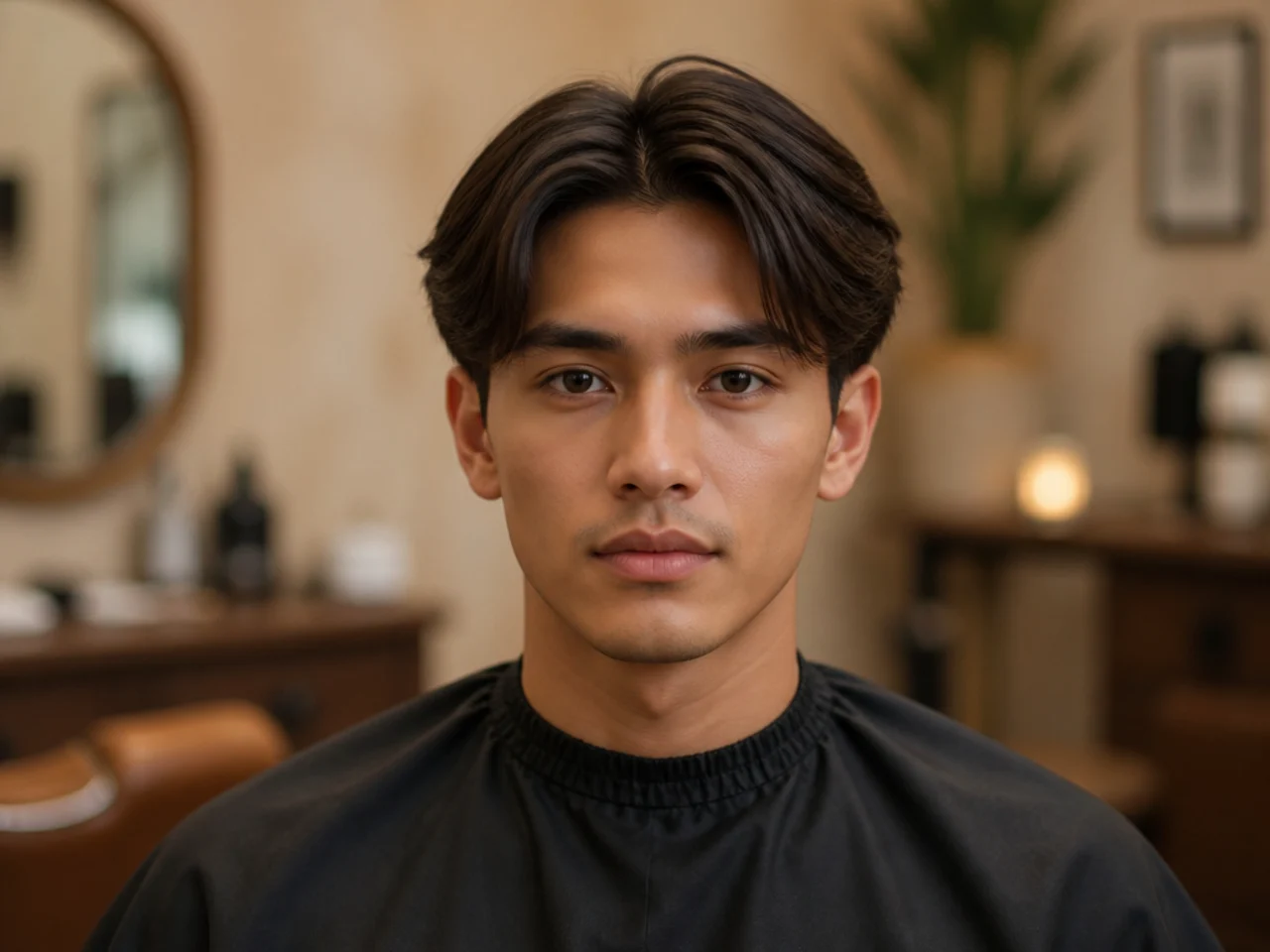
Seven lines cover the whole conversation. Nail these and you'll leave with the version you had in mind — not the one your barber assumed.
- Show a photo — pick one with straight hair. A middle part looks completely different next to a wavy or curly reference. Screenshot a model whose texture matches yours so your barber sees the top shape you actually want.
- Say the words "middle part." Not "curtain," not "center split." Middle part is the barber term. Curtain is a styling term. The two overlap but aren't identical.
- Specify the top length in inches, never guards. "Five inches on top" beats "a #6 on top" every time. Guards flatten the top; scissor lengths preserve the drape.
- Name the side treatment. Scissor-blended for classic, tapered for clean, faded for modern, undercut for maximum contrast. Say one of those four words. If you say "just shorter on the sides" you'll get whatever the barber's default is that day.
- Ask for point cutting on the ends. Straight hair with a blunt cut looks shelf-flat. Point cutting breaks up the ends so the curtain reads modern and drops naturally.
- Ask for the front pieces to fall past the cheekbone. This is the language for the full curtain. If you want the shorter curtain-fringe version, say "front pieces to the brow" instead.
- Book your next appointment before you leave. Straight hair shows every millimeter of grow-out at the fade line. Every three weeks for the perimeter, every five to six for the top.
Styling and Maintenance for Straight Hair
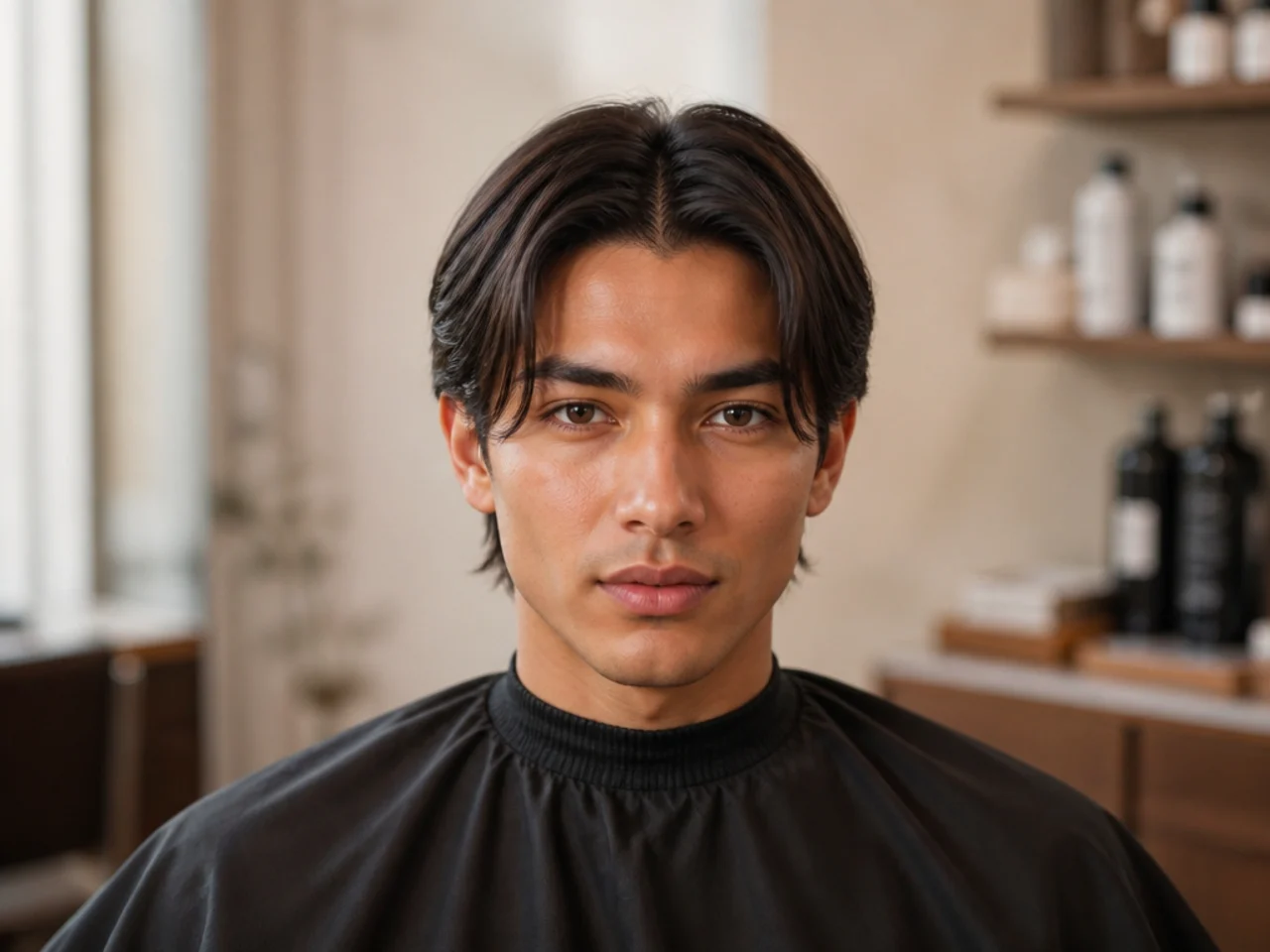
The routine for straight hair is about direction and hold. Straight hair falls where you point it during the blow-dry, and the product's only job is to lock the shape you already set. Overproducting is the number-one styling mistake — less is always more.
Wash rhythm. Two to three times a week with a sulfate-free shampoo. Straight hair oils up faster than curly hair, but daily shampoo strips the scalp and makes the roots go greasier by afternoon. Rinse with conditioner on off days. Cold water at the very end flattens the cuticle and adds shine.
Product picks by shape. Matte clay for textured and messy shapes — hold with zero shine. Sea-salt spray for movement on longer tops and bro flow. Light-hold cream for classic curtains where you want softness without a helmet. Strong-hold pomade for the slick-back and Ivy League variations. One product is usually enough — layering isn't better.
Drying method. Nozzle attachment, medium heat, angled down the shaft from root to tip and pointed forward off the center split. This trains the curtains to fall correctly. Work back first, then sides, then top. Never blast hot air up from below — that puffs the shape and kills the drape. Curly guys diffuse; straight guys never should.
Overnight care. Silk or satin pillowcase preserves the style overnight so you're not restyling from scratch. If you sleep on your stomach or side, comb the hair away from the direction it will land in the morning — a bit of reverse styling before bed prevents crushed curtains.
Maintenance cadence. Fade line-up every three weeks. Full cut every five to six weeks. Trim ends every ten weeks even if you're growing out — split ends drag the curtain down and shorten the drape. For product guidance beyond the categories above, the best wavy hair products guide covers lightweight picks that also carry straight hair without weighing the split down.
Between-visit cleanup. Keep the neckline sharp with a quality edger or the corner of your beard trimmer. Fifteen seconds in the mirror twice a week and the perimeter stays crisp until your next appointment. Do not attempt to trim the front curtains yourself — one crooked snip and the middle part reads uneven for a month.
Still deciding on the side treatment? Compare a taper against the fade family, or check what a side-swept variation would look like in the side part hairstyles for men roundup before you book.
FAQ
Is a middle part still trending on straight hair in 2026? Yes — the middle part is the most-requested men's silhouette across every age group under forty, and straight-haired guys land it easiest of any texture. It's held for six years and shows no sign of fading, which puts it in "modern classic" territory rather than trend.
How do I make the split hold if my straight hair fights it? Comb the part in while the hair is damp, not dry — the water anchors the split as the hair sets. Blow-dry with the nozzle pointed down the shaft along the part line. Once you've trained the hair for two to three weeks of consistent styling, the part sets on its own and you'll stop fighting it entirely.
What's the shortest my straight hair can be for a middle part? Four inches on top. Anything under that and the hair snaps out of the split within an hour — you can style it wet, but the part disappears the moment your hair dries. Three inches works only if you pair it with a very short taper so the shape reads intentional at all times, per variation #5 above.
Can I use a hair dryer without wrecking straight hair? Yes — medium heat, always a leave-in or heat protectant first, and never point the dryer up from below the curtain. Straight hair shows heat damage faster than curly hair because the shaft is flat and light reflects off every ding. If you dry daily, condition every wash and dust the ends every ten weeks.
Does a middle part work with a receding hairline? It depends on where the recession sits. Slight recession at the temples is hidden by the curtains dropping forward. Heavy recession at the crown or a widow's peak makes the split highlight the thinning area — try a curtain fringe at the brow instead (variation #8) so the front pieces cover the recession from the front.
How much should I expect to pay for a middle part with a fade? Standard cut with a low taper at a mainstream barbershop: $35 to $60. Add a beard blend or razor line-up at a specialist shop: $70 to $130. Tip 20 percent. A fade-only touch-up between full cuts runs $15 to $25 and takes fifteen minutes — worth it every three weeks for straight hair.