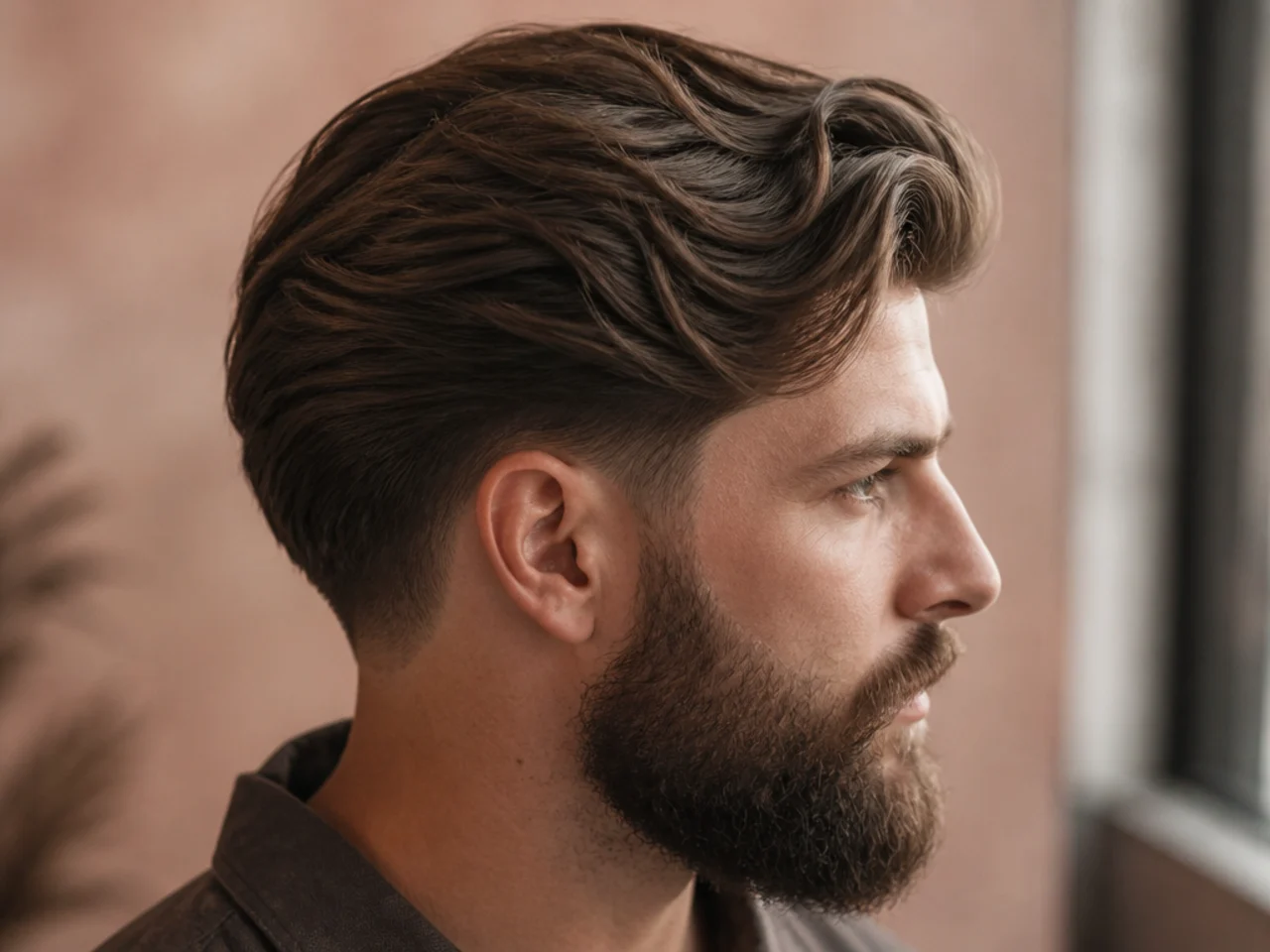
20 Haircut Ideas for Men With a Beard
A beard moves the visual centre of your face downward, which means the haircut above it is no longer being chosen for your head alone. Every decision here is a proportion decision made against the weight already sitting at your jaw.
In this article · 27
- How a Beard Changes the Head Shape
- How to Choose Yours
- The 20 Cuts to Wear With a Beard
- 1. Longer Top With a Low Taper
- 2. The Textured Quiff
- 3. Slick Back With a Beard
- 4. Buzz Cut With a Full Beard
- 5. Crew Cut With Stubble
- 6. Textured Crop With a Short Beard
- 7. Side Part With a Boxed Beard
- 8. Medium Length With a Long Beard
- 9. Mid Fade With a Connected Beard
- 10. Low Taper With a Disconnected Beard
- 11. Curly Top With a Beard
- 12. The Pompadour With a Beard
- 13. Grey Hair With a Grey Beard
- 14. Receding Hairline With a Beard
- 15. The Caesar With Stubble
- 16. Long Hair With a Full Beard
- 17. The Ivy League With a Beard
- 18. Fringe Over a Beard
- 19. Skin Fade With a Beard
- 20. The Same Guard Top and Beard
- Styling and Upkeep
- Mistakes to Avoid
- FAQ
- Final Thoughts
Most haircut advice assumes a clean-shaven face, and then men with beards wonder why the cut that suited their friend does not suit them.
A beard moves the visual centre of your face downward. It adds width and weight at the jaw, which changes the outline the haircut is being fitted to.
Every decision here is a proportion decision. The question is not which cut you like, it is how much weight the top needs in order to balance what is already sitting at the bottom.
How a Beard Changes the Head Shape
It adds width at the jaw. An oval face can read as square once a full beard is grown in.
It adds length below the mouth. A long beard extends the face and can make a long face longer.
It shifts the balance point downward. The eye lands lower, so the top of the head reads smaller than it is.
Density matters more than style. A patchy beard changes the outline far less than a full one, and needs far less compensation above it.
How to Choose Yours
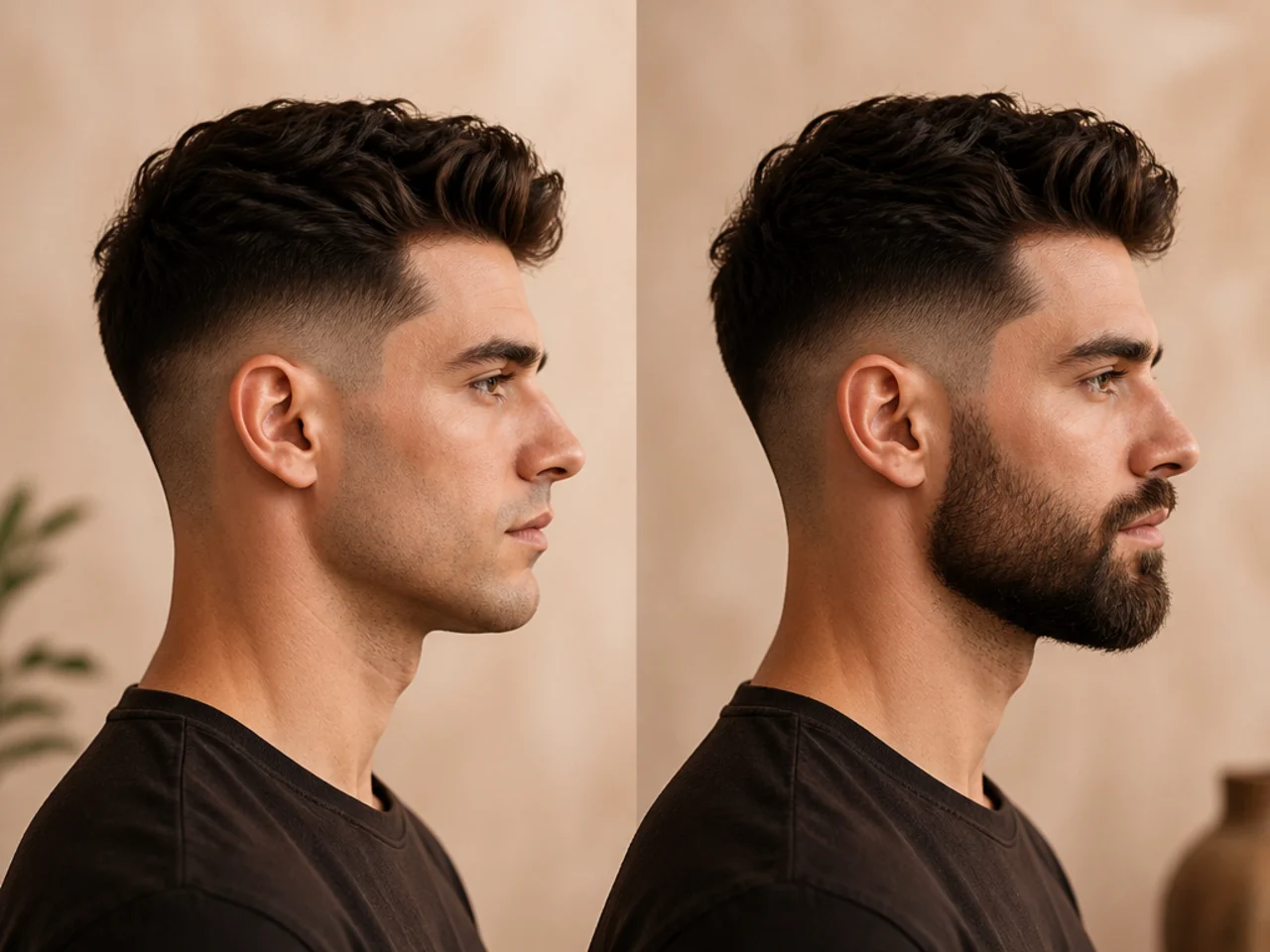
Judge your face with the beard on. The shape you had at eighteen is not the shape you are cutting for now.
Add height if the beard is long. Length at the jaw needs length at the crown or the head looks compressed.
Add width control if the beard is wide. A full beard plus heavy sides makes the whole head read square.
Choose taper over fade in most cases. A taper leaves a #1 and gives the beard an edge to sit against instead of bare skin.
The 20 Cuts to Wear With a Beard
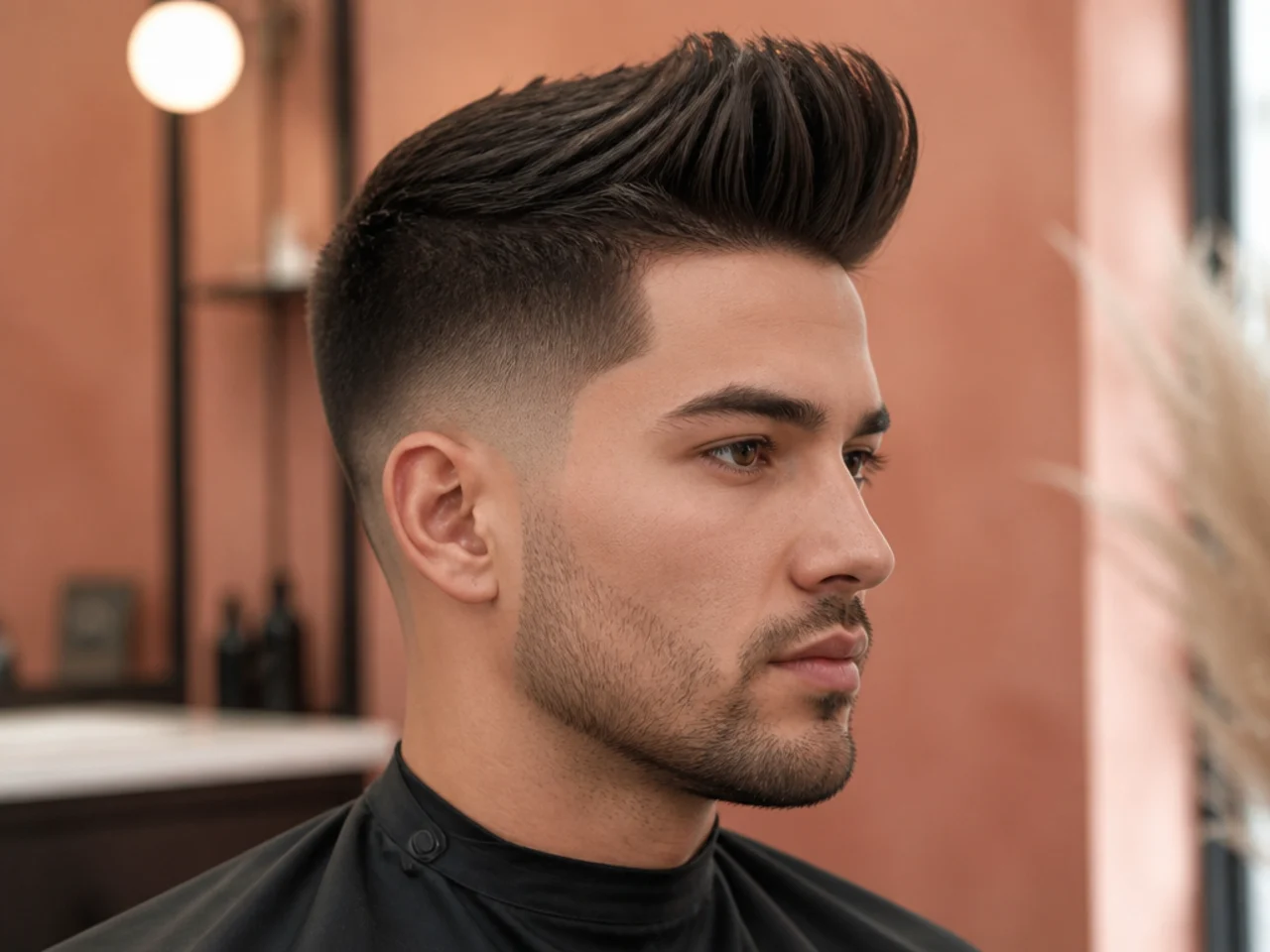
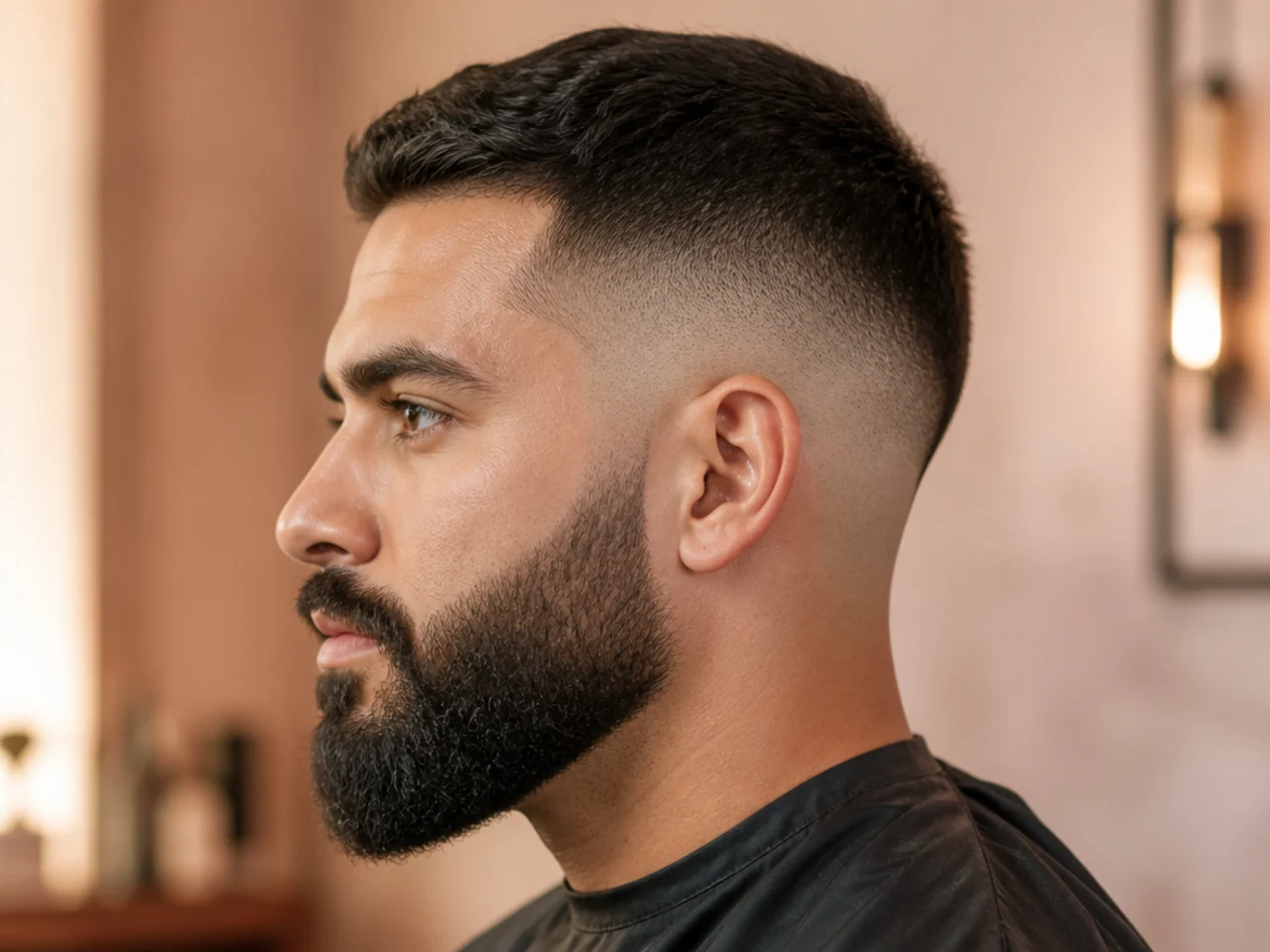
1. Longer Top With a Low Taper
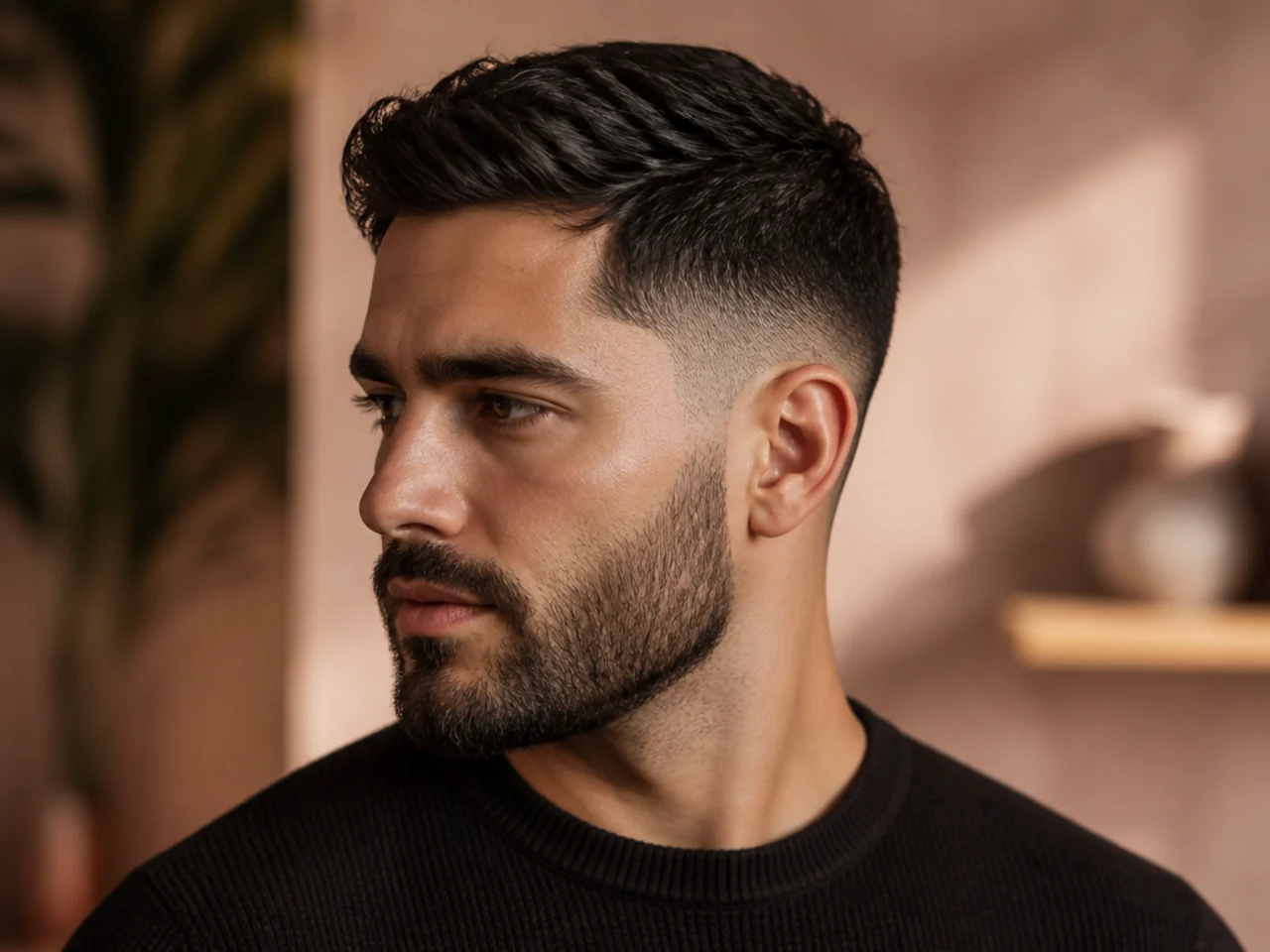
The default answer for a full beard. Height at the crown balances weight at the jaw, and the taper holds three to four weeks so the whole look ages evenly.
2. The Textured Quiff
Choose this if your beard is long and your face already reads narrow. The quiff adds height without adding width, which lengthens rather than widens.
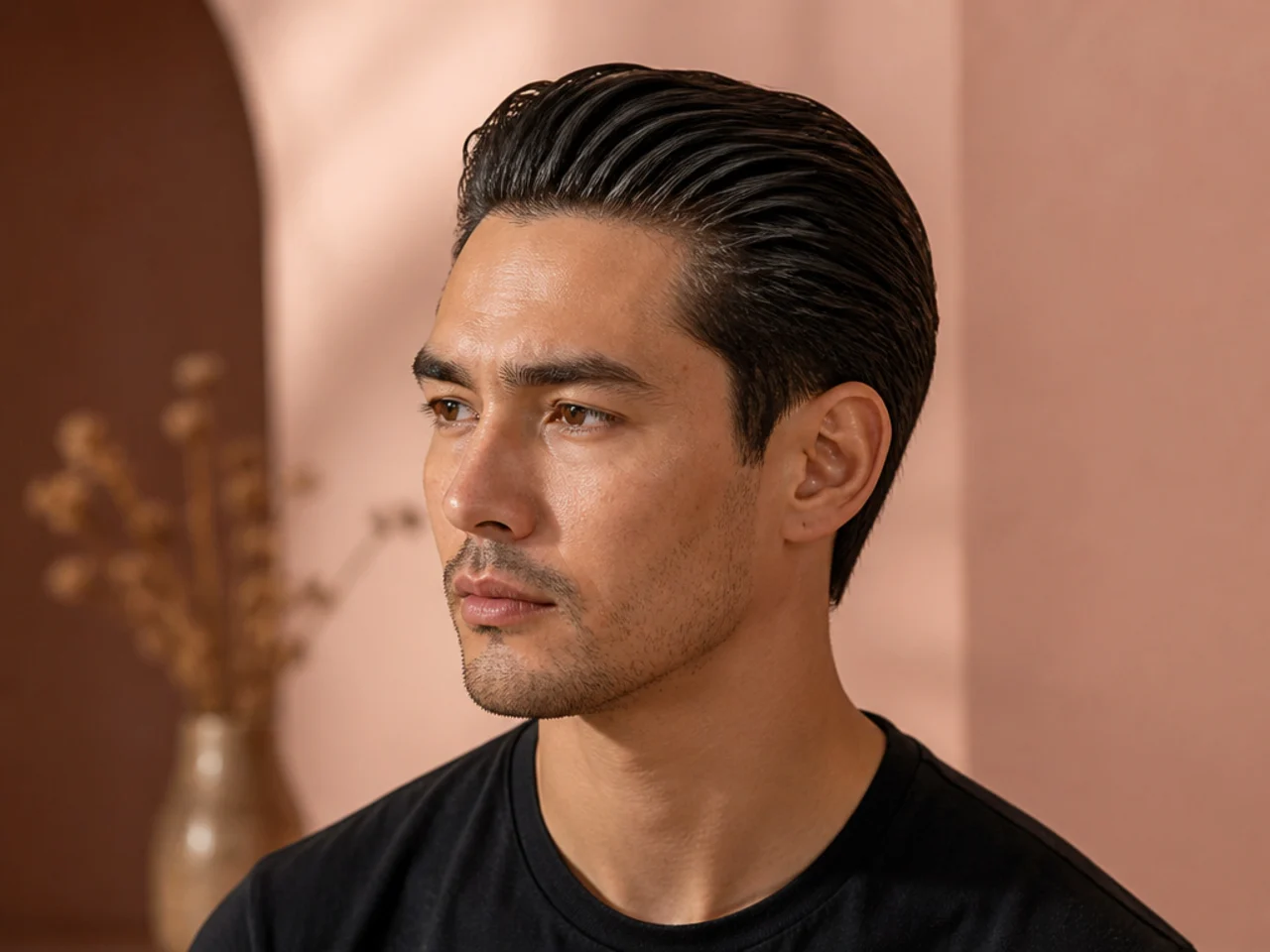
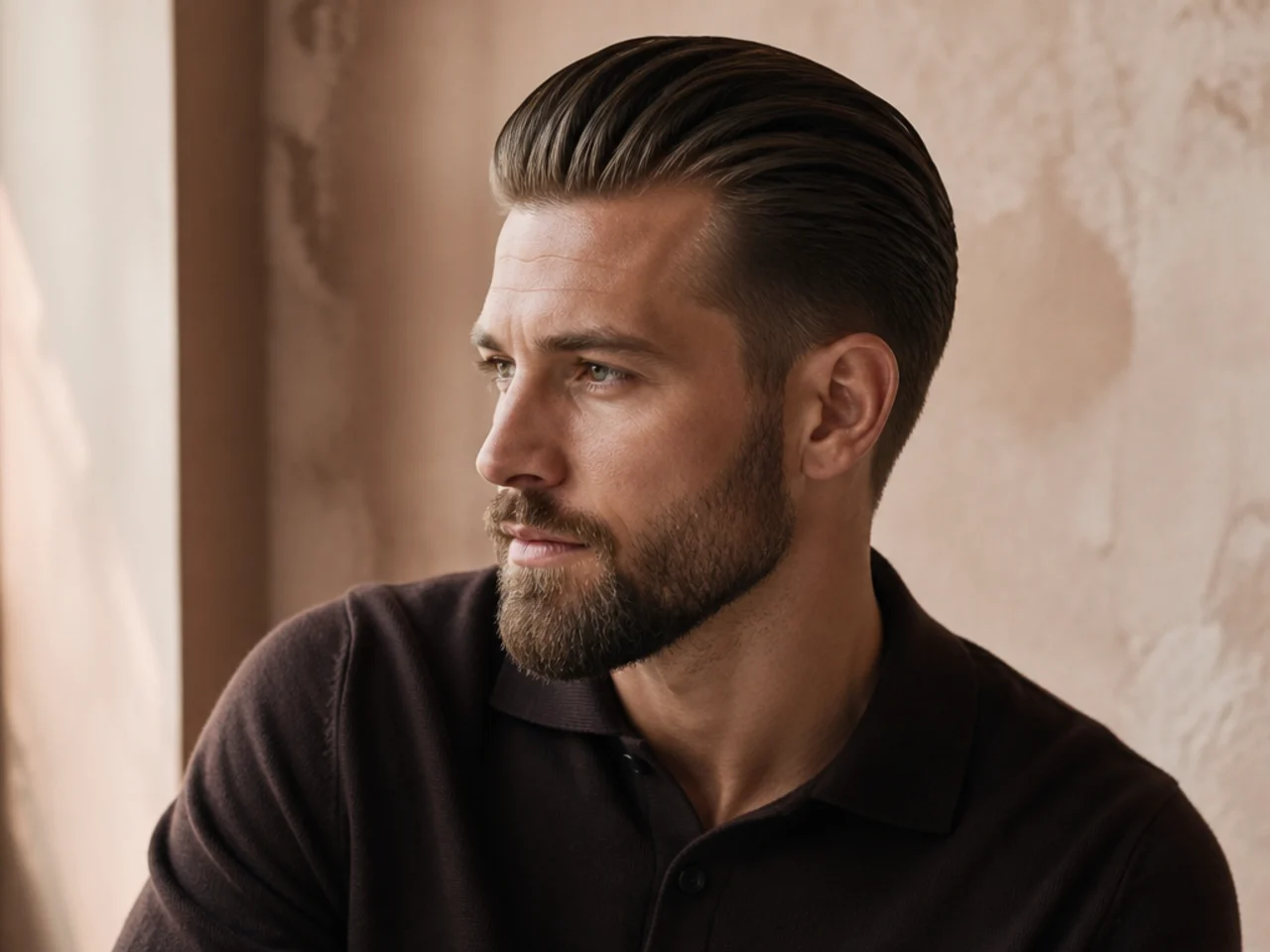
3. Slick Back With a Beard
Choose this if your beard is short and tidy. Slicking the top back exposes the whole face, which only works when the beard is not already doing that job.
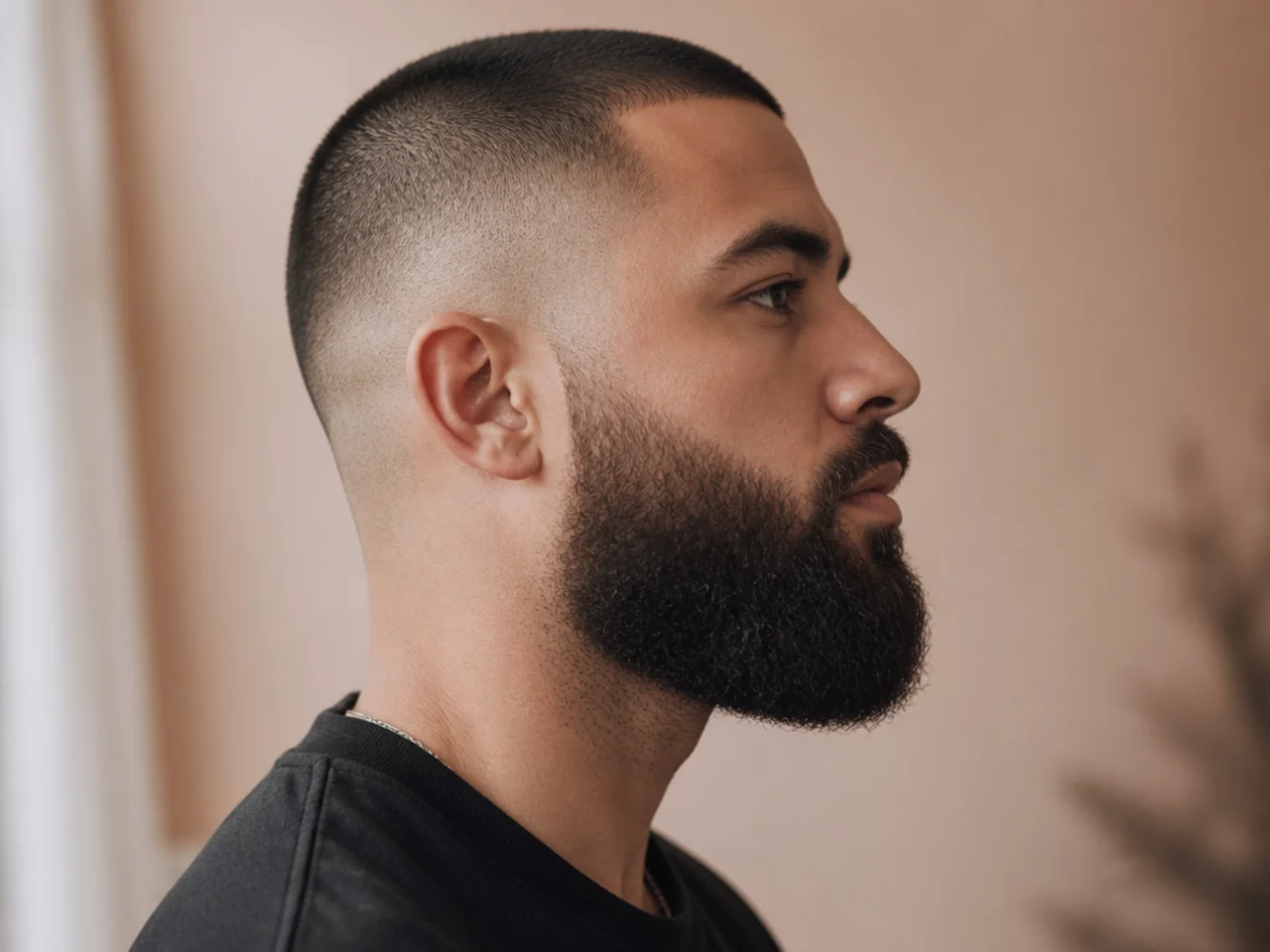
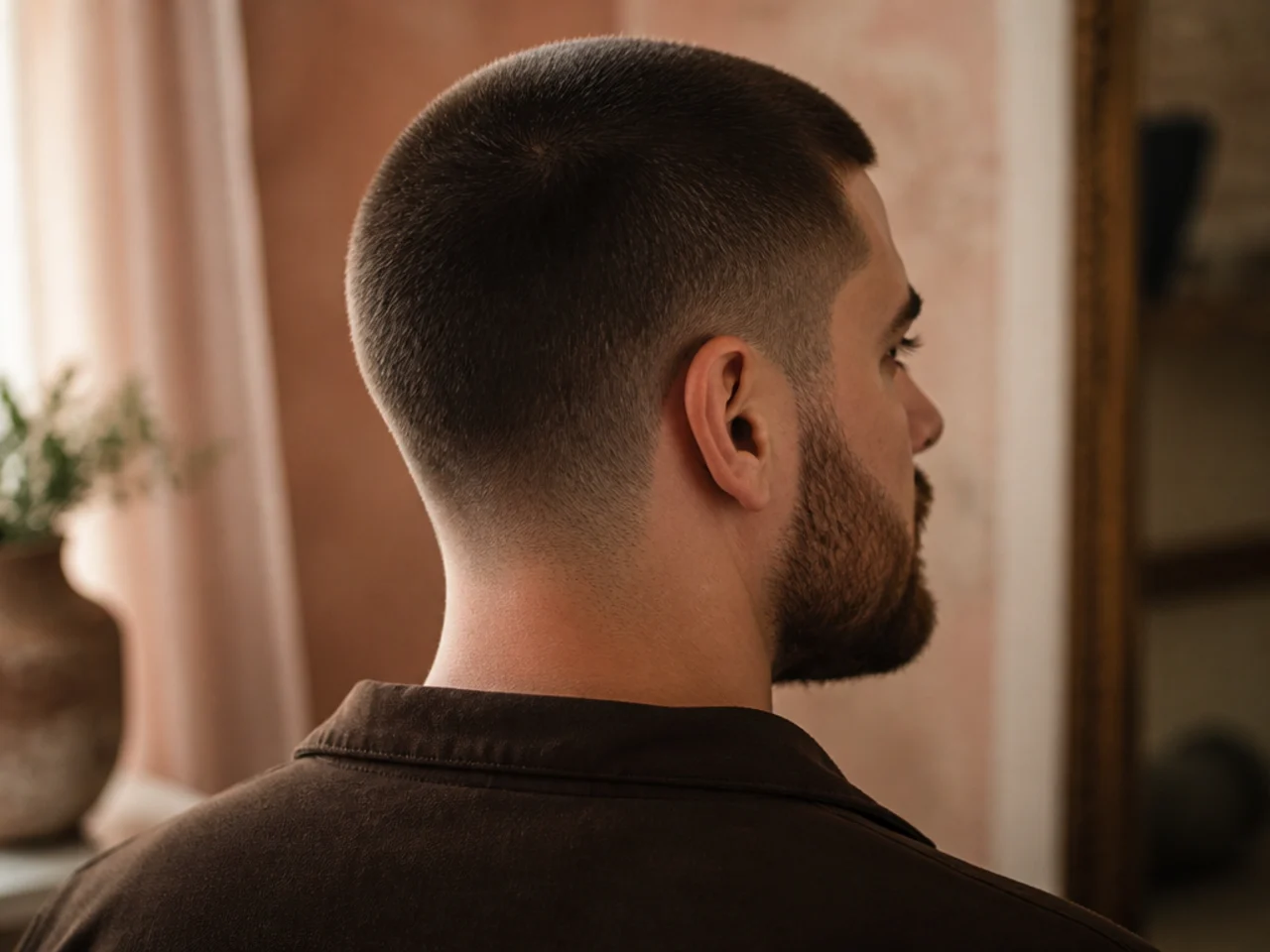
4. Buzz Cut With a Full Beard
Choose this if you want maximum contrast between top and bottom. It is a deliberate imbalance rather than a mistake, but the beard has to be genuinely full to carry it.
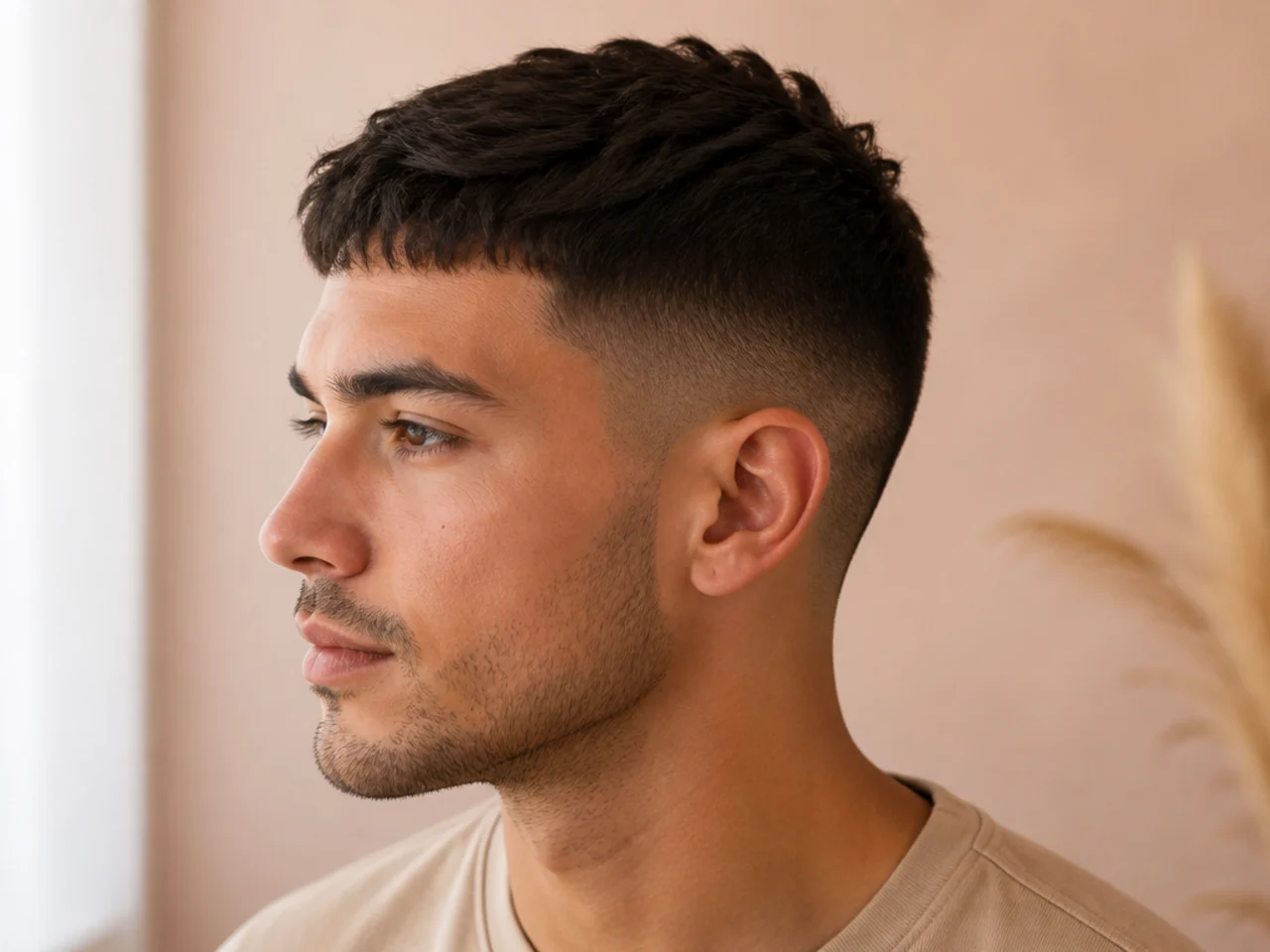
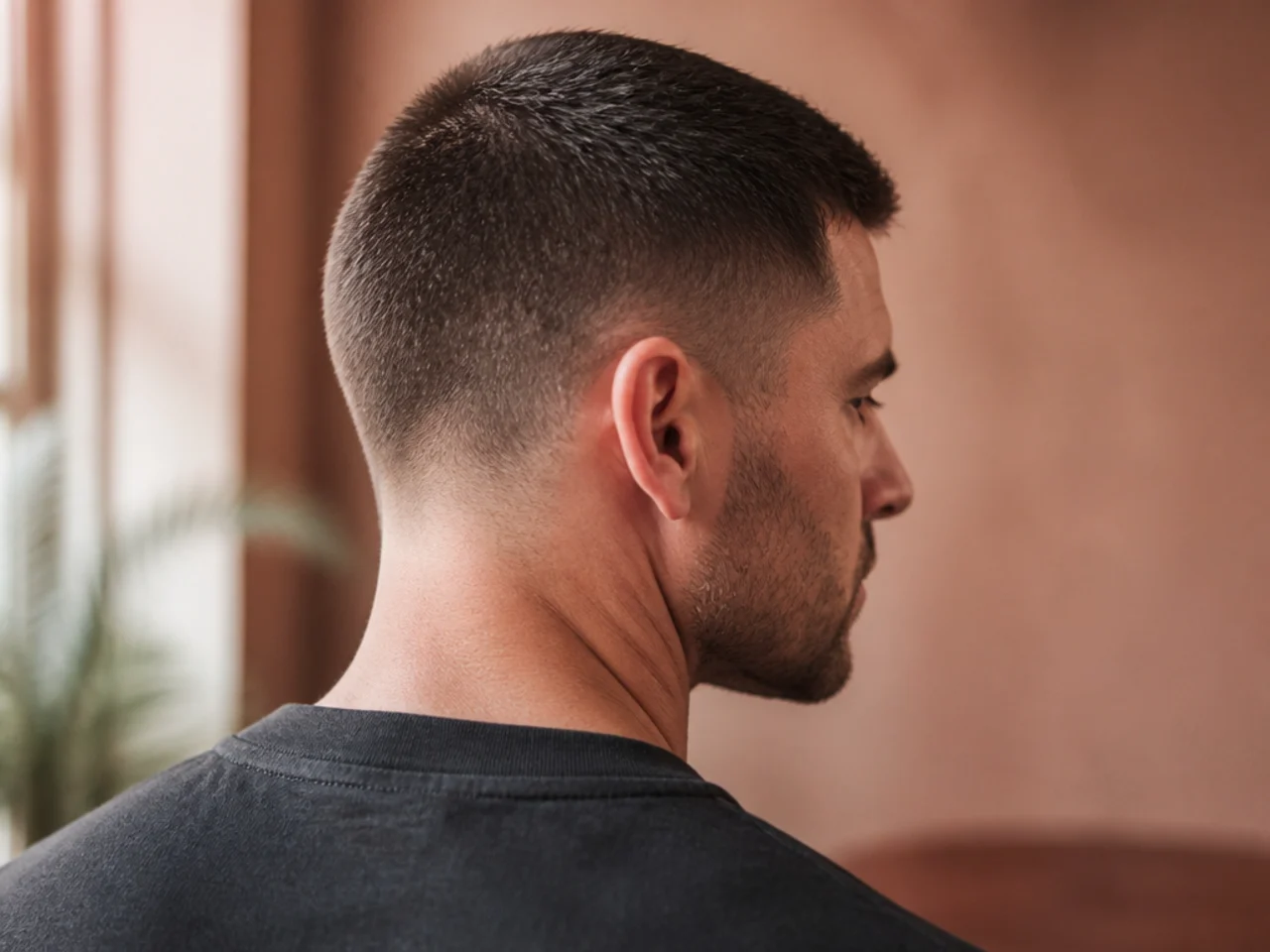
5. Crew Cut With Stubble
Choose the crew cut if you want the lowest-effort combination available. Stubble adds definition without adding weight, so the cut can stay short without unbalancing anything.
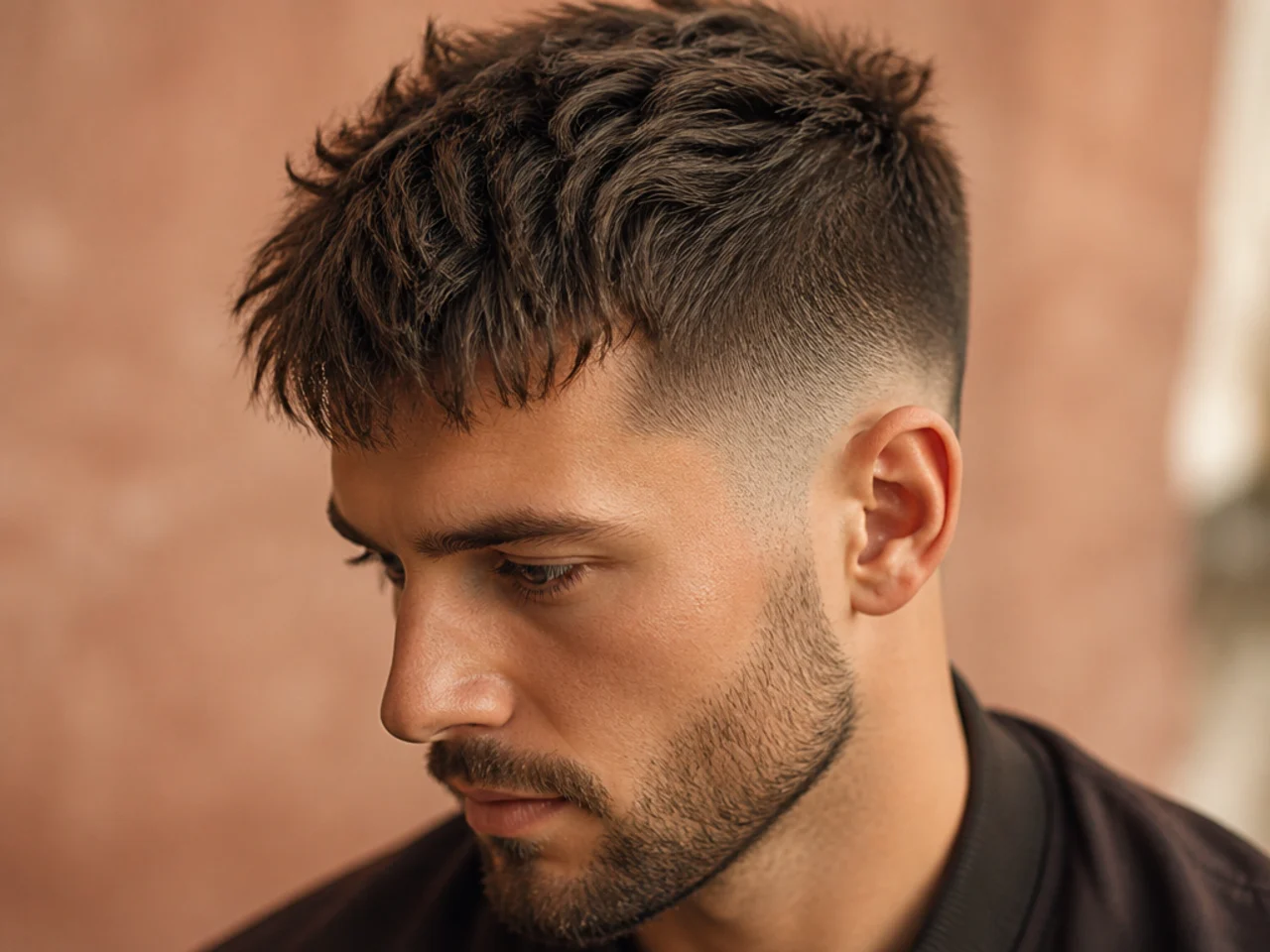
6. Textured Crop With a Short Beard
Choose this if your face is long. The forward-falling front shortens the visible face, which counteracts the length a beard adds below.
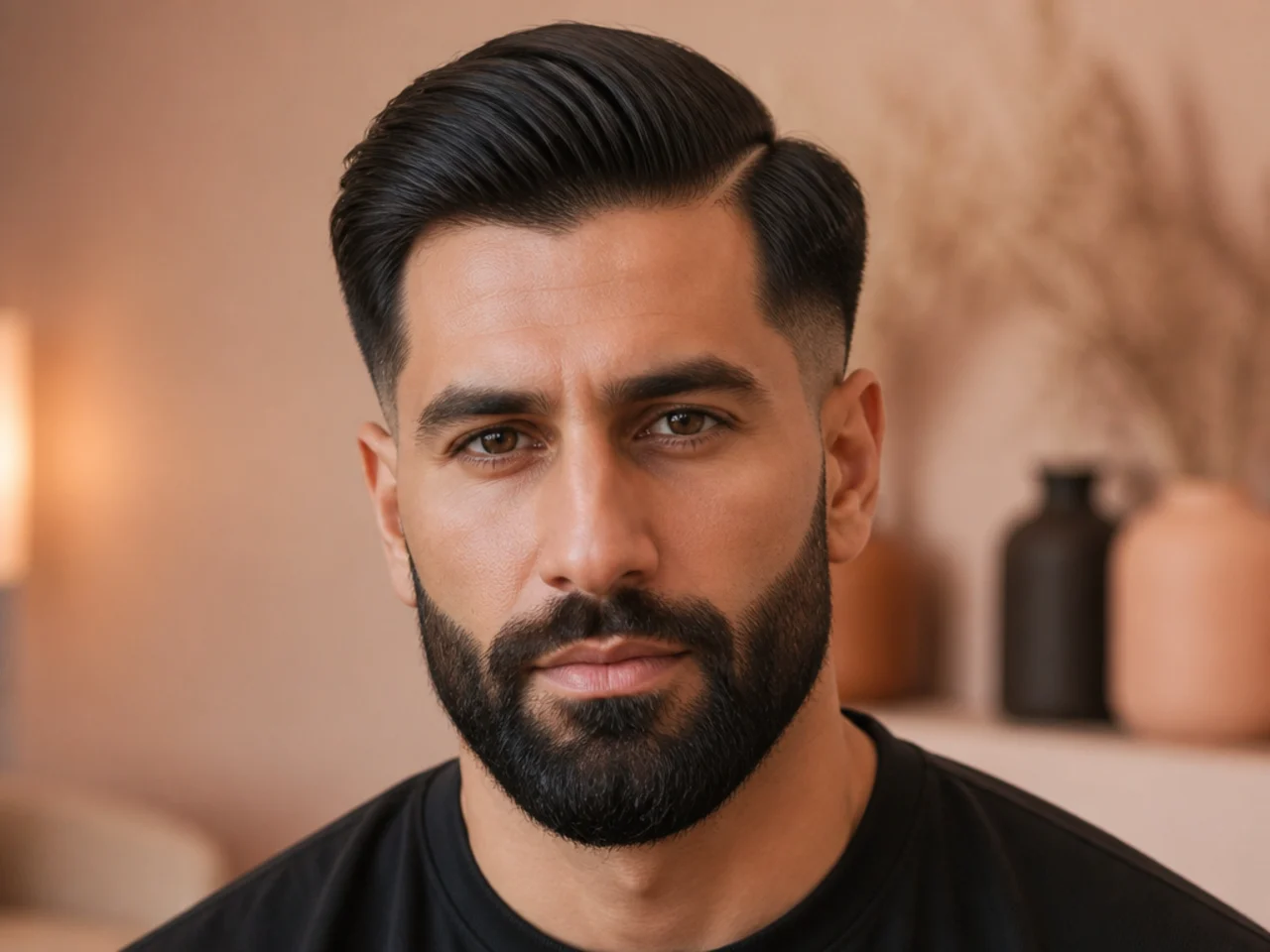
7. Side Part With a Boxed Beard
Choose this if you need a formal look. Two clean lines, one vertical and one horizontal, read as deliberate structure rather than as competing edges.
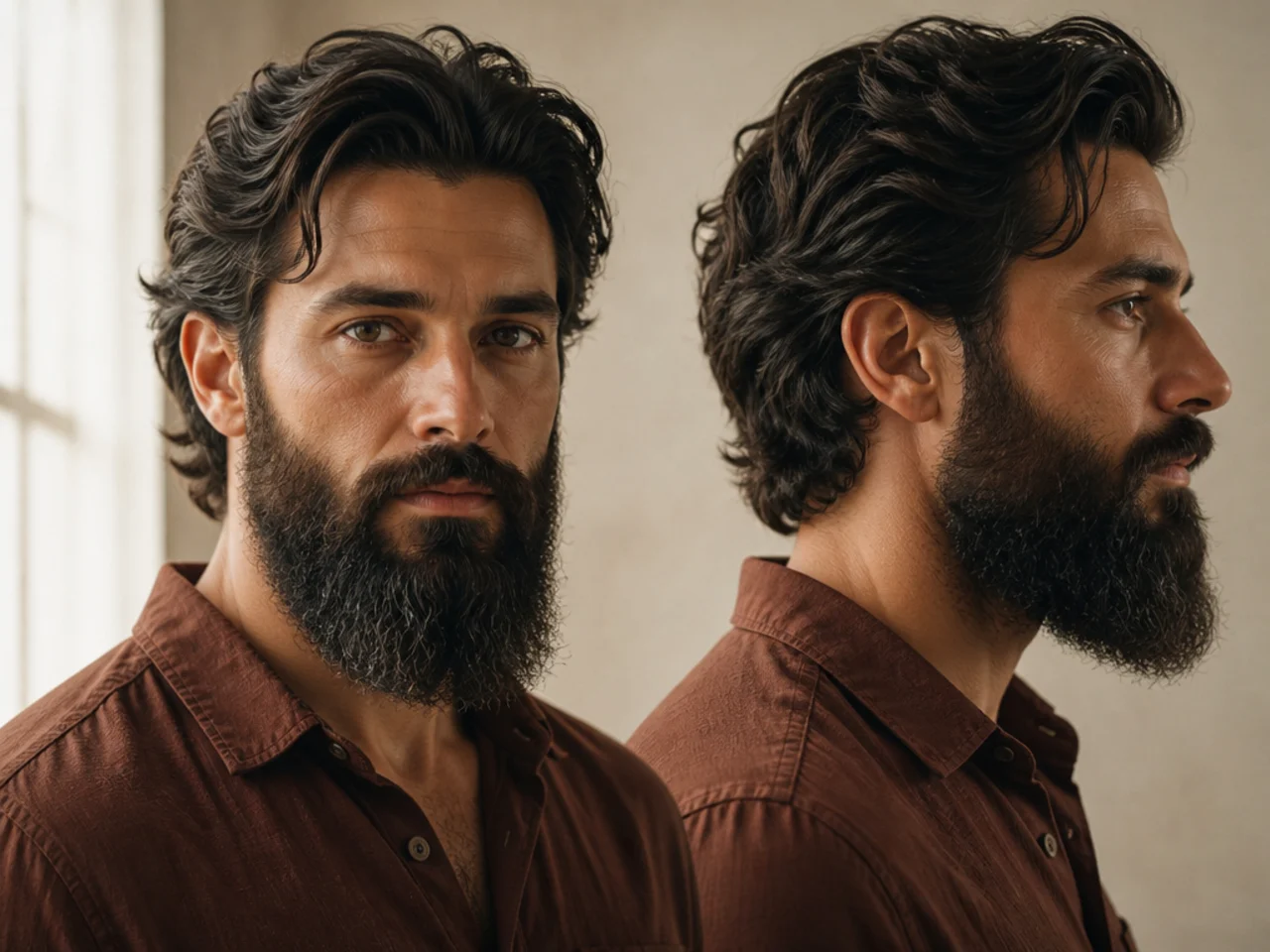
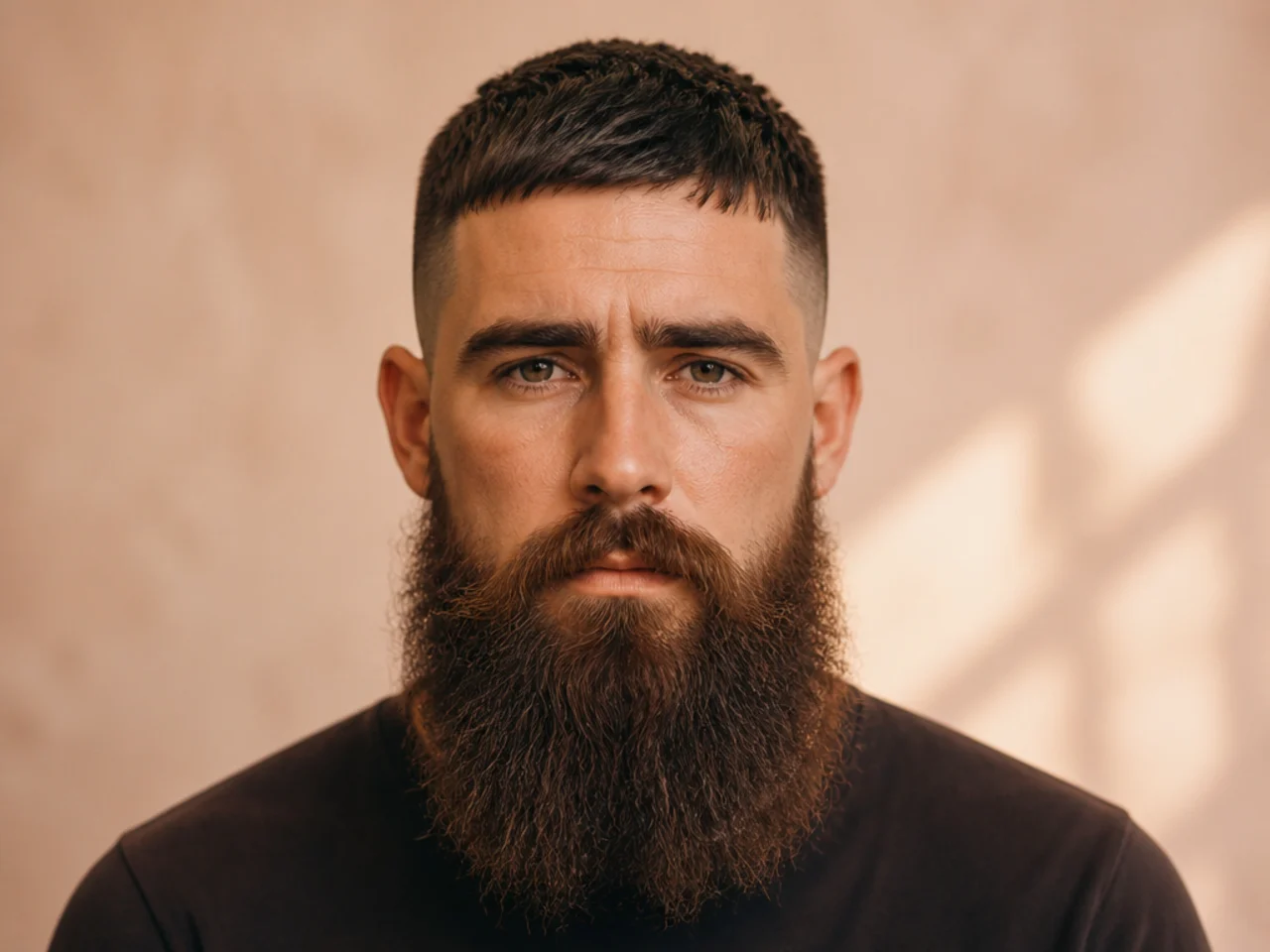
8. Medium Length With a Long Beard
Choose this if your beard is past the collarbone. Short hair above a long beard inverts the proportion and makes the head look small.
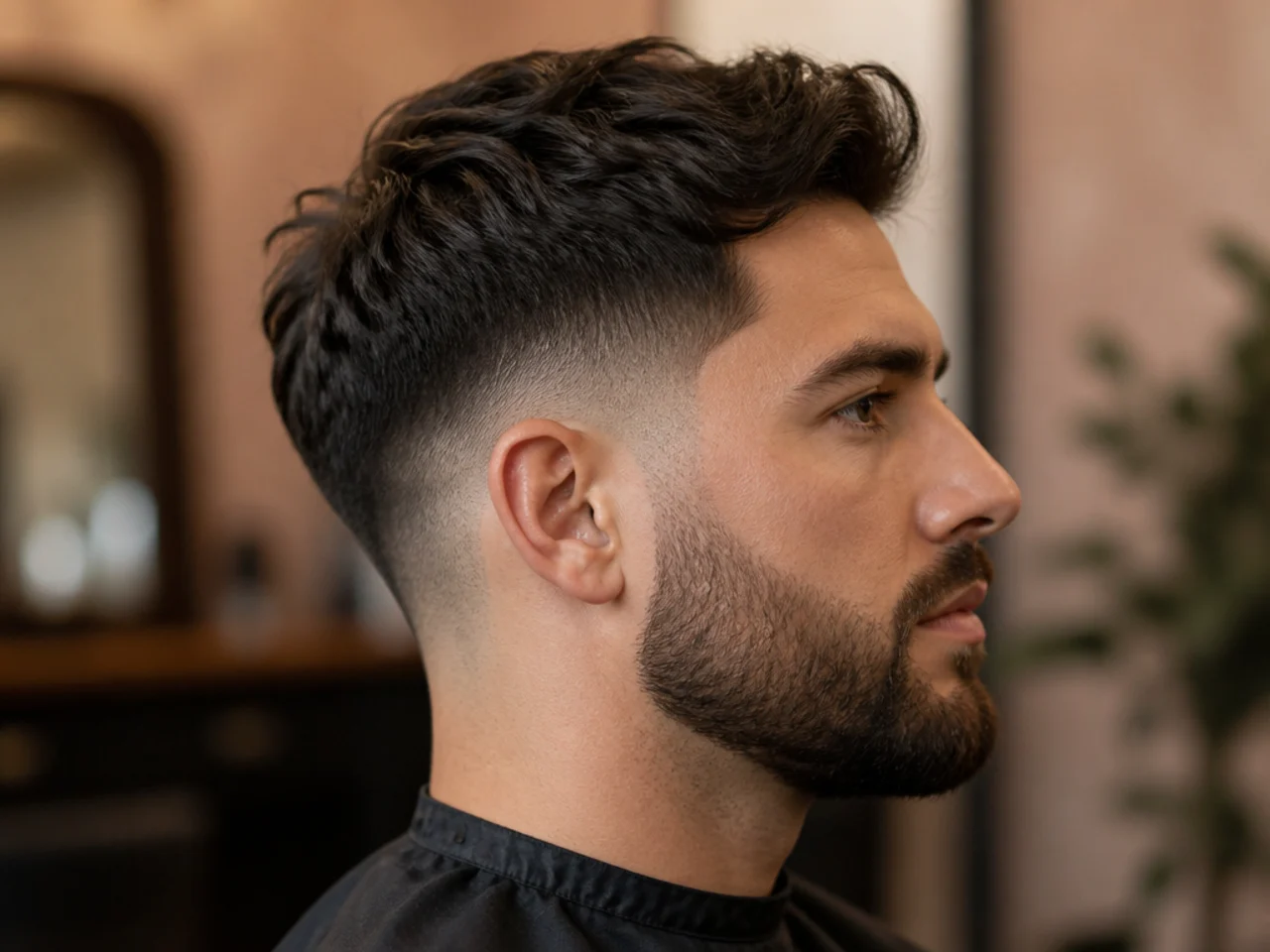
9. Mid Fade With a Connected Beard
Choose this if you want one continuous gradient from crown to jaw. The mid fade sits between temple and parietal ridge, which is high enough for the gradient to have somewhere to travel.
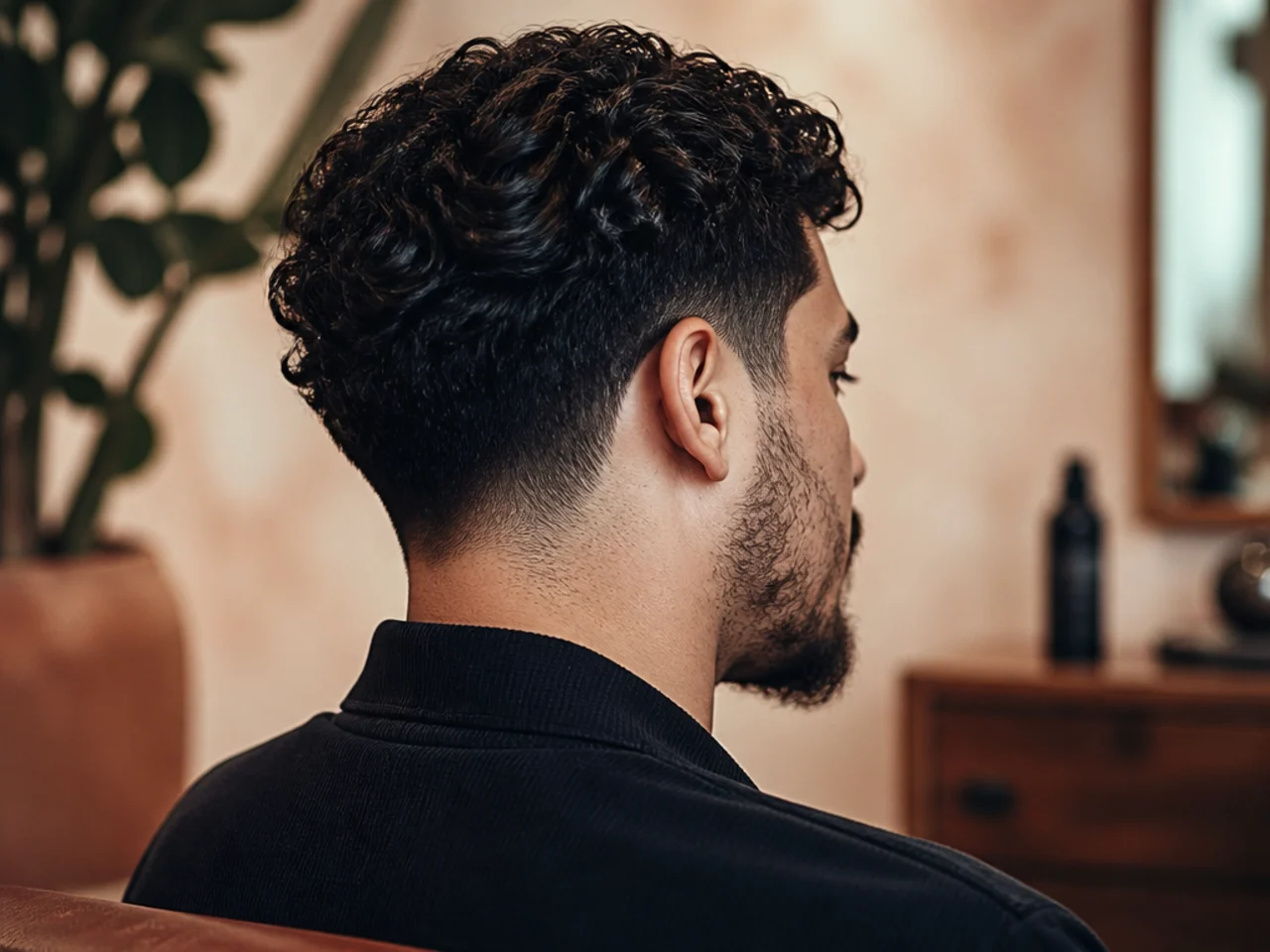
10. Low Taper With a Disconnected Beard
Choose this if your beard is patchy. A gradient needs density to land in, and stubble does not provide it, so keep the two shapes clearly separate.
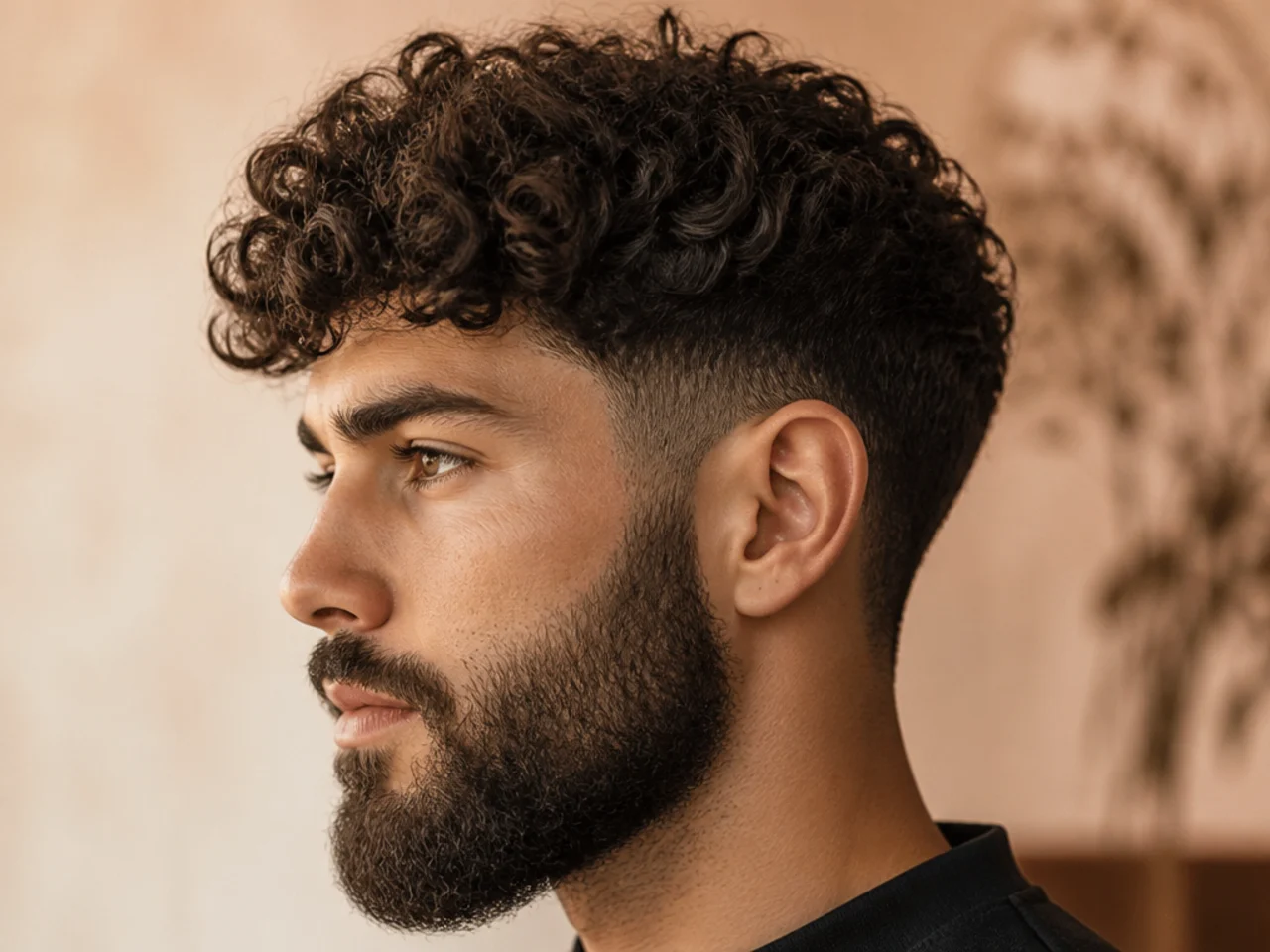
11. Curly Top With a Beard
Choose this if you have curl and density. Curl adds width at the temples and a beard adds it at the jaw, so the sides need taking in to stop the head reading round.
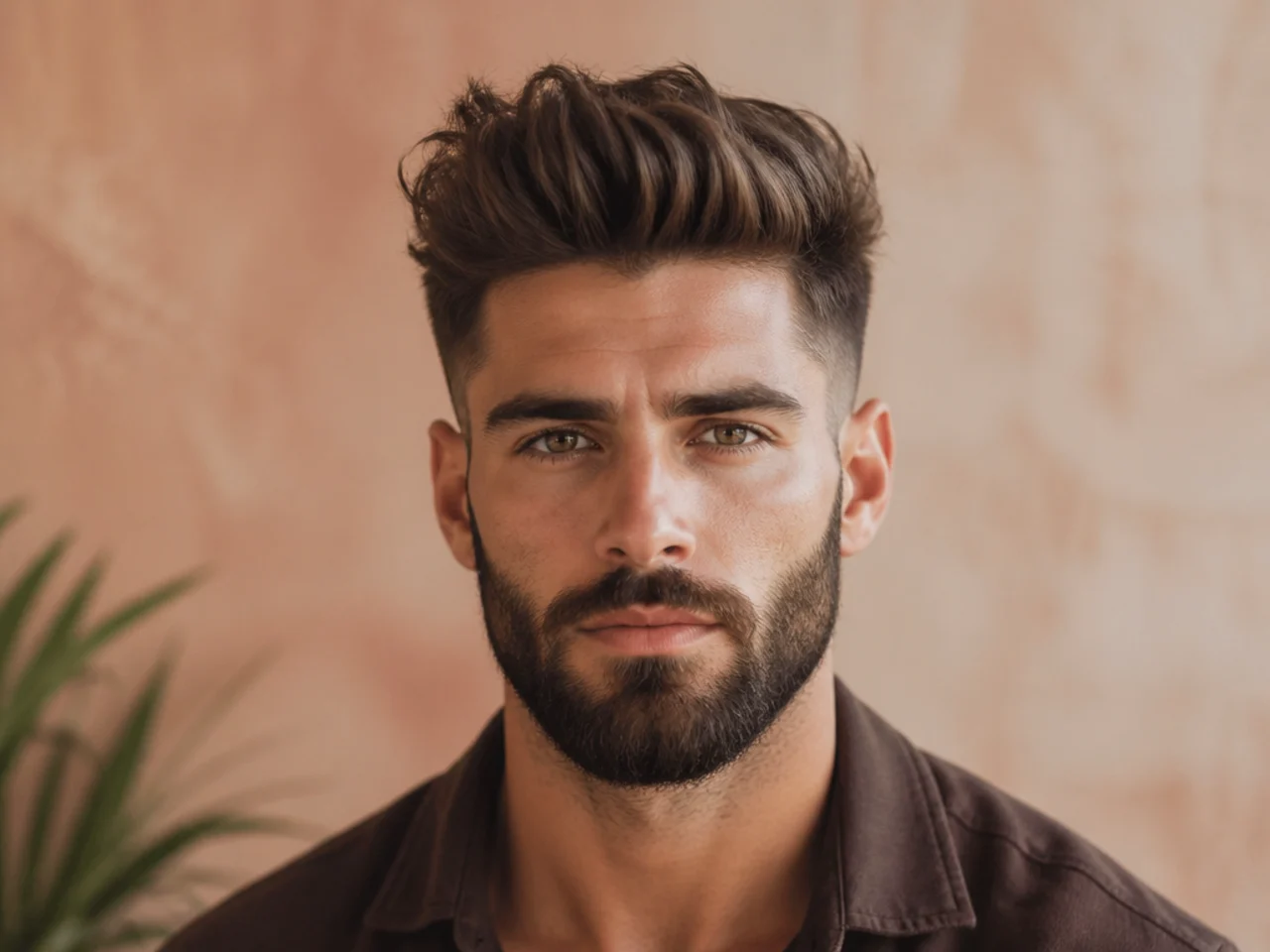
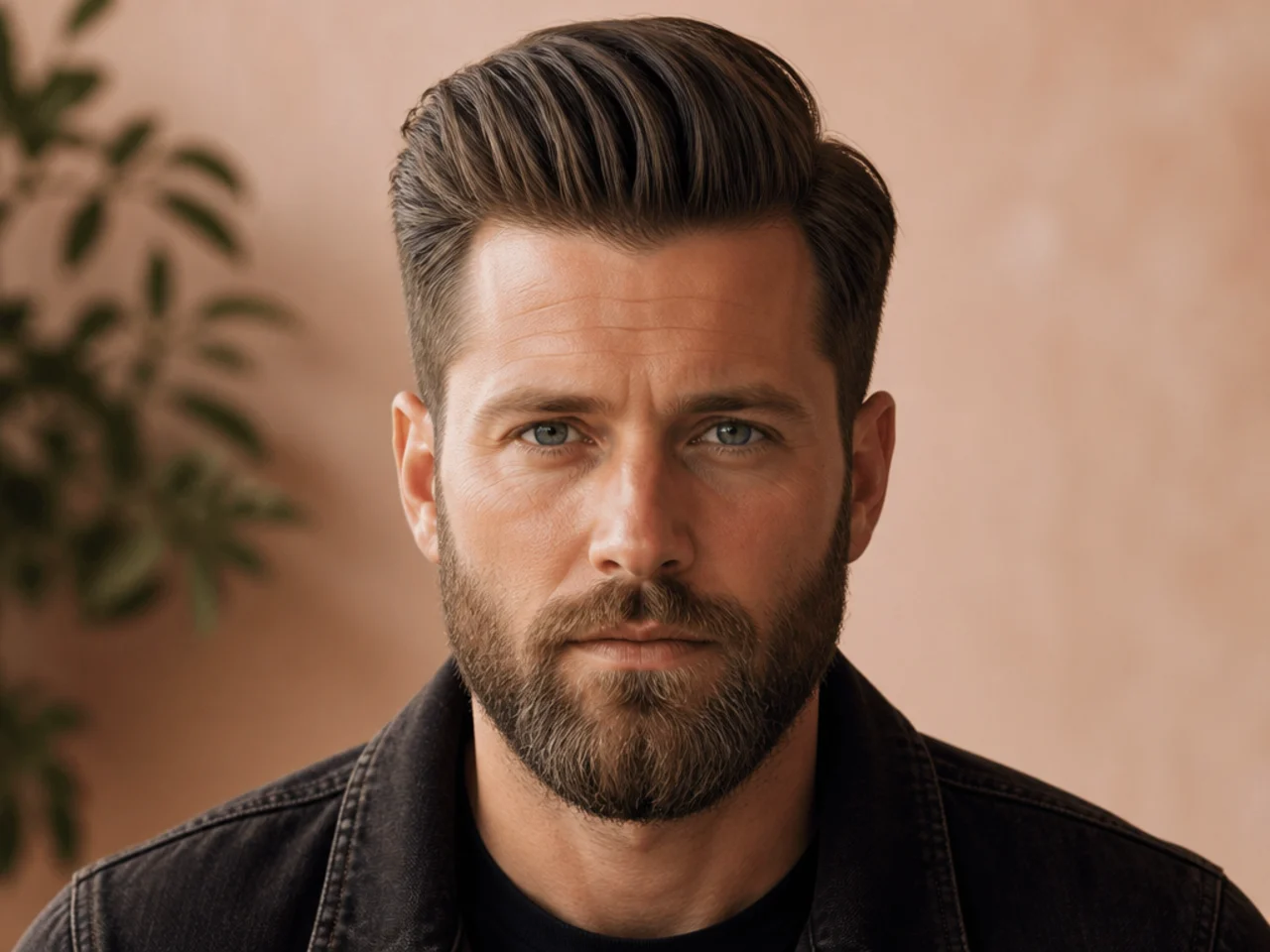
12. The Pompadour With a Beard
Choose this if you want the top to be the focal point. All the volume sits forward and up, which pulls the eye away from the jaw entirely.
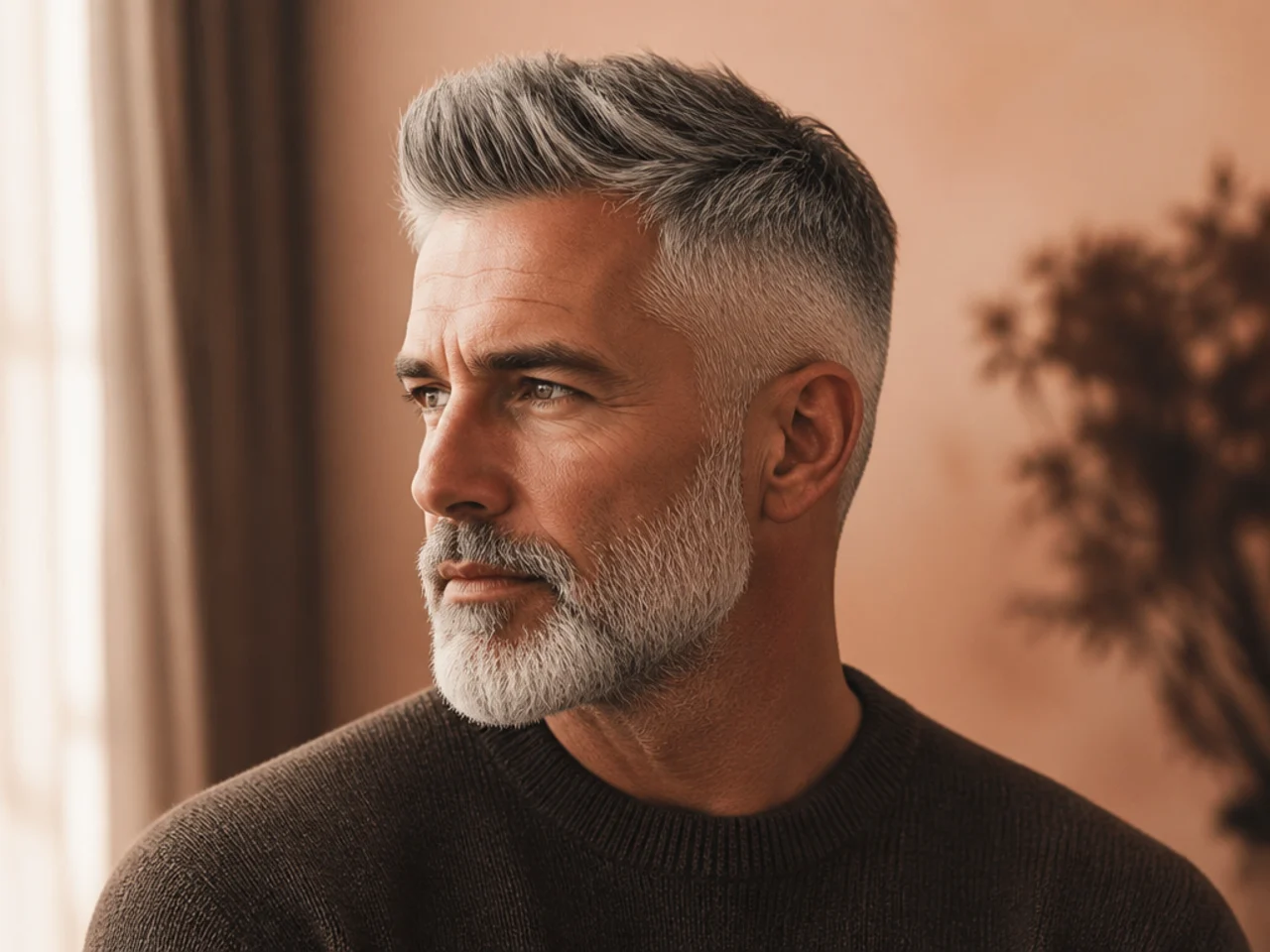
13. Grey Hair With a Grey Beard
Choose the same length top and bottom. Grey reflects light differently from pigmented hair, and matching the two ends stops one reading as older than the other.
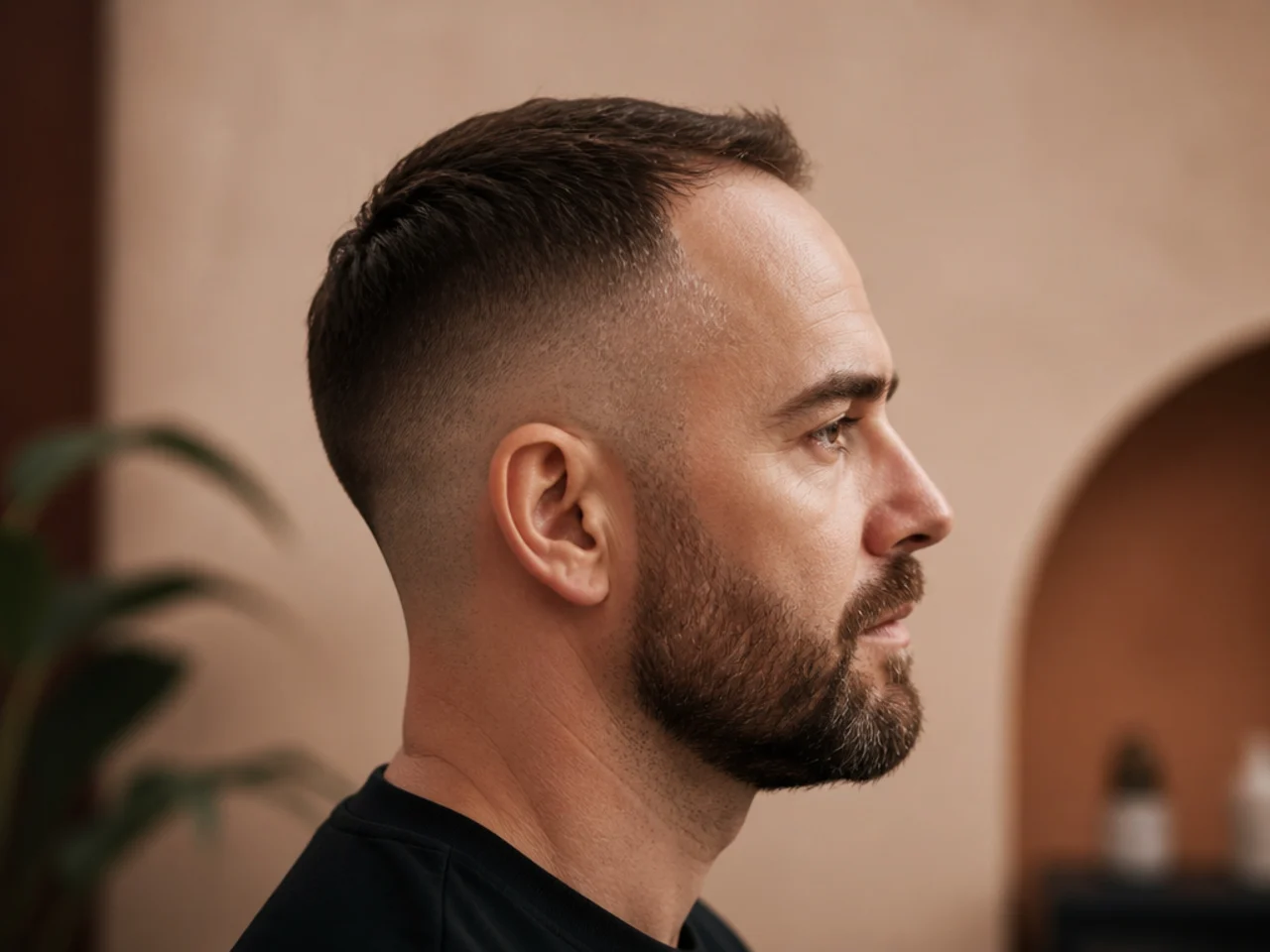
14. Receding Hairline With a Beard
Keep the weight high and the sides short, since contrast between full sides and a thin front is what draws attention to a recession. The beard then carries the visual interest instead.
15. The Caesar With Stubble
Choose this if you want minimum styling. The forward flat front needs no product and stubble needs no shaping, which is about as low-maintenance as a paired look gets.
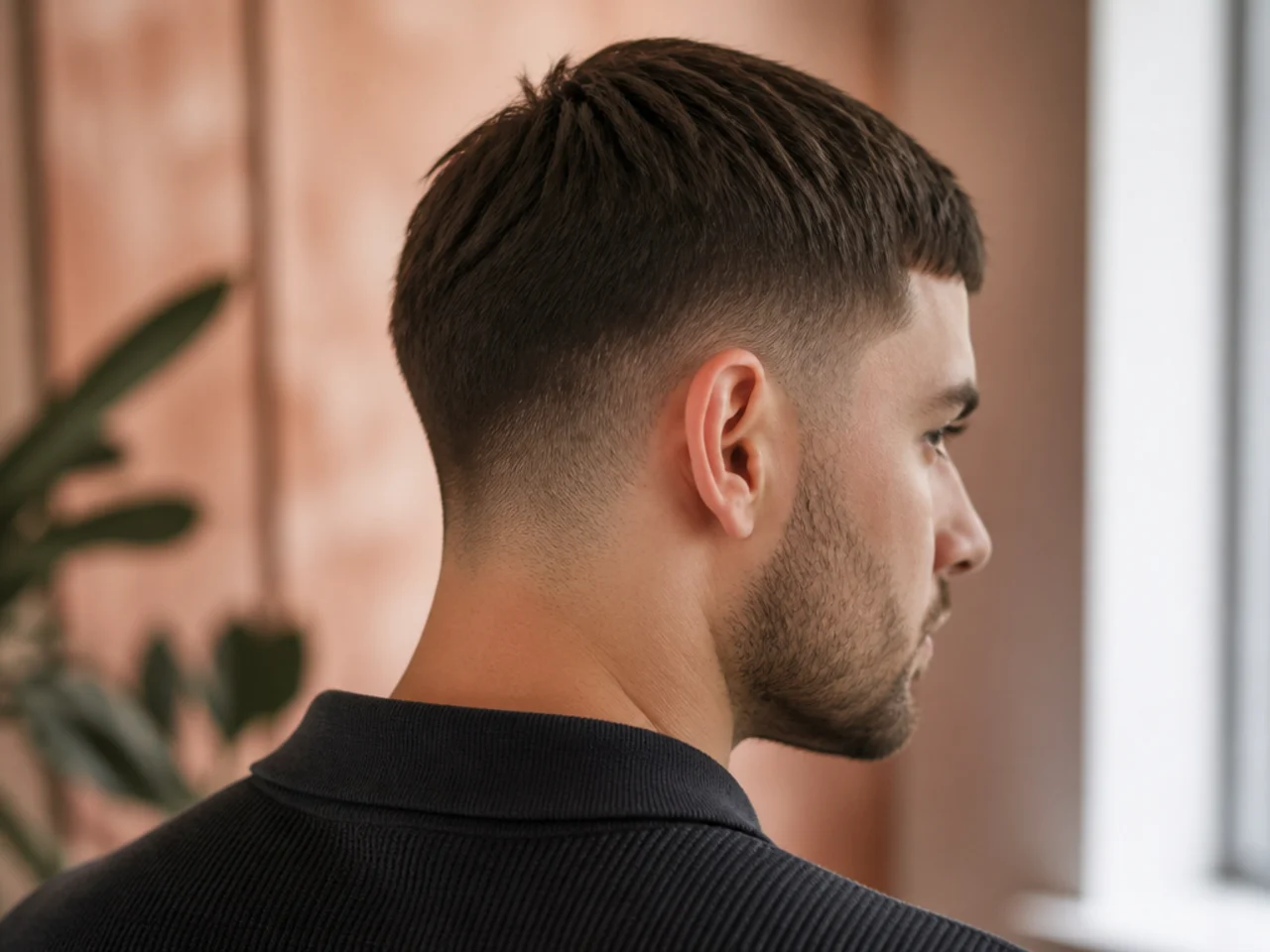
16. Long Hair With a Full Beard
Choose this if you want the whole head to read as one mass. It is the only combination where the cut and the beard are not being balanced against each other at all, which means you can pick from the long hair shapes for men on their own merits.
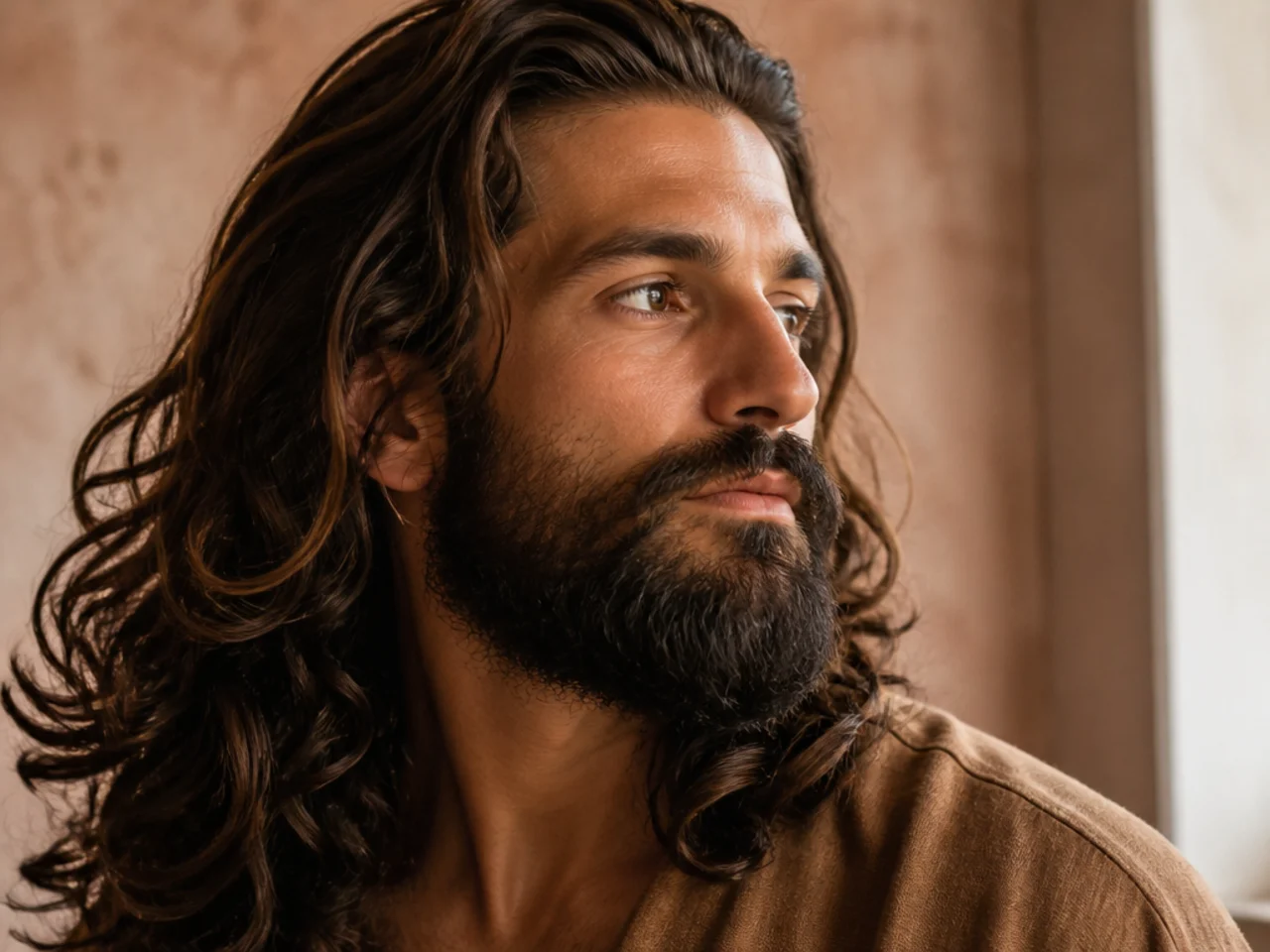
17. The Ivy League With a Beard
Choose this if you need a cut that reads formal but not severe. The graduated top gives enough height to answer a beard without looking styled.
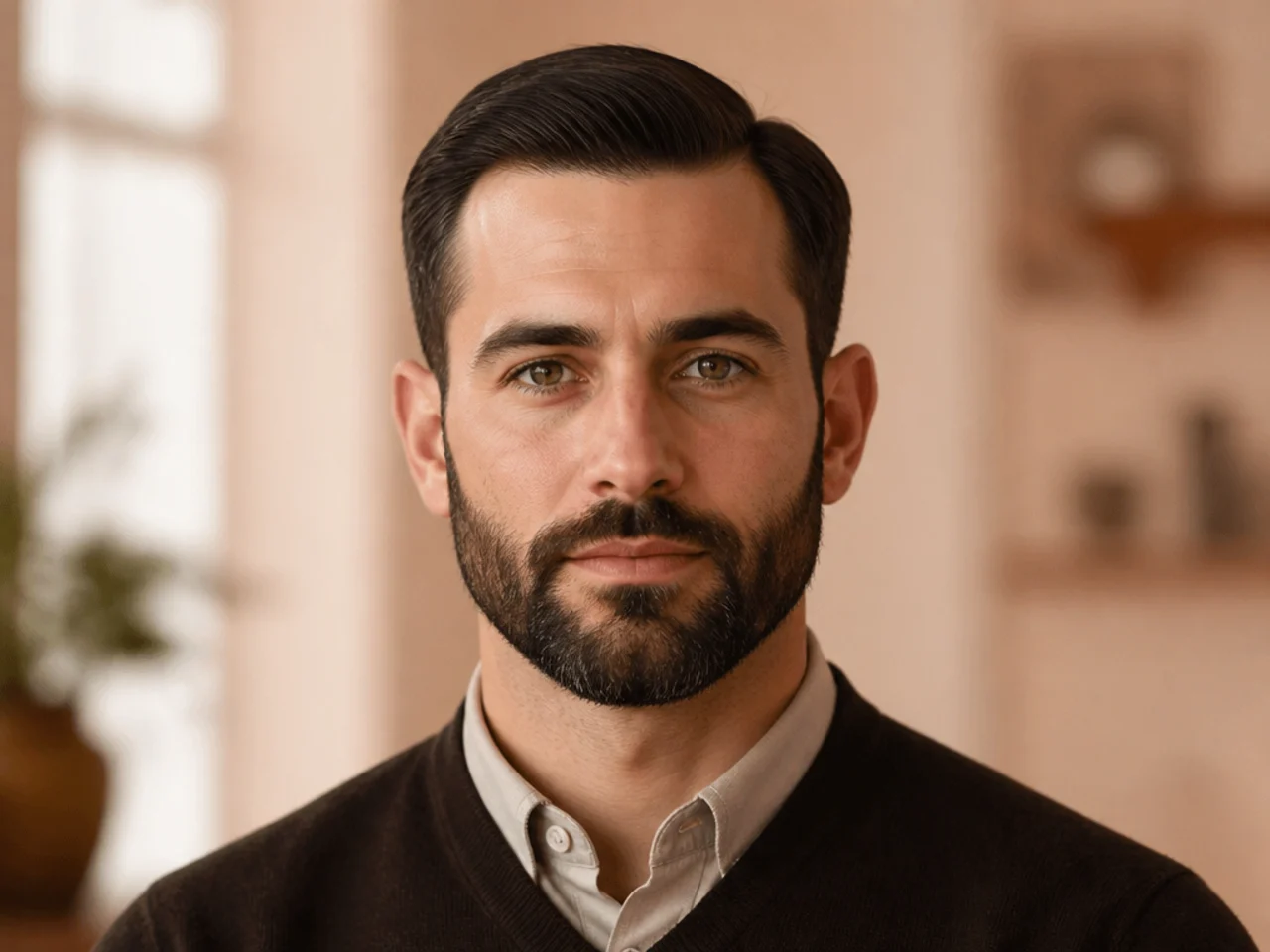
18. Fringe Over a Beard
Choose this if your forehead is tall. The fringe puts weight at the top of the face and the beard puts it at the bottom, and the middle of the face gets left alone.
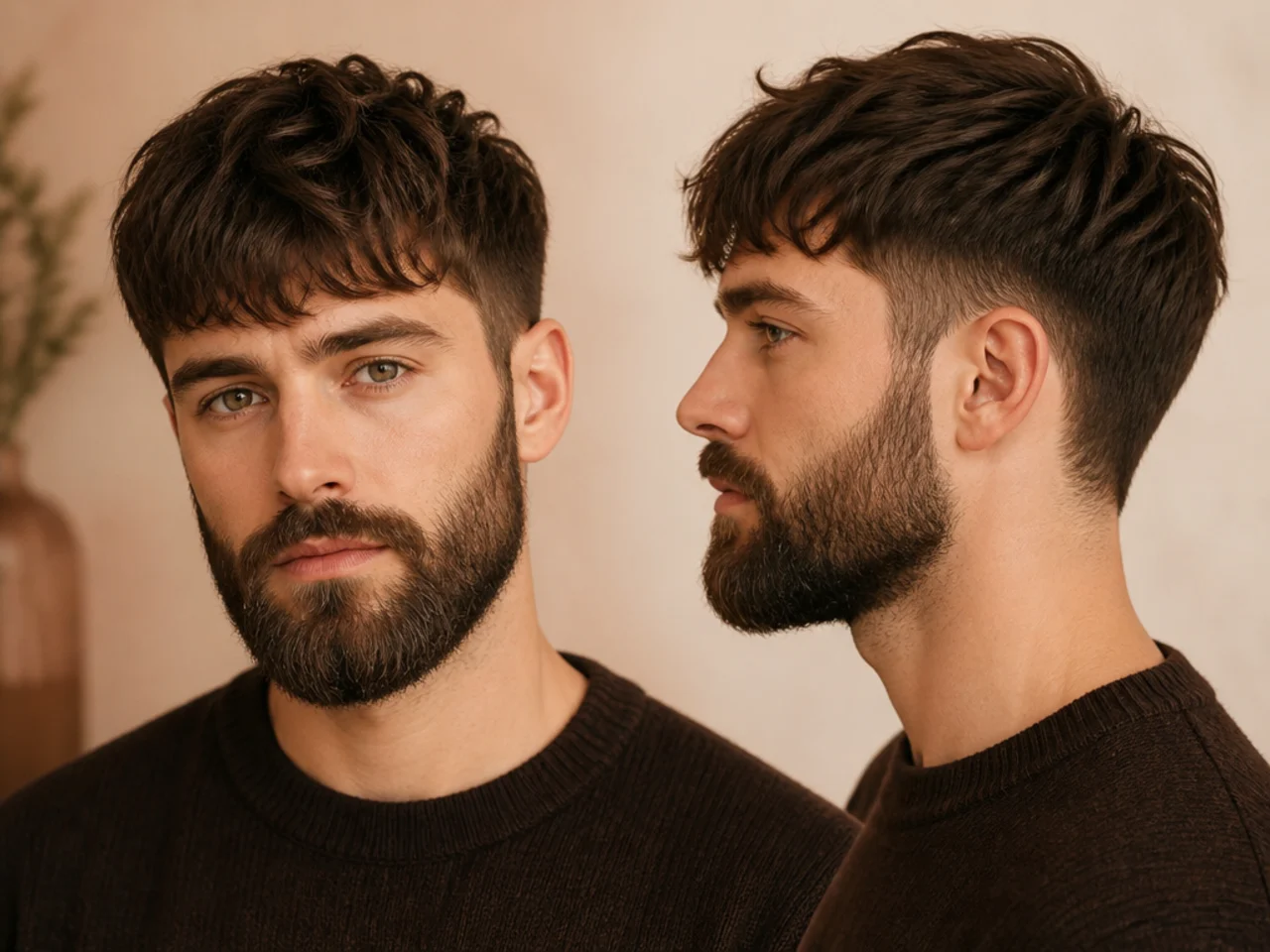
19. Skin Fade With a Beard
Choose this only if you book fortnightly. A skin fade blurs in one to two weeks, and the contrast against a dense beard makes the blurring obvious sooner than it otherwise would be.
20. The Same Guard Top and Beard
Choose this if you want the simplest possible instruction. One guard number for the head and one for the beard produces a single continuous shape with no decisions left to make.
Styling and Upkeep
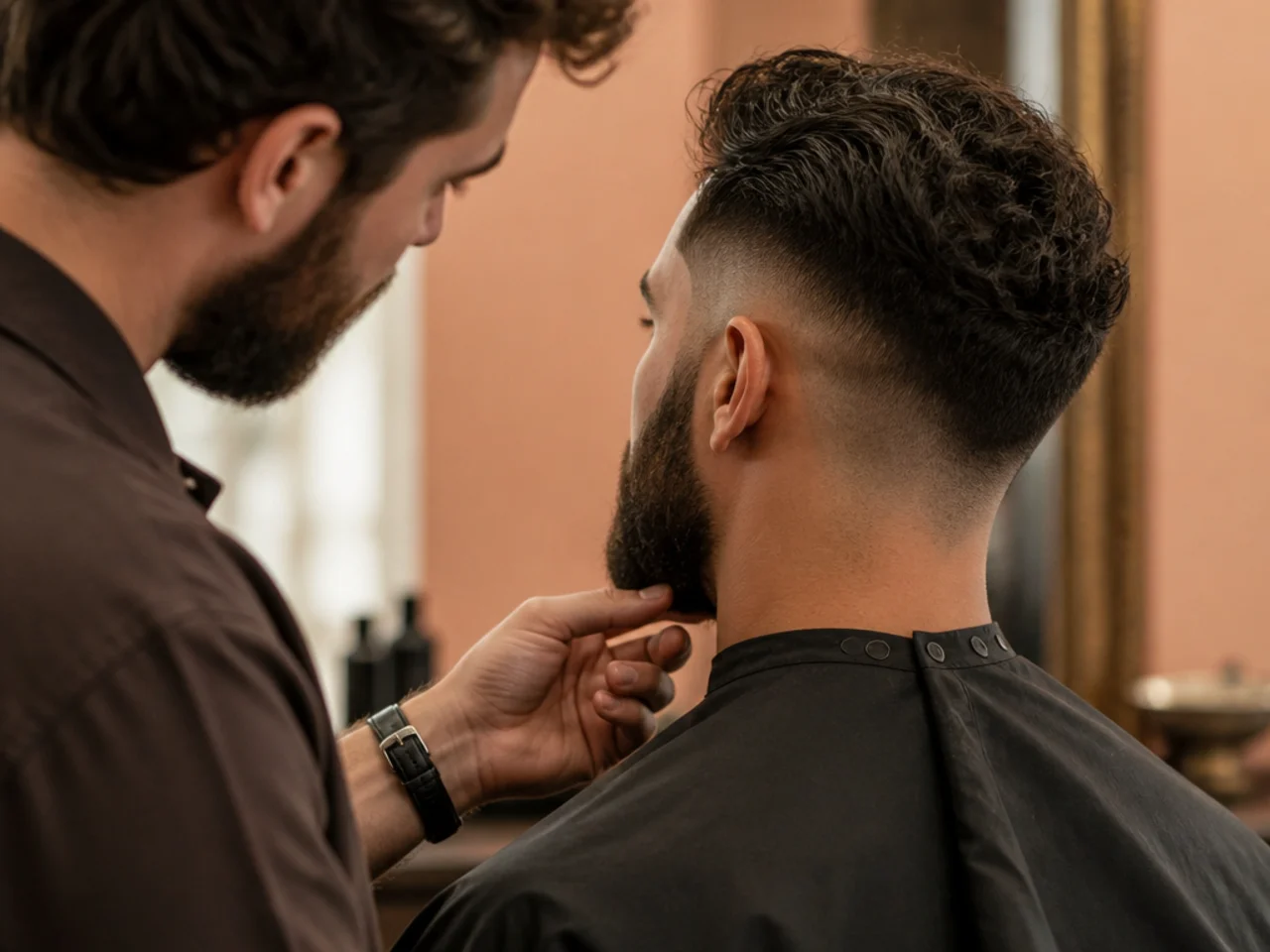
Trim the beard and the cut on the same day. They age together, and fixing one alone reopens the gap between them.
Book by whichever ages fastest. A skin fade is fortnightly, a taper and a beard are monthly.
Use the same finish on both. Matte hair above an oiled beard reads as two separate grooming routines.
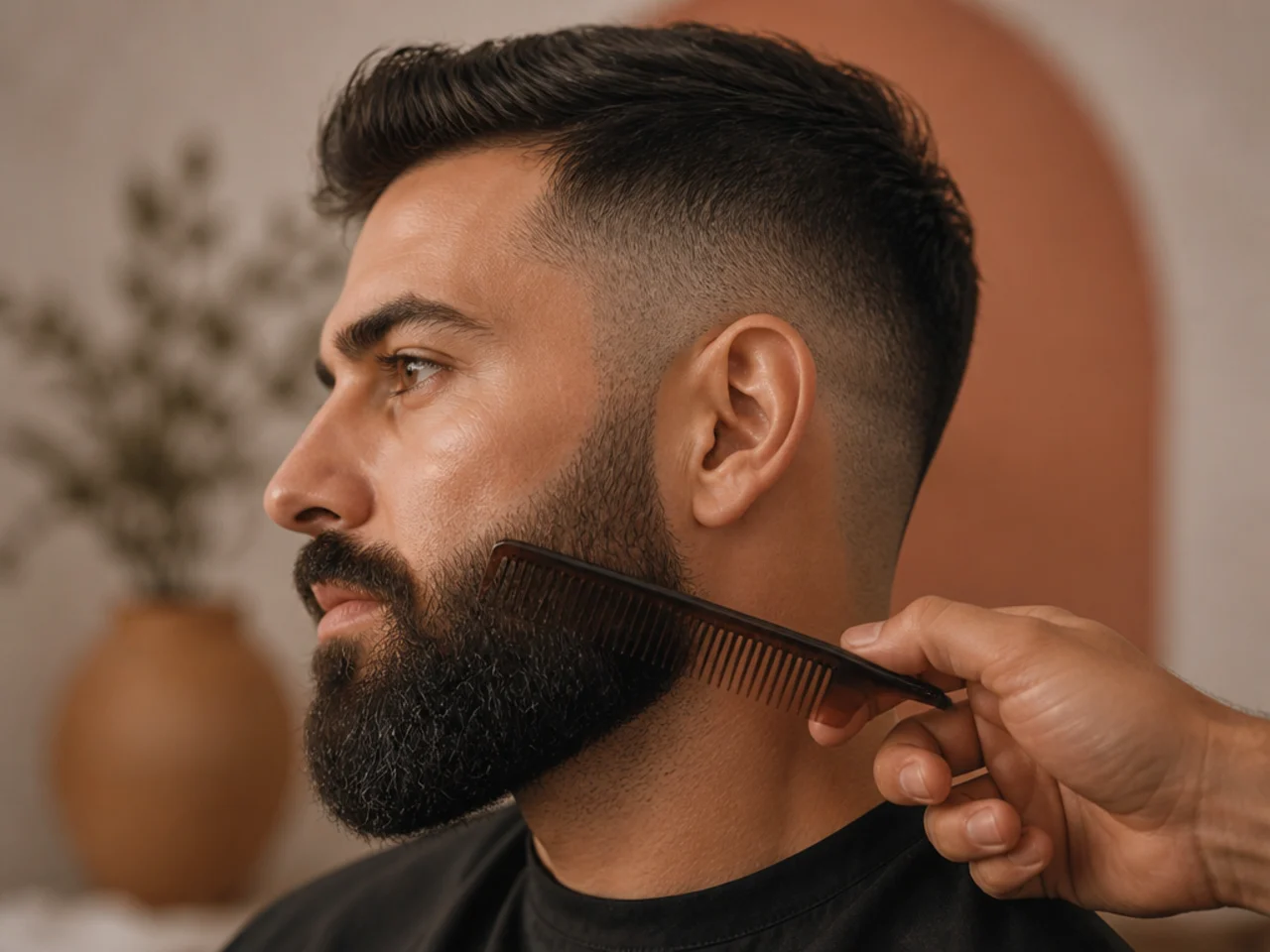
Comb the beard before judging the cut. An uncombed beard hides the proportion you are trying to assess.
Photograph the side profile. The relationship between cut and beard lives where you cannot see it.
Mistakes to Avoid
Keeping the top short under a long beard. The head reads small above the jaw.
Asking for a skin fade beside a dense beard. It maximises contrast at the exact point the two meet.
Choosing a cut for your clean-shaven face shape. The beard has already changed the outline.
Widening the sides under a full beard. The whole head goes square.
Trimming the beard between haircuts and not the sides. One line moves and the other does not.
FAQ
Does a beard change the right haircut? Yes — it changes the outline the cut is fitted to.
Longer or shorter on top? Usually longer than you would wear it clean-shaven.
Fade or taper? Taper in most cases, because it gives the beard an edge to sit against.
Final Thoughts
Look at yourself with the beard on, decide whether your face now reads long or square, and pick height or width control accordingly. That single assessment does more for the result than choosing between any two named cuts on this page.
For the join between the two shapes see taper fade haircut with a beard, and for one worked example see the ivy league haircut with a beard. More in Men's Haircuts.