20 Mid Fade Haircut Ideas With a Beard
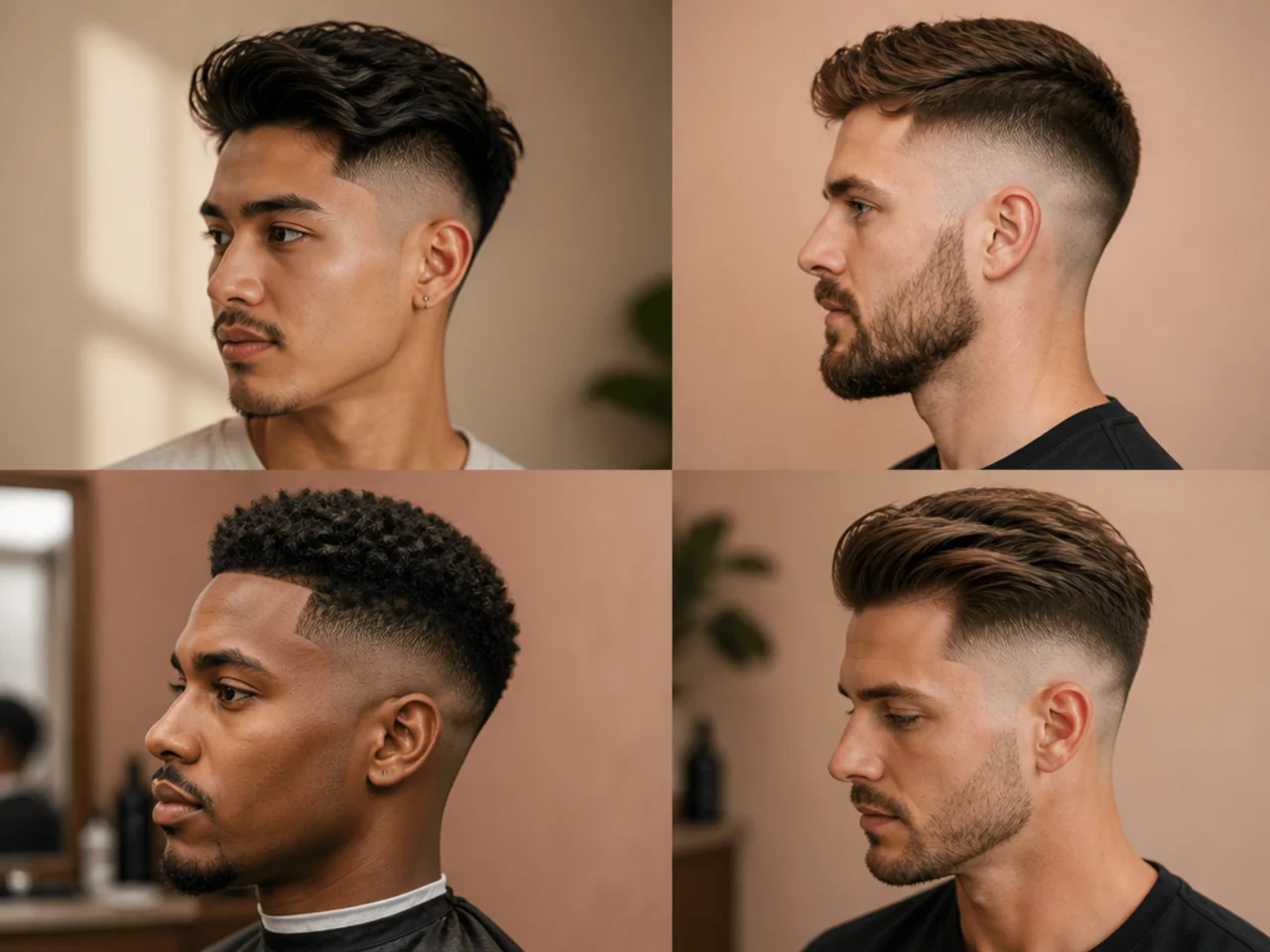
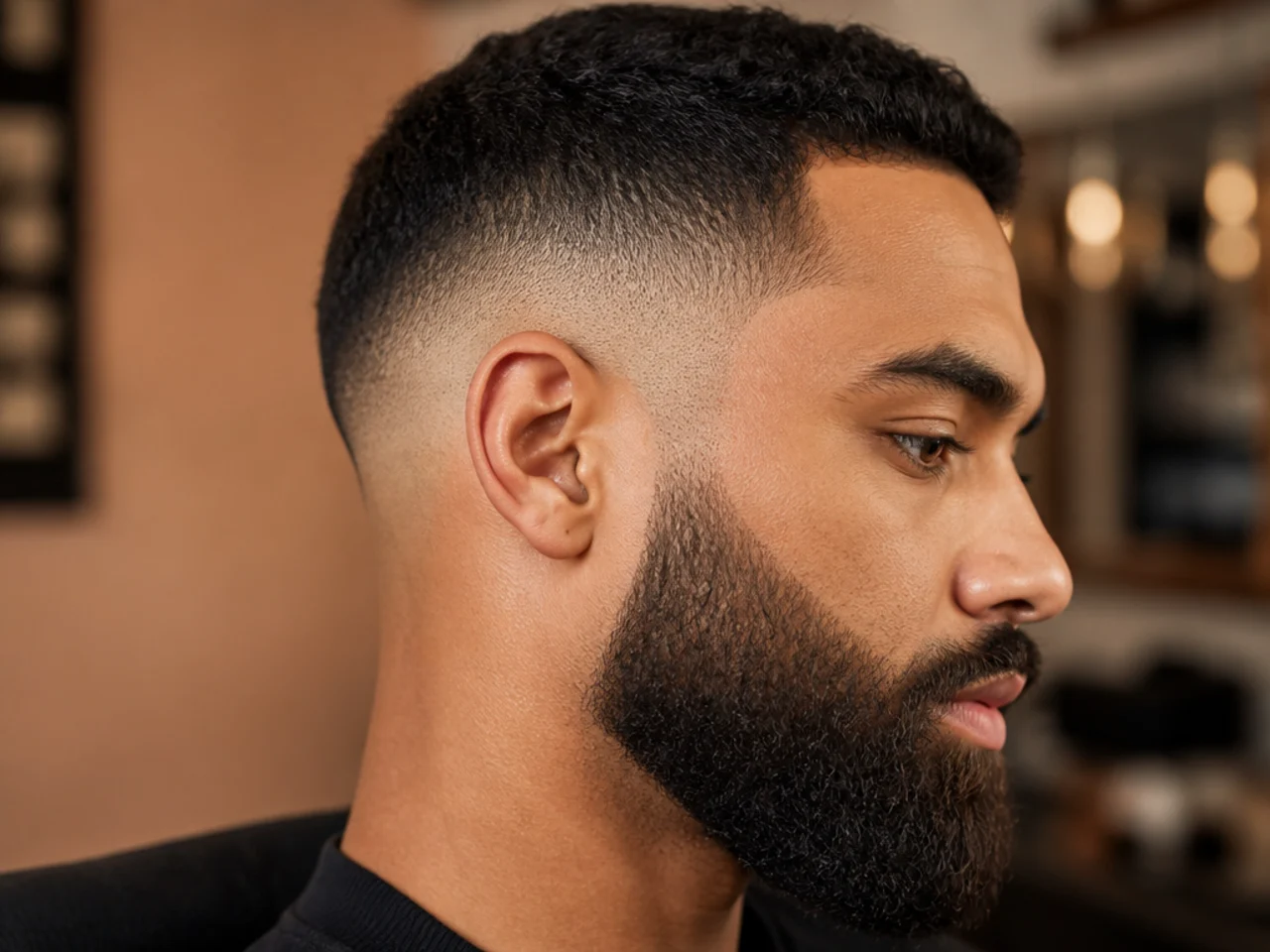
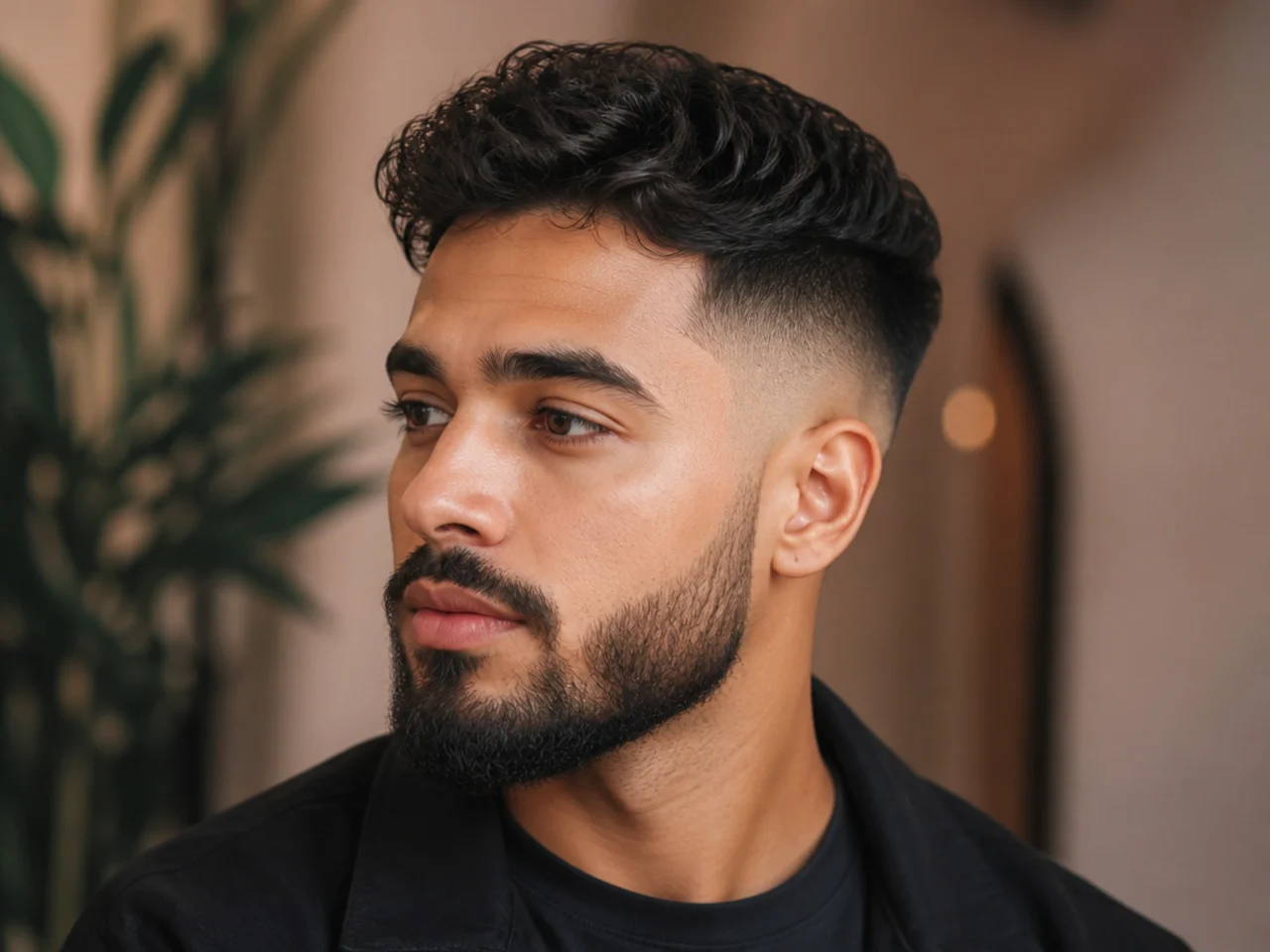
A mid fade starts between the temple and the parietal ridge, which leaves roughly four centimetres of side panel between where the fade begins and where the beard starts. That distance is the only reason this pairing is easier at mid height than at any other.
In this article · 27
- Why Mid Height Connects Best
- How to Choose Yours
- The 20 Mid Fade and Beard Pairings
- 1. Mid Skin Fade Into a Full Beard
- 2. Mid Taper Into a Full Beard
- 3. Mid Fade With the Beard Faded to Match
- 4. Mid Fade Stopped Above the Sideburn
- 5. Mid Fade With a Short Boxed Beard
- 6. Mid Fade With Heavy Stubble
- 7. Mid Fade Textured Crop With a Beard
- 8. Mid Fade Comb Over With a Beard
- 9. Mid Fade Buzz Cut With a Beard
- 10. Mid Fade Slick Back With a Beard
- 11. Mid Fade With a Goatee
- 12. Mid Fade With a Patchy Beard
- 13. Mid Fade on Curly Hair With a Beard
- 14. Mid Fade With 360 Waves and a Beard
- 15. Mid Fade With a Long Beard
- 16. Mid Fade With a Grey Beard
- 17. Mid Fade With a Hard Part and a Beard
- 18. Mid Drop Fade With a Beard
- 19. Mid Burst Fade With a Beard
- 20. Mid Fade and Beard at Week Three
- Styling and Upkeep
- Mistakes to Avoid
- FAQ
- Final Thoughts
A mid fade and a beard are two gradients running down the same side of the same head, and the only question that matters is how much room there is between them.
A mid fade starts between the temple and the parietal ridge. That leaves roughly four centimetres of side panel above the ear before the hair reaches the sideburn and the beard begins.
Four centimetres is enough distance for a real blend. A low fade starting at the temple has almost none, and a high fade starting at the ridge reaches skin long before it gets near the jaw.
Why Mid Height Connects Best
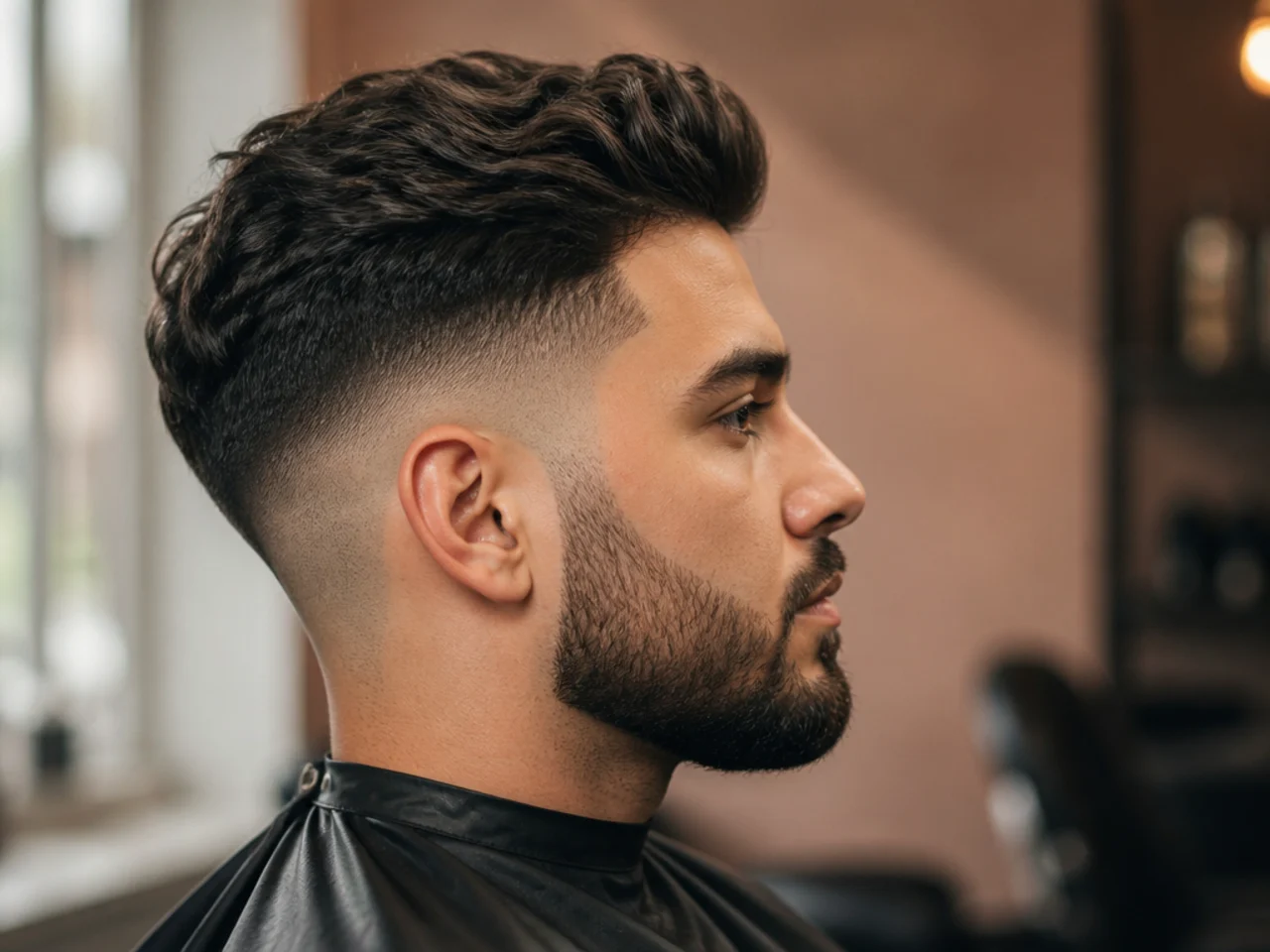
The mid fade's top edge sits level with the top of the ear. From there it has the whole upper side panel to travel through before the beard starts.
A low fade has no runway. It begins at or below the temple, so its shortest length is already sitting on the sideburn with nowhere to go.
A high fade overshoots. Starting at or above the parietal ridge means it has hit bare skin well before the jaw, so it meets the beard at maximum contrast.
Mid is the only height with a usable gradient at the join. That is why barbers reach for it when a connected beard is the request.
How to Choose Yours
Decide skin or taper before the clippers start. A mid fade goes to bare skin, a mid taper leaves a #1 at 3mm, and only one of those blends into a beard without a hard edge.
Match the beard's shortest guard to the fade's lowest guard. If the fade ends at a #1 and the beard starts at a #2 at 6mm, the step between them is visible from two metres away.
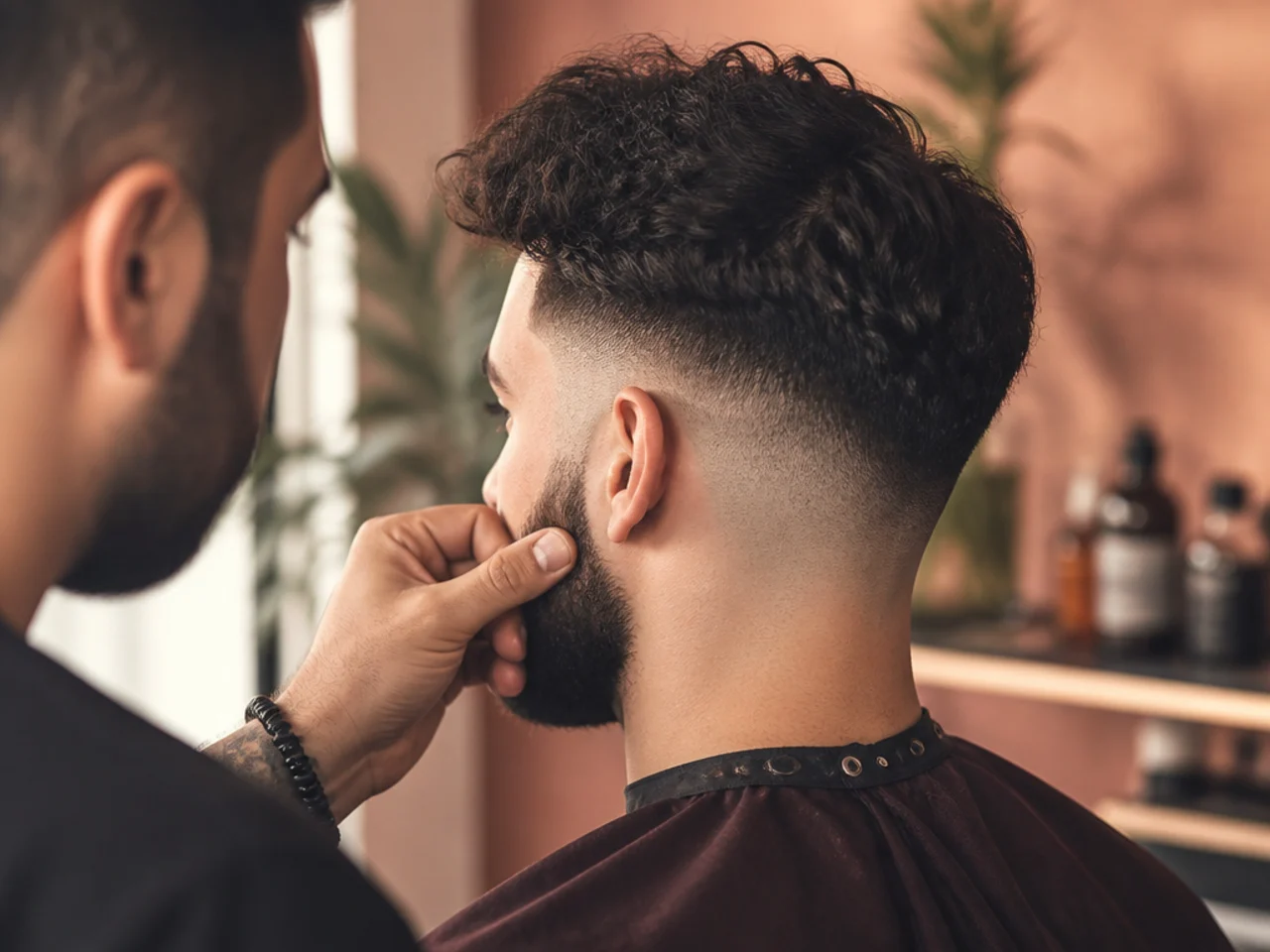
Check density at the sideburn, not on the chin. The sideburn is where the connection happens, and plenty of full beards are thin there, which is why every men's haircut planned around a beard starts at that spot.
Say the sentence out loud at the consultation. "Mid fade, blend it into the beard at the sideburn" tells the barber both the height and the join in one line.
The 20 Mid Fade and Beard Pairings
1. Mid Skin Fade Into a Full Beard
The fade runs to bare skin at the bottom and the beard picks up immediately below it. It only works when the beard is dense enough at the sideburn to absorb the jump, which on most men means at least three weeks of growth.
2. Mid Taper Into a Full Beard
The safer version of the same idea. Leaving a #1 at the bottom of the fade means the beard is meeting 3mm of hair rather than skin, which removes the hardest step in the whole gradient.
3. Mid Fade With the Beard Faded to Match
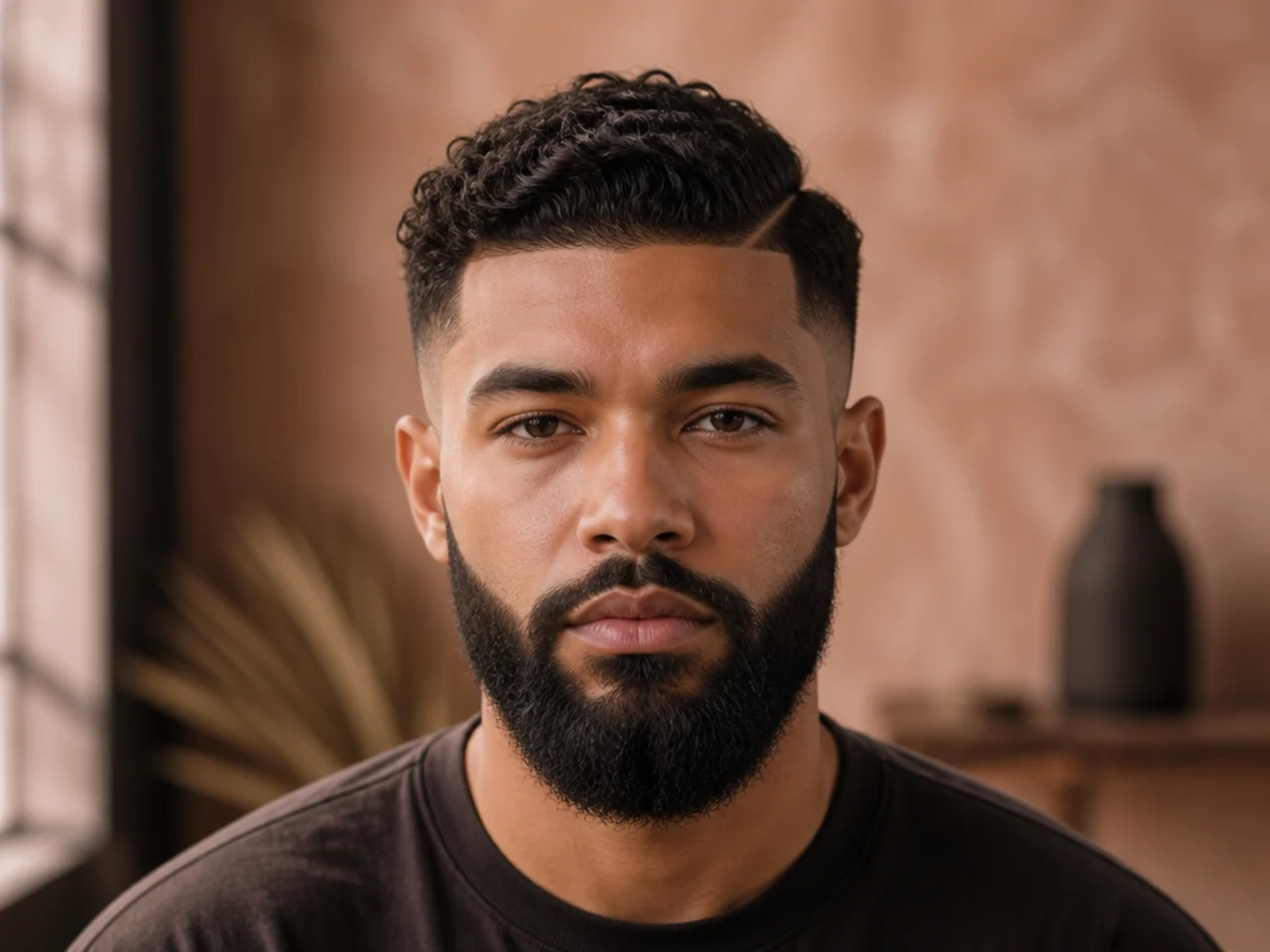
The beard itself graduated from short at the sideburn to full at the chin. Two gradients running in sequence down the same four centimetres read as one continuous shape rather than as a haircut sitting on top of a beard.
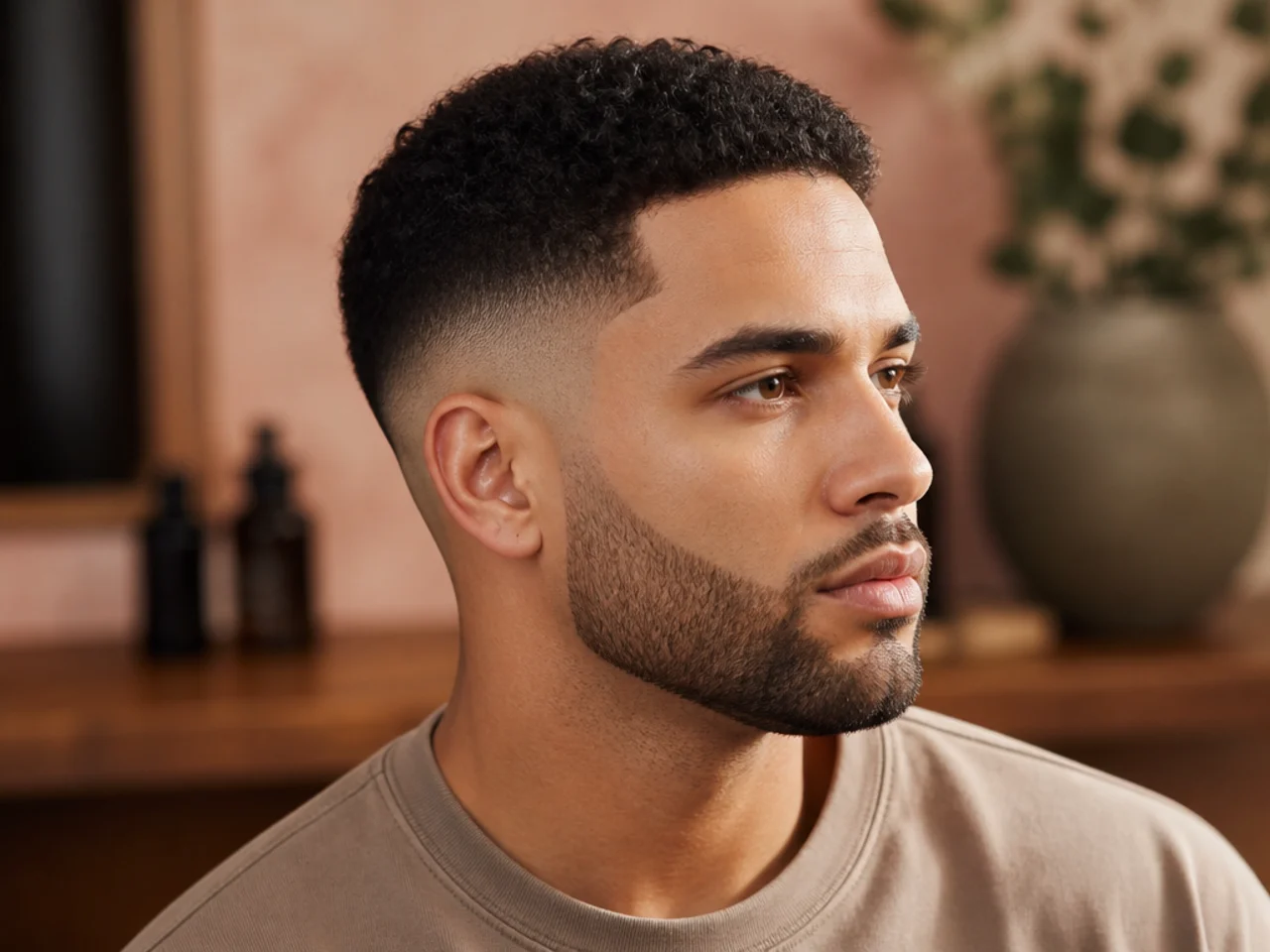
4. Mid Fade Stopped Above the Sideburn
A deliberate disconnect, with the fade finishing cleanly and the beard starting as its own shape. Mid height has enough room to make this obvious, which is exactly why the accidental one-centimetre version fails here.
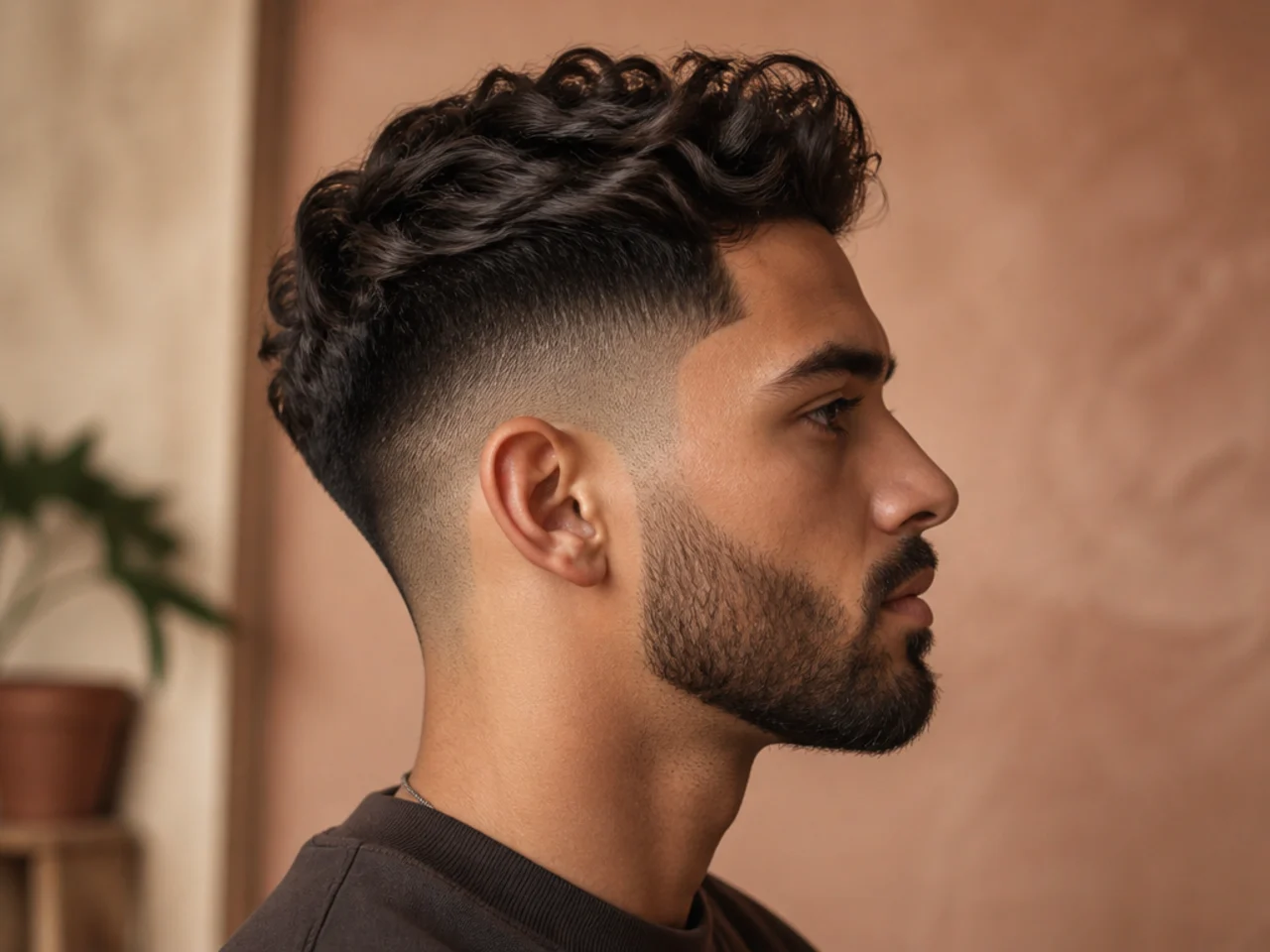
5. Mid Fade With a Short Boxed Beard
The beard held at one guard all over with squared edges. A boxed beard adds its own hard lines, so a mid fade above it gives the face one gradient and one box rather than two competing outlines.
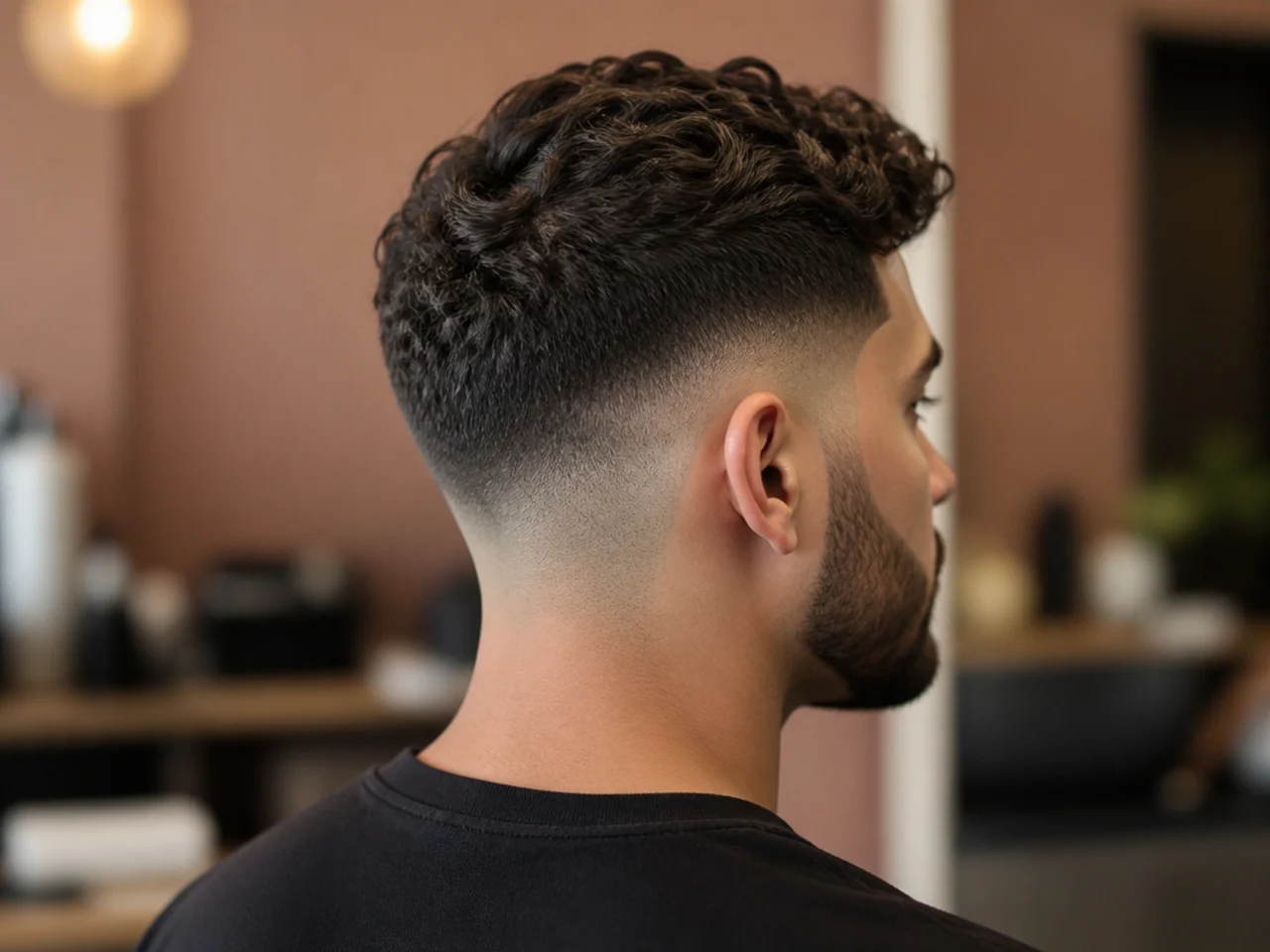
6. Mid Fade With Heavy Stubble
Stubble is too short to receive a gradient, so the fade should finish as if there were no beard at all. The four-centimetre panel stays visible, and the stubble reads as shading rather than as a second shape.
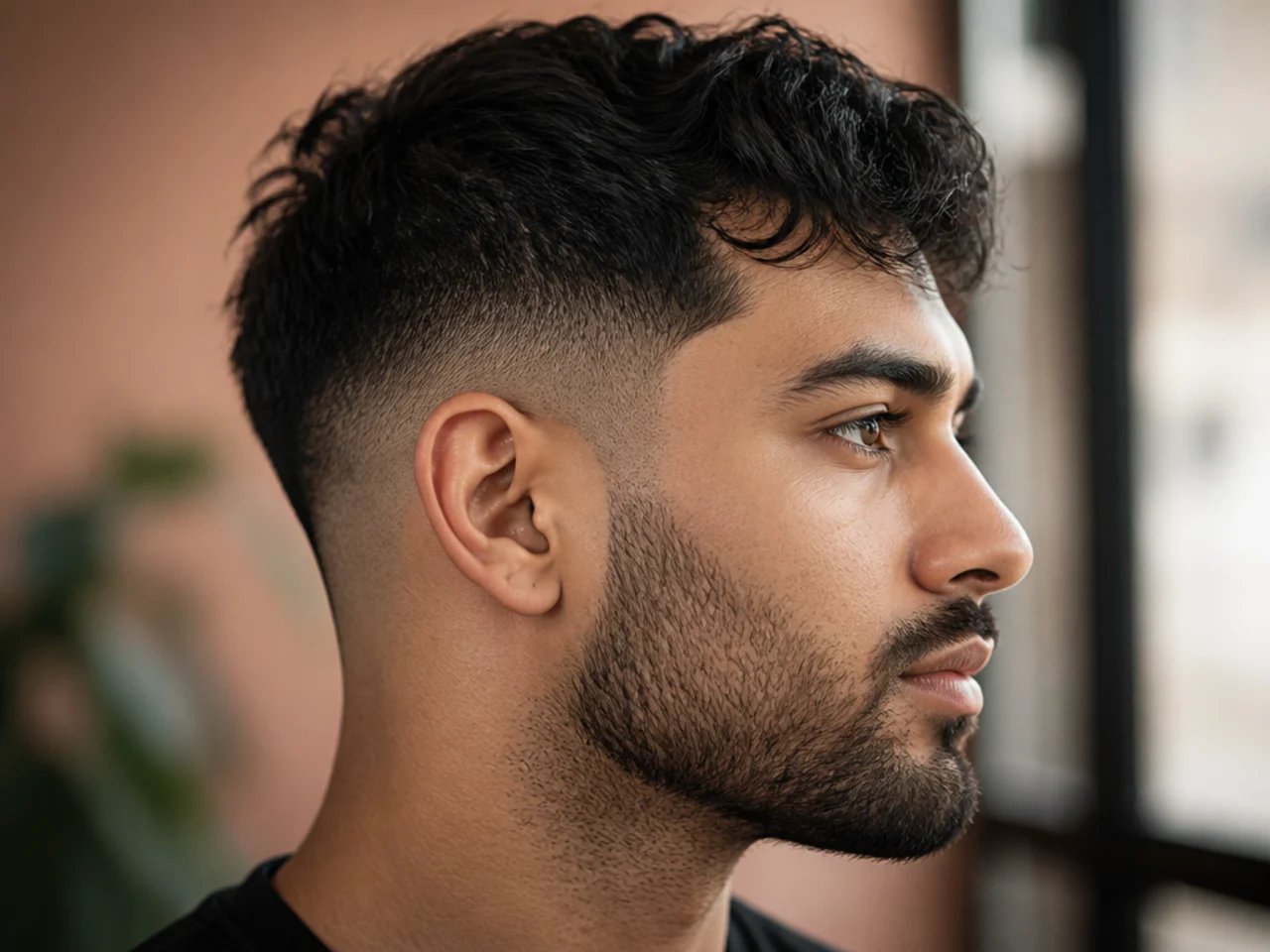
7. Mid Fade Textured Crop With a Beard
Point-cut ends on top, a mid fade below, a beard beneath that. The texture keeps the eye at the crown, which stops a heavy beard pulling the whole face downward.
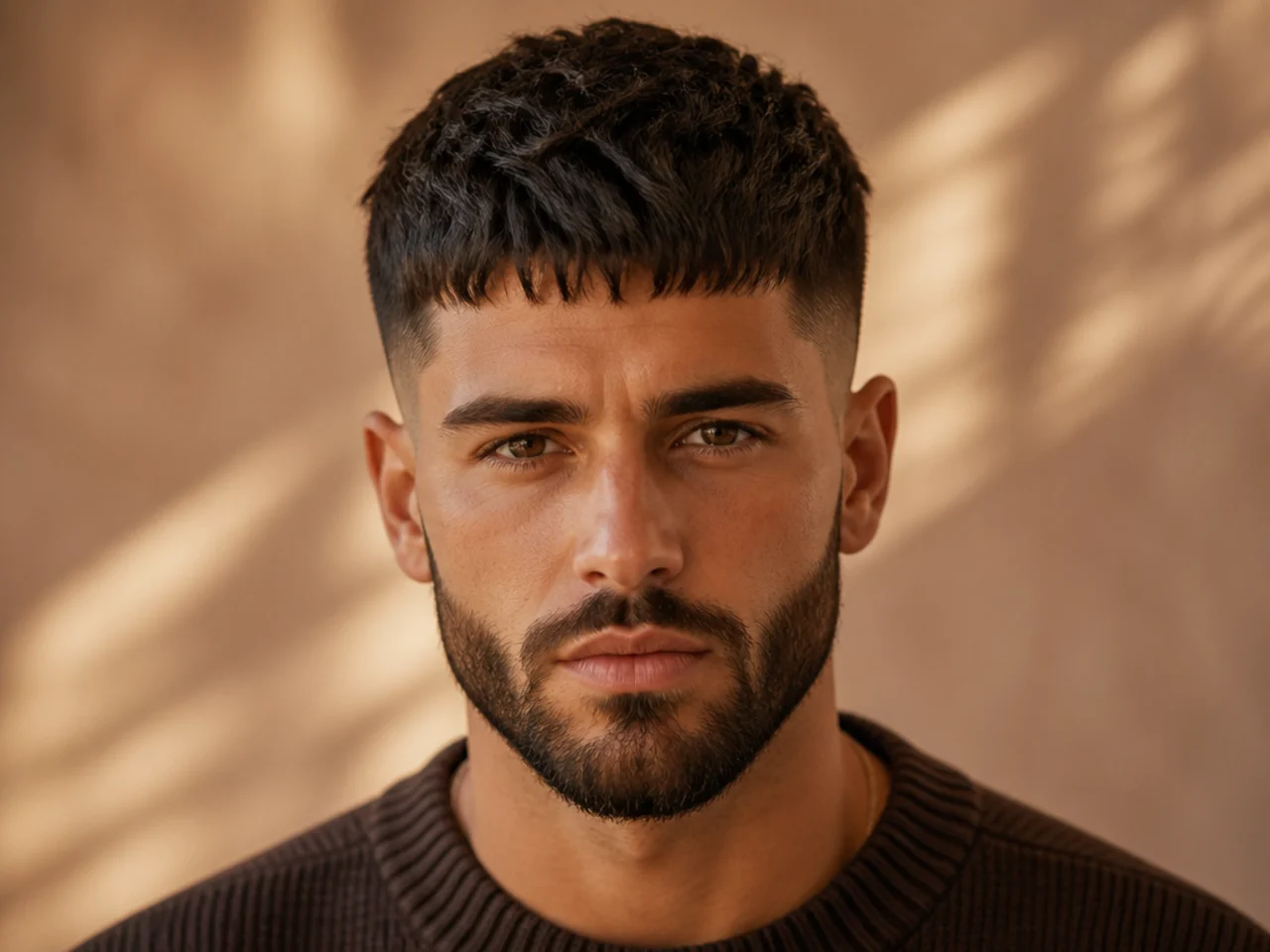
8. Mid Fade Comb Over With a Beard
The part line sits just above where the fade starts, so the comb over has a shelf to rest on. A beard below adds the third horizontal, which is why the part needs to be a clear vertical break.
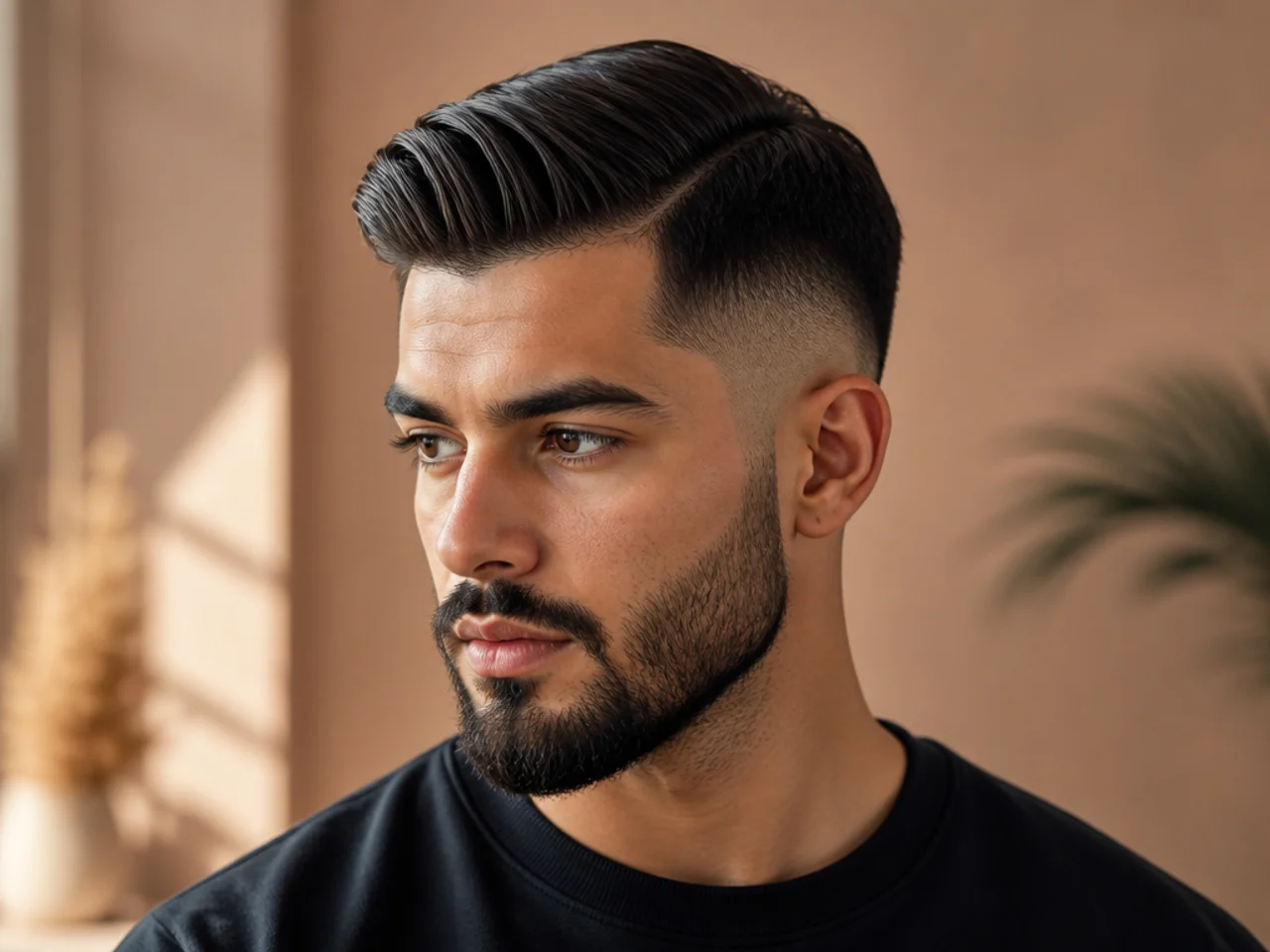
9. Mid Fade Buzz Cut With a Beard
A #2 at 6mm on top over a mid fade, with a full beard underneath. With no length on top, the fade's start height becomes the strongest line on the head, so it has to be level on both sides.
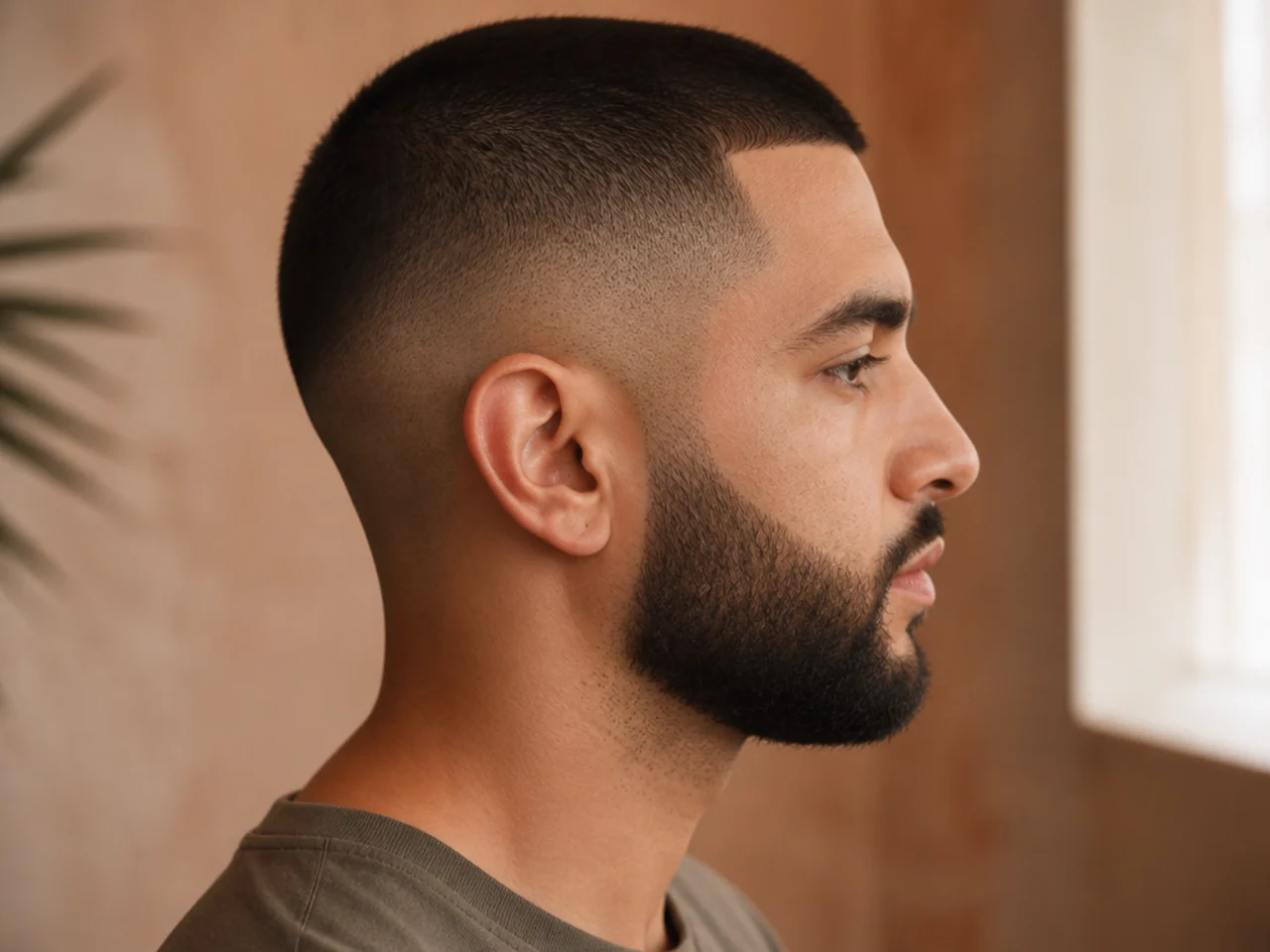
10. Mid Fade Slick Back With a Beard
The top swept back and off the fade line entirely. Because nothing overhangs the sides, every millimetre of the mid gradient is on show, so this version rewards a barber who takes their time.
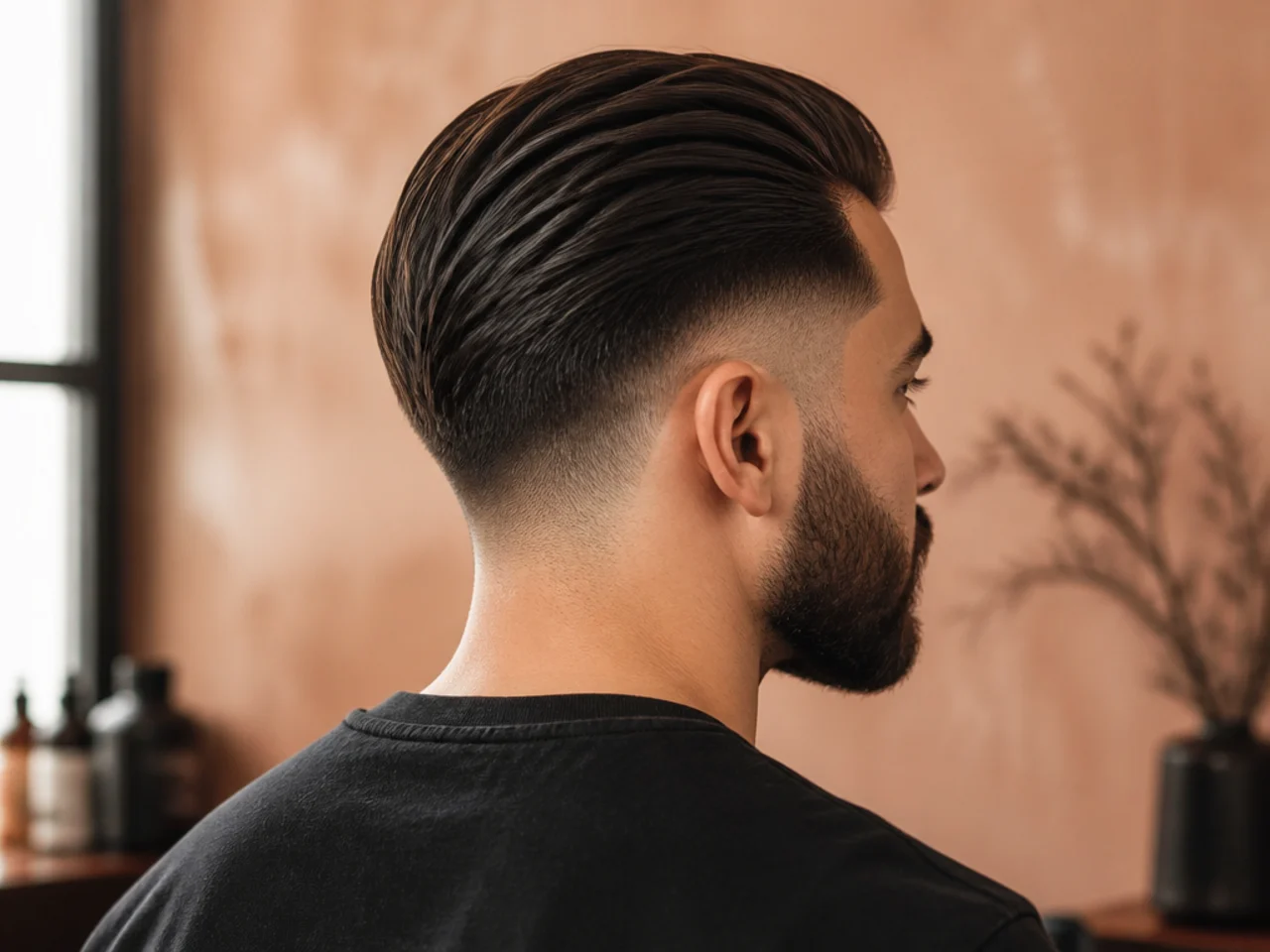
11. Mid Fade With a Goatee
A goatee leaves the sides bare, so the fade has nothing to connect to and the four-centimetre panel simply carries on down to the jaw. Finish the fade exactly as you would clean shaven.
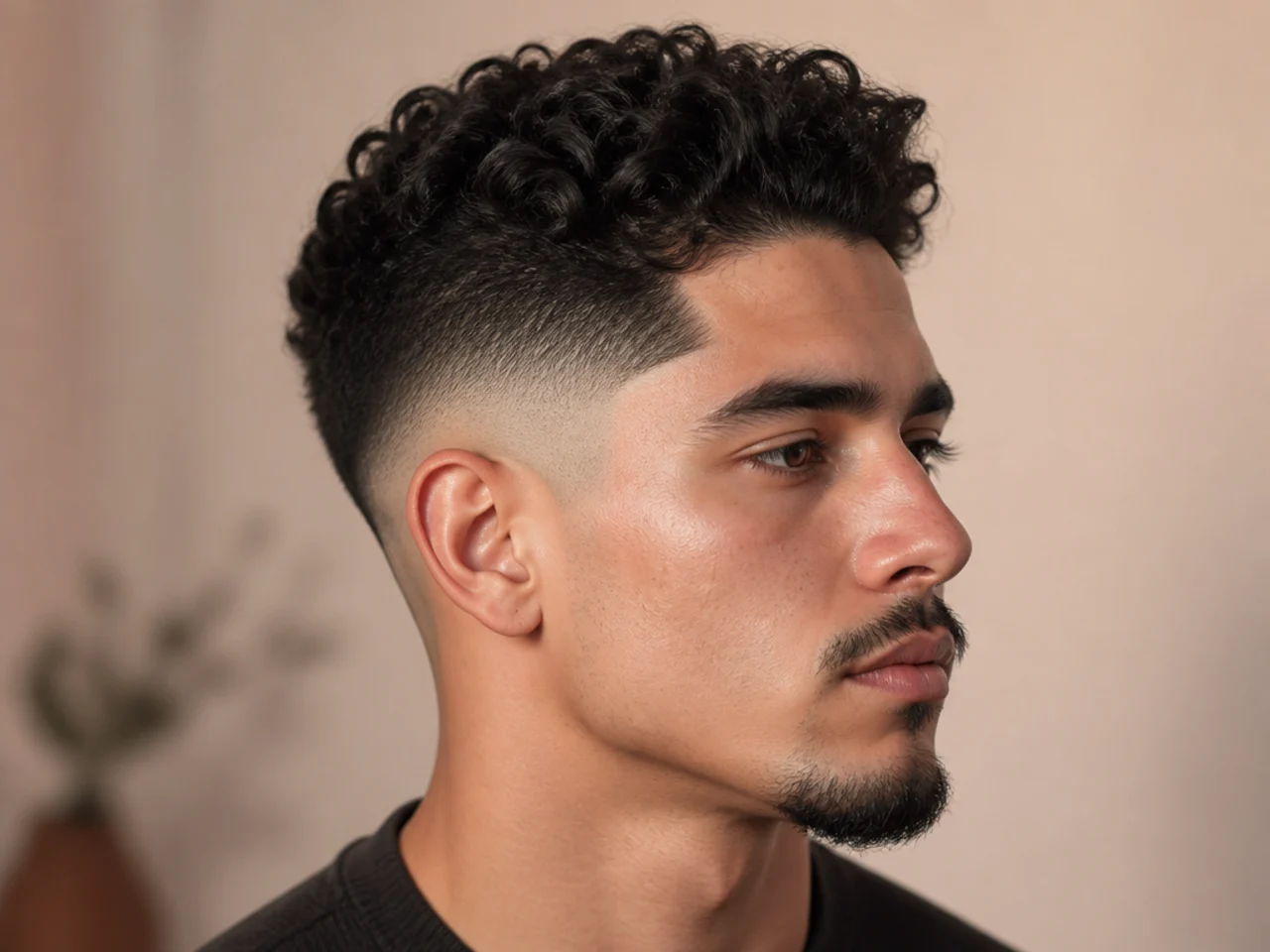
12. Mid Fade With a Patchy Beard
Patches break a gradient wherever they fall, so keep the fade disconnected and let the beard hold its own outline. Trying to blend into a thin sideburn just moves the patch into the haircut.
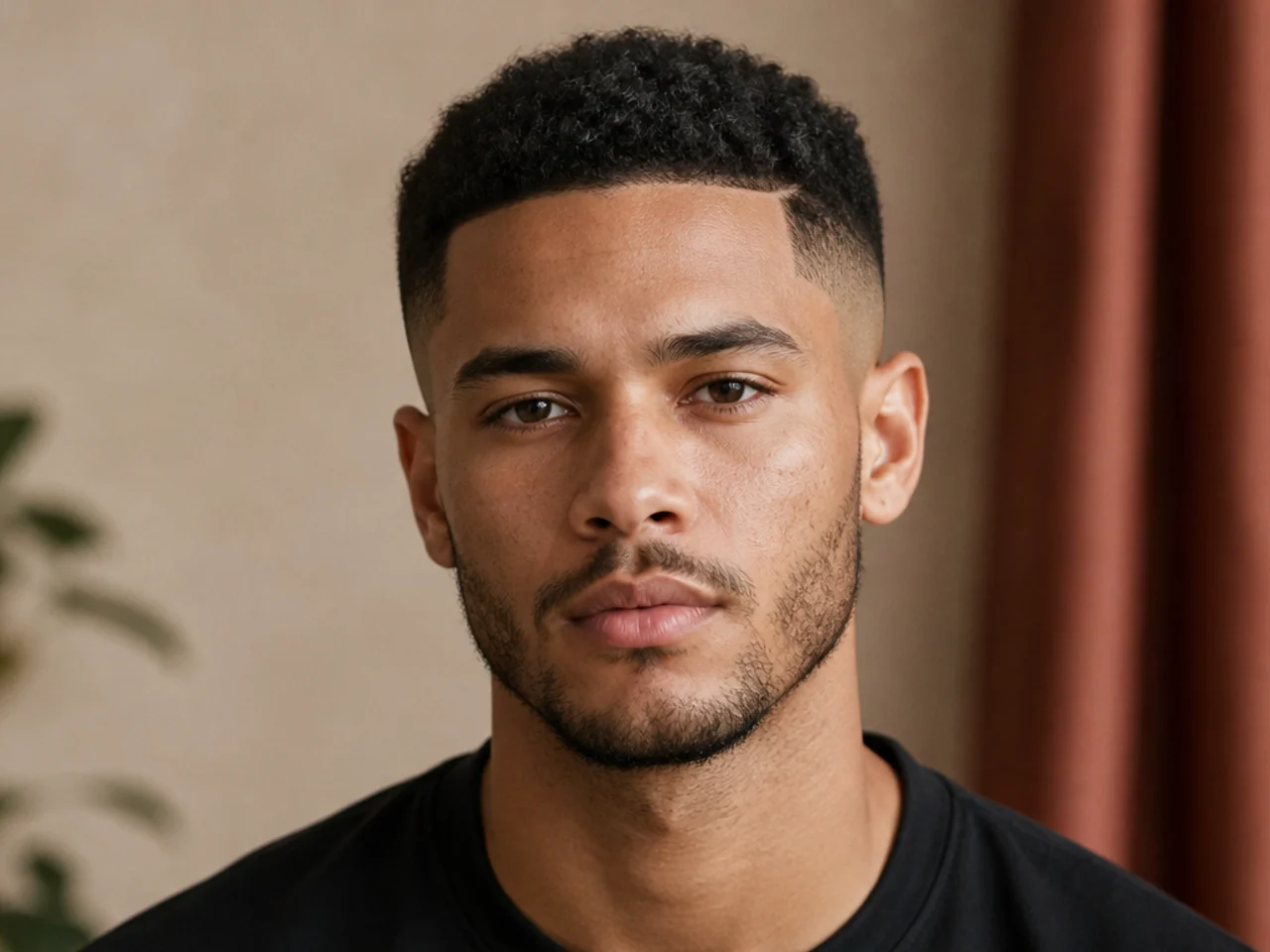
13. Mid Fade on Curly Hair With a Beard
Curl sits above the fade line and straighter beard hair below it, so the join is a texture change as well as a length change, which is the recurring problem with curly hair over a fade. A slightly longer bottom guard softens the switch better than a skin finish does.
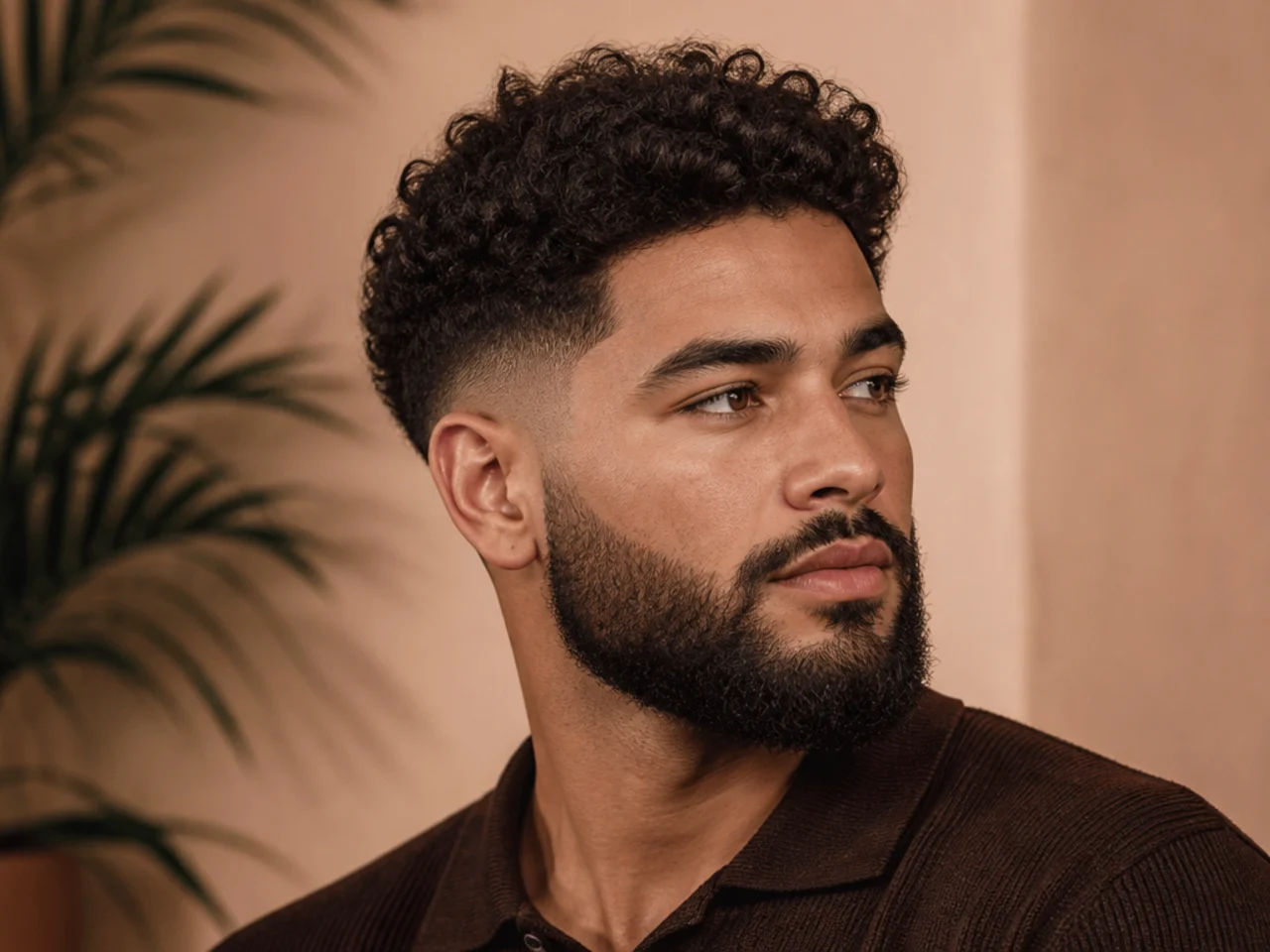
14. Mid Fade With 360 Waves and a Beard
The wave pattern is cut off at the mid line, which is the widest point of the head in profile. That places the last visible row of waves directly above the beard, and the two dark bands frame the ear.
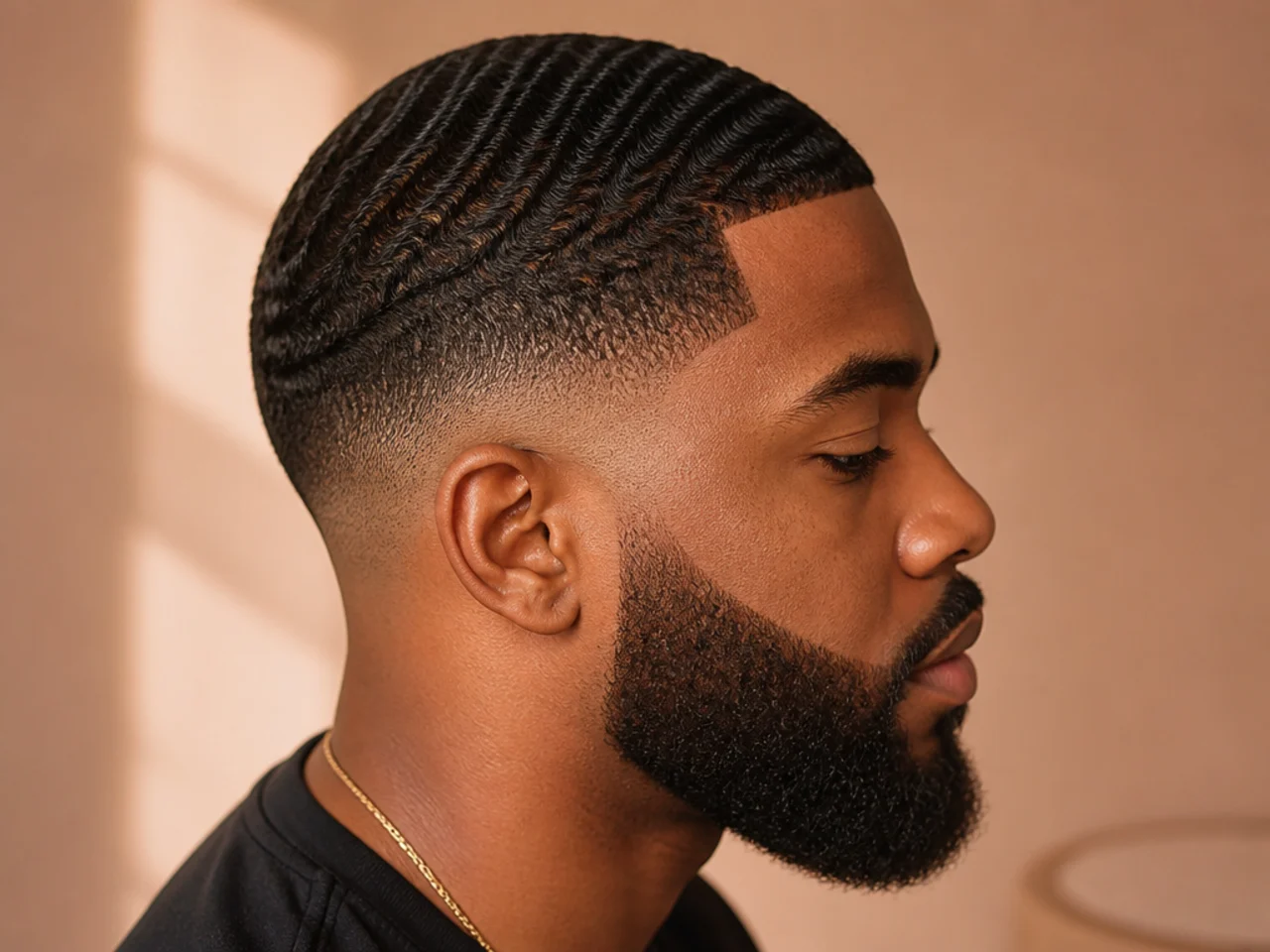
15. Mid Fade With a Long Beard
A long beard adds weight low on the face, so the top needs enough height to balance it. The mid fade helps here because it keeps the sides narrow without taking anything off the crown.
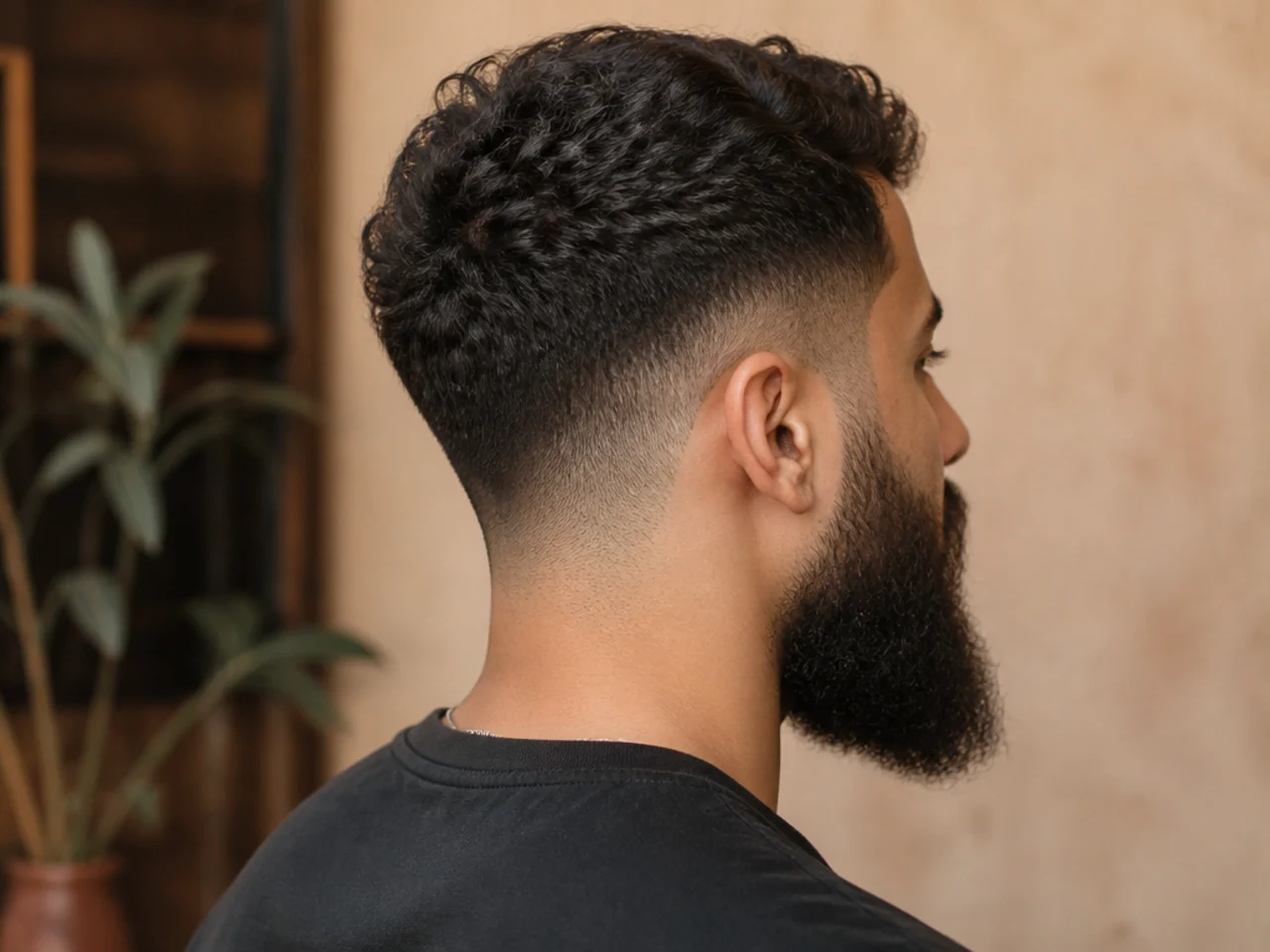
16. Mid Fade With a Grey Beard
Grey beard hair is coarser and catches light differently from the hair above it, so a blended join stays visible however well it is cut. A short disconnect at the sideburn is the honest option.
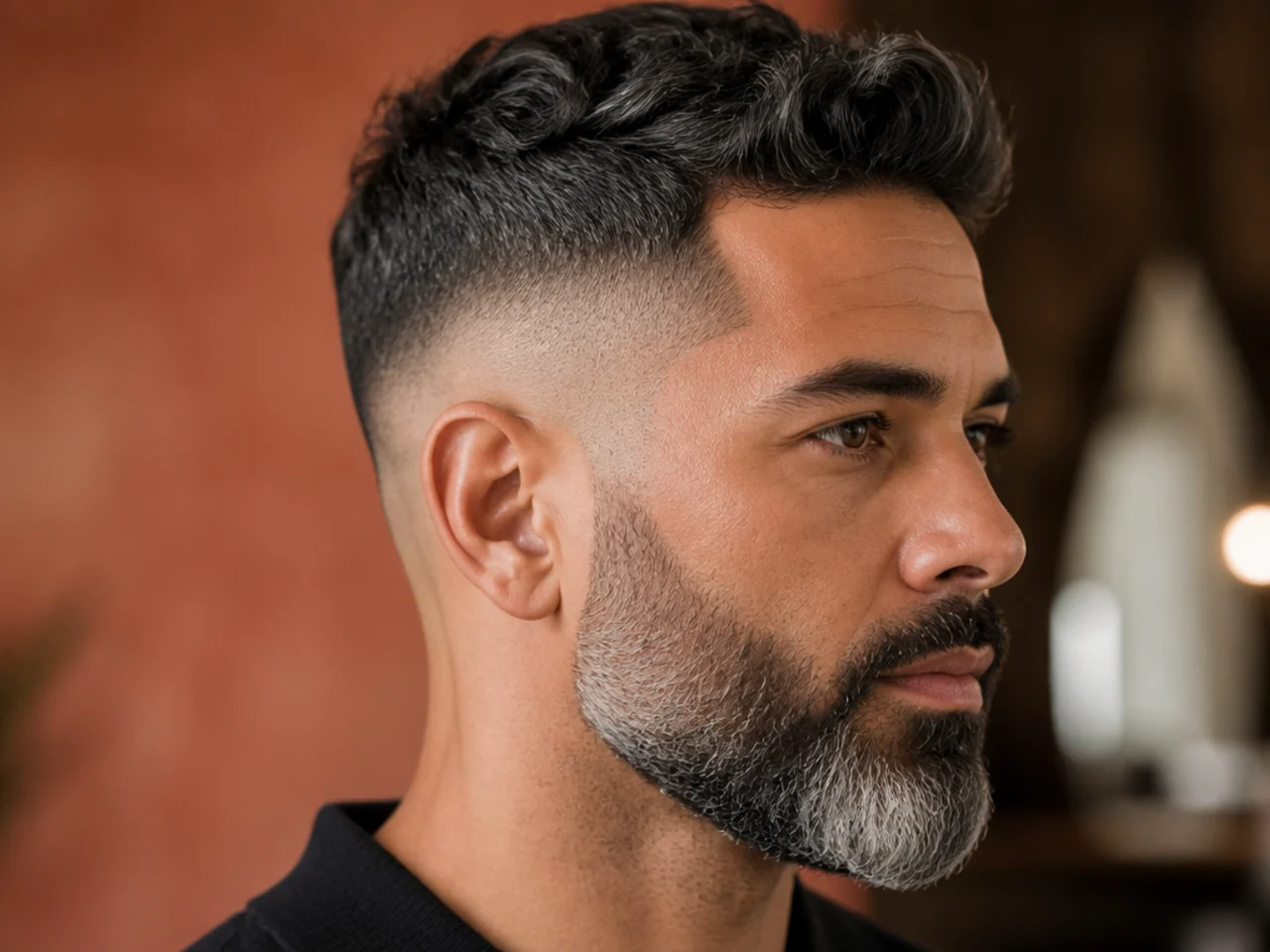
17. Mid Fade With a Hard Part and a Beard
The razored part adds a vertical to a face that already carries two horizontals. That single line is what stops the fade and the beard reading as stacked stripes.
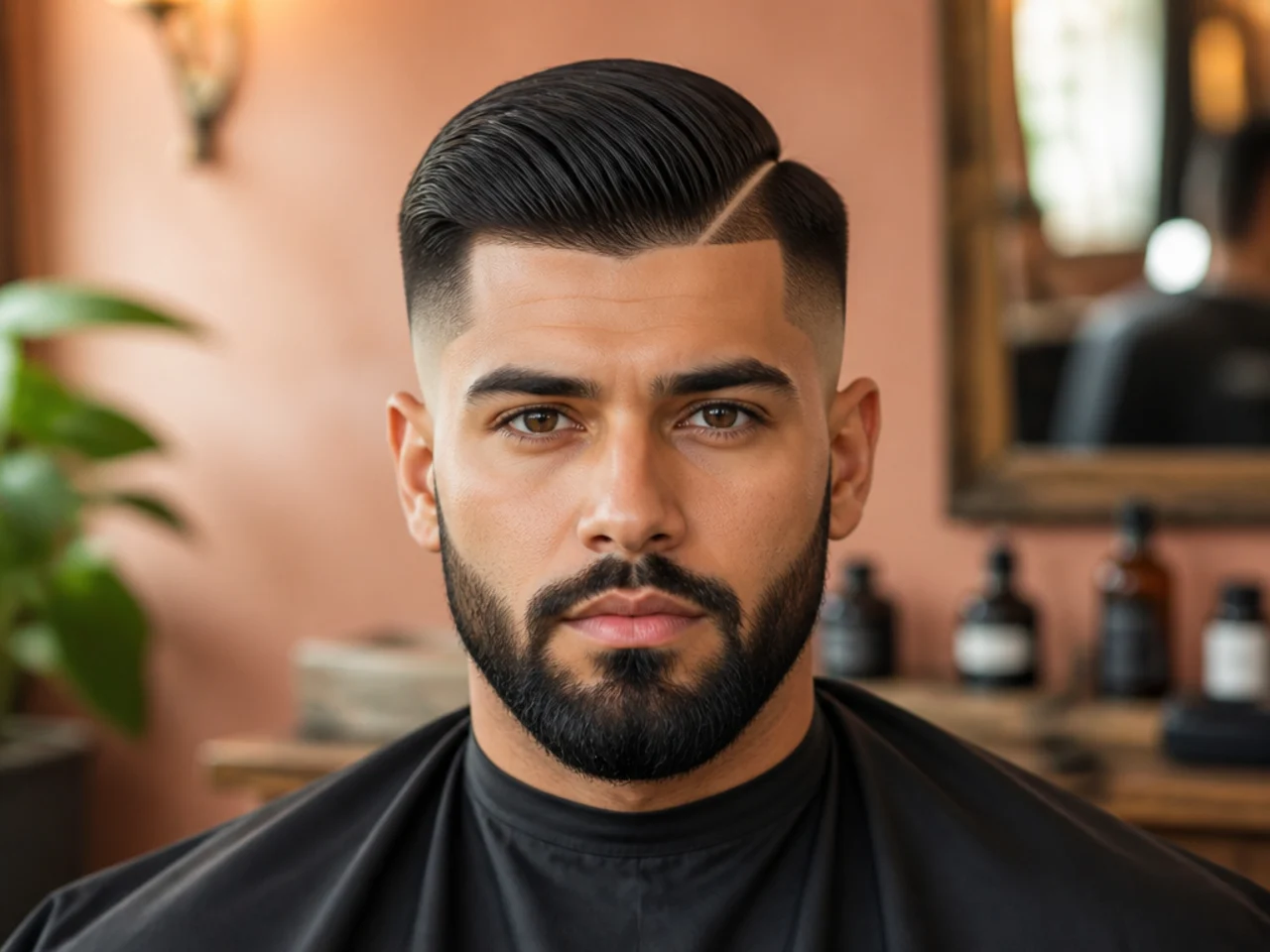
18. Mid Drop Fade With a Beard
The fade line drops behind the ear rather than running straight around. Dropping it lengthens the panel at the back while leaving the front at mid height, so the beard connection is unchanged.
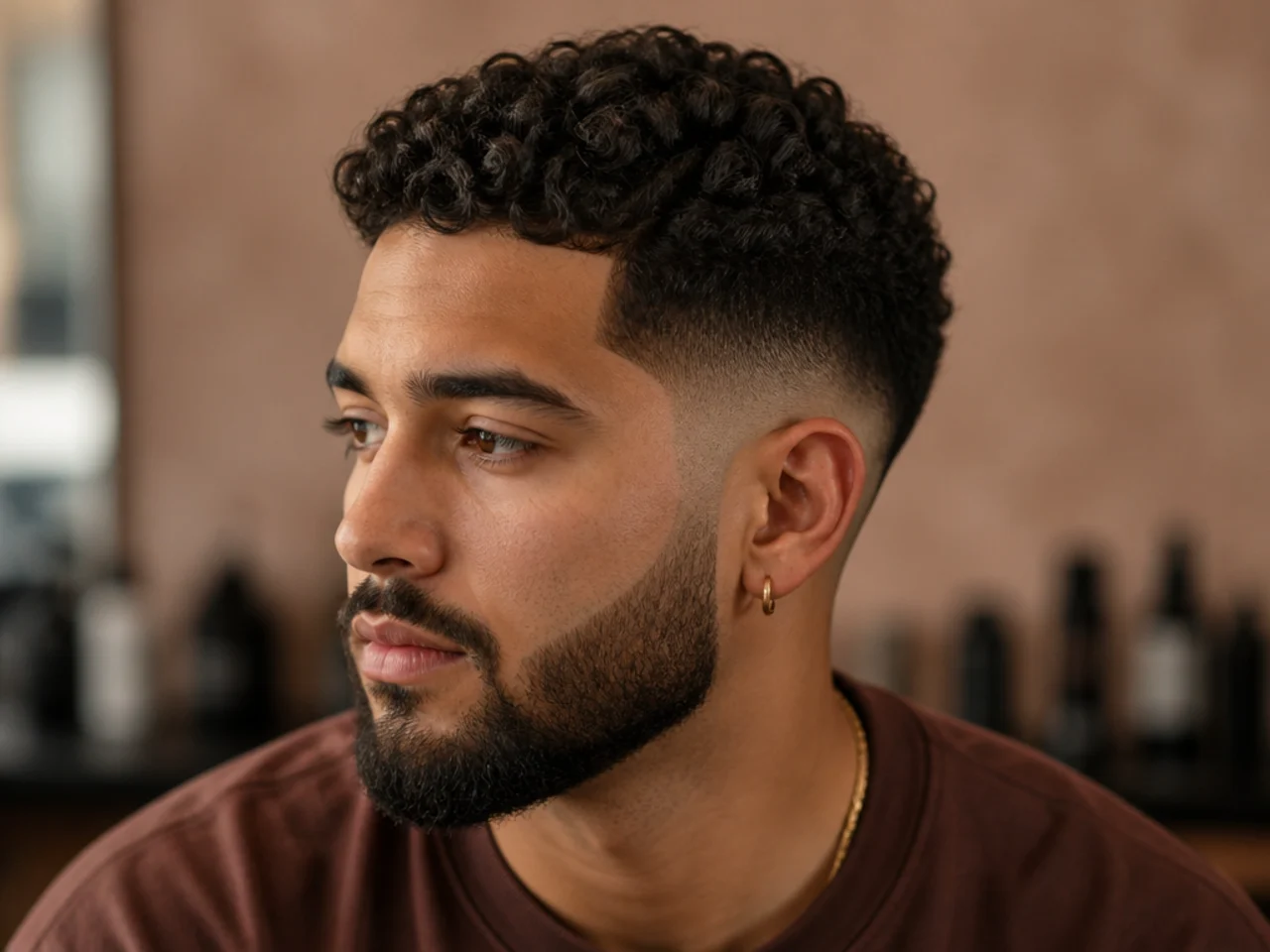
19. Mid Burst Fade With a Beard
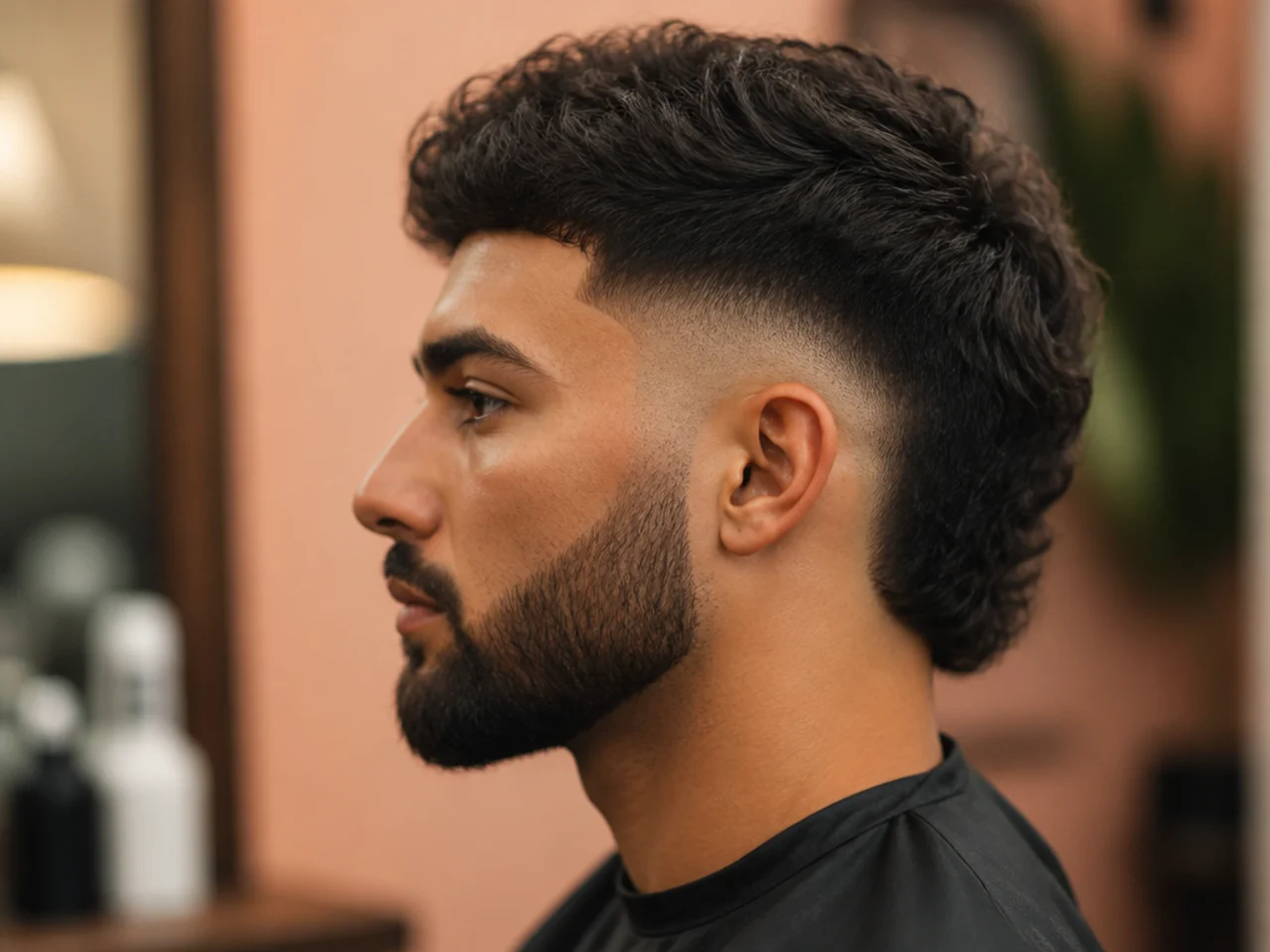
The fade arcs around the ear instead of running horizontally, which means it crosses the sideburn at an angle, and the whole pairing is worked through in burst fade haircut ideas with a beard. That angled crossing is more forgiving than a horizontal meeting a beard line head on.
20. Mid Fade and Beard at Week Three
The fade has softened but the mid line is still readable, while the beard has gained a few millimetres. This is the point where trimming only the beard reopens the gap you paid to close.
Styling and Upkeep
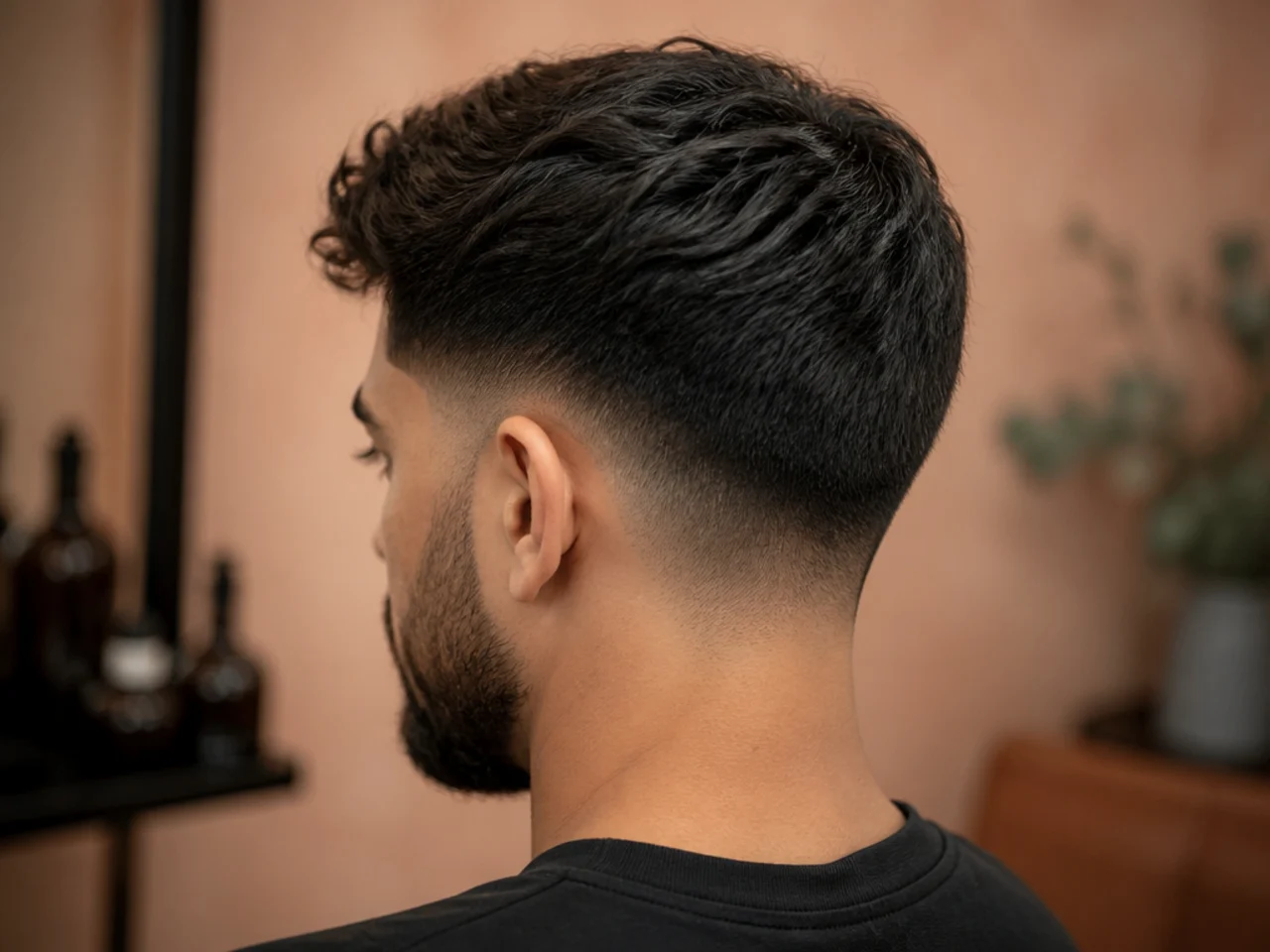
Book the fade and the beard trim together. They share the same four centimetres of skin, and moving one without the other reopens the join.
A mid skin fade blurs in one to two weeks. A mid taper holds three to four, so the finish you chose sets the calendar, not the beard.
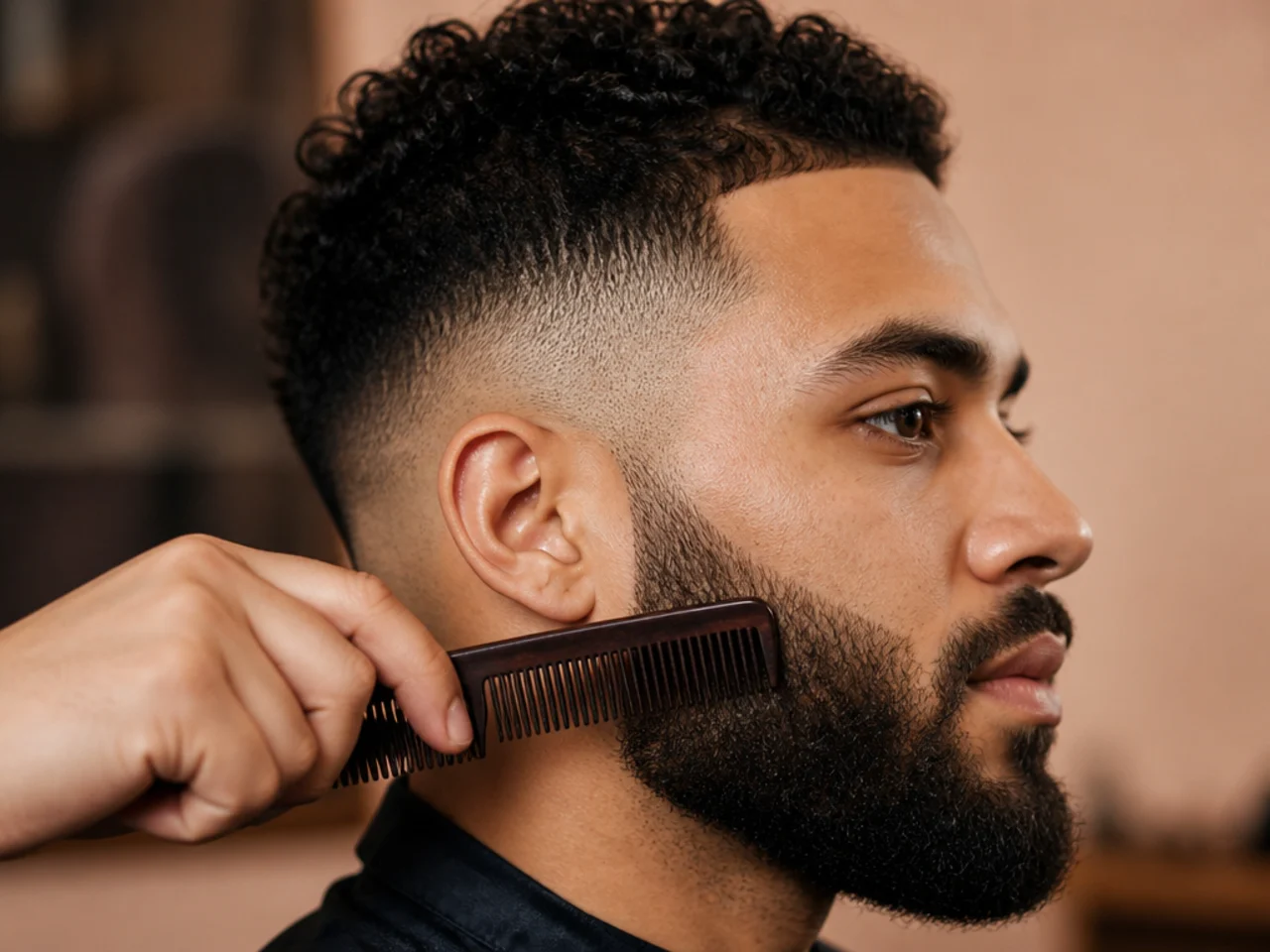
Comb the beard before you judge the blend. Uncombed beard hair falls over the join and hides a step you will see later in daylight.
Keep the sideburn edge where the barber left it. It is the top of the beard and the bottom of the fade at the same time.
Photograph the side of your head in week one. The join lives above your ear where no bathroom mirror shows it.
Mistakes to Avoid
Asking for a skin finish with a full beard. Bare skin against dense beard hair is the highest contrast available in that spot.
Leaving a gap under a centimetre. Too wide to read as connected, too narrow to read as deliberate.
Trimming the beard on week two and not the fade. It moves the bottom line and leaves the top one where it was.
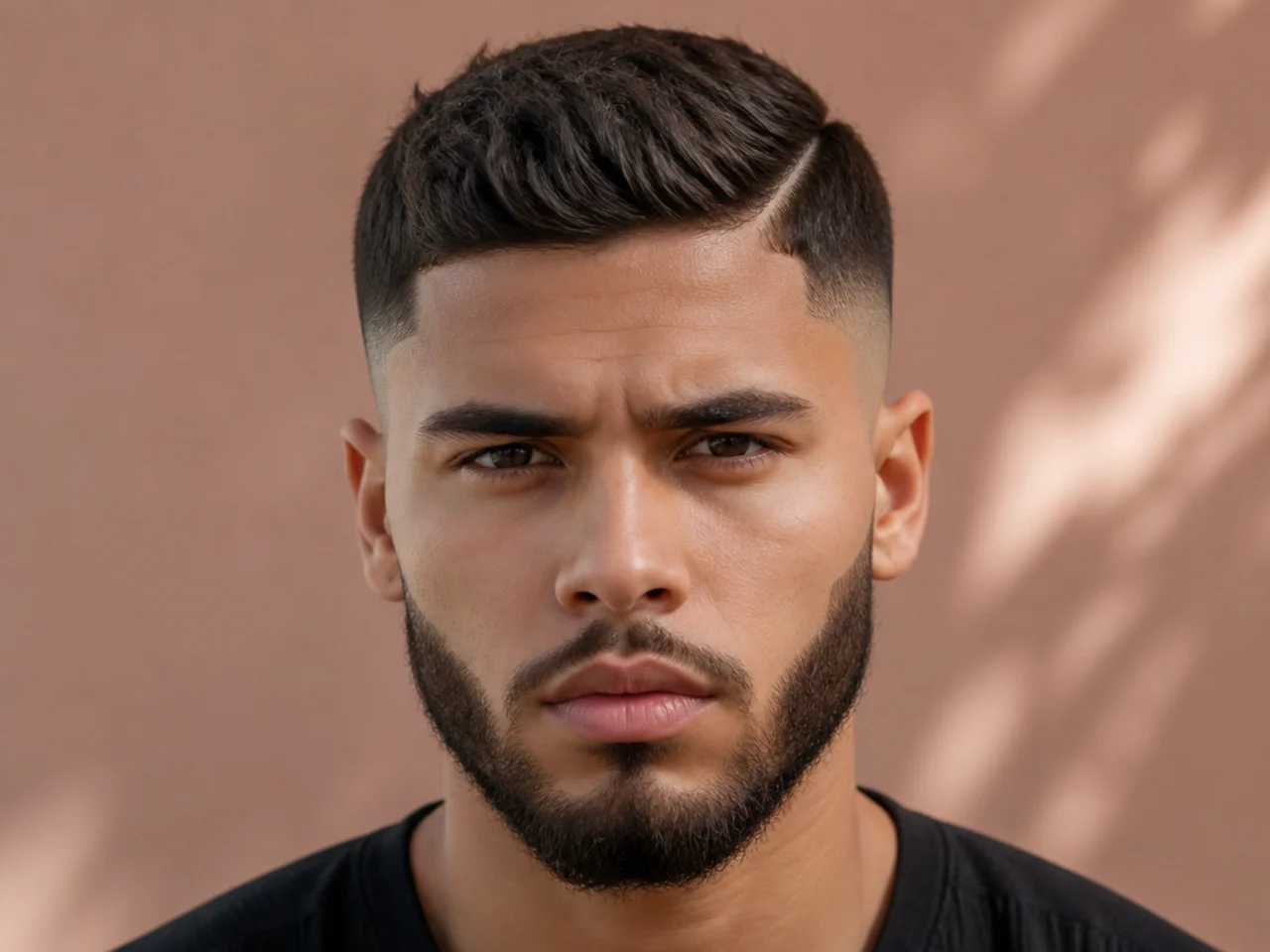
Judging the fade height in a front-facing mirror. A mid fade lives on the side of the head, and the front view flattens it.
Letting the barber set the height without saying a number. Ask for it between the temple and the parietal ridge, or you will get whatever that barber calls mid.
FAQ
Why is mid the easiest height to connect? It leaves about four centimetres of side panel for the gradient to travel.
Skin or taper with a full beard? Taper, because a #1 at 3mm meets beard hair far more gently than bare skin.
Where does the join actually happen? At the sideburn, just above and in front of the ear.
Final Thoughts
Everything on this page is a use of the same four centimetres. Decide before the cut whether that panel is going to carry a gradient down into the beard or hold an obvious break, and say which one you want while the clippers are still on the counter.
For the full range of the cut see the mid fade haircut guide, and for the taper version of the same join see taper fade haircut with a beard. More in Fade Haircuts.