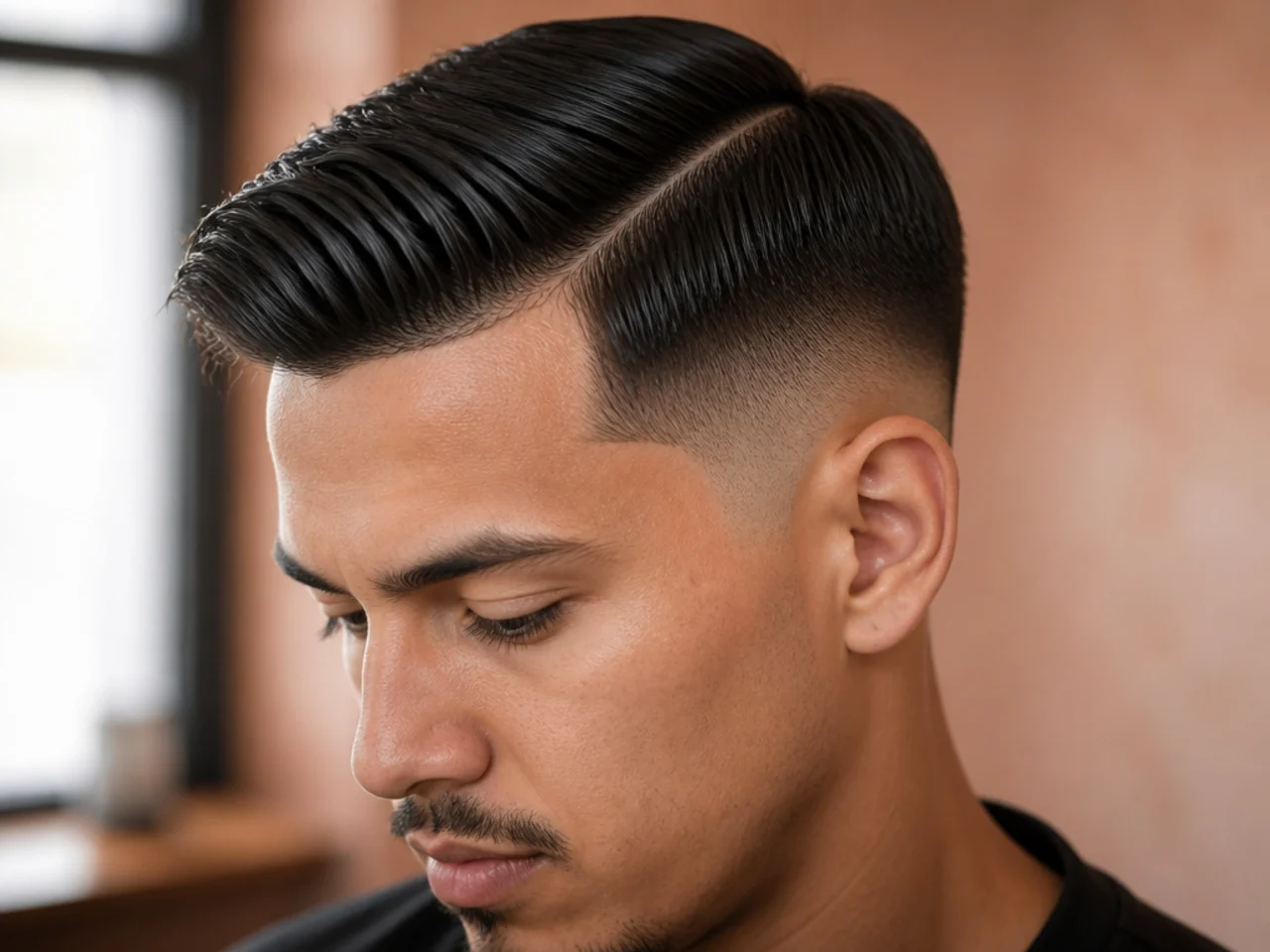
20 Mid Fade Haircut Ideas With a Comb Over
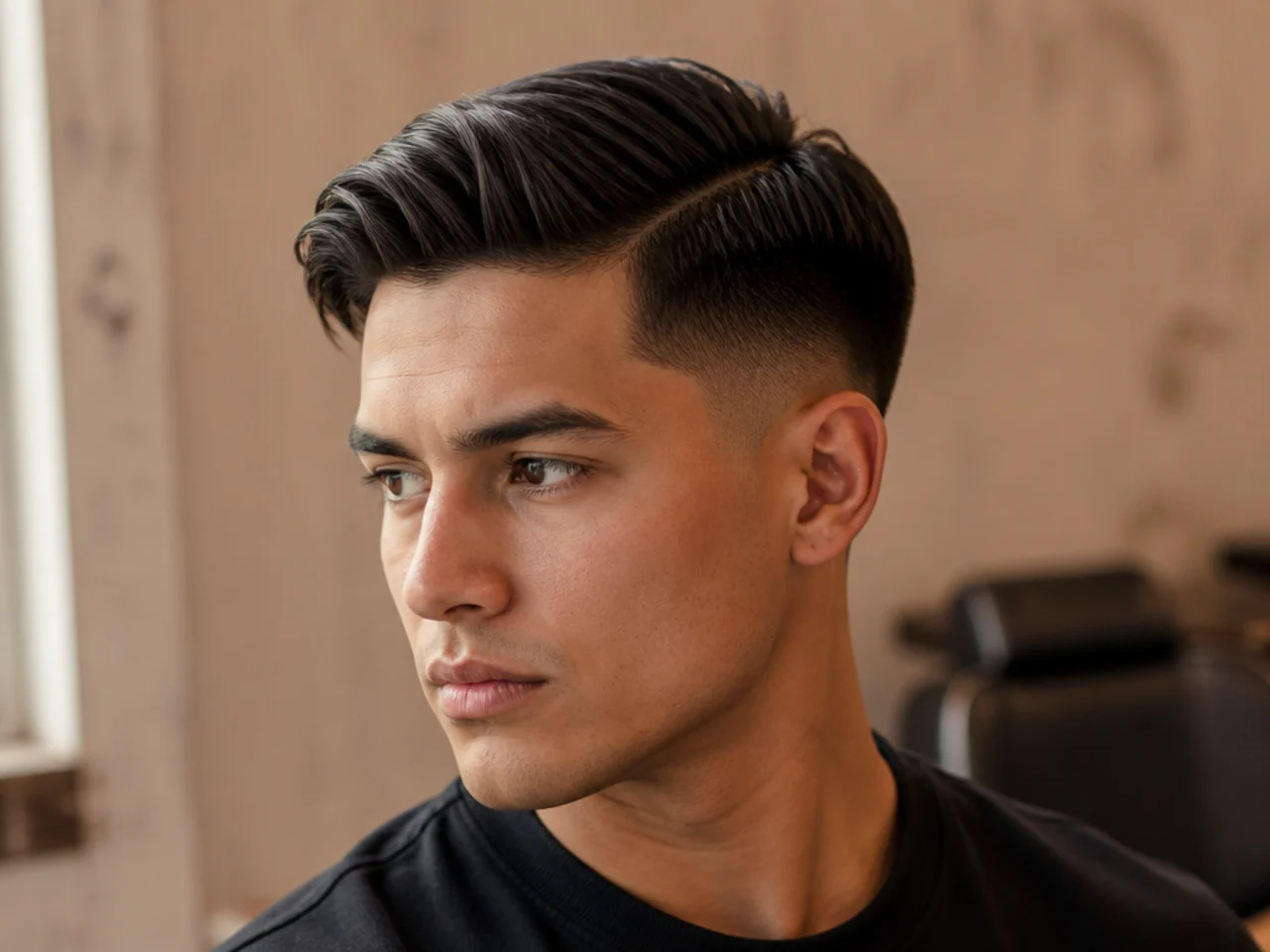
A comb over needs a part line, and a part line needs hair on both sides of it to exist. A mid fade starts just below where the natural part runs, which gives the part a shelf to sit on instead of swallowing it.
In this article · 27
- Where the Part Meets the Fade
- How to Choose Yours
- The 20 Mid Fade Comb Over Ideas
- 1. Classic Mid Fade Comb Over
- 2. Hard Part Mid Fade Comb Over
- 3. Mid Skin Fade Comb Over
- 4. Mid Taper Comb Over
- 5. Textured Mid Fade Comb Over
- 6. Slick Mid Fade Comb Over
- 7. Low-Volume Mid Fade Comb Over
- 8. High-Volume Mid Fade Comb Over
- 9. Mid Fade Comb Over With a Beard
- 10. Short Mid Fade Comb Over
- 11. Long Mid Fade Comb Over
- 12. Mid Fade Comb Over on Thinning Hair
- 13. Mid Fade Comb Over on Curly Hair
- 14. Mid Drop Fade Comb Over
- 15. Mid Burst Fade Comb Over
- 16. Mid Fade Comb Over With a Line-Up
- 17. Mid Fade Comb Over With a Disconnect
- 18. Side-Swept Mid Fade Comb Over
- 19. Mid Fade Comb Over, Blow-Dried
- 20. Mid Fade Comb Over at Week Three
- Styling and Upkeep
- Mistakes to Avoid
- FAQ
- Final Thoughts
A comb over is one thing before it is a haircut — a line, with hair swept away from it in one direction.
That line only exists if there is hair on both sides of it. Run it into a faded panel and it stops being a part and becomes the top of a gradient.
A mid fade starts between the temple and the parietal ridge, which is a centimetre or two below where a natural part runs. The part gets a shelf to sit on and the fade takes the bulk from underneath it.
Where the Part Meets the Fade
A part needs length on both sides. Two sections of hair leaning away from each other is what makes the line visible at all.
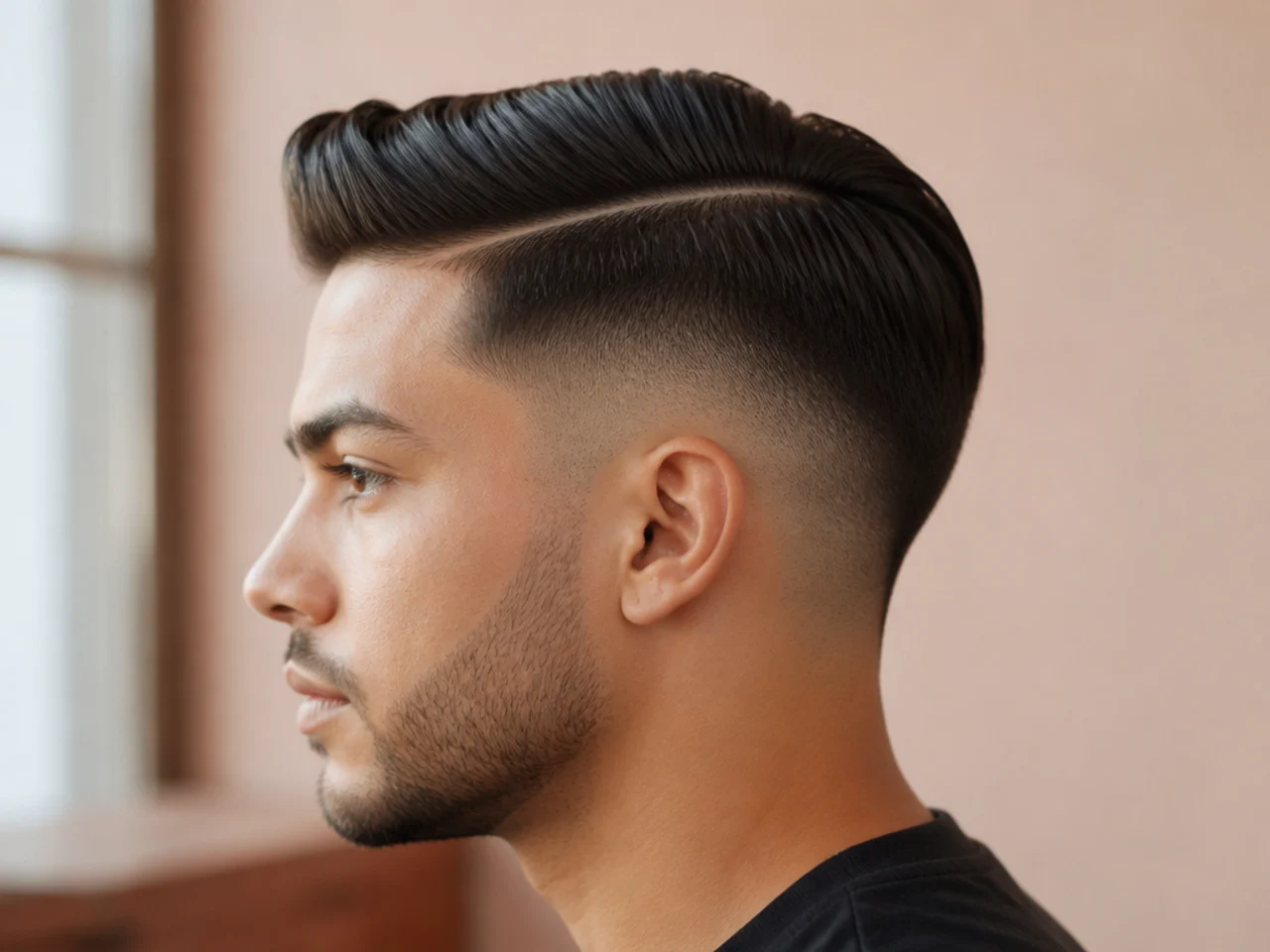
The natural part sits just above the temple corner. Push a comb back from there and the hair splits along a line of its own accord.
A mid fade's top edge lands below that split. So there is unfaded hair under the part, which is what keeps it readable.
A high fade eats the part. Starting at or above the parietal ridge puts the blend where the part line would have been.
How to Choose Yours
Find your natural part before you sit down. Comb the wet hair straight back and let it split, and that is the line the barber should work to.
Ask for a centimetre of unfaded hair below the part. It is the margin that stops the part vanishing into the blend as the cut grows.
Decide natural part or hard part. A razored line is a commitment for three weeks, a natural one moves every wash.
Pick side length by how far the sweep travels. A long comb over across the whole head needs more hair to travel through than a short one over the temple.
The 20 Mid Fade Comb Over Ideas
1. Classic Mid Fade Comb Over
A natural part above the temple, hair swept across, mid fade underneath. The unfaded centimetre below the part is doing all the work of keeping the line visible.
2. Hard Part Mid Fade Comb Over
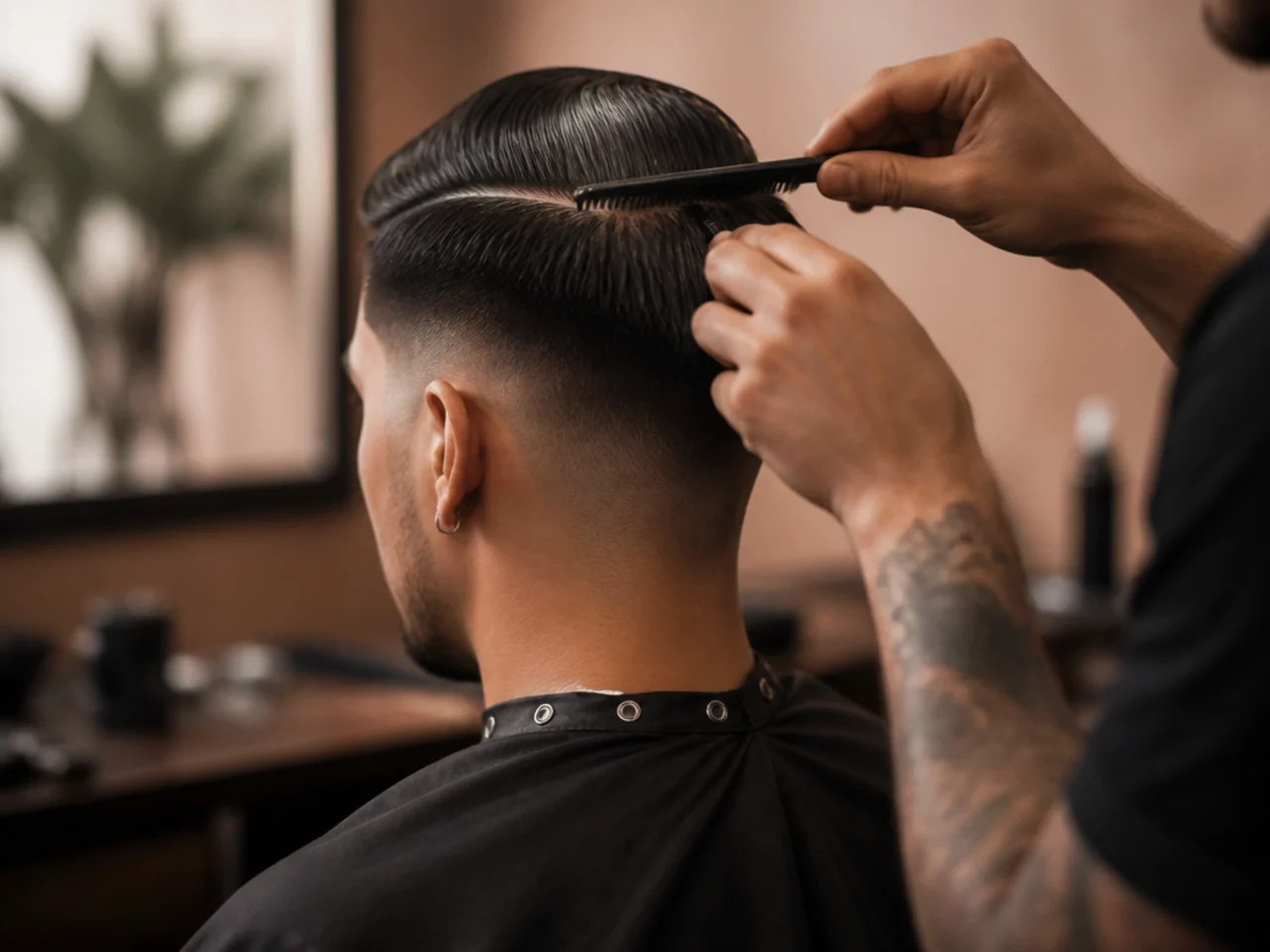
A razored line cut where the part sits. It survives wind and a hat, which a natural part does not, and it holds its position for about three weeks.
3. Mid Skin Fade Comb Over
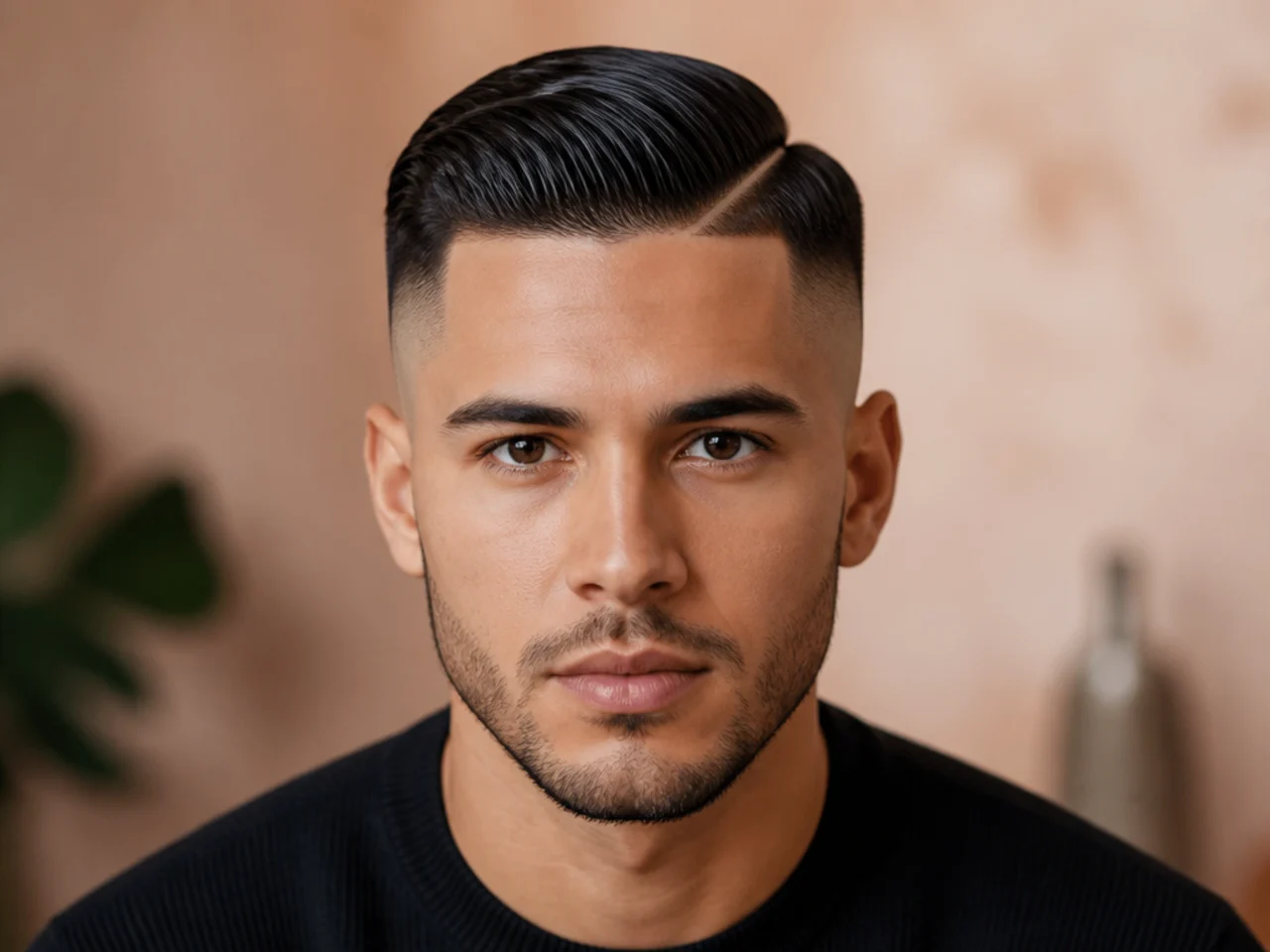
The blend taken to bare skin below the part. Maximum contrast between the swept top and the side, which makes the part read as a hard boundary rather than a soft one.
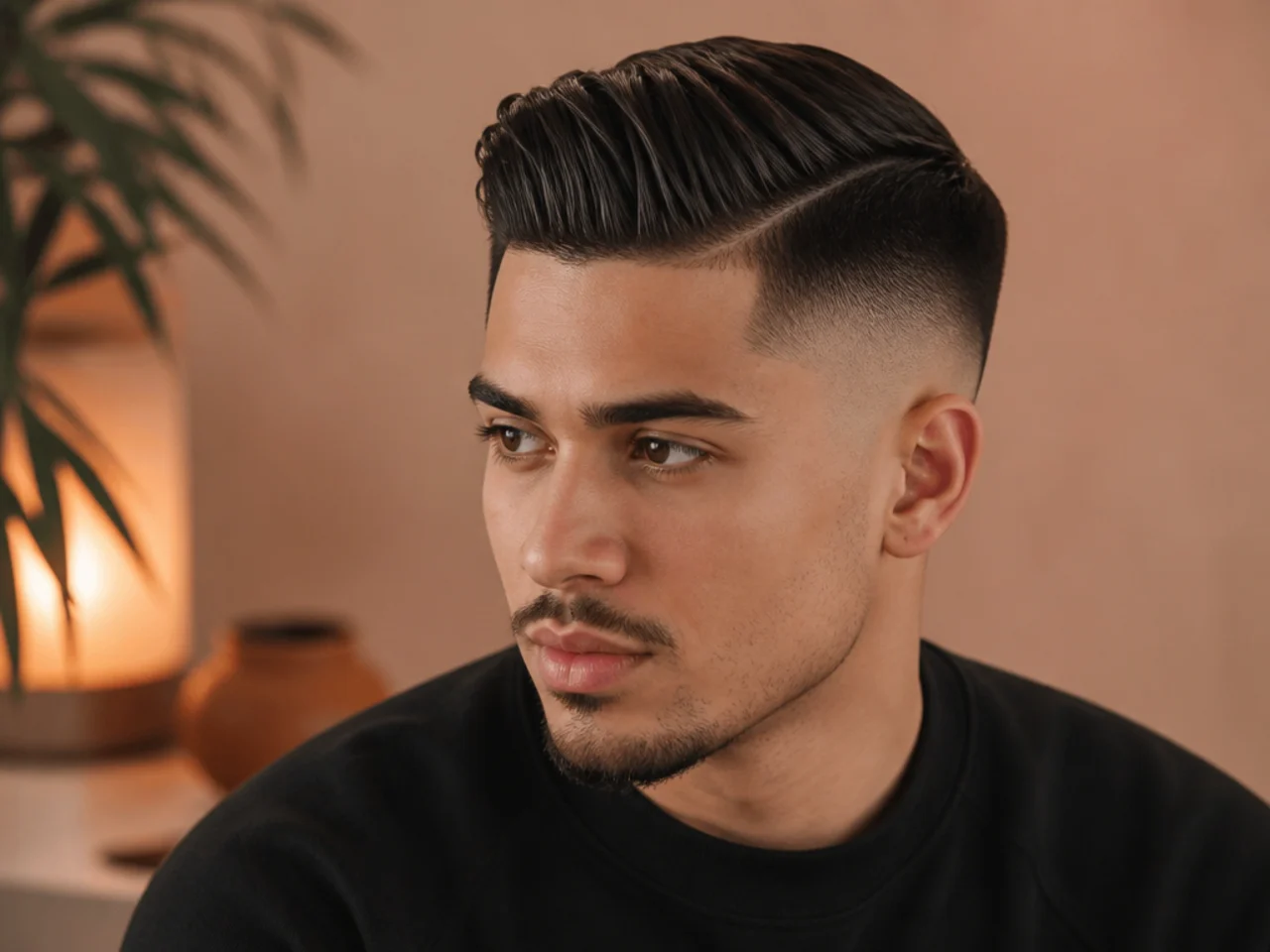
4. Mid Taper Comb Over
Stopping at a #1 at 3mm. The softer floor keeps a little weight under the part, which suits fine hair that needs the support.
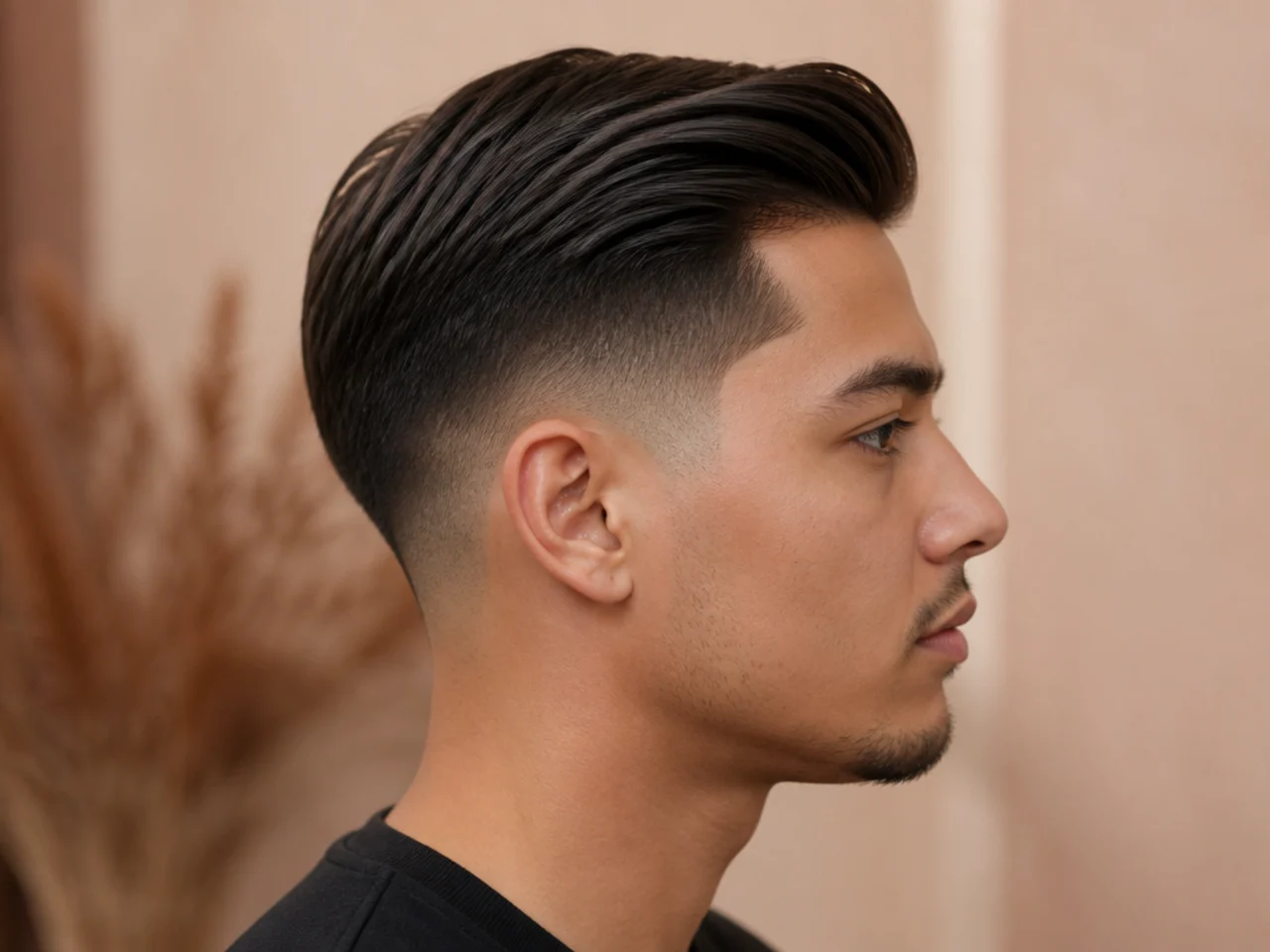
5. Textured Mid Fade Comb Over
Weight removed from the ends before the sweep. The swept section sits as separate pieces rather than a slab, which stops a comb over reading as a helmet.
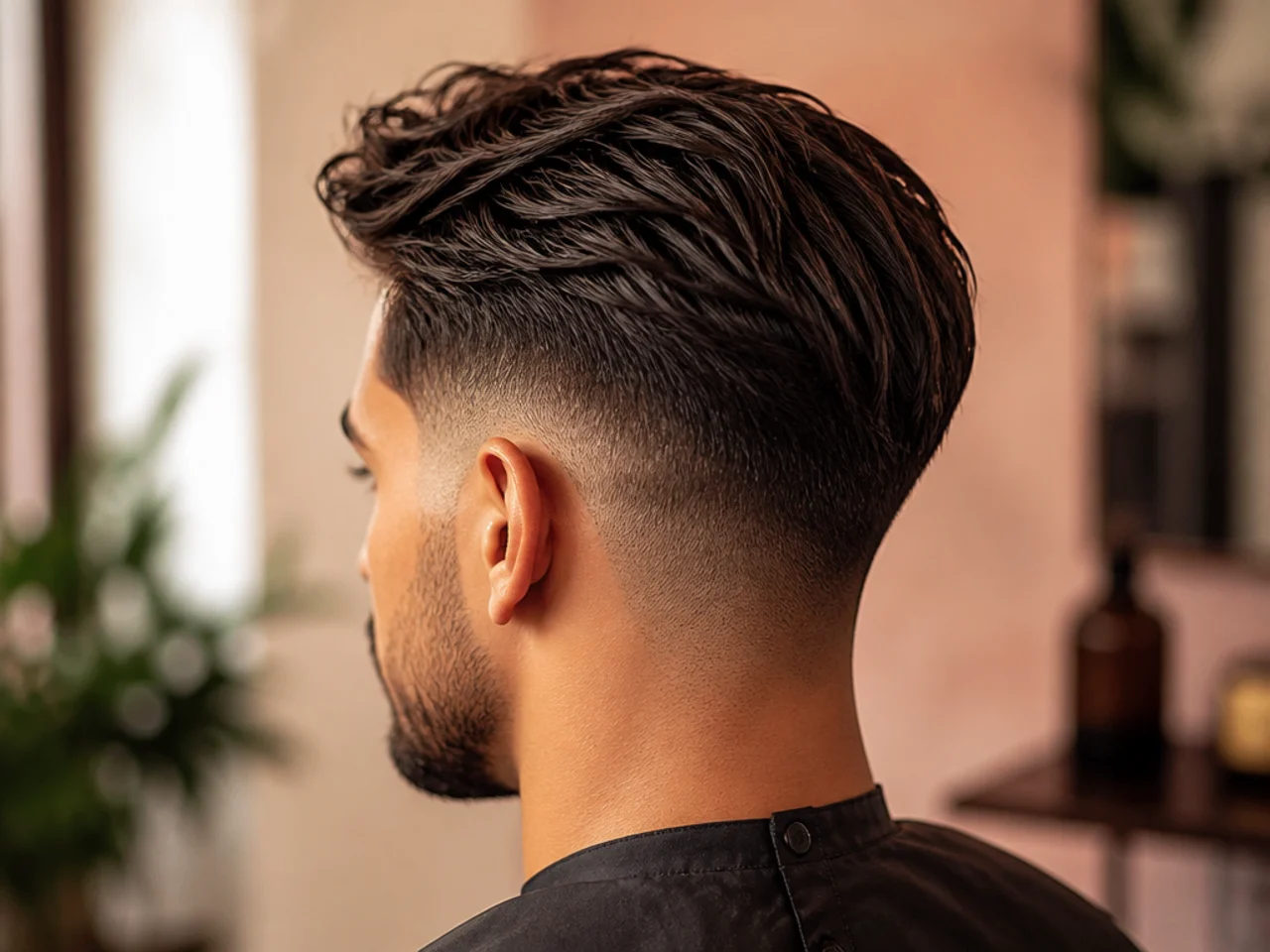
6. Slick Mid Fade Comb Over
Wet-look product, every hair in one direction, one step short of a slick back over a fade. Shine makes the part line sharper because it reflects along the split, so a slick finish needs the part cut accurately.
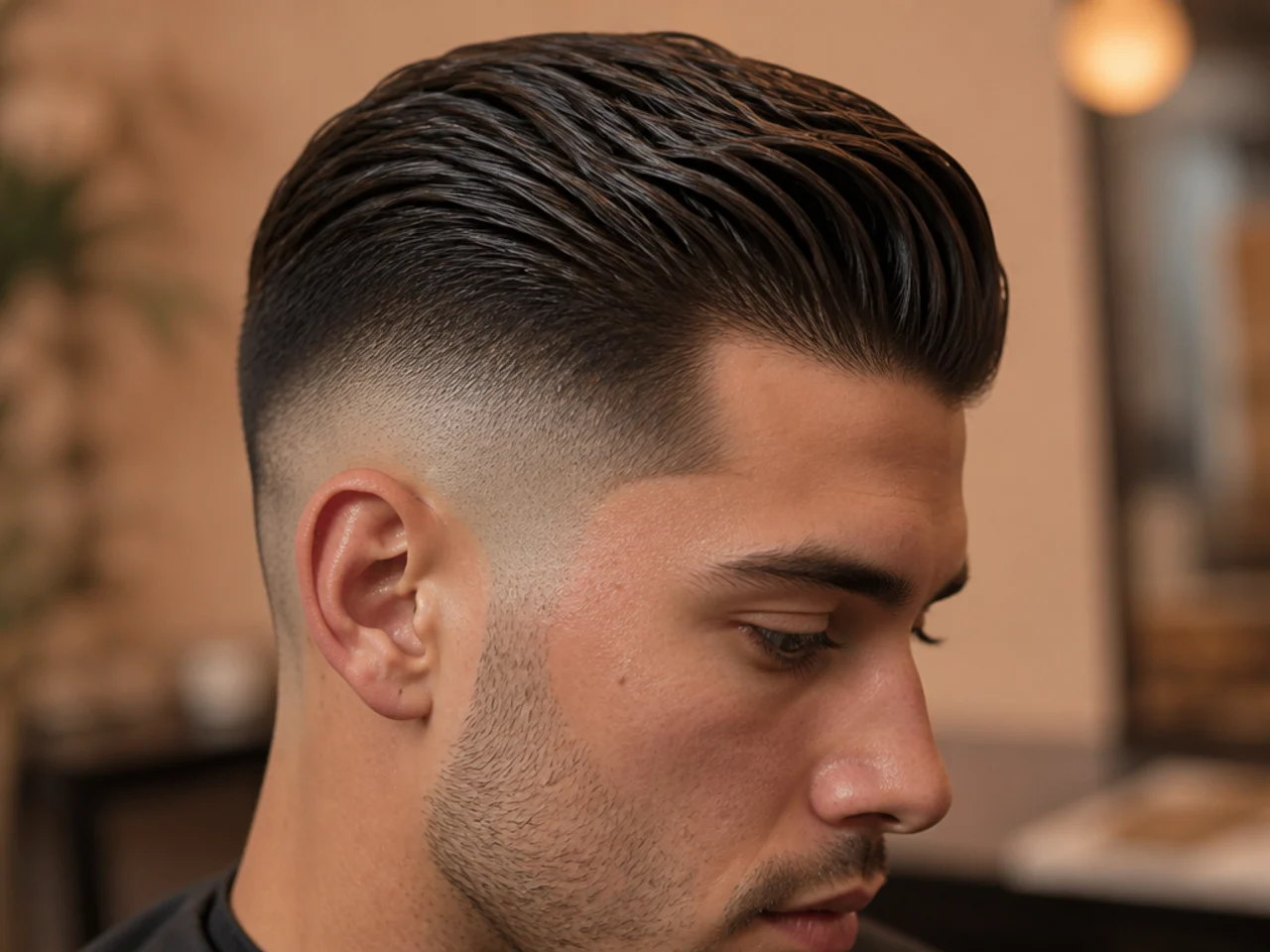
7. Low-Volume Mid Fade Comb Over
Swept flat with no lift at the root. It reads formal because there is no height competing with the horizontal fade line.
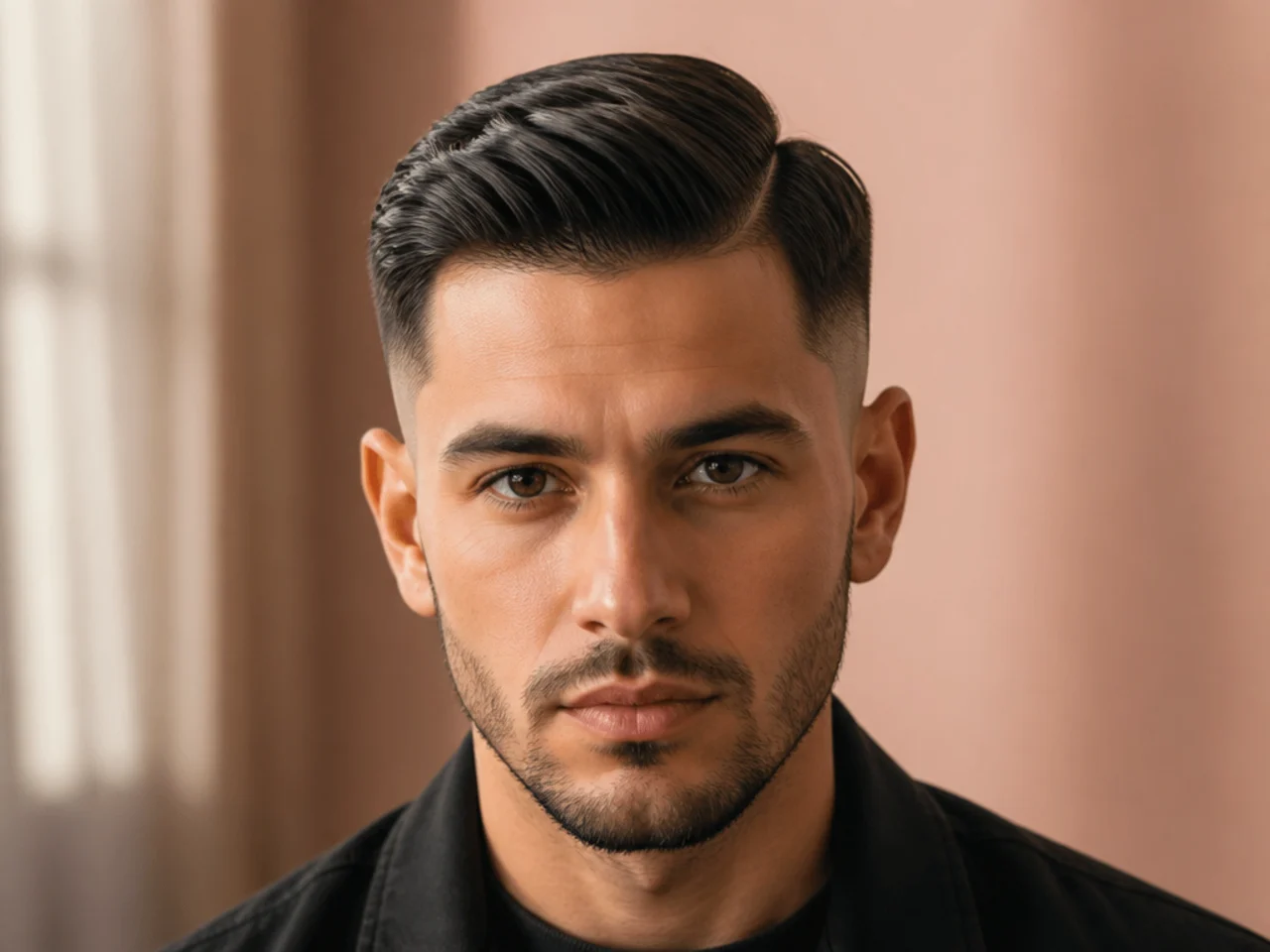
8. High-Volume Mid Fade Comb Over
Root lift at the part before the sweep. The height adds a diagonal above the fade's horizontal, which lengthens a shorter face.
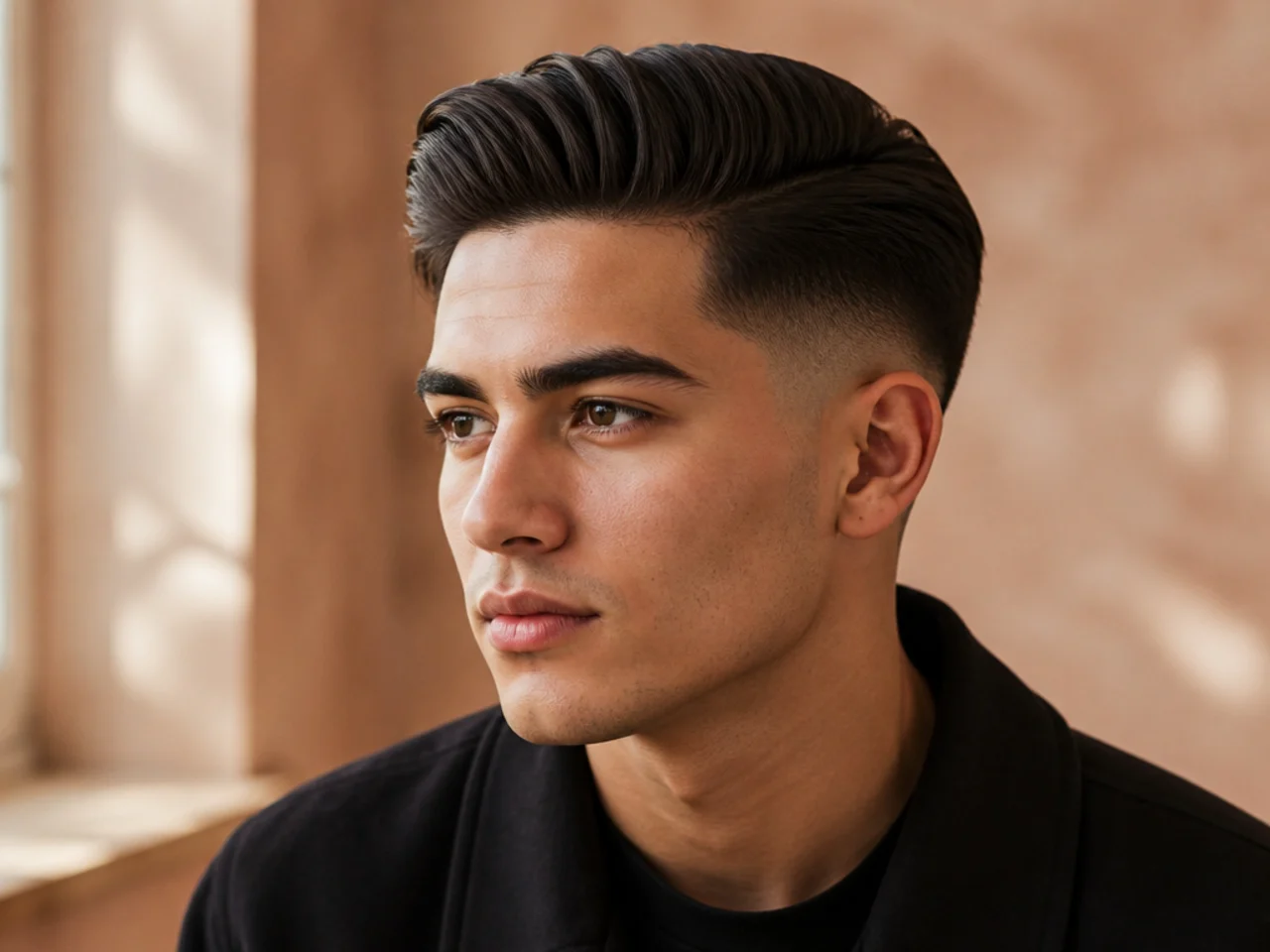
9. Mid Fade Comb Over With a Beard
The part above, the fade in the middle, the beard below. Three horizontals stacked on one side of the head, so the vertical part line is what stops them reading as stripes.
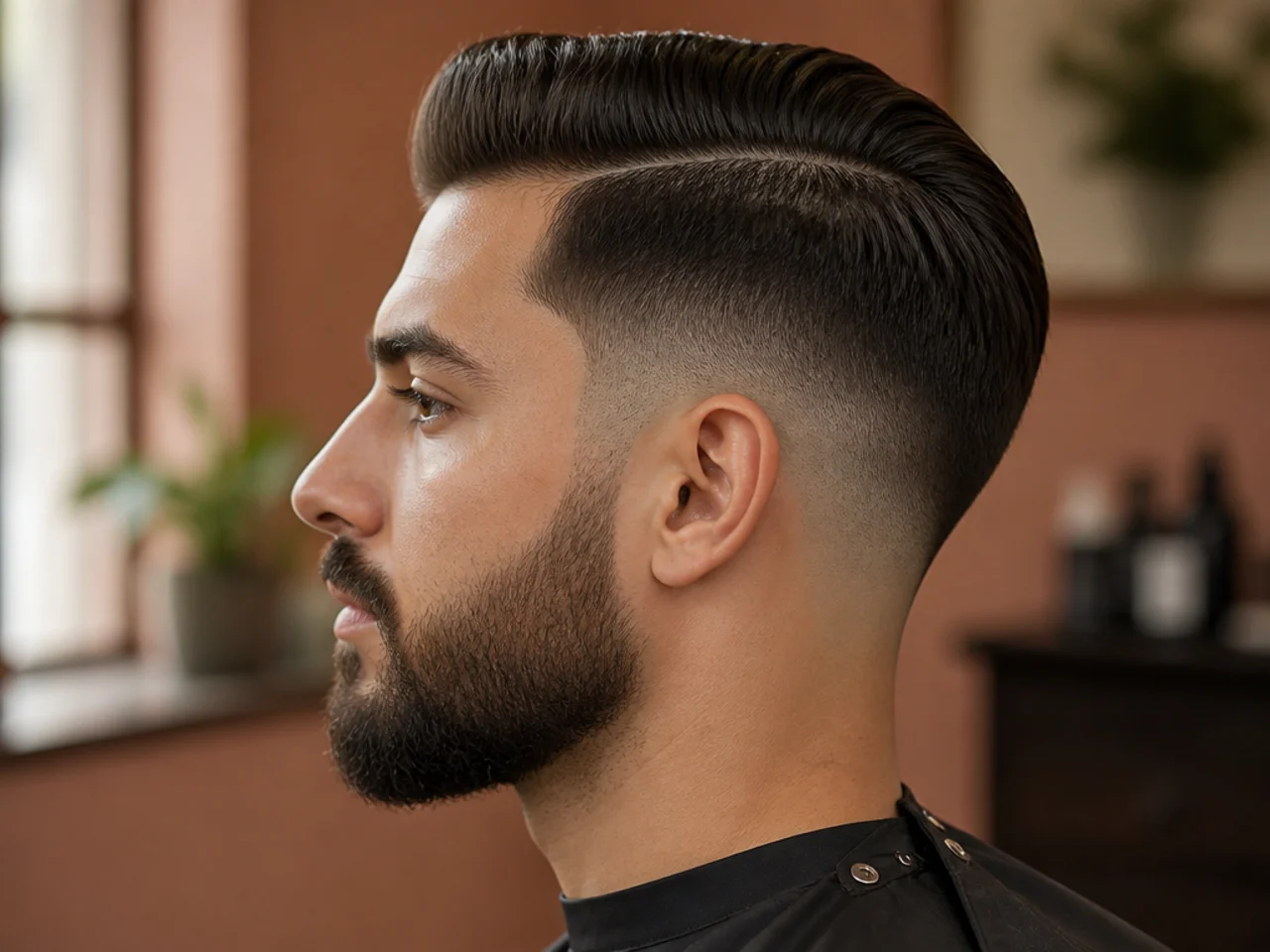
10. Short Mid Fade Comb Over
Around four centimetres on top. Short enough that the sweep never falls out of place, and the part still has hair on both sides.
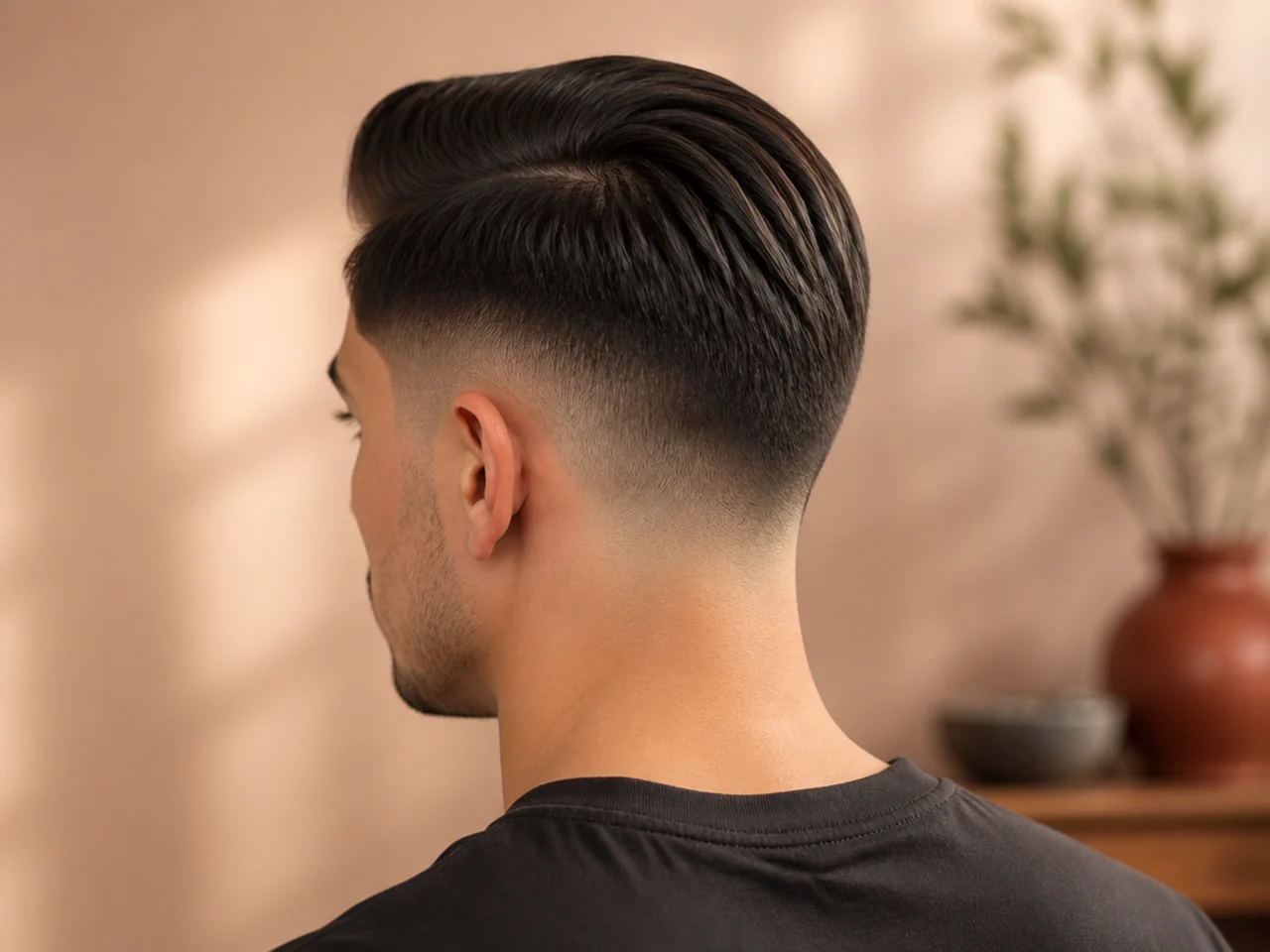
11. Long Mid Fade Comb Over
Eight centimetres or more travelling right across the head. The far side needs enough weight to hold, so ask the barber to leave the opposite temple longer.
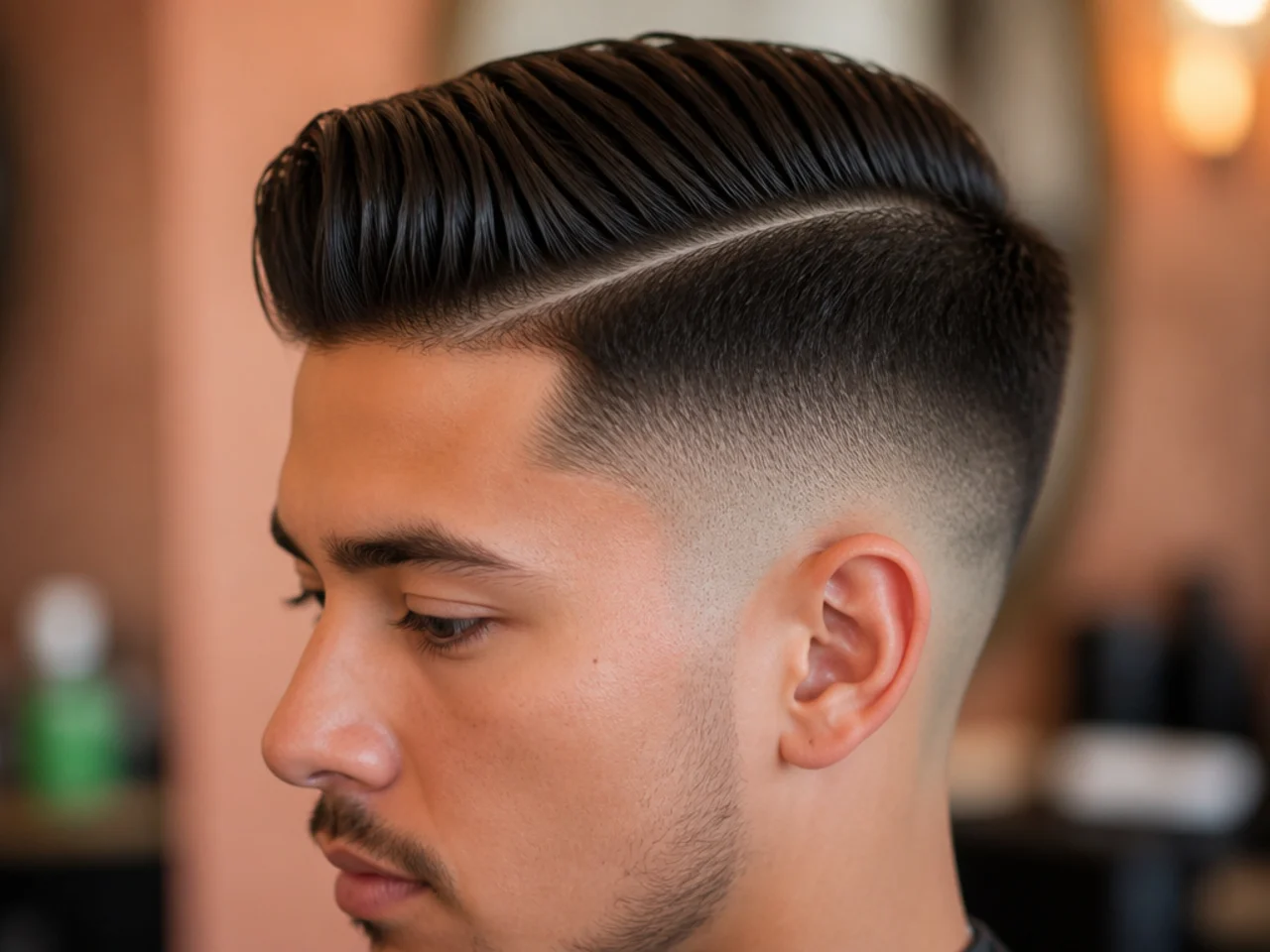
12. Mid Fade Comb Over on Thinning Hair
The sweep covers the crown while the fade keeps the sides honest, which is the trick behind most haircuts for thinning hair. A mid fade helps here because the removed side bulk makes the top look denser by comparison.
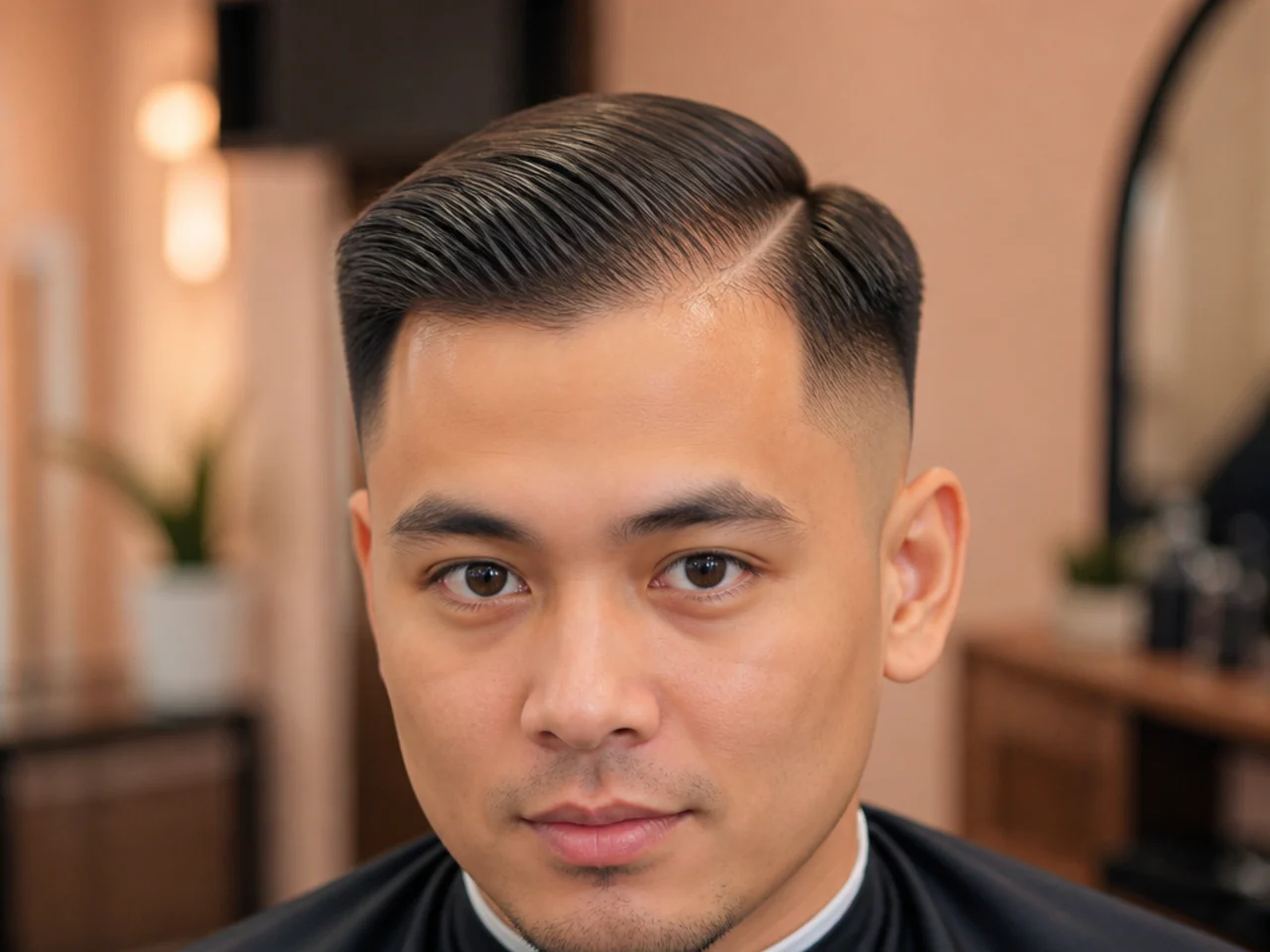
13. Mid Fade Comb Over on Curly Hair
Fingers do the sweeping here, because comb teeth drag each curl out of its clump and the pattern comes apart. The part has to be cut in rather than found, because curly hair does not split cleanly.
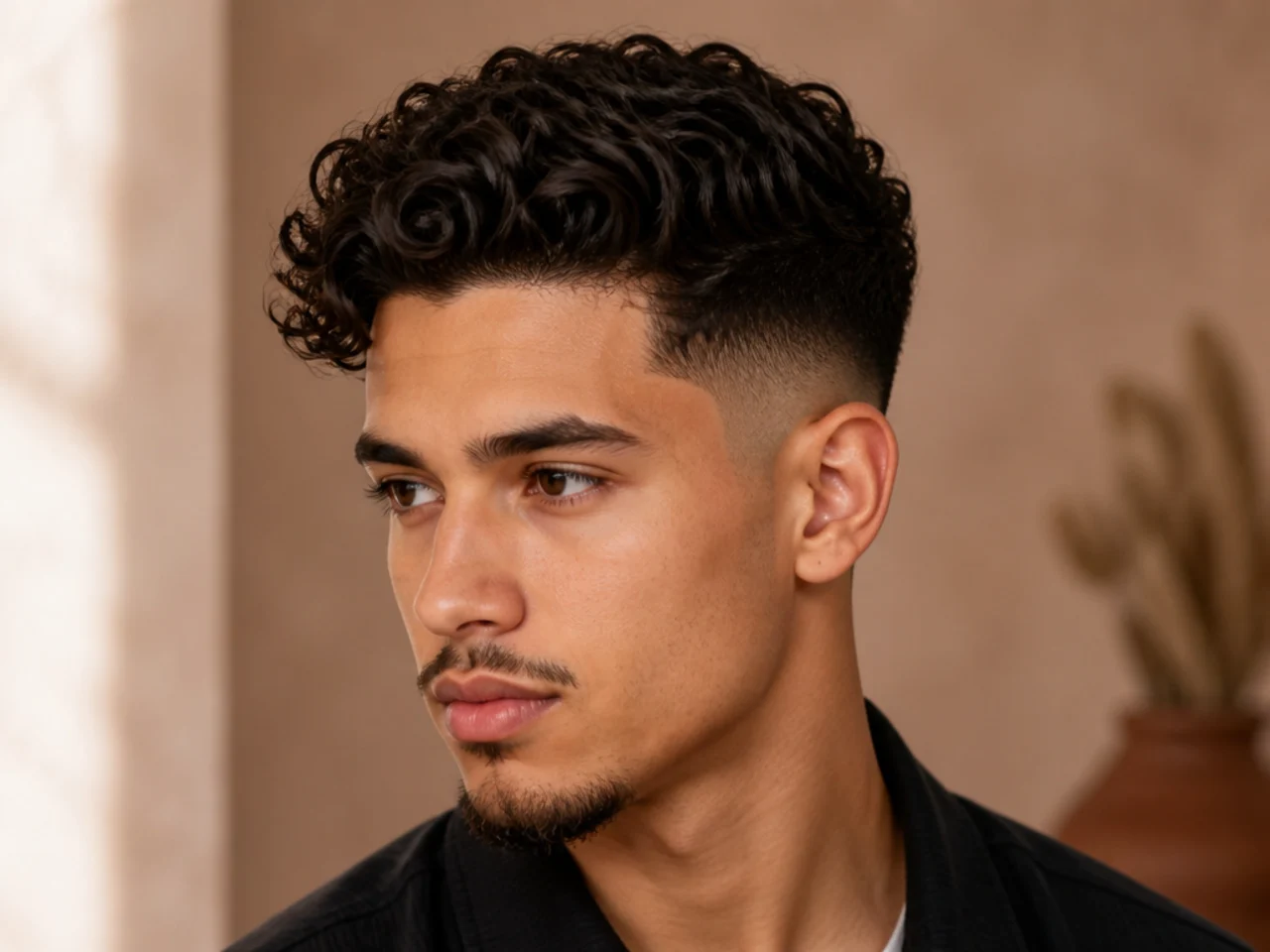
14. Mid Drop Fade Comb Over
The fade line dropped behind the ear. The part stays at mid height at the front, so nothing about the comb over changes while the back gains a curve.
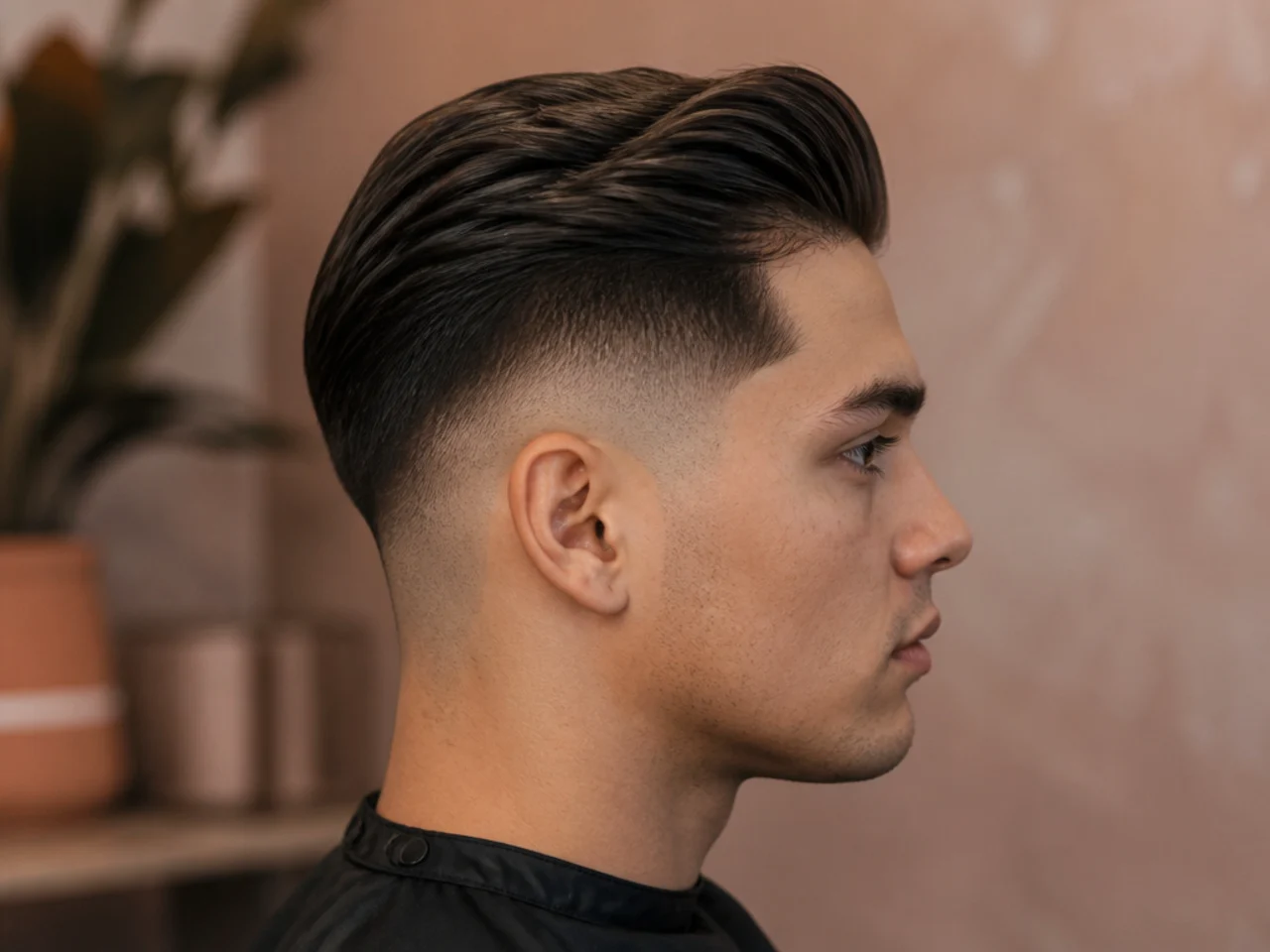
15. Mid Burst Fade Comb Over
The fade swung round the ear as a semicircle rather than carried level across the side. It leaves more weight in front of the ear, which gives a long sweep extra hair to land in.
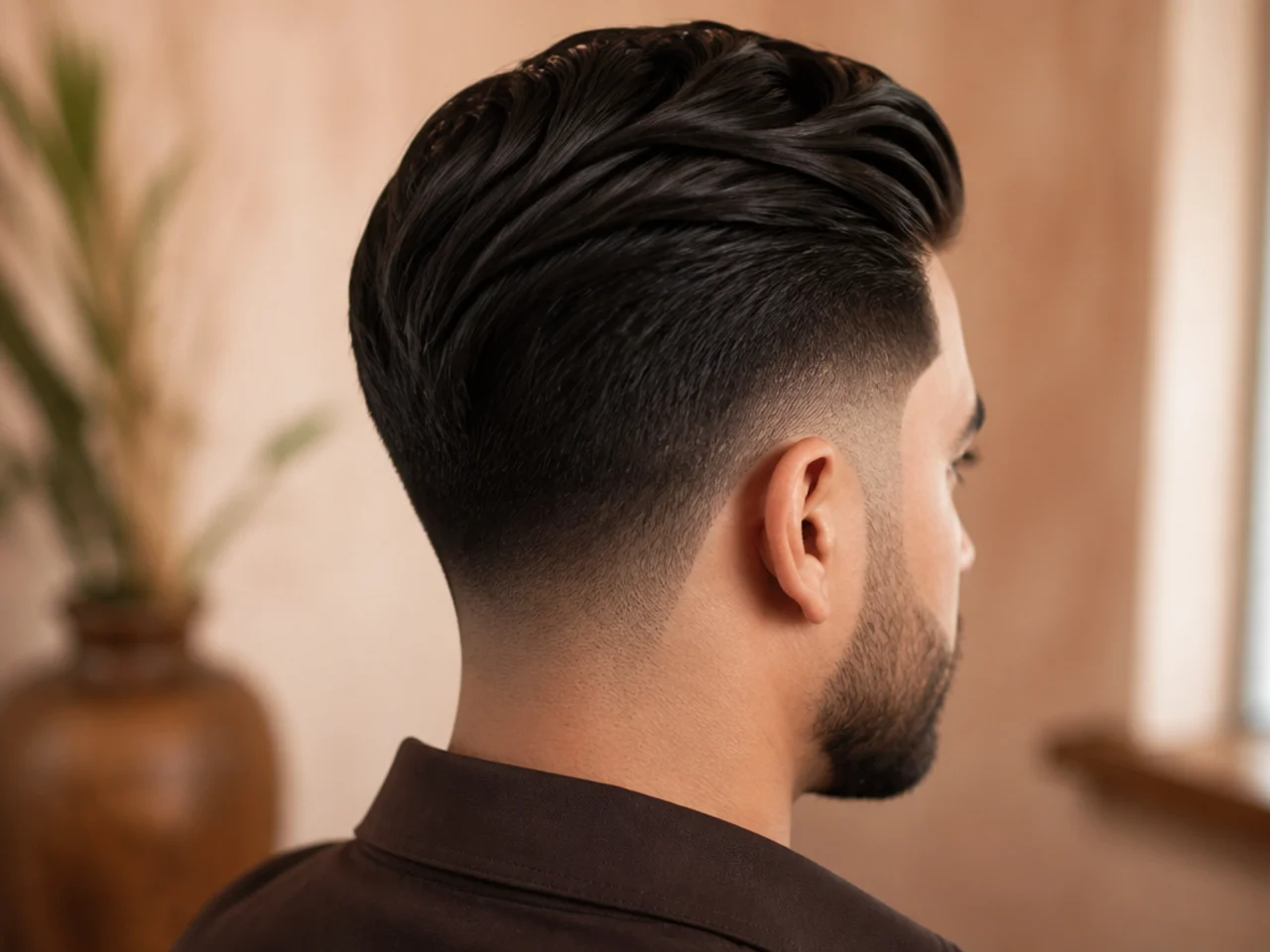
16. Mid Fade Comb Over With a Line-Up
A razored hairline squaring off the front. It gives the sweep a defined starting edge, which matters when the hair is combed away from the face.
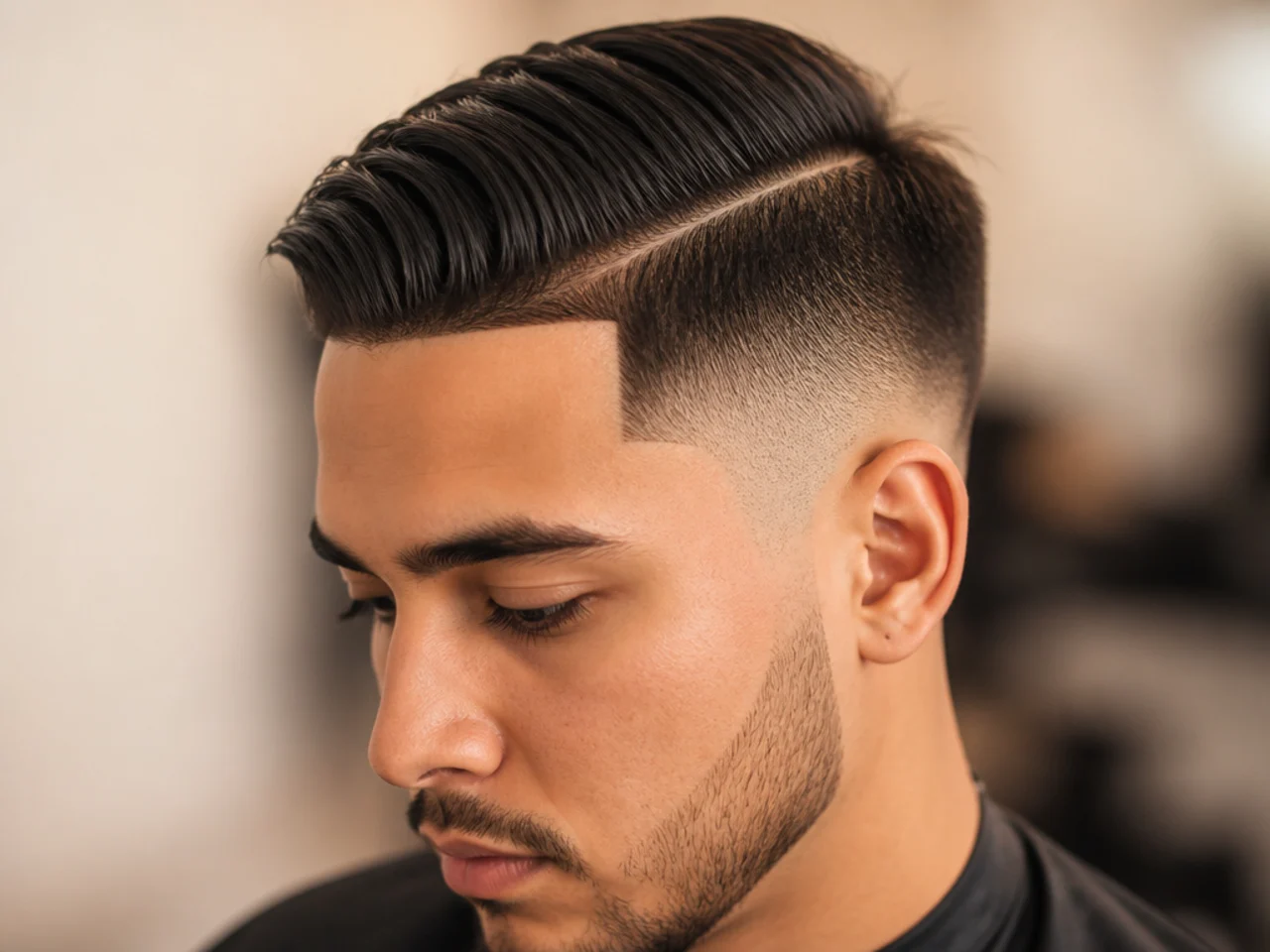
17. Mid Fade Comb Over With a Disconnect
A hard step between the top and the fade instead of a blend. The disconnect sits where the part shelf would be, so this version needs the part cut lower than usual.
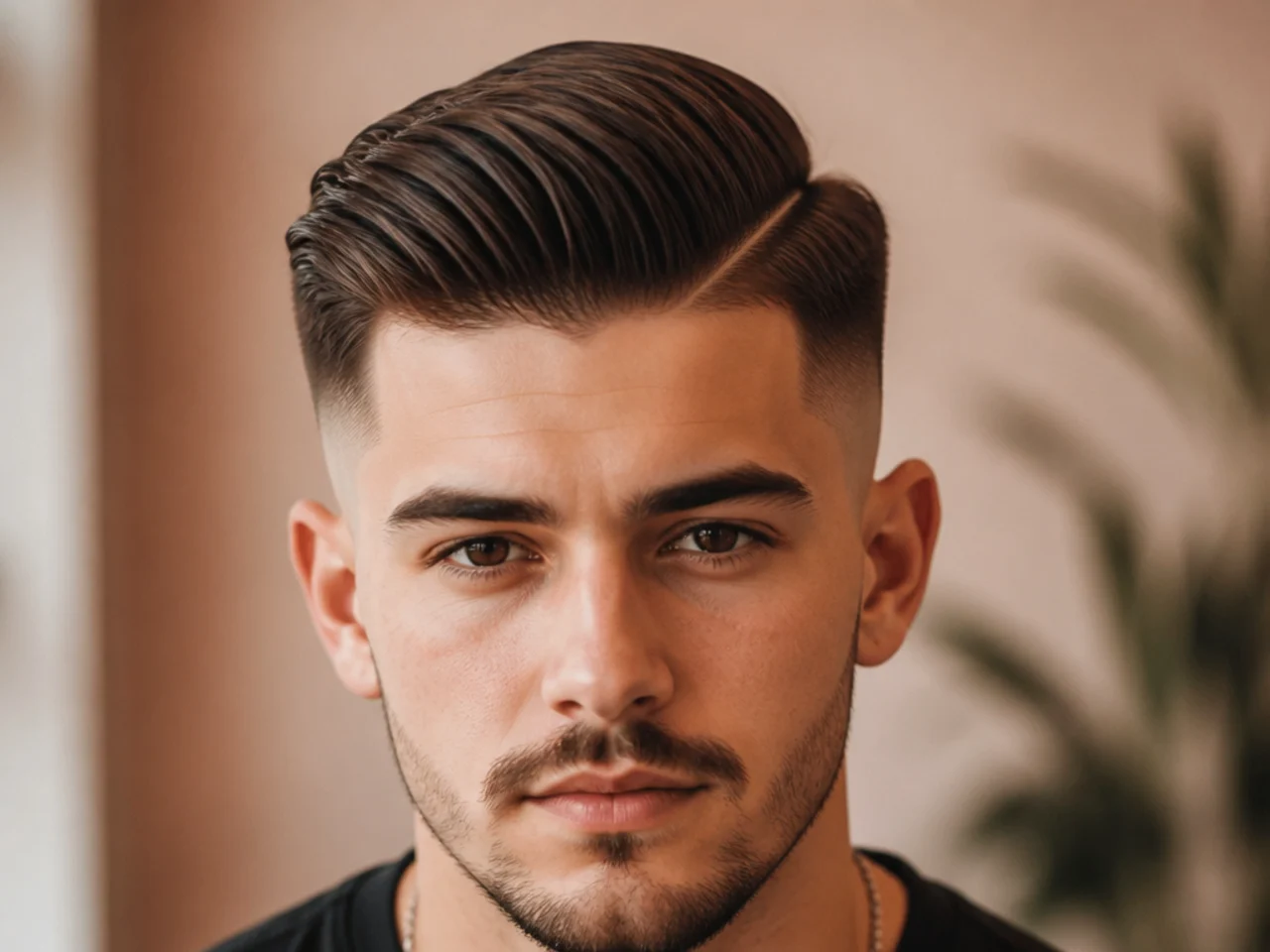
18. Side-Swept Mid Fade Comb Over
The sweep going diagonally forward rather than straight across, which puts it closer to a side part over a fade than to a true comb over. It shortens the apparent distance between the part and the brow, which suits a longer face.
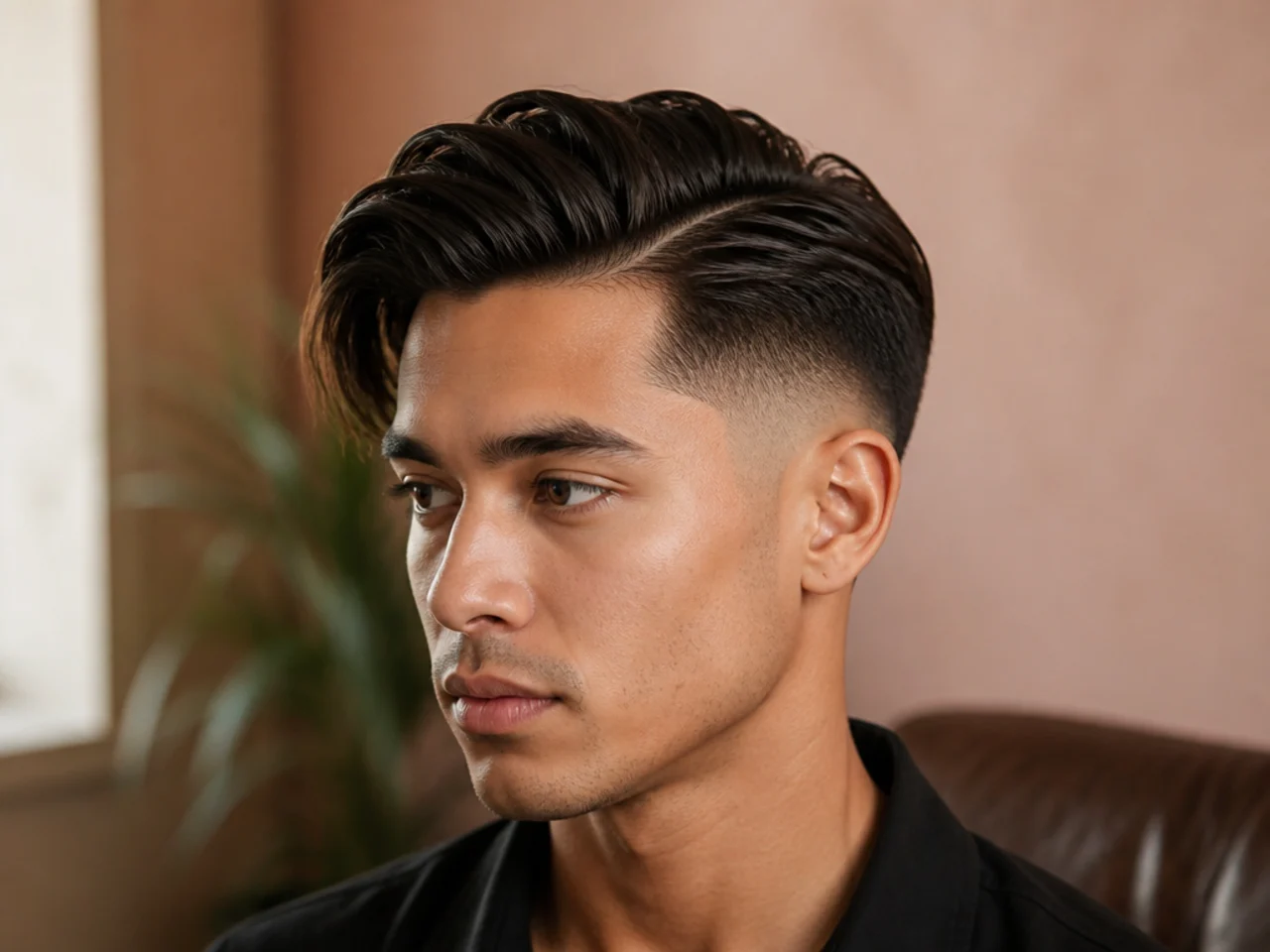
19. Mid Fade Comb Over, Blow-Dried
Directed with a dryer before any product goes in. Drying the sweep into position is what stops it collapsing by lunchtime. Heat breaks the hydrogen bonds inside each strand and cooling air resets them in the new direction, so the hair itself holds the sweep rather than the clay.
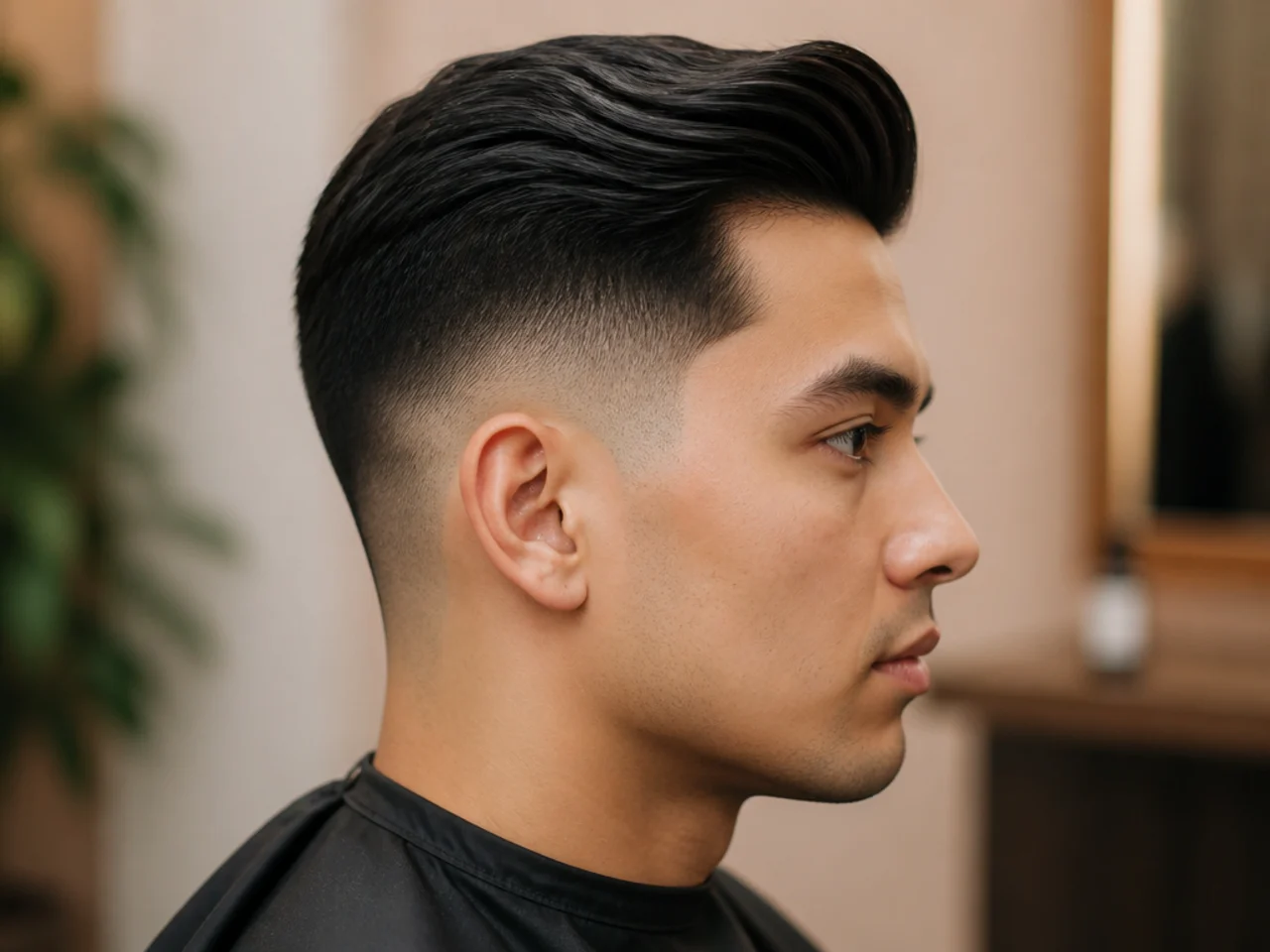
20. Mid Fade Comb Over at Week Three
The fade has softened and the part has lost its edge. On a natural part this still combs into place, which is the argument against razoring it if you rebook late.
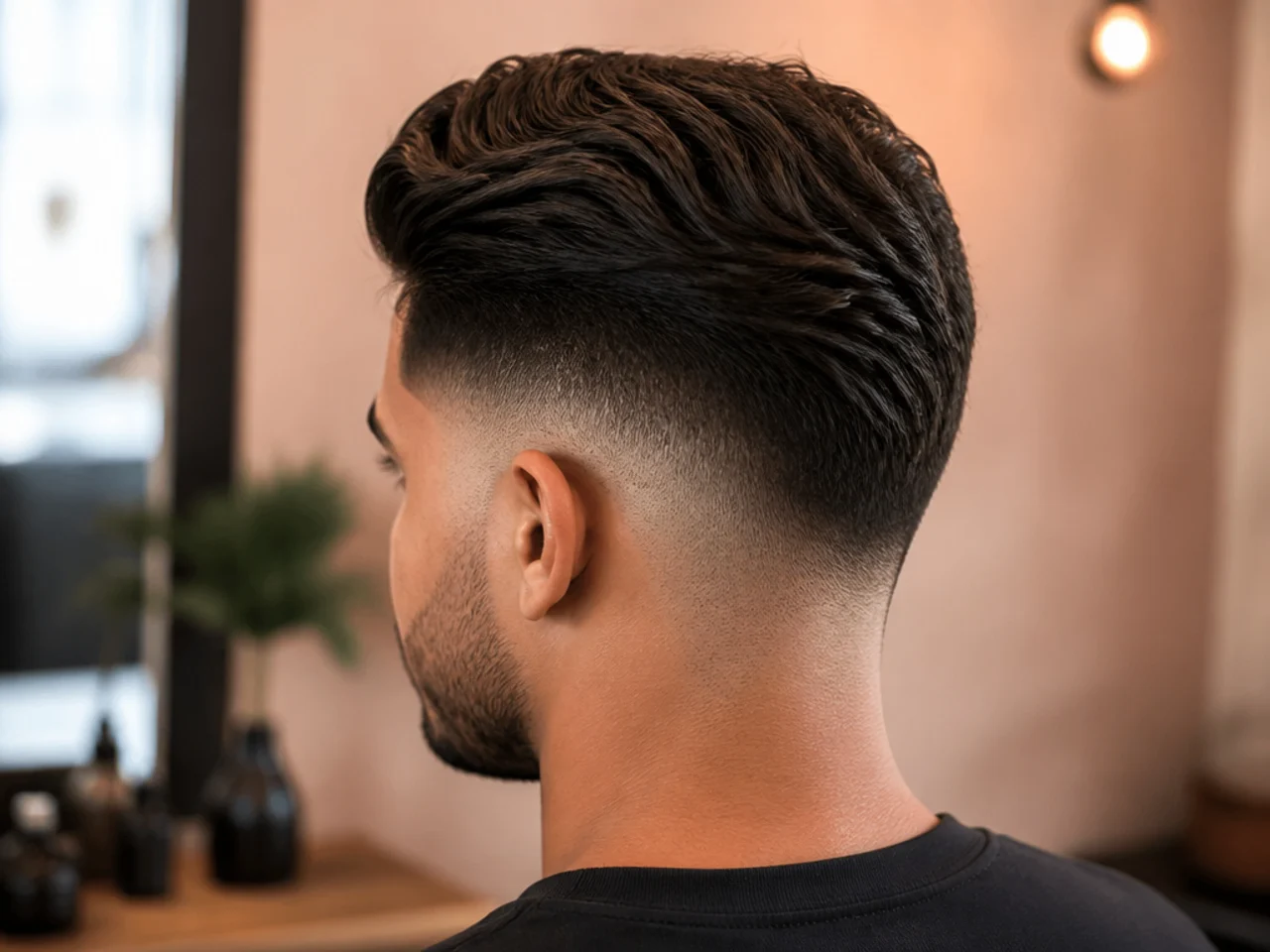
Styling and Upkeep
Comb the part in while the hair is damp. A part set wet holds its direction all day, and one set dry moves within an hour.
Blow-dry across the part, not along it. Airflow from the part side lifts the root and gives the sweep its base.
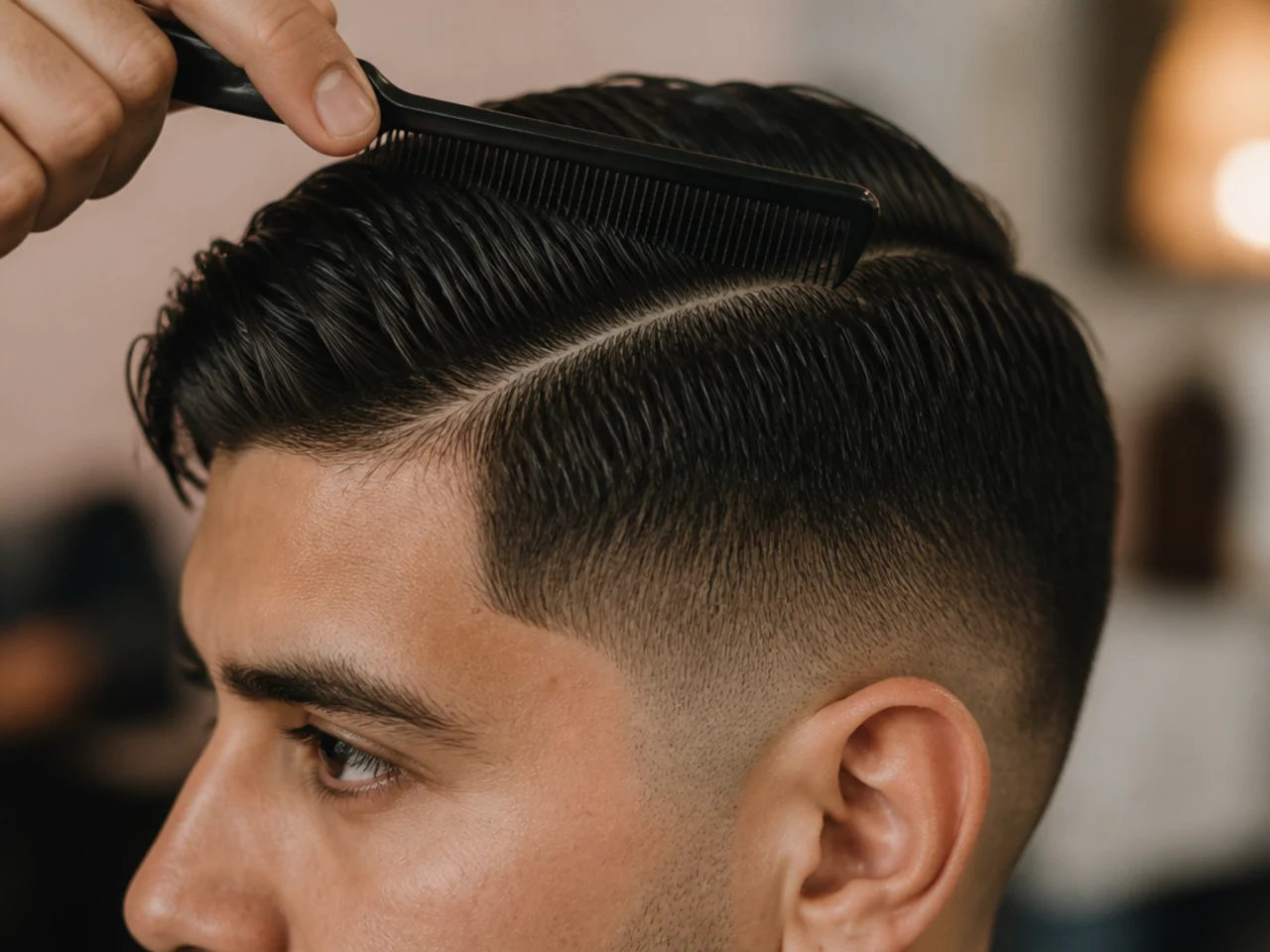
Use a comb for the part and fingers for the rest. The line wants precision and the body wants irregularity.
Rebook by finish. A mid skin fade blurs in one to two weeks and a mid taper holds three to four, which decides how long the part keeps its shelf.
Check the part in a side mirror. A part is a side-of-head feature and the front view shows only its start point.
Mistakes to Avoid
Letting the part run into the fade. With hair on only one side it stops being a line.
Setting the part where the barber prefers it. The natural split is set by growth direction, and fighting it means restyling every morning.
Asking for a high fade with a comb over. Above the parietal ridge there is no unfaded hair left for the part to sit in.
Combing the whole top flat. It removes the root lift that gives the sweep its direction.
Using heavy pomade on fine hair. Weight pulls the sweep down onto the scalp and closes the part.
FAQ
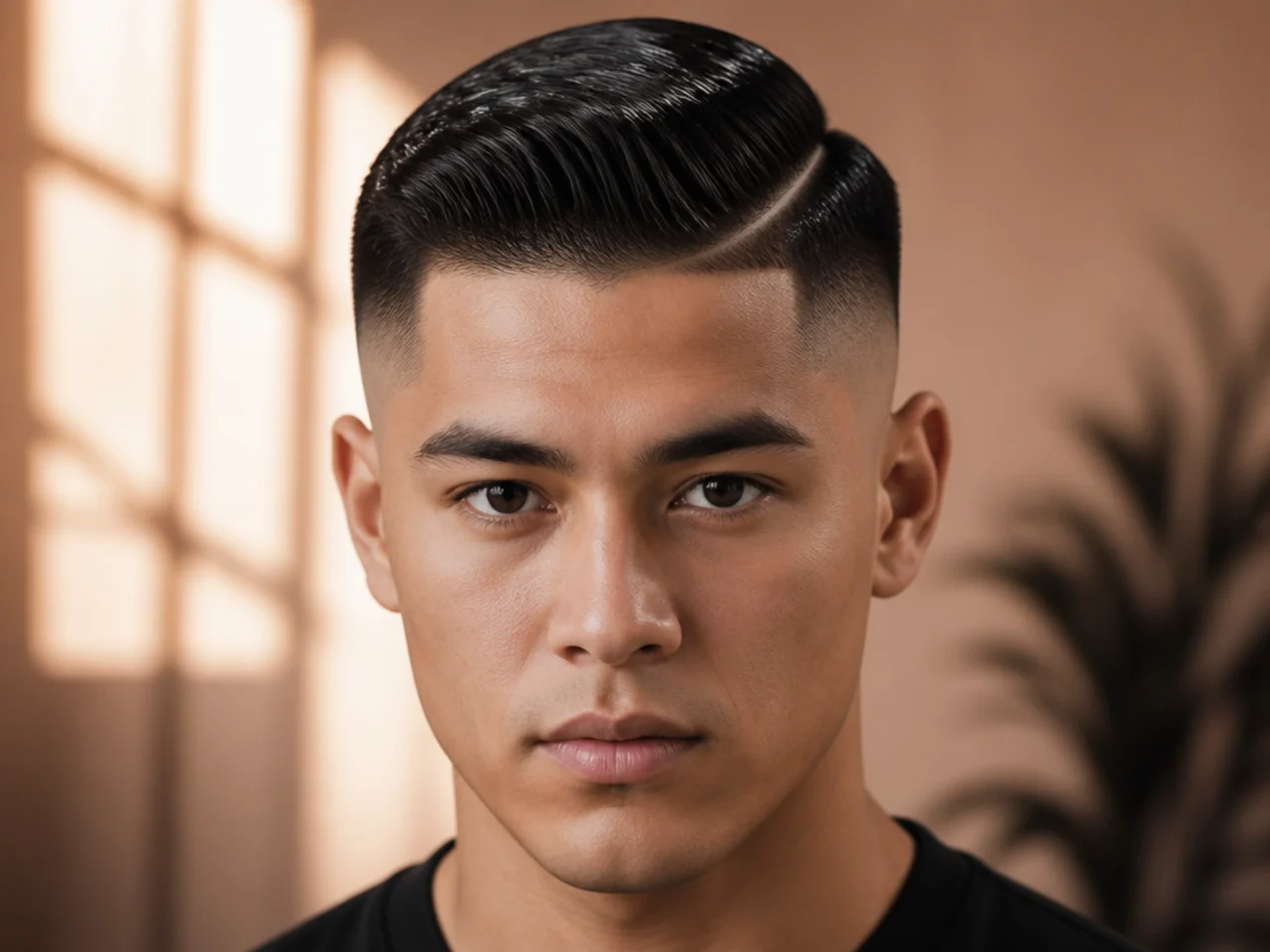
Where does the part go? Above the fade's top edge, with a centimetre of unfaded hair beneath it.
Mid or low fade for a comb over? Mid for definition, low for fullness.
Do I need a hard part? Only if your hair does not split naturally.
Final Thoughts
Take one measurement into the barbershop and the rest of this page follows from it — the distance between your natural part and the top of the fade. Ask for a centimetre of untouched hair in that gap and the comb over will still read as a comb over in week three, when everything else has softened.
For every version of the sweep see the comb over haircut guide, and for the fade height itself see the mid fade haircut. More in Fade Haircuts.