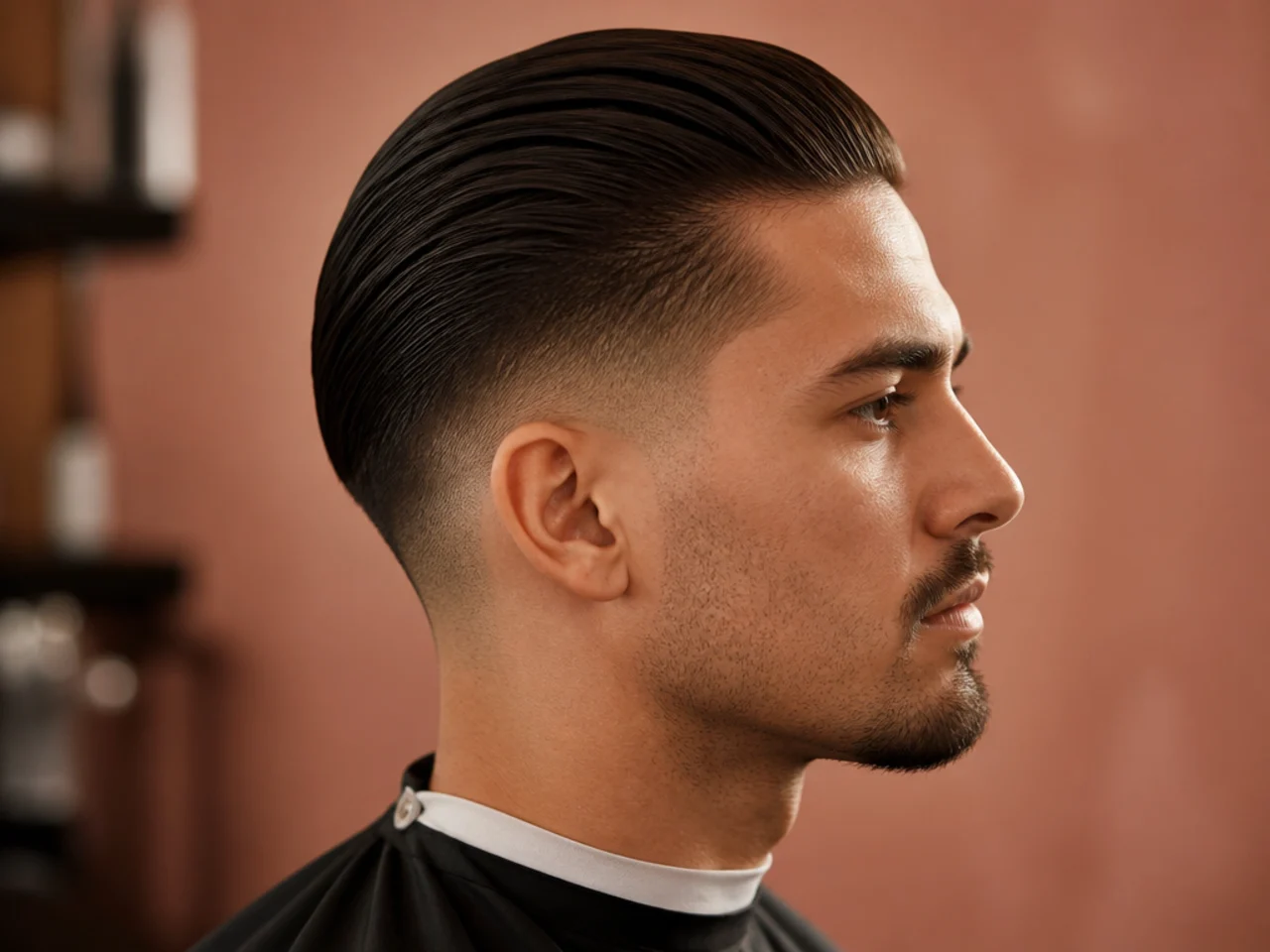
20 Slick Back Fade Haircuts for Men
Twenty slick back fade haircuts for men — skin, mid, drop, burst, and taper versions with the exact fade line, top length, and finish to hand your barber.
In this article · 32
- What Is a Slick Back Fade Haircut
- How to Choose the Right Slick Back Fade
- Every Slick Back Fade Worth Booking
- 1. Classic Slick Back Low Fade
- 2. Slick Back Mid Fade
- 3. Slick Back High Fade
- 4. Slick Back Skin Fade
- 5. Slick Back Low Taper Fade
- 6. Slick Back Drop Fade
- 7. Slick Back Burst Fade
- 8. Slick Back Undercut Fade
- 9. Hard-Part Skin Fade Slick Back
- 10. Wet-Look Slick Back Fade
- 11. Matte Modern Slick Back Fade
- 12. Long Slick Back with Low Fade
- 13. Short Executive Slick Back Taper Fade
- 14. Slick Back Pompadour with High Fade
- 15. Slick Back Fade with Beard Blend
- 16. Slick Back Fade with Line-Up
- 17. Curly Slick Back with Taper Fade
- 18. Wavy Slick Back with Drop Fade
- 19. Coily Slick Back with High Skin Fade
- 20. Straight Asian Slick Back with Mid Fade
- How to Ask Your Barber for a Slick Back Fade
- Styling and Maintenance
- FAQ
- What length do I need on top for a slick back fade?
- Which fade height works best with a slick back?
- Is a slick back fade still current in 2026?
- Can I do a slick back fade on curly hair?
- What is the difference between a slick back fade and a slick back taper?
- How much does a slick back fade cost?
The slick back fade is the two-move cut every barber gets asked for on rotation. The top combs straight back off the forehead. The sides gradient down to a defined fade line — low, mid, high, skin, taper, drop, or burst. The two halves talk to each other, and the version you pick decides whether the cut reads boardroom, wedding, or Saturday. This is the running gallery of twenty slick back fade men are asking for right now, with the fade line, top length, and finish for each.
For the wider men's category, start with the slick back haircut pillar. For every other cut in the fade family, the fade haircut hub is the place to browse.
What Is a Slick Back Fade Haircut
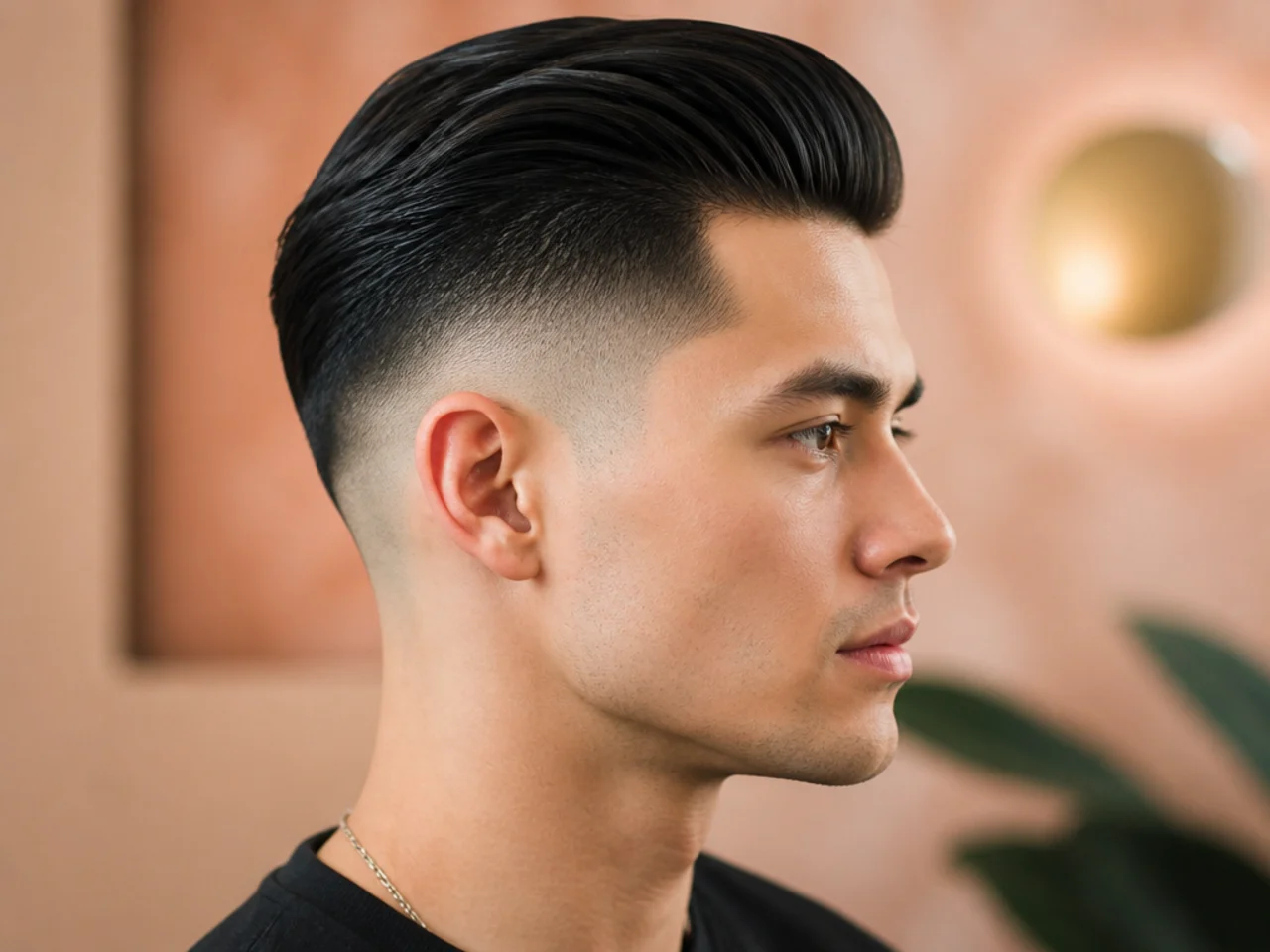
A slick back fade is a slick back on top and a fade on the sides — read as one build rather than two. The top runs four to six inches minimum so it can comb straight back and reach the crown. The sides drop through a gradient that ends at a defined line height — the ear, the temple, or the parietal ridge — with the shortest point either buzzed short (taper), close to skin (low, mid, or high fade), or bare scalp (skin fade).
The point of pairing the two is contrast. A scissor-cut side sits at the same length as the top and reads soft. A faded side sits shorter and cleaner, and the eye travels straight up to the combed-back mass. That is why the fade took over from the scissor-blended slick back in the last decade — the frame makes the whole face read sharper.
The other half of the definition is finish. Shiny is the classic pomade or gel look. Matte is the modern clay or cream version. Both work over every fade height. Pick the finish that matches your outfit calendar, not the photo.
How to Choose the Right Slick Back Fade
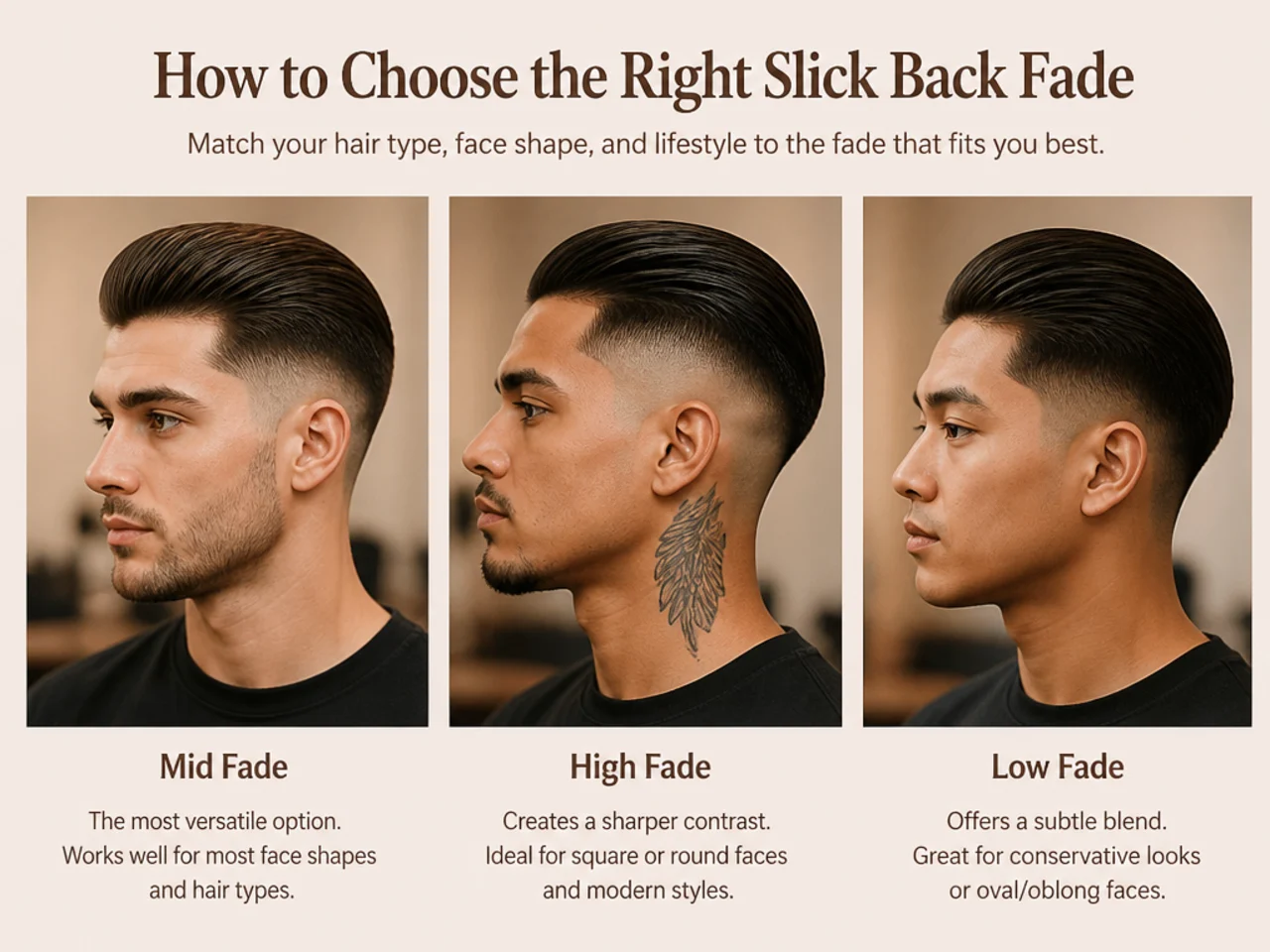
Three variables settle the version for you. Fade height is the biggest — low reads conservative, mid reads balanced, high and skin read sharp. Round and heart faces want mid or high because the vertical line pushes the eye up and lengthens the face. Long and oblong faces want a low or low-taper fade so the top of the head does not stretch further. Oval and square faces work with any height on this list.
Hair type sets the finish. Straight to slightly wavy hair carries wet-look shine cleanest. Wavy hair looks better under a matte cream — the natural bend adds movement that shine flattens. Curly and coily hair need a curl cream first and a light pomade second; skip the fine-tooth comb for a brush-back with fingers or a wide-tooth.
Maintenance decides the sustainable version. A skin fade wants a chair every ten to fourteen days. A mid fade stretches to three weeks. A low taper holds for six. If your calendar only fits a monthly cut, ask for a low fade or a low taper and skip the skin. The how often should men get a haircut guide covers rebook rhythms by cut.
Every Slick Back Fade Worth Booking
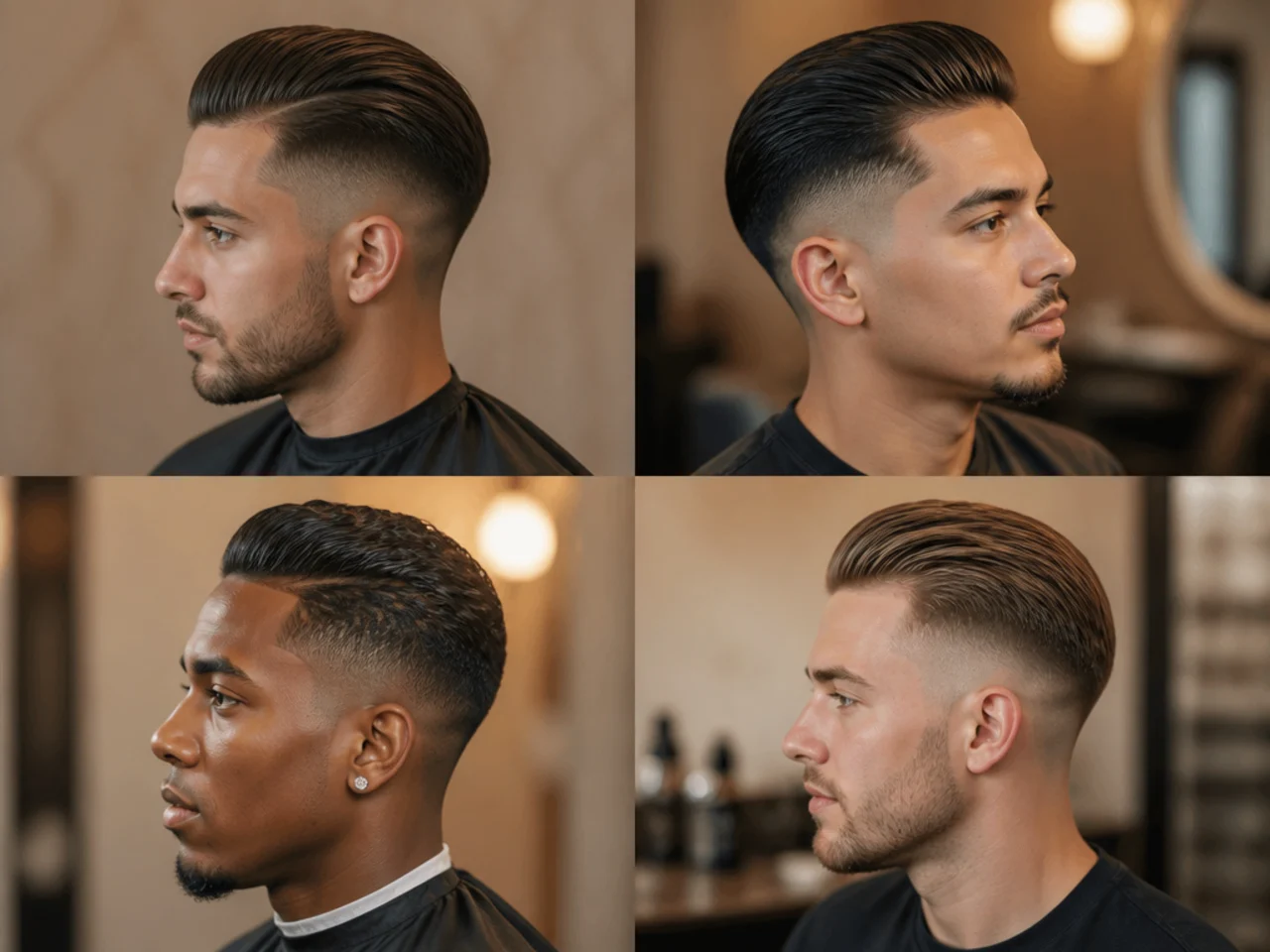
Twenty versions sorted by fade shape and finish. Each entry names the fade line, the top length, who it suits, and the ask-line for the chair. If you want more general slick back options that skip the fade, see the 25 slick back mens haircut roundup for the scissor-cut and undercut alternatives.
1. Classic Slick Back Low Fade
The safe modern default and the version most barbers cut ten times a day. A low fade begins an inch above the ear and drops to skin only at the neckline, leaving a soft blend everywhere else. Four to five inches of length up top combs straight back off the forehead. Reads polished at work, grown-up at dinner, current on Instagram. Fits every face shape and every straight-to-wavy hair type.
Ask for: "low fade starting an inch above the ear, four to five inches on top scissor-blended into the fade, slick back finish."
Styling: medium-hold pomade combed back on damp hair, blow-dried for thirty seconds against the top for lift. Book every three to four weeks.
2. Slick Back Mid Fade
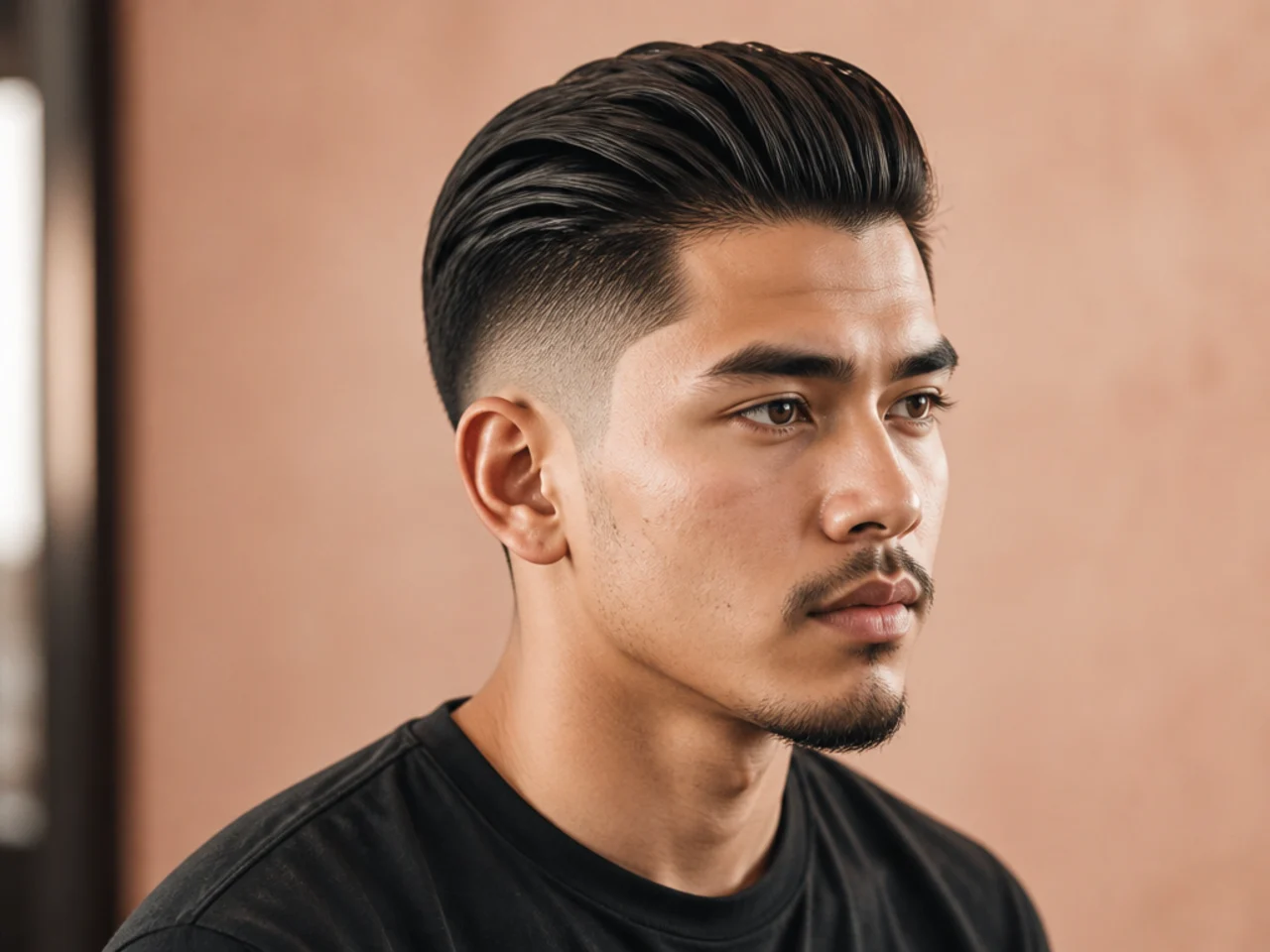
The most-requested slick back fade on any barbershop wall. The mid fade lands the transition at the temple — the visual midpoint of the side of the head — giving you enough contrast to read modern without dominating the top. Five inches on top combed straight back, hard blend into the fade, matte or shine finish either works. Round faces gain length from the vertical line. Square jaws stay defined.
Ask for: "mid fade at the temple line, five inches on top, hard blend into the fade, slick back finish."
Styling: medium-hold pomade or a matte cream, combed once with a fine-tooth. Re-cut every two to three weeks — the temple line dates first.
3. Slick Back High Fade
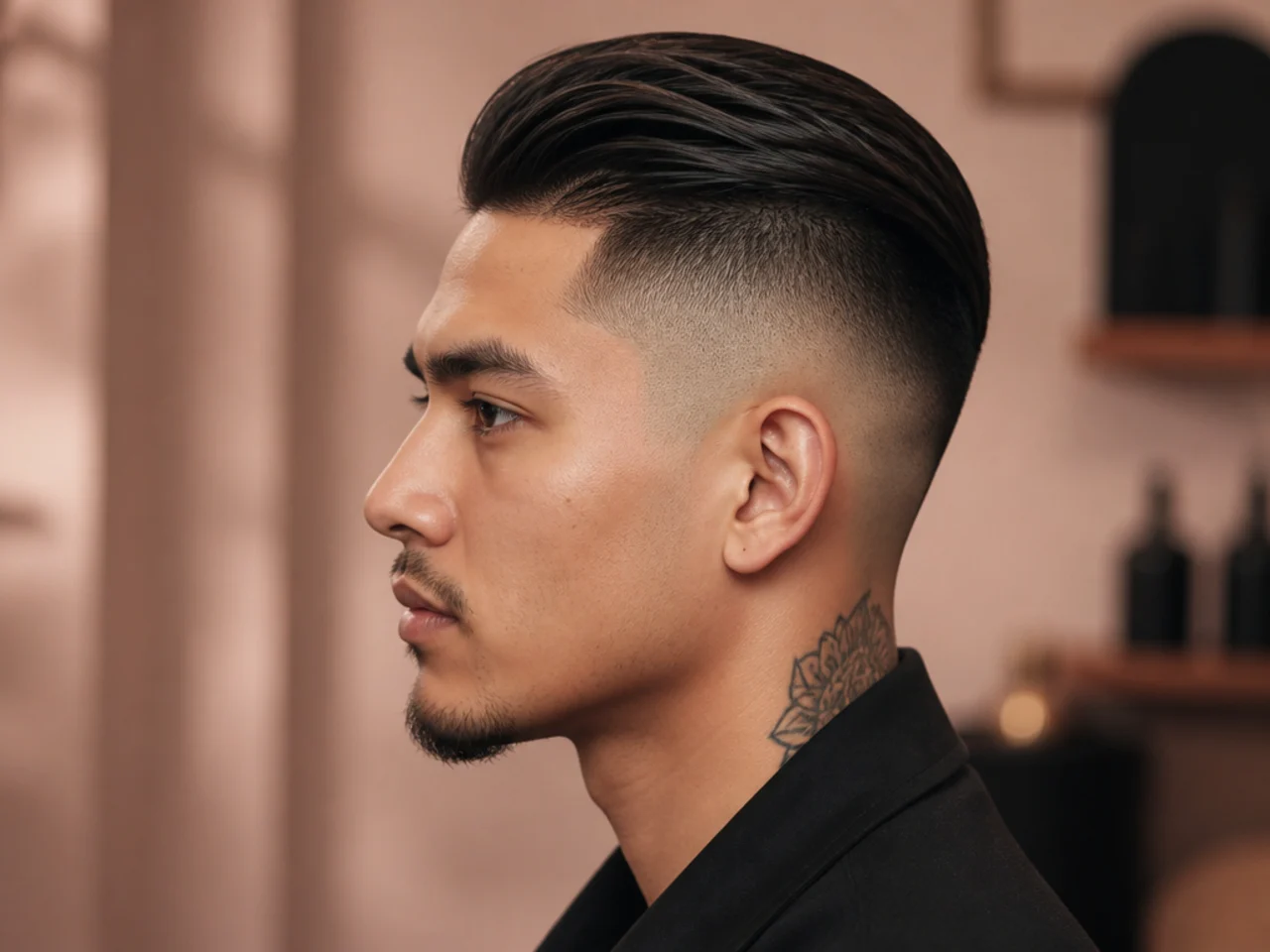
The bold contrast version. The high fade pushes the transition up near the parietal ridge, and the combed-back mass sits like a crown on top of near-skin sides. Best on square, oval, and diamond faces with strong jaws. Thick, coarse hair carries the height most cleanly — fine hair goes flat without a blow-dry. Skip this fade height if you are round-faced; the high line stretches roundness upward.
Ask for: "high fade starting near the parietal ridge, five to six inches on top, hard line at the transition, slick back finish."
Styling: strong-hold pomade or matte clay on damp hair. Comb straight back with intent — the height contrast wants a clean parting between fade and top. Book every three weeks.
4. Slick Back Skin Fade
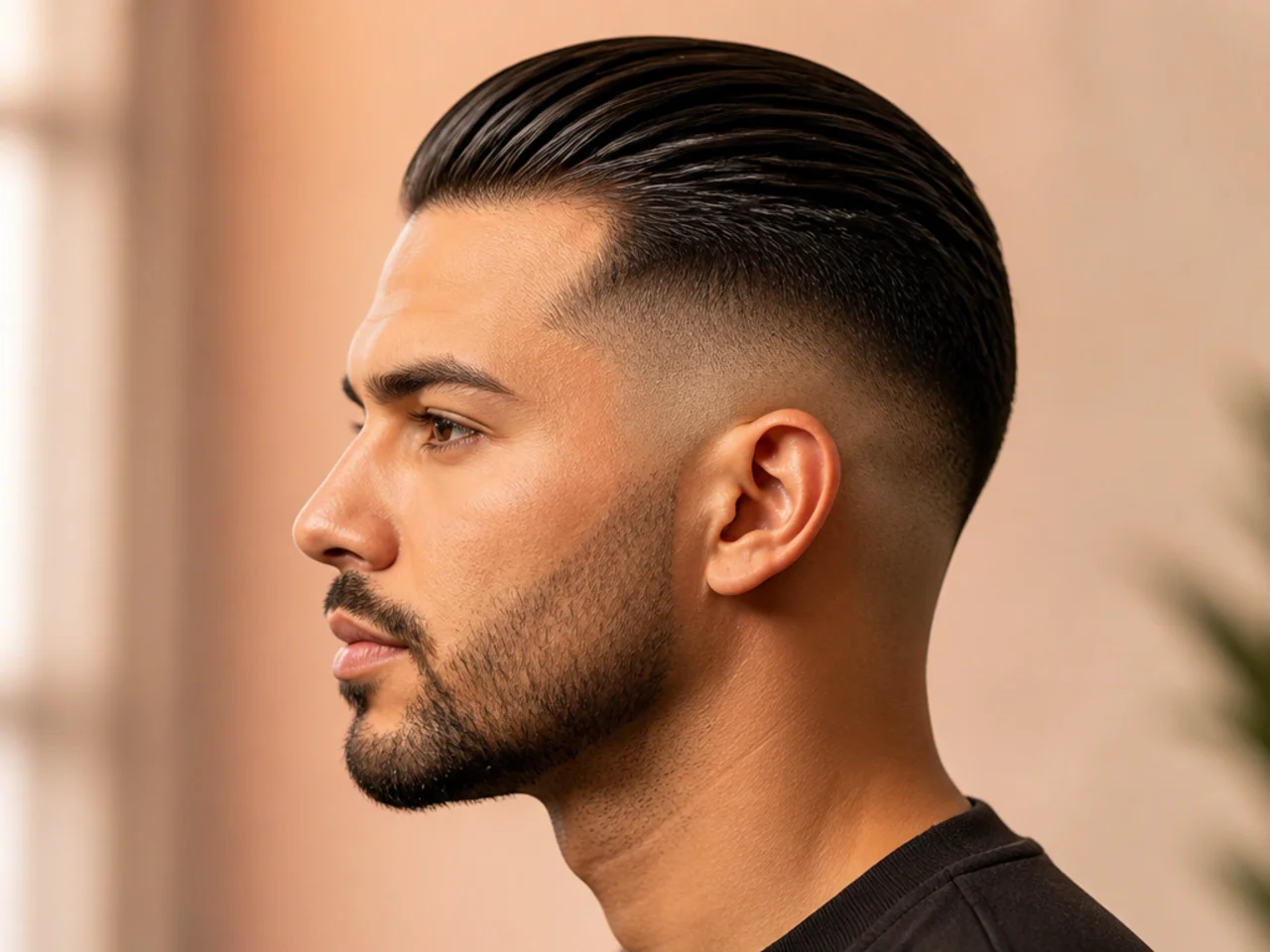
The sharpest version on the list. A skin fade takes the shortest point of the gradient all the way down to bare scalp, then blends up into the top length. The contrast between smooth scalp and combed-back mass reads architectural. Best on square, oval, and diamond faces. Any hair type on top will hold it. The trade-off is upkeep — skin fades want a chair every ten to fourteen days.
Ask for: "skin fade — mid position, up to bare scalp at the low point — five inches on top, hard blend, slick back finish."
Styling: shine pomade for the classic feel, matte clay for the modern one. Sunscreen on the freshly bare panel for the first two days after the cut.
5. Slick Back Low Taper Fade
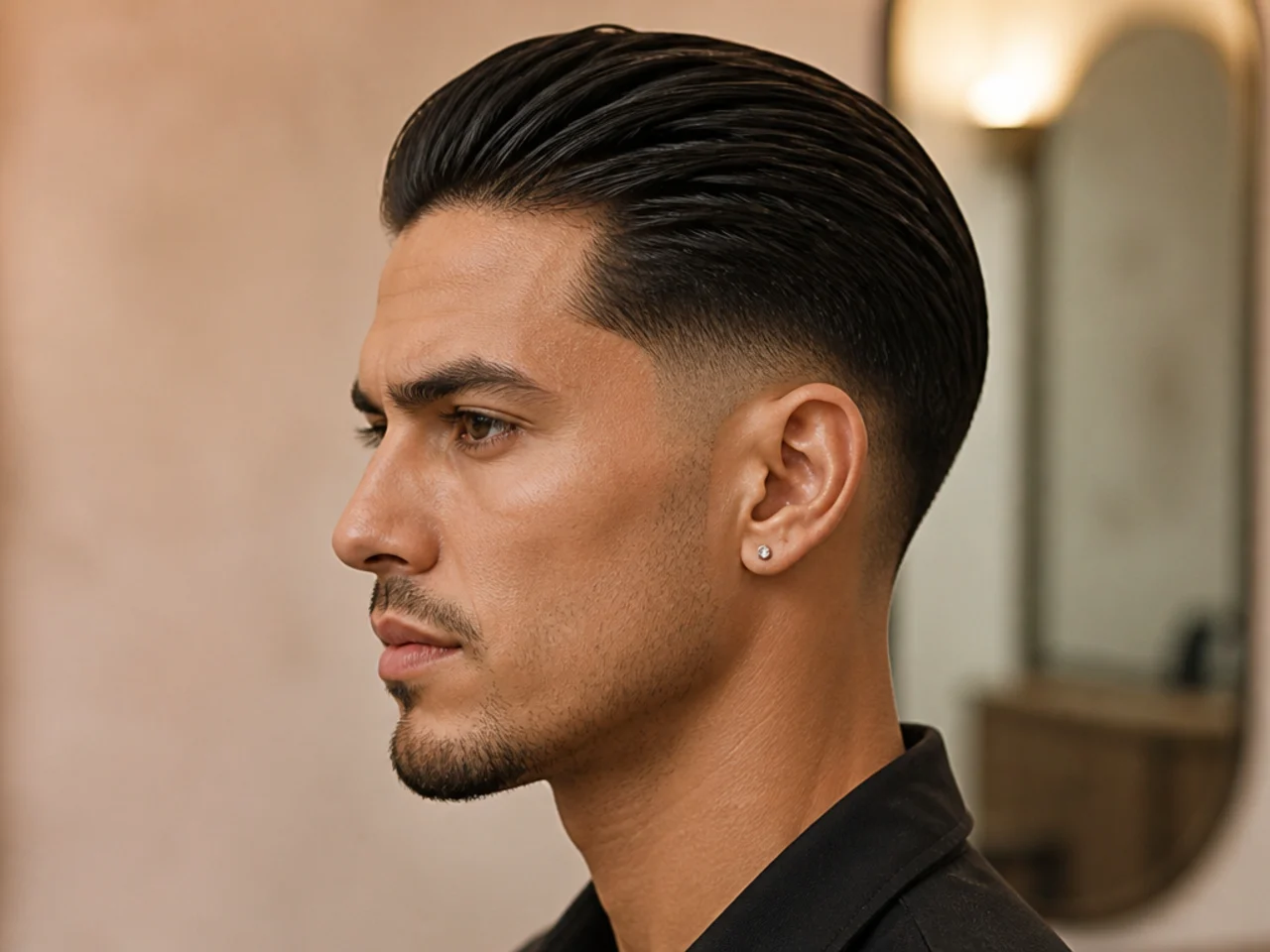
The professional-office favorite. A low taper fade keeps the sides mostly scissor-cut, then tapers only at the neckline and sideburn — enough to crisp the edges without a full fade line. This is the version that still looks sharp on day three without restyling. Fits every face shape and every hair type. Works from suit to weekend without adjustment.
Ask for: "low taper fade at the neckline and sideburn, scissor-blended everywhere else, four to five inches on top, slick back finish."
Styling: shine pomade for polish or matte cream for stealth. Comb back once, dry once. Book every five to six weeks.
6. Slick Back Drop Fade
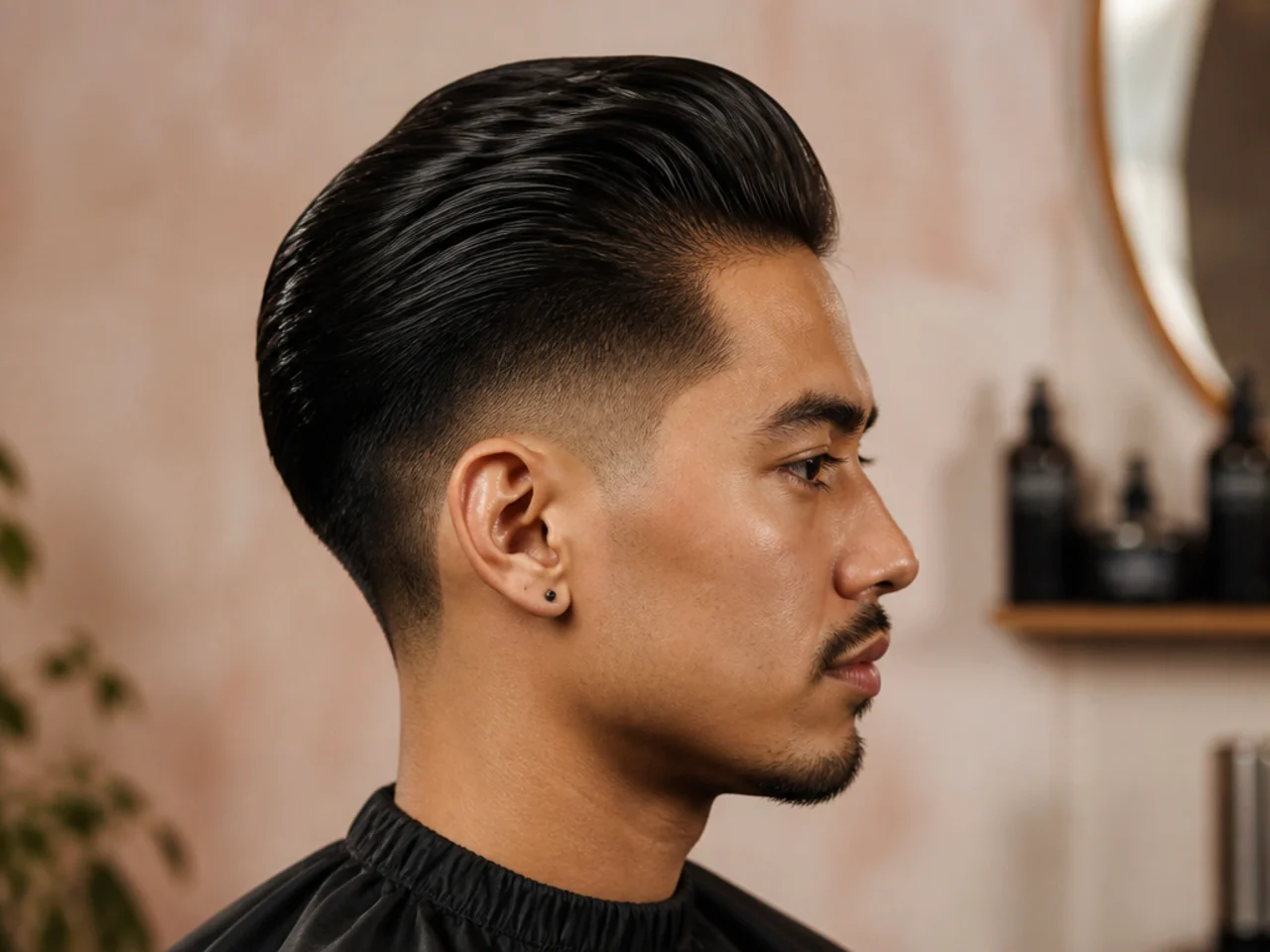
The drop fade dips down behind the ear rather than staying level with the temple. That curve follows the shape of the skull and puts the shortest point at the back of the head rather than the ear. Paired with a slick-back top, the drop draws the eye around the head in one continuous line. Fits round and oval faces best — the curve adds structure at the back. Straight to gently wavy hair carries the sharp curve most cleanly.
Ask for: "mid drop fade starting at the temple and dipping behind the ear, five inches on top, slick back finish."
Styling: shine pomade for classic, matte cream for modern. The drop does the visual work — no need to over-style the top.
7. Slick Back Burst Fade
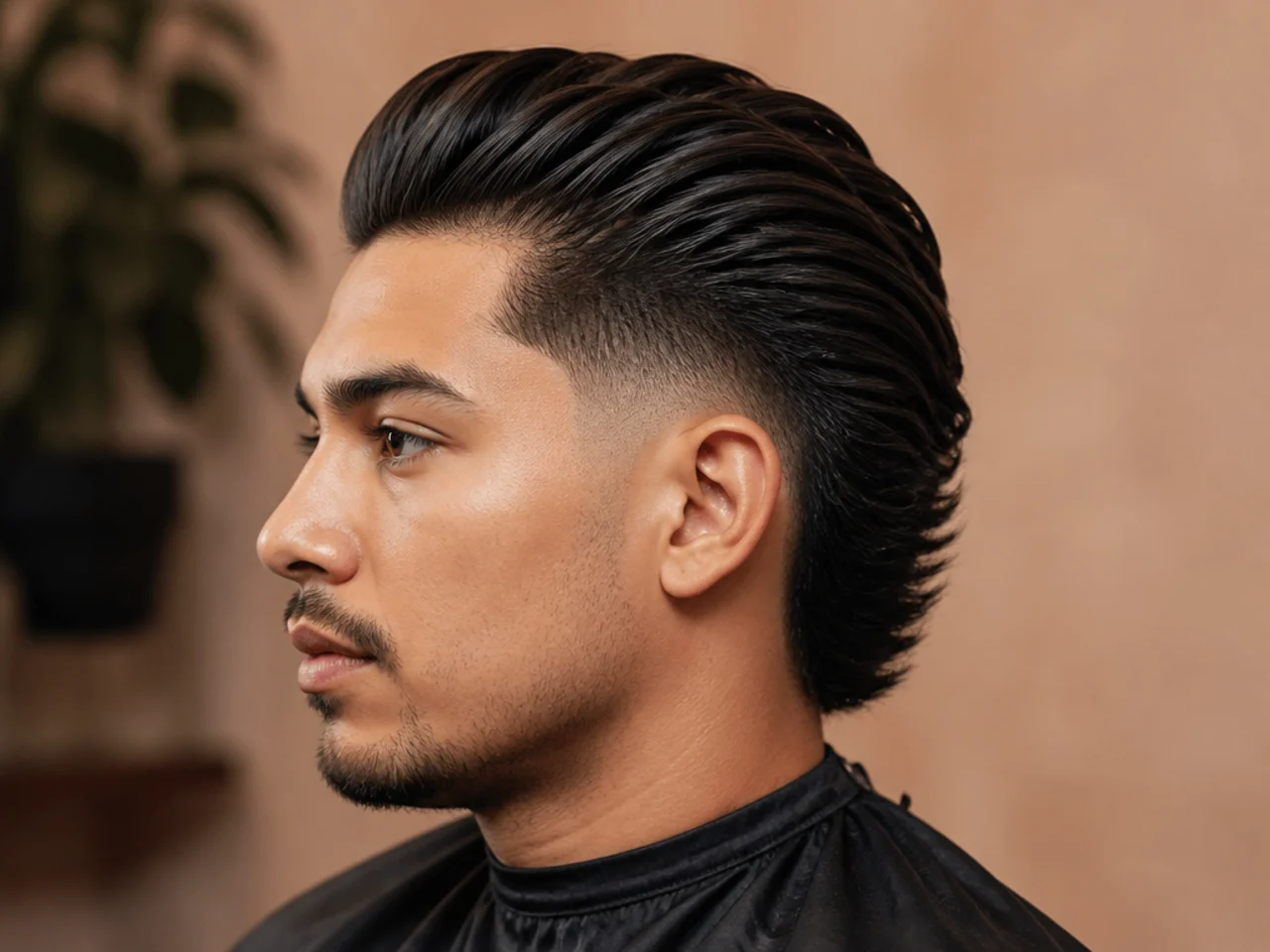
The burst fade arcs around the ear in a semicircle — everything fades outward from that arc, leaving length longer at the neckline. Paired with a slicked top, the burst adds movement to a build that would otherwise sit static. Bolder than a drop, softer than a full high skin fade. Fits oval and heart-shaped faces. Lands well in the twenties and early thirties.
Ask for: "burst fade arcing around the ear, length preserved at the neckline, four to five inches on top, slick back finish."
Styling: matte cream for texture, or a light shine pomade if the top needs polish. Book every three weeks — the ear curve softens first.
8. Slick Back Undercut Fade
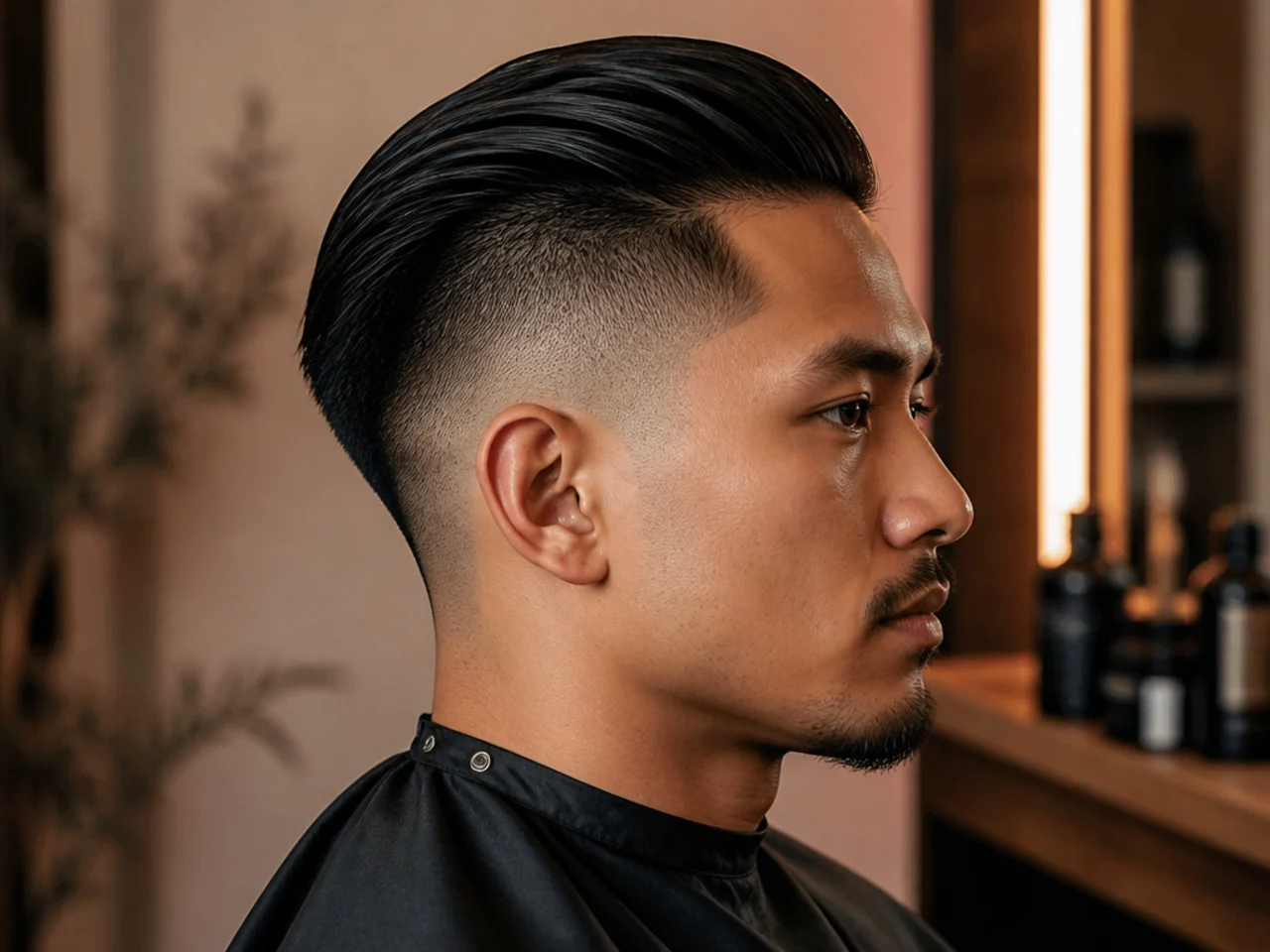
The undercut fade is a hybrid — the disconnected line of an undercut sits at the upper sides, and a low fade blends the buzzed section into skin at the bottom edge. You keep the sharp contrast of a full undercut but soften the stop above the ear. Best on strong jawlines and defined cheekbones. Thick or coarse hair holds the disconnect most cleanly.
Ask for: "undercut on the upper sides with a #2 guard, low fade at the bottom edge blending to skin, five to six inches on top, slick back finish."
Styling: strong-hold pomade or wax on damp hair. Comb back firmly with a fine-tooth, then push the front up for shape. Product does the work — the sides cannot help.
9. Hard-Part Skin Fade Slick Back
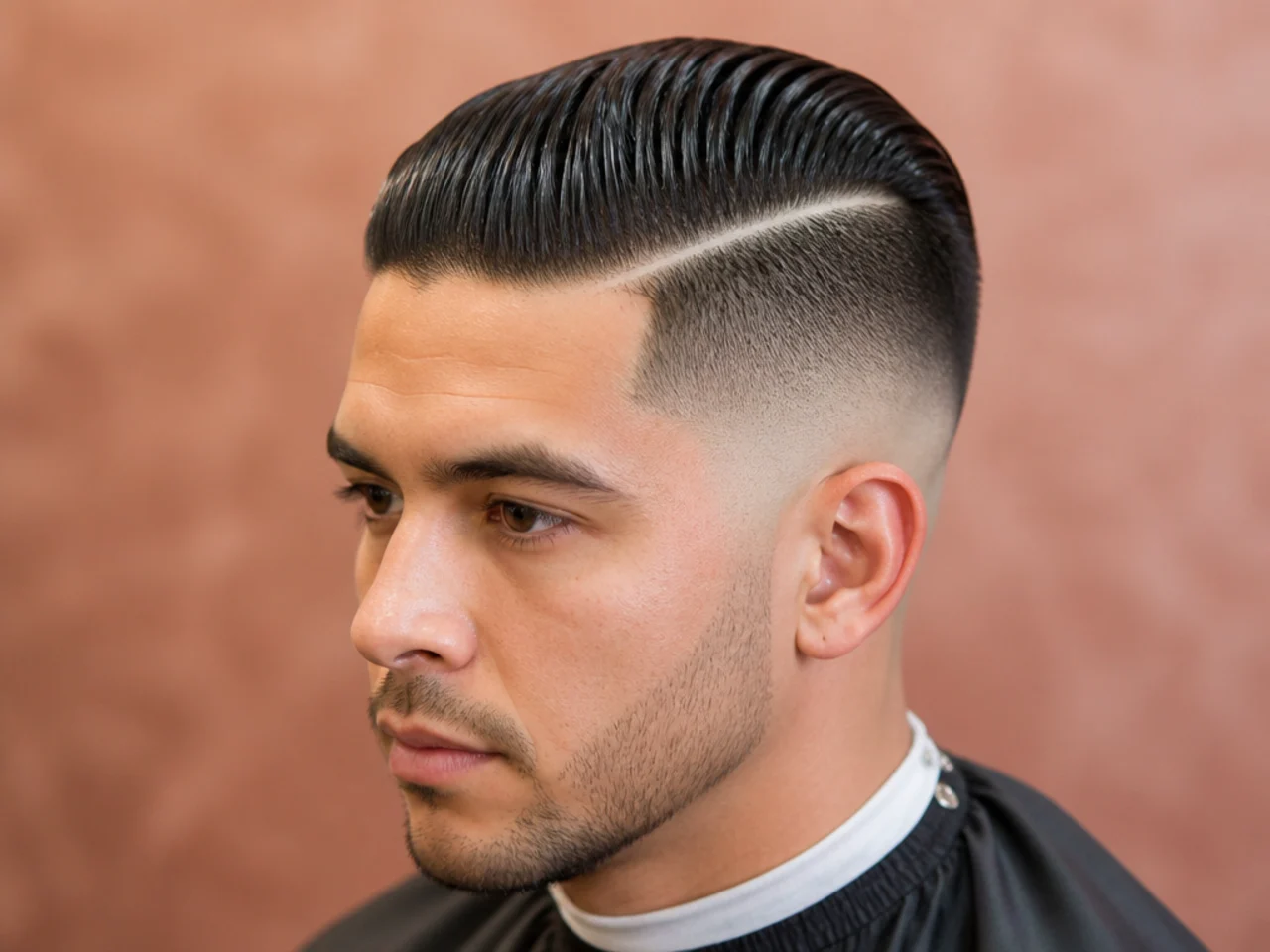
A razor-drawn hard part line cuts into the scalp along the dominant side, sitting above a high skin fade. The top slicks back over the line rather than parting into it — the hard part just adds a graphic detail against the smooth panel. Best on square and oval faces with strong bone structure. Coily hair reads especially sharp under the razor line. Book every two weeks — the hard part fuzzes fastest.
Ask for: "high skin fade, razor-drawn hard part on my dominant side, five inches on top, slick back over the part."
Styling: matte paste worked with fingers, top combed back cleanly so the hard part stays visible below the slick. Skip shine — it pulls the eye off the razor line.
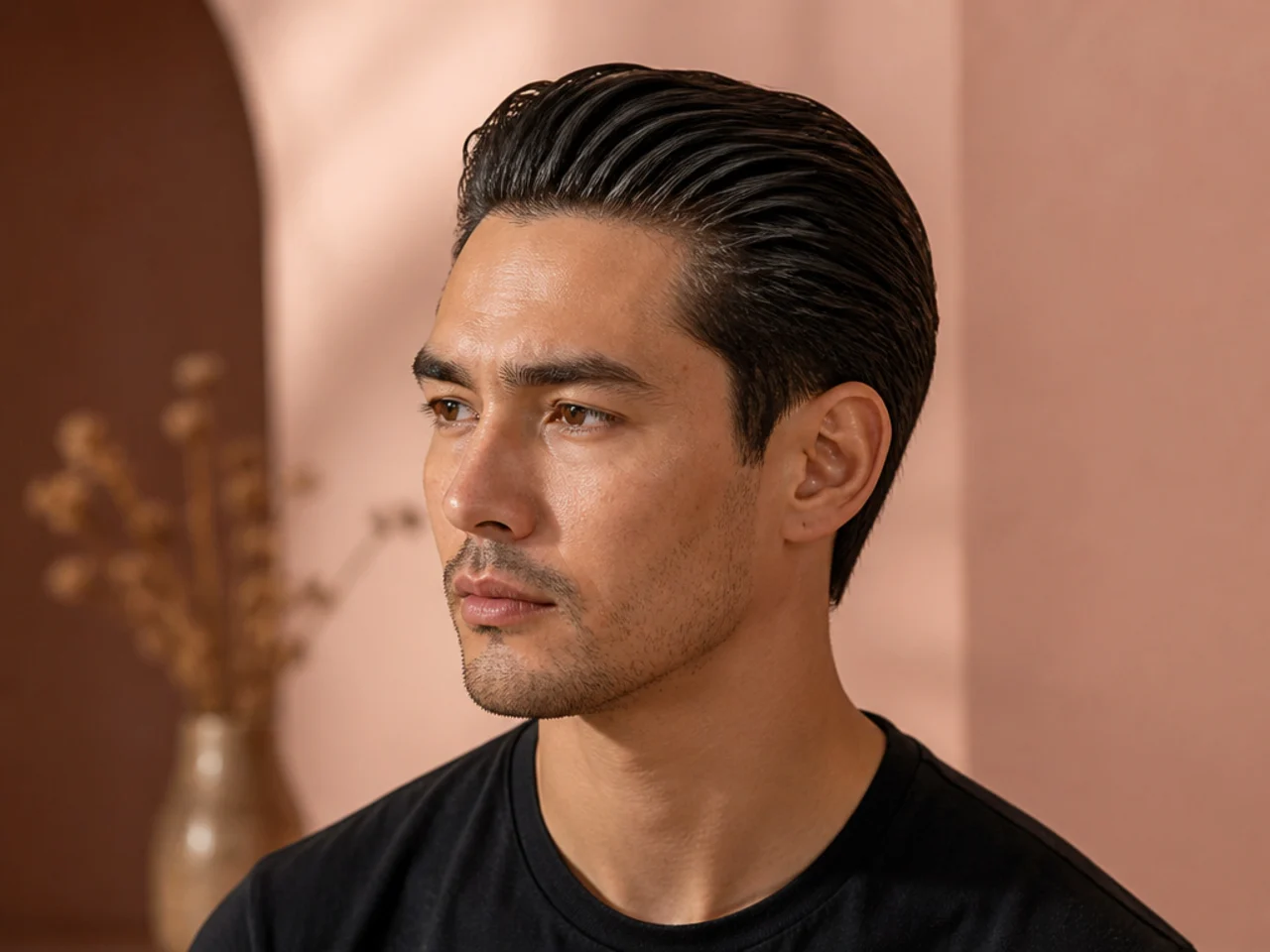
10. Wet-Look Slick Back Fade
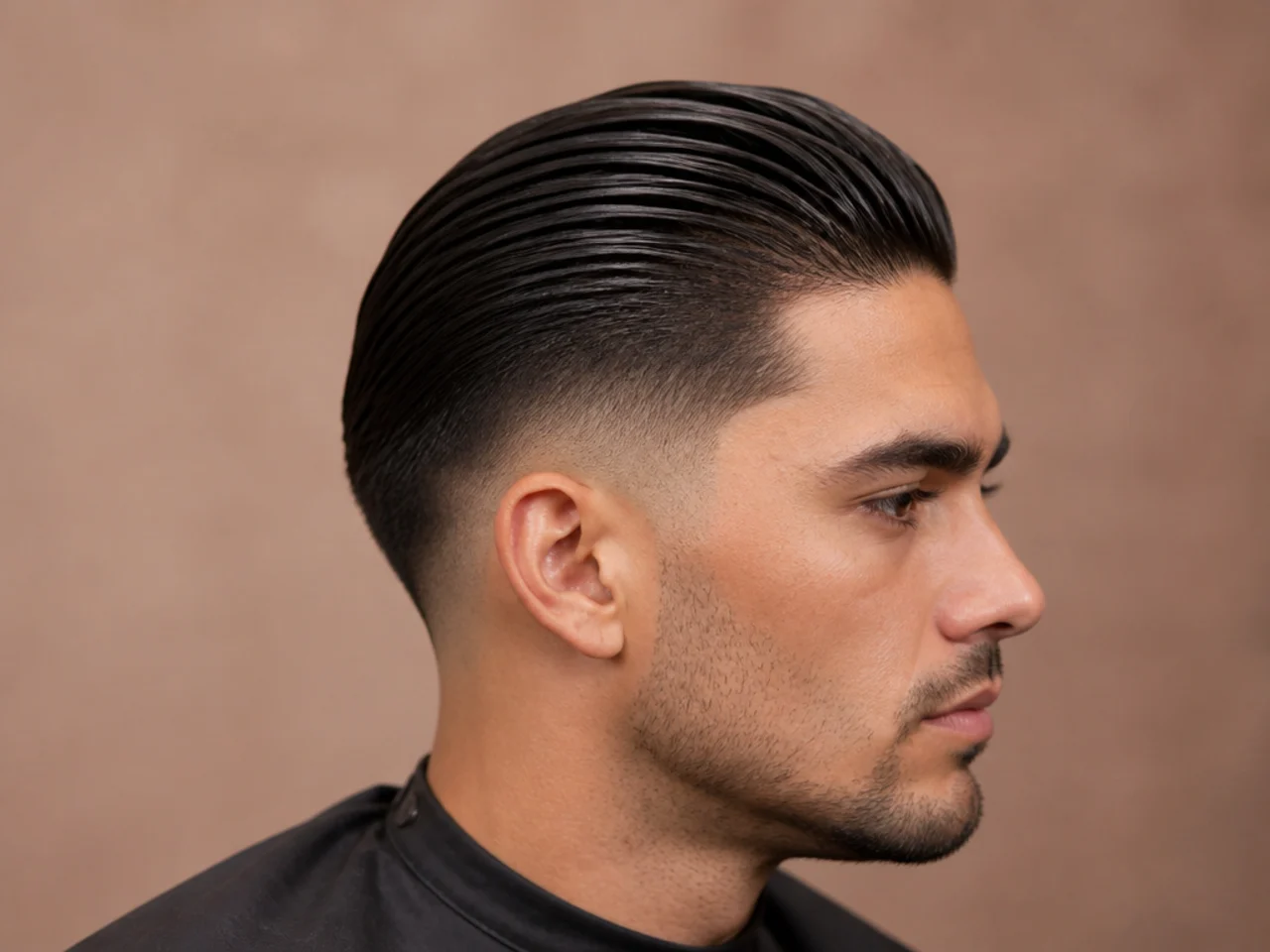
The maximum-shine version paired with a modern fade instead of scissor-cut sides. Every strand visible, every strand pointing back. This is the wedding-guest, black-tie, red-carpet build — Old Hollywood on top, current fade on the sides. Fits straight to slightly wavy hair; curls fight the flat. Pair with any fade height, though mid and high sit best with the shine.
Ask for: "mid or high fade, five inches on top, slick back with a wet-look finish for formal wear."
Styling: heavy oil-based pomade or a wet-look gel on soaking-damp hair. One clean comb-through, then hands off. Touching the shine breaks the shine.
11. Matte Modern Slick Back Fade
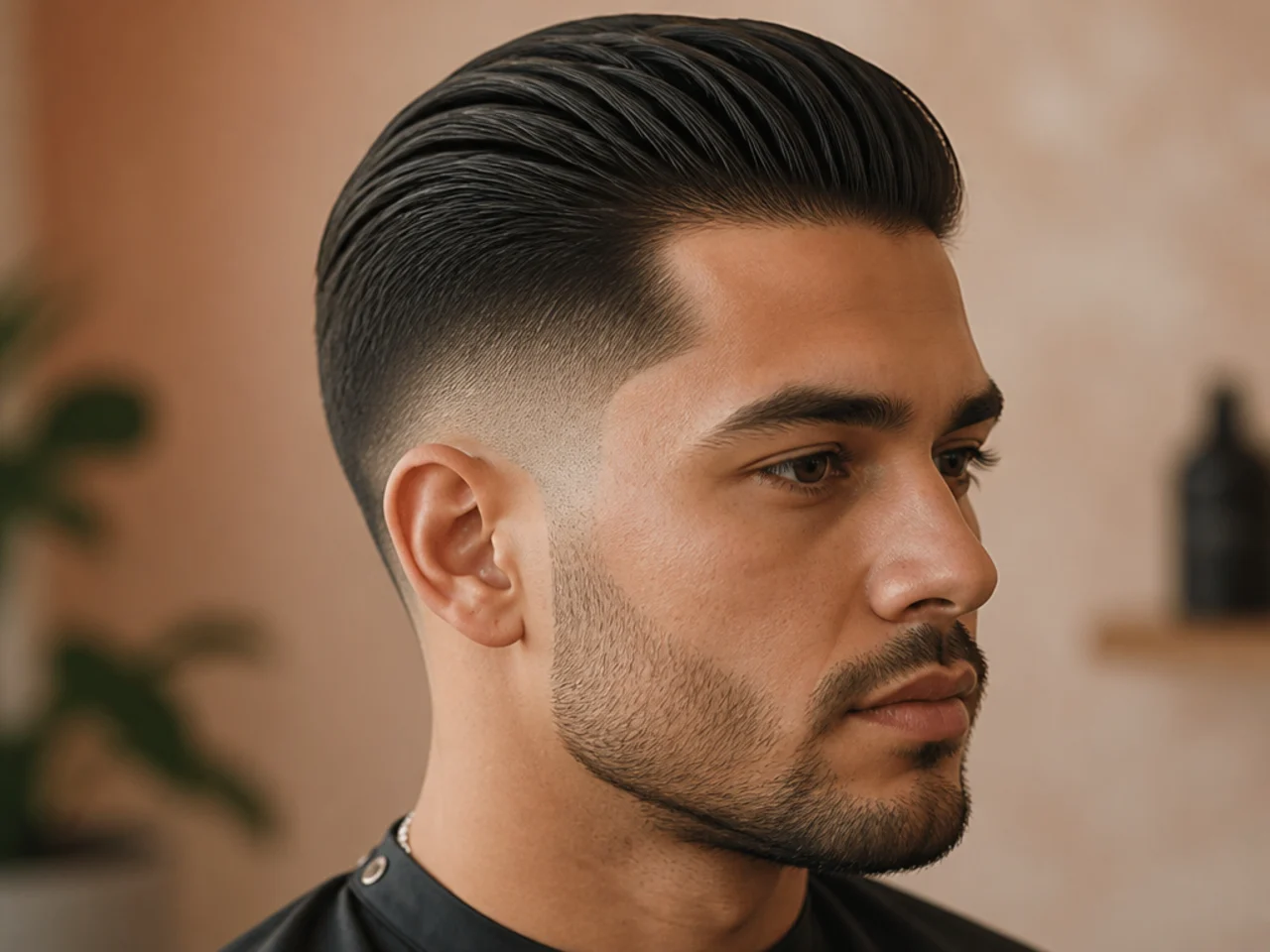
The version most guys under forty ask for now. Same combed-back direction as the classic, matte finish instead of gloss. Reads current without the just-came-from-a-wedding gleam. Any fade height works — pair with a low fade for subtle, mid for balanced, high for bold. Wavy hair carries the matte finish best because the natural bend adds visible movement.
Ask for: "low or mid fade at the temple, four to five inches on top, slick back with a matte textured finish."
Styling: matte clay or cream on towel-dried hair. Blow-dry back with a vent brush, then finger-pass through the finish to keep the texture alive. No comb on the last pass.
12. Long Slick Back with Low Fade
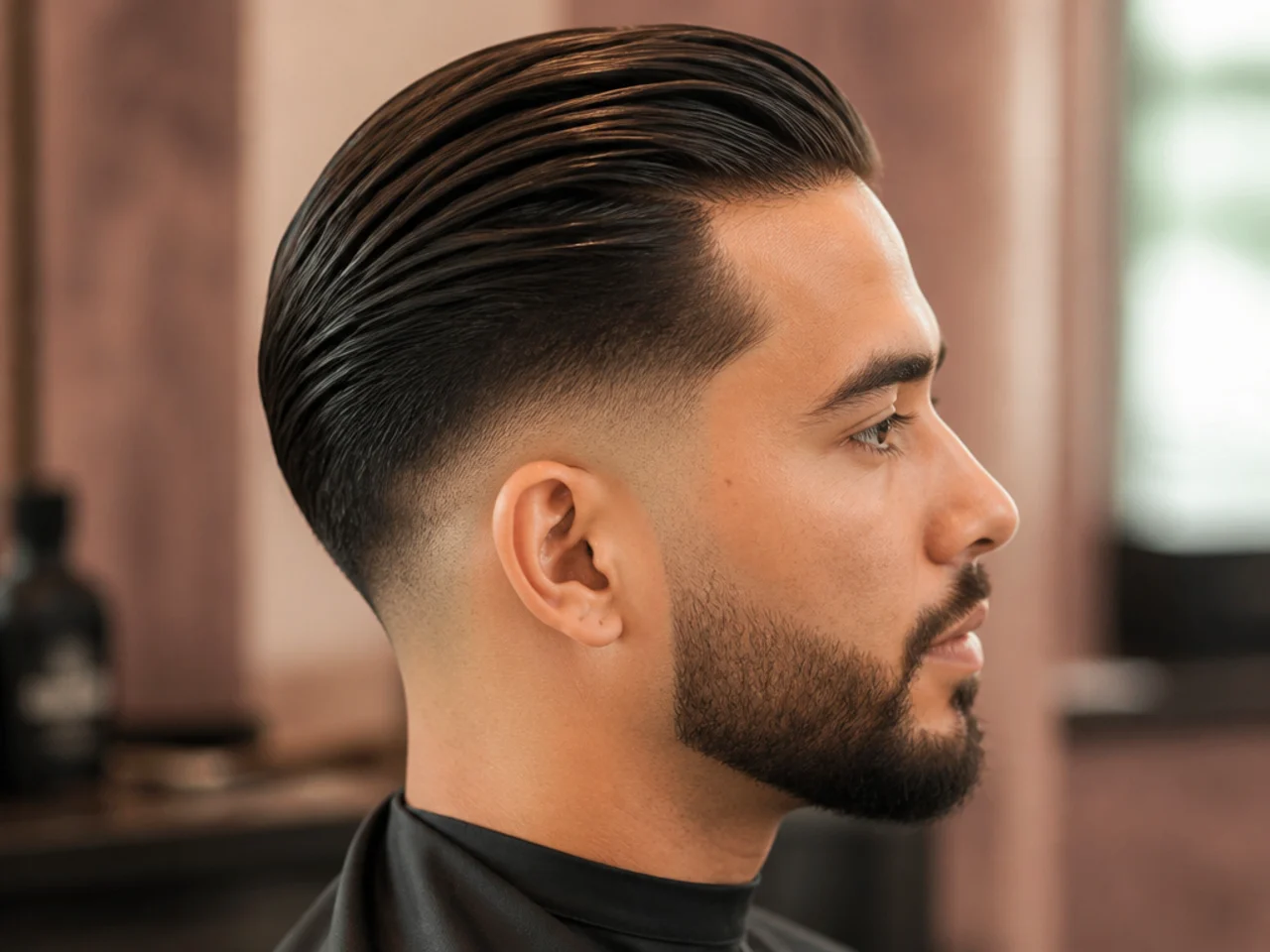
The six-to-eight-inch top version paired with a subtle low fade. The length gives you real flow when the hair settles into the crown; the low fade keeps the neckline clean without breaking the flow. Suits guys with straight to loose-wave hair and patience for the grow-out phase. A short groomed beard balances the length up top. Best on oval, oblong, and square faces.
Ask for: "low fade at the ears, six to eight inches on top layered at the ends, slick back with natural flow, low taper at the neckline."
Styling: medium-hold pomade root to tip on damp hair, then blow-dried back with a round brush for lift at the front. Sea-salt spray for extra texture if the hair goes flat.
13. Short Executive Slick Back Taper Fade
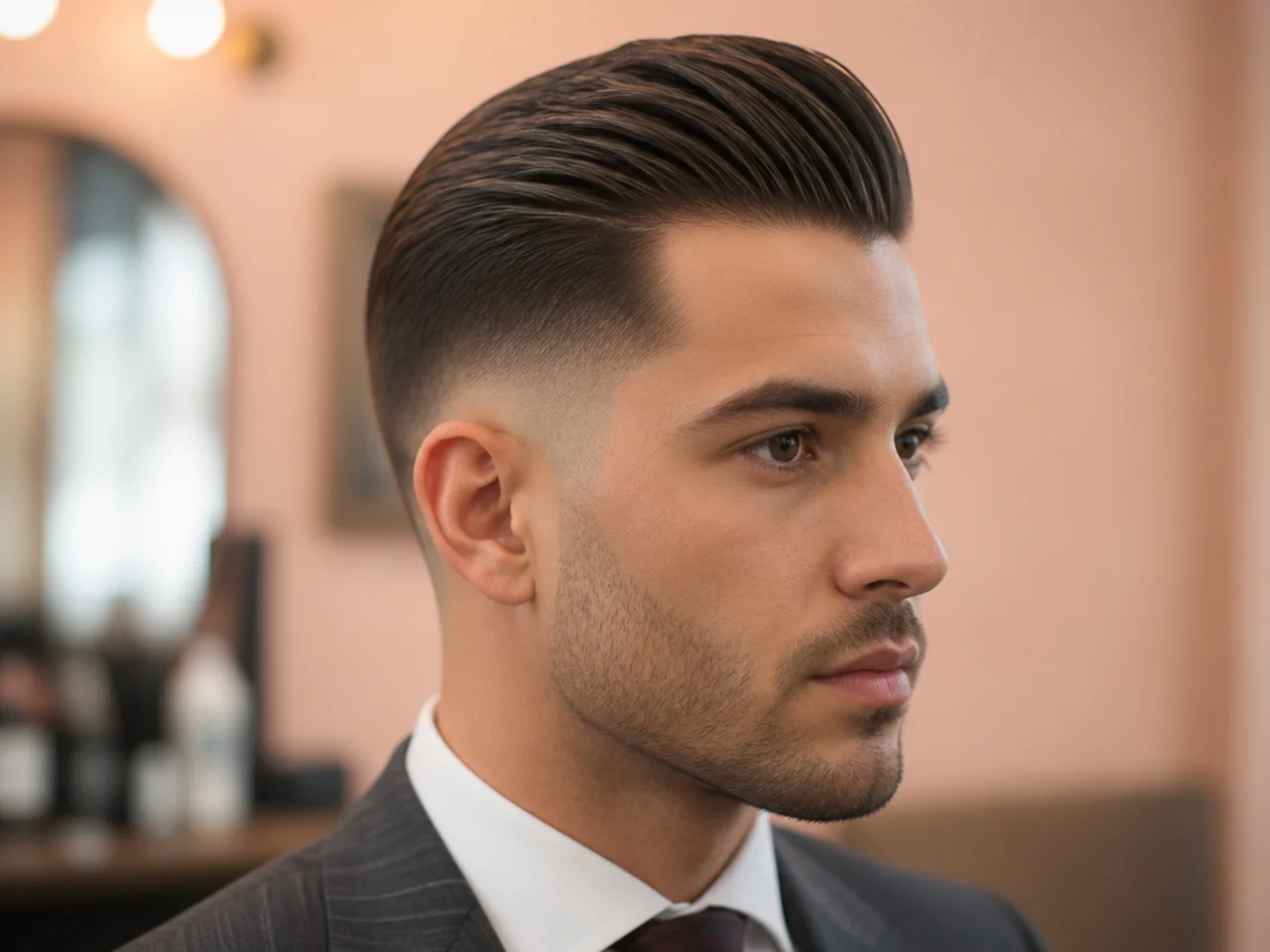
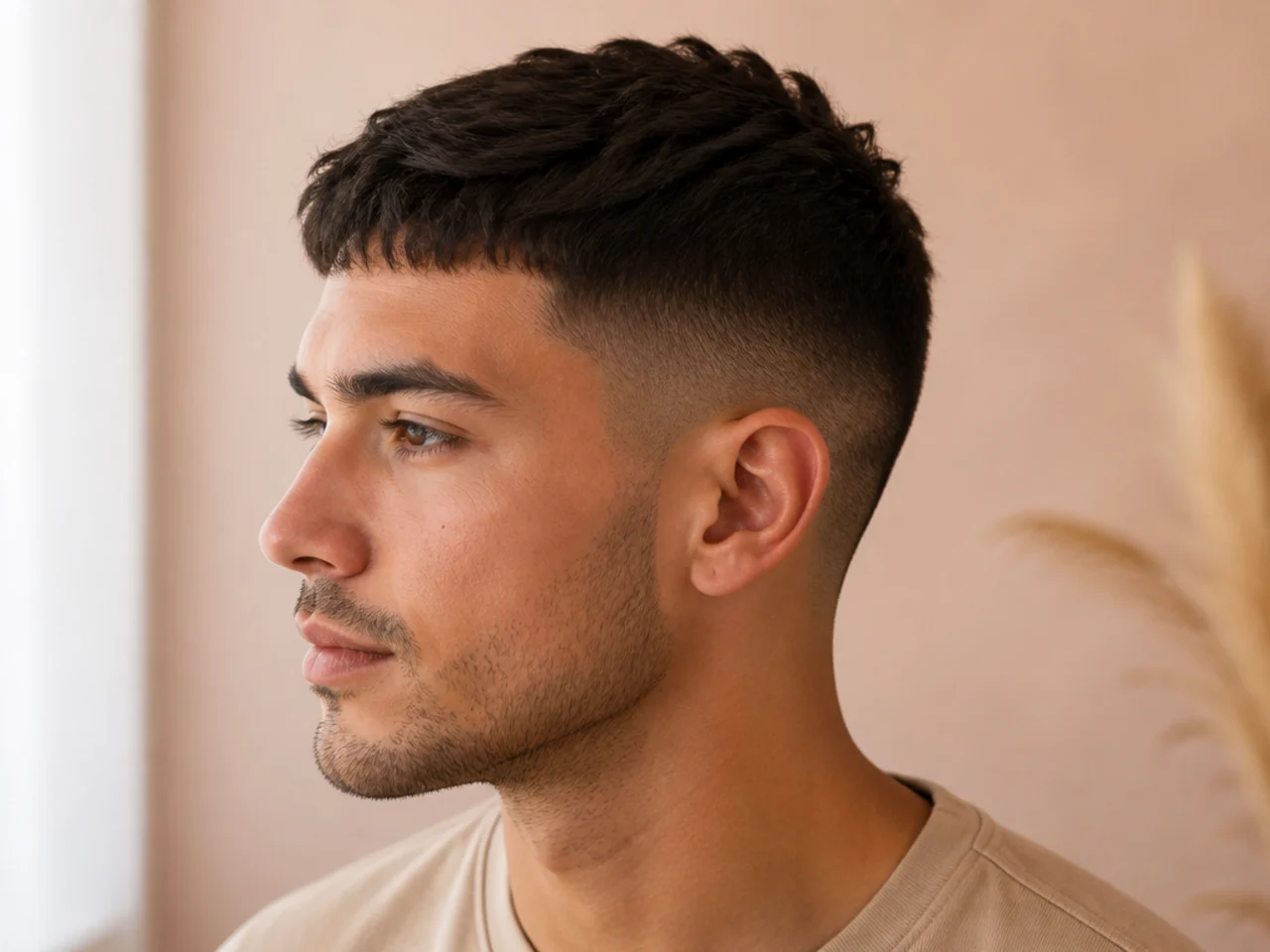
The low-maintenance corporate version. Three to four inches on top instead of six — enough to reach the crown, not enough to require a blow-dry. Paired with a low or mid taper fade, it holds shape by lunch without restyling. Suits fine hair, thinning at the crown, or anyone who refuses to pick up a hair-dryer. Fits every face shape and every workplace.
Ask for: "low or mid taper fade at the temple and neckline, three to four inches on top, short slick back finish."
Styling: lightweight pomade or shine cream on damp hair. One fine-tooth comb-through and out the door. Under a minute.
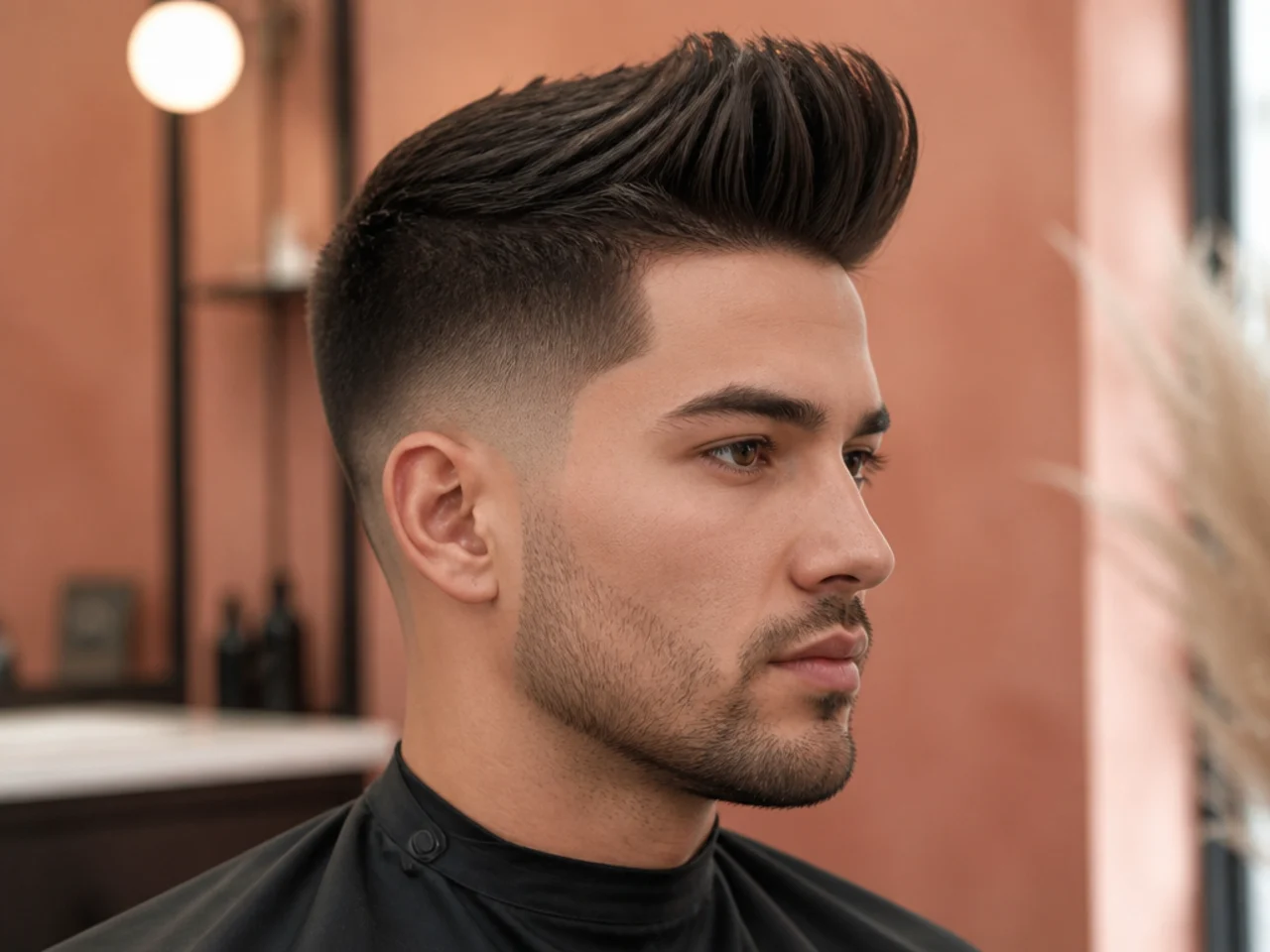
14. Slick Back Pompadour with High Fade
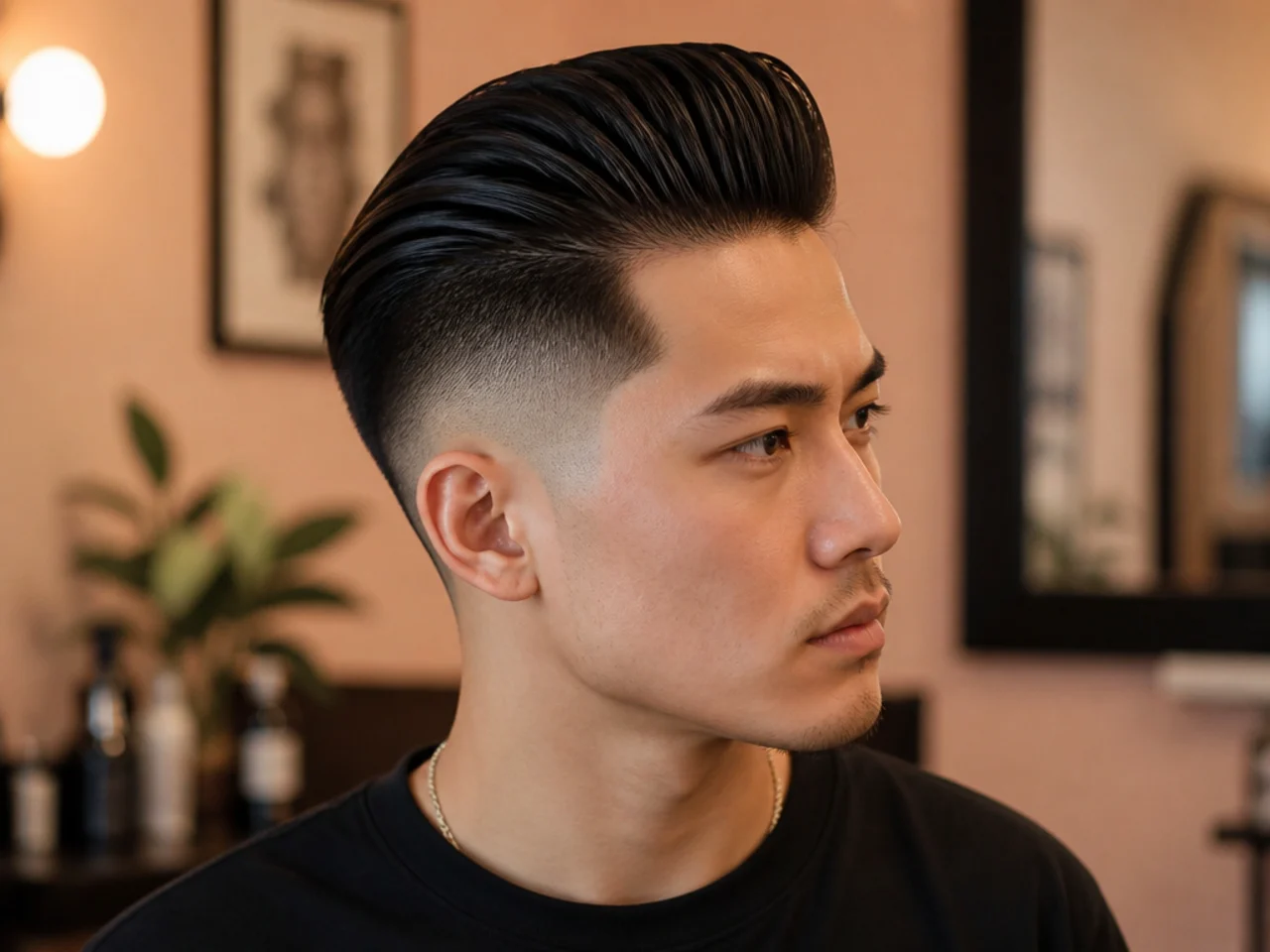
The theatrical hybrid. Combines the height of a pompadour with the flat direction of a slick back, all sitting above a high fade or skin fade. Front rises three to four inches, then the whole mass combs straight back through the crown. Overlaps with the quiff without becoming one. Suits thick or wavy hair with real density; fine hair goes flat without mousse under the pomade.
Ask for: "high fade or skin fade, six to seven inches on top with the front cut slightly longer, pompadour front rolling into a slick back."
Styling: volumizing mousse into damp roots, round-brush blow-dry the front up and back, finish with a strong-hold shine pomade combed straight back. Lock with a spritz of hairspray if you are heading out.
15. Slick Back Fade with Beard Blend
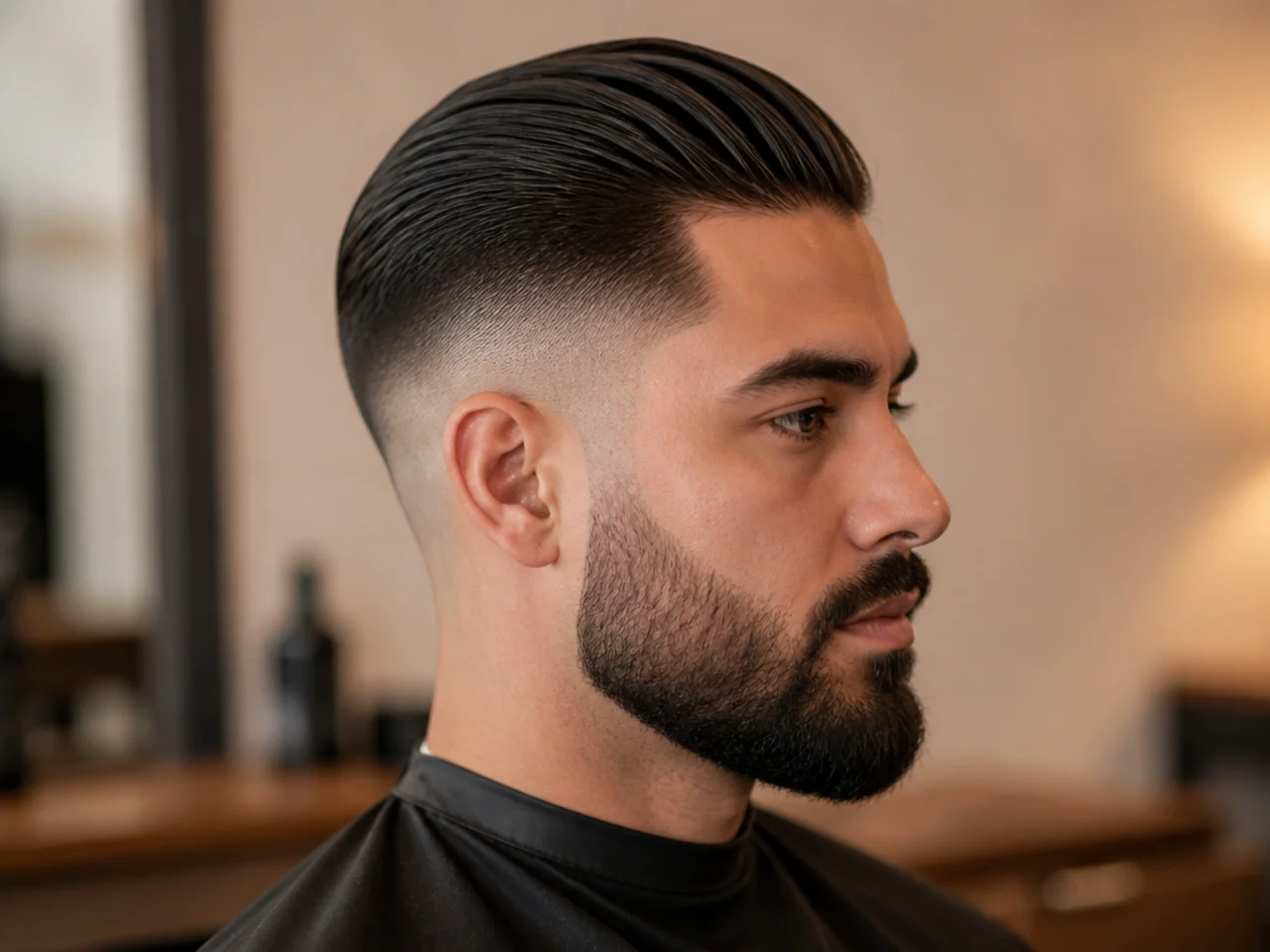
The full statement build. Mid or high fade on the sides, defined slick back on top, and a beard that fades directly into the haircut where the sideburn meets the ear. Every element flows into the next in one continuous line. Fits square and oval faces most. Beard needs a half-inch minimum to fade properly. Book both cuts in the same appointment — the sideburn transition is where DIY blends fall apart.
Ask for: "mid or high fade, five inches on top with a slick back finish, beard trimmed to a #4 and blended into the fade at the sideburn."
Styling: shine pomade on top combed straight back. A drop of beard oil worked through the beard with a boar-bristle brush. Two-product routine, two minutes.
16. Slick Back Fade with Line-Up
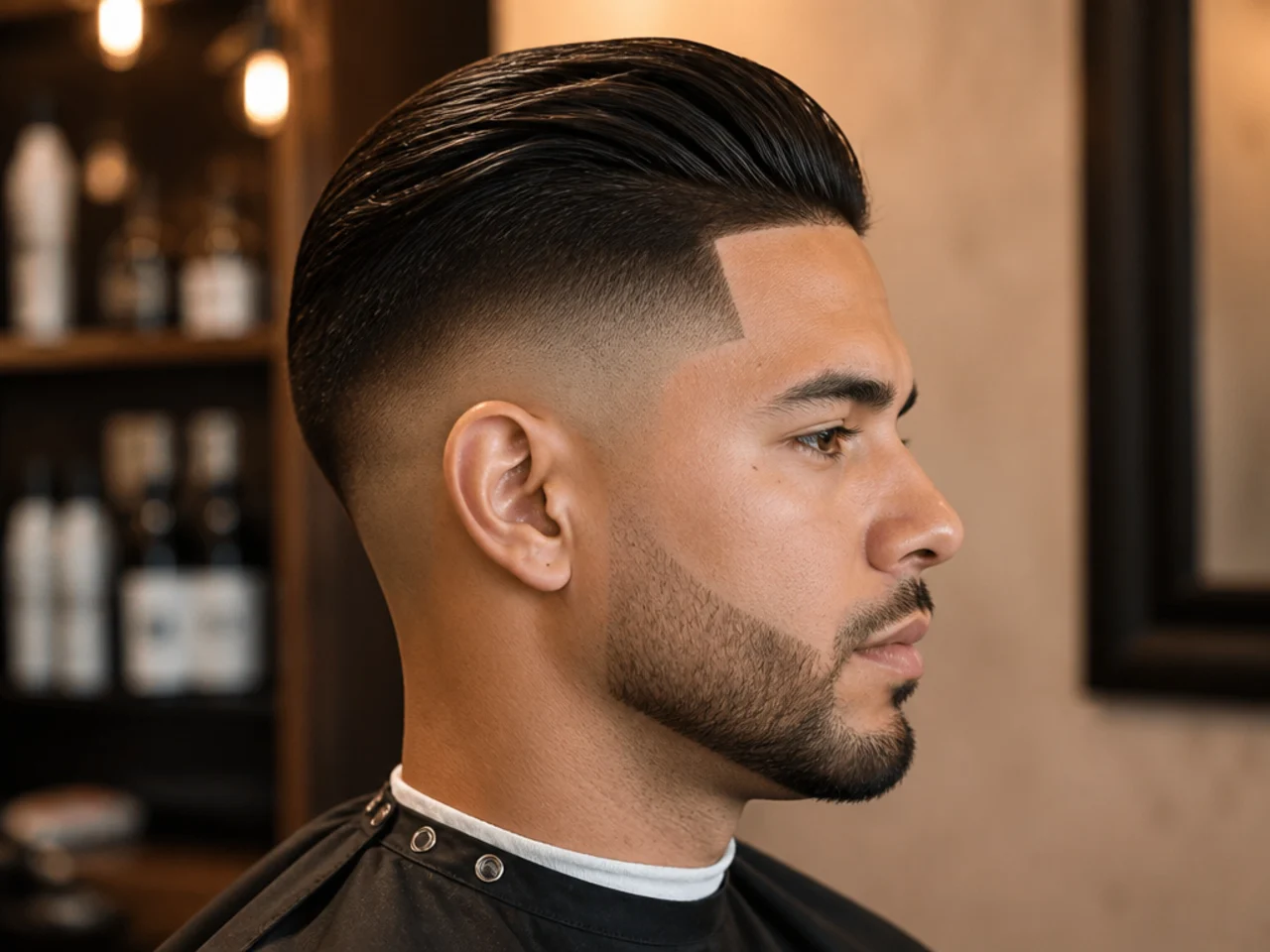
The line-up adds a razor-defined edge at the hairline — straight, hard-edged, no fuzz. Paired with a slick-back top and a mid or high fade, you get a cut that looks freshly done for two full weeks. Best on strong hairlines. Widow's peaks and receding lines are harder to line up cleanly. Book the line-up touch-up every ten days in advance — the forehead edge is the first detail to lose sharpness.
Ask for: "mid or high fade, four to five inches on top, slick back finish, razor line-up shaped across the forehead and temples."
Styling: shine pomade or gel. The line-up wants a clean, defined top to match. Skip matte finishes — the crisp edge deserves crisp shine.
17. Curly Slick Back with Taper Fade
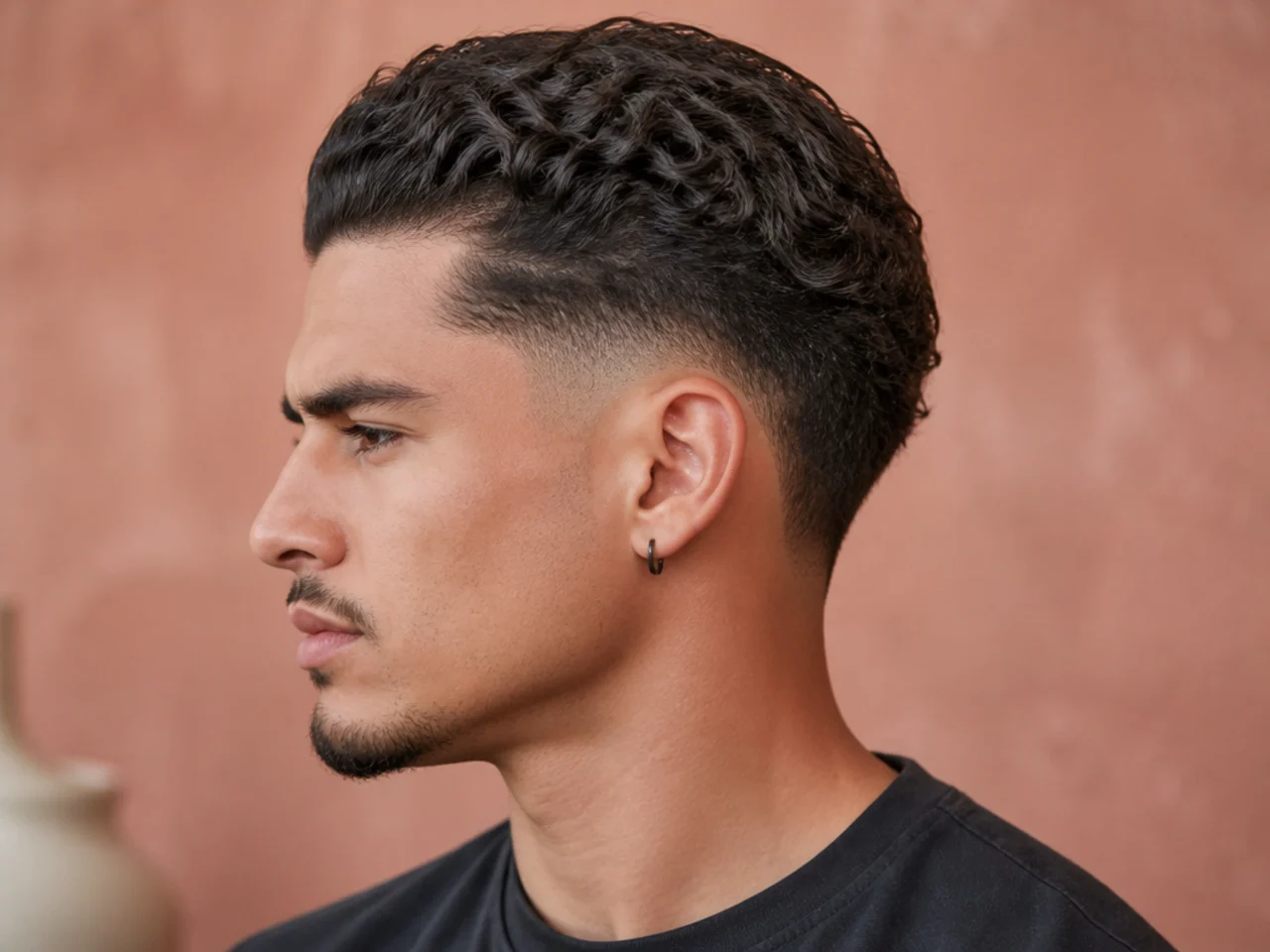
A slick back built around a curl pattern instead of straight strands. Sides fade or taper short so the curl density on top has a clean frame; four to five inches of curl left long enough to show pattern; the whole top brushed back rather than combed flat. Suits type 2C to 4A curls. The curly hair haircuts pillar covers the wider category if the curl is the main event.
Ask for: "mid taper fade or low fade at the sides, four to five inches on top preserving the curl pattern, brushed-back finish — do not thin the top."
Styling: curl cream on soaking-wet hair to define the pattern, then a light pomade brushed back with a wide-tooth comb. Let the curls sit back in their natural shape. Do not force them flat.
18. Wavy Slick Back with Drop Fade
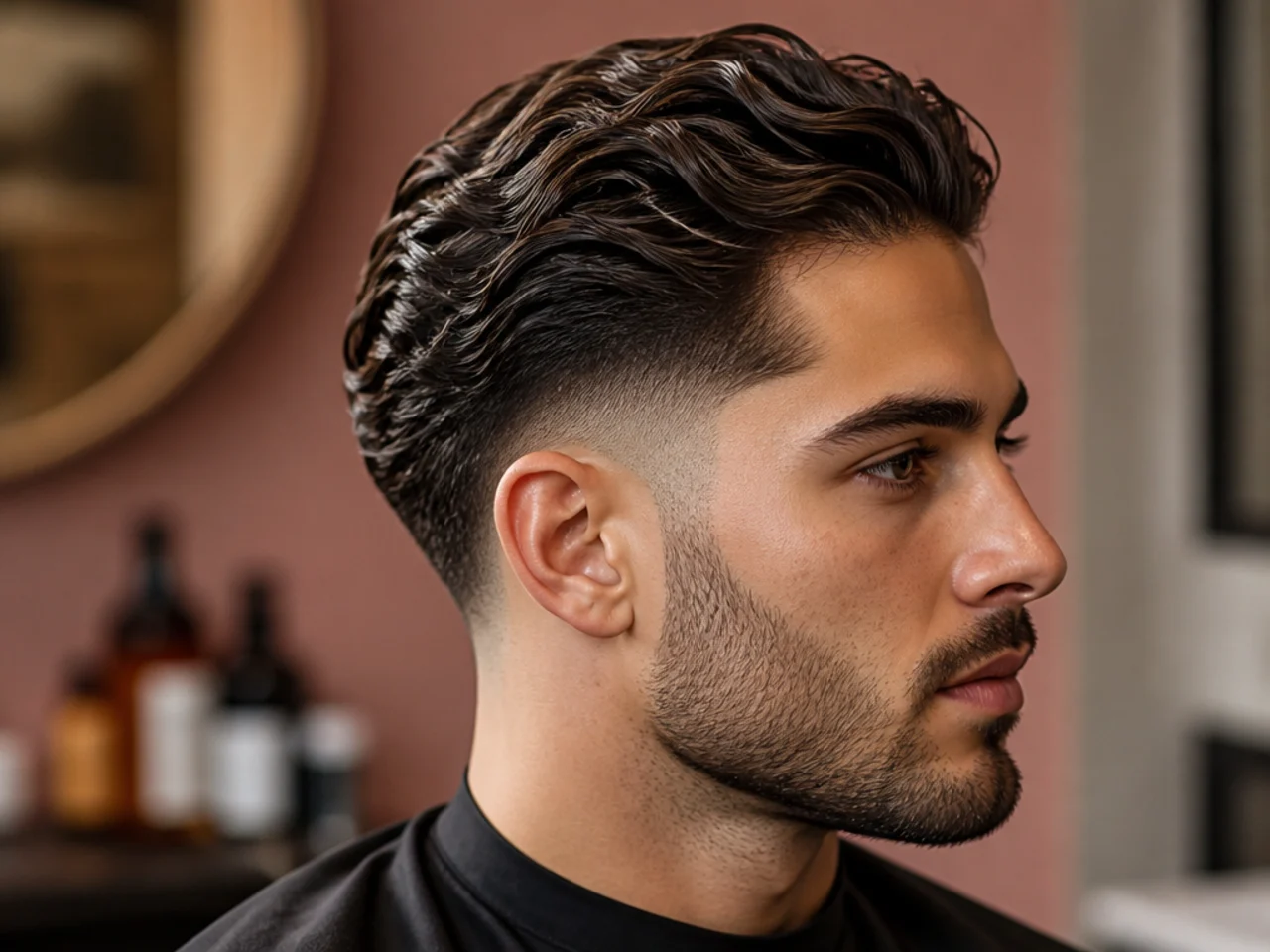
Wavy hair carries a slick back better than most guys realize. The natural bend adds movement without a blow-dryer, and the drop fade curve echoes the wave direction on the top. Suits type 2A through 2C waves. Longer than seven inches and the waves weigh themselves down. Best on oval, square, and heart-shaped faces.
Ask for: "mid drop fade curving behind the ear, five to six inches on top preserving the wave pattern, slick back finish — do not blow-dry straight."
Styling: light mousse on damp hair. Push back with fingers or a wide-tooth comb, then mist lightly with hairspray to define the waves. Skip the blow-dryer — heat kills the wave.
19. Coily Slick Back with High Skin Fade
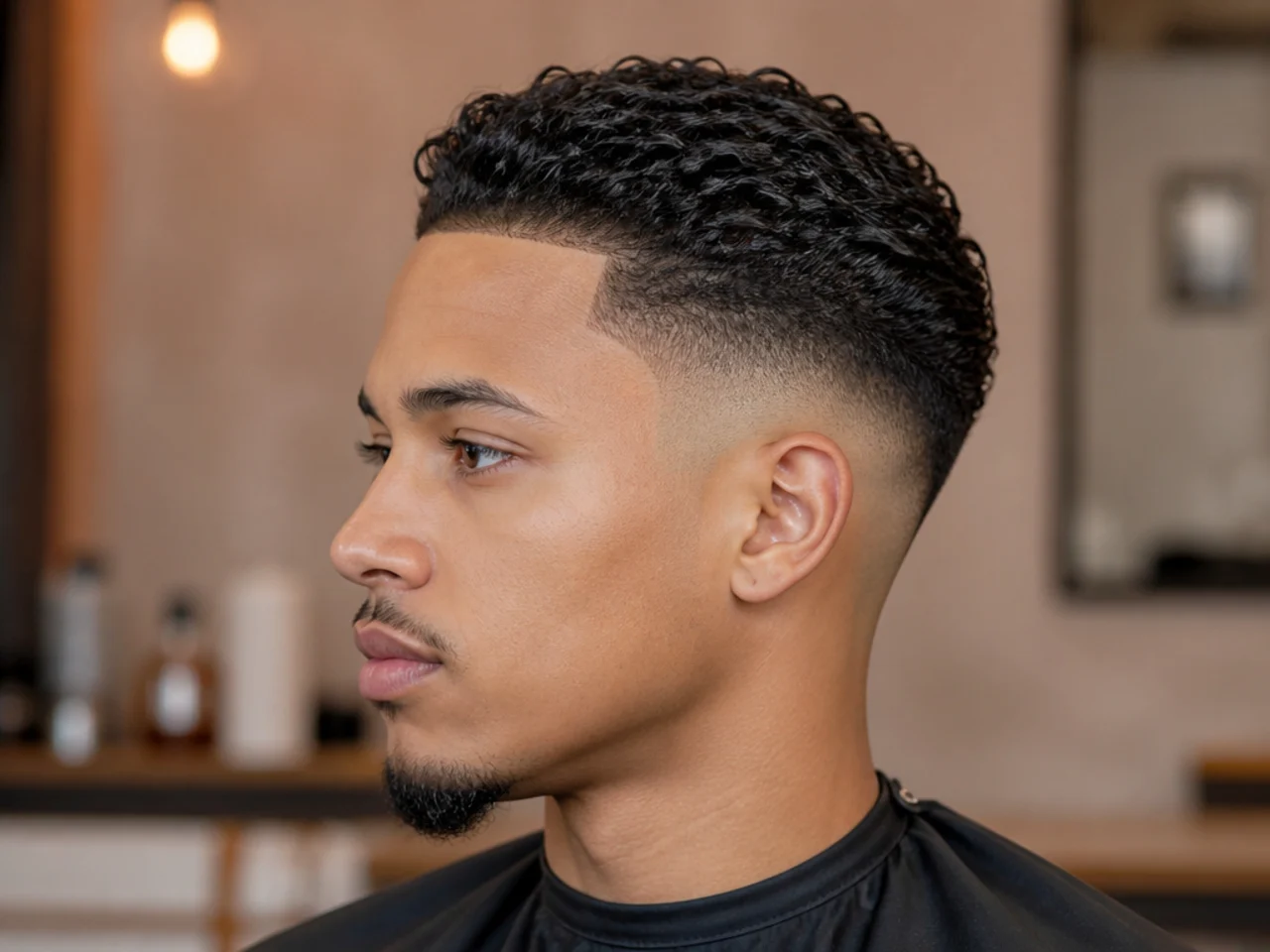
The barbershop standard for 4A to 4C hair. A high skin fade drops the sides to bare scalp — a defining contrast against the coil density — while the top stays two to four inches of coil brushed back rather than combed. Sponge or brush the top back into direction while the pattern still shows. Book every two weeks. Do-rag overnight to hold the shape between cuts.
Ask for: "high skin fade at the temple, three inches of coily length on top, brushed back with a curl sponge or wave brush, natural pattern."
Styling: curl butter or a styling cream worked with fingers, brushed back with a hard brush or a curl sponge. Skip flat combs — they distort the coil pattern.
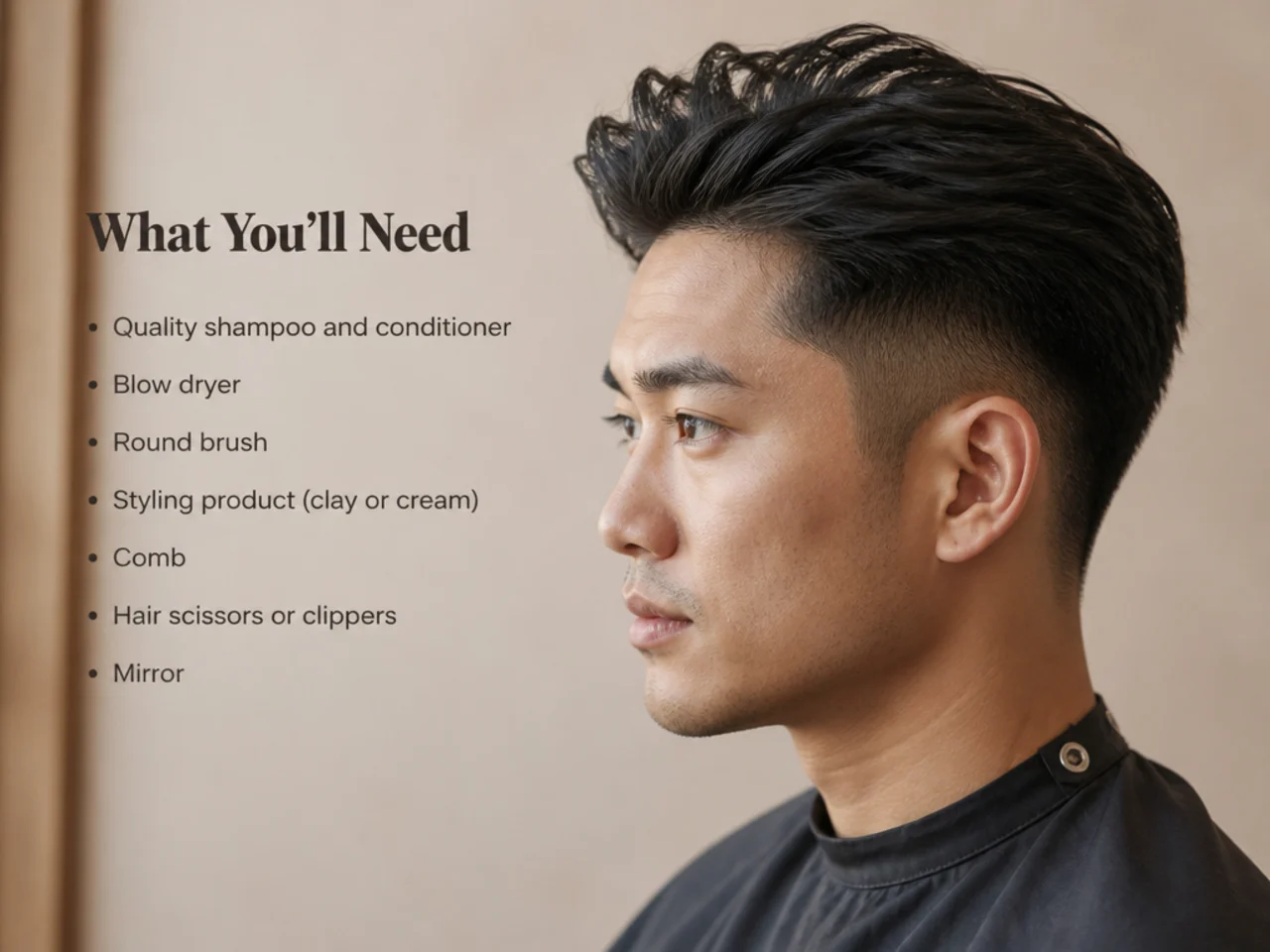
20. Straight Asian Slick Back with Mid Fade
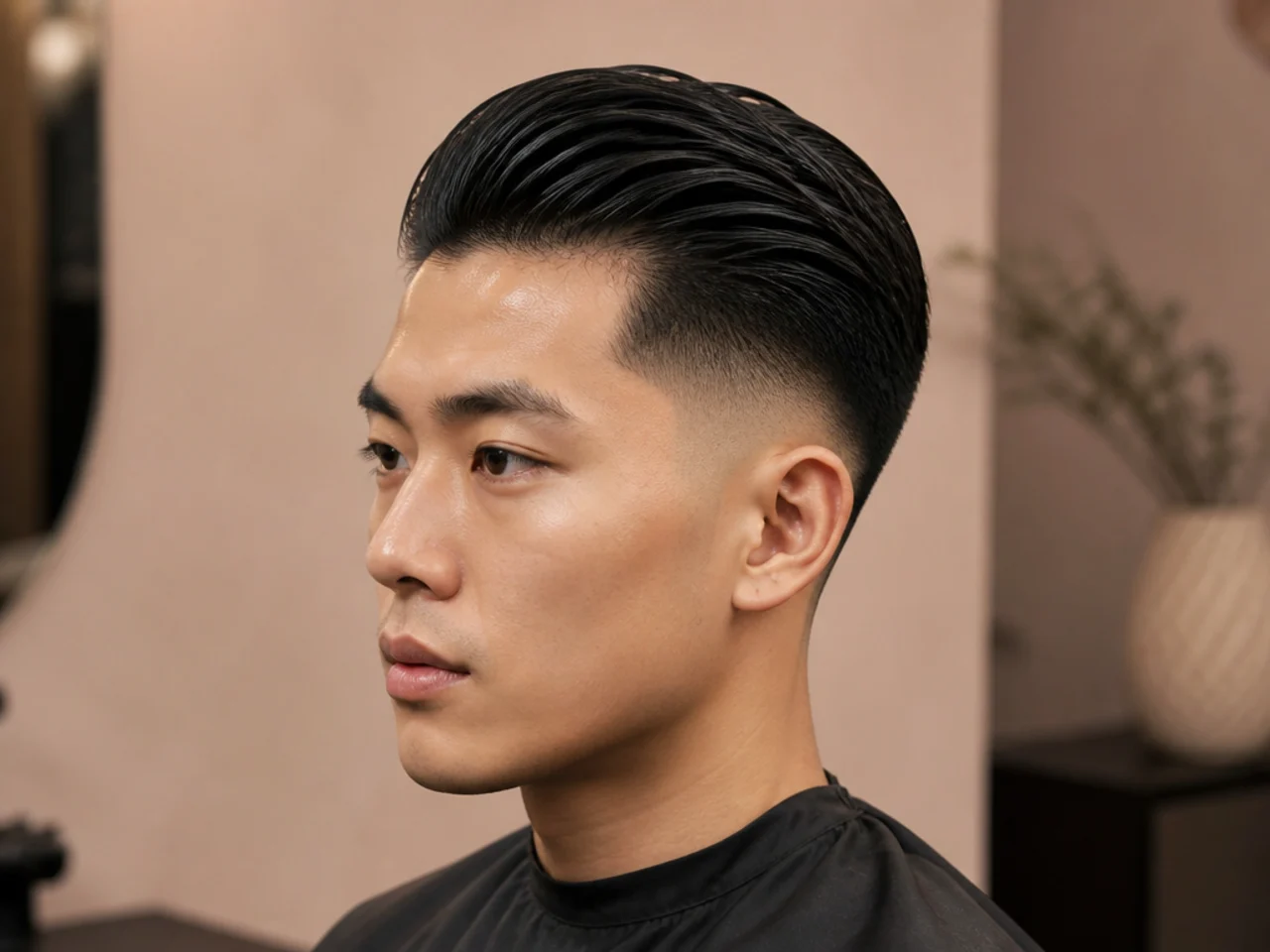
Dense East Asian straight hair holds a slick back sharper than any other texture — the density itself keeps every strand pointing back without heavy product. Paired with a clean mid fade at the temple, the whole build reads modern and polished. Suits any face shape. Sits best on straight coarse hair; fine straight hair needs a lighter product weight.
Ask for: "mid fade at the temple line, five to six inches on top, slick back finish, cut for dense straight East Asian hair."
Styling: light-weight matte cream or a low-hold pomade. One fine-tooth comb-through pulls everything back flat. Dense hair holds the shape all day without extra product.
How to Ask Your Barber for a Slick Back Fade
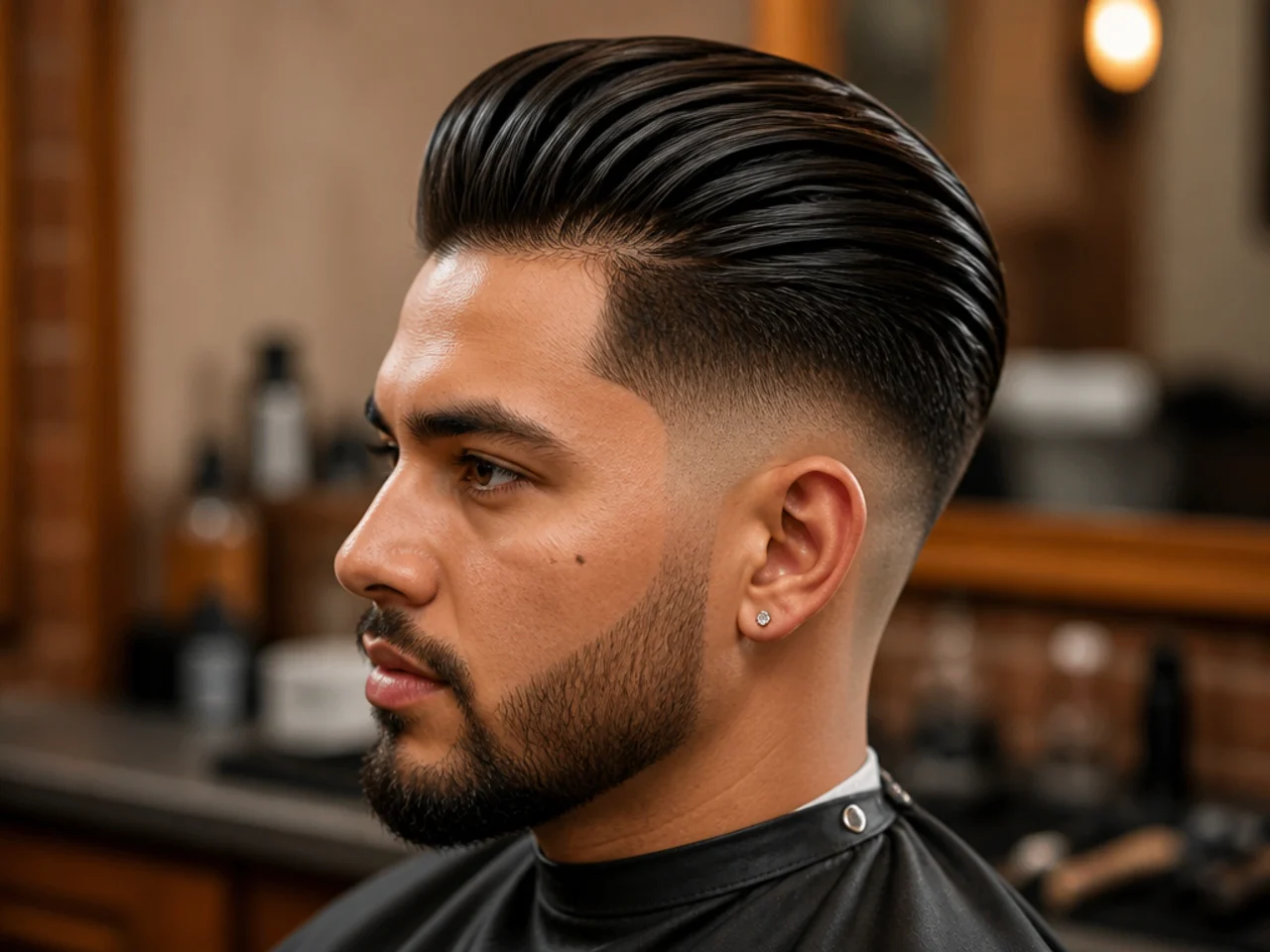
Seven lines cover the whole conversation. Nail these and you leave with the exact cut you had in mind.
- Bring two photos. One front, one side profile. The side is what shows the fade line height and the transition. Most guys walk in with only a front shot and get the fade guessed at.
- Name the fade height. Low (above the ear), mid (at the temple), high (near the parietal ridge), or skin (bare scalp at the low point). One phrase decides half the cut.
- Name the fade shape. Straight (level), drop (curving down behind the ear), or burst (arcing around the ear). Different silhouette entirely.
- Give the top length in inches. "Five inches on top." Not "medium." Not "a little shorter than now." Inches remove ambiguity between shops.
- Say where the fade should start. Point to the temple, top of the ear, or parietal ridge. Even great barbers guess wrong without the point.
- Name the finish vibe. Wet-look shiny, matte and textured, or satin and polished. That phrase tells the barber what product weight to leave the hair ready for.
- Book the next appointment before you leave. Skin fade: ten to fourteen days. Mid or high fade: two to three weeks. Low fade or drop fade: three to four weeks. Low taper fade: five to six weeks. Get on the schedule while you are in the chair.
Styling and Maintenance
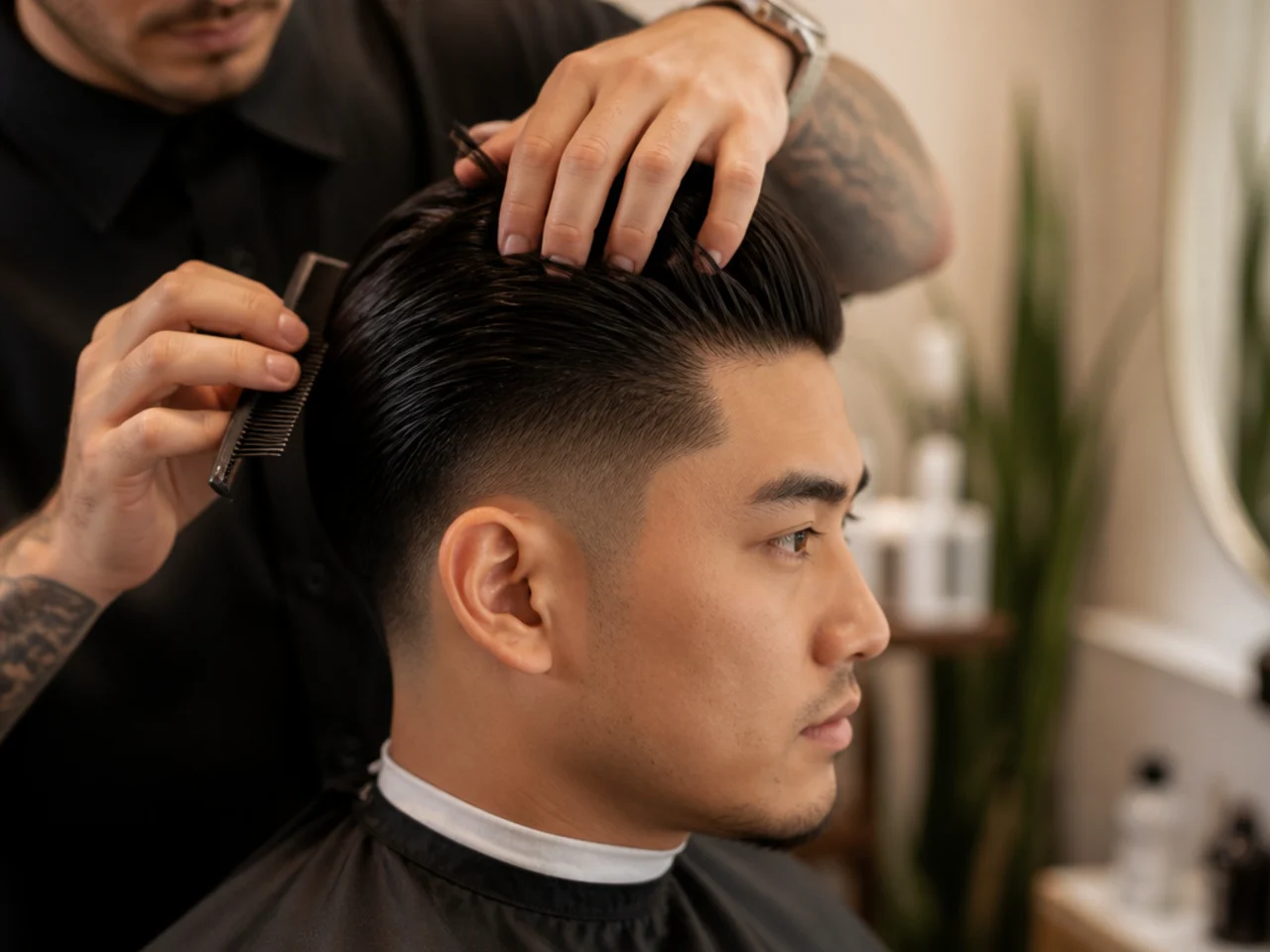
The routine takes under three minutes once you have it. Damp hair, product root to tip, comb straight back. The product is what changes between finishes.
Product by finish. Oil-based pomade for the classic wet-look shine (variations 4, 10, 16). Water-based pomade for shine you can restyle mid-day (2, 5, 13, 20). Matte clay or cream for the modern non-greasy finish (1, 6, 8, 11, 15). Volumizing mousse under a light pomade for the pompadour and high-fade builds (14). Curl cream and a light pomade for the curly and coily versions (17, 18, 19).
Nickel-sized scoop, emulsified between the palms. More product does not equal more hold — it equals more weight. Rake root to tip before you shape, then comb or brush back once with the tool that matches the finish. Fine-tooth for shine and precision. Wide-tooth for texture. Fingers for the messiest builds.
Neckline and fade upkeep. Book a shape-up between full cuts for any skin or high fade — most shops charge fifteen to twenty dollars for a fade-and-line touch-up. The fade line at the temple is the first thing to date. The best hair clippers for men guide covers the home tools for holding the neckline between visits if you go longer between full cuts.
Wash cadence. Sulfate-free shampoo three times a week to keep the scalp clean without stripping natural oils. Clarifying shampoo once a week if you use pomade daily — buildup flattens the top faster than anything else. The textured haircuts for men guide covers overlap with grown-out slick back styling on day-two hair.
FAQ
What length do I need on top for a slick back fade?
Four inches minimum. That is the length where the hair reaches the crown when combed back and lies flat against the head instead of flipping up at the temples. Five to six inches is the sweet spot for classic and modern versions. Six to eight inches for the long flow builds. Anything shorter than four inches and you have a faded cut with no slick back on top.
Which fade height works best with a slick back?
The mid fade at the temple line is the balanced default and the version most guys should pick first. Low fade if the workplace leans conservative or you need the cut to hold for four to six weeks. High or skin fade if you want maximum contrast and can commit to a re-cut every two to three weeks. Drop and burst fades are shape variations on any of those heights.
Is a slick back fade still current in 2026?
Yes — the slick back fade is one of the most-requested men's cuts on any barbershop wall right now. The fade half keeps the cut modern; the slick back half keeps it timeless. Fade-and-top combinations have been the default modern build since 2018 and show no sign of rotating out.
Can I do a slick back fade on curly hair?
Yes — variations 17 and 19 are built for curly and coily hair. Both work by keeping the sides faded short so the density on top has a clean frame. Use a curl cream on wet hair before any pomade, brush back with a wide-tooth comb or a curl sponge, and let the pattern sit back in its natural shape rather than trying to flatten it.
What is the difference between a slick back fade and a slick back taper?
Length at the shortest point. A taper leaves clipper length (usually a #0.5 or #1 guard) at the neckline and sideburn. A fade takes the shortest point all the way down to skin or near-skin. The taper reads softer and holds shape longer; the fade reads sharper and needs a re-cut every two to three weeks.
How much does a slick back fade cost?
Around $35 to $60 at a standard barbershop. $70 to $150 at a specialist shop that does skin fades with razor detail, hard parts, or beard blending. The touch-up between full cuts usually runs $15 to $25. Skin fades and hard-part builds are the ones worth paying the specialist price — the precision shows.