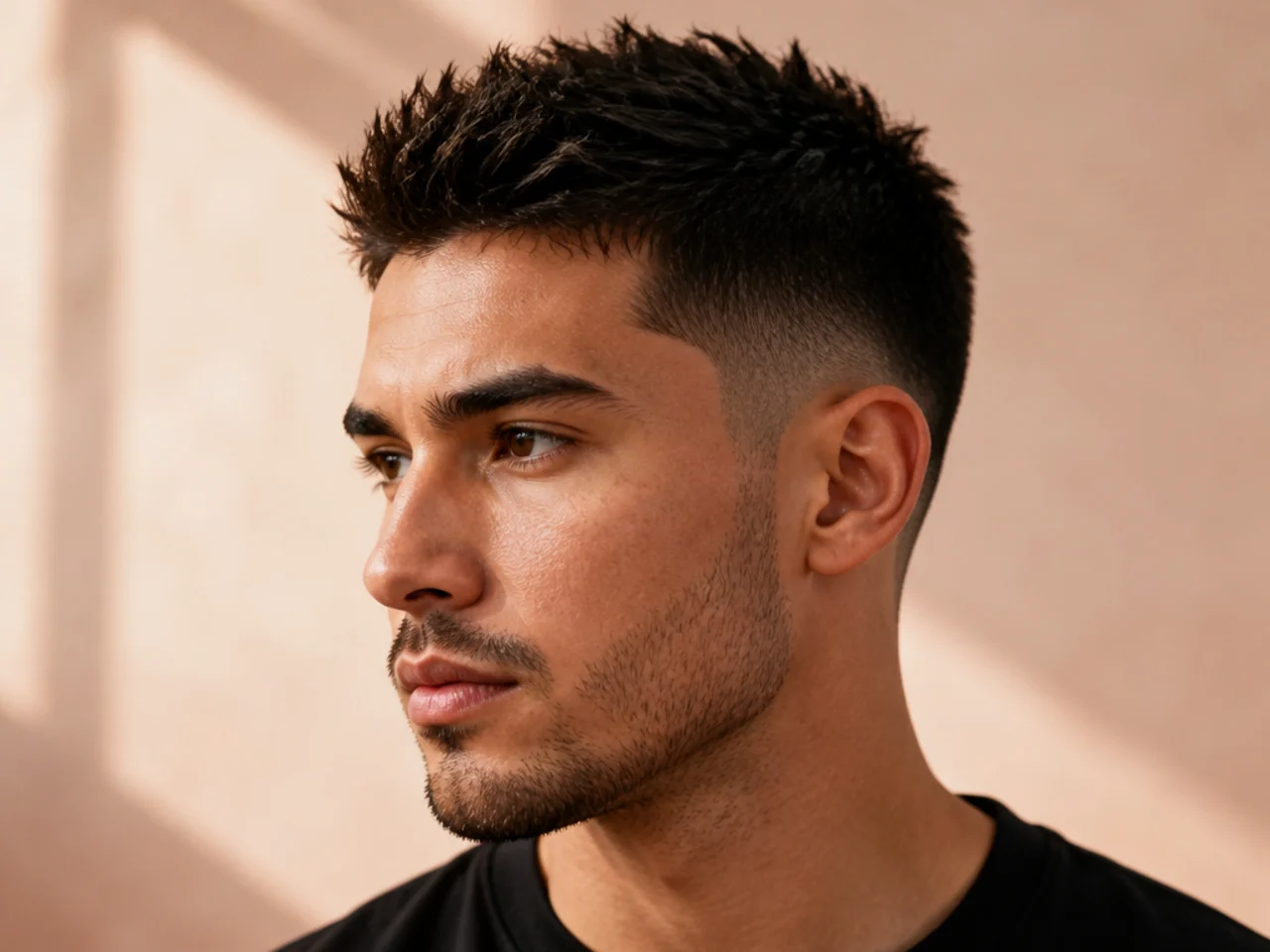
15 Short Spiky Cuts That Look Fresh
15 short spiky haircuts for men — classic spikes, textured crops, faux hawks, and fade pairings with clipper numbers and one-minute styling notes.
In this article · 25
- What Is a Short Spiky Haircut?
- How to Choose Your Short Spiky Cut
- The 15 Short Spiky Variations
- 1. Classic Short Spikes
- 2. Short Spiky Crew Cut
- 3. Textured Short Spikes with Low Fade
- 4. Short Spiky Crop with Fringe
- 5. Spiky Undercut
- 6. Spiky Faux Hawk
- 7. Spiky Caesar
- 8. Short Messy Spikes
- 9. Short Spiky Ivy League
- 10. Spiky Blowout
- 11. Frosted Modern Spikes
- 12. Spiky Comb Over
- 13. Short Spiky French Crop
- 14. Spiky Skin Fade
- 15. Spiky Burst Fade
- How to Ask Your Barber
- Styling and Maintenance
- FAQ
- Are short spiky haircuts still in style?
- What length works best for short spiky hair?
- What product should I use for short spiky hair?
- Do short spiky cuts work with fine hair?
Spiky hair grew up. The modern short spiky cut is nothing like the frosted-tips era — no glossy gel, no cartoon points, no crunchy hold. Today's version leans on matte texture, point-cut ends, and fade pairings that read current on guys twenty through fifty. This guide covers 15 short spiky variations men are asking for in 2026, with the exact clipper numbers for your barber and the 60-second styling routine that actually works.
What Is a Short Spiky Haircut?
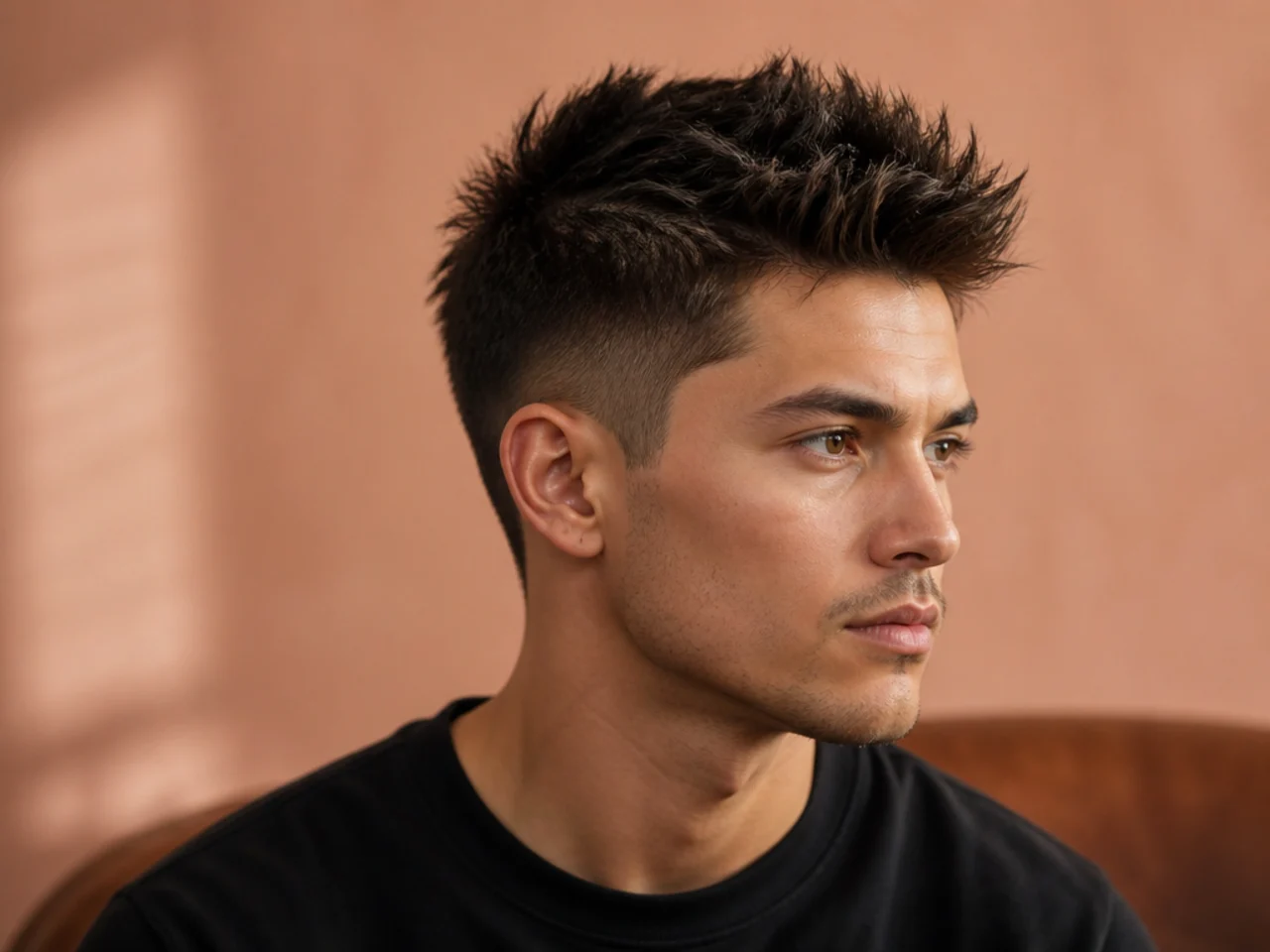
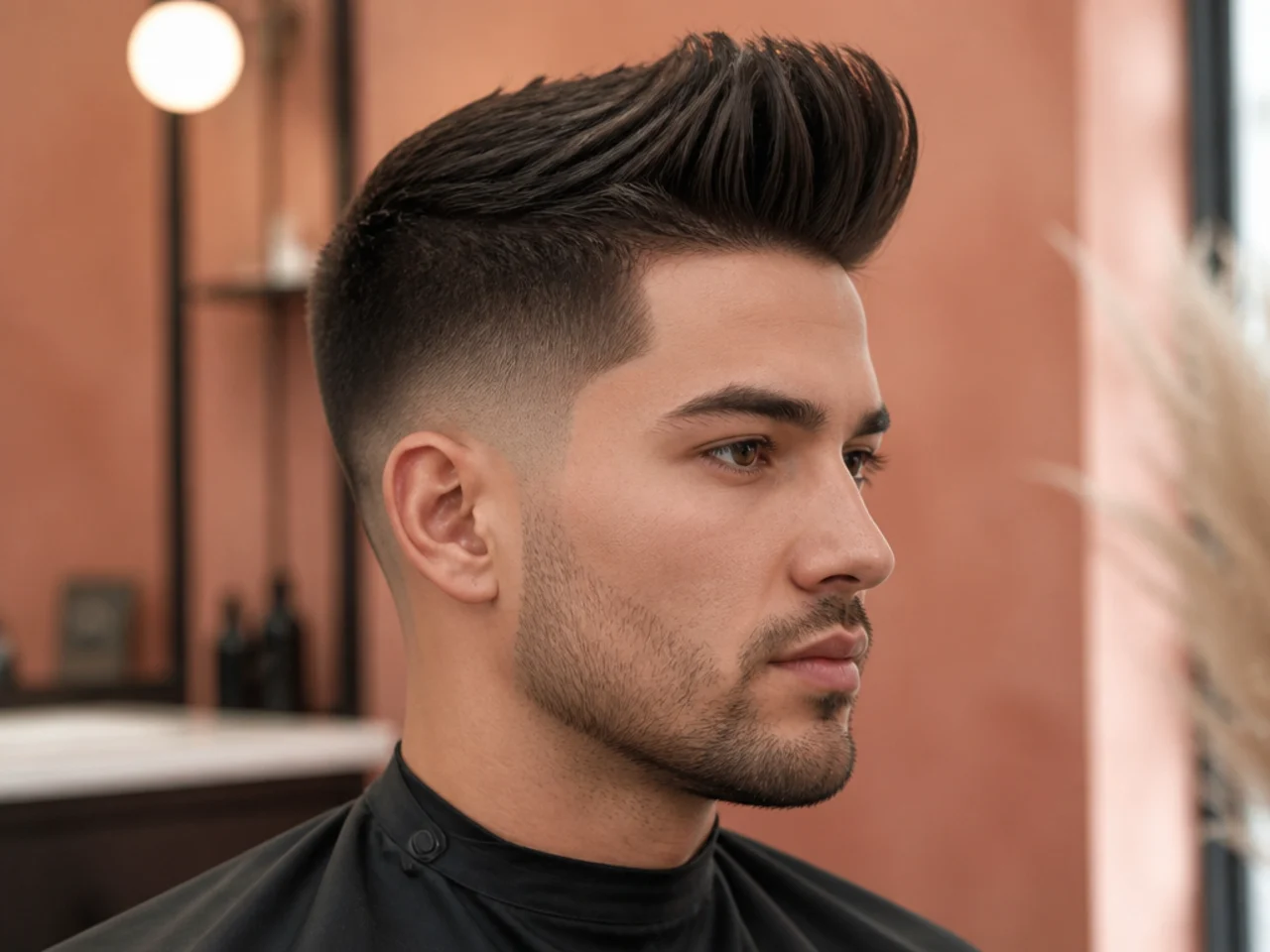
A short spiky haircut keeps roughly one to one-and-a-half inches on top, cut so the ends stand vertical or slightly forward when styled with matte product. The sides run shorter — tapered, faded, or clipped at a #1 or #2 guard — so the spiked top reads as the visual focus.
The modern version leans on point-cutting instead of blunt-cutting. Point-cut ends fall in individual pieces that stand independently. Blunt-cut ends form a wall that reads dated. Every variation on this list uses point-cut texture as the base.
The finish is matte. Glossy pomades, hair gels, and shine sprays all read as the older frosted-tip look. Modern spikes want matte clay or firm-hold molding paste — enough hold to keep the shape, enough texture to look like hair rather than plastic. Sea-salt spray on damp hair adds grip before the styling product goes in.
How to Choose Your Short Spiky Cut
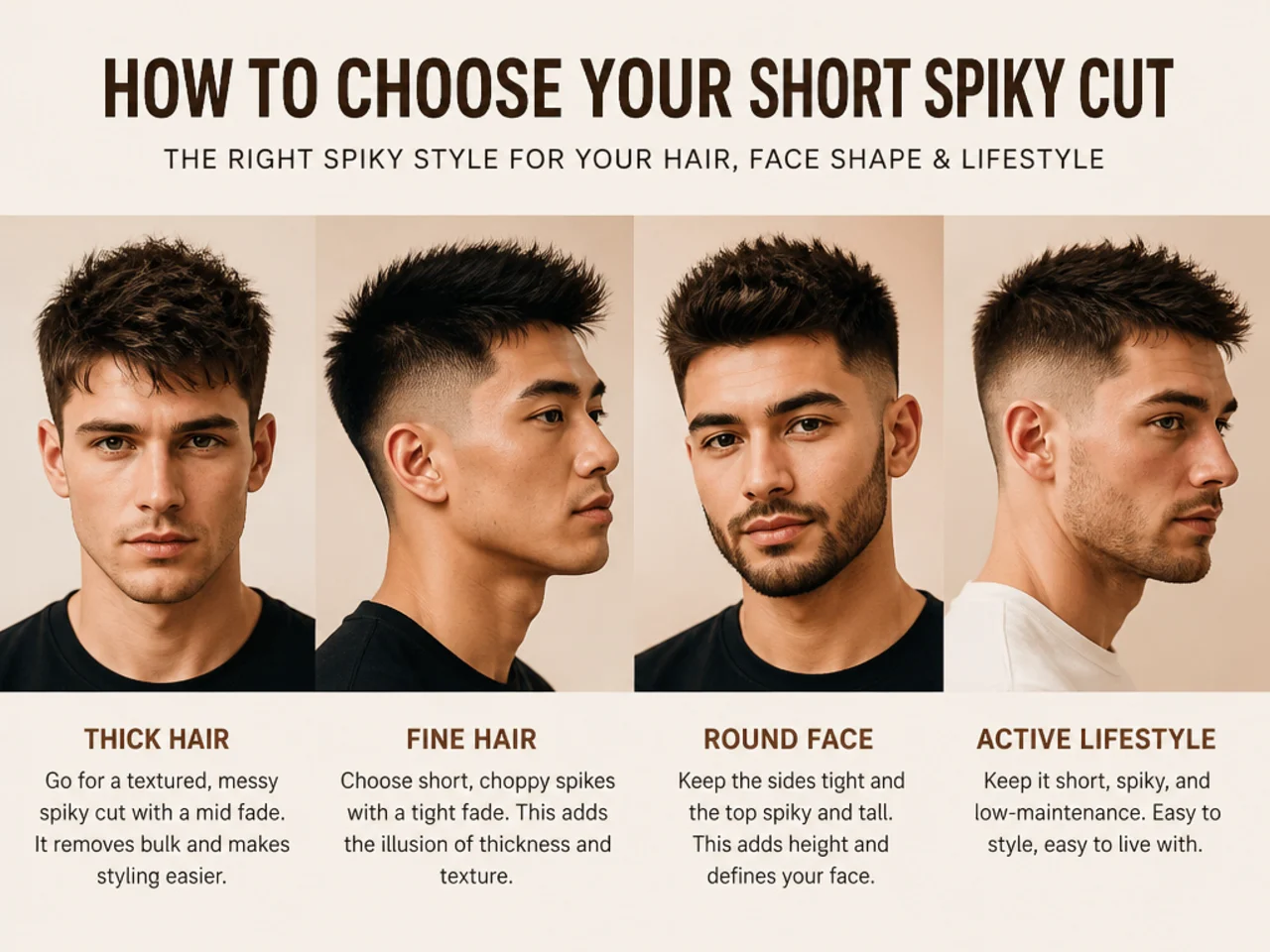
Face shape sets the height. Round and square faces suit the tallest spikes — the vertical line lengthens the visual read. Oval faces work with any height. Long faces stay with shorter spikes and a soft forward fringe so the head does not read taller. Heart and diamond faces suit medium-height spikes with a slight forward push to balance a wider forehead.
Hair type sets the cutting method. Straight hair holds spikes on its own; a light point-cut is enough. Wavy hair needs heavier internal texture to let each piece stand vertical instead of flowing to the side. Curly and coily hair usually skips traditional spikes for defined curl clumps instead — a curly textured cut reads better on those hair types than a forced spike.
Lifestyle sets the finish. A traditional office wants low-key spikes with a subtle taper and a soft push forward — nothing that looks styled from a distance. A creative or casual environment can carry the taller, more defined variations. Sports and active jobs want the shortest spikes and no fringe. For related shape families, browse the mens short spiky haircuts roundup or the pillar short simple mens haircuts guide.
The 15 Short Spiky Variations
Each variation below tells you what makes it different, who it flatters, and the exact language for the chair. Bring a photo and hand your barber the specifics.
1. Classic Short Spikes
The default short spiky cut. One to one-and-a-half inches on top, point-cut for texture, with the ends worked upward into vertical spikes. Sides tapered short, neckline squared. Reads sharp without needing a specific occasion.
Suits oval, round, and square faces. Best on straight to slightly wavy hair.
Ask for: "Classic short spikes, one-and-a-half inches on top with point-cutting for texture, low taper at the sides — square the neckline." Matte clay pinched vertically through damp hair with fingertips.
2. Short Spiky Crew Cut
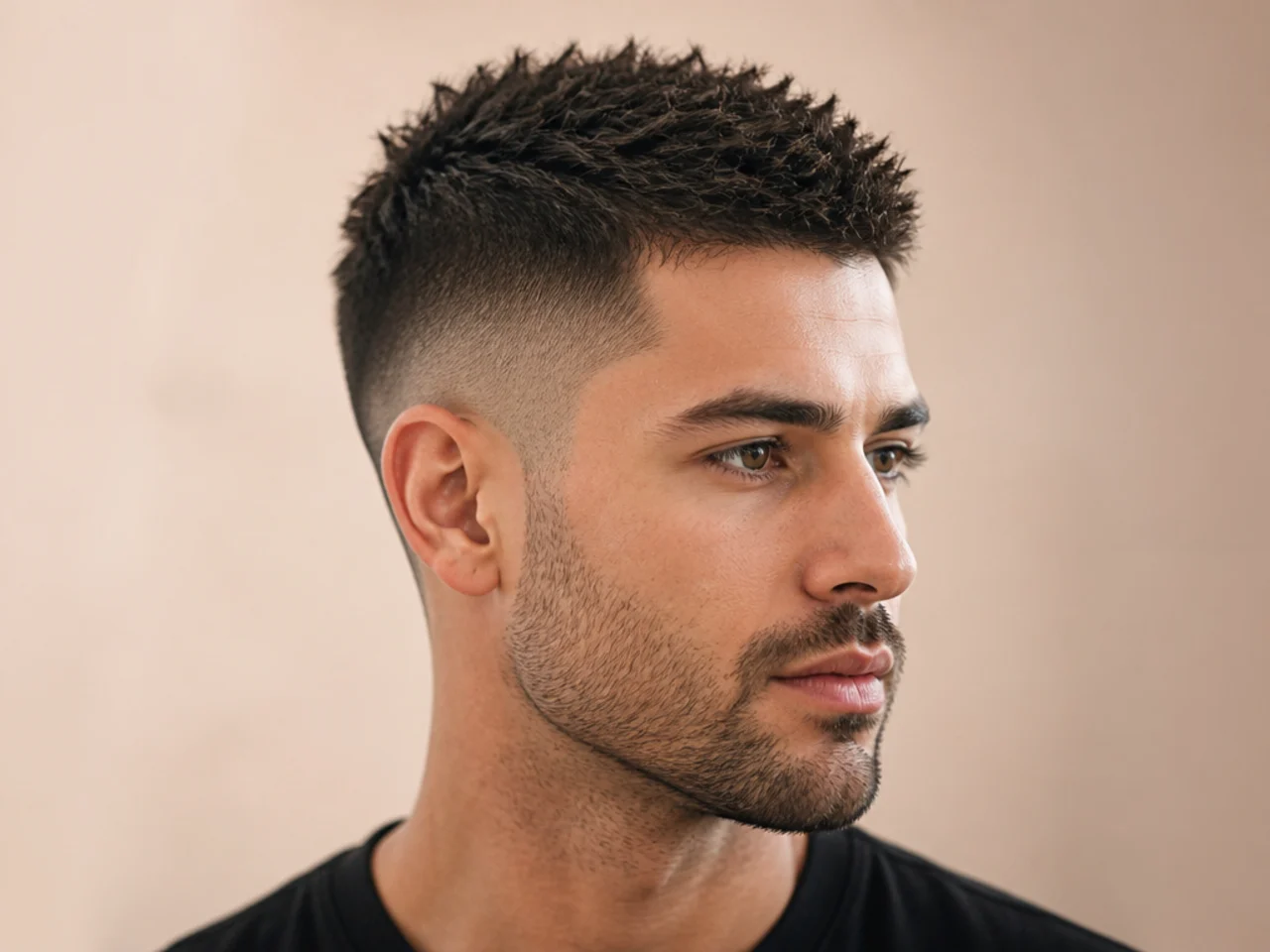
The crew cut with a spiky front. One inch on top with the front slightly longer for lift, point-cut for movement, and low fade or taper at the sides. Reads professional in almost any environment.
Suits every face shape. Best on straight to slightly wavy hair. Works from age twenty upward.
Ask for: "Short spiky crew cut, one inch on top with front slightly longer, point-cut for texture, low taper at the sides." Firm matte clay through damp hair, pinch the front upward with fingertips.
3. Textured Short Spikes with Low Fade
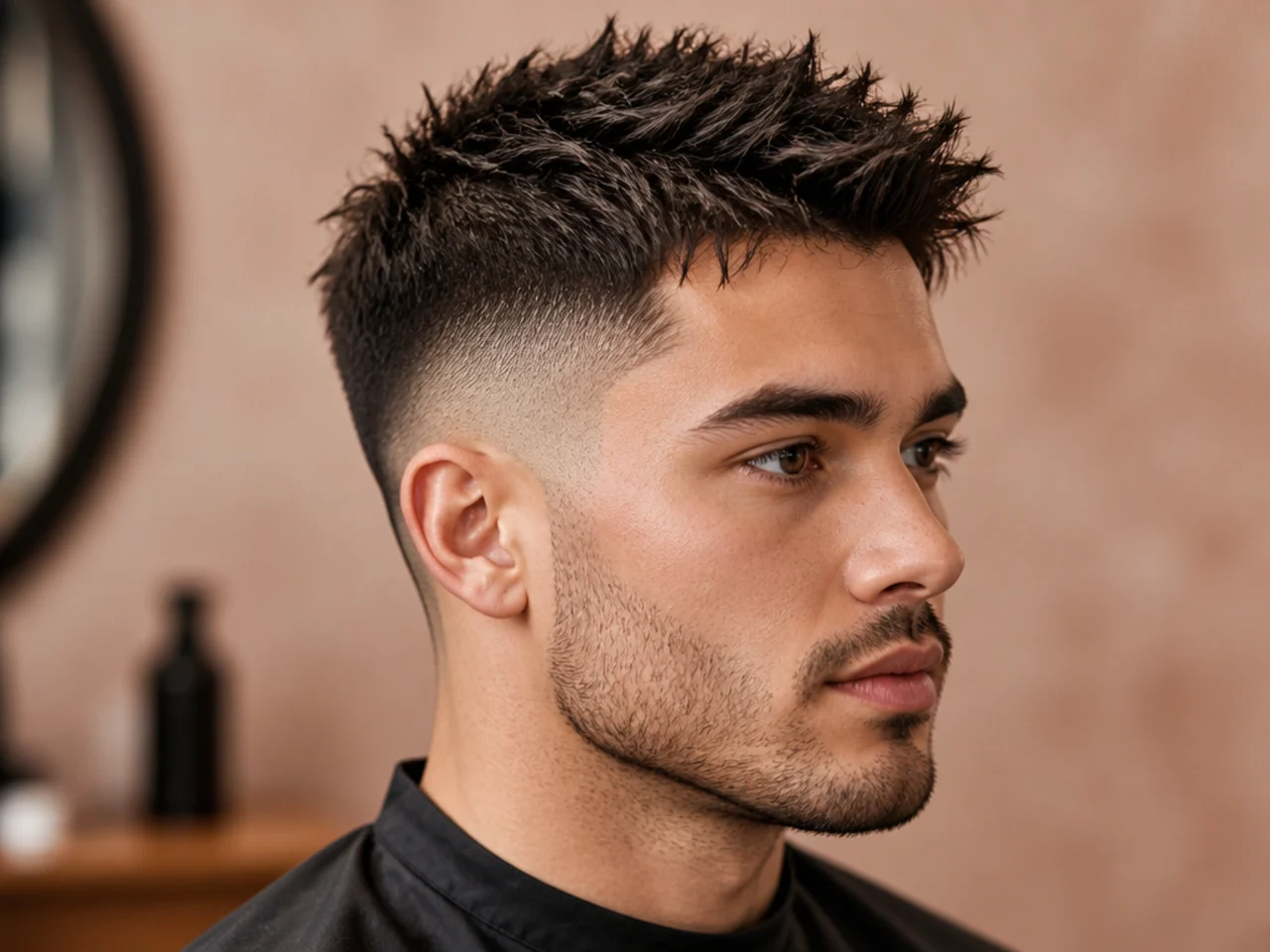
The low fade sharpens the base of short spikes without overpowering the top. One-and-a-half inches on top with aggressive point-cutting, ends worked into piecey vertical spikes, low fade dropping to skin at the sideburn.
Suits square, oval, and heart faces. Best on straight to wavy hair.
Ask for: "Textured short spikes with a low fade, one-and-a-half inches on top with aggressive point-cutting, low fade — skin at the sideburn up to a guard 2." Sea-salt spray on damp hair, matte clay pinched upward.
4. Short Spiky Crop with Fringe
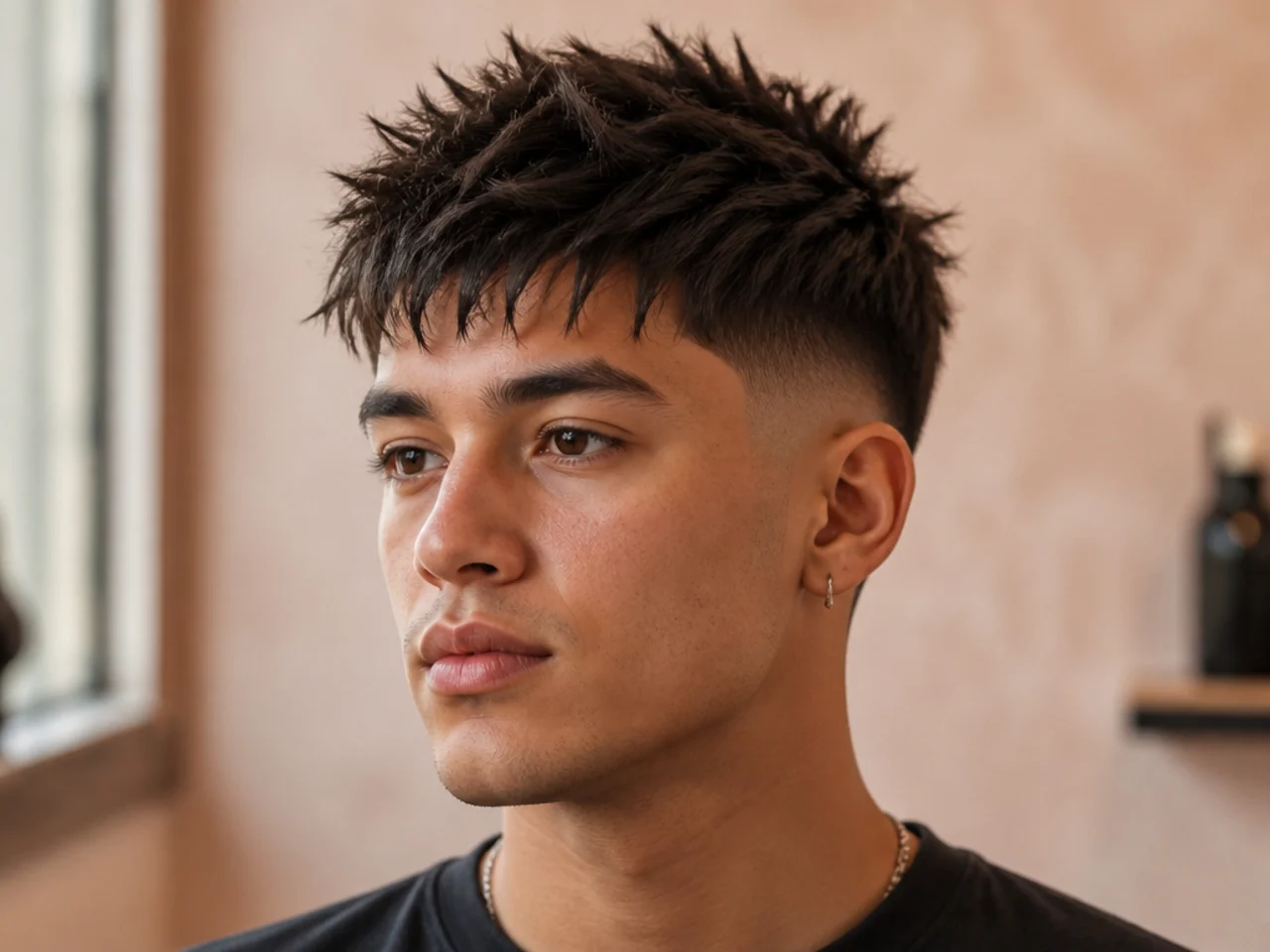
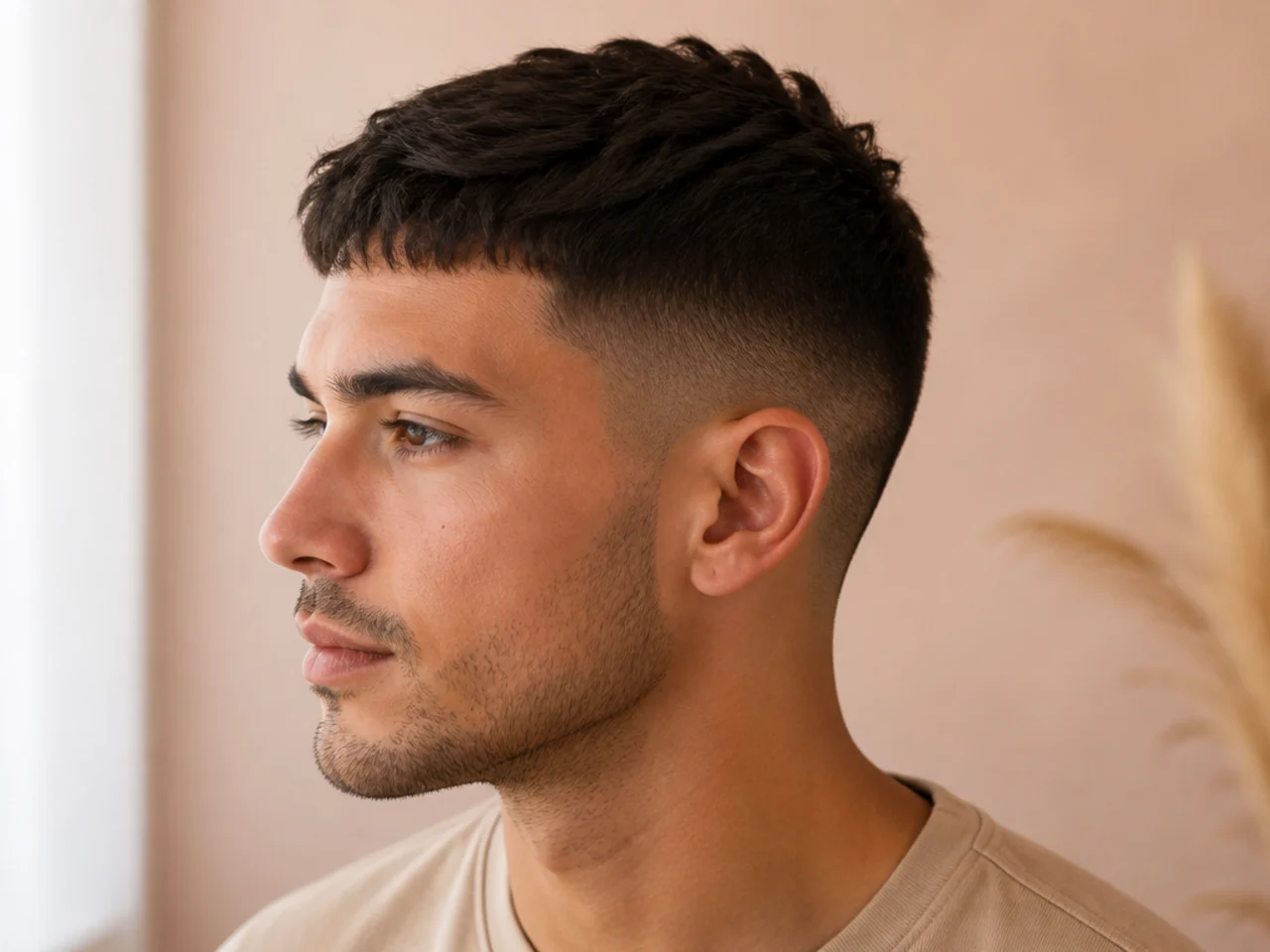
Spikes with a fringe — a hybrid of the textured crop and the spiky cut. One-and-a-half inches on top point-cut for spike-ready texture, but with the very front piece styled forward instead of upward, so a soft fringe falls to the brow.
Suits round, oval, and heart faces. Best on straight to slightly wavy hair.
Ask for: "Short spiky crop with a soft fringe, one-and-a-half inches on top with point-cutting, front piece styled forward to the brow, mid fade at the sides." Matte paste on damp hair, work the back and middle upward, sweep the front forward.
5. Spiky Undercut
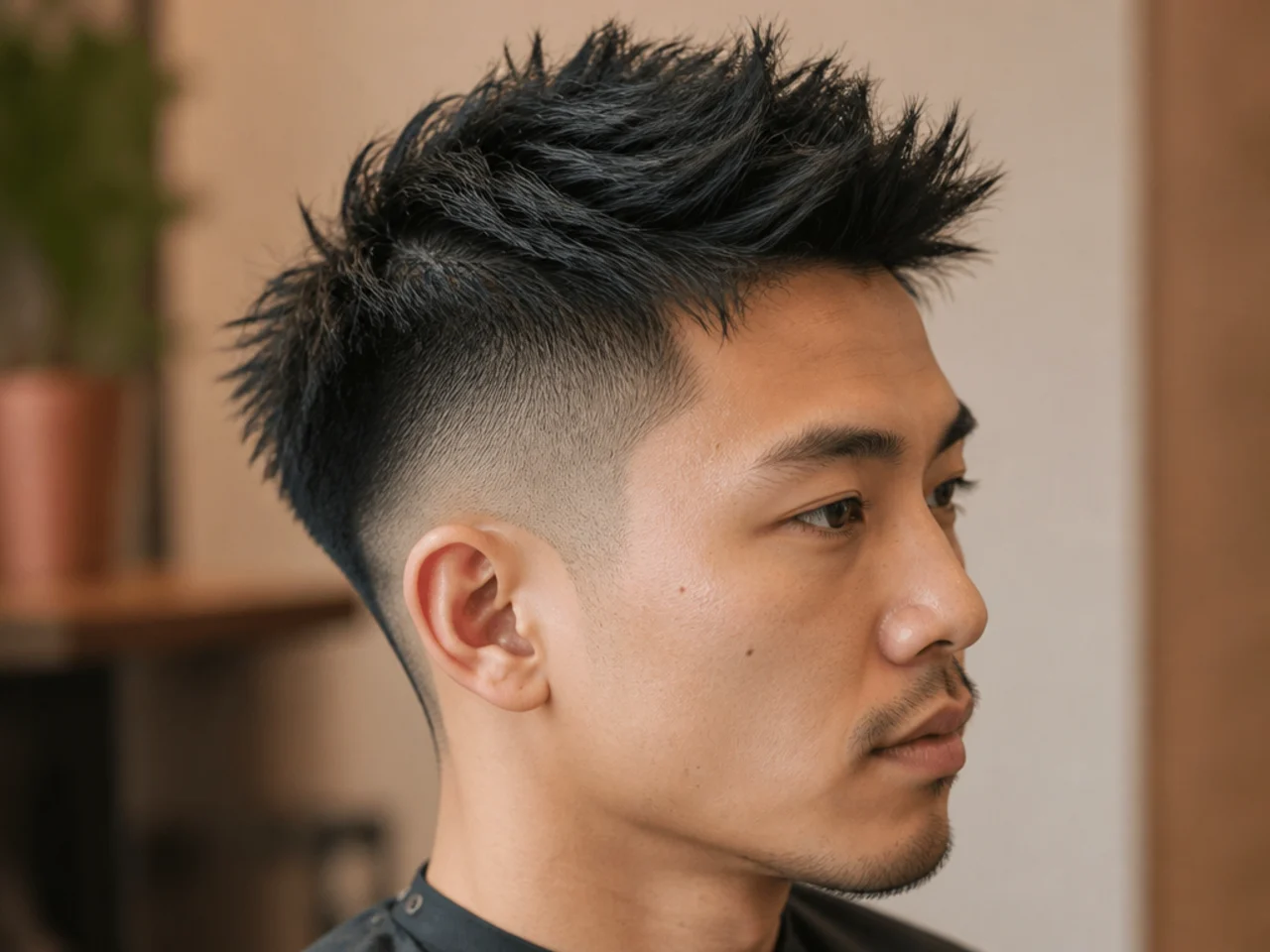
The undercut gives spikes a hard visual base. Two inches of point-cut texture on top styled vertical, with a hard-line #1 or #2 disconnected drop at the sides. The contrast doubles the effect of the spikes.
Suits square, oval, and diamond faces. Best on straight to slightly wavy hair.
Ask for: "Spiky undercut, two inches on top with heavy point-cutting, guard 1 disconnected sides — hard line at the transition, no blend." Firm-hold clay pinched into vertical pieces, hairspray to lock.
6. Spiky Faux Hawk
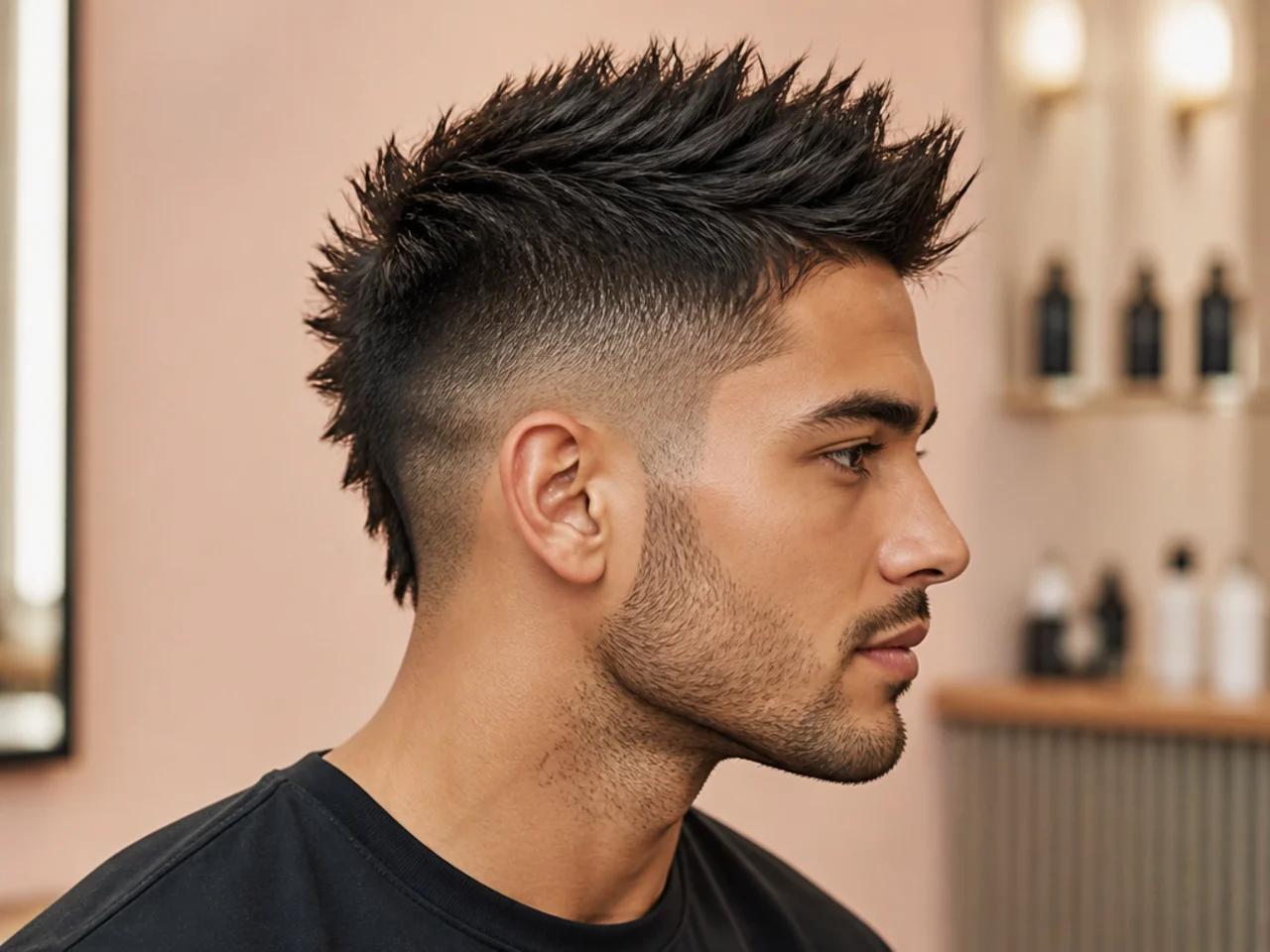
The faux hawk shape built with spikes. Two inches down the center of the top styled straight up, with shorter tapered lengths on either side that graduate down to a low or mid fade. Reads bold without going full mohawk.
Best in casual or creative settings. Suits square, oval, and diamond faces. Best on straight to wavy hair.
Ask for: "Spiky faux hawk, two inches down a two-inch strip in the center point-cut for spikes, shorter tapered lengths on either side, mid fade at the base." Firm matte clay through damp hair, pinch the center upward.
7. Spiky Caesar
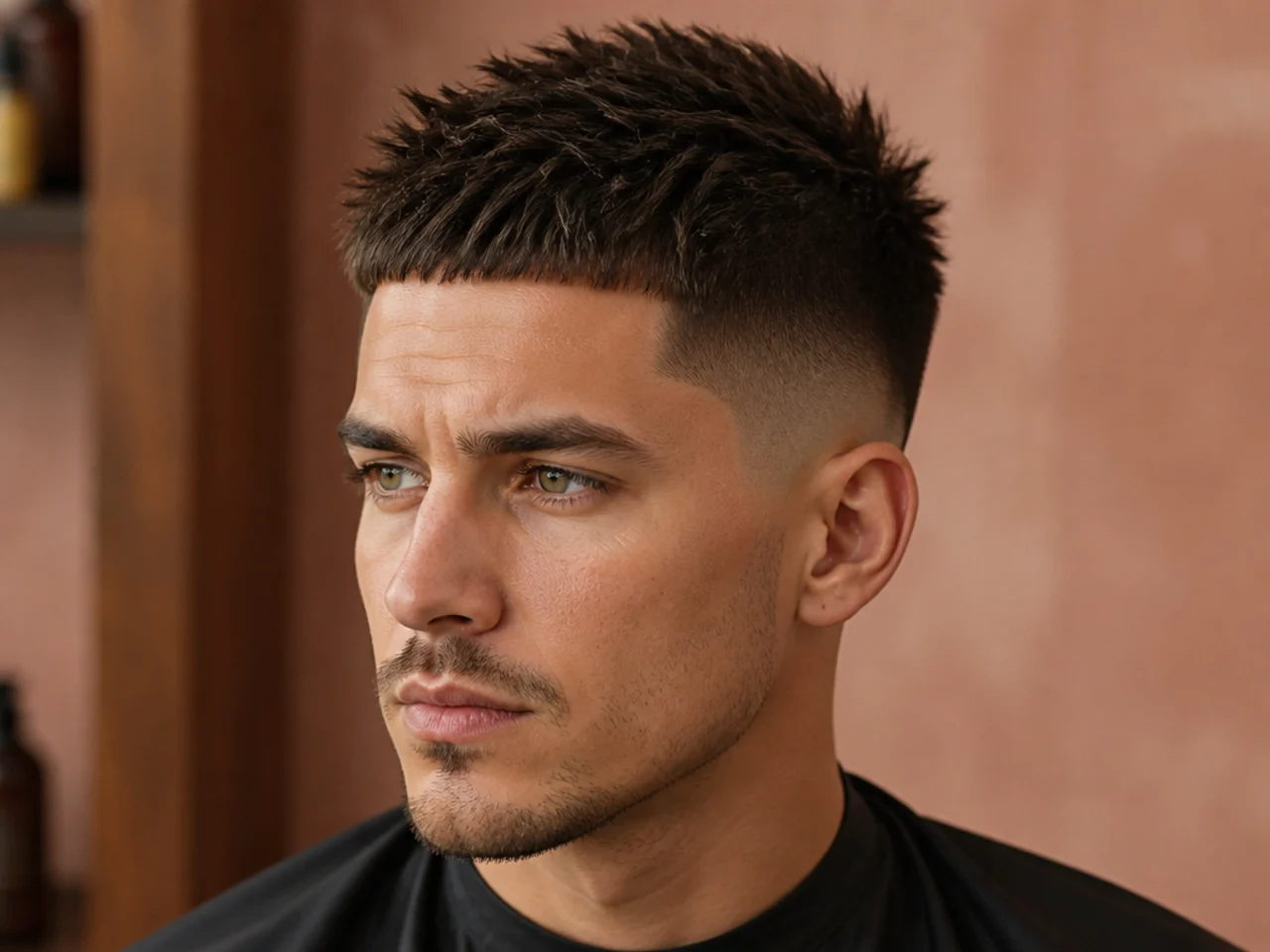
The Caesar cut with a lightly spiked top. One inch on top with a straight, blunt-ish fringe brushed forward across the brow, sides tapered short. The spike effect comes from working the ends upward without disturbing the fringe.
Suits round, oval, and long faces. Best on straight hair with density.
Ask for: "Spiky Caesar, one inch on top with a short blunt fringe just above the brow, tapered sides at a guard 2." Matte paste on damp hair, work the top upward while keeping the fringe forward.
8. Short Messy Spikes
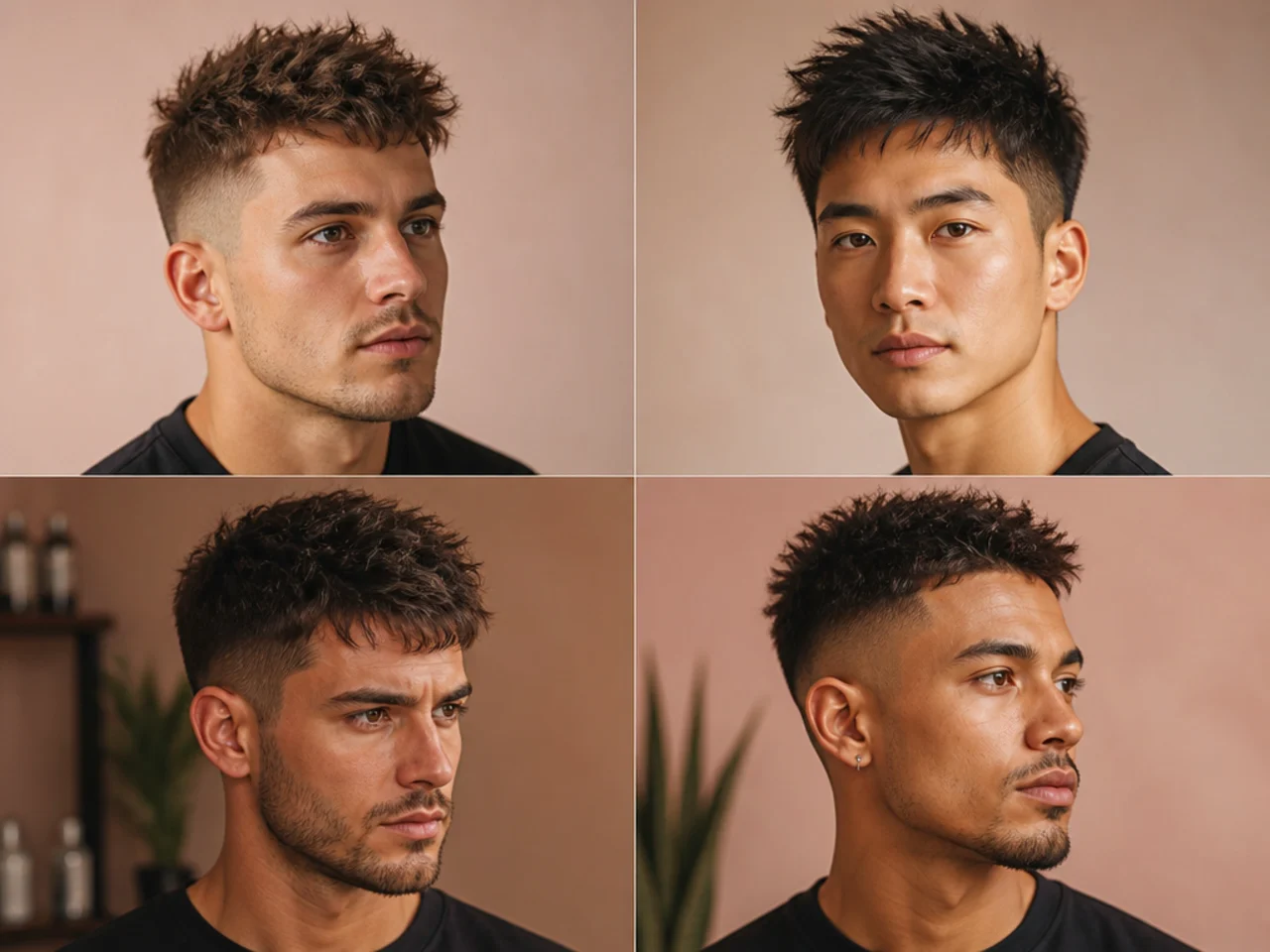
The bedhead version of short spikes. One-and-a-half inches on top with heavy point-cutting, ends worked in mixed directions rather than uniformly upward — some forward, some sideways, some vertical. Reads intentionally rough.
Suits every face shape. Best on straight to wavy hair. Works well for guys in creative environments.
Ask for: "Short messy spikes, one-and-a-half inches on top with aggressive point-cutting, low fade at the sides." Sea-salt spray on damp hair, matte clay tousled with fingers in mixed directions.
9. Short Spiky Ivy League
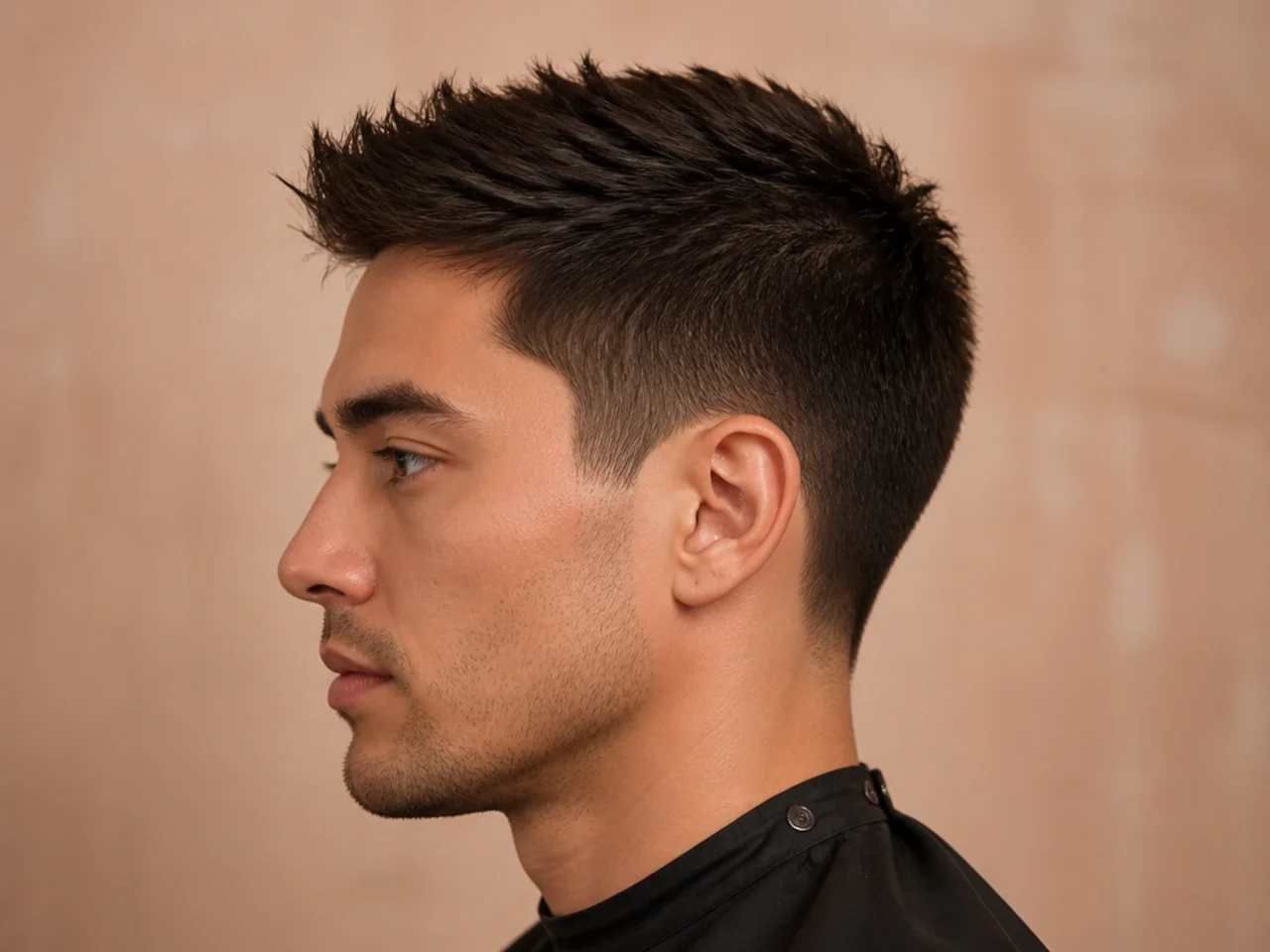
A dressed-up spiky cut. Two inches on top with a soft side part and light vertical spike work at the crown, scissor-cut tapered sides that read polished. Bridges the gap between traditional Ivy League and casual spikes.
Suits oval and square faces. Best on straight to slightly wavy hair. Reads well in traditional offices.
Ask for: "Short spiky Ivy League, two inches on top with a soft side part, point-cut crown for lift, scissor-cut tapered sides." Light matte clay through damp hair, sweep to the part but pinch the crown upward.
10. Spiky Blowout
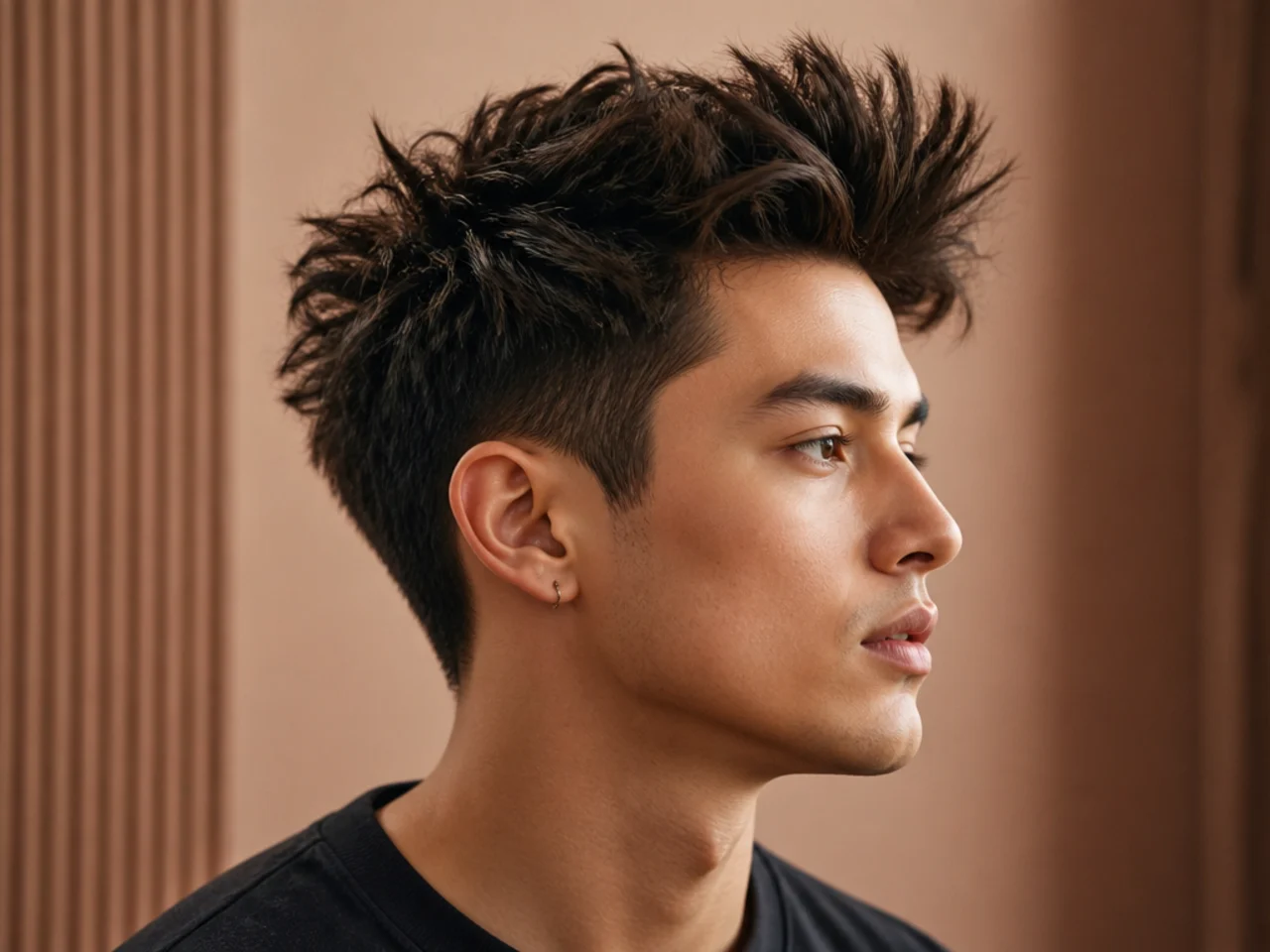
A blowout taper with spike work. Two inches on top blow-dried straight up and slightly outward for volume, with tapered short sides. Reads modern and puts the top length on full display.
Best in casual or creative settings. Suits round, oval, and heart faces. Best on straight to slightly wavy hair.
Ask for: "Spiky blowout, two inches on top with point-cutting for texture, low taper blowout at the sides." Blow-dry the roots straight up with cold air, matte paste worked through with fingertips.
11. Frosted Modern Spikes
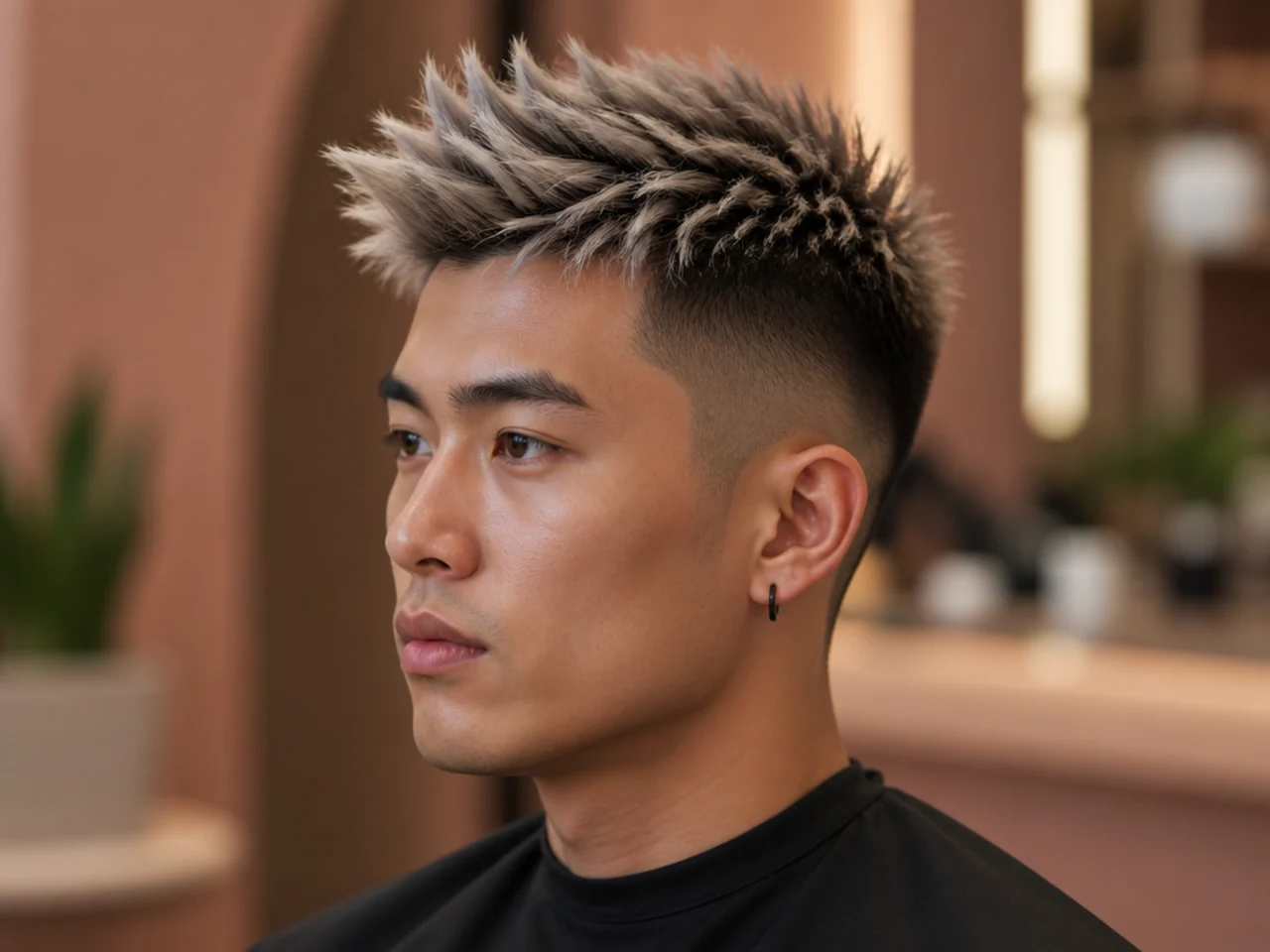
The 2000s frosted tips, updated. One inch on top with subtle balayage-style lightening at the tips only — no all-over bleach, no chunky highlights. Sides tapered short, spikes worked with matte finish so the color reads as sun-kissed rather than dated.
Best on younger guys eighteen to twenty-eight. Suits oval and square faces. Best on straight hair.
Ask for: "Short spikes with tip-only balayage color, one inch on top with point-cutting, tapered sides." Matte clay worked upward with fingertips, no shine product.
12. Spiky Comb Over
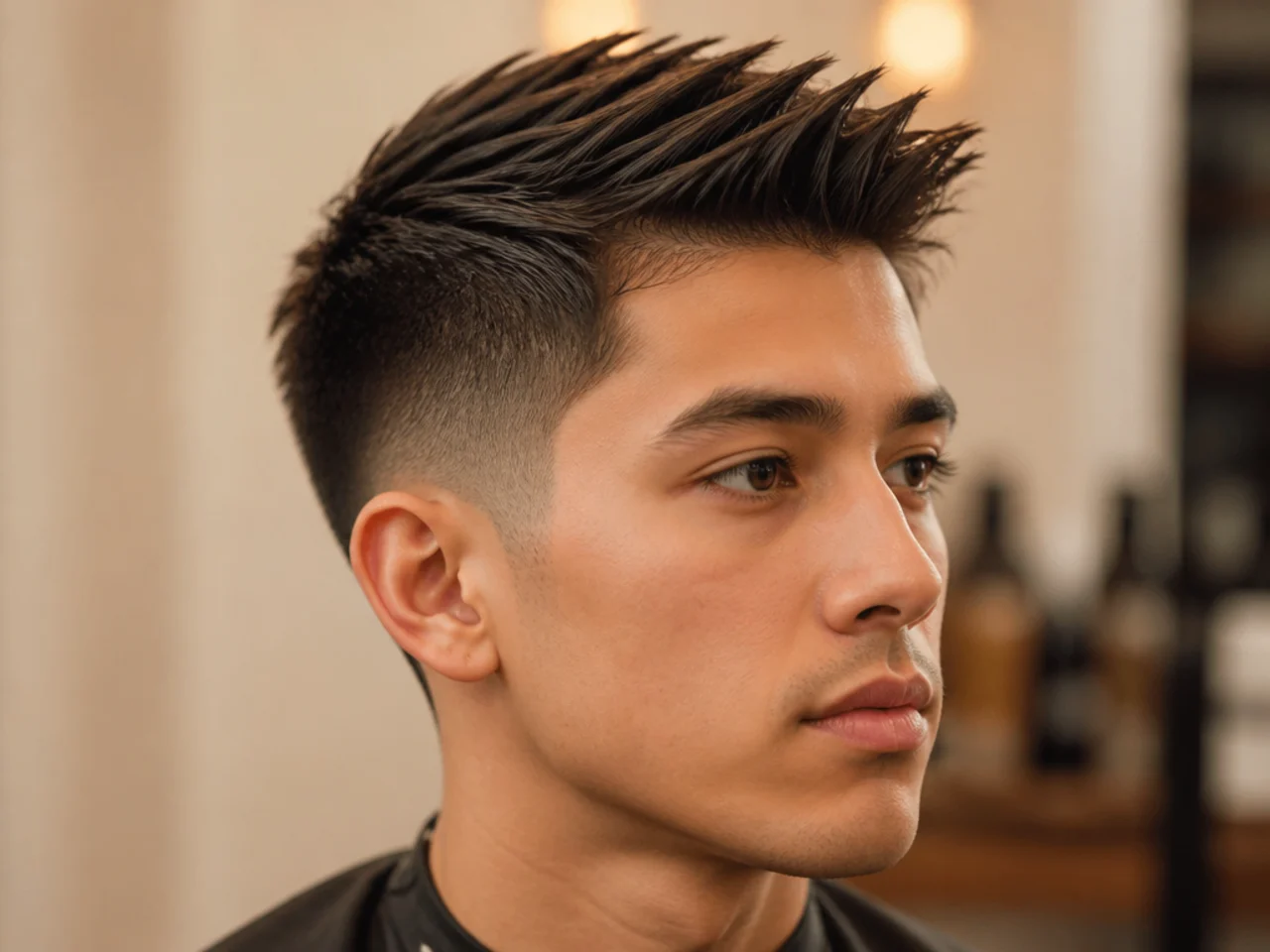
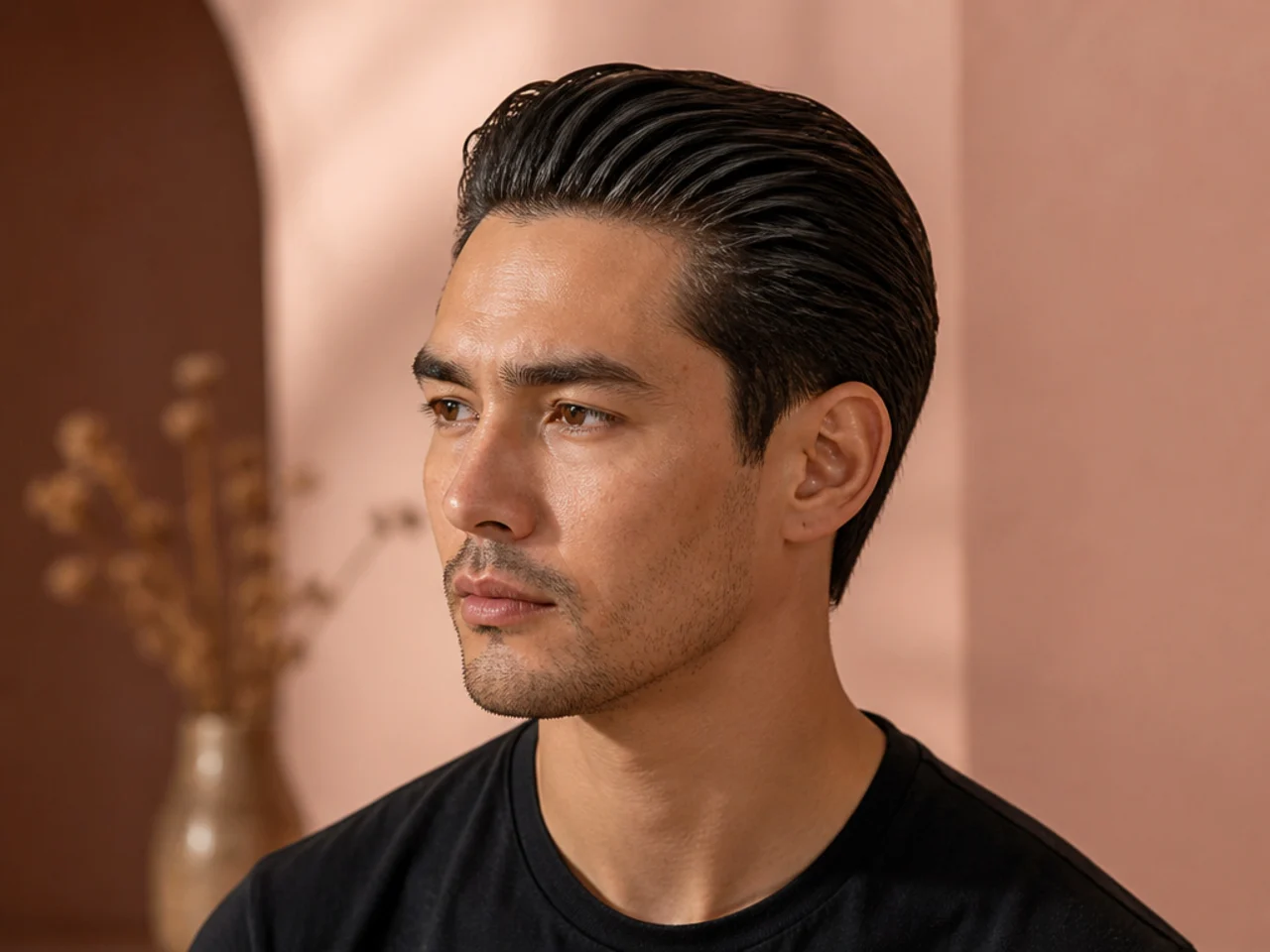
A comb over with the crown pinched upward. Two inches on top swept to one side but with the back and crown pinched into subtle vertical texture, mid fade at the sides. Reads structured but not stiff.
Suits oval, square, and heart faces. Best on straight to wavy hair.
Ask for: "Spiky comb over, two inches on top swept to the [left/right] with the crown pinched vertical, mid fade at the sides." Matte paste combed to the part, then pinch the crown upward with fingertips.
13. Short Spiky French Crop
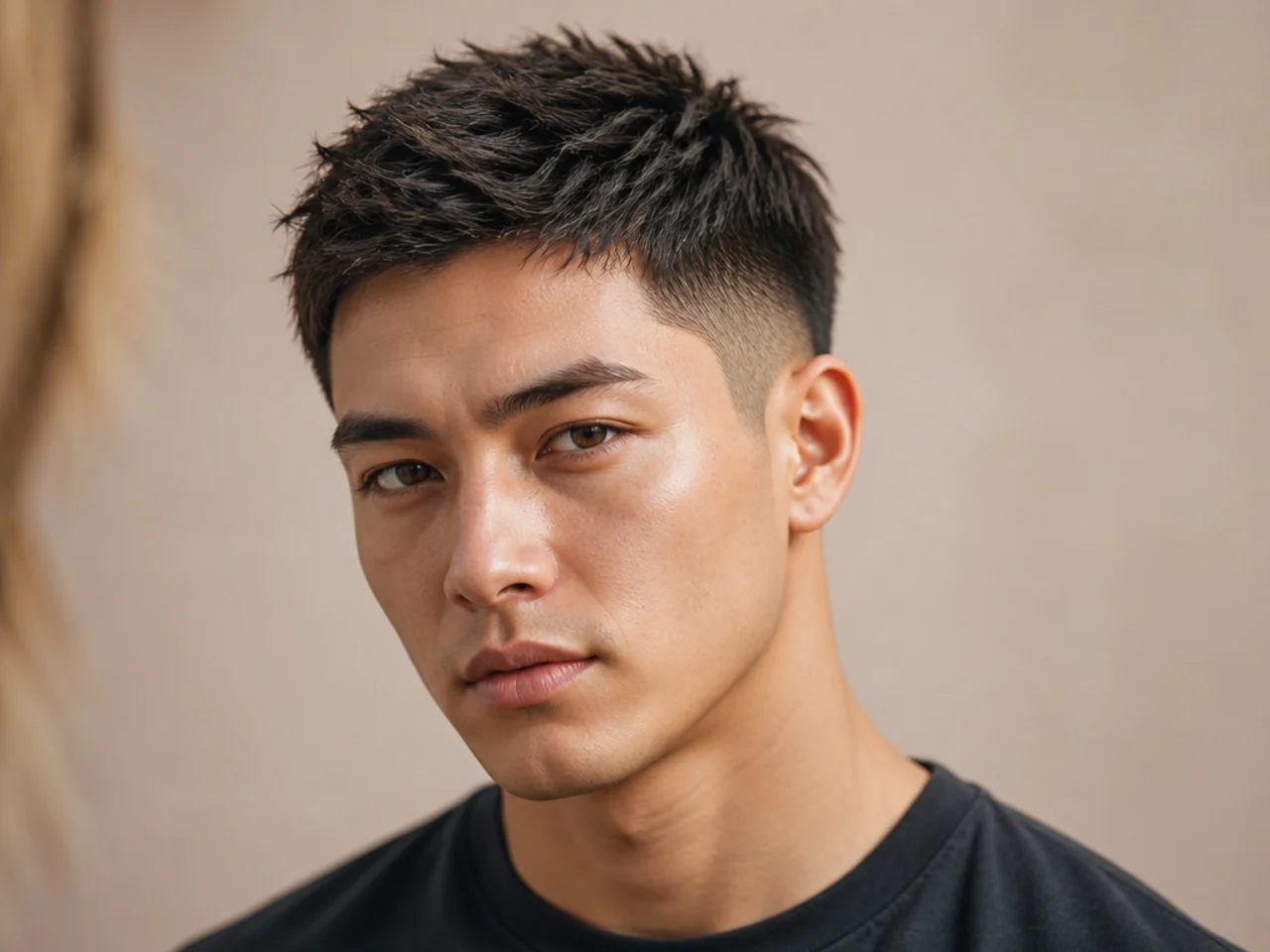
The French crop with spikes at the crown. One-and-a-half inches on top with a short blunt fringe brushed forward, and the crown pinched upward into subtle vertical pieces. Combines two shape languages in one cut.
Suits square, oval, and heart faces. Best on straight to slightly wavy hair.
Ask for: "Short spiky French crop, one-and-a-half inches on top with a short blunt fringe just above the brow, crown pinched vertical, mid fade at the sides." Matte paste through damp hair, push the fringe forward and pinch the crown up.
14. Spiky Skin Fade
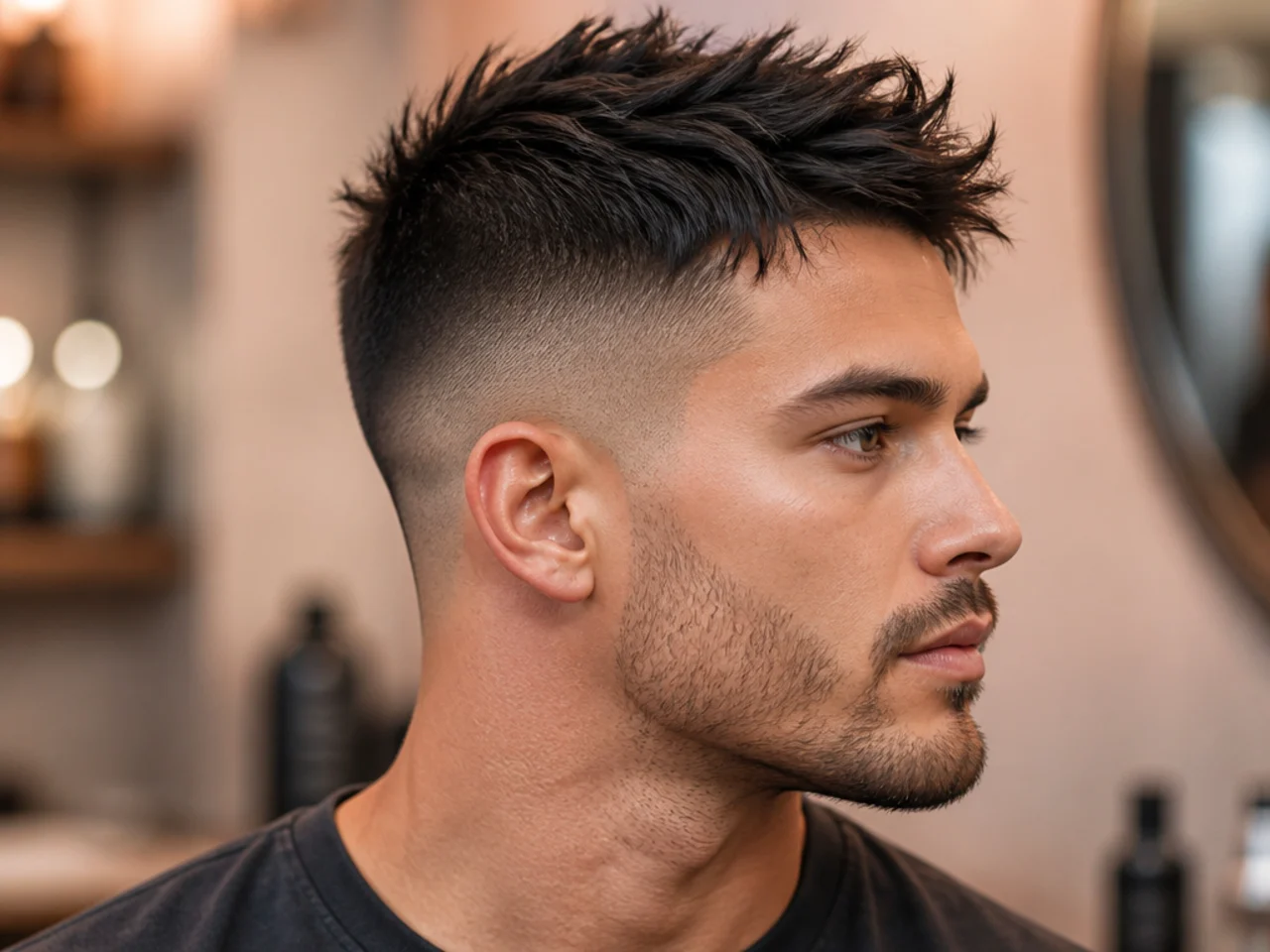
The skin fade removes all visual bulk at the sides and lets the spikes stand alone. One-and-a-half inches on top point-cut for spike texture, ends worked vertical, with a mid or high skin fade at the sides.
Suits oval, square, and diamond faces. Best on straight to slightly wavy hair.
Ask for: "Spiky skin fade, one-and-a-half inches on top with point-cutting, mid-to-high skin fade at the sides — hard line at the temple." Sea-salt spray on damp hair, matte clay pinched upward.
15. Spiky Burst Fade
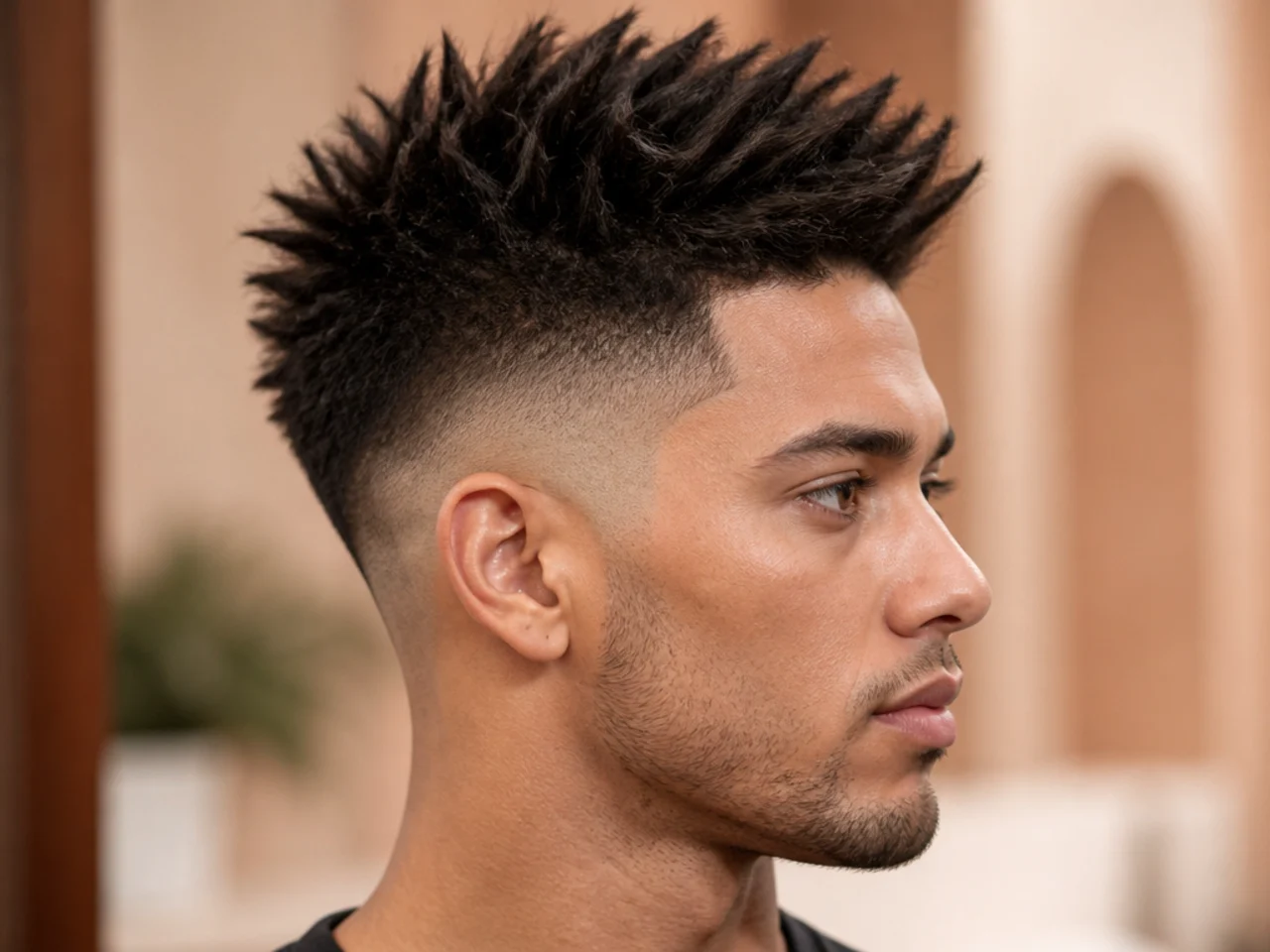
The burst fade curves in a semicircle around each ear, leaving the nape at the same length as the top. One-and-a-half inches on top styled vertical, burst fade arcing around the ears at a #1.
Best in casual or creative environments. Suits oval, square, and heart faces. Best on straight to wavy hair.
Ask for: "Spiky burst fade, one-and-a-half inches on top with point-cutting, burst fade curving around each ear at a guard 1, natural length at the nape." Matte clay through damp hair, pinch the top upward with fingertips.
How to Ask Your Barber
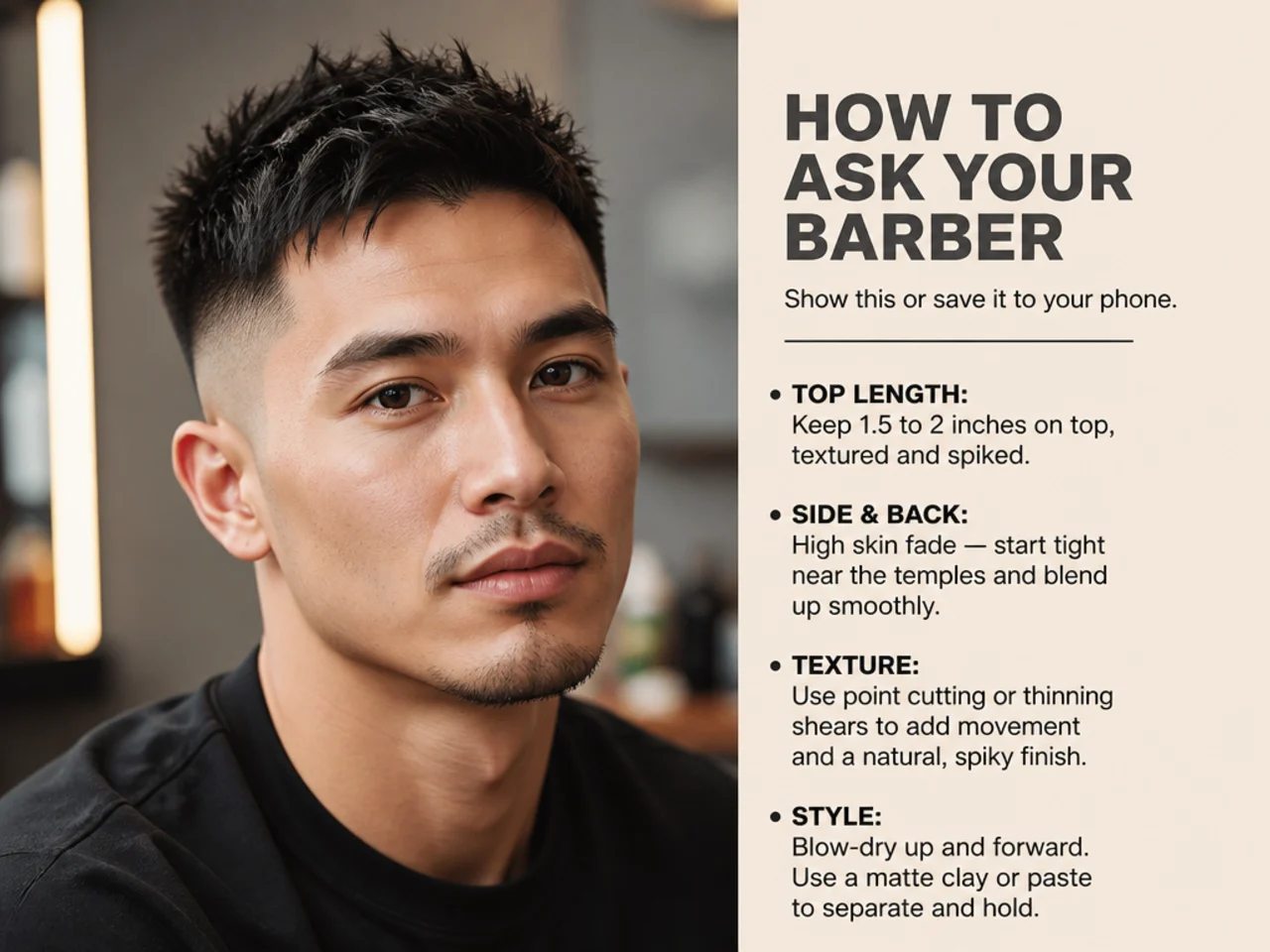
Bring a photo. Every barber cuts a slightly different "short spiky" cut, so the reference is what pins down which of the fifteen you are asking for.
- Say "short spiky" — never just "spiky" or "modern spikes." The word "short" pins down the length range and stops the barber from leaving too much length on top.
- Set the top length in inches. One inch for the shortest crops and Caesars. One-and-a-half inches for the classic zone. Two inches for the taller undercuts and faux hawks.
- Ask for aggressive point-cutting on the top. Point-cutting creates the piecey ends that let spikes read as separate pieces. Blunt-cutting locks the ends into a wall that reads dated.
- Set the side treatment. Low taper for conservative offices, low fade for modern professional, mid fade for standard casual, skin fade for statement, burst fade for creative.
- Confirm the fringe direction. Vertical for full spikes, forward for the French crop or Caesar hybrids, sideswept for the comb over version.
- Ask for a squared neckline. Squared reads sharper than rounded on spiky cuts because the vertical top wants a matching straight base.
- Show the photo again before scissors touch hair. Confirming the shape once more catches misunderstandings on top length before the cut is committed.
Styling and Maintenance
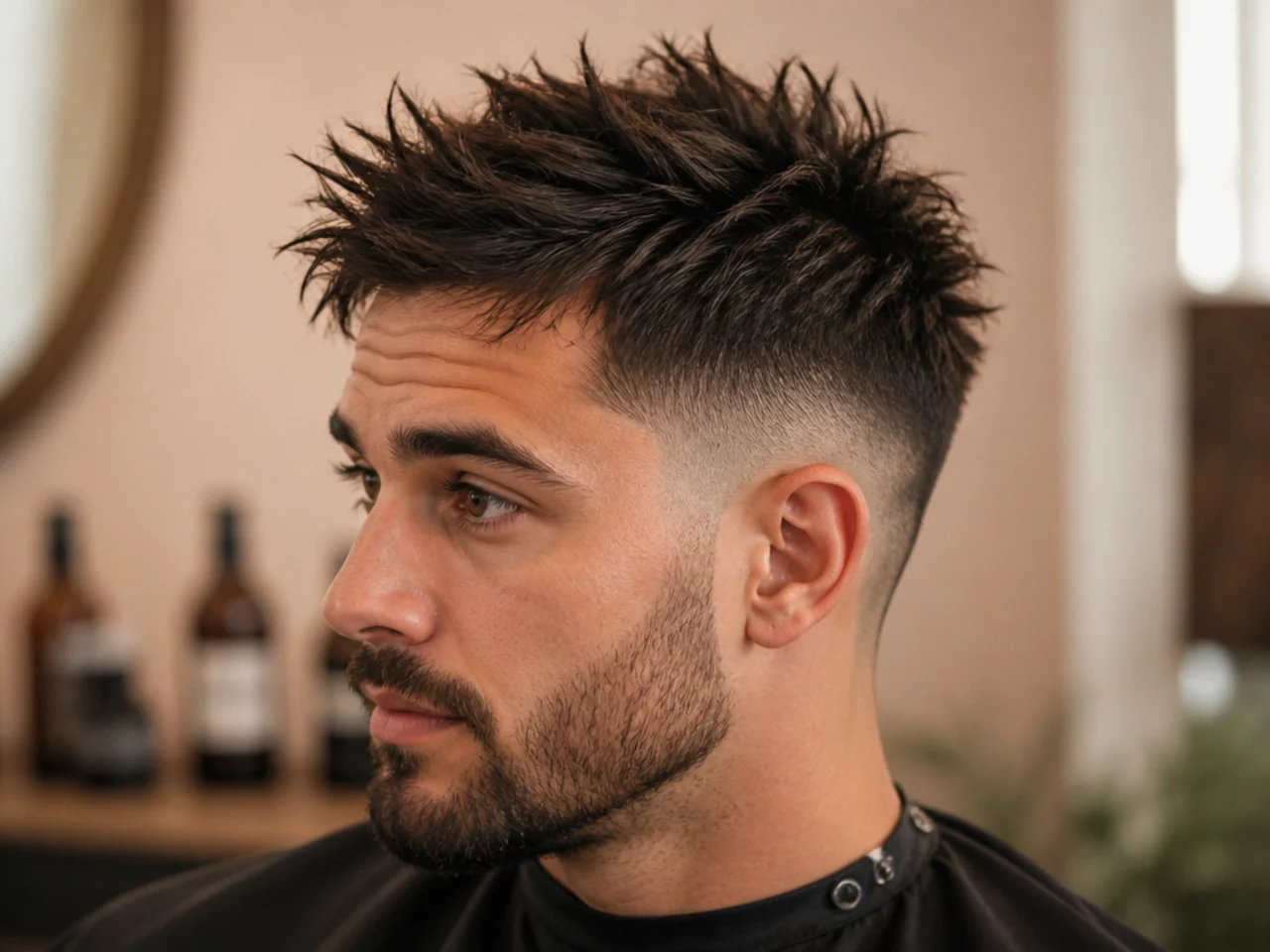
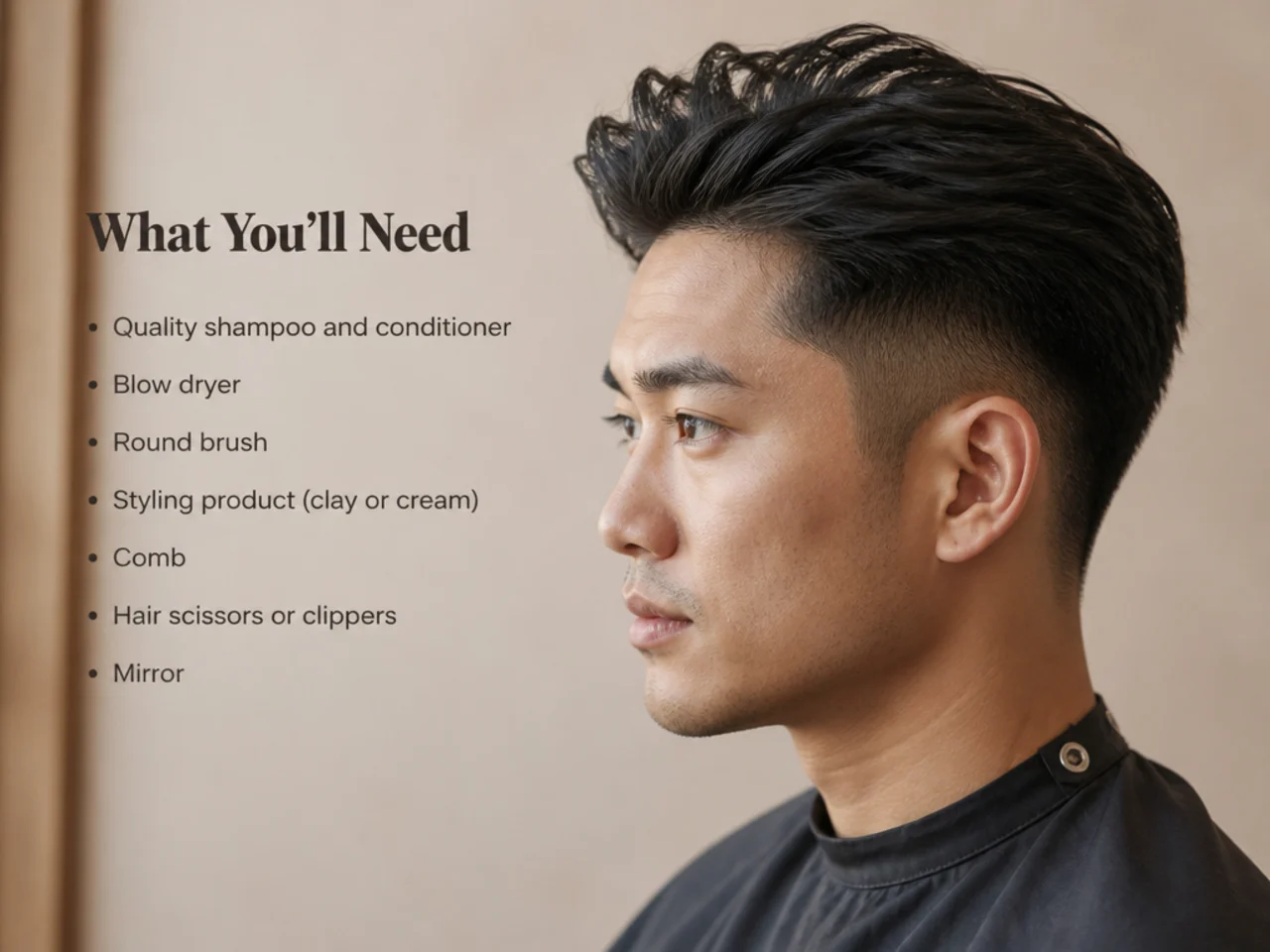
Wash and towel-dry so the hair is damp — never soaking, never dry. Damp hair grips the product; dry hair pushes it to the surface where it fails by lunch. Prime with a sea-salt spray if your hair is fine or straight — the salt adds micro-roughness that helps spikes hold.
Warm a pea to nickel-sized dab of matte clay or firm-hold molding paste between the palms. Firm-hold matte clay is the standard product for spikes. Skip glossy pomades, hair gels, and shine sprays — all three read as the 2000s frosted look and stiffen the texture into a helmet.
Work the product through with fingertips first, then pinch small sections upward into vertical spikes. Never comb spikes — a comb pulls the pieces together into a wall. If you want the spikes tighter and more defined, hit them with a light-hold hairspray at arm's length. If you want them softer and more piecey, skip the hairspray entirely.
Rebook every three to four weeks for the top, every two to three weeks for fade sides. Short spikes need short sides to read sharp — waiting past that turns the shape into a slightly grown-out crop. Between visits, run a beard trimmer at a #1 around the neckline yourself to buy an extra week of clean edges.
Wash three to four times a week with a mild shampoo. Skip daily washing — it strips the scalp oils that spikes need for grip and shape. Condition every wash to keep the ends soft. For related short-hair options, browse the mens haircuts short fade guide or the textured crop haircut men breakdown, and see the mid fade haircut reference for the most common fade pairing.
FAQ
Are short spiky haircuts still in style?
Yes — the modern spiky cut is nothing like the 2000s frosted version. Today's short spikes lean on point-cut texture, matte finishes, and fade pairings that read current on any age. The 2000s version used glossy gel and blunt tips that clumped into cartoon points. The modern version uses matte clay and piecey ends that read like intentional hair rather than plastic. For a broader short-hair context, see our mens haircuts hub.
What length works best for short spiky hair?
One to one-and-a-half inches on top is the sweet spot. Shorter than that and the spikes cannot stand — the pieces are too short to hold vertical. Longer than two inches and the style shifts into brush up or quiff territory. Set the length in inches at the chair rather than asking for "spike length" — every barber's mental measurement is different.
What product should I use for short spiky hair?
A matte clay or a firm-hold molding paste. Skip glossy pomades and gels — glossy finishes read dated and gels stiffen the texture into a helmet. A pea to nickel-sized dab is enough for short hair. Sea-salt spray on damp hair before the main product adds grip if your hair is fine or slippery. For the burst fade pairing specifically, see our burst fade haircut guide, and for the mid fade option, the mid fade haircut breakdown.
Do short spiky cuts work with fine hair?
Yes, with prep. Sea-salt spray on damp hair before the styling product gives fine hair the grip and roughness spikes need. Skip thicker creams — they weigh fine hair down and flatten the shape. A firm-hold clay or a texturizing spray finishes the look. Rebook every three weeks so fine hair does not get sparse-looking at the crown as it grows out.