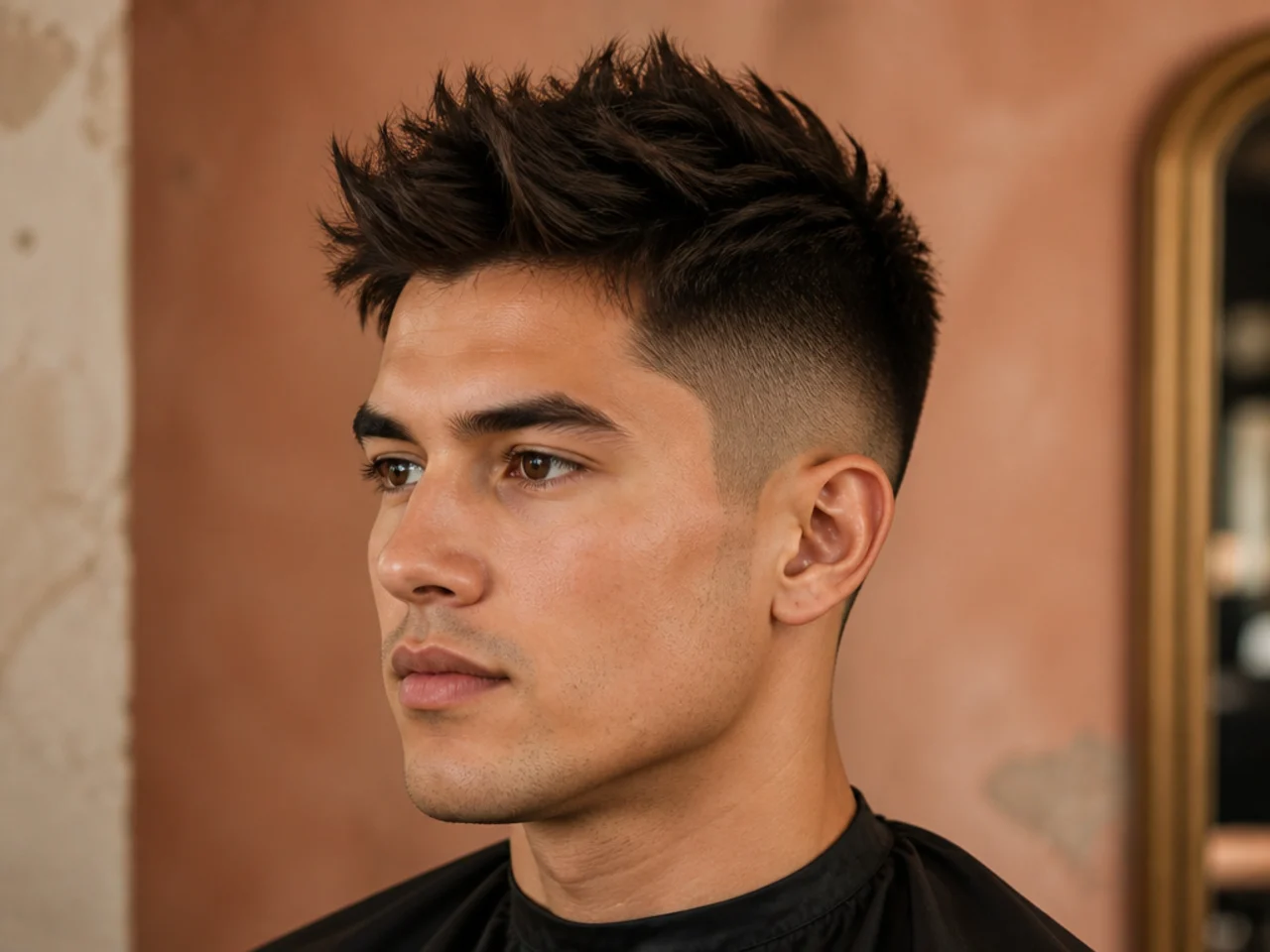
20 Short Spiky Haircuts for Men
Twenty short spiky haircuts men are asking for — classic tips, textured crops, fade combos, and quiff hybrids with the exact ask for your barber.
In this article · 29
- What Is a Short Spiky Haircut?
- How to Choose Your Short Spiky Cut
- The Classic Spiky Foundations
- Classic Short Spiky Haircut
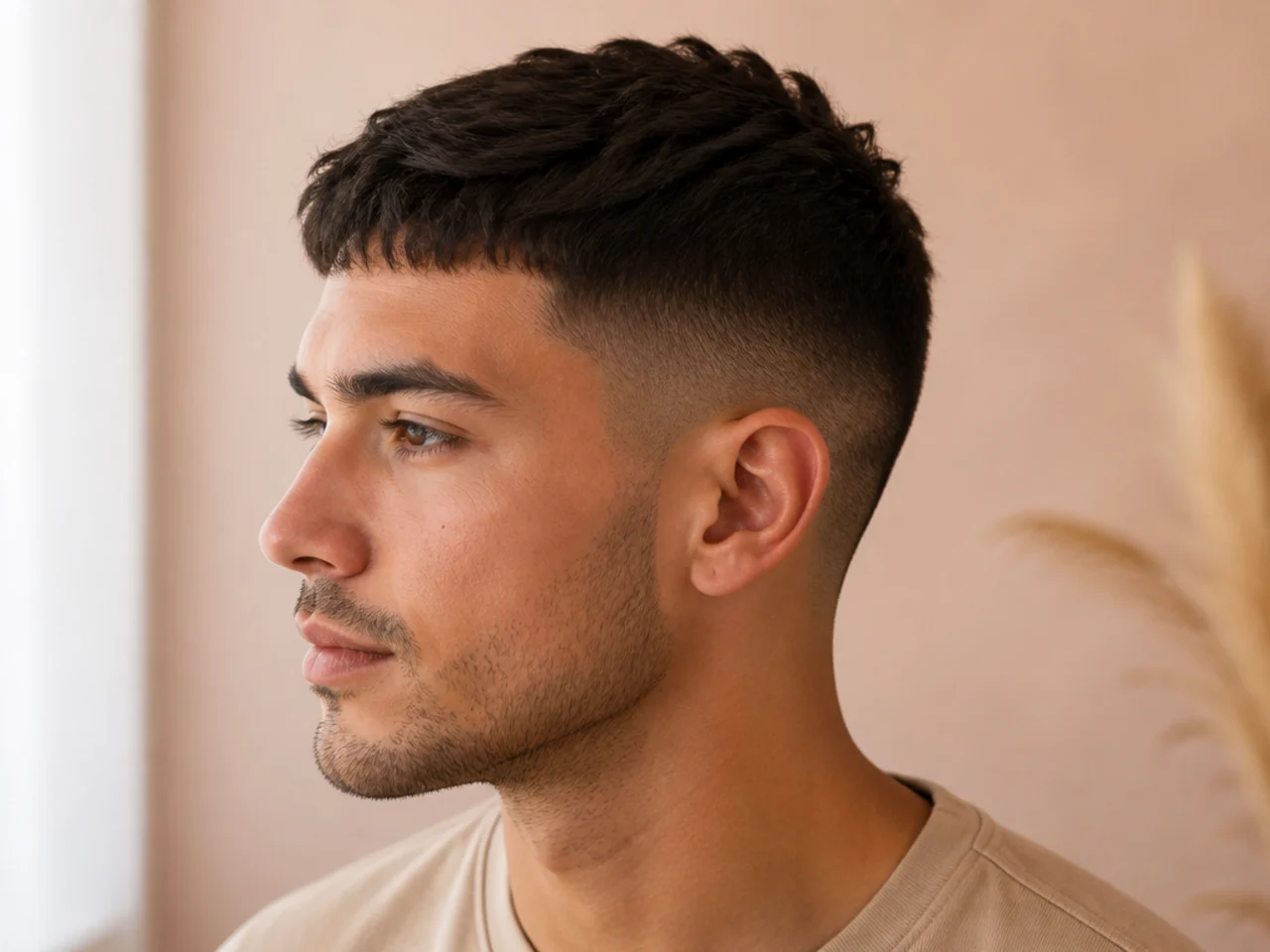
- Short Textured Spiky Cut
- Messy Spiky Cut
- Spiky Fringe with Short Top
- Frosted Tips Spiky Cut
- Spiky Fade Combinations
- Spiky Low Fade
- Spiky Mid Fade
- Spiky Skin Fade
- Spiky Drop Fade
- Spiky Undercut
- Volume and Movement Variations
- Short Spiky Quiff
- Short Spiky Faux Hawk
- Short Spiky Mohawk
- Spiky Brush Up
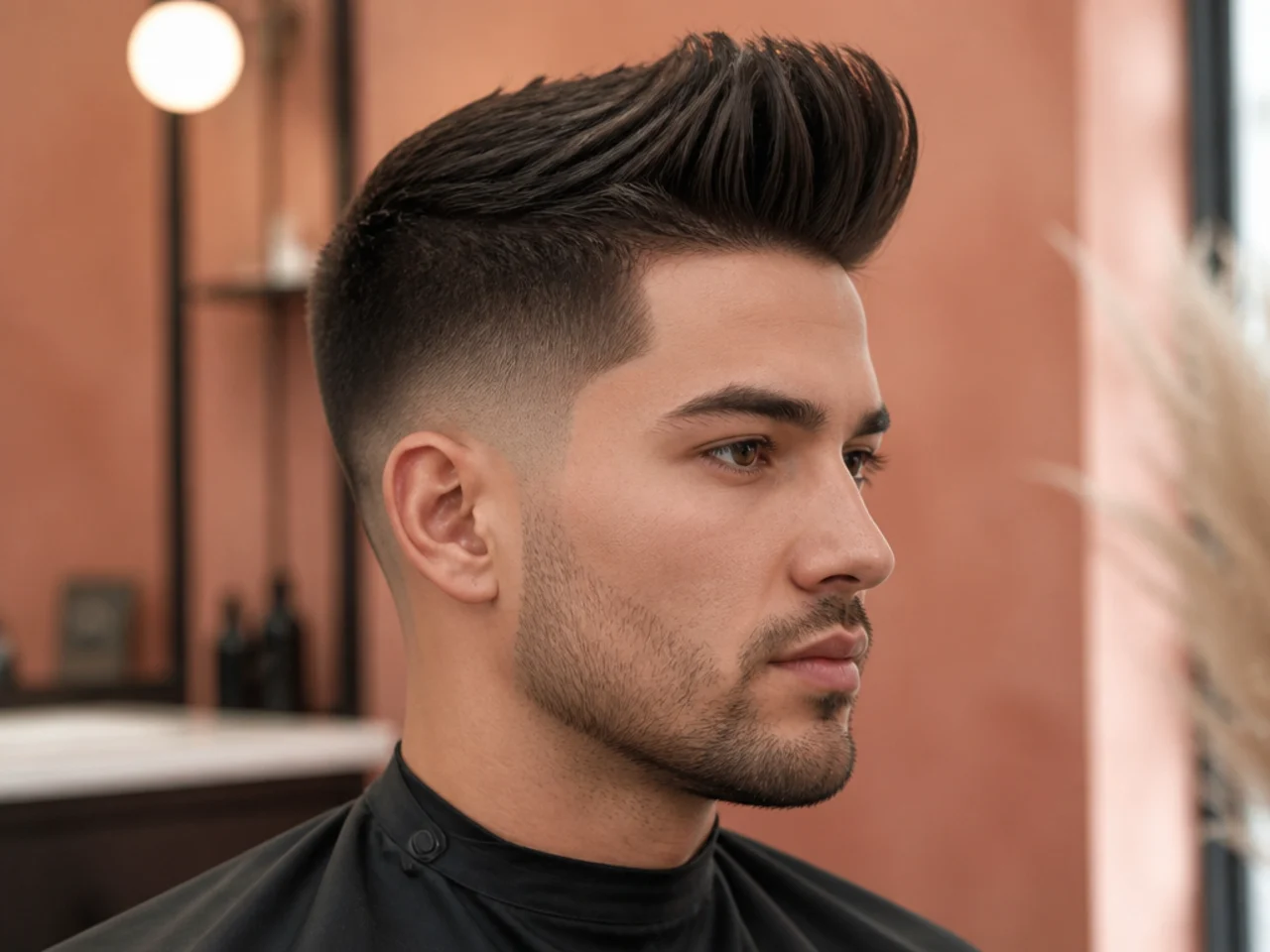
- Short Spiky Pompadour
- Classic Cuts with a Spiky Finish
- Spiky Caesar Cut
- Spiky Crew Cut
- Spiky Ivy League
- Spiky Comb Over
- Spiky Business Cut
- How to Ask Your Barber for a Short Spiky Cut
- Styling and Maintenance for Short Spiky Hair
- FAQ
Spikes went out of style with frosted tips and came back with texture. Today's short spiky haircuts sit closer to a French crop than a boy band — point-cut length on top, a low or mid fade at the sides, and a matte clay that finishes the shape in thirty seconds. This guide walks through twenty short spiky variations men are asking for right now, with the exact barber ask, face-shape notes, and the styling move that keeps the peaks looking sharp all day.
What Is a Short Spiky Haircut?
A short spiky haircut is any short men's cut styled so the top ends stand up in defined points instead of lying flat. Top length runs anywhere from three-quarters of an inch to two inches — short enough to hold a peak, long enough to grab between fingers. Sides are usually tapered, low-faded, or skin-faded so the eye tracks upward to the peaks.
The modern read leans texture over uniform spikes. Point-cutting on the top breaks each strand into a slightly different length, so peaks fall in natural clusters instead of a uniform brush of soldiers. A matte finish replaces the wet-look gel of the 2000s and pulls the whole cut into current dress codes. Short spiky haircuts sit inside the family of textured haircuts for men and read best on straight or thick straight hair, though modern texturizing shears open the door to wavy hair too. If you want the wider view of every short men's shape, see the short simple men's haircuts pillar.
How to Choose Your Short Spiky Cut
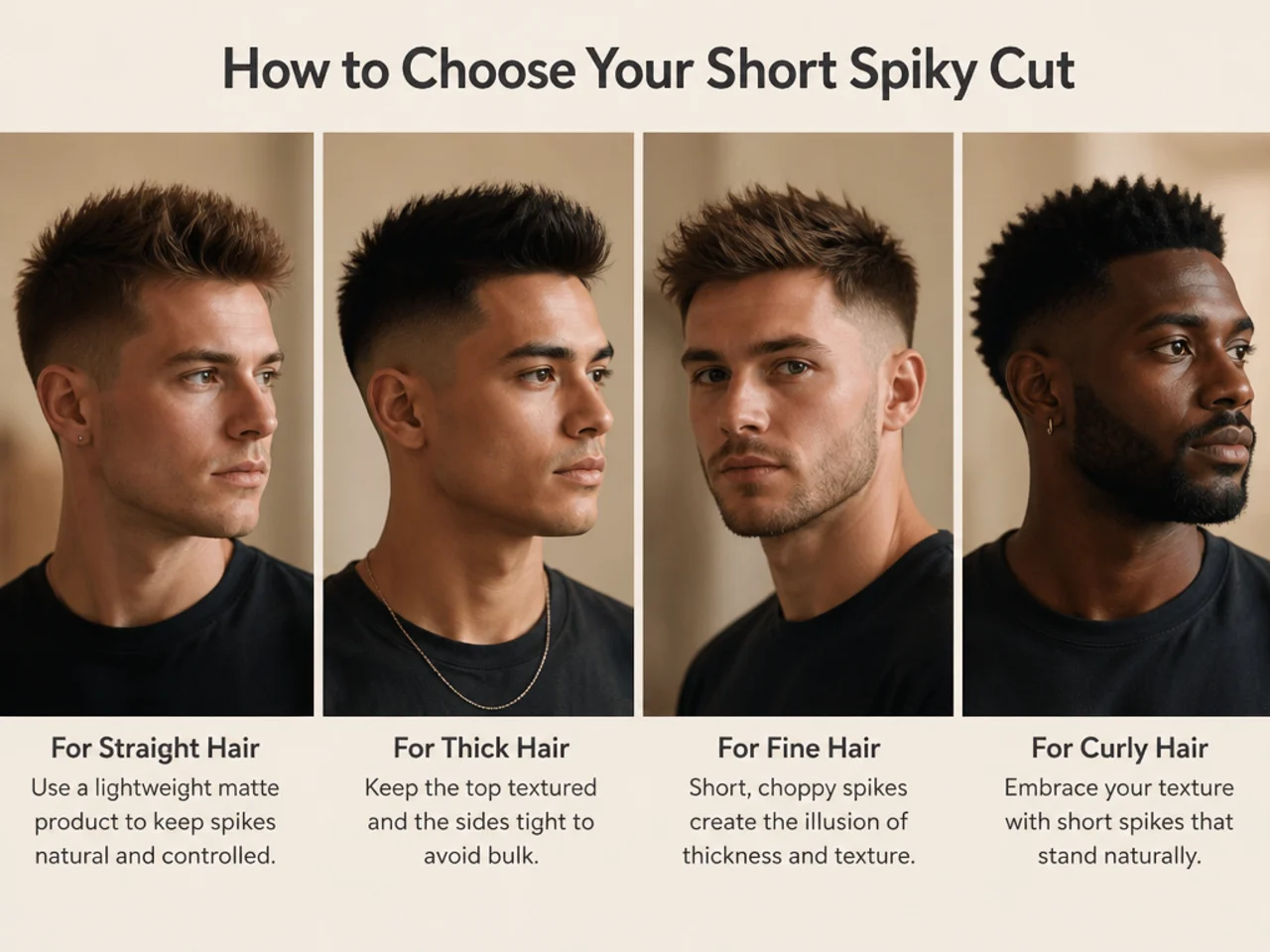
Face shape sets the direction. Round and oval faces carry short spikes best because the vertical peaks visually lengthen the silhouette — pair with a mid or high fade to sharpen the temples. Square and diamond faces handle short spikes without adjustment; the strong jawline balances the height on top. Heart-shaped faces want the spikes lower and closer to the front so the crown does not read taller than the chin can support. Long or oblong faces should keep the peaks short and lean toward a spiky fringe over full-length spikes — a forward drop balances vertical lift.
Hair density and texture are the second filter. Thick straight hair is the spiky cut's natural home — it holds a peak all day without help. Medium straight hair takes spikes cleanly with a pre-styler. Fine straight hair needs sea-salt spray at the roots and point-cutting from your barber to fake density. Wavy hair can spike with texturizing shears and a firm-hold matte clay, though the wave will still show at the base. Curly and coily hair does not spike in the traditional sense — reach for a textured French crop instead.
Workplace decides how bold the peaks read. Corporate rewards short, restrained spikes with a low fade. Creative offices and casual dress codes carry the taller, edgier variations without trouble.
The Classic Spiky Foundations
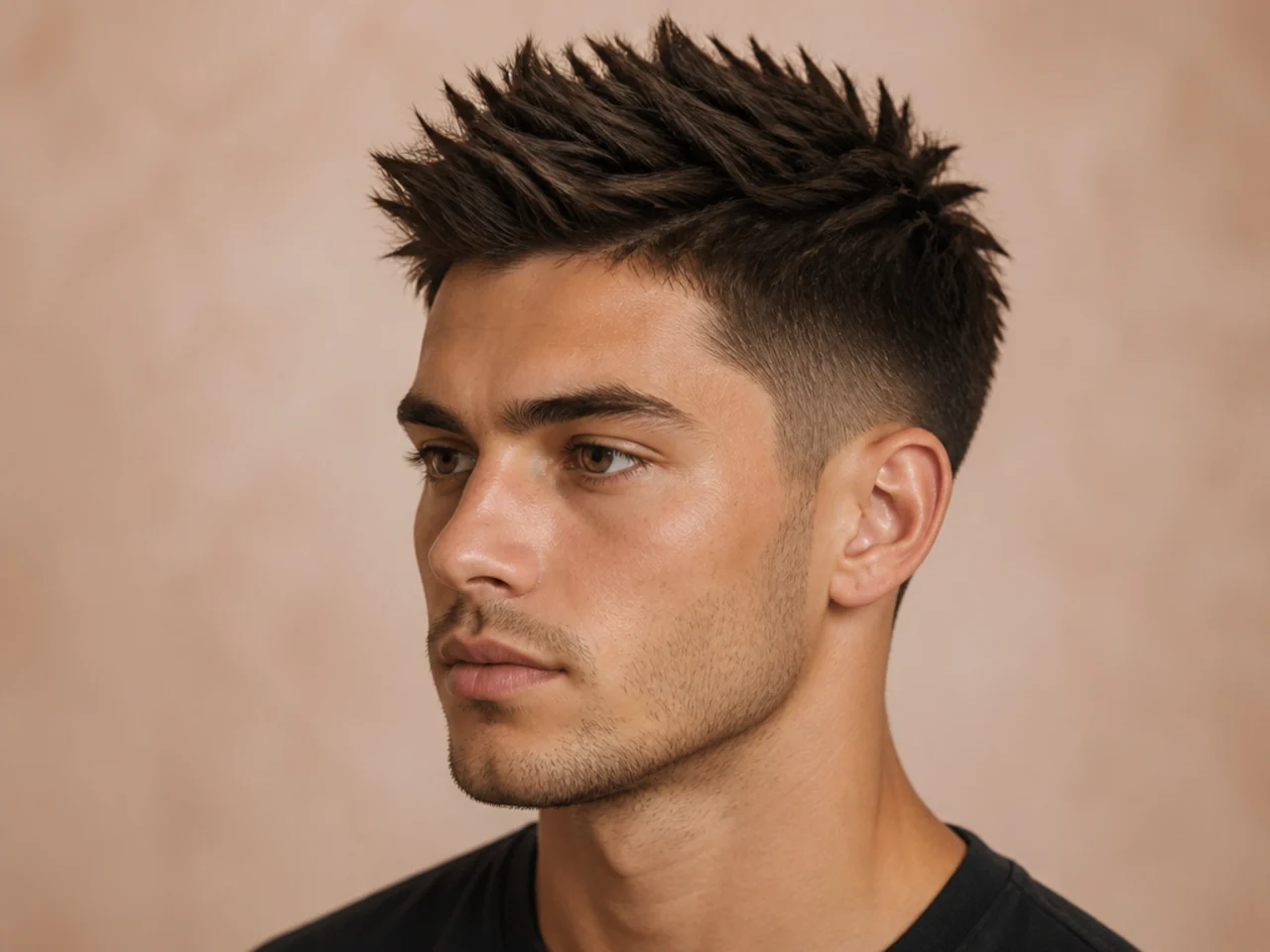
Every short spiky cut on this list traces back to one of the five foundations below. Get the base right and you can grade the finish up or down with fade height, product, and how aggressively you pinch the peaks. These five also work as your entry point if you have never worn spikes and want to start with something that reads current instead of throwback.
Classic Short Spiky Haircut
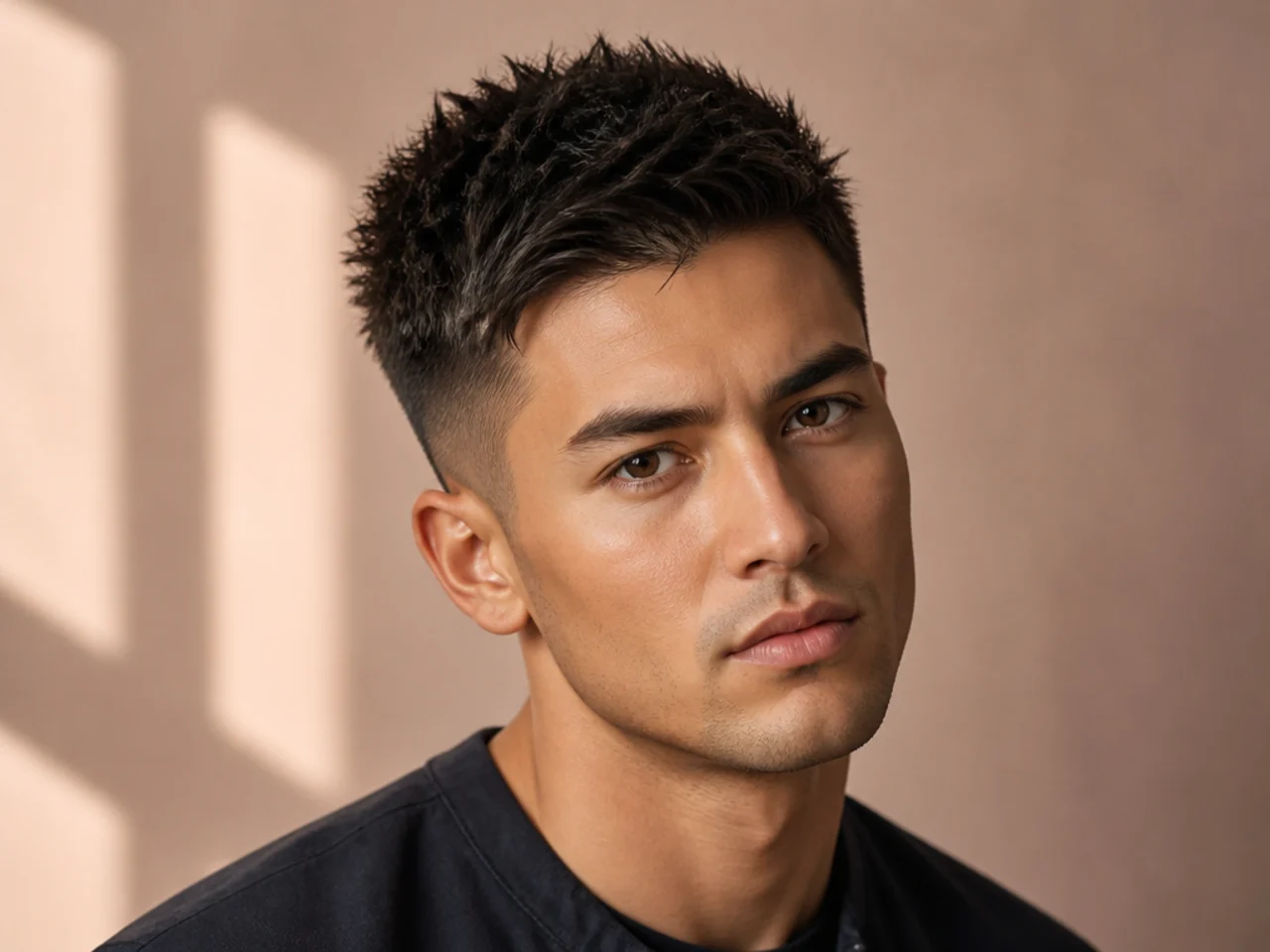
The blueprint. About an inch on top, tapered sides, and the top styled into small vertical peaks with a firm-hold matte clay. It reads intentional without pushing too far into a statement — the version most guys mean when they say "spiky cut" to a barber. Best on square, oval, and round faces, and on thick or medium straight hair that holds the point on its own.
Ask for: "One inch on top point-cut for texture, low taper on the sides, square neckline." Style with a firm-hold matte clay pinched into small sections with fingertips. Skip the comb. Rebook every three to four weeks — the peaks lose definition the moment the top gets heavy.
Short Textured Spiky Cut
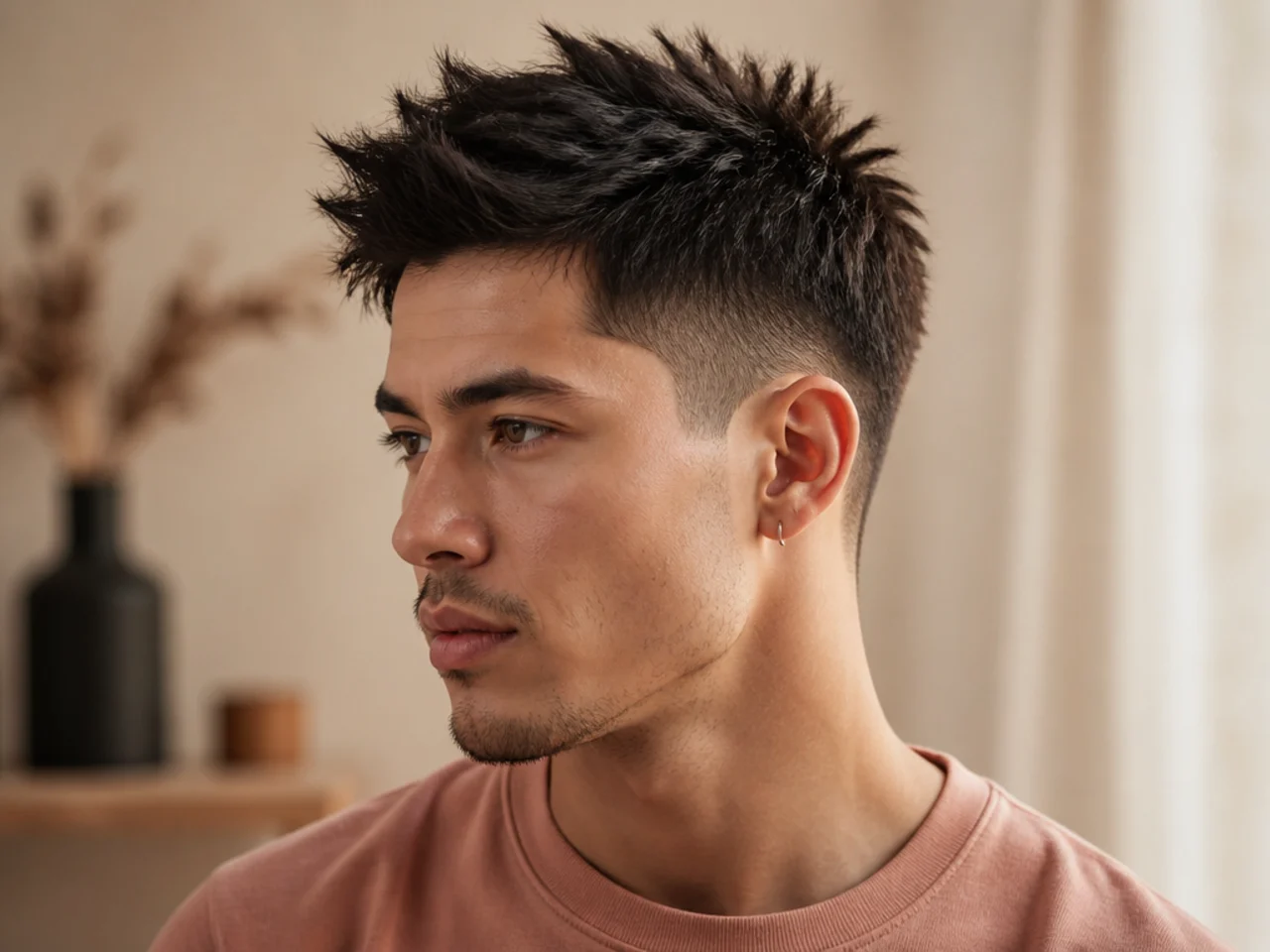
The modern read on the classic. Same one-inch length on top, but the barber runs texturizing shears through the top for a piecey, broken-up finish instead of an even brush. The peaks that come out of this cut fall in irregular clusters and look styled without effort. Best on medium and thick straight hair, and on any face shape.
Ask for: "Short textured spiky cut, one inch on top texturized with point-cutting, mid fade at the sides." A pea of matte paste worked through damp hair with your fingers is the whole routine. Guys with fine hair should add a sea-salt spray under the paste for extra grip.
Messy Spiky Cut
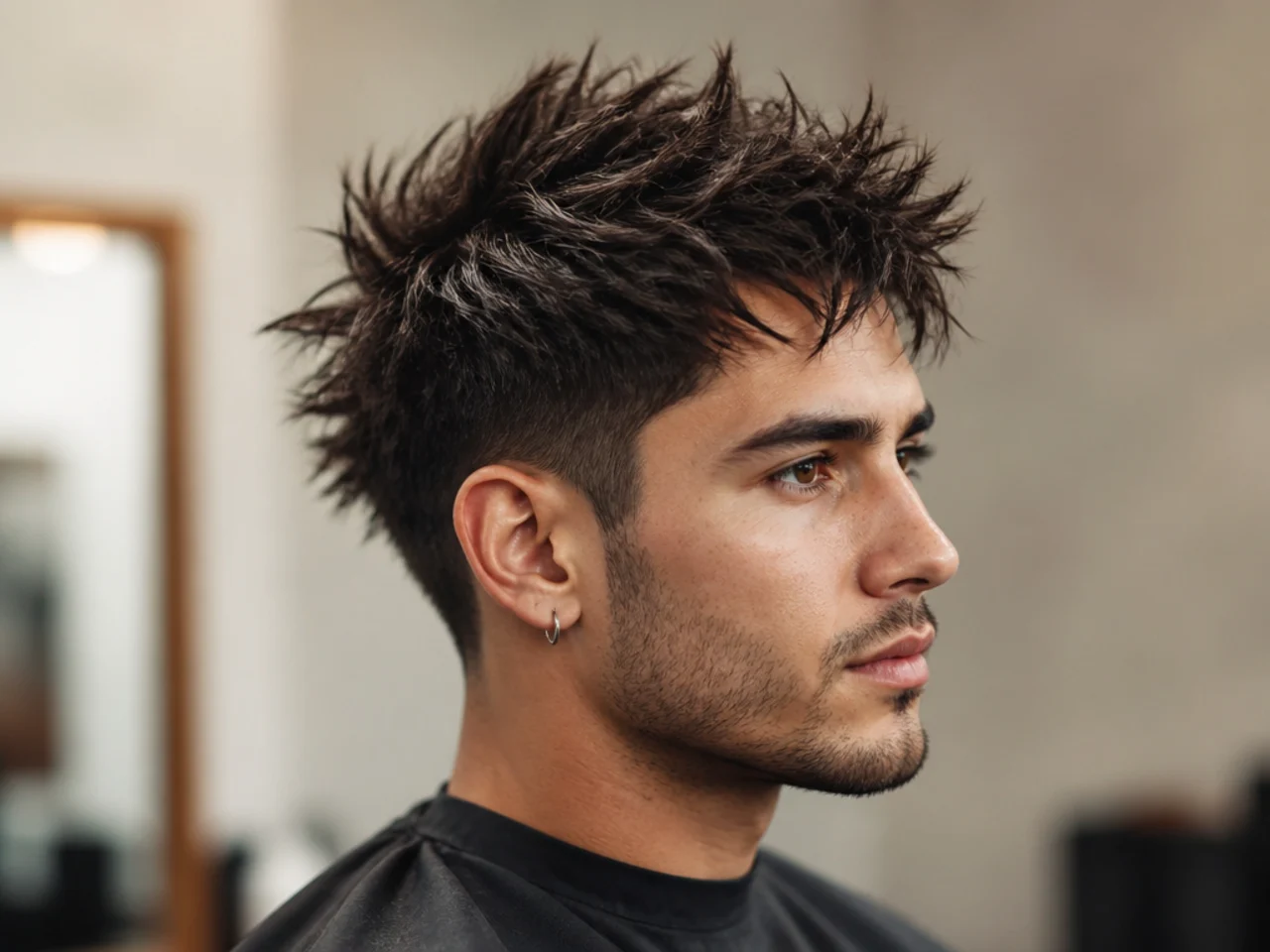
Not really messy — deliberately disorganized. Same base cut as the classic, but the peaks are pinched in different directions instead of straight up. Some tilt forward, some tilt sideways, some sit taller than others. Reads lived-in and current, and forgives fast styling on a rushed morning. Slots naturally into the wider family of messy hairstyles for men.
Best on thick and wavy hair, and on guys under 35 with casual dress codes. Ask for: "Inch on top, heavy point-cutting for texture, low fade or taper on the sides." Rub a fingertip of matte fiber between your palms, push through the hair in different directions, do not comb. The point of the cut is that no two mornings look identical.
Spiky Fringe with Short Top
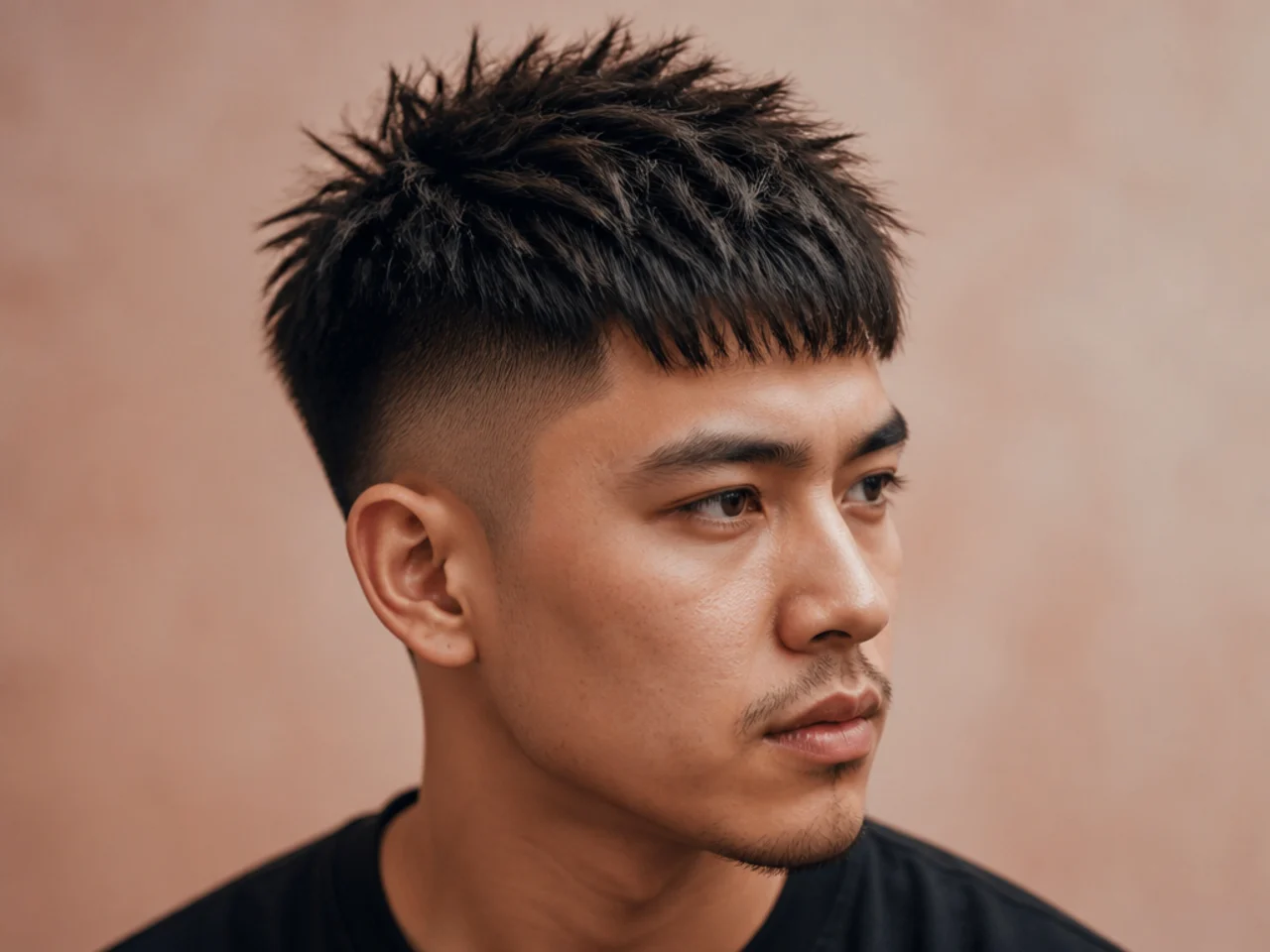
Only the front area spikes; the back stays flat. Length graduates from about an inch and a half at the front down to half an inch at the crown, so the peaks concentrate at the hairline like a modern take on a spiky fringe. Sits well on long and oblong faces because the forward focus balances the height.
Ask for: "Spiky fringe, inch and a half at the front graduated shorter to the back, low fade at the sides." Only work product through the front two inches of hair. Pinch peaks forward, not straight up. Best on straight hair with any density.
Frosted Tips Spiky Cut
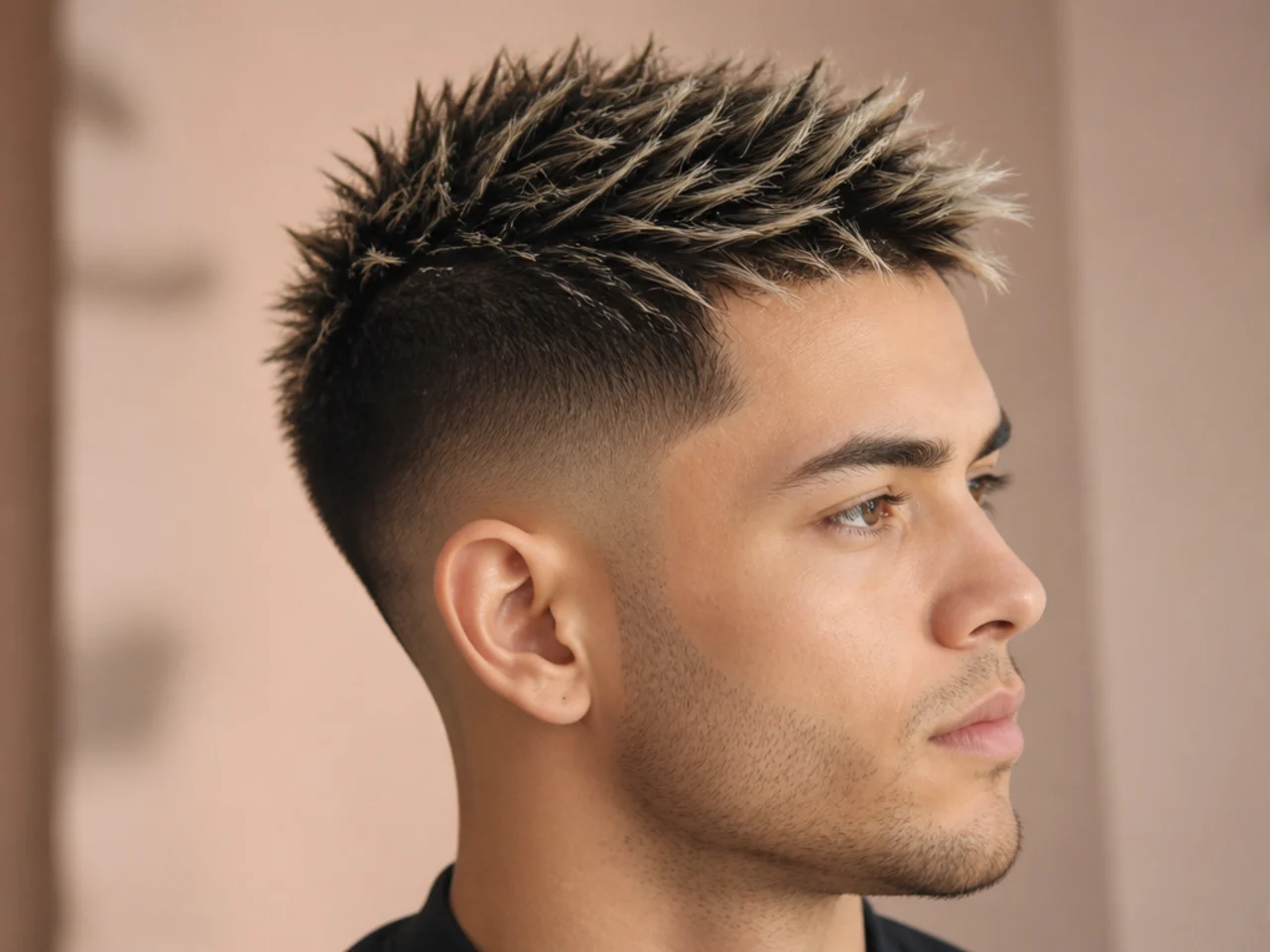
The Y2K throwback that came back with restraint. Modern frosted tips use subtle bleach on just the peak tips — three or four shades lighter than the base, not the platinum-white of the original. Paired with a short spiky cut and a low fade, the lift feels current instead of costume. Best on dark hair colors where the contrast reads, and on guys comfortable committing to a colorist visit every four to six weeks.
Ask for: "Short spiky cut with frosted tips — foil highlights on the top peaks only, two to three shades lighter than my base." Style with a matte clay and let the tips show. Skip if you cannot commit to the color upkeep — grown-out frosted tips read scruffy fast.
Spiky Fade Combinations
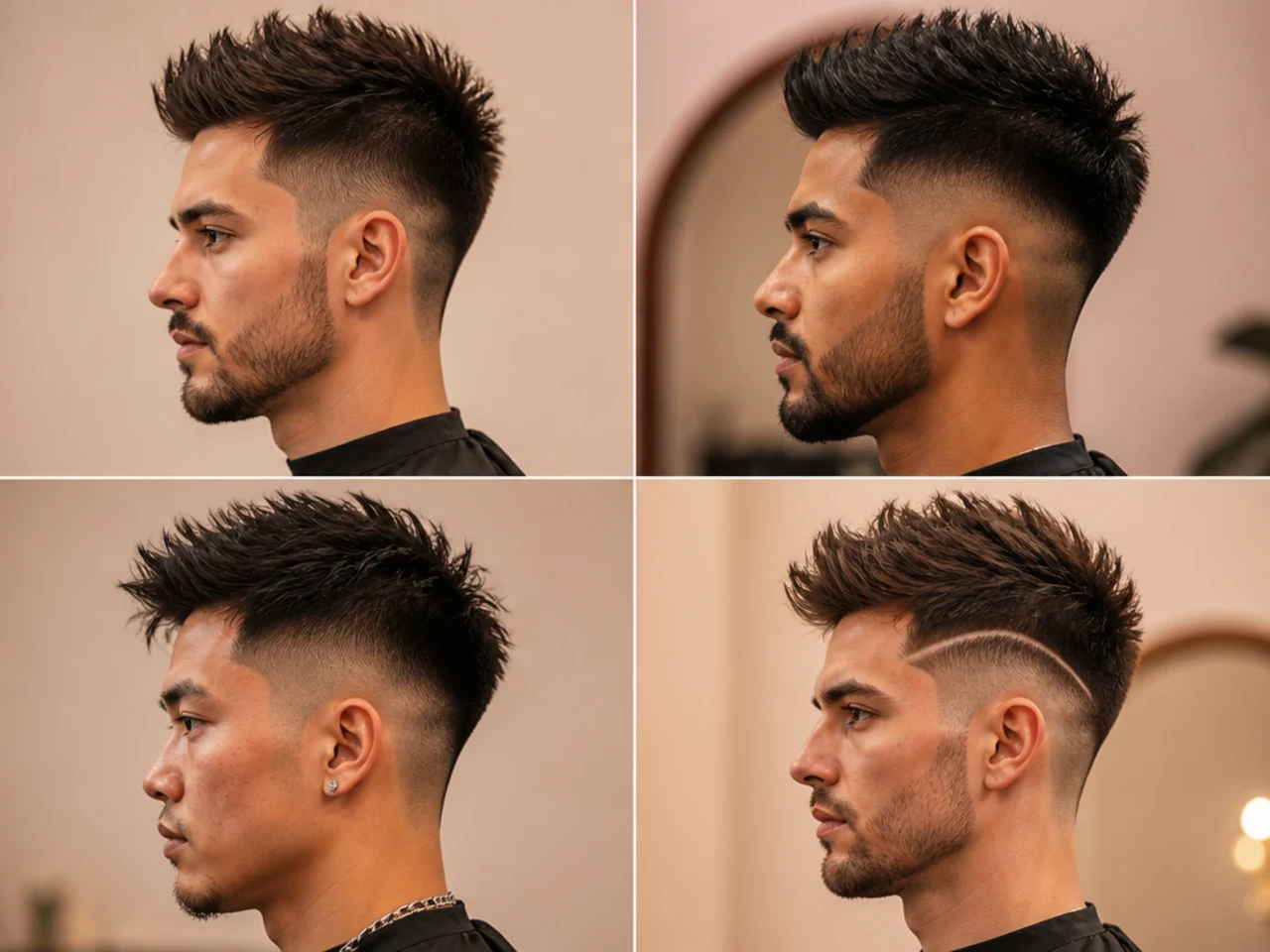
Where the fade starts changes everything about how the spikes read. The five variations below use the same spiky top length — an inch to an inch and a half — but pair it with a different fade at the sides. Start low if you are new to the family of fade haircuts; climb the height next visit once you know how the shape carries on you.
Spiky Low Fade
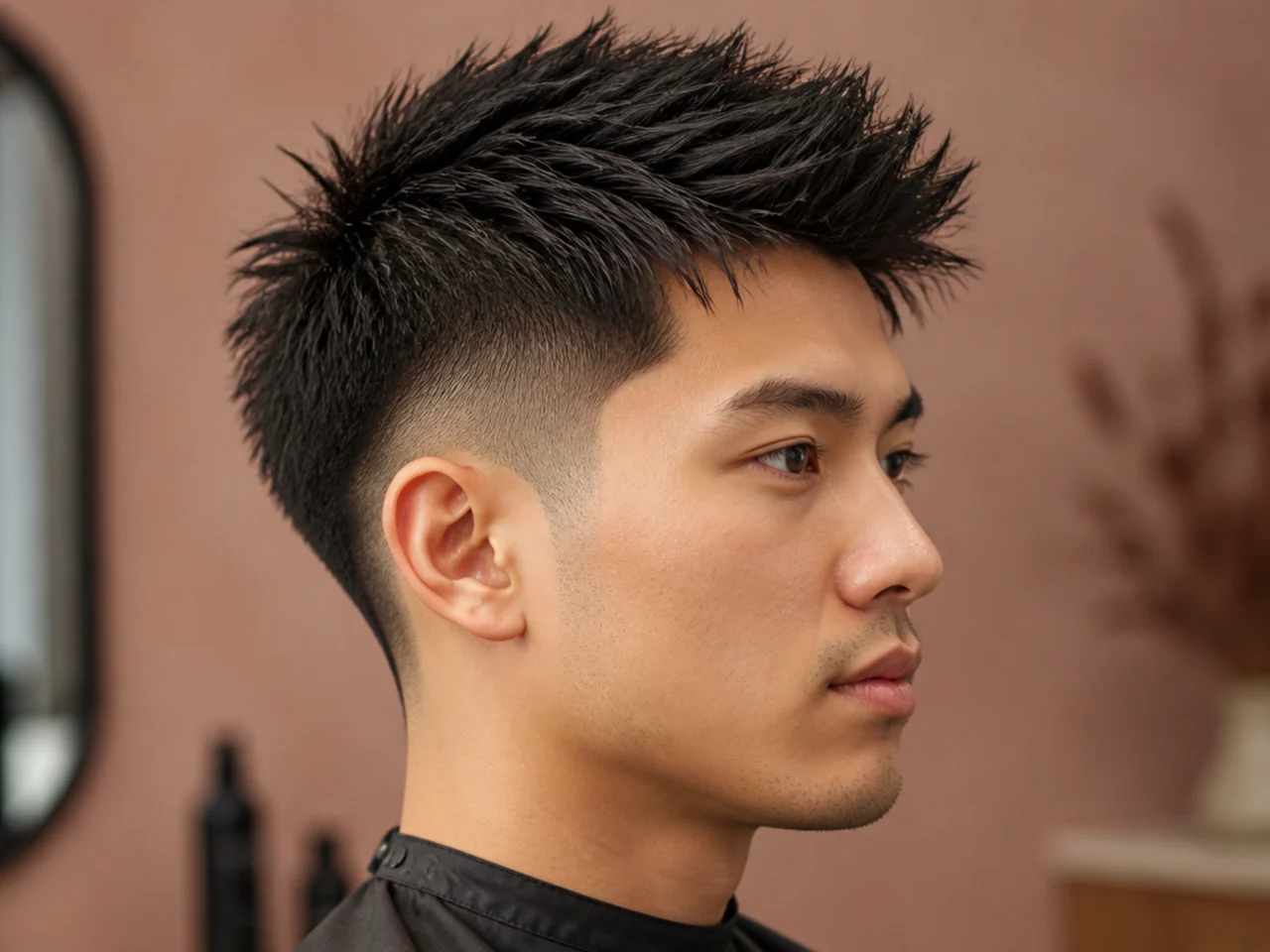
The low fade drops the shortest point just above the ear, keeping the sides soft and the workplace happy. Paired with an inch of textured spiky top, it is the most conservative fade combination on the list — sharp without shouting. Best on office jobs, softer face shapes, and guys who want spikes that still read professional at a Monday morning meeting.
Ask for: "Spiky cut, inch on top point-cut for texture, low fade starting just above the ear, square neckline." Style with a matte clay pinched into small peaks. The subtle fade means product does most of the work — do not skimp.
Spiky Mid Fade
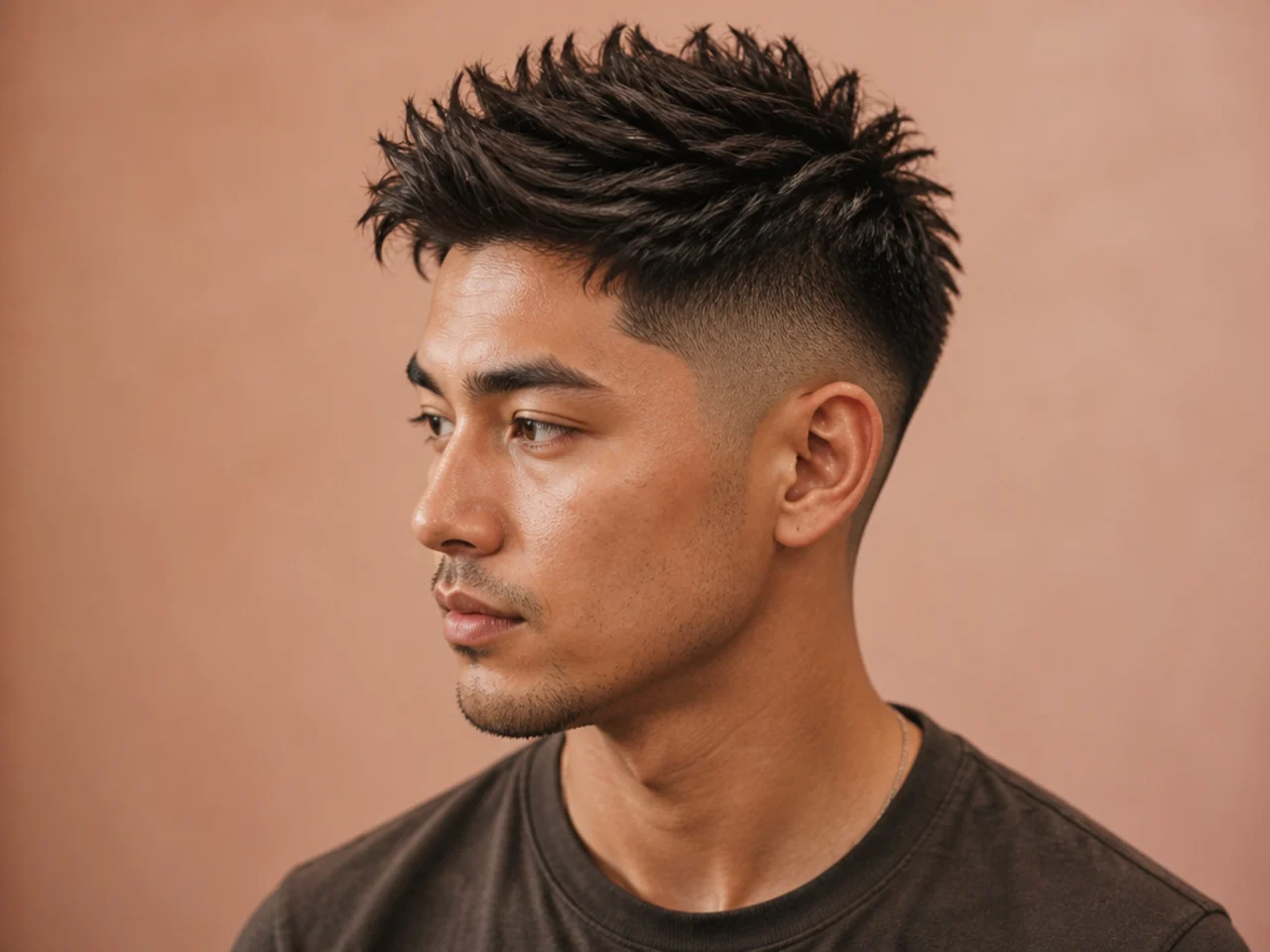
The mid fade starts at the temple — the balanced middle ground and the version most barbers recommend for a first spiky-fade combination. The temple-height fade sharpens the silhouette without going as bold as a skin high fade. Best on almost every face shape and every straight-hair density.
Ask for: "Spiky cut, inch on top textured with point-cutting, mid fade starting at the temple." Style with a matte clay or fiber, pinched into small vertical peaks. This is the version to bring a photo for — mid fade is a broad range, and half an inch of height difference changes the read.
Spiky Skin Fade
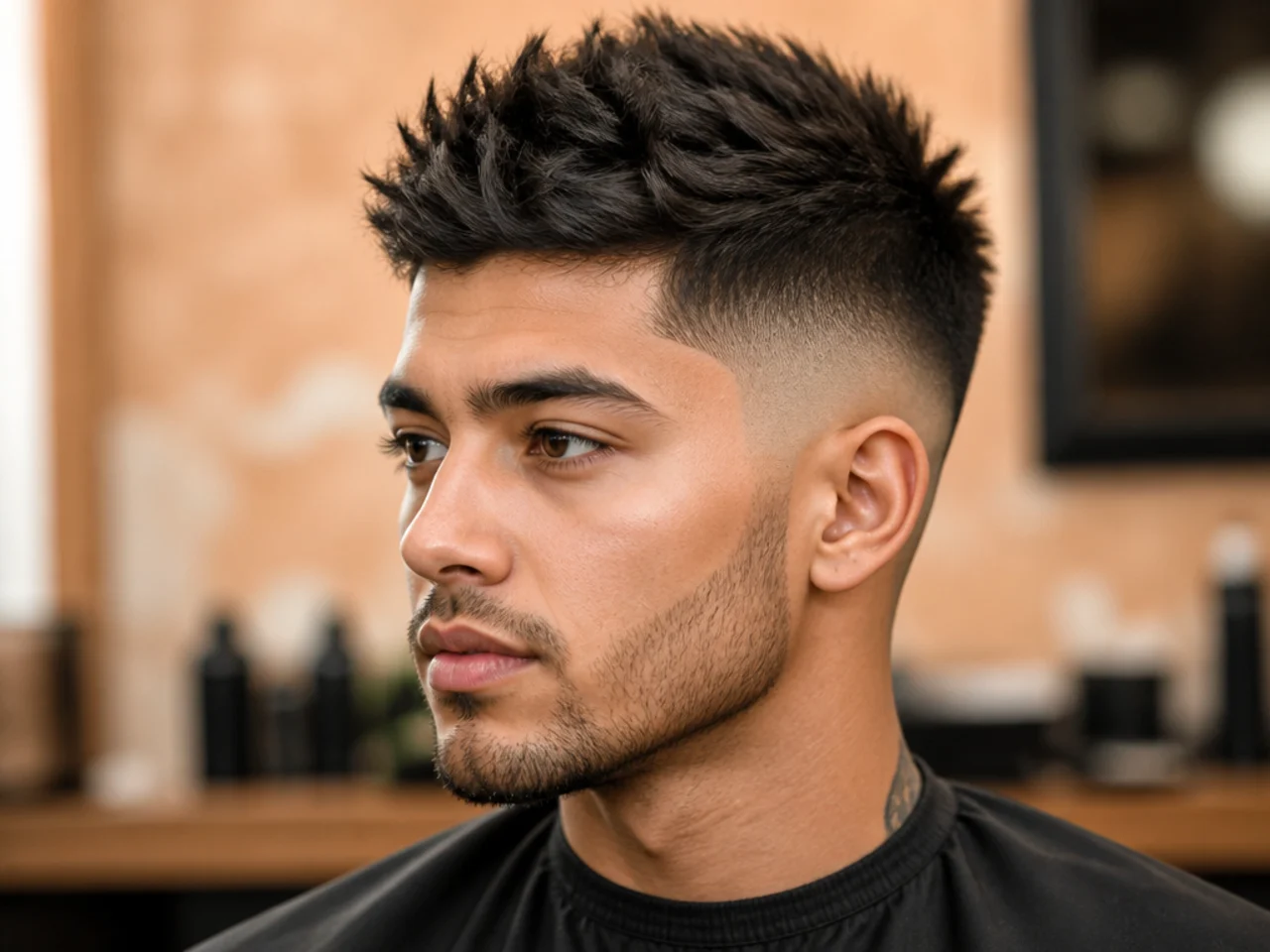
The sides drop clean to the scalp — bald skin against textured peaks. The contrast is the entire point, and it photographs sharp under any light. Best on strong jawlines, dark hair colors, and guys who commit to the two-to-three-week rebook cadence a skin fade demands.
Ask for: "Spiky cut, inch on top, skin fade — pick low, mid, or high depending on how bold you want the contrast — square neckline, line-up at the forehead." A firm-hold matte fiber holds the peaks against the sharpness of the fade. Book the line-up every visit; the skin at the temples is what dates the fastest.
Spiky Drop Fade
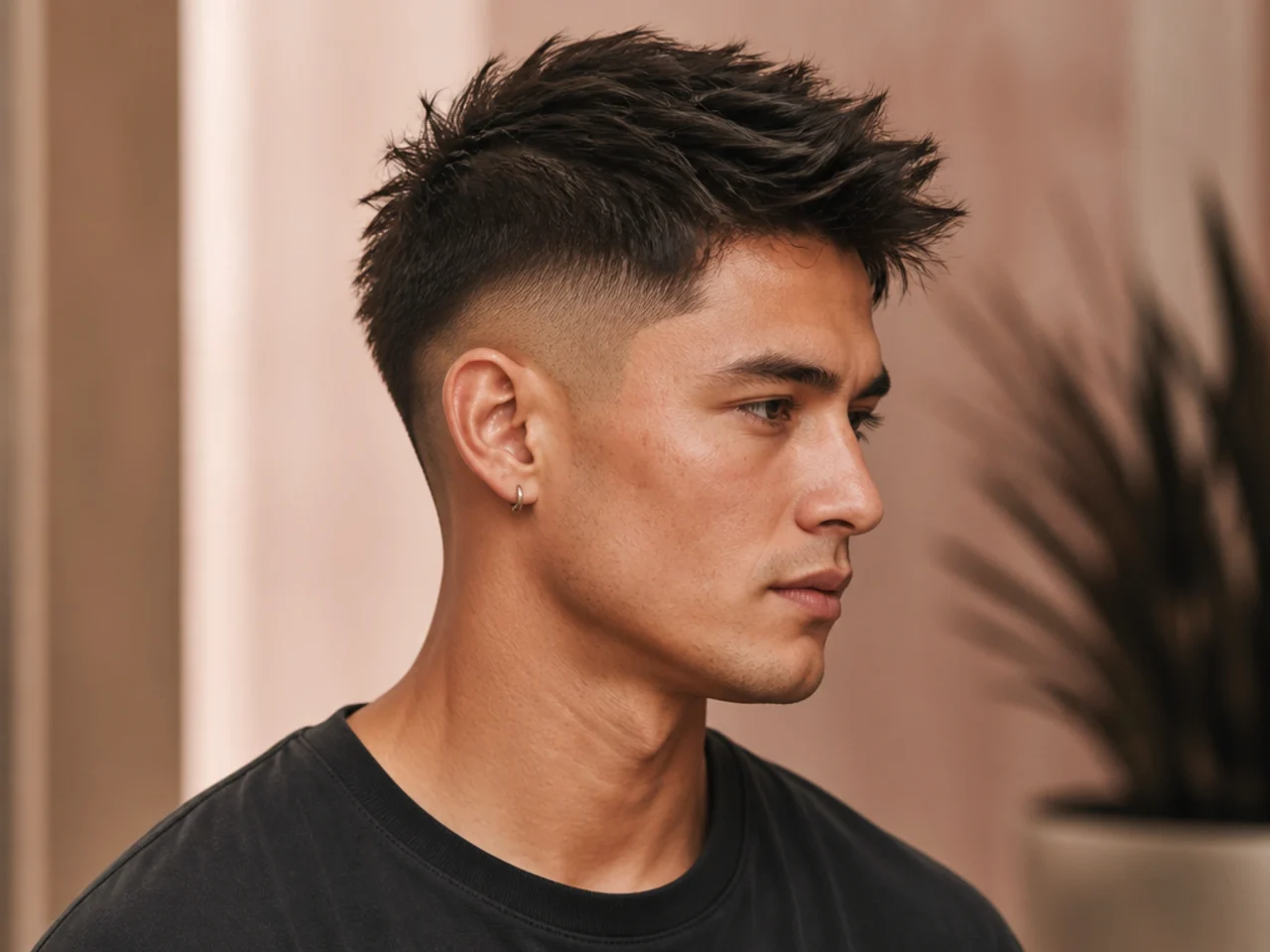
The drop fade arcs down behind the ear instead of running in a straight horizontal line — the modern shape driving the current fade renaissance. Paired with a short spiky top, the arc frames the head cleanly and pulls the eye toward the peaks. Best on round and oval faces because the arc adds vertical shape.
Ask for: "Spiky cut, inch on top point-cut for texture, drop fade arcing down behind the ear." A subtle version reads workplace-friendly; a sharper drop with a skin transition pushes bolder. Style with a matte clay and let the fade line frame the finish.
Spiky Undercut
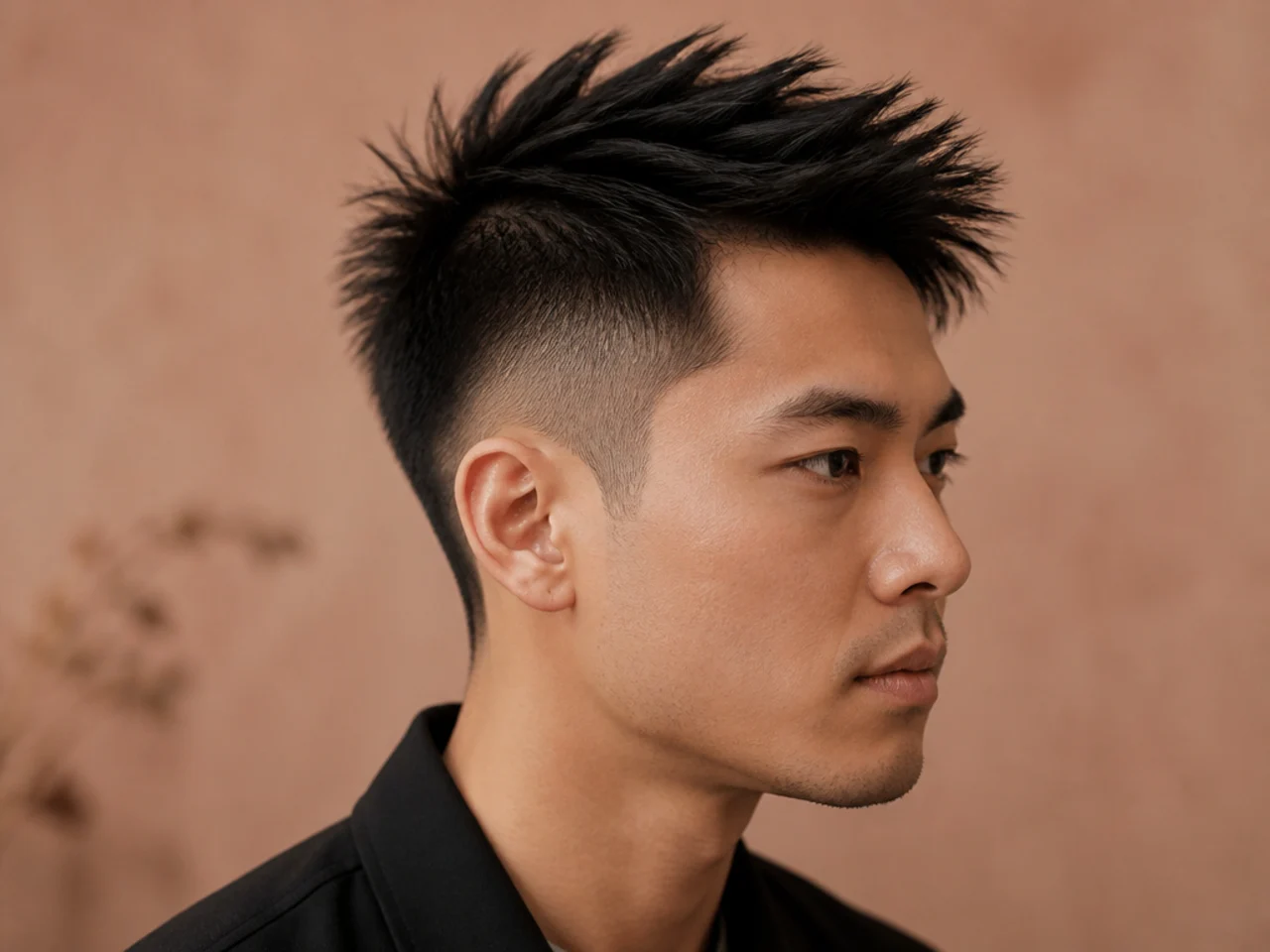
The undercut skips the fade and clippers the sides down to one uniform short length — usually a #2 or #3 — with a hard, disconnected line where the sides meet the longer top. Paired with an inch and a half of spiky top, the disconnection reads sharper and less blended than any fade. Best on strong bone structure and thick hair; skip if your hair is fine, since fine hair on top can look overpowered by the block of side length.
Ask for: "Spiky cut with a disconnected undercut — inch and a half on top point-cut for texture, sides clippered to a number two, hard disconnection line." Style with a firm-hold matte clay pushed up and slightly forward.
Volume and Movement Variations
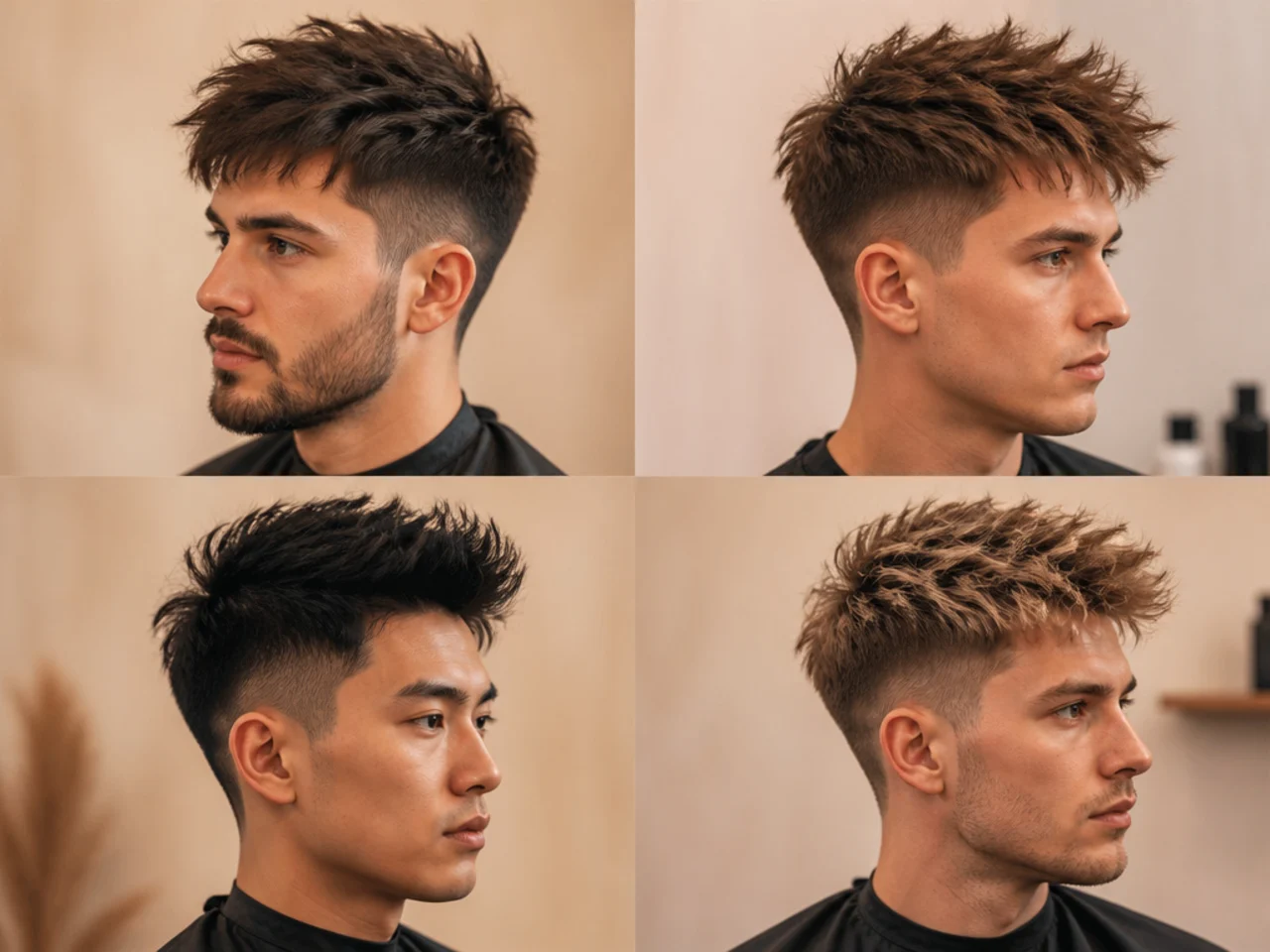
Traditional spikes stand straight up. The five variations below take the spiky shape and give it direction — forward, back, or concentrated in a strip down the center — which changes the silhouette without changing the base cut much. These are the most photogenic of the short spiky family and the versions that carry best in casual and creative dress codes.
Short Spiky Quiff
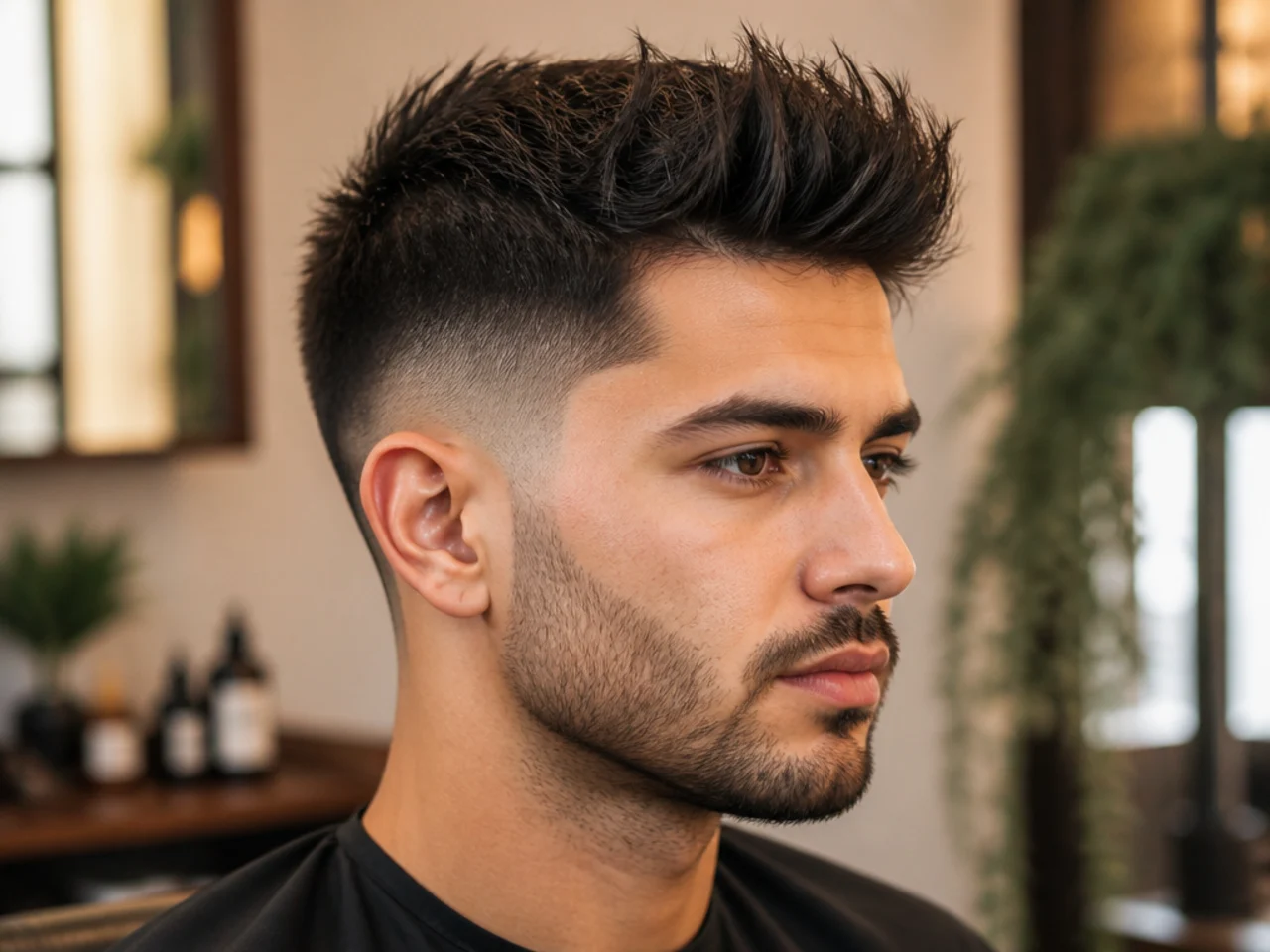
The quiff meets the spiky cut. Inch and a half on top, styled up and slightly forward with spiky texture at the front — softer than a straight spike, more directional than a plain quiff. The lift at the front adds vertical length that flatters round and heart-shaped faces. Best on medium to thick straight hair with body.
Ask for: "Short spiky quiff, inch and a half on top point-cut for texture, mid fade at the sides." Blow-dry the front up and forward, work a matte clay through with fingertips, pinch the front into slight peaks. Takes ninety seconds; carries all day.
Short Spiky Faux Hawk
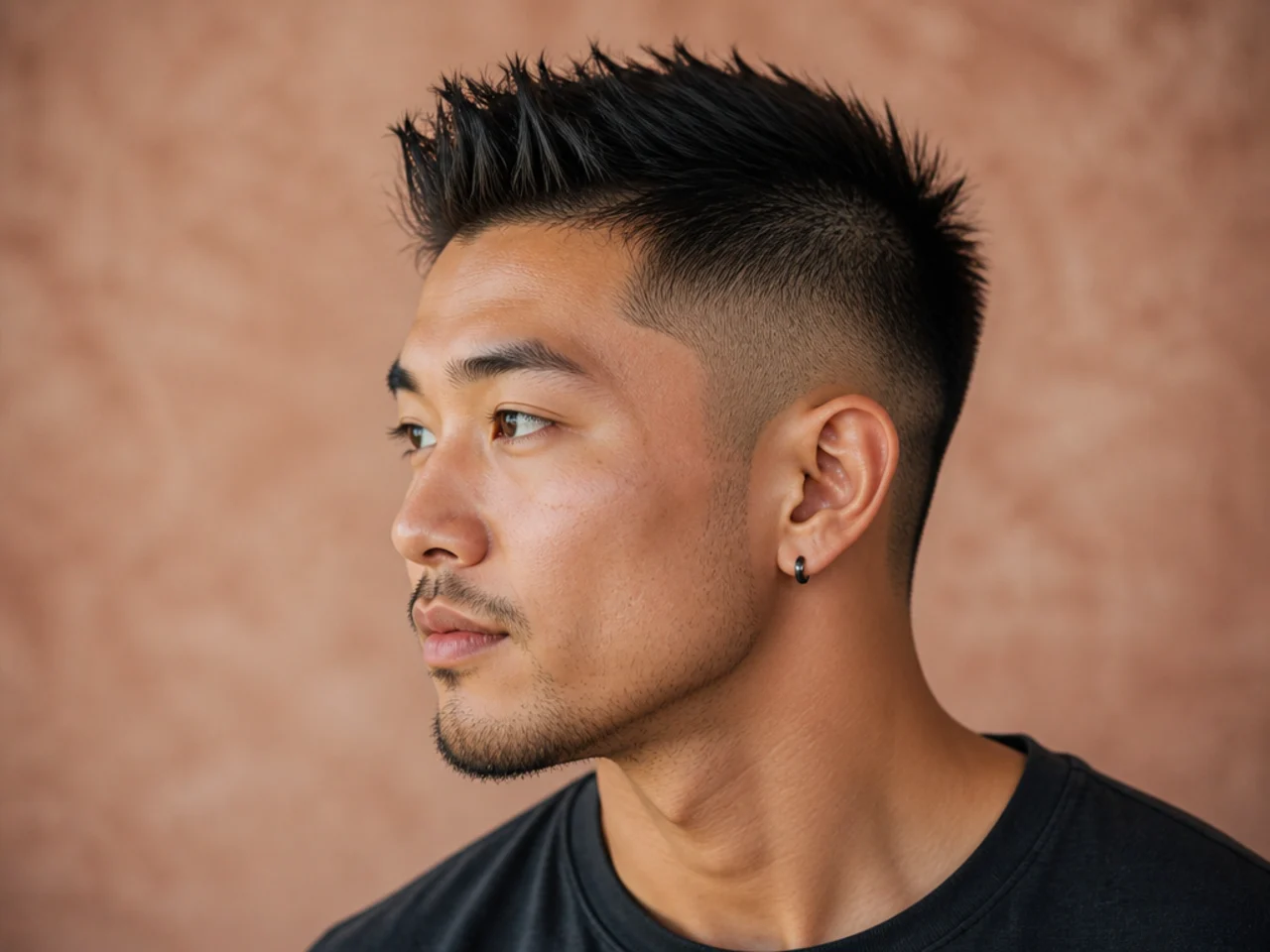
The faux hawk keeps a wider strip of hair down the center of the head longer than the sides, then styles that center strip up into spikes. Reads bolder than a plain spiky cut without shaving anything. Best on square and oval faces, thick hair, and casual dress codes. It sits at the modern edge of the spiky family and photographs strong.
Ask for: "Spiky faux hawk, inch and a half down the center graduated shorter at the sides, low or mid fade — pick your comfort." Style by pushing the center strip up with a firm-hold matte fiber and pinching into peaks. The center is where the length lives; do not spread product to the sides.
Short Spiky Mohawk
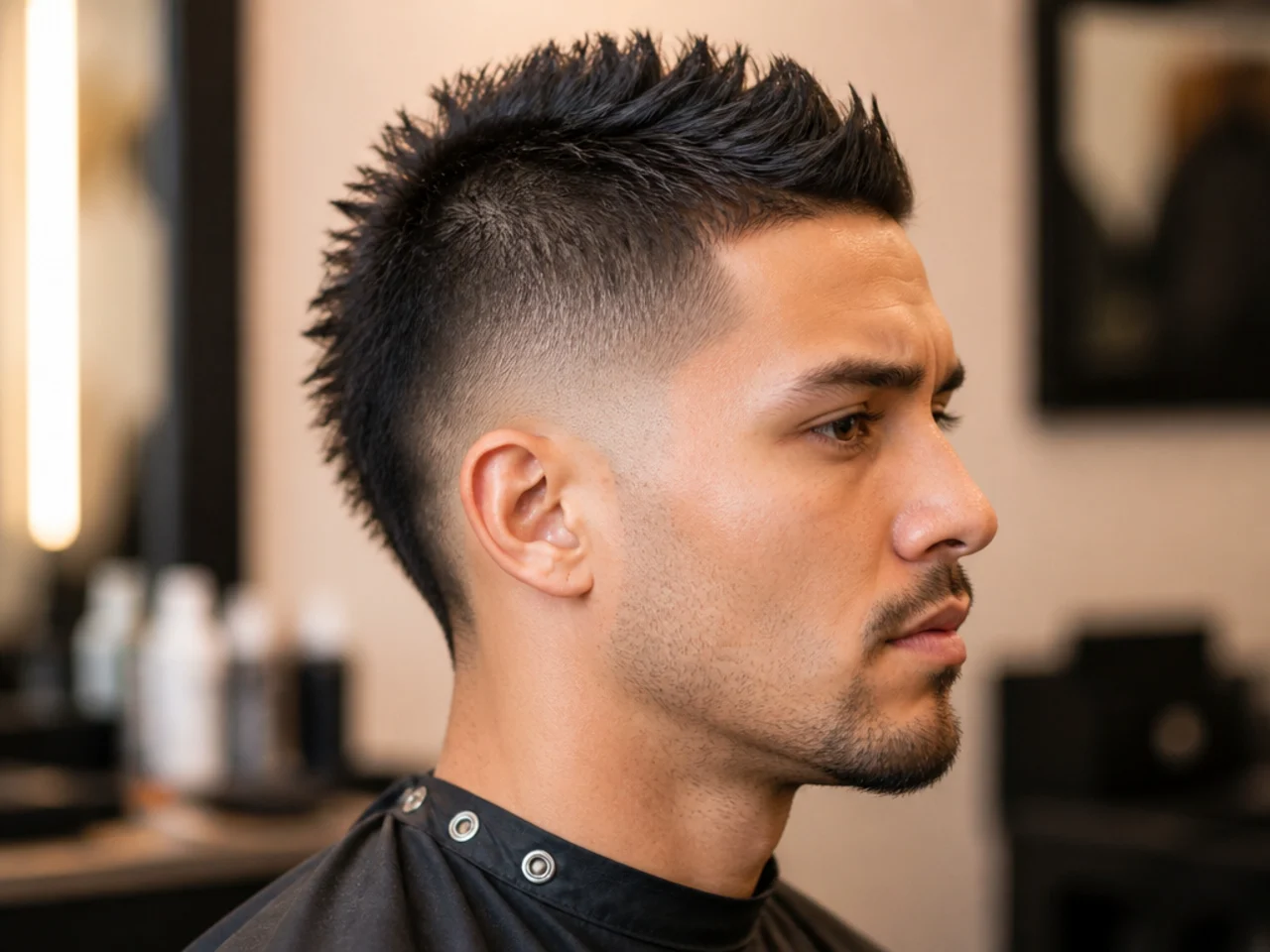
The real mohawk instead of the faux version — sides clippered down close (a #1 or skin fade) with a distinct strip of two-inch spiky length running from forehead to crown. Even at short length the mohawk reads as a statement; expect people to notice. Best on strong features, casual and creative dress codes, and guys under 35.
Ask for: "Short spiky mohawk, two-inch strip down the center from front to crown, skin fade at the sides — hard disconnection where the strip meets the fade." Style with a firm-hold matte fiber pinched into sharp peaks along the strip. Rebook every two weeks — the mohawk lives or dies by the sharpness of the disconnection.
Spiky Brush Up
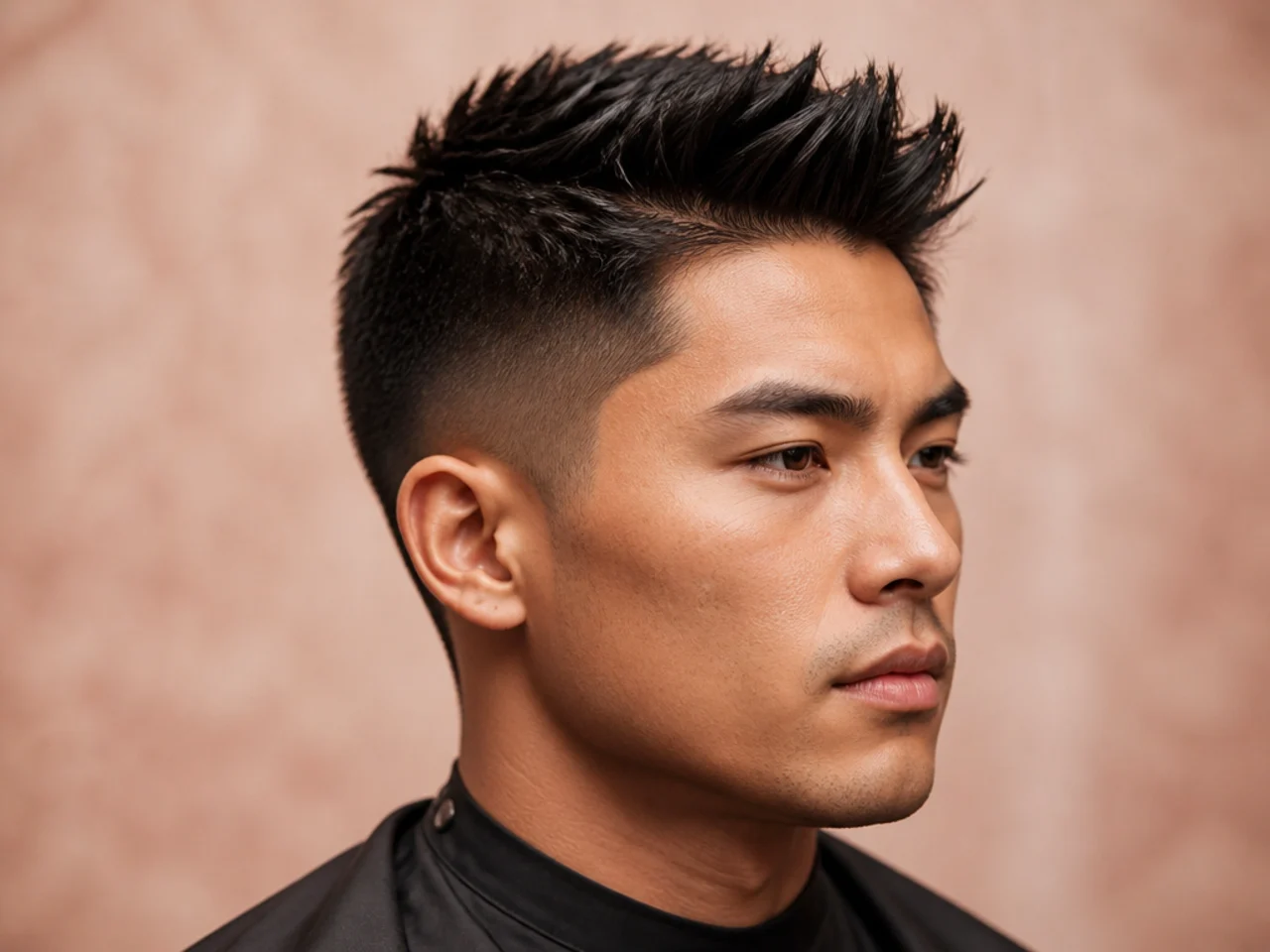
The brush up sends the entire top of the head up and slightly forward — think of a spiky cut with the peaks all pointing the same direction instead of straight up. Softer than a plain spike, more contemporary than a quiff. Best on round and heart-shaped faces because the vertical lift lengthens the silhouette, and on thick straight hair that holds the shape all day.
Ask for: "Spiky brush up, inch and a half on top point-cut for texture, low fade at the sides." Blow-dry the top up and slightly forward with a vent brush, work a matte clay through with fingertips, pinch into loose peaks. Reads sharp without demanding daily precision.
Short Spiky Pompadour
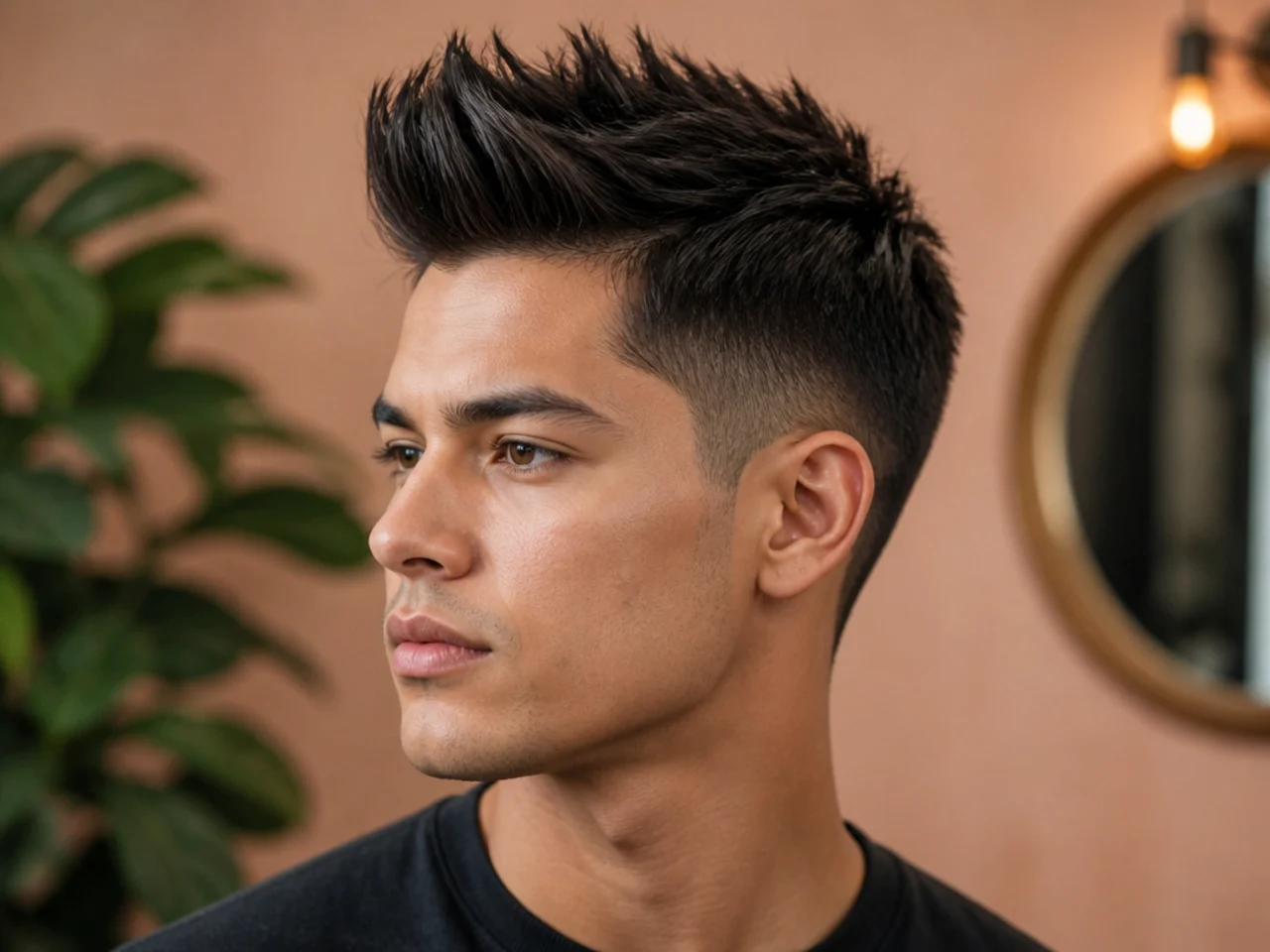
A short pompadour with the top styled up and back, but finished with pinched spiky texture instead of a smooth arc. Two inches on top, low taper at the sides, and a matte pomade or clay for hold. Reads retro-modern — closer to a 1950s brush cut than a 2000s spike. Best on oval and square faces, medium to thick straight hair, and guys who want a slightly dressier version of the spike.
Ask for: "Short spiky pompadour, two inches on top styled up and back, low taper at the sides." Blow-dry the top back with a small round brush, work a matte pomade through, pinch the peaks with fingertips before it dries.
Classic Cuts with a Spiky Finish
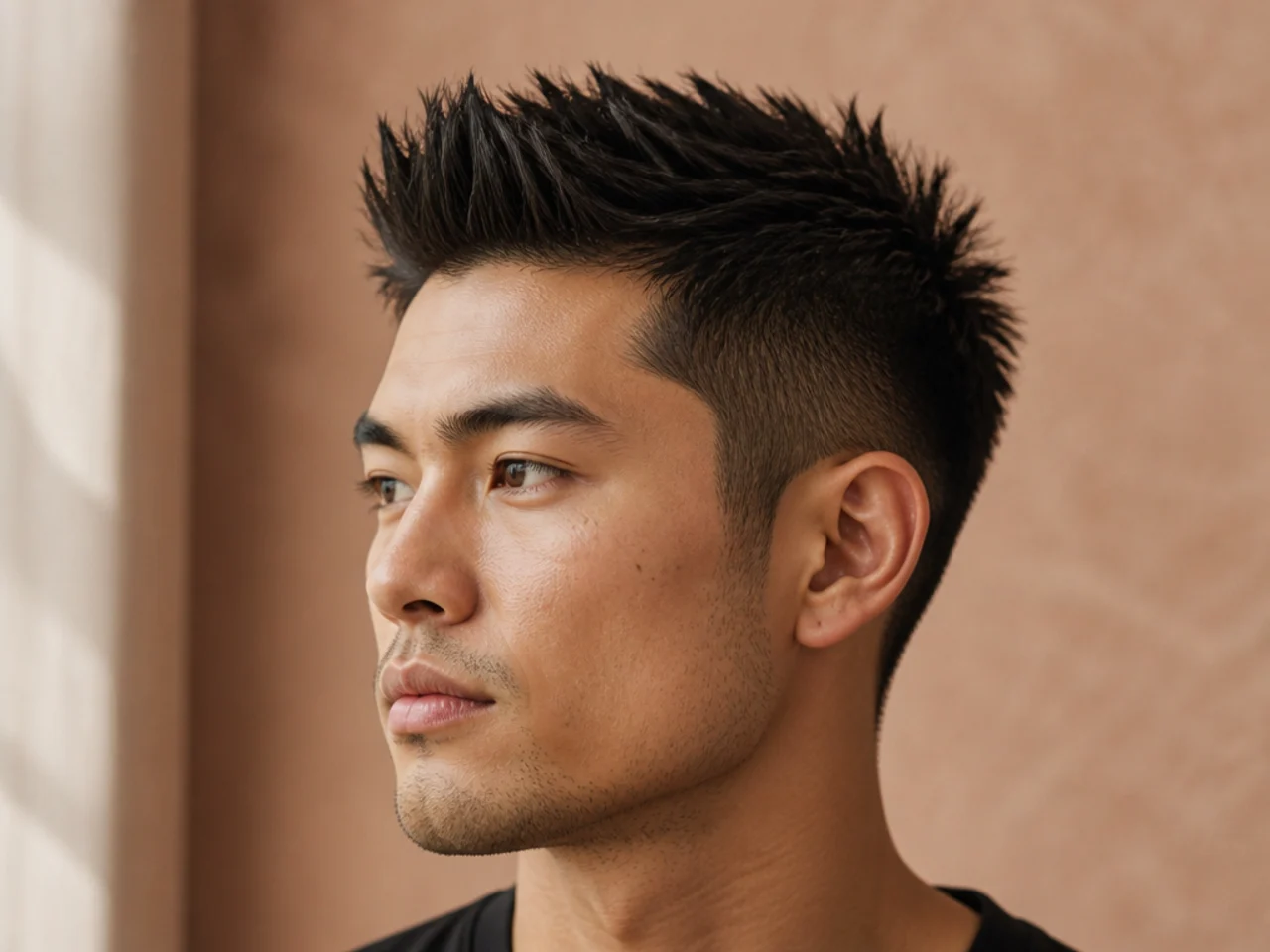
Any short cut with an inch on top can be styled spiky. The five below take traditional short haircut shapes — Caesar, crew, Ivy League, comb over, business cut — and finish them with textured peaks instead of the standard flat lay. Good starting points if you want spikes without committing to a haircut that only reads spiky.
Spiky Caesar Cut
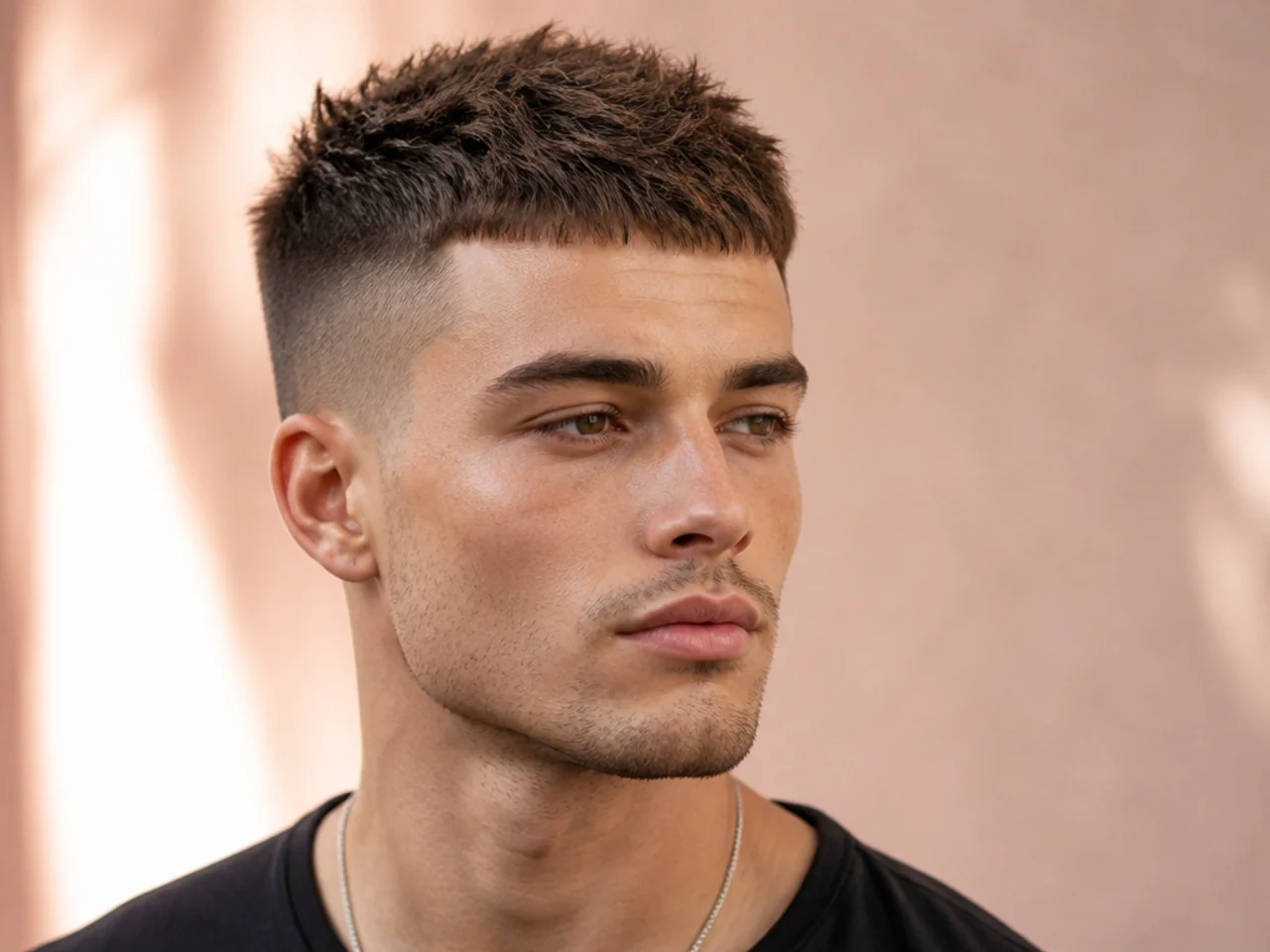
The Caesar shape — an inch on top brushed forward with a short fringe at the brow — restyled with textured peaks at the forehead instead of a flat fringe. Best on high foreheads, receding hairlines, round faces, and any straight-hair density. Reads modern and current where the plain Caesar can feel dated.
Ask for: "Spiky Caesar cut, one inch on top brushed forward, spiky point-cut texture at the fringe, low fade at the sides." Style with a matte paste worked forward, pinched into small peaks at the front only. The back sits flat. Rebook every three to four weeks.
Spiky Crew Cut
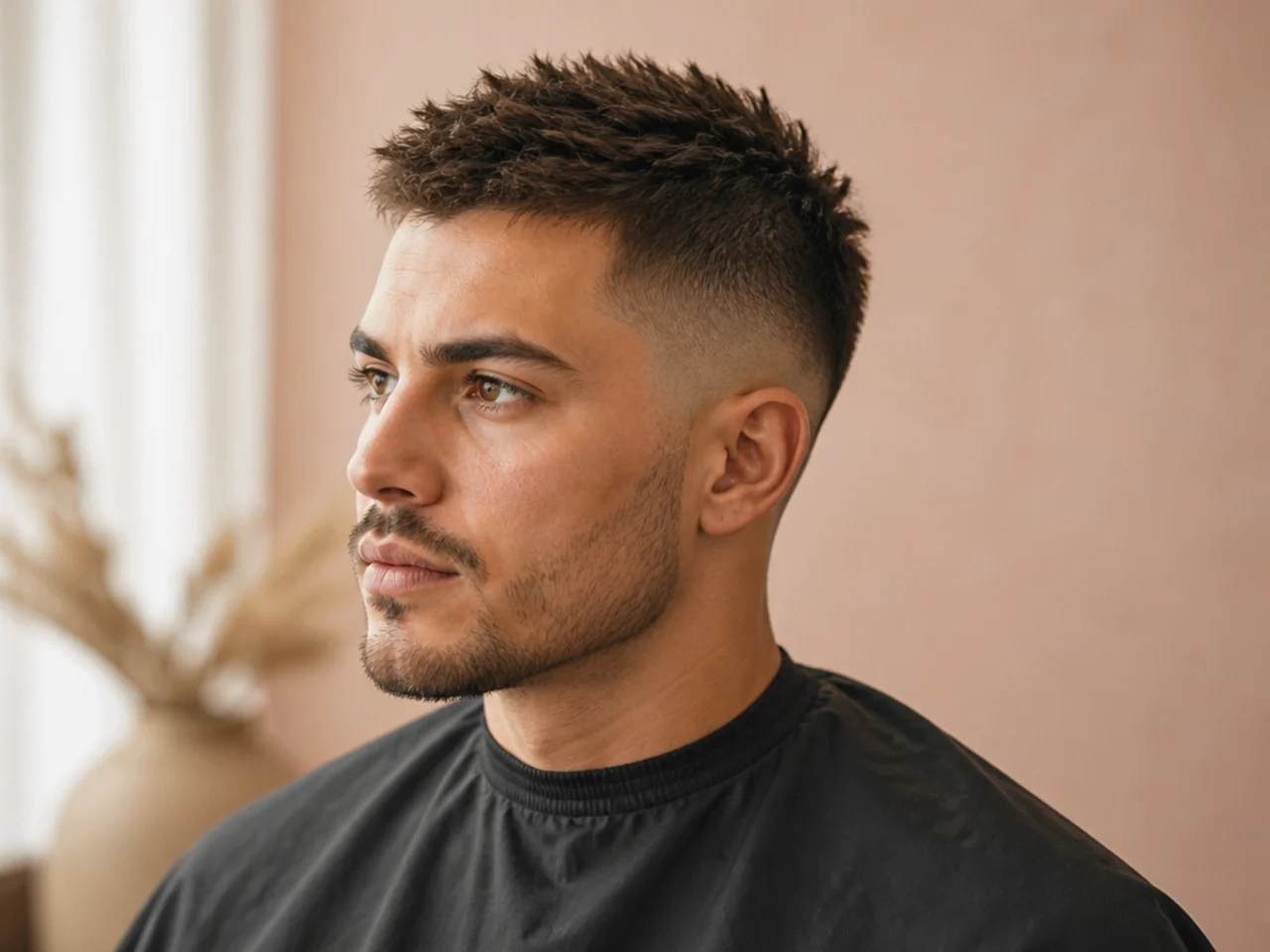
The crew cut with the front styled up in short defined spikes. Same crew base — three-quarters of an inch to an inch on top, graduated shorter to the back, tapered sides — but the front two inches of hair get lifted into small peaks with product. Best on dense straight hair that holds the point without collapsing.
Ask for: "Spiky crew cut, one inch on top graduated shorter to the back, low taper fade on the sides." Style with a firm-hold gel or a stiff matte fiber, worked into damp hair from the roots up, then pinched into short peaks at the front. Let it air-dry so the shape sets on its own.
Spiky Ivy League
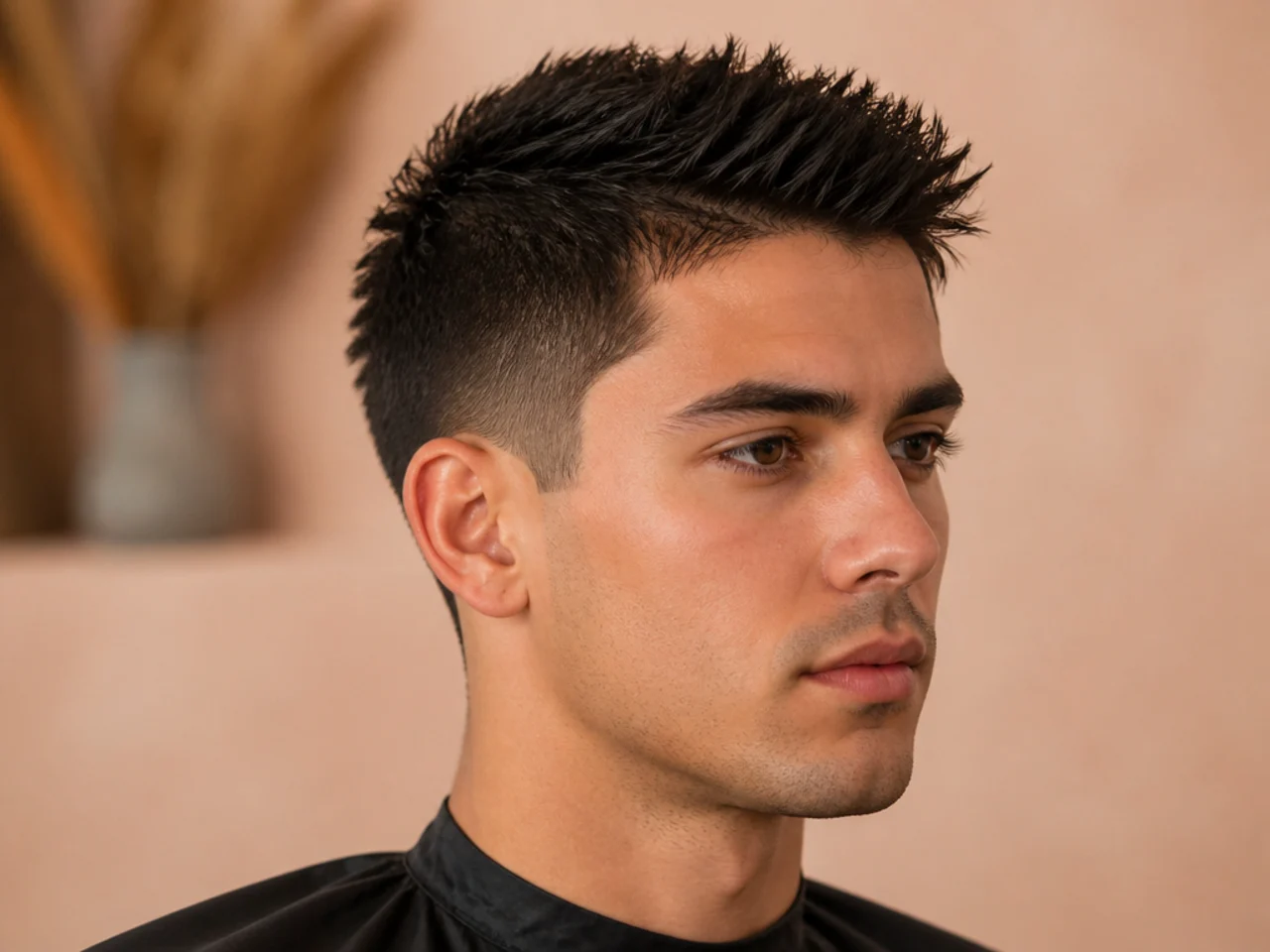
The Ivy League — two inches on top with a defined side part — styled with slight spiky lift at the front and along the crown instead of the standard combed-back finish. Reads preppy and modern at once, and one of the few spiky variations that carries into corporate dress codes without adjustment.
Ask for: "Spiky Ivy League, two inches on top, natural side part, low fade at the sides." Blow-dry to the part, work a light-hold cream through, then pinch small peaks at the crown and along the part with fingertips. Comb once at the part, do not comb the top.
Spiky Comb Over
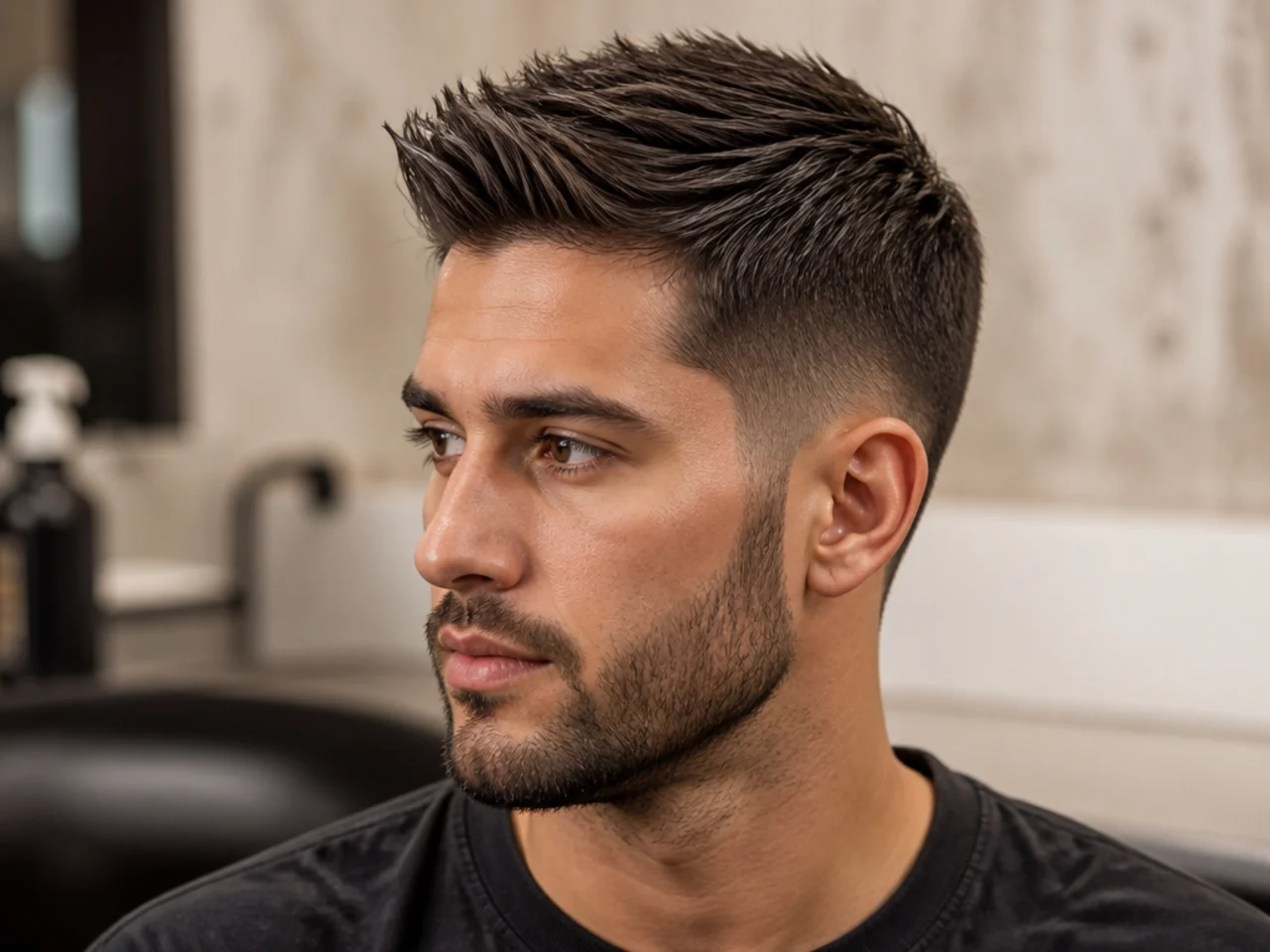
The comb over swept to one side with spiky texture running along the top instead of a smooth surface. The sweep gives the cut a direction; the peaks give it movement. Best on square and oval faces, and on medium to thick straight hair that holds the sweep without collapsing. Reads current where the plain comb over can read dated.
Ask for: "Spiky comb over, two inches on top swept to one side, low fade at the sides." Blow-dry to the side with a small round brush, work a matte paste through, pinch peaks along the crown with fingertips. Do not use a shiny pomade — matte is the whole reason this version reads modern.
Spiky Business Cut
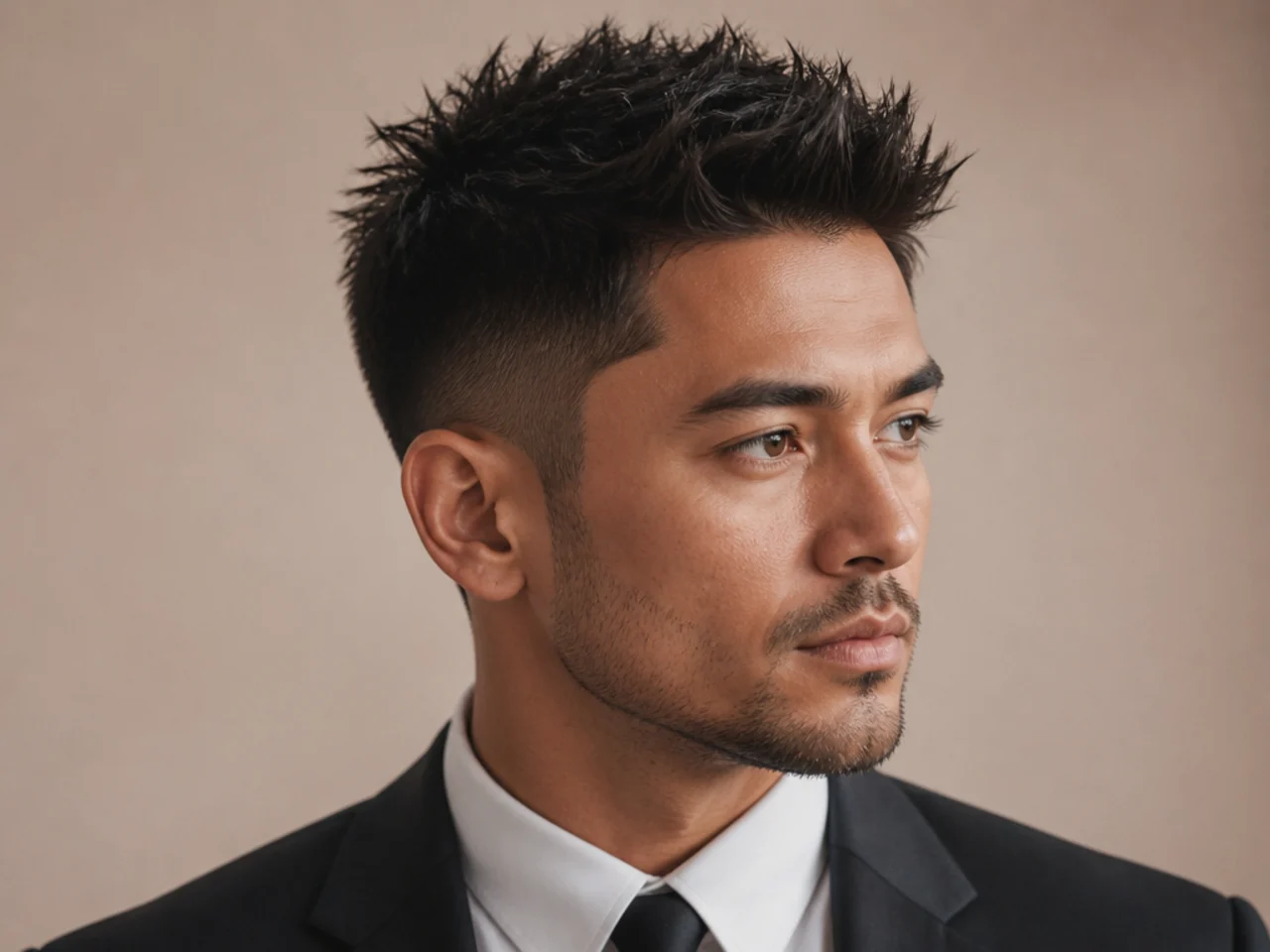
The most restrained spiky cut on the list — designed for corporate dress codes that still let you have a haircut with personality. Three-quarters of an inch on top, tapered scissor-blend on the sides, and subtle vertical texture at the front instead of full peaks. Reads like a professional short cut with a hint of movement. Fits neatly into the family of low-maintenance men's haircuts for guys who want a workday-friendly version of the spike.
Ask for: "Short business cut with subtle spiky texture, three-quarters on top point-cut lightly, scissor-tapered sides, square neckline." Style with a light-hold matte cream worked through with fingertips — enough for a hint of lift at the front, not enough to push into statement territory.
How to Ask Your Barber for a Short Spiky Cut
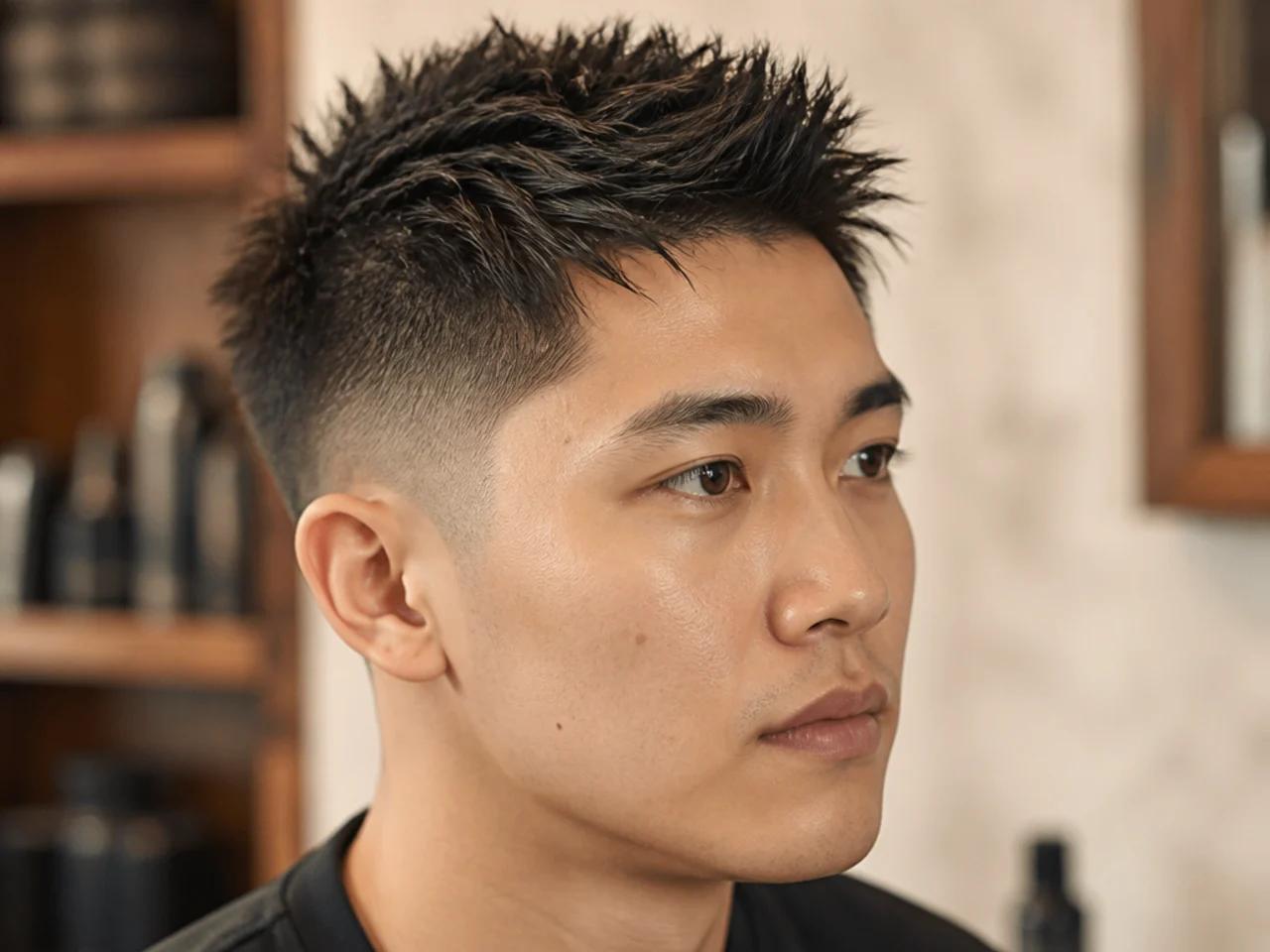
Spikes live or die on the specifics. Get the seven below right and you walk out with the peaks you had in mind.
- Bring a photo. Two shots — front and side. Every barber's mental image of "spiky" is different; a reference photo is the fastest way to align.
- Name the top length in inches or guard numbers. "Inch on top" or "three-quarters on top" is precise. "Short" is not.
- Ask for point-cutting on the top, out loud. This is the single most important request on the list. Point-cutting is what separates a modern textured spiky cut from a 2000s uniform bristle.
- Name the fade or taper height. Low, mid, high, skin — and point at where the fade should start on your head. Barbers appreciate the map.
- Say whether you want the spikes vertical, forward, or back. Vertical reads bold; forward reads casual; back reads dressy. The base cut is nearly identical either way; the difference is styling direction.
- Name the neckline. Square neckline reads sharpest on a short spiky cut. Round softens.
- Say your rebook cadence. Skin fades and hard line-ups want two to three weeks. Standard low or mid fades and tapered spiky cuts want three to four. Ask for the fade you can actually maintain, not the one that photographs best in the chair.
If your barber does not offer point-cutting or texturizing shears, find a different barber for this cut. Blunt-cut ends on top will not hold a modern spike — they sit heavy and read dated by the second morning.
Styling and Maintenance for Short Spiky Hair
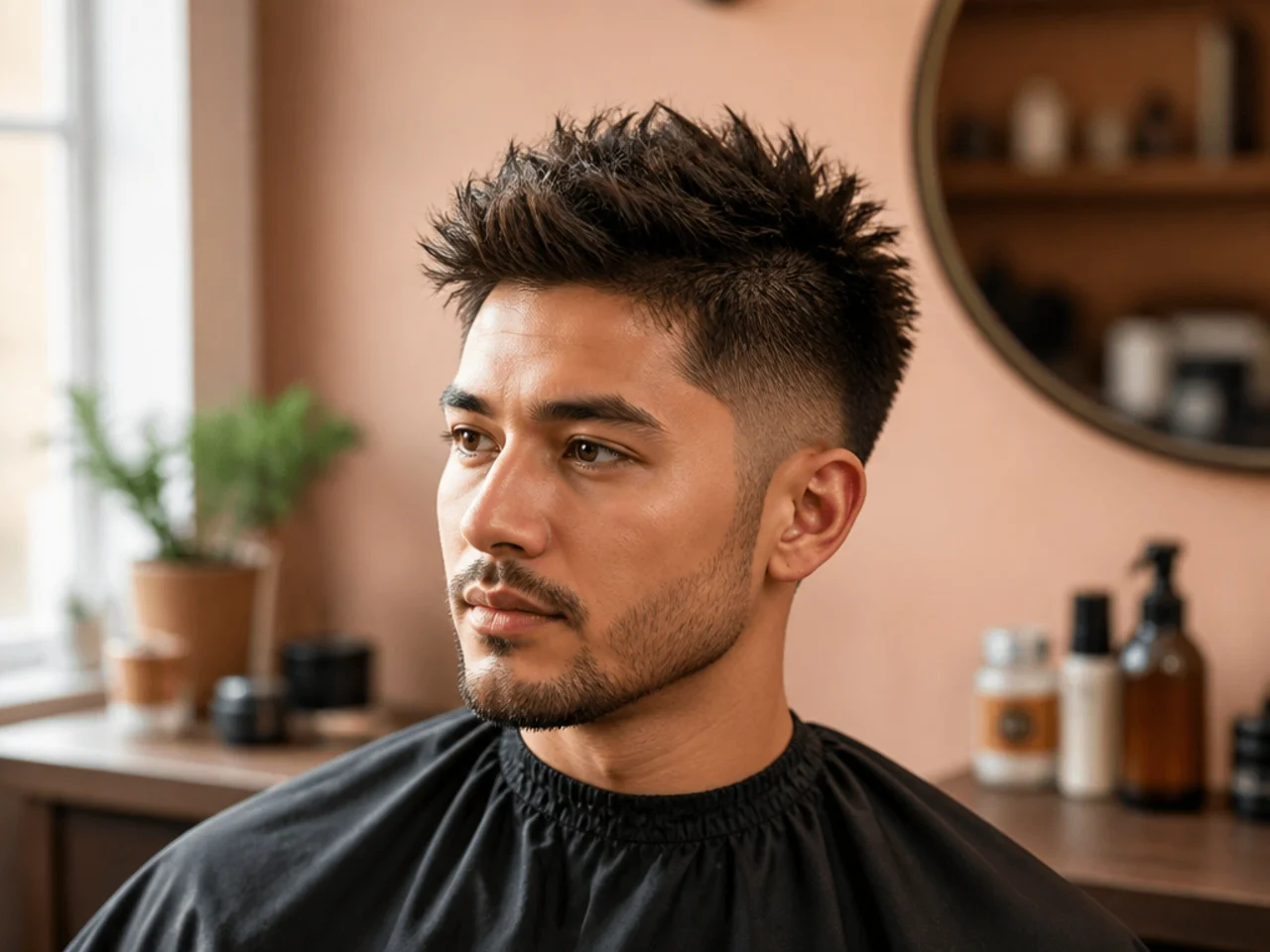
The whole styling routine for a short spiky cut is one product, three moves, and thirty seconds. Match the product to your hair density.
- Fine straight hair — sea-salt spray on damp roots first, then a firm-hold matte clay. The salt spray adds the grip fine hair does not carry on its own.
- Medium straight hair — firm-hold matte clay alone. Skip the pre-styler unless the peaks fall by lunch.
- Thick straight hair — matte clay or matte paste. Thick hair holds a point on its own; the product just anchors it.
- Wavy hair — matte paste plus a light hairspray at the finish. Wavy hair fights vertical, so the extra hold matters.
- Corporate business cut — light-hold matte cream. Enough for movement, not enough to shout.
The three moves are: work product into damp hair from the roots up, pinch small sections between your fingertips into peaks, let it air-dry. Do not comb — combing kills the texture that separates a modern spiky cut from the wet-look version of two decades ago. If you must use a dryer, blow-dry the roots against the grain for thirty seconds before you add product.
Wash cadence matters. Short spiky styles depend on precise length and finish, both muddled by product buildup. Sulfate-free shampoo two or three times a week, cool-water rinse on the last pass, no conditioner on the top of any cut under an inch. A clarifying shampoo once a week keeps firm-hold fibers from stacking up on the scalp.
Rebook by cut type. Skin fades and hard line-ups want two to three weeks. Standard low or mid fades and tapered spiky cuts want three to four. Scissor-blended cuts like the spiky Ivy League hold for four to five. Spikes rely on the top being cut to the exact length that lets each strand hold a peak; a millimeter of extra length is the difference between sharp and floppy.
Done right, a short spiky cut sits sharper on Friday than it did on Monday. The difference is thirty seconds of fingertip work with the right matte product — and a barber who cuts to spike, not to sit flat.
FAQ
Quick answers to the questions barbers get every week about short spiky haircuts.
Can I spike my hair without gel? Yes — a firm-hold matte clay or fiber gives you all the hold without the shine. Modern spiky cuts avoid gel on purpose because the wet look dates the cut immediately.
Does a spiky haircut work with glasses? Yes. Match the boldness of your frames to the spikes — thick frames pair with a taller textured cut; wire-rim frames pair with subtler peaks. Both should sit clear of the top of the frame line.
Are short spiky cuts age-appropriate over 40? Absolutely, as long as the version is modern. Skip the tall uniform peaks and reach for a spiky brush up, spiky Ivy League, or short spiky business cut. Matte over shiny, textured over uniform, restrained over statement.
How do I make my spikes stay up all day? Three fixes. Apply product to damp hair, not dry. Use a firm-hold matte fiber over a soft clay. Ask your barber for extra point-cutting — textured ends interlock, which helps the peaks hold.
Can I spike naturally curly or wavy hair? Wavy hair can, with texturizing shears and a firm-hold matte clay. Curly hair does not spike in the traditional sense — the curl pattern rounds the tip and kills the peak.
What is the difference between spiky and textured? Spiky is a styling outcome — hair ends standing up in points. Textured is a cutting technique — point-cutting to break up blunt ends. The best short spiky cuts are both. If bone structure is driving your pick, our haircuts for square faces primer covers face-shape suitability, and if you shave your own sides at home, our best clippers for men breakdown covers the guards worth owning.