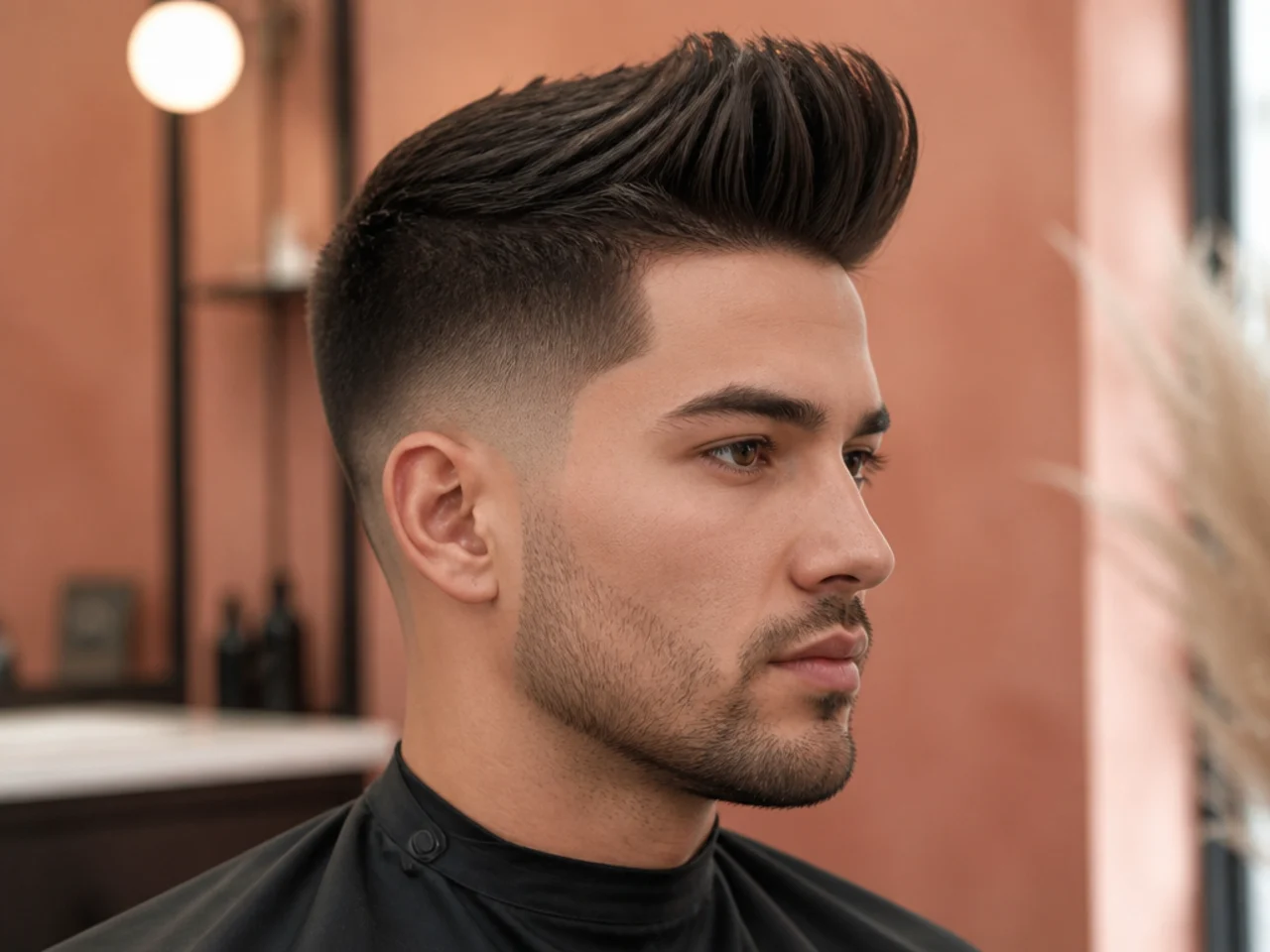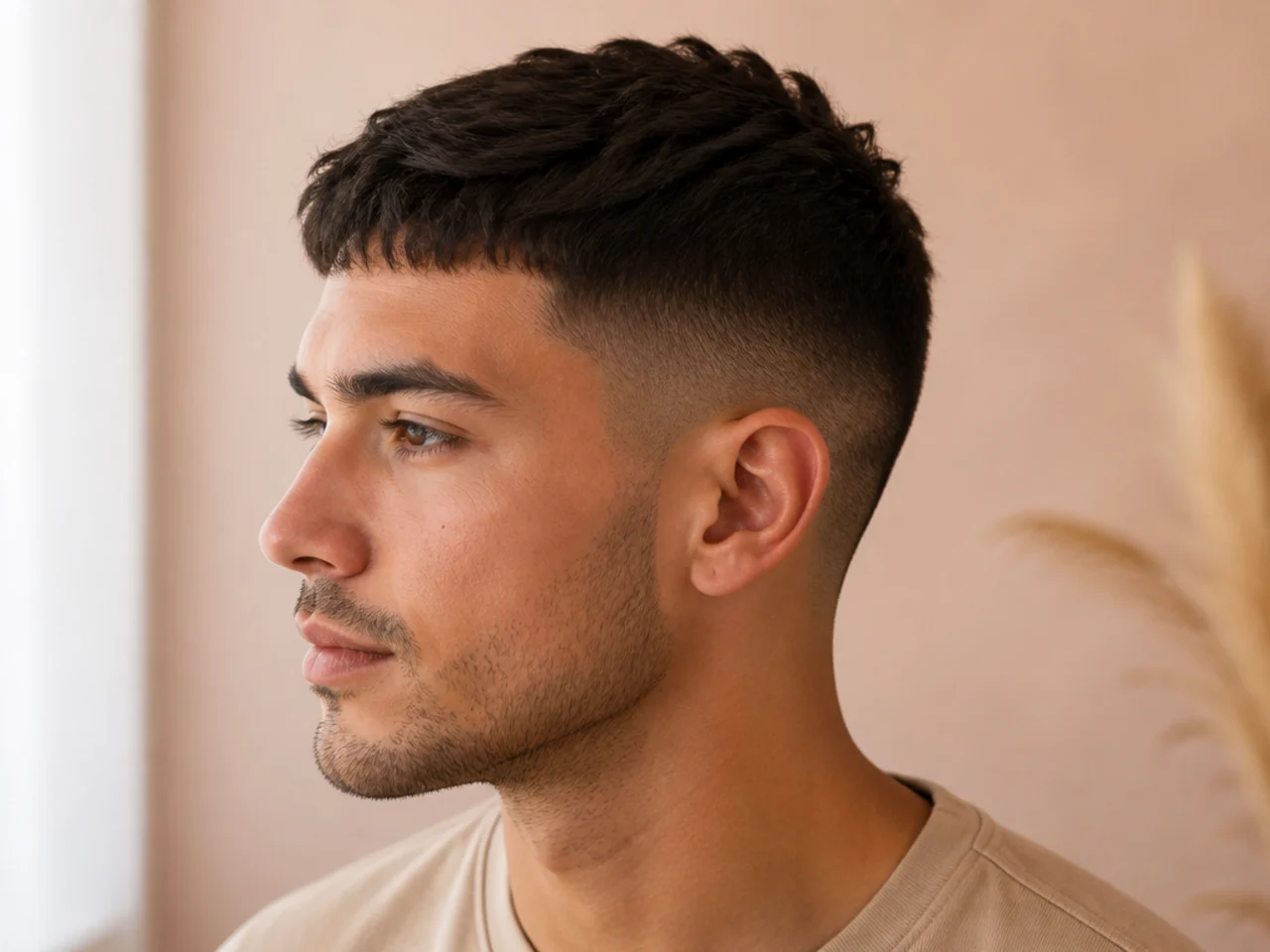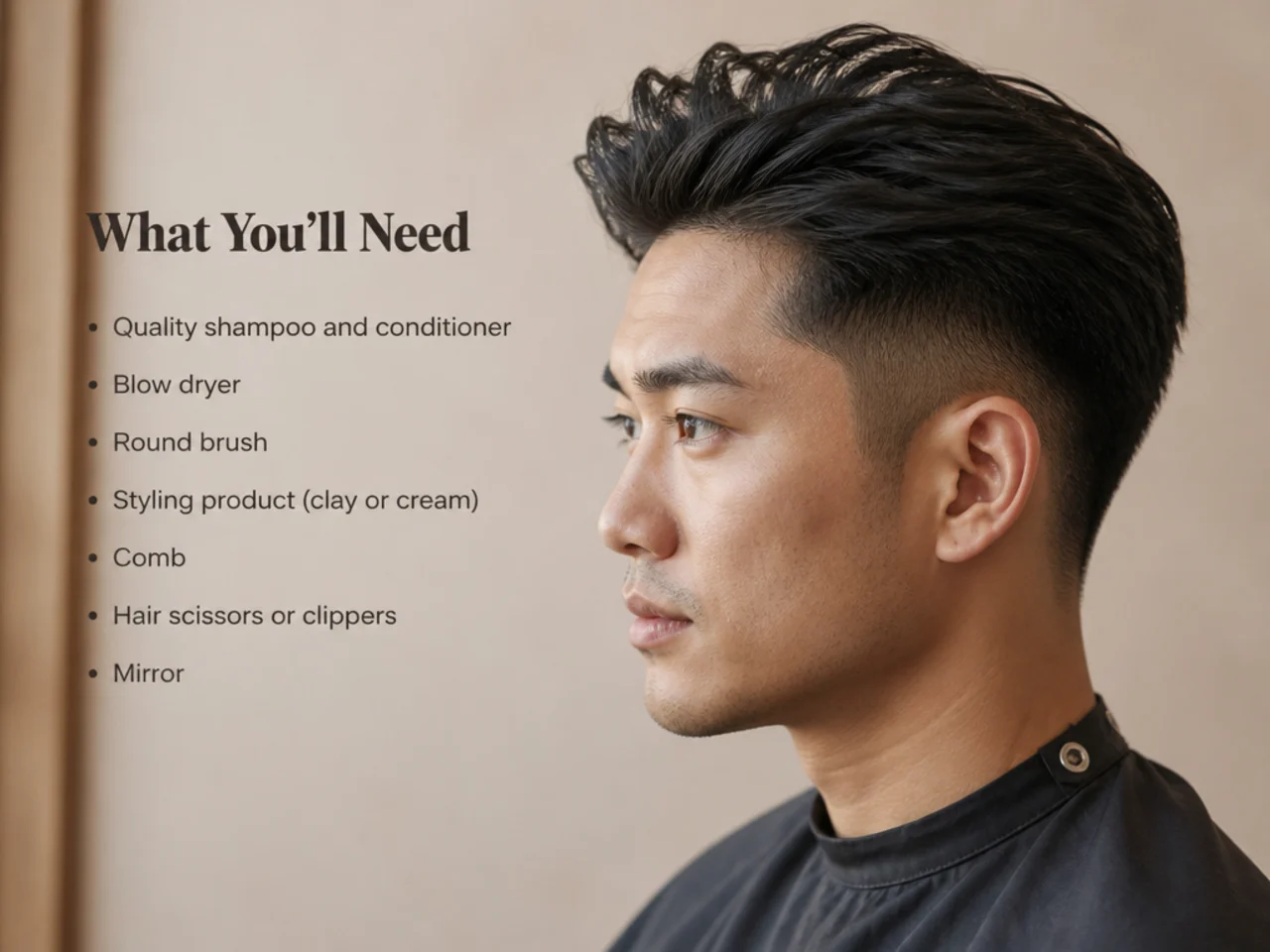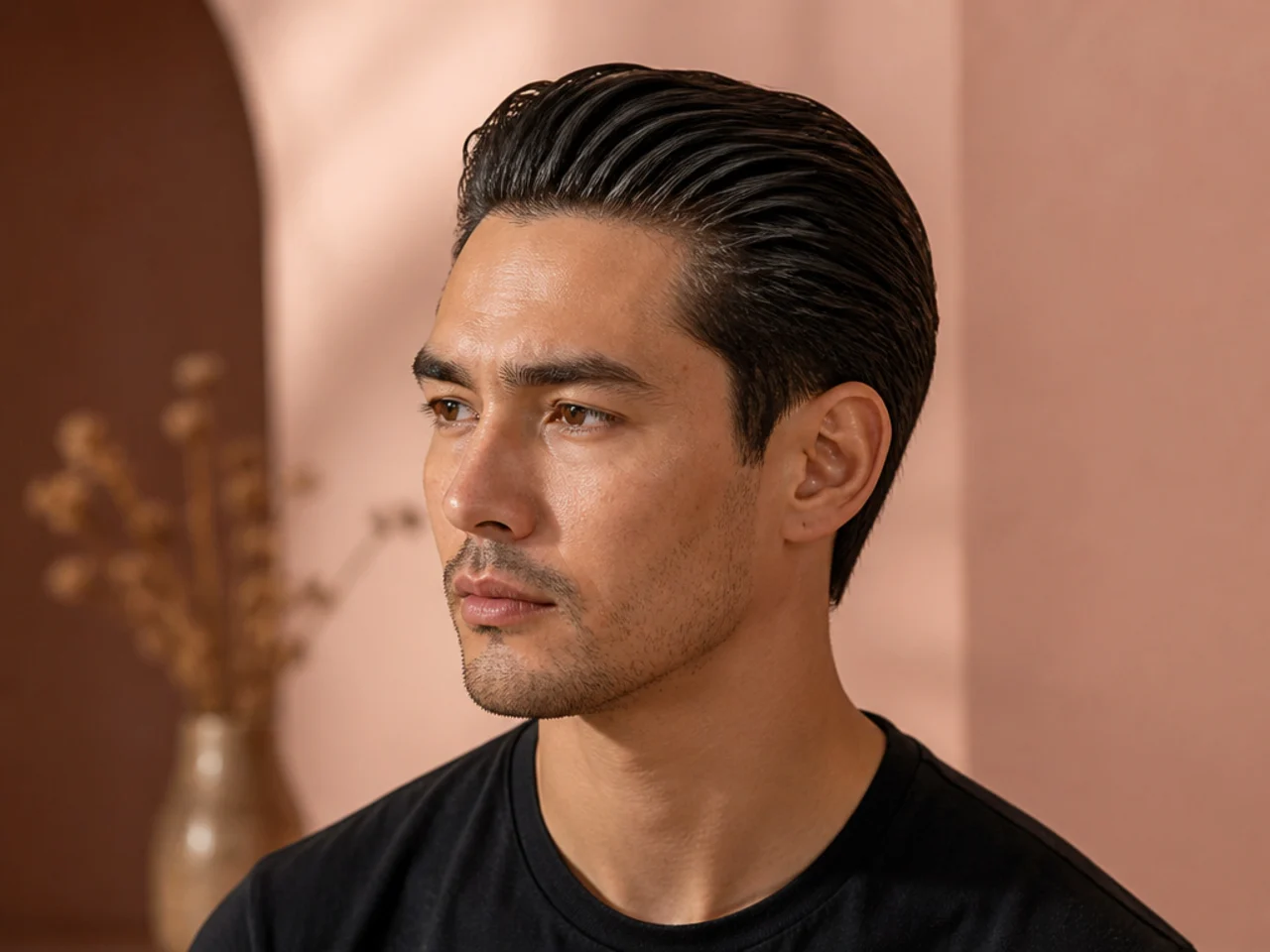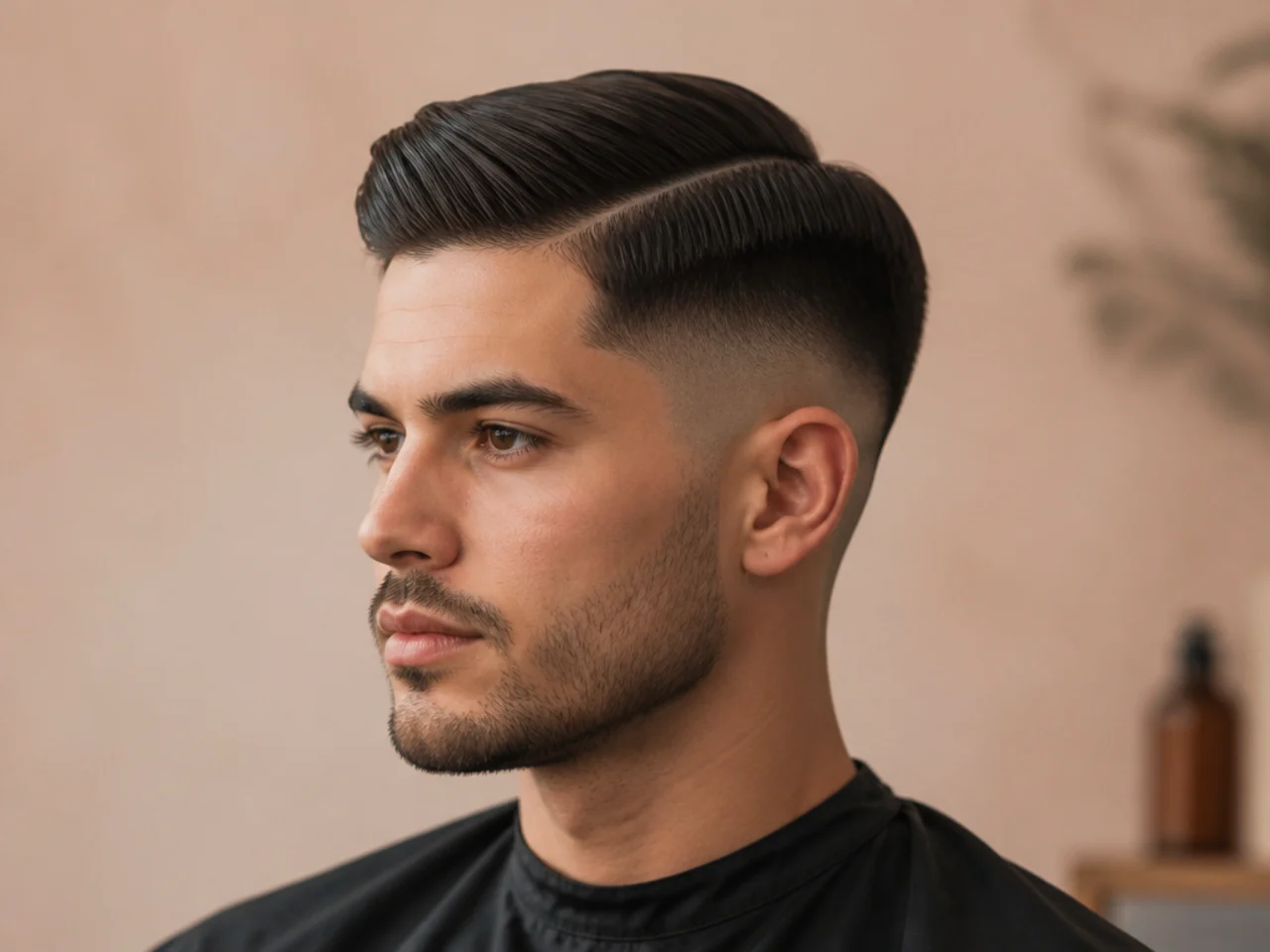
20 Side Part Fade Hairstyles for Men
Twenty side part fade hairstyles men are asking for in 2026 — from soft low fades to razor-sharp skin fades. Photos, face-shape fit, and what to say.
In this article · 26
- What Is a Side Part Fade?
- How to Choose Your Side Part Fade
- The 20 Side Part Fade Variations
- 1\. Classic Low Fade Side Part
- 2\. Mid Fade Side Part
- 3\. High Fade Side Part
- 4\. Skin Fade Side Part
- 5\. Bald Fade Side Part
- 6\. Taper Fade Side Part
- 7\. Low Taper Fade Side Part
- 8\. Mid Taper Fade Side Part
- 9\. Drop Fade Side Part
- 10\. Burst Fade Side Part
- 11\. Temple Fade Side Part
- 12\. Hard Part Low Fade Side Part
- 13\. Hard Part Skin Fade Side Part
- 14\. Razored Line-Up Fade Side Part
- 15\. Beard-Blended Fade Side Part
- 16\. Textured Crop Fade Side Part
- 17\. Slick Back Fade Side Part
- 18\. Quiff Fade Side Part
- 19\. Comb Over Fade Side Part
- 20\. Curly Top Fade Side Part
- How to Ask Your Barber for a Side Part Fade
- Styling and Maintenance
- FAQ
The side part fade is the modern default sharp cut. Take a hundred-year-old parting, drop a fade under it, and you get a haircut that reads polished in a suit and current on a Friday night. This guide covers the twenty side part fade hairstyles men are asking for in 2026 — every fade height, every taper, every hard part — with the exact wording to hand your barber. For the parent parting taxonomy, see the side part hairstyles for men pillar; for the fade family, the fade haircut guide.
What Is a Side Part Fade?
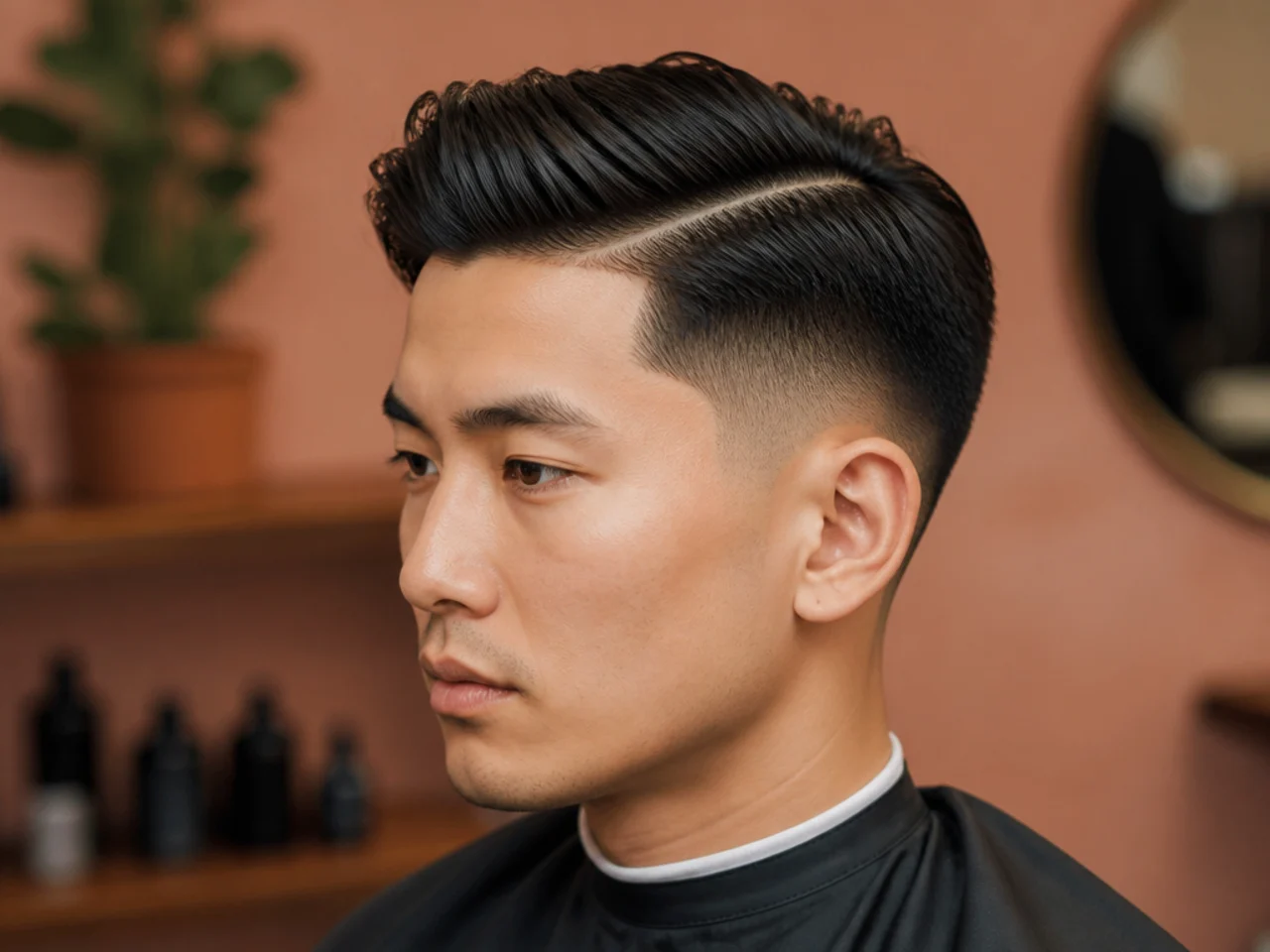
A side part fade is any men's cut that pairs a defined top parting with a graduated fade on the sides. The parting can be a comb-drawn soft line or a hard razored one shaved into the scalp. The fade can start anywhere from just above the neckline (a low fade) to above the temple (a high fade), and can drop to a #1 guard, a #0.5, or bare skin.
The combination is what separates it from a plain fade or a plain scissor side part. A plain fade reads clean but neutral. A plain side part reads polished but conservative. The two together read designed.
The version most barbers hand you when you say "give me a side part with a fade" is a mid fade dropping to skin at the temple, paired with two to three inches of top combed into a defined parting. Every variation on this list moves one variable at a time from that default.
How to Choose Your Side Part Fade
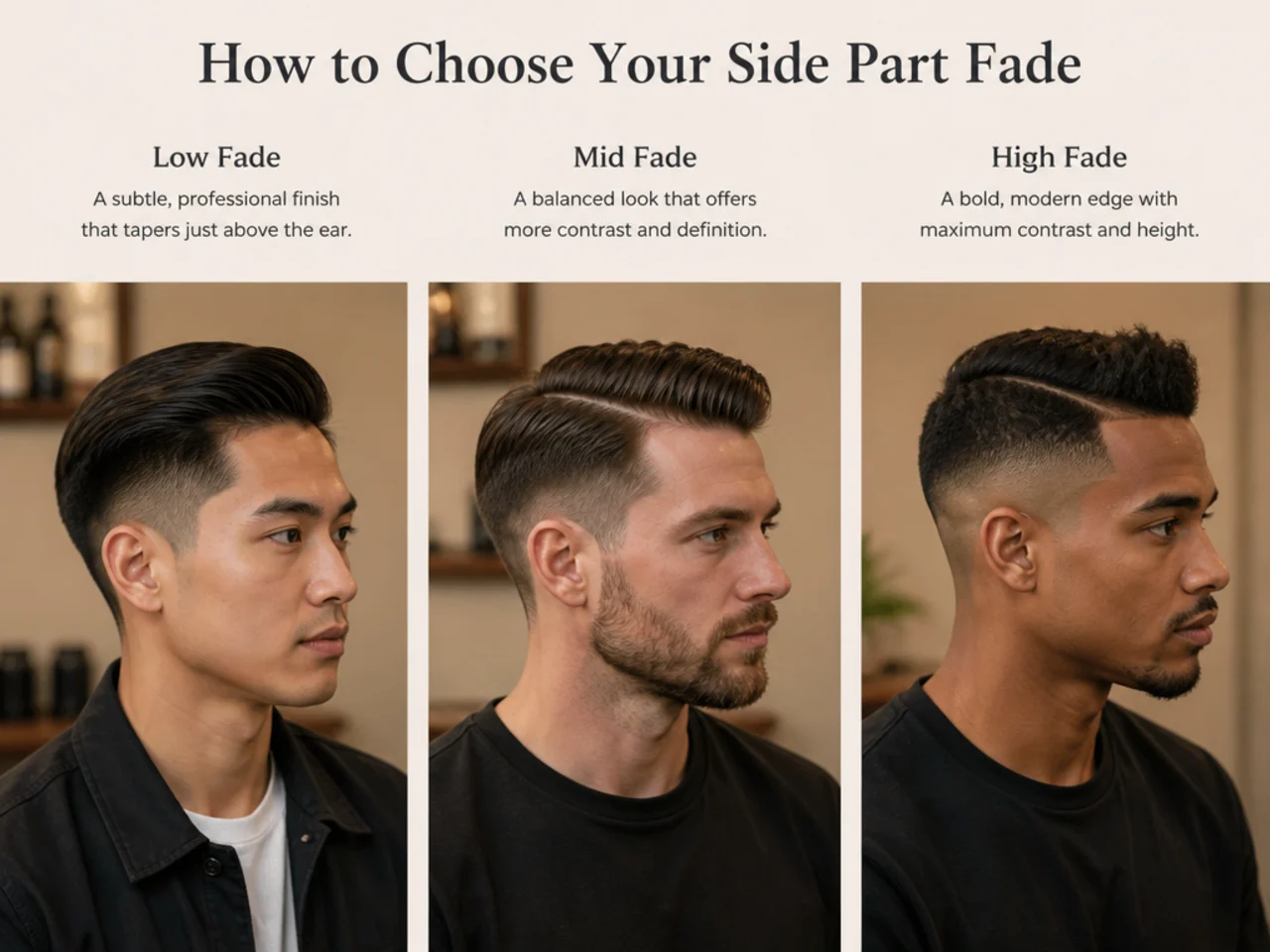
Three questions pick the version for you. What does your face need, what will your hair hold, and how many cuts a month is your calendar going to allow?
Face shape sets the fade height. Round faces gain from a mid or high fade and a taller top — the vertical line breaks the symmetry. Long or oblong faces suit low fades and shorter tops so the head reads balanced. Square jaws land well with hard parts and mid fades because the razor line offsets the angles. Oval faces wear almost any combination in this guide.
Hair texture picks the finish. Straight hair holds a razor-drawn hard part sharpest and looks cleanest against a skin fade. Wavy hair carries a comb-drawn parting because the wave follows the sweep. Curly and coily hair need a shorter fade and a longer top so the curl has a clean frame to sit above.
Maintenance is the last cut. Skin-fade builds with a hard part look their best for ten days and tired by twenty-one. Mid fades stretch to three weeks. Low fades and low tapers hold four to five. A low fade side part styled well beats a skin fade grown shaggy every time.
The 20 Side Part Fade Variations
Twenty versions sorted from softest to sharpest. Each block covers what makes the variation different, who it suits, the exact wording for the chair, and one styling move worth stealing.
1. Classic Low Fade Side Part
The everyday modern default. A low fade sits at ear level, blending gradually to skin or a #0.5 at the neckline. Above the ears everything stays longer, so the top has three inches to carry and a comb-drawn parting lands soft. Sharp enough for a client meeting, casual enough for a weekend. Suits every face shape and every hair texture that will hold a comb.
Ask for: "low fade blending to skin at the neckline and a #2 at the ears, two to three inches on top, natural side parting on my dominant side."
Styling: matte cream on damp hair, combed once from the parting outward. Air-dry or low-heat blow-dry. Holds shape for a full month.
2. Mid Fade Side Part
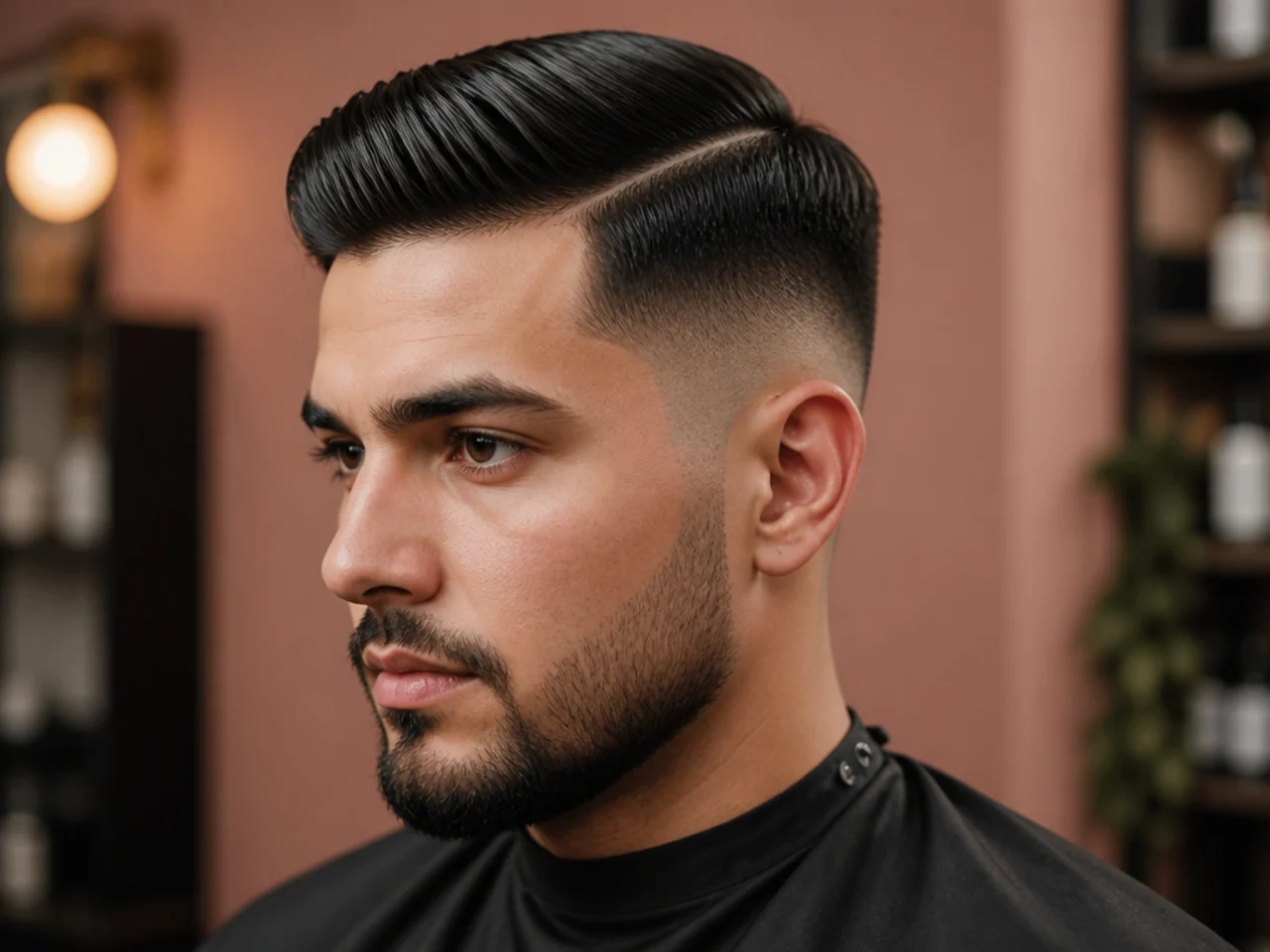
The most-requested version at most shops in 2026. The mid fade starts at the temple line, midway between the ear and the top of the head, and blends to skin or a #0.5 at the neckline. Paired with two to three inches of top length and a defined side parting, this is what most barbers hand you if you say "a modern side part fade" with no other detail. Suits every face shape and every hair texture. For the fade version without the parting, see the mid fade haircut for men breakdown.
Ask for: "mid fade dropping to skin at the temple line, two to three inches on top, defined side parting on my dominant side."
Styling: medium-hold cream combed once, then a burst of low-heat air to set the parting. Re-cut every two and a half to three weeks.
3. High Fade Side Part
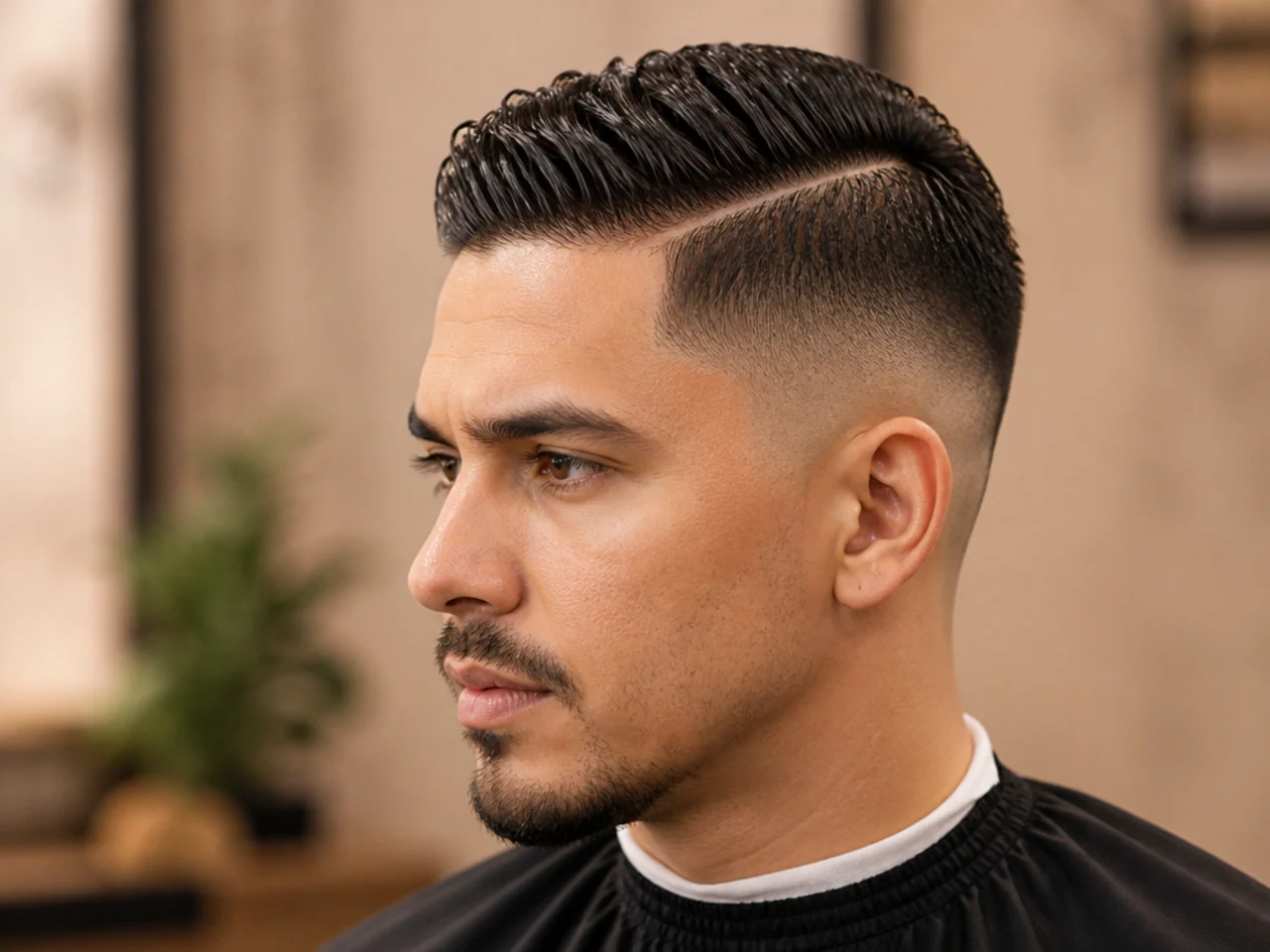
The fade line sits above the temple — well up the side of the head — dropping to skin or a #0.5 at the neckline. Sharper and more graphic than the mid, and the top has to carry the whole shape because there's little side length to balance it. Best on square, oval, and diamond faces. Round faces should skip this one; the vertical exaggerates roundness. If you're weighing the three heights, the low fade vs mid fade vs high fade comparison lays out the trade-offs.
Ask for: "high fade starting above the temple, two to three inches on top, defined side parting — I want strong contrast between the top and sides."
Styling: matte paste for the top so the shape holds without shine. Comb the top away from the parting so the fade panel stays visible from three feet.
4. Skin Fade Side Part
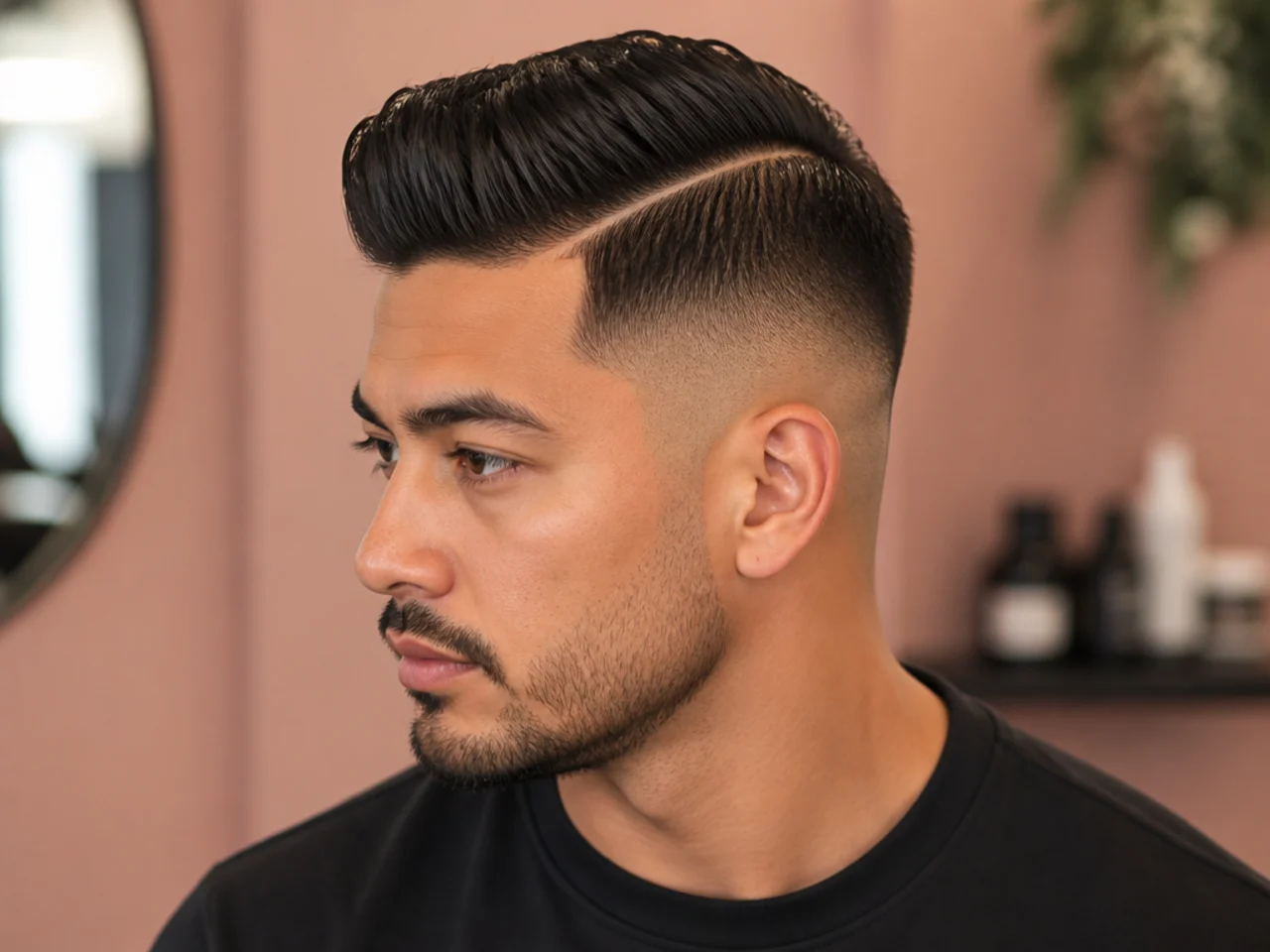
Every fade above blends to a guard number. This one blends all the way to bare scalp — no length at the shortest point. Combined with a defined side parting on top, the contrast is extreme: shaved panel, sharp line, textured length. Best on straight to gently wavy hair. Book every ten to fourteen days — skin fades soften the fastest of any variation here.
Ask for: "skin fade at the sides — bare scalp from the neckline blending up — two inches on top with a defined side parting."
Styling: matte clay or a medium-hold paste on the top, combed sharply into the part. Sunscreen on the shaved panels for the first two days.
5. Bald Fade Side Part
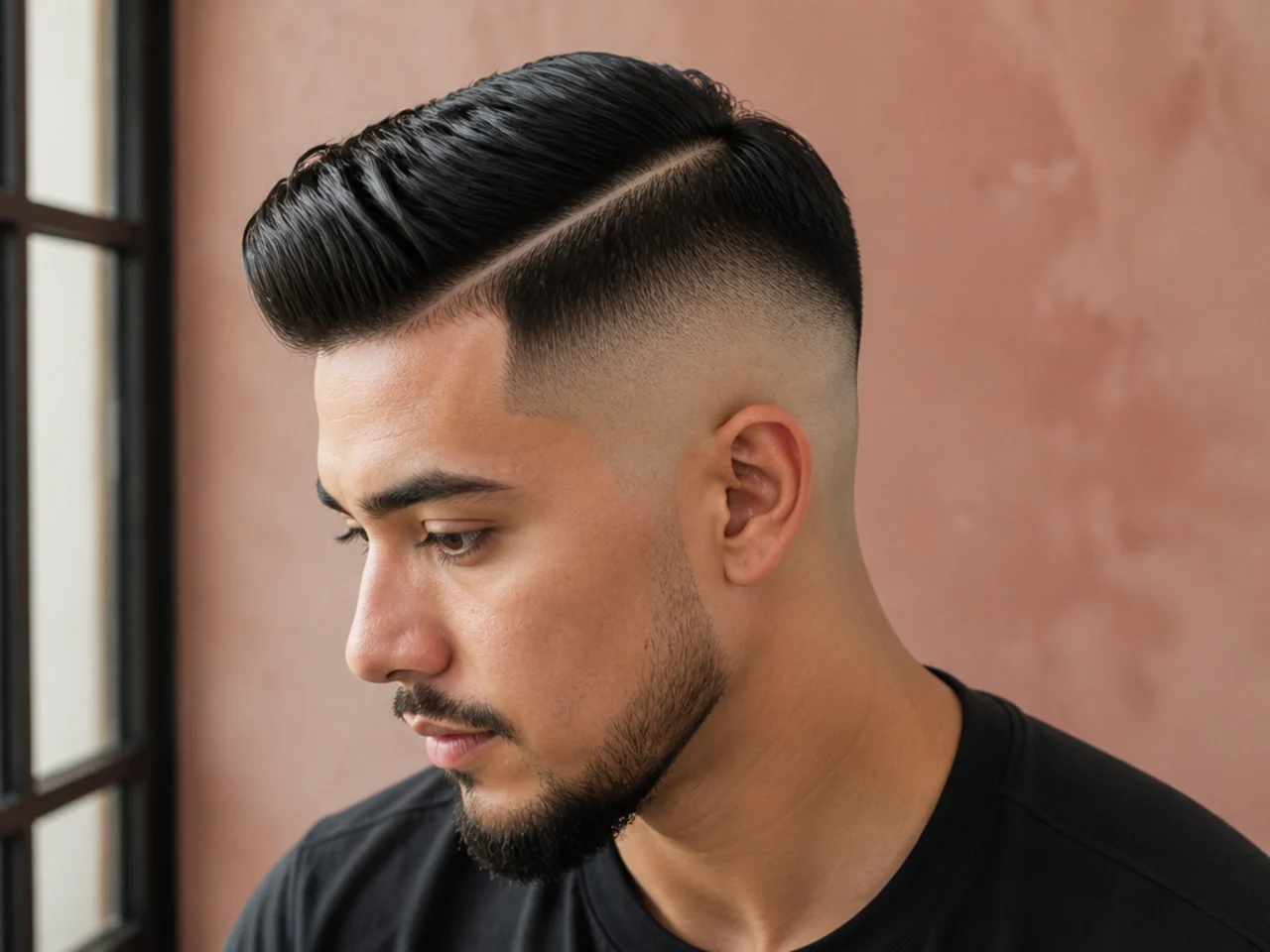
The bald fade is the skin fade's cousin — the difference is finish. A skin fade goes to bare scalp with clippers only. A bald fade takes the shortest section down further with a straight razor for a polished, shine-free result that reads a shade cleaner in photos. The rest of the build is identical: high fade line, defined side parting, textured top.
Ask for: "bald fade with straight-razor finish at the lower panel, high fade line above the temple, two inches on top with a side parting."
Styling: same as the skin fade — matte paste on top, sunscreen on the shaved panels, book every ten days.
6. Taper Fade Side Part
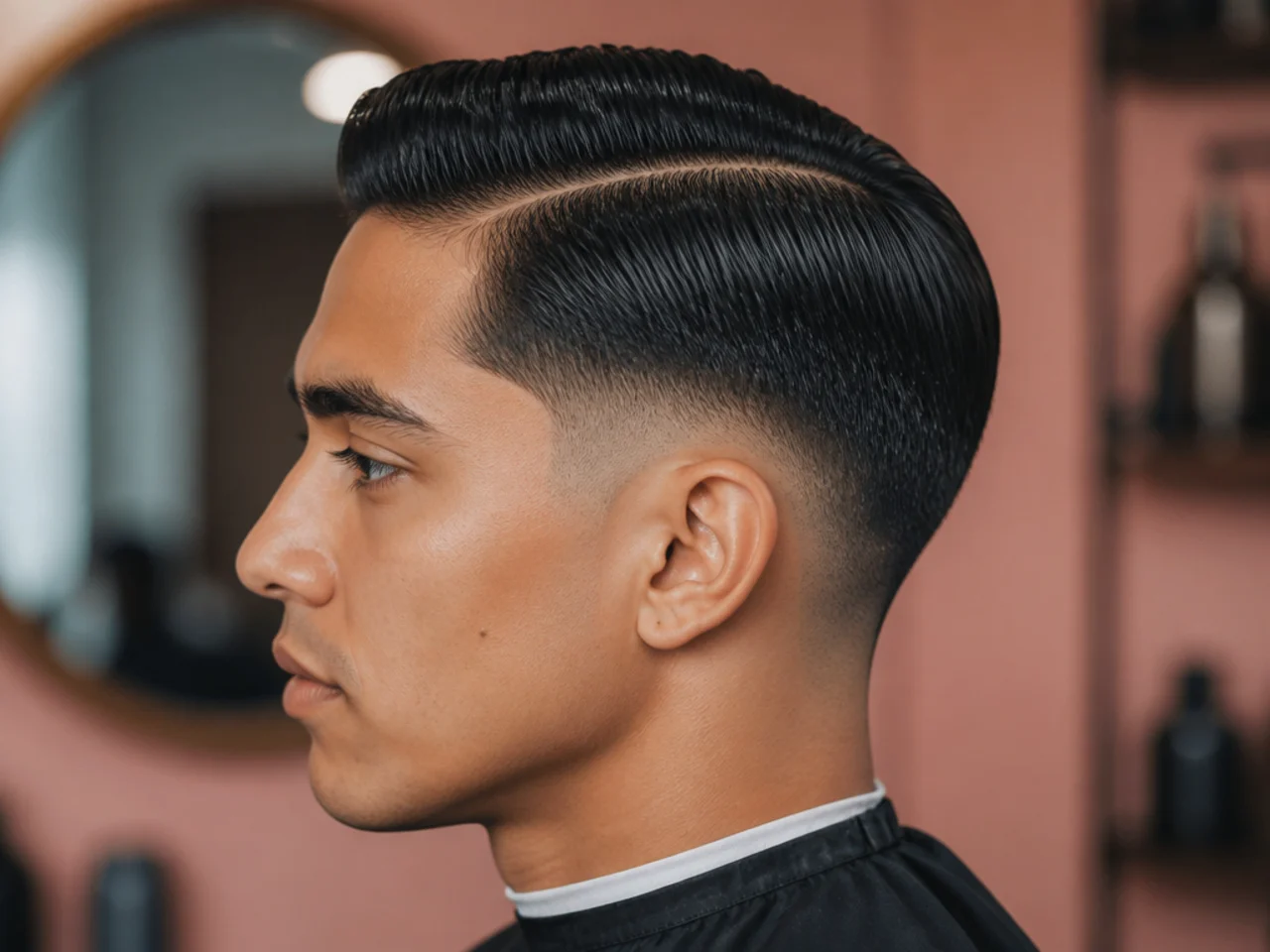
The word "taper" and the word "fade" get used loosely, but there's a real distinction. A fade blends to skin or near-skin somewhere on the head. A taper only shortens the sides gradually, keeping actual length everywhere. This variation pairs a scissor-and-clipper taper on the sides with two to three inches of top and a defined parting. Softer than any fade above and lasts a week longer between cuts.
Ask for: "taper — not a fade — clipper-and-scissor blend on the sides down to a #1.5 at the neckline, two to three inches on top with a side parting."
Styling: light-hold pomade or matte cream, combed once. The taper reads formal without leaning aggressive — good for guys in traditional workplaces.
7. Low Taper Fade Side Part
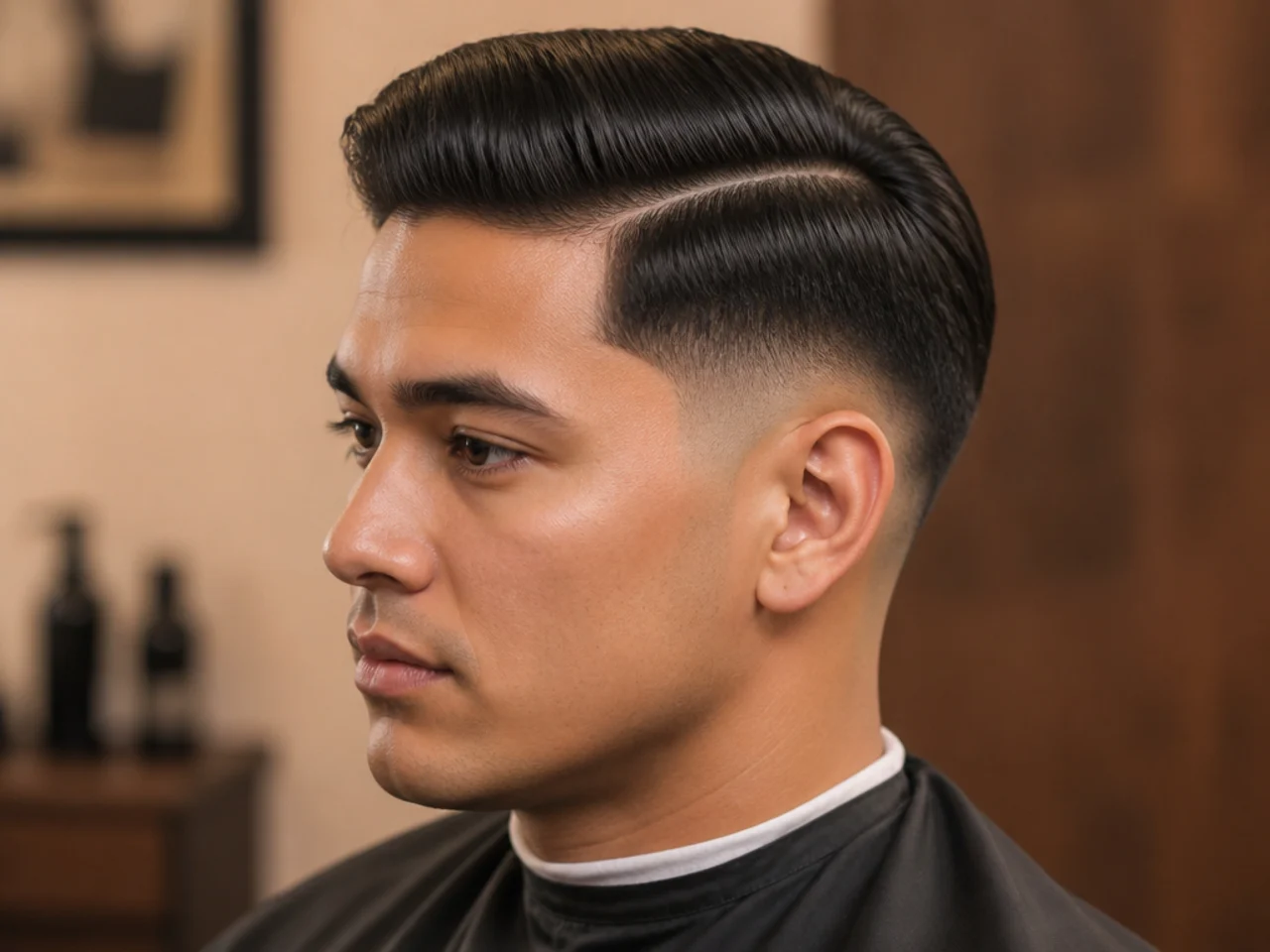
The most subtle variation on this list. The taper touches only the last inch or two of the sides near the neckline — above the ears everything is left the same length as the top. Paired with a two-to-three-inch side-parted top, this reads conservative and clean. Perfect for corporate contexts that push back on visible fades. Suits every face shape and every hair texture.
Ask for: "low taper — nothing above the ears — two to three inches on top with a natural side parting."
Styling: cream pomade or a satin finish product, combed once. This is the longest-lasting cut on the list — five to six weeks between visits is realistic.
8. Mid Taper Fade Side Part
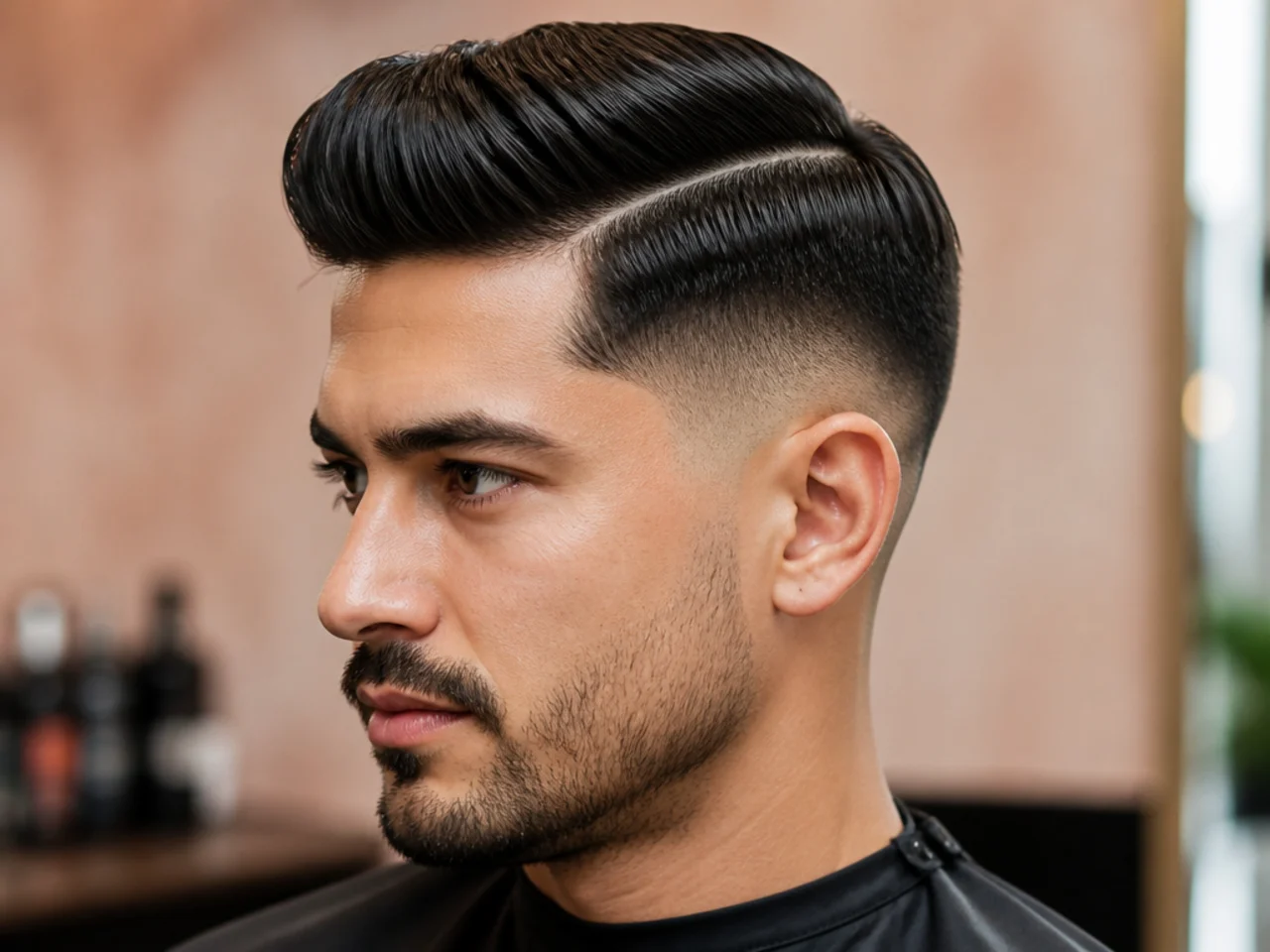
Halfway between the low taper and the mid fade. The taper starts at the temple line but drops to a #1 or #1.5 at the neckline instead of skin. Keeps the modern silhouette of a mid fade but reads softer at the shortest point. Great for guys who like the mid fade look but want an extra week between cuts.
Ask for: "mid taper — starts at the temple line, blends down to a #1 at the neckline, no skin — two to three inches on top with a side parting."
Styling: matte cream combed into the parting, no product on the tapered sides. Re-cut every three and a half to four weeks.
9. Drop Fade Side Part
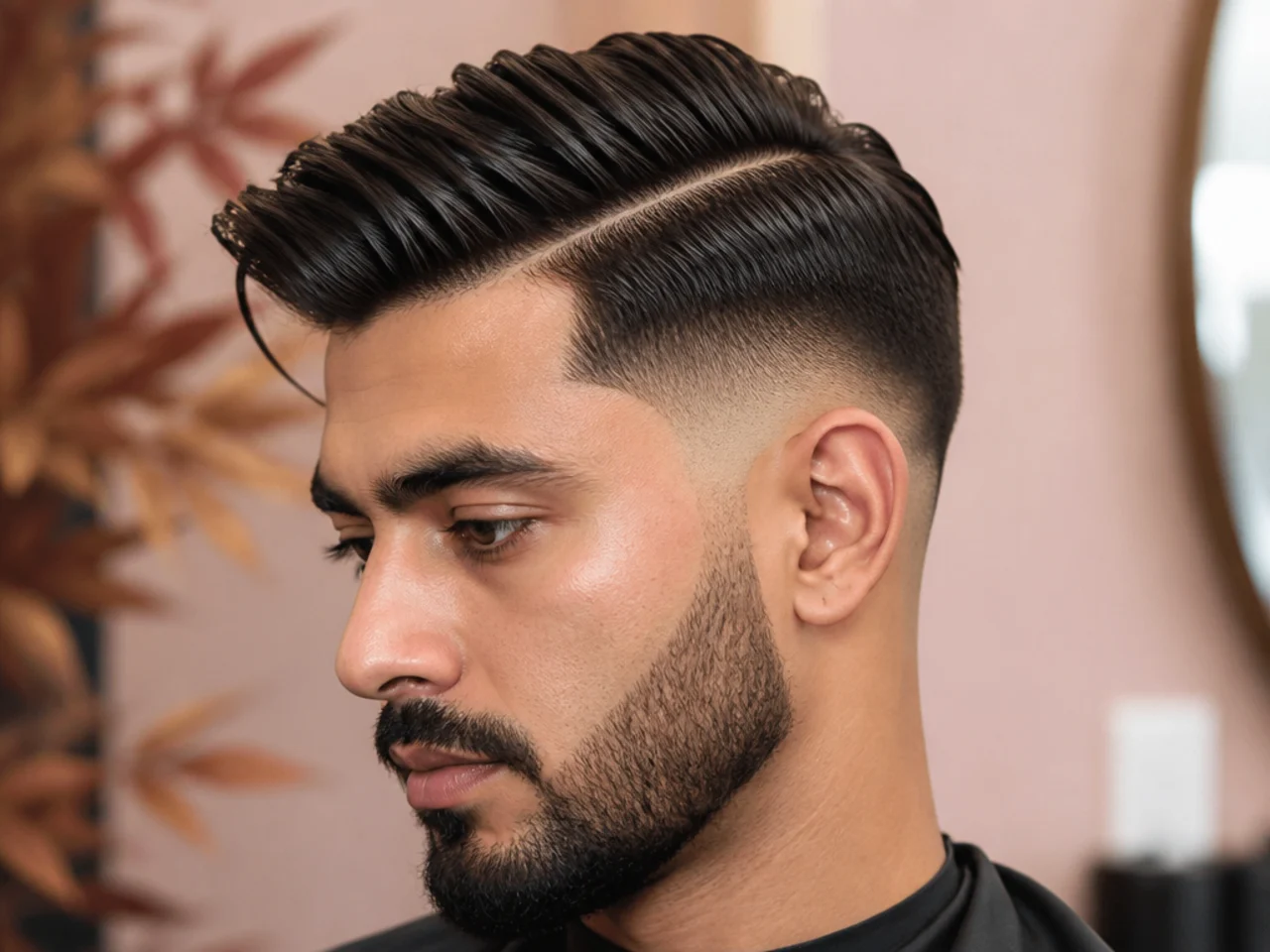
The drop fade curves down behind the ear instead of staying level with the temple — it follows the shape of the skull rather than cutting across it. Paired with a defined side parting and one and a half to two inches of top, the whole cut looks sculpted. Suits oval, square, and heart-shaped faces. Best on straight to gently wavy hair; coarse or curly hair fights the sharp curve.
Ask for: "high drop fade curving down behind the ear, defined side parting on my dominant side, one and a half to two inches on top."
Styling: strong-hold pomade or gel combed from the parting straight back. Let the shine dry-set without touching it. Holds through a full day of meetings.
10. Burst Fade Side Part
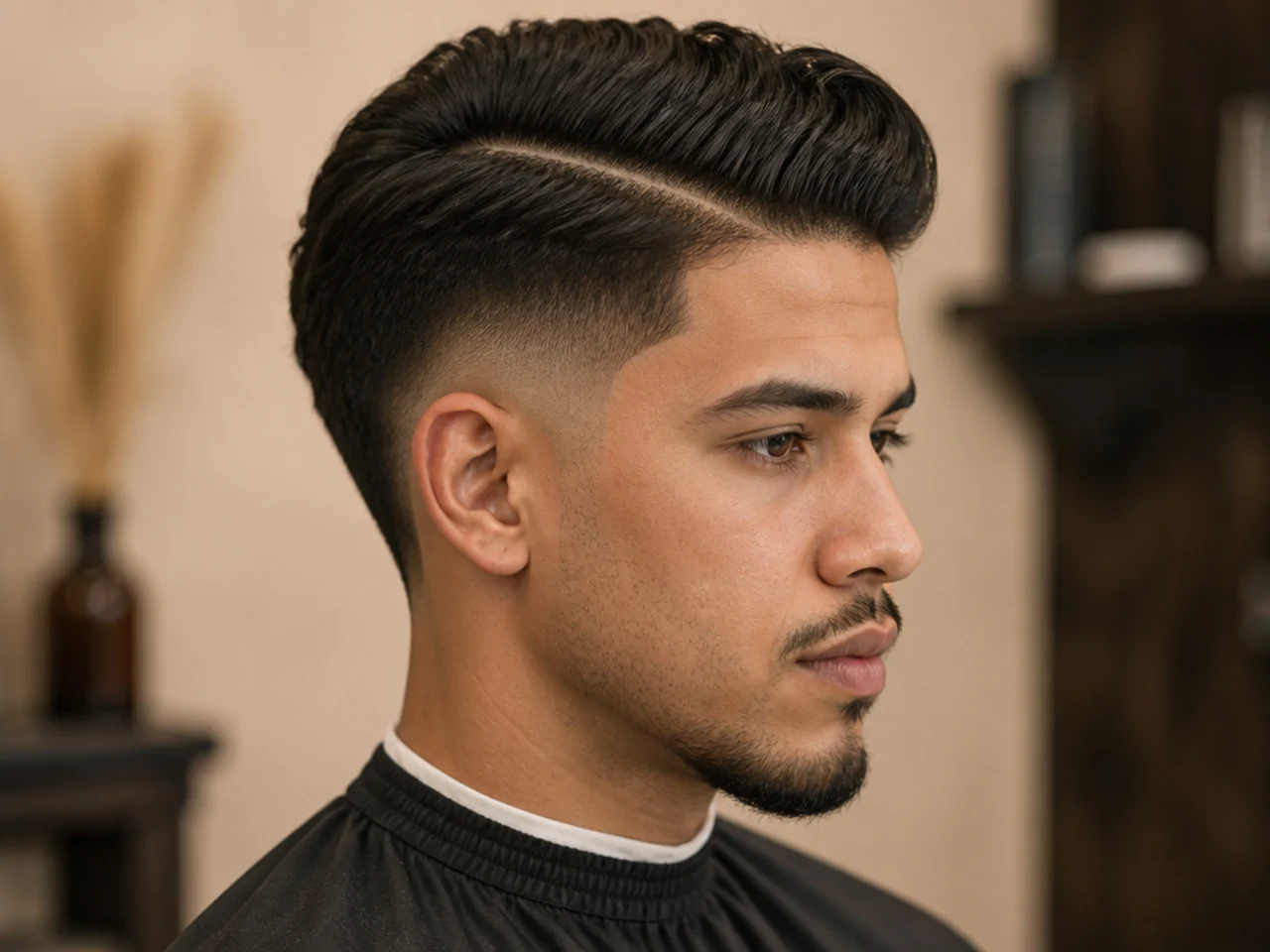
The burst fade arcs around the ear in a semi-circle, leaving the neckline longer than the ear itself. Paired with a side-parted top, the burst adds shape to what would otherwise sit static. Reads younger and more designed than the horizontal fades above. Suits oval and heart-shaped faces. Works on any texture with three-plus inches on top.
Ask for: "burst fade arcing around the ear, length kept longer at the neckline, three inches on top with a comb-drawn side parting."
Styling: matte cream or a light paste for texture. Style the top away from the parting with fingers. Holds shape for two to three weeks — the curve at the ear is what dates first.
11. Temple Fade Side Part
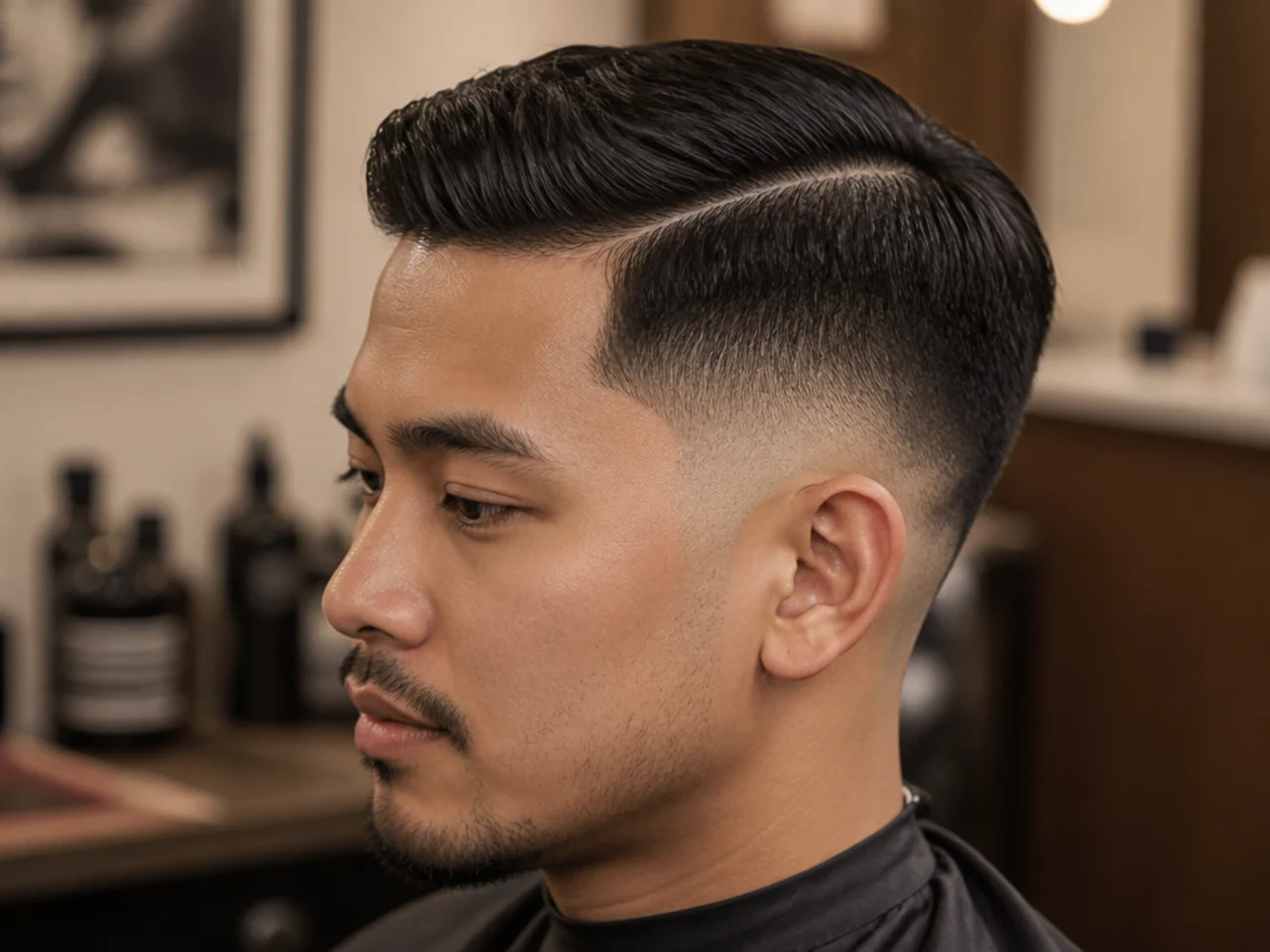
Only the temples are faded — the rest of the sides and back are left long or given a light scissor blend. Clean and subtle without the commitment of a full fade around the head. Great for guys with medium-to-long tops who want a hint of fade sharpness without dropping the whole side profile. Suits oval, oblong, and long faces. Works particularly well with wavy or curly hair.
Ask for: "temple fade — just the temples faded to skin, sides and back left long and scissor-blended — three to four inches on top with a side parting."
Styling: sea-salt spray plus a light cream for wavy or textured tops. This is a good one for growing-out clients — the long sides carry the cut while the temples stay clean.
12. Hard Part Low Fade Side Part
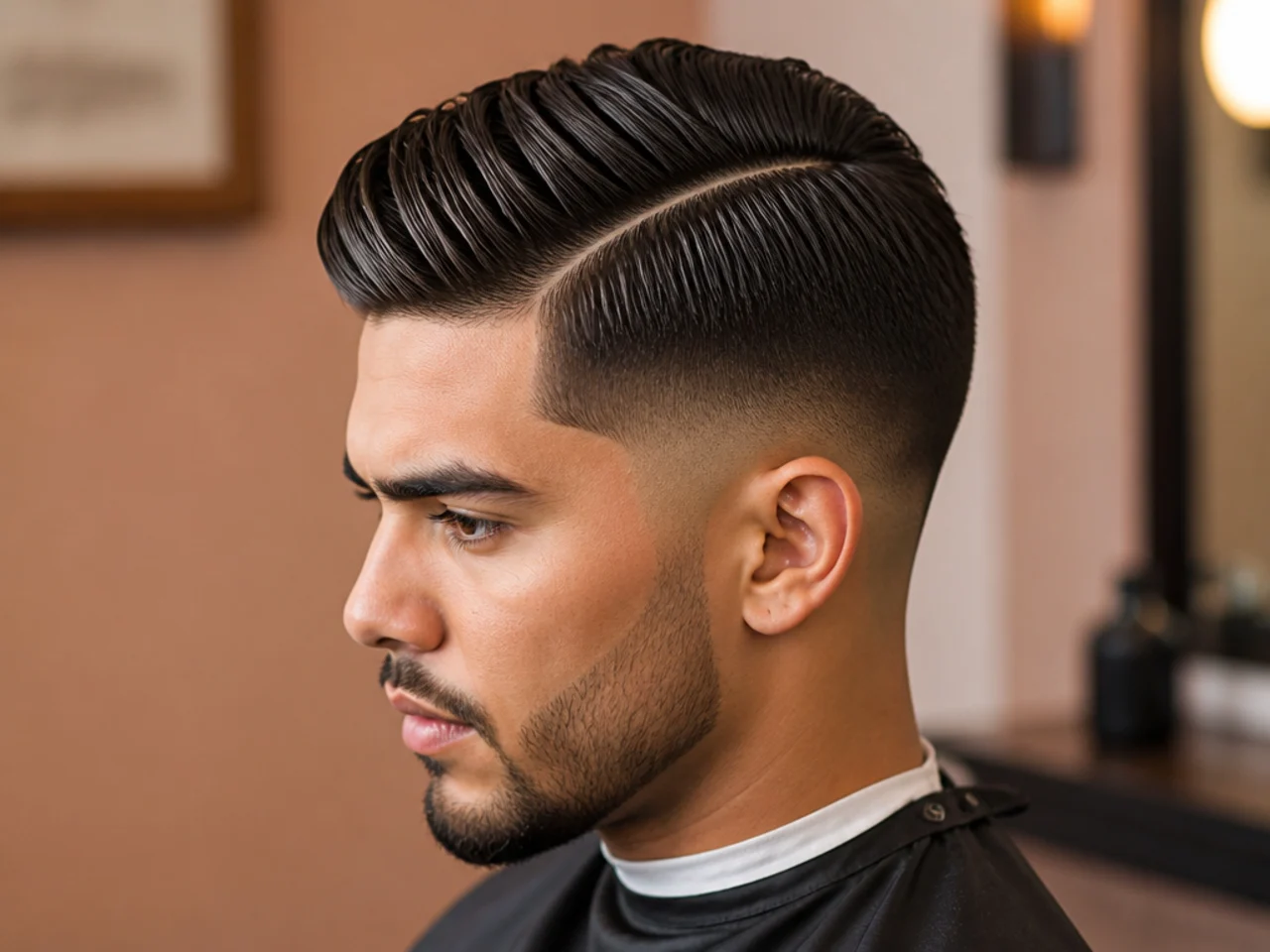
Add a razor-drawn line along the parting to a classic low fade side part and you've moved from soft to sharp. The hard part sits above a low fade — subtle at the sides, defined on top — so the razor detail carries most of the visual weight. Best entry point for guys who want a hard part without the commitment of a skin fade. Book every two weeks — the hard part fuzzes faster than the fade softens.
Ask for: "low fade at the sides, razor-drawn hard part on my dominant side sitting above the parting, two inches on top with a defined side sweep."
Styling: matte paste worked with fingers, top swept away from the hard part so the line stays visible from three feet. Never comb over the part — you'll cover the reason for the cut.
13. Hard Part Skin Fade Side Part
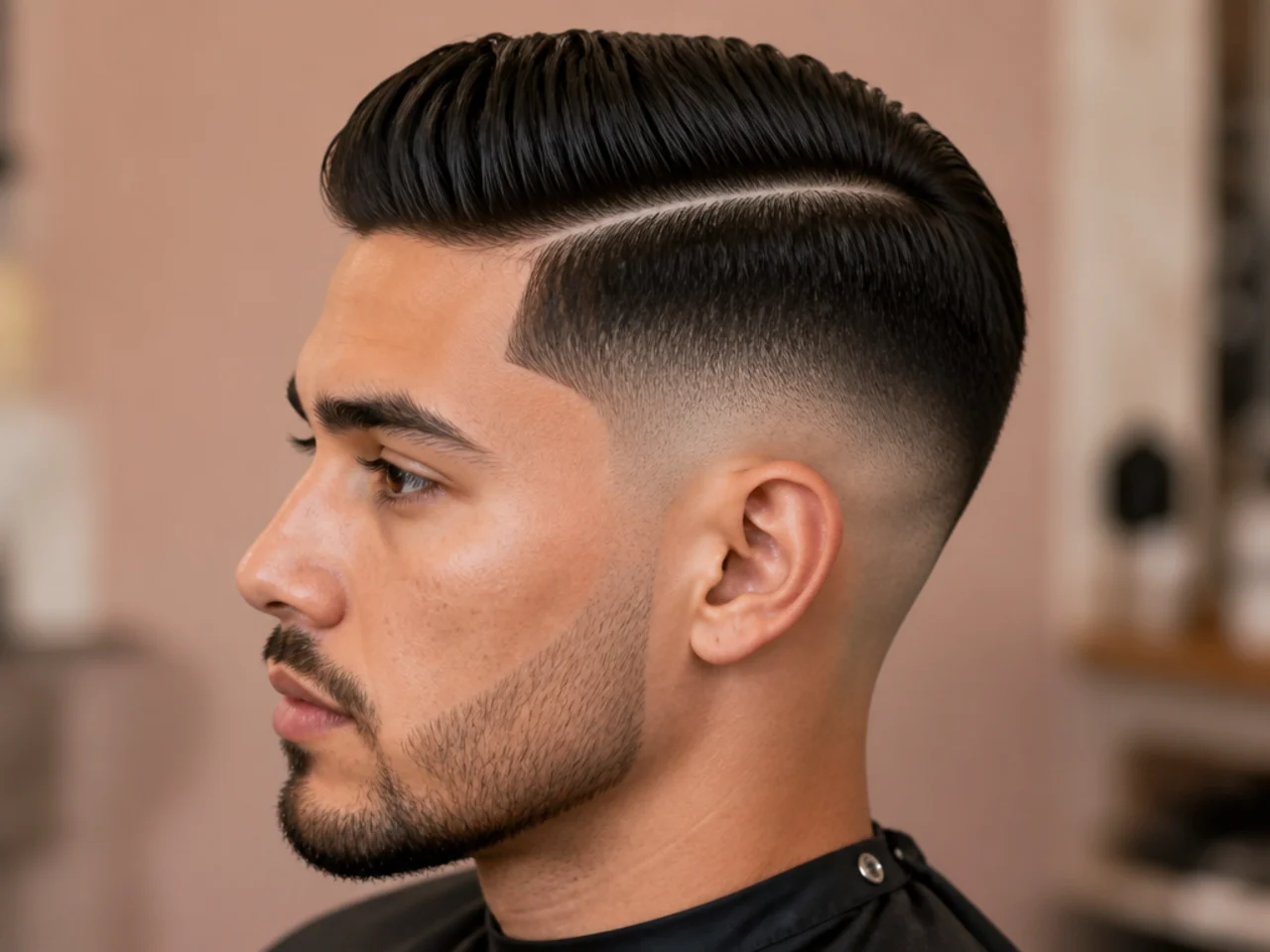
The sharpest build on this list. High skin fade, razor-drawn hard part along the parting, textured top swept away from the line. Every element is engineered for contrast — smooth panel, sharp line, textured length. Suits square and oval faces with strong bone structure. Works on every hair type; the shorter the top, the more the hard part reads. Two-week cut, not a monthly one.
Ask for: "high skin fade, razor-drawn hard part on my dominant side, one and a half to two inches on top point-cut for texture, hard part starting just above the temple."
Styling: matte paste emulsified in the palms, pushed through the top with fingers only. Sunscreen on the shaved panels for the first two days. Book maintenance every ten to fourteen days.
14. Razored Line-Up Fade Side Part
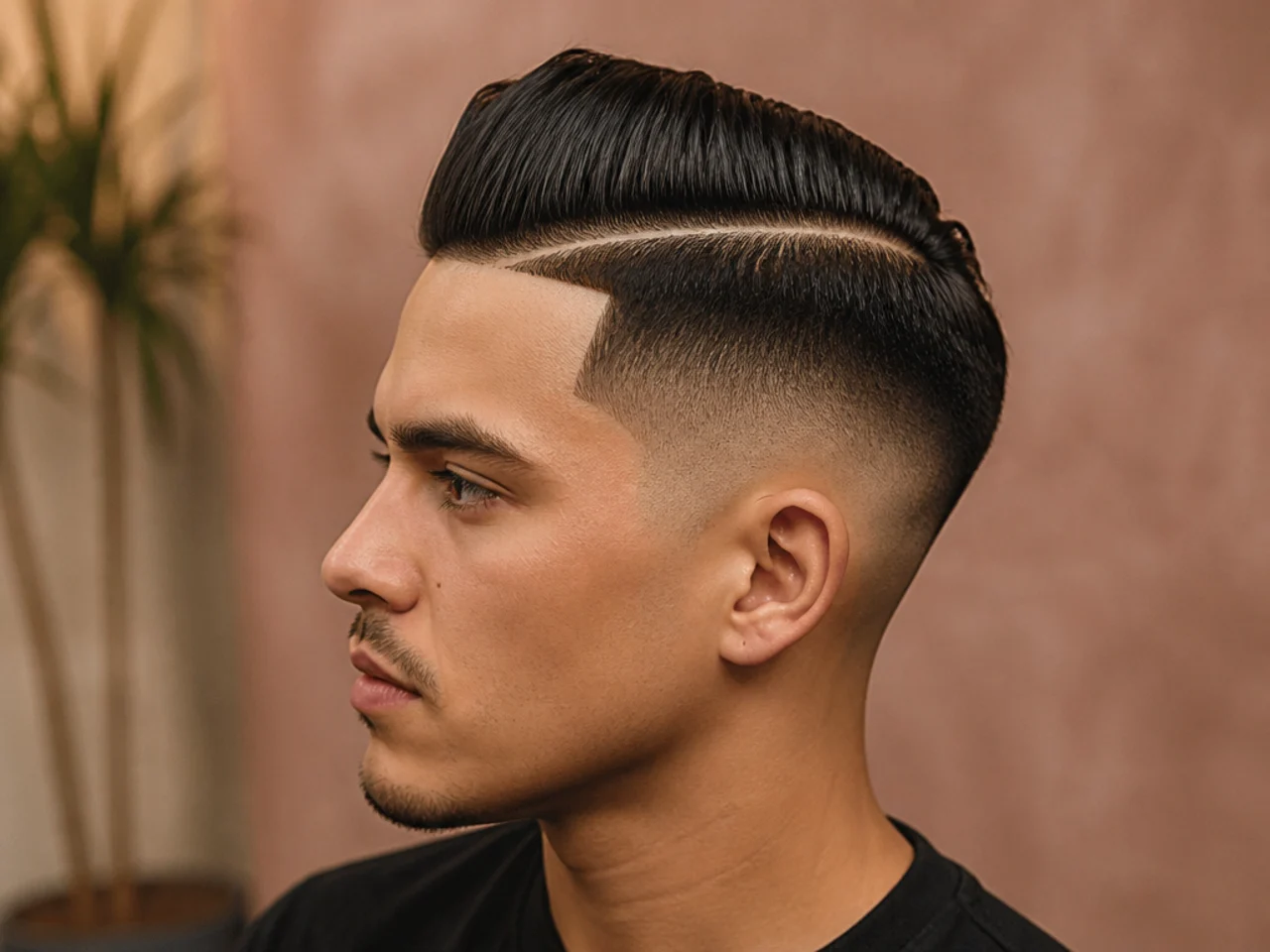
The razor work runs across the forehead and around the temples instead of along the parting. A straight, hard-edged line replaces the natural hairline. Combined with a mid or high fade and a two-inch side-parted top, the line-up carries the sharpness. Best on square, oval, and diamond faces. Requires a barber with real razor skill — not every shop can draw a straight forehead line clean.
Ask for: "mid or high fade, razor line-up at the forehead and temples, comb-drawn side parting on top with two inches of length."
Styling: matte cream for the top, kept low so the line-up stays the focal point. Shape-up every ten days — the forehead edge softens fastest.
15. Beard-Blended Fade Side Part
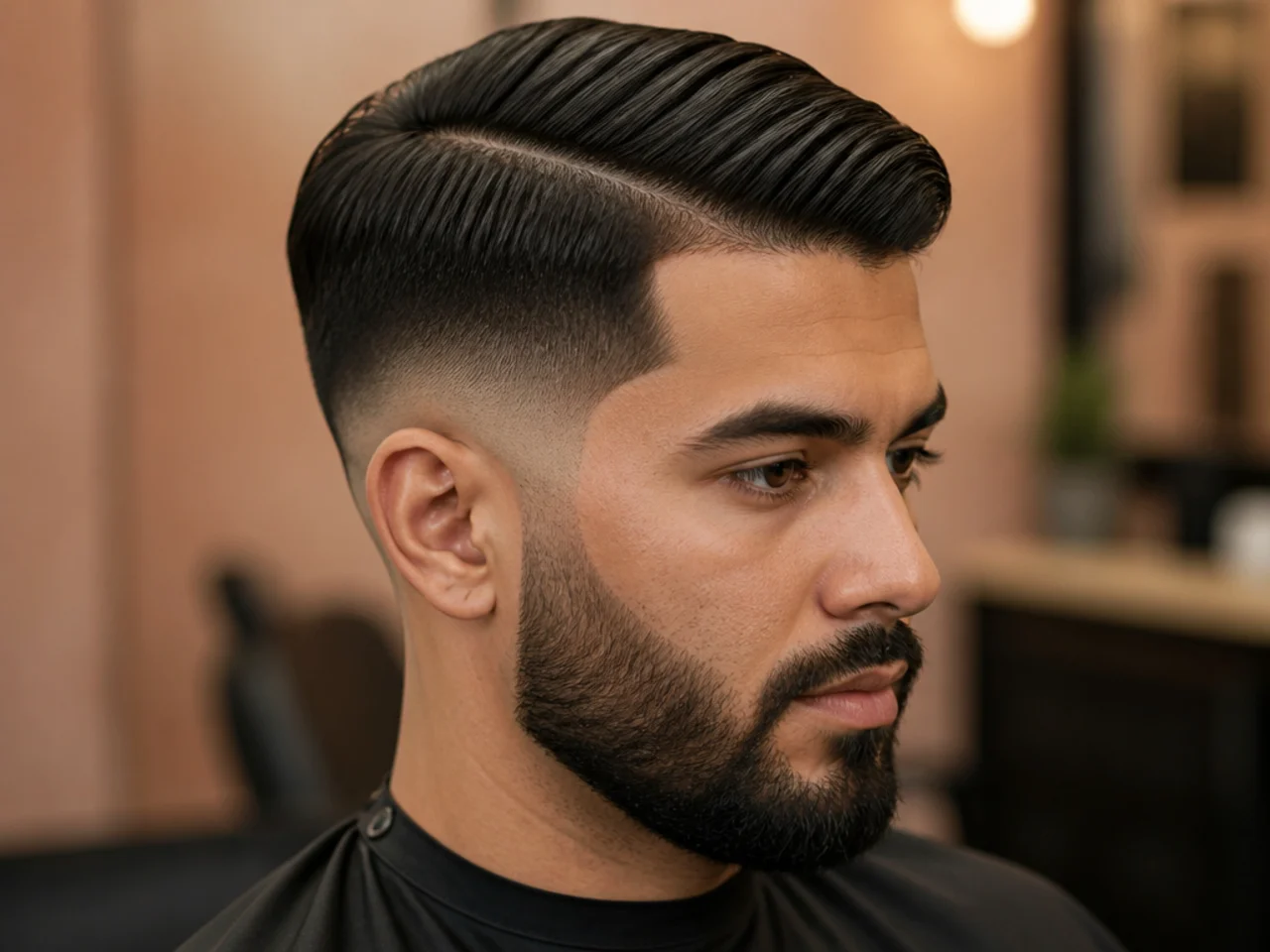
The full statement build. Mid or skin fade at the sides, defined side parting, and a beard that fades directly into the haircut where the sideburn meets the ear. No visible break between hair and beard. Suits square and oval faces best. The beard needs at least a half-inch to fade properly. Book both cuts in the same appointment or the transition will be uneven within a week.
Ask for: "mid or skin fade at the sides, two to three inches on top with a side parting, beard trimmed to a #4 and blended straight into the fade line at the sideburn."
Styling: matte clay on top, combed into the parting. Beard combed downward and oiled lightly. Book every two weeks — a fuzzy sideburn kills the build.
16. Textured Crop Fade Side Part
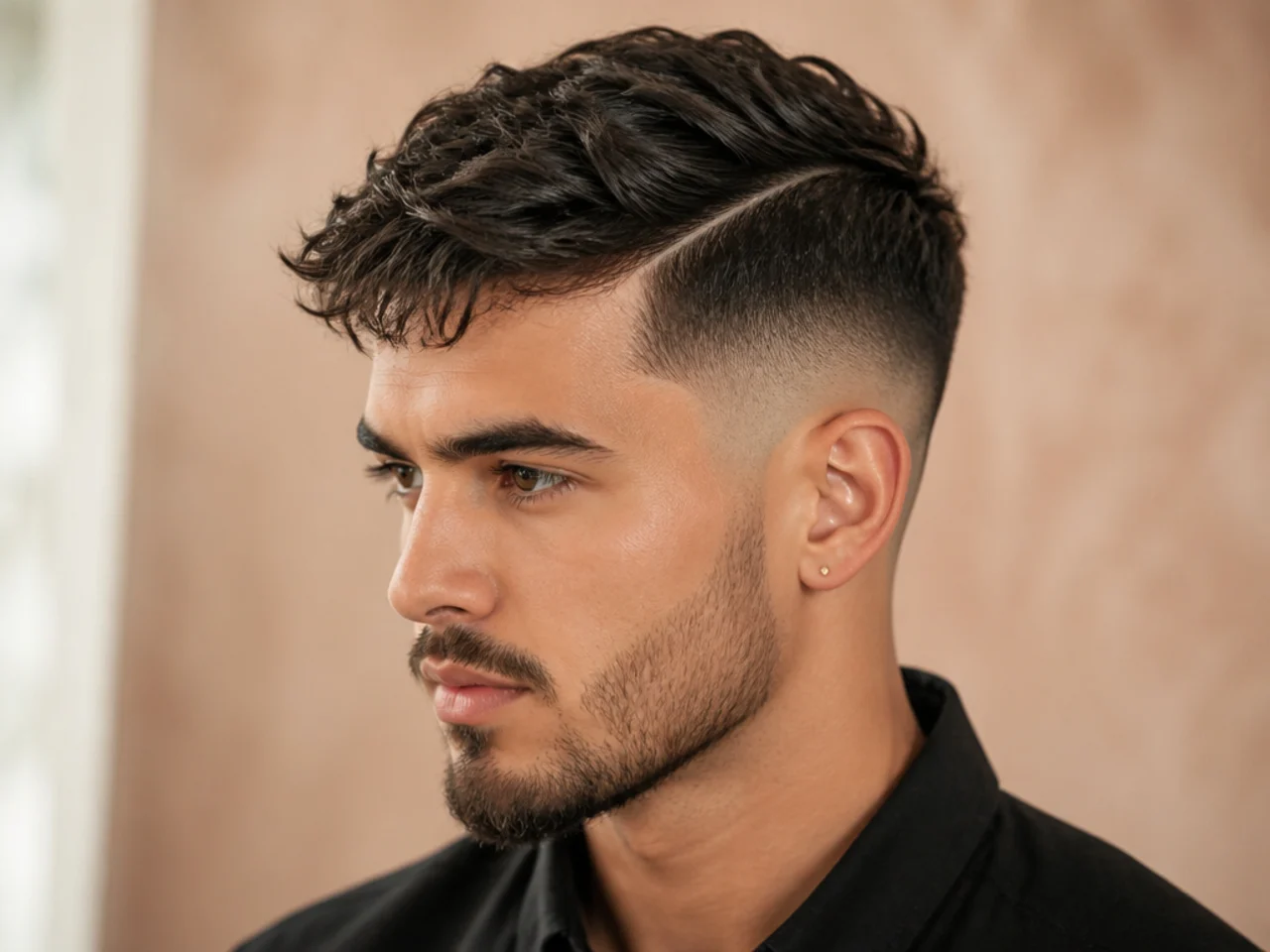
Short, chopped, side-parted, faded. The top runs one to one and a half inches — much shorter than most side part fades — with heavy point-cutting for texture. The parting sits shallow because there isn't much length to sweep. Paired with a mid or high fade, this reads modern and low-effort. Suits round and oval faces. Works particularly well on straight hair with cowlicks.
Ask for: "mid or high fade at the sides, one to one and a half inches on top heavily point-cut for texture, soft side parting on my dominant side."
Styling: matte paste worked with fingers, no comb. Sixty seconds. This is the lowest-maintenance style day-to-day on this list — the fade needs upkeep but the top styles itself.
17. Slick Back Fade Side Part
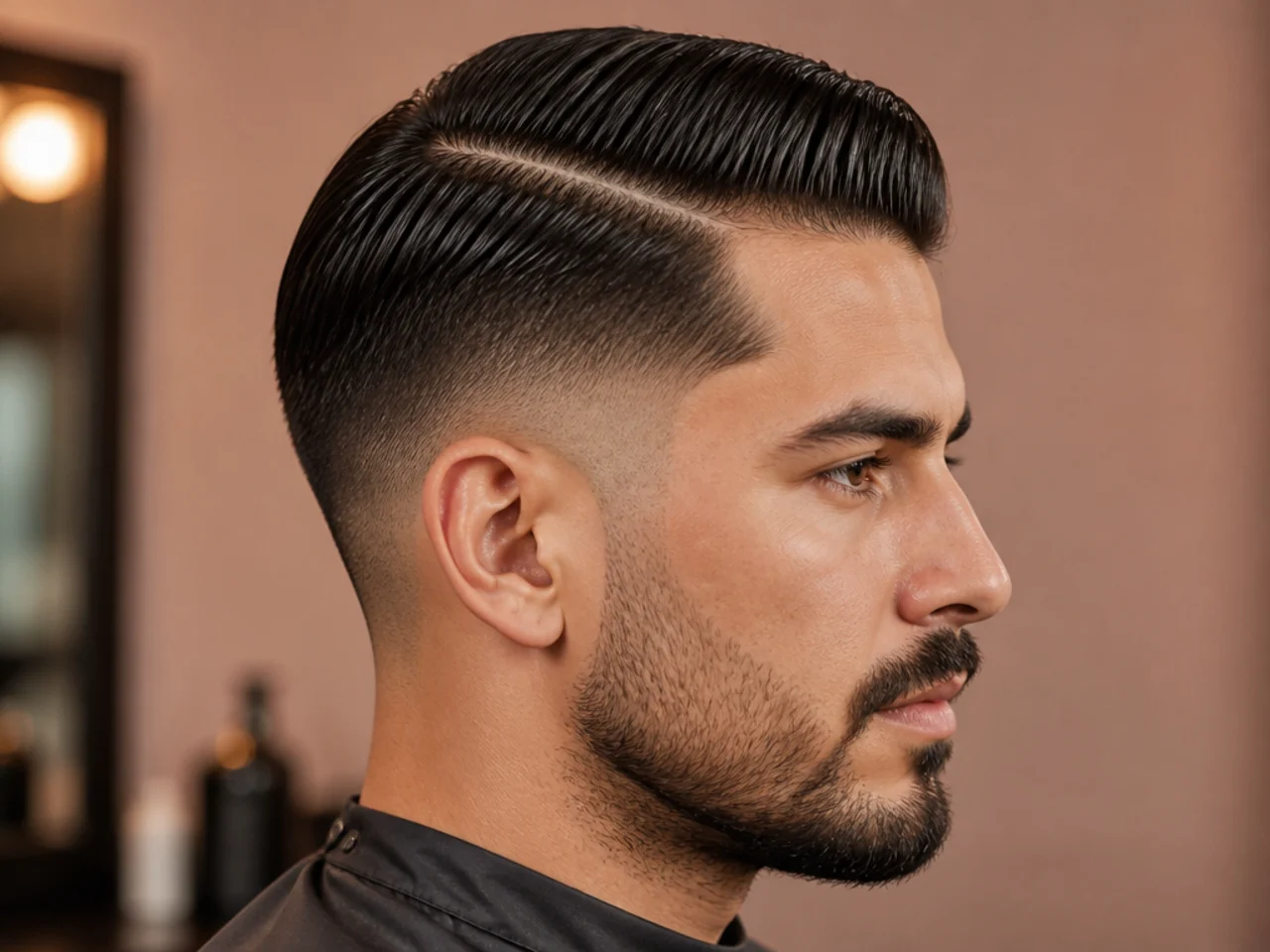
The mob-boss silhouette rebuilt for 2026. A deep side parting sits high on the head, three to four inches of top length combed straight back with shine pomade, and a mid or high fade drops the sides sharp. Not the same as a plain slick back — this one keeps the parted line visible, so you get two silhouettes in one cut. See the slick back haircut guide for the plain version. Best on straight or wavy hair.
Ask for: "mid fade at the sides, four inches on top, deep side parting on my dominant side, styled straight back with shine — keep the parting visible."
Styling: quarter-sized shine pomade combed straight back on damp hair. Blow-dry back-to-front for root lift, then re-comb once the shine has set.
18. Quiff Fade Side Part
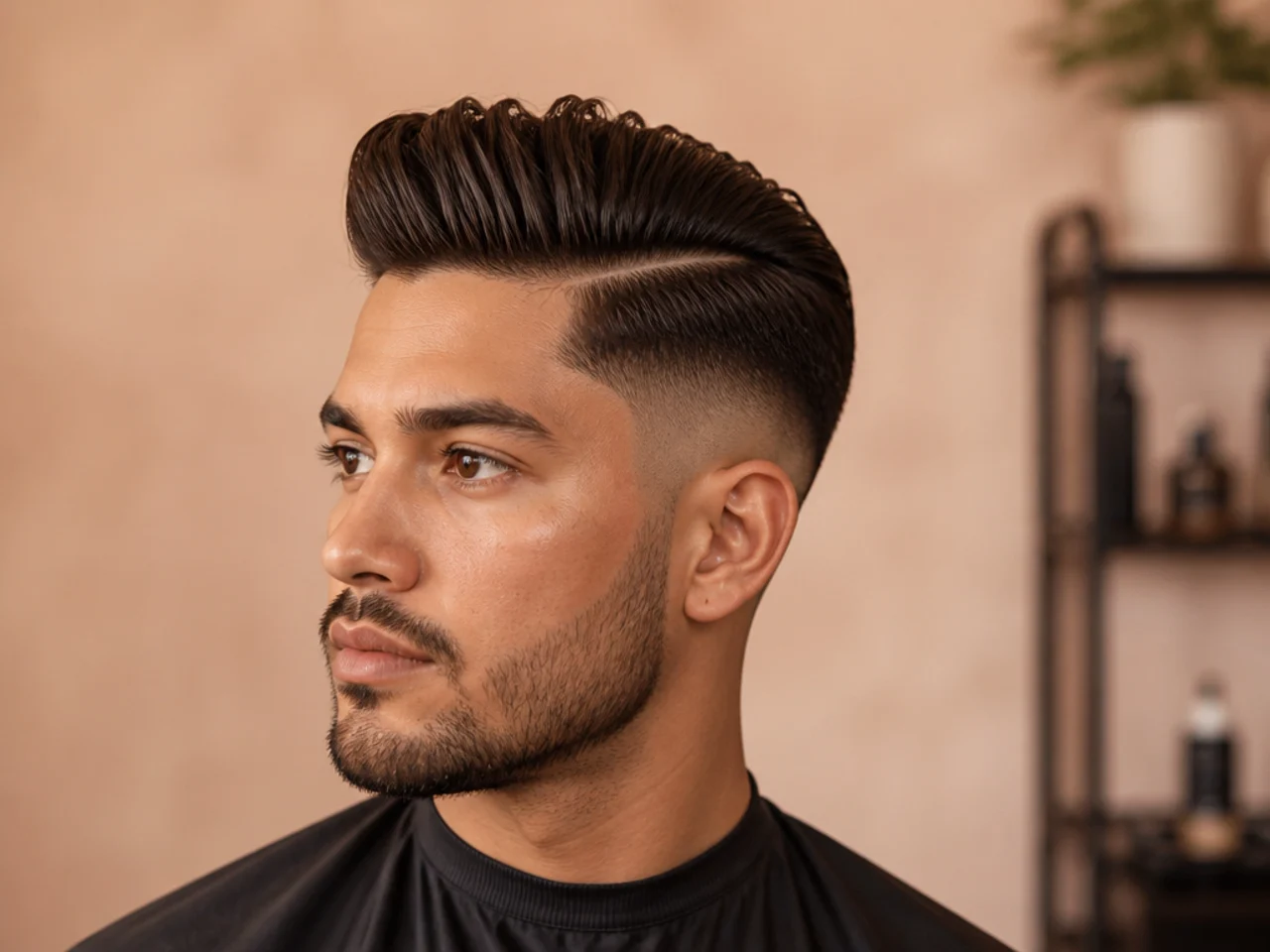
A quiff is a front section swept up and back for height. Add a defined side parting and a mid or high fade and you've turned the quiff from playful into structured. The parting anchors the height so the whole shape reads intentional. Suits round faces (the height flatters) and oval faces (the parting balances length). Best on medium-thick straight or wavy hair — fine hair collapses within hours.
Ask for: "mid fade at the sides, three to four inches on top with extra length at the front for a quiff, defined side parting on my dominant side."
Styling: mousse on damp roots, blow-dry the front section up and back with a round brush, finish with a light-hold pomade combed into the parting. Refresh with a mist of water and a re-comb through the day.
19. Comb Over Fade Side Part
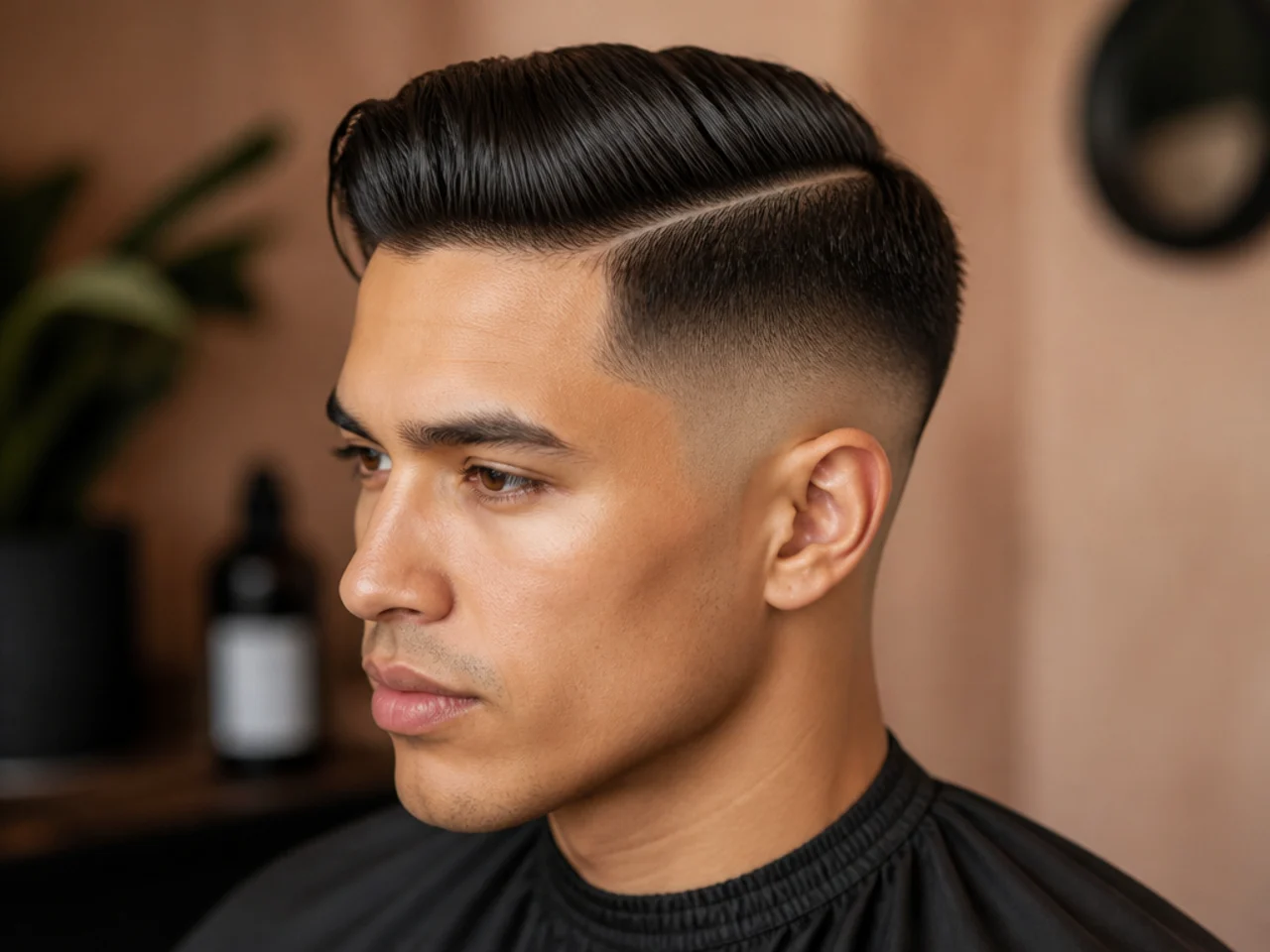
The comb over haircut rebuilt around a modern fade. Three to four inches of top length swept fully across the crown from a low side parting, paired with a mid or high fade at the sides. The extra length gives coverage across the top, so this variation handles thinning crowns well. Suits oval, round, and diamond faces. Best on straight to gently wavy hair with four-inch length or more for the sweep to lay.
Ask for: "mid or high fade at the sides, four inches on top, natural low side parting for a full comb over."
Styling: medium-hold pomade or hair cream combed wet from the parting across the head. Blow-dry with airflow following the sweep. Re-comb once dry to reset the line.
20. Curly Top Fade Side Part
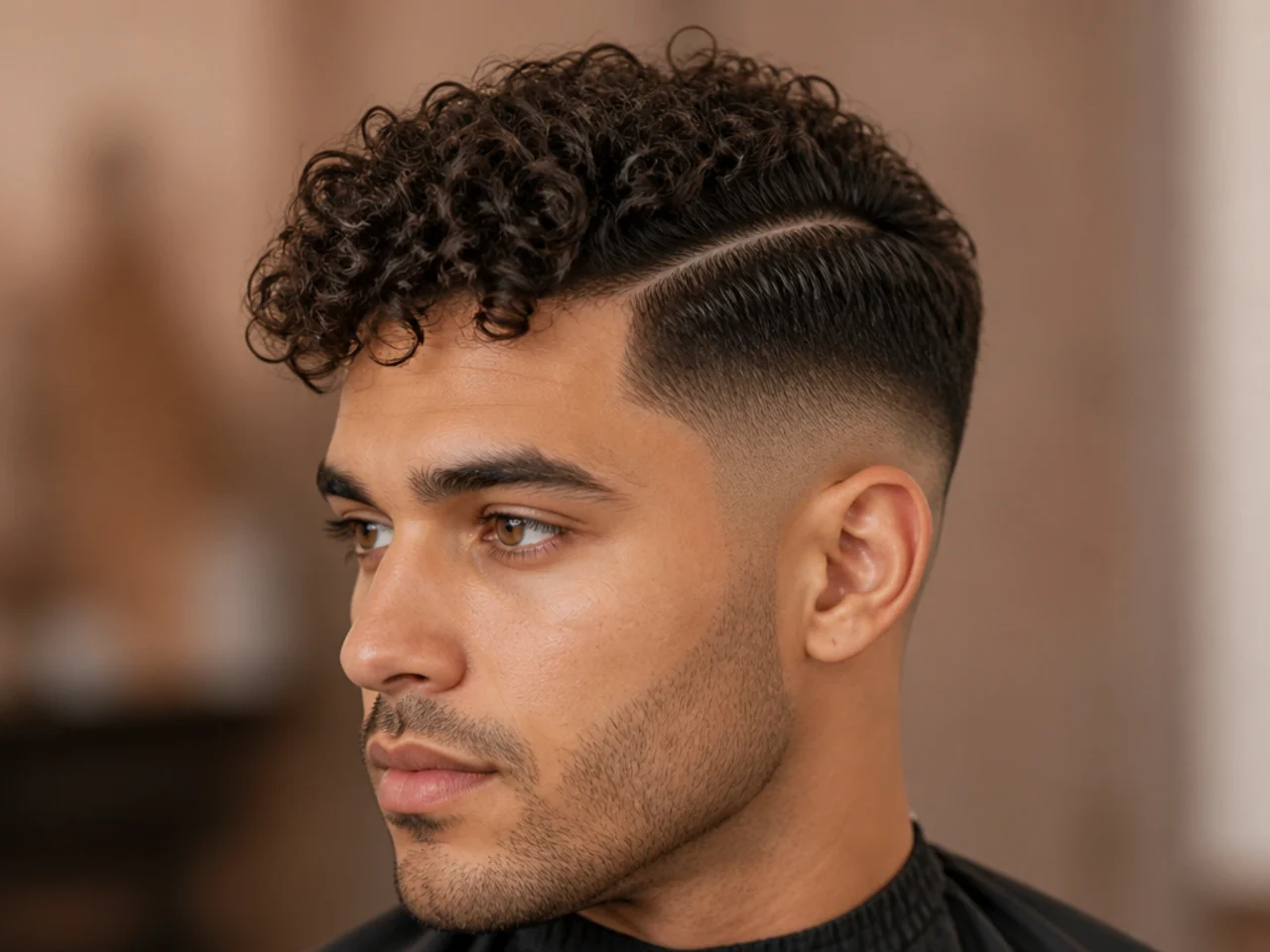
The one most guys with texture ask about. A mid or high fade drops the sides sharp, and four inches of curly length sit on top defined into a side parting. The fade frames the curl; the parting adds structure. Best on 2C to 3B hair. Coily 4-type textures work with the fade but need a curl sponge rather than a comb for the parting to sit.
Ask for: "mid or high fade at the sides, keep four inches of curly length on top, soft comb-in side parting on my dominant side — cut with the curl, not against it."
Styling: curl cream or a light gel scrunched into damp hair with fingers, diffuse-dry on low heat. Re-comb the parting when the hair is 80% dry. Cut every four to five weeks so the curl pattern keeps definition.
How to Ask Your Barber for a Side Part Fade
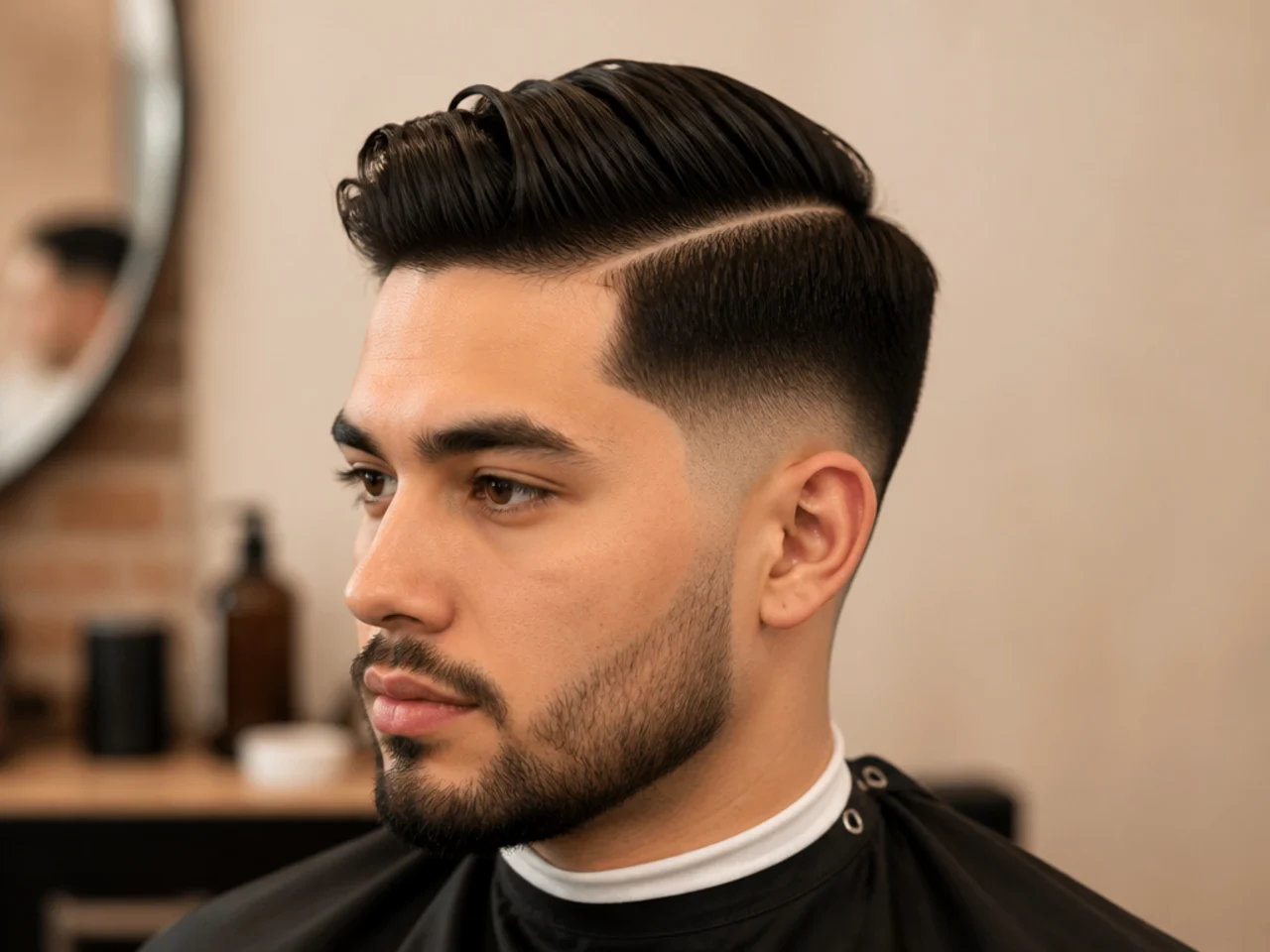
Six lines cover the whole conversation.
- Show a photo of the top. Fade height is easy to describe. Top length and finish is where most guys under-explain. Screenshot the exact haircut from someone with your hair texture.
- Name the fade height. Low, mid, high, or skin. Or the sub-variation — drop, burst, temple, taper. One phrase decides half the shape.
- Give the top length in inches. "Two and a half inches on top, point-cut for texture." Not "medium." Inches remove all ambiguity between shops.
- Choose the parting style. Natural, comb-drawn, or hard part. Say which side too — most guys part on the left.
- Name the finish vibe. Matte and textured. Sleek and shiny. Satin and polished. That single phrase tells the barber what product weight to prep for.
- Book the next appointment before you leave. Hard-part skin fades need the chair every ten to fourteen days. Mid fades stretch to three weeks. Low fades and low tapers hold four to five.
Styling and Maintenance
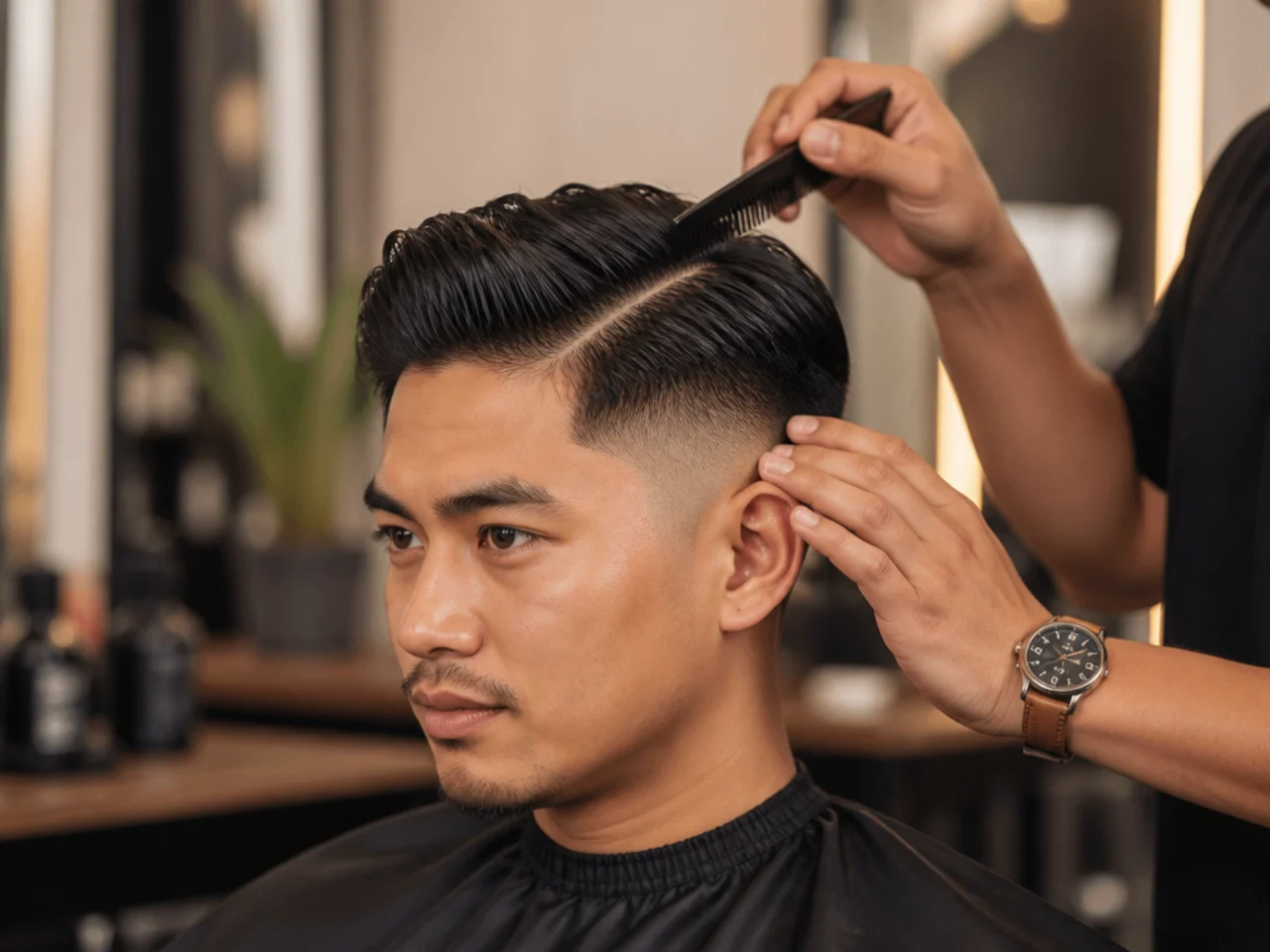
The side part fade rewards a simple routine and punishes stacked product. Wash, towel-dry until the water stops dripping, warm a pea to nickel of product between your palms, work through the top only, style with fingers or a comb. Two minutes for textured. Five for slick backs or quiffs.
Product by finish. Matte clay or paste for textured, dry-look tops — variations 1, 2, 4, 12, 13, 14, 16. Cream pomade for satin polish — variations 6, 7, 8, 11. Shine pomade or strong-hold gel for slick backs — variations 9, 17. Sea-salt spray plus a light cream for wavy and long-top variations — 11, 20. Mousse and blow-dry for quiffs — variation 18. Pick one product per haircut; layering flattens the shape faster than any single product would.
Parting technique. Comb wet, not dry. On damp hair, the parting sets clean and holds through a blow-dry. On dry hair the sweep looks fussed. If you have a natural cowlick, part on that side.
Hard part upkeep. Book a shape-up between full cuts if your version carries a hard part or a skin fade. Most shops charge fifteen to twenty dollars for a fifteen-minute fade-and-line touch-up. The forehead line and the hard part soften first.
Home clippers help. A basic pair keeps neckline and sideburns clean between shop visits and stretches your rebook window by roughly a week. The best hair clippers for men guide covers the tools that hold an edge for years.
Recut cadence. Skin fade with hard part: ten to fourteen days. High or mid skin fade: two to three weeks. Low fade or drop fade: three to four weeks. Mid or low taper: four to five weeks. Temple fade: five to six weeks.
FAQ
Which side part fade is best for a first fade? The classic low fade side part or the mid fade side part. Both read conservative enough for a professional workplace, sharp enough to feel modern, and forgiving enough that a barber unfamiliar with your head can still land the cut. Skip the skin-fade builds until you know your barber and your rebook cadence.
Do side part fades work for guys over forty? Yes — the low fade, low taper, and comb over versions read age-appropriate through the fifties. Skip the hard-part variations if you want the cut to age with you rather than date to a year.
Can I do a side part fade myself with home clippers? The fade takes practice a home barber can't replicate on their own head. The parting and top styling you can do yourself once the shop cut is in. Keep clippers for neckline and sideburn cleanups between full cuts.
Which side part fade suits a receding hairline? The comb over fade (variation 19), the low taper fade (variation 7), or the classic low fade (variation 1). All three carry length across the crown from a low parting, adding visual density where the hairline has stepped back. Skip anything with a hard part sitting at the recession.
Is a side part fade professional enough for a corporate job? Every variation from 1 through 8 reads professional in almost any workplace. Variations 9 through 20 vary — hard parts and burst fades read designed rather than conservative. Start with a low or mid fade with a comb-drawn parting and evolve from there. See the professional hairstyles for men guide for the wider workplace context.
How is a side part fade different from a plain side part? The parting and top are the same — the sides are what change. A plain side part uses scissor-tapered sides with no clipper marks; a side part fade uses a clipper-graduated fade to skin or near-skin. Fades read sharper and need more frequent cuts. Plain side parts stretch longer between visits — see the full side part haircut breakdown for the scissor family.