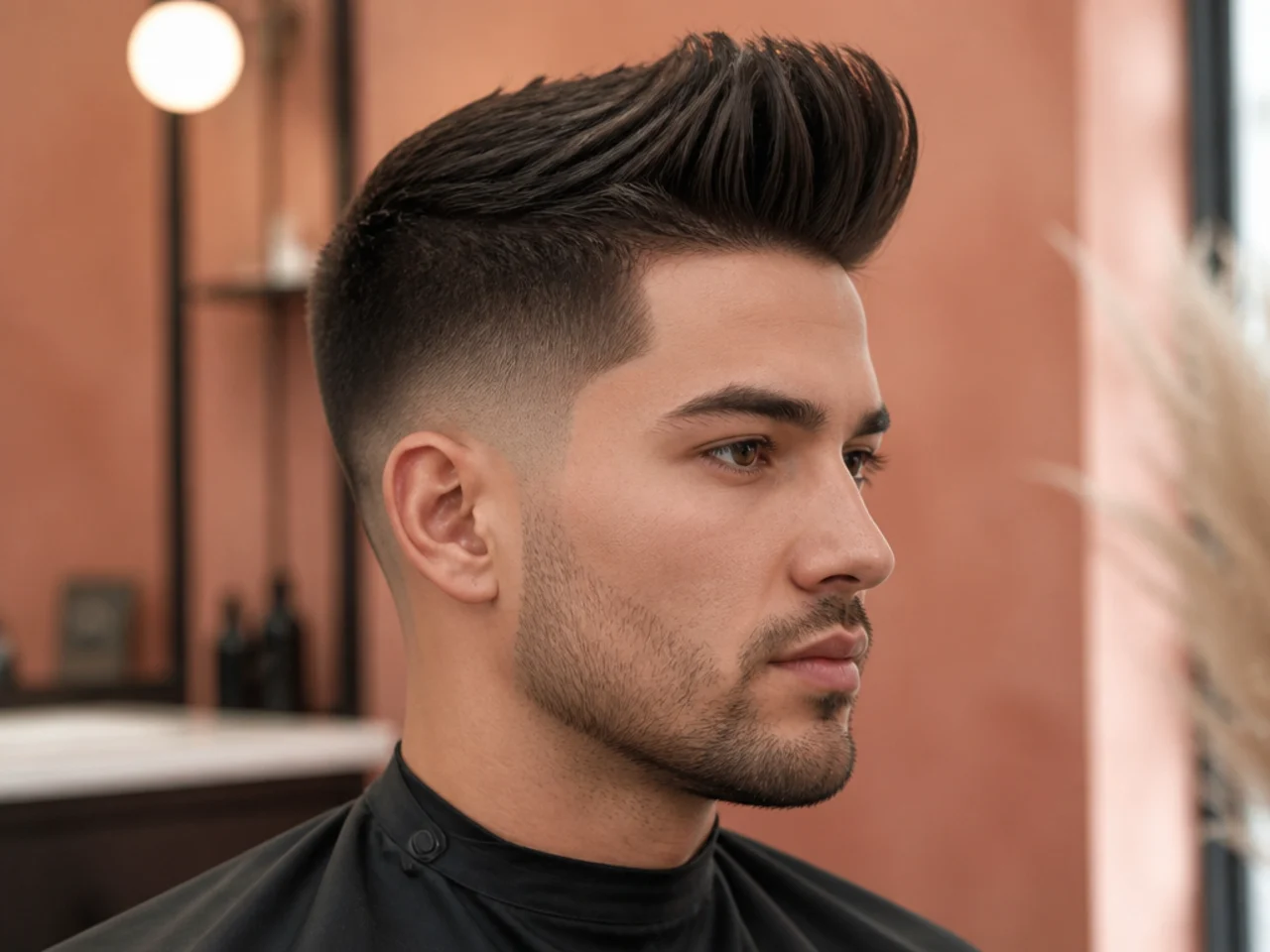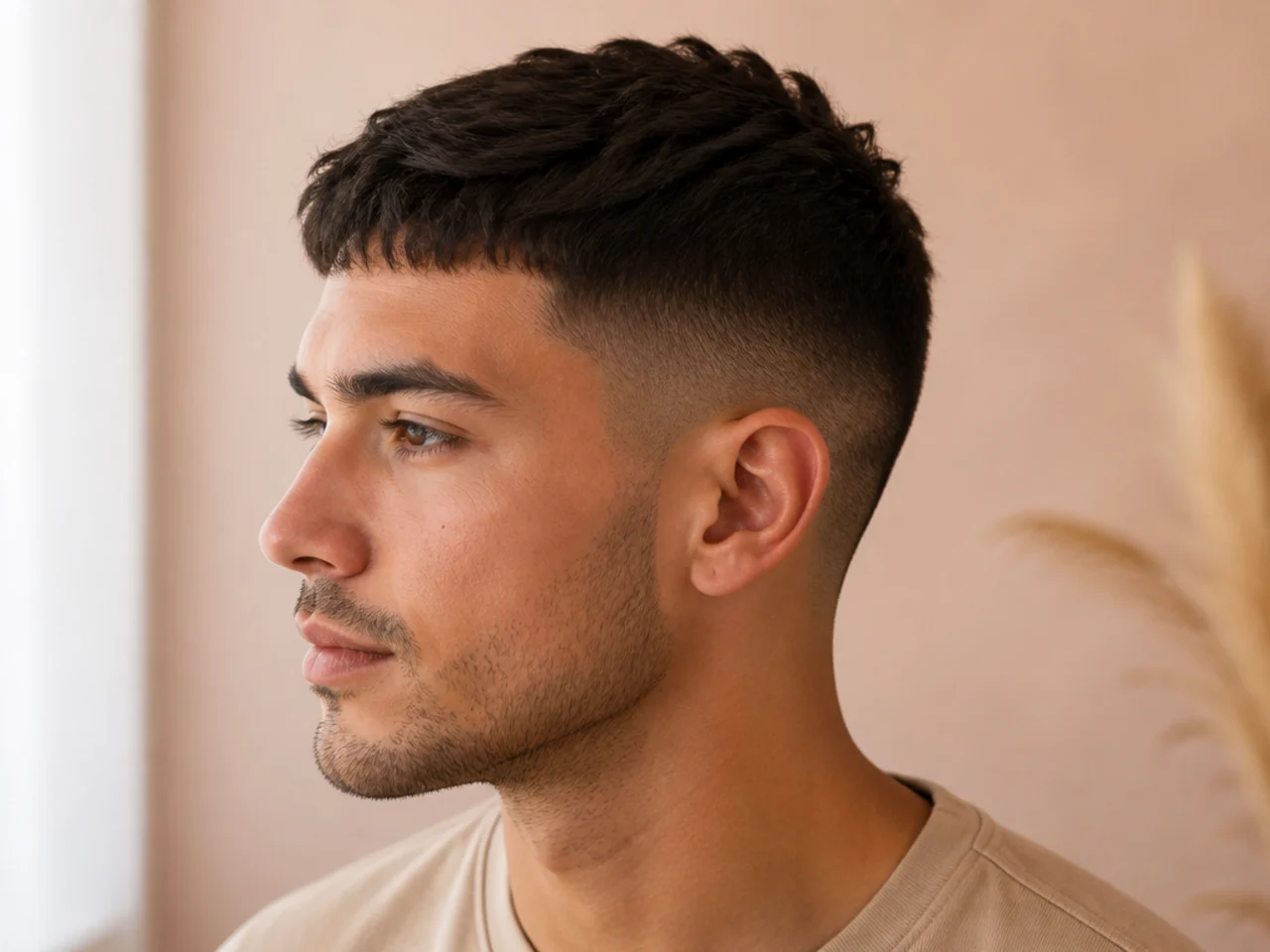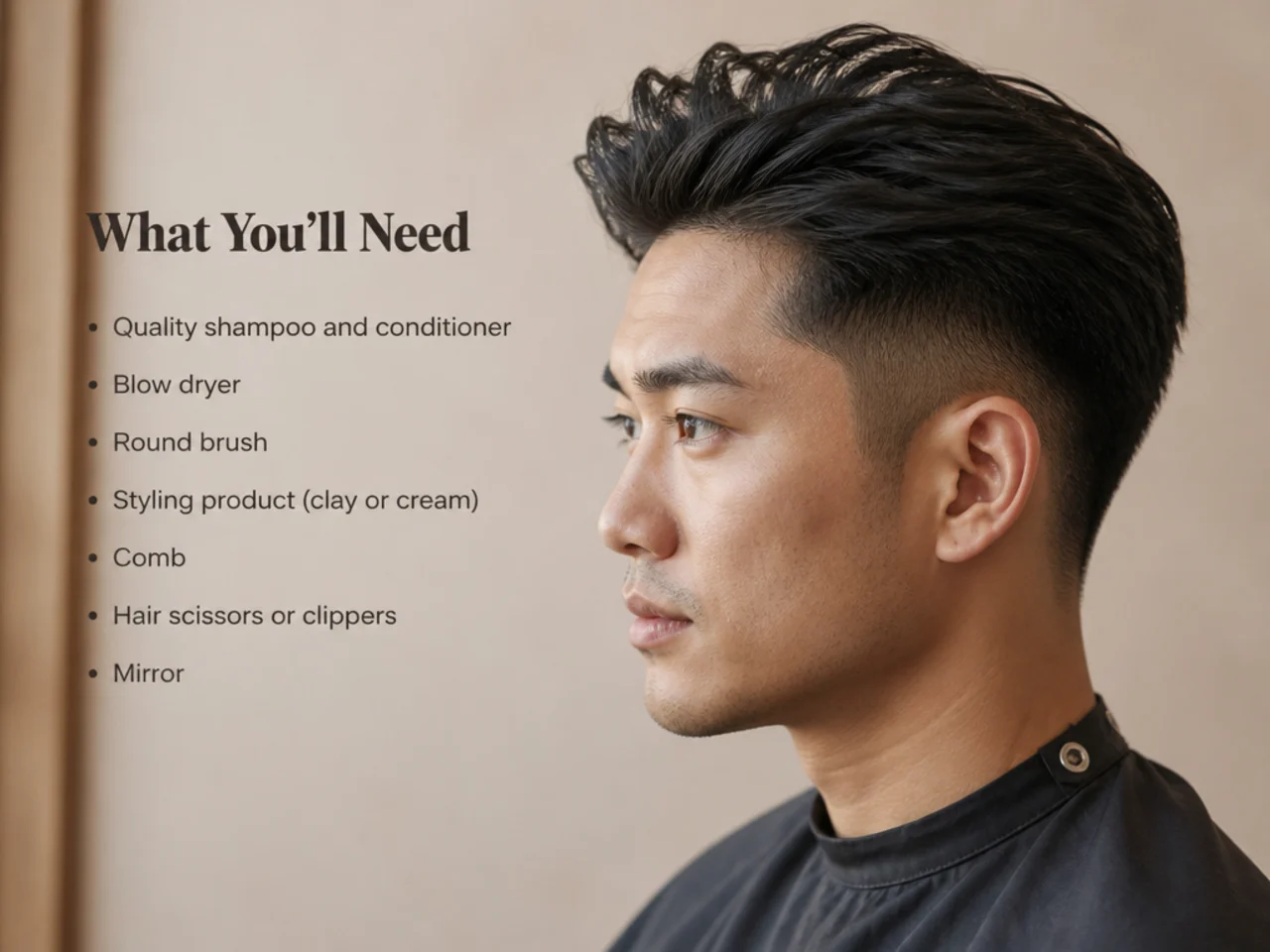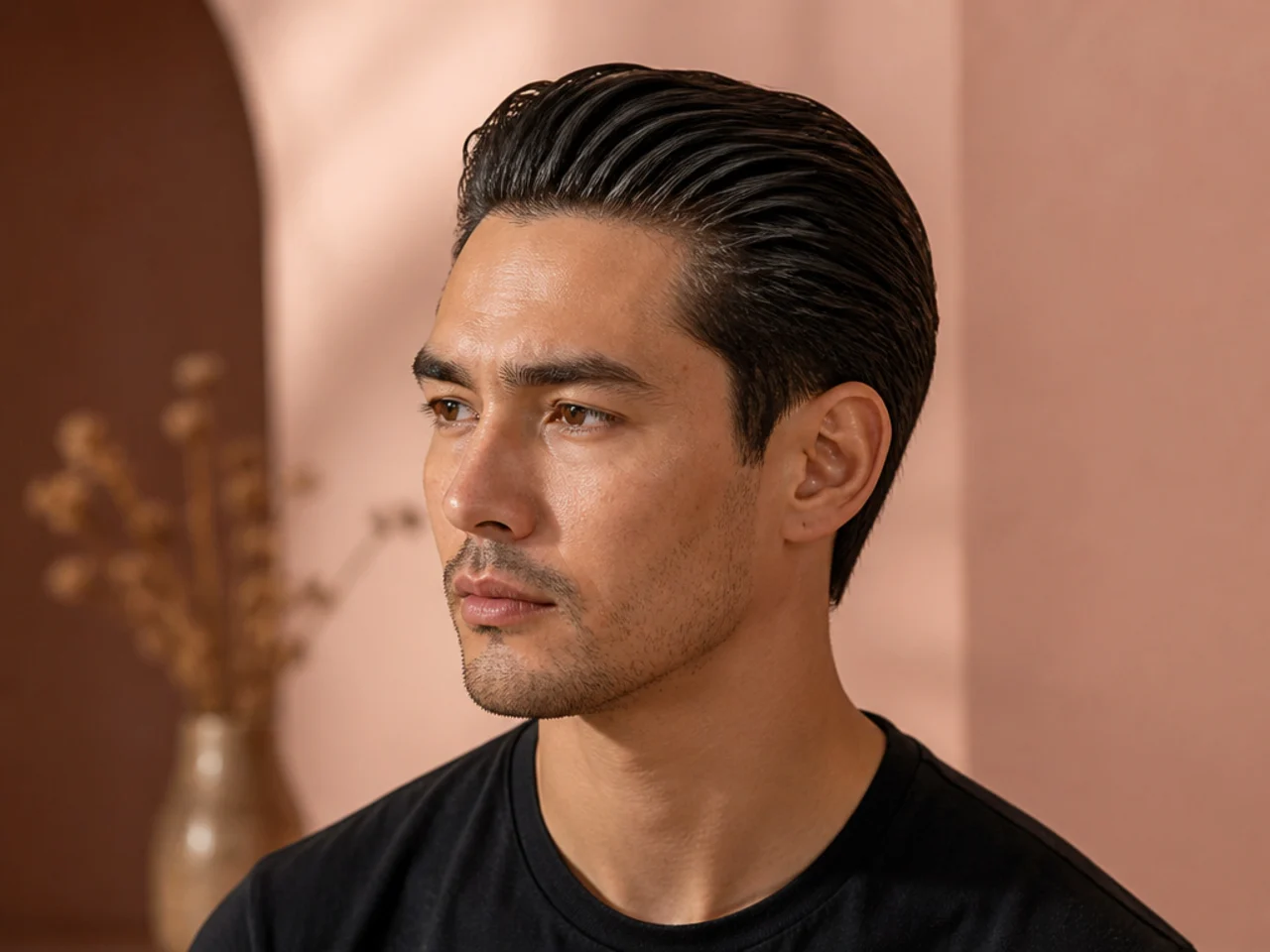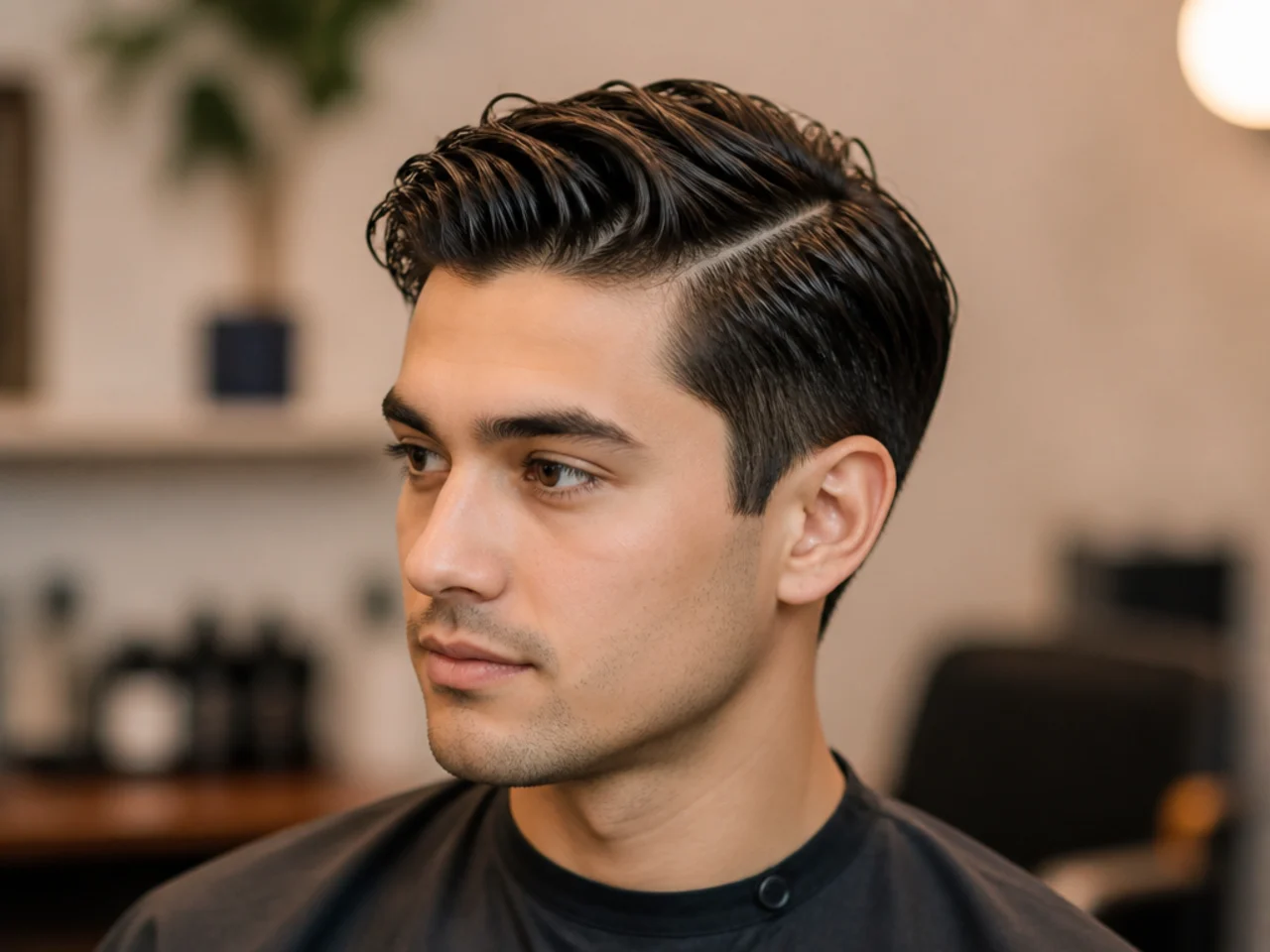
6 Steps to Style a Sharp Side Part at Home
Sharp side part home styling for Asian hair — six barber-proven steps that train dense straight hair to hold a clean parting from 8 AM to 8 PM.
In this article · 23
- What You'll Need
- Why Asian Hair Rewards the Side Part
- 1. Wash the Night Before, Style at Damp
- 2. Find Your Cowlick and Set the Parting
- 3. Blow-Dry Root Lift Against the Sweep
- 4. Choose a Matte Cream, Not a Shiny Pomade
- 5. Draw the Sharp Parting With a Fine-Tooth Comb
- 6. Lock the Shape With a Cool Shot and Light Mist
- Troubleshooting Common Fails
- The Parting Collapses by Noon
- The Roots Sit Flat Against the Scalp
- The Top Looks Too Shiny or Wet
- The Cowlick Fights the Sweep Every Morning
- Product Flakes or Turns Greasy by 4 PM
- The Sides Fluff Out on Humid Days
- The Cut Underneath Matters
- FAQ
- Why Does My Side Part Fall Flat on Asian Hair by Lunchtime?
- What Product Is Best for a Sharp Side Part at Home on Asian Hair?
- How Do I Keep the Parting Line Sharp Without a Hard Part Shaved In?
- Do I Need a Perm for a Korean-Style Side Part?
- How Long Should the Top Be for a Home-Styled Side Part?
- How Often Should I Re-Cut a Side Part on Asian Hair?
Your side part looked razor-sharp in the mirror at 8 AM. By lunch, the parting is blurred, the roots have collapsed, and the top reads flat and greasy. This guide fixes that specifically for Asian hair — dense, straight, high-shine strands that reward a defined parting when you style them right and punish you when you don't. Six steps a barber uses to build a sharp side part home routine that actually holds.
What You'll Need
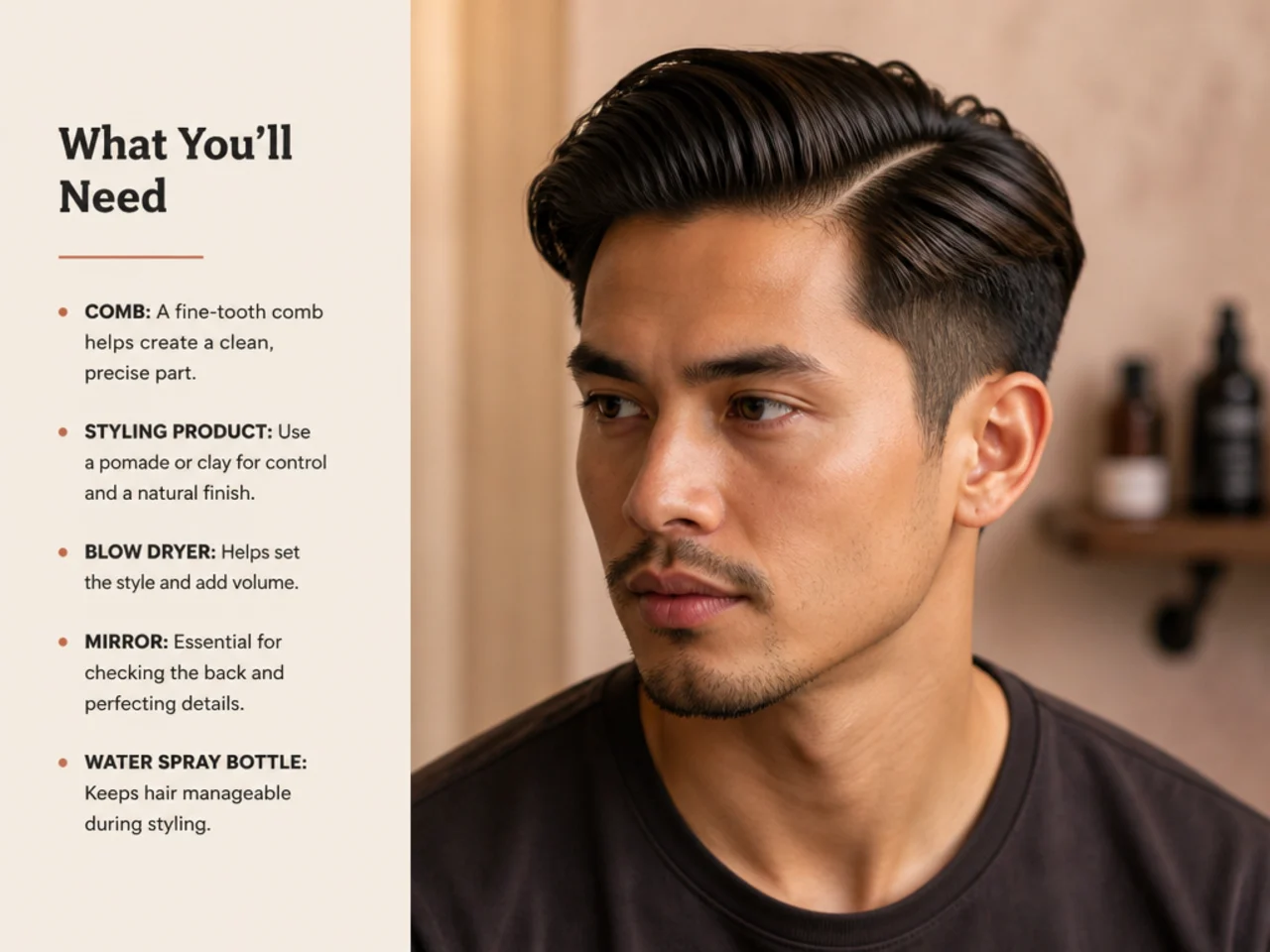
The whole routine runs on six items. Most guys own at least half already.
- A blow-dryer with a cool-shot button. Any wattage works. The cool-shot is the non-negotiable feature.
- A small round brush. 1 to 1.5 inch barrel. Larger brushes drag straight Asian hair flat instead of lifting the roots.
- A fine-tooth carbon comb. Not metal — metal snags dense hair and scores the cuticle. Carbon fiber gives a crisp parting line without static.
- A matte cream or clay. Water-based, medium to strong hold. Skip anything labeled "pomade" if it lists petrolatum or wax first — those turn straight hair wet-looking within an hour.
- A light-hold aerosol hairspray. Aerosol, not pump. Aerosol lays a finer coat that sets without stiffening the top.
- Optional: a leave-in conditioner or hair oil. One pea-sized dab under your cream if your hair has been color-treated or the winter air has gone dry.
Buy the tools once. A quality dryer and a decent comb outlast three cheap sets, and the finish shows in the mirror. If you're also rebuilding your grooming kit from scratch, the same rule applies to good hair clippers — buy them once, keep them a decade. A starter styling kit runs under $80 total.
Why Asian Hair Rewards the Side Part
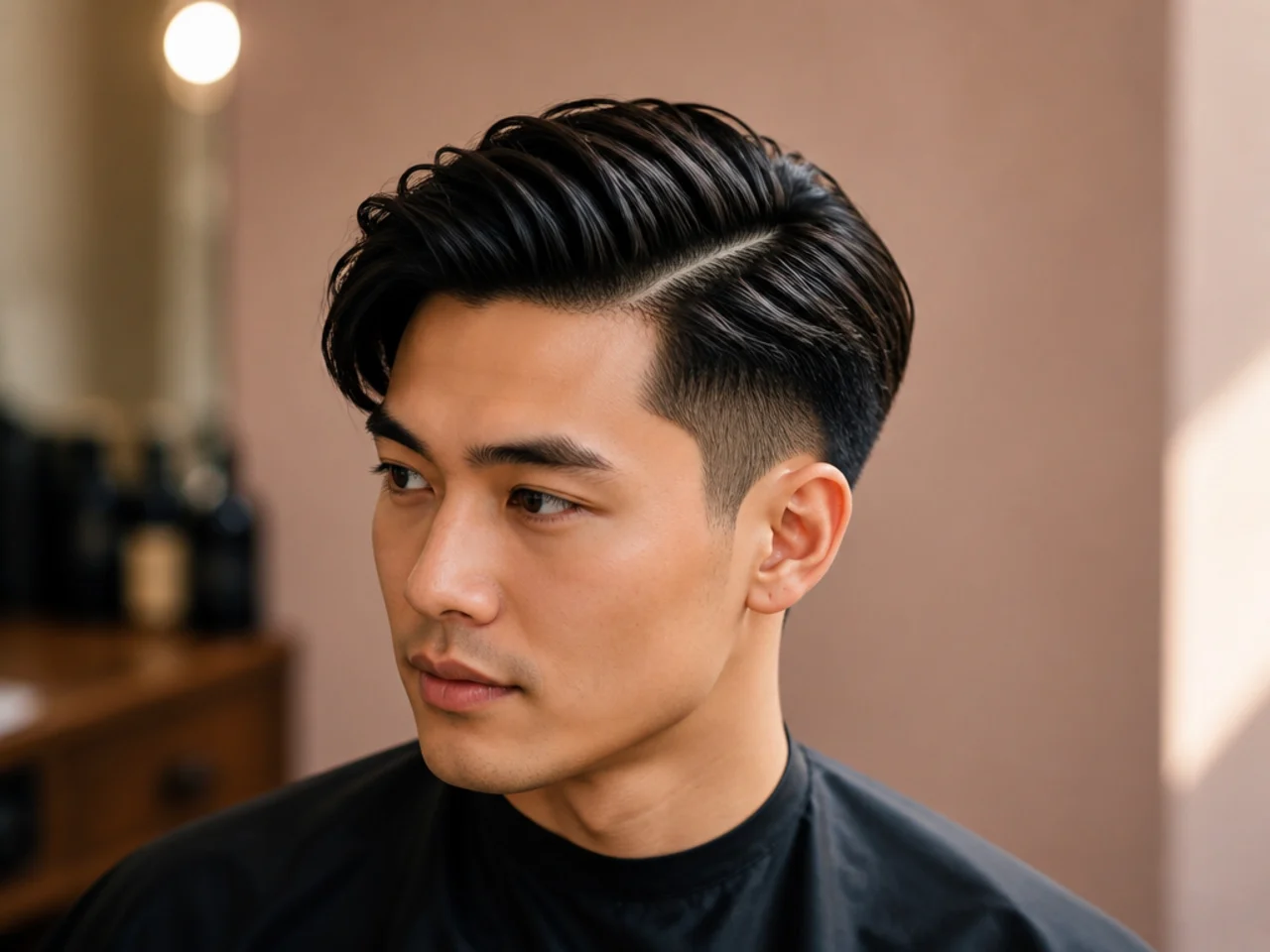
Asian hair behaves differently from wavy or curly types, and the side part is one of the few shapes where the differences work in your favor.
Dense straight hair holds a comb line. Once you draw a parting through it and set the shape with heat, the line stays visible until the next wash. Wavy hair blurs the parting within an hour; curly hair fights it from the start. Straight hair carries whatever direction you train into it, which is exactly what a defined sweep needs.
The trade-offs are two: high natural shine and root weight. High shine means traditional oil-based pomade pushes the finish into looking greasy — matte cream is the right default. Root weight means dense hair pulls itself flat by mid-morning unless you build lift into the base before you comb the top.
Get those two adjustments right and Asian hair holds a side part longer than almost any other type. That is the whole reason the shape shows up so often in K-drama and Korean side part builds and in modern Asian side part variations — the hair pays back the effort.
1. Wash the Night Before, Style at Damp
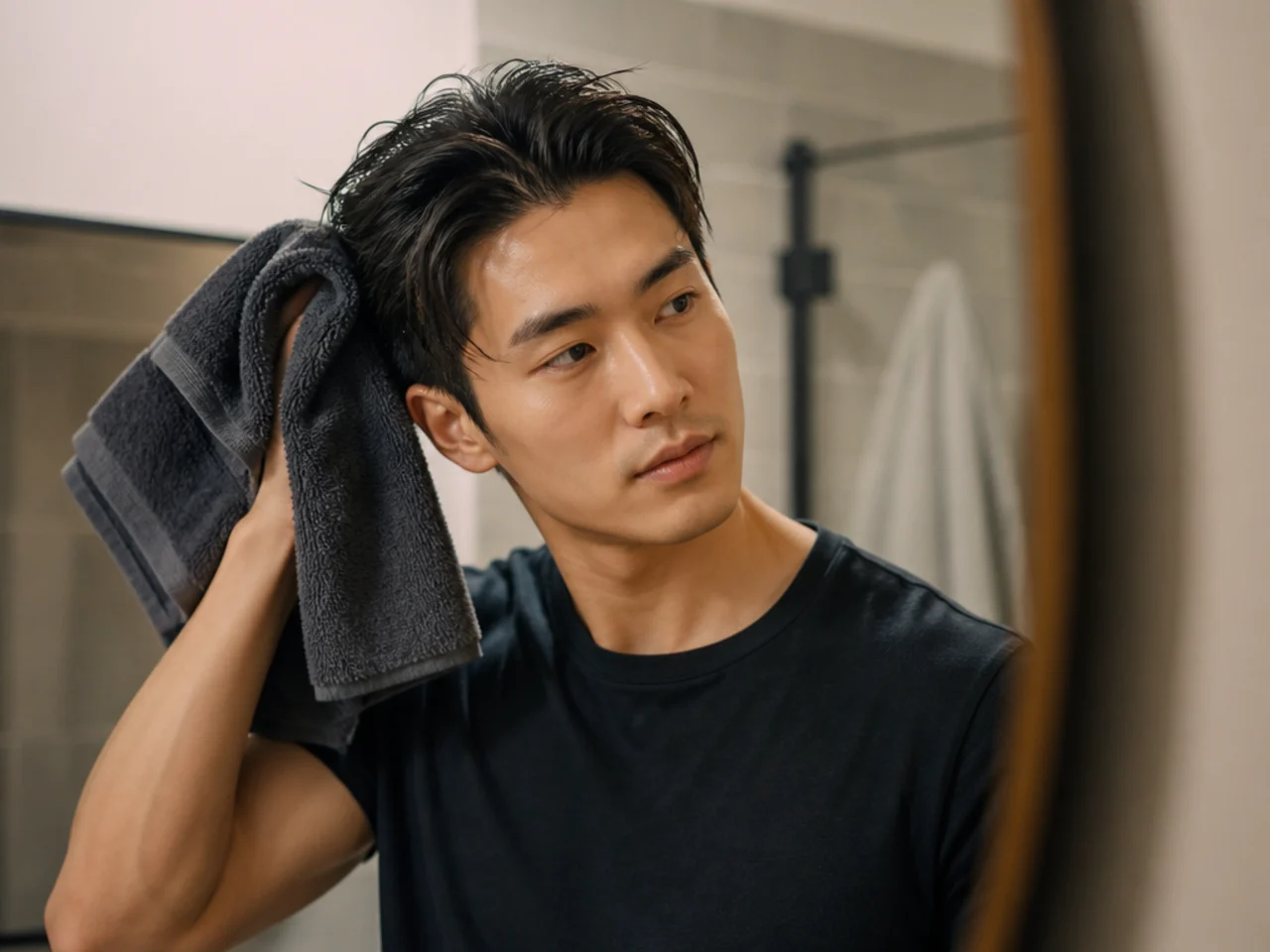
This is the timing shift that separates a part that holds from a part that dies at 10:30.
Most guys wash and style back-to-back in the morning. That is the wrong timing for dense straight hair. Freshly washed hair is soft, slippery, and full of water — the parting shifts as the water evaporates over the next 90 minutes, and by mid-morning the sweep has drifted a full centimeter off where you set it.
Wash the night before. Sleep on lightly damp hair. In the morning, mist the top with a spray bottle until it reads damp — not soaked, not dry. Damp is the state where hair still responds to heat and product but keeps the shape you build. The rest of the routine relies on this stage.
Why this matters: Asian hair carries more shaft weight than wavy or curly hair. Wet weight amplifies the collapse. Damp weight is what your dryer and cream can actually train.
Common mistake: styling straight out of the shower. Even after a hard towel-dry, freshly washed hair still holds too much water. Give it 15 minutes to settle, or shift the shower to the night before entirely.
2. Find Your Cowlick and Set the Parting
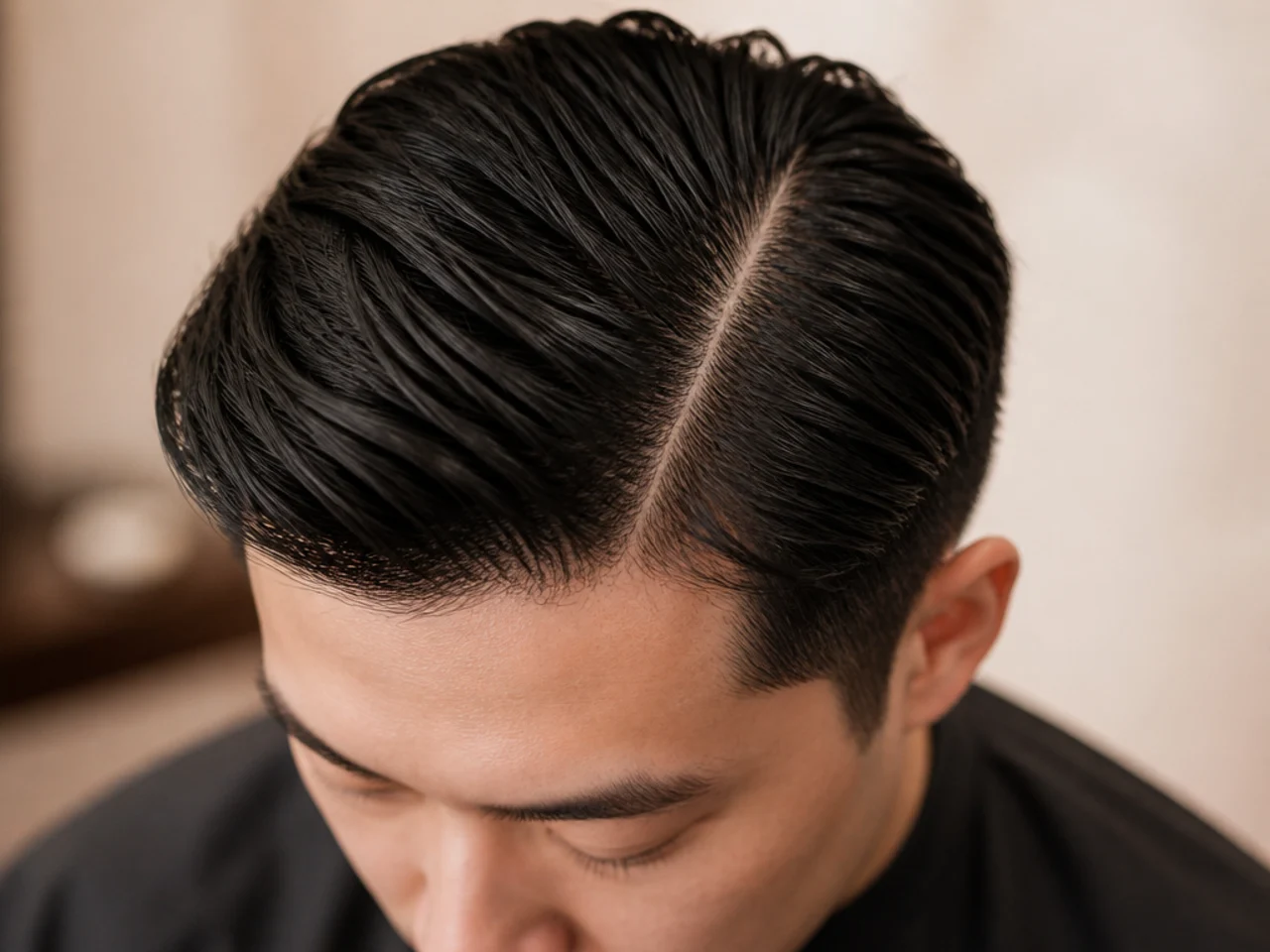
Every head has a natural fall — a cowlick or crown swirl that tells the hair which direction to go. Ignoring it is the reason most home side parts collapse before noon.
Look at your crown in a mirror. Or push all the hair back with a flat palm and let it fall — the line where it splits naturally is your true parting. On most Asian heads that line lands on the left side, but the swirl decides, not the average. If you have a strong right-side cowlick, part right — fighting it every morning is a losing routine.
Once you know your side, mark the depth. A high parting sits above the outer edge of the eyebrow and reads formal. A mid parting sits at the temple line and reads modern. A low parting sits an inch above the ear and reads soft. Pick one and stay with it — hair remembers the last parting depth it was trained to.
Why this matters: the parting is the anchor for every step after this one. A parting drawn along the cowlick line stays put with almost no product. A parting drawn against it needs three times the hold to survive to lunch.
Common mistake: parting on the "correct" trending side rather than the side your hair wants to fall. The trend is not worth the daily fight.
3. Blow-Dry Root Lift Against the Sweep
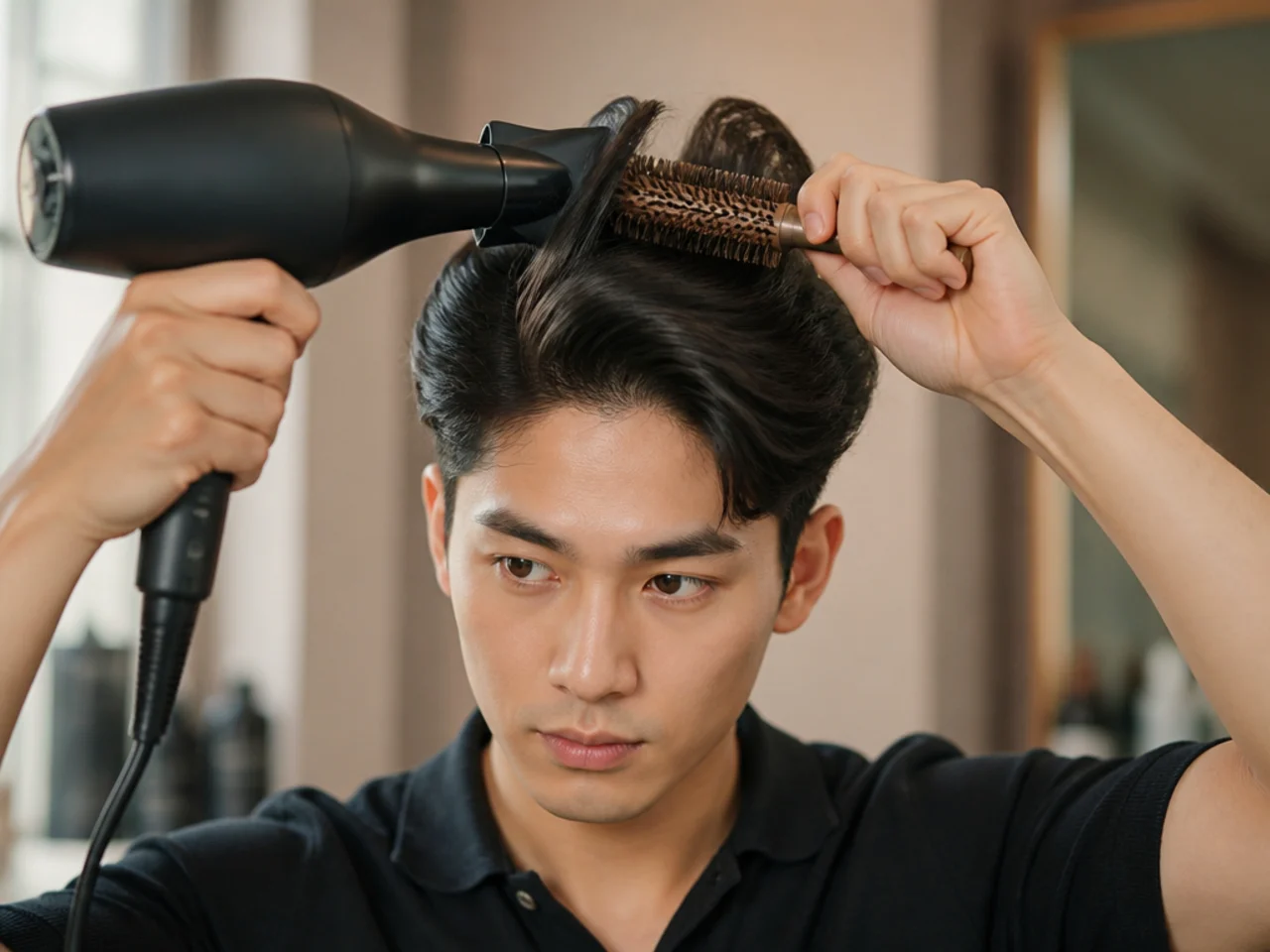
This is the step nine out of ten home stylists skip and later blame their pomade for the fail.
Pick up the small round brush. Aim the dryer nozzle straight down onto the crown from six inches above. Set the heat to medium — high heat is where straight hair goes shiny and cuticle-damaged. As the air hits, rotate the brush against the direction you want the hair to eventually fall. If your sweep is going right, lift the roots to the left. Hold for eight seconds per section, then release.
Move around the crown in four sections — front, top, both sides of the parting. Two minutes total. You are not drying the hair here; the hair is already damp and staying that way. You are training the roots to leave the scalp before they turn sideways.
Why this matters: Asian hair is heavy at the base. Without engineered lift, the roots sit flat against the scalp and the sweep looks pasted on. Root lift is what makes a home-styled side part read expensive rather than schoolboy.
Common mistake: brushing in the sweep direction from the start. That flattens the roots to the scalp and locks in the collapse. Always lift against, then reset in the sweep direction with the comb in step five.
If your hair has any natural wave, the lift also brings pattern to the surface — the best wavy hair products guide covers the setting sprays that hold wave and lift together.
4. Choose a Matte Cream, Not a Shiny Pomade
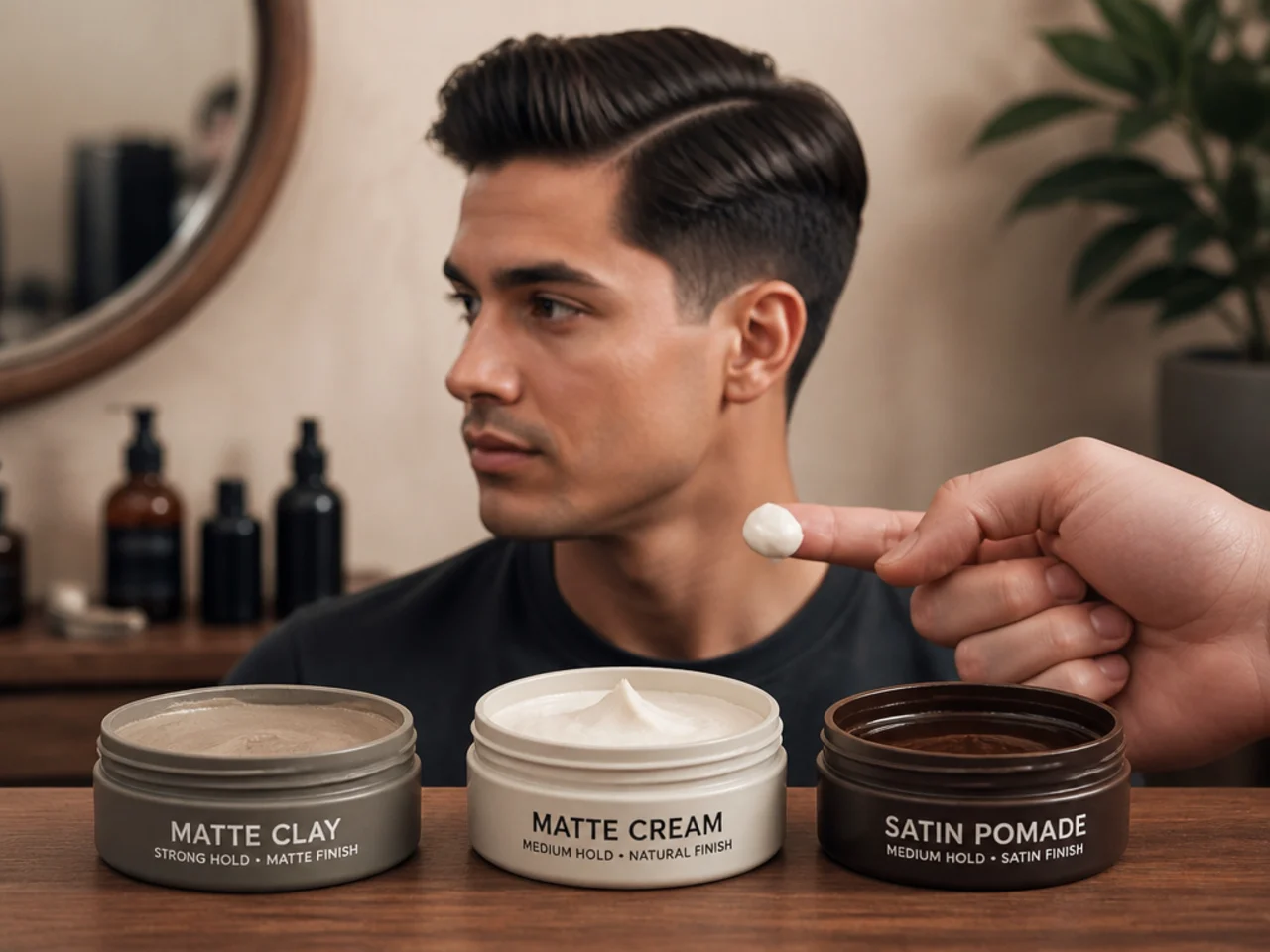
Product choice is where guys try to cheat and where the finish tells on them by noon. Traditional oil-based pomade is what your grandfather used on 1960s straight Asian hair. It works, but it locks a wet-look shine into strands that are already high-shine — the result reads greasy in fluorescent office light within two hours.
Matte cream is the modern default. Water-based, medium to strong hold, satin-to-flat finish. It gives the hair enough grip to hold a parting without adding surface shine. Look for a tin labeled "matte," "clay," or "texture cream" — the wording varies by brand but the finish is the same.
Emulsify a hazelnut-sized amount between your palms until the product goes translucent — about ten seconds of rubbing. Push it through the roots first, then the lengths. Roots first is critical on dense hair. If you go lengths-first the top drapes flat and the roots stay bare, and the sweep looks like a wig laid on the scalp.
Why this matters: Asian hair does not need added shine. The cuticle already reflects light. Matte cream lets the parting itself read as the polished element, not the hair around it.
Common mistake: using too much cream. A hazelnut is the ceiling for a three-inch top. More product does not equal more hold — it equals more weight, and weight is the enemy of Asian-hair root lift.
For guys building a full styling rotation across a classic side part shape and other Korean-inflected cuts, one cream and one clay covers every situation. Skip the oil-based tin entirely.
5. Draw the Sharp Parting With a Fine-Tooth Comb
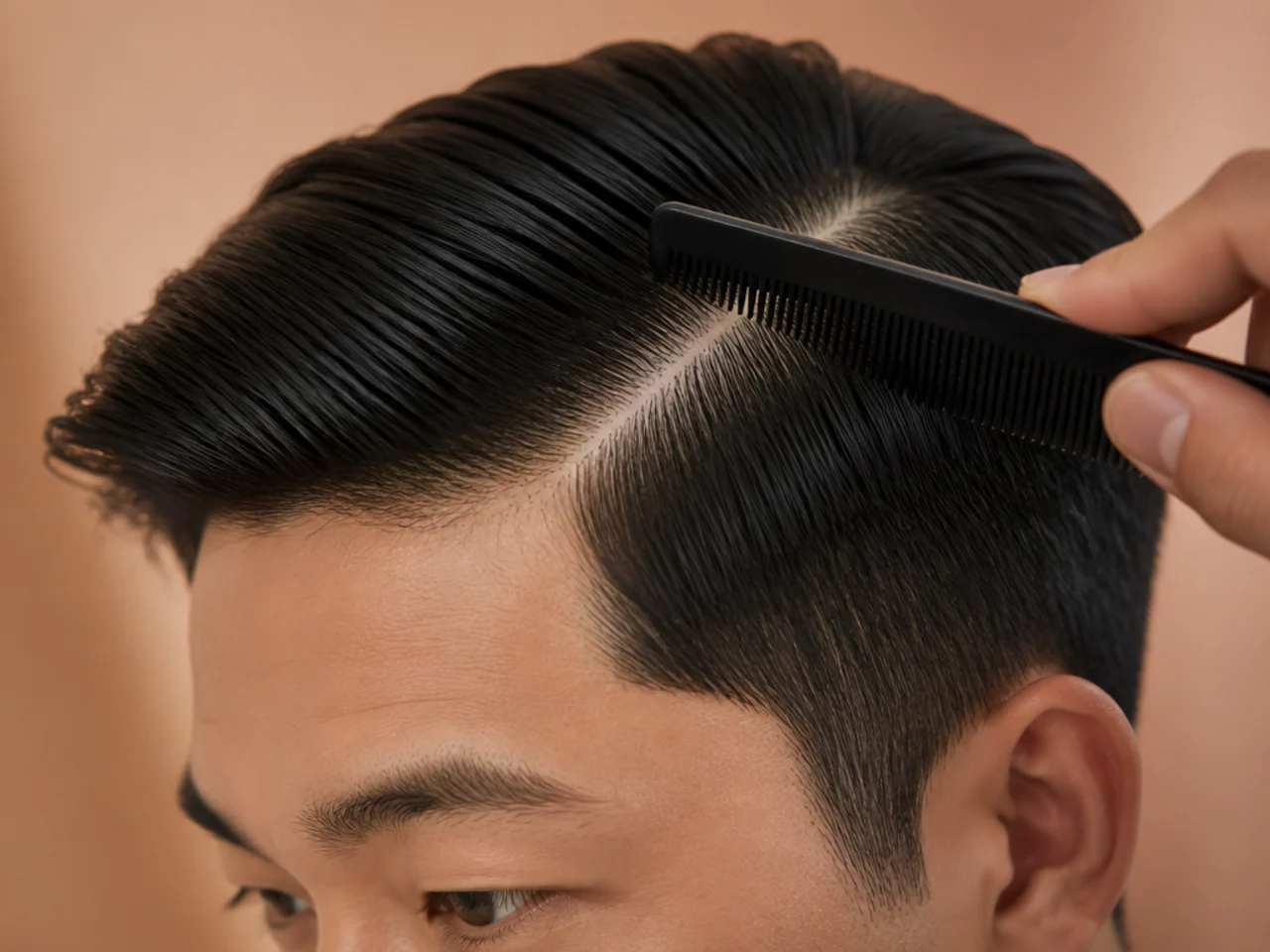
This is the defining moment. The parting is the shape everyone sees first. Draw it wrong and the rest of the routine cannot save the finish.
Pick up the fine-tooth carbon comb. Place the tip at the front hairline exactly on the cowlick line you found in step two. Draw the comb straight back in one confident pass, all the way to the crown. One pass, not five. Confident and continuous. On dense straight Asian hair the comb will lay a clean strip of exposed scalp — that is your parting line and it should already read sharp from three feet away.
Now comb the sweep in three passes. First pass: from the parting downward, lifting slightly at the root. Second pass: along the sweep direction with the comb held almost parallel to the head — this smooths the shaft and lays the shine flat. Third pass: only the front fringe, angling the comb toward wherever you want the front piece to point.
Why this matters: dense straight hair holds every direction the comb trains into it. Random raking creates chaos the cream cannot hide. Deliberate directional passes create the polish that reads editorial.
Common mistake: using a wide-tooth comb because it feels gentler on thick hair. Wide teeth cannot draw a crisp parting line — they leave a soft blur that the cream then has to fight. Fine teeth are the tool for this job every time.
For a shorter build where the parting has to carry even more of the visual weight, a short side part needs this comb technique even more strictly.
6. Lock the Shape With a Cool Shot and Light Mist
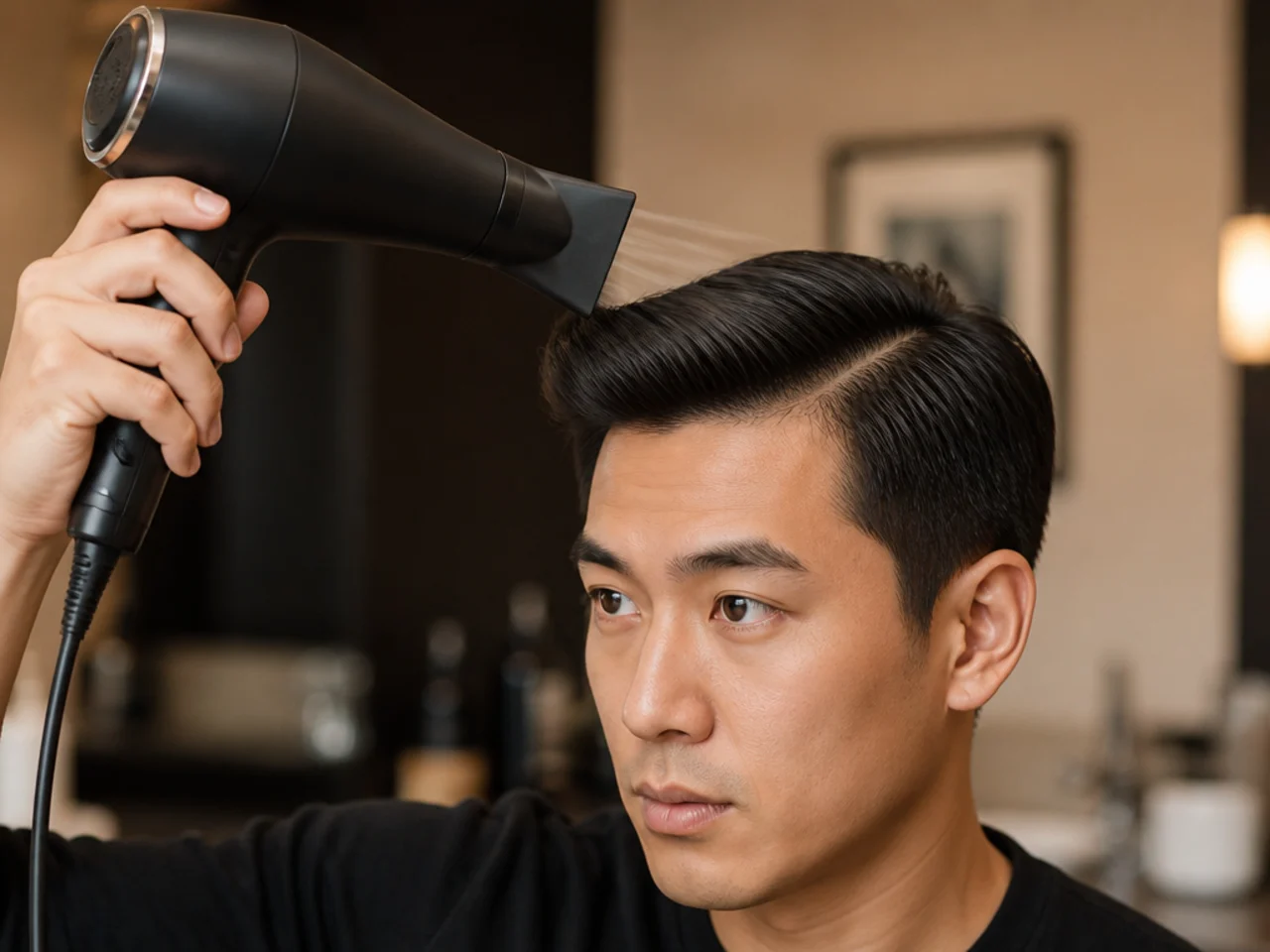
Hair holds its shape at the temperature it cools at. Blow-dry warm, style warm, and the hair stays soft and re-shapable. Which sounds fine until 11 AM when it re-shapes into a mess on the train.
The fix takes 30 seconds. After combing the parting, hit the cool-shot button on your dryer and pass the cool air along the sweep for about 20 seconds. Focus on the parting line and the front fringe — those are the two areas that collapse first if you skip this step. If your dryer has no cool-shot, turn the heat setting to off with the fan still running. Same result.
Finish with a two-second mist of light-hold aerosol hairspray held twelve inches from the head. Any closer and the spray lays too heavy and the top looks lacquered. Twelve inches gives an even fine coat that sets the shape without stiffening the strands.
Why this matters: think of styling cream like candle wax. Warm and pliable, cold and fixed. The cool shot fixes the wax into the shape you just built with the comb.
Common mistake: blasting the whole head with cool air randomly. The cool shot needs direction like the warm dry. Follow the sweep, hit the parting last, then mist. The finish should read glass-flat along the parting and lightly textured along the top.
That polished editorial finish you see in modern Korean and K-drama side parts is nearly always cool-shot work, not extra product. Ten seconds of technique beats a second pomade layer every time.
Troubleshooting Common Fails
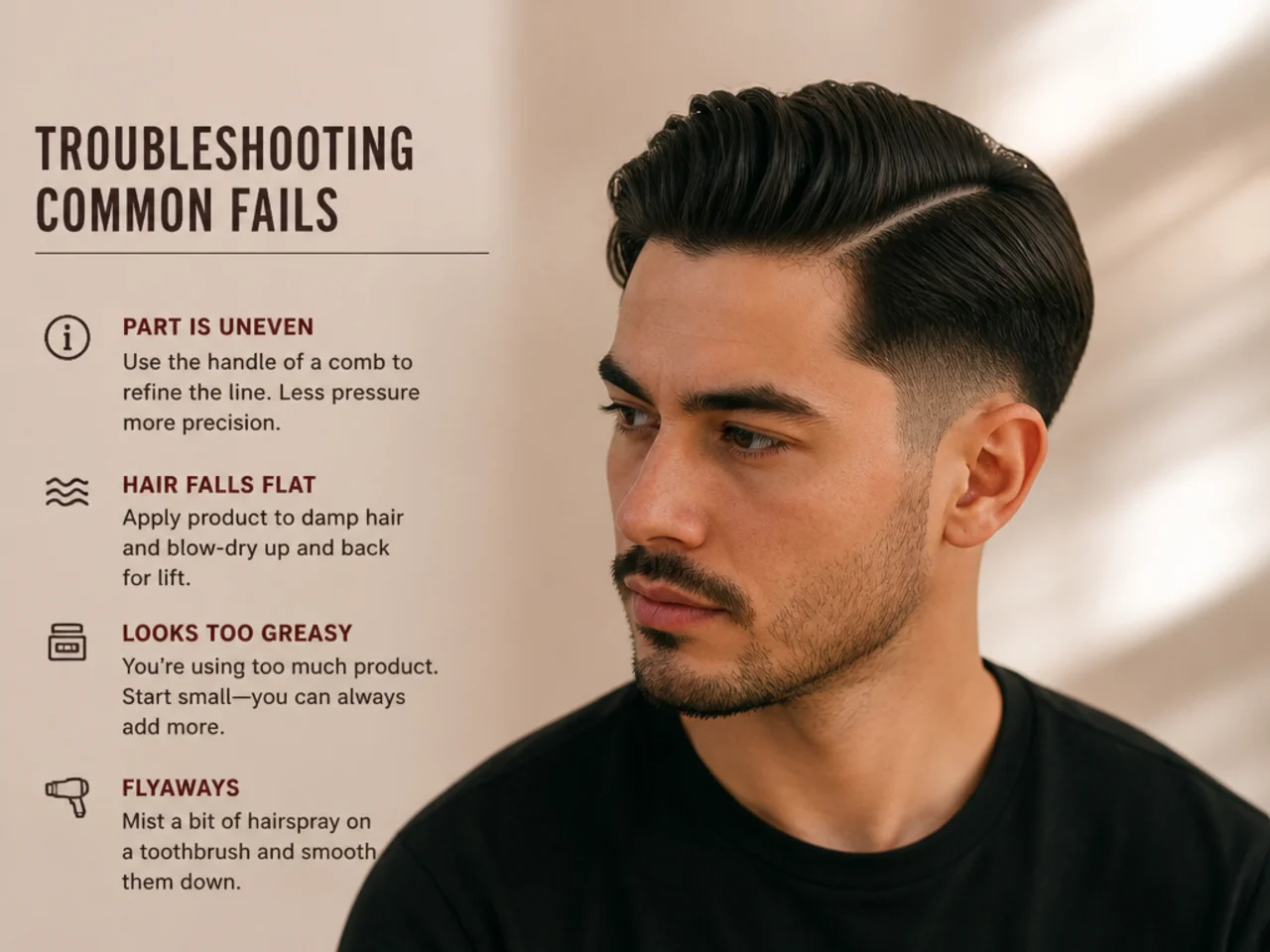
Even with the six steps above, some situations need targeted fixes. These are the failures barbers hear about most often on Asian hair.
The Parting Collapses by Noon
The part was set with wet hair, not damp — or you skipped the cool shot. Water re-shapes the hair as it evaporates and drags your parting along with it. Cut shower-to-comb time in half, shift the shower to the night before, and always cool-shot the line for 20 seconds. If it still collapses, upgrade the cream to a strong-hold matte or add a light setting spray under it.
The Roots Sit Flat Against the Scalp
Density is winning. You skipped the against-direction blow-dry, or the brush barrel is too large. Switch to a 1 or 1.5 inch round brush, lift each section against the sweep for a full eight seconds under medium heat, then release. If the flatness persists, ask your stylist about a light setting perm at the roots — three months of hidden lift is worth the appointment for guys who wear the shape daily.
The Top Looks Too Shiny or Wet
Wrong product family. Traditional oil-based pomade on high-shine Asian hair reads greasy under office light. Swap to a water-based matte cream or clay for daily wear. Save the shine pomade for wet-look slick-back nights only. If you already applied and the shine is set, dust a fingertip of dry shampoo through the top and comb once — it will knock the finish back to matte within a minute.
The Cowlick Fights the Sweep Every Morning
You are parting against your natural fall. Look at the crown swirl and part on that side, not on the trending side. If the cowlick is centered or split and neither side wants to lie flat, ask your barber to point-cut into the front and train the weight to fall in the sweep direction at your next appointment. Most cowlicks can be integrated into a side part with strategic weight removal.
Product Flakes or Turns Greasy by 4 PM
You used too much, or you layered fresh product on top of morning product. Cut the morning quantity in half tomorrow. If the finish still turns oily by afternoon, your scalp may be over-producing sebum in response to over-washing — try dropping shampoo frequency to every other day with a gentle sulfate-free formula. The scalp settles within two weeks.
The Sides Fluff Out on Humid Days
Dense hair puffs when moisture in the air lifts the cuticle. A light mist of matte cream diluted with water and worked through the sides tames the fluff. Longer term, a shorter side finish beats a longer one — a mid-fade side part, a low taper fade, or a two-block undercut removes enough side volume that humidity has nothing to lift.
The Cut Underneath Matters
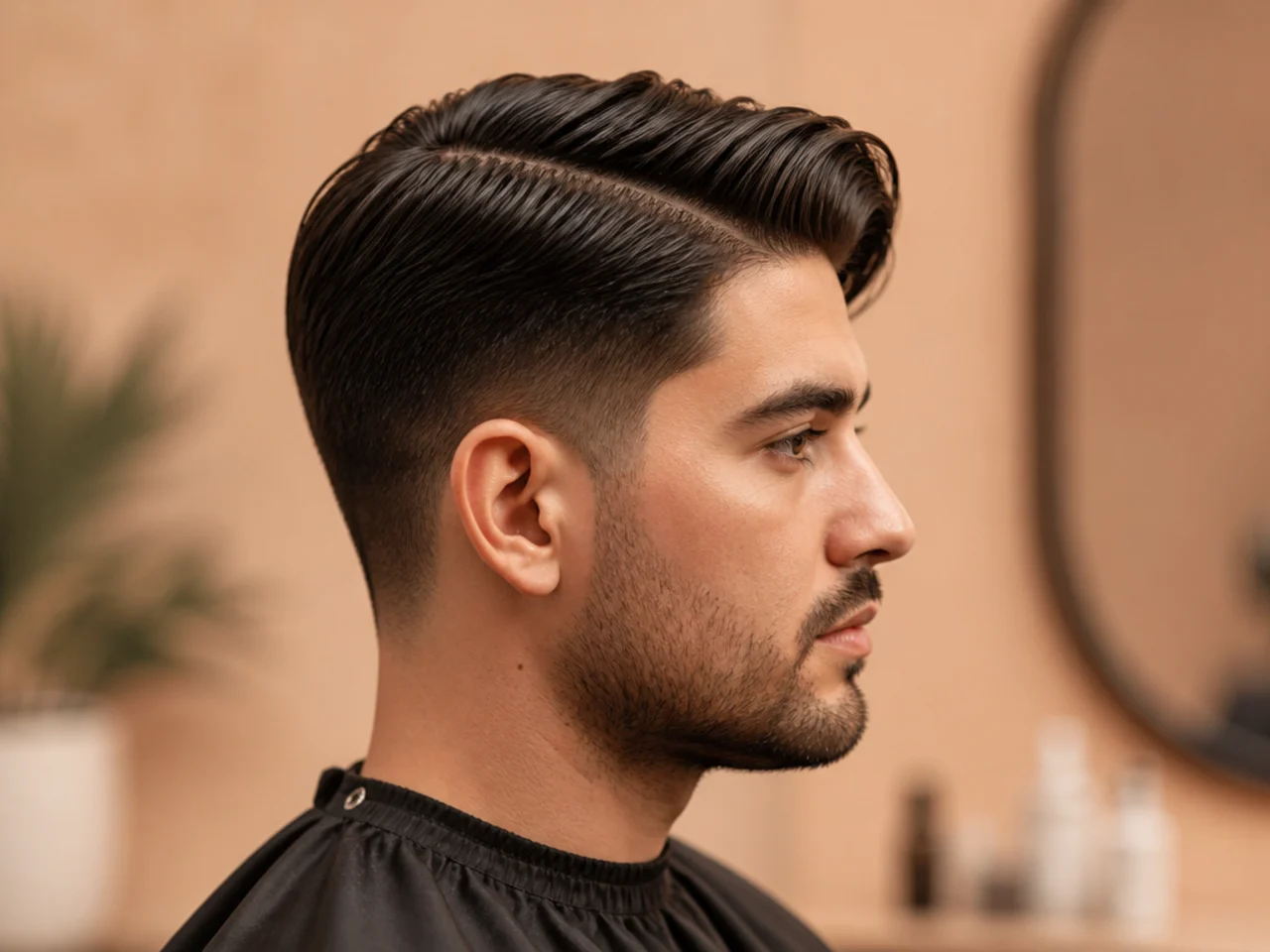
A side part styled at home only holds if the haircut underneath was built for one. A generic top can be forced sideways with product, but it will fight you every morning. At your next chair visit, ask for three specific things: a defined parting on your cowlick side, three to four inches of length on top, and scissor-cut layering that leans toward the sweep direction.
Guys who wear a side part daily should re-cut every four to five weeks — every three weeks if the sides are a skin fade or a two-block undercut. Asian hair grows fast and the parting softens before the length does.
For the full spread of shape options, the side part variations guide for men shows the base builds, and the Asian side part guide covers K-drama, Hong Kong cinema, and Korean business versions with the exact ask for each. If you want a Korean-specific breakdown, the Korean side part guide sorts by two-block, comma, curtain, and wolf hybrids. And for the base cut context, the Korean haircuts for men roundup and the Asian haircuts for men hub cover the wider family the side part sits inside.
FAQ
Why Does My Side Part Fall Flat on Asian Hair by Lunchtime?
Dense straight Asian hair carries weight the roots cannot support once the water evaporates. Style at damp instead of wet, blow-dry root lift against the sweep, use matte cream instead of oil-based pomade, and lock the shape with a cool shot. Most parts then hold clean past dinner.
What Product Is Best for a Sharp Side Part at Home on Asian Hair?
A water-based matte cream or clay with medium to strong hold. Asian hair is already high-shine, so oil-based pomades push the finish into greasy territory and drag the roots down. Look for a matte cream marketed for volume or texture, not shine. One tin covers 90 percent of daily situations.
How Do I Keep the Parting Line Sharp Without a Hard Part Shaved In?
Blow-dry root lift against the sweep first, comb the parting with a fine-tooth carbon comb in one confident pass, and cool-shot for 20 seconds along the line. A trained parting on dense straight hair reads as sharp as a razored hard part — without the two-week regrowth window that softens a shaved line.
Do I Need a Perm for a Korean-Style Side Part?
Optional but common. A light setting perm at the roots gives three months of hidden lift so the parting sits up without daily blow-dry training. Without a perm, plan for a five-minute morning routine with a small round brush and matte cream. Both routes get the same finished shape — the perm just automates the lift.
How Long Should the Top Be for a Home-Styled Side Part?
Three to four inches. Shorter than three and the parting gets swallowed by side density; longer than five and the sweep starts reading middle part regardless of where you draw the line. Three inches is the safe Korean business default; four inches is where the sweep gets movement and personality.
How Often Should I Re-Cut a Side Part on Asian Hair?
Every three weeks if the sides are a skin fade or a two-block undercut — the hidden clipper line grows fuzzy fast on dense hair. Every four to five weeks for a scissor-tapered classic build. Asian hair grows dense and quickly, and the parting softens before the length does, so book by shape rather than by length.