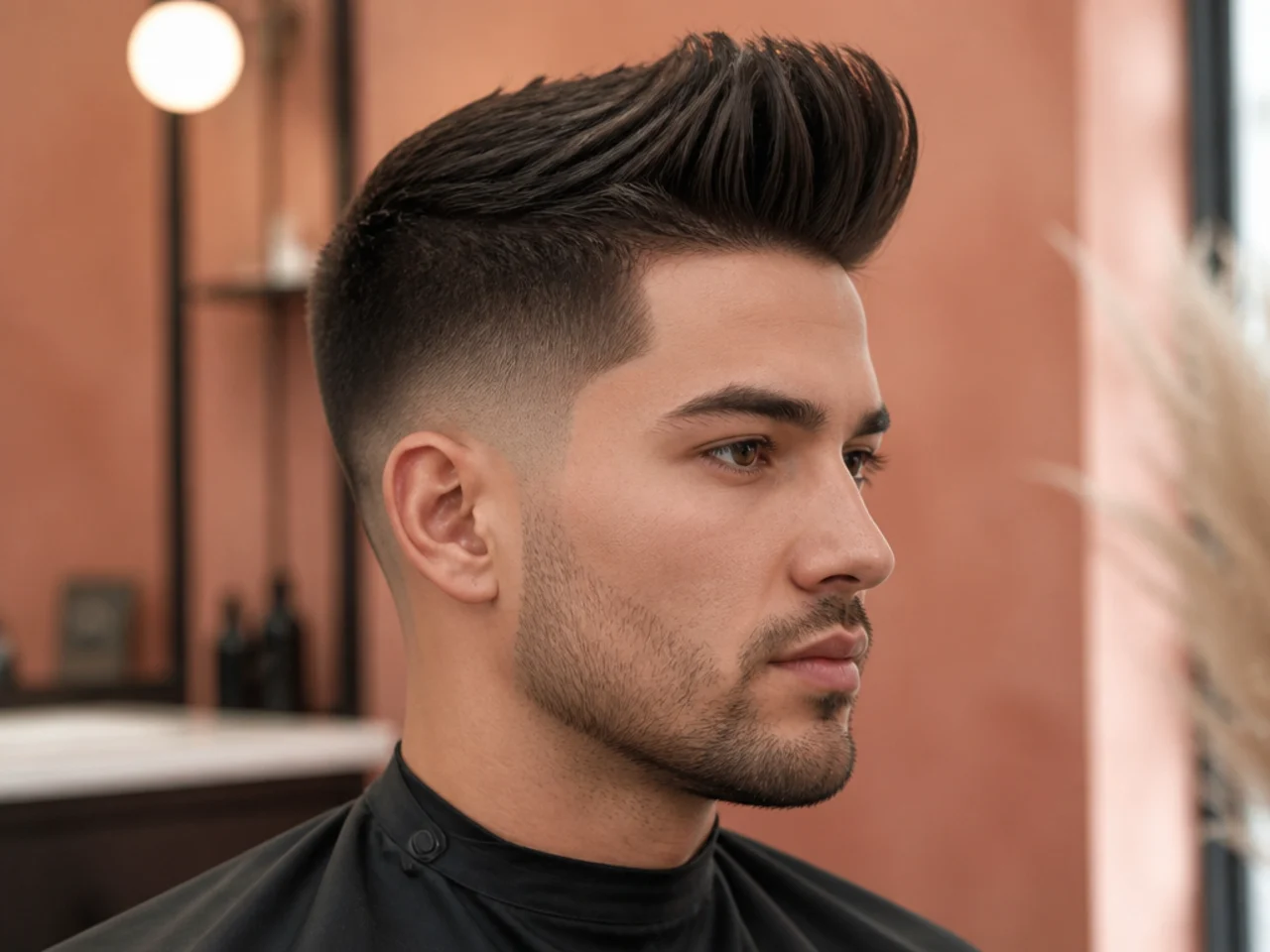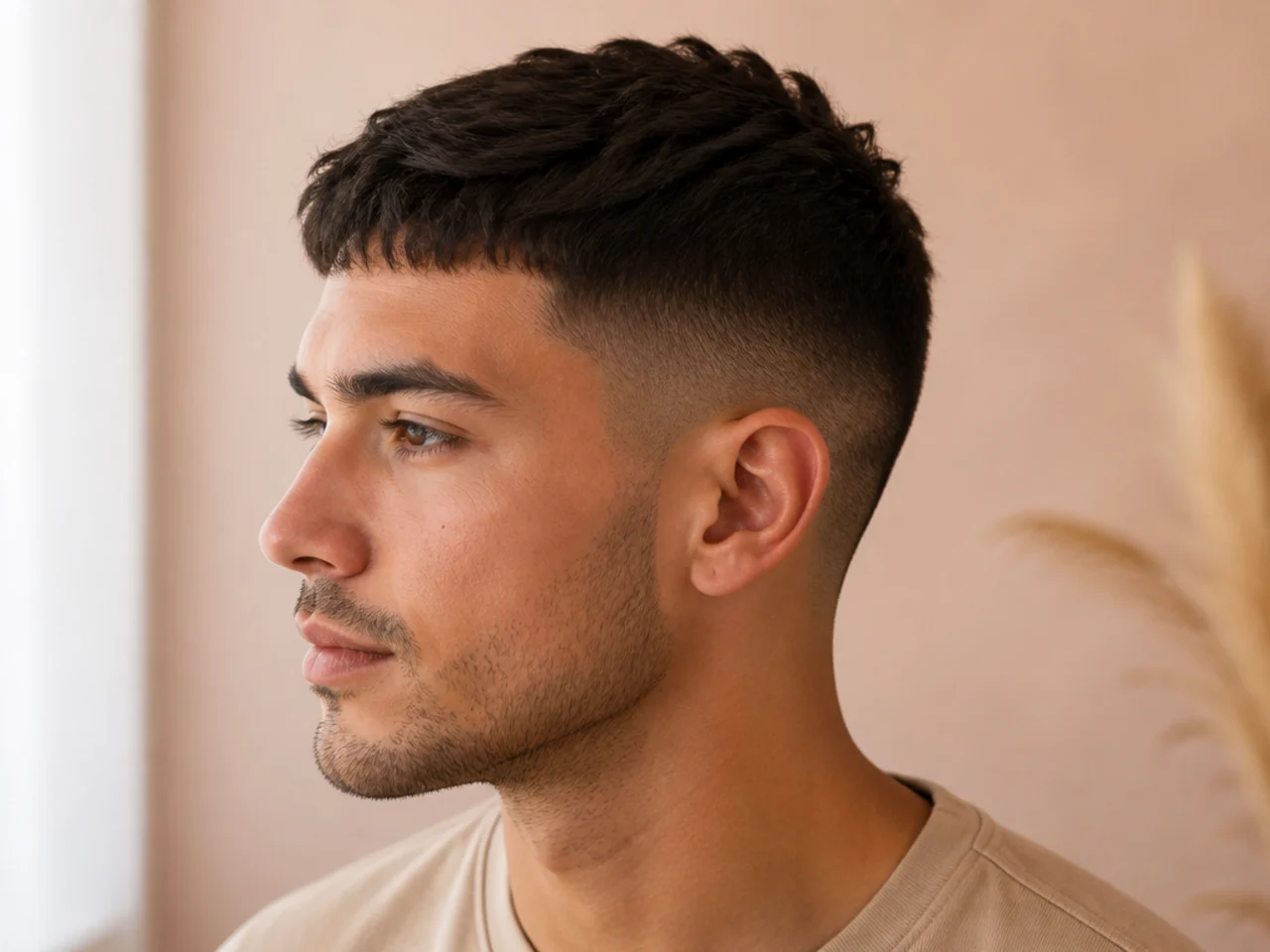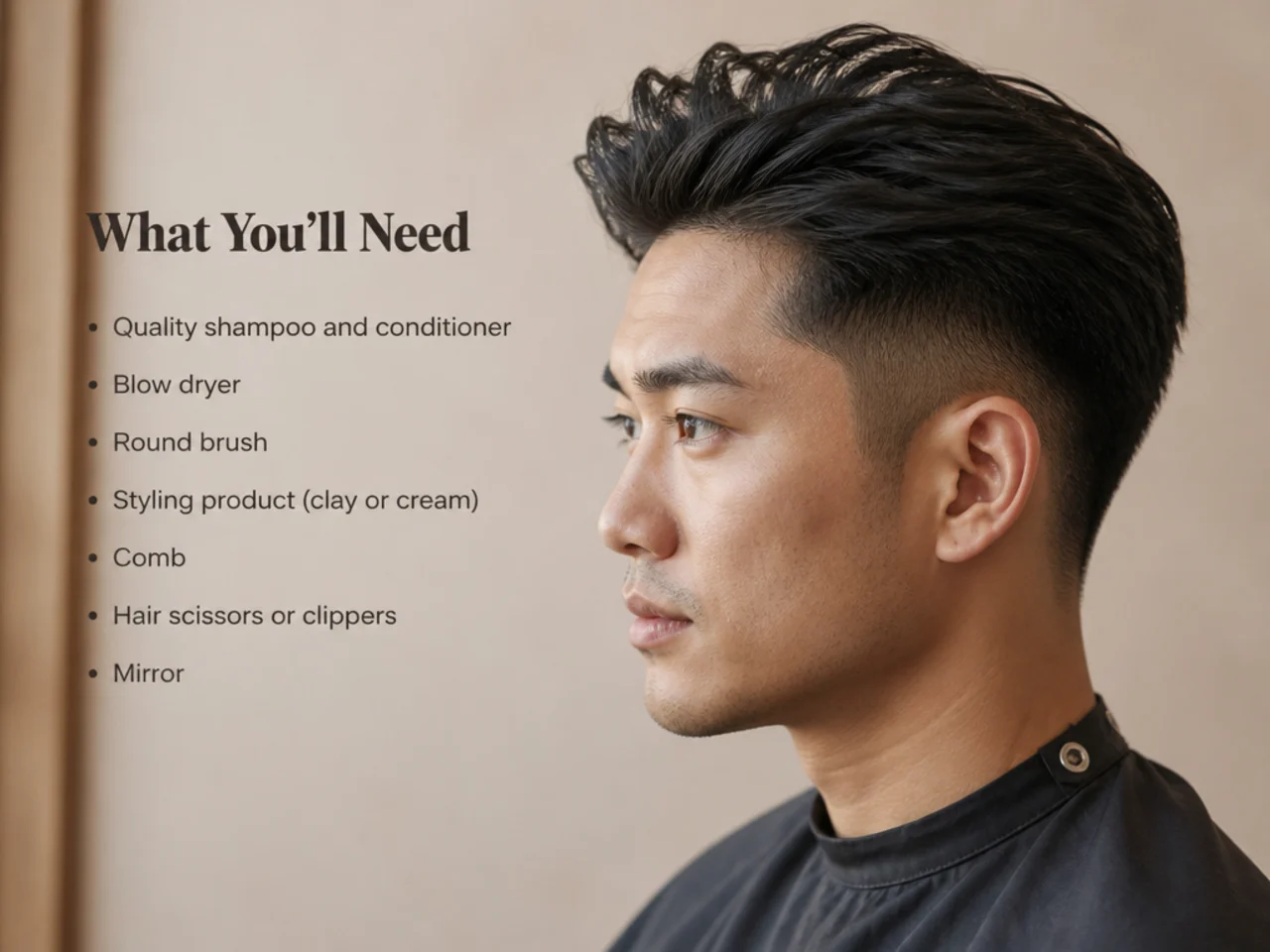
5 Reasons the Classic Side Part Looks Timeless
The classic side part timeless look survives every trend cycle because the proportions flatter every face shape, every dress code, and every era.
In this article · 12
- The One-Line Answer
- What Is a Classic Side Part?
- Reason 1: The Geometry Flatters Every Face Shape
- Reason 2: It's the Original Dress-Code-Proof Cut
- Reason 3: It Photographs Well in Any Era
- Reason 4: The Sides Adapt to Every Modern Update
- Reason 5: It Grows Out Gracefully
- Classic Side Part vs Modern Side Part
- Who Should Ask for a Classic Side Part
- How to Ask Your Barber
- Styling and Maintenance
- FAQ
The classic side part is the men's cut that refuses to date. Barbers have been drawing that parting since the 1920s, and it has never left the chair — because the ratios flatter every face, the shape reads sharp in any dress code, and the top adapts to every era's texture preference. Here are the five reasons the classic side part timeless look still earns the chair time in 2026, plus how to ask for the version that suits you.
The One-Line Answer
The classic side part looks timeless because its proportions sit in a permanent sweet spot — long enough on top to style, short enough on the sides to look neat, and parted off-center to break the face's symmetry in a flattering way. Trends push around the edges: the sides get faded, the top gets textured, hard parts get shaved in. But the underlying geometry — a 70/30 top-to-side ratio, a natural parting, a combed sweep — has been in men's editorial photography for a hundred years without looking dated in any decade. It is the closest thing men's grooming has to a fixed point.
What Is a Classic Side Part?
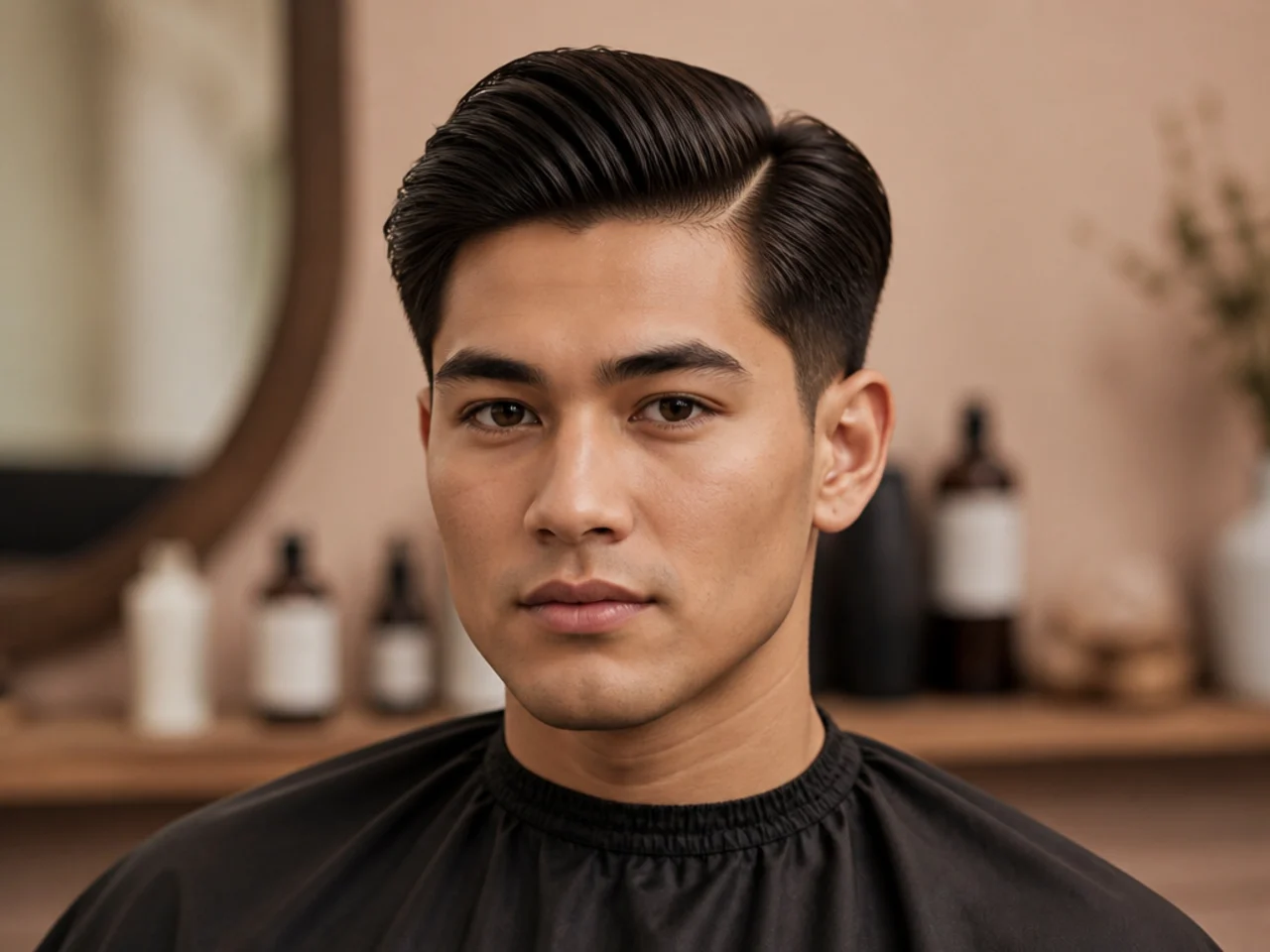
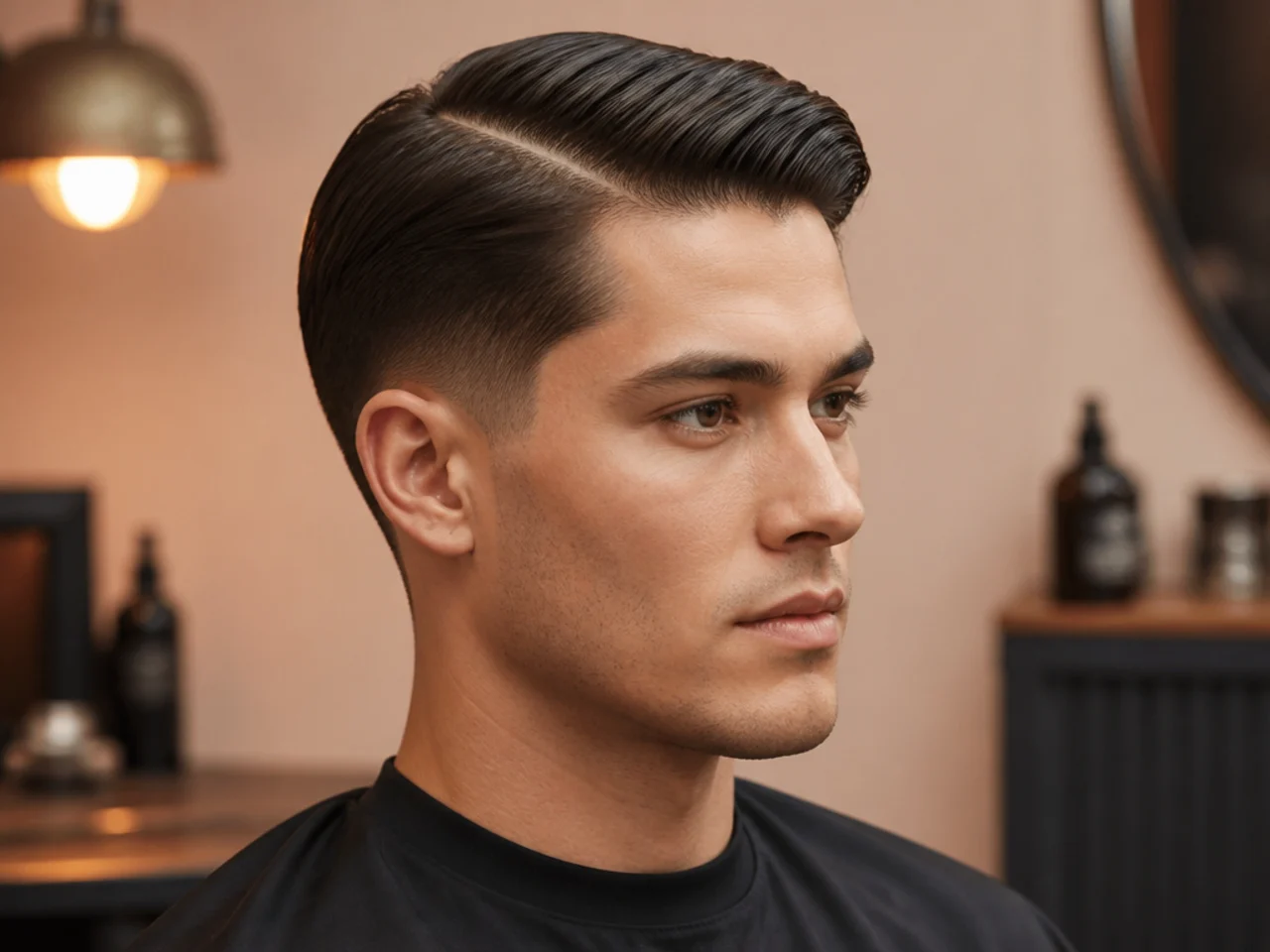
The classic side part is the scissor-cut version of the side part hairstyles for men family. Two to three inches on top, scissor-tapered sides that finish just short of skin, and a natural parting drawn along your existing cowlick with a fine-tooth comb. No fade line. No hard part shaved in. No aggressive contrast between top and sides.
That absence of clipper work is what makes it read as classic rather than modern. Fades and hard parts date a cut to the decade it was made in — the 1980s hard part, the 2010s skin fade. Scissor tapers do not carry a decade stamp. They just look like a man got a haircut.
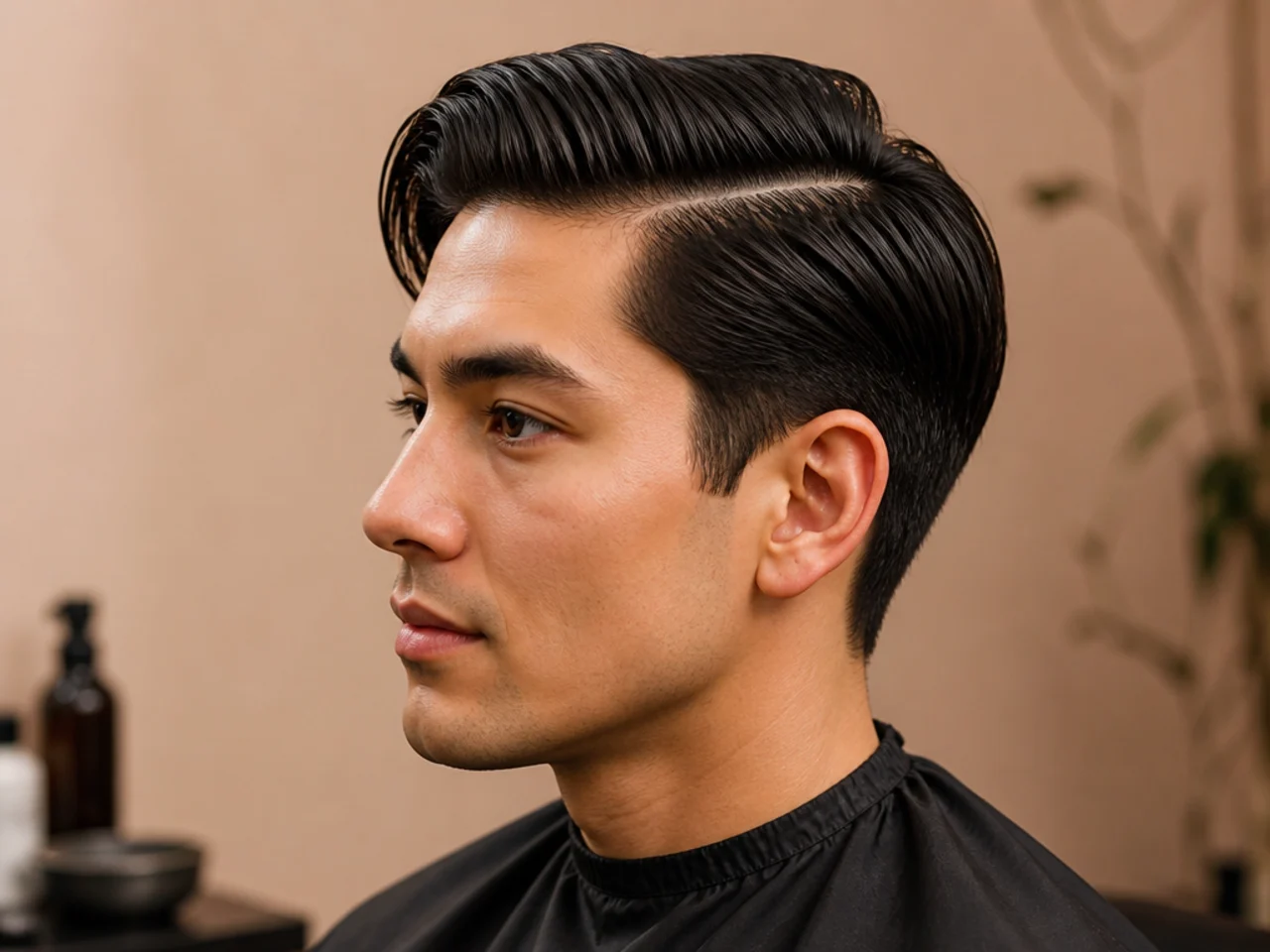
The parting sits roughly above the outer corner of the eye, running from the front hairline back to the crown. Some men have a natural cowlick that draws the line for them; others need the barber to comb one in during styling. Either way, the parting is meant to look combed rather than shaved.
Reason 1: The Geometry Flatters Every Face Shape
The single reason a classic side part survives every trend cycle is that its geometry is universally flattering. The parting creates asymmetry, and asymmetry balances the face in ways a straight-back or middle-parted cut cannot.
Round faces benefit most. The off-center sweep adds vertical length on one side and keeps the other side clean, which pulls the eye upward and away from the roundness at the cheekbones. Ask for a slightly higher top — closer to three inches than two — so the height compounds the effect.
Square faces gain softness from the diagonal line of the parting. A straight-across fringe or a middle part underlines a square jaw; a side part cuts a diagonal across the face that reads as movement rather than structure. Keep the sides scissor-tapered rather than faded so the block does not amplify. If you want a full roundup of what works for your shape, our haircuts for square faces guide covers the wider family.
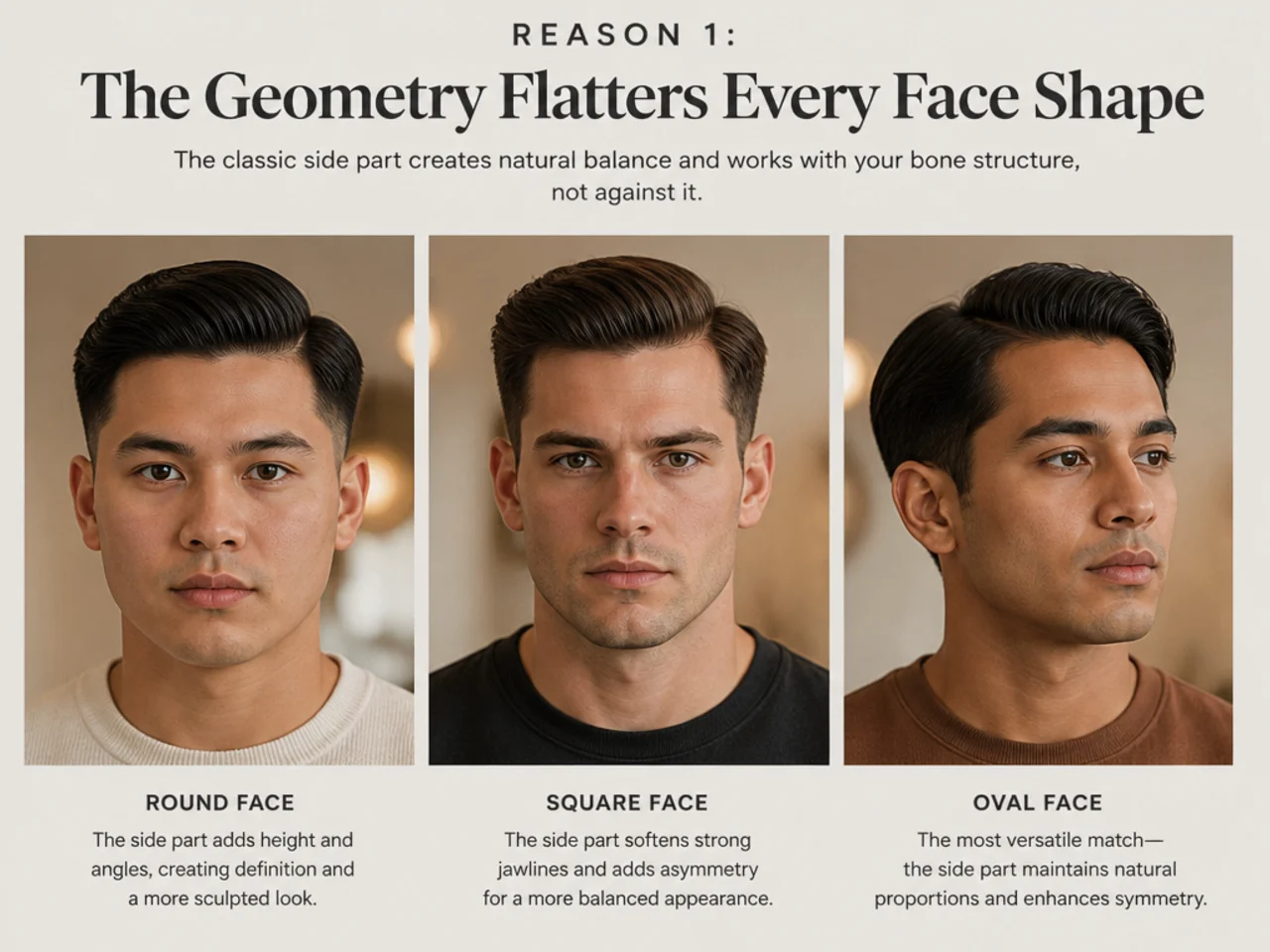
Oval faces are the easy case — almost anything works, and the classic side part is no exception. Play with parting depth: a deep parting exaggerates the sweep, a shallow parting keeps it conservative.
Long or oblong faces are the one shape that needs care. The vertical volume from a taller top can stretch the face further. Keep the top on the shorter end — closer to two inches — and comb the sweep with a slight downward angle rather than lifting the front.
Heart-shaped faces benefit from the extra visual width the side sweep gives the forehead area. It rebalances the wide-brow, narrow-chin geometry that defines the shape.
Reason 2: It's the Original Dress-Code-Proof Cut
The classic side part predates every men's grooming trend still standing. It went into offices in the 1920s and never left. That century of continuous professional use is why the cut reads as neutral in every dress code — including the ones that reject any hint of a style choice.
Banking, law, government, medical, courtroom-facing sales, executive-track corporate — none of these environments blink at a classic side part. It is closer to a wristwatch than a haircut in how it registers. Nobody notices it. Nobody comments on it. It just reads as "clean."
That neutrality is a superpower most modern cuts do not have. A low taper fade reads modern but still reads. A hard part reads intentional. A textured crop reads current. A classic side part reads invisible — and invisible is what conservative professional environments actually reward.

It also plays down. The same cut that reads boardroom on Wednesday reads Friday-casual with a t-shirt and jeans. That range is what makes it worth learning — you do not have to change your hair for the room you are walking into. It is closer in spirit to an ivy league haircut than to any trend-driven variation: dress-code-proof by design.
If your work environment leans traditional, the classic side part is one of the few men's cuts that will not force you into the awkward "let me change my hair for this meeting" moment. Pair it with a professional hairstyle men mindset — neat, combed, styled once in the morning and left alone — and you have a cut that costs you thirty seconds a day and reads sharp in any room.
Reason 3: It Photographs Well in Any Era
Look at any photograph of a well-dressed man from the 1930s and you will see the same haircut men are asking for in 2026. Cary Grant, Clark Gable, Humphrey Bogart, Frank Sinatra, Paul Newman, Robert Redford, Don Draper, Timothée Chalamet at the last three Cannes premieres — different decades, different suits, same parting.
That visual continuity is not accidental. The classic side part photographs well because its structure creates a defined silhouette without generating hard shadows. The scissor taper on the sides catches natural light softly. The parting draws the eye along a clean diagonal line. The combed top holds its shape in a still frame.
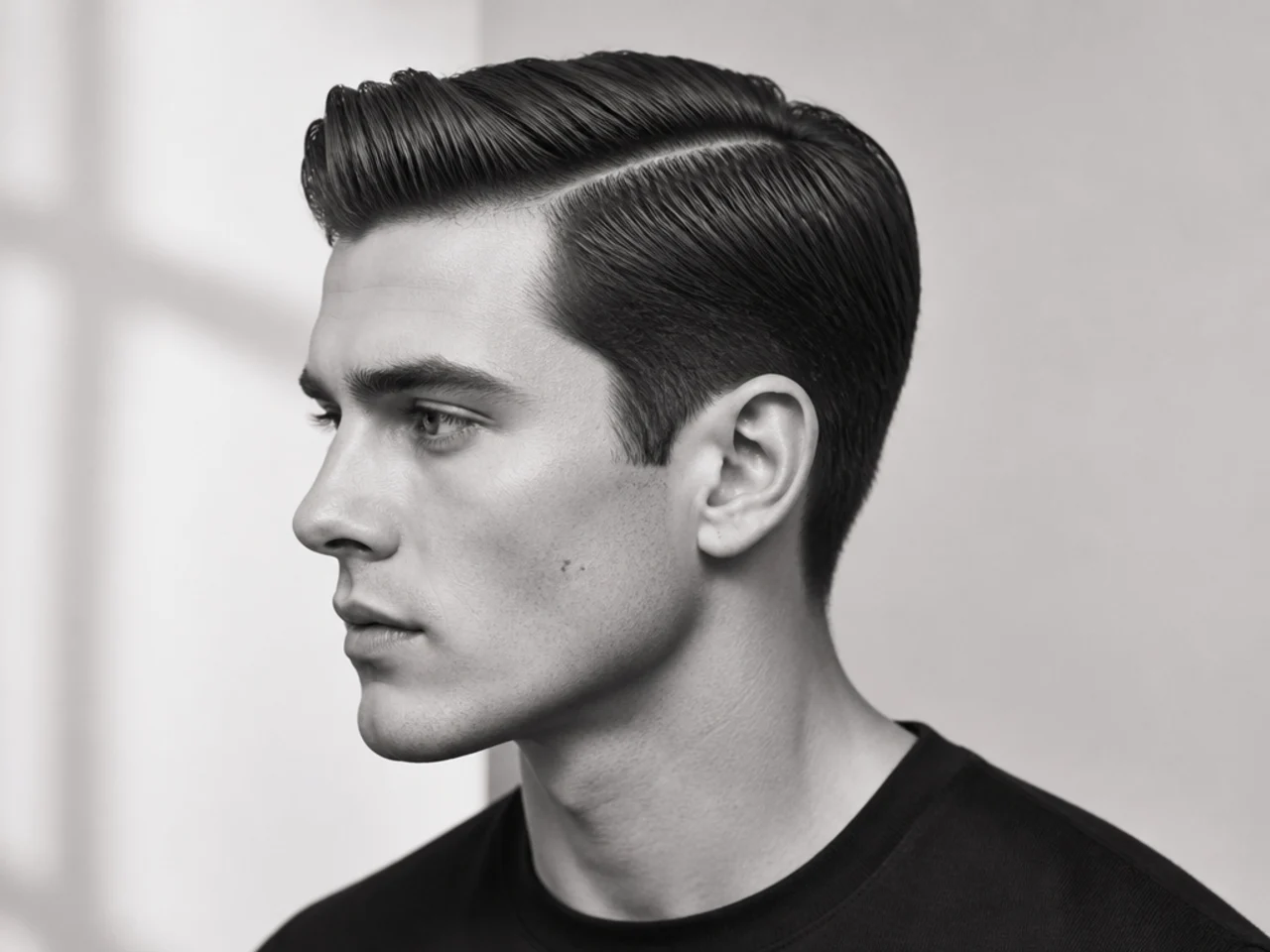
Faded cuts photograph differently. High contrast between skin and hair creates a sharp visual boundary that can look severe under overhead light. Trendy textured tops photograph as "of the moment" — which is exactly what makes them date. A classic side part reads timeless in photos because there is nothing in the cut to peg it to a decade.
If you look at wedding photos, headshots, LinkedIn profiles, or anything else you will look at again in ten years, the classic side part is the safest bet on the board. It will not read as dated when you see the photo in 2036 — because it has not read as dated in any of the ten decades before it.
Reason 4: The Sides Adapt to Every Modern Update
The base of the classic side part — the combed top and the parting — is fixed. What has changed over the decades is the sides. And the fact that the base survives every side update is what keeps the cut relevant.
The 1950s version had scissor-tapered sides that finished about half an inch above the ear. The 1980s version added a hard part shaved along the parting line. The 2000s version paired the top with a slicker, longer look on the sides — closer to a slick back haircut execution. The 2020s version — the one that is currently trending — pairs the classic top with a low fade on the sides, which reads modern without touching the ratios up top.
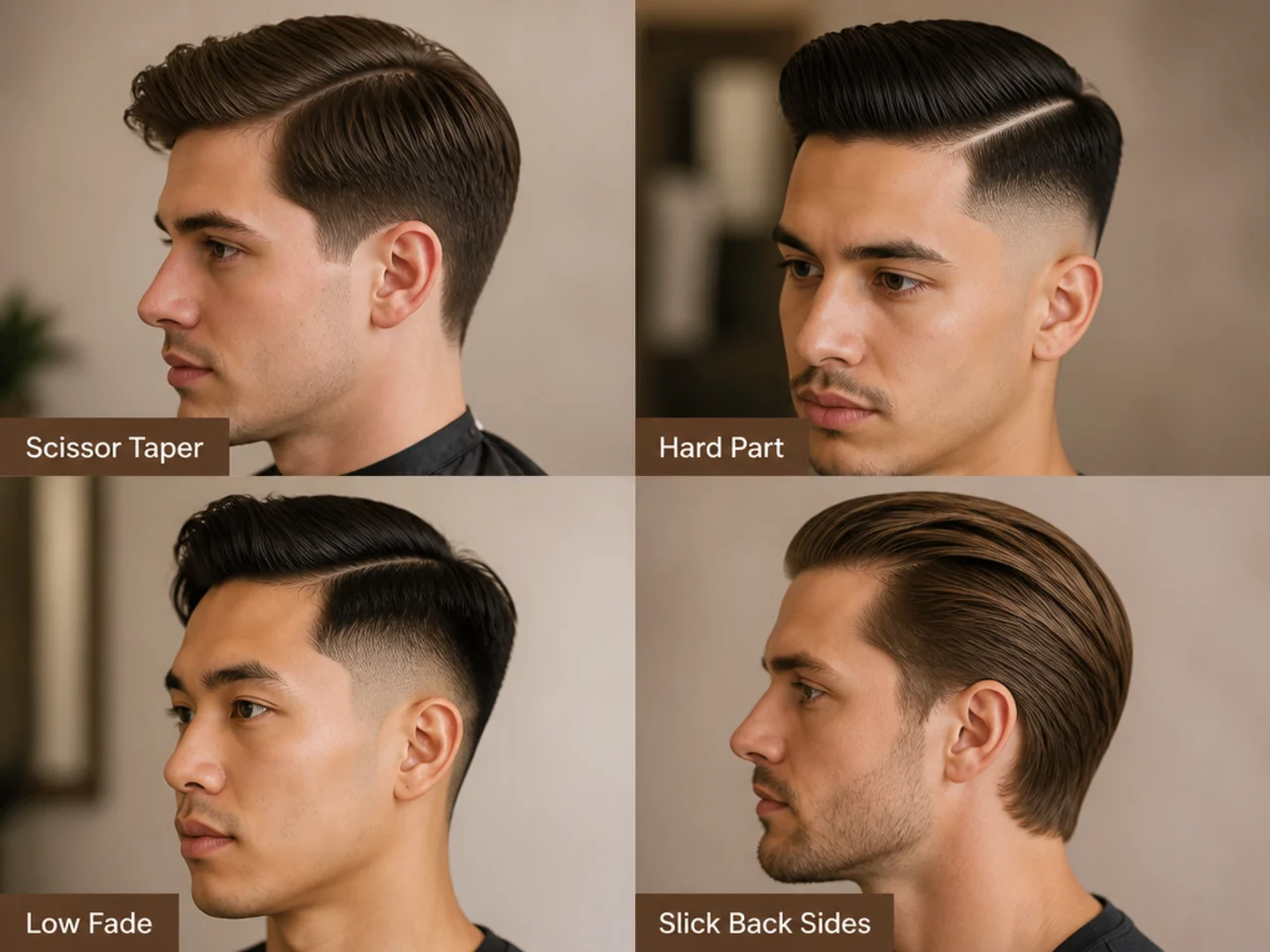
That flex is what separates a cut that lasts from a cut that dates. If you want your classic side part to look more current, ask for a low taper fade or a soft comb over haircut blend on the sides. If you want the most conservative version, keep the scissor taper. If you want statement, ask for a hard part shaved along the parting line. The base geometry does not change — you are just updating the sides.
That modularity is why barbers will still be cutting some version of this shape in twenty years. The floor plan of the cut is fixed; the finishes rotate. Modern men's grooming trends work the same way clothing trends do — the suit has been around for two hundred years, but the lapel width, the jacket length, and the trouser break rotate. The classic side part is the suit of men's haircuts.
Reason 5: It Grows Out Gracefully
Every haircut has a grow-out curve, and the classic side part has the flattest one on the board. Fades collapse when the transition zone loses definition — usually by week three. Textured crops lose shape when the top gets top-heavy — usually by week four. A tight buzz stops looking intentional the moment stubble grows in — usually by week two.
The classic side part just gets slightly longer. The parting still holds. The sweep still reads. The scissor-tapered sides fuzz softly instead of losing their line. You can push five to six weeks between cuts without the shape falling apart — and most men can push seven if the schedule slips.
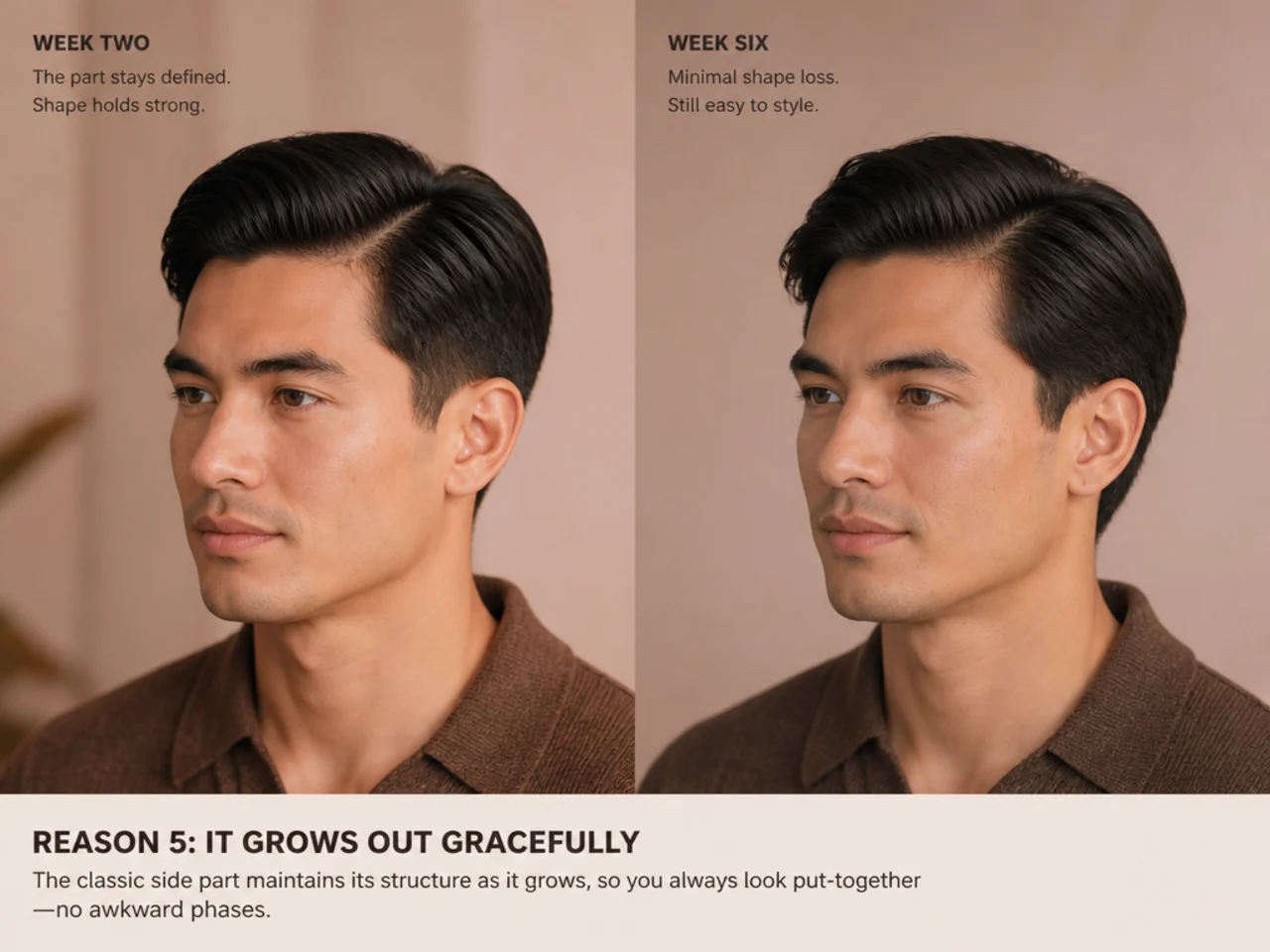
That grow-out tolerance is what makes it a low-effort cut in the long run. A high fade requires a chair every two weeks — non-negotiable. That's twenty-six haircuts a year. A classic side part is happy with eight to ten. Multiply that by your barber's rate and the classic side part quietly pays for itself over any modern trend cut.
It also survives travel and missed appointments. Stuck on a three-week work trip? The classic side part still looks like a haircut when you land — a fade in the same scenario looks like a bad decision.
Classic Side Part vs Modern Side Part
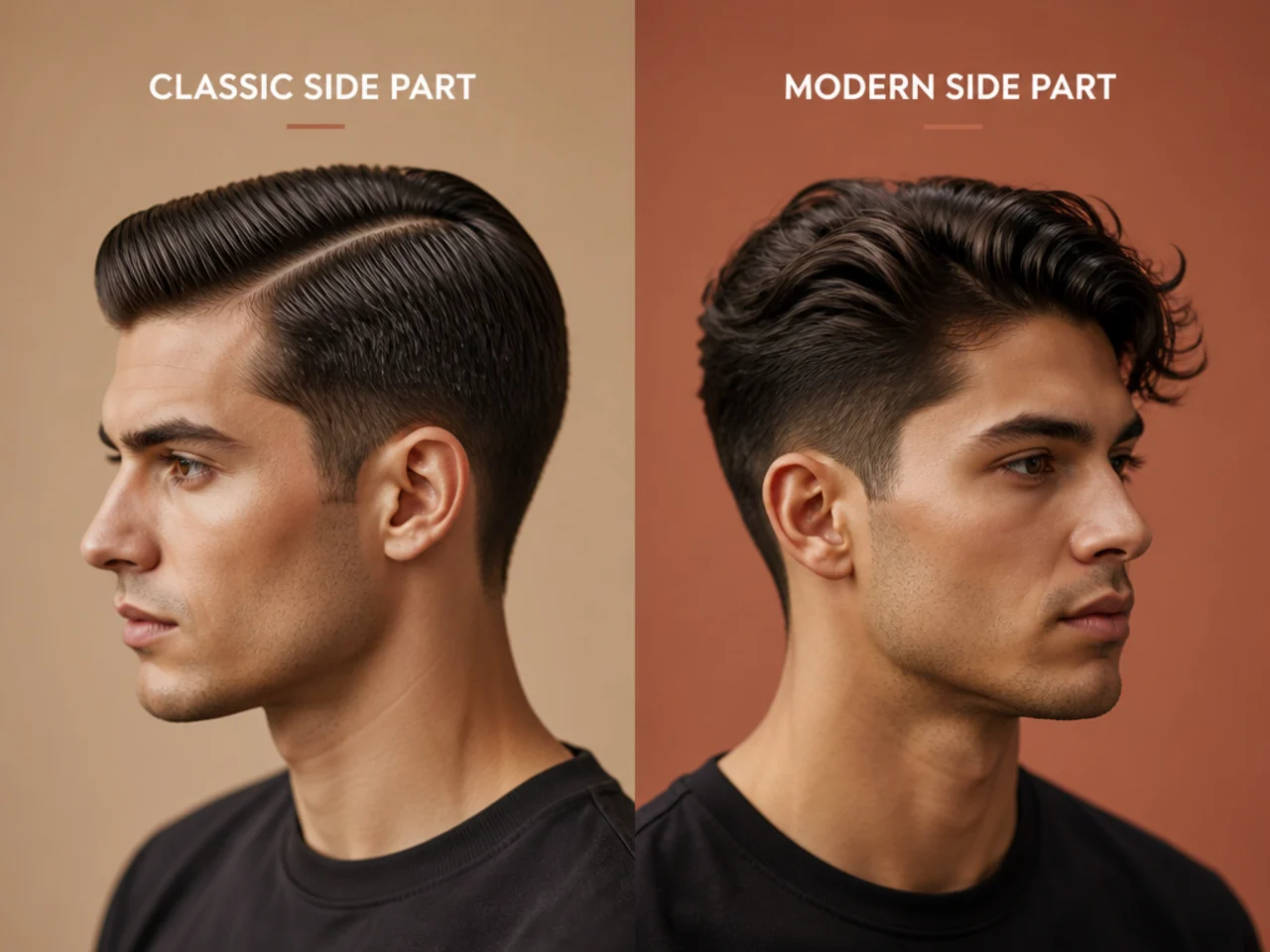
The classic and modern versions share the same top and parting. Where they diverge is the sides, the finish, and the maintenance schedule. Here is how to pick between them.
The short version: pick classic if you want a cut you can wear anywhere, forget about between visits, and still look sharp when the schedule slips. Pick modern if you want the cleaner, higher-contrast look and can commit to a chair every two to three weeks. Both use the same base geometry — you are trading grow-out tolerance for a sharper daily line.
If you are between the two, look at the mid fade side part haircut men hybrid, which sits in the middle of the maintenance curve with most of the visual sharpness of the modern version.
Who Should Ask for a Classic Side Part
The classic side part is the safest men's cut on the board, which is exactly what makes it the right pick for a specific type of man. It is the answer if any of these apply.
You work in a conservative dress-code environment. Banking, law, medicine, government, courtroom sales, executive corporate. The classic side part is invisible in these rooms, and invisible is the goal.
You do not want to think about your hair. Two minutes in the morning, a fine-tooth comb, one pea-sized dab of pomade. Done. If you have to be at the airport at 5am, this is the cut that survives a shower and a five-minute style.
You get one haircut every four to six weeks. If your calendar cannot hold appointments closer than that, a fade will look overdue for most of the month. A classic side part will look intentional for the full six weeks.
You are photographed regularly. Wedding season, work headshots, LinkedIn refresh, family photos, court appearances — anywhere the photo will outlive the trend. The classic side part will not read as dated in ten years.
You have a round or square face shape. The classic side part's asymmetry does the visual work for you here — no other cut adds as much rebalance for as little styling effort.
Guys with fine, straight-to-wavy hair get the best result. Fine hair holds a parting cleanly and takes light-hold pomade without going flat. Wavy hair softens the parting into something that looks natural rather than combed. Tight curls and coils can wear a version of the classic side part, but the parting usually needs a hard-part cut in to hold — the pure combed classic does not hold in tight coil patterns.
How to Ask Your Barber
Bring a photo. Every request in this section makes more sense once your barber can see the reference in front of them. Then work through these five points in order.
- Say scissor-tapered sides, not a fade. This is the single most important phrase, because barbers default to clippers if you do not specify. "I want a scissor taper on the sides — no fade line, no clipper guards, blend it soft to about half an inch above the ear."
- Specify the top length in inches. Two to three inches is the classic range. Say the exact number: "two and a half inches on top, combed to one side." Vague numbers get vague results.
- Ask for a natural parting on your dominant side. "Part it naturally on my right, using my cowlick." Ask the barber to check the crown before drawing the line — the natural parting will hold, a forced one will not.
- Say what finish you want. "Sleek and combed, light shine — like a light-hold pomade finish, not a matte clay." Finish drives product choice, and if your barber gets it wrong you will fight your hair every morning.
- Confirm the front length. The front of the sweep is what falls into your eye if it gets too long. Say what you want here: "Keep the front just above my eyebrow at the longest point." That protects you from an over-eager scissor pass.
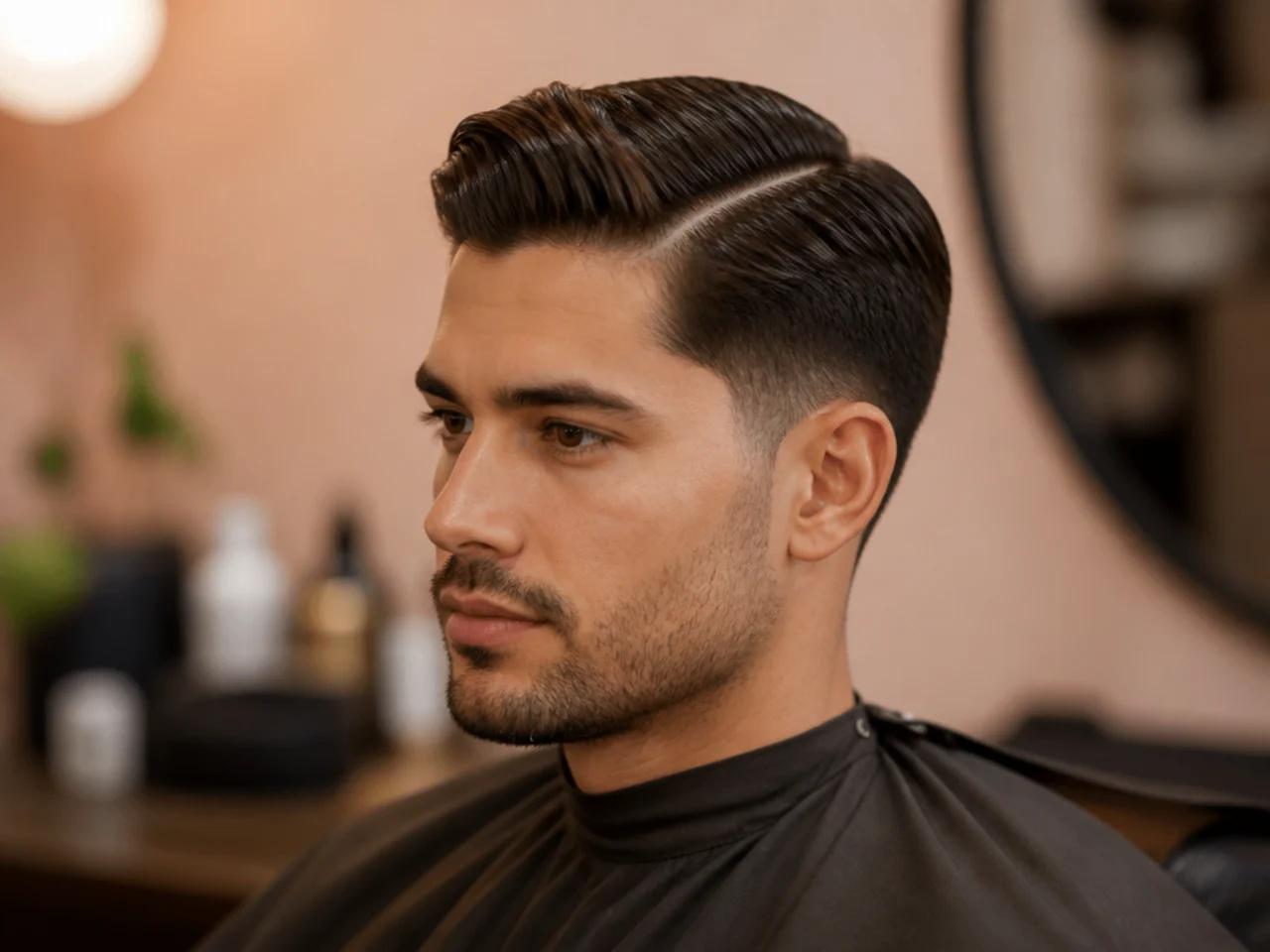
If your barber suggests a fade instead, that is fine — but hold the line if you want the true classic. "I want the timeless version, no fade line, scissor tapered." A good barber will nod and pick up the shears.
Styling and Maintenance
The classic side part is the lowest-effort styled cut in men's grooming. Two products, one comb, thirty seconds.
Wash with a sulfate-free shampoo two or three times a week. Every day strips the hair of the oil that gives a side part its natural shine — over-washed hair looks dull and flyaway rather than smooth. If your scalp is oily, rinse with water on off-days rather than shampooing again.
Style on damp hair, not dry. Dry hair will not hold a parting past mid-morning. Damp hair — towel-dried, not soaking — takes the parting cleanly and holds it through the day.
Use a pea-sized dab of light-hold pomade or a cream. Warm it between your palms, work it through the top, then comb once with a fine-tooth comb along the parting. If you want more shine, pick a water-based pomade. If you want a softer, more natural look, use a cream. Skip the wax and the matte clay — both fight the sleek finish this cut is built for.
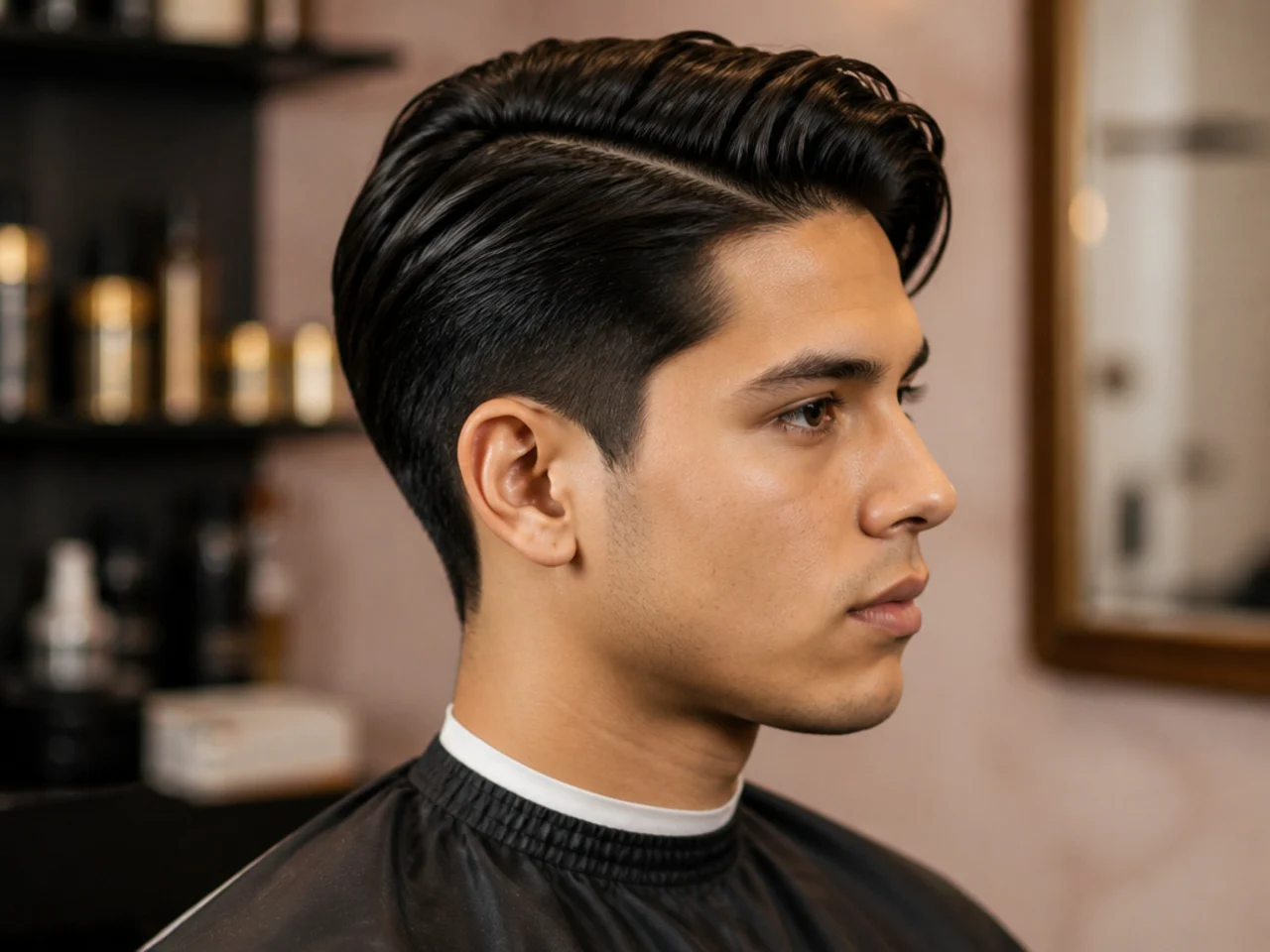
For the sides, run a soft brush over the tapered area after styling the top to catch stray hairs. The tapered scissor cut sheds a few loose ends in the first week — the brush pass keeps them out of your collar.
Trim the sides at home if you cannot get to the chair on time. A pair of scissors and a mirror will hold you through a missed week — clip only the strays, do not try to re-taper. Leave the parting untouched at home; the barber redraws it every visit.
Book every four to six weeks. The parting starts to lose its line at week five, and the sides start to look fuzzy at week six. If you are stretching to seven, the top will still hold but the sides start to read as unkempt rather than intentional.
FAQ
What makes the classic side part timeless? The classic side part timeless look survives every era because the 70/30 top-to-side ratio and the asymmetric parting flatter almost every face shape. Trends move around it — the base shape does not date, and it photographs well in any decade.
Which face shape suits a classic side part best? Round and square faces benefit most because the off-center parting adds vertical asymmetry and softens the block up top. Oval and heart-shaped faces work with any parting depth. Long faces should keep the top a touch shorter so the height does not stretch the face further.
How do I ask my barber for a classic side part? Bring a photo, then say scissor-taper sides (not a fade), two to three inches on top, and a natural side parting on your dominant side. Ask for the taper to blend to skin only at the sideburn — no visible line. If your barber reaches for clippers, say "no fade" clearly.
Can I get a classic side part with wavy or curly hair? Yes — wavy hair holds the parting beautifully with a light cream. For loose curls, use a cream-pomade blend and comb once while damp. Tight coils work better with a hard-part variation than the combed classic — ask for the parting cut in rather than combed in.
How often should I re-cut a classic side part? Every four to six weeks. The classic version is one of the most grow-out-friendly men's cuts on the board — the parting still reads clean at week five as long as the top length has room to fall. Push seven if the schedule slips, but the sides start to look fuzzy at that point.
Is the classic side part still professional in 2026? Yes — it is still the safest men's cut for conservative dress codes. Banks, law firms, medical, government, and courtroom-facing roles read the classic side part as sharp without reading it as a style choice. That neutrality is why it has stayed on the board for a hundred years.