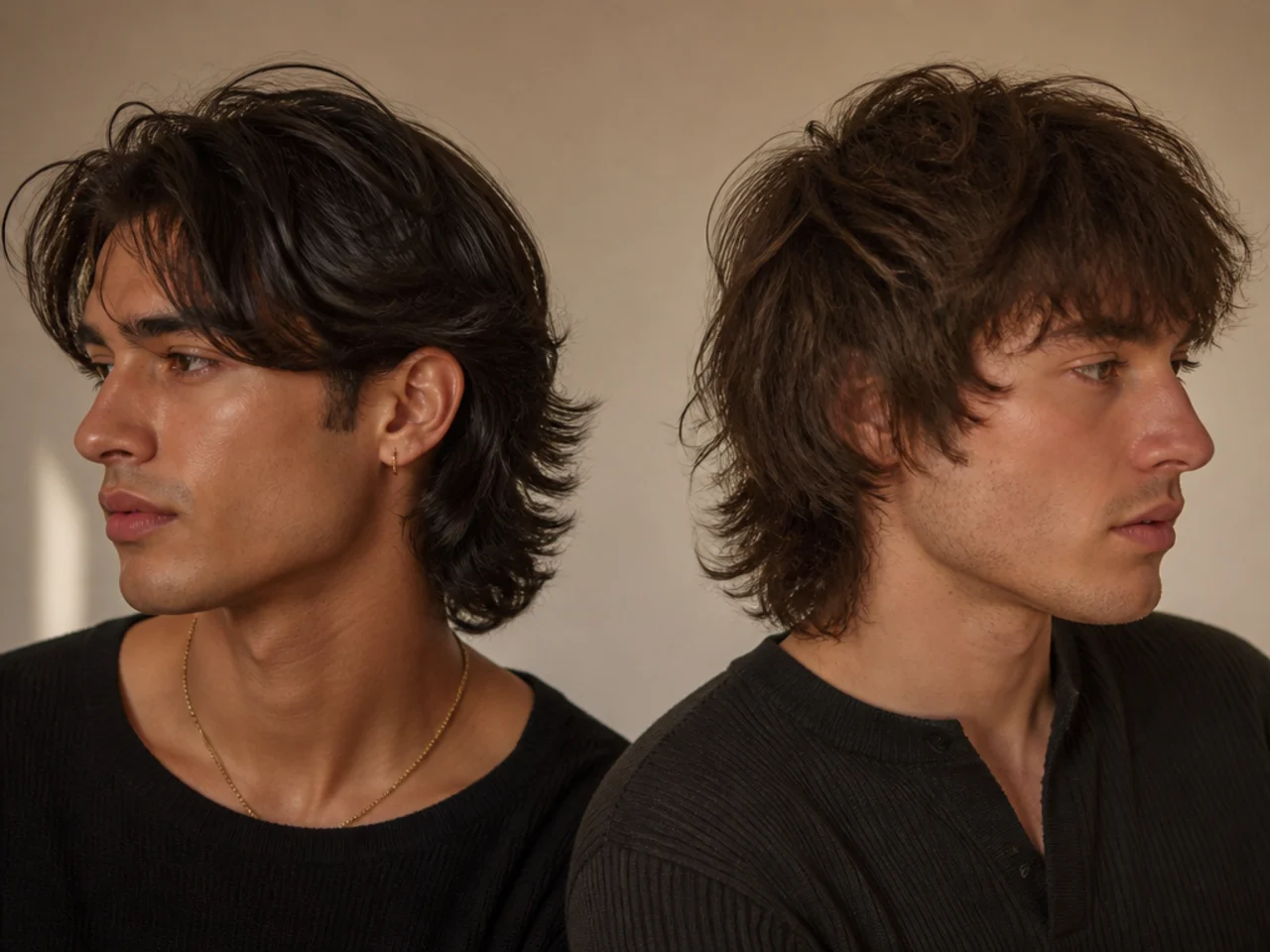
15 Side Part Mullet Haircuts for Men
Fifteen side part mullet haircuts for men — deep, natural, hard-lined, off-center. Photos, face-shape notes, and barber-ready cutting terms.
In this article · 25
- What Is a Side Part Mullet?
- How to Choose Your Side Part Mullet
- The 15 Side Part Mullet Variations
- 1. Natural Side Part Mullet
- 2. Deep Side Part Mullet
- 3. Hard Side Part Mullet
- 4. Off-Center Side Part Mullet
- 5. Sharp Side Part Mullet
- 6. Soft Side Part Mullet
- 7. Wet-Look Side Part Mullet
- 8. Side Part Mullet with Low Fade
- 9. Side Part Mullet with Taper
- 10. Side Part Mullet with Textured Fringe
- 11. Curly Side Part Mullet
- 12. Wavy Side Part Mullet
- 13. Retro Side Part Mullet
- 14. Side Part Mullet with Beard
- 15. Comb-Over Side Part Mullet
- How to Ask Your Barber for a Side Part Mullet
- Styling and Maintenance
- FAQ
- Which side should the parting sit on?
- Can you get a side part mullet with short hair?
- What is the difference between a side part mullet and a hard part mullet?
- Do side part mullets work in a corporate office?
The side part turns the mullet into a styled cut. Instead of finger-combing backward or letting texture lead, the front hair gets a defined parting — natural, off-center, or hard-lined — that dresses the top and gives the whole shape a controlled read. This guide covers fifteen side part mullet haircuts men are asking for, where each parting should sit, and the exact language to hand your barber for the version you want.
What Is a Side Part Mullet?
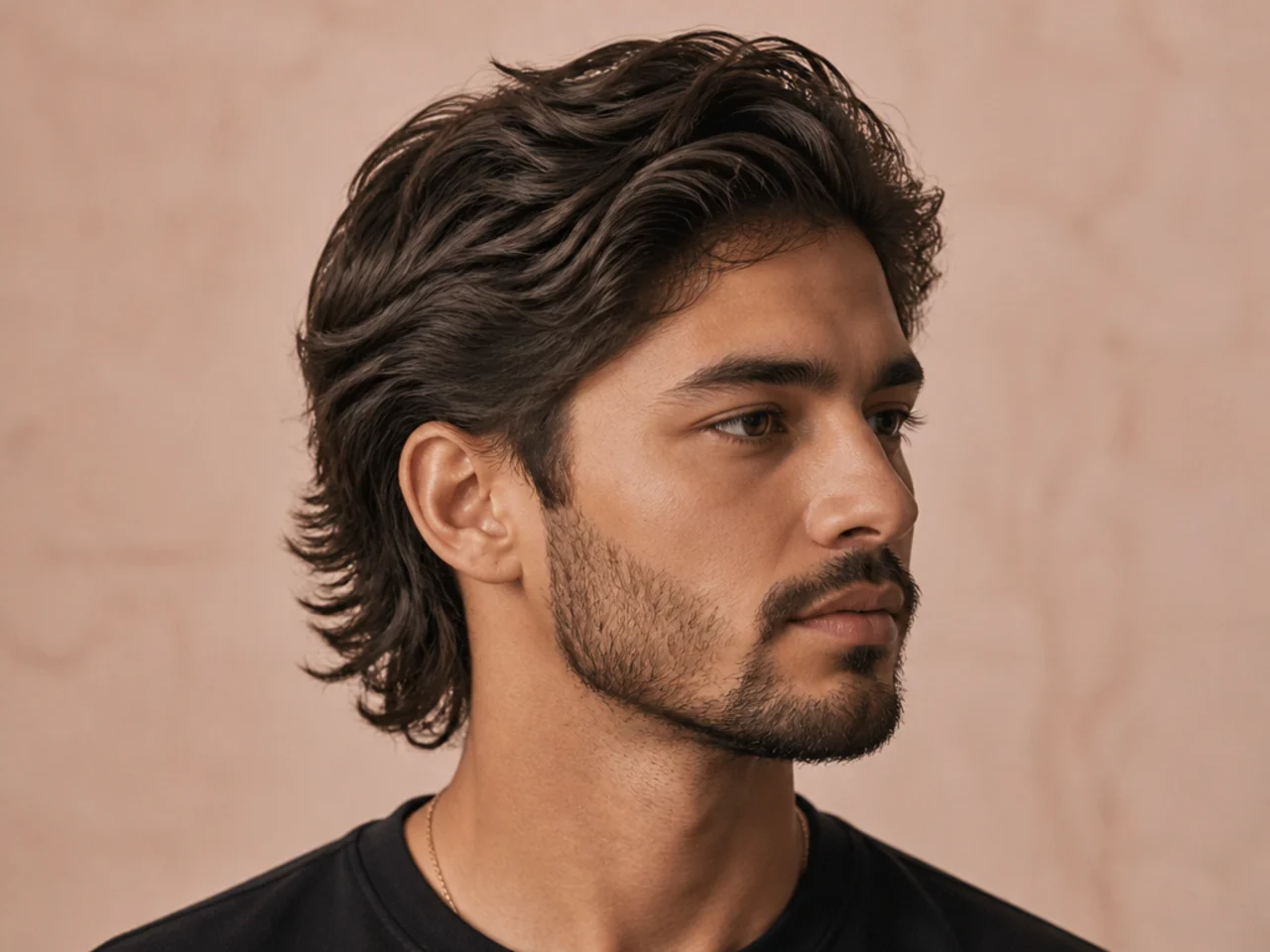
A side part mullet is a mullet cut with a defined parting on one side of the crown. The parting sits between one inch off center (natural) and three inches off center (deep). Hair on the longer side sweeps across the top; hair on the shorter side sits close to the head. The mullet's back length stays intact — the parting only changes how the front and crown are dressed.
That parting is the difference from every other mullet variation. A texture-forward mullet reads casual. A slicked-back mullet reads athletic. A side-parted mullet references the executive cut — the barbershop's original controlled shape — and grafts it onto the mullet's back-length silhouette. The two energies together read intentional, dressed, and slightly formal.
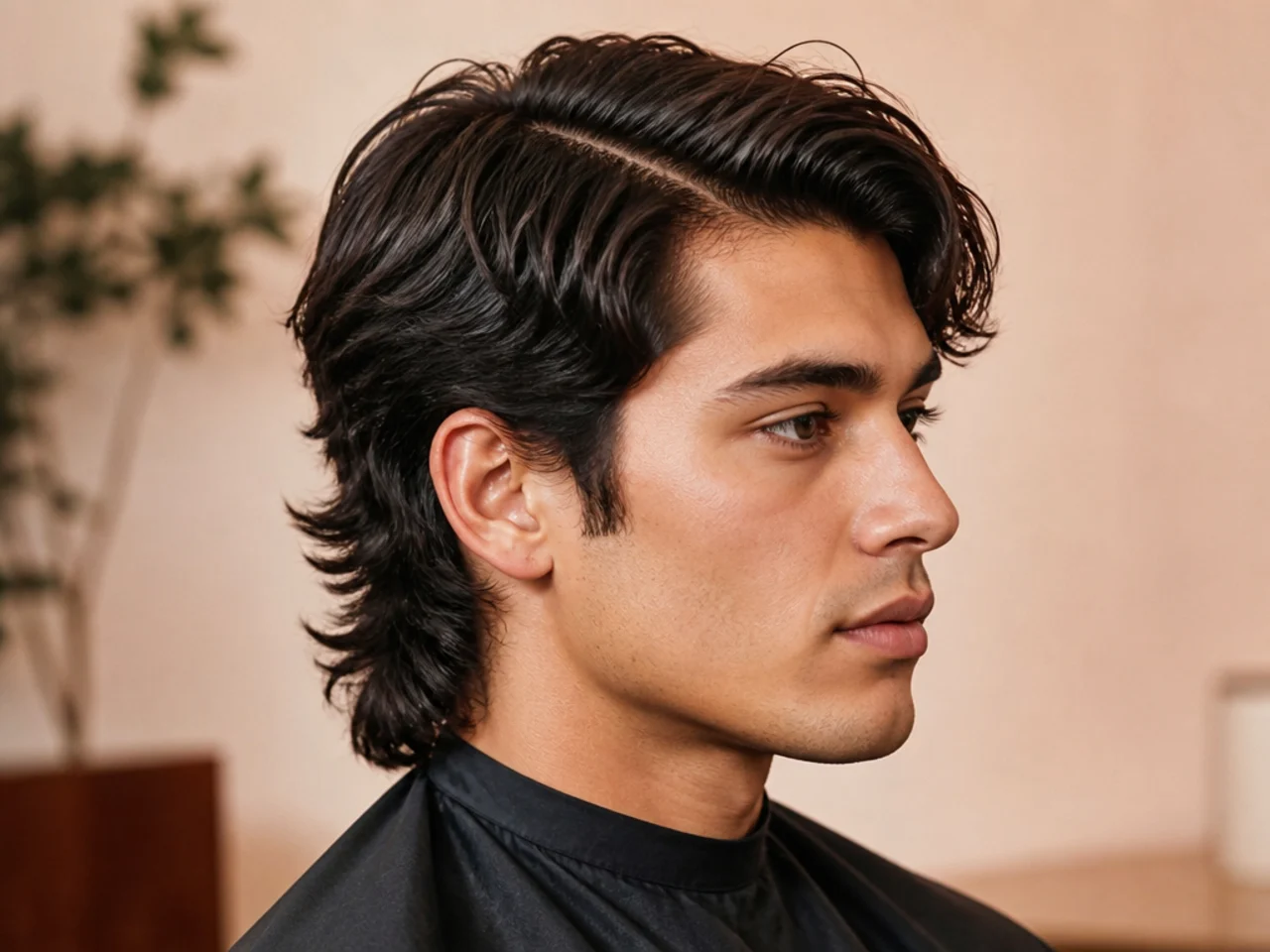
Barbers cut the part into the hair three ways. A natural side part follows the cowlick and needs no cutting — it lives wherever the hair falls. A defined side part uses cutting technique to encourage the parting to fall consistently in the same place. A hard side part cuts a razor line into the scalp along the parting, making the split visible even when the hair is styled differently. Each read differently — see the side part hairstyles for men guide for the wider category.
How to Choose Your Side Part Mullet
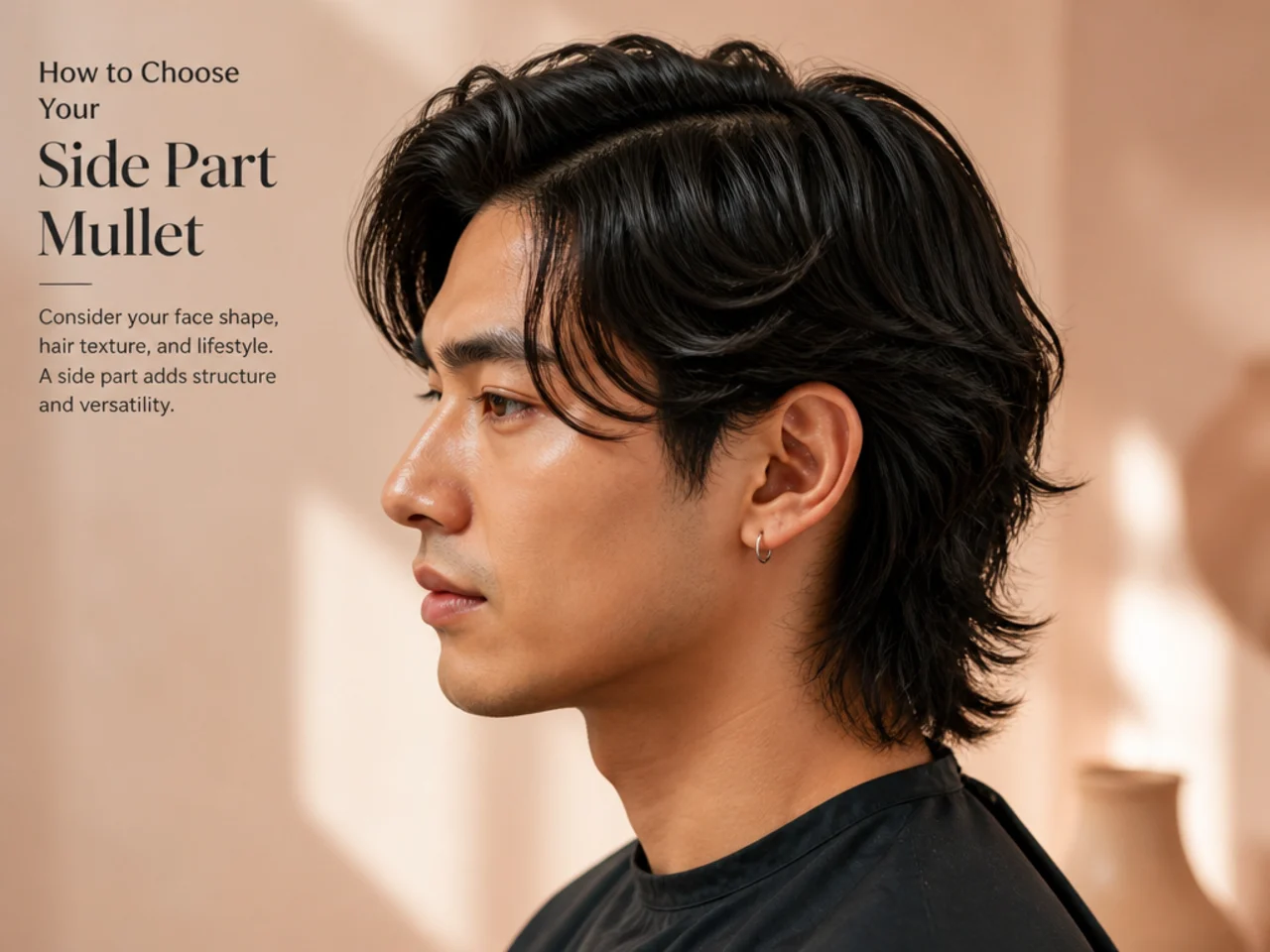
Face shape sets where the parting sits. Oval and heart faces suit natural parts an inch off center — the part sits close to symmetry and reads soft. Square and diamond faces work with deeper parts two to three inches off center, adding vertical asymmetry to a strong jaw. Round faces want a low deep part to lengthen the profile. Long faces stay with softer natural parts so the vertical line does not extend.
Hair type sets the parting method. Straight to slightly wavy hair holds any part naturally. Thick straight hair holds a hard part cleanly and benefits from the razor line to keep the parting sharp all day. Curly hair needs a defined part cut into the layers so the curls sit on either side of the split. Fine hair benefits from a hard part because it stays visible even when the front hair thins.
Lifestyle sets the finish. Matte styling reads casual and current. A matte-shine cream pomade reads business-professional. High-shine gel reads formal. Combine a natural side part with matte clay for a modern read; combine a hard part with a slick-back for a full executive look. See the mullet and wolf cut hub for the wider silhouette family.
The 15 Side Part Mullet Variations
Each variation below breaks down where the parting sits, who the shape suits, and the exact language for the chair.
1. Natural Side Part Mullet
The gateway side part. Parting sits an inch off center — wherever your cowlick already sends the hair — and gets combed in with no cutting. The top runs three inches with soft internal layers so the swept-over hair holds naturally. Reads effortless and slightly executive.
Suits every face shape. Works with any hair type but shines on straight to slightly wavy hair.
Ask for: "Natural side part mullet, three-inch top with soft internal layers falling in the direction of my natural cowlick, three-inch feathered nape, scissor-blended sides." Styling time: ninety seconds — light cream pomade combed through, part with a fine-tooth comb.
2. Deep Side Part Mullet
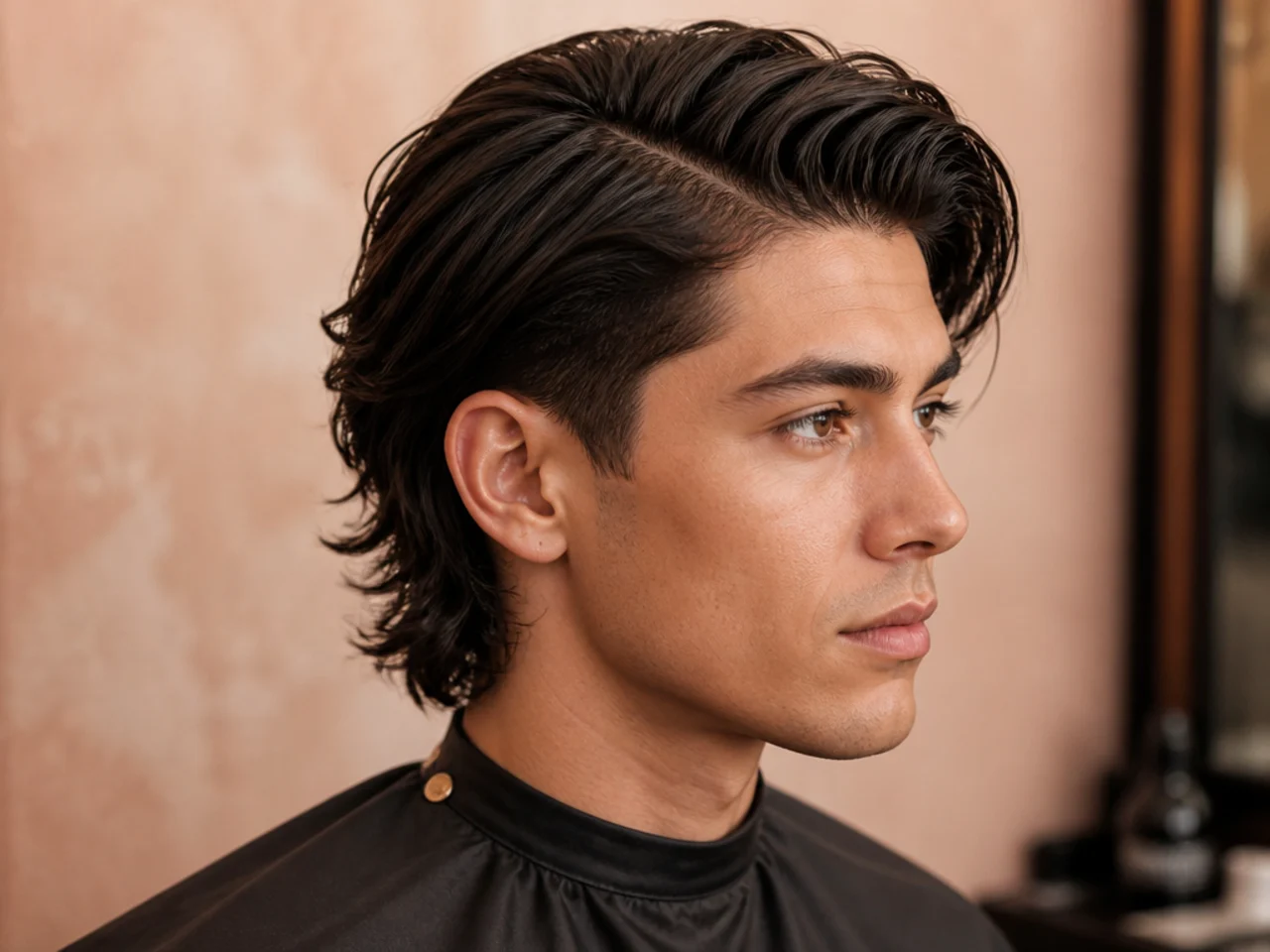
The parting sits two-and-a-half to three inches off center, creating a full sweep of hair across the top. The longer side falls in a dressed wave; the shorter side sits close to the head like a short-back-and-sides. Reads bold and structured — the mullet's back drop against the deep-parted top is a hard-graphic combination.
Suits square, diamond, and oval faces. Best on medium-thick straight to slightly wavy hair that carries the sweep without flattening.
Ask for: "Deep side part mullet, three-and-a-half-inch top with a defined side part sitting three inches off center, three-inch feathered nape, low scissor taper on the sides." Styling time: two minutes — cream pomade combed across, hairspray to lock the sweep.
3. Hard Side Part Mullet
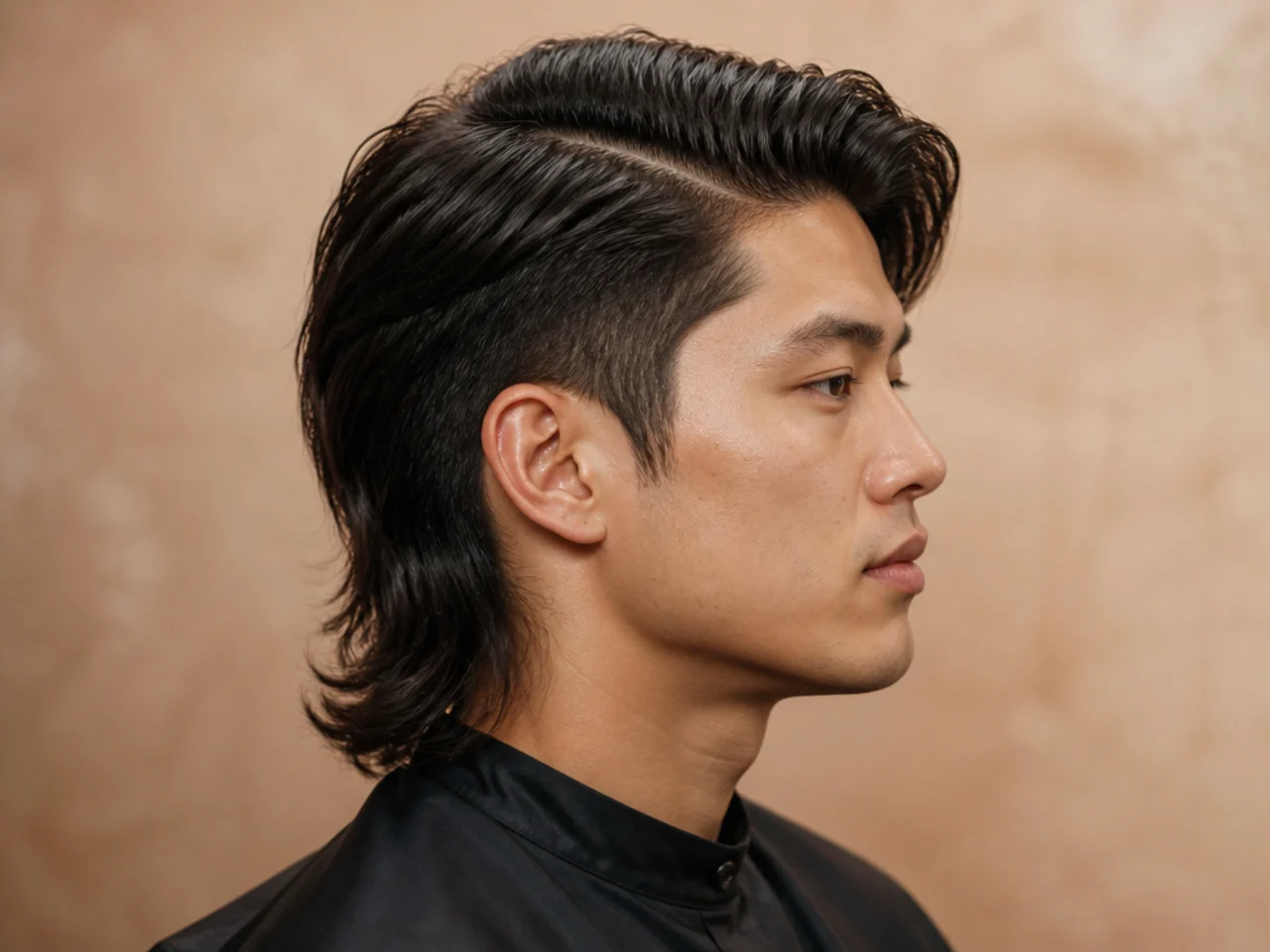
A razor line cut into the scalp along the parting. The line runs from the front hairline back to the crown and stays visible even when the hair is combed through. Combined with a mullet's back length, the hard part adds a barbershop-fresh signature that no other part method delivers.
Suits every face shape. Best on straight to slightly wavy hair with enough top length to sweep across the line.
Ask for: "Hard side part mullet, three-inch top swept over a razor-line hard part two inches off center, three-inch feathered nape, low taper on the sides connecting into the hard part." Styling time: ninety seconds — cream pomade, comb along the line. Book a hard-part touch-up every two weeks.
4. Off-Center Side Part Mullet
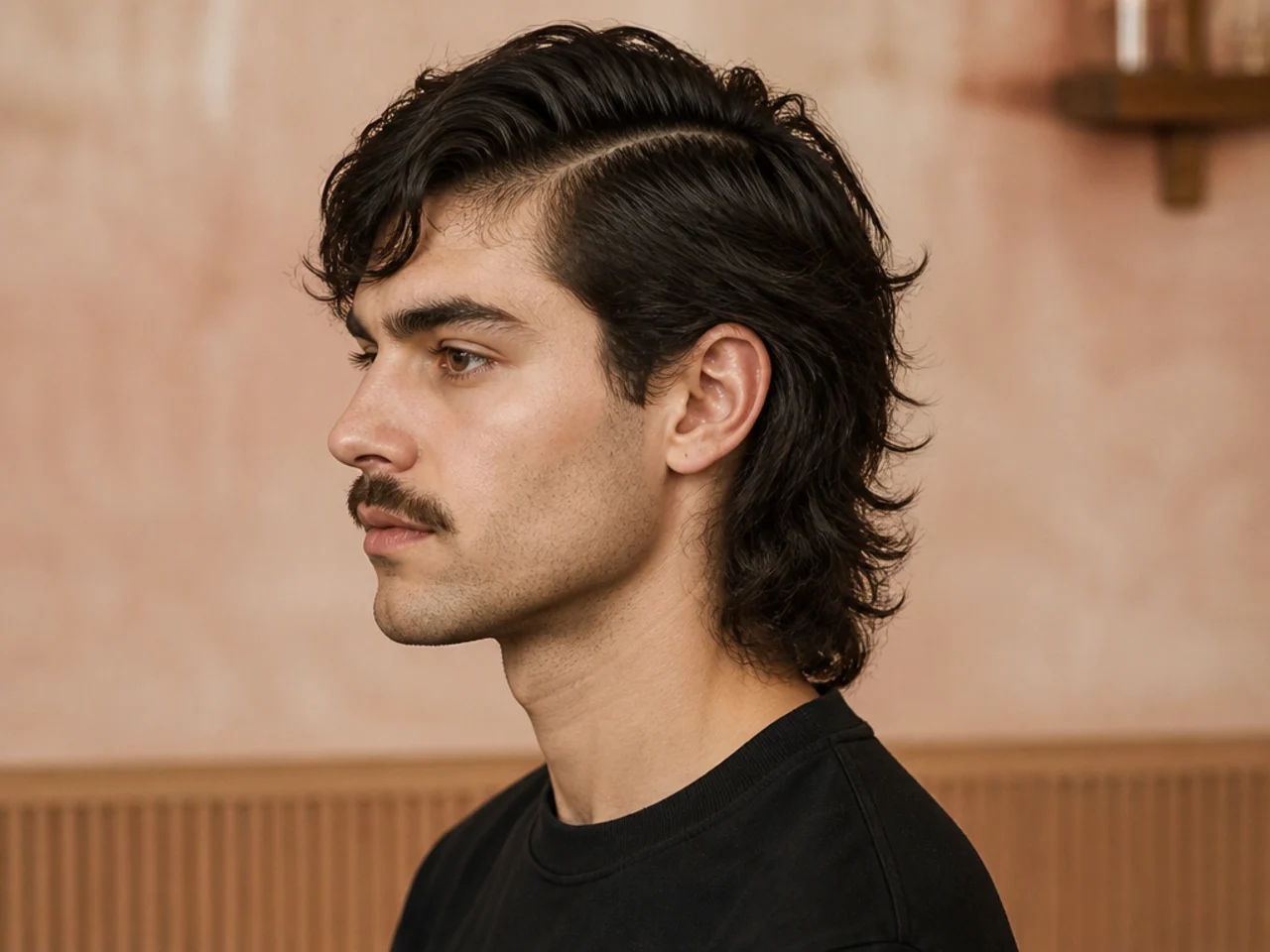
Between a natural and a deep — the parting sits an inch and a half off center. Enough asymmetry to read as intentional, not so much that it becomes graphic. The top sweeps in a soft direction rather than a hard one. Popular with guys who want the side part read without the executive-cut severity.
Suits oval, heart, and diamond faces. Best on straight to wavy hair.
Ask for: "Off-center side part mullet, three-inch top with a soft off-center part sitting an inch-and-a-half off center, three-inch feathered nape, scissor-blended sides." Styling time: one minute — light cream, finger-comb across the part.
5. Sharp Side Part Mullet
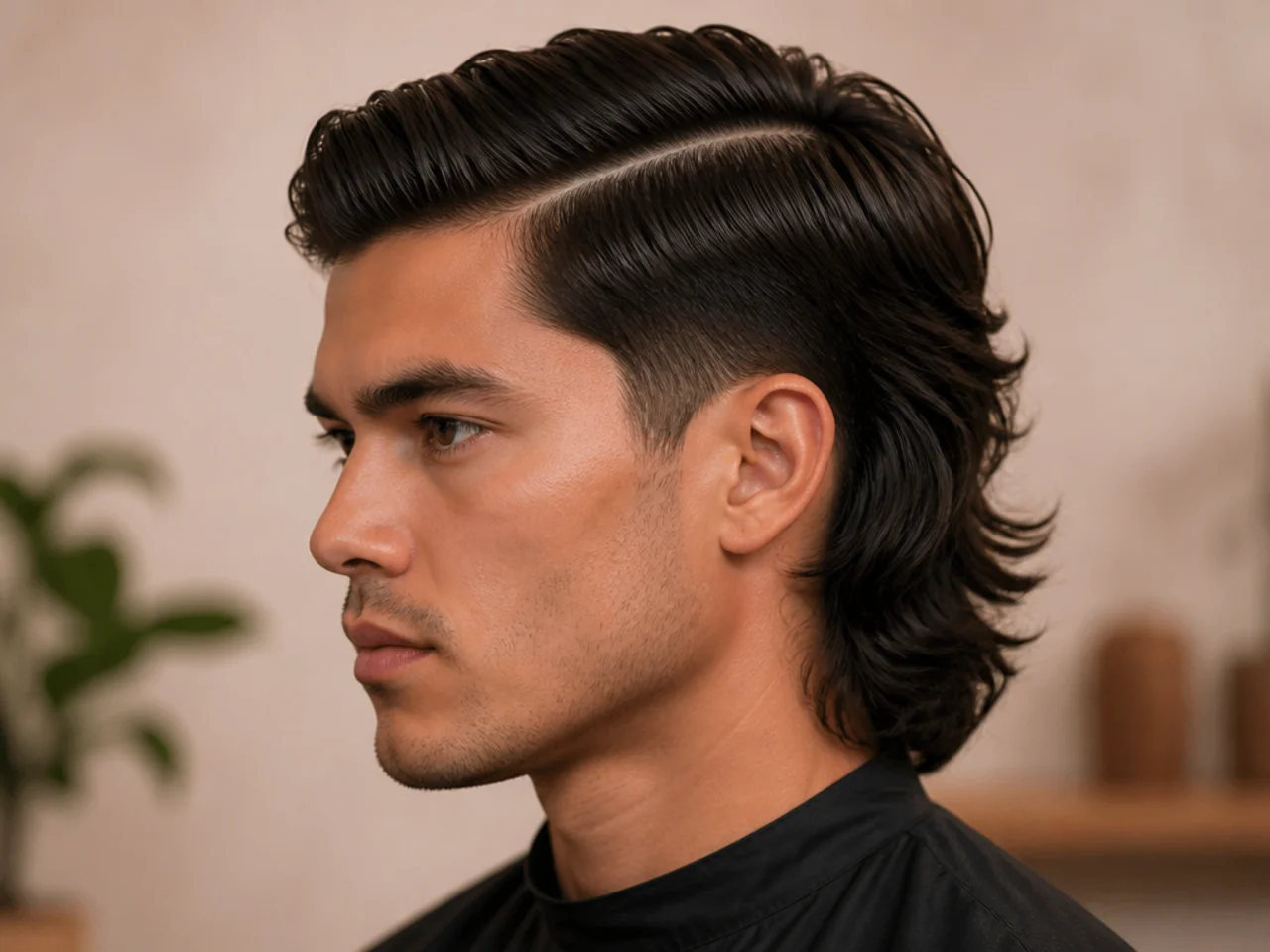
The polished version. High-shine pomade or grooming cream pulls every hair into a defined direction — no piecey texture, no lifted roots. The parting reads as a hard line without needing a razor cut, because the shine holds the split all day. Reads formal and slightly retro — the executive cut with a mullet's back drop.
Suits oval, square, and heart faces. Best on straight hair that takes high shine cleanly.
Ask for: "Sharp side part mullet, three-inch top with a defined side part two inches off center, three-inch nape with a blunt or lightly feathered perimeter, low scissor taper on the sides." Styling time: two minutes — high-shine pomade, fine-tooth comb, hairspray finish.
6. Soft Side Part Mullet
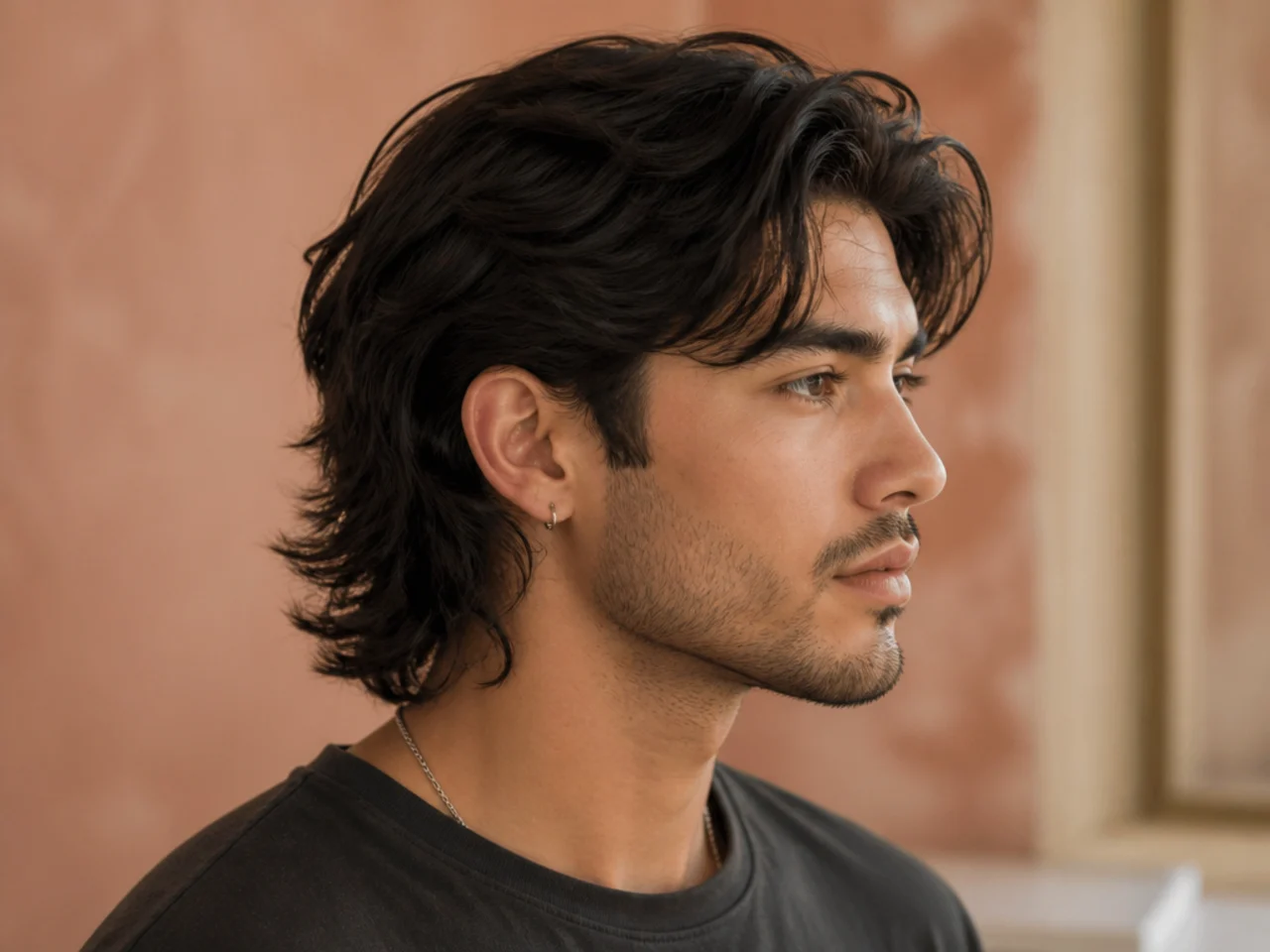
The opposite of sharp. Loose, textured, deliberately imperfect — the parting exists but the hair on either side keeps its natural movement. Reads casual and current. This is what most guys mean when they say they want "a side part but not a Wall Street side part."
Suits every face shape. Best on wavy hair that holds soft direction without gel.
Ask for: "Soft side part mullet, three-inch top with soft internal layers falling to a natural side part, three-inch feathered nape, scissor-blended sides." Styling time: one minute — matte styling cream, finger-comb to the side.
7. Wet-Look Side Part Mullet
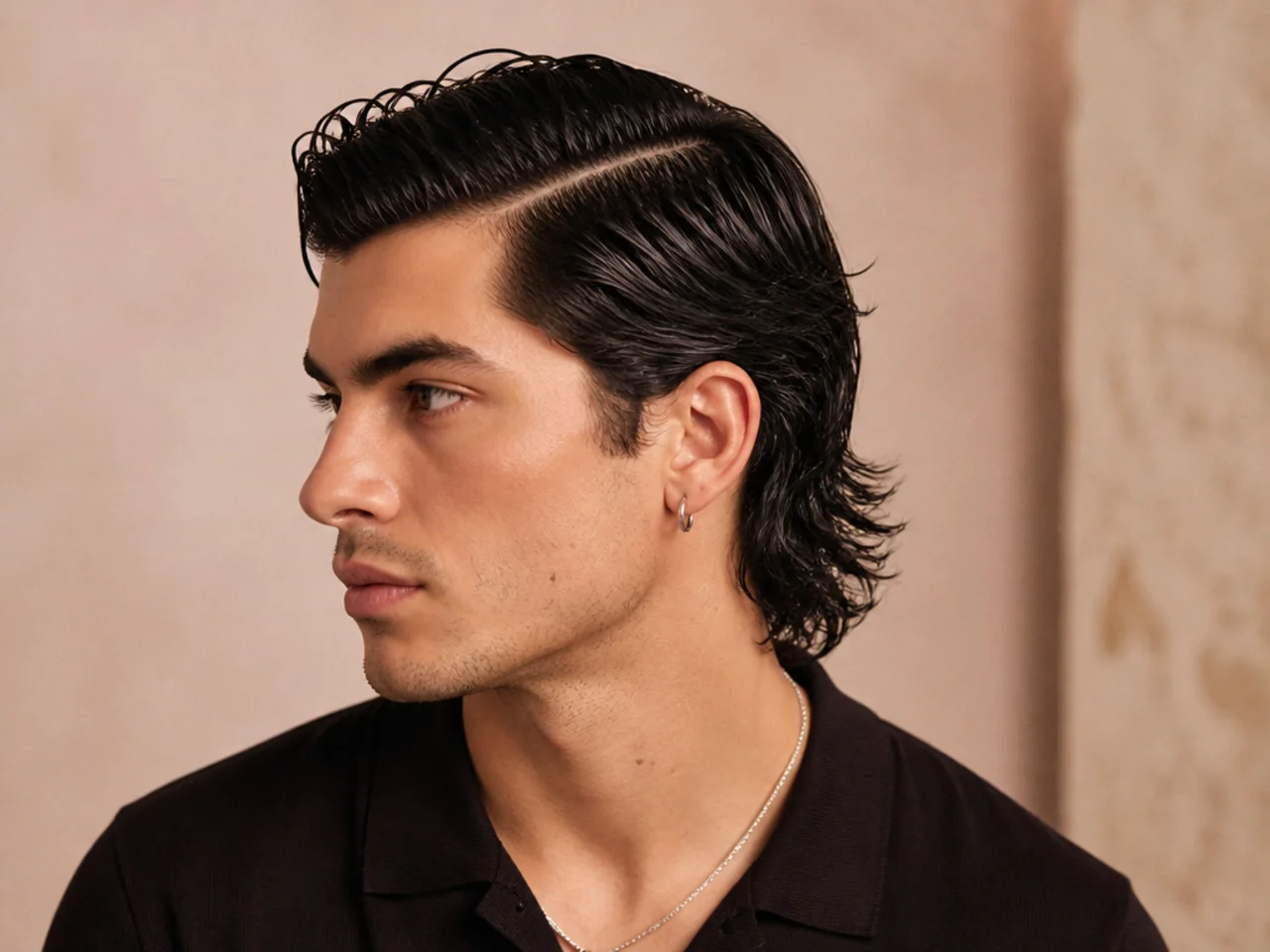
The parting stays visible because everything else is slicked flat and shiny. A wet-look pomade or a strong-hold gel pulls the top into a glossed sweep, leaving the parting as the only interruption in the finish. Reads editorial and dressy — a red-carpet mullet.
Suits oval and square faces. Best on straight hair that takes shine cleanly.
Ask for: "Wet-look side part mullet, three-inch top with a defined side part two inches off center, three-inch nape with a blunt perimeter, low scissor taper — no fade." Styling time: two minutes — wet-look pomade or strong gel, comb into place.
8. Side Part Mullet with Low Fade
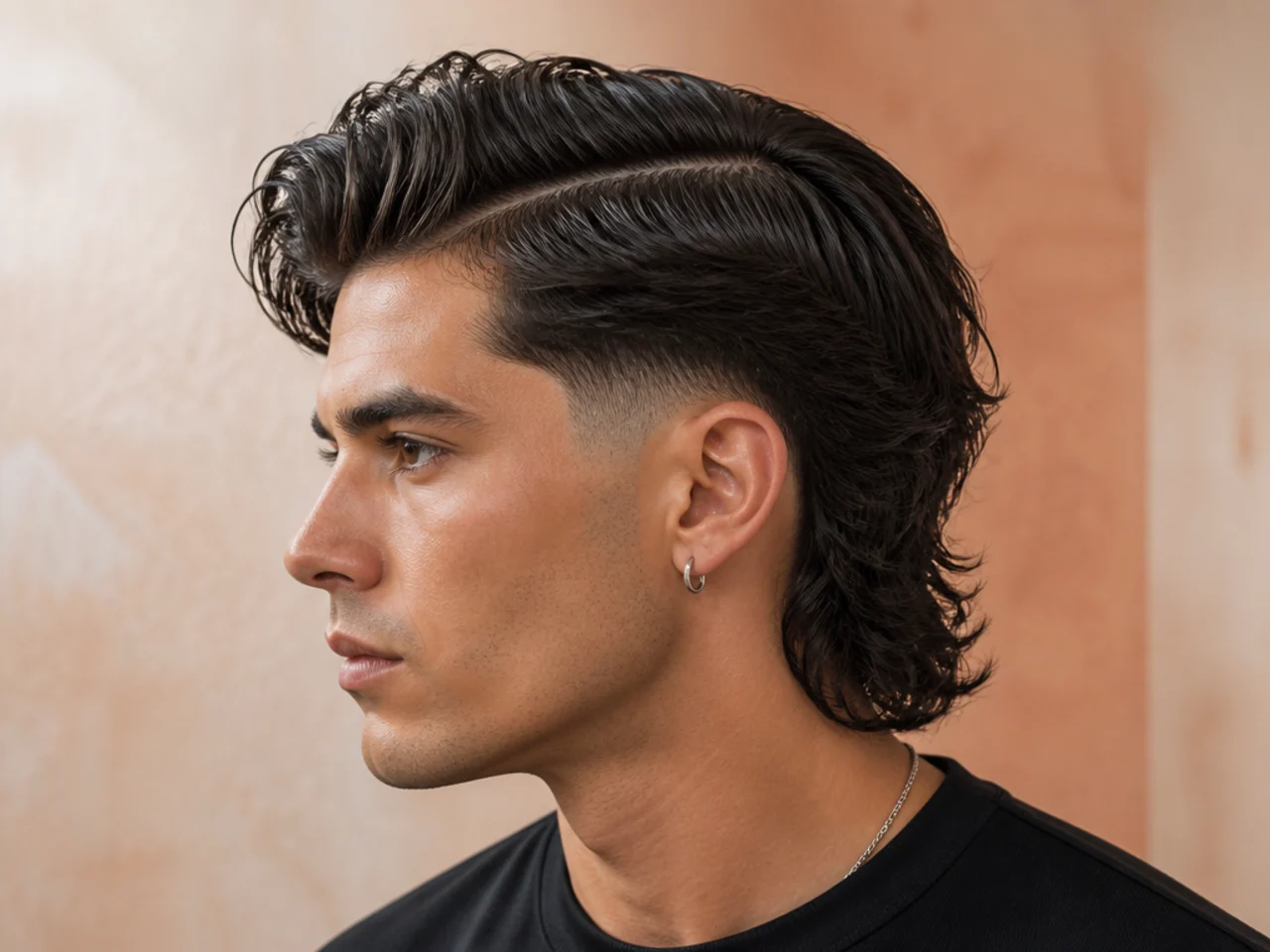
The low fade puts the transition just above the ear, so the parted top and mullet back read clearly against short sides. The fade grounds the whole shape without pulling attention from the parting. Reads current — the most-cut side part mullet variation right now.
Suits square, oval, and heart faces. Best on straight to wavy hair.
Ask for: "Side part mullet with a low fade — skin at the sideburn blending up to a guard 2 — three-inch top with a defined side part two inches off center, three-inch feathered nape." Styling time: ninety seconds — matte-shine pomade, part with a comb.
9. Side Part Mullet with Taper
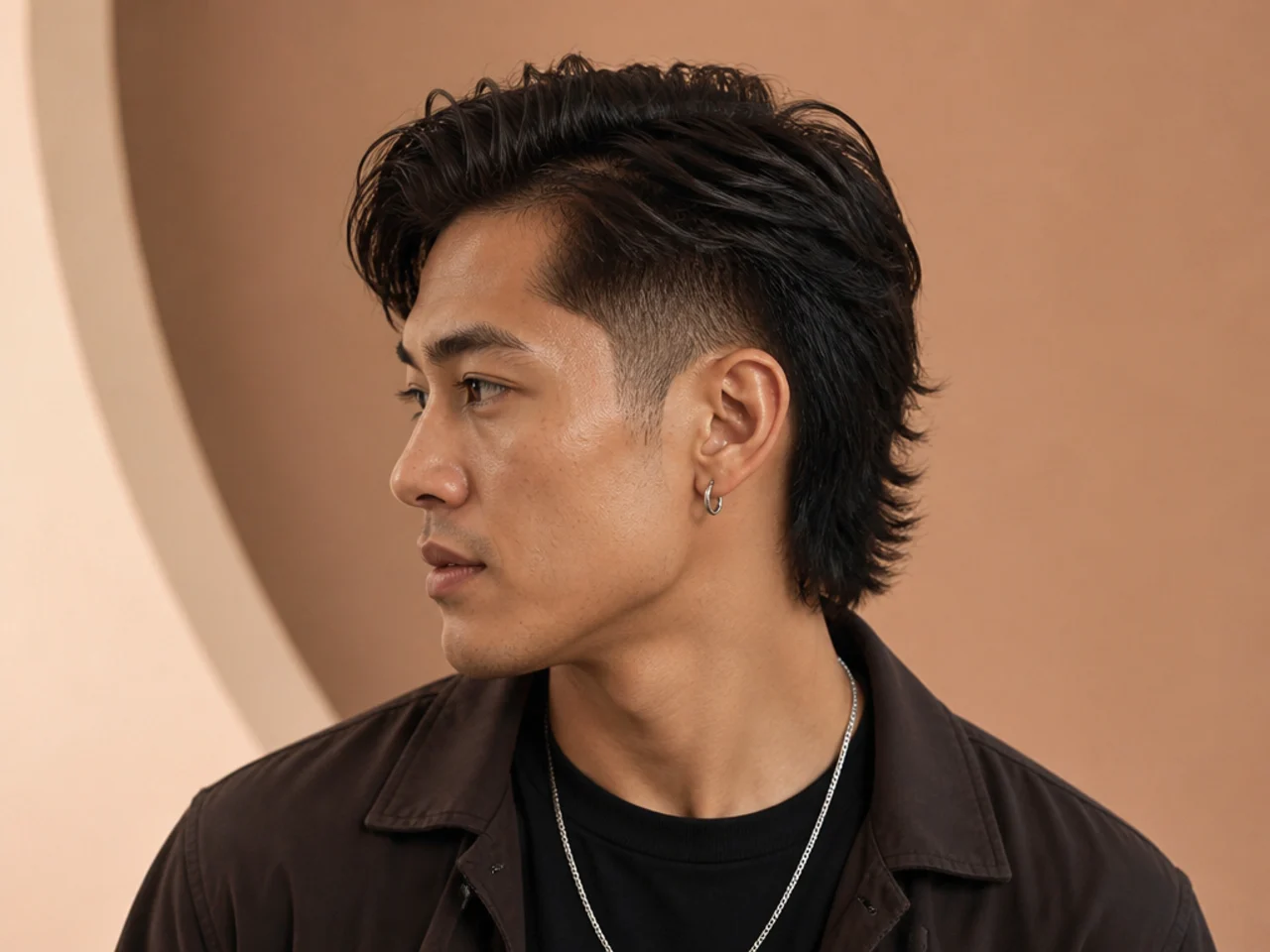
A scissors-only taper — no fade line, no clipper break. The taper starts above the temple and works down to the neckline. Above, three inches of top with a defined side part. Behind, a three-inch feathered nape. Reads soft and precise — the executive side part cousin.
Suits every face shape. Best for guys who want the shape without any fade conversation.
Ask for: "Side part mullet with a scissor taper, three-inch top with a defined side part two inches off center, three-inch feathered nape, taper the sides from long to short — no fade line." Styling time: one minute — cream pomade, comb through.
10. Side Part Mullet with Textured Fringe
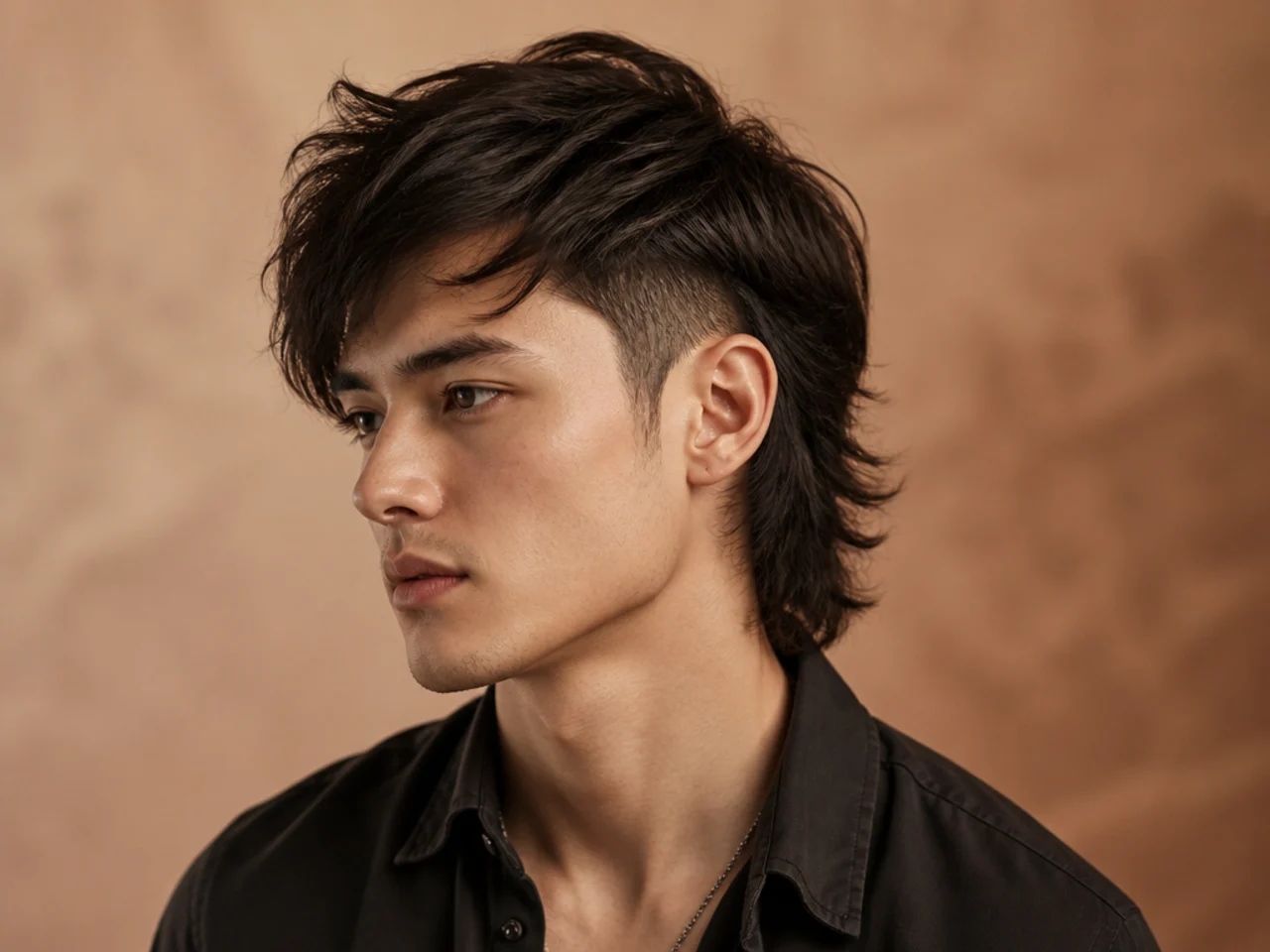
The parting sits low on one side, so the swept hair drops as a textured fringe across the forehead rather than lifting into a wave. Combined with the mullet's back drop, the fringe reads casual and boyish. Popular with guys who want a side part that still lets the front hair fall onto the face.
Suits round, oval, and heart faces where the fringe shortens the top of the face.
Ask for: "Side part mullet with a textured fringe, three-inch top with a defined low side part, fringe swept across the forehead in piecey pieces, three-inch feathered nape, blended sides." Styling time: one minute — matte paste, finger-comb the fringe across.
11. Curly Side Part Mullet
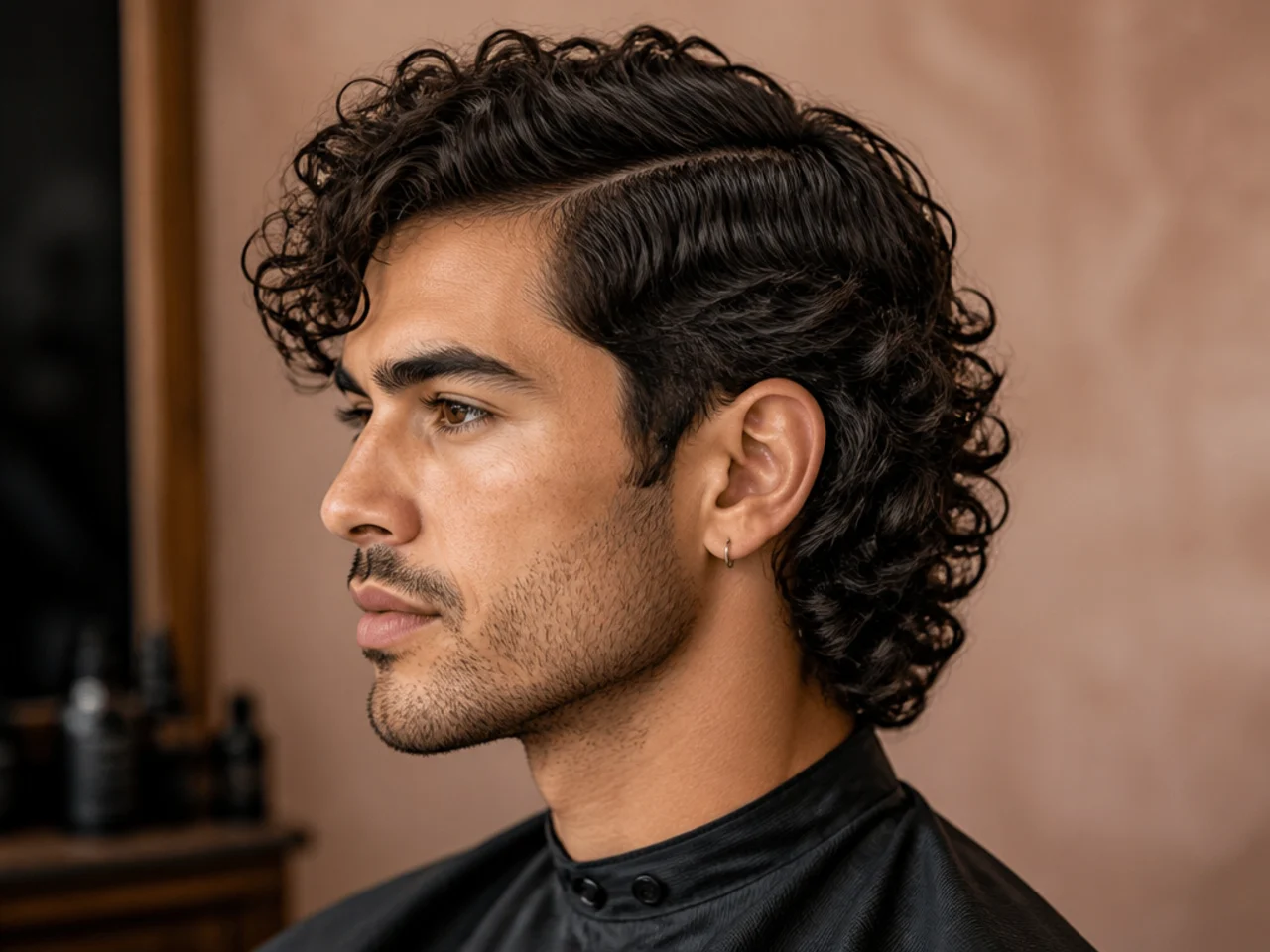
The parting has to be cut in for curly hair — combing alone will not hold. A defined side part carved through the layers gives the curls a clear split, then the pattern falls naturally on either side. Reads bold and textured, and it is one of the few ways to control the front on longer curly hair without pinning.
Best on type 3 curls. Suits oval, heart, and diamond faces.
Ask for: "Curly side part mullet, dry-cut throughout, three-inch top with a defined side part cut into the layers two inches off center, three-inch coiled nape, tapered sides following the curl pattern." Styling time: two minutes — leave-in on wet hair, define the part with fingers, air-dry.
12. Wavy Side Part Mullet
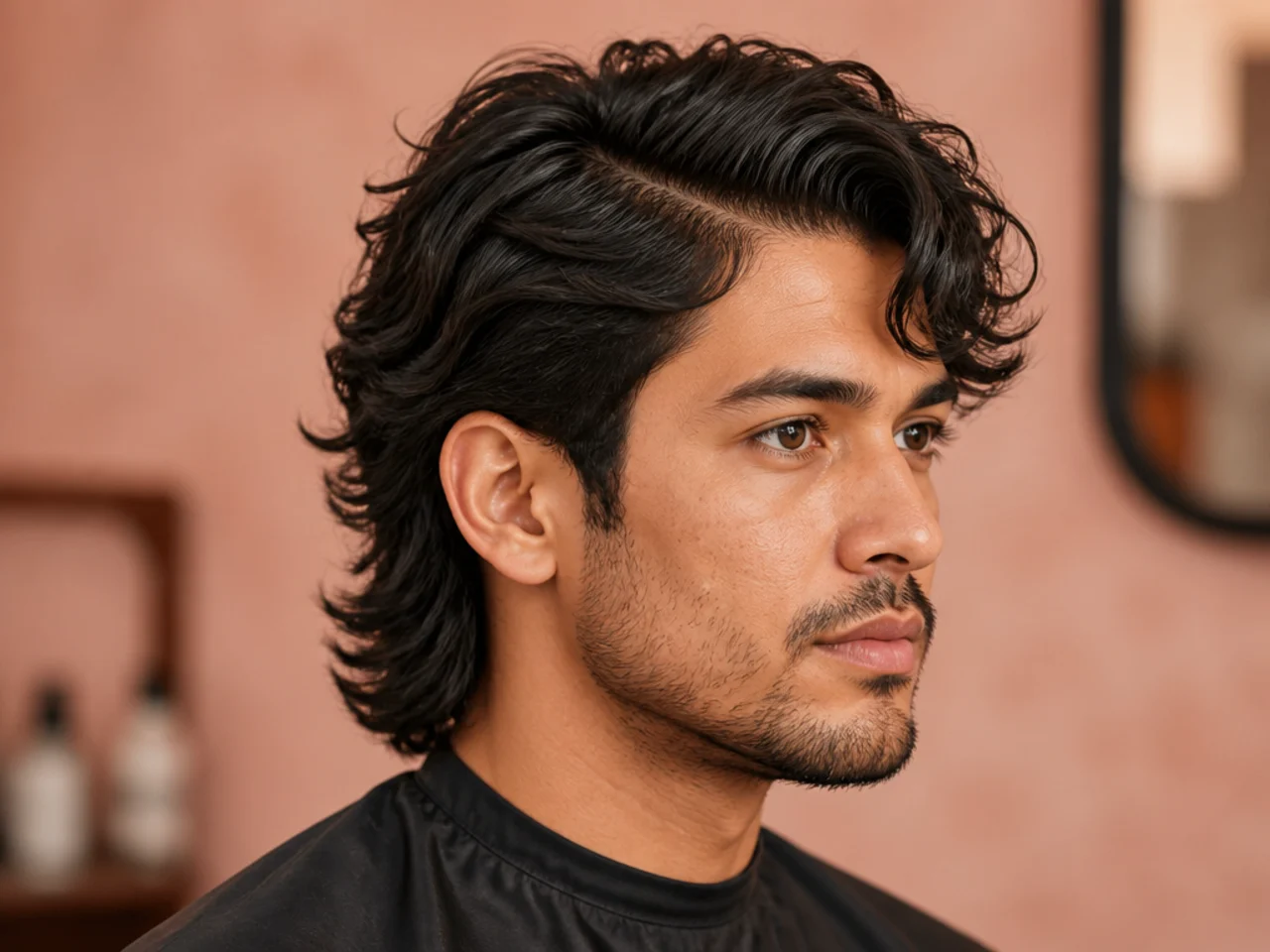
Wavy hair naturally settles into a defined part when combed damp. The wave carries the swept hair across the top in visible ripples rather than a flat sweep, and the mullet nape catches the same wave movement. Reads relaxed and organic — the beach-executive side part.
Suits oval, heart, and diamond faces.
Ask for: "Wavy side part mullet, three-inch top with soft internal layers, comb the natural side part into the wave direction, three-inch feathered nape, scissor-blended sides." Styling time: ninety seconds — salt spray on damp hair, comb the part, air-dry.
13. Retro Side Part Mullet
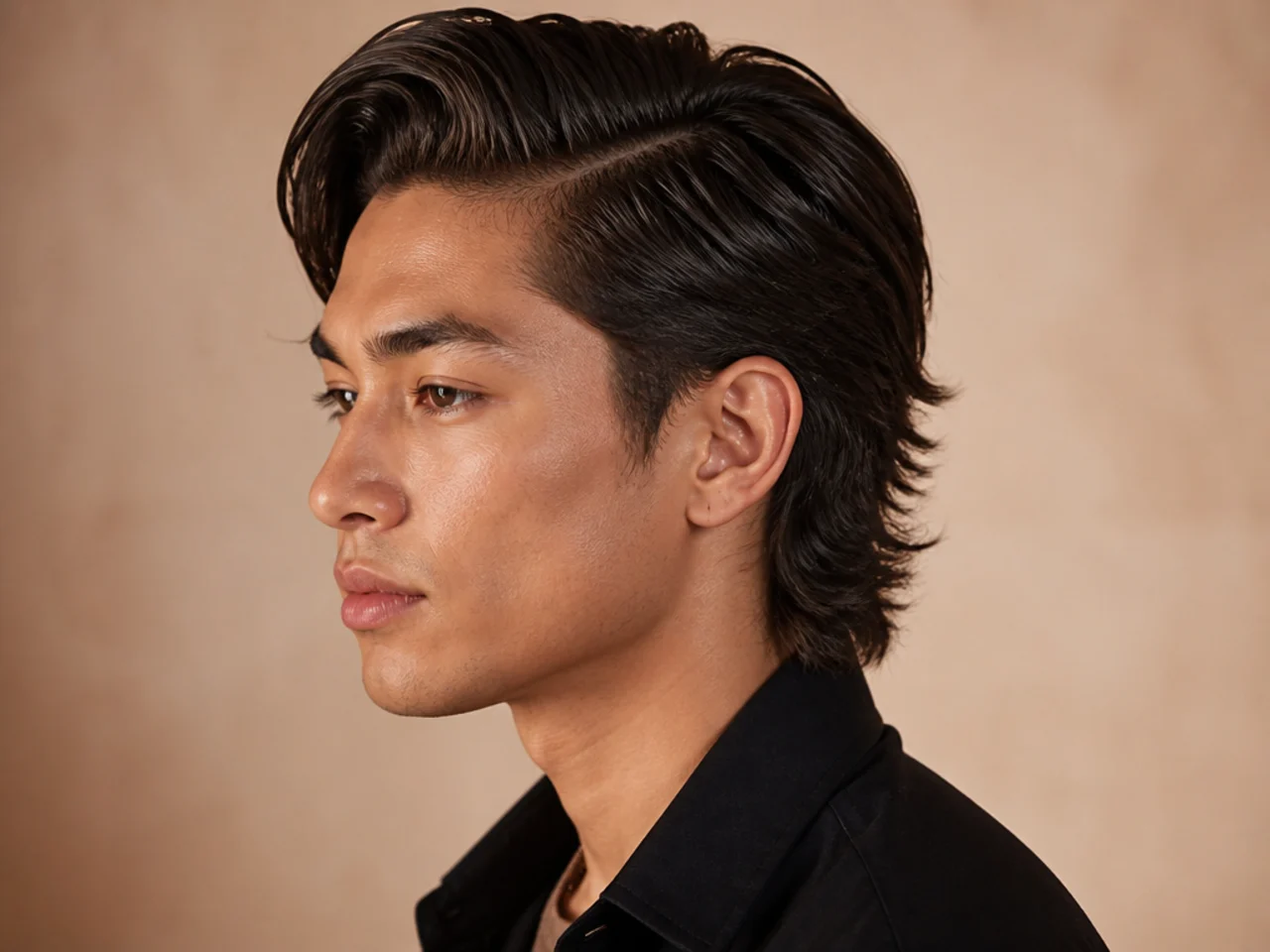
The 80s executive-mullet, updated. Four-inch top with a defined deep side part, four-inch nape with layered ends, softly tapered sides, and a cream-pomade finish. Reads intentionally retro — the mullet as it was worn in the boardroom-to-bar transition of the mid-80s.
Suits oval and square faces. Best on straight to slightly wavy hair.
Ask for: "Retro side part mullet, four-inch top with a deep side part two-and-a-half inches off center, four-inch nape with layered ends, softly tapered sides — no fade — feathered perimeter." Styling time: two minutes — cream pomade combed across, blow-dry the nape flat.
14. Side Part Mullet with Beard
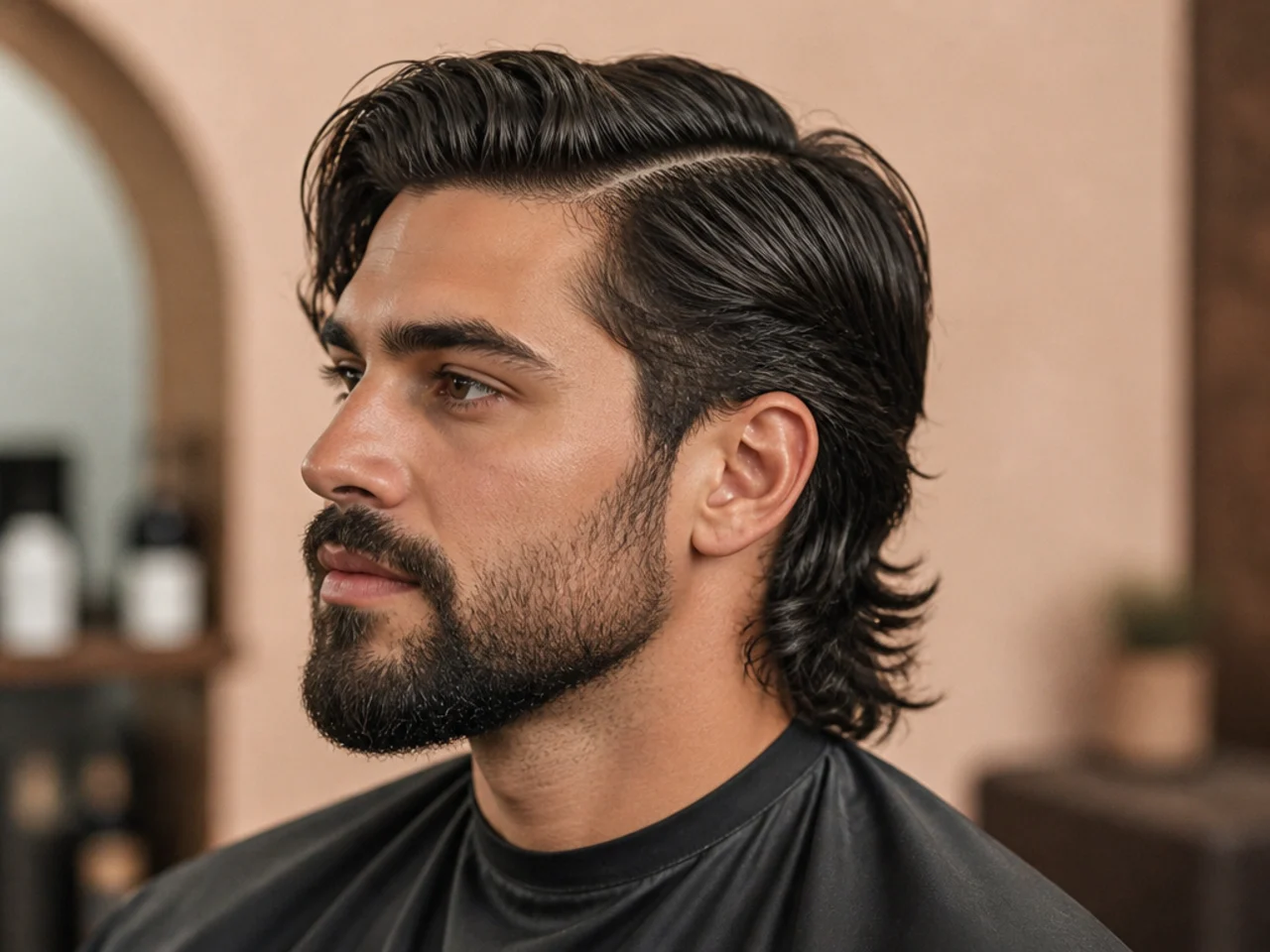
The parted top plus a matched-grade beard reads as an adult cut. The beard's hard line at the jaw balances the top's asymmetric parting, and the mullet nape ties both ends of the head together. Popular with men in their thirties who want the executive read plus mullet character.
Suits diamond, oval, and square faces where the beard balances a wider forehead.
Ask for: "Side part mullet with a matched beard, three-inch top with a defined side part two inches off center, three-inch feathered nape, mid taper connecting into a guard 3 beard, hard sideburn line." Styling time: two minutes — cream pomade for hair, beard oil for the beard.
15. Comb-Over Side Part Mullet
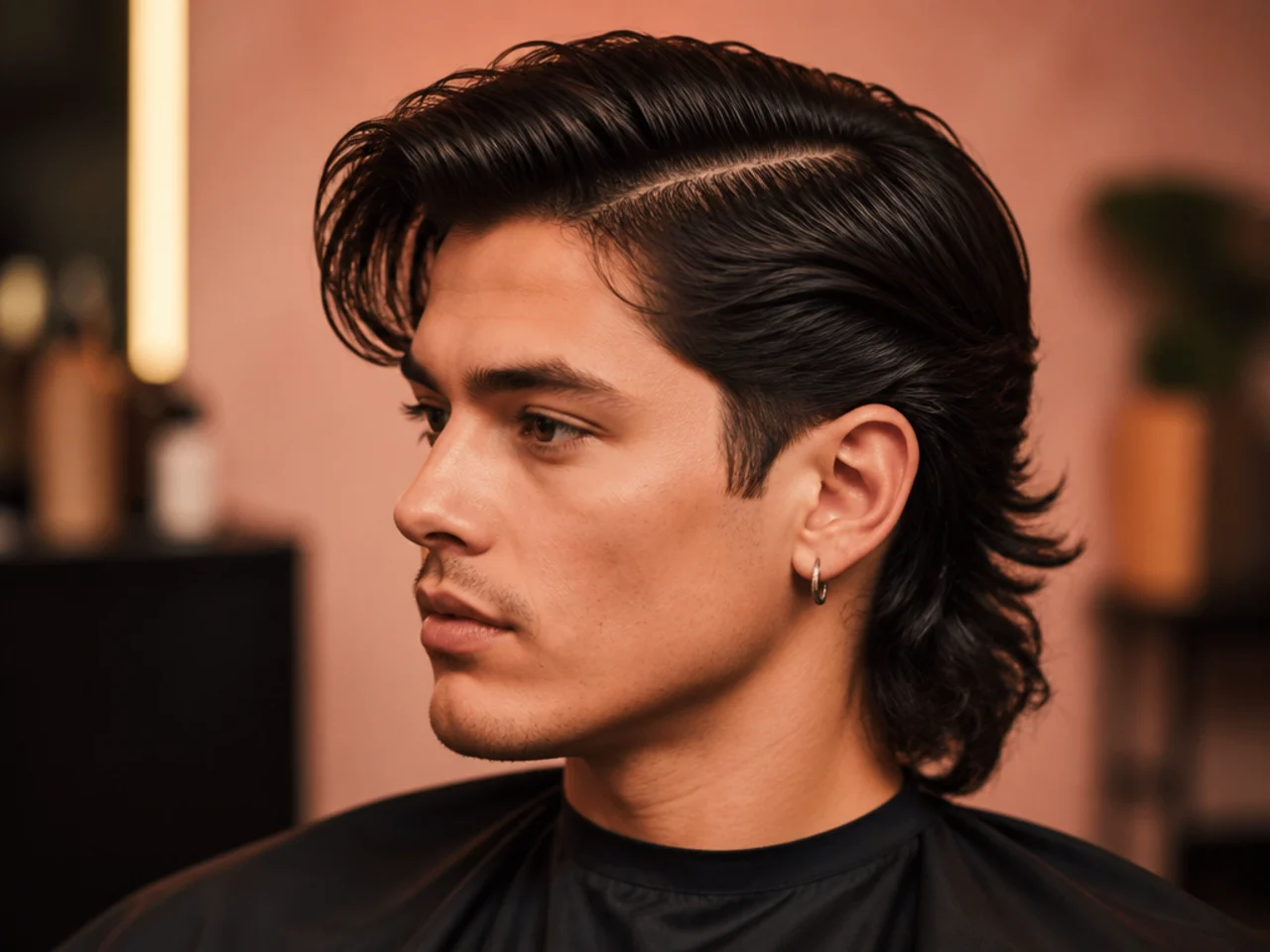
The parting sits low and deep, and the top is combed fully across so the swept-over hair covers most of the crown. Combined with a mullet nape, the comb-over reads controlled and traditional — the businessman's mullet — but with none of the older comb-over's balding association because the density stays intact.
Suits oval, square, and heart faces. Best on straight hair with medium to thick density.
Ask for: "Comb-over side part mullet, three-and-a-half-inch top with a deep low side part, comb the top fully across to one side, three-inch feathered nape, low scissor taper on the sides." Styling time: two minutes — matte-shine pomade, comb the entire top across, hairspray. See our stylish mullet haircut men guide for adjacent dressed variations.
How to Ask Your Barber for a Side Part Mullet
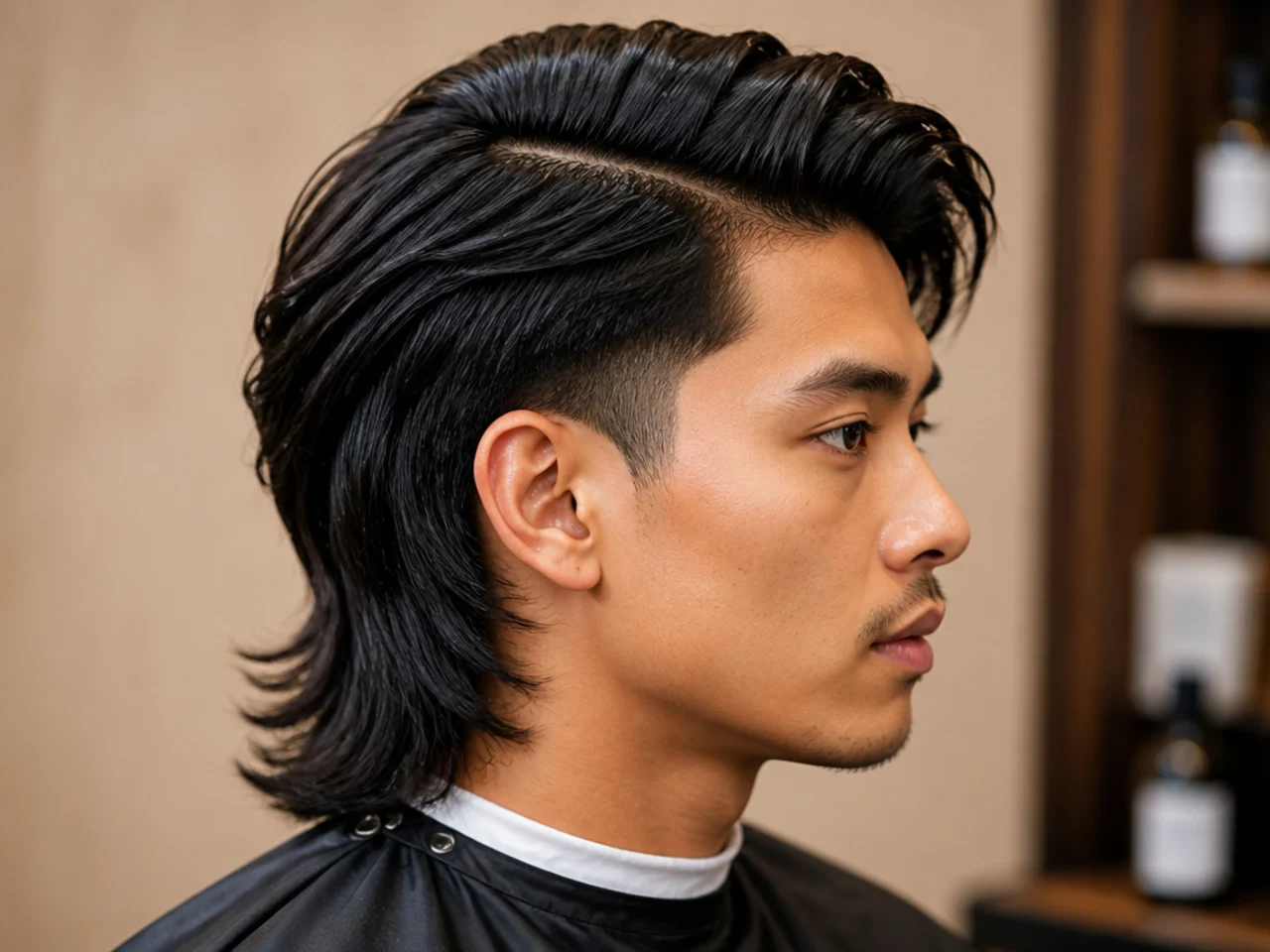
Bring a photo showing the parting exactly where you want it. The parting placement is what makes the whole cut work — a photo removes any guesswork.
- Say "side part mullet" and name the parting method. Natural (follows the cowlick, no cutting), defined (cut into the layers to hold consistently), or hard (razor line cut into the scalp). Each is a different service — call it out.
- Set the parting distance from center. One inch is natural. One-and-a-half is off-center. Two inches is a defined side part. Two-and-a-half to three inches is a deep part. Point to the spot on your own head before the barber starts.
- Set the parting side. Left or right — most men have a natural side dictated by the cowlick. Ask your barber to confirm the cowlick direction before parting against it.
- Set the top length in inches. Three inches is the classic zone. Three-and-a-half to four inches for deep and retro versions. Below two-and-a-half inches, the parting flattens and stops reading as a side part.
- Set the nape length in inches. Two to three inches for the modern side part mullet. Three-and-a-half to four inches for the retro version. The nape stays visibly longer than the sides for the mullet to register.
- Set the side treatment. Scissor-blended reads softest. Low scissor taper reads clean. Low fade reads current. Skip high skin fades — they fight the executive-cut read of the side part.
- Confirm the finish product before the barber styles you. Matte clay for casual. Cream pomade for business. High-shine pomade or gel for wet-look. The product changes how the parting reads — a matte finish reads soft, a shine finish reads sharp.
Show the photo again to confirm the parting placement before scissors touch hair. For hard parts, ask the barber to comb the parting first and mark the line before cutting.
Styling and Maintenance
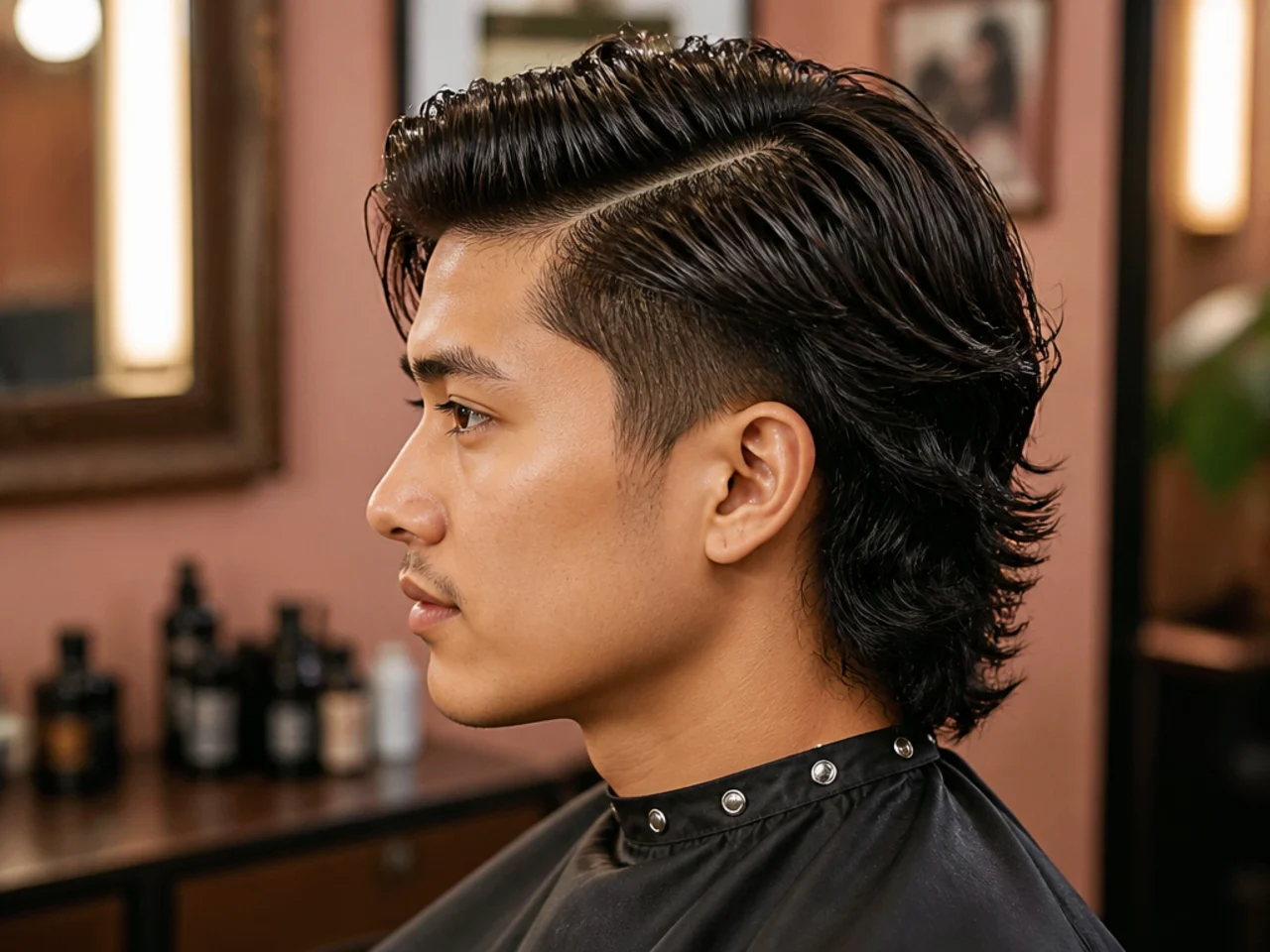
Damp is the working state. Wash and towel-dry so the hair holds product without dripping. For a matte finish, prime with a light styling cream. For a shine finish, skip the primer and go straight to the pomade.
Part before you style. Comb the parting into place with a fine-tooth comb before applying any product — once product goes on, the parting is set for the day. Use the natural cowlick direction unless you specifically want to fight it. For hard parts, the razor line does the marking for you.
Comb, do not finger-comb. Side part mullets need a comb to build the clean sweep. A fine-tooth comb for high-shine finishes, a wide-tooth comb for matte-cream finishes. Finger-combing works for soft and textured side part variations but leaves the parting less defined.
Product choice sets the read. Matte clay reads casual and modern. Matte-shine cream pomade reads professional and current — the most workplace-friendly choice. High-shine pomade or wet-look gel reads formal and slightly retro. Skip everything except matte for weekend wear.
Re-cut the shape every four to six weeks. Hard parts need touch-ups every two weeks — the razor line grows out fast. Faded and tapered sides need re-cutting every two to three weeks to stay sharp. For adjacent styled shapes, see our slick back haircut guide or the modern mullet haircut men pillar. If you prefer symmetry instead, the middle part haircut men guide covers the opposite direction.
FAQ
Which side should the parting sit on?
Whichever side your cowlick sends the hair. Most men have a natural cowlick at the crown that dictates the parting direction — parting with the grain gives the cleanest hold. If you want to fight the cowlick, ask the barber to blow-dry the hair away from its natural direction first, then set the parting.
Can you get a side part mullet with short hair?
Yes, but the top needs to be at least two inches. Below two inches, the parted hair does not fall to one side — it stands up. A short mullet with a two-and-a-half-inch top can hold a soft natural side part cleanly. See our short mullet haircut men guide for compatible base cuts.
What is the difference between a side part mullet and a hard part mullet?
A side part mullet uses combing and cutting to place the parting. A hard part mullet uses a razor to cut a permanent line into the scalp along the parting. The hard part reads sharper and stays visible without product; the soft side part reads more natural and needs product to hold.
Do side part mullets work in a corporate office?
Yes — the side part mullet is one of the most office-friendly mullet variations. Combined with a scissor taper on the sides and a matte-shine cream pomade, the shape reads as a controlled executive cut. Skip the deep parts and hard parts in traditional corporate settings — save those for creative offices and weekends. The soft mullet haircut men guide covers even quieter alternatives.