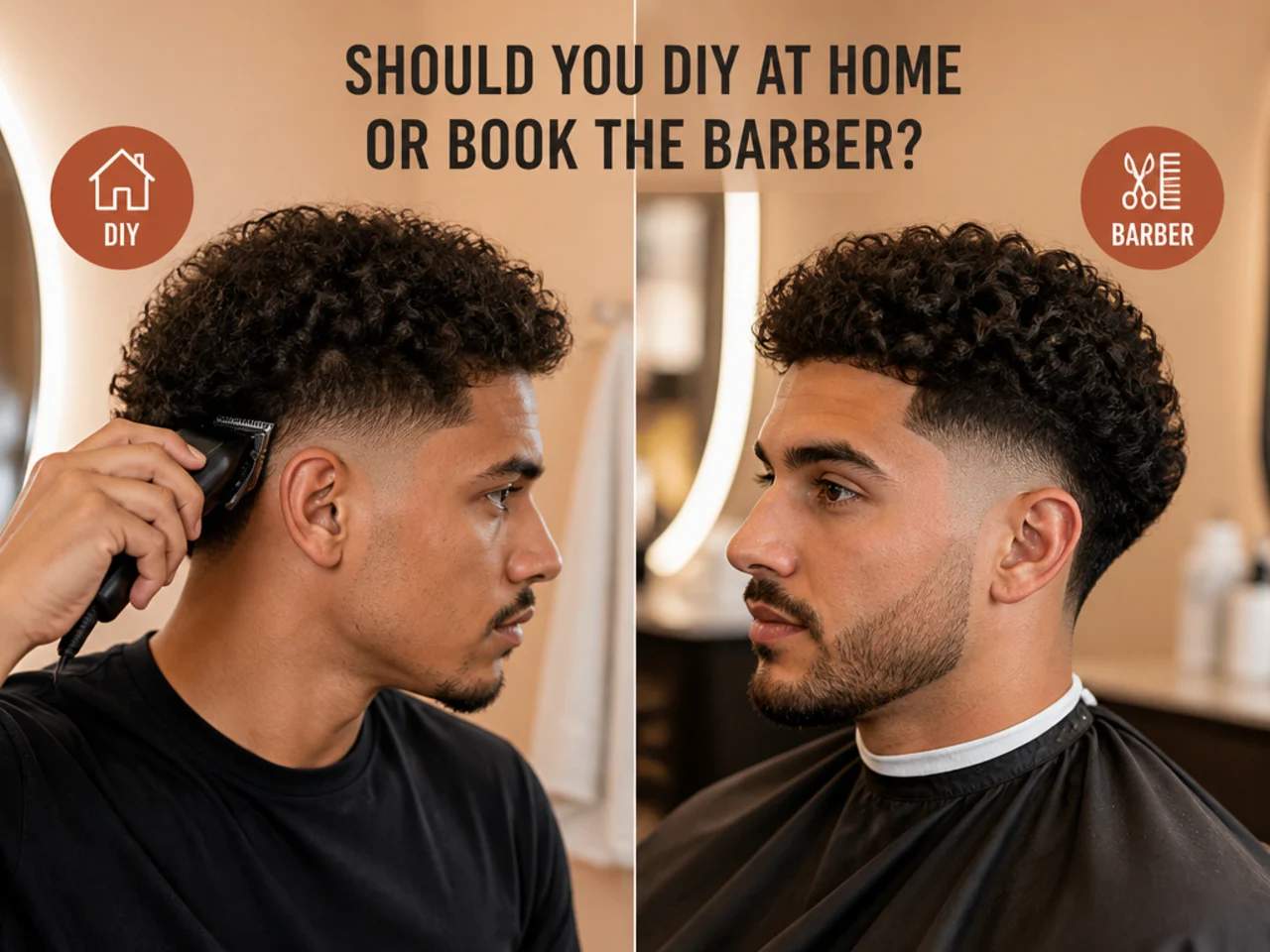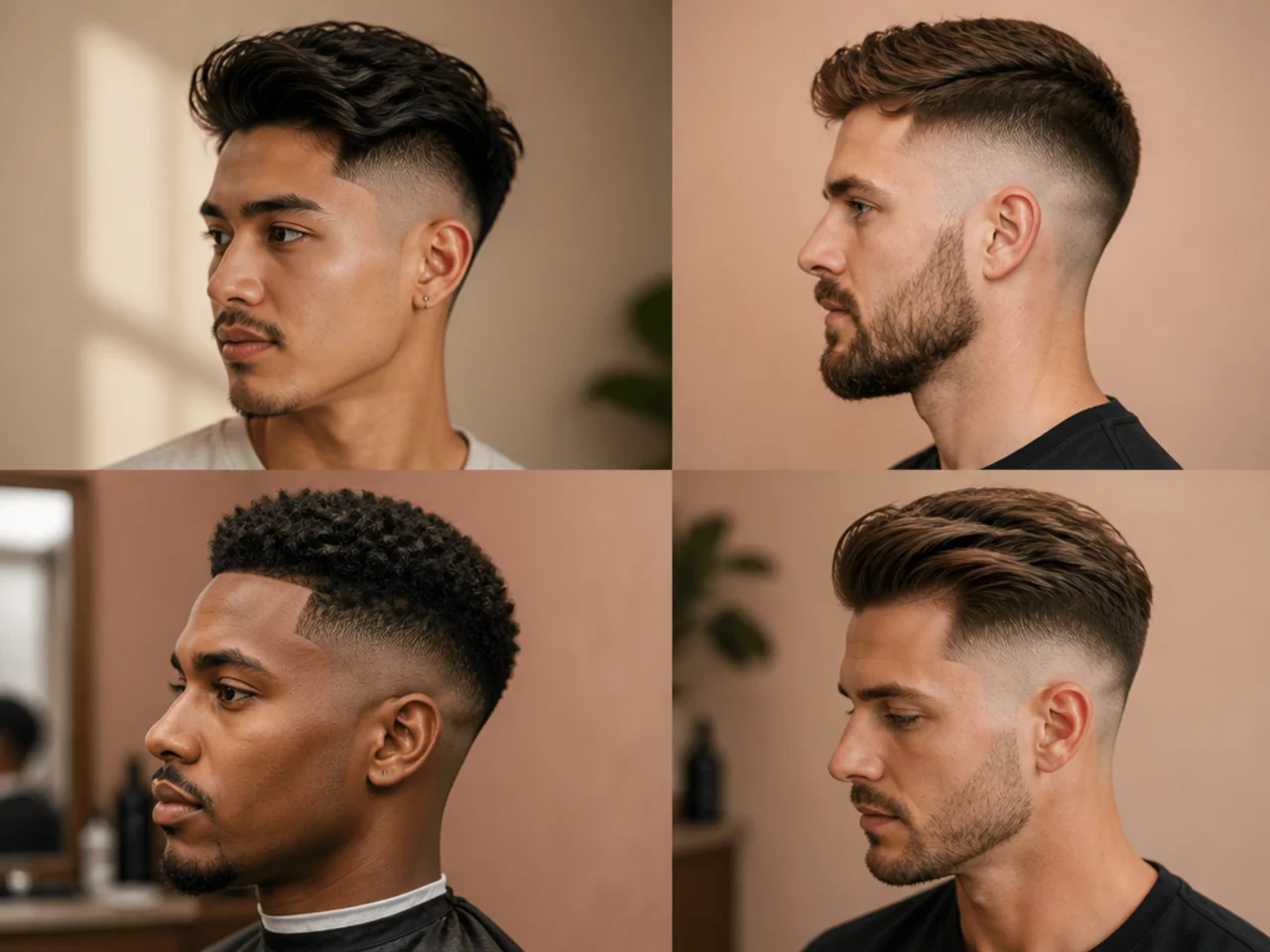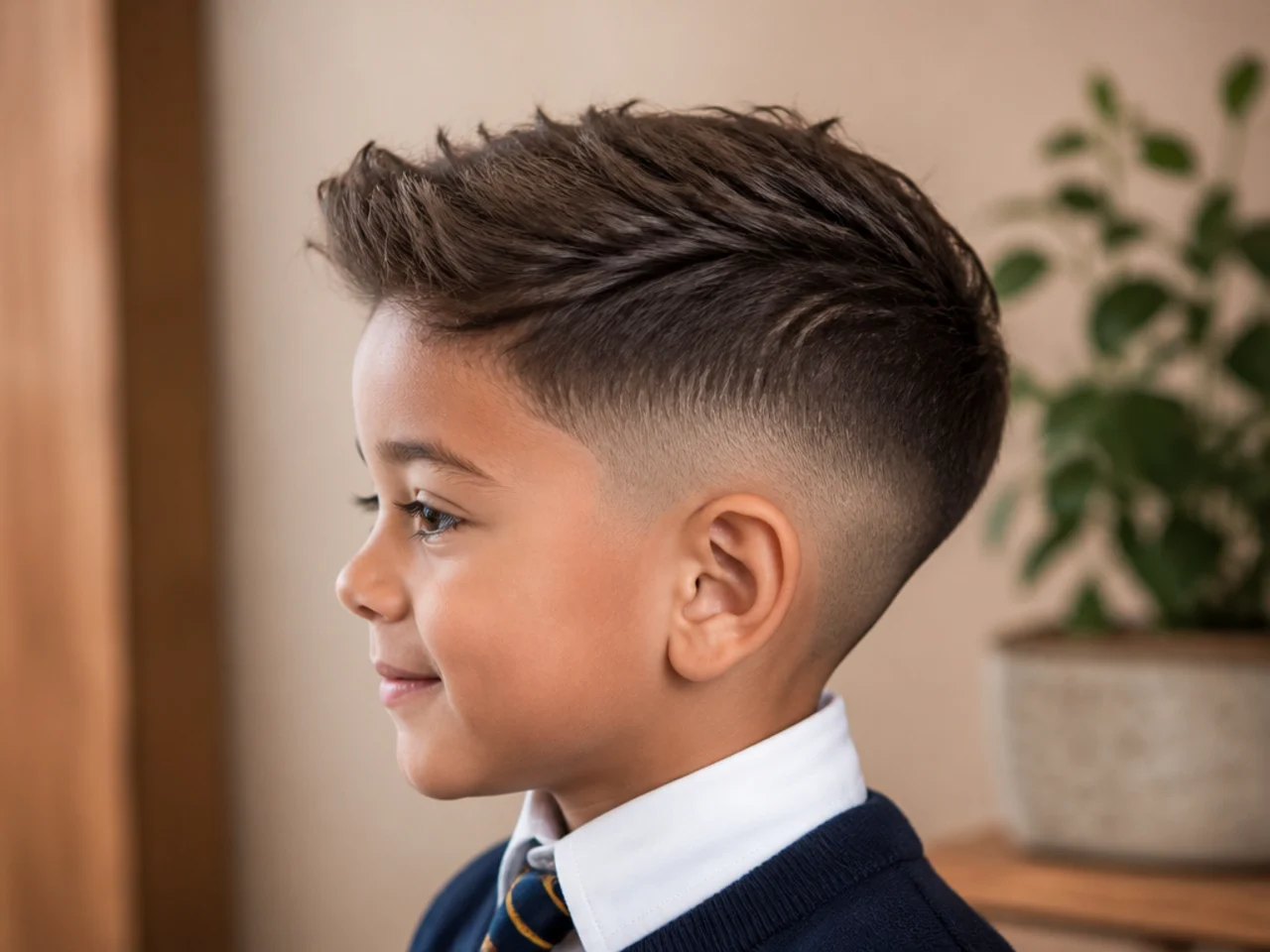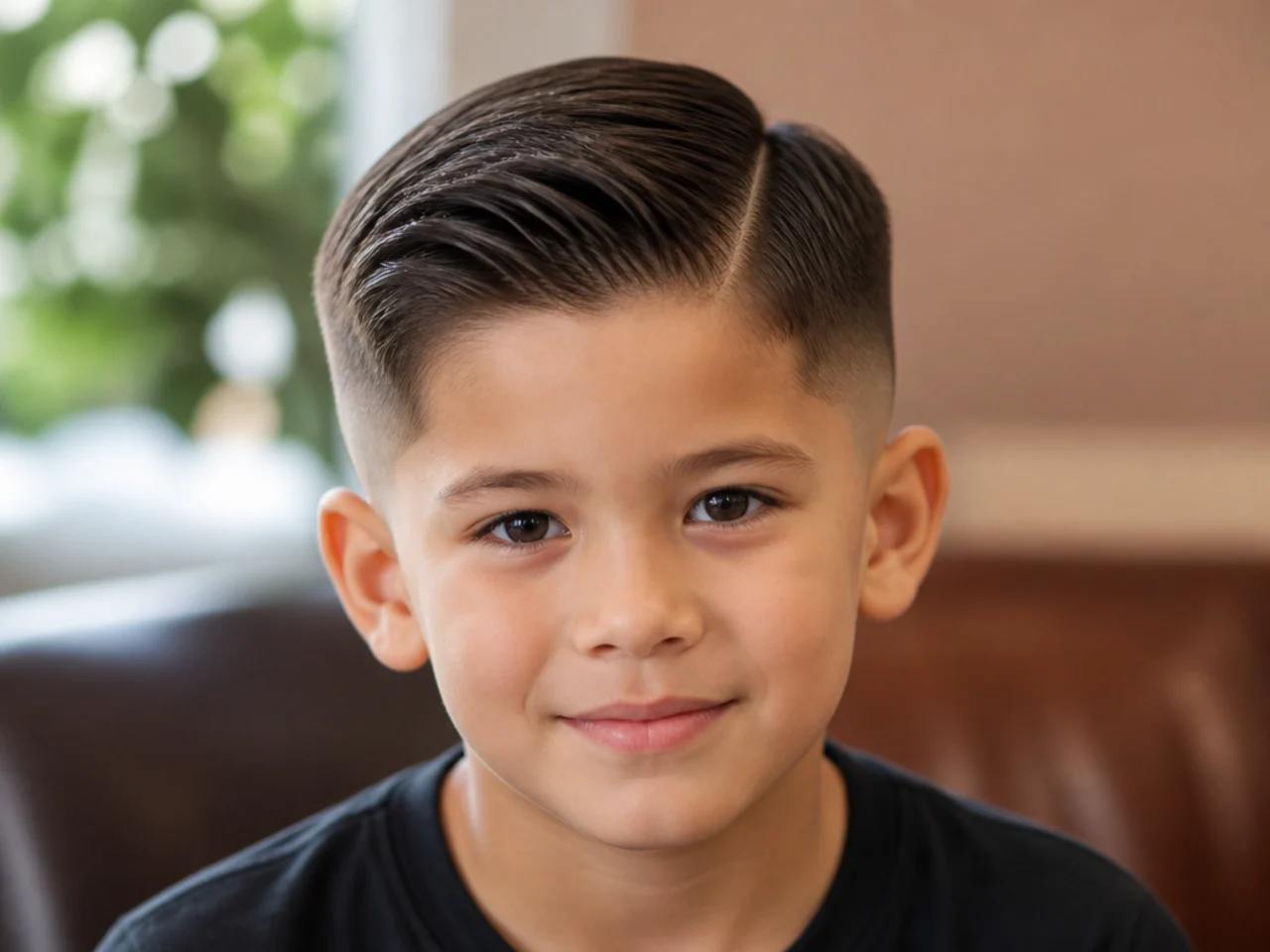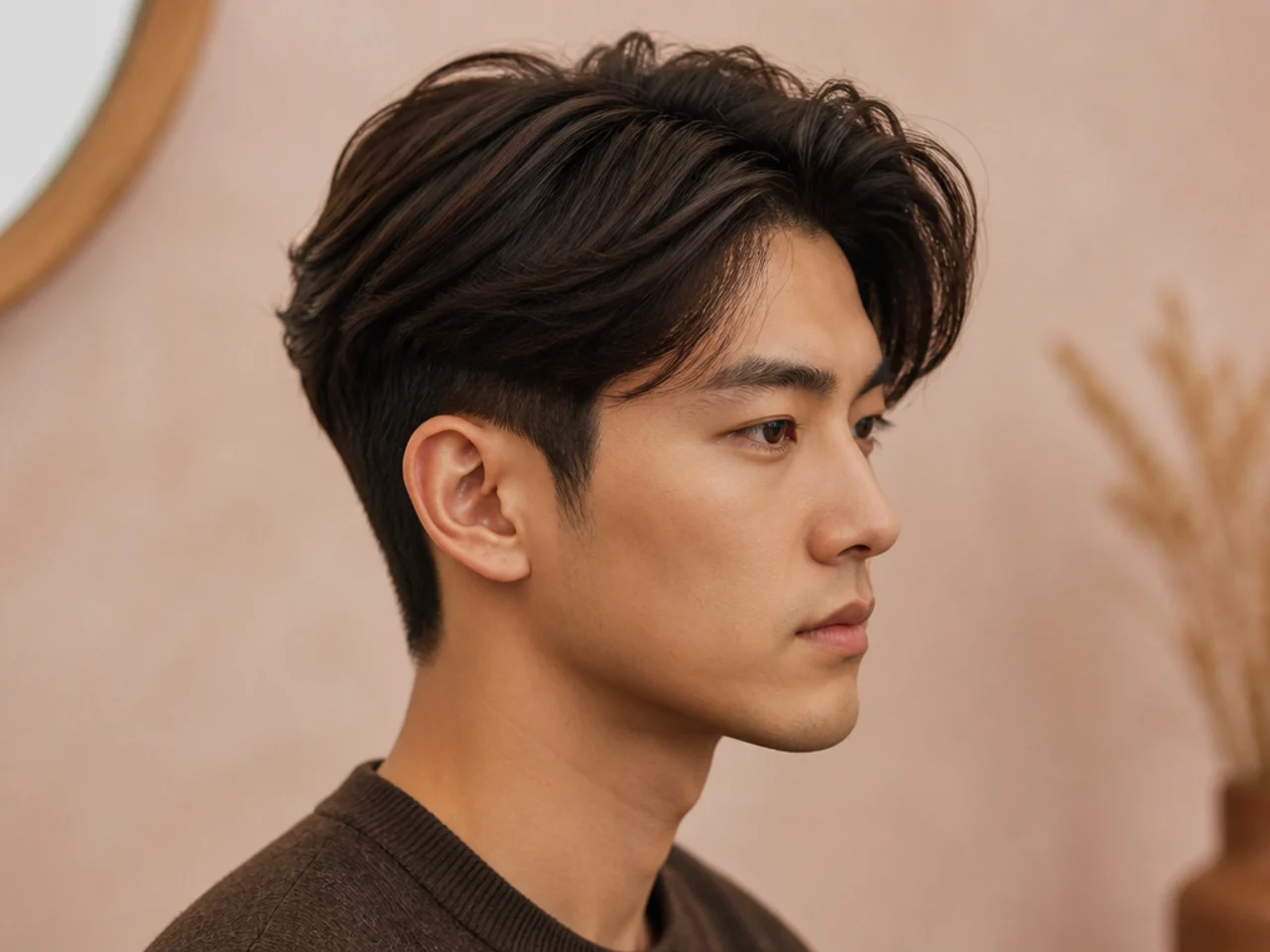
15 Asian Blowout Taper Haircuts for Men
Fifteen Asian blowout taper haircuts built for thick, dense, straight-growing hair — with the perm, product, and blow-dry moves that actually hold the shape.
In this article · 22
- What Makes the Asian Blowout Taper Different
- How to Choose Your Asian Blowout Taper
- 15 Asian Blowout Taper Variations
- 1. Classic Mid Blowout Taper
- 2. Low Taper Blowout with a Middle Part
- 3. Two-Block Blowout Taper
- 4. Comma Hair Blowout Taper
- 5. Mid Skin Fade Blowout for Sharp Contrast
- 6. Textured Fringe Blowout Taper
- 7. High Taper Blowout for Maximum Height
- 8. Side-Part Blowout Taper
- 9. Down-Perm Blowout Taper (Bruce Perm)
- 10. Curtain Bang Blowout Taper
- 11. Slicked-Back Blowout Taper
- 12. Low Skin Fade Blowout with a Straight Top
- 13. Messy Piecey Blowout Taper
- 14. Long-Top Blowout Taper
- 15. Mid Drop Fade Blowout
- Products and Tools That Actually Work on Asian Hair
- How to Ask Your Barber
- Styling and Maintenance for Asian Hair
- FAQ
The Asian blowout taper is a barber's answer to thick, dense, straight-growing hair. The round brush builds a rounded crown that Asian hair holds all day, and the taper below keeps the sides from stacking into a helmet. This guide covers fifteen variations tuned specifically for East Asian hair — with the perm calls, product picks, and blow-dry moves that make each shape hold from a coffee run to a night out.
What Makes the Asian Blowout Taper Different
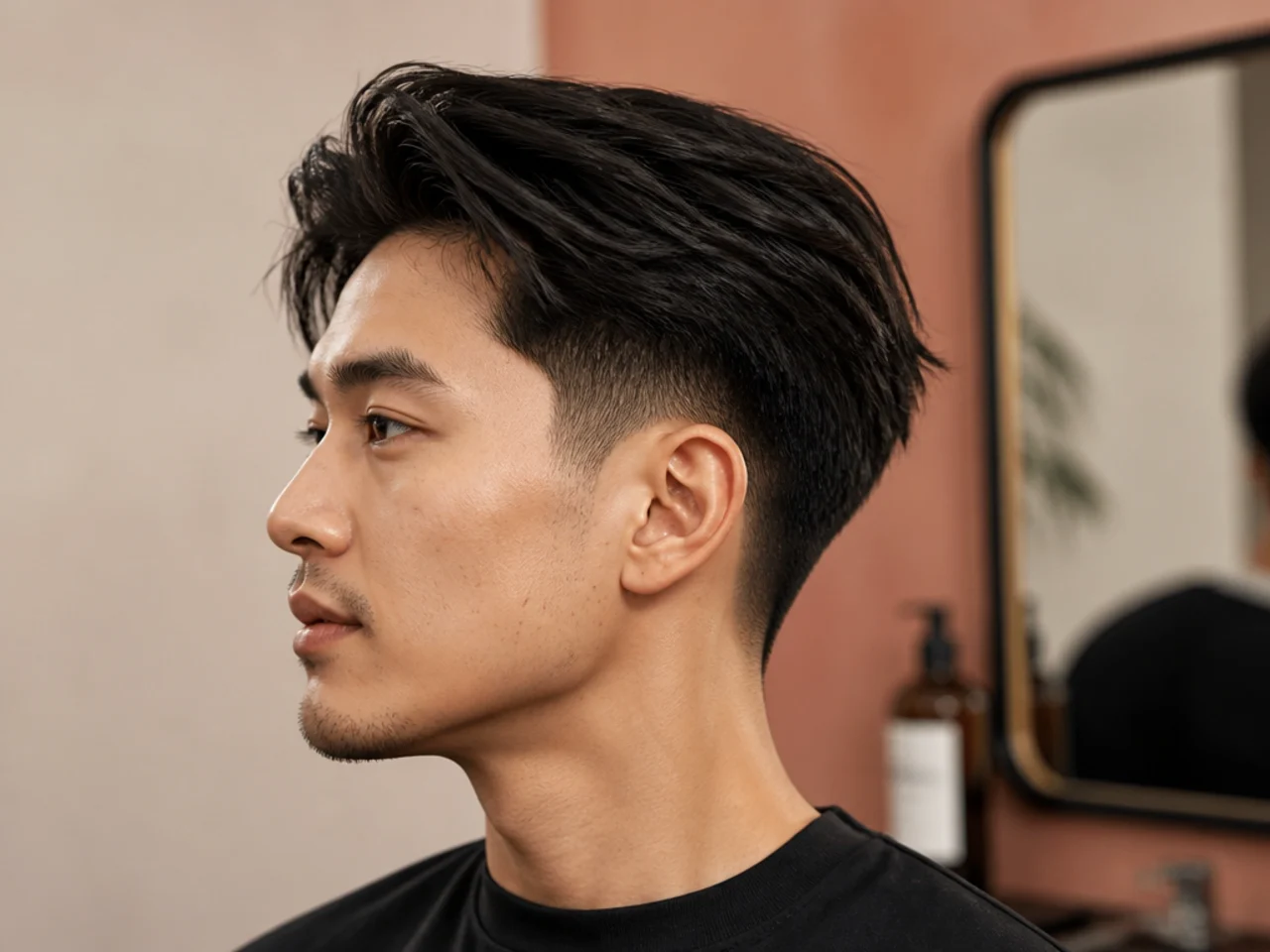
Asian hair has three traits no other hair type shares in the same combination: individual strands are thick, the density per square inch is high, and the growth pattern points straight down. That mix is a barber's dream for a blowout taper. The strands hold whatever shape a round brush builds. The density gives the crown real body. And the straight fall means a cool shot at the end locks the silhouette in place for the whole day.
The tradeoff is bulk. Asian hair defaults to mushroom shape if the barber only cuts the exterior length. You have to remove internal weight with texturizing shears, a razor, or heavy point-cutting so the top reads intentional instead of top-heavy. This is the single biggest reason average blowouts on Asian hair look flat — the outside got shorter, the inside stayed dense.
The taper below matters just as much. A blowout on Asian hair over untouched sides reads bowl-cut fast, because the density stacks up wherever the barber didn't cut. A taper — hair that shrinks gradually from long to short around the ears and neckline — releases that stacked weight and lets the top own the silhouette. The higher the taper, the more room the blowout has to speak.
How to Choose Your Asian Blowout Taper
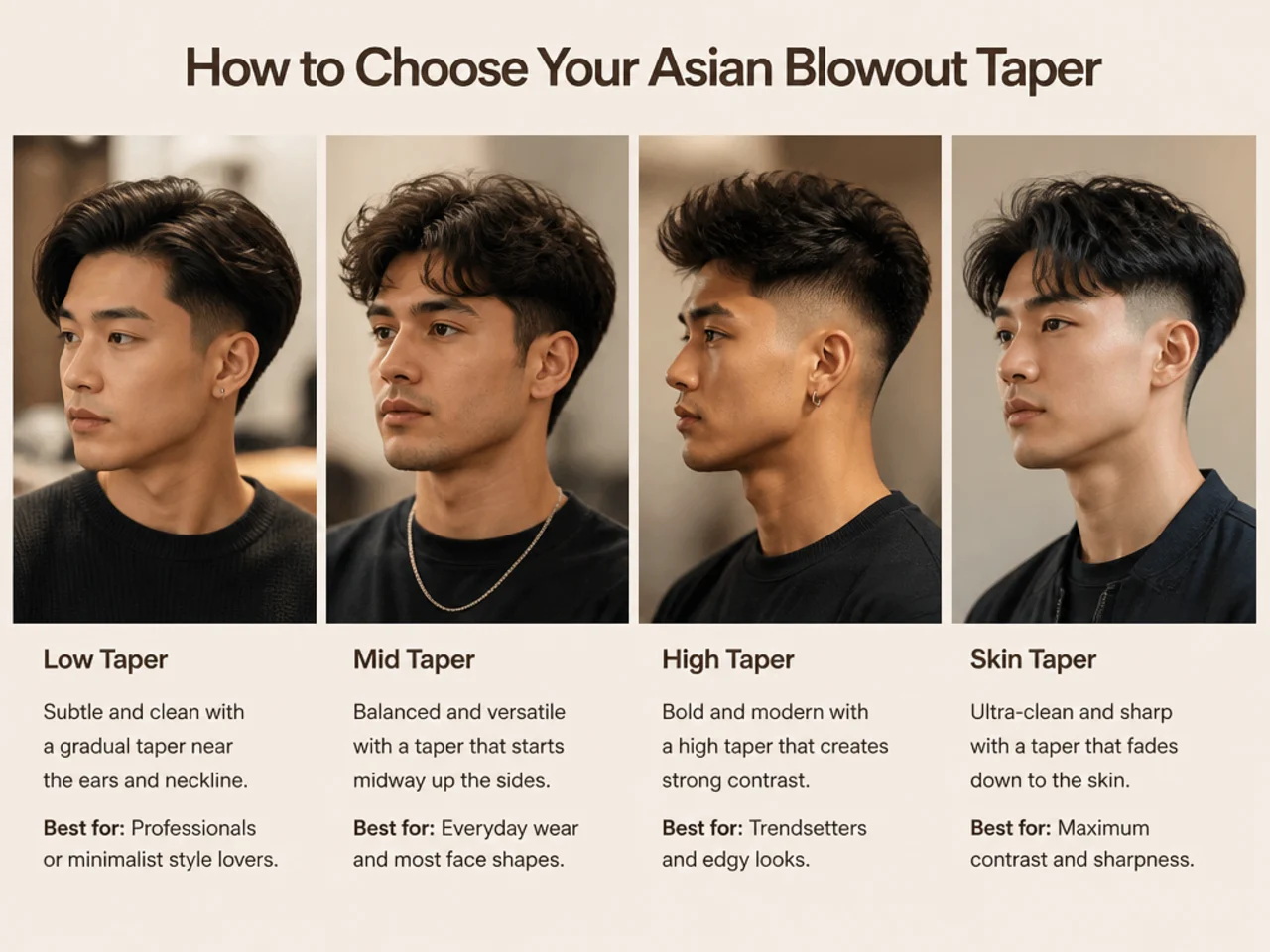
Four calls decide which variation suits you. Get them right in the chair and you leave with the shape you had in mind.
Face shape. East Asian faces trend toward softer jawlines and flatter side profiles than average Western features, which changes the geometry. Round faces need taller crown volume plus a mid or high taper for vertical line. Square jaws work with any height. Oval faces are the sweet spot — any variation reads clean. Long faces want the top under four inches and the taper low.
Perm or no perm. Asian hair resists lift. A soft down-perm at the roots (also called a side-perm or Bruce perm) gives you natural volume that stays without daily blow-drying. If you're willing to spend eight minutes with a dryer every morning, skip the perm. If you want the shape to hold on air-dry, get it.
Hair density. Everyone has thick Asian hair on paper, but density varies. Very dense hair needs heavier internal texturizing — otherwise it reads helmet. Medium-density Asian hair takes the standard cut without extra thinning. Fine Asian hair (rare but real) needs a shorter top for the volume to read dense.
Silhouette read. K-pop styling reads high, sharp, and product-heavy. Street-Korean styling reads softer, longer, more textured. Japanese men's styling trends drier and more piecey. Look at three photos of the finished shape before you sit down — the fade height and top length flow from what silhouette you're chasing.
15 Asian Blowout Taper Variations
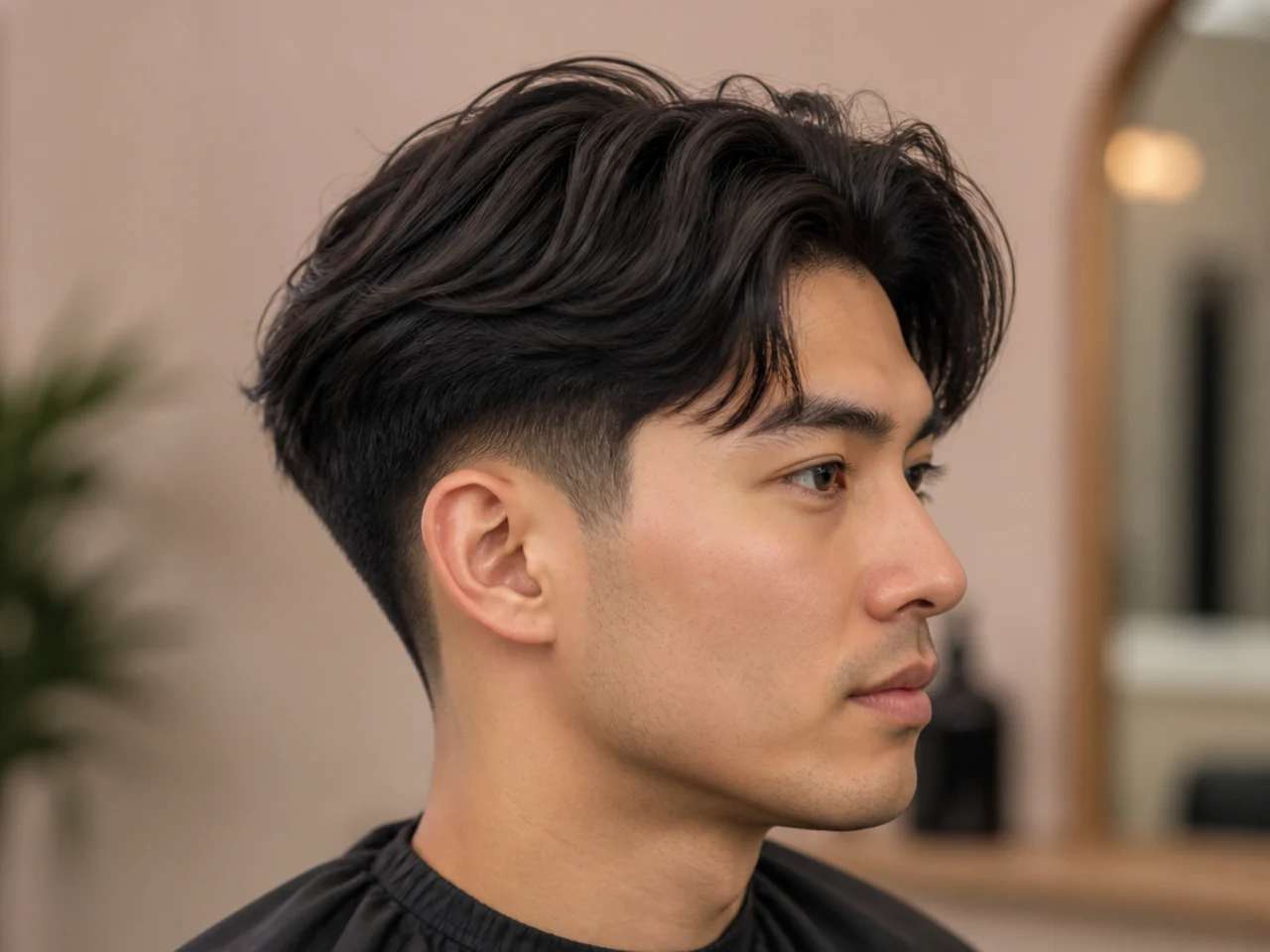
The variations below sort by fade height, then by top shape. Each entry tells you what makes the version different, who it suits, exactly what to ask for, and one styling move that lands the shape on Asian hair specifically.
1. Classic Mid Blowout Taper
The default entry point. Mid taper starting at the temple, five inches of length on top, blown forward and up into a rounded crown. Asian hair holds this shape cleaner than any other texture on the planet, which is why the blowout took off in Seoul and Tokyo salons long before it hit the West. Best for oval and square faces with medium to thick Asian hair.
Ask for: "Mid taper on the sides, 0.5 guard at the shortest, five inches on top, texturize the internal weight, cut for a blowout." Say texturize — otherwise the density stacks and the blowout reads mushroom.
Styling tip: Root-lift mousse on damp hair, round brush pulling forward and up from the crown, cool shot at the end. Matte clay through the ends. Asian hair reads greasy fast with pomade — stay matte.
2. Low Taper Blowout with a Middle Part
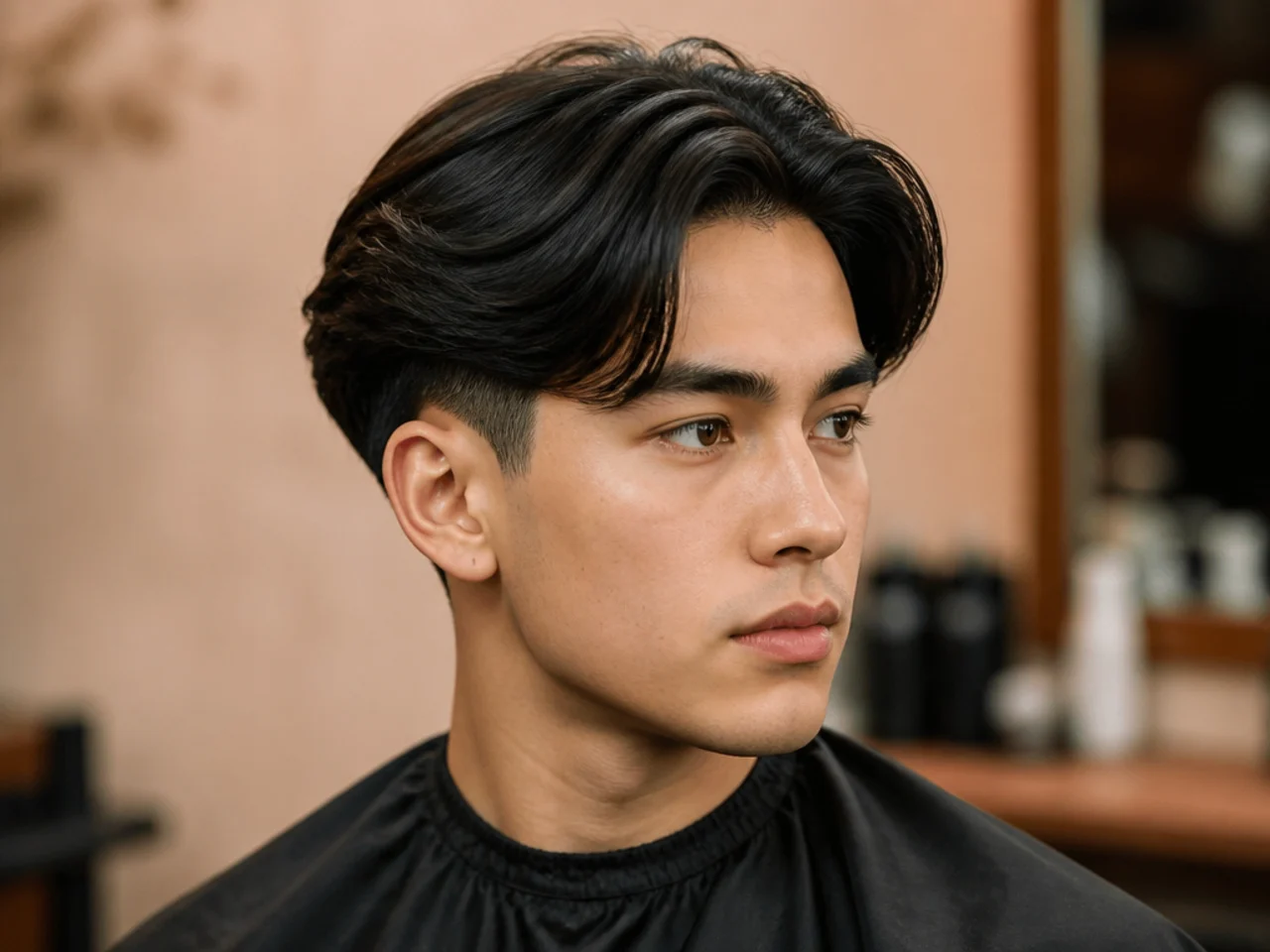
The middle-part blowout is the K-drama silhouette — top parted down the center, both sides swept out with round-brush lift, sides tapered clean above the ear. Asian hair holds a middle part longer than any other texture because it stays where you place it. Best for oval and long faces with medium-density hair. See the blowout taper middle part guide for full variations.
Ask for: "Low taper on the sides — 1 guard at the shortest, soft middle part, five inches on top, blow-dry weight to both sides." Point at where you want the taper to start above your ear.
Styling tip: Comb the part in when hair is damp, blow-dry each side outward with a round brush, cool shot at the crown. Light cream to lock the sides. Zero product at the part line itself — that flattens it.
3. Two-Block Blowout Taper
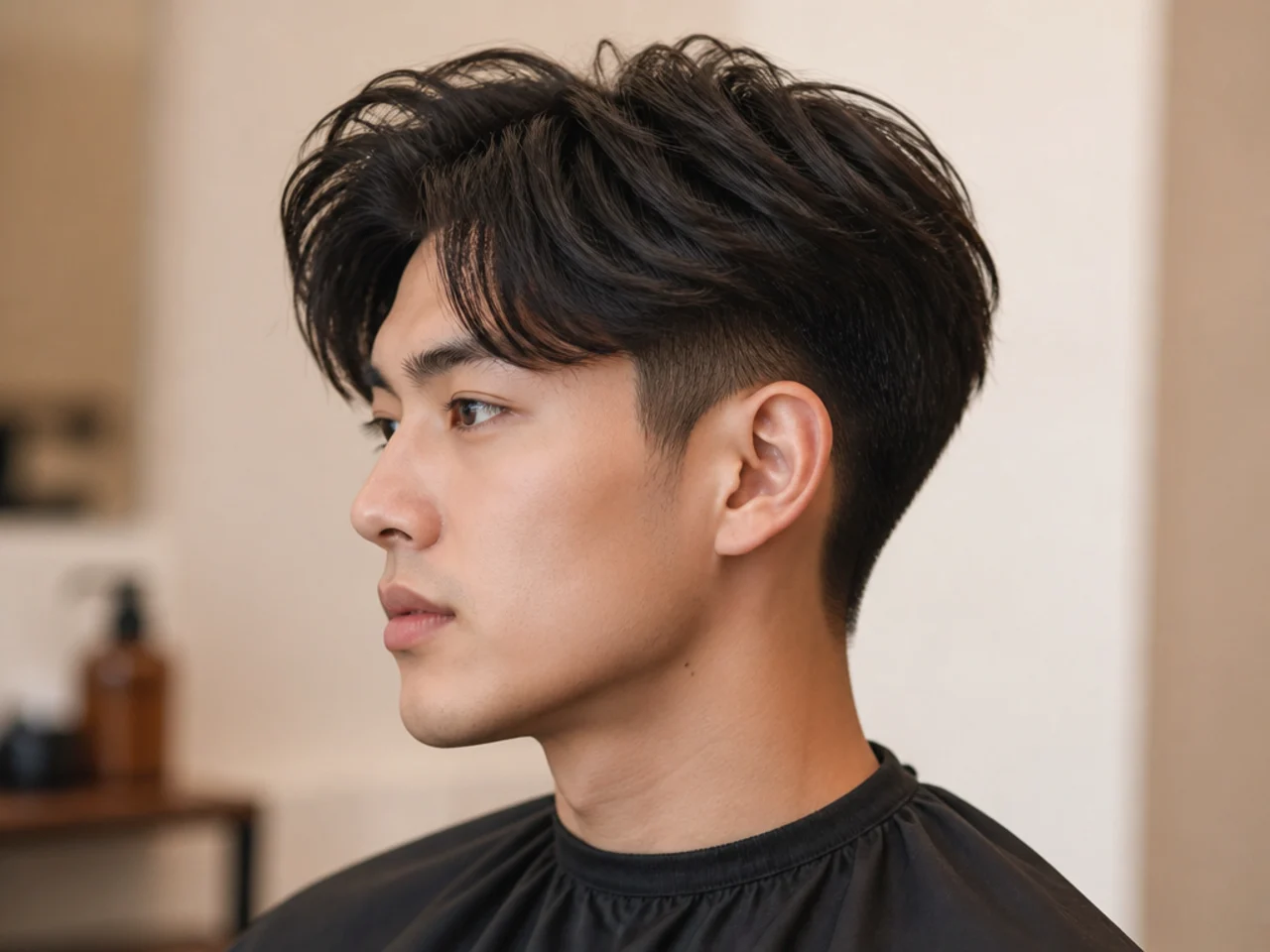
The two-block haircut is the signature Korean look — long, weighted top disconnected from short sides, no blend. The blowout version keeps the two-block disconnection but adds round-brush lift on top instead of leaving it flat. You get the K-pop silhouette with modern volume. Best for oval, square, and heart faces with thick Asian hair.
Ask for: "Two-block taper — clippered sides tapered from 0.5 at the bottom to 2 at the top, disconnected line where the long top starts, five inches on top cut for a blowout." Say disconnected clearly. Some barbers default to a blended fade.
Styling tip: Blow-dry the top forward and up first, then let it fall wherever it lands — the disconnection means the two blocks don't need to visually merge. Matte clay through the ends only.
4. Comma Hair Blowout Taper
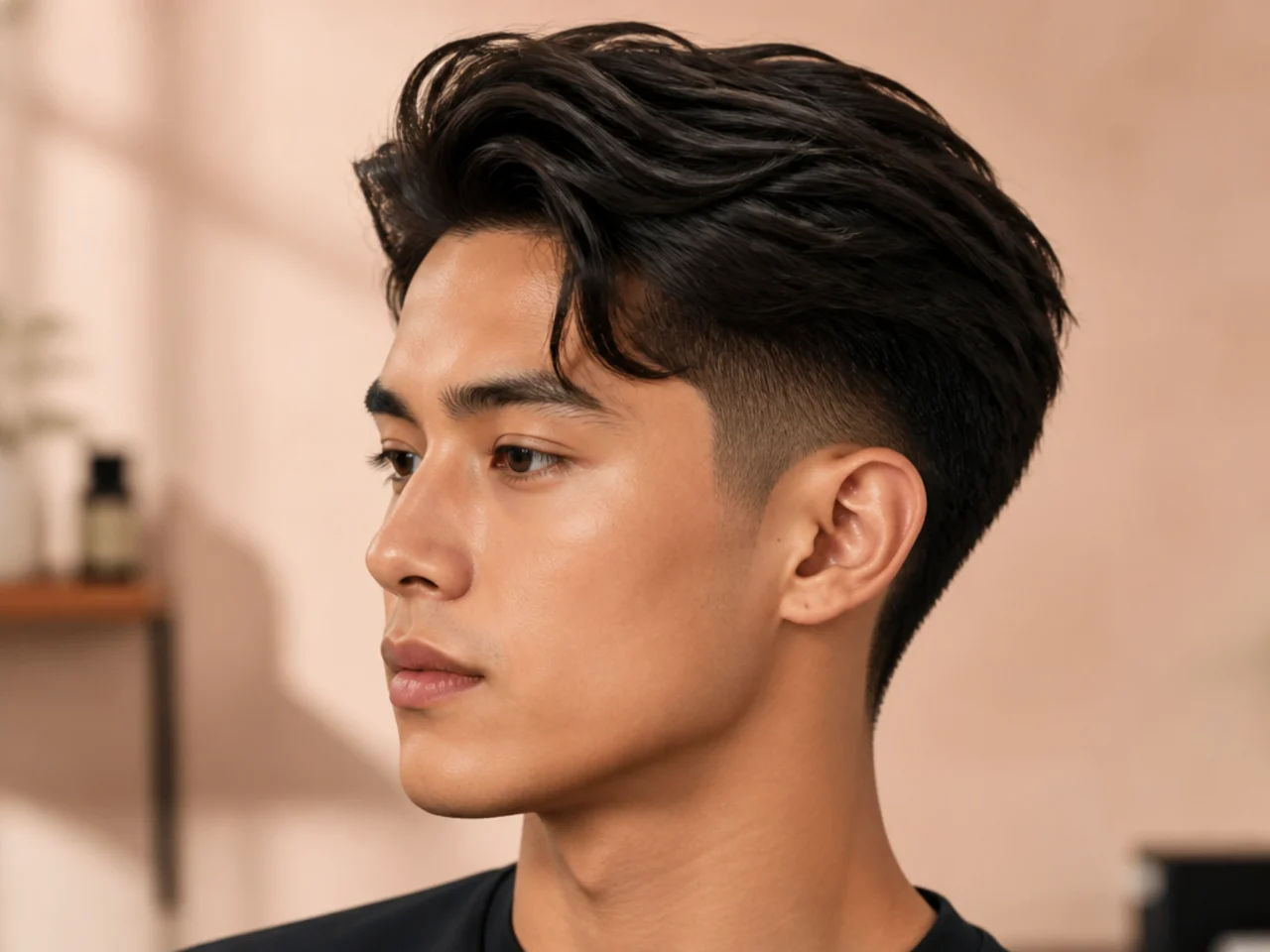
The comma haircut is the front-fringe curl shaped like a comma — a curved piece that flicks in at the temple. Pair it with a blowout taper and you get lift through the crown plus that signature K-styled front. Best for round and heart faces because the comma softens angular features. Bring a photo — comma placement varies by shop.
Ask for: "Mid taper on the sides, four to five inches on top, comma-shaped front fringe on both temples, blow-dry the crown for a soft blowout shape." The comma detail is the hero — spell it out.
Styling tip: Round brush pulling the front down and in toward the temple to make the comma curl, then flip the rest of the top up with the brush. Setting spray locks the comma. Asian hair without a perm may need a curling iron at low heat for the initial comma shape.
5. Mid Skin Fade Blowout for Sharp Contrast
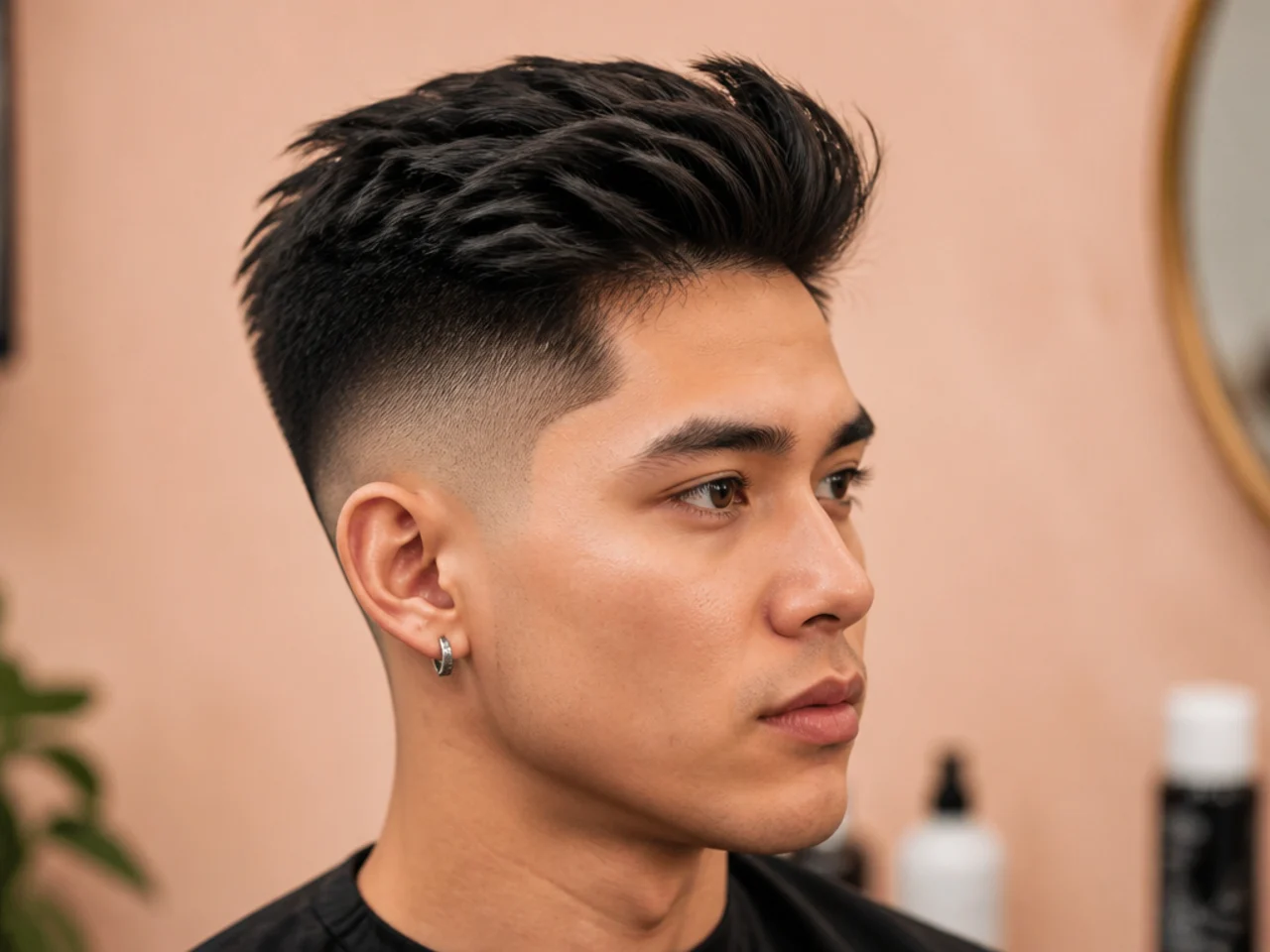
Taking the mid taper to bare skin at the temple creates the hardest possible contrast between the sides and the round-brushed top. Asian hair reads especially sharp against skin because the density and dark color make the transition dramatic. Best for square jaws and strong facial features. Reference the mid fade haircut guide for fade-height comparisons.
Ask for: "Mid skin fade at the temple, blowout on top, five inches through the crown, texturize the internal weight, weight the front third for a round-brush shape." Point at your temple so the barber sees where the skin starts.
Styling tip: Volumizing mousse at the roots, blow-dry with the round brush pulling forward and up, cool shot after each section. Matte paste to finish. Nothing shiny — shine kills the sharp read this cut is built for.
6. Textured Fringe Blowout Taper
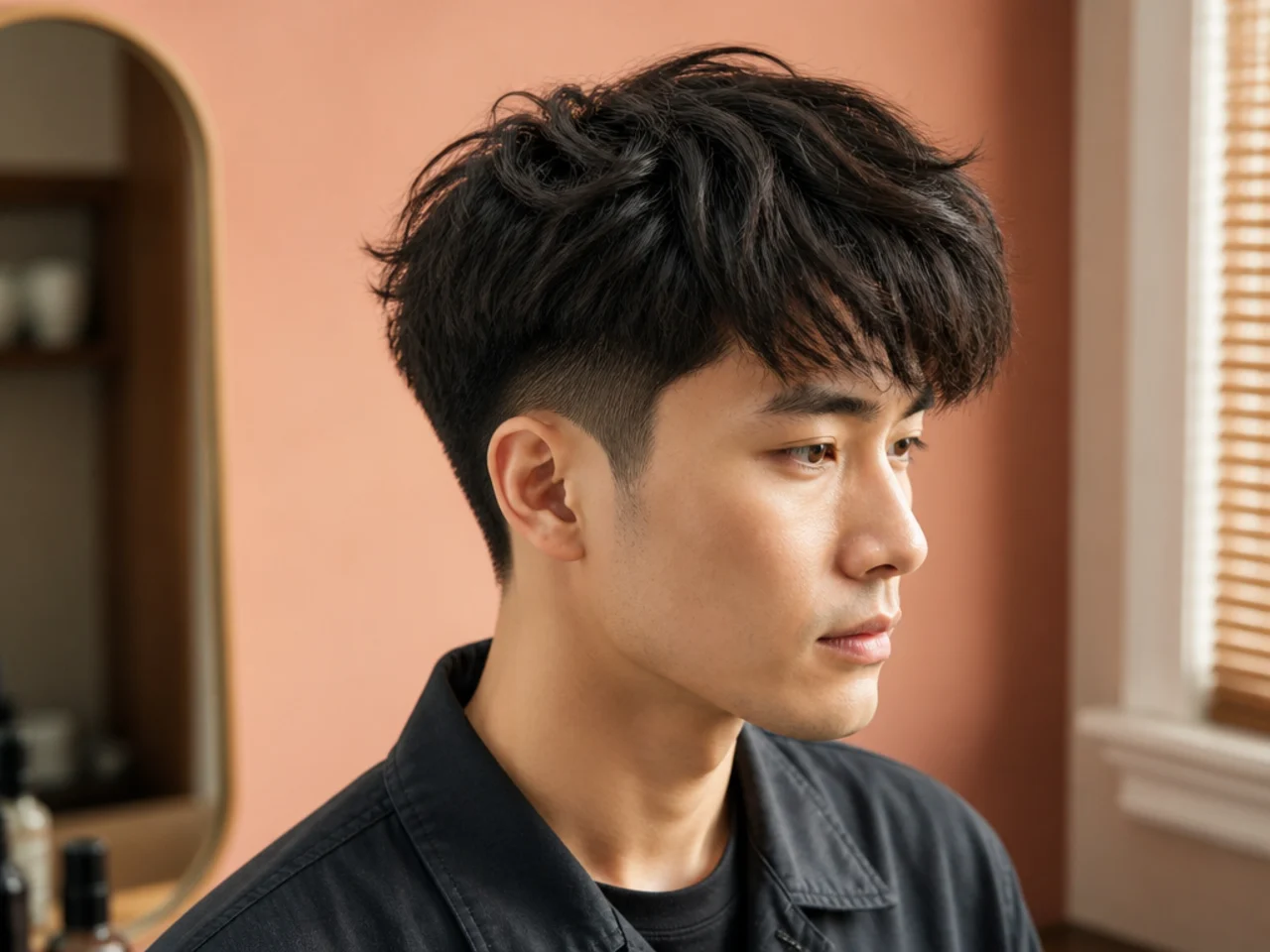
Trade the swept-back front for a chopped, textured fringe pushed forward. The crown still gets the full round-brush treatment, but the fringe reads casual and lived-in instead of styled. Point-cutting is critical for Asian hair here or the fringe reads heavy and blocky. Best for oval and long faces with medium-density hair.
Ask for: "Mid taper on the sides, four inches on top, point-cut the fringe heavily for texture, keep the crown weighted for a blowout." Ask for point-cutting specifically — straight scissors across the front read blunt on dense Asian hair.
Styling tip: Sea salt spray on damp hair, blow-dry the crown up and back with the round brush, then rough-dry the fringe with your fingers so it stays choppy. Matte clay through the ends. Skip the fringe when styling the back — it needs the loose finger-dry to sit right.
7. High Taper Blowout for Maximum Height
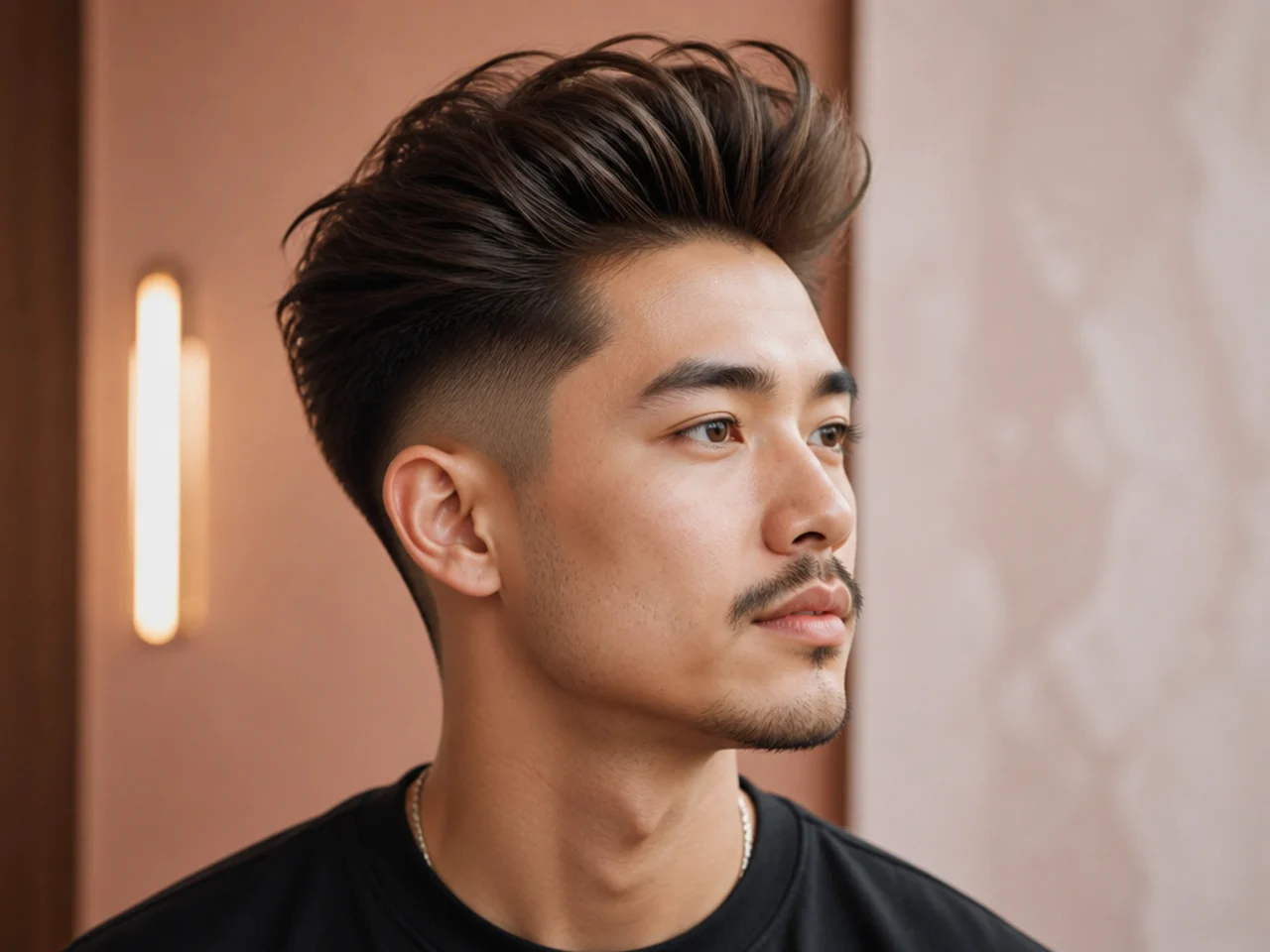
The high taper starts up near the parietal ridge, giving you the boldest possible contrast for the biggest possible silhouette. Thick Asian hair carries that height cleanly because there's no wave pattern fighting for space. Best for oval and square faces with dense hair. Skip it if your face is already long.
Ask for: "High taper starting at the parietal ridge, six inches on top, keep the crown tall and rounded, cut for a blowout, texturize internally." Bring a photo — high tapers vary a lot in placement.
Styling tip: Blow-dry upside down first for root volume, then flip up and shape with the round brush from the front backward. Texture powder at the roots before you stand up — that's the height-holder for Asian hair without a perm.
8. Side-Part Blowout Taper
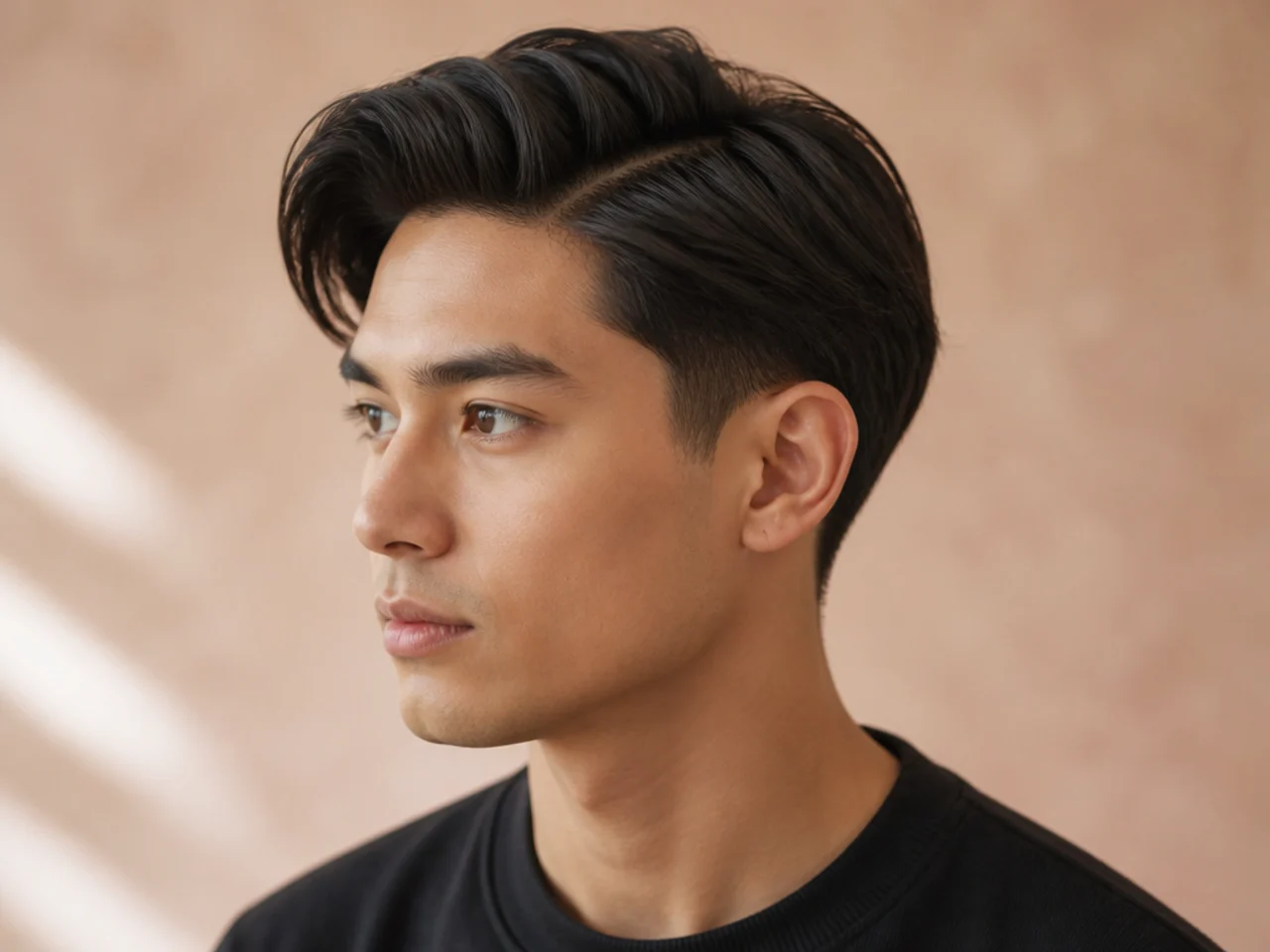
Adding a hard side part to the blowout gives you a modern-executive silhouette that reads intentional and grown-up. The part gives structure; the round-brush volume above it keeps the top from reading dated. Asian hair holds a hard part cleanly because it doesn't curl up or fight the line. Best for oval, square, and rectangle faces.
Ask for: "Mid taper on the sides, hard side part scissor-carved on the left, four to five inches on top, cut with weight to the sweep side for a blowout." Ask for the part to be scissor-cut so it holds without needing gel every day.
Styling tip: Damp hair, comb the part in with a fine-tooth, blow-dry each side outward with a round brush going up first. Light-hold cream to lock the sweep. Nothing on the part line — it should read clean, not slick.
9. Down-Perm Blowout Taper (Bruce Perm)
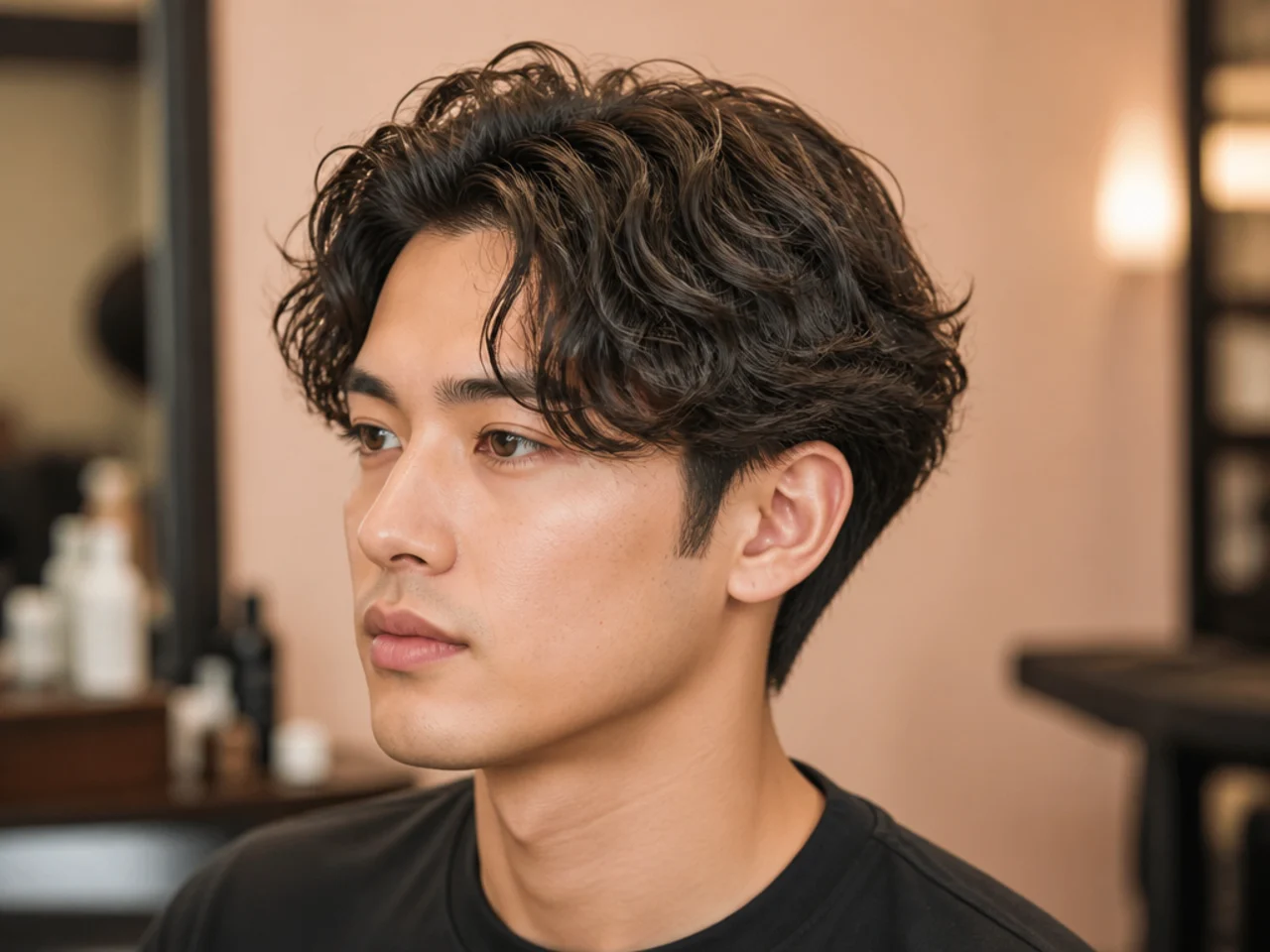
The down-perm — sometimes called a side-perm or Bruce perm — is a soft root perm that trains Asian hair to lift at the base and fall forward and down instead of straight up. It's the single biggest cheat code for daily blowout styling on Asian hair. No morning blow-dry needed. Best for guys who want the blowout shape without the eight-minute routine. Standard in Seoul salons.
Ask for: "Mid taper on the sides, five inches on top, cut for a blowout, then add a soft down-perm through the crown and front." Most barbers charge separately for the perm — budget an extra hour and $50–120.
Styling tip: Wash, towel-dry, apply a hair essence, air-dry or rough-dry with hands. That's it. Matte cream at the ends if you want extra hold. The perm lasts three to four months.
10. Curtain Bang Blowout Taper
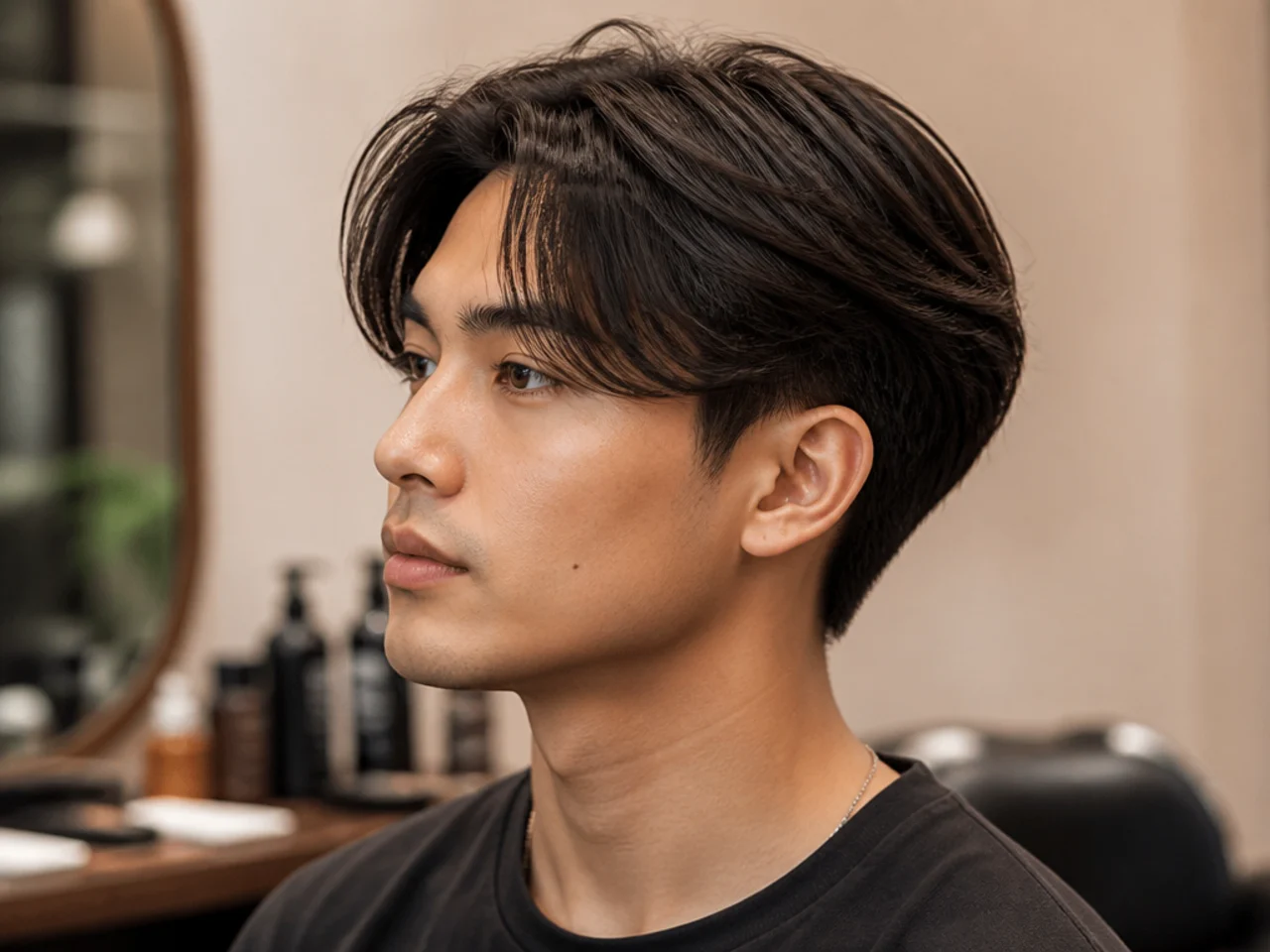
Curtain bangs split at the center and sweep out to both sides, framing the face — pair them with a blowout taper and you keep round-brush volume through the crown while the front softens the frame. Best for square and diamond faces because the curtain balances angular features. Bring a K-drama reference if you want the softer street-Korean version.
Ask for: "Mid taper on the sides, curtain bangs at the front — five to six inches, parted in the middle, swept out to both sides, blow-dry the crown for a blowout." Say curtain bangs specifically. Middle part alone means something different.
Styling tip: Round brush pulling each side of the curtain outward from the part, cool shot after each side. Blow-dry the crown up and back separately with a bigger round brush. Light setting spray on the curtain to hold.
11. Slicked-Back Blowout Taper
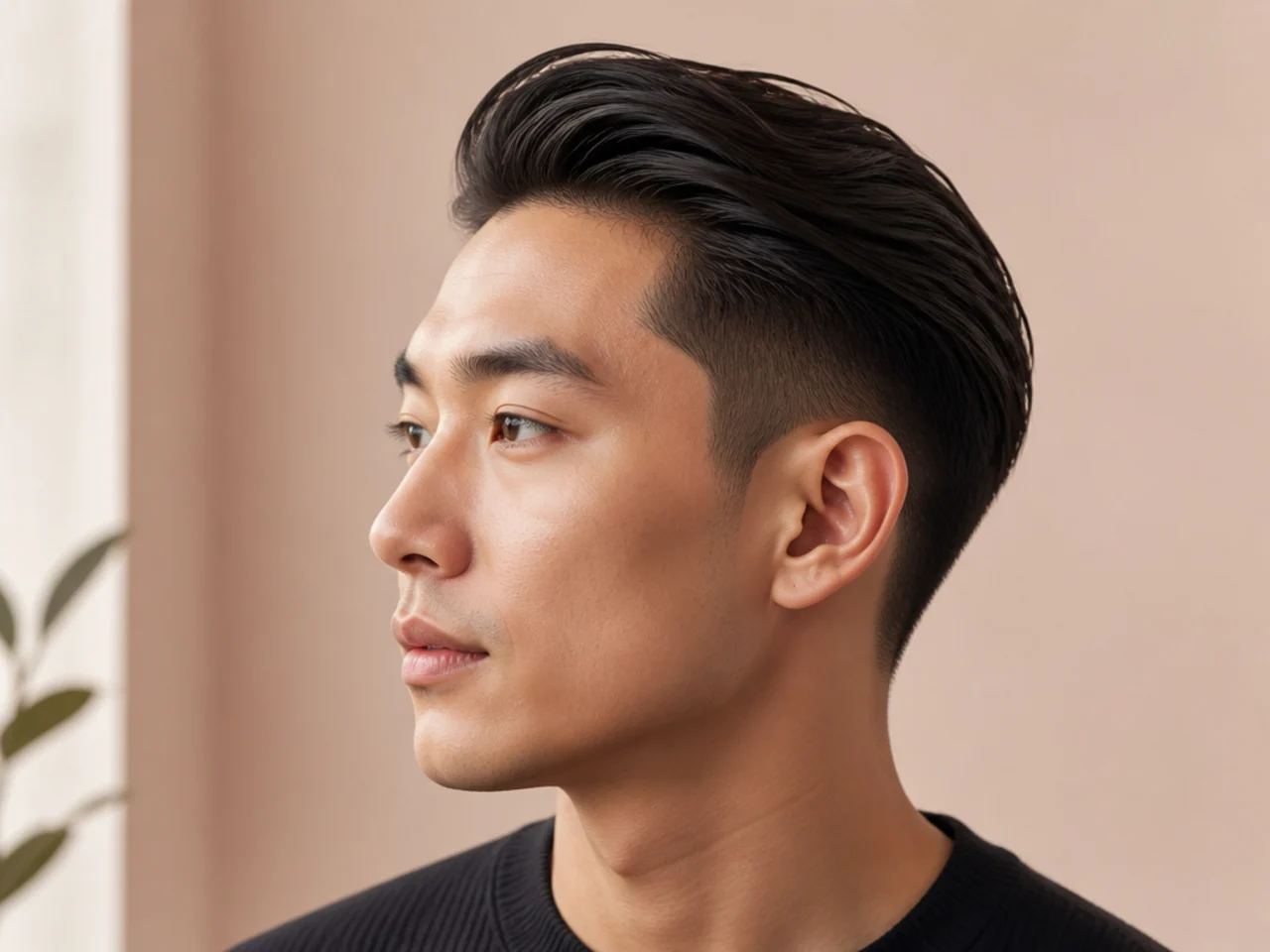
Instead of pushing the top forward, sweep everything straight back with a round brush — you get a slick-back haircut with lift built into it rather than a flat comb-through. Asian hair is one of the few textures that holds a true slick without needing heavy pomade to fake it. Best for oval and rectangular faces with medium to thick hair.
Ask for: "Mid taper on the sides, five inches through the crown, cut with weight from front to back, slick-back shape with lift built in." Say slick back with lift — not the same as flat-slick.
Styling tip: Damp hair, round brush pulling straight back from the front, cool shot at the top of the head. Light pomade with medium hold worked through with a wide comb from front to back. Water-based pomade — anything oil-based reads greasy on Asian hair.
12. Low Skin Fade Blowout with a Straight Top

The straight-top version leans into the natural fall of Asian hair — the crown gets the round-brush blowout for lift, but the length stays smooth and straight rather than getting perm curl or heavy texture. Pair it with a low skin fade for a razor-clean base. Best for oval faces and anyone who wants the shape without any perm commitment. Similar family to the low taper fade but with volume built in.
Ask for: "Low skin fade at the sideburn, blowout on top, five inches of length kept smooth, texturize the internal weight, keep the exterior straight." Point at your sideburn for the skin fade placement.
Styling tip: Mousse at the roots, round brush pulling straight up and slightly back for crown lift, cool shot at the top. Silicone-free smoothing serum through the length to keep the straight read. No clay — clay adds bulk this shape doesn't want.
13. Messy Piecey Blowout Taper
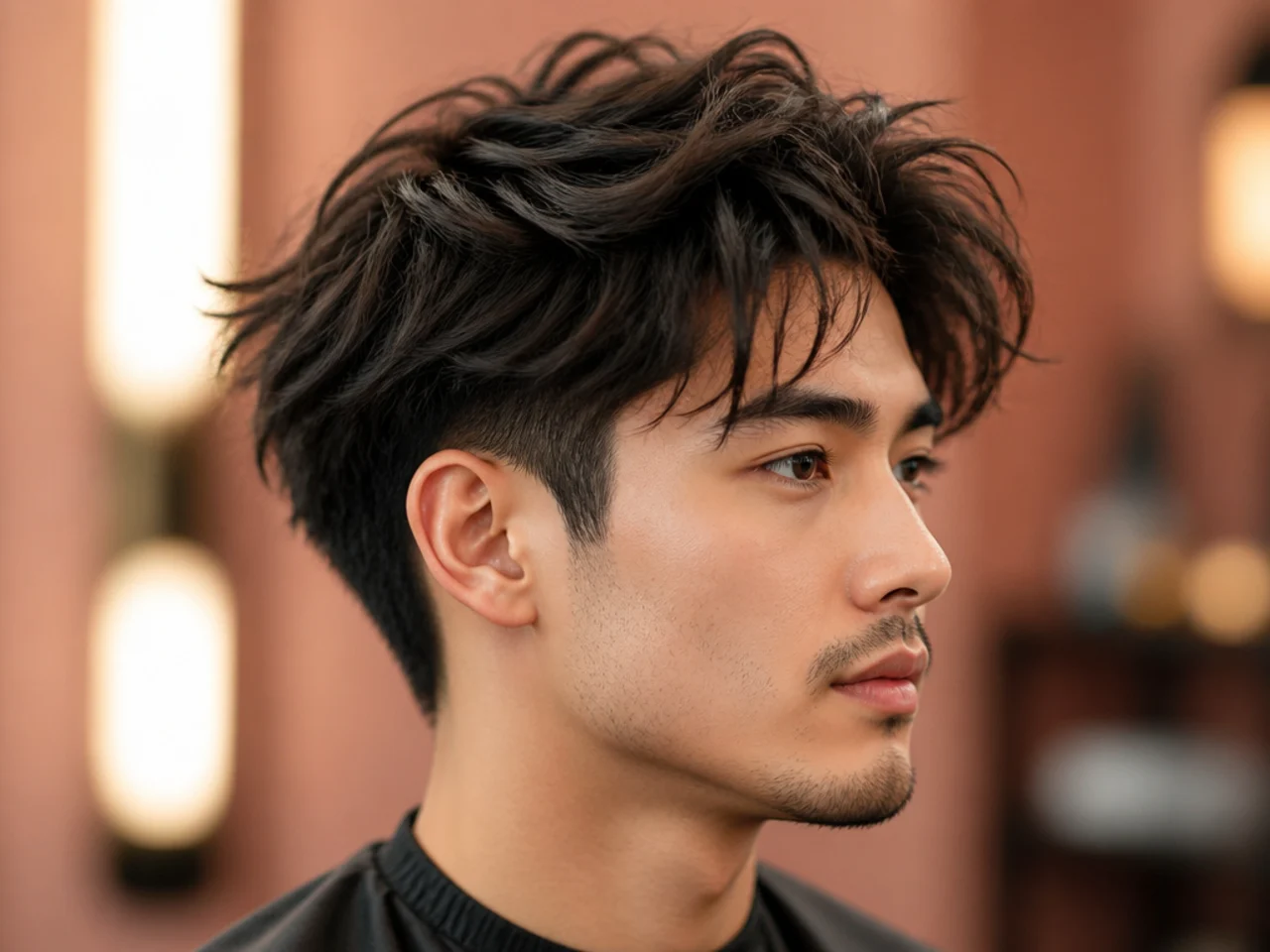
The messy version keeps the taper clean but breaks the round-brush shape on purpose. You blow-dry for volume, then rough it up with your fingers so the top reads lived-in instead of styled. Japanese street-style guys wear this variation on repeat because it reads casual without reading unkempt. Best for casual settings and any face shape with medium-density Asian hair.
Ask for: "Mid or low taper on the sides, four to five inches on top, heavy point-cutting for texture, keep the shape loose and piecey." Say loose or messy — not styled, not sharp.
Styling tip: Sea salt spray on damp hair, rough blow-dry with your fingers instead of the round brush, texture powder at the roots. Matte clay worked through with fingers, never a comb. The point of this cut is the lack of polish.
14. Long-Top Blowout Taper
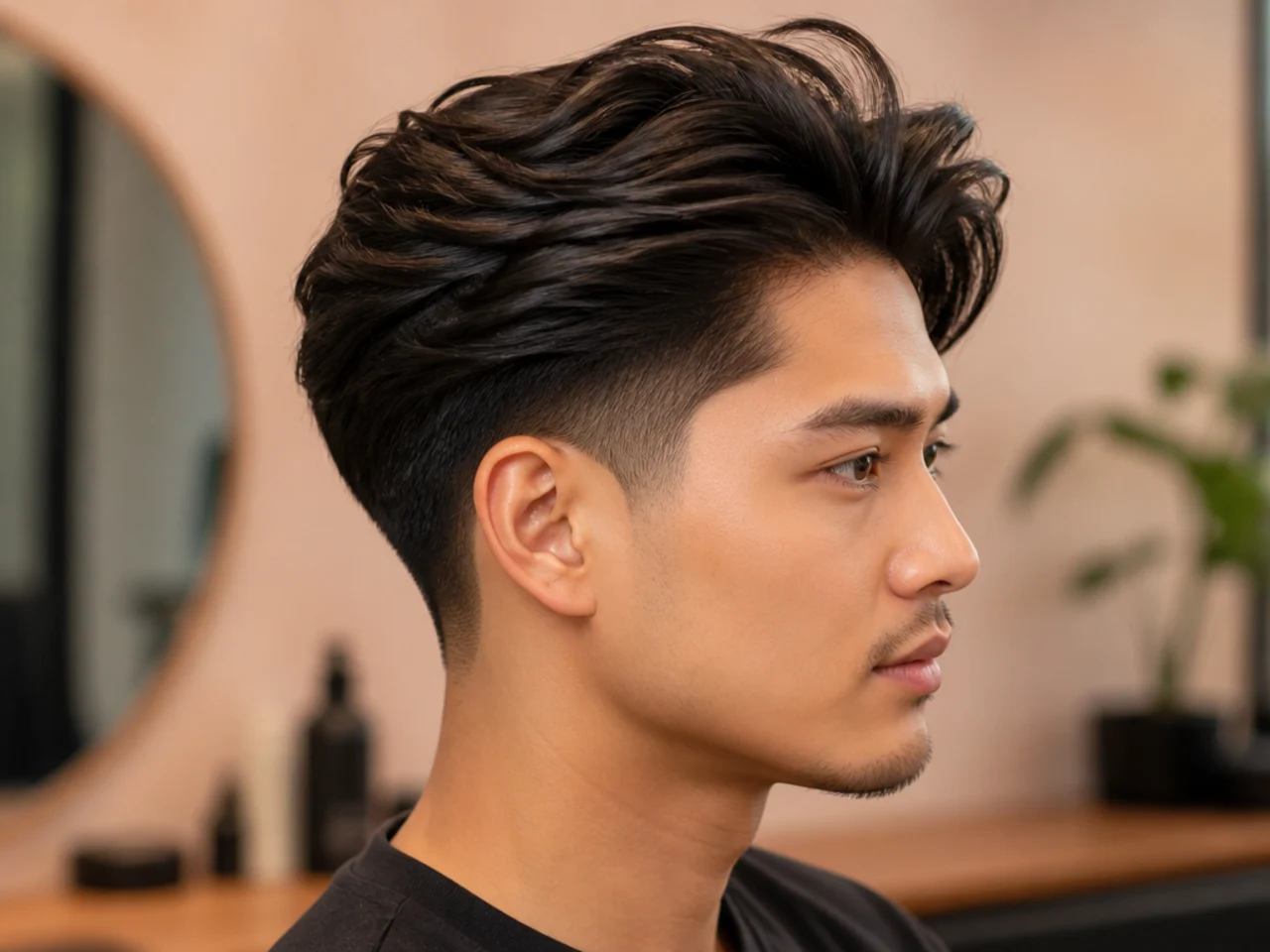
Thick Asian hair can carry serious length on top — six to seven inches without the crown collapsing under its own weight, provided the internal density is thinned. The long-top blowout takes advantage with a taller shape, more sweep, more range of styling. Reads current from every angle and grows out cleanly for another cut cycle. Best for oval, square, and diamond faces with thick, dense hair.
Ask for: "Mid taper on the sides, six to seven inches on top, heavy internal texturizing, cut with weight in the front and crown for a blowout, keep the back full." Bring a photo showing the length you want kept.
Styling tip: Volumizing mousse at the roots, round brush in sections pulling the length forward and up, cool shot after each section. Matte paste through the ends. Air-drying this length reads shaggy on Asian hair — commit to the blow-dry.
15. Mid Drop Fade Blowout
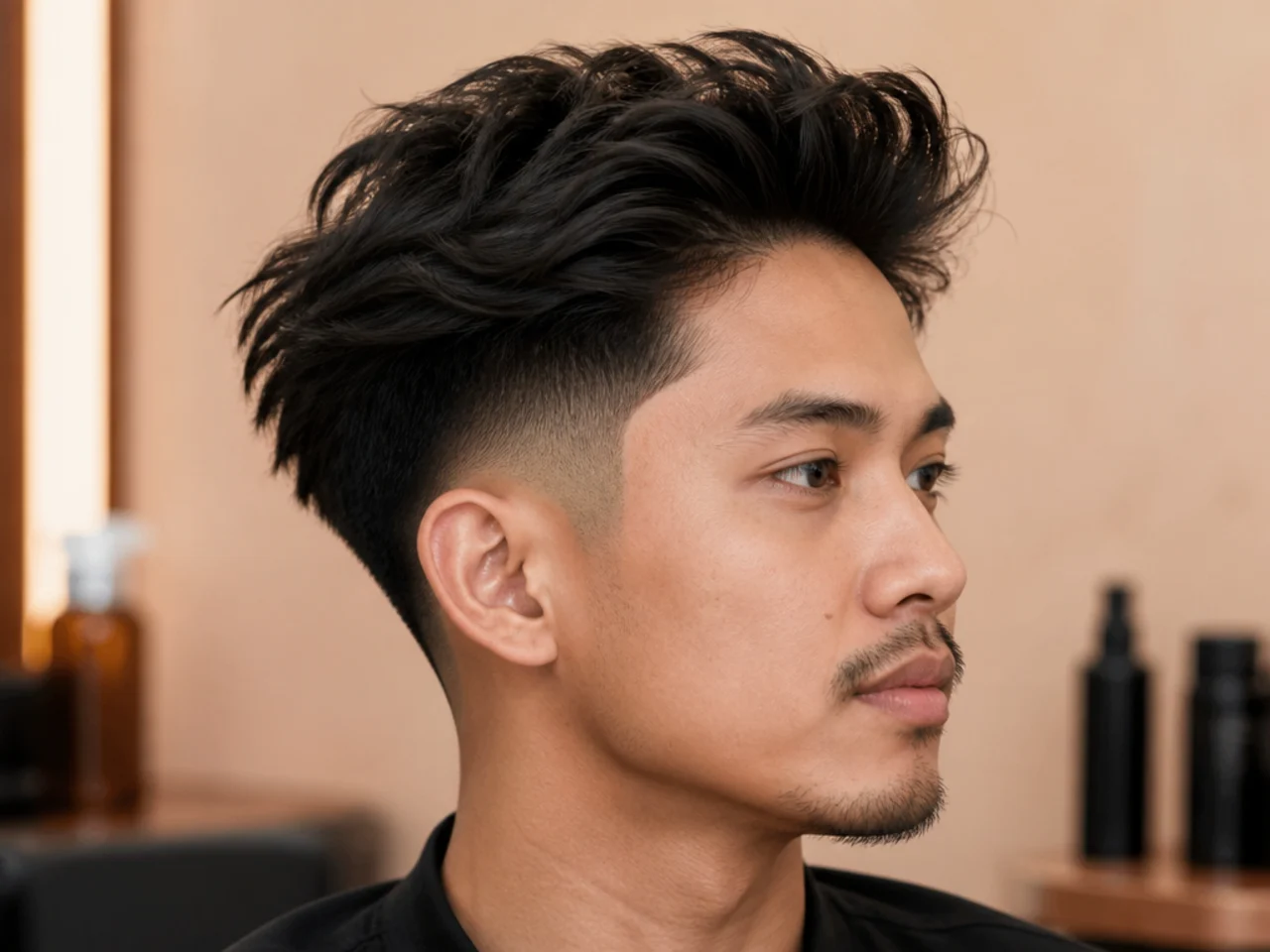
The drop fade arcs down behind the ear instead of staying level around the head — that curved line rounds out the back of the skull, which suits flatter East Asian occipital profiles. The blowout on top balances the softened back with a tall front. Best for guys whose head shape reads flat from the side and want to add rounded dimension.
Ask for: "Mid drop fade — clean 0.5 guard from the temple arcing down behind the ear, blowout on top, five inches of length, keep the crown full." Point at the curve behind your ear so the barber sees the drop line.
Styling tip: Blow-dry the back forward first, before the sides, so the crown gets lifted before anything else falls. Then work the front up with the round brush. Cool shot at every section. Matte clay to finish.
Products and Tools That Actually Work on Asian Hair
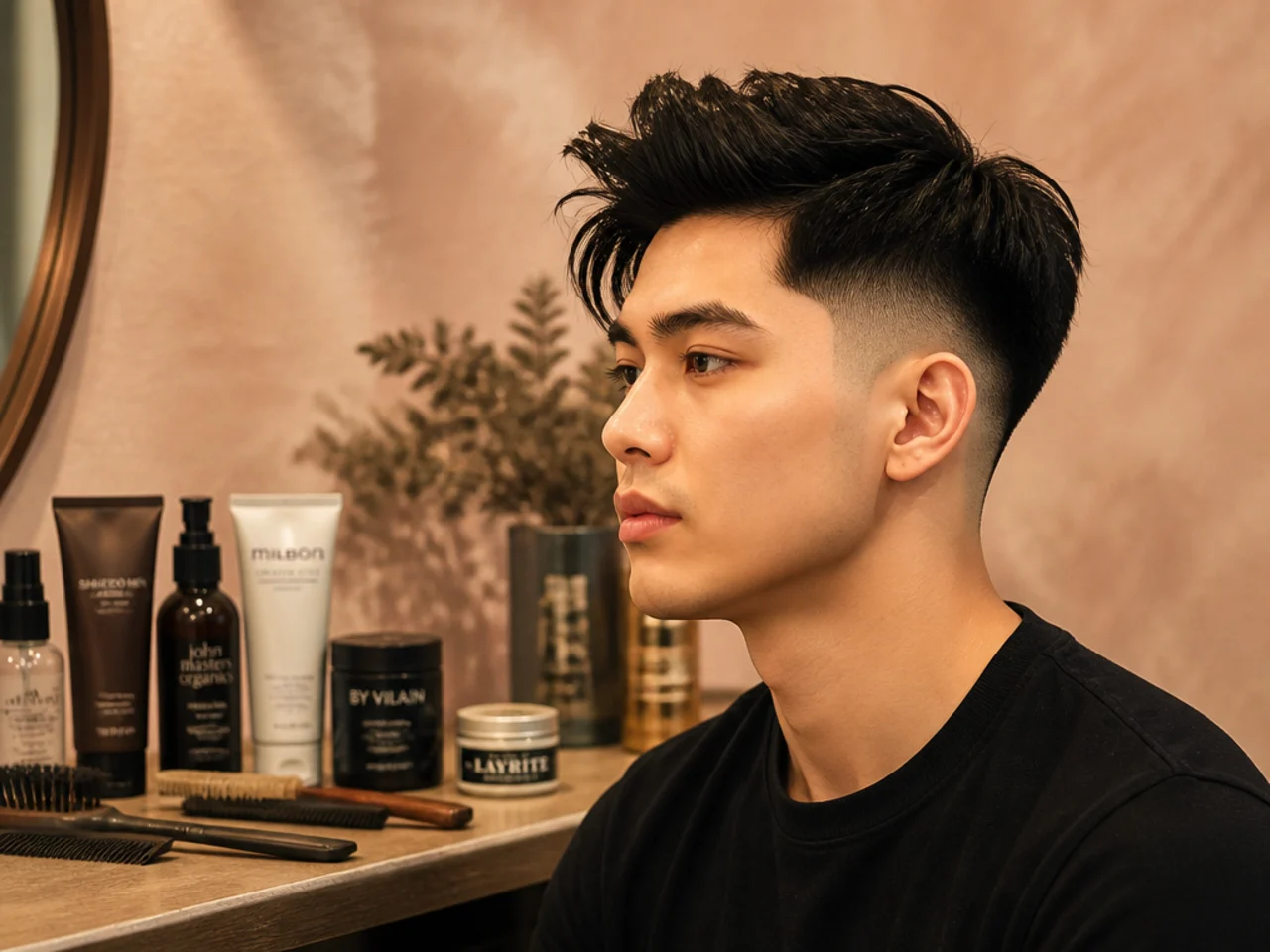
Cut is half. Product picks are the other half — and Asian hair punishes the wrong ones fast.
Volumizing mousse or root-lift spray. Apply to damp hair at the roots only. This is the volume foundation. Asian hair without a perm loses the round-brush shape within an hour if you skip this step.
Matte clay or matte paste. The finishing product. Asian hair reads greasy and heavy with any shine, so matte is non-negotiable. Work through the ends only. Nothing at the roots — that flattens everything you just lifted.
Texture powder. The pinch-at-the-roots product for dense hair that refuses to hold height. Shake a tiny amount at the crown before styling and the round brush grips better. Overuse feels like sand — a pinch is plenty.
Sea salt spray. For the messy and textured variations. Adds the grit that lets Asian hair hold a broken, piecey shape instead of collapsing back to smooth.
A round brush (2 to 2.5 inch barrel). The tool that shapes the whole cut. Metal-core brushes retain heat and cut styling time — worth the upgrade if you're blow-drying daily.
An ionic blow-dryer with a cool-shot button. Ionic dryers cut Asian hair drying time nearly in half because they break down water molecules faster on dense hair. The cool shot at the end is what locks the shape — a dryer without it means the shape falls by mid-morning.
For maintaining the taper edge between visits, the best hair clippers for men keep guard integrity long enough to touch up the neckline and around the ears in the two-to-three-week gap between shop visits.
How to Ask Your Barber
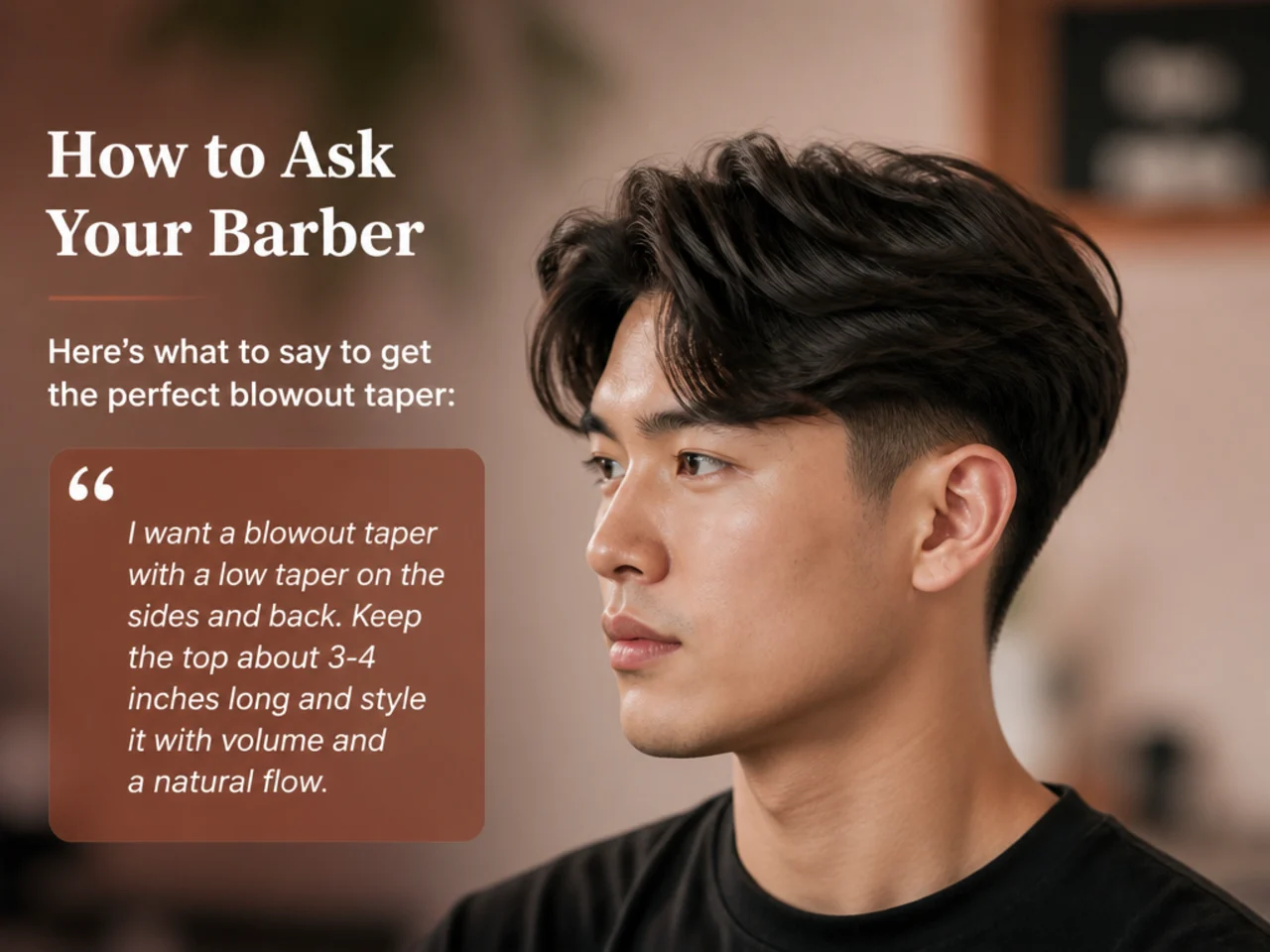
Show, then say. These seven moves get you the shape you want, in order.
- Show a photo first. Words describe half the shape at best. A photo puts everyone on the same page in ten seconds. Bring three photos ideally — front, side, and three-quarter.
- Name your fade or taper height. Low, mid, or high. Point at where you want the shortest hair to start on your temple. Barbers translate adjectives differently — point-and-name eliminates ambiguity.
- Say the guard number at the shortest point. #0 or bare skin for a fade; #0.5 or #1 for a taper. Barbers cut in guard numbers, not adjectives. Numbers are precise.
- State the top length in inches. Four to six for most variations. Don't say "medium-length" — that word means different things in different shops. Inches is universal.
- Ask for internal texturizing. Say the word texturize, thin, or debulk. Asian hair needs its internal weight removed or the shape reads mushroom. This is the single most-skipped step in Western shops.
- Say the word blowout. This tells your barber to leave length weighted forward instead of stacking it evenly, which is what makes the round-brush shape work when you get home. Ask for the top to be cut for a blowout specifically.
- Book the next appointment before you leave. Two to three weeks out. Asian hair grows fast and the taper edge blurs quickly — good blowout barbers book solid, so waiting means waiting another three weeks after that.
Styling and Maintenance for Asian Hair
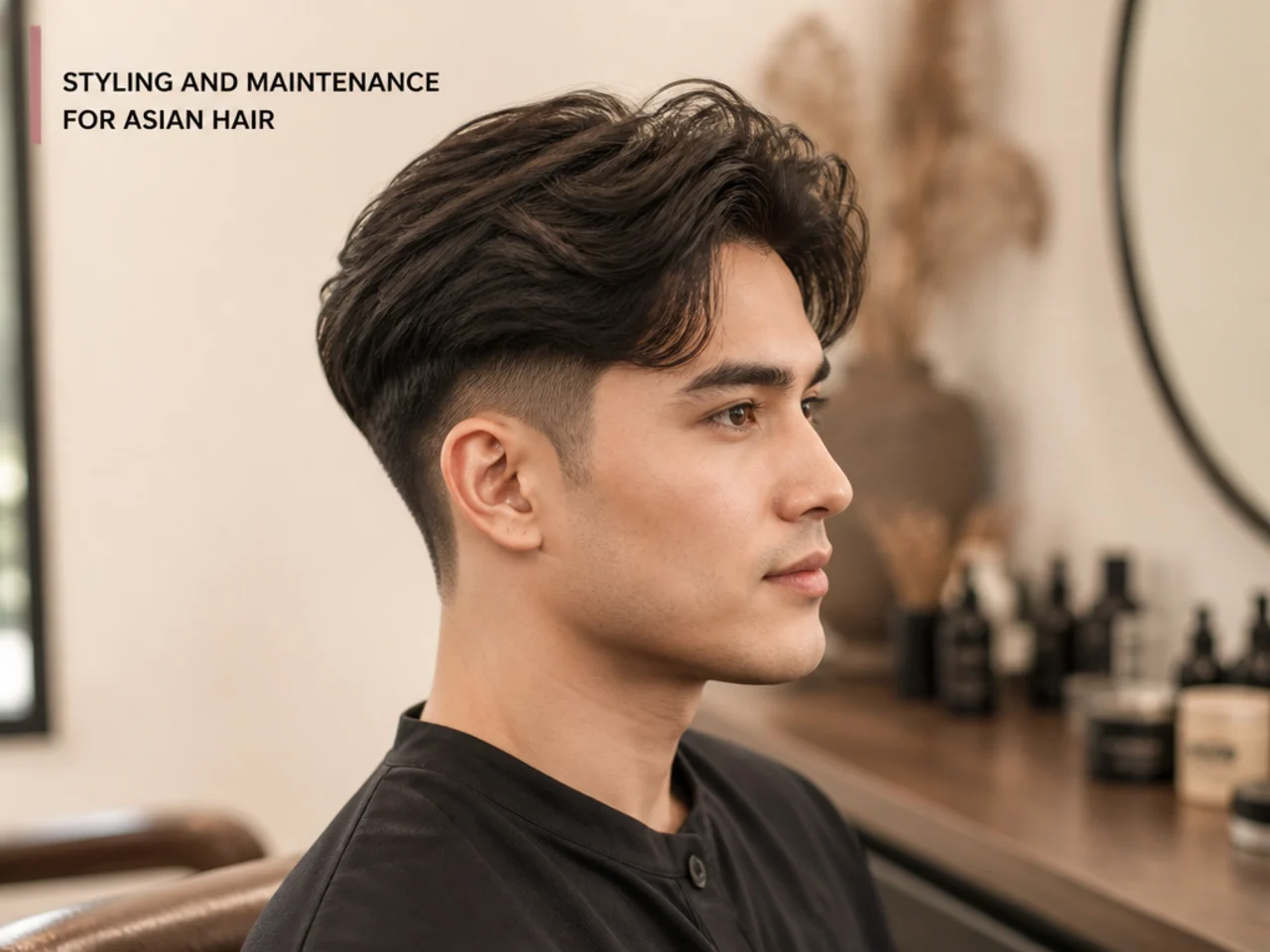
The blowout taper on Asian hair is either an eight-minute-a-day cut or a get-a-perm cut. There is no middle ground. Plan for one of them.
Wash cadence. Every two to three days. Asian hair produces plenty of oil at the scalp — daily washing strips it and the strands go dry and staticky. On no-wash days, rinse with water only and start the blow-dry from damp.
Morning routine (no perm). Damp hair, mousse at the roots, blow-dry with the round brush pulling forward and up. Cool shot at every section. Total time: eight minutes. Matte clay at the ends.
Morning routine (with a down-perm). Damp hair, hair essence, air-dry or five-second rough-dry with fingers. Optional matte cream at the ends. Total time: two minutes. This is why every Korean barber shop pushes the perm.
Refresh mid-day. Asian hair without a perm drops volume faster than any other texture because the density is unforgiving. A pinch of texture powder at the crown mid-day resets the volume in fifteen seconds without a full re-style.
Sleep. The pillow is the enemy of a blowout. Sleep with the top pushed forward, not back, or you wake with the front flattened against your forehead. A silk pillowcase reduces friction and helps the shape last a second day. Get a silk sleep cap if you want the shape completely preserved overnight.
Barber cadence. Every two to three weeks. Asian hair grows fast, and the taper edge is the first thing to blur — once it blurs, no styling saves the shape. Rebook before you leave the chair. For fade-height comparison across the wider family, see the low fade vs mid fade vs high fade guide, or check the parent taper haircut walkthrough.
If you want the sibling variation with full fade heights instead of a taper stop, the blowout taper fade covers twenty-five fade-height variations built on the same silhouette. And for the Asian-specific styling ecosystem beyond just the fade family, see the Korean two-block haircut or the broader Asian haircut for men roundup.
FAQ
Why does the blowout taper work so well on Asian hair? Asian hair is thick, dense, and straight-growing — exactly what a round-brush blowout needs. Density gives the brush something to shape, coarse strands hold the domed silhouette once set, and the taper below keeps the sides from stacking heavy.
Do I need a perm to pull off an Asian blowout taper? Not required, but a soft down-perm makes daily styling much easier. Asian hair grows straight down and resists lift — a light perm trains the roots to sit up so a five-minute blow-dry gives you the shape that would otherwise take fifteen. Most Korean barbershops offer it.
How long should the top be for an Asian blowout taper? Four to six inches for most variations. Thick Asian hair carries the length without collapsing, and you need enough material for the round brush to build a rounded crown. Under three inches and the top reads flat — over seven inches and it goes mushroom.
Will an Asian blowout taper give me a mushroom head? Only if the top isn't texturized. Ask your barber to thin the internal weight with texturizing shears or a razor and to point-cut the ends. Bulk removal breaks the helmet shape that dense Asian hair defaults to without cutting the exterior length.
How does the blowout taper compare to a Korean two-block? The two-block undercuts the sides to a disconnected line, while the blowout taper blends the sides down gradually into shorter length. The blowout also styles up and forward with a round brush, whereas the two-block usually stays flat or parted. They can be combined — see variation three above.
How often do I need to re-cut an Asian blowout taper? Every two to three weeks. Thick Asian hair grows fast and blurs the taper edge quickly — you'll see the sides getting fuzzy by week two. If you got a perm, the perm itself lasts three to four months, but the taper still needs the two-week rebook.