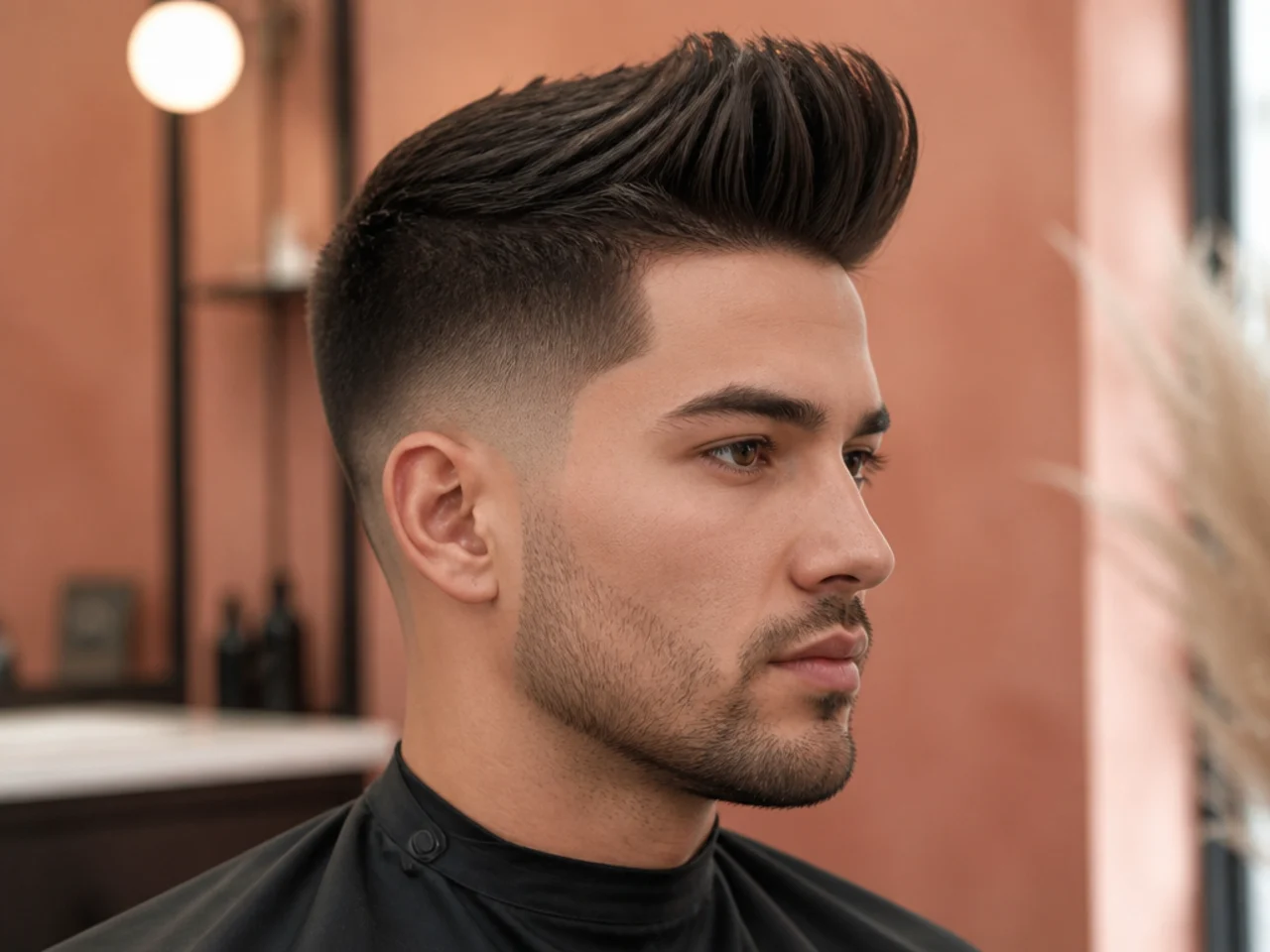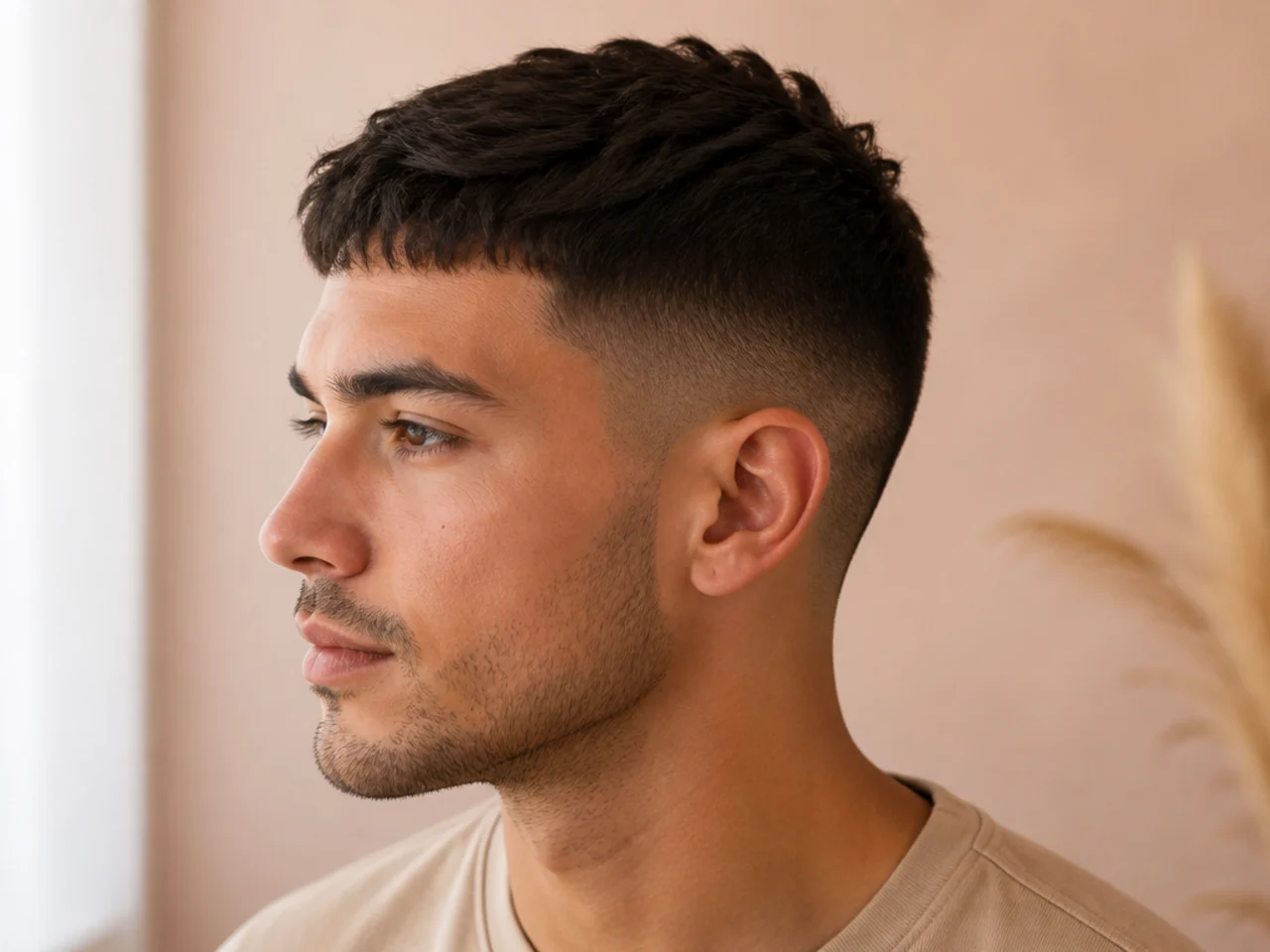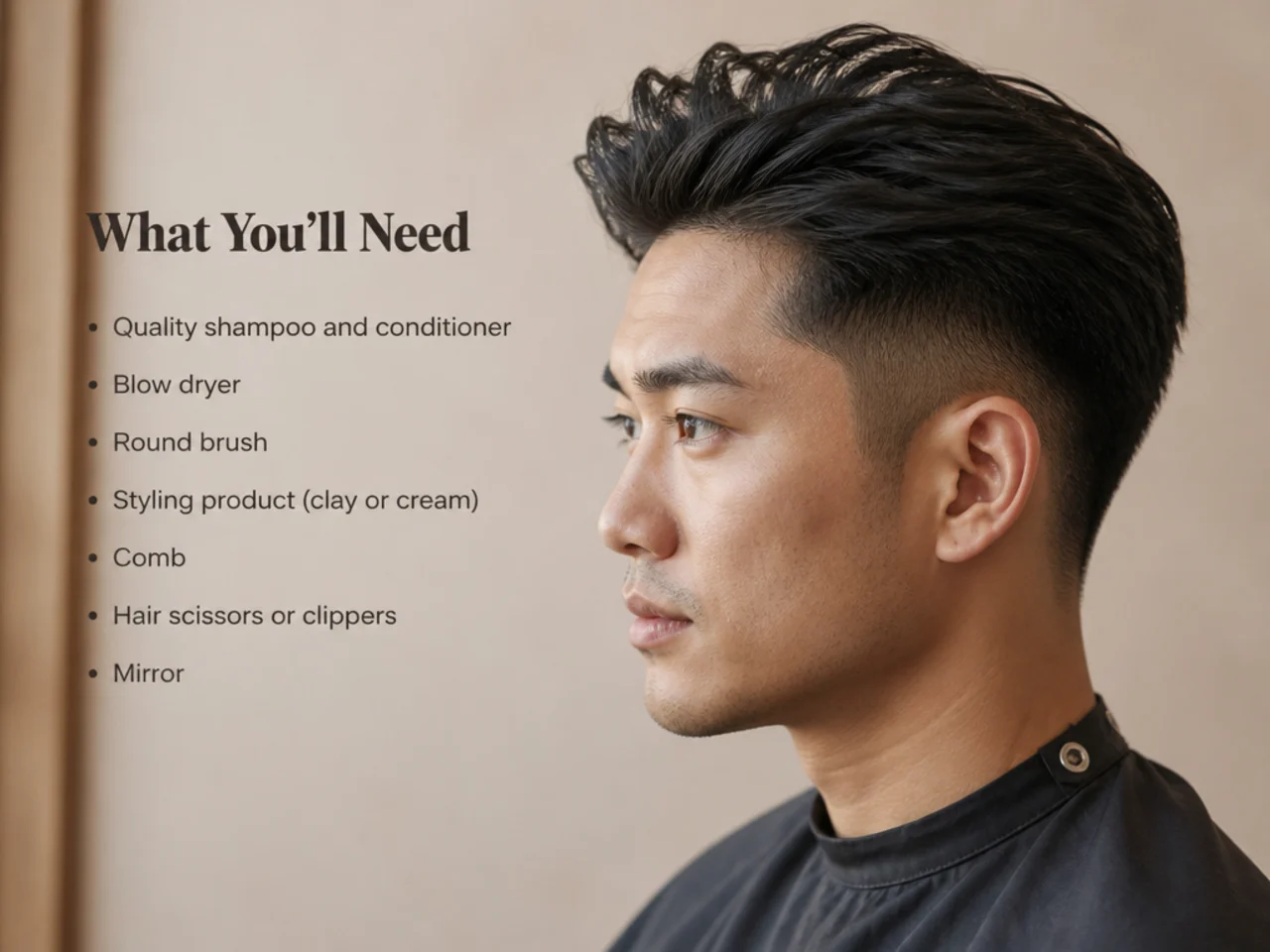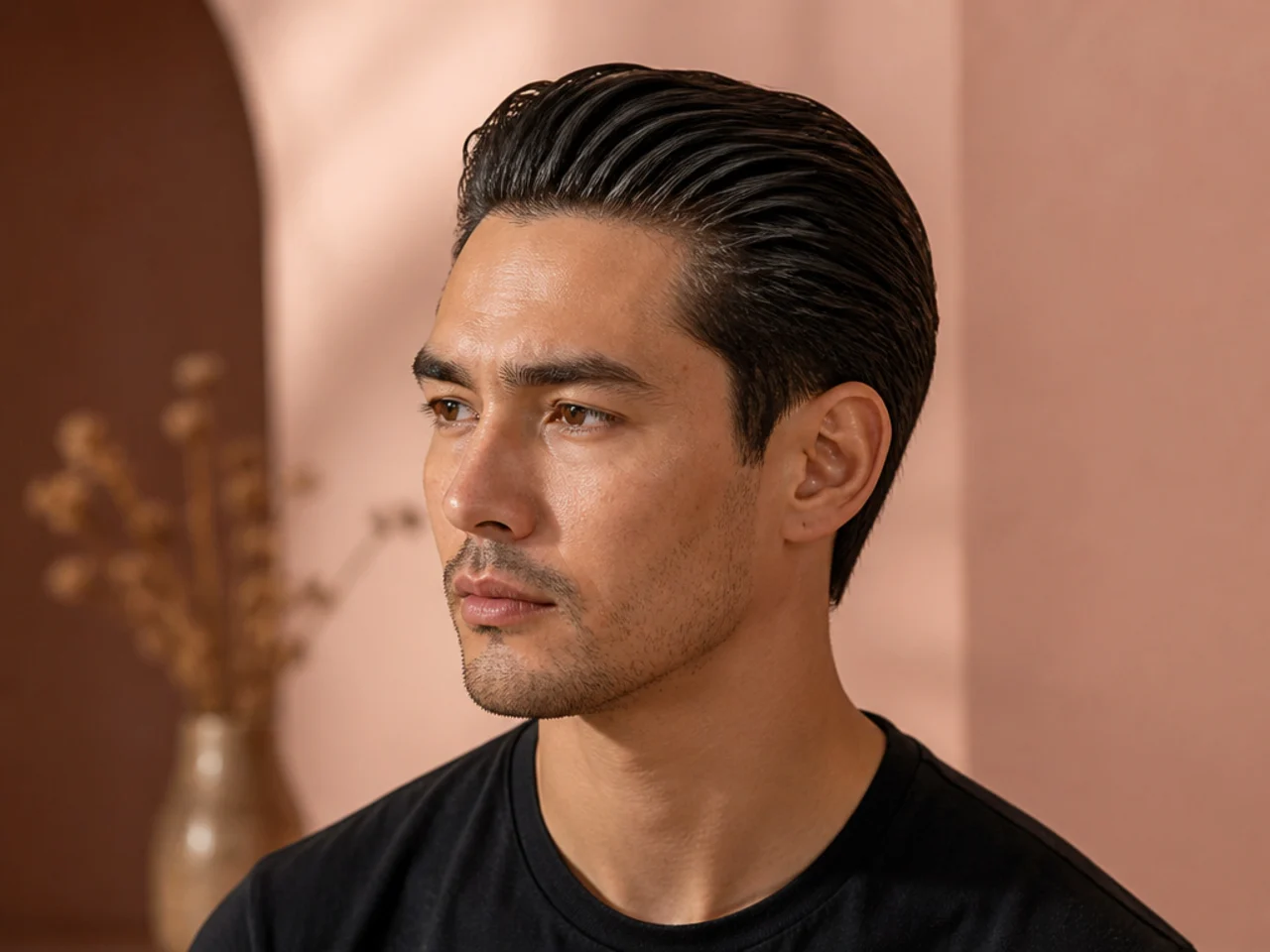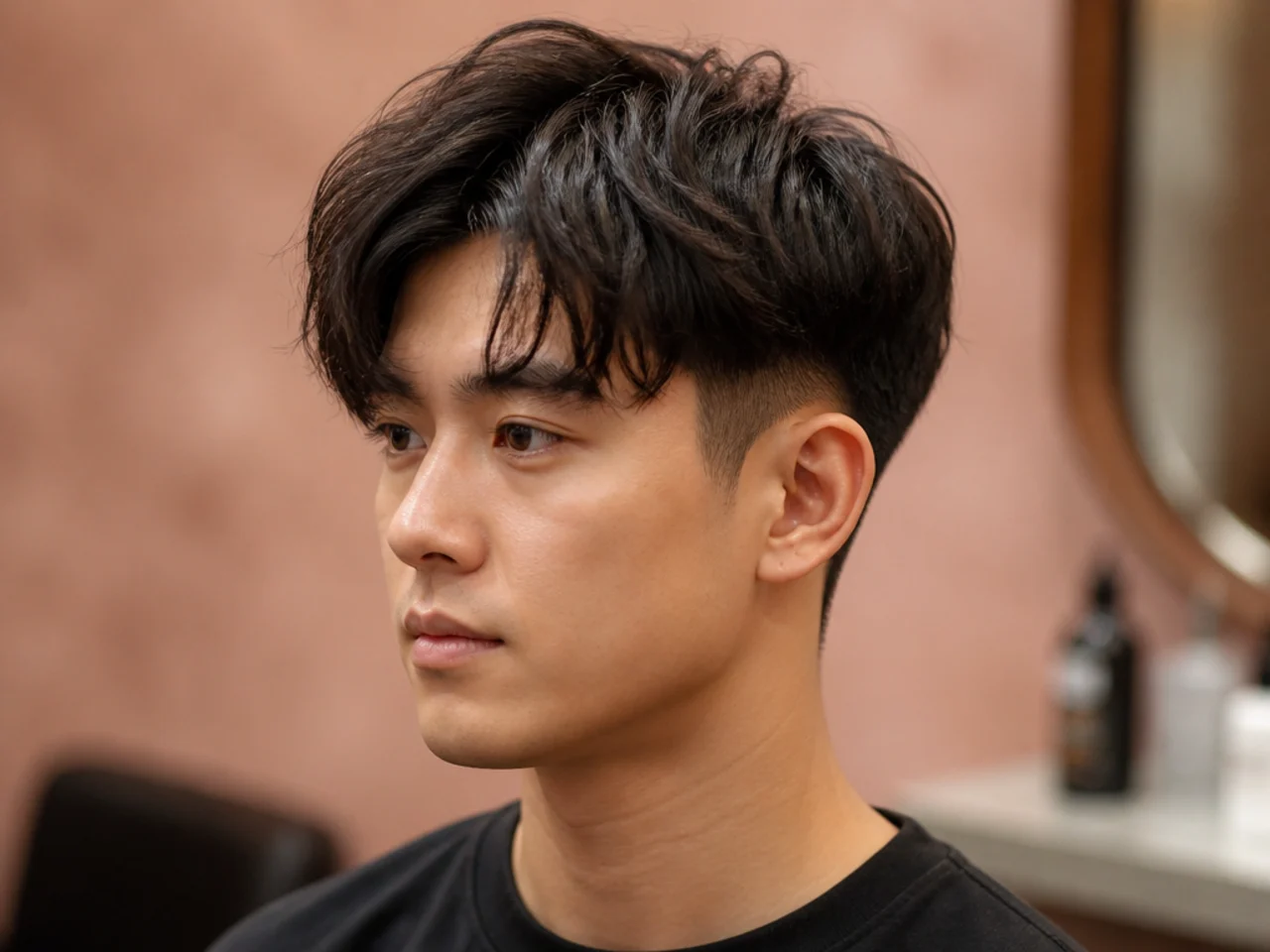
20 Asian Haircuts for Men That Look Fresh
20 Asian haircuts for men — K-pop, J-fashion, Chinese cinema, and universal cuts that flatter thick straight hair. Photos, face-shape notes, and the exact ask for your barber.
In this article · 32
- What Counts as an Asian Haircut?
- How to Choose Your Asian Haircut
- The 20 Cuts
- 1. The Two Block
- 2. The Comma Hair
- 3. The Curtain Fringe
- 4. The Korean Middle Part
- 5. The K-Mullet (Wolf Perm)
- 6. The Japanese Soft Wolf
- 7. The Center-Parted Curtain (J-Drama)
- 8. The Mash Cut
- 9. The Chinese Cinema Undercut
- 10. The Sharp Side Part
- 11. The Slicked-Back Cinema
- 12. The Korean Edgar Crop
- 13. The K-Blowout
- 14. The Korean Textured Crop
- 15. The Mullet Fade
- 16. The Asian Buzz Cut with Soft Taper
- 17. The Mid Fade with Textured Top
- 18. The Low Taper with Fringe
- 19. The Asian French Crop
- 20. The Textured Fringe with Low Fade
- How to Ask Your Barber
- Styling and Maintenance
- FAQ
- What haircut suits Asian men best?
- Are K-pop cuts only for young guys?
- Do these cuts need Asian hair to work?
- Can I get a Korean perm at any salon?
- Which cut works for a conservative office?
- What about Southeast Asian hair specifically?
Asian men's hair is the barber's dream and the barber's problem. Thick, straight, and glossy — it holds a shape like nothing else and falls flat by lunch like nothing else. The right cut works with those characteristics instead of fighting them. This guide runs 20 Asian haircuts for men worth asking for by name — K-pop, J-fashion, Chinese cinema, Korean modern, plus a handful of universal cuts that consistently flatter thick straight hair.
What Counts as an Asian Haircut?
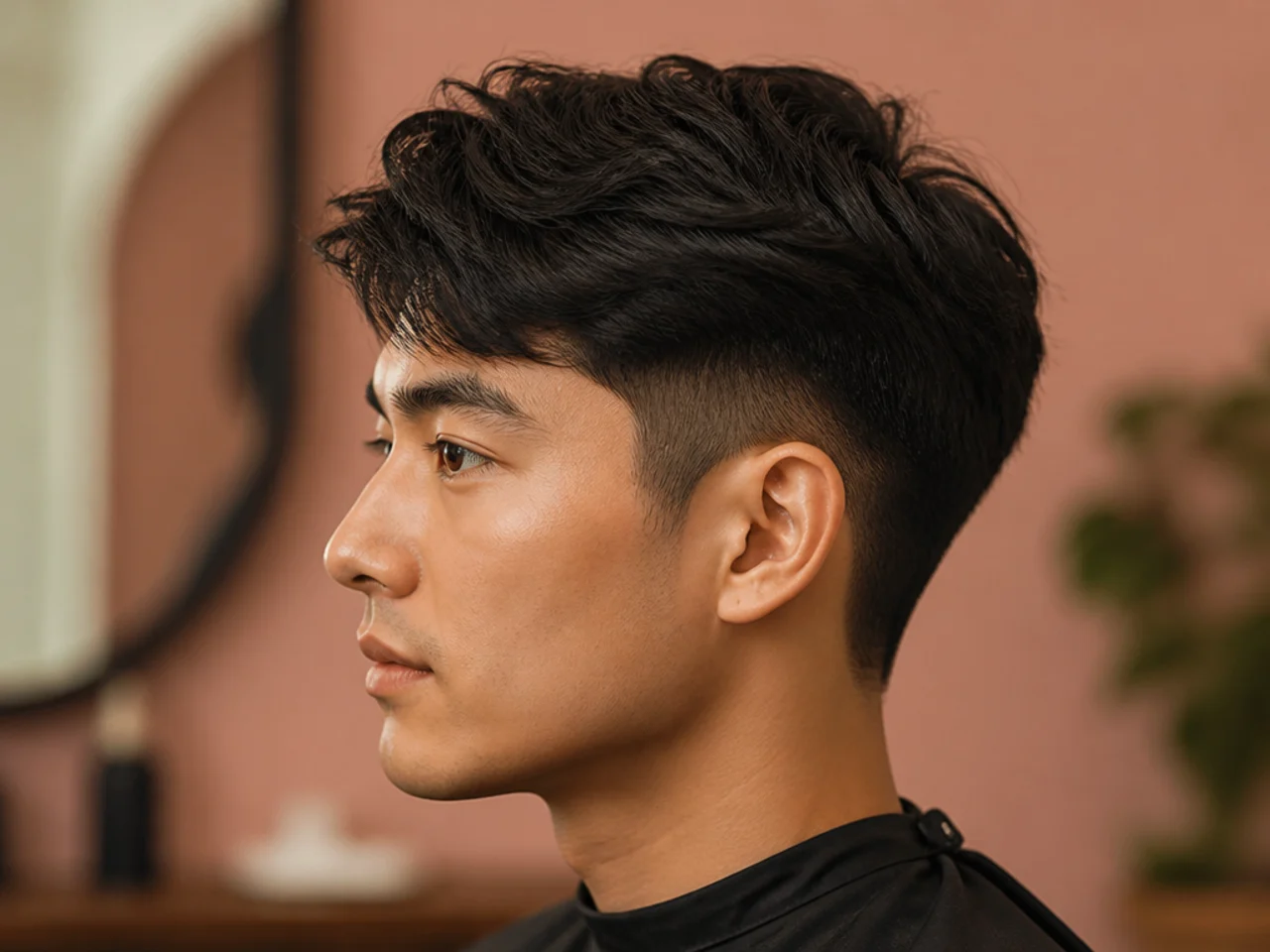
An Asian haircut is any cut engineered for the hair characteristics East and Southeast Asian men most often have: dense strand count, straight or low-wave growth, deep-black pigment, and a scalp that reads glossy under light. The best of them lean into the density and the shine rather than pretending to work around it.
Regional style traditions layer on top. Korean salons default to length on top, scissor-blended sides, and a light perm for volume. Japanese salons play with soft mullets and mash shapes. Chinese cinema-era barbers built the disconnected undercut and the sharp side part. Modern barbers everywhere pull from all three.
The cuts on this list either originated in an Asian barbershop tradition or work exceptionally well on the specific hair characteristics Asian men bring to the chair. For a deeper look at one region, the Korean haircuts for men roundup covers the K-pop and K-drama vocabulary in full.
How to Choose Your Asian Haircut
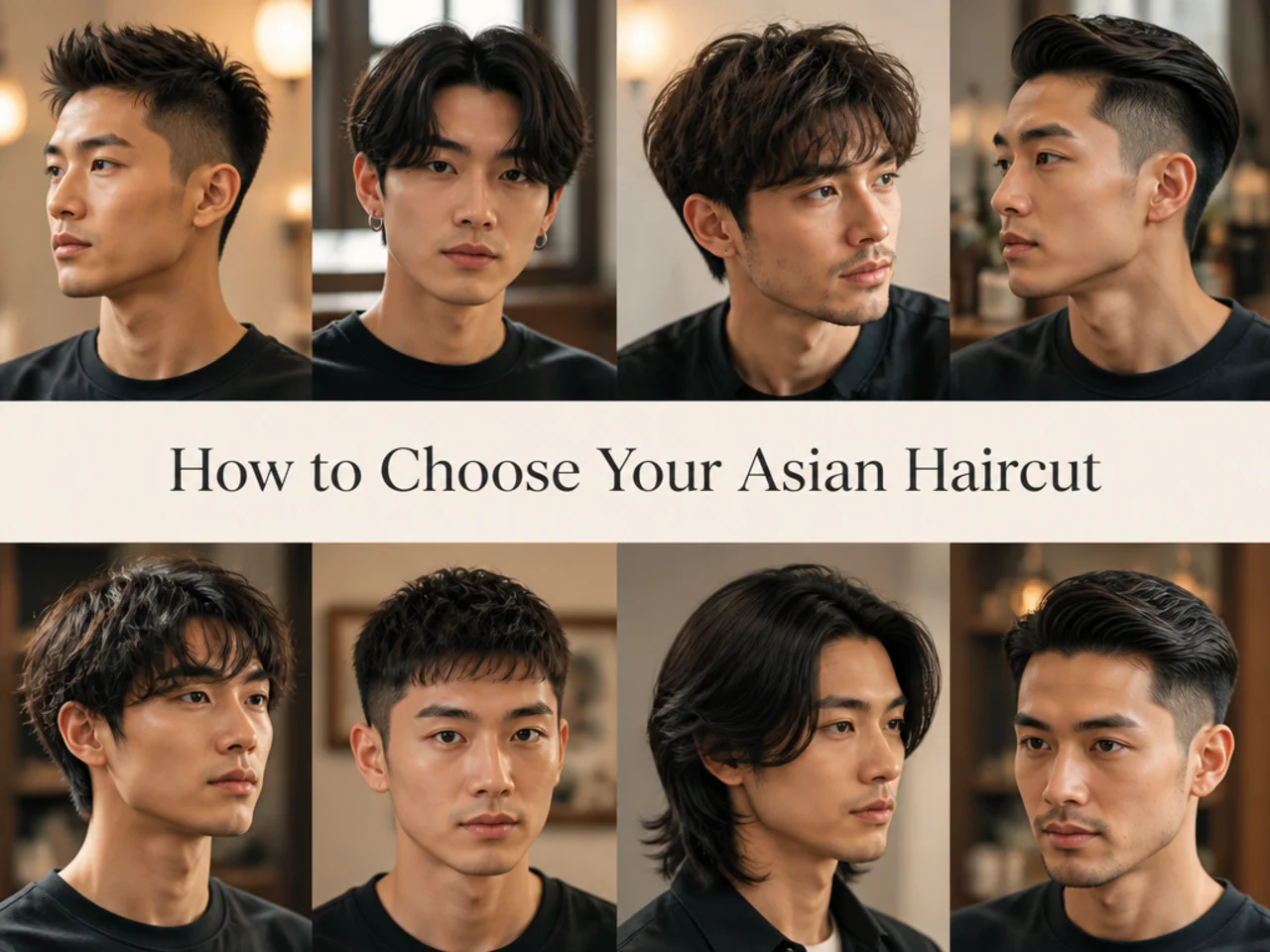
Start with density. If your hair reads thick and heavy, you want a cut that either uses that density (a wolf, a flow layer, an overgrown two block) or removes weight from it (a textured crop, a French-crop-adjacent shape, a taper with point-cut ends). Fine Asian hair is rarer but real — those readers want length on top and volume-forward styling.
Face shape steers the top. Oval faces get to pick anything. Round faces need vertical lift and a fringe pushed slightly off-center or forward. Square and angular faces want softness — a curtain, a comma, or a middle part flatters. Long faces stay shorter on top and heavier at the fringe to shorten the vertical read.
Then the honest question: how many minutes will you give the mirror each morning? A buzz or textured crop asks for zero. A two block or comma asks for two minutes with a round brush. A wolf, a K-mullet, or a middle part asks for five plus a light product. Pick the routine you'll actually run — the cut that looks best at 8 a.m. is the one you'll actually style.
The 20 Cuts
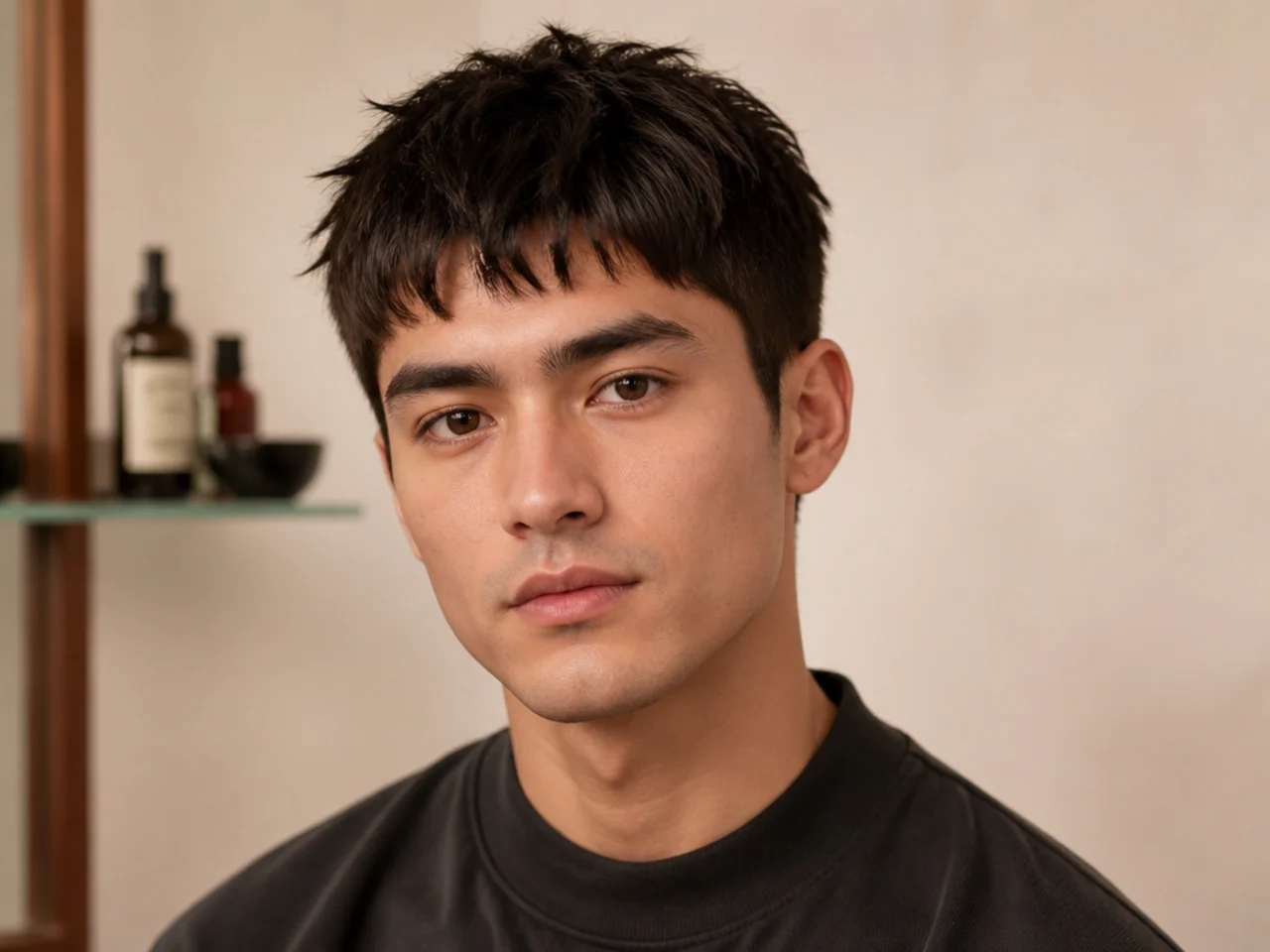
Every variation below is a name your barber will recognize with a photo. Numbers are your friend — inches on top, guard number on the sides — so bring both.
1. The Two Block
The foundational K-pop cut and the single most-requested Asian haircut on Pinterest. Long top, clipper-buzzed underlayer at the sides, and a horseshoe seam above the ears that hides the second block when your hair is at rest. Move the top and the buzz appears. It plays to every strength Asian hair has — density on top, sharpness underneath, glossy fall in the middle.
Best on straight hair with medium-to-thick density. Every face shape if you tune the top length.
Ask for: "Two block haircut, 4 inches on top, two guard on the sides, hidden seam at the horseshoe."
Styling tip: matte cream through damp hair, blow-dry with fingers pushing forward, two minutes and done.
2. The Comma Hair
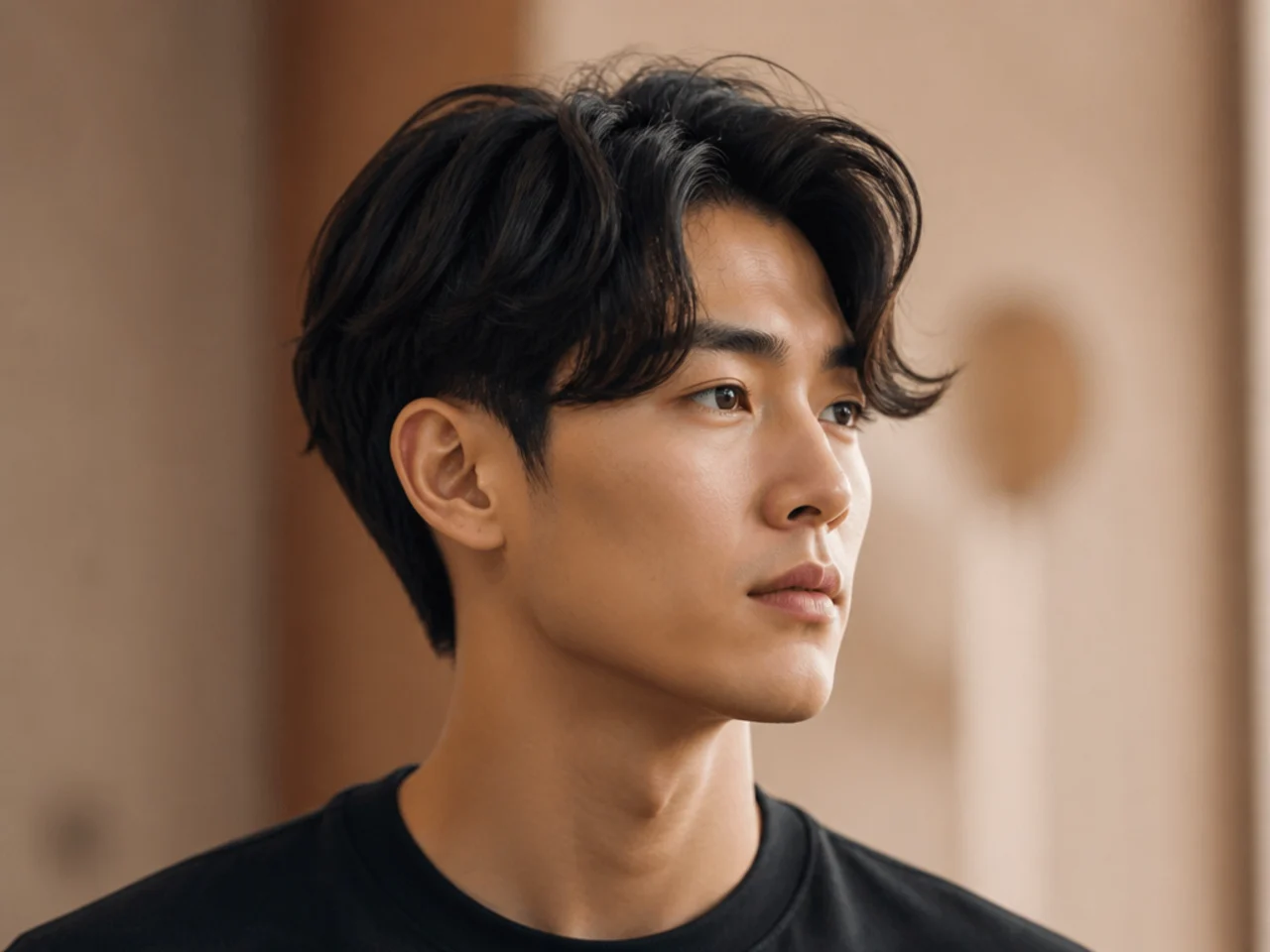
One curled front lock hooking toward your dominant eye like a punctuation comma. The rest of the top runs medium length, the sides sit clean on a soft taper. V (Kim Taehyung) of BTS made it a global reference; every Korean idol from Jimin to Jungwon has cycled through some version of it. Reads soft, romantic, and photograph-ready.
Best on straight-to-lightly-wavy hair. Oval, oblong, and heart-shaped faces.
Ask for: "Comma haircut, 4 inches on top, front cut long enough to hold a curl, soft taper — no fade to skin."
Styling tip: point a one-inch round brush at your temple, roll the front section inward, hit it with cool air. A pea of curl cream sets it.
3. The Curtain Fringe
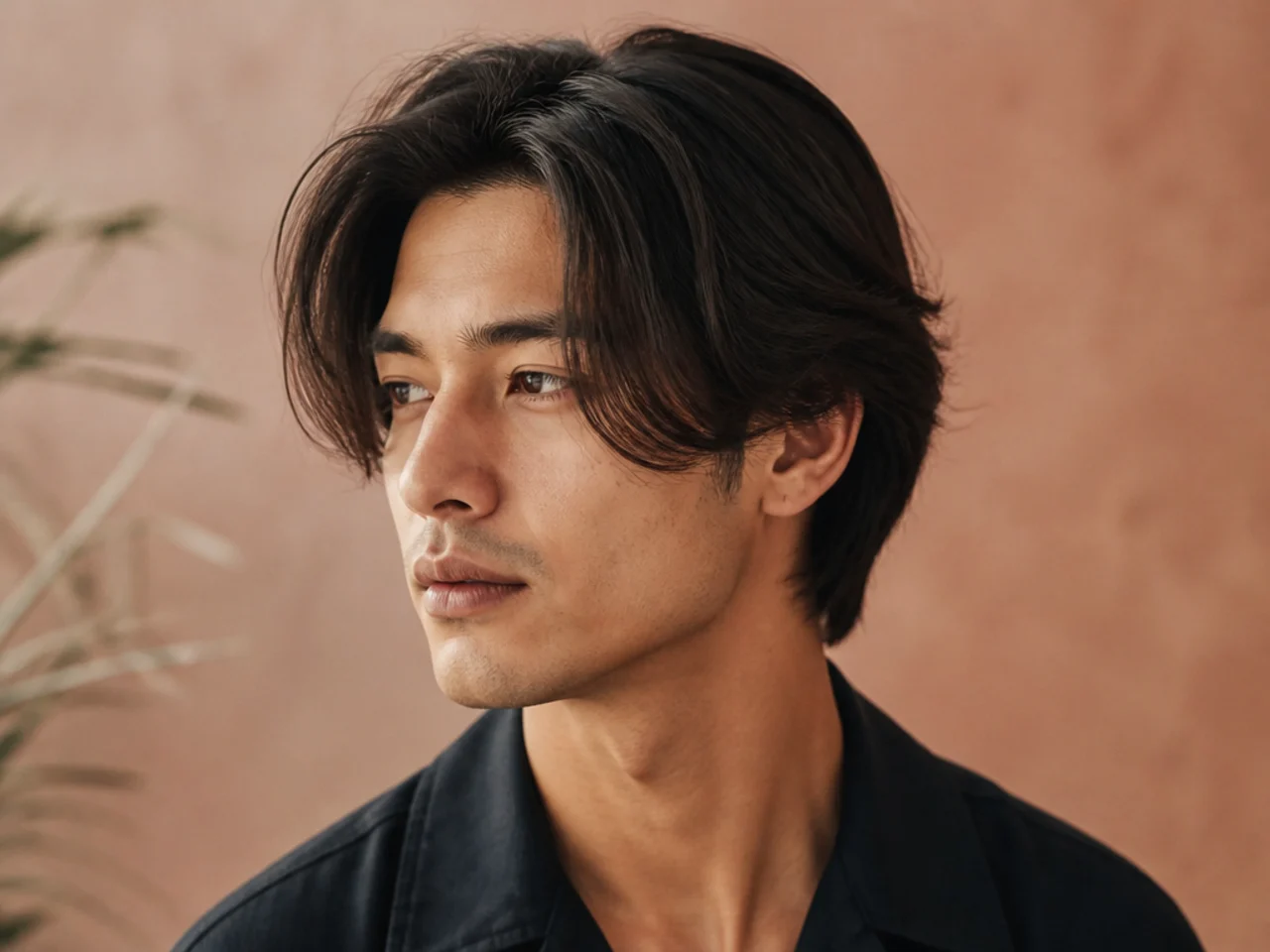
Long fringe parted down the middle, falling in two soft panels across the forehead like open curtains. The most-requested K-drama and J-drama fringe of the last five years — V wore it through the "Christmas Tree" era, and Japanese leading men have run some version of it for a decade. It reads romantic without looking styled.
Best on straight-to-wavy hair. Long, oval, and square faces work best; round faces should keep the panels short enough to sit above the eyes.
Ask for: "Curtain fringe past the eyebrows, texturized ends, top around 5 inches, sides scissor-blended above the ear."
Styling tip: blow-dry the fringe forward and down while wet, then split with your fingers and set with cool air. A light hairspray keeps the curtains from parting into a triangle.
4. The Korean Middle Part
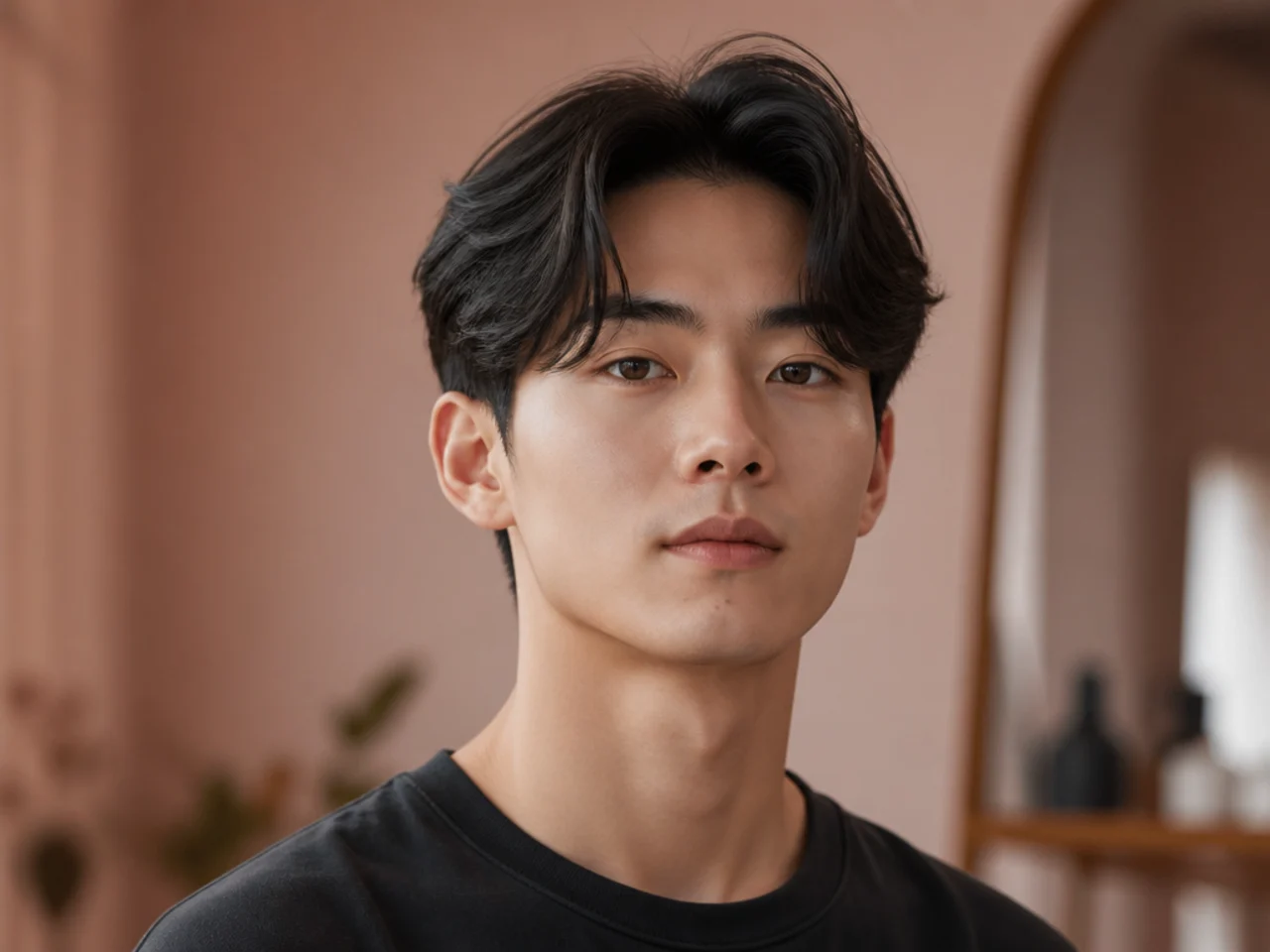
The K-drama leading-man default. Straight center part, 4 to 5 inches on top, each side falling forward to frame the eyes. NCT's Jung Jaehyun runs it as his signature and every drama lead cycles through it on camera. The single most photogenic cut on this list.
Best on oval, square, and heart-shaped faces. Round faces need extra crown volume.
Ask for: "Middle part haircut, 4 to 5 inches on top, scissor-tapered sides long enough to tuck, slight forward curve on the ends."
Styling tip: round-brush each side forward and slightly out from center, set with cool air, pea of light cream through the mid-lengths. Recomb the part while wet, not dry.
5. The K-Mullet (Wolf Perm)
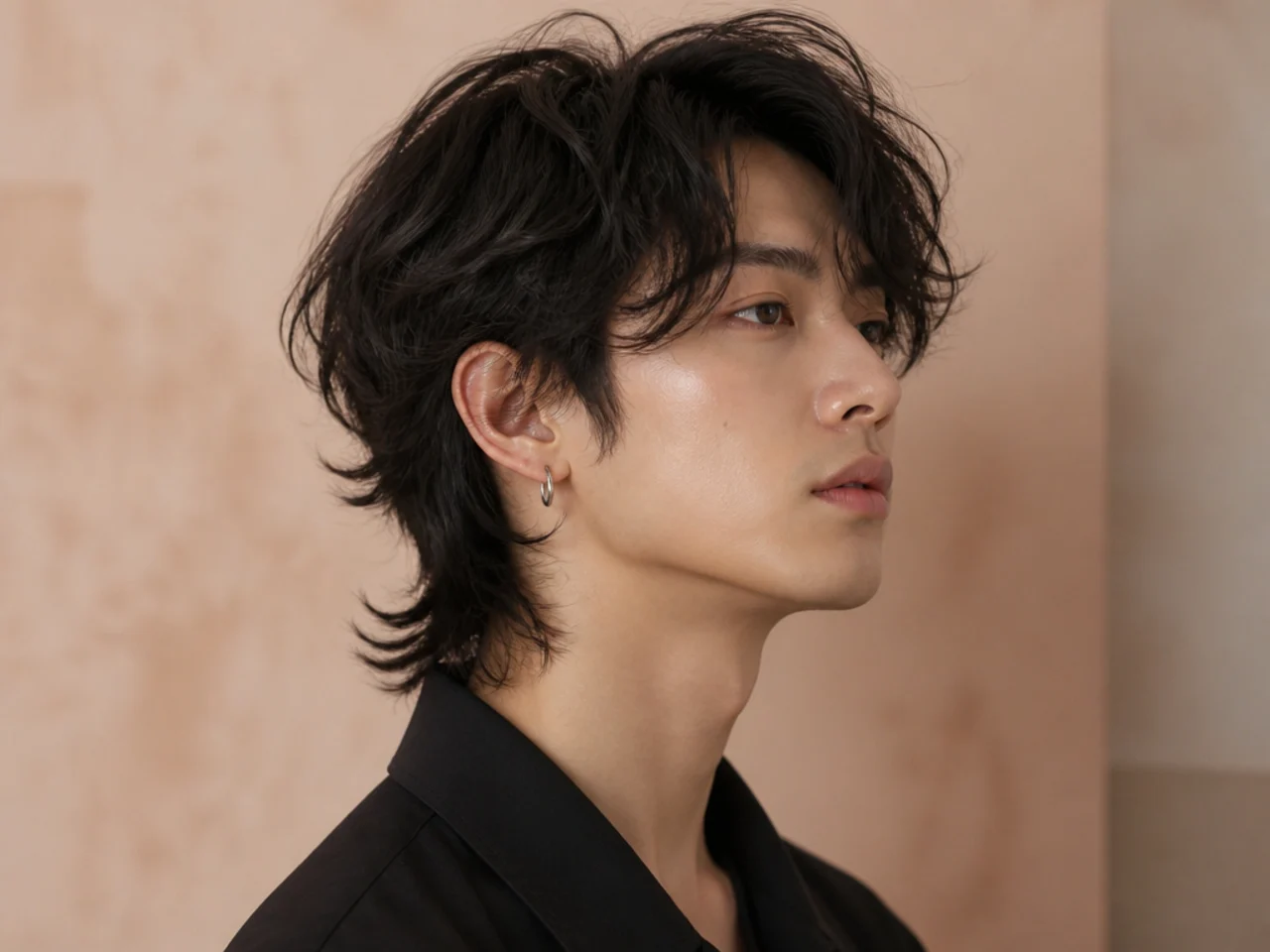
Heavy internal layers throughout, a fringe that falls forward, and a back running past the collar in a soft shag — plus a light wolf perm so every layer moves in wave rather than sitting flat. Bang Chan and Hyunjin from Stray Kids have both worn this through recent album cycles. The most maximum-effort Asian cut on the list and the one with the biggest visual payoff.
Best on straight-to-wavy hair with density to spare. Oval and oblong faces.
Ask for: "Modern mullet with a light wolf perm, 4 inches on top, back running 5 to 6 inches, heavy point-cut ends. Cut first, perm second, same appointment."
Styling tip: diffuse on low heat, scrunch a curl cream through the length, leave it alone. Brushing kills the pattern within a week.
6. The Japanese Soft Wolf
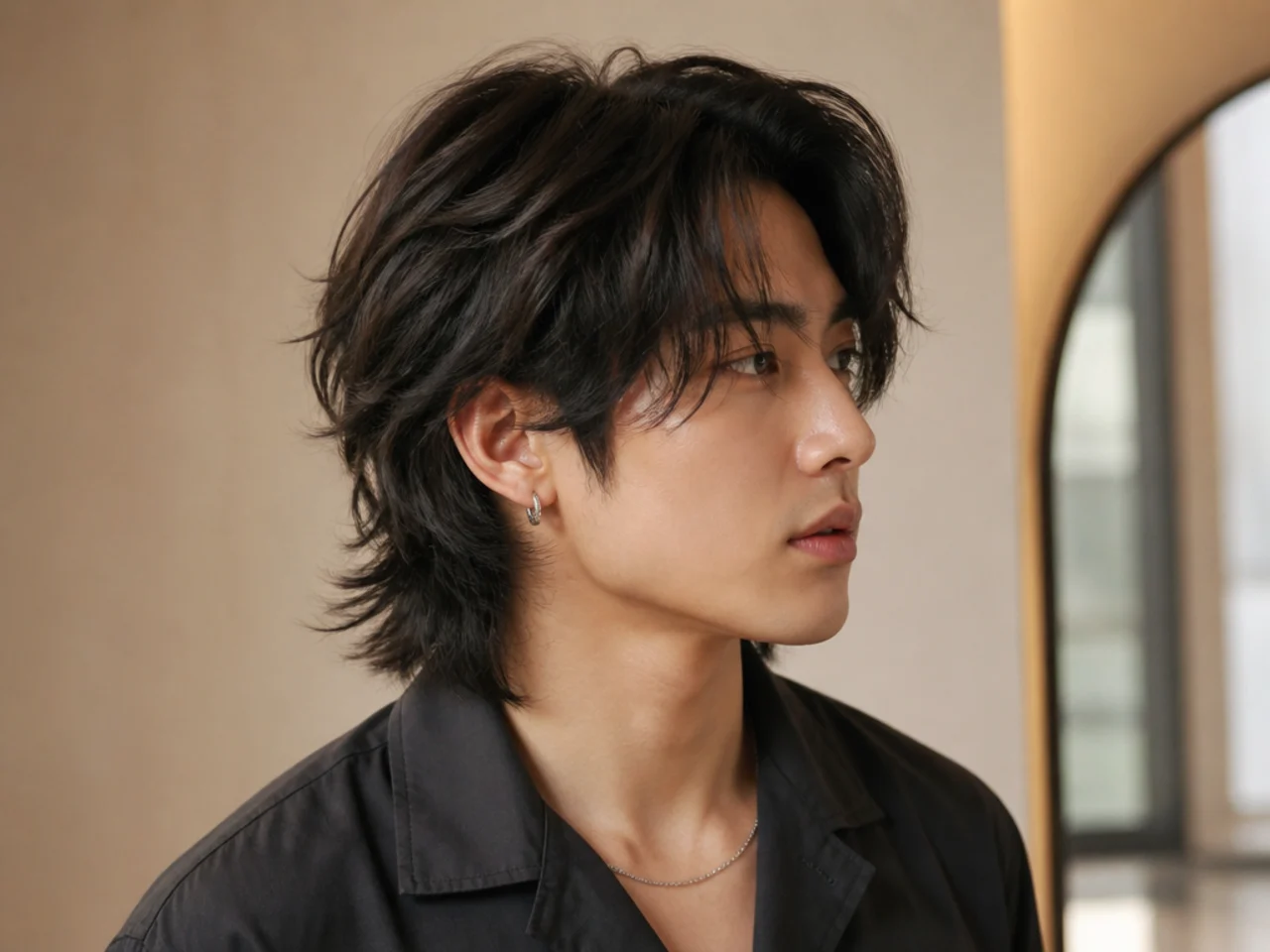
The Harajuku and J-rock take on the wolf cut — softer than the K-pop version, with layers cut closer to the face and a fringe that reads deliberately unfinished. Think Yamashita Tomohisa in his post-NEWS era, or any current J-rock frontman. Reads street, arty, slightly disheveled by design.
Best on straight-to-wavy hair with medium density. Oval, oblong, and long faces.
Ask for: "Wolf cut with soft layers starting at the cheekbones, back kept shorter than a K-mullet, fringe forward — not swept. No perm needed."
Styling tip: leave-in conditioner while damp, rough-dry with your fingers, finish with a mist of sea-salt spray. This one wants to look air-dried, not styled.
7. The Center-Parted Curtain (J-Drama)
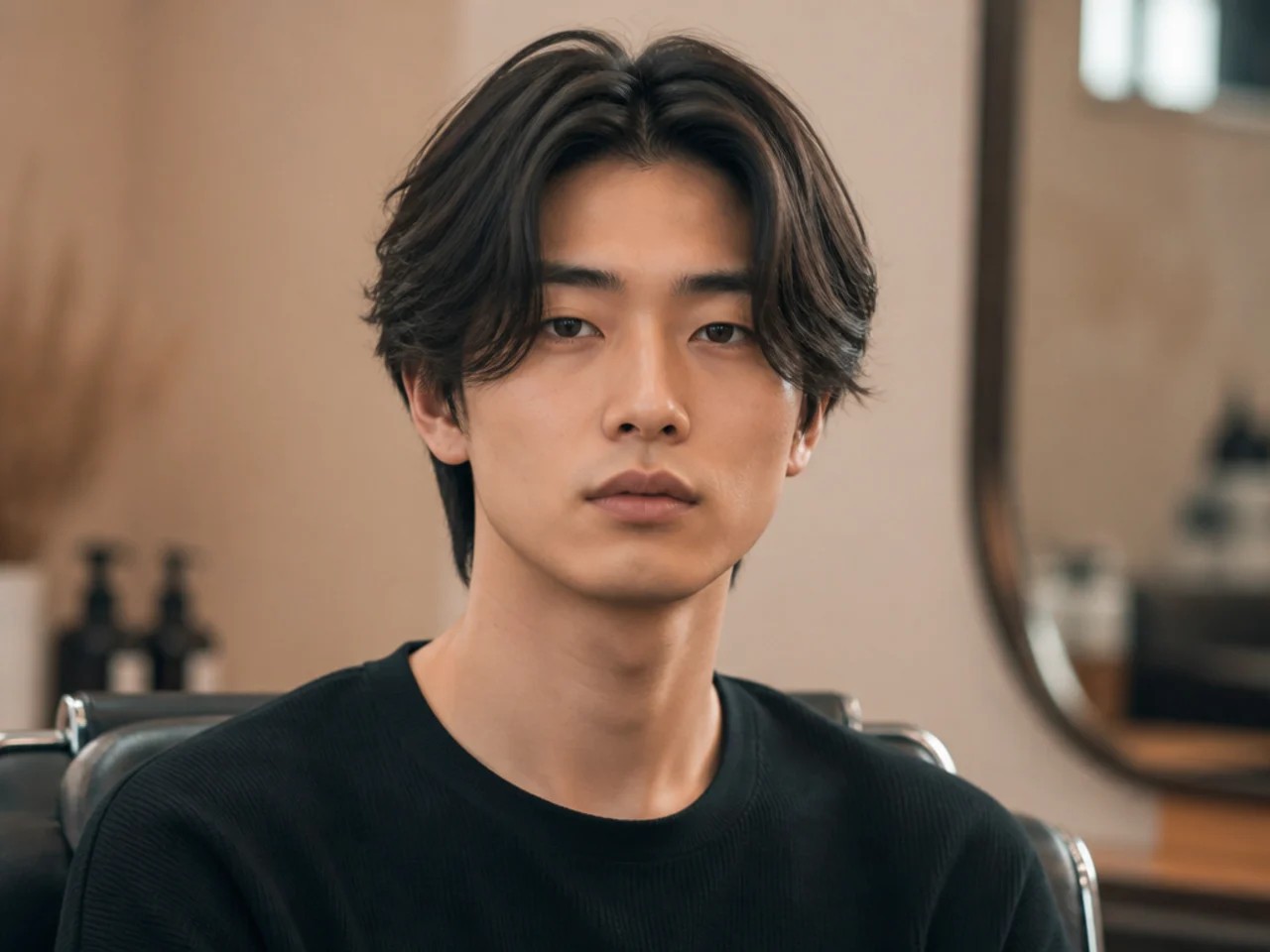
The J-drama leading-man variant of the curtain — parted dead center, cut slightly shorter than the Korean curtain so the panels fall to eyebrow level rather than past. The finish reads matte rather than glossy, which is what separates it from the K-drama version. Long a J-drama staple; still cycling through modern shows every season.
Best on straight hair. Oval, long, and heart-shaped faces.
Ask for: "Center-parted curtain, 4 inches on top, panels stopping at eyebrow, matte finish — no shine product."
Styling tip: blow-dry the front flat down with a paddle brush, split with your fingers, finish with a texture powder rather than a cream. Matte is the whole point.
8. The Mash Cut
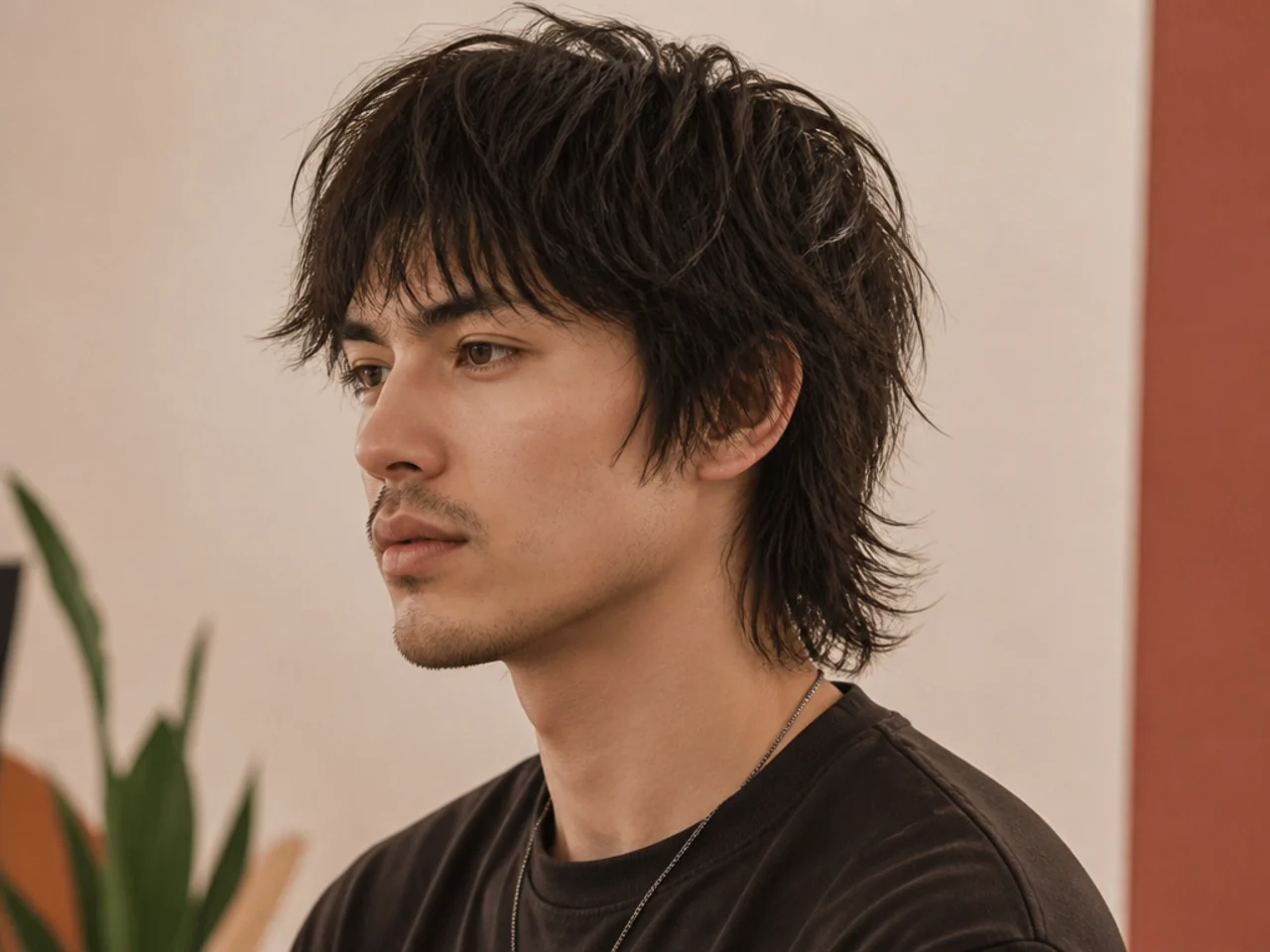
The Japanese take on the modern bowl — a soft rounded perimeter (the "mash" or "mushroom" shape) with an undercut or short scissor blend underneath, and enough length on top for the crown to move. Common on Japanese pop idols and mainstream J-pop groups; a smoother, more grown-up read than a K-bowl. Points a face down and forward, which is why it works so well on square jaws.
Best on straight hair with medium-to-thick density. Oval, square, and heart faces.
Ask for: "Mash cut, top cut on a soft rounded perimeter skimming the eyebrows and covering the top of the ear, short scissor-blended sides underneath, no hard undercut line."
Styling tip: blow-dry forward and down with a flat brush — not round. Finish with a light shine spray. The perimeter should look sculpted, never crunchy.
9. The Chinese Cinema Undercut
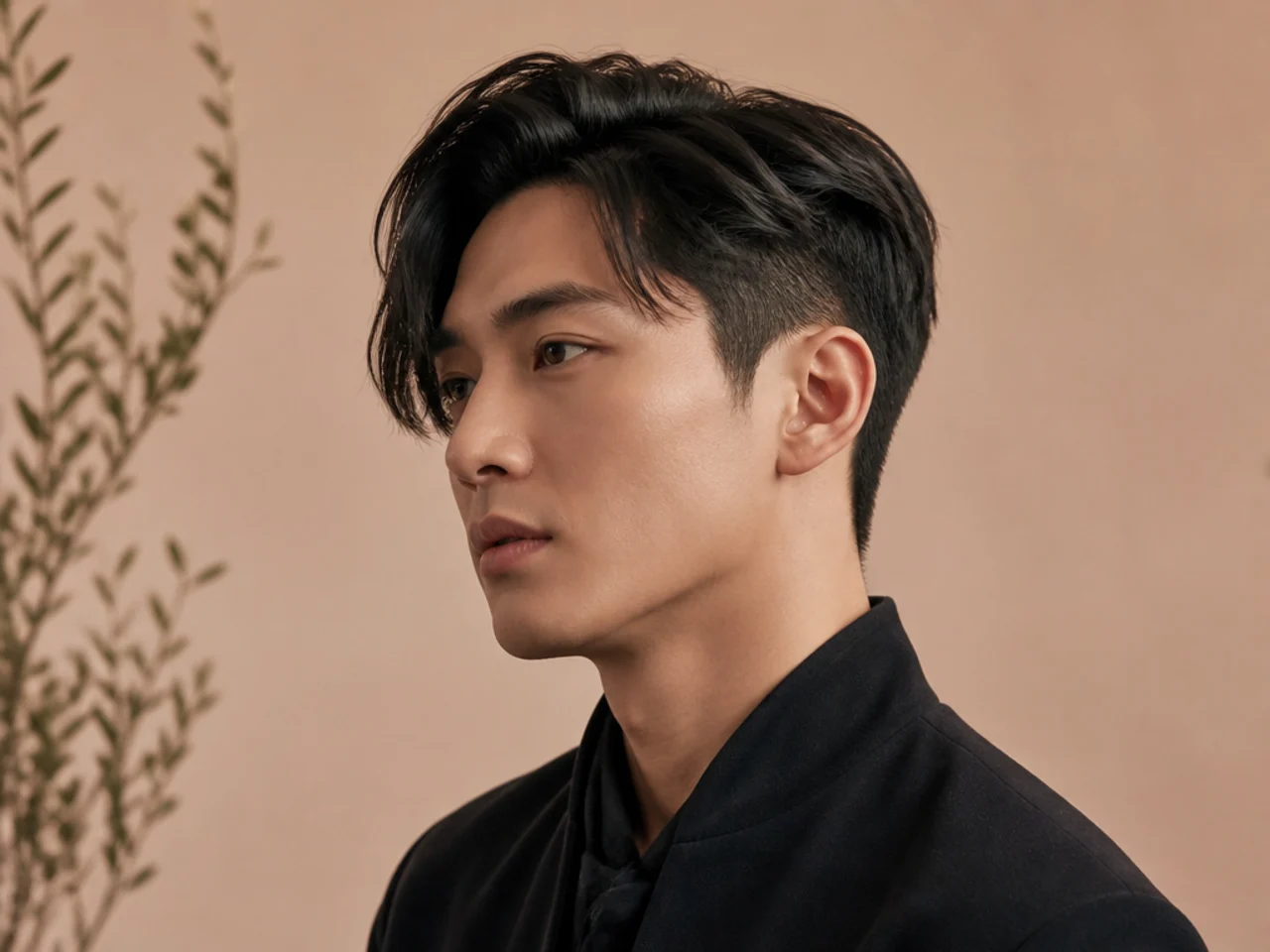
Hong Kong cinema of the 80s and 90s built this template — a long, slicked-back top disconnected hard from a one-guard clipper cut on the sides, no blend, no fade, just a visible line where the two lengths meet. Andy Lau, Leon Lai, and the whole Heavenly Kings era ran it. The modern version cleans up the top and keeps the disconnect exactly as sharp.
Best on straight hair with strong density. Angular, square, and oval faces. Fine hair loses too much visual mass against skin-tight sides.
Ask for: "Disconnected undercut fade, 5 inches on top slicked back, one guard on the sides all the way around, no blend — hard line at the temple."
Styling tip: heavy pomade to towel-dried hair, comb straight back, blow-dry cool from the front to lock the direction. Every strand should show a comb line.
10. The Sharp Side Part
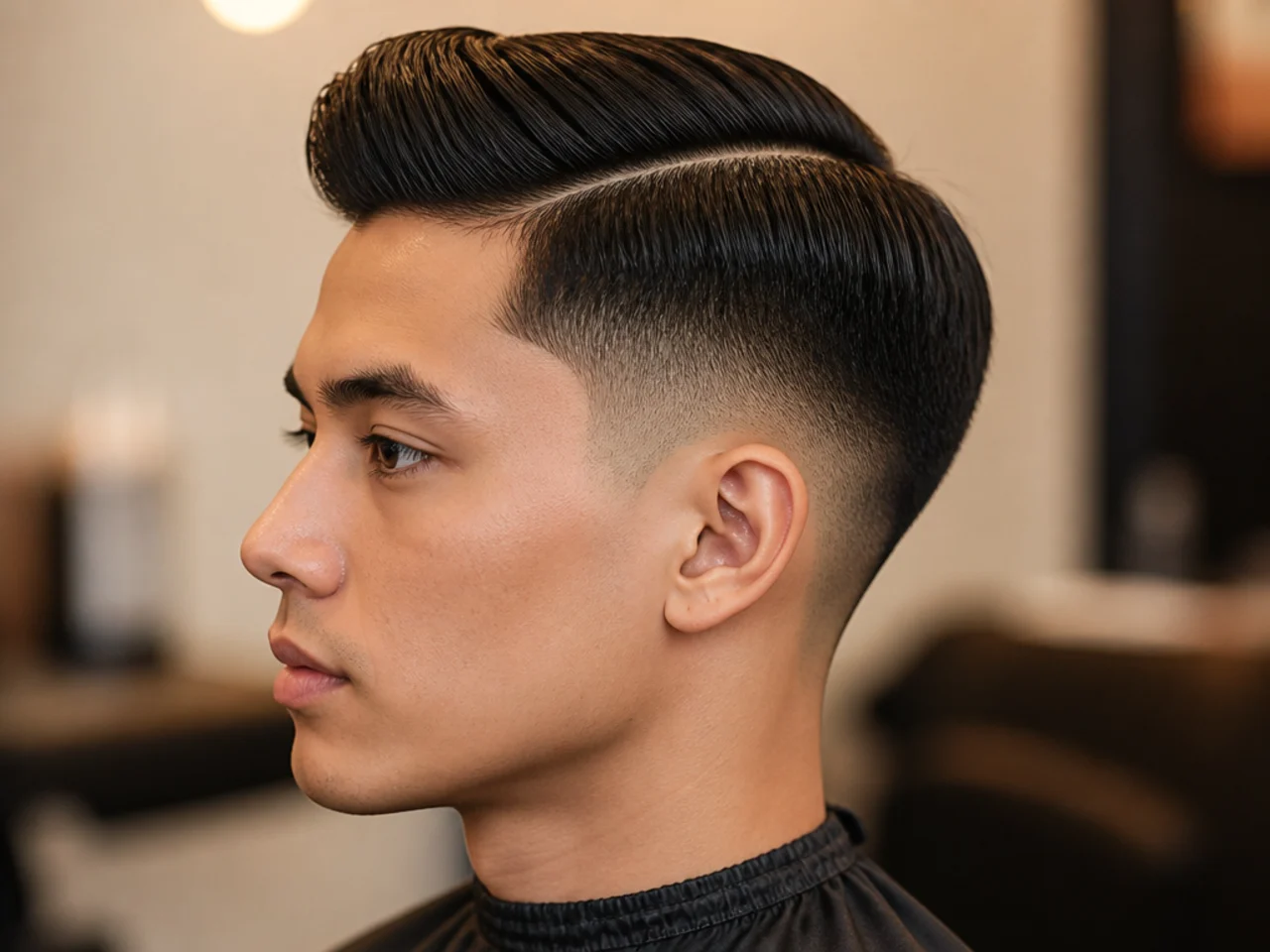
The Chinese cinema executive's default and still the safest business cut for Asian hair. Hard side part on the dominant side, 3 inches on top combed cleanly across, scissor-blended sides that stop above the ear. Tony Leung has worn some version of it for 30 years. Reads mature, capable, and utterly professional.
Best on straight hair with any density. Every face shape.
Ask for: "Hard side part on my left, 3 inches on top, scissor-blended sides above the ear, no fade to skin. Razor the part in if it holds better."
Styling tip: light pomade combed to the part, set with a mist of hairspray. This is one of the rare Asian cuts that survives without a round brush.
11. The Slicked-Back Cinema
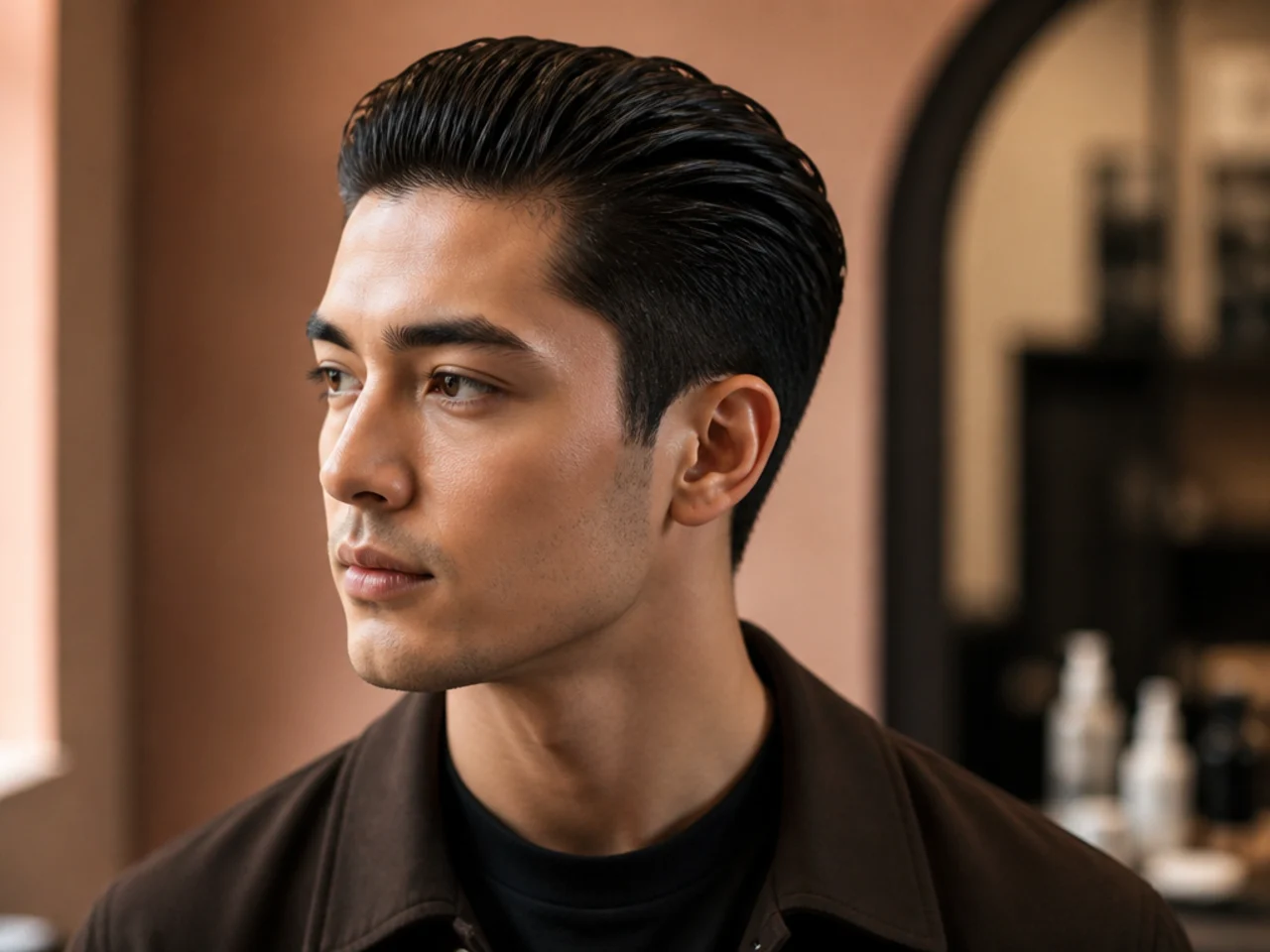
The classic Hong Kong cinema slick — top pushed straight back off the forehead with a high-shine pomade, sides on a low taper or a soft scissor blend rather than a hard undercut. Chow Yun-fat in his 90s A Better Tomorrow era; every current Chinese-language leading man in a suit-and-tie shoot. Reads elegant instead of aggressive.
Best on straight hair with a receding hairline that benefits from the sweep-back. Oval, square, and angular faces.
Ask for: "Slick back, 4 inches on top, low taper on the sides ending at the sideburn line, natural part left in — the part still shows when everything's combed back."
Styling tip: pomade to towel-dried hair, comb with a fine-tooth comb, then blow-dry cool from the roots so the sweep holds all day.
12. The Korean Edgar Crop
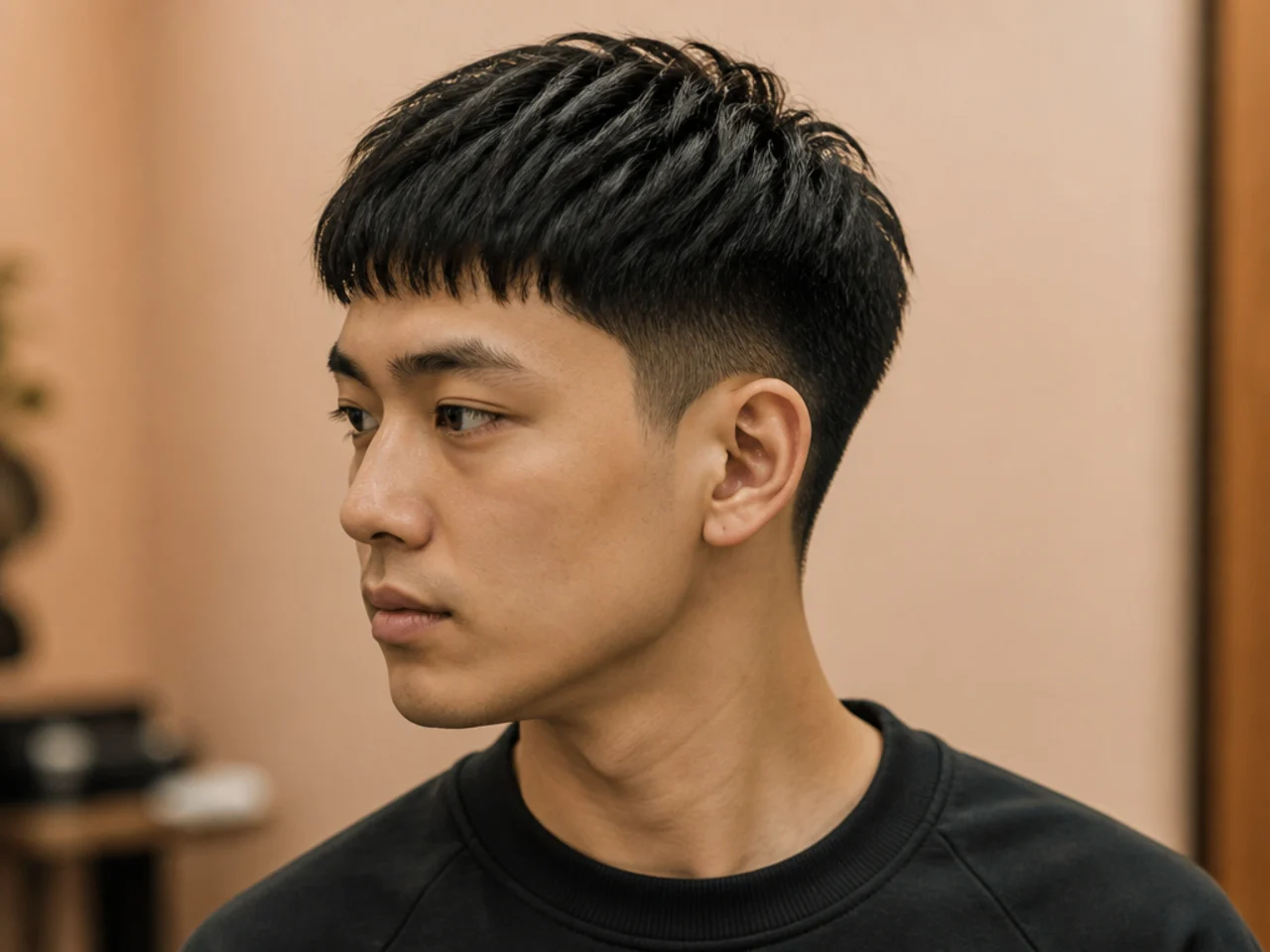
The Korean take on the Edgar haircut — a short blunt fringe cut straight across the forehead, top kept 2 to 3 inches, sides on a soft taper rather than a hard fade. Softer than the American Edgar, sharper than the K-drama textured crop. Rising fast on Korean high-school and college campuses and Pinterest boards alike.
Best on straight hair. Square, oval, and heart faces. Round faces should skip the blunt fringe.
Ask for: "Edgar-style straight fringe cut blunt at the forehead, 2 to 3 inches on top, soft taper — not a hard fade — on the sides."
Styling tip: a matte paste worked through the fringe with your fingers. Do not blow-dry the front up — the whole point is the flat, sharp line at the brow.
13. The K-Blowout
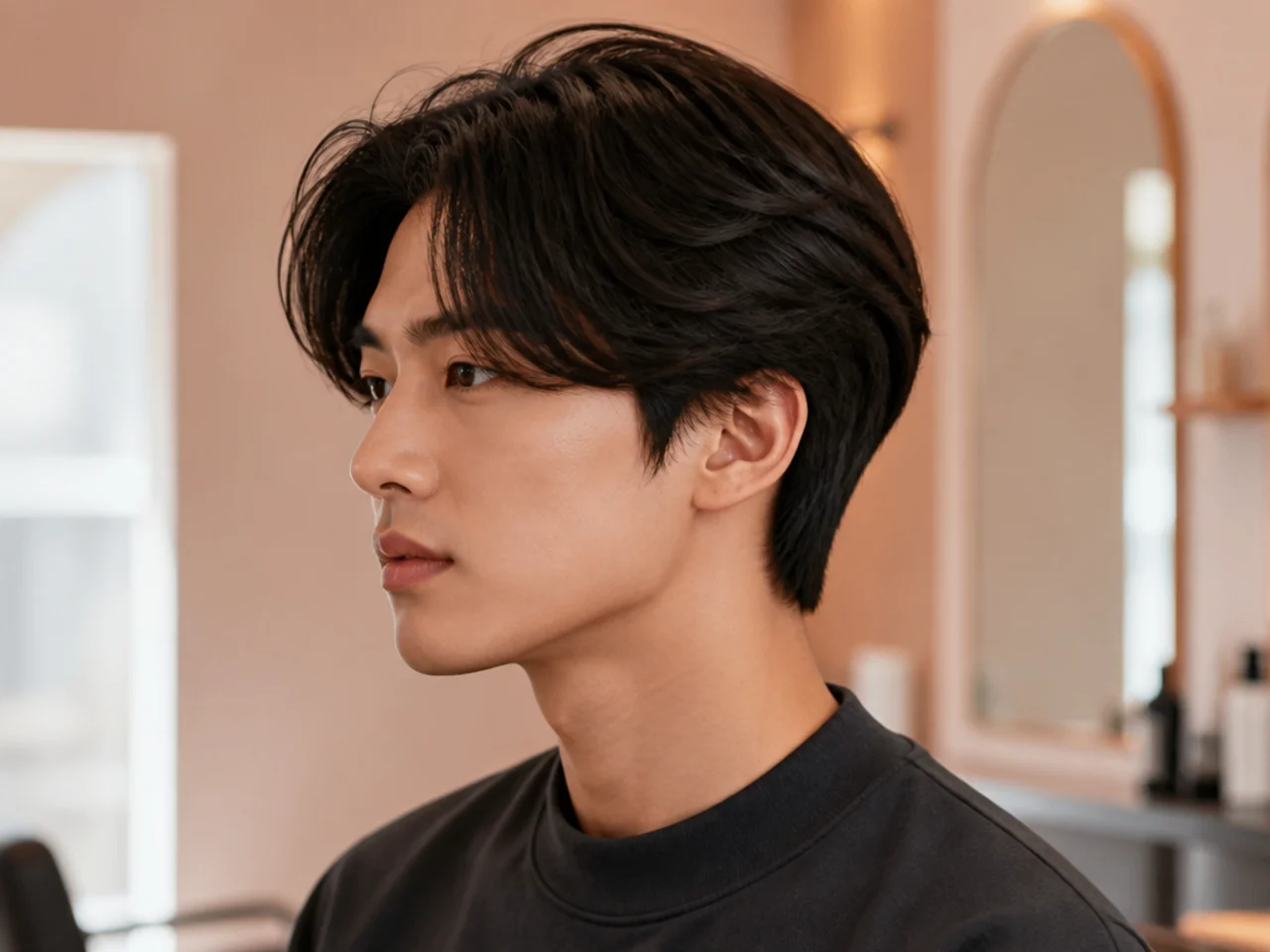
The Korean salon's answer to flat Asian hair — a medium-length top blow-dried straight up at the roots for maximum volume, then swept forward or back depending on the face. Runs through most K-pop stages and TV appearances because it photographs full even under studio lighting. Not a haircut so much as a haircut-plus-technique, but barbers understand the request.
Best on straight hair that falls flat. Round, square, and long faces — the crown lift adds vertical.
Ask for: "Korean blowout cut, 3 to 4 inches on top, layered for lift, low or scissor-blended sides. I'll style it with a round brush and volumizing mousse."
Styling tip: mousse at the roots on damp hair, round-brush pulling the roots straight up section by section, cool blast at the end of each pass. A dry texture spray at the crown holds the lift.
14. The Korean Textured Crop
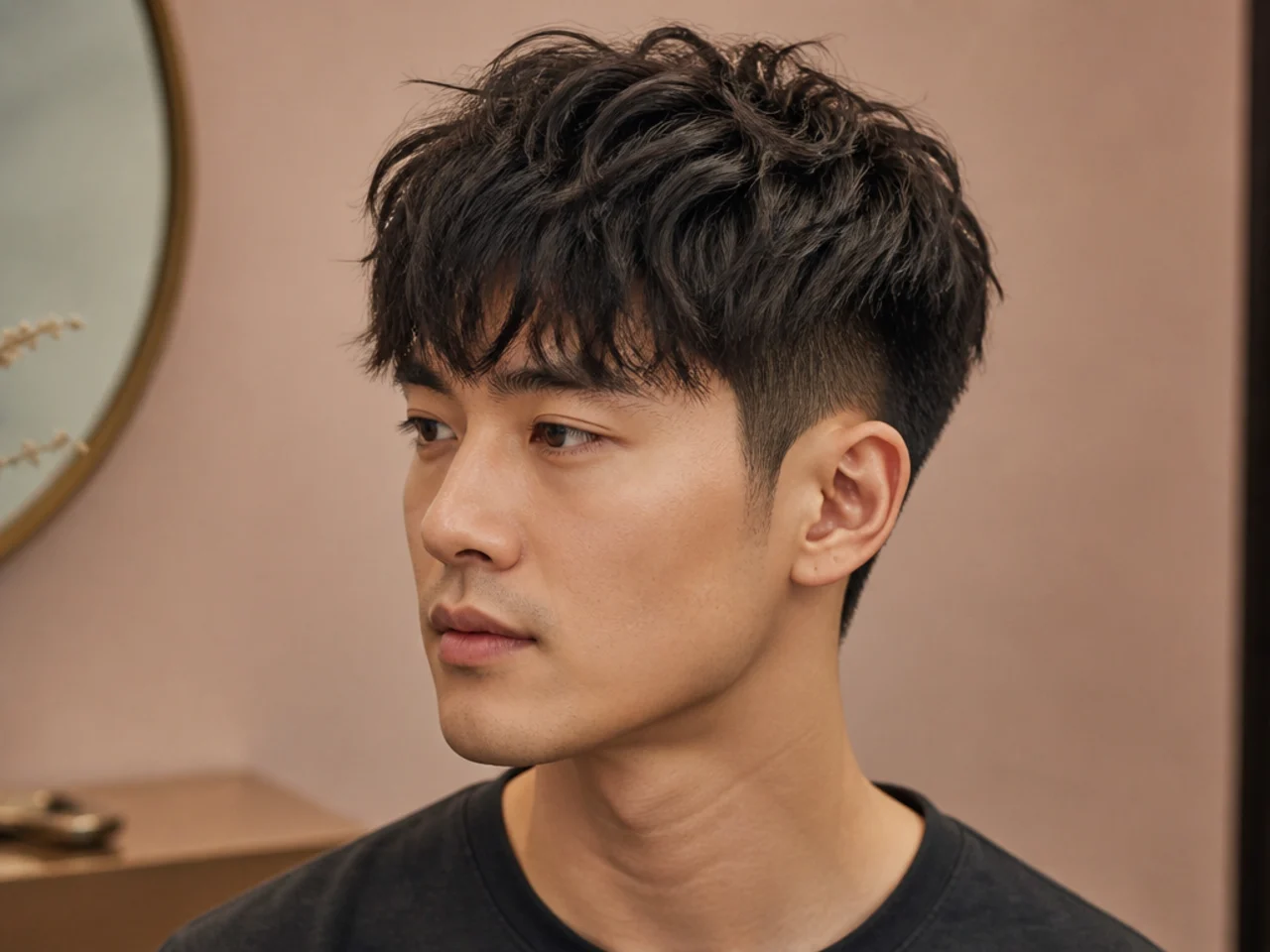
RM from BTS runs the reference version. Short scissor-blended sides, 2 to 3 inches on top, a forward fringe reaching the brow, choppy point-cut ends throughout. The Korean answer to the French crop — softer than the American version, less fade-forward than the textured crop template.
Best on every face shape. Heavier fringe on long faces, lighter on round.
Ask for: "Korean textured crop, 2 to 3 inches on top, choppy point-cut ends, fringe reaching the brow, soft scissor-tapered sides — no fade."
Styling tip: rough-dry forward with your fingers, break the shape apart, done. A dry texture spray adds grit without weight.
15. The Mullet Fade
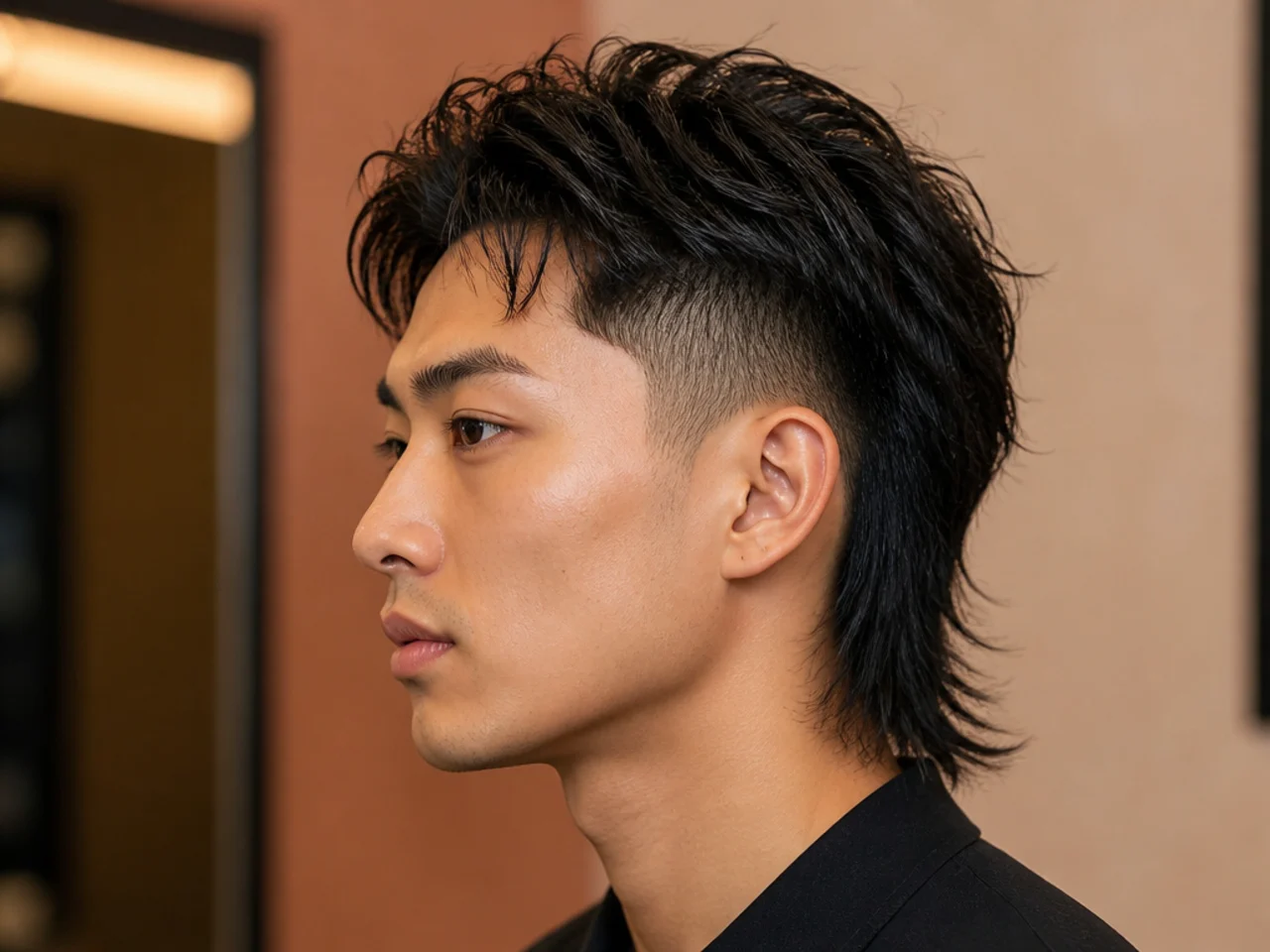
The modern short-mullet cousin of the K-mullet — same forward fringe, same layered back, but the sides drop into a low or mid fade instead of a scissor blend. Runs on Korean, Japanese, and Chinese Gen-Z alike right now. The fade cuts weight off the sides that dense Asian hair would otherwise turn into helmet mass.
Best on straight-to-wavy hair. Oval, square, and long faces.
Ask for: "Modern mullet with a low fade haircut at the sides, 4 inches on top with a forward fringe, layered length running to the collar."
Styling tip: sea salt spray on damp hair, scrunch, air-dry to eighty percent, finish with a round brush pulling the front forward. Do not blow-dry the back — it fluffs.
16. The Asian Buzz Cut with Soft Taper
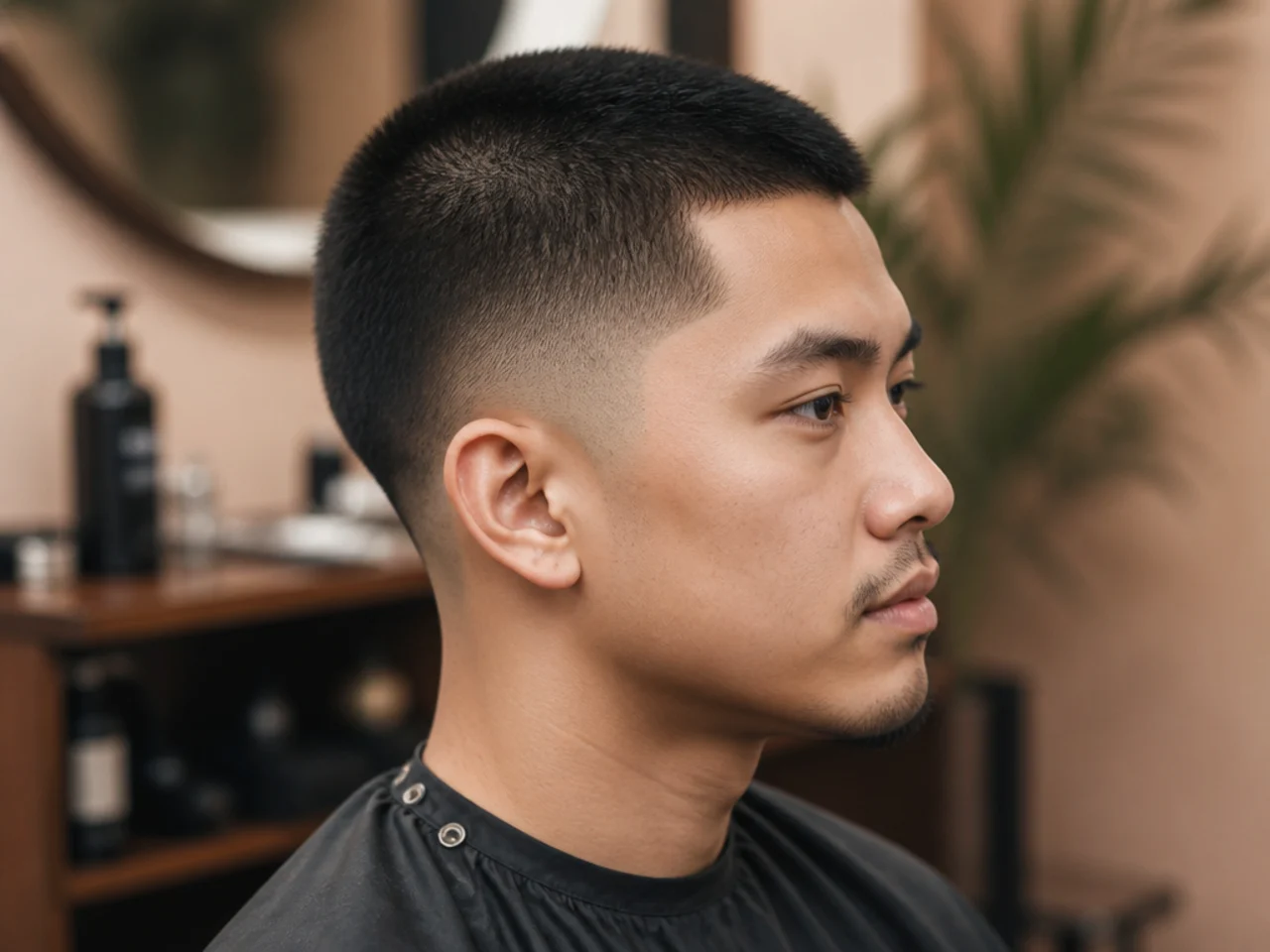
Every Asian idol runs this once — enlistment, comeback reset, or personal choice. A #3 or #4 all over with a soft taper into the sideburn and nape. Not military-short, not skin-shaved. The buzz cut for Asian men works because dense Asian hair reads solid black under low guards — no scalp shows through, no patchiness undermines the plane.
Best on strong face shapes — square, angular, and oval. Softer faces need a beard for definition.
Ask for: "Number three all over, soft taper into the sideburn and nape, natural neckline, no hard line-up at the forehead."
Styling tip: no product needed. Moisturize the scalp daily, use SPF outdoors, book a monthly cleanup — visible scalp shows every dry patch on the first hot day.
17. The Mid Fade with Textured Top
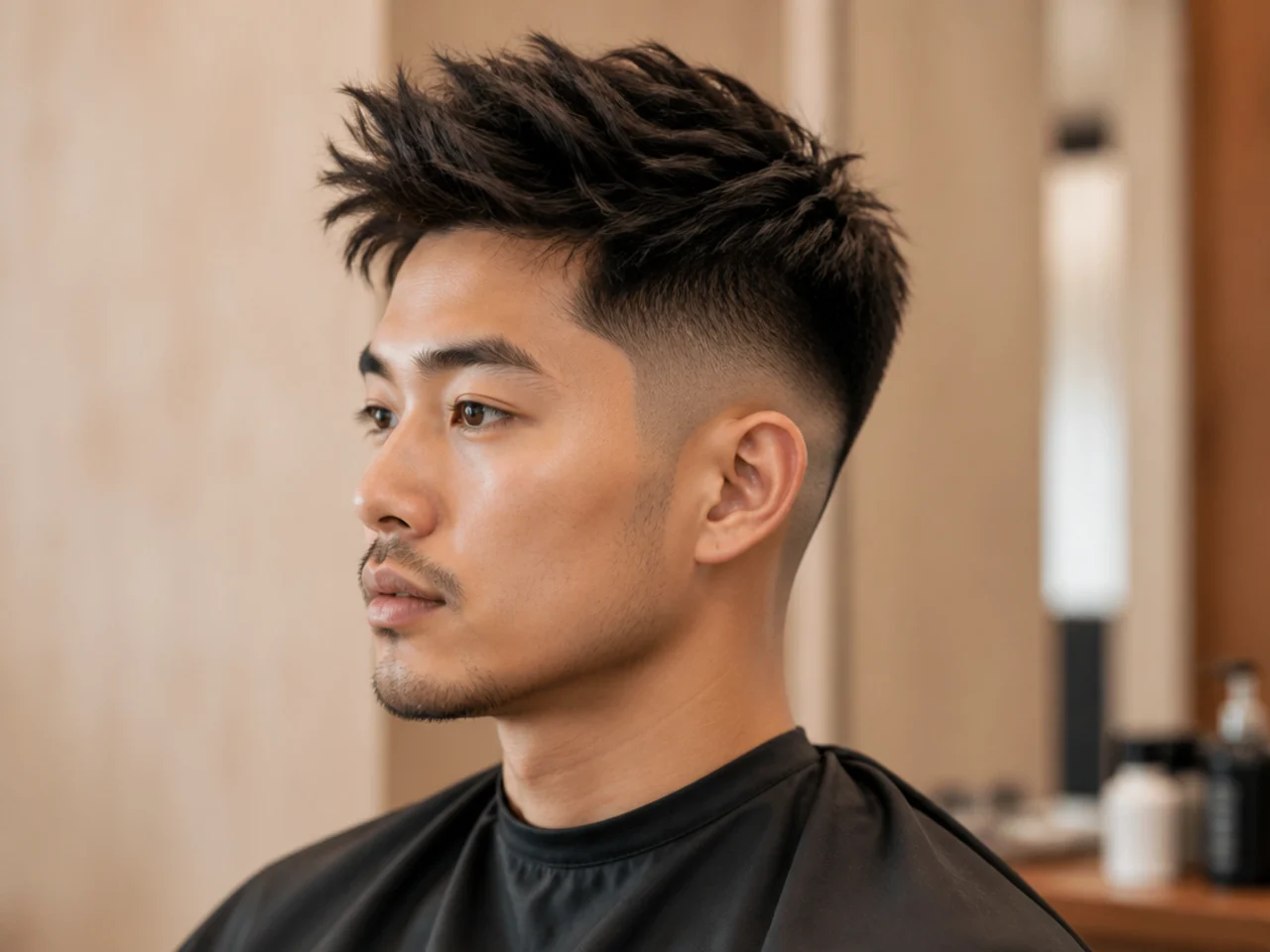
The universal Asian barber recommendation for a first fade. The mid fade sits right at the temple — the safest, most balanced fade position on any head — and the textured top adds movement to hair that would otherwise fall flat. Runs on Korean, Japanese, Chinese, Vietnamese, and Filipino barbershop menus alike. The safest fade on the list.
Best on every face shape. Round faces get the crown lift; long faces get the temple contrast.
Ask for: "Mid fade to skin at the temple, 3 inches on top layered for texture, forward fringe or side sweep depending on the face."
Styling tip: matte clay worked through damp hair with your fingers, blow-dry forward for the fringe or up-and-back for the sweep. A mist of dry texture spray sets it.
18. The Low Taper with Fringe
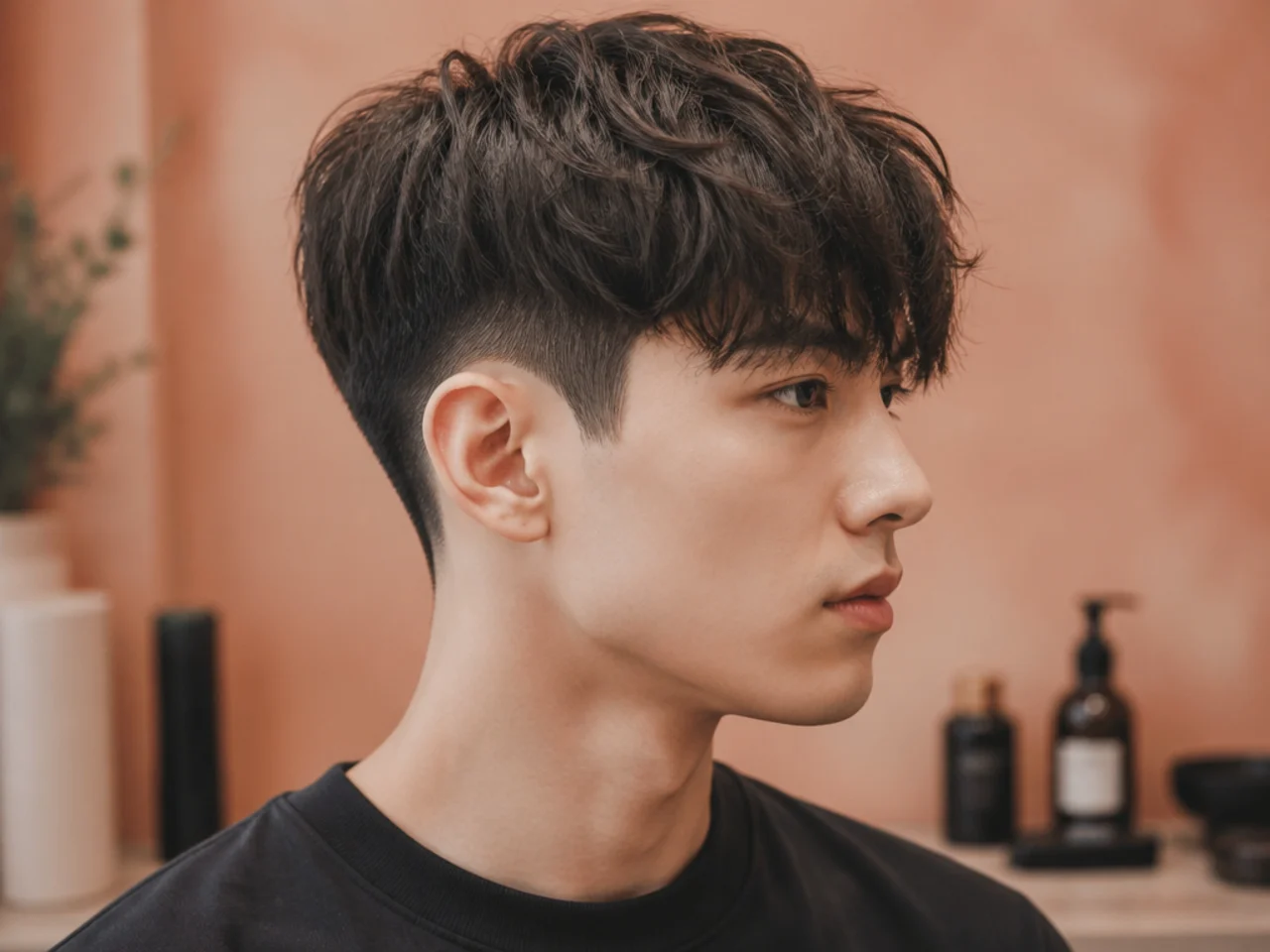
The office-friendly modern Asian cut. A low taper fade drops the sides down just above the sideburn line, and a medium-length top gets cut with a forward fringe that reads soft, K-drama-adjacent. Reads clean enough for a conservative office, current enough for a Friday night out. The Filipino and Vietnamese barbershop default in 2026.
Best on every face shape. Round faces should keep the fringe slightly off-center.
Ask for: "Low taper ending at my sideburn, 3 to 4 inches on top, forward fringe reaching the brow, no hard line-up."
Styling tip: sea-salt spray on damp hair, rough-dry, then round-brush the fringe forward. A pea of matte cream on the mid-lengths for hold.
19. The Asian French Crop
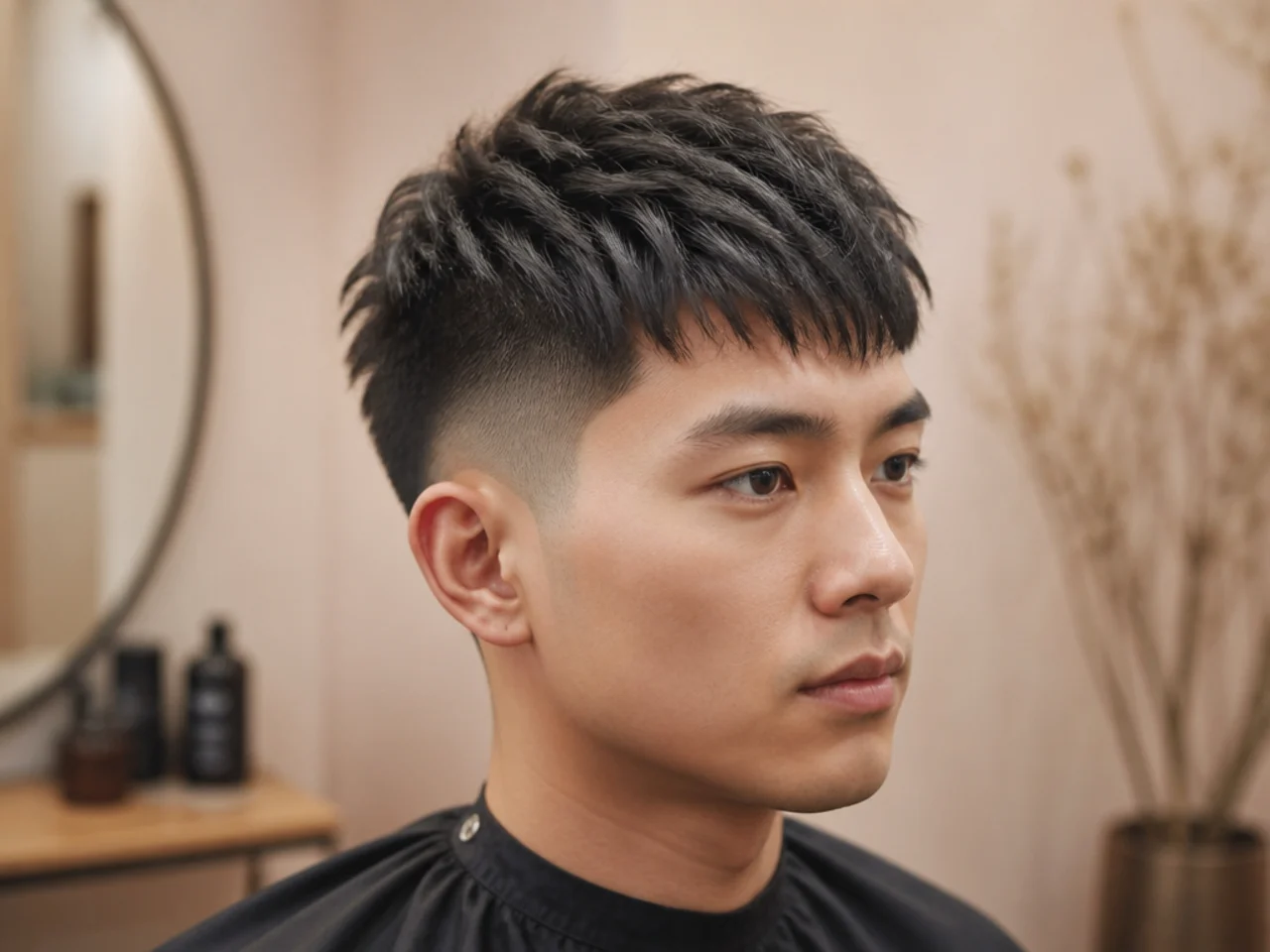
The French crop adapted for Asian hair — short blunt fringe at the forehead, top kept 1.5 to 2 inches, sides faded down to a low or mid guard. The blunt fringe is the whole point; it echoes the horizontal line of an Asian brow and squares off a round jaw. Rising fast on Vietnamese, Filipino, and Chinese-Canadian barbershop menus.
Best on round, oval, and square faces. Long faces should skip the blunt fringe.
Ask for: "French crop, 1.5 inches on top, blunt fringe cut straight across the forehead, mid fade or one-guard sides."
Styling tip: matte paste worked through damp hair with fingers, no blow-dry — the crop is designed to sit down flat. If the fringe lifts, a mist of hairspray from underneath tames it.
20. The Textured Fringe with Low Fade
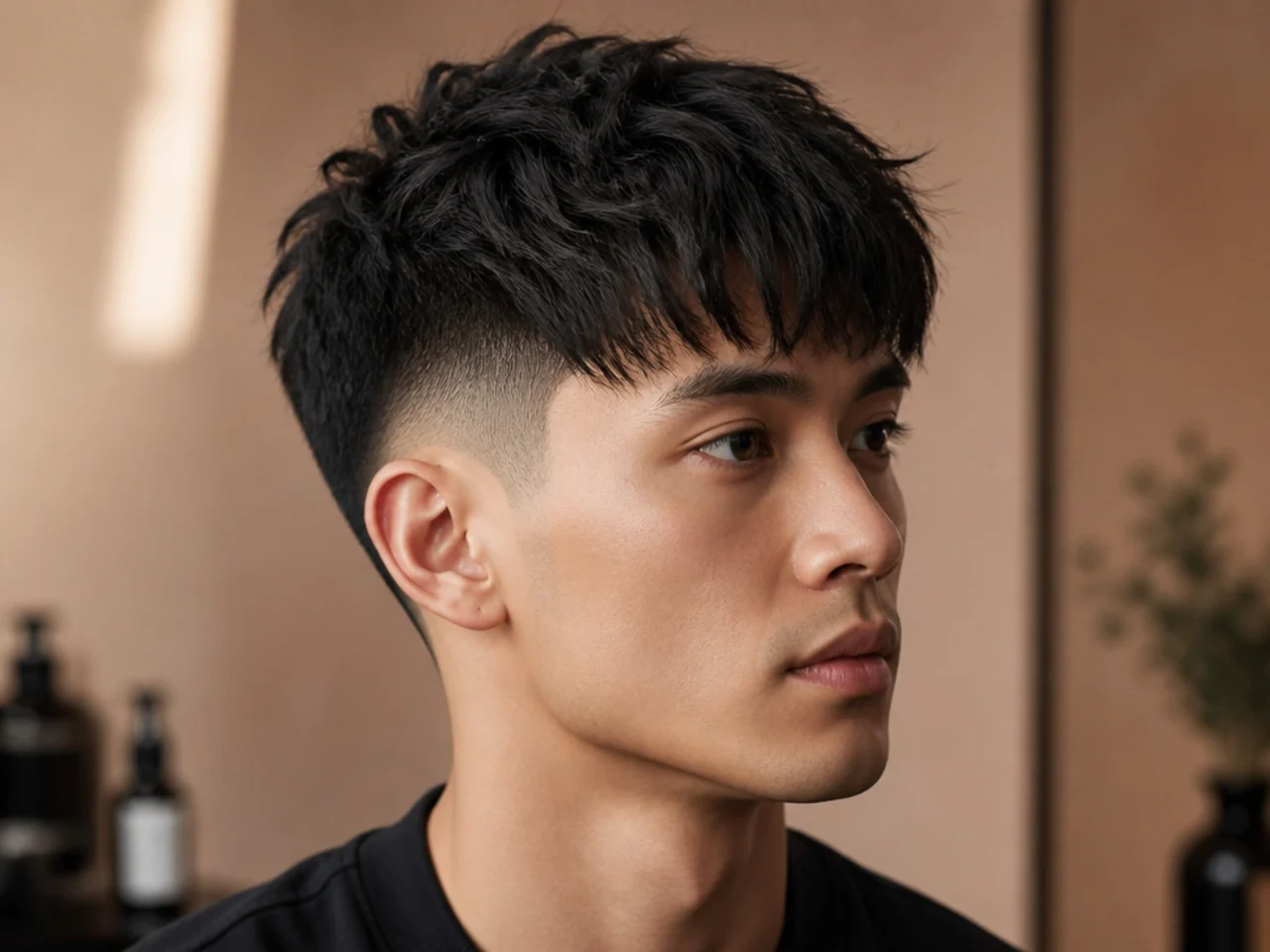
The safest modern Asian cut for a barber who doesn't specialize in K-styles. A textured fringe — piecey, choppy, cut to fall forward at the forehead — paired with a low fade at the sides. It reads current everywhere from Seoul to Los Angeles without needing a K-pop reference to understand.
Best on every face shape. Fine Asian hair benefits especially — the point-cut ends build volume the straight strands wouldn't hold.
Ask for: "Textured fringe forward, piecey point-cut ends, 3 inches on top, low fade at the sides. Not an Edgar — I want the ends broken, not blunt."
Styling tip: matte paste through damp hair, blow-dry forward with your fingers pulling the fringe down. Break the ends apart with a mist of texture spray at the finish.
How to Ask Your Barber
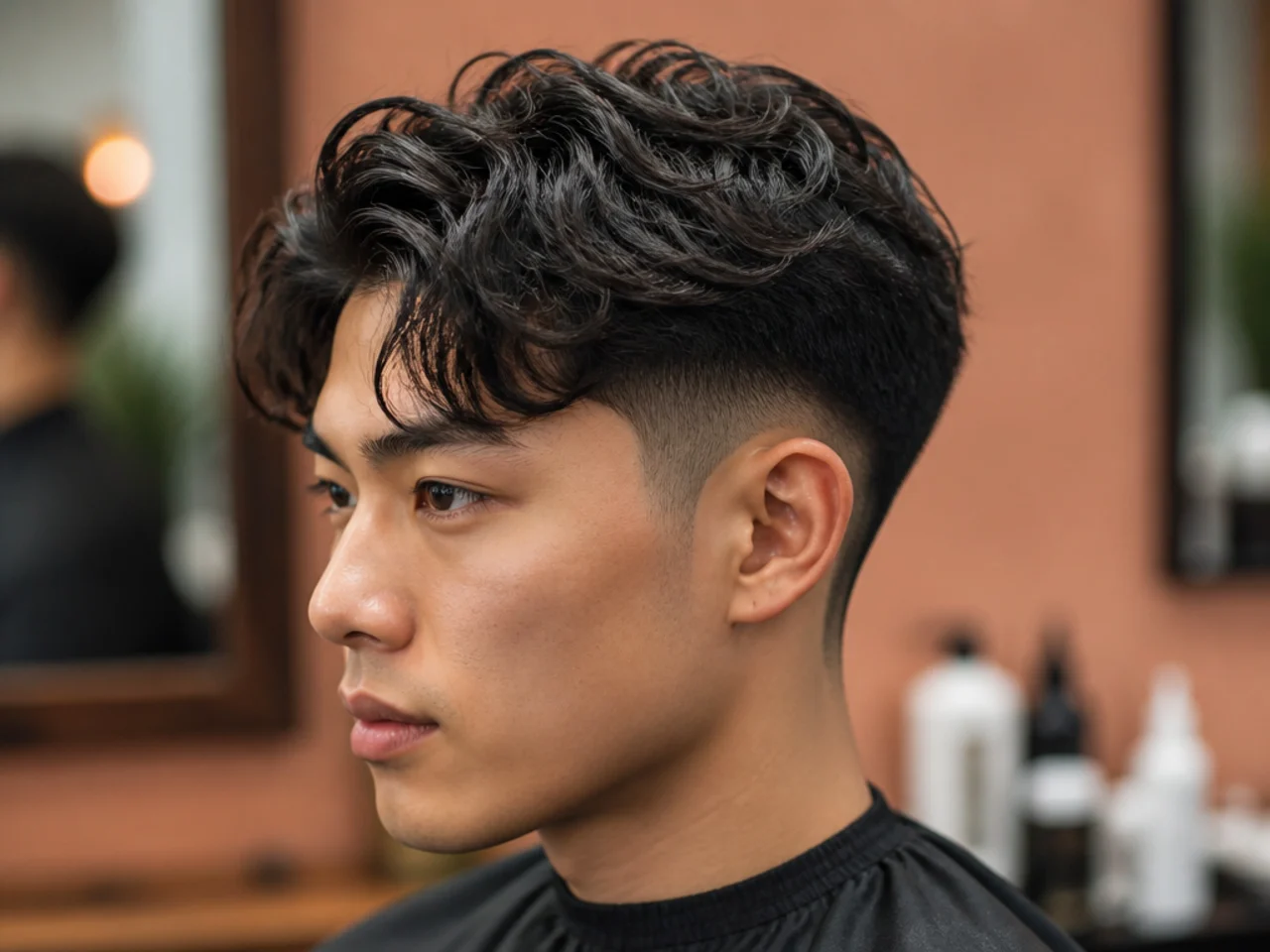
Regional cut vocabulary doesn't always translate. Here's the script that gets you the shape you had in mind at a non-Asian barbershop:
- Bring three photos. Front, side, and three-quarter. One photo lets a barber guess; three photos remove the guessing.
- Name the cut by its recognizable name. "Two block," "comma," "wolf cut," "curtain fringe," "mid fade with texture." These have all crossed over. K-mullet and mash cut still need the photo to back them up.
- Specify top length in inches. "Four inches on top" is unambiguous. "Medium" is not. Asian hair grows dense — the same "medium" reads different across ethnicities and hair types.
- Specify the side finish. "Scissor-blended, no fade to skin" is the Korean default. "Low taper ending at the sideburn" is the Vietnamese and Filipino default. Say the exact one out loud.
- Point to the disconnect. For a two block, undercut, or K-mullet, touch your temple where you want the line. Barbers respect a finger on the head more than a paragraph.
- Mention the perm if you want one. "Setting perm at the roots after the cut" or "wolf perm through the layers." Most non-Asian barbers won't offer, but many salons can do it in the same appointment.
- Book the follow-up before you leave. Every 3 weeks for a buzz or fade, 4 to 5 for a two block or comma, 6 to 8 for a long flow layer.
Styling and Maintenance
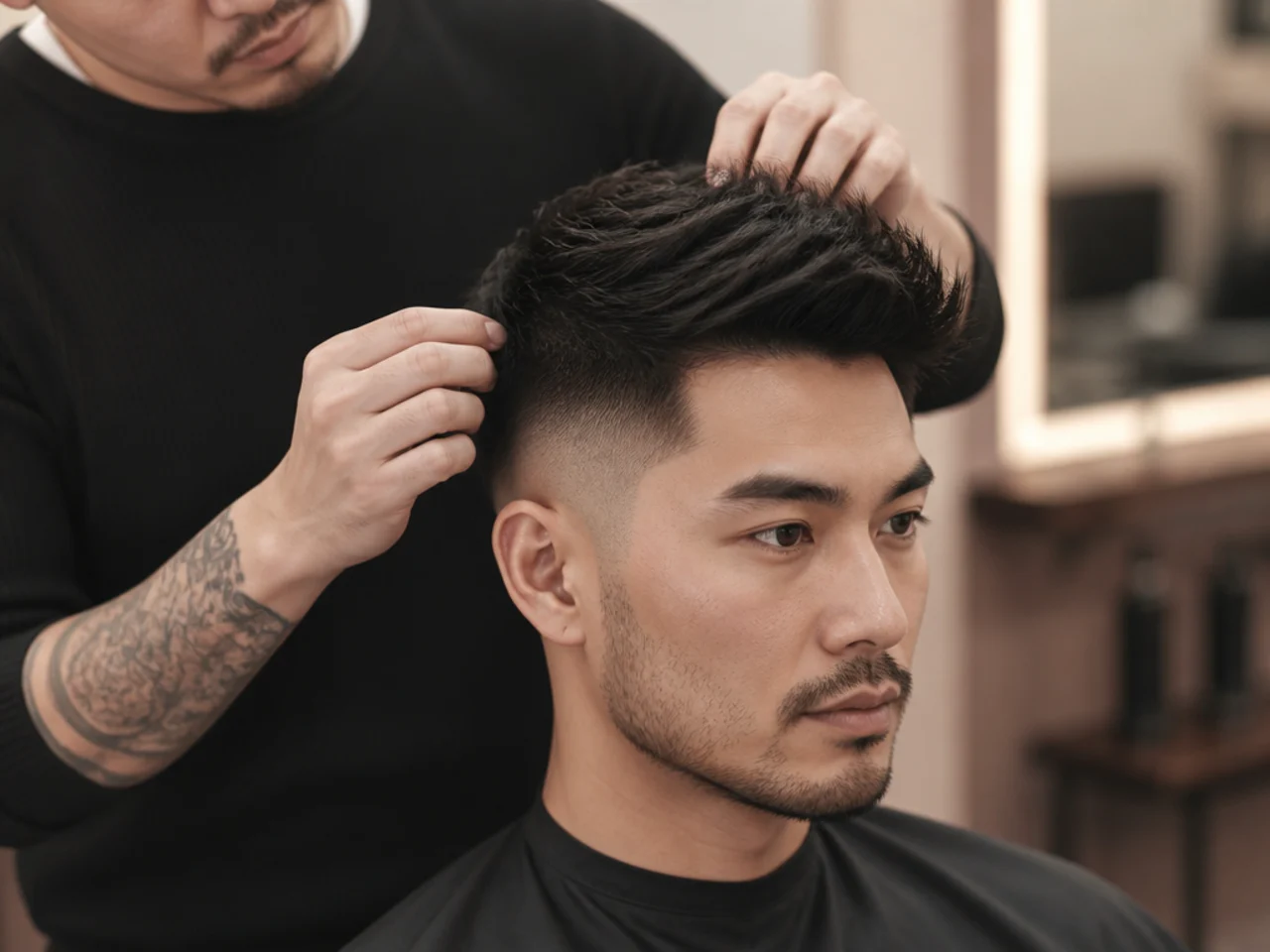
Asian hair rewards structure. Give it four tools and the shape holds all day; skip any of them and it falls by lunch.
The dryer does most of the work. Rough-dry your hair to about eighty percent, then blow-dry with a round brush pulling the top in the direction you want it to sit — forward for a comma or textured crop, down for a curtain, up-and-back for a slicked cinema cut. Set each pass with a two-second blast of cool air.
Match the product to the finish. A matte clay keeps the two block and textured crop reading natural. A curl cream hooks the comma and holds the middle-part curve. A light pomade adds shine to the slicked cinema and hard-side-part cuts. A sea-salt spray builds the wolf and mullet texture. A volumizing mousse lifts the K-blowout and the middle part. One product, small amount — Asian styling is subtractive, not layered.
Wash with the hair in mind. Sulfate-free shampoo twice a week for oily scalps, once for dry. A leave-in conditioner on the mid-lengths for anything past 3 inches. A drop of hair oil on the ends for medium and long variations — this is what turns Asian hair from "long" to "styled."
Perm before you fight. If your hair goes flat by lunch every day, ask your salon about a setting perm at the roots. Gentle lift that lasts three to four months, hidden entirely under the shape of your existing cut. Every K-pop idol with straight hair runs one — that's not vanity, it's just how straight dense hair behaves without help.
Sleep on it right. A silk or satin pillowcase saves the round-brush work overnight, especially on permed styles. Guys with permed hair should also skip touching the shape between washes — every hand-run drops the curl pattern a little.
Skin matters. Buzz cuts and low fades reveal the scalp under fluorescent lights. Moisturize the scalp two mornings a week and use a light SPF outdoors — Asian scalps show dryness and sun damage exactly like Asian faces do.
FAQ
What haircut suits Asian men best?
The two block, the middle part, and the textured crop are the three cuts that consistently flatter thick straight Asian hair across every face shape. All three use scissor-blended sides and enough top length to hide the flatness Asian hair falls into by default.
Are K-pop cuts only for young guys?
No. The Korean middle part, the sharp side part, and the classic mash cut translate cleanly into 30s and 40s — the K-drama business cut is literally engineered for corporate Korea. The wolf, the K-mullet, and the fluffy fringe read younger; the rest work across ages.
Do these cuts need Asian hair to work?
Most translate. The two block, curtain fringe, and middle part work on any hair type that can hold length on top. The K-mullet and wolf perm rely on Asian hair's density and pigment to look right — the shape reads different on fine or lighter-colored hair.
Can I get a Korean perm at any salon?
Most salons that offer perms can do a setting perm, a wolf perm, or a body perm — but the results vary wildly. If your city has a Korean, Japanese, or Chinese-owned salon, book there for the perm specifically. The technique and solution differ from the standard American men's perm.
Which cut works for a conservative office?
The sharp side part, the classic mash cut, the Asian French crop, and the low taper with fringe all read office-ready. The two block and comma also work if you keep the sides scissor-blended and the top under 4 inches.
What about Southeast Asian hair specifically?
Filipino, Vietnamese, Thai, and Indonesian men often have slightly wavier and less dense hair than East Asian men. The low taper with fringe, the mid fade with textured top, the Japanese soft wolf, and the modern mullet fade all lean into that texture rather than fighting it. Skip the K-blowout — you don't need the volume.