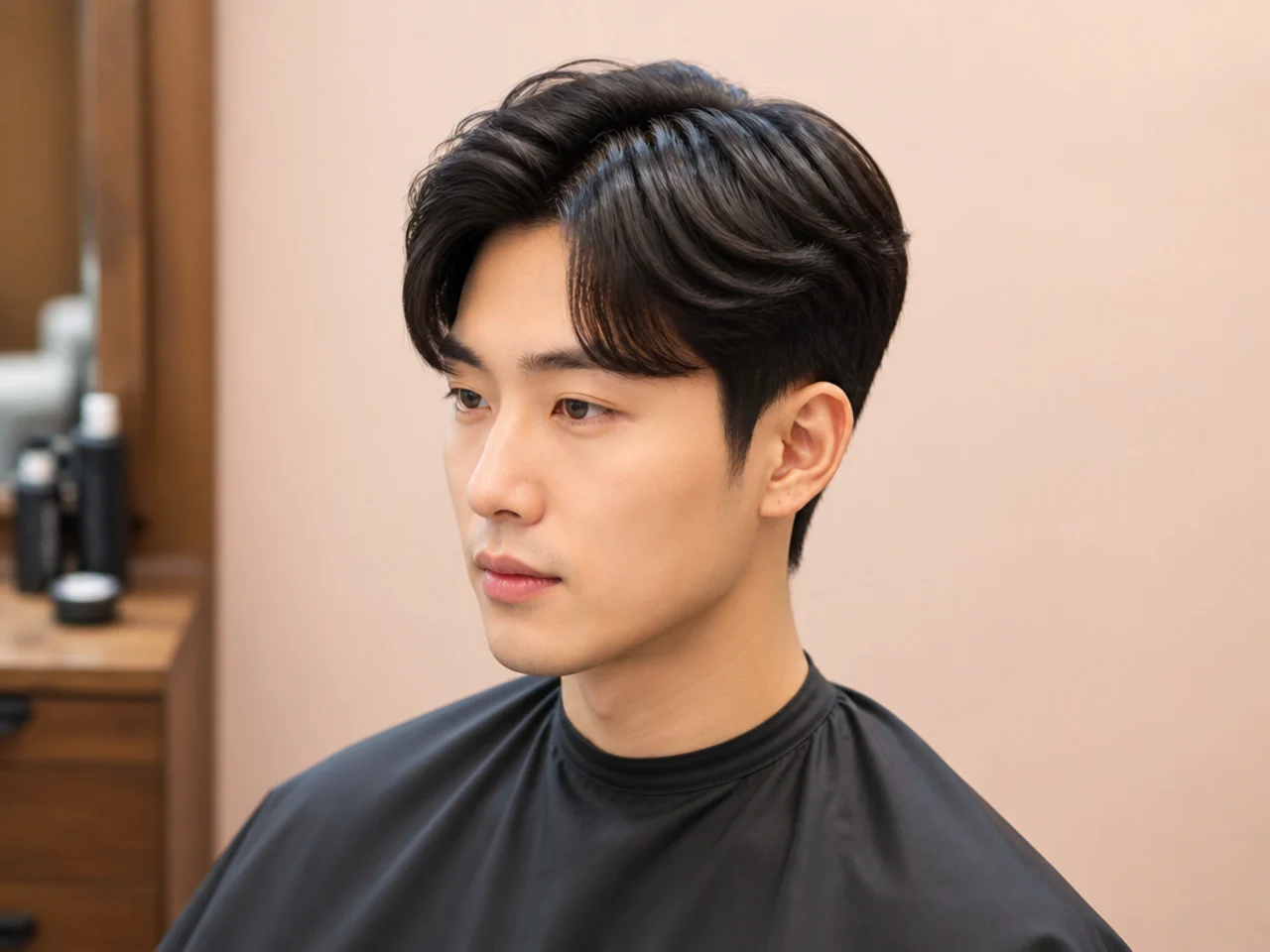
15 Korean Side Part Hairstyles for Men
Fifteen Korean side part hairstyles for men — two block, comma, curtain, wolf perm and more, each with the exact ask, styling notes, and K-drama reference.
In this article · 21
- What Is a Korean Side Part?
- How to Choose Your Korean Side Part
- The 15 Korean Side Part Variations
- 1\. Classic Korean Side Part
- 2\. Two Block Korean Side Part
- 3\. Korean Comma Side Part
- 4\. Korean Curtain Side Part
- 5\. Korean Textured Side Part
- 6\. Slick Back Korean Side Part
- 7\. Korean Wolf Cut Side Part
- 8\. Korean Setting Perm Side Part
- 9\. Korean Low Taper Fade Side Part
- 10\. Korean Long Flow Side Part
- 11\. Korean Ivy League Side Part
- 12\. Off-Center Korean Middle-to-Side Part
- 13\. Korean Old Money Side Part
- 14\. K-Pop Idol Side Sweep
- 15\. Korean Undercut Side Part
- How to Ask Your Barber
- Styling & Maintenance
- FAQ
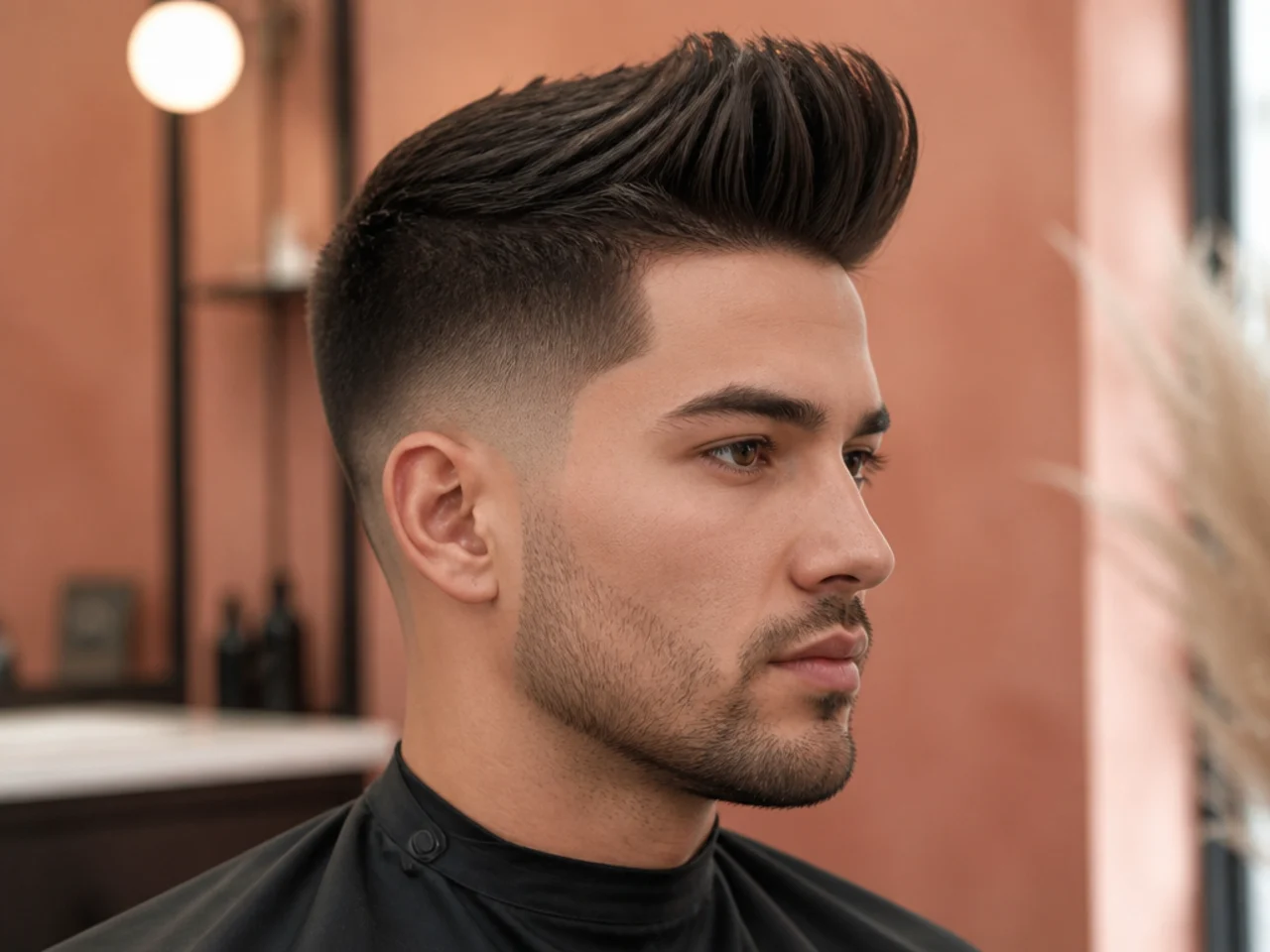
Korean barbers treat a side part differently. The top runs three to five inches instead of two, the sides get scissor-tapered or hidden under a two-block rather than skin faded, and the whole shape gets blow-dried polished every morning. This guide covers the fifteen Korean side part hairstyles for men worth walking into a chair to ask for — with the K-drama and K-pop references that will land the shape you had in mind.
What Is a Korean Side Part?
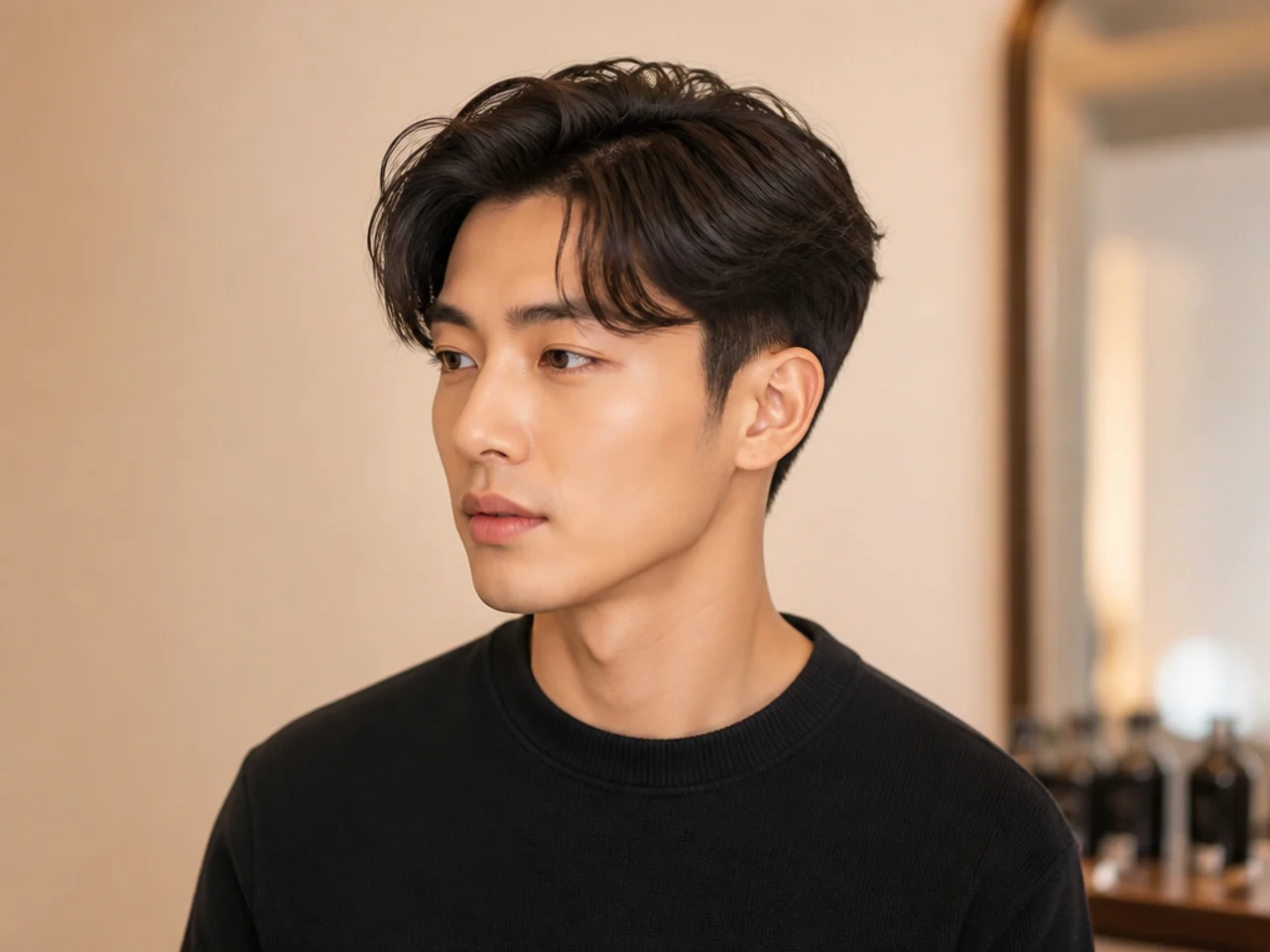
A Korean side part is any men's cut where the top runs three or more inches, splits along a defined parting, sweeps to one side with a polished finish, and finishes at the sides with a scissor taper or a hidden two-block undercut rather than a skin fade. The DNA is Seoul salon — precision, softness, and daily blow-dry styling.
Where an American side part defaults to a matte top and a hard fade line, a Korean side part reads glossy and intentional. Sides stay under a longer covering piece; the top gets round-brushed from a defined parting; a light cream or setting perm keeps root lift in place through a full day. The finish is the tell.
The broader Korean haircuts for men family sits under the same umbrella, and every variation in this guide traces back to the pillar side part hairstyles for men roundup. The fifteen below are the specific Korean-flavored versions your barber can pattern-match to a single photo.
How to Choose Your Korean Side Part
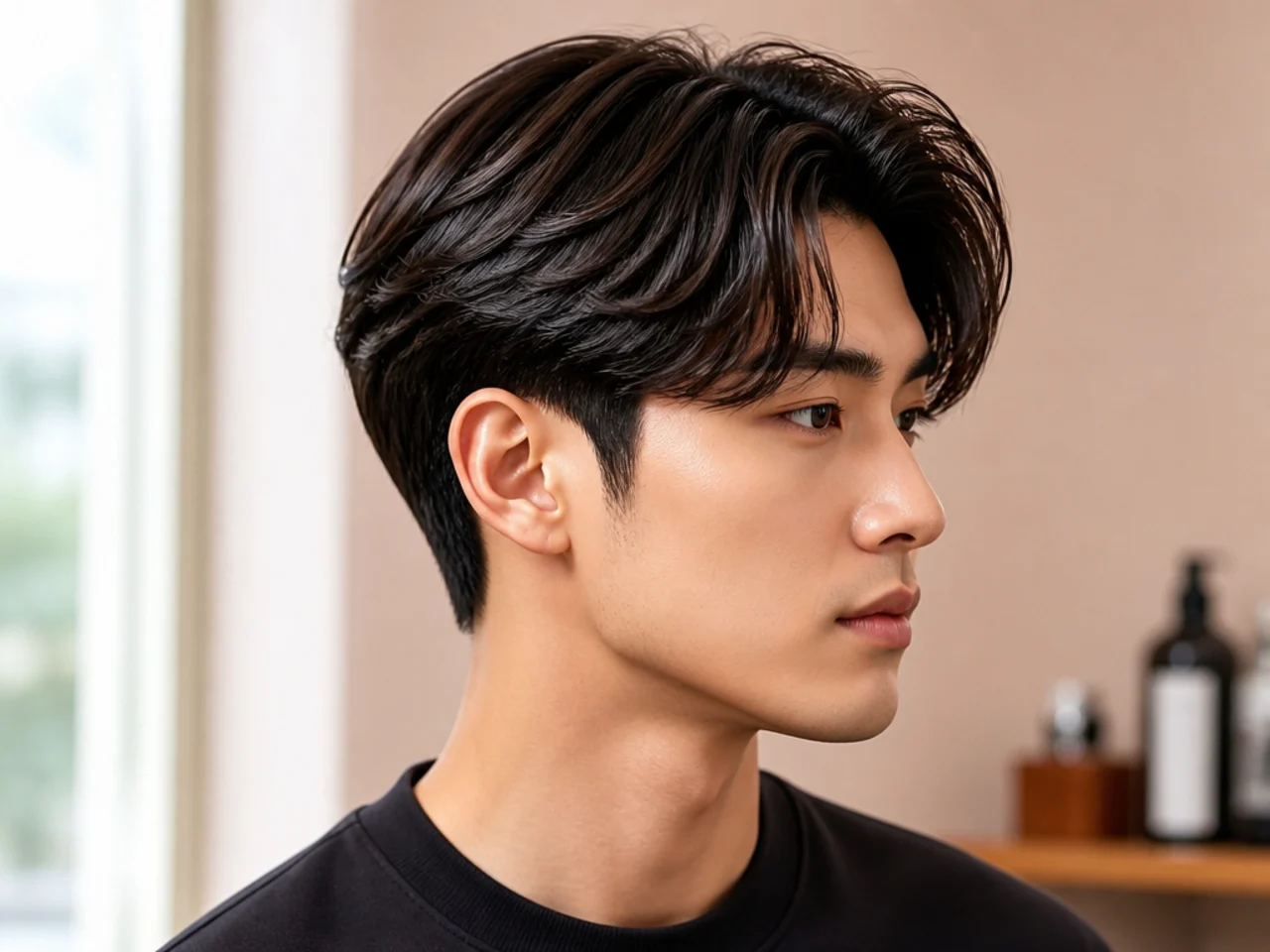
Start with hair type. Straight, silky Asian-type hair is the default target for the sharpest versions — the two block, the comma, the slick back. Wavy hair leans into the wolf, the long flow, and the setting perm builds. Curly hair (3A to 3B) works with a scissor-cut version on damp hair — ask for a soft taper, not a two-block undercut, so the pattern drapes cleanly at the seam.
Face shape decides the front. Oval faces carry every version. Square and rectangular faces read softer with a comma, curtain, or off-center part — the diagonal breaks the strong jaw without hiding it. Round faces want visible height near the parting, so the two-block and long-flow builds work harder than a low-slick version. Long or oblong faces should skip anything that pushes the top vertical and stick to comma, curtain, and old-money versions where the length falls forward.
Then the routine question. Two minutes with a round brush buys the classic, the comma, the middle-to-side. Five minutes and a light setting perm buys the wolf and the long flow. Ten minutes and a firm hairspray buys the K-pop idol sweep. Pick the version that matches the morning you'll actually run.
The 15 Korean Side Part Variations
Sorted loosely from the everyday classic to the statement idol version. Each entry names the top length, the sides finish, who it suits, and the exact sentence to hand your barber.
1. Classic Korean Side Part
The blueprint. Three to four inches scissor-cut on top, swept from a natural side parting, with scissor-tapered sides that stop short of any fade line. The finish is glossy — Korean barbers blow-dry the top with a small round brush and leave it polished rather than air-dry lazy. Best on straight to lightly wavy hair, oval and square faces, and any workplace from Gangnam boardrooms to Seoul cafe shifts. Ask for: "Classic Korean side part, three inches on top, natural side parting on my dominant side, scissor-taper the sides — no fade line." Style with a pea of light cream pomade worked into damp hair, blow-dried with a small round brush from the parting outward. This is the entry-level Korean side part — the one every K-drama lead has worn at some point.
2. Two Block Korean Side Part
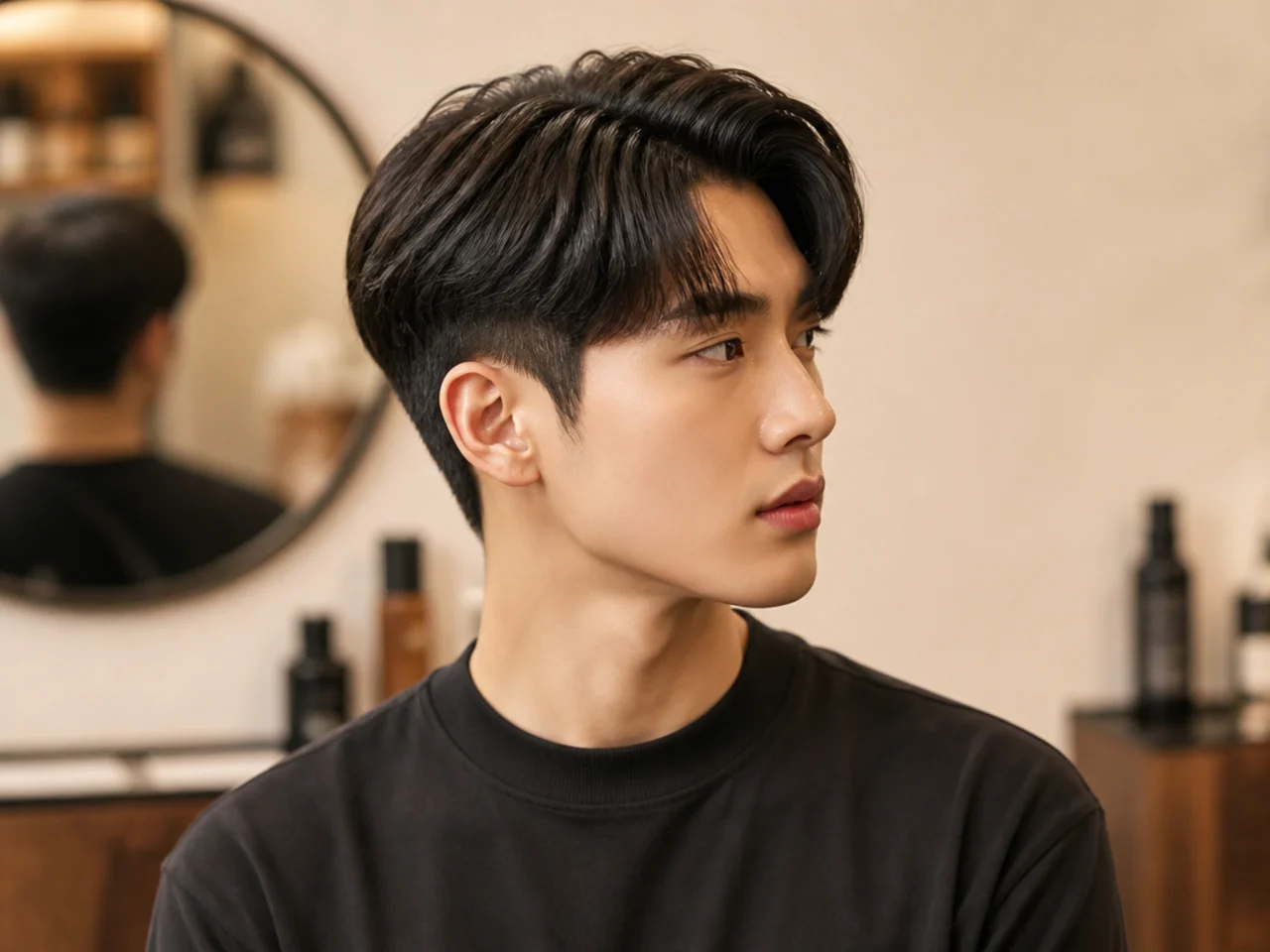
The two block haircut with a defined side parting drawn into it. Long top drapes over a hidden clipper undercut at a horseshoe line above the ears; at rest, you see one long shape, and when the top moves the second block appears. Best on straight Asian-type hair with medium to thick density, and every face shape once the top length is tuned. Ask for: "Two block with a defined side parting, four inches on top, No. 2 undercut sides, hidden line at the horseshoe, part on the left." Style with a matte cream through damp hair, blow-dry with fingers pushing the top away from the parting, and a single comb pass to set the line. The full Korean two block build lives in its own guide — this is the side-part variation.
3. Korean Comma Side Part
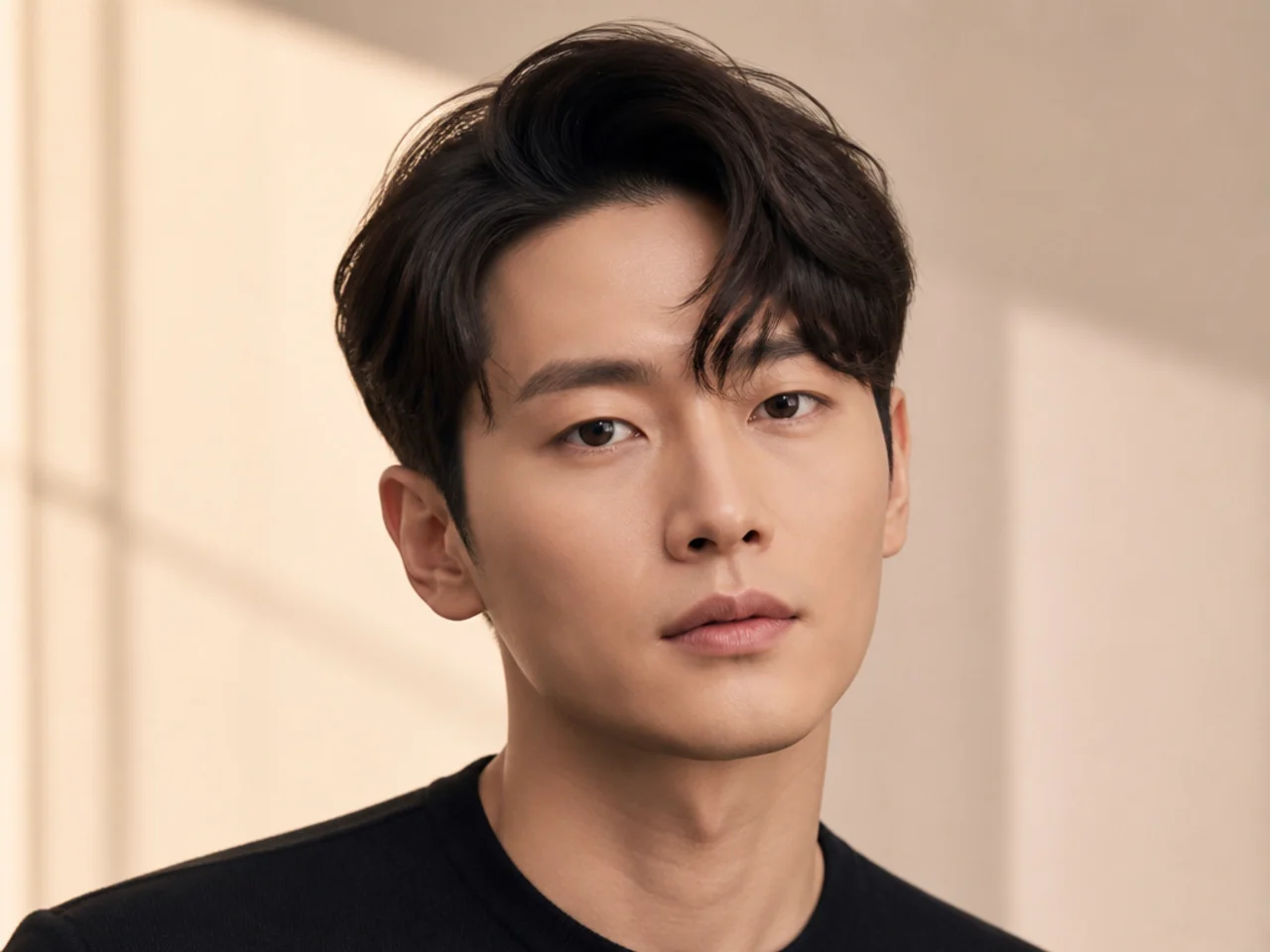
A single front comma curled toward your dominant eye, swept from a defined side parting rather than a center one. The classic comma cut is middle-parted; this version leans asymmetric and reads sharper in profile. Best on straight to lightly wavy hair, oval and heart-shaped faces. Ask for: "Comma cut with a side parting, three to four inches on top, single comma curl at the front, low taper sides." Style with a light cream on damp hair, curl the front comma with a small round brush under low heat, then set with a light hairspray. The comma is the punctuation — every other strand exists to support it.
4. Korean Curtain Side Part
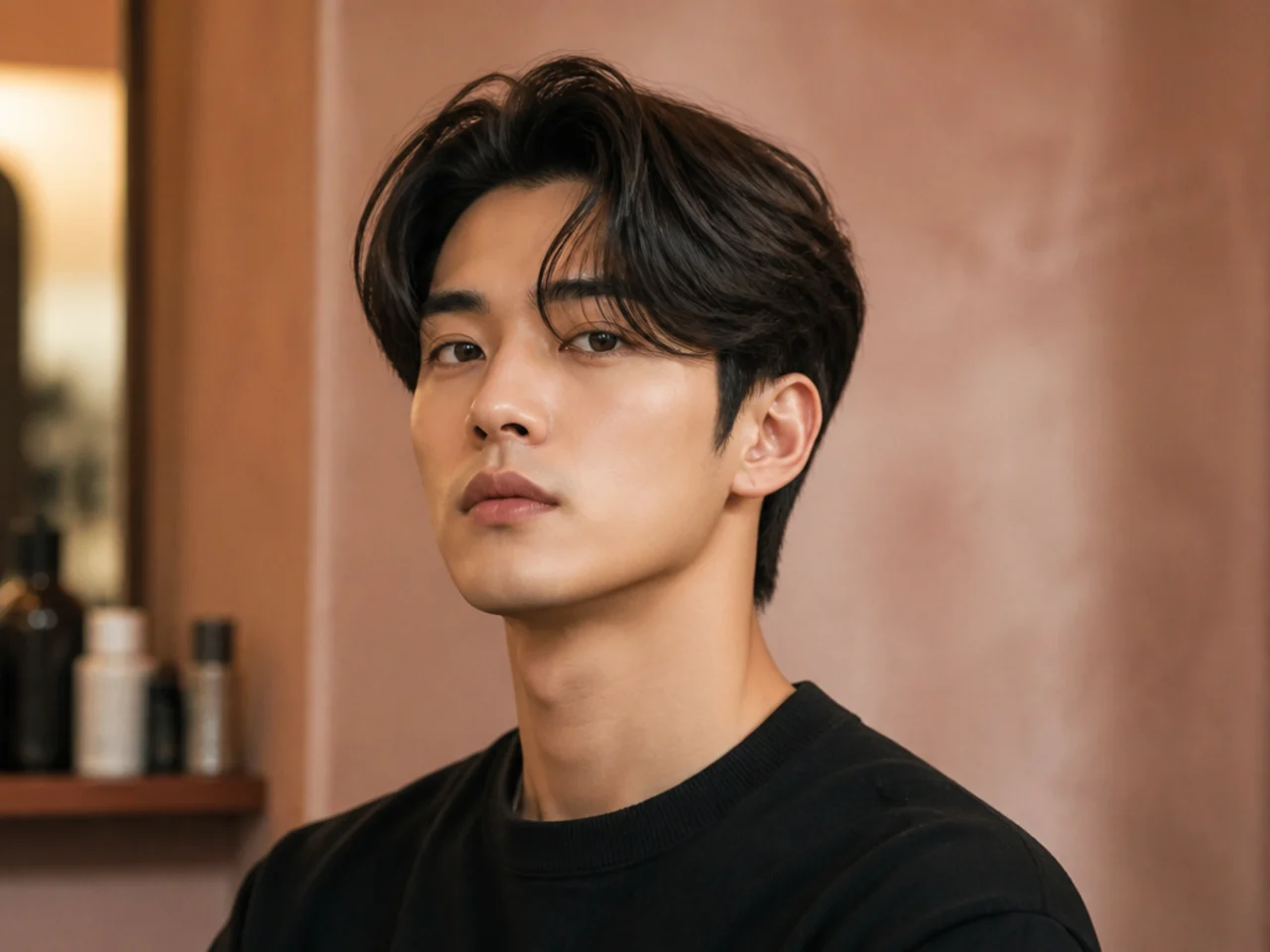
A soft curtain fringe swept from a side parting rather than a middle one, so the fringe falls diagonally across the forehead instead of splitting evenly. This is the version K-drama leads reach for when a middle-part curtain would read too soft. Best on straight to wavy hair, oval and square faces, and anyone who wants forehead cover without pigtail fringe symmetry. Ask for: "Curtain fringe with a side parting, four inches on top, fringe swept diagonally from the left, scissor-tapered sides." Style with a lightweight cream, blow-dry with the airflow following the fringe direction to lock the curtain shape, and finish with a mist of light-hold spray. The diagonal sweep is what stops the fringe reading feminine.
5. Korean Textured Side Part
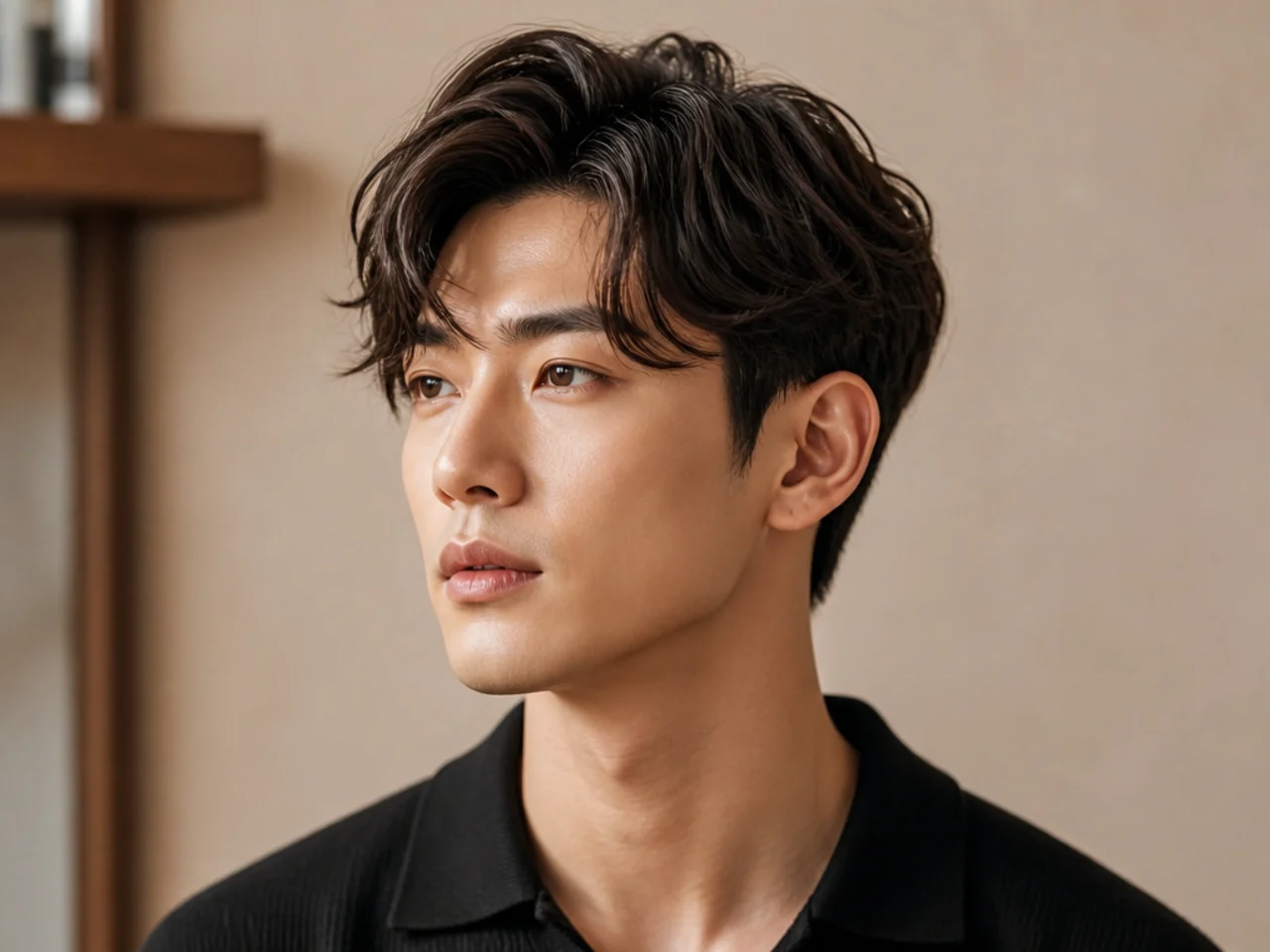
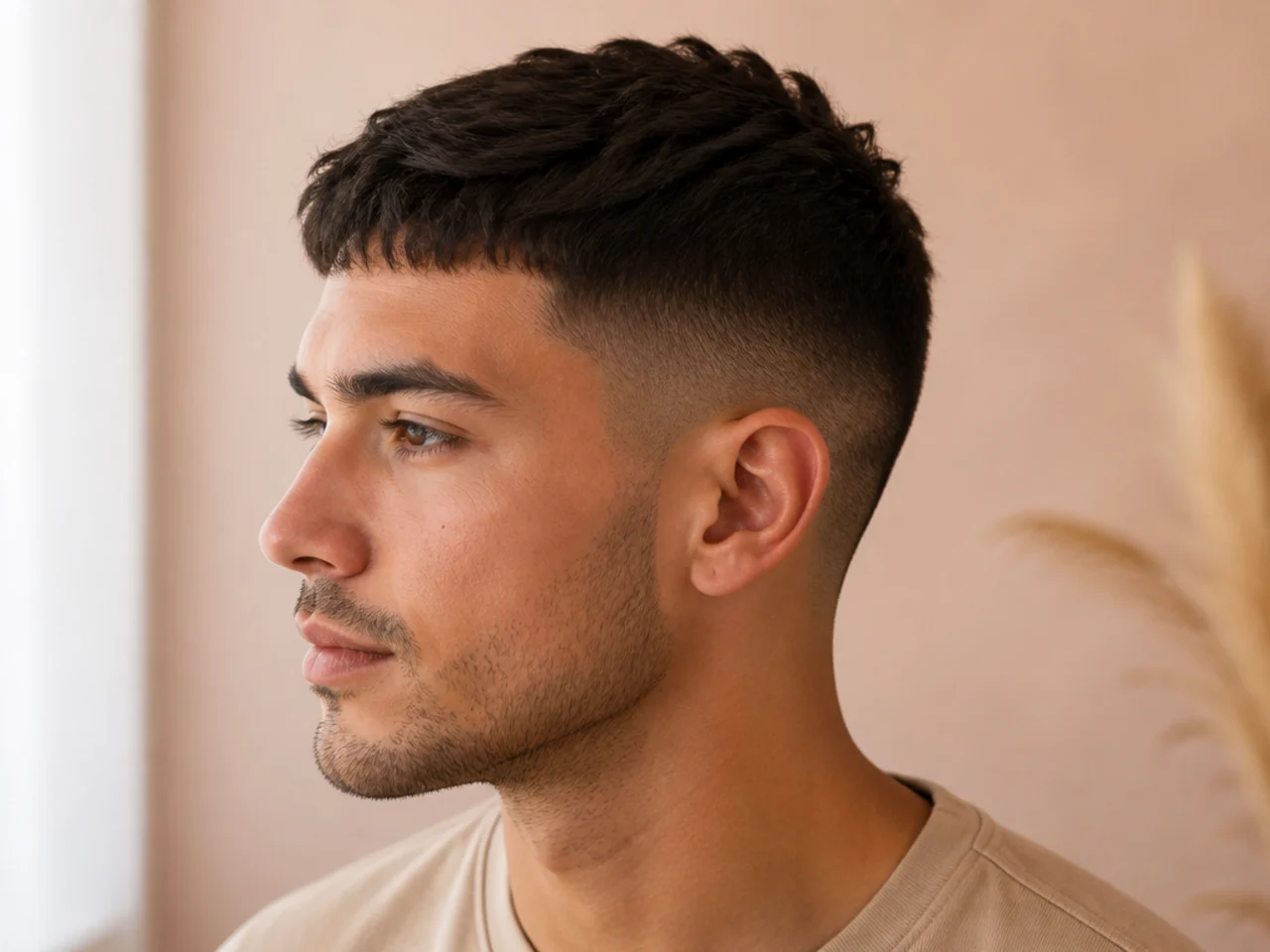
The K-street version. Top runs three inches point-cut for piecey texture with a defined side parting cut through the movement, and the sides finish in a low taper fade. Matte finish, not glossy — this is the streetwear-forward take that trades polish for texture. Best on medium to thick straight or wavy hair, and every face shape because the texture softens any geometry. Ask for: "Textured Korean side part, three inches point-cut on top, defined parting on the left, low taper fade sides." Style with a matte clay emulsified between the palms, then pressed through mostly dry hair with fingers only. Skip the comb through the top — you will flatten out the texture you just built.
6. Slick Back Korean Side Part
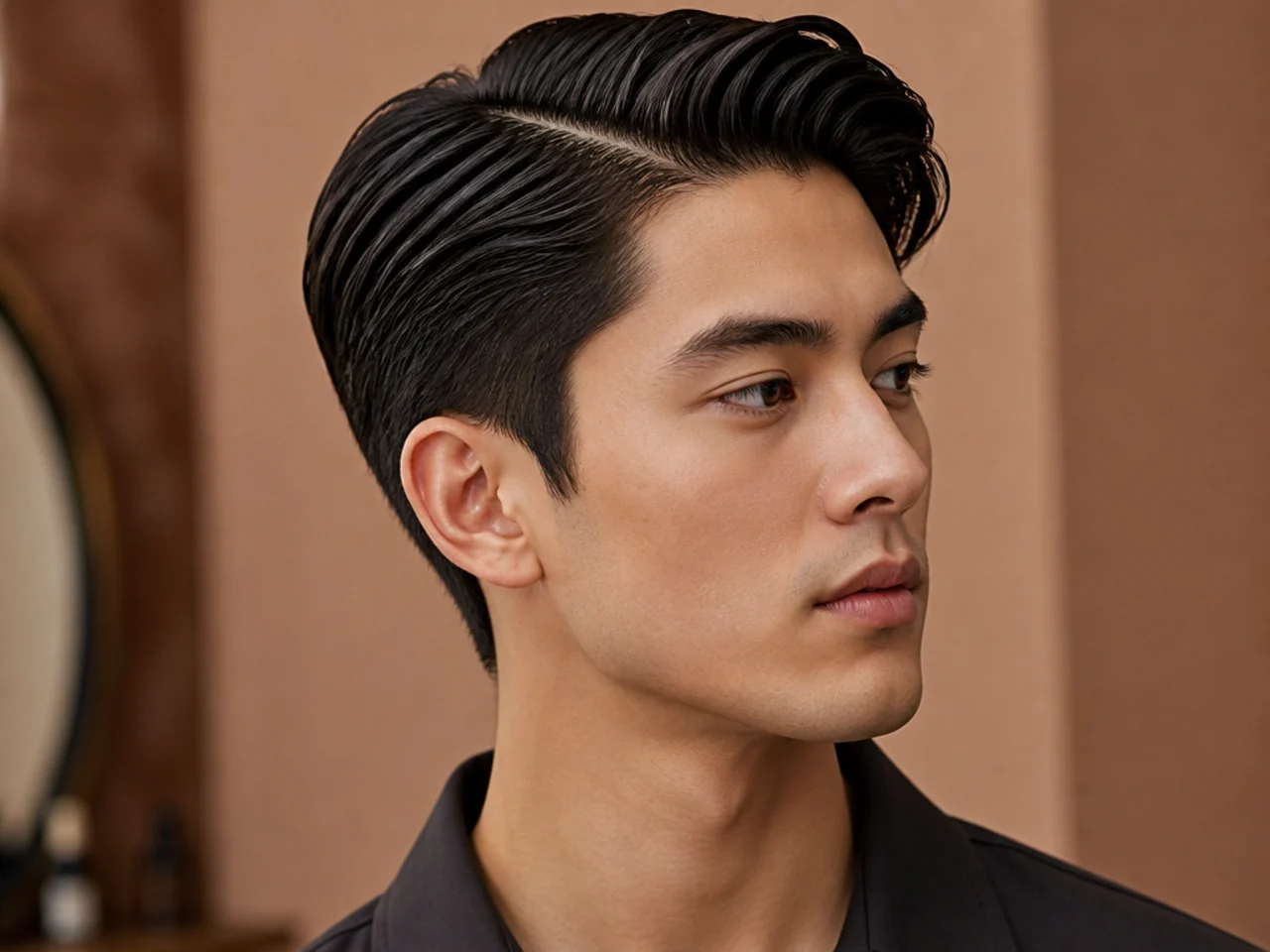
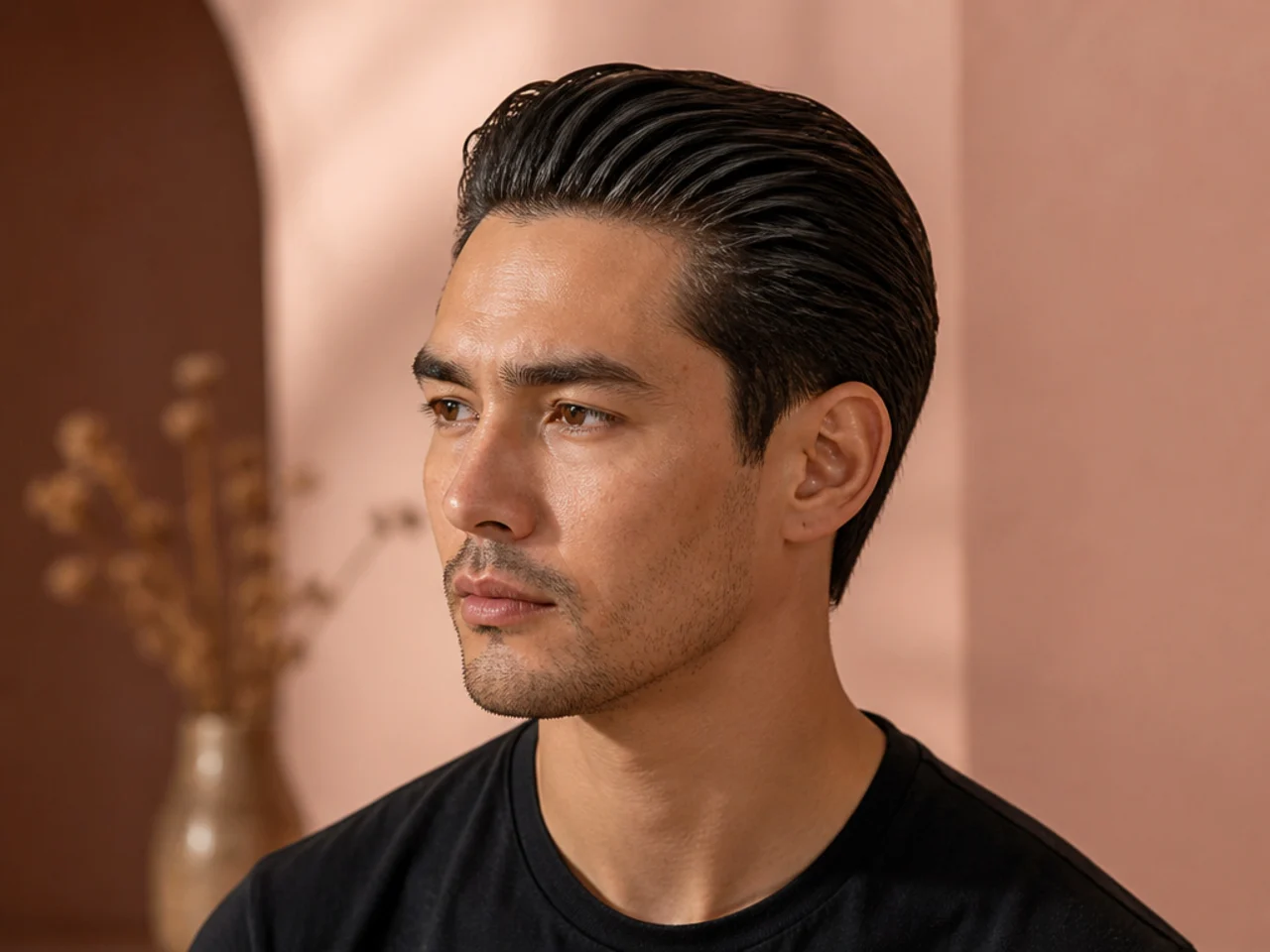
The chaebol look. Top runs four inches, combed slick from a low side parting straight back with a shine-forward pomade for a full wet-look finish, and the sides finish in a scissor taper with no clipper marks. This is the slick back haircut rebuilt Korean-style — cleaner, glossier, and more precise than its American cousin. Best on straight hair, oval and square faces, and boardroom-adjacent wardrobes. Ask for: "Korean slick back with a low side parting, four inches on top, wet-look shine finish, scissor-tapered sides." Style with a shine pomade combed from the parting straight back through damp hair, then let it dry-set without touching. One product, one comb pass — layering shine on top of shine goes muddy fast.
7. Korean Wolf Cut Side Part
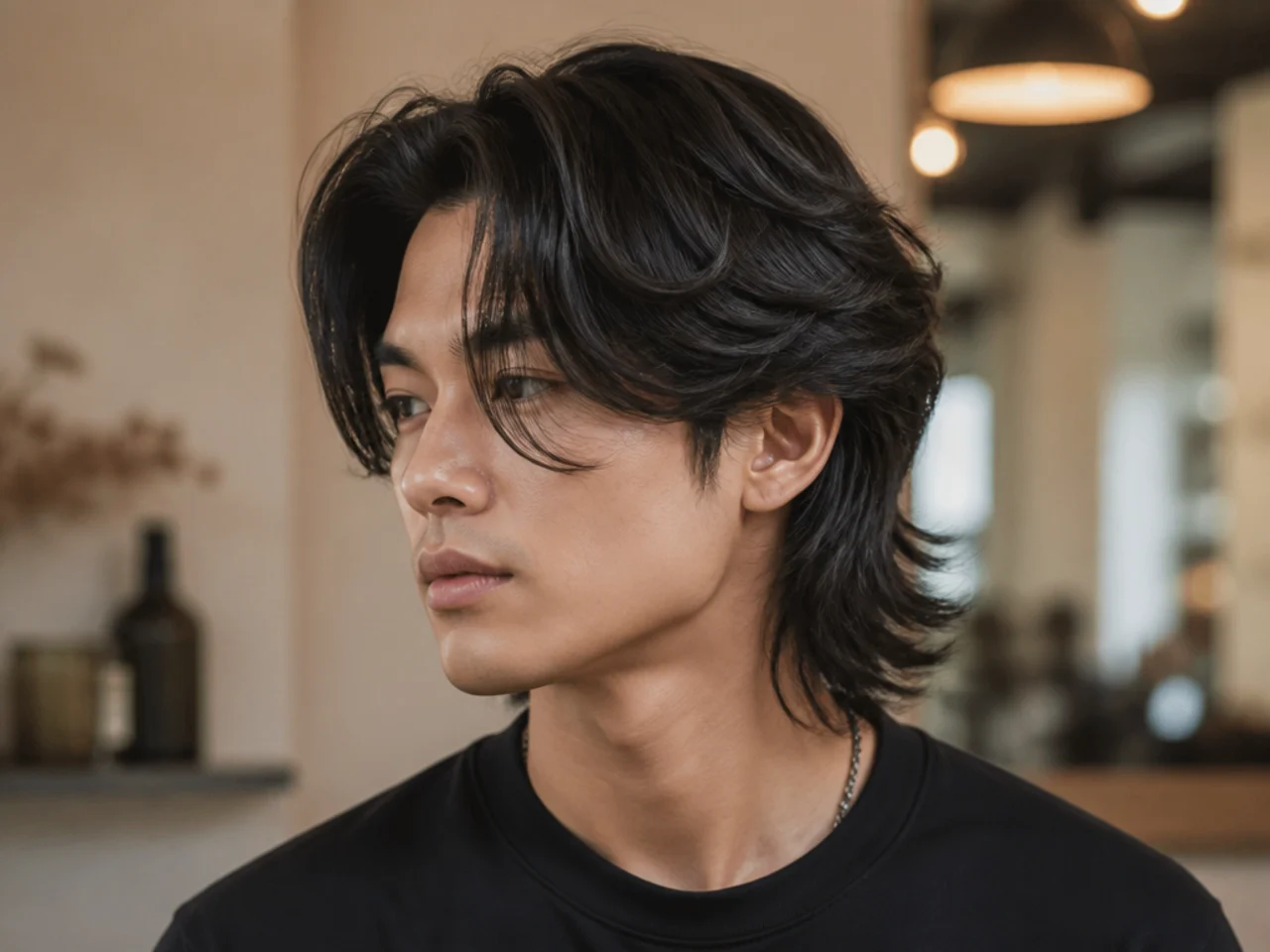
Wolf-perm energy channeled through a side parting instead of a middle one. Top runs four to five inches with visible internal layering, sides scissor-tapered short, and a defined side parting drawn through the layer stack. It is a softer, more current alternative to the middle-parted wolf you see on ATEEZ or SEVENTEEN. Best on wavy or lightly permed hair, oval faces, and anyone who wants Korean texture without commuting to a full center part. Ask for: "Wolf-cut side part, four to five inches on top with visible layering, defined side parting on the left, scissor-tapered sides." Style with a light sea-salt spray on damp hair, scrunched upward, air-dried or diffused on low, then a light matte cream for hold.
8. Korean Setting Perm Side Part
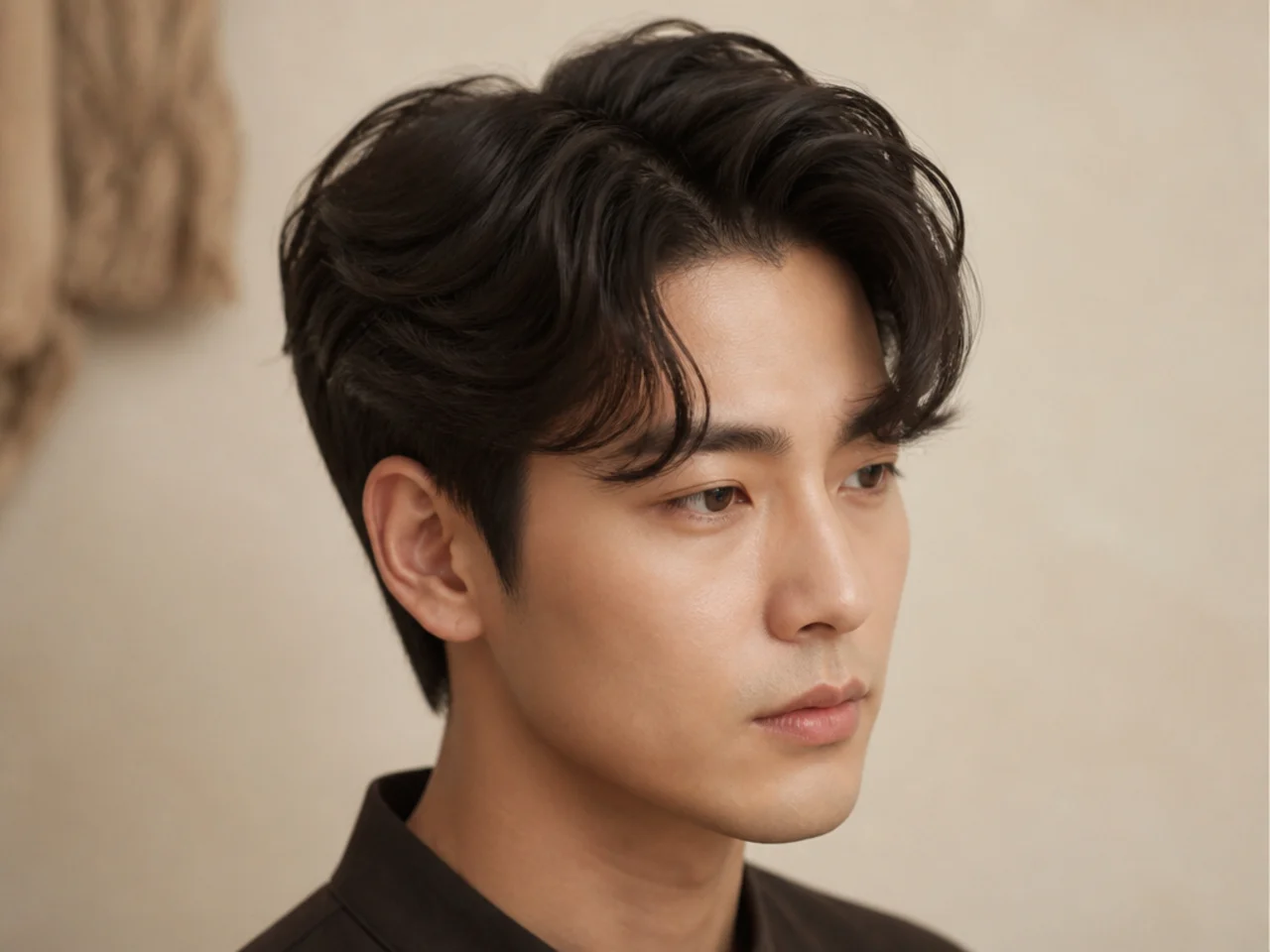
The Seoul-salon default for fine hair. A light setting perm is applied to the roots after the cut for subtle volume, and the top is left three to four inches with a natural side sweep. The perm does the standing-up work so a blow-dryer alone can hold the shape all day. Best on fine to medium straight hair that goes flat by lunchtime, and any face shape. Ask for: "Setting perm with a side parting, three to four inches on top with root volume, natural side sweep, scissor-tapered sides. Perm after the cut, same appointment." Style with a light cream pushed through mostly dry hair, roots lifted with fingers rather than a brush. The perm is invisible done well — it should read as natural body, not a curl.
9. Korean Low Taper Fade Side Part
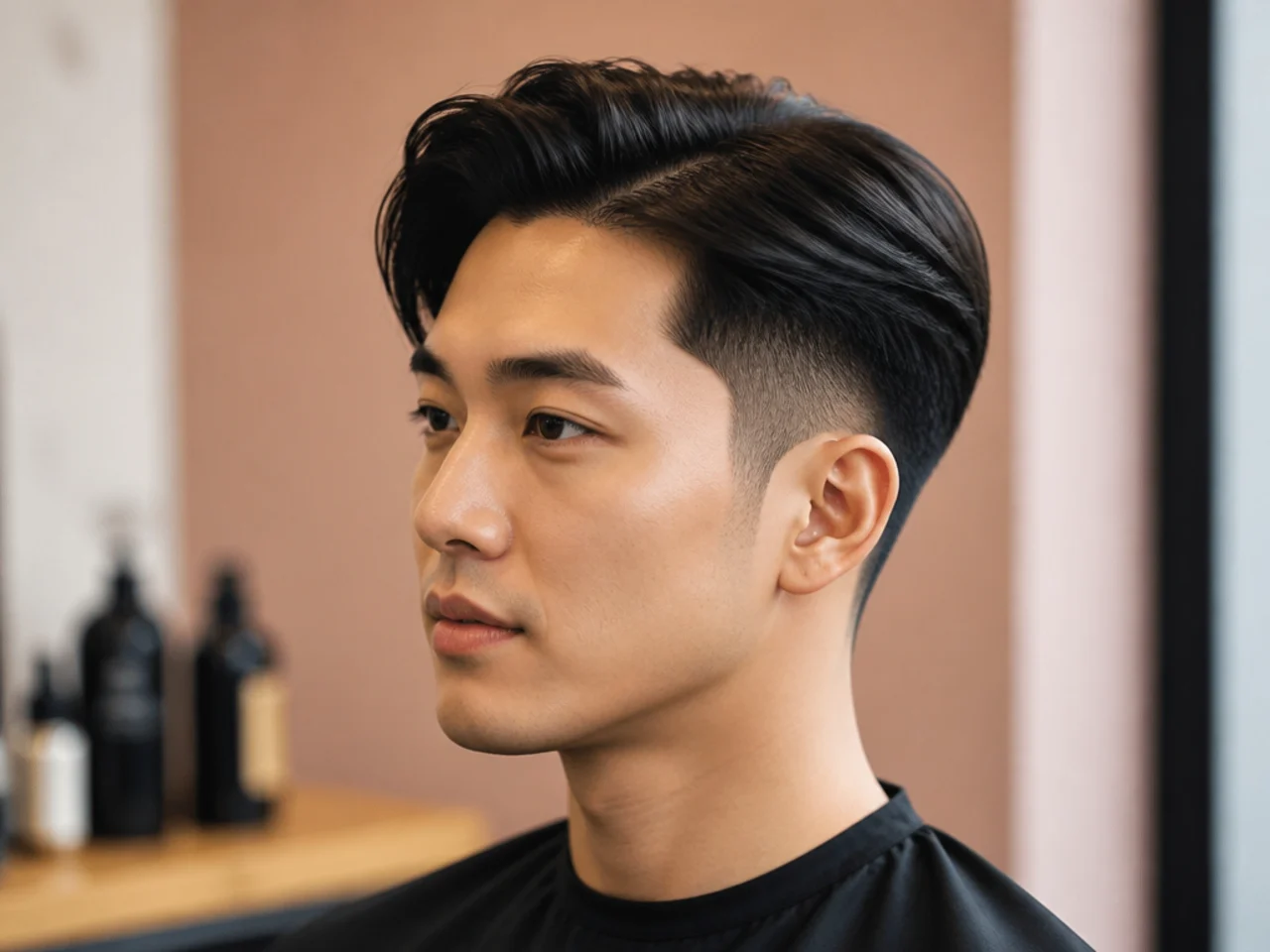
The modern hybrid. A low taper fade blends the sides gradually from a No. 2 down to a No. 0.5 at the neckline, combined with three to four inches of Korean gloss on top and a defined side parting. It reads sharper than a scissor taper without losing the softness that keeps the cut recognizable as Korean. Best on every face shape and every hair type — this is the safe modern default when you want the shape but not the K-drama commitment. Ask for: "Low taper fade with a Korean side part, three to four inches on top, defined parting, taper blending from No. 2 down to No. 0.5 at the neckline." Style with a light cream combed from the parting outward, blow-dried with a small round brush.
10. Korean Long Flow Side Part
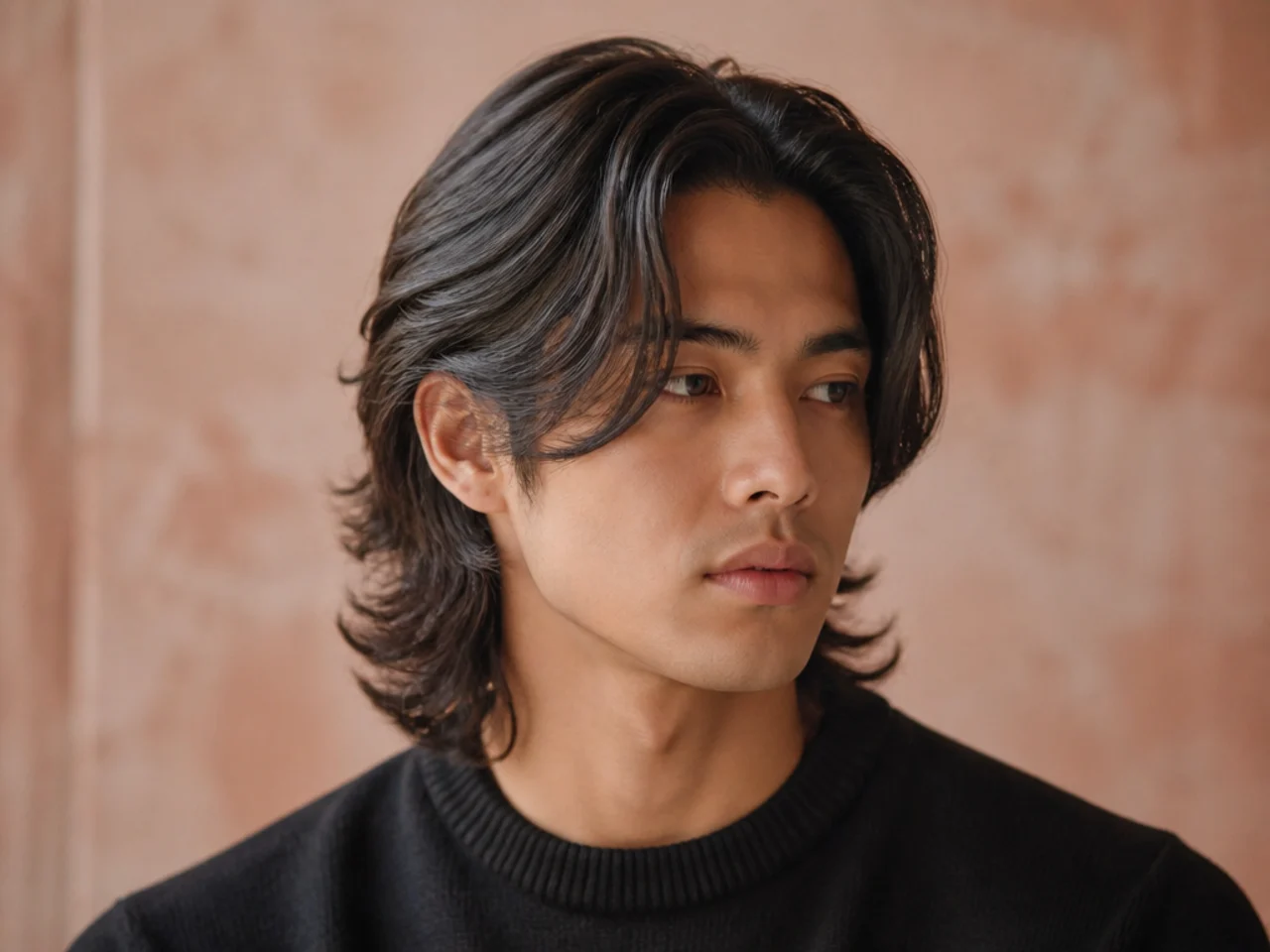
The long-hair variation. Five to six inches on top with soft internal layering, a defined side parting drawn cleanly through the stack, and scissor-tapered sides that keep the drape as the star of the shape. Historical-drama energy transferred to modern styling. Best on straight to gently wavy hair, oval and square faces, and workplaces that accept length. Ask for: "Long Korean flow side part, five to six inches on top with soft internal layers, defined side parting, scissor-tapered sides." Style with a leave-in cream and a light sea-salt mist on damp hair, blow-dry with a paddle brush following the sweep. Length carries this — the drape only reads right on hair with enough body to hold a diagonal line across the head.
11. Korean Ivy League Side Part
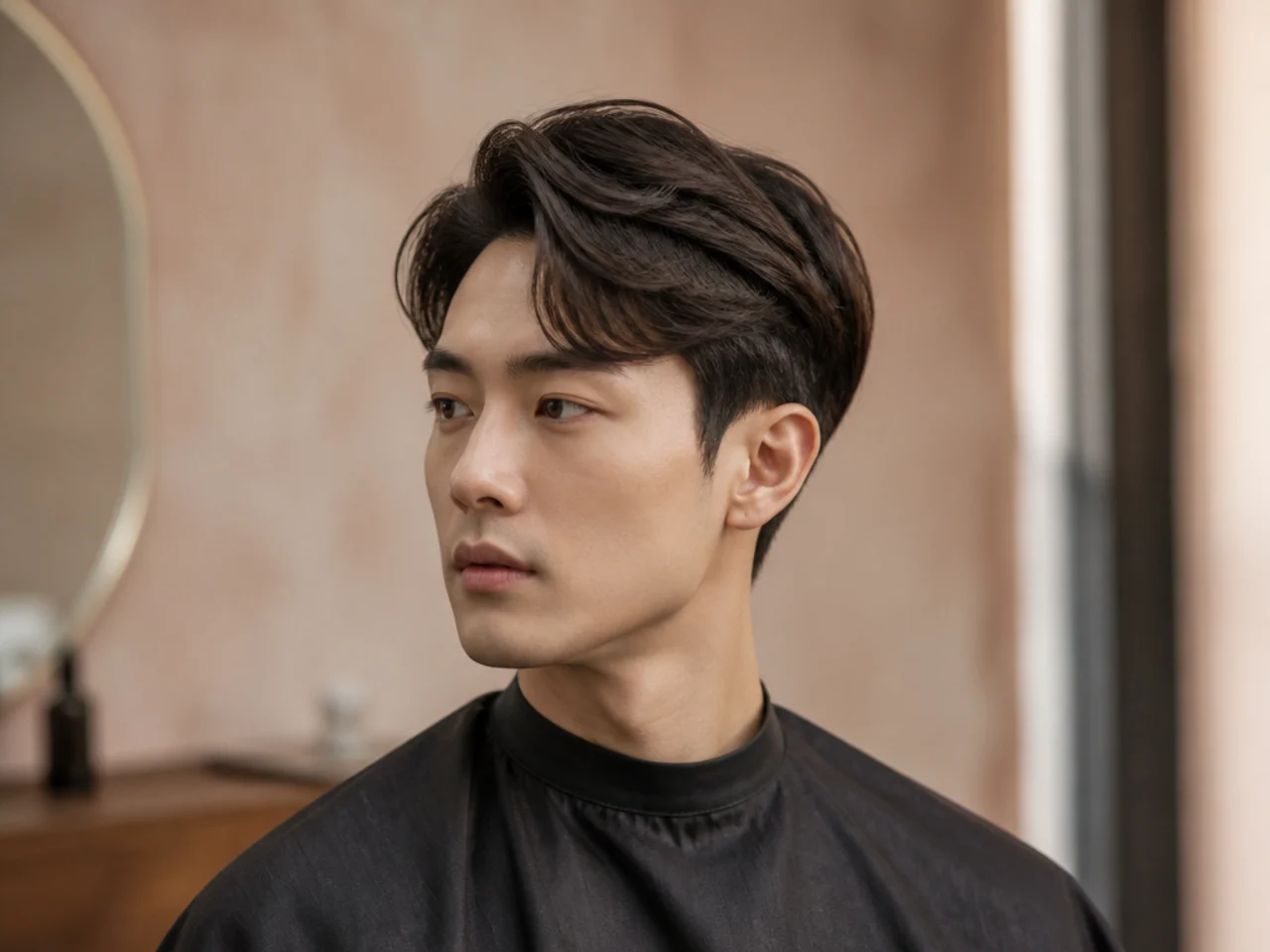
The prep-school original re-cut Korean-style. Three inches scissor-cut on top, a defined side parting, scissor-blended sides that stop short of any fade line, and a satin (not shine) finish that reads polished without going wet. Think Seoul National alumnus rather than Ivy League tailgate. Best on straight silky hair, oval and square faces, business-casual dressers. Ask for: "Korean Ivy League side part, three inches on top, defined side parting, scissor-blended sides that stop short of any fade line, polished satin finish." Style with a cream pomade blown out from the parting with a small round brush under medium heat. This is the version to book for interviews, family portraits, and any occasion that rewards quiet polish.
12. Off-Center Korean Middle-to-Side Part
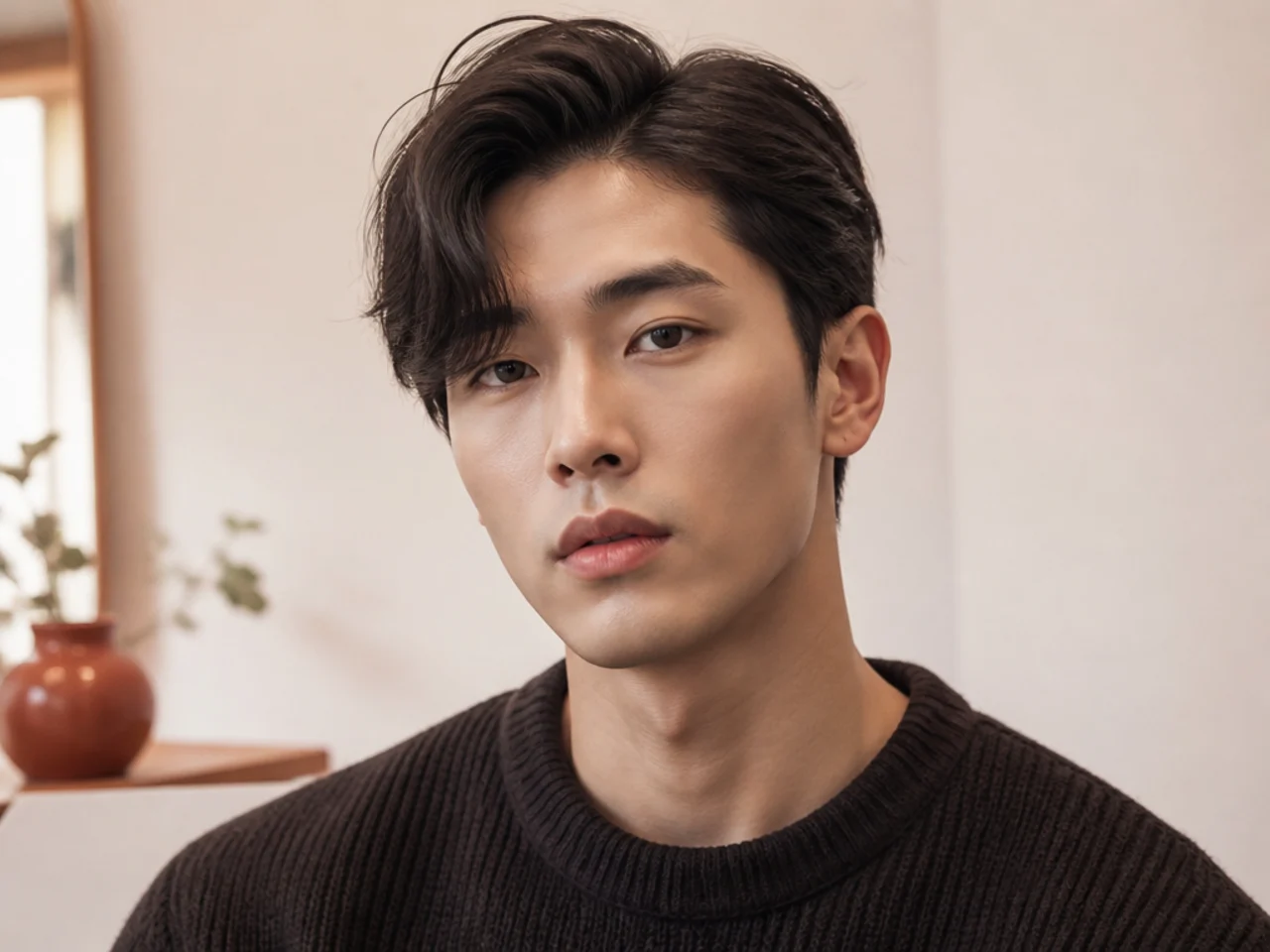
The K-drama compromise. Softly asymmetric parting drawn about a third of the way from the center — not fully centered, not fully side-swept either — with the top left at three to four inches and the fringe pushed slightly forward on the heavier side. Best on oval, square, and heart-shaped faces, and any hair type from fine to thick. Ask for: "Korean off-center part, three to four inches on top, parting a third of the way from the center, scissor-tapered sides." Style with a light cream pushed forward with fingers, then combed once at the parting to set the asymmetry. The off-center reads current in a way a full middle part no longer does.
13. Korean Old Money Side Part
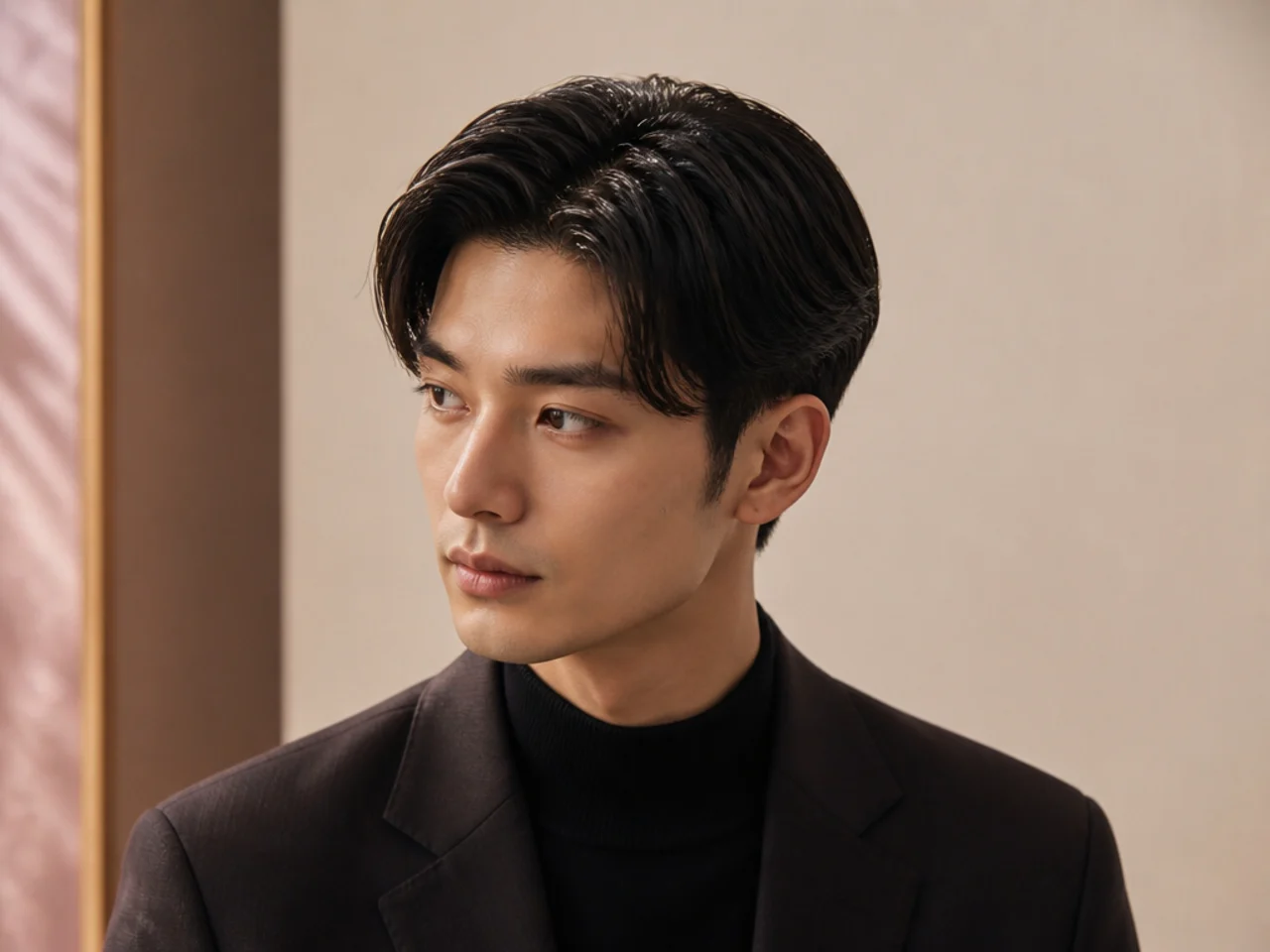
The quietly luxe version. Three to four inches on top, scissor-tapered sides with absolutely no fade line, a natural side parting, and a satin finish that reads intentional without reading styled. It is the Korean answer to old-money — cleaner, glossier, less vintage-nostalgic than its American cousin. Best on straight hair, oval and long faces, and any workplace where restraint reads as taste. Ask for: "Old money Korean side part, three to four inches on top, scissor-tapered sides with no fade line, natural side parting, satin finish." Style with a cream pomade combed neatly from the parting across the head, no shine gloss, no visible product build. Nothing about this cut should call attention to itself — that is the whole point.
14. K-Pop Idol Side Sweep

The runway variation. Four to five inches on top with dramatic blowout volume, a defined side parting, a low taper on the sides, and often one bright color highlight painted through the sweep. Statement, camera-ready, built for a stage rather than a Zoom call. Best on oval faces, thick straight hair, and workplaces that welcome bold looks. Ask for: "K-pop idol side sweep, four to five inches on top with blowout volume, defined side parting, low taper sides, one color highlight in the sweep." Style with a mousse at the roots, blow-dry with a large round brush lifting the sweep upward and outward, set with a firm-hold hairspray. Bring a specific idol reference photo — this shape is defined by the styling more than the cut.
15. Korean Undercut Side Part
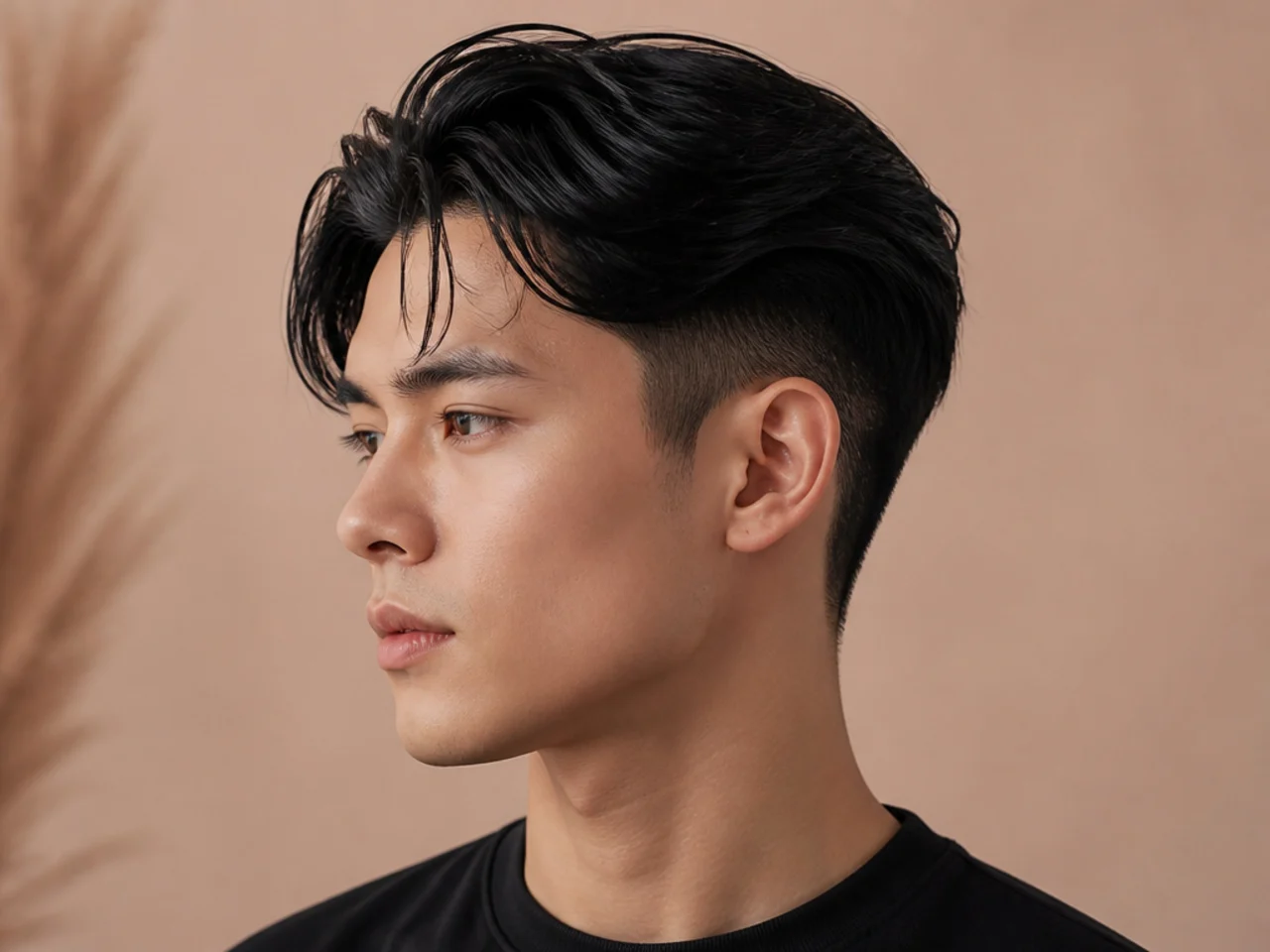
The edgier variation. Four inches on top with a defined side parting, a No. 1 clippered undercut on the sides with a hard visual line where the two lengths meet and no blend, and a low disconnect line above the ears. It is the two block's louder cousin — the hidden clipper layer swapped for a visible one. Best on oval and square faces, thick straight hair, and workplaces that carry a statement. Ask for: "Korean undercut side part, four inches on top with a defined parting, No. 1 undercut on the sides with no blend, low disconnect line." Style with a medium-hold pomade combed from the parting across, blow-dried with the airflow following the sweep. Rebook every three weeks — the disconnect line drifts fast once the undercut grows in.
How to Ask Your Barber
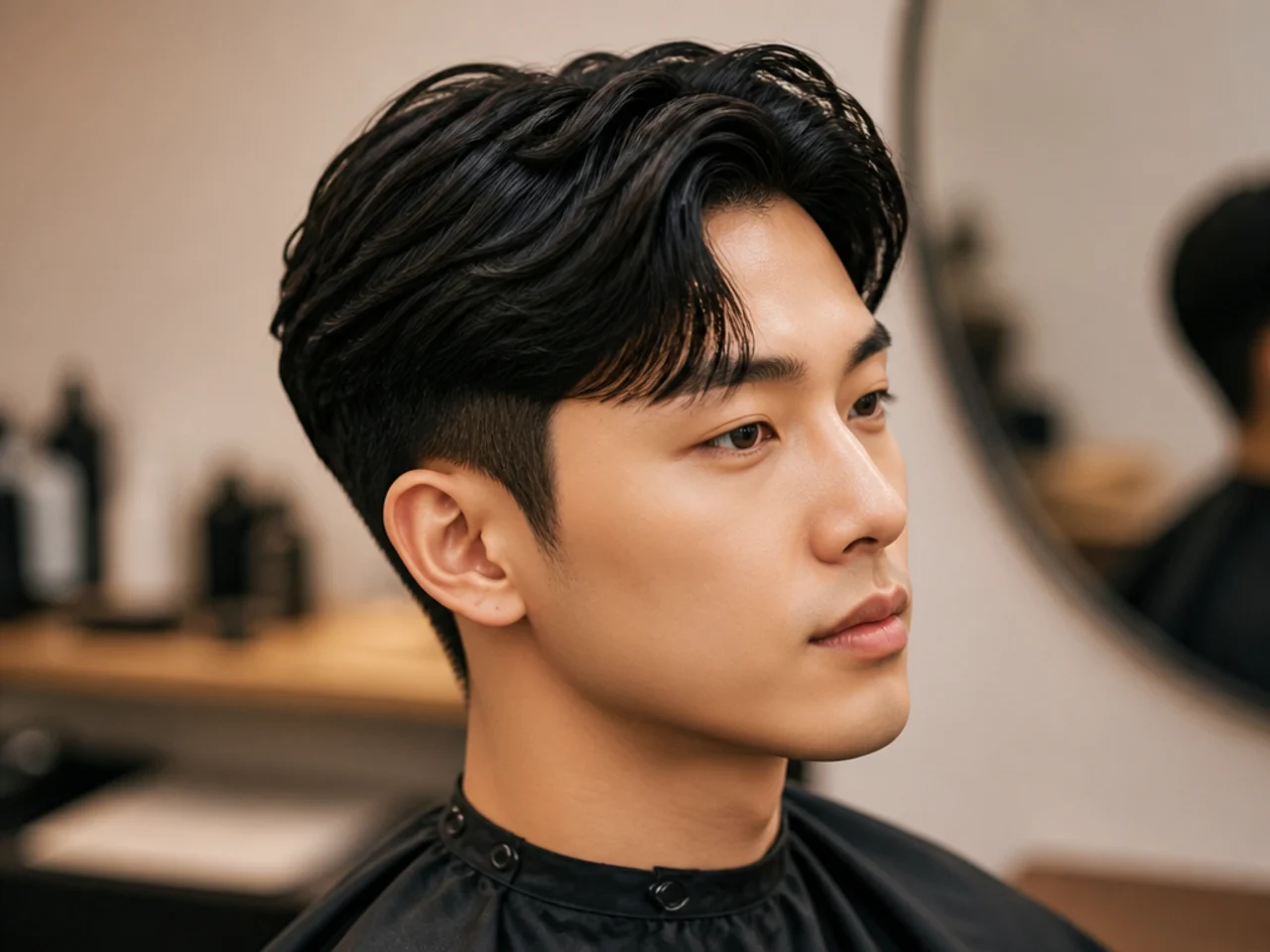
Korean side parts fail more often at the ask than in the chair. Bring the reference photo, the numbers, and the finish note and the cut lands. Skip any of those and your barber defaults to whatever the last customer asked for.
- Name the variation from this guide. "Two block Korean side part," "Korean comma side part," "K-pop idol side sweep." A vague "Korean side part" wastes the barber's setup time and yours.
- Give the top length in inches. Three to four for the classics, four to five for the wolf and long flow, five to six for the historical-drama versions. Numbers travel better than adjectives.
- Specify the sides. Scissor taper (soft, no clipper line), hidden two-block (long top, buzzed layer underneath), low taper fade (visible blend), or clipper undercut (visible disconnect). These are four different shapes.
- Name the parting. Left, right, or your natural cowlick. Off-center or fully side. The parting is the whole cut in profile.
- Call the finish. Glossy blow-dry, satin polish, matte texture, or wet-look slick. Korean cuts are defined by finish as much as by shape.
- Show one photo, not five. A single clean reference on hair close to your texture beats a mood board every time.
- Ask about a perm. For fine or flat hair, a light setting perm added to the same appointment is what makes Seoul side parts hold volume all day. Say "perm after the cut" so the stylist balances the pattern to the length.
Styling & Maintenance
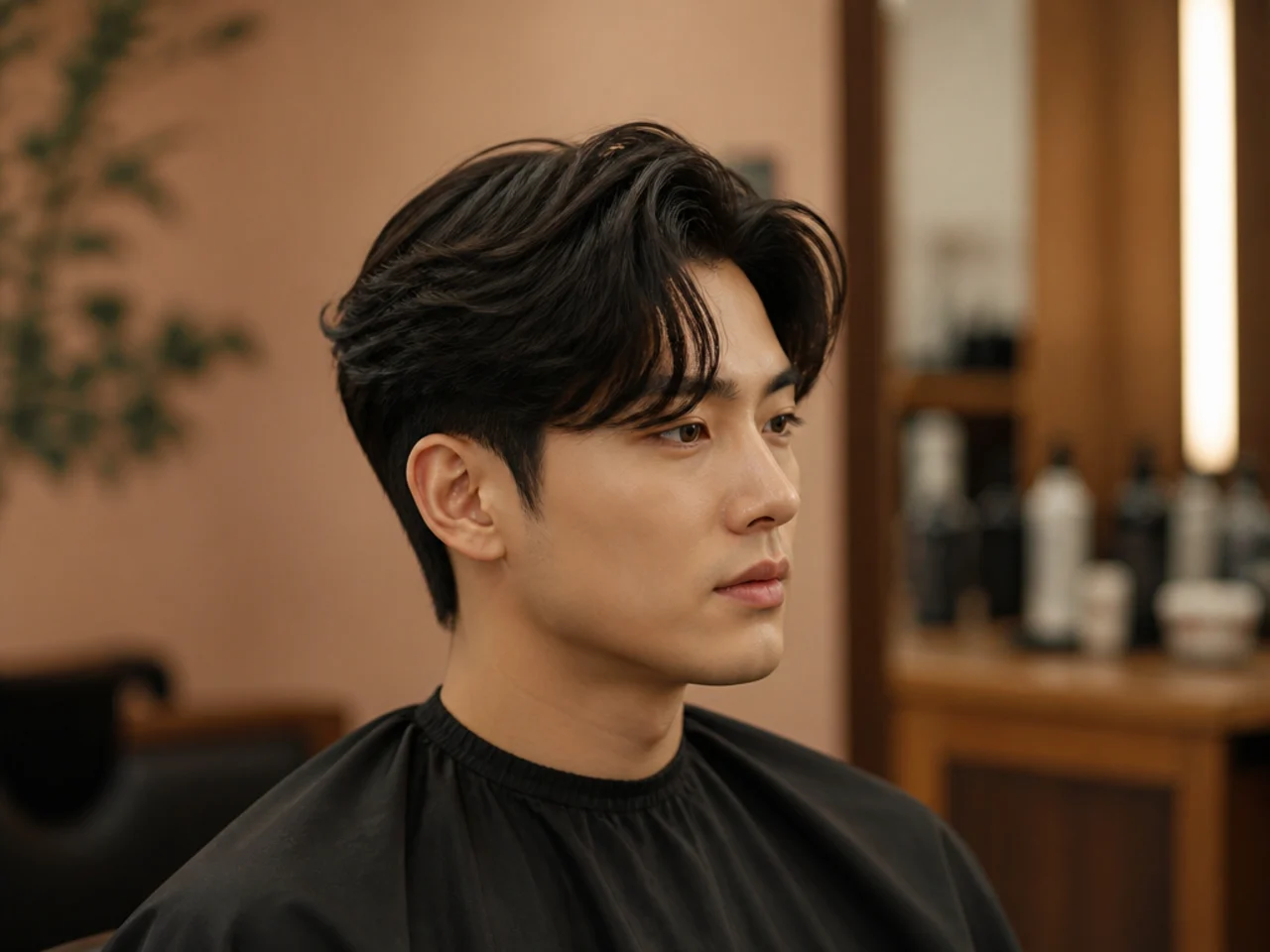
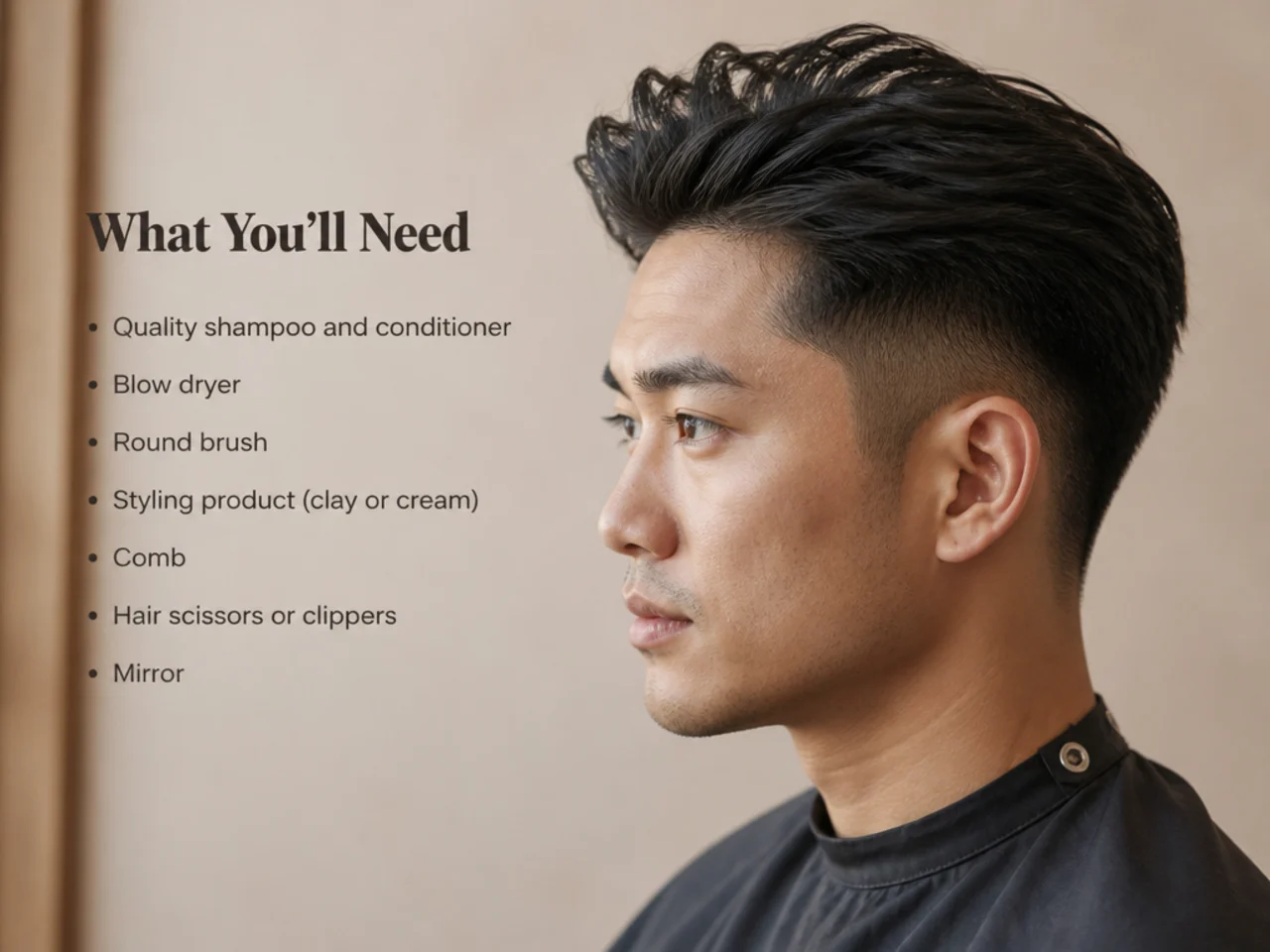
Korean side parts want a blow-dry — not a lot of one, but a real one. A small round brush plus two minutes of low-heat air is the difference between a Korean side part and an American one, whether or not you use product.
Light cream pomade covers the classic, comma, curtain, Ivy League, old money, and off-center versions. Work a pea into damp hair, comb once from the parting outward, blow-dry with a small round brush pulling from the parting across the head. Water-based only — oil-based pomades read dated and never survive a blow-dry set.
Matte clay or matte cream covers the two-block, textured, and undercut versions where you want piecey movement over polish. Emulsify a pea between the palms, press through mostly dry hair with fingers only, then a single comb pass along the parting to keep the line clean.
Sea-salt spray plus a light matte cream covers the wolf-cut and long-flow versions where texture and drape are the whole point. Two spritzes of salt spray into damp hair, scrunched upward, air-dried or diffused on low, then finish with the matte cream for hold. Explore a full round-up in our best wavy hair products guide.
Shine pomade is the specialist product — it belongs only in the slick-back Korean version and the occasional formal-event dressing of the Ivy League cut. Layered onto matte or cream product it goes muddy in an hour, so use it as a standalone or not at all.
Rebook cadence hinges on the outline. Two-block and undercut side parts want a chair visit every three weeks because the hidden clipper line grows fuzzy fast. Low-taper-fade builds stretch to four. Scissor-tapered classic, comma, curtain, Ivy League, and old-money versions hold their shape for five to six weeks. Long flow and wolf variations grow into shape rather than out of it — six to eight weeks between visits is normal. If you added a setting perm, the perm itself lasts three to four months before it needs a refresh.
Wash cadence is separate. Every other day with a sulfate-free shampoo keeps the scalp happy and the parting reading clean. Daily washing strips natural oils and makes fine hair go flat by lunchtime — the exact problem the setting perm was meant to solve. Skip conditioner directly on the roots; work it through mid-length to ends to keep the top from collapsing under weight it does not need.
The companion short side part hairstyles for men guide walks through the shortest version of the same silhouette if you want the outline without the K-drama length.
FAQ
What makes a side part Korean rather than American? The finish, the top length, and the sides. A Korean side part runs three to five inches on top, uses a scissor-tapered or hidden two-block side rather than a hard skin fade, and gets blow-dried polished with a small round brush each morning.
Can I get a Korean side part at a non-Korean barber? Yes, but bring two photos and use exact numbers. Say three to four inches on top, scissor-tapered or hidden two-block sides — not skin faded — and a defined side parting on your dominant side. Name the variation from this guide.
Do Korean side parts work on wavy or curly hair? Yes, with two adjustments. Let the top run four to five inches so the wave or curl drapes with the sweep, and ask for a soft scissor taper on the sides rather than a hard two-block undercut.
What product should I use on a Korean side part? A lightweight cream pomade for classic and polished versions. Matte clay for textured and undercut versions. Sea-salt spray plus a matte cream for wolf and long-flow builds. Shine pomade only for the wet-look slick back.
How often should I rebook a Korean side part? Every three weeks for two-block and undercut versions. Every four to five for classic, comma, and old-money builds. Every six to eight for long flow and wolf variations.
Should I get a perm with my Korean side part? Optional and common. A light setting perm adds root volume for fine hair. A stronger wolf perm ramps texture and layering throughout. Perm after the cut in the same appointment.