20 Short Side Part Haircuts Worth Trying
The 20 named short side part haircuts men ask for — crew cut, Ivy League, Caesar, textured crop, and hard part combos. Clipper numbers and what to say.
In this article · 26
- What Makes a Short Side Part Haircut
- How to Choose the Right Named Cut for You
- The 20 Short Side Part Haircut Variations
- 1\. Crew Cut with a Side Part
- 2\. Ivy League Side Part
- 3\. Businessman Cut Side Part
- 4\. Caesar Cut Side Part
- 5\. French Crop Side Part
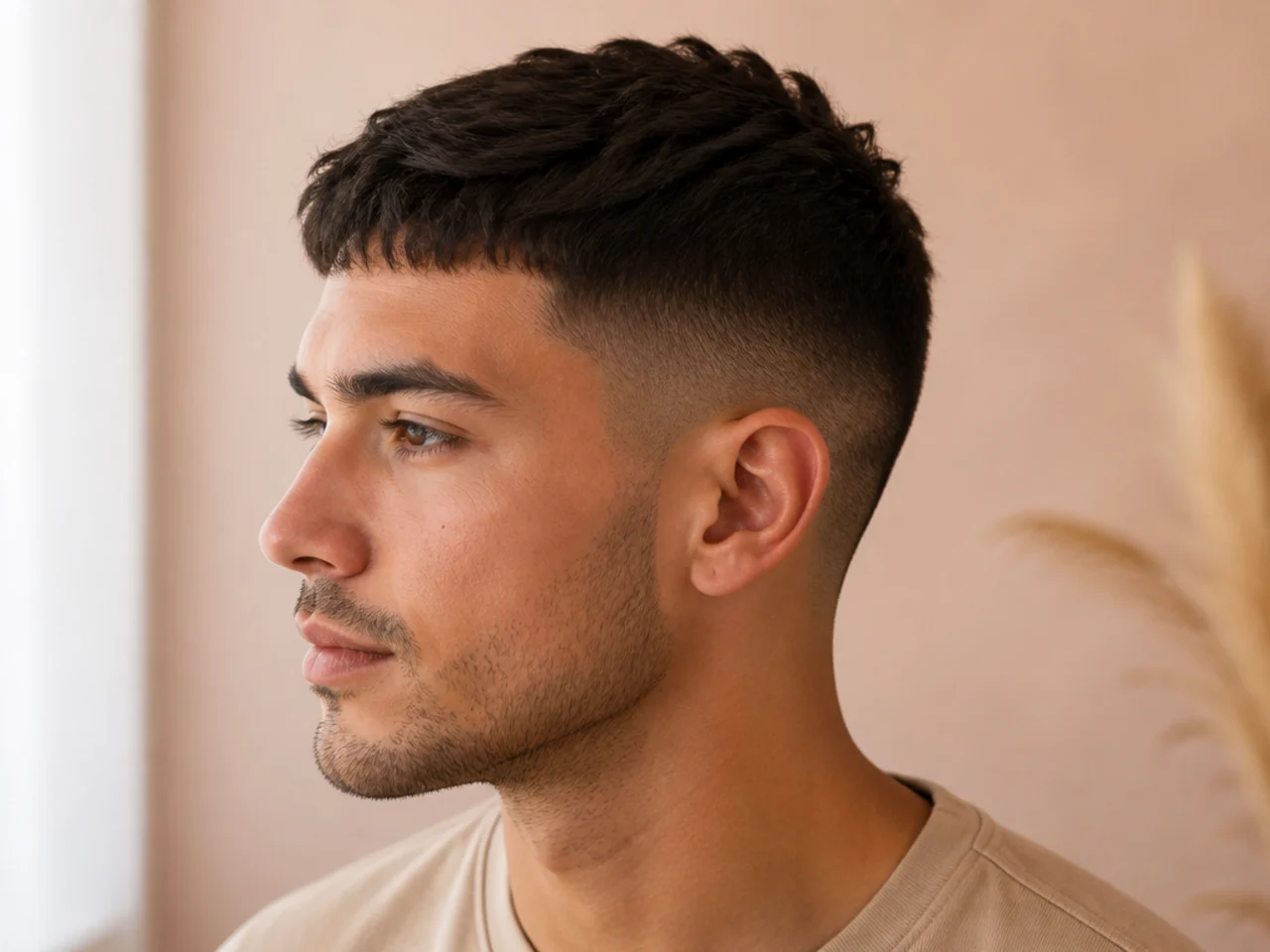
- 6\. Textured Crop Side Part
- 7\. Regulation Cut Side Part
- 8\. Butch (Brush) Cut Side Part
- 9\. Short Comb-Over Cut with Side Part
- 10\. Short Slick-Back Cut with Side Part
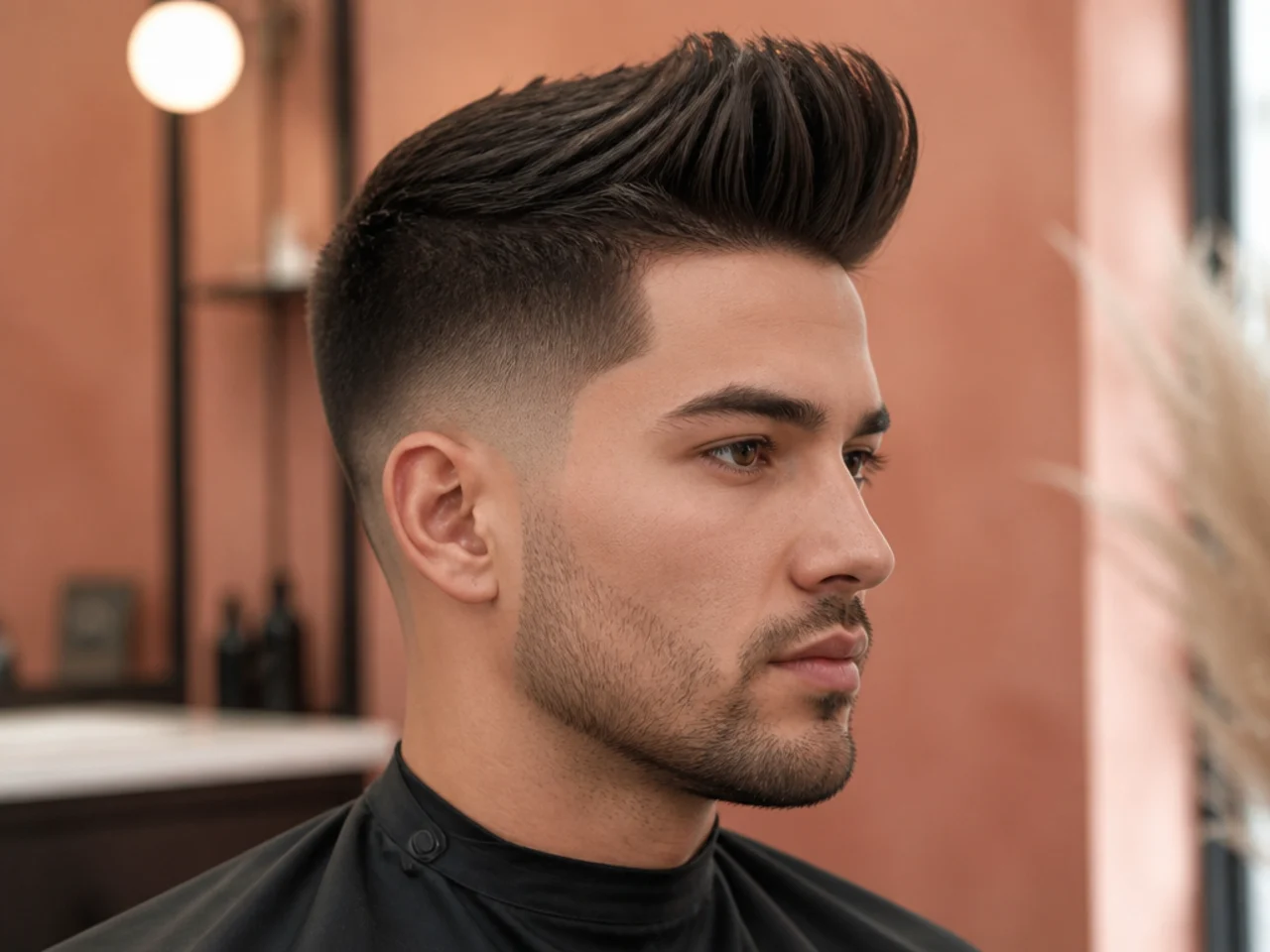
- 11\. Short Pompadour Cut with Side Part
- 12\. Short Quiff Cut with Side Part
- 13\. Short Fringe Cut with Side Part
- 14\. Scissor Taper Cut Side Part
- 15\. Undercut Cut Side Part
- 16\. Disconnected Undercut Side Part
- 17\. Hard Part Crew Cut
- 18\. Hard Part Ivy League
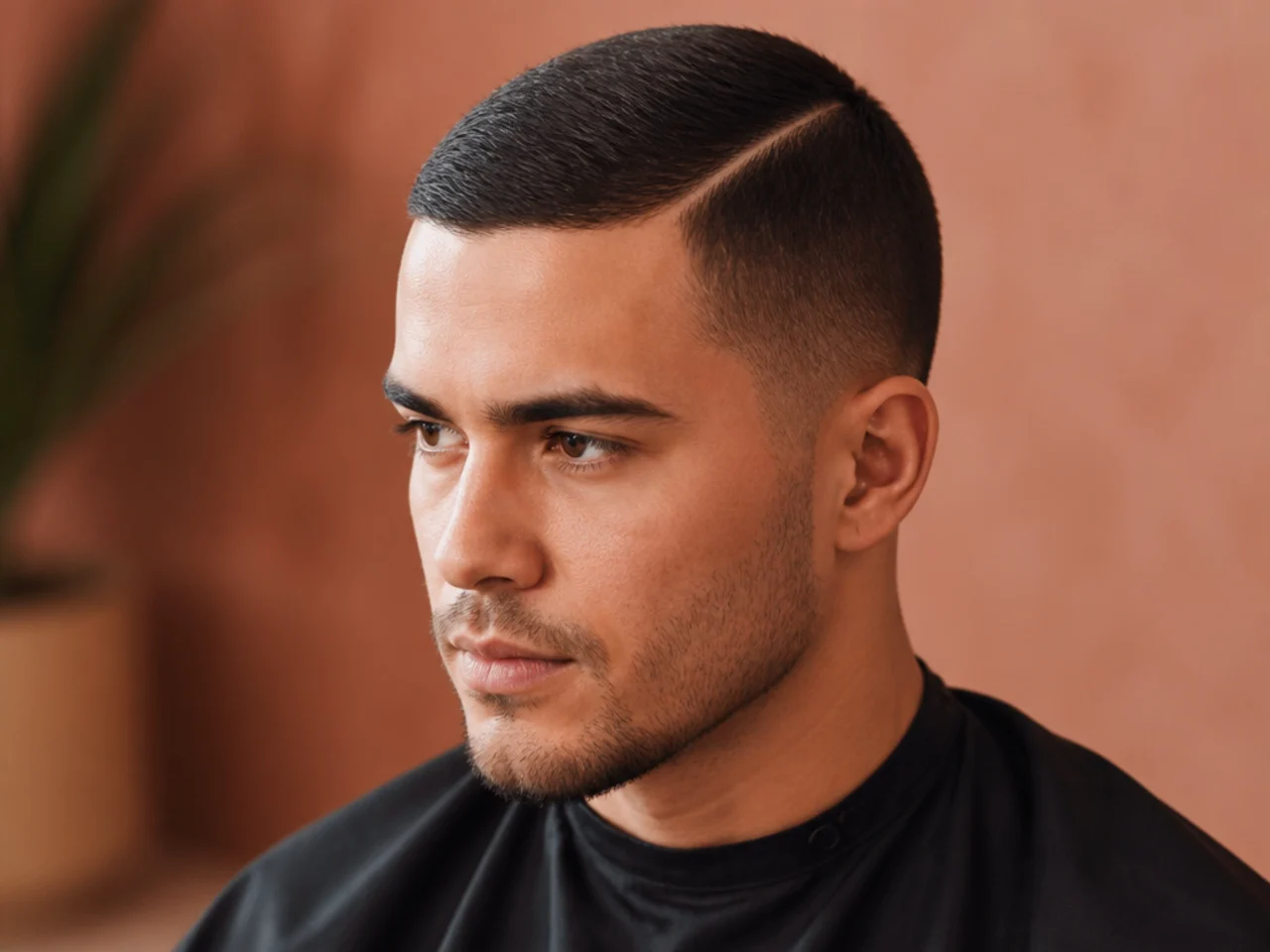
- 19\. Hard Part Buzz Cut
- 20\. Hard Part Textured Crop
- How to Ask Your Barber for a Short Side Part Cut
- Styling and Maintenance
- FAQ
A short side part haircut isn't a styling trick — it's a named cut you ask your barber for. Crew cut, Ivy League, Caesar, French crop, textured crop, and the regulation family all take a side parting cleanly, and each one gives you a different silhouette. This guide walks through the twenty short side part haircuts worth trying — every one built around a specific named cut, with clipper numbers, face-shape notes, and the sentence to hand your barber.
What Makes a Short Side Part Haircut
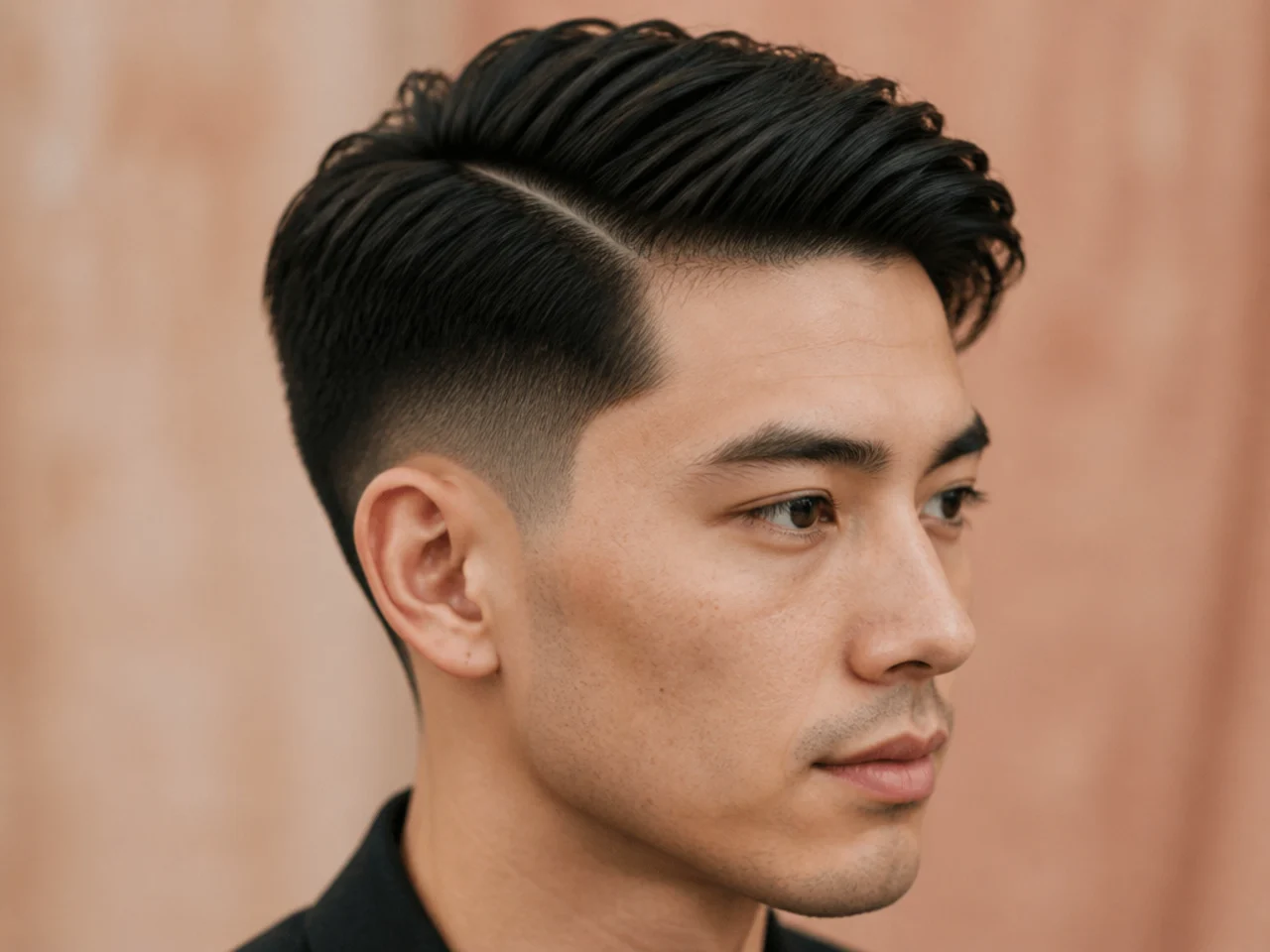
A short side part haircut is any named men's cut — crew, Ivy League, Caesar, French crop, textured crop, regulation, businessman, buzz — with the top left under two inches and finished along a defined parting on one side. The named cut is the structure. The parting is the finish. Ask for both together and you leave with a specific silhouette rather than a generic short haircut with a comb through it.
That distinction matters at the chair. Say "short side part" alone and the barber picks a default for you. Say "Ivy League with a side parting" or "textured crop with a hard part on the left" and the top length, the fringe treatment, the sides taper, and the parting all click into place from a shared vocabulary. Same room, different result.
Every version in this guide keeps the top under two inches. That length holds a defined parting all day without product retouching, reads clean under a helmet or cap, and grows out for four to five weeks without turning shaggy. For the longer, styling-focused takes, our sibling side part hairstyles for men short guide covers the fade-and-hardware variations of the same skeleton.
How to Choose the Right Named Cut for You
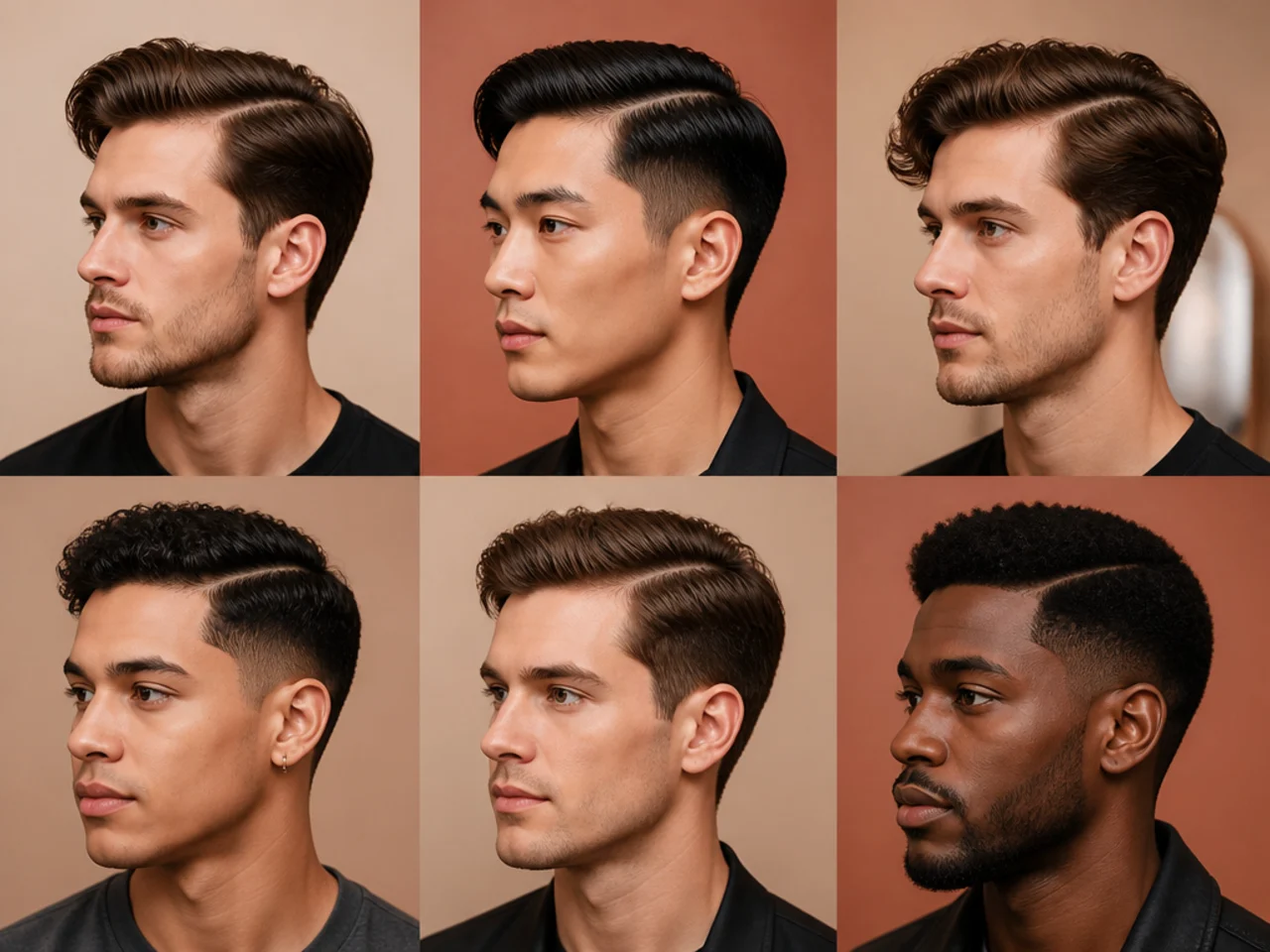
Face shape narrows the list first. Oval faces carry every named cut on this page. Square and rectangular faces read polished with the Ivy League, businessman, and comb-over versions — the diagonal parting softens the jaw. Round faces do best with a Caesar or fringe cut swept to one side, or a hard-part variation that draws vertical attention. Long and oblong faces suit the crew cut, textured crop, and regulation versions where the top stays close to the head.
Hair type sets the next filter. Straight to lightly wavy hair holds a razor-drawn parting sharpest and works with every cut listed. Thick coarse hair takes any of the point-cut styles — French crop, textured crop, disconnected undercut — with visible texture. Curly hair (3A to 3B) works on a Caesar or scissor-tapered version cut on damp hair; clipper-cut tops flatten the pattern. Fine or thinning density reads best on the Ivy League, businessman, or scissor-tapered classic where a soft parting adds visual thickness.
Maintenance is the last cut. A hard-part or skin-fade version needs a chair every two to three weeks. The Ivy League, businessman, and scissor-tapered classics stretch to five weeks. Pick the version your calendar can hold — a soft classic done well beats a hard-part build gone shaggy every time.
The 20 Short Side Part Haircut Variations
Sorted loosely from classic scissor cuts to sharper clipper builds. Each entry names the underlying cut, the top length, the sides finish, who it suits, and the exact sentence to hand your barber.
1. Crew Cut with a Side Part
The crew cut with a defined parting built in. Top runs one inch at the front and graduates shorter toward the back — the crew cut's signature front-to-back gradient — with the front swept to one side along a comb-drawn or natural part. Sides taper from a No. 2 down to a No. 1 with scissors over comb at the perimeter. It reads clean everywhere from a job site to a weekday wedding. Best on fine to medium straight hair, oval and square faces.
Ask for: "Crew cut with a side parting, one inch on top graduated shorter to the back, No. 2 tapered sides, natural part on the left."
Styling: a pea of matte clay finger-worked through, then one comb pass across the parting. Total morning time under 90 seconds — the crew cut's whole appeal is that the finish takes less time than making coffee.
2. Ivy League Side Part
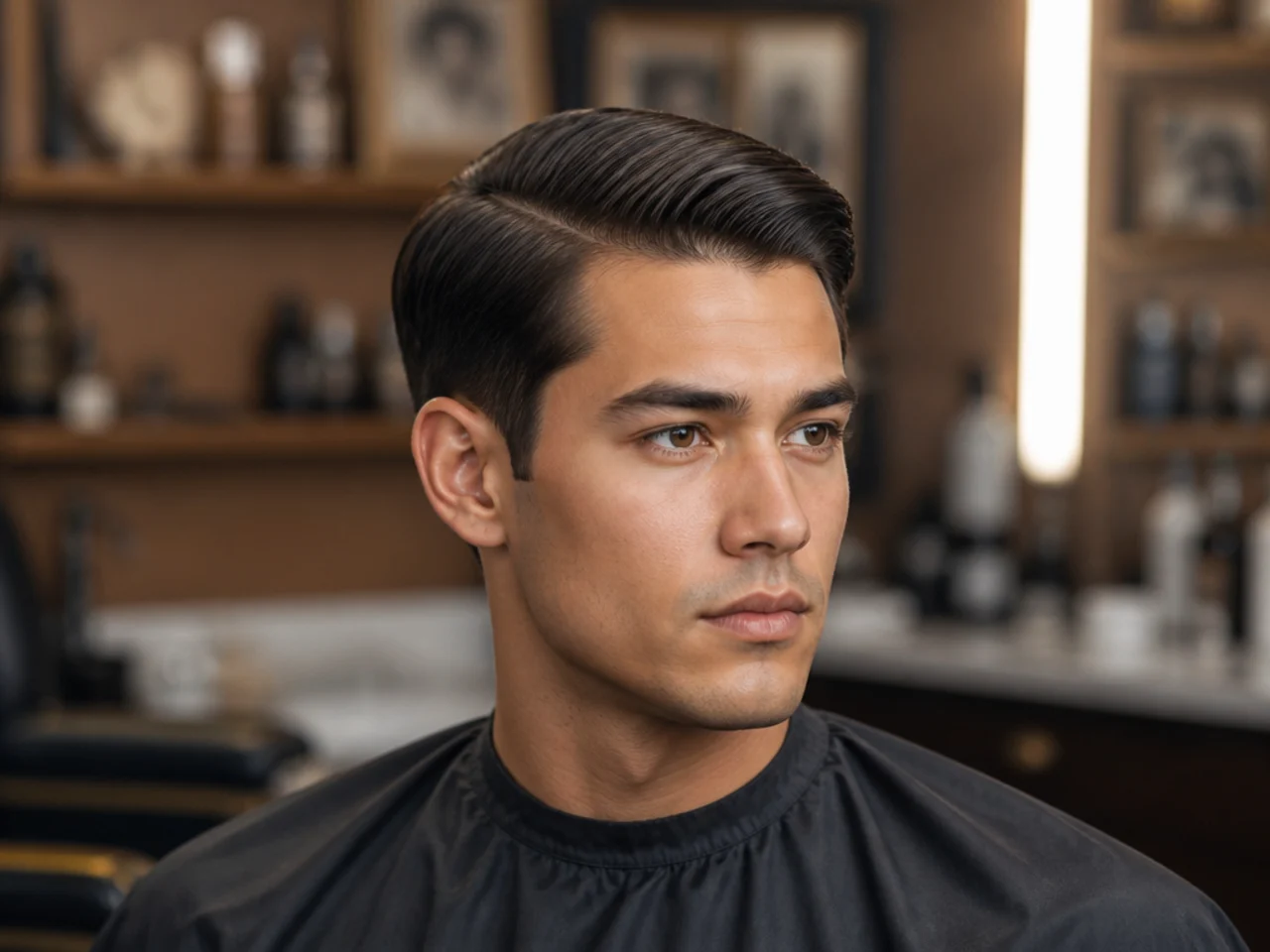
The prep-school original in short form. The Ivy League keeps two inches on top — long enough for a proper combed parting — with scissor-blended sides that stop short of any fade line. It ages up cleanly from twenty-five to fifty-five and pairs with a shirt collar without looking corporate. Best on straight to lightly wavy hair, oval and square faces, business-casual dressers.
Ask for: "Ivy League with a defined side parting, two inches on top, scissor-blend the sides to a No. 2 at the perimeter, part on my natural side."
Styling: a pea of cream pomade on damp hair. Blow-dry the top toward the part with a small round brush, then comb once. A satin finish reads more polished than a shiny one, so keep the product light.
3. Businessman Cut Side Part
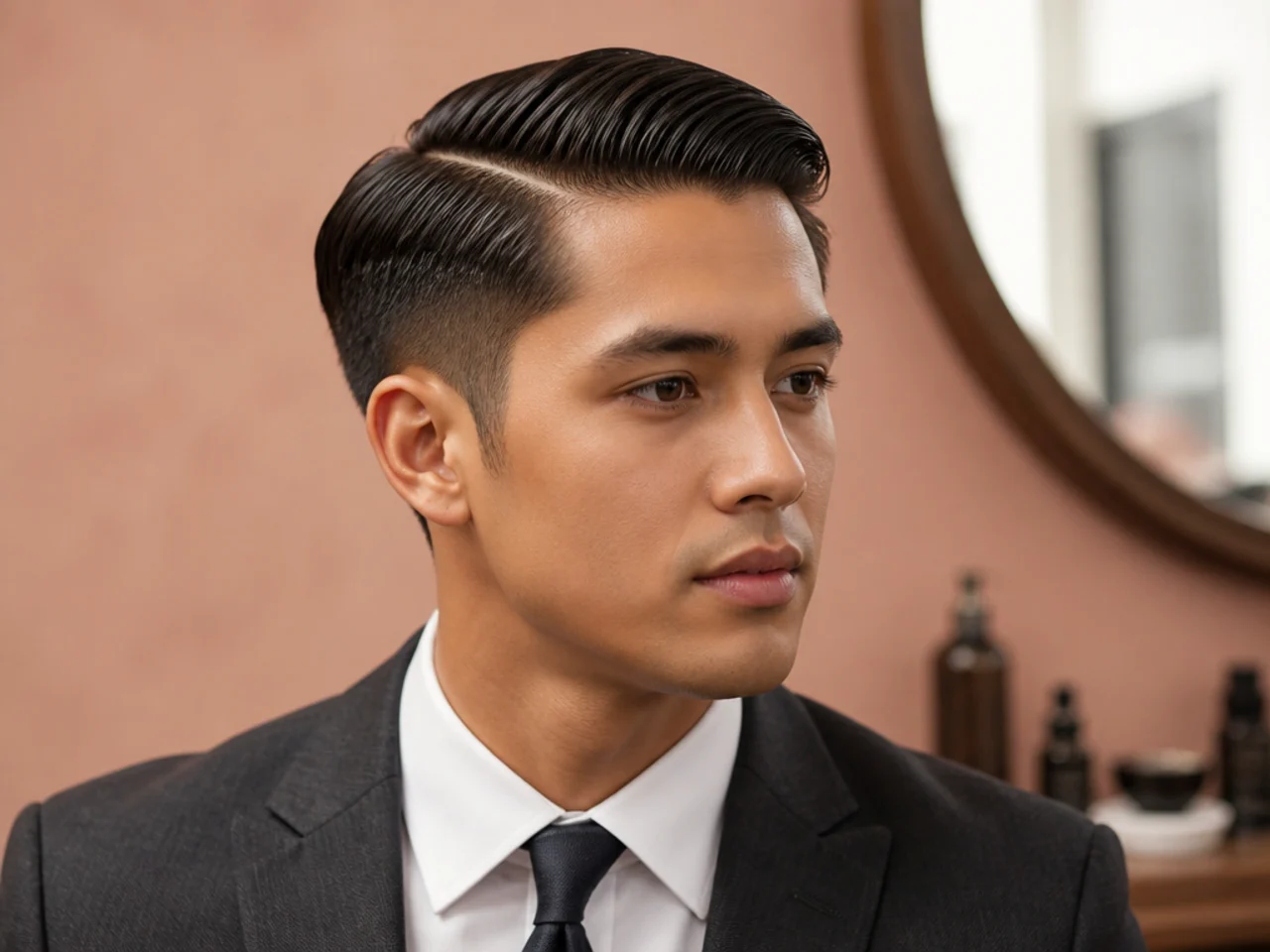
The corporate standard. The businessman cut splits the difference between the crew and Ivy League — top runs 1.5 to two inches, sides clipper-tapered short with a No. 2 or No. 3, and everything combed into a defined side part. Nothing textured, nothing loud. The point is polish. Suits any face shape because it is built to disappear into a suit rather than make a statement. Best on straight to gently wavy hair.
Ask for: "Businessman cut with a defined side part, two inches on top, No. 2 clipper taper on the sides fading up to a No. 4 at the top of the head, conservative finish."
Styling: a small amount of medium-hold pomade combed through, then set with a low-heat blow-dry. The businessman cut sits at the top of any professional hairstyle rotation and reads correct in every meeting on the calendar.
4. Caesar Cut Side Part
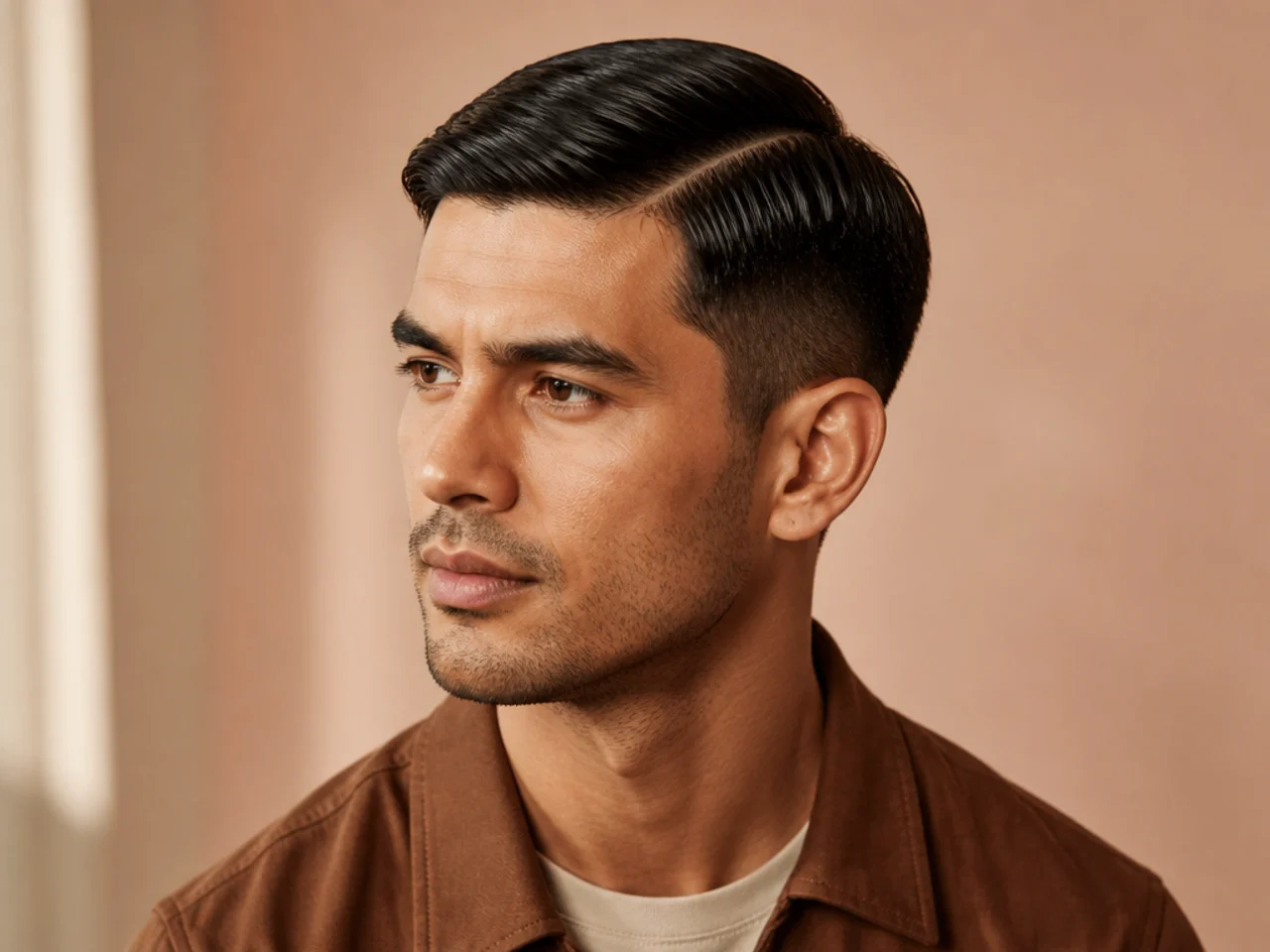
The Caesar reinvented for the side-parted crowd. Traditional Caesars push a short, blunt fringe straight forward from the crown. This version sweeps the same fringe diagonally along a natural side parting, breaking the horizontal line without losing the cut's short, even length on top. Top runs 1.25 to 1.5 inches all over. Sides matched short to about a No. 2. Best on round and oval faces — the diagonal fringe adds vertical interest without adding height.
Ask for: "Caesar cut with a side sweep instead of a straight fringe, 1.5 inches on top blunt-cut across the fringe line, No. 2 sides matched to the top."
Styling: a pea of matte paste finger-pushed forward and to the side. No comb needed. The Caesar's whole appeal is that the finish reads styled without looking fussed.
5. French Crop Side Part
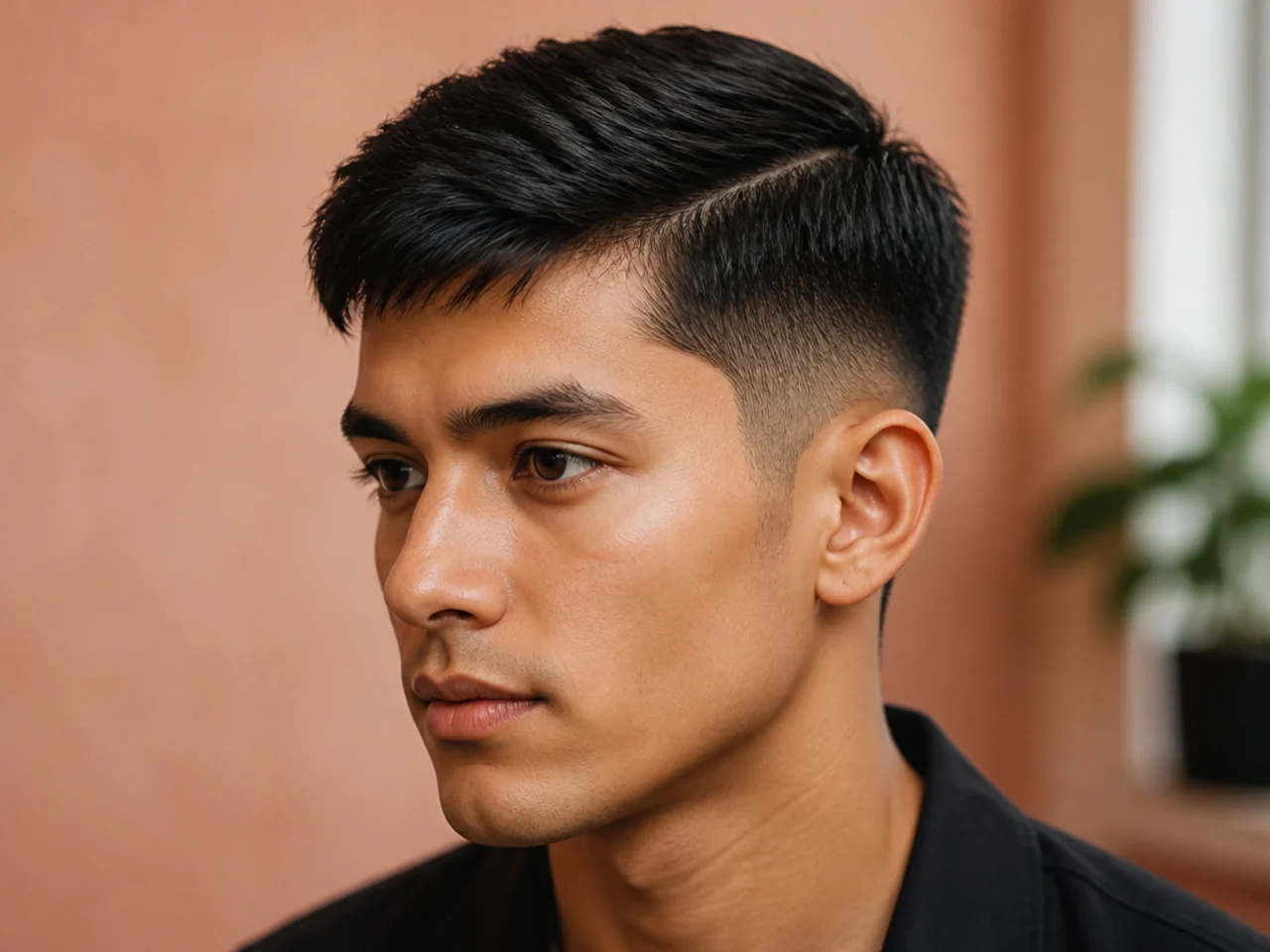
The French crop reworked with a side parting. Traditional French crops push a textured top forward under a blunt fringe. This version swaps the forward push for a defined diagonal sweep — the blunt fringe stays, but sits at an angle. Top runs 1.5 inches, point-cut for visible texture, sides tapered with a No. 2. Best on oval and round faces, fine to medium hair that reads thicker when point-cut.
Ask for: "French crop with a side parting, 1.5 inches point-cut on top, blunt fringe swept to one side instead of forward, No. 2 tapered sides."
Styling: matte clay on damp hair, finger-styled with the sweep direction. Never comb the top — you will flatten the point-cut texture that gives the crop its visual weight.
6. Textured Crop Side Part
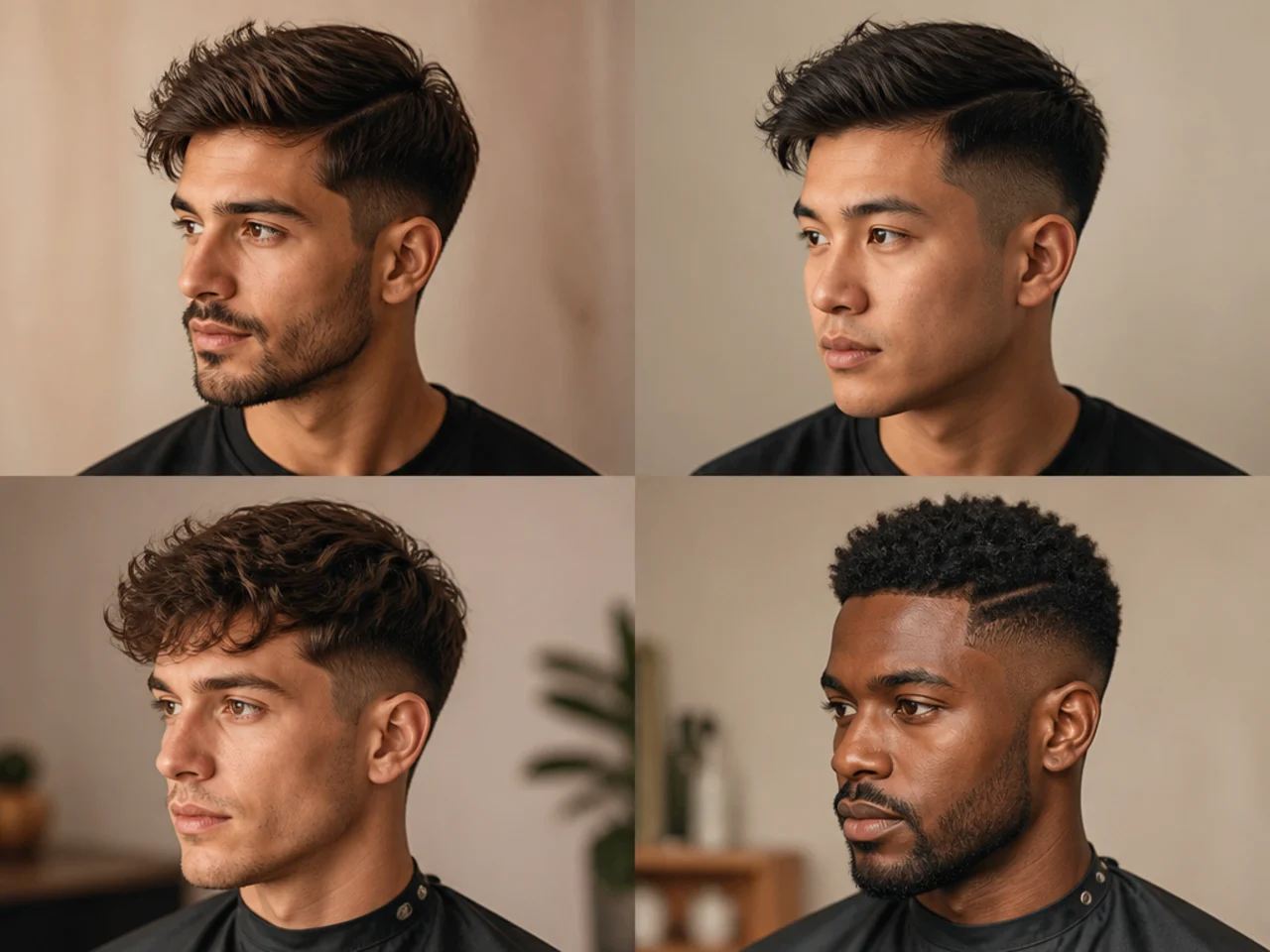
The textured crop is the French crop's louder cousin — more visible texture, shorter fringe, choppier ends. Combined with a defined side parting instead of the usual forward push, the cut reads sharp and current. Top runs 1.5 inches heavily point-cut, sides tapered to a No. 1 or No. 2. Best on fine to medium straight or wavy hair, oval and diamond faces. Round faces should keep the top on the shorter end.
Ask for: "Textured crop with a side parting, 1.5 inches on top with heavy point-cut texture, sweep to one side, No. 1 tapered sides."
Styling: matte paste worked with fingers only. No comb, no blow-dry. The texture is doing the visual work — a comb pass will kill it inside a week.
7. Regulation Cut Side Part
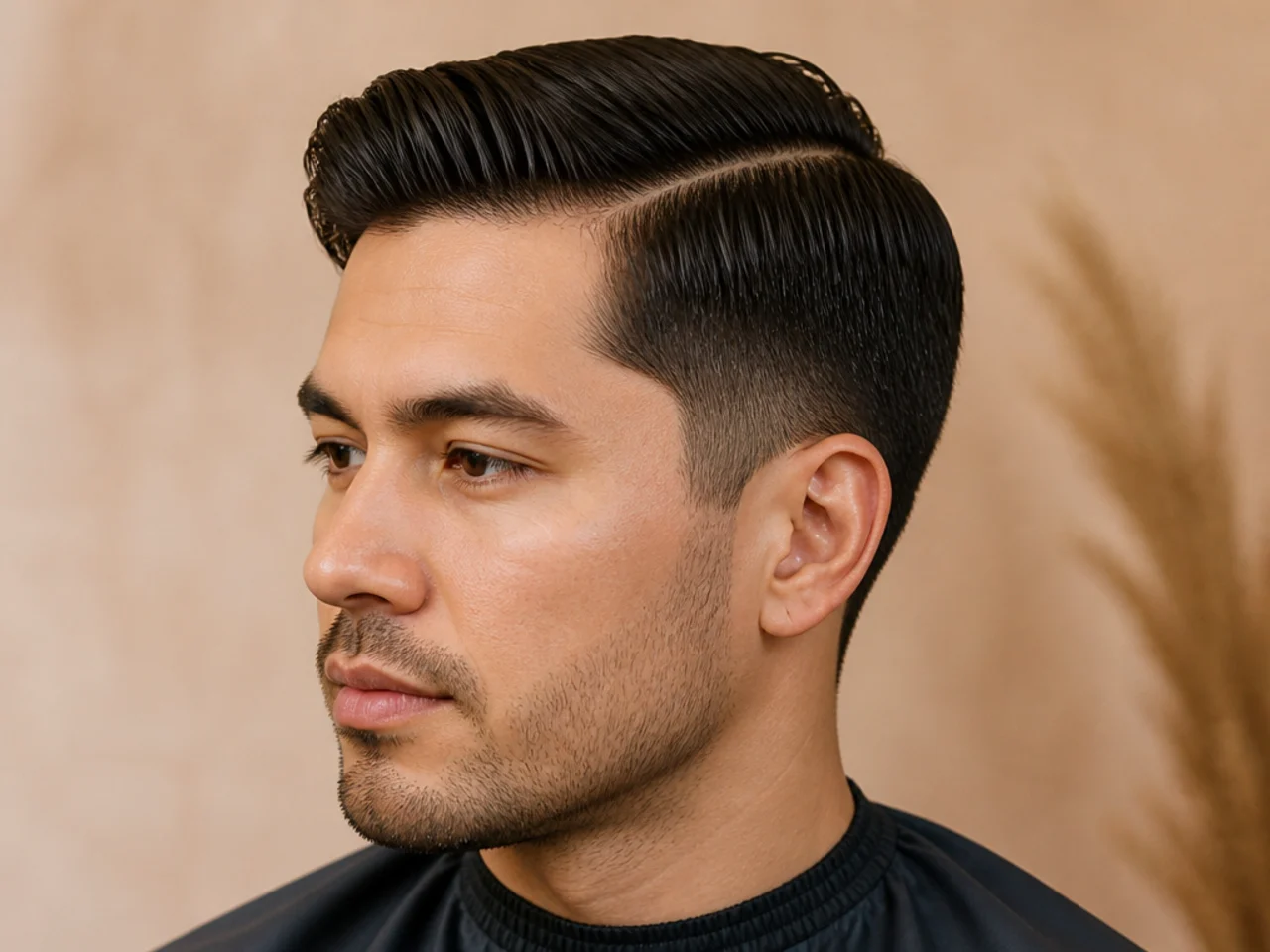
The military regulation cut with a hard parting drawn in. Top runs half an inch to one inch clippered even across the crown, sides taken to a No. 1 with a squared neckline at the base, and a razor-shaved hard part runs along the dominant side. Reads sharp in uniform and just as clean out of it. Suits every face shape and every hair type. Darker hair shows the hard part cleanest against the scalp.
Ask for: "Regulation cut with a hard side part on the left, half an inch on top, No. 1 sides, squared neckline at the base."
Styling: none required, or a pea of matte paste for a hint of lift. Rebook every three weeks — the squared neckline and the hard part are what date first.
8. Butch (Brush) Cut Side Part

The butch cut — sometimes called a brush cut — clippers the whole head to a uniform half inch to three-quarter inch, with sides matched or slightly shorter. The traditional finish brushes straight up. This version parts the top on one side along a razor-drawn hard part, giving structure to a cut that is otherwise about volume alone. Best on thick straight hair, oval and square faces. Fine hair works but the hard part is what carries the read.
Ask for: "Brush cut with a hard side parting drawn on the left, three-quarter inch on top clippered even, No. 1 sides."
Styling: finger-lift for volume, or a light matte paste if the hair wants to sit flat. The parting is doing the work.
9. Short Comb-Over Cut with Side Part
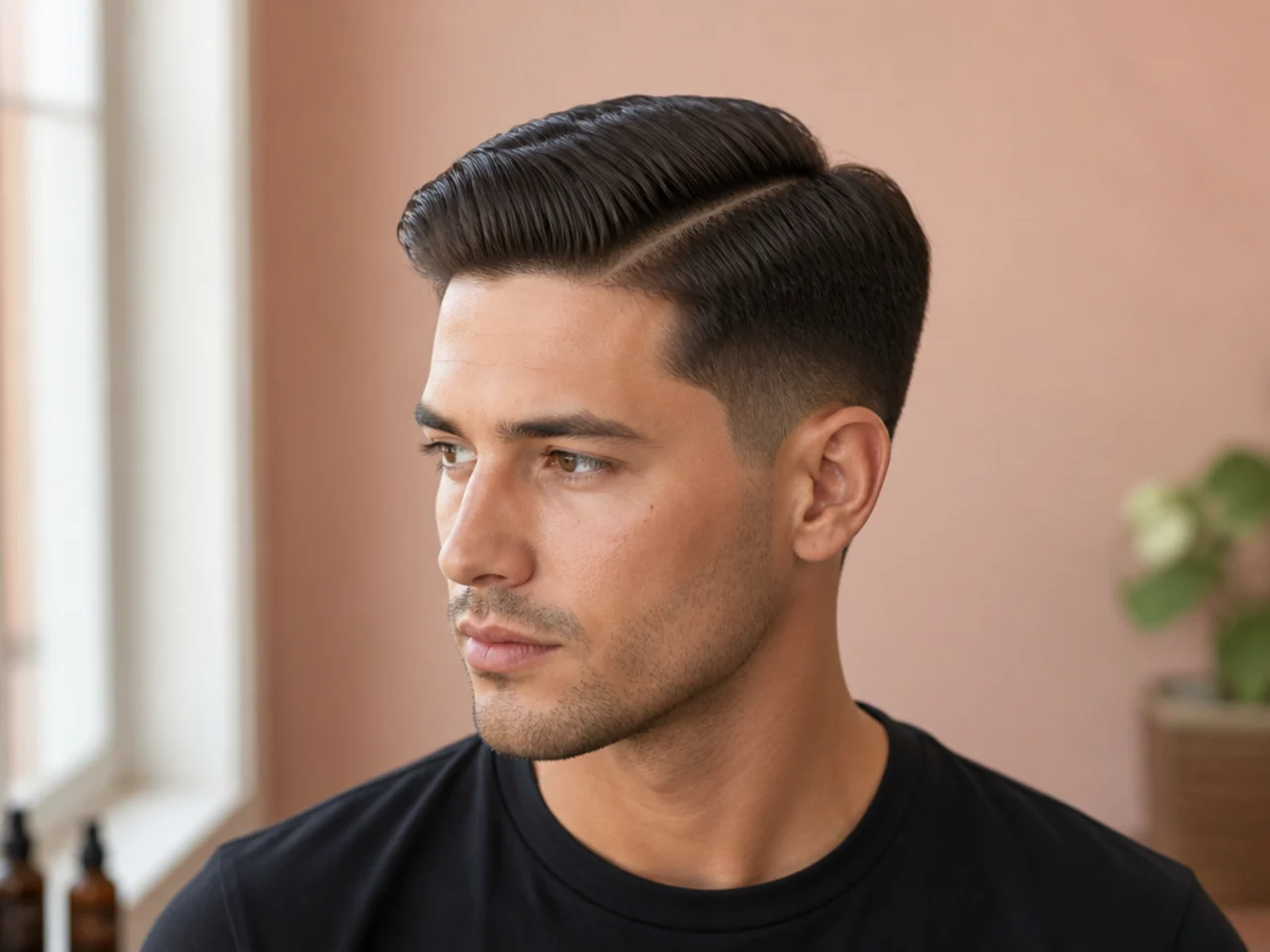
The comb-over reduced to short-cut proportions. The comb-over is defined by the sweep itself — the top gets combed from a deep parting across to the opposite side, with a satin finish. In short form the top stays under two inches, the parting sits deep on the dominant side, and the sides taper short with a No. 2 or No. 3. Suits every face shape, straight to wavy hair. A staple of the old money haircut look when combined with a scissor taper.
Ask for: "Short comb-over cut with a deep side parting, two inches on top, No. 3 tapered sides, comb from the parting all the way across."
Styling: cream pomade combed from the parting across the top. Set with a low-heat blow-dry to lock the sweep. The satin finish is the whole point — skip anything that reads matte or dry.
10. Short Slick-Back Cut with Side Part
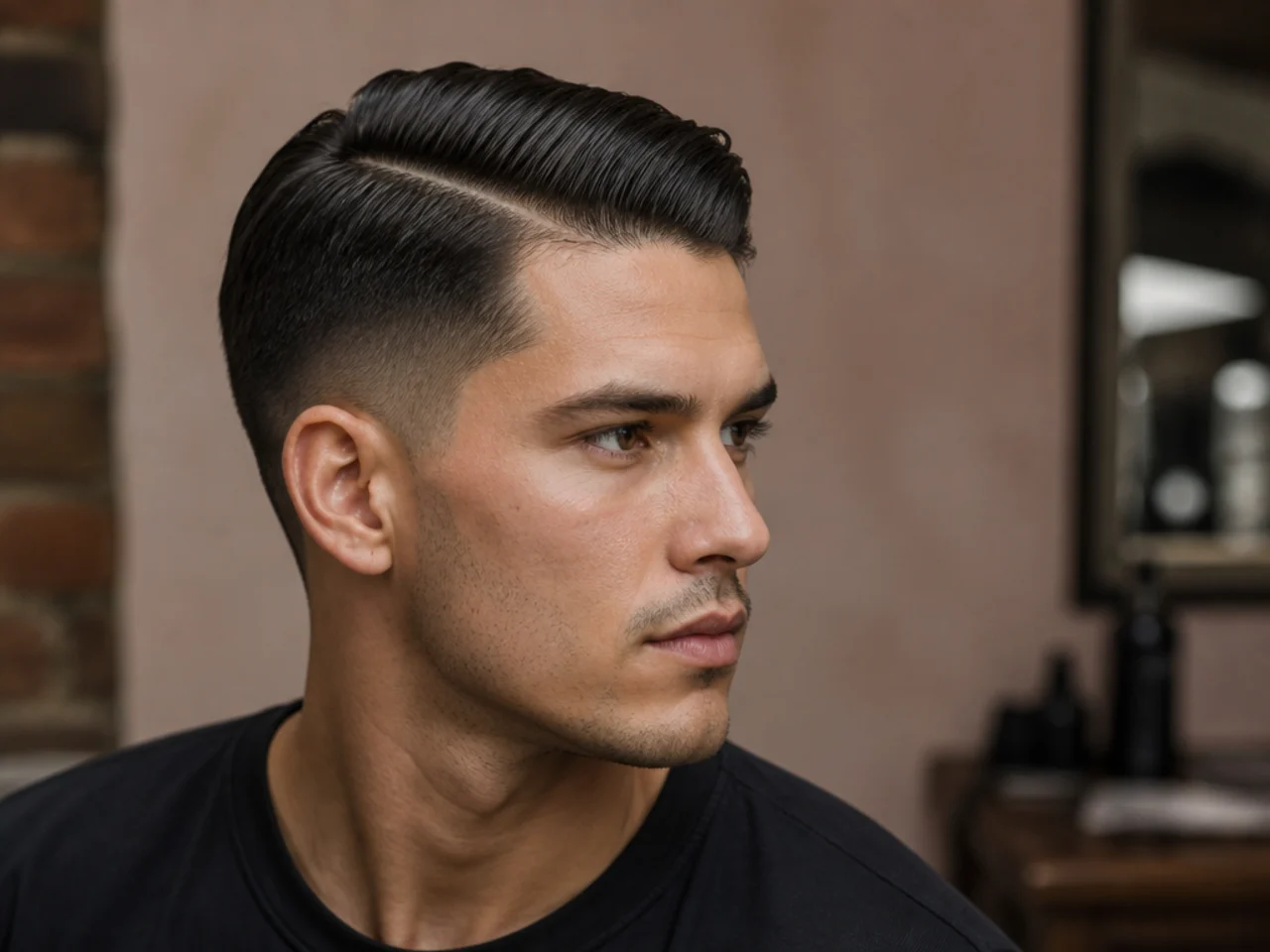
The slick-back in short-top form, broken by a defined side parting rather than fully centered. Top runs 1.5 to two inches, combed back and to the dominant side from a parting line, with a satin finish. Sides taper short with a No. 2. Suits oval and square faces, business-casual to formal contexts. Best on straight to lightly wavy hair — coarse or curly hair will fight the slicked finish.
Ask for: "Short slick-back cut with a side parting on the dominant side, two inches on top, No. 2 tapered sides, satin finish."
Styling: a satin or medium-shine pomade combed back and to one side from the parting. Let it set without touching. The parted version reads sharper than a fully centered slick-back and grows out with more grace.
11. Short Pompadour Cut with Side Part
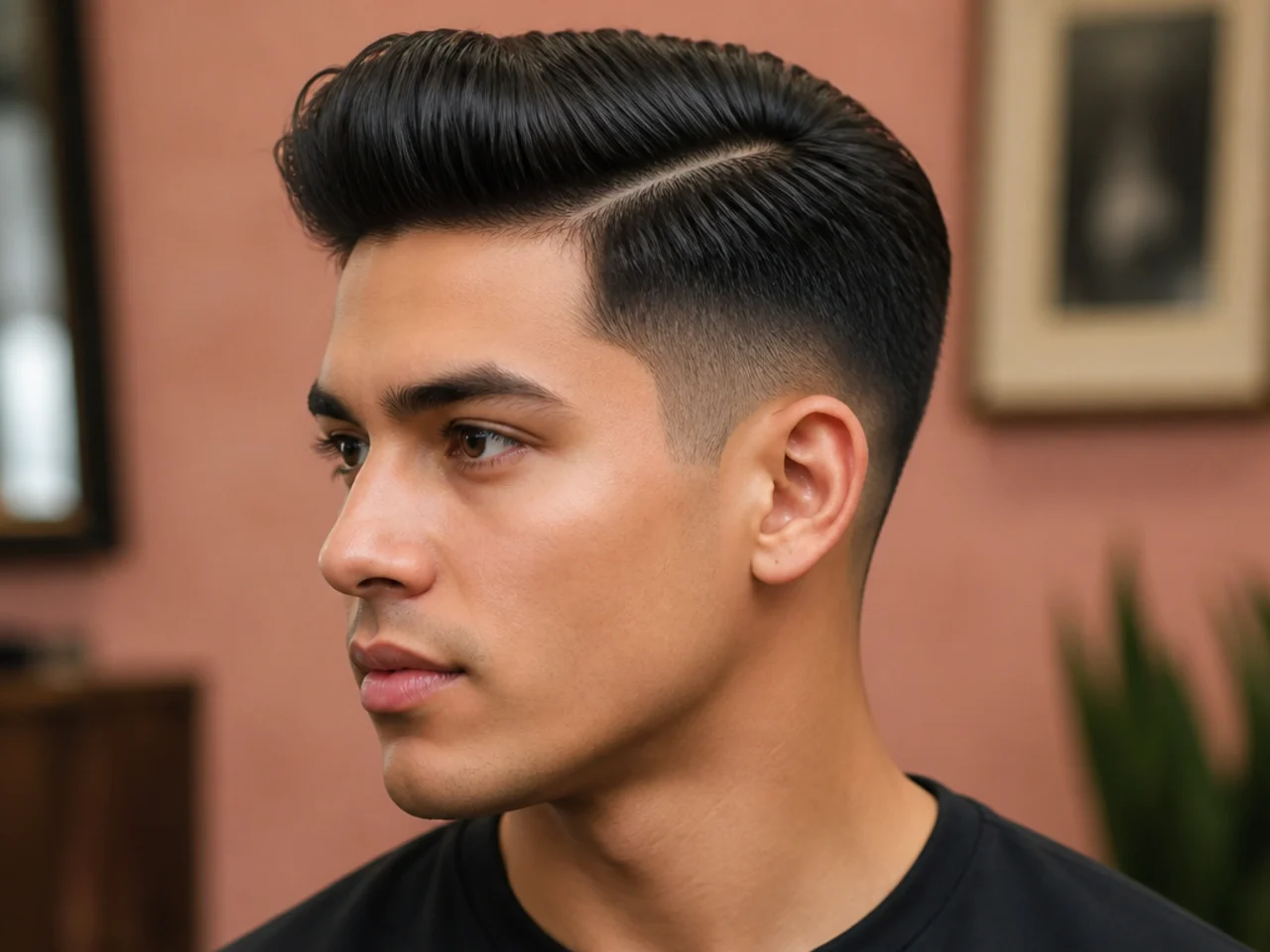
The pompadour cut cropped short and combed to a side parting instead of straight back. Top runs two inches with volume built at the front, sides tapered with a No. 2. The parting sits alongside the pomp — the front lifts, then rolls diagonally toward the parting side. Best on oval and square faces. Works on straight to gently wavy hair with medium density; fine hair will not hold the front height.
Ask for: "Short pompadour with a side parting, two inches on top with front volume, No. 2 tapered sides."
Styling: mousse worked through damp hair for volume, then a medium-hold pomade combed up and to the side. Blow-dry the front upward with a round brush, then set the parting with a low-heat pass.
12. Short Quiff Cut with Side Part
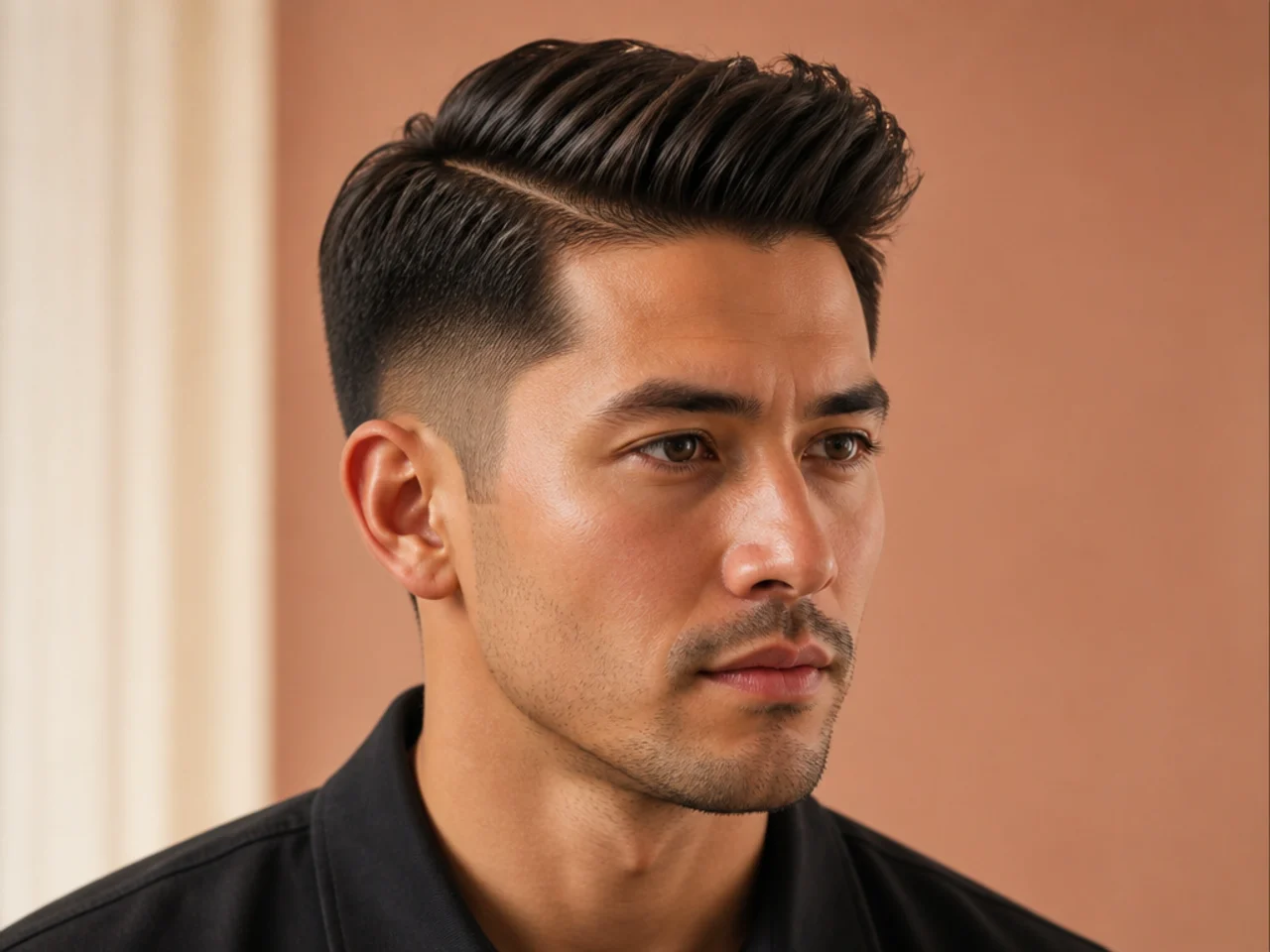
The quiff shortened and pulled to one side. The quiff's signature is a lifted-and-back front. In this short-parted version the front still lifts, but rolls diagonally toward a defined parting instead of straight over the crown. Top runs 1.5 to two inches, sides tapered short. Best on oval, diamond, and heart faces. Fine to medium straight hair holds the lift with the least product; thick hair benefits from a lighter clay.
Ask for: "Short quiff with a side parting on the dominant side, two inches on top lifted at the front, No. 2 tapered sides."
Styling: sea-salt spray on damp hair for grip, then a medium-hold clay finger-worked upward. Blow-dry the front up with a small brush. Skip pomade — the shine drags the quiff flat by lunchtime.
13. Short Fringe Cut with Side Part
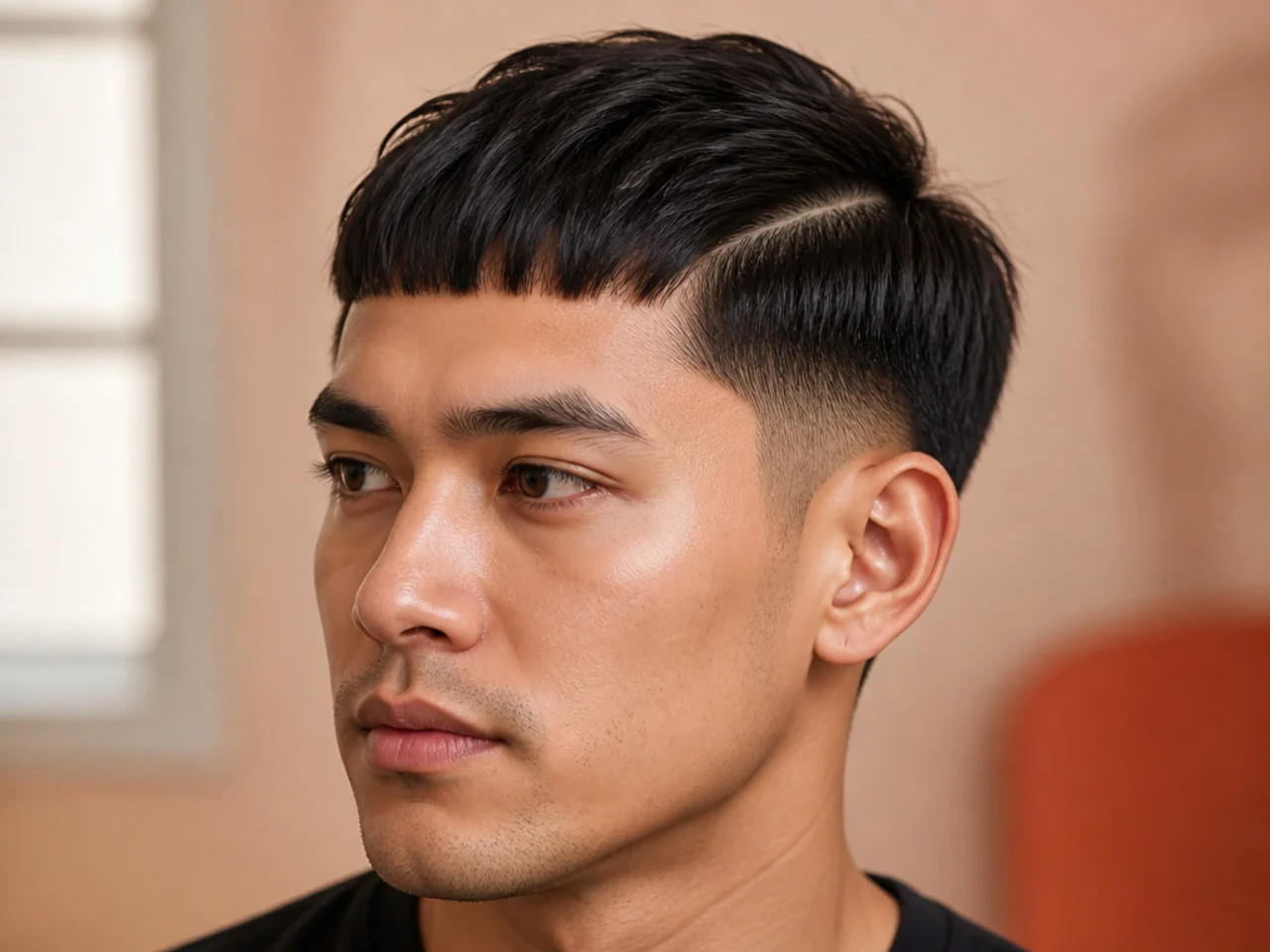
The fringe haircut worn short with a defined side sweep. Top runs 1.5 inches with the front left slightly longer for a blunt fringe, but the fringe sits at an angle along a natural or comb-drawn parting rather than dropping straight down. Sides tapered with a No. 2. Best on oval and heart-shaped faces, straight to wavy hair. High foreheads gain the most flattering coverage from this variation.
Ask for: "Fringe cut with a side sweep, 1.5 inches on top, blunt fringe combed along a defined side part rather than straight down, No. 2 sides."
Styling: a light matte cream worked through damp hair, then the fringe swept with fingers into the parting direction. Air-dry or a short burst of low-heat air. The fringe carries the read, so keep everything else quiet.
14. Scissor Taper Cut Side Part
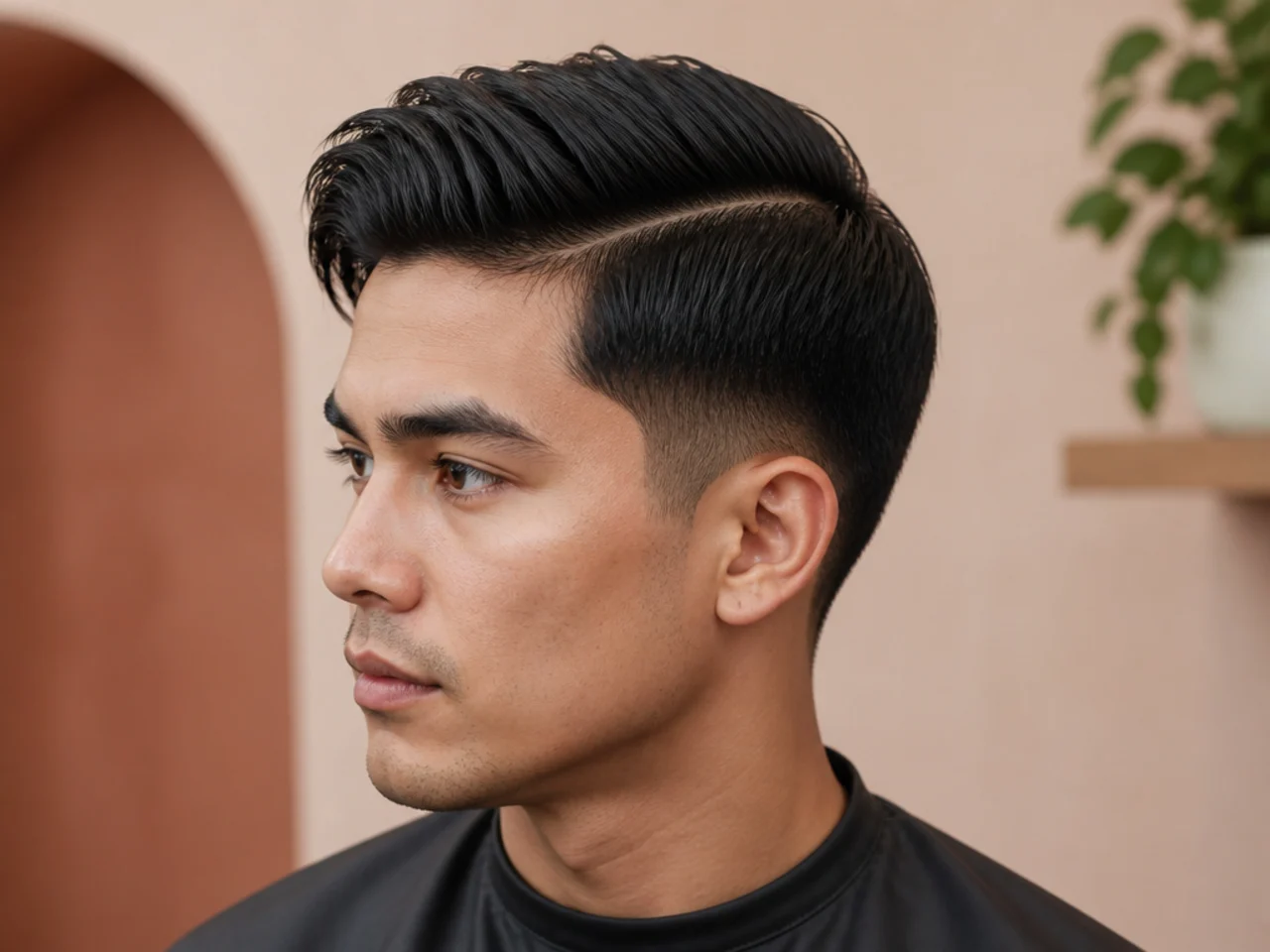
The taper haircut built entirely with scissors — no clippers, no fade line, no razor. Sides taper gradually from about a No. 3 length at the top down to a No. 1 at the neckline, all cut with scissors over comb. Top runs two inches with a defined side parting. The most forgiving cut on this page — it grows out for six weeks without looking untidy. Suits every face shape and every hair texture that will hold a comb.
Ask for: "Scissor taper with a side parting, two inches on top, scissor-cut sides tapering from a No. 3 down to a No. 1 at the neckline, no clippers, no fade line."
Styling: a light cream or satin pomade combed from the parting outward. The scissor taper is the low-maintenance king — great for guys who travel and cannot hold a strict rebook schedule.
15. Undercut Cut Side Part
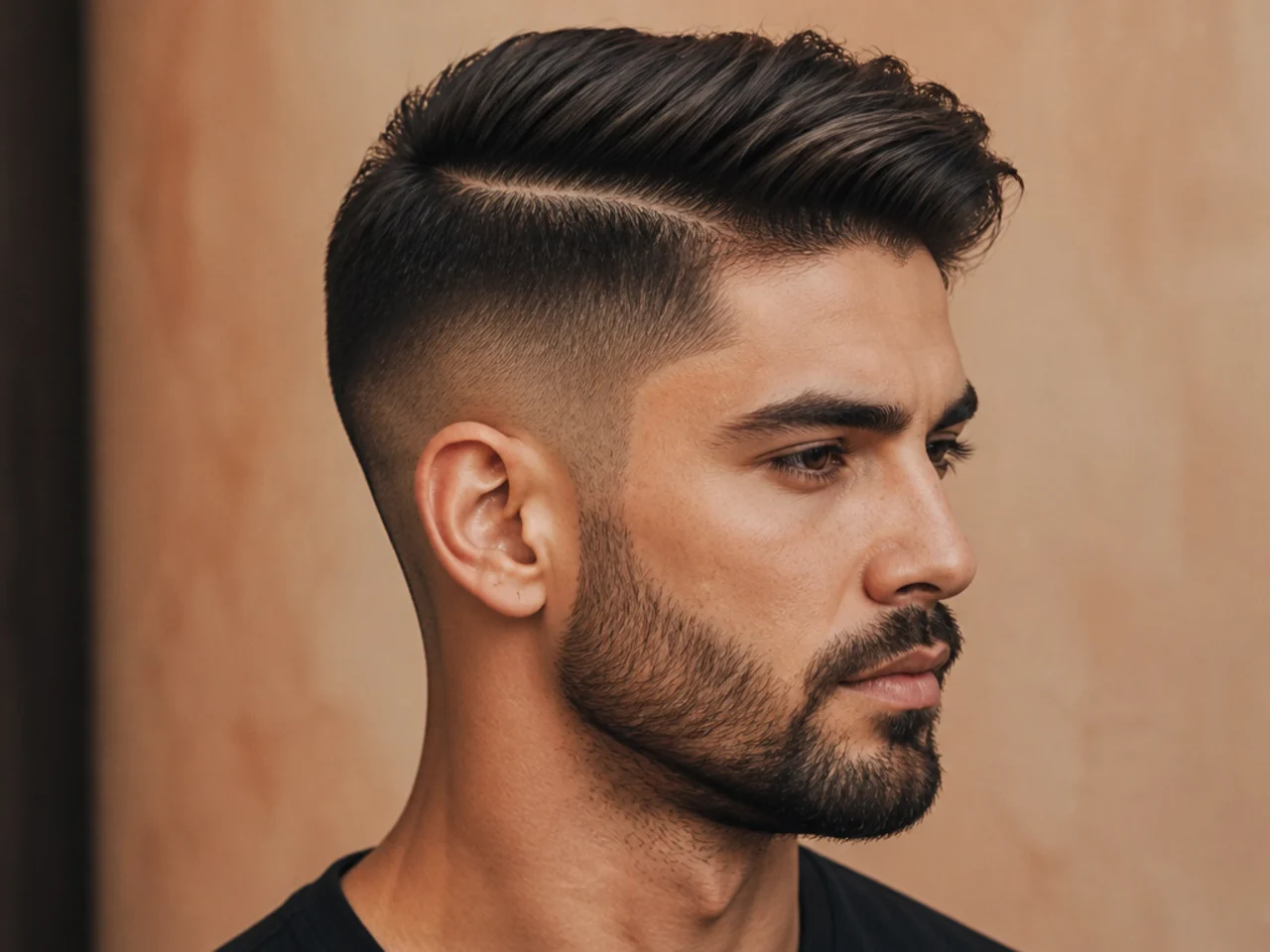
Not a fade — a true undercut cut. Sides and back clippered to a single length (usually a No. 2) with no blend, no taper, no gradient. The top is left at 1.5 to two inches and side-parted along a defined line. The visual contrast is between one flat short length and one flat longer length. Suits oval, square, and triangular faces. Thick straight-to-wavy hair carries the undercut best.
Ask for: "Undercut with a side parting, No. 2 clipper all around with no fade or taper, two inches on top, part on my dominant side."
Styling: a medium-hold pomade combed into a defined side part. The top has to sit clean because there is no fade to distract from a sloppy sweep. Rebook every four weeks — the flat undercut grows out with grace.
16. Disconnected Undercut Side Part
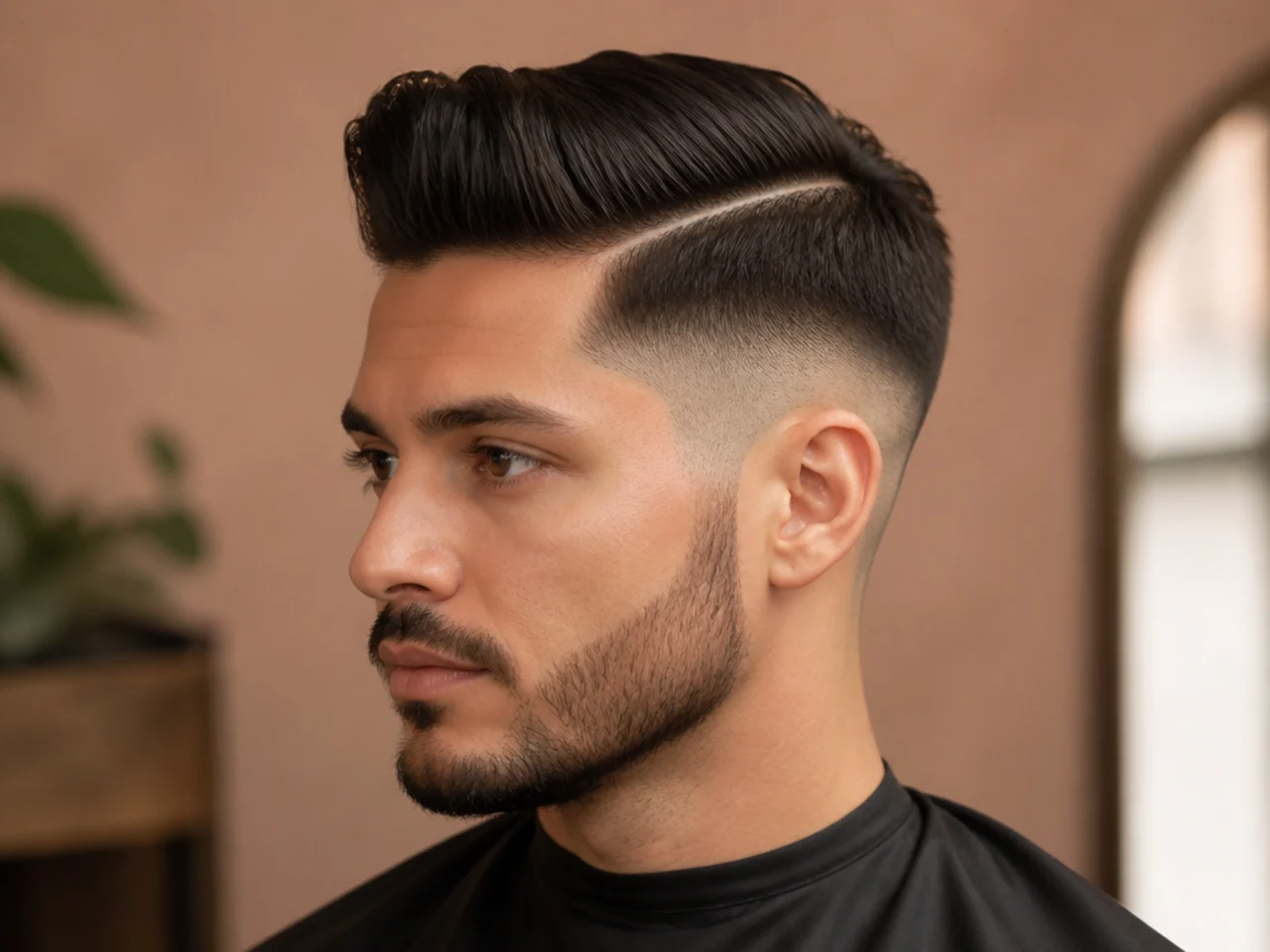
Same skeleton as the undercut, taken sharper. The top and sides do not blend at all — the length drops off like a cliff, creating a visible ledge where the two lengths meet. The parting sits alongside that ledge. Reads sharp and slightly aggressive. Suits square, diamond, and oval faces with strong bone structure. Thick straight hair carries the disconnect best; fine hair reads bald at the ledge.
Ask for: "Disconnected undercut with a hard side parting, No. 1 all around, two inches on top, no blend at all between the top and the sides."
Styling: matte clay for the top so the length holds shape without shine. Comb the top straight over the ledge so the disconnect stays visible from the side. This one photographs sharp.
17. Hard Part Crew Cut
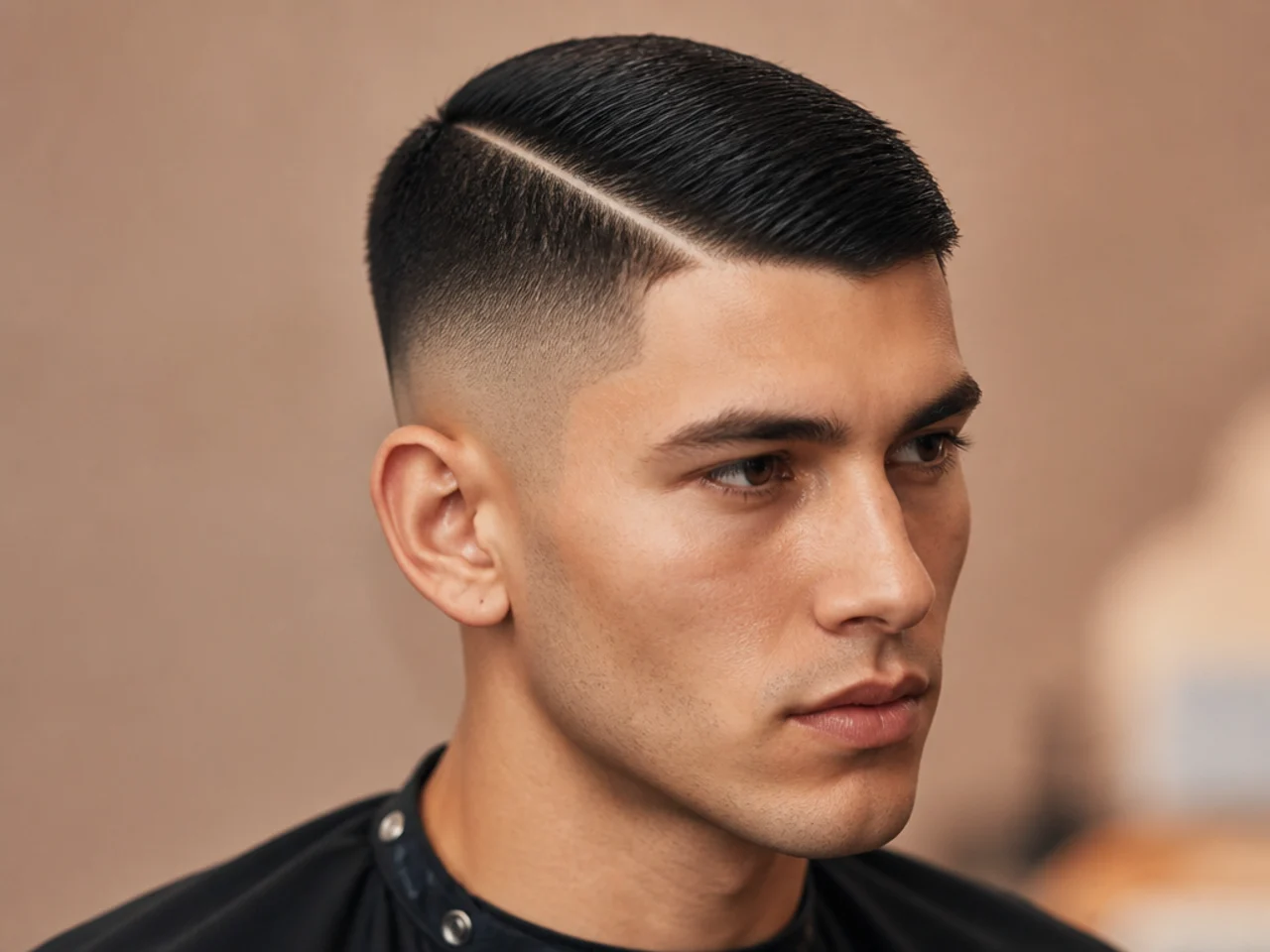
The crew cut with a razor-shaved line along the parting. The hard part is a quarter-inch groove drawn into the scalp on the dominant side, separating the crew cut's short top from the tapered sides. All the crew cut's cleanliness with a designed edge added in ten seconds. Best on darker hair (the line reads sharpest against contrasting scalp), oval and square faces.
Ask for: "Crew cut with a hard part razor-drawn on the left, one inch on top graduated shorter to the back, No. 2 tapered sides, quarter-inch hard part."
Styling: matte paste worked in with fingers, then the top pushed away from the hard part so the shaved line stays visible from three feet away. Rebook every two to three weeks — a fuzzy hard part blunts the whole cut.
18. Hard Part Ivy League
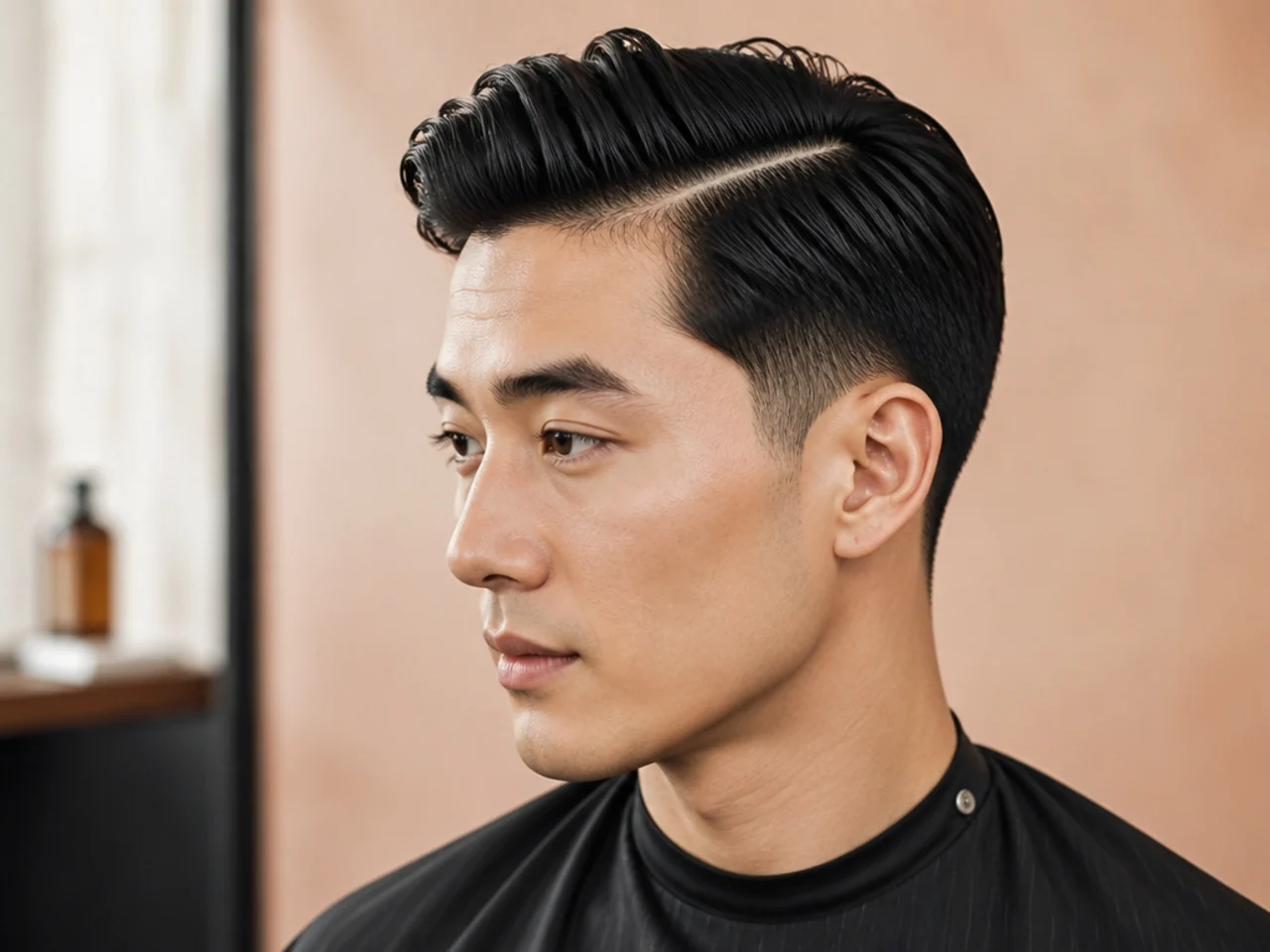
The Ivy League with a razor-drawn parting for the guy who wants classic silhouette and a modern edge in the same cut. The two-inch top and scissor-blended sides stay, and a hard part is shaved along the dominant side. Reads sharp in a suit and quietly designed at the weekend. Suits oval and square faces, business and creative workplaces alike. Fine to medium hair holds this cleanest.
Ask for: "Ivy League with a hard part on the left, two inches on top, scissor-blend the sides to a No. 2, quarter-inch razor-drawn parting."
Styling: a pea of cream pomade combed from the shaved line outward. Blow-dry the top toward the hard part with a small brush for a clean lift on the parting side.
19. Hard Part Buzz Cut
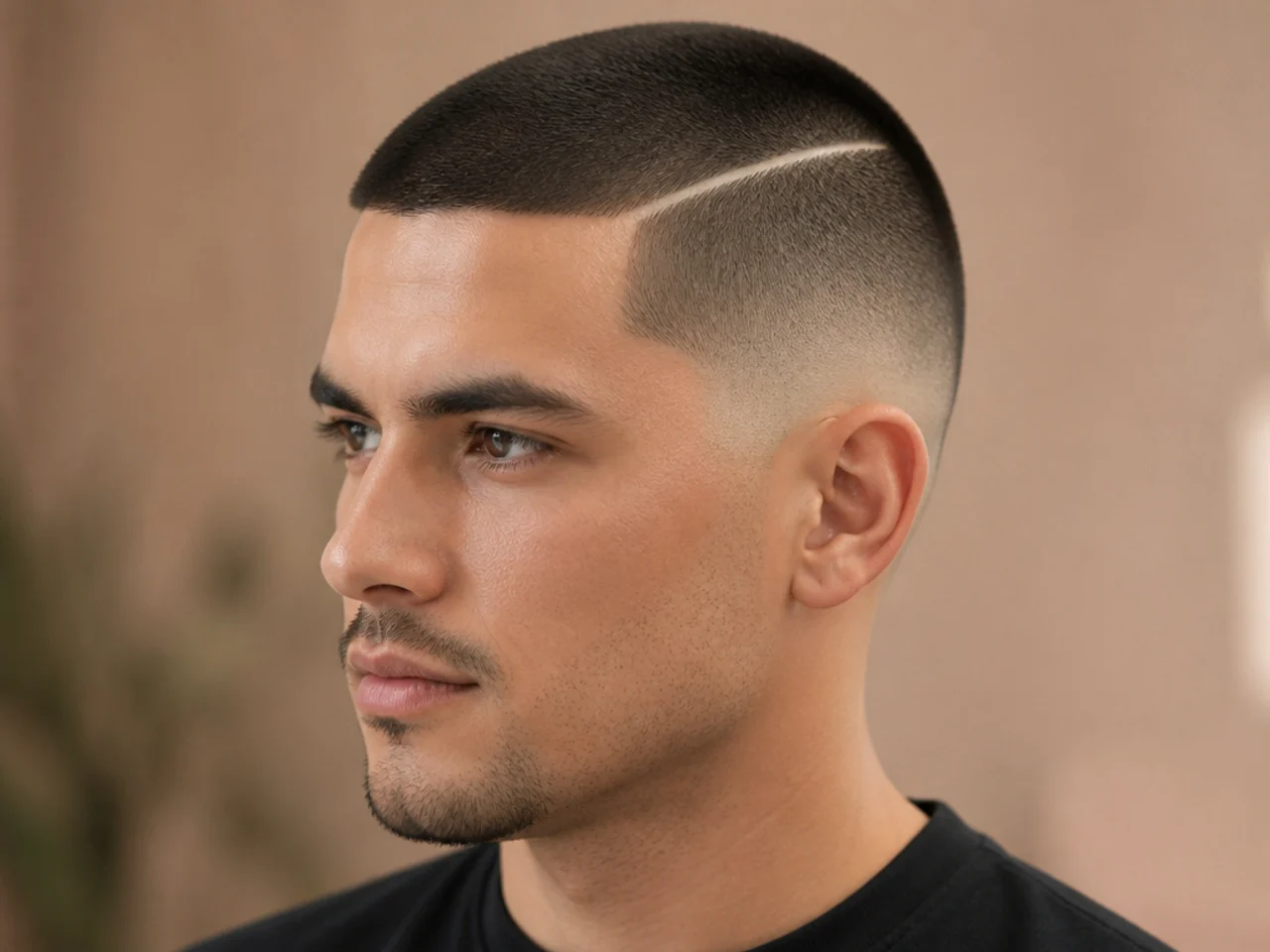
The buzz cut with a hard part shaved in — the shortest possible way to get structure into an even clipper cut. Top runs a No. 3 (three-eighths of an inch), sides taken to a No. 1, and a quarter-inch hard part shaved along the dominant side separates the two lengths. Best on any face shape, darker hair especially. The lowest-maintenance side-part cut on this list once you commit to the rebook cadence.
Ask for: "Buzz cut with a hard part on the left, No. 3 on top, No. 1 sides, quarter-inch razor-drawn parting."
Styling: nothing needed. A trace of matte paste finger-lifted through the top adds visible texture if you want it. The hard part carries the entire visual weight.
20. Hard Part Textured Crop
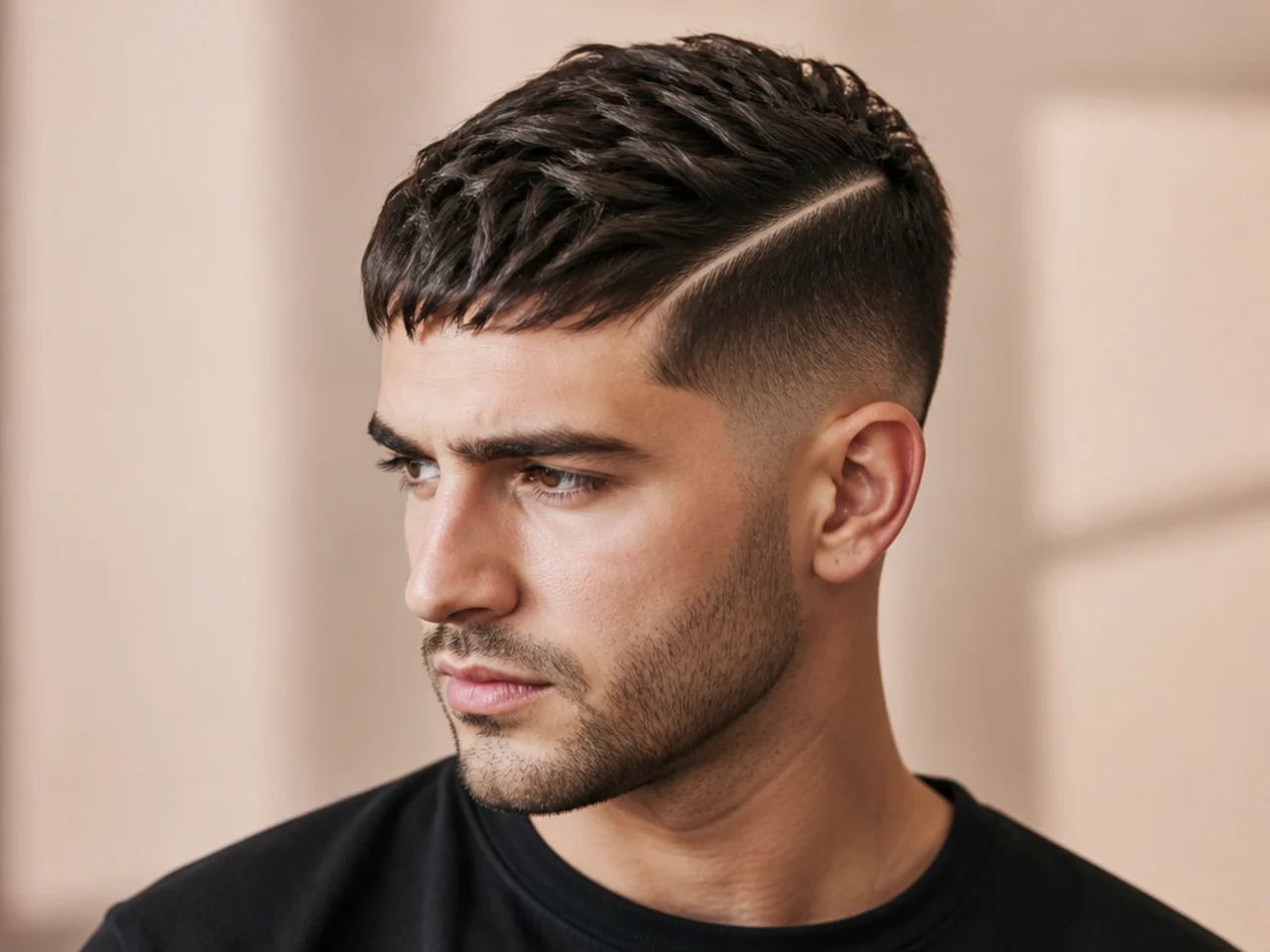
The most modern combination on the page. The textured crop's heavy point-cut top plus a razor-drawn hard part on the parting side, over a No. 1 tapered or low-faded side. Every element is designed — the fringe angle, the parting line, the taper depth. Best on oval, diamond, and square faces, thick or medium straight-to-wavy hair. Fine hair struggles to carry the point-cut texture at this length.
Ask for: "Textured crop with a hard part on the left, 1.5 inches on top with heavy point-cut texture, No. 1 tapered sides, quarter-inch razor-drawn parting."
Styling: matte paste worked with fingers, swept toward the parting side to expose the hard part. Never comb the top down over the hard part or the whole build collapses into a flat cap. Rebook every two to three weeks to keep both the crop's texture and the razor line sharp.
How to Ask Your Barber for a Short Side Part Cut
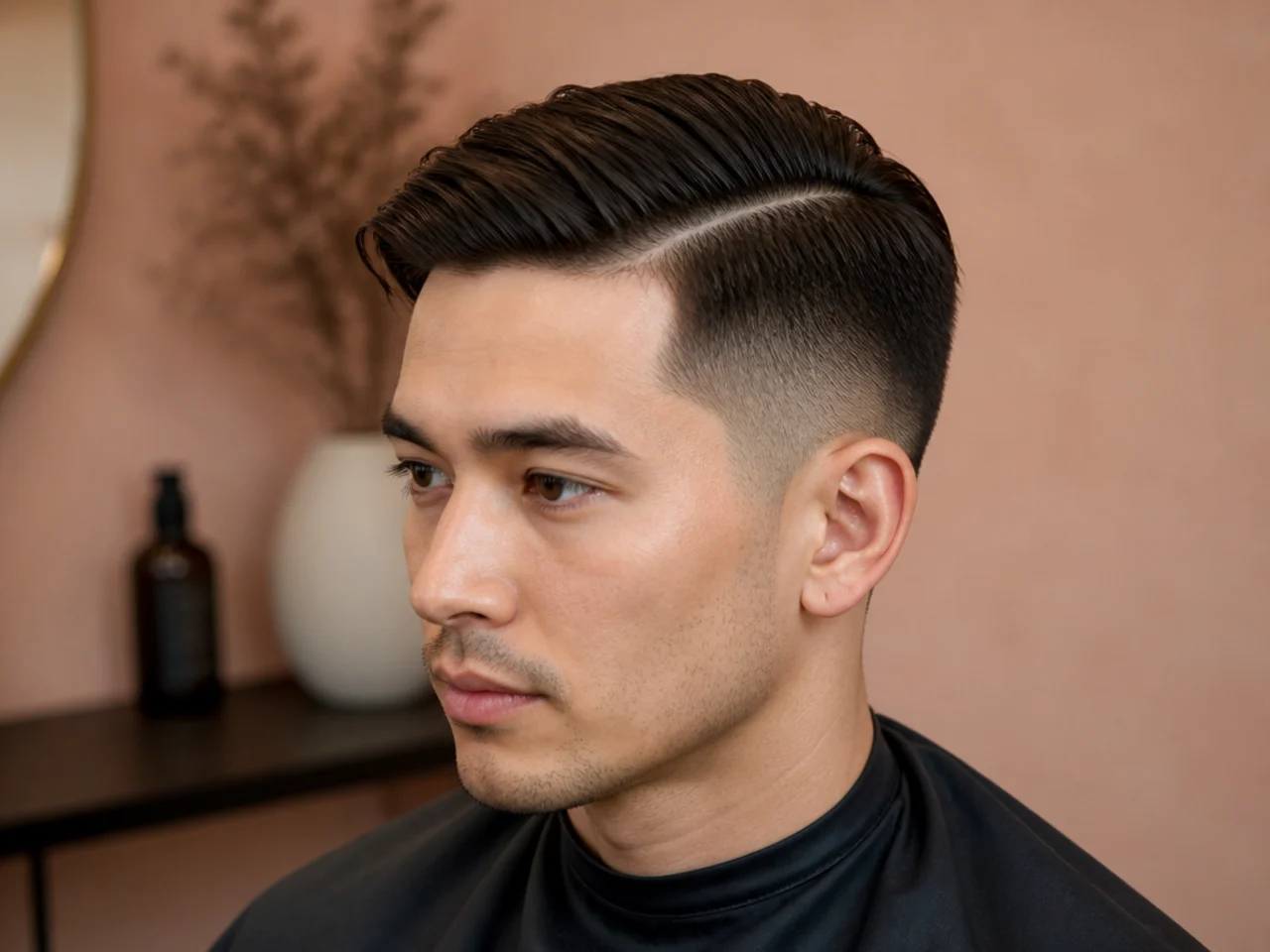
Six lines cover the whole conversation. Get these right and you leave with the exact named cut you had in mind.
- Name the cut first. Say "I want a crew cut" or "an Ivy League" or "a textured crop" before you say anything about a side parting. The named cut gives the barber your top length, fringe treatment, and sides finish in a single word.
- Add the parting on top of the cut. Follow the cut name with "with a defined side part on my left" or "with a hard part on the right." That single phrase decides whether the barber picks up a comb or a straight razor.
- Confirm the top length in inches. Even for a named cut, spell out "one inch on top" or "two inches on top" — different barbers hold different mental defaults for the same cut name. Inches remove all ambiguity.
- Specify the sides finish. Scissor taper, clipper taper, low fade, undercut, or full disconnect. One phrase from that list decides half the character of the cut.
- Say which side you part on. Most guys part on the left — the traditional masculine side. If you have a cowlick, say "part on my natural side" and let the barber read it. Never fight your own hair pattern.
- Book the next appointment before you leave. Hard-part and skin-fade builds need a chair every two to three weeks. Low fades and tapers stretch to four. Ivy Leagues, businessman cuts, and scissor tapers hold five to six. Get on the calendar while you are still in the seat.
Styling and Maintenance
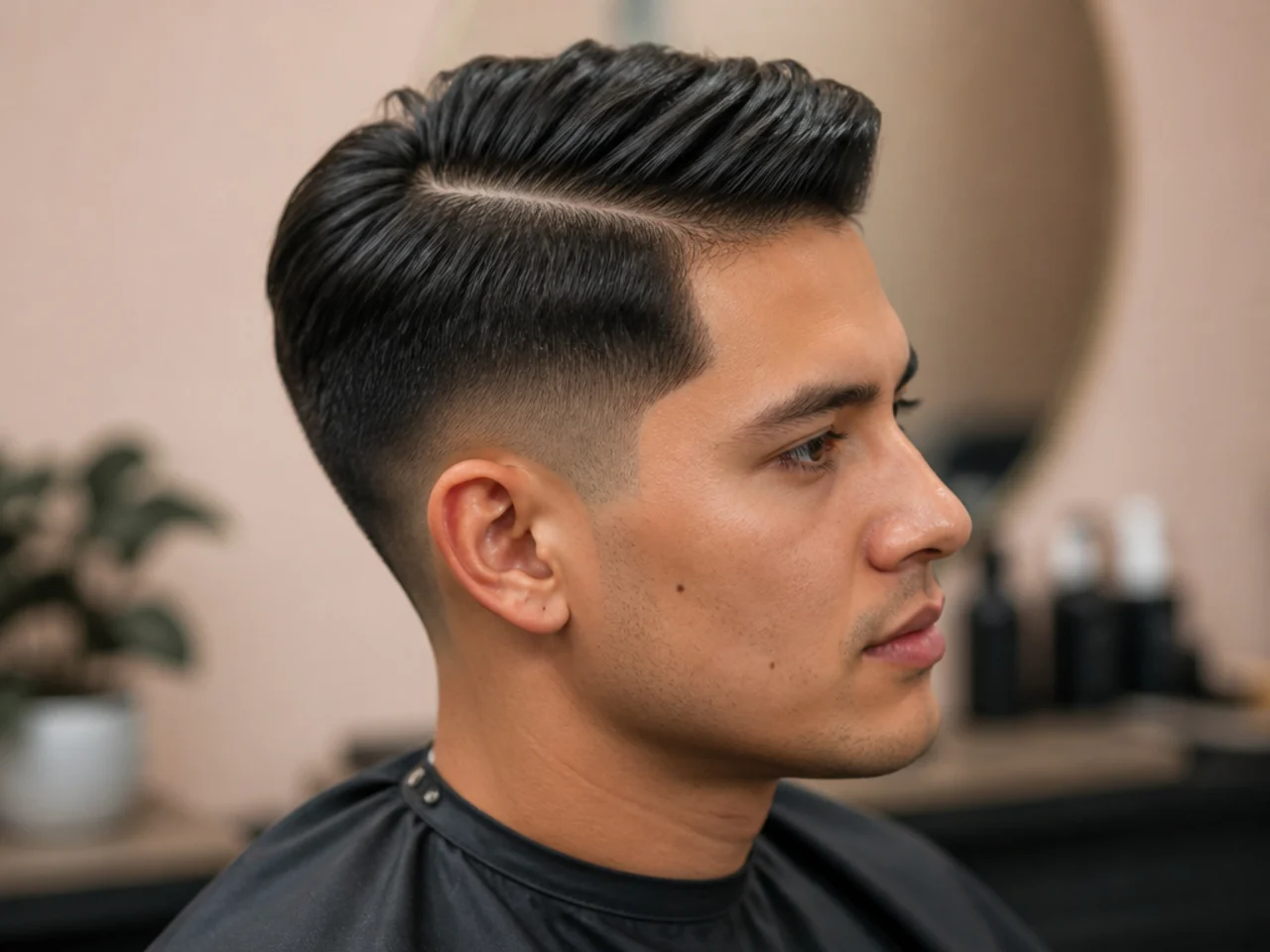
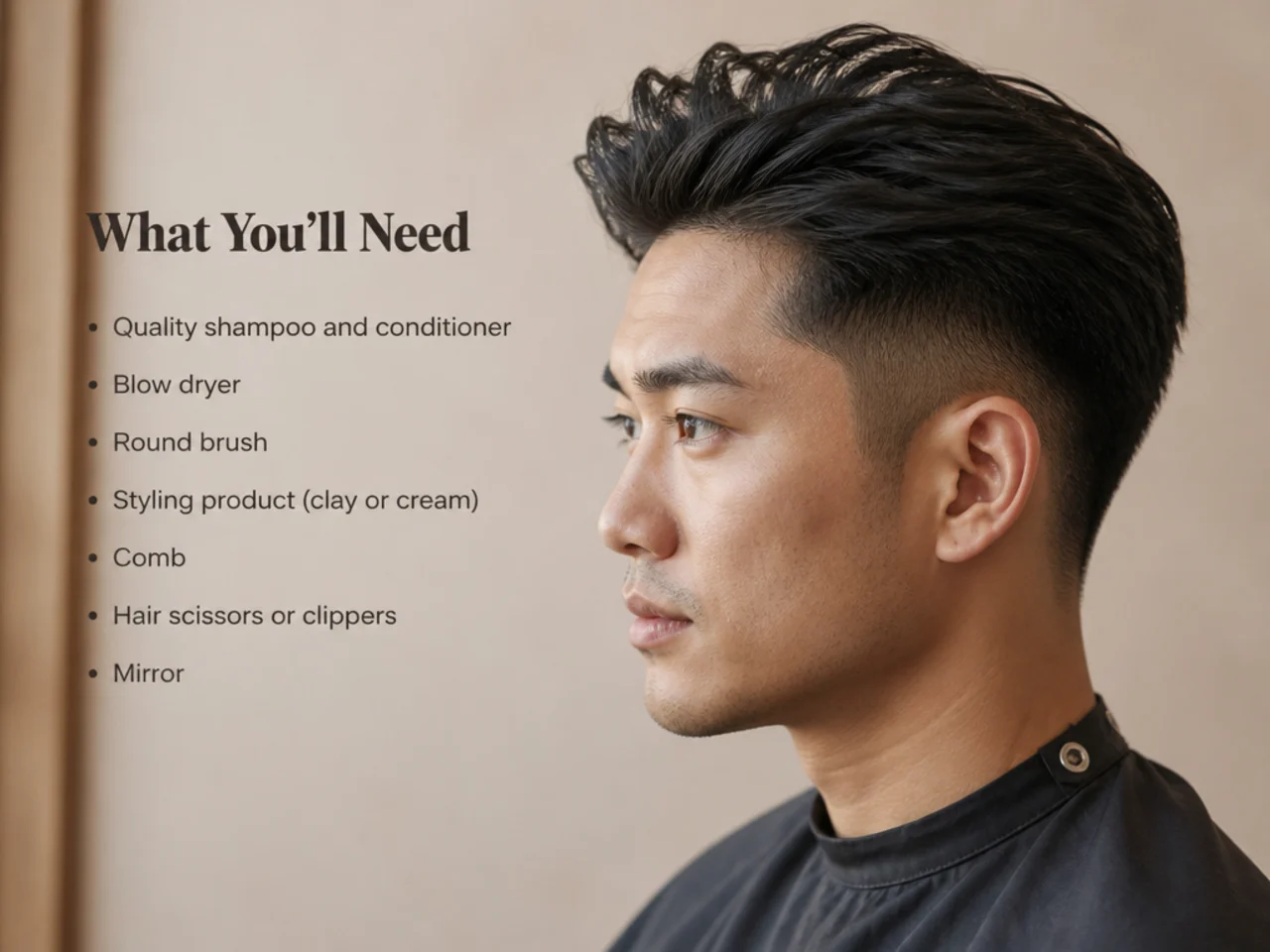
Short side part haircuts reward a simple routine and punish overuse of product. Wash, towel-dry until the water stops dripping, warm a pea of product between your palms, work through the top only, style with fingers or a fine-tooth comb. Two minutes for anything classic. Three or four for a hard-part or slick-back finish.
Product by cut family. Matte clay or paste for textured tops — crew cut, Caesar, French crop, textured crop, brush cut, disconnected undercut, hard-part crop (variations 1, 4, 5, 6, 8, 16, 20). Cream pomade for a satin finish — Ivy League, businessman, comb-over, scissor taper, hard-part Ivy League (variations 2, 3, 9, 14, 18). Medium-hold pomade for slick and structured tops — slick-back, undercut, hard-part crew (variations 10, 15, 17). Mousse-plus-clay for volume-forward cuts — pompadour, quiff (variations 11, 12). Pick one product per cut and commit — layering usually flattens the shape faster than any single product will.
The parting technique. Comb wet, not dry. On damp hair, the parting sets clean and holds through a blow-dry. On dry hair, the sweep looks fussed and rarely holds past lunch. If you have a natural cowlick, use it — no product holds a parted line the hair does not want.
Hard part upkeep. Book a shape-up between full cuts if your version carries a hard part or a fade. Most barbershops charge fifteen to twenty dollars for a fade-and-line touch-up that takes fifteen minutes. The forehead line and the hard part are what soften first, and the whole cut reads sharper for the fifteen-minute visit.
Home tools help. A basic pair of clippers used at home keeps the neckline and sideburns clean between shop visits. The best hair clippers for men guide covers the tools that hold an edge for years. Pair the clippers with a fine-tooth comb and one product from the family above and your morning routine locks in under three minutes.
Rebook cadence. Hard part or high skin fade: two to three weeks. Low fade, undercut, or disconnected undercut: three to four weeks. Businessman cut or crew cut: four weeks. Ivy League or scissor taper: five to six weeks. For a full breakdown of the fade side of the family, the low fade haircut and low taper fade guides cover the two most-requested pair-ups. The moment the shape softens at the temples, you are already a week overdue.
FAQ
Which named short cut is easiest to grow out? The Ivy League and the scissor-tapered classic. Both grow into their next length gracefully rather than pushing past a fade line or a hard part. Expect six clean weeks between visits without the shape reading untidy.
Can curly hair carry a short side part haircut? Yes — the Caesar side part and the scissor-tapered version work best. Both keep the curl pattern intact on top and use a natural cowlick as the parting rather than a razor-drawn line. Clipper-cut tops flatten a curl pattern; scissor-cut tops respect it.
What is the shortest top length that still holds a side parting? About half an inch. Below that the parting stops sitting against a defined line — the hair is too short to lean. Half an inch with a hard part shaved into the scalp is the shortest workable version, and it lives in the buzz-cut side of the family.
Do these haircuts work for a round face? Yes — the Caesar side part, French crop side part, and any hard-part variation are the strongest matches for round faces. The diagonal sweep breaks horizontal symmetry, and the hard part draws the eye vertically upward. Skip anything with volume-forward height on top.
Which of these cuts is most conservative for a corporate role? The businessman cut, the Ivy League, and the scissor-tapered classic. All three read clean in a boardroom, hold five weeks between visits, and never draw attention away from the shirt collar. For extra guidance on office-appropriate cuts, our side part haircut men roundup covers the twenty-five most-requested workplace versions.